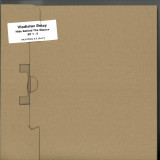
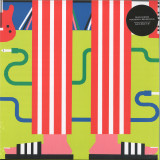
Delicate and beautiful music from the combined forced of the recently ubiquitous East-Coast psychedelic combo Elkhorn and Pelt’s Mike Gangloff, laying down two epic raga-like performances captured on a 2022 collaborative tour. Gangloff—fresh from the triumph of his VHF solo fiddle album Evening Measures—has found a distinct instrumental voice, blending drone music and trad influences in way that really advances the tradition into new areas. “East Dauphin Suite” builds patiently on the interlocking acoustic guitars of the Elkhorn duo, with Gangloff’s hardanger fiddle carrying the melody over the top. The sound is a neat riff on American primitive, with just enough Appalachian-style touches via Gangloff’s careful glissandos cutting through the Vuh-type chords and patterns to create a unique and supremely melodic hybrid. “Summerfield Raga” takes things further out, with more microtonal variation in the embroidery, with assertive bowing and an increased energy level. Pressed in Chicago and housed in an amazing jacket by Jake Blanchard.
quête:micro on
Standard black vinyl is limited to 500 copies. Digipack CD. It’s two years since CONNECTIVITY (2021) smashed into the top 40 and debuted at #1 in the UK download chart, propelling the fiercely independent voice of GRACE PETRIE from critics’ choice to the main stages of major festivals across The UK and Ireland, Australia and Canada. For a seasoned road dog who spent almost 15 years clocking up tours with the likes of Billy Bragg, Frank Turner and Hannah Gadsby, the COVID lockdowns were like a cage for Petrie and when restrictions lifted, she hit the road harder than ever, armed with her most searing and successful record to date, and determined to make up for lost time. Sell-out headline tours across the UK, Australia, Canada and New Zealand followed, with audiences from Melbourne to Toronto mesmerised by the ferocity of her socially urgent lyricism and the barnstorming power of her live show. But travelling the globe hasn’t diminished her laser focus on the political issues plaguing the UK, with two more Prime Ministers, endless blunders and evermore division seen since she last swapped microphone for pen and paper. Now the songwriter is back - stronger, older and a whole lot angrier than ever before. As right wing ideologues trade in suspicion and cynicism, tearing communities apart against a backdrop of crumbling public services, the ordinary folk of Britain continue to suffer the consequences of corruption and individualism. From within this maelstrom of despair comes BUILD SOMETHING BETTER - the new, uncontainable album from Grace Petrie. Recorded raw and unflinchingly with folk-punk legend Frank Turner in the producer’s seat, BUILD SOMETHING BETTER is a return to blistering protest form for Britain’s most relevant political songwriter, a decade after being hailed as “a powerful new voice”, (The Guardian) and “a millennial’s Billy Bragg” (Huffington Post). In a world that seems to make less sense than ever, these are songs made to both holler along to from the crowd barrier and to tear up with on a lonely late night train. A record for everyone whose broken heart beats for, and whose boots stomp in time with, the hope a brighter tomorrow. “An effervescent charm-bomb of a performer” - The New Yorker. Headline Tour: 21st Feb Belfast - Oh Yeah Centre 22nd Dublin - Whelan’s, 24th Manchester - Academy 2, 28th Kendal - Brewery Arts 29th Edinburgh – Summerhall 1st March Gateshead – Glasshouse 6th Birmingham - Glee Club 7th Leeds - Brudenell Social Club 8th Nottingham - Rescue Rooms 9th Liverpool – Philharmonic 13th Oxford - The Bullingdon 14th London - Islington Assembly Hall 15th Brighton - Concorde 2 16th Norwich - Norwich Arts Centre 20th Cambridge - The Junction 21st Portsmouth - Wedgewood Rooms 22nd Exeter – Phoenix 23rd Bristol - Trinity Centre
The eagerly awaited debut album from the London-based four-piece * At the forefront of the new generation of Black British guitar music with Big Joanie and Bob Vylan * Supporting Slowdive on their UK tour in February * Singles playlisted by BBC Radio 6 Music, Spotify and others Whitelands are Etienne, Jagun, Vanessa and Michael and they are ostensibly a shoegaze band ever since Etienne stumbled across Slowdive's KEXP session in his recommended videos on YouTube a few years ago. However, they come at the resurgent, Gen Z-soundtracking genre from a refreshingly different angle thanks to their mishmash of musical backgrounds. There's also the fact that their line-up is fully PoC in what is traditionally seen as a predominantly white genre. "There's an underlying narrative that it's OK for white men to be romantic, sensitive, emotional and make dreamy music and, by contrast, young Black men should be making angry music," says Vanessa. "We've all grown up with these stereotypes and therefore I think people are mystified when they see Whitelands." "I consume a lot of media," says Etienne of his wide range of influences. "Videogames, music, news, paintings, manga, animations and film are my go-to, especially anime. There is this drive to want to understand and feel the whole weight of an expression. So, the songs are based on other songs, pictures, aesthetics, 'vibes', an emotion someone else felt. Fundamentally, you are what you eat." As a result of this diet, the lyrics are stunning, dealing with everything from unbalanced relationships and vulnerability to depression, being diagnosed with ADHD and, on the new single 'Tell Me About It' (featuring vocals by Dottie from the band's Sonic Cathedral labelmates deary), trying to navigate love following that diagnosis. The album is bookended by two poetically political songs - 'Setting Sun' and 'Now Here's The Weather' - that deal with imperialism, racism and performative ignorance. "We've experienced tokenism, micro-behaviours, envy and resentment," concludes Vanessa. "So we feel we have to continually prove ourselves. We know we're making a positive impact, but I want Whitelands to really break some barriers."
- A1: Los Megatones De Lucho - El Tumbaleque
- A2: Sonora Venezuela - Pero En Caracas
- A3: Los Megatones De Lucho - Muñeca
- A4: Al Ramos Y Su Orquesta - El Candidato
- A5: Orquesta Sonoramica - Oye Como Suena
- A6: Microbanda Marabina - Maracaibo
- B1: Principe Y Su Sexteto - Salsa De Guaguancó
- B2: Genaro Y Sus All Stars - Mambo Tema
- B3: Orquesta Universidad - Atado A Un Recuerdo
- B4: Los Kenya - No Salgas De Tu Barrio
- B5: Nelson Y Sus Estrellas - Disparo Goajira
- C1: Los Kenya - Pa' Puerto Rico
- C2: Principe Y Su Sexteto - Analiza
- C3: Supercombo Los Tropicales - Juana Guaguancó
- C4: Los Satélites - El Tostao
- C5: Johnny Sedes Y Su Orquesta - Algo Diferente
- D1: Los Satélites - Fiesta En Venezuela
- D2: Rodrigo Mendoza - Lija
- D3: La Renovación - Mi Redención
- D4: Los Blanco - Corta El Bonche
- D5: Grupo Yakambu - Si Eres Tú
Established in 1948 by César Roldán, Discomoda is one of the earliest record labels of Venezuela and the oldest family operated label in the country. Home to one of the most complete folkloric and popular music catalogues of Venezuela, the label also invested heavily in Afro-Caribbean and tropical rhythms that became popular in the 60s and 70s.
In the 1960s and before the Salsa era truly kicked off, Venezuela had a significant dance orchestra and big band movement. Unlike local record competitors dedicated to selling foreign productions, Discomoda achieved its leading position by recording the most important national bands, including Los Megatones de Lucho, Orquesta Sonoramica and Super Combo Los Tropicales; all featured in this compilation.
Later on, surrounding the festivities for the 400th anniversary of Caracas in 1967, the word "Salsa", which had been recently coined by famed radio host Phidias Danilo Escalona, was formalized to identify an Afro-Caribbean musical style with growing popularity in Venezuela and beyond. By then, the country was among the top 20 music markets in the world, with the local label Discomoda leading the way, responsible for one out of every five records sold in the country.
With the prolonged celebrations approaching due to the 400 years of the city, Discomoda and other labels began to capitalize on this new musical style by betting on both established and new local bands, such as Nelson y sus Estrellas, Los Kenya, Principe y su Sexteto and Los Satélites. As a result, this would kick off what could be considered a golden era of Salsa in Venezuela and which lasted until the mid-70s.
As we approach the 80s and with the emergence of new musical styles and bigger multi-national record labels funded by larger pockets, a lot of the previously popular bands begin to disband or choose to leave the country. Nonetheless, a few artists, like Rodrigo Mendoza, La Renovación and Grupo Yakambu, were still pushing out quality music.
We are thrilled and honored to celebrate one of Venezuela's and, equally, Latin America's most significant record labels, and to share a slice of their enduring influence in advancing Venezuelan-made Salsa music.
Chicago hip-hop outfit Angry Blackmen made up of Quentin Branch & Brian Warren (ABM) have been stretching their arms and tapping into different sounds since they smashed onto the scene with their debut single “OK!” in 2017. A prime introduction starring two emcees showing they deserve to wield the microphone and do so with good cause. Then barely a month later ABM released sophomore single ‘Riot!’ a complete shift in sound that still housed the foundation set in ‘OK!’ A few years later the duo would drop their debut project ‘Talkshit!’ which saw them amass the following they have today.
‘The Legend of ABM’ immediately smacks the listener in the eardrum leaving no second wasted and jumping straight to the point. The 11-track adventure truly presents an expression of hip-hop that we haven’t seen before, infusing multiple sounds with the 50-year old genre. To go even deeper, Quentin Branch & Brian Warren are teaching a masterclass in top-notch poetic lyricism, creating both accessible and mind-bending music. “Stanley Kubrick” has both heroes shattering the beat with their braggadocio for what is just the appetizer to prepare the listener for what’s to come in the next ten tracks. ‘Sabotage’ tells the story of two Black men hustling through the trenches of capitalism and the effect that this journey has on them. While the album exudes catchy wordplay and spine-splitting production, if you lift up the hood, ABM is spinning a tale of depression, existentialism and self-reflection that isn’t always pretty. “Dead Men Tell No Lies” is another mutation in sound for the duo, where the industrial sounds clash, violently yet perfectly together with a blistering hook harkening to the end of time. Warren & Branch’s raw poetry educates the listener of the pre-apocalyptic world we’re already living in throughout this project. ‘The Legend of ABM’ is not an excursion for the weak, the production is meant to snap your spine in half, the lyrics from Quentin & Brian are pathos-infused and relatable to anyone simply trying to survive.
grey & green splatter vinyl
A1 - Spacewaves
Opening the EP in thunderous style, Aural Imbalance chops impeccable, clean amen breaks, rolling sublimely into a chorus of fluid, delicate keys. The track whisks the listener atop the crest of wavy edits before a quietly turbulent assortment of blips and notes punctuate a bass-heavy breakdown. The latter half combines the elements in surreal harmony for a triump hant crescendo, buoyed by the truly vibrant breaks.
A2 - Tranquil Sea
A masterclass in subsurface ambience introduces Tranquil Sea, glistening melodies cascade into punchy breakbeats, setting the pace. Brimming with sunken off-key 808 bass resonating unpredictably with the spirit of the ocean, Aural Imbalance gently builds the vibe with soothing waves of mesmerising soundscapes as the beats rumble on, inviting you to dance amidst the swirling currents of his inimitable sound.
AA1 - Concordia
Old school analogue breaks take center stage as Aural Imbalance rewinds the clock for a great dancefloor-friendly slice of history with a modern Spatial twist. Quiet plinky keys bubble underneath long, whooshing ripples of the sea, echoed hi hats and a distinctive classic bassline intertwine perfectly, carrying you to uncharted sonic territories that will linger in the recesses of your mind long after the needle is lifted.
AA2 - Fading Fields
Delicate cymbal work and stirring pads combine deliciously before the listener is lifted to blissful serenity with a sumptuous tapestry of synths and micro melodies set to an immense, head nodding break pattern. The noteworthy kickdrum delivers a classic analogue stomp while the drums joyously encircle them
in their droves, showcasing further the variety and density Aural Imbalance offers.
20 TOMES AVAILABLE, MORE THAN 55 MILLIONS MANGAS SOLD (WORLDWIDE) ONE OF THE BEST-SELLING MANGA OF THE WEEKLY SHONEN JUMP IN JAPAN
ONE OF THE BEST SUCCESS OF THE CLUB DOROTHEE
Back in stock!
NULLPTR never fails. Since emerging in 2016 with the Optical LP, Eddie Symons' project has become a byword for top-draw contemporary electro productions. After triumphantly returning to Sheffield's Central Processing Unit with 2020's Future World full-length, NULLPTR follows that album up with a new quartet of machine-funk slammers. Striking a balance between highwire, twitchy rhythm programming and some deft textural work, the Terminus EP demonstrates exactly why the NULLPTR name is so respected in the world of electro.
The first half here almost showcases the two sides of the NULLPTR sound in microcosm. Opening track 'Connected' zips along like one of the racers from a Wip3out game. The 808s are all booming breakbeats and hissing-piston hats, with a jittery synth bassline nipping in and out of the spaces left vacant by the drums. Atop these swirl eerie keyboard pads, the reverb from them draping across the rest of the instruments like fog above a city. By contrast, following cut 'Mesospheric Cruise' is the yin to 'Connected's yang. Where its predecessor was tense and coiled, this lilting number is expansive and open like a primetime Virginia joint - though the point where the wistful house pads strip back to foreground the twinkle-toed electro beat still has a pleasing crunch to it.
The B-side of Terminus serves dystopian snap from the off. Genre masters Drexciya are invoked by 'Syndicate'. The needle-gun bassline here turns itself inside-out across these five minutes, and all the while the tune is laced with some evocative shadow-realm synth pads. A similar energy courses through the EP's closing title-track, a cut which also brings into play a booming four-to-the-flour that gives it an unstoppable sense of forward-motion. Like 'Connected' and 'Mesospheric Cruise' - indeed, like all of the NULLPTR material that Central Processing Unit has brought us down the years - these jams will sound positively devilish when deployed in a dark basement.
The Terminus EP sees electro don NULLPTR (Eddie Symons) deliver four slices of unadulterated machine-funk heat.
RIYL: Virginia, Cardopusher, Drexciya, Silicon Scally
Approaching the 50th-anniversary release of Artreform, the label's boss, Kyiv-based DJ and sound producer JOSS is counting on experienced artists. The fresh record
with an updated modern design from the abstract art master Elemetalsource boasts two tech-house powerhouses at once: Fedo, the lead artist from Odessa, and Okain,
the Berlin-based musician and owner of Talman Records, who was invited as a remixer.
The three original tracks from Fedo deliver detached, robotic minimal house that could be playing on an interplanetary station as its well-coordinated machinery works
in unison. It is club-centric music with a moving, inventive groove, albeit without any live emotions. A respectful tribute to those 90s cult Plastic City records, and at the
same time, trendy sound for modern minimal and microhouse parties.
Okain's injection boosts the release's dynamics with more thumping rhythms and a hypnotic atmosphere. Nevertheless, this special guest star from Berlin flows in
organically, enhancing Fedo's material with his trademark style, perfected through years of releases on Bpitch Control and Tsuba, and thoroughly tested on Europe's best dancefloors.
Chiho Kiyooka,Takeshi Ike,Keiju Ishikawa
Dragon Ball Z - Original Soundtrack (Best Collection) LP (2x12")
- Cha-La Head-Cha-La 03:19
- Exceptional 03:31
- Battle (I-Ku-Sa) 03:55
- Whole 04:04
- Journey Of Light 06:13
- The Strongest Rival 03:45
- Hero (You’re The Hero 04:10
- Mind Power –Ki – 05:47
- Extreme 03:25
- Blue Wind Hope 03:44
- The Burning 03:19
- Soul 04:56
- Rising High 04:04
- We Gotta Power 03:58
- We Were Angels 03:51
A selection of 15 pieces from the soundtrack of the cult Dragon Ball Z Anime - on a limited 2LP edition, fully licensed. Including the Main opening track "CHA-LA HEAD-CHA-LA".
Dragon Ball Z resumes five years after Son Goku's wedding. Radditz, a mysterious warrior, arrives on Earth to find Goku, who learns that he comes from a planet of warriors from a planet of warriors, of which only four remain. The plot of the story is based on a succession of increasingly strong opponents to be fought, but there is also a but there's often a quest or travel context that adds interest beyond the duels.
The series has become a worldwide phenomenon, generating massive sales of merchandising merchandise and is considered one of the most influential anime franchises of all time. of all time.
Chiho Kiyooka (YU YU HAKUSHO), Takeshi Ike (TRANSFORMERS) and Keiju Ishikawa (GODZILLA) have collaborated on the iconic music for the animated series.
Conrad is back! 30 years after Flashback, the legendary game by Paul Cuisset, which made the license known around the world, is back with this new science fiction action-adventure game!
Flashback was ahead of its time and offered great innovations with great character animations. A true pioneer in 1992, the game has also reached legendary video game status thanks to its rich and endearing history. This now video game classic is regularly ranked among the 100 best games of all time!
It is now getting a facelift on the occasion of its 30th anniversary, and this brand new 2.5D version of Flashback 2… After his victory over the “Master Brain” in the first episode, Conrad and his allies are once again confronted with Morphs, which threaten all civilizations.
The completely new original soundtrack was produced by Raphael Gesqua, the most talented French composer of his generation. With around a hundred original soundtracks created for video games or cinema since the beginning of the 90s, Raphael reunites here with the one who got him started in the world of video games: Paul Cuisset, on Flashback: The Quest For Identity with the Commodore and Amiga versions.
Raphael offers us here a very rich soundtrack navigating between cinematic music, electronics and synthwave ambiances. A must have for all science fiction fans.
All three protagonists are deeply rooted in the jazz tradition but wide open to nfluences of different colors. After his years of teaching at Berklee College in Boston and New York Renato Chicco is now one of the most sought-after soloists and most experienced accompanists. He played with jazz legends like Lionel Hampton, Jon Hendricks, Freddie Hubbard, Woody Shaw and Jerry Bergonzi to name just a few. Johannes Enders collaboration with such different musicians as Micha and Markus Acher (The Notwist, Tied & Tickled Trio) Nils Petter Molvaer, Gunther Baby Sommer, Karl Ratzer and Billy Hart as well as his own group EndersRoom make him one the open- minded and versatile experimental musicians of the European scene. The trio is completed by the Spanish master drummer Jorge Rossy, best known for his long- standing membership in the egendary Brad Mehldau Trio.
Seiya is an orphan who, as a young boy, was selected by the Kido Foundation to bring legendary bronze armour back to Japan. He succeeds, along with 10 other orphans. Forced by the foundation to take part in a "show", the knights embark on a tournament before the prize, the golden armour, is stolen. Little by little, they realise that their problems stem from the Sanctuary in Greece, home to the 12 most powerful knights, the Golden Knights, and their leader, the Great Pope. His target is the young Saori Kido, heiress to the foundation and reincarnation of Athena.
The series was a huge success and spawned an extensive franchise, with TV series, films and video games. This album features the best music and songs from the anime, composed and arranged by Seiji Yokoyama (GATCHAMAN).
Vladislav Delay presents the fifth and last EP in his "Hide Behind The Silence" series. Intuitive and raw music, momentary and reflective, released on Ripatti's own label "Rajaton".
--
Stillness is a myth. Consider concepts such as ”still water”, or ”still air” for that matter. Go to a restaurant, ask them for a glass of still water, hold it against the light and see where we’re at. Even though the water itself has been captured and imprisoned in the glass, it never stops breathing. It’s filled with tiny particles, dancing. Everything can be explained on a molecular level, but since we’re not scientists – and even if you happen to be – it’s the natural world of perception that moves me.
Still air is very similar. A hot summer’s day with zero wind feels completely still. It’s the closest I have felt to complete stillness. Or for a more urban adaptation, imagine the same vibe inside a normal apartment. In those moments, revelations and mind- blowing experiences can be had with experiments in stillness.
Try this: Just sit down for a minute on a sunny day, making sure there’s enough natural light. Do absolutely nothing. Try not to breathe for a bit. (If you need a mental anchor, you can play Cage’s 4’33” in your head but nothing else.) Watch the tiny dots of dust dancing :..’ ̈.:; ́ ́*°.,’:,. ̈ ̈ ̈ ̈:,.’
The movement is crazy, but the feeling of stillness comes from witnessing how subtle it is. In (perceived) complete stillness, every act of microscopic mobility seems to speak volumes. Yet, it feels both reassuring and oddly threatening that the stillness is never complete. What if we would need absolute stillness? Or is it just enough that we can perceive something as such? Extremes attract, so for both water and air, extraordinary movement is equally fascinating. That is also a luxury item of sorts. For us to enjoy a very ”loud” body of water or air, we need to be safe, in enough control of the situation. So when you are, it’s worthwhile to pay attention and take it all in.
A rapid flowing free with extreme strength and just barely in control. Look at that water go! No still water on this one, only ”sparkling”. A windy day when birds seem surprised how hard it is to fly, but in the end they make it. Trees bend but don’t break. The wind shows you its movement but doesn’t hurt you. It feels friendly, like a big clumsy dog that doesn’t quite understand its size.
It’s beautiful to be a guest of the elements, but not at the mercy of them. A new kind of dialogue forms.
Written by veteran journalist Shawn Reynaldo, First Floor is a weekly newsletter that focuses on electronic music, along with the culture and industry that surround it. Over the course of just a few years, it’s become one of electronic music’s most influential platforms, routinely putting many of the genre’s thorniest issues under the microscope while reckoning with changes in the culture during a time of profound transformation.
A collection of Reynaldo’s most thought-provoking essays, First Floor Volume 1 provides a nuanced, wide-ranging look at contemporary electronic music culture, with a particular focus on systemic issues that often go undiscussed.
Topics covered included the evolving nature of electronic music fandom and artistry, value shifts brought on by the current changing of the generational guard, the shortcomings of the modern music press and the growing gap between electronic music’s foundational rhetoric and the genre’s present-day norms.
Incorporating both pieces originally published in the newsletter (all of which have been updated) and exclusive new material from Reynaldo himself, the book also features a foreword by veteran artist and 3024 label founder Martyn.
Craig Clouse has devoted the past several decades to exploring a wide range of avant-garde avenues for his brainchild Shit & Shine. The monolithic riffs of raw and powerful psych'n'roll hysteria, the freeform dance miasma, sub-heavy electronica and the blissful stupidity crafted for ecstatic ascension: all perfectly-placed in the idiosyncratic world of Shit & Shine. There's also fertile soil for twisted noises in their lowest form, often obscured by groovier comrades in S&S releases yet vitally important for the substance of Clouse's compositional carcass and OOH-sounds has given him the required space to stretch out his longtime interest in developing loose structures and crackling landscapes to transcend his rhythmic comfort zone.
Making an enthusiastic transgression into noisy tones, "Joy Of Joys" has a friendly way of presenting difficult material. The rough and ready cheapo electronics sparkle in full electrifying mode, welding an ascetic gamut of aural hypnotics with a wormhole of uncompromising loop brut. Clanks, bangs, twangs and creeping, ragged globs of sound bloom on the bones of repetition to focus on the swinging stream of dirty anarchy. Stepping out of any context and genre disciplines, S&S finds new sonic trajectories in "Joy Of Joys" which perfectly sit in-between a wobbly cabal of international sub-underground acts: the idiot-avant strategies of LAFMS, early Mego bad digitalia, no-brow enthusiasm of Wolf Eyes family, micro-DIY ethos of Chocolate Monk and the sheer hellish nonsense of US noise circa '00s.
Clouse was already established as a landscape painter with a series of faux naïf paintings charmingly accompanying his releases. With his heart full of passion for abstract minimalism, he continued these narrative forms but was always in search of the confidence to paint non-figurative art. The first step into the chaotic abyss is coming from his sonic side by abandoning the beat and riff layers of his previous works to complete nakedness and reductionist courage. At once Clouse makes an evolutionary lurch into extremes as well as taking us back to basic forms in "Joy Of Joys". He creates an entire new parallel world to Shit & Shine with his maverick imagination presenting us with one of the most mutant releases to bear his name. Arthur Kuzmin
Presenting the second thematic volume on the “Aquapelagos" series - a collection of split LPs where selected artists offer their own take into water surrounded cultures and communities. After the initial release of the Anthology compilation Aquapelago in 2022 (Discrepant ,CREP91) and the split LP Atlantico by Lagoss & Banha da Cobra (Keroxen, KRXN027) we proudly introduce an unique collaboration in the series in the shape of no other than two improvising giants, Mike Cooper and Pierre Bastien.
This second volume blows the lid wide open with a sound journey inspired by the equally majestic and mysterious Indian Ocean, a wide space of open ocean bounded by Africa, to the west, Asia to the north and north-west and Australia, to the south west.
From Philip Hayward and Matt Hill’s liner notes:
‘’The album opens with Return To Chagos by emphasising human presence in the oceanic space, opening with gentle percussive taps and distant looped male vocalisation that gradually come into sharper focus, layered and thickened, accompanied by thicker percussion and mouth harp. The sense of departure is taken up in Trincomalee, which lifts over the oceanic textures, opening with slow, struck and scraped metallic sounds before thick low pitched wind instrument sounds enter, oscillating around shifting microtonal frequencies. The shore returns on Side 2, with the miniature epic of Nicobar elaborated over looped ‘atmos’ sounds of birds and insects over which tonal, slightly distorted electric guitar lines enter before looped high pitched feedback squeals join the texture. Summoning tropical storms and the disruption to the region caused by western intrusion, strong and startling brass accents appear, melding with the looping guitar feedback, creating eeriness and a sense of alarm. Tuangku is permeated by restrained dynamics and an expressive, breathy, low pitched, animalistic melodic voice that offers intermittent and ambiguous utterances, as if rendered in a language essential to and evocative of a place and time but impossible to precisely comprehend – coming from an ocean-aquapelagic beyond that can only be glimpsed and rendered by affect.’’
Philip Hayward and Matt Hill, March 2022
Hiyo is a coming out party in a lot of ways for a band that has been a staple of the American Folk Music scene for over two decades. Co-Produced and engineered by Nashville's Rachael Moore and including performances by Jamie Dick (Drums), John Mailander (fiddle) and Maya de Vitry (vocals), the album Hiyo pushes the sound of CCL past anywhere it has been before. For a band that spent 15 years performing around a single microphone, CCL has found new inspiration in all of the sounds the world has to offer. "Synthesizers, drum machines, banjo...the world is really open right now to what constitutes folk music and we are grabbing on to that inspiration with both hands and not letting go," says leader Dave Wilson. Produced by Rachael Moore & Dave Wilson. Recorded & Mixed by Rachael Moore (George & Tammy) at Echo Mountain in Asheville, NC. Mastered by Nathan Dantzler at The Hit Lab in Nashville, TN.
If the Corona pandemic and the accompanying concert bans have at least one good thing going for them, it's the extra time musicians have to write songs and live out their creativity. This circumstance was also the driving force for the SAMURAI PIZZA CATS, who come from the Electric Callboy environment. Frontman Sebastian Fischer was behind the microphone in their predecessor band Her Smile In Grief, whose line-up also included Daniel "Danskimo" Haniß, who is now celebrating success as guitarist, songwriter and producer of Electric Callboy. The contact between the two never broke off and so Daniel also produced Sebastian's later band Fall Of Gaia in recent years, whose former drummer and multi-instrumentalist Stefan Buchwald is also involved in this new project - family business from downtown Castrop Rauxel! So while Stefan contributes the music, Sebastian writes the lyrics and Daniel, as a creatively involved producer, ensures a well-rounded overall result. Okay, before we try your patience any further, let's talk about the elephant in the room: the band name. The SAMURAI PIZZA CATS have named themselves after a Japanese anime series from the early nineties. Why? Stupid question! Of course, because they are fearless warriors on their instruments, love to eat pizza and like cats! And maybe a little bit because they have soft spots for anime and silly band names - but only maybe. Rumour also has it that "Banzai! Smack! Meow!" is an onomatopoeic description of the band's sound.
Vladislav Delay's complete "Hide Behind The Silence" series. Intuitive and raw music, momentary and reflective, released on Ripatti's own label Rajaton.
Stillness is a myth. Consider concepts such as ”still water”, or ”still air” for that matter. Go to a restaurant, ask them for a glass of still water, hold it against the light and see where we’re at. Even though the water itself has been captured and imprisoned in the glass, it never stops breathing. It’s filled with tiny particles, dancing. Everything can be explained on a molecular level, but since we’re not scientists – and even if you happen to be – it’s the natural world of perception that moves me.
Still air is very similar. A hot summer’s day with zero wind feels completely still. It’s the closest I have felt to complete stillness. Or for a more urban adaptation, imagine the same vibe inside a normal apartment. In those moments, revelations and mind- blowing experiences can be had with experiments in stillness.
Try this: Just sit down for a minute on a sunny day, making sure there’s enough natural light. Do absolutely nothing. Try not to breathe for a bit. (If you need a mental anchor, you can play Cage’s 4’33” in your head but nothing else.) Watch the tiny dots of dust dancing :..’ ̈.:; ́ ́*°.,’:,. ̈ ̈ ̈ ̈:,.’
The movement is crazy, but the feeling of stillness comes from witnessing how subtle it is. In (perceived) complete stillness, every act of microscopic mobility seems to speak volumes. Yet, it feels both reassuring and oddly threatening that the stillness is never complete. What if we would need absolute stillness? Or is it just enough that we can perceive something as such? Extremes attract, so for both water and air, extraordinary movement is equally fascinating. That is also a luxury item of sorts. For us to enjoy a very ”loud” body of water or air, we need to be safe, in enough control of the situation. So when you are, it’s worthwhile to pay attention and take it all in.
A rapid flowing free with extreme strength and just barely in control. Look at that water go! No still water on this one, only ”sparkling”. A windy day when birds seem surprised how hard it is to fly, but in the end they make it. Trees bend but don’t break. The wind shows you its movement but doesn’t hurt you. It feels friendly, like a big clumsy dog that doesn’t quite understand its size.
It’s beautiful to be a guest of the elements, but not at the mercy of them. A new kind of dialogue forms.
Q&A with Sasu Ripatti:
1) Tell us something about the EP series ”Hide Behind the Silence”, what’s the idea and what can we expect?
Exploration of inaction. Of many kinds. In arts and in personal life, or at bigger and more serious levels. Questioning myself as a human being as well as an artist. Acknowledging the growing activism all around, and the very clear need for it, and how it reflects my own inaction.
Musically speaking, after Rakka, Isoviha and Speed Demon, I finally found some relief, but more importantly lost the need to go musically ever more outward and intensive. I felt quite strongly certain periods/moods from the past and they made me revisit some musical ideas or states of mind I was exploring early on.
It’s about live moments being captured, not much premeditation or editing. More intuitive and raw, even though the end result (to me) feels and sounds quite introspective and calm. It’s not very ambitious. Momentary and reflective.
2) Your music doesn’t sound very silent. Does it come from somewhere behind the silence?
Oh, this time to me it sounds quite quiet and playing with space if not silence. I don’t know what’s actually behind silence, but I think silence is the source of everything. We just don’t understand it yet.
3) What kind of thoughts or experiences gave inspiration to this series?
Writing this in Nov ’22, it’s not a stretch to say the world has been really unwell. Sometimes, like Mika Vainio put it, the world eats you up. I feel a bit like that. And I try to hide in my studio and stay away from it all, but it’s getting harder by the day. I’ve been questioning myself and thinking if what us artists are doing is worth anything, and whether it’s just a selfish thing I’ve been doing for the past 25 years, running away from everything. I haven’t come to a conclusion yet.
4) Is it easy for you to be in silence, or around silence?
Absolutely. I not only hide behind silence but I also love silence. It’s only since I started going back to nature as a grown-up person that I sensed and was enveloped by silence, true silence. I have begun to appreciate it a lot. I think all the people should spend more time in silence.
All tracks composed and produced by Sasu Ripatti.
Artwork by Marc Hohmann, photography by Shinnosuke Yoshimori.
Mastering by Stephan Mathieu for Schwebung Mastering.
Vinyl cut by SST Brueggemann.
Publishing by WARP Music Ltd.
First reissue of these cult 1974 recordings of a Mayan brass band playing funeral dirges and popular songs in its distinctive extended harmonic and rhythmic style. The members of the San Lucas Band lived in the mountain village of San Lucas Tolimán, Guatemala, playing local events of both religious and social nature. The pride of their town since 1922, the band represented a fast-disappearing musical tradition when these recordings were originally released in 1975. Their unique sound derived from an unusual combination of instruments, a repertoire including pieces dating from more than fifty years before the recordings were made to more recent ones, and above all from the highland Maya style of their playing, which is characterized by a preference for freer rhythmic structures and a wider variety of pitches than Western scales allow. One of Jon Hassell and Charlie Haden's favorite records, it was nominated for a Grammy Award upon first release and has remained much beloved by a small community of enthusiasts for decades. A profound and rewarding musical experience for all adventurous listeners, notably fans of Albert Ayler, microtonal and raw cosmic music.
Argentina artist Ignacio Sandoval - aka YOTO - presents his debut release on Kit Records. 'Levure' is a love letter to Sandoval's favourite childhood bakery.
Primarily a singer and drummer, YOTO takes cues from South American folk music legends Violeta Parra and Atahualpa Yupanqui. His music is built around crunchily harmonic choir-like vocals, perforated with tumbling guitar and percussion lines.
Like fellow Buenos Aires boundary-pushers Aylu and Vic Bang, YOTO's view zips with an ever shifting focus. These wry gear changes, fermented samples and knee-wiggling tempos evoke a microbiome of ecstatic activity.
Recommended if you like Elysia Crampton, The Residents, Panda Bear.
Standing In The Light, das viel geliebte dritte Album von Level 42, ist wieder als LP in
einer streng limitierten audiophilen Gold-Vinyl-Pressung erhältlich.
Level 42 - der Bassist und Sänger Mark King, der Keyboarder und Sänger Mike Lindup,
der Gitarrist Boon Gould, der Schlagzeuger und Texter Phil Gould und der Studiotüftler
Wally Badarou - waren 1983 angesehene Überlebende der Britfunk-Explosion der frühen
80er Jahre, hatten aber noch nicht den ganz großen Durchbruch geschafft. Live waren sie
eine unübersehbare Attraktion, aber ein echter kommerzieller Erfolg blieb ihnen verwehrt.
Polydor erkannte dies und schickte die Gruppe nach LA, um mit Larry Dunn und Verdine
White von Earth, Wind & Fire zu arbeiten und ihrem Sound eine zusätzliche Dimension zu
verleihen.
Es sollte jedoch kein EWF-Horn- und Mystikfest werden; Standing In The Light optimierte
und kommerzialisierte den Sound der Gruppe, ohne dabei ihre einzigartige britische
Interpretation von Jazz-Funk zu verlieren. Out Of Sight, Out Of Mind war die erste
Singleauskopplung des Albums und verpasste nur knapp die britischen Top 40; die
nächste Veröffentlichung bescherte der Gruppe jedoch ihren ersten Top-10-Hit und einen
Vorgeschmack auf den Erfolg, den sie in den kommenden Jahren genießen sollte. Living It
Up (The Sun Goes Down) war ihr erster Top-10-Hit im Vereinigten Königreich und ist ein
funkbasierter Knaller. Infolgedessen war Standing In The Light das erste Top-10-Album
von Level 42. Es enthält auch das intensive, politische I Want Eyes, das Lieblingsstück
von Schlagzeuger Phil Gould in Zusammenarbeit mit Mark King, sowie fünf weitere
Beispiele für den einzigartigen Groove der Gruppe
Clear Vinyl
The fourth Exposure Series release is upon us. If you have not heard, the Exposure series is our signature compilation series that features multiple artists and is pressed on vinyl for the most discerning DJs and collectors. 'Linear Radiance' gathers together 4 extremely hot artists in the scene for one special 12'.
The EP begins with 'Raizel' by the hot newcomer Grush. This early set builder is smooth in the constraint it has rolling along in the sweet spot. A beautiful jaunt that is rich and fluid.
Next, is the amazing Philipp Priebe. 'So Glad' is another Priebe heater. A very talented producer, you can always count on him for great dancefloor business. The melody sneaks up on you as it builds from deep within. A sublime and subdued corker!
'Sonic Shadows' starts out on the B-side from skillful Nicolas Barnes. His contribution is a combination of a big club techno sound and a melodic flow that is almost reminiscent of some prime late 1990's progressive house.
Finally, is 'Grey Rythem' by Cirkel Square. Riding a catchy micro dub sound that is clever, fun, and surprisingly deeper than we could have ever hoped! All four tracks make for a healthy, well-balanced piece of wax!
Linear Radiance is lovingly pressed and shared on crystal clear 180- gram vinyl. Act quick while copies are in stock. This compilation is sure to get picked up by DJs, collectors, and fans.
A discreet but essential figure in the field of musical creation, Horacio Vaggione has been crafting an ambitious, precise and highly significant body of work for over the last fifty years, coupled with a demanding research activity. This disc offers four purely electroacoustic pieces which illustrate, each in their own way, this singular and fascinating grammar developed by Horacio Vaggione, a complex but fertile grammar which establishes a very special relationship between structure and texture, between matter and formula, to create a fascinating musical space, made up of polyphonies and metamorphoses. (François Bonnet, Paris, 2022)
--
«Schall» (1994), 07’30
Schall exclusively uses piano sounds sampled and processed with various digital techniques. The sound palette focuses on several shapes of various sizes which reiterate, altered to varying degrees, throughout the process. The granular paradigm is clearly assumed here, as is also that of the interactions between various temporal scales. Basically, there is a concern for the articulation of micro-events. The piece essentially plays with low-intensity frames, composed of various planes and punctuated by stronger objects, in a kind of polyphonic dialogue between proximity and distance. (H. V.)
«Rechant» (1995), 15’51
Initially, a few brief sounds of instrumental origin — percussions, flutes, strings. Processed by means of various digital techniques, projected on various temporal scales, analyzed and re-synthesized, worked in their parts (in their saliences), articulated in their edges as well as in their interactions, these sounds show, as Bachelard would say, «pluralism under identity». I thus tried to compose morphologies by targeting properties contained in the material and by projecting them on temporal perspectives of all sizes. The title, an allusion to the old polyphonic technique, refers to the iterative content of these morphologies as well as to the modalities of their interweaving. (H. V.)
«24 Variations» (2001), 09’50
The word «variations» applies here to the morphological transformations of the material, as well as to the various contexts in which these transformations appear. The result can be heard as a continuous interaction between sound particles of different sizes, composed of several layers, reflecting a preoccupation with detailed articulation spanning different time scales. (H. V.)
«Gymel» (2002), 09’25
In Gymel I tried to compose a space-trajectory using layered sounds, produced by morphological operations (splits, clusterings) that spread out from location to location in variously dense objects. The space was treated through phase-decorrelation, a technique which I use extensively, both to create spaces and to locate sounds and movements within a polyphonic (stratified) context. (H. V.)
Saint Abdullah & Eomac is a long distance, ongoing collaboration between New York based Iranian-Canadian brothers Mohammad and Mehdi Mehrabani (Saint Abdullah) and Ian McDonnell a.k.a. Eomac, based in Wicklow in Ireland. They tested the waters with their first album on Nicolas Jaar's Other People label last year, but 'Chasing Stateless' is their fullest expression so far.
The creative mindset behind the album starts with bravery and eschews escapism. Says Saint Abdullah's Mohammad, "As a collective, we exist to test the revolutionary possibilities within sound and sonic storytelling. As a means to finding a vision of the future and for building cultural dialogue today. Our belief is that the expressiveness of this vision should be pushed to its utmost limits to reveal anew. I always felt that the intensity of the middle eastern soul needs to be revealed more potently. Ian and the Irish have it too. I suspect most historically oppressed cultures do."
The music on 'Chasing Stateless' avoids easy middle eastern tropes — "I think what we're proposing here is that you don't need to water down our culture, you don't need to take only the bits that fit your idea of who we are, what we are. You ought to take it in its entirety."
Musically, the album approaches established genres and re-orientates them towards middle eastern rhythm and melody with an iron soul. Songs are rough and intense. Rusty polyrhythms, daf drums wrapped in a thick coating of distortion or punchy kicks with micro-edited samples of middle eastern life spiralling across them. Mournful melodies are squeezed out until the music teeters on the edge of rhythmic collapse. 'Chasing Stateless' is rough and energetic but also tender and reflective too. It's a human sound, utilising technology but not about technology. Sample heavy with expressions of anger, sadness and hope present and deeply felt.
The album's title speaks to a loss of collective societal imagination; of 'chasing status'. As Moh says "This generation, man, we're really good at putting up walls, despite all our openness. But where does this all lead to? What exactly are we chasing? This is where I especially love the name 'Chasing Stateless,' because if all this continues, we indeed will end up stateless, society-less, community-less, neighbor-less. Just a bunch of same-sies, living in an imaginary bubble, where we all look / think / say / CHASE the same things."
Sparky Deathcap AKA Los Campesinos! multi-instrumentalist R N Taylor is the first to admit he’s an unlikely candidate for viral stardom. And yet, almost 15 years on from his final EP, Taylor’s alt-folk solo project is now getting a much-deserved reappraisal, entrancing a whole new generation of listeners. Championed by prominent Twitch streamer/YouTuber Wilbur Soot, his beautifully bruised pocket symphony ‘September’ has racked up over 36m streams on Spotify and soundtracked more than 750,000 creations on TikTok. Now, Los Campesinos!’s own indie imprint Heart Swells are delighted to release a newly mixed edition of its parent EP, Tear Jerky. Musically, you can trace the influence of Phil Elverum’s Microphones, of Magnolia Electric Co and Sufjan Stevens, and of Ys-era Joanna Newsom. From the beautifully lo-fi baroque-pop of ‘Glasgow Is A Punk Rock Town’ to ‘Send It To Oslo’s’ maximalist mix of analogue sounds, these ambitious yet intimate compositions prove the perfect foil for deeply autobiographical tales of heartbreak and recovery.
High Vis were formed in 2016 from the ashes of some of the UK's best hardcore bands. Gild-toothed frontman Graham Sayle's anguished lyrics about life in working class Britain were familiar to fans of Tremors' full-throttle thrash, but alongside his former bandmate Edward `Ski' Harper and veterans of Dirty Money, DiE and The Smear, High Vis sought to transform that energy and intensity into something entirely new.Like scene-mates Chubby and the Gang did by pulling in unlikely source material from classic doo-wop or Micromoon have by combining everything from psychedelia and metal into their high potency mix, High Vis' 2019 debut album, No Sense No Feeling showed the band were never going to be constrained by any sense of genre rules or regulations. Its claustrophobic rattle bore traces of Joy Division, Bauhaus, Crisis, The Cure and Gang Of Four lurking in the shadows. 2020's synth-driven EP, Society Exists, was further evidence of the band's restless creative MO.High Vis' second album Blending sees them open their viewfinder wider than ever before. Alongside longstanding favourites such as Fugazi and Echo and The Bunnymen; Ride and even Flock Of Seagulls were shared reference points as the band worked on the album together.From the anthemic sweep of opener "Talk For Hours", through the title track's psychedelic swirl and "Fever Dream"'s baggy groove, it sees High Vis' sound blossoming into something with an unlimited richness. The hazy drift of "Shame" or the melodic jangle of "Trauma Bonds" may take them until uncharted waters, but they still have all the power and bite that made No Sense No Feeling so remarkable.Lyrically, the album represents another leap forward too. Talking frankly about poverty, class politics, and the challenges of everyday life, Sayle's lyrics have always addressed the downtrodden and discarded communities across Britain slipping below the waterline. This time around, Sayle's lost not of that social consciousness, but he's looked at himself and his own emotional landscape, and in the process created something that feels more universal, that reaches a hand-out to people and ultimately gives a message of hope."To me, the lyrics are less selfish," reflects Sayle. "In the past, I couldn't see past whatever was going on with me. It's about accepting things and being open to conversations and learning to talk to people rather than just thinking that we're all doomed."The song "Talk for Hours" is a prime example of that. Born out of an afternoon meeting up with an old group of mates "repeating the same thing and not actually learning anything about each other" it offers to actually break the cycle and to listen and speak frankly about shared feelings and experiences. "Trauma Bonds", meanwhile, traces the broken lines of those living in lost communities, but ultimately realises that despite our shared scars, there's still hope to move on to a better future."The message of the album is you're not who you're told you are," Sayle summarises. "You're not your class background. Whatever it is, you're not that. Don't resign yourself to thinking you can't be this and you can't be that."It's a vitally important message right now, and one that could be the motto for not only Blending, but for High Vis themselves.
A1 - Healing Properties
Opening his Spatial account with Healing Properties, Eusabia immediately throws down the gauntlet showcasing an inimitable versatility with breakbeats, permeated with a jungle flex so rarely captured in the atmospheric D&B landscape. Pivoting effortlessly as the track progresses from drumloop to thunderous drumloop with a simmering haunted atmosphere and deep, weighty basslines to yearning filtered vocal samples, this track has it all.
A2 - The Space Between
Smooth jungly synthwork seizes the foreground before crisp breaks begin to reveal our direction through The Space Between, jittery key stabs and familiar old school FX create a unique sci-fi style backdrop as the breaks drive the vibe forward, switching and weaving in style, constantly mixing it up to ram the point home that you cannot fully appreciate a Eusabia track until every second has been consumed - many times over, as The Space Between demands.
AA1 - Scope of Understanding
A more contemplative piece, Scope of Understanding strips things back with a synthwave-esque vibe tinged with intrigue and allure. Soon the breakbeats leap into gear and develop with an incredible level of refined detail, expertly edited, chopped and cut to a darkly undertone of sub bass and subtle micro melodies. Scope of Understanding will leave you in awe of the quickfire ideas Eusabia can conjure in the space of 6 minutes.
AA2 - Self Reflection
A smooth atmospheric introduction ushers in a thumping drum tools workout, somehow perfectly in sync with the calm harmonies dancing around in the composition. Certainly a track to enjoy both on the discerning dancefloor and while driving home with rain lashing at the windscreen at 2am, Self Reflection's synths and breaks conclude the EP in style leaving a long lasting memory of a Spatial debut you will not forget.
Words by Chris Hayes.
High Vis were formed in 2016 from the ashes of some of the UK's best hardcore bands. Gild-toothed frontman Graham Sayle's anguished lyrics about life in working class Britain were familiar to fans of Tremors' full-throttle thrash, but alongside his former bandmate Edward `Ski' Harper and veterans of Dirty Money, DiE and The Smear, High Vis sought to transform that energy and intensity into something entirely new.Like scene-mates Chubby and the Gang did by pulling in unlikely source material from classic doo-wop or Micromoon have by combining everything from psychedelia and metal into their high potency mix, High Vis' 2019 debut album, No Sense No Feeling showed the band were never going to be constrained by any sense of genre rules or regulations. Its claustrophobic rattle bore traces of Joy Division, Bauhaus, Crisis, The Cure and Gang Of Four lurking in the shadows. 2020's synth-driven EP, Society Exists, was further evidence of the band's restless creative MO.High Vis' second album Blending sees them open their viewfinder wider than ever before. Alongside longstanding favourites such as Fugazi and Echo and The Bunnymen; Ride and even Flock Of Seagulls were shared reference points as the band worked on the album together.From the anthemic sweep of opener "Talk For Hours", through the title track's psychedelic swirl and "Fever Dream"'s baggy groove, it sees High Vis' sound blossoming into something with an unlimited richness. The hazy drift of "Shame" or the melodic jangle of "Trauma Bonds" may take them until uncharted waters, but they still have all the power and bite that made No Sense No Feeling so remarkable.Lyrically, the album represents another leap forward too. Talking frankly about poverty, class politics, and the challenges of everyday life, Sayle's lyrics have always addressed the downtrodden and discarded communities across Britain slipping below the waterline. This time around, Sayle's lost not of that social consciousness, but he's looked at himself and his own emotional landscape, and in the process created something that feels more universal, that reaches a hand-out to people and ultimately gives a message of hope."To me, the lyrics are less selfish," reflects Sayle. "In the past, I couldn't see past whatever was going on with me. It's about accepting things and being open to conversations and learning to talk to people rather than just thinking that we're all doomed."The song "Talk for Hours" is a prime example of that. Born out of an afternoon meeting up with an old group of mates "repeating the same thing and not actually learning anything about each other" it offers to actually break the cycle and to listen and speak frankly about shared feelings and experiences. "Trauma Bonds", meanwhile, traces the broken lines of those living in lost communities, but ultimately realises that despite our shared scars, there's still hope to move on to a better future."The message of the album is you're not who you're told you are," Sayle summarises. "You're not your class background. Whatever it is, you're not that. Don't resign yourself to thinking you can't be this and you can't be that."It's a vitally important message right now, and one that could be the motto for not only Blending, but for High Vis themselves.
After his participation in a masterpiece such as Popol Vuh’s Hosianna Mantra, in the early 1980s Klaus Wiese produced a series of seminal works in the field of ambient-drone and healing music. The first of these, Baraka, was released on tape by Acquamarin in 1981, and already contained all the aspects of his future research into the mysticism of sound. Wiese shares the path with other German explorers such as Hamel, Fricke, Micus or Deuter, but he focuses his attention on the most essential nature of sounds, on their acoustic purity, which is always infinite spiral, vortex of frequencies and cosmic bath. It takes only a few means (zither, tampoura, cybals, singing bowls) to reach the absolute through vibration. Like the archaic mood of a great universal harmony, the sound suggests a complete state of otherworldly meditation, an enveloping cloud of peace in the eternity of the present. The musician is only the one who distributes and directs the thickenings of ethereal matter, microtonal agglomerates, cascades of celestial harmonics and emotional floods, petals and stems of devotion.
- Kaizoku Banpaku No Theme 02:52
- Kaizoku Banpaku Kaimaku! 01:43
- We Are! ~Stampede Ver.~ 01:34
- Saiaku No Sedai ~Rookie Toujou~ 01:59
- A Thousand Dreamers 〜Stampede Ver.〜 01:17
- Luffy Ketsudan! 02:11
- Yurusenai Yatsu To Wa, Tatakae! 〜Stampede Ver. 〜 00:55
- Bullet Toujou _Shizuka Na Kyoufu 02:43
- Futashika Na Fuon 01:31
- Zoro Vs Fujitora 00:26
- Honki No Usopp 00:47
- Memories 〜Stampede Ver.〜 01:40
- Saishuu Sensou No Jokyoku 〜 Kaigun No Kakugo 〜 02:14
- Tachiagaru Luffy 02:38
- Kyoutou Kaishi 01:05
- Sentou Kaishi ~Kyoutou 1~ 05:59
- Tayoreru Otoko Luffy ~Kyoutou 2~ 03:51
- We Go! ~Stampede Ver.~ 03:16
Kohei Tanaka worked on the composition and arrangement of this album.
One Piece is a Japanese manga written and illustrated by Eiichiro Oda. The story follows Monkey D. Luffy, a young boy whose body became elastic after eating a Devil Fruit. Luffy decides to become the Pirate King and find the One Piece, a legendary treasure hidden on Raftel Island.
Felipe Gordon is a Colombian producer based in Bogota. He’s one of the most famous faces of latin american underground house music. He built a track record of pure house productions from the mid-2010s up until now, being Laurent Garnier-supported and releasing records with the most notorious house labels around the globe (Royal Oak, Razor-N-Tape, Toy Tonics, Local Talk, Shall Not Fade, etc.) His unique sonic touch, intertwining elements of raw analogue sounds from his synth collection and a strong hip-hop sampling background are allowing him to explore and revisit his influences to craft a solid musical signature.
Berlin based producer and DJ, Fletcher, joins the roster of Anthony Georges Patrices’ Ausblick imprint this December with his ‘Blurred Lines’ EP. The past decade has seen Fletcher steadily unveiling his own distinctive twist on dub techno and micro house with a debut album on Steve O’Sullivan’s Mosaic and further material on the likes of Roger Gerressen’s Irenic, Ohm Series, his own Tact Recordings/Tactics. Here though he drops his new two tracker on the growing Ausblick label, following its recent release from label boss AGP with a remix from Playhouse legend LoSoul. Title-cut ‘Blurred Lines’ leads and see Fletcher lay down a sturdy, shuffled percussive groove at the foundation of the composition while ghostly chimes, swelling subs and modulating synths ebb and flow within its eight-minute duration. ‘What’s It All About’ follows and edges into more mind mending, minimalistic realms with oscillating bass tones, organic percussion and murky atmospherics all intertwined to create a low-slung dance floor focused tool.
One of the ultimate Hip-Hop personas deserves the ULTIMATES! treatment from Super7!
This 7” scale highly articulated ULTIMATES! Figure of Ol’ Dirty Bastard highlights his one-of-a-kind persona and comes with interchangeable heads & hands, a soft goods jacket, and accessories that include a microphone, bottle, and food stamp card.
The ODB ULTIMATES! Figure comes in slipcase-style packaging inspired by the cover of his debut platinum-selling solo album, Return to the 36 Chambers: The Dirty Version.
Accessories:
o 3x interchangeable heads: 1x Neutral head, 1x Wild eyed head, 1x Grill head
o 9x interchangeable hands: 2x Open hands, 1x Pointing hand, 1x Mic gripping hand, 1x Expressive hand, 1x 40oz gripping hand, 1x ID Card gripping hand, 2x Wutang hands1x Microphone
o 1x Microphone
o 1x ID Card
o 1x 40oz in brown bag
o 1x Jacket (soft goods)
o Materials: Injected Plastic & Paint
Drawing inspiration from his homeland Germany, with a particular focus on the organic house and techno scene of Berlin, Sanoi has meticulously crafted Echoes Of Home to reflect his diverse influences.
Echoes Of Home finds Sanoi challenging conventional music production norms, steering clear of familiar tropes and techniques. The result is eight carefully curated tracks with a rich tapestry of ambient layers, recorded sounds, and melodies that range from quirky and playful to nostalgic and melancholic. The finely crafted drums take centre stage, emphasising the unique groove that defines Sanoi's distinctive sound.
The album traverses warm, bouncy & melodic house music, with touches of deep-house, techno & organica. While largely instrumental, the album’s centrepiece is a collaboration with Christchurch artist Beacon Bloom on the track ‘Silver’. Both artists previously collaborated on the popular single ‘Club Jesus’, once again featuring Ryan Ferris' delicate yet strong vocals. The final track on the album, ‘Moon Boy’ offers a few moments of quiet as the journey draws to an end with just Sanoi & his piano.
Created at his home in Auckland, and road-tested across multiple live performances across NZ & Australia over the past two years, Echoes Of Home sees Sanoi’s composition & production step up another level. Available on limited edition vinyl, the digital release also includes an eclectic collection of four remixes from acclaimed New Zealand artists micronism & Paige Julia, alongside German producers Gabriel Ananda & Fabian Krooss.
Over the past five years, Sanoi has become an integral part of the growing underground house and techno scene in New Zealand, all the while expanding his international presence with releases on labels Bar 25, Stil Vor Talent, Magician On Duty, and Zehn Records. Sanoi's music has already gained support from student radio stations in New Zealand and has caught the attention of tastemaker DJs worldwide
Altered Circuits' next release comes by way of Bologna-to-Berlin transplant Jacopo Latini. On the Motherboard EP he combines stubby drums and sultry, efficient basslines with richly hued synth work. Once the cuts get going, a tapestry of melody reveals itself: gated leads are accompanied by burbling arpeggios, momentous chord progressions and bright pads that crawl in and out. The patches often incline to the bright and dreamy but are deployed with restraint; in the same vein, concealed and aloof vocal samples get sprinkled in. These techniques - staples for the artist - add an inscrutable quality to his work's mood. It is dance music that feels direct on the surface yet hides more ambiguous emotions underneath. Being a DJ was Latini's first approach to the electronic genres, and it arguably still is his main inspiration - it even occurs he writes tracks with a specific venue in mind. Since starting over a decade ago, and having meanwhile swapped the local Italian stages for the international ones, he has amassed a ton of analogue gear to help him do so. On this occasion, he plugged in his Roland D-50, Moog Sub 37 and microKorg XL, among other favorites, to take on progressive, trance and tech house. "Motherboard", "High Voltage", "It Comes In The Morning", and "Dual Effect" make for a diverse selection but have indeed the same objective: the club floor.
Many years have passed since the last album by Munich-based indie rock band dASbAND. The country has changed, the city changes and so does the band. Hard but productive years lie behind her. Lockdown paranoia, a serious illness of one of its members, dark nights. But there was always hope, light and the healing power of a creaky guitar lick, a subsonic bass line, a driving beat. Emma Luna joined last year, a new member as adept on the microphone as she is on the keys. Bassist Gurin "Gringo" Goh had joined in 2019.
On their third album, dASbAND counter the feints of existence with casual - sometimes ironic, sometimes charming - rock & roll stoicism. They skewer the hollow Zuspäthipstertum as well as the lazy facade of the new Biedermeier ("Kein Ding"), which makes itself comfortable in core- rehabilitated old buildings. They sing of the confusion of medicinal flights of fancy ("High Heals") and of „Melancholie Modul" loosely based on Martin Kippenberger. They poach in Northern Soul realms ("Darkness") and cover The Velvet Underground. "Geh weg" is an acutely danceable melange of dub- reggae and post-punk articulation. dASbAND are buccaneers in the Mehr der Möglichkeiten. They write German songs with edge, but never forget to gallantly hold the door open for you. They worship the Sleaford Mods as much as the Byrds or the wahwah pedal. They break a lance for the rogue in us, for the holy power of a bulky punk riff, for the shalala of a chorus you can't get rid of. They've learned their lessons in the "Spiel of Life." And they have fun with it.
„Spiel of Life" was recorded at Tobias Siegert's "Minga Studio" in Untergiesing and at Michael Heilrath's "Bereich 03".
In 2020, Pali Meursault and Thomas Tilly collaborated to create Radio Glaces, a fourteen-part sound collection featuring recordings of glaciers in the Alps and testimonies from people who have a close relationship with this environment: glaciologists, geomorphologists, hut wardens, mountaineers and high-mountain guides.
As a continuation of this first project, Melt* was a series of improvised performances by the duo of sound artists, playing back the sounds and vibrations of the glaciers as they conducted a microphonic auscultation of the crevasses, rimayes and torrents of the Oisans mountain range.
The outcome of a research project that began over three years ago and is still ongoing, Melt* is based on the recording of a concert at GMEA (Albi) in early 2023, and is available as a vinyl record published by Fragment Editions.
Credits
Sound recordings made in 2020 on the glaciers of Mont-de-Lans, la Girose, Sarenne, la Pilatte and Saint-Sorlin (Oisans-Écrins, France), for the Radio Glaces project.
Field recordings, sonified ice, processing and sine waves played live by Pali Meursault & Thomas Tilly at Grand Théâtre d’Albi on February 4th, 2023, in the frame of ‘L’Expérience du Terrain’, a program by GMEA.
Recording by Benjamin Maumus. Mastering and Cut by Frédéric Alsdat/Ångström.
- 01: Eeoo (Feat. Tam Bor)
- 02: Shhh (Feat. Simone Aubert)
- 03: Bravo (Feat. Kevin Shea)
- 04: Amen (Feat. Bernard Trontin)
- 05: Ciao (Feat. Ema Matis)
- 06: Sdeng (Feat. Julian Sartorius)
- 07: Boo (Feat. Hugo Panzer)
- 08: Mhh (Feat. Simon Berz)
- 09: Bzzz (Feat. Beatrice Graf)
- 10: Pouf (Feat. Domi Chansorn)
- 11: Wow (Feat. Cosmic Neman)
Drum To Death is a collection of 11 experiments by Peter Kernel and their favourite drummers. Throughout 2020-2023 Peter Kernel invited eleven of their most esteemed drummers to send them rhythms with which they composed these eleven tracks. Each song was written and dedicated to the inherent drummer as an ode of appreciation to the beat creator. These eleven songs come together as a unique collection of an odd collaboration based on appreciation for different styles and people, a microworld made of different feelings, patterns, colours, intentions and attitudes. The album features collaborations with Bernard Trontin (The Young Gods), Cosmic Neman (Zombie Zombie), Beatrice Graf, Domi Chansorn, Ema Matis, Tam Bor, Hugo Panzer, Julian Sartorius, Kevin Shea (Storm & Stress, Lydia Lunch), Simon Berz, Simone Aubert (Hyperculte, Massicot).
Detroit rising microphone star Paradime stepped away from the mic 10 years ago with a loyal following and industry respect. Now he's back for one final album with the indie stalwart label Mello Music Group. The new album is a who's who of most respected in Detroit - including Apollo Brown, Marv Won, Guilty Simpson, Denaun Porter, Ty Farris and the incredible Wayne Gerard (Guitarist alongside Bob James and Stevie Wonder to name a few). The new album is a rooted in the Motor City and runs the gamut from Boombap to Downriver, Heartfelt to Smashmouth. Paradime's new album is one of the best to come out of Detroit this year - PERIOD.
Some of the earliest works by American composer Phill Niblock, including three never before released pieces: "Index" (1969), "Tenor," and "Boston III" (both from 1972). Until now, it's been impossible to encounter Niblock's compositions from earlier than the 1960s, a reality thankfully rectified by the long overdue publication of this Boston/Tenor/Index LP on Alga Marghen.
"Tenor" (1972) represents the first evolution of Niblock's musical thought towards the aesthetics of microtones, overtones, and drones which the composer would develop in following decades. The piece was recorded by the photographer Martin Bough on tenor saxophone and gradually dubbed back and forth by the composer in his New York studio. "Boston III" (1972) was recorded at the Intermedia Sound studio in Boston with Rhys Chatham (flute, voice), Martin Bough (tenor saxophone), and Gregory Reeve (viola, voice); the composer himself also contributed with his voice. The LP also includes "Index" (1969), an improvised sound performance by the composer himself. Guitar (both its body and strings), fingers and fingering fuse in a vehement action around which barely listenable sounds and resonances vibrate. Considering the extended pulsation as an organic blend of impulse, rhythm, drive, strength, vitality and passion, the end of this sole solo in Niblock's complete oeuvre is not defined by the fixed duration of the piece but as the consequence of the tiredness of the performer. The music changes according to the loudness of playback. The interaction of the upper harmonics changes especially, with much richer overtone patterns being produced at louder levels.
Official soundtrack to the video game Grendizer, Feast of the Wolves, composed by Marcin Przybylowicz and Magda Urbańska.
Get ready for an unforgettable adventure with Grendizer, the famous giant robot. This action-adventure game, adapted from the cult anime series, will plunge you into the world of its creator, Go Nagai, and give you the chance to pilot the most powerful of robots and fight the forces of evil.
Grendizer is a cult manga created by Go Nagai in 1975. This sci-fi masterpiece revolutionised the mecha genre by introducing giant robots in epic battles. The captivating story plunges us into a futuristic universe where the hero, Actarus, pilots the powerful robot Grendizer to protect the Earth from alien invaders.
As soon as it was published, "Grendizer" was a phenomenal success. The visual impact of the detailed drawings and spectacular battle scenes contributed to the general craze. The manga quickly became a veritable social phenomenon, generating spin-off products, animated adaptations and a devoted fan base.
The career of composer Marcin Przybylowicz is marked by his exceptional talent and memorable contribution to the video game industry. Przybylowicz has brought his musical creativity to many projects, but it is his collaboration with CD Projeckt on The Witcher 3 and Cyberpunk 2077 that has earned him worldwide recognition!
- 1: Old Brown Case (Intro)
- 2: Old Brown Case - (1941 Martin D-8 Herringbone)
- 3: Southern Flavor (Intro)
- 4: Southern Flavor (2007 Martin D-1 Porter Wagoner Custom Signature Model)
- 5: Sourwood Ridge (Intro)
- 6: Sourwood Ridge (198 Martin D-28)
- 7: White Horse Breakdown (Intro)
- 8: White Horse Breakdown (1992 Mossman Texas Plains Model)
- 9: Old Minor Joe Clark (Intro)
- 10: Old Minor Joe Clark (1948 Martin D-28)
- 11: Little Rosewood Casket (Intro)
- 12: Little Rosewood Casket (1959 Martin D-28 E)
- 13: Tom Rock Twist (Intro)
- 14: Tom Rock Twist (1997 Stelling Rhd-125)
- 15: Foggy Mountain Top-Lonesome Road Blues (Intro)
- 16: Foggy Mountain Top-Lonesome Road Blues (1899 Martin 0-28 Herringbone)
- 17: Little Brown Jug (Intro)
- 18: Little Brown Jug (1957 Silvertone)
On Gary’s forthcoming solo acoustic guitar concept album, each song is shot/recorded with a different vintage acoustic guitar of Gary’s private very rare collection. The instruments range from Martin 0-1898 Herringbone to Gary’s “Main Axe” (over the last 4 decades) Martin D28 1941 Herringbone and 7 other significant guitars for this project entitled “Gary Brewer’s House of Axes”. This is a “getting back to his roots” type feel likened unto Leo Kottke’s 1969 album 6- and 12-String Guitar, with a very stripped down/pure raw microscopic view of the essence and soul of these vintage instruments without the blurring accents of other instrumental accompaniments (in our best efforts to capture the true energy this album was cut with no overdubs, and each song was captured in the first take). There are 9 songs with the last song being a moving tribute to Gary’s late Father Finley Brewer whom he lost to cancer in late 2020. Each of these songs have short introductions that tell about each guitar and the song briefly.
“F(r)icciones is a complicated piece of miscellaneous works. A set of experiments in preparation for a gig at a noise convention in Orozco that never happened, an 18 women choir piece composed for a soundtrack to a documentary that doesn’t have a release date yet or trying to create a drone piece by accumulating guitar noise. The result? Burnt psychedelic blues with electronics ”
Partly an official soundtrack to “Durangas”, a documentary focusing on women and heritage, discussing civil war, education, sex or violence in the town of Durango, Basque Country. And partly a non musical accompaniment to an imaginary movie, F(r)icciones is the new album by A. Maiah.
Self described as Guitarist / Composer / Improviser of Idiomatic Noise / Microtonal Blues Ist or Psychedelic Populist, Asier has been self-releasing albums for nearly a decade now, focusing mostly on prepared guitar or improvised noise
Durangas was composed by Asier, arranged/conducted by Garazi Navas, performed by an 18 women choir from Durango and recorded live at San Agustin Cultural Centre. All of the other tracks were recorded between 2021-2022 in between portable recorders in Burgos or at Estudios Nomadas.
The new recordings from The Dengie Hundred unfurl on Tain Records after a busy year releasing a solo tape on Sagome and a collaborative LP and tape with Japan Blues on Demdike Stare's DDS imprint.
Lammas Land is an album which meditates on the Walthamstow Marshes, an ever-changing watery landscape, rich with history and wildlife. The Dengie Hundred writes:
"I am sitting at my table overlooking the marshes listening to Lammas Land in November 2023, watching crows fight a never-ending aerial battle with the gulls. In summer, you can see bats from here every evening, fluttering around the windows as the light begins to fade, but today it is colder so there is smoke rising from the boats on the River Lea and the dog walkers are wrapped up tight against the wind.
Most of Lammas Land was made sitting right here, playing guitar and recording the sounds passing by. I would hang a microphone out of the window to capture the ‘putput’ boat which delivers provisions, or the trains that rattle along the tracks that cut across the marshes and up to Stanstead, carrying passengers to the airport and away.
I wonder what tourists make of the marshes as they cross them, the landscape opening up for a moment between the urban sprawl of the East End and the rampant development of Tottenham. They offer a jarring pause of green and sky. I feel very lucky to be living in that pause, a resident, for now…
The album contains a whole year of found sounds recorded from the window and while out walking. It is full of bird song and radio sounds, singing, life.
Many others have been inspired by this space, this pause. The author Esther Kinsky who wrote River, published by Fitzcarraldo Editions, captures this area so perfectly. I borrowed the two track names for this album from her book. I hope she doesn’t mind.
Also, the photographer Paul Fuller whose work reflects the atmosphere I feel here precisely. On hearing the music he wanted to collaborate on the Lammas Land project, He spent a year filming the marsh through the seasons. Some of his images are included with the vinyl release, and there is an accompanying film close to completion. I am so pleased this project is continuing in new forms.
The vinyl also contains a piece of writing, ‘Sound Fishing’, by Gemma Blackshaw, an author, art historian and curator who in a twist of fate also found herself spending time on the marshes, but that is her story, for another day."
The Dengie Hundred
Lammas Land
LP, with essay insert + five photographic prints
Cat No: TAIN02
Price: £14.49
Due next week
A: A hand full of ever thickening twilight
(Sample clips 1 / 2 / 3)
B: A string of pearls pulling
the night away
(Sample clips 1 / 2 / 3)
Marjaa: The Battle of the Hotels” is a concept album born of the idea of merging singer & songwriter Mayssa Jallad’s two vocations: music and urban research/architectural history. Written in collaboration with producer Fadi Tabbal, the music builds upon Tabbal’s spatial approach to sound and Jallad’s research on Beirut’s Hotel District. The album is a reference to Jallad’s Historic Preservation master's thesis, in which she detailed the history of the “Battle of the Hotels”, a 5-months battle that took place in Beirut at the beginning of the Lebanese Civil War, from October 22nd, 1975 to March 29th, 1976. Jallad saw architecture as a main protagonist of the battle, as she discovered it was the first high rise urban battle in the world. The close of the battle resulted in the 15-year Green Line, an urban rift which split Beirut into “East and West”, restricting movement and communication and creating a violent divide that still resonates today. The album comprises two parts. Part A: Dahaliz, is a stroll in the city, where Jallad tries (and fails) to follow an old map. Musician Youmna Saba is a companion in this journey of remembering the once winding corridors (“Dahaliz”) of the city, destroyed by new developments since the 1960s. Empty skyscrapers propel her onto a past filled with the violence of snipers, and a present filled with the glamorous injustice of empty luxury real estate endorsed by powerful warlords-turned-politicians. In Part B: Maaraka, Jallad inhabits the building of the Battle of the Hotels, as its events unfold. She calls the fighting militias the Blues and Reds, respectively the Lebanese Front (Christian Nationalists) and the Lebanese National Movement (Pro-Palestinian leftists), leveling the playing field, and drawing a map of the battle through songwriting. Sary Moussa produces the conclusion of the battle in “Holiday Inn (March 21 to 29)”, which ends with the ultimate severance of the city of Beirut. The music caters to post-war youth who have never been taught this difficult history. Once we consider the “Battle of the Hotels” as our common heritage, it provides an opportunity to teach the value of civil peace. It is also a call to protest for the renewal, rather than the recycling of the political class that has once destroyed the country and holds us, to this day, hostage of its violence. Limited edition of 300 copies. 140gsm vinyl pressed at Microforum (Canada).
Color Vinyl[42,82 €]
For fans of Mt. Eerie and Wolves In The Throne Room. Experimental, highly idiosyncratic take on black metal from Oakland California / Olympia Washington two piece. Recorded, mixed and mastered by Nicholas Wilbur (The Microphones, Have A Nice Life, Planning For Burial). Previous releases with on cult DIY label An Out Recordings. 2018 split release with Thou. Ragana is a duo whose members alternate duties on drums, guitar, and vocals to produce some of the most unique and affecting dark music in metal today. The two-piece came together in 2011 in the DIY punk scene of Olympia, WA and are now based in Olympia and Oakland, CA. In their time together so far, Ragana have self-released five albums and teamed up with genre-favourite Thou for a split release in 2018. The following year, Ragana released their heralded We Know That The Heavens Are Empty EP and have quietly been working on new music ever since. The band signed with The Flenser in late 2022 and now present their forthcoming debut album for the label, Desolation's Flower. On Desolation's Flower, Ragana draws upon a number of influences from the flora and fauna of their Pacific Northwest origins to the darkly nostalgic folk of Mt. Eerie and, yes, their Olympian forebears Wolves In The Throne Room, synthesising them into an experimental, highly idiosyncratic take on black metal. Held together by an intense focus on raw emotion and haunting atmospherics, Ragana shifts seamlessly from tender, mesmerising vocal harmonies to piercing, heart-ripping screams and back again, yielding music that is heavy, beautiful and punishing all at once. Written over the past few tumultuous years, Desolation's Flower is the band's most devastating effort to date, containing seven incantations of loss, rage, pain and hope. Expertly engineered by the masterful Nicholas Wilbur at the Unknown Studio in Anacortes, Washington (Planning For Burial, drowse, Divide and Dissolve, Have a Nice Life), the album serves as the culmination of the past decade plus of the band's ethos and execution.
Black Vinyl[38,03 €]
For fans of Mt. Eerie and Wolves In The Throne Room. Experimental, highly idiosyncratic take on black metal from Oakland California / Olympia Washington two piece. Recorded, mixed and mastered by Nicholas Wilbur (The Microphones, Have A Nice Life, Planning For Burial). Previous releases with on cult DIY label An Out Recordings. 2018 split release with Thou. Ragana is a duo whose members alternate duties on drums, guitar, and vocals to produce some of the most unique and affecting dark music in metal today. The two-piece came together in 2011 in the DIY punk scene of Olympia, WA and are now based in Olympia and Oakland, CA. In their time together so far, Ragana have self-released five albums and teamed up with genre-favourite Thou for a split release in 2018. The following year, Ragana released their heralded We Know That The Heavens Are Empty EP and have quietly been working on new music ever since. The band signed with The Flenser in late 2022 and now present their forthcoming debut album for the label, Desolation's Flower. On Desolation's Flower, Ragana draws upon a number of influences from the flora and fauna of their Pacific Northwest origins to the darkly nostalgic folk of Mt. Eerie and, yes, their Olympian forebears Wolves In The Throne Room, synthesising them into an experimental, highly idiosyncratic take on black metal. Held together by an intense focus on raw emotion and haunting atmospherics, Ragana shifts seamlessly from tender, mesmerising vocal harmonies to piercing, heart-ripping screams and back again, yielding music that is heavy, beautiful and punishing all at once. Written over the past few tumultuous years, Desolation's Flower is the band's most devastating effort to date, containing seven incantations of loss, rage, pain and hope. Expertly engineered by the masterful Nicholas Wilbur at the Unknown Studio in Anacortes, Washington (Planning For Burial, drowse, Divide and Dissolve, Have a Nice Life), the album serves as the culmination of the past decade plus of the band's ethos and execution.
»Arches« is the first collaborative album by brothers Simon and Tobias Lanz. It was written for and performed on self-built prototypes of wind instruments that were inspired by the classic pipe organ, but allowed the two composer-performers to go beyond its limitations in several ways. The music on this 40-minute long album for the Swiss Hallow Ground label was conceived and recorded by the two co-founders of the CRTTR collective and label during an artist residency in May 2022 in their home town of Bern. More than a mere document of a performance however, »Arches« combines the artists’ interest in exploring uncharted new creative and tonal ground inside of and beyond the realm of drone music with their background in visual art and design as a conceptually concise whole.
Simon and Tobias have a combined background in electronic music as well as a shared penchant for drone music. They hence designed these novel instruments in a way that allows for microtonal tuning to be able to overcome the restrictions inherent to the dominance of a twelve tone-based scale in Western music and work with a sonic palette that is much wider and nuanced than that of the conventional pipe organ. Furthermore, the physical design of these instruments widely differs from that of those which inspired them. This allows—or more precisely, forces—the musicians to freely invent and explore entirely novel playing techniques.
These factors, of course, also have an impact on the compositional process, which by design needs to be unconventional. The Lanz brothers worked with a graphic score for the four movements of the piece that forms »Arches« so as to adequately visualise the manifold tonal nuances of their instruments. This graphic score in turn was reinterpreted for the album release by Ramon Keiming, adding another dimension to it. Read from left to right, this remix of the score allows the listeners to follow an interpretation of the evolution of these dronescapes while the record plays, urging them to add their own interpretation.
This retroactive visualisation and thus spatialisation of the music is perfectly in line with its performance, which at all times factored in the acoustic affordances of the Prozess Bar in Bern. In many different ways, the Lanz brothers now invite their audience to join them there and explore the near-infinite possibilities of their curious instruments together with them. Much like Hallow Ground label mates such as Kali Malone or FUJI||||||||||TA, they are dedicated to enriching and expanding upon the musical and sonic qualities of pipe organs, but with widely different aesthetical results. To call »Arches« a unique record with an unheard-of sound is not hyperbole, but only factually correct.
This is a presentation of Xexa's different sensibilities as a composer, musician and sound designer, mapping what are in effect her initial explorations with voice, rhythms, synths, ambience, ever searching for an organic final result. As a student at the Guildhall School of Music and Drama (London) between 2019 and a still fresh 2023, she presented in her third year a portfolio that included what we can now listen as "Clarinet Mood", the final track on "Vibrações De Prata". Her intention was to «study the feeling of listening to music as an environment one inhabits and not as a sound that follows you throughout the day. Walk into, instead of listening to, an ambience». With no previous clarinet training, Xexa explores its palpable sound as a physical doorway to this realm.
Four other tracks ("Assim", "Nha Dêdê", "Fragmented Breath" and "Prendes Nh'Alma") formed part of what she named the 2021 Sound Calendar. Out of a (natural) total of 12 compositions, these four connect with other intimate moments to tell a broader story, one of fragility, «like a flower about to bloom, we can detect first glimpses of colour and form but can't yet divine its final form».
This sort of imaginative sonic micro-management can also be found on "Libelula", where the synth attempts to recreate the beating of a dragonfly's wings. Minute details are a major feature in jewelry, an art Xexa studied in her native Lisbon's António Arroio school. Free spirited as she is, Lisbon is merely a geographical location where she was born, no particular feeling of being Portuguese attached to her position in the world. So far, Xexa's origins in São Tomé and Príncipe and a prolonged stint in London (it feels prolonged, at such a young age) are the two other major environments that form her experience as a human being but also as an artist. We are extremely proud to have been able to access truly special creative, intimate moments and help bring out into the world this physical manifestation of beautiful contemporary music.
For years Feeling Figures have tinkered away at the edge of the Montreal scene, never fitting neatly into the ebb and flow of the city's cultural trends or its more traditionalist camps. A geographer, a music therapist, a writer, and an underground arts biz maverick, the four Figures have long been friends and collaborators in various musical formations and continue to propel multiple projects. At the core of Feeling Figures is the Zakary Slax and Kay Moon songwriting partnership, which itself stretches back a decade, the pair first crossing paths in a vibrant period of musical upheaval in Sackville, NB - a college town on Canada's East Coast. In the big city, a series of self-releases, shifting monikers, and revolving live lineups eventually coalesced with Thomas Molander & Joe Chamandy as the ultimate rhythmic vehicle and spiritual consorts for Slax & Moon's unconstrained syntheses of multiple eras of indie rock, punk, psychedelia, folk, and outsider pop. Their debut 7" of 2021 was an early entry in Montreal upstart label Celluloid Lunch's catalog. We're nearly 3 years past the debut 7" from Montreal quartet Feeling Figures and in some ways it feels like 300, Such are the seismic changes that have occurred during that spell. But enough about Feeling Figures' musical depth and laser-like lyrical focus, I understand some things have happened in the real world, too. 'Migration Music' is not this generation's first ramshackle-as-fuckk art punk album and I'm not sure it's even the 30 thousandth. But I do know Feeling Figures have arrived fully formed, with a real voice of their own (several in fact, that must be a really good microphone). This album is simply too much fun to have been the product of years of serious study, though I'm told students occasionally have fun, too. I wouldn't know, i'm a university drop out. I did once see an episode of the television adaptation of "The Paper Chase" where one of the new Harvard Law hopefuls had a Kiss poster over his bed and that seemed highly implausible. The utter lack of affectation on 'Migration Music' may or may not be considered a selling point (affectation seems pretty huge — almost always) but Feeling Figures' rock'n'roll atom smashery is nothing short of astonishing. Maybe there will be a better record in 2023 perhaps two or three, even. But for now, this is the band to beat. 10 tracks 33RPM
Tokyo architect Hiroki Takahashi is a world-builder both in matter and sound. His latest collection of serene micro-miniatures was inspired by “the dissatisfaction with reality that I feel on a daily basis.” Escapism offers exactly that: percolating patterns of fiberglass synthetics and fluorescent melody, assembled into minimalist bio-domes of refracted light and hanging gardens.
Recorded during metropolitan commutes, afterhours office meditations, and various windows of urban stasis, the album actualizes the ambient muse of its maker, willing space from density, tranquility from tedium. As with his work in exotic atmosphere unit UNKNOWN ME, Takahashi’s touch is hushed, precise, and prismatic, coaxing spectrums of illusion and bliss in its tinted glass spirals: “Extreme tension produces extreme relaxation.”
Volume 3 of the TRUST XY recombination series again sees four unique artists channel sonic echoes from the label's past. Stenny is up first, the Italian producer whose name is synonymous with Ilian Tape's much acclaimed crossover of techno and bass music. He complements the deep pads of Versalife's 'Nova Prospekt' with a scorching bass line and rolling breaks programmed in his unmistakable style. Canadian producer and Planet Euphorique label owner D.Tiffany is a champion of complex percussions and an obvious choice to rework Alex Cortex's percussive electro anthem 'We Run Your Life'. Her take chops and warps Cortex's vocals around a twitching techno beat that's both experimental and effective. Side B has UK electro and breakbeat pioneer Clatterbox return to TRUST, reshaping one of the very first Microthol tracks into modern form. At his hands 'Intertronic' turns into a bleeping and hissing, snarling and growling electro bass monster. Lastly Delsin's dub master and TRUST alumni VC-118A takes on 'Tides' by /DL/MS/, replacing the original's sparse funk with a low slung dub techno groove that serves as the foundation for perpetually cascading ebbs and flows of lush and dreamy soundwaves.
- A1: Donald Campau - Welcome To The Needle
- A2: Laurent Pernice - Plan De Coupe
- A3: Brian Ladd - Brian Song
- A4: Pacific 231 - Eve Very Nice
- A5: Jacki Moreau - Knossos
- A6: Sound Color - Wandering Soul
- B1: Vox Populi! - Micro Climax
- B2: Mistery Plane - Disturbing
- B3: Sound Color - The Unconquered Sun
- B4: Jacki Moreau - Paris-Pop
- B5: Dreaming With Vox Populi! - Infusion
- B6: Jean Cocteau - Les Enfants Terribles
Platform 23 reunites once more with Vox Man Records to dig deep into their archives and shine a new light on. In the past they have done some mega well loved Alternative Funk compilations which got the label off to a fine start and now they dig into an array of cult cassette releases to bring us treasure from Audiologie N-4 - The Independant Psychedelic Trip and Audiologie 5 et 6 - Ethniques Urbaines. This is music from the avant-garde and post punk scenes that draws on wave, spoken word, dark dub and industrial for its eerie yet alluring charms, all with a real edge. Ethnic, idiosyncratic and psyched out, this is another great overview.
Cycles is a concept which is deeply intertwined with everyday life, both on a micro and macro level. They manifest in various natural, biological and societal processes, influencing our daily routines, behaviours and the world around us. Unconventional rhythms and time signatures, complex patterns, evolving modulations and shifting textures were created and used to present it (Cycles) as an integral part of our existence, shaping how we navigate to the world, make decisions and experience the passage of time..." Kostas Giazlas (Onepointwo). Kostas hails from Thessaloniki, Greece, and describes himself as a keen record collector, who is "always trying to emulate a musical journey into space, time, memories and frequencies". With Influences ranging from late 50s electronic experimental sounds, motorik krautrock bands, lush shoegaze melodies and modern electronica, Onepointwo seeks to crystallise this musical backdrop via judicious use of minimal arrangements, abstract and distorted shortwave radio signals, dystopian soundscapes made up of both digital and analogue sources, all punctuated with heavily affected percussive sounds. The listener is drawn in by the psychedelic impact achieved through repetition. Onepointwo's previous discography ably demonstrates his consummate skill in this field. Keene (Poeta Negra) / SANS (Lotus RecordShop Editions), plus various appearances / remixes in domestic label compilations. He has also clocked up an number of releases on UK labels, including Miracle Pond, Woodford Halse, Werra Foxma and Subexotic Records across various formats; plus several live performances/dj sets and a host of rave reviews including Electronic Sound Magazine.
This brand new EP from the Cornish improv noise / post-rock / shoegaze trio is their first release since their acclaimed second album Sleepover, which came out at the end of 2021. It features two long tracks and vocals from their Sonic Cathedral bandmate Lorena Quintanilla from Lorelle Meets The Obsolete. “One of our recording sessions resulted in a couple of tracks that had a very different energy to what we’ve recorded to date because there was less of a motif-based approach to them, which made them kind of scenic,” explains Mildred Maude guitarist Matt Ashdown. “We felt like they were the best opportunity we’ve had for doing a collaboration. We’ve played a few shows with Lorelle Meets the Obsolete and really clicked – we love what she does in that band and also as J. Zunz – so we asked her to do both tracks. It feels completely right – a natural pairing.” “I love collaborations and this one was really special,” adds Lorena. “I feel honoured to be part of this EP. I always enjoy seeing Mildred Maude, I feel that one can grasp eternity during their sets. With ‘Half The Sky’, the vocal melody and lyrics came out immediately, I felt like I was in a room jamming with them and everything was slowly flowing and growing. As for ‘Shifting’, it was another story. It is such a beautiful song, and I didn't want to mess it up. They liked one of the takes I sent, so I kept on that track for the first part and for the end I looped vocals on my DL4.” “Vocals change everything and give it a different air of completeness, but Lorena understands our music, so she was able to maintain its looseness,” concludes Matt. “We’re stunned by what Lorena has done; she’s given both tracks a different life
- Unifactor - Dump
- Suspension Of Disbelief - Maxine Funke
- Spinnaker - A Happy Return
- Nei No Su - How To Count Planets
- Bad Luck Might Come - My Two Toms
- Mugwamp - Oro Swimming Hour
- Tail Grows - Jam Money
- Faunt - A Happy Return
- Chancelroy - Michael Tanner
- Torches - Jam Money
- Untitled 2 - Mouth Harp Ensemble
- A Lion - New North Wales
- Silfr Pocket - Jam Money
- Nriho - Tenniscoats
- Fuyu - Andersens
- Silly Season - The Gentlist
- Look At The East, Look At The West, Look At Where Your Mum Cooks - My Two Toms
- I Love You So - Benoît Pioulard
- An Arm For A Pillow - Matthew De Gennaro
Music compilation and art book. We open the GLITZERBOX again and look into a glittering kaleidoscope of music and illustration. Crossing genres, in handmade editions and with great attention to detail, Jimmy Draht fuses artistic ideas into a new whole.
The vinyl contains beautiful folk songs, experimental collages, field recordings and lo-fi pop. All tracks are exclusive or have never been released on vinyl before.
Featuring music by: Maxine Funke, Tenniscoats, Mouth Harp Ensemble, How to count planets, A Happy Return, Benoit Pioulard, New North Wales, Dump, My Two Toms, Oro Swimming Hour, Matthew de Gennaro, The Gentlist, Andersens, Jam Money, Michael Tanner.
The artists, whether they paint, draw, scribble or cut, whether analogue or digital, whether they are graphic artists, illustrators or visual artists: they combine image and sound, discover connections and show that music can create images and vice versa.
Art by Petra Péterffy, Laurent Impeduglia, Nadine Spengler, Michael Dumontier, Tomoko Mori and Nicholas Stevenson.
A limited and numbered edition of 300, with hand-printed 3 color silkscreen book. Compiled by Markus Acher (The Notwist) and Jimmy Draht.
Since the late 90s JIMMY DRAHT publishes elaborately designed music-graphic-comic-text hybrids, most of them handmade and screenprinted. Initiated by Marion Epp, often in cooperation with a music label, artists from various genres are invited to participate. Each release is accompanied by exhibitions and music events.
Bands such as Calexico, The Notwist, Lali Puna, Neoangin, Pram, Otomo Yoshihide, A Million Mercies, Ted Milton, MS John Soda, Schwermut Forrest, Tied & Tickled Trio have participated (to name a few).
In terms of design we were lucky to showcase the works of ATAK, Anna Sommer, Knust, CX Huth, Katz & Goldt, Judith Zaugg, Thomas Ott, Jochen Gerner, Martin tom Dieck, Jim Avignon, Le Denier Cri, Elvisstudio and many more.
ALIEN TRANSISTOR was founded in 2003 by Markus & Micha Acher of The Notwist. The concept of the label is to produce music that has a musical or personal reference to the Notwist microcosm: From electronic soundscapes to abstract hip-hop to laptop-treated contemporary, from processed oriental music to Nick Drake-inspired songwriting. Alien Transistor respects no musical boundaries.
Staff Pick in DJ Mag (print).
Sleek three tracker from Russ Brooker, a unknown quantity who is swiftly to become the name on everybody's lips, the 13threlease on Rua Sound.
"97-98" is every bit as sharp and shattered as any of the legendary tunes released in that storied era, with moody samples and a break so heavily pregnant with funk that it's a palpable relief when the levee breaks and it gives birth to some heavy rolling amens.
"Microfilm" starts off with a proper spy-flick title and immediately lives up to the name, with a cinematic sequence of cosmic cloak and dagger chimes and pads that quickly sprints off into the Pentagon in a brown flared suit with assorted extraterrestrials and the cast of Scooby Doo in hot pursuit – channelling crusty old Droppin' Science jams to great effect.
"Breathe" drops the tempo down to the 140-odd range with earthy rolling percussion, celestial atmospherics and the kind of studious and deliberate polyrhythmic funk wizardry that most producers don't cook up in a lifetime of releases, never mind on their honest-to-god-damn debut.
Black Truffle is thrilled to present a previously unheard performance by rudra veena master Ustad Zia Mohiuddin Dagar, recorded in the North Indian city of Vrindavan at the Druhpad Samaroh festival in 1982. Z.M. Dagar was a nineteenth-generation descendant of the Dagar family of musicians, famed for their profoundly meditative approach to the tradition of Hindustani court music. Perhaps the most revered members of the family were the brothers Mohinuddin and Aminuddin Dagar, who played a key role in reawakening interest in dhrupad in the mid-20th century. The great exponents of the tradition from whom Z.M. Dagar descended were all singers, and dhrupad is essentially vocal music. However, as Z.M. Dagar explained, the veena family of instruments plays an important role in the education and practice of dhrupad singers, especially as an aid to mastering the fine microtonal nuances of pitch essential to the genre. Introduced as a child by his father to the rudra veena, a large and low-pitched veena amplified by two enormous gourds, Z.M. Dagar became the first modern dhrupad musician to perform with it as an instrumental soloist, giving his first recital at the age of 16. Devoted to the instrument throughout his life, he made innovations to its design and materials, as well as introducing novel techniques (such as playing without the use of the traditional wire plectrum, resulting in the remarkable warmth of his tone). In the great Dagar family tradition, his approach to the various ragas that make up the dhrupad repertoire was stately, slow, and considered, with a great emphasis on the alap, the heavily improvised exposition section. True to form, in this recording of Dagar performing the night raga Yaman Kalyan, the alap section stretches out to more than forty minutes of slow-motion bliss, a frozen tanpura drone hovering above Dagar’s gracefully bent notes and elegantly twisting phrases. In the alap’s first half, Dagar’s figures are so intently focused on the lower reaches of the rudra veena’s range that they register more as shudders and moans than melodic patterns. As the performance continues, he slowly climbs in pitch, though continuing with the same intent focus on the articulation of single notes and subtle microtonal variations. This leads to the jod section of the performance, which, though still accompanied only by the tanpura, gradually takes on a more rhythmic character. Developing almost imperceptibly over the course of nearly thirty minutes, the jod moves from the stillness of the opening alap to a rapid pulse that announces the closing section of the piece, where Dagar is joined by Shrikant Mishra on the pakhawaj (a double headed hand drum). Where many performers use the final section of the raga as an exercise in unrestrained virtuosity, Dagar and Mishra subtly weave a web of finely shifting accents and hypnotic melodic variations, bringing the recording to a fitting conclusion while remaining within the meditative space occupied by the performance as a whole. Adorned with beautiful archival photographs of Dagar taken by Swedish percussion legend Bengt Berger and accompanied by detailed notes from Bradford Bailey, Vrindavan 1982 is a stunning document of music unmatched in its patient focus and mysterious emotional depth. .
Svart Records are proud to present the vinyl debut of the album '8 Convulsions' (1994) by Crisis (NYC, USA) "I am really glad that Svart are re-releasing 8 Convulsions, so more people can rediscover this wonderful and intriguing heavy music." Michel 'Away' Langevin, Voivod Remastered and repackaged with the vinyl format in mind, the package comes with a large booklet full of lyrics and exclusive photos. This is the first time an album from the NYC cult band's oeuvre is pressed on vinyl. There will also be a CD edition of the remaster. Hailing from the mean streets of NYC in the year 1993, Crisis was a band that defied classification from the very start. During a time when heavy music was dominated by a mostly male presence, founders Afzaal Deen and original drummer Fred Waring envisioned a female-fronted band to run against the grain and destroy expectations. Seeking out a singer with a singular sound and presence, and found their match in groundbreaking vocalist and avant-visual artist Karyn Crisis. Soon after, a newspaper ad for a bass player was answered by Gia Chuan Wang and the original unit was formed. During their first rehearsal, Karyn became so enmeshed and driven by the music that she inadvertently destroyed a microphone stand and threw herself to the floor in an outpouring of unmitigated expression. This was barely a hint at the intensity she would soon bring to the stage and studio. Karyn’s guttural growls and angelic melodic notes meshed perfectly with the mixture of grinding guitar, pounding rhythm and deep bass tones. The underground music scene would now begin to experience the dynamic intensity of this burgeoning powerhouse band in full force. Crisis signed to Too Damn Hype records and released their debut album '8 Convulsions', now being reissued to mark its 30th anniversary. In a time where inclusivity is more crucial than ever, Crisis remains a band as diverse and distinct as the city from which they originally hailed. “The United Nations of Rock” as they’ve been called, continue to break boundaries and crush antiquated archetypes with their unprecedented sound and vision. "One of the most captivating bands I’ve ever experienced in New York City in the early 90s. They had a very unique sound where you couldn’t categorize them though they had elements of metal, punk with a very dark experimental approach, which gave them their unique sound. Just raw and relentless energy." Roy Mayorga, Ministry/Soulfly/Nausea etc 8 Convulsions is available on Svart exclusive blue/red marble vinyl, limited transparent yellow vinyl, classic black vinyl, and CD. Release date October 20th.
Weighing in with more of the deadly payloads that make systems weep, Alan Johnson return to Sneaker Social Club to finish what they started on 2022’s The Stillness EP.
Gareth and Tom’s sharp instinct for the fundamentals of crushing half-step pressure remain undiminished on this latest EP. Their sound palette reaches across contrasting strands of music culture, and every bar is teeming with micro details of sound design which give the tracks a living, breathing quality.
Ten Year Tonnage splits the EP open in whipcrack snares, DMZ flutes and a thick bed of sub, constantly shifting and teasing roots drops before opening up the mids and letting the low end snarl.
The chord hook on ‘Shapeshifter’ nudges towards some bold rave shapes, but there’s restraint and poise in the way the sounds get deployed. The Johnson way is one of suffocating space and uneasy tension, which obviously creates the best kind of dancefloor drama. As ‘Muay Size’ ably demonstrates, the likely lads are happy to pare a tune back to a skeletal framework and keep dancers waiting. When the pay-off comes, it’s not what you might expect, and that’s precisely why their sound is fresher than yours.
‘People Of The World’ goes even further out as it staggers and stumbles through skewed jazz samples and snatches of drums being thrown across the room. For all the splaying angles, there’s still a rock solid weight to the tune which proves Alan Johnson are more than comfortable taking things out to a weird fringe without losing their swagger.
Standard Sleeve singles & Engraved Wooden Box. Vinyl comes with Download Card & Custom Laser Engraved Wooden Box. Recommend If You Like: Kramer, Jad Fair, Britta Phillips, David Grubbs, Paul Leary, Rob Crow, Danielson, Eerie Wanda. “In 2022, the pandemic seemed to be receding to the point where artists could work together again, literally side by side. So, as a kind of 'follow-up' to my Joyful Noise 2020 Artist-in-Residence box set, I revisited the notion of a limited-edition vinyl box celebrating the joys of collaboration. i thought about it for a good long while, and eventually, it felt good. I then put the idea under a microscope and found that it felt even better when I minimized the project to six 33rpm EP's on 7" vinyl. The borderless landscapes of audio art, tempered by the imaginations of the artists I chose to work with, then cast against the myriad infinities of mysteries betwixt those ageless, spinning rings...those rings that seem to sing, "...listen to us..." Rings of Saturn won't change the world, but the words & music dervishing off these grooves accurately expresses the Love poured into the foundations beneath these Nocturnes (w/ Britta Phillips), Psalms (w/ David Grubbs), Preludes (w/ Eerie Wanda), Elegies (w/ Jad Fair & Danielson), Laments (w/ Paul Leary), and Hymns (w/ Rob Crow). Working with others is my lifeblood. I am nothing without them.” Kramer, 2023.
- A1: Dedication To The Suckers
- A2: Don`t Nobody Care About Us
- A3: Microphone Master
- A4: Big Booties
- A5: Rip Off The Roof
- A6: Front Street (Remix)
- B1: Magnetik (U S. Version)
- B2: Revolver (U S. Version)
- B3: Rededication (U S. Version)
- B4: All Madden (U S. Version)
- B5: Still Bubblin` (U S. Version)
- B6: What A Nigga To Do (U S. Version)
- B7: True Story Pt 3 (U.s. Version)
Phat Kat's "Dedication To The Suckers" and "Re-Dedication To The Suckers" EPs! 3 EPs in total for the digital release. The A Side of the vinyl version includes "Dedication To The Suckers", originally released in 1999, this version includes 6 tracks all produced by J Dilla.
The tracks are from the late 90s and early 00s. "Re-Dedication To The Suckers (U.S. Version)" was originally released in 2015 and is on the B Side of this vinyl release. 7 tracks all produced by Agor and with guest features from Guilty Simpson and Elzhi on the track "All Madden". The Euro Version of "Re-Dedication To The Suckers" is digital only, also produced by Agor, just different beats!
Dreyblatt"s minimalist conception - a rhythmic drone played on a double-bass strung with piano wire, playing in concert with other stringed instruments performing in 20 unequal microtones per octave and changing key but keeping the same fundamental pitch - dates back to the 1970s, while he studied under La Monte Young and Pauline Oliveros. Resolve acts in intermittent dialogue with the first Orchestra of Excited Strings release, 1982"s Nodal Excitation.
Since then, Dreyblatt has formed new orchestras across various countries and decades, with each phase of his music requiring several overlapping periods of gestation and arrangement.
The current Orchestra is formed by Konrad Sprenger, Joachim Schütz and Oren Ambarchi. On Resolve, each of the members" playing brings new angles to the compositions. Konrad Sprenger"s involves solenoids, sine waves and a computer-controlled multi-channel electric guitar (as well as a relentless style behind the drum kit and oversight of the album production), while Joachim Schütz"s individual conception of electronics and electric guitar and Oren Ambarchi"s undeniable innovations with signal path work together with Dreyblatt"s bass (still strung with piano wire) as magnetic component parts of Resolve.
These contributions lead to Resolve"s dialogue with the early Orchestra of Excited Strings canon - for instance, the track previewed here, "Flight Path" takes off at a pace not often found in the minimalist genre - a rolling lope! Yet the sense of play is palpable: the ensemble scale their microtonal keys with punkish brio, a stance sharing much with the original Orchestra"s downtown pulse, even as as the new Orchestra burn their own path through Dreyblatt"s music.
Approaching his 70th birthday, with over 40 years of work as a solo artist, collaborator, composer, educator and bandleader, Arnold Dreyblatt views Resolve as an important expression within the long story of The Orchestra of Excited Strings. The album title"s tendency to mean different things is an indicator of the dynamic qualities of his music in all its different phases - an evolution that continues to produce new dimensions in acoustic sound with every new release.
Fledging but already fine young label U.Dig out of Croatia is back with more final gold, this time from a master of the form in Alexis Cabrera. He kicks off with the mini-epic that is '1997.5', a real head-melting and elastic acid tune that is perfectly deep and rolling for the freaky afters. 'Straight Up' is more punchy and taught, with low-slung drums and crisp hits powering it forward. Last of all things get brilliantly unhinged on 'Microrama,' a kinetic and densely packed cut with flappy snares blaring synths, withering melodies and a true sci-fi feel.
Mystique Records kick off the label with MYSTIQUE Vision #01 a full frontal EP from Sylvester Javier, aka Stefano Curti of Vibraphone fame, that delves into the depths of house, techno and acid.
'Secret Ceremonies' nods to the hey days of tech house with the Italo Disco Mix a rolling '90s influenced number. The Cocorico mix weaves in a bit of that early 00's minimal feel before the Original touches on a jazzier, more soulful strand.
On the flip, 'Lost in 1st Avenue Loop' and 'Microdot' venture into the realms of acid tinged techno to round of the EP.
Vladislav Delay presents the fourth EP in his "Hide Behind The Silence" series with five 10" releases coming throughout 2023. Intuitive and raw music, momentary and reflective, released on Ripatti's own label "Rajaton".
Stillness is a myth. Consider concepts such as ”still water”, or ”still air” for that matter. Go to a restaurant, ask them for a glass of still water, hold it against the light and see where we’re at. Even though the water itself has been captured and imprisoned in the glass, it never stops breathing. It’s filled with tiny particles, dancing. Everything can be explained on a molecular level, but since we’re not scientists – and even if you happen to be – it’s the natural world of perception that moves me.
Still air is very similar. A hot summer’s day with zero wind feels completely still. It’s the closest I have felt to complete stillness. Or for a more urban adaptation, imagine the same vibe inside a normal apartment. In those moments, revelations and mind- blowing experiences can be had with experiments in stillness.
Try this: Just sit down for a minute on a sunny day, making sure there’s enough natural light. Do absolutely nothing. Try not to breathe for a bit. (If you need a mental anchor, you can play Cage’s 4’33” in your head but nothing else.) Watch the tiny dots of dust dancing :..’ ̈.:; ́ ́*°.,’:,. ̈ ̈ ̈ ̈:,.’
The movement is crazy, but the feeling of stillness comes from witnessing how subtle it is. In (perceived) complete stillness, every act of microscopic mobility seems to speak volumes. Yet, it feels both reassuring and oddly threatening that the stillness is never complete. What if we would need absolute stillness? Or is it just enough that we can perceive something as such? Extremes attract, so for both water and air, extraordinary movement is equally fascinating. That is also a luxury item of sorts. For us to enjoy a very ”loud” body of water or air, we need to be safe, in enough control of the situation. So when you are, it’s worthwhile to pay attention and take it all in.
A rapid flowing free with extreme strength and just barely in control. Look at that water go! No still water on this one, only ”sparkling”. A windy day when birds seem surprised how hard it is to fly, but in the end they make it. Trees bend but don’t break. The wind shows you its movement but doesn’t hurt you. It feels friendly, like a big clumsy dog that doesn’t quite understand its size.
It’s beautiful to be a guest of the elements, but not at the mercy of them. A new kind of dialogue forms.
Q&A with Sasu Ripatti:
1) Tell us something about the EP series ”Hide Behind the Silence”, what’s the idea and what can we expect?
Exploration of inaction. Of many kinds. In arts and in personal life, or at bigger and more serious levels. Questioning myself as a human being as well as an artist. Acknowledging the growing activism all around, and the very clear need for it, and how it reflects my own inaction.
Musically speaking, after Rakka, Isoviha and Speed Demon, I finally found some relief, but more importantly lost the need to go musically ever more outward and intensive. I felt quite strongly certain periods/moods from the past and they made me revisit some musical ideas or states of mind I was exploring early on.
It’s about live moments being captured, not much premeditation or editing. More intuitive and raw, even though the end result (to me) feels and sounds quite introspective and calm. It’s not very ambitious. Momentary and reflective.
2) Your music doesn’t sound very silent. Does it come from somewhere behind the silence?
Oh, this time to me it sounds quite quiet and playing with space if not silence. I don’t know what’s actually behind silence, but I think silence is the source of everything. We just don’t understand it yet.
3) What kind of thoughts or experiences gave inspiration to this series?
Writing this in Nov ’22, it’s not a stretch to say the world has been really unwell. Sometimes, like Mika Vainio put it, the world eats you up. I feel a bit like that. And I try to hide in my studio and stay away from it all, but it’s getting harder by the day. I’ve been questioning myself and thinking if what us artists are doing is worth anything, and whether it’s just a selfish thing I’ve been doing for the past 25 years, running away from everything. I haven’t come to a conclusion yet.
4) Is it easy for you to be in silence, or around silence?
Absolutely. I not only hide behind silence but I also love silence. It’s only since I started going back to nature as a grown-up person that I sensed and was enveloped by silence, true silence. I have begun to appreciate it a lot. I think all the people should spend more time in silence.
All tracks composed and produced by Sasu Ripatti.
Artwork by Marc Hohmann, photography by Shinnosuke Yoshimori.
Mastering by Stephan Mathieu for Schwebung Mastering.
Vinyl cut by SST Brueggemann.
Publishing by WARP Music Ltd.
Swedish singer and composer Elin Piel returns to Mystery Circles after making a debut appearance on the Las Vegas-based ambient label back in 2020. Piel's sound deals in microscopic layers of textural detail slowly shifting around delicately embellished melodies - 'Tunnlar' is a perfect opening statement in this sense as glassy synth phrases pass through prismatic DSP and faint flickering interference skips around in the background. If you enjoy the work of artists like Emily A. Sprague and The Humble Bee you'll certainly find much to savour on this beautifully rendered album.
From Northern Ireland and the South of England hail Jetplane Landing - which, for the last two decades has been variously composed of: Jamie Burchell (Bass/Vocals), Raife Burchell (Drums), Andrew Ferris (Vocals/Guitars), Cahir O’Doherty (Guitars/Vocals) and Craig McKean (Drums). Big Scary Monsters are releasing their debut album Zero For Conduct on vinyl this January as well as putting their entire back catalogue back on streaming services. Their debut album ‘Zero For Conduct’, was recorded on an 8-track tape machine in Jamie's parents' garage in Bognor Regis and mixed during engineer Sean Doherty’s downtime in a London studio owned by a diamond mining company. Hailed a 'masterpiece’ (5Ks - Kerrang!) upon its release in 2001 - it contains fan favourites ‘This Is Not Revolution Rock’ and ‘Summer Ends’ and perfectly encapsulates the vitality of the 00's post-hardcore DIY scene that inspired its creation. Deriving their name from the moment a blissed-out Burchell/Ferris witnessed At The Drive-In perform ‘One Armed Scissor’ on their debut British TV performance - “Fuck me Ferris, they sound like a jet plane landing!” - ZFC channels that riotous energy across its heart-felt eleven cuts. Delicate acoustic confessionals sit alongside full-throated math-rock experimentation; this is an album as varied as it is ambitious. Jamie: “We initially set out to track the record during a two-week period Andrew had off from work. At the end of those two weeks, we didn’t even have all the drums recorded let alone the overdubs. So the idea emerged that Ferris and I would drive down every weekend from London to my parents’ house and we would make the album that way. Cut to… one year later…” Andrew: “When I listen back now, I can physically feel the conversations we had on those long drives, all those micro-decisions - getting the songs to be… right. It was a long process, but truthfully I’d have been happy to let it go longer. Jamie gave me so much confidence and pushed me to places I didn’t know I had or even needed to be. It was a really special time.”. Jamie continues, “There was this weird fusion between us musically which seemed to just work.” Fans of Elliot Smith, Nick Drake, J Mascis, and Stephen Malkmus will feel right at home with this lovingly crafted set. Spoiler alert: heavier sounds and bigger rooms were to come for Jetplane but on Zero For Conduct their musical universe feels at once expansive and deeply personal.
New Jersey, Brick City hip-hop legend Beneficence and UK based producer duo Jazz Spastiks unearth a timeless treasure with the release of their collaboration album "Summer Night Sessions". With a completely jazzy street feel and slick written, soothing, intellectual lyrics the Ill Adrenaline co-founder releases his 8th full length album. Over 25 years of successfully releasing independent music, Beneficence set the bar high by using lo-fi, jazzy boom-bap sounds masterfully. Following his most successful "Stellar Mind" (2021) release accompanied with a memoir ("Concrete Soul - The Memoir & Making of Ill Adrenaline Records") of his life and music journey, the close Artifacts affiliate delivers a personal collage of authentic hip-hop music with a brilliant Jazz Spastiks backdrop. Well selected guest appearances in these "Summer Night Sessions" include Skyzoo, Saukrates, Doodlebug (of Digable Planets), Awon, El Da Sensei (of The Artifacts), J-Live, Rakaa Iriscience (of Dilated Peoples), Kid Abstrakt, Shabaam Sahdeeq, and grammy nominated R&B singer Anthony David on a CD/digital only bonus track. On the first single "Do This, Do That" feat. Awon, Beneficence flows smoothly over simple but captivating horns reminiscing about his come up on the music scene. "At the time I was seated behind Diddy and Biggie, '95 Source Awards keys to the city". "Mic Epps" displays lyricism in its finest form when Beneficence playfully pans between a reference to comedian Mike Epps and microphone episodes. "Civilize 'em with a mic check, I get funny on 'em, Mike Epps, you coming ugly imma swipe left, what we giving you is priceless, the nicest!". The musical marriage between the beautiful sounds of Jazz Spastiks and the sharp pen of Beneficence is tactfully done with rich and hypnotic bangers for hip-hop lovers with an ear for certified dopeness
- A1: Microwave Prince - Eternal Light
- A2: Dave Kane - Zero Plus (Dj Wout Remix)
- B1: Delerium Feat. Leigh Nash - Innocente (Mr. Sam's The Space Between Us Remix)
- B2: Mark N-R-G - Don't Stop
- C1: Taucher - Miracle (Phase Ii-Mix)
- C2: S'n's - Conflicts
- D1: Awa - Together We Can Learn
- D2: L.s.g. - Lonely Casseopaya
On the second sampler the first gem on the A side is undoubtedly one of the greatest pearls and trance compositions of the 90's, released on the prestigious German label that all current techno producers revere: Le Petit Prince. Microwave Prince 'Eternal Light' was, upon its release in 1995, already an extremely difficult record to find. 28 years later, this has not changed in the slightest. Closing the A side we have the essential DJ Wout remix of Dave Kane's 'Zero Plus', an enormous hit in the early 00's in clubs like La Bush, La Rocca, etc.
The B side brings us the legendary Delerium 'Innocente', reinterpreted by Mr Sam in his iconic and now timeless 'The Space Between Us Remix' and the German techno gem 'Don't Stop' by Mark N-R-G.
The C Side features 'Miracle', one of the most beautiful trance records ever made coming straight from Germany in the person of Taucher, undoubtedly one of the best producers of his generation. With S'N'S 'Conflicts' the C side brings us another true genius, a future prodigy of progressive and melodic house at the time of this release: Sander Kleinenberg. An emblematic record at Extreme on Mondays if there ever was one.
The D Side is taken up by two tracks that take us even deeper into the essences of trance music with the enigmatic track 'Together We Can Learn' by Awa. This mid 90's English trance gem was already a collector's item upon its release, so it's our privilege to have it on this sampler in 2023. As is the case with the second track 'Lonely Casseopaya' by L.S.G., composed by one of the true pioneers of trance: Oliver Lieb. This record is a treat for those who listen to it closely and feel the classic 'after' vibe of our golden age of Belgian clubbing.
The Spanish-Dominican label led by the Spanish Sergio Parrado and the Dominican Jee Bear presents its Lmtd series, where art, design and music go hand in hand. A collectible series where each reference is a piece of a mural by the Argentine designer Lucien Le Grub, this being the first of four.
This first reference is the work of Chilean Alejandro Vivanco (Cadenza, Melisma) who joins forces with fellow Chilean Dorian Chavez (8bit, Viva Music) to bring us this incredible “Dabtrack”.
The original cut (A1) is to go back in time, return to the essence of the mid-2000s where artists like Luciano or Ricardo Villalobos put the Andean country in the eyes of the world with their organic micro house. “Dabtrack” is about this, but with a renewed sound, where the organic and the digital embrace to create an intense track, with fat basses that will make the sound system rumble. Special synths that catch you to create a magnificent sound collage.
The A2 is for the master master and lord of the deep sound. We are talking about the Romanian Mihai Popoviciu, who brilliantly reinterprets the track and takes it to his own terrain, but without neglecting the essence of the original and giving it his particular groove that works so well late at night. The groove, together with the set of synths, which elaborates it magnificently, makes his remix of Dabtrack” an indispensable work in the DJ's suitcases.
Now it's time to close this incredible album. For this we have reserved the entire B-side for one of the Chilean artists who has left the most mark in the last two decades on the international electronic scene: Pier Bucci. He takes us on a 12-minute journey through his signature style where anything can happen. Little more to say, we invite you to discover it for yourself. Because it is a work of art.
2023 VINYL REPRESS.
IN HER OWN WORDS...
Ruins was made in Aljezur, Portugal in 2011 on a residency set up by Galeria Zé dos Bois. I recorded everything there except the last song, which I did at mother's house in 2004. Iʼm still surprised by what I wound up with.
It was the first time Iʼd sat still for a few years; processed a lot of political anger and
emotional garbage. Recorded pretty simply, with a portable 4-track ,Sony stereo mic and an upright piano. When I wasnʼt recording songs I was hiking several miles to the beach. The path wound through the ruins of several old estates and a small village.
The album is a document. A nod to that daily walk. Failed structures. Living in the remains of love. I left the songs the way they came (microwave beep from when power went out after a storm); I hope that the album bears some resemblance to the place that I was in.
On My Own Terms / Time, a new non-label created for Yorobi's self-released projects.
The first ep "Projection Palace" features 4 tracks across various genres and tempo's.
From bass heavy breaks and house to sound along the hardcore jungle continuum.
The name of the ep refers to a psychological principle of "projection", whereby you project certain (negative) qualities onto others without them being necessarily right.
Quite often the projections say a lot more about the person who's doing the projecting rather than the person on the receiving end.
The idea then was to make an EP that revolved around this theme. The palace bit being a metaphor as if you were a house which would show you all these mirrors which are wonky and distorted, like a fun house on a fairground
The central theme of Steady is perseverance. Each track is based on a personal story or a fleeting encounter with people these past few years, from close friends to total strangers, either at home or on night shift commutes. People navigating their own hardships, almost giving up but always struggling through. More broadly, it’s about multiplicity, and contradiction. These central figures displaying hope and determination within a city of development and neglect, uniformity and chaos - an unfiltered representation of a city with all its jagged edges, darkness, and shards of light. It's broken and disheveled, but never not beautiful, just like the people in it. Musically, Steady continues where Bleach (debut album) left off - a sonic language of glitch, decaying tape and analogue distortion through which hints of RnB and soulful ballads bleed through. With a greater emphasis on beats, albeit lopsided on pitch-shifted tape loops, Steady feels more self-assured, more confident, more recognisable. At the same time, it's never stable or predictable - choruses break down early, harmonies bend into beating microtones, tracks emerge before others have finished. The symphonic scope of Bleach is still retained in Steady though. This is music of motivic development, of micro and macro form, of meticulous refining. The work of two classically trained composers, the album's chaos is heavily considered and carefully shaped. Hours of improvisation sessions have since been painstakingly refined into ten distilled tracks, owing to Steady's three year gestation.
As a follow-up to the debut EP; Anaesthesia, Avilynn is back with another dynamic four track EP; Five Million Sunsets, which is accompanied by a remix from Ostgut Ton’s Answer Code Request.
‘Why So Serious’ opens the project and focuses on dynamically evolving and unfurling drums, plucked synths and modulating percussion while expansive reverberations and nuanced echoes further instil dynamism throughout. Answer Code Request steps up next, shifting the focus to an aesthetically industrial feel, twisting elements of the original’s synthesis and high-octane drums into an ominous, subtly unfolding take on things.
Opening the flip-side is title-cut ‘Five Million Sunsets’ which sees Avilynn explore a more textural landscape, dropping the tempo significantly and introducing circling dub chords, earthy sub tones and menacing bass swells throughout. Last up to round out the release is ‘Your Eye Was Bigger Than The Other One’, here Avilynn focuses her musical theme around “a trippy experience where the person has a distorted reality’’, the composition laid out across three and a half minutes melds together choppy broken drums, eerie tones and bubbling synths alongside gritty distorted moments and metallic chimes.
About the label:
Life experiences in macro and micro; daily reveries and introspections; byproducts of clubbing and city life…converted into sonic frequencies.
The focus of the label is on releasing physical products and the use of the cityscape as the primary interface between artist and music listener. Access to Avilynn’s music and multimedia output is made possible through stickers scattered about different cityscapes which feature personal quotes and QR codes. You can find sticker locations via insta’s highlights at instagram.
Kingdom Eighties is the latest videogame instalment in the award-winning Kingdom series by gaming studio Raw Fury. It's a single-player adventure game of micro-strategy and base building, heavily inspired by the memories and references of Eighties Americana. You play as The Leader, a young camp counsellor who will have to defend their town and family from the relentless attack of the mysterious Greed. Kingdom Eighties provides a minimalist feel with a beautiful, handcrafted modern pixel art aesthetic, combined with the neon lights of the Eighties and an Eighties inspired synthwave soundtrack.
The score is composed by Andreas Hald, a Copenhagen-based film and media composer who has written scores for movies and television. For Kingdom Eighties, Andreas used the exact same instruments that music producers were utilizing in the Eighties, using nothing but analogue gear and tools to create a signature, authentic Eighties sound. To top it off, the soundtrack was mastered for vinyl by Grammy Award-winner Adam Ayan at the Gateway Mastering Studios. The master audio went through multiple iterations to make sure the highest quality sound was obtained for this specific vinyl release.
Kingdom Eighties is available as a limited edition of 500 individually numbered copies on translucent magenta coloured vinyl. This 2LP set includes a poster of the game and a 4-page booklet with liner notes by the composer and game director. Additionally, it includes two full colour printed innersleeves and is housed in a deluxe gatefold sleeve with gloss laminate finish.
The first release from Microtonal Records, Residents of Aotearoa: Microtonal Showcase (ROAMS) EP, presents producers currently living in New Zealand and their interpretation of a warm, atmospheric and dark sound with a groove that provokes movement and thought.
Track A1: Astral Aura by Seb Selknam
A pure analog production from Seb Selknam - Astral Aura provides an instant groove from a warm bassline that sits in pure harmony with the kick to give structure to the melodic and atmospheric landscape you are led into. Minimal crisp percussion and echoing vocals add a familiar and human element to the journey as you slowly float through vista's unknown and aura's unseen. This is 08:22 of pure bliss.
Track A2: Bosun by HRZNTL
The last beat drops, the party ends, the taxi awaits. Bosun by HRZNTL is a reflective piece, the transition from pure adrenaline and the buzz of the rave into a lasting memory of a night spent with family and friends dancing at a castle in the hills of Barcelona. The track itself is built around a detuned dubby key which represents the emotions of ending an epic night, it is surrounded by dark and haunting stabs to add to the atmosphere and a bubbling synth which brings an optimistic reality that it's only day one at Sonar.
Track B1: Admiral Frick by Harvo x Patella
The first ever demo sent to Microtonal HQ, Admiral Frick by Harvo and Patella is pure energy. Taking elements of tribal percussion and combining it with acidic stabs, it is balanced perfectly with a wandering atmospheric pad. There are subtle shifts between four four and breakbeat, as it builds with syncopated snares and a beautiful unrecognisable monotonous vocal calling you deeper into mysteries of the jungle at night. Calmness descends to create space for a powerful sweeping drone like bass that drops you back into a hypnotic state of being. Your relationship with this track will be like an addiction, constantly seeking a hit.
Track B2: Introspection by Felipe Martinez
The epitome of a Microtonal Records track; warm, atmospheric, dark and with a groove. Introspection by Felipe Martinez is a microbreaks track that draws you in with a wide pulsating low end and irregular percussive stabs that float from left to right at the high end. A soft acid synth builds and explodes like a solar flare creating an outer planetary experience. The beautifully crafted breakdown gives you time to pause, observe and contemplate, creating space to process your mental state and explore your emotions from the past, present and future. Introspection; 10 minutes of self healing.
Multi-disciplilnary Swiss artist Zimoun makes large-scale installations of noise and movement from cardboard, DC motors and other industrial objects. He has shown them in prestigious museums and galleries across the globe and now in his new album ModularGuitarFields I-VI he has relied on just one instrument, the Tenor Baritone Guitar, which he has then fused with elements of a modular synth setup and a vintage 1960s Magnatone Amp. It is a deliciously atmospheric work of raw sound, hints of psychedelia and gritty microsounds that are like scone sculptures that evolve as you listen and make for a hypnotic experience. Each new listen reveals a fresh layer to get lost in and as such makes for a fascinating album.
Argent Sale welcomes Kaval for a strong third release on the label, presented in it's full artwork 12" vinyl copy.
Kaval has quickly risen among the heavyweights of the French bass music scene. Perfecting his MPC skills release after release, landing his productions on some of the finest outlets in the game: BBC radio, Rinse Fm, Boiler Room & Keep Hush.
Once again Kaval demonstrates his flawless control over percussion and rhythm as well as high levels of eclecticism: 'DRILL TOOL' is atmospheric and dark,
'WOODPECKER' is a straight up bongo-filled festival tune, 'MICRORIDDIM' is quasi- ambient, and last on the list 'SHAKER' built to mash up any club.
Atrocity Machine is the latest full-length album from the Vermont-based doom metal band, Body Void. The album, which was released on October 13, 2023, features six tracks of heavy, crushing, and atmospheric soundscapes that delve into themes of environmental collapse, societal decay, and the darker aspects of the human psyche. Atrocity Machine marks a further evolution of Body Void's sound, incorporating more complex song structures and a greater emphasis on dynamics. The album's lyrics are also particularly poignant, tackling issues such as climate change, social inequality, and the devastating consequences of industrialization.
2023 Repress
One of Larry Heard's most under-rated albums finally remastered and available as full vinyl release for the first time! Known for his classic early house releases Larry Heard's productions always hinted at deepest outer space, but his 1996 Alien album was his first actual science-fiction record. It's almost as polished as the most mainstream dance production, but just as sublime as any Detroit producer. Heard's house roots often show themselves, while the chords and shimmering production make this an album almost on par with Heard's mid-'80s peak. The project was a recording & sound-development experiment that was mostly constructed around a Korg O1/W workstation keyboard that was left at Larry's studio to check out by Victor 'melodious myles' Houston along with some of the staples of his studio, including the Roland d550 and Oberheim Matrix 1000. Mr Fingers magic touch can be heard all over the album, and this showcases the incredible musical talents of the man, who's name by now cant be left out from any hall of fame when you're talking music innovators from the last century! Recommended!
Out on 6 October, the music for Certainty of Tides was initially recorded with the Norwegian Broadcasting Orchestra with Nils Petter Molvaer as a soloist in 2020. He had asked several wonderful Norwegian composers to arrange a set of music from his back catalogue. “Have a listen to the recordings I did with the orchestra and tell me what you think” he told Norwegian composer, musician, and producer Jan Bang. Since the original recording was close mic’ed for broadcasting purposes, Bang saw an unfulfilled potential in the material due to lack of space in the initial recordings.
Bang came up with the idea of re-amping the mixes playing the music through speakers in a concert house followed by re-recording of the result through distant microphones. With 76 speakers (one per instrument) carefully placed exactly like the orchestra would have been seated onstage, Certainty of Tides was recorded from microphones strategically placed in the large hall of Kilden Concert House with phenomenal acoustics.
The re-amping and re-recording produced astonishing results. Some of the pieces needed additional color. Bang invited two of his highly talented electronic music students at the University of Agder (Kristian Isachsen and Even Sefenias Sigurdsen Frodesønn Røsstad). Both given freedoms to create their own sound based on their own personal taste.
The final mixes were put together by Øyvind Kurszus at Kilden Studios supervised by both students, Molvaer and Bang. Helge Steen has mastered the recording. Knut Sævik has re-sampled the drum track (played by Peter Baden) on “Simply so” and mixed the Song as well.
Throughout their legendary, decade-long run, the Shadow Ring were an enigmatic force on the international musical sub-underground. Before their disbandment in 2002, this shambolic rock outfit, formed by a group of rowdy teenagers in southeast England, left behind a mighty run of eight LPs, a handful of 7"s, and a spate of raucous live shows and cryptic zine appearances on both sides of the Atlantic, all which have bolstered their enduring word-of-mouth mystique. Beginning this year with the first-ever vinyl pressing of the self-released pre-Shadow Ring tape The Cat & Bells Club (1992), Blank Forms Editions is conducting a systematic retrospective of the storied group, including a multi-year LP reissue effort and a forthcoming comprehensive CD box set and an over five hundred page book. Recorded and self-released by the group's own Dry Leaf Discs in 1993, City Lights is the debut record of the then duo Graham Lambkin and Darren Harris_an assured arrival statement teeming with stripling angst and ambition. Lifelong chums Lambkin and Harris were barely nineteen and living at home in the seaside town of Folkestone, Kent, with few overhead expenses. The two were freshly employed as a forklift operator at a hardware store and an aide at a home for children with disabilities, respectively, affording them the time and funds to commit to a proper full-length release. Frontman Lambkin describes the album as a "microscopic examination of leisure activities, this time centered around a nightclub," a conceit surging through its lyrics, song titles, cover art (depicting an audience of cats and mice at the Leas Club, a Folkestone fixture), and flip side (replete with fictional bandmates and pseudonymous liner notes). On a recently-acquired secondhand guitar, Lambkin plays repetitive, brooding licks that form the record's backbone, weaving in and out of sync with Harris's free-form percussion and the pair's sing-song poetry. Tracks range from unraveling nursery-rhyme ditties to extended jams awash with Casiotone and toy piano noodling. The duo's musical hobby-horses work themselves in: the influence of Mark E. Smith's breathless deadpan, the headless outer-edges of ESP-Disk's back catalog, the eerie atmospherics of Hirsche Nicht Aufs Sofa, and the deconstructed rock tunes of the Dunedin scene are all detectable, although there is a sui generis quality to the Shadow Ring's artless temerity. "I've got to see and taste those city lights," intones Lambkin on the album's title track_indeed, this is a record of naked drive and pent-up desperation, and a shimmering glimpse of what's to come. For Fans of The Fall, Royal Trux, The Dead C, Shirley Collins, '70s British progressive rock, Dean Blunt.
Prolific songwriter and guitar virtuoso David
Tattersall presents 11 new songs on themes of
memory, dreams, loneliness and love, featuring
nylon string guitar improvisations in the vein of
gypsy jazz legend Django Reinhardt.
The David Tattersall Group are old friends who
rehearsed together for months in a small, smoky,
sweaty room, before recording the album on a
huge red boat moored on the River Thames, all
vintage microphones and wooden walls inside.
Friendship is a vital part of the record’s magic.
Stylistic influences include Ronnie Lane, after
whom one song is named, and the nylon-string
guitar work of Jonathan Richman and Willie
Nelson. A pastoral mood prevails, with swells of
melancholic violin and Spaghetti Western
harmonica, backed by honky-tonk piano and the
dry drum sounds of Neil Young’s ‘Harvest’ period,
while the golden voice of Holly Holden adds a
touch of glamour to proceedings.
David’s process includes much musical
improvisation and stream of consciousness writing,
but his end goal is to couple classic songwriting
with the collective chemistry of musicians playing
live in the studio. His lyrical influences include Tom
Verlaine, John Cooper Clarke and the New York
School of Poets, particularly James Schuyler.
Pressed on 140g white vinyl with OBI strip.
Includes digital download code
Back to Bach: after the huge success of Johann Sebastian Bach (2018), Víkingur Ólafsson has now recorded the composer’s monumental Goldberg Variations, available as a 2-LP gatefold set (pressed on 180g black vinyl). The accompanying booklet includes an engrossing and in depth essay in which the pianist discusses the work and its history. He also reflects on the performance decisions he had to make in the studio when it came to creating a definitive version of a work he’d dreamt of recording for 25 years. “At least to me, the Goldberg Variations’ genius lies not in the general, but the specific,” says Ólafsson. “As each variation unfolds, one must be wholly gripped by its individual drama and affect, drawn into its own marvellous little microcosm and filled with the joy of discovering it.” The album comes out on Deutsche Grammophon on 6 October 2023.
In spring 1994 Mouse on Mars contributed an exclusive piece to Sähkö Recordings’ ambient radio project, a one-week public radio program that was aired citywide in Helsinki, Finland. Andi Toma and Jan St. Werner recorded sounds in and around their studio in Düsseldorf Bilk to construct one continuous composition that spanned the course of one neighborhood walk. Midi-controlled synths, samplers, analogue effects, tape delays, effect pedals, guitars and a jew’s harp were juxtaposed with recordings captured during the walk. An additional microphone that pointed out of the studio window was occasionally dubbed into the mix. The resulting collage was broadcast just a few months before the group’s debut album Vulvaland came out and never aired again. 30 years into the band’s existence Andi Toma and Jan St. Werner revise the duo’s history by producing three LPs that would place the band’s discography under a slightly different light. Bilk marks the beginning of that investigation: a free-flowing assemblage of everything that vibrates and can be caught on tape. A 30 year old recording with subtle new edits and additions.
Recorded at the Academy of St. Martin in the Fields by Andi Toma and Jan St. Werner.
Artwork Soulis Moustakidis. Art Direction Rupert Smyth. Vinyl Master Cem Oral.
Since stepping onto the scene over a decade ago, Romanian producer Nu Zau has become a figurehead for the microhouse scene his homeland is synonymous with, racking up releases on the likes of the Italian Modbox helmed Castanea, Stockholm’s Sono Unica and Aurum, sub-label of the renowned white label Telum imprint. Here, we see Nu Zau joining the roster of Basel, Switzerland’s Adam’s Bite, home to material from the likes of Barac, Cristi Cons, Traumer and Ion Ludwig amongst others.
Leading the way on the package is ‘Feeling Alive’ a subtly unfurling journey that twists and turns through bouncy bass notes, an amalgamation of modulating synth flutters, hypnotic voices and crisp percussion. ‘Your Turn’ follows next and shifts gears towards squelchy acid bass, choppy stab sequences and ethereal pads, all underpinned by a crunchy, raw drum workout.
On the flip-side ‘Intense Jazzy’, as the name would suggest leans into a more organic feel with a snaking bass line, a shuffled jazz-tinged rhythm and a murky underlying tension perfectly crafted for dark, smoky rooms. ‘The Light We Carry’ then rounds out the release, bringing swirling resonant synth textures and robotic voices into the mix alongside a swaying sub bass groove and low-slung drums
TPG long term friend and homeboy Ben Oyefeso pulls out a trio of double-jointed cuts for the club and not, the German producer's debut EP ‘Lagerfeuer’ packs that left-of-centre house punch that’s come to define the label throughout the previous ten releases and certainly more than just that. Cutting his lane at the junction of oddball party music and deconstructionist boogie, Oyefeso’s maiden sortie floats like a butterfly and stings like a bee. A weird, buzzing slab of body-jacking electronics that doesn’t play by the book.
An off-road bouncer of a track, the opening number ‘Matt’ has us nodding our heads to a high-in-vitamin mix of jacking house programming and erratic acid patterns gone astray. Knee deep in 303-marinated puddles of psychedelic squelch, Oyefeso keeps swinging the pendulum between a proper syncopated 4x4 motif’d framework and frantic digressions into an abstract-leaning headspace.
A2 ‘Kool’ opts for a further sliced-and-diced rhythmic line of action, generously infused with twisted Rephlexian phrases and sustained waves of micro-house clicking. Topping off that strange journey, the title-track ‘Lagerfeuer’ merges polyrhythmic intricacies with a forward-moving, earwormy kind of linear groove, all laced with a spooky baseline that stretches out into a purgatory of frankly eerie dissonances. Enough with the words, just jump on board Ben Oyefeso’s ghost train for a seriously tortuous, nonconformist ride across dance music’s jagged ridges and most secret crevasses.
Already bandmates within IDALG, Jean-Michel Coutu and Yuki Berthiaume-Tremblay have been working on new material for some time, from which a distinct identity emerges: the echoes of exotic post-punk, the polychrome and nervous plot of an art rock space opera. YOCTO, in addition to the name given to this new project, is a micro unit of measurement that reflects well this mini-cyclic and fractional music, drawing its DNA from mid-70s underground rock (Television / Talking Heads / Devo) and sci-fi series opening credits. As a leader of this band, Yuki Berthiaume-Tremblay (Jesuslesfilles, IDALG) sings rebellion anthems alongside Jean-Michel Coutu (IDALG) on guitar, Emmanuel Éthier (Chocolat) on bass, Félix-Antoine Coutu on drums, and Carl Matthieu Neher on v-organ. The first album, Zepta Supernova, co-produced by Emmanuel Éthier (Corridor, Pierre Lapointe, P'tit Belliveau) and Jean- Michel Coutu (Jesuslesfilles, CRABE, PYPY), is released on Canadian label Duprince and French label Requiem pour un Twister. An incisive odyssey where fatal obsession, pernicious pride, chained star, and judgment day are at issue. In this series of science-fiction fables, Yocto speaks to a completely megalomaniacal antagonist. The latter has a predisposition to indulge in his own vices - which Yocto has understood well and will makegood use of: through her cunning and pure ingenuity, she will undermineherrival untilhis lucky starbecomes asupernova
BLUE COLOURED Vinyl EDITION[23,49 €]
On Yard, Wisconsin-bred, Chicago-based four-piece Slow Pulp nestles comfortably into pockets of nuance, impressions, contradictions-sonics and lyrics finessed together to bottle the specific tension of a feeling you"ve never quite been able to find the right words for. In that regard, listening to Slow Pulp can feel like being in a room with someone who"s known you so long that they can read your every micro-expression and pinpoint exactly how you"re feeling before you can. Perhaps this spawns from the band"s own shared history and chemistry; in various ways, the four of them grew up-are still growing up-together. The dreamy songs of the Midwest (United States) indie rock outfit draw on moody shoegaze, hooky grunge, and intimate lo-fi fare. The band made their full-length debut with Moveys in 2020. After the downcast 2021 7" Deleted Scenes, they put the focus on hooky grunge pop for singles like 2021"s "In Too Deep" and 2023"s "Cramps". After their label debut single the band toured throughout Europe and the UK earlier this year as main support for Death Cab For Cutie. The new album "Yard" is their second full-length album and first for ANTI-.
Balmat is a new label with a cloudy outline.
Jointly shepherded by Philip Sherburne and Albert Salinas, two friends living in Cardedeu, Catalonia, and on the Balearic island of Menorca, Balmat grew out of Lapsus Radio, a weekly show on Spain’s Radio 3. Balmat’s mission is simple: to foster new ideas, expand upon personal obsessions, and put enveloping sounds out into the world.
“Balmat” means “empty” or “void” in Catalan. But quite apart from any negative connotations, we prefer to think of it in terms of possibility: a space waiting to be filled.
Balmat’s first release comes from Luke Sanger, a Norwich, UK-based artist whose two decades of electronic music making have encompassed a range of tools and techniques, from MaxMSP to modular synthesis. Along the way he has built an extensive catalog encompassing ambient atmospheres, abstract soundscaping, and more. With Languid Gongue, he puts multiple approaches into play. Experiments in microtonal composition balance out pieces in standard tunings, while esoteric electronic machines merge with familiar acoustic treatments and microphone techniques.
The result is a constellation of his signature sounds: freeform new-age fantasia; spring-loaded toytronic arpeggios; quartz-driven braindance clockworks. Drifting between consonant, almost lyrical compositions and shape-shifting textural sketches, the album drifts with the nonchalance of a sky-high cirrus cloud, and it glows as if illuminated from within. When we heard the material, we knew that it was the perfect choice to launch the label. To us, it sounds like a roadmap for points unknown.
WNCL Recordings is back with a series of 2-track 10” vinyl battle weapons for your record box.
Head honcho of Birmingham based Futurepastzine, Rawtrachs comes through with the tough, rolling beats of “The Hiss” and a twisted take on CEO’s “Microfiche Edits” for his WNCL debut
What comprises a dream?
An astral plane of our own making where thoughts, love, and desires of the inner mind abound with irreverence - ripe with connection & perspective beyond constraints of time, set, and setting.
Azu Tiwaline exists within the wonders of these interstitial worlds, diving deeper towards inner sanctums of mystic imagination, sublime intrigue, & profound understanding on her second full length LP “The Fifth Dream”.
Released again through her beloved partnership with I.O.T Records, “The Fifth Dream” finds Azu painting an expansive vision towards unified multitudes, mercurial realities, & abundant inner sanctums.
Where her first album “Draw Me a Silence” was a loving ode to her family & upbringing in the form of an elegant diptych, “The Fifth Dream" is the enactment of actualizing her roots into new routes, taking her multifaceted identity into new means of communication towards herself, the world, & the cosmic unknowns that surround her.
Throughout The Fifth Dream’s 54-minute runtime, we hear all elements of the uniquely transcendental sound that Azu is beloved for worldwide. “Antennae Opening”, “Blowing Flow”, & “Amen Dub” embody her talents for tectonic, dubwise soundscapes that channel the innately maternal elements of bassweight into bold & abstracted pulsations, indebted to the most psychedelic & body activating ends of dubstep.
Still attuned to the spatial awareness of dub sonics but giving way to the hypnotic syncopation & synaptic frequencies of techno, “Reptilian Waves”, “Long Hypnosis”, & “Mei Long” bring forth her spectacular expertise for entheogenic rave rhythms - guiding us warmly towards trance-inducing hyper states of dance & delight. Fluctuating between an adventurous velocity and enveloping stasis, the expansive abyssal planes of “Golden Dawn”, “Night in Palm Tree”, & “Canope Imaginaire” conjures a wondrously invigorating rhythmic enlightenment & celestial comprehension - simultaneously moving us forward, inwards, & outwards through Azu’s uniquely omnidirectional & kaleidoscopic musical visions.
Adorned with sampled field recordings of her deeply inspiring home in the desert of El Djerid in South Tunisia, Azu opens a portal into the synergistic inner sanctums of being, self, and the world around us that’s essential to her work as an artist - from the macro levels of humanity’s naturally intimate connection to the Earth we share, down to each of our own micro levels of culture, ancestry, and belonging. All of this is alchemized through a combination of timeless Saharan knowledge & modern cybernetic tools, creating new dimensions of bewitching, euphonious sonic energy. This is music that gives back as much as the listener wants to give themselves unto it - detailed and layered, orbiting a steady core as ethereal swirls and intonations of the natural world embrace us warmly within a spellbinding journey.
8 of the album’s 9 tracks feature a deep level of collaboration from innovative Franco-Iranian percussionist Cinna Peyghamy. Cinna’s use of Tombak, the principle drum of Iranian music throughout time, is beautifully sonorous - channeling the passion of centuries of Southwest Asian rhythm & expression into his own personalized flourishes, with Azu adding her own electrifying frequencies & undiluted artistic freedom to their shared interplay. This profoundly communicative diasporic essence is transmuted between Azu & Cinna, their expression, & the listener. Both are music lovers, intimately connected to their respected Iranian and Tunisian cultures - concurrently acknowledging the wisdom of their resonant pasts, while proudly bringing the sounds of their heritage into the present & future.
“The Fifth Dream” embodies a cosmic anodyne for those feeling caught in between life’s abyssal inbetweens, whilst aiming for a consonant awareness of where our home truly lies in the swells of life’s spiritual maelstrom. This dream belongs at once to none & to many, that of a common language unified in concentric depth - finding beauty in all aspects of our world, and ultimately, within oneself.
- A1: Stamps
- A2: Eretz Acheret
- A3: Heaven
- A4: Kol She Chalamt
- B1: Kol Hayom Ft Keren Ilan
- B2: Take Me Away In Your Dreams
- B3: Telefon
- B4: En Atid Ft Eyal Talmudi
- C1: No More High Words
- C2: Love To Puff You Baby Ft Shkuro
- C3: Jealousy
- C4: Lost In The Lonely Planet
- D1: Madness
- D2: Retrospective
- D3: You
- D4: Bonding Ft Eden Atiya
Alek Lee is back on Antinote to release his debut LP ‘You’. Covering 16 songs and crafted in theproducer’s studio over the past few 4 years, the Tel Avivian has swapped the misty aura of his first two EPs for a smoked out haze. ‘You’ effortlessly blends digi-dub, boogie, and yacht rock to create a washed out, dub-pop sound befitting of its place of recording sat at the edge of the desert and the sea. If Lee’s earlier works were defined by brooding downtempo beats with kids television vocal samples sprinkled amongst them, then the album hears the producer open himself up to the process of the singer-songwriter, getting behind the microphone and optimistically speaking words of his own.
But perhaps that may be put too bluntly. Fankly, Lee fluidly moves between crooning, whispers, gasps all the way to full on ballad style singing effortlessly and with ease. His newly develop vocal experiments are too supported by an impressive array of collaborators which can be found in the LP’s liner notes. These collaborations also help to mix far-flung musical styles into the LP. For instance, take Kol Hayom featuring Keren Ilan. It’s a laid-back tune that would sit comfortably beside Rita Lee tropicália. Or Love To Puff You Baby featuring $hkuru, which upends Donna Summer’s bodily groove into a heady bop.‘You’ is a testament to Alek Lee’s prolific exploration of his own brand of dub: shimmering off-beat guitars, low-fidelity beats and deep grooves. Oh and always a melodica line found somewhere amongst it.
Vienna has a storied history as a ground zero for new music. Radian, who call Vienna home, embodies the city"s spirit of innovation. Martin Brandlmayr (drums, electronics), Martin Siewert (guitar, electronics) and John Norman (bass) are stalwarts of the European contemporary music community. Distorted Rooms presents a dazzling new elevation of Radian"s employment and manipulation of microtones with a new emphasis on abstracted guitar motifs, often employing a more loop-based or electronic approach to the guitar"s sonics. Radian"s visionary approach to composition speaks to a lifetime of working in forward-thinking music. The trio expertly hone in on sounds often removed from the sheen of the recording process and mine them for unique, rich textural sound palettes which they then meticulously arrange. Distorted Rooms creative process began with multi-stage recording of often the smallest sounds, from pick-scrapes to an amplifier"s latent hiss. These slivers of sound are then restructured and processed through a variety of techniques that transform them drastically. Radian have always been interested in sounds that might be considered byproducts and maximizing their creative and aural potential. More minor gestures like switching a pedal on and off or toggling the guitar"s pickup are mic"d and spun into textures that crackle and froth to fascinating effect. Radian"s angular, expansive music delights in tension and contradiction, sound and silence, improvisation and composition. The trio employs a singular and wholly unique sense of microtonality. While their creation process is complex, the resulting music is emotionally affecting, creating an aura of suspense and at times unease. Brandlmayr, Siewert, and Norman share an unconventional, wildly imaginative approach to sound.
If the Corona pandemic and the accompanying concert bans have at least one good thing going for them, it's the extra time musicians have to write songs and live out their creativity. This circumstance was also the driving force for the SAMURAI PIZZA CATS, who come from the Electric Callboy environment. Frontman Sebastian Fischer was behind the microphone in their predecessor band Her Smile In Grief, whose line-up also included Daniel "Danskimo" Haniß, who is now celebrating success as guitarist, songwriter and producer of Electric Callboy. The contact between the two never broke off and so Daniel also produced Sebastian's later band Fall Of Gaia in recent years, whose former drummer and multi-instrumentalist Stefan Buchwald is also involved in this new project - family business from downtown Castrop Rauxel! So while Stefan contributes the music, Sebastian writes the lyrics and Daniel, as a creatively involved producer, ensures a well-rounded overall result. Okay, before we try your patience any further, let's talk about the elephant in the room: the band name. The SAMURAI PIZZA CATS have named themselves after a Japanese anime series from the early nineties. Why? Stupid question! Of course, because they are fearless warriors on their instruments, love to eat pizza and like cats! And maybe a little bit because they have soft spots for anime and silly band names - but only maybe. Rumour also has it that "Banzai! Smack! Meow!" is an onomatopoeic description of the band's sound.
Ils Veulent Nous Tuer is Bérurier Noir's 3rd maxi 45tours, the title of which is borrowed from the slogan of a banner unfurled by the mutineers from the roof of Fresnes prison. It was an apt title for the group, too, since at the time of its release, the political and police authorities decided to destabilise them by associating them with the Black War activists and arresting many of the Bérus' entourage.
It's a dark album, with hard-hitting lyrics rooted in the social reality of the time (1988) and tackling subjects as diverse as the problems of access to food for the precarious (On A Faim !), prison repression (Sur Les Toits), the excesses of marginal youth (Mineurs En Danger) and the omnipresence of the military and police in our daily lives (Et Hop !). The album compo
--
The band's name alone evokes the epic of alternative rock: rebellious and committed.
Born by mistake on a February evening in 1983, Bérurier Noir soon found themselves the driving force behind a vast "Mouv'ment d'la Jeunesse", determined to take control of their lives in the face of a society that was ultra-conservative at the time. Times have hardly changed.
From their first self-produced records distributed by hand to the creation of self-managed labels, from concerts in squats and wild appearances at demonstrations, on the street or in the metro to endless tours, from interviews given to fanzines and free radio stations to unclassifiable appearances in the mainstream media, Bérurier Noir waged the most exciting war of independence in the history of French rock, with just a microphone, a guitar, a drum machine, a few red noses and patched-up theatre masks.
François, Loran and their 'Troupeau d'Rock' gave the last finger to this turbulent, irredeemable raia, committing hara-kiri at the height of their glory, during three final concerts in the heart of Paris in November 1989.
Forty years after its birth, Bérurier Noir's work continues to resonate, whether at demonstrations or free parties, fuelling the hopes of all those who wish to turn this world upside down and build a truly libertarian society based on solidarity and brotherhood.
For those who missed this unprecedented adventure, the Archives de la Zone Mondiale label is bringing you 8 recordings by Bérurier Noir in the form of limited-edition reissues on highly original colour vinyl ("crown" finish), distributed throughout the year.
- 1: Main Theme (Feat. Raphaêl Minfray, Martin Drozd & Franck Boutin-Albrand)
- 2: Istanbul Station (Feat. Franck Boutin-Albrand)
- 3: Cabin Secrets
- 4: Midnight Intrigue
- 5: Twisted Alibis (Feat. Franck Boutin-Albrand)
- 6: Departure
- 7: Jazz Quartet (Feat. Nora Kamm)
- 8: Hidden Truth (Feat. Franck Boutin-Albrand)
- 9: The Detective’s Dilemma (Feat. Nora Kamm)
- 10: Clandestine Meetings (Feat. Martin Drozd)
A crime is committed on board the Orient-Express. During the journey, Hercule Poirot finds himself surrounded by a group of singular characters, all suspects, each with their own secrets and motivations, as he attempts to solve the murder that has just taken place. The soundtrack was composed by Jean-Luc Briançon (Abigoba, Kurtz Mindfields), assisted by Roman Perreton and featuring a host of guests from Nuage7 Studio. This soundtrack is coloured with mystery, suspense and cinematic atmospheres to take you irresistibly on board this Orient Express to the end of the journey ...
The latest project by "El Gusano", a moniker of the elusive Pablo Arrangoiz, aka Dj Fitness, Bauzer Vep, Señor Faxwater, Glue Boy, Goiz and too many more to list (seriously, check out his Bandcamp/discogs). Arrangoiz is a Mexican native based in Miami, known as much for his ever varying aliases as he is for his scrupulous production and sui generis live and DJ sets. Focused on incorporating Latin ritmos with contemporary elements of his other influences such as house, techno, free jazz, German new wave, electro, Miami bass, noise, and more, Arrangoiz’s production, much like the artist himself, is one of a kind.
Saka La Bolsita", the inaugural release on Impacto, the new label and love child of Miami powerhouse producers Nick León and Jonny From Space, is a sonic conglomeration of acid cumbia with slivering jazz chords, microtonal reggaetón constructed with a tuning system made by finding the overtones of air conditioners, demonic dembow with a dash of house, Autotune Festival sex music, and all out pure ratchet core with an El Chavó sample. Including collaborations with lifetime friend Matt Angel AKA "El Descarao".
There's a buzz building around Australia’s Featherstone and his debut EP for the UK's Gated cements his reputation for acidic, emotive electro. These four tracks see the Adelaide-based artist with one eye on the dancefloor and one on pulling as much soul as he can from his gear. This is glassy-eyed stuff, deeply melodic but punchy as hell, with all four tracks hitting hard
Perth-based artist hub 823, led by the extraordinary producer / creator Ta-ku joins forces with Berlin's Jakarta Records for the release of Godblesscomputers's fourth full-length LP, "Faded Views." The LP melds bright electronic flourishes with laidback synth-driven backdrops, weaving tapestries of mellow folktronica and groovy jazz harmony with continuous sonic intrigue that will keep you grooving into a tropical disposition. Paying homage to his musical moniker, the Bologna-based producer makes timely metallic interjections amidst lush, effortlessly groovy soundscapes. Explore a world of found, recycled, and synthesized sound on "Faded Views" out everywhere September 8.
Bologna-based producer, DJ, and sound collector Godblesscomputers (122k Spotify listeners) has returned with the release of his fourth full-length record, "Faded Views." Godblesscomputers's latest LP "The Island" (2020, La Tempesta Dischi) earned him placement on Spotify playlists like "Brain Flood" and "Coffee Club." Since then, his appearance on Willie Peyote's track "La colpa al vento" landed GBC on "Best of Indie Italia 2022." On "Faded Views," it was Godblesscomputers's creative project to explore the sonic potentials of his direct environment, picking up recordings and threads of inspiration from the most commonplace occurrences. A sonic scavenger, Godblesscomputers explored the expanses of his-both digital and physical-soundscapes. "Faded Views" does the work of crafting a unified, yet complex compilation of the noises that mark the experience of being digital natives in ever-expanding dimensions.
Godblesscomputers's use of musique concrète and found-sound composition melds curiously with his undeniable electronic and techno acumen. Superimposing metallic electronica onto esoteric sound bytes creates the occasion for complex sound collage. "Faded Views" marks a decade since the genesis of the Godblesscomputers project; the entire LP testifies to how time warps perception and sound. Godblesscomputers's music seems to decorate time, both commemorating the moments passed with mind-melting sonic collages and looking forward to the infinitudes of the future with frenetic electronic experimentation.
Themes of impermanence and transience-hence "Faded Views"-pervade the record. Godblesscomputers blurs time as each track seeps into the next in what feels like a seamless transition. He makes these swift passages in genre as well-the record opens on "Colors" with a rich horn section which frictionlessly becomes a lo-fi dance groove. It is this melding of the analog and the electronic that makes sense of his found approach to beat-making: Godblesscomputers marries the found and the synthesized; the creator and the created; the past and the future. The process of sonic dissection and recomposition that drives much of Godblesscomputers's creative process yields not only assertive breakdowns and animated dance tracks, but also complex tapestries of sound that keep the listener ever-intrigued-piano, saxophone, and modular synthesis all find a natural home on tracks like "Hello." In an apt description, the producer's work has been described as "sounding like wood, metal, and microchip."
Godblesscomputers's artistic objective lies in blurring definitive lines, constantly shifting perspectives, genres, and origins of inspiration. On "Faded Views," this design cultivates a folktronica record that truly evades definition.
Feelgood lead single "Mirrors" is out June 30th and features a rich meld of warbling layers, mixing upbeat dance music with complex instrumentation. Stream second single, "Above the Lake," for a mellow summer cut on July 21. Finally, the effortlessly groovy third single "You Feel Me" captures a genre-warping foray into folktronica. Listen to "You Feel Me" on August 11.
All LP artwork and stunning single visualizers were single-handedly put together by multi-disciplinary designer Michael Norman. "Faded Views" will be available everywhere physically and digitally on September 8, 2023. Be sure to listen for focus track "Hello" that captures the vast scope of Godblesscomputers's musical prowess. Find the LP, CD, and digital release on 823's and Jakarta Records's Bandcamp and local record stores.
Noted reggae vocalist Barry Biggs comes under the Emotional Rescue microscope here with celebrated LA digger Patrick Billard aka DJ Duckcomb remixing one of his cuts. First up is the original version of 'Illusion' which has big pianos over the clean digital dub. The soaring vocal is obscured by plenty of lush effects and melodies. After a version twists and contorts the original, the DJ Duckcomb Discomix slows things down and ups the dazzling disco vibes but keeps the dub dubby bottom end to ensure plenty of dance floor impact. This is a classy one as ever from this label.
“Orlando Furioso is a haunting, one-of-a-kind statement, from an important new voice in improvised music.” - Steve Lehman
“…imagining instruments that haven’t been invented yet: space harps, cosmic gamelan, Venusian banjo. It’s the purest distillation of Atria’s musical language, simultaneously grounded and unearthly.” - Stewart Smith for The Wire (November 2022)
“Making liberal use of microtonal harmony and hypnotic, ostinato rhythms – as well as the occasional stylistic smash-cut, reminiscent of John Zorn – Orlando Furioso announced itself on Wednesday as a punchy, creative force on the New York scene. (…) Atria’s rhythms had a welcoming, social propulsion, and the microtonality of his writing for keyboard proposed an individual – even insular – language.” - Seth Colter Walls for The New York Times.
Early European composers felt that their work reflected in its structure the divine nature of the material world. Via tuning, form, and contrapuntal alchemy, these musicians sought to illuminate and edify the complex and perfect order of existence. The music recorded here also reflects the contours of an ordered world, but it is no place any of us has ever visited. By assembling far-flung building blocks from the detritus of a 21st-century musical vocabulary, Orlando Furioso brings the listener into a bizarre new cosmos. The result is deeply expressive music that speaks not with the voice of a narrator or memoirist, but with that of a cartographer.
Like a science-fiction Dante, the listener is taken on a tour of many diverse and colorful provinces of an alien world. Though each composition references its own set of real-world musical locales (from the Andes to Indonesia to Italy to New Orleans), they are bound by stylistic consistency into a coherent, continuous geography. Permeating this world is an uncompromising commitment to microtonal harmony, rhythmic intensity, and an ability to deploy the esoteric (Nicola Vicentino's notorious 31-tone temperament) and the head-smackingly obvious (a surprise djent breakdown) with equal conviction. Though Vicente's compositions are steering the ship, serious recognition is due to all the players on the record for their ability to meet these demands.
Our omnivorous musical diets offer real abundance. They enrich our craft by providing access to limitless approaches from which to choose - more masters to study, traditions to absorb, and techniques to hone than is possible in multiple lifetimes. They can also inflict heavy and often contradictory burdens of influence. When every corner of the map has been charted, it becomes difficult to find a new direction in which to travel. One solution I hope to see more often is the one pursued on this record: breaking down distinct musical worlds into component parts and reassembling them into a language. When completed with precision and with no stone left unturned, the seams between the pieces vanish and the listener is deposited somewhere beautiful and strange, left to assign their sensations meanings of their own. - Mat Muntz
Orlando Furioso is led by Vicente and features David Acevedo, David Leon, Andrew Boudreau, Alec Goldfarb, Daniel Hass, Simón Willson, and Niña Tormenta. Orlando Furioso celebrated its release at Roulette Intermedium in Brooklyn, NY, as a part of Wet Ink Ensemble's 24th Season opening concert, a performance which The New York Times heralded as "virtuosic", "punchy, creative" and "even revelatory."
Winner of the Deutscher Jazz Preis: Best International Debut Album 2023
Raw Energy by JD Twitch showing Petersen's Trance (Not Trance) the way to the dancefloor.
Synths and sitars for eternal bliss on the flipside. Another pin glowing!
Back in 2017, Basso delved into his micro-press cassette collection to treat us to the first retrospective of kosmische wizard Trance. Spanning both the bucolic and galactic, ‚Tapes' (GBR010) suspended time and space, enveloping us in the nebulous beauty of Jürgen Petersen's misty ambience.
Among the appreciative audience for this mind expanding release was one JD Twitch aka Keith McIvor, one half of the mighty Optimo. Keith's vision of remixing Jurgen's ‚Purification' for the club was embraced by both the artist and the label guy with glowing eyes. Charting a course through progressive house, ambient techno and the weirder bits of the solar system, McIvor combines the celestial synthesis of the original with some tough and tracky drum programming, turning the intensity up to 11 in pursuit of early morning ascension. A sensitive arrangement allows space for Peterson's waveforms to work their magic, while laser fire and additional fx abuse unlock evolutionary abilities buried deep in your unconscious mind.
The previously unreleased, largely unheard ‚Contemplation' was originally intended to feature on the ‚Tapes' compilation, but fell off the edge of that flat Earth thanks to its maximal runtime. Too good to remain a secret, this crepuscular creation enjoys the entirety of the B-side, drifting through the eons via meditative electronics, delicate sitar and a touch of tapey flutter.
Embrace the almost 40 year old tape's flaws and imperfections that could not be restorated and dive into the immersive and unparalleled.
This is music for higher beings.
- Rainy Day Women #12 & 35
- Pledging My Time
- Visions Of Johanna
- One Of Must Know (Sooner Or Later)
- I Want You
- Stuck Inside Of Mobile With The Memphis Blues Again
- Leopard-Skin Pill-Box Hat
- Just Like A Woman
- Most Likely You Go Your Way (And I'll Go Mine)
- Temporary Like Achilles
- Absolutely Sweet Marie
- 4: Th Time Around
- Obviously 5 Believers
- Sad Eyed Lady Of The Lowlands
Blonde on Blonde: A double album that transcends time, defies space, suspends reality, and looks through the human soul and tells the listener characteristics about themselves they didn't know. Professor Sean Wilentz, historian-in-residence for Bob Dylan's Web site, comes as close to summing up its brilliance in his superb Bob Dylan In America as any who've tried: "The songs are rich meditations on desire, frailty, promises, boredom, hurt, envy, connections, missed connections, paranoia, and transcendent beauty – in short, the lures and snare of love, stock themes of rock and pop music, but written with a powerful literary imagination and played out in a pop netherworld." No lie.
As part of its Bob Dylan catalogue restoration series, we are thoroughly humbled to have the privilege of mastering the iconic LP from the master tapes and pressing it on 45RPM LPs at RTI. We feel that the end result is the very finest, most transparent edition of Blonde on Blonde ever produced. Forever renowned for what the Bard deemed "that thin, that wild mercury sound," the album's famed aural character lives and breathes on this superb version, with wider and deeper grooves affording playback of previously buried information and lifelike presentation of the studio sessions.
Prized for a unique sound that cultural critic Greil Marcus tagged "the most glamorous record imaginable; listening you can see the chequered jester's suit Dylan had worn on stage for the nine previous, furious months," Blonde on Blonde is to music, production, prose, and performance as what hydrogen is to water. The secret to its inimitable aural character partially stems from Dylan's request in Nashville to producer Bob Johnston to remove the baffles from the studio room, allowing the musicians to interact as well as the music to assume a more organic quality that drifts from one microphone to another.
The story of Blonde on Blonde is almost as compelling as the music within. Dylan, frustrated with how initial attempts fared in New York, relocating to Tennessee and pairing with Nashville's top session players as well as members of what would become the Band, feverishly chasing perfectionism while also arriving at an on-the-fly feel that remains a reference point for recorded music. The Bard sweated over lyrics, demanded his band get the exact sounds he heard in his head, and limited most takes to a handful at most. A majority of songs were recorded long after midnight, the post-A.M. vibe reflected in the nocturnal aura, woozy optimism, inversion of intervals, and spiritual soulfulness of the playing.
RAWAX welcomes Ferdinand Steinbacher aka Brevis Bounce to the artist family! We are very happy to present you this great talent HOUSEWAX. After joining a RAWAX micro GARDEN FESTIVAL with Move D, Ferdinand went home and started (impressed from David's set) to jam. He uploaded the video on social media. Luckily we saw it and asked him to make us some tracks - the result is his first vinyl release called "Vibrant Remedy" which will be out in January.
Highly recommended!
- 1: Spectacular
- 2: Best Believe
- 3: Vibe Check (Ft. Cadence Weapon)
- 4: Baby Boy (Ft. Paul Wall)
- 5: Loosen Up (Ft. B.k. Habermehl)
- 6: Alexis (Ft. Harriet Brown)
- 7: We Still Here (Ft. Harriet Brown)
- 8: Opportunist Convention
- 9: Kickin’ In
- 10: Don’t Tap In / Contusion (Feat. B L A C K I E)
- 11: Boss Up
- 12: Make A Baby
- 13: Jasper, Tx
With I Will Make a Baby in this Damn Economy, Fat Tony embodies the kind of quixotic figure he would rap about; a singular entity who’s motivated, confident, and hungry; a perpetual-motion-machine locked in a staring contest with his country. It’s the latest album in his catalog produced entirely by L.A-based producer Taydex since 2020’s Wake Up. Later that same year Fat Tony released Exotica, and ever since he’s demonstrated he is in his own lane as a professional rapper with the mind of a magician, as quick to conjure an image as pull it out from under you, deftly manoeuvring through so many details and references a listener feels as if they have witnessed the work of an illusionist. He paints these canvases inside of songs that rarely spill past three minutes; they’re pocket-sized diaries replete with acute observations, character studies, microdoses of storytelling, and single-minded ruminations on a topic that bud, blossom, and fade before too long. Fat Tony & Taydex’s I Will Make a Baby in this Damn Economy cements Tony’s status as someone whose albums are not so much lyrically-lyrical as they are picaresque.
As with any Fat Tony project, the bars are tight as ever, but are so fluid for the 34-year-old it’s almost easy to take for granted the details, warmth, and humanity inside his free-associative tales of day-one friends who’ve passed, edgelord grifters who want to spit game, and nights on ketamine. Taydex’s production sprints through disparate yet simpatico styles, dipping its toes into Pi’erre Bourne-esque bass (see lead single “Spectacular”), house (“Loosen Up”), and even hyperpop. Meditations on loss and grief are woven throughout, but Tony throws a few curveballs as well: Consider “Alexis,” which sweetly reflects on a long-term platonic friendship. Taydex finds a Teddy Riley-indebted New Jack Swing groove just deep enough for the feeling to land and underlines the song’s sincere candor. This is the appeal of Fat Tony writ-large: his boisterous voice and genial personality invite you to the party, then you stick around to hear what he’s saying, which is frequently more introspective and complex than one assumes.
Written and recorded in Taydex’s new studio in North Hollywood, Tony says, “We had much more freedom and flexibility in making this album and you can hear it. It felt like a family project.” If the album is comfortable and loose, it is also dense and substantial. The album’s final two tracks contextualize the immediacy of what came before it—the mezcal with ices drank, Paul Wall swangin’ through to drop knowledge, the Polaris Prize-winning rapper Cadence Weapon providing a vibe check. “Make a Baby” accounts for Tony who’s seen everything, and knows he’s met the one to be a father with, and yet chooses to take his time to get it done. Taydex’s beat recalls turn-of-the-century R&B and the millennial promise of an endless good time. Sombre closer “Jasper, TX” is Tony coming to grips with the story of James Byrd, Jr., a Black man from East Texas dragged to his death by three white supremacists in 1998. These songs are not only trademarks of Tony’s fastidious rapping—they are deeply personal examples of his approach to artistry and life itself, where every decision is made in the shadow of history.
It’s here the mission statement of I Will Make a Baby in this Damn Economy comes into focus—you get the sense he means it, he’s ready for it, he’ll fight for it. He’s waiting to take the world at its word.
Coke Bottle Clear Vinyl. High Vis were formed in 2016 from the ashes of some of the UK's best hardcore bands. Gild-toothed frontman Graham Sayle's anguished lyrics about life in working class Britain were familiar to fans of Tremors' full-throttle thrash, but alongside his former bandmate Edward `Ski' Harper and veterans of Dirty Money, DiE and The Smear, High Vis sought to transform that energy and intensity into something entirely new.Like scene-mates Chubby and the Gang did by pulling in unlikely source material from classic doo-wop or Micromoon have by combining everything from psychedelia and metal into their high potency mix, High Vis' 2019 debut album, No Sense No Feeling showed the band were never going to be constrained by any sense of genre rules or regulations. Its claustrophobic rattle bore traces of Joy Division, Bauhaus, Crisis, The Cure and Gang Of Four lurking in the shadows. 2020's synth-driven EP, Society Exists, was further evidence of the band's restless creative MO.High Vis' second album Blending sees them open their viewfinder wider than ever before. Alongside longstanding favourites such as Fugazi and Echo and The Bunnymen; Ride and even Flock Of Seagulls were shared reference points as the band worked on the album together.From the anthemic sweep of opener "Talk For Hours", through the title track's psychedelic swirl and "Fever Dream"'s baggy groove, it sees High Vis' sound blossoming into something with an unlimited richness. The hazy drift of "Shame" or the melodic jangle of "Trauma Bonds" may take them until uncharted waters, but they still have all the power and bite that made No Sense No Feeling so remarkable.Lyrically, the album represents another leap forward too. Talking frankly about poverty, class politics, and the challenges of everyday life, Sayle's lyrics have always addressed the downtrodden and discarded communities across Britain slipping below the waterline. This time around, Sayle's lost not of that social consciousness, but he's looked at himself and his own emotional landscape, and in the process created something that feels more universal, that reaches a hand-out to people and ultimately gives a message of hope."To me, the lyrics are less selfish," reflects Sayle. "In the past, I couldn't see past whatever was going on with me. It's about accepting things and being open to conversations and learning to talk to people rather than just thinking that we're all doomed."The song "Talk for Hours" is a prime example of that. Born out of an afternoon meeting up with an old group of mates "repeating the same thing and not actually learning anything about each other" it offers to actually break the cycle and to listen and speak frankly about shared feelings and experiences. "Trauma Bonds", meanwhile, traces the broken lines of those living in lost communities, but ultimately realises that despite our shared scars, there's still hope to move on to a better future."The message of the album is you're not who you're told you are," Sayle summarises. "You're not your class background. Whatever it is, you're not that. Don't resign yourself to thinking you can't be this and you can't be that."It's a vitally important message right now, and one that could be the motto for not only Blending, but for High Vis themselves.
Sucesiones is a compilation of studies written for 53 equal divisions of the octave (53 EDO). This tuning temperament was selected after analyzing the work of Mexican researcher and visionary Augusto Novaro, one of the microtonal and just intonation pioneer theorists. Novaro claims that 53 EDO is one of rich musical qualities, which has good approximations to the harmonic series.
The use of simple textures such as sine waves was a conscious decision, this in order to maintain the focus on the relationship between the frequencies and the possibilities this tuning allows, that fluctuate from aggressive beat frequencies to pure intervals. These four compositions serve as an introduction and familiarization to the tuning’.
Recorded, mixed and mastered by José Orozco Mora in his studio (Mexico City)
José Orozco Mora (Chapala, México) has worked with different aspects of sound creation, such as composition, sound design, recording and production. His work mainly explores the fundamental aspects of the sonic spectrum, implementing alternate tunings and temperaments, exploring their harmonic content through the combination of frequencies, using both acoustic and electronic sources. These explorations had led Orozco to utilize different artistic mediums such as quadraphonic compositions, sound installations, and others.
Orozco has released his work in labels such as Debacle Records (USA), Constellation Tatsu (USA), Hole Records (MEX). He has performed and presented his work in Austria, Germany, Greece, Italy, México, Netherlands, New Zealand, Switzerland, etc.
Sababa 5, Tel Aviv’s funkiest export, upgrade their signature Middle Eastern psychedelic funk with the addition of Hoodna Orchestra’s dynamic brass section, another essential 45 from Batov Records’ Middle Eastern Groove series.
Labeled by the likes of Truth & Lies as a “serious contender in the world of instrumental funk”, Sababa 5 have created a modern sound, fusing funk, disco, and psychedelic rock with a wide range of Middle Eastern influences, culminating in last year’s acclaimed self-titled debut album, Named after their new studio address on the border of Jaffa and Tel Aviv, “Eilat 22” & “Elifelet 23” spring from the same sessions that delivered us the enormous ‘Funk #1 / Funk #2’ 45, as championed by the Nostalgia King, Skeme Richards, BBC Radio 6 Music host, Huey Morgan, and influential music portal, Music Is My Sanctuary.
Sababa 5’s tight-as-ever instrumental grooves are enriched by the bright bass sounds of The Hoodna Orchestra brass section, comprising Bar Ashkenazi on trumpet, Eylon Tushiner on tenor, and Elad Gelert on baritone saxophone. Hoodna are renown for their energetic take on Afrobeat, and have been touring and recording recently with Ethio jazz legend Mulatu Astatke, and here they supply a touch of JB’s meets Africa ‘70 energy.
On the flip “Eiffelet 23” grooves along like a Dap Kings funk nugget, except in this case there’s room for Eitan to improvise across the jam with a microtonal organ sound reminiscent of legendary Egyptian musician Magdi el- Husseini.
Due for full release on vinyl and digital on 2 June, “Eilat 22” & “Elifelet 23” open another page in Sababa 5’s rapidly diverse and ever-engaging discography, with two songs destined to head light up dancefloors over the coming months.
Clear Vinyl. They say there's always something special about the first time and this record is that first time for the Folk Implosion. The band left the acoustic guitars and fragmentary sketch modus operandi of their earlier cassette behind to focus on an eccentric version of home studio craft, held together by a few cheap microphones (including a Radio Shack PZM) and a Tascam cassette 4-track recorder sequestered under the eaves of a 3rd floor, Cambridge Massachusetts double-decker house apartment. Wood floors and Christmas lights were as much a part of the vibe as an Ampeg VT 40 guitar amp and a small chord organ. The duo would wait until the downstairs neighbor went to work in the morning and then would play until the tunes snapped like a high-pitched snare drum. The setup would close down just before the neighbor came home from work, keeping the peace long enough to see the project through to completion.Once tracked, the band snuck into Fort Apache studios with Tim O'Heir (producer of Sebadoh's `Bakesale' LP) early one morning, freeloading off the Sebadoh sessions that were set to get going that afternoon. Tim mixed the songs through a very hi-fi Neve board in a matter of hours with the Tascam sitting right on the giant board like a tugboat keeping time with an oil tanker. The duo hoped that the spirits of ancestors like The Troggs, Devo, Al Green, and The Bee Gees would be pleased with the scent of tribute that arose from the ashes of the pyre. Today, they are pleased to see the Slaps and the Sputniks on view again nearly 30 years later.
Black Truffle is pleased to welcome free jazz legend Joe McPhee back to the fold with Oblique Strategies, a wild trio recorded in Antwerp in 2018 in the company of Mette Rasmussen’s fire-breathing alto saxophone and Dennis Tyfus’s post-Fluxus antics on tape, voice, and percussion. Rasmussen and Tyfus have previously recorded together as Bazuinschal, and some similar strategies are on display here: mysterious metallic scrapes, extended tones in which voice and sax become indistinguishable, comic explosions of varispeed tape. With McPhee on board, however, proceedings are more sumptuous, with the two horns moving fluidly from expeditions into the extremes of their instruments’ registers to pointillistic note-splatter and Ayler-esque folk melodies; we even get to bask in some of the slow-motion free blues that McPhee has now been playing for half a century. McPhee is heard primarily on tenor, Rasmussen mainly on alto, but with Rasmussen doubling on sundry objects, and the whole trio contributing vocals, certainty about who is doing what becomes nigh impossible.
The recording and production add to this hazy unclarity. Where much contemporary improvised music aims at dryly clinical hi-fi, the lively reverberant space of Oblique Strategies calls to mind the less-than-pristine sonics of classic free jazz artefacts like John Tchicai’s Afrodisiaca or McPhee’s own Underground Railroad. A further dimension of oblique unpredictability is added by subtle changes in the sense of space: at times merely a reverb tail glimpsed between phrases, at other points the whole mix seems to be momentarily swallowed up in slap-back, blurring the lines between acoustic instruments and the decayed fidelity of Tyfus’ tape playback. Spread across four pieces ranging from four to nineteen minutes in length, Oblique Strategies moves with anarchic swagger from explosions of clattering cymbals and bellowing horns to near-silent episodes of mysterious rumble and clunk. ‘Death or Dinner?’ opens the record with a lovely duet of climbing melodic patterns shared between the two saxophones, played with a buzzing oboe-like tone. A long, wavering note sung by Tyfus cues the first of countless changes of direction, eventually leading to a crescendo of watery splutters and duelling saxes. At points Tyfus’ keening resemble the signature moves of his friend and collaborator, Ghédelia Tazartès; at others, his tape-sped huffs and puffs possess a rawness reminiscent of Henri Chopin or Gil Wolman. The dialogue between wailing saxophones and vocal cries, punctuated by percussive thuds and crashes, can at times feel less like a musical performance and more like the calls of some mysterious forest creatures, possessing a primordial energy that might remind some listeners of the outdoor antics of Brötzmann and Bennink’s Schwarzwaldfahrt.

Oblique Strategies can also be delicate at times, as on the beautiful third piece, ‘Destilled Edible’, dominated by a slow, microtonal melody played with a breathy tone resembling a shakuhachi. The closing side-long ‘Light My Fire’ ranges across classic improv call and response, skittering trumpet blurts, inept cymbal clatter, mock-operatic vocals, and crude tape manoeuvres. Momentarily pausing at the ten-minute mark for an interlude of ghostly room sound and crackling texture, its closing moments unfurl a glorious dual saxophone finale, the almost epic tone subtly undermined by Tyfus quietly tapping out swing rhythms. Arriving in a striking sleeve adorned with Tyfus’ drawings, Oblique Strategies is an invigoratingly free-spirited blast of improvisation.
Downloads
Two Saviors is Buck Meek's second album, following 2018's self-titled LP also released on Keeled Scales and currently on its third pressing. The Big Thief lead guitarist worked with producer and engineer Andrew Sarlo on this album (who's produced all four of Big Thief albums, as well as coproducing Bon Iver's i,i ). Andrew agreed to record it only if it was made under his conditions-- that they make the album in New Orleans during the hottest part of the year, spend no more than seven days tracking live, on an 8-track tape machine, with only dynamic microphones and no headphones, and not allowing the players to hear back any of the takes until the final day. The band, featuring Adam Brisbin (guitar, vocals), Mat Davidson (bass, pedal steel, fiddle, vocals), Austin Vaughn (drums), and Buck's brother Dylan Meek (piano, organ, vocals), set up in a Victorian house one block from the Mississippi River, and worked within these limitations, encouraging every recording to be imbued with the living, intuitive, and human energy of a first take.
How sad, if timely: this stunning reissue of the 1994 live album arrived in the very week that trumpeter Masekela passed away. One of the most successful ambassadors ever for African music, his fusing of the continent's rhythms and instruments with contemporary jazz and rock proved irresistible. Nearly every one of you has heard him, thanks to guess spots with The Byrds and Paul Simon. His breakthough hit from 1968 — the infectious "Grazing In The Grass" — is here, along with another 11 tracks recorded at Blues Alley, the U.S. club that gave us Eva Cassidy. Notably, despite its early-1990s origins, this is all-analogue." — Sound Quality = 90% - Ken Kessler, HiFi News, May 2018
"...Hope is one of those intensely visceral, large as life, and immediately present recordings that will make pretty much any system sound at least very good, and will cause better ones to raise goose bumps." - Wayne Garcia, The Absolute Sound, August 2008
"...The high quality original mix plus Analogue Productions' superb mastering has resulted in a terrific, very transparent sonic with great impact." - John Henry, Audiophile Audition
What more can be captured from the masterpiece that the late trumpet great Hugh Masekela left devoted fans, the effervescent Hope. Now cut at 45 RPM and spread over four 200-gram premium LPs, you're about to discover the answer to that question. The eight sides of vinyl reduce distortion and high frequency loss as the wider-spaced grooves let your stereo cartridge track more accurately. And this set is plated and pressed at Quality Record Pressings, Acoustic Sounds' own industry-lauded LP manufacturer. Virtually silent surfaces coupled with sharp delineation of musical detail are QRP pressing hallmarks.
Two Stoughton Printing old-style tip-on gatefold jackets house the four LPs, which are contained in a custom-designed slipcase reproducing the original artwork.
A longtime audiophile demonstration disc. Hope will show off your system's dynamic range as well as any record ever released. Hugh Masekela, the outstanding South African trumpeter, assembled a seven-piece group and recorded this great set live at Washington, D.C.'s Blues Alley. The songs stretch over a period of nearly five decades and serve as an informal guided tour of Masekela's life. The songs are honest and bare, and as for the sound — WOW!
Unlike a prior 45 RPM version that included seven songs, this 45 RPM reissue contains the full program as originally recorded with all 12 tracks included! Plus, as an added bonus, we've included a special insert — featuring an exclusive interview with Grammy/Emmy Award-winning engineer David Hewitt, who recorded Hope originally.
"Hugh's record is right up near the top for a lot of reasons," Hewitt says.
Hewitt and his team were afforded the time they needed, and they pulled out all the stops to pull off what's now recognized as an all-time great recording. They used better-quality microphones, they were mic-ing the room for ambient sound, and Masekela was performing for a sophisticated and appreciative audience.
"We used stuff from our stash of mics as opposed to what you'd find typically at a jazz club. We actually had control via the record label and producers, so we could take our time. We had the ability to mic the room for abient sound. ... you've got people that actually know and appreciate the music and respond accordingly. What you've got there is all the right stuff at the right time and the right people, and then something magical happens."
Listen to that magic unfold — put on this Analogue Productions 45 RPM 4LP reissue of Hope, and be transported.
Freak Frequency was a fitting title for the new material Greg Obis was planning for Stuck, the frenetic and twisted post-punk outfit he formed in 2018. Inspired by the doomy social economics of Mark Fisher’s Capitalist Realism, the bleak worldbuilding of horror games Demon’s Souls and Bloodborne, and the bombastic yet arty satire of Devo, Obis channelled his audio analogy into Freak Frequency, an album ringing out with explosive sounds and ideas.
Stuck formed after Obis’ previous projects, Yeesh and Clearance, called it quits in short proximity. Obis is on guitar and vocals, which span from booming theatrics to ecstatic yelps. The project’s rhythm section is completed by shoegaze guitarist-turned-chugging bassist David Algrim and tightly wound drummer Tim Green—also a graphic designer, and the artist responsible for Stuck’s distinctively unified visual aesthetic. Original co-guitarist Donny Walsh contributed freely inventive lines for the first few years of the project, including on Freak Frequency; Ezra Saulnier of Red Tunic, the newest member of the band, now brings calculated contrapuntal riffs to match Obis’ parts.
The building blocks of Stuck include the egg punk eccentricities of Uranium Club and The Coneheads filtered through noise rock power, à la Jesus Lizard or Slint; that melange is glittered with the precision microtones of Unwound and Women. “I want the feeling of immersion and chaos and tension, with a big guitar amp playing a big chord,” says Obis of his inspirations, citing friends and peers Cloud Nothings and Preoccupations. “But I want it delivered by having a lot of smaller points of light poking through.”
In fact, writing for Freak Frequency began while Content’s recording was still underway—beginning with “Scared,” which features acoustic layers under feedback squalls. “Time Out,” with motoric guitars in the sputtering lineage of Wire, was also composed in late 2019. Obis wrote it about the cycles of compulsion and shame woven into social media use, and the way negativity drives algorithmic engagement. It became an exciting exercise for the group in ramping up speed; “I thought I knew how far I could push Tim’s tempos,” Obis recalls. “But Tim kept insisting we do it 20 bpm faster than what I had. He is an absolute monster for playing that.”
Album opener “The Punisher,” a spiral staircase of disembodied guitars and rhythmic slams over a 2/4 beat, came in the aftermath of the January 6 insurrection. It felt immediately emblematic to Freak Frequency, and Obis describes it as his favorite Stuck track: one he wishes he could write again and again. “It hits all the boxes that Stuck can do: it’s goofy, but there’s a lot of intricate guitar interplay, and at the end, there’s a big payoff,” he explains. The last song written was “Do Not Reply,” a pre-album single that came to Obis after engineering for Melkbelly and channelling their earworm melodies. Algrim wouldn’t let it on the record unless Melkbelly’s front person Miranda Winters dueted on vocals; she was happy to oblige, and the gritty epic closes Freak Frequency.
With slippery snark, percussive heft, and funhouse mirrors of sludge, Freak Frequency delivers its needed screeds with gratifying nuance. If Stuck’s interpretation of this messed-up world goes down like a bitter pill, it’s only because its sugar coating is too delicious to keep from eating.
Lee Gamble’s UIQ label unveils a second album from Filipina-Australian artist Corin Ileto, deploying a brace of swarming alien chorales and rapturous digital rave noise to explore the idea of sound as a sentient being. Bold and operatic, cinematic and cybernetic.
Named after the iconic choral work by 20th Century avant-garde legend György Ligeti (as immortalised by Stanley Kubrick in 2001), ‘Lux Aeterna' explores the idea of micropolyphony, a term Ligeti described as a complex polyphony "in which harmonies do not change suddenly, but merge into one another." Like Ligeti, Corin isn't primarily concerned with melody or rhythm, but timbre: the colour and quality of sound itself.
Taking its time to unfurl, the album opens with ‘lumen naturae’, winding tonal clouds that eventually latch onto a misshapen hoover sound that curves into the abyss. Corin shows her hand more formally on 'sunta', balancing layered cybernetic drones against ratcheting metallic rhythms and unstable textures. When the track cuts to almost-silence, it reminds us of Akira Rabelais' ghosted 'Spellewauerynsherde' (itself an impressionistic granulation of vocal recordings), before being disrupted by a dynamic kick that shares DNA with club music.
But despite her occasional flirtations with the club, Ileto doesn't appear to have any interest in making functional dance music. Instead, she emphasises momentum and texture. Like a celestial opera, ecstatic trance is reimagined within the context of sacred liturgy – merging hyper-real soundscapes with Gregorian chant and medieval instrumentation. Chrome-plated clangs and growling subs highlight the album’s sci-fi leanings, tapping into a sort of retro-futurism that balances a hi-tech mindset with a feeling of deep vulnerability and alienation.
No. is the tenth Soft Riot album by Glasgow-based Canadian synth auteur Jack Duckworth (also known as JJD). With origins from the mid-nineties in the vibrant art-punk/hardcore dominating the West Coast American/ Canadian underground at the time, he has clocked in over twenty five years of musical output in various bands and projects.
No. is the logical follow-up to When Push Comes To Shove, released in November 2019 on the Glasgow UK-based label Possession Records, which saw some critical acclaim in the increasingly diverse synthwave scene — a crystallization of the artist’s signature “SynthLord” sound.
With No. things have been shaken up and pushed into new directions. Many different factors came into play, including the conditions of the pandemic lockdowns and an urge for listening to music favourites from beyond his own scene informed developments on this new record. One key feature of these tracks is that under these conditions they were developed as individual pieces — a contrasting approach from previous albums where tracks were written with an album in mind. An evaluation of all of these individual tracks in the summer of 2022 unveiled a common pattern going through these new compositions.
One can still hear any number of echoes of the spirits of original synth artists in his sound, such as Images in Vogue, The Box, Section 25, Thomas Dolby, Skinny Puppy, Chrome, Cabaret Voltaire, Fad Gadget, Japan and Bill Nelson. However, some of Jack’s halcyon punk influences surface as well, taking inspiration from legendary punk/hardcore labels such as Dischord and Gravity, as listening habits over pandemic steered back towards more guitar-based styles. The introduction of expanded production techniques, experiments with vocal styles and tones, and stylistic shifts mark a progression of Soft Riot’s sound. The result is a snarkier, urgent and more playful, with a focus on pure synthpop, new wave, art-punk, proto-EBM as well as grittier synth-punk and post-punk tones.
The variation, energy and tone of this collection of tracks illustrates Soft Riot’s ability to transcend the hallmarks of today’s music environment, which increasingly is fragmenting into smaller and smaller micro-genres. Dry wit and dark humour take the lyrics and the tone of this album on a fun ride through music scenes, dark alleys and inside jokes.
Emerging Glasgow trio Brenda release their self-titled debut album with
Last Night From Glasgow
Brenda are Litty Hughes on guitar, Apsi Witana on drums and Flore de Hooge on
synths - with all three contributing to lyrics and vocals.They've created a name for
themselves by gigging across Glasgow - their energetic sets described as the
type that "end up seared onto your brain after a single viewing" with their
"impudent, inventive and extremely DIY punk- pop" (The Scotsman). Although
easily compared to the riot grrrls that came before them, it is clear that Brenda is
content with being something totally unconventional. The combination of dreamy
synths, witty lyrics and joint vocals is infectious. DIY ethos and unapologetic
energy, Brenda could be your new favourite band.
The album will be launched with a gig at Glasgow's Glad Cafe on 28th July.
The most exciting set of the evening came from Glasgow all-female trio
Brenda...their name daubed on a collapsing bedsheet behind them, like they were
signalling to the media from the roof of a prison riot." - The Scotsman
"Offbeat leftfield synth driven pop with a self deprecating wit and between song
banter that just has the audience eating out of the palm of their hands." - The
Ginger Quiff
"Great set - a certain DIY enthusiasm which is hard to put into words." - Is This
Music?
- A1: Astro Lounge! (Stereo Test)
- A2: Luscious Lobby
- A3: Planetary Samba
- A4: Venus Vacation
- A5: Strolling The Strip
- A6: Launchpad Showdown
- A7: Return To Luscious Lobby
- B1: The Girl From Ganymede
- B2: Tropical Planet
- B3: Groovy Gulch
- B4: Luscious Lobby Encounter
- B5: Sky Rocket Sunsets
- B6: Holiday In The Sky
- B7: Make Me Say It Until Next Time
Ultimate synth lounge collection of last century modern tunes by David Microwave Javelosa from 1998, limited edition on pink vinyl! Space age, lounge electronica, chip tune, game sounds.
Frontier's Edge is the new EP by the fiery, energetic and genre-defying group The Budos Band. After a two-decade run with the legendary Daptone Records, Frontier's Edge is the first new music from the group on the new label, Diamond West Records - run by The Budos' saxophonist Jared Tankel and guitarist Tom Brenneck. The Budos Band's departure from Daptone was on good terms; the split from their long-time home base was an organic result of the band's evolution. "It's just a natural growth," Brenneck says, admitting: "We're going further away from the sound of Daptone and into territory they probably wanted to stay away from." As a result, Frontier's Edge finds the group hungry, passionate and primed to charge into their next epoch newfound sense autonomy within the collective.
"We're a powerhouse in the studio; we can produce ourselves," Brenneck says proudly of a long process of self-containment. "I take the helm, but the band, they know what they want." As expected from The Budos Band, Frontier's Edge resists analysis; it represents the band as they are: a contained explosion.
You don't pick apart Frontier's Edge; you feel it all at once. "Somehow, we wrote six songs in two days," says The Budos' drummer, Brian Profilio. "Tom was able to take what we were doing and put it together in a cohesive manner." Whether this is your first rodeo with The Budos Band or you've been following them throughout their two-decade run, Frontier's Edge contains their musical universe - Afrobeat, Ethiopian music, proto-metal, any number of other streams - in microcosm.
Frontier's Edge is the new EP by the fiery, energetic and genre-defying group The Budos Band. After a two-decade run with the legendary Daptone Records, Frontier's Edge is the first new music from the group on the new label, Diamond West Records - run by The Budos' saxophonist Jared Tankel and guitarist Tom Brenneck. The Budos Band's departure from Daptone was on good terms; the split from their long-time home base was an organic result of the band's evolution. "It's just a natural growth," Brenneck says, admitting: "We're going further away from the sound of Daptone and into territory they probably wanted to stay away from." As a result, Frontier's Edge finds the group hungry, passionate and primed to charge into their next epoch newfound sense autonomy within the collective. "We're a powerhouse in the studio; we can produce ourselves," Brenneck says proudly of a long process of self-containment. "I take the helm, but the band, they know what they want." As expected from The Budos Band, Frontier's Edge resists analysis; it represents the band as they are: a contained explosion. You don't pick apart Frontier's Edge; you feel it all at once. "Somehow, we wrote six songs in two days," says The Budos' drummer, Brian Profilio. "Tom was able to take what we were doing and put it together in a cohesive manner." Whether this is your first rodeo with The Budos Band or you've been following them throughout their two-decade run, Frontier's Edge contains their musical universe - Afrobeat, Ethiopian music, proto-metal, any number of other streams - in microcosm.
The Eighteen Minute Gap lets you embark on a mysterious journey into a world of ethereal ambient music, where beautiful and soothing listening experiences await. Using field recordings and manipulating textures and sounds, Sonmi451 creates minimal yet tantalizing soundscapes, filled with intimate whispering voices.
Since 2005 Bernard Zwijzen is creating his own blend of minimal, soundscape-laden atmospheric electronics under the moniker Sonmi451 (a character from David Mitchell's novel "Cloud Atlas"), based in Hasselt, Belgium. He has been previously released on labels such as : U-Cover, Slaapwel Records, Time Released Sounds, Eilean Rec. and this is his second album on LAAPS. "The Eighteen Minute Gap" is his thirteenth releases.
Sonmi451 uses various soft- and hardware synths and samplers to create a truly unique and immersive audio experience where one is captivated by mystery and intrigue and immersed in a world of mysterious sounds where boundaries between reality and imagination begin to blur.
Frontier's Edge is the new EP by the fiery, energetic and genre-defying group The Budos Band. After a two-decade run with the legendary Daptone Records, Frontier's Edge is the first new music from the group on the new label, Diamond West Records - run by The Budos' saxophonist Jared Tankel and guitarist Tom Brenneck. The Budos Band's departure from Daptone was on good terms; the split from their long-time home base was an organic result of the band's evolution. "It's just a natural growth," Brenneck says, admitting: "We're going further away from the sound of Daptone and into territory they probably wanted to stay away from." As a result, Frontier's Edge finds the group hungry, passionate and primed to charge into their next epoch newfound sense autonomy within the collective. "We're a powerhouse in the studio; we can produce ourselves," Brenneck says proudly of a long process of self-containment. "I take the helm, but the band, they know what they want." As expected from The Budos Band, Frontier's Edge resists analysis; it represents the band as they are: a contained explosion. You don't pick apart Frontier's Edge; you feel it all at once. "Somehow, we wrote six songs in two days," says The Budos' drummer, Brian Profilio. "Tom was able to take what we were doing and put it together in a cohesive manner." Whether this is your first rodeo with The Budos Band or you've been following them throughout their two-decade run, Frontier's Edge contains their musical universe - Afrobeat, Ethiopian music, proto-metal, any number of other streams - in microcosm.
Micronica Records is bringing top quality music to vinyl lovers by dropping their second vinyl from Micronica Limited vinyl-only series. This time it is a collection of 4 tracks by Costin Rp and Yansima on side A and Venda and D I N & ckb on side B. Each track stands on its own but also works together to create a complete and dynamic package.
This vinyl is an outstanding journey through rich groove and basslines, deep atmosphere, dubby textures and atmospheric pads, taking this whole release to another level. Unforgettable dance floor sensations guaranteed.
Western Massachusetts band Landowner play abrasively clean minimalist-punk. Singer Dan Shaw began Landowner in 2016, writing and recording Impressive Almanac with a practice amp and a laptop drum machine. Those available tools would inform the band’s unapologetic sound—clean, confrontational, and absurdly stark. With a stated goal to sound like “Antelope playing Discharge”, Landowner’s diamond hard structures, repetitious instrumentals and caricatured hardcore make space for lyrics that reflect on the global systems our lives are tangled in and the dark absurdities we take for granted.
Landowner’s fourth Born Yesterday full length Escape the Compound focuses on the powerful grips manipulators and reality-deniers have on their victims, examining the social, political and interpersonal damage of cult-like influence and control. “A lot of the lyrics focus on cult manipulators and narcissists: falling victim to their toxic dynamics, and the difficulty of escaping their grip” says Shaw. From climate change deniers and conspiracy theorists to deceptive narcissists and actual cult leaders, Landowner explores the ubiquity of modern unreality through evocative imagery and a keen sense of awareness. The band’s plain instrumentation sheds and subverts hardcore punk’s noisy veil in favor of a direct, unswerving examination of these themes.
Written and recorded following the release of 2020’s Consultant, Escape the Compound finds Landowner leaning into the studio through deeper experimentation with a wider palette of sounds. The group’s lineup of Josh Owsley (bass), Elliot Hughes (guitar), Jeff Gilmartin (guitar), Josh Daniel (drums) and Dan Shaw played often since coming together in 2017. But with pandemic restrictions in place, the making of Escape the Compound became a much more insular pursuit, one where the mixing and mastering process helped turn the band’s most varied batch of material into a cohesive, thematic collection of songs.
Album opener “Witch Museum” is a collage of dark Massachusetts historical imagery. The song evokes a kind of cult dynamic travelling like a shadow through time, where dark absurdities are taken for granted, toxic behaviours are excused, and normalcy begins to shift. The line “Gail's behaviour has changed” casts fictional “Gail” as the dark manipulator, whose whim we’re at the mercy of. She sheds her toxic behaviour and the crisis finally ends - “and peace returns to the Commonwealth”- an absurdity, given that cult leaders and narcissists rarely seem to change.
By considering the past, Landowner sheds light on the present. The band challenges egomaniacs reluctant to accept an uncomfortable reality with both cynicism and concern. The literal landowner described in “Heat Stroke” collapses in exhaustion, cooked by a suffocating bass line and sizzling hi-hats. “You'd rather die of heat stroke than to let anybody see you change your mind,” Shaw gasps, later pleading with the character in “Floodwatch” to “please reconsider” their brazen stubbornness as they plunge through the rising waters of a flooded road.
The character in “Swimmer of Note” refuses to admit their miscalculations, instead doubling down on an ever-growing and increasingly-unsteady tower of lies. The sneering “Damning Evidence” sets a scene all too familiar: a smoking gun scenario with zero consequences. Shaw’s exaggerated vocal refrains and sarcastic inflections mock false hope: “how will they be expected to keep their minds intact, at the shock of simply hearing such damning evidence?”
“Beyond the Darkened Library” creaks open a secret passageway into a dimly lit, endless labyrinth of conspiracy theories, in which the character becomes hopelessly lost. “Aftermath” sounds the alarms: “stare so long that you start getting used to it; one glance says you should never get used to it.” The pair of “Tactics” tracks express what Shaw calls “an interpersonal microcosm of the album’s themes.”
Perhaps the most ambitious arc on Escape the Compound loosely begins with the title track. The subject in “Escape the Compound” gradually recognizes their own victimhood and plans a calculated flight from the “captivating shepherd” – hop the fence, flee, and regain autonomy. As the narrator escapes their stifling and abusive cult microcosm, a much grander existential timeline begins to appear. “Thousands of Years in Fast Forward” narrates a psychedelic surrender to the shared human experience through space and time, an ego-death adjacent to our ancestry, our own existence, and the before and after. “At the site of the crater, molecular hands unclasp molecular hands as you lose conditioning,” Shaw sings on the title track, “Your grandmother's garden. Your grandmother's kitchen. Your grandmother's primordial ocean.” It’s a profound actualizing glimpse into a true, forgotten reality and a startling reconnection with the self.
Western Massachusetts band Landowner play abrasively clean minimalist-punk. Singer Dan Shaw began Landowner in 2016, writing and recording Impressive Almanac with a practice amp and a laptop drum machine. Those available tools would inform the band’s unapologetic sound—clean, confrontational, and absurdly stark. With a stated goal to sound like “Antelope playing Discharge”, Landowner’s diamond hard structures, repetitious instrumentals and caricatured hardcore make space for lyrics that reflect on the global systems our lives are tangled in and the dark absurdities we take for granted.
Landowner’s fourth Born Yesterday full length Escape the Compound focuses on the powerful grips manipulators and reality-deniers have on their victims, examining the social, political and interpersonal damage of cult-like influence and control. “A lot of the lyrics focus on cult manipulators and narcissists: falling victim to their toxic dynamics, and the difficulty of escaping their grip” says Shaw. From climate change deniers and conspiracy theorists to deceptive narcissists and actual cult leaders, Landowner explores the ubiquity of modern unreality through evocative imagery and a keen sense of awareness. The band’s plain instrumentation sheds and subverts hardcore punk’s noisy veil in favor of a direct, unswerving examination of these themes.
Written and recorded following the release of 2020’s Consultant, Escape the Compound finds Landowner leaning into the studio through deeper experimentation with a wider palette of sounds. The group’s lineup of Josh Owsley (bass), Elliot Hughes (guitar), Jeff Gilmartin (guitar), Josh Daniel (drums) and Dan Shaw played often since coming together in 2017. But with pandemic restrictions in place, the making of Escape the Compound became a much more insular pursuit, one where the mixing and mastering process helped turn the band’s most varied batch of material into a cohesive, thematic collection of songs.
Album opener “Witch Museum” is a collage of dark Massachusetts historical imagery. The song evokes a kind of cult dynamic traveling like a shadow through time, where dark absurdities are taken for granted, toxic behaviors are excused, and normalcy begins to shift. The line “Gail's behavior has changed” casts fictional “Gail” as the dark manipulator, whose whim we’re at the mercy of. She sheds her toxic behavior and the crisis finally ends - “and peace returns to the Commonwealth”- an absurdity, given that cult leaders and narcissists rarely seem to change.
By considering the past, Landowner sheds light on the present. The band challenges egomaniacs reluctant to accept an uncomfortable reality with both cynicism and concern. The literal landowner described in “Heat Stroke” collapses in exhaustion, cooked by a suffocating bass line and sizzling hi-hats. “You'd rather die of heat stroke than to let anybody see you change your mind,” Shaw gasps, later pleading with the character in “Floodwatch” to “please reconsider” their brazen stubbornness as they plunge through the rising waters of a flooded road.
The character in “Swimmer of Note” refuses to admit their miscalculations, instead doubling down on an ever-growing and increasingly-unsteady tower of lies. The sneering “Damning Evidence” sets a scene all too familiar: a smoking gun scenario with zero consequences. Shaw’s exaggerated vocal refrains and sarcastic inflections mock false hope: “how will they be expected to keep their minds intact, at the shock of simply hearing such damning evidence?”
“Beyond the Darkened Library” creaks open a secret passageway into a dimly lit, endless labyrinth of conspiracy theories, in which the character becomes hopelessly lost. “Aftermath” sounds the alarms: “stare so long that you start getting used to it; one glance says you should never get used to it.” The pair of “Tactics” tracks express what Shaw calls “an interpersonal microcosm of the album’s themes.”
Perhaps the most ambitious arc on Escape the Compound loosely begins with the title track. The subject in “Escape the Compound” gradually recognizes their own victimhood and plans a calculated flight from the “captivating shepherd” – hop the fence, flee, and regain autonomy. As the narrator escapes their stifling and abusive cult microcosm, a much grander existential timeline begins to appear. “Thousands of Years in Fast Forward” narrates a psychedelic surrender to the shared human experience through space and time, an ego-death adjacent to our ancestry, our own existence, and the before and after. “At the site of the crater, molecular hands unclasp molecular hands as you lose conditioning,” Shaw sings on the title track, “Your grandmother's garden. Your grandmother's kitchen. Your grandmother's primordial ocean.” It’s a profound actualizing glimpse into a true, forgotten reality and a startling reconnection with the self.
Ramona Lisa is the current alias of Chairlift's Caroline Polachek. Her new album Arcadia is Polachek’s first self-produced solo record and the first release by Pannonica, part of the Bella Union family. Completely composed in MIDI, it is a concept album of love songs that are nature allegories, and vice versa, which Polachek calls "Pastoral Electronic Music". The making of Arcadia was a year¬long process that began and ended in an empty studio in Rome's Villa Medici and while on tour with her band, Chairlift. The record was made entirely on a laptop without instruments or external microphones - all vocals were sung directly into the computer, making use of hotel closets, quiet airport gates, and spare dressing rooms. Although the album was created on a laptop, the result is a lush and uncannily tangible world of warm textures, reminiscent of analog tape processes rather than a hard drive. Virtual oboes and organs interweave with synthetic insects and quivering sine waves, animated by Polachek's vocal at it's most delirious and intimate yet.
Silicon Scally, the alias of electronic music producer Carl Finlow, released his critically acclaimed album 'Mr Machine' in 2002 on SCSI-AV. The album was a masterful blend of electro and sci-fi soundscapes, showcasing Finlow's unique style and production prowess, which took the listener on a journey through a futuristic world of machines and technology. It ranks as one of the finest electro records of the early noughties. Fast-forward to 2023 and Sync 24's Cultivated Electronics label is proud to present 'Mr Machine PT 2'. Like its predecessor, the new album is filled with intricate synth melodies, driving rhythms, and pulsating basslines, all perfectly balanced to create an immersive listening experience. 'Mr Machine PT 2' once again showcases Finlow's ability to not only create relentless beats for the dancefloor but also dynamic soundscapes that transport the listener to another world. Created using a mixture of both old analog gear and very modern plugins, both albums were written with a very strong emphasis on the machine aesthetic, reflecting the cutting edge of what was available at their respective times. Futuristic and timeless. The album will be released on triple-pack vinyl and digitally.
Shapes of Rhythm is proud to present the self-titled debut LP of Turkish psychedelic pop from MLDVA & Çınar Timur. This record is a celebration of the classic music and culture typically of the 70s and 80s, but which also leans into western jazz funk and soul jazz moments. If you're into the Turkish music legends of the 70s and 80s such as Barış Manço and more recently Altın Gün or Derya Yıldırım & Grup Şimşek, you've come to the right place.
MLDVA were formed in Krakow, Poland in 2013 as a DJ and production outfit. Under the influence of Greek and Turkish folk and psych-rock music they began to transform into a band, taking up instruments including the Saz which is one of the most recognisable trademarks of the Turkish sound. Two years later in 2015 they invited Turkish instrumentalist Çınar Timur to join them and this completes the line up on their debut. This electric album is packed with excellently-recorded expansive tracks which are full of energy, psychedelic deep grooves, hard-hitting breakbeats and everything else you'd expect with classic Turkish sounds.
The instrumental double-header of Neşat Erkaş' Zülüf Dökülmüş Yüze, moving into the time-honoured traditional Kozan Dağıis the perfect opening track. The introduction is an overture of sorts with two minutes of Çınar Timur's pondering guitar. This tees up the record perfectly before heading into a break-beat driven workout with the band matching Çınar's evocative and energetic riffing. The result is a tight sound and a heavy groove that sets the tone for what's to come.
With the band unveiled, Sarı Çizmeli Mehmet Ağa, written by Barış Manço (a legend in Turkish popular music), hits a relaxed, deeper and more psychedelic groove, dominated by Wojciech Długosz's dreamy Rhodes piano, set against choppy wah-wah guitar licks that characterize that classic electric Turkish pop sound. We're introduced to Ulaş Çıbuk's vocals for the first time, telling the historic tale of a charitable village lord Mehmet Ağa from 19c Anatolia known for his generosity. He shared his fortune with people inneed and as a result, died penniless. This track also features the unique sound of Çınar's Mictrotonal electric guitar.
Bir Adım Öte is MLDVA & Çınar Timur's magnificent mellow moment, marking the halfway point in their debut. The group shows that it's not all about the frenetic in a nod to western Soul-Jazz constructs. They showcase restraint, emotion and that joy in repetition of a wonderful guitar refrain. Not content with holding this down, Wojciech Długosz's Rhodes solo steps into a world that's US-influenced Soul jazzand is a lesson in reduction and feeling. Çınar Timur then takes a solo turn, keeping it western-influenced with an on the spot improvisation. When the three minutes of solos are over, we're brought back out of thedream and towards the East again.
Adımız Miskindir Bizim kicks off like a hip hop/funk crossover tune, until the chord changes muscle in, to remind you where you are in the world. As with other tracks on the debut, the tune is marked by recurring motifs, this time from Çınar's microtonal electric guitar. We've more solo Rhodes action, thist ime busier and more urgent. The lyrics–originally written by Yunus Emre – criticizevalues such as holding grudges that destroy ideas of love, friendship and peace among people which causes hostility. Adımız Miskindir Bizim concludes with an uplifting vocal vamp which switches it up unlike any of thetracks on the LP.
In Fesupanallah– made most popular by Erkin Koray – Ulaş Çıbuk sings about the simple subject ofbeing patient with never ending problems in life, and trying to find a solution for them. This cut takes a rhythmical side-step to the rest of the album. The kick drum maps out a solid four-four, but the vocals and guitar lines move around it to impose Fesupanallah as being the record's most traditionally Turkish-sounding cut.
The album's closing track Ölüm Allah'ın Emri (another Manço classic) was recorded live in the band's more familiar surroundings of Krakow's Cheder Cafe during 2020's Jewish Culture Festival. The lyrics tell the tale of someone who has accepted death but cannot accept the separation that comes with it. We open with a dreamy, psychedelic mood before progressing into a heavy-riffing rock feeling with probing synths. Ulaş delivers his vocals over the top of a stripped back, shuffling groove. As the track progresses towards a frenetic conclusion, drummer Szymon Piotrowski cuts loose, combining with Grzegorz Dąbek's synth lines.
MLDVA & Çınar Timur's debut LP is not the sound of a band starting out. Taking time to hone their craft and let influences across the global spectrum of music mature, this is the result of years of jamming, gigging and collaborating. Now, after prestigious festival appearances and their place on Saz Power – an essential modern Turkish music compilation – they're making a lasting contribution to a rich, time-honored culture. MLDVA & Çınar Timur releases Friday 30 June 2023 on limited edition vinyl LP and digital download/streaming services on Shapes of Rhythm. Global distribution by Kudos Records.
Written by veteran journalist Shawn Reynaldo, First Floor is a weekly newsletter that focuses on electronic music, along with the culture and industry that surround it. Over the course of just a few years, it’s become one of electronic music’s most influential platforms, routinely putting many of the genre’s thorniest issues under the microscope while reckoning with changes in the culture during a time of profound transformation.
A collection of Reynaldo’s most thought-provoking essays, First Floor Volume 1 provides a nuanced, wide-ranging look at contemporary electronic music culture, with a particular focus on systemic issues that often go undiscussed.
Topics covered included the evolving nature of electronic music fandom and artistry, value shifts brought on by the current changing of the generational guard, the shortcomings of the modern music press and the growing gap between electronic music’s foundational rhetoric and the genre’s present-day norms.
Incorporating both pieces originally published in the newsletter (all of which have been updated) and exclusive new material from Reynaldo himself, the book also features a foreword by veteran artist and 3024 label founder Martyn.
In 1983 there came a sound from the depths of the Brazilian rainforest that was primal, ground-breaking, and completely ahead of its time. The roaring of amplifiers and the beating of drums was the sound of Max and Iggor Cavalera creating their debut cult-classics 'MORBID VISIONS' and 'BESTIAL DEVASTATION', and now it seems that after many years, the Cavalera brothers will be returning to their raw upstarts with a full re-recording of these beloved yet obscure albums.
When 'MORBID VISIONS' and 'BESTIAL DEVASTATION" were first spawned it was done in ramshackle conditions in Belo Horizonte, where the duo grew up. Max and Iggor were 14 and 13 years old during the original recording, and they had all the tenacity and energy of a pack of wild dogs. Only, their sound was not quite refined at that time, their adolescence bled through on those early records. It is well known that Max's guitars were completely out of tune on those sessions, and Iggor's drums often swung around tempos crazily. There's an air of youth and passion that could only be achieved by two teenagers that wanted to shock the world. Four decades later and it is plain to see that they certainly did gather the world's attention.
Despite the production being rough around the edges and the band still carving out their direction, there was a noticeable level of craftsmanship to the song structures and a clear indication that given their desire to thrash like maniacs, these kids from Brazil were going to tear the place up night after night. These albums still hold a dark, mystic and at times eerie quality to them that many have come to love over the years. For some, the music does not have to be delivered with perfect technical precision, the spastic live delivery is something to be cherished, and even with their guitars out of tune, they played like the gates of hell were opening. The crossroads of a shamanistic spiritual summoning at a back-alley metal show in downtown Belo Horizonte.
It is a task of heavy magnitude to try and cross the gap between the accomplished artists that they are today to the scrappy boys that they were when they first wrote these songs, but the duo have executed the performances flawlessly. The perfect bridge between the unbridled energy of the original sessions and the high-quality sound of a 21st century production. It is truly astounding to hear Max once again growl like a monster during "Troops Of Doom" and riff at insane speeds through "War" and "Crucifixion". Iggor's barbaric drumming on "Anti-Christ" is like the galloping hooves of a death-rider. Accompanied by bassist Igor Amadeus Cavalera (HEALING MAGIC, GO AHEAD AND DIE) and lead guitarist Daniel Gonzales (POSSESSED, GRUESOME) the quartet is a force to be reckoned with.
How this re-recording attained such a familiar tenacity is almost a mystery, like some spell that brought these albums back from the grave. Within the first few beats you can hear that the Cavalera’s have lost no momentum, attacking the songs at maximum speed and ferocity. In fact, it seems that the brothers have only empowered their connection through music over the decades. You can feel the spark that those two create, a dynamic sound rich with subtleties and ear-grabbing hooks. As Iggor counts in each song with his drumsticks, and Max's guitar feedbacks loudly as he approaches the microphone, there is palpable apprehension. It is apparent that when these two icons get together to play, they are going to electrify the room with their presence.
Few have had the incredible careers that Max and Iggor have achieved through their music. Even fewer had faith in the young boys that wrote 'MORBID VISIONS' and "BESTIAL DEVASTATION' all those years ago. Yet here they still stand ripping through their earliest works with decades of experience under their belts. For them, it is a breath of fresh air to finally give these songs the desired production that they deserve. They both feel that the fans also deserve a fresh look at these albums, a chance to appreciate them in a completely new light.
From start to finish 'MORBID VISIONS" and "BESTIAL DEVASTATION" are a torrential whirlwind of riffs, beats, and screams. A blast from the past that is sure to take every last listener back to the raucous live shows of the eighties.
Mysterious clouds form above an old cathedral, the summoning of dark magic is upon us, and the troops of doom march forth to announce the arrival of 'CAVALERA'!
Habibi Funk is excited to share “Marzipan” - our first full length contemporary release courtesy of Beirut’s multi-instrumental phenom Charif Megarbane, also known as the man behind prolific Cosmic Analog Ensemble. The LP is a journey into Charif’s styling, one he terms “Lebrary”: a vision of Lebanon + Mediterranean expressed through the kaleidoscopic sonics of library music. Drawing from artists that encapsulates the HF sound, such as Ziad Rahbani, Ahmed Malek and Issam Hajali, Charif translates these influences into an LP that is equally at home in ’23. We always wondered why Charif’s music stayed under the radar for so long, that all changes with “Marzipan”.
Charif Megarbane, the staggeringly prolific producer, instrumentalist, and all-around musical mastermind returns with full LP “Marzipan.” Following his previous release of EP “Tayara Warak” in 2022, “Marzipan” is a sonic journey that seeks to capture the full scope of Megarbane’s habitus. As a composer and producer, Megarbane touts hugely versatile, sometimes volatile musicianship — his 100+ catalogue of projects (including legendary groups like the Cosmic Analog Ensemble, Free Association Syndicate, Monumental Detail, etc.) features a huge domain of sonic direction. This collection was previously developed in Megarbane’s own Hisstology label which hosts a wealth of collaborative efforts. Now, Habibi Funk represents Megarbane under his own name. Megarbane finds a sonic through-line in his surrounding soundscapes as he draws on the chaotic energy of the crowded Beirut metropolis (“Souk El Ahad”), the warm atmosphere of the Lebanese countryside (“Chez Mounir”), or the lushness of a Mediterranean beach resort (“Portemilio”). Reflecting the aural composition of his direct surroundings into kaleidoscopic instrumentation provides a unique insight into how one musical phenomenon transposes sight into sound. Habibi Funk is thrilled to share “Marzipan” and finally throttle this under-theradar phenomenon into the solo spotlight. Despite the magnitude of his catalog, Megarbane’s LP sounds as fresh—as resolutely inspired—as a debut record. “Marzipan” continues down the winding path he trod on EP “Tayyara Warak” (released Decmber, 2022) which features solid footing in the hectic city sounds Megarbane hears as home. Despite his obvious musical acumen, Megarbane’s greatest talent seems to be his open ears. In many ways, “Marzipan” is a cartographic feat — it travels and traces a journey across many dimensions (both sonic and physical). Megarbane’s instrumental catalogue is vast: toy glockenspiel, harpsichord, pedal steel, a classic Wurlitzer, et al are used liberally on the record. The resultant sound is as sprawling as the musician’s instrumental dexterity. “Marzipan’s” closing track “Bala 3anouan” can be translated loosely to “without address” — a fitting final word. Despite the entire record being a sincere testament to Megarbane’s environmental approach to music-making, the record is not bound to any particular coordinates, or any particular sound for that matter. The vastness of his influences — beloved artists like Ahmed Malek and Issam Hajali (both Habibi Funk veterans); West African funk deep cuts; European cinematic scores; et al — result in a record of somewhat unparalleled expansiveness. Floating melodies and frantic rhythmic interludes both find natural homes across “Marzipan.” The record is tinged with psychedelic elements—fuzz-drenched guitar, sliding microtonal interludes, hypnotic rhythmic breakdowns. Reflecting on his creative process, Megarbane cites a stream of consciousness approach: “It’s a very spontaneous, playful, and diary-like approach and workflow…I trust my instinct because instinct is based on experience.” Lead single “Souk El Ahad” opens the roll-out with a raucous energy, out June 12. Megarbane abstracts busy city sounds into a psychedelic framework, casting technicolor hues on everyday experience. Following is second single “Pas de Dialogue” out June 23. The track jerks the listener towards a more meditative state with lulling harpsichord and expanding, cinematic sound. “Marzipan” will be available physically and digitally everywhere on July 14, 2023. Be sure to listen for focus track “Chez Mounir” that captures the warmth of community in a joyful, laidback groove.
Uncover greater insight into the world of Charif Megarbane in the booklet accompanying the LP
In 1990, a friend was thinking about acquiring a synthesiser...
Synthesisers... mysterious keyboard instruments with lots of knobs that made strange sounds. Something we’ve always known about but never really had an opportunity to experience up close. Most of the music we grew up listening to and loved featured synths.
So we trawled through the Trading Post and found an old Roland JX-8P going cheap. I had a car, my friend had the cash - now we had a synth! We wanted to make electronic music, but something was missing...
Shortly after, a drum machine was acquired. Like the synth, we had no clue about them but very soon a Roland TR-707 was acquired. Pooling our remaining funds, we purchased a 4-track tape recorder and began to learn how to use these instruments to compose music.
Fast forward to 1991, SWLABR was born. I'd fallen down the techno rabbit hole and amassed several more electronic devices... synths, samplers, sequencers and began composing tunes with a techno flavour in my bedroom studio - some of which feature on this EP in all their original glory, tape hiss included!
Tre D'ambrocia - vibraphonist and first tenor with Ben Pirani & The Means Of Production- steps to the lead microphone to deliver this charming, funky, ultra smooth two stepper. Closer & Love Is Gonna Let You Down were recorded by Pirani's former iteration Benjamin but Here they are reimagined and rearranged at a late night cool down tempo. Backed by The Means Of Production Tre draws on his deep knowledge and musical experience, tapping into Jazz, Disco and even Musical Theater. on Closer D'ambrosia captures an innocent yet sophisticated mood, beckoning a love interest, gently, to come closer. Love Is Gonna Let You Down, a song of consolation pulses with a mighty heavy rhythm track while Tre's falsetto soars above. altogether a double sider for a night in or a night out
The label is crated by Mathtiiaas Rosén (Mattias Lindgren) AKA Microman in 1995 in Stureby outside south of Stockholm Sweden.
in the beginning as a way of getting out things that Plumphuse Records did not...
After moving to UK in 98 more got in to it´s own "style" much because of London and that market, ...The label is just Microman´s backyard for experiments and try fix the holes in a dj set, the tunes needed in between the other. A techouse deep house funk house techno hybrid, now lately with the Ahab 13 taking the jump in to Brake Beat and Jungle looking back paying respect to 1998 old school.
Ahab 15 is here and Microman is on the case with a four track ep called: Freja - With a melodic yet stomping sound for both the bar before the gig.
A1: Stoopid Geneie 126 BPM a dark random bass and motion progressive rhymes.
A2: Omberg 122 BPM deep house soft rumble bass positive cords... To the more Techno style.
B1: Freja 132 BPM hybrid techouse journey with a brake down after 03:30 going into strings and full bass line revealed.
B2: Lite mer forskning 130 BPM balearic style sound with electric live bass and steel guitar melancholic melody.
- A1: An Ocean Of Doom
- A2: Getting Settled
- A3: Crimson Leaves
- A4: Reconquest
- A5: The Dark Moorland
- A6: Election Day
- A7: Danger From Within
- A8: Hunger March
- B1: Eerie Horizon
- B2: Strong Walls
- B3: Sharp Frozen Teeth
- B4: Incoming Menace
- B5: Derelict Sand Castles
- C1: The Throne Room
- C2: Lurking Shadows
- C3: We Are Done For
- C4: Caustic Steam
- C5: The New Empire
- D1: Dark Experiments
- D2: The Goddess Of Destiny
- D3: They Are Billions!
- D4: Make It Out Alive
Feel the ground shake beneath your feet as swarms of infected march towards your colony! The soundtrack for They Are Billions was composed by Nicolas de Ferran, a prolific composer who already has about fifteen soundtracks to his credits and experience as a Music Editor on OSTs like A Plague Tale: Innoncence, Vampyr, and more.
Due the game's humble beginnings, the music was originally produced on a low budget, using only samples and virtuals instruments.
However, following the overwhelming success of the Early Access, the music was re-orchestrated and completely re-recorded with the National Slovak Symphony Orchestra in Bratislava. A 60-piece orchestra recorded the music for the game for an entire day in the concert hall of Slovak Radio, with sound engineer Peter Fuchs (known for Fable, Total War, Call of Duty and more).
With its cinematic epicness, stressful ambiences and inspiring melodies, this album is a must-have awaited by the whole community! "They Are Billions has been an incredible experience in my career and I'm very happy to be able to keep the music of this game alive with Microids Records" Nicolas de Ferran
- A1: Irradiation (Instrumental)
- A2: In The Mirror (Instrumental)
- A3: Temple Of Prey (Instrumental)
- A4: Ding-Dong Band (Instrumental)
- A5: Inorganic (Instrumental)
- A6: Naked Fang (Instrumental)
- A7: Nightmare (Instrumental)
- A8: Silent Eyes (Instrumental)
- A9: Motherhood (Instrumental)
- B1: Is It Candy? (Instrumental)
- B2: Shadow (Instrumental)
- B3: At Last (Instrumental)
- B4: Dread (Instrumental)
- B5: So Far (Instrumental)
- B6: Jungle (Instrumental)
- B7: Under Star (Tv Size)/Shocking Lemon
- B8: Yuuzora No Kamihikouki (Tv Size)
- C1: Via Basque (Instrumental)
- C2: Black And Blue (Instrumental)
- C3: Eyes (Instrumental)
- C4: Speread Ivy (Instrumental)
- C5: Small Sun (Instrumental)
- C6: Dyrad (Instrumental)
- C7: B.b.b(Big Baby Baby) (Instrumental)
- D3: Tumbling Dice (Instrumental)
- D4: Stand Proud (Instrumental)
- D5: Arayashiki (Instrumental)
- D6: Inner Light (Tv Size)/Shocking Lemon
- D7 36: 0°(Tv Size)
- D1: Vagabond (Instrumental)
- D2: Imprison (Instrumental)
Published in 1989 in the "Weekly Shônen Magazine", "Hajime no Ippo" by George Morikawa has become over the years a cult sports manga, and remains to this day one of the longest river series, still being published, counting more than 130 volumes.
It is only natural that an animated version was born in 2000, produced by Madhouse, under the name of “Hajime no Ippo: The Fighting! of 76 episodes (covering the first thirty volumes of the series). This narrates the beginnings and the rise of a high school student, Ippo Makunouchi, in the world of professional boxing. Find now a selection of the best anime music with rock and jazz accents with the final destination: The ring! Three composers worked for this selection: Tsuneo IMAHORI (TRIGUN and GUNGRAVE), Hideki TANIUCHI (in collaboration with Yoshihisa HIRANO on DEATH NOTE) and Naoya MORI.
Spezielle limitierte Tour-Edition auf Pink Vinyl: Die legendäre Zusammenarbeit zwischen Meisterpercussionist Bonjo Iyabinghi Noah und Kultproduzent Adrian Sherwood mit ihrem ersten neuen Studioalbum seit zwölf Jahren.
- "A Trip To Bolgatanga is easily AHC's most accessible, vivid approximation yet of Brian Eno's fabled 'vision of a psychedelic Africa'." - MOJO****
- "An act of cultish proportions, African Head Charge have been compared to Sun Ra for their same ability to head into the unknown." - Echoes
- "Charged with positivity, the album’s a tonic for troubled times." - DJ Mag
Singular Texan musician Craig Clouse hurtles unstoppably towards the 20th birthday of his dancefloor-splintering electronic project Shit And Shine, releasing a landmark LP, his first full-length for The state51 Conspiracy, ‘2222 And AIRPORT’. Acid house, minimal techno, electro, funk, krautrock, hip hop, found sound, spoken word, live percussion and industrial are blown apart stupendously and then reassembled – mad-scientist style, in a way peculiar to Clouse – into 13 hypnotic and transportative tracks.
Lead single SWISS, out 24 March, is a gloriously minimalist funk jam that sounds like the exact point at which someone turns the lights off at a lowkey house party and a wild night for the ages gets under way. An almost scornfully skeletal riff, sounding like a misfiring Cyberdine Systems Model 101 summoning up a Prince circa Sign “O” The Times riff while crashing head first into the hyper-processed early work of Prefuse 73, also featuring a cheeky sample of revered Mancunian DJ Luke Una talking about “existential fucking darkness”.
This is followed on 4 April by INFINITE SHITE, arguably the epic central track to the album, is a Shit And Shine banger for the ages, its dancefloor affect, undeniable. An unforgiving, pulsating Byetone-style bass drone worthy itself of being blasted on a Funktion-One rig, is just the background for a colossal acid b-line, destroying all in its path.
Micro details bristle at the liminal level, threatening to only reveal themselves to those in a club, those listening on headphones or those experiencing a heightened sensory state.
Triple LP box-set on coloured 180g vinyl. Includes 62x62cm poster. Artwork and remaster exclusive to Fuzz Club Bootlegs. This King Gizzard And The Lizard Wizard’s ‘Live In Sydney' bootleg album was recorded when the prolific Australian group descended on The Enmore Theatre in Sydney, Australia on April 22nd 2021.
Comprised entirely of King Gizzard’s microtonal material, the resulting 16-track triple LP draws heavily from their recent ‘K.G.’ and ‘L.W.’ records as well as 2017’s ‘Flying Microtonal Banana’. This bootleg is remastered exclusively for Fuzz Club and arrives as a triple LP box set with new and exclusive artwork by Elzo Durt. Each box-set also includes a 62cm x 62cm poster.
- 1: Past And Present Ft. Pupajim
- 2: Good Lovin Ft. Lady Ann
- 3: Sugarwater Ft. Hollie Cook
- 4: Riddim General Ft. Kiko Bun
- 5: We Pulsating Ft. Solo Banton
- 6: Only Love Ft. Prince Alla
- 7: Rain Keeps Falling Ft. Johnny Clarke
- 8: Total Disaster Ft. Shanti D & Ranking Levy
- 9: Control The Border Ft. Charlie P & Daddy Freddy
- 10: Birds Of Vice
Mungo’s Hi Fi return with their exciting new vocal project Past And Present. Released on their Dumbarton Rock label, it’s the eagerly awaited vocal companion piece to 2021 dub album Antidote. Past And Present is unique for Mungo’s in being devoted to the Rub A Dub reggae style that arose in late 70s and early 80s Jamaica. The record has its roots in both past and present. Back in 2021, Mungo’s responded to the pandemic with the dub project Antidote, an album of reflection among wide spaces and nature. As the world has reopened, Past And Present celebrates the return of verbal communication and dancing to hypnotic basslines, with the original vocal cuts by veteran and rising microphone talent. The haunting voice of French pure singjay Pupajim encourages us to face living in the now, on title track Past and Present. Pioneering Jamaican female deejay Lady Ann toasts the importance of Good Lovin’ over a sensual, waist-winding rhythm. Ethereal UK neo lovers rock singer Hollie Cook revisits her classic Sugar Water, floating above a sparse and eerie future Rub A Dub soundscape. Honey-toned Londoner Kiko Bun exudes confidence and humility as a Riddim General while veteran talker Solo Banton shakes up the dance on his seismic, much requested, We Pulsating. The biblical voice of Jamaican legend Prince Alla sounds fresh on a revisit to his immortal Only Love Can Conquer. Fellow elder statesman of reggae Johnny Clarke contributes the sole non Rub A Dub offering with the “Flying Cymbals” driven, deep roots track Rain Keeps On Falling. French singjay Shanti D and Israeli chanter Ranking Levy pair up on the mighty Jaqueline rhythm for a warning against Total Disaster. The prodigious Charlie P joins Godfather of UK emcee-ing, Daddy Freddy, to request freer movement on Control The Border. The final statement is without words or vocals: as Mungo’s production team take centre stage for the soaring Birds Of Vice – the A side to Antidote’s closing dub, Birds Of Pleasure. In reggae, the vocal traditionally precedes the dub. By completing their pairing of Antidote with Past and Present, Mungo’s have flipped the script and reversed the process – crafting a loving tribute to Rub A Dub’s rolling basslines and upward vibes in a modern style
Selected by Jim O’Rourke for his Tone Glow list of 25 albums that “never got their due”, Org was founded in the early 90’s by Espen Jensen and Kjetil D Brandsdal who would later go on to variously record as Elektrodiesel, Noxagt and Ultralyd in the swirl of the highly active Norwegian underground. “Org" was the only album the pair recorded as a duo, pressed in a meagre edition of just over 100 copies which disappeared almost as soon as they were made, lodged in the memory of the select few who have managed to hear it in the years since.
Made up of three long tracks, the near 20-minute ‘001’ opens the album with an extended organ zone-out matched with scraping factory machinery saturated into a dense cloud of harmonic fuzz. There's something transcendental about the sound that intersects with microtonal Alice Coltrane (particularly the unfairly maligned organ-only edition of "Turiya Sings"), as well as Pauline Oliveros and Ramleh. It’s music that pulls you in subconsciously; before you know it, you're fixating on the uncomfortable grind of metal on metal, buried mechanical rhythms and liturgical organ vamps that wind between industrial cacophony and sacred ritual music. For its last few seconds, we go into a full death metal tearout that fades out before it takes full flight, a glorious wtf.
‘002’ connects between minimalist drone styles and shoegaze, distorting fuzzed organ into pliable, dreamlike warbles that end up sounding like Kevin Shields' ‘Loveless’-era glides, or even Sunn O))) at their most devotional. Never losing the numbing overdriven mettle, its a piece that sounds spiritually entwined with Matthew Bower's Skullflower - a minimalist re-reading of high-contrast guitar music that takes all the psychoacoustic power and none of the annoying posturing.
For ‘003’, subaqueous organ is joined by synth and drum machine, sounding like the inspirational spark for Religious Knives' screwed 'n chopped cosmic psychedelia. The choice of sounds links it to Antena's foundational electro samba recordings too, but the overwhelming drone - a constant on all three compositions - connects the music to minimalist spirituals that have simmered beneath the DIY/avant garde for decades.
‘Org’ sits heavy on the nerves with overproof levels of mulched amp worship and ungodly, palms-down organ chords and wheezing, bezonked lines of melodic thought. 25 years out of sight and marinading in the archives, with the benefit of hindsight we can better understand the role these sounds played in the development of music in the contemporary sphere. It’s an important piece of the puzzle, one that makes valuable connections that, over time, have looked progressively more faint.
Tucked in the heart of Koreatown, Los Angeles, lies The Libra Hotel—the titular architecture of Nick Malkin's new album and site of his musical and psychogeographic exploration. Unlike most musical "site-specific" studies, Malkin remains wholly ambivalent to the documentarian approach, instead sharpening an auteur-like focus on the site as a conceptual and highly expressive backdrop. The Libra is musically explored as a space that houses a noir fragmentation of identity—the exhausted trope of a complicated protagonist walking through rain-soaked street corners and fumy neon lights—where an inner monologue is rendered in both miniature and at a cosmic scale. Casting aside stifling tropes around field recording, ambient, and improvised music, Malkin's work finds its own unique fidelity and emotional core through the assembly and reassembly of memory. Nearly every sound on the album—from frayed saxophones, lambent pianos, and dissected jazz drum kits—are multiplied, shattered, and reconstituted into shapes that adorn The Libra in a motion-blurred fog. The narrative of the Hotel suddenly appears as if out of the mist, with intersecting characters interacting within its walls by happenstance. Adminst the languid set pieces, wraith-like sonic grains gravitate around wide subbass beams that give structural form to The Libra, a narrative tension like when a scene is shot from hundreds of different perspectives: an image both luminous and veiled.
Much like Frank Sinatra's own spatial residency immortalized on "Live at The Sands," "At The Libra Hotel" showcases an exuberant view of entertainment, hospitality, and a form of masculinity, one that can quickly detourn into darkness. Knowing this, Malkin extracts a melancholic core out of The Libra locale. The flickering shadows of American decadence are shown in their ephemeral honesty, lines that trace how even in everyday life virtue is tested, sanity is tested, even reality is tested within the confines of desire, within the night. The album is draped in fleeting textures, carefully arranged with a trance-like microtonality, the faint inflections and articulations of a jazz band cascading into dissipated stillness. Voicemails about changed locations and covert eavesdropping on guests' whispered conversations provide an atmosphere of missed connection and voyeurism—a purloined letter of desire receding into a vanishing point. Like the music itself, The Hotel, a chapel perilous at the intersection of desolation row, the center of it all, yet simultaneously at the edge of town, becomes a structure between libidinous virtuality and actuality—our inevitable half-light.
Ultimately, the pensive atmosphere of "At The Libra Hotel," powerfully asserts a plea for the kinds of intimacy only possible in transient spaces. Here, memory cascades into a force that feels like something supernatural, perhaps even religious, yet always subject to the infidelity of our imagination. Here, the album opens into its primary psychodrama, the transient nature of subjectivity itself and how this becomes fractured in the tumult between our commitments and desires. Within this nocturnal space, to quote Louise Bourgeois, "you pile up associations the way you pile up bricks. Memory itself is a form of architecture."
Repress!
‘Shapes,’ the third album from London-based multi-instrumentalist, Robohands, fuses elements of jazz, krautrock, hip hop and ambient music. For fans of Khruangbin, Yusef Dayes, CAN, Coltrane and 70s library music moods.
Shapes is the solo project of London based composer, instrumentalist and producer Andy Baxter. His debut LP Green was released on Village Live Records in 2018 and was received with much love and acclaim in the UK Jazz, hip hop and surrounding scenes.
His follow up full-length, 'Dusk’, dropped in 2019, combining soul, funk, Latin & experimental moods. It featured vocalists & musicians from around the world including legendary New York French horn player, John Clark, who has worked with Isaac Hayes, Gil Evans Orchestra, McCoy Tyner, Jaco Pastorius, Ornette Coleman and many more greats.
'Shapes' is inspired by 1970s library music and their legendary composers including Piero Umiliani, David Axelrod, Brian Bennett and co. The album builds on these influences and incorporates modern motifs, contemporary jazz/hip hop drumming styles with a nod to 1990s Mo Wax artists such as DJ Shadow. The theme for the record is future/nostalgia, mixing vintage & modern instruments and production techniques.
Much of ‘Shapes’ was recorded with JB Pilon at Buffalo Studios in Limehouse, London. Due to the COVID restrictions that changed everything in 2020, the remaining parts were recorded in Andy’s flat using a collection of old mixing desk preamps and instruments.
For the heads – ‘Shapes’ features an array of vintage snares, including a 1960's Ludwig Pioneer and a mono, overhead ribbon mic on the drum kit provided extra old school points! The kick drum was re-amped through a huge vintage bass amplifier on a couple of tracks to give it some real character: “My favourite guitar sound achieved on this LP project is a Sontronics Sigma ribbon microphone in front of a WEM Dominator amp, which you can hear on the track 'Odysea'. The bass sound for all the tracks is a 1973 Fender Precision into an old Altec valve preamp, the one used on most Motown recordings."
The sounds of Cleveland seem to grow increasingly abstract with each passing release and a third Kalahari outing is no exception. Manipulating house and techno templates into newly mutated forms, ‘Lola Ran’ is a testament to a producer always playing fast and loose with concepts of genre. It’s possibly his most probing set of productions thus far.
Where predecessors came bearing remixes, it's strictly originals for the duration here.
‘Rand’ and ‘PrideBRK’ are direct but decidedly off-kilter; at once modern and faintly retro in their approach to breaks and deep-dwelling techno. ‘Lola Ran’, ‘Mano’ and ’Temp Oro’, on the other hand, shift gear into opiated, rhythmelodic territory. There are no doubt traces of Detroit-style sci-fi but the Brussels-based producer terraforms an alien microcosm unto itself.
Debut album recorded for launch of new record label by award-winning mastering engineer Kevin Gray!
Recorded all-analogue/all-tube at Gray's new studio, Cohearent Recording, for Cohearent Records!
Shapes and Sound from jazz saxophonist Kirsten Edkins is the debut LP release from Cohearent Records — the new record label companion to famed mastering engineer Kevin Gray's latest enterprise, an all-valve (vacuum tube) recording studio (Cohearent Recording) adjoining his home-based mastering facility in California.
"It's the 'essence of an era' we are trying to recapture with today's musicians, not the sound of specific spaces, engineers or recordings," Gray told music reviewer Michael Fremer.
This album was produced all-analogue/all-tube at Gray's Cohearent Recording on December 10 and 11, 2021. Dave Connor produced, while Gray and Ryan Wirthlin co-engineered. Edkins on sax was joined by Gerald Clayton (courtesy of Blue Note) on piano, Ahmet Turkmenoglu on bass, Lemar Guillary on trombone and Chris Wabich on drums.
Edkins, a composer and saxophonist from Los Angeles, graduated from Eastman School of Music on scholarship. She studied composition and arranging with Bill Dobbins, as well as Walt Weiskopf and the legendary Ray Ricker. Before her time at Eastman she studied with Bob Sheppard, a jazz recording artist and woodwind specialist. Edkins is a sought-after improviser who has performed with Arturo Sandoval (Al "Tootie" Heath), Tim Hagans, Clay Jenkins, John Beasley, and Geoffrey Keezer.
She has performed with the Clare Fischer Big Band, Bill Holman Big Band, Bernie Dresel Big Band (The BBB), Sara Gazarek and others. She's appeard on television shows such as American Idol, Duets, Knight Rider, Glee, and Bones, plus The Tonight Show. She's also a music educator whose associations include Cal State Fullerton, Stanford Jazz Workshop, Saddleback College and Golden West College. She also direct the American Jazz Institute's community outreach program and teaches saxophone at Occidental College in Eagle Rock.
The album is an excellent showcase for Gray's new recording studio. Cohearent Recording was born from Gray's relentless passion to create the best sound recordings. It was that passion that has inspired Gray's long career cutting lacquers for such noted labels as Blue Note, Music Matters and Analogue Productions.
He spent 15 years building gear for the project. "I had a novel idea: In order to get the vintage sound we all love, (I'd) design and build an all-valve (vacuum tube) recording system from microphones through to the disc cutting head, NO transistors or IC's anywhere in the signal path. That took much longer than anticipated but it is finally complete."
Gray was inspired to use his own living room as the studio space when he realized it was similar in size and shape to legendary jazz recording engineer Rudy Van Gelder's Hackensack N.J. parents' home. Many classic jazz albums were recorded there by Gelder.
Some of the same microphones used on those earlier Gelder recordings are in use in Gray's setup. The custom vaccum tube electronics are different and for Shapes and Sound Gray used a tube-based Studer C37 rather than an Ampex.
Gelder's Hackensack recordings for both Blue Note and Prestige, Gray says, are "some of my favourite jazz records, and they are also exceptionally good sonically."
Beautiful mix of peak time minimalism, intricate electro, come-up euphorics and come-down remedies by the masterful 'not even noticed' duo on their Craigie Knowes debut EP Microtransitions.
A bit for everyone and something for every time, yet nothing out of place.
Eaux proudly announces the second full length LP from Rrose, Please Touch, released on vinyl, CD, and digital download. The LP follows 2019's Hymn to Moisture in ways that are both subtle and striking: Please Touch further hones the artist's tensile sound while exploring new aesthetic vistas and basking in an undeniably erotic sense of play. Moving with undulating power, the album's nine tracks drift across tempos from a weightless 0 bpm to a crawling 100 to a lunging 140 and back, with a rich palette of sculpted noise and cross-talking microtones.
Rrose's compositional process, rooted in their studies with West Coast avant garde trailblazers at Mills College, centers on "seed" sounds being fed through elaborate webs of interrelated audio processing. The result is a world where changes in any one element have downstream implications for some or all the others. It's a rich interdependence that lets the tracks breathe, grow and mutate with uncanny organicism. Please Touch addresses in equal measure the perceptual and the corporeal: these are sounds that sink into the body, exhibiting a tactility that pushes, pulls, bends and yields with fearsome vibrancy.
The album splits its time between radical techno iterations and pieces which pare back the percussion, letting the synth textures uncurl in their own time and space. The quivering drone and rolling sub-bass of "Joy of the Worm'' set the tone for the record, while "Rib Cage," Spore" and "Spines " swing with stepping rhythmic underpinnings. Building with finely calibrated tension, they use their few elements to startling, snarling effect. "Pleasure Vessels" is a rare moment of becalmed introspection in Rrose's oeuvre, hinting at a melodic ambiance that is practically unseen in previous works. It glows with a soft, dawn-like light before dissolving into a tidal fizz. "The Illuminating Glass'' brings the tempo down to a languorous chug, nodding its way through a field of glistening chirps and leaden gasps. "Feeding Time," "Disappear" and album closer "Turning Blue'' meanwhile nod to the cerebral psychedelia of Rrose's forebears, with mesmeric, looping textures and long, magisterial tones not dissimilar to the spectral works of James Tenney (whose work Rrose regularly performs) and the deep listening pieces of Pauline Oliveros.
The title of the album refers playfully to the tactile quality of the music while hinting at a forbidden sensuality that is only permitted within the confines of this microcosm. The phrase is also another nod to Marcel Duchamp, who gave this title to a 1947 exhibition of Surrealist art. Across the nine tracks, Rrose follows the lead of the sound(s) rather than trying to impose on the flow of the sonic material. Each move changes the parameters of a track's evolution. Thus, a non-hierarchical, symbiotic relationship forms between the so-called "music-maker" and the music itself. Please Touch acts as a collection of limbs, organs, parasites, and growths which both devour each other and keep each other alive.
Robin Saville - one half of the influential duo ISAN - returns to Morr Music with »Lore«, his fourth solo album to date. After 2020’s »Build A Diorama«, the British musician takes his love for field recordings, whirring pads, hovering bells and subtle electronics further, adding extra depth to both his sonic palette and his storytelling, focussing on biological diversity and its implications for human life.
For many years now, ›look and listen‹ has been Robin Saville's motto on his regular environmental explorations. The avid ambler does not just enjoy being out and about in nature; it is an important inspiration for his creative work as well. Sounds, smells, colours and even soil properties add to the experience. Equipped with a microphone and a recording device, Saville documents his strolls, using these recordings as a base for his compositions. »The field recordings on the album were made very locally this time, for obvious reasons,« he says. Welcome to the sonic landscape of the UK's East Anglia.
»Judith Avenue«, the opening track, is a great example of how Saville evolved his perspective on the sounds of nature: »It is a residential street, fading into a scrubby, wild landscape. There, I made a recording of nightingales at dusk. Such romantic birds! The males fly here from Africa a couple of weeks ahead of the females. They find a good territory, and at dusk, when all the other birds are going quiet, they start to sing to tempt the females down from their migratory flight paths. This has happened for thousands of years. However, the patch of ground where I made the recordings is earmarked for development and I don't suppose it'll happen there again. The recordings therefore become part of the history of that place, the lore.«
Recording the sounds of nature and enriching them with electronic sorcery, Saville is not only a documenting preservationist; he also translates these recordings into meaningful musical miniatures. Building on the soundscapes that marked his previous LP »Build A Diorama«, »Lore« is dominated by both open-hearted melancholy and more upbeat rhythms. But even when the music sounds quirky and loose, there is always deeper meaning. The album is characterised by an ever present melancholy about the threatening loss of living spaces, and a celebration of their beauty. This simultaneity turns the tracks into existential meditations about our human habitat. Saville enriches our lives musically by addressing the very issues we often ignore. At the same time, he becomes an agent of hope and change. Moving between light and dark, »Lore« is a musical allegory of where we stand today.
»The album is a document of places and times and while it is certainly a celebration of those things, it is also a record of things we are losing. That's how interaction with nature feels to me nowadays: something precious and amazing, but with an underlying sadness about the destructive relationship that humanity seems inevitably to have with the world around it.«
Let's not lose any more things.
Black Truffle is pleased to announce Symphony No. 107 –The Bard, a previously unheard archival recording of the legendary improvising ensemble MEV (Musica Elettronica Viva), captured in concert at Bard College, New York in 2012. Formed by a group of American expat composers in Rome in 1966, the MEV ensemble played an important role in the development of free improvisation, bridging the live electronics tradition begun by Cage and Tudor and the high-energy squall of free jazz. Early recordings like Spacecraft or The Sound Pool unleash volleys of metal and glass amplified with contact microphones, howling winds, primitive synthesizer bleep and raucous audience participation, the intensity of which puts much later ‘noise’ to shame. In later decades, the ensemble would go through many iterations, often including legendary free players like Steve Lacy and George Lewis. In its final years, MEV settled into the core trio of founding members heard here: Alvin Curran, Frederic Rzewski, and Richard Teitelbaum, using piano, electronics, and small instruments.
Curran, Rzewski, and Teitelbaum were life-long friends blessed, as Curran says, with ‘incompatible personalities’: major figures in the post-Cagean experimental tradition, they explored countless divergent and even contradictory paths as composers and performers, from agitprop songs to brainwave-controlled synthesis. MEV is the sound of these three personalities coming together, their contributions radically individual yet attaining a state of ‘fundamental unity’ that Rzewski, in a text written in the collective’s earliest years, defined as the ‘final goal of improvisation’. Of course, listeners familiar with aspect of the trio’s individual works might hazard some guesses about who is doing what: the crisp piano figures are probably Rzewski’s, the cut-up hip-hop samples most likely Curran’s, the sliding, squelching synth possibly Teitelbaum’s. But often these identities are dissolved in a constantly shifting hall of mirrors, the listener unable to tell which of these pianos is live and which is a sample of a past virtuoso, or whether a horn blast derives from ethnographic documentation or Curran cutting loose on Shofar. The two side-long sets here occupy a similar terrain of constantly shifting texture and instrumentation, unexpected interruptions, and moments of sudden beauty. The first set is sparser, at times almost ominous, as a bell repeatedly sounds across wheezing harmonica, seasick orchestral textures, and creaking wood, making room for episodes of yodelling and delicate prepared piano before exploding into a storm of buzzing synth and piano fragments. The second set is more frenetic, moving rapidly across centuries and continents: cars crash into post-serial piano pointillism, wailing voices collide with chopped and screwed hip-hop samples, Hollywood strings are buried under layers of electronic gurgles. The performance slows in its final moments, making way for a sampled voice repeating the phrase ‘protest and the good of the world’, reminding us that MEV’s idea of freedom was always more than musical. Symphony No. 107 –The Bard is a beautifully recorded example of the endlessly multi-layered later MEV sound, accompanied by new liner notes by Alvin Curran (now the only surviving member of the group) and a selection of previously unseen photographs from across the many decades of the group’s activity. Arriving in an elegant sleeve bearing a beautiful photograph by Francis Zhou of the Olin Hall at Bard College where the concert was recorded, this is an essential document from a major group in the history of experimental music. As Rzewski wrote, this music is ‘like life, unpredictable, sometimes making sense, mostly not’.
Remotely Together introduces new works by claire rousay & Morita Vargas, Maria Chavez & Valentina Magaletti, and KMRU, all commissioned through remote residencies for Rewire’s 2021 - online edition. In the midst of COVID-19 lockdowns, Rewire initiated these collaborations between disparate artists from all over the world, connecting them remotely to explore new creative practices both online and in isolation. The audiovisual results of these residencies were presented during the online edition of the 2021 festival. Newly edited versions of a selection of these performances have now been compiled for this release.
Featuring an enthralling mix of ambient, noise, field recording, and experimental sound art, the scene of Remotely Together is set by the crunching sounds of footsteps over a grassy environment on atmospheric opener Humo De Margatina Dulce, a collaborative song between North American percussionist and improviser claire rousay and Argentinian vocalist Morita Vargas. rousay’s textural mix of field recordings, everyday sounds, and deep electronics coalesce with Vargas’s ethereal vocals, paving the way for compelling music that gradually draws its listeners deeper into its mysterious soundworld.
Meanwhile, New York–based turntablist Maria Chavez and celebrated Italian percussionist Valentina Magaletti collaborate on Particle, featuring hypnotic textures and dreamlike percussion that seems to sonically propel itself forward, slowly expanding into a rich and layered work of stretched-out free jazz.
During his online residency, Kenyan sound artist KMRU teamed up with Dutch filmmaker Donna Verheijden. MicroVerse showcases his evocative mixing of field recordings, entrancing noise, and improvisation, resulting in a piece where the seemingly gentle sounds of the natural world begin to blend in with the artificial muck of droning noise.
Peruvian-born and Amsterdam-based graphic designer Jonathan Castro Alejos has designed the artwork of Remotely Together. It was thought of as a sculptural documentation of the unnoticed urban gestures between Amsterdam and Lima during the pandemic – further reinforcing the relationship between isolation and interconnectivity explored during the remote residencies of Rewire.
On June 2, 2023, Schacke will release MTY009 «Looks are deceiving», the 11th release on Anetha’s label Mama told ya. Already invited on the second compilation MTY-TERRE «Contre tout, toutes et tous, la terre demeure», Schacke is now casting his own spellbinding EP, entrancing our worlds.
«Looks are deceiving» includes 1 overwhelming vinyl and 4 surreal tracks. 3 are produced by Schacke and one is co-produced between Schacke and Anetha. MTY009 embarks you into one metaphysical truly mental journey: go forth.
Abracadaboum is the third studio album for Bérurier Noir.
While the group went on a concert strike in the summer of 1987, they remained active and took advantage of the opportunity to record a new album with a sharp eye on world events.
Les Bérus, always in the vanguard of an alternative youth that challenges taboos and norms, release 10 new hymns to insurrection and try to explode the borders set up by intolerance.
The future is not violence but solidarity!
-
The band's name alone evokes the epic of alternative rock: rebellious and committed.
Born by mistake on a February evening in 1983, Bérurier Noir soon found itself the driving force behind a vast "Youth Movement", determined to take control of its life in the face of a society that was ultra conservative at the time. Times have hardly changed.
From the first self-produced records distributed by hand to the creation of self-managed labels, from concerts in squats and wild appearances in demonstrations, on the street or in the metro to endless tours, from interviews given to fanzines and free radio stations to unclassifiable appearances in the mainstream media, Bérurier Noir has waged the most exciting war of independence in the history of French rock, with only a microphone, a guitar, a drum machine, a few red noses and patched-up theatre masks.
The last finger of honour of this turbulent and irrecoverable raia, François, Loran and their "Troupeau d'Rock" commit hara-kiri, at the peak of their glory, during three last concerts in the heart of Paris in November 1989.
Forty years after its birth, Bérurier Noir's work still resonates, whether in demonstrations or free parties, nourishing the hopes of those who wish to overthrow this world to build a truly libertarian, united and fraternal society.
The label Archives de la Zone Mondiale reminds those who missed this unprecedented adventure, 8 discographic parts of the group Bérurier Noir in the form of reissues on particularly original colour vinyls (crown finish), in a limited series and distributed throughout the year.
Such Ferocious Beauty is vintage Cowboy Junkies and another dimension from the lo-fi Canadian band comprised of, well, family. A tangle of sonic textures, Beauty is a rumination on aging, losing parents, facing mortality and creating space for one"s life in the midst of the ruin that comes from merely living. "Mike has never shied away from the darker, harder and sometimes uglier realities of our human condition," Margo Timmins explains of the band"s singular focus, "nor has he shied from its beauty. Thankfully, with one comes the other." Cowboy Junkies are an alternative country and folk rock band formed in Toronto, Ontario, Canada in 1985 by Alan Anton (bassist), Michael Timmins (songwriter, guitarist), Peter Timmins (drummer) and Margo Timmins (vocalist). The band gained wide recognition with their second studio album, The Trinity Session (1988), recorded in 1987 at Toronto"s Church of the Holy Trinity. Their sound, again using the ambisonic microphone, and their mix of blues, country, folk, rock and jazz earned them both critical attention and a strong fan base. Cowboy Junkies have gone on to record 16 studio albums and five live albums.