'Double Seven, released by Trojan in late 1973, was the last album Lee 'Scratch' Perry would release on the label for some considerable time, and it was essentially the final album project he put together before establishing his own Black Ark studio. Opening track 'Kentucky Skank' sets the tone with a slow creeper whose frying sounds underscore its role as a praise song to the Colonel's KFC recipes; the cosmic Moog blips come courtesy of Ken Elliott at Camden's Chalk Farm studio, also prominently featured on U-Roy's double-tracked, stereo-panned gambling ode 'Double Six.' David Isaacs' 'Just Enough' was cut a few years prior, which makes it slightly out of phase with the rest of the set, though the enigmatic 'In The Iaah' sounds mightily fresh, with its uncredited chorus said to come courtesy of the Wailers. Perry's own 'Jungle Lion' has hilarious roars from the maestro at the start, strangely grafted atop a reggae re-make of Al Green's 'Love and Happiness.'
'Overall, Double Seven melds the soul, funk, reggae and dub elements that were constant in Perry's work during this phase. His enhanced audio spectrum and endless reference points would keep his music continually apart from that made by his peers.'
—David Katz (excerpt from the liner notes)
180g Heavy double vinyl LP with liner notes by Tyran Grillo. Limited Japanese Obi for the first pressing. Original artwork by Russell Mills and photography by Jean-Baptiste Mondino.
The third Time Capsule is a body of dub reinterpretations by celebrated producer Bill Laswell of Ethiopian singer Gigi. Curated by Tokyo record collector, music researcher and seasoned reissue supervisor Ken Hidaka, it is the first time Illuminated Audio is pressed to vinyl after its CD release in 2003.
Ejigayehu Shibabaw was born in 1974 in Chagni, northwestern Ethiopia and by pursuing a career as a singer, went against her father’s strict, traditional gender roles. As Gigi, she embraced the same musical freedom she had strived for in her personal life, incorporating the Ethiopian church, funk, hip-hop, West and South African music into her work. She first settled in Nairobi, then Addis Ababa, where she quickly established herself as one of the city’s leading singers. A move to San Francisco in 1998 led to a long and fruitful creative partnership with bassist and producer Bill Laswell.
Around the same time, Chris Blackwell had stepped away from Island Records to start the art house film company and label Palm Pictures. He took an interest in Gigi and together with Laswell, pulled together an all-star cast of musicians for her self-titled US debut album, including Herbie Hancock, Pharoah Sanders and Wayne Shorter. It won international critical acclaim, not just for its musicianship but for making Gigi a “defining voice for the Ethiopian expatriate community”, as journalist Tyran Grillo praises in his Time Capsule liner notes. From the nation-defining 1896 victory over Italian invaders to the quiet revolutionaries who wear simple shemma garments, Grillo believes the themes in Gigi make it “a shower of sunlight on her homeland for those ignorant of its struggles.”
After its success, Blackwell encouraged them to go back into the studio to rethink the album and Illuminated Audio was born. “Anyone can make a voice sound worldly”, Grillo remarks, “but rare are those who can make one sound inner-worldly.” Gigi was clear with Laswell to give her vocals a minor role “because it’s already been done.” Instead her Amharic verse is fleeting, exhaling through the textures like ghostly fragments; soaring yet muted. Yet the album is still titled under her name, an assertion by Laswell of her central role in the album’s creation. Not only was it a fully endorsed project by Gigi, but she would be present throughout its development, giving feedback on half-finished ideas as Laswell played them back in the studio. “It works perfectly”, she reflected after the album’s release. “We wanted to capture the whole spirit of each track, and Bill’s remixes create a different music language that really puts you in a pleasant place”.
This new vocabulary takes its lead from a technical approach that Laswell had been perfecting during a furtive creative period at the turn of the millennium. Much like his ambient interpretations of Miles Davis (Panthalassa, 1998), Bob Marley (Dreams of Freedom, 1997), and Carlos Santana (Divine Light, 2001), Laswell approached Illuminated Audio by returning to the original multitrack masters. Gigi wasn’t just reworked, but recomposed into an expansive lattice of instruments, submerged in a watery ambience of dub and trance undercurrents.
Sonically, this new language that Gigi refers to, is manifested by the original album’s more understated parts being pushed to the fore. Explaining his contrasting methods, Laswell saw Gigi as being “put together in a way that fits”. Contrastingly, in Illuminated Audio, “a lot of things that I featured in the remix weren’t as audible in the original.” Instrumentation laying near-dormant, deep in the mix, are brought to the fore: the acid rock guitar and Wayne Shorter’s saxophone on ‘Tew Ante Sew’, Graham Haynes’ flugelhorn on ‘Nafekeñ’, Laswell’s bass on ‘Kahn’, the melodica in Mengedegna or the floating synths and talking drums in ‘Gud Fella’.
Brought to his attention by mentor DJ Nori, Hidaka describes Illuminated Audio as a “masterful sonic exploration into ethereal ambience and dub” and made sure this reissue also contained a full remaster to give its “deep musicality” much better dynamics and density in the overall sound. Hidaka admits that Laswell's music “is sometimes so out-there, it is often misunderstood” and, indeed, to dub album non-believers this might seem like a prolific producer imposing himself on another artist’s work; eternally developing rearrangements that never quite get to its destination. But that’s missing its true power and triumph. This is more than the reissue of a remix, but “a wholly unique musical entity”, as Hidaka describes. Illuminated Audio refers to the illuminated manuscripts that comprise the major part of Ethiopian art and its new compositions stand in proud solitude as a rare body of reworks that both informs and enhances their originals.
PURE GARAGE RETURNS WITH A CAREFULLY CURATED SELECTION OF COLLECTIBLE CLASSICS.
Pure Garage, the best-selling UKG compilation of all time, returns with a fresh stack of high value collectible classics on DJ friendly vinyl.
With a host of gold & platinum selling compilation albums under it’s belt, plus countless sold out events across the UK, Pure Garage is known and trusted by both hard-nosed purists & the casual listener.
This latest foray coincides with an incredible resurgence in interest for the UK Garage sound, bringing together 8 high collectible infectiously funky cuts, spread across a DJ Friendly 2 slices of vinyl.
Pure Garage Collectible Classics Volume 1 opens with Buggin Me by garage pioneer Zed Bias alongside Al Brown, a groovy bassline, funky beats and a great vocal hook combine perfectly to showcase the mighty Zed Bias at his funky best.
Set It Off, by Chris Mack / Flavour, is a truly collectible record. Originally only available on vinyl as a limited white label press, copies of Set It Off have been trading hands on sites such as Discogs for as much as £130… It’s worth buying this compilation purely to get hold of this track on vinyl!
Another track that is going for big money on reseller sites is Romantic 2001 by DJ Deller. With this minimal 2 step riddim having sold for up to £120. This is definitely one for the collectors.
Funkaholics aka Jeremy Sylvester rounds off the first piece of vinyl on this album with the bass heavy Down 2 Da Ground.
Vinyl 2 kicks off with the sing-a-long classic from 1998, Anthill Mobs’s track Don’t Leave Me, followed hotly by the speed garage sounds of Body Grooving by M.F. Project.
Finally, Deep Impact drops My Fantasy followed up with a regular name of the Pure Garage live event line ups, Scott Garcia drops his soulful club classic Music Takes You, rounding out an impressive batch of tracks representing everything exciting about the UK Garage genre.
PURE GARAGE COLLECTIBLE CLASSICS VOL 1 will be released on double vinyl 16th December 2022!
Spiritual, intimate and revolutionary, yet firmly rooted in Brazil's folklore. Africadeus was the breakthrough album of the mighty Naná Vasconcelos, in which he discovered the berimbau to the world and took the instrument to a universal level, abstracting it from its original context of capoeira. Having played in the shadows for other artists such as Milton Nascimento, Gato Barbieri or Som Imaginario, Naná is here finally in the spotlight.
Recorded in 1973 in France for Pierre Barouh's Saravah label, this is the album that definitely imprinted Naná's name in the international scene, on his track to becoming one of the best percussionists of all times.
Immensely proud to offer a quality reissue of both his early 70s albums for the French label Saravah.
Africadeus comes in its original gatefold cover, and is available in standard black vinyl and a limited edition of 200 copies on red transparent vinyl.
Genesis' Foxtrot is the band's fourth studio album, released in 1972. Regarded as one of the seminal albums of the progressive rock genre, it marked a significant milestone in Genesis' discography.
AllMusic's Stephen Thomas Erlewine says Foxtrot is where where Genesis began to pull all of its varied inspirations into a cohesive sound. The startling thing about the opening "Watcher of the Skies" is that it's the first time that Genesis attacked like a rock band, playing with a visceral power, he writes, giving the album a 5-star review.
"There's might and majesty here, and it, along with 'Get 'Em Out by Friday,' is the truest sign that Genesis has grown muscle without abandoning the whimsy. Certainly, they've rarely sounded as fantastical or odd as they do on the epic 22-minute closer "Supper's Ready," a nearly side-long suite that remains one of the group's signature moments. It ebbs, flows, teases, and taunts, see-sawing between coiled instrumental attacks and delicate pastoral fairy tales. If Peter Gabriel remained a rather inscrutable lyricist, his gift for imagery is abundant, as there are passages throughout the album that are hauntingly evocative in their precious prose." — AllMusic
This is the rare art-rock album that excels at both the art and the rock, and it's rightly celebrated for its enduring impact on the progressive rock genre, making it an essential listen for Genesis fans.
Analogue Productions has given Foxtrot the deserving full reissue treatment: Mastered directly from the original master tape by Chris Bellman at Bernie Grundman Mastering and cut at 45 RPM. Pressed on 180-gram vinyl at Quality Record Pressings, and housed in tip-on old style gatefold double pocket jackets with film lamination by Stoughton Printing.
Follow up to Goodge's 2023 album Echoes Of Yesterday. Previous releases found on Hip Dozer and Cascade Records. Tracks found on the popular Spotify Mellow Beats playlist. 11th in 'Jet Set' Cold Busted series. Designed and manufactured similar to the vintage 60's style rice paper sleeves. In his latest EP, Sunday Soul, Goodge takes listeners on a four-track journey through the heart of funk, masterfully blending elements of R&B, jazz, and chilled lo-fi. Released as part of Cold Busted's Jet Set series, this four-song offering follows Goodge's 2023 album Echoes Of Yesterday and showcases his dedication to crafting timeless music. "Lights Out" kicks off the EP with heavy funk and stirring breakbeats, accompanied by a scratchy guitar that summons the revolutionary spirit of the '70s. Horns serve as a call to action, while a rollicking bass line and chunky electric piano might inspire listeners to go out and fight crime. "Promised Land" follows, featuring a formidable funk bass guitar and lead guitar chords that rhythmically play off the delightfully busy drums, creating an atmosphere reminiscent of the city's bustle. The title track, "Sunday Soul," is a rowdy affair with a speech-over-beats leading to crispy snare rolls and chiming electric piano. Shaker magic, staccato horn bleats, and spiral flute bits combine to create a swirling vintage-hued photograph of sound. The EP concludes with "Within Myself," a spacier sonic experience that could serve as the soundtrack for chasing someone across rooftops. It's funk spelled with a capital K. Sunday Soul is a must-listen for fans of of the heavier side of funk, solidifying Goodge's position as a master of his craft, creating a nostalgic yet fresh soundscape that keeps listeners grooving back for more.
Joe Fujinoki centered the compositions of his latest album Glass Torso round the idea of the fragility of the human body. Fujinoki described the narrative thread of the album as that of “holding the shape of a human body as if it might shatter like glass”. The precariousness of the body, the essence of the body as defined by Fujinoki as the torso, and the object relations between the boundaries of dialectical exercises pack themselves into his creative process.
Fujinoki recorded Glass Torso exclusively with analog synthesizers, stumbling in and out of structural loops to find space for accidental discoveries. The ten pieces of recorded material feel somewhere on the edge of typified form, feeling like a vascular system pumping in and out its undulating liquidities. Maybe this is the hollowed space held together by Fujinoki’s notion of the torso where you hear a microscopic world, dubby and generative. Fujinoki is adept at organizing this realm of subtle sound sources, giving proper considerations of shared tonal space. Seemingly, this handling of the precarity of sonic material elucidates Fujinoki’s mature attention to detail.
Ambient music genre tropes often affirm the listeners vessel for escape and dissociation. It provides an intoxicating allure by respite from an overwhelming exterior reality far outside the listeners controls. Here this space becomes apolitical, or its protest vocabulary softer and subtle. Fujinoki does not aim to tackle hyperobject topics on how to course correct the world, but he does something increasingly rarer to come across. On Glass Torso an alternative space is created not as shelter, but as a meditation on negotiation and compromise. This twenty eight minutes of audio lays down a foundation for imagination, for imagining how to negotiate the fragility of the self. Zoomed out, the implications of his negotiative sonics can be a playground for broader reflections on distributive care and attention.
Fujinoki says he feels “alert” to his physicality and placement in the world amidst vast digital cultures creating impositions on him and his surroundings. On Glass Torso he creates a concretized space on a vinyl record, where the virtual and the tangible antagonize one another that create the spectacle of the listening experience. This spectacle is a soft one, a considered one, and an utmost enjoyable one. Fujinoki juggles opposing forces brilliantly, and formulates an exquisite palette of soft passing music so he can also help the listener with the exquisite burden of their own Glass Torso.”
Ismael Pinkler lives in Buenos Aires. Belly Dance Services head Nick Hanzo in Vienna. Turns out the exact midpoint between the two is somewhere in open ocean. So they abandoned the plan to meet on Earth at all, and met on planet 126 in outer space.
It turned out to be a strange, hospitable little world — spinning at its own pulse, 126 beats per minute, changing landscape every few kilometers, as if it couldn't decide what kind of planet it wanted to be either. Ismael and Nick wandered it together, letting each new terrain talk them into a different song, until ten tracks had quietly assembled themselves. What they brought back drifts somewhere between shoegaze, techno, ambient, trippy tribal house and pop — grounded and gravitational, emotional and mental, to put it in terms Earthlings might understand.
Now, speaking seriously: Ismael and Nick built Planet 126 by passing sounds and ideas back and forth across the ocean, night after night, for eight months. The entire process — composition, vocal recording, production and mixing — took just eight months, a dream scenario for any electronic musician. The collaboration stayed positive, proactive and fresh throughout, letting the project move forward effortlessly. All tracks were written and produced by both musicians together; Nick wrote the lyrics and recorded the vocals, Ismael handled the mix. No samples, no references — just two people building a world from scratch.
Planet 126 also marks a milestone for Belly Dance Services: the label's 30th release, and likely its last. BDS began with BDS001, a vinyl EP by label founders Hanzo & Yaman, and has been solely helmed by Nick Hanzo for the past five years. Now it comes full circle — laid to rest with a big bang: a double vinyl gatefold album co-produced by Ismael Pinkler and label head Nick Hanzo.
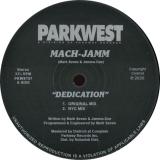
PARKWEST intorduces a brand new collaboration between label head Mark Seven and the LA-based recording artist Jamma-Dee. Together working under the name MACH-JAMM.
Four cuts here, all unique and special in their own way. The original version of Dedication, is a beautiful Burrell inspired gem, with a floating flute and Rhodes chords over a thumpin rhythm.
The NYC mix takes it where you might expect, to the classic sound of New York City house! The drums snap and the rhythms bounce.
On the flip Good Love is a Gospel inspired groove to raise the spirit with uplifting organ stabs and vocals. We finish we we began in deep NJ style, as Lost in the Maze pairs hypnotic vocal chant and horn licks over a rock solid bass.
An Elephant Eye; A Frozen Girl; and an Umbrella Man walk into an Icebox. All have been shoveled out of a Jungle-den and are covered in Mud Fleas. The Umbrella Man has been Dolt-ing around on the Machinery for Years. . .knowing it Hasn’t-Really-Rained since he threw his last Bacchanal. He thinks he owns birds; he just listens to them really. The Frozen Girl keeps away from him but moves Incredibly slow given the Circumstances. . .she’s been trying to tie her shoes for 700 years. The floating Eyeball, defying all Man Physics, Miraculously Phases himself All the way to the outside of the Icebox; Barreling through the Crisp air. He then comes to a Grinding halt before a Ginormous Totem pole of Speckled flesh, Grey and exceptionally thick, Wrinkling like telephone Wire. He quickly realizes that’s where the rest of his Body went. The only thing that’s missing is his Trunk. But he’s learned to communicate Decently Well without it. . .Using Semiotic chains of Eyelid-signifiers. . .An Eyeball shaped hole has been Burnt into the Icebox but the Frozen Girl won’t know for another 53 years and by then Big-Pants won’t even be in. The Umbrella Man doesn’t particularly so much as Notice and think its smells a lot like Burnt toast. He says he’s off to the Cemetery.
What do Them Three have in common anyway? Well they all Dig Pins; they also all Exist because of Him. And, Starting today, are Perpetually Entrapped in 10 millimeters divisions of Black resin upon a Circular Plain. I want to hear them cry and shout, You might say, because we are all Up-standers. But all crying and shouting Ourselves into the Icebox. . .
Even if Ancient Greek isn’t part of general knowledge anymore, the word mega is. Hence, you might admire our modesty to say that Roman Flügel’s first outing on Running Back in 2022 is perfectly headed. Greta, large, mighty and somewhat the love- or brainchild of his earlier Garden Party and the previous D.I.S.C.O., Mega pulls out all the stops: hi-nrg melodies, circus bells, cowboy funk and honey hooks at 140 beats per minute. While it is nearly impossible not to take this bait or decorate it with the Bobby-O medal of honor, Roman proves one more that you can be catchy and classy at the same time.
Rules on the other hand, puts some of these stylistic devices in reverse or down-tempo mode and feels like brushing your teeth after an extended feast or the perfect hors d’oeuvre.
Completing the picture with Film 1, Film 2 and Film 3, Flügel flexes his freethinking muscles and lands in-between art school new wave bands and soundscape science. Music that is masterly made, magical in its impact and perfectly described with a misquoted line from Get The Balance Right: it’s never predictable.
Pronounced Zero (ay ay) RIOT
Shit and Shine go fully CAN on their eleventh album release for Riot Season since their debut way back in 2004.
DEEP SOLID GROOVE REPETITION !!
Fully CAN in the sense that the rhythms are VERY CAN LIKE, but with a modern sharper edge and less flowery decoration. If CAN had a Roland TR-1000 drum machine it might sound a lot like this!
Basically all your favourite bits of krautrock, but sharpened up with modern tools, and it works perfectly! Say it again … DEEP SOLID GROOVE REPETITION !!
It’s definitely danceable, if that’s your thing, but also definitely deeply listenable. Something to put on and fill the space with infectious groove while you wash the dishes or drive your car, have your workout (I’ve heard from several sources $&$ makes excellent workout music) or whatever.
Two long songs on each side of the record. It’s an absolute beauty and actually sounds like shit and shine might be taking things a bit more seriously for a fuckin’ change! BRAVO !!!
The songs of Jules de Corte are condensed, folky gems with an almost effortless charm. Poised between the intimate and the universal, between lightness and darkness, they touch on religion, love, loss, and the small dramas of everyday life. Yet they resist easy translation. Packed with wordplay, de Corte’s signature alliterations, humor, and local cultural references, the songs inevitably lose something in another language. Still, when a Belgian quartet of improvisers takes them on, joined by American songwriter Bonnie ‘Prince’ Billy, the songs are reborn rather than merely transposed: literal fidelity gives way to interpretation, and what is lost in words is often gained in spirit.
Even without tracing every change, their overall effect is fascinating. Songs are slowed down, often doubled in length, and filled with unexpected musical intrusions. They gain fuller arrangements and are placed in an entirely new context. Replacing de Corte’s piano with guitar can create a radically different vibe, as in “Mariska.” An added solo can heighten the contrast between childlike perspective and the almost matter- of-fact brutality of “Little Anita.” In “The Stranger,” another use of contrast unsettles the everyday harmony, transforming it with a subtle, disorienting twist.
Ultimately, these performances show that interpretation is not successful simply because it is literal. With the groundwork laid by Linus, Bonnie ‘Prince’ Billy further liberated the songs from their original versions. Lyrics and melodies become malleable, shaped by his recognizable cadences, timbre, and personal quirks. Like his collaborators, he allows himself the freedom to bend the material to his own approach. There is no radical break between this performance and his other records. Listeners familiar with the originals may be puzzled at first; for those new to de Corte, it is a wholly different experience.
Does it really matter that the original “Little Jesus, Mighty God” is a 100-second nugget combining playful naivete with biblical fervor? In the hands of these five explorers, the song becomes an intriguing contemplation, with subtle musical shades and a recitation in which every syllable carries a maturity that offers a new perspective. Then there is “The Outsider,” which feels as genuine as any original American folk song. The musicians’ process is more than reinterpretation—it is reimagination, bringing new musical compatibility and emotional depth. Whether that depth was there from the start, waiting to be uncovered, or created in the process is beside the point. What matters is that Linus and Bonnie ‘Prince’ Billy have made the essence of these songs their own, paying homage yet dancing to their own tune.
Linus is the Belgian duo of guitarist and banjo player Ruben Machtelinckx and reedist and synthesiser player Thomas Jillings. Across five previous albums — Onland (2014), Linus + Skarbø / Leroux (2015), Felt Like Old language at the crossroads of folk, jazz, minimalism, chamber music and free improvisation. Their music is adventurous, shaped by a particular sensitivity to texture, timbre and the subtle interaction between musicians.
What began as a duo gradually grew into a flexible musical world, bringing Linus together with musicians such as Nils Økland, Ingar Zach, Niels Van Heertum, Øyvind Skarbø and Frederik Leroux. Yet each new constellation has remained recognisably Linus: music in which carefully considered forms leave space for intuition, interaction and the unexpected.
For their sixth album, Linus takes a new step by moving into the world of song and text. Inspired by a shared love for the late Dutch songwriter Jules De Corte, the album is a reimagining of De Corte’s unique repertoire. More than simply interpreting De Corte’s songs, they absorb and reshape them, bringing them into dialogue with their own musical language. In keeping with this open approach, they are joined by celebrated vocalist Bonnie “Prince” Billy. With albums such as 1999’s I See a Darkness appearing on several greatest album lists, Bonnie “Prince” Billy is a cult figure in the alternative folk scene, and his highly intuitive way of singing seamlessly matches the subtle interplay Linus has developed over more than a decade.
Ralph Session is a direct connection to the old school and original house values and he brings all those to the fore here. 'Move Your Body' (feat Mr Flip - main mix) touches on hip-house energy with jacked drums and rapped vocals. 'You Never Know (Party Break)' is deeper, smoother and soulful for when you need a nice late-night pick-me-up and 'Feel That Spirit' plays around with jazzy, off-grid chords and expressive vocals that play with pitch. The highlight might be the effortlessly breezy closer 'Listen', which is a broken-beat and sun-bathed delight for summer sessions.
Layne & Chang might not be household names to everyone, but in the underground they’re long-established fixtures. Chang—who’s released music under a string of aliases over the years—was tipped by Urb magazine as one to watch back in the mid-’90s and has been embedded in dancefloor culture ever since. Alongside him, Layne Fox (formerly San Francisco, now back in Florida) brings deep disco credentials, having helmed the cult-loved Disco Dimensions label and recording as 40 Thieves—best known for the underground anthem Don’t Turn It Off. In short, the boogie lineage on this record runs deep.
And that’s before you even get to Dan Tyler. As one half of the Idjut Boys and co-founder of Noid Recordings, Tyler helped lay the groundwork for London’s edit culture long before it became a global phenomenon. His involvement here only strengthens the package.
“Shake Your Body” opens the release with a locked-in, funk-driven groove—swirling melodic lines, subtly acidic textures, warm vocoder touches, and tight, punchy drums all dialed for peak-time movement. On the A2, “In The Desert” shifts the mood into something more transportive: a hazy, late-night burner equally suited to open-air parties, after-hours sessions, or home listening with the lights low.
Flip to the B-side and Dan Tyler delivers two cosmic reworks that push things further out. Psychedelic, elastic, and built for serious systems, both cuts hit that sweet spot between heady and physical—already circulating among a handful of tastemaker DJs and primed for heavy rotation as festival season ramps up.
A strong, floor-ready release that sits comfortably in the Whiskey Disco catalogue—rooted in disco, but reaching well beyond it.
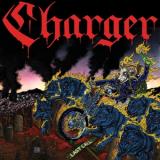
The East Bay's mighty Charger has returned with five new songs on 12" vinyl... Last Call is on its way from Pirates Press Records just in time for your motorcycle trip to hell! Charger members hail from legendary punk bands such as UK Subs, Rancid, and Jello Biafra & The Guantanamo School of Medicine, just to name a few, but make no mistake, this band is its own entity with its own sound forged together! The band laid down these tracks in July 2025 at Studio 2200 in Sausalito, CA - formerly known as the Bay Area's legendary Record Plant - with Chris Dugan at the helm
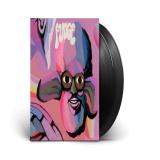
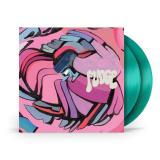
Fudge is Michael Kiwanuka’s most free and instinctive album to date. A vibrant, deeply human record shaped by spontaneity, emotion, and creative joy. It’s loose, soulful, and alive with the kind of magic that only happens when the process leads the way. The album was inspired by the encouraging words of the late Chick Corea, whose interview Michael stumbled upon during the pandemic lockdown, urging him to embrace what he loved without worrying about what others might think.
Each physical edition brings you into that world. The artwork, created by Michael’s friend and visual collaborator Stevie Gee, bursts with colour and character. It’s a psychedelic cartoon-inspired piece that perfectly mirrors the album’s warmth and wonder
Fudge is Michael Kiwanuka’s most free and instinctive album to date. A vibrant, deeply human record shaped by spontaneity, emotion, and creative joy. It’s loose, soulful, and alive with the kind of magic that only happens when the process leads the way. The album was inspired by the encouraging words of the late Chick Corea, whose interview Michael stumbled upon during the pandemic lockdown, urging him to embrace what he loved without worrying about what others might think.
Each physical edition brings you into that world. The artwork, created by Michael’s friend and visual collaborator Stevie Gee, bursts with colour and character. It’s a psychedelic cartoon-inspired piece that perfectly mirrors the album’s warmth and wonder