WRWTFWW Records is wonderfully proud to announce the long anticipated official reissue of Chrysalide (1978), the sole album from French multi-instrumentalist and enigmatic genius Michel Moulinié. The krautrock/ambient/minimalism paragon is available as a limited edition LP with one never-heard bonus track. It is sourced from the original reels and housed in a heavy 350gsm sleeve.
Originally released in 1978 on Ange and Jean-Claude Pognant's mythical prog rock label Crypto,
Chrysalide is a fusion of minimalist meditations, cosmic soundscapes, and ambient with a human warmth, carried by a profoundly beautiful and unique use of twelve-string guitar, bass, and violin.
Ideal for an introspective listening experience, the hypnotic Kosmische Musik of Michel Moulinié belongs to the same psychedelic family as Manuel Göttsching’s Inventions For Electric Guitar, Mike Oldfield’s Tubular Bells, early Tangerine Dream, and Steve Hillage’s innovative guitar mastery. WRWTFWW listeners might also be reminded of the label’s seminal French release, Dominique Guiot's L'Univers de la Mer, which makes a great spiritual pairing with Chrysalide.
Escape into the vast universe inside yourself :
Cerca:mini
The Circus is a place of lights and colors, but also of shadows, even darkness. Admittedly, it delights children and makes adults laugh. But you only need one rainy autumn evening near a circus tent and the smell of fodder to think of the sadness of the clowns, the endless training of the animals and the freaks who are hidden in some caravan... cinema, the essence of the circus – movement, light, danger and burlesque – will have been admirably rendered in Notes on the circus by Jonas Mekas (1966), one of the inventors of the filmed diary. With Cirque, Michèle Bokanowski does similar work, entirely dedicated to spinning, in the musical field.
She distinguished herself in particular in the composition of musique concrète, among others Tabou and Trois chambres d'inquiétudes, after having studied with Pierre Schaeffer and Éliane Radigue. The latter, great lady of drone and minimalism, fell under the spell of Cirque and wrote the booklet for the piece as a poem.
The piece, divided into five movements, is based on the handling and editing of recordings captured within one or more circuses (this is not specified and is of no importance) between 1988 and 1993. The initial allegro reveals the gallop of a horse joined gradually by other images. The idea of the circular space of the circus tent is immediatly and magnificently rendered and will be constantly recalled by an insistent use of the loop technique. Children's laughter, applause and drum rolls are thus sheared, repeated before being brutally interrupted. Accordion interludes and the distortion of sounds create a dreamlike atmosphere. This beautiful nightmare reminds us, to quote Éliane Radigue, the "Magic of childhood still living in the heart of man even beyond its abrupt end."
Words by Alexandre Galand, from the book “Field Recording – L’usage sonore du monde en 100 albums” (ed. Le mot et le reste, 2012)
Major member of the french musique concrète scene, Michèle Bokanowski was born on August 9, 1943 in Cannes, FR, to a musician mother and a writer father. She now lives and works in Paris.
Music lover since adolescence, it was relatively late, at the age of 22, that Michèle Bokanowski decided to study composition. Reading In Search of a Concrete Music by Pierre Schaeffer was decisive. After classical training on harmony, she met Michel Puig, a student of René Leibowitz, who taught her writing and analysis based on the Treatise of Schönberg. In September 1970 she began a two-year internship in the ORTF Research Department under the direction of Pierre Schaeffer. She takes part in the same time in a research group on sound synthesis, studies musical computing at the Faculty of Vincennes and electronic music with Éliane Radigue.
Her main works are intended for concert: Pour un pianiste, Trois chambres d’inquiétude, Tabou, Phone Variations, Cirque, L’étoile Absinthe, Chant d’Ombre, Enfance, Rhapsodia, Cadence, Elsewhere. She has also composed for theater (with Catherine Dasté), dance (with choreographers Hideyuki Yano, Marceline Lartigue, Bernardo Montet) and cinema: music for the short films of Patrick Bokanowski and his two feature films L'Ange ( 1982) and A Solar Dream (2016).
Following a ten-part series of unannounced artist records and a spectacular high-concept album on Mask Records, label head ZentaSkai returns to the imprint for his next solo vinyl-only release, ‘Bob’.
The A1 sees the Berlin-based ZentaSkai combine a dusty, taped white noise feel with subtle, swirling dub chords as its high-end propels the track forward. It’s a stunning and evocative piece before the A2 continues with minimal drums and electric acid bleeps, a smooth organ lead completing its gorgeous soundscape.
On the B-side of the ‘Bob’ EP, ZentaSkai joins forces with long-time collaborator Sebastian Klenk. It follows their
‘Apeiron’ track on ZentaSkai’s 2023 ‘Architecture Of The Mind’ LP, among other joint work, and sees them deliver a near-twelve-minute track that is a true masterpiece. The track takes listeners through found-sound texture samples, intricate drum patterns, crunchy breakbeats, and more beautiful dub melodics.
‘Bob’ is another fantastic listening experience on Mask Records, already supported by Satoshi Tomiie, Raresh and Laurent Garnier.
Der deutsche Literat, Kritiker und ehemaliges Mitglied der Fernsehsendung "Das Literarische Quartet", Maxim Biller, hat mit der Unterstützung des Berliner Multiinstrumentalisten Malakoff Kowalski zwölf von ihm selbst komponierte Lieder aufgenommen. Das Ergebnis ihre Kollaboration heißt "Studio" und ist ein beeindruckendes, zeitloses Werk, das sich musikalisch - man kann diese illustren Namen durchaus zum Vergleich heranziehen - an Größen wie Leonard Cohen, Serge Gainsbourg oder Paolo Conte anlehnt. Die "Studio"-Songs sind politisch, melancholisch, romantisch, vor allem aber sehr außergewöhnlich. Einen singenden Schriftsteller im deutschsprachigen Raum - das hat es schon Jahrzehnte nicht mehr gegeben!
Gregory T.S. Walker’s Minstrels & Minimoogs was self-published by a young, nomadic composer and virtuoso in 1988 to accompany an immersive multimedia performance at the University of Colorado Boulder’s Fiske Planetarium. Created with this outer, and other, world setting in mind, the four tracks find Walker stretching toward an ancient-to-future vision where Egyptian myths and Hieronymus Bosch-ian tableaus are rendered in a screaming three dimensional circuitry of electronic drums, synth guitars, and, of course, Minimoog. Given the musical terrains and outmoded topics traversed, and that this entirely DIY effort was originally released as a micro one-sided 12” edition, Minstrels & Minimoogs is as perplexing and euphoric a document lost-to-time as it is now found.
Born in 1961 into an intensely musical family spanning four generations, Gregory’s mother Helen Walker-Hill was a noted musicologist specializing in the rediscovery and work of historical Black female composers, while his father, George Walker, was the first African American composer to win the Pulitzer Prize for music. Both parents studied with the famed (and famously strict) Nadia Boulanger in Paris in the 1950s, and held to lofty aesthetic standards in their home life. Walker began studying the violin as a child, but when a burgeoning interest in the electric guitar and rock music as a teen manifested, it was largely verboten in the household. The rule was that the music played in the home was to be acoustic and classical. Although the elder Walkers eventually relented and allowed Gregory’s guitar to be plugged in for a brief interval on the weekends, the remaining days he settled for strumming it sans amplification.
Gregory, conditioned and eager for a life in music but looking to get out from under the influence and yoke of his famous composer father, ultimately chose to study computer music at the University of California at San Diego, where he earned a Master of Arts. This was followed by another MA in electronic music composition at that hotbed of West Coast experimental music, Mills College. Intermedia and multimedia in the arts was the rage in the 1980s, and Mills was one of the centers for it; audacious spectacle meeting visionary performance, such as one of the realizations for Anthony Braxton’s music for multiple orchestras a young Gregory performed in with his violin.
After a series of solo synthesizer concerts around California, Gregory followed a girlfriend on a mid-country move to Boulder, Colorado. After picking up yet another composition degree at University of Colorado Boulder, his life as a composer really started, writing a piece for extended technique for guitar, a passacaglia for vocoder and orchestra, as well as Minstrels & Minimoogs.
Envisioned as a multimedia performance such as the kind he’d experienced at Mills (which was all but unknown in Boulder at the time), Gregory roped in a number of college going or aged friends of varying skill levels and musical sympathies to accompany him with distorted sax or oblique spoken interludes. Confronted with a lack of finances, but driven to get his ideas captured in a complete musical package, the album was recorded in his brother’s apartment. If not every player assembled was on Gregory’s virtuosic level, so be it; it was more about capturing the spirit of his intentions and embracing the serendipity of mistakes.
An inspired attempt at world building, Minstrels & Minimoogs draws on the deep well of musical knowledge Gregory gathered from his parents and teachers, but all the while subverting that historical basis by incorporating mutant strains of prog and pop music. The work accumulated is not unlike the playful 1980s work of Gregorio Paniagua, where medieval estampies and rondeaus are wrenched into an anachronistic present where Hildegard Von Bingen and Kate Bush are contemporaries. Ars nova, new art, a 20th century minimalist jester and troubadour.
A one sided LP was the cheapest option Gregory found to have Minstrels & Minimoogs memorialized on vinyl, so somewhere between 50 to 100 copies were pressed. There was no distribution, outside of copies that were handed out to friends or sold at the performances at the planetarium. Gregory T.S. Walker’s cosmic-futuristic forays into oblique pop and baroque subversion could forever reside perfectly in both the domed simulacrum of our universe for which it was composed, in the formats it is being reintoduced now, and our own biblical firmament. For in the words of Gregory, straight from the original liner notes: “God Is A Minimoog”
Gregory T.S. Walker’s Minstrels & Minimoogs arrives again August 23, 2024 on vinyl and digitally as part of uncommon¢ (“uncommon sense”), an open-ended, serialized endeavor from Freedom to Spend that provides new meaning for rarefied recordings from music's outermost fringe.
- July 17, 1955, Newport Jazz Festival
- A1: Spoken Introductions By Duke Ellington And Gerry Mulligan
- A2: Hackensack
- A3: ‘Round Midnight
- July 17, 1955, Newport Jazz Festival
- B1: Now’s The Time
- July 3, 1958, Newport Jazz Festival
- B2: Spoken Introduction By Willis Connover
- B3: Ah-Leu-Cha
- July 3, 1958, Newport Jazz Festival
- C1: Straight, No Chaser
- C2: Fran-Dance
- July 3, 1958, Newport Jazz Festival
- D1: Two Bass Hit
- D2: Bye Bye Blackbird
- D3: The Theme
- July 4, 1966, Newport Jazz Festival
- E1: Gingerbread Boy
- E2: All Blues
- July 4, 1966, Newport Jazz Festival
- F1: Stella By Starlight
- F2: R.j
- F3: Seven Steps To Heaven
- F4: The Theme / Closing Announcement By Leonard Feather
- G2: Gingerbread Boy
- G3: Footprints
- July 2, 1967, Newport Jazz Festival
- H1: ‘Round Midnight
- H2: So What
- H3: The Theme / Closing Announcement By Leonard Feather
- July 5, 1969, Newport Jazz Festival
- I1: Miles Runs The Voodoo Down
- I2: Sanctuary
- I3: It’s About That Time / The Theme
- November 1, 1973, Newport Jazz Festival
- J1: Spoken Introduction By Ronnie Scott / Band Warming Up
- J2: Turnaroundphrase
- J3: Tune In 5
- November 1, 1973, Newport Jazz Festival
- K1: Ife
- K2: Untitled Original
- November 1, 1973, Newport Jazz Festival
- L1: Tune In 5 / Closing Announcement By Ronnie Scott July 1, 1975, Newport Jazz Festival
- L2: Mtume
- October 22, 1971, Newport Jazz Festival In Europe
- M1: Directions
- M2: What I Say
- October 22, 1971, Newport Jazz Festival In Europe
- N1: Sanctuary
- N2: It’s About That Time
- July 2, 1967, Newport Jazz Festival
- October 22, 1971, Newport Jazz Festival In Europe
- O1: Bitches Brew
- October 22, 1971, Newport Jazz Festival In Europe
- P1: Funky Tonk
- P2: Sanctuary
- G1: Spoken Introduction By Del Shields
The 8-LP box set Miles At Newport 1955-1975 - The Bootleg Series Vol. 4 features of live performances by Miles’ stellar band lineups from 1955, 1958, 1966, 1967, 1969, 1971, 1973, and 1975, in New-
port, Rhode Island, New York City, Berlin, and Switzerland. From Miles’ debut performance at NJF in 1955 (a hastily arranged jam session featuring Thelonious Monk and Gerry Mulligan), to his final public performance of the ‘70s in 1975, the box set traces the ascen- dance of Miles’ music as the jazz superstar he has become known to be.
The full-length concert performances alone of Miles’ famed “Kind Of Blue” Sextet (with Cannonball Adderley, John Coltrane, Bill Evans, Paul Chambers, and Jimmy Cobb), and second great quintet in ‘66 and ‘67 (with Wayne Shorter, Herbie Hancock, Ron Carter, and Tony Williams) represent templates that reverberate in jazz and popular music to this day.
Miles At Newport 1955-1975 - The Bootleg Series Vol. 4 is available as a deluxe 8LP box set, housed in a lift-off box. The set includes print- ed innersleeves, a mini poster of Miles, and a 12-page booklet with extensive liner notes and rare photos.
- A1: Bloom (Feat. Esther Durin & Elsie)
- A2: Warning (Feat. Cimone)
- A3: Changes (Feat. Askel & Elere And Javeon)
- B1: Take Me Under
- B2: Crunchy Nutter
- B3: Music To Smash Your Head Against The Wall To
- C1: Dusty 45
- C2: Dubbin Out (Feat. Sweetie Irie)
- C3: Stacatto
- D1: Minimalizm
- D2: Summer Breezin' (Feat. Paige Eliza)
- D3: Little Giggler (Feat. Elsie)
Prepare for take-off as your favourite multidimensional sound supplier, Unglued, unveils his long-awaited second album, "What on Earth". Set to launch you into the stratosphere with 14 fresh meteoric cuts, the Brighton-based producer continues to prove himself as one of the most innovative in the game. Expect a killer line-up of collaborations alongside Pola & Bryson, Lens, SOLAH, Urbandawn, Sweetie Irie, Waeys, Duskee, Paige Eliza and heaps more.Get ready to embark on an auditory adventure like no other - "What on Earth" by Unglued is set to be his biggest release to date, and it's guaranteed to be out of this world.
Since his unforgettable entrance onto the drum & bass circuit with his infamous remix of High Contrast's "If We Ever", Unglued has quickly become known for having one of the most distinct and versatile production styles in modern dance music. His debut album "Interplanetary Radio" was home to anthems such as "South By West", "Total XTC" and "Way Back When (feat. Esther Durin)", and since then Unglued has unleashed a slew of radioactive rumblers such as "If You Like That" with Whiney, Lens & Doktor, "Show Me The Light (feat. Kathy Brown)", and "Warning" alongside Pola & Bryson. Championed by leading industry tastemakers such as Gilles Peterson, Charlie Tee, Sherelle, Annie Mac, and more, Unglued's flawless musical output has led to him lighting up stages at some of the biggest shows and festivals across the globe, including Glastonbury, Boomtown, Hospitality On The Beach, Rampage, and Let It Roll to name a few. Not to mention sell-out tours across USA, Australia and New Zealand! "What On Earth" will be available in digital and vinyl formats from your nearest planet on 26th July
"Following the resonating success of their initial collaboration, the TLF Trio—comprising Danish cellist Cæcilie Trier (CTM), pianist Jakob Littauer, and guitarist Mads Kristian Frøslev—reunites on Latency with electronic music legend Moritz von Oswald for the follow-up to their debut album, 'Sweet Harmony.'
TLF Trio, along with Moritz von Oswald, once again delves into the realm of chamber music, this time with two new songs further exploring the intricate acoustic dynamics of their instruments with electronics. As the second instalment in this musical journey, 'New Songs & Variations' builds upon the minimalistic, sculptural, and narrative qualities of its predecessor, weaving a tapestry of expressive and plural voices.
Moritz von Oswald, a central figure in the electronic music scene since the early '90s, brings his wealth of experience to the project, reinterpreting two of TLF Trio's previous works. From his early days as a classical percussionist to groundbreaking collaborations in the techno sphere, von Oswald's influence has left an indelible mark. His role in co-founding Basic Channel/Rhythm & Sound and contributions to the Berlin-Detroit-Chicago axis have defined various strains of modern music.
'New Songs & Variations' not only captures the rich history and influence of Moritz von Oswald but also showcases his ongoing exploration into classical, experimental, and improvisational contexts. From recomposing Ravel and Mussorgsky’s music for Deutsche Grammophon to acclaimed collaborations with jazz trumpeter Nils Petter Molvær, composer Laurel Halo, or Afrobeat pioneer Tony Allen, von Oswald's versatility continues to evolve.
TLF Trio and Moritz von Oswald invite listeners to embark on a sonic journey that bridges the past and the present, mirroring the transformative essence of Louise Lawler's distorted image, which graces its cover—a testament to the delicate fluidity and shape-shifting nature of the music contained within.
Compossed by Moritz von Oswald, Cæcilie Trier, Claus Haxholm (beat on Chrome), Jakob Littauer and Mads Kristian Frøslev.
Mastered by Kassian Troyer at Dubplates & Mastering.
Artwork by Louise Lawler. Formica (adjusted to fit, distorted for the times, slippery slope 2), 2011/2012/2015/2017. Courtesy the artist and Sprüth Magers. As adjusted for Latency.
- Hollow Inside
- Light The Beacon
- Not Like I Was Doing Anything
- Note On The Table
- You Know It's True
- What Time Is It There?
- I Can't Sleep Thinking You Hate Me
- Smitten
- Portland, Oregon
- Let Me Brush The Hair From Your Face
- Stay
- Shoot The Moon
- Barney & Me
- Firefly
- La International Airport
- Crying
- If Things Had Been Different
- I Take It That We're Through
Repress
Songs ’94-’98 is a smart selection of material from The Cat’s Miaow, an Australian indie-pop group that gifted their decade with some of its finest songs. Released on World Of Echo, the album draws from the group’s string of excellent seven-inch singles, a small clutch of compilation contributions, and features one previously unreleased song, “I Take It That We’re Through”, recorded in 1998. Part of the burgeoning international pop underground of the nineties, The Cat’s Miaow’s legend has only built over subsequent decades, as more people discover this most quixotic and curious of groups: a recent appearance on A Colourful Storm’s compilation of Australian indie-pop, I Won’t Have To Think About You, is testament to their enduring influence. In part emulating the selection of tracks on the 1997 CD-only compilation, Songs For Girls To Sing, Songs ’94-’98 is also the group’s first ever full-length 12” vinyl collection. The Cat’s Miaow started out in 1992 as a home-recording duo, Bart Cummings (guitar, bass, vocals) and Andrew Withycombe (bass, guitar) taking time out from duties with Girl Of The World and The Ampersands (respectively), knocking out songs on Withycombe’s four-track. Soon joined by Kerrie Bolton (vocals) and Cam Smith (drums), the quartet spent the next five years quietly, slowly working away in the suburbs of Melbourne, recording gem after gem of independent pop. Like many of their Australian precursors or peers – The Particles, Even As We Speak, The Cannanes – The Cat’s Miaow were more successful overseas, a sadly typical phenomenon within the Australian musical landscape. The Cat’s Miaow were always worldly and stylish, anyway, each seven-inch single a refined artifact, each song a peaceable jewel. You could hear some relationships with other music – someone (if not everyone) in The Cat’s Miaow was a Galaxie 500 fan; there’s a minimalism to the playing and melodies that recalls Young Marble Giants, Marine Girls, Beat Happening – but the spirit in these songs is endearingly individualised, the result of a hermetic vision, an ideal of what a simple, unadorned pop song could be. They had a winning way with simplicity, songs like “Autumn”, “Crying” and “I Can’t Sleep Thinking You Hate Me” passing by in the blink of a moistened eye, and when they stretched out, as on “Firefly”, you can hear hints of the drifting ambience they’d perfect in their other band, Hydroplane. It’s not much of a surprise that The Cat’s Miaow found a receptive audience, and no small amount of support, from the networked communities of indie-pop labels and fanatics that developed in the nineties – they released records on imprints like Drive-In, Darla, Bus Stop and Quiddity, shared a flexi-disc with Stereolab, and appeared on countless compilations over the years. But they also understood the importance of the local: their first few cassettes reached the world’s mail routes via Wayne Davidson’s legendary Melbourne tape label, Toytown; they turned up on a split single with Davidson’s group, Stinky Fire Engine; they appeared on a tribute cassette for one of Australia’s finest, The Sugargliders, and indeed that’s Josh Meadows of said group playing wah guitar on “Stay”. The Cat’s Miaow also rarely played live – one launch gig, for the Munch video compilation, and a few parties – which is a great way to maintain mystique. Cosmopolitan yet homely, dedicated to their craft, The Cat’s Miaow always felt a little like a group moving in slow motion, using that pace and focus fully to embrace the art of the perfectly stated pop song – every element in place, no flash and no fuss, no excess, just the core of the thing. Few managed to tease such fierce poetry from such understated, elegant means. From Australia or anywhere.
Simple Reality cements the short lived legacy of Coventry DIY group Skeet.
Emerging from a scene of first-generation punks and 2 Tone kids, Skeet was instigated by Gary and Nigel Meffen in 1981, fusing tightrope instrumentals with a Roland CR-8000 under the glow of projected visuals. After a cassette of their debut performance found its way to Kay Booth who worked at Inferno Records, the unsuspecting frontwoman took the liberty of adding her own vocals. Instantly embraced as a permanent member, Booth’s shy delivery and open-diary expressions of social alienation and romantic rejection hovered over the brothers’ scratchy guitar and agitated bass.
Playing as few as 10 shows, their unnerving minimalism was recorded in a suburban home studio, borrowing a reel-to-reel from Toby Lyons (The Colourfield) and a mixer from Jerry Dammers (The Specials). Record labels gestured interest until one day they were no more - no arguments, no official split, just a silent parting of the ways and three people taking journeys in different directions. Unheard and unloved in the vaults for nearly four decades, 'Brief Call' finally resurfaced via the Coventry Music Museum compendium Alternative Sounds Volume 1, followed by a micro pressing of the full suite on Chris Long’s Almost Unknown imprint in 2023.
Simple Reality now offers a definitive snapshot of these must-hear neurotic post-punks. Mastered by Skeet fanatic Mikey Young, newly discovered instrumental multitracks are restored alongside a live recording of their final stand. Performed atop of a trailer in a pub beer garden, the release-worthy desk tape adds three new tracks and a more energised swing at ‘Left On the Shelf’s apathetic techno-pop.
RIYL: Fire Engines, 23 Skidoo, A Certain Ratio, Young Marble Giants, pel mel
- Self-Destruction
- God's Particle
- So There I Was
- On Solids
- Psychosomatic
- Stupid Kunst
- Strain Of Bacteria
- Deeper
- Till The Stars In His Eyes Are Dead
- Wednesday's Emotional Setup
- Going Off
- Punk Of Me
- System Blues
- The Presentation Of The Self In Everyday Life
- Designoid
- Like Elvis (Hello Mr Curtis)
- Bungled Existence
- Once In Montecorto
- Theme From Goodbye Antarctica
- Under A Lenient Moon
- Breakdown (Re-Recording)
- It Mattered
- Your Talking Sense
- Bet Your Mind
Buzzkunst ist PETE SHELLEY (Buzzcocks, solo) & HOWARD DEVOTO (earliest Buzzcocks, Magazine, solo). 'SPECIAL SAUCE' ist größtenteils eine Neukonfiguration des 2002er CD-only-Albums 'Buzzkunst' von ShelleyDevoto. JETZT (!) zum ersten Mal auf VINYL, mit einer neuen Reihenfolge und zwei (2) bisher unveröffentlichten Tracks - 'Psychosomatic' und 'Punk Of Me'. Und als ob das noch nicht genug wäre, gibt's noch ein zweites Mini-Album: 11 NEVER BEFORE RELEASED HOWARD DEVOTO ARCHIVE RECORDINGS aus der gleichen Zeit, mit dem Titel 'DESIGNOID'. Instrumentalstücke und Songs, eigenwillig wie immer, inklusive eines 21st century re-work von 'Breakdown', das ursprünglich auf der selbstveröffentlichten Debüt-EP der Buzzcocks, 'Spiral Scratch', enthalten war. "This Shelley is Pete Shelley _ old punks will remember him from the legendary Buzzcocks, while '80s rockers may recall his electro-pop hit Homo Sapien. The Devoto is Howard Devoto, Shelley's old Buzzcocks partner who went on to form the arty post-punk outfit Magazine. Now working together again for the first time in 25 years, the duo have achieved a sound that incorporates most if not all of their previous endeavours without reverting to cheap nostalgia. Their 14-track reunion album Buzzkunst is a progressive step forward, combining the grinding guitars of Shelley's youth and the poppy synthesizers of his middle age with the artsy sonic sculptures and post-punk yelp of Devoto's past." - Tinnitist,2002/2022
Last Train are an exception on the French indie rock scene. From the Olympia in Paris to the biggest festivals, the four Alsatians have won over a devoted audience with their hypnotic, moving concerts. Independent or nothing, they self-produce their records and tours, as well as their music videos, short films and even documentaries, with rigour and determination. At the end of 2022, the musicians had the luxury of taking their time and the right to experiment. Far from the beaten track, they are rewriting their own repertoire in a cinematic and contemplative way. By collaborating with the Orchestre symphonique de Mulhouse, Last Trainconfirm their viscerallove of large-format sounds and images, and present a veritable compendium of inï¬,uences in twelve tracks.Original Motion PictureSoundtrack is the soundtrack to a film that doesn"texist. From a symphonic chaseto a neo-classical interlude, from an organ requiem to an electronic soaring, the Mulhouse-based band play with the boundaries of genres. Last Train sets the bar ever higher with this unexpected, singular and striking album. It is accompanied by a mini-series documenting the work done in the studio, the collaboration with the orchestra and the day-to-day life of an authentic, inspired band.
Katya Shirskova - David Maranha - Le Héron / A Reuniåo
Stellagedelivers a compelling split LP fromKatya ShirshkovaandDavid Maranha, "Le Héron / A Reuniåo," set for release in July 2024. Created and produced in residence at La Box contemporary art gallery at ENSA - École national supérieure d'arts de Bourges in 2023, this album is a profound exploration of the two artists' respective voices, showcasing their distinctive approaches.
Katya Shirshkovaopens the LP with side-long "Le Héron." This piece is an unadulterated exploration of voice, devoid of any field recordings or added effects. Embracing minimalism, the work revolves solely around vocal loops and re-recordings, creating choral structures that evoke folk traditions while delving into experimental realms. The ASMR-like techniques employed serve not merely as an auditory gimmick but as an intricate tool to illustrate the delicate flight of birds, mirroring the ethereal quality of the entire composition.
"Le Heron" aptly draws inspiration from its avian namesake, weaving birds into its fabric through the concept of vertical polyphony. The piece is underpinned by a profound understanding of this polyphonic approach, demanding meticulous precision in its looping technique. Each fragile construction is crafted in a single, unbroken take, showcasing an impeccable blend of simplicity and complexity.
David Maranhatakes over on the flip side with "A Reuniåo," delivering seven suites of powerful, minimalist drone compositions. Maranha's mastery of sustained tones and evolving harmonics creates a mesmerizing, meditative experience that is both intense and transformative.A dynamic interplay of harmonics creates a dense, immersive auditory environment, a study in sustained tones and subtle variation, leaving a lasting impression.
Mixed and mastered by Giuseppe Ielasi
South Korean label Walls And Pals is back with their split EP series, featuring label co-founders Mogwaa and Jesse You. Mogwaa is in charge of A Side, showcasing his very own minimal approach with electro-progressive touch. On B Side, there's Jesse You, armed with raw and heavy floor burner as well as 2000s influenced acid.
Black Truffle is thrilled to announce a reissue of Chico Mello and Helinho Brandão’s self-titled release from 1984, the first return to vinyl of this classic of Brazilian experimental music with its original cover art and complete track listing. An under-recognised figure whose work inhabits a singular terrain where radical new music techniques and music theatre meet musica popular brasileira, Mello has lived and worked in Berlin since the late 1980s. A student of Dieter Schnebel, Mello played in the 90s iteration of Arnold Dreyblatt’s Orchestra of Excited Strings alongside compatriot Silvia Ocougne, with whom he produced a radical and hilarious deconstruction of MPB classics on Musica Brasileira De(s)composta (an early and rather atypical release on Edition Wandelweiser).
On this release, his only recording predating his move to Europe, Mello works with the alto saxophonist Helinho Brandão, who appears to be otherwise unknown outside Brazil. The record’s six tracks range from solo saxophone improvisation to densely layered ensemble works bridging minimalism, acoustic sound art and a plaintive melodic sensibility that calls up Edu Lobo or Milton Nascimento. Beginning with a dramatic, dissonant wind and string surge from which emerge ominously pounding piano chords, opener ‘Água’ slowly builds in intensity, a halo of clustered vocal harmonies gradually closing in on Brandão’s squealing sax until the piece opens up to reveal a gorgeous passage of melodic singing. The piano accompaniment reduces to tolling bass notes as the voice begins a repeated incantation, suggesting a ritualistic atmosphere reminiscent of parts of Xenakis’ setting of Oresteia. Dissonant, sawing tremolos on the strings climb to a crescendo before disappearing into the sounds of water being poured and splashed into metal vessels, presented not as a field recording but as a percussive element performed by the ensemble. A child’s voice then appears, singing to piano accompaniment the same melody heard earlier in the piece. After a brief solo alto improvisation from Brandão, working with the guttural pops and fleeting melodic gestures of Braxton or Roscoe Mitchell, the remainder of the first side is dedicated to the leisurely unfolding of ‘Baiando’ over the course of twelve minutes. A trio for Brandão on soprano saxophone, Mello on a very period-appropriate phased nylon string guitar and Edu Dequech on bongos, the performance eases its way hypnotically through subtle variations on a set of rhythmic and melodic patterns, almost derailed at points by Brandão’s wild forays into extended technique but held together by Mello’s droning guitar notes.
The second side opens with another multi-part epic for a larger ensemble, ‘Matraca’, which makes use of strings, electric guitars and a wide range of South American percussion instruments. Rasping violin harmonics hover as drum hits, repeated guitar notes and triangle accompany a slowly descending bass glissando. A sudden change in direction introduces a thrumming, incessantly repeated bowed bass tone, beginning a series of episodes of minimalist phasing and pattern variation, the combinations of electric guitars and orchestral instruments giving the ensemble an ad hoc charm like the early Penguin Café Orchestra but with more percussive drive. Eventually the piece is overrun by a cacophony of the titular matracas (a kind of ratchet/cog rattle). Following a lyrical trio improvisation by Mello, Brandão and Gerson Kornin on bass, the final ‘Danca’ focuses entirely on Mello’s layered acoustic guitars and vocals, using this restricted palette to build up a haunting piece of almost orchestral density, reminiscent of the 70s work of Egberto Gismonti in how it thickens a folkish ambience with harmonic sophistication.
Arriving in a starkly beautiful gatefold sleeve and sounding better than ever in its new remaster, one might call the stunning music contained on Chico Mello/Helinho Brandão ahead of its time. But what (other than some of Mello’s own work) produced in the years since its initial release has really touched the organic fusion of minimalism, free improvisation, radical instrumental technique and popular song achieved here? Forty years after its first release, Chico Mello/Helinho Brandão remains music of the future.
Ripple Music are ecstatic to present this brilliant record on vinyl for the first time! Fireball Ministry have
held their own for close to 30 years now and 'Their Rock Is Not Our Rock' is a prime example of this.
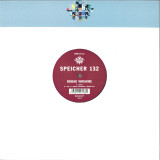
Robag Wruhme isn’t just a producer; he’s a sonic storyteller. His tracks are known for their emotional depth and technical brilliance – the perfect blend of minimal techno, deep house, and ambient music—each track a meticulously crafted journey through sound. With influences ranging from classical to jazz to world music, Robag’s music is as diverse as it is enchanting.
His latest offering on the trailblazing Speicher series is no exception. True to his unmistakable style, “Naila” meanders between heartwarming positivity and menacing darkness induced by one of those bass lines only Robag can deliver. In short: He nail(a)ed it!
On the flip side, he joins forces with the ominous Bruno Pronsato – an elusive character that has a string of cult releases on Perlon, Musique Risquée and Foom under his belt. “CDV” was initially released on his album “Live At Club Der Visionäre” on Logistic Records. Robag’s slick re-rub is pushing things decisively in an afterhour-ish direction. Mental music for mental times!
Fera’s trajectory sticks out like a sore thumb, you need to invest time, carefully divided between body & mind, to truly take a deep dive into his audacious output. After the acclaimed ‘Stupidamutaforma’ and ‘Corpo Senza Carne’, Fera is back with ‘Psiche Liberata’, an oblique, imperfect and broken record, in other words, exactly the type of magical voyage you want to be on. The mind, finally liberated.
Fera is Andrea De Franco, electronic composer from Southern Italy now residing in Bologna, also known for his work as visual artist/designer and member of the Undicesimacasa collective. His musical cosmos is profound and imaginative, intergalactic atmospheres that condense fragmented IDM, scintillating textures, distorted synthscapes, crunchy technoid rhythms and swirling abstractions that weave gently, sometimes moody and stark, more often celestial and awe-inspiring.
Mixed in Berlin by Steve Scanu ‘Psiche Liberata’ encapsulates Fera’s dense and intricate thought process in contrast with his simple and direct approach to writing and recording that finds its more natural output in his rapturous live sets where a mono signal runs through a few analog pedals transforming instantly into menacing alien grooves and fluid ecstasis.
Like ‘Psiche Liberata’s artwork, hand-drawn by Fera, every detailed miniature leads to a single cell of sound, tracks collide against each other in a psychotic kaleidoscope where every safe space is confronted with subsequent noise, alterations or interruptions. The black terror of ‘Celestial Anacusma’ is followed by the space-jazz banquet of ‘Milk Tears In The Hug Chamber’ doped up cyber Sun Ra extravaganza featuring Laura Agnusdei and Luigi Monteanni (Artetetra) on saxophones and flutes; ‘Silenzio Solare’ sprinkles Mille Plateaux era minimalism all over hallucinations, while ‘Diluvia’ crosses industrial acid with perpetual motion; title track ‘Psiche Liberata’ murmurs mechanically, a downtempo drifter for the wide-eyed 7AM comedown: ‘Simulacrima’ melts Boards Of Canada’s mellow pastoralism with dystopian meta-level dreamland and ‘Riposa’ showcases an overwhelming melancholy executed with elegance in a slo-mo world where the ineffable transcends notions of ambient and becomes a warm embrace.
Created on a Monotribe, MS20 & Volca Sample/fm, ‘Psiche Liberata’s velvet heaviness was achieved by re-amping many of the instruments through a Leslie Rotary Speaker and a reel-to-reel Telefunken. Fera’s sonic tapestry is in constant flux, underlying themes of love longing and affection run through the record but in a turbulent, volcanic, unleashed fashion, almost on the brink of utter noise or complete silence, reminding us that this is an artist like no other amidst the ever changing electronic scene. These are transmissions from the gutter, where the inevitable meets the unattainable and collapses.
"Fera’s tarnished materials are destined for ruin; “Stupida,” full of longing and regret, sounds like an elegy for a fallen world." Pitchfork
"A cut of dark magic that fits like a glove to overcast days, wild winds and lashing rains. Insistent, the treacle-thick bassline oozes out, soaking the space between the melancholic synth lines." Inverted Audio
"The songs on Stupidamutaforma feel hypnotizing...it establishes De Franco as a composer who uses space and time to create a set of rich, immersive works." Bandcamp 'Album Of The Day'
Fourth volume of Library Music miniatures by Daniel O’Sullivan (Ulver, Æthenor, This is Not This Heat, etc) for VHF, this time commissioned by the legendary German Music Library, Sonoton. Another sampling of O’Sullivan’s versatility and brilliance as a composer, performer, and sound designer, the focus on The Pastoral Machine is more “electronic” compared to the three previous albums O’Sullivan recorded for KPM (also issued on LP by VHF), with simpler arrangements and a focus on gentle and emotive synthesised soundworlds. Even without as many full ensemble arrangements, there’s still a wealth of diversity—“Empathogen” opens the record with latticed arpeggiating sequences recalling Japanese “environmental music” or Persian Surgery-era Terry Riley, “Fruit Of Stream Entry” burbles with gentle ripples evoking the album’s title, while “The Silversmith Of Space” mines a simple chord sequence evoking Eno’s ’70s classic short instrumentals. “Superstrings” is a series of hypnotic overlapping guitar patterns, like a lost Ash Ra or Achim Reichel track. The brief “Star Lore” is a heavy highlight with deep bass washes and grainy, tape-laminated melodies, followed immediately by Rose Keeler Schaffeler’s vocal feature on “The Oscillating Love” recalling futurist new-age pop in the vein of Enya or Virginia Astley. Housed in a jacket and heavy euro-style inner featuring collages by O’Sullivan, soon to be the subject of an art book published by Timeless Editions in mid-2024.