Kreng transports us through the swirling darkness and into the unknown with “Wormhole”, his first album in over a decade.
What does a trip towards another world sound like? We’re about to find out. The master of tension, melancholy, and the deranged is back after a long period working in the worlds of theatre and cinema. Last seen on Miasmah with the grief stricken The Summoner, Kreng now returns with Wormhole, following closer in the footsteps of the cult classics L’Autopsie Phénoménale de Dieu and Grimoire.
Starting with “You Are Here”, the listener travels through a vacuum of spacious minimalism and edge-of-your-seat tension. Within the journey, we are pulled and lured towards a mystic inner core and beyond, encountering drifting fragments of old-world nostalgia on the way: echoes of empty jazz bars sit alongside hellish, Hieronymus Bosch-like scenarios.
Surrendering to the album reveals a surprisingly reflective beauty beneath its darkness; it's a true home-listening gem that unfolds like a Lovecraftian cosmic horror-mystery in the way only Kreng could deliver. Forget everything you know and enter the secret door…
out of Stock
Last delivered 4 months ago available to reorder, subject to availability
This new album compiles several songs made in the years following Black To Comm's classic "Alphabet 1968" album. Originally released on the seminal Type label in 2009 (and to be reissued on Cellule 75 this year) "Alphabet 1968" combined the sound of vintage shellac and vinyl loops with broken electronics and field recordings, the press release mentioning disparate influences "ranging from Moondog to Basic Channel by way of Bernard Herrmann". In a beautiful one-page review in The Wire magazine (later reprinted in his book Ghosts Of My Life) Mark Fisher compared Richter's music to JF Sebastian’s miniature automata in Blade Runner ("with their bizarre mixture of the clockwork and the computerised, the antique and the ultramodern, the playful and the sinister"), ETA Hoffmann's inventor-magicians and Auguste Villiers de l'Isle-Adam's 1886 tale of Thomas Edison's (fictitious) construction of an artificial human.
Now titled "Coh Bâle" (inspired by a strange dream) these recordings were supposed to become a follow-up to said album but for reasons unknown it never materialized and the album seemed forever lost. At the time Richter started to dive deeper into several strains of (so-called) world music aka the folk music of Southeast Asia and Eastern Europe as well as liturgical and medieval music, the Kraut-Electronica of Harmonia and several certain Mediterranean experimentalists from the 1980's who started to merge their mostly electronic and field recording based compositions with traditional musics from all over the world by way of new sampling technology.
Many of the songs for the album were recorded while travelling and at various residencies around Europe: a detuned piano in a Thessaloniki basement (Richter played at a children's birthday party there), vintage synthesizers in the GRM studios in Paris, decaying acoustic instruments found in an old Black Forest mansion, childrens' voices at a workshop in Karlsruhe's ZKM Institute; then mixed on headphones in the ICE trains running between these places and his hometown Hamburg.
"Coh Bâle" is taking inspirations from old Nonesuch Explorer and Ocora LP's, Crammed Records, 80s Mediterranean Ambient (Nuno Canavarro, Roberto Musci) combined with the DIY spirit of Deux Filles and Flaming Tunes and the playfulness of Asa Chang & Junray. The songs are both mysterious and transparent, intricate and frugal, vibrant and patient. One of the album's unexpected climaxes is a gorgeous (artificial) berimbau version of the Welsh traditional "Iechyd o Gylch".
No two songs feature the same instrumentation and many acoustic sources (pianos, flutes, wood percussion, viola, tablas, autoharp) were disassembled and later coalesced into new configurations or used as virtual instruments; later combined with samples, field recordings, electronics and (on a few tracks) autotuned vocals reminding of recent works by the likes of Claire Rousay or More Eaze.
We had to wait for a worldwide pandemic for Richter to dig deep into the vaults and finally bring these recordings to light. This is the 2nd release from his archives after the "Diode, Triode" LP which presented Musique Concrète/Acousmatic recordings made at INA/GRM and ZKM. Another massive Double-CD (MM∞XX Vol. 1 & 2) was released last year featuring collaborations with 33 artists such as Andrew Pekler, Richard Youngs, Eric Chenaux, Maja Ratkje, Radwan Ghazi Moumneh of Jerusalem In my Heart, GRM boss François Bonnet (Kassel Jaeger), Felix Kubin, Timo van Luijk (In Camera, Af Ursin), Luke Fowler and many others, showing Richter's versatility and his willingness to reinvent himself for every new release.
Marc Richter is widely known under his Black To Comm moniker, having released (at least) 12 albums under this alias in the last 20 years. He is currently signed to the Thrill Jockey label. Richter composes soundtracks for film and has worked with visual artists such as Mike Kelley and Ho Tzu Nyen. He also records as Jemh Circs and Mouchoir Étanche for his own Cellule 75 label (named in tribute to the late Luc Ferrari).
out of Stock
Last delivered 4 months ago available to reorder, subject to availability
The anonymous Only Music Matters crew serve up another EP of smoking sounds for discerning crowds. It's the smart sampling of a classic motif from jazz-house great Saint Germain that makes the opener 'AAA001A' so enchanting as a bluesy vocal drifts in and out of a dry, dubby, minimal tech beat. 'BBB001B' is more driving and gritty, a clipped tech cut to keep things moving in the dead of night, then 'BBB002B' brings another supple groove, this time with rays of synth rising out of the mix like the morning sun. Quirky sound designs and a skipping rhythm make it irresistible.
out of Stock
Last delivered 10 days ago available to reorder, subject to availability
Justin K Broadrick (GODFLESH) and Mick Harris (Napalm Death) drop militant, hard techno on split LP.
New album doubles the track count (and runtime) of the duo's last collab.
Stalwart Birmingham, UK innovators Justin K Broadrick and Mick Harris have connected again as JK FLESH and MONRELLA to deliver the warehouse-destroying hard techno LP SHOUTING THE ODDS, five years after their last EP, SEE RED.
Featuring four tracks from each artist, SHOUTING THE ODDS invokes both the feeling of listening to late night pirate radio and sweating in a darkened warehouse as the rafters shake, complete with the perfect amount of analog wow and flutter. Brimming with gnarled, unrelenting kicks hovering between 130–140bpm, the split format deftly showcases both artist's individual strengths, while displaying undeniable commonality.
Broadrick's side leans traditional hard techno, filled with mesmerizing, minimal synth arpeggios and contrasting toplines, all aligned and maligned by shrewd transitions. Harris' section presents more experimental and house influences, using bright, distorted synth hits and a touch of forlorn melody. The tracks take on a life of their own through expert use of filters and just the right amount of delay, stutter, and glitch.
Never before has an album filled with such shining, shimmering synths been so black and threatening. JK FLESH and MONRELLA have hard techno down to a science.
“No-nonsense old school flavoured techno bangers. We're flying the flag for outsider techno." - Justin K Broadrick
out of Stock
Last delivered 4 months ago available to reorder, subject to availability
For the label’s new series (BOOEP), and it’s the founder BOOH who opens the dance. Precise, minimalist grooves, crushing bass, robotic vocals and a dark atmosphere form the signature of this EP, which erases the boundaries between techno and tech‑house.
Written Produced & mix by BOOH
mastering By DDA
Artwork by Antoine Provost
Distributed by One Eye Witness
out of Stock
Last delivered 28 days ago available to reorder, subject to availability
The Definite Article captures the Scientists "Weird Love" lineup (Kim Salmon, Boris Sujdovic, Tony Thewlis, Leanne Cowie) performing live at the peak of their powers at The Triffid in Brisbane on November 4, 2017. The Australian rock legends run through twenty of their best loved songs and captures them at their raucous, swampy, noisy best. The band were so happy with the performance and the recording that they decided to release it on cassette on Emmett Kelly’s Ha Ha label and sell it on tour. With the tape long sold out, In The Red is happy to bring this incredible performance to vinyl for the first time. “I love their records. They wrote fantastic singles and looked like they just crawled out of the ooze. What more could you ask for?” – Warren Ellis “The Scientists turned my head around and made a man out of me! They grew hair on my palms and made my socks stink.” – Jon Spencer “The Scientists proved to me that rock 'n' roll could be played by gentlemen in fine silk shirts half-unbuttoned and still dirty, cool and real.” – Thurston Moore
This is hypnotic music in the purest sense: elegant, fluid, and deeply immersive, built on patience, precision, and a rare understanding of tension. Rather than forcing impact, the EP unfolds with quiet authority, drawing the listener deeper with every cycle and every subtle shift. Romanian producer Barac has long been regarded as one of the key figures in the country’s minimal and microhouse continuum, known for his hypnotic, deeply detailed sound and for shaping a distinctive artistic identity around rhythm, space, and subtle emotional tension. What makes this release so special is its balance of restraint and depth. The grooves are understated but powerful, the atmospheres weightless yet emotionally charged, and the overall flow simply brilliant. It is exactly the kind of record that shows why Barac remains such an important name in contemporary minimal and deep club music: few artists can create this level of hypnosis with such finesse. Look at the cross is a genius release, sophisticated, timeless, and absolutely captivating from start to finish.
out of Stock
Last delivered 25 days ago available to reorder, subject to availability
Der Mittlere Westen, insbesondere der Teil, aus dem Eric D. Johnson stammt, ist eine weitgehend flache Weite. Wenn man auf der Autobahn hindurchbraust, sieht man Städte und Ortschaften in der Ferne aufragen, doch wenn man blinzelt, verpasst man andere von Menschenhand geschaffene Gegenstücke zum Leben in der Ebene, die die Landschaft prägen: Hügel um Hügel, erbaut aus den Abfällen der Vergangenheit: Mülldeponien. Einige dieser Hügel eignen sich hervorragend als Schlittenhügel, Parks und Wanderwege. Andere verwandeln organische Abfälle in Kompost. ,The Landfill" ist etwas ganz anderes: ein Berg, der die Landschaft in Johnsons Herzen dominiert. Im Laufe seiner mittlerweile 25-jährigen Karriere unter dem Namen Fruit Bats war der Großteil von Eric D. Johnsons Schaffen das Ergebnis von Geduld und Feinschliff. Seine Songs sind, um einen Ausdruck zu verwenden, Langzeitprojekte, die auf Alben zum Leben erweckt werden, welche lange Zeiträume und Erinnerungen umfassen. "Baby Man" änderte das - er verbot sich, auf Material zurückzugreifen, an dem er vor der Aufnahme des Albums gearbeitet hatte. Es war sowohl ein atemberaubendes Dokument von Johnsons Können als Singer-Songwriter als auch ein ungeschönter Bericht über die zwei Wochen, in denen er das Album aufnahm. "Diese Session war vorbei", erklärt er, "aber es gab noch viel mehr zu erkunden. Mir gefiel die Unmittelbarkeit davon, und ich wollte sehen, wie sich das auf ein Fruit-Bats-Album mit voller Bandbesetzung übertragen lassen würde." Innerhalb weniger Wochen war er wieder im Studio, diesmal mit seiner Band: David Dawda (Bass), Josh Mease (Gitarren, Synthesizer), Frank LoCrasto (Klavier, Synthesizer) und Kosta Galanopoulos (Schlagzeug). Wenn man sich "The Landfill" anhört, stellt man fest: Diese Band rockt. Johnson produzierte die ersten Aufnahmesessions in den Bear Creek Studios in Washington und machte sich daran , "den Sound dieser Band einzufangen, die mich immer wieder in Staunen versetzt - das Gefühl, in einem Raum mit Musikern zu sein, die man liebt und denen man genug vertraut, um sie einfach machen zu lassen." Sie nahmen das meiste davon in einem Durchgang auf - ohne Click-Tracks, ohne zusammengestellte Gesangsparts und mit minimalen Overdubs, wobei der häufige Mitwirkende Thom Monahan zurückkehrte, um zusätzliche Produktionsarbeit zu leisten und den finalen Mix von ,The Landfill" zu erstellen. "So machen wir es auch mit meiner anderen Band, Bonny Light Horseman, und ich war neugierig, wie es bei den Fruit Bats funktionieren würde", bemerkt Johnson. "Es ist sowohl ein sehr persönliches Album als auch mein bisher kollaborativstes." Es ist zudem das live-orientierteste Album der Fruit Bats seit "The Ruminant Band" aus dem Jahr 2009, und durch die Reduzierung der Spuren, die einen Song einer kompletten Band normalerweise ausmachen, ist die psychedelische, technicolorartige Verträumtheit ihres Sounds lebendiger denn je. Die Songs auf "The Landfill" zeichnen sich sofort als einige der besten in Eric D. Johnsons Werk aus, Suchende und Hymnen gleichermaßen. Es ist der bisher gewaltigste Gipfel, den er erklommen hat.
Der Mittlere Westen, insbesondere der Teil, aus dem Eric D. Johnson stammt, ist eine weitgehend flache Weite. Wenn man auf der Autobahn hindurchbraust, sieht man Städte und Ortschaften in der Ferne aufragen, doch wenn man blinzelt, verpasst man andere von Menschenhand geschaffene Gegenstücke zum Leben in der Ebene, die die Landschaft prägen: Hügel um Hügel, erbaut aus den Abfällen der Vergangenheit: Mülldeponien. Einige dieser Hügel eignen sich hervorragend als Schlittenhügel, Parks und Wanderwege. Andere verwandeln organische Abfälle in Kompost. ,The Landfill" ist etwas ganz anderes: ein Berg, der die Landschaft in Johnsons Herzen dominiert. Im Laufe seiner mittlerweile 25-jährigen Karriere unter dem Namen Fruit Bats war der Großteil von Eric D. Johnsons Schaffen das Ergebnis von Geduld und Feinschliff. Seine Songs sind, um einen Ausdruck zu verwenden, Langzeitprojekte, die auf Alben zum Leben erweckt werden, welche lange Zeiträume und Erinnerungen umfassen. "Baby Man" änderte das - er verbot sich, auf Material zurückzugreifen, an dem er vor der Aufnahme des Albums gearbeitet hatte. Es war sowohl ein atemberaubendes Dokument von Johnsons Können als Singer-Songwriter als auch ein ungeschönter Bericht über die zwei Wochen, in denen er das Album aufnahm. "Diese Session war vorbei", erklärt er, "aber es gab noch viel mehr zu erkunden. Mir gefiel die Unmittelbarkeit davon, und ich wollte sehen, wie sich das auf ein Fruit-Bats-Album mit voller Bandbesetzung übertragen lassen würde." Innerhalb weniger Wochen war er wieder im Studio, diesmal mit seiner Band: David Dawda (Bass), Josh Mease (Gitarren, Synthesizer), Frank LoCrasto (Klavier, Synthesizer) und Kosta Galanopoulos (Schlagzeug). Wenn man sich "The Landfill" anhört, stellt man fest: Diese Band rockt. Johnson produzierte die ersten Aufnahmesessions in den Bear Creek Studios in Washington und machte sich daran , "den Sound dieser Band einzufangen, die mich immer wieder in Staunen versetzt - das Gefühl, in einem Raum mit Musikern zu sein, die man liebt und denen man genug vertraut, um sie einfach machen zu lassen." Sie nahmen das meiste davon in einem Durchgang auf - ohne Click-Tracks, ohne zusammengestellte Gesangsparts und mit minimalen Overdubs, wobei der häufige Mitwirkende Thom Monahan zurückkehrte, um zusätzliche Produktionsarbeit zu leisten und den finalen Mix von ,The Landfill" zu erstellen. "So machen wir es auch mit meiner anderen Band, Bonny Light Horseman, und ich war neugierig, wie es bei den Fruit Bats funktionieren würde", bemerkt Johnson. "Es ist sowohl ein sehr persönliches Album als auch mein bisher kollaborativstes." Es ist zudem das live-orientierteste Album der Fruit Bats seit "The Ruminant Band" aus dem Jahr 2009, und durch die Reduzierung der Spuren, die einen Song einer kompletten Band normalerweise ausmachen, ist die psychedelische, technicolorartige Verträumtheit ihres Sounds lebendiger denn je. Die Songs auf "The Landfill" zeichnen sich sofort als einige der besten in Eric D. Johnsons Werk aus, Suchende und Hymnen gleichermaßen. Es ist der bisher gewaltigste Gipfel, den er erklommen hat.
Mit "Off Grid" liefert wacho den perfekten Soundtrack zur Entschleunigung. Der Track bricht mit dem digitalen Überfluss und setzt auf warme, atmosphärische Texturen, die ihre volle Wirkung erst auf dem Plattenteller entfalten. Musikalisch bewegt sich die Veröffentlichung zwischen organischem Downtempo und minimalistischen Lo-Fi-Beats. Es ist Musik für die Momente, in denen der Rest der Welt stummgeschaltet wird - analog, tiefgründig und zeitlos. Erhältlich als exklusive Vinyl-Edition für alle, die Klangqualität nicht nur hören, sondern auch fühlen wollen. Ein Must-have für Sammler und Liebhaber kuratierter Electronic-Sounds.
The second OM album, Conference of the Birds, also features Al Cisneros and Chris Hakius, with production by OM, originally released in 2006 on Holy Mountain. With Billy Anderson (of the Melvins, among others), they deliver an intelligent, hypnotic doom drone album featuring elements of dub and psychedelia, alongside monotonous vocals. Two tracks: minimalist and a logical continuation of Sleep"s sound.
The second OM album, Conference of the Birds, also features Al Cisneros and Chris Hakius, with production by OM, originally released in 2006 on Holy Mountain. With Billy Anderson (of the Melvins, among others), they deliver an intelligent, hypnotic doom drone album featuring elements of dub and psychedelia, alongside monotonous vocals. Two tracks: minimalist and a logical continuation of Sleep"s sound.
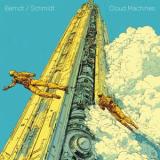
Cloud Machines is the extraordinary debut collaboration between M.C. Schmidt of legendary electronic duo Matmos and John Berndt, the Baltimore avant-garde institution and band leader behind High Zero Festival, the Red Room collective, Geodesic Gnome, and radical sonic concepts like Spectral Relay (a bespoke signal processing architecture) and Relabi (a conceptual genre defined by a Rorschach-blot pulse. These two iconoclasts have delivered something genuinely unexpected: an oddly sweet electronic opus that"s as immediately engaging as it is a series of delicious puzzles. When two of experimental music"s most irascible characters spend twelve years crafting an album, you don"t just get another release - it is an anthology of pocket universes. The record is a love letter to two of their strongest mutual influences of the 1980s - the delirious comic books of French auteur Jean Giraud (AKA Moebius) and the beautiful miniatures of the SKY Records Cluster/Eno/Conny Plank collaborations. Cloud Machines honors the spirit of those ineffably "hermetic" creations by reinventing their legacy through the lens of decades of accumulated experimental practice and the duo"s singular creative personalities. The result feels simultaneously like rediscovering a lost classic from 1978 and receiving a transmission from an alternate, somehow better timeline in 2026. Yet unlike so much "difficult" experimental music, Cloud Machines maintains an uncanny and sneaky accessibility - each track a self-contained world, inviting and alien in equal measure.
Cloud Machines is the extraordinary debut collaboration between M.C. Schmidt of legendary electronic duo Matmos and John Berndt, the Baltimore avant-garde institution and band leader behind High Zero Festival, the Red Room collective, Geodesic Gnome, and radical sonic concepts like Spectral Relay (a bespoke signal processing architecture) and Relabi (a conceptual genre defined by a Rorschach-blot pulse. These two iconoclasts have delivered something genuinely unexpected: an oddly sweet electronic opus that"s as immediately engaging as it is a series of delicious puzzles. When two of experimental music"s most irascible characters spend twelve years crafting an album, you don"t just get another release - it is an anthology of pocket universes. The record is a love letter to two of their strongest mutual influences of the 1980s - the delirious comic books of French auteur Jean Giraud (AKA Moebius) and the beautiful miniatures of the SKY Records Cluster/Eno/Conny Plank collaborations. Cloud Machines honors the spirit of those ineffably "hermetic" creations by reinventing their legacy through the lens of decades of accumulated experimental practice and the duo"s singular creative personalities. The result feels simultaneously like rediscovering a lost classic from 1978 and receiving a transmission from an alternate, somehow better timeline in 2026. Yet unlike so much "difficult" experimental music, Cloud Machines maintains an uncanny and sneaky accessibility - each track a self-contained world, inviting and alien in equal measure.
Maximum Exposure Inc. presents Joy Rider, the debut album from Down Town, the Toronto duo of Ian Elias Afif (bass+effects) and Maxwell Cecil Stover (soprano saxophone + electronics).
Produced and mixed in collaboration with Tony Price in Toronto, Joy Rider portrays a new vision for low-end music as sculpture. Liquid bass paintings, alloy tone abstractions — a virtual still life formed out of fretless aluminum bass, specular soprano saxophone cybernetics, and metallic rhythm architectures.
These pieces belong to a lineage of post-minimalist, low-end experimentalism that treats electroacoustic improvisation and ambient synthesis as mutable sound matter - Joe Zawinul's circuitboard cartographies, the insurgent bass guitar mutations of Bill Laswell, Mick Karn, and Robbie Shakespeare, Evan Parker's recursive multiphonic sax investigations, the most textural sides from the ECM catalogue and the sonic holography constructed by Jon Hassell and Michael Brook during their sessions with Eno and Lanois Hamilton, Ontario.
The album unfolds like a series of suspended environments - music for inside a city.
With their fourth full-length album Signal Fire, GENGHIS TRON awaken us from the post-apocalyptic daydreams of their previous work with a violent—and most welcome—shove. This time, the distant-future reveries we first heard on Board Up The House give way to an unsettling awareness of the present we’re actually living, as our circumstances grow too pressing to try and escape. “Signal Fire envisions a Kojima-esque dystopia of endless proxy warfare,” says vocalist and lyricist Tony Wolski (The Armed), “where the deluge of available information has outmoded the human ability to parse it. A world where those amoral, shameless and cunning enough can literally reshape reality at their whim through sheer insistence." Having roared onto the scene in 2004 with a uniquely demented blend of extreme metal, synthesizer textures, and drum-machine madness, GENGHIS TRON are no strangers to making a forceful impression. But Signal Fire marks the first time bandleaders Michael Sochynsky and Hamilton Jordan –joined again by Wolski and Nick Yacyshyn (SUMAC) on drums, plus newcomer Kenny Szymanski (The Armed) on bass–has captured this level of urgency with such visceral precision. “This album is very much rooted in the now,” confirms Jordan. Album opener “I Am All” sets the table with a chest-throbbing synth pulse as Wolski declares “I’m on a tear, I’m on a tear,” over swirling industrial rhythms and creeping synthlines. “Nothing Blooms in the Hollow” grafts desert-rock swagger onto interlocking layers of dizzying riffs and chants before Wolski steers the band into full-on sonic burnout, like a spaceship careening into the sun. “Born Prey” navigates deftly through Genghis Tron’s classic sonic touchpoints: furious blastbeats, electronic breaks, haunting vocal earworms, and a towering synth-pop crescendo. Meditative interludes like “Like Fotocrom” and “Without Form” deliver shimmering, ominous beauty. And “New Gods” invokes Rabies-era Skinny Puppy to bring the album to a bludgeoning, anthemic finale, as Wolski screams on repeat: “New gods to bleed me out / No new peace / Bleed me out / I love it.” Twenty years into their career, having proven their ability to forge common ground between Ministry and Aphex Twin, between Brutal Truth and Boards Of Canada, between Cluster and Converge, ugly-beautiful new genre hybrids from GENGHIS TRON no longer come as a surprise. What’s remarkable, however, is how Sochynsky and Jordan have taken a project that started in 2004 as a dorm-room genre-pastiche experiment —”a chaotic, wild amalgamation of all our favorite stuff, literally slammed together,” says Jordan—and refined their songwriting craft to deliver a sound that is unmistakably their own.
Mit "Sowiesoso" schufen Hans-Joachim Roedelius und Dieter Moebius (Cluster) 1976 eines der klarsten und zugleich visionärsten Werke der europäischen Elektronikmusik. Nach dem viel beachteten Zuckerzeit öffnet sich das Duo hier einer reduzierten, transparenten Klangsprache: sanft kreisende Sequenzen, subtile Rhythmen und melodische Fragmente entfalten eine stille, konzentrierte Schönheit. Aufgenommen im eigenen Studio mit bewusst minimalem Equipment, lebt Sowiesoso von Autonomie und Präzision. Wiederholung und Variation stehen in feinem Gleichgewicht, fern von Effekthascherei oder technischer Selbstinszenierung. Die Musik wirkt utopisch, aber geerdet - geprägt von der Landschaft Norddeutschlands ebenso wie von Clusters konsequenter Suche nach einer neuen musikalischen Sprache. Zum 50. Jubiläum erscheint das Album als limitierte LP-Edition auf 180g-Vinyl, handnummeriert limitiert - eine würdige Neuauflage eines zeitlosen Meilensteins.
Few artists arrive as compellingly yet elusively as did Stuart Moxham upon the startling debut of Young Marble Giant's sole studio album, Colossal Youth. Initial excitement was thrust upon the young Alison Statton, who sang songs written by Stuart with a couple of exceptions. The unaffected tone of her voice was in steep contrast to the typical goings-on in that still quite punky time, but it was what she sang that fully sold it. Moxham's lyrics were both intensely personal and woefully oblique. There seemed to be a sort of story in there. Confusingly, that story often felt like it was Alison's rather than the fellow who'd penned it. The unexpected miracle a deal with Rough Trade and the album's subsequent success had the band stymied for a second act and it wasn't long before the group disintegrated, although circumstances often brought members and a few of their peers - among them Debbie Pritchard, Spike Williams, and a third Moxham brother, Drew. - Phil Moxham was the band's bassist - together in odd combinations and pairings. None of the three YMG members have been especially prolific, but it's Stuart's career that has seemed the least straightforward, as if he'd wondered, "What to do when your debut is a nearly perfect artefact?" In the case of his first "solo" full-length in thirty years, Stuart took the unusual step of entering an alien studio with American producer Dave Trumfio (who's also the leader of Pulsars and bassist for Mekons) and allowing him to decide what tracks (of a large number submitted by Stuart) to record, and how they'd be orchestrated. Or not. In this case - save for the writing and composing - it's really Dave's album as much as Stuart's. The tracks went with Dave back to LA, where they were mixed, a few parts added (including subtle backing vocals from the incredible Linda Smith) . . . then later unmixed and reworked by John Henderson and Roni Ayala back in Valencia. Both versions will be made available, and both have a compelling cohesion missing from some of Stuart's work since YMG. Stuart's minimalism is quite intact, the range of emotions quite wide. There are few artists operating today like Stuart Moxham, a composer of the upper echelon of innate talent who combines avant-garde ideas with deceptively forthright personal lyrics, solid hooks, ambience and vaguely off-centre instrumentation which defies the casual marketplace as confoundingly as it ever did to the underground, whatever that is these days. His songs have been admired and / covered by everyone from Lush to Kurt Cobain, adaptations in Japanese and even a French-language hit by Etienne Daho, adaptations by Hole, Galaxie 500, Magnetic Fields, Belle And Sebastian and many others - but a new Stuart Moxham album is a special kind of joy.
As a follow-up to our previous work reissuing the recordings of Pau Riba, key figure in Catalonia's counter-culture and music scene, we now present "Juguetes de época y cajas de cerillas - Singles y rarezas. Primera época (1967-1969)," compiling songs drawn from rare releases in his catalog as well as his singles from this period. It includes previously unreleased material sourced from the artist's own tapes, along with an extensive booklet featuring notes and photographs of the artist. This collection brings together songs taken from rare releases in his discography-such as the album recorded at one of the concerts performed by Grup de Folk during its brief existence, "Folk 2" (1968)-as well as from his singles: "Taxista!" (1967), "Noia de porcellana" (1969), "Miniatura" (1969), "L'home estàtic" (1967), "Pau i Jordi" (1968), and "El Nadal no té 20 anys" (1967). Alongside these tracks, this compilation also releases for the first time part of the previously unheard material found on magnetic tapes discovered in the artist's studio after his passing. Among these tapes were the instrumental recordings of "Taxista!"-versions with slight differences from those issued on the original single, possibly prepared for television playbacks. These recordings provide further insight into the making of Riba's first release, particularly regarding the mixing process and the later addition of subtle details.
New from Ulla’s 28912 label comes a gorgeous bouquet of lowercase wonders from Justin Cantrell aka J and the Woolen Stars, part of Picnic, and the brains behind the excellent Daisart and se Dessaisir Publishing labels.
»Puff« is a glistening pool of lush refractions and music-box lullabies, featuring an array of acoustic instruments and fragile foley sounds that are gently peeled away until all we’re left with are the faded outlines of half-remembered songs.
A sound that roots itself in the prophetic machinations of artists like Fennesz and the languid Japanese minimalism of Fourcolour or Moskitoo, »Puff« strikes a delicate balance, sounding as bewitchingly informal as a Tenniscoats set, but also consistently muddling the perception of high and low-brow sound. Cantrell’s skill lies in a sort of sonic conjuration, bamboozling the brains of those of us who grew up listening to stepped-on audio via ramshackle RealMedia streams by alchemising the content, turning found sound into gold. Just tell us you don’t get chills from hearing the bitrate-impaired acoustic guitar on »Dirty like an angel«, set against a backdrop of windy, harmonic detritus. It’s both meticulously contrived and gloriously off-the-cuff, like one of Vincent Gallo’s classic »When«-era demos reduced down to 96kbps.
Similarly, »She knows just what to say« provokes faint memories of folk music, with impromptu fiddle parts gently steamrolled to create a sound that’s nothing short of exquisite, like pressed flowers rediscovered in an old, discarded book. Even the more palpably electronic elements are hand sculpted in a way that belies the era we’re living in - it’s music for a digital age that sounds oddly unplugged, flawed and human. An unmistakably lovely antidote to the opiating nostalgia of our time.
Drawing on the principles of infinite canons, the album is constructed around minimal, repetitive structures and music-box-like melodies that evolve gradually over repeated listens. Selected tracks from the album appear in Hideo Kojima's cult sci- fi video game DEATH STRANDING 2: ON THE BEACH. Recorded with guest musicians including Lori Goldston on cello, Eiko Ishibashi on piano, Tatsuhisa Yamamoto and Jem Doulton on drums, and Paz Maddio and Josephine Foster on vocals, the album was mastered by Amir Shoat
4-track EP from Milan-based producer Michele Manzo. Deep, driving cuts for the floor. Manzo’s commitment to analogue gear ensures a raw, tactile warmth, offering listeners a sonic journey that feels personal yet universal. Capturing the richness and depth of classic house while maintaining a minimalist, modern edge.
out of Stock
Last delivered 44 days ago available to reorder, subject to availability
LATCh Records returns with a refined and forward-thinking release, welcoming Vlad Arapasu for a record that captures the depth and versatility of his sound. Moving between techno, house, and minimal, Vlad shapes a collection of tracks driven by groove, detail, and atmosphere—equally suited for the dancefloor and deeper listening.
Malin Genie delivers a dub remix, reworking the original into a more spacious and hypnotic journey, where subtle textures and flow take the lead.
The release is completed with abstract artwork by Adrian Calin, echoing the layered and open-ended nature of the music.
Supported by Rhadoo
out of Stock
Last delivered 18 days ago available to reorder, subject to availability
NYC's FUGITIVE ARTIFACT delivers a twisted tribute to the Windy City sound. Fiercely minimal old-school house music taking cues from Chicago legends, FUGITIVE ARTIFACT occupies the heady space around Chicago house and builds a dark, trancey world around these simple sounds.
out of Stock
Last delivered 3 months ago available to reorder, subject to availability
The first release of the False Mov Rec. label, an international joint venture between two underground imprints located in Germany and Greece respectively is as unusual as it is unique in many ways. Released in 2017 this split 7" sees DYL from Romania and Paragon from the UK pairing up for the A-Side track "Unstable", a deeply hypnotic and driving minimal take on Halfstep Drum'n'Bass / Bass Music for late night dancefloors whereas Greek producer PS Stamps Back delivers a bass-driven take on psychedelia-infused slow motion Techno for illegal forest raves with "Beyond Lies The Wub" which also comes in handy for tripped out after hours and similar occasions.
Never officially distributed before and available in extremely limited quantities only.
out of Stock
Last delivered 4 months ago available to reorder, subject to availability
Shooting Daggers are a band that never seems to stop. Sal, Bea and Raquel are one of the hardest working outfits out there, constantly playing shows and lending their support to myriad causes all around the U.K. and Europe. So, it’s always an exciting prospect when the band takes some time out from the maelstrom to write and record new material. And 2 years on from the release of their acclaimed debut album ‘Love & Rage’ the band have been in Bear Bites Horse Studio with Wayne Adams (Big Lad, Green Lung) at the controls to come up with the goods once again. ‘The Real Life Thing’ is the latest hardcore sonic missive from one of London’s must-see bands, and it absolutely does not disappoint. Shooting Daggers are the real deal; the best, and most exciting and adventurous hardcore-inspired band in the country. A ‘mini album‘. 7 songs and 20 minutes of driving rocket fuelled punk meets melody picking up from their debut to go further into their own space. A selection of songs that are marked by a fierce energy, variety and cool musical nous, but always with a message firmly at its core. The band says … ‘It's a crucial time to focus on what really matters. Be present, be aware of real things happening in the world, with integrity and love we can make a difference as a community. There is hope out there, and if we all start treating nature, people and animals with respect and empathy we will be able to become better humans and coexist. In this mini album, we express the full range of our emotions through various sounds and genres. From cheerfulness to anger and hopefulness.
From hardcore punk, to shoegaze, to post hardcore and riot grrrl. We embrace our authentic self, with sensitivity in response to injustice, we act out, and all the while savouring every moment, being unapologetically yourself, empowering ourselves and each other’. With the help of some very special guests in the form of ‘The Menstrual Cramps' and Dennis Lyxzén from Refused, that message is driven home ‘big time’. ‘Adrenaline’ is as full on and heavy as Daggers have ever been, all buzzsaw riffs and rousing vocals, it’s a smart and catchy punch in the face to kick off proceedings. ‘My Oh My’ sweetens the vibe if only a bit with its layered post shoegaze guitars and anthemic vocals, exquisitely arranged we may add. It really shows how Daggers have taken the 90’s elements from Love & Rage and expanded it into something all their own. ‘T.R.L.T.’ back to ‘in yer face’ Daggers trademark off kilter punk, chants, fast bit, slow bits all straight into your head. ‘We just Wanna Play’ is, as Daggers put it ... ‘Empowering playground song for girls and queers to sing and play’. The perfect intro to … ‘Loud Mouths’ the first track to feature bestie guesties ‘The Menstrual Cramps’. A riotous call to arms. We are united with our sisters and queer folks in punk and hardcore, queercore is strong and more alive than ever. Together we will denounce problematic behaviours unapologetically, we won't shut up. Things must change and it’s happening when problems are pointed out and sorted. The scene is for everybody, and we are making it happen’. ‘Le Soleil’ is another step forward … a left field, almost dubby vibe with a dreamy melodic swirling vocal performance from Sal.
When Daggers decide to step outside the box, they do it seductively in style. ‘Glow’ is the second collaboration; this one featuring Dennis Lyxzén from Refused on dual vocal duties. A no brainer it seems … ‘Refused has been a band that never wanted to fit in with a specific sound, they are pioneers of experimental punk while still being rooted in hardcore. They believe in what we believe in, antifascism, veganism, social justice and Dennis on stage is anything but a generic hardcore singer’. It’s a celebration. It’s fuzzy, it's hooky and it’s heavy with, dare we say it, a bit of My Bloody Valentine in there too, generic hardcore it is not. And that pretty much sums up ‘The Real Life Thing’. This album and this band are anything but ‘generic’. They never stand still and continue to push the boundaries of what is ‘hardcore’ or ‘punk’ or whatever people think they are. T.R.L.T. is a delight and a surprise from start to finish, refreshing, abrasive, melodic and with a true beating heart. Embrace it.
Die erste Veröffentlichung des Labels "From Cool Waters" aus Nairobi kombiniert traditionelle kenianische Folk Elemente mit minimalistischer Elektronik und klassischer Marimba. Entstanden aus dem Zusammentreffen dreier MusikerInnen - dem in Nairobi ansässigen Nyege Nyege-Kollaborateur und Schlagzeuger Sven Kacirek, der 83-jährigen "Queen Of Dodo" Ogoya Nengo und dem Sänger/Songwriter und Gitarrenbauer Olith Ratego - schafft PALAGOMA eine einzigartige elektroakustische Synergie. Die Künstler haben bereits zuvor in verschiedenen Konstellationen zusammengearbeitet: Der in Deutschland geborene Kacirek war Produzent und Toningenieur von Nengos faszinierendem Debütalbum Rang"ala, das 2014 bei Honest Jon"s Records erschien, während Ratego und Kacirek 2018 das Duo ODD OKODDO gründeten, das 2019 und 2023 beim einflussreichen Nyege Nyege Festival in Uganda sowie bei Veranstaltungen auf der ganzen Welt auftrat.
"Remnants" is an album marked by the ambiguity of presence and absence. The pieces, recorded using minimal equipment in what Suzuki describes as a ritual-like atmosphere, began as a way of processing the loss of her father in 2019. But beyond this, they also come to speak to the ways in which loss changes our relationship with someone, and our experiences of the world. Indeed, the experience of loss is not marked merely by a single event, but is instead a process that unfolds over time. Despite the other's absence, a particular location, the smell of a certain brand of tobacco, a look on a friend's face - traces such as these are enough to bring about a renewed presence.
It is through these subtle traces and remnants, encountered over time, that we come to understand loss as not only the acceptance of absence, but the recognition of a continued presence. As Suzuki says, "this is not a solo album." Its creation was instead shaped by an ongoing dialogue, the continued elaboration of a complex and ambivalent relationship. At once melancholic, warm, and embracing, it is this ambiguity, these subtle traces, that Suzuki’s compositions speak to. These are not merely the sounds of mourning, but instead have been shaped by the evolving dialectic of presence and absence into something far more subtle and haunting. (Zefan Sramek, 2026)
Kronstad 23 returns with Dodehavet, the Norwegian quartet"s third album and first release on Batov Records. Continuing their instinctive, analogue-led approach, the record sits between cinematic jazz and psychedelic rock, threaded with Scandinavian folk and wider global influences. Recorded live to tape with minimal preparation and no modern studio intervention, Dodehavet captures a band working on feel, interaction and momentum rather than polish or precision.
Formally a member of New York folk group Woods, Kevin Morby has made a name for himself with his four acclaimed solo releases. These songs, "Destroyer" and "Black Flowers", come from his third record Singing Saw, which was chosen for Pitchfork's Best New Music. "Destroyer" is an autobiographical minimalistic keyboard ballad, a distant cousin of the full band album version. "Black Flowers" on this single borrows less from the sweeping orchestras of Leonard Cohen's catalog and more from the melancholic austerity of Bert Jansch.
Aus der fruchtbaren skandinavischen Post-Rock-Landschaft hervorgegangen, haben sich Oh Hiroshima einen Ruf dafür erarbeitet, Introspektion in einen weiten, cineastischen Klang zu verwandeln. Mit ,And the Dead Tree Gives No Shelter" setzen Oh Hiroshima ihr Streben fort, das Gleichgewicht zwischen Verletzlichkeit und Kraft zu verfeinern. Im Kern des Sounds von Oh Hiroshima liegt ein filigranes Wechselspiel zwischen Zurückhaltung und Entladung. Ihre Kompositionen bauen behutsam Spannung auf und lassen jede Ebene organisch entfalten: Klingende Gitarren, ferne Nachklänge und minimale rhythmische Impulse - die scheinbar schwerelos in der Luft schweben - bilden einen Kontrast zu jener wuchtigen Kraft, die sie entfesseln können. Klare, schimmernde Gitarrentöne breiten sich wellenartig durch dichten Hall und subtile Delays aus, während sich einzelne Linien oft in sanftem Kontrapunkt miteinander verflechten. Während sich diese Ebenen schichten, intensivieren sie sich allmählich und steuern auf jene Momente zu, in denen Verzerrung und Lautstärke die einst fragile Atmosphäre in etwas Immenses und Kathartisches verwandeln.Wenn die Musik ihre emotionalen Höhepunkte erreicht, tritt die Perkussion zwar bestimmender hervor, bleibt dabei jedoch behutsam in die Gesamtatmosphäre eingebettet. Oh Hiroshima beweisen beständig ein wachsendes Selbstvertrauen darin, die Grenzen ihres Sounds auszuloten. Durch die Verschmelzung von Harmonien, einer immersiven Produktion und einem tief intuitiven Gespür für das richtige Tempo haben Oh Hiroshima ein Album geschaffen, das von Intimität durchwoben ist und sich zugleich weit und raumgreifend anfühlt. Für Freunde von Alcest, Mogwai, God Is an Astronaut. CD, klassisch schwarzes und farbiges (limitiertes) Vinyl erhältlich.
Aus der fruchtbaren skandinavischen Post-Rock-Landschaft hervorgegangen, haben sich Oh Hiroshima einen Ruf dafür erarbeitet, Introspektion in einen weiten, cineastischen Klang zu verwandeln. Mit ,And the Dead Tree Gives No Shelter" setzen Oh Hiroshima ihr Streben fort, das Gleichgewicht zwischen Verletzlichkeit und Kraft zu verfeinern. Im Kern des Sounds von Oh Hiroshima liegt ein filigranes Wechselspiel zwischen Zurückhaltung und Entladung. Ihre Kompositionen bauen behutsam Spannung auf und lassen jede Ebene organisch entfalten: Klingende Gitarren, ferne Nachklänge und minimale rhythmische Impulse - die scheinbar schwerelos in der Luft schweben - bilden einen Kontrast zu jener wuchtigen Kraft, die sie entfesseln können. Klare, schimmernde Gitarrentöne breiten sich wellenartig durch dichten Hall und subtile Delays aus, während sich einzelne Linien oft in sanftem Kontrapunkt miteinander verflechten. Während sich diese Ebenen schichten, intensivieren sie sich allmählich und steuern auf jene Momente zu, in denen Verzerrung und Lautstärke die einst fragile Atmosphäre in etwas Immenses und Kathartisches verwandeln.Wenn die Musik ihre emotionalen Höhepunkte erreicht, tritt die Perkussion zwar bestimmender hervor, bleibt dabei jedoch behutsam in die Gesamtatmosphäre eingebettet. Oh Hiroshima beweisen beständig ein wachsendes Selbstvertrauen darin, die Grenzen ihres Sounds auszuloten. Durch die Verschmelzung von Harmonien, einer immersiven Produktion und einem tief intuitiven Gespür für das richtige Tempo haben Oh Hiroshima ein Album geschaffen, das von Intimität durchwoben ist und sich zugleich weit und raumgreifend anfühlt. Für Freunde von Alcest, Mogwai, God Is an Astronaut. CD, klassisch schwarzes und farbiges (limitiertes) Vinyl erhältlich.
A transcendental journey through the shadows of consciousness - remastered and expanded for the deepest listening experience yet With Metamorphyses , Swedish dark ambient pioneer Peter Andersson (RAISON D'ETRE) invites us into a labyrinth of sound and soul, where drone, ritualism, and neoclassical minimalism converge into something vast, immersive, and transformative. Originally released in the mid-2000s, this defining work now returns in a gloriously expanded edition - and for the first time ever, pressed onto double vinyl.
This 2025 edition, meticulously remastered to K14- level standards by Andersson himself, features not only the core studio album (Disc I, recorded winter 2005-2006), but also two full discs of evocative live performances from across Europe, including Gent, Sofia, Salzburg, Alkmaar, Budapest, and a stunning set recorded in the Sophienkirche of Wuppertal during the Phobos II Dark Ambient Festival (2010) - a performance that plays like a liturgy for forgotten gods. The sound is monumental yet subtle: subterranean drones coil beneath spectral chants, decaying harmonics ripple through ancient cathedrals of reverb, and slowshifting textures create a space where the listener floats between the sacred and the surreal. There are echoes here of Lustmord's somber gravity, Thomas Koner 's icy isolationism, and the ritualistic depth of Inade or Desiderii Marginis, but it's RAISON D'ETRE's singular spiritual voice that rises from the abyss. The artwork by Kati Astraeir perfectly captures the album's meditative darkness - fluid forms, organic decay, and transcendent abstraction - while the layout, also designed by Andersson, reinforces the ritualistic purity of the listening experience.
A transcendental journey through the shadows of consciousness - remastered and expanded for the deepest listening experience yet With Metamorphyses , Swedish dark ambient pioneer Peter Andersson (RAISON D'ETRE) invites us into a labyrinth of sound and soul, where drone, ritualism, and neoclassical minimalism converge into something vast, immersive, and transformative. Originally released in the mid-2000s, this defining work now returns in a gloriously expanded edition - and for the first time ever, pressed onto double vinyl.
This 2025 edition, meticulously remastered to K14- level standards by Andersson himself, features not only the core studio album (Disc I, recorded winter 2005-2006), but also two full discs of evocative live performances from across Europe, including Gent, Sofia, Salzburg, Alkmaar, Budapest, and a stunning set recorded in the Sophienkirche of Wuppertal during the Phobos II Dark Ambient Festival (2010) - a performance that plays like a liturgy for forgotten gods. The sound is monumental yet subtle: subterranean drones coil beneath spectral chants, decaying harmonics ripple through ancient cathedrals of reverb, and slowshifting textures create a space where the listener floats between the sacred and the surreal. There are echoes here of Lustmord's somber gravity, Thomas Koner 's icy isolationism, and the ritualistic depth of Inade or Desiderii Marginis, but it's RAISON D'ETRE's singular spiritual voice that rises from the abyss. The artwork by Kati Astraeir perfectly captures the album's meditative darkness - fluid forms, organic decay, and transcendent abstraction - while the layout, also designed by Andersson, reinforces the ritualistic purity of the listening experience.
Shape of the Moon is the California based duo of Benjamin Burke and Bear Glass that explores existential headspaces beyond mundane frames of thought. Following streams of consciousness that contemplate the stardust that forms us to the very first human sound that reverberated through a cave, Shape of the Moon intertwines language and music into ambient dream-weaving narratives.
When the land is laid bare forms a collection of recordings composed of Burke reciting his introspective poems and Glass improvising gripping modular synth and string patterns. Burke brings a wealth of experience working between an impressively vast range of written and visual mediums to Glass’s live electronics and acoustic instrumentation mirroring the spoken word. The pieces on the album consist of excerpts from live outdoor performances under the night sky in the Mojave desert as well as sessions in Glass’s off-grid solar powered studio. Burke drapes vivid vocal narration over deeply immersive textures and melodies conjured up by Glass on Buchla, bass and sitar, painting peaks and valleys that live score the storytelling. The duo tread their own path fusing poetry with undulating electroacoustic instrumentals, arriving at meditative and ASMR territories that draw inspiration from ambient and electronica. Often joined on stage by guest musicians playing anything from Rhodes, percussion, jaw harp and saxophone, the recordings edge towards blues and spiritual jazz.
Benjamin Burke is a poet, writer, performer, and visual artist who spends his time lending a hand to unusual artistic expeditions around the world. Most recently, he helped to launch Dhun and Dhun School, a humanist eco-township and progressive education center on a 500 acre biopreserve in Rajasthan, India. He has written and performed countless unusual shows, experimenting widely and, through that, witnessing firsthand what makes ideas resonate for his audiences. This work evolved over time into an approach he refers to as Applied Poetics which he employs to help communities set intentions, scientists present their findings, and humanitarian organizations find their footing.
Bear Glass is a sound artist, multi-instrumentalist, music teacher, live sound engineer, and founding member of Mobius Acoustics who build innovative sound systems and host events on the West Coast (utilizing a quadraphonic setup for live performances and immersive drone bath sessions). Glass is involved in various collaborative projects with a couple of releases under different pseudonyms as well as a solo tape featuring a track with prolific producer Carlos Niño. For most of the year, Glass lives sustainably off-grid with his family on a plot of land outside Joshua Tree, a mini utopia infamous for his well curated private campouts and artist residencies. Wide skies, magnificent climates, and being surrounded by the love of family and friends inform Bear’s musical output and artistic practice.
Shape of the Moon present their debut album for Marionette’s 30th title, channeling an inquisitive yet playful state of mind that marvels at the mysteries of the universe.
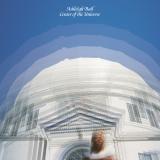
Spiritual World presents: Ashleigh Ball — Center of the Universe, a transcendental flute journey from the singer and flutist of Teal. Center of the Universe is a 32-minute improvisational odyssey recorded inside the Dominion Astrophysical Observatory (DAO), a National Historic Site on Vancouver Island, in British Columbia Canada..
Inspired by the pioneering work of Paul Horn and his Inside series, the recording channels a similar spirit of reverent exploration within a space rich in history and resonance. Completed in 1918, the observatory is home to the Plaskett Telescope - once among the largest and most powerful in the world - playing a key role in mapping the Milky Way.
Following months of coordination, three hours of private access were granted on the morning of August 25, 2025. Beneath the observatory’s towering telescope, Ball performed a wordless meditation, moving between alto flute and soprano concert flute, allowing each note to merge with the chamber’s vast natural reverb. Tones bloom, linger, and return, carried along the massive curved steel walls.
Captured using a minimalist recording approach, Center of the Universe preserves the purity of the moment—its warmth, stillness, and the architecture’s subtle mechanical resonance. Here, the observatory itself becomes an instrument, shaping the sound into something elemental, timeless, and deeply human. Center of the Universe will be released as a limited-edition vinyl LP (300 copies) with a printed insert on May 15, 2026, via Rubadub, Forced Exposure, and HiFi in Sheep’s Clothing.
out of Stock
Last delivered 4 months ago available to reorder, subject to availability
Magic Tuber Stringband act in communion with the natural world around them. Highly skilled players and writers, the trio are leaders within the burgeoning Avant-Folk world. Growing up in Appalachia studying the folk traditions of the region in tandem scientific and observational work in nature, their music appears to weave in and out of the fabric of the landscape. The ensemble continues to stretch the parameters of acoustic instrumental expression with masterful flourishes of dense, textural arrangements, subtle minimalist gestures and deft improvisation. Heavy Water addresses the impact of nuclear production on the environment and the communities within, a musical evocation of destruction and resilience, an embrace of dissonance and tension within moments of transcendence.
out of Stock
Last delivered 4 months ago available to reorder, subject to availability
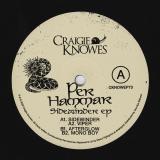
Per Hammar joins Craigie Knowes for his label debut ‘Sidewinder’ EP. 4 rolling tracks built to maintain and elevate dancefloor momentum. Per Hammar’s production mastery is distilled into these monstrous club jams with every element tailored to serve the rhythm and keep you moving. This record is varied yet coherent package of house, tech-house and minimal flavour; from the rolling bassline on Sidewinder, the minimal chug of Viper, the euphoric uplift of Afterglow, to the thump and swing of Mono Boy. A record for the DJs and listeners alike.
out of Stock
Last delivered 3 months ago available to reorder, subject to availability
On the 2024 Altered Circuits release Tropicana Tracks Rotterdam-based artist Betonkust paid tribute to the former subtropical pool (now a circular entrepreneurship hub) Tropicana of his hometown. ALT025 is the follow-up: the fallen-from-grace swimming paradise again fuels a club-oriented selection, inspired by, in the artist's words, "the electronic music from 1988 up until now", more specifically "the Benelux-sound". Tropicana Tracks Two kicks off in full gear with the zero swing drums and lately bass rhythms of Don't Think I'll Be Here Too Long setting the stage for intense synth stabs. Its counterpart comes by way of Realxing, which nonetheless uses similar patches. If the A1 is the thrill of the slides, this one feels like blissfully floating in the geothermally heated waters afterwards. Will Support on the reverse side takes on Detroit techno. Minimal in its composition, it is carried by tough, loopy minor fifth synth sections and prominently mixed rides. TV For Lonely People features more big bass catchiness and melancholic, silky melodies, glued together by vintage flanger treatment and chlorine-damp reverb. The production revels in what feels like the quintessential Betonkust sound. Innershades then joins for the encore, and, characteristically, the mood turns a bit darker. Letting Go Of The Dream is an emotional New Beat update, fully equipped with thudding drum works, haunting lo-fi vocals and pivotal 303 programming - a fitting reaffirmation of the long-standing ties between two of Low Countries Electronics's finest ambassadors.
out of Stock
Last delivered 81 days ago available to reorder, subject to availability