The choice of the title “Unwanted” creates a striking contrast with the elaborate variant designation of the pressing and immediately distinguishes the LP as a physical release; Arising Empire is handling the release, keeping Thrown in the label’s roster.
Musically, “Unwanted” continues the uncompromising direction Thrown already showcased with their 2026 singles: advance releases such as “critic” and “rehearsed” highlight the concise, hard-hitting song structures defined by distinctive riffs, forceful breakdowns and intense choruses. On the LP, Thrown brings these approaches together into a cohesive sequence of tracks that combine immediate aggression with catchy songwriting moments. The “Unwanted” LP on White Grey Blue Splatter vinyl thus rounds out the band’s current chapter of recorded output and underscores Thrown’s profile within the metal scene, while the singles already preview the album’s sonic character.
The choice of the title “Unwanted” creates a striking contrast with the elaborate variant designation of the pressing and immediately distinguishes the LP as a physical release; Arising Empire is handling the release, keeping Thrown in the label’s roster.
Musically, “Unwanted” continues the uncompromising direction Thrown already showcased with their 2026 singles: advance releases such as “critic” and “rehearsed” highlight the concise, hard-hitting song structures defined by distinctive riffs, forceful breakdowns and intense choruses. On the LP, Thrown brings these approaches together into a cohesive sequence of tracks that combine immediate aggression with catchy songwriting moments. The “Unwanted” LP on White Grey Blue Splatter vinyl thus rounds out the band’s current chapter of recorded output and underscores Thrown’s profile within the metal scene, while the singles already preview the album’s sonic character.
The choice of the title “Unwanted” creates a striking contrast with the elaborate variant designation of the pressing and immediately distinguishes the LP as a physical release; Arising Empire is handling the release, keeping Thrown in the label’s roster.
Musically, “Unwanted” continues the uncompromising direction Thrown already showcased with their 2026 singles: advance releases such as “critic” and “rehearsed” highlight the concise, hard-hitting song structures defined by distinctive riffs, forceful breakdowns and intense choruses. On the LP, Thrown brings these approaches together into a cohesive sequence of tracks that combine immediate aggression with catchy songwriting moments. The “Unwanted” LP on White Grey Blue Splatter vinyl thus rounds out the band’s current chapter of recorded output and underscores Thrown’s profile within the metal scene, while the singles already preview the album’s sonic character.
Forty years of cassette releases, pressed for the first time on vinyl
First of two instalments exploring the previously unreleased sonic archives of one of Poland’s most enigmatic
living artists - with its first volume focused on his deep listening practice and spiritual reverie (recorded 1990–2013)
The last time Andrzej Dudek-Dürer took a banknote bearing the face of the Polish anarchist Jarosław Dąbrowski from his pocket to trade it for a pair of shoes was in 1969. He bought them for 120zł - the equivalent of 100€ today - and never replaced them since then. Only rebuilt them, year after year, drawing a needle and thread through the leather each time it split, closing one wound before the next one opened. It became a ritual of precision, stitching a record of another year into their soles.
That same year, in Wrocław, he arrived at a conclusion that would recalibrate everything that followed. Convinced he was the reincarnation of Albrecht Dürer, he adopted the surname Dudek-Dürer, stopped cutting his hair and began wearing the same garments every day. It was the first ritual of many, though he wouldn't have called it that yet. Look closely enough, over the decades, and it is always the same gesture, returning in different material: hair growing in a single unbroken strand, a needle drawing thread through leather, sitar strings pulled taut across a neck he built with his own hands and magnetic tape spooling forward inside the cassette boxes stacked against his walls.
None of this began in a vacuum. Dudek-Dürer emerged from the Wrocław neo-avant-garde, in a Polish art world where an exhibition could be cancelled overnight by the stroke of a censor's pen. In 1973, his exhibition Auto-crucifixion was shut down by the state, and for a time he found himself blocked from exhibiting his own art at all - the one force in his life that ever came close to cutting the thread.
He seemed to experience it differently. In 1974, after long, patient research into sitar craftsmanship, he built his first prototype with his brother, a knowledgeable luthier. In 1978, in a smoked-out jazz club, he took his first steps into sound recording with the unreleased album Jazz From Underground with his first band. By 1979, recognition started to travel further than he could.
Turning toward Far-Eastern philosophy, meditation and the idea of reincarnation was another language of freedom for him. It was a way of claiming an inner territory the state could not reach, a border it could not close. Mail Art served a parallel function, reaching further out: in a country that restricted travel and expression, sending and receiving art through the postal system became an act of quiet rebellion.
The body, in his understanding, is only an envelope readied for constant transformation. From this came Metaphysical Telepathy: during the years he could not leave Poland, he treated that confinement as a rehearsal room, sending his mind out ahead on the same thread his body would later follow. Living Sculpture grew from the same root with performances of stillness beside static art objects, until the boundary between the object and the man beside it simply dissolved. Camera Meditation extended the same instinct into photography: a shutter click flattening three dimensions into two so that a single instant could be held forever. Inspired by the pioneers of self-portrait photography like Robert Cornelius, he used it to document time itself, and kept explaining to me: "You know. This is not about vanity. This is about observing time passing.”
The isolation did not end suddenly. It ended the way his own philosophy had already predicted it would, from the inside first. Mail Art quietly solved the problem politics couldn't. Correspondence built during years of confinement slowly worked its way through doors the state itself had kept locked. Contacts made through folded paper and stamps became invitations. Ultimately, invitations became passports.
In 1983 he made his first trip outside Poland, to Germany, in search of the audio technology he couldn’t get his hands on before. In 1985, he was invited by the Indian embassy in Poland to give a sitar concert on an instrument he had spent a decade patiently stringing together - half sitar, half tanpura, built from patience and determination. After the collapse of the People's Republic of Poland, the travels kept unspooling: South Korea, then Mexico, then Australia, Canada, New Zealand, Singapore, Japan and the United States - each stop leaving behind its own small knot of tape, tied off and carried home.
In the decades since, recognition arrived at the same unhurried pace: he conducted workshops at UC Berkeley, served as vice-president for artistic affairs of the Union of Polish Art Photographers and the Union of Polish Visual Artists between 2010 and 2014 and received the Bronze Medal for Merit to Culture - Gloria Artis. His visual work gradually entered collections including the National Museums of Warsaw, the Stedelijk Museum, Tate Modern, MoMA and the Venice Biennale. His musical practice, by contrast, never found that kind of room - left to circulate quietly, sharing his cassette tapes directly, waiting for someone willing to follow it further.
It took months before I could find a way to reach Andrzej Dudek-Dürer - his presence online is very close to nonexistent. Surprisingly, LinkedIn turned out to be the only door still open, a faintly absurd irony given everything else about him. I packed the strict minimum for a three-day trip and an empty notebook and made my way to Wrocław. His headquarters sits in the neighbourhood of Grabyszyn: a two-storey pre-war house that has belonged to his family for generations. The man who opened the door was long-haired, long-bearded, in his trademark leather shoes and patched jeans. We sat in his living room, in front of a computer where decades of recordings sat organised in cryptically named files, surrounded by books and objects that had arrived one layer at a time, leaving room for only two chairs in the middle. His shoes sat by the door, rebuilt so many times they had become their own quiet sculpture. Cassette tapes filled boxes against the walls, almost unlabelled, each one a spool of thread holding decades of sound that had never once been asked for, until now.
I listened for hours: meditating in front of strangers on the porch of a Seoul temple until the tourists stopped taking photos and simply waited with him; a stand-off with border guards at the US–Mexico crossing over an instrument they couldn't identify and didn't trust; a session with the Stockhausen family that he still, decades later, describes like it happened last week. All of it interrupted, occasionally, by the smell of soup boiling and fresh bread warming on the ceramic stove. After two days, it felt like being handed the end of a very long thread and asked, gently, to keep following it. I left with a USB drive holding his full discography, signed with his unmistakable signature.
Astral Meditations From A Living Statue is a length of that thread, drawn out from the boxes stacked against his walls - recordings gathered from different rooms, different countries, different decades. This first record breathes slowly: incense-thick, meditative, built for stillness. A cutting-edge séance in outer space where machines learn how to dream.
It begins with the neo-classical improvisations of Andrzej, space-delayed, recorded at Klub Muzyki i Literatury in Wrocław in 2002. 'When..So' opens the curtains with a deep-rooted meditation accompanied by slow-decaying piano figures illuminated by a candle-lit spirit gathering.
Los Angeles, 1990: a dormant villa, a grand piano, the voice of Bonnie Barnett. 'Exception' is captured in a single room, in a single afternoon - voice and keys circling each other, neither one leading, until the silence between the notes starts to feel like the instrument.
'The Meta...' and 'Tired Of...', recorded at Studio Morandi in Ponte Nossa, Italy, in 1992, settle into a sitar drone built entirely from patience - overtones stacking and beating against each other, strung by a man who never once set foot in India. 'Mastery Of...' follows, recorded the same year at Studio Suski in Łomianki, pushing that same hum further still, until pitch dissolves into a spectral reverie. 'Transcendental Sound', from 2000, closes the first record in a slow bath of celestial frequency - better heard beside the shores of the Odra river.
More than fifty years after deciding that a life could become an artwork, Andrzej Dudek-Dürer continues to inhabit that decision. His shoes keep wearing thin against the earth's crust. His hair keeps growing, one strand at a time. His cassette tapes keep spooling in the dark of their boxes.
Now the thread finds its last shape: a single unbroken groove, spiralling inward from the outer edge to the label at the centre. Never cut - the way nothing else in his life ever was. Drop the needle and it will find that groove and follow it, the same way a needle once followed leather, once followed a border it couldn't cross, once followed string into an instrument that didn't exist until he built it. This record is the other end of a thread that has been travelling for fifty years. For the length of both sides, it rests here, in your hands. This is a timeless proof that the Lord of the New Age was never lost."
The choice of the title “Unwanted” creates a striking contrast with the elaborate variant designation of the pressing and immediately distinguishes the LP as a physical release; Arising Empire is handling the release, keeping Thrown in the label’s roster.
Musically, “Unwanted” continues the uncompromising direction Thrown already showcased with their 2026 singles: advance releases such as “critic” and “rehearsed” highlight the concise, hard-hitting song structures defined by distinctive riffs, forceful breakdowns and intense choruses. On the LP, Thrown brings these approaches together into a cohesive sequence of tracks that combine immediate aggression with catchy songwriting moments. The “Unwanted” LP on White Grey Blue Splatter vinyl thus rounds out the band’s current chapter of recorded output and underscores Thrown’s profile within the metal scene, while the singles already preview the album’s sonic character.
Ed Davenport (aka Inland) marks 20 years of dedication to the craft with a Double-LP of unreleased material on his Globuli-LTD label. 8 simmering cuts spanning minimal, tech-house and dub-techno from the archives, dating as far back as 2005. Produced between London, Poulsbo (WA) and Berlin.
Minutiae is the first full-length release form Stockholm’s Ināra Quartet, made up of brothers Kasper (guitar, banjo, mandolin) and Mauritz Agnas (bass, cello), Johan Graden (piano, harmonium, synths) and Mischa Grind (percussion). Drawing on wide performance and composition experience in free improvisation, jazz, and composed new music, the quartet have carved out a unique niche where radical approaches to rhythmic organisation and group interaction are wedded to immediately accessible, folkish melodic and harmonic material. Unfolding briskly across eight pop-song length tracks, Minutiae places these folk fragments under a microscope, expanding them into intricate patterns of group interplay by turns austere and lushly psychedelic.
The quartet’s layering of independent rhythms, pulses, and tempi suggests a range of precedents, from Ligeti’s ticking clock textures to the pulse music of John McGuire, the repeating asynchronous cycles of The Necks, and the intricate irregular crosshatching of Banda music. Rhythm, harmony and melody shade into one another within each of the instrumental layers that overlap to form the music’s rippling surface. At points guitar, bass, percussion, and keyboards can seem each to occupy their own world, each player moving independently according to their own internal tactus, but attention to the details of group interplay reveals carefully planned collective movement. On ‘Klapparen’, strummed acoustic guitar chords and clinking percussion accelerate and decelerate in unison, washed over by floating synth lines. At other points, the quartet as a whole suddenly shift direction like a This Heat tape edit. Check the opener ‘Box Pieces’, where a brief percussion tag cues an unexpected cut from frenetic layering of percussive attacks undergirded by slow moving synth and bass foundations to a rumbling, locked-in dirge.
The eight pieces span a range of tones, from plaintive abstraction to surging minimalism. Touches of whimsy relieve any threat of over-seriousness: witness the wacky electric guitar glissandi that open ‘Tilting’ or the lovely, almost Pascal Comelade-esque fairground wobbles that begin the wayward journey of ‘Cadence: not even,’ before it stumbles into a totally different zone of spacious Paul Bley balladry sprinkled with banjo plucks. Recorded across two days at Stockholm’s Atlantis studios, Minutiae’s minutiae truly sparkle thanks to the careful mixing work of Ghosted drummer extraordinaire Andreas Werliin. A wonderfully approachable document of the richness of the next generation of contemporary creative musicians from Sweden, Ināra Quartet’s debut also looks back to 70s touchstones like Archimedes Badkar in its joyful embrace of musical collectivity.
With the “Extrasensory” EP, Slices Of Life welcomes one of the most versatile producers in the UK minimal house scene. Since 2003, Tom Ellis has been creating funk- and jazz-inspired house and techno, distinguished by his keen sense of organic rhythm. His extensive discography spans labels such as Logistic/Telegraph, Minibar, Wisdomteeth, KANN, Banoffee Pies, Onysia, among many others. Beyond his solo work, he is also the mastermind behind the electronic jazz ensemble Soulstatejazz.
The four tracks on “Extrasensory" distill this wealth of musical experience into diversely textured minimal house productions. Precisely placed drums and percussion, and rolling grooves form the foundation - clearly shaped by Ellis’s background as a drummer, percussionist, and bass player.
All the tracks share a warm, organic atmosphere, oscillating between lightness and relentless drive. The title track, "Extrasensory", blends almost pop-like melodies with shimmering vocals. "Bring Forth" takes us into deeper, dubby, and driving territories, while "Be The Moment" reveals a playful and melancholic side. Finally, "Vividly" immerses us in a dense, dreamy, yet pulsating sonic world.
Der Mann, der das Cello zum Singen brachte: Legendäre Aufnahmen von Pablo Casals auf Vinyl Anlässlich seines bevorstehenden 150. Geburtstags am 29. Dezember rückt diese kuratierte Auswahl den katalanischen Musiker in den Mittelpunkt, der das Cello in ein angesehenes Soloinstrument verwandelte. Die Aufnahmen stammen aus seiner Blütezeit: Casals’ charakteristischer warmer Ton und seine ausdrucksstarke Intonation führen durch prägende Interpretationen – von seinen wegweisenden Einspielungen der Solosuiten von Bach bis hin zu virtuosen Miniaturen wie Rimsky-Korsakows Hummelflug. Mit intimen Kammermusikwerken sowie großem orchestralem Repertoire bietet diese Vinyl ein eindrucksvolles Zeugnis eines musikalischen Denkers, der die Kunst des Streicherspiels neu prägte und das Cello wahrhaft zum Singen brachte.
Parisian minimal maestro olivier romero and reflex blue team up for an EP of stripped back house music. Inspired by each-others sonic palette, the duo fuse together their influences and express themselves fully through a two track journey of straight-to-the-point club sounds.
RAWAX welcomes Vlad Arapasu to the artist family!
We re very happy to present you his outstanding debut for us on the famould RWX series!
4 brilliant minimal monster here on one record. Highly recommended!
Pax Nicholas is one of the last living veterans of Fela Kuti’s Africa 70. Born in Accra, Ghana, he joined Africa 70 as conga player and backing vocalist in 1971, appearing on landmark recordings including Lady Shakara.
In 1978, he left Africa 70 at the Berlin Jazz Festival alongside drummer Tony Allen, and settled in Germany, where he built a remarkable second chapter — leading the twelve-piece Afrobeat ensemble Ridimtaksi, collaborating with Finnish jazz maverick Jimi Tenor, and reuniting with the African diaspora in Berlin for Ebo Taylor’s celebrated 2012 album Appia Kwa Bridge released on Strut Records.
In 2009, Daptone Records reissued his 1973 cult classic Na Teef Know De Road of Teef, earning him long-overdue global recognition.
Now signed to Paris-based Afrobeat imprint Comet Records, Pax Nicholas returns with his new single “Mind Your Business” — a heavyweight dancefloor Afrobeat cut built on thundering brass, interlocking percussion and a razor-sharp guitar riff. The release features an exclusive remix by Gabriel Belabbas, producer, DJ and co-founder of Parisian label Positive Future, who recasts Mind Your Business in deep, minimal territory — a sparse, tension-laced groove that channels the hypnotic darkness of Moodyman and Ricardo Villalobos. Stripping the arrangement back to its percussive skeleton, he lets the Afrobeat elements — brass, rhythm, heat — surface and recede like smoke, leaving just enough space for the tension to build and the dancefloor to fall. Slow-burning and devastating on a proper soundsystem.
Deviantix launches with a bass-driven various-artists EP anchored by handzfree's title track and "what 'bout me?", reworked by Fred Quest, UK-born/Germany-based Harry Wills (aka Brazen, of Phone Traxxx, with releases on Ba Dum Tish and Salty Nuts), and Footwork Honey. A tight blend of breaks, minimal and micro house.
Do Da Doo' Returns with New Life on Definitive Recordings
SPECIAL VINYL ONLY RELEASE
Definitive Recordings revisits one of its most iconic releases with a fresh reissue of Robotman feat. Marshall Jefferson - 'Do Da Doo', originally released in 1992. A cornerstone of the label's early catalogue, the track returns with newly re-recorded vocals by house legend Marshall Jefferson, bringing renewed energy to a timeless classic.
Robotman, a moniker of Richie Hawtin (aka Plastikman), represents an essential chapter in the evolution of house and techno. As one of the most influential figures in electronic music, Hawtin helped shape the sound of acid and minimal techno while co-founding the legendary Plus 8 label alongside John Acquaviva. His forward-thinking productions and groundbreaking DJ sets have defined generations of dance music culture.
On this release, the original Plastikman Acid House Mix stands as a true highlight. Spanning 12 minutes, it delivers a deep and hypnotic acid journey driven by classic TR-909 drums and a signature TB-303 bassline. The instantly recognizable vocal 'Got the Do Da Doo' sits prominently within the groove, creating a powerful and timeless club moment that defined an era.
On the flipside, Detroit's DJ Minx brings a fresh perspective with a groove-heavy house interpretation. Known as the 'First Lady of Wax' and a key figure in Detroit's scene, Minx reshapes the vocal into a rhythmic element, layering it into a shuffling and classic house framework. Her version adds warmth and swing while staying rooted in the track's original spirit.
With this reissue, Definitive Recordings celebrates a landmark release that continues to resonate across generations, combining legendary artists, timeless production, and the enduring energy of house music.
Hailing from Paris, Wonderkidz reveals their very first Various Artists compilation, a project featuring exclusively producers from the Parisian scene. Through this compilation, the collective spotlights a new generation of artists who share a common vision of electronic music, while asserting an identity deeply rooted in the capital.
Spanning house, tech house, and minimal, the tracks explore different facets of contemporary club culture while maintaining a distinctly Parisian flair. Each track reflects the energy, diversity, and creativity of a constantly evolving local scene.
This debut release naturally centers on artists close to the collective, in keeping with the philosophy Wonder Kidz has upheld since its inception: building bridges between the talents in its circle, showcasing producers with whom it shares a history, a vision, or a common artistic sensibility, and providing a platform for expression to a vibrant independent scene.
Best known for its ambient explorations, Idee Du Femelle, the alias of Catalan synth pioneer Toni Parera, reveals a lesser-known minimal synth side on “Red Dress”, one of our favourite sonic discoveries of 2026. Bringing together nine songs recorded between 1995 and 1997, alongside a much more recent bonus track, “Red Dress” explores the classic vocabulary of minimal synth and the elegance of the very best synthpop. Some tracks and vocal performances evoke the sophisticated atmosphere of Bryan Ferry’s “Don’t Stop the Dance” era, while others draw on the motorik pulse of krautrock and the offbeat spirit of Neue Deutsche Welle, making for a delicious listening experience. Delicate synth textures, deeply emotive melodies and irresistible rhythms make for a beautifully crafted synthwave record that feels timeless, yet firmly at home on the dancefloor. “Red Dress” brings a hidden chapter into the spotlight, revealing an artist whose mastery of atmosphere finds an equally compelling expression in the minimal synth universe.
Ralf Hildenbeutel is an award-winning producer and film composer. His style is shaped by his eclectic background as of his classical education in piano and composition and his obsession for electronic music since the late '80s.
In the 1990s he collaborated with Sven Väth on Väth's major albums, released a countless number of club classics and founded his electronic live-project Earth Nation. He has been touring across Europe and playing at the Montreux Jazz Festival, London's Brixton Academy, Tribal Gathering Universe and others.
In that time he also produced various remixes for artists such as Anne Clark, Robert Palmer, Enigma and Yello and was awarded with the "Viva Comet" as Best Producer from Germany's music TV channel VIVA. His film music for the movie "Hommage á Noir" received the golden medal at the New York Festivals in 1996.
At the end of the '90s and first years of the 2000s it was the time for new directions and Hildenbeutel started focusing on artist-related productions and songwriting. He founded the production company Schallbau with Stevie B-Zet and A.C. Boutsen. They produced and co-wrote for artists such as Laith Al-Deen, Andreas Bourani, Yvonne Catterfeld, and Simon Collins (son of Phil Collins). That time they archived several top-ten entries and gold or platinum records.
In 2010 Hildenbeutel moved away from pop productions and focused on film music. He worked on feature movies such as "Vincent will meer" ("Deutscher Filmpreis", 2012 – German Film Academy Award) and international productions such as the Italian mini-series "Maltese".
His film music for the short movie "Momentum" (by Boris Seewald) received various awards such as "Cinedans" and a nomination for best music at the Newport International Filmfestival in the UK in 2014. In 2017 he won the "Goldene Reiter" at the esteemed Filmfest Dresden for his score for the movie "Eine Villa mit Pinien".
Hildenbeutel currently works on several international and German productions. He also collaborated with Chris Liebing on Liebing's latest solo album "Burn Slow", which has been released worldwide on Mute Records.
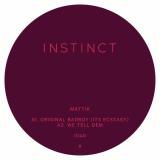
Burnski's Instinct label hits release number 40, having very much helped to define this latest era of minimal, tech and garage mutations. Mattik is in charge for this one and he has become a northern heavyweight in this world. 'Original Badboy (It's Ecstasy)' is a title alone that tells you what to expect - naughty, playfully sleazy garage sounds with old school motifs and a killer descending bassline. 'We Tell Dem' brings an acid squelch and screwy synths that are decidedly futuristic. Mattik & Tuff Trax's 'Get No Sleep' tightens the low end bump and drops in some neon chords and choppy garage-house drums, while Cronnik's 'Feelin' (Mattik's Got The Feelin' mix) blends bumpin' drum work with spraying synths and wobbly bass. Fantastic fun.
Peter 'Baby' Ford's legendary Trelik Records taps up Martinez for some gently persuasive minimal and tech on this new Dream Scheme EP. First out of the blocks is 'Outta Da Sky' (Ethereal mix), which marries honours bell sounds and gently cascading synth with a weighty deep house groove and spoken words that bring things to life. 'Laughter Land' has more intent but is still a shimmering sound with soft edges and plenty of late-night warmth. 'Gravy Disputes' sounds like the problem to have but in fact plays out like a serene, playful groove that gives a little nod and a wink across the dance floor as it persuades you to start moving more seriously.
We have reached the final chapter of Kontra-Musik Records' 20th-anniversary celebrations - a busy and rewarding year filled with new releases, represses, club nights, festival appearances and tours. To bring the year to a fitting close, Andreas Tilliander, aka TM404, has once again teamed up with label head Ulf Eriksson for a new limited, vinyl-only 12-inch. Entitled Tjugo (Twenty), the EP sees the duo return to their dusty, machine-driven sound. It opens with Navet, a deep techno track built around rolling stabs, a melancholic organ chord and a solid bassline. From there, it moves into Ravet, a hissing, propulsive piece of minimal techno. The B-side is given over to Sjuhundrasjuttiosjuan, a slow, acidic bonnadub, to close of the year and the record.
MCRV019 – VA – Phase Drift. Passage is a graceful and emotionally nuanced four-track journey through modern deep tech house. Blending reimagined echoes of early 2000s deep sounds with forward-thinking production, the release moves between moods and textures with surgical control and quiet sophistication. It’s an EP that balances warmth and restraint, melancholy and motion — built for selectors who appreciate finely tuned emotional arcs.
A1. Stephano Franca – Arriving opens with a fluid, introspective piece. Gentle and melancholic, it glides with cinematic poise, drawing listeners into a state of suspended reflection.
A2. Dot – Distance Call introduces a percussive, tribal undercurrent — earthy and grounded, yet full of bounce. It energizes the space while maintaining depth and groove.
Flipping over, B1. Reenday – Last Call (Nicolas Barnes Remix) brings a refined sense of cold elegance. Dubby and atmospheric, it’s a minimalist piece that evokes distance and stillness — a cool breath in the night.
Closing the release, B2. Jeronimo Watson – On The Prowl is a deep tech gem — emotive, seductive, and sharply detailed. With a slow-burning energy, it brings the record to a confident and composed close.
From Brazilian talent Stephano Franca to Dot and Nicolas Barnes, two of the label’s most precise and consistent producers, and rising standout Reenday, a finalist of the ANTS: NEXT GEN Artist Program 2025, this release represents the current essence of MixCult. It is sealed by the distinct touch of Jeronimo Watson, whose Los Angeles–rooted sound closes the circle with style.
Phase Drift. Passage is not just a collection of tracks — it’s a refined toolkit for navigating emotional shifts and dancefloor narratives, framed by elegance and intention.
fka boursin returns to Scissor & Thread with From Space Between, following his 2025 debut for the label, Listless Intertext. The Bristol producer continues to explore the more spacious edges of house music, drawing together dub, ambient detail and a loose rhythmic sensibility that has become increasingly characteristic of his work. From Space Between unfolds patiently with sounds appearing at the edges and gradually moving into focus. On the B-side Frank & Tony return with another Housebeat Dub, picking up the thread of their Listless Intertext rework. Francis Harris and Anthony Collins draw the original further into their own language of deep house, giving the rhythm more room and letting the dub elements stretch across the arrangement.
"A half-successful attempt at working with fewer elements in pursuit of a more minimalist approach," says Henry Murray aka fka boursin, "trying to find restraint and sit with gaps in the stereo image where previously I would have reflexively filled them with melodic content. Recorded whilst living alone in another country for a month, the track was borne out of meditations on living in and between unfamiliar places, seasons, languages, currencies, relationships, medications, economics, intentions, sanities, and spaces."
Rich Oddie of Orphx and Alex Pi of Pi Electronics introduce Anaxia, a new project arriving on Veyl with the 7-track LP “Maska”.
Built from raw electronics, stripped-down drum machines and a stark post-punk pulse, the record sits somewhere between industrial pressure and the ghostly minimalism of Suicide. It is direct but shadowed, physical but restrained, with vocals from Oddie and Pi cutting through the machinery rather than sitting on
top of it. Oddie’s background in Canada’s industrial underground and Pi’s long-running connection to the Greek electronic scene meet in a sound that feels tense, reduced and fully intentional. KAOSMOS and Florian Engerling add additional vocals, while remixes from In Trance 95 and Veyl regulars Years of Denial extend
the material into darker, more hypnotic territory. With “Maska”, Anaxia deliver a debut that feels fully formed: nocturnal, focused and stripped to its essentials. A natural fit for Veyl, the record draws a line between post-punk, industrial electronics and body music without overexplaining itself.
Following July's remastered reissue of Robert Hood's "Invincible", M-Plant's Perpetual Masters series continues with "The Metronome" set for a vinyl release in September, coming after the digital versions which dropped in the summer.
Robert Hood's "The Metronome" distils techno to its barest, most hypnotic pulse. Over the two tracks, Hood strips rhythm down to ticking hi-hats, lean kicks and looping motifs that feel mechanical yet human. The grooves are relentless but never cold, building tension through subtle shifts instead of excess. Originally released in 2002, it remains a masterclass in minimalism: precise, cerebral and intensely physical that still sounds futuristic more than two decades on.
Like other releases in the Perpetual Masters series "The Metronome" has been remastered by legendary German producer, Thomas Heckmann.
A DJ, producer and significant figure in contemporary electronic music, Marcel Dettmann steps forward to contribute to Running Back’s ongoing Mastermix series. Whereas previous editions of Mastermix have taken an ear to the sound of lapsed, legendary clubs such as Wild Pitch and Front, Dettmann’s curation deftly captures the man himself in ongoing perpetual motion, raiding the vault for his own precision-tooled edits, long-employed on dancefloors to devastating effect. Alongside a continuous mix, this release arrives as a 3LP gatefold, and as a limited edition cassette.
Closely associated with Berlin’s techno landscape, Dettmann was born and raised in the former GDR, then later immersed in the bleary-eyed counter cultural landscape of post-unification Berlin. Initially oriented by post-punk, industrial and new-wave music, Dettmann has been DJing since 1993, always expanding and perfecting his repertoire. He later began working behind the counter at the city’s tastemaking rave boutique Hard Wax, and a decade after he first dropped a needle, became (and remains) resident at notable local nightspot Berghain/Panorama Bar, where his instincts have helped sculpt the signature sound of both main dancefloors.
Of course, you’re probably not asking, “Who is Marcel Dettmann?” More importantly, you might want to know; just what treats has he gifted us here? The trip begins with a simple pitch-shift skywards, transforming Identified Patient’s creeping ‘The Female Medical College of Pennsylvania’ into a peak-time freakout, before an alternate take on Toctronic’s ‘Bis uns das Licht vertreibt’ emerges from the vaults for the first time. Dating from 1995, and one of Dettmann’s all-time favourites, Cristian Vogel’s ‘Untitled’ clambers back into the box with respectable cuts, while John Bender’s ‘Victims of A Victimless Crime’ kicks off the flip sporting a new arrangement, transporting us back to the foundations of a confident, stripped-back sound.
A few subtle edits to Clark’s perilously funky ‘Dirty Pixie’ takes us to Dettmann’s remix of Junior Boys. Produced in 2010, it transposes the Canadian duo’s sophisticated pop with our curator in his minimal prime, and has since become an irresistible prize for high-minded diggers. The same can be said for Experimental Products’ explosive proto-electro anthem ‘Who Is Kip Jones?’, empowered from pricey Discogs purgatory with just the slightest of tweaks. It’s deservedly sandwiched between the guiding influences of Chicago and Detroit in the form of Mutant Beat Dance’s raw ‘The Human Factor’ and a shimmering new version of previous solo production ‘Water’, featuring close friend and Ostgut Ton ally, Ryan Elliot.
The second half of the Mastermix seamlessly connects the mechanical past and digital present of EBM and industrial in the dance, with Dettmann’s instincts as a guiding hand. Severed Heads’ iconic ‘We Have Come To Bless This House’ emerges with mere nips and tucks, while Nitzer Ebb’s ‘Shame’ is significantly reimagined as a highwire act of rhythm and tension, setting up a sensual second take on a 2017 remix of ‘Limbo’ from Swiss synth heroes, Yello.
Core musical memories are shaken and stirred with a context-shifting take on Frank Duval’s emotional classic ‘Ogon’, while Ian North’s ‘Sex Lust You’ and Ford Proco’s notable Coil collaboration ‘Expansion Naranja’ effectively throb with only minor adjustments, respectfully imagined as “shadow versions”. Meanwhile, a simple breakbeat lifts Albert Kuningas’s ‘Astraalprojektio’ in the direction of wide-eyed dancefloors, while a fresh take on K-Alexi Shelby’s ‘Season of The Real’ inexplicably emerges somehow even funkier than before.
The conclusion of the compilation leads back to Das Tier from the prolific experimentalist Conrad Schnitzler, whose swirling synths and hypnotic vocals are duly tightened by Dettmann, but only as he puts it, “in conversation with the original.” Concluding three discs and thirty years of commitment to the dancefloor, this Mastermix not only offers us the opportunity to eavesdrop on this endless exchange, but to gain some sought-after material for our own record collections.
,Evergreen" vereint die musikalischen Welten von Dave Harrington und Kalia Vandever zu einer offenen, improvisationsgetriebenen Klangsprache. Die Einflüsse reichen von Jazzgrößen wie Bill Evans, der melodischen Weite von Bill Frisell, atmosphärischem Ambient, moderner Elektronik und Minimal Music bis hin zu experimenteller Improvisation und zeitgenössischer Kammermusik. Harrington, bekannt durch Darkside, bringt Elemente aus Minimal Techno, Acid Jazz, kosmischer Musik und experimentellem Rock ein, während Vandevers Posaunenspiel zwischen modernem Jazz und avantgardistischen Klangfarben pendelt. Das Ergebnis ist ein vielseitiges Album, das lyrische Jazzharmonien mit elektronischen Texturen, freien Improvisationen und atmosphärischen Klanglandschaften verbindet.
Berlin-based friends and cult DJs and producers Mor Elian and Gramrcy hook up here for A-Lo, a new collaborative project that comes after more than a decade in the game. Both have their own distinct approaches but fuse them here into "a fluid, hybrid system of production." 'Marzelvane' opens with drums that move you while also suspending you in the moment on shimming bass. 'Side Fumble' is glitchy, minimal electronic music with weighty bass buried way down low. There is a more electro-leaning kinetic energy to 'Tremie' as well as plenty of hi-fidelity details, while 'Lotus Deltoid' shuts down with loose jazzy cymbals and slow, dusty broken beats for a more abstract trip.
Det Gode Selskab continue their quest as they call on Berlin-based Italian artist Busso. An artist who continues to express himself through a multitude of vibes and sounds, fitting perfectly with the free-flowing DGS ethos. ‘Anna In The Jelly’ wanders between four different cuts, teasing animated deep house energy combined with stripped-back minimal flavours. A reflection of Busso’s versatile taste, he encapsulates four sure shots for your summertime record bag. A tale for the sun worshipping dreamers, soundtracking the warmer months.
Diving straight in with ‘Sexual Desire’, Busso delivers perky and playful peak-time action, with a clean-cut, feel-good energy from the word go. A vintage feel emerges through the vocals and crisp drums, working in sweet harmony. Slick hi-hats lead the way in ‘Don’t Be Afraid’ before you are confronted with a killer elasticated groove synonymous with the Italian’s sound. Beautiful chords appear at the midway point, spiralling into paradise.
The B-side kicks off with the title track, constructed in a distinct chunky manner. Squelchy mechanical tones manoeuvre around the mysterious drive of the track. Moody as it moves, it’s one for the darker nights on the road. Last but not least is ‘Red Print’, tightly packaged and incredibly detailed, with quirky obscurities flashing throughout. A steady motion perfectly sets the tone as you start to build the floor.
This record cements an exciting future for the label, as they look to continue elaborating on their catalogue, ever-evolving and expanding their width of sounds with one of the most exciting prospects currently in the German capital.
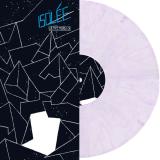
Originally released in 2005 on Playhouse, isolée's second album we are monster received widespread critical acclaim and was featured in numerous year-end lists, including Pitchfork's Best Albums of 2005, where it is praised for breathing "so carefree, years from now crits might accuse it of sounding timeless-- maybe even of being so." (Nick Sylvester in his Pitchfork review in 2005)
While closely associated with the minimal and microhouse movement of the mid-2000s, the sound on we are monster resists categorization; its musical vocabulary is too expansive to be confined to a single genre. Tracks such as schrapnell, mädchen mit hase, my hi-matic and enrico avoid many of the production conventions that define its period, allowing the record to retain a freshness that continues to resonate with listeners and music producers alike.
We are monster proved to be significant in more ways than one. Alongside its musical legacy, the album introduced the first record sleeve by Stefan Marx, whose artwork would become a familiar presence across countless releases on influential labels like Smallville or Mule Musiq, but also fashion labels like Comme des Garçons and many art galleries in the years that followed.
This anniversary edition revisits an album whose influence extends well beyond its original context!
Originally released in 2005 on Playhouse, isolée's second album we are monster received widespread critical acclaim and was featured in numerous year-end lists, including Pitchfork's Best Albums of 2005, where it is praised for breathing "so carefree, years from now crits might accuse it of sounding timeless-- maybe even of being so." (Nick Sylvester in his Pitchfork review in 2005)
While closely associated with the minimal and microhouse movement of the mid-2000s, the sound on we are monster resists categorization; its musical vocabulary is too expansive to be confined to a single genre. Tracks such as schrapnell, mädchen mit hase, my hi-matic and enrico avoid many of the production conventions that define its period, allowing the record to retain a freshness that continues to resonate with listeners and music producers alike.
We are monster proved to be significant in more ways than one. Alongside its musical legacy, the album introduced the first record sleeve by Stefan Marx, whose artwork would become a familiar presence across countless releases on influential labels like Smallville or Mule Musiq, but also fashion labels like Comme des Garçons and many art galleries in the years that followed.
This anniversary edition revisits an album whose influence extends well beyond its original context!
Was genau ist Folk Soul? Es handelt sich nicht um den zeitgenössischen Roots-Rock oder die Country-nahen Balladen, die du wahrscheinlich kennst. Folk Soul steht direkt vor - wenn nicht sogar direkt neben - der schwarzen Musikszene der Mitte bis Ende der 60er bis in die frühen 70er Jahre. Während Spiritual Soul das Ethos der afroamerikanischen Befreiungsbewegung und den breiteren Kampf seiner Zeit verkörpert, beschäftigte sich Folk Soul mit der Analyse, Klassifizierung und regelrechten Ablehnung des Status quo - und stellte sich den komplexen, starren Machtkämpfen jener Zeit durch minimalistische, klassisch geprägte und zukunftsweisende Ansätze im Songwriting. Diese LP besiegt den Faschismus.
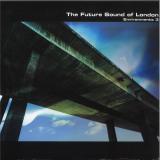
“Environments 3” is one of ‘the great lost albums’ by The Future Sound Of London and these sessions have taken on almost mythical status with the group’s fan base. It was initially due for release after the 1993 release of the UK Top 10 album hit “Lifeforms”, but that didn’t happen. Instead, much later in 2010, it came on CD and download. Only now is it being released on vinyl for the first time..
This release also comes after the success of the first two installments which have sold steadily across the different volumes over the years and still climbing. This third volume is a sparse, highly minimal, and vivid departure from their dense 1990s period, and cited as one of the standout ambient releases of its time with FSOL in fine creative form. Reviewers at the time noted he complete absence of the heavy, spacey atmospheres of Lifeforms or the dark chaos of Dead Cities with delicate textures and moody variety throughout. While mostly calm and meditative, certain cuts evoke a desolate, lonely, or gently industrial feel.
The first new material from Krash Slaughta since last autumn finds our man dropping a tuff 45 featuring two dope ATCQ remixes. And what else to call that but ATCK a.k.a. ‘A Tribe Called Krash’! First up is Scenario which gets a gritty guitar-led new beat making it sound closer to something by Gravediggaz at their noisiest (or even DMX) than the Afro-centric jazz-hope vibes of Native Tongues. Over on the flip, a co-production with, and tribute to, the now sadly departed Del the Soul Condor, takes Low End Theory’s Buggin’ Out and sticks with the jazzy vibes but swaps Buggin’s minimal double-bass dominated shenanigans for something rather more Latinate and Bonita Applebum-esque. Naturally these are as cheeky as they come so it’s a strickly limited affair. Don’t sleep…
Digital Sting returns after a bit of a hiatus with an across-the-globe collaboration featuring two of contemporary electronic music's most mysterious and prolific figures. Berlin-based, UK- born Low End Activist meets British Columbia-based, Philippines-born SeekersInternational for a seamless merger of their distinct but eclectic styles. SKRSINTL's woozy abstracted dubwise and dancehall psychedelia drips in, pooling and merging into Low End Activists minimalist and precision delivered bass bin pressure. Both artists' music spends some of its time in the hazy edges and ambience between sounds with hints of the activity,
atmosphere and noise of the larger world present in the individual sounds themselves. An aspect of this record rides like a distilled essence of a merger between vhs era soundtracks, dusty live sound system tapes and classic era grime instrumentals but avoids the trap of obvious nostalgia. What is created through collage, deconstruction and refinement is in its whole very now. Like all things SKRSINTL and Low End Activist the continuum is honored and the momentum is always pushing forward.
The records come in double sided silk screen printed DJ Jackets, with Obi Strip style stickers and hand stamped white labels printed and assembled by Digital Sting.
The artwork for this release was created in collaboration between SKRSINTL and Digital Sting.
Mastered by Alec Ness and Greg Reierson. Vinyl run of 330 copies.
,Concern and Simplicity Volume 1: Original Recordings, 1981-1986" versammelt zentrale Aufnahmen der Schweizer Pianistin und Komponistin Lotti Tauber, die in den 1980er Jahren in Eigenregie veröffentlicht wurden. Trotz schwerer körperlicher Einschränkungen entwickelte Tauber eine einzigartige minimalistische Klaviersprache, in der sich Intuition, Improvisation und spirituelle Konzepte miteinander verbinden. Geprägt von ihren Interessen an Jungscher Psychologie, Musiktherapie und Mystik schuf sie ebenso persönliche wie experimentelle Kompositionen, die an Künstler wie Arvo Pärt oder Philip Glass erinnern, dabei aber eine ganz eigene Stimme bewahren. Die Sammlung dokumentiert die kreative Hochphase ihres Schaffens und zeigt, wie Tauber mit einfachen musikalischen Mitteln intensive emotionale und klangliche Welten erschuf.
Tara Cunningham’s guitar glitch miniatures draw patterns in negative space on new mini-album Warm Ground. Operating predominantly within improvisational and experimental music, guitarist Tara Cunningham has developed a discrete sonic language that reveals the full textural and timbral range of her instrument.
Marking a new chapter for Cunningham that builds on her solo debut, Almost – Not Exactly, released on Non Classical in 2025, Warm Ground unfolds across seven compelling instrumental dialogues - each a conversation of rhythms and found sounds, syncopated and juxtaposed, open to encounter.
Implied by the title of first single ‘Following a Thought’, Cunningham weaves an exploratory melody into the spaces between field recordings. At once introspective and highly relational, each track ushers the listener into a world of different scales, seeking beauty and meaning in the everyday, from the discrete mechanisms of ‘Fridgelight’ to the delicately unhinged organism of ‘Flying Ant Day’.
Cunningham finds a natural home on Odda’s roster of artists sensitive to the details of their materials and surroundings, finding kinship alongside the intimate songcraft of Kirk Barley and Fohn in the gaps between composition and improvisation.
In 2026 she released a self-titled LP as The Sleeves with Jack Cooper, performing at Cafe Oto ahead of a US tour in the autumn. She continues to pursue a range of projects as collaborator and side person with Modern Nature, Sebastian Rochford, Red Snapper, Liam Noble, Laura Jurd and Caius Williams.
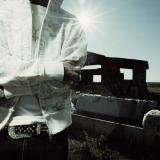
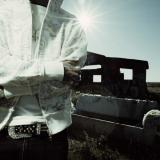
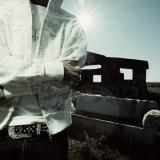
,Great Sounds Great", ,Good Sounds Good", ,So-So Sounds So-So", ,Bad Sounds Bad", ,Rotten Sounds Rotten!!" 2026 legt Merge Records zwei frühe Veröffentlichungen von 1982 der neuseeländischen Indie-Pioniere The Clean neu auf: die EP ,Great Sounds Great" und die Single ,Getting Older". Beide erscheinen erstmals seit ihrer ursprünglichen Veröffentlichung wieder auf Vinyl. Nach dem Erfolg ihrer Debüt-EP ,Boodle Boodle Boodle" wollte die Band neue musikalische Wege einschlagen. ,Great Sounds Great" zeigt The Clean experimentierfreudiger und vielschichtiger, mit stärkerem Einsatz von Orgelklängen, minimalistischen Aufnahmetechniken und dem späteren Klassiker ,Beatnik". Trotz anfänglich gemischter Kritiken wurde die EP ein weiterer großer Erfolg in Neuseeland.
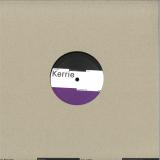
Irish techno producer, Kerrie, returns to Tresor Records on the 24th of October 2025 with her second EP for the label. Entitled Echoes Of The Live Wire, this collection captures the beauty and essence of live performance; a moment in time never to be repeated.
This fixing of time is also given a different meaning as the EP explores the ways in which intense moments in our lives, both joyful and painful, are crystallised into memory, both beautiful and haunting, lingering long after they've passed.
Layered meanings are employed throughout as Kerrie explores this idea: Live Wire draws connections between circuit boards and the human nervous system, whilst also toying with multiple meanings of the word “live”.
Echoes Of channels classic Detroit techno influences, resonating with the distant hum of memories that refuse to fade, while Moment To Memory is a beatless, floating piece which slowly builds to an ecstatic crescendo.
Digital bonus tracks Recircuit and Reclaim add further depth to the core metaphor: the former a driving, minimal yet building techno work-out, and the latter a cathartic and emotionally open track that delivers intensity with vulnerability.
Echoes Of The Live Wire reflects on memory as a complex, dual-sided force where joy and pain coexist with equal weight. Her creative process becomes a form of meditation and emotional processing, using machines to process, reflect, and let go. The result is a body of work that loops back on itself, telling a story of fleeting moments and their lasting emotional imprints.
Vieri Mura wuchs unter der intensiven Sonne Sardiniens auf. Seit vielen Jahren reist er in den Norden der Insel, um die berühmte Sängerin Maria Teresa Pirrigheddu (geb. 1942) zu besuchen. Was als musikalisches Interesse begann, entwickelte sich zu einer tiefen familiären Bindung. ,Rundinas" (,Schwalben" auf Sardisch), von Vieri mit tragbaren Geräten aufgenommen, dokumentiert diese Beziehung sowie die Klänge der Insel und den Rhythmus von Maria Teresas Alltag. Maria Teresa singt mündlich überlieferte ,Cantos a chiterra" zu Vieris minimalistischen Kompositionen für Gitarre (Seite A, in ihrem Garten) und Orgel (Seite B, in der Kirche, nur wenige Schritte von ihrem Zuhause entfernt). Schwalben ziehen durch die Aufnahmen, Symbole für den Wechsel der Jahreszeiten und die vergängliche Jugend. Maria Teresa, mittlerweile 84 Jahre alt, deren Stimme zugleich agil und vom Alter gezeichnet ist, verleiht diesen alten Gesängen neue Bedeutungsebenen. Eines der tief bewegendsten und mitreißendsten Musikstücke, die wir je gehört haben - aufgenommen in der Gegenwart und doch Hunderte von Jahren zurückreichend, ein musikalischer Dialog zwischen zwei Künstlern verschiedener Generationen und dem Land, das sie geprägt hat. Eine Quelle der Hoffnung und Schönheit in einer verarmten Welt.

















![THE CLEAN - GREAT SOUNDS GREAT, GOOD SOUNDS GOOD, SO-SO SOUNDS SO-SO, [...]](https://www.deejay.de/images/l/3/3/1267733.jpg)