Burgos and Page's sophomore album, A Long Short Story, is a conceptual journey through the rise and fall of a fleeting yet profound love—one that blossomed, thrived, and withered within the span of four seasons. Each track unfolds like a page torn from Johnny's mind, capturing every stage of the relationship's evolution in raw, chronological detail. From the euphoric highs of newfound passion to the crushing weight of unreciprocated love and the bittersweet process of healing, A Long Short Story weaves a sonic tapestry of grand emotions, immersing listeners in the beauty, pain, and impermanence of love.
Power Electronics, for the most part, stays within its lanes of transgressive misanthropy, with a blackened explosiveness of tortured psyches and nightmarish reflections for the darkest facets of the human condition. Since Whitehouse introduced the phrase, concept, and framework to Power Electronics, its authorship has been primarily male. But within the past decade or so, a diverse web of voices - female, feminist, non-binary, queer - has thrust the PE aesthetic beyond that of the tortured male artist. As such, the notion that Power Electronics is synonymous with true crime worship, political ugliness, degraded sexual fantasies, and misogynistic perspectives has been somewhat dispelled (though many still pursue such ignoble agendas).
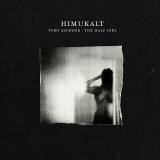
Enter Ester Kärkkäinen. For close to a decade now, she has developed her own voice, tread her own path, and exorcised her own demons in her unique take on Power Electronics, recording as Himukalt. A Power Electronics album based on the collapse of a relationship is probably not as uncommon as one might think. The sexual violence portrayed through Power Electronics may very well have had its origins in the heartbroken, scorned, or otherwise romantically mistreated. Kärkkäinen gives us two very different perspectives on these themes through two rather different sounding records. There is Last Wish from the plague year of 2020, and there is Torn Asunder: The Half Girl, recorded in 2019. Where the 2020 record is a long-form fever dream of the erotic gone horribly wrong and turned morally questionable, Torn Asunder is the more fractured, yet more concise extrapolation of Kärkkäinen's anger, horror, confusion, and depression from the end of a sexless relationship. She nakedly reveals a psyche that has been shattered, scarred, and broken as she alternates between deadpanned proclamations and barked sermons amidst the harrowing articulation of heavy industrial electronics, laced with shrill feedback tones, disjointed rhythms, and harsh noise outbursts. Torn Asunder stands as a significant milestone in Himukalt's catalogue, but remains one her most rarely heard documents given it was originally published as part of Helen Scarsdale's instantly out of print, 10 cassette On Corrosion boxset. With this vinyl reissue, Torn Asunder can get a proper re-evaluation as one of her strongest works.
Hailing from Las Vegas, Himukalt began in 2016 as a vehicle for Kärkkäinen's noise constructs and crude programming that found references to Puce Mary, Anenzephalia, and Atrax Morgue’s Mörder Machine. Since then, she has maintained a manic schedule with releases for Tesco Organisation, Cloister Recordings, Old Europa Cafe and her own EK Verlag. With the release of Torn Asunder, Helen Scarsdale terminates the mission for the On Corrosion reissue campaign.
Death Is Not The End issue 15 heartbreaking archival fado recordings from Ercilia Costa - made in Madrid in 1930, accompanied by seminal guitarist Armandinho. One of the early stars of fado, Ercilia Costa was the first to take the music overseas to emigrant Portgugese communities.
Ivan The Tolerable returns with Chromophobia, an expansive new double album and his fourth for Riot Season after ‘Water Music’ & ‘Vertigo’ (both 2024) and ‘An Orphan Form’ (2025)
Chromophobia carries with it a deep personal history. The earliest recording sessions date back to 2018 at the IDI in Middlesbrough, engineered by longtime collaborator Nigel Crooks over the course of three weekends. The material was left unfinished for years, shelved for reasons that accumulated and compounded - until the tragic passing of Crooks in 2023. His unfinished work lingered, and the desire to complete it became a mission.
“In the end, I finished this record for Nigel, above all else,” says Oli Heffernan (Ivan The Tolerable). “It always annoyed him that it never got done.”
To bring the album to completion, the original stems were passed to producer Hugh Major (formerly of Benefits) in early 2024. Across a year of meticulous experimentation - countless versions, radical reconstructions, entire songs torn down and rebuilt - the album transformed into something wholly new. The final collection spans 14 tracks, reimagined from the ground up yet still anchored to the spirit of the sessions that began it.
“It’s a very different beast from where it started,” Heffernan adds, “but I think Nigel would really like it - and be glad it was finally finished.”
Chromophobia stands as both a reinvention and a tribute: a document of persistence, creative overhaul, and the enduring impact of a lost collaborator.
Because of their mix of hellified gangster shit and progressive compositions, I once jokingly called Clipping "Deathrow Tull." Well, it's not a joke anymore. While Clipping's last few projects have been record-long concepts like classic prog rock, their cyberpunk-infused new album Dead Channel Sky is mixtape-like, a carefully curated collection in which every track is a love letter to a possible present. It sounds crisp and classic at the same time. When something strikes us as retrospective and futuristic at the same time, it's a reminder of how slipshod our present moment truly is. Juxtaposing high-tech, corporate command-and-control systems (the "cyber") with the lo-fi, D.I.Y. underground (the "punk"), cyberpunk proper starts in 1982 and ends in 1999, from Blade Runner to The Matrix. Concurrently, hip-hop matured, went through its Golden Era, then melted into further forms: it went from from Fab 5 Freddy to Public Enemy to Missy Elliott. While other genres flirted with it, hip-hop was fickle and fey. Rap and rock birthed mutant offspring maligned by most, and hip-hop's relations with electronica rarely fared any better. What if someone explicitly merged hip-hop and cyberpunk - those twin suns of the '80s and '90s - into one set and sound? After all, both movements are the result of hacking the haunted leftovers of a war-torn culture that's long since moved on. On Dead Channel Sky, Clipping texture-map the twin histories of hip-hop and cyberpunk onto an alternate present where Rammellzee and Bambaataa are the superheroes of old; where Cybotron and Mantronix are the reigning legends; where Egyptian Lover and Freestyle are debated endlessly, and Ultramag and Public Enemy are the undeniable forefathers; where the lost movements of 1980s and the 1990s are still happening: rave, trip-hop, hip-house, acid house, drum & bass, big beat-the detritus of a different timeline, the survivors of armed audio warfare. Clipping are no strangers to sci-fi: two of their records were nominated for Hugo Awards (one of science fiction's top literary prizes), and a novella spun-off from their music was nominated for a third. On Dead Channel Sky, Clipping's co-conspirators include everyone from the guitarist Nels Cline, to their labelmates Cartel Madras, rapper/actor Tia Nomore, and wordsmith Aesop Rock. Diggs is known for intricate lyrics and rapid-fire rapping, and the tracks that Snipes and Hutson build in the background are no less complex. All of the above serves to give us a glimpse of an adjacent possible present, where hip-hop and cyberpunk are one culture. Binary stars are often perceived as one object when viewed with the naked eye. Like those twin sun systems, it'll take some special equipment and some discerning attention to pull the stars apart on this record. As Diggs barks on the fire-starting "Change the Channel": Everything is very important!
pas en stock
Dernière livraison il y a 15 mois réapprovisionnement sans garantie
Weißes Vinyl im Klappcover! Die dänisch-brasilianische Band The Courettes war von Anfang an eine Rock'n'Roll-Sensation und ist mit ihrem vierten und bisher besten Album zurück: "The Soul Of... The Fabulous Courettes". Und dieses Mal sind sie größer, breiter und tiefer als je zuvor, denn sie haben ihrem fulminanten Ramalama, mit dem sie in Großbritannien, Europa, den USA und Japan für Furore sorgen, noch mehr hinzugefügt. The Courettes treffen genau den richtigen Punkt zwischen Garage-Rock, Girlgroup-Pop, Doo-Wop-Harmonien, Herzschmerz und allem, was dazwischen liegt, und bauen auf dem Schwung des Vorgängers "Back In Mono" mit einer Sammlung von Songs auf, die ihren klanglichen Spielraum erweitern, während sie sich mit dunklen, emotionalen Themen auseinandersetzen, um "The Soul Of_ The Fabulous Courettes'" zu enthüllen. "Wir wollten kein "Back In Mono 2" machen", betont Schlagzeuger Martin Couri. "Wir versuchen immer, uns in eine Zone des Unbehagens zu begeben, in der meiner Meinung nach aufregende Dinge passieren, anstatt immer wieder das Gleiche zu tun", stimmt Sängerin, Gitarristin und Multiinstrumentalistin Flavia Couri zu. Mit jeder Albumveröffentlichung hat sich das Duo weiterentwickelt und "The Soul Of... The Fabulous Courettes" lässt sich von den zahlreichen Vorbildern des Duos inspirieren, die zuvor nur angedeutet wurden. "Wir wollten unsere Liebe zur Spector Wall Of Sound und Motown zeigen", verrät Flavia. "Es war eine klare Mission und wir haben sie absolut erfüllt." Von den glorreichen Eröffnungsbeats und den stechenden Fuzz-Hupen von "You Woo Me" bis hin zu der abschließenden emotionalen Rührung von "For Your Love" über die fuzzige Dringlichkeit von "SHAKE!" und die feierliche Wärme von "California" haben The Courettes ihren Sound mit einer Instrumentierung und einer allgemeinen Raffinesse erweitert, die sowohl in ihrer Produktion als auch in ihrem Songwriting deutlich wird. Und vor allem haben sie dies erreicht, ohne etwas von dem Rock'n'Roll-Kern zu opfern, der von Flavias Gitarrensaiten und Martins ramponiertem Schlagzeug abgekratzt wurde. Bei ihrem Streben nach klanglicher Perfektion haben sie einige Gastmusikern und Klang-Zauberer im Hintergrund unterstützt, z.B. La La Brooks (The Crystals) mit Backing Vocals bei "California" und "Run Run Runaway" (bei denen auch noch Brian Wilson-Kollaborateur Darian Sahanaja den Gesang gemischt und mit einem Beach Boys-Vibe versehen hat). Produzenten-Legende Richard Gottehrer hat "Keep Dancing" und "Boom Boom Boom" abgemischt, Peter Kehl und Kasper Wagner (beide Black Tornado) geben sich mit diversen Blasinstrumenten bei "Shake!", "Better Without You" und "Stop! Doing That" die Ehre. Zu den Courettes gesellt sich in ihren eigenen StarrSound Studios in Dänemark erneut der Multi-Instrumentalist Soren Christensen, der Mellotron, Orgel, Klavier und Backing Vocals beisteuert und das Album gemeinsam mit C.T. Levine produziert hat. Während sich die Musik akustische und 12-saitige Gitarren, Bass, E-Bögen, Kastagnetten und Pauken einbezieht, haben sich auch die Emotionen entwickelt, die man zuvor nicht mit The Courettes in Verbindung gebracht hat. "The Soul Of... The Fabulous Courettes" richtet sich an Herz und Kopf, es tanzt durch die Dunkelheit und feiert die Freude am Leben.
Die dänisch-brasilianische Band The Courettes war von Anfang an eine Rock'n'Roll-Sensation und ist mit ihrem vierten und bisher besten Album zurück: "The Soul Of... The Fabulous Courettes". Und dieses Mal sind sie größer, breiter und tiefer als je zuvor, denn sie haben ihrem fulminanten Ramalama, mit dem sie in Großbritannien, Europa, den USA und Japan für Furore sorgen, noch mehr hinzugefügt. The Courettes treffen genau den richtigen Punkt zwischen Garage-Rock, Girlgroup-Pop, Doo-Wop-Harmonien, Herzschmerz und allem, was dazwischen liegt, und bauen auf dem Schwung des Vorgängers "Back In Mono" mit einer Sammlung von Songs auf, die ihren klanglichen Spielraum erweitern, während sie sich mit dunklen, emotionalen Themen auseinandersetzen, um "The Soul Of_ The Fabulous Courettes'" zu enthüllen. "Wir wollten kein "Back In Mono 2" machen", betont Schlagzeuger Martin Couri. "Wir versuchen immer, uns in eine Zone des Unbehagens zu begeben, in der meiner Meinung nach aufregende Dinge passieren, anstatt immer wieder das Gleiche zu tun", stimmt Sängerin, Gitarristin und Multiinstrumentalistin Flavia Couri zu. Mit jeder Albumveröffentlichung hat sich das Duo weiterentwickelt und "The Soul Of... The Fabulous Courettes" lässt sich von den zahlreichen Vorbildern des Duos inspirieren, die zuvor nur angedeutet wurden. "Wir wollten unsere Liebe zur Spector Wall Of Sound und Motown zeigen", verrät Flavia. "Es war eine klare Mission und wir haben sie absolut erfüllt." Von den glorreichen Eröffnungsbeats und den stechenden Fuzz-Hupen von "You Woo Me" bis hin zu der abschließenden emotionalen Rührung von "For Your Love" über die fuzzige Dringlichkeit von "SHAKE!" und die feierliche Wärme von "California" haben The Courettes ihren Sound mit einer Instrumentierung und einer allgemeinen Raffinesse erweitert, die sowohl in ihrer Produktion als auch in ihrem Songwriting deutlich wird. Und vor allem haben sie dies erreicht, ohne etwas von dem Rock'n'Roll-Kern zu opfern, der von Flavias Gitarrensaiten und Martins ramponiertem Schlagzeug abgekratzt wurde. Bei ihrem Streben nach klanglicher Perfektion haben sie einige Gastmusikern und Klang-Zauberer im Hintergrund unterstützt, z.B. La La Brooks (The Crystals) mit Backing Vocals bei "California" und "Run Run Runaway" (bei denen auch noch Brian Wilson-Kollaborateur Darian Sahanaja den Gesang gemischt und mit einem Beach Boys-Vibe versehen hat). Produzenten-Legende Richard Gottehrer hat "Keep Dancing" und "Boom Boom Boom" abgemischt, Peter Kehl und Kasper Wagner (beide Black Tornado) geben sich mit diversen Blasinstrumenten bei "Shake!", "Better Without You" und "Stop! Doing That" die Ehre. Zu den Courettes gesellt sich in ihren eigenen StarrSound Studios in Dänemark erneut der Multi-Instrumentalist Soren Christensen, der Mellotron, Orgel, Klavier und Backing Vocals beisteuert und das Album gemeinsam mit C.T. Levine produziert hat. Während sich die Musik akustische und 12-saitige Gitarren, Bass, E-Bögen, Kastagnetten und Pauken einbezieht, haben sich auch die Emotionen entwickelt, die man zuvor nicht mit The Courettes in Verbindung gebracht hat. "The Soul Of... The Fabulous Courettes" richtet sich an Herz und Kopf, es tanzt durch die Dunkelheit und feiert die Freude am Leben.
For genre-bending band Whiskey Myers, 2019’s self-titled and self-produced album offered a watershed moment. With Rolling Stone raving that the “irresistible” album was “the record the band was poised to make” while declaring them “the new torch bearers for Southern music” in a story titled “How Whiskey Myers Won Over Mick Jagger and Made the Album of Their Career;” Billboard and No Depression naming the album to best-of-the-year lists; 41,000 first week album sales; and the project debuting atop both the Country and Americana album charts (as well as at No. 2 on the Rock charts, behind only a re-release of The Beatles’ Abbey Road), the band celebrated mainstream success a decade in the making. Now, after spending 21 days isolated at the 2,300-acre Sonic Ranch studio deep in the heart of their native Texas, just miles from the U.S./Mexico border, the Gold-certified renegades have doubled down on what they do best: sharing honest truths with no-holds-barred instrumentation, letting the self-produced music speak for itself. Yet with Tornillo, named for the border town that is home to the pecan orchard-filled recording complex and set for release on July 29 via their own Wiggy Thump Records with distribution by Thirty Tigers, the six-piece band has taken their solid decade-plus foundation and pushed themself to further explore new sonic landscapes. “It’s going to have a little bit different sound,” lead singer Cody Cannon shared recently with Outsider. “It’s still Whiskey Myers at its core, but it’s kind of fresh… We did a lot of bass and horns on this one, which is something we’ve always wanted to do. Just being fans of all that old music and Motown stuff, and a lot of the stuff coming out of Muscle Shoals, old rock and roll. “We’re going to bend genre even more, I think, with this new record,” he continued. “It’s all over the place. But that’s fun, right? I hate the whole ‘Put it in a box. You gotta be this.’ … That’s not art to me. I love the idea of just doing, really, whatever you feel. It comes out a certain way because that’s just how it comes out. Whiskey Myers never really tried to be a certain way. It’s just how we are. So I think that’s really the whole thing about music, or the beauty about music; it’s just that freedom to create.” Tornillo as a whole does exactly that, drawing as much inspiration from Nirvana as from Waylon Jennings – even adding the legendary McCrary Sisters’ gospel influence to the project on background vocals. With Cannon leading the way on songwriting, the album also features writes from lead guitarist John Jeffers and fellow bandmembers Jamey Gleaves and Tony Kent, as well as rising singer/songwriter Aaron Raitiere (Anderson East, Oak Ridge Boys, A Star is Born).
Really love this album. This is probably some of Malcolm's best works, although it's hard to decipher as we like nearly everything he writes. As an album, it sounds like he's put everything he has into it, full of emotion and diversity. It's hard to say which track is our favorite but we are torn between Faithful Fearful and Regrets. Keep up the good work Malcolm as this is a masterpiece. Anyone who sleeps is missing out.
pas en stock
Dernière livraison il y a 6 ans réapprovisionnement sans garantie
A continuation of his kaleidoscopic sun-dappled cosmic-disco, Neon Leon was the much-loved CD-only sophomore album by Sorcerer. Just in time for Spring/Summer, we present the first ever vinyl issue, released as a deluxe double LP.
A perfectly formed suite of ten tracks featuring soft guitars, subtle synths and lightly grooving percussion, Neon Leon magically evokes that elusive summer feeling throughout. The guitar-driven "Algorhythm" serves as the album opener, blasting bold, sun-drenched jazz chords atop bright synths and groove-based drum programming. "Ride The Serpent" and "Distort Yourself" are guided by a more sultry, slo-mo disco impulse whilst the staggering "Chemise" and strident "Face It" merge 80s West Coast production sheen with Sorcerer's trademark laid back, gentle disco. "Raydio"'s undeniable head-nod groove adds a rare vocal to the proceedings, joyously combining with the bubbling cosmic funk.
Since its initial release in 2009, exceptional producers have created vibrant variations on the dreamy, dubby, melodic nu-disco theme. Happily, the emergence of such luminaries as Jex Opolis, Harvey Sutherland, Suzanne Kraft, Tornado Wallace et al has only served to make the master - Sorcerer - sound ever more brilliant and vital.
Utilising his array of guitars, drum machines, synths, and trusty MPC, the loved-up Sorcerer sound inspires halcyon memories of warm days, endless sunsets and pure youthful abandon. Influenced by surf, 80s dance pop, acid-R&B, space jazz, krautrock, disco, dub, and am radio gold, his music maps a tour through a uniquely Californian lifestyle. Yet when music so vividly captures a vibe and a feeling, it can make writing about it appear almost redundant. Instead, to glean the full colour of what your turntable will soon gratefully radiate, we prescribe the generous soundclips presented here.
And, for a unique insight into the process behind the wonderful sounds conjured up, here's Sorcerer himself:
"Neon Leon's is the name of a bar in a Elmore Leonard book I was reading on a vacation to Belize with my future wife. I was soaking up his brand of noir during the making of the songs on this record, along with another favorite Ross Macdonald. We were living in a small apartment in the Mission District of San Francisco where i had my own room to jam. It was painted Orange and Turquoise and was a very inspiring place to create and focus. I could walk out of my house to any number of hole in the wall bars where people were deejaying, hanging-out, and knew about me and my music.
After White Magic I developed more confidence in my style and process so I stuck with it and I believe it shows in the tunes I selected for the record. The sounds are rich and I dug deeper into sampling from obscure dollar records and getting looser musically. I made a handful of collage videos for the tracks at this time as well, which represent where my mind was at visually. In my mind it's Cosmic Funk that rules the day and I am thankful to have the opportunity to share it with the world again."
Lovingly remastered by the esteemed Simon Francis, cut reassuringly loud on to heavyweight double vinyl and presented in a deluxe gatefold jacket with freshly commissioned artwork throughout from original designer Rich Robinson, this limited edition of 500 copies is sure to fly.
WHEN YOU'VE FINISHED LOOKING AROUND THE WEBSITE, YOU CAN FIND US ON THESE SOCIAL CHANNELS
Running Back welcomes Andreas Grosser for the start of it's non-dancefloor series 'Running Back Incantations'. Think Tornado Wallace's 'Lonely Planet' or Suzanne Kraft's 'Missum' who both would have been good and early contenders for a series like that, and you are half way there. Andres Grosser though, was 'there' and that way before. Probably best-known for his 1987 collaboration 'Babel' with Klaus Schulze, Grosser is a bit of a dark horse in the universe whose big bang was krautrock and that went on to be called cosmic, space music or simply new age.
A native East-Berliner, Grosser crossed the Wall in 1981 and next to studying piano, his day job was to advise, sell, maintain and invent electronic music instruments. Naturally, Grosser had a good connection to and support from local Berlin musicians and groups, while working at night in his own studio and in those of others. Fast forward 37 years and Andreas is now one the worlds leading microphone technicians specialising in German and Austrian vintage types.
'Venite Visum' is an anthology of recordings made between 1976 and1980. Released in 1981 on UK's York House Recordings as a cassette tape only, it features some of the most out there, hypnotic and still state-of-the art space music ever to be known to man. For the first time transferred onto vinyl, compact disc and available as a digital download, it was perhaps best described by one reviewer at the time as; "powerfully relentless, repetitive themes which are constantly embellished and subjected to variations in tone colour and instrumentations. The music surges, coming in waves that approach and recede, but with each surge the waves seem to be higher up the shore.'
Now carefully transferred from an archived tape, remastered and compiled on a double album for the first time, it features the previously unreleased and not less mesmerizing 'The Quantum Leap'. Come and visit the hidden and almost forgotten