Marino Scarabelli, the creator of unforgettable progressions in “Are You Loving” and “Love In A Summer Night”, so characteristic and unique that can still give us goosebumps, sat down in the studio again and composed another italo banger. Traditionally, he was joined by Stefano Brignoli, who wrote the lyrics and lent his voice, and that’s how we witnessed the creation of new bomb by Some Bizarre.
But this is not the end of the sensation, because Linda Jo Rizzo joined the band as a guest and you will hear her in female vocal parts, as befits real, indigenous Italo disco. The whole thing was produced by A.P. Mono in collaboration with Marino Scarabelli. For dessert, a very nice remix by Electro Potato.
“Sainen Hildo” is an album based on Miguel’s original compositions, recomposed and rearranged for accordion and voice by the two composers. Using the natural resonance and harmonics of these two instruments to influence their introspective interactions, resulting in evolving drones and tones and puzzling percussive outbursts. Unusual and at times unsettling, they manage to create a calibrated, deep and complex exploratory universe of ambience and drone where listening becomes a ritual. Highest recommendation for fans of Pauline Oliveros, Eliane Radigue or Phill Niblock.
Garazi Navas (accordion + voice). Original compositions by Miguel A. García. Recomposed and rearranged by Garazi Navas & Miguel A. García. Recorded by Ibon Rg at Azkuna Zentroa (Contemporary Art Centre in Bilbao) in June 2022, as part of the associated artists program. Mixing and mastering by Juan Carlos Blancas. Compiled by Mikel Acosta.
Acrylic painting on heavyweight paper by Maite Mugerza Ronse. Limited edition of 300 black vinyl LP’s housed in a coloured matt laminated cover. Released by Hegoa Diskak.
Dopelganger is the project in collaboration between classically trained accordion player and singer Garazi Navas (Usansolo, Bizkaia-Biscay, 1995) and Miguel A. Garcia (Vitoria-Gasteiz), an artist living in Bilbao with an extensive career in the fields of experimental music and sound art.
Garazi Navas / Classically trained at Musikene School of Music in San Sebastian with a masters in traditional music, Garazi, is a restless accordionist who, despite her young age, has taken part in a multitude of projects in theater, poetry, ballet, art installations and even playing with the Bilbao Symphony Orchestra. Her works are a personal interpretation of the close relationship which she feels exists between cutting-edge and traditional music.
Miguel A. García / Has performed extensively in Europe, America and Asia, both as a solo artist, improvising and in multiple ensembles. He has collaborated with dozens of artists (Al Karpenter, Jean Luc Guionnet, Sébastien Branche...) in studio and live, and appeared in more than a hundred albums. At the same time, he is organizer and curator of events, being founder of Club Le Larraskito, director of Zarata Fest, and part of the coordination of the cycle Hotsetan at Azkuna Zentroa itself
Bangalore-based brotherly duo Ashwin and Ashrith Baburao combine as Audio Units on a potent new EP for Lady Tazz's Mind Medizin, featuring remixes from Ben Sims and Temudo.
Obsessed with quality, soul and futurism, Audio Units have vast experience of DJing worldwide and real studio know-how. Each of their tracks is a perfect blend of intricacy and experimentation, and they have turned the heads of tastemakers on labels like Dutchie Music, Deep Edition Recordings and Sinnmusik.
They open this high-octane EP with the raw and unrelenting drum funk of 'Aristotelian Tradition', which is run through with warped synths and carefully layered up with gritty percussion and FX. Vocal snippets and smeared pads further flesh out the groove, making for an uplifting sound. Machine party and label head Ben Sims is a UK techno heavyweight at the forefront of the scene. His remix shows that as it ups the percussive energy and allows the synths and vocals more prominence with hypnotic effects.
The second original, 'I'm Just All You Need,' is a twisted and intense mix of fragmented vocals and pulsing synths over vast rock-solid kick drums. It's an urgent track that cannot fail to sweep the floor off its feet and keep it locked for the ride. Next is a remix from new school tastemaker Temudo, who has already put out outstanding records on labels like Klockworks, Soma and Modularz. His version of 'I'm Just All You Need' strips it back to icy hi-hat loops and buffed metal synth lines that weave in and out of the minimal yet tribal techno drums
The ‘Aristotelian Tradition’ EP is another superb release from Mind Medizin that combines the dark and kinky allure of techno with all-out dance floor dynamics.
Jackie Mittoo is one of the most important artists in the history of Jamaican music. As founding member of the legendary Skatalites, as in-house arranger/producer at Studio One and as a solo artist in his own right leading groups such as The Soul Brothers, Sound Dimension and Soul Vendors.
These classic and rare recordings were made in the mid 1960's at Studio One. The Soul Brothers bridged the gap between Ska and the arrival of Rocksteady mixing it all up with Funk, Jazz and Latin styles. The Soul Brothers recorded at Studio One between 1965-1967. This was the transitionary period between Ska and Rocksteady where the music was a mixture of Funk, Latin and Jazz sometimes with a reminder of Ska and the hint of Rocksteady.
The previous era of Ska had been dominated by the Skatalites, the first in-house band at Studio One who created classic hits such as "Guns of Navaronne", "Man in the Street", "El Pussy Cat" and many more. Unfortunately the strong personalities in the group meant that The Skatalites stayed together for less than two years. It was also around this time that the mentally unwell Don Drummond was arrested for the murder of his girlfriend, the dancer Margerita.
In August 1965, barely a week after the demise of the original Skatalites, The Soul Brothers (featuring ex-Skatalites members Jackie Mittoo, Roland Alphonso, Johnny Moore and Lloyd Brevitt) were up and running as the new house band at Studio One.
The Soul Brothers were essentially a collective, releasing material under their own name or under a nominal leader (usually Jackie Mittoo or Rolando Alphonso). The group line-up changed over time with Bobby Ellis (trumpet), Bryan Atkinson (bass), Dennis Campbell (Sax), Harry Haughton (guitarist) and Joe Isaacs (drummer) replacing various members alongside the ever present Jackie Mittoo.
REVIEWS
"Jackie Mittoo was a true star of Jamaican music; a founder member of The Skatalites, a prolific composer and the keyboard powerhouse behind many a classic tune. His simple, often hypnotic approach, to ska, rocksteady and reggae made him one of the most distinctive sounding musicians of the era." BBC.
"Jackie Mittoo was one of the great names in Jamaican music, manning the keyboards for the Skatalites, the Soul Vendors, and Sound Dimension-- three of the greatest house bands of the 60's
(and I mean anywhere, not just in Jamaica)." PITCHFORK.
On his new single "Pacifico Waves", Joel Sarakula takes the scenic route down a pacific coastline, searching for peace, enlightenment and the perfect sunset.
Travelling and searching is nothing new to Sarakula: it's almost his default way of being. Born and raised in Sydney, Australia before swapping oceans to live in the UK and more recently onwards to Gran Canaria: "I've been busy making my islands smaller" he jokes. But the music on "Pacifico Waves" sounds like none of these places: with its easy drum shuffle, soulful guitar hooks and smooth vocal harmonies it distinctly evokes Southern California. It's such a potent portrait of the West Coast that if not for the contemporary lyrics and some modern production techniques, it could be a long lost hit from an early 80s LA studio band.
"Pacifico Waves" is ultimately about memory, fantasy and the powerful emotion of reminiscing when Sarakula sings 'The sound of the ocean gets me so high, helps me remember what I left behind'.
There's no denying Marcel Fengler's profound impact on the ever-changing techno landscape. A pioneer in his own right, Fengler's works have flooded dancefloors and set lists worldwide for decades, and that shows no sign of changing anytime soon. His latest work is an all-encompassing four-track EP titled "Unleashed", including a remix from sought-after Stuttgart duo SHDW & Obscure Shape.
Kicking off with the title track, "Unleashed" introduces the EP with high-octane rhythms, pulsating low frequency sonics and rave like harmonic layers. An unrelenting onslaught of fast paced thumping techno, built around long, sweeping notes, vocal injections and a piston-like bassline, this one was made for the height of the party. "Caution" is next to feature, presenting itself as a robust industrial number with harsh percussive drive and endless layers of cadence throughout the mix. Weighty yet groovy in a unique up-tempo way, its robotic vocal splashes make the perfect accomplice for its potent warehouse vibes.
"Cypher" pulls you into the second half of the EP with rattling rhythms and more gritty sweeping musicality. Exhibiting the depth in his production skills, Fengler loads up the mix with a kaleidoscope of percussive elements alongside thumping kicks, surging synths, and another haunting robotic vox before SHDW & Obscure Shape get their teeth into a signature remix. Taking it deeper and darker, the duo's emphasis on subtle progressions and increasing intensity throughout the mix with offbeat trickery and creative unpredictability make their remix of "Cypher" a certified peak-time bomb.
"It has been quite a journey with this EP, as I've been exceptionally discerning about the sound and the entire production process. My goal was to create a release tailored for the dance floor, with the right amount of energy for peak-time moments, while also ensuring a profound and well-structured sonic experience. After testing potential tracks in my DJ sets, I distilled what I believe captures the essence I want to share with the audience. Furthermore, I'm thrilled to have SHDW & Obscure Shape on board for a formidable remix. Their work carries echoes of the raw and forceful sonic textures from earlier times, which I hold in high regard. I'm genuinely delighted with how everything has come together, and I hope you enjoy it!" - Marcel Fengler
Order IMF012 now
South London Soul Band Trambeat, influenced by the floor shaking sound of 1960's Motor City. With brand new single, "Don't Hold Back"
Trambeat were formed in 2012 by guitarist Graham Potter and drummer Des" Jammy" James. Graham and Des had played together in several bands previously and already had a good musical understanding. Trambeat's manifesto; to write original songs influenced by a love of Northern Soul, Motown, Rocksteady and RnB. But also to look forward and include elements of more contemporary genres. Bass player Nipper Smith, Saxophonists Robin Ogleby and Nadia Barbosa, and organist Emer O'Hanlon were recruited to form the core band and Trambeat set about recording and gigging with various vocalists until, in 2016, Aimee Grinter became Trambeat's permanent lead singer.
Written by Graham Potter and Des James, "Don't Hold Back" is in some ways a comeback single for Trambeat. The pandemic years took their toll on many bands and Trambeat in particular, with the loss of founding member Robin Ogleby being a very hard blow. Following a tribute single in 2021 to raise money for Robin's charities, and a couple of festival gigs in the summer of 2022, theyndidn't have much appetite for writing new material, and were unsure whether to continue as a band without Robin. It was during a jam between Graham and Des in late 2022 that the bones of "Don't Hold Back" came together. The drums and rhythm guitar clicked into an infectious dance groove with echoes of vintage Motown. The band members came together in the studio with renewed enthusiasm and laid down the track in just a day. The band, who remained close,even during this hiatus, realised how great it was to be back in the studio together again. Graham's lyrics, as well as the euphoric feel of the track, reflected this new optimism within the band. "Don't Hold Back" is a celebration of life, of deep friendships and most of all, of love!
Plays on Gary Crowley's show on BBC London.
Regularly played by Button Down Radio, Heavy Soul (Cambridge), The Influential Factor show on Solid Front Radio (album of the week for TTN), Mod Radio UK (various shows), The Edward B'stard Radio Show, several stations in Germany and Edge Radio and couple of others in Australia
Bar Musica is a brand new label that promises to inject plenty of charm and originality into the underground house and techno world. The first release kicked up quite a storm from label owner Bartolomeo, and the second release features a trio of great originals by J Paraguai, with a remix from long time electronic talent Bruno Pronsato.
Rumba is up first and is a full fat, corrugated house track with tribal percussion, punchy drums that swing down low and Afro vocals. It is a dynamite groove with roughshod tin pot hits that are carefully treated and bring a lovably wild side to the track. Thesoundsays founder and Berlin based New Yorker Bruno Pronsato has been on the fringes of the underground for more than a decade with inventive EPs and LPs on labels like Hello repeat and Bosconi. His remix is stripped back to a forceful and rubbery techno groove. Blistered synths rip up the middle and spooky voices, trippy effects and manic loops all make it a freaky late night or after-hours tune that will send floors wild.
Ble is then another J Paraguai, and this one is again unhinged and urgent, with intense synths exploding above shuffling, tightly knotted minimal drums and sweeping pads. It's pure WTF music for brave DJs and dancers and is a truly original production.
Then last original Atles is rugged and impactful in the way in combines house and techno into new ideas. It is stripped back to little chopped loops that bury deep in your brain and have you in a trance in no time. As such, it rounds out a fine EP and keeps this exciting new label going off in great style.
Between 2009 and 2013 Kim recorded a bunch of music; in the old tramtransfer at the Kinkerstraat in Amsterdam (now de Foodhallen), in Berlin living in a biodynamic living community in Lichtenberg & in an apartment on the Hoofdweg in Amsterdam, that doubled as a grow-house.
The title ‘Oostwestkruisbest’ is a combination of the sayings ‘oost west thuis best’ and ‘ieder huisje heeft zijn kruistje’. The first translates as ‘home sweet home’, where the second means every home has its own troubles.
‘Infinity hours remaining’ was made during a prolonged period of sleepless nights. ‘Kopievankopie’ features, amongst other things, a guitar Kim borrowed from his sister. It directly translates as ‘copy of copy’. ‘Die Trommel, der Trum’ was made using a Casiotone 701 with a drummer boy in mind. The title is German for ‘the drum, the dream’. ‘Ongecontroleerde Dagrestanten’ was made with an elastic band (a broad one, that in the Netherlands were used by mailmen) and a clarinet without a mouthpiece. ‘Oostwestkruisbest’ features pots and pans from Kim’s kitchen.
Life has changed in the eight years since the release of II. In ours, yours and Gala Drop themselves. Most times without noticing it, partly due to those two years of a semi-existence that still resonates and with the ongoing predatory gentrification process changing the landscape and life of Lisbon, home to the band since ever. Close to a decade and a half of existence, with various mutations along the way enacting new perspectives and moments of stillness and reflection to a sound that's been mutating itself to its own internal rhythm and agency under the guiding light of the core duo of Afonso Simões and Nélson Gomes. Now a trio, with Rui Dâmaso transitioning from II after the departure of Jerry the Cat and Guilherme Canhão, Gala Drop sound even more focused as a working band, with their new album title Amizade – friendship in Portuguese – making perfect sense in a celebration of their, by now, patented soundworld of cosmic inspiration: krautrock's endless and hypnotic potential, dub's sense of transient space, the throb of house, balearic dreams, polyrhythms and a communal sense of belonging.
Again, this sprawling sphere of influence opens itself to new shapes and inspirations, but there's a deeper sense of accuracy and direction, with the band channeling those legacies into something we can only grasp as the Gala Drop sound. An organic outcome of working steadily as a trio, made possible by a residency promoted by gnration in Braga, Amizade dwells on the psychedelic nature of the group through seven tracks made up of dreamy synth washes, loads of percussion, echoes, chilled guitars under a radiant aura. Gala Drop have never sounded as openly dubby as on 'Dub da Meia Noite' and 'Areal Dub' or capable of converging different tropes of the hardcore continuum – rave stabs and cut up vocals – on a slow burner as memorable as 'Monte do Ouro'. Or given free reign to electricity as on the narcotic guitars of 'Guitarra Voadora' – excepting the one off with Ben Chasny on 2012's Broda. 'Amizade' points towards all of that with comforting escapism and wrapping things up 'Raio' turns dubstep's original bass weight meditations into a cosmic funk workout. One last hug before we leave. An album that feels like a collective moment of celebration, just when we most need it.
Afonso Simões - Drums, percussion and synthesizers
Nelson Gomes - Electric guitar and electronics
Rui Dâmaso - Electric bass & guitar and synthesizer
Recorded by Budda Guedes at Estúdio Mobydick, Braga
Mixed by Gala Drop and Hugo Valverde at Estúdio Cão Andaluz, Lisboa
Mastered by Anne Taegert at Dubplates & Mastering, Berlim
Cover photo by Sara Graça
Design by Nicolai Sarbib
Effortlessly dismantling the barriers between R&B, soul, funk, disco and jazz sounds, MF Robots present long player ‘Break The Wall’, on BBE Music. Astonishing musicianship, pristine production and top-tier songwriting, ‘Break The Wall’ immediately calls to mind those iconic American rhythm sections of the 70s and 80s. The music is energising, uplifting and the potent result of a highly accomplished musical partnership maturing, growing and hitting their stride together in lock-step. Jan Kincaid and Dawn Joseph met as members of one of the UK’s most successful Acid Jazz bands, which influenced Mark Ronson, D’Angelo, Jamiroquai, Erykah Badu and The Roots to name a few. Founding the Brand New Heavies was an important chapter for Jan, but once he and vocalist and songwriting partner Dawn began working together, the chemistry was instant and irresistible. It was time to turn the page, and soon MF Robots was born. “When we made our first album, we didn’t have a band as such. We basically made a lot of the record at home and called on other musicians as and when we needed them. Our sound was developing organically, and when we finally released the record to great critical acclaim, it was time to get out on the road,” says Jan. “We put together a band of like-minded young musicians, playing intimate gigs and big festivals all over Europe and beyond, growing tight as a unit, so that when it came time to think about making this, our second album, we knew we had an extra level of musicianship full of personality that could realise our vision.” Inviting band members Alex Montaque (keys), Naz Adamson (bass), Mark Beaney (guitar), Jack Birchwood (trumpet), Ben Treacher (sax) to improvise and contribute their own ideas over song-sketches laid out by Jan and Dawn gives ‘Break The Wall’ a special sense of off-the-cuff brilliance. Even on the polished final product you can detect a collaborative, fluid and unhurried approach to production that’s all-too rare these days. There’s guest performances from bassist Gail Ann Dorsey (‘The Love It Takes’, ‘Make Me Happy’) and guitarist Cory Wong ('Shine', 'Make Me Happy'), the former a top-flight session player who’s collaborated with Lenny Kravitz and David Bowie among others, the latter a member of the incredible Vulfpeck collective and an accomplished solo artist in his own right.
Water Machine is an office romance between Hando Morice (they/them), Flore de Hoog (she/her), Jimmy Gage (he/him) and Goda Ilgauskaitė (she/her). An unassuming supergroup formed out of Glasgow institutions including Goth GF, Passion Pusher, Brenda and Soursob, their sound careens between punk, country and alt-rock underpinned by the unique quality they call “Raw Liquid Power”.
Following last year’s self-titled demo tape on Gold Mold Records, and fresh off of shows with the likes of Holiday Ghosts, The Cool Greenhouse and The Orielles, as well as a rollicking Viagra Boys afterparty, the four-piece will release their highly-anticipated first studio effort ‘Raw Liquid Power’ on Upset The Rhythm on August 4th.
The EP opens with a menacing, modulating synth melody. Gage’s guitar enters with a mighty bend before breaking into the chugging rhythm of ‘Water Machine Pt. 2’. This timely reminder to refill your water bottle - “don’t be late, hydrate!” less a wellness mantra than a threat - builds to a spacey outro with flashes of the art-punk weirdness of Suburban Lawns. ‘Stilettos’ marches on indignantly with a spiky riff punctuated by Ilgauskaitė’s cowbells. Staccato talk-singing tells a playful tale of stray cats following you home, but belies a darker subtext as the breakdown gives way to paranoid duelling guitars evoking The Fire Engines.
The anti-anthem ‘At the Drive In’ skewers joyless DIY crowds, reminiscent of much-missed Glasgow punks Breakfast Muff. Water Machine’s irrepressible sincerity can’t help but shine through in the final moments though, as jibes about “late night trade potential” give way to plaintive vocal harmonies. Morice tears public transport a new one on closer ‘Bussy’, a First Bus diss track bemoaning precarious employment amidst crumbling infrastructure. “That’s why I’m not on time!” they roar over de Hoog’s frantic, pounding bass, bringing the record to a skidding, screeching halt.
"We find ourselves venturing into the depths of a rugged terrain. In our hands, we hold stones and minerals, each possessing its own distinct texture, weight, and sonic potential. It is through the artistic touch and through the musical instruments that these earthly treasures, once dormant, are awaken to life." — Sara Oswald + Feldermelder
The 3rd collaboration of prolific cellist Sara Oswald and electronic musician Feldermelder evokes captivating sensations that oscillate between impending doom and hope. The albums' sonic journey is highly immersive, transporting the listener from one cerebral landscape to another. The transformative nature of metallic elements being integrated in sustained orchestral tones weaves the sonic tapestry, resulting in a captivating experience for the listeners. The organic sounding — reminiscent of minerals' timbres — brings a touch of brightness and a distinctive edge, while the orchestral harmonic structures lend a sense of grandeur and continuity. The origins of this music remain enigmatic, while the tracks of the album gradually unveil concealed aspects and the hidden truth.
One can step into a realm where melodies are reborn, as Sara Oswald's cello spins tales and emotions burst forth. Nature's eternal splendor intertwines with the essence of music, as she infuses harmonies with the soul of mountains. Vibrant hues come alive with delicate strokes, and cascading notes resonate with a select few. Feldermelder conjures profound echoes that swirl like ancient whispers of the earth's primordial past. He sculpts textures, from fragmented glitches to expansive atmospheres, that warp the fabric of reality. The two musicians merge together harmoniously, blending the acoustic and electronic worlds into a transcendent unity. This fusion of contrasting elements adds a unique and intriguing quality to the music. The cello's warmth merges with pulsating electronic beats, creating a symphony of contrasts and sonic upheaval. Each composition is woven in intricate layers, combining electroacoustic architecture with delicate precision. A subtle balance of chaos and control permeates the music as it meanders through the labyrinth of the mind. The soundscape unfolds like a grand tapestry, distant echoes murmuring like grains of sand.
Trained in baroque cello and advocating improvised music, Sara Oswald is the perfect match for sound artist and electronic musician Feldermelder. She plays solo, composes for film and theatre and collaborates with musicians like The Young Gods, Pascal Auberson, Sophie Hunger and Julian Sartorius. Feldermelder is a polymathic creative whose artistry spans composition, sound design, installation and code. He is co-founders of -OUS and part of Encor.studio, a collective of artists who specialise in creating immersive audio-visual installations. Through his work, he explores the idea of secrecy and its impact on our lives, using music and sound to create a thought-provoking and immersive experience for his audience.
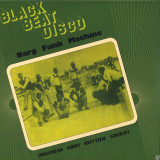
Nigeria is known as ‘The Giant of Africa’. It’s the most populated country in Africa with more then 250 ethnic groups and many different languages and dialects that gives to the country a rich diversity. This diversity also affects music which plays an important role in every aspect of social life. We, at DTW’s stable are happy to announce the reissue of “Narg Funk Machine” an explosive nigerian “black beat” disco originally released on Coconut in 1979. If you are looking for something weird here you’ve found it. Basically these four tracks are well represents the tangle of richness of nigerian music in this period, They are a melting pot of styles and sounds , where afrobeat, funk, highlife, juju, and psych rock are mixed all together in a cozy and captivating sound. Ready to bring some warmth and hypnotic sound to the dancefloor around the world.
Symphony Orchestra is a new group from Maximilian Turnbull and Michael Rault. Both Rault and Turnbull are accomplished songwriters, performers and producers in their own right, with Turnbull leading The Badge Epoque Ensemble, playing with the group Darlene Shrugg, and once releasing records under the name Slim Twig and Rault having released several psychedelic rock & roll classics under his own name in the past decade. The pair have worked together in various capacities for many years, writing and recording together on U.S. Girls' In A Poem Unlimited, and contributing to each other's releases, but the debut LP from Symphony Orchestra (due out May 12th on Telephone Explosion) marks their first release as an official entity.
Needless to say, there is a potent creative chemistry between Rault and Turnbull and Radiant Music showcases the alchemy between their distinct skill sets. The album is an exercise in pure collaboration. After years spent focusing on solo projects and working as hired guns on other projects, the duo came together with no specific intentions other than to work free of boundaries and direction. Freeing themselves from the familiar pressures of deadlines and expectations, they found a sense of discovery through togetherness. Duties on this project were split between Rault acting primarily as a one-man rhythm section and lead vocalist with Turnbull bringing chord sketches and his trademark aphoristic lyrical musings to the table. Trading off roles on guitar and keys from song to song, the duo's deft approach to melody bleeds through their instrumental parts as much as it does through Rault's vocal melodies. The majority of this album was self-engineered over the course of three sessions in 2018, at Michael's Montreal studio. Dormant during the pandemic, Rault's move to Los Angeles and the birth of Turnbull's twin sons, work reignited in 2022. The latterly tracked instrumental 'Concerto' and ballad 'Unthink The Thinkable' provide a dynamic depth to the album perhaps attributable to this tumultuous pause. Mixing came courtesy of Steve Chahley & Tony Price (U.S. Girls, BÉE, Jane Inc, etc).
In all of their work, Rault and Turnbull have made a hallmark of elaborately precise production and arrangement, Radiant Music is no different, though its pared-back simplicity provides a streamlined directness. The pairing of Rault's soulful, elastic vocal with Turnbull's evocatively cerebral lyrics provides a thrilling sensation unlike anything else in their respective catalogs. With an explosive, groove-forward approach, kaleidoscopic walls of vocal harmony and technicolor displays of guitar work, these 31 minutes of music will most certainly stimulate the mind of any fan of classic pop rock and funk. The blown-out breakbeats, winsome woven vocal melodies and propulsive wah-wah guitars of the title track evoke memories of an after-school cartoon special that never really existed outside of a lysergic daydream. "Harp In The Wind" is a perfect moment of overcast melancholy complete with ribbons of weeping synthesizers and velcro-fuzz guitar that could rip a clean line through Kevlar. "Know Thyself" and the harmony-rich "Intersection" are standout tracks that find a kinship in Stereolab's space-age effervescence. "Concerto" is a slab of beaming, mischievous funk that nods to Billy Preston's extraterrestrial keyboard explorations.
Radiant Music, like the best pop music, is life-affirming, confectionary, and enticing. Symphony Orchestra have created an album that hits you right where you need it, anchoring heady, adventurous sonic ideas down to a solid foundation of masterful songcraft, virtuosic instrumental performances and undeniable groove. Not a bar, nor beat is wasted.
„There are imaginary signs or signals that make your arm twitch mutely.
In such cases, you may have to interpret the meaning of such a "message".
If you ignore it, it's almost certain that nothing will happen, but you may also miss the chance to change your life because you passed a potential turning point and didn't notice.”
There were once many worlds on this Earth. Each had its own land, language, population, borders and history. There were people and societies.
They already looked alike, but they didn't realise it.
When the borders disappeared, the looked at each other, but by this time suddenly, the languages and the histories also disappeared.
The present worlds do not have any Earthly home, they have moved to the kingdom come of the collective subliminal sociostasis.
There they are still living for a while, exactly so long as humans have human form and the time for transhuman cultures arrives.
To fumble about in this gap of time bubble, that has been opened for a short time between the collapse and the vanishing of the borders of cultures: this is the science of Ishin-denshin burdened with Heisenberg’s paradox.
Heels & Souls Recordings’ fifth reissue sees them reach across the Atlantic to Vancouver, pressing up Pilgrims Of The Mind’s 'What’s Your Shrine?' for the first time ever on vinyl, 25 years since its CD-only release on Map Music. A departure from the label’s previous releases, the LP is a beautiful smorgasbord of styles - progressive house, downtempo, ambient, tech house and trance all nestle together, a wiggling journey of sonic delight from the mind of Stéphane Novak.
Turn the dial back to ‘97 and Vancouver's underground had a distinctive buzz to its rumblings, an amalgamation of scenes and styles gave rise to a cohort of producers that were unconstrained by genre, offering up a heady mix of sounds to expand the mind. ‘Welcome To Lotus Land’ the key 1996 compilation on Robert Shea’s seminal Map Music, championed much of this output including two cuts from POTM. Stéphane then released his first and only full-length album, ‘What’s Your Shrine?’ on the same label the following year.
Picking out choice moments from an album as considered and complete as this is tough. Those horizontally inclined will be drawn to the ambient dwellings of ‘Sandcastle’ & ‘Following the Sofuto Kuriimo’, tracks like ‘Nothing Can Pull Us Apart’ and ‘L’Amour? Encore?!’ are perfectly suited to warming up limbs on the dancefloor, ‘My Baby Likes Rum’ and ‘Loosejaw’ prime for one in full swing. Yet to pick individual tracks misses the stunning sum of its parts that this 70+ minute cruise is, surely one of the finest albums from the American West Coast during its halcyon days of the ‘90s.
Digging deep in his vaults, Stéphane managed to uncover the original unmastered DATs that have been given a fresh mastering by Justin Drake at the Bakehouse Studios. This beautiful, double-disc gatefold comes complete with liner notes from Ciel, words from Stéphane himself, plus never-before-seen photography - the complete package this music always deserved.
Healing potential for the dance floor. Love, Honesty and reality. A modern day classic on Modern Balance. A new sub imprint of Chez Damier's Balance Recording. Remixes by Karizma and 25 Places.
Inner Zone’s latest project marks the launch of their brand new eponymous label - the first EP in what’s set to be a run of self-released work. Kicking things off in style, Neurolink arrives with supercharged energy thanks to sizzling breaks, wonky rave chords and blissed-out vocal samples. Next up, My Mind is a winding journey through signal-firing, synapse-stimulating percussion - this time the breaks are faster, more vortex-like. Fragmented vocals and a nostalgia-tinged melody combine to create the gloomy euphoria of the third track, Dark Night. The Final track, Crystal Cut, is spell-casting - a heady potion of ethereal chimes, paired with a delicate melody, guides us into a state of hypnosis. Inner Zone’s latest release offers a contemporary re-imagining of the much-loved sound of breaksy, rave-hued, 90s dance floors.
In 1975, under the oppressive air of military dictatorship in Brazil, brothers Lelo and Zé Eduardo Nazario invited bassist Zeca Assumpção to join their musical experiments in a basement under Sao Paulo’s Teodoro Sampaio Street. As teenagers, the trio had already been playing together in Hermeto Pascoal’s Grupo, alongside guitarist Toninho Horta and saxophonist Nivaldo Ornelas, and it was while working together under Hermeto’s direction that the Paulista rhythm section (as they were then known) began to realise their own potential.
With many nightclubs and venues closed in the mid-70s and government censors dictating the output of radio, TV and art galleries, many Brazilian artists fled during the years of dictatorship. But underground, Grupo Um were fusing avant garde ideals with contemporary jazz and Afro Brazilian rhythm; making phenomenally free and expressive music - in stark contrast to the sterile, conservative conditions being imposed above ground.
Just like Hermeto Pascoal’s Viajando Com O Som from the following year, Starting Point was recorded over two days at Vice-Versa Studios, by revered engineer Renato Viola. The studio was one of the best in Sao Paulo and musicians communicated with engineers through cameras and a monitor, allowing the group complete immersion in the process. They also made use of the studio’s hemispherical tiled room, which served as an acoustic reverberation chamber.
The album begins with Zé Eduardo Nazario’s thunderous drum solo on “Porão da Teodoro”, before clearing the clouds with the lone Berimbau which opens “Onze Por Oito”. Built around a hypnotic electric bass line, heady Fender Rhodes improvisations, and more rip-roaring drums, it’s a rapturous, electrifying freak-jam in 11/8.
Like some invertebrate deep-sea curiosity, the free-form “Organica” is made up of Lelo Nazario’s playfully eerie prepared piano, with Zé Eduardo’s percussion flurries darting around Assumpçao’s double bass. The equally non-conformist, percussion-only piece “Jardim Candida” features many of Zé Eduardo’s home-made instruments, including a long saw blade played with vibraphone sticks and violin bow. While working with Hermeto, Zé Eduardo famously built his own all-in-one percussion set-up known as the “Barraca de Percussão” (Percussion Tent) - the first of its kind in Brazil, which he would also use on Hermeto Pascoal’s Viajando Com O Som and throughout his career.
“Suite Orquidea Negra'' (Black Orchid Suite) was written by Lelo Nazario as the score for an imaginary movie - the story of a rare, black orchid which produced a substance meant to cure all diseases, but which had mysteriously disappeared from the laboratory… “As a screenplay it’s not very good” reflects Lelo in jest, “but the music ended up being very interesting, the way its parts are chained to one another carries a little of the mystery I imagined for the movie.”
The album closes with the triumphant “Cortejo dos Reis Negros” (Procession of Black Kings) - a groovy variation on the Maracatu rhythm, with a two-note bassline underpinning piano improvisations, exultant wordless vocals, cuicas, slide-whistles and a very special guest appearance from Zé’s dog Bolinha.
Starting Point was to mark the inception of one of Brazil’s most daring instrumental groups. Their debut now sits in the lofty echelon of otherworldly 70s Brazilian music, alongside the likes of Marcos Resende & Index’s self-titled debut, Cesar Mariano & Cia’s Sao Paulo Brasil, Azymuth’s debut and indeed Hermeto Pascoal’s Viajando Com O Som. But just like all of those titles, which were either shelved or largely ignored at the time, Grupo Um - so radically ahead of their time - struggled to find a label to release their debut album. So Lelo kept the tapes safe in his archives, which is where they sat for almost half a century. Finally, almost fifty years later, this mesmerising piece of history is here, and it was only the beginning...
Grupo Um’s Starting Point will be released by Far Out Recordings, on vinyl LP, with an insert featuring unseen photos and liner notes by the Nazario brothers, as well as a CD on 17th February 2023.
Stunning big band music from Finnish composer Kerkko Koskinen with saxophonist Linda Fredriksson and UMO Helsinki Jazz Orchestra. "Agatha 2" is an album that continues the saga from "Agatha", released in 2007. Koskinen composes highly dynamic, emotive and expressive music for Finland's premiere jazz orchestra UMO. Linda Fredriksson (lately present due to their very successful album "Juniper" on We Jazz Records) shines as the soloist, who understands Koskinen's vision in its entire potential. This is cinematic, moody music for of the large canvas. The album also marks the first new release for Helsinki's Ricky-Tick Records (in collaboration with We Jazz Records and Grotto Editions) for over a decade.
Meiosistosis is a unique and creative descriptive innerstanding created by DemoDc taken from the scientific terminology of Mitosis - a splitting of one cell to create 2 identical cells and Meiosis - a splitting of 1 cell to create 4 very unique cells. Combining these 2 findings to create its own unique expression of what Demo feels earth herself is potentially going through in what most humans refer to as 'crazy mad' times.
‘Call me mad or crazy yet my artistic take on all this madness of change, coming from a more spiritual aware perspective, I feel its very possible and plausible that earth herself is shifting from an energetical vibrational frequency resonance, shifting from a lower to a higher frequency that has souls who inhabit at this present time on Earth, have choices made available to either shift to these higher frequencies of perception or to chose to remain in the lower frequencies of perception’
….says Demo when explaining the meaning of the titles chosen for his brand new releases. Hence, from this perspective it would give more purpose and meaning with the Earth splitting itself from 1 earth into 2 with the merging of it being identical and unique all at once.
True or not, through creative expression can we all individually make sense in our own rights, which then gives more power to the inner-standing of what co-creating with any greater power outside of ourselves, is. Each track holds its own unique expression to what has been described here and of course gives each listener a chance to give meaning to what is embraced in their own connection made when absorbed in the creations these ep's offer.
For this uniquely personal retrospective spread over twelve vinyl discs, Sven Väth takes us back to the early days of his DJ career. On What I Used To Play we meet great pioneers of electronic music, gifted percussionists, obscure wave bands, and innovative producers of a bygone 'new electronic' era. Rough beats and irresistible grooves from the identification stage of house, techno, and acid remind us not just how far electronic music has evolved over the past four decades, but how great it was to dance to EBM, techno, and house for the very first time.
If there is one protagonist of the electronic music scene who has remained curious, innovative and at the very cutting edge of music for over four decades, it's Sven Väth. His multi-layered artist albums and Sound of the Season mix compilations have been defining the genre for over two decades, and even today, he is constantly on the lookout for the next top tune to add to the highlights of his next set. At least, that's the case when he's not producing them himself as an artist or remixer. "Actually, it's always been part of my DNA to think ahead," and nothing had been further from his mind than looking back at his past, but when in spring of 2020 the international DJ circuit had to be scaled down to virtually zero, the 'restless traveler' suddenly had time. Time to stop and reflect on "how it actually was back then, at the very beginning of my career..."
"It was a great trip and with every track, beautiful memories came flooding back".
In the London apartment, he had just moved into, Sven has set up a "little music room", where he cocooned himself for several days, "to look way back for the first time and review my musical journey through the eighties, so to speak."
The interim result was six thematically oriented playlists with a grand total of 120 tracks from 'early 80s' to 'Balearic late 80s', together with excursions into afrobeat, European new wave, and EBM sounds and a few epochal techno/house tracks from the USA in between. From these 'Best of Sven Väth's favorites', the project What I Used To Play crystallized. Sven remembers how the Cocoon team reacted to his proposal: "They found the idea of making a compilation out of it MEGA from the beginning and everyone said 'Sven, go for it', but then, of course, the work really started, namely, to clear the rights and to get clean sounding masters of the up to 40-year-old tracks. There was also disappointment, of course. We couldn't clear certain titles because the rights holders in the USA had fallen out with each other or simply disappeared from the scene. In short, it wasn't easy, but now I can safely say we got the most important tracks."
Finally, after two years of research, curation, design, and administrative fine-tuning, the "little retrospective" from 1981 to 1990 is available. The exquisitely packaged, and three-kilo heavy box set is not only physically impressive, WIUTP is also the definitive record of Sven Väth's musical development. On each of the twenty-four sides of vinyl, you can trace track by track, what influenced him during which phase, and how he took off as a DJ from his parents' Queen's Pub straight into the spotlight at Dorian Gray. There and at Vogue (later OMEN), Sven became the style-defining player in the DJ booth that he still is today.
1981 - 1990: Future Sounds of Now
In the early eighties, the crowd in clubs like Vogue and Dorian Gray danced to what nowadays we call 'dance classics' - mainly disco, funk, soul, and chart pop. It was up to a new generation of DJs, including Sven Väth, the youngest protagonist in the Rhine-Main area at the time, to create their own club-ready music mix. Good new tracks and potential floor-fillers were rarities that had to be sought out and found, in order to prove oneself worthy.
Without MP3s, internet streaming, or other digital download possibilities, music didn't just gravitate to the DJ, instead, it had to be tracked down. In well-stocked record stores in Frankfurt and Wiesbaden or even in Amsterdam, London, or New York, Sven and friends sourced the material for countless magical nights. On WIUTP we can follow Sven's very personal journey through this wild, innovative era in which synth-pop, funk, hip-hop, and disco were successively replaced as 'club music' by house, techno, acid, and breakbeat. By the end of the decade, it was clear to see that these once exotic 'fringe' phenomena would soon become 'mass' phenomena.
Early 80s
Dirty Talk by the Italian-American duo Klein & M.B.O. represents the most innovative phase of the Italo-disco genre in the early eighties like no other track. Mario Boncaldo (I) and Tony Carrasco relied entirely on the original synthetic drum and percussion sounds of the Roland TR-808, coupled with the raunchy vocals of Rossana Casale and guitar accents of Davide Piatto. Of course, other tracks from this period were also influential in style, most notably Unit by Logic System, which worked as the perfect soundtrack to the laser lighting system at the legendary Dorian Gray club. With stomping beats and robotic rap interludes, Bostich by Yello also belongs on Sven's eternal playlist - after all, it caught the attention of Afrikaa Bambaataa, who invited the Swiss duo to perform at the Roxy in New York in 1983.
EBM Wave - Mid 80s
From today's point of view, the almost ten-minute-long, downtempo track Giant by Matt Johnson's band project The The, would probably not be considered an obvious club classic. However, a closer (re)listen reveals the rhythmic intricacies of the percussion overdubs by JG Thirlwell (aka Foetus) on Johnson's composition, and it becomes clear why this exceptional piece of music is one of Sven's absolute favorites. Other classics from this phase include Kaw-Liga by the mysterious The Residents, the hypnotic-synthetic Our Darkness by Anne Clark (and David Harrow), and last but not least, the somber, monotonous anthem Where Are You? by 16Bit, one of Sven Väth's projects together with Michael Münzing, Luca Anzilotti from 1986.
US House - Late 80s
You certainly can't talk about Chicago house without mentioning Frankie Knuckles. The resident DJ at the Warehouse not only gave the name to an entire genre, but also produced epochal floor fillers on the Trax label like the timeless Your Love, sung (and moaned) by Jamie Principle. Acid house protagonists Phuture also hail from Chicago, and on We Are Phuture (also released on Trax) we hear the chirping acid sounds of the legendary Roland TB-303 in full effect. Another featured classic is No UFO's by Detroit's Model 500 aka Juan Atkins, who is rightly considered the 'Godfather of Techno' even if the genre-defining track from 1985 still breathes with the spirit of hip-hop and electro from the first breakdance era.
Afrobeat
Le Serpent, by Algerian-born Abdelmadjid Guemguem, is a track that sounds completely different from everything else on WIUTP. Made in 1978, it's a monumental, rousing groove created without bass or synths, just with five congas! Even though Guem sadly passed away in 2021, his immortal, acoustic beats are understood all over the world and will continue to enrich many thousands of DJ sets for years to come. Another classic that not only Sven appreciates beyond measure is Hugh Masekela's Don't Go Lose it, Baby. In addition to being one of the most important jazz pioneers, the trumpeter and freedom fighter from Johannesburg was very experimental, integrating electronic sounds into his music in later years, in a similar vein to Miles Davis and Herbie Hancock. Dutch jazz pianist Jasper van't Hof's afrobeat project Pili Pili has also aged well. The trance-like, almost sixteen-minute-long track of the same name, manages to fill a whole side on the seventh of twelve vinyl discs in the WIUTP box.
UK-US-Euro - Late 80s
Time for a change of scene, in the truest sense of the word, and from a musical perspective, this section is like landing on another planet. First up is Andrew Weatherall's classic remix of Primal Scream's Loaded, featuring the iconic Peter Fonda sample (lifted from the 1966 biker film Wild Angels) that came to personify the mood triggered by the British Second Summer of Love in the late eighties: "We wanna be free to do what we wanna do, and we wanna get loaded...". This period also saw the emergence of M/A/R/R/S whose only single, 1987's Pump Up The Volume, became a club classic with support from DJ legend CJ Mackintosh. In this most eclectic of sections, we also encounter New York house and reggae producer Bobby Konders and his seminal Nervous Acid.
Balearic - Late 80s
Those who know him, know that Sven had already lost his heart to the 'magic island' of Ibiza as a teenager, so with that in mind, the WIUTP project couldn't end without a Balearic chapter. Inspired by Manuel Göttsching's E2-E4, the immortal, eponymously titled Sueño Latino belongs in there without question. Equally popular on the island was, and still is Break 4 Love by Raze, which thinking about it, would also fit perfectly into the house chapter. Last, but not least, there's an overdue reunion with Sven Väth himself, in his role as frontman of the successful Frankfurt trio OFF. Together with Michael Münzing and Luca Anzilotti (later of Snap!) this 'Organization For Fun' created the off-the-wall club hit Electric Salsa in 1986 which incidentally turned into an international chart smash, putting Sven in the enviable position of having to decide between pop stardom and a DJ career. Well, we all know how that decision turned out and the rest, as they say, is history. A not insignificant part of his story is What I Used To Play. Enjoy!
From a research work started in full lockdown three years ago, finally sees the light (or darkness) Echi Senza Fine, a remastered collection of sound material by Tasaday. Inspired by the controversial media story in 1971 of the discovery of a tribe in the Philippines that apparently had technology that had stood still in the Stone Age, the project officially borrows the name Tasaday in 1984 from the evolution of Nulla Perreale, in turn union of Die Form (musical part) & Orgasm Denied (performative part).
To put it in the words of Marcello Ambrosini, the Tasadays find in Die Form the controlled destruction of the form after its careful design and construction, while in Nulla Iperreale the spontaneity free from any possible superstructure. They declare themselves new primitives, not in the perspective of a nostalgic return to a pre-industrial or prehistoric external world, but in the exception of an inner experience in stark contrast to the leviathan of the single utilitarian thought that has dominated the West for centuries.
Their production-action does not allow itself to be tempted by the repetitiveness used by many industrial groups of those years, thus resulting seminal in the evolution of the scene. Their impulse to go further and not remain caged in the format of the new wave is witnessed by their particular sound vocabulary that sees, along with the use of conventional instruments, the use of DIY tools such as Chopper Vox and highly sui generis tools, like the Camolofono, cariole loaded with sheets, stones, tubes, chains and “garbage” of various shapes and sizes.
A discography dotted with primordial electronic experiments that reaches the new millennium through several vinyl records and an endless number of cassettes. From this undefined and mysterious number of tapes that is born Echi Senza Fine: 14 tracks (+ 2 digital bonuses) remastered, collected by Asymmetrical, who also edited the release insert, a collage of visual and textual material from their fanzines. A series of 300 transparent vinyl + Insert.
Over the course of her lush, expansive, defiantly sprawling new album, “Sometimes I Might Be Introvert”, released on Age 101, the
Ivor Novelloaward-winning, Mercury nominated Little Simzdelivers an
undeniable modern classic, effortlessly condensing any number of
disparate styles and genres into music which thrillingly broaches the gap between urgent modern treatise and hip hop.
A bold, quantum leap forward from the critically beloved “Grey Area”, this is hardly music aiming simply for the pop charts; rather, it is turbo charged with the kind of fury and potency, confusion and anxiety that make up the modern experience of being Black, British and female at this particular point in time.
This is no mere philosophical exercise, however - the result is her most ambitious and soaring body of work to date, one which operates at the very heights of what rap can be.
Culture is the Jamaican roots reggae group who founded in 1976. The trio was led by Joseph Hill and also featured Kenneth Dayes and Albert Walker. Not long after releasing their classic debut album Two Sevens Clash, a dub version followed. This version having the tunes produced by Jamaica’s first female producers Sonia Pottinger and reworked by no less than Errol Brown. This dub-version, titled Culture Dub, was originally released on HighNote Records and consisted of cool, chilled tunes
Culture Dub is available as a limited edition of 750 individually numbered copies on orange coloured vinyl.
After a long hiatus, Rotate is back for its 8th release. "Inner Space EP" by the duo Abé & Lowris as Labello is a three-track 12-inch with a strong focus on psychedelic sounds, warped vocals, hypnotic synths and finely-tuned drum programming.
Like yin and yang, both tracks on the A-side of the EP display exquisitely opposed tones crafted for distinct dancefloor moments. The bright, funky and appropriately named 'Goodtimes' stands very different from the dark, cinematic and thrilling 'Invisible Red'. Still, ensembled, they serve as a statement on the raw potential of sonic hypnotization, where shuffling grooves, wacky melodies and cinematic atmospheres work together to set the dancer's minds into a seemingly perpetual state of flow. B-side's extended cut 'Pkaila' is one of the deepest arrangements here, reminiscent of the golden age of techno minimalism where dancefloors needed little more than a rolling groove, shuffling drums and impeccable sound design slapping from its sound systems.
Bandcamp buyers also get "FCT", an exclusive downloadable bonus 18-minute jam that further showcases Labello's explorational side, rounding off "Inner Space" in a delightfully varied manner.
Rich Aucoin is announcing his next album entitled Synthetic - The record is a rare Quadruple Album with its 4 seasons/LPs being staggered in 6 month intervals over the next 2 years
The album, which began at The National Music Centre in Calgary, Alberta in March 2020, houses one of the world's most extensive collections of rare and historic synthesizers. There, Aucoin was doing the Artist In Residence program and recorded 51 synthesizers to begin the project. The project was paused with the start of the pandemic and Aucoin shifted back into film scoring and worked
on the critically- acclaimed and short- listed New Yorker - Films of the Year documentary, No Ordinary Man, about the trans- masculine jazz musician Billy Tipton.This record is a good demonstration of Aucoin's scoring potential as well as it's a quadruple instrumental album; a huge contrast to United States, Aucoin's previous, and most vocal heavy album to date. Lyrics just take me so long to write that I just want to take a couple years to make other kinds of albums before going back to lyrical music as I can write instrumental music much faster. This first fulllength features Aucoin as the solo musician playing some 37 synthesizers including: Arp 2600s, the Supertramp owned Elka Rhapsody 610 String Machine, Formanta Polivoks, Novatron T550, Oxford Synthesizer Company Oscar, Selmer Clavioline CM 8 and the legendary TONTO which the first release off the record
was made on.
Tracks: Tonto / Hypernormalization / Algorithm / Future / Buchla / Esc / 456 /
Space Western / Return
Vargmal Records is an independent record label and multidisciplinary platform founded by Gent Gjonbalaj. Operating from Prishtina, Kosovo, the imprint publishes hypnotic compositions of various forms, exploring the realms of electronic music and beyond. The label's debut release marks the birth of an initiative started several years ago, reflecting on a process of growth, research and refinement.
Conceived as a foundation record, the 'Classics' EP demonstrates Vargmal's concept and overall spirit. The Italian pioneer Leo Anibaldi inaugurates the label featuring two cuts on the A-side, originally produced in the early 1990s--'Muta 5' and an as yet unheard version of 'Endurance 4'--replete with Anibaldi's signature sound programming and high-octane output. On the flip, the torch is passed to another Italian master, Donato Dozzy, who takes them to another level with his peculiar and precise remix treatment. Where Anibaldi paves the way for a possible future, Dozzy applies a modern touch to the same fundamental approach--a balancing act that shows a spectrum within the conceptual framework from two different points in the continuum, transcending any individual style or place in time.
Selected by their ability to extract the full potentiality of the sound, the tracks on this release reflect a minimalist approach that is inherently resourceful and discerning, whilst maximizing effect and impact. The efficiency of the sound can be heard in the stripped-back elements, practical arrangement and execution of the creative idea. 'Muta 5' opens the EP, a throbbing mass of pressure cooker action, continuously building tension with rippling percussion lines and syncopated beats. Ahead of its time in 1993, 'Muta 5' has a raw, driving energy and commanding authority. Dozzy reworks it into a tighter, linear forma--whilst retaining the angst of the original, he applies new synth motifs and notches the speed down for extra poise. 'Endurance 4' (Version II) is a tribal workout with hallmarks of the classic Italian deep techno sound. With arching drones, chugging rhythms and dramatic narratives, 'Endurance 4' presents an idiosyncratic style and emotive character which later became the model for this sound. Dozzy's hypnotic faculty shines through on the remix, a polished re-run that elaborates on the ominous melodic theme, and lifts the sound majestically to a gliding altitude--marking the end of this record and the beginning of Vargmal's journey.
Todd Terje's 2012 EP It's the Arps rumbled the floors of warehouse parties and hedonistic sleepovers alike with lead single 'Inspector Norse' leading the vanguard of electro fun.
Please welcome: It's The Arps! Oslo's magic music maker Todd Terje has already gained a wunderkind like reputation for his gentle yet potent productions (we won't mention the 'E' word here) on labels like Full Pupp, Permanent Vacation and Running Back on top of being one of the best remixers money can buy (Shit Robot, Bryan Ferry, Dølle Jllle etc etc). What is there left for him to do Establish a label of his own! 'It's The Arps' is the starting signal for Olsen. And what a splendid one it is. Created from scratch and solely on the mythical synthesizer ARP 2600, it features four tracks (reads instant classics) that couldn't be a better follow-up to his 2011 super hit EP 'Ragysh'. Towering over the assortment is the laser crime scene called 'Inspector Norse'. Defying genres and blinkers, this is finest goose bumps dance music that makes you whistle along, laughing and crying all at the same time - but the rest isn't half bad either. The short, but sweet 'Myggsommer' gives away Terje's secret love for quirky exotika, whereas 'Swing Star Pt 1' and its brother have a (balearic) brilliance and witchery to them that is rarely found nowadays. Released on Olsen Records and housed in a beautiful sleeve courtesy of Bendik Kaltenborn. 100% Arp 2600 and 200% Todd Terje.
(Late Nite Tuff Guy & Farley 'Jackmaster' Funk Remixes)
An ‘80s dance classic from the legend John Rocca, gets a fresh new take from Aussie edit king Late Nite Tuff Guy alongside a remastered reissue of Chicago house royalty Farley 'Jackmaster' Funk’s 1987 Hot House Piano Remix.
The main man behind jazz funk favourites, Freeez, John Rocca took to the studio in ’84 and whipped up an electro-fied steamer in the form of ‘I Want It To Be Real’. Tantalizing synthwork, beefed up basslines, gated snares and pure ‘80s vocals, it’s a melting pot of influences with a catchiness that caused a serious stir.
This special double header of remixes kicks off with a brand new mix from Late Nite Tuff Guy. He builds up the brilliance with masterful effect, keeping the vocal in the back pocket till the final frontier whilst adding in some buttery new synth magic and deft filtering to the mix.
On the flip, Chicago house don Farley 'Jackmaster' Funk’s 1987 remix homes in on those blissful piano and vocal stabs for a dubbed out ‘Hot House Piano Mix’. Spiritual keys laid down with passion that will be sure to get any dancefloor hot under the collar.
DJ Feedback:
OPTIMO/ JD TWITCH
Nice! The Farley mix is an all time classic. Lovely version from LNTG.
GERD JANSON
I have love for this.
GRAEME PARK/ THE HACIENDA
I vividly remember playing this record the day it was released while working at Selectadisc in Nottingham like it was yesterday. I played it the same night at The Garage club not long after I started DJing there. It brings back some great memories and this superb remix is just wonderful. Its made me get all bleary eyed and tingly. Absolutely tremendous stuff.
AXEL BOMAN
Love this
KAI ALCE / NDATL
This is a HOT EDIT from Late Nite Tuff Guy!
A LOVE FROM OUTER SPACE/ SEAN JOHNSON
Killer - love it
NORM TALLEY
I love this!
CROSSTOWN REBELS
Nice one!!
JACQUES RENAULT / LETS PLAY HOUSE
LOVE the classic Farley piano mix and the LNTG version is a fun take too!
OSUNLADE/ YORUBA
LOVE THIS!!
DANIELE BALDELLI
Love this classic, and now more love for both new remixes
DANNY TENNAGLIA
I really like this remix
DANNY KRIVIT/ BODY & SOUL
Nice
DJ KEMIT/ ARRESTED DEVELOPMENT
An incredible beefed up edit of an international dance floor classic. 10/10
HELENA STAR / NTS
Amazing record, those chords!!
LOUISE CHEN/ NTS
I’d love to play this.
ERIC DUNCAN/ RUB N TUG
This ones cool.
MAKE A DANCE / BEN
Yes yes yes pease love the original so much.
HOT TODDY/ CRAZY P
The Farley mix is a total winner which is a new one on me, LNTG mix is pretty tasty also
TERRY FARLEY
Yes please. A big early House lesson for me BITD
SUB CLUB HARRI
Realy diigin this.
GROOVE ARMADA / TOM FINDLAY
Love this, production is so good!
Amsterdam via Wales DJ & producer Maroki unveils a darker, more eccentric side to his productions, this time opting for four bass heavy, left-leaning cuts of idiosyncratic dance-floor experimentation on LTFIRE. Nestled amongst the trees along the river lJ, Maroki is surrounded by influence, from the city's bustling streets to the tranquility of nature's boundless beauty; Maroki's work walks the tight-tope between these two spaces, a place where machines and human complexity meet.
'Pots & Pans & Handstands' opens up the A-Side with a highoctane journey, meshing breaks and shape-shifting bass with hoovering pads that sound like landing UFOs. 'Hasnoot'
continues this menacing theme, providing an immersive experience that feels compulsive and raw. Yet, there's elements of fun and flashes of colour, adding to the almost audio visual vibe Maroki can create.
The B side opens with 'Boiler' a nocturnal groove that sways ominously in the wind; If the UFOs were landing on the records A side, this is the soundtrack to their dystopian future. Maroki completes his metamorphosis with 'San Andras', visuals of large spaces with high concrete ceilings come to mind, where the track's mechanics can thrive, reverberating beautifully amongst the looming shadows of dancers.
When Irish DJ and producer Pineal Navigation set up Awareness System in 2020, he intended to use the label as an outlet for music, specifically Techno & Electro, that told an evocative story. As the world went into lockdown, Niall, aka Pineal Navigation, decided to hone in on a sound that produced a positive frequency and dismantle the negative energy that started to seep into everyday life. Two years on, the Dublin-based artist launches Awareness System with a split EP called ‘Combination 1’. Swedish producer Daniel Andréasson contributes two tracks to the release, adding another layer of intensity that aligns with the label’s aesthetic. Andréasson is an artist who approaches music with a no-frills attitude, which inspired Niall to invite his long-time friend into the fold of Awareness System. On ‘Sensory Open’, Pineal Navigation creates an eerie atmosphere with swirling synths and gnarly basslines — a response to the chaos unfolding in the modern world. Daniel Andréasson cranks up the pace on ‘Enable’ with wonky drum patterns and distorted FX, veering into the darker textures of techno. The flip-side opens with Daniel Andréasson’s ‘Money Is A Motivator’ where he mutates bleeps and crackling percussion, luring the listener into a dystopian soundscape. Pineal Navigation closes the EP with ‘Off The Earth’, a stomping blend of rumbling bass and stabby percussion. A potent club-orientated track to mark the first chapter in the story of Awareness System.
AVNU (UK) follows up his fantastic recent single on Ellum Audio with a long-awaited and hugely adventurous new album, ‘Tough To Love But Worth The Effort’.
AVNU (UK) is based on the East Coast of Scotland and has been deeply immersed in music for twenty plus years. He has a love of everything from rock, soul and blues to disco, electro, techno, trance and rave. All of that comes out in his innovative sounds, which range from sweat-inducing club tracks to hooky and feel-good grooves. This album finds him working his magic across 15 tracks that bring plenty of fresh perspective to house, electro, synth, techno and pop. They add up to a storytelling record filled with left turns and tracks that work in a range of different contexts.
'Surprise!' opens with a glossy electro beat and shimmering 80s synths that set the tone for the whole record. 'I Love You' brings a French touch influence with plenty of filtered synth loops and crisp drums under a soulful vocal, then 'Supaflake' cuts loose on an old-school funk vibe with nods to early Daft Punk. This most colourful of records plays out through the likes of sombre cosmic techno offering 'Bad Karma,' the longing chords and heavy-hearted electronica of 'Odyssey Jam' feat Mariel Ito and distorted bass of 'Phlegm In The Street' which comes with laser-like synths and menacing vocals.
The future styles continue on 'Yo E, Check This Out' which collides jungle breakbeats with brain-melting sine waves, while 'Wilkie' is a moment to catch your breath amongst bright and shiny synths and deeper drums that suspend you in a celestial sky. 'Proud You’re Mine' is a perfect electro-dance-pop gem that has potential to be a summer festival anthem and the title track closes down with six minutes of enchanting and mystical synth lines and hypnotic drums.
‘Tough To Love But Worth The Effort’ is a spectacularly broad and accomplished album that lives in a world of its own.
It might seem tongue-in-cheek on the surface, but the fact that the title of Eldritch Priest's sprawling debut vinyl release, Omphaloskepsis, is the Greek translation for “navel-gazing” unlocks something essential to the Vancouver-based composer and writer's singular outlook.
Perhaps even more telling is the title of Priest's 2013 book Boring Formless Nonsense: Experimental Music and the Aesthetics of Failure (Bloomsbury), whose 300-odd pages read as though you've been dosed with potent hallucinogens. Throughout the text Priest addresses—celebrates, even—the titular elements via various musical examples, including that of his peers. What's so bewildering it is that his descriptions of how boredom, formlessness, and nonsense manifest are laced with the very tactics he's depicting. Passages tie themselves in knots, footnotes engulf the “primary text,” he even deliberately misleads the reader.
The restless stasis of Omphaloskepsis could be regarded as an extension of this book's wayward spirit. Things unfold fairly slowly and consistently but it'd be a stretch to describe it as properly contemplative. Like attempting to meditate with a high fever, any sense of tranquility is constantly derailed as one succumbs to queasy agitation. The piece's foundation is a seemingly endless guitar melody; an organic meander that neither seems to repeat or offer any concessions to narrative directionality. Priest unfurls this rambling cantus firmus in a rich, clean, jazz-like tone, but as it's played, it's repeatedly tangled with snarls of dense digital processing and shadowed by stumbling virtual “band.” These strident interjections blatantly contrast with the guitar, yet they aren't so violent as to offer more than a faint itch of distraction. As such, the distinctive amorphousness that this piece asks us to inhabit for its 54-minute duration leaves a strong impression, but also feels utterly intangible.
In addition to his recorded forays, Priest's disorienting music has also been performed by top-tier interpreters such as the Arditti Quartet, Quatuor Bozzini, Philip Thomas, Anton Lukoszevieze, and Continuum. While living in Toronto he co-founded the collective neither/nor with John Mark Sherlock, which featured a cross section of musician-composers playing each other's work including Eric Chenaux, Doug Tielli, Eric KM Clark, Heather Roche, and Rob Clutton. “Though the name refers specifically to a loosely knit group of composers and performers,” remark's the collective's website “neither/nor is also a sensibility that refuses art’s messianic pretensions and the gaping maw of commercialized society, opting instead for art’s right to be esoteric.” In 2021, when Eric Chenaux and Martin Arnold relaunched their neither/nor-adjacent Rat-drifting imprint, an album by Priest, Many Traceries, was among the first to be released. Perhaps unsurprisingly, Priest was a student at the University of Victoria, a school that's come to be known for fostering such staunch individualists as Arnold, Linda Catlin Smith, Allison Cameron, and Anna Höstman.
As a scholar, Priest writes from a 'pataphysical perspective and deals with topics such as sonic culture, experimental aesthetics and the philosophy of experience. Priest brings these interests to his job as an Associate Professor in the School for the Contemporary Arts at Simon Fraser University, interests that also inform his work as a member the experimental theory group The Occulture. In addition to Omphaloskepsis, his new book, Earworm and Event: Music, Daydreams and Other Imaginary Refrains,
Three years after he released the incredible New Experience EP (picking up plaudits from Bill Brewster, Tim Sweeney, Laurent Garnier, Horse Meat Disco, Leo Mas & 6Music’s Tom Ravenscroft, among many more), Tokyo’s Kota Motomura returns to Hobbes Music for his debut LP, Pay It Forward. This is the first vinyl release on Hobbes Music since the much-loved ‘Aranath’ EP by Leonidas & Hobbes last Spring. While the label maintains the level of quality control for which it has become recognised, the artist continues to subvert electronic and dance music norms in his iconoclastic way on this extraordinary record.
He’s a mysterious character with an ear for idiosyncratic music that runs the gamut from ambient, exotica and jazz to disco, house and techno via post punk, new wave and funk. It’s highly original and all adds up to a confection perhaps best described as ‘Balearic’.
Album opener Paradise is a certified jazz-funk JAM. Destined for dance floors worldwide, this one’s been dropping well with DJs, Motomura demonstrating his piano chops alongside Mutsumi Takeuchi’s sax. Tropical pushes the boat in a more rhythmic direction, some pretty wild drum programming laced with more sounds of the, um, tropics, before mad vocal yelps suggest something yet more tribal. To Be Free initially resembles early 90s progressive house (pulsing bassline, synth-driven melodies), before the arrival of some new wave guitar licks a la classic Talking Heads/David Byrne and ooh ooh vocal chants take it to another dimension altogether.
B-side opener Emotion features Takeuchi again (on flute this time) and more vocal chants before things take a dramatic turn, threatening to open up into a full fanfare before calming and then bursting into wild life again with the exhortation that “C’mon, everybody dancing!” Rhythm flirts with an energy and pace more akin to a techno record: drums, drums, more drums plus a fair few yelps and chants - the kind of DJ tool that will send a simmering dance floor wild in the right hands. Flower closes things in a more melancholy style, familiar to fans of ‘Aboy’ from the New Experience EP, with plaintive acoustic guitar (performed by Akichi), birdsong and big piano chords.
Support from Bill Brewster, Leo Mas, Al Kent, Red Rack’em, Nick The Record, Phil Mison, Phat Phil Cooper, KZA, Sean Johnston (ALFOS), S/A/M, Dribbler, Joe Muggs, Monolith Cocktail and more…
‘Gonna review in MÜ mag... very fine stuff!’ JOE MUGGS
‘Will be reviewed on the blog’ MONOLITH COCKTAIL BILL BREWSTER played Flower on the DJ History podcast #641 (25.3.22) 'I really like this album, Flower and Paradise are my favourite' LEO MAS ‘I like Paradise’ AL KENT ‘Woo this is tasty. DEFO playing on my next radio show. The label’s A&R is defo getting better and better. HM has been putting out some dope stuff and this one seems really good quality’ RED RACK’EM
‘Paradise and Flower sounding good’ NICK THE RECORD
‘Tunes sound great!’ PHIL MISON ‘Going to include Paradise and Flower on my Sunday Ibiza global radio show PHAT PHIL COOPER (Nu Northern Soul)
‘Very nice album with influences from many different genres. I especially like To Be Free with nice synths and guitar cutting, and Flower, which is a chill vibe’ KZA (Mule Musiq, Endless Flight)
'100% correct about the ALFOS potential of To Be Free!' SEAN JOHNSTON (A Love From Outer Space)
'Stunning, will fit perfectly with the vibe of my radio show’ S/A/M (Music For Dreams, DK; Playa Del Sol, Ibiza)
'Stellar work, i'll make a bet that Flowers is a Balaeric classic this summer' DRIBBLER (Breakfast Club, Ibiza)
‘It's cool in a nice smelling psycho sense, it was a very DEEP sound that I couldn't produce. Congrats!’ ALTZ (Altzmusica)
‘Paradise is my jam, it's deep, sunny and never boring. I'm interested to see how this will work on the dance floor. Overall a great album with solid composition and impressive use of live instruments!’ SOBRIETY (fka Chloé Juliette)
'Very tidy selection' ASTROJAZZ (Kelburn Garden Party, Wee Dub, Samedia Shebeen, Disco Makossa) ‘This is a lovely release. Follows on from New Experience in the best way possible. It's got lots of vibes going on but holds together as a cohesive piece of work. Love it’ JAMIE THOMSON (La Cheetah, Glasgow)
‘To Be Free is a track i could imagine Andy Weatherall playing in one of his sets at A Love From Outer Space’ KIRSTIE PATON aka She-Bang Rave Unit (Threads Radio, Radio Magnetic)
The debut collaboration between techno alchemists Ben Klock and Lucy will probably provoke quivers of anticipation before a single note has been heard. After all, both producers have carved out names for themselves as scene innovators at what they do, and both have already proven that they can more than capably work in a duo format without sacrificing an iota of their unique aesthetics: in Lucy's case, there has already been the sublime Zeitgeber pairing with Speedy J., and Klock has joined forces with the likes of Marcel Dettmann to craft some of the more memorable output from the Ostgut Ton label. This new release makes good on each producer's talent for working with epically unfolding tracks, maintaining a strong command of both 'drone' and melodicism, and envisioning sound as a kind of inter-dimensional mass transit. As the record indicates, things can get very interesting when the two working methods superimpose perfectly, but can be just as interesting when the two fall slightly out of phase with one another.
Listeners familiar with the classic kosmische feel will be taken immediately by the opening gambit "Bliss," whose feeling of floating through the coldness of space is accompanied here by nicely warm production values. The bassline that introduces the subsequent track ("War Lullaby") is close to being a continuation of the opener's leitmotif sequence, although with a change in atmosphere that will keep curious ears from turning away too soon: an FX-shrouded voice delivers a monologue at once seductive and foreboding, followed by a confident kick thump with ephemeral trailing clatters in tow. This affective orientation pulses through the whole record well, building up to the second rhythmic track ("Santeria") which is the busiest and most engaging of the bunch. Here a variety of sonic flavorings are ritually thrown into the pot and allowed to simmer - fleeting snatches of conga, phasing zaps and rhythmic ricochets all make for a rich concoction that epitomizes the progress that has been made in techno music within this decade. The closing "A Ghost Love story," like the opener, is a non-'dance' piece, but is no less compelling for that fact: as a foam of white noise pans between the listener's ears, a slurred / pitch-bent refrain conjures the feeling of either entering or exiting from some erotically tinged hypnagogic state.
Speaking of which, the overall impression given off by this record is that of a special kind of reciprocity: that is, of dreams influencing reality and reality feeding back into dreams. The rhythmic intensity of these tracks, at once an indicator of a hard and immediate reality, is regularly complemented by oneiric flourishes that make the partitioning line between these two realms of consciousness less distinct. As the next chapter in the Stroboscopic Artefacts saga, and in the personal journeys of both Ben Klock and Lucy, it will contribute to the ongoing mission of all these parties: giving longtime fans what they want while expanding their consciousness and inquisitiveness.
The Tel-Aviv centered Yotam Avni officially joined forces with Stroboscopic Artefacts last year, turning in a sensual an invigorating entry for the Monad series. Thanks to his personalized fusion of esoteric and worldly sound elements, Avni immediately made a case to deliver more work to the label, and now he has done so with 'Perlude to Dybbuk,' the second in a new series of S.A. releases to feature the Oblique Artefacts visual team's distinct, elegant portrayals of scanned foliage. As with Avni's previous Monad contribution, the new Perlude to Dybbuk makes references - both in title and in sonic content - to the ancient Hebrew folklore of his homeland (a 'dybbuk' being a kind of limbonic spirit attaching itself to the body of a living human until it has successfully reached its final destination). However, the atmospheric, rather than overt, use of these references gives this record a level of dignity and quality as well as a premonitory feeling that hovers over the proceedings.The opening 'Avka (New Life)' opens with the twin stimuli of chthonic, rolling percussion and ambience that has become a modern Stroboscopic tradition, but ever so gradually deviates from the realm of the easily anticipated. Some of the surprises to be found here are sharp, organic drum fills and sighing strings that have an uncanny vocal quality to them. By the time a surgically clipped acid synth sample comes into the mix, the track has reached a simmering level of excitement and the listener's imagination will have license to reside in a virtual world seamlessly combining elements both ancient and futuristic.Dybbuk' temporarily situates listeners back in brutal modernity, with the first sounds heard being something like insistently slicing helicopter blades. Avni merely uses this as the foundation, though, for a genuinely unique construction whose shamanic beats, throttled horn and undertow of frenzied electronics combine to give the feeling of being menaced and eventually overtaken by a spirit entity. This piece shows just what Avni is capable when operating in a more aggressive, 'post-industrial' mode, and the result stands up with some of the best exponents of that genre.The finale 'Modern Matters' is the most readily club-friendly selection from the disc. This potent, floor-shaking and perspiration-inducing number superimposes resonant vocals from traditional Middle Eastern folk song onto this alchemical mixture of machine oil and sweat, and provides a romantic flair without resorting to naïve, touristic 'ethno-techno.' Avni's skillful dedication to counterpoint, and determination to make a finished form is more than the sum of its parts, shines through here and throughout the duration of this record.
One of Detroit’s finest exports is legendary house and techno pioneer, Gari Romalis, and as we enter what could potentially be a summer of love he creates an outstanding four track EP, “Black Traxx Matter”, spreading a message which scratches way below the surface, using music as a tool to share. The body of work spans across distinctive and slinky deep house energy, oozing class and emotion, notably what we have all come to love and adore in Romalis’ back catalogue. Music from the soul, for the soul, coming soon on Italian label, Nicepeople.
Opener “Black 2 Da Future” rides an effortlessly cool groove, brushing by in the summer breeze, paying homage to brighter days. Next up is “Black Diamondz (Africa Mix) consisting of a tight and punchy drum arrangement, and warm and infectious sub bass. Welcoming you with open arms.
“Black Luv” is lighter on its feet than the previous tracks, a definite housey spring in its step, all of the elements conversing in sweet harmony. A cruise down nostalgia lane. “Purpose Reprise (Motivate Mix)” closes this wonderful EP, six and a half minutes of pure bliss which shifts into a pure and powerful moment when a spoken word sample enters the room, as the soft keys work their way around the message.
A masterpiece body of work from one of the most esteemed artists in the game. The Nicepeople label keep continuing to propel high quality sounds from new and established artists, with a healthy schedule already pencilled in for 2021.
Platform 23 is delighted to present music from Colin Potter with It Was, a collection of tracks chosen from his 1989 cassettes Recent History Volumes 1 & 2.
After a burst of activity, mainly on his ICR label, from 1980 - 82, the tapes were the first released music in seven years and highlighted the intervening period.
While much of his earlier recordings have now been reissued by Dark Entries, Deep Distance and Sacred Summits, It Was covers the period where Potter recordings were limited while working as an engineer at his IC Studio, and pre-date his work with Nurse With Wound.
The ambience and guitar of The French Polisher leads to Diary Of A Nobody, an embodiment of Potter, sequencers and guitar against submerged, metallic percussion rising. Dense, claustrophobia follows in Solidarity At Wujeck Colliery towards the guitar refrains of Persistence.
Side two starts with Green Fields, where plucked guitars are surrounded and consumed by arpeggios. Propulsion without percussion, the layers of arps shift and redefine before the scatter of Saw with reversed synths and guitar acting as counterbalance. Nine Months, a possible centerpiece, has an autumnal atmosphere; crashing cymbals and ambulant guitar, leading to the closing Ships That Pass In The Night, a hazy drift of slowly sequenced synths & primitive voice samples.