Ottagono Italian Dojo presents the second release on the Ottagono Retro outlet imprint label through South America. This special occasion marks the opening of a second Ottagono headquarters in Argentina, introducing an exclusive project that blends the essence of the Italian music family. If you’re familiar with Latin American music genres like Rock, Post Punk, Industrial, Minimal Synth, New Wave, Synth Pop, and the broader electronic music scene of the last 40 years, you’ve surely heard of iconic bands such as Virus, Soda Stereo, and Sumo. Among these bands, having in common their birth in Argentina, Alfredo Peria is another influential music pioneer and key figure in the entire Latin American underground movement. In the mid-80s, he founded the techno duo Mimilocos. Because of this, over the years, Alfredo has been renamed the “Juan Atkins de Latino America”. Later in the 90s, he joined major labels like Polygram and BGM, living between Spain and the United States. He founded another project called Limbo with Julio Moura, a member of Virus and brother of Federico Moura. In the late ’90s, he released his first solo album with Fonovisa. After spending years travelling the world, Alfredo returned to Argentina and, alongside Cecilia Olariaga, founded his own production company, Pulpería Discos. The music world once again showcases the strong connection between Argentina and Italy, evident in the heritage of artists and figures like Maestro Alfredo Peria and la familia Ottagono, including the new Latin America manager, Federico Luchetti.
A.1: Sentidos is a new wave Latin American classic! After over 30 years, it finally received its first vinyl release. Originally written in the early ’90s by Alfredo and Julio Moura, then members of Limbo, a band formed after Virus disbanded following the passing of Federico Moura, Julio’s brother, Virus frontman. This updated version, enhanced with synthesizers and additional production by tech wizard Franco Colombo , transforms the original lyrics into a retro-futuristic club anthem with 80s vibes, It captures the essence of early Depeche Mode, Nitzer Ebb, and the Chicago Warehouse scene, while also being a great fit for fans of Juan Atkins and Yellow Magic Orchestra as well.
A.2: Yo soy su Cuba – 3.0 Adicta mix is the latest version inspired by the original demo from the 80s. This mix showcases Electro Tech Synth Pop music created by Alfredo, Rudie Martínez, Joaquín Franco, Juan Pablo Bidegain, Germán Moreno, and Pablo Torterolo, collectively known as Adicta.
A.3: Castillitos de arena – original ’87 demo, it’s a classic in Argentina underground music movement, among fans and people lost in club culture, even though it never got an official release in any format. This was frequently performed during the early years of Mimilocos live shows, but it was never officially released. A few years later in Spain, a Latin pop tropical house version was released, presenting a fresh and entirely different take from the original’s obscure essence marked by minimal synth, EBM, and deep, atmospheric sounds, which thanks to Ottagono family will see the light.
B.1: Gesell – From Villa Gesell to Ibiza, from Alfredo with love to another renowned
“Argentino” known as DJ Alfredo. This is an Ottagono tribute to one of the Isla masters and the Balearic sound. Gesell feels like a fresh 90s UK track by Farley & Heller or DJ Harvey, immersed in the emotive Alfredo Peria landscape—something you could easily hear at Café del Mar during sunset, played by another maestro we all miss, José Padilla.
B.2: Yo soy su Cuba – Now available on vinyl for the very first time, featuring the original demo. There’s not much to add—just sit back and enjoy this pure 80s treasure in all its glory.
B.3: Over the past months, Claudio and Federico have listened to many unreleased
demos and tapes from Alfredo’s extensive musical career. Among them, “7 Days” stood out for its simple beauty and potential as a hit for underground enthusiasts. This track seamlessly combines post-punk, new wave, and tropical Balearic vibes. From ’95 to ’25, it has remained fresh and innovative, once again proving that the Ottagono crew understands the essence of timeless music.
We welcome back Tubbs & Burns on Public Possession offering yet another highly danceable selection of tunes.
The main title on this EP features Paula Tape and has it all: seductive vocals, a mesmerizing acid baseline and the classic hypnotic Tubbs & Burns touch.
It comes in three versions incl. an epic Todd Modes remix. Cheeky Bonus and potentially a secret Deejays favorite is Colter Carsons remix of the previously released „Where were you in 92“ turning it up a few gears, ready for some festival MainStage plays
Zurich-born, New York-based DJ Tony y Not is best known for her free-spirited sets, seamlessly weaving together techy acid, progressive, dark disco, and heart-opening indie. She brings that signature energy to her Kompakt debut with striking precision. Have You Lost Your Mind channels a touch of Swan Lake-era Todd Terry – one of NYC house’s legendary figures – delivering a razor-sharp acid line, a rock-solid groove, and one of the most flawlessly executed breakdown/drop combos in recent memory. Deep Don’t Stop follows suit, skillfully reviving the essence of ’90s New York club culture in a way that would have set Junior Vasquez’s Sound Factory ablaze. True to her mission, Tony y Not continues to spread joy and uplift others, both on and off the dance floor.
TEE MANGO’s first release on Kompakt has been a long time coming. Ever since Michael Mayer heard his sunkissed remix of The Invisible’s ‘K Town Sunset’ back in 2017, he’s been obsessed with his music. The two tracks here, ‘Moonshots’ and ‘My Mind Is Making Up Monsters’, are prime examples of TEE’s ability to create heartfelt, uplifting modern house music. There’s a sense of bacchanal liberation, a potent transcendental element that opens the mind to joyful bliss.
The ever-reliant Deepchord kicks off 2014 in his usual stylish way with two deep cuts in the Luxury EP. After last years jaunt into the ambient with 20 Electrostatic Soundfields, Rod Model return to the world of slick beats and even dreamier synths and atmospheres.
Luxury 1 ebbs in majestically as beautifully crafted layers of synths glide across field recorded drops of water that instantly play with your senses. Pumping sub bass fills the rest of the spectrum as Rod does what he does best by creating an unending slick groove, pieced together by crisp percussion.
Yet more atmospherics come into play in Luxury 2 as otherworldly field recordings are brought to life through the use of Rod's unique processing and layers of dream state synths. A perfectly worked groove seems to come out of nowhere and glides gently under the atmosphere; again subtle percussion ties everything together seamlessly.
The master of Deep Techno strikes again with nothing short of 2 elegant works that typify his skills as a producer.
Pan-Pot - Luxury 1 +++++
Alan Fitzpatrick - digging this! excited to play it!
Steve Rachmad - Luv Luxury 2
Joel Mull - Lovely warm music. Timeless pieces right here.
Jonas Kopp - cool vibes over here , thanks.
Tommy Four Seven - thanks!
Markus Suckut - deepchord as I like him!
Martin Landsky - yep...both tracks are brillant..Deepchord never disapoints....
Nadja Lind/Klartraum - what a luxury indeed :) Happy New Year!
John Selway - into Luxury 2
Stacey Pullen - cool thanks
Shlomi Aber - another cool one from soma
Heron - This deepness is more than impressive. Completely mindblowing!
Manic Brothers - Both tracks are super fat ! Thank you :)
Toma Hades - Epic tracks ! it sounds like real film music ! love it ! :)
Daniel Stefanik - follow them from the beginning. i love it! thx.
Vector Lovers - Lovely mixes, really warm production to chase those winter blues away. Great start to 2014!
The Welderz - Great opener tracks !
Master-H - Fantastic release! I Love DEEPCHORD!
Hermanez - love the sound from deepchord, thank you
Kazumi Ihii - Quality release as usual from Deepchord
MEMBERS ONLY comes thru with more obscure disco cuts sounding like they've been run thru a wood chipper before being rearranged to maximize their potential to cause mass dance floor chaos. These 3 tunes may be dangerous in the hands of the untrained. Proceed with caution.
Conundrum Records delves into the depths of techno with a riveting release from Hitam, the Dutch producer who's renowned for his immersive soundscapes, stimulating textures and dynamic low-end. The "Subterranean EP" is a compelling journey through shadowy, bass-driven terrain, meticulously designed for powerful club systems. Despite the variety in tempo, the EP's relentless energy and thunderous low-end form a cohesive thread throughout.
The EP kicks off with "Nagini", where minimalist, driving drum patterns intertwine with glitchy synths and eerie atmospheres, setting the stage for what's to come.
"Hoia Baciu" intensifies the experience, maintaining a dark, brooding energy that envelops the listener in its foreboding vibe. "Kaelago" shifts gears slightly, slowing the tempo but upping the complexity with intricate sound design and broken beat transitions that showcase Hitam's deft production skills.
Adding to the EP's allure, renowned techno artist Rene Wise contributes a hypnotic, tribal-infused remix of "Kaelago," layering new depths onto the original and enhancing its already potent impact. For those seeking an even more intense experience, Hitam's alternative version of "Kaelago" serves as a digital bonus, pushing the boundaries of auditory immersion.
"Subterranean" is a masterclass in crafting dark, cerebral techno, with Hitam firmly establishing himself as a force to be reckoned with in the genre. This EP is not just a collection of tracks but an exploration of mood and atmosphere, making it an essential listen for those who appreciate techno's deeper, more introspective side.
Steve Redhead returns to Mutual Rytm with second searing EP, 'Cosmic Alchemy'.
Belgium pioneer Steve Redhead is the founder of Reda Recordings and has spent his life immersed in techno. His potent take on the genre has appeared on labels like MB Elektronics, Zync, and Primate and has helped define the sound of the underground within his home country over the last 25 years. Returning to SHDW's Mutual Rytm imprint following his well-received 'Eastbook Isle' EP last year, he's back to impress again as he uncovers six new productions with his latest EP, 'Cosmic Alchemy'.
He shows his class from the off here with opener 'Sincfala', bringing the heat with banging drums and rusty percussive loops. Yelping vocals add raved-up intensity, while 'Rapidshare' is energetic and loopy with funky drum patterns and loose-limbed percussive madness. The fantastic 'Ad Valvas' is another straight-up linear banger with tightly woven drums, percussion and lithe synth lines that take you to the heart of the dance floor and 'Nusakan' is a muscular wall of drums and toms with urgent synth stabs powering it forwards with great intensity. 'Asmodeus'
brings a more zoned-out feel with soulful pads and subtle vocals layered over the elastic drums and bass, before digital bonus 'Voice Incident' delivers another perfectly textural techno workout with melancholic motifs and surging synths that bring warm rushes of emotion to the grooves.
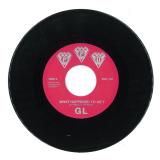
Following fan requests, PPU presses 2 more funk anthems from GL's 2014 Love Hexagon EP.. songs we haven't stopped playing since their initial release, bringing them back now for the 10 year anniversary.
GL, two mates from Melbourne (AUS), originally released the tracks 'Won't You See' and 'Take Me Back' in 2014 as part of their debut 'Love Hexagon' EP/cassette - a homemade homage to chart-unfriendly funk and 80s romance-dance.
Born and raised in Sicily but now based in Berlin, SLV is known for his innovative approach to techno and its various shades. He has released on revered labels like Soma and received support from key industry players who respect his ability to blend old-school vibes with modern production techniques. Away from the club, he also produces music for film soundtracks, adding a sense of cinematic edge to his techno cuts and is a master of both analog and digital technologies - a true audio engineer who crafts unique, compelling sounds. Having previously featured on the labels Federation of Rytm III compilation, he returns to SHDWs Mutual Rytm imprint with his Night Echoes EP to open up October.
Graustufen opens with punch drum programming and scintillating percussion that dances atop the groove as booming bass brings serious weight down low. The superb Grand Cayman is another potent techno weapon, this time with icy synth atmospheres and eerie moods pervading the tightly programmed drums and bass to deliver an unstoppable force. Voids brings urgent funk with its hunched-over, closely stacked kicks and suspensory pads, which never let up and keep you locked in the moment, while Elastik Pho echoes a classic Detroit sound with its soul-drenched beats and serene, uplifting, beautiful hi-tek style. Last but not least, That Night shows SLVs extraordinary range as it brings some soulful vocal loops and optimistic chords over thunderous drums, which are sure to power dance floors through to euphoria. The EP includes two digital bonus cuts: Basic Uno, which is a raw, percussive and heads-down banger, and Persistence Of Memory, which is stripped-back, glitchy and dubby techno for strobe-lit warehouses.
IN TRANSIT by the duo Lia Kohl & Zander Raymond (Chicago) is built around a collection of field recordings made in spaces of transit —bus stops, train stations, taxis—blended with the accordion and modular synthesizers textures of Zander Raymond, and the cello and synthesizers of Lia Kohl.
The record features eight instrumental tracks, composed from these raw captures of transient zones, harmonized and enriched with musical treatments and arrangements. Combining acoustic and electronic sources, these compositions create an atmosphere that is both familiar and dreamlike, blurring the boundaries between the real and the imaginary.
Lia Kohl is a cellist, composer, and sound artist based in Chicago. Her broad and varied practice includes composition and performance, installation, improvisation, and collaboration. Her work is rooted in curiosity and patience, exploring the everyday and profound potential of sound. Following her album Normal Sounds (Moon Glyph)—an ode to the noise of daily life, transforming the hum of refrigerators and the ticking of turn signals into moments of unexpected beauty—Lia Kohl continues this exploration of the sounds that surround us with IN TRANSIT.
Zander Raymond is an interdisciplinary artist and musician based in Chicago. In his visual work, he improvises with various materials to create collages. His music is also rooted in improvisation, using modular synthesizers to construct soundscapes that take nonlinear approaches to composition.
Mood Child Presents ‘Various Moods Vol. 4’: Six Multi-Mood Tracks from Nick Curly, Joey Daniel, Wilder (ITA), and more
Mood Child, the forward-thinking label helmed by Sirus Hood and Manda Moor, proudly unveils Various Moods Vol. 4, a striking album of six genre-blending tracks that each bring a unique sonic perspective. Set for release on both vinyl and digital formats, this carefully curated collection showcases the label’s signature commitment to innovation, groove, and dancefloor energy.
Side A leans into classy, funky house vibes, while Side B ventures into wilder, tech-driven territory, offering a versatile listening experience for both crate diggers and peak-time DJs.
The compilation marks the return of German house icon Nick Curly, Italian heavy-hitters Wilder (ITA) and Mattia Scolaro, and rising Brazilian talents Las Heras and ROKKE, who teamed up with RAMOOX for a potent collaboration. Mood Child is also thrilled to welcome Dutch maestro Joey Daniel to the label for the first time.
Toward the end of the 1980s South Africa's recording industry was booming. Searching for a sound that could cross over to all in the country's segregated society while also eyeing international success, a new duo emerged that quickly rendered its 'bubblegum' predecessors obsolete. Drawing on international trends and crafting lyrics for local ears, J.E. MOVEMENT — a duo made up of James Nyingwa and Elliot Faku — exploded onto the local scene with their debut album, 'Ma Dea Luv'. The future had arrived.
A talented bassist and composer, Nyingwa was at the time employed as an in-house producer at TRS Studios in Plein Street in downtown Johannesburg, run by two Greek immigrants, George Vardas and Chris Ghelakis. Together they formed a close bond as friends and musical partners at what would become CSR Records, recording original hits with acts like the NEW AGE KIDS and SIDNEY, while also cashing in on cover versions as BLACK BOX.
The six tracks on J.E. Movement’s 1988 debut give firm nods to UK Street Soul, New Jack Swing and Stock Aitken Waterman's 'Hit Factory' sound and infuse them with an African rhythmic flair and homegrown lyrical sentiment. Though not expressly political, the title track was received by many as a play on words referencing then-jailed and banned Nelson Mandela (coming after the similarly styled 'I'm Winning My Dear Love' by Yvonne Chaka Chaka in 1986 and 'We Miss You Manelow' by Chicco in 1987), giving it an added potency for those in the know. 'Jack I'm Sorry' was an underground hit in the townships, while 'Marco', 'Friends', 'Funkytown' and the eponymous closer are similarly bass and drum-driven, with hiphop-styled vocals.
Alien D, aka Daniel Creahan, is a staple in the NYC underground, known for his releases on labels including Lillerne, 1432 R and Banlieue Records. On his latest album, For the Early Hours of a World in Bloom – his first for Theory Therapy – Creahan takes us deeper into the dubby landscapes of his previous work, with a renewed focus on groove and movement.
Where Lillerne’s Spiritual World leaned toward ambient abstraction, Early Hours pulses with kinetic energy, with tracks like “Soil Dub” and “Sleepy’s Gambit” propelling us forward with dubwise rhythms crafted for the dancefloor.
The album thrives on its infectious, steady groove, with repeating phrases and subtle shifts that keep the music in constant motion. Nowhere is this more evident than on the gentle roller, “Breather.” Over 13 minutes, Creahan lets small variations in tone and a propulsive low-end evolve gradually alongside Ben Seretan’s guitar.
While Early Hours embraces a more rhythmic direction, it still retains the eccentricity and atmosphere that defines Alien D’s sound. Conceived in the first days after the COVID lockdown, there’s a hopeful quality to the music – flickering tones, soft percussive elements and organic textures that hover just behind the beat – making it feel both intimate and expansive. It’s as though Creahan has bottled those transcendent moments that can occur during the early hours of a party, when everything feels suspended in a state of potential.
Joseph Salvador's impressive young Universo Positivo label returns with a new EP from the boss himself alongside Europe mainstay Orlando Voorn. The dynamic duo serve up four cuts that perfectly embody their timeless sound. Salvador has been at the heart of the underground since the 1990s. He is deeply involved on the scene on many different levels from running the cult Tomorrow Is Now Kid! nights in Amsterdam to labels like TINK Records and also working as part of house acts like Black Tulip & Wendell Morrison, Thyone Girls, Digital Cartel and many more. His music always operates at the sharp end of the spectrum and has come on labels like Tribal America, EMI and Sony Columbia. Orlando Voorn is equally as vital to the evolution of techno. His sound famously builds a bridge between Detroit pioneers and the contemporary European sound and he has worked with greats such as Blake Baxter and Amp Fiddler. He recently remixed South Bay Jams on this label and has also dropped music on the likes of Rush Hour, R&S and Housewax. 'Every Man Loves' brings lavish disco strong stabs to a mid-tempo groove that is packed with warmth. Funky bass riffs and jumbled toms all bring it to life next to an exquisite diva vocal that brings the soul. 'Slap My Funk' hits harder with raw drum loops and a touch of filter house energy. Chopped vocal stabs keep things driving with more live funky bass next to jazzy chords. The steamy 'So Well' is a fulsome house sound with big trumpet stabs and smart vocal samples worked into a heavy, party-starting but emotional groove. Last but not least, 'Break It Down' layers up freeform Rhodes jams with crashing drums and smeared synths to make for a real dance floor weapon. These are four potent and expressive new house gems from this dynamic duo.
Second offering from Leo Gibbon’s MUDLINE imprint sees the producer reunite with grime’s perennial wild card, Trim, for a two-sided pressure test that flexes both restraint and raw power in equal measure.
On Side A – Orbit Step, Gibbon leans into the emotive end of the 140 spectrum — all reflective pads, sci-fi shimmer, and subbed-out swing — with Trim delivering a rare, inward-facing performance. It’s grime as meditation, anchored by subtle tek textures and lyrical ambiguity. The accompanying acapella, exclusive to the vinyl, is a potent bonus.
Side B – Danny and Darren flips the script entirely. It’s a no-frills, floor-ready juggernaut — grime at its most ballistic. Trim in full yardman mode here, riding the riddim with relentless intent. It’s sweaty, chaotic, made for late sets and soundsystem abuse.
Instrumentals included on both sides, giving extra room for exploration and dubplate mischief.
A bold second chapter from MUDLINE, Orbit Step builds on the promise of Happy Lovers and underlines Gibbon’s growing prowess in crafting versatile 140 tools with personality — while Trim, as ever, shapeshifts with ease.
After recent excursions on X-Kalay and Craigie Knowes, Melbourne's Escape Artist follows on from his excellent 'Energy Breakthrough EP' on Phonica's main label with another special release, the 'Forgot Who I Was / Remembering' 12".
As ever, euphoria and energy are his production calling cards, with A-side 'Forgot Who I Was' gradually building and releasing its intensity, all delicately programmed melodies underpinned by a potent shapeshifting bassline.
B-side 'Remembering' is almost a flipside of the same coin, maintaining aspects of the previous track's two-step-esque drum pattern yet slowing and gliding along in a more uplifting direction, touching on ambient techno with flourishes of acidic breaks.
Apnea welcomes VC118A to the label for the first time with Back To Life, his next album following the 2024 collaboration Flow Zone with CRC. Across nine tracks on two 12''s, he delivers a potent mix of deep electronics, acid bleeps, mechanically crafted rhythms, and atmospheric dub infusions--pulling the listener into a hypnotic, meditative space. Driven by futuristic machine grooves and evolving textures, Back To Life moves between fluid, weightless passages and tightly constructed sequences, balancing structure with deep immersion. Each track unfolds with intention, guiding through shifting sonic landscapes that blur the line between motion and stillness. Landing April 2025 on Apnea.
This new VA brings together four artists who explore the expressive potential of sound design and instrumentation. From Olivier Romero’s powerful wavey rhytms to Luise’s sequences and minimal percussion, each track unfolds with meticulous attention to detail. Maik Yells adds depth through layered pads and haunting harmonies, while OneKnock fuses rhythms and deep substructures into a hypnotic journey. This release is a deep dive into refined electronic craftsmanship essential for those who appreciate sound as texture and storytelling.
This one-off Belgian New Beat project from The Zodiacs at first glance seems like standard fare from this time and place in dance music history - even with call to action, commanding listeners to ‘Move & Dance To The New Beat!’ that could well have earned a place at one of the slogans of the entire movement in an alternative universe where this record was a hit. However, a hit it was not - what we have here is an obscure piece of music shrouded in mystery, previously released only on 7 inch, and its enigmatic nature only adds to eerie quality of the children’s voices throughout the record. This, alongside its higher tempo not usually associated with New Beat as a musical form, come together to bring forth a bizarre oddity of the genre that also has the potency of a modern, peak time weapon. Anatolian Weapons on remix duties takes the material and reduces the speed but increases the malevolence and is a testament to his skills as one of the great producers working today!
Private View is distinctly Blancmange while also expanding into new sonic terrain. There’s a deft marriage of futuristic electronic sounds, Neil Arthur’s unmistakable vocal hooks, and songs veer from buoyant and joyful to dark and brooding. Private View will be released on London Records almost exactly 40 years to the day since the label released Blancmange’s debut album Happy Families. This neat full circle of Blancmange re-signing to the same label that ignited things all those years ago is also reflected in the album itself, being the perfect crystallisation of four decades of creativity.
On Private View Neil returns with key collaborator Benge (Wrangler, John Foxx, John Grant), and David Rhodes (Kate Bush, Peter Gabriel, Scott Walker) also returns as the guitarist, having previously performed with the band as early as 1982’s Happy Families (as well as several other Blancmange albums).
Private View is a record that manages to capture an artist who is potently in the moment when it comes to creating new work, while also being able to draw on 40 years’ worth of knowledge, experience, and built-in intuition. “I'm really lucky to be able make the music completely on my own terms,” Arthur says. “Being able to just continue being creative...that's when I'm happiest.” As he said before: “within myself there are no limits.”
Blancmange is also reflected in the ongoing influence the music has on younger generations of artists and fans over the years. Contemporary electronic producers like Honey Dijon and Roman Flügel have paid tribute with remixes, Moby once called Blancmange “probably the most underrated electronic act of all time.”; while John Grant continues to profess his love for Arthur’s music, old and new, and has invited Blancmange to perform as part of Grace Jones’ Meltdown festival.
Brazilian talent Rafael Cancian has grown in stature thanks to solid outings on the tasteful likes of Razor-N-Tape and Hot Pot Records. Now with that profile established, he heads out with a new label of his own in the form of About Disco. He inaugurates it with a quartet of edits that he has already been deploying to great effect on various dancefloors around the world. 'Sounds Chicago' does indeed with raw drums and great keys dancing over the beats. 'Ti Amo' has a more funky undercarriage and disco percussion, 'D'Afrique' again brings a funky bass riff to the fore with some psyched-out sounds for company and 'Opera' shuts down with some late-night and soul-drenched synths over intimate and stripped back house drums.
Following on from the celebrated first instalment, the second part of The Male Body Will Be Next compiles an entourage of daring sonic experiments, composed in response to bell hooks’ landmark book The Will to Change. Prompting artists and musicians to envision cross-gender solidarity, Osàre! Editions founder Elena Colombi presents an enrapturing, narrative album, conceptualised around collective transformation.
Resonating with hooks’ challenge to men to reclaim the sensitivity that patriarchy denies them, the name of the record arises from a photograph by Peter de Potter and Rebecca Salvadori’s film of the same title. In these depictions, naked flesh is exposed, made vulnerable and trembles with emotion as the fragility of masculine bodies are examined through the queer and female oppositional gaze. Transforming this visual language into musical expression, The Male Body Will Be Next swirls with punk vitriol, electrified noise, acid, electro and free-wheeling encounters charged by love, lust and limerence.
Gently plunking chords signal Pose Diva’s reimagining of lover’s rock before Sissy Fuss smashes in with a heavy-weight instrumental version of their erotic anthem ‘No Restraint’.
Made up of Turkish musician Etkin Çekin and Belarussian songstress Galina Ozeran, God is God delivers a gentle lullaby, while Low End Activist flirts with dark and brooding bass, shattering penetrating frequencies into luminous fragments. Riffing off the 2020 documentary about female early electronica pioneers, Loma Doom crafts a slowly oscillating drone zenith, the ultimate climax. In line with the conceptual underpinning, there are plenty of collaborations – Daytripper’s Riva and Sitar player Tommy Khosla, Lebanonese experimentalist N R and Swiss-French producer John Silvestre (AKA Typhon), as well as Colombi herself and trans author/activist Juno Roche. Within these partnerships, new modalities come alive as mediums, practices and perspectives are ignited and pushed in otherworldly, metamorphic directions.
Keith Hudson’s Nuh Skin Up Dub is a deep, heavyweight dub album that stands as one of the most potent statements in the genre’s history. Released in 1979, this sonic masterpiece showcases Hudson’s signature dark, almost mystical production style, where heavy basslines, echo-drenched drums, and ghostly fragments of vocals swirl together in a hypnotic haze. Unlike the more polished, accessible dub records of the time, Nuh Skin Up Dub is raw, unfiltered, and experimental, pushing the boundaries of rhythm and space. Tracks like "Nuh Skin Up" and "Felt We Felt the Strain" pulse with an eerie, almost menacing energy, while Hudson’s masterful use of reverb and delay creates a soundscape that feels simultaneously expansive and claustrophobic. Often referred to as the “Dark Prince of Reggae,” Hudson had an uncanny ability to craft music that was both deeply meditative and unsettling, and Nuh Skin Up Dub is a prime example of his genius. It's a record that rewards deep listening—every spin reveals new layers of sonic detail, hidden textures, and dub wizardry. For fans of heavy, atmospheric dub, Nuh Skin Up Dub is an essential listen, a landmark recording that solidifies Keith Hudson’s status as one of the most visionary figures in reggae history.
Dave Lee continues to be one of Britain's most accomplished disco dons. An established remixing extraordinaire, proven once more here as he tackles some stunning Disco-Funk heaters. First is the Psychedelic Funk mix of '2001 Disco Party' a hypnotic, sweat inducing slab of frenzied funk-action, did we mention this release brings the funk enough? His Synth Vamp mix of 'Potion Of Love' is a must for hi-energy synth solo aficionados, backed up with glorious strings, pulsating guitar and classic disco diva vocals. Last of all his 'Strut Your Strat Dub' of the opener brings irresistible guitar frets to the party, doubling down on the groove factors for some serious heads down, hands up feet stomping.
180 G. BLACK VINYL WITH LINER NOTES IN CREOLE, FRENCH, ENGLISH
Originally released in 1979, "Spiritual Sound" lives up to its name, a soaring, triumphant album, six tracks of spirit magic from Guadeloupe.
Telluric, intense, terribly alive, the gwoka drums of Guadeloupe carry the identity of a painful and fervent island. Marked forever by the crime of slavery, Guadeloupe's créolité cherishes the ka drums and their natural environment: the low-pitched boula drum with male goatskin, the high-pitched soloist makè drum with female goatskin, the chacha, ti bwa, triangle, calabash and other percussion instruments that surround them, and the voices - the fiery, proud, timbred, urgent voices of the gwoka.
This album is also a legend for its voices: in his then dazzling youth, singer Lukuber Séjor was one of the first gwoka artists to largely feminize the chorus of répondè, who converse with his text delivered in a straight and powerful voice.
And everything here sets new standards. In 1979, Mizik Filamonik - Spiritual Sound proclaimed a spiritual patriotism of ferocious intensity. The album by Lukuber Séjor - whose spelling alone is a battle - sets out to give Guadeloupe the intangible weapons of self-respect and self-knowledge, through a singular practice of traditional music.
The genesis of gwoka music is less straightforward than one might imagine... The drums performed the servile task of accompanying the work of slaves in the fields and during the “corvées” imposed by the administration, before being freely practiced by the common people after the abolition of 1848. At the heart of the conviviality of the Guadeloupeans furthest from the cities - geographically and socially - the gwoka drums come out for carnival, funeral wakes and neighborhood celebrations, but also during strikes, fits of anger and armed vigils of the riots and revolts that have punctuated the island's history. For generations, governors of the colony and then the prefects of the overseas department of Guadeloupe have been viewing the gwoka as a potential for turbulence and a threat to public order.
But as the Beatlesmania, “chanson engagée” and rock revolutions unfolded in Europe, young people turned to the drums of mizik a vié nèg (“bad negro music”, in Creole), which Guadeloupeans had learned to despise by following the “assimilation” process advocated by the school system and most of the political class. At the end of the sixties, in a Guadeloupe mourning the deadly repression of the May 1967 social movement, they played traditional music, refusing to wrap it up in tourist prettiness and madras folk costumes. Instinctively, they played a rough and contemporary gwoka, led by the incendiary Guy Konkèt. This was the era of decisive 45 rpm records such as Robert Loyson's Kann a la richès, which brought to light the fieriest words of union rallies.
At his home in Sainte-Anne, Lukuber Séjor played with flautist Olivier Vamur and his brother Claude Vamur, who cobbled together a drum kit from tin crockery and became, a few years later, the most influential drummer in Kassav'.
These were the years of the Bumidom program, when young Guadeloupeans were encouraged to emigrate to mainland France. At the age of twenty, Lukuber Séjor embarked on the liner Irpinia, disembarking at Le Havre and taking the train to the Gare Saint-Lazare - the route taken by thousands of young West Indians who went on to study or looked for work, all the while trying to maintain a link with their homeland. In this case, it's at the Antony university residence, where Lukuber played the drum and participated in a thousand gwoka updates and aggiornamentos, while exile reinforced the need for a spiritual link with the native land.
In 1978, Guy Konkèt played at the Salle Wagram, a historic event for West Indian music. After serving as répondè - i.e. backing vocalist - on one of his home-recorded albums, Lukuber joined his live band. Little by little, he became one of the key artists on a circuit parallel to French show business. At a student party in Caen, he met a young woman from Martinique who, at the time, was more motivated by her ambitions as a visual artist than by her vocation as a musician. Her name was Jocelyne Béroard and, a few years before she plunged into the Kassav' adventure and became the greatest West Indian singer of her generation, she designed the cover of Lukuber Séjor's LP.
This ambition was obvious and imposed its will. A more or less regular band was formed, with Roger Raspail, Rudy Mompière and Éric Danquin on ka drums, Claude Vamur on ti bwa, Olivier Vamur and Françoise Lancréot on flutes and Annick Noël on keyboards. Lukuber Séjor is set on wanting to extend the gwoka palette to other instruments, as the jazz-rock revolution opens a thousand new doors. Annick Noël will play a wide range of timbres and textures on electric piano and synthesizer. Another novelty: the répondè are two men and two women, Roger Raspail, Olivier Vamur, Françoise Lancréot and Maryann Mathéus ...
Mizik Filamonik - Spiritual Sound is a self-production in which the singer and leader sank all his savings, allowing him no more than a single day in the studio. The first side is more of a musical manifesto, with the first two tracks, Éritage and Penn é plézi, being instrumentals. The third, Son, forcefully celebrates the need for Guadeloupeans to connect with the gwoka. In fact, Jocelyne Béroard's cover shows a tambouyé in the shadow of a cloudy sky, against which a radiant sun is rising and whose light will soon flood the entire landscape. The silhouette and face of this man strongly evoke the immense Vélo, master of the ka, rejected at the time on the fringes of society.
The second side of the LP is surprising. Formally, three tracks are explicitly linked like the three parts of a triptych. Primyé voyaj evokes the appalling tribulation of Africans deported as slaves to Guadeloupe; dézyèm voyaj speaks of the Bumidom program and the economic, political and social forces driving young Guadeloupeans towards the mirage of prosperity in France; twazyèm voyaj closes the cycle with the emigrants' return from Europe after years away from their island...
This gwoka, obsessed with the need to save Guadeloupe spiritually, appeals far beyond the politicized audience. Mizik Filamonik - Spiritual Sound instantly became a classic, although Lukuber Séjor never really made a career for himself as a musician.
After all, the album was released in 1980, with no promotional resources in France or Guadeloupe - and therefore no concerts. The thirty-two-year-old author, composer and performer made his own third trip back to Guadeloupe. He set up a small woodworking business, which he lost in Hurricane Hugo in 1989. His other activity, teaching in a medical-educational institute, became the core of his professional life. He continued to be an active campaigner - a campaigner for the Creole language, a campaigner for the reawakening of identity, a campaigner for special education, a campaigner for a thousand causes that he ignited with his generous and perceptive enthusiasm, such as the defense of breadfruit fries...
The echoes of his 1979 album have not died down. Of course, the use of Penn é plézi as the theme tune for Radio Guadeloupe's funeral notices from 1980 to 1992 kept him in the collective memory, but he continues to sing and compose sporadically, as with his all-female
vocal group Vwapoulouéka... Still convinced that music is a means of liberating the spirit, he continues the journey of a young man eager to deploy the power of Creole music and language.
TAMIZDAT Records, the forward-thinking, club-driven stem of MixCult Records, returns with its third vinyl release — Panacea EP TMZ003, a potent compilation of cutting-edge Tech House crafted by rising prodigies: Caputi, Osman Öz & SUBMINIMAL, Dawn Gab and Nikdo.
Designed for the dancefloor yet rich in sonic nuance, Panacea EP strikes a delicate balance between raw bassline power and refined beauty. Each track showcases an evolutive approach to club music — immersive, rhythmic, and brimming with personality. The artists push boundaries while maintaining an irresistible groove that keeps the body moving and the mind engaged.
TAMIZDAT carves its own lane within the MixCult universe, channeling dub techno aesthetics into a club-forward format that feels both current and timeless. This EP is a declaration of intent: sleek, bold, and undeniably danceable.
Whether you're spinning late-night sets or deep-diving into thoughtful listening, Panacea EP delivers on all fronts. Don’t miss out on this essential slice of modern club culture — get your hands on TMZ003 VA – Panacea EP and feel the pulse of the future.
MixCult Records unveils TAMIZDAT, which in Russian TAM means “there” (as a reference of an aboard, western location), and IZDAT means “to publish”. It was the name for banned books and magazines published "there", that is, abroad.
Space Tours head honcho Mitch Wellings debuts on Private Parts with potentially his most explosive EP to date. Kicking things off with some bass heavy, ragga infused breaks. ‘The Ritual’ is pure authentic riddims, featuring Mitch’s recordings of Zimbabwean, Persie Pee, on the vocal. ‘Had Me Livid’ ramps up the tempo with some rolling bass/tech. Intricate drum programming, hip shaking dancefloor fun. Flip to the B and you have two highly gratifying electro jams. ‘Leave With Us’ heads into Mitch’s signature, out of this world, alien territory. Wrapping up the ep is the instructional electroid funk that is ‘Choreography’ – dance routines encouraged.
Announcing the debut album from one of London’s most electrifying acts, New Regency Orchestra. An 18-piece Afro-Cuban big band, inspired by the musical melting pot of NYC in the 1950s, but with the punch and power of a whole host of London’s best Latin and jazz musicians. Blowing new life into these compositions, the album is a reimagining of some of the finest music from that golden era. From early 1950s René Hernandez and Tito Puente, through to the 1970s salsa of Rafael Labasta and Orlando Marin, produced and performed with fresh fire.
NRO is the brainchild of its artistic director, and the man behind Total Refreshment Centre and Church of Sound, Lex Blondin. Through a long-held passion for jazz, Lex discovered the explosive Afro-Cuban rhythms of mid-1940s NYC via the godfather of Afro-Cuban jazz, Mario Bauzá. A time when two musical worlds collided in a fusion of creativity and energy, jazz luminaries like Dizzy Gillespie and Charlie Parker joining forces with Cuban greats like Machito and Chano Pozo. This vibrant sound was music to dance to and found a home at The New York Palladium, a formative space of freedom and expression that was key to the scene’s development.
Although dance-focussed in their makeup, those early recordings are not often heard in modern club environments and Lex dreamt of retelling their story with a contemporary dynamism. A slice of serendipity followed, as a slot at a new festival opened up and Lex jumped at the chance to make this idea a reality, an 18-piece big band breathing new life into these beloved songs.
Enlisting the expertise of some of the capital’s finest talent, Lex and co-captain Andy Wood, of Como No fame, put together a world-class line-up of talent. Bringing in Eliane Correa as musical director and bandleader, a fluid and interchanging 18-piece band was formed.
The album itself is a hand-picked selection of timeless Afro-Cuban jazz classics, reimagined with NRO’s unbridled energy. It contains ten incredible instrumental tracks including 'Pregon' with its anthemic horn stabs and the addictive head nod bounce of 'Mambo Rama', alongside two scorching vocal numbers in 'Papa Boco' and 'Labasta Llego'. Coupling a heavyweight rhythm section with a wall of horns, they provide a fresh spin on songs from Tito Puente and Chico O'Farrill, René Hernandez through to Rafael Labasta.
“Some of the tunes like Tito Puente’s ‘Mambo Rama’ and ‘Scarlet Mambo’ might sound like they went to a gym as extra drums and bass synth were added to them whilst the tune ‘Sahib & Tito’ is a mix of Tito’s ‘Mambo Buda’ and Sahib Shihab’s ‘Nus’. Our intention is to be both respectful to the innovators and inventors of this incredible music and to pay our dues, but also to add something special from London where the city’s new jazz scene connects with its Latin American musicians and the musical influences around us.”
This pure collective joy, shared experience and music you can’t help but move to.
New sounds from the gaullic underground on Violent Cases’ latest release, the first one since many moons. Two long tracks born out of myths and mist to take you on a mental journey.
Side A’s „Chaos Theory“ sets off at 145 bpm. Synth layers and strings over deep bass create the atmosphere. Drama. Then a brilliant incorporation of a classic guitar solo in mid track. Unique.
Side B „Pagan Blade“ is a joint venture with Ciklo and ups the tempo to 160 bpm. Rolling and riding it’s pushing the dance floor while the pagan assassin whispers the rhythm.
You can tell the artists have honed their skills playing live, these tracks will unfold their full potential and deepness on a proper system.
Stunning full sleeve artwork by Darkam. Graphically edited and arranged by TDSIGNZ. Mastered by Stefan ZMK in the low countries.
Each copy includes an artwork poster, artwork sticker and digital download link.
Long out of print new one-off limited-edition heavyweight special-edition orange coloured vinyl pressing (+ download code) exclusively for Record Store Day 2025 of their out-of-print classic 400% Dynamite! Ska, Soul, Rocksteady, Funk and Dub in Jamaica. 400% Dynamite is the most in-demand of all Soul Jazz's groundbreaking Dynamite! series that brought a whole new audience to reggae music. Often copied, never equalled!
This album is fully remastered, relicensed and with new tracks exclusively for RSD 25 and featuring classic and rare ska, soul, rocksteady, funk and dub, 400% Dynamite will rock any party, fill any dancefloor, anywhere, any time – guaranteed!
Celebrating 40th anniversary of Yves Deruyter's musical career with this 10 x 12" Vinyl Box Set. Including tracks from F.U.S.E. vs LFO, Tronikhouse, Robert Armani, L.S.G., Edge Of Motion, Plastikman, The Prodigy, Ecstasy Club, and the master himselfYves Deruyter.
Yves Deruyter - 40 Years at the Pinnacle of the Night
Forty years. A rollercoaster of a musical career, meandering through five decades, leaving timeless marks on the collective dancefloor memory. Yves Deruyter is the exception that proves the rule. An icon behind the decks, celebrated far beyond national borders for his legendary sets, impeccable musical choices, and the anthems released under his name. The result of collective effort, where Yves, with his vision and unique touch, consistently left his mark-transforming good tracks into inescapable bombs that still resonate through time.
If you've spent forty years living to the pulse of music, the night is in your DNA. Yves Deruyter, a DJ to the core-the real deal. The man who bent the night to his will, dragging weekend vibes into the workweek like a warrior, a true master behind the turntables who made his people dance. His beats: the oxygen that generations lived on.
Yves sharpened his musical weapons in the early '90s within the iconic afterparty scene of Barocci and The Globe-places that became sanctuaries in Belgium's endless night. Here, die-hard dancefloor warriors, cutting-edge music lovers, and night owls from the four corners of the globe gathered. They willingly followed Yves' masterful mixing and his razor-sharp set construction. Clubs with a more conventional timeframe were the next step, with the iconic Cherrymoon as his home base for years-alongside endless guest DJ spots and global gigs. From there, the underground pulsed through Yves' hands and crates, reaching ever-larger crowds-without ever compromising for commercial or crossover sounds. Yves stayed true to his choices, lifting his audience to euphoric heights like a craftsman, armed with his hits, hidden gems, and freshly unearthed nuggets.
From the pounding energy of Rave City to the flippy, epic flashes of Calling Earth-tracks that not only captured the spirit of the times but conquered dancefloors worldwide. This isn't just music; it's a time capsule-a connection between generations and a reminder of the energy from a golden era.
With musical partners like Roel Butzen, Frederico Santini, M.I.K.E. Push, and more recently, Insider, Yves forged a sound that etched its place into rave and dance history. From The Rebel to The House of House, parts of Yves' musical taste have become immortal pillars of dance music heritage. In the early rave days, he topped Belgium's DJ rankings year after year, elevating every club he played to the highest echelons of popularity. The same held true for the records where his name appeared like a badge of honor.
From The Globe to the globe itself-it seemed almost written in the stars. Yves, thestar DJ, became one of the instigators of the electronic music storm that put Belgium on the global map-a storm that never subsided. Festivals like Love Parade, Mayday, I Love Techno, Nature One, and Tomorrowland saw Yves as a trusted force, effortlessly commanding crowds and turning dancefloors inside out. Forty years later, that storm still ignites partygoers, vibrates through dancefloors, and keeps entire generations moving.
Even today, Yves still holds a steady residency with Yves Deruyter and Friends at Club Moustache, where his concept always sells out. Here, both fresh talent and seasoned DJs deliver a killer blend of modern electronic dance music and timeless classics, creating an atmosphere that hooks the crowd every single time.
Because partying doesn't need an excuse. But forty years? That deserves the spotlight-not as a mere milestone, but as a showcase of timelessness. Music mutates, reinvents itself for new generations, yet retains the same impact as that very first time. Yves proves that forty is just a number, and relevance isn't about trends-it's about vision, energy, and an unmistakable touch. His sets? Indestructible. His sound? A heartbeat echoing through time.
And Yves? He doesn't live in the past. Today, Yves distills those four decades into a compilation capturing the essence of his career. Belgian beats, interpreted and refined into a sound that powered raves around the world. Ten vinyls featuring not just a fiercely curated selection that contextualizes the magic of his early days, but also new versions of three unbeatable anthems-potent hits designed to turn dancefloors upside down in wonder, without losing a shred of their soul. Yves remains a beacon in the night, a searchlight for that one perfect beat-always relevant, always chasing that magical moment.
Yves Deruyter-a name spoken in the same breath as the greats of the scene. A ten-vinyl compilation is more than a celebration; it's a well-earned trophy. As unique, indestructible, and uncompromising as the man himself.
One the most prolific talents in the last forty years of house music, the ever-innovative Jerome Sydenham goes toe-to-toe against the emerging talents of Berlin's mysterious Cosmic Soldier, working together to deliver a potent two-tracker as the weighty first release of 2024 on Planet E.
Showcasing a new angle of the eternal, quintessential blend of house and techno on Carl Craig’s legendary imprint, ‘Deeplight’ soars on impressive layers of psychedelic texture and raw percussion as a querying, prophetic vocal leads towards a valley of urgent chords.
Mixed with the same undeniable weight and power, the hammering, insistent ‘Black Dog’ skirts with darkness before upending it with vintage Detroit keys, waves of euphoria rolling out of the gloom to move the dance.
"For Toronto outsider pop auteur Saya Gray, music is a glittering mosaic of endless influences. Her debut album is akin to a sonic chimera; its limbs assembled from disparate, but complimentary musical organisms. Does she make pop? Folk? Rock? R&B? The moment you think you’ve got her pinned, she’s gone like a flash.
Gray’s often collage-like sonicspheres, blanketed with layers of riffs upon layers of electronic chatter, demonstrate the limitless potential of music as an art form.
Saya Gray has received support from Pitchfork, The Guardian, The Times, Colors, The New York Times, BBC Radio 1, BBC Radio 6, NTS, Fader and has recently recorded an incredible Tiny Desk session to be release around her new album. "
The album’s title deftly gestures to the sheer vastness of astronomical dimensions, while simultaneously capturing the musical breadth within, where the eight planets are imagined as the eight notes of an octave. The work draws inspiration not only from earlier compositions —most notably Gustav Holst’s The Planets—but also from the rich astronomical and cultural contexts surrounding these celestial bodies. Here, the focus transcends direct citation of melodic motifs, instead embracing an intriguing conceptual approach on a meta level, unfolding in a series of vividly contrasting soundscapes. These contrasts shape a sweeping sonic journey, one that fully embraces the album format with both arms, inviting the listener to venture into realms both strange and wondrous, feeling the immensity of the interstellar space that lies between them. Contrast, after all, is the brushstroke that enriches our world.
Embarking on an auditory voyage, "Astral Guide" establishes the sonic framework that propels us into the boundless expanses of the cosmos. Its ethereal tones evoke the vastness of space, crafting a mood ripe for exploration within the realms of sci-fi. The subsequent tracks unfold like constellations, weaving a rich tapestry of sound that seamlessly marries cinematic soundscapes with pulsating, club-oriented rhythms. This album invites listeners to traverse its immersive landscapes, whether nestled in the comfort of home or dancing under the starlit sky, each note a guide through the transcendent experience of a nocturnal journey.
"Solar Flares" draws its inspiration from the awe-inspiring expanse of solar phenomena, capturing the majestic power of the sun as it reaches into the cosmos. This track resonates with the idea that energy, while vital, can also be a force of destruction when unleashed with overwhelming intensity. The composition beautifully mirrors the sun’s duality, where brilliance and devastation coexist, inviting listeners to reflect on the delicate balance between creation and annihilation. Through its rich textures and dynamic shifts, "Solar Flares" serves as both a homage to the celestial and a poignant reminder of nature's formidable power.
"Mercury – The Winged Messenger" embodies a meticulously crafted soundscape where artistry meets astronomy. The tempo of 173.6 BPM, derived from precise astronomical data, propels the composition into a vibrant realm that resonates with cosmic energy. Synthwave sound design intertwines seamlessly with the fluid rhythms of Drum’n’Bass, imbuing the piece with an uplifting dynamism that evokes the ethereal grace of Mercury itself. In this sonic exploration, listeners are invited to ascend on wings of sound, navigating the celestial tapestry of the universe with each invigorating beat.
"Venus, The Bringer of Peace" strikes a decidedly cozy note, presenting a poignant contrast to the more tempestuous themes often found in cosmic narratives. This composition evokes a nostalgic vision of an optimistic era, one in which humanity transcended borders and embraced the infinite possibilities of space exploration, where no destination felt too distant. The dense, languid atmosphere envelops the listener, creating a tangible sense of serenity that unfolds gradually, allowing for a meditative journey through sound. Each note serves as an invitation to linger in this tranquil embrace, reflecting on the harmonious potential of our collective aspirations and the beauty of connection in a vast universe.
The central theme of „Gaia, The Bringer of Life“ —originally not part of the planetary cycle— is the profound enabler of life on Earth. The arrangement delicately mirrors the slow, tentative unfolding of this potential, marked by an initially sparse orchestration that gradually builds in momentum. This progression crescendos, embodying the explosive dynamism of the Cambrian burst of life, ultimately culminating in a euphoric fanfare—a triumphant, celebratory flourish echoing life’s victorious emergence.
"Blue Moon" unfolds as a contemplative reverie on the tranquil clarity of a night sky, now seldom glimpsed in its natural purity, unclouded by the relentless haze of urban light. The listener is drawn into the vast embrace of the star-strewn firmament, a journey that sways between euphoric awe at nature’s sublime beauty and a profound melancholy for its fragile and imperiled state. Musically, this duality finds expression in the delicate interplay of modal mixtures, while an ever-shifting triplet groove, poised at the intersection of Outrun and melodic house, lends a pulse that is both nostalgic and forward-looking—echoing the beauty and transience of a world on the brink.
Rather than replicating the original composition of „Mars, The Bringer of War“, this interpretation seeks to evoke its profound, foreboding atmosphere. Cyberpunk emerges here as an ideal genre, channeling the dark, relentless march synonymous with Mars, the ancient god of war. The piece reverberates with intensity, as distorted vocalizations rise, embodying the anguish and visceral torment that shadow war’s violent crescendo. This auditory descent into conflict captures the relentless pulse of warfare, where sound itself becomes an embodiment of suffering and fury.
Majestically, "Jupiter, the Bringer of Jollity" emerges on the celestial stage, sweeping away the somber tones with its radiant vigor. Drawing inspiration from the triumphant strains of the original, and borrowing a melodic motif in the refrain, the piece expresses joy and buoyancy through a shift to a major key and the lilting sway of a danceable 12/8 meter. Spirited and exuberant, it leaps boldly from major to minor and back again, playfully shifting time signatures to capture a mood of unbridled festivity and jollity.
Here, a more conciliatory concept is chosen than in the original inspiration. „Saturn“ aligns with the number six, being the sixth planet from the Sun and bearing the iconic hexagonal pattern at its northern pole. What, then, could be more fitting than to render this piece in a 6/8 time signature? The arrangement unfolds with a multifaceted richness, mirroring the countless stones and ice fragments that form the foundations of Saturn’s majestic rings.
„Uranus“ adopts the theme of a light-footed, dancing instrumentation, giving the impression of perpetual motion, never quite settling. This musical choice harmonizes with the planet’s own orbit, as it spins with breathtaking velocity, teetering and swaying, seemingly unable to attain rest or stability.
The chill and vastness of the cosmos find expression in „Neptune, The Mystic“. At its core, an electronic soundscape envelops a classical arrangement, its unreachability intensified by an ethereal, otherworldly choir. Hovering at the outermost boundaries of the solar system, where warmth is but a distant memory, the composition lingers in a slow, contemplative tempo, evoking a realm where space for speculation stretches wide and silence reigns supreme.
Though Pluto may have lost its planetary status, and its companion Charon never achieved one, this shift in classification subtly aligns with the cosmic scale invoked here—one that mirrors the musical tradition of an eight-note sequence. Fittingly, the album closes with „Kuiper Belt“, a composition emblematic of the turbulence and vitality of countless smaller
celestial bodies that, though diminutive, find their rightful place within the vast architecture of the solar system.
They say nature is the greatest composer, shaping the universe with a symphony of chaos and order, beauty and danger. It is this duality that fuels the artistic vision of Edictum—a producer who, armed with a doctorate in chemistry, delves as deeply into the mysteries of molecules as he does into the depths of sound. In the tension between the vastness of the cosmos and the microscopic processes that dictate life’s rhythm, Edictum creates sonic landscapes that dissolve the boundaries between science and art.
His music is a story of contrasts—a sonic tale where the raw forces of nature clash with the intricate structures of human culture. Opposites intertwine to form a harmonious whole: the primal rhythms of the earth meet the celestial melodies of the cosmos, the rigid laws of physics blend with the boundless freedom of art. Edictum explores these polarities with meticulous devotion, each composition an expedition into uncharted soundscapes—a quest to give voice to the unfathomable.
With over 20 years immersed in the realms of electronic music, Edictum has honed a keen sense for rhythm and movement. His driving beats compel both body and mind into a hypnotic flow. Yet beyond the pulse of dance lies a complex framework of conceptual thought. Today, his creative focus revolves around holistic album projects—self-contained worlds with overarching narratives that embrace contrast and complexity. Each track stands alone as a fragment of the whole, but together, they weave a cohesive tapestry, much like the chapters of a novel that guide the listener on an emotional and sonic journey.
Edictum’s distinctive musical signature has earned him international recognition. With over 150 releases, many on prestigious platforms like the iconic *NewRetroWave* label, and collaborations with artists such as Jan Johnston, Azumi Inoue, Powernerd, and Turbo Knight, he has solidified his place in the global electronic music scene. His latest work, *A Cosmic Scale*, marks his seventh vinyl album and is released under his own label, *Echoes of Expanse*. The label’s name is no coincidence—it captures the essence of his art: echoes of infinity, the vibrations of the universe distilled into a singular sonic experience that carries the listener ever further into the boundless expanse of sound and space.
Roy Rosenfeld is a relentless innovator, continuously refining his craft in unparalleled ways. His distinct musical signature is instantly recognizable, yet he deftly ensures that each track offers a fresh perspective. Rosenfeld continues to assert his presence with the second release from his No Drama label, advancing sonic expression and audio techniques.
The opening track, Da Vision, introduces a rich blend of oriental motifs and unique, pitched synth lines set against a percussive, tribal backdrop. Unified by an unmistakable touch, this piece brings an exotic flair and unexpected vitality. Every detail in Da Vision reflects a meticulous approach. Rosenfeld offers a vibrant listening experience with every beat, creating a dynamic, organic flow. Rosenfeld's approach makes each moment in his track feel spontaneous and human.
The second track, Get Loose, is aptly titled, inviting listeners to shed the burdens of daily urban life. In an era of stress, congestion, and constant demands, his music offers an escape-a brief yet rejuvenating mini-vacation
from the urban hustle. Researchers have long explored the therapeutic power of music, and Get Loose stands as a testament to that potential. The track weaves a hypnotism uncompromising in its primal allure. Layered with a resonant mantra that pulses through consistent intervals, Rosenfeld merges cutting-edge production techniques with a deep-rooted respect for musical heritage, culminating in a melodic crescendo.
With this release, No Drama Records proves that Rosenfeld is as committed as ever to transforming music into an immersive, healing experience for the modern listener.
Oversized custom cut LP jackets (13” / 33.02 cm width)
Silkscreened with bespoke iridescent citrus green ink by Mark Rice
Short story by Natalia Zuluaga
Flexi 7”:
steaming mescaline (extended mix by bad lsd trips)
Citrus green metallic foil stamp
Pressed in full stereo
Edition of 150
I.
bad lsd trips is the collaborative duo of makers doris dana and domingo castillo flores. Respectively the two have fostered practices that have sprawled out through various approaches and, whether in the lanes of the musical or the contemporary arts, the phenomenology of the social and inclusive prevails. On ultrafest, this motif continues through the psychedelia of its eight time-defying recordings, welcoming the listener into an open temporal architecture of the stereo field as a signifier of environment. It is worth noting that the group began collaborating in Miami, Florida with longer form improvisations recorded to a stereo cassette deck. In these recordings, the paved geographical sprawl and oceanic view permeated the approach to amassing long swaths of sound material. Listening back on that work at the time of this writing, each track feels as though one is walking into an active space, arriving to an event already in full swing and finding your place inside of it. On ultrafest (this album) something different occurs. The space and events are built around you as you move through the record.
II.
The name of the album is ultrafest, which should effectively provoke your mind's eye the imagery of young people dancing, salivating, grinding, and imbibing chemical compounds to the perversely formalized musical genres of “Electronic Dance Music” and latter-era Dubstep often heard in European Uber rides and energy drink commercials. A far distance from the icy and machinic reverie of Techno’s finest rave eras or the notable historical contributions of Miami’s cerebral producers to IDM’s global output, ultrafest is a libidinal catharsis as festival scaled to a multinational corporation of hedonistic excess. The festival has been a hallmark of Miami cultural industry production and optical enticement for tourism, purportedly bringing in nearly a billion dollars in revenue to the city since 2012. Scores of documentation exist wherein this decadent escapism leaves the concertgoer, usually in some neon garment on a near nude body potentially adorned with fluffy faux fur leg warmers, facing a comedown from the combination of volume, sun, dehydration, and methylenedioxy-methylamphetamine. This MDMA experience characterizes an aspect of the way bad lsd trips employs vocals and pitch on this album. The detached, high octaved longing of a high pitched vocal is decoupled from its typical auditory body of song. High-pass clicks and pops touch the (h)air on the back of the neck, promising goosebumps and teasing towards euphoric rushes of dopamine, yet also exist decoupled from the body of song. As the dopamine depletes and the sun imposes itself, Miami’s downtown of skeleton real estate is your company as you meander towards your parked vehicle to rest your fatigued senses, elevated heart rate, and quench the need for air conditioning on your skin. The immediacy of bombastic social immersion to architectural alienation palpable here.
Der Einstieg in die Musik von Q Lazzarus erfolgte für fast alle über „Goodbye Horses“. Der Song tauchte erstmals 1988 in Jonathan Demmes „Married to the Mob“ auf, aber er sollte sich erst dann vollständig im Bewusstsein der Menschen verankern, als er 1991 in Demmes „The Silence of the Lambs“ wieder auftauchte. „Goodbye Horses“ fühlte sich an wie ein in sich geschlossenes Universum - traumhaft und völlig ungewöhnlich, ein sofortiger Klassiker, der die Zuhörer fesselte und neugierig auf die geheimnisvolle Stimme dahinter machte. Diese Stimme gehörte Diane Luckey, einer einzigartig talentierten Künstlerin, deren Musik ihrer Zeit voraus war und die letztlich zu Lebzeiten weitgehend unerkannt bleiben sollte. In Verbindung mit der Veröffentlichung des Dokumentarfilms „Goodbye Horses: The Many Lives of Q Lazzarus“ von Aridjis Fuentes veröffentlicht Sacred Bones eine Sammlung von Songs, die die gesamte Karriere von Q abdecken und die verschiedenen Epochen ihres Schaffens und die ganze Bandbreite ihrer Persönlichkeit zeigen. „Goodbye Horses“ ist die erste Musiksammlung, die den Segen von Qs verbliebener Familie erhalten hat, und hat die Besonderheit, ihre erste und einzige Albumveröffentlichung in voller Länge zu sein. Aufgenommen zwischen 1985 und 1995, spiegelt diese Fundgrube bisher unveröffentlichter Musik einige der interessantesten Facetten der Popmusik der letzten vier Jahrzehnte auf eine Weise wider, die sowohl versiert als auch wild eklektisch wirkt Das titelgebende „Goodbye Horses“ bleibt ein einzigartiges Stück gespenstischer New-Wave-Perfektion, und man könnte sich ein ganzes Q-Lazzarus-Album vorstellen, das sich um diese Ästhetik dreht, aber ähnlich den Gesangsikonen Alison Moyet, Annie Lennox oder Lisa Gerrard eignet sich Qs chamäleonhafte Stimme perfekt für eine Vielzahl von Stilen und Settings. Ihre Coverversion von Talking aHeads' „Heaven“ verwandelt den Song in eine aus voller Kehle gesungene Power-Ballade mit klimpernden Klavierverzierungen, während ihre Interpretation von Gershwins „Summertime“ wie eine dubbige Club-Reduktion klingt, die zu einem Grace Jones Stück der Nightclubbing-Ära hätte passen können. Tracks wie „My Mistake“ und „Hellfire“ flirten mit House-Musik und zeigen, wie frech und glockig Qs Stimme sein kann, wenn sie sich richtig austobt, während „Don't Let Go“ wie eine bombastische Radiosingle klingt, die Cher vor einigen Jahrzehnten hätte veröffentlichen können. Andere Songs wie „Bang Bang“ und „I See Your Eyes“ sind von einer gitarrenbetonten Alt-Rock-Sensibilität, die in einem Paralleluniversum auch auf MTVs 120 Minutes Show hätte laufen können. „Goodbye Horses“ verkörpert das Potenzial für so viele verschiedene Arten von Karrieren, die, aus welchen Gründen auch immer, nie vollständig verwirklicht wurden. Dass wir jetzt diese Songs in der Welt haben und ein klareres Bild von der Person dahinter, ist nichts weniger als ein Segen.
Can anybody think of anyone in contemporary House hustle more adequate to remix an Uncle Waffles tune than Keinemusik’s Rampa? Exactly. We find him attending to Waffles’ Amapiano anthem Tanzania to accentuate its onomatopoetic tone even more, to straighten it out and elicit all the style and peaktime potential Tanzania’s source material conveys. Out now on vinyl!
Rebūke’s original cut gets a three-way rework.
Konstantin Sibold, ZAC and CARMEE combine their creative energy to remix ‘Along
Came Polly’ by Irish producer Rebūke. This new incarnation transposes the original riff onto a more potent instrumental, with the added intensity of an extended breakdown. Bear witness to a sonic metamorphosis.
Jamwax is proud to announce the reissue of Justin Hinds' rare and evocative track Marcus Tradition, a powerful song that resonates deeply with the roots of Jamaican music and honors the enduring legacy of Marcus Garvey.
Marcus Tradition is a heavyweight roots reggae masterpiece that embodies the spirit and teachings of Marcus Garvey, the Jamaicanborn leader who founded the Universal Negro Improvement Association (UNIA) and championed the 'Back to Africa' movement. The song’s down-tempo riddim and distinctive whistle create a captivating atmosphere, while the lyrics emphasize the importance of tradition and heritage: "You're the offspring of this nation, and this is a tradition. Marcus Garvey was born in Jamaica and that's a tradition."
Justin Hinds, a pioneering figure in Jamaican music, is celebrated for his impactful contributions to the ska and roots reggae genres. As the lead vocalist of Justin Hinds & The Dominoes, he achieved monumental success with classics such as Carry Go Bring Come, cementing his legacy in Jamaican music history.
This reissue of Marcus Tradition reaffirms Jamwax's dedication to preserving and sharing the richness of Jamaican musical heritage. By bringing this exceptional track back into the spotlight, Jamwax not only honors the profound artistry of Justin Hinds but also celebrates the timeless cultural legacy of Marcus Garvey, a tradition that continues to inspire and unite generations.
Originally released in 1987
Licensed courtesy of Claudette Pottinger & Correl Hewitt