Danish instrumental collective ALAWARI was founded in 2016, and rapidly garnered a name for themselves on the European jazz scene for their explosive live performances, going on to win Denmark s Young Jazz competition in the same year. A contrast to their eponymous 2022 debut - a cacophonous musical reflection of revolution - their upcoming release is an exploration of spirituality, transformation, and the totality of the human experience. Leviathan oscillates between symphonic grandeur and intimate vulnerability, with moments so delicate that every breath can be felt. In this way, the sextet aims to demonstrate that the path to the divine is found through collective unity unity-a shared experience that transcends the individual. From lamenting melodies on a solo trumpet eventually accompanied by a dense, ominous synth, to hypnotic patterns on a percussive close close-mic d saxophone, to thunderous rhythm section grooves with searing horn harmonies, ALAWARIs innovative and dynamic arrangements offer something brand new and unexpected around every corner. Despite being a six piece, the ensembles sound feels comparable to that of an orchestra or big band, combining through through-composed classical classical-influenced orchestration, intricate interlocking parts, lush waves of texture and a warm, raw, intimate production style to craft a larger larger-thanthan-life listening experience. Leviathan embarks on a profound journey, capturing the divine and spiritual forces that permeate the arts. The album serves as a vessel vessel-slowly navigating like a majestic ship or a steadfast train, embarking on a peaceful yet powerful crusade. It invites listeners to traverse a landscape of sorrow and joy, pain and exaltation, silence and intensity. Through this journey, ALAWARI aims to reveal the primordial truth: that the spirit precedes all, and that the mundane backdrop of everyday life can be transformed and painted anew, if carried by the right vessel.
Search:mo style
- A1: Daylight I Will Find (Live)
- A2: Government (Live)
- A3: Buried In The Hail (Live)
- A4: Howlin' (Live)
- A5: Belfast Blues (Live)
- A6: Unhinged (Live)
- A7: Lefty 2 Guns (Live)
- A8: 12 Gauge (Live)
- A9: Dixie Black Hand (Live)
- B1: Easy Way Out, Belfast Blues (Live Acoustic)
- B2: Hello In There, The Fall (Live Acoustic)
- B3: Daylight I Will Find (Live Acoustic Feat. Demi Marriner)
- B4: Here Comes The River, 12 Gauge (Live Acoustic)
- B5: Dog Eat Dog (Live Acoustic)
- B6: Hell For You, Mercy (Live Acoustic)
- B7: Dealer (Live Acoustic)
Irishman Dom Martin is a multi award winning artist from Belfast Northern Ireland.
The 34 year old's music is steeped in the atmospheric celtic hallways of the past with many likening his style and stage presence to the likes of the late greats Rory Gallagher and Belfast's own Gary Moore.
Equally at home with an acoustic guitar in hand tearing at the heartstrings of the audience, he's an inducted UK Blues Hall of Fame Artist as a result of three consecutive acoustic awards, and his trusty telecasters and Les Pauls that lead his power trio, delivering him two consecutive Instrumentalist of The Year Awards, Dom tours internationally on a regular basis and has built a reputation for his emotional and powerful legendary shows.
His latest album 'Buried In The Hail' garnered rave reviews and was voted Best UK Blues Album of 2024 at the UK Blues Awards.
Whilst touring the UK and Europe in 2023/2024, many tracks from 'Buried In The Hail' were recorded live along with several from his previous albums, 'Spain To Italy' and 'A Savage Life'.
The result is 'Buried Alive', a double live album by one of the most exciting artists to come out of Ireland in a very long time.
In addition to the unique musical proposals and the large body of work that they have developed separately, Amelia Cuni and Werner Durand have been performing together as a duo as well as in collaborations (Tonaliens, Born of Six) for more than 20 years. Fusing her Indian Raga singing in the Dhrupad style with his minimalist and experimental approach, they have expanded the reach of their soundworlds as well as proposed new paths for contemporary music.In this occasion, Uli Hohmann joins them in a range of hand drums from the Middle East and North Africa, plus a dulcimer-sounding hammered guitar. Durand's various self-made wind instruments, soprano sax, and blown kalimba shine along with Cuni's astounding vocals, which are sometimes sung through a mirliton (a medieval type of kazoo). Clearing is the trio's first published recording.
Seconds of Thirst, recorded in one session at Uli´s studio in Bavaria in early 2014, is truly a conjuring where distinctive balances come to gather. A deep drone unfolds patiently in a hypnotic manner, comprised by Werner's characteristic PVC clarinets, a hammered guitar played by Hohmann, and subtle electronic tones. Above all, Amelia's singing voice, filtered through the mirliton, drifts buzzing along the gradually shifting harmonic waves, meandering through serpentine melodic lines and microtonality.
In the middle pieces, vocals turn into an ethereal multi-layered chorus, an exotic and astonishing instrument pulsing delicate and vaporously, like a gliding silk sail without a mast to bind it. Misty ambiances linger on as the soft atmosphere disperses the weight of undelivered syllables. Just intonation aligns the pan-ney's winds with vocal navigation. Foe to scattering, hurry, and affectation, Clearing's pace has lifted a fog translucent enough to reveal treetops calmly appearing, efficiently condensing damp into definite drops that fall drumming, forecasting what's yonder.
With a condensing sound going from Buddhist morning chants down to Indian festive traditional music, the title track, which closes the album, is the most vibrant of all, permeating a bit of commotion through buzzing drones and galloping percussion. Without disorder, yet without measure. Clearing is therefore this shuttle into the distance, this space that weaves, unites, and tenses the different cords that we are made up of.
When the clouds advance silently, gray, until they become dark in a few minutes, it means that the monsoon is coming. It reaches us without apparent noise, but then resounds in its images, leaving behind lightness, freshness, clarity, and a tremendous luminosity that comes from so far away: from the Himalayas, from so ancient, from Sanskrit, from a sound where the darkness and the divine, where the concrete and the landscape, where the rock and the humidity leave a mark that brings together and ties a sky loaded with new clouds.
The first vinyl release by the Melbourne Soul / Funk trailblazers The Bamboos in over a year since their 'This Is How You Do It' album and UK / EU tour (which included two sold out nights at London's iconic Jazz Café) is something that guitarist / bandleader Lance Ferguson has wanted to do for many years: a Christmas EP!
This limited edition 7" comes in custom printed knitted Christmas sleeve that will rival even the most garish seasonal woollen jumper.
A side "Wrapt In A Beau" is classic Sweet Soul Bamboos style, recalling fan favourites such as "I Don't Wanna Stop" and "Golden Ticket", with a perfect vocal by The Antipodean Queen Of Soul, Kylie Auldist.
On the flip is the string drenched Funk instrumental "The Bells Of Holly Hill", which kicks off with a crisp breakbeat plus sleigh bells intro.
Paid promo service to Soul / Funk DJs w/wide for radio, club and online incl presenters on key radio stations such as BBC6, FIP France, KCRW.
LANCE FERGUSON "I'm never going to make an Xmas track without putting some sleigh bells in the mix, and you should see some of my yuletide knitwear...but for everyone who celebrates Christmas in the Southern Hemisphere it's something that falls right in the middle of Summer, flying in the face of much of that iconic festive imagery.
With these songs we thought we'd lean into some of those unique things that make a sun-drenched, snow-less festive season special."
Previous Bamboos seven inch pressings sold out straight away, so don't sleep on this.
Warehouse Find!
Detroit Swindle continue their incredible run of form with a cracking new EP for for their Freerange follow up, suitably entitled Unfinished Business. It's pretty fair to say that the Dutch duos 2012 Freerange debut helped cement their reputation as one of the most exciting young house music acts to emerge in recent years. Their relentless tour schedule and stream of quality EP's for the likes of Tsuba, Dirt Crew and their own fledgling label Heist are testament to their success. Remixes for the likes of Waze & Odyssee, Sowar and Medlar all did the damage as did their immense Boiler Room takeover session which sealed the deal for any skeptics. Turning to the fresh stuff, we see DS delivering three brand new originals plus we have a hard as nails (by our standards anyway!) remix from the enigmatic Crue.
Title track Unfinished Business sets the tone with a driving, shuffling, tech tinged beauty loaded with their trademark cut-up, MAW style vox samples.
Under The Spell drops next with a more low slung groove, rhodes stabs and breakdowns that are tried and tested for maximum dancefloor pleasure.
The B1 sees Crue step up for his hard hitting remix which brings a darker, raw edge to the EP with a bad boy basement feel and garage swing bringing some peaktime intensity.
Finally we close the EP with Woman, a track that's probably about as close as the DS boys get to a smooching torch song. Lush pads and strings bring a deeper vibe to proceedings but the female spoken word samples keep the energy high and ensure things never stray too far from the floor.
RNT drops their fourth installment of the beloved compilation series Family Affair with a diverse offering of vibes, and adds some fresh new faces to their ever expanding roster of artists. On the A side an Afro-electro secret weapon from label co-head JKriv’s DJ set is released into the wild, and German legend Vincenzo delivers a tune that harkens back to the lush deep house of his early 2000s glory era. The 3 songs of the B side bring even more variety, from the stomping hypnotic new disco of Ilija Rudman’s ‘Discoteka Parmida,’ to the head - nodding R&B groove of Yasmin’s ‘Real High’ and the modern live-arranged Afrobeat vibe of Arnau Obiols’ ‘Pagan Mambo.’ With ever gorgeous jacket art that is now the signature style of this series, this record is one for both the listening shelf and the bag!
As Odysee celebrates its 30th anniversary, the label’s original founder Atila Kemal (T-Mirage) steps up to deliver this jaw-dropping E.P.
In 1994, Tilla was just 17 years old, and an integral part of the original St Albans collective that comprised Jim Baker & Phil Aslett (Source Direct) and Rupert Parkes (Photek), when he set up the Odysee imprint and released the first Source Direct record (Future London/Shimmer). With a follow-up release from Photek (Phaze 1/Try A Style) and a second from Source Direct, the profile of the label began to grow exponentially.
It was the 3 Mirage releases however that really put the label on the map. These tracks were engineered by Jim Baker but heavily co-produced by Tilla himself with a major focus on his keen ear for dark 70’s Noire samples and eerie abstract electronica pitted against soulful R&B vocals. In hindsight, the impact of this rather different soundscape on the Source Direct material that followed is unmistakable.
The A side track Dark Rhodes is a showcase of T-Mirage’s production skillsets. From the opening atmosphere of utter menace and spacious percussion, to the trademark call and response between the different breaks and speaker shaking subs; this track will take the listener straight back to that infamous dark 1995/6 sound that emerged from both the Odysee & Source Direct studios. What is particularly noticeable is the distinctive pairing of sets of samples to form unique sections within the piece, whilst maintaining the consistent rolling energy of the drums & bass. This was a clear stylistic trait the earlier tracks like Feel My Dreams, and is very much on display in Dark Rhodes; leaving us in no doubt that we are listening to the work of one of the OG St Albans Jungle masters!
One of the most important aspects of each Odysee release was to demonstrate versatility on the B side tunes. As a label that was an important part of the mid 90’s Atmospheric scene, it would be remiss not to revisit that style on this seminal E.P. The first of the two B-side tracks is the incredible Existence.
Everything about this piece is a pure distillation of Tilla’s musical style; from the intricacy of the break work and the depth of the subs, to the masterful dovetailing of the 70’s Noire and Jazz samples that build a cohesive arrangement drawing the listener deeper into the tune’s narrative- “A piece of music that’s just a pure expression.... A celebration of existence!” There is no need to re-invent the wheel, or to force groundbreaking new tricks when the strength of this classic sound is so overwhelmingly persuasive!
With the final track Flawless, Tilla delivers an absolute heart-breaker of a tune that rivals the very best of the original Odysee & SD B-sides. Misty-eyed pads and Jazzy rides launch the crisp rolling Think breaks. The deep melodic sub line and haunting guitar riffs draw the listener in, then hold the listener in suspense for a moment before dropping down in the body of the track. The gorgeous guitar motifs are paired with achingly gorgeous vocal ad-libs and avant-garde electronica, emerging orchestral flutters with that unmistakable 70’s Noire flavour. Once again it is
Tilla’s ear for those ‘special sounds’ that really sets this track apart, and as if that wasn’t enough, some 4 minutes down the track Flawless nonchalantly unveils another primary motif; well worthy in of itself of being the tracks centrepiece!
Absolutely stunning heritage-style Atmospheric Jungle at its finest!
Repertoire presents the Thieves EP, marking Modal’s debut vinyl release on the label. This four-track collection features collaborations with Jaise—celebrated for his work with Metalheadz—and Double O of Rupture LDN, bringing together a range of styles that showcase Modal’s artistry.
Opening with the title track, "Thieves" sets a dark, intense tone with a pounding beat that utilises the classic Tighten Up break to great effect. Double O’s remix of "Thieves" brings a heavy amen jungle twist. "Expressions," a collaboration with Jaise, is a halftime, percussive roller driven by huge mid-range bass growls, creating a rich, atmospheric soundscape. "Heads or Tails" brings a more emotive sound, influenced by classic Blue Note styles and blended with a modern, reflective edge.
Prepare for Another Groundbreaking Release From the Proteges of Skylax Records, the Maestros Behind the Acclaimed "Sting the Floor" and "Love Is Growing" EPs. Already Making Waves Among International DJs, Their Third Installment, "Madness Operator," Takes a Bold Detour While Maintaining the Signature Style That Has Captivated Audiences Worldwide. the Ep Kicks Off With the Monumental "Under Track," a Minimalist Masterpiece That Harkens Back to the Glory Days of Early '90s Chicago. Its Simplicity Is a Stroke of Genius, Resonating With the Raw Energy That Defined the Chicago Sound. "The Wanderer" on A2 Delves Deeper Into the Same Chicagoan Style but With Added Intricacies, Showcasing the Versatility and Maturity of Madness Operator's Sonic Palette. Flipping to the B-Side, "Café Barge at 7 Am" Emerges as a Masterpiece of Silky Deep House, Effortlessly Weaving a Sonic Tapestry That Immerses the Listener in a Serene, Early-Morning Atmosphere. Closing the Ep With a Flourish, "Baby Baby" Effortlessly Melds Disco and Jackin' House, Delivering a Hybrid Sound That Is Both Nostalgic and Forward-thinking."Madness Operator" Ep Is a Monumental Offering That Solidifies the Status of These Proteges as Pioneers in the Electronic Music Realm. From the Sheer Genius of "Undertrack" to the Captivating Diversity of the B-Side, This Ep Is a Testament to the Evolving Brilliance of Skylax Records' Rising Stars. Dive Into the Madness &Ndash; It's an Experience You Won't Forget. Available Now, Exclusively on Skylax Records....
- The Needs - Part I: Solstice
- 10: %
- Sparrows
- From The Top
- Heart Of The Moon
- Mayday
- Red
- Farcasting
- Demons (Work It)
- Karakuchi Suite
- The Needs - Part Ii: Equinox
Transparent Curacao Vinyl. Award-winning composer for video games and Scottish artist, Barry "Epoch" Topping (PARADISE KILLER, SENTRY, THATCHER'S TECHBASE, ENCOUNTERS) returns with "The Needs", 11 songs of lavish reflection in a modern city pop style. The album takes the listener through an emotional exploration of identity and change set against the backdrop of late summer. It fuses city pop, rock and dance music into a rich, dreamy blast of video game-tinged modern pop music. But "The Needs" is more than just an album title, like Barry explains: "It's a new ensemble built around a core of the musicians that worked with me on Paradise Killer: Fiona Lynch, Fabian Hernandez, Thomas Temple and Kyle Murray-Dickson. A new trio of horns Elin Andersson, Nicklas Dahlin and Simon Fransman round out the full lineup. Having such talented musicians involved in a much bigger way has allowed us to challenge ourselves and make the best, most over the top music we've made yet. 'The Needs' was created as a vehicle for my own reflections and is intended to help listeners reflect and find solace too. No album can be universal but if 'The Needs' can help people feel seen or understood then I'll feel like it's been a success. Getting to make the album has been an extremely rewarding experience."
Riccardo Teri, Also Known as Quasar, Is Set to Make a Triumphant Return to Skylax Records With an Exciting New Ep That Pays Homage to the Golden Era of 90s Uk Garage. This Forthcoming 12-Inch Release Comprises Four Mesmerizing Tracks, Each of Which Carries the Distinct Imprint of Quasar's Signature style.
The Ep Kicks Off With "Told You Once," a Track That Immediately Transports You to the Halcyon Days of Uk Garage, With Its Infectious Beats and Soulful Vocal Samples. "For Your Love" Follows, Seamlessly Blending Classic Garage Elements With a Modern Twist, Demonstrating Quasar's Mastery of the Genre's Evolution. as You Move Further Into the Ep, "Morning Bells" Beckons With Its Entrancing Melodies and Rhythmic Grooves, Drawing You Deeper Into Quasar's Sonic World. Finally, "Inside My Love" Completes the Quartet of Tracks, Delivering an Exceptional Experience With Its Lush Harmonies and Finely Crafted beats.
What Sets This Ep Apart Is the Remarkable Cohesion Between Its Tracks. Each Piece Contributes to an Exceptional Whole, With No Single Track Standing Out as a Weak Link. Every One of Them Stands Alone as a Dancefloor Banger, but When United, They Form a Remarkable Sonic Journey That Will Undoubtedly Leave a Lasting Impression. in an Era Where House Music Often Leans Towards Various Sub-Genres and Experimental Directions, Quasar's Work on This Ep Serves as a Refreshing Reminder of the Classic Uk Garage Sound. It Harkens Back to the Days When the Genre Was at Its Peak, and Yet, It Feels Contemporary and Relevant. This Perfect Fusion of Nostalgia and Innovation Is a Testament to Italy's Enduring Love and Respect for the Pioneers of the genre.
In "Told You Once," Quasar Brings Us a Release That Exudes Absolute Class and Authenticity, Showcasing His Profound Dedication to the Essence of Uk Garage. With This Ep, He Not Only Pays Homage to the Masters of the Genre but Also Cements His Own Place Among Its Contemporary Torchbearers. It's a Must-Listen for Anyone Looking to Relive the Magic of 90s Uk Garage While Embracing the Evolution of the Genre. Skylax Records Welcomes Back Quasar With Open Arms, and Fans of Quality House Music Have Reason to Celebrate....
Debut collaborative album from Troth, the Nipaluna-based duo of Amelia Besseny and Cooper Bowman, and kindred spirit and legendary Mancunian free-form guitarist Jon Collin. A lavish dreamscape conjuring the dramatic beauty of uncharted mountains and streams, it documents both the crystilisation of ideas first shared during an Australian encounter in early 2023 and years of mutual appreciation.
Troth’s sonic universe, a constellation of drifting atmospherics, bedroom pop impulse and modern classical motifs, is deeply intimate and never rushed. Recent sides Forget The Curse and Idle Easel and live performances supporting the likes of Maxine Funke and Treasury of Puppies have seen Besseny’s soaring, celestial voice take centre stage, delicately adorned with Bowman’s synthesiser flourishes and homespun instrumentation. At their heart lies Bowman’s tireless collaborative instinct: his decade-long involvement in the Australian underground and his countless musical outfits (including contemporary trio Th Blisks, with Besseny and Yuta Matsumura).
Summer 2023 saw the duo host two shows for Collin in their former home of Mulubinba, regional New South Wales. Collin is perhaps best known for his playing, deconstructing and reconfiguring of the guitar and other stringed instruments, realised in solo works on his own Early Music and Winebox Press imprints, and collaborations on a trio of albums with Demdike Stare and live sessions with Sarah Hughes and Bill Nace. His unique style of playing, sometimes delicate, at other times frictional, refutes expectations of traditional instruments and fits perfectly within both Troth’s ethos and their lush sonic mise-en-scène.
The objects of devotion perhaps symbolise the group’s devotion towards each other during their music-making process, and the fruits from which they are borne. “I think, any music I have a hand in, is a dialogue with by the people I'm making it with. It's an ongoing conversation between people and sound”, reflects Bowman. The sacredness and ominousness of remote Tasmania is just as affecting, the interplay of Besseny’s haunting vocal washes, Bowman’s sparse instrumentation and Collin’s ritualistic strum evoking the eeriness that lurks beneath the seemingly limitless Australian landscape. “When I think about it, it sounds like being together at the bottom of the Earth. Watching, listening and playing together with no-one else in sight."
- A1: Fred Und Luna - Der Allgemeine Tenor (5 14) *Exclusive
- A2: Philipp Johann Thimm - Meine Muse (Rework For The Düsseldorf Düsterboys) (8 33)
- A3: Niklas Wandt - Zum Schmalen Handtuch (6 11)
- B1: Christian Nainggolan - Nachtraucher (6 53) *Exclusive
- B2: Von Spar - Lambda (4 49)
- B3: Harmonious Thelonious - Liquid Sound Waves (3 58)
- B4: Benoit B - Cosmic Music Style (4 49)
- C1: Salvage Art - Wer Macht Die Arbeit (3 57)
- C2: Die Orangen - Lost In The Center (6 23)
- C3: Puma & The Dolphin - Nuances (3 53)
- C4: Twoonky - Dream Is Impossible (4 15)
- D1: Sula Bassana - Space Taxi (6 04)
- D2: Organza Ray & Fred Und Luna - Water Map (7 50) *Exclusive
Chapter 3 der erfolgreichen Compilation-Serie. 14 moderne Kraut-Elektronik-Tracks (3 davon exklusiv und vorher unveröffentlicht) inspiriert von Kraftwerk, Can, Neu!, Cluster, Klaus Schulze und vielen anderen. Kuratiert und zusammengestellt von Compost-Künstler Fred und Luna. Die Collage auf dem Cover wurde - wie schon auf Vol. 1 und 2 - exklusiv von der fantastischen Künstlerin Norika Nienstedt aus der Kraut-Metropole Düsseldorf gestaltet.
Rainer Buchmüller aka Fred und Luna ist leider nach langer Krankheit im Januar 2024 verstorben. Er war ein herzensguter Mensch, begnadeter Künstler, Freund und Wegbegleiter. Wir trauern sehr um ihn. Rainer Buchmüller hatte uns ein paar Tage vor seinem Tod das Tracklisting für Vol. 3 (und auch schon Ideen für Vol. 4) geschickt, mit der Bitte, dies posthum zu veröffentlichen, es würde ihn sehr freuen, wenn seine Fans und alle die es noch werden, ein „Lebenszeichen“ von ihm erhalten. Gar nicht einfach oder im Grunde unmöglich, den Begriff „Kraut“ stilistisch zu beschreiben. Dennoch begeben sich Compost Records und Fred und Luna auf eine Zeitreise, um die unterschiedlichen Elemente deutscher elektronischer Musik der 1970er- und 1980er-Jahre und ihre Auswirkungen auf die neuere deutsche und weltweite Musikszene zu entdecken. Nach dem großen Erfolg von Volume 1 und 2 knüpft Vol.3 stilistisch an seinen Vorgänger an, und darüber hinaus – da dies eine der Grundideen der Reihe ist – das musikalische Spektrum Schritt für Schritt um neue krautige Elemente erweitert.
- A1: Where We’ve Been
- A2: Crimson To Chrome
- A3: Crashing Through
- A4: For Ella
- B1: Chemical
- B2: Statues
- B3: Until I’m With You Again
- B4: Get Numb To It!
- B5: Cardinal
- C1: I Could
- C2: If I Am
- C3: Love You Lightly
- C4: Pride Trials
- C5: Sliip Away
- D1: Where We’ve Been (Live In Chicago At Metro 3/1/24)
- D2: Statues (Live In Chicago At Metro 3/1/24)
- D3: Cardinal (Live In Chicago At Metro 3/1/24)
- D4: Get Numb To It! (Demo Version)
- D5: Repeat Yourself (Demo Version)
- D6: When You Sleep
Das Debütalbum der jungen Band aus Chicago auf Golden Nugget Doppelvinyl. LP 2 enthält 11 Bonustracks, darunter B-Seiten, Live-Tracks und ein My Bloody Valentine-Cover.
"Reaffirms that indie rock, as a style and ethos, can still feel like the most exciting thing a young person could be into.” - Pitchfork
Zukunftsweisender Indie-Rock hat in Chicago eine lange Tradition. Neuzugang und Hoffnungsträger Friko bilden da keine Ausnahme und verwandeln jeden Song in einen Moment der kollektiven Katharsis. Auf ihrem Debütalbum knüpfen Sänger/Gitarrist Niko Kapetan und Schlagzeuger Bailey Minzenberger an die brennende Energie ihrer Debüt-Single Crimson To Chrome an, indem sie Elemente von Post-Punk, Kammer-Pop und experimentellem Rock miteinander verschmelzen und die berauschende Kraft ihrer Musik mit einer Flut von temperamentvollem Ensemble-Gesang verstärken. Poetisch, explosiv und von erhabener Gefühlsrohheit.
"This is the time that we, who have benefitted from the Last Poets shouldbe able to say, 'it's the Last Poets. It's them we should be honouring, because we did not honour them for so many years_"
KRS One wasn't just addressing the hip hop fraternity when he uttered
those words by way of introducing the video for Invocation - a poem
written thirty years ago, around the time of the Last Poets' last significant comeback. He was speaking to everyone who's been affected by the word, sound and power issuing from the most revolutionary poetry ever witnessed, and that the Last Poets had introduced to the world outside of Harlem at the dawn of the seventies.
In 2018 the two remaining Last Poets, Abiodun Oyewole and Umar Bin
Hassan, embarked on another memorable return with an album -
Understand What Black Is - that earned favourable comparison with theirseminal works of the past, whilst showcasing their undimmed passion andlyrical brilliance in an entirely new setting - that of reggae music. Trackslike Rain Of Terror ("America is a terrorist") and How Many Bullets demonstrated that they'd lost none of their fire or anger, and their essential raison d'etre remained the same.
"The Last Poets' mission was to pull the people out of the rubble o f their lives," wrote their biographer Kim Green. "They knew, deep down that poetry could save the people - that if black people could see and hear themselves and their struggles through the spoken word, they would be moved to change."
Several years later and the follow-up is now with us. The project started when Tony Allen, the Nigerian master drummer whose unique polyrhythms had driven much of Fela Kuti's best work, dropped by Prince Fatty's Brighton studio and laid down a selection of drum patterns to die for. That was back in 2019, but then the pandemic struck. Once it had passed, the label booked a studio in Brooklyn, where the two Poets voiced four tracks apiece and breathed fresh energy, fire and outrage into some of the most enduring landmarks of their career. Abiodun, who was one of the original Last Poets who'd gathered in East Harlem's Mount Morris Park to celebrate Malcolm X's birthday in May 1968, chose four poems that first appeared on the group's 1970 debut album, called simply The Last Poets. He'd written When The Revolution Comes aged twenty, whilst living in Jamaica, Queens. "We were getting ready for a revolution," he told Green. "There wasn't any question about whether there was going to be one or not. The truth was many of us still saw ourselves as "niggers" and slaves. This was a mindset that had to change if there was ever to be Black Power." He and writer Amiri Baraka were deep in conversation one day when Baraka became distracted by a pretty girl walking by. "You're a gash man," Abiodun told him. The poem inspired by that incident, Gash Man, is revisited on the new album, and exposes the heartless nature of sexual acts shorn of intimacy or affection. "Instead of the vagina being the entrance to heaven," he says, "it too often becomes a gash, an injury, a wound_" Two Little Boys meanwhile, was inspired after seeing two young boys aged around 11 or 12 "stuffing chicken and cornbread down their tasteless mouths, trying to revive shrinking lungs and a wasted mind." They'd walked into Sylvia's soul food restaurant in Harlem, ordered big meals, then bolted them down and run out the door. No one chased after them, knowing that they probably hadn't eaten in days. Fifty years later and children are still going hungry in major cities across America and elsewhere. Abiodun's poem hasn't lost any relevance at all, and neither has New York, New York, The Big Apple. "Although this was written in 1968, New York hasn't changed a bit," he admits, except "today, people just mistake her sickness for fashion." Umar is originally from Akron, Ohio, but had arrived in Harlem in early 1969 after seeing Abiodun and the other Last Poets at a Black Arts Festival in Cleveland. That's where he first witnessed what Amiri Baraka once called "the rhythmic animation of word, poem, image as word- music" - a creative force that redefined the concept of performance poetry and stripped it bare until it became a howl of rage, hurt and anger, saved from destruction by mockery and love for humanity. When Umar's father, who was a musician, was jailed for armed robbery he took to the streets from an early age where he shined shoes and raised whatever money he could to help feed his eight brothers and sisters. By the time he saw the Last Poets he'd joined the Black United Front and was ready to join the struggle. Once in Harlem, Abiodun asked him what he'd learnt in the few weeks since he'd got there. "Niggers are scared of revolution," Umar replied. "Write it down" urged Abiodun. That poem still gives off searing heat more than fifty years later. In Umar's own words, "it became a prayer, a call to arms, a spiritual pond to bathe and cleanse in because niggers are not just vile and disgusting and shiftless. Niggers are human beings lost in someone else's system of values and morals." And there you have it. It's not just race or religion that hold us back, but an economic system that keeps millions in poverty and living in fear - a system born from political choice and that's now become so entrenched, so bloated on its own success that it's put mankind in mortal danger. It was many black people's acceptance of the status quo that inspired Just Because, which like Niggers Are Scared Of Revolution, was included on that seminal first album. Along with their revolutionary rhetoric, it was the Last Poets' use of the "n word" that proved so shocking, but it would be wrong to suggest that they reclaimed it, since it never belonged to black people in the first place. There's never any hiding place when it comes to the Last Poets. They use words like weapons, and that force all who listen to decide who they are and where they stand. Umar's two remaining tracks find him revisiting poems first unleashed on the Poets' second album This Is Madness! Abiodun had left for North Carolina by then where he became more deeply enmeshed in revolutionary activities and spent almost four years in jail for armed robbery after attempting to seize funds related to the Klu Klux Klan. Meanwhile, the 21 year old Umar was squatting in Brooklyn and had developed close ties with the Dar-ul Islam Movement. A longing for purity and time-honoured spiritual values underpins Related to What, whilst This Is Madness is a call for freedom "by any means necessary," and that paints a feverish landscape peopled by prominent black leaders but that quickly descends into chaos. "All my dreams have been turned into psychedelic nightmares," he wails, over a groove now powered by Tony Allen's ferocious drumming. Those sessions lasted just two days, and we can only imagine the atmosphere in that room as the hip hop godfathers exchanged the conga drums of Harlem for the explosive sounds of authentic Afrobeat. Once they'd finished, the recordings and momentum returned to Prince Fatty's studio, since relocated from Brighton to SE London. This was stage three of the project, and who better to fill out the rhythm tracks than two key musicians from Seun Anikulapo Kuti's band Egypt 80? Enter guitarist Akinola Adio Oyebola and bassist Kunle Justice, who upon hearing Allen's trademark grooves exclaimed, "oh, the Father_ we are home!" Such joy and enthusiasm resulted in the perfect fusion of Nigerian Afrobeat and revolutionary poetry, but the vision for the album wasn't yet complete. He wanted to create a new kind of soundscape - one that reunited the Poets with the progressive jazz movement they'd once shared with musicians like Sun Ra and Pharoah Sanders. It was at that point they recruited exciting jazz talents based in the UK like Joe Armon Jones from Mercury Prize winners Ezra Collective, also widely acclaimed producer/remixer and keyboard player Kaidi Tatham, who's been likened to Herbie Hancock, and British jazz legend Courtney Pine, whose genius on the saxophone and influence on the UK's now vibrant jazz scene is beyond question. The instrumental tracks on Africanism are in many ways as revelatory and exciting as the Last Poets' own. It's important to remember that the kaleidoscope of styles and influences we're presented with here aren't the result of sampling but were played "live" by musicians responding to sounds made by other musicians. That's where the magic comes from, aided by Prince Fatty's peerless mixing which allows us to hear everything with such clarity. Music fans today have grown accustomed to listening to all kinds of different genres. Their tastes have never been so broad or all- encompassing, and so the music on this new Last Poets' album is as groundbreaking as their lyrics, and perfectly suited to the era that we're now living in. John Masouri
- A – Desert Rose
- B- Tnt
On their debut 45 for Batov Records, Indonesia-based BABON deliver two irresistible jams, cooked from a recipe full of Indonesian flavours, Afro Latin funk, Morricone grooves, Bollywood breaks and blues, they call “Tropical Desert Music”. A must-hear for fans of Surprise Chef, Khruangbin, or Sababa 5.
Drummer Wahyudi T. Raupp and multi-instrumentalist Rayi Raditia, friends since high school in Jakarta, via university life in Melbourne, formed BABON in 2023 to address environmental issues through instrumental music, thus combining
two mutual passions.
Working in their home studio free of time restraints, Babon developed their “Tropical Desert Music’’ sound, mixing the energy and influences of Melbourne’s vibrant music scene, with traditional Indonesian forms, from the pulsating rhythms of dangdut, and gamelan, the ritualistic percussion ensemble music native to Java and Bali, to keroncong, a popular and melodic folk style; while addressing environmental concerns and societal complexities, such as the
impact of ruthless exploitation on tropical regions.
On the A-side, “Desert Rose” is a spaghetti blues dedicated to the widows marginalised and objectified by mine workers. Rayi’s electric guitar gently wails with the cinematic effect akin to a Tarantino soundtrack, over a hypnotic groove that never grows tired.
On the flip, “TNT” explores the moral dilemma faced by a miner torn between the destructive nature of his occupation and the dire financial needs of his family, leading to a downward spiral of alcohol abuse. Slowly raising tension levels,
BABON pit somber organ riffs over bass guitar fuzz and Indonesian-sounding guitar motifs, leading to a final explosion
of guitars and drums. BABON’s “Tropical Desert Music” perfectly complements Batov Records’ rich catalogue of Middle Eastern grooves and is an irresistible sound its own right with a poignant message.
Cinthie steps up to Aus Music's 200 series with Rave Baby EP.
The popular underground mainstay offers three effective and emotive house weapons Cinthie has been at the heart of the European underground for many years. The Berlin-based artist heads up her cultured 803 Crystal Grooves label and the well-respected Elevate.Berlin recordstore. She has a vast vinyl collection and a deep understanding of house that makes her a favourite all around the world. She has long been a key part of the Aus family and has recently branched out into playing live, all while continuing to serve up timeless sounds that range from rave-ready to deep and driving.
This EP is the third in a run of four releases from different artists to mark the 200th outing of Will
Saul's influential Aus Music. It is an era-defining label that has platformed some of the scene's
brightest stars way before they broke out. Since launching in 2006, the label has remained dedicated to releasing club-ready music with a cultured edge from deep and melodic house to the earliest bass-driven post-dubstep fusions.
Cinthie pushes herself into a more ravey fast-paced direction with her lead single 'Rave Baby'. The well swung kicks are full of warmth as a nimble bassline phrase gets hands in the air and crisp percussion cuts up the beats. It's peak-time fun that completely takes off with the raved-up piano stabs and a steamy female vocal. 'I Warned You Baby' sinks into a deeper groove that harks back to 90s New Jersey with diffuse chords, Nu Groove style vocals and punchy drum programming full of good vibes. Closer 'What's Poppin'' is passionate house music with depth and drive. Raw percussion, turbo-charged retro stabs and another standout bassline make it a high-class weapon.
- Ama (Studio 1969)
- Bañan Ez (Studio 1969)
- Solferinoko Itsua (Studio 1969)
- Ama (Live 2023)
- Bañan Ez (Live 2023)
- Solferinoko Itsua (Live 2023)
In 1967, in the midst of Franco's dictatorship, a group of seminarians created a rock band: Enarak. They played pop, rock and psychedelia, styles that were strange in the society of the time and, only in Basque. Faced with a society that found these rhythms strange, they had the courage to play blues, psychedelia and progressive rock in Basque. In 1969 they recorded and released three songs and, over the next four years, they gave hundreds of concerts all over the Basque Country. The last one, in Larraitz, in the shadow of Mount Txindoki, on 31 October 1971. On a cold, misty night lit by a full moon, they brought together some 5,000 young people with the intention of enjoying modern music. After that night, they disappeared forever. Their only traces are the three songs you will find on this album. With the aim of recovering and making the history of the group known, the Bira Produkzioak cooperative has produced a documentary entitled 'Enarak'. Using the power of cinema for social transformation, we are organizing a concert on 21 May 2023. Again in Larraitz, Amorante, Rüdiger and Liher covered the three songs of Enarak. This is not just an album or a concert in the usual way. It is an exorcism, a ritual for the resurrection of Enarak, a historical piece and, at the same time, an object of memory that encapsulates the soul of the late 60s Basque group. In 1969 they recorded the original EP consisting of three songs including a version of the popular song "Solferinoko istua" and "Ama" and "Bañan ez", band's own compositions. The B side songs of this release are performed live in 2023 by Amorante, Rüdiger and Liher.
Classic free jazz album reissued for the first time since the 70s. Old-style gatefold sleeve LP, with liner notes by Ed Hazell.
Noah Howard, an alto saxophonist and composer, was known for weaving intricate and innovative musical patterns, often likening his work to "sound paintings." His 1971 album Patterns, the first LP he self-produced on his Altsax label, stands as a testament to his experimental and spiritual approach to music. In interviews, Howard frequently used visual terms like "patterns" and "shapes" to describe his compositions, emphasizing the importance of melody and structure even in highly improvisational settings. For Howard, patterns and melodies were essential to guiding listeners through his explorations without alienating them, maintaining a balance between innovation and accessibility. Howard's quest for an original sound was deeply influenced by jazz greats like Charlie Parker, Ornette Coleman, and Jackie McLean. While he admired these legends, Howard avoided imitation, striving instead to develop his own distinct voice. His sound was unmistakably his own, and he felt a deep obligation to carry the jazz tradition forward through personal expression, not by mimicking others. His music was also rooted in spirituality, a legacy he traced to his upbringing in the Black Baptist Church. He believed jazz had always contained a spiritual essence, from Louis Armstrong to John Coltrane, and his work aimed to channel this cosmic, spiritual energy.
Patterns was recorded in the Netherlands during Howard's second stint in Europe, where he found a more open, less racially charged environment compared to the U.S. For the album, Howard collaborated with Dutch musicians such as Misha Mengelberg (piano), Han Bennink (drums), and Earl Freeman (bass). Despite the challenges faced by guitarist Jaap Schoonhoven, who felt out of place in the session, the album came together as a powerful mix of blues, jazz, and classical elements.
The music on Patterns is a high-energy fusion of American free jazz and Dutch improvisation. Howard's saxophone work alternates between leading with passionate, lyrical lines and blending into the collective improvisation. The album’s dynamic interplay, particularly between Mengelberg’s dissonant piano clusters and Bennink’s thunderous drumming, creates a vivid "sound painting" full of contrasting forms and colors. Patterns remains one of Howard’s most unique and celebrated recordings, showcasing his visionary approach to jazz.
Obscure & outstanding free jazz album reissued for the first time since it’s original release in 1969. Old-style gatefold sleeve LP, with liner notes by Ed Hazell.
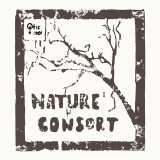
In the late 1960s, young jazz musician Bobby Naughton, a keyboardist and vibraphonist, faced significant challenges as he sought to record his first album. With major record labels and jazz clubs catering only to big names, Naughton and other creative musicians of his generation found themselves sidelined by the mainstream music industry. They turned to self-reliance and self-production, becoming part of a movement of independent musicians. Naughton’s debut album, Nature’s Consort, was a DIY effort in every sense—recorded on home equipment and featuring a hand-printed woodblock cover. The album was distributed independently at concerts and by mail, receiving little attention initially, but over the years it gained a reputation as a rare, sought-after artifact of the period.
Though recorded during an outdoor concert in Connecticut, Nature's Consort reflected the "loft jazz" scene in New York City. This avant-garde jazz movement centered around musicians who lived and played in loft spaces in lower Manhattan. Naughton commuted from his home in Southbury, Connecticut, to play with his bandmates Mark Whitecage, Mario Pavone, and Laurence Cook in New York's lofts. These musicians regularly performed at venues like Studio We, a key gathering spot for free-form jazz, where musicians could experiment and develop their sound, often with no audience present.
Naughton’s journey into jazz was a winding one. Originally from Boston, he played rockabilly and blues-rock before transitioning into free jazz. Inspired by avant-garde artists like Carla Bley and Paul Bley, Naughton sought to explore new forms of music that went beyond traditional jazz structures. His bandmates, Mark Whitecage and Mario Pavone, were both deeply affected by the death of John Coltrane in 1967, which prompted them to quit their day jobs, attend Coltrane’s funeral, and move to New York to pursue jazz full-time.
Nature’s Consort was a collective project, with band members sharing equally in any profits. However, Naughton was the driving force behind the group’s creative direction. He composed much of the original material and selected pieces by Ornette Coleman and Carla Bley for the band’s repertoire. Jazz critic Nat Hentoff praised the album for its “high-risk improvisation” and the musicians' ability to anticipate each other’s moves. Though Nature’s Consort received little press at the time, it has since been recognized as a significant early document of the loft jazz era, representing Naughton’s disciplined, improvisational approach to music.