From the redwood forests of Big Sur and the industrial warehouses of downtown Los Angeles comes PFEIFFER, a label dedicated to quality and a diverse musical output. Pfeiffer follows in the footsteps of labels such as Svek and Kompakt, known for releasing a wide range of techno and house with a common thread of unique and unpredictable energy. Looking to bring this type of eclectic curation into the modern era, Pfeiffer draws inspiration from the raw simplicity and effortless magnetism of its namesake location on the central coast of California.
The sophomore release from Pfeiffer is here, and with it new sounds and styles from the label's anonymous lead producer. 'Forgot' kicks things off with an off kilter, swinging groove and clever zany synth work to match. Shifting basslines bounce under classic Robert Owens vocals, evolving into a huge riff over the course of the tune. On the flip, 'Feel The Love' follows suit with a sub-heavy, stomping groove, staying in the deeper end of the spectrum. A playful synth riff grows throughout the track, weaving throughout the combination of chopped vocals, analog sounds and hand played percussion.
Ghent based pianotrio Steiger have earned their place in the ever growing peloton of young Belgian jazz innovators. As a result, they won the Young Jazztalent price at the 2017 Gent Jazz Festival. With their luscious and rigid grooves in minimalistic framing, they cose themselves between SCHNTZL and De Beren Gieren, likewise minded young Beljazzbands that don't take it so closely with traditions. They play jazz with a rock'n'roll attitude. Sdban Ultra is very pleased to present a sampler of their debut album 'And Above All' on a limited 10" vinyl for Record Store Day 2018. This release marks their introduction on Sdban Ultra, their sophomore album is expected next fall. And Above All' houses both jazz and modern compositions, avant-garde and experimental electronics. Steiger takes inspiration from jazz and refers to the traditions but equally pulls those apart, for example in the chaotic miniature 'Bachfag' and in the intimate 'Inverse/Reverse'. With 'Berlin Revisited' the band clearly chooses electronic instrumentation. It is reminiscent of the electronic jazz of the noughties: bands like Triosk, Sofa Surfers and Flanger did not so much work towards jazz but used the genre as a stepping stone to dive into the cosmos. Steiger are launching themselves into infinity on this track with a pounding beat, shrill cymbals, overdriven keys and an unwieldy bass.
Far Out Monster Disco Orchestra returns with Black Sun, its second full-length album of 100% original, unadulterated disco sophistication, featuring all three original members of pioneering Brazilian jazz-funk trio Azymuth, a full orchestra with arrangements split between Arthur Verocai and Azymuth's late maestro Jose Roberto Bertrami, plus members of the legendary Rio funk group Banda Black Rio.Since its critically acclaimed self-titled debut album in 2014, the FOMDO imprint has released a string of remixes by some all-time greats of dance music, including John Morales, Theo Parrish, Mark Pritchard, Marcellus Pittman, Andres, Dego, Volcov, Kirk Degiorgio and Al Kent. To huge effect in clubs and festivals around the globe, some of the more recent remixes teased the new album material, which for the first time, is presented in its original, soul-heavy incarnation, alongside instrumental versions highlighting the album's stunning arrangements and compositional brilliance.Far from a throw-back - with disco music firmly entrenched in the modern club vernacular - Black Sun is ecstatic dance music at its finest.
"The kind of melancholia I'm talking about, by contrast, consists not in giving up on desire, but in refusing to yield. It consists, that is to say, in a refusal to adjust to what current conditions call 'reality' - even if the cost of that refusal is that you feel like an outcast in your own time." (Mark Fisher, Ghosts Of My Life, Zero Books 2014, p. 24) In Ghosts of My Life: Writings on Depression, Hauntology and Lost Futures', the author Mark Fisher outlines - to put it in a big way - a resistant melancholy. This stands in contrast to leftist melancholy resignation', as well as something which Fisher does not talk about: its common masculine counterpart, habitual post-left cynicism - as in seen it all before'. Fisher calls this hauntological melancholy. Haunting, spooks, ghosts and apparitions are an almost constant presence on I Started Wearing Black', the second album by the Cologne-based artist Sonae (pronounced so-nah'). The term hauntology shares a fate with retro-futurism when it comes to inflationary overuse and abuse. It's a conceptual container that looks good and can hold a lot, indeed, too much. Furthermore, hauntology has its peak season behind it, a term on the threshold of its expiration date. Nevertheless, I would like to rehabilitate hauntology and use it properly to characterize I Started Wearing Black', because the term is rarely as compelling to describe music as is the case here. The most recent other example could be Asiatisch' by Fatma Al Qadiri, but with a completely different frame of reference. What are the ghosts of this music It rustles, crackles, ruffles, crunches, rattles, scrapes, sometimes a beat emerges from the constant noise, sometimes an obscure voice mumbles incomprehensibly, sometimes a melancholy piano figure is prevented by this noise from coming too much to the foreground. It definitely is eerie - to bring into play another term used by Fisher in the title of his latest book, The Weird and the Eerie'. In British pop-jargon, eerie first occurred to me more often when referring to particularly leftfield, spooky and... well... ghostly dub, a bass-heavy, echoing noise, from Augustus Pablo to Creation Rebel to Burial. Unlike the Wald & Wagner records by Wolfgang Voigt, Sonae is not a kind of neo-romantic veiling with a tendency for escapist nebula. It is more a noise of latency. The noise signals a latent - not necessarily acute - threat, a latent uneasiness about... yes... about what About a System Immanent Value Defect' That's the name of a track on I Started Wearing Black' where something that sounds like a French Horn (or a foghorn) battles for attention through or against the background noise. An email from Sonae: The piece 'System Immanent Value Defect' should actually be called 'I See Turkey'. I wrote it for my fellow student Elif - she is a pianist and Gezi Park activist from Istanbul. Through her I witnessed the inner conflict and agitation that political circumstances can create: her feelings of guilt when there was an attack, with her safe in Germany as a student, watching the events from afar. It was horrible. When her mother begged her not to come home because she feared for her safety, I felt a cold shiver run down my spine. I started with the piece from this mood, beginning with the piano, then the noise (modulated sinusoidal curves), which reminded me of waves and the then heatedly discussed Mediterranean sea: atmospheric, melancholy motifs. In contrast is the anger, the pressure, represented in corresponding sounds - hopefully audible! - During this time I started to think about world views as they can be found around the globe, in how far they held by societies and their political representation. I realized that I know of no political system that is actually about the people and what would do them good. It's always about positions, power, money. I thought that was a lot more frightening on a global scale than merely viewing Turkey in isolation. That's why the piece is called "System Immanent Value Defect", because our world suffers from precisely that. Everywhere, it's all about the wrong things.' Between the wrong things there are happy moments. In the title track, after 184 seconds of rattling and hissing, a beat is unleashed, like an arrow released from a spanned bow, a beatific relief, if there is such a thing. White Trash Rouge Noir' first meanders along spookily, then after 144 seconds it transforms itself into a distant cousin of Einstu¨rzende Neubauten's Yu¨ Gung', but there is no Big Male Ego to be fed here, and the black in the album title is a completely different type of black from that of the Neubauten. Furthermore, I Started Wearing Black' was finished long before the black dresses were worn at the Golden Globes as a sign of protest against sexual violence. Sonae writes that she herself started wearing black some time ago. Her reasons are so-called personal ones: ... resulting from an individual situation (lovesickness), I started to wear black (gaining weight and feeling ugly).' The political dimension of gaining weight, feeling ugly and therefore dressing in black in I Started Wearing Black' lurks within the noise and never becomes explicit and only rarely manifest - or a manifesto. Sonae writes about the track We Are Here': A piece for minorities... in this case, considering the current pop-feminist discourse, explicitly for women. Female artists have long been saying loud and clear that 'we are here' and 'electronic music is not a boys club!' But this pop-feminist moment should only be seen as one part of the dedication of the piece. It is for minorities, for the oppressed, who didn't belong enough.'
Kingswood Drive and Accidental Return were an early teaser of this new set, due in April. Displaying their signature analogue sounds and arpeggios, alongside broken beats and soul, you wouldn't be alone in hearing the influences of Dam Funk, Herbie Hancock or Bugz In The Attic coming through on these two.
Elsewhere more jittery, playful rhythms underpin Croydon Rooftop Café Culture. As well as in the calming and ethereal Prints On The Heath, a subtle tribute to mutual hero Prince, who passed away on the unusually prolific day this and two other, currently unreleased, tracks were written and recorded.Throughout the EP the duo nod at their London home from the "Heath" to Kingswood Drive and more obviously Croydon itself. The sound of South London is threaded throughout this record with pride.
Even down to the mechanical sunset sound of EP finale Thorns, capturing some of the essence of the studio view over London from their high point on the hill in Thornton Heath.
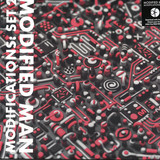
The first EP from Albert's Favourites co-founders and synth-production duo Modified Man focused on throwing out heavy editing, recording music with as few processes as possible and grabbing performances as single takes. Blending warped cassette recordings that touched upon early jazz-funk/brit-funk influences with the energy of broken beat and experimental electronica, won them support from Patrick Forge, Osunlade, Thris Tian, Yam Who and Titeknots to name a few.
Since that release they premiered new track Thorns live on Boiler Room, going on to deliver a full, three-hour live performance and DJ set for the infamous global community.They also provided remixes for Dele Sosimi, Amp Fiddler, Makadem & Behr and Hector Plimmer, meanwhile, busily preparing a series of four, six-track vinyl EPs which will be released over the next 18 months.
Do you like Love songs After spending a lifetime spent avoiding this subject in song, Joel Sarakula finally admits that he does. On his new album "Love Club" Sarakula relives the golden age of Soulful and Romantic Pop music and connects it with a modern aesthetic. While a deeper message of love and peace flows through the record, Joel Sarakula is no old fashioned hippie: ",Love Club' is about connecting to reality and re-framing the idea of romantic love and loss in the present, loveless age ". Featuring eleven songs touching all genres from disco to blues, from soul to soft-rock, Joel Sarakula's "Love Club" is a profound pop statement.
Joel Sarakula has travelled the world in search of his muse, experiencing everything from being a victim of Caribbean carjackings to performing in the remote fishing villages of Norway, via the dive bars of Europe and the US. It was the hodge-podge musical tapestry of England's capital that finally drew him to a settling point, in the wake of seemingly never ending run of shows. With personal tastes that span from the more avant-garde to soul and pop greats like Sly Stone, Todd Rundgren and Hall & Oates, there are clear nods to contemporaries like Unkown Mortal Orchestra, Erlend Oye and Toro Y Moi in terms of ambition and style.
With his last two albums "The Golden Age" and "The Imposter" collecting strong radio plays at BBC Radio 2, BBC 6, BBC London, XFM Joel Sarakula has been play-listed nationally in Europe including Flux FM, WDR 5, Radioeins, Bayern 2, Deutschlandfunk and Deutschland Kultur Radio in Germany as well as in Benelux and Italy and Spain. He is a regular fixture on the live festival and club circuit in the UK, Europe and internationally including appearances at SXSW, Primavera Sound, Glastonbury, The Great Escape, Liverpool Sound City, Scala London, Tallinn Music Week, V-ROX (Vladivostok) and Reeperbahnfestival Hamburg.
"Love Club" is Sarakula's bold and unashamedly emotional next step. In essence the album is a homage to the soulful singer & songwriter artistry of the Seventies filtered through a darker contemporary lens - fitting for these uncertain times. "I always shied away from generic love songs," the Sydney, Australia born songwriter admits, "but on this record I embraced the subject wholeheartedly... and intellectually, looking at themes of love, lust, loneliness and everything in-between." Take the first single "In Trouble", co-written with Michele Stodart of The Magic Numbers, as the best example for Joel Sarakula's unique, and honest approach to making music. "We Used To Connect" questions the changing nature of relationships in our social-media addicted world: 'We used to connect in the real world too, now the touch of your hand is a digital cue'.
"Coldharbour Man", on the other hand, examines the identity of the song's narrator and the artist vs. fan dynamic all wrapped up in a disco love song: "There's a lot going on in this particular track. I feel my writing has grown emotionally...", explains Joel Sarakula. "Just best to listen yourself and make up your own interpretation!: 'We met in a song come to life like some fantasy cliché, though I'm known for my moves in the dark you flooded sunshine on my day'. Then there's "Baltic Jam", capturing romantic love and loss in authentic 70s confessional singer & songwriter style and of course "Dead Heat", a song about how there is struggle in the most perfect relationship pairings as the match is so even: "I recall an ex-girlfriend of mine... when we first met, we thought we hated each other but we eventually flipped that emotion and realised we had a deep passion and love for each other, there just was a lot of underlying sexual tension!" : 'It's a battle we could only win, if we lose. We'd be stronger if these lonely ones became two'.
More than a year in the making, Joel Sarakula recorded "Love Club" in various studios around London and Berlin capturing soulful performances from his many musical comrades on vintage analogue equipment. "This record has truly been a labour of love. Recording and privately sharing these performances amongst my collaborators started to feel like a bit like a club - I guess that lead to the album title! I was surprised how much I actually enjoyed the 'love-making process' and I look so much forward to playing these new songs on stage with my band." We can't wait, Joel Sarakula.
Guber releases his first EP on Paris based label Beat X Changers at the intersection of Ambiant and mental UK Bass music. The whole project is held by alternation of Slope / Release of sub-frequency and obsessional loop that dye each tracks. Anisotropic Expression is a first work that could be seen here as an draft representation of the behavior of surrounding matter. Non musical influences therefore are brought here by the the study of properties of materials expressed in a musical statement. Raw obsessional patterns, evolving and rolling out over the headroom could be seen as the emulation of many deformation models. Shaping of stereo and arrangement have been handled with the help of the sound engineer & producer X_1 leading to home or club-listening experience as well. Guber is been into music by listening & playing some music of the 70's and trash-metal that drove him straight to UK Bass music. Since there he is only focusing on spontaneous creation showing faithfull perception of thoughts, leading to a higher level of singularity.
* The Strike Team EP is the second in the trilogy of releases introducing the world to the sound of the STRIPPER.
The title track is a rare hybrid of modern day production and timeless influences transformed through the prism of 1990's hardcore, jungle, and broken beat. You and your favorite DJ like to close your sets with classic jungle tracks Well, the STRIPPER is here with a monster for the middle of your set, pacing at a cool 128 BPM. Following it is the hidden gem of the record, Culture Vulture: an impossible to pinpoint breakbeat laced melodic odyssey. Similar to "Consciousness Proliferation" (Back 2 93 Mix) from SLEEVE-01, Culture Vulture takes you on a journey inspired by the irresistible grit and beauty of the early 1990's sound from the city of Coventry and producers like Skanna and Essence of Aura. Flipping the record to Side 2, the STRIPPER gives you an absolute burner of a techno track intended for the heaviest and sweatiest of social settings. The atmospheric pads are pointing to the producer's undeniable rave influences and love for illegal parties around the world. The final track of the record is the STRIPPER tying back the European influences with his unquestionable debt to the American Midwest: melodic, deep, and irresistible.
Belgium-based Composer Christina Vantzou's Fourth Full-length For Kranky Ventures Further Into The Uniquely Elusive And Evocative Mode Of Ambient Classical Minimalism Which Has Become Her Signature: A Fragile Synthesis Of Contemplative Drift, Heady Silences, And Muted Dissonance. In Regards To The New Album She Speaks Of Focusing Particular Attention On The Effects Of The Recordings On The Body, And Of 'directing Sound Perception Into An Inner Space.'
No. 4 Took Shape Across Roughly Two Years, Incorporating A Diverse Array Of Musical And Conceptual Collaborators, Including Fellow Kranky Artists Steve Hauschildt And John Also Bennett (of Forma) As Well As Angel Deradoorian (ex-dirty Projectors), Clarice Jensen, Beatrijs De Klerck, And Members Of Belgium's Echo Collective. During The Creation Process Vantzou Wanted To 'blur Lines Of Hierarchy,' And Thus Allowed All Ensemble Members And Technical Assistants To Add Or Delete Elements. Despite Such A Spectrum Of Input The Eleven Tracks Feel Distinctly Cohesive, Weaving Elegant Textures And Resonant Open Spaces Within A Twilit Landscape Of Eclectic Instrumentation: Piano, Harp, Vibraphone, Voice, Strings, Marimba, Synthesizers, Gong, And Bells.
Vantzou Describes The Recording Process As One Of Prepared Spontaneity: That Is, 'having Plenty Of Ideas Ready To Explore Going Into The Session, But With Enough Time To Depart From Those Ideas And See What Happens.' This Mindset Of Premeditated Exploration Informs The Album's Emotive Textural Intuition, With Hushed Drones And Delicate Gestures Eliding In The Periphery Of The Mix. She Cites Sleep And 'the Loosening Of Time' As Two Formative Practices In Her Private And Professional Life, Which Manifests In The Quietly Hallucinatory Properties Of Vantzou's Music. No. 4 Feels Both Endless And Ephemeral, Immersive And Immaterial. It's A Music Of Horizon Lines And Half-light, Mapped With Feeling And Foresight.
Recorded In New York City And Brussels. Mixed In Berlin.
A Portion Of This Work Was Funded By A Generous Grant From The Flemish Community In Belgium.
Partition', appropriately produced by label owner Deepak Sharma is gritty and raw, centered on being a powerfully effective DJ tool. It symbolizes a nod to the label's past and longevity but more so signals the future territory and modern world the imprint will reside in.
To commemorate the memorable occasion, one of techno's most authoritative, important and reputable producers, Developer of Modularz distinction has provided two heavy-duty remixes. Additionally, label staple Yuuki Sakai delivers an extraordinary remix to round out a historic release from Hidden Recordings.
Having grown up with and on the internet, Martin Steer (1986) has transformed its pull into a concept album that is just as immediate and intangible as the digital world. Bad Stream is guitars and machines vanishing in the spaces between Radiohead and Nine Inch Nails only to reemerge amidst Ambient, Noise, and Drone. Bad Stream, then, is his modus operandi - a hybrid soundtrack to the feelings of resignation, isolation, and cynicism within neoliberal cyberspace and to that strangely numbing comfort of bodies transmuting into zeros and ones in real time.
'I look at my phone even when I play guitar,' says Martin Steer, 'and that isn't even entirely voluntary. The 2010s really changed my perception of how digital technologies and social media affect me as a musician. Through Bad Stream I want to make sense of this particular kind of anxiety, and to use sensory overstimulation as a way to develop an independent and progressive musical language.'
The past seven years took Martin and his laptop and guitar from Berlin to Mexico and Nepal and, as a founding member of Frittenbude, into the German charts and to various festival stages. And yet, Bad Stream is a true 'Berlin album,' out of Friedrichshain, Neukölln, and Kreuzberg and will be released on Martin Steers own label ANTIME. It was recorded with real drums and programmed beats, with shoegaze guitars, acid baselines, piano, smartphone synths, violins, field recordings from the darknet and his voice, whose hopeless timbre conveys reflections on systems, the future, drugs, people, and his own place. In his ever expanding A/V live shows and in the music videos, this is supplemented by complex visuals.
Mannequin Records presents a trilogy of reissues from the avantgarde Italian-born producer Doris Norton, "Nortoncomputerforpeace" (1983), "Personal Computer" (1984, originally released by Durium Records), "Artificial Intellingence" (1985).Apple's first music "endorsement" and Roland affiliate, Doris Norton is one of the most important women pioneer in the use of synths and in the early electro / computer music. Norton is the wife of Antonio Bartoccetti, progressive rock guitarist, and mother of the musician and techno producer Rexanthony. As a teenager, she was drawn to medieval, Renaissance and Baroque music, not to mention quantum physics, differential equations, organic chemistry, the experimentalism of John Cage and animated movie soundtracks. Her love for modules and circuits found expression through the waves of an old harmonium, the frequencies of a Minimoog, a Roland System 100M, a Roland System 700 and the ARP 2500/2600.
In 1980, Norton began her solo career by recording at Fontana Studio 7, the Milan studio of the composer and musician Tito Fontana, resulting in the electronic opera "Under Ground". Norton became more prolific, continuing her adventures in experimental electronics and computer music with Parapsycho (1981), Raptus (1981), Nortoncomputerforpeace (1983), PC (1984) - whose album cover prominently features Apple's colored logo - and Artificial Intelligence (1985).
While the beat-oriented style of Norton's music aligns her with such global fellow-travelers as Yellow Magic Orchestra and Kraftwerk, her championing of the personal computer as a tool for self-sufficient musical creativity also connects her to more artsy musicians such as Pietro Grossi, Laurie Spiegel, and the League of Automatic Music Composers. Norton's predilection for the bright, glossy timbres of early digital instruments also recalls Hubert Bognermayr and Harald Zuschrader's bizarre 1982 one-off Erdenklang.
Later, her talent and expertise attracted the attention of IBM, who in 1986 named her as an official consultant. Already the reigning queen of the Italian electronic scene, she recorded two CDs for IBM: Automatic Feeling and The Double Side Of The Science. Influenced by her son, the musician and producer Rexanthony, Norton brought her fascination with the early days of techno into the 1990s, when she released three volumes of Techno Shock on Italian trance/hardcore label Sound Of The Bomb.
While her music remains largely out of print and inaccessible, Norton's early records have recently begun to receive the inevitable rediscovery treatment.
"In the late sixties I had already conceived computers as personal.' I have always trusted in the benefits of solitude, (being) alone means freedom... What's better than a personal' computer for materializing ideas, by oneself" (Doris Norton)
Dublin based musician Lerosa has built an impressive discography throughout the years. With his first efforts dating back to 2005 the producer who has a broad palette of sounds has already been around for over 10 years with releases for a vary of respected labels.
For the first release on SAFTX , Lerosa hands out a taster of the labels new series ambitions. Vivrant house music is most definitely the back bone of Playa De La Guancha as a whole. The opening is packed with a strapping rhythm section and a vocal cut that is reminiscent of the Trax Records classic House Nation . Julius Steinhoff (of Smallpeople fame) gives Soul Tracing a modern sounding treatment that completely shifts the feel of the original and turns it into an adventurous piece of contemporary electronics.
Lerosa opens up the B side with Bruised which is a work out of alternating basslines and brutal machine claps that give the piece a club oriented feel. Acidic sounds cut through the mix with determination and wobbly synth sounds serve as a pleasant sauce for this intergalactic sounding work. Marauder is a hefty bit at a slower tempo than it s predecessors. A loose rhythm section is causing for the listener the focus on the immense LFO threated sounds that float on to and the low down bassline that supports the overall atmosphere in a grounded manner. Playa De La Guancha will be available through all specialized retailers starting early April.
Organic Analogue may be best known for its deep-diving techno and house and star-gazing electro, but on this latest transmission it digs into its roots in 1980s club music by way of the supremely talented Croza.Florence-based Adrien F Costes makes his first solo outing here with tracks lifted from his treasure trove of home-made, boogie-influenced beats. The sounds may tap up a direct line to the 80s, but there's a distinctly modernist slant to the heads-down groove that Costes cooks up.
Italian producer Ad Bourke also makes a rare appearance to remix "Night Heat". His version plays out like a hazy dream sequence injected with a little Italo strut, rounding this record out as a celebration of the deep-seated influences that guide Organic Analogue.
* Luna-C says this was one of the most challenging EPs he has ever made, because he made a record almost exactly as he would have if it was 1992 again, only with considerably more knowledge. This EP was made almost entirely with hardware, using a real mix desk and all the original synths and modules that the Kniteforce studio used back in the day, along with some new bits picked up over the years. This EP was a deliberate attempt to go back to the roots of the sound, to start again musically.
All four tracks are proper underground in style, deliberately avoiding the common break beats and standard sounds of current 'new' old skool music, to achieve something more authentic. It features all new samples, and no reliance on old tricks or techniques. This one is for the real underground, the real old skool, and the sound of it demonstrates that!
Club / DJ Support
Billy Bunter, the Fat Controller, Glowkid, Slipmatt, Dj Jedi, Dj Luna-C, Dj Brisk, Clayfighter, Jimni Cricket, Bustin, Sc@r, Doughboy, Saiyan, Dave Skywalker, Ponder and many others
Molten Moods releases another finely curated various artists record with tracks by Skee Mask, Kessel Vale, Jonas Yamer and Konrad Wehrmeister. Kessel Vales opening track Voguing Geisha' is an unconventional breakbeat masterpiece following his sense of harmony and rhythm already shown through previous releases on Tanstaafl Records and Rhythm Nation. As the track unfolds it reveals musical storytelling by integrating a technoid polyrhythmic loop structure into melodic synth figures, slowly deconstructing in the end. Skee Mask collaborated with Molten Moods labelhead and Carl Gari member Jonas Yamer on Fanta Ocean', it being the first release ever outside of his Ilian Tape homebase. The outcome is a moody IDM piece with cinematic qualities, complex but soothing. The B-Side begins with Xenomorph' by Konrad Wehrmeister, who is known by his releases on Public Possession and SVS Records. This trancy yet distorted and detailed electro banger surely takes on the role of the records dancefloor highlight. The closing track Insgeheim' is delivered by Molten Moods head honcho Jonas Yamer. Here groovy kicks, distorted chords and a psychedelic pad are woven into one compelling 10 am techno track. The common thread of Molten Moods 4 is four young Munich artists going on a joint trip into idiosyncratic electronic music. The resulting tracks intertwine as one modern and diverse techno record. Out on 12 vinyl and wav by the end of March 2018. In the tradition of Molten Moods' cost-conscious design strategies by Paul Bernhard, the record comes with a xeroxed low budget sticker set.
Mastered by Manmade.
out of Stock
Last delivered 7 years ago available to reorder, subject to availability
Includes 12' Vinyl and Deluxe CD album, 30 page hard back book
Now that I've been to Nashville,' Kylie Minogue says with audible affection, I understand. It's like some sort of musical ley-line...'
Golden, Kylie's fourteenth studio album, is the result of an intensive working trip to the home of Country music, a city whose influence lingered on long after the pop legend and her team returned to London to finish the record: We definitely brought a bit of Nashville back with us,' she states. The album is a vibrant hybrid, blending Kylie's familiar pop-dance sound with an unmistakeable Tennessee twang. It was Jamie Nelson, Kylie's long-serving A&R man, who first came up with the concept of incorporating a Country element' into Kylie's tried-and-trusted style. That idea sat there for a little while, with Minogue and her team initially unsure about how to bring it to life. Then, when Grammy-winning songwriter Amy Wadge's publisher suggested Kylie should come over to collaborate in Nashville, a city Kylie had previously never visited, something clicked. You know when you're so excited about something,' she recalls, that you repeat it an octave higher and double the decibels I was like that. 'Nashville! Yes! Of course I would!'. I hoped it would help the album to reveal itself. I thought 'If I don't get it in Nashville, I'm not going to get it anywhere.''
Kylie's Nashville trip involved working alongside two key writers, both with homes in the city. One was British-born songwriter Steve McEwan (whose credits include huge Country hits for Keith Urban, Kenny Chesney and Carrie Underwood), and the other was the aforementioned Amy Wadge, another Brit (best known for her mega-selling work with Ed Sheeran). It was then a truly international project: Golden was mainly created with African-German producer Sky Adams and a list of contributors including Jesse Frasure, Eg White, Jon Green, Biff Stannard, Samuel Dixon, Danny Shah and Lindsay Rimes, and there's a duet with English singer Jack Savoretti.
However, the album's agenda-setting lead single Dancing was, significantly, first demoed with Nathan Chapman, the man who guided Taylor Swift's transition from Country starlet to Pop megastar. If anyone knows how to mix those two genres, Chapman does. Nathan was the only actual Nashvillean I worked with. He's got a huge studio in his house, which is probably due to his success with Taylor... there's plenty of platinum discs of her, and others on his walls.' There's something of the spirit of Peggy Lee's Is That All There Is, of Dylan Thomas' Do Not Go Gentle Into That Good Night, even of Liza Minnelli's Cabaret about Dancing, a song which not only opens the album but sets out its stall, providing a microcosm of what is to come. You've got the lyrical edge, that Country feel, mixed with some sampling of the voice and electronic elements, so it does what it says on the label. And I love that it's called 'Dancing', it's immediately accessible and seemingly so obvious, but there's depth within the song.'
The experience of simply being in Nashville was an overwhelming one, before Kylie had even arrived. Once I knew I was going to Nashville, people talked about the place with such enthusiasm. They said without doubt I would love it and, I would come back with songs. They were sending lists of restaurants, coffee shops and bars. It really was a beautiful and genuine response and it felt like I was about to have a life changing experience and in a way, I did.' The reality came as something of a surprise, when she found a far more modern metropolis than the vintage one she'd envisaged. I thought it would be like New Orleans: little houses and bars, with music spilling out onto the street. It reminded me more of Melbourne: apartment blocks going up everywhere! The main strip, Broadway, where the honky tonk bars are, that's where the street was filled with music and it was just amazing.' Mainly, Minogue remembers the heat and humidity. It was 100 degrees. It was like it was raining with no rain.' She also relished the chance to wander around unrecognised, visit a few venerable music bars and soak in the atmosphere. I didn't get to the Grand Ole Opry or the music museums but I managed to go to a couple of the institutions there like The Bluebird Cafe and The Listening Room, and just by being there, through some kind of osmosis, you get this rejuvenated respect for The Song, and the writing of The Song. There's no hoo-hah around it. There's a singer-songwriter there, talking about the song and singing the song, to an audience who are there to listen. Although, I have to confess I was guilty of starting to clap too soon during a long pause at the end of one of the songs. The guy made a bit of a joke out of it and got a laugh from it, but I thought 'Of all people in the audience, no...''
It's probably no coincidence, therefore, that every track on Golden is a Kylie co-write, making it arguably her most personal album to date. The end of 2016 was not a good time for me,' she says, referring to well-documented personal upheavals, so when I started working on the album in 2017, it was, in many ways, a great escape. Making this album was a kind of saviour. I'd been through some turmoil and was quite fragile when I started work on it, but being able to express myself in the studio made quick work of regaining my sense of self. Writing about various aspects of my life, the highs and lows, with a real sense of knowing and of truth. And irony. And joy!'
The songwriting process allowed Kylie to get a few things out of her system. Initially, she admits, it was cathartic, but it also wasn't very good. I think I was writing too literally. But I reached a point where I was writing about the bigger-picture, and that was a breakthrough. It made way for songs like Stop Me From Falling and One Last Kiss. It also meant I had enough distance to write an autobiographical song, like A Lifetime To Repair, with a certain amount of humour. The countdown in that song: 'Six-five-four-three, too many times...'. I don't know if that will be a single, but I can just imagine a girl with framed pictures of past boyfriends, and kind of going 'Oh god, when am I going to get this right'' When she listens back to Golden, Kylie can vividly hear the Nashville in it. It is, she'll agree, probably the first time that a Kylie album has sounded like the place it was made. You wouldn't normally relate my songs to the cities. Can't Get You Out Of My Head sounds more like Outer Space than London. But Shelby '68, for example, was written in London but it was done with Nashville in mind. It's about my Dad's car, and my brother recorded Dad driving it! I don't think I'd have written a number of the songs, including Shelby '68 and Radio On without having had that Nashville experience.'
The latter, she says, is about music being the one to save you.' Throwing herself into the making of the record, she says, crystallised that idea. If there's one love that will always be there for you, it's music. Well, it is for me, anyway.' That song, in particular, carries nostalgic echoes of the golden age of Country, as heard through Medium Wave transistors and tinny home stereos in the distant past. Like any child of the Seventies, Kylie had a basic grounding in Country music, mainly absorbed from older family members. My Step-Grandfather was born in Kentucky and though he lived most of his adult life in Australia, he never stopped listening to his beloved Country artists.' If there's any classic Country singer whose imprint can be heard on Golden, it's Dolly Parton.
Kylie saw Dolly live for the first time at the end of 2016, at the Hollywood Bowl. It was like seeing the light,' she beams. It was incredible. Everyone, whether they know it or not, is a Dolly Parton fan. When I was in Nashville, I did pick up a T-shirt that said 'What Would Dolly Do' Maybe that should be my mantra.' And, whether consciously or otherwise, there's a timbre and trill to Kylie's vocals on Radio On that is distinctly Parton-esque. My delivery is quite different on this album,' she says. A lot of things are 'sung' less. The first time I did that was with Where The Wild Roses Grow. On the day I met Nick Cave, when I recorded my vocals, he said 'Just sing it less. Talk it through, tell the story.' This album wasn't quite to that extreme, but a lot of the songs were done in fewer takes, to just capture the moment and keep imperfections that add to the song. I remember on my last album, a lot of producers were trying to take out literally every vibrato they heard. And that's not natural to my voice. I mean, I can make myself sound like a robot, but it's nice to sound like a human!' Working within the Country genre also gave Kylie permission to write in the Nashville vernacular. Because we were going there, I wasn't afraid to have lines like 'When he's fallen off the wagon we'd still dance to our favourite slow song', 'Ten sheets to the wind, I was all confused', 'I'll take the ride if it's your rodeo'. The challenge of bringing a Country element to the album made the process feel very fresh to me, kind of like starting over. I started to look at writing a different way, singing a different way.'
If ever Kylie lost confidence in the Country-Pop concept, and found herself pondering This is great, but back in the real world - my real world - how will this work', Jamie Nelson was there to badger her into sticking to the path. We found a way to make it a hybrid with what we'll call my 'usual' sound. It had to stay 'pop' enough to stay authentic to me, but country enough to be a new sound for this album. The closer we zoomed in, and the more we honed it, I knew Jamie was right. We sacrificed good songs that weren't right for this album, because we wanted it to be as cohesive as possible. The songs that were hitting the mark were these ones, so we decided to be strong, and that's how we wrapped up the album. What he said, that stuck with me, was that 'I'd hate to get to the end of this and really wish we'd gone for it.'' Having worked with Kylie for so long, Nelson was able to put this latest shift of direction into perspective. He said 'You've traditionally done it throughout your career. You had your PWL time, then you did a complete turn when you went to deConstruction, then another complete turn with Spinning Around, and R&B dance-pop, and then another turn with Can't Get You Out Of My Head, icy synth-pop, and this is another one.' He was right. It felt like the right time to have a change sonically. New label, new stories to tell, and a new decade almost upon me.'
Kylie Minogue will, it's scarcely believable, turn 50 this year. This looming milestone is partly behind the album's title, and title track. I had this line that I wanted to use: 'We're not young, we're not old, we're golden' because I'm asked so often about being my age in this industry. This year, I'll be 50. And I get it, I get the interest, but I don't know how to answer it. And that line, for my personal satisfaction, says it as succinctly as possible. We can't be anyone else, we can't be younger or older than we are, we can only be ourselves. We're golden. And the album title, Golden, reflects all of this. I liked the idea of everyone being golden, shining in their own way. The sun shines in daylight, the moon shines in darkness. Wherever we are in life, we are still golden.' One of the album's shiniest moments is Raining Glitter, an exuberant banger which ventures closest to Kylie's traditional dance-pop comfort zone. Eg White, who is one of the producers and writers and a great character, was talking about disco one day. I said 'I love disco, but you know the brief.' We needed to be going down the Country lane, so to speak. But we managed to bring them both together. When I wrote it, I was thinking about the Jacksons video for Can You Feel It where they're sprinkling glitter over everyone. And I think there's a Donna Summer record that's got that feel to it. I think that's my job: I basically leave a trail of glitter after every show I do anyway.'
Kylie is looking forward to the challenge of incorporating the Golden material into her live shows. Mixing these songs in with my existing catalogue is going to be fun. And it could be fun to do some of those songs with just a guitar. It'll make my acoustic set interesting...'Her incredibly loyal fans - to whom one Golden song, Sincerely Yours, is intended as a love letter' - will, she believes, have no problem with her latest stylistic shift. My audience have been with me on the journey, so I shouldn't be afraid that they won't come with me on this part. I've had fun with it, and I'm sure they will too.'
The time spent making Golden has, Kylie says, been a time of creative and personal renewal. I've met some amazing people, truly inspiring writers and musicians. My passion for music has never gone away, but it's got bigger and stronger.' And if there's an overriding theme to the record, it is one of acceptance. We're all human and it's OK to make mistakes, get it wrong, to want to run, to want to belong, to love, to dream. To be ourselves.'
I was able to both lose and find myself whilst making this album.'
First new LP in over 15 years. Builds on 3 successful ATFA reissues of Mergia's music. Legendary artist still active after decades of historic work. Modern Ethiopian jazz built on ancient scales and standards. Capping several successful years traveling the world performing to audiences big and small, Hailu Mergia's Lala Belu has been a long time coming. It builds on Mergia's remarkable career resurgence over the past few years. Beginning in 2013 with the reissue of his dreamy Hailu Mergia and His Classical Instrument followed by the enormous success of his seminal Ethio-jazz masterpiece Tche Belew and continuing with last year's widely acclaimed Wede Harer Guzo, Mergia has received considerable accolades from listeners and press globally, including The New York Times, Pitchfork and The Wire. His old recordings are cherished revelations for Ethiopian music fans; however, Mergia's return to the stage has been just as inspiring and electrifying. Mergia's vintage recordings are known for an inherently mysterious and worn-in quality, while his new recordings echo his band's 21st century live show with modern instrumental interpretations of crucial Ethiopian standards and Mergia's own original compositions. Tony Buck (drums) and Mike Majkowski (bass), who have backed Mergia on tour throughout Europe and Australia, form the bass-drums trio on the recording. Having played venues from Radio City Music Hall and the Kennedy Center to jazz festivals, rock clubs and DIY spaces all over North America, Europe and Australia, Mergia and Awesome Tapes From Africa want to document this moment in his landmark career with a snapshot of Mergia's current sound. Since he emigrated from Ethiopia and built a life in Washington, D.C. around 1981—where he remains working as an airport taxi driver when he is not on tour—Mergia's career has followed a humble trajectory. He made a few recordings in America but they didn't easily reach fans back home. He kept making music on his own and with friends but after the early 80's his gigs in the U.S. mostly dried up. It wasn't until he began working with Awesome Tapes From Africa and putting together bands with the help of booking agents and musicians in Europe and the U.S., that he was able to chart a new path. With a broad audience of young listeners in diverse venues and distant locales, at age 71, Mergia is enjoying his comeback and is not slowing down.
The Pendletons return with their latest EP, Funk Forever, a Jazz flavored boogie affair with soul inspired song-writing that evokes old school vibes while still staying fresh and current. Horn lines, Yamaha dx7 keys and snapping hip hop inspired drum programming topped by sweet singing with heartfelt themes, the group carves out a bold new sound on these 5 solid tracks. Featuring Elive, Potatohead People and Ishtar.
The Pendletons are a long-standing boogie-funk and modern soul project of E da Boss (of Myron and E on Stone's Throw) and Trailer Limon. The group emerged with their very first release in 2010, a 7" inch of "Coming Down/Waiting On You" on the Slept On record label, which set the tone for the group to emerge... it instantly became a cult classic receiving constant play at nights like Sweater Funk and Funkmosphere, and fetching for serious sums among collectors. Most recently, in 2016, they released the EP "Gotta Get Out". The title track caught the ear of renowned DJ Gilles Peterson, who liked it enough to release it on his Brownswood Bubbler compilation.
In 2018 the group is hitting the ground running with a brand new EP out this spring, and a full-length album to follow later later in the year on the renowned Bastard Jazz label. Now armed with a horn section, a vast array of accomplished jazz and funk contributors, and a knack for quality song-writing, the Pendleton's sound has shaped into something fresh and unique, setting it apart from the legions of imitators.
With its latest reissue, Majik's Back Into Your Heart - Melodies International dug deep into the back catalogue of Hi Records, legendary soul label from Memphis found ed in the 1950s.
Originally signed as a recording artist, Willie Mitchell took the reigns of the label and guided it through its most successful period in the 1970s, notably producing a string of studio recordings for Al Green, Syl Johnson and O.V. right among other eminent soul musicians of the time. Whilst the Hi Records catalogue shifted hands multiple times since the late 1970s, it was mainly exploited as a means to reissue recordings from Al Green and other high profile Hi Records artists (notably by Motown) while the label's more obscure back catalogue remained largely untouched. Years later, a few lesser known one offs from the label's vaults holding the distinctive raw Hi Records production sound and a circling hypnotic quality that makes them potential successful records for modern day dance floors have been getting a second life with record collectors, DJs and on dance floors worldwide. As such, recordings such as Africano's Open Your Hearts have become You're A Melody classics for some years now and Melodies International are glad to bring you one more reissue which in our hearts hold at least the same level of quality and potential as the former. With Back Into Your Heart, Majik pull through with a strong up-tempo disco tune that embodies Mitchell's sound as well as a level of modernity that might explain why it has remained largely unnoticed up until now.
Licensed and re-mastered, MEL010 comes forth in its original 7' format with a folded 14'x14' poster designed by Mafalda.
The second of Alma Negra's 12 Rhythms Series is dedicated to the Maloya sound from La Réunion, a tiny island where a
melting pot of cultures is reflected strongly in its music. Maloya's roots go back to the time of slavery, its quick tempo and raw
energy making it not only a popular dance music but also a powerful protest through movement.
On their Maloya EP, the Basel collective pay tribute to the hypnotic rhythms that were feared both by the Catholic Church and the French government for the musical form's subversive part in the rebellion against colonialism.
The release revolves around two contrasting Alma Negra re-workings of Lindigo's Tany Be. The first takes a classic call &
response structure in 12/8 and 6/8 rhythms, adding a driving bass line and guitar licks. A solid 909-kick locks things in step,
along with a sax flourish and FM synths. Their re-imagining of African and Tamil influences for modern dancers is a triumphant
manifestation of the music's origins.
With the main reworking focusing on a rolling dance floor groove, the Dub Mix concentrates on trance-inducing aspect of
Maloya. Using a modular set up to pick apart layers of percussion, it is a dense and heady trip into the spirit world.
The B side focuses on Christine Salem, one of today's stars of the Maloya scene. Without wanting to squeeze the soul from her
deep tones, Kabaré is slowed down a notch, with drums added sparingly. This sensitive treatment gives the track just enough
weight and tension to punch in on todays dance floors without losing the intent of the original.
The source material for this EP has been road tested from the very beginning of Alma Negra's journey. The collective have gone
to great lengths to ensure the original creators are on board with their treatment of their music and are honoured to be given the
chance to distil their own ethos into a record that is bubbling with today's dance floor drive. Their reverent treatment aims to
preserve the power and beauty of the source material, to bring uncovered gems to a new audience.
It was chance that brought about the release of One/Three, Dabrye's debut album. Early demos were tucked on the B side of a cassette Tadd Mullinix passed to Sam Valenti in 2000 while working at the Dubplate Pressure record shop in Ann Arbor. Mullinix had spent the late '90s producing jungle, techno, house, hip-hop and more using the All Sound Tracker software as a primary instrument. Each style pulled from a similar sound palette as Mullinix used limitations to define the contours of di-erent musical personalities. Dabrye was his hip-hop wildstyle, a captivating collage of sparse instrumentals inspired by the laid back vibes of midwestern hip-hop and east coast boom bap, the futuristic funk of Umma-era Jay Dee, and the calculated subtlety of Detroit dance music. Released in 2001 as the first in an intended trilogy, One/Three announced Dabrye's arrival with an unavoidable contribution to Detroit hip-hop. Ghostly International is reissuing the album in 2017 for the first time, including a long overdue vinyl edition.
On its release One/Three was the rare album that appealed to both fans of Slum Village's smooth yet rugged hip-hop and enthusiasts of the distinct American IDM released by labels like Schematic. Over the following decade, the inadvertent demo submission turned into a body of work that placed Dabrye alongside innovators such as Prefuse 73 amid the cannon of a new generation of producers. Today, One/Three remains a concise and intriguing study in instrumental hip-hop that helps join the dots between J Dilla and Flying Lotus.
One/Three is a record that says much with little. There are no obvious hip-hop tropes. Instead Mullinix captures the ingenious minimalism of '90s hip-hop instrumentals to build tracks both supple and hard, joyous and melancholy, full of sharply angled rhythms and warm rubbery basslines: 'The Lish' throws a sickly sweet saxophone against digitally fragmented melodies, 'How Many Times (with this)' draws you in with an irresistible, clipped guitar groove, the rhythmic stutter of 'Smoking The Edge' makes your head spin with pleasure. Playing with his inspirations, Mullinix injects omitted downbeats for imagined rhymes and repurposes the intricacy of ragga jungle for breakdowns.
But what really defines One/Three is the rhythmic sensibility and metric modulation of Detroit's school of hip-hop production, which Mullinix was a fervent student of. The beats feel like they're constantly escaping a rigid tempo grid even though they are, in fact, pretty tight. A lot of it is nuance,' Mullinix explains. I've been known to say that I'm not impressed by spectacle. I think that nuance is what really captivates people.'
If you like your beats with a dash of class, do not miss this. An essential purchase of the highest order.' -BBC
- First time all tracks from the original 2001 release appear on vinyl.
- Remastered by Daddy Kev
- Standard weight black vinyl is inserted in to 3.5mm matte finish vinyl jacket.
- Download card includes free download of the Payback EP
- Astonishing solo debut by acclaimed cellist and composer Lucy - A daring, non-conformist and deviant approach to composition and instrumentation - One side of filigree, multi-layered autobiographical collage-work, the other of raw and phased cello glissandi - RIYL: Mark Leckey, Alvin Lucier, Beatrice Dillon, Nate Young, Valerio Tricoli, Popol Vuh
Lucy Railton is a prolific performer who has appeared on countless recordings and collaborations with many important figures in contemporary music over the last few years. Paradise 94 is, remarkably, her solo debut - featuring archival, location and studio recordings which serve as a time capsule of all the myriad disciplines and influences that have brought her to this point in time. It both plays up to and shatters expectations of her music, which harnesses a duality of energies - acoustic/electronic, real/imagined, iconic/iconoclastic, pissed-off/romantic; out of place and androgynous - resulting in a visceral emotional insight and rare narrative grasp. Variegated, asymmetric, and located somewhere between her usual fields of exploration, Paradise 94 gives free reign to aspects of her creativity that have previously been subsumed into collaborative processes and interpretations of other composers' work. Here, she's free to probe, sculpt and layer her sounds through a much broader range of techniques and strategies, placing particular focus on non-linear structural arrangements and exploring the way her cello becomes perceptibly synthetic through collaging, rather than FX. At every turn Paradise 94 is bewilderingly unique. The A-side unfolds an oneiric, inception-like sequence traversing temporalities, timbres and tones from what sounds like a spectral ensemble playing on a traffic island in Pinnevik, to bursts of rabbit-in-headlights trance arps emerging from meticulously dissected musique concre`te in The Critical Rush, and a collision of masked vocals, string eruptions and a deeply moving, light-headed Bach rendition in For J.R. On the other hand, Fortified Up on side B tests out a far rawer approach, sampling herself playing the same glissandi over and again, which she layers into a sort of perpetual, sickly motion, the Shepard Tone riffing on the listener's psychoacoustic perceptions before calving off into a cathartic dissonant folk coda in its final throes. In the most classic sense, you can only properly begin to f*ck with something from the inside once you truly know it. Railton's dedicated years of service have more than equipped her with the nous and skill to do just that, gifting us with what will no doubt be looked back on as a raw, exposed and important solo debut in years to come.
This follow-up to 2014's post-rock paragon SUNLESS has an added immediacy due to the soaring nature of guitarist Michael Marshall's step toward the mic. Yes... There are vocals! Post-rock for the most part, has mainly utilized vocals as a texture or afterthought. Yet, To Destroy A City have adeptly included vocals into their cinematic tapestries with ease, and in the process added another layer of melody, modesty, and a surprising sense of hope to their already affecting guitar-driven compositions.
There is an air of instant grati- fication with Go Mirage. It seems to push you forward to the next horizon, much as its title might suggest. Idealists might bark that To Destroy A City can't continue to fly the post-rock flag with such a vocalic album.
The enlightened will find that the addition of vocals places the band as contemporaries to artists such as Caspian, Mogwai, and Album Leaf which have effectively used vocals as key components in their music.
* Taking its title from a Minoan legend that deals with rage, greed and destruction, the latest release from Abyss X expands and reconstructs conceptions of aural space and time. Out on February 16 on Danse Noire, Pleasures of the Bull finds the multi-disciplinary artist and producer flirting with the sounds of hard jazz while mystifying the parameters of experimental music across several distinct movements, thus allowing the listener to break free from their sonic principles.
* Intoxicating, ambient textures mesh with Abyss X's own expressive vocals, as well as the sounds of the traditional Cretan lyra, played by Maria Skoula. Her sound modification creates a collage of temporalities - allow yourself to move outside linear dimensions, and her to confide in you. Prog rock guitar lines twist stolidly beneath warped vocal samples, and the timbre of the bowed lyra permeates the atmosphere in a thick, suffocating haze.
* As the listener travels through space and time, so too does the artist. Abyss X delves into the fullness of her craft, drawing from her background in theater and performance, in addition to the frenzied energy of her live shows as a musician. The music throbs with a frantic yet unmistakably deliberate drama. Pleasures of the Bull feels like a gentle punch in the gut; a compelling auditory performance and a bold exploration of the narrative album format.
The third release on MDRNTY REC comes from a longtime favorite and friend of the house: Mr. Guillaume & The Coutu Dumonts mostly known for his productions on Musique Risquée, Circus Company, Oslo or for his many other projects and aliases. ! Our fellow Canadian has crafted this Ep specially for us and we are happy to welcome him on the label. On remix duties we have Argentinian Ernesto Ferreyra (partner in crime with Guillaume in the project Chic Miniature). ! This release is a deep excursion into the groove of house and the hypnotic beauty of techno. It is designed for those late hours when everyone is dancing eyes closed, digging a little deeper into the moment. ! Modern Sublime is a long burner cinematic piece of music with it's guitars, epic vocals, drum fills and acid bass lines. This track has it all and skillfully drives the tension high as the story unfolds. ! Landing on the B side showcases a very different but equally hypnotic face of this talented and longtime celebrated producer, with it's arpeggiated melodies and lush pads Guillaume guides us to safe ground with this beautiful and precisely calibrated track full of emotions. ! Last but not least, Ernesto's remix reconfigures the rhythmical structures of Landing and masterfully transforms it into a peak time house gem, guaranteed to move any living soul in the dance floor.
Detroit duo Ataxia offer up their 'Kodak Moment' EP via Visionquest this March, accompanied by an edit from label co-founders Shaun Reeves and Ryan Crosson.
Eric Ricker and Ted Krisko aka Ataxia have been at the forefront of the contemporary house and techno scene for some time, racking up releases on some of the leading labels across the globe such as Leftroom, Nervous, Culprit and Play It Say It, making the duo one of Detroit's finest exports in recent years. Here we see them making their debut on Visionquest, the label of fellow Detroit natives Ryan Crosson, Shaun Reeves and Lee Curtiss.
'VHS' leads the package with murky synth swells, resonant synth sweeps and fluttering square wave bass tones at it's core as shuffled drums carry the ever-evolving hypnotic groove along. The original mix of 'Kodak Moment' follows, shifting the focus over to snaking bass lines, mind-bending, modulating synth whirrs and dynamic, choppy percussion throughout.
Reeves & Crosson's 'Edit' of 'Kodak Moment' then rounds out the release, stripping things back to ethereal atmospherics and shuffled drums whilst subtly stirring in the original's hooky bass groove as the interpretation unfolds.
In an interview with Jazz Magazine in the early 1970s, Dharma, as a collective voice, outlined their method: 'we try to reach, within free jazz, the same sort of rhythmic cohesion as in Bop, a cohesion based not exactly on tempo, but something which feels like tempo. A kind of underlying pulse'. Evidence of these ideas can be heard immediately on listening to Mr Robinson, the first album by the Dharma Quintet, for whom community living seemed obvious, in order to add to the aforementioned cohesion. Through this, the group members played together on a daily basis, trying out things which were worked on day in, day out. They were also listening to a lot of records, with of course a preference for free jazz, but not forgetting Miles Davis in his electric period, notably for the keyboards of Keith Jarrett and Chick Corea. To which should be added esthetical-political concerns based on a refusal of hierarchy, and a desire to escape from a restrictive academic approach... It was within this framework that Jef Sicard and Gérard Coppéré (saxophones, flute, bass clarinet), Patricio Villarroel (electric and acoustic piano), Michel Gladieux (bass) and Jacques Mahieux (drums) formed the first version of a collective united by structured intentions. Because, within Dharma, individual improvisation cannot be envisaged outside of a clearly designated framework, even non-tempo. The result is a beneficial cohesion, and moments of great beauty born of a collective excitement and giving rise to ambiances which seemed almost possessed. The use of modes could seem to link Mr Robinson to the spiritual jazz of the past but that is without taking into account the fact that the benevolent spirit of Eric Dolphy seems to watch over this album. In France, a similar desire for cohesion could be found in the Cohelmec Ensemble, who had parallel preoccupations, to the point where their bassist, François Méchali, ended up by joining Dharma: there is unfortunately no recorded trace of this, just the memories. As a quintet, with however some personnel changes, Dharma recorded three albums (there is also one as a trio, under the name of Dharma Trio), which are all of fundamental importance (Dharma would also accompany, and to great effect, the songs of Jean-Marie Vivier and Colette Magny). Individually, the members would record with musicians passing through (notably Anthony Ortega, Dave Burrell) and participated in other key groups including Machi Oul and Full Moon Ensemble.
more talking all that jazz, more high aiming music by fumio itabashi: mule musiq is ready to release another record by the legendary japanese jazz pianist, born in ashikaga, tochigi in the year 1949.
this time his first solo record ever: the heavy jazzing 'nature', which has never been reissued on vinyl since its birth in 1979. it has been recorded at nippon columbia 1st studio, tokyo from march 13 to 15 in the year of its release.
it features itabashi making feverish love with the piano and sharing the studio with the great bass players hideaki mochizuki and koichi yamazaki, drummers kenichi kameyama and ryojiro furusawa, soprano saxophonist yoshio otomo and vibraphone wizard hiroshi hatsuyama.
they all joined him to perform his very own songs, composed by itabashi himself and produced by ryonosuke honmura, who also produced japanese jazz heroes like saxophonist keizo inoue during his career.
but enough background information. what counts is sound. it is fresh, propulsive, twitchy and melodi-ous from the first to the last tone. sometimes the instrumentalists play a classic solo in an overall deep modal jazz atmosphere that seems to be made for cats that love the good old stars and inventors - from john coltrane to mile davis, from thelonious monk to art blakey.
'nature' also shows how deep itabashi studied the history of the genre, while keeping his very own vision of jazz alive. the man that made his professional debut as a member of the sadao watanabe quintet in 1971 and that also was a member of the elvin jones jazz machine world tour from 1985 to 1987, plays the piano in all tempos: nervous high-flying quick, deeply blue blues style slow.
besides the traditional jazz flavours, you get a feeling of mind-expanding spiritual jazz, that grand mas-ters like pharaoh sanders or gary bartz turned into a sacred music genre. a master-class record in ravishing big city jazz music, adventurous, sometimes meditative, sometimes faster than the speed of light, always grooving with a bright, pure-toned sensibility and deeply soulful melodic imaginations.
it extends the jazz history with a fine balance between tradition and innovation. and it stays infectious all the time while sounding surprisingly fresh due to a lot of thrilling musical spontaneity that touches profoundly even though all notes have been written down by fumio itabashi before he and his combat-ants entered the studio.
and maybe that's the mystery of these timeless five at times epic recordings: all notes been written on paper but each musician had the freedom to dance with them in his very own unique way. so, turn the volume loud and get ready to be steamrolled by fumio itabashi's 'nature', an inebriant album that is talking all that jazz deeply!
About this release *First 10 tracks only come with the limited edition Nijmegen's ESHU welcomes co-founder Ivano Tetelepta for his first solo release on the label. It is also the imprint's first full length, but Tetelepta's second album after the hypnotic drum workout that was True Colours, his debut on Fear of Flying in 2012. It comes as a double vinyl release with the first disc being limited, and finds the producer casting himself free from the dance floor and serving up a beautifully atmospheric soundtrack that would be a perfect companion for a nature documentary. When making EPs and 12"s, Tetelepta's smooth and infectious drums are always front and centre in his work, whether solo or as producing with label mates under the ESHU alias. He's also worked with labels like Siena and KERING, but here he shows another side that focusses on short pieces, melody and blissful sound design. To give this album its perfectly warm analogue sound, the whole thing was recorded via cassette and revox tape. The first ten tracks are short, immersive musical worlds with poignant chords and glistening melodies. Some twinkle and shimmer, some sound like an underwater eco system coming to life, and others seem to come from deepest space where solar winds and sonar pulses pass you by. It's cinematic and evocative stuff that takes you away from the here and now and into a different realm. The four tracks on disc two then start with Senang, a suspensory and multi-layered piece of music that has keys, modulations and samples wrapping all around you before Whistle Of Patience has a supple minimal drum line that slowly gets under your skin. Ede 2 Nijmegen is then a turbulent dub track which builds a darker mood before closer De Test sinks back into supple, rubbery and warm drums laced up with hypnotic pads that circle all around. This is an ambitious album of meditative music that offers a beautiful place to lose your mind.
New York City has had a long history of dance music fused with confrontational performance. Whether it came from within the late 70's No Wave canon projected through venues like the Mudd Club or the downtown avant-garde galleries such as The Kitchen, the feeling that influences and infects Brooklyn-based duo Wetware's overall being as a cohesive and confrontational unit is as much enigmatic as it is familiar. Formed in 2015, Wetware eased into its performative role with their live shows around their home base of Brooklyn, NY.
Vocalist Roxy Farman, who's familiar voice was last seen on Drew McDowall's 'Unnatural Channel' album, stole audience's attention from the moment they started, using her body in tandem with her voice as a weaponised vehicle for the band's anxiety filled performance. Matthew Morandi cut his teeth in the electronic music world through his solo tech-industrial project Jahiliyya Fields and partner to Inhalants, the techno collaboration of Morandi and Max Ravitz (Patricia). The synergy that developed between Farman and Morandi has been explosive. Wetware's live antics and behaviour has caused alarm and envy amongst their local audiences, causing Wetware the group to 'not be missed' on any particular bill that they are allowed to take part in.
Wetware stepped out from their live persona and self-recorded a selection of songs that viewers had grown accustomed to and were debuted on the flawlessly curated Primitive Languages imprint. Shortly following their recorded premier was an EP collection of demo recordings on the much praised Bank NYC label. Once the band reconciled with documenting their work, they set out, with the help of engineer Kris Lapke (Alberich / Hospital Productions) to formalise their most recent output in the context of their first full length album entitled 'Automatic Drawing'.
Given Wetware's penchant for endurance, as displayed by their 3 hour long production at Koenig & Clinton Gallery in the Summer of 2017, one would expect the usual restlessness on Wetware's debut full length. All of the apprehension and unease in Wetware seems to have been channeled into a string of cohesive electronic statements found on songs 'Frequent Dreamlands' and 'Ode to Joe'. Industrial dance rhythms bounce around Farman's poetic stance on 'Where Ever You Were', causing flashbacks of an early 80's dystopia that jumps around a confusing, uncomfortable backdrop. Inter-spliced with modular electronic instrumentals like the album's opener 'Pantomime', Wetware's devastating portrait is that of a society in peril.
Since composer Sean McBride unveiled his first utterance as Martial Canterel almost 2 decades ago, he has produced a body of work both substantial and alluring within the field of live analogue electronic music. Effortlessly fusing a variety of styles and influences, Martial Canterel is one of the premiere outfits utilizing analogue electronics and modular synthesizers. In particular FM synthesis is employed to produce clustered polyphonies and organic atmospheres - a staple of his signature style.Three years have passed since Martial Canterel's last full length album Gyors, Lassù was released on Dais Records. During this down time, McBride found himself in a state of flux, ebbing back and forth between material displacement and musical aestheticism. His expert pedigree in electronic sound and arrangement bridges the gap created by an undecidability between life at home and abroad - his new album, Lost At Sea, is an attempt for the artist to locate common ground, mutating fable with reality, exteriority and interiority.
The album's introductory track, Giving Up, has all of the hallmarks that Martial Canterel has utilized in the past...melodic chorus, upbeat rhythm and classic sequential dynamism. Where the song diverges is in its core theme of nature: nature's return to a period of restoration after the failures and recklessness of humankind. Although this first glance refamiliarizes one with the tight, upbeat appeal typically found within the genre, Lost at Sea quickly takes a more serious and sobering tone.The slower pace of songs like Scampia and Puszta yearn for McBride's complex love affair with far flung destinations. Re-evaluating the political strife and social unrest in these historical locations, McBride delves deeper into political and geological reference points creating symbolic representations using mechanized percussion, white noise and various sine waves.The conceptual nature of Lost at Sea reaches even deeper depths within the waveforms of Astralize, a track based upon academic Donna Haraway's pre-civilized theories of human neglect after the 'azstralization'.
We're very glad to welcome Argentinian born Manu Belgrano aka Manuk for the 3rd release on our imprint.He has been preparing four stunning original cuts that will keep you up dancing n tripping all night long. Under the pseudonym Bicicleta 99 he presents his latest work and it's fire!Inspired by edgy UK oldschool electro sounds, he definitely nailed down his modern version of the past. Unique soundscapes and very refined work on the drums make In Therapy 03 a must for your record collection.
Intimate November tour also announced After their 2012 Mercury Prize nominated debut and 2015's Top 20 follow-up 'Born Under Saturn', musical adventurers Django Django are back for 2017, exploring new sounds with their brand new album 'Marble Skies' which will be released on January 26th on Because Music. Today the album launches with first single 'Tic Tac Toe', a rousing, trippy upbeat rock track with an enormous echoing hookline which will excite fans of the band's rockabilly-influenced elements. The accompanying video for 'Tic Tac Toe' was directed by John Maclean, brother of Django Django drummer/producer David Maclean and director of the critically acclaimed modernist western 'Slow West'. It depicts vocalist/guitarist Vincent Neff enjoying a rapid-fire day-trip to Hastings which takes a turn into the surreal and sinister when a ghost train puts him on a collision course with a grim reaper inspired by Ingmar Bergman's The Seventh Seal. As John Maclean explains: The film could be about the fading era of the beach arcades, time moving too fast, love and games, horror and happiness but it is actually about a man who needs to go buy a pint of milk to make a cup of tea.' After the brilliant, rave-shaped grooves and expansive arrangements of its predecessor, 'Marble Skies' is a more concise and focused offering which recalls the dynamic, genre-blurring music of their debut. It's a return to form, an album which finds them returning to the handmade, cut-and-paste approach of the past. Upon finishing the 'Born To Saturn' tour, Dave ventured to LA to work on a production project, whilst the other band members went to India with the British Council. When they returned, the new album process began with a back-to-basics approach which recalled the DIY ethos of the band's early days, Django Django - minus an absent Maclean - assembled at Urchin Studios in Tottenham, London with Metronomy drummer Anna Prior to experiment with the idea of coming up with new tracks through loose jamming sessions. After ten days of recording, there was plenty of raw material to send up to Dave (then back in his hometown of Dundee) for him to edit, refine and evolve. As ever, all four band members (completed by Tommy Grace on synths and bassist Jimmy Dixon) contributed to the band's music, melodies and lyrics as the final album took shape. Parts of 'Marble Skies' find Django Django sailing into uncharted territories, not least the driving title track (propelled by Prior's drumming), with its echoes of Krautrock and Suicide. Meanwhile, the hazy Zombies-like summer pop of 'Champagne', which explores the joys and ills of alcohol, was inspired by the band's over-indulgence during a boat trip on the Seine that was hosted by their label. Those drawn to the more dance-orientated side of Django Django will find much to love in the twisted '80s electro pop of 'In Your Beat' and the dancehall-influenced 'Surface To Air', a dreamy-headed pop song fronted by Rebecca Taylor of Slow Club. The collaboration came as a result of the two bands meeting up at SXSW some years ago, where Rebecca and Dave in particular bonded over shared interests in R&B, hip-hop and dancehall. Another more surprising collaborator is Jan Hammer, the Czech-born, American-based jazz-fusion and electronic artist who shares writing credits with the band on the gorgeously floaty 'Sundials'. If there's a mood running through 'Marble Skies', it's one of reflection on things past and present, and finding some kind of peace with your place in the grand scheme of things.
Helsinki based HPTY Recordings run by TREVOR DEEP JR. celebrates and honors Finnish dance music and some of its champions operating close to the main source by releasing an anniversary double vinyl package of underground rhythms cross the genres!
Ben Gibson & Mary Velo step up with two tracks each that are sure to find it into many record bags.
On the A side Ben Gibson steps up with Now Here. Massive strings and hats with a solid groove that is sure to inspire dj sets and have guaranteed crowd reaction, it's a stomper. Ben Gibson follows on with Trsuru River, modulated synths whirl, it has an infectious groove. A sure fire record for the bag.
On The B side, Mary Velo steps up with Code Of behaviour, a deep cut that grooves and has infectious synths, one for the early hours or beginning of the night. Following on Rack steps up, its a big room stomper. Massive kick and big hats whirl and enhance its' presence. A peak time affair that is sure to find its' way into many a record bag.
Our latest examination of Esoteric, Modal & Progressive Jazz of the 20th Century has taken us to Japan. The liberating force of jazz has been created and felt all around the world, but few nations on earth embraced the jazz message with the passion and intensity of Japan. From the dawn of the jazz age to the present day, Japanese audiences have been renowned tastemakers, enthusiasts and champions of the music - in the 1980s, Japan was the biggest per capita market in the world for jazz records, and it has even been said that Japanese jazz fans kept the jazz record industry alive through the lean years of the 1970s, when the music fell from commercial favour in the land of its birth.
But while the jazz aficionados of Japan are celebrated as sophisticated fans and consumers of the music, comparatively little is known outside Japan of the remarkable and abundant music produced by generations of Japanese jazz musicians. Numerous Japanese jazzers have found enormous success on the international stage - Toshiko Akiyoshi, Sadao Watanabe, Teramasu Hino, and many others are household names among jazz listeners all over the world, and with good reason. But if such global figures are put aside, the stunning heritage of Japanese jazz remains poorly understood outside Japan. As a result, the work of many celebrated Japanese jazumen has remained largely unknown to international audiences, and the extraordinary scope and depth of Japanese jazz has not been widely recognised.
Compiled for the Spiritual Jazz series in collaboration with the celebrated collector and DJ Yusuke Ogawa (Deep Jazz Reality, Tokyo), this 2CD/twin set of double LPs aims to correct that omission by uncovering the uniquely deep sound of esoteric, modal and progressive jazz from Japan - music of the heart, soul and Japanese spirit!
Each 2LP set comes complete with OBI strip and thick, textured sleeve. Our extensive liner notes extend onto printed inners, and are in both Japanese and English.
Garden City Movement's debut album 'Apollonia' is set for release on 16th March 2018. The trio of Roy Avital, Yoav Saar and Johnny Sharoni produce a blend of sounds drawn from their diverse cultural worlds, ranging from art-pop to experimental house to horizontally-aligned vibes.
Since surfacing at the close of 2013 with their breakout track 'Move On', Garden City Movement have released 'Entertainment' and 'Bengali Cinema' EPs, the 'Modern West' 12' in collaboration with The Vinyl Factory, climbed the Hype Machine Popular Chart with multiple singles, recorded live sessions for Boiler Room, Majestic Casual and FACT, opened for Bonobo, Caribou, Alt-J and played all over the world. The band's music video for 'Move On' received a nomination for Best Music Video at the LA Film Festival, won Best Video of The Year' at the MTV Israel Music Awards and the video for 'She's So Untouchable' screened at Raindance Film Festival in London.
Recording through 2017 at their studio in Tel Aviv, Garden City Movement took the time to explore their sound as a band. From the combination of dream-like vocals and cinematic-RnB in singles 'Slightly All The Time' 'Before I Fall' and 'A Means To An End' to the leftfield four-four of 'Mediterranea' and 'Sans Titre' or the ethereal jazz of 'I Knew Before I Met Her (That One Day I Would Lose Her)' and worldly influences of the title track - the heightened craft in their production is firmly felt across the album's 18 tracks.
After releasing three EPs, which each had a very tight deadline, recording the album has been a chance to grow. It's the first time we have been able to really take the time and experiment a lot in the studio, try to develop and deepen our language, come up with new sounds, and take our techniques even further'. - Garden City Movement
The album takes a darker path lyrically, exploring the breakdown of a fading relationship and the depression, loneliness and abuse that follows. While not explicit, this melancholy grounds the album in the real world. The fusion of forward facing production and confessional account of human-interaction frames an emotional and honest album of modern soul music.
Cut from the same cloth as last year's double-cassette, 'Like All Mornings,' Vanessa Amara's new album trails shorthand piano pieces and wilted strings through magnificent, electro-acoustic surrounds, often settling into buzzing, syncopated reveries. 'Manos' takes its name from an abbreviated term of endearment. Spoken in this form, it's an affectionate and inclusive gesture from friend to friend, or indeed from gang member to gang member. Vanessa Amara seemingly take their cues from either usage. Their new album feels hesitant to reveal its parts, and is perhaps a document of the limits of what can be revealed, a memorial to its own process as it winds itself in and around its delicately hued landscape. Though beginning with a morose gait, the album quickly turns over. And revealing its softer self, the clarity of the moving string arrangements hang in the air like fine mist. Everything settles against surfaces as the day breaks, opening up the space, though eventually condensing into the unnerving crescendo of the album's final piece. A recurrent, gentle whirring, much like a gramophone's needle, tracks through much of 'Manos.' It carefully steadies the listener into a mode of measuring duration, a meditative self-awareness that deliver's Vanessa Amara's world. Always intricate, and effortlessly tender, 'Manos' is an album as textural as it is melodic, and it is certainly the most exquisite suite of works to have been presented by Vanessa Amara thus far.
Camarão - The Imaginary Soundtrack to a Brazilian Western Movie 1964 - 1974
In 1960 we received an invitation to play in Recife, a wonderful, exciting and dangerous place, often described as a social jungle'.
The Forró party took place at Caxangá´s neighbourhood theatre, on the first floor, with its high ceilings, wooden floors and balconies, the place was perfect for these kinds of events. When all the windows were wide open, there would be a wonderful breeze during the hot tropical evenings.
Since everyone was looking for amusement, the place was packed on weekends. People from all corners of society would arrive nicely dressed, animated and chatting loudly over the sound of clinking glasses.
Pernambuco´s Cachaça, considered by many, especially by the locals, to be the best in the country, had started flowing generously and the popular sugar cane based alcohol lives up to its reputation.
We always had a few shots to warm up before performing and by the time the place was packed we were already in a very good mood.
Our local cachaça had loosened the bodies and minds of everyone in the room, people started to pair off and twirl around to the sound of forró music, smiling and sliding their feet off the floor - a reflex picked up from dancing in rural villages to avoid kicking up the dust'.