GMT (Phil Moffa, Guy Gerber and Seth Troxler) heads of the A side with a bang. The haunting strings of the original wind their way through drums reminiscent of jacking 90's house before the
drop of the classic Decompression bassline, chopped and spliced sure to make your mid section feel nice.
Mike Shannon touches down with a modular synth rework that takes the original and twists it into a modern acid trip and groove signature of his programming style. Like surfing a spaceship through a technicolor wormhole to planet funk.
Deadbeat shows his strength with a spaced out dub version. A master of his craft he delivers a reverb drenched, morphing grove that will transport your head to an indica haze.
Natalia Escobar stretches the pulls the track into an intense ambient time machine. This escape into the 5th dimension will induce shivers down your spine and make your 3rd eye burst into flames.
We hope you enjoy the work of these talented navigators! Safe travels :
Volume 3 is still to come and will feature DJ Rush, DJ Sodeyama, Quenum and S Katz (a.k.a.Katsuhiko).
Time flies, doesn't it It sure does when you suddenly wake up to celebrate your 10th vinyl release as a small label, which is the case with us. But as we're all about quality over quantity, our latest 12" offering comes with a superb collage of fresh music by the one and only Radicall. Having made his mark as one of the most consistent producers, known for his trademark combination of strong, dynamic drum programming and soft and booming basslines, Radicall keeps on delivering top-quality music with each next release. And this 12" single is no exception to the said rule. The playful, happy-go-lucky 'Touch' is a bit of a nod to the old-school/rave/early jungle/footwork/you-name-it style given its complex drum pattern and an array of acid-style synthetic samples and tinges of vocal here and there, but sticking to modern-day standards nonetheless. The flipside comes with 'Build Me Up' remixed by Bungle, who surely knows how to make good things just as good as they are, but yet a bit different. And here we have the Brazilian powerhouse reshaping Radicall's work to make it a bit lighter and upbeat, but still retaining some elements of rawness mixed perfectly with traces of nostalgia. An excellent job, breathing a new life into the original piece - a darker-shaded straight-to-the-point roller, which you can get as a digital bonus added to the release. So here it is - the tenth vinyl item in our catalogue, featuring names you simply can't go wrong with. What better way to celebrate the occasion
Echocord's Colour sub-label returns early June with a four- track EP from Eindhoven's Albert Van Abbe in the shape of 'Klangbilder'. Dutch Techno artist Albert Van Abbe has nearly two decades of experience under his belt in various forms of musical and visual expression, releasing on his own Vanabbe imprint, Figure Jams, Semantica and No Comment, as well as playing live and DJing at hot spots across the globe such as Berghain, Tresor, DGTL and Awakenings festival. 'Klangbilder 1' leads with a robust rhythmic drive, employing bumpy toms, shuffled hats and lumpy kicks at its core as vacillating synths, tension building drones and menacing pizzicato strings develop throughout. 'Klangbilder 2' takes things deeper next, retaining the dusty drums sound of the previous cut whilst stirring in airy ethereal pads and choppy, resonant stab sequences. 'Klangbilder 3' kicks off the B-Side with modulating synth whirrs, emotive organ tones and a muted drum tones throughout before 'Klangbilder 4' closes the package, taking things beatless and cinematic via emotive synth leads, droning subs and expansive echoes.
* "Of all the dubplates in my bag from this last few years, the ones I've selected most often have Walton's name scribbled on the sleeve. 'Black Lotus' is a unique creative statement; I'm very proud to release it on Tectonic and to support Walton, who I believe is a true talent." Pinch
* On July 6th Tectonic recordings presents the game-changing second album by 26 year old Mancunian Sam Walton, better known as simply Walton.
* 'Black Lotus' follows his inclusion on Tectonic's landmark 100th release - Riko Dan's 'Hard Food' EP, plus the 'Praying Mantis'/ 'Koto Riddim' 12' (also on Tectonic) and the 'Taiko' EP on Kaizen - the latter two of which hinted at the album's sound, but didn't fully prepare us for the brilliance to come.
* Abstract electronics, grime, dubstep and new styles that don't even have a name yet coalesce perfectly on this classic in the making. It finds Walton at peak power, reaching just as far (if not more so) than anything on the Pan, Different Circles, Boxed or Tectonic catalogues for pure futurism and new-terrain-traversing brilliance.
* Spacious and modern sounding, with just the right amount of grit, on 'Black Lotus' Walton has taken things the next level - setting an impressive new high bar. This is the best music to take inspiration from far eastern culture since Photek's seminal 'Ni - Ten - Ichi - Ryu' and 'The Water Margin'.
* Cinematic may be a term bandied about too often, but on this record it unquestionably applies, with the whole thing playing out like an epic movie, full of highs, lows, action, reflection and changing scenes.
* The album kicks off with 'Black Lotus', which makes it quickly evident that this isn't just another generic longplayer; a weightless/sino style intro segues into a mystical kalimba line, which is then is enveloped by huge waves of synthesized, pitched-down brass.
* 'Point Blank' offers locked, harsh mechanical funk, full of aggravated excitement, before sleek, spacious grime and disguised pop garage achieve twisted anthem status, on the hugely satisfying 'Koto Riddim'.
* 'No Mercy''s Yakuza crime riff is perfect for Riko Dan's threatening menace, especially at the point his voice gets distorted into a guttral and unsettling, demon-like wretch.
* 'Mad Zapper' is abstract, comprised of simple yet challenging beats, tones and stutters, whilst 'Angry Drummer''s taiko/kumi-daiko style percussion has a rousing, heavy thump.
* 'Pan' sounds equally enthralling whether soundtracking a dark movie scene of impending danger, or carying enratptured ravers on a danceflor journey, especially one suited to the synapse-prodding drama of a high production, lazer-heavy festival set.
* Choppy drums and bouncy bass tones are laced with the georgeos melody of 'Ehru', and 'Vectors' is sleek 'n' deep breakbeat-garage-meets-IDM.
* Although already known for elements of musicality, Walton raises his game even higher with the beautiful closing track 'White Lotus', which has a wow factor akin to hearing Aphex's Twin's 'Jynweythek Ylow' for the first time.
* 'The title came from the idea that I wanted it to be sweet and melodic in areas, but dark and grimey at the same time', recalls Walton. 'I never really listened to much Japanese and Chinese music before working on this, and that element originally came from listening to a lot of Sino grime stuff. It wasn't until I was deep into the process of making the album that I started listening to loads of traditional stuff on YouTube for melodic ideas, which changed how it turned out. The whole dubstep techno crossover thing was also a big influence.'
* 'I'm really happy to have Riko Dan & Wen on there', he adds. 'I've done a few remixes of Riko tunes which have had a great response, so it's been wicked to get some original material done together. The track with Wen was first started a while back, so I'm glad it was finally finished and will see a release.'
* Walton has been steadily gaining serious clout through releases since 2011 on Hyperdub, Keysound, Tectonic and Kaizen, with supporters including Mumdance, Logos, Slimzee, Laurel Halo, Wen, Hodge, Mary Anne Hobbs, Giles Peterson, Paleman, Teki Latex, Commodo, Loefah and Kode9. Key club, festival and radio shows include FWD at Plastic People, Fabric, Outlook, NTS, Rinse and BBC 1xtra.
Prayer returns to Black Acre with the 'Vital' EP, a heavy four tracker which blurs the lines between sorrowful sounds and high voltage club energy - limited to 200 hand stamped vinyl.
'A four track EP that delves further into his defiantly outsider sound. Living somewhere near the intersection of classical, jungle and ambient' - The Ransom Note
'This atmospheric modern jungle track has a bit of Burial's sad-but-sweet emotional tinge to it' - Resident Advisor
PRAYER blurs the lines between sorrowful sounds and high-voltage club energy in VITAL; a piece of art that refuses to be boxed off by genre or stereotype.
Opener FEAR explores the producers love of film music; a dark sci-fi landscape punctuated with drums and melodic synths, a Bladerunner-esque track. Moving on, A2 'I'M STILL HERE' is an anthem, a nostalgic mix of hardcore, jungle and classical influences with a DIY, rough and ready feel.
On the other side, PRAYER shows his talent for the piano with B1 - KIND, finessing the skills that reflect his first adventures in sound. It's an emotive, stripped back number. The final track is B2 - VITAL, another drum-heavy, weighty track that sounds only like PRAYER - as ideal for the club as it is for headphones
One man's vision of Soul music's evolving potential' ROLLING STONE
The Bamboos are one of the highest profile soul / funk acts in Australia, and have been recognised worldwide as masters of reinventing the genre with modern songwriting within classic arrangements & production over the past 10 years. They've clocked up some impressive Spotify hits numbers on along the way: " Wilhelm Scream" (3.5 M), 'On The Sly' (2.8 M), 'Helpless Blues' (1.8 M)"
Mainstay members Lance Ferguson and vocalist Kylie Auldist are also the creative forces behind one of 2016's biggest singles, 'This Girl' by Kungs Vs Cookin' On 3 Burners. Ferguson played on and co-wrote the song (incl that infectious guitar riff and lyrics) which along with Auldist's powerhouse vocals. The remix went on to hit #1 in France, Germany, #2 in the UK, top 20 in Australia and the US and top 30 in 35 countries. It's edging close to half a billion Spotify plays and 300 million Youtube hits.
Having previously collaborated with the likes of Aloe Blacc and Alice Russell, their latest offering 'Night Time People' see's the band call to mind everyone from Martha Reeves to Sharon Jones, The Bamboos deliver two catchy singles that draw together the raw drive of their earliest LPs and their more recent progressive experimentations in the studio. It's a fresh approach that finds the band wholly reenergised.
The Splinta Experience was made entirely by hand. And a foot. The record is the result of Splinta's turntable tricks and layering. It's simply drumming and scratching arranged on the fly with a loop pedal, with added effects from a basic, pocket-size bass module. Low in fidelity and high in humming, buzzing and hissing. No SP-404 effects needed.
This is scratch music that takes us to the Electric ScratchHappyLand. It might as well be a tribute record celebrating 50 years of Jimmy Hendrix Experience's last album. And 22 years of Kid Koala's greatest mix-tape of all time.
Splinta's a Slovenian. He's been deejaying & juggling for more than a while. This is his debut on plastic.
Sleeve illustration, design and print all also hand-made by Splinta. Really wholesome hiphop shit.
As The Title Suggests, Joakim Recorded This New Album Last Year At Studio Venezia, The Installation/sculptural Ensemble/recording Studio Created By Xavier Veilhan For The Prestigious 2017 Venice Art Biennale. Built Inside The French Pavilion & Inspired By The Grotto-like Merzbau By Kurt Schwitters, Studio Venezia Had Dozens Of Artists Create And Record There Over The 6 Months Of The Biennale (from Chassol To Brian Eno, From Joakim To Sebastien Tellier), Invited By Xavier Veilhan Himself With The Help Of Co-curator Christian Marclay.
With An Impressive Collection Of Rare Instruments From Medieval Horns To Rare Modular Synths (baschet Crystals And Percussions, A Buchla, A Clavinet...), Studio Venezia Was An Amazing Creative Playground For The Adventurous Musician. Those Instruments Were Captured By A Team Of Sound Engineers In The Best Possible Way Thanks To Nigel Godrich's (beck, Radiohead...) Mobile Studio Loaded With State Of The Art Vintage Recording Gear.
Before Going There In May 2017, Joakim Examined The Instrument List And The Specific Context Of A Studio Open To The Public Within An International Contemporary Art Exhibition To Anticipate His Creative Process. Instead Of Drafting Compositions And Demos Ahead Of The Recording Session, He Decided To Have An in-situ' Approach By Creating A System Involving The Visitors Of The Studio In The Composition Phase. Joakim Asked Random Visitors Of The Pavilion To Pick A Word, A Letter (between A And G), Tap A Tempo And Sometimes Choose The Instruments That He Would Play For Each Piece. The Word Was Translated Into A Chord Using A Transcription Table Joakim Invented. Hence The Song Titles Made Of The Given Word Plus The Name And Origin Of The Contributor. The Music Was Then Mostly Improvised, Based On Those Chords, Scales And Tempi. The Recordings Were Then Taken Back To New York Where Joakim Made Some Light Editing And Mixed The Pieces.
In Terms Of Influences, Joakim Tried To Channel The Spirit Of Proto-ambient German Heroes Cluster, 60s And 70s Modal Jazz, Japanese Evocative Minimalism And Drone Composers' Hypnotic Transcendence.
One Can Hear The Studio Through These Recordings, Which Was The Point, To Use The Studio As An Instrument, Like The Kraut Rock Pioneers Did. You May Hear The Floor Cracking, People Talking Or Coughing, And The Peculiar Quality Of Music Recorded In A Large Space With Its Acoustic Properties, A Rare Occurrence When Everyone Is Now Working From Small Home Studios And Major Large Studios Are Closing Down. This Album Also Marks A Return For Joakim To His Musical Education As A Classically Trained Pianist As You Can Hear Him Improvise On The Piano ( arms', air', dream'), Fender Rhodes ( trust') Or Harpsichord ( absense').
Following The Release Of The Studio Venezia Sessions, Joakim Will Create A Live Performance Based On His Experience In Venice. The Premiere Of This New Solo Performance Is Commissioned By The Villa Medicis In Rome For Their Villa Aperta Festival Early June. More Shows Will Follow.
Party Penthouse Playboys' a 4 track EP by Billy Ray de la Haye and Axis Ces53 Angelphase, both artists with over 25 years of musical expierience, this joint effort contains Electronic vocoder funk, Electro, Italo Boogie with a spark of Techno added in the mix. Inspired by sounds and instruments from the 80s and modern.
This very high quality double-sided 45 features Billy Byrd's throaty vocals on two classic songs. Top drawer modern soul with an irresistible heavy beat, courtesy of producer Calvin Arnold, the Georgia native, known for his pretty diverse and very well crafted soul and funk output. The music was arranged by Tommy Stuart & Frankie Wynn. Most likely it was Arnolds influence that gave this record such a solid, intense rhythm. Yes, it's the beat that really counts. Few records of this nature have such an incessant, thumping groove that has so much appeal to the dancefloor. Upon its release in 1973 this record went nowhere and has remained extremely scarce ever since. At times, pristine original copies on the Scream Records label sold for up to $2000... Now this modern soul rarity is officially reissued, fully licensed and restored from the original master tapes and available for everyone to hear.
'syncho Sound System & Power' Features The Music Of Nigeria Fuji Machine,
Which Includes Some Of The Country's Finest 'fuji' Master Drummers And Singers, And Is Newly Recorded By Soul Jazz Records In Lagos, Nigeria. Fuji Is The Heavily Percussive And Improvisational Style Of Nigerian Popular Music, At Once Modern And Yet Deeply Rooted In The Traditional Islamic Yoruba Culture Of Nigeria.
Here On This Album Nigeria Fuji Machine's Striking And Powerful Lead Vocalist Taofik Yemi Fagbenro Soars Above A Wild And Energetic Backdrop Of Polyrhythms Played On Traditional Talking Drums, Trap Drums, Electronic And Street Percussion To Create A Powerful Wall Of Intense Sound. Fuji Is A Hi-energy Street Music, Heavily Percussive Which Evolved Out Of The Islamic Celebration Of Ramadan, Which Became A Major Event In Mid-20th Century Lagos. Groups Of Young Men Walked Through Muslim Neighbourhoods At Night Singing Improvised 'wéré' Music To The Accompaniment Of Pots, Pans, Drums, Bells
And Anything Else Available, Waking Believers For The Early Morning Prayer. By The Early 1970s This Music Had Crossed-over Into Popular Nigerian Culture Where It Came To Be Known As Fuji, First Made Popular By The Artist Alhaji Sikiru Ayinde Barrister, As The Music Began To Be Performed Commonly At Parties And Social Events. In The 1970s And 1980s Three Nigerian Artists - King Sunny Adé, Chief Ebonezer Obey And Fela Kuti - All Secured International Major Record Deals Bringing Popularity To The Nigerian Musical Styles Of Juju (adé And Obey) And Afro-beat (fela Kuti's Unique Mixture Of Highlife, Funk And Jazz) Abroad, But In The Process Ignoring Much Of Nigeria's Rich Musical Landscape. Fuji Is, Alongside Highlife, Juju, Afro-beat, Sakara, Afro-reggae, Waka, Igbo Rap, Apala And Numerous Others - One Of These Central Styles Of Nigerian Music. The Singer Barrister Described The Music As Follows: 'fuji Music Is A Combination Of Music Consisting Of Sakara, Apala, Juju, Aro, Afro, Gudugudu, And Possibly Highlife.' Juju Performer King Sunny Adé Described The Difference Between The Two
Styles Of Fuji And Juju Somewhat Competitively Thus: 'fuji Music Is More Or Less Like My Music Without Guitars. It's Like I'm Singing In A Major Key And They Are Singing In A Minor. The Music Itself Is The Music Of Juju Music.' Today Fuji Remains A Powerful Popular Music With Deep And Powerful Islamic Roots
Which Continues To Modernise And Attract New Generations Of Young Nigerians And Nigeria Fuji Machine's 'syncho Sound System & Power' Is A Powerful And Intense Musical Experience. This Album Is Released As A Limited-edition Heavyweight Vinyl Edition (+free Download Code), Deluxe Cd And Digital Format.
it's a 2nd release of studio mule's new project with miyako koda aka dip in the pool.
following the cover version of ohnuki taeko's carnaval,we made the new version of japanese new wave classic 'shinzo no tibia by mariah' with a new lyrics in japanese(original is in armenian)which is written by miyako koda. yasuaki shimizu kindly gave us the permission to do this.
extended version on a side is full of the respect for the original version and dub version on b side is dark new wave dub version. kuniyuki said the idea of this version came from adrian sherwood's remix for depeche mode.
"phantom Dancehall" Is The Exploration Of The Greensleeves / Vp Records Catalogue By Dj Spooky Aka Paul Miller. The Musical Tapestry Is Built On Samples From Familiar (and Not So Familiar) Reggae Tracks Over Electronic Beats And Melodies Produced By Miller And Protégé Stephen Levitin (stage Name Apple Juice Kid). Selected Tracks Include The Keyboard Work Of Alex Thompson Aka Fourth Shift. Guest Vocals From Walshy Fire (major Lazer) And Dancehall Newcomer Sanjay Added To Vocal Samples Of Busy Signal, Lady Saw And Garnett Silk Give The Project An Eclectic, Modern Dancehall Flavor!
Paul Miller, Better Known By His Stage Name Dj Spooky Is A Music Producer, Arranger, Dj, Author And Performance Artist. His Unique Brand Of Experimental Hip-hop, Dubbed 'illbient' Has Resulted In Collaborations With A Diverse Range Of Artists Including Ryuichi Sakamoto, Kronos Quartet, Lee "scratch" Perry And Killa Priest. With Remix Projects For Trojan Records, Manifold Records And Six Degrees Among Others To His Credit, Miller Created "phantom Dancehall" For His Exploration Of The Greensleeves/ Vp Records Reggae Catalogue.
Modularz Label owner Developer presents his first LP Sold in Three Parts A,B&C
The Title named "In Pure Form' is a real wealth of work that developer has been creating over the last year. Its a fairly large catalog of music focusing on raw rhythms, strong tools and powerful funk fueled techno.
We do advise that this is not your average concept album with ambient and break beat type pieces that the market is flooded with - but instead a more straight to the point no filler type of LP.
This is a massive selection of functional tracks direct from the Developer factory of techno. Already a huge amount of support and positive feedback received on this release from the global heavyweights currently playing a selected amount of tracks from this killer release.
First pressing CLEAR vinyl
Steve Reich's Drumming is regarded as one of the most important musical works of the last century. Distilled through his studies of African percussion in Ghana during 1970 and Balinese gamelan music, Reich revolutionized our understanding of polyrhythms, sculpting a new sonic territory to illuminate the radical potential of Minimalism.Divided into four sections, performed without pause, Drumming is written for eight small tuned drums, three marimbas, three glockenspiels, piccolo and voice. The singers recite melodic patterns that mimic the sounds of the instruments, gradually rising to the surface and then fading out. The overall effect can be transfixing - pulling listeners into the rhythm and possessing a raw immediacy, directness and energy.The premier performances of Drumming took place in December 1971 in New York City - first at The Museum of Modern Art, then at Brooklyn Academy of Music and finally at Town Hall where this recording was made - and featured the composer along with a cast of longtime collaborators including Art Murphy, Steve Chambers, Russ Hartenberger, James Preiss, Jon Gibson, Joan La Barbara, Judy Sherman, Jay Clayton, Ben Harms, Gary Burke, Frank Maefsky and James Ogden.Originally released in 1972 by gallerist John Gibson in a small private edition, Drumming represents the culmination of Reich's investigation into rhythmic phase relationships and its early realization captures a remarkably organic feel, especially compared to the more widely known version on Deutsche Grammophon from 1974.This first-time vinyl reissue and first-time CD release has been carefully remastered from the original master tapes.
One of our humble imprint's closest allies and a longstanding pillar of Philadelphia's electronic music community, Billy Werner has been a constant presence in the booth at parties throughout the Northeast Corridor since 1998. We debuted his M//R alias in 2014 with the 'Gathering Response Data' 12" . Since he's been busy bringing the grit to points beyond the City of Brotherly Love, putting in work for the likes of DetailsSound, L.I.E.S. and JackDept. Most recently, he turned out a remix of Karen Gwyer's 'Why Does Your Father Look So Nervous' for the 'Rembo' remixes on Don't Be Afraid, as well as another for Chaperone's 'Grit Neglect' on the aforementioned 'SnapbackBalaclava'EP.
Written, recorded, and mixed over a period of 15 months,'Among The Methods' is in no small part a reflection of the affinities and sensibilities Billy holds as both selector and producer. Referencing a variety of influences from jazz to dub to electro, the album's allure stems from his deft ability to recontextualize those genres' disparate aspects into a familiar-yet fiercely idiosyncratic-musical context.The end result is at once wildly fractured and precision-focused as 'Among the Methods' finds its own seductive rhythm within a matrix of dub echoes and modulated low-end. It's heady ground,to be sure;as well as the most declarative aesthetic statement fromM//R to date.
Presented without further comment. The music is the message
Five Years After "privileged Life" Was Released P.h.o.r.k. Is Back At It For Opal With Four Hypercolour Tracks Referencing French House, Jit, Uk Funky And All Manner Of Hypnotic, Percussive Goodness.
Opener "my Love" Inverts A Super Tight Duelling Loop Of Voices Against An Increasingly Staggered And Glitched Line Throwing Dancefloors Off Balance Like Cassius With A Head Injury. Title Track "no Afterlife" Sits On A Jerking Snare Pattern While Air Vents Open To Release Plumes Of Steam, Urban Fields And Angelic Drone In A 7-minute Ride.
"get That One Note Jam" Has A Clue In Said Title. The Tracks Bounces Forward On A Super Simple Riff While Modular Percussion Pick Out Spaces In Between. The Track Slow Blends Into Resonating Alloys Of Cyber-kora Offset With Reload Clicks And Abrupt Restarts. The Ep Closes On "love Recirculation' A Cartoon-ish Barrage Of Wooden Perc Just Keeps On Pushing While Synths Wow And Moan All Over The Shop. Killer Minimal Funk Throughout That Is Sure To Build A Smile.
A Site-specific Recording Sporting A Straightforward Approach That I've Grown To Love In The Works Of Gonçalo Cardoso. An Album Of Modern Day Exotica, A Genre I Usually Pretty Much Dislike, Yet Cardoso Steers His Vehicle Easily Aside The Trapdoors And Potholes.
Combining Found Sounds, Sparse Playing And Field Recordings He Creates A World That Both Invokes Treasure Island, And An Essay On Exoticism. Indeed Questions Are Raised. But Especially Beautiful Emotions Are Shared. Cardoso Acts Both Like The Journalist And The Aesthetic. Sometimes He Just Registers, As Being The Observer At The Sideline, Sometimes He Alters And Collages The Material Into New Worlds.
The Isle Of Unguja Is The Great Scene Of This Album. We Hear The Sound Of Water, Suddenly Interrupted By Beautiful Chorals Or The Strumming Of String Instruments, A Drum Beat. We Hear The Local Fisherman Talk While The Shortwave Radio Becomes The Symbol Of The White Man Seeking Truth And Direction In The Tropics. Its Dial As A Tool To Reflect. This Album Invokes A Certain Nostalgia For Age-old Enthnographies, Like A Romantic Letter From The Tropics. A Hymn Of Solitude, In Awe Of The Nonhuman And Human Elements. Like Photography, Through Various Compositions - Stills From A Moment - To Shed Light Upon The Unique - Universal Process Of A Place.
"all The Recordings Were Made During Our Month Long Stay In A Beach Hut In The Main Island Of The Zanzibar Archipelago, Unguja Aka Zanzibar Island. Unlike Other Beach/island Locations The Scenery There Was Very Dynamic And Ever Changing. The Colours Would Change With Every Tide Creating A New Washed Out Landscape Everyday.
There Are A Lot Of Recordings Of Tides (they Have 3km Tides Everyday!), Of Walking Around In Low Tide, Of The Tidal Waves Banging Against Our Hut At Night, Of Sailing In Wooden Dhows, Fishermen Talking And Sand Washing Their Dhows, Of Walking At Night In The Village As Well As Some Fm/am Radio Improvs. A Lot Of What You Hear Was Done On The Spot With Some Minor Adjustments Done Later. (g F Cardoso)"
Gonçalo Cardoso Is The Man Behind The Prolific Discrepant Recordlabel And Composes Under His Own Name And The Moniker Gonzo. He Recently Traveled In Middle And Southern America.
Helsinki's We Jazz Records Presents "y-otis", The Debut Lp From Berlin-based Swedish Saxophonist/composer Otis Sandsjö, Joining Forces With Keyboardist Elias Stemeseder, Bassist Petter Eldh And Drummer Tilo Weber. The Album Is A Forward-reaching, Multilayered Collection Of Eight Originals Penned By Sandsjö And Produced By Sandsjö And Eldh. What You Get Is A Form Of "liquid Jazz", Born In An Era Where The Understanding Of Jazz As A Musical Language Has Evolved Way Beyond The Concept Of The Previous "modern". Informed By Hiphop And Electronic Music, "y-otis" Is Pure Jazz In That The Quartet Stays True To Its Constant Mission Of Creating A New Form Of Musical Communication. Sandjö's Circular Sax Riffs, The Album's Rich Production Touch, And The Chopped-up Jazz Form Creates A Musical Concept Which Stays Melodic And Beat-laden While Being "free" Right To The Edge Of Avantgarde. It's As If The Music Is Sampling Itself, Constantly Keeping Ahead Of The Curve In The Musical Lineage Of Jazz.
Otis Sandsjö (b. 1987) Hails From Gothenburg, Sweden. He Is Known Previously For Example For His Inspired Work On Singer Lucia Cadotsch's Globe-trotting Trio Formation "speak Low", Also Featuring "y-otis" Co-producer And Bassist Petter Eldh. Elias Stemeseder Was Dubbed One Of The Top 15 Young European Musicians To Watch By All About Jazz In 2017. Tilo Weber Ranks Among The Most Creative Young Drummers In The Scene. Stemeseder Is Currently Based In New York, While The Remaining Three Musicians Here Live In Berlin. Live On Stage, The Band Performing The Material On The New Release Is Called Y-otis.
out of Stock
Last delivered 4 years ago available to reorder, subject to availability
With 'Solidarity Forever Vol.2' Co´meme continues this new chapter of its own history, introducing new artwork, a new logotype and three Various Artists EPs. 'Solidarity Forever' is a motivator for our everyday actions, and a reminder of why we are doing what we do, 'Solidarity Forever' is Co´meme's commitment to the reconstruction of underground culture.
These 12's are introducing artists new to the label, new collaborations and new approaches from Co´meme members already familiar to you.
Volume Two features tracks by RIZU X (Laredo, TX/Nuevo Laredo, MX), ANA HELDER (Rosario, Argentina), VASKULAR (Santiago de Chile) and GLADKAZUKA (Medellin, Colombia). You will be able to hear deep borderline doom house, modern leftfield workout techno, a hispano-oriental acid track, and an uptempo instrumental Hip Hop adventure - here's more utopian music against dystopian times.
Word Of Advice To Funk Lovers, There Is Not A Minute To Lose. Get On Board Of The Big Hustle's Spaceship. Before We Take Off, Let's Do A Little History. The Band Was Founded In 2014 By Bass Player And Composer Sébastien Levanneur And Its Aim Is To Bring Together 70's Old School Funk With The Hippest Actual Sound Laced With Influences Spanning From Steely Dan And Headhunters, To Snarky Puppy And Soulive. With Mighty Horn Players, A Rock And Funky Rhythm Section, The Big Hustle's Music Has A Very Large Variety Of Soundscapes.
The First Destination Takes Us To The Washington, D.c. Area With turn Up'. The Groove Is Clearly Go-go Music Flavored With The Trademark Sound Of Cowbells And Of Course It Reminds Us Of Zapp By The Use Of The Talk Box On Lead Vocals, Performed Here By Saad El Garrab. And Don't Miss Out Shaun Martin (snarky Puppy, Erykah Badu, Kirk Franklin Amongst Others) As A Very Special Guest Performing The Talk Box Solo! Second Stop Is a Curse, A Blessing'. It's An Instrumental Very Much In The Freddie Hubbard Vein During His Cti Years. The Last Leg Of The A Side Ends With An Instrumental Interlude Titled flying Donut'. Double Tribute To Jay Dee And Flying Lotus, The Music Is A Simple Hip Hop Loop Based On Samples.
The B Side Takes Us Back Into The Past With Two Brilliant Covers, Involving Rod Temperton The Late Great British Songwriter Who Scored Some Of Michael Jackson's Biggest Hits. Now The Idea For This B Side Is To Do The Opposite Approach From The A Side. Taking 70's And 80's Original Music And Make Them Travel Into Time To 2018. We First Land With A Heatwave Song Named the Star Of A Story' From Their 1976 Central Heating Album. Track 2 Is A Herbie Hancock Song Named gettin' To The Good Part' From His 1982 Lite Me Up Lp. This Time Traveler Ep Journey Ends With An Interlude. Called gimme Dat', The Song Deals With The Need Of New Music, New Sound.
Again, This Blend Of Deep Rooted Funk Laced With A Contemporary Edge Is To Be Consumed Without Moderation. And Do Not Forget That E.p. Also Stands For Extended Pleasure.
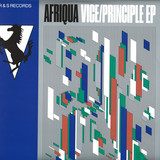
Following his R&S debut, Afriqua (aka Adam Longman Parker) presents Vice/Principle, his second release for the renowned Belgian label.
Recorded in the summer of 2017, Vice/Principle began as one of Afriqua's seasonal music packs, a quarterly offering of original tracks shared privately with a small cohort of friends and collaborators. R&S quickly picked up the collection, which expands on the melodicism and textural depth explored on his previous release for the label, Aleph.
The extended EP sees Parker veering into psychedelic territory, inspired by the cosmic departures of '70s krautrock and jazz. The title, Vice/Principle, more a coy bit of humor than a philosophical statement, reflects a wittiness that Parker often embeds into even the brawniest of his productions. This offbeatness is active in the music as well, which makes use of his voice, and edges past familiar four-on-the-floor patterns with interwoven polyrhythms and modality. Vice/Principle is confident in its curiosity, harnessing a wealth of artistic threads into a tightly knit, futuristic vision.
Parker currently resides in Berlin, Germany, where he works from his home studio in the city's quiet Charlottenburg neighborhood. Born and raised in Hampton, Virginia, Parker developed his craft as a producer while studying classical piano and practicing hip-hop turntablism from a young age.
After several years developing a hefty catalog of releases, Parker has embraced his R&S signing as an opportunity to dive deeper into his signature, yet versatile sound. His successful winter 2017 tour through the U.S. was a career first, and preceded international events at Comunité in Mexico, Concrete in Paris, and The Block in Tel Aviv.
Following on from the release of FBA21 Collected Works 1996 -2017, which was released November 2017 Matthew Puffett decided to wrap up the project, with a handpicked selection of artists to remix key tracks from the compilation. Amongst these figures are some significant influences on Puffett`s early years The set includes Kirk Degiorgio, whose reworking of 'Cross Dissolve' reimagines the track in full machine mode, serving up a slab of driving techno for the main room. A fan since the early 90s, Kirk and Matt have been in contact over the years, culminating to this powerful re-creation. Steven Rutter (B12) has also reworked 'Cross Dissolve', but in contrast to Degiorgio, Rutter's mix brings out an almost abstracted, ambient mood, a characteristically expressive and textured piece from one of the leading figures in UK electronica. Hardway Bros, Sean Johnston (Andy Weatherall's partner in 'A Love From Outer Space) tackles 'Mourning', a piece of melancholic euphoria. In typical Johnston style, Sean slows it all down, bringing it to a mid-tempo Balearic vibe. A big influence on Matthew in the 1990s, Lee Grainge used to work at the infamous Fat Cat records. A renowned arbiter of sounds, Grainge turned Matt onto countless records from Detroit and beyond, which was crucial in shaping FBA's sound. Here, he remixes 'Diagram', in a manner reminiscent of classic dub techno, Basic Channel. Another influence on FBA's sound is former Eevo Lute Muzique boss from Eindhoven, Stefan Robbers. FBA recorded a mini album for EevoNext in 2009, and the pair team up again here to reinvent 'Machines Can Help'.
Iberian Juke Is Extremely Proud To Present 'take Me Back To The South', Sophomore Album By Label Founders Bsn Posse And Our First Ever 12" Vinyl Release. After Their Debut Lp 'forever' For British Label Slime Recordings 2015, The Duo From Málaga Has Been On Quite A Strong Form With A Handful Of Powerful Releases Including Several Eps For Iberian Juke, Modern Ruin Records, Below Music And Breaking Bass, The B-sides, Bootlegs And Remixes Project 'summer Madness Series', And Incursions For Label Imprints Sequel One Records, Hyperboloid Records Or Vandal Records.
With This Album Bsn Posse Want To Reflect Their Love, Respect And Passion For The Footwork Culture In General And For The City Of Chicago In Particular, With Its Guetto Suburbs Being The Origin And Starting Point Of The Juke And Footwork Movement. 'take Me Back To The South' Combines Masterfully In Eight Tracks Elements Of Jungle, Drum & Bass, Soul And Funk With The Classic Juke And Footwork Take At 160bpms.
The Lp Is A Sincere 'thank You' From The Duo To All The Humble Artists That Work Extremely Hard To Put Footwork Into The International Electronic Music Scene. Thanks To This Culture We Have Travelled To Incredible Places And Meet New People With The Only Aim Of Sharing Our Passion For The 160bpms.
* After nearly 10 years, KFA returns to vinyl. As a label, KFA was widely loved for its ability to shift styles and genres, always hitting slightly off center, to produce such off kileter classics as the original 'Truffle Shuffle', a jungle anthem that gets a much deserved remix on this EP. New Signee Scartat brings the pain with monstrously heavy beats in 'Role Model', which KF Digital man of the moment Bucksta keeps it slightly mellower with 'Killer Sound', leaving Luna-C & Mr Arthur to bring the dancehall vibes with 'Judgement'.
Never one to be constrained by musical genres, multi-instrumentalist, composer and producer Adam Gibbons (aka Lack of Afro) has taken it up several notches with his sixth studio record 'Jack of All Trades', a multi-genre tour de force that combines soul, funk, hip-hop, disco, rock and everything in-between, all wrapped up in his signature chunky production to create arguably his finest work to date.
The album is blessed with some incredible vocal performances. Regular collaborator Elliott Cole, Nick Corbin (formally of New Street Adventure), ex I Am Giant vocalist Ed Martin, Wax & Herbal T, Alyssa Marie, Camila Recchio, Juliette Ashby & Emma Noble are all on scintillating form on an album that is crammed full of infectious hooks, top musicianship, and more importantly, vibe by the bucketload!
Classic soul ('Back To The Day', 'Reach Out'), hip-hop ('Back In Business', 'Take It Up A Notch'), disco ('Only You & Me'), rock ('Over & Out'), modern soul ('Baby Be Mine'), folk ('Home') and a healthy dose of funk ('The Messin' Around Intermission', 'Good Love'), all combine to create an album that is stuffed with gorgeous phonic gems of all varieties and represents a definite step up from anything he has done before.
Packed full of beautiful horns and lush strings (and all recorded onto tape through a 1970's mixing desk), 'Jack of All Trades' is Adam doing what he does best and then some - blending the old and new to come up with a crossover classic that's entirely his own, whilst all the while ensuring that the songwriting takes centre stage.
Lack of Afro continues to go from strength to strength. 2016's 'Hello Baby' picked up a BBC 6 Music 'Album Of The Year' nomination & appeared in the Top 10 of the iTunes R&B / Soul chart in 21 countries worldwide.
His music also continues to be in high demand across all aspects of film & TV by networks such as ABC, Fox, NBC, Sony Pictures & the BBC. More recently he has signed to licensing label A Remarkable Idea, an imprint of Universal Music alongside artists such as Maximo Park, Pulled Apart By Horses, Alt J & label boss Benson Taylor. A remix of his 2011 song 'P.A.R.T.Y' by French duo Ofenbach (released on Warner Music in March) is all set to be one of 2018's tracks of the year, whilst his debut album 'Press On' (2007) has just been given 'classic' status by Future Music Magazine.
'Jack of All Trades' is supported by a live band UK tour in May & also at various festivals throughout the summer.
Helsinki's We Jazz Records presents "Y-OTIS", the debut LP from Berlin-based Swedish saxophonist/composer Otis Sandsjö, joining forces with keyboardist Elias Stemeseder, bassist Petter Eldh and drummer Tilo Weber. The album is a forward-reaching, multilayered collection of eight originals penned by Sandsjö and produced by Sandsjö and Eldh. What you get is a form of "liquid jazz", born in an era where the understanding of jazz as a musical language has evolved way beyond the concept of the previous "modern". Informed by hiphop and electronic music, "Y-OTIS" is pure jazz in that the quartet stays true to its constant mission of creating a new form of musical communication. Sandjö's circular sax riffs, the album's rich production touch, and the chopped-up jazz form creates a musical concept which stays melodic and beat-laden while being "free" right to the edge of avantgarde. It's as if the music is sampling itself, constantly keeping ahead of the curve in the musical lineage of jazz.
Otis Sandsjö (b. 1987) hails from Gothenburg, Sweden. He is known previously for example for his inspired work on singer Lucia Cadotsch's globe-trotting trio formation "Speak Low", also featuring "Y-OTIS" co-producer and bassist Petter Eldh. Elias Stemeseder was dubbed one of the top 15 young European musicians to watch by All About Jazz in 2017. Tilo Weber ranks among the most creative young drummers in the scene. Stemeseder is currently based in New York, while the remaining three musicians here live in Berlin. Live on stage, the band performing the material on the new release is called Y-OTIS.
Way back in 1967, an animated superhero cartoon was released into the world. It was created by Grantray-Lawrence Animation and was based on a web-spinning, crime fighting blue and red dressed character that had originated in1962, in Marvel Comics by Stan Lee and Steve Ditko. This amazing series (that we're not allowed to mention the name of for legal reasons) ran on ABC TV in the USA, then Canada, then a few years later started to spread its web further, running here in the UK throughout summer holidays, after school and possibly early mornings at weekends in the late 1970s. The series then got released on VHS video (and probably Betamax too) in the mid 1980s and still continues to spin its animated magic around the world through further broadcasts, YouTube and DVDs.
The series was notoriously low budget, with animated errors everywhere and numerous scenes, sequences and backgrounds being re-used all the time, often across the same episode. Even a certain spider logo on a costume would appear with six legs, then eight legs later on, then back to six again in the same show.
Series One opened with a newly written spider theme, a classic, hooky song all about doing whatever spiders can, and had, as Big George (RIP) once pointed out to me, a set of session singers falling slightly out of time with the backing track after the first verse. Series One also featured background music by jobbing composers Bob Harris and Ray Ellis but these cues and master tapes are now believed to be lost.
After Series One the company Grantray-Lawrence went bankrupt, so the amazing spider series (that we're not allowed to mention for legal reasons) was taken on by producer Steve Krantz. He brought in new talent, including animation director Ralph Bakshi who later went on to turn a Robert Crumb strip cartoon into the feature Fritz The Cat. Krantz also slashed the already cripplingly small spider budget, and brought in the idea of using economic library music. Here, thanks possibly to an independent sync agent (it has been suggested that a company called Music Sound Track Services may have been the one) production turned to the KPM catalogue. This was one of the few really established library catalogues around at the time with a modern edge, it was full of fabulous, modern dramatic music tracks - often all on the same LP. But more importantly all the tracks were far longer than the one minute musical cuts that many of the fledgling USA library companies were issuing at the time. Not only would this KPM music be efficient, affordable and very easy to use, it would also mean syndication worldwide would not be held up by any future musical issues. Krantz produced two amazing spider series (that we're not allowed to mention for legal reasons), and both were smothered with KPM music. In fact barely a spider second goes by without music playing in either the background or foreground.
For many years I - and many nostalgic others - have been thinking about putting this vinyl album together. For many enthusiasts this really is formative music - a junior foray into hip swinging crime jazz and esoteric musical grooviness. I've also read on line accounts by DJs from WFMU on the trail of original spider master tapes, and there's even a whole forum dedicated to Spidey-Jazz'. Then recently I was looking at an old spider tracklist and realized that several of my favourite KPM cues were there including Syd Dale's Hell Raisers' and Walk And Talk', both from one of the most elusive and desirable KPM albums of all time (yes, you just try and find yourself a copy of KPM 1002 right now), so I decided to push on and get the album made.
So, what features on this Spider-Jazz Lp Well it's music from the amazing TV series we are not allowed to mention for legal reasons, BUT, not music from Series One. No, but it is all from Series Two and Series Three. From looking at archival cue sheets, over 50 tracks from various early KPM 1000 series albums were used across episodes. I've distilled this down into one exciting and enthralling LP, and if this works a further Spider Jazz album may well swing in to production. If you're interested (and I'm sure you may well be) cues here came from KPM1001, KPM1002, KPM1015, KPM1017, KPM1018 and KPM1043 and were composed by master library composers of the era - Dale, Hawkshaw, Hawksworth, Mansfield etc.
And if you are listening over there in the USA, you may well recognize many of the cues here not just from the amazing TV series (that we're not allowed to mention for legal reasons) but also from classic 1960s and 1970s NFL highlight shows that we are allowed to mention.
It's been over 10 years since the release of Gui Boratto's breakthrough full length debut 'Chromophobia'. As to what its title suggests, he shook up the techno game with a contrast of lushly coloured minimal grooves and melody, whilst many will recall that the album included the highlight single Beautiful Life' which became a dance floor anthem for that era. Four albums in and countless EPs and remixes under his belt, the Brazilian producer's unique savoir-faire in carving out a functional album out of diversely routed singles and features is back at it on his fifth studio LP, 'Pentagram'. Here Gui Boratto lays down a nuanced 12-track narrative that reinvigorates his signature sound into a refreshingly different perspective that feels all too familiar - including the return of Beautiful Life' vocalist (and Gui Boratto's wife) Luciana Villanova on the single "Overload".
Through his signature kaleidoscopic approach, Boratto delivers an album built as a far-reaching hub-and-spoke system, broadly inclusive as can be. From the opening cut, 'The Walker' - hot on the trail of Tears For Fears 'Elemental' (one of Boratto's "favourite 80's bands") - to the hi-NRG euphoria of 'Forgotten' and its pounding tech alter ego 'Forgive Me'. "I was going into 2 different directions", Boratto says, "the typical indie- electronic-rock' Boratto kind of production like It's Majik' or Like You' and a much more techno approach." He goes on, "I decided to split them into two twin sister songs. When I play live I always put these two songs together."
The Brazilian Producer further embraces the pop-friendly essence of his past work on tracks like 'The Phoenix', featuring vocalist Nathan Berger, and 'Overload', both melding acidulous synthlines with laser-precise breaks, vox hooks and drops calibrated for extended radio and club use, although sieved through his distinctive rainbow-hued musical prism. For the symbolists out there, the album's pared-down closer '618' duration accidentally happens to equate the proportions of the said pentagram. "Coincidence" Boratto questions, and capsulises, "not so ufanista and supporter of Brazilian neo-concretism, but I guess the brazilian sculptor Lygia Clark also inspired me a lot. Not the meaning of her sculptures, but the shape of the hinge of most of her work. I've wanted to transmit the scientific pentagram's point of view. It's not a religious kind of thing."
Whereas 'Spur' (a field-tested 808 and 909-heavy "purist track", "very, very old school" Boratto insists) and 'Alcazar' are sheer smooth-edged four-to- the-floor epics, the album also shares its lot of startling moments, such as with the John Barry'esque 'Scene 2' (with a hint of Amon Tobin, 'Easy Muffin' style, throw in) and its refined string-laden buildup, 100% fitted for a 007 opening credit sequence, or with 'Hallucination' (feat B.T.) and the further James Holden-ish title-track 'Pentagram' (think 'The Idiots Are Winning'), "one of those exercises I did when I got my Buchla modular synth" Boratto analyses, "I think I've used more then 30 different snares, with different delays and reverbs. The whole song is alive". And so is 'Pentagram' in its entirety: alive and definitely just as manifold and hopeful as its architectonics are the stuff of science and dreams all at once.
Es ist zehn Jahre her seit der Veröffentlichung von Gui Borattos bahnbrechendem Debütalbum - Chromophobia . So wie der Titel vermuten ließ, war das Album mit seinen kontrastreichen Minimalgrooves und den üppig gefärbten Melodien ein Schocker im besten Sinne. Ihr erinnert euch sicher noch an die Hit-Single - Beautiful Life , eine Dancefloor-Hymne aus dieser Zeit. Nach vier Alben und unzähligen EPs und Remixen ist das einmalige Savoir-faire des brasilianischen Produzenten, aus vielfältigen Singles und Features stimmige Alben zu schaffen, auch auf seinem fünften Studioalbum - Pentagram zu hören. Hier legt Gui Boratto ein Zwölf-Track-Narrativ vor, das seine Handschrift auf erquickende Weise wiederbelebt. Wiederbelebt wird auch die Stimme von - Beautiful Life (die der Frau Gui Borattos gehört) auf dem Stück - Overload .
Durch seinen charakteristisch kaleidoskopischen Ansatz liefert Boratto ein Album, das gebaut ist wie die Speichen deines Fahrrads, von dem Opener - The Walker - direkt auf der Spur von Tears For Fears - Elemental (einer von Borattos - favourite 80's bands ) - zur Hi-NRG-Euphorie von - Forgotten und seinem stampfenden Counterpart - Forgive Me . - Ich bin in zwei unterschiedlichen Richtungen gegangen , sagt Boratto: - den typischen ,Indie-Electronic-Rock'-Weg wie in - It's Majik oder - Like You und den Techno-Weg. Er fügt hinzu: - Ich hab mich entschieden jedem Track seinen Zwillings-Track an die Seite zu stellen. Immer wenn ich live spiele lege ich die zwei Stücke zusammen.
Der brasilianische Produzent erschließt weiter die Pop-Essenz seiner vergangenen Arbeit auf Tracks wie - The Phoenix (feat. Nathan Berger) und - Overload . Beide kombinieren zwitschernde Synthi-Melodien mit lasergenauen Breaks, Hooklines, Drops und sind wie gemacht für die Rotation und den Club. Und für die Symbolisten da draußen: die Länge des reduzierten Closers - 618 beträgt zufälliger Weise genau die Proportionen des besagten Pentagramms. - Fügung , fragt Boratto und fasst zusammen: - Ich bin kein Anhänger des brasilianische Neo-Konkretismus , aber ich glaube die brasilianische Künstlerin Lygia Clark hat mich sehr inspiriert. Nicht die Bedeutung ihre Skulpturen aber die Form der meisten ihrer Arbeiten. Ich wollte den wissenschaftlichen Blickwinkel auf das Pentagramm übersetzen. Nicht im religiösen Sinne oder so."
Während - Spur (ein erprobter - purist track auf der Basis von 808 und 909, - sehr, sehr old school , wie Boratto betont) und - Alcazar glatte Vierviertel-Epen sind, hält das Album auch Überraschungsmomente bereit. Z.B. das John Barryschen - Scene 2 (auch eine Spur von Amon Tobins - Easy Muffin ist darin zu hören) und seinem Streicher-Aufbau, der hundertprozentig geeignet wär für eine Eröffnungssequenz in einem Bond-Film. Auch - Hallucination (feat. B.T.) oder der James-Holden-hafte Titeltrack - Pentagram (wir denken da an - The Idiots Are Winning ) wäre da zu nennen. - Einer dieser Übungen, die ich gemacht habe, als ich meinen Buchla-Modular-Synthesizer bekommen habe, war , erinnert sich Boratto, - mehr als 30 verschiedene Snares, Delays und Reverbs zu verwenden. Der ganze Song sollte am Leben sein. Und so ist - Pentagram im Ganzen: lebendig und sicher genau so vielfältig wie sein Bauplan, der auch der Wissenschaft und den Träumen zugrundeliegt.
out of Stock
Last delivered 3 years ago available to reorder, subject to availability
Only one month after the release of their first ep on MT on May 2018, Vactrol Park continue surprising, this time with a full LP in the shape of 'Music from the Luminous Void'.The album sees VP delve much deeper into more atmospheric realms. Using modular synths and unexpected drum machine sequencing they leave the 4X4 beats behind in favor of off-world rhythms and ever growing bass. Starting with Drops's high frequency tension, laying on top of those heavy kick drums it keeps on growing and growing. From there it moves to the 'End of the party' groove that is Novikov's Notation, and its trippy monotonic rhythm. The A-side ends with the heavy sampled ambient track Macbeth, bringing forward that mesmerizing flute solo by Italian artist Luca Spagnoletti yet succeeding in avoiding the kitsch, and with a touch of class. The B-side delves even deeper into ambience and atmospheric muzak. Starting with Bells, that features again Spagnoletti on flute. Then we get into the real gems of the album - Anstruther and Glove. The first is a pure trip into modular psychedelia and repetitive jazzy-like drum rhythms, creating tension right from the start and plays with it throughout the track before decaying slowly into Glove, which is in sense both the catharsis and the decompression session of the album. Like a 2018 version of Vangelis, this track's soundscape will keep you dreaming with your eyes closed long after the album ends.
"30+ minutes of life affirming ambient and drone coming from Zen Zsigo, otherwise known for his work under the Cremation Lily alias and as one of the spearheads of the current UK tape scene, where he has been mixing things up for 7 years via his Strange Rules label.
Winter Orbit was inspired by science fiction and it's relation to modern life, recorded in 2015 using a mix of both modern and archaic equipment it was later released on Belgian tape label Audio. Visuals. Atmosphere. on an initial run of 33 tapes.
Winter Orbit is now newly presented via an expanded re-issue, chronicling the original material, re-issued on one side (Fragments in Hologram Snow) while showcasing new material (For Artifice Rose) which was created in response to the initial release by Zsigo in 2017.
As usual, remastered and cut @ Dubplates and Mastering, Berlin and pressed at Record Industry, Holland to ensure optimum listening quality."
Shunter, the new album by the Berlin-based duo Driftmachine, is their most ambitious work to date. Although instantly recognizable, featuring their trademark Kosmische and Avant-garde sounds, it also presents a new journey into abstract and hallucinatory worlds. Filled with eerie textures, their electronic visions are darker and more vaporous than ever.
Driftmachine's fourth album (also the fourth one for Umor Rex) offers a new perspective on their ample sound spectrum and systemic narratives. Shunter overlaps and mutates their post-industrial-dub motives. It was conceived and produced in search of a very different kind of imagery, with sections of noise and field recordings intersecting with analogue sounds, a mixture of contrasted fragments, where the usual creative process of modular-synthesis leads Gerth and Zimmer to the discovery of a dark, hazy and diffused experience. There is a protean quality to the rhythmic elements, with tempos constantly contracting and expanding, a departure from the mono-beat-rhythms of "Nocturnes" and "Colliding Contours". The first half of Shunter is made of four pieces named "Shift", although individually separated, they are conceptually linked and can be understood as a sort of score. Imagine a late stage of the industrial revolution, with the interaction between heavy machinery and human beings. The second half of the album is not completely separated, but it has three other substantial melodic moments. Somewhere between the hauntological and the realms of archive-music, a huge range of subterranean beats and distinct patterns dotting the landscape of early electronic and post dub music.
All songs written & produced by Driftmachine (Andreas Gerth & Florian Zimmer), Berlin.
Mastered by Rafael Anton Irisarri. Design by Daniel Castrejón.
Electronic music label Sheik 'N' Beik announces its new release SNBV013, an EP called Daisy Cutter by JEM. This EP is the third release in their series aimed at celebrating the diversity and history of New York and its boroughs. As Sheik 'N' Beik's hometown and source of constant inspiration, the label focuses on spotlighting and paying homage to the five boroughs of New York including Manhattan, Queens, Brooklyn, Staten Island
and The Bronx. Each borough's flag is given a modern and colorful twist via the cover art and design of
each outer jacket. The first release in the series, Manhattan, featured local NYC hero and co-founder of
Voodoo Down Records N'conduit, and the second, Kathisma resident Mr. Dello's Vaadhoo EP. The new EP from JEM, dedicated to The Bronx, opens up with title track Daisy Cutter, which directly sets the tone of the release with a straightforward, dynamic techno, elevated by an eerie, dark atmosphere. It
goes on with Neb, a downtempo second track with a lighter tone that progressively gets back to the initial
mysterious mood and capriciously brightens it with warmer back-and-forth sounds. Next on the 12' is
Semiotic, a third track structured by a clever balance of deconstructed rhythms and sparse acid and synth
melodies in the continuity of the lighter, warmer mood previously built up. The EP ends with Temple, with
a more aggressive accent animated by several lighter melodic layers and a stifled background bass.
Music and Poetry of the Kesh is the documentation of an invented Pacific Coast peoples from a far distant time, and the soundtrack of famed science fiction author, Ursula K. Le Guin's Always Coming Home In the novel, the story of Stone Telling, a young woman of the Kesh, is woven within a larger anthropological folklore and fantasy. The ways of the Kesh were originally presented in 1985 as a five hundred plus page book accompanied with illustrations of instruments and tools, maps, a glossary of terms, recipes, poems, an alphabet (Le Guin's conlang, so she could write non-English lyrics), and with early editions, a cassette of field recordings' and indigenous song. Le Guin wanted to hear the people she'd imagined, she embarked on an elaborate process with her friend Todd Barton to invoke their spirit and tradition.
For Music and Poetry of the Kesh, the words and lyrics are attributed to Le Guin as composed by Barton, an Oregon-based musician, composer and Buchla synthesist (the two worked together previously on public radio projects). But the cassette notes credit the sounds and voices to the world of the Kesh, making origins ambiguous. For instance, The River Song' description reads, The prominent rhythm instrument is the doubure binga, a set of nine brass bowls struck with cloth-covered wooden mallets, here played by Ready.' According to writer and long-time friend of LeGuin, Moe Bowstern (who pens the liners for the Freedom To Spend edition of Kesh), Barton built and then taught himself to play several instruments of Le Guin's design, among them the seven-foot horn known to the Kesh as the Houmbúta and the Wéosai Medoud Teyahi bone flute.' Barton's crafting of original instruments lends an other-worldly texture to the recordings of the Kesh, not unlike fellow builders Bobby Brown and Lonnie Holley. Bowstern notes, Other musician / makers have crafted their own Kesh instruments after encountering the earlier cassette recordings that accompanied some editions of the book.' Both Barton and Le Guin are sensitive to the sovereignty of indigenous Californians and were careful not to trample the traditions of the Tolowa people who lived in the valley long before the Kesh. You research deeply, and then you bring your own voice to the table,' said Barton. Within the Kesh culture, the numbers four and five shape the lives, society and rituals. Barton composed loosely around these numbers, patiently listening to the land of Napa Valley for signs and audio signals from the natural elements. Todd incorporated ambient sounds of the creek by Le Guin's house and a campfire they built together. The songs of Kesh are joyful, soothing and meditative, while the instrumental works drift far past the imaginary lands. Heron Dance' is an uplifting first track, featuring a Wéosai Medoud Teyahi (made from a deer or lamb thigh bone with a cattail reed) and the great Houmbúta (used for theatre and ceremony). A Music of the Eighth House' sends gossamer waves of the faintest sounds to float on the wind.' Like the languages invented in the vocal work of Anna Homler, Meredith Monk, and Elizabeth Fraser, the Kesh songs and poems play with the shape of voice.
The Music and Poetry of the Kesh cassette was meant to accompany and enhance the experience of reading Always Coming Home. Presented in this edition as a long-playing album, where only traces of the book linger (the jacket offers some of Le Guin's illustration, and a letterpressed bookmark featuring the the narrative modes of western civilization and the Kesh valley is included), the music alone breaking the silence of what might be. It can transport—offering a landscape for imagining a future homecoming. One in which we are balanced, peaceful, and tend to the earth and its creatures. A line from the Sun Dance poem reminds us, We are nothing much without one another.' Freedom To Spend gives new life to the recordings of the Kesh people in the first ever vinyl edition of Music and Poetry of the Kesh, out on LP, and digital formats on March 23, 2018. The LP will include a deluxe spot printed jacket with illustrations from Always Coming Home, a facsimile of the original lyric sheet, liner notes by Moe Bowstern, multi-format digital download code and a limited edition bookmark letter pressed by Stumptown Printers in Portland, OR.
This past Monday, January 22, Ursula passed from this realm to another leaving a life spent building and exploring other worlds while challenging social concepts of the real word she inhabited.
Freedom To Spend had been working under Ursula's enthusiastic endorsement and with Todd Barton, her musical collaborator on Kesh, to give the music that accompanied her 1985 epoch a new life. With the Le Guin family's encouragement to move forward with our planned release, we are humbled to play this small role in sharing Ursula's work.
As Pete Swanson, one third of Freedom To Spend, stated, Ursula's legacy is her work which transformed the world, and this is another piece of the universe that her imagination birthed becoming real.' Listen to A Teaching Poem / Heron Dance' below.
Fresh on Francis Harris' Kingdoms imprint comes Rasmus Juncker's 'Ophold' - six tracks of sublime atmospheres and textures. The Danish musician, sound composer and DJ fits perfectly with the label's aesthetic, joining the dots between ambient, leftfield electronica and modern classical.
Juncker has a background in studying jazz drumming and has been playing improvised music within the jazz domain for many years. He also started to DJ at the age of 14 and was introduced to the world of electronic music production at the same time.
When Rasmus started to think about his debut album he spent several months trying to find his own way to combine his favourite musical influences, improvisation, electronics and classical music. 'Almost a year later', Juncker says, "I went to a sensory deprivation floating tank in Copenhagen while researching for another performance and while I was lying there, floating in the water, deprived from most of my senses, I got the idea to do something drastic in my musical process. Philosophers like Immanuel Kant describe this deprived state as a mental 'Cesura', which became some sort of guideline for the album."
So Juncker decided to start working on the album by leaving the process as well as the final result completely open. 'I wanted to create sounds and music that I had no idea what they would sound like, but would feel like a mental 'Cesura', an 'Ophold' (in Danish)' he states.
He invited musicians, one after the other, to his studio. "I had an electronic musician to improvise patterns and new interesting sounds based on my experience in the deprivation tank. I chose some of the takes and some weeks later I invited a jazz guitarist to listen and improvise on top of what he heard. Then a classical string quartet and a double bass player came to my studio months later, and finally I recorded myself on percussion and drums.
Throughout the recording process I've been experimenting with special microphones in various setups, used noises from the recordings and the room became absolutely essential for the pieces." Juncker states.
"The material I used was all first take improvision which I arranged, layered and edited into compositions. The final pieces were mixed by Andreas Pallisgaard with the same improvised and experimental approach of the recording and the production. None of the musician met each other, but their sounds developed into something completely fantastic I think. The presence of the acoustic instruments and the depth and complexity of the synthesized layers gave some kind of an indescribable sounding music from another galaxy.
Track by track:
'Norddrum' starts proceedings - ethereal, grainy sounds merge and disassociate, as a distant rhythm gradually finds its way to the fore.
The second track, 'Sora' , clocking in at under 2 minutes, is an interlude full of strings, pads, and percussive hits, rich in feeling. This strong sense of sound design and seemingly disparate sounds woven together into a whole carries through into 'Eksotisk Tirsdag' - the strings, plucked instruments and electronics harking back to 4th world adventurers like Jon Hassel and Brian Eno.
'Cyklus' dives into drone textures, pulsing and modulating to create an unearthly soundtrack.
'Havekunst' is another 2 minutes interlude, this time bringing a fully charged rhythmic barrage to the front.
'Cesura', the final track is in essence the EP's centerpiece - a sprawling 8 minute journey that traverses tense, fibrous sections and on into pulsing modular passages, before opening up into glorious moments of wonder and brightness. It's a hugely bold yet fragile endeavour, in line with the whole release.
The War On Drugs announce their fourth full-length album, A Deeper Understanding, out August 25th on Atlantic Records. A Deeper Understanding is the band's first album since 2014's universally acclaimed Lost In The Dream, and their debut album with Atlantic. Following the Record Store Day release of the 11-minute Thinking of a Place,' The War On Drugs present the album's lead single, Holding On.'
For much of the three and a half year period since the release of Lost In The Dream, The War On Drugs' frontman, Adam Granduciel, led the charge for his Philadelphia-based sextet as he holed up in studios in New York and Los Angeles to write, record, edit, and tinker—but, above all, to busy himself in work. Teaming up with engineer Shawn Everett (Alabama Shakes, Weezer), Granduciel challenged the notion of what it means to create a fully realized piece of music in today's modern landscape. Calling on his bandmates - bassist Dave Hartley, keyboarding Robbie Bennett, drummer Charlie Hall and multi-instrumentalists Anthony LaMarca and Jon Natchez -- continuously throughout the process, the result is a band record' in the noblest sense, featuring collaboration, coordination, and confidence at every turn. Through those years of relocation, the revisiting and reexamining of endless hours of recordings, unbridled exploration and exuberance, Granduciel's gritty love of his craft succeeded in pushing the band to great heights.
A man of many alias, the multi-faceted talent behind Juxta Position finally finds his way to Figure, leaving us an EP's worth of highly infectious, acid-festered analogue techno runs. Feeding on the raw and dynamic energy of live hardware production, these jams hit the sweet spot where constant modulation and spontaneous changes transform a bunch of loops into something much more than the sum of its parts. Whether it's a bouncy ride around the rings of Saturn with Elixir, the frantic sledge hammer-assault of Stepping, cascading down into the machine's bowels on Automated Reproduction, or the non-stop, all-out overdrive that is Pestered - every track on this record takes on a whole life of its own, making for some seriously potent DJ-weapons!
Prairie is the project of multi-instrumentalist and producer Marc Jacobs, hailing from Brussels with roots in The Netherlands. He previously released an EP (I'm so in love I almost forgot I survived a Disaster - 2013) and an LP (Like a Pack of Hounds - 2015) on the Berlin imprint Shitkatapult. On stage, Prairie plays with two or three musicians and together they re-create a free association of musical ideas and atmospheres. Prairie has played in selected venues and festivals across Europe and toured with Apparat in 2016.If the apocalypse was painted in several layers of pastel gouache, its soundtrack might be PRAIRIE's Flash Flood. Listening to the album, we drift through a series of frozen landscapes that gesture at a post-apocalyptic ambience. This is a kind of blackened music that has been left to sediment, excavated from traces in ice core samples. Flash Flood showcases a deep sensitivity to narrative and rich cinematic textures as Marc Jacobs returns with palimpsestic sonic layers. It has been three years since PRAIRIE's last release—the 2015 Cormac McCarthy-inspired Like a Pack of Hounds—and it is clear that it has been several years of pensive reflection. Now, PRAIRIE takes the sentiment of his 2012 debut, I'm So In Love I Almost Forgot I Survived A Disaster, several steps further: it is after the apocalypse, and no one has survived. And yet with Flash Flood, we can hear the hum of this impossible future.
'After the Flash Flood' introduces the sonic ruins of distorted guitars, field recordings, drum programming and synths that create the textures of the entire album. The melancholic and subdued black metal churn of 'Raindeath' becomes the cold backdrop for unnerving, paranoiac speech. The third track, 'Sisters', foregrounds this coldness while slowly moving away toward alternate vistas where the acoustic timbres of the saz-driven 'A Permanent War Economy' take over. 'Underwater Body Hunting' and 'Rabid Ibrahim' are hard hitting beat-oriented tracks that insist on burning slow. There is a patience with PRAIRIE's FLASH FLOOD that is difficult to deny. The lamentation of 'Elephants Will Rise Again' perhaps signals that it is not only the human that is lost after catastrophe. The album closes with 'Hard Water: Cracked Ice' and 'Hayashi Clock'. The former is a beautiful coalescence of clean harmonious tones and softly overdriven drums, while the latter brings us back to a meditative state, drifting through the final pastel tapestry.
"... his cosmos is located somewhere between Bohren & der Club of Gore and Sunn O))), ambient is as familiar to him as brachial sounds, and he is as much acquainted with guitars as with synths and modern technology" (GROOVE)
"... Like Ben Frost, (Prairie) exudes a certain harshness while tempering his work with moments of sublime beauty. This isn't club material, it's music for the hammer in one's hand, the confrontation of the demon, the soul-shattering revelation." (A Closer Listen)
A great compilation can open the gate to another world. Who knew that some of the most exciting Afro-funk records of all time were actually made in the small West African country of Benin Once Analog Africa released the first African Scream Contest in 2008, the proof was there for all to hear, gut-busting yelps, lethally well- drilled horn sections and irresistibly insistent rhythms added up to a record that took you into its own space with the same electrifying sureness as any favourite blues or soul or funk or punk sampler you might care to mention.
Ten years on, intrepid crate-digger Samy Ben Redjeb unveils a new treasure- trove of Vodoun-inspired Afrobeat heavy funk crossover greatness. Right from the laceratingly raw guitar fanfare which kicks o Les Sympathics' pile-driving opener, it's clear that African Scream Contest II is going to be every bit as joyous a voyage of discovery as its predecessor. And just as you're trying to get o the canvas after this one-punch knock out, an irresistible Afro-ska romp with a more than subliminal echo of the Batman theme puts you right back there. Ignace De Souza and the Melody Aces' Asaw Fofor" would've been a killer instrumental but once you've factored in the improbably-rich-to-the-point-of-being-Nat-King-Cole-influenced lead vocal, it's a total revelation.
The screaming does not stop there, in fact it's only just beginning. But the
strange thing about African Scream Contest II's celebration of unfettered Beninese creativity is that it would not have been possible without the assistance of a musician who had been trained by the Russian secret services to "search and destroy" enemies of the country's (then) Marxist-Leninist president Mathieu Kerekou.
Already familiar to fans of the first African Scream Contest as a mainstay of ruthlessly disciplined military band Les Volcans de la Capitale, Lokonon André vanished in a cloud of dust at Ben Redjeb's behest with a list of names and some petrol money, only to return a few days later having miraculously tracked down every single name he'd been given. The source of this Afrobeat bounty-hunter's impressive people-finding skills - his training with the KGB - highlights the tension between encroaching authoritarian politics and fearless expressions of personal creative freedom which is the back-story of so much great African music of the 60s and 70s. Happily, in this instance, Lokonon was tracking the artists down to oer them licensing deals, rather than to arrest them.
Where some purveyors of vintage African sounds seem to be strip-mining the
continent's musical heritage with no less rapacious intent than the mining companies and colonial authorities who previously extracted its mineral wealth, Samy Ben Redjeb's determination to track this amazing music to its human sources pays huge karmic dividends.
Like every other Analog Africa release, African Scream Contest II is illuminated by meticulously researched text and eortlessly fashion-forward photography supplied by the artists themselves. Looming large - alongside Lokonon André - in the cast of biopic-worthy characters to emerge from this seductive tropical miasma is visionary space-nerd Bernard Dohounso, who laid the foundations for Benin's vinyl predominance by importing and assembling the turntables that would play the products of his Bond villain-acronymed pressing plant SATEL, a factory that would revolutionise the music industry in the whole region.
The scene documented here couldn't have been born anywhere else but in the Benin Republic , and the prime reason for that is Vodoun. It's one of the world's most complex religions, involving the worship of some 250 divinities, where each divinity has its own specific set of rhythms, and the bands introduced on the African Scream Contest series and other compilations from that country were no less diverse than that army of dierent Gods. At once restless pioneers and masters of the art of modernising their own folklore, the mystic sound of Vodoun was their prime source of inspiration.
One especially irascible Vodoun-adept was Antoine Dougbe, who styled himself The devil's prime minister' while turning ancestral rhythms into satanically alluring modern beats. As Orchestre Poly-Rythmo songwriter Pynasco has observed sagely, Evil is not elsewhere, evil extends into the house'. And African Scream Contest II is a gloriously cinematic road-trip through an undiscovered realm of music lore whose familiarity is every bit as thrilling as its otherness.
South African Mbaqanga And Bubblegum Instrumentals For The Dance-floor. First Time Available Outside South Africa. Cult Favorite Among Collectors. Follows The Successful Reissue Of bafana Bafana' Last Year. Professor Rhythm's 1991 Recording Professor 3 Is A Vivid Reflection Of Urban South Africa As Apartheid Was Ending. Thami Mdluli's Production Project Had Young And Old Dancing To A Sound That Sought To Unite Blacks Within Southern Africa. our Music Gave Hope To The Hopeless,' He Says. Mdluli's Third Instrumental Album (which Contains Some Background Vocals, To Be Exact), Portrays The Moment When The Dominant Mbaqanga And American R&b-based Bubblegum Sounds Being Produced In Johannesburg And Other Urban Centers Were Transforming Into House And Hip-hop-inspired Kwaito. The Pop Of The 80's And All That Went With It—from The Models Of Synths And Drum Machines To The Lyrical Style—gave Way To A Changing Melodic Emphasis And New, Much Slower Tempi Using A Completely Different Rhythmic Skeleton. Upbeat, Chipper Bubblegum, Often With Double-time Breakdowns And Upstroke Syncopations, Faded And The Sounds Began To More Closely Resemble Those Of Contemporary Black America—where Hip-hop Was Slowing Down And The Bass-lines And Melodies Were Getting Moodier, Darker In General. At The Same Time House Music Had Briefly Reached Mainstream Acceptance In The States And That Popularity Continued To Feed Into Awareness Overseas. These Two Influences Blended With The Burgeoning House Music Scenes In Johannesburg And Pretoria As Professor Rhythm 3 Was Being Produced In March 1991 (the Same Year Apartheid Ended). Mdluli Explains, we Were Influenced By Foreign Bands And So People Updated Their Sound.' According To Mdluli, The Evolving Sound Was Bolstered By Widening Availability Of House And Rap Records From Abroad While, Most Importantly, An Increasing Sense That Apartheid Might Soon Be Finished Was Met With A New Positivity Vibe Society. 1991, '92, '93... Mandela Was Released. People Were Upbeat, They Were Happy, The Music Was Good.' Professor 3 Came Out On Vinyl As The Lp Business Was Dying In South Africa And Sold Around 20,000 Copies. It Was Mainly Distributed On Tape, Which Sold Closer To 100,000. With The Help Of Engineer Fab Rosso, The Recording Features Backing Vocalists From Mango Groove. After Making A Half-dozen Records As Professor Rhythm, Mdluli Once Again Shifted His Focus Musically. By The Mid-90's He Had Veered Off Gospel Music— And Left Playing In Bands And Started Making His Own Solo Recordings. His Enormous Success In The Gospel Realm In The Years Since Is A Remarkable Story In Its Own Right, But For Now We Are Only Dancing.