Mikael Åkerfeldt, mastermind of Swedish band Opeth, has recorded the original score for the new Netflix series Clark, directed by renowned film-maker Jonas Åkerlund. Clark is the incredible story behind Sweden’s most notorious gangster Clark Olofsson, whose infamous crimes gave rise to the term “Stockholm syndrome.” The score for this 6-part series will be released as a Standard CD Jewelcase & Gatefold 180g 2LP vinyl via InsideOutMusic/Milan Records.
Available on vinyl for the first time in 10 years, with new cover design by Tim Rutilli Califone's earliest roots lie in the band Red Red Meat, from whence came Califone's founding members Tim Rutili and Ben Massarella and its longtime producer Brian Deck. The band's first release was a self-titled EP on Flydaddy in 1998, followed later by the full-length debut, Roomsound, in 2001 (later reissued on Thrill Jockey) and eventually the band's Thrill Jockey debut, Quicksand/ Cradlesnakes in 2003. After touring for the release of Roomsound, Califone had little time off to take in the impact of the music they were creating. In three years, they recorded four albums (two instrumental, two song-based including Heron King Blues) and toured heavily in between with Wilco, Modest Mouse, The Sea and Cake and others. After the tour for Heron King Blues in 2004, Califone finally took a breath and came back together in late 2005 to begin recordings. They worked on it in chunks at 4Deuces Studio in Chicago with Brian Deck, in Long Beach and Phoenix with Michael Krassner, and at home in Los Angeles and Chicago until May 2006. The time away and each member's individual work naturally brought new elements into the sound of Califone's music. Both Rutili's and Becker's soundtrack work are more atmospheric, however the challenge of enhancing a scene of film without cluttering it or overwhelming it informed their approach to the new recording. Similarly, the burglary of Califone's equipment during the band's last tour (including guitars, banjo, a 1917 violin, bells and more) altered the sound as they had to find new gear on a tight budget. The instruments are new partners, new sounds that forced them to stretch in new directions. Limitations, obstructions and darkness, and the new possibilities they illuminate; roots and crowns. "In that way", says Rutili, "this album is a conscious and resolved thing. It fully realizes ideas we touched on in the past and where we come from as a band, and takes us into our next phase of life."
Available on vinyl for the first time in 10 years, with new cover design by Tim Rutilli Califone's earliest roots lie in the band Red Red Meat, from whence came Califone's founding members Tim Rutili and Ben Massarella and its longtime producer Brian Deck. The band's first release was a self-titled EP on Flydaddy in 1998, followed later by the full-length debut, Roomsound, in 2001 (later reissued on Thrill Jockey) and eventually the band's Thrill Jockey debut, Quicksand/ Cradlesnakes in 2003. After touring for the release of Roomsound, Califone had little time off to take in the impact of the music they were creating. In three years, they recorded four albums (two instrumental, two song-based including Heron King Blues) and toured heavily in between with Wilco, Modest Mouse, The Sea and Cake and others. After the tour for Heron King Blues in 2004, Califone finally took a breath and came back together in late 2005 to begin recordings. They worked on it in chunks at 4Deuces Studio in Chicago with Brian Deck, in Long Beach and Phoenix with Michael Krassner, and at home in Los Angeles and Chicago until May 2006. The time away and each member's individual work naturally brought new elements into the sound of Califone's music. Both Rutili's and Becker's soundtrack work are more atmospheric, however the challenge of enhancing a scene of film without cluttering it or overwhelming it informed their approach to the new recording. Similarly, the burglary of Califone's equipment during the band's last tour (including guitars, banjo, a 1917 violin, bells and more) altered the sound as they had to find new gear on a tight budget. The instruments are new partners, new sounds that forced them to stretch in new directions. Limitations, obstructions and darkness, and the new possibilities they illuminate; roots and crowns. "In that way", says Rutili, "this album is a conscious and resolved thing. It fully realizes ideas we touched on in the past and where we come from as a band, and takes us into our next phase of life."
Sol Set is a Detroit-based collective, an amalgamation of composers, musicians, artists and vocalists brought together by producer John Beltran, whose new label All Good Music chooses its debut album for its inaugural release. John Beltran and Shane Donnelly preside over seven sumptuous and confident slices of modern, sub-kissed soul and Latin sure to put a smile on anyone's face, even those of us faced with an altogether more British summer. Influences range from the Steve Wonder-style double vocals of 'Bliss Mode' to the South American 'Rhythm of the Sun', which echoes the beach bum haziness of Jorge Ben, but the vibe remains joyful and skillfully yet effortlessly executed throughout. Gorgeous.
out of Stock
Last delivered 3 years ago available to reorder, subject to availability
Amid massive global paradigm shifts Dave Hartley (aka Nightlands) became a father twice over and left his native Philadelphia for Asheville, where the pace of daily life is slower and it's easier to maintain a zoomed-out perspective on modern life. From the newfound refuge of a studio he built using the bones of a barn attached to his hundred-something-year-old house in the mountains, Hartley has tailored a collection of well-crafted pop rock, pointedly titled Moonshine. Guided by some of the harmonic sensibilities that have helped make The War on Drugs a force in modern music, Moonshine combines immaculate-yet-dense vocal stacks and billowy clouds of effected keyboards with classic songcraft, revealing previously unseen acreage in the unfurling dreamscape that is Nightlands. The surrealistic album art by Austin-based illustrator Jaime Zuverza depicts an archway opening to the stars over the surface of an idyllic sea flanked by both moon and sun. Similarly, Moonshine reveals portals within portals leading to ever deeper places in Hartley's vocal-centered labyrinth…
Nightlands is the solo project of The War on Drugs’ bassist and multi-instrumentalist Dave Hartley. Amid massive global paradigm shifts Dave Hartley (aka Nightlands) became a father twice over and left his native Philadelphia for Asheville, where the pace of daily life is slower and it's easier to maintain a zoomed-out perspective on modern life. From the newfound refuge of a studio he built using the bones of a barn attached to his hundred-something-year-old house in the mountains, Hartley has tailored a collection of well-crafted pop rock, pointedly titled Moonshine. Guided by some of the harmonic sensibilities that have helped make The War on Drugs a force in modern music, Moonshine combines immaculate-yet-dense vocal stacks and billowy clouds of effected keyboards with classic songcraft, revealing previously unseen acreage in the unfurling dreamscape that is Nightlands. The surrealistic album art by Austin-based illustrator Jaime Zuverza depicts an archway opening to the stars over the surface of an idyllic sea flanked by both moon and sun. Similarly, Moonshine reveals portals within portals leading to ever deeper places in Hartley's vocal-centered labyrinth. Throughout the album, there are plenty of buoyant high moods where the pitter-patter of drum machine and humming digital organ hints at Hartley's low-key tropicalia streak, but the lyrics anchor the dreaminess in real-world sorrow and resignation. Nowhere are these sentiments more apparent than on the title track, a nearly acapella recitation of "America the Beautiful" that poignantly hovers over a mirage of soft keyboards before dovetailing into Hartley's own words about the hypocrisy of the American dream. "This was never intended to be an overtly political record" he admits. "I have so many friends who are able to process the frustration of current events gracefully or with wisdom or in a nuanced way, but I often find myself just consumed with anger about it all. I decided to just let that come out, and it manifested itself lyrically." Moonshine's wide-eyed, utopian instrumental backdrops provide sharp contrast to Hartley's lyrics, which sting even harder within the sweetness. Even in light of the album's vocal emphasis, Hartley's history as a bassist brilliantly beams through Moonshine, giving effortless and sprightly movement to songs like "Down Here," which also features an extended section of saxophone lent by his Western Vinyl labelmate, Joseph Shabason. In addition to Shabason, the album hosts a short list of remote collaborators including four of Hartley's bandmates from The War on Drugs, Robbie Bennet, Anthony Lamarca, Eliza Hardy Jones, and Charlie Hall, as well as exotica virtuoso Frank Locrasto (Cass McCombs, Fruit Bats), and producer Adam McDaniel (Avey Tare, Angel Olsen). Hartley was forced to keep the guest list small out of the necessity of pandemic isolation, coupled with his move to a smaller city, all of which challenged him to do most of the album's heavy lifting right down to the mixing duties, resulting in the most independent effort of his career. By that measure, Moonshine is also the clearest image yet of Dave Hartley as a person and creator.
The seductive first full-length from electronic composer and multi-disciplinary visual artist Amosphère. Born in China, partly educated in Japan and now residing in Paris, her work came to the attention of a wider circle of listeners when she was invited by Laurel Halo to perform as part of a 10-hour durational ambient concert at London's Mode Exchange in 2019. Amosphère uses a careful selection of vintage electronics, sophisticated harmonic sense, and keen compositional intelligence to invite listeners into a meditative sonic space. Time expands and contracts, simplicity reveals complexity, and repetition becomes patient transformation. Spreading out over six expansive yet self-contained tracks, more die of heartbreak serves as a perfect introduction to Amosphère's warmly enveloping approach to analogue sound. Developed from scores (contained in the accompanying booklet) using techniques from concrete poetry and graphic notation as well as fragments of traditionally notated material, these six pieces take in a broad sweep of moods and approaches, from the gently burbling layered monophonic patterns of the opening 'circuit of unconsciousness', reminiscent of the sun-drenched synth figures of 70s Alvin Curran, to the haunted gliding tones and reverberating pops of the closing 'melting a piece of cadmium'. At times starkly minimal and making bold use of the stereo field, Amosphère's production approach keeps the grit and grain of her analogue gear intact, at times calling to mind the work of pioneers like Delia Derbyshire and Eliane Radigue.
On her second album (first one on Umor Rex), the Minsk born / Paris based artist Lina Filipovich continues her experiments on deconstruction and re-appropriation of classical pieces. BFHC includes seven electronic interpretations of the works of Baroque composers such as Bach, Handel, Frescobaldi, Carleton and Couperin. Inspired by memories of her experience of interpreting Bach's pieces in early childhood, Filipovich explores the desire to push the limits of performing classical music in the traditional way. Her baroque compositions are manipulated, modified, transformed into loops, cut, slowed down and recycled like any content could be, becoming a raw material for new compositions accompanied by electronic sequences, rhythms and basslines. Through the recycling, sampling and reassembly, Lina creates new listening experiences. And if BFHC can be interpreted as a tribute to baroque music, it can also be understood as a call to action to the work of contemporary artists like Oval, and to all the boom of clicks and cuts at the beginning of this millennium.
Mastered by Rafael Anton Irisarri
Artwork by Daniel Castrejón
Under the name Delicate Steve, guitarist extrodinaire Steve Marion has
spent the better part of the last decade establishing himself as one of the
most wildly innovative and widely revered players in the game.He's
recorded with Paul Simon, been sampled by Kanye West, toured in the
Black Keys, and released four critically acclaimed albums of genrebending instrumental music
He's your favorite musician's favorite musician, a virtuoso songwriter, producer,
and performer who occupies a lane entirely his own in the modern indie
landscape, but he's never liked the sound of the electric guitar? "I've tried
everything under the sun to get away from it," he explains. "Until now."Written and
recorded on a white 1966 Fender Stratocaster that reignited his love for the
instrument, Delicate Steve's warm and captivating new album, After Hours, marks
a first for Marion, an earnest, easygoing collection that revels in the simple joys of
plugging in and playing. The songs are sweet and breezy here, pairing vintage
soul grooves with mesmerizing, wordless melodies, and Marion's production work
is subtle and restrained, stepping back in all the right places to let the album's
masterful performances speak for themselves. In another first, Marion teamed up
with outside musicians on the record, bringing in renowned bassist Shahzad
Ismaily (Yoko Ono, Marc Ribot) and famed Brazilian percussionist Mauro Refosco
(David Byrne, Atoms For Peace) to help flesh out the arrangements and stretch
his sonic boundaries.
The result is a dreamy, introspective album built for late night comedowns and
deep dive soul searching, a cinematic, escapist fantasy for the wee hours of the
morning that draws on everything from Bill Withers and Sly Stone to Pharoah
Sanders and Salvador Dali as it explores memory and nostalgia, instinct and
intuition, serenity and transcendence.
Naomi Alligator is fed up. She’s sick of trying to make relationships work that have already run their course, and tired of sitting in a wintry apartment waiting for her life to kick into gear. On »Double Knot«, the modern folk singer/songwriter from Virginia attempts to unwind her life from all that is holding her back. In a way, it’s a coming-of-age record about shedding what no longer serves you and, ultimately, finding something like deliverance.
On the opening track, “Seasick,” Naomi Alligator is already in the midst of a sort of awakening. Right off the bat, she sings, “I don’t know what’s happened to me / It’s like I turned 16 / It’s like I grew to be 6-feet tall.” This is the announcement of a wide-eyed artist coming out of hibernation and into their own. Still, Naomi’s vocals ache with guilt and longing, belying the track’s playful catchiness. Longing for what? Maybe attention from a crush, but mostly a sunnier place to call home.
Naomi Alligator began writing Double Knot while living in Philadelphia during the height of the pandemic and the deterioration of a longterm romance. “I scream: How’d the hell I end up here? / I’m 1-inch tall, it’s crystal clear,” she chants on “Neighborhood Freak,” returning to height and size as an emotional barometer. When asked though, Naomi rejects the notion that Double Knot is a breakup album, or autobiographical at all. Moreso, she says, it’s a personal reckoning in which, “the minute before you make a big decision, you tally up the reasons why you don’t want to do what you’re doing anymore.”
That desire to turn the page expands to the production of the album as well. Naomi Alligator generally houses her narratives in beds of minimal, home-tracked instrumentation—influenced by the stripped-down poeticism of Joan Baez and Liz Phair’s Girly-Sound tapes. Double Knot finds Naomi continuing to hone the winning combination of guitar and banjo she established on 2021’s Concession Stand Girl EP. For Double Knot though, Naomi wanted a fuller, more dynamic sound: more instruments, more harmonies, more layering, more, more, more. Inspired by the impressionistic melodies of Animal Collective and MGMT, Naomi peppers in computer-generated synths throughout the album, most notably on the song “Burn Out.” These electronic flourishes augment the more grounding string instruments, arriving somewhere more ethereal than Naomi’s earlier work while still maintaining her warm songwriting.
If anything, Double Knot is a reminder that you can always pack up your bags, try something new, and change your life. As for Naomi Alligator herself? She moved west, to California.
Limited Edition 100 Only Red Vinyl LP - Hand Signed and Numbered / Quantity: 100 - Beth Blade and The Beautiful Disasters are a melodic Hard Rock band based out of Cardiff, South Wales. The four-piece provide monster riffs, huge choruses and a dose of old school rock and roll attitude. With aggressive muscle and melodic sensitivity, this band is reigniting the flame of British Hard Rock. They have an unmistakable modern presence whilst keeping the spirit of old school rock and roll alive. The band have been a non-stop force to be reckoned with, building a strong pedigree touring with Marco Mendoza and The Electric Boys, and have supported old and new legends such as Kee Marcello, Y and T, Dan Reed and Danny Vaughan, Ricky Warick and Damon Johnson, Massive Wagons, Those Damn Crows, Tyketto and Graham Bonnett. They are no strangers to festivals either having performed at Hard Rock Hell, Planet Rockstock, Monsterfest and most notably with KISS on the globally renowned KISS Kruise in the US. The band's first two albums received glowing reviews across the rock press and resulted in international radio airplay including heavy rotation on major networks in the UK. Beth herself has sung backing vocals on the last two Thunder albums with the latter reaching number 3 in the U.K. Top 40 Album Chart and number 1 in the U.K Rock Chart in March 2021. The band are currently working on album number 3 and have a number of live shows and festivals already booked alongside The Treatment, Mason Hill, Collateral and will be hitting the road again on a UK tour with Swedish Rockers Thunder Mother. The band is fiercely determined and has the grit to surpass their previous accomplishments through intense live performances and a passion for rock and roll that is unrivalled.'
Charlemagne Palestine (born Charles Martin ni 1947 in Brooklyn, New York) wrote intense, ritualistic music in the 1970s, intended by the composer to rub against audiences' expectations of what is beautiful and meaningful in music. A composer-performer, he always performed his own works as soloist. His earliest works were compositions for carillon and electronic drones, and he is best known for his intensely performed piano works. He also performs as a vocalist. Palestine's performance style is ritualistic; he generally surrounds himself (and his piano) with stuffed animals, smokes large numbers of kretek (Indonesian clove cigarettes) and drinks cognac.
Oren Ambarchi (born 1969 in Australia) is a composer and multi-instrumentalist with longstanding interests in transcending conventional instrumental approaches. His work focuses mainly on the exploration of the guitar, "re-routing the instrument into a zone of alien abstraction where it's no longer easily identifiable as itself. Instead, it's a laboratory for extended sonic investigation". (The Wire, UK).
Oren Ambarchi's works are hesitant and tense extended songforms located in the cracks between several schools: modern electronics and processing; laminal improvisation and minimalism; hushed, pensive songwriting; the deceptive simplicity and temporal suspensions of composers such as Morton Feldman and Alvin Lucier; and the physicality of rock music, slowed down and stripped back to its bare bones, abstracted and replaced with pure signal.
From the late 90's his experiments in guitar abstraction and extended technique have led to a more personal and unique sound-world incorporating a broader palette of instruments and sensibilities. On releases such as Grapes From The Estate and In The Pendulum's Embrace Ambarchi has employed glass harmonica, strings, bells, piano, drums and percussion, creating fragile textures as light as air which tenuously coexist with the deep, wall-shaking bass tones derived from his guitar.
Ambarchi works with simple constructs and parameters; exploring one idea over an extended duration and patiently teasing every nuance and implication from each texture; the phenomena of sum and difference tones; carefully tended arrangements that unravel gently; unprepossessing melodies that slowly work their way through various permutations; resulting in an otherworldly, cumulative impact of patiently unfolding compositions.
Ambarchi has performed and recorded with a diverse array of artists such as Fennesz, Otomo Yoshihide, Pimmon, Keiji Haino, John Zorn, Rizili, Voice Crack, Jim O'Rourke, Keith Rowe, Phill Niblock, Dave Grohl, Gunter Muller, Evan Parker, z'ev, Toshimaru Nakamura, Peter Rehberg, Merzbow, Kassel Jaeger, Anthony Pateras, Crys Cole, Giuseppe Ielasi, Judith Hamann, Sunn 0))), James Rushford, Stephen O'Malley and many more.
For 10 years together with Robbie Avenaim, Ambarchi was the co-organiser of the What Is Music? festival, Australia's premier annual showcase of local and international experimental music. Ambarchi now curates the Maximum Arousal series at The Toff In Town in Melbourne and has recently co-produced an Australian television series on experimental music called Subsonics. Ambarchi co-curated the sound program for the 2008 Yokohama Triennale. Ambarchi has released numerous recordings for international labels such as Touch, Southern Lord, Table Of The Elements and Tzadik.
Belgian drummer Eric Thielemans is one of the most idiosyncratic figures in Belgian music, someone who not only demonstrates that special musicians always seek out (and find) their own place, but above all that they always remain students of the art of questioning and listening. No musician better illustrates the difference between playing music and playing with music than percussionist Eric Thielemans. He gets to the heart of the matter with an at times extremely minimalist approach, but on the other hand he frequently relies on a range of objects beyond the regular drum kit: a drum placed on its side, a bicycle wheel with a bow, hands and the body.
As the daughter of a blues musician, Chastity Brown was born with an
innate ability to channel complex circumstances into beautiful, uplifting
songs
But after surviving the isolation of the early pandemic and witnessing the global
racial reckoning that manifested itself in the riots mere blocks from her South
Minneapolis home, even she is surprised to hear the way her new album 'Sing To
The Walls' turned out. "It's a love album, in a way I didn't plan on," Chastity says.
Like so many artists who endured the uncertainty of the 2020 lockdown,
Chastity's instinct was to turn inward, at first out of self- preservation, and then
because the new songs kept coming and coming. Since finishing her last album,
2017's 'Silhouette Of Sirens', she estimates she's written nearly 100 new songs,
10 of which found their way onto 'Sing To The Walls'. Produced by Brady Blades,
'Sing To The Walls' is a sonically expansive album; it mines the roots of
Americana, folk, and soul music, but Chastity's stories are delivered in a style that
feels remarkably timely, modern, and forward-thinking. "I celebrate the emotional
richness in the tradition, but in my music I've committed myself to moving
forward and reflecting the experiences of those overlooked by tradition."
Chastity Brown has been praised by NPR, CMT, American Songwriter, the London
Times, Paste Magazine, and The Independent, among many others, and appeared
on the U.K.'s Later… with Jools Holland. She tours nationally and internationally,
having shared the stage and supported artists such as the Indigo Girls, Ani Di
Franco, Andrea Gibson, Jayhawks, The National, and Micheal Kiwanuka.
We can't think of many other performers like the singer/songwriter/dancer/actress Asha Puthli who have excelled in such a broad range of genres. From 60s psych, Classical Indian music, Free Jazz, Pop, Soul, Disco, to Rock, the list goes on. A 'best-of' or an 'essential collection' is always going to be a subjective thing, but for what is unbelievably the first official compilation covering the full breadth of Asha's illustrious career, we aimed to provide a snapshot into her ever-evolving musical journey and a tribute to the vast richness of her catalogue.
Some singers want to be famous, others are pop star icons, and some are artists; Asha is the latter. Asha is a true force of nature, regardless of the genre she explores, she fully commits, moves on, and reinvents herself, always progressing. Looking back on Asha's career, it is evident what a trail-blazer she was, opening doors for her contemporaries and those who came later to step through. Whether it was conscious or not, you can recognise Asha’s influence in aspects of Kate Bush's ethereal image and performance, in Donna Summer’s high-smooth vocal sound and disco stylings, and in the gumption and power of Grace Jones.
Kick-starting the compilation is ‘Pain’, the Indian psychedelic garage rock sounds of The Savages featuring Asha. We have to admit, we had to strongarm Asha into letting us include this track at first; also due to its rare nature (and lack of any master tapes) the recording we present here is raw and low-fi. However, we felt its inclusion was important to fully represent the journey of Asha's career, the same consideration was also applied to two of the Asha & The Surfers’ songs that we have included in this collection.
Asha saw a link between jazz and classical Indian music "the improvisation, the minor chords, the free form, the liberalness of the art" we showcase her love of jazz here with seminal works with the legendary Ornette Coleman, taken from the revered 'Science Fiction’ album. Asha's 'CBS years' are represented here, how could we not include 'Space Talk' on this collection, and how these years progressed into her amazing disco offerings such as 'I'm Gonna Dance' & 'Music Machine'. The bizarre 'We're Gonna Bury The Rock With The Roll Tonight' from 1980 has also won us over. A pseudo-50s throw-back song that sounds not un-similar to the post-modern, leftfield, pop of an MIA production to come years later. Rounding off the compilation we have Asha's interpretation of a Michael Jackson classic that sat lost on a cassette-only released in India.
out of Stock
Last delivered 20 months ago available to reorder, subject to availability
Tiptoe between the toadstools of Liverpool’s city parks, and amongst the foliage you might find a Strawberry Guy, contemplating his next chord-progression. Composing hi-fi symphonies from within his humble abode, the Welsh-born songwriter is ready to share the fruits of his labour with debut album Sun Outside My Window. A timeless vista of ethereal balladry looking towards 19th Century musical maestros and works of art, it brings new meaning to the term ‘Modern Classic’ and is the most optimistic of lockdown records yet.
“It’s about seeing the simple things in life and them making you happy,” tells Alex Stephens, the Guy behind the Strawberry. “I remember this day when I was really down… looking out the window, the sun beaming in was beautiful, it made me want to go outside – it was simple but made me so happy in that instance.”
A one-man impressionist, painting majestic soundscapes, Strawberry Guy blends truthful lyrics with lush arrangements to conjure new emotive worlds. Inspired by composers of the Romantic period, or Debussy, Ravel, and other classical artists of the 1800s, his wonderland moves like a Monet painting where arpeggios dance between meadows of dazzling dynamics and dramatic key changes. As former keyboard player of The Orielles and Trudy and The Romance, the light through his floor to ceiling windows has caused a dramatic Greenhouse Effect and now ripening on solo terms, his innocent uploads of ‘Without You’ and ‘F-Song’ comfort 2 million Spotify listeners a month. ‘Mrs Magic’ has received 40 million streams, landing at #13 in its chart and countless fan-created videos have appeared on YouTube. “Throughout history composers have tried to capture emotion, painting their own impressionist pictures with musical brush strokes… I guess I’m just trying to do the same and people enjoy that,” he suggests modestly.
Named by musical friends Her’s after his impeccable taste in milkshakes, Strawberry Guy upturns ‘bedroom artist’ perception, as each idea is crafted into a widescreen wonder where vocals tag-team instrumentals and countermelodies flourish within the Georgian walls of his Liverpool flat’s small space. “I want it to sound like I’ve squeezed an 80-piece orchestra into my room, and for listeners to wonder how all those strings got there,” he says. “Working on the 4-part harmonies, the orchestra became real; I began believing in myself.”
Imitating nature’s effect on emotion, like 70s songwriters, or the fantastical soundtracks accompanying vibrant scenes in the Japanese animated Studio Ghibli films and video games, landscape is brought to the fore. Monet’s picturesque Meadow at Giverny features as the album’s accompanying artwork – perhaps a reminder of the rural Welsh countryside views through his childhood home’s window; “I was inspired by how calm and peaceful the image felt. Its painted lines show real-life scenes in a magical way, which to me reflects my music.”
Just as the first Strawberry Guy EP Taking My Time To Be offered a slowing down for the soul, Sun Outside My Window is musically unhurried, written and recorded over 2 years. “Recording as a lone berry meant I could run with my emotions in the moment and deliver something true; it would have been an entirely different album had it been recorded in a studio,” he says.
Modern Classic? Only time will tell. For now this Guy’s happy-sad world is here to get the juices flowing and with, pandemic permitting, a US tour in 2022, life looks a whole lot sweeter. Until then, take it slow, be at one with the wilderness and remember, when life gives you lemons, swap them for Strawberries.
out of Stock
Last delivered 4 years ago available to reorder, subject to availability
Historical power metal force CIVIL WAR enter their fourth battle with Invaders! Swedish historical modern power metal outfit CIVIL WAR fly the flags of international strife once again with their brand new, fourth album, Invaders, set for release on June 17, 2022 via Napalm Records. The band founded by former members of Sabaton returns with 10 new wartime anthems detailing harrowing stories of sorrow and tales of turbulent triumph from around the globe, as well as human nature itself. Invaders marks the band’s first album with masterful frontman Kelly Sundown Carpenter and formidable shredder Thobbe Englund (ex-Sabaton), and grips with riveting accounts ranging from Viking invasions and the greed of powerful nations to legendary Native American battles and magical Arthurian fantasy – all amid a profusion of enthrallingly dynamic vocals, epic soundscapes and impressive, technical instrumentals. The album starts off with the captivating “Oblivion”, inviting the listener into an apocalyptic world with its exotic, menacing sound, strong vocals and heavy guitar riffs. Packed with epic symphonic power, Invaders continues with the war anthem “Dead Man’s Glory”, telling a story of Irish resistance – fighting to preserve their way of life against a Viking invasion. The album rages on with the retelling of a legendary Native American victory at the Battle of the Wabash on the fast-paced “Invaders” and then settles into the pulsating, atmospheric “Heart of Darkness” before arriving at “Andersonville” – recounting the horrors of Confederate prisoner-of-war camp Andersonville Prison through the letters of a Union soldier to his wife. This song soars as a massive power ballad with heart-rending symphonics, choirs and emotive vocals. “Battle of Life” delivers the grand finale of Invaders as a pummeling, fiery power metal pinnacle, summoning listeners of all walks of life to persevere and call on inner strength in times of trouble. In keeping with the album’s Native American theme, the Western-inspired heavy metal battle cry “Custer’s Last Stand” sees its 10th anniversary re-recording and re-release as a bonus track, entrancing the listener with Carpenter’s passionate vocal delivery, searing guitar harmonics, keyboard fanfares and tribal drums. With Invaders, CIVIL WAR prove they’ve once again etched a position all their own in the annals of modern power and heavy metal while proving their deft storytelling skill and knack for engaging lyricism. Invaders is a must-listen! .
Höga Nord Rekords kindly welcomes Teecwa back to the label, following up his last full length-album “Beyond the Altai” with “Elysian on Moon Lake”. He is still exploring the intersections between house, electro, techno and dub and once again he manages to harness the analogue electronics in his machines to produce modern psychedelia.
“Elysian On Moon Lake” is rawer, less airy and not as sparkling as his last album. This is a tighter, and slightly darker experience than Teecwa’s previous work, maybe caused by being in quarantine for extensive time during production, letting some of the dreaminess aside for the harsher reality in a pandemic world. Still, you get a mind-altering experience in a lot of tracks since the album starts off in a lighter tone than how it later develops. Switching from the A- to the B-side works as a rite of passage going from dusk to night; the sun rays through the blinders are replaced by neon light dancing on the walls and ceiling.
Regarding the dramaturgy of “Elysian On Moon Lake”, this album has movielike qualities; a well-directed piece from the opening impact and setup through the confrontational part where intensity builds up to the climax in “Hythmdoser” to the cooling down effect of the peaceful closer “Celestial Trails”. The trip eventually ends up in a safe and happy place after the cathartic finale.
This is not a just collection of songs, this is an album made to experience in full length without interruptions.
out of Stock
Last delivered 4 years ago available to reorder, subject to availability
'Mellow Moon' is the debut album from Alfie Templeman - an album that
"feels like something of a miracle, landing somewhere between an
otherworldly trip and a joy-filled ode to life back on earth"
Like all journeys, the change in mood is palpable throughout Mellow Moon, with
songs like the nostalgic '3D Feelings' or 'Broken', which is about "all the little
wobbles of being a teen and figuring yourself out," that bristle with the energy of a
life being lived again.
There's nuance in there, too. Candyfloss suggests that life can sometimes appear
too good to be true, something Alfie has felt since was a kid. "There's always a
downside to the cool shit," he says. "Candyfloss is what it all appears to be until
you get deeper into it."
The result is an easily accessible comfort place. Across 14 tracks Alfie closes his
eyes and imagines another world, one where he's at ease and not distracted by
life's many challenges.
Inspired by modern influences like Steve Lacy, Khruangbin and Leon Bridges, as
well as Alfie's constant cosmic guide Todd Rundgren, Mellow Moon flows with an
ease that belies its difficult creation. "It's a moment in my life that I want to
remember forever. I've put so much effort into this and it's a real experience to
listen to."
Acting as both an intimate diary entry and a communal call to arms, Mellow
Moon is Alfie's most complete work to date and a platform from which he will
surely use to propel himself further into the stratosphere. If ever proof were
needed that music is a salvation or a transportative force, this is it.
Live sessions with Radio 1, Radio 2 and Virgin have now aired.
TV performances confirmed with Sunday Brunch (22 May) and Blue Peter (20
May), the week prior to album release (EMBARGOED!!!!!).
135M total global career streams
Kicking off proceedings on new label, Scene Unseen is Yorkshire’s finest, Jinjé a.k.a. Lee J Malcolm.
Scene Unseen will focus on exploring and showcasing scenes from around the world (some seen or some maybe unseen), as well as releasing music from artists who incorporate sounds from across the globe within a music style that's closer to home. This is where Jinjé steps in, delivering an EP of Afro-funk and Afro-tech. He draws upon his usual duties as a fine Techno, House and Electronica producer and combines them with rhythms inspired by African and Indian music, using instruments (played and recorded live by Jinjé) and field recordings from both regions.
Jinjé (Lee J Malcolm) has released on labels such as Messrs. Kicks & Drums, EPM Music, Mesh and Ostgut Ton. He was also a founding member and mainstay in the Leeds band, Vessels (Different Recordings), until leaving a couple of years ago to concentrate on solo projects.
The track names tell all, as Jinjé gives a clear nod to the Africanism is his music. First track, 'Ngoma' is a name used across Africa to describe certain drums and percussive instruments, which can be heard here, like Djembes from the Conga region, as well as live and acoustic components, blended with modular and other electronic sounds.
'Burkina Faso' takes us west and hits the ground running with a vocal sample of Tribal women from the area, singing praise and joy to engineers who have come to provide fresh water to the village: "Praise God for they have come to build us a well." The progression of the track is based around this joy and develops nicely alongside some intense bass and drums.
'Dusk' is inspired by thoughts of the Serengeti planes at night fall, all built around Jinjé's live M'bira plugged into a modular synth, grouped with live flute and field recordings from India which provide additional percussion.
'Ya Maji' is a collection of high energy rhythms from a Moroccan frame drum, congas, clapping, live bass, distorted marimba and the mighty Korg Ms20 playing the lead synth lines.
Last up is 'Jara', a nod to Steve Reich and his six marimbas, as well as drawing inspiration from Fela Kuti. Vocal samples bring in more of the field recordings Jinjé made in India, as well as the clapping elements. Acoustic and electronic sounds intertwine to great effect and sum up the EP as a whole.
Look out for more from Jinjé in this musical direction as he seeks to bring these tracks and future ones to a live band setup.
out of Stock
Last delivered 4 years ago available to reorder, subject to availability
Swedish duo Thunder Tillman come together again in healing harmony to produce a much needed LP for troubled times. Thunder and his life coach Pony bring their spirits in sync for 40 minutes of improvised soundtracks for mental and physical wellbeing.
Recorded on Stockholm’s Wind Island, the pair have carefully selected specimens from their collection of vintage musical paraphernalia to channel these specific vibrations for maximum healing power.
Side one is a gentle wake up call for the soul, with pipes and chimes that gently give way to mind-expanding synths and feedback echoes that sound like sun glistening off a mountain river. Those sounds lead into an electric piano and life affirming synth figure, before disintegrating into santoor strings and chants with a slight Indian flavor. It’s a cosmic combination that invites relaxation and meditation, and the kind of deep breathing exercises that could turn back the clock on a host of bodily ailments. An electric piano comes back to the foreground with a bass and synth combination that drives forward with healing hands, before parting the frequencies for ear-tickling pads and voices. Rounding out the side is a chiming synth and santoor figure that brings the wandering spirit home and to rest.
Side two starts up with Cosmic Osmosis - a motorik drum machine beat and bass line that briefly brings to mind some of their more krautrock inspired modes across their three previous Eps, but soon collapses back into visceral synth twinkles and relaxing washes of analogue tones. It’s a dynamic that drives the whole record, sounds that excite the soul perhaps even the body on an atomic level, before bringing that energy down to a calming, relaxing home. There’s a craftsmanship to their synthesized tones that goes beyond mere artistry, and the interplay between sounds and frequencies is especially inspired, to the point where the music practically sparkles out of the speakers. Side two closes out with harmonic chimes that could put you on a Himalayan mountain side, and succeeds in raising the spirit, mind and body to higher plains of cosmic consciousness.
The Aural Healing Program is accompanied by a 40 minutes Visual Healing Program that will be unveiled in conjunction with the vinyl release. The first visual healing session featuring side B opener Cosmic Osmosis, is already available for all to partake. So just relax, let go and let the frequencies guide you.
out of Stock
Last delivered 3 years ago available to reorder, subject to availability
Driven by Max Cavalera's unrelenting energy, unmistakable growl, and instantly recognizable riffage, the earthy tones and motivational rhythmic bounce of Soulfly maintain a gritty spiritual heart while pushing the boundaries of what's possible in metal. Nowhere is that more apparent than on the four triumphant, redemptive, and crucial eclectic offerings presented in this brand new box set, celebrating the first six years of the band career.
Soulfly (1998) was a riotously heavy escalation of the innovation established on Max's final album with Sepultura, launching a brand-new era. Primitive (2000) and 3 (2002) stomp with tribal groove; Prophecy (2004) is as unsettling but evocative as the tombs of the martyrs across Europe. Max introduced metalheads to the berimbau. His music is brutal yet unapologetically transcendent punk-infused extremity. To commune with the burning muse of metal's shamanistic tribal leader is to envelop oneself inside a post-modern sonic sweat lodge. Brutal riffs, trippy esoteric ritual, unrelenting percussion, primal screams; no matter what Cavalera hammers out on his four-string guitar, it always sets souls free.
Heart Attack's upcoming album "Negative Sun" is the perfect amalgamation of roaring modern thrash metal and epic melodies to be released worldwide via Atomic Fire Records on June 10th, 2022. Heart Attack is a four-piece army and an unpredictable groovy blend of modern thrash metal, consisting of Kevin Geyer (rhythm guitars, vocals), Chriss Cesari (lead guitars, keyboards), Will Ribeiro (bass guitar, vocals), and Christophe Icard (drums). The band played prestigious Hellfest, shared the stage with Trivium and Opeth, or opened for Megadeth in Lyon. Heart Attack is for Gojira, Machine Head, and early Metallica fans searching for the definite riff that will help them drive for a long ride under the sun. Long live the famed modern metal scene rising up from France - remember where you heard it first!
Label favourites Balearic Ensemble return to the fore following last summer's spectacular 'Cachonda' EP, this time with a 12" treasury of wonderful, eclectic dancing music of the highest balearic order. They're joined by Das Komplex, notable for recent excursions on DJ Harvey's Mercury Rising, to round out their five-track excursion for the label: this is the Mediterráneo EP.
Opener 'Pitiusas First' sets the tone with dizzy, downbeat percussions as a bass guitar skates and glissades underfoot; soaring, starry-eyed synth work and Latin organ stabs in concerto. This homage to the islands and islets of Ibiza comes with a note of melancholy, or nostalgia: waking up to find that your best years might have evaded you - and celebrating the fact. It's a maturing of the Residentes sound in a way we haven't heard before; a gorgeous moonlight serenade, the last tango on Formentera, and a tip for orange-tinted sunsets all summer long.
Second track 'Almendros y Drones' takes us deeper into the throes of that distinctive Mediterranean sound with dizzying arpeggios and analogue bass over teetering hihats and fizzing synths; it's an eruptive, volcanic beast of a track that will take liberties with your dancefloor. Over-the-top filter action and driving piano perforations, crashing snares and resonant howls, Almendros, Drones.
The third offering is 'Mojada', taking cues from classic deep house with its deep-set bassline and modular squeaks. It's a slow burner, an aquaplane on Eivissa, cueing 303 squelches and 90s drum machine riffing before its eventual, explosive peak.
After Mojada we enter the chugging, gritty realm of Das Komplex's remixes. He refashions the heady throes of 'Mojada' into a driving, churning unit; percussions, distorted into infinity; basslines bent and buckled into submission; slabs of piano lathered with space echo delay. Wonky late-nite dancing music at its very best.
Extra treat: Das Komplex also left us his 'Pineapple Bonus Mix' of Mojada, which is a more sunset-suited affair altogether. This special mix lasers in on that exuberant piano part, then plays with percussions and dynamics to create a full-on dub version of the original track.
out of Stock
Last delivered 3 years ago available to reorder, subject to availability
On textstar+ Jan Jelinek brings together the material from the CMYK series, four EPs he released between 1999 and 2002 under the pseudonym farben (the German word for both colours and paints), on a vinyl double LP for the first time. The selection of tracks has been remastered from the original tapes, joined by two additional pieces that appeared on compilations during the same period.
A Polaroid. Still life with tangled leads and consumer electronics, late twentieth century. Black and various shades of dirty white are the dominant non-colours. The image’s spatial depth remains diffuse, the links between its elements speculative. A note stuck to the wall (a legend, perhaps, or an all-explaining blueprint in text form?) is impossible to decipher. You can’t see what connects the picture’s signs. You have to hear it.
farben says: Every sound is a text. A bearer of meaning in search of a reader. Hoping the ideas inscribed in its autonomous existence will be understood as intended. While its beauty lies precisely in misunderstanding, in reading the coded message a new way every time. A thousand colours of sound, a thousand different ways to hear, to see, to understand.
On textstar+ Jan Jelinek brings together the material from the CMYK series, four EPs he released between 1999 and 2002 under the pseudonym farben (the German word for both colours and paints), on a vinyl double LP for the first time. The selection of tracks has been remastered from the original tapes, joined by two additional pieces that appeared on compilations during the same period. Another new element is the Polaroid, showing the origins of a world: Jelinek’s home studio in Berlin at the time.
farben says: Move your body! The project has its roots in Jelinek’s love of house as a reductionist vision of soul. Of four to the floor as a proposition that can be accessed anywhere. Of electronic dance music as a realm of possibility that can be continually expanded. farben was written as contemporary house music. As a text about excitement and euphoria. The arrangements were made directly while recording to DAT, on a twelve-channel mixing desk. Several track titles suggest a link to live concerts, coupled with the context of machine music and bedroom recording. Others affirm pop music’s most extravagant stock phrases about various states of love.
Jelinek produced the tracks with the aim of making music for dancefloors. An idea that failed very productively. In the locations to which it was originally addressed, the project barely figured. But people did listen, and they listened all the more closely to this music that opened up new acoustic and associative scope for house. farben is the opposite of genre: a music spawning new terms (clicks & cuts, micro-house) that never manage to fully capture it.
farben says: Signifiers. The four CMYK EPs are designed as a network of references that cannot be missed but that can also never be precisely deciphered. The vectors of sound, word and image point to Isaac Hayes and Ornette Coleman, to Detroit and the first generation of the Red Army Faction, to Karl Marx and Friedrich Engels. So multifarious that they are distorted to the point of recognition. Overall we hear sonic docufictions whose appealing vagueness derives precisely from this oscillation between clarity and ambiguity, which is also the source of their poetry: the lyricism of the pure circulation of signs.
The artwork is based on photographs of former Red Army Faction members, broken down into the four colours of the CMYK model. The motifs dissolve into individual dots of a single colour, so close to the faces that their expressions are only hinted at. Taken together, the individual colours compose a new whole out of fragmentary material, defying definition and thus maintaining their vibrancy. The same occurs on the level of sound. The sampler Jelinek used for these tracks had to be fed with floppy disks, imposing a memory limit of 1.44 megabytes per audio quotation from soul or jazz records. As a necessary consequence of this, the individual references, like the dots of colour, are dissolved into details and abstractions. They appear as splinters that recombine in new ways to create new meanings. The joy of collapsing metaphors.
farben says: New departures. Even two decades after its original release, textstar+ does not come across as an epitaph to the modern era. Instead, it appears as a euphoric affirmation of the utopias of the twentieth century, translated into new sound texts via the aesthetic strategies of abstraction, collage, networking and speculation. 1.44 megabytes of history, one thousand signifiers, one album. From “Live ...” to “... Love”.
Arno Raffeiner, 2021
out of Stock
Last delivered 12 months ago available to reorder, subject to availability
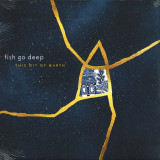
Greg Dowling and Shane Johnson return to the Go Deep label for their third album, ‘This Bit of Earth’. Beginning work in the relative normality of 2019 and finishing over the strange summer of 2020, the resulting music mirrors the thoughts that such upheaval brings out - our world and our place in it - while also functioning as a kind of travelogue of journeys past and planned, real and imaginary.
Mixing samples with modular synths, programmed drums with jazz loops, and quirky plugins with outboard gear, the album ranges far and wide while retaining a warm, natural core sound.
The title track opens proceedings on an ambiguous note. A simple double bass motif weaves around a misheard vocal sample, layers of piano and vibraphone take up the call, and the whole thing gradually spins off axis to a distorted, disjointed finish. ‘Suburban Key’ follows on a groove of busy drum work and deep sub bass, the stately piano and strings setting the stage for an undulating synth solo.
Further in, ‘Alice on Jupiter’ takes a deep breath and blends field recordings, gently swelling pads, modular bursts and a recurring picked melody.
‘Back Trace Dub’ strolls the imagined streets of Irish author Kevin Barry’s ‘City of Bohane’, noting the “taint of badness” in the air and revelling in the tense, dub-noir atmosphere. Later on, the spoken word intro of ‘I Could See’ expresses the dread of confinement and the relief and ecstasy of release, a theme the music reflects as it steadily builds to a joyful climax.
And closing the album on an optimistic note, the languid, emotional Culatra Ferry remembers better, beautiful days in the sun and looks hopefully forward to more.
“Highlights are the stunning sonics of Suburban Key, with its dusty groove and fast paced drums, stately piano, and cinematic strings reminiscent of a Four Hero orchestral masterpiece. High As Scaffold is full of warmth and soul and is yet another example of Fish Go Deep going even deeper into the dark blue waters of their brilliant musical minds.” Ban Ban Ton Ton review, Japan
“So good. Real beauty” Laurent Garnier, Radio FG, France
“Really liking this, would love to support on radio” Colleen 'Cosmo' Murphy, WorldwideFM, UK
“Lovely album” Osunlade, Yoruba Soul, US
“Very very nice album...love the new directions here” Charles Webster, Openlab, SA
“Absolutely beautiful piece of work” Darimont, RWAV, Germany
“A lovely LP of eclectic sounds” Jimpster, Freerange Records, UK
“Delightful album this. Very much appreciate the musicianship and we need that in the world right now as the commercial music world starts to fire up its nonsense for the new beginning” Vince Watson, Yoruba, Netherlands
“Such a fucking great body of work, and on par with ANY of the great albums I've listened to recently” Billy Scurry, Ireland
“There’s some REAL magic here. Possibly the deepest year from this duo” Charles Levine, Soul Clap, US
“A fabulous surprise. I'm sure if he were still alive Jose Padilla would have hailed this as his number one album of the year, it certainly is mine” Steve Miller, Afterlife, UK
“Great album... will play in next shows” Franck Roger, Real Tone, France
“Beautifully produced and great atmospherics” Ashley Beedle, Black Science Orchestra, UK
Radio and DJ support from Ron Trent, Hector Romero, Ame, Cian Ó Cíobháin, Bill Brewster, DJ Sprinkles, Harri, Honey Soundsystem, Alexkid, Moodymanc, Hifi Sean, Kassian, Freddie Garcia, 6th Borough Project, Stuart Patterson, Lars Behrenroth, Fred Everything, Mark Roberts, Cut n Shut, Will McGiven, Stefano Tucci, Tristan Jong, Matthias Schober, Trevor Fung, Ben Davis, Max P and more.
out of Stock
Last delivered 19 months ago available to reorder, subject to availability
Die Occult Metal Band THE HERETIC ORDER THE HERETIC ORDER präsentieren mit "III" ihr drittes Album, auf dem wütende Gitarren und donnernde Drums eine Reihe schneller, fieser und harter Songs ankündigen, die dennoch bösartiges Gift in das Bewusstsein des Hörers träufeln.
"III" befasst sich mit unzähligen Themen, sowohl modernen als auch alten Themen.
Von aktuellen Übeln wie Weltverschmutzung, Krankheiten, menschlicher Gier und der Korruption der Religion, den Illuminaten und der Verbindung von Geheimgesellschaften mit außerirdischem Leben bis hin zu historischen Geschichten aus den finsteren Kapiteln der Menschheit - wie dem Völkermord an den Katharern, den Hinrichtungen im Tower von London und den Menschenopfern der Maya - nichts entgeht dem Blick des kranken Geistes von Dominus Ragnar...
Als Gastmusiker sind Jeremy Gomez (Red Method) und Ays Kura (Die Kur) auf dem Album vertreten.
Mach dich sich darauf gefasst, dass deine Alpträume zurückkehren werden.
Here comes one you've been waiting for - the vinyl release of Vince Staples' triumphant self-titled 2021 album. As one of the leading lights of modern rap and RnB, Staples offers a subtly off-kilter take on the style without losing sight of immediacy and relatability. From 'Are You With That?' to 'Law Of Averages' you can hear an artist growing ever more confident in himself and his message, whether he's rolling with that sung-spoken swerve or dropping bars. The oddball hooks get under your skin while the lyrics clamp onto your brain with one listen - it's a true landmark release for Staples which his career will be measured against from here on out.
out of Stock
Last delivered 4 years ago available to reorder, subject to availability
After moving to California, he was introduced to the Serge Modular Synthesizer through Eliane Radigue and registered for classes in all the colleges of the Bay where there was an Electronic Music Department so that he could use their various electronic instruments. At first, he often plugged in his electric guitar into these monsters rather than use the rather rigid sequencers, but through tape recorders and the delay techniques used by Terry Riley, he was able to quickly combine these “sound producing devices” to create his own music.
He eventually released his first “official” album named simply Music by Xolotl in 1977. Originally issued only in cassette, Wah Wah offers the chance of listening to these works on vinyl format for the first time ever on an LP + bonus 7" edition to fit all the sounds from the cassette.
A strictly limited edition of only 500 and with new artwork featuring one of Xolotl's cosmic paintings and an insert with photos and liner notes.
out of Stock
Last delivered 4 years ago available to reorder, subject to availability
2022 Repress On Elephantine, Cairo-based Maurice Louca guides a 12-piece ensemble through a 38-minute masterwork that might best be described as panoramic. Elements of free improvisation, Sun Ra's cosmic jazz, gorgeous Arabic melody, trancelike African and Yemeni music and minimalism meet in his wholly unique compositional vision. Louca also makes vital contributions on guitar and piano, and inspires stirring performances from a global lineup.
One of the most gifted, prolific and adventurous figures on Egypt's thriving experimental arts scene, Louca has in recent years garnered a global reputation through two previous solo albums and an expanding, evolving lineup of genre-defying collaborations. The Wire called his 2014 sophomore solo effort, Salute the Parrot, "remarkable music-dense, driven and splashed with colour." In 2017, the self-titled debut by Lekhfa, the trio of Louca and vocalists Maryam Saleh and Tamer Abu Ghazaleh, was praised as an "edgy triumph" in The Guardian and picked by BBC Radio 3's Late Junction as one of the very best 12 albums of 2017.
For Louca, 36, Elephantine serves as both the pinnacle of his wide-ranging experience and a bold next step in his development as a composer, arranger and bandleader. The celebrated Egyptian visual artist Maha Maamoun has created the album cover art, following her contribution to Salute the Parrot. "There was a blessed thing about the process of making this record," Louca says of the sessions, held last year in Stockholm and featuring the leader on guitar and piano. "The dynamic between us musically but also as people ...What these musicians delivered was really more than I could ask for, Everyone played their hearts out on this record."
The music-from its pensive lulls through its stretches of hard-grooving hypnosis and moments of avant-jazz catharsis-testifies to that rapport. Best absorbed as a continuous performance, Elephantine's six individually named tracks nonetheless present striking self-contained landscapes. "The Leper" entrances through a deft use of repetition that Louca gleaned from cosmic jazz, African and Yemeni music and other transcendental modal traditions. (Those who've followed Louca's work might be reminded of the Dwarfs of East Agouza, his mesmeric unit with Shalabi and Sun City Girls' Alan Bishop.)
"Laika" manages to evoke the minimalists, though on the combustible terms of '60s and '70s free jazz; "One More for the Gutter," on which Louca ingeniously pits one half of his ensemble against the other, albeit in a synergistic way, mines similarly fiery terrain. "The Palm of a Ghost" distills the band to a Cairo-rooted core, featuring stirring spontaneous melodies from oud player Natik Awayez, violinist Ayman Asfour and vocalist Nadah El Shazly. The album's title track follows, and it too blurs the border between composition and improvisation with gorgeously atmospheric results. "Al Khawaga," with its colossal ensemble riffs, beautifully dirty swing and impassioned blowing, is an ideal finale.
Beach House release their eighth album, titled ‘Once Twice Melody’.
‘Once Twice Melody’, the first album produced entirely by Beach
House, was recorded at Pachyderm studio in Cannon Falls, MN,
United Studio in Los Angeles, CA, and Apple Orchard Studios in
Baltimore, MD.
For the first time, a live string ensemble was used, with arrangements
by David Campbell.
‘Once Twice Melody’ was mostly mixed by Alan Moulder but a few
tracks were also mixed by Caesar Edmunds, Trevor Spencer and
Dave Fridmann.
2CD in wide spine sleeve with silver and black print, inner CD wallets
and a 9.5” x 14.5” pull-out poster.
Standard 2LP format features 140g double vinyl in wide spine outer
sleeve with silver and black print, inner sleeves and 24” x 36” pull-out
poster.
Double cassette format (tape 1 - gold, tape 2 clear) features O Card
outer sleeve with silver and black print, two cassette cases and five
panel J Card insert
After more than two decades flexing his muscles on the local underground scene and gaining a legendary cult status on his Tenerife home turf, the island’s most famous postman, as he’s affectionately known by his consorts, Tomás de la Rosa aka Postman breaks radio silence to bulldoze his way through the canyons surrounding his hometown of Santa Cruz into an unknown and unsuspecting world. We present thus, Postman’s first ever album of original bangers, micro chopped two steppers and rage induced breakbeat anthems.
Constructed over the course of global confinement, Seeds of Light marks a return to creative activity from the man who regularly delivers your post (its not just a random artist name). Postman aka Tomás de la Rosa has taken his time, compiling sketches and unfinished songs, rummaging through the deep ends of his hardrive, stitching early production sketches with recent compositions, revising, reediting and rebuilding with a more mature and concise attitude, eventually completing, almost unintentionally, the perfect self referential retrospective album. Far from being just a compilation album, Tomás managed to create an explosive document, suspended in time, in which styles are intertwined regardless of fashions and fads – letting go of the ‘modern’ or ‘up to date’ burden - so common these days in electronic music.
It is not an easy album, like many of his previous work it demands extra attention to experience the full crystallization of his complex sound structures. We find ourselves in front of a truly surgically precise work of art whose result comes as a waterproof war machine, refined and incisive, resonating deep with soul and groove.
Postman develops his sound palette throughout the album from very basic sound snippets into a concrete dance world of synthetic sounds eventually creating a parallel reality where J. Dilla could be living in Chemnitz instead of Detroit and releasing records for a label called Raster-Throw. Glitch sampladelics!
Incursions into Grime are also abundant with nods to the ineffable East Man, reunions with his beloved Funkstörung or many other stimulating revisions of lifelong genres and breaks populate this multidimensional sound space, see soul, dancehall, breakbeat, two step and the UK hardcore continuum.
Special mention to the magnificent fluid artwork by the very talented Catalan visual artist Alba de Corral. A still photo from one of her kinetic AI systems programmed directly in code, which matches perfectly the essence of Postman's brutalist alien sound.
Vinyl limited to 200 copies
out of Stock
Last delivered 4 years ago available to reorder, subject to availability
Presented in a double vinyl gatefold edition with two beautiful paintings by Tenerife painter Sema Castro.
For fans of Sun Ra, Alice Coltrane and every single mystic brother and sister carrying the free spiritual jazz torch! Dive DEEP!
Spectacular mystical jazz infused psychedelics from Canary Islands’ cult band GAF.
Using a series of different add-ons to their (already obscure) band acronym GAF (Grifa Ambient Factory) such as Love Supreme Arkestra or GAF & La Estrela de la Muerte amongst a few, the Tenerife based band illustrate clearly what mutation or influence they’re feeding through (their mind) by the judicious use of these referential add-ons. Rotating around the vision of local lynchpin, Mladen Kurajica aka Bonni, Keroxen label head, festival organizer, producer and musician with numerous projects including helming the GAF outfit. The Love Supreme Arkestra variation here being the more Coltrane leaning (Alice rather than John) and Sun Ra- esque influenced thematic of the 6 piece band. Over a series of 7 huge sounding themes, we can hear twirling saxophones, trumpets, marimbas, modulars and rhythmic sections intertwining like flying spiral snakes over a burning sea of lava.
Recorded live and freely over a completely improvised jam session on a sunny afternoon in the mountainous region of La Esperanza in Tenerife, the band lets rip free of any previous albums particular sound choosing instead to purge into a world of musical liberation by embracing the aforementioned pioneers of the genre whilst unconsciously absorbing in their surroundings - as an additional inspiration for musical freedom.
The result really shines through its 74 mins of mind blowing adventurous music. A journey to the peaks of the Teide Volcano and down the green valleys, into the blue and black volcanic coasts of liberation!
RIYL: Velvet Underground, Lou Reed, Nick Cave, Patti Smith, Leonard Cohen, Iggy Pop, Radiohead & Tom Waits. "If you have never heard the Doctors of Madness, you should. Musically they are the Velvet Underground, New York Dolls with shades of glam, hippie, prog and punk all rolled into one, yet are still totally original. Vastly underrated, they should have been huge. Pure genius" Vic Reeves…. The DOM are “the missing link between David Bowie & The Sex Pistols” (The Guardian May 2017). Exploding onto the music scene in 1975 with their theatrical, William Burroughs-inspired Sci-fi nightmare, they were misunderstood by many, but those who knew understood the importance of the band’s dangerous, uncompromising approach to lyrics, to music and to performance. Among the many fans of the band were acts as diverse as The Damned, Vic Reeves, Joe Elliott of Def Leppard, Spiritualized, Julian Cope, The Adverts, The Skids and Simple Minds. The Sex Pistols supported them, so did The Jam & Joy Division. They were the first to combine the avant-garde approach of The Velvet Underground with a distinctly European aesthetic. The blue hair, exotic stage-names, the lyrical themes of urban decay, political propaganda, mind control and madness were all taken up by the punk bands who followed in their wake. The DOM were trailblazers, pioneers, adventurers…pushing the boundaries of rock music and theatre to see how far it would go before it bust. What happened after them was due, in no small part, to what they achieved in 3 short years. They may not have been Jesus Christ, but they were, arguably, John the Baptist!!! Now, 40 years after they imploded, they are back…with an album seething with lyrical anger and passion. It is the most potent and incisive musical dissection of modern life and contemporary politics released the decade. With tracks titles like “So Many ways To Hurt You”, “Sour Hour”, “Make It Stop!” and the ground-breaking sonic assault of the title track “Dark Times”, Richard “Kid” Strange proves once again that he has his finger firmly on the pulse of our times, just as he had when he founded the band in 1974. Produced by John Leckie (Radiohead, Stone Roses, Pink Floyd), the new album, Dark Times, features contributions from Joe Elliott (Def Leppard), Sarah Jane Morris (Communards), Terry Edwards (PJ Harvey, Nick Cave etc), Steve ‘Boltz’ Bolton (The Who, Scott Walker) and the young protest singer Lily Bud, alongside the current thrilling and thunderous DOM rhythm section of Susumu Ukei (bass guitar) & Mackii Ukei (drums) of the Japanese extreme glam-metal band Sister Paul, and Dylan O Bates (violin and keyboards). Julian Cope, another rock star who, like Strange, found the confines of music too tight for his ambition, his energy and his imagination, was blown away when he first heard the songs, declaring, “These Dark Times are enormously informing: the RULES OF THE FUTURE are indeed being forged right now”. Top producer Martyn Ware (Human League/Heaven 17) said the album “…reminds me of Iggy Pop’s Kill City album – love it.” and Biba Kopf (The Wire) declared, “Still listening to new DOM album with immense interest and pleasure”. The first single, Make It Stop!, is an impassioned howl against the global drift to right wing extremism and persecution of minorities, and is already a live showstopper for the band. It features the thrilling cross-generational combination of Def Leppard’s Joe Elliott and Lily Bud on backing vocals. In the period since the last DOM gig in 1978, Richard has written a memoir, collaborated on a cantata with internationally celebrated composer Gavin Bryars, worked as an actor on films with Tim Burton, Martin Scorsese, Harmony Korine & Jack Nicholson, toured the world in a Russian version of Hamlet with James Nesbitt as his grave-digging co-star, played Glastonbury, sung baritone in the British premiere of Frank Zappa’s200 Motels at the Royal Festival Hall, directed a multi-media evening celebrating the life and work of William Burroughs, won Best Art Film Prize at the Portobello Film Festival last year, had his own live talk show, worked with Tom Waits and Marianne Faithfull on the William Burroughs/Robert Wilson stage play The Black Rider, curated events for the Tate Gallery, and sung Walt Disney songs with Jarvis Cocker.
'I've been obsessed with western swing since I was a kid, and it's always
been an influence, but my records in the past have ranged from bluegrass
to hard country to folk, So I've never fully explored it' - So says genrebusting Fargo-born, Austin- incubated, Nashville resident Brennen Leigh,
whose new collaboration with the kings of modern-day western swing,
Asleep at the Wheel, Obsessed With The West, is a showcase not just for
the Bob Wills fans, but for anyone who's ever curled up with Loretta Lynn,
Hank Sr, Cindy Walker, Billie Holiday, or Willie Nelson
On twelve all original songs, Leigh's supple winking voice and multi- instrument
fluency, her interplay with Ray Benson, and the undeniable chops of the Wheel
serve up a treat on Leigh's seventh album. With cameos from Emily Gimble and
Katie Shore, and all the players getting their moments in the sun, Leigh - a twotime winner of the Texas Music Awards Best Female Vocalist award -
demonstrates on the terrific jump 40's rhythm and blues, 'Comin' in Hot' and the
lonesome cowboy musing of 'Riding Off Onto Sunset Boulevard' why Rodney
Crowell and Lee Ann Womack have recorded her songs. Obsessed With The West
is a celebration of music for music's sake in 2022, not just an exercise in looking
back on times gone by.
The Diva Faïrouz.
Her real name Nouhad Haddad, she was born in the Zokak el Blat district of Beirut. The eldest of a modest Maronite family, she developed a passion for singing very early on. Her parents are too poor to afford the luxury of a radio, so she spends most of her time listening, her ear glued to the wall, to the neighbors. Nouhad quickly memorizes the songs she hears and gives a few samples at parties organized by her school. It was there that she seduced her comrades with her vocal abilities and that she was noticed in 1947 by the composer Mohammed Fleyfel.
The echo of his velvety voice reaches Halim el Roumi, talent scout, renowned singer-songwriter and director of Lebanese Radio, who asks to audition him immediately. Literally fascinated, el Roumi introduced him to the choir of Radio Beirut, baptized it with the name of Faïrouz and became its appointed composer. Then, he introduces her to Assi el Rahbani, a young avant-garde composer who, in the company of his brother Mansour, wishes to renew a Lebanese song under profound Egyptian influence.
The teenager Faïrouz succumbed to the personal charm of Assi, whom she married in 1954, and to that of his compositions (the model couple of Arab song would be separated by the death of their husband in 1986). The heavenly trio causes, from the publication of its first titles, a real musical revolution. Traditionalists howl at sacrilege and distortion while sympathizers of the rejuvenation and modernization of Lebanese folklore, weary of insipid refrains and pale copies, show their enthusiasm.
In 1957, Faïrouz opened the International Festival of Baalbek (a locality mentioned in one of his flagship titles) and sang in the middle of the six columns of the Roman temple. This initial encounter with his audience, who warmly welcomed him, earned him the nickname "seventh column". Faced with this fabulous galloping success, the Rahbanis are stepping up their offensive and courageously playing the card of constant innovation. They wrote for Faïrouz musical sketches, operettas and, from 1962 to 1976, about fifteen sung plays in which she plays the role of a woman in love with Love, the true, the pure, the innocent. , and that of hope. She also appears in a few films but she quickly interrupts her cinematic odyssey.
It is still and always one of the major references of Arabic song and many of its titles, such as "Bint el Chalabia", are hummed as much by the new generation as by the old.
out of Stock
Last delivered 3 years ago available to reorder, subject to availability
This sprawling collection by Belgian loner blues savant Bram Devens aka Ignatz encapsulates the mystery, murk, and melancholy of his uncanny craft at its most windswept and wayward. Originally issued via Goaty Tapes in September of 2015, this long-anticipated vinyl edition expands the saga with an additional 17 minutes of archival material. Deven’s palette remains constant throughout: feathery fingerpicking, modal loops, and intuitive six-string navigations interspersed with candlelit passages of mournful voice, alternately whispered, mumbled, moaned. His is an aesthetic of embers and resin, cracked masks and distant lights, of what’s left behind and what lingers on.
I Live In A Utopia was recorded following a relocation from his longtime base of Brussels to Landen, with a second child due soon: “I remember the weather being nice and having just bought a hammock.” The change of scenery seeded a promise of slower days and lighter times – no utopia perhaps, but a sense of faint hope glowing on the horizon. The songs slide between loose acoustic spirituals and smoky basement ragas, late afternoon haze and midnight moons, a seesawing restlessness reflected in the titles (“I Have Found True Love,” “Time Does Not Bring Relief,” “We Used To Smoke Inside”). The fidelity is grainy but vivid, refracted by tape warp and Flemish dust.
As always, Deven’s playing is deceptively elegant, raw but precise, attuned to resonance, radiance, and negative space. Echoes of Fahey and Jandek reverberate in certain moments but ultimately the world Ignatz maps is one incomparably his own. A landscape both doomed and dawning, weary but undefeated, tracing outlines of lengthening shadows. “I walk in the sunshine,” he sings, uneasily. This is music of a rare inner wilderness, poised at cryptic crossroads, devoted to its ghosts. I Live In A Utopia stands as an apex work by one of the underground’s most veiled and visionary talents.
Double album in gatefold sleeve with artwork by Zully Adler. In co-production with House Rules & released in an edition of 500.
A cold wind blows while a disembodied drum marches in distance, diving slowly into an orchestra warm-up that ends with a bang: Marmo Music welcomes back Massimo Pegoraro, aka Modus, this time with a special tape release that carries genuinely shaped musical fantasies by the enigmatic electronic music composer and DJ from Genova. Each tune brings a new shade of his polychrome musical universe. He wrote a library music leaning ode to Moondog, recalls forgotten WW1 battles with longing choirs’ chanting along a minimal droning dream house Cello tone, and drops a melancholic fairytale that pits footage of kids laughing at a street market against Fellini-Score spinet melodies. Three of 14 mesmerizing, profoundly written pieces of music, that tell multi-layered contes with Synth reverberations, jazz ambiances, experimental Brit pop sonics, and a sundry range of field recordings. Together they build an enthralling story arc, that displays the open-minded spheres of the broad musical cosmos of Modus. To open the doors to his universe extensive, he additionally wrote some author’s notes for each single composition, that evoke vibrant images on his inspirations and their sounding outcome. Check the spell below while listening to intensely produced explorer music, that brings you obscure ideas from afar who express all the many subtle spirits of Modus.
Linda Fredriksson (they/them) shares their debut solo album "Juniper" on We Jazz Records, 29 Oct 2021. Linda (of Mopo and Superposition) has been working on the compositions heard on the album for several years, composing them mostly on guitar, keys and by singing. Only later have they been arranged for the band heard on the album, including Fredriksson on saxes and various instruments, Tuomo Prättälä (of ilmiliekki Quartet) on rhodes, moog and piano, Minna Koivisto on modular synth, moog and OP, Olavi Louhivuori (of Superposition) on drums, and Mikael Saastamoinen (of OK:KO and Superposition) on bass, plus featuring the Swedish artist Matti Bye on piano.
At heart, "Juniper" is a "singer-songwriter album", performed by an instrumental jazz band. The end result is unique, personal, and as Linda themself puts it "quiet and introspective". The first single from the album is "Neon Light and the sky was trans", "a song from the shining streets – the beginning of something new", featuring field recordings of rain falling down behind the window of Linda's Helsinki working space.
It's a fitting introduction to an album full on wonders and carefully crafted secrets ready to be discovered. "Juniper" is a world unto itself, and Fredriksson describes the process as one of isolation and of learning slowly to do new things. After the demo stage, the songs were taken to the full band, but what's on the record often stays true to the minimal nature of the early demos. Linda credits their co-producer Minna Koivisto as a key ally in the process of maintaining the demo sessions' fragile beauty on the actual finished record.
With regards to instrumentation, those who have heard Linda Fredriksson in Mopo and Superposition are likely to be surprised by their credit listing including not only alto and baritone saxophones, plus bass clarinet, but also guitar, Rhythmic8 synths, ambience recordings and drum programming. Linda describes the way of finding new sounds through their beloved old guitar as follows: "It's an old acoustic guitar that has been hit by a car and is literally full of holes, but that makes the sound just perfect for this album and you can hear the instrument on 'Pinetree song' and 'Lempilauluni' (Finnish for 'My Loved Song')."
In fact, Linda began their music-making with guitar and vocals, and the debut of the hole-filled vintage acoustic guitar makes perfect sense here, while also describing the album's immediate sound perhaps better than any other individual instrument used. The influence list for the album name checks the likes of Feist, Neil Young, Susanne Sundfør, Alice Coltrane, Pharoah Sanders, Eric Dolphy and Fever Ray, yet the number one inspiration for Fredriksson prior to making the album was "Carrie and Lowell", the 2017 album by Sufjan Stevens. Different as the albums are in terms of instrumentation and general scope, it's fascinating to draw parallels between them by listening to the quietness and immediacy of the music. "Nana – Tepalle" also relates to the world of "Carrie and Lowell" in being a dedication to a lost family member, Linda's grandmother (she is featured in the digital single artwork).
Throughout the album, Linda plays their saxophones in a way that is serving music first and foremost. The musician's ego, so often at the forefront in jazz, takes a backseat, and the songs themselves remain. Linda thinks as a composer, utilising their instrument where and how necessary, not presenting "chops". "It's sometimes hard to play simple," they say, "but I tried to follow my instinct about what the songs need. The mood rules here, any solos or improvisations happen around that at all times."
"Juniper" can still be heard as a jazz album, but perhaps one reminding that the word doesn't need to mean any one thing in particular. At its best, jazz music is highly personal and "of the moment", both true on "Juniper". The album has been made in two different studios, three homes, two summer cottages and four working spaces. It was recorded with professional studio equipment but also with an iPhone and on a basic built-in laptop speaker. With that, "Juniper" stands as a remarkable musical diary of a creative musician and composer during the early 2020's.
out of Stock
Last delivered 3 years ago available to reorder, subject to availability