Cam Cameron appears to be another one of those performers from an infinite list of Black American artists that cut a solitary 45 single and then disappear into obscurity never to be seen or heard from again. Couple this with the passing of any of the relevant protagonists from the time along with any of the surviving ones ever diminishing memories and the job of collating events and artists back stories from over 50 years ago becomes that much harder.
Cam Cameron appears to be one of those artists (although our investigations are ongoing). Therefore, from the information currently gleaned, the artist Cam Cameron was none other than Alvin Cameron the writer of the featured song “You Say”, with Cam being a kind of nickname. The string arrangements on both “They Say” and “I’m A Lonely Man” were provided by the late John Andrew Cameron a hugely respected arranger, producer and songwriter within the Chicago music scene of the 1960’s and early 70’s, more often credited as Johnny Cameron. Johnny’s credits can be found on many recordings of the time often working with fellow Chicago music scene producer Clarence Johnson, some of the highlights from this liaison being the song “I Really Love You” recorded by both Jimmy Burns (Erica) and Bobby James (Karol) and the girl group, ‘The Lovelites’, on their acclaimed album “With Love From The Lovelites” (Uni). Johnny’s involvement with the Scott Brothers goes as far back as 1965 when he provided the musical arrangements on The Howard Scott penned song “I’ve Got To Get Over” recorded by Syl Johnson for the TMP-Ting label. Although they share the same surname, Alvin (Cam) Cameron is believed to be of no relation to Johnny Cameron.
“You Say” would gain a release on the independent Capri label owned by Sephus Howard Scott who together with brother Walter Scott composed the 45’s flipside “I’m A Lonely Man”. Howard also featured as one of the songs producers alongside the mysterious Edgar Mullins (a name which has been found on a couple of other tape boxes, the investigations continue).
Musical accompaniment was provided by The Scott Brothers Band, with both songs being recorded at RCA Victor’s Chicago number 2 Recording Studio at 445 North Lake Shore Drive, in the Navy Pier section. on the 10th of August 1967 and released on Capri Records during the month of February 1968.
Cameron’s “You Say” was another 45 that was first introduced to UK Soul Collectors via those much lamented and fondly remembered soul packs, always regarded as a quality collector’s 45 the only regular turntable action remembered was provided by Northampton’s very own discerning DJ Cliff Steele at venues such as ‘Detroit Academicals’, ‘Bretby Country Club’ and later ‘Albrighton’ during the leaner days of the UK Rare Soul Scene?! Hopefully a wider appreciation of both sides of this soulful Windy City 45 beckons! The second release in Soul Junction’s Capri series.
Search:more relation
- A1: Please Come Out
- A2: Wicked
- B1: Working With
- IB2: N My Head
- C1: Got Your Money
- C2: Didn't You Know
- D1: Two-Door
- E1: Memory Lane
- E2: Good Girls And Boys
- F1: All I Want From You
- F2: Don't Sell Rock
- G1: What Yours
- G2: Tweets
- H1: You Check
- H2: Hero Forever
- I1: Don't Pick Up
- I2: You Don't Know Me Anymore
- J1: Tenderly With You
- J2: Now Let's Wait
Sasu Ripatti's complete "Dancefloor Classics" series. Music for imaginary dancefloors, released on Ripatti's own label Rajaton.
”Look up, into the light” she said, while the camera shutter clicked. ”Like this? Does it look holy?” His neck felt stiff. Her reply: ”Yes, just like that. What do you mean holy? Like religious? ”No, more like trying to look very far, somewhere beyond what we can see.” ”Okay, stand still, I’m going to come close to you now. The light hits your face great.” click, click, click.
He noticed her fingernails. They were not polished. Natural. Even somewhat rugged, as if something wore out the fingers slightly. What had these hands held besides the camera? What made the edges of her fingernails drift off?
He thought it’s weird to look straight into the camera. The photographer had closed her left eye, the one not looking into the lens. Then it opened, she looked up, perusing the surroundings, then she closed her eye again, then looked up, closed, looking up, very quickly. It all seemed very professional. Maybe she calculated the light, making sure it’s close to perfect. ”What will these photos look like?” – the thought popped into his head briefly. It was liberating to think it wouldn’t matter.
”What’s that song playing?” he asked. ”Wait a sec, Ol’ Dirty Bastard?” she replied. ”Oh yeah, right. But the sample?” ”Hey, could you look up again, like that. No, lower.”
New directions: ”Look out from the window, turn left.” ”My left or yours?” ”Yours, I always try to think from the direction of my model.” How professional! This is a good shoot, so natural. Should I worry about how the photos look like? No, I don’t want to. His thoughts bounced around. What would the story be like? It’s a big newspaper, everyone will read it. Maybe someone drinks coffee and eats a stroopwafel while they do it. Will they place the waffle on top of the mug for a brief while, so that it gets hot and the syrup melts a little? Then it feels wet, and you can bend the cookie.
She broke his train of thought off midway through: ”Now turn right, but look left, and slightly up, but don’t turn your face right.” ”Umm, like this? Sounds like a set of pilates instructions.” she laughed ”You do pilates?” ”Yeah, it’s hard sometimes. Have you tried?” ”No”, she said. ”I’m not good for sports that are done in groups.” ”Yeah, but in pilates you can just be inside your mind, drowning in your private thoughts.”
”What are you thinking in pilates?” she asked, taking more photos. ”Well, mostly just which way is right. And which left.” click, click.
Q&A with Sasu Ripatti:
1) Tell us something about the EP series ”Dancefloor Classics”, what’s the idea and what can we expect?
I’ve been slowly writing these sort of dance music pieces and finally curated them together for a conceptual release. I like to create music for a dancefloor that exists only in my imagination and doesn’t try to suck up to the standardized reality.
2) Your vinyl format is 10” which is quite special (as opposed to LP / 12”). Why did you choose it?
It’s my favourite format, absolutely. The size is perfect, and you can make it sound really good @ 45 rpm. And you still can make great artwork.
3) You seem interested in sampling/repurposing, what does it mean to you as an artist to approach something already existing from a new angle? How does the source material inform you about the approach to take?
I guess i could flip it around and just say I’ve outgrown synths or electronic sounds to a great extend, and having gotten rid off all my synths already good while ago I’ve used samples as my main source material a lot. It’s obvious on this series that i’ve sampled existing music, but I also sample instruments and things in the studio and resample my own library that I have built over the years, it’s quite large. To me the end result matters, not so much how I get there. Once I have something on my keyboard and play around, it’s all an instrument, though with sampling other music it becomes a really interesting and complex one as you’re possibly playing rhythm, but also harmonic content and maybe hooks or whatever, all at once.
I never sample premeditadedly, like listening to records and looking for that mindblowing 3 sec part. I just throw the cards in the air and see what lands where, just full intuition and hopefully zero mind involved, playing tons of stuff, trying things, just recording hours of stuff. Then comes the interesting part to listen to hours of mostly crazy stuff and finding that mindblowing 3 sec part.
4) What is your relationship with the dancefloor (conceptually and/or in experiences / as a performer)?
Very complicated. I have never really felt comfortable on a dancefloor but have always wanted to. There’s something in club music, in theory, that really speaks to me. It has never really materialized for me – speaking mainly from a performer’s point of view who goes to check on a dancefloor for a moment after a concert. I never have DJ’d or felt much interest towards it. But again, I love the idea and concept of DJing. As well as producing music for imaginary DJs. Lately, as in the past 10+ years, I haven’t even performed in any sort of club spaces. So my relationship to the dancefloor is quite removed and reduced, but there’s quite a bit of passion and interest left.
All tracks composed and produced by Sasu Ripatti.
Artwork & photography by Marc Hohmann.
Mastering by Stephan Mathieu for Schwebung Mastering.
Vinyl cut by SST Brueggemann.
Publishing by WARP Music Ltd.
Gianni Brezzo (213k Monthly Listeners on Spotify), the jazz affiliated band / studio project led by Cologne-based producer maestro Marvin Horsch, has a diverse musical profile that is reflected both in his genre-hopping as well as his creative output. Along with producing for Cologne bands like Keshavara, Woman and Xul Zolar, Gianni has released a number of EP and LP’s since 2017, including 2021’s “The Awakening” which featured vocal appearances from Berlin/Tel Aviv based singer / producer J.Lamotta and soul singer Otis Junior from Louisville, Kentucky. Gianni’s 2022 LP “Tutto Passa,” released on Jakarta Records, was a meditation around Marvin’s relationship to Italian culture, accompanied by research into Italian composers of the 60’s / 70’s such as Piero Umiliani, Stelvio Cipriani and Armando Trovajoli to more recent work by Sven Wunder. This was quicklya followed up with EP “Amoria,” an extension of the themes grown from “Tutto Passa,” along with the groovy baroque-jazz of LP “Soundscapes Vol. 1 – Music for Harlequins.” Gianni’s tracks have consistently placed on Editorial Playlists including Spotify’s “State Of Jazz” (908k Likes), “Lounge Jazz” (75k Likes) “Jazz-Funk” (316k Likes) and more, and most recently was synced in an episode of Gossip Girl for HBO US. Gianni Brezzo’s new project, “Filigrani” is a testament to the continued sonic growth and experimentation that pushes the music to new heights. The tracks, meticulously crafted, were born live in the studio, capturing the raw energy and creativity of Brezzo's jazz-driven genius. "Filigrani" introduces a unique fusion, seamlessly blending jazz progressions with touches of ambient electronics. Brezzo weaves a tapestry of sound, inviting listeners into a world where guitar melodies intertwine with subtle drum beats, dreamy harps, and the enchanting whispers of saxophones and flutes. The result? A groovedriven masterpiece that expands the boundaries of sonic artistry. The single and LP artworks by the esteemed Jason Jagel (MF DOOM, Madlib, JJ Whitefield) provide the perfect accompaniment to Gianni’s ever shifting grooves. The albums lead single is eponymous “Filigrani” due out Wednesday, November 22nd with LP pre-order announcement the following Friday, December 1st. This is to capitalize both on Gianni’s upcoming festival appearance at Linecheck in Milan on November 22nd and Bandcamp Friday on December 1st. With a guitar + drum progression that will have you swaying along, the track ebbs and flows as if your ears are gently skiing down fresh sonic powder. Recorded live in studio, the tracks lush horns and tranquil synth pads slide to and fro, combining the best of Khruangbin-style acoustics w/ Gianni’s unparalleled creativity. 2nd single is the lush, late-night vibes of “Milan Nights” out December 13th. Perfect for cozy evenings around the fire and slow dances with that special someone, the tracks harp, guitar, saxophone and slow, yet light and driving drums are a perfect groove to fall into the holiday vibe with. All you need is snow. Focus track is the effortlessly smooth, soulful jazz-funk piece, “Dreams of Sudden Clarity.” Certified 100% fresh, it’s a perfect way to kick off the year. The progression gives you a euphoric, elated feeling, like you’re finally arrived at that special place you never knew existed, but were always meant to find. Promotion will be handled via the label and artist profiles, along with further promotion by external agencies within Italy where Gianni has upcoming live events.
Tape
Vestigios, Aeondelit’s second full length record after recently releasing an EP of shifting club music influenced by postmodern philosopher Leotard on Tel Aviv’s Sadan records, tells a lucid, captivating story of heritage, transformation, vulnerability and healing. It will be released via Berlin-based art platform and record label Unguarded as a digital and tape release with an artwork created by Petra Hermanova, and will be accompanied by limited textile pieces by Diane Esnault. Aeondelit’s music is strongly influenced by the rocky surrounding of his hometown Manizales and fuses electronic sensibilities, ambient streams and avant-percussive rhythms that build his sound identity. Aeondelit's evocative music has previously been released via the Insurgentes imprint, Vienna-based Ashida Park and was recently featured on the 'Unguarded 2 – Entangled' compilation. Cortés describes the meaning of Vestigios as such: “The memories of past generations: the lives that burn within me, are the pillars of who I am. They constitute longings and traps, sin and strength, the temple that breaks down and rebuilds. The different dimensions of consciousness converge in the mind, which constantly tells us who we are, synthesizing and projecting our contradictions. The pain that comes with getting in touch with our vulnerabilities opens the doors to healing through confrontation. This lays the foundation for a more honest relationship with our past, present and future. 'Vestigios' is the bridge between the temporal and the eternal, the crystallized remnant of pain caused by transformation and recognition of the convulsive underworld of our psyche.” Aeondelit, birth name Sergio Cortés, is a Colombian music producer who explores themes related to technology and human condition in sound. He focuses on the creative use of sample manipulation techniques and digital sound synthesis to deepen the idea of a dialogue between computer and human, and how both influence each other. Deep in Colombia's Andes, surrounded by big mountains and the sacred Nevado del Ruiz, Aeondelit has been forging his own sound identity, exploring the intersection points between sparkly experimental club music and melodic ambient electronic. His first release Editing Destiny on the Colombian label Insurgentes was well received by the public and DJs, named one of the best albums of 2020 on Mixmag. His last release on Sadan Records, Anima Minima, was reviewed and premiered on platforms like DJ Mag, THE BRVTALIST and Orb Mag. He is also the co-founder of the independent record label Nvrclose, where his debut album as Æon Series: Dualidad, was released. About Unguarded: Unguarded is a Berlin based experimental electronic music label and art platform. In 2020 long-term collaborators Tim Roth aka Sin Maldita aka 1k Flowers and Phillipp Hülsenbeck founded Unguarded to foster forward thinking artists with a focus on exploring cross-disciplinary collaboration and embarking on sonic adventures. Unguarded was founded in a time of turmoil and uncertainty for artists and music, trying to keep personal connections alive through shared personal and collective experiences between doom and destruction and glistening hope. Amongst their own contributions, Hülsenbeck and Roth gather a collection of genre-defying works by longtime collaborators as well as artists they bonded with in recent years. Their releases constantly escape from definition but through entangling their unique artistic marks, this diversity remains absorbing and compelling throughout their sprawling sonic miasmas. Combining earth-shattering club cuts, equally elegant and bouncy, Unguarded contributes to and connects the experimental music scene in and outside of Berlin. We invite the curious to a deep, tense but rewarding experience.
Temple, Bassey, MacLaine and now, Hurt; in a world of Shirleys, the name Sophia Ruby Katz has chosen for her music is perhaps prophetic as it captures her stunningly emotive vocal approach. And whilst Shirley Hurt might be the perfect nom de plume for the creative Toronto-based artist, it’s her self-titled debut album which positions her as protagonist of her own universe.
Traversing sonic landscapes, Shirley Hurt’s vocals ebb and flow like lyrical Ley lines tracking the contours of her own well-travelled map. By the age of 18, Hurt had travelled extensively, having lived in upwards of 20 different apartments and houses, as a result never really feeling “at home” anywhere. At this age was when Hurt found herself in New York, dipping her toes into various scenes and musical realms. The first and only place she ever felt at home, and a partial home-base for her, she travelled between Toronto and New York until the age of 26.When the project she was working on in New York reached a dead-end she returned West, moving in with musicians Harrison Forman (Hieronymus Harry, Zones) and Patrick Lefler (Roy, Possum). Being surrounded by their improvising at all hours, a new approach emerged. “Harrison is a virtuosic guitar player, and I hadn't picked up a guitar in any serious way since I was 16,” she says, “by osmosis I started playing again for fun.” Without agenda, the process grew organically from there.
Hurt and Forman decided to travel across the US and Canada in a trailer for half a year, with the entire album written in the final months of their trip. Hurt had been writing loose ideas here and there but felt blocked creatively. When the pair reached Berkley, they wound up house-sitting for a tuned-in friend who recommended she pray, in a very direct way, to remove the block. “I took her advice and to my surprise it worked. The album was conceptualized and finished within a couple of months.” Shapeshifting in tone and phrasing, Hurt’s music alchemizes the furthest corners of experimental indie folk, pop, and country into a singular sound with elegant unpredictability.
Whilst Shirley Hurt’s lyrical and structural ideas may have emerged on the road, the album was self-produced and recorded at Joseph Shabason (The War on Drugs)’s Aytche studio in Toronto’s West End. It was engineered by Nathan Vanderwielen and Chris Shannon (Bart), and Hurt enlisted collaborators Jason Bhattacharya, Nick Dourado, Patrick Lefler, and Harrison Forman to hone her vision. “I wasn’t sure what was going to happen with the songs until we returned to Toronto,” she recalls. “Joseph and I had been talking about working together after sending across some demos and Jason happened to recommend his studio at the exact same time, so everything came together naturally at that point.”
Whilst her most recent adventures may have seen Shirley Hurt bound for Texas as an official SXSW artist (hand-picked by Gorilla Vs Bear to perform at their own showcase), she currently resides in her native Canada, more specifically rural Ontario, close to friends and family, and is already working on her second album. The ties to lineage are interwoven in the fabric of the music. Hurt’s mother, artist Leala Hewak, instilled a lust for life and innate value of creativity in her from a young age as she explored the role of gallery owner, vintage jewellery show host, mid-century modern furniture expert, real estate agent, painter. Hurt’s father, a civil litigation lawyer and new-wave obsessed music lover with an extensive vinyl collection, introduced Hurt to a wide-range of artists at a young age such as Nina Hagen, Laurie Anderson, Tom Tom Club, and endless others.
In her video for ‘Problem Child’ Hurt’s grandmother walks her through a generationally revered pie-making process. One would be tempted to hear this, and other songs, as autobiographical. Yet, Hurt’s lyrics are rarely pulled from her relationships or personal history––at least not consciously. Rather, they arise from somewhere less tangible or defined. “Lyrics tend to come to me when I am doing non-musical things - washing dishes, brushing my dogs, walking to the grocery store. I have a lot of voice memos on my phone and half-filled notebooks and when I hear something, I have to stop what I'm doing to get the idea down. Usually it’s bits and pieces. It's rare a full song comes to me in one go, but it's great when they do, and those are often my favourites.”
Carving out a space of her own in an all-encompassing universe, Shirley Hurt is the introduction to a long artistic story, and if the journey so far is anything to go by, it will be stippled with evermore unpredictable chapters.
2021 duo album by pianist/composer and Blue Note Records' artist Jason Moran and saxophone great Archie Shepp "Neither Archie Shepp nor Jason Moran are old, and neither are they young - except in spirit and delight. Moran is the more recent arrival, and he's no new kid on the block. They carry age and experience in their playing as much as a youthful fascination with the songs and forms that define this tradition we call jazz. Let My People Go is the timely title of this collection, but when has that message not been relevant? Now, sadly, as ever. This is their first album together, a gathering of duet performances from 2017 and 2018, chronicling a relationship that can sound like the intimate huddling of two old friends: whispered asides, excited exclamations, utterances coinciding with practiced harmony, followed by bursts of laughter. "Ain't misbehavin'!" cries out one. "Waahhhh!!," says the other. Let My People Go offers ample evidence of Shepp and Moran's consanguinity. Both were born in the deep South, raised up in the sound of the blues and black gospel: Shepp in Fort Lauderdale, Florida, and Moran in Houston, Texas."- Ashley Kahn. Archie Shepp: tenor saxophone
If there's one specific component that grounds 'Sky Flesh', it's focus. Italian musician and sound designer Marta De Pascalis flexed her technical muscle on 2020's 'Sonus Ruinae', layering various sounds and processes in an attempt to touch the sublime. In contrast, 'Sky Flesh' is a single thought, composed using just one instrument: the Yamaha CS-60. A slimmed-down sibling to the gargantuan CS-80 - the analog synthesizer used by Vangelis to create his iconic 'Blade Runner' score - the CS-60 was released in 1977, a few years before the MIDI protocol was introduced to help standardize production methods. MIDI would change the electronic music landscape completely, offering a level of control that De Pascalis consciously relinquishes, preferring to highlight expressiveness and timbre, elements more readily associated with acoustic instruments. The album arrives as much of the wider experimental scene busies itself with algorithmic composition and AI-assisted modeling; De Pascalis chooses to work instead like an organologist, harnessing the CS-60's mercurial magic to suggest deeper truths about our evolving relationship with machines.
Currently based in Berlin, De Pascalis grew up in Rome, where she was surrounded by atrophied ruins that piqued her interest in decay and memory. Over her last three albums, she used tape loops and advanced synthesizer techniques to create a unique sound world that's guided by her musical philosophy, rather than a specific aesthetic. As she's developed her technique and confidence, her music has become even more idiosyncratic, and at this stage in her career she's stripped her sound down to its core elements, focusing on emotion, narrative and mystery. Using timbres that recall a time when electronic music still waved towards the future
Building on the styles showcased on the first “Beatbox Studios” LP, Hi-Tek was clearly developing his own personal style on the studio’s in-house Akai MPC 60II sampler. The drums were swinging more; the grooves were deeper; the bass thumped harder. Even when choosing familiar samples, he was chopping them in fresh and unexpected ways, which would eventually help shape his signature sound.
As his reputation was becoming cemented in the local Cincinnati scene, his relationship with the rap group Mood was helping to catalyze more regular visits to New York City. The beats collected for “Beatbox Studios 2” were the ones that would stick in the auto-reverse tape deck for those road trips, as were the demo tapes he crafted with Mood, which would eventually earn them a record deal with Blunt Records in 1996—the same label and year where he would land his first major placement on Royal Flush’s “Ghetto Millionaire” album. It was also on one of those 1996 journeys to NYC that he would meet a young Brooklyn emcee named Talib Kweli—with whom he would form one of the most iconic duos of the indie-rap boom of the late-nineties.
“Beatbox Studios 2 (1996 MPC 60II)” showcases Hi-Tek as a hungry young talent on the rise, and his continued elevation would lead him to a career as one of the few producers who can claim to have worked with such a broad range of legendary artists; from superstars like Dr. Dre, Snoop Dogg, 50 Cent, and Anderson .Paak, to underground heroes like Mos Def, Common, and J Dilla.
Filled with aural magic and enchanting musical spells, Sorcerer is true to its name. The third of five albums devised by Miles Davis' legendary second quintet – and the second record in a still-unprecedented string of eight consecutive releases within a four-year period that forever changed the face of jazz – the 1967 magnum opus mesmerizes with instrumental colours, subdued musings, and subtle details.
This is a reference-standard reissue. You'll hear poetic lyricism pouring out of Wayne Shorter's horn, the breadth and definition of the notes spreading across an enormous soundstage. Never before have drummer Tony Williams' rim shots ricocheted with such purpose or his light percussive work mirrored that of a feather touching skin. Similarly, Herbie Hancock's piano runs now occupy their own space, where their relationship to the central rhythms and front line becomes clearer.
Prizing inflection and nuance more so than heady solos or uptempo flights, Sorcerer mesmerizes with cerebral properties and cascades of emotional interplay. Such beauty emerges in the mellow ballad "Pee Wee," an indelible statement of restrained authority and sophisticated expression. The swirling title track unfolds as jazz shadowplay, Hancock, Shorter, and Williams mirroring one another's moves with guile and purpose. The opening "Prince of Darkness" showcases the ensemble's reach and communication, every musician going in seemingly different directions yet ending up on the same page
A lasting example of Davis' visionary insight, Sorcerer is comprised entirely of pieces written by his band mates. Indeed, save for the closing "Nothing Like You" – a brief tribute to Davis' eventual wife, who also graces the cover, recorded in 1962 and adorned with vocals from Bob Dorough, the album represents a further maturation and refinement of a quintet that stands as one of the finest in jazz history.
Some of the most unique Italian jungle exotica mambo music you'll hear!
You won't usually find those words together but because this record,
released in the late 50s only on reel to reel tape, was twice produced
layering cultural madness! This gem was originally designed to be a
Francis Bay album of Italian music and Cuban Mambo, until the masters
were sold to producer Kirby Allen who with the help of faux African
tribesman, Chaino, added African style percussion and animal sounds up
the wazoo!
If the much-bandied-about word exotica stands for anything, it stands for
disparate cultures playing well together with others, and Temptation: The
Exotic Sounds of Chaino is a case study in international relations that
could serve as a teacher's guide in how to set up a Model UN
If there's a more quintessential example of the African- Cuban- Italian- SpanishPolynesian- American Songbook as recorded by a Belgian combo, this author is
unaware of such an artifact. - Gaylord Fields (WFMU)
How does one express the bone-chilling loneliness of having lost the love of his or her mate, even as the relationship continues in the present tense? We would venture to say that “Element Of Love”, the inaugural 45 on S’plat Records, and the record debut of vocalist Gervis Myles, pretty well answers the question. The song and the performances elevate this record well beyond many efforts which seem to get lost in the mannerisms of soul, but ultimately miss the point. Gervis Myles tears into the song, which has the feeling of a scorching King Records hard soul lament from, say, 1960. He moans, shouts, unleashes falsetto outbursts, and hits ever more impossibly high non-falsetto notes as the song goes on. Bootsy Collins commented: “Y’all takin’ me back while moving forward. I love the way you funkin’ with me!” The band, which we call “Suite Crude Revue”, consists in this instance of Andrew Spadofora on saxophone, whose solo work on the record contributes considerably to its searing intensity, John Paul Simons (upright bass), Bryan Rogers (piano), Dave Schoepke (drums) and Daniel Zelonky on guitar. The B side, “I’m Thirsty,” is a rhythm and blues stomp about drinking away “woman problems.” Standout piano work from Rogers and a blistering solo by Spadafora, in addition to the raw vocal performance, make one want to …. drink! Written, arranged, and produced by Daniel Zelonky (aka Low Res).
A quietly funky collection that repays repeated play by creating a mesmeric, almost
hypnotic, cocoon to lose yourself in" Echoes
Examining our relationship with the cosmos as well as more intimate liaisons closer
to home; new transatlantic future soul duo Cosmic Link are set to release their
eponymous debut album on 24th November.
The duo consists of Florida based Jay Myztroh and Bristol based producer Ben
Dubuisson, best known for the Hundred Strong project. Citing influences of Erykah
Badu, Prince, Alice Coltrane, Stevie Wonder and Esperanza Spalding; the album
crosses cosmic soul/RnB, low-end weighted hip hop, and conscious jazz. While the
musical vibrations lay down a groove on a sensory level, the lyrics prompt deeper
subconscious thought.
Under a “Cosmic” header, side one of the album starts with ‘Let It Go’, a song about
releasing the things that no longer serve you in your life, before exploring
meditation (‘Quiet Time’), karma, and responsibility in the way you live your life
(‘Metaphysical’).
Side two of the album is grouped with the theme “Link” and as narrative, explores
the evolution of a relationship: ‘Cellphone’ expresses the desire to be close to
someone, ‘Shoot’ is the introduction to the courting stage, and ‘Show U Love’ is a
request to take a step into a committed relationship.
“All of these songs are personal,” says Jay. “They explore either my experiences or are
written to me as understandings to help me navigate this plane of existence. The
personal nature of the music is what makes it universal to all humans”.
The overall theme of the album is summed up in the lyrics of the closing title track,
“Our motion is perpetual/together we move/at the speed of life/ intertwined by our
timelines/which coincide”.
Jay explains, “There is no separating the all from the source. With all living things
being products of the Cosmos, we are forever linked to it. We all share a source, atimeline, a planet, air, a sun etc. We are linked by simply being and doing the things
beings do”.
Introduced by mutual artist friends, the catalyst for their collaboration was the 2017
album 'Black Diamonds' by Jay's previous project Stono Echo, produced by the late,
great Paten Locke. Over the course of a few years they began remotely exchanging
music and lyrics, building a catalogue of finished tracks. During this time, Myztroh
was also completing his Masters degree in choral conducting that focused on
discovering and promoting compositions from the African Diaspora. Run by Ben
Dubuisson, High Noon Music has been based in Bristol since the early 2000s,
releasing records by artists including Ben’s own Hundred Strong, plus Boca 45,
Joseph Malik, Kali Phoenix, One Cut, Mr Fantastic, and Numskullz.
Orbiting Human Circus' new album is called Quartet Plus Two. What is Orbiting Human Circus? It is the continuing evolution of Julian Koster (Neutral Milk Hotel, The Music Tapes), whose music and storytelling under this moniker have encompassed immersive theater and a Night Vale Presents podcast, as well as more traditional albums. Central to the album are the "two" referenced in the title: North and Romika, the singing saws, whom Koster doesn't "play" so much as encourage. "I think saws sing like angels," says Koster. "I always have. Since I was a little boy. When you encourage them to sing, they do so earnestly and beautifully. It's an honest and real sound." The origins of Quartet Plus Two are as magical and seemingly unlikely as everything else in Koster's career. While walking through New York's Central Park, he stumbled upon Gauvain Gamon and Kolja Gjoni_a standup bass player and drummer, respectively_playing Gershwin and Mingus, and a musical partnership was born. Pianist Benji Miller rounds out the titular quartet, with Koster's longtime collaborators Robbie Cucchiaro (horns) and Thomas Hughes (orchestral arranging and chimes) of The Music Tapes also contributing to the record. The music they make together is at once familiar and unrecognizable, as Koster and Orbiting Human Circus interpret jazz compositions by Irving Berlin, Duke Jordan, George and Ira Gershwin, and others, alongside Koster's three originals. The use of the term "composition" is intentional and speaks to Koster's relationship with the music of Quartet Plus Two in far more evocative terms than "cover" or "standard." "To me it was always magical that there were these people called `composers' who created symphonies and popular songs for other people to breathe into life and existence all over the world and throughout time," he explains. "They traveled into our homes as sheet music, endless recorded interpretations, or were passed from hand to hand, village to village, like folk tales, changed by every hand that touched them. That music was something that came to life in our own living rooms and lives, songs that our grandmothers might have sung in a choir that we might sing just as earnestly. I just think it's nice, and I would love to share that feeling in any way we can."
- A1: Star (Ricardo Villalobos Master)
- A2: Custard Last Stand / Amo1 Ambient Version (Ricardo Villalobos Master)
- B1: Make My Love Grow (Ricardo Villalobos Mix Down)
- B2: Black Apple Pink Apple (Ricardo Villalobos Remix)
- C1: Make My Love Grow (Ricardo Villalobos Make My Love Groove Remix)
- C2: Softlanding (Ricardo Villalobos Remix)
- D1: Dealer (Ricardo Villalobos Remix)
tom Ravenscroft at 6music amongst others. And now, in true AMO1 creative fashion they are presenting an off-shoot release of that album, one completely reimagined by the man, the myth: Ricardo Villalobos.
Much has been written and talked about when it comes to producer/DJ Ricardo Villalobos over the years.
The mercurial Chilean-German artist has consistently redefined the boundaries of techno and electronica over the past 30-years as a producer, whilst also traversing the world and expanding minds as a DJ who can equally delight as he does challenge.Like a great jazz drummer (he was a percussionist before discovering mixing records), Villalobos has not so much as broken “the rules” of structure as just created his own unique approach. One that is often surprising, ever open-minded, and clearly lead by whatever happens to be inspiring him at any given moment. Watching him work or hearing him play music always feels live and free. He’s an artist. And that is exactly how this (perhaps unlikely) collaborative album has come to light – but then this is Ricardo, so maybe we should all know by now that anything is possible.
Villalobos explains, “In my scientific search for some electroacoustic musical landscapes, the offer of remixing ‘Black Apple Pink Apple’ was just perfect for me… In general, the song writing is so very good and particular, with all the instruments played into a sequencer, so it was very inspiring to strip down these pop songs into my dubby extensions, taking only the drums, bass, and vocals of the song.” Expanding further, “After delivering the first remix, Mo and myself came up with the idea of reimagining the whole album in a new way, mixed simple with other ears and my inspirations, with a new and different point of view of what instruments are important to hold the song to bare itself.”
It says a lot, and somehow captures the essence of Ricardo’s approach to music (and life), that one remix soon evolved into a whole plethora of reimagined works, driven by a creative slipstream and a clear connection to the songs created by A Mountain of One.
Mo Morris provides more insight into his own connection with Villalobos, “I lived in Berlin back in 2002-04 and used to religiously go to dance to Rici at the after (after) hours parties: little, tiny events. And he just used to blow my mind, I hadn’t heard anything like it before (or since). Ultra-modern and forward thinking.”
Mo continues, “A good friend connected to Ibiza happenings introduced me to Ricardo as it transpired that he was a fan of our early material, so I sent him some demo’s when we were in the studio creating ‘Stars Planets Dust Me’ and he loved ‘Black Apple Pink Apple’. The relationship and collaboration grew from there really, and I hope that this release is still at the start of what we can all create together.”
Focussing in on the album at hand – ‘Ricardo Villalobos reimagines: Stars Planets Dust Me’ – we are treated to a concept listen that guides us from dreamy daytime Balearic pop – staying very true to the original songs – all the way through to completely original deep dubby techno excursions. And to Villalobos fans, it will perhaps surprise (and hopefully delight) how light a touch he has provided to the opening tracks, focussing more on enhancing the sonics, and allowing the originals to shine brighter through remastering and mixing down. It’s in these moments that we see Ricardo as a pure music fan, needing not overly change or alter what’s already been created, but simply doing what he can to maximise what’s already there.
What will certainly delight Ricardo fans are the four full ‘klub’ remixes provided of ‘Black Apple Pink Apple’, ‘Make My Love Grow’, ‘Softlanding’ and ‘Dealer’ that each boldly explore the outer regions of the dancefloor in a way that only Villalobos can.
Mo rounds off, “From an electronic and sonics standpoint he’s kind of out there on his own. It’s such a unique sound. Weatherall also had this, and Harvey has that unique flavour, and also people like Nils Frahm and Max Richter have this gift. It’s not an easy thing to produce. Ricardo has his own personal cosmic trademark.”
Indeed he does. Take a trip with him around the stars and planets and see for yourself.
“More than anything, I wanted to make an album that was generous, that was useful,” says Ben Folds. “I want you to finish this record with something you didn’t have when you started.” Indeed, Folds’ masterful new collection, What Matters Most, isn’t so much a statement as it is an offering, an open hand reaching out to all those wounded and bewildered by a world that seems to make less and less sense every day. Recorded in East Nashville with co-producer Joe Pisapia, the album marks Folds’ first new studio release in eight years, and it’s a bold, timely, cinematic work, one that examines the tragic and the absurd in equal measure as it reckons with hope and despair, gratitude and loss, identity and perspective. The songs are bittersweet here, hilarious at times, but often laced with a quiet sense of longing and dread: a text message goes unanswered; an old classmate descends into the dark depths of internet conspiracies; a relationship unravels in the middle of a lake. And yet, taken as a whole, the result is an undeniably joyful record that refuses to succumb to the weight of the world around it, an ecstatic reminder of all the beauty and promise hiding in plain sight for anyone willing (and present enough) to recognize their moments as they arrive.
Orange Vinyl[13,40 €]
Berlin party series and label AWAY Music continues its limited vinyl series called "Reissued", dedicated to re-releasing iconic cuts from the vast collaborative catalog of Move D & Pete Namlook. The third installment "Reissued 3", which follows the series' first two EPs from previous years, features again some exceptional pieces that were previously only available on CD. Move D and Pete Namlook are electronic visionaries whose 26-album relationship explored and intertwined psychedelic synthscapes, deep house and techno, future jazz, and downtempo on Namlook's cult imprint Fax Records. Their innovative and influential works keep inspiring electronic music producers today, showcasing their willingness to collaborate and push the boundaries of electronic music. First up on the A side, “Der Strahlender Verlierer”, from the 2006 Album “Let the Circle Not Be Broken”, begins atmospherically before pushing subtly into open filter and undulating synth territory. Introspective and accepting, the piece gradually lets the sum of its parts coalesce into a peaceful whole with sustained chords and the flicker of played steel strings.
“Hardwired Tangent” from the 2001 Album “Wired” rounds out the first side with edgier and more ominous tones. Brooding and bubbling its way through artificial textures absorbed by carefully weighted rhythmic tension. Shuffling jazz electronics. The moody low-mid hum providing buoyancy throughout. Also from the 2001 album, the B side’s “Hardwired Hypotenuse + Asymptote” is a synthetic journey. Textural, pseudo-organic, pulsating with urgency. The motoric percussion imparting structure to the sonic alchemy. Tactile yet integrated components offer the listener (or dancer) multiple entry points into the music. This is both artful and kaleidoscopic — a treatise on contemplative and psychoactive house music.
"Reissued 3" is a true testament to the innovative spirit and pioneering work of Move D and Pete Namlook. With these tracks now available on vinyl for the first time, AWAY's limited series is a must-have for old and new fans alike.
Black Vinyl[12,14 €]
Berlin party series and label AWAY Music continues its limited vinyl series called "Reissued", dedicated to re-releasing iconic cuts from the vast collaborative catalog of Move D & Pete Namlook. The third installment "Reissued 3", which follows the series' first two EPs from previous years, features again some exceptional pieces that were previously only available on CD. Move D and Pete Namlook are electronic visionaries whose 26-album relationship explored and intertwined psychedelic synthscapes, deep house and techno, future jazz, and downtempo on Namlook's cult imprint Fax Records. Their innovative and influential works keep inspiring electronic music producers today, showcasing their willingness to collaborate and push the boundaries of electronic music. First up on the A side, “Der Strahlender Verlierer”, from the 2006 Album “Let the Circle Not Be Broken”, begins atmospherically before pushing subtly into open filter and undulating synth territory. Introspective and accepting, the piece gradually lets the sum of its parts coalesce into a peaceful whole with sustained chords and the flicker of played steel strings.
“Hardwired Tangent” from the 2001 Album “Wired” rounds out the first side with edgier and more ominous tones. Brooding and bubbling its way through artificial textures absorbed by carefully weighted rhythmic tension. Shuffling jazz electronics. The moody low-mid hum providing buoyancy throughout. Also from the 2001 album, the B side’s “Hardwired Hypotenuse + Asymptote” is a synthetic journey. Textural, pseudo-organic, pulsating with urgency. The motoric percussion imparting structure to the sonic alchemy. Tactile yet integrated components offer the listener (or dancer) multiple entry points into the music. This is both artful and kaleidoscopic — a treatise on contemplative and psychoactive house music.
"Reissued 3" is a true testament to the innovative spirit and pioneering work of Move D and Pete Namlook. With these tracks now available on vinyl for the first time, AWAY's limited series is a must-have for old and new fans alike.
These songs came to be a record accidentally and unintentionally. They were written sporadically over a tumultuous two years riddled with more valleys than mountaintops. We considered it a victory when we could actually make ourselves get together to write, even if we struggled to produce anything of any quality. Creativity was tough amidst half-hearted business relationships, being dropped from our label, inconsistent touring, and filing personal bankruptcy. It took a toll on everything: our confidence, our outlook, our health, our happiness. In late 2015, our friend Brandi Carlile invited us to Seattle to play a couple of shows in her hometown. It was there that we explained all that had transpired with our career, how we were barely staying afloat. It was also there that she told us she would be producing our next record. Once we saw that this fantasy could actually become a reality, the frantic search for enough songs to make an album began. To our surprise, we had many things to say, and though some were difficult to write and slow to reveal themselves, we pushed onward. The songs here carry a common thread of what remained when we felt like we’d lost everything. It was in the hardest times that we saw the core of where our music and our souls originate. We still had our homes, our family, our friends, and our fans. This is not a record about rising from the ashes. Rather, it is a deep look into ourselves in an attempt to put out the flames. These songs are our catharsis; an effort to forgive, an effort to heal, an effort to look back into the darkness with newfound light and undeterred fearlessness, an effort to redeem ourselves. The damage was done, but our hearts remained.
- A1: String Quartet No. 5 I
- A2: String Quartet No. 5 Ii
- A3: String Quartet No. 5 Iii
- A4: String Quartet No. 5 Iv
- A5: String Quartet No. 5 V
- B1: String Quartet No. 4 (Buczak) I
- B2: String Quartet No. 4 (Buczak) Ii
- B3: String Quartet No. 4 (Buczak) Iii
- C1: String Quartet No. 2 (Company) I
- C2: String Quartet No. 2 (Company) Ii
- C3: String Quartet No. 2 (Company) Iii
- C4: String Quartet No. 2 (Company) Iv
- D1: String Quartet No. 3 (Mishima) 1957 – Award Montage
- D2: String Quartet No. 3 (Mishima) November 25 – Ichigaya
- D3: String Quartet No. 3 (Mishima) 1934 – Grandmother And Kimitake
- D4: String Quartet No. 3 (Mishima) 1962 – Body Building
- D5: String Quartet No. 3 (Mishima) Blood Oath
- D6: String Quartet No. 3 (Mishima) Mishima/Closing
When Kronos plays a piece, they become fellow composers, true collaborators. Without them, we wouldn’t have the kind of string quartet playing that we find around us today. There are two kinds of string quartet playing: the ‘Before Kronos’ and the ‘After Kronos’.” – Philip Glass
‘Kronos Quartet has broken the boundaries of what string quartets can do.’ – New York Times
Nonesuch releases Kronos Quartet’s acclaimed album Kronos Quartet Performs Philip Glass on vinyl for the first time to coincide with Kronos Quartet: Five Decades, a year-long celebration marking the quartet’s 50th anniversary. Originally released in 1995, the album features David Harrington (violin), John Sherba, (violin), Hank Dutt (viola) and Joan Jeanrenaud (cello) performing Quartet No. 2 (Company) (1983), No. 3 (Mishima) (1985), No. 4 (Buczak) (1990), and No. 5 (1991), the first piece Glass wrote especially for Kronos. Recorded at Skywalker Sound in California, the album was produced by Judith Sherman, Kurt Munkacsi and Philip Glass. The cover art features Francesco Clemente’s painting The Four Corners (1985). At the time of the album’s release, the New York Times said, ‘It contains some of Glass's best music since Koyaanisqatsi. His ear for sumptuous string sonorities is undeniable,’ while the Washington Post called it ‘An ideal combination of composer and performers.’ It was a top 10 hit on Billboard’s Top Classical Albums, and spent 12 weeks on Billboard’s Classical chart.
In his original liner note, critic Mark Swed wrote, ‘Glass’ string quartets may contain his most intimate music. They are works through which a very public composer, perhaps the most important opera reformer of our age and a longstanding collaborator in large-scale music theater, holds up a mirror to himself and his way of composing. “In an odd way,” Glass explains, “string quartets have always functioned like that for composers. I don’t really know why, but it’s almost impossible to get away from it. It’s the way composers of the past have thought and that’s no less true for me. It’s almost as if we say we’re going to write a string quartet, we take a deep breath, and we wade in to try to write the most serious, significant piece that we can.” Glass says that as he sat down to write String Quartet No. 5, he had discovered that perhaps not taking a serious tone might be the most serious way to deal with it. “I was thinking that I had really gone beyond the need to write a serious string quartet and that I could write a quartet that is about musicality, which in a certain way is the most serious subject.”’
Glass’ first numbered quartet was written in 1966; however, he did not return to the string quartet medium until 1983, when he provided incidental music for a dramatization of Samuel Beckett’s prose poem, Company. During those 17 years, Glass had formed an ensemble and developed his style in a series of increasingly elaborate pieces for it. String Quartet No. 3 is also adapted to dramatic music, this time from his score to the 1985 Paul Schrader film, Mishima. It was with the music of Mishima that Kronos became associated with Glass, recording the string quartet sections of the soundtrack and subsequently working extensively with the composer on all five of his numbered quartets. Kronos also gave the first concert performances of Company and Mishima. String Quartet No. 4 was composed in remembrance of the artist Brian Buczak, who died of AIDS in 1988.
As Kronos’ anniversary season continues with further concerts around the world, Nonesuch will reissue Black Angels on vinyl on February 16. First released in 1990, the award-winning album includes George Crumb’s title piece, which inspired David Harrington to found the quartet. Called ‘an unusually elevated and searing Vietnam War protest’ by the New York Times, it sets a dark, powerful tone for this collection, which addresses the political/physical/spiritual consequences of war. Also featured are works by Charles Ives, István Márta, Thomas Tallis, and Dmitri Shostakovich. ‘Stylishly packaged, intelligently programmed, superbly recorded and brilliantly performed,’ proclaimed Gramophone. ‘In short, very much the sort of disc we’ve come to expect from the talented and imaginative Kronos Quartet.’ The Evening Standard included it among its ‘100 Definitive Classical Albums of the 20th Century’.
Born in Baltimore, Maryland, in 1937, Philip Glass is a graduate of the University of Chicago and the Juilliard School. By 1974, he had created a large collection of music for The Philip Glass Ensemble. The period culminated in the landmark opera, Einstein on the Beach. Since Einstein, Glass’s repertoire has grown to include music for opera, dance, theatre, orchestra, and film. His scores have received Academy Award nominations (including Kundun and The Hours, as well as Notes on a Scandal) and a Golden Globe (The Truman Show). Recent works include his memoir, Words Without Music, his first Piano Sonata, opera Circus Days and Nights, and Symphony No. 14. Glass received the Praemium Imperiale in 2012, the US National Medal of the Arts from President Barack Obama in 2016, and 41st Kennedy Center Honors in 2018.
Nonesuch’s relationship with Glass began in 1985, with the release of the score for Paul Schrader’s Mishima featuring Kronos Quartet. Over the years other Glass works on Nonesuch have included Einstein on the Beach (1993), Kronos Quartet Performs Philip Glass (1995), Music in Twelve Parts (1996), Glass Box (2008), as well as the soundtracks for Powaqqatsi (1988), Kundun (1997), Koyaanisqatsi (1998), and The Hours (2002), amongst others.
For 50 years, San Francisco’s Kronos Quartet – David Harrington (violin), John Sherba (violin), Hank Dutt (viola), and Paul Wiancko (cello) – has challenged and reimagined what a string quartet can be. Founded at a time when the form was largely centred on long-established, Western European traditions, Kronos has been at the forefront of revolutionizing the string quartet into a living art form that responds to the people and issues of our time. In the process, Kronos has become one of the most celebrated and influential groups of our era, performing thousands of concerts worldwide, releasing more than 70 recordings of extraordinary breadth and creativity, and collaborating with many of the world’s most accomplished composers and performers. Through its nonprofit organization, Kronos Performing Arts Association, Kronos has commissioned more than 1,000 works and arrangements for string quartet – including the Kronos Fifty for the Future library of free, educational repertoire. Kronos has received more than 40 awards, including three Grammy Awards and the Polar Music, Avery Fisher, and Edison Klassiek Oeuvre Prizes.
Kronos is prolific and wide-ranging on recordings. The ensemble’s expansive discography on Nonesuch includes three Grammy-winning albums: Terry Riley’s Sun Rings (2019), Landfall with Laurie Anderson (2018), and Alban Berg’s Lyric Suite featuring soprano Dawn Upshaw (2003); the 40th-anniversary boxed set Kronos Explorer Series; Nuevo (2002), a Grammy- and Latin Grammy–nominated celebration of Mexican culture; Pieces of Africa (1992), a showcase of African-born composers that simultaneously topped Billboard’s Classical and World Music charts; and Folk Songs (2017), Nonesuch’s 50th album with Kronos, which featured Sam Amidon, Olivia Chaney, Rhiannon Giddens, and Natalie Merchant singing traditional folk songs.
What are the differences and similarities between human and artificial sound, between oscillations generated by vocal cords and synthesizer voices, voltage amplified by speakers? On Silencio, his latest album for Tresor Records, Moritz von Oswald works with a 16-voice choir to explore this concept.
Drawing from the ensemble works of long-standing inspirations Edgard Varèse, György Ligeti and Iannis Xenakis, von Oswald and Vocalconsort Berlin delve into the space between sounds, creating a deeply textured collection that shifts between light & ethereal and
dark & dissonant.
As masterfully demonstrated in the early work of von Oswald and Mark Ernestus’ influential Basic Channel project, repetition and reduction are key elements here, much in the tradition of techno and minimalism. The vast dynamism of the human voice adds to the
profound weight of electronics while offering up a rhythmic source and sonic noise palette unexplored in von Oswald’s repertoire. In Silencio, von Oswald dredges a dank murk, pulling clouds over a distant pulse. It hangs, ready to take on new forms.
The compositions were written in von Oswald’s Berlin studio on classic synthesizers, such as the EMS VCS3 & AKS, Prophet V, Oberheim 4-Voice and the Moog Model 15. These abstract recordings were transcribed to sheet music for choir by Berlin-based Finnish composer and pianist, Jarkko Riihimäki and performed by Vocalconsort Berlin in Ölberg church in the city’s Kreuzberg district, only few metres down the road from where Dubplates & Mastering and Hard Wax opened their doors for music enthusiasts for many years so long. The recordings of the choral versions were then incorporated into the synthesized parts of the album and brought into anew electronic context; in Silencio, the focus is not on using one means to imitate the other, but to sonically discuss the tensions and harmonies between the two worlds and create a dialogue between them.
The relationship between von Oswald and Tresor Records goes back thirty years, all the way to Blake Baxter’s Dream Sequence in 1991 - which von Oswald engineered alongside Thomas Fehlmann. The collaboration with Fehlmann lived on, seeing the duo team up as 3MB with Eddie Fowlkes or Juan Atkins. More recently, the Detroit-Berlin connection continued as Juan Atkins & Moritz von Oswald present Borderland.
For von Oswald, Tresor Records and also the participating guest musicians of the choir, this release brings together audiences from other musical areas, cross-pollinating; Silencio is an album that stands for itself beyond the musical genre boundaries.
A collection of structured piano improvisations and their surrounding sonic environments, an album in four parts: Songs From a Distant Summer | From November For Snow | Together Recorded between 2011-2013, the album was never intended to be a direct response to the seasons. The coincidence of the recordings having been made at points within the seasons was only pointed out at a later date by a friend. Alongside wishing to avoid any parallels or associations being drawn with Vivaldi’s masterpiece, the title - “The Seasons Are Not Four” - a line from a poem by Syrian poet Adonis , appeared to fit perfectly - recognising our relationship to time but also alluding to the impossibility of truly categorising it. Due to label arrangements and complications the majority of these recordings have remained unreleased for a decade. One notable exception being the piece “I Promise”, that went on to amass in excess of 24 million streams - an unfathomable prospect for a piano-less pianist recording a reunion between himself and a piano at a point of not having played one for several months. The Seasons Are Not Four serves as a sonic record of real-time responses to the character of a piano, to transient states of being and to disparate, fleeting moments in time - some will hear Summer in Winter, others- Autumn in Spring; distant conversation beyond the sounds of a hesitant human shuffling fingers against wooden keys, the ticking of a grandfather clock or the song of birds outside masking passing traffic. - ‘The Seasons Are Not Four, a week is not seven days, a year is more than it is, and less’ Adonis
- One Of Many Voices
- Dreams Of Lamp Filament Numbers
- The Full Del Monte Variety (Ft.malcolm Delmonte)
- Momma Mia! Imade You Some Sangria( Ft.malcolm Del Monte & Kadesha Drija)
- The Provocation (Ft. Malcolm Delmonte)
- Ajourney Towards Total Inward Isolation
- Then, Nothing
- Let’s See What You Could Have Won
- The Jolly Green Giant (Ft. My Name Isian)
- Milk Tray Man (Ft. Mathias Kom)
- Jet From Gladiator (Ft. Kadesha Drija)
- Malcolm, Come Back
- Plenty Of Fish In The Sea
- Better Than We Could Have Been (Ft. The Full Cast)
Orange vinyl, 100 only
Cardiff-based, DIY-folk-pop collective, Quiet Marauder, are set to release their 5th album at the end of October 2023. This follows on from their madcap 111-song debut album, MEN (2013), as well as the more recent Tiny Men Parts (2020) and The Gift (2021), and continues their long-established relationship both with their label, Bubblewrap Collective, and Canadian collaborators, The Burning Hell.
Recorded in a Snowbird Studios pop-up in Lourinha, Portugal, Introducing Malcolm Del Monte continues the band’s fascination with high concepts and musical, album-length storytelling. At its core, it is an album about self-identity, isolation, and our innate fluctuations as human beings. Set during the pandemic, the album's a very loosely autobiographical (read: almost entirely false) account of band leader Simon M. Read's day-to-day life during Covid lockdowns with partner, Kadesha Drija, and imaginary friend, Malcolm Del Monte.
Choosing to largely avoid the topic of the pandemic altogether, Introducing Malcolm Del Monte instead charts the highs and lows of these living arrangements. These range from outrageous daytime drinking (high) to disagreements on the nature of perversion (low), with the first half of the album covering Malcolm’s emergence and ultimate expulsion from the house. With his absence being sorely felt, the second half sheds light on the alternative voices looking to fill that Malcolm-shaped space: a murderous green giant; a despondent Milk Tray Man; and a broken-necked, hypersexual Jet from Gladiators.
As with their previous story-based albums, the foreground narratives act to enable background allusions to other core concerns: the power of nostalgia; advertising and cultural consumption; well-being and isolation; balancing acts of the self. Ultimately, the album’s message is of striking a balance between self-questioning and improvement, and most of all, not being too hard on yourself when things don’t feel quite right.
Sonically and seamlessly ranging from alt-folk to industrial synth to melodic indie-pop, Introducing Malcolm Del Monte covers a lot of ground. Injected with the musicality of Quiet Marauder themselves, as well as Canadian kindred spirits, The Burning Hell, instrumentation includes flute, piano, chunky bass, acoustic and electric guitar, programmed beats, synthscapes, bamboo clarinet, bongos, and a heap load of vocals. Indeed, alongside the main lead voices of Simon M. Read, Kadesha Drija and Malcolm Del Monte (Rowan Liggett) there are guest performances from My Name Is Ian and The Burning Hell’s Mathias Kom.
The album will be preceded by lead single and video Momma Mia! I Made You Some Sangria! on 22nd September,
With a timeless sound that blends heavy soul and psych-rock, Monophonics have built a reputation over the past decade as one of the best live bands in the country. Led by singer Kelly Finnigan, the band of has drawn on their colorful history _ both their experiences as veteran touring performers and as individuals growing up in the Bay Area _ to create "It's Only Us," their fourth release since 2012.A reflection of what they see as the current state of the world, the record touches on difficult subjects such as broken relationships, mental health issues, gun violence and power struggles, all with an underlying message of unity, resilience and acceptance. The band's signature style of arrangement has been expanded with top-notch production and creative instrumentation to round out the Monophonics' trademark soul sound, while Finnigan's vocals are more powerful than ever. At times these tracks can feel classic, as familiar as an old song you grew up with, while simultaneously raising questions about the state of music in 2020 and what the future might hold."It's Only Us" is the sound of a group continuing to grow as songwriters, musicians, performers and people _ reflecting on where they've been, and pushing the boundaries of what's possible in the years to come.
Now on vinyl - limited to 200 copies. Brazilian composer, guitarist and singer Pedro Rosa release his debut album ´Midnight Alvorada". Pedro, who was born in São Paulo in Brazil but has lived in Spain for over 15 years, has a long musical road behind him and soon share his debut album that reveals his most intimate and respectful relationship with music and composition since he was 10 years old. Midnight Alvorada is an invitation to see with someone else's eyes. Above all, to feel with the heart of the other.
The album features a combination of rhythms, such as samba, baião, ijexá, bossa nova and waltz and features the participation of prominent names in Brazilian music, such as Jurandir Santana, Mônica Salmaso, Vanessa Moreno, Zé Luis Nascimento and Ivan acerdote.. "This album was conceived with my songwriting partner Rafael Mourão, who wrote 8 of the 10 songs on the album in partnership with me.
Rafael is an extension of me and vice versa. A bizarre similarity in the way of seeing and feeling the universe " says Pedro. In Midnight Alvorada, Pedro had great support from Jurandir Santana, an instrumentalist, composer and music director residing in Barcelona. "Jurandir, who has been one of those favorite musicians for a long time, and I started to have an increasingly strong friendship. He is an artist who is motivated by the sound. If he likes
Tallahassee, FL singer-songwriter Sarah Morrison's debut studio album
Attachment Figure depicts the strangeness of exploring new
relationships with subtle and spacious electronic production - As a
former live keyboardist in Locate S,1, Morrison co-produced Attachment
Figure with fellow bandmates Ross Brand and Clayton Rychlik, both of
whom also play in Of Montreal's backing band
She was motivated to experiment with looser song structures and more
unconventional chord progressions by her collaborators' fondness for avantgarde jazz, as well as Locate S,1 frontwoman Christina Schneider's idiosyncratic
writing style.
Throughout the album, echoing keys, woodwinds, and guitar ripple like a moonlit
lake from which Morrison's voice emerges. Her presence is spectral, yet
conversational, willing to conjure concrete imagery of mango- flavored vitamins
and the warmth of phone chargers alongside ghost stories of mannequin corpses
and epistolary curses, a balance shaped by an obsession with the theatrical
sincerity of Kate Bush and Mark Hollis.
Lyrically, Attachment Figure meditates on questions about identity, personal
growth, and helplessness - whether within a relationship or the oppressive
structures of society itself - often rooted in Morrison's experiences growing up in
the South. "There's a connection between Southern hospitality and femininity and
just allowing things to happen," Morrison says. "I've been in many relationships
with people who have used that 'southern charm' to their advantage. I think a lot
of people, non- men in particular, put on this charm instinctively. It's a defense
mechanism that I was interested in studying."
Attachment Figure is perpetually suspended between states of being, harmony
and dissonance, and contradictory sentiments we all hold as we enter into the
arms of someone new, but ultimately, it's guided by a desire for authentic love--
and a flair for intricate, intuitive songcraft.
country songwriter from Brooklyn's indie underground, Dougie Poole blurs the lines between genre and generation on his third solo album, The Rainbow Wheel of Death. Rooted in sharp songwritingvand the organic sounds of a live-in-the-studio band, it's a classic-sounding record for the modern world. The Rainbow Wheel of Death's title nods to the colorful pinwheel that appears onscreen whenever a computer's application stalls. For Poole _ who found himself working as a freelance computer programmer once the pandemic brought his touring schedule to a temporary halt in 2020 _ it's also a reference to the holding pattern that's left much of society feeling stuck, unable to move ahead in an uncertain world. That feeling was pervasive when he in his New York City bedroom and wrapping up the songwriting process in the recording studio itself. Once hailed as the "patron saint of millennial malaise" for his sardonic wit and topical, tongue-in-cheek songwriting, Poole broadens his reach here. "High School Gym" builds a bridge between 2020s lo-fi textures and 1980s pop vibes, while "Must Be In Here Somewhere" _ whose narrator sits at a lap top, searching through "every server burning in North Carolina" for a digital souvenir of a long-lost relationship _ mixes modern concerns with classic country instrumentation. If records like 2017's Wideass Highway and 2020's breakthrough release The Freelancer's Blues told stories about uninspired Millennials languishing in dead-end jobs and no-good relationships, then The Rainbow Wheel of Death focuses on more universal issues like mortality, love, and the passing of the time. With The Rainbow Wheel of Death, Dougie Poole breathes new life into country music, retaining the acclaimed elements of his previous work _ drum machines, synthesizers, and his deep-set voice _ while pushing toward something warm, organic, and prismatic.
Jorja Smith is officially back. Further to making a recent return to the musical sphere with her singles ‘Try Me’ and ‘Little Things’, today she has confirmed the details of her highly anticipated second album, ‘falling or flying’, set for release globally on September 29th 2023 via FAMM and available to pre-order now - here.
Alongside the announcement, Jorja has also unveiled the album's poignant artwork; a stunning portrait of her, shot on film by the prestigious British photographer, Liz Johnson Artur. In addition, Jorja has also announced a series of UK live shows in September, commemorating the release of the album. Further details below.
Through her new record, Jorja has delivered an undeniable modern classic, effortlessly condensing any number of disparate styles and genres into music which thrillingly broaches any gap between Jazz, Soul, R&B and Funky House. A bold, brave and courageous leap forward from her critically acclaimed debut album ‘Lost and Found’ - ‘falling or flying’ is an album that speaks to the musical and emotional era where Jorja is now, and how she got here. It isn’t so much an exploration of how she’s found herself but more a statement that she has arrived, and that her understanding of her life, her relationships, and her feelings, have deepened, matured and crystallised as she enters her twenty six year. ‘And despite it all,’ she says, ‘it's definitely a journey I've just started. That's what's crazy.
It's only just begun.’ Sonically, this album, a no-skips body of work, isn’t like anything you’ve heard before. It sits masterfully in this same space of excitement, self-exploration and self-assertion that Jorja does. Compromised of deep, thumping drums, racing basslines, irresistible hooks and distinctive beats, ‘falling or flying’ runs at the same pace that Jorja’s mind does. ‘I don't slow down enough’ she says. ‘This album is like my brain. There’s always so much going on but each song is definitely a standstill moment.’
Much of the creative energy that shaped the album emerged from studio sessions with the producer duo DAMEDAME* back in her hometown of Walsall, where, to Jorja, the heart is. The album is both a sonic and an emotional tour of where she’s been, and what she’s been about, in the two years since she dropped her latest offering, ‘Be Right Back’. ‘It touches on breakups, relationships with my friends, relationships with old friends, relationships with myself.’ She says. ‘It's definitely about a lot of relationships, but every song I write I can sing it to myself.’
Of the many British voices in music today, Jorja is among the most commanding, writing at a pitch of intensity and urgency that few can match. Over the past five and half years, since the release of her debut album ‘Lost & Found’, she has been celebrated unanimously across the world for her evocative song-writing, powerful delivery, pure emotion and unbridled talent as a young woman navigating her way through life and in 2021 was the year Jorja’s hiatus from music was broken. Enter ‘Be Right Back’, the holding space between the sensation that was ‘Lost & Found’, and ‘falling or flying’. ‘Be Right Back’ was born from playing, jamming, freestyling, and sounding out what Jorja had been on the edge of expressing all her life. It was a project entirely for her fans. “Be Right Back did exactly what I wanted it to do. It was a little waiting room so people knew I was coming back.”
And come back she has - entering a chapter of her return to music that’s certain to draw in and intoxicate Jorja’s fans and new listeners alike. And what has changed for her, in the five years since ‘Lost & Found’ dominated the charts and the soundscape? “I like this world that I've just come into. And I’m still figuring things out. Always figuring things out.” Jorja says. “This is the first time I’m putting stuff out there that I can connect with right now.” Over the last few years, it’s been a reflective and transformative step into her mid twenties for her.
She’s been able to step into herself and evolve as a songwriter and a woman despite an ever-changing musical landscape.
While she recognises that the global pandemic has been completely devastating, she acknowledges that it allowed her to stay still, to come more into herself, and to be more in control of the person she is, and of her musical output. Like some of the legendary musicians that came before her, Jorja is looking at the chaos and disorder in the world right now with resourceful, refined eyes, and she sees the glorious opportunity and enormous responsibility that affords. The net result is that while ‘falling or flying' sounds very much like Jorja Smith, it sounds like no Jorja Smith album you have ever heard before.
‘falling or flying’- released on September 29th
Fantastic Twins, the ongoing project of Julienne Dessagne, is a sonic exploration of dual characters born from one distinct perspective. A producer, songwriter, and acclaimed live performer, Dessagne has spent the last decade sculpting a unique world.
On an ambitious new album entitled ‘Two Is Not a Number’, Dessagne immerses herself more fully than ever in the concept that inspired her artist name, exploring the entwined lives and fates of her imaginary twins, their schizophrenic dreams, small dramas, and big tragedies - a metaphor for our own psyche, our inner conflicts, and our relationship to others and otherness. These musings on the psychological, emotional, biological, and metaphysical qualities of Twins are expressed with assured clarity, using a palate of icy deep techno, eerie atmospheric soundtracks, tranced-out dark wave, and synth pop-noir. Whether through airborne dancefloor ascension, diamond hard rhythms, electronic thundercracks, or empathy drenched vocals and the palpable sense of unease, this standout album brings Dessagne’s powerful, affecting art into sharp focus.
I Was First takes listeners to the Fantastic Twins’ origin, a vocal transmission from within a sonic womb, as our protagonists prepare to emerge. Sisters at Odds sees our siblings emerge incongruous and freshly awoken to life’s absurdities in slow-motion. Suspensefully, the percussive heartbeat of Land of Pleasure Hi Fi wrings tension from numerology, blossoming into a scorched industrial ballet, a mirage of multiplicity.
Following the gothic connection of Master & Disciple, Silver Moon Dial incants a trance-like state that captures the physical energy of Dessagne’s live show, as Fantastic Twins take advantage of ‘putting the moon on speed dial.’ Euphoria soon splinters into tragedy with Twins Can’t Love, extracting unexpected melody and melancholy in brittle, IDM tinged electronics, beautifully tangled with Dessagne’s longing intonations.
From Above sees Dessagne’s vocals once again shift into a new form for a haunting interpretation of something approaching a ballad, echoing around a chamber from which the Twins have seemingly disappeared. Ultimately All of This is Resolved, both in title and form, within this album’s cathartic yet uneasy conclusion. Dessagne sends the siblings home at last... But what will we find if we follow?
- New Shadows (Featuring Steve Berlin)
- Manzanita Bay (Featuring David Hidalgo, Rosali)
- Lost Days (Featuring James Brandon Lewis)
- Angelina (Featuring Aquiles Navarro)
- These Blues / When You Needed My Help
- 97: Nights (Featuring Steve Berlin, Rosali)
- Walking Stick (Featuring Aquiles Navarro)
- Sing (Featuring David Hidalgo)
- Ivory Tower (Featuring Aquiles Navarro, Jeff Parker)
New Shadows peaks into corners where interior and exterior worlds collide, where miniscule revelations can be found in the darkness of ourselves and our community: lost children, unheard prayers, bugs, money, depression, romantic relationships, regret, and Zoom funerals, all become a lens for self-reflection.
The production (by Don Cento and JDD) is modeled after DeCicca's favorite early 80's albums (Lindsey Buckingham's Law & Order, ZZ Top's Afterburner, Robert Palmer's Clues, Lou Reed's New Sensations,) while the songs' architectures and pathos lean more towards Warren Zevon, Townes Van Zandt, and John Prine - all these record- makers and songwriters are embedded in DeCicca's DNA, having seen them, and in some cases met them after gigs, when his brain was still developing between the ages of 13-19 years old.
The virtual collaborators are the musicians whose kept him company while isolated in his rural town, Bulverde, TX: Brian Harnetty's Many Hands, Rosali's No Medium, Irreversible Entanglements' Who Sent You?, James Brandon Lewis's Jessup Wagon, Jeff Parker's JP's Myspace Beats and Suite for Max Brown, and the Los Lobos discography.
New Shadows isn't so much about DeCicca's new discoveries, as it is the penumbrous reminder of what's always been there.
Another dream coming true! One of Giuliano Sorgini's finest and most sought-after titles is finally available as an official LP reissue – the first ever – remastered from the original tapes.
Originally released in 1971on the small library music imprint FAMA, which operated as a sub-label of RCA Italy, the record contains the original music written for Scappo per cantare, a small, pseudo-psychedelic 'musicarello' (musical comedy film) broadcast on RAI television and starring, among others, Italian singers Gianni Morandi and Mauro Lusini.
The only credited album artist is Sorgini, but it's impossible not to perceive, in this record, the hand of his close friend and colleague Alessandro Alessandroni.
This should not come as a surprise. In the early 70s, the two composers and multi-instrumentalists had a fruitful collaboration that saw them, under the monikers Braen (Alessandroni) and Raskovich (Sorgini), produce an abundance of works together, most of which have now gained the recognition they deserve. These include, among others, two 7" singles from their band The Pawnshop, three records in the series Alle sorgenti delle civiltà (Folkmusic), the crime/noir library albums Quarta pagina (Usignolo) and Inchiesta giudiziaria (Octopus Records), as well as the LP Tempo Libero (Panda Records), which was released shortly after the record presented here and in some ways drew rhythmic inspiration from it.
While their collaboration remained unacknowledged on the original release of Scappo per cantare (this was not uncommon at the time, especially in the field of library music), the record sounds perfectly in line with other works composed by Alessandroni in the early 70s, such as Complesso Gisteri's Mostra Collettiva (co-written with Oronzo De Filippi), or even a landmark album like Spontaneous, where Sorgini contributed to a handful of tracks.
So, yes, the sheer beauty of Scappo per cantare is the result of an incredible synergy between two heavyweights of Italian library music! Airy and sweeping melodies à la Zoo Folle, psychedelia à la Under Pompelmo, and various percussion instruments played by Sorgini seamlessly blend and fuse with elements and touches provided by Alessandroni.
More specifically, we find Alessandroni's signature, melancholy whistle in "Desolazione"; the peaceful and dreamy sound of his 12-string guitar in "Scogliere" and "Con Amore"; the trademark harmonies of his vocal ensemble Cantori Moderni in the last two tracks mentioned and in "Per cantare"; and his ingenious use of distortion on his Fender Stratocaster in the suspenseful transitions "Concentrazione" and "Fantocci", as well as in the frantic/hypnotic hippie numbers "Mordente" and "Fendente" (as a side note, it is worth remembering that Alessandroni experimented extensively with distortion in the rock-infused album Underground, co-written with De Filippi and released in 1971 under the moniker Braen's Machine, probably a reference to British psychedelic band Soft Machine).
The creative relationship between Sorgini and Alessandroni was so symbiotic that it would be useless to try to identify in more detail their respective contributions to the sound of Scappo per cantare. The alchemy between these two musical geniuses is the key to the album's exquisitely Italian mixture of cheerful lounge, sweet psychedelia and smooth easy listening.
To do justice to the quality of the music, this remastered reissue is enriched by a new artwork by Eric Adrian Lee, who drew inspiration from the psychedelic visual culture of the period in which the album was written and recorded.
Glasser, the elevated electronic project from Cameron
Mesirow, releases her anticipated third album, ‘crux’, via
One Little Independent Records.
‘crux’ takes Glasser’s entrancing blend of dreamy
experimental pop and layered electronics to explore
themes of personal identity, emotional vulnerability, and
the human experience. The album maps journeys of selfdiscovery as she unpacks intimate experiences with a
maturity and cathartic outlook. Specifically, the tracks on
‘crux’ discuss the death of an old friend, her meditations
on the fragility of life and the delicacy of relationships in
times of uncertainty.
More than anything it’s about the importance of creativity
and writing while healing, and on an individual level,
looking inward and the examination of one’s grief, anxiety,
and insecurities. Musically it searches outward, it includes
the use of traditional folk, Celtic to communicate her
Scottish roots, and Eastern-European styles, all introduced
to her lush, atmospheric production, intricate vocal
harmonies, and complex rhythms.
“Soaring vocals with free-flowing, rhythm-obsessed
eclecticism that make for a notably welcoming collection of
atmospheric, electronics-brushed pop” - Pitchfork
“It’s Glasser’s sonic constructions which holds our interest
first and foremost; a bolder and more up-front sound” -
The Line of Best Fit
“Potent, sexually charged and teeming with life. Make no
mistake, this isn’t sex as male-gaze-pandering titillation,
packaged in clichéd, chart-friendly couplets, but sex from a
singular female perspective: intimate, all-encompassing,
ecstatic. This is pop for consenting adults: music for awake
minds” - Dazed
“coming of age” motif flows freely through She’s In Parties’ debut EP, End Scene. The four piece wanted to construct a record that’s influenced by the idea of a final, reflective monologue scene in a movie, and would fit nicely in an 80’s coming of age film like The Breakfast Club, but with their own generational twist to it. The listener can expect quintessential developmental milestones interwoven throughout the listening experience, with themes centering platonic and romantic relationships, mental health battles, illicit substance experimentation and more.
“We’re coming of age ourselves - apart from Granddaddy Matt,” the members joke, with 3⁄4 of the band having just begun their journey into their 20’s. “It’s something we relate to and, whether we like it or not, reflects itself in our music writing".
Hailing from the hallowed city that birthed classic death metal acts such as Entombed, Dismember and Unleashed before them, Stockholm, Sweden’s XORSIST are preparing to release their sophomore album, At the Somber Steps of Serenity, via Prosthetic Records in October. Following their self-released debut album Deadly Possession in 2022, XORSIST caught the attention of the Los Angeles metal label with their old school approach to and affinity for Sweden’s death metal legacy and history. Founded by Gustav Ryderfelt (vocals and guitar) before cementing their line-up with both Birk Castenmalm (vocals and bass) and Alphonse Bouquelon (drums), XORSIST’s core sound is one rooted in deep reverence for the genre’s roots as much as it is a spirited progression of the raw and uncompromising Stockholm sound. Seeking to continue their working relationship with the legendary Sunlight Studios (Dismember, At The Gates, Entombed, Grave and more), XORSIST once again opted to retain Tomas Skogsberg on co-production duties with Iñaki Marconi (Soen, Sepultura, Carcass). XORSIST’s proclivity for musical tradition is not mere homage so much as it is a graceful carrying of the genre’s torch. Having built up a glowing reputation in the Swedish underground by fans new and old, At the Somber Steps of Serenity sees the young band ensure the old school Swedish death metal torch continues to burn brighter than before for the fabled city in which they reside.
"Every Mile" was recorded during a particularly tumultuous time in the life of the band, and of the band members - There were record deals won and lost, tours that were equal parts triumph and tragedy, and relationships that bit the dust
And, yet, we remained hopeful, we remained friends, and we remained committed to the songs you find here. Jon Nolan once called this record "pain with a hope chaser," which about sums it up. In a quintessential Say ZuZu moment, we recorded "Every Mile" in Memphis because we broke down there mid- tour and
tried to make the best of it. We had more songs than would fit on this record, so we curated 12 songs that belonged together, and we intended to record the others on a follow- up record that never happened. Some of those tracks found their way onto Jon and Cliff's solo records, and some have yet to see the light of
day. Either way, "Every Mile" emerged from a remarkably fruitful chapter in the band's songwriting history, and their treatment here is seasoned with the grit of
our lives at that time.
Hen Yanni’s first EP is the story of a journey. A story in music of a spatial and psychological journey. With this record, she abandons her former life as a nomadic model, actress and DJ, for that of a musician. She performs a cathartic exercise of going back over the darkest moments of her life. She opens up on the grief of losing her mother, the end of an incandescent seven-year relationship and, more generally, on the loss - tangible or not - of people, moments and memories. Produced by electronic music composer Arnaud Rebotini, the Israeli musician’s album transcends its folk, rock, dark and new wave influences. He transforms her into a voice (summoning PJ Harvey, Siouxsie and the Banshees, Bauhaus, Sharon Van Etten, and Joan As Police Woman), serving as an introduction, without a doubt, to a sensitive, sincere and intimate work driven by the lyrics and vocals.
'Dreamer Awake' is the fifth album from Rachel Sermanni, her first for
Navigator Records (Katherine Priddy, Kitty Macfarlane, Sam Kelly & The
Lost Boys, Bellowhead)
Hailing from the Scottish highlands, Sermanni is an enchanting singer-songwriter,
whose performance and lyrics draw from a deep well of mysticism, dreams,
nature and the simple-complex experience of being human; a contemporary folk
musician influenced by a wealth of genres including jazz, rock, old- time and
traditional.
'Dreamer Awake,' was recorded at Middle Farm Studios, Devon with co-producer,
Peter Miles. Recording live to tape with people that, "most of the time, are jazz
improvisers," the sessions were conducted with an almost Lynchian approach,
with Sermanni choosing "to flow through the experience like a dream". The result
is an album that captures the intimacy of the room, and the immediacy of these
songs that transform thought, memory and emotion into such wondrous light.
Channelling the metamorphic experience of becoming a mother, and processing
the demise of a long-term relationship, Sermanni dove deep into her psyche and
returned with songs that have a sharpness, an acuity of feeling, and that capture
the fluidity of our mind and the depth of our emotional experience.
Rightly described by critics as a "Folk noir gem" (MOJO), "Stately, poetic" (CLASH)
and "Folk of the Highest Order" (Time Out), Rachel Sermanni has been making
music for over a decade and has developed her artistic voice over her many
releases, each time pushing boundaries and experimenting with different musical
textures while maintaining the raw emotional connection, to herself and others,
that defines her music.
Rachel Sermanni has toured the globe, played alongside artists such as Mumford
& Sons, Fink, Ron Sexsmith, John Grant, The Staves, Karine Polwart, The Maes
and many more at venues and festivals all over, most recently playing with Charlie
Cunningham. She also runs a songwriting workshop called Cultivating A Creative
Life and her podcast, Rachel Sermanni's Finger That Points To The Moon,
similarly explores her relationship to creativity and inspiration, with the hope that
it will help point in the direction of truth for herself and those listening
Jorja Smith is officially back. Further to making a recent return to the musical sphere with her singles ‘Try Me’ and ‘Little Things’, today she has confirmed the details of her highly anticipated second album,
‘falling or flying’, set for release globally on September 29th 2023 via FAMM and available to pre-order now - here.
Alongside the announcement, Jorja has also unveiled the album's poignant artwork; a stunning portrait of her, shot on film by the prestigious British photographer, Liz Johnson Artur. In addition, Jorja has also announced a series of UK live shows in September, commemorating the release of the album. Further details below.
Through her new record, Jorja has delivered an undeniable modern classic, effortlessly condensing any number of disparate styles and genres into music which thrillingly broaches any gap between Jazz, Soul, R&B and Funky House. A bold, brave nd courageous leap forward from her critically acclaimed debut album ‘Lost and Found’ -
‘falling or flying’ is an album that speaks to the musical and emotional era where Jorja is now, and how she got here. It isn’t so much an exploration of how she’s found herself but more a statement that she has arrived, and that her understanding of her life, her relationships, and her feelings, have deepened, matured and crystallised as she
enters her twenty six year. ‘And despite it all,’ she says, ‘it's definitely a journey I've just started. That's what's crazy. It's only just begun.’
Sonically, this album, a no-skips body of work, isn’t like anything you’ve heard before. It sits masterfully in this same space of excitement, self-exploration and self-assertion that Jorja does. Compromised of deep, thumping drums, racing basslines, irresistible hooks and distinctive beats, ‘falling or flying’ runs at the same pace that Jorja’s mind does. ‘I don't slow down enough’ she says. ‘This album is like my brain. There’s always so much going on but each
song is definitely a standstill moment.’
Much of the creative energy that shaped the album emerged from studio sessions with the producer duo DAMEDAME* back in her hometown of Walsall, where, to Jorja, the heart is. The album is both a sonic and an emotional tour of where she’s been, and what she’s been about, in the two years since she dropped her latest offering, ‘Be Right Back’. ‘It touches on breakups, relationships with my friends, relationships with old friends,
relationships with myself.’ She says. ‘It's definitely about a lot of relationships, but every song I write I can sing it to myself.’
Of the many British voices in music today, Jorja is among the most commanding, writing at a pitch of intensity and urgency that few can match. Over the past five and half years, since the release of her debut album ‘Lost & Found’, she has been celebrated unanimously across the world for her evocative song-writing, powerful delivery, pure emotion and unbridled talent as a young woman navigating her way through life and in 2021 was the year Jorja’s hiatus from music was broken. Enter ‘Be Right Back’, the holding space between the sensation that was ‘Lost & Found’, and ‘falling or flying’. ‘Be Right Back’ was born from playing, jamming, freestyling, and sounding out what Jorja had been on the edge of expressing all her life. It was a project entirely for her fans. “Be Right Back did exactly what I wanted it to do. It was a little waiting room so people knew I was coming back.”
And come back she has - entering a chapter of her return to music that’s certain to draw in and intoxicate Jorja’s fans and new listeners alike. And what has changed for her, in the five years since ‘Lost & Found’ dominated the charts and the soundscape? “I like this world that I've just come into. And I’m still figuring things out. Always
figuring things out.” Jorja says. “This is the first time I’m putting stuff out there that I can connect with right now.” Over the last few years, it’s been a reflective and transformative step into her mid twenties for her. She’s been able to step into herself and evolve as a songwriter and a woman despite an ever-changing musical landscape.
While she recognises that the global pandemic has been completely devastating, she acknowledges that it allowed her to stay still, to come more into herself, and to be more in control of the person she is, and of her musical output. Like some of the legendary musicians that came before her, Jorja is looking at the chaos and disorder in the
world right now with resourceful, refined eyes, and she sees the glorious opportunity and enormous responsibility that affords. The net result is that while ‘falling or flying' sounds very much like Jorja Smith, it sounds like no Jorja Smith album you have ever heard before. ‘falling or flying’- released on September 29th
Jorja Smith is officially back. Further to making a recent return to the musical sphere with her singles ‘Try Me’ and ‘Little Things’, today she has confirmed the details of her highly anticipated second album, ‘falling or flying’, set for release globally on September 29th 2023 via FAMM and available to pre-order now - here.
Alongside the announcement, Jorja has also unveiled the album's poignant artwork; a stunning portrait of her, shot on film by the prestigious British photographer, Liz Johnson Artur. In addition, Jorja has also announced a series of UK live shows in September, commemorating the release of the album. Further details below.
Through her new record, Jorja has delivered an undeniable modern classic, effortlessly condensing any number of disparate styles and genres into music which thrillingly broaches any gap between Jazz, Soul, R&B and Funky House. A bold, brave and courageous leap forward from her critically acclaimed debut album ‘Lost and Found’ - ‘falling or flying’ is an album that speaks to the musical and emotional era where Jorja is now, and how she got here. It isn’t so much an exploration of how she’s found herself but more a statement that she has arrived, and that her understanding of her life, her relationships, and her feelings, have deepened, matured and crystallised as she enters her twenty six year. ‘And despite it all,’ she says, ‘it's definitely a journey I've just started. That's what's crazy.
It's only just begun.’ Sonically, this album, a no-skips body of work, isn’t like anything you’ve heard before. It sits masterfully in this same space of excitement, self-exploration and self-assertion that Jorja does. Compromised of deep, thumping drums, racing basslines, irresistible hooks and distinctive beats, ‘falling or flying’ runs at the same pace that Jorja’s mind does. ‘I don't slow down enough’ she says. ‘This album is like my brain. There’s always so much going on but each song is definitely a standstill moment.’
Much of the creative energy that shaped the album emerged from studio sessions with the producer duo DAMEDAME* back in her hometown of Walsall, where, to Jorja, the heart is. The album is both a sonic and an emotional tour of where she’s been, and what she’s been about, in the two years since she dropped her latest offering, ‘Be Right Back’. ‘It touches on breakups, relationships with my friends, relationships with old friends, relationships with myself.’ She says. ‘It's definitely about a lot of relationships, but every song I write I can sing it to myself.’
Of the many British voices in music today, Jorja is among the most commanding, writing at a pitch of intensity and urgency that few can match. Over the past five and half years, since the release of her debut album ‘Lost & Found’, she has been celebrated unanimously across the world for her evocative song-writing, powerful delivery, pure emotion and unbridled talent as a young woman navigating her way through life and in 2021 was the year Jorja’s hiatus from music was broken. Enter ‘Be Right Back’, the holding space between the sensation that was ‘Lost & Found’, and ‘falling or flying’. ‘Be Right Back’ was born from playing, jamming, freestyling, and sounding out what Jorja had been on the edge of expressing all her life. It was a project entirely for her fans. “Be Right Back did exactly what I wanted it to do. It was a little waiting room so people knew I was coming back.”
And come back she has - entering a chapter of her return to music that’s certain to draw in and intoxicate Jorja’s fans and new listeners alike. And what has changed for her, in the five years since ‘Lost & Found’ dominated the charts and the soundscape? “I like this world that I've just come into. And I’m still figuring things out. Always figuring things out.” Jorja says. “This is the first time I’m putting stuff out there that I can connect with right now.” Over the last few years, it’s been a reflective and transformative step into her mid twenties for her.
She’s been able to step into herself and evolve as a songwriter and a woman despite an ever-changing musical landscape.
While she recognises that the global pandemic has been completely devastating, she acknowledges that it allowed her to stay still, to come more into herself, and to be more in control of the person she is, and of her musical output. Like some of the legendary musicians that came before her, Jorja is looking at the chaos and disorder in the world right now with resourceful, refined eyes, and she sees the glorious opportunity and enormous responsibility that affords. The net result is that while ‘falling or flying' sounds very much like Jorja Smith, it sounds like no Jorja Smith album you have ever heard before.
‘falling or flying’- released on September 29th
In 2020, the previous band formation announced its breakup, leaving Nelson at a pivotal turning point musically, and more broadly, in life, to determine what came next.
Over the next couple of years, Ayala grappled with issues of loss, addiction, coping with pain, relationships gone awry, and relationships anew. He also experimented more sonically, spending countless hours in the studio jamming with friends and using (Covid) boredom as an incubator for creativity. The result of this time period is Lonely Citizen, Indian Askin's third album. Lonely Citizen finds Nelson exploring his own personal story in perhaps the band's most intimate work to date.
Musically, he nods to his Latin roots, with a focus on percussion and groove being a thread throughout the record. Simultaneously, the lyrics find Ayala taking a magnifying glass to his personal reflections on his hometown, Amsterdam.
He says on the album, "It's about feeling sick and tired, and maybe even ashamed, of the place I grew up in and what it's become. And especially what I've become while living my life here. I was born in this machine and I will forever be a part of it, yes. I just can't shake the feeling that I need to leave this noise behind."
- A1: Gentle Confrontation
- A2: 2003
- A3: Let U Go Ft. Keiyaa
- A4: Déjà Vu Ft. Ritchie
- B1: Prelude Of Tired Of Me
- B2: Glitch The System (Glitch Bitch 2)
- B3: I Dm U
- B4: One Way Ticket To The Midwest (Emo) Ft. Corey Mastrangelo
- C1: Cards With The Grandparents
- C2: While They Were Singing Ft. Marina Herlop
- C3: Try For Me Ft. Eden Samara
- C4: Tired Of Me
- D1: Speechless Ft. George Riley
- D2: Disjointed (Feeling Like A Kid Again)
- D3: I’m Trying To Love Myself
- D4: Saying Goodbye Ft. Contour
‘Gentle Confrontation’, Loraine James's third Hyperdub album, opens a new chapter of her real and sonic life in which she examines her past and present. It's a positively languid, enjoyably disjointed set made while listening to her teenage favourites; math rock and emo-electronic such as DNTEL, Lusine and Telefon Tel Aviv. The album also features an ever more diverse set of peers, placing them in her unusual musical settings and drawing out sensitive and reflexive performances. At other times the album stretches out into a drifting ambience as if seeking a sense of bliss in the everyday. ‘Gentle Confrontation’ is about relationships (especially familial), understanding, and giving back a little grace and care, while the tone of the record criss-crosses watery ambience with denatured rhythm and asmr beats. These 16 tracks are Loraine's best work yet, and a personal and musical leap forward, delivering a totally unique vision of electronic pop music.
- 01: Gentle Confrontation
- 02: 2003
- 03: Let U Go (Ft. Keiyaa)
- 04: Déjà Vu (Ft. Ritchie)
- 05: Prelude Of Tired Of Me
- 06: Glitch The System (Glitch Bitch 2)
- 07: I Dm U
- 08: One Way Ticket To The Midwest (Emo) (Ft. Corey Mastrangelo)
- 01: Cards With The Grandparents
- 02: While They Were Singing (Ft. Marina Herlop)
- 03: Try For Me Ft. Eden Samara
- 04: Tired Of Me
- 05: Speechless (Ft. George Riley)
- 06: Disjointed (Feeling Like A Kid Again)
- 07: I'm Trying To Love Myself
- 08: Saying Goodbye (Ft. Contour)
`Gentle Confrontation', Loraine James's third Hyperdub album, opens a new chapter of her real and sonic life in which she examines her past and present. It's a positively languid, enjoyably disjointed set made while listening to her teenage favourites; math rock and emo-electronic such as DNTEL, Lusine and Telefon Tel Aviv. The album also features an ever more diverse set of peers, placing them in her unusual musical settings and drawing out sensitive and reflexive performances. At other times the album stretches out into a drifting ambience as if seeking a sense of bliss in the everyday. `Gentle Confrontation' is about relationships (especially familial), understanding, and giving back a little grace and care, while the tone of the record criss-crosses watery ambience with denatured rhythm and asmr beats. These 16 tracks are Loraine's best work yet, and a personal and musical leap forward, delivering a totally unique vision of electronic pop music.
Four years after they went all the way to Antarctica, Flat Worms are back in gen pop with the rest of us - but, as intoned on the album opener "Sigalert," "back again like I never was." Is this a nod to the way time passes over our sorely vexed synapses? Or are we to believe that there"s hope to be found in this broken world? Kick back with Witness Marks and see what other traces Flat Worms have left us in the dust. The album title alone leaves a foreboding impression. But look closer - "witness marks" aren"t something out of a forensic analysis - they"re actually practical; scratches placed in old clocks designed to aid continued maintenance further in time. Sure, there"s big questions and more on the board; primarily if we"re at all distinct from the absurdity coming down around us, or just another character in the mirror? Flat Worms are looking inward this time, outlining personal space in relation to themselves and others - sometimes even people they barely know. Among the slabs of slategrey outrage, the flowers of compassion are blooming, and the simmering power of their trio grows exponentially. Working once again with Ty Segall, Flat Worms continue to find new answers by digging into themselves and playing their kind of rock: hard and flat, bass and drums thrusting stalwartly forward with conviction, guitar twisting and spinning in outrage, deadpan vocals decrying a dire set of circumstances. The democracy of working together, so often messy and frustrating, was found to be a powerful release for Justin, Tim and Will. Acting as one, Flat Worms navigated challenging times by coming together, finding release in the clockwork repetitions of practice and the shared creative space they occupied together against the encroaching world. In the short century of their existence, Flat Worms have agitated against the status quo with a disquieting lyric bent, to emphasize the psychosis of the times. These are positions taken within songs, sung out to individuals in the world. As evidenced by the lyrics, "But I know I can always see you at the show Even though it"s only temporary and it"s time to go." . . .Witness Marks surveys an evolving sense of community. Flat Worms are dedicated to persevering and using the power of their collective. Come witness!
The album features 15 tracks, showcasing Bastien’s truly cinematic sound while exploring new sonic territories. The album touches on the melancholic funk drifting between voiceovers of longing and hurt, through surreal, hallucinogenic folk ballads. It’s the juxtaposition of these genres sewn together with ambient synth skits that really makes the album a musical journey. Playful and serious, as the album title suggests, Bastien manages to induce a rye smile with a tear in the eye.
In Seb’s words, “The album tells the story of a failed relationship, as the man narrators missing his other. Whilst he imagines her comforting him, before accepting the end of the relationship, and feeling that the love he feels, she never did.”
Sharing common ground with luminaries such as David Axlerod, Kate Bush, Roy Orbison, Madlib and The Delfonics; Keb plays guitar, trumpet, bass, drums, piano, flute and more Keb’s writing and recording approach is slightly unique. He explains a little about how his records sound the way they do...
“I have a lo-fi approach to recording, for me it’s about the moment, all my records are time capsules of a certain time in my life, so the sound of the recording is secondary. It’s all about heart, that’s all I’m interested in. If I get a melody I have to record it asap, if the mic isn’t plugged in I use the macbook mic, if I’m not by the computer I’ll record into my phone.
For me personally using/sampling other peoples music isn’t making your own music, using your own soul, showing your own heart, it's just my personal opinion. It’s not right for me. No slur on those that do. If there are any samples on my records, it’s me sampling me. For me, this means the music is mine. It’s ‘of me’. That’s really important for me, because I feel that’s where the honesty is. If my music sounds ‘dusty’, that’s why”.
This approach provides us with a wonderfully inclusive record. The album feels almost ‘performed’ to us, live, on each listen. Coupled with Bastien’s capacity to write music which is almost visual, the album is quite enveloping.
Bastien returns to Def Pressé with this new album after the brilliant, Holy Mountain. Released under the name Grandamme, with friend and collaborator Claudia Kane.
Black Truffle is pleased to announce its first release from celebrated London-based Canadian composer Cassandra Miller. Though her body of mature work stretches back almost twenty years, many listeners were introduced to Miller through the success of her astonishing 2015 Duet for Cello and Orchestra, which sets an imperturbable two-note cello part against a series of increasingly dense orchestrations of an Italian folk melody; in 2019, it was selected by The Guardian as one of the ‘best classical music works of the 21st century’. Traveller Song / Thanksong, the first release of her music on vinyl, presents a pair of compositions for voice and ensemble that exemplify Miller’s gently absurd, strikingly beautiful, and utterly unique work.
Like many of Miller’s compositions, these pieces originate in existing music. Traveller Song (2016/2018) begins from a 1950s song of an anonymous Sicilian cart driver recorded by Alan Lomax and Diego Carpitella, which Miller recorded herself singing along to, going on to then record herself singing to her own layered voices. Miller’s untutored voice is an unsteady, wavering wail that has, in her words, ‘more in common with a quasi-shamanistic keening than anything Sicilian’. Heard sometimes alone, sometimes layered, her pre-recorded voice is accompanied by a chamber sextet drawn from London’s Plus-Minus Ensemble. In the first section, Miller’s exposed warble is set to a spare piano accompaniment, somehow both faintly preposterous and magisterial. Following the voice note for note, the piano part often makes use of almost mechanical sequences of parallel chords, reminiscent both of Satie’s Rosicrucian period and the abrupt harmonic movements of a chord organ. The orchestration then opens up to guitar, clarinet, and sliding strings, a delicate environment for Miller’s voice, which, especially when it begins to be layered, generates a powerful sense of intimacy. In its concluding minutes, the folk roots of the original melody return in the form of a glorious full ensemble setting dominated by accordion, clarinet, and strummed guitar. Thanksong begins from recordings of Miller singing along to the third movement of Beethoven’s late quartet in A minor (Op. 132), the ‘holy song of thanks’ the composer wrote to express his gratitude for (temporarily) recovering from illness. Recording herself singing along repeatedly to each of the individual parts of the quartet, Miller created an aural score where each member of the string quartet listens to their own part on headphones, playing by ear. Performed on this recording by Montreal's Quatuor Bozzini, with whom Miller has a decades-long relationship, they are joined by the British soprano Juliet Fraser, who sings material from the Beethoven quartet ‘as slowly and quietly as possible’. The atmosphere of the opening of Beethoven’s Dankgesang, of hushed reawakening and thoughtful reflection, is sustained throughout the fourteen minutes of Miller’s piece, building at points almost to sentimentality before the five individual parts again fall back into a gentle burble of unsynchronised melodic gestures. Like Traveller Song, here the use of the voice is a long way from the mannered performance of much contemporary music, reaching for a human and bodily presence more connected to the reality of the everyday, albeit suffused with wonder. Presented in a stylish sleeve adorned with photography by Lasse Marhaug and liner notes by Cassandra Miller, this is a key release from a major contemporary composer whose work challenges and dazzles in equal measure. .
'A bold voice for a frustrated generation, Mae Muller makes pop music that packs a real punch, and her debut album is no exception. The 17 track LP is full of songs that are deeply personal yet demonstrate her deft ability
to celebrate the female experience at large, capturing the mood of her generation with playful precision. Mae explores love and loss, dating and relationships with fearless honesty, confronting her own experiences whilst also capturing the broader frustrations of young women today. Whilst a fierce feminism often informs her songwriting, her new music exposes a much more vulnerable side. Beginning a dynamic new era, 2023 has been an incredible year for Mae. In January she was chosen to represent the UK at the 67th Eurovision Song Contest in Liverpool with dance-pop anthem, ‘I Wrote A song’. Following the show, the track became the No.1 trending song in the UK and charted Top 10 this week, giving Mae her first top 10 single.
Repress.
RAWAX proudly welcomes Ian Pooley to the artist family!
Overthirty years into his career, Ian Pooley continues to be a favourite of house & techno fans and DJs, remaining a highly respected figure within electronic music.
He is enjoying one of the most fruitful periods of his career, with fresh material drawing more house and techno lovers to his fanbase, while classic older cuts are being reintroduced to new generations.
We are pleased to present you in future some of his timeless past & present releases. Starting with "Relations". This 2x12" came out originally in 1996 on iconic Definitive Records, runned by Richie Hawtin & John Acquaviva. The re-mastered version will be available on solid 180 Gramm vinyl
Returning once again via Geelong, Australia; Vintage Crop offer up their new single “Springtime”. With 2022’s “Kibitzer” album still looming large in the rear-view mirror, the band now speed ahead once more with this two-track seasonal treat.
“Springtime” exhibits the band’s growing strength in harmonic arrangement, whilst staying true to their taut roots - allowing the lyrics to shimmer. Following the arc of a relationship on the rocks and both people coming to terms with their situation, the song is a rare moment of vulnerability for the band that demonstrates their range. The flip side of the EP sees “Mercenary” deliver the sort of post-punk punch that fans have come to expect from the band. Brutish, brash & refusing to sit still; all the makings of a classic Vintage Crop number. Paired with lyrics exploring the online music scene, the track pokes fun at the “Internet Sound” that now dominates the underground.
Springtime is a firm foot forward for Vintage Crop.
Black cloud is descending – Black Magic Six set to release their fifth album in September, new single Blood of Babylon out now The title of Black Magic Six’s upcoming album Black Cloud Descending really sums up the mood and thoughts of its creators during the album making process. It tells stories of constant escaping, accepting defeat, destinies of outcasts, failures, and drunks. Tales of the wiser, exaggerated lies, vague rumours, fuzzy states of mind and suspicious circumstances – even the thought in the back of your head about the possibility of redemption while standing on the edge of the cliff right before falling in; it’s all there. The album’s first single Blood of Babylon is a garage rocking song about Sam Berkowitz’s relationship with Sam Carr’s speaking dog. Lyrical themes of the upcoming album are moving between reality and the imaginary world; remembering the moments at Belo Horizonte, how to use the powder that protects you from the evil eye, how it felt to wonder in the same alleyways with the werewolf of Istanbul or diving to safety to the bottom of a pond in Northern Savo. Listen Blood of Babylon here: https://youtu.be/S7mEujUIlrw Musically the album is on a narrow path. All the sounds heard on Black Cloud Descending are produced by Taskinen and Motherfuckin’ Japa. Sure, there are two exceptions; the gong heard in the end of Werewolf of Istanbul was recorded by Sakke Koivula at his home and the church bells in the outro of Full House Blues are ringed by unknown. Previous albums of BM6 had lots of guests playing guitar, percussions, harmonica, and visiting singers. People that one could call actual musicians. These past albums have had a softer, more versatile, and maybe even a livelier touch to them. This time around there’s only the core; the percussionist and the singing guitar player. The result is more raw, rugged, and rougher than before. Black Cloud Descending is out on September 1st on vinyl, CD, and digital platforms. The album was produced, recorded, and mixed by Mitro Kylliäinen at Kung Fu Audio along with BM6 during 2022-2023. Original art used for the album cover was made by Greger Grönholm. The band will play selected live shows to celebrate the new album in Finland, Germany, Denmark, and Spain. Dates of these gigs will be announced closer to the release date of the album.
First Word Records is very proud to welcome Ruby Wood to the label, with her debut solo EP 'Sincerely'.
Ruby is a vocalist & songwriter hailing from Huddersfield, West Yorkshire. Her soulful yet distinctive voice has enabled her to front numerous projects; perhaps best known as lead vocalist of the critically acclaimed Submotion Orchestra, since 2009.
She also toured as lead vocalist for Bonobo's live band, for Nubiyan Twist, and with hugely successful 1940's-esque vocal trio, The Sugar Sisters. There have also been features for dance outfits such as GLXY & Franky Wah, additionally to writing & recording for the likes of Krept & Konan, Alfa Mist, Roska, Hemai, Barney Artist and XOA, to name just a few.
In 2021, Ruby was awarded a DYCP Arts Council grant to fund her own creative project, which was taken as an opportunity to go back to the drawing board creatively, spending time working out how her own music would sound and what messages she wanted to convey.
After initial sketches on her Native Instruments Maschine, she began to work with fellow Submotion Orchestra member, Chris 'Fatty' Hargreaves; a long time friend and collaborator, and a revered musician in his own right, with his low-end theory science triumphantly stamped across his other projects, such as Pengshui and Outlook Orchestra. Ruby and Chris began bouncing ideas back and forth, and gradually this solo project started to take shape and form the bulk of this debut EP.
In Ruby's words "After years of working in big projects with lots of people, I often struggled to feel like my voice was being heard. Branching out on my own is an opportunity for me to make music that I would actually listen to myself! This process has been healing for me, and I'm so proud of myself for continuing to learn and develop my craft, whilst learning how to produce songs from scratch.
Becoming a mother also changed me for the better, and provided me with a wealth of experiences and challenges that have gone on to fuel my lyrics. I've grown a lot, and this EP gives a snippet of my life thus far".
'Sincerely' is comprised of five tracks, firmly based in the realms of hip hop soul and neo soul sonically, with an unashamedly '90s R&B vibe throughout. Throughout the EP, Ruby's story tells tales of motherhood, relationships, commitment, independence and inspirations. Further collaborations on the set come from vocalist Isaac Malibu (on 'Mr. Unavailable'), wind player Arran Kent (on 'My Favourite Song'), and assistance on a couple of beats from acclaimed hip hop producer, Pitch 92 and San Diego's Martel Howard, along with more Submotion alumni, Danny Templeman, Dom Howard and Bobby Beddoe and the debut performance from Ruby's daughter, Amber!
A truly triumphant body of work, this is just the start of a new chapter for Ruby Wood.
Featuring contributions from Brittany Howard, Daniel Tashian (Kacey Musgraves, Demi Lovato), Julien Baker + more. Since moving to Nashville to start their music career in 2012, Becca Mancari has been lauded for their dextrous songwriting and prodigious guitar playing. Their sophomore album The Greatest Part, released in 2020, was an indie rock opus that garnered acclaim from The New York Times, NPR, and more. After its release, however, Mancari was despairing. An illness in their family, coupled with a realization that their alcohol dependency had become untenable, led Mancari to begin the hard work of taking ownership of their existence by mending broken relationships and investing in their mental health. "I didn't realize it then, but looking back, I was a passenger in my own life," Mancari says. The transformative period of self-reckoning was the catalyst that ultimately steered Mancari to write and produce their triumphant new album, Left Hand. After a disheartening studio session with an outside producer, Becca became convinced that they were capable of rendering their vision independently. Close friend and musical ally Juan Solorzano, who has played on all of Mancari's albums since the debut of Good Woman in 2017, joined them in the studio to co-produce the majority of the record. In addition, Daniel Tashian (Kacey Musgraves, Demi Lovato) co-wrote and co-produced the song "Don't Close Your Eyes," encouraging Mancari to track every instrument on the initial demos. As much as self-producing this album was an act of resilience and growth in one's own craft, Mancari brought trusted friends like Brittany Howard, who they play with in Bermuda Triangle, Julien Baker and Zac Farro into the process. Insecurities that had dogged Mancari since childhood couldn't weather the force of energy in that studio, where they executed decisions with newfound certainty. The title track, "Left Hand," is named for the Mancari family crest. After a lifetime spent feeling like they didn't belong, Mancari unlocked a perfect metaphor in the crest: "In many cultures children born with a dominant left hand were taught not to use that hand, and were told that using the right hand was `normal' and `correct.' Similarly, queer children are often times told that it's not `normal' for them to love who they love and that they need to `change.'" On Left Hand, Mancari offers the listener a collection of songs that should be played in moments when we are in need of reassurance and encouragement. No song exemplifies this better than the ebullient track "Over and Over," which is a reminder to friends that happiness doesn't need to be fleeting. "I wanted to write a queer pop song that has meat on its bones," they say. Inspired by one of many reckless and joyful hangs with dear friends in Nashville, the enlivening pop song makes a promise to them, and to the greater community Mancari embraces on this album. "There is something to the feeling/ Head hanging out of the window/ Being ok that we don't know," sung on the chorus over a beat replete with congas and shakers. What follows is a promise to anyone who ever feels like the greatest moments of their life are disappearing in the rearview: "We can have it like we used to, over and over and over and over again." For Fans of boygenius, Phoebe Bridgers, Julien Baker, Julia Jacklin, Caroline Rose, Miya Folick, Molly Burch, Widowspeak.
- 1: I'm Not Getting Excited - Live
- 2: Great No One - Live
- 3: Whatever - Live
- 4: Mars, The God Of War - Live
- 5: Future Me Hates Me - Live
- 6: Introduction
- 7: Jump Rope Gazers - Live
- 8: Uptown Girl - Live
- 9: Bird Talk
- 10: Happy Unhappy - Live
- 11: Out Of Sight - Live
- 12: Thank You
- 13: Don't Go Away - Live
- 14: Little Death - Live
- 15: Dying To Believe - Live
- 16: River Run - Live
The anticipation is there in Elizabeth Stokes’ solo guitar riff under the opening lines of “I’m Not Getting Excited”: a frenetic, driving force daring a packed Auckland Town Hall to do exactly the opposite of what the track title suggests.
As the opener of The Beths’ Auckland, New Zealand, 2020 expands to include the full band, the crowd screeches and bellows. It’s a collective exhalation, in one of the few countries where live music is still possible.
The album title, and film of the same name, deliberately include the date and location, lead guitarist Jonathan Pearce says. “That’s the sensational part of what we actually did.” In a mid-pandemic world, playing to a heaving, enraptured home crowd feels miraculous.
In March 2020, everything seemed on track for another huge year for The Beths. Home after an 18-month northern hemisphere tour, they had just finished recording sophomore album Jump Rope Gazers and were primed for more extensive touring. But within days, New Zealand’s lockdown split the band between three separate houses. All touring was cancelled.
“It was existentially bad,” Stokes says. As well as worrying about economic survival, they lost something crucial to the band’s identity: live performance. “It's a huge part of how we see ourselves... What does it mean, if we can't play live?”
The band found an outlet through live-streaming, returning to the do-it-yourself mentality of their early days to connect with a global audience. The album and film have their genesis in that urge to share the now-rare experience of a live show, as widely as possible.
The fuzzy-round-the-edges live-streams pointed the way aesthetically. Native birds, wonkily crafted by the band from tissue paper and wire, festoon the venue’s cavernous ceiling while house plants soften and disguise the imposing pipes of an organ. The presence of the film crew isn’t disguised: much of the camerawork is handheld; full of fast zooms and pans.
With much of the material still fresh, the band was less focused on re-invention than playing “a good, fast rock show”, Pearce says. The tempo is up on crowd favourites “Whatever” and “Future Me Hates Me” (released as a live single on its third anniversary) as both band and audience feed off the mutual energy in the room.
Certain songs have taken on special resonance post-Covid. Pearce has found “Out Of Sight”, a tender rumination on long-distance relationships, hits particularly hard with live audiences.
Album closer “River Run” visibly brings Stokes to tears as a mix of achievement and relief kicks in. “You can finally relax at that point … You play the last note, breathe out a sigh and look up - and you’re in a giant room full of people happy and smiling.”
Lovely Little Girls is a theatrical art-rock band from Chicago that features
members of Cheer-Accident and The Flying Luttenbachers - They
specialize in odd harmonies and catchy melodies served with a histrionic
flair
"Effusive Supreme", their third LP for SKiN GRAFT Records, delves into more
personal and abstract territory, highlighting the utilitarian and fetishistic
relationship to shoes on one track, while enthusiastically accepting ego- death's
indifferent embrace on the next. Equally informed by Magma and Dead Kennedys,
Lovely Little Girls pull from a range that runs the gamut yards past the finish line -
everything from Esquivel to Toto.
PRESS QUOTES:
"What makes Lovely Little Girls unique is the care for complex arrangements,
creating quirky prog- no wave hybrids... impressive psychodramas of melodic
detours and anguished explosions - full of theatrical uneasiness" - ChainDLK
"Stuns listeners into submission with heavy doses of horns and lyrical flogging.
Equal parts jazz, prog, and avant- garde, this horde of provocateurs revels in
disturbing the peace" - Razorcake
"Lovely Little Girls deal in absurd and jarring contrasts. The group's knotty,
intricate songs heave and dance and skitter - sometimes gracefully dexterous
and sometimes grotesquely lumpy - but clearly the work of formidably talented
musicians with vivid imaginations. Jacobsen's demented lead vocals flicker from
frighteningly histrionic to carefully declamatory, with eruptions of abject mania or
borderline obscenity, while behind him a chorus of singers might deliver a
pristine, almost angelic chant of "the pain, the horror"... - Chicago Reader
"Lovely Little Girls are your favourite cartoon villains, plotting the takeover of the
city before the Joker does" - The Organ
Deluxe Version[35,25 €]
It was during lockdown that TRIBES realised they didn't just want to look
back, that there could be a future in this as well as a celebration of the
past
Dan White relocated from London to a cottage round the corner from Lloyd in
Dorset and the two got to work on what would become TRIBES' third album,
Rabbit Head. On Rabbit Head TRIBES sound more assured than they ever have, a
band totally in tune with themselves.It opens with the crunching rocker Hard Pill,
placed up top because it was the song that kickstarted everything. "It was the
first song I'd written since the band split up," recounts White. "It feels like the end
and the start of the band at the same time," says Lloyd. "It's about the rebuilding
of relationships." It's a record that captures both how TRIBES got here and where
they're heading next.
They might have taken the long way round but Rabbit Head feels like the album
TRIBES were always destined to make. They are a band revitalised. Johnny Lloyd,
Dan White, Jim Cratchley and Miguel Demelo have learned that you can give
yourself a second chance. TRIBES are back in business.
LP Version[26,68 €]
It was during lockdown that TRIBES realised they didn't just want to look
back, that there could be a future in this as well as a celebration of the
past
Dan White relocated from London to a cottage round the corner from Lloyd in
Dorset and the two got to work on what would become TRIBES' third album,
Rabbit Head. On Rabbit Head TRIBES sound more assured than they ever have, a
band totally in tune with themselves.It opens with the crunching rocker Hard Pill,
placed up top because it was the song that kickstarted everything. "It was the
first song I'd written since the band split up," recounts White. "It feels like the end
and the start of the band at the same time," says Lloyd. "It's about the rebuilding
of relationships." It's a record that captures both how TRIBES got here and where
they're heading next.
They might have taken the long way round but Rabbit Head feels like the album
TRIBES were always destined to make. They are a band revitalised. Johnny Lloyd,
Dan White, Jim Cratchley and Miguel Demelo have learned that you can give
yourself a second chance. TRIBES are back in business.
Hurry has grafted the best qualities of ‘90s bubblegum power pop—the pitch-perfect songwriting, the pop-rock sheen, the borderline saccharine vocal melodies—onto something far more raw and emotionally resonant. Don’t Look Back is striking in its tenderness and candor—approximately half of the lyrics on the record concern the deterioration of an 11- year relationship Scottoline was in, with the other half being a celebration of new love. The first words Scottoline sings, in opening track “Didn’t Have to Try,” is essentially a statement of theme: “And we’re back at the beginning / Never thought I’d see a face like that again / It attacks when we’re not ready / And I won’t play it safe this time.” This is pop music about actual feelings which means it’s automatically better than most pop music. It is challenging and addictive.
There is not a single moment on Don’t Look Back that isn’t completely drenched in melody and emotion. “Parallel Haunting” evokes the tuneful ache of golden age Evan Dando; “Little Brain” sounds like golden age Evan Dando and golden age Noel Gallagher. Don’t Look Back is, in a word, bittersweet, with melodies that feel like a jackhammer on your brain’s pleasure center and lyrics that feel like getting slapped in the heart.
These days, singer-songwriter and actor David Blue tends to be remembered only in relation to Bob Dylan. A member of the supporting cast in mid-60s Greenwich Village and The Rolling Thunder Revue. Yet to categorise Blue in this way is reductionist, and does him an injustice. He was something of an archetype of the 60s generation of Greenwich Village singer-songwriters. Yet, esteemed by his peers, he was overlooked. He released seven albums in a decade, and his acting career was shaping up when he died suddenly at the age of just 41. His passing was barely noted in the rock press, and in the subsequent years Blue was all but forgotten. Of late, though, that’s changed. His albums started to reappear on CD on small labels and, in 2020, both Rolling Stone and Mojo magazines published major reappraisals. Blue – at last – was getting the attention denied him in life.
It wasn’t until 1965 that Blue, as Dave Cohen, released his first recordings – three songs on Elektra’s Singer Songwriter Project. All betrayed a debt to pre-electric Dylan. But then again, so did much else coming out of Greenwich Village at the time. Elektra contracted Blue to do his own album, and in 1966 David Blue was released – his first recording to appear under that name. Electric folk rock with a garage band attitude, somewhat in debt to Highway 61, it didn’t sell well. Shortly after the album’s release Blue formed and toured with The American Patrol, a four-piece rock band, recording an album for Elektra that was never released.
Now, for the first time, Hanky Panky and Mapache release those historical abandoned American Patrol recordings, along with the three tracks included on Elektra’s 1965 LP Singer Songwriter Project, as David Blue And The American Patrol The Lost 1967 Elektra Recordings & More and David Blue, his self-titled 1966 debut album, on two exclusive vinyl editions limited to 500 copies
*REISSUED ON LIMITED EDITION BLUE VINYL*
London-based electronic songwriter Ryan Lee West aka Rival Consoles to release his most personal work to date in the form of a mini-album titled ‘Night Melody’ through Erased Tapes on 5th August 2016. During the release of his acclaimed full-length album ‘Howl’ and heavy touring in late 2015, Ryan came out of a 13-year long relationship and found himself making music throughout the winter months. The result of his efforts is a 34-minute, 6-track mini album ‘Night Melody’, born out of and shaped by long hours working into the night. It’s nocturnal in sound; mysterious in the way that the early hours so often are.
“I found myself, in a silent home, with the days getting dark very early. I’ve never before in my life been affected by the lack of light so much. I just remember it always being night time. I would either make music into the night, go out drinking with friends, or go to parties and dance into the early hours, every day, week after week, month after month, until eventually the days became brighter again.” The opening statement ‘Pattern of the North’ starts off with a collage of spliced synth melodies, inspired by anxiety that accompanies going home for Christmas. It’s followed by ‘Johannesburg’, an early sketch gradually filled out during his tour in South Africa.
“After playing it around some of the cities, I got a lot of inspiration to bring it to life and push it into something that really moves me. I think this is one of my most colourful pieces of music, with its driving rhythm and almost a homage to Terry Riley’s ‘In C’ towards the end, with a build of very simple, hypnotic parts. I especially love that for over five minutes the piece is tied to just one note. This makes the ending very dramatic, because all of a sudden there is this harmonic change.” ‘Lone’ started life around the time Ryan was working on his ‘Sonne’ EP in 2014. It’s the result of constant adjustments to find the perfect balance of fragility and assurance. As everything on the album, it’s a carefully considered, emotionally mature piece. “I think, as I get older, I need music to represent something and not just sound interesting, though of course the two are connected.” The closing statement ‘What Sorrow’ is a fitting end to the album, building from gentle melancholia to a joyous crescendo. It’s a sensibility that’s central to the record; joy and sorrow both find their counterpoints.
“This record is very personal to me and I hope it offers something for other people, as it helped me to make it and to listen to it. Almost every synth line was recorded intuitively, without perfection but with a lot of intention and expression. I’m not interested in making something sad or making something happy. I want music to be bittersweet, to be more complex, like life – containing moments of vibrant colour and hope, as much as darkness and sadness.” This summer will see Ryan follow on from his recent North American Tour with the appearance at many festivals including Lovebox, Secret Garden Party, La Route Du Rock, Sea Change and Tale of Us-curated Afterlife party at Space, Ibiza.
'British-born Canadian from Vancouver Island and Multi-platinum singer-songwriter Lauren Spencer Smith releases her debut full-length album, Mirror, on July 14 via Island Records/Republic Records. Mirror, features 15 profoundly moving, personal records, tells a story filled with autobiographical ups and downs. The title Mirror is Personal and Deliberate. “I’ve been working on this album for years. It has been with me through so much in my life, the highs and the lows, and it means more to me than I can put into words. It tells a story of reflection, healing, and growth.” says Spencer Smith. “I went through a hard breakup, and the album tells the story of that all, the journey of that and now being in a more happy relationship.
Renowned Italian spiritual jazz master, DJ, producer, guitarist, and bandleader Nicola Conte proudly presents his new album Umoja via London based label Far Out Recordings.
A joyous exultation across ten tracks, Umoja taps into the abundant well of knowledge Conte has amassed over his career as connoisseuring compiler and archivist of deep jazz, latin, afrofuturist, bossa-nova and soul music from around the world. Expressing unity, oneness and harmony in Swahili, Umoja coalesces universal feelings through the multifaceted global music Conte has spent his life studying and researching.
Having released music with Blue Note, Impulse! and Schema records, Nicola Conte’s relationship with Far Out began over a shared love of hard-edged bossa-nova and swinging samba-jazz. Between 2009-2013 Nicola Conte compiled five volumes of forgotten 60s Brazilian music for his Viagem series. He then released his critically acclaimed Natural album: a collaboration with vocalist Steffania Dippiero, featuring jazz standards alongside covers of lesser known Brazilian gems.
The music of Umoja draws on the deep-dug 70's independent spiritual and free jazz sounds, private-press soul records, and African and Afro Caribbean rhythms in Conte’s collection. But he equally recognises his debt to many of the decade’s more celebrated musical icons, such as North American cosmic jazz masters Lonnie Liston Smith and Gary Bartz, and Afrobeat originators Fela Kuti and Tony Allen.
Since founding the Bari-based bohemian cultural movement and club night Fez at the dawn of the nineties, Conte has proven to be a pillar of the contemporary, international soul-jazz scene. Composed alongside his long time friend, guitarist Alberto Parmegiani, Conte brings together a dazzling host of guests from around the world, including award winning British vocalist Zara Mcfarlane, acclaimed Finnish saxophonist Timo Lassy, french vibes player Simon Mullier, US vocalist Myles Sanko, rising South African drummer Fernando Damon, former Roy Hargrove bassist Ameen Saleem and Serbian flute sensation Milena Jancuric.
Proudly revivalist, Umoja was recorded direct to analog tape, with just two takes for each track. “Searching for an unadulterated, spontaneous, almost improvised feeling”, Nicola made sure that the few overdubs were also transferred to tape in order to retain the colour and warmth of the analog sound. “Very little post production or editing has been added, so what you hear is largely what happened in those magical live sessions”.
Tresor is proud to present the debut split 12" from Chloe Lula and Ireen Amnes. Meeting in the darker, harder-edged side of the Berlin techno scene in 2019, the pair have regularly collaborated and performed together, but Synergy marks the first time they've shared a record sleeve. Amnes describes Synergy as "the world we built while thinking about our journey as friends and the connection we share as people and artists," and while the record highlights their relationship and shared influences, it also showcases how each has grown into their respective lane.
Amnes' tracks lean into significantly more distorted territory, characterized by a dense fog of grainy pads punctured by sharp, expertly-programmed percussion. On "Our Bodies," these fragments are sculpted into driving hardware gear, replete with distant vocals and acidic squelches, where "Fragments of Desire" makes space for a more somber attitude, descending into murky, psychedelic electro.
In counterpoint to Amnes' deep atmospherics, Lula's contributions are driven by intricate sound design and a focus on dancefloor
impact. Taking cues from Regis and the Birmingham techno sound, she reins in the distortion of 2021's Errant Bodies for aufnahme + wiedergabe in favor of rolling techno and breakbeat-inspired rhythms that nod to her EBM influences. Making use of the extra space, she builds tension through heaving, textured basslines and crescendos of noise, and on EP closer "Event Horizon," she carves through the beat with her own metallic vocals.
Synergy includes a digital bonus track from each artist. Lula's sees her pushing deeper into finely-tooled techno territory, her drums at a swift, driving gallop, surrounded by ominous swaths of reverb. In contrast, Amnes crafts a gritty warehouse trip, sharpening the angles of her drums and detuning her synths until they sound bent and alien. Complete with the EP's physical cuts, these tracks are a testament to how the pair can simultaneously complement and contrast with each other, departing from their shared sonic origins and ending up in wildly dierent destinations.
"Another Love Song - The Frames are an Irish indie rock band formed in Dublin in 1990. The band is known for their passionate and emotive sound, which blends elements of rock, folk, and traditional Irish music. Over the years, they have released several critically acclaimed albums, including ""Another Love Song,"" which is widely regarded as one of their most influential works.
""Another Love Song"" was released in 1991 and marked a turning point in the band's career. The album featured a raw, stripped-down sound that was a departure from their earlier, more polished work. The songs on the album were deeply personal and introspective, exploring themes of love, loss, and the complexities of human relationships. The album's title track, ""Another Love Song,"" became an instant classic, showcasing the band's signature sound with its driving rhythms and soaring vocals. The song's bittersweet lyrics and haunting melody struck a chord with listeners and quickly became a fan favourite.
In addition to ""Another Love Song,"" the album features several other standout tracks, including ""Say It to Me Now,"" ""The Dancer,"" and ""Downhill."" Each song on the album showcases the band's dynamic musicianship and poetic lyricism, earning the album a reputation as a seminal work in the Irish indie rock scene. Over the years, The Frames have continued to evolve and innovate, releasing several more critically acclaimed albums and earning a dedicated following of fans around the world. With their unique blend of raw emotion and musical artistry, The Frames continue to inspire and captivate audiences with their powerful, soulful music.
Fitzcarraldo - ""Fitzcarraldo"" is the sixth studio album by the Irish rock band The Frames, released in 1995. The album marked a significant departure from the band's earlier work, with a more experimental sound that blended rock, folk, and experimental elements.
The album takes its name from the Werner Herzog film of the same name, which tells the story of a man who attempts to build an opera house in the Amazon jungle. This theme of ambition and perseverance in the face of adversity runs throughout the album, as frontman Glen Hansard explores themes of love, loss, and the human experience. The album opens with the hauntingly beautiful track ""Revelate,"" which sets the tone for the rest of the album with its soaring vocals and intricate guitar work. From there, the album takes the listener on a journey through a diverse range of sounds and emotions, from the upbeat rock of ""What Happens When the Heart Just Stops"" to the melancholic balladry of ""Fitzcarraldo.""
One of the standout tracks on the album is ""Lay Me Down,"" a tender and heartfelt ballad that showcases Hansard's powerful vocals and poetic lyricism. The song has become a fan favourite and is often performed live by the band. Another highlight of the album is the epic nine-minute track ""Fitzcarraldo,"" which features lush instrumentation and intricate guitar work. The song is a tribute to the film of the same name and explores themes of ambition and determination in the face of seemingly insurmountable obstacles.
Overall, ""Fitzcarraldo"" is a powerful and deeply personal album that showcases The Frames at their most ambitious and experimental. With its diverse range of sounds and emotions, the album remains a fan favourite and a landmark in the Irish rock canon.
Dance the Devil
Dance the Devil is the fourth studio album by the Irish rock band, The Frames. Released in 1999, it marked a significant departure from the band's earlier sound and was a critical and commercial success.
The album features 10 tracks, including the hit single ""Pavement Tune,"" which received extensive radio play and helped to propel The Frames to greater prominence in the music industry. Dance the Devil showcases the band's versatility and musical prowess, blending elements of rock, folk, and pop to create a unique and compelling sound. The lyrics are introspective and poetic, exploring themes of love, loss, and self-discovery.
Produced by Steve Albini, the album was recorded in just five days, giving it a raw and unpolished feel that perfectly captures the energy and passion of The Frames' live performances.
Dance the Devil remains a beloved album among fans of Irish music and continues to inspire new generations of musicians. Its enduring popularity is a testament to the artistry and vision of The Frames and their commitment to pushing the boundaries of what is possible in rock music.
"
"Another Love Song - The Frames are an Irish indie rock band formed in Dublin in 1990. The band is known for their passionate and emotive sound, which blends elements of rock, folk, and traditional Irish music. Over the years, they have released several critically acclaimed albums, including ""Another Love Song,"" which is widely regarded as one of their most influential works.
""Another Love Song"" was released in 1991 and marked a turning point in the band's career. The album featured a raw, stripped-down sound that was a departure from their earlier, more polished work. The songs on the album were deeply personal and introspective, exploring themes of love, loss, and the complexities of human relationships. The album's title track, ""Another Love Song,"" became an instant classic, showcasing the band's signature sound with its driving rhythms and soaring vocals. The song's bittersweet lyrics and haunting melody struck a chord with listeners and quickly became a fan favourite.
In addition to ""Another Love Song,"" the album features several other standout tracks, including ""Say It to Me Now,"" ""The Dancer,"" and ""Downhill."" Each song on the album showcases the band's dynamic musicianship and poetic lyricism, earning the album a reputation as a seminal work in the Irish indie rock scene. Over the years, The Frames have continued to evolve and innovate, releasing several more critically acclaimed albums and earning a dedicated following of fans around the world. With their unique blend of raw emotion and musical artistry, The Frames continue to inspire and captivate audiences with their powerful, soulful music.
Fitzcarraldo - ""Fitzcarraldo"" is the sixth studio album by the Irish rock band The Frames, released in 1995. The album marked a significant departure from the band's earlier work, with a more experimental sound that blended rock, folk, and experimental elements.
The album takes its name from the Werner Herzog film of the same name, which tells the story of a man who attempts to build an opera house in the Amazon jungle. This theme of ambition and perseverance in the face of adversity runs throughout the album, as frontman Glen Hansard explores themes of love, loss, and the human experience. The album opens with the hauntingly beautiful track ""Revelate,"" which sets the tone for the rest of the album with its soaring vocals and intricate guitar work. From there, the album takes the listener on a journey through a diverse range of sounds and emotions, from the upbeat rock of ""What Happens When the Heart Just Stops"" to the melancholic balladry of ""Fitzcarraldo.""
One of the standout tracks on the album is ""Lay Me Down,"" a tender and heartfelt ballad that showcases Hansard's powerful vocals and poetic lyricism. The song has become a fan favourite and is often performed live by the band. Another highlight of the album is the epic nine-minute track ""Fitzcarraldo,"" which features lush instrumentation and intricate guitar work. The song is a tribute to the film of the same name and explores themes of ambition and determination in the face of seemingly insurmountable obstacles.
Overall, ""Fitzcarraldo"" is a powerful and deeply personal album that showcases The Frames at their most ambitious and experimental. With its diverse range of sounds and emotions, the album remains a fan favourite and a landmark in the Irish rock canon.
Dance the Devil
Dance the Devil is the fourth studio album by the Irish rock band, The Frames. Released in 1999, it marked a significant departure from the band's earlier sound and was a critical and commercial success.
The album features 10 tracks, including the hit single ""Pavement Tune,"" which received extensive radio play and helped to propel The Frames to greater prominence in the music industry. Dance the Devil showcases the band's versatility and musical prowess, blending elements of rock, folk, and pop to create a unique and compelling sound. The lyrics are introspective and poetic, exploring themes of love, loss, and self-discovery.
Produced by Steve Albini, the album was recorded in just five days, giving it a raw and unpolished feel that perfectly captures the energy and passion of The Frames' live performances.
Dance the Devil remains a beloved album among fans of Irish music and continues to inspire new generations of musicians. Its enduring popularity is a testament to the artistry and vision of The Frames and their commitment to pushing the boundaries of what is possible in rock music.
"
Robin Saville - one half of the influential duo ISAN - returns to Morr Music with »Lore«, his fourth solo album to date. After 2020’s »Build A Diorama«, the British musician takes his love for field recordings, whirring pads, hovering bells and subtle electronics further, adding extra depth to both his sonic palette and his storytelling, focussing on biological diversity and its implications for human life.
For many years now, ›look and listen‹ has been Robin Saville's motto on his regular environmental explorations. The avid ambler does not just enjoy being out and about in nature; it is an important inspiration for his creative work as well. Sounds, smells, colours and even soil properties add to the experience. Equipped with a microphone and a recording device, Saville documents his strolls, using these recordings as a base for his compositions. »The field recordings on the album were made very locally this time, for obvious reasons,« he says. Welcome to the sonic landscape of the UK's East Anglia.
»Judith Avenue«, the opening track, is a great example of how Saville evolved his perspective on the sounds of nature: »It is a residential street, fading into a scrubby, wild landscape. There, I made a recording of nightingales at dusk. Such romantic birds! The males fly here from Africa a couple of weeks ahead of the females. They find a good territory, and at dusk, when all the other birds are going quiet, they start to sing to tempt the females down from their migratory flight paths. This has happened for thousands of years. However, the patch of ground where I made the recordings is earmarked for development and I don't suppose it'll happen there again. The recordings therefore become part of the history of that place, the lore.«
Recording the sounds of nature and enriching them with electronic sorcery, Saville is not only a documenting preservationist; he also translates these recordings into meaningful musical miniatures. Building on the soundscapes that marked his previous LP »Build A Diorama«, »Lore« is dominated by both open-hearted melancholy and more upbeat rhythms. But even when the music sounds quirky and loose, there is always deeper meaning. The album is characterised by an ever present melancholy about the threatening loss of living spaces, and a celebration of their beauty. This simultaneity turns the tracks into existential meditations about our human habitat. Saville enriches our lives musically by addressing the very issues we often ignore. At the same time, he becomes an agent of hope and change. Moving between light and dark, »Lore« is a musical allegory of where we stand today.
»The album is a document of places and times and while it is certainly a celebration of those things, it is also a record of things we are losing. That's how interaction with nature feels to me nowadays: something precious and amazing, but with an underlying sadness about the destructive relationship that humanity seems inevitably to have with the world around it.«
Let's not lose any more things.
How about you forget for a moment all the things you thought you knew about Saroos, okay? First of all, let’s forget about all the other projects these guys are part of. Why? Because thinking of The Notwist, Driftmachine, Lali Puna, Tvii Son, to name “only” half a dozen things, might be misleading in this case. What’s more, please make sure to forget the fact that they’re mostly filed under “instrumental,” “post-rock dub,” or “kraut-flavored indie-tronica,” you know, all that. And most importantly, let’s forget that they’re a closed, three-minded system: a fixed and fully committed entity of three. No more!
Known to reinvent themselves in less drastic ways, Christoph Brandner, Max Punktezahl and Florian Zimmer, have opened the floodgates to COLLABORATION – making things open, porous, different, new, in many ways, on their quietly explosive latest album “Turtle Roll”.
Announced by 2021 singles “Tin & Glass” feat. Ronald Lippok and aptly titled “Frequency Change” feat. Leila Gharib aka Sequoyah Tiger, the sixth full-length sees the Berlin threesome add another handful of vocal guests along the way – thus turning into shape-shifting full bands and/or temp quartets, perfectly at home in about as many genres as there are tracks on the LP.
Kicked off by the motoric B-funk (Berlin represent) of the Lippok-assisted “Tin & Glass,” complete with retro-futuristic effects, spoken declarations, and non-terrestrial vibes, it might not be Daft Punk playing at their house, but a byobv (vibe) house party of musical minds isn’t too far off, actually! Once again as much a mixtape as an album, the mood, vibe, and color changes with every new collaborative tune: From ethereally soothing and dreamy (“The Mind Knows” feat. Solent from Canada) to clap-driven and wildly hypnotic (that pounding “Mutazione,” featuring vocals and rhymes courtesy of Eva Geist from Italy) and almost radio-ready (“current, bass-heavy alternative indie hits only!”), when that stadium-sized oomph of “Frequency Change” feat. Sequoyah Tiger arrives around halfway in.
Elsewhere, Japanese guest Kiki Hitomi (WaqWaq Kingdom) adds exotic ecstasy to the hypothermic beatscapes of “The Sign,” while Ukrainian vocalist Lucy Zoria pushes poetic layers over “Southern Blue”’s wonky foundation that hardens and finds more direction with each round the beat clock takes – until it’s impossible to escape that undertow. “My baby makes it better,” sings Caleb Dailey on the faithful and still-loving “Being with You,” a sepia, softly churning look back by the US songsmith, a sweetly shimmering ode to a relationship.
Speaking of foursomes, there’s four instrumental tracks scattered throughout the new LP – ranging from a painting in crystal clear colors of night (“Organ of Recall”) to the highly dramatic sonic tapestry of “Thicket” (actually feat. vocals as well). Before the perfect goodbye of slow-moving album closer “Here Before,” “Passed Out” sounds like Odd Nosdam finding his feet after blacking out on a German carnival.
Titled after a surf maneuver that allows you to break through the crests on the way out, Saroos have skipped the obvious waves with “Turtle Roll” – creating their own kind of sonic “Hang Ten” by adding 7 new voices to the mix.
"Nobody wants to live a life that is disposable," says Taylor. "Everybody wants their life and their time to mean something, and I think in our daily lives, there's a choice that can be made to do small things every day so that you really do feel like, 'hey, my life has value." The title and the record's lyrics are partly a reframing of the average human experience. Modern culture has convinced us that a 'normal' life is unremarkable, but this paves over the beauty inherent in routine relations. "Everyone looks at their experience as like, 'I want something more," explains Taylor. "But any conversation that you have with anybody, there are things that you can pull out, or walking somewhere and just looking around and being alive- There's a lot of meaning to me in that, even if you go for a two block walk." The songs on Disposable Life came from ideas Taylor workshopped with lead guitarist Kevin Maida.
When the band gathered again post-pandemic restrictions, the goal was simple: write songs and hinish them without any external end goal. Between December 2020 and February 2021, the band wrote and demoed four songs before recording in Crown Point,
Indiana at longtime collaborator and producer Seth Henderson's Always Be Genius Recording Studio. Vince Ratti (Circa Survive, The Wonder Years) mixed the EP and Kris Crummett (Dance Gavin Dance, Mayday Parade) mastered.
A tale of two Indians recorded in Cologne, Stockholm & Berlin.
Anurag Choudhary & Pawas Gupta are Non Solo.
Friends from more than two decades, these gentlemen decided to bring together their knowledge of music at Anurag's apartment in Stockholm back in 2008. Anurag’s life journey took him to Stockholm,
Sweden and Pawas’ culminated in Berlin, Germany; both cities a cultural and a musical powerhouse in their own right. Anurag, a professionally trained Flautist (bamboo Flute or “Bansuri”) in the traditional Hindustani Classical Music and Pawas, someone who has been exploring the realms of electronic music since 1997 as a DJ and releasing records under different monikers since 2007 decided to bring in their forces on a gloomy Stockholm afternoon.
You may ask, why Non Solo? Well, for obvious reasons!
In traditional Indian classical music you are trained as a soloist, mastering a single instrument and each instrumentalist has a deep understanding of the common syntax and rules of engagement that produce some brilliant duets. Both Anurag and Pawas have been pursuing their solo music careers and mastering their craft. However, ‘Non solo’ brought these two (soloists) together to collaborate on something that has not been done before in this way so two soloists coming together and forming NON SOLO.
It all started over a “Fika” which translates to “ a concept, a state of mind, an attitude and an important part of Swedish culture. Many Swedes consider that it is almost essential to make time for fika every day.
It means making time for friends and colleagues to share a cup of coffee (or tea) and a little something to eat” in Anurag’s favourite Cafe, not to forget his exquisite palette for Coffee. After a short brainstorming on how to create something new and fresh without it being too cliched and with the help of impeccably roasted coffee beans that were freshly brewed, the men decided to jam it out to see where this goes.
The first attempt resulted in the second track on the record “Svar” which means “note or tone” which was a one take track. Motivated and excited, they both decided to continue working on this project.
A few months later Anurag visited Pawas' previous Studio in Cologne to record, where Sarang, Tandav and Bhoop were born. Even though the creation had happened, they felt it wasn't the right time to put
it out there just yet. However, time flew by and after almost 14 years of waiting, the men came back to what they had created and decided it was now the time to release it.
The title track “Sarang” is inspired by raga Brindavani Sarang, where Anurag infuses the romantic and mystical flavour of this raga with his flute and Pawas brings his deep repertoire of electronic grooves and
atmospheric sounds to create an intelligent track that touches the listeners.
Svara is inspired by raga Hansadhwani (translated ‘svan song’ or ‘sound of swan’) is an endearing melange of Indian classical and house music.
Tandav is a high energy track based on a variation of Sarang raga. With Pawas’ in-depth knowledge of both Indian classical percussion and electronic music….. This track combines multiple rhythmic layers
manifesting in one exhilarating track that is filled with polyrhythmic cadence and interludes.
Bhoop is melancholy and nostalgia infused into one melodious offering inspired by raga Boopali laid over a bed of organic drums and bass.
The Feel:
Svara is falling in love, the feeling you get when you are walking after that first wonderful date, smile on your face and so much anticipation and joy in the heart for all that excitement that is about to come.
Sarang is being in love, when you start to experience all those emotions you didn’t know even existed inside your heart. It is a complete journey.
Bhoop has a tinge of melancholy, longing and missing each other , while Taandav is coming back together after a long time away from each other. Re-discovering each other and re-experiencing all those
emotions at an even deeper level and celebrating the togetherness, be it in friendship or relationship.
Non solo is first in its kind to bring the melodious/musical depth inspired by the raga traditions to the exhilarating rhythmic world of deep house and electronica.
Available now in your favourite digital store and on limited edition Vinyl with an exquisite typographic artwork by Shantanu Suman in collaboration with Masala Movement's Manoj Kurian!
Timo Kaukolampi, frontman for Finnish electronic rock group K-X-P and tireless sonic wanderer, is releasing his second solo album, this time on Optimo Music. Exquisitely rendered, shadowy, curiously claustrophobic and even occasionally paranoid, Inside The Sphere is an album wholly deserving of its name.
A sense of paranoia is one of the threads through this glittering, winking electronic maze. Kaukolampi says “I came up with this metaphysical concept of the “sphere”. When you are manipulated you are ‘Inside The Sphere’. It’s like this dome of ‘undue influence’ that you don’t know exists around you. It’s a bit like the inside of a cult.”
Indeed, it’s amazing the effects achieved with a few sparse electronic textures, the odd smattering of studio trickery, and two or three well-placed synthesizer parts. Though the result might sound ostensibly simplistic, Inside The Sphere is an album of reduction rather than addition. The rhythmic and textural scaffolding is based around what’s not there, rather than what is. Take ‘VCS3’. At first listen, it seems forged from a few synth lines and a simple percussion part – so far, so simple. But listen closer, enter the sphere, look behind the mask – notice the slightly detuned drones, the chattering percussive textures, that distant swell of bass, the way the central fugue shifts and mutates somehow statically, like a barber’s pole.
Might we be listening to an album within an album, a more complex song cycle hiding within the folds of an ambient electronic album? This ties in with another of Kaukolampi’s thematic frameworks – that of the mask. He references Oscar Wilde’s quotation that “Man is least himself when he talks in his own person. Give him a mask, and he will tell you the truth.”
Inside The Sphere is not a one-note album. For every moment where a clammy ambient space enters, a buttery analogue bassline is there to fill it. This clash seems to be the album’s engine room, its power supply.
Timo references devotional and choir music as an influence on this album. The paranoia and foreboding is tempered by these headier aspects. Kaukolampi mentions “empty and hollow spaces” in relation to several of the songs. Perhaps this is the very space behind the mask, where outward disguise merges with inner reality. Perhaps inside the sphere is not always such a bad place to be.
- A1: Hanif Reads Toni (Feat. Hanif)
- A2: Sun, I Rise (Feat. Angélica Garcia)
- A3: Mezzanine Tippin' (Feat. Teller Bank$, Alfred.)
- A4: Run, Run, Run
- A5: Live! From The Kitchen Table (Feat. Ghais Guevara)
- B1: Tyler, Forever
- B2: Dedicated To Tar Feather (Feat. Anjimile)
- B3: The Story So Far (Interlude)
- B4: The Story So Far (Feat. Seline Haze)
- B5: Beloved! Paradise! Jazz!? (Feat. Ms. Jaylin Brown)
Recycled Col. LP
McKinley Dixon calls the late Toni Morrison the greatest rapper of all time; and the way he tackles topics like survival, violence, and religion within the expansive landscape of the Black experience, evokes her novels. It is from the title of Morrison‘s Beloved trilogy where he finds the title of his new album with City Slang Records: Beloved! Paradise! Jazz!? Musically his household was defined by “artists whose first name was Mary,” including Mary J. Blige and gospel duo Mary Mary. Discovering Outkast was formative for Dixon, deepening his love for hip-hop while he also grew curious about the more theatrical rock of groups of the day, bands like My Chemical Romance and Panic! At The Disco that his Maryland friends introduced him to. “Those groups also helped me with my sense of longing, since their music reflected a sense of longing,” he says. Eventually he channelled these competing influences into a debut EP he released in 2013. With time, his music became his primary means of self-expression, whether discussing Blackness or his own relationship with healing. Across his next releases, his style evolved and his confidence grew, especially when it came to live instrumentation. His 2021 debut album For My Mama and Anyone Who Look Like Her was a game changer, as Dixon set his sights on heartache and grief. “I was making these really dense and chaotic songs, stuffing whatever thought I had into five and a half minutes,” Dixon says of that project. Beloved! Paradise! Jazz?! is an attempt at channeling different impulses. Sometimes rough and other times delicate, this record is a journey into is a journey into the psyche of McKinley Dixon, with all of the of the attendant peaks and valleys.
- 1: Secretly Bad 03:08
- 2: I Like To Pretend 0:53
- 3: Rude Body 02:57
- 4: If I Ask Her 02:18
- 5: Stripey Horsey 03
- 6: Lean 03:2
- 7: I Have A Lot To Say 03:09
- 8: Born To Care 03:00
- 9: Done With The Day 03:30
- 10: Lighter Better 03:12
- 11: Wakey Wakey 01:57
PURPLE VINYL[22,65 €]
In a world of endless, bottomless content, to find something that stands out from the crowd is a rare thing. But it’s something that 7ebra manage without breaking a sweat. Based in Malmö, twin sisters Inez and Ella Johansson deal in sparkling indie-rock that’s pretty without being soft, sweet without losing its edge and catchy without being cheap. With Inez on guitar and vocals and Ella on keys, organ and Mellotron, their minimal set-up makes a virtue of simplicity – with a sliver of guitar fuzz, and organ lines snaking around stark, striking vocals, augmented by shivering harmonies, they don’t need a lot to make music that’s colourful, kaleidoscopic, and effortlessly original.
7ebra debuted in 2022 with the double-single “I Have A Lot To Say”/ “If I Ask Her”, two helpings of psych-tinged, street-smart rock and roll, and the music scene around them wasn’t slow to notice. They opened for the Future Islands and the Dandy Warhols, were picked out by Apple Music’s Matt Wilkinson as a Hidden Gem of 2022 and were booked for prestigious showcases SXSW and Eurosonic. With a packed schedule of shows across Europe and the UK already planned for 2023, their world looks set to get a lot bigger – something that their debut album Bird Hour makes certain. The record is a warm, elegant introduction to the sound 7ebra have crafted. The songs are full of personality and character, but also retain a little bit of enigma, a sense of keeping something secret to themselves. To unwrap that elusiveness is a daunting task, but one the listener can’t resist leaping into.
Ella and Inez’s parents played in bands as they were growing up, so picking up music was a natural thing for them. The origins of 7ebra start with Inez whiling away the hours playing guitar in her bedroom. “I learned by playing covers by myself in my room”, she says. “Ella didn’t do that as much, but we sometimes played and sang together, country songs”. Eventually she would start writing her own. Ella wasn’t involved originally (“we did play together a few times”, she says, “and it just went to shit laughs. We fought a lot”), and Inez was originally reluctant: “I was a bit unsure whether I wanted to be in a band with my sister. Because you get clumped together all the time, when you’re twins”. But Ella was keen to join, and eventually persuaded Inez to let her join for a show. It went – so well that producer Tore Johansson (The Cardigans, Franz Ferdinand), saw it and asked if they’d like to record with him. That changed things, says Ella: “It made us think there might be something in this music”. As a duo, 7ebra were in flight. “In the end, it’s kind of a nice thing too being sisters in a band”, Inez says. “It doesn’t bother me anymore. It just made sense to play together”.
On the album that they eventually came up with, the talent that caught Johansson’s eye is immediately obvious. Opener “Secretly Bad” has a way of walking along your nerves, an eerie echo of a hymn in Inez’s vocal backed by a swirl of woozy blend of guitars and organ. That’s followed up by “I Like To Pretend”, an easily charming song that has a sleepy brightness about it, like morning sunlight breaking through a window. They take a couple of different genres for a whirl on Bird Hour – they’re tense and snappy on “If I Ask Her”, breezy and cocky on “Lighter Better”, and there’s even a couple of droplets of blues and folk in the mix, in the raw intensity of the emotions in the slower songs, the vulnerability and aching of songs like “Lean” and “Stripey Horsey”. The record has a way of sweeping you along in its mood and tones, fuelled in part by the band’s use of repetition, sometimes fast and fevered, sometimes crawling and hypnotic. The duo’s musical input blends perfectly, with Inez’s guitar and vocals forming the core, and Ella drawing in the detail with keys, organ, and harmonies, to really bring out the vivid nature of the songs. Indie rock that’s melodic and sweet, but with enough shadow mixed in to make it really compelling.
On Bird Hour, what strikes you first about 7ebra’s sound is how fully formed it is, how much they’ve carved out their own sonic territory, perfected by trial and error in the studio with Johansson. “Tore wanted us to try everything possible”, says Ella. “We had moments where things weren’t working. But that was necessary in order to find the good stuff”. 7ebra’s signature might be found in the deft way they deal with emotion – unafraid of being open, but a little too clever to make things too clear cut: “You can’t take yourself that seriously. It’s too emotional to take it seriously, to start hating yourself. But at the same time, it is quite serious”, says Ella. Another trademark is the simplicity – a 7ebra song has just enough to make it work, and nothing more. “I think it was important for me that our voices were at the centre of the songs”, says Inez, “that all the little melodies have their place, and don’t get overwhelmed. With lyrics, I sometimes come up with something, and just feel ‘there’s no need to add more to this’. Sometimes a line works by itself. You don’t have to add a bunch of lyrics”. Finally, the album’s themes are ones that will resonate with most people that have set foot on this planet. “I guess it’s about trying to understand yourself, in relation to others. Just life. ‘Why am I not good at this, why is this thing happening to me, why is this thing so hard, why am I so stupid?’”, laughs Ella.
7ebra haven’t been around for very long – but a handful of songs and their fizzing live shows have stirred up the biggest buzz in Scandinavian music in quite a while. Their debut album justifies it all. It showcases the magic they’re capable of conjuring up, and hints at even more to come in the future. But from where they are right now, they’ve made something very special. Bird Hour takes all that promise and turns it into something concrete, in the form of one of the year’s best rock debuts.
Bound To Rise is the quietly impressive debut album from Yorkshireman Chris Brain. His songs have a gentleness and ethereality, enhanced by his softly husky, smoky vocals coupled with delicate finger-picked guitar patterns based around his alternate tunings.
The self-composed songs draw on the pastoral and the traditional, heavily centred in natural imagery featuring both as itself and as allegory. A misty ambiguity, suggestions of layered meaning and hints of multiple interpretations permeate the lyrics. And darker moods throw long shadows across this landscape.
A pre-dawn longing for the sun in title track ‘Bound To Rise’ seems to obliquely evoke springtime, primitive beliefs and lifting mood. ‘Bird Count’ is another daybreak song hinting at other, more intimate, preoccupations, “calling out your name / never to be tame”.
‘Chance To See’ celebrates the emotional significance of a relationship, and it’s easy to interpret ‘Golden Eagle’ as its flipside partner, “but you can’t choose her, she chooses you” – or maybe it’s simply a song about birdwatching. ‘Flying On Time’ continues with rare sightings paired with impressions of human air travel and distance, “she’s due tonight / just for one night / to visit our skies”.
Non-specific doubt and uncertainty edgily patrol ‘If I Could’, whilst the cheerfully pattering guitar motif of ‘Peace And Quiet’ belies an inner melancholy, and ‘Rare Find’ charmingly bookends Mary Jane Walker’s plangent violin and Simeon Walker’s subtle piano.
‘Sunday Morn’ “lays the week to rest” amongst other things but, despite the laid-back vibe, all is not sunny and “melancholy calls to greet us once more”. Brain’s songs are intriguing shifts of light and shade, and the details improve with each listen.
Coming full circle thematically, the joyous simplicity of expression in ‘Sun Song’ makes it close kin to the mighty Bright Phoebus, “the sun was born and she’s beautiful / the sun was born from the ground”. It’s an optimistic ending to an emotionally ambiguous album.
Influenced by, among others, Nick Drake, John Martyn and Joni Mitchell, it’s not hard to see where Chris Brain is coming from. More interesting is where he’s going to. Bound To Rise makes a very promising start.
In a world of endless, bottomless content, to find something that stands out from the crowd is a rare thing. But it’s something that 7ebra manage without breaking a sweat. Based in Malmö, twin sisters Inez and Ella Johansson deal in sparkling indie-rock that’s pretty without being soft, sweet without losing its edge and catchy without being cheap. With Inez on guitar and vocals and Ella on keys, organ and Mellotron, their minimal set-up makes a virtue of simplicity – with a sliver of guitar fuzz, and organ lines snaking around stark, striking vocals, augmented by shivering harmonies, they don’t need a lot to make music that’s colourful, kaleidoscopic, and effortlessly original.
7ebra debuted in 2022 with the double-single “I Have A Lot To Say”/ “If I Ask Her”, two helpings of psych-tinged, street-smart rock and roll, and the music scene around them wasn’t slow to notice. They opened for the Future Islands and the Dandy Warhols, were picked out by Apple Music’s Matt Wilkinson as a Hidden Gem of 2022 and were booked for prestigious showcases SXSW and Eurosonic. With a packed schedule of shows across Europe and the UK already planned for 2023, their world looks set to get a lot bigger – something that their debut album Bird Hour makes certain. The record is a warm, elegant introduction to the sound 7ebra have crafted. The songs are full of personality and character, but also retain a little bit of enigma, a sense of keeping something secret to themselves. To unwrap that elusiveness is a daunting task, but one the listener can’t resist leaping into.
Ella and Inez’s parents played in bands as they were growing up, so picking up music was a natural thing for them. The origins of 7ebra start with Inez whiling away the hours playing guitar in her bedroom. “I learned by playing covers by myself in my room”, she says. “Ella didn’t do that as much, but we sometimes played and sang together, country songs”. Eventually she would start writing her own. Ella wasn’t involved originally (“we did play together a few times”, she says, “and it just went to shit laughs. We fought a lot”), and Inez was originally reluctant: “I was a bit unsure whether I wanted to be in a band with my sister. Because you get clumped together all the time, when you’re twins”. But Ella was keen to join, and eventually persuaded Inez to let her join for a show. It went – so well that producer Tore Johansson (The Cardigans, Franz Ferdinand), saw it and asked if they’d like to record with him. That changed things, says Ella: “It made us think there might be something in this music”. As a duo, 7ebra were in flight. “In the end, it’s kind of a nice thing too being sisters in a band”, Inez says. “It doesn’t bother me anymore. It just made sense to play together”.
On the album that they eventually came up with, the talent that caught Johansson’s eye is immediately obvious. Opener “Secretly Bad” has a way of walking along your nerves, an eerie echo of a hymn in Inez’s vocal backed by a swirl of woozy blend of guitars and organ. That’s followed up by “I Like To Pretend”, an easily charming song that has a sleepy brightness about it, like morning sunlight breaking through a window. They take a couple of different genres for a whirl on Bird Hour – they’re tense and snappy on “If I Ask Her”, breezy and cocky on “Lighter Better”, and there’s even a couple of droplets of blues and folk in the mix, in the raw intensity of the emotions in the slower songs, the vulnerability and aching of songs like “Lean” and “Stripey Horsey”. The record has a way of sweeping you along in its mood and tones, fuelled in part by the band’s use of repetition, sometimes fast and fevered, sometimes crawling and hypnotic. The duo’s musical input blends perfectly, with Inez’s guitar and vocals forming the core, and Ella drawing in the detail with keys, organ, and harmonies, to really bring out the vivid nature of the songs. Indie rock that’s melodic and sweet, but with enough shadow mixed in to make it really compelling.
On Bird Hour, what strikes you first about 7ebra’s sound is how fully formed it is, how much they’ve carved out their own sonic territory, perfected by trial and error in the studio with Johansson. “Tore wanted us to try everything possible”, says Ella. “We had moments where things weren’t working. But that was necessary in order to find the good stuff”. 7ebra’s signature might be found in the deft way they deal with emotion – unafraid of being open, but a little too clever to make things too clear cut: “You can’t take yourself that seriously. It’s too emotional to take it seriously, to start hating yourself. But at the same time, it is quite serious”, says Ella. Another trademark is the simplicity – a 7ebra song has just enough to make it work, and nothing more. “I think it was important for me that our voices were at the centre of the songs”, says Inez, “that all the little melodies have their place, and don’t get overwhelmed. With lyrics, I sometimes come up with something, and just feel ‘there’s no need to add more to this’. Sometimes a line works by itself. You don’t have to add a bunch of lyrics”. Finally, the album’s themes are ones that will resonate with most people that have set foot on this planet. “I guess it’s about trying to understand yourself, in relation to others. Just life. ‘Why am I not good at this, why is this thing happening to me, why is this thing so hard, why am I so stupid?’”, laughs Ella.
7ebra haven’t been around for very long – but a handful of songs and their fizzing live shows have stirred up the biggest buzz in Scandinavian music in quite a while. Their debut album justifies it all. It showcases the magic they’re capable of conjuring up, and hints at even more to come in the future. But from where they are right now, they’ve made something very special. Bird Hour takes all that promise and turns it into something concrete, in the form of one of the year’s best rock debuts.
Eponymous collaboration between Jim Ghedi & Toby Hay - their first
since 2018's 'The Hawksworth Grove Sessions' and their debut for Topic
Records
Postponed for two years due to the small matter of a global pandemic, finally, as
some semblance of normality took shape, in February 2022, the duo headed into
Giant Wafer Studios, mid-Wales, with very little rehearsal time and recorded the
entire album live, with no edits or overdubs over three days.
Jim Ghedi and Toby Hay are both prolific, praised and established artists in their
own right. Hailing from South Yorkshire, Ghedi's previous work has often been
instrumental, exploring the natural world and his relationship to it, as seen on
2018's A Hymn For Ancient Land but also developing into using his voice,
songwriting and traditional material on his more recent album, In The Furrows Of
Common Place. Toby Hay, hailing from the Cambrian mountains, professes
likewise, that the landscape serves as eternal muse and the spiritual groundwork
of his entrancing guitar playing which has dazzled critics and listeners alike
throughout his career. All of this makes their collaboration with the world's oldest
independent label and custodians of UK folk music, Topic Records, a natural
home for this exceptional record.
The album arrtwork includes beautiful liner notes by Andrew Male, senior
associate editor of Mojo magazine; film, radio and TV writer for Sight and Sound
and Sunday Times Culture.
Iyer's 2020 full-length KIND was the result of years of touring, connecting
with community, and an ethos based in self-love
But rest is approached from a different angle - Rest is in many ways a reflection
of myself, asking the question, "Who am I when it all stops?", explains Iyer,
referencing, of course, the early pandemic and its halting effect on the world.
Being stuck at home indefinitely allowed Iyer to examine her relationship to rest
on a more critical level. With this newfound downtime, Iyer began to realize an
active pursuit of rest, with deliberate and kind intention, eventually turning to back
songwriting as part of her new practice. The resultant five songs that comprise
rest explore Iyer's mindful intentions through a graceful amalgam of tender pop
with inflections of jazz, backed with orchestral experimentation.
Foyer Red’s debut LP, Yarn the Hours Away, plays out as a collection of short stories, each with its environment and protagonist(s) meticulously crafted by the band, with lead singer, vocalist, and clarinetist Elana Riordan at the helm. Foyer Red’s debut EP, Zigzag Wombat, showcased their playfully chaotic arrangements, which bridge art-punk, math rock, and sweetly sung indie with a dash of the zoomies.
The band synthesizes their homespun take on magical realist indie rock that was centered on their EP with their varied musical influences; taking cues from the otherworldly melodies of Cate Le Bon, Yucky Duster’s jangle-filled crayon rock, and the organized chaos of Deerhoof’s iconic polyrhythms. The songs that makeup Yarn the Hours Away are fantastical, surrealist stories that hinge on contemporary, post-digital life.
The lead single “Etc” captures this dynamic perfectly. Anchored by Eric Jaso’s hypnotizing bass line, the song unfolds with off-kilter call-and-response vocals between Riordan and Kristina Moore, their stilted deliveries bouncing around the mix. The track is searching but discontent with the algorithmic and claustrophobic realities of daily life: singer/guitarist Mitch Myers throws the song for a loop singing, “gathering information / will set you free once you’ve reached / 37 percent / of the database.” While there’s paranoia and cynicism undergirding the lyrics, the song itself is a thrilling and playful listen.
The songs on Yarn the Hours Away are uniformly exciting and compelling; each track feels distinct and sometimes even in direct conflict. The peppy opener “Plumbers Unite!” belies its themes of gamification of our daily lives and delves into the science fiction and fantasy songwriting of Foyer Red’s debut EP. Centered around a relentless rhythm section, their dueling vocals never abate; Moore and Riordan’s honey-sweet but getting more frantic as the song progresses, while Myers’ erratic talk-singing culminates in one final frustrated scream. Juxtapose this with “Gorgeous,” a lovely song about Riordan and drummer Marco Ocampo’s relationship that sees the band slowing their pace into a blissful sway. Riordan coos and sighs over the track while recalling “Marco-isms”; botched colloquialisms that Ocampo uses.
“Gorgeous” shares little in common with “Pocket,” a loose lamentation on late capitalism that touches on time travel and human evolution. Moore and Riordan’s exclamations are chopped up and used as rhythm instruments, layered over the intricately frenetic guitars of Myers and Moore. Foyer Red thrives on these extremes and contradictions. Where their first release was self-recorded, this LP found them in Figure8 Studios with a deadline. “It was really liberating,” says Jaso. “We're all just kind of throwing in our own voices and challenging each other to make the songs better.”
Yarn the Hours Away comes from a lyric on the closer “Toy Wagon.” The song that first marked the time Moore and the rest of the band worked together, a promising spark of a thrilling collaboration to come. “It harkens back to all of us coming together and spending the hours together in music,” says Moore. “There are few moments where you get to relax and exhale,” adds Riordan. “It's what happened when the five of us got together and started writing. We just wrote all of these out there songs and we didn't see a reason to dial that back. Its natural form is in its chaos and layered craziness.”
Murmer is the long-standing project for Estonian field recordist and composer Patrick McGinley, and in Tether, The Helen Scarsdale Agency welcomes Murmer back to our roster, over a decade since he graced us with his last production for the Agency. His field recordings often center upon the amplification and activation of resonance from a particular space, landscape, or object. Such sounds emerge from a condition as begin fleeting, inconsequential, or ephemeral and explode into that which alien, sublime, and profound. Here lies the tremendous prowess of the contact microphone, as wielded by an accomplished musician! The source material cited by McGinley includes cables, fences, wires, and vents.
There is a heft to many of these sounds as heard throughout all of "Taevast" with deep throbbing pulsations from arctic wind generating subharmonic patterns upon thick high-tension wires. Elsewhere the subtle dissonance from a rasping cooling fan blooms into a brooding ambience that is sublimely rich in its metallic timbres and complex reverberations. McGingley has long been an exemplary artist in the field of phonography even as he is less prolific than others. On Tether, he has produced a majestic if occasionally foreboding work on par with the mythic wire recordings of Alan Lamb, Jacob Kirkegaard's haunted resonance from Chernobyl, and much of the Touch catalogue for that matter!
Patrick McGingley on Tether:
In 2006, I made a collection of recordings at a mobile phone mast in Mooste, southeast Estonia. It is a guyed tower, 80 meters tall, affixed to 3 support points with heavy cables. I attached my self-made contact microphones to these cables with poster tack, and spent many hours over several weeks recording the various wind and weather variances (it was summer), and the birds that passed or settled on the tower or cables. This was one of my first visits to estonia, where i now live, and one of the things that marked me about that experience was the access: the tower had no fences or protections around it (I have not been back there recently to answer my own question of whether or not this is still the case); it stands in the middle of a field of tall grass along a dirt road in the countryside, just out of view of the few nearby houses, and during all the hours I spent there I was never disturbed or shooed away.
For more than 16 years, I have been thinking about this location and these recordings, and have made several attempts to work with them. I have used the sounds in installations a handful of times, and uploaded one short edit to the Aporee soundmaps, but have never managed to use them in any composed work. They always seemed too big for any structure I could provide them, whether I left them on their own, or partnered them with other sounds. Finally, in 2019, after putting them down and picking them up again repeatedly over so many years, they seemed to allow me in, although it took me another few years before they were happy with what I could offer. They stand now not quite alone - the majority of the layered sounds in the piece come from various edits of those cable recordings, but I added two other contrasting sounds, related to one another: one is snowflakes landing delicately on a plastic cakebox with microphones inside it, and the other is a frosted field of grass thawing on a lightly warming autumn morning (both these recordings can also be heard on their own on the Aporee maps).
Coming back to those cables brought to mind so many other wind-driven sounds that I had spent time with and recorded, but never returned to, that I began digging through my archives looking for them. I ended up with a pool of sounds from resonant wires, cables, fences, poles, fans, and vents, which became the basis for the 2nd work on this release. One of these sounds is among the first sounds I ever recorded, possibly within a month or so of buying my first microphone and minidisc recorder: the rhythmic fan of a beer cooler in a pub where I worked in North London in 1999. Other sounds in the piece include another phone tower, recorded on the northern coast of France in 2008, a telephone pole recorded in the Beaujolais region in 2010, the drone of ventilator fans at a factory in Tezno, Slovenia in 2012, an electric sheep fence in the Scottish borders in 2013, a hanging wire in a storage space in Rovaniemi, Finland in 2016, and, with no relation to cables or wind at all, calcium deposits being cleaned from the inside of an electric kettle here in Estonia in 2019.
I offer these two new pieces as my first solo publication since 2018, the first release on a physical medium since 2016. No one has ever accused me of working too fast, or being too prolific. I have a need, it seems, to leave a physical space of time around my work, before I can consider it 'finished'. Perhaps it is a simple need to forget how I did something, or that I did something; perhaps I have a need to be able to hear a work as a first-time listener would, before I can consider it ready for such an encounter. In some part of my mind I have to forget it before I can let it go. Well, I've just about forgotten that London beer cooler now, and that walk in the Beaujolais (with my father, who has since passed away), and that sheep fence next to our campsite in the borders, and that kettle that is now leaky. So I guess it's time.
Many people consider the Tbilisi scene (thanks to the artists that turns around Khidi club) as one of the most advanced and influential in the entire world. Giorgi Kolbaia (aka Downwell) & Giorgi Kharanauli are a good example of those talented georgian artists. They have made partnership as Initial Light to present a more relaxed work in relation to their solo acts stuff, “40 Degrees In The Air” is a blend of Italo, breaks, synthwave and modern ebm / new beat keeping a common pleasant industrial taste in the 6 tracks included in their vinyl debut.
Îlot, an isolated element within a different whole. For his new album, Sheldon, emblematic rapper of the 75e Session collective, continues his work of introspection on organic compositions, filled with the multiple references that build the musical universe of the artist.
Produced by Epektase and mixed by Sheldon himself at Winslow Studio, the project leaves a lot of room for the guitar and the rapper's 60/70s rock influences such as Bowie and the Beatles. There are also influences from Soul, R&B, Lo-Fi and Jazz, pushing the meeting of rap with other musical genres even further.
A nod to Böcklin's painting Isle of the Dead, a work of multiple interpretations that obsessed the painter himself, the island echoes feelings of isolation and solitude, but also the need to escape and introspect. We thus find the themes that haunt Sheldon: his childhood and his relationship with others, his questions about his place as a human being, which he poses head-on or through lighter notes of humour, and his dismay at a world for which he "knows the problems, not the solutions". His texts, unique and personal, reveal his most intimate thoughts. Like a conversation, they resonate within each of us and create a strong bond, a deep sense of understanding, against the backdrop of all the sweetness and melancholy of the images he conjures up: "One more day on my islet, watching the sailboats go by."
The metaphor of the islet continues in the visual universe built around the album, where the central element is a monolith used to represent isolation and emptiness. Made up of four mirrored sides, this imposing artefact represents both the island and the subject of the album: the central element is not the main subject, Sheldon, but rather what he tells us about the world around him.
The title of Ital Tek's seventh album "Timeproof" reflects what Alan Myson has observed and learned whilst making the album. Firstly, how distorted the perception of time is in the creative headspace - being in the studio creates a timeless environment, one's mind starts wandering and the perception of time is altered. Secondly, the bizarre effect of the last few years of lockdown have somehow infected the title, temporarily contracting our collective notion of time. And thirdly, Alan has learnt how spending time away from the studio can be as effective as being there, giving one space to process. Appreciating the power of being out in nature, putting other things into perspective, refreshing one's ability to approach work with both patience and creativity. Overall "Timeproof" feels more introspective than Alan's last album "Outland". Perhaps because of the time in which it was created or this new relationship to the creative process. The sounds and textures of the record hint at brutality and menace whilst also pulsing and evolving softly with a more refined interior life. It's expansive and elegant, neatly balanced between light and dark, more mossy and dreamy than the extremes of "Outland".
When making the album, Alan spent about a year or so working quickly and intuitively, churning out ideas, sketches and sound experiments without any attempt to finish or perfect anything. "I let it settle until I was ready to return to this body of raw material with fresh ears some months later, sometimes barely remembering what or how I’d done much of it." Over the course of another year he dived into the details, rendering all of this rough material and sound into something with form. Alan also visited older material and ideas, trying out, reworking and sampling, building it into this new body. The finished album feels open, with a gentle intuition that feels as if it's guiding you through.
Gold Vinyl
Lael Neale still has a flip phone and there were no screens involved in the creation of her new record Star Eaters Delight. The album is her second for Sub Pop and reveals an expansion of her sonic collaboration with producer and accompanist Guy Blakeslee. In April of 2020, in the wake of transformations both personal and global, Lael moved from Los Angeles back to her family's farm in rural Virginia. Looking at the world from a distance and getting in tune with her own rhythms, she wrote and recorded steadily for two dreamlike years, driven by a need to make order out of chaos. Forged in isolation, Star Eaters Delight is a vehicle for returning, not just to civilization, but to celebration. She says, "Acquainted with Night (recorded in 2019, and released in 2021), was focused inward, amidst the loud and bright Los Angeles surrounding me. It was an attempt to create spaciousness and quiet reverie within. When I moved back to the farm, I found that the unbroken silences compelled me to break them with sound. This album is more external. It is me reaching back out to the world, wanting to feel connected, to wake up, to come together again." Album opener and lead single "I Am The River" melts the ice with a dynamic explosion of minimalist transcendental pop clearly descended from the Velvet Underground's branch of modern music's family tree. Blakeslee's spare yet cinematic arrangements create an ambient space in which Neale's clear and unaffected voice can explore familiar themes in an unexpected way. Subtle but potent references to Shakespeare, Emerson and the Bible (which she hasn't read) swirl together with deeply personal musings and touches of wry humor, always more optimistic than cynical. While this is a record about polarities- country vs. city, humanity vs. technology, solitude vs. relationship - the deeper intention is to heal; to come to terms with our differences and put the broken pieces back together again. Lael's affinity with the Transcendentalists has to do with her quest to hold onto sovereignty over her own mind. In a time when our devices are constantly flooding us with information, opinions and propaganda, Lael is intentional about what she takes in - hence the flip phone and the cassette recorder. Neale identifies as a minimalist "not because I don't like things, but because I value freedom more."
Tape
Lael Neale still has a flip phone and there were no screens involved in the creation of her new record Star Eaters Delight. The album is her second for Sub Pop and reveals an expansion of her sonic collaboration with producer and accompanist Guy Blakeslee. In April of 2020, in the wake of transformations both personal and global, Lael moved from Los Angeles back to her family's farm in rural Virginia. Looking at the world from a distance and getting in tune with her own rhythms, she wrote and recorded steadily for two dreamlike years, driven by a need to make order out of chaos. Forged in isolation, Star Eaters Delight is a vehicle for returning, not just to civilization, but to celebration. She says, "Acquainted with Night (recorded in 2019, and released in 2021), was focused inward, amidst the loud and bright Los Angeles surrounding me. It was an attempt to create spaciousness and quiet reverie within. When I moved back to the farm, I found that the unbroken silences compelled me to break them with sound. This album is more external. It is me reaching back out to the world, wanting to feel connected, to wake up, to come together again." Album opener and lead single "I Am The River" melts the ice with a dynamic explosion of minimalist transcendental pop clearly descended from the Velvet Underground's branch of modern music's family tree. Blakeslee's spare yet cinematic arrangements create an ambient space in which Neale's clear and unaffected voice can explore familiar themes in an unexpected way. Subtle but potent references to Shakespeare, Emerson and the Bible (which she hasn't read) swirl together with deeply personal musings and touches of wry humor, always more optimistic than cynical. While this is a record about polarities- country vs. city, humanity vs. technology, solitude vs. relationship - the deeper intention is to heal; to come to terms with our differences and put the broken pieces back together again. Lael's affinity with the Transcendentalists has to do with her quest to hold onto sovereignty over her own mind. In a time when our devices are constantly flooding us with information, opinions and propaganda, Lael is intentional about what she takes in - hence the flip phone and the cassette recorder. Neale identifies as a minimalist "not because I don't like things, but because I value freedom more."
The duo WILDES from the south of Germany, consisting of Jana Pantha and Jenny Tulipa, presents a musical mix of electro-synth-pop, post-punk and dark disco influences. After the release of their first EP “RAWWR” in 2021, their debut album entitled “KLISCHEE” will be released on 3 February 2023. Released via the Kommando 84 label, the album features 11 songs and a musical re-interpretation of German-language Neue Deutsche Welle sounds. The songs combine spoken word passages in which the singers combine a certain irony with word-playful rhymes. In addition to world-political, social issues, the songs revolve around the complexity of the new romance in love - between cosmos and stereo. The strong and experimentally avant-garde lyrics accompany the danceable pulse of the drum computer, melodic synth waves and the shimmering solos of the lead guitar.
The album “Klischee” begins with an electro-pop track that combines consistent grooves with atmo- spheric sound arrangements and a lead guitar that accompanies our journey to the moon. With the chorus’ high-pitched words, „Konsum - leg mich auf den Moon“ (“Consumption - put me on the Moon”), WILDES dryly yet humorously allude to a society that couldn’t fly “higher”.
The following cheeky song Leger in Schwarz combines impeccable post punk with influences from the NNDW scene. A short love story led by the electronic beat of the synthesizer makes the hearts of the night beat faster. With casual reduction, a guitar riff leads through the song. The guitar solo finally rounds off the plea about the longing for a good flirt.
Italo disco shimmers and pulsates on the driving song Capri. With lyrics like “Pack the boats - Vai a bordo”, Capri is a homage to the tried and tested Italo feeling with a cappucino on the terrazza, or indeed on the yacht with a view of the rocky walls of the island. An electric charge of sequencers and synth tracks acts here as a lightness of being in contrast to the porosity of the rock.
An electrifying electric guitar solo kicks off the fourth track with a mysterious invitation to Steig ein translated, get in. Hypnotised by the lights of the road, dazzled in the side mirror, a clearly repeating rhythm leads into the chorus and through the coming verses. English spoken-word lyrics add to the stoicism of the German language. The song’s great power ends with the line Lost in the dark, holding open the finale of the “Night Drive” encounter.
Digital and stereo on all channels, the distinctly tight and robust rhythm sounds in the song Apparat. A clear and simple synth melody is heard as a contrast and the electric bass gives the balance of the machine at points. Hiddenly, WILDES points here to the superior power that can control human action beyond all limits. A piece as a laudation to all the science fiction novels that play with the switching of the individual parts.
Side One of the vinyl is finalised by a song called La Grande Bellezza that motivates to dance and sing along. The punky pop craft lives through the recurring beat of the rhythm guitar. Here the focus is on the woman in all her facets. The great beauty, una donna, who can do everything as well as wanting everything and nothing...a strong woman who, however, also staggers and wants to jump off the cliff. Clearly and distinctly, the musical accompaniment of the drum machine and the accompanying synth melody reflect hidden parallel worlds and the ambiguity of character - of life? We get a desire for more and turn the round record.
The B side starts with a powerful guitar riff, complemented by a catchy and strong bassline that runs through the song. In this work, WILDES provocatively describes the West’s lust for the much-cov- eted Schwarzes Gold black gold. The song is reminiscent of the works of the band D.A.F. and thus ties in with the electronic punk sound spate.
The driving guitar riff joins in with the reduced synth bass sequence - the electro-pop song with the title Hitze (Heat) came onto the digital music market as the first single from the LP in the summer of 2022. Pulsatingly, the drum computer lets the beats vibrate to the rhythm of heated air. The duo po- etically describes heat with supercooled voices, a clarity in the sky that makes everything flow, that makes the breath dry. The work ends with a melodic synth solo.
Ich lad dich ein, I invite you - we have all said or heard this sentence before. A chance meeting of two people later leads to the altar in love. A far-reaching question that more or less arises in many love relationships at some point “Do you dare?” positions itself in lyrical contrast to the simple ques- tion in the refrain “Do you need sugar?”. WILDES plays with laconic poetry and, full of irony, makes the listeners think about living together. Krautrock contours are skilfully used in this piece. Reduced to the essentials, the chorus immediately sticks in the ear. A cheerful mix of steel drums and infec- tious solo.
Toccami - touch me! We sit on padded leather chairs - “you’re a rocket! Peng Puff Peng” - this song by the band WILDES joins experimental art-punk-pop, electronically with flowing synth waves we take off immediately. Melodically sung, lyrical layers of lyrics dance loosely light and gracefully in the ears of the viewer. The rhythmic beat visualises the feeling of floating in a spaceship. It’s love in the universe - “I love you, my darling” sounds tipsy in the beat-heavy disco refrain.
Hypnotically, WILDES launches into the final song of the entire LP. The title Zone takes us on a journey through time. Inspired by the film Stalker, we find ourselves in a science fiction setting that couldn’t be more present in today’s European events. The musicality of the electric guitar riffs ac- companied by simple new wave drums drives the listener into unknown realms.
Repetition and electronic synth sounds play a compositional role alongside rocking guitar riffs like their forerunners in the NDW scene. Lyrically, each song varies between pop-romantic and politically critical passages. Listeners start pondering about hedonistic life and its consequences. Sometimes it feels like listening to a Tarantino soundtrack in German, other times it feels like listening to an 80s track by a James Bond. Science fiction fantasies and reality add up in dadaistic theatricality to spir- ited synthpunk of the New German Wave from the South. Discoid beats and driving drums in digital are included.
Veteran artist Sebra Cruz releases his debut album ‘Don't Worry Psy Happy’ on DJ Tennis’ revered Life & Death imprint. The daring eleven track LP is as experimental as it is definitive and encapsulates the Italian spirit in perfect style.
The LP follows two previously teased singles; ‘Margaret’, an ode to Cruz’ girlfriend which is a deeply passionate and expressive melodic house offering and album title ‘Don’t Worry Psy Happy’ a hedonistic, tripped out soundscape.
The lead track ‘Sunfish’ is a melange of powerful synths overlaid with sporadic vocals and a swinging breakbeat which make the record the perfect soundtrack for early morning dancefloor euphoria.
The album continues its genreless motif and is hard to pin down. It broaches a variety of styles including cinematic and ambient leaning sonics such as ‘Optimist’ and ‘Poliziesco’, the latter which includes Gabriele Fabbri’s atmospheric guitar riff throughout.
‘The Siebel Road To Mars’ is a similarly powerful yet emotive record which samples current Italian President Sergio Mattarella between the piano and the extraterrestrial sound palette. Continuing with the more abstract tracks ‘Flying Junior’, which was named after Cruz’ own sailboat, emulates the peacefulness and tranquillity of the sea. It’s yet another reflection of Sebra Cruz’ artistic personality.
Juxtaposing the calm and serene records from the album, ‘AltreCose’, inspired by the energy of the Neapolitan people during Sebra’s DJing residency in the 90s, is a more high energy disco-infused record. Similarly ‘When Life Was Slow’, released on Life & Death back in 2020, is another upbeat dance interpretation and a tribute to Cruz’ passion for Italian composers from the 60s and 70s.
Speaking about the album Sebra says: “What emerges is in my opinion an album with predominantly Italian spirit, disco, house with both edgy and gentle influences. I never decide what to do first, I simply follow my spur of the moment instinct. Releasing an album for Life & Death is cool because I've always had huge respect for Manfredi.”
Sebra Cruz and DJ Tennis have a long lasting and trusting collaborative relationship exhibited by the former's numerous releases on Tennis’ Life and Death label. DJ Tennis’ encyclopaedic musical brain and shared passion for Italian composers perfectly complements Sebra’s stylings.
Striking an impeccable balance between abstract and obscure sonics and more methodical and conventional melodies, 'Don't Worry Psy Happy’ is a body of work that exquisitely expresses Sebra Cruz’ personality via different worlds and mediums.
Dauw presents 'babel', the debut album from Belgian duo ZONDERWERK. The duo’s name means ‘’without work’’, but it also comes from “bijzonder werk”, where bijzonder is particular, special, unique. They like to work with images/paintings that are “bijzondere werken”, odd works.
babel is an ambitious exercise in translating images into sound. babel was initially created for the eponymous theatre piece by architect and artist Steve Salembier. Inspired by the biblical legend, Salembier envisions the legendary city as an abstract, sprawling modern metropolis in continuous flux. Its steel and glass skeleton is a representation of both an accumulation of overlapping contemporary cityscapes and a metaphor for the anonymous repetitiveness of our daily routines mirrored by the architecture. Subway lines, sky scrapers and whirling highways converge into a megalopolis of monstrous proportions. Despite the composition’s initial context as soundtrack for a theatre play, for the band this album is seen as a standalone work, whose complex sonic material can be appreciated without having seen the piece.
Their score focuses on fleshing out the imposing imaginary universe both in terms of scale and meaning. One of their biggest inspirations were Michael Woolf’s photographs, which served as the basis for the original theatre piece. His use of grey and repetition is translated into looped harmonies and fine-grained drones that progressively open up like blooming ice flowers.
With sounds of bells and metal as their primary materials, Carrijn and Sanders build soundscapes that are at once seductive and unsettling. The atmosphere on tracks like “DreamArp4Kort4” make for majestic, mysterious synths conjuring otherworldly visions, while the angelic glockenspiel set against subtle explosions in “VuurFeest” suggest a serene yet potentially dangerous place. Other tracks like “RoomCarousselTapeLoop5” create multi- layered textured drones through the process of tape decay, a commentary on the cannibalistic nature of the city.
Resulting from an arduous improvisational processusingold samplers with elements such as the Beam harp, a self-made metal instrument with piano strings, reel to reel tape recorders, field recordings and violin, babel perfectly captures the oxymoron of the man-made concrete jungle that is at once inhospitable yet endlessly awe-inducing.
ZONDERWERK is a duo consisting of Linde Carrijn and Dijf Sanders who started this project during the pandemic as a way of exploring their relationship as creative partners. Carrijn has a background in acting but recently came more to the fore as composer/performer with original scores for theatre and her other band Brik Tu-Tok founded with multi-disciplinary artist Maxim Storms. Sanders is a composer and gear enthusiast, more well-known for his eclectic works that draw from a wide-array of non-Western music. His milestone-album Moonlit Planetarium paved to way to a broader audience and recognition from major press in Belgium. In 2021, his work as a producer was recognized with a nomination at the Music Industry Awards.
- A1: Green (Vincent’s Tune) Featuring Roomful Of Teeth
- A2: O’neill’s Cavalry March Featuring Martin Hayes
- A3: Little Birdie Featuring Sarah Jarosz
- A4: Ichichila Featuring Toumani Diabaté & Balla Kouyaté
- B1: Sadila Jana Featuring Black Sea Hotel
- B2: Shingashi Song Featuring Kaoru Watanabe
- B3: Madhoushi Featuring Shujaat Khan
- C1: Wedding Featuring Dima Orsho
- C2: Going Home Featuring Abigail Washburn
- C3: Cabaliño Featuring Roberto Comesaña, Anxo Pintos & Davide Salvado
- D1: St. James Infirmary Blues (Featuring Rhiannon
- Giddens, Michael Ward-Bergeman & Reylon Yount)
- D2: If You Shall Return... Featuring Bill Frisell
- D3: Heart And Soul Featuring Lisa Fischer & Gregory Porter
Red Vinyl[39,45 €]
American cellist prodigy Yo-Yo Ma recorded Sing Me Home with the Silk Road Ensemble, a musical collective with performers and composers from all over the world. The album features guest appearances by Grammy Award winning artists Toumani Diabaté, Gregory Porter, Lisa Fischer, Bill Frisell and many more.
Released in 2016, Sing Me Home was meant to open hearts, ears and minds during a time of tragedy and political turmoil. “All around the world, people constantly meet the unfamiliar through change,” Yo-Yo Ma said of the album. “Rapid or dramatic change can feel threatening, tempting us to build walls to defend against the unknown. At Silk Road we build bridges. In the face of change and difference, we find ways to integrate and synthesize, to forge relationships, and to create joy and meaning.”
Bringing together the cultural backgrounds of the musicians, Sing Me Home is a culturally conscious album, reflecting on modern globalisation and collaboration. From Macedonian folk to traditional music from Mali, and from Irish fiddle to Indian sitar: it all comes together wonderfully. Critics agreed, and the album went on to win the Grammy Award for Best World Music Album in 2017.
Toronto-based retro-soul artist Claire Davis shares her journey of self-worth and love on her debut album "Get it Right", out April 21st 2023, via LRK Records. This lively 10-track analog soul LP was recorded to an 8-track tape machine by engineer Braden Sauder in a converted garage- studio in Toronto, owned by the renowned instrumental jazz/hip-hop group, BADBADNOTGOOD. Featuring some of the city's top-flight musicians in the R&B/Soul scene, the album was laid down live-off-the-floor in one week during the winter of 2022. Davis shares, "My heart really lies in live performance so I wanted to recreate that experience as much as possible for this record by having the musicians all record together to tape. I feel like I personally thrive under the limitations that tape gives you; it offers the opportunity to
capture a vibe of a performance more so than chasing perfection. Knowing that my favourite soul records were recorded this way gives me an even deeper appreciation for the skill and talent involved in this process." "Get it Right" is a record born out of the faith that there's better things on the other side of fear.
Whether that's breaking toxic cycles or being truly honest about what is and isn't working in life. The first song written for the record was the title-track of the album which began as a jam between Davis on guitar, producer Scott McCannell on bass, and drummer Chino deVilla. "The lyrics were inspired by my relationship with my partner and the intention that we both have to work on healing ourselves in order to make our partnership work. I'd like to think that it's a love
song with a strong sense of maturity and understanding to it. And the whole record was really shaped around that idea of my relationships and experiences stemming from my own sense ofself-love add my desire to live and create from an authentic place."
The songs on the album feature co-writes from Scott McCannell, Kyla Charter, and Toronto production house Safe Spaceship Music, in addition to horn and background vocal arrangements by composer La-Nai Gabriel. Musicians include Heather Crawford on guitar,
Scott McCannell on bass, Adrian Hogan on keys, Chino de Villa on drums, Juan Carlos Medrano on percussion, Aphrose, Tegan Michelle Gordon and Chynna Lewis on background vocals, and horn section The Northern Soul Horns.
"Get it Right" follows up Davis' most recent 7" vinyl release of "Long Gone"/ "Times Have Changed" and most recent single release "Intuition" on LRK Records Huey Morgan played "Times Have Changed" on " The Huey Show " on BBC Radio Six
Tune of the week on David Bishops Street Sounds radio.
Karen Gabay played "Intuition" taken from the album on "The People" BBC Manchester
Light in the Attic Records is proud to present the next installment of the Nancy Sinatra Archival Series with the first ever reissue of the classic 1972 album Nancy & Lee Again. Recorded during a 1972 reunion between Nancy and the enigmatic Hazlewood, the album contains some of the pair's most enduring and ambitious duets including the epic "Arkansas Coal (Suite)," the sensual "Paris Summer" and the incredibly powerful Dolly Parton-penned "Down From Dover." Equal parts daring, psychedelic, cinematic, and sweet, Nancy & Lee Again reveals with each track a timeless, natural chemistry between two artists who would remain influential for generations to come. Nancy & Lee Again is available in a variety of formats, including vinyl and CD. The vinyl LP is presented in an expanded gatefold jacket and is accompanied by a 20-page booklet, featuring an array of photos from the legendary singer, actress, and activist's personal collection, as well as in-depth Q&A with Nancy Sinatra, conducted by the reissue's GRAMMYr-nominated co-producer, Hunter Lea (also available in the CD package). All formats have been beautifully designed by Darryl Norsen of D. Norsen Design, and include two bonus tracks, "Machine Gun Kelly" (first time on vinyl) and the previously unreleased "Think I'm Coming Down." Nancy, the eldest daughter of Frank Sinatra, had been working with the Oklahoma-born songwriter since 1965, when she topped the pop charts with "These Boots Are Made For Walkin'." Over the next five years, the two artists forged a prolific relationship in the studio, with Hazlewood writing and producing many of Nancy's solo hits. Soon, the duo found success with a series of duets, including "Sand," "Summer Wine," and "Some Velvet Morning" - all of which appeared on their highly-influential 1968 debut. Not long after the critical acclaim and chart success of Nancy & Lee died down, however, Hazlewood unexpectedly relocated to Sweden, leaving his musical partner in the proverbial dust. America, meanwhile, was in the midst of a cultural shift, as the Vietnam War waged on. By the turn of the decade, the musical landscape had changed significantly. "Trivial music and not profound music became unimportant," recalls Nancy, speaking to Hunter Lea. "It was a tough time." And yet, despite the circumstances, the stars somehow aligned for the duo to record some of their most magnificent music together. Returning to Los Angeles for the project, Hazlewood - who reprised his role as producer - chose to take a new direction with the duo's sophomore album. Nancy recalls, "It was more dramatic; it was more fun to do, more challenging to do_. It was more grandiose." Nancy & Lee Again remains a creative high point in the careers of Sinatra and Hazlewood and, upon its release, garnered rave reviews from Billboard, Record World, and Cash Box, among others. Yet, Nancy & Lee Again never received the spotlight it so utterly deserved. "We didn't have label support at all in those days," recalls Nancy. "Without the strength of a label, records die. We were old. We were old-fashioned. We were just not what was happening. It's a very ageist kind of business." Nevertheless, she adds, "I think it's a very good album. I think it's timeless." Now, after years of being a sought-after rarity, this gem in the Sinatra-Hazlewood canon can finally get its due.
Like many debut solo albums from musicians in bands, Jared Mattson’s Peanut didn’t originally come from a need to break away. As a composer for the Mattson 2, Jared Mattson was working up a batch of new songs through the winter of 2019-2020, looking ahead to the next album he and brother Jonathan Mattson, the blitzkrieging drummer, would record. As the pandemic hit stateside, Jared holed up in his home studio and kept developing the new music. And during that process it became increasingly clear to them that this wasn’t shaping up to be the next Mattson 2 album. This was a Mattson 1 album.
Jared had been absorbing the guitar work on records by reggae stalwarts Aswad and Burning Spear, and also the Police’s Andy Summer and the ways he gives songs space. And Jared wanted a prominent bass sound, too, where the guitar itself sometimes settles into the passenger seat so that the bass can drive. Lyrically, the album taps into our rattled world, where anxiety, loss, violence, and regret are sometimes pierced by the promise of love. The time spent working on the album was a profoundly introspective time as he reflected on past relationships while living through and writing during the pandemic, he also never lost sight of this truth about himself: Life is great with music.
One of the album’s standout highlights is “Burn Down Babylon,” which is propelled by the bass’s funk-you-say groove. You don’t often encounter many pop songs with so blunt an opening line as, “I got punched in the face last night by a neo-Nazi,”—a true experience that was delivered many years ago in a bar brawl in Carlsbad, California. But to hear the music that goes along with this tale manages a vibe that is less melee and more backyard jubilee.
When “Please Come Here,” with an intro that slinks along like a Cadillac on a Sunday morning drive, kicks in, it’s typical of the album’s melodic pop flourishes, but the twist here is that the vocals are in Japanese (The Mattson 2 have toured Japan 20 times and covered many Japanese pop songs on 2018’s Vaults of Eternity: Japan). Ween’s “She Wanted to Leave” is the lone cover, but the way Jared reimagines the song makes it fits seamlessly within the album’s sonic template. The song’s inclusion was also a personal way to honor one of Jared’s best friends, who died from cancer two years ago. The two had always bonded over the song and marveled at its inherent beauty. Ultimately, Mattson’s solo debut unfolds like a string of fascinating clouds: These are not songs in a hurry; they shift around as they float by, and, most notably, they carry their unique kind of electric charge.
Let's get it straight: "This is" is THE album by Ghia. It catches the band at its peak and features 10 songs, including not only their impeccable hit, "What's Your Voodoo?" but a full arsenal of yet unheard, timeless, and soulful music without equal. The songs on the album, which were recorded between 1988 and 1991, could be considered forerunners of the downtempo genre, with one foot in the late 1980s street soul direction but sparkling with touches of synth pop and contemporary jazz-funk. Genre limitations aside, all that Ghia ever wanted to do was create music-good music-and you will hear this in the depth of the compositions.
The album starts with "Keep Your House In Disorder," which has yet again become another classic song from the band's catalog since it was featured as the B-side of the "What's Your Voodoo?" reissue. The song is about a relationship in which the woman has trouble adapting to her boyfriend's turn in life. He tells her to "keep your house in disorder," meaning don't take things too seriously, don't stand still, and you will do better to take the sideroads in life.
"This Is" continues with the downtempo numbers "Crystal Silence" and "Close to You." Both are deep, one-of-a-kind, and previously unissued street soul ballads. On these two tracks, you can still hear the band's roots in jazz-funk. Hence, as a follower of the band's output may have yet recognized, instrumentals of these two tracks can be found on their first LP, "Curaçao Blue." In fact, "Close to You" was one of the band's first compositions. Earlier recordings of the song exist with different singers and different vocals, but it wasn't perfect until Lisa laid down the final version and a choir was added. It's difficult for us to recall any late-80s soul tune as beautiful and intriguing as this one. The final section, which begins with "so much baby we can say," sounds ahead of its time, reminiscent of mid-90s contemporary R&B.
Next up is "Eskimo," an equally brilliant and soulful downtempo composition, but with more focus on synth sounds than the previous tracks. Once more, it showcases the creative lyricism of the song writers, Boberg and Simon, imagining a train ride during a rainy and cold night: "feeling like an Eskimo in an igloo in New York."
Eskimo leads to the aforementioned classic, "What's Your Voodoo?" Originally released in 1991 on the small Mikado label, it was reissued on our label in 2019. We already called this "one of the most wonderful and mystic slow motion synth pop tunes ever recorded"-and we still mean it! Let's face it: this was done before British bands like Massive Attack, Tricky, and Portishead laid the foundation of trip-hop. Dare we call Ghia's music "proto trip-hop"? As a special bonus, the digital version of the LP features a previously unreleased mix of the song, which includes added samples; this should clarify how close Ghia actually was to the sound of the mid-'90s.
"Angel On Your Shoulder" and "L O M E" are two more completely unissued and great tracks from the band's shelved works. Being a bit more uptempo than the rest of the album, they fall between contemporary soul/R&B and synthesized pop music. And of course, another downtempo hit needed to be featured on the album: "You Won't Sleep on My Pillow." It was the original A-side of their single release in 1991, and since then it has been featured on various compilations.
The album concludes with a really strong ballad entitled "I Haven't Got The Power." Here we hear only pianist and keyboardist Lutz Boberg with Lisa Ohm, without further instrumentation. Basically recorded in a live session, this showcases once more the talent and ingenuity within the Ghia project.
Whether you agree or not, "This is" may easily be considered one of the best German late 80s/early 90s soul pop and downtempo albums ever recorded. Cautiously, it may even be submitted as the missing link between mid/late 80s soul by bands such as Sade, and later trip-hop groups like Massive Attack. Let us celebrate Ghia and their music, which had been shelved for more than 30 years but has now finally been released on The Outer Edge.
Bastard Jargon, a pounding, physical, hot-blooded third album by South African artist Nakhane, which sounds like grit sprayed over shiny pop. Written over 18 months in Lisbon, Ghent, Oxfordshire, London and Hastings, “It’s an existential sex album,” says the artist. “Almost every song on it has some kind of wink towards sex. It’s not necessarily a seductive, come to me, bedroom eyes kind of sex - it’s much more inquisitive, psychological sex. When I wrote ‘You Will Not Die’ it was at the end of my relationship with Christianity, and then when I wrote ‘Bastard Jargon’ I’d moved to London and I threw myself into just wanting to feel good.”
To realise this lustful vision, Nakhane recruited Nile Rodgers as executive producer, having first met the Chic legend at the BBC doing Later With Jools Holland. Rodgers plays on the second track ‘Tell Me Your Politik’, and co-produced 5 others.
Sunergy brings together synthesists Kaitlyn Aurelia Smith and Suzanne Ciani for the thirteenth installment of FRKWYS, RVNG Intl.'s intergenerational collaboration series. For this edition, a panorama of the Pacific Coast provides the place and head space for a musical appreciation and consideration of a life-giving form vast and volatile with change. Fortuitously (as is the freaky way), Smith and Ciani were discovered to be neighbors in the small coastal community of Bolinas, California. The two had become close friends, bonding over their experience as woman musicians and, more unusually, their shared passion for the Buchla synthesizer. The music of Sunergy embraces this kinship, with Ciani and Smith respectively performing on the Buchla 200 E and the Buchla Music Easel, two modern configurations of the innovative instrument developed in the '60s by Don Buchla.
Sunergy was recorded in the Bolinas home where Ciani has lived for the last twenty-four years. Her living room overlooks the Pacific Ocean from a cliffside perch, creating an idyllic, inspired setting for music making. Setting up their synths side-by-side, Ciani and Smith took turns keeping time and freely improvising for the album sessions. As a complete piece, Sunergy is shaped by slow, pulsing forms and sinuous, melodic sequences that conjure both an oceanic world and the unlimited sound made possible by modular processing.For her part, Ciani has long been a Buchla voyager. Suzanne proselytized the potential of Don's synthesizer instruments in the '60s and '70s, performing her own compositions before introducing synthesized jingles and sound effects to household audiences. Ciani then achieved wide recognition for her debut album Seven Waves, a collection of colorful, classical song-like melodies fluidly working with harmonic textures and sounds of the ocean shore. Since its 1982 release, Seven Waves has become an important chapter of the ambient canon within which contemporary artists like Smith have developed their own synth syntax. Smith was born just a few years after the appearance of Seven Waves, growing up in Orcas Island, Washington. A place of profound natural beauty, the islands would inform Tides, her first instrumental collection from 2014. Smith composed Tides as an accompaniment for Yoga classes, ultimately freeing her from conventional songwriting into the exploratory, synth-based compositions demonstrated in ecstatic variety on 2016's Ears. Despite the serene setting where Sunergy was realized, the album does not romanticize a complete oneness with nature. Smith and Ciani use their collaborative ground to reflect on the unstable forces at play across the Bolinas horizon. Sunergy takes stock of Bolinas in the 21st century, a once-thriving artist's refuge now vulnerable to real estate pressure extending from affluent San Francisco, and more irreparably, the specter of climate change erasing its many waterfront habitats.
A diametric dynamic is present in Sunergy, a somber meditation amidst the intense cultural and solar forces transforming the landscape, and a hopeful assertion of the surviving creative culture of Bolinas. Far from rehashing the gentle grace of the artists' seminal works, Sunergy instead seeks to awaken and bear witness, employing the Buchla waveforms to mirror the infinite rhythms of the ocean and our essential relationship to it.
Kaitlyn Aurelia Smith and Suzanne Ciani's Sunergy will be released on September 16, 2016 on LP, CD, and digital formats. An accompanying documentary by Sean Hellfritsch will be offered in tandem.
The incongruous, yet glorious, creative partnership between Nancy Sinatra and Lee Hazlewood was well underway when the two singular artists reunited to record 1972’s Nancy & Lee Again, a follow-up to their bestselling duet debut, Nancy & Lee. Nancy, the eldest daughter of Frank Sinatra, had been working with the Oklahoma-born songwriter since 1965, when she topped the pop charts with “These Boots Are Made For Walkin’.” Over the next five years, the two artists forged a prolific relationship in the studio, with Hazlewood writing and producing many of Nancy’s solo hits. Soon, the duo found success with a series of duets, including “Sand,” “Summer Wine,” and “Some Velvet Morning” – all of which appeared on their highly-influential 1968 debut.
Not long after the critical acclaim and chart success of Nancy & Lee died down, however, Hazlewood unexpectedly relocated to Sweden, leaving his musical partner in the proverbial dust. America, meanwhile, was in the midst of a cultural shift, as the Vietnam War waged on. By the turn of the decade, the musical landscape had changed significantly. “Trivial music and not profound music became unimportant,” recalls Nancy, speaking to Hunter Lea. “It was a tough time.” And yet, despite the circumstances, the stars somehow aligned for the duo to record some of their most magnificent music together.
Returning to Los Angeles for the project, Hazlewood – who reprised his role as producer – chose to take a new direction with the duo’s sophomore album. Nancy recalls, “It was more dramatic; it was more fun to do, more challenging to do…. It was more grandiose.” For the lush, orchestral arrangements, they collaborated with Larry Muhoberac (an original member of Elvis Presley’s TCB band, whose early ‘70s credits also included Barbra Streisand, Neil Diamond, and Lalo Schifrin) and Clark Gassman, who had worked on Hazlewood’s 1970 LP, Cowboy in Sweden. Backing vocals from brothers John and Tom Bahler, who remain two of the most recorded singers in history, added additional texture to several songs.
The big sound that Nancy describes above is exemplified in the album’s cinematic opener, “Arkansas Coal (Suite).” Clocking in at nearly six minutes long, the dynamic overture tells the tale of an ill-fated coal miner (sung by Hazlewood), while Nancy adjusts her vocals to sing as both the miner’s daughter and his wife. Hazlewood’s knack for vivid, nuanced storytelling shines throughout Nancy & Lee Again, particularly in “Paris Summer,” which details the conflict that a married woman faces, as she engages in a passionate affair. Another highlight is the country-inspired hit, “Did You Ever,” which was released as the album’s lead single. After it landed at No.2 on the U.K. pop charts, the song served as an alternate title track in several countries, including LP pressings in the U.K., Germany, and Canada.
One of the most emotionally-charged moments on Nancy & Lee Again is a cover of Dolly Parton’s “Down From Dover.” The heartbreaking tune tells the tale of a pregnant teenager, who has been abandoned by her lover and her family and ultimately gives birth to a stillborn baby. While Parton’s 1970 version was sung from the teenager’s point of view, Hazlewood and Sinatra transformed the country song into a duet. Hazlewood, who offers the man’s side of the story, sings in a notably deeper octave than his signature baritone.
Another poignant selection is “Congratulations,” which describes a soldier coming home from Vietnam. “His face has grown old and his eyes have grown cold/And they tell you of where he has been/Congratulations, you sure made a man out of him,” Hazlewood sings, pointedly. Nancy, who performs as the vet’s wife, argues that the song had a deeper meaning for her duet partner. “Lee started out a hawk, he was an army guy, so he was all for the war in the beginning. We didn’t talk about it, but at some point, he changed radically. ‘Congratulations’ was almost like an apology from him. I don’t want to put words in his mouth, but it was as though he was saying ‘I’m really sorry.’”
The song “Friendship Train” could also be interpreted as an apology of sorts – this time to Nancy. “You’ve been hurt and I’ve been hurt/Now we’re living pain,” the tune opens. When Hazlewood moved to Sweden without telling his longtime musical partner, Sinatra was understandably upset. “I felt pretty betrayed. I mean, who does that? Who just up and disappears like that? I’ll never understand it,” she reveals. But the uplifting duet – a slice of ‘70s pop perfection – offers reaffirming words of love between friends. “Lee felt things very deeply and tended to express his feelings in song instead of in real life,” explains Nancy.
The 10-track album closes with the stripped-down “Got It Together.” Backed by an acoustic guitar, the song is equal parts playful and candid, as the duo has an impromptu, spoken-word conversation about their lives. “I wish that we’d quit getting so old,” laments Nancy, who later shares her wish to have children (she would do so in the next few years). Hazlewood, meanwhile, attempts to remedy his past wrongdoings – this time asking his partner, “Can I go back to Sweden?” With that, Nancy gives her blessing.
This definitive reissue of Nancy & Lee Again also includes two bonus tracks. Both are stylistic departures for the duo – but fit right in with the psychedelic pop of the era. The first one, “Think I’m Coming Down,” is a harmony-filled reflection on a toxic relationship. “I think that was one of [Lee’s] drug things. I don’t mean that he used drugs; I mean that he was trying to be part of that culture. Trying to be hip,” explains Nancy, who delivers an emotive vocal performance on the solo track. Also included is “Machine Gun Kelly,” penned by a staple of the 70s singer-songwriter movement, Danny Kortchmar (James Taylor, Carole King, Linda Ronstadt). Recorded several months after the release of the album, the song found Nancy reuniting with Billy Strange, who arranged many of her solo albums, as well as Nancy & Lee. Sinatra and Hazlewood first performed “Machine Gun Kelly” during their residency at Las Vegas’ Riviera Hotel in February 1972 (later released as a concert documentary on Swedish television). While the recording has long remained a career favorite of Nancy’s, it would be decades before it was officially released.
Nancy & Lee Again remains a creative high point in the careers of Sinatra and Hazlewood and, upon its release, garnered rave reviews from Billboard, Record World, and Cash Box, among others. Yet, Nancy & Lee Again never received the spotlight it so utterly deserved. “We didn’t have label support at all in those days,” recalls Nancy. “Without the strength of a label, records die. We were old. We were old-fashioned. We were just not what was happening. It’s a very ageist kind of business.” Nevertheless, she adds, “I think it’s a very good album. I think it’s timeless.” Now, after years of being a sought-after rarity, this gem in the Sinatra-Hazlewood canon can finally get its due.
Five decades later, Nancy’s legacy only continues to grow, as new generations discover her impressive catalog (which boasts nearly 20 studio albums – her duets with Hazlewood among them – and dozens of charting singles, including the theme song to the 1967 James Bond film, You Only Live Twice). In 2020, Sinatra was recognized by her peers when “These Boots Are Made For Walkin’” was inducted into the GRAMMY® Hall of Fame. That same year, Sinatra partnered with Light in the Attic for Nancy Sinatra: Start Walkin’ 1965-1976, a definitive survey of her most prolific period. LITA has also reissued Sinatra’s classic debut, Boots, and her iconic, 1968 album with Lee Hazlewood, Nancy & Lee. The label looks forward to celebrating Nancy over the coming years with a variety of special releases, exclusive merchandise, and more.
The incongruous, yet glorious, creative partnership between Nancy Sinatra and Lee Hazlewood was well underway when the two singular artists reunited to record 1972’s Nancy & Lee Again, a follow-up to their bestselling duet debut, Nancy & Lee. Nancy, the eldest daughter of Frank Sinatra, had been working with the Oklahoma-born songwriter since 1965, when she topped the pop charts with “These Boots Are Made For Walkin’.” Over the next five years, the two artists forged a prolific relationship in the studio, with Hazlewood writing and producing many of Nancy’s solo hits. Soon, the duo found success with a series of duets, including “Sand,” “Summer Wine,” and “Some Velvet Morning” – all of which appeared on their highly-influential 1968 debut.
Not long after the critical acclaim and chart success of Nancy & Lee died down, however, Hazlewood unexpectedly relocated to Sweden, leaving his musical partner in the proverbial dust. America, meanwhile, was in the midst of a cultural shift, as the Vietnam War waged on. By the turn of the decade, the musical landscape had changed significantly. “Trivial music and not profound music became unimportant,” recalls Nancy, speaking to Hunter Lea. “It was a tough time.” And yet, despite the circumstances, the stars somehow aligned for the duo to record some of their most magnificent music together.
Returning to Los Angeles for the project, Hazlewood – who reprised his role as producer – chose to take a new direction with the duo’s sophomore album. Nancy recalls, “It was more dramatic; it was more fun to do, more challenging to do…. It was more grandiose.” For the lush, orchestral arrangements, they collaborated with Larry Muhoberac (an original member of Elvis Presley’s TCB band, whose early ‘70s credits also included Barbra Streisand, Neil Diamond, and Lalo Schifrin) and Clark Gassman, who had worked on Hazlewood’s 1970 LP, Cowboy in Sweden. Backing vocals from brothers John and Tom Bahler, who remain two of the most recorded singers in history, added additional texture to several songs.
The big sound that Nancy describes above is exemplified in the album’s cinematic opener, “Arkansas Coal (Suite).” Clocking in at nearly six minutes long, the dynamic overture tells the tale of an ill-fated coal miner (sung by Hazlewood), while Nancy adjusts her vocals to sing as both the miner’s daughter and his wife. Hazlewood’s knack for vivid, nuanced storytelling shines throughout Nancy & Lee Again, particularly in “Paris Summer,” which details the conflict that a married woman faces, as she engages in a passionate affair. Another highlight is the country-inspired hit, “Did You Ever,” which was released as the album’s lead single. After it landed at No.2 on the U.K. pop charts, the song served as an alternate title track in several countries, including LP pressings in the U.K., Germany, and Canada.
One of the most emotionally-charged moments on Nancy & Lee Again is a cover of Dolly Parton’s “Down From Dover.” The heartbreaking tune tells the tale of a pregnant teenager, who has been abandoned by her lover and her family and ultimately gives birth to a stillborn baby. While Parton’s 1970 version was sung from the teenager’s point of view, Hazlewood and Sinatra transformed the country song into a duet. Hazlewood, who offers the man’s side of the story, sings in a notably deeper octave than his signature baritone.
Another poignant selection is “Congratulations,” which describes a soldier coming home from Vietnam. “His face has grown old and his eyes have grown cold/And they tell you of where he has been/Congratulations, you sure made a man out of him,” Hazlewood sings, pointedly. Nancy, who performs as the vet’s wife, argues that the song had a deeper meaning for her duet partner. “Lee started out a hawk, he was an army guy, so he was all for the war in the beginning. We didn’t talk about it, but at some point, he changed radically. ‘Congratulations’ was almost like an apology from him. I don’t want to put words in his mouth, but it was as though he was saying ‘I’m really sorry.’”
The song “Friendship Train” could also be interpreted as an apology of sorts – this time to Nancy. “You’ve been hurt and I’ve been hurt/Now we’re living pain,” the tune opens. When Hazlewood moved to Sweden without telling his longtime musical partner, Sinatra was understandably upset. “I felt pretty betrayed. I mean, who does that? Who just up and disappears like that? I’ll never understand it,” she reveals. But the uplifting duet – a slice of ‘70s pop perfection – offers reaffirming words of love between friends. “Lee felt things very deeply and tended to express his feelings in song instead of in real life,” explains Nancy.
The 10-track album closes with the stripped-down “Got It Together.” Backed by an acoustic guitar, the song is equal parts playful and candid, as the duo has an impromptu, spoken-word conversation about their lives. “I wish that we’d quit getting so old,” laments Nancy, who later shares her wish to have children (she would do so in the next few years). Hazlewood, meanwhile, attempts to remedy his past wrongdoings – this time asking his partner, “Can I go back to Sweden?” With that, Nancy gives her blessing.
This definitive reissue of Nancy & Lee Again also includes two bonus tracks. Both are stylistic departures for the duo – but fit right in with the psychedelic pop of the era. The first one, “Think I’m Coming Down,” is a harmony-filled reflection on a toxic relationship. “I think that was one of Lee’s drug things. I don’t mean that he used drugs; I mean that he was trying to be part of that culture. Trying to be hip,” explains Nancy, who delivers an emotive vocal performance on the solo track. Also included is “Machine Gun Kelly,” penned by a staple of the 70s singer-songwriter movement, Danny Kortchmar (James Taylor, Carole King, Linda Ronstadt). Recorded several months after the release of the album, the song found Nancy reuniting with Billy Strange, who arranged many of her solo albums, as well as Nancy & Lee. Sinatra and Hazlewood first performed “Machine Gun Kelly” during their residency at Las Vegas’ Riviera Hotel in February 1972 (later released as a concert documentary on Swedish television). While the recording has long remained a career favorite of Nancy’s, it would be decades before it was officially released.
Nancy & Lee Again remains a creative high point in the careers of Sinatra and Hazlewood and, upon its release, garnered rave reviews from Billboard, Record World, and Cash Box, among others. Yet, Nancy & Lee Again never received the spotlight it so utterly deserved. “We didn’t have label support at all in those days,” recalls Nancy. “Without the strength of a label, records die. We were old. We were old-fashioned. We were just not what was happening. It’s a very ageist kind of business.” Nevertheless, she adds, “I think it’s a very good album. I think it’s timeless.” Now, after years of being a sought-after rarity, this gem in the Sinatra-Hazlewood canon can finally get its due.
Five decades later, Nancy’s legacy only continues to grow, as new generations discover her impressive catalog (which boasts nearly 20 studio albums – her duets with Hazlewood among them – and dozens of charting singles, including the theme song to the 1967 James Bond film, You Only Live Twice). In 2020, Sinatra was recognized by her peers when “These Boots Are Made For Walkin’” was inducted into the GRAMMY® Hall of Fame. That same year, Sinatra partnered with Light in the Attic for Nancy Sinatra: Start Walkin’ 1965-1976, a definitive survey of her most prolific period. LITA has also reissued Sinatra’s classic debut, Boots, and her iconic, 1968 album with Lee Hazlewood, Nancy & Lee. The label looks forward to celebrating Nancy over the coming years with a variety of special releases, exclusive merchandise, and more.
- A1: Arkansas Coal (Suite)
- A2: Big Red Balloon
- A3: Friendship Train
- A4: Paris Summer
- A5: Congratulations
- A6: Down From Dover
- B1: Did You Ever?
- B2: Tippy Toes
- B3: Back On The Road
- B4: Got It Together
- B5: Machine Gun Kelly (Bonus Track, First Time On Vinyl)
- B6: Think I'm Coming Down (Bonus Track, Previously Unreleased)
Big Red Balloon Swirl Edition! Light in the Attic Records is proud to present the next installment of the Nancy Sinatra Archival Series with the first ever reissue of the classic 1972 album Nancy & Lee Again. Recorded during a 1972 reunion between Nancy and the enigmatic Hazlewood, the album contains some of the pair's most enduring and ambitious duets including the epic "Arkansas Coal (Suite)," the sensual "Paris Summer" and the incredibly powerful Dolly Parton-penned "Down From Dover." Equal parts daring, psychedelic, cinematic, and sweet, Nancy & Lee Again reveals with each track a timeless, natural chemistry between two artists who would remain influential for generations to come. Nancy & Lee Again is available in a variety of formats, including vinyl and CD. The vinyl LP is presented in an expanded gatefold jacket and is accompanied by a 20-page booklet, featuring an array of photos from the legendary singer, actress, and activist's personal collection, as well as in-depth Q&A with Nancy Sinatra, conducted by the reissue's GRAMMYr-nominated co-producer, Hunter Lea (also available in the CD package). All formats have been beautifully designed by Darryl Norsen of D. Norsen Design, and include two bonus tracks, "Machine Gun Kelly" (first time on vinyl) and the previously unreleased "Think I'm Coming Down." Nancy, the eldest daughter of Frank Sinatra, had been working with the Oklahoma-born songwriter since 1965, when she topped the pop charts with "These Boots Are Made For Walkin'." Over the next five years, the two artists forged a prolific relationship in the studio, with Hazlewood writing and producing many of Nancy's solo hits. Soon, the duo found success with a series of duets, including "Sand," "Summer Wine," and "Some Velvet Morning" - all of which appeared on their highly-influential 1968 debut. Not long after the critical acclaim and chart success of Nancy & Lee died down, however, Hazlewood unexpectedly relocated to Sweden, leaving his musical partner in the proverbial dust. America, meanwhile, was in the midst of a cultural shift, as the Vietnam War waged on. By the turn of the decade, the musical landscape had changed significantly. "Trivial music and not profound music became unimportant," recalls Nancy, speaking to Hunter Lea. "It was a tough time." And yet, despite the circumstances, the stars somehow aligned for the duo to record some of their most magnificent music together. Returning to Los Angeles for the project, Hazlewood - who reprised his role as producer - chose to take a new direction with the duo's sophomore album. Nancy recalls, "It was more dramatic; it was more fun to do, more challenging to do_. It was more grandiose." Nancy & Lee Again remains a creative high point in the careers of Sinatra and Hazlewood and, upon its release, garnered rave reviews from Billboard, Record World, and Cash Box, among others. Yet, Nancy & Lee Again never received the spotlight it so utterly deserved. "We didn't have label support at all in those days," recalls Nancy. "Without the strength of a label, records die. We were old. We were old-fashioned. We were just not what was happening. It's a very ageist kind of business." Nevertheless, she adds, "I think it's a very good album. I think it's timeless." Now, after years of being a sought-after rarity, this gem in the Sinatra-Hazlewood canon can finally get its due.
The Well & The Gentle, two of the major works of Pauline Oliveros, are presented here in a first time reissue on double vinyl in a gatefold sleeve with extensive liner notes.
If Oliveros had followed a more conventional path she may have, all social obstacles aside, been considered among the major composers of her time. However, Oliveros approached composition in a more egalitarian manner. She wrote music for musicians to interact with or, in the composers words, she wished to create "an inclusive and interdependent and unfolding world of relationships."
Oliveros' propensity towards inclusion is part of what makes this work so remarkably distinctive. The Well & The Gentle is carefully crafted, allowing performers to participate in the creation of the work. Players are asked to collaborate, focus, react and make imaginative choices. Only then can the performers "pass through stages of awakening to the possibilities inherent in making music, working together, leading to the essence of what can shape musical impulses and individual freedom simultaneously."
Unlike most major composers of the era, Oliveros' work focuses on collaboration and improvisation. For Oliveros, the processes involved in making music are as fundamental as the music itself. Oliveros creates, as Arthur Sabatini put it so eloquently in the liner notes, "A world in which sound and the practices entailed in making music merge; become, at once, source and atmosphere, energy and essence, presence and dynamic."
Pauline Oliveros was an electronic music pioneer, accordionist, composer and educator who resided in Kingston, New York. Her instrument was tuned in Just Intonation and she often included it in her meditative improvisational music. Her music is not meditative in the sense that it is intended for listening to while meditating, rather each piece is a form of meditation, such as her aptly titled Sonic Meditations.
A central figure in post-war electronic art music, Oliveros is one of the original members of the San Francisco Tape Music Center (along with Morton Subotnick, Ramon Sender, Terry Riley, Steve Reich and Anthony Martin), which was the resource on the U.S. West coast for electronic music during the 1960s. The Center later moved to Mills College, where she was its first director, and is now called the Center for Contemporary Music. Oliveros often improvised with the Expanded Instrument System, an electronic signal processing system she designed, in her performances and recordings.
Second part of the legendary "Screen" series.
It was hard to imagine a follow up to Yellow Screen as it was so successful. The pressure on our shoulders was quite high and rightly so, so we had to outdo ourselves for sure.
The first one to be « see the light » was New-York Philharmonic. A tasty mix of breakbeat, techno and trance. The main melody is just hypnotizing and gives a real feeling of escape. This track was chosen to be the main track of the EP.
Strawberry Milk is the most "underground" track of the EP. It is above all a personal pleasure of producers & composers in studio. We knew that New-York Philharmonic was going to be a hit so we had fun without any pressure on this track. It's a much more "mental" track that still gives off a certain melancholy.
Friday Sickness is without a doubt Mr Sam's favorite of all the tracks in the "Screen" series. It just contains all the elements that make a track perfect. It was as its name indicates composed and finished on a Friday when Mr Sam was sick.
The track was played the next day on CD at La bush and gave the audience a great moment of emotion. Mr Sam knew right away that the track was going to be a big success.
This EP is a perfect symbiosis of Mr. Sam's and Fred Baker's vision and proved that their relationship would only result in one classic release after another. The duo was only at the beginning of a great journey.
NYC's Disco powerhouse West End Records should need no intro. The home of too-numerous-to-list club classics for over 30+ years is still impacting today on what we know to be club culture. The label started by one Mel Cheren (RIP) with assistance from Larry Levan and more way back in 1976 is still held in such high regard today with it's catalogue constantly being played, rediscovered, reinterpreted and loved by waves and waves of new fans and admirers. One such admirer is one of the UK's longest serving DJ's and editors, a truly legendary Northern selector who's unique reel to reel DJ sets and reworks has gained him fans worldwide and continues to do so. Ladies and gentlemen, we give you Greg Wilson's West End versions, 4 tracks of unparalleled funk touched by the man himself who has also kindly supplied some choice words about this special release:
"West End has a particular place in my heart. Along with Prelude, it was my main go-to label during the early '80s, an underground New York powerhouse issuing a relentless run of now classic and cult-classic club cuts during the time I was DJing at Legend in Manchester. For me personally, the label is forever connected with this then futuristic venue, West End's progressive approach to dance music, incorporating electronic elements to play a key role in ushering in the Electro-Funk era, finding its perfect environment at Legend, with tracks by Stone, and especially the Peech Boys' hugely influential 'Don't Make Me Wait', providing major stepping stones. This is a project that holds a deeper resonance for me, given my personal relationship with the label, and I'm so happy to contribute the series; the 4 favourites tracks I selected for this release illustrating West End's best qualities - serious grooves and soulful vocals.
The edit of 'You Can't Take Your Cake And Eat It Too' by B.T. (Brenda Taylor) was originally featured on my first Credit To The Edit compilation, back in 2005, whilst Raw Silk's 'Do It To The Music' was also edited around the same period, but has never been made available until now. 'Keep On Dubbin'' by Forrrce, although not as big as the other inclusions at the time, was an ahead of its time hybrid, mixed by Francois Kevorkian, whose dub awakening had taken place the previous year, and Shirley Lites 'Heat You Up (Melt You Down)', which draws from the instrumental 'Melt Down Mix', the version of choice at Legend, where dub and instrumental mixes often trumped the main vocal versions"
A truly golden era of dance music history, all killer - no filler! All tracks featured re-edited by Greg Wilson and re-mastered, re-pressed and re-released with the permission of and in conjunction with West End Records, New York City / BMG. '
- A1: Kimina - Aliamka
- A2: Kmru - I Had The Impression
- A3: Barno - Calm, Chaos
- B1: Manch!Ld - Escape From Nyawawa
- B2: Budalagi - Mura
- B3: Ngat Maler - Nam Lolwe
- B4: Nyokabi Kariuki - Anjiru
- C1: Nabalayo - Mtwapa Siren
- C2: Avom - Waza
- C3: M3 - I Choose Violence
- C4: Munyasya - Borrowed Cadences
- D1: Snse - Ng'eetich
- D2: Mr Lu - Kaa Tukachome
- D3: Rushab Nandha - Sunset Over Vienna
In Kenyan cultural communities’ musical performance has always been linked with a long chain of related events and ideas. Music was often used to illuminate a specific topic and its implications to society. Through this method of explanation, musicians were able to reveal several underlying social concepts that determined people’s behaviour towards each other and the community.
This common recurring theme was seen mostly in ceremonies. African musical productions are abstract configurations that demonstrate a common fundamental creative principle of mediating the physical and metaphysical worlds. INSHA is centered on time and the evolution/relationship of these cultural-creative influences. The compilation inquires aspects of traditional cultures, physical or metaphysical from communities in Kenya, and act as inspirations and sonic paraphernalia. INSHA serves as a bridge between the past and future music creators on a more fundamental level than usual record keeping.
This project tells an ambivalent story. Lightness on the one hand - a letting go around friendship and love, a rejuvenation in the line of his first EP - and more intense on the other around fatherhood at the end of adolescence which is told, sung like a precocious adult life. Married at 21, then a parent at 24, his twenties are normally synonymous with lightness, carefree living mixed with student life, but he has reversed the space-time curve of his adult life. He started out as a young father. Now he has just separated and is in some ways returning to that adolescence. He explains: "My daughter bridges the gap between all this, musically she inspires me too. She listens to LCD Soundsystem, but also Damso. She's an anchor for me that keeps me from growing old.
This album is a marker of all that. Each song is a step. An album he considers to be a gentle therapy. He started it while he was still in a relationship and finished it when the relationship ended. "It's like I could feel things happening while writing this album". This album and the whole process of creating it is therefore a sometimes dark and often bright path, which Clément likes to call "life".
Gianni Brezzo, the jazz affiliated band / studio project led by Cologne-based producer maestro Marvin Horsch, has a diverse musical profile that is reflected both in his genre-hopping as well as his creative output. Along with producing for Cologne bands like Keshavara, Woman and Xul Zolar, Gianni has released a number of EP and LP’s since 2017, including 2021’s “The Awakening” which featured vocal appearances from Berlin/Tel Aviv based singer / producer J.Lamotta and soul singer Otis Junior from Louisville, Kentucky. Gianni’s 2022 LP “Tutto Passa,” released on Jakarta Records, was a meditation around Marvin’s relationship to Italian culture, accompanied by research into Italian composers of the 60’s / 70’s such as Piero Umiliani, Stelvio Cipriani and Armando Trovajoli to more recent work by Sven Wunder. This was quickly followed up with EP “Amoria,” an extension of the themes grown from “Tutto Passa.” Gianni’s tracks have consistently placed on Editorial Lists including Spotify’s “State Of Jazz” (509k Likes) and “Café / Croissant” (200k Likes), and “lofi beats” (4.8M Likes) and most recently was synced in an episode of Gossip Girl for HBO US. Gianni’s latest excursion, “Soundscapes Vol. 1 – Music for Harlequins” is a special kind of release, one that ventures into worlds familiar, yet undeniably foreign and exciting. Gianni journeys through baroque pastures and medieval acoustics to bring forth an aural palette of colorful, timeless arrangements that fit comfortably in the sonic pocket. Featuring lush and nuanced instrumentation, all seamlessly melded together within Gianni’s groove-driven framework, the tracks on “Harlequins” present thematic moods that act as sonic windows into an enduring past. Jakarta is ecstatic to share such a project, with limited 300 vinyl initially pressed, arriving March 10th, 2023.
- A1: Shake It, Shake It, Shake It
- A2: Surrounded
- A3: Good, Good Man
- A4: If You Go
- A5: Miranda Blue
- A6: Money Ain't Everything
- A7: Enemies
- A8: Star Angel
- B1: Mister President
- B2: I Don't Roll With Snakes
- B3: I'm A Grown Man
- B4: It Ain't Easy
- B5: If I Could Walk On Water
- B6: Lover Oh Lover
- B7: Hard Work
- B8: Bridges You Burn
Three years after the release of his critically acclaimed album "Salone",
Bai Kamara Jr returns with "Traveling Medicine Man", a 13-track
collection of blues songs portrayed in Bai's unique style
In a descriptive, provocative and sometimes suggestive way, the tales of love, life,
relationships, politics and innuendo are meticulously explored by the
raconteur.''Traveling Medicine Man is the continuation of my introspective journey
through my roots and my perpetual quest to make my two homes, Africa and
Europe, coexist within me. The title was inspired by my maternal grandfather
Tinka Tanner Kargbo, born in 1901 in the Northern Province of Sierra Leone. He
was educated by the Wesleyan Missionaries and later traveled with them across
the country to help provide medical care to villagers and townspeople. I was
fortunate enough to have spent some time with my grandfather when I was still a
child, and one of the things that fascinated me the most about him was his ability
to reconcile his Christian beliefs with his traditional African beliefs and
customs.'' (Bai Kamara Jr)For the making of this album Bai brought his touring
band, The Voodoo Sniffers, into the studio; these exceptional musicians
contributed to Bai's unique and evolving sound. With a percussive nature at the
heart of the arrangements this rootsy blues is spiced up with an afro vibe, making
you want to get up and dance more often than not. May your listening experience
be soothing and pleasurable with a healing effect
When the pandemic hit, Hannah van Loon adopted a dog named Gizmo, who became a much-needed companion while the Bay Area musician wrote her second album as Tanukichan. Aptly Named after her new four-legged friend, GIZMO is an exercise in release, whether from situational hindrances—a forced lockdown, for one—or from self-imposed hedonistic coping mechanisms.“ A theme I always had floating around was escape,” van Loon explains of her follow-up to 2018’s Sundays. “Escaping from myself, my problems, sadness and cycles.”
To channel the more uplifting spirit she wanted for GIZMO, van Loon turned to the radio pop-rock of her childhood: “I was struck by the in-your-face positivity of the lyrics,” she adds,referencing artists like 311, The Cranberries, and Tom Petty. “I wanted to bring that positivity while writing about the sad and helpless emotions I’d been grappling with.” But GIZMO’s lightheartedness doesn’t make it shallow: “I think that I could let it go, as beautiful as snow,” she murmurs on “Don’t Give Up,” a nu metal-meets-Cocteau Twins groove about the sudden awareness that all the relationships you depend on could vanish instantaneously. Van Loon’s main collaborator on GIZMO was Toro y Moi’s Chaz Bear, and the jangly pop earworm “Take Care” showcases the heavily distorted, in-your-face guitar work reminiscent of Bear’s own psych joints What For? And Mahal. On the hypnotic, wall-of-sound-rocker “Thin Air” featuring Enumclaw, van Loon channels the triumphant grit of The Smashing Pumpkins as she ponders the impermanence of even the most impactful relationships: “I’ll always have the memories/Of how you used to make me see/Until they fell in the ocean/They’re not swimming/They’re not floating.”
Existentialism aside, GIZMO also sees van Loon break out of her sonic comfort zone. “One ofthe main changes of how I’m approaching music now is that I want to have more fun in the process,” she says, and she walks the line between melodrama and whimsy gracefully: “I can learn something because I’ve been here before,” she sings on the soaring, bittersweet “Been Here Before.” Deftones-inspired thrash drums and screeching electric guitars are gracefully contrasted with van Loon’s hypnotic, almost deadpan vocal style and a crystal clear acoustic guitar she describes as “cute.” Gizmo the dog suddenly passed away right as van Loon finished the album, but he’s immortalised with his photo on the cover—a fitting emblem of this new era of Tanukichan.
- 1: Margaret Murie 02 46
- 2: Crux 04 07
- 3: Nameless 0 6
- 4: Eidetic 01 36
- 5: Thursday Night 03 09
- 6: Halve 03 12
- 7: Osco Drug 01 19
- 8: Lillian Isola 02 3
- 9: Safn 01 10
- 10: Maple Seed 02 21
- 11: Viridiana 03 29
- 12: Tet 01 51
- 13: God Innocent Controller 01 36
- 14: The Void 03 17
- 15: Alces 01 06
- 16: Pastel Dust 03 30
- 17: Where To 04 02
Dark Green Vinyl[24,33 €]
American singer-songwriter, poet, and photographer Thomas Meluch, known musically as Benoît Pioulard, returns with his most structured and vocal release to date. Titled »Eidetic,« a word denoting the ability to recall mental images with extraordinarily rich precision, the album presents unprecedented clarity and vitality for Benoît Pioulard. To access its thematic ground, Meluch looked inward with an affinity towards the people he loves during a period marked by his move from Seattle to Brooklyn in 2019. The resulting work engages with the universe's unflinching mortality and, as he says, »the ways it has modified and improved my relationships, especially with family.« Embodied by the creek, leaves, and ferns of the cover photography — taken in Michigan’s Burchfield Park, where he and his dad used to hike and »muse on existence« — the music glistens and unfurls with the flow of life he’s come to know. »Eidetic« is the culmination of Meluch's craft both as a producer and writer. An evocative sonic vocabulary meets deft lyrical introspection, articulated with the nuance, vulnerability, and confidence of a longtime artist hitting a stride.
Meluch has continually refined, redefined, and adjusted the focus of his gentle pop project over the last 20 years. Recorded primarily with guitar, tapes, and voice — and spanning labels with albums for Kranky, Morr Music, Beacon Sound, and Past Inside the Present — his catalog flows seamlessly between ambient improvisation and pop composition. Much like the analog photos that often accompany his releases, songs can feel dreamily softened and distant, and others beautifully vivid and detailed. 2021 full-length »Bloodless« found Meluch deep in droning decay, expressive yet wordless. With »Eidetic,« he swings back to sharpened forms. Lush banks of treated guitar and synth brush against hushed percussion; there is mist in the distance, but everything up close is intricately constructed and radiant. Meluch's voice is notably forward in the mix — a warm and calming tenor, a harmonic coo more than a whisper — ever-observant and actively processing.
To record much of the album, Meluch filled a cabin in rural Maine with his usual setup of simple percussion, a couple of Fender electrics, and a parlor guitar made by his friend who does bespoke luthier work. The modest utility is what he knows best, and here he pushes the output to its most pristine potential.
»Eidetic« opens in a swirl of familiar haze; »Margaret Murie« eases listeners in, as lush and verdant as the landscapes conserved by its famed namesake. With the setting established, Meluch, the narrator, enters the foreground with »Crux,« a tender piece written about finding new motivations in a new city. »We covet this rare green hue / Here at the farthest point from home,« he sings above a reassuring pattern of strums and percussion. Meluch's prose shines on the swiftly-moving »Nameless,« inspired by the neurological effects that came with the antiquated practice of manufacturing mercury mirrors; »folks would slowly go insane while looking into their own reflections every day,« he adds. The idea informs a series of surreal abstractions before everything drops out in the final minute, and we are left free-floating in eerie nothingness.
Across the album, labyrinthine lyrical ponderings scatter with dazzling imagery, artfully blurring scenes from world history with Meluch's more personal, present-day. The propulsive and earnest »Thursday Night« catches his mind overly active and too stoned, riffing on black holes and songwriting itself. »Halve« references the splitting of the atom, what he considers »the beginning of man's downfall,« and the unrealized initiative proposed by the US government that would have created 'nuclear refuges' in its national parks. Meluch's loved ones weave throughout; »Tet« holds his father's experience in Vietnam and its lasting effects. »Lillian Isola« touches on his maternal grandmother's spinal curvature, and »Pastel Dust« navigates the wake of his cat, who died on New Year's Eve 2020.
At first blush, Meluch's atmospheric and melodic sensibilities resonate purely in their own right. Upon closer meditation, his ability to render stories — many of which surround human tragedy, misfortune, and understanding — through the prism of his poetry makes »Eidetic« even more rewarding.
- 1: Margaret Murie 02 46
- 2: Crux 04 07
- 3: Nameless 0 6
- 4: Eidetic 01 36
- 5: Thursday Night 03 09
- 6: Halve 03 12
- 7: Osco Drug 01 19
- 8: Lillian Isola 02 3
- 9: Safn 01 10
- 10: Maple Seed 02 21
- 11: Viridiana 03 29
- 12: Tet 01 51
- 13: God Innocent Controller 01 36
- 14: The Void 03 17
- 15: Alces 01 06
- 16: Pastel Dust 03 30
- 17: Where To 04 02
Black Vinyl[24,33 €]
Dark Green Vinyl
American singer-songwriter, poet, and photographer Thomas Meluch, known musically as Benoît Pioulard, returns with his most structured and vocal release to date. Titled »Eidetic,« a word denoting the ability to recall mental images with extraordinarily rich precision, the album presents unprecedented clarity and vitality for Benoît Pioulard. To access its thematic ground, Meluch looked inward with an affinity towards the people he loves during a period marked by his move from Seattle to Brooklyn in 2019. The resulting work engages with the universe's unflinching mortality and, as he says, »the ways it has modified and improved my relationships, especially with family.« Embodied by the creek, leaves, and ferns of the cover photography — taken in Michigan’s Burchfield Park, where he and his dad used to hike and »muse on existence« — the music glistens and unfurls with the flow of life he’s come to know. »Eidetic« is the culmination of Meluch's craft both as a producer and writer. An evocative sonic vocabulary meets deft lyrical introspection, articulated with the nuance, vulnerability, and confidence of a longtime artist hitting a stride.
Meluch has continually refined, redefined, and adjusted the focus of his gentle pop project over the last 20 years. Recorded primarily with guitar, tapes, and voice — and spanning labels with albums for Kranky, Morr Music, Beacon Sound, and Past Inside the Present — his catalog flows seamlessly between ambient improvisation and pop composition. Much like the analog photos that often accompany his releases, songs can feel dreamily softened and distant, and others beautifully vivid and detailed. 2021 full-length »Bloodless« found Meluch deep in droning decay, expressive yet wordless. With »Eidetic,« he swings back to sharpened forms. Lush banks of treated guitar and synth brush against hushed percussion; there is mist in the distance, but everything up close is intricately constructed and radiant. Meluch's voice is notably forward in the mix — a warm and calming tenor, a harmonic coo more than a whisper — ever-observant and actively processing.
To record much of the album, Meluch filled a cabin in rural Maine with his usual setup of simple percussion, a couple of Fender electrics, and a parlor guitar made by his friend who does bespoke luthier work. The modest utility is what he knows best, and here he pushes the output to its most pristine potential.
»Eidetic« opens in a swirl of familiar haze; »Margaret Murie« eases listeners in, as lush and verdant as the landscapes conserved by its famed namesake. With the setting established, Meluch, the narrator, enters the foreground with »Crux,« a tender piece written about finding new motivations in a new city. »We covet this rare green hue / Here at the farthest point from home,« he sings above a reassuring pattern of strums and percussion. Meluch's prose shines on the swiftly-moving »Nameless,« inspired by the neurological effects that came with the antiquated practice of manufacturing mercury mirrors; »folks would slowly go insane while looking into their own reflections every day,« he adds. The idea informs a series of surreal abstractions before everything drops out in the final minute, and we are left free-floating in eerie nothingness.
Across the album, labyrinthine lyrical ponderings scatter with dazzling imagery, artfully blurring scenes from world history with Meluch's more personal, present-day. The propulsive and earnest »Thursday Night« catches his mind overly active and too stoned, riffing on black holes and songwriting itself. »Halve« references the splitting of the atom, what he considers »the beginning of man's downfall,« and the unrealized initiative proposed by the US government that would have created 'nuclear refuges' in its national parks. Meluch's loved ones weave throughout; »Tet« holds his father's experience in Vietnam and its lasting effects. »Lillian Isola« touches on his maternal grandmother's spinal curvature, and »Pastel Dust« navigates the wake of his cat, who died on New Year's Eve 2020.
At first blush, Meluch's atmospheric and melodic sensibilities resonate purely in their own right. Upon closer meditation, his ability to render stories — many of which surround human tragedy, misfortune, and understanding — through the prism of his poetry makes »Eidetic« even more rewarding.
Kate NV's WOW offers listeners a prismatic shift in perspective and scale, a parallel dimension in which the mundane becomes funny, unfamiliar, and altogether sensational. Turning the contents of her 2020 album Room for the Moon upside down and spilling them across a floor checkered with intrigue and surprise, Kate places sound, object, and ritual under the microscope to magnify the delight hidden in plain sight of everyday life. WOW is Kate Shilonosova's fourth full-length release as Kate NV in six years, and third for RVNG Intl. Her prolific musical output aligns with a highly attuned aesthetic and a deep commitment to visual world building. WOW is one of many of these worlds in which music is fully saturated with color, deeply tactile and textural. Shiny, sproingy, plastic. Where Room for the Moon embraced structure (abstractly speaking) and veered pop, WOW happily abandons conventional song shapes, parsing the experience of musical time into ecstatic fragments. It's difficult to imagine a more fitting album title: pure exclamation, an organic pitch of delight leaving the mouth, with no clear etymological links. On Room for the Moon, Shilonosova's voice was layered and lyrical, with sweeping and urgent melodies. WOW finds her as a peripheral purveyor of high jinks, peeking out from the corners, commenting on her surroundings in non-verbal, and arguably non-human, utterances. Instead of employing lyricism, Shilonosova steps outside of language, and rewards us with a gum ball machine of textures: soda fizz and wind-up teeth and scraps of bubble wrap become comically huge, as if heard from an insect's perspective. Words are tasty plosives, onomatopoeias, percussive chirps and one-liners, and singing serves as another form of what Shilonosova refers to as "funny tiny sounds." WOW skews and skitters, trips over its own feet and laughs about it, plays out of tune on purpose, tilts and leans like a top-heavy flower. Shilonosova is a longtime user of Found Sound Nation's Broken Orchestra sample pack, a sound catalog of over one thousand dilapidated instruments sourced from Philadelphia public schools. These perfectly imperfect instruments are tightly spliced into WOW's patchwork of synthesizer and reworked snippets of Shilonosova's friends playing clarinet, flute, and marimba. It's central to the record's internal logic: a disregard for what is, and isn't, broken, what is, and isn't, a sentence or a song. A commingling of subject and object, with a firmly new wave sensibility. Shilonosova has long had an unusual relationship with inanimate objects (citing her bicycle as her best friend), as if the joys they evoke for her are personality traits of the objects themselves. On WOW, she evinces a kind of inverted anthropomorphism: she shrinks her voice and becomes an object among multitudes, toylike in size and perspective, cohabitating with sedentary, indifferent roommates. This pursuit of childlike perspectives is a thread that runs through much of her catalog, and places her work on a plane with that of her personal hero Nobukazu Takemura, who for decades has treated his music as a portal to childlike curiosity, both in subject matter and tone. With an invitation to pursue this curiosity, WOW further confirms Kate NV's deeply inventive, fluid and technically dizzying artistry. By refusing constraints and rules, Shilonosova embodies a profound freedom, allowing objects, sounds, and processes to unfold organically; or, as she puts it, a commitment to "accepting randomness." She succeeds terrifically at a breed of auditory defamiliarization that is all her own, and the rewards for listeners are many: through her lens, the small becomes monstrous, the abstract becomes sensorial, and the old becomes new. Kate NV's WOW will be released on February 10, 2023 on vinyl and digital formats. On behalf of Kate NV and RVNG, a portion of the proceeds from this release will benefit War Child, an organization that supports children and their families impacted by conflict, and working to build sustainable peace for generations to come.
Yellow Vinyl
Kate NV's WOW offers listeners a prismatic shift in perspective and scale, a parallel dimension in which the mundane becomes funny, unfamiliar, and altogether sensational. Turning the contents of her 2020 album Room for the Moon upside down and spilling them across a floor checkered with intrigue and surprise, Kate places sound, object, and ritual under the microscope to magnify the delight hidden in plain sight of everyday life. WOW is Kate Shilonosova's fourth full-length release as Kate NV in six years, and third for RVNG Intl. Her prolific musical output aligns with a highly attuned aesthetic and a deep commitment to visual world building. WOW is one of many of these worlds in which music is fully saturated with color, deeply tactile and textural. Shiny, sproingy, plastic. Where Room for the Moon embraced structure (abstractly speaking) and veered pop, WOW happily abandons conventional song shapes, parsing the experience of musical time into ecstatic fragments. It's difficult to imagine a more fitting album title: pure exclamation, an organic pitch of delight leaving the mouth, with no clear etymological links. On Room for the Moon, Shilonosova's voice was layered and lyrical, with sweeping and urgent melodies. WOW finds her as a peripheral purveyor of high jinks, peeking out from the corners, commenting on her surroundings in non-verbal, and arguably non-human, utterances. Instead of employing lyricism, Shilonosova steps outside of language, and rewards us with a gum ball machine of textures: soda fizz and wind-up teeth and scraps of bubble wrap become comically huge, as if heard from an insect's perspective. Words are tasty plosives, onomatopoeias, percussive chirps and one-liners, and singing serves as another form of what Shilonosova refers to as "funny tiny sounds." WOW skews and skitters, trips over its own feet and laughs about it, plays out of tune on purpose, tilts and leans like a top-heavy flower. Shilonosova is a longtime user of Found Sound Nation's Broken Orchestra sample pack, a sound catalog of over one thousand dilapidated instruments sourced from Philadelphia public schools. These perfectly imperfect instruments are tightly spliced into WOW's patchwork of synthesizer and reworked snippets of Shilonosova's friends playing clarinet, flute, and marimba. It's central to the record's internal logic: a disregard for what is, and isn't, broken, what is, and isn't, a sentence or a song. A commingling of subject and object, with a firmly new wave sensibility. Shilonosova has long had an unusual relationship with inanimate objects (citing her bicycle as her best friend), as if the joys they evoke for her are personality traits of the objects themselves. On WOW, she evinces a kind of inverted anthropomorphism: she shrinks her voice and becomes an object among multitudes, toylike in size and perspective, cohabitating with sedentary, indifferent roommates. This pursuit of childlike perspectives is a thread that runs through much of her catalog, and places her work on a plane with that of her personal hero Nobukazu Takemura, who for decades has treated his music as a portal to childlike curiosity, both in subject matter and tone. With an invitation to pursue this curiosity, WOW further confirms Kate NV's deeply inventive, fluid and technically dizzying artistry. By refusing constraints and rules, Shilonosova embodies a profound freedom, allowing objects, sounds, and processes to unfold organically; or, as she puts it, a commitment to "accepting randomness." She succeeds terrifically at a breed of auditory defamiliarization that is all her own, and the rewards for listeners are many: through her lens, the small becomes monstrous, the abstract becomes sensorial, and the old becomes new. Kate NV's WOW will be released on February 10, 2023 on vinyl and digital formats. On behalf of Kate NV and RVNG, a portion of the proceeds from this release will benefit War Child, an organization that supports children and their families impacted by conflict, and working to build sustainable peace for generations to come.
Faitiche presents the album Exq I by Berlin underground techno legends Muellie Messiah & Punk not Punk, mainly known under their 100Records moniker. Weighing in at 36 minutes, the track was recorded in 2010, effortlessly intermingling dub, drone and collage, a blend achieved thanks to the duo’s jazz-inspired approach to improvisation.
_
100records is one of the last undiscovered treasures of the Berlin underground of the 1990s and 2000s. Like Elektro Music Department, 100records is unthinkable without techno and the club scene, but with a few exceptions the duo’s tracks are not aimed at the dancefloor. With a claim to universality and a broader frame of reference, 100records developed a more extensive understanding of sound that rests on three pillars: the understated analogue drums of the Roland TR-808, a blurred, dubby sound, and improvisation.
On first hearing, Exq I has little in common with the groovy, detailed, variation-rich sound usually associated with 100records. Recorded at the end of a highly productive decade, it is an echo speaking of exhaustion in which dub, drone and collage converge to form something whose jazz sensibility makes it readily identifiable as the work of 100records.
100records was founded in 1994 by Muellie Messiah (Dirk Budde) and Ekki 808 (Ekkehard Rau), who were joined in 1999 by Punk not Punk (Martin Osti). Around 2002, Ekki departed, leaving Budde and Osti to continue as a duo. Since then, their relationship has shaped 100records: Budde is the driven lone genius doggedly pursuing sounds, Osti the pragmatist who turns ideas into music.
As well as making music, Budde is also a musicologist. In 1997 he published his PhD thesis entitled Take Three Chords... Punk Rock and the Development to American Hardcore. As well as being his specialization, punk is also part of his identity: in the 1980s he sang and played keyboards in various punk bands in Kassel, the best known being Haunted Henschel.
After the fall of the Wall, attracted by the freedom of the newly reunited Berlin, Budde packed his bags and drove to the formerly divided city, having already become acquainted with techno at Kassel’s influential Stammheim club.
Recorded at the height of the global pandemic, and at a time when remote communication was becoming increasingly prevalent, "Choreological Exchanges" is part of Hastings Of Malawi's continuing investigations into the medium of communication itself. Prior to telephony becoming digital, all phone calls were routed through mechanical telephone exchanges, and the majority of the sounds on side one are the sounds of these exchanges and some of the voices of the engineers who worked with them.
Hastings Of Malawi make strange records and this one is no exception although it has a more linear narrative structure in opposition to what critics have described as their Dadaist approach. Their records certainly resist genre classification and do not really fall into the category of music. Hastings Of Malawi have themselves described previous records as films without light, radio plays and as poems. This one is a dance - a dance that takes place within the chain, or pipe, that is brain - mouth - telephone - telephone exchange - telephone - ear - brain.
"It is a dance record but not in the way that these are usually understood. An invitation to dance appears twelve minutes in on the first side. It is a dance within the wires, movement around noise used as a sculptural material rather than unwanted signals and a joyful exploration of sonic materiality. The second side begins with the voice of a telephone engineer, who states that in the top floor switch room of the exchange is the only vestige of human control. Is this top floor switch room the human brain? The sounds on this side, float between the mechanical telephone exchange and the body where the messages are created and interpreted - it is an exploration of the relationship between thought and the material devices in which telephone sound is propagated and transformed. Side two ends with a long list of randomly generated words created by digital voice synthesis." - HOM
Jessica Winter is the queen of sad-bangers, a purveyor of dark glittery synth-pop and a truly unique artist, as well as an acclaimed producer and writer (The Big Moon, Jazmin Bean, Phoebe Green, Walt Disco & more). Growing up on a diet of Nine Inch Nails and Siouxsie and the Banshees, her music is just as likely to channel Madonna, trap, pop, and indie disco. Much of her childhood was spent gazing out of the window from her hospital bed due to hip dysplasia, which led to a very vivid imagination to grow.
Across Jessica Winter’s debut EP ‘Limerence’ for new label Lucky Number, Winter shows her versatility as an artist, from the cinematic-pop aesthetics present in ‘Choreograph’, to a more raucous, dance-heavy approach with ‘Funk This Up’. Grounded within her unique, unmistakable style, Winter delves into everything from synth-pop, punk, and 80’s glam and cements her glimmering pop vision.
“Limerence was written during a time when I was trying to understand my relationship to love and my behaviours around it.” says Jessica; “Love confuses me so much and I think this EP demonstrates that.”
Limited Reissue! Originally released in 2016.
‘Tourist’s debut solo record is an intricate, melancholic and exceptionally well made LP that traces the arc of a relationship from its beginning stages to its dissolution. The U.K. producer has a deft touch and gift for melody, making U one of the more engaging electronic debuts we’ve seen this year.’ (The Line of Best Fit)
Country songwriter from Brooklyn's indie underground, Dougie Poole blurs the lines between genre and generation on his third solo album, The Rainbow Wheel of Death. Rooted in sharp songwritingvand the organic sounds of a live-in-the-studio band, it's a classic-sounding record for the modern world. The Rainbow Wheel of Death's title nods to the colorful pinwheel that appears onscreen whenever a computer's application stalls. For Poole _ who found himself working as a freelance computer programmer once the pandemic brought his touring schedule to a temporary halt in 2020 _ it's also a reference to the holding pattern that's left much of society feeling stuck, unable to move ahead in an uncertain world. That feeling was pervasive when he in his New York City bedroom and wrapping up the songwriting process in the recording studio itself. Once hailed as the "patron saint of millennial malaise" for his sardonic wit and topical, tongue-in-cheek songwriting, Poole broadens his reach here. "High School Gym" builds a bridge between 2020s lo-fi textures and 1980s pop vibes, while "Must Be In Here Somewhere" _ whose narrator sits at a lap top, searching through "every server burning in North Carolina" for a digital souvenir of a long-lost relationship _ mixes modern concerns with classic country instrumentation. If records like 2017's Wideass Highway and 2020's breakthrough release The Freelancer's Blues told stories about uninspired Millennials languishing in dead-end jobs and no-good relationships, then The Rainbow Wheel of Death focuses on more universal issues like mortality, love, and the passing of the time. With The Rainbow Wheel of Death, Dougie Poole breathes new life into country music, retaining the acclaimed elements of his previous work _ drum machines, synthesizers, and his deep-set voice _ while pushing toward something warm, organic, and prismatic.
IDK says of USEE4YOURSELF, his second album and the sequel to his 2019 debut Is He Real?. The project sees Jay reflect upon how the lack of love in his home growing up has affected his views on relationships, women, and lastly, religion—tying back to the theological themes of Is He Real?.
US4Y features more ambitious production than IDK’s past releases, showcasing how he could be viewed as a producer before a rapper—which he himself has touched upon in tweets. It also boasts an impressive feature list of twelve other artists ranging from Slick Rick to Young Thug to MF DOOM to T-Pain. Furthermore, US4Y includes uncredited spoken appearances from DMX, Mike Tyson and others
- A1: Jb Banfi - Gang (For Rock Industry) (For Rock Industry)
- A2: Michael Garrison - To The Other Side Of The Sky
- B1: Iasos - Lueena Coast
- B2: Carl Matthews - As Above, So Below
- B3: Tim Blake - Midnight
- C1: Stratis - By Water
- C2: Steven Halpern - Starborn Suite (Part 1)
- C3: Laurie Spiegel - Improvisation On A 'Concerto Generator
- D1: Mother Mallard's Portable Masterpiece Company - Ceres Motion
- E1: Michael Stearns - In The Beginning
- E2: Beverly Glenn-Copeland - Ever New
- F1: Richard Pinhas - Variations Vii Sur Le Theme Des Bene Gesserit
- F2: Tod Dockstader - Piece #1
- F3: Kevin Braheny - Ancient Stars
New edition of this Soul Jazz Records out-of-print classic album available now as a new limited-edition one-off pressing triple yellow vinyl album (plus download code), and limited-edition one-off pressing special yellow CD edition.
Soul Jazz Records’ Space, Energy and Light is a collection of music by early electronic and synthesizer pioneers (from the 1960s through the 1970s), mid-1970s proto-new age gurus and 1980s guerrilla D-I-Y cassette-era electronic artists, spanning in total over a near 30-year time frame. All of these artists used electronic advancements in music technology as a means of exploring not only space and the idea of the future, but also of looking inwards to the soul and of creating music in harmony with the natural world.
From computer software and hardware experimentalists and sound pioneers such as Laurie Spiegel and Kevin Braheny, as well as Mother Mallard’s Portable Masterpiece Company – the first synthesizer ensemble created in collaboration with Robert Moog – through to musique concrète experimentation, the album shows how technological advancements and creative artistic expression often went hand in hand.
In the mid-1970s artists Steven Halpern and Iaxos were instrumental in creating proto-new age music, experimenting in both the healing properties of sound and its relationship with the natural world. These artists also pioneered a new self-contained and underground D-I-Y approach to music, creating their own record labels, forming new distribution networks (with albums sold in meditation centres, health food stores and ashrams) far away from the commercialism of the mainstream music industry. In the early 1980s after the revolution of punk, these D-I-Y attitudes and ideas appeared once more in the growth of the distinctly anti-commercial and underground cassette-only careers of artists such as Germany’s Stratis and Carl Matthews in Britain.
Artwork includes some of the earliest photography of the Plieades star cluster dating from the 1880s.
"Listening to Space, Energy & Light in one sitting is a bit like experiencing constellations exploding within constellations inside your brain." Record Collector
"Incredible collection of spacey electronics and meditative soundscapes dating from the early 60s to the late 80s here, lovingly assembled by the Soul Jazz team. This compilation has it all if you like your music deep. Big names such as Iasos and Laurie Spiegel feature, but even if you think yourself a bit of a nerd in this field, there are some lesser known pearls to be found." Bleep
"Quite simply an amazing mix of some quite bizarre and interesting pieces of music, no way to describe it other than to buy it, put on some headphones and drift off to inner space.” Amazon
"New compilation charting almost three decades of experimental
electronic and synthesizer music from the most influential and often
unsung composers of their generation. Beginning and 1961 and
following the story until 1988, Space, Energy and Light connects
proto-new age gurus and DIY tape vigilantes who were equally
inspired by the advancements of new technology and its potential to
unlock utopian futures in both the music and the soul." Vinyl Factory
- A1: Al Norte 01 00
- A2: Into Love / Stars 05 44
- A3: Exit Strategy To Myself 03 08
- A4: Where You Find Me 02 31
- A5: Ship 04 04
- B1: Loose Ends 05 31
- B2: Into The Ice Age 06 21
- B3: Oh Sweet Fire 03 50
- B4: Ghost 01 23
- B5: Sans Soleil 03 16
- C1: Night‘s Too Dark 02 55
- C2: *Stars* 01 10
- C3: Al Sur 03 18
- C4: Into Love Again 05 08
Yellow Vinyl[37,52 €]
2023 Repress On Vertigo Days, the first album in seven years for The Notwist, one of Germany’s most iconic independent groups are alive to the possibilities of the moment. Their music has long been open-minded and exploratory, but from its engrossing structure, through its combination of melancholy pop, clangorous electronics, hypnotic Krautrock and driftwork ballads, to its international musical guests, Vertigo Days is both a new step for The Notwist, and a reminder of just how singular they’ve always been. Most importantly, the core trio of Markus and Micha Acher and Cico Beck are reaching out: as Markus reflects, “we wanted to question the concept of a band by adding other voices and ideas, other languages, and also question or blur the idea of national identity.”
It’s been seven years since The Notwist’s last album, Close To The Glass, and in that time the various members of the group have been busy with side projects (Spirit Fest, Hochzeitskapelle, Alien Ensemble, Joasihno), guest appearances, a record label (Alien Transistor), movie scoring, helping organise the Minna Miteru compilation of Japanese indie pop & running a festival (Alien Disko). Those divergent paths feed back into Vertigo Days in surprising ways, from its structure, built from group improvisations, with songs flowing and melting into one another in a collective haze, to its spirit, which feels refreshed and alive. There’s something cinematic about Vertigo Days too, reflective of the group’s time working on soundtracks, and reflected in the rich, moody photographic artwork by Lieko Shiga that adorns the cover.
The first sign of this newfound openness was the album’s lead single, “Ship”, where the group were joined by Saya of Japanese pop duo Tenniscoats, her disarmingly hymnal voice sighing over a propulsive, Krautrocking beat. Elsewhere, American multi-instrumentalist Ben LaMar Gay sings on “Oh Sweet Fire”, also contributing “a love lyric for these times, imagining two lovers in an uprising hand in hand.” American jazz clarinettist and composer Angel Bat Dawid adds clarinet to the spaced-out dream-pop of “Into The Ice Age”, while Argentinian electronica songwriter Juana Molina gifts some gorgeous singing and electronics to “Al Sur”. Saya also reappears as a member of Japanese brass band Zayaendo, who guest on the album. Throughout, The Notwist also capture the openness of their live performances, too, where they mix and link their songs in unexpected ways.
Indeed, what’s most impressive about Vertigo Days is the way it sits together as one long, flowing suite, the album conceptualised as a whole entity – it’s perfect for the long-distance, dedicated listening experience. This is also captured by the album’s lyrics, which Markus states, “feel more like one long poem.” The dimensions of that poem are multi-faceted, something intensified by the geopolitical weirdness of its times: “As the situation changed so dramatically, while we were working on the record, the theme of ‘the impossible can happen anytime,’ more about personal relationships in the beginning, became a global and political story.” But it also works at a level of poetic abstraction, such that each song gestures in multiple directions – the deeply private pans out to the global. The one certainty is that there is no certainty. “It’s maybe mostly about learning and how you never arrive anywhere,” Markus concurs. To sit within uncertainty is brave, but it’s also where we feel most alive, and Vertigo Days is an album that is brimming with life, with enthusiasm and love for music and for community, all wide-eyed and dreaming.
- A1: Al Norte 01 00
- A2: Into Love / Stars 05 44
- A3: Exit Strategy To Myself 03 08
- A4: Where You Find Me 02 31
- A5: Ship 04 04
- B1: Loose Ends 05 31
- B2: Into The Ice Age 06 21
- B3: Oh Sweet Fire 03 50
- B4: Ghost 01 23
- B5: Sans Soleil 03 16
- C1: Night‘s Too Dark 02 55
- C2: *Stars* 01 10
- C3: Al Sur 03 18
- C4: Into Love Again 05 08
Black Vinyl[26,85 €]
2023 Repress on Yellow Vinyl
On Vertigo Days, the first album in seven years for The Notwist, one of Germany’s most iconic independent groups are alive to the possibilities of the moment. Their music has long been open-minded and exploratory, but from its engrossing structure, through its combination of melancholy pop, clangorous electronics, hypnotic Krautrock and driftwork ballads, to its international musical guests, Vertigo Days is both a new step for The Notwist, and a reminder of just how singular they’ve always been. Most importantly, the core trio of Markus and Micha Acher and Cico Beck are reaching out: as Markus reflects, “we wanted to question the concept of a band by adding other voices and ideas, other languages, and also question or blur the idea of national identity.”
It’s been seven years since The Notwist’s last album, Close To The Glass, and in that time the various members of the group have been busy with side projects (Spirit Fest, Hochzeitskapelle, Alien Ensemble, Joasihno), guest appearances, a record label (Alien Transistor), movie scoring, helping organise the Minna Miteru compilation of Japanese indie pop & running a festival (Alien Disko). Those divergent paths feed back into Vertigo Days in surprising ways, from its structure, built from group improvisations, with songs flowing and melting into one another in a collective haze, to its spirit, which feels refreshed and alive. There’s something cinematic about Vertigo Days too, reflective of the group’s time working on soundtracks, and reflected in the rich, moody photographic artwork by Lieko Shiga that adorns the cover.
The first sign of this newfound openness was the album’s lead single, “Ship”, where the group were joined by Saya of Japanese pop duo Tenniscoats, her disarmingly hymnal voice sighing over a propulsive, Krautrocking beat. Elsewhere, American multi-instrumentalist Ben LaMar Gay sings on “Oh Sweet Fire”, also contributing “a love lyric for these times, imagining two lovers in an uprising hand in hand.” American jazz clarinettist and composer Angel Bat Dawid adds clarinet to the spaced-out dream-pop of “Into The Ice Age”, while Argentinian electronica songwriter Juana Molina gifts some gorgeous singing and electronics to “Al Sur”. Saya also reappears as a member of Japanese brass band Zayaendo, who guest on the album. Throughout, The Notwist also capture the openness of their live performances, too, where they mix and link their songs in unexpected ways.
Indeed, what’s most impressive about Vertigo Days is the way it sits together as one long, flowing suite, the album conceptualised as a whole entity – it’s perfect for the long-distance, dedicated listening experience. This is also captured by the album’s lyrics, which Markus states, “feel more like one long poem.” The dimensions of that poem are multi-faceted, something intensified by the geopolitical weirdness of its times: “As the situation changed so dramatically, while we were working on the record, the theme of ‘the impossible can happen anytime,’ more about personal relationships in the beginning, became a global and political story.” But it also works at a level of poetic abstraction, such that each song gestures in multiple directions – the deeply private pans out to the global. The one certainty is that there is no certainty. “It’s maybe mostly about learning and how you never arrive anywhere,” Markus concurs. To sit within uncertainty is brave, but it’s also where we feel most alive, and Vertigo Days is an album that is brimming with life, with enthusiasm and love for music and for community, all wide-eyed and dreaming.
Both a wonderful vocalist and fine bassist, Leroy Sibbles initially gained fame as the lead singer for the Heptones. The trio began at Caltone, then became stars when they moved to Studio One in 1966. They were accomplished at both rocksteady and reggae, and Sibbles' wondrously soulful leads and excellent compositions were augmented by his smooth, hypnotic bass lines, which were reproduced on numerous Heptones knockoffs and versions. Unfortunately, a once musically profitable relationship soured, and the Heptones left Studio One under bitter circumstances in 1971. Afterward, Sibbles enjoyed a successful solo career, but retained his bitterness toward Dodd and Studio One. He remained with the Heptones a couple more years, and their 1973 LP, Party Time, was an international reggae favourite
- A1: Hadone - What I Was Running From
- A2: Hadone & Askkin - Sonar
- B1: Hadone - Nobodies Oscillation
- B2: Hadone - Katy In Your Eyes
- C1: Hadone Feat Fragrance - Things We Never Did
- C2: Hadone - A Key To The Shadow
- D1: Hadone - Step Away From June
- D2: Hadone - Slow Burn Confessions
- D3: Hadone - Was Max A Charcter From Jojo
green vinyl / printed sleeve / 180 grams
Hadone's nine-track LP shares a first glimpse of his immersive 'Things We Never Did' concept.
November 2022 sees the inception of not only Hadone's first ever feature LP but also his artistically driven and expansive label project 'Things We Never Did'. Marking the first release on the imprint, 'What I Was Running From' spans nine individually unique records, including a special collaboration with friend and fellow French producer Askkin. One of the standout breaks tracks on the LP, it was the first track they made together.
A culmination of all things influential in modern underground techno, blending 4x4 raw techno tracks with more spirited melodic pieces, Hadone's debut LP is a telling celebration of several immersive sub-genres combined with his renowned sonic despondency. The result: a careful balance of richly electronic emotional cuts and racy industrialised techno with a gritty minimalist feel. "Not only the music is destined to evolve, but the whole environment that goes with it will be rethought on a recurring basis" adds Jeremy.
Title track 'What I Was Running From' was made after he finally found inspiration after the pandemic and was written in an hour. "I think my best tracks are made fast, as they don't reply in any intention but feelings only, therefore they are natural and reflect my true style" adds Jeremy.
Its fast paced bassline and jittery stabs, give the track a choppy break beat influenced vibe opening the album with true intent. 'What I Was Running from' offers a transcendental eye through the looking glass at a project that incorporates music, a digital interactive universe, a fashion collaboration with precocious
Parisian footwear brand Phileo. A creative collaboration which has resulted in a limited collection of 2 styles, available on both TWND's digital universe and Phileo direct.
For the 1st year designs, graphism by Raphael Clerget "leverages the power of art to underline the importance of saving our relation to time and improve focus." Raphael brings his vision of complexity and darkness through refined aesthetics carried out for the digital universe, label and merchandise.
BBE Music announces the first-ever re-issue of this sun baked folk/jazz hybrid 45 by Louisiana brothers Will & James Ragar. First released in 1981, this private press 7" showcases Will & James' songwriting skills, refined performance and sophisticated compositions. Remastered by Frank Merritt the re-issue has an analogue warmth that the brothers say sounds even more pleasing than the original. Will & James Ragar began as the Will James Band performing on the popular 'Crawfish Circuit' of Southern Louisiana - this circuit included New Orleans, Thibodaux and Baton Rouge. They played blues, rock and jazz combos, covering everything from James Taylor to Jimi Hendrix. Eventually evolving into an acoustic folk-rock duo by the time they entered the studio in 1980. Both tracks on the 45 were recorded at River City studios in Baton Rouge in 1980. The engineer had the Allman Brothers on his list of recording credits, so they felt they were in excellent company. "Bayou Paradise" was an ode to the beauty of Southern Louisiana. The famous Sunshine bridge over wetlands as the sounds of migrating geese echo overhead on their journey down the Mississippi River flyway. The Atchafalaya river basin flows into the Gulf of Mexico near Lafayette creating a large wetland area and lush lakes connected by endless bayous. Miles and miles of lush swamps with many uninhabited areas just waiting to be explored. "Forever" captures the exhilaration of new love, focusing on its intoxication and ecstasy without looking ahead to the reality of a life on the road. The soulful chorus inspires motion and enthusiasm. The shadow of Woodstock had a defining role against tradition. Things were changing socially. Loving someone forever was always part of the dream but seemingly broken in an age of break-ups and divorce. The optimistic hope that "love will survive" was half dream and half pessimistic glance forward at the social trends of relationships that were to follow. The studio band included Will & James. John Smart on keyboards, he's solo on "Forever" was achieved with the Legendary Analog Prophet synth and saturated the studio with rich layers of its distinctive sound, driving the up-tempo chorus. Dave D'Aubin, a versatile bass player whose resonant tone is very present on both songs. Tommy Jefferson is on drums, an alumnus of the Southern University jazz program, the same place Randy Jackson and Billy Cobham studied. Tommy used a tight higher pitch snare drum on the recording, a sound that would soon become very popular, but at that time was a little ahead of the curve. The session was recorded on analogue tape using the 24-track MCI recorder and mixed down to analogue tape for the single. Will & James added vocal harmonies and soaked up the fidelity during mix-down. The release coincides with the long-awaited re-issue of the brothers' album 'Will & James Ragar One'. This much sort after private press long-player was originally released in 1980 and sold locally in a limited run has now been fully remastered by Frank Merritt. BBE Music presents the album in a glorious gatefold with extensive sleeve notes. This time the vinyl will be pressed over 2 discs to produce the best sound possible.
- A1: Funkadelic & Soul Clap Ft Sly Stone - In Da Kar (Xl Middleton Remix)
- A2: Underground System - Nmani (Zeynep Erbay Remix)
- A3: Nona Hendryx - Keep Funkin For The World (Fsq Remix)
- B1: Fsq Ft Fonda Rae & Chas Bronz - 11 Am (Cosmodelica Remix)
- B2: Lonely C Ft Kendra Foster - I Ain't Worried (Zopelar Remix)
- C1: Life On Planets - Brotha (Dazzle Drums Stomp Mix)
- C2: Nona Hendryx - Scream (Michael The Lion Remix)
- C3: Ancient Deep - Hard To Fall (Liam Mockridge Remix)
- D1: The Fitness & Pony - Sex I''m An Addict (Afriqua's 2 Live New Mix)
- D2: John Camp Ft Greg - Mistral (Charlie Soul Clap Remix)
People often ask why we started Soul Clap Records and I usually answer: “because we were receiving tons of unique demos by creative artists that we had to start a label.” 11 years later and that flowing faucet of incoming music is still the driving force behind the label. Sure, there is the Funk, House, Disco, and multi-cultural influences in all of the music that we release, but it’s always the artists themselves who guide us.” – Eli Goldstein (Soul Clap)
Having nurtured a community, built many a life-long relationship and brought together an extensive musical family over the past 11 years, Soul Clap showcase these deep bonds with their 11th Anniversary Remix Compilation across two 12 inch records in a beautifully designed picture sleeve. A real smorgasbord of flavours and feelings, from beaming boogie and dizzying disco to blissful broken beat, house and downtempo nuggets coming courtesy of a plethora of the finest artists on the planet right now including the likes of Zopelar, XL Middleton, Colleen 'Cosmo' Murphy, FSQ and many more, alongside the mighty Soul Clap themselves. There’s no denying that this compilation is one with community at it’s core.
DJ Feedback:
OSUNLADE / YORUBA
Very funky.
PABLO VALENTINO/ MCDE FACES
Love this comp
CROSSTOWN REBELS/ PAOLO BARTHOLEMEW
Oh yes! Big fan!
FRANCK ROGER/ REAT TONE
Dope compilation.. still in love with life on planets guy :-)
MR V/ SOLE CHANNEL
Dope. Love it.
AROOP ROY
Diggin the remixes from Zeynep, Cosmodelica, Zopelar and Charlie.
PONTCHARTRAIN/ WHISKEY DISCO
OH my, that Afriqua remix is absolute fire! Whole album is hot.
DJ ROCCA
All the remixes are great. Big fan of SC records, of course ;-)
THE SILVER RIDER/ MUSIC IS 4 LOVERS
Holy crap that Zopelar remix is amazing!
DICKY TRISCO
Love the Underground System remix by Zeynep Erbay. Class! Feeling the Mickey Lion too. Lovely.
FISH GO DEEP/ SHANE JOHNSTON
Phenomenal line up here with a great range of music. Standouts for me on first listen are Life on Planets and John Camp ft. Greg but it’s all quality from start to finish.
MARK BROADBENT/ PIKE HOTEL
This s a killer comp. I’ll be playing this for sure.
DAZ-I-KUE/ BUGZ IN THE ATTIC
Love this comp so dope.
WILLI GRAFF/ THE STANDARD IBIZA
What a killer compilation of remixes. Especially feeling the Cosmodelica Mix and Michael The Lion's mix.
After spending his debut album exploring techno and mechanical sounds in the depths of the Pas-de-Calais mines, Toh Imago looks up to the sky, with an open breeze on his face, as tree branches and canopy filter out the sun’s rays on Refuge. All the machines used during the album recording are tuned at 432hz, carrying the mystical benefits of Earth’s resonance. Spending just seconds with the opening track, the listener is drawn into the safety that Refuge was intended to provide, and each subsequent piece pulls you deeper and deeper into the album’s forest.
Textextext - (add your write up)
‘Refuge’ was recorded on the edge of the Mormal forest, in the North of France. With nature as a setting and studio accomplice, the album features synthesizers, field-recordings, as well as the acoustic qualities of reverbs from the nearby forest. As the artist’s inner world and nature converge in moments of self-reflection, so the album’s 11 recordings harmoniously unfold in a cavalcade of machines and organic sonorities.
While the first LP 'Nord Noir’ explored his family’s mining past, ‘Refuge' is about being present and the desire to re-contextualize the relationship between nature and humans. It is a record of uplifting tones that is filled with optimism, imbued with the lightness of those who finally reconnect with nature, their roots, and the feeling of groundedness.
Like the steps taken on a walk in the woods, the 11 tracks sonically tell the story of an inner journey divided in three chapters. "Asile sauvage", "Sylve barbare" and “Avril Mormal" take the listener into a fast-paced progression of rhythms. When the heart of the forest is reached, the journey becomes intimate, revealing a sacred space where breathing becomes the leading tempo ("Locus Neminis") and the traveller becomes a spirit lost in space ("Cosmos Intra”). The journey's climax is reached with "Monde intérieur". The album closes with "Chiff Chaff" which accompanies the listener back to a reality, hopefully a more reassuring one.
Across the album, Toh Imago finds inventive ways of opening a dialogue between nature and machine, both literally and metaphorically, creating a soundscape that both feels like and was created by the natural world that surrounds him.
The album offers a shelter from a predetermined world. It’s a story told through ambience, racy and subtle electronics, and the memories of lichens clinging to shoes.
Red Vinyl
It has been exactly ten years since Finders Keepers first intrepidly entered Andrzej Korzyński’s cavernous musical vault, but it is only today that we are able to proudly announce the safe retrieval on what we consider the true heavy psych holy grail of the Polish composer’s mind-bending oeuvre. By cruel coincidence this welcome event has sadly come during the same year as the composer’s tragic passing. However, in true Korzyński style, alongside his previous Finders Keepers releases, the legacy he has left behind in this one final lost soundtrack project alone has come with musical riches beyond anyone’s wildest expectations.
The comprehensive elusive archive of the deeply psychedelic soundtrack to Andrzej Żuławski’s forbidden film Diabeł (The Devil) is perhaps the most detailed dossier one could wish to find – including audio sketches, rejected proposals and pre-butchered variations that play out like an intense and veritable creative conversation between the director and the maestro, both of whom are widely recognised as true mavericks of socialist-era Poland’s fertile artistic landscape. Never intended for anything as conventional as a straightforward movie tie-in promotional disc (state owned Eastern European record labels rarely did this), the music in this archive has required special forensic inspection. Let’s say the devil is in the detail. The 7” record you are now holding is more than just a companion piece, and it is far from a selection of the (non-existent) poppy title themes to promote a full feature-length album. This standalone release is wholly unique in its own right, giving Finders Keepers listeners a final access all areas snoop into the mind of one of the pillars of our alternative musical community.
As those familiar with Żuławski and Korzyński’s long-running relationship will understand (a methodology best exemplified in the schizoid soundtrack to the film Possession), their exchanges were deeply nuanced and often complicated, with lots of artistic “tennis” thrown into the mix. The key plot in this behind-the-scene fable is that after delivering his original off-kilter psychedelic score to the director, maestro Korzyński was asked to make the music “totally unique, like something from another planet”, to which Korzyński took his tapes, pulled down the vari-speed to a guttural grind and continued to recompose over the top using avant-garde electro-acoustic techniques while deploying psychedelic skills of guitarist Winicjusz Chróst. This limited record release proudly boasts Korzyński’s original uptempo awkward psychedelic pop music prior to the doom laden growls that make the official films soundtrack a true Goliath of Eastern European soundtrack composition. Which, when recontextualised, will stand as a veritable face-melter for stoner rock fans. As one of Finders Keepers deepest conquests, we are delighted to share The Devil Tapes… What is a grail without the wine.
The relationship between Bryn Jones’ music as Muslimgauze and the track/abum titles he would provide (sometimes right on the tapes he would send in for release, but often determined later, sometimes even giving two different pieces months apart the same title, accidentally or not) has always been a little mysterious. Jones himself can no longer be asked, and as we continue to investigate the swathes of material he provided, you hit sources like the DAT or DATs that make up the contents of the new double LP »Turn On Arab American Radio«. Nine tracks, the first LP/four tracks titled »Turn On Arabic American Radio,« and the other LP/five tracks labelled only »Arabic American Radio.« None of them sound particularly radio-esque, although given the simultaneous vastness and ornate focus of Jones’ Muslimgauze work that gap between name and sound is far from atypical.
Instead here the de rigeur percussion loops that underpin this particular set of tracks, while occasionally clipping into the fierce distortion that Jones either loved to use or couldn’t get away from, steer away from both the more consistent application of that distortion as well as the Middle Eastern and Asian influences he often used. It’d be a stretch to call anything here basic boom-bap production but they come closer to it than a lot of Muslimgauze production. And while those loops are, as always prominent, they’re not actually the focus; settling into steady vamps as structures for Jones to pursue an extended and often more gentle exploration of the other sample sources he has here. There are stringed instruments, the sound of water, but most prominently or strikingly the human voice. Nothing is in English but tone and the occasional word ('familia', 'passport') still provide guides. There are ululations, snatches of melody; but most often speech, dialogue, often tense and harried sounding. Is this what Jones was thinking of or referring to with his Arabic American Radio?
As with so many other questions about Muslimgauze, we’ll never know the answer to that one. (Most pertinently in this case we might wonder who appears here, and what the context of these recordings is. But Jones never provided that with his submissions.) Here, even though those inexorable loops pound on, indefatigable, that emphasis on some of the people Jones chooses lends a measured gentleness to much of »Turn On Arabic American Radio«, at least within the context of his body of work. The last thing you hear at the end of the second LP is one last question from one of the many speakers on this peculiar Muslimgauze radio, echoed away into infinity. We may never have answers, but those questions continue to resonate.
Most audiophiles know Alan Parsons Project's I Robot by heart. Engineered by Parsons after he performed the same duties on Pink Floyd's Dark Side of the Moon, the 1977 record reigns as a disc whose taut bass, crisp highs, clean production, and seemingly limitless dynamic range are matched only by the sensational prog-rock fare helmed by the keyboardist and his creative partner, Eric Woolfson. Not surprisingly, it's been issued myriad times. Can it be improved? Relish Mobile Fidelity's stupendous UltraDisc One-Step 180g 33RPM box set and the question becomes moot.
Mastered from the original master tapes and pressed at RTI on MoFi SuperVinyl, I Robot comes to life with reference-setting realism on this numbered, limited-edition reissue. Boasting immaculate highs and lows, generous spaciousness, and see-through transparency that takes you into the studio with Parsons and Woolfson at Abbey Road, this definitive edition is designed to demonstrate the full-range capabilities of the world's best stereo systems while offering listeners the convenience of having all the music on one LP.
Featuring a nearly inaudible noise floor, this transcendent UD1S edition functions as a repeat invitation to savor reference-grade soundstages, immersive smoothness, sought-after instrumental separation, three-dimensional imaging, and consummate tonal balances. Able to be played back at high volumes without compromise or fatigue, it is a demonstration record for the ages – the likes of which are no longer being made. This is the very reason you own and invest in high-end audio gear.
The special characteristics of this UD1S version extend to the premium packaging. Housed in an elegant slipcase, the reissue features special foil-stamped jackets and faithful-to-the-original graphics. Aurally and visually, it is made for discerning listeners who prize sound quality and production, and who desire to fully immerse themselves in everything about this conceptual landmark. The Alan Parsons Project's most famous record deserves nothing less.
Inspired by and loosely based around the Isaac Asimov stories of the same name, I Robot delves into themes of artificial intelligence and technological dominance that make the record extremely relevant in the 21st century. Indeed, Parsons and Woolfson's pinnacle creation dovetailed with the ascendency of Star Wars, which itself is experiencing a rebirth in an age of self-driving cars, smart devices, and mindless automation. Lyrically, songs such as "The Voice" call into question human behavior – and their relationship to increasing robotic supremacy – in everyday life. Parsons and Woolfson reflect the associated paranoia, dichotomy, and transformation via shifting sci-fi arrangements steeped in drama and moodiness.
The absorbing tunes on I Robot also continue to fascinate due to their perfectionism and innovation. Borrowing from Pink Floyd's strategies, Parsons and Woolfson utilize a looped sequence on the title track to create new downbeats. "Some Other Time" employs two different lead vocalists and yet gives the illusion that only one is involved. Captivating strings, a piccolo trumpet, and bona fide pipe organ grace "Don't Let It Show." The origins of "Nucleus" stem from a unique analog keyboard concoction dubbed "the Projectron," devised by Parsons and electronic engineer Keith Johnson. Andrew Powell's orchestral and choral arrangements top it all off, with "Total Eclipse" arriving as a frightening track that presages the climactic "Genesis Ch. 1 V. 32."
Does man or machine win in the end? Decide as you get lost in Mobile Fidelity's UltraDisc 180g 33RPM LP pressing. Secure your numbered copy today!
More About Mobile Fidelity UltraDisc One-Step and Why It Is Superior
Mobile Fidelity Sound Lab's UltraDisc One-Step (UD1S) technique bypasses generational losses inherent to the traditional three-step plating process by removing two steps: the production of father and mother plates, which are created to yield numerous stampers from each lacquer that is cut. For UD1S plating, stampers (also called "converts") are made directly from the lacquers. Since each lacquer yields only one stamper, multiple lacquers need to be cut. Mobile Fidelity's UD1S process produces a final LP with the lowest-possible noise floor. The removal of two steps of the plating process also reveals musical details and dynamics that would otherwise be lost due to the standard multi-step process. With UD1S, every aspect of vinyl production is optimized to produce the best-sounding vinyl album available today.
MoFi SuperVinyl
Developed by NEOTECH and RTI, MoFi SuperVinyl is the most exacting-to-specification vinyl compound ever devised. Analogue lovers have never seen (or heard) anything like it. Extraordinarily expensive and extremely painstaking to produce, the special proprietary compound addresses two specific areas of improvement: noise floor reduction and enhanced groove definition. The vinyl composition features a new carbonless dye (hold the disc up to the light and see) and produces the world's quietest surfaces. This high-definition formula also allows for the creation of cleaner grooves that are indistinguishable from the original lacquer. MoFi SuperVinyl provides the closest approximation of what the label's engineers hear in the mastering lab.
- A1: Second Chance Ft. Kimberly Davis (Club Mix)
- A2: Try My Love (On For Size) Ft. Teni Tinks (Club Mix)
- B1: Life Is A Dancefloor Ft. Kimberly Davis (Club Mix)
- B2: Look, Don't Touch Ft. Teni Tinks (Extended Mix)
- C1: Bring On The Rain Ft. Joss Stone
- C2: When Love Breaks Down Ft. Teni Tinks
- D1: Slippery People Ft. Ramona Renea & Fiorious
- D2: Tell Me It's Not Over Ft. Adi Oasis
- E1: Love's Been Waiting Ft. Kimberly Davis
- E2: You Ain't Love Ft. Teni Tinks (Club Mix)
- F1: Finally Ready Ft. Billy Porter (Extended Monologue Mix)
- F2: The One That Got Away Ft. Obi Franky (Extended Mix)
From an aspiring b-boy to working with luminaries Billy Porter, Joss Stone, Kimberly Davis and Teni Tinks, The Shapeshifters, Simon Marlin announces the release of his brand-new studio album “Let Loose”.
Wrapped in a defining optimistic mood and colourful palette, “Let Loose” plays with the friction between musical persona and influence, delivering a masterclass in Simon’s flourishing depth of integrity as a producer and admiration to those that exert their enduring influence upon him.
“I'm a facilitator of talent. I'm blessed that over the years I've managed to put a team of people together - as a producer, that's what I do, very much in the old school sense like a Quincy Jones or Gamble & Huff, they’re the guys I try to emulate - and make something magic out of nothing, but do it in a contemporary way. That’s what really floats my boat, and that's what this whole project is about.” Simon Marlin – The Shapeshifters
Across the latest and long-awaited studio album “Let Loose” The Shapeshifters pledge rhythmic allegiance to the golden era disco records and their spellbinding qualities; embracing the tension often found between tradition and future to craft a euphoric, certifiable body of work presented to the devoted audience he deserves. The Shapeshifters exemplify a scene in rude health one that is now switching on an ever-younger fan base, and with Marlin being the beating heart of it it’s easy to see why The Shapeshifters are more in demand in the clubs than ever.
The twelve-track album is illuminated with vocal collaborations including the recently released and debut collaboration with the Grammy, Tony and Emmy Award-winning Billy Porter.
Layers of rushing strings, flares of brass and hedonistic grooves provide refreshing dancefloor power dynamics and deliver a liberating, triumphant and inherently uplifting record.
Taking an impeccably smooth course through disco-infused house, The Shapeshifters continue the rich relationship with Glitterbox and its record label; one that has yielded instant classics that epitomise the label’s ethos for preserving disco’s mission to uplift and empower.
Clear Vinyl
Originally released in 2020 on cassette and digitally. more eaze is the nom de plume of Austin, TX mainstay m.maurice, a roving experimentalist who’s explored an astoundingly diverse range of sounds, from drone and computer music to avant-pop and beyond. claire rousay is a San Antonio, TX-based percussionist/composer/sound artist who uses physical objects and their potential sounds as a way to explore queerness, human physicality, and self perception. Together—through a suite of deeply personal aural collages—two of Texas’ most vital and vibrant sonic searchers beg the eternal question: If I Don't Let Myself Be Happy Now Then When?
Although only their debut album together, If I Don’t Let Myself… reveals a profound and fruitful relationship between m and claire. But the symphonic symbiosis goes even deeper still. Outside of musical breakthroughs, the pair helped each other conquer intensely personal changes, with m and claire transitioning and coming out as non-binary and trans, respectively.
As m explains, “to me this record is very much about this process of becoming—trying to reach something and getting there but sometimes not being quite where you want to be but at least getting closer. It’s about feeling alternately empowered and insecure socially as you transition and trying to cope with these conflicting emotions.”
Musically, the album showcases startlingly sincere sets of serrated but sedative situational music. A-side epic Drunk is a sprawling but taut rove of aural duality. Passages of exquisite elegance subtly clash with shimmering shards of sound. Pre-op is a poised and pensive piece of solemn reflection, harrowingly honest and delivered with clarity and composure, while Post-op closes out the set in a wholly uplifting and optimistic flair.
If I Don't Let Myself Be Happy Now Then When? is ultimately about coping during the respective transitioning phase in both of their lives, obliquely blissful and fraught with freedom.
London-based leftfield electronic label BleeD makes a worthy return from a lengthy sabbatical, reinvigorated with a diverse collection of tracks from Berlin-based talent, Lårry. Having previously established trusted relationships with leading artists including Daniel Avery, DJ Nobu and Peder Mannerfelt, BleeD ably assists in delivering on the promise of one of the most notable young talents currently working on the fringes of contemporary techno. Thus far showcased on impeccably curated labels such as Uncertainty Principle, Super Hexagon, Fusion Diagnostics and Awkwardly Social, their flair for surgical sound-design and off-kilter arrangements puts them in good company with equally exciting contemporaries such as FFT and Panarorman/Patrick Conway.
The EP covers a lot of ground across 6 tracks, from the gloomy atmospherics of 'Plunicceteh' and 'CMml CoE3", and the peak-hours stomp of 'systems_component' on the A-side, to the warmer and more uplifting B-side tracks, 'Ria Ilso', 'We Are We Are' and 'Over The Why'. It's a fine showcase of an artist with a broad range of influences who with each successive release is carving out a genuinely unique sound.
- 1: Runner: I. Sixteenths
- 2: Runner: Ii. Eighths
- 3: Runner: Iii. Quarters
- 4: Runner: Iv. Eighths
- 5: Runner: V. Sixteenths
- 6: Music For Ensemble And Orchestra: I. Sixteenths
- 7: Music For Ensemble And Orchestra: Ii. Eighths
- 8: Music For Ensemble And Orchestra: Iii. Quarters
- 9: Music For Ensemble And Orchestra: Iv. Eighths
- 10: Music For Ensemble And Orchestra: V. Sixteenths
‘Runner is a calmly luminous orchestral piece with the pulsating, propulsive
rhythms that animate much of Mr. Reich’s music.’ – New York Times
‘Reich interweaves the two groups to create a dense textural tapestry that sounds like his most native orchestral thinking to date. A beautiful and dramatically charged masterpiece.' – San Francisco Chronicle
Nonesuch Records releases the first recordings of Steve Reich’s Runner (2016) and Music for Ensemble and Orchestra (2018), performed by the Los Angeles Philharmonic and conducted by Susanna Mälkki.
Reich says Runner is written “for a large ensemble of winds, percussion, pianos, and strings. While the tempo remains more or less constant, there are five movements, played without pause, that are based on different note durations. First, even sixteenths, then irregularly accented eighths, then a very slowed-down version of the standard bell pattern from Ghana in quarters, fourth a return to the irregularly accented eighths, and finally a return to the sixteenths but now played as pulses by the winds for as long as a breath will comfortably sustain them. The title was suggested by the rapid opening and my awareness that, like a runner, I would have to pace the piece to reach a successful conclusion.”
“Music for Ensemble and Orchestra is an extension of the Baroque concerto grosso where there is more than one soloist,” the composer continues. “Here there are twenty soloists – all regular members of the orchestra, including the first stand strings and winds, as well as two vibraphones and two pianos. The piece is in five movements, though the tempo never changes, only the note value of the constant pulse in the pianos. Thus, an arch form: sixteenths, eighths, quarters, eighths, sixteenths. Music for Ensemble and Orchestra is modeled on my Runner, which has the same five movement form.”
Nonesuch has recorded every new piece of music by Steve Reich since 1985, beginning with The Desert Music and continuing through 2018’s Pulse/Quartet, resulting in 22 albums and the two box sets Phases in 2006 and Works: 1965-1995 in 1997. Most recently, the label released his Reich/Richter, performed by Ensemble intercontemporain and conducted by George Jackson, in June 2022. The Times said, ‘What a delight to be able to focus on the music, delivered here with a clever mix of pinprick precision and reverberant haze by 14 members of Ensemble Intercontemporain. The more intently you listen, the more subtleties emerge among the shifting, criss-crossing textures and phrases, sometimes coloured with gentle melancholy but decisively upbeat by the end. Reich/Richter is an ear-tickling tonic and a happy companion to Reich’s newly published book, Conversations.’ Nonesuch will put out a collection of Reich’s complete works in 2023.
Reich released a book earlier this year, Conversations, that includes dialogues with past collaborators, fellow composers, musicians, and visual artists who have been influenced by his work, including: David Lang, Brian Eno, Richard Serra, Michael Gordon, Michael Tilson Thomas, Russell Hartenberger, Robert Hurwitz, Stephen Sondheim, Jonny Greenwood, David Harrington, Elizabeth Lim-Dutton, David Robertson, Micaela Haslam, Anne Teresa de Keersmaeker, Julia Wolfe, Nico Muhly, Beryl Korot, Colin Currie, and Brad Lubman. The Wall Street Journal called the book ‘a testament to the influence of an idea – one that triggered a cultural turning point,’ and the New York Times said, ‘The joy of the book is to hear artists from a variety of disciplines and backgrounds rhapsodizing about their relationship to Reich’s music and how it influenced their own creative processes.’
Steve Reich has been called ‘America’s greatest living composer’ (Village Voice), ‘the most original musical thinker of our time’ (New Yorker), and ‘among the great composers of the century’ (New York Times). His music has influenced composers and mainstream musicians all over the world. Music for 18 Musicians and Different Trains have earned him two Grammy Awards, and in 2009, his Double Sextet won the Pulitzer Prize. Reich’s documentary video opera works – The Cave and Three Tales, done in collaboration with video artist Beryl Korot – have been performed on four continents. His recent work Quartet, for percussionist Colin Currie, sold out two consecutive concerts at Queen Elizabeth Hall in London shortly after tens of thousands at the Glastonbury Festival heard Jonny Greenwood (of Radiohead) perform Electric Counterpoint followed by the London Sinfonietta performing his Music for 18 Musicians.
In 2012, Reich was awarded the Gold Medal in Music by the American Academy of Arts and Letters. He has additionally received the Praemium Imperiale in Tokyo, the Polar Music Prize in Stockholm, the BBVA Award in Madrid, and the Golden Lion at the Venice Biennale. He has been named Commandeur de l’Ordre des Arts et des Lettres and has been awarded honorary doctorates by the Royal College of Music in London, The Juilliard School, and the Liszt Academy in Budapest, among others. ‘There’s just a handful of living composers who can legitimately claim to have altered the direction of musical history and Steve Reich is one of them,’ states the Guardian.
Redefining what an orchestra can be, the Los Angeles Philharmonic (LA Phil) is as vibrant as Los Angeles, one of the world's most open and dynamic cities. Led by Music & Artistic Director Gustavo Dudamel, this internationally renowned orchestra harnesses the transformative power of live music to build community, foster intellectual and artistic growth, and nurture the creative spirit. This is the third recent recording by the orchestra on the label; the others were the Louis Andriessen pieces The only one and Theatre of the World. Additionally, the Los Angeles Philharmonic’s recordings of The Gospel According to the Other Mary and Must the Devil Have All the Good Tunes?, with Yuja Wang, released on Deutsche Grammophon, are included in this year’s John Adams Collected Works boxed set. Nonesuch also released an LA Phil recording of Adams‘ Naïve and Sentimental Music in 2002.
Susanna Mälkki is sought-after at the highest level by symphony orchestras and opera houses worldwide. About to embark on her final season as Chief Conductor of the Helsinki Philharmonic Orchestra, she concludes a seven-year tenure with a distinctive dynamism and imaginative flair to her programming. In addition to a full season in Finland, she will lead the Helsinki orchestra on tour to the prestigious Lucerne and Edinburgh festivals, New York’s Carnegie Hall, and Washington’s Kennedy Centre this season.
Berlin-based producer Rampue has not released an album in 14 (in words: fourteen) years. Between 2008 and 2020 he toured the world and worked mainly on his live sets in the meantime. So now only a worldwide pandemic had the power to prevent the traveling musician from continuing this hustle and bustle and eventually share a new record with the public. Corona was what brought this standstill and the otherwise well- traveled individual experiences cabin-fever during lockdown. Hence, the new Rampue album "Tragweite" came into existence in February 2021, which portrays the artist's desire for experimentation.
Inspired by a modular synthesizer (Buchla), Rampue has seemingly put himself into a kind of trance, in which he lets the machines work and combines randomly created sounds with airy structures such as low drums or simple grooves. Rampue accomplished to break free by using random sounds as a new impulse and a way out of a creative crisis, which stemmed both from the enforced home isolation and from the self-perceived paralysis. The result is literally unique, as many of the sound products cannot be reconstructed and are preserved in album form for the general public.
Listening to "Tragweite" one gets the impression that the dialectical relationship between chaos and order, further supported by its production, is the defining theme of the album. After an initially perceived chaos, a delicate order, which is determined by structuring drum patterns and basslines, takes over throughout the course of the album.
Later, it frays and loses itself again in sounds and tones created mechanically However, it never seems arbitrary, but willful and skillfully staged. For instance, "Furo?" begins with apparent arrhythmia. The combination of bass and subtle percussion, however, gives this arrhythmia a shape, guiding the track which gradually becomes more and more driving without losing its original playfulness.
Although one might be inclined to think of genres such as Downtempo or Ambient at the beginning in the further course of the album results in such a diverse sound and rhythmic landscape that one willingly questions one's own perception of music while listening and finally throws every type of categorization overboard joyfully. The listening experience is too intoxicating and enlightening to stick to simple genre boundaries. The musical spectrum ranges from straight arrangements that live entirely without a drum foundation ("Fu?r Dich") to almost meditative sound collages ("Regengesicht") to the four-to-the-floor banger "Kembang" which adds a grimmer note with a certain industrial appeal to the overall rather melancholic-progressive curation. "Direct Faden" on the other hand, surprises with its simple guitar-based foundation on which the omnipresent synth snippets and pads are allowed to let off steam towards the end of the record. The track that most closely combines the progressive production style with a danceable club atmosphere is probably "Phobia". Wafting, partly breaking away synthesizer sounds rise higher and higher, while the driving mixture of bass and drums consistently march forward.
Rampue breaks with his old, musical habits as "Tragweite" creates the impression of improvisation and jam character without getting lost. Rampue takes his listeners on a journey that is stirring and moving, sometimes demanding or even a bit disturbing, yet always one thing: incredibly exciting.
Three-time Grammy nominees, the San Antonio, Texas-based quartet NOTHING MORE return with their highly awaited seventh album, 'SPIRITS'. It features thirteen focused, adventurous and intense songs, uniting introspective philosophical lyrics with unapologetically massive anthems, including the in-your-face 'TURN IT UP LIKE (Stand In The Fire)', their most recent Top 10 Billboard Active Rock radio single 'TIRED OF WINNING'. Since emerging in 2003, NOTHING MORE has made rock radio chart history with no. 1 singles for both 'This is the Time (Ballast)' and 'Go To War', while they also have seven Active Rock Radio Top 10 singles in their repertoire. 'SPIRITS' further proves their expertise in the rock genre and beyond. It documents the tumultuous time the world experienced over the past two years capturing the desperation and isolation of lockdown, the spiral of substance abuse, the pain of broken relationships and survival in self-reliance while summarizing the overall story and mission of NOTHING MORE: Reflect, Provoke, Inspire.
The story about the lost recordings of Ghia continues: Following the recently released "At The Hilton" single, our label is extremely proud to present "Curaçao Blue", the band's first full-length album. And it is simply mind-blowing, to say the least! The LP features 10 unreleased tracks in a similar Balearic vein as featured on the single.
Incredibly, it was only just a few months ago that these tracks were rediscovered on some old tapes by band members Lutz Boberg and Frank Simon. Could anyone imagine that two physics students from a small German town could create such beautiful, thrilling music in their home studio? Although the technical aspects in the creation of the band's earliest tracks may have been straightforward, the outcome is high-quality, creative, modern jazz-funk, with one step in the electro-funk genre due to the use of a drum machine and synthesizer basslines. The album features mostly 4-track recordings, based mainly on the musicians' weapons of choice: a DX21 keyboard (later updated to the legendary DX7) and a guitar. Many things had to be done live in just one take, though the artists were unafraid of using overdubbing techniques to weave their instrumental journeys. The DIY aesthetics just add more beauty and uniqueness to the songs and compositions, and the result is an extremely harmonic work of undeniable musicality. Ghia delivers Balearic jazz-funk at its finest.
Though the music was recorded in Germany, Ghia had a true relationship with the Balearic region and effortlessly applied the vibes to their compositions. As a side note, one track on their earliest demo tapes was called "3 AM at Moëf Gaga" and we did not know what it meant. The band explained that Moëf Gaga is a nightclub on the Spanish coast that is actually still active today. Boberg and Simon, the two original band members of Ghia, visited the club in the early 80s and spent their holiday close to the sea. With their music, they intended to create a summery vibe, capturing a relaxed and soulful view of the seashore, likely with a drink in hand... Perhaps a Blue Curaçao?
The album starts with a revised version of the title track. The drums in this take are much punchier, and we thought that it would fit just perfectly as an introduction. We continue with the already classic "Down At The Hilton" that was featured on the single, but like us, we are sure you could happily listen to this track on repeat. Next up, "Jump In The Water" opens with a catchy delayed melody, which develops into another perfect jazz-funk piece with an extended guitar solo. Another remarkable song might be "In The Fast Lane". As the name suggests, an uptempo number, now with an electro-funk beat combined with speedy keyboard solos that almost sounds like a marimba. On side B, the album keeps the relaxed seaside vibes flowing. To round out the album, we are treated to two pieces that originated after the return home, with memories of the Spanish coast fading but still lingering, likely recorded between 1986 and 1988. Both are instrumental versions of songs to be used later for studio sessions with their new band member, singer Lisa Ohm (who you will hear on Ghia's next album!). On "Crystal Silence In Dub" we get a perfect downtempo groove, positively reminding us of the sound of the 1980s UK funk scene. The album ends with "Keep Your House In Disorder", here as an earlier, rougher, and funkier take than on the final vocal version, which could be found on the B-side of the "What's Your Voodoo" single.
We hope you love this album as much as we do! Nothing like this has yet been released out of Germany. We hardly can recall any privately produced, home recorded jazz-funk/fusion from the 1980s as free, creative, and uninhibited as Ghia's Curaçao Blue. The playful and creative approach, coupled with those nostalgic tones should make this LP an essential pick for any record collection, whether you are a DJ, a home listener, a music lover, or a modern jazz-funk/synth-funk aficionado.
The album is out now on The Outer Edge, the new label by record collector DJ Scientist, aka John Raincoatman. We also want to thank Frederic Stader for his awesome work mastering and sound restoration of the material on this LP.
Debut single for NEW label set up by Savage Pencil (Art), Al From Hell (Printer) and Agitated Records.. primarily to release tasty limited 7” records by awesome new musics.. first release is by Pensylvanian guitar manglers Laurel Canyon, evoking strains of the Stooges via a distinct Pacific Northwest pop filter.. Fluid, Tad, Screaming Trees, Mudhoney etc..are easy points of reference.. but these songs have fire and melody in equal measure and burn their own path, recorded earlier this year with Steve Albini. Punk rock band Laurel Canyon – Nicholas Gillespie, Serg Cereja, and Dylan Loccarini – formed in 2019 when Nick and Serg met through a mutual friend in their hometown of Allentown, Pennsylvania. After connecting over a shared interest in both Arthur Rimbaud and The Stooges, the two began to rehearse together in Serg’s garage. By October 2020, Serg and Nick began composing original songs together as Laurel Canyon. Following their first release, “Two Times Emptiness” b/w “Enemy Lines,” in May 2021, Nick and Serg traded in their characteristic jangle for fuzz pedals and established a relationship with veteran producer Bryce Goggin (Pavement, The Lemonheads) at Trout Recording in Brooklyn. They released their 5-track EP “Victim” digitally on January 14, 2022, rounding out the line-up with bassist Dylan Loccarini. The artist Savage Pencil, who has created artwork for Big Black and Sonic Youth, drew the EP cover. Singles “Daddy’s Honey” and “Eczema” created a buzz online and were featured in Spotify playlists “All New Rock” and “Smells Like Stream Spirit.” Their debut LP, recorded by Bryce Goggin and Steve Albini, will be released in early 2023. More news on that real soon!
Before Southside Johnny and the Asbury Jukes even had an album on the shelves, they were being played on the radio in Cleveland. That’s how far back the New Jersey band’s relationship goes with the city. As the “Jukes” part of their name would suggest, Southside Johnny and his group were spiritually a band from another time. They had a big sound (and a full horn section, courtesy of The Miami Horns) that conjured a vision of a large band, jammed together on the bandstand. Which was hardly far from the truth on a number of nights. Mixing carefully chosen blues and soul covers with their own originals (and some choice songwriting contributions from Bruce Springsteen), they had a live show that was even more potent than w hat had been laid to tape in the studio. This 1977 performance at the Cleveland Agora was the group’s second outing at the legendary venue in less than a year. Live in Cleveland ‘77, the recorded evidence of that night, presented here for the first time by Cleveland International Records, shows exactly why they would become frequent visitors and really, honorary Clevelanders. Songs like “I Don’t Want to Go Home,” Springsteen’s “The Fever,” “Havin’ a Party” and “Without Love” were already well-loved favorites with the local audience, thanks to frequent airplay on WMMS long before they even had an album. Cleveland got a special bonus round that other cities would have killed for. Ronnie Spector had joined the group in the studio as they recorded that debut and came to Cleveland to share the stage with the Jukes, sharing her soon-to-be-legendary take on Billy Joel’s “Say Goodbye to Hollywood” with the Agora crowd. As she did with so many songs, Spector made it her own. Southside Johnny and the Jukes continue to thrill audiences with their live performances worldwide to this day. Now, thanks to the release of Live in Cleveland ‘77, you can be in the audience to hear a bit of the early magic as they were on their way to the top.
Both LPs pressed 45RPM in gatefold jacket+ white paper sleeves + LP3 insert for full album download. Yellow vinyl is for Indies only. It might be too soon to declare In Prism the best Polvo record ever…but it might be okay by the time you’re done reading this. ...Only at this point in life would Polvo be so assured, so casually stormy and intensely calm, graceful and free with their power without setting aside anything that made them the rock artists they were during their first, unblemished run. There is not a thing on In Prism that they aren’t doing better than before: the sidewinder guitars and the mighty roar and the moody atmospheres and the psychedelic explosiveness; the writing, the singing, the words you can understand, the ones you can’t. Polvo spent 1990–98 giving voice to a chorus of discrete rock & roll ideas that really hadn’t been heard before. And while there was nothing wrong before, it’s now so much more right—perhaps because after ten years none of the peripheral stuff matters anymore. Now is for Polvo, and Polvo is for now. In Prism is the best Polvo record even before you get to the majestic “A Link in the Chain,” serene and tempestuous like few other things you’ll hear. The album was recorded with Brian Paulson and Polvo has never sounded better. Don’t you agree? Mike Wolf, NYC (2009). Side A 1. Right the Relation 2. D.C. Trails Side B 3. Beggar’s Bowl 4. City Birds Side C 5. Lucía 6. Dream Residue/Work Side D 7. The Pedlar 8. A Link in the Chain
Special 10th Anniversary Edition In Brown Card Artboard Sleeve With Additional Lyric Print Insert
Slowdive singer and songwriter’s third solo album, which was originally released in November 2012. It is a stunning record and one which, upon its release, underlined the claims that Neil was one of the finest and most underrated British songwriters of recent times. It’s also a very special release in the Sonic Cathedral catalogue; the shoegaze label licensed the record from Jack Johnson’s Brushfire imprint for the UK and Europe and it was the start of a relationship that also gave us the Black Hearted Brother album in 2013 and, ultimately, brought about the reformation of Slowdive in 2014. But Palindrome Hunches is a very different beast. Both stately and understated, this moody and mesmerising collection of peculiarly British folk songs was made with the Band of Hope, a Wallingford, Oxfordshire based collective consisting of Ben Smith (violin), Drew Milloy (double bass), Paul Whitty (piano) and Tom Crook (guitar). Together with producer Nick Holton, banjo player Kevin Wells and backing singer Aimee Craddock, they recorded the album to tape over a few weekends in the music room of their local junior school. “At first we were going to record in a studio, but everything seemed too clean,” said Neil at the time. “We just went through the songs and recorded them live without very much rehearsal. We wanted to be spontaneous and simple and to keep the little mistakes that sneaked in.” This goes a long way to explaining the album’s humanity and intimacy, and also why it has had a quiet life of its own over the past decade, gradually growing in stature alongside Neil’s more high-profile activities with Slowdive; copies of the 2012 original and even the 2017 repress currently fetch up to triple figures on Discogs. The stunning opener ‘Digging Shelters’ was used to devastating effect in the posthumously released James Gandolfini movie Enough Said – a fitting home for a song that rubs shoulders here with ruminations about love and loss such as ‘Tied To You’ and ‘Spin The Bottle’ and, on ‘Wittgenstein’s Arm’, an Austrian pianist who had his right arm amputated in World War I and lost three of his brothers to suicide. The wordplay of the title track is almost light-hearted in comparison; “I wanted to write a song that was the same forwards and backwards, but it didn’t quite work out,” explained Neil, adding that he also chose ‘Palindrome Hunches’ for the album’s title because “I like the idea of things being reversible”. A couple years later, by reforming his old band, he proved that. And now, ten years on, it’s the perfect time to rewind to this understated, underrated classic. Side A 1 Digging Shelters 2 Bad Drugs and Minor Chords 3 Wittgenstein’s Arm 4 Spin The Bottle 5 Tied to You Side B 1 Love Is a Beast 2 Palindrome Hunches 3 Full Moon Rising 4 Sandy 5 Hey Daydreamer 6 Loose Change. Praise for Palindrome Hunches on its original release: ““Nope, it ain’t shoegaze as it's been codified and re-codified. But why be disappointed in someone following his muse to a logical conclusion when that path was always the one he walked on?” – Pitchfork An exquisite set of dark folk music” – The Times “Draws from the same understated, reflective well as John Martyn” – MOJO “‘Tied To You’ doesn’t merely evoke Nick Drake but withstands the comparison – evidence of the songs’ quality” – Financial Times “Halstead’s songs breathe the sort of honesty and goodness that’s harder and harder to find in the iTunes age” – The Independent “Given the chance, they could be songs that continue to enchant for many years to come” – The Line Of Best Fit
‘Happiness, Guaranteed’ is about the cyclical nature of our modern dissatisfaction. It’s a brief dive into the frustrations our desires bring in our attempts to reach a level of contentment. Each song explores the pursuit of happiness within our relationships, our work, and our wealth all whilst finding ways to be content with what you have whilst balancing a desire to grow. Having come off the back of touring our first record Shadowboxer we were keen to get back in the room together and start writing new material. Traditionally we had taken the approach of writing sketches alone and sharing them with each other in the studio. We wanted to shake this process up and decided to rent a house, set up our instruments, and play freely together with no expectations, we did this over a couple of months. A lot of the music we made during those sessions felt like new territory for us and a move in the right direction. One of the first songs we landed on was MORE, which is based around a character disillusioned by their desire for consuming possessions. It’s a tongue-in-cheek exploration into how we’re sold happiness with what we can buy, something which we all really resonated with at the time -filling our apartments with furniture, buying gear, and settling back down into a post-tour life. Don’t Wait was another important piece of the puzzle. It’s a song that reckons with a break up and greeting the great unknown. It was a more joyous moment in the record, touching on the freedoms of growing up and having a better understanding of who you are and what you want in a relationship. The Trouble with Us was a similar exploration but focused more on the pain and frustration of a relationship ending. Throughout the record there’s this desire to arrive, to reach what we’ve been promised in life, a sense of completion and happiness.
Cassette[20,97 €]
Self-recorded indie experimentalist from the Pacific Northwest. For fans of Grouper, The Microphones, Unwound’s Leaves Turn Inside You. Features Madeline Johnston (Midwife), Alex Kent (Sprain), Lula Asplund, a chamber ensemble and more. In 2019, Drowse’s Kyle Bates set out to produce a self-recorded new album. Marked by moving across state lines, long-distance relationships, and deaths in the family, the following years proved to be metamorphic. Now, three years later, he’s emerged with Wane Into It, continuing a distinctly Pacific Northwestern tradition of self-recording indie experimentalists (Grouper, The Microphones, Unwound’s Leaves Turn Inside You). One of the most impactful moments came during the looming passing of a family member. With death expected, the choice was made to conduct a bizarre “living-wake” gathering—with the soon-to-be1deceased in attendance. Shortly after, Bates found himself disturbed, preoccupied with the abstraction of memory. The experience led him to reassess the tool one uses to curate our selective memories: the internet. The internet, which creeped into even more aspects of life during the pandemic, serves as our self-made digital link to the past. Its uncaring presence layered over humbling thoughts of death and his own childhood memories of the Oregon Coast as he worked on Wane Into It; life’s hyperreal texture sank into the recordings as he felt his body age and wane. Big sounds were captured in bedrooms, hallways, practice spaces, forests, and on highways throughout West Coast vibraphones chime over black metal guitars, a mellotron drones under degraded samples, violins splinter against granular field recordings. In the process of documenting these aural moments Bates completed an MFA at Mills College, coloring the album with shades of avant electronic and minimalist composition (Pauline Oliveros, Terry Riley, Maryanne Amacher, Sarah Davachi etc…). To realize this scope Drowse collaborated with Madeline Johnston (Midwife), Alex Kent (Sprain), Lula Asplund, a chamber ensemble and more. Bates’s songwriting and production have never been more lucid; sounds flicker as he sings with fragile intensity. The record, Drowse’s third for The Flenser, impressionistically distills loss, distance, mystery, prescription drugs, the preservation of memory via recording, and ambient anxiety through its titular act: to Wane Into It, to disappear awaiting the next moon phase, water returning to sea before reemerging as a wave. Track Listing: 1. Untrue In Headphones 2. Mystery Pt. 2 3. (Ashes Over The Pacific Northwest) 4. Wane Into It 5. Telepresence 6. Gabapentin 7. Blue Light Glow 8. Three Faces (Cyanoacrylate) 9. Ten Year Hangover / Deconstructed Mystery
Black Vinyl LP[34,41 €]
Self-recorded indie experimentalist from the Pacific Northwest. For fans of Grouper, The Microphones, Unwound’s Leaves Turn Inside You. Features Madeline Johnston (Midwife), Alex Kent (Sprain), Lula Asplund, a chamber ensemble and more. In 2019, Drowse’s Kyle Bates set out to produce a self-recorded new album. Marked by moving across state lines, long-distance relationships, and deaths in the family, the following years proved to be metamorphic. Now, three years later, he’s emerged with Wane Into It, continuing a distinctly Pacific Northwestern tradition of self-recording indie experimentalists (Grouper, The Microphones, Unwound’s Leaves Turn Inside You). One of the most impactful moments came during the looming passing of a family member. With death expected, the choice was made to conduct a bizarre “living-wake” gathering—with the soon-to-be1deceased in attendance. Shortly after, Bates found himself disturbed, preoccupied with the abstraction of memory. The experience led him to reassess the tool one uses to curate our selective memories: the internet. The internet, which creeped into even more aspects of life during the pandemic, serves as our self-made digital link to the past. Its uncaring presence layered over humbling thoughts of death and his own childhood memories of the Oregon Coast as he worked on Wane Into It; life’s hyperreal texture sank into the recordings as he felt his body age and wane. Big sounds were captured in bedrooms, hallways, practice spaces, forests, and on highways throughout West Coast vibraphones chime over black metal guitars, a mellotron drones under degraded samples, violins splinter against granular field recordings. In the process of documenting these aural moments Bates completed an MFA at Mills College, coloring the album with shades of avant electronic and minimalist composition (Pauline Oliveros, Terry Riley, Maryanne Amacher, Sarah Davachi etc…). To realize this scope Drowse collaborated with Madeline Johnston (Midwife), Alex Kent (Sprain), Lula Asplund, a chamber ensemble and more. Bates’s songwriting and production have never been more lucid; sounds flicker as he sings with fragile intensity. The record, Drowse’s third for The Flenser, impressionistically distills loss, distance, mystery, prescription drugs, the preservation of memory via recording, and ambient anxiety through its titular act: to Wane Into It, to disappear awaiting the next moon phase, water returning to sea before reemerging as a wave. Track Listing: 1. Untrue In Headphones 2. Mystery Pt. 2 3. (Ashes Over The Pacific Northwest) 4. Wane Into It 5. Telepresence 6. Gabapentin 7. Blue Light Glow 8. Three Faces (Cyanoacrylate) 9. Ten Year Hangover / Deconstructed Mystery
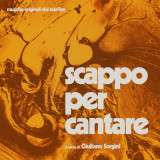
Three-time Grammy nominees, the San Antonio, Texas-based quartet NOTHING MORE return with their highly awaited seventh album, 'SPIRITS'. It features thirteen focused, adventurous and intense songs, uniting introspective philosophical lyrics with unapologetically massive anthems, including the in-your-face 'TURN IT UP LIKE (Stand In The Fire)', their most recent Top 10 Billboard Active Rock radio single 'TIRED OF WINNING'. Since emerging in 2003, NOTHING MORE has made rock radio chart history with no. 1 singles for both 'This is the Time (Ballast)' and 'Go To War', while they also have seven Active Rock Radio Top 10 singles in their repertoire. 'SPIRITS' further proves their expertise in the rock genre and beyond. It documents the tumultuous time the world experienced over the past two years capturing the desperation and isolation of lockdown, the spiral of substance abuse, the pain of broken relationships and survival in self-reliance while summarizing the overall story and mission of NOTHING MORE: Reflect, Provoke, Inspire.
Repress in soon, note new price. RIYL Steve Gunn, Hiss Golden Messenger, Ryley Walker, Itasca, Bill Callahan, Kurt Vile, Angel Olsen. “Timeless ... Measured, perceptive storytelling. A singer with an unmistakable and communicative voice, able to convey hope and hurt with equal clarity.” Pitchfork / “She writes literate songs with unusual precision and sings them in an understated, open-hearted way that lends good poetry the directness of conversation.” Uncut / On her fourth album as The Weather Station, Tamara Lindeman reinvents, and more deeply roots, her extraordinary, acclaimed songcraft, framing her precisely detailed, exquisitely wrought prose-poem narratives in bolder and more cinematic musical settings. The result is her most sonically direct and emotionally candid statement to date. The Weather Station is her most direct and candid record, and the first one to include tracks one might characterize as pop songs. Throughout, the record grapples with some of the darkest material Lindeman has yet approached: it is, according to her, the first album on which she touches on her personal experiences of mental illness. And yet the gesture inherent to the record is one of unflinching embrace. Despite it all, the characters “fall down laughing, effervescent, and all over nothing, all over nothing.” “Well, I guess I got the hang of it” she sings wryly, “the impossible.” By saying more than ever before, The Weather Station seeks to reveal the unnamable, the unsayable void that lies beneath language and relationships. It’s willfully messy and ardent and hungry. Tracks : A1 Free A2 Thirty A3 You and I (on the Other Side of the World) A4 Kept It All to Myself A5 Impossible B1 Power B2 Complicit B3 Black Flies B4 I Don’t Know What to Say B5 In an Hour B6 The Most Dangerous Thing About You
Anchor and Adjust is the debut album from, Australian synth-pop duo
Syzygy; Rebecca Maher and Gus Kenny both formerly of beloved
Melbourne synth-punk band Spotting
This new project explores a more unadulterated electronic aesthetic combined
with an unabashed pop sensibility.Gus was listening to a lot of 80s synth music
and minimal wave, while Bec was deep into mainstream 80s pop divas and new
wave. The resultant album sits at a crossroads of genre. The melodies of new
wave pop meet the synth tones of 80's coldwave, the vocal dynamics of postpunk and the DIY ethos and raw edges of punk. Layered synths twist and weave.
Featuring celestial, emotive vocals, the album is often bright and upbeat,
danceable, but also moody, thoughtful and clever. It is sparkling and edgy
electronic pop.
The album's lyrics explore the power dynamics in relationships, including the
relationship with yourself. It is about control and being controlled. Attempts to
unravel years of ingrained behaviour and decision making to try and see the world
another way. It yearns for clarity, asking questions and searching for definitions to
try to understand what is perception, what is manipulation and what is truth.
I was speaking to myself, through myself. Both aware of having these feelings
and disconnected from how they were making me feel. Making this record
allowed me to create order and meaning. It was both my wake up call and my pep
talk for changes I desperately needed in my life. Rebecca Maher. Pressed on
Transparent Purple Color vinyl.
GENRE : Synth-pop, Electronic, Darkwave
With I was born by the sea, Richie Culver brings to a close a period of intense introspection and emotional reckoning with a debut album that serves as both an optimistic statement of intent and a final glance back at the painful places it explores. Following recent work with Blackhaine and Pavel Milyakov, I was born by the sea picks up where Culver’s EP for Italian label Superpang, Post Traumatic Fantasy, leaves off, painting an unabashed portrait of contemporary malaise, detailing a life lived behind closed doors, pinned under the crushing weight of austerity, sapped of the strength to do anything other than gaze out to sea and all the grey possibilities it represents. Where Post Traumatic Fantasy saw Culver returning to his hometown of Hull after a period spent entangled in London’s relentless sprawl, his first full length project reaches further back to his formative years working in a caravan factory and going to raves in and among Hull’s outskirts. Unspooling like a fever dream, I was born by the sea is the anxious clutter of a racing mind spoken clearly, a stark reflection on how it feels to have too many ideas and too much time to act on them.
Though unquestionably a snapshot of a time of significant difficulty, Culver reflects on this period with tender empathy and pitch-black humour, stitching together unflinching observations from England’s neglected corners, ‘there’s more mobility scooter repair shops and bookies than there are bookshops,’ and devastating vignettes of everyday struggle, ‘tears on the tin foil’, with surreal depictions of industrial grit, ‘skimming stones in a small pond by the slaughterhouse’. His DIY approach to production stretches the rough sinew that connects these fragments of memory, a process he describes as using a paired back collection of synths and drum machines to the best of his ability, ‘but to the least of their capabilities,’ wringing out visceral sound with self-taught urgency. During the album’s most impressionistic passages it’s as though Culver has transposed past internal turmoil into powerfully resonant noise, the Sisyphean sonics of ‘Create A Lifestyle Around Your Problems’, which evokes in its concrète clatter and MRI machine barrage the sound of making the same mistake again and again, or the stuttered jumble of ‘Its Hard To Get To Know You,’ its garbled vocal modulation and frayed edges of distortion channeling the paranoia of somebody listening to muffled voices through thin plaster, climbing the walls of their bedroom with the curtains closed, a nervous breakdown in stereo.
In counterpoint to this glides the ever-present spirit of the dance floor, which haunts the record from the moment it is invoked in its first few seconds. Opening onto a sea wall of bright synthesis, the stuttering vocals and bass tone chops of ‘Nervous Energy’ dump us directly into post rave ecstasy, the echoing cry of a voice amplified by loudspeaker carrying the loose energy and surge of crowds moving in darkness. The incessant, dead phone line beep of ‘Pigeon Flesh’ builds to a pulse that suddenly swells into an anxious technoid surge, shapeshifting at lysergic speed into head shrinking audio hallucinations, a descent into the void of the present via machine music hypnosis. Even ‘Its Hard To Get To Know You’ summons the ego death drive of hardcore techno within its scorched textures, flickering indiscernibly between attritional noise and frazzled hardware stomp. Paying homage to both the parties of his youth and a countless succession of Sundays spent offering himself up within Berghain’s hallowed architecture, Culver’s experiments in addressing his formative relationship with rave provide an energetic glimpse at where he might take his sound next.
Between spikes of propulsive energy and grim mood pieces Culver returns to suspended passages of aching, glacial drift, the cold swell of the North Sea, accompanied by some of his heaviest testimonials. The gauzy ebb of ‘Daytime TV,’ its tumbling loops reminiscent of boats bobbing off a distant shore, sees the artist at his most checked out, slumped in front of his television, seven days a week. ‘I used to dream of doing something,’ he admits, ‘anything to get out of this town.’ ‘Love Like An Abscess’ pairs swirling currents of ambient shimmer with violent images of baseball bats lying next to beds and blood-stained mattresses, next to which Culver pleads in a desperate mumble, ‘let our love grow, like a broken abscess.’ Yet it’s with the album’s final word and title track that Culver reveals a glimmer of cautious optimism, a parting gesture of exposition and closure. ‘I knew I had to get away,’ he asserts, ‘so I did and I never looked back.’ What follows builds from a low throb, the flutter of a tiny heartbeat, to a resonant glow, embellished with unfurling synthetic burbles, oil rigs sparkling in the distance, golden light spilling across the sea. In reckoning with the place he had to escape, Richie Culver is now free to look towards the promise of something new, something hopeful.
The East Coast of England is a land living on borrowed time. Time we borrowed from the North Sea, reclaimed a thousand years ago. But now it seems that sea has come to claim it all back. Michael C Coldwell spent three years travelling up and down this rapidly disappearing shoreline, collecting ghost stories, photographing the roads to nowhere, the monumental sound mirrors and pillboxes teetering on the edges of cliffs, making field recordings of the waves and fog signals, and writing mournful electronic music from static caravans. This hauntological project finally culminated in a short essay film entitled Views from Sunk Island - and this new Conflux Coldwell album. More than just a film score, The Phantomatic Coast stretches beyond the original aims of the documentary, to evoke something deeper about our troubled relationship with the sea – the many towns and ships lost beneath the waves, and ancient forgotten lands lying out beyond the windfarms like some Yorkshire Atlantis. Memory and mythology became obvious themes in the work, as did the ruins and remains of the world wars, now slipping beneath shifting sands forever. The Phantomatic Coast will be released via digital platforms and limited edition pressed vinyl in a deluxe gatefold sleeve.
Jozef Van Wissem- Lute, Electronics, Beats, Electric Guitar, Found Bird Sounds. In 2013 van Wissem won the Cannes Soundtrack Award at the Cannes Film Festival for Jim Jarmusch’s “Only Lovers Left Alive “. In December 2017 Jozef van Wissem was invited to perform the madrigal depicted in Caravaggio’s painting The Lute Player (1596) at the Hermitage museum of Saint Petersburg. In 2022 three of his works were used for in the soundtrack and trailer of Irma Vep (HBO). His completely unique musical world can be easily verified by his collaborations, especially that these relationships are also strengthening his own musical character. He worked together with Zola Jesus, Tilda Swinton, Jarboe as well as with his long-time collaborative partner, also his friend, Jim Jarmusch. “La Cinémathèque Française in Paris commissioned me to write and perform the score at the presentation of the restored version of Nosferatu. I was a bit overwhelmed by its success. It was sold out. I wasn’t going to repeat it. But people kept asking. In the beginning the soundtrack was more improvised and reactive to the images but after a few times the audience kind of showed me the way. To start with a few notes and building the score slowly to a dense slow metal ending. I found an old 7-inch single with recordings of extinct birds on a market, I electronically processed and added them to the score . “ Manipulating the sounds of electric guitar in alternate tuning he manages to create the feeling of fear, equal to the experience of the victims of Count Orlok. “To me Nosferatu personifies this Death Bird of the Plague. The Black Death depicted in the film offers a timeless parallel with contemporary society. The vampire Count Orlok infests the city with rats and people are infected with the plague. They must quarantaine. This provokes hysteria. Much like nowadays”. With a melodic almost medieval magic and mystery Jozef van Wissem has reignited the light through the filters of dark energy post punk and even black metal into a wondrous new melodramatic cinematic space…- John Robb (Louder Than War) Beginning with a solo played on the lute, his performance will incorporate electric guitar and distorted recordings of extinct birds, graduating from subtlety to gothic horror. – New York Times Delightfully macabre, intense and electrifying – MXDWN
"Most of this record was created in the shadow of COVID and deep in the maw of Melbourne’s 2020 long winter lockdown. It is a meditation on the nature of connection.
Restricted to a 5km zone, one of the only people I saw outside my family during this time was my old friend and teacher, Ania Walwicz. We met in the overlap between our zones on the waterfront near Docklands to walk and talk on bright, cool winter afternoons. Those conversations became large in my thoughts when Ania suddenly passed away in September. Her voice was in my head as I worked on this music, trawling through threads of ideas, recordings made on my phone, and thoughts jotted down in notebooks.
Ania’s practice as a writer relied on ‘automatic’ processes. Her work was informed by everything she had read (a lot) but it was created in the manner of dreams. In a state where the subconscious might bubble up and the words arrange themselves into meaning bearing forms that resonate more than represent. I thought a lot about that as I made this music. I recorded everyday using the trumpet, my old Revox reel-to-reel, a couple of synths, a harmonium I lent from a friend, and whatever else was around. I worked mostly on just diving a little deeper each time I sat down to it.
Through the simple process of exhalation, I explored my relationship with the trumpet, which has been through so many twists and turns. I let the tones produced by my breath unfurl on long tape loops and degrade beyond recognition through pedal and plugin chains, until the only imprint of the initial gesture remained.
My process also involved long bike rides during which I’d listen to the work of previous days on ear buds, gliding through familiar streets made slightly strange by the absence of people and movement. Often my rides took me along Footscray Rd next to the port, and as I washed down towards Docklands past the old boat moorings I stopped pedalling to coast. The sounds from my darkened studio mingled with the low rush of air past my helmet, the click and whirr of my bike gears, a squalling bird, a whooshing car. And I remembered my last conversation with Ania. Sitting in the late afternoon sun, squinting against the light that raked across the water, she was telling me about all the different words for they have for blue in Polish and Russian, and how words don’t just change our perception of things, but also actually change the thing being perceived.
As I rode home that afternoon, I felt like anything was possible. "
Peter Knight
Ever since he remixed Abimaro & The Free’s ‘Mark’ back in 2014, NuNorthern Soul boss Phil Cooper has kept in touch with Daniel Stenger, the producer and self-taught multi-instrumentalist behind the Flashbaxx project. Cooper was always convinced that Sanger would be capable of crafting a very special release for the label but was willing to give him time to come up with something special.
With Take Care My Friend, a mini-album inspired by the German producer’s deeply rooted love of jazz-funk, Stenger has repaid the faith shown in him. He’s deliv-ered a collection of quality cuts marked out by audible warmth, effortless musicality and memorable, sun-soaked songs.
As he makes clear in the liner notes included with the vinyl version of the mini album, the project began with the recording of luscious, Rhodes-laden opener ‘Al-right’. After staying up all night recording the track, Stenger not only decided to continue recording with the same relatively limited set of instruments (think bass and electric guitars, drums, piano, electric piano, organ, hand percussion and a handful of synthesizers), but also stick to a hybrid sound that added a subtle Lat-in shuffle to his Balearic-minded take on jazz, funk and soul fusion.
We’re biased of course, but there’s no denying that Stenger’s creative choices have resulted in a superb set of tracks. While the restricted kit list provided focus during the music-making process, there’s still plenty of musical variety across the six tracks that make up the set.
For proof, compare and contrast the jazzy, loose-limbed headiness of ‘It Just Happens’, where simmer-ing synth-strings, twinkling melodic motifs and glis-tening guitar licks rise above smooth jazz-funk bass and a gentle broken beat rhythm, and the slow-motion soul brilliance of ‘Strangers’, where Kathryn Kempf’s evocative and poignant lead vocals rise above a sump-tuous downtempo groove and heart-aching piano lines.
This subtly varied but musically coherent vibe contin-ues across the mini album. Stenger indulges in a bit of New York daydreaming on ‘Brooklyn Love Boat’, a wonderfully musically detailed chunk of 1970s style jazz-funk heat that offers knowing nods to Roy Ayers, Herbie Hancock and the jazz-fusion stylings of Azymuth, before opting for a deeper, slower and even more seductive sound on the Hammond-sporting bliss of ‘Take Care My Friend’.
Closing cut ‘City Lights’, a gorgeous, soft-focus affair smothered in echoing Rhodes riffs and immersive chords, has the feel of an underground classic in wait-ing: a stirring, string-drenched future sing-along whose emotion-packed lyrics are delivered brilliantly by Glasgow-born singer/songwriter Chris Pookah.
Despite the song’s subject matter – the painful final breakdown of a relationship – there’s something strangely uplifting about the combination of Pookah’s pitch-perfect vocal delivery and the absorbing warmth of Stenger’s comforting and sonically detailed music. It provides a fittingly impressive finish to a mightily immersive mini album.
Mondays at The Enfield Tennis Academy, x2 LPs of long-form, lyrical, groove-based free improv by acclaimed guitarist & composer Jeff Parker's ETA IVtet. Recorded live at ETA (referencing David Foster Wallace), a bar in LA’s Highland Park neighborhood with just enough space in the back for Parker, drummer Jay Bellerose, bassist Anna Butterss, & alto saxophonist Josh Johnson to convene in extraordinarily depth-full & exploratory music making. Gleaned for the stoniest side-length cuts from 10+ hours of vivid two-track recordings made between 2019 & 2021 by Bryce Gonzales, Mondays at The Enfield Tennis Academy is a darkly glowing séance of an album, brimming over with the hypnotic, the melodic, & patience & grace in its own beautiful strangeness. Room-tone, electric fields, environment, ceiling echo, live recording, Mondays, Los Angeles. Jeff Parker's first double album & first live album, Mondays at The Enfield Tennis Academy belongs in the lineage of such canonical live double albums recorded on the West Coast as Lee Morgan’s Live at the Lighthouse, Miles Davis' In Person Friday & Saturday Night at the Blackhawk, San Francisco & Black Beauty, & John Coltrane's Live in Seattle.
While the IVtet sometimes plays standards &, including on this recording, original compositions, it is as previously stated largely a free improv group —just not in the genre meaning of the term. The music is more free composition than free improvisation, more blending than discordant. It’s tensile, yet spacious & relaxed. Clearly all four musicians have spent significant time in the planetary system known as jazz, but relationships to other musics, across many scenes & eras —dub & Dilla, primary source psychedelia, ambient & drone— suffuse the proceedings. Listening to playbacks Parker remarked, humorously & not, “we sound like the Byrds” (to certain ears, the Clarence White-era Byrds, who really stretched it).
A fundamental of all great ensembles, whether basketball teams or bands, is the ability of each member to move fluidly & fluently in & out of lead & supportive roles. Building on the communicative pathways they’ve established in Parker’s -The New Breed- project, Parker & Johnson maintain a constant dialogue of lead & support. Their sampled & looped phrases move continuously thru the music, layered & alive, adding depth & texture & pattern, evoking birds in formation, sea creatures drifting below the photic zone. Or, the two musicians simulate those processes by entwining their terse, clear-lined playing in real-time. The stop/start flow of Bellerose, too, simulates the sampler, recalling drum parts in Parker’s beat-driven projects. Mostly Bellerose's animated phraseologies deliver the inimitable instantaneous feel of live creative drumming. The range of tonal colors he conjures from his extremely vintage battery of drums & shakers —as distinctive a sonic signature as we have in contemporary acoustic drumming— bring almost folkloric qualities to the aesthetic currency of the IVtet's language. A wonderful revelation in this band is the playing of Anna Butterss. The strength, judiciousness & humility with which she navigates the bass position both ground & lift upward the egalitarian group sound. As the IVtet's grooves flow & clip, loop & repeat, the ensemble elements reconfigure, a terrarium of musical cultivation growing under controlled variables, a tight experiment of harmony & intuition, deep focus & freedom.
For all its varied sonic personality, Mondays at The Enfield Tennis Academy scans immediately & unmistakably as music coming from Jeff Parker‘s unique sound world. Generous in spirit, trenchant & disciplined in execution, Parker’s music has an earned respect for itself & for its place in history that transmutes through the musical event into the listener. Many moods & shapes of heart & mind will find utility & hope in a music that combines the autonomy & the community we collectively long to see take hold in our world, in substance & in staying power.
On the personal tip, this was always my favorite gig to hit, a lifeline of the eremite records Santa Barbara years. Mondays southbound on the 101, driving away from tasks & screens & illness, an hour later ordering a double tequila neat at the bar with the band three feet away, knowing i was in good hands, knowing it would be back around on another Monday. To encounter life at scales beyond the human body is the collective dance of music & the beholding of its beauty, together. – Michael Ehlers & Zac Brenner
The Microphones, Bon Iver, Lomelda, Vegyn, Hovvdy, Dijon. “Lemon Cream” vinyl is for Indies Only. Follow up to 2019’s critically acclaimed ‘bunny’. Sam Hall’s new album as ghost orchard, ‘rainbow music’, is a collage of patience and meditation. It’s filled with nuances as quietly imperceptible as the seasons, or the profound movement of time, where one day looking back you realize your whole spirit has shifted. Where 2019’s critically revered ‘bunny’ was a love letter to a romantic relationship, ‘rainbow music’ documents the culmination of Hall’s first personal experience with loss in several forms. At the end of 2020, his longterm childhood pet passed away, and with it the last continuing threads of familiarity between being a kid and adulthood. Still based in the Grand Rapids, Michigan town he’d grown up in, the static ease of familiar living seemed to be coming apart at the seams, as friends moved on to bigger cities, relationships shapeshifted and in a short period of time, another kitten he’d adopted passed away prematurely, leaving Hall to question the trajectory in which he himself was headed. Like “songs in the key of life,” the title ‘rainbow music’ refers to the myriad of colors and qualities within Hall that are refracted throughout. It’s a symbolization of hope and the aftermath, the flickering light at the end of the tunnel (or “when a rainbow shows up after a big storm”). “Wish I could have fun anymore,” Hall ruminates on “dancing”, as well as confessing he “wish he made more upbeat bangers.” But reality packs more of a punch, and this collection of songs sees him finally be at peace with the current state of affairs. Relatable to anyone who has contemplated what it means to settle down, or even just catch your breath in an era where anguish is commonplace, the release of ‘rainbow music’ is a happy ending in its own right, a marker of survival that remains close to the bone. // Ghost Orchard’s “bunny” is a blushing, beatific beat. - The FADER // Fluttering and transportive, a swirl of beats and plucky guitar and strings that feels like a cocoon. - Stereogum // Hip-hop inflected, stream-of-consciousness confessionals that’ll have you swooning in the lazy summer sunlight. – Paste // Track listing: 01. Rest 02. Jessamine 03. Cursive 04. Maisy 05. Cut 06. soot 07. memory storage 08. Dancing 09. bruise 10. sweet song 11. comfort (rainbow)
With ‘Terrain,’ Joachim Spieth presents the fourth long player on his Affin imprint.
The follow-up album to ‘Ousia’ (2021), ‘Terrain,’ reflects on the human relationship with nature. The album title is a reference to a musical language that layers Spieth’s music production practices and intimacy with nature.
‘Terrain’ was forged in deep solitude.“It’s an interplay of euphoric flashes and introspection” – says Spieth. The eight compositions take the listener into a captivating cascade of sonic textures resembling internal states fluctuations and emotional release. The tension between the organic warmth and static curves broads tones into liquified roars and empty spaces.
Unlike Spieth’s previous albums, ‘Terrain’ holds more intimate gestures and emotional sensibility. Soothing frequencies here are intended to create a state of awareness in the listener. It is a work of conceptual and emotional beauty, evoking a form of spatial imagery that is as grounding as elevating.
Following the release of acoustic EP Letters To Our Former Selves – Acoustic late last year, Youth Fountain is excited to be back at it with new single “Peace Offering" “This track was written in the perspective of knowing you could never truly love or be loved by anyone before being comfortable with who you are as a person,” shares Tyler Zanon “No matter what positive aspects can come out of a relationship - if the foundation isn’t there of having that bare minimum of self love, things inevitably tend to tarnish.” As Youth Fountain prepares to move forward, the future perfectly mirrors the past. What began as a solo project by guitarist/vocalist Tyler Zanon in 2013 under the name Bedroom Talk eventually blossomed into a full-blown band by 2017, with the Vancouver-based Youth Fountain (then a duo) proudly announcing their presence with the debut single “ Grinding Teeth ” and a pair of Pure Noise Records releases that expertly toed the line between pop-punk fervor and more reflective emo moments. Alternative Press hailed the band’s 2019 debut full-length, Letters To Our Former Selves , as one of the year’s very best, dubbing it the “ perfect blend of emo-tinged punk to soundtrack reflecting on every single life decision you’ve ever made ,” while North American tours with the likes of Free Throw, Can’tSwim, and Chris Farren cemented Youth Fountain’s sweat-soaked sound as something best experienced live – all while dodging a few stray elbows and overzealous crowd-surfers. Now once again, Zanon finds himself as a solo artist following the departure of co-vocalist Cody Muraro in mid-2020 – but this time, he’s exactly where he wants to be. Youth Fountain’s new release, Letters To Our Former Selves – Acoustic EP, re-introduces Zanon’s project to the world, reimagining fan favorite aterial from the 2019 LP of the same name.
Before Southside Johnny and the Asbury Jukes even had an album on the shelves, they were being played on the radio in Cleveland. That’s how far back the New Jersey band’s relationship goes with the city. As the “Jukes” part of their name would suggest, Southside Johnny and his group were spiritually a band from another time. They had a big sound (and a full horn section, courtesy of The Miami Horns) that conjured a vision of a large band, jammed together on the bandstand. Which was hardly far from the truth on a number of nights. Mixing carefully chosen blues and soul covers with their own originals (and some choice songwriting contributions from Bruce Springsteen), they had a live show that was even more potent than what had been laid to tape in the studio. This 1977 performance at the Cleveland Agora was the group’s second outing at the legendary venue in less than a year. Live in Cleveland ‘77, the recorded evidence of that night, presented here for the first time by Cleveland International Records, shows exactly why they would become frequent visitors and really, honorary Clevelanders. Songs like “I Don’t Want to Go Home,” Springsteen’s “The Fever,” “Havin’ a Party” and “Without Love” were already well-loved favorites with the local audience, thanks to frequent airplay on WMMS long before they even had an album. Cleveland got a special bonus round that other cities would have killed for. Ronnie Spector had joined the group in the studio as they recorded that debut and came to Cleveland to share the stage with the Jukes, sharing her soon-to-be-legendary take on Billy Joel’s “Say Goodbye to Hollywood” with the Agora crowd. As she did with so many songs, Spector made it her own. Southside Johnny and the Jukes continue to thrill audiences with their live performances worldwide to this day. Now, thanks to the release of Live in Cleveland ‘77, you can be in the audience to hear a bit of the early magic as they were on their way to the top.
From the moment that German producer, Fejká, burst onto the scene at the age of 17, he has captivated listeners with an unrivaled ability to sit comfortably at the intersection of expression and introspection. Where night and day, dreaming and dancing, the fast and the slow, might naturally diverge, he is able to balance them delicately, creating sounds which are, in the same moment, wonderfully ethereal, but also thrillingly dynamic.
His new single Hiræth, meaning ‘long gone’, offers a soundscape full of warmth and calm, enhanced by the unique soothing quality of Kim van Loo’s distinctive vocals – a sound which Fejká accidentally discovered during their time as roommates in lockdown. The track describes a certain sense of nostalgia for a place that might never be reached, or a place that might never be returned to, with an overarching feeling of longing throughout. Working from his studio in
Stuttgart, Fejká processed synths, pads and piano with a tape machine to heighten the nostalgic ambience and, through grainy imperfections, establish a more intimate relationship with the listener. The track is restrained and subtle, yet it cycles through the ups
and downs of an ever-changing landscape keeping listeners on their toes, “Like the feeling of being taken on a journey for the last time“, says Fejká Delving into a vast range of emotions and musical approaches, Fejká’s most recent album,
Reunion, cemented the young producer’s position in the downtempo electronic scene. The album’s single, Svanur, has been streamed over 15 million times with Fejká having recently performed sold-out shows at EartH London, Cross Club Prag, Kater Blau, and Klein Istanbul.
Combining elements of indie-pop, punk, emo and just a little bit of 2009 vintage math-rock for good measure, adults are four pals trying to find their way in a disintegrating world. for everything, always reflects on how we look after ourselves, one another and people in our community; it’s a riotous collision reminiscent of Johnny Foreigner, The Beths or Trust Fund, bursting with crunching guitars, speedy drums and yelping dual vocals. The first single all we’ve got // all we need is a song about individual torments: “having a breakdown on the Megabus to Bristol", and about collective support: “mutual aid, building strong networks of community resistance to the hostile environment, to food insecurity, to the homophobia and transphobia by the state and about trying to look after one another”. the secret song to end side one deals with loss, guilt, rejection and anxiety, exploring the travails of a messy breakup and the masculine urge to bury everything deep down despite the fact that that only hurts people more. tfl has a lot to answer for is a “reflection of drinking way too much in yr mid 20s, staying up too late, burning yrself out and how it impacts on yr relationships and mental health”. Recorded and produced by Rich Mandell (Happy Accidents, ME REX) over a couple of weekends in the summer of 2021, for everything, always is the constantly naive, but optimistic, outlook: always striving for a better future in the face of modern society’s bullshit. lts are a noisy pop band desperately clinging on to the ghosts of 2009. Their songs are a silly, joyful, and occasionally sad, look back at the tail end of their 20s, a way to grapple with breakups, parties, alcohol and loneliness, and looking hopefully into the future. They’ve released singles with Art Is Hard and For The Sakes Of Tapes, and self released an EP (The Weekend Was Always Almost Over), which was subsequently released on vinyl by Caballito records. adults are based in south London. Faster, messier and sillier than they have any right to be, adults are hopeful and joyous, fighting through the existential angst of youth to try and find their place in a world on the brink, as grown ups, as adults. Like the octopus on the artwork says: “we're all we've got, we're all we need”. // “a cacophony of clattering drums and belt-it-out choruses Los Campesinos! or Martha would be proud of evidence that adults seem to have stumbled into something rather marvellous” For The Rabbits // “There’s an ample buoyancy from the vocal work, and the guitars are crunchy, though I like how they’re a bit tempered here; think of Martha having to play at your local library…hooks, but just a little more subdued. There’s just something about this that radiates joy” Austin Town Hall // Tracklist: A1) I Had A Little Snooze & Now I Will Probably Never Arrive At Yr House A2) Janine (JG Forever) A3) All We’ve Got // All We Need A4) Tfl Has A Lot To Answer For A5) 2 Sqs A6) The Secret Song To End Side One B1) Things We Achieve B2) The Nod B3) The Pitch And Yaw Of The 6.12 To Brighton (Plain Wrong) B4) Between Buildings B5) Killing & Dying & Something More Positive B6) The High Watermark (Thoughts Of U) B7) Wasn’t Like That
While she might be best known as an improviser (most notably in the Spontaneous Music Ensemble, the Feminist Improvising Group and more recently with the likes of Les Diaboliques), Maggie Nicols’ talents stretch into song, dance, poetry, performance and composition. When Cafe OTO was shut over lockdown we invited her to follow up the wonderful solo ‘Creative Contradiction’ with some time spent singing alone at the piano. ‘Are You Ready?’ comprises an LP of songs and a 2CD edition which includes a companion disk of freely improvised meditations entitled, ‘Whatever Arises.’ Songs - seemingly contradictory to the practices of free improvisation - have been a vital part in Nicols’ relationship to music. It was singing bebop with pianist Dennis Rose which nurtured and challenged Nicols, allowing her to develop her own skills and sound amongst a repertoire of standards sung in clubs and pubs. Singing alongside Julie Tippetts in Centipede showed her how heady experimentation could be woven into composition, and a more recent gig with pianist Steve Lodder played out ‘The Maggie Nicols Songbook.’ Are You Ready? recalls Nicols’ own compositions from memory, working out tunes and turning them over. New routes down old paths form in moments of improvisation and all wrong turns are played out with joyous discovery. What John Stevens dubbed Maggie's “ability to find the ‘rhythmelodic’” meets a willingness to be understood and to understand. Solo at the piano, Nicols is still firmly rooted in the collective however - “Sans Papiers” sets the words of poet Vicky Scrivener to tune; a story of migration and struggle which is as important to Nicols as the songs her mother wrote. Such an intimate recording of her own compositions came with a certain amount of reflection and anxiety - best confronted with time spent freely improvising. ‘Whatever Arises’ - a companion disk to the ‘Songs’ - is a meditation of sorts, a process of ‘following the energy’ which has its roots in John Stevens’ work. “Improvisation gives the confidence to compose,” Nicols told us in an interview about some of her archival tapes, and here the two are as important as each other. Beginning with breath and repetition, ‘Whatever Arises’ allows Nicols’ to find new voices, accompanied by the piano and over dubbings of her tap shoes on the concrete floor. Brilliantly she is able to share her moments of discovery with the listener, finding comfort in vulnerability. Whilst rooted in Stevens’ work, Nicols’ improvisational techniques also remind us of Pauline Oliveros’ Sonic Meditations. They are what has allowed Nicols to find her own sound, to ‘teach herself to fly.’ They have allowed Nicols to grow and share and to be able to keep close the songs that mean so much to her, now shared with us. Recorded at Cafe OTO on July 15th, 16th and 17th 2021 by Shaun Crook. Mixed by Shaun Crook. Mastered by Sean McCann. Artwork by Annalisa Colombara. Lettering by Rosella Garavaglia. Layout by Maja Larrson. ‘Slow Within The Urgency’ inspired by mindfulness teacher Jeff Warren. Original poem ‘Sans Papiers’ by Vicky Scrivener. Original poem ‘You Darkness’ by Rainer Maria Rilke. Music and lyrics to ‘Music Is The Healing Force of The Universe’ by Mary Maria Parks.
Since first forming in 2014, New York trio THICK have triumphed at
turning the harshest truths into wildly exhilarating punk songs
On their second album Happy Now, vocalist/guitarist Nikki Sisti, vocalist/bassist
Kate Black, and vocalist/ drummer Shari Page deliver their most complex and
confessional work yet, exploring everything from self-sabotage and insecurity to
victim-blaming and destructive relationships. Raw, irreverent, and brutally honest,
Happy Now ultimately offers both joyful catharsis and much-needed instruction
for living well in turbulent times.The follow-up to 5 Years Behind (a 2020 release
praised by Under the Rader as a "dazzling debut album…laced with anger, humor,
killer guitar riffs, and soaring punk melodies"), Happy Now finds THICK working
again with producer Joel Hamilton (Iggy Pop, Juiceboxxx) and recording at Studio
G Brooklyn. In a profound evolution of their previous work, the 11- track album
encompasses sharper arrangements and stickier hooks and a more explosive
energy — an effect often achieved through the sheer force of their three voices
singing in unstoppable unison.