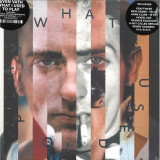
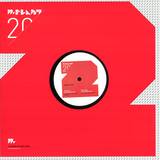
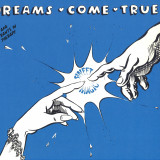
Since their formation in 1977 Mark Perry’s group Alternative TV have moved far away from their more direct punk rock beginnings into all manner of other areas of music that have sometimes themselves drawn from improvisation, free jazz, industrial and electronic music. On Direct Action, Alternative TV’s first studio album since Opposing Forces in 2015, we are presented with six instrumental tracks which steadily rip apart all expectations as they shed all allusions to rock music in favour of the kinda sonic mutilations that once helped 1979’s classic (and Nurse With Wound list endorsed) Vibing Up the Senile Man (Part One) stumble into weird and wonderful shapes. Direct Action marries guttural electronics to sounds most artists would consign to the bin and through Perry’s long perfected mastery of pulling together disparate strands to create something entirely alchemical and invigorating delivers a unique stamp to the ATV story. With the help of longtime collaborator Dave Morgan alongside the input of Gareth Matthews, Ruth Tidmarsh and Cos Chapman, abstract patterns of dishevelled sound rub alongside occasional percussion, disembodied plasma guitar strums and even what seems like an oboe groaning in a murky corner. Similar to its distant cousin of Vibing…, everything adds up to a whole that’s demanding yet completely rewarding as every listen prises open the dark scab of contemporary malaise to reveal something fresh. The front cover’s homage to an incredible album by a pioneering electronic group we are not going to name should in itself point to the unpredictable nature of the music here. If you are savvy enough to get that reference, then you’re on the right path to understanding where Direct Action resides. Easy listening this ain’t. Limited to 600
Поиск:move master
Все
Born in Roma in 1959, Guiseppe “Peps” Cotumaccio arrived in South Africa when he was two years old. He was the mastermind behind the band “Sweet Reaction”, singing and playing keyboards.
In the early 80’s, the group used to back various artists including one of the South African top singer “Neville Nash”. Both artists were on the same record label: Music Team. Throughout his lengthy career, Peps has collaborated with Johnny Clegg, Ronnie Joyce, Sipho "Hotstix" Mabuse, P.J. Powers, Mark Alex, Neville Nash, and Mara Louw just to name a few.
The lead singer of the band, Dion Williamson, started performing in Johannesburg’s nightclubs and got quickly very successful, always in demand! People loved his gravel and sensual voice as he used to sing some of Joe Cocker’s popular songs. Unfortunately, during the Apartheid, the South African Government were not allowing black and white audiences, and the band split.
On this BIG5 Boogie#2, Enoch Ndlela produced 2 Modern Soul killer tracks.
Recorded in 1981, "Take it easy", where the music is evidently influenced by Willie Hutch (Easy does it - 1978) offers Dion a way to fully explain himself doing his own version of the tune. And what an explosive result!
On the same side of this 12”, our 2 Frenchies in Cape Town aka Simbad & Fred Spider enjoyed delivering us a fat broken beat version of the track, while the very “En Vogue” Aroop Roy from London turned it into a funky house summer hit.
Side B starts with a superb composition from the band: “African Sunrise” where Dion Williamson is on top, this tune is a bomb!
To finish this E.P, the well-known Kid Fonque from Johannesburg, who freshly moved to London working for the glorious house record label Defected, couldn’t wait to produce a super groove deep house refix. The result is a second essential dancefloor release from Voom Voom Records!
Black Truffle is thrilled to present a previously unheard performance by rudra veena master Ustad Zia Mohiuddin Dagar, recorded in the North Indian city of Vrindavan at the Druhpad Samaroh festival in 1982. Z.M. Dagar was a nineteenth-generation descendant of the Dagar family of musicians, famed for their profoundly meditative approach to the tradition of Hindustani court music. Perhaps the most revered members of the family were the brothers Mohinuddin and Aminuddin Dagar, who played a key role in reawakening interest in dhrupad in the mid-20th century. The great exponents of the tradition from whom Z.M. Dagar descended were all singers, and dhrupad is essentially vocal music. However, as Z.M. Dagar explained, the veena family of instruments plays an important role in the education and practice of dhrupad singers, especially as an aid to mastering the fine microtonal nuances of pitch essential to the genre. Introduced as a child by his father to the rudra veena, a large and low-pitched veena amplified by two enormous gourds, Z.M. Dagar became the first modern dhrupad musician to perform with it as an instrumental soloist, giving his first recital at the age of 16. Devoted to the instrument throughout his life, he made innovations to its design and materials, as well as introducing novel techniques (such as playing without the use of the traditional wire plectrum, resulting in the remarkable warmth of his tone). In the great Dagar family tradition, his approach to the various ragas that make up the dhrupad repertoire was stately, slow, and considered, with a great emphasis on the alap, the heavily improvised exposition section. True to form, in this recording of Dagar performing the night raga Yaman Kalyan, the alap section stretches out to more than forty minutes of slow-motion bliss, a frozen tanpura drone hovering above Dagar’s gracefully bent notes and elegantly twisting phrases. In the alap’s first half, Dagar’s figures are so intently focused on the lower reaches of the rudra veena’s range that they register more as shudders and moans than melodic patterns. As the performance continues, he slowly climbs in pitch, though continuing with the same intent focus on the articulation of single notes and subtle microtonal variations. This leads to the jod section of the performance, which, though still accompanied only by the tanpura, gradually takes on a more rhythmic character. Developing almost imperceptibly over the course of nearly thirty minutes, the jod moves from the stillness of the opening alap to a rapid pulse that announces the closing section of the piece, where Dagar is joined by Shrikant Mishra on the pakhawaj (a double headed hand drum). Where many performers use the final section of the raga as an exercise in unrestrained virtuosity, Dagar and Mishra subtly weave a web of finely shifting accents and hypnotic melodic variations, bringing the recording to a fitting conclusion while remaining within the meditative space occupied by the performance as a whole. Adorned with beautiful archival photographs of Dagar taken by Swedish percussion legend Bengt Berger and accompanied by detailed notes from Bradford Bailey, Vrindavan 1982 is a stunning document of music unmatched in its patient focus and mysterious emotional depth. .
Recital presents the first full-length vinyl LP by sound artist Asha Sheshadri. Whiplash combines elements of sound poetry, diary-like narrations, and delicate incidental music. Sheshadri has crafted a unique and marvelous album.
Asha Sheshadri is a visual artist and musician, who “meditates on meaning, context, and impermanence” (Joshua Kim). Moves freely between video, writing, sound, and photography. Her forms flow together to create unpredictable observations of the overlooked, while documenting personal and political networks within our collective, imperfect memory.
“This record is an alternate approach to the autobiographical ‘confessional’ – I wanted to stitch together some pivotal sketches in self-understanding and forgiveness. While their designs may seem affectively disparate, they are in fact quite interrelated. My intention (as with past recordings) is to task the listener with tracing the contours of the narrative (or lack thereof). Each track contains sound from video work, excerpts from writers I admire, ethnographic methods, recovered and recycled voice/text memos, photographs from personal and public archives, and research-driven fictions. These sources expand and collapse into each other, only to reveal the eponymous "whiplash". To me, the feeling of "whiplash" is the collision of: a refracted ambivalence towards what was once real, the endless cycle of reckoning with wherever "home" has taken place, the fraught process of anchoring one’s self in the wake of slow-release trauma, and how (if even possible) to translate all of this into artwork.” –Asha Sheshadri, 2023
“Place is security, space is freedom: we are attached to the one and long for the other. There is no place like home.” –Yi Fu Tuan, Space and Place: The Perspective of Experience.
All tracks arranged & recorded by Asha Sheshadri; in bedrooms, living rooms, libraries, bars, airplanes, backyards and parks across North America.
Mastered by Sean McCann.
- 1: We Wreck Stadiums
- 2: The Cobra
- 3: Warning Track
- 4: Can't Stop The (Charlie) Hustle
- 5: Hard To See My Baseball Cards Move On
- 6: Towers Of Power
- 7: Ferguson Jenkins
- 8: Get It Right (Polo Grounds Ebbets Field Nycmc Mixx)
- 9: The Amazing Willie Mays
- 10: Sun Is Running Out (A Wally Moon Is Coming In)
- 11: Espn Sunday Night Baseball Theme
Public Enemy's frontman swings for the fences with his tribute to Baseball Public Enemy's Chuck D proudly presents his ode to the great American pastime: baseball! A collection of songs that were originally written as MLB-TV promos, We Wreck Stadiums pays homage and salute to some of the baseball greats and the undeniable impact they've had on the game and the world. Featuring the title track which debuts the Hall of Famers: Chuck, DMC, and Rahiem & Kidd Creole of The Furious Five, all four of them members of the Rock & Roll Hall of Fame. Produced by C-Doc for The SpitSLAM Record Label Group. Vinyl mastered by the legendary Phil Nicolo for Studio 4 Vinyl & Ruffnation Entertainment. CHUCK D as MISTACHUCK!
Vladislav Delay presents the fourth EP in his "Hide Behind The Silence" series with five 10" releases coming throughout 2023. Intuitive and raw music, momentary and reflective, released on Ripatti's own label "Rajaton".
Stillness is a myth. Consider concepts such as ”still water”, or ”still air” for that matter. Go to a restaurant, ask them for a glass of still water, hold it against the light and see where we’re at. Even though the water itself has been captured and imprisoned in the glass, it never stops breathing. It’s filled with tiny particles, dancing. Everything can be explained on a molecular level, but since we’re not scientists – and even if you happen to be – it’s the natural world of perception that moves me.
Still air is very similar. A hot summer’s day with zero wind feels completely still. It’s the closest I have felt to complete stillness. Or for a more urban adaptation, imagine the same vibe inside a normal apartment. In those moments, revelations and mind- blowing experiences can be had with experiments in stillness.
Try this: Just sit down for a minute on a sunny day, making sure there’s enough natural light. Do absolutely nothing. Try not to breathe for a bit. (If you need a mental anchor, you can play Cage’s 4’33” in your head but nothing else.) Watch the tiny dots of dust dancing :..’ ̈.:; ́ ́*°.,’:,. ̈ ̈ ̈ ̈:,.’
The movement is crazy, but the feeling of stillness comes from witnessing how subtle it is. In (perceived) complete stillness, every act of microscopic mobility seems to speak volumes. Yet, it feels both reassuring and oddly threatening that the stillness is never complete. What if we would need absolute stillness? Or is it just enough that we can perceive something as such? Extremes attract, so for both water and air, extraordinary movement is equally fascinating. That is also a luxury item of sorts. For us to enjoy a very ”loud” body of water or air, we need to be safe, in enough control of the situation. So when you are, it’s worthwhile to pay attention and take it all in.
A rapid flowing free with extreme strength and just barely in control. Look at that water go! No still water on this one, only ”sparkling”. A windy day when birds seem surprised how hard it is to fly, but in the end they make it. Trees bend but don’t break. The wind shows you its movement but doesn’t hurt you. It feels friendly, like a big clumsy dog that doesn’t quite understand its size.
It’s beautiful to be a guest of the elements, but not at the mercy of them. A new kind of dialogue forms.
Q&A with Sasu Ripatti:
1) Tell us something about the EP series ”Hide Behind the Silence”, what’s the idea and what can we expect?
Exploration of inaction. Of many kinds. In arts and in personal life, or at bigger and more serious levels. Questioning myself as a human being as well as an artist. Acknowledging the growing activism all around, and the very clear need for it, and how it reflects my own inaction.
Musically speaking, after Rakka, Isoviha and Speed Demon, I finally found some relief, but more importantly lost the need to go musically ever more outward and intensive. I felt quite strongly certain periods/moods from the past and they made me revisit some musical ideas or states of mind I was exploring early on.
It’s about live moments being captured, not much premeditation or editing. More intuitive and raw, even though the end result (to me) feels and sounds quite introspective and calm. It’s not very ambitious. Momentary and reflective.
2) Your music doesn’t sound very silent. Does it come from somewhere behind the silence?
Oh, this time to me it sounds quite quiet and playing with space if not silence. I don’t know what’s actually behind silence, but I think silence is the source of everything. We just don’t understand it yet.
3) What kind of thoughts or experiences gave inspiration to this series?
Writing this in Nov ’22, it’s not a stretch to say the world has been really unwell. Sometimes, like Mika Vainio put it, the world eats you up. I feel a bit like that. And I try to hide in my studio and stay away from it all, but it’s getting harder by the day. I’ve been questioning myself and thinking if what us artists are doing is worth anything, and whether it’s just a selfish thing I’ve been doing for the past 25 years, running away from everything. I haven’t come to a conclusion yet.
4) Is it easy for you to be in silence, or around silence?
Absolutely. I not only hide behind silence but I also love silence. It’s only since I started going back to nature as a grown-up person that I sensed and was enveloped by silence, true silence. I have begun to appreciate it a lot. I think all the people should spend more time in silence.
All tracks composed and produced by Sasu Ripatti.
Artwork by Marc Hohmann, photography by Shinnosuke Yoshimori.
Mastering by Stephan Mathieu for Schwebung Mastering.
Vinyl cut by SST Brueggemann.
Publishing by WARP Music Ltd.
- Rare and Unreleased New Orleans Funk 1968
Tuff City’s Funky Delicacies imprint has issued the 7th volume in its New Orleans Funk series. This edition has a side of vocal tracks and a side of instrumental ones. These tracks have been hard to find and many were CD only bonus tracks on earlier editions of the series now out of print.
Noted guitarist Little Buck Sinegal opens the record with “Little Boy Blue.” This was first issued in 1969 on the Seven B label. Little Buck (as he was credited on the original record) passed in 2019 after a lengthy career dating back to the late 50’s as a session man for Slim Harpo & Lazy Lester. He also was a touring member of various Zydeco legends like Clifton Chenier, Rockin’ Dopsie and Buckwheat Zydeco. Drummer Chuck Conway leads the next track with the Amars, “Get On Up.” Cover feature Deacon John Moore still lives today. “You Don’t Know (How To Turn Me On)” was a 1970 B-side on the Bell label. Brotherhood issued “Suckey Suckey Feeling” as a 2-sided single in 1974. At some point the track was renamed “Sooky Feeling” and we have Part 2 here. Singer and Pianist Tommy Ridgley’s track “Fly In My Pie” was originally issued on our sister imprint Soul-Tay-Shus on The Best of International City compilation as well as a 7” on that imprint in 1968. Lonnie Jones recorded several singles for Jenmark in the early ‘70’s including the B-side “You Got To Do Better” originally released in 1972. Sam Henry of Sam and the Soul Machine closes out the side with “Loving You.” This track was originally a CD-only bonus track on our Po’k Bones and Rice compilation of that group we issued on Funky Delicacies in 2002.
Kicking off the instrumental second side is a recently located master by Anthony Butler and the Invaders covering the Otis Redding classic “Hard To Handle.” A bit of organ Funk here. Larry Jones jams out the “Funky Jaws.” The exact year is unknown, but the J.B.’s label that issued the original record put their releases out primarily from 1974-1976. Tyrone Chestnut’s B-side of 1969’s “The Bump” is called “Bumping.” Hook and Sling piano legend Eddie Bo has two appearances. The first is the second part of the “Getting To The Middle” single that came out on Bo-Sound in 1970. Louisiana Purchase have “Accept What You Expect” before they moved from New Orleans to Detroit. The Scram Band that backed vocalist Mary Jane Hooper on her “Don’t Change Nothin’” single are here in an instrumental version of that song. The album closes with a 5-minute combined version of Eddie Bo’s “If It’s Good To You (It’s Good For You)” single, issued in 1969 on Scram.
Overall, this album contains 14 previously hard-to-find tracks that would take hundreds if not thousands of dollars to track down the original singles on the used market. These tracks have been recently remastered, including tracks that were issued as CD bonus tracks on earlier volumes.
- A1: Q - From Within (Body Mix)
- A2: Integrity Ii - Living In A Fantasy
- A3: Strange Ways - Strange Ways
- B1: Thee J Johanz - Stompin N Rising
- B2: Exposure - Love Quest
- B3: Tons Of Tones - Oh Ah Oh Ah Oh
- C1: Interface - Temazepam
- C2: It’s Thinking - Hyperion
- C3: Eric Nouhan - Technobility
- D1: Secret Cinema - Sundance
- D2: Hole In One - Spiritual Ideas For Virtual Reality
Vol.3[25,17 €]
Through 35 hedonistic highlights stretched across three volumes, Music For The Radical Xenomaniac delivers the first ever deep dive into The Netherlands’ colourful house sound of the 90s and the under-celebrated producers and record labels whose music soundtracked a countrywide cultural movement.
Plenty of books and documentaries have celebrated the riotous raves, legendary clubs, high profile DJs and promoters who shaped The Netherlands’ hedonistic house scene throughout the 90s. Music For The Radical Xenomaniac dares to challenge these narratives by shining a light, for the first time, on those who created the scene’s kaleidoscopic, game-changing and globally influential soundtrack.
Leading the charge were a disparate group of key creators who not only forged links with their counterparts in Detroit, Chicago, New York, Belgium, Germany and the United Kingdom, but also became celebrated figures on the worldwide electronic underground (Eric Nouhan, Aad De Mooy, Orlando Voorn, Stefan Robbers and Steve Rachmad). Alongside key underground imprints (Stealth Records, Basic Energy, ESP, Prime and Outland Records included) and lesser-known producers, these pioneers gave flavour to a radical musical movement via open-mindedness, unheard-of creativity and a genuinely futuristic ethos. All of these artists and labels are represented throughout the series.
So, what defined this hedonistic house sound from The Netherlands? Stylistically, it was varied – as the series so emphatically proves – but was defined by a set of distinctive sonic characteristics: emotive musical motifs, high-frequency synth sounds, mellow basslines, pulsating rhythms and more than a touch of hallucinatory intent.
Volume 2 contains a wealth of notable tracks and slept-on gems. These include Q’s ‘From Within (Body Mix)’, a lesser-known cut from the trio better-known as Quazar (Gert van Veen, R.o.X.Y co-founder Eddy De Clercq and Eric Cycle), Eric Nouhan’s melodic masterpiece ‘Technobility’, which is appearing on vinyl for the first time since 1994, and a rare collaboration between regular production partners Maarten van der Vleuten and Mike Kivits (better known as Aardvarck), which was initially released on a special R&S Records’ offshoot set up by the label’s co-founder, Renaat Renaat Vandepapeliere (Integrity II’s ‘Living In Fantasy’).
Other highlights include Exposure’s ‘Love Quest’, a highly sought-after 1991 track by The Hague-based DJ/producer Maurits Paardekooper, and an ambient-infused Andrew Weatherall favourite originally released by Stealth Records in 1993, Hole In One’s ‘Spiritual Ideas For Virtual Reality’.
Packed full of forward-thinking 90s gems remastered for today’s dance floors by Alden Tyrell, Music For The Radical Xenomaniac Volume 1 is a life-affirming celebration of a distinctly Dutch musical movement, whose rich textures and melodies are still inspiring new generations of DJs and dancers today.
Orchestral Manoeuvres In The Dark (OMD) return with their 14th studio album Bauhaus Staircase, over six years after the triumph of their Top 4-charting record The Punishment of Luxury. The album was born from the impetus to kickstart new explorations during lockdown when as Andy McCluskey admits: “I rediscovered the creative power of total boredom.”
The album’s first offering as a single is the title track which serves as a nod both to Andy McCluskey’s love of the Bauhaus era & the power of protest art. “I am a huge lover of visual arts especially mid 20th century movements” Andy comments. “The song is a metaphor for strength and artist passion in the face of criticism and adversity. When times are hard there is a tendency for Governments to look at cutting funding for creativity just at the moment when the arts are most needed to nourish our souls. It seems appropriate that the song and its eponymous album were created during Covid Lockdown.”
Ranging further from the beautiful film noir ballad of ‘Veruschka’ and the dance stylings of ‘Anthropocene’ - a term for the current epoch in Earth’s evolution to the sinister ‘Evolution Of Species’ and the hectic ‘Kleptocracy’ - OMD’s greatest straight-up protest song - the new album is a broad electronic sonic masterpiece that lyrically tackles the topics of the future. The record closes on ‘Healing’ - a moment of reflective calm.
By rights OMD should be in semi-retirement performing classics like Enola Gay and Maid Of Orleans on the nostalgia festival circuit like so many peers. Instead they’ve created a landmark album worthy of their finest work. Bauhaus Staircase remains unmistakably the work of a duo who are still perfectly in sync 45 years after their first gig at legendary Liverpool club Eric’s.
“I’m very happy with what we’ve done on this record" McCluskey summarises. “I’m comfortable if this is OMD’s last statement.”
First time on Vinyl, presented in Gatefold Sleeve on Double LP. Originally released in 2015 and carefully forged between 2011 and 2014, "De Aeris In Sublunaria Influxu" showcases a magically crafted alchemical wedding between these two titans of drone ambient. The 2LP features an exclusive bonus track. Troum navigates through cavernous, subterranean spaces where cyclical sounds reverberate towards impressive crescendos of icy noise, luminous drones and dramatic, guitar-driven ghostly melodies. Their truly unique soundscapes shine in a perfect symbiotic movement with the Swedish dark ambient maestro Peter Andersson. Engulfed in a hauntingly beautiful kaleidoscope of grey-ish melancholia, raison d’être comfortably walks deeply into Troum’s vast territory, delivering his very own trademark of eerie tones, ominous sacral ambience and crystal clear constructions. Airy lush enigmatic atmospheres live together with dark breathing, reverberant transformative drones. Rich and gorgeously layered.
All sounds assembled and recorded by raison d'être (Peter Andersson) and Troum (Stefan Knappe, Martin Gitschel) between 2011-2014. All sounds processed, manipulated and structured by Peter Andersson 2011-2014. K-14 level mastering by Peter Andersson 2014. Artwork by Ritxi Ostáriz.
2LP Vinyl Edition of 300 copies, Gatefold Sleeve, Matt Lamination, Black Paper Innersleeves. 8 Tracks. Running Time 76:28
- 1: Fear Detector
- 2: Metal Never Dies
- 3: Pandemonium
- 4: One Heart One Soul
- 5: Make The Move
- 6: Pain
- 7: Decadent
- 8: Metal Machine
- 9: Steelhammer
- 10: Dust And Rust
- 11: I Give As Good As I Get
- 12: Rock'n'roll Soldiers
- 13: Dominator
- 14: Blind Eyes
- 15: Mastercutor
- 16: Vendetta
- 17: 24/7
- 18: What A Hell Of A Night
- 19: Man And Machine
- 20: Like A Lion
- 22: Holy
- 23: Freelance Man
- 24: Independence Day
- 25: Metal Eater
- 26: Wilder Life
- 27: Future Land
- 28: Blitz Of Lightning
- 29: We're History
- 30: Break The Rules
- 31: Go Back To Hell
- 32: They Want War
Eins ist schon lange klar: U.D.O. machen keine halben Sachen und haben auch nach über 35 Jahren Bandgeschichte kein Stück Kraft verloren! Durch hunderte von Shows weltweit - bis hin in die entlegendsten Gebiete Russlands oder Südamerikas - und einer Diskografie von über 20 Alben, hat die Band jedes Mal bewiesen, dass sie nicht nur in den nationalen, sondern internationalen Metalolymp gehören. Alben wie „Steelfactory“, „Man And Machine“ oder „Animal House“ sind zeitlose Alben - präzise, druckvoll, eingängig und kraftgeladen. Fast jedes Album schaffte es in die deutschen Albumcharts mit der ein oder anderen Platzierung in den Top 10! Nicht umsonst sind nationale und internationale, prominente Kollegen wie Doro oder Lordi Anhänger und Unterstützer von U.D.O.'s Musik.
Keine Frage, dass man dem Propheten des deutschen Metal einen weiteren Tribut zollen muss und die Highlights dieser erfolgreichen Karriere auf einem Tonträger zusammenfasst. Insgesamt 33 Tracks von Alben wie Mastercutor, Holy, Solid oder Game Over gepaart nostalgischen Fotos machen nicht nur für alte Fans der Band diese Compilation zu einem Muss im Platteschrank.
- 1: The Tickle – Subway (Smokey Pokey World)
- 2: The Move – Mist On A Monday Morning
- 3: Tyrannosaurus Rex – Debora
- 4: Junior's Eyes – Black Snake
- 5: Procol Harum – Magdalene (My Regal Zonophone)
- 6: The Iveys – Maybe Tomorrow
- 7: Tucker Zimmerman – Bird Lives
- 8: Gentle Giant – Pantagruel's Nativity
- Side B
- 1: Strawbs – Witchwood
- 2: Mary Hopkin – Streets Of London
- 3: T. Rex – Children Of The Revolution
- 4: Sparks – Under The Table With Her
- 5: Thin Lizzy – Dancing In The Moonlight (It's Caught Me In Its Spotlight)
- 6: Hazel O'connor – Will You?
- 7: The Boomtown Rats – Fall Down
- 8: Dexys Midnight Runners & Kevin Rowland – Show Me
- LP 2:
- Side A
- 1: Modern Romance – Best Years Of Our Lives
- 2: Altered Images – Bring Me Closer
- 3: Difford & Tilbrook – The Apple Tree
- 4: Adam Ant – Apollo 9
- 5: U2 – A Sort Of Homecoming
- Side B
- 1: Luscious Jackson – Fantastic Fabulous
- 2: The Dandy Warhols – Hit Rock Bottom
- 3: Manic Street Preachers – Cardiff Afterlife
- 4: Kashmir – Kalifornia
- 5: Kristeen Young – Pearl Of A Girl
- 6: Stephen Emmer – Untouchable (Feat. Glenn Gregory)
- 7: The Good, The Bad & The Queen – Lady Boston
- 6: The Moody Blues – Your Wildest Dreams
- 7: The Seahorses – Blinded By The Sun
Demon Records is proud to present ‘Produced by Tony Visconti’, a new definitive retrospective compilation assembled with the assistance of legendary record producer Tony Visconti.
“This boxset covers five and a half decades of my efforts in the art of making iconic recordings. Some of it is familiar and some will have a eureka moment, ‘I didn’t know Visconti produced that one!’
I am honoured that Demon Records took on this enormous task.”
– Tony Visconti
Often described as one of the most important
producers in rock, Tony Visconti has helped create
countless classic musical moments. His work can be
heard on celebrated albums by artists such as T. Rex,
Procol Harum, The Moody Blues and Thin Lizzy to
name but a few.
• This new collection features 30 tracks personally
curated by Visconti, gathering together some of his
favourite production work from across his career.
• Includes tracks by T. Rex, Sparks, Thin Lizzy, U2,
Dexys Midnight Runners, Gentle Giant, The
Boomtown Rats, Manic Street Preachers, The Good,
The Bad & The Queen, and many more.
• Pressed on 2 x 140g LPs, mastered by Phil Kinrade at
AIR Mastering, approved by Tony Visconti. Artwork
designed by Grammy-winning creative studio
Barnbrook.
• Includes a 12-page booklet with previously unseen
photographs, and extensive track-by-track liner
notes by Mojo writer Mark Paytress based on new
interviews with Tony Visconti.
x 5. U2 – A Sort Of Homecoming Live
Initial LOSER copies pressed on lovely Transparent Sun Yellow vinyl! This 2023 edition of The Shins's beloved second album, Chutes Too Narrow, celebrates the album's 20th anniversary with a fresh remaster by Adam Ayan, supervised by band leader James Mercer, and lovely new packaging for the vinyl. Following The Shins's breakout 2001 debut, Oh, Inverted World, singer/songwriter/guitarist James Mercer and drummer Jesse Sandoval moved from Albuquerque to Portland, OR and bassist Neal Langford was replaced with Dave Hernandez (ex-Scared Of Chaka), who played bass on the stand-out track from the first record, "New Slang." Chutes Too Narrow, their heavily anticipated follow-up, was recorded in James' basement home studio, with later mixing assistance from Phil Ek (Built to Spill, Modest Mouse, David Cross, Les Savy Fav, etc.). And, with 10 songs, clocking in at just over 30 minutes, Chutes Too Narrow is a brief yet entirely scintillating glimpse at chiming, reflective and perfectly skewed pop innovation. It was released to widespread acclaim in 2003, garnering Pitchfork's Best New Music, four stars from Rolling Stone, and raves from the New York Times, MOJO, the Village Voice, SPIN, and tons more. It subsequently made best-of-the-decade lists from The AV Club, NME, Paste, Pitchfork, and Uncut. Critically acclaimed on release, and widely considered one of the best albums of the 2000s. Remastered from original tapes by Adam Ayan at Gateway Mastering.
This 2023 edition of The Shins's beloved second album, Chutes Too Narrow, celebrates the album's 20th anniversary with a fresh remaster by Adam Ayan, supervised by band leader James Mercer, and lovely new packaging for the vinyl. Following The Shins's breakout 2001 debut, Oh, Inverted World, singer/songwriter/guitarist James Mercer and drummer Jesse Sandoval moved from Albuquerque to Portland, OR and bassist Neal Langford was replaced with Dave Hernandez (ex-Scared Of Chaka), who played bass on the stand-out track from the first record, "New Slang." Chutes Too Narrow, their heavily anticipated follow-up, was recorded in James' basement home studio, with later mixing assistance from Phil Ek (Built to Spill, Modest Mouse, David Cross, Les Savy Fav, etc.). And, with 10 songs, clocking in at just over 30 minutes, Chutes Too Narrow is a brief yet entirely scintillating glimpse at chiming, reflective and perfectly skewed pop innovation. It was released to widespread acclaim in 2003, garnering Pitchfork's Best New Music, four stars from Rolling Stone, and raves from the New York Times, MOJO, the Village Voice, SPIN, and tons more. It subsequently made best-of-the-decade lists from The AV Club, NME, Paste, Pitchfork, and Uncut. Critically acclaimed on release, and widely considered one of the best albums of the 2000s. Remastered from original tapes by Adam Ayan at Gateway Mastering.
Classic black vinyl plus bonus 7"-single with two exclusive tracks! Babydoll is the fifth Rat Columns album and, following 2021's Pacific Kiss, the second to be released on Tough Love. The recordings took place in Perth, Western Australia, partially by engineer Jason Hayles in a 1960's office building that formerly housed the secretarial pool of a successful mattress company, and partially by DW in an industrial unit, and feature the ensemble cast of Taylah McLean, Chris Grunwaldt, Scott Payne, Richard Ingham, Cohen Bourgault and, of course, DW himself. It was then mixed and mastered in Melbourne by Mikey Young and Joseph Carra, respectively. Babydoll seems to mark a return to a murkier, dirgier Rat Columns format. Distortion is fetishized again and many small amplifiers were tortured in the album's production. Tempos have drifted down and the lyrical concerns move ever inward, in an inverse bloom. The mood is dour, introspective, circular, the songs long, and short attention spans are neglected. 'Cerulean Blue' churns through a crystalline memoryscape, homaging low-brow grunge auto-fiction and a partial history of mid-period rave. 'Life In The Jungle' is a fever dream of imperialist wartime fantasy projection. 'Heavenly Assault' attempts a crushing density amid visions of transcendent devotion. 'Virtual Sweden' takes us ever northwards into the frosted tip of Scandinavian détente. 'Babydoll', like 'Cerulean Blue', homages a primarily imagined low-cosmopolitan world of alt-lit digi-poets, bedroom fantasists, underwater prisons for gorgeous, gorgeous girls. 'Bees Make Honey' lets more sophisticated music machines into the conversation, and marks the first use of vocal tuning software on a Rat Columns album, albeit in an avant-amateurist fashion. 'Jane, I Live For You' enters the space-ballad race, dreaming of synthetic folk-rockers, leaning on sampler keybeds in the half-light. 'December' is yet another tribute to fallen Stars, mansions on the hill, winter skin in cashmere sweaters, truth in education, love, faith, (im)purity. In all these respects, it is a classic Rat Columns record. Because all Rat Columns records are classic records.
Emerging from the ashes of Ireland's early rave era - that had been absorbed into the vastly commercialised club scene of the late '90s - was an oft forgotten, but exceptionally fertile period for electronic music in Ireland. Spearheaded by the then Dublin duo of Decal (later becoming the solo project of Alan O' Boyle), nurtured through nights like Phunk City at The Funnel, Model One at Switch and at a later point midweek club haunt Electric City, an unlikely Irish electro movement was born; breeding an abundance of new labels, parties and producers hungry to make their mark. "Dreams of Electric Bleep" revisits a crucial time of development (1999-2005), when production standards on the island of Ireland rose in perfect synchronicity with the collapse of the music industry as we knew it.
While Detroit, The Hague and London heavily influenced the sounds heard in the clubs, clubs in pubs, warehouses and great outdoors of Ireland - it was producers from Belfast, Cork, Donegal, Dublin, Limerick and Mayo who created the first significant chunk of high-quality Irish electro, demonstrated here over a range of styles (originally released a variety of local and international labels). This double 12" release - featuring key tracks from Decal, Magnetize, Metroneem, Americhord, Phil Kieran, Takeover Sound, Chymera and John Braine - comes on picture-sleeved coke bottle clear vinyl, and includes a download code.
Designed by Jonny Costello (Adult Art Club) with liner notes from Stephen Rennicks (Drexciya Research Lab). Mastered by Paul Mac at Hardgroove Mastering, vinyl mastered and cut by Simon Davey at The Exchange Vinyl.
- A1: All I Wanna Do
- A2: Heaven Can Wait
- A3: So In Love With Yourself
- A4: Am I Dreaming?
- A5: Everybody Changes Underwater
- B1: Everything I Wanted
- B2: If It Moves - Dub It
- B3: Disremembrance 4:05
- B4: It's Amazing 5:05
- B5: Movin' Up - First Time On Vinyl
- C1: Someone New - First Time On Vinyl
- D1: Keep Up With The Good Times
- D2: Coconut
Originally released in September 1997 on Eternal Records and includes writing and production work from Ian Masterson and David Green, Xenomania (Matt Gray, Brian Higgins, Stuart McLennan, Tim Powell), Metro (Paul Barry, Graham Stack, Mark Taylor, Steve Torch) and DNA (Nick Batt, Neal Slateford).
This Special Edition 2LP pressed on clear vinyl, boasting the original cover design (originally by Gerard Saint), with photography by Steve Shaw. The original ten track album is presented over side A/B, while the three contemporaneous non-album cuts 'Someone New', 'Keep Up With The Good Times' and 'Coconut' are featured on the bonus 12" single sides C/D.
Packaged in a lavish gatefold sleeve with deluxe finish printing, each record is housed in a beautiful inner bag, featuring rare photographs and full album lyrics.
The Art of Surrender marks a return to life, sown from primal impulses and hard-won emotional truths. Unrestrained melodic rapture soars above a relentless kick drum, speaking a need to move, to dance, to love. The music is as ambitious as its origins are personal. Tignor plays with scale, crafting multi-movement epics alongside one-minute miniatures. The smallest, most fragile violin gestures, where the finger barely touches the string to extract natural harmonics exist side by side with angular, exotic melodies, asymmetric rhythms, and rapid-fire string crossings. On this LP, Tignor digs even more deeply into the violin and its technicolor reimaginings under his electroacoustic treatments. Christopher Tignor is a composer, violinist, lecturer, and software engineer. His emotionally charged scores and unique focus on live, performance-based electroacoustic practice has won acclaim within both the classical and experimental communities across 10 LPs on the Western Vinyl and New Albion record labels. He creates the live performance software he uses, shared freely. As a composer he has written and recorded work for ensembles including The Knights, A Far Cry string orchestra, and Brooklyn Rider string quartet, performing alongside them at premiere venues including Carnegie's Zankel Hall. As a string arranger he has worked with Helios, Jefre Cantu-Ledesma, John Congleton, This Will Destroy You, Meshell Ndegeocello, and several other artists at the boundaries of popular music. This music breathes, swoons and swoops elegiacally, in the same way a crack symphony might on a good night." MAGNET // "A bulwark against the ambient clatter of everyday life...sheer technical mastery" BANDCAMP (ALBUM OF THE DAY) // "Tignor creates a muttered hum of activity that burbles at the fringes of an internally focused halo of sustained, glowing chords, and the effect is powerful." NPR // "Making computers coexist in harmony with acoustic instruments in a live setting is more easily imagined than achieved. But Christopher Tignor, a young composer and performer shaped as much by his work in downtown nightclubs as by his formal education at Bard College and New York University, proves that it can be done." THE NEW YORK TIMES // "Absurdly talented"
Released on Friends of Friends, "A Free Mind" is a masterpiece by producer and multi-instrumentalist Sweatson Klank (FKA Take) and an all-night party of boogie funk, ‘80s modern soul, Japanese city pop, Balearic disco, AOR, and 90's house.
Quartabê’s identity was built upon the metaphor of the classroom: the group sees itself as a school class, which chooses its own teachers from among great masters of Brazilian music. Assuming that the learning and creative processes have in common experimentation and play, the quartet is characterized by its bold versions coupled with irreverent performance.
In addition woto its sound, marked by the group’s various music references - from the São Paulo avant-garde movement to the free improvisation, passing through pop and electronic music - Quartabê also stands out for the formation composed mostly of women who, besides instrumentalists are also arrangers, composers, singers and improvisers - which is unusual in Brazil and it has high political relevance in a music scene where positions of creation and power are still held disproportionately by men. The band started its studies by recording a first album about the work of maestro Moacir Santos, “Lição # 1: Moacir” (2015). After performing this show in Brazil and Europe, the group took a break to record ‘Depê’ (2017), also dedicated to the oeuvre of Santos. In 2018 Quartabê released their third album, starting new studies: “Lição # 2: Dorival”, which was released by the Natura Musical / label RISCO
One of the most prolific and celebrated blues-rock artists in the UK,
Danny Bryant is to release a brand-new album - 'Rise' - on 29 September through Jazzhaus Records
His 13th album, it is Danny at his dynamic best - his distinctive guitar once again complementing his gravel tone vocal that exudes with the raw emotion this new body of work intended.'Rise' follows the release of his critically acclaimed 2021 album 'Rage To Survive' which Blues Matters! Magazine described as"... everything I part with money for and this will be played and played" and Classic Rock Magazine noted Danny's true blues- rock credentials by describing it as"... new songs with blues- rock provenance." Written by Danny (except for the Bob Dylan cover 'I Want You') and co- produced with Ian Dowling and mastered by Gwyn Mathias, 'Rise', like all twelve albums previous, further deepens Danny's authority as one of the leaders in British blues- rock proving his genuine authenticity.
The album opens with title track 'Rise' - 2 mins 52 of pure blues-rock with Danny's playing evolving throughout to then fade and almost blend into 'Animal In Me' which raises the tempo with its more classic blues rhythmic pattern allowing his vocal to stretch and shine before track three - 'Louise' - slows the album back down with a more solemn acoustic feel that brings anguish out in the track.
Track four - 'Hard Way To Go' - goes back to the more riff- heavy- guitar playing Danny is known for before beautifully contrasting with the toned down acoustic playing of 'Scarlett Street'. 'Into The Slipstream' moves the album into a positive optimistic direction beautifully encapsulated by a gospel vocal accompaniment that supports and builds the track throughout before once again contrasting yet blending brilliantly with track seven 'Julienne' that is more piano focused, relying on Danny's vocal to bring the emotion while still running gospel vocal through the track.
The final three tracks of the album are almost an encapsulation of the whole album. 'Silver and Gold' has a more traditional, stripped back blues feel, whilst Bob Dylan cover 'I Want You' follows a simple acoustic chord pattern and once again Danny's vocal carries the tracks passion throughout with light and shade demonstrating his vocal power before going into the final track 'Drown Jam' that as the title suggests, is Danny playing with pure feel. The album's final trio of
tracks is testament to why Danny is one of Britain's great blues-rock artists.
- A1: It's The Same Old Story - Act I
- A2: Two Wrongs Don't Make A Right - The Mayberry Movement
- A3: Shake Off That Dream - Eddie Billups & The C.c.c.s
- A4: Just A Little Ugly - Gail Anderson
- A5: I Don't Play Games - Nightchill
- A6: Do You Really Love Me (Edit) - Darondo
- B1: If That Don't Turn You On - Millie Jackson
- B2: If There Were No You - Natural Resources
- B3: Go Away - The Hesitations
- B4: Momma Had A Baby - Street People
- B5: Never Felt This Way Before (Edit) - The New Experience
- B6: Gotta Be Loved Part 2 - Herman Davis
Repress!
Having been brought up as much on albums as singles, it is a natural progression for Kent to make a 12' version of our 'Masterpieces Of Modern Soul' CD series. The Modern soul fan is used to wielding 12' of plastic in various forms and our latest Kent LP is aimed squarely at them.
We have lifted a fantastic LP-only track from theSpring album by Act 1, 'It's The Same Old Story', one of the most catchy, melodious songs of the era and as a Ray Godfrey Spring production it is high quality. The same source provides the Millie Jackson LP track 'If That Don't Turn You On'; inevitably raunchy - but clean!
The Mayberry Movement were on sister label Event and we have their smooth and addictive 'Two Wrongs Don't Make A Right', unreleased until Kent issued it. On the pricey side we feature Eddie Billups' anthem 'Shake Off That Dream'. Scarce is more the word for Gail Anderson's Doré release 'Just A Little Ugly' which is anything but and stablemates Natural Resources have a recently discovered find, 'If There Were No You': it would have been the buzz of the Mecca a few decades earlier. Into the 80s we go with a 60s legend: Dave Hamilton, whose later recordings are proving to be as highly admired as his tracks from the golden era of 60s soul. Nightchill's 'I Don't Play Games' sounds like a hit to me and the New Experience's pleading 'I've Never Felt This Way Before' is one for those who like to sympathise with a bit of anguish. Darondo provides another gem of west coast soul from his own special perspective.
The Hesitations' GWP recording is as polished and professional as ever and there is more top harmony from Street People with a previously unissued track from their first recording session.
There had to be a teaser. After reissuing Herman Davis' 'Gotta Be Loved' we discovered a brilliant unissued Part 2 to the highly collectable single. It had been abandoned before the 45s' pressing but now rounds off an LP that will grace those large and overburdened LP shelves of the modern soul Kent fans.
REMIXED & REMASTERED REISSUE OF THE PINEAPPLE THIEF'S 2003
STUDIO ALBUM
Kscope present 'Variations On A Dream', the third album from The Pineapple Thief
newly remixed by Bruce Soord & remastered by fellow bandmate Steve Kitch.
The Pineapple Thief are one of the leading lights of Europe's experimental rock
domain, led by post-progressive mastermind Bruce Soord, the band have built an
incredibly loyal fanbase over the past 23 years through extensive touring &
consistently lauded recordings. Founder Bruce Soord started The Pineapple Thief
as an outlet for his music back in 1999 & has since released over 15 studio
albums.
Albums like 'Someone Here Is Missing' (2010) & 'All The Wars' (2012) paved the
way to their recent releases. Multiple headline tours followed, including their
biggest headline performance in the UK at O2 Shepherds Bush Empire & their first
ever tour of North America.
'Variations On A Dream' opens with the timid beginnings of 'We Subside' as they
slowly move into the more progressive leaning 'Vapour Trails' before the delicate
strings of 'Resident Alien' position us toward the grand finale of the 16- minute
epic 'Remember Us'.
While earlier Kscope releases were many people's introduction to the band, The
Pineapple Thief spent the previous ten years building up a dedicated fan base
across the globe, selling over 25,000 records & nurturing their 'bittersweet'
progressive sound. A sound that has recently been revisited in a beautifully
packaged 'How Did We Find Our Way - 1999 - 2005' deluxe book set.
Kscope will be presenting 'Variations On A Dream' as a single black LP.
This time Best Record Italy presents an Italo masterpiece from 1983 produced by the duo : Francesco Paolini (Pasta DJ) and Alessandro Novaga that became a massive dancefloor classic in Chicago House with the likes of the "Hot Mix 5" on cult radio station WMBX and regularly played by the legendary Ron Hardy at the infamous Muzic Box. It was very influential at it's time on the early Chicago house and acid movement.
Paolo Mosca makes intricate, multi-layered electronic music. Inspired by the early club sound pushed by the pioneers from his home region Veneto, he fuses house, trance and ambient - and moves forward. The Metaphysics EP displays the artist's passion and ingenuity, unfolding technical skill that makes clear his studio clock is set to 2023 and not 1993. On "Luciddreams" a statically charged beat and organ bass work up a groove. Accompanied by a misty pad and a slow, pensive arpeggiator, it pulses towards the break: there an acid line emerges, finds its spot in the mix, and refuels the track. "Energia" draws from a bolder, more euphoric range. Hand drums, a glittering lead and airy yet restrained chords float soaked in reverb and delay. A lean bass sequence tightly keeps the rhythm as flanged claps and subtly positioned sweeps create extra movement. The second side's opener, "Under the sea" features a formant filter lead meandering within the sweaty framework of heavily gated choir pads and a frugal bassline that eventually gets layered with an M1. Modulated vocals and strokes of additional melody ensure the stereo field again gets used to its full capacity. "Acqua" is a fitting coda. Some familiar patches are deployed over a tumbling beat that takes charge of the pace from the get-go. The palette might seem bright and blissful, but as always, the track's latticework contains enough contrast for a slight feeling of melancholy to keep simmering beneath. Mosca cited his meditation routine, how it helps him materialize ideas and thoughts, as a main drive upon finishing this record. The Metaphysics EP is a ruminative work. Comprised of four explorations in deftly manipulating energy with due attention to balance and momentum, it easily flows between genres, details darting in and out, showing the artist's understanding of composition and dance music history. It is a deep-dive selection of club-oriented cuts we are excited to release on Altered Circuits.
Black Truffle is pleased to announce Tender Membranes, the label’s first release from Swedish-Finnish sound artist and electro-acoustic composer Marja Ahti. Active for a decade in the Finnish underground music scene, in recent years Ahti has developed a distinctive approach to patiently unfolding electro-acoustic constructions, documented on a string of solo releases and collaborative projects with Judith Hamann and her husband Niko-Matti Ahti. Working with concrete and instrumental sounds, field recordings, and electronics, Ahti favours neither disjunctive collage nor monolithic consistency; rather, her work is composed of organically unfolding sequences of details and textures, which, as she says, ‘can stretch out or cut fast as long as they have a sense of inner stillness’, a sense that she connects to moments of heightened attention in everyday life. Tender Membranes consists of four lengthy pieces, partly inspired by the image of the senses and mind as membranes allowing for the passage between inner and outer spaces, sensation and its causes, creating a world. Ahti’s unhurried pacing encourages this sense of listening as an opening or surrender to sound, which can often create the impression that the listener is moving through a space zooming in on details. The opening Shrine (Aether) exemplifies this aspect of Ahti’s approach: a bell clears the air with a single long tone, followed by the ambience of outdoor spaces, crackling electronics, an archival recording of a horsefly on a windowpane. Dozens of these moments, varying in length, density, and intensity, move past the listener’s attention, momentarily brought into focus then slipping away. Like those of the masters of the French musique concrète tradition, Ahti’s sounds are not often recognisable, though they might suggest proximity or distance, open environments or closed spaces, the urban or rural, day or night. In Ahti’s work, we do not encounter spectacular metamorphoses à la Parmegiani but rather a state of ambiguity where the listener is often unsure what is organic and what is inorganic, where the careful productions of the synthesizer might end and sounds discovered in the environment begin. What Ahti calls her ‘poetic way of experiencing and organising the familiar and the unfamiliar’ is sustained throughout Tender Membranes, but each piece has its own character. On Dust / Light, human presence is more overt, as what appear to be whispers, singing, and distant speech thread between high frequencies, untraceable drips and pops, and metallic shimmers. In all this there is a melody that you can sing and to which you may dance makes more prominent use of musical instruments, gaining a sombre beauty from half-buried piano chords and organ tones. On the closing Oh Fragrant Witness, a delicate cloud of subtly bending pitches is repeatedly disrupted by a resounding, almost ominous mass of low tones, at once a strange detour from much of what has gone before and an almost classical finale. Arriving in a sleeve reproducing contemporary Finnish photographer Sini Pelkki’s fragmented visions of the everyday, Tender Membranes is a balm to reawaken tired ears.
Tibi Dabo unveils his long-awaited full-length ‘Vista’ on Crosstown Rebels this September, with the kaleidoscopic nine-track album showcasing his diverse and rich sound palette.
Born in Barcelona, DJ, producer, and musician Tibi Dabo has proven himself adept at mixing the classic and the cutting-edge. From his early days touring Europe and the US with a band in which he plays the drums, the foundation for his experimentation for his work within the electronic sphere, he has since grown to become an exciting and much-loved DJ and producer, adding to his growing reputation as a Crosstown Rebels favourite. Stepping things up once more, his spirited new album ‘Vista’ is a perfect fusion of futuristic synths and compelling house grooves, all of which are masterfully designed and full of character. Following three well-received singles across the summer, the full-length is a complete sonic statement that explores deep house, leftfield sonics and widescreen cosmic vistas.
Opener ‘Water Is’ layers up fresh sound sources and playful melodies on nimble basslines that soon make you move. ‘Somewhere Beach’ is then a silky groove layered up with diffuse pads and aching synths that convey real romance, while ‘Licht’ is another masterful display of original drum programming with bursts of cosmic synth and elastic bass. ‘Useless Ideas’ then gets deeper on more low-key drums and bass. Instead, the focus is on the deft percussion and well-treated vocals that swirl and smudge around the mix to a woozy late-night effect.
The elegant ‘Mundo’ channels the machine soul of early Detroit techno, before ‘Mangabeira Manifesto’ featuring Dudu Bongo layers up wonky drums and bass with curling, soft acid sounds and a playful vocal line. ‘Triple Frontier’ picks up the pace and heads out on a high-speed cosmic house journey, all before ‘Overture’, another far-sighted astral trip with starry melodies and rich, rubbery bass, closes the package in fine style.
An expressive and adventurous yet coherent long player with a range of moods, feelings and grooves taking you to all corners of the house world, ‘Vista’ showcases Dabo’s most in-depth project to date and an album which provides the perfect platform for him to display his rich sonic universe.
Get ready to unleash your inner seventies funk and soul enthusiast with the reissued edition of Miami's self-titled album! This record, which sadly became their last before disbanding in the early 1980s following the collapse of T.K. Records, for which they were the in-house band, will take you on a captivating musical journey.
The energy radiating from this album is almost palpable, filling the air with an electrifying atmosphere. From start to finish, Miami's self-titled album bursts with infectious energy that will transport you back to the soulful sounds of the era.
As the needle hits the vinyl, you'll be captivated by the undeniable groove and irresistible beats. It's a sonic experience that will make you want to move your feet and let loose to the soulful rhythms. This reissued masterpiece brings new life to a record that has long deserved celebration and recognition.
So, let's give Miami's self-titled album the overdue acclaim it deserves. Dust off this musical gem, crank up the volume, and let the funky and soulful melodies guide you on a nostalgic journey. Get ready to groove like never before and experience the magic of Miami's
unforgettable sound in this special reissue
Get ready to unleash your inner seventies funk and soul enthusiast with the reissued edition of Miami's self-titled album! This record, which sadly became their last before disbanding in the early 1980s following the collapse of T.K. Records, for which they were the in-house band, will take you on a captivating musical journey.
The energy radiating from this album is almost palpable, filling the air with an electrifying atmosphere. From start to finish, Miami's self-titled album bursts with infectious energy that will transport you back to the soulful sounds of the era.
As the needle hits the vinyl, you'll be captivated by the undeniable groove and irresistible beats. It's a sonic experience that will make you want to move your feet and let loose to the soulful rhythms. This reissued masterpiece brings new life to a record that has long deserved celebration and recognition.
So, let's give Miami's self-titled album the overdue acclaim it deserves. Dust off this musical gem, crank up the volume, and let the funky and soulful melodies guide you on a nostalgic journey. Get ready to groove like never before and experience the magic of Miami's
unforgettable sound in this special reissue
The Tribe co-founder’s masterpiece, lacquered directly from his master tapes in an all analog transfer by Bernie Grundman. The denitive reissue of this Spiritual Jazz album, one of the most sought after artifacts of the 1970s jazz underground. The Tribe label, one of the brightest lights of America’s 1970s jazz underground, receives the Now-Again reissue treatment. This is your chance to indulge in the music and story of one of the most meaningful, local movements of the 20th Century Black American experience, one that expanded outwards towards the cosmos. In the words of the collective themselves, “Music is the healing force of the universe.” Included in an extensive, oversized booklet, Larry Gabriel and Jeff “Chairman” Mao take us through the history of the Tribe, in a compelling story that delves not just into the history of the label and its principals, but into the story of Black American empowerment in the latter half of the 20th Century. The booklet features never-before-seen archival photos and rare ephemera from Tribe’s mid-1970s heyday.
Farewell To The Welfare is now available in a limited edition teal vinyl pressing. The Tribe Records co-founder’s lost album, rumored to exist no more. Mastered from the original tapes and lacquered by Bernie Grundman. “As I thought about reflecting on an aggregate of music for this album, I projected my attitude and spirit while living and working here, in Detroit, Michigan. We are earning and learning a new way of life, which explicitly tells us to become self-reliant in taking care of our families and each other. Government hand-outs are not an option for us.” Wendell Harrison. The first ever issue of this Spiritual Jazz album. The Tribe label, one of the brightest lights of America’s 1970s jazz underground, receives the Now-Again reissue treatment. This is your chance to indulge in the music and story of one of the most meaningful, local movements of the 20th Century Black American experience, one that expanded outwards towards the cosmos. In the words of the collective themselves, “Music is the healing force of the universe.” Included in an extensive, oversized booklet, Larry Gabriel and Jeff “Chairman” Mao take us through the history of the Tribe, in a compelling story that delves not just into the history of the label and its principals, but into the story of Black American empowerment in the latter half of the 20th Century. The booklet features never-before-seen archival photos and rare ephemera from Tribe’s mid-1970s heyday.
Michael Mayer’s IMARA imprint is proud to announce a reissue of German electronica maestro Schlammpeitziger’s second album, Freundlichbaracudamelodieliedgut. Originally released in 1996 by Köln’s A-Musik label, it was the first Schlammpeitziger release to signal to a much wider audience that there was something very special going on in the music of Jo Zimmermann, the mastermind behind Schlammpeitziger. And while he’s subsequently gone on to release a further eight albums for labels like Sonig, Pingipung, and Bureau B, Freundlichbaracudamelodieliedgut is where it really all started for this most singular musician, illustrator and performance artist. Named after the ‘Schlammpeitzger’ or Weather Loach, a fish that breathes through its intestines, moves through substrate, and is surprisingly sensitive to changes in barometric pressure – hence its name – Schlammpeitziger is a similarly remarkable, singular creature.
Like all Schlammpeitziger’s music, Freundlichbaracudamelodieliedgut is overflowing with melody. Using the simplest of set-ups – much of his early music was made with Casio keyboards – Zimmermann magics entire worlds of joy and melancholy. The nine songs here are both rich tributes to the joys of the everyday, and surreal fantasias. “Cosmic Fick” sails out to sea on clouds of taffy and spindrift; “Winterschlafsüßbärentraum” slips and slides around a dream aviary of the mind; the closing “Mango und Papaja auf Tobago” is a diorama spun from springs and Slinkys. Sometimes there are echoes of more peaceable Kosmische music – think Cluster circa Sowiesoso – and both the pacing and the amorphous, tactile textures sometimes recall Chris & Cosey. But Zimmermann’s unique signature is everywhere on Freundlichbaracudamelodieliedgut – simply put, no one else makes music quite as lovely and incandescent as this.
The album’s initial release coincided with an explosion of interest in the music coming out of Köln. This was a unique moment – one where pop, techno, house, ambience, avant-gardism, musique concrete, heavy DSP, and all kinds of other creative phenomena got muddied up in the ‘general jelly’ of Köln’s fast-moving, spirited musical communities. Zimmermann was closely aligned with the music coming out of the A-Musik and Sonig labels – a tightly-knit collection of artists centred around the A-Musik record store, making all kinds of weird and wonderful music, from the electronica of Mouse On Mars to the compositions of Marcus Schmickler, from the electro-acoustics of C-Schulz and Hajsch to the digitalia of FX Randomiz. Zimmermann himself would collaborate with the latter on an album under the name Holosud; friends such as Mouse On Mars and Kompakt’s Reinhard Voigt turned up on Freundlichbaracudamelodieliedgut’s remix EP.
Here, then, is one of the loveliest albums of its era, a pop-electronics album of serious play, one as moistly melancholy as it is melodically riveting. Freundlichbaracudamelodieliedgut is rare beauty indeed.
Michael Mayers Label IMARA ist stolz darauf, eine Neuauflage des zweiten Albums des deutschen Electronica-Maestros Schlammpeitziger, “Freundlichbaracudamelodieliedgut”, bekannt zu geben. Ursprünglich 1996 vom Kölner Label A-Musik veröffentlicht, war es die erste Veröffentlichung von Schlammpeitziger, die einem viel breiteren Publikum signalisierte, dass in der Musik von Jo Zimmermann, dem Mastermind hinter Schlammpeitziger, etwas ganz Besonderes vor sich ging. Obwohl er seitdem weitere acht Alben für Labels wie Sonig, Pingipung und Bureau B veröffentlicht hat, ist “Freundlichbaracudamelodieliedgut” der Ort, an dem alles für diesen einzigartigen Musiker, Illustrator und Performance-Künstler begann. Schlammpeitziger, benannt nach dem “Schlammpeitzger” oder Wetterbarsch, einem Fisch, der durch seine Därme atmet, sich durch den Untergrund bewegt und erstaunlich empfindlich auf Veränderungen im Luftdruck reagiert – daher der Name – ist ebenfalls eine bemerkenswerte, einzigartige Kreatur.
Wie alle Musik von Schlammpeitziger ist auch “Freundlichbaracudamelodieliedgut” voller Melodien. Mit einfachsten Mitteln – ein Großteil seiner frühen Musik wurde mit Casio-Keyboards gemacht – zaubert Zimmermann ganze Welten voller Freude und Melancholie. Die neun Songs hier sind sowohl reiche Hommagen an die Freuden des Alltags als auch surreale Fantasien. “Cosmic Fick” segelt auf Wolken aus Karamell und Gischt hinaus aufs Meer; “Winterschlafsüßbärentraum” schlittert und gleitet durch einen Traum-Vogelkäfig im Geist; das abschließende “Mango und Papaja auf Tobago” ist ein Diorama aus Federn und Slinkys. Manchmal gibt es Echos von friedlicherer Kosmischer Musik – denke an Cluster circa “Sowiesoso” – und sowohl das Tempo als auch die amorphen, taktilen Texturen erinnern manchmal an Chris & Cosey. Aber Zimmermanns einzigartige Signatur ist überall auf “Freundlichbaracudamelodieliedgut” zu hören – ganz einfach, niemand sonst macht Musik so lieblich und leuchtend wie er.
Die ursprüngliche Veröffentlichung des Albums fiel mit einem Aufschwung des Interesses an der Musik aus Köln zusammen. Dies war ein einzigartiger Moment – einer, in dem Pop, Techno, House, Ambient, Avantgardismus, Musique Concrete, Heavy DSP und allerlei andere kreative Phänomene sich in der “Allgemeinen Gelee” der schnelllebigen, lebendigen musikalischen Gemeinschaften von Köln vermischten. Zimmermann stand in enger Verbindung mit der Musik der Labels A-Musik und Sonig – eine eng verbundene Gruppe von Künstlern rund um das A-Musik-Plattengeschäft, die alle möglichen seltsamen und wundervollen Musikrichtungen produzierten, von der Electronica von Mouse On Mars bis zu den Kompositionen von Marcus Schmickler, von der Elektroakustik von C-Schulz und Hajsch bis zur Digitalia von FX Randomiz. Zimmermann selbst würde mit letzterem an einem Album unter dem Namen Holosud zusammenarbeiten; Freunde wie Mouse On Mars und Reinhard Voigt von Kompakt tauchten in der Remix-EP von “Freundlichbaracudamelodieliedgut” auf.
Hier also eines der schönsten Alben seiner Zeit, ein Pop-Electronics-Album voller ernsthaftem Spiel, so feucht melancholisch wie melodisch fesselnd. “Freundlichbaracudamelodieliedgut” ist wahrlich eine seltene Schönheit.
Japan has produced some exceptionally talented jazz drummers and among them is Tatsuya Nakamura, who joins the BBE Music J Jazz Masterclass Series with his album ‘Locus’ from 1984, a session covering several bases, from heavy percussive samba to meditative avant-ambient. This is the album’s first ever reissue, although a track from ‘Locus’, ‘¼ Samba’, was included on J Jazz vol. 3. Nakamura began his drumming career as a teenager, inspired after seeing the documentary film “Jazz on A Summer’s Day” and listening to his idols Art Blakey and Miles Davis. By his early twenties, Nakamura was working with such luminaries as free jazz guitarist Masayuki Takayanagi, pianist Masaru Imada and band leader & composer Mitsuaki Kanno. In the mid-70s, like several other Japanese jazz players, Nakamura decided to make the move to New York where he studied drumming with Roy Haynes, and performed with members of the AACM and players from the loft and free jazz scenes including Richard Davis, George Adams, John Hicks, and Pharaoh Sanders. Returning to Japan, Nakamura continued playing as leader of his Japanese band The Jazz Fellows and in 1979, he went into the studio as leader for the classic “Where Is The Quarter” session featuring Masaru Imada, Hideto Kanai and Kenji Mori. This session includes the original percussion heavy version of ‘¼ Samba’ and was followed by a period back in NYC during which he recorded the funky/free session ‘Rip Off’ in 1980. 1984 saw Nakamura working as leader of a heavy-duty fusion septet and in February of that year he led them in a performance at Audio Technica Hall. The album ‘Locus’ on Sea Horse Records is the label’s one and only release. On ‘Locus’, Nakamura is joined by a stellar line-up. On trumpet is Shinobu Fujimoto and he’s joined by seasoned bass player Hideto Kanai (1931 -2011) who began playing in the mid-1950s, appearing on King Recs All-Star Jazz Series before going on to be a regular fixture on the legendary Three Blind Mice (TBM) label, backing many of its leading artists. He even released his own album on TBM, ‘Ode to Birds’ in 1975. On guitar is Kazumasa Akiyama. Born in Tokyo in 1955, he taught himself guitar at 10 years old and was influenced initially by The Beatles and Ray Charles, and later Jimi Hendrix, Cream, Chicago Blues, and jazz. When he was a student, he got a chance to appear on Sadao Watanabe's radio program ‘My Dear Life’, which led him to join the Isao Suzuki Group and Mikio Masuda Group. Akiyama released his first leader album ‘Dig My Style’ in 1978 and is still an active musician. On keys is the incredible Jun Fukamachi (1946-2010). Born in Harajuku, Tokyo, Fukamachi started playing the piano at the age of three, showing an extraordinary talent, recognised as a child prodigy. He became a professional musician while still in school and released his first album ‘Portrait of a Young Man’ on Polydor in 1971.
Repress.
RAWAX proudly welcomes Ian Pooley to the artist family!
Overthirty years into his career, Ian Pooley continues to be a favourite of house & techno fans and DJs, remaining a highly respected figure within electronic music.
He is enjoying one of the most fruitful periods of his career, with fresh material drawing more house and techno lovers to his fanbase, while classic older cuts are being reintroduced to new generations.
We are pleased to present you in future some of his timeless past & present releases. Starting with "Relations". This 2x12" came out originally in 1996 on iconic Definitive Records, runned by Richie Hawtin & John Acquaviva. The re-mastered version will be available on solid 180 Gramm vinyl
A long-in-the-works project of ours, here comes A Tribe Called Kotori's first foray into full-length territories, as the immensely talented Rampue takes us on a melancholy-riddled ride across his phantasmatic mindscapes. A true sound explorer, deftly steering his ship down the junction of electronica, abstract and balearic-infused prog house, the Berlin-based vibist has us transfixed and elevated throughout the twelve cuts that form the backbone to this lushly textured promenade in sound - at times understatedly euphoric, at others rivetingly exotic.
Of the creative process that lead to 'Bubblebath Trance', Rampue explains "It all started and ended in the same moment: my cherished feline companion, my laptop awash with an unintended bath, and alas, a dearth of backups. The resultant calamity, an echo of chaotic tranquility." Under the generous layer of irony lies some unaltered truth about Rampue's debut long-player for A Tribe Called Kotori: this sense of serenity that goes with stepping into this warm and bubbling primitive chaos of sorts infuses the listening experience far and wide. Distantly emulating the "euphonious strains" of iconic PS1 video games soundtracks from his youth days, the album has us surfing a constant paradox of emotions, wistful but not abandoning itself to sorrow, dynamic yet suspended in some sort of mind-expanding stasis. As if you were looking at the world beneath you in exploded view, conscious of all thing, slowly moving up the many layers of our atmosphere towards uncharted skies.
A paragon of Rampue's most poignant take on classic electronica tropes, 'Harmonie' blazes with a poetic fire that engulfs about everything in its wake. Just figure yourself riding a chocobo across the sand-covered expanse of North Corel (toasting to the FFVII nerds here) as this blasts out in the distance. From this trancey bubblebath emerge lots of musical shades and nuances, from the nicely dubbed-out, brass-heavy coastal jazz of 'Schattenschranz' to the choppy, trip-hop-adjacent future electronics of 'Inside', via the exuberantly joyous mess of faux-organic number 'Tripomatic' and cinematic charisma of 'Ich hasse Sonne' high-flying orchestrations.
Connecting the dots between that trance-indebted ebullience and further downtempo-friendly attraction, 'Verfahren' perhaps encompasses best what 'Bubblebath Trance' is about: gracefully walking the tightrope in-limbo nostalgia-soaked inner movements and a powerful outward thrust, burning to let the feelings ooze out from the shell that holds them.Clad in purely 90s-compatible breaksy motion, 'Salz' is another attempt to reconcile emotional and physical dissonance, like kneading all states - solid, liquid and vaporous - into an impossible mega-vibe of its own; malleable, strong and enveloping in equal measure. Borrowing from two-step and UK garage, 'Take Away' is a definite high in Rampue's master unfolding of musical twists and turns, summoning a Boarder Community-esque atmosphere and clashing it alongside floor-ready footwork motifs to fascinating effect.
An ode to his studio companion, 'Buchla Trip' finds Rampue's exploring his machinic friend's quirky yet soulful array of electronic potentialities - making it sound like a conversation you'd have with R2-D2 in the heart of a Sandcrawler, whereas 'Kajal' beams us up to a fragmented headspace, halfway altered PC-Pop and arps-loaded electronica on amphetamines. Effusive and transporting, the title-track 'Bubblebath Trance' could well figure as the album's no.1 medley in essence: a bountiful lucid dream of dancing forms, colours and sentiments to wrap your head around, confidently drifting from a liminal state of consciousness down the rapids of one's troubled inner workings.
Rounding off the package, the languid ambient finale of 'Die Leiden des hungrigen Fruehstuecks' rubber-stamps the feeling that 'Bubblebath Trance' belongs to that rare category of albums. The ones that mint their own alphabet aside from typical norms and expectations, teaching you the ropes of their new language as it unreels between your ears - real and unreal, elusive to any other meaning than the one your guts and brains will be inclined to give it to, in real time. A crystal-pure object if you will, that shall not reveal its secrets, even after a thousand listens and just as many wowing moments.
On this album, his third work published on Umor Rex, the french producer Alexandre Bazin takes what he started in Four Steps (Umor Rex 2022) to the maximum point. However, on Innervision, there is no longer that discreet flirtation towards the dance floor. Instead, the ten cuts that make up the album are influenced by musical research and the UK and Berlin electronic scene. Bazin's new proposal revolves around sound textures, saturations, feedback, autosampling, and cut and tuned sounds, allowing new melodic elements to emerge in the process, akin to a live act. While maintaining his minimalist exploration and obsession with melody and structure, Innervision undoubtedly marks a turning point in Bazin's discography. It is epic, compelling, euphoric, utterly enjoyable, and at times violently beautiful.
The album was composed and mixed by Alexandre Bazin at Château Rouge, Paris, and mastered by Rafael Anton Irisarri at Black Knoll, New York. François Desmoulins played the acoustic drums on Four Steps (Remix). The artwork for the album was created by Daniel Castrejón in Mexico City.
A new EP by The Untouchables is always a treat to be savoured, but the opening track of their latest for DNO is so deliciously tense, so foaming at the mouth with anticipation, that it’s hard not to gulp down the whole release in one go. A minute and a half of sinister notes trying to jab their way through a thick filter and there’s no doubting ‘Emu’ is gonna be one hell of a ride — and it doesn’t disappoint, revealing the stabs in all their gritty darkcore glory, and unleashing a torrent of system-shaking subs.
As per, the Belgian duo present a masterclass in merging dub’s unparalleled spaciousness with techno’s unrelenting drive, and delivering it all at a drum & bass tempo.
On ‘Punjab Chant’, a South Asian vocal call and various wind and percussive instrumentation from the region are pulled apart, lashed with delay, and layered over rubbery subs, resulting in an intense intercontinental dubwise belter.
‘Ragga Ting’ goes full digi dancehall, maintaining pace while employing sultry dembow-style syncopation and a hefty droning bassline that seems to loop ad infinitum. It’s an innovative move and one that’s sure to get hips swinging in the dance.
And the final track on wax, ‘86 Dread’, is pure bass weight, its boxy drums almost swallowed up by the sullen low-end, with only crisp shakers and the odd sonic squiggle poking above the gloom.
Digital bonus track ‘Planetarium Space’ brings the tempo down, but fills the mix with the hurried tick of hi-hats and pattering congas, dollops of reverse bass that add slippery off-kilter movement, and a rogues’ gallery of ghostly organ and other haunted samples and synths that wouldn’t feel out of place in an ‘80s horror flick.
Always taking a leftfield route to rattle your ribcage, The Untouchables and DNO once again prove they’re a perfect pairing. Yum, yum.
Rhythms of postmodern realism at the very bottom of the DNO.
GIL’s second release provides moments of lightness and euphoria,
offering a glimpse of the transcendental experiences that can be found in nature. Anam Cara, which means “soul friend” in Gaelic, sets the tone for the journey that listeners are about to embark on. Each track is a sonic tribute to the power and beauty of friendship, evoking the many moods and emotions that are part of this intricate relationship. The modular sounds add a sense of intricacy and complexity to the record, while the metallic textures add a raw and industrial edge that complements the softer, fluid movements of the aquatic elements. The blend of downtempo and deep techno creates a sonic landscape that is both contemplative and hypnotic, inviting listeners to reflect on the many nuances of friendship. From the ethereal modular sounds of “Henko (Ethereal Reshape)” to the shimmering metallic textures of “Henko (Tapasya Mix)” each track is a unique sonic journey that captures the essence of this powerful relationship. Written, produced and engineered by Gilmer Galibard Vinyl Mastered by Anne Taegert at D&M Artwork by Gilmer Galibard
Repressed and note new dealer price. The members of Explosions in the Sky may just be four soft-spoken guys from Texas, but on Those Who Tell the Truth Shall Die, Those Who Tell the Truth Shall Live Forever they simply tear everything apart. Combining influences from classic rock to metal to goth, the band creates instrumental soundscapes that can turn from all-out destruction to heartfelt, dreamy melodies in the blink of an eye. The result is similar to Mogwai and Godspeed a musical journey that leads listeners through the entire range of emotion without even needing words. "Greet Death" matches a crunchy Dinosaur Jr hook with warm Cure-esque bass grooves. "Moon Down" chimes and twists through ten minutes of calm night, leaving the listener with the feeling that something awesome is sure to happen. On "Have You Passed Through This Night?" one of the members of Explosions in the Sky ponders in a near-whispering Texas drawl the meaning of the world. What follows is like the climax of a tense, mind-blowing movie, driven by relentless guitars and a thundering Master of puppets Metallica drum march. "Poor Man's Memory" follows, offering some consolation in a sentimental melody. The album ends with the grand, 12-minute-long "With Tired Eyes, Tired Minds, Tired Souls, We Slept," a song that moves from Sonic Youth to Joy Division to Explosions in the Sky. Those Who Tell the Truth Shall Die, Those Who Tell the Truth Shall Live Forever is nothing short of awe-inspiring and was one of the best records of 2001. A1 Greet Death A2 Yasmin The Light A3 The Moon Is Down B1 Have You Passed Through This Night? B2 A Poor Man's Memory B3 With Tired Eyes, Tired Minds, Tired Souls, We Slept
Legendary drummer Kenny Clarke compared Jean-Luc Ponty to Dizzy Gillespie Fellow violinist Stuff Smith marveled, "He plays violin like Coltrane plays saxophone." Born in 1942, the French violinist Jean- Luc Ponty transported jazz violin playing into the world of modern jazz. On Frank Zappa's urging, Ponty moved to the States in 1970. Over the next years he toured with Zappa, the Mahavishnu Orchestra, and Chick Corea's "Return to Forever".In the early 1970s Ponty bought himself a sequencer and synthesizer and carried them around while traveling so he could record new ideas. By 1982 Ponty had a well- deserved reputation as a forerunner in jazz-rock and jazz fusion.
In a retrospective interview for this re- release of the 1983 album Individual Choice, JLP said:
"What I was recording in that new sequencer gave me the idea to go for a totally different concept, to use these recordings as rhythmic backgrounds, sometimes without drums or percussion. I planned to record a new album in which I would play all the background parts with my synthesizers and add my violin later on in the studio."
Ponty also invited a couple guests to contribute to the recording.
They were no less than George Duke (keys), Allan Holdsworth (guitar), Rayford Griffin (drums) and Randy Jackson (bass).
Individual Choice has been re- mastered by 2023 Grammy Nominee Christoph Stickeland includes new liner notes.
- A1: The Big Game 2:54
- A2: Running Against The Time 4:05
- A3: Tomorrow Is A Foreign Land 2:07
- A4: The Blue Boat 1:57
- A5: Hong Kong Promenade 1:34
- A6: Time On My Hands 2:48
- B1: The Big Game 2:32
- B2: Cape Town Harbour 2:43
- B3: Sound From The Space 1:59
- B4: Death Must Wait 2:27
- B5: You'll Kill Her 3:06
- B6: Red Clouds 1:27
- B7: The Night Is Ours 2:58
Another master of the soundtrack is Francesco De Masi, that, through a long carrier, has moved between different genres, giving the soundtrack to spaghetti western movies (like Vado l'ammazzo e torno) comedies, and action movies like La Macchina della violenza (The Big Game), by Robert Day. A soundtrack that goes from tense and nervous songs, to soft ballads with female voice.
Odd Nosdam really doesn’t need an introduction, unless you’ve been living under a rock for the last 20 years then undoubtedly you’ll know what’s up, and what an absolute humbling pleasure it is to now introduce Nosdam to the Where To Now? catalogue with two new cuts that flow from ethereal, meditative contemplation through to downtown abstracted machine damage..
The record opens with ‘End is Important’, A looping, spiritual lament which forces observation, or resolution around the concept of ‘Endings.’ Passages from Tsunetomo Yamamoto’s ‘Hagakure’ seep in and out of the mix throughout, where spiraling and glistening arpeggios dance across a glorious choral mantra, intended to elevate minds towards some kind of plume of awakening. This is a heady and deep cut which finds Odd Nosdam in full introspection mode.
‘Here to Know’ recalls the work of Patrick Cowley in his best downtown ultra slow swinging funk suit, or the more obvious nods to John Carpenter’s Assault on Precinct 13 OST. However, this is far from a straight up ode to creeping machine funk - Nosdam’s injection of energetic, pulsing synth stabs move the piece into a more surreal territory, creating a masterful and experimental injection of life and colour into an otherwise smoked out landscape.
“Where I found myself when Where To Now? reached out - asking if I'd consider a vinyl release with the label - was over in Barcelona spending time with loved ones at my family's apartment in the district of Sant Gervasi.
After my initial contact with WTN?, I ventured north to Cadaqués to visit Salvador Dalí's house in Port Lligat, where Gala & Dalí spent some 50 summers. While inspired asf touring the glorious property, I captured recordings from a looping video screening in an open air theater. These recordings became the foundation of Here To Know.
Sometimes there’s a break in the road. End Is Important was realized after re-watching the Jim Jarmusch film, Ghost Dog. Stealthy and evanescent, a familiar voice carries this slow-diver with a message to the world warped cruiser in all of us.” - Odd Nosdam
"Matasuna Records" journey goes to "South Africa" for the first time to reissue two superb Afro-/Jazzfunk songs by the band "Freeway". Released in 1975 on the South African label "Flame", the album "Abahambi – Balomhlaba" was rediscovered and re-released by the good folks of "Black Pearl Records" from Berlin in 2013. The LP immediately landed on Matasuna Records' album best list and was at the top of the reissue wish list. Now that goal has come true to officially release two songs on 45, making them available as 7inch vinyl singles for the first time. Transferred from the original master tapes and remastered to sound as good as never before. An essential release!
The title track of the album "Abahambi" composed by "Sipho Gumede" and also the album opener is also the A-side of the Matasuna release. The song immediately builds up an incredible groove with the first bar and offers an atmospherically dense, 5-minute funk firework. The musicians master their instruments to perfection: be it in the collective playing as well as in the polished solo passages, where they can fully demonstrate their skills. One of the tunes that could run endlessly without ever getting boring.
On the flip side, the song "Umlazi" composed by "Enoch Mthalane" is another testament to the sophistication of their arrangements & musicality. Although this song is much slower in tempo, it is in no way inferior to the A-side in intensity. Especially the piano generates a hypnotic groove, which is skillfully continued by the guitar. Another musical treat!
The fact that the composers of the songs and musicians of the band are (or were) well-known greats of South African jazz music, but the album respectively the band name "Freeway" does not appear in any bio/discography is more than curious. Apparently it is considered proven that the band was founded by bass player "Sipho Gumede".
Born in "Durban" (South Africa), "Sipho Gumede" learned to play the guitar autodidactically until he received his first introduction to jazz from jazz guitarist "Cyril Magubane" at the age of 16. He switched to bass and then got his first professional music job as a member of the "Jazz Revellers" band. In 1970 he went to "Johannesburg" where he met, worked with and toured with some great musicians of that time. He formed several bands with some of them such as "Roots", "Spirits Rejoice" or "Sakhile". Gumede also recorded collaborative pieces with other jazz legends before recording his first solo album in 1985. In the following years he was involved in tours of North America, Europe, as well as many African countries. In 2000, Sipho moved back to "KwaZulu-Natal", where he taught music and performed for township youth. His artistic productivity did not stop there, however, and he produced a number of other albums. In total, he produced, recorded and contributed to more than 20 albums. He died in July 2004 after a short illness.
- A1: Hello, Billy Bob
- A2: Raindance (Ft Native Soul)
- A3: Be Who You Are (Ft J.i.d. Newjeans, Camilo)
- A4: Worship
- B1: My Heart (Ft Rita Payés)
- B2: Drink Water (Ft Jon Bellion, Fireboy Dml)
- B3: Calling Your Name
- B4: Clair De Lune (Ft Kenny G)
- B5: Butterfly
- C1: 17Th Ward Prelude
- C2: Uneasy (Ft Lil Wayne)
- C3: Call Now (504 305.8269) (Ft. Michael Batiste)
- C4: Chassol
- C5: Boom For Real
- C6: Movement 18' (Heroes)
- C7: Master Power
- D1: Running Away (Ft Leigh-Anne)
- D2: Goodbye, Billy Bob
- D3: White Space
- D4: Wherever You Are
- D5: Bonus Track Life Lesson (Ft Lana Del Rey)
Das bislang poppigste Album des Grammy-Abstaubers 2022 (u.a. für ”Best Album”)! Was macht man nach dem Gewinn eines Oscars, eines Golden Globes und von fünf Grammys in einem Jahr? Jon Batiste hat kurz durchgeatmet und ein energiegeladenes neues Album aufgenommen, das sich in keine Genre-Schublade einsortieren lässt. „World Music Radio“ heißt sein neues Albumprojekt. Für den einst als Jazzpianist und -Sänger bekannt gewordenen Musiker ist es das bisher Pop-orientierteste Album geworden. Als Gäste lud er u.a. Jon Bellion, Lil Wayne, Lana Del Rey, Kenny G, Fireboy Dml, J.I.D, Camilo und Newjeans dazu ein. Der Ohrwurm „Be Who You Are“, aufgenommen für Coke Studio, hat bereits seinen Siegeszug um die Welt angetreten. „World Music Radio“ ist eine quirlige, überbordende Mischung aus groovigen Sounds aller musikalischer Richtungen und aus allen Winkeln der Welt. Batiste: „Viel zu viel Musik versucht sich heutzutage in eine Schublade einzufügen. Auf meiner Reise lade ich die Zuhörer ein, all das loszulassen.“
Und das macht Riesenspaß!
Long Island Sound follow up their acclaimed debut album and accompanying remix EP with Don’t Let Me / Air a limited white label release featuring 2 brand new dancefloor-certified anthems that signal a new era for the duo in both style and effect, while certifying them as masters of their house domain.
The Dublin-based duo of Rob Roche and Tim Nolan have made impressive strides as Long Island Sound for close to a decade now, honing their swooning dance craft via beloved EPs on their Signs Of Space imprint while becoming mainstays of their island’s club and festival circuit thanks to multiple acclaimed DJ sets.
Last year, they reached an impressive feat that few Irish dance acts have before them by releasing their debut album Lost Connection.
A 7-track opus that fused dynamic electronic sounds with contemporary styles of house, techno, and breaks, it signalled an exhilarating new direction for the duo that showcased their exceptional artistry in melody and production and subsequently earned them great acclaim.
An accompanying 5 track remix EP followed this year, featuring quality club reworks of various album cuts from producers Cromby, James Shinra, Mor Elian, and Benjamin Damage.
Signing off on that notable era, the duo moves swiftly on with this limited 2 track white label of unadulterated festival-ready house epics that have been highlights of their sets over the past year.
Don’t Let Me glides along a chromatic world of lasered synths, pitched diva croons and shuffling pistons before a breathtaking swell of cinematic rave harmonics reaches a magnificent combustible peak that’ll have you gasping for Air.
The flip cracks the window open, dialling down the frenzy with a magnificent swooning melody sits on top of a growling Reese bassline and mechanized 2-step beat where a romantic ambience grows.
Limited stock. First come first served!
DJ Support:
Pete Tong Radio One Support 21.07.2023
Tim Sweeney supports 'Don't Let Me' on his Beats in Space podcast on Apple Music
John Digweed supports 'Air' on his recent Compiled and Mixed podcast for Apple Music
Jenny Greene 2FM Ireland supports 'Don't Let Me'
Long Island Sound Guest Mix on Jenny's 'The Greene Room' on 2fm Ireland
"One of the more remarkable albums in Freddie Hubbard’s formidable Blue Note oeuvre, Breaking Point! was recorded in May 1964 shortly after the trumpeter left Art Blakey’s Jazz Messengers to form his own band. The quintet—with James Spaulding on alto saxophone and flute, Ronnie Mathews on piano, Eddie Khan on bass, and Joe Chambers on drums—moves assuredly from free-form playing and modal jazz to the blues and balladry on this five-song set of originals by Hubbard and Chambers.
This stereo Tone Poet Vinyl Edition was produced by Joe Harley, mastered by Kevin Gray from the original analog master tapes, pressed on 180g vinyl at RTI, and packaged in a deluxe gatefold tip-on jacket."
- A1: I Wanna Dance With Somebody (Who Loves Me) (Who Loves Me)
- A2: Just The Lonely Talking Again
- A3: Love Will Save The Day
- A4: Didn't We Almost Have It All
- A5: So Emotional
- B1: Where You Are
- B2: Love Is A Contact Sport
- B3: You're Still My Man
- B4: For The Love Of You
- B5: Where Do Broken Hearts Go
- B6: I Know Him So Well
Whitney did more than turn Whitney Houston into a pioneering sensation known around the world by her first name. Originally released in June 1987, the singer's blockbuster sophomore record became the first album by a female artist to debut at No. 1 on the Billboard 200 chart — a position it claimed for a total of 11 weeks en route to selling more than 10 million copies in the U.S. The Diamond platinum effort also contains four No. 1 Hot 100 hits that, when combined with the three chart toppers from her 1985 debut, gave her seven consecutive No. 1 singles — an accomplishment that no other artist has accomplished. Commercially and creatively, Whitney stands on hallowed ground — especially now that the record plays with a sound that puts into perspective just how extraordinary, engaging, and vital Houston's music remains.
Mastered from the original master tapes and pressed on MoFi SuperVinyl at RTI, Mobile Fidelity's 180g 33RPM SuperVinyl LP of Whitney invites listeners to experience the Rock & Roll Hall of Fame inductee's pivotal album in audiophile quality for the very first time. Free of the dynamic limitations and tonal flatness prevalent on prior vinyl and CD pressings, it lets the music breathe and reveals the copious detail, nuance, and texture within the immaculately produced songs. MoFi's SuperVinyl profile offers further advantages in the forms of a nearly inaudible noise floor, dead-quiet surfaces, and superb groove definition.
In addition to featuring extreme clarity and immediacy, this numbered-edition reissue does wonders for the attribute that inspired more than 20 million people around the globe to add Whitney to their record collections: that inimitable voice. Houston's trademark mezzo-soprano — an acrobatic instrument equally capable of taking off on fantastic flights and unwinding for hushed meditations — benefits from the fantastic airiness and transparency afforded by this meticulously restored edition. Whitney has never sounded or looked better. The crossover landmark deserves nothing less.
Issued just two years after Houston's breakthrough debut, Whitney immediately signalled the genre-defying singer's intent to continue to push ahead and expand her palette. Shot by photographer Richard Avedon, the album cover depicts an iconic image of Houston — captured with a gleaming smile, bright eyes, teased-out afro, toned arms, and a right hand that appears to wave a friendly hello — whose active, athletic profile stands in contrast to the extremely formal sit-down shot of her that graces her '85 record. The change is telling: Whitney overflows with unfettered joy, rhythmic vibes, and deep-seated emotions that forever endeared her to the hearts and minds of countless listeners — and which set the standard for the wave after wave of divas that followed in her footsteps.
It's no coincidence that the first track on Whitney is the declarative "I Wanna Dance with Somebody (Who Loves Me)." Like Michael Jackson's "Billie Jean" and Madonna's "Material Girl," the feel-good smash is one of the quintessential '80s gems — a lithe, melodic, celebratory release of pent-up energy and loneliness that glides across club floors, shouts to the rooftops, and shrugs off any concerns about vulnerability or embarrassment. Houston's swooping voice moves in sync with the sleek beats and dipping-and-diving synths. She practically takes her fellow musicians by their hand and leads them in a blissful dance that nobody would dare sidestep. Focusing on Houston's singing — a task made challenging only because of the impossible-to-ignore hooks and grooves — showcases the virtuosic facets of not only her register but her control, discipline, smoothness, and warmth.
That she replicates those feats for the entirety of the nearly 53-minute-long album makes Whitney that much more special. Houston reaches back and channels her childhood gospel training on the R&B-flared "So Emotional"; effortlessly slips into Quiet Storm mode on the duet with her mother, gospel great Cissy Houston, on "I Know Him So Well"; flirts with smooth jazz and collaborates with tenor saxophonist Kenny G on the lush "Just the Lonely Talking Again"; conjures dreamscapes and shadow-boxes with supple funk on a romantic cover of the Isley Brothers' "For the Love of You"; and, for the majestic power ballad "Didn't We Almost Have It All," displays the sky-scraping reach of her vocals amid a grand arrangement made even bigger by Houston's sweeping performance and triumphant finish.
Houston's once-in-a-generation talents weren't lost on the adoring public, radio deejays, or industry experts. In addition to harbouring four No. 1 hits and receiving nominations for four Grammy Awards, Whitney generated another Top 10 success in the guise of the Afro-Cuban-leaning "Love Will Save the Day." The album also netted Houston four American Music Awards; two Billboard Music Awards; back-to-back People's Choice Awards; a Soul Train Award; and various other accolades. It all makes the crux of the Washington Post's July '87 review of the album appear prophetic: "Her voice sounds stronger still and the songs are varied but so consistent she could garner 10 Top 10s out of a field of 11."
That claim still holds true. A brilliant fusion of pop, R&B, smooth jazz, and soul, Whitney is a showstopper – and one of the key reasons Houston is the most-awarded female artist of all time.
Julian Cannonball Adderley's only Blue Note album, Somethin' Else, would likely forever be famous in music lore if just for the presence of Miles Davis. The iconic composer/trumpeter steps into the role of sideman on the 1958 set, one of just a handful of times he'd make such a move after the calendar passed the mid-1950s. Yet evaluating Somethin' Else strictly on Davis' involvement misses the big picture. Plain and simple, Adderley's jubilant work remains a jazz landmark due to the chemistry of its Hall of Fame personnel, enthusiasm of its participants, and sophistication of its arrangements – not to mention the reference-grade production and inclusion of the definitive renditions of two all-time jazz standards.
Limited to 6,000 numbered copies, pressed on dead-quiet MoFi SuperVinyl at RTI, and mastered from the original master tapes, Mobile Fidelity's ultra-hi-fi UltraDisc One-Step 180g 45RPM 2LP collector's edition pays tribute to the record's merit and includes the bonus track "Allison's Uncle." Offering reference-calibre sonics, this spectacular collector's version provides a clear, transparent, ultra-dynamic, and up-close view of a cornerstone effort that witnesses Adderley and Davis sharing horn duty alone for the only time in their fabled careers – an arrangement that occurred as a result of Adderley having joined Davis' majestic sextet a year prior.
The premium packaging and beautiful presentation of the UD1S Somethin' Else pressing befit its extremely select status. Housed in a deluxe slipcase, it features special foil-stamped jackets and faithful-to-the-original graphics that illuminate the splendour of the recording. No expense has been spared. Aurally and visually, this UD1S reissue exists as a curatorial artefact meant to be preserved, touched, and examined. It is made for discerning listeners that prize sound quality and production, and who desire to fully immerse themselves in the art – and everything involved with the album, from the iconic photos to the gorgeous finishes.
The vibrant potency reveals itself openly on an analogue set that provides full-range reproduction of an ensemble that also includes pianist Hank Jones, bassist Sam Jones, and drummer Art Blakey. Each and every snare hit, downbeat, and cymbal splash registered by the latter take on realistic proportions, blooming and decaying as they would right in front of you on a stage. Jones' foundational bass lines register with uncommon depth and palpability, the litheness of the strings and fullness of the instrument epitomizing the definition of rhythm. Stellar, too, are the surefooted 88s. Sublime in scale, tonality, and attack, with the delineation such you can practically separate the white and black keys in your mind. As for that liquid interplay between Adderley and Davis? Breathtakingly lifelike in timbre, naturalism, purity, and presence. This collector's version takes you there – there being Rudy Van Gelder's legendary New Jersey studio in March 1958 to witness it all unfold, again and again.
For reasons that extend far beyond the outstanding playing and flawless repertoire, Somethin' Else is without question a record you'll always want to watch and hear come together. As veteran critic Bob Blumenthal observed writing about the album four decades after its release, "The instant rapport achieved by the quintet is thus the product of much shared and common history, though the tensile strength that they create throughout created a totally unique feeling that can be attributed to the sensitive musicianship of all concerned, including the supposedly hard bopping leader and drummer." Such inimitable feeling, or emotion, courses throughout every passage, and no where more obviously than on "Autumn Leaves" and "Love for Sale."
Without question, the discreet interpretations of the Johnny Mercer and Cole Porter songs, respectively, found on Somethin' Else have long been considered part of jazz's alluring mystique. Adderley and Davis bring contrasting approaches to the table yet sound of a singular mind on "Autumn Leaves," with the latter's muted trumpet and the headliner's lush alto saxophone dovetailing into a performance that endures as a blueprint for expression, counterpoint, sophistication, fluidity, and linearity. Blues, melody, and romance pour from their horns. Their bandmates, picking up on the intimate vibe and calm mood here – as well as on the spry, head-over-heels spirit of "Love for Sale" – join in on the conversation with sharp economy and float-on-air roundedness.
Not to undersell the other three numbers, all deserving five-star status. Twelve measures in length, the title track offers a slow burn in swing. Written by Adderley's brother, Nat, the 12-bar "One for Daddy-O" transmits funk flavors. The closing "Dancing in the Dark" pops with lushness and temptation, its stream of bold colours and understated textures calling for a moonlight twirl, or at least fantasies suggestive of a memorable night. Somethin' else, indeed.
2023 repress !
This year Robert Hood celebrates the 20th anniversary of his M-Plant label with a sequence of EPs featuring classic M-Plant releases and rarities remixed and re-edited, a compilation bringing Hood's huge body of work together and a series of special events.Kicking off the EP releases, UK techno stalwart Mark Broom delivers these exceptional edits of 'Untitled 1' from Hood's series 'Moveable Parts' and 'One Touch' from the 'Minimal Nation' album.Released in 1995 'Moveable Parts Chapter 1' was seen by many as one of Hood's greatest EPs. This four-tracker opened with the heavy-hitting 909 and dappled metallic sounds of 'Untitled 1'. Now, Mark Broom's edit adds even further depth and a dirty funk feeling to this hypnotic dancefloor killer. In 1994 Robert Hood first released his game-changing 'Minimal Nation' album. It was so influential that a special edition of this iconic masterpiece was released in 2009 and still sounded as fresh as ever with its stripped-back grooves inspiring a new generation of techno producers as it had over a decade before. Setting the tone was its opener 'One Touch'. On his new edit, Mark Broom plays with the bass and chops up the beats to intensify this dark mover.
black LP[26,85 €]
The drowsiest and earliest inklings of the slowcore movement can be traced to Codeine’s 1991 debut. Combining the Louisville scene’s relaxed tempo with doom metal’s distorted slurry, the album is a
depressing masterpiece of hushed vocals, noisy guitar and punishing drums.
clear LP[28,78 €]
The drowsiest and earliest inklings of the slowcore movement can be traced to Codeine’s 1991 debut. Combining the Louisville scene’s relaxed tempo with doom metal’s distorted slurry, the album is a
depressing masterpiece of hushed vocals, noisy guitar and punishing drums.
NoCorner and Stone King proudly presents the first official collaboration between Ossia and Andy Mac. Both are fresh off a series of high-profile releases and projects - Ossia with recent releases on Berceuse Heroique and Blackest Ever Black, and Andy with his new Deep Street label and the 2nd Diving Bird 12 that just came through on Idle Hands.
Featuring three tracks written & recorded between 2015 and 2017, the record sees Andy & Ossia's mutual love for Jamaican and African rhythms, dusty records and a tape-saturated approach to guide a fresh, dubwise production process involving a battered old Roland Sampler and Ossia's infamous half-broken analogue Trident Mixing desk.
A Side Soup Riddim serves itself up as a hybrid slab of dancehall, dub and perhaps even the looser stylings of house - a fresh twist with an eternally-universal emphasis on space, and the movement within it. On the flip, Cado leans even further into negative space, allowing a gorgeous piece of samplism to drive the rhythm all the way to its conclusion in the blink of an eye, with the soft insistence of the percussion playing with the listener's sense of time. This feeling intensifies in the final track, Linguine Loop. A shapeshifting low-frequency hum underpins a hypnotic melodic loop that develops, delays and distorts into a dizzying crescendo of feedback and noise. The final minutes serve as a final reflection on what came before as the melody slowly re-filters into the mix as a ghostly, half-there form of itself, drawing the reductive conclusion to this EP, a triple version excursion of far-away sounds.
Edition of 300, six times (at least) hand-stamped, in kraft sleeve.
Mastered and cut by Lewis at Stardelta.
The year is 1989. Techno’s second generation has begun to permeate the globe leading a young Carl Craig to a tiny village in the countryside of Belgium. It is here, undistracted and determined to break out, that Craig encounters one of the country’s only drum machines, an Alesis controlled midi-808. In a single session he composes and mixes a handful of records that are still to this day regarded as some of his most raw and explosive contributions to the fabric of electronic music history.
Carl revisits this fateful chapter through the lens of a famed cut from his Psyche alias ‘From Beyond’, with a ‘C2 2023 Mix’ and remixes from Seth Troxler, Ataxia and Admn, out July 14 on Planet E Communications.
The Psyche alias, known for early Transmat releases like ‘Crackdown’ and ‘Elements’, embodied a stripped back, less sample based yin attitude to the yang of Carl’s more aggressive 69 and sample-forward BFC and Paperclip People identities. ‘From Beyond’, first released in 1990 via the ‘Crackdown’ 12” on Transmat, offers an eerie glimpse into the simplistic production that came through Carl’s mastery of the 808 and the sonic value of restricting himself to this movement defining tool.
This new ‘From Beyond’ package sees Carl lift and bend the original in his ‘C2 2023 Mix’ alongside a package of remixes from artists near to the hearts of Detroit and the Planet E fold. Seth Troxler brings a subdued acid tinge to the package, while label regular Ataxia pays homage to the source material with a renewed percussive energy, followed by a soulful rework by Admn.
Whether it be through the 30 year repertoire of his seminal Planet E, his Party / After-Party sound and light installation now on display at Los Angeles’ MOCA, or his continuous work as a champion of Black-led creativity, the Carl Craig mission remains the same: to always rep Detroit and be the realest mutha f***a alive.
The Tribe co-founder’s debut, lacquered directly from his master tapes in an all analog transfer by Bernie Grundman. The definitive reissue of this Spiritual Jazz album which set the stage for his Vibes from the Tribe The Tribe label, one of the brightest lights of America’s 1970s jazz underground, receives the Now-Again reissue treatment. This is your chance to indulge in the music and story of one of the most meaningful, local movements of the 20th Century Black American experience, one that expanded outwards towards the cosmos.
In the words of the collective themselves, “Music is the healing force of the universe.” Included in an extensive, oversized booklet, Larry Gabriel and Jeff “Chairman” Mao take us through the history of the Tribe, in a compelling story that delves not just into the history of the label and its principals, but into the story of Black American empowerment in the latter half of the 20th Century. The booklet features never-before-seen archival photos and rare ephemera from Tribe’s mid-1970s heyday.
Available for the first time on vinyl - a 20th anniversary release of The Mystic Chords Of Memory's seminal, unique DIY psych-folk debut. By Beachwood Sparks singer/songwriter Chris Gunst & Aislers Set's Jen Cohen. Mastered at Abbey Road. The seeds of this exquisite album are scattered among the tracks of Make The Cowboy Robots Cry - the LP Beachwood Sparks hung their hats on before a ten year break. A further step forward from west coast country psych towards something with folkier roots but new, mysterious and above all free. Chris and Jen's conjuring of magical, unforced, domestic spirituality. Recorded in a little wood cabin amongst the redwoods overlooking a running creek with a range of collected musical toys. Just give it 5 minutes once you’ve dropped the needle & you’ll be right there. Here’s Amanda Petrussich’s brilliant write up in Pitchfork - “With its soft melodies, sweet vocals, and scratchy DIY production, Mystic Chords of Memory is also an overwhelmingly intimate record, focused and domestic - much closer to Elliott Smith than former-benchmarks the Byrds and Buffalo Springfield…. The duo's wordy moniker was lifted from Abraham Lincoln's first inaugural address, a lecture delivered in the spring of 1861 and boldly eternalised at the base of Mount Rushmore... Appropriately, the band's sound is just as archaic as a truly striking political speech: Gunst and Cohen blend tinkling bells, melodica, harp, keyboards, bits of samples, tinny drums, and strummy guitars, presenting a vaguely contemporary update on the British folk phenomenon of the late 1960s with more blips. Mystic Chords of Memory is a surprisingly coherent re-introduction to Gunst, and his professional coupling with Jen Cohen has proven both a freeing and inspired move.” Two decades later it’s obvious how seminal a record they conjured up. They forged a path that came to define the wave of US indie that followed for a while. In our opinion, the original has a natural, guileless, effortless beauty that trumps them all. Without a whiff of Starbucks. "Mystic chords of memory speech I interpreted the meaning as the underlying psyche fabric we are all creating on this land together. Jen and I thought it would be a great name to inspire our music together. This was really close to post 9/11 times and we were thinking about all of this and also wanting to improve our own contribution to the psychological fabric of the world.” Chis Gunst.
HiNRG masterpiece and often heard anthem in Mexico's Sonidos movement parties. Originally released in '89 at the tail-end of the HiNRG epoch as “house music” was starting to stake its territory in the charts, this production remained an underground hit by Los Angeles based duo Tyrants in Therapy (aka Dreams Come True). The melodic themes and lyric nuances explored in Sweet Magic make it a unique and unforgettable hymn you'll be humming when you wake up after a night at Patrick Miller. Faithfully remastered from the original master tapes which we managed to find and digitize in Los Angeles. Featuring a new stripped down extended mix by Castro using the original stems from the master tapes.
Lazy Reflex Complex lands their second release with a split EP by Clone's techno-ambassador Lenson and Sculpturism / Miller & Keane; two collaboration projects of Dave Miller that were produced back in 2003. Tranquilizer, originally released on the Schenk1 compilation (Onderwereld), has been remastered for vinyl and is exclusively available for the fitting format. Label head 543ff reworks Tranquilizer in an ominous and hypnotic fashion. Big room beats built to shake floors and move crowds. Mastered by Audiosculpture.
S Transporter is Izaak S and Ryan Spencer, a pan-American duo of exact origins unknown. With roots spanning from Detroit to San Francisco, the project is somewhere around four years old, though no one remembers exactly when it started. The songs were initially demoed in Ryan's bedroom and promptly forgotten about in the chaotic whirl of both members’ efforts in other music projects, DJing, and party-throwing ventures until Ryan played them at his weekly, Monday Is The New Monday (co-founded with PGS' Ben & Zach). Immediately, the songs burst with new life into our ears, and we excitedly requested to hear more. In a tale every creative can relate to, Ryan simply didn't know if they were any good. We found them extraordinary.
What followed were several months of additional recording sessions in a collective effort to finalize the tracks, done at Ryan's apartment in Southwest Detroit, Izaak's in SF, and the Portage Garage in Hamtramck. Bay area DIY underground luminary Anya Ghiorzi joined the group and contributed her vocal talents to the songs, which began to exhibit a sound representative of the genre-collisions featured at MITNM– from krautrock and boogie to trance, acid, and house– in a way other PGS releases have hinted at, but have not fully expressed until now.
S Transporter is the name of the EP, the project, and all four songs. A maximalist sound with a minimalist presentation, naming the songs - so many years after their inception - would, perhaps, take away from the feeling that struck all three of us the first time we heard them on a club-grade sound system.
Izaak S and Anya Ghiorzi are San Francisco residents, musicians, and DJs in the Loveshadow dance collective.
Ryan Spencer is a Detroit resident, DJ, co-founder of Monday Is The New Monday, and is a member of Freakish Pleasures.
"S Transporter 1"
Uptempo, backspin-laden electro/acid with a winding 303 bassline that reveals itself slowly over the pulsing breakbeat backbone. Immersive, haunting and enchanting.
"S Transporter 2"
Downtempo electro. Slap bass. Heavy boogie. Sensual vocals reminiscent of early Chris N Cosey carry you through this industrial funk heater. Heavy synth lines and rhythmic grooving guitar that is club-ready for dance floors of all kinds.
"S Transporter 3"
A fast paced, percussion forward adventure with balaphone melodies and bending synth pads. Spoken words guide the journey, arriving at a movement inducing Juno ascension that dances into a calm end.
"S Transporter 4"
Encompassing the seemingly disjointed, individualistic styles of S Transporter 1-3, ‘4’ combines elements of the entire release into one final gesture. ‘4’ could be Byrne/Eno ("Regiment"), but it's something else - the product of decades of dance music history, distilled by two musicians & DJs into one song.
credits
releases July 19, 2019
PGS 010
S Transporter
"S Transporter"
EP
2015-2019
Written, Mixed and Produced by Izaak S & Ryan Spencer
Vocals by Anya
Bass on “2” by Lucas De Leon Turner
Percussion & additional production on "3" by Shigeto
Percussion on “3” by Julian Spradlin
Mastered by Josh Bonati at Bonati Mastering
Recorded at Izaak's apartment in San Francisco, Ryan's apartment in Southwest Detroit and the Portage Garage
Records Pressed at Archer Record Pressing, Detroit, MI
Design by Will
MMXVIX
Single Blurb No 1: Single "THE UNKNOWN": With "The Unknown", British thrash masters EVILE not only present their album title track, but their most personal and haunting single-release to date! With milions of streams on Spotify, reams of video views and countless tours with acts such as Kreator, Machine Head, Vader, Overkill or festivals like Wacken and Bloodstock among many others, EVILE prove they are still leaders of the modern thrash metal movement!
The drowsiest and earliest inklings of the slowcore movement can be traced to Codeine's 1991 debut. Combining the Louisville scene's relaxed tempo with doom metal's distorted slurry, the album is a depressing masterpiece of hushed vocals, noisy guitar, and punishing drums. Remastered from the original analog tapes and recreated in painstaking detail, Frigid Stars LP is the NYC trio's fuzziest and most affecting work. "A deft musical approximation of the sound of water turning to ice, the guitars are so weighed down with distortion that they struggle to march from one chord to the next." _ Pitchfork
Heat Death Vinyl is Clear w/ Black Splatter. The drowsiest and earliest inklings of the slowcore movement can be traced to Codeine's 1991 debut. Combining the Louisville scene's relaxed tempo with doom metal's distorted slurry, the album is a depressing masterpiece of hushed vocals, noisy guitar, and punishing drums. Remastered from the original analog tapes and recreated in painstaking detail, Frigid Stars LP is the NYC trio's fuzziest and most affecting work. "A deft musical approximation of the sound of water turning to ice, the guitars are so weighed down with distortion that they struggle to march from one chord to the next." _ Pitchfork
Dark, evocative beats engulfed by bold raw vocals: this is
TOTEK, the genre-defying electronic project of Allysha Joy and
Max Dowling.
In their own right, Allysha and Max both lay claim to an
extensive musical prowess: the former as a member of the
internationally-acclaimed nu-soul outfit 30/70 and her equally
revered solo project, the latter as a prolific producer, performer
and collaborator (Client Liaison, NO ZU, Parvyn and countless
others).
Born out of burn out and edging frustration for the pace and
complication of life at times, this collaboration came together
almost immediately. TOTEK found itself in the dark edges,
wanting to punch a little harder and move through it all quickly,
boldly, unafraid in relief. The chemistry held between Max and
Allysha found songs written in mere moments that expressed
something new that neither artist had been able to access
alone.
On face value, the six tracks on ttk.1 could feel musically
divergent: representing different idioms, different tempos and
different themes. Yet they are unified on a more holistic level
through their energy, ethos and character. TOTEK prefers to
view music in this way: what is the overall experience of a
record? Pushing boundaries and eschewing conventions has
been organically at the heart of TOTEK from the beginning. The
process of crafting a record was no different: The artists
intended to create a work that is characterful and unpredictable
yet unified by a throughline of potency and intensity.
TOTEK represents a masterful coming-together of influences: a
blend of multiple electronic idioms with a unique soul sensibility;
channelled through two creatively potent individuals. While their
music conjures shades of Dorian Concept, Jana Rush and
Flying Lotus, ultimately their sound is eclectic, elusive and
unique.
Renowned Italian spiritual jazz master, DJ, producer, guitarist, and bandleader Nicola Conte proudly presents his new album Umoja via London based label Far Out Recordings.
A joyous exultation across ten tracks, Umoja taps into the abundant well of knowledge Conte has amassed over his career as connoisseuring compiler and archivist of deep jazz, latin, afrofuturist, bossa-nova and soul music from around the world. Expressing unity, oneness and harmony in Swahili, Umoja coalesces universal feelings through the multifaceted global music Conte has spent his life studying and researching.
Having released music with Blue Note, Impulse! and Schema records, Nicola Conte’s relationship with Far Out began over a shared love of hard-edged bossa-nova and swinging samba-jazz. Between 2009-2013 Nicola Conte compiled five volumes of forgotten 60s Brazilian music for his Viagem series. He then released his critically acclaimed Natural album: a collaboration with vocalist Steffania Dippiero, featuring jazz standards alongside covers of lesser known Brazilian gems.
The music of Umoja draws on the deep-dug 70's independent spiritual and free jazz sounds, private-press soul records, and African and Afro Caribbean rhythms in Conte’s collection. But he equally recognises his debt to many of the decade’s more celebrated musical icons, such as North American cosmic jazz masters Lonnie Liston Smith and Gary Bartz, and Afrobeat originators Fela Kuti and Tony Allen.
Since founding the Bari-based bohemian cultural movement and club night Fez at the dawn of the nineties, Conte has proven to be a pillar of the contemporary, international soul-jazz scene. Composed alongside his long time friend, guitarist Alberto Parmegiani, Conte brings together a dazzling host of guests from around the world, including award winning British vocalist Zara Mcfarlane, acclaimed Finnish saxophonist Timo Lassy, french vibes player Simon Mullier, US vocalist Myles Sanko, rising South African drummer Fernando Damon, former Roy Hargrove bassist Ameen Saleem and Serbian flute sensation Milena Jancuric.
Proudly revivalist, Umoja was recorded direct to analog tape, with just two takes for each track. “Searching for an unadulterated, spontaneous, almost improvised feeling”, Nicola made sure that the few overdubs were also transferred to tape in order to retain the colour and warmth of the analog sound. “Very little post production or editing has been added, so what you hear is largely what happened in those magical live sessions”.
The Tribe founders’ collaborative debut, remixed from the original mutli-track master tapes under the direction of its creators and lacquered by Bernie Grundman. Phil Ranelin’s side has been pitch-corrected and restored to a suite, as was originally intended. Wendell Harrison’s side contains extended, full versions of two songs. The definitive reissue of this Spiritual Jazz masterpiece. The Tribe label, one of the brightest lights of America’s 1970s jazz underground, receives the Now-Again reissue treatment. This is your chance to indulge in the music and story of one of the most meaningful, local movements of the 20th Century Black American experience, one that expanded outwards towards the cosmos. In the words of the collective themselves, “Music is the healing force of the universe.” Included in an extensive, oversized booklet, Larry Gabriel and Jeff “Chairman” Mao take us through the history of the Tribe, in a compelling story that delves not just into the history of the label and its principals, but into the story of Black American empowerment in the latter half of the 20th Century. The booklet features never-before-seen archival photos and rare ephemera from Tribe’s mid-1970s heyday.
Demonstrates the deep blues feeling and technical mastery Archie Shepp has on the tenor saxophone. Comprised of four standards - "Things Ain't What They Used to Be," "Body and Soul," "Pannonica," and "'Round Midnight" - this set is one of Shepp's most enjoyable ever.
The reasons are myriad, but it is in large part due to
the fluid, loping bass of Richard Davis. Recorded in a club in front of a live audience, Shepp digs deep into his own history of influential tenor players and comes out not wanting, but on par with them, from Eddie "Lockjaw" Davis to Sonny Rollins to John Coltrane.
His playing here is big, meaty, and warm, full of subtle emotions as well as bleating cries. Davis' sense of time and melody is nearly incredible on the title track and on "'Round Midnight." The interplay Shepp shares with him is tasty, coming from fragmentary elements in Monk's changes; Shepp and Davis move around the lyric and cut to the heart of the tune's colour and ambiguity...a major addition to the saxophonist's catalog." - Thom Jurek, All Music Guide
12” LP cut at 45 (for the first time) (color vinyl only) Pressed on a 12" for the first time and cut at 45 RPM so it's EXTRA loud. Jacket is an extra hefty 24pt board with printed inner sleeve full of rare never before seen photos When Acid King pressed up their self-titled debut EP on a tape and started handing them out at shows with business cards, it wasn’t an aesthetic choice. It was 1993. And while the world was still reeling in the aftermath of grunge breaking big on rock radio, this dirty-as-hell trio founded by guitarist/vocalist Lori S. were digging into even heavier vibes. Born out of Lori's shiftless days of wasted youth hanging around Chicago-area public parks, Acid King laughingly adopted the name from the book 'Say You Love Satan' and its subject Ricky Kasso, a local drug dealer who killed a friend over angel dust, thereby becoming the stuff of Satanic Panic local news broadcasts all over the country. Founded after a move to San Francisco, Acid King were outliers on punker bills in the tradition of West Coast rifflords like Saint Vitus and Sleep, and this four-song outing captures them at their rawest. Long before the career-defining roll of Busse Woods (1999) and the psychedelic mastery of their latest offering, Beyond Vision, this EP set in motion one of American heavy rock’s most landmark careers. Presented on reissued vinyl through RidingEasy Records – the original 10” was on Sympathy for the Record Industry – Acid King’s Acid King also established one of the most crucial partnerships in underground rock in that between Lori S. and producer/engineer Billy Anderson (see also: Neurosis, Sleep, Om, Amenra, Eight Bells, Cattle Decapitation and too many others to list). As Acid King went on to help define stoner rock in the mid and late ’90s with Zoroaster (1995), their Man’s Ruin Records split with Altamont (‘97) and Busse Woods, that creative relationship would flourish no less than the band’s sound, and here it is distilled to its meanest and most elemental self. Led as ever by Lori, Acid King at the time featured bassist/vocalist Peter Lucas and drummer Joey Osbourne – legend has it both had to read 'Say You Love Satan' before joining – and Melvins drummer Dale Crover had a hand in producing it as well as singing lead on “The Midway” after Lucas took a turn on “Drop.” A preface to the many majesties to come throughout Acid King’s many-storied career, behold the formative incarnation that started it all. A piece of heavy rock history AND killer riffs? You can’t possibly go wrong. - JJ Koczan, May 2023
Nothing compares to Lewis Taylor and nobody crafts a "B-Side" quite like him. Indeed, his long deleted B-Sides are the stuff of legend. So, gathered together for the first time on one slice of wax, we present The Damn Rest: an album's worth of B-Sides from the era of the 1996 Lewis Taylor ("Damn") album. More off-the-wall and abstract than the album proper, these rare, underheard tracks burst with Lewis's uncompromising genius. A lot more experimental, the music is still drop dead beautiful. The Damn Rest is the essential bridge between Lewis Taylor and Lewis II.
Lewis Taylor's self-titled masterpiece from 1996 was to be originally called Damn. You can see the word right there on the from cover. However, concerns over distribution in the US scuppered this desired title. When thinking about what to call this collection of essential B-Sides from the era of that first album, we thought The Damn Rest would be appropriate. But these tracks aren't simply throwaways or outtakes, as Lewis himself states: "each little group were recorded specifically for the release of each 'single'." These B-Sides were simply the next thing to happen after self-titled, and before Lewis II. In other words, you need this!
The collection opens with "Asleep When You Come", the A2 on the original "Lucky" 12". It's a slow-mo string-drenched soul offering, cast in cinematic soft-focus with a vocal performance from the heavens set against wonky, shuffling drums and delicate instrumental flourishes. Beautiful. Also from the "Lucky" single, "You Got Me Thinking" may actually be Lewis' funkiest moment and is definitely one of our favourites, a great, gently psychedelic funky club track, that's for sure. Next, the gorgeous, meandering "I Dream The Better Dream" is just sheer, metronomic bliss, with shades of Stevie Wonder. Just ask D’Angelo, who included the track on his Feverish Phantasmagoria show for Sonos. Not only a celebrity-fan-favourite, it's Lewis's, too: "My favourite has always been this track. In my fantasy it’s what early Soft Machine would’ve sounded like if Marvin Gaye was their lead singer."
As we move to the B-sides from the "Whoever" single, the first to feature is "Pie In The Electric Sky / If I Lay Down". It's a brilliantly sprawling classic. A head-nod funk workout in two parts; part psychedelic heavy soul jam, part breezy Marvin-esque near-instrumental of the deeply lush variety. It needs to be heard to be believed. Astonishing! Flip over for "Waves", a shimmering, dramatic, sweeping string-led fan favourite. The climax of the song is just too stunning for words. It's followed by the deep wyrd-soul of "Trip So Heavy" the final, dizzying track from the "Whoever" single and another celestial funk delight featuring strings, organ, twisted bass and heavy drums. From the "Bittersweet" 12", "A Little Bit Tasty" is a building, schizophrenic soul-jazz epic that starts out with Lewis performing a call and (distant) response with himself over a gentle mid-90s drum loop before snatches of heavy, crunching metal guitars blast apart the otherwise neat song structure. Ultimately, it's unarguable that The Damn Rest is worth it for the inclusion of the jaw-dropping "Lewis III" alone. A dazzlingly lush and stunningly sophisticated prog/soul hybrid that owes as much to "Pet Sounds" as "What's Going On" with arrangements that grow and unfold in layers. Just sparkling.
A compilation like this feels like one of those promo-only rarities they used to give out to a select few back in the good old days, so when it came to the artwork it only made sense to follow what Cally Callomon (head of Island’s art department) had done for the singles and promos back in the 90s. He even did us some fresh scribbles of “The Damn Rest” to match his handwriting that’s all over the first album and its singles. We hope you like it as much as the music contained within. Simon Francis’s vinyl mastering ensures these classic recordings sound as great as they deserve to. The record has been cut by Cicely Balston at Air Studios and pressed at Record Industry. We've lost Prince. We still have Lewis.
From Elvis in Memphis retains the distinction of being the most cohesive, passionate, mature, and emotionally invested record Elvis Presley ever made. Named one of the 500 Greatest Albums of All Time by Rolling Stone, the white-soul landmark features backing by "The "Memphis Boys" and teems with rhythm-heavy country, gospel, R&B, and blues. Lauded for its natural, open sonics, the 1969 set now comes across with remarkable clarity, presence, and warmth courtesy of a premium restoration befitting a king.
Mastered from the original master tapes, pressed on MoFi SuperVinyl at RTI, and strictly limited to 10,000 numbered copies, Mobile Fidelity's UltraDisc One-Step 180g 45RPM 2LP box set of From Elvis in Memphis unearths the ravishing inner detail, sticky rhythms, and brilliant arrangements of Chips Moman's inspired production. In short, this unparalleled reissue unlocks the spirit and gestalt of the recording and takes you inside American Sound Studio. It also brings you up close and personal with Presley's singing – widely considered by many to represent the finest of his career – located dead-centre amidst the instrumental hurricane. Equally impressive are the contributions of the aforementioned Boys, and how their Southern-brewed playing – a balance of leisure with swiftness, grandiosity with concision, freedom with control – dovetails with Presley's vernacular.
The lavish packaging and gorgeous presentation of the UD1S From Elvis in Memphis pressing befit its extremely select status. Housed in a deluxe box, it features special foil-stamped jackets and faithful-to-the-original graphics that illuminate the splendor of the recording. No expense has been spared. Aurally and visually, this UD1S reissue exists as a curatorial artifact meant to be preserved, pored over, touched, and examined. It is made for discerning listeners that prize sound quality and production, and who desire to fully immerse themselves in the art – and everything involved with the album, from the images to the finishes.
Sharing much in common with the full, rich, orchestrated Stax Records sound, From Elvis in Memphis oozes with choice nuances and distinctive flourishes that on this ultra-hi-fi edition not only arise with previously unheard transparency and sharpness, but complement and serve the whole. Take the specific tonalities and blending of violas, cellos, and horns that communicate mood and serve as counterpoints. Or lively performances of the backing quintet, and how the piano and Hammond organ trace the lines of the melodies and Presley's lead. Listen to the uplifting support provided by the cadre of backing vocalists (more than a dozen credited), unrivalled in Presley's canon and a precursor to the approach he'd soon adopt in Las Vegas.
Of course, From Elvis in Memphis precedes the icon's transition into his glitzy jumpsuit phase – and follows his merciful move away from the hoary soundtrack work that consumed nearly a decade of his creative life and prompted a rebirth that began in 1968. As the bridge between eras, the record seizes on Presley's rejuvenated attitude and commitment to quality, facets that drip from the fervency with which he delivers every word. For the same reasons, and for the fact it traces back to Presley's original roots and hip-shaking guise, the album further remains a cornerstone of American music history.
Writing about the work's 40th anniversary for Rolling Stone, James Hunter correctly observed: "From Elvis in Memphis represented the full-on immersion in the Memphis idea of Elvis Presley, the American singer second only to Frank Sinatra for the ability to conjure a particular sonic universe with his merest vocal utterance. And from the album's first song, in which a bluesy Elvis espies a woman 'Wearin' That Loved On Look,' to its last, in which a more straight-up-pop Elvis regrets the injustices of life 'In the Ghetto,' his fully engaged, newly energized voice finds its most logical album setting in years."
Incredibly, Presley and company completed more than two dozen cuts for From Elvis in Memphis. One, "Suspicious Minds," turned into the vocalist's final chart-topping single and lingers as one of his most beloved rock n' roll numbers. Even though it never formally appeared on the record, the non-album song is included here as a bonus track and attains newfound depth, energy, and swagger. Coupled with the other dozen tracks – including the sultry "Power of My Love," balladic take of Dallas Frazier's "True Love Travels on a Gravel Road," and driving cover of Hank Snow's I'm Moving On" – it makes for the finest Elvis listening experience available.
Clear LP[22,65 €]
Blue Lake is the musical moniker of American born, Copenhagen based multidisciplinary artist and musician Jason Dungan, who signs to the Tonal Union imprint for the release of his new longform album ‘Sun Arcs’. It follows 2022’s release ‘Stikling’, earning a nomination for ‘Album of the Year’ at the Danish Music Awards plus warm praise from The Hum blog and musicians and DJs alike including Jack Rollo (Time is Away/NTS) and Carla dal Forno. A self taught player, Dungan began freely experimenting with self-built multi-string instruments, preferring to build his own hybrid 48-string zither and working in the realms of left-field ambient music, off kilter folk and improvised acoustic minimalism.
The starting point of ‘Sun Arcs’ saw Jason travel for a week alone to Andersabo, a cabin set in the idyllic Swedish woods just outside of Unnaryd, known also as the music project, festival and residency space which has been run by Dungan since 2016, hosting artists like Sofie Birch, Johan Carøe and Ellen Arkbro. Whilst writing 1-2 pieces per day, a conscious decision was made to leave behind everyday distractions and shut out the outside world to instead focus on the natural passage of time as Dungan recalls: “My only sense of time came from these daily walks out in the woods with my dog, and an awareness of the sun’s path as it moved across the sky each day.”
The album’s immersive world unfolds with the opener ‘Dallas’, an ode to his home state and a musical synthesis of these two disparate spaces (Texas and Denmark), the touchstones of Dungan’s life. A folk-esque single acoustic builds to a flowing arrangement of clarinets, organ and cello drones coupled with percussion. ‘Green-Yellow Field’ chimes in as the first of two solo oriented zither recordings twinned with the dreamlike title track ‘Sun Arcs’, both densely rich as cascading and overlapping harmonic tones resound. ‘Bloom’ emerges with a krautrock psyche before an eruption of cello drones, slide guitar and free-ranging zither playing, ushering in the anticipation of spring. With half of the recordings conceived in Andersabo, Jason returned to Copenhagen to form the album's centre piece ‘Rain Cycle’ which features a tempered Roland drum machine alongside shifting zither improvisations. ‘Writing’ explores the shimmering harp-like qualities of sweeping playing figurations with Dungan mapping out adjusted tuning “zones” on the zither for unconventional but creatively liberating effects. ‘Fur’ captures the feeling of openness and the momentum of time, seeing Dungan perform waves of solo clarinet, often in one takes and embellished with textural drones, a zither solo, and layers of guitar. ‘Wavelength’ the album's closer is fondly inspired by the film works of Michael Snow and Don Cherry’s seminal live album ‘Blue Lake’ (1974), as it builds out from a drone-generated zither chord and features an alto recorder solo. Dungan found a deep connection to Cherry’s stripped back performance ethos, focusing on the core beauty of minimal instrumentation creating a genre-less meeting between folk and jazz. A dialogue is formed between the solo and the bandlike performances, interlinked in a geographical duality with all finding a sense of commonplace as musical sketches of visited landscapes. The bountiful instrumentation ebbs and flows as further layers emerge with Dungan constructing his material much like an artist would, recording and reviewing, adding and subtracting.
Musically it portrays a form of double life led by an American-identifying person living in Scandinavia, and a new found presence in Denmark, seeking out underdeveloped marshlands and barren stretches of beach adrift from other rhythms and distractions. Highlighting their individual and potent importance Dungan concludes: “Both places feel like “me”, I think on some level the music is always some kind of self-portrait.” ‘Sun Arcs’ depicts the intricate balance of nature’s cycles and the paths outlined by the seasons, from a winter dormancy to a warm sun drenched scene. The album scales new glorying heights and further defines Dungan’s musical narrative, inhabiting a unique space in left-field, improvised and experimental music, borning his most accomplished compositions to date. A singular and visionary expression, drawing on an array of instruments and sound worlds with a renewed sense of joy and discovery.
The album's rich tapestry was mixed by Jeff Zeigler (Laraaji, Mary Lattimore, Kurt Vile /Steve Gunn) and mastered by Stephan Mathieu (Kali Malone, KMRU, Félicia Atkinson).
In the centre of deep space we tune in to the radio broadcasts from an old Class T interstellar spaceship. The emissions endlessly resonate the frequencies of the seventeenth release on the label HC Records by one of the titans of the Valencian scene, The Lost Boys, new pseudonym of the DJ and producer Raszia.
With releases on labels such as Bass Agenda, Subsist or Hxagrm Records, the artist mesmerises our senses with the Exiles of Mars Ep, available in both double vinyl and digital.
Syncopated rhythms are the protagonists across four original tracks together
with remixes by four electro legends: Boris Divider, Estrato Aurora, Dark Vektor, and Filmmaker.
The EP’s first cut is a remix of "Wall Of Bricks" by the legendary Boris Divider, which gives the track an air of crystalline, synthetic and cosmic sound, very much in line with his latest works on the Generative Operations series. Next, we find the original version, where the kick drums are heavier, the synths and basses more colourful and the acid sequences take centre stage in an odyssey of sidereal intensity.
On the record’s flip side, a feeling of overwhelming melancholy takes root in our soul. Valencian Estrato Aurora mentally transports us to the mysterious red sand of Mars in a precise exercise in symphonic minimalism with his remix of "Exiles of Mars", which mutates the original idea with velvety pads, synths and a slow and rapturous hypnotism that sinks us to unfathomable depths.
The Lost Boys' original concept on B2 is a combination of Miami Bass-style breaks and a demonic mantra-like main synth line, backed by what seems like an infinity of pearly effects and secondary melodies, pushing the track towards a crescendo punctuated by a dry and sharp snare.
The second disc’s opener "Bust My Moves" is a masterclass in deconstruction and reconstruction by Dark Vektor with his "Electro Escuadrón Remix”. The genius from Terrassa provides powerful lyrics loaded with a message about the modern rise of the 808 movement. We return to the original Lost Boys version on C2, a futuristic martial discourse takes shape with combating breaks combined with rave chords and brief episodes of respite, almost dreamlike, in the middle and end of the track’s exciting development.
On the D side, rough frequencies verging on distortion materialise through our ship's speakers as we pick up the Colombian Filmmaker’s remix of "Data Recovery For Brains". A psychotronic final appetiser that combines harshness and elegance in the use of the rolling kick drums and saturation of the sound, it is without a doubt the ideal soundtrack to narrate the collision of two galaxies. The closing of the EP features the original track, in which The Lost Boys show us his most mental and lysergic side as the track progresses along a slow and comforting broken rhythm, made dynamic by clever use of diverse acid sequences and clairvoyant stellar melodies.
The complete artistic experience is enhanced in all dimensions with accompanying artwork by
Daniel Requeni and videos elaborated by Frank-F.
Mastering as usual by Steve Voidloss at Black Monolith Studios in London (UK).
- A1: Drawing Future Life - 1969
- A2: Ruutu Poiss - Ihatsin
- A3: Digital Distortion - Mellow Bug
- B1: French Audacity - The Final One (Feat. Valerie)
- B2: Dj Spike - Gaps In Space
- B3: Interdance - Kurz
- C1: Bad Behaviour - Living On Smoke (Edgware Mx)
- C2: Frequency - Systematic Input
- C3: Diffusion - Lushes
- D1: M.f.a. - Blue To Be Happy
- D2: R.i.p. - E.o.pan
- D3: Mad Professor - Oh Hell
Orpheu the Wizard has a magic touch at finding records that fall between the gaps in music - oddities, curios, the weird, the wonderful. But that's just half the trick. It takes a sensitive and selective ear to construct a coherent, accessible narrative from them. So you get DJs who can play for the crowd and "selectors" adept at mining the black gold. In Orpheu, you've got yourself someone who can do both. On a festival main stage, he can keep it weird enough for the heads. In an audiophile setting, he'll keep the flow.
These skill sets come into play on the fifth The Sound of Love International compilation. Jumping between genres, decades, continents, the truly rare, and many B-side cuts that passed you by. But never eclecticism for its own sake; this collection makes sense. Orpheu never loses sight of the listener - he's a friendly and knowledgeable guide to the cosmic outer reaches.
He opens his account with the warm, psychedelic electronics of Drawing Future Life, with ‘1969’. Tucked away on the B-side of an LP of ambient/trance hailing from Fukuoka, this is a very pretty piece of music on a truly rare piece of wax. Then, leapfrogging a couple of decades and timezones, we have Rutuu Poiss' "IHATSIN." Off-kilter, experimental sounds with an endearing melodic hook, followed up by the with lethargic ambient breakbeat of Digital Distortion's "Mellow Bug".
On the B-side, things start to get lively. French Audacity featuring Valerie's "That Fine One" is Gallic garage that has simultaneously got it hugely wrong and massively right. Owing as much to new wave as New York house, this is propulsive and quirky dance music at its finest. Next, we're on a ferry over the channel for DJ Spike and "Gaps In Space." Up-tempo electro with a fondness for sampled vocal cut-ups, like its predecessor.
lnterdance's "Kurz" (another B-side) is the perfect segway - house from 1990 with that sweet, slightly goofy naivete. Things move toward the gnarly with Bad Behaviour and "Living on Smoke," a lesser-known cut on the legendary Atmosphere records. The tempo edges upward on "Systematic Input" by Frequency, hectic hardcore techno that still retains a lightness of touch.
"Lushes" by Diffusion spins us off into space, filigree techno with an emotive trance edge. The chiming intro of "Blue to Be Happy" by MFA lulls us into a sense of false security before massively putting the boot in with a pounding kick drum, bassline, and arpeggiation. From there, it's a sharp left turn into the urban psychedelic dub of R.I.P's "E.O Pan" on cult label Digi Dub.
Sticking with UK sound system music but taking it down a notch, Orpheu closes proceedings with a leftfield reggae excursion from the master of the mixing desk, Mad Professor’s"Oh Hell".
It's a compilation as varied as the many moods and grooves of Love International itself - from sun-dappled olive groves to moments deep in the strobes. This is serious music for party freaks or party music for serious freaks. Tisno is calling.
A tale of two Indians recorded in Cologne, Stockholm & Berlin.
Anurag Choudhary & Pawas Gupta are Non Solo.
Friends from more than two decades, these gentlemen decided to bring together their knowledge of music at Anurag's apartment in Stockholm back in 2008. Anurag’s life journey took him to Stockholm,
Sweden and Pawas’ culminated in Berlin, Germany; both cities a cultural and a musical powerhouse in their own right. Anurag, a professionally trained Flautist (bamboo Flute or “Bansuri”) in the traditional Hindustani Classical Music and Pawas, someone who has been exploring the realms of electronic music since 1997 as a DJ and releasing records under different monikers since 2007 decided to bring in their forces on a gloomy Stockholm afternoon.
You may ask, why Non Solo? Well, for obvious reasons!
In traditional Indian classical music you are trained as a soloist, mastering a single instrument and each instrumentalist has a deep understanding of the common syntax and rules of engagement that produce some brilliant duets. Both Anurag and Pawas have been pursuing their solo music careers and mastering their craft. However, ‘Non solo’ brought these two (soloists) together to collaborate on something that has not been done before in this way so two soloists coming together and forming NON SOLO.
It all started over a “Fika” which translates to “ a concept, a state of mind, an attitude and an important part of Swedish culture. Many Swedes consider that it is almost essential to make time for fika every day.
It means making time for friends and colleagues to share a cup of coffee (or tea) and a little something to eat” in Anurag’s favourite Cafe, not to forget his exquisite palette for Coffee. After a short brainstorming on how to create something new and fresh without it being too cliched and with the help of impeccably roasted coffee beans that were freshly brewed, the men decided to jam it out to see where this goes.
The first attempt resulted in the second track on the record “Svar” which means “note or tone” which was a one take track. Motivated and excited, they both decided to continue working on this project.
A few months later Anurag visited Pawas' previous Studio in Cologne to record, where Sarang, Tandav and Bhoop were born. Even though the creation had happened, they felt it wasn't the right time to put
it out there just yet. However, time flew by and after almost 14 years of waiting, the men came back to what they had created and decided it was now the time to release it.
The title track “Sarang” is inspired by raga Brindavani Sarang, where Anurag infuses the romantic and mystical flavour of this raga with his flute and Pawas brings his deep repertoire of electronic grooves and
atmospheric sounds to create an intelligent track that touches the listeners.
Svara is inspired by raga Hansadhwani (translated ‘svan song’ or ‘sound of swan’) is an endearing melange of Indian classical and house music.
Tandav is a high energy track based on a variation of Sarang raga. With Pawas’ in-depth knowledge of both Indian classical percussion and electronic music….. This track combines multiple rhythmic layers
manifesting in one exhilarating track that is filled with polyrhythmic cadence and interludes.
Bhoop is melancholy and nostalgia infused into one melodious offering inspired by raga Boopali laid over a bed of organic drums and bass.
The Feel:
Svara is falling in love, the feeling you get when you are walking after that first wonderful date, smile on your face and so much anticipation and joy in the heart for all that excitement that is about to come.
Sarang is being in love, when you start to experience all those emotions you didn’t know even existed inside your heart. It is a complete journey.
Bhoop has a tinge of melancholy, longing and missing each other , while Taandav is coming back together after a long time away from each other. Re-discovering each other and re-experiencing all those
emotions at an even deeper level and celebrating the togetherness, be it in friendship or relationship.
Non solo is first in its kind to bring the melodious/musical depth inspired by the raga traditions to the exhilarating rhythmic world of deep house and electronica.
Available now in your favourite digital store and on limited edition Vinyl with an exquisite typographic artwork by Shantanu Suman in collaboration with Masala Movement's Manoj Kurian!
• CLASSIC LATE 80S DIGI-ROOTS SET FROM THE LEGENDARY WAILING SOULS PRODUCED BY KING JAMMY
• “STORMY NIGHT” TAKES IT’S PLACE IN A LONG LINE OF CLASSIC WAILING SOULS ALBUMS FOR GREENSLEEVES STRETCHING FROM ‘81’S “FIRE HOUSE ROCK” TO THE RECENT ALBOROSIE PRODUCED “BACK A YARD”.
• INCLUDES THE HIT SINGLE “DOG BITE”
• RE-MASTERED AND RE-SEQUENCED WITH NEW COVER ART
Jaguar was formed in December 1979 in Bristol. After intensive touring they released their debut album Power Games, in 1983. An album with a no-nonsense high-speed approach. Jaguar played faster and more aggressively than any other band during the early days of the NWOBHM movement and according to the band’s history, they are considered among the inventors of the speed metal and thrash metal subgenres. They were influential for many other bands in later years including bands such as Metallica.
Power Games is available as a limited edition of 1000 individually numbered copies on red and silver mixed vinyl.
Dry Tears is the latest release from the Bruto Industries label and their first release in 12" format. On this occasion, xKukum, one of the founding members of the label, presents his first EP.
The record, which was recorded in late 2020, traces an emotional journey from the distortion of reality caused by melancholy to the determination to move away from it. The EP consists of four original tracks that guide the listener through this journey, with influences from EBM, Dark Wave, Techno, and more. On side A, we find more introspective and melodic tracks, while side B offers sounds more focused on the dance floor. As a special addition, Colombian artist Filmmaker contributes a remix of the track "No More Dramas," complementing the atmosphere of the album with his characteristic powerful sound.
Like previous releases from the label, this work has been mastered by Dan Böhler, who has provided the EP with a sound quality that will not disappoint genre lovers. The artwork is done by Marcos Abella, who completes the concept with an imagery influenced by manga and cyberpunk aesthetics.
- Come A Little Closer
- That All Want
- The Meddling Crowd
- I Need Her
- A Place Called Zion
- Heaven & Earth
- The First Time I Saw You
- Positive Movements
- Life Spoilers
- Dirty Streets
Reissued on vinyl for the very first time, the third Paragons album, originally released in 1982 on the UK reggae label Starlight. All songs are backed by the Aggrovators, the Bunny Lee’s house band, that includes Sly & Robbie, the Barrett brothers - both also with Bob Marley & the Wailers - Jackie Mittoo, Earl “Chinna” Smith, Winston Wright and many others. Produced by Bunny Lee, mixed by Prince Jammy. “Now” marked the Paragons return to the scene, in a big way. Great vibrations, dreamy melodies, a roots reggae masterpiece.
Vol.1[29,83 €]
Vol.1 Black Vinyl[28,15 €]
Vol.2 Black Vinyl[31,51 €]
Crass Records, alongside One Little Independent Records, reissue
their iconic three volume compilation series, ‘Bullshit Detector’, on LP,
available in both classic black and special edition grey vinyl.
‘Bullshit Detector’ was the name of a series of compilation LPs put
together by the anarcho-punk band Crass and released on their own
label. Three editions were released between 1980 and 1984,
consisting of demo tapes, rough recordings and artwork that had
been sent to the band.
The sound quality of the ‘Bullshit Detector’ series was mixed and
often basic, or even poor, as Crass would master the tapes directly to
record without any additional production or enhancement. For Crass,
the expectation of a polished performance was missing the point.
After punk had already been co-opted, re-packaged and sold back to
us, ‘Bullshit Detector’ volumes 1-3 were, and still are, seen by many
to capture the purest ethos of punk culture, an event that inspired
hundreds to take to their bedrooms and garages and join the DIY
revolution.
Crass believed in the power of community and that their movement
was for everybody. These compilations are an admittedly harsh but
important part of that story; when Crass gave punk back to the
people.
Sleeve notes from ‘Bullshit Detector Three’ read: “Don’t expect music
when the melody is anger, when the message sings defiance, three
chords are frustration when the words are from the heart.”
Vol.1[29,83 €]
Vol.1 Black Vinyl[28,15 €]
Vol.2 Grey Vinyl[33,19 €]
Vol.2 Black Vinyl[31,51 €]
Crass Records, alongside One Little Independent Records, reissue
their iconic three volume compilation series, ‘Bullshit Detector’, on LP,
available in both classic black and special edition grey vinyl.
‘Bullshit Detector’ was the name of a series of compilation LPs put
together by the anarcho-punk band Crass and released on their own
label. Three editions were released between 1980 and 1984,
consisting of demo tapes, rough recordings and artwork that had
been sent to the band.
The sound quality of the ‘Bullshit Detector’ series was mixed and
often basic, or even poor, as Crass would master the tapes directly to
record without any additional production or enhancement. For Crass,
the expectation of a polished performance was missing the point.
After punk had already been co-opted, re-packaged and sold back to
us, ‘Bullshit Detector’ volumes 1-3 were, and still are, seen by many
to capture the purest ethos of punk culture, an event that inspired
hundreds to take to their bedrooms and garages and join the DIY
revolution.
Crass believed in the power of community and that their movement
was for everybody. These compilations are an admittedly harsh but
important part of that story; when Crass gave punk back to the
people.
Sleeve notes from ‘Bullshit Detector Three’ read: “Don’t expect music
when the melody is anger, when the message sings defiance, three
chords are frustration when the words are from the heart.”
Vol.1[29,83 €]
Vol.1 Black Vinyl[28,15 €]
Vol.2 Grey Vinyl[33,19 €]
Vol.2 Black Vinyl[31,51 €]
Crass Records, alongside One Little Independent Records, reissue
their iconic three volume compilation series, ‘Bullshit Detector’, on LP,
available in both classic black and special edition grey vinyl.
‘Bullshit Detector’ was the name of a series of compilation LPs put
together by the anarcho-punk band Crass and released on their own
label. Three editions were released between 1980 and 1984,
consisting of demo tapes, rough recordings and artwork that had
been sent to the band.
The sound quality of the ‘Bullshit Detector’ series was mixed and
often basic, or even poor, as Crass would master the tapes directly to
record without any additional production or enhancement. For Crass,
the expectation of a polished performance was missing the point.
After punk had already been co-opted, re-packaged and sold back to
us, ‘Bullshit Detector’ volumes 1-3 were, and still are, seen by many
to capture the purest ethos of punk culture, an event that inspired
hundreds to take to their bedrooms and garages and join the DIY
revolution.
Crass believed in the power of community and that their movement
was for everybody. These compilations are an admittedly harsh but
important part of that story; when Crass gave punk back to the
people.
Sleeve notes from ‘Bullshit Detector Three’ read: “Don’t expect music
when the melody is anger, when the message sings defiance, three
chords are frustration when the words are from the heart.”
As far as debut EP’s go, Life In Exile is a spellbinding introduction to the sounds of CRTB, a producer and DJ whose name is beginning to burn hot on the tongues of punters up and down the land, with good reason.
Characterised by pulsating, bass-driven grooves and masterful percussion, Newcastle born, London based CRTB has unveiled a monster of sound with his latest venture, where the producer flexes an ungodly blend of four-to-the-floor basslines, contagious melodies and synths to create a visceral soundscape, infectious enough to cause dance-floor destruction wherever these sounds land.
From the pulsating percussion of It Never Ends, to the rattling rapture of Nothing Moves You; a track that erupted in Mall Grab’s Melbourne Boiler Room set, this EP has energy coursing through its veins. This energy fuels the hypnotic sounds of Temper, and the radioactive rhythm of Nature Boy, where CRTB brings fellow heavy-hitter KETTAMA into the fold, resulting in an unforgiving, atomic anthem.
Life In Exile is an EP that sees its creator, CRTB, conduct wild, electronic experiments of sound to devastating effect: a sign of things to come from one of Newcastle, aka the Steel City’s most exciting prospects.
Boudica is a platform founded and curated by DJ and producer Samantha Togni, that aims to give visibility to women, trans* and non-binary artists. It was launched in 2019 and has since evolved into a series of club events in London at The Pickle Factory, FOLD and E1, a radio show, a music conference and a record label.
Their mission is to promote greater gender equality within the music industry. By showcasing diverse role models from marginalised communities, they aim to inspire the new generations of artists from all backgrounds to pursue their talents.
Their second vinyl is the reflection of the continuous evolution of Boudica throughout the years and its commitment to pioneering uniqueness in the electronic music industry with a forward-thinking vision.
Following the previous vinyl artwork cover, they showcased another member of the Boudica LGBTQIA+ community, bringing the vinyl to life and fully capturing the essence of what the Boudica project represents.
The second vinyl opens up with a song by Infinity Division, which title "Dreams That I Can't Quite Remember" inspired the name of the VA itself. The track opens up with pulsating percussions and a rave infused melody, the two marry together perfectly into an hypnotic journey.
"Love Q", the second track of the project, is an uplifting and dreamy adventure by Copenhagen based artist Peachlyfe. In the artist's words "I made this track as a declaration of love to someone very special to me and played it for her on her birthday on a big sound system. It's an over-the-top, melt-where-you-stand, dance-your-heart-out, unapologetic love song!"
Side two opens up with a fast paced journey by Sentimental Rave, the song is called "Miles Away". The vocal snippet in the track guides the listener on a march led by distinctive Hardcore kicks and a fierce groove that the artist is a master at creating. Guided by the vocal snippet, the listener is led on a march by the artist's mastery in creating fierce grooves accompanied by their unique kicks.
Yazzus delivers a phenomenal end to the vinyl, with a track that's already a psychedelic anthem. "Grand Theft Audio" constantly evolves but never drops momentum, instead it demands a non-stop feet mover from the listener. This mind-blowing uncompromising Electronic track is due to be an unmissable gem in everyone's playlist.
mule musiq dives into the archives of humanoid ambient music history, bringing the vinyl premiere of a masterwork by german dj, producer, and musician david moufang, globally known as move d. released in 1995 on pete namlook’s fabled fax +49-69/450464 label, the album marks his only output as solitaire, featuring heroic, supple ambient music, that some folks call one of the best works by move d.
just three years before he dropped it, moufang launched with jonas grossmann the celebrated label source records, active from 1992 to 2005. it was the platform for his first move d album “kun-ststoff”, likewise released in 1995, highlighting diverse genres like techno, house, idm, ambient, electro, and downtempo.
“solitaire” works with pulsating rhythms, too. gentle ones, that cater sensations beyond the propel-ling dance sectors. a spiritual album. recorded at the resource studios/heidelberg in july/august 1994. it reaches out to higher ground, never leaving the sediment.
still state of the art. not a single melody, note, tone has aged. all sparkle, all innocence is still there, somewhere deep in the arpeggiated space, absorbing time. an exploratory early electronic work by an artist, who still had his most prolific years to come.
and yet, “solitaire” sounds like being shaped by a fully mature creative mind, that defined his sonic language already profoundly. six epic tunes between five and 16 minutes, listening to emblematic titles like “damaskus/dakar, “sergio leone’s wet dream”, or “indian mantra”, while opening ambient into investigative textural layer landscapes, that subtly incorporate acid, downbeat, idm, or early techno districts.
for those who have been around in the electronic music sphere for a while, “solitaire” is a classic. for those who are young at heart, it opens new horizons. each new passive or active listing loop fresh ones. hidden in the harmonies. hidden in the melodies. somewhere inside the sound. leading outside into a visual texture, where you can almost see the music!
- A1: 1916 (1:11)
- A2: Elastic Rock (4:05)
- A3: Striation (2:14)
- A4: Taranaki (1:38)
- A5: Twisted Track (5:19)
- A6: Crude Blues (Part 1) (0:54)
- A7: Crude Blues (Part 2) (2:38)
- A8: 1916 (The Battle Of Boogaloo) (2:58)
- B1: Torrid Zone (8:41)
- B2: Stonescape (2:39)
- B3: Earth Mother (5:15)
- B4: Speaking For Myself, Personally, In My Own Opinion, I Think… (1:31)
- B5: Persephone’s Jive (2:14)
Nucleus's Elastic Rock is undisputedly a milestone in Jazz-Rock. A beautiful and vital debut album, it was first released on Vertigo in 1970. Original copies are now very tricky to score and, like all the Nucleus records, it’s aged ridiculously well. This Be With re-issue, re-mastered from the original analogue tapes, shows off just why this deserves to be back in press.
Genius trumpeter and visionary composer Ian Carr was one of the most respected British musicians of his era. He was a true pioneer and saw the potential in fusing the worlds of jazz with rock, just as Miles Davis and The Tony Williams Lifetime did in the US. In late 1969, following the demise of the Rendell-Carr quintet, and tiring of British jazz, Carr assembled the legendary Nucleus. Regarding music as a continuous process, Nucleus refused to “recognise rigid boundaries” and worked on delivering what they saw as a “total musical experience”. We can get behind that.
Under bandleader Carr, Nucleus existed as a fluid line-up of inventive, skilled musicians. This constant evolution and revolution was all part of the continuous musical exploration and discovery that took jazz to new levels. And the music has kept relevant. To steal a line from a review of our re-issue of Roots, when it comes to anything Nucleus “it’s basically already hip-hop”.
The very title Elastic Rock could be regarded as the group's MO, describing a melting point between their rock and jazz impulses. Indeed, housed in a memorable gatefold jacket designed by Roger Dean, the die cut molten teardrop shape on the front sleeve opens to reveal a fiery volcanic crater. On the back, Dean's drawing has Carr with saxophonist Brian Smith, guitarist Chris Spedding, drummer John Marshall, bassist Jeff Clyne and sax, oboe and pianist Karl Jenkins in a circle, the central core of a movement and the basis for its activity.
Recorded over four days in January 1970, Elastic Rock didn't sound like any other British jazz album. Exploding out the gate, "1916" opens with Marshall's frantic pounding before melancholic horns enter. The smooth title track, "Elastic Rock" is just a gorgeous electric blues track. Light drums, gentle melodic horns, piano and a solid bassline serve as the perfect bed for Spedding's graceful bluesy guitar melodies. The serene "Striation", a Clyne and Spedding collaboration, is led by bowed bass and is the epitome of calm before the late night laid back vibe of "Taranaki" breezes along sweetly and smoothly with great trumpet and tenor.
The truly emotional "Twisted Track" is elegant with horns, while guitar is gently played with drums and bass. Initially deeply soothing, it gradually builds with various solos and duets. "Crude Blues (Part 1)" features an excellent oboe part by Jenkins with laconic guitar helping out. "Part 2" is livelier, with a heavy backbeat and great wind parts. "1916 (Battle Of Boogaloo)" features a steady bassline and great call and response parts from the horn section.
The highly-charged centrepiece of the record, the mesmeric epic "Torrid Zone" features an hypnotic bassline and hi-hat with some of the ensemble's best soloing. Brilliantly encapsulating the jazz fusion aesthetic so desired by the group, the rhythm section is rock-influenced but magically retains a laid-back jazz vibe. Just perfection. Spacey jazz in the style of In a Silent Way, the semi-ambient "Stonescape" features smooth, muted brass, warm, smokey keys and a barely-there rhythm section. Heavenly.
The bubbling, fragile restraint of "Earth Mother" partially utilises the "Torrid Zone" bassline but takes the energy in a different direction with Marshall's frenetic drumming and Spedding's unpredictable riffing. Next comes the very idiosyncratic drum solo track by Marshall in the appropriately-titled "Speaking for Myself, Personally, in My Own Opinion, I Think." The album closes with the raucous "Persephones Jive", a track that ends the album frantically, riotously, just as it began.
This Be With edition of Elastic Rock has been re-mastered from the original Vertigo master tapes, Simon Francis’ mastering working together with Cicely Balston's cut at AIR Studios to weave their usual magic with these wonderful recordings. The stunning die-cut gatefold sleeve has been restored in all its molten glory.
What a record! The outstanding Solar Plexus, the much-loved third album from Ian Carr and Nucleus, was first released on Vertigo in 1971. Inevitably, original copies are now very tricky to score and, like all the Nucleus records, it’s aged ridiculously well. This Be With re-issue, re-mastered from the original analogue tapes, shows off just why this deserves to be back in press.
Genius trumpeter and visionary composer Ian Carr was one of the most respected British musicians of his era. He was a true pioneer and saw the potential in fusing the worlds of jazz with rock, just as Miles Davis and The Tony Williams Lifetime did in the US. In late 1969, following the demise of the Rendell-Carr quintet, and tiring of British jazz, Carr assembled the legendary Nucleus. Regarding music as a continuous process, Nucleus refused to “recognise rigid boundaries” and worked on delivering what they saw as a “total musical experience”. We can get behind that.
Under bandleader Carr, Nucleus existed as a fluid line-up of inventive, skilled musicians. This constant evolution and revolution was all part of the continuous musical exploration and discovery that took jazz to new levels. And the music has kept relevant. To steal a line from a review of our re-issue of Roots, when it comes to anything Nucleus “it’s basically already hip-hop”.
We'll let Ian describe this one: "I wrote Solar Plexus' last year with the help of an Arts Council grant. It is based on two short themes which are stated at the beginning (Elements I & I1). The first theme is angular and has a slow, crab-like movement: the second theme is direct, simple and diatonic. CHANGING TIME and SPIRIT LEVEL explore the first theme and BEDROCK DEADLOCK and TORSO explore the second one. SNAKEHIPS DREAM tries to fuse both themes. (The title is a reference to the famous dancer 'Snakehips' Johnson)."
Solar Plexus features the same lineup as Elastic Rock and We'll Talk About It Later, but they're augmented by six guests, three of which play brass. Carr himself had almost full control of the writing and it does feel very different to the previous albums. It's more of a jazz record loosely based on a rock foundation rather than jazz fusion jamming.
The haunting synth-and-bass soundscape "Elements I and II" opens the album in dramatic, experimental fashion. It gives way to the bright, funky feel-good jazz of "Changing Times". An elegant onslaught of horns, courtesy of guests Kenny Wheeler and Harry Beckett, ride a solid groove for the duration. How the brass refrains have eluded samplers is beyond us. The melancholic "Bedrock Deadlock" features the brooding majesty of Jenkins' oboe and Clyne's mournful, skittering double bass. Wah wah guitar, drums and funky percussion then take over before the horns ride us out over frenetic beats. The dark, angular "Spirit Level" is a real highlight, by turns harmonic and beautiful then dissonant and wayward. Wonky jazz with no apparent structure or melodic bones. Regardless, it represents a great showcase for each virtuoso performer.
The breezy soul of "Torso" feels like a breath of fresh air, skipping along in the uptempo style with guitar, horns, drums and bass. A track which truly sounds scintillating, featuring sax solos, fantastic propulsive interplay from all the group around the halfway stage before Marshall gets his chance to really shine in closing out with a polyrhythmic drum solo. Final track "Snakehips' Dream" stretches cooly out over 15 minutes to round out a spellbinding album. An epic, suave groove, it's a relaxing piece with warm electric keys, laconic guitar and languorous horns. Truly sophisticated soulful jazz. An absolute masterclass. We could easily listen to this all day long.
This Be With edition of Solar Plexus has been re-mastered from the original Vertigo master tapes, Simon Francis’ mastering working together with Cicely Balston's cut at AIR Studios to weave their usual magic with these wonderful recordings. The stunning gatefold sleeve has been restored to complete this sensational package.
Fellow violinist Stuff Smith marveled, "He plays violin like Coltrane plays saxophone." Born in 1942, the French violinist Jean- Luc Ponty transported jazz violin playing into the world of modern jazz. On Frank Zappa's urging, Ponty moved to the States in 1970. Over the next years he toured with Zappa, the Mahavishnu Orchestra, and Chick Corea's "Return to Forever".If Ponty's 1983 album Individual Choice was the sketchbook of his decision to take his music in a new direction, Open Mind (1984), released the following year, was a deeper
exploration of the emerging world of synthesizers and sequencers and their impact on live and studio performance. Here, complex rhythmic patterns shift in the background while new sounds appear and disappear on the surface in colorful bursts, and outstanding jazz improvisors create familiar music in new settings. It's almost an audio version of a kinetic wind sculpture.
Ponty chose to use a Roland rhythm machine instead of faking real drum and percussion sounds and played all the keyboard parts himself in order to further explore the concept he had introduced in Individual Choice. He additionally asked two longtime friends to solo on various tracks: George Benson, whom JLP had met and played with when they were both 21 years old, and Chick Corea, who
excels on two tracks with his Moog synthesizer. Open Mind has been re-mastered by 2023 Grammy Nominee Christoph Stickeland includes new liner notes.
* 300 COPIES FOR UK/EU* With a friendship stretching back nearly 20 years, it strangely ended up being a couple of childhood photographs that finally brought Ben Chasny and Rick Tomlinson together as collaborators. Both have rich musical backgrounds: Chasny being a member of the psych-rock outfit Comets on Fire but probably best known for his solo project, Six Organs of Admittance, while Tomlinson has released numerous records as Voice of the Seven Woods/Thunders and under his own name. “A mutual acquaintance, Jamie Tugwell, took me to go see Rick play live around 2005,” remembers Chasny. “Jamie kept saying how Rick was sort of an ornery fellow and that I would like him a lot. He was right. I loved his guitar playing right away, which seemed so far from what a lot of players were doing. We had drinks and hit it off. We remained friends over the years.” Chasny became a regular visitor to Tomlinson when on tour in the UK and one particular stay unearthed something serendipitous that would kickstart the making of a joint album. “I was staying at Rick’s house after a show and I looked over and saw a photo of him in a Halloween costume as a box of matches,” Chasny recalls. “It cracked me up because I have a similar photo of me as a robot and I tried to explain to him how it matched his photo.” About 6 months later Chasny found it and sent it to Tomlinson to show him the uncanny likeness of their childhood outfits. “Pretty soon after that we realized we needed to do a duo record and have those photos be on the cover,” says Chasny. “The entire record comes from the photos on the cover.” Tomlinson adds: “It was a pretty odd coincidence. Even down to us both standing on flags with a conifer behind us. We obviously had no option but to use these for the sleeve.” Recorded at Tomlinson’s house in Todmorden over three days one June, initially the pair didn’t quite know where they wanted to go with their musical direction. Tomlinson kept pulling out super rare records from his vast collection for inspiration and they sat and listened to the solo piano recordings of Popol Vuh’s Florian Fricke but they knew they needed to land on something that was intrinsically them. “We knew we wanted to do a record together but we weren’t sure what direction to take,” says Chasny. “When we first sat down to work out some ideas it was pretty much just us getting down to finally having a guitar showdown where each of us tried to outdo each other with flashy moves and ridiculous riffs and playing. After we got that out of our system, we were able to settle down and concentrate on a mood for the record to focus on.” The result is 6 instrumental tracks that capture beautifully fluid and interlocking guitars played with deft grace and skill but also a subtle looseness. On the 9 minute-plus ‘Wait For Low Tide’, the sparse and spacious back and forth playing becomes utterly hypnotic, neatly capturing the kind of natural and intuitive playing that can only come from music made between friends who understand the crucialness of leaving space for one another. While acoustic guitars are the primary means of expression on the record - from the soothing and gentle ‘i’ to the intricate playing of ‘Waking of Insects’ - the pair delve into ambient drone tape loop territory on the humming 16 minute ‘Paths of Ocean Currents and Wind Belts’, which further adds to the deeply textural, spacious and immersive feel of the album. All the tracks were recorded in one take, with the titles all stemming from translations from the Chinese book, The Dream Pool Essays, and then mixed in London at Jimmy Robertson's SNAFU studio, with additional mixing and mastering from Andrew Liles. The laid back, breezy and spontaneous approach to making this record is one that was reflective of the pair’s friendship and camaraderie, with their relationship ultimately driving the tone and feel of the finished album. “We hiked around the countryside, climbed into church bell towers, drank delicious beer in the middle of sunny afternoons, and had fantastic dinners,” says Chasny of the three-day recording period. “I think all of that wound up in the music. I really had the best time in the world.
Back in 2012, Thee Oh Sees made their first appearance at Austin Psych Fest, performing an electrified set at Emo's East. The first of many Levitation appearances down in Austin, this show has been mixed by John Dwyer and mastered for vinyl by JJ Golden. Now immortalized on glorious 12" colored wax. "I think this was our first time at levitation but our millionth time in the amazing and tough as nails city of Austin, Texas. Brigid Dawson, Mike Shoun, Petey D and myself had already laid the live show out in front of crowds here, so it wasn't our first rodeo and certainly not my last. Our love is obvious here as we bring forth a short but sweet set of hits and deep cuts. This is also the version of the band with Lars "Fingers" Finberg of Intelligence fame as second banana drummer. So enjoy some primal and sensual double drumming and as a side note, no one died at this show. Thanks as always to Levitation for making shit happen" - John Dwyer LEVITATION and the LIVE AT LEVITATION Vinyl Series The first Austin Psych Fest was held in March 2008, and expanded to a 3 day event the following year. The event quickly developed into an international destination for psychedelic rock fans, with lineups spanning the fringes of indie rock, from up-and-comers to vintage legends, and capped off with headline performances from co-founders The Black Angels, along with Tame Impala, The Flaming Lips, The Brian Jonestown Massacre, Thee Oh Sees (in various forms) and many more. LEVITATION helped spark a movement, inspiring the creation of similar events across the globe and a burgeoning psych scene that would soon ignite. The series captures key moments in psychedelic rock history, and live music in Austin, Texas, pressed on beautiful limited edition colorful vinyl pressings - each an eye popping visual representation of the music contained within.
Take a look at the cover of Rodney Crowell's brilliant new album, The
Chicago Sessions, and you might recognize a familiar callback to the
legendary songwriter's 1978 debut "In a lot of ways, this album feels like that very first record to me," Crowell reflects.
"When my daughter Chelsea suggested we lay the artwork out similarly, the connection made perfect sense. There's something very simple, very innocent about it. It's just me and the band in a room together, loose and live and having fun." Produced by Wilco's Jeff Tweedy, The Chicago Sessions is indeed a throwback to Crowell's early days of making records, but it's no nostalgia trip. The
songs here are vital and timely, touching on everything from love and mortality to race and religion, and the performances are nothing short of intoxicating, fueled by raw guitars, honky-tonk piano, and tight, punchy drums. Tweedy wields a light touch as a producer, his influence subtle yet unmistakable, and engineer Tom Schick's mixes are dynamic and alive, alternately lush and spacious in all the right
places with a spotlight fixed firmly on Crowell's warm, weathered vocals throughout. Put it all together and you've got a masterful, cross- generational collaboration that manages to feel both fresh and familiar all at once, an incisive, engaging collection that balances careful craftsmanship with joyful liberation at every turn
Deprived of sanity, Paul Régimbeau aka Mondkopf found new territories of expression with »Spring Stories«, a collection of post-rapture moods full of glorious chaos, ready to absorb and re-ignite all that is worn.
As a phoenix raising from the ashes, »Spring Stories« captures the earth in full bloom. Darkness & Insanity looses it´s grips as the roots and fresh leaves creates a slow dance towards the sun. Similarly sine-wave drones move around exploding electric guitar improvisations as new light beams on shadow cast corners. The album feels like a 60ies jam set in the post-world psychedelic underground. Heavy, absurd, beautiful and ready to sooth burnt out, depleted minds. Paul has citied that he´s affected as much by folk improvisors such as Master Wilburn Burchette & Robbie Basho as well as the doom drone of giants Earth & Sunn O))). Spring Stories invokes on these, while feeling like a personal blow-out, coming right from the core. Touching and grand, like spring itself.
The album also features Frederic D. Oberland on two tracks playing variously Duduk & Alto Saxophone. Lastly, The Necks drummer Tony Buck shakes & rattles all over the final - and seriously epic - piece “Continuation”, as the world aligns while the sun rises over its near-dead shape.
Neon is eviscerated across the wet light of pavement dreams, splashed back and absorbed by the darker shapes coalescing in the shadows. Through the broken concatenation of the night, neuron inputs are fed relentlessly by hardwire bodies. Mainlined subtle as a fetishist’s whisper, they in turn feed a punishing progression of rhythms dragged like a dream through your body. Against this digital dystopia, Sequence 87’s I Am Sequence propels the ear through a high-intensity array of blackened beats at once familiar and fresh. The grimey pulse of underground techno bridges the DNA of early industrialized electronics, a chimeric construct which heaves with the chrome breath of EBM’s heavy assembly. Shawn Rudiman, the Pittsburgh pioneer behind alias, has been crafting techgnosis solo and as part of the experimental dance duo T.H.D., and these veteran bona fides show in how deftly he parses the language of that era’s heavy synthesis into a work that easily translates into the modern languages of club movement. I Am Sequence retains that chunky ‘80s analog bounce, while injecting a wriggling sheen of HD intensity through its veins. Vocals emerge from the glistening shards, bursting against a wash of sine waves before remerging in a fusion of funked-out bass. Headlights crashing as horns blare, an autobahn nightmare funneling you down some future highway where machines crash ceaselessly across a horizon of endless red night. Lifting the psyche upon high, corroded harmonies herald the last chants to dance before the inevitable systemic collapse. An album for a foreseen Apocalypse, experienced through the language of dance floor speakers. All songs written and recorded by Shawn Rudiman Artwork by Shawn Rudiman Mastering at Dadub Studio Distributed by ReadyMade Distribution Braid Records 2023
Vol.1 Black Vinyl[28,15 €]
Vol.2 Grey Vinyl[33,19 €]
Vol.2 Black Vinyl[31,51 €]
Crass Records, alongside One Little Independent Records, reissue
their iconic three volume compilation series, ‘Bullshit Detector’, on LP,
available in both classic black and special edition grey vinyl.
‘Bullshit Detector’ was the name of a series of compilation LPs put
together by the anarcho-punk band Crass and released on their own
label. Three editions were released between 1980 and 1984,
consisting of demo tapes, rough recordings and artwork that had
been sent to the band.
The sound quality of the ‘Bullshit Detector’ series was mixed and
often basic, or even poor, as Crass would master the tapes directly to
record without any additional production or enhancement. For Crass,
the expectation of a polished performance was missing the point.
After punk had already been co-opted, re-packaged and sold back to
us, ‘Bullshit Detector’ volumes 1-3 were, and still are, seen by many
to capture the purest ethos of punk culture, an event that inspired
hundreds to take to their bedrooms and garages and join the DIY
revolution.
Crass believed in the power of community and that their movement
was for everybody. These compilations are an admittedly harsh but
important part of that story; when Crass gave punk back to the
people.
Sleeve notes from ‘Bullshit Detector Three’ read: “Don’t expect music
when the melody is anger, when the message sings defiance, three
chords are frustration when the words are from the heart.”
Vol.1[29,83 €]
Vol.2 Grey Vinyl[33,19 €]
Vol.2 Black Vinyl[31,51 €]
Crass Records, alongside One Little Independent Records, reissue
their iconic three volume compilation series, ‘Bullshit Detector’, on LP,
available in both classic black and special edition grey vinyl.
‘Bullshit Detector’ was the name of a series of compilation LPs put
together by the anarcho-punk band Crass and released on their own
label. Three editions were released between 1980 and 1984,
consisting of demo tapes, rough recordings and artwork that had
been sent to the band.
The sound quality of the ‘Bullshit Detector’ series was mixed and
often basic, or even poor, as Crass would master the tapes directly to
record without any additional production or enhancement. For Crass,
the expectation of a polished performance was missing the point.
After punk had already been co-opted, re-packaged and sold back to
us, ‘Bullshit Detector’ volumes 1-3 were, and still are, seen by many
to capture the purest ethos of punk culture, an event that inspired
hundreds to take to their bedrooms and garages and join the DIY
revolution.
Crass believed in the power of community and that their movement
was for everybody. These compilations are an admittedly harsh but
important part of that story; when Crass gave punk back to the
people.
Sleeve notes from ‘Bullshit Detector Three’ read: “Don’t expect music
when the melody is anger, when the message sings defiance, three
chords are frustration when the words are from the heart.”
Anarcho Punk was the one sub-genre of Punk that emerged in isolation from the rock & roll establishment. During its pioneering days of the early 1980s it thrived in opposition to the music industry, existing as a fiercely underground alternative to the bands, labels and venues of the commercialised mainstream Punk scene. It continues to do so. Anarcho Punk represented one of the last truly underground and autonomous music movements ever witnessed and remains a movement that has never sold out and has never gone away.
The major differentiation between the Anarcho Punk acts and the more traditional Punk outfits was that for the former, albeit often more due to musical limitation than intent, the message was more important than the music. Standard song structures were often dispersed with in favour of a relentless lyrical polemic accompanied by a similarly uncompromising aural assault. As the scene grew, so did the diversity of records that emerged under the Anarcho Punk umbrella: from D & V (drums & vocals) to the proto-EBM synth-pop of Belfast’s one-man Hit Parade and the Dadaist Beefheart hybrid of The Cravats. In later days the two biggest acts of the scene, Flux of Pink Indians and Crass themselves, both released LPs which had more in common with improv Jazz than hardcore punk.
The resounding victory of Anarcho Punk is that it is now a the unifying soundtrack to a culture of resistance that spans Scotland to Indonesia and remains without compromise. It is still as removed from mainstream music and oppositional to conventional culture as it was over forty years ago and shows no sign of changing. Quite the opposite: the more popular Anarcho Punk becomes the less it has to engage with the music establishment and the more control it can enjoy. In 2023, that message remains as uncompromising as ever.
This is a double vinyl retrospective compilation of some of the most radical music ever made, a musical force that changed lives. Covering the years 1979 - 86 and including classic tracks from Crass, Poison Girls, Flux Of Pink Indians, The Mob, Zounds, Annie Anxiety, The Ex, ATV plus 10 more, all newly remastered by iconic Punk mastering engineer Daniel Husayn. It has been lovingly compiled by JD Twitch and Anarcho legend Chris Low and was ten years in the making. There are also a couple of previously unreleased mixes included. It comes as a high quality double vinyl pressing, and has a full colour sleeve with back and front images designed by the legendary Gee Vaucher. It also comes with a 6 page fold out poster on one side with detailed sleeve notes, recollections and essays on the other side.
The compilation is a fundraiser for Faslane Peace Camp. Not so far from Glasgow Faslane Naval Base is home to Britain's abhorrent Trident nuclear missiles. The camp has been there, protesting since 1982 and is still active to this day. We hope in our lifetime we will see those missiles leave Scottish soil. We have so much respect for those who have dedicated their lives to protesting these weapons and it seemed an obvious choice that the proceeds from this release should go to help them, and the Scottish Campaign for Nuclear Disarmament.
Oscillate / verb – to move or swing back and forth in a regular rhythm. Alexander Flood has developed and refined a strong, progressive voice and style on his kit through his 17 years performing and studying. Previously graduating top of his year, he has been the recipient of many prestigious awards including Australia's Best Up-andComing Drummer in both 2012 and 2016, The John ‘Slick’ Osborne Scholarship in 2017 and the Helpmann Academy Jazz Award for Top Overall Graduate in 2018. In 2020 he signed with 6x Grammy nominee Christian Scott aTunde Adjuah to release Alex’s debut LP “HEARTBEAT” and “The Space Between” in 2022. 2023 finds Alexander aligning w/ Berlin’s Jakarta Records to release LP “Oscillate” - a blistering, hard-hitting meld of infectious rhythms, pulsing keys, and a swingin’ groove that melds into a genre-defying conglomeration of creative compositions and collaboration. In mid 2022 Alex travelled from Australia to Berlin, where he assembled a dream team crew of creative innovators featuring Hungarian keyboard player Àbáse, Australian bass guru Horatio Luna, and Brazilian flautista Paulo Cedraz. Together the group cut six unique dance tracks at Berlin’s iconic Jazzanova Studios, engineered by Grammy nominated Axel Reinemer. From the shuffling broken beats and dancing flute melodies in title track “Oscillate” to the experimental uptempo “Deja Vu”, the momentum of the music ceases to stop. “U R THA 1” features a driving jungle sound of repitched drums, vocal chops and 808 bass, and “Berlin” captures a classic funky 90s house feel powered by 4-on-the-floor kick and melodic basslines from Horatio Luna. Paulo Cedraz shines on flute in the Caribbean influenced “Ginealach”, and the LP finishes with the head-bopping “Hüpf” giving the listener a taste of some down-tempo beat music atop a bed of Àbáse’s lush rhodes. From top to bottom, the unique voices and powerful musicianship of each band member is obvious. Australian influence is at the core of the sound not only through the bass and drum chair, but through the punchy characteristic mix by Melbourne’s Lewis Moody and master by Gareth Thomson. The final piece of the puzzle was bringing in Alex’s childhood drum and percussion teacher Joel Prime, where they overdubbed additional percussion parts together in London. Artwork was stunningly put together by Robert Winter (Suff Daddy, Bluestaeb, K, Le Maestro) with visualizers put together by the stalwart KARL-F. Jakarta is ecstatic to share such a high-water mark of an album, out everywhere physically / digitally May 12th. Check the accompanying Press Sheet for Campaign Schedule and more. Besides online promotion from the label and artist profiles, the album will further be promoted by external agencies within the US and UK.
- 1: Intro (Looped Rolo)
- 2: Changer Loop
- 3: Sa-Loon Loop
- 4: Heavy Smoke
- 5: Lost In Loop
- 6: Mango Punch Loop
- 7: Loops Are Forever
- 8: Rare Gemz Loop
- 9: Hong Kong Loop
- 10: Bossa Loop
- 11: Boog Vs Synth Loop
- 12: Out Of Stylee Loop
- 13: Mind Alterd Loop
- 14: Birds And Trees Loop
- 15: Loner Loops
- 16: No Label Loop, Hi Voltage Loop
Head of the Lo-Fi movement with the SP-404
-In 2006 he dropped the first SP404 kung fu inspired beat tape under the alias 5 ELEMENT NINJA Beatjitzu vol 1. Since then he has garnered a cult following of SP404 kung fu inspired producers and sparked a genre. He is the forefather of said style and has numerous beat tapes under various aliases such as 5 Element Ninja, Lords of da LO FI, GODZ of WuTang, MAZINGA Z, JIM KELLY and of course Bruce Li. -He has worked with Killarmy featuring Cappadonna of the WU TANG CLAN and others. He has complete production credit on albums with LONE NINJA, Recognize Ali and Verbal Kent(Dueling Experts) and lastly CLEVER 1 of DA BUZE BRUVAZ. -Also he has appeared on albums with credits alongside Hop hop royalty RZA, True Master, 4th Disciple and legendary PETE ROCK. Lord Beatjitzu presents 420, a densely packed album that captures the same sense of euphoria and paranoia one can gain from an extensive and smoky 4/20 celebration. He has crafted a soundtrack with loops upon loops of smoked-out loops. Sort of like the smoke rings that used to emanate from Cheech and Chong having one of their notorious sessions. Adding on to his varied discography, this fits more in line with the varied sample chops of his celebrated Mazinga moniker. Intricately woven to provide the perfect soundtrack for 4/20 and any other day or night that you have a moment to kick back and enter another zone. Lord Beatjitzu is a beatmaker originally from Mexico City D.F. who stays studying and constantly honing his craft. Extremely reclusive and low key, he is known strictly through sparse collaborations and various beat tapes which he has put out starting in 2006. He has put out over 100 beat tapes and collaborations under an innumerable amount of known and unknown aliases.
Essential UK experimental composer Richard Skelton returns to Phantom Limb for new album selenodesy, interweaving his newfound love of electronics and synthesis with mastery of gritty organic texture.
Skelton’s music has always been rooted in landscape, in the loam and grit of the earth: from his 2009 Pennine Moors-inspired modern classic Landings to his more recent Moraine Sequence of geological excavations, his work has been bound inexorably with the stark and untended wilderness of northern landscapes. With this new album, however, Skelton shifts his gaze skyward — in part the result of a move in 2017 to the countryside near the Kielder Observatory, and to a so-called ‘dark sky’ region of the UK. In this remote landscape, light pollution is minimal, allowing the austere majesty of the night sky to be seen with greater clarity.
The resulting album, selenodesy, reveals a new, reverberant spaciousness to Skelton’s use of electronics. It marries the twin worlds of his previous Phantom Limb release - 2020’s These Charms May Be Sung Over A Wound, and its abandoned-factory threnody - with the landscape-revering arcana of his earlier work, which saw him bury instruments in the soil to return months later to recover and record with them, newly imbued with the land they occupied. selenodesy was prefigured by a period of insomnia and the relief found
in stargazing, during which Skelton tried to transcribe his hypnagogic visions: “much of this music came to me in the early hours, in that nowhere state between dreaming and waking. I’d look out the window and the night sky would be swirling with stars. Mars or Venus would be hovering in the corner of the room. I’d lie there and watch the Aurora Borealis dance across the ceiling.”
In selenodesy, we find the lingering, distorted sine waves of album opener “Albedo” that thrum and fizz with an icy, foreboding moonlight, rays of subtle movement that illuminate and darken alternately. Next follows lead single “The Plot of Lunar Phases”, whose passive shrieks echo about a cold, yawning space, reaching an ecstatic crescendo of hissing sonics and swirling celestial drone. Its dynamic range acts like the light of a lunar passage, from utmost darkness to radiant luminosity. Elsewhere, the pulsing, precessional bass of “Faint Ray Systems” gradually opens to reveal mournful, elegiac synthesis that reaches high into the night sky with an unearthly beauty. It is as if, during those long months of lockdown in the Scottish countryside, Skelton tapped into a series of sidereal electromagnetic transmissions, and transposed them into musical form.
Limited one time pressing of 1000. Raising the bar yet again, Night Owls' first single of 2023 lays yet another set of classic soul songs on you, flipped into the band's signature style. On Side A we find The Flamingo's beloved Doo-Wop/soul hit from 1959, "I Only Have Eyes For You," re-imagined to wind your waistline with Night Owls' longtime friend and collaborator - the one-and-only Chris Dowd from Los Angeles' legendary Fishbone on vocals. Known for tunes like "Pouring Rain" and "Everyday Sunshine" Dowd brings his signature soul drenched delivery with a hint of rude boy grit to match the rhythmic and tonal stylings of the group. Wanting to take things to the next level, producer Dan Ubick called in veteran underground Jamaican legend Tippa Lee (Stones Throw, Dub Club, Jammy's, Greensleeves, etc.) to sprinkle his magic rasta dust on top and deejay/toast on the track and the results are burning hot.
But wait, that's not all!! On Side B we find the beloved beat diggers classic "Live And Let Live," originally performed by Jimmy Jones in 1970 on Deke Records out of Chicago. For the Fender Rhodes-driven reggaefied version here, Night Owls roped in another longtime friend - Los Angeles kingpin and mover ’n' shaker, "Music Man" Miles Tackett to add his soulful vocals to the track and it's as buttery as cornbread from Cracker Barrel! Tackett is the mastermind behind globe-trotting funk/soul collective Breakestra (of which Night Owl Dan Ubick was a member) and legendary weekly L.A. dance parties like Funky Sole, Root Down and The Breaks. This side also includes Destani Wolf, who many will remember was featured on Night Owls’ version of “Let’s Stay Together”, providing the beautiful ‘verbed out backing vocals
Erland Cooper, der schottische Komponist, Produzent und Multiinstrumentalist, stellt nun sein innovatives viertes Studioalbum „Folded Landscapes“ vor. Bekannt dafür, moderne klassisch-elektronische Musik mit eindrucksvollem Geschichtenerzählen und Konzeptkunst zu verschmelzen, teilt Erland seine eindringliche
Beobachtung zu Klimawandel, Temperatur und Zeit. Dieses ergreifende Werk taut sowohl bildlich als auch buchstäblich über sieben Sätze hinweg auf und gibt den Blick frei auf Elektronik, Poesie, Sopran, Klavier, Cembalo, Field Recordings und Samples. Der kreative Prozess ahmte die ansteigende Temperatur des Stücks von eiskalt zu einem drohenden Brand nach – Musiker wurden bei Minusgraden aufgenommen und das Audio-Masterband wurde am heißesten Tag in der Geschichte Großbritanniens von der Sonne verbrannt.
Hitze, Feuchtigkeit, Salz und Sonnenlicht haben sich in den Stoff des Tapes eingearbeitet, das in die fertige Arbeit integriert wurde, und unterstreichen die Arbeit mit einem beunruhigenden Brennen, das knistert und knackt. Ergänzend finden sich die Stimmen des britischen Poeten Laureate Simon und der Aktivistin Greta Thunberg sowie einige weitere auf dem Album.
Ghost Producer aka Badawi (aka Raz Mesinai aka Bilal ibn Yakub al-Badawi) is a prolific producer and artist who has been on the forefront of underground experimental jazz and electronic music scenes around the world for over thirty years, with a catalog of albums on labels as ROIR, Asphodel and Tzadik under various monikers dating back to the late 1980s.
Ghost Producer released his first albums starting in the late 80’s under the monikers Psy Co. and Ruff Riddim Productions, selling his cassette tapes in NYC. He produced, on average, at least one album per week since 1988 until today. One of the twenty or so monikers was Badawi, later being signed to ROIR Records and releasing the seminal experimental dub, punk albums »Bedouin Sound Clash« and later »The Heretic of Ether« on Asphodel. Spending time as a child between Occupied Jerusalem, the West Bank (Balata) and New York City (Rock Steady Park) during the height of the B-Boy era in the 70s and 80s informed Ghost Producer’s singular sound of heavy driving Sufi rhythms, sonic experiments, percussion, piano playing and sound design which has connected him to a wide variety of artists ranging from Maryanne Amacher to John Zorn, to added elements of darkness to music by such artists as Hanz Zimmer (Black Hawk Down) and rappers Danny Brown (Pneumonia) and Skepta and Double D (Don) among many others.
At age 14, Ghost Producer was discovered by visionary jazz and rock musician, Juma Sultan (Jimi Hendrix) whom later trusted Ghost Producer with producing the archive of over 2000 hours from recordings from »Studio We« and the Free Jazz Loft Movement in NYC in the 60s and 70s. As a composer, he has worked with Kronos Quartet and has had premiers at Carnegie Hall (Cross Fader, The Echo of Decay) and Lincoln Center (String Quartet For Four Turntables). In addition, Ghost Producer has released several albums on John Zorn’s Tzadik label, where he explored producing to the books of Franz Kafka (Before The Law, Resurrections for Goat Skin, Cyborg Acoustics)
As a composer for film, he coined the term »score design» to describe his work in conceiving and producing scores for films with particularly demanding needs, working on such films as A Late Quartet (director Yaron Zilberman composer: Angelo Badalamenti), The Fountain, Black Swan and The Wrestler (Darren Aronofsky/Clint Mansel), Black Hawk Down (Ridley Scott/Hans Zimmer) and many more. In 2014, he was awarded as a fellow in the Sundance Composers Lab.
In 2015, Ghost Producer formed the Underground Producers Alliance, a unique program for developing producers, performers and composers, with co-founders Scotty Hard (Wu Tang Clan, Medeski Martin and Wood, De La Soul), HPrizm aka High Priest (Anti Pop Consortium), Honeychild Coleman (the 1865, The Slits) and Prince Paul (Jungle Brothers, De La Soul), where Ghost Producer produces entire albums with student participation in his master course.
This album, »The Book of Jinn«, is one of many productions done within the course, featuring players/mentors Juma Sultan (percussion), Chandenie (voice) and Shahzad Ismaily (electric bass), with additional student participation from Adam Culbert and Jonah Sollins (aka Goodnight 1500) on synths and percussion as well, then all remixed and rearranged by Badawi into what you hear here, The Book of Jinn.
Sophomore album from Tenerife based trio, LAGOSS (Gonçalo F. Cardoso, Mladen Kurajica and Daniel García).
Moving away from their megamix vignette based first volume, the trio now experiments with a more song based approach whilst still keeping their trademark jam infused tropicalia and electronic freak outs with an offering to their 1970’s sci-fi masters – enter the lift to the stars.
First proposed by Russian rocket scientist Konstantin Tsiolkovsky and taken to mystical literary heights by Arthur C. Clark in his 1979 book Fountains of Paradise, the concept of a space lift takes a spiritual turn here, with LAGOSS chronicling its construction, right here and there on a near future version of their Island of Tenerife, in the Canary Archipelago.
The album moves freely through ideas and moods akin to the world imagined by Arthur C. Clarke. It conveys a new story by sonically imagining future civilizations in a faux ethnographical exercise whilst exploring current ideas of technology, religion and alternative history by creating its own particular insular sound world.
The album counts with the participation of dear friends such as a synth solo by Spencer Clark (Monopoly Child Star Searchers et all.) and a punchy, full blown remix by Muqata’a. Altogether creating a unique collection of eerie musical moments made of sub tropical moods and cyber exotica jams from a band that keeps growing and evolving into their very own personal sound.
Enter Tenerife in the late 21st Century, meet the Aquachachos and Guayechi, and ascend!
Les Disques Bongo Joe return to the scorching Kabyle rock of Abranis, the pioneering Algerian band that blended traditional Berber music with western rock, folk, disco, and funk, all the while proudly celebrating their Kabyle heritage. Amazigh Freedom Rock is a comprehensive look into their discography, from the garage-rock experimentations of their early days to their lushly orchestrated North African fusion masterpieces of the 1980s.
The Abranis story begins in the mid-sixties, when Shamy El Baz and Karim Abdenou crossed paths in one of Paris' bohemian neighborhoods. Both were Kabyle, the Berber
people from Algeria’s northern regions, both loved rock music, and both were passionate about fostering a modern Algerian sound, as inspired by Kabyle rhythms and melodies as it was by western rock. The two musicians founded Les Abranis in 1967.
Together they experimented by mixing Kabyle vocals and melodies with garage and psych-rock but as the '70s progressed they increasingly moved away from the garage and psychedelia of their early days and began to interpret their Kabyle repertoire in more open and creative ways melting prog rock, jazz and some early electronic influences.
Over 11 electrifying tracks, Amazigh Freedom Rock 1973-1983 highlights their legacy as the underground kings of Kabyle rock.
2023 Repress
it was in february 2015 when japanese producer and sound designer kuniyuki takahashi, sometimes known as koss, releases with the ep 'newwave project '2' a record, that tapped some roots of his musical education: new wave, german electro punk from bands like a daf, ebm from acts like front 242 as well as industrial music.
styles, about kuniyuki claims that they are his 'favourite music'. now, nearly two years after his first newwave project ep, he drops an album that is leaning towards his musical love from the past. compared to his former work, that was rooted in worlds of classic, jazz, house, ambient, and electronic song-writing, his new tunes are full of melodic drifts and rhythmical shifts.
as usual all is loaded with tones and rhythms straight from the heart that filter and modulate human emotions without losing their natural source. to get a sound that is fresh but still leaning to the 1980ees, he used some old synthesisers like a roland jupiter 8, a juno 60, a korg ms 20, an old tape echo machine but also new instruments like the roland aira. furthermore, his modular synthesizers talk too.
instead of having a masterplan, kuniyuki just made sound, drifted on his machines and moved into a territory, that his far away from his former sound. also the use sampled voices and other alienated sound sources of unknown origin inject his new tunes otherworldly atmospheres.
his skills as a fine instrumentalist is evidence as kuniyuki also played the piano, percussions or flute, if he felt their warm sound is needed for his freely grooving tracks. some dance in a house or techno outfits.
other slam like a mix of funk and ebm. tunes like 'puzzle' or 'body signal' are twisted treasures that bemuse deeply. in-between you hear the echoes of cosmic spheres, the darkness of the cold war days and some bewitching tribal jungle vibes. a new, moving, unorthodox and yet catchy side of kuniyuki takahashi.
it is not totally novel to him, as he already released some industrial, ebm and electronic with the project drp in 1990 on the belgium label body records. but for his listeners, that know him for detailed house, jazz and classic or that love him as a man of collaborations who already worked together with artists like innervisions jazz house heavyweight henrik schwarz, the famous japanese pianist fumio itabashi or the british synth-pop protest spoken word icon anne clark, the 'newwave project' sheds a light on a different artistic side of kuniyuki takahashi.
it is diversified, has many rhythmical and atmospheric turns but stays stirring and compelling in all twelve tracks. a true new wave, formed, played in and envisioned with a view on the past that was filtered through the now while feeling the future. the cover art work comes from the swiss artist augustin rebetez - a man who also loves to generate unknown poetic universes in his drawings, sculptures, videos and installations.
- A1: Radikal Guru Feat Vale - Riddim One
- A2: Radikal Guru Feat Tenor Youthman - Radical
- B1: Radikal Guru Feat Marina P - Do The Right Thing
- B2: Radikal Guru Feat Troy Berkley - Higher Frequency
- B3: Radikal Guru - Melody Dub
- C1: Radikal Guru Feat Junior Dread - Together We Shall Overcome
- C2: Radikal Guru Feat Baptiste - Beyond The Borders
- D1: Radikal Guru - Ready Fi War
- D2: Radikal Guru Feat Lady Skavia - Lost And Found
- D3: Radikal Guru - The Dreamer
Repress
One of Moonshine Recordings' flagship artists, Radikal Guru is going from strength to strength for more than a decade and 2020 is a further proof of it. With the fourth full-length LP release on the horizon, the outstanding
Polish talent ascertains his status as one of he most relevant figures in the international Dub and Dubstep scene once more.
The new project including vocal talents like Junior Dread, Marina P, Troy Berkley or India's up and coming vocalist Lady Skavya encapsulate the musical versatility and collaborative spirit of the sound system veteran alongside spirited instrumentals in various levels of intensity - ranging from meditative bass lines to apocalyptic turbosteppers.
Radikal Guru's digital dub sound signature presents itself in a variety of musical forms in his latest project 'Beyond The Borders' - a testament to his years of experience in lighting up dancefloors around the world. Music with a message nested on monumental heavyweight foundations, his fourth LP deals uplifting and conscious anthems to a set of speakers near you with a high-grade set of vibrations.
Ten meticulous productions designed to make you move as well as to reflect, a journey for body, mind and soul - features a multinational list of guest artists from India, Germany, Italy, Russia, Brazil and France.
Electronic sounds come to life, infused with gratuitous amounts of soul warmed by live instruments and murderous arrays of echo chambers and 808's. Perfectly placed drum fills and vocal fragments to top it all off in style, a masterclass in modern dub production seeking its equal. Bridging both physical and mental borders, Radikal Guru's latest LP release is sure to be heard, felt and enjoyed for time to come
High Roller Records, black vinyl, ltd 500, 425gsm heavy cardboard cover with 5mm spine, 2 inserts, poster, 2 track black vinyl bonus 7",Transfer, audio restoration and mastering by Patrick W. Engel at TEMPLE OF DISHARMONY in February 2022. The ultimate audiophile reissue of this eternal US Speed Metal classic! Cutting by SST Germany on Neumann machines for optimal quality on all levels ...
- A1: Mister Sandman
- A2: Teensville
- A3: Steel Guitar Rag
- A4: Whispering
- A5: Yankee Doodle Dixie
- A6: You’re Just In Love
- A7: Swedish Rhapsody
- A8: Theme From “A Summer Place”
- B1: Oh Lonesome Me
- B2: Trambone
- B3: Corrine, Corrina
- B4: Heartaches
- B5: Boo Boo Stick Beat
- B6: One Mint Julep
- B7: Sleep Walk
- B8: Indian Love Call
Known as ‘Mr. Guitar’, Chet was one of the greatest and most influential musicians in Country
Music. He was an RCA Nashville Producer from the late '50s through to the mid-70's,
masterminding sessions for Dolly Parton, Charley Pride, Waylon Jennings and Jim Reeves. Chet
moved to Nashville and became a session man, playing on records by the Everly Brothers, Elvis
Presley and others, while also performing as a solo artist on the Grand Ole Opry. An in-demand
figure at this point, Chet commenced his own recording career with an instrumental version of
Indian Love Call. Followed by Yankee Doodle Dixie, a showcase arrangement on which Chet
played the Bass strings and Treble strings simultaneously! An architect of the Nashville Sound, he
recorded an instrumental version of the Chordettes' hit Mr. Sandman, which provided him with his
first Country Music chart entry. His records began to cross over into Pop and he enjoyed Hot 100
success with the percussive Boo Boo Stick Beat, Teensville, One Mint Julep, Sleep Walk and Oh
Lonesome Me
SPHERES second release lands with Gilles Renneson's Callisto EP
Gilles Renneson's Callisto EP is the second release on Rua Sound's SPHERES sub-label. The second on the label following a much loved EP by Noroi in March, this EP delivers dark, UK-influenced broken techno for discerning bass music heads.
Gilles Renneson is one half of the highly acclaimed Brussels-based duo GoldFFinch, and he brings his exceptional production skills to the forefront with Callisto. Gilles has released on respected labels including Innervisions, Turbo, Fuse Music, 877, Dirtybird, and Glasgow's Numbers, and has made a major contribution to the post-dubstep and modern Belgian techno scene.
On Callisto, Gilles rolls out superbly creative percussion that moves between satisfying and anxious over the course of the EP, all loaded over broken kick drums. Fans of Livity Sound and Timedance take note.
The release comes packages with original artwork by Josje Bijl aka Yorobi.
Mastering by Bob Macc at Subvert Central.
- A1: Holy Spirit (Prod. By Streetrunner & Tarik Azzouz)
- A2: BeneT (Prod. By Jimmy Dukes)
- A3: Eye On Money (Prod. By The Heatmakerz)
- A4: Find It Out (Prod. By Lt Beats)
- B1: Can’t Show Love Pt. 2 (Prod. By Lt Beats)
- B2: Flour City 3 (Feat. Eto) (Prod. By Thanos Beats)
- B3: Painful (Feat. Che Noir & Freeway) (Prod. By Maki)
- B4: Last Gasp (Feat. Ransom & Tearz)
38 Spesh has quietly become tastemakers’ top pick for “next to blow.” Just ask LeBron James, Kevin Durrant, DJ Premier, Sway, Method Man, or Lloyd Banks, all of which have co-signed this Upstate New York emcee. His 7 Shots EP, the third and final instalment in his fan-favorite “Shots Series,” marked the moment that many caught on to the TRUST movement. The 8 track offering gives underground Hip-Hop fans exactly what they want, hard bars over soulful beats. The project features guest verses from Freeway, Ransom, Eto, and Che Noir, as well as production from Streetrunner, The Heatmakerz, LT Beats, Thanos Beats, and more. Mixed and mastered by Chris Pinset Cover by Laz Art Direction by Jordan Commandeur A&R by Ransom
[h] B4. Last Gasp (feat. Ransom & Tearz) [7 Shots Version] (prod. by Mayor, Ty Jamz & Bernard B. Westwood)
- A1: India
- A2: Child Of Nature
- A3: Anna Was Mine (Demo Version)
- A4: Nature Boy (Mantovani Orchestra)
- A5: Land Of Love (Come My Love And Live With Me)
- A6: Hey Jacque (Hey Jacque)
- A7: Palm Springs (The Ray Anthony Orchestra)
- A8: Umgowah
- B1: Wild Boy ( With Mort Wise & The Wisemen And Rocky Holman)
- B2: Surfer John (Nature Boy & Friends)
- B3: Eden’s Island (Arthur Lyman)
- B4: Monterey (With John Harris And Paul Horn)
- B5: Overcomers Of The World (With John Harris)
- B6: The Clam Man
- B7: Nature Boy (The Talbot Brothers)
Colour Vinyl[31,89 €]
“Wild Boy …” is a reissue of the well-known 2016 release curated by Brian Chidester, renowned researcher and biographer of Eden Ahbez. Especially for this album, Brian wrote an interesting text about Abi’s life, which definitely became the decoration of the release.
With the new 2020 re-release, we went a little further and kept what is commonly referred to as studio cuts. It’s a few more minutes in the studio with ahbez himself, full of emotion and life. In addition, to the delight of fans, the edition includes an additional composition Nature Boy (Mantovani Orchestra).
Especially, it is worth noting the outstanding mastering prepared from practically decomposed tapes by the Grammy-nominated Jessica Thompson, which guarantees the deepest and warmth possible sound. Jessica a huge ahbez fan and we’re highly appreciated for what she has done to save his music for the future.
Eden Ahbez is definitely at the origin of psychedelic music and this release can be taken as further proof. Over the past twenty years, the iconic figure of the world’s first hippie Eden ahbez has become famous primarily for his 1948 song “Nature Boy”, praising universal love, and his amazingly solo album from the 1960s called “Eden’s Island” – one from the first concept albums in the history of music and probably the first psychedelic music album. “Wild Boy: The Lost Songs Of Eden Ahbez” deepens understanding of the origins of the psychedelic movement in the 1950s.
The disc contains a musical selection of works by Eden ahbez himself, written by him in the period after Nature Boy. The inclusion of songs such as “Palm Springs” – Ray Anthony Orchestra and “Hey Jacques” by Erta Kitt gives the listener the chance to discover for the first time the little-known recordings of world-famous artists composed by Eden ahbez. Through “Wild Boy” and “Surfer John” you can hear the author’s handling of absurd rock and exotic experimentation, as well as sweet psychedelic pop like Monterey (with Paul Horn on flute). Overall, Wild Boy: The Lost Songs Of Eden Ahbez offers an overview of the lost works of 1949-1971 with seven unpublished recordings and eight rare singles.
If in 2020 you are missing the hallucinogenic content in Eden Ahbez, it amazingly makes up for that deficiency with simple chords, expansive arrangements, and lyrics about travel, relaxation, free love, and spirituality. Thus creating the standard of psychedelic music. Eden Ahbez’s songs weren’t only fantasy and his personal philosophy was the real thing that he lived.
reviews:
“This carefully and extensively researched compilation culls covers by top notch mainstream artists juxtaposed with unreleased Eden recordings. What might sound like a mixed bag is actually more like a chronological, musical non-fiction novel about Eden Ahbez. While Eden was writing hundreds of songs and performing live and making recordings in various styles, his songs were also being picked up by popular artists like Nat King Cole and Eartha Kitt who recorded with a more polished mainstream style. There are also some early rock n roll style recordings here. Eden’s professionally recordings often end up as Novelty Pop records such as “Child of Nature” and “The Clam Man” but if you read between the lines and listen to the lyrics it is pretty eye-opening that he is singing about Eastern-religion-style and pre-hippie philosophies about being at one with the planet Earth.
All of this is explained in the lengthy liner notes inside the lp along with a few choice photos that establish Eden as a founding father of Southern California mystic/psychedelic music.” – Tiki_News
“Eden Ahbez’s life philosophy was summed up in the lyrics of his most famous song, “Nature Boy,” a 1948 hit for Nat King Cole: the song describes a “strange enchanted boy” who wanders the world in search of truth. “The greatest thing you’ll ever learn,” he concludes, “is to love and be loved in return.” Ahbez was a pre-cursor of California’s beatniks and hippies, and an exalted icon of ex-otica via his rare 1960 album Eden’s Island. Beyond “Nature Boy” and Eden’s Island, though, there were nu-merous lesser-known Ahbez record-ings. Ahbez biographer Brian Chidester has been doing an exemplary job of archiving and documenting that catalog of work. The Exotic World of Eden Ahbez (reviewed in UT#38) appeared a few years ago, gathering together 14 Ahbez-related rarities” – Ugly Things
White Vinyl
300 copies, red cardboard folder, foil embossed, incl. 6 prints & 17-minute digital bonus track
arbitrary presents »Delirious Cartographies« by composer, improviser and synthesist Richard Scott. Part of the Danish imprint’s Framework editions, this release includes three pieces on 12” vinyl and 6 printed drawings – as well as a text by Scott – published as a limited edition portfolio folder.
"These compositions capture aspects of my personal sonic experience of specific times and places. Extending beyond my usual work with analogue synthesizer, these pieces open the doors and windows to the outside world, incorporating field and live recordings made in various locations and situations. Rather than intending any clear sense of narrative, these are molecular dialogues between elements and geographies which do not necessarily share organic points of connection, other than my own incomplete experience and memory of them."
The final piece »6 Graphic Etudes« (included as digital prints) is intended as a set of visual / sonic sketches, each of which describes a discrete kind of movement or texture. These may have a variety of uses; as musical exercises, as scores, combined as parts of scores, or simply as stand-alone visual propositions / artworks.
The pieces were composed between 2017 and 2021 at Sound Anatomy, Berlin, Spektrum Berlin, EMS Stockholm, NOVARS, University of Manchester University, Boliqueime, Portugal and the Electronic Music Studios University of Huddersfield.
As well as various microphones, hydrophones and recorders, the instruments used on this recording are mostly analogue and modular synthesisers: Hordijk Modular, Serge Modular, EMS Synthi A, various Eurorack modules, Buchla Thunder midi controller, Oberheim Xpander, Clavia Nord Micro Modular, CataRT and maxMSP, Rob Hordijk Blippoo box. On “Thunder, actually bicycles...” Axel Dörner plays a Holton Firebird trumpet with additional live-sampling via maxMSP and a controller interface developed by Sukandar Kartadinata.
Written & produced by Richard Scott. Drawings by Richard Scott. Graphic design by Mads Emil Nielsen. Mastered & cut by Kassian Troyer at D&M, Berlin.
Thanks to Axel Dörner, Rob Hordijk, Beatriz Ferreyra, Ricardo Climent, David Berezan, Joseph Hyde, Richard Whalley, Pierre Alexandre Tremblay, Tim Scott, Andy Adkins, Electric Spring Festival, Sines & Squares Festival, Basic Electricity and Sound Anatomy.
Felte Records presents `Glimpse Of Heaven' - a stunning new album by the Hawaii-born, LA-based musician, singer, producer and professional mastering engineer Jess Labrador, AKA Chasms. Labrador's deeply personal work as Chasms has always felt like an unveiling. Following 2019's `The Mirage,' which was a dark, dubby meditation on grief and loss, this new album is both familiar and different. The third full-length under the Chasms name, `Glimpse of Heaven' trades in washes of reverb for starker moments of closeness and intimacy. An exploration of the personal inventory and reckoning necessary to move forward in life, the LP considers not only how we relate to the world, but more importantly how we relate to ourselves. While always distinct, you could previously detect post-punk, shoegaze, and dub sensibilities in the music. Dreamy drift tethered by skittered beats, airy vocals, and melancholic melodies are here like previous efforts too. However, at the same time, Labrador steps into new territory with an expanse of vaporous synths and samples, adding to the project's ethereal electronic pop and dubwise pulse. Lush guitars glisten throughout the album, but this time only in sparse, disciplined embellishments. `Glimpse of Heaven' is a fully realised version of Chasms beyond its influences; to say that this is a seamless evocation of such disparate sounds as Massive Attack, Basic Chanel, Sade, Seefeel and Dif Juz is to say it is wholly unique. While she continues to unfurl her thoughts, there is a shift from opening up to the listener toward allowing the listener to witness her opening to herself. Where the last Chasms record was about various kinds of collapse, `Glimpse of Heaven' is about trying to develop as a whole person. It seems to ultimately be asking whether what we want and what we need align in ways that will get us where we want to be. Can we let go of the comfort of bad habits and steer ourselves toward a less easily obtained but maybe more enduring happiness? `Glimpse of Heaven' is a Chasms record, but really it's a Jess Labrador record. This is the first release operating on her own, and it feels like that's the only way this could have been made. It finds itself in the rare company of those few records that exist within themselves; it's a complete environment. You don't need to know anything to tune in and enjoy the world that she's created. It's a record that feels indebted to itself. It offers premonitions but not directions. It gives us honesty, but doesn't claim to know exactly where that will lead.
YoshimiOizumikiYoshiduO"s debut album To The Forest To Live A Truer Life combines the thrill and precision of masterful improvised music practitioners unearthing new sonic possibilities. Yoshimi P-We, now known as YoshimiO, is best known for her work as one of the founders and drummer in the Japanese rock band Boredoms alongside IzumikiYoshi (synthesizer, sampler, and programmed midi instruments on Vision Creation Newsun and Super æ), and multi-instrumental work in the all female group OOIOO. She has worked as a session player and vocalist on Yoshimi Battles the Pink Robots by The Flaming Lips. A balance of YoshimiO"s live improvisations and IzumikiYoshi"s correlated processed sounds give the pieces a sense of grounding and weightlessness in tandem. Being described by Wayne Coyne (The Flaming Lips) as "one of those strange genius musicians", YoshimiO uses the piano as her primary instrument in addition to her singular voice- every move is bent, stretched, and mutated by IzumikiYoshi"s modular synthesizer into cascades of brightly colored waves and dotted constellations of sound. Rather than taming YoshimiO"s spirited performances, IzumikiYoshi adorns every unique flutter with complementary otherworldly textures. Recorded primarily in a cafe nestled in a forest in Japan, To The Forest To Live A Truer Life is a celebration of pure potential, of music born of the moment expanding in every direction. YoshimiO has collaborated with and worked on numerous projects, most notably a raga band called SAICOBAB, an ambient project called Yoshimi and Yuka, the tribal drum OLAibi, and indie supergroup Free Kitten.
Raising the bar yet again, Night Owls' first single of 2023 lays yet another set of classic soul songs on you, flipped into the band's signature style. On Side A we find The Flamingo's beloved Doo-Wop/soul hit from 1959, "I Only Have Eyes For You," re-imagined to wind your waistline with Night Owls' longtime friend and collaborator - the one-and-only Chris Dowd from Los Angeles' legendary Fishbone on vocals. Known for tunes like "Pouring Rain" and "Everyday Sunshine" Dowd brings his signature soul drenched delivery with a hint of rude boy grit to match the rhythmic and tonal stylings of the group. Wanting to take things to the next level, producer Dan Ubick called in veteran underground Jamaican legend Tippa Lee (Stones Throw, Dub Club, Jammy's, Greensleeves, etc.) to sprinkle his magic rasta dust on top and deejay/toast on the track and the results are burning hot.
But wait, that's not all!! On Side B we find the beloved beat diggers classic "Live And Let Live," originally performed by Jimmy Jones in 1970 on Deke Records out of Chicago. For the Fender Rhodes-driven reggaefied version here, Night Owls roped in another longtime friend - Los Angeles kingpin and mover ’n' shaker, "Music Man" Miles Tackett to add his soulful vocals to the track and it's as buttery as cornbread from Cracker Barrel! Tackett is the mastermind behind globe-trotting funk/soul collective Breakestra (of which Night Owl Dan Ubick was a member) and legendary weekly L.A. dance parties like Funky Sole, Root Down and The Breaks. This side also includes Destani Wolf, who many will remember was featured on Night Owls’ version of “Let’s Stay Together”, providing the beautiful ‘verbed out backing vocals.
'Unconscious Collective' is the first album by PS5 - the new ensemble led by Pietro Santangelo (Nu Guinea, Slivovitz, Fitness Forever) - and it will be out for Hyperjazz Records on 21th May 2021.
It's a musical experiment where layered memories and hidden feelings resonate as if they arise directly from the most recondite part of the unconscious and produce a suspension of the stream of consciousness. With the aim to create a state of trance and override the human reason, this is an imaginary round trip across the Mediterranean Sea and the Atlantic Ocean, ideally connecting Naples with North Africa and Latin America.
The arrangements wrote by Santangelo are based on great freedom of improvisation: while the melodic textures of the two saxophones didn't give any clear references, the other musicians followed the rhythmic pulse and its unpredictable ways. The music moves naturally along an imaginary line highlighting the ancestral connection between Jamaica and Ethiopia or between Nigeria and Cuba. In the background, Naples is a synthesis of all the sonic ingredients, mixed and cooked in its own mystical and spicy belly.
Besides Santangelo himself on the tenor and soprano saxophones, the collective is made up of: Paolo Bianconcini, a brilliant Neapolitan percussionist with a very deep Afro-Cuban background; Giuseppe Giroffi, young and talented alto and baritone saxophonist; the bassist Vincenzo Lamagna and the drummer Salvatore Rainone, both loyal members of the former Santangelo's trio.
Recorded live at the Auditorium Novecento in Naples, the legendary studio of Phonotype Records, 'Unconscious Collective' is mixed in analog format by Fabrizio Piccolo, and mastered by Davide Barbarulo at his 20Hz20KHz Studio.
Pietro Santangelo
Pietro was born, lives and plays in Naples. As a saxophonist and composer, he has released five albums with Slivovitz and one with his PS3 trio (Clinamen, Emme records 2017). Graduated in Digital Sound Processing at the Faculty of Physics of Federico II University, he is involved and engaged in the Italian scene of radical improvisation (Franco Ferguson, Elio Martusciello and Officina Arti Soniche, Collettivo NISE).
Multi-instrumentalist since forever, he has collaborated with Nu Guinea, Enzo Avitabile, Fitness Forever, Marzouk Mejri, Dennis Bovell and many others.
He's also author of soundtracks and electronic musician. He appreciates analog photography, loves walking outdoors. He hates biographical notes.
Following the release of their 2021's critically acclaimed album The Black Stone Affair, instrumental cinematic-soul outfit Whatitdo Archive Group unleashes two startling new singles: "Forbidden Cove" and "The Cashmere Chamber", out on limited edition 7'' on March 24th via Record Kicks. The 45 is limited to 500 copies worldwide and it is just an appetizer of the upcoming new album Palace Of A Thousand Sounds, scheduled for release on May 5th, 2023. Whatitdo Archive Group previous 45s went sold out in weeks and are currently very in-demand from collectors and djs.
On side A, we find the first single "Forbidden Cove". We are immediately greeted with top-notch production that feels like we stumbled upon yet another lost rarity, but this time from the heyday of American "exotica" music from the mid-century movement of the early '60s (think Martin Denny and Les Baxter). The twist here is that the underlying tone is dark, heavy and cinematic. WAG flexes their compositional chops and maturity with clever arrangements, a tight rhythm section and dreamy vibraphone that lead us to dense Arthur Verocai-esque orchestral arrangements and hypnotizing eastern flavors.
From the first notes of the Javanese metallophone, Whatitdo Archive Group welcomes you into "The Cashmere Chamber", on side B of the 7''. Less a room and more an auditory experience, "Chamber" skillfully guides you deeper into its world complete with menacing drums and bass, sinister vibraphone melodies and a haunting choir. But this driving force of the rhythm section isn't enough for WAG; we see the song quickly blossom into an adrenaline pumping guitar feature layered expertly with a Turkish baglama saz and percussion. This track is a sample-worthy heater for any DJ.
The new album Palace Of A Thousand Sounds will be available May 5th, 2023 on limited edition LP, CD and digital platforms. Palace Of A Thousand Sounds finds Whatitdo Archive Group entrenched deeper in the worlds of mid-century exotica and library music—from the Tropicalia-steeped Amazon to the minor key tonalities of the far-out Near East.
Steeped in obscurity, a cult following of crate-diggers and musical oddity collectors has been brewing over the mysterious releases of the Whatitdo Archive Group. Surfacing in 2009 from the high deserts of Reno, NV USA, this three-piece recording collective (Alexander Korostinsky, Mark Sexton and Aaron Chiazza) focuses solely on curating, performing and preserving esoteric soundtrack, library and deep-groove collections. As an onlooker, it's hard to tell whether the music they are procuring is actually archival, music of their own creation, or both. Their debut LP The Black Stone Affair, the formerly lost soundtrack music of a once-shelved Italian cinematic masterpiece, was released in 2021 and received praise from the likes of Wall Street Journal, Mojo Magazine, Uncut, Shindig and Blues & Soul Magazine, BBC 6 (UK), FIP (FR), KCRW (US), JazzFM (UK) and more. Two years later, the Whatitdo Archive Group is back. Get ready for an exotic adventure with their sophomore full-length effort: Palace of a Thousand Sounds.
clear vinyl
Stephen Disario delivers four-tracks as the debut release on his newly-launched imprint, and in so doing sets the tone for the output we can expect in years to come: driving basslines and infectious percussion crafted with meticulous perfection.
Throughout the four tracks, Disario showcases what he does so well as a producer: groovy, funky techno that will always find its home in a proper underground techno setting.
The EP starts off with "Under The Rug", an hypnotic masterpiece that sucks listeners in and takes them deeper and deeper as the track's intensity builds and reaches its peak. "Walking Through Trees" is next, picking up the tempo with an added groove carrying the track throughout... a real dance floor mover.
The pace continues with "The Marathon", a percussion-driven stomper characterized by well-crafted peaks and valleys permeated by distorted eerie vocals.
To conclude the EP, "Lights Down Under" showcases Disario's other signature techno soundscape. Here he takes the funk route, using an 808 clap and eerie howl broken by hard to discern and yet catchy vocals to great results.
This unique and unconventional set combines a 7“ single with two yet unreleased songs by NON BAND and a photo magazine, both of which provide essential evidence of the tsunami-like tidal wave of the Japanese post punk movement.
The two featured songs VIBRATION ARMY and SILENCE-HIGH-SPEED perfectly capture the charismatic formative years of NON BAND, with their sound emerging as an entirely unique mix of driving punk veering from No Wave and Folk into raw post punk mutations.
Both songs were committed to tape in 1981 at the legendary facilities of Mod Studio, Tokyo, by engineer Yasushi Konichi when the band recorded their eponymous debut album which was issued via Tokyo‘s Telegraph Records back in 1982. Although both songs were miraculously omitted from the final album. Like all of Non Band recordings they have withstood the test of time thanks to their mix of direct, experimental yet disciplined rawness and studio magick.
The magazine features a text and a careful selection of photos from the vast archives of photographer Yuichi Jibiki, who was also the man behind the label Telegraph Records. Since 1978 Yuichi Jibiki was intimately involved with the early Japanese punk scene as their photographer, manager and organizer. He could be found very much in the midst of all NON BAND live shows between 79-82 as well as pulling the strings behind the scenes.
After the reissue edition of NON BAND‘s debut album via Stefan Schneider‘ TAL imprint in 2017 the label is excited to be able to offer another key release showcasing the creative peak of Japanese Post Punk.
Music by Non Band. Recorded by Yasushi Konishi in 1981 at Mod Studio, Tokyo.
Mastering by Detlef Funder at Paraschall, Düsseldorf 2022
Photographs by Yuchi Jibiki 1979-82
Ground Groove, the third full-length release from the LA-based, Iranian-American producer and DJ, Maral, begins with an invocation: the sprawling, achingly heavy Feedback Jam opens the floodgates of history. Conventional (linear) spacetime collapses, crushed beneath the track’s lumbering 4/4 heartbeat and successive waves of distortion. As each wave recedes, samples trickle forward in the mix — seeking, perhaps, to fill the void. Voices and instruments rise and fall in uncanny reverse. Overlapping, implied melodies flicker into focus, then flit away. Feedback Jam is at once an initiation ritual, and a thesis statement for the record that follows.
Drawing upon a vast personal archive of Iranian folk, classical, and pop recordings (some sourced from mixtapes made by her parents in the eighties/nineties), Maral presents, on Ground Groove, a further refinement of the signature “folk club” sound she developed as a live DJ— a sound she would later codify on Mahur Club (2019) and Push (2020). By collecting, dissecting, and re/presenting sonic fragments from Iran, Maral practices a kind of dance-floor ethnomusicology. The subject of her inquiry: Iranian
culture and contexts, throughout history and in the present. But, crucially, this inquiry is instantiated within and throughout the body of the listener, whether this listener is dancing in the club, or riding the train, nodding along with headphones on.
Maral speaks of being in collaboration with her samples, treating each as a distinct bandmate, often consulting with an artist’s catalog (or even a single recording) as one would a trusted creative partner. In so-doing, Maral claims to seek to transcend the self. In this regard, her output neatly triangulates contemporary dance and heavy music with much of the traditional religious music that she samples. Broadly speaking, each of these idioms addresses a desire —shared by audience and performer alike—to transcend the self through volume, repetition, and movement.
Having, in her youth, studied the Setar under Nader Majd (the founder of Virginia’s Center for Persian Classical Music), Maral cycled through various genres (ex: punk, emo, dub) in her adolescence and early twenties, all the while expanding her knowledge of, and appreciation for, Iran’s diverse musical traditions during regular summer trips to Tehran. In college, Maral taught herself to make beats with a ripped copy of Ableton (which remains her DAW of choice), eventually transitioning to playing and hosting various club nights. Forever abiding by an autodidactic, DIY impulse to create art and foster community, Maral relocated to Los Angeles in 2013, where she quickly immersed herself in the city’s numerous overlapping music scenes.
Collaboration (beyond sampling) has proven an important component of her process, with notable spoken word contributions from the likes of Lee Scratch Perry and Penny Rimbaud, as well as a 2021 Panda Bear collab track (On Your Way), which the Animal Collective founder co-produced. Maral is equally attentive to the visual components of her records (album art, music videos, etc.), drawing upon the work of peers and friends for inspiration.
Indeed, the genesis of Ground Groove can be traced back to an audio-visual collaboration between Maral and the artist Brenna Murphy, originally commissioned for the 2021 Rewire Festival — a project that would eventually serve as the album’s foundation. Tracks eight through eleven on Ground Groove comprise Maral’s half of this installation, with tracks one through seven composed afterwards, inspired by the fruits of Maral and Murphy’s collaboration. Murphy’s visuals will be released alongside Ground Groove as a visual accompaniment. Additionally, Murphy designed the album’s art, directed the video for the lead single (the aforementioned Feedback Jam), and is featured on track six, Shy Night.
Composed largely on Ableton, Ground Groove features more frequent and more prominent live recordings from Maral (guitar, bass, and vocals) than either Push or Mahar Club. The cult favorite Roland MC-909 groovebox rears its head on Mari’s Groove. Mixed by Trayer Tryon (Hundred Waters) and mastered by Daddy Kev, the attention to sonic quality on Ground Groove constitutes another significant step in Maral’s development as a studio artist.
Ground Groove’s eleven tracks are “grooves” in the obvious sense, in that they are each driven by a persistent, propulsive rhythm, but the album’s title may just as well suggest the glacial passage of time—the scope of human history, in which individual voices, like streams, carve paths (impossibly) through earth and stone, winding their way to the vast sea of the present.
Oriental Beat by Hanoi Rocks gets the redux treatment, officially mixed and revived from the original sessions, and released on March 17th on deluxe vinyl, CD and digital formats. The CD and vinyl come with the song lyrics, checked and approved by Michael Monroe. Dubbed the “re(al) mix”, this 40th anniversary edition was mixed by Petri Majuri at E-Studios in Finland in collaboration with the band. Vocalist Michael Monroe calls this release “the longest and slowest album project ever,” stating that “40 years in the making, it's not just a remix, but the REAL MIX supervised and approved by Hanoi Rocks”. Recorded in London, UK in 1981, for 200 pounds a day, Oriental Beat was made during the height of the British punk + New Wave movement, when the band was hanging out with everyone from Phil Lynott to the Damned. Hanoi Rocks’ original drummer Gyp Casino says of Oriental Beat that: “Back in the days we gave heart, soul and a bit of pain to make this record something else” but the sound of the album, originally released in 1982, did not match their efforts at the time. Bassist Sami Yaffa called it “the worst sounding album of our career” and Michael Monroe said that “the producer of the album didn’t have a clue what the band was about and his mix of the album was horribly wrong”. Oriental Beat’s original engineer Peter Wooliscroft, was not a rock producer, and according to Hanoi Rocks’ manager Richard Bishop he “tried to mix the album to sound like Spandau Ballet”. Released before the band could remix or rerecord it, as the label had run out of money, and the master tapes had gone missing, the band has always considered the original mix of Oriental Beat to be a “disaster”. With the tapes mysteriously showing up in the Universal vault recently, the band was finally able to mix and resequence the album the way they wanted it to sound. Oriental Beat is a defining masterpiece made when Hanoi Rocks was about to explode onto the world scene and written at the absolute peak of lead guitarist Andy McCoy’s creativity as a songwriter. Rhythm guitarist Nasty Suicide says “only now, with stripping it down to the bare essentials and tweaking it to bring out what was really laid down it became our dream come true! THIS is what it's all about” as this definitive edition of Oriental Beat now fully displays the ultimate arrogance and attitude which defined the band.
For a quarter of an hour, Zürich was the navel of the world. Let's look back: at New York's CBGB's, pre-punks were shredding away, Malcolm McLaren, as a man with a fine-tuned taste for the hip, imported the sound to London, where his sweetheart Vivienne Westwood dressed the test-tube band The Sex Pistols. A few pop magazines later (we are in an analog world!) punk bands sprouted everywhere, like shiny pimples on poorly fed teenagers. Contrary to legend, even back then, it was often those with a musical background who were the most successful. One such example, Henrich "Wüste" Zwahlen, who had learned the violin, attended a jazz school and went into prog-rock before joining the Nasal Boys, one of the first punk bands in Zürich. The scene included the female band Kleenex (cover: Fischli of art heroes Fischli/Weiss), whose minimalism was praised by the London music press, while the world's most important rock theorist, Greil Marcus, wrote an ode highlighting Zürich's role as the birthplace of Dadaism. A fertile ground for the militant youth movement that exploded in 1980 and stirred up the city of banks, protestantism and boredom with raw wit and expressive violence. Gathering at concerts of local bands and fueled by endogenous and artificial substances - they paid homage to exuberance and self-indulgence.
The mantra of "everything-is-possible" was driven forward on the musical front by progress in terms of means of production: analog electronic instruments were no longer reserved for hippie nerds, who sat in front of large plug-in boards like autistic-psychedelic switchboard operators connecting cables for their sound carpets. Now snazzy stage personnel elicited fast-paced sounds from handy devices often made in Japan. Kraftwerk was fashionable, the Zurich duo Yello experimented with new synthetic sounds, and the groundbreaking album "Alles Ist Gut" by the Düsseldorf based duo D.A.F. (Deutsch Amerikanische Freundschaft) was released, which chanted its program of provocation times danceability with lines such as "Tanz den Jesus Christus, tanz the Mussolini, tanz the Adolf Hitler." In England meanwhile, electronically backed New Romantic bands were replacing New Wave. The Human League, Heaven 17, Duran Duran, OMD, Depeche Mode or Visage stormed the charts.
In Zürich's underground, the duo Aboriginal Voices caused a stir at that time. A couple, good-looking, styled, looking cool into the cold neon light, with a danceable beat and sequenced electro sounds, to which Micheline gave a very unique touch when she sang in French and English. Micheline had a classical piano education, had left home early, worked as a lighting technician in a strip joint and at Booster, the hottest boutique in town (one of the relicts that still exists). Voilà: a musician who was as stylish as she was tough. She was already playing with Wüste in the band "Doobie Doos", a band where everyone played an instrument they didn't master. In 1980 the Aboriginal Voices were formed, initially with vocalist Magda Vogel (of later UnknownmiX fame), who was trained as a classical singer.
Frustrated by organizational friction and constant hassles with band lineups, Wüste and Misch decided to do everything as a twosome: self-mixed, self-styled, self-produced. With the top-of-the-line Linn drum machine clocking the beat, Wüste's guitar and Micheline on the Yamaha synthesizer created a unique sound of danceable electronic music. Whereby the Aboriginal Voices acted as a kind of proto-influencer, receiving the latest equipment to try out, especially since they made it a point not to work with tapes, but to design everything for live shows. They had an interface built for the legendary Roland MC-4B, who sequenced the modular Roland System 100M but where one output controlled a light show synchronized with the sound. A pioneering act that fit well into the DIY spirit of punk, with its self-distributed tapes and fuck-you attitude towards the cretins of the music industry. Consequently only two cassettes and an EP were released. There was something futuristic about the sound, the vestiary style and the electronics, while the attitude remained rebellious. Of course something so deeped in the Zeitgeist wasn't meant to last. Wüste moved to New York, Micheline stayed in Zurich, both still active in the music scene to this day.
Sven Regener, head of the band Element of Crime and one of Germany's most successful pop writer said a few years ago when asked if he knew of any Swiss music: "Of course! In 1983, a Swiss band called Aboriginal Voices played with us at a festival in Zurich. Great, avant-garde electro-pop. That was my first encounter."
If you ever saw them live, you never forgot them, and so over the years you belonged to a teeny-tiny circle of insiders, happy to be joined after all these years by new aficionados who appreciate the sound of that quarter-hour, when Zurich was ravishing, creative and exciting.
- Thomas Haemmerli
A planned reissue for many years, the untimely passing of Steve Coe shortly after the label's rerelease of The Ganges Orchestra's The Dream put everything on hold. However, time moves and so now seems a fitting time to revisit this "world dance" classic with fonder hearts. Long cherished, it is a reminder of Steve's enduring studio mastery. After the initial success of his work with Sheila Chandra in Monsoon, Steve expanded his musical scope, working on an Indipop compilation as clubs looked to Eastern flavours to add a new dimension for the dancefloor. Teaming up with tabla disciple turned teacher, Jhalib (Millar), as well as long time collaborator Martin Smith, it's hard to imagine Mysteries was first heard in 1982. Hailed as an all time classic, it's enduring appeal can be seen in how it became a staple for the likes of Danielle Baldelli at the infamous Cosmic club and beyond to become an original Evissa "balearic" secret play for Weatherall & co in those fateful summers of love and beyond. Remastered especially for this release, the orchestral Eastern melody and mid-tempo chugging rhythms and vocals marry in perfection with a dub bassline of Wobble inspired depth. This alone would be enough, however, the original is at last backed with the 1988 remix. Aimed at the then burgening New Beat scene, a subtle straightening kick is added, but it's the unmistakable vocals of Sheila Chandra that finally brings this release together in melodic harmony. Peace be with you Steve. I AM x
- A1: Rashoumon (Feat The Blue Jeans)
- A2: Sado Okesa (Feat The Bunnys)
- A3: Tsugaru Goze (Feat The Blue Jeans)
- A4: Tsugaru Jongara Bushi (Feat The Blue Jeans)
- A5: Abashiri Bangaichi (Feat The Blue Jeans)
- B1: Dannoura (Feat The Blue Jeans)
- B2: Tsugaru Hanagasa (Feat The Blue Jeans)
- B3: Taiyou Ni Sakebou (Feat The Blue Jeans & Rui Takahashi)
- B4: Komoro Oiwake (Feat The Bunnys)
- B5: Amefuru Machikado (Feat The Blue Jeans)
Japan's guitar hero Takeshi Terauchi reworks traditional songs and lets everything go wild with his magnificent and frenzied guitar sound. Enter the electrifying world of Eleki!
Gatefold 180g heavy vinyl LP, reverse board print. Comes with extensive liner notes by Japanese pop culture writer Julien Seveon (Cinexploitation)
All tracks licensed by King Record Co., Ltd., Tokyo, Japan.
Mastering and lacquer cut by Jukka Sarapää at Timmion Cutting Lab, Helsinki, Finland.
Artwork by Nker
The aftermath of World War II gave rise to a global phenomenon that saw new generations of young people rise up determined to forge new paths from their elders – culturally, politically, and musically. Japan was no exception and the recent past made the local youth angrier, hungrier and even more determined to fully experience something different from their parents. The country caught on to the early rock & roll craze almost in tandem as it was happening in the States. Teenager Chiemi Eri singing "Rock Around The Clock" and Kazuya Kosaka with "Heartbreak Hotel" were among the first to make what would soon be called Rokabiri accessible to a large audience. Teacher and parent associations showed concern regarding this new music when teenagers started missing school to attend afternoon shows – one of which most notably being the Nichigeki Western Carnival where all the top names of Rokabiri played to sold out audiences. But by the end of the 1950s, the youth of Japan had moved on to something else entirely: Eleki.
The 50s and 60s were a time of rapid change that saw trends come and go. Japan, like all other industrial countries, saw its youth move from one musical sensation to the next. And in the early 60s, there was one band in particular that created a distinct new flavor: The Ventures. Leaving behind vocals and focusing strictly on the impact of the sound of the electric guitar, The Ventures drove kids crazy all over the world. Other bands followed, most notably The Shadows, but in Japan, no other instrumental rock band managed to leave such an impact. The sound of The Ventures helped boost guitar sales in Japan and soon hundreds of cover bands were popping up all over the country. The Eleki Bumu (electric boom) was now in full effect with Takeshi Terauchi emerging as its first and greatest guitar hero.
Terauchi was born January 1939 in the prefecture of Tochigi, north of Tokyo. His mother taught music and played the shamisen – a traditional Japanese stringed instrument – while his father ran, among other things, an electronics shop. Their respective professions were to be decisive in the path that Terauchi would later take. Serendipitously, at the age of five, Takeshi was given his first instrument – a guitar. His destiny sealed, he quickly began experimenting with different tools from his father's shop to give his instrument a stronger sound. The technological approach came from his father, the technique from his mother. Terauchi's signature playing style owes a lot to his mother's instrument of choice, as he attacks the notes on his guitar as one plucks the strings of a shamisen.
This exceptional compilation you are holding in your hands explores some of the best works by Takeshi Terauchi, recorded between 1966 and 1974, where the guitar hero looks inwards to Japan for inspiration. A meeting between traditional folk songs and the unique way Terauchi and his band play: the content is explosive, inspired, and highly addictive! The 60s and 70s were undoubtedly Terauchi's finest hours, and in the late 60s, one Japanese critic said that Terauchi was not only the best guitarist in Japan, but also in the world. You can now find out why.
BBE Music’s highly-acclaimed J Jazz Masterclass Series continues with an album that unites three J Jazz legends with a young musician beginning their professional career. Recorded and released in 1986, ‘Approach’ is both sophisticated and experimental in equal measure, balancing serene ambient moments with thunderous and dynamic explosions of energy. ‘Approach’ was originally issued on the Art Union label and sees bass uber-maestro Isao Suzuki, percussion and drumming icon Masahiko Togashi, and keyboard wizard Hideo Ichikawa join together with neophyte guitarist Akira Shiomoto to deliver a first-class showcase of contemporary jazz across five tracks, demonstrating their individual talents working as one unified ensemble. Suzuki’s deeply resonant and pliant basslines move sinuously across the album, supporting Togashi’s ebullient flashes of percussion and Ichikawa’s lush textures and colourations; topping it all off is the young Shiomoto’s guitar adding melodic texture and shine. Opening with ‘Make Trip’, Ichikawa’s gentle introduction makes way for a change of gear as Suzuki’s bass drives the band along before Togashi’s drum and percussion centrepiece solo leads to the outro. The plaintive and bluesy ‘Otari’ follows next, with Ichikawa’s piano flowing around and between the rhythmic undertow from Suzuki and Togashi. Things turn slightly more experimental on ‘Mysterious’ as Suzuki, the piece’s composer, turns to arco bass effects and Ichikawa employs synthesiser and electronic textures to add colour to the palette.
Gondwana Records announces 'Goodbyes' the debut album from Estonian pianist and composer, Hanakiv, a deeply beautiful, meditative piano album featuring special guest Alabaster dePlume
"This is an album about healing. It is about saying your goodbyes to everything that doesn't serve you anymore. Each of these songs has a little goodbye in it. So, these are very beautiful and necessary goodbyes".
Hanakiv is a young composer and musician from Estonia (now based in London) who creates meditative piano-based ambient music with elements from classical and electronic music. 'Goodbyes' is her debut recording and draws on influences as diverse as Tim Hecker, Björk "Vespertine", Kara-Lis Coverdale, Arvo Pärt, Erkki-Sven Tüür and Aphex Twin as well as her own cultural heritage. Music has an important part in Estonian culture, especially choir music and its traditions, but Hanakiv also draws on her love of nature – the beautiful Estonian seaside and forests - and on her time in Iceland. However, it was moving to London that gave her the freedom to make her own music: "London gave me the freedom and courage to really be who I am (as a person and musically)" and her heritage and her new home both offer inspiration to Goodbyes, as Hanakiv moves between these two opposite places, a bustling metropolis and a small country full of nature, drawing inspiration from both as she sculpts her own voice.
Hanakiv had an unconventional music education – she started studying music at a school for handbells when she was nine and was part of a handbell ensemble for eight years. Starting on piano at the same time she went on to study composition at high school, and later at the Estonian Academy of Music. Eventually switching to electroacoustic composition, she studied in Reykjavik, and did internships in Malmö, and again Reykjavik before moving to London. She grew up in a musical family and her grandmother was a piano teacher and choir conductor.
"I would always ask her to take me to her choir rehearsals. I remember sitting under the grand piano, listening to the choir and just being mesmerised by the sounds. She also teaches in a local music school in the south of Estonia with about ten pianos, and I'd spend a lot of time there as well. I believe this was the starting point for me to get to where I am now. The last two pieces on the album (Home II and Home I) are composed in this same music school, so it feels like a full circle.
An early influence was Regina Spektor "the first artist who made me really want to play piano" alongside dream pop and Sigur Rós' as well as Estonian contemporary composers such as Erkki-Sven Tüür and Arvo Pärt. Later her studies took her to Reykjavík: "There is this amazing record shop called 12 Tónar in Reykjavik where you can drink espressos and listen to all their vinyls. I spent quite a lot of time there. There is something about Icelandic music that really excited me (the mixture of contemporary electronic sounds with melancholy, emotionality). This is when I started getting more into electronic music, and experimenting outside of classical music". Following a year long break from studying and inspired by making an electroacoustic soundtrack for a friend's abstract video, she was inspired to complete a masters in electroacoustic composition, diving fully into the worlds of sound recording and mixing and focusing on surround sound and how to position and move sounds in space, eventually doing an internship with composer Kent Olofson in Malmö, who works with multi-speaker systems for theatre productions. "I learnt a lot from him and he introduced me to some of my favourite plugins I've used a lot on this album as well."
Hanakiv moved to London just as the pandemic hit and found herself trapped, in a big new city, without any network or family and so just concentrated on making music. "I stayed in my room with my basic equipment - keyboard, Korg minilogue, SM 58 and Rode nt1-a microphones, laptop and speakers. I was reading about mixing, and trying out different things and listening to a lot of music to get the sense of the mixes and production and finishing a commission piece for 5.1 multi speaker system at that time so I set up four speakers for quadrophonic surround sound in my room!". She also found her way back to piano - my instrument – and started practicing again, playing the pieces she used to play, but also just improvising, and this was the beginning of what would become her debut album, 'Goodbyes'.
"I started appreciating everything about music again (even melody!), and everything just came together naturally, and I arrived to a point where I finally found my voice, and I had something that I wanted to say and share. I composed "Meditation I" first and started with "Goodbye", and all the other pieces are derived from that. Without "Meditation I" there wouldn't be this album. If you listen closely, "Meditation I" starts where "Goodbye" ends; "Meditation II" is born from "Meditation I".
But it was meeting Fi Roberts, a sound engineer based at the legendary Strongrom Studios in Shoreditch, London in December 2020 that really brought the album into focus. The pair bonded over an interest in prepared piano and a similar approach to production ideas (a balance of not overdoing it, and letting the songs speak for themselves, but being open to explore) and Fi became a friend but also a confidant and eventually co-producer
"Fi has a big impact on this record but I don't know how to really explain that properly. Of course, this album is sonically stunning thanks to her amazing mixes and recording skills, but she also believed in this music so much and it created something very special - that's difficult to measure with words. She just works with heart, and I really appreciate that"
This then is 'Goodbyes', the first offering from a major new voice, who offers us a meditative work full of space and tranquillity but also life and friendship and meaning. And we are very proud to welcome her to the Gondwana family.
Brazilian psych soul wunderkind, producer and singer Tagua Tagua has joined the Wonderwheel Recordings family with a tender selection of cuts on his second album Tanto.
Recorded in the rural outskirts of Sao Paulo there is a sense of yearning that permeates throughout the set list of ten unapologetic love songs that fly between lush psychedelic pop to warm, beat-laden neo-soul with Brazilian flavor. The album maneuvers subtly between the different dynamics, and purposefully so, as it was 'a vibe' that Tagua Tagua AKA Felipe Puperi wanted to instill from start to finish - channeling soul heroes past and present like Bill Withers, Shuggie Otis & Sault.
The album title and first single Tanto translates to Portuguese as 'so much', and Felipe sees the track and entirety of the album as "a feeling of falling in love for the sake of falling in love". The track is a slice of horizontal soul music and possesses a sweet, almost drug induced fervor, simple on arrangements. Felipe sings in a melismatic tenor, at times tipping into falsetto, with subtle effects enriching his delivery.
Based in the city of São Paulo, Felipe previously fronted the group Wannabe Jalva and has an extensive musical resumé, having played at Lollapalooza Brazil, supported shows for Pearl Jam and Jack White, and created a name for himself as one of the most promising breakout acts in Brazil. Yet there was a break-out moment of self discovery, a re-connection with his language that led to a personal and musical revolution culminating in his debut solo album in 2020, Inteiro Metade.
Whereas his previous longplayer had changing musical personalities from tropical psychedelic to funk and soul, Tanto only flirts outside of the mellow psychedelic soul prism and whilst there are ebbs and flows, it delights in its sparse and sweet minimalism. "Pra Trás" opens proceedings, and aptly, as Tagua Tagua moves from one album to the next, it's about leaving things behind. There are strings and orchestrations, a killer guitar hook and Tagua Tagua's seductive delivery. "Colors" is full throttle future-soul, squelchy synths pulsed by a lazy, yet insistent shuffler of a beat. Further dreamlike timbres are found in "Barcelona", a journey of a song and Brisa, perhaps the body-mover of the collection, with silky synths and a chorus you're sure to repeat.
All songs were written and recorded by Felipe himself, mixed by fellow Wannabe Jalva band member Tiago Abrahão, and mastered by Brian Lucey (The Black Keys, Chet Faker). Recently, Tagua Tagua toured Europe and played several shows at SXSW and along the West coast in the US.
A tribute to the late Kenny Hawkes, London's dark lord of house music. Lovingly selected and curated by Luke Solomon, Jonny Rock and Leon Oakey.
Running from 1995 to 2002, 'Space' was a Wednesday night founded by Kenny Hawkes and Luke Solomon. It inhabited the underground world of Bar Rumba right in the heart of London's West End and took place each and every week. Kenny and Luke had both been regular fixtures on infamous London Pirate Radio station 'Girls FM', and were seeking a suitable place to play the kind of music they supported on their respective radio shows. They were presented with a weekly opportunity at Bar Rumba and snapped it up.
'Space' was THE place for 7 solid years, hosting local and international guests from the house music community week in week out, to 200+ hardcore and dedicated followers. Regular guest bookings read like a 'who's who' of the music scene with sets from Derrick Carter, Andrew Weatherall, DJ Harvey, Tom Middleton, A Man Called Adam, Ralph Lawson and Huggy, Harri and Domenic, Francois Kevorkian, Salt City Orchestra, Carl Cox, Chez Damier and Ron Trent.... the list goes on and on and on! Music from seminal record labels such as Classic, Prescription, Cajual, Paper, Relief was played on rotation amongst a killer mix of Disco classics, alternative 80s music, left-field B-sides and techno. The night undeniably became a cauldron of amazing music and midweek hedonistic chaos.
As Soho changed beyond recognition and clubbing moved Eastwards, Kenny and Luke decided to call it a day. Sadly, Kenny Hawkes died in 2011, leaving a huge hole in the dance music community. Kenny was a legendary figure with an unmistakable sound and DJ style, he had a warped sense of humour and a huge personality and he continues to be dearly missed by all to this day.
As a tribute to Kenny, his musical partner in crime Luke Solomon alongside 'Space' regular and DJ / Editor supreme Jonny Rock, and former Classic Records label boss Leon Oakey have joined forces to celebrate his life through music. 3 years of tweaking, pooling music and clearing tracks have culminated in 2 very special double albums and a digital compilation. A collection of 'Space' classics, underground jams and the tracks that shook the Shaftesbury Avenue dance floor, shaping one of London's most revered midweek sessions.
All profits from the compilation will be donated to the British Liver Trust.
clear yellow viny
Long-running acid master Luke Vibert returns on De:tuned with a new 11 track album devoted to the iconic silver box. 'Machine Funk' characterizes Luke's unique perspective on the acid house movement. The LP portrays an idiosyncratic blend of acidic squelch and raw energy with a signature fresh and playful vibe expressed in rhythmic compositions of a particular finesse and elegance. Essential 303 business!
Ian Anderson at The Designers Republic created all the graphic work. Mastered by Matt Colton at Metropolis and pressed on 180 gr vinyl. A separate digital release will also be available at the usual digital shops. Stay tuned!
Electronic music legend and head of Editions Mego, Peter Rehberg, teams up with zeitkratzer mastermind Reinhold Friedl. 3 side-long pieces melting electronic / contemporary avantgarde. Uncompromising.
When Peter "Pita" Rehberg and Reinhold Friedl first met each other, they did not like each other "at all," as Friedl emphasises with a hearty laugh. The two would however eventually bond over the years thanks to a mutual respect for each other's music. In the summer of 2021, they entered the studio together for the first time. Their joint album for Berlin's Karlrecords is a faithful document—no editing, no overdubs—of their improvisations during two recording sessions shortly before Rehberg's sudden and untimely passing on July 22nd of that year. The three pieces see Rehberg working with electronics and Friedl with his inside piano, proving that they had indeed managed to find a common ground—up to a point where it at times becomes hard to tell who plays what on this record.
Friedl ran into Rehberg in Zbigniew Karkowski's tiny Tokyo apartment in 1999 while organising the first edition of the Off-ICMC that was set to take place in the following year. "I came uninvited and slept a night at Zbigeniew's before Peter arrived and I had to move out," remembers Friedl, who ended up inviting the Mego founder to perform at the Off-ICMC even though he found it hard to relate to his music. "We had very different backgrounds: he came from industrial and I had roots in classical music and improv, a high-brow prick!" After having met several times at different concerts without ever really speaking to each other in the following years, a concert in Vienna in the late 2010s marked a turning point in their relationship (or lack thereof). Playing their sets back to back and loving every second of what the other was doing, the two finally clicked on musical level. "We met for dinner on each of the three following nights!," remembers Friedl.
The two would go on to become good friends, meeting regularly to discuss music and everything else while both were living in Vienna just a few minutes away from each other. Rehberg put out Friedl's collaboration with Eryck Abecassis, "Animal Électrique" on his Editions Mego label in 2020 and eventually they entered the studio twice for sessions that were completely improvised with no prior preparation. "Caciara," "Chiasso," and "Clamore"—named retrospectively after three Italian words for "noise"—capture the spontaneity of two artists who had always been outliers in their respective fields finding a common ground in sprawling dynamics and sonic intensity as well as enabling each other to expand their individual sound palettes. "Peter gave me cover," explains Friedl. "I had the feeling that I was able to do things I otherwise wouldn't play."
On her third album, Berlin-based Dutch-Italian composer and sound designer Aimée Portioli, aka Grand River, asks what guiding forces might be driving, enticing, and affecting us. “All Above” is rooted in her deeply personal philosophy as an artist, blurring the boundaries between electronic music and acoustic music and sculpting familiar ambient forms into personal themes painted with rich emotional colours. Written painstakingly over the last two years, the album is the most ambitious and divergent set of music Portioli has assembled so far, with a wide variety of instrumentation (including voices, strings, organs, guitars, and synthesisers) focused around the piano. She‘s keen to assure listeners that while that instrument isn‘t always heard, it‘s constantly at the forefront of the album, shepherding its emotions and anchoring its mood. It makes sense then that on the opening track ‘Quasicristallo’, the acoustic piano is the first element we hear, recorded closely, so its characteristic rattle and creak can speak as loudly as the familiar tones themselves. When the music blooms into abstraction and processed electronics, it‘s almost imperceptible: reverb mutates into ghostly vapour trails, and distortion forms the keys into another instrument entirely.
“All Above“ follows 2020‘s acclaimed “Blink A Few Times To Clear Your Eyes“ and 2018‘s “Pineapple” released on Donato Dozzy and Neel‘s Spazio Disponibile imprint. Having garnered praise from outlets like Resident Advisor, XLR8R, The Quietus, Inverted Audio, and The Verge, Portioli operates in a unique space within the electronic music scene, straddling the art world and the wider electronic music scene. She‘s developed sound art installations for Rome‘s La Galleria Nazionale and the Terraforma Festival-related Il Pianeta, and has appeared at Barbican, MUTEK, Le Guess Who?, Kraftwerk, and other internationally renowned venues and festivals, often collaborating with Marco Ciceri on A/V presentations. Ciceri also maintains the visual identity of Portioli‘s label One Instrument, a concept imprint that asks artists to create music only using a single device. All this experience is poured into “All Above”, a richly visual album that‘s far more than just an imaginary film score. While on ‘Human’, her piano punctuates a rhythmic synthesised bassline and smudged choirs that can‘t help but trace out the silver screen. The composer is keen to clarify that she doesn‘t think of her music (or sound in general) in visual terms.
Portioli studied as a linguist and used her art to develop an emotional language that‘s not bound by expected cultural constraints. When she adds a different instrument or process, it‘s not to reference a visual cue but to mark a journey through different states of being. Each element embodies a different emotion or mood: the electric guitar represents strength or violence, synthesisers shuttle us into the dream world, and the acoustic instruments highlight intimacy and warmth – even heart. Read like this, the tracks are like meditative poems rather than cinematic vignettes: ‘The World At Number XX’ is seemingly centred around a chugging synthesised arpeggio, but the cosmic, Klaus Schulze-esque pads, strangled guitar and evocative organ tones hint at the open-hearted, literate psychedelia of the 1970s; ‘In The Present As The Future’ meanwhile is breathy and windswept, juxtaposing urgent rhythmic phrases with light, flute-like gusts of harmony.
Dedicated to Editions Mego founder Peter Rehberg, who died suddenly last year, “All Above” demands engagement and refuses to evaporate into the background. The album asks listeners not just to absorb the album as a whole but notice the cracks in the structure and discern the tension they cause. That‘s never more evident than on the closing track ‘Cost What It May’, a piece of music almost jarring when Portioli chops into noisy waves of electric guitar. In the wrong hands, this might sound like a power move – some rock posturing to act as a finale. But Portioli‘s expression is different. She‘s forcing a level of engagement that perceives the negative space as just as necessary as the saturated positive, and what could be more haunting and emotionally resonant than that?
Composed, produced and mixed by Aimée Portioli.
Mastered by Stephan Mathieu.
Cut by Andreas Kauffelt at Schnittstelle, Berlin.
Photography by Federico Boccardi.
Design and layout by Riccardo Piovesan.
Part 1[10,71 €]
Orlando Voorn is back on Heist after his 2022 ‘Heist mastercuts’ EP and comes in with a heavy dose of soulful machine funk. ‘Heist mastercuts part 2’ has the techno & house veteran showing his eclectic style with the vocal cut ‘Soundsystem’, Midwest inspired sample jam ‘High’ and his Boo Williams collaborative drum workout ‘909’.
On the first Heist mastercuts, Orlando dove deep into his archives and presented a collection of old and new tracks, showing us that his music has aged well and reminding us that he’s a producer still on the top of his game. He kept busy in 2022 with releases on our own label Transient Nature, Kompakt, a handful of Bandcamp only tracks, and a self-released album. Somehow, he found the time to work on his follow up ep on Heist and managed to completely blow us away with the music.
The EP kicks off with Soundsystem: a masterclass in simplicity. A steady and minimalistic groove guides you through the track, where silky vocals and woozy chords take you on a trip through Orlando’s sonic universe. Orlando moves into freak mode with a trippy lead and dubbed-out keys to add some playfulness to an already outstanding track.
‘High’ is Orlando’s take on what could easily be an old Andrés track. Here, he samples a female vocal (I get high, I get high, I get high), and cleverly adds his own vocals to add depth and originality to the track. The percussion on high grooves in an effortless way and underlines the feel of this track: It’s fun, cool and incredibly funky. There’s a bit of Dam Swindle sauce on the mix to make sure this track hits the right spot on any dancefloor.
On the flip, there’s ‘Day by day’: A classic Orlando Voorn cut with a live bassline, plenty of chopped samples and a Rhodes loop that could have come straight from a B-roll of a ‘First Choice’ recording session. The b-side ends with a collab with Orlando’s close friend Emil and legendary Chicago producer Boo Williams. The producers take a monologue from Boo Williams about working the 909 and deliver a drum workout -yes with the 909- that keeps on building energy, showing exactly what Boo is talking about.
The digital package also includes an instrumental mix of Soundsytem and an alternative mix to 909, just for good measure. This is the first artist release in our 10 years of Heist anniversary year and this EP perfectly encapsulates the Heist Sound: varied, deep, soulful, and banging.
Yours sincerely,
Maarten & Lars
Electric Light Orchestra leader Jeff Lynne did more than figuratively reach for the sky on Eldorado. Daring to be bold, and creating imaginative worlds that invite the listener to escape the mundane, the visionary composer-musician achieved a multidisciplinary fantasia and, in the process, a prog-rock landmark. Nearly 50 years later, the concept album's brilliance can be experienced like never before in cinematic, IMAX-worthy fashion.
Sourced from the original analogue master tapes, pressed on MoFi SuperVinyl vinyl at RTI, housed in a keepsake box, and limited to 10,000 numbered copies, Mobile Fidelity's UltraDisc One-Step 180g 45RPM 2LP set of Eldorado allows the long-time audiophile staple to resonate with reference-setting dynamics, tones, and colours. Conjuring the feeling of journeying to different horizons, the record's songs teem with layer upon layer of details, which can now be heard as the producers intended. This very special release both pays tribute to the record's merit and enhances the spectacular program for generations to come.
Presenting the album with breathtaking clarity yet retaining the warmth, texture, and emotion that differentiate live music from reproduced sounds, the collectible reissue features beguiling levels of in-the-moment presence, grand-scale sound-staging, and instrumental balance. Bursting with a veritable cornucopia of stimuli, MoFi's Eldorado package also benefits from superb separation and immersive atmospherics that stem from the meticulous remastering process – as well as an ultra-low noise floor, industry-leading groove definition, and dead-quiet surfaces courtesy of the MoFi SuperVinyl properties.
The premium packaging and gorgeous presentation of the UD1S Eldorado pressing befit its extremely select status. Housed in a deluxe box, it features special foil-stamped jackets and faithful-to-the-original graphics that illuminate the splendour of the recording. No expense has been spared. Aurally and visually, the reissue exists as a curatorial artefact meant to be preserved, touched, and examined. It is made for discerning listeners that prize sound quality and production, and who desire to fully immerse themselves in everything involved with the album.
An artistic breakthrough that established Electric Light Orchestra as a pioneering band (and confirmed Lynne as the leading practising Beatles disciple), the 1974 effort remains notable for its involvement of a full orchestra and choral section, the range of which are captured with exquisite results on this LP. Eldorado distinguished itself from the band's first two works not only via Lynne's sharpened songwriting but due to the hiring of an orchestra that augmented the group's three string players. Co-arranged by Lynne and conductor Louis Clark, the symphonic movements bolster the contagious fare without ever drowning it. The accents also act as transports into the varied narrative universes.
Finished as a story before Lynne put notes down on paper, Eldorado ironically owes its inspiration to Lynne's father. In response to his dad's criticisms about the band, Lynne conceived a melodic tour de force that, like The Wizard of Oz, which informs the cover art, emphasizes the power of everyday dreams and everyman heroism. It's no coincidence that the sonic journey begins with an overture punctuated by the words of a cynic who condemns "the dreamer, the un-woken fool."
Beautiful yet fun, ambitious yet consistent, Eldorado proceeds to celebrate such romantics and escapists. A Technicolour escapade marked by lush melodies, fluid crescendos, and an intoxicating blend of energetic rock and sweeping orchestral elements, the album weds rich imagery and sweeping sounds in manners that make the two inseparable. In Lynne and company's hands, reality and fantasy collide, and dissolve any dividing lines. The proof is not just in the epic production, but in the timeless (and catchy) nature of songs such as the balladic "Boy Blue," power-pop packed "Illusions in G Major," and, of course, the aptly titled hit, "Can't Get It Out of My Head."
Decades later, Eldorado doubles as an invitation to break away from monotony whether you're listening to your Mobile Fidelity reissue on a large system or an excellent pair of headphones.
MoFi SuperVinyl
Developed by NEOTECH and RTI, MoFi SuperVinyl is the most exacting-to-specification vinyl compound ever devised. Analogue lovers have never seen (or heard) anything like it. Extraordinarily expensive and extremely painstaking to produce, the special proprietary compound addresses two specific areas of improvement: noise floor reduction and enhanced groove definition. The vinyl composition features a new carbonless dye (hold the disc up to the light and see) and produces the world's quietest surfaces. This high-definition formula also allows for the creation of cleaner grooves that are indistinguishable from the original lacquer. MoFi SuperVinyl provides the closest approximation of what the label's engineers hear in the mastering lab.
More About Mobile Fidelity UltraDisc One-Step and Why It Is Superior
Mobile Fidelity Sound Lab's UltraDisc One-Step (UD1S) technique bypasses generational losses inherent to the traditional three-step plating process by removing two steps: the production of father and mother plates, which are created to yield numerous stampers from each lacquer that is cut. For UD1S plating, stampers (also called "converts") are made directly from the lacquers. Since each lacquer yields only one stamper, multiple lacquers need to be cut. Mobile Fidelity's UD1S process produces a final LP with the lowest-possible noise floor. The removal of two steps of the plating process also reveals musical details and dynamics that would otherwise be lost due to the standard multi-step process. With UD1S, every aspect of vinyl production is optimized to produce the best-sounding vinyl album available today.
- A1: Abran Paso-Ahoa (Enrolle) (Enrolle)
- A2: Ay, Mulata Mia
- A3: Mama High, Mama Way
- A4: Jibaro (Aperitivo) (Aperitivo)
- B1: Simon
- B2: Cuando Llegare
- B3: Anacaona
- B4: Tema De Amor
- C1: El Maniqui
- C2: Ain't No Sunshine
- C3: Rosa Rosa
- C4: Marcha Final
- D1: Jibaro (Enrolle) (Enrolle)
- D2: Abran Paso (Aperitivo) (Aperitivo)
- D3: Tumbalo
- D4: Los Invitados
Clear Vinyl Repress
A true Balearic / Cosmic classic LP - Columbian brothers Elkin & Nelson's 1974 debut double album 'Angeles Y Demonios' is the perfect blend of traditional latin music, psychedelia, fuzz, glam, ethnic rhythms, progressive rock leanings and everything else in-between! The album had been received quite well on it's release, enabling the brothers to move to Spain and explore their ideas and melodies full-time, but it wasn't until the late 1980's Balearic explosion that the brothers unique musical vision struck a chord with those outside of Spain whose interests were rooted in the more esoteric corners of the record shop racks. Possibly the most well-known track from this LP was 'Jibaro (Enrolle)' that featured on the closing side of the set. This track was picked up and subsequently covered by Paul Oakenfold and the burgeoning wave of UK DJ's who had become enamoured with the white isle and her many sounds, thus birthing the term 'Balearic Beat'. 'Jibaro (Enrolle)' is perhaps one of the benchmarks of that particular microcosmic scene and sound but that doesn't mean the rest of this amazing LP should be ignored. A truly wondrous trip through the rock underground, not traditional by any means, if you dig the Balearic sound, psych-rock, funk and all of it's orbiting planets then this will certainly flip all the right switches for you. A very original set. This classic has been legally reissued by Above Board distribution in conjunction with the legal rights holders - Sony Music Entertainment. This high quality 2 x LP repress features original 1974 gatefold sleeve and label artwork and has been remastered from Sony's original sources by Optimum Mastering, Bristol UK.
Pink Vinyl
Canadian producer Dylan Khotin-Foote has kept his Khotin alias going for the better part of a decade; the impressionistic electronic project shifts with the movements in his life. Sometimes it leads, like when the club-friendly grooves of 2014's Hello World immersed him in the heart of Vancouver's underground dance scene, and sometimes it follows, like 2018's Beautiful You, a downtempo salve for DJ fatigue His melodic sensibility and playful ear for atmosphere remain the rippling core of the project's fingerprint; whether beat-driven or ambient, a foggy smear or a dusted and pristine print, a Khotin track has a distinct and instantly recognizable swirl. During and after the 2020 release of Finds You Well, his second LP on Ghostly International, Khotin-Foote settled back into a slower vibe in his hometown of Ed- monton. Even before the pandemic, his pivots to softer production, and away from DJing, left him with fewer opportunities in Vancouver and club bookings overall, and as a self-identifying introvert, he was fine with that. But the change of pace did open space for Khotin-Foote to grapple with concepts of adulthood and career. At his lowest, he almost walked off this musical path altogether; instead, he doubled down on the craft _ the tone, pacing, and dynamism of new material _ arriving at a definitive full-length. With Release Spirit, Khotin releases himself from the pressure of expectation, fusing and refining everything we know about his music. The warmth and familiarity of Khotin's dreamy, dulcet style meet new ideas and frameworks, a natural progression, a modest revelation; Khotin confirms it is okay to move slowly and he's never sounded better doing it. The album title borrows from the "release spirit" mechanic in the video game World of Warcraft. When players die, they are prompted to release their spirit and return as ghosts to find their corpses and come back to life. Khotin sees it as a worthy metaphor for the impending change his return home presented and the resulting process of purging artistic expectations to find his creative self again. On this go- around, he is freer, more playful, and more intentional within his palette of warped synth, breakbeats, and piano sounds _ including the classic Casio SK-1 presets he's used since the start _ mingling with wistful samples, field recordings, and other abstract snippets. For the first time, he enlisted Nik Kozub to do the mix and assist with sequencing. Khotin-Foote has long worked with the Edmonton-based musician and engineer in the mastering phase, as well as their days co-running the label Normals Welcome, and this time was able to involve his ears earlier given their newfound proximity. "I think it's my best sounding record to date." We begin on "HV Road" or Happy Valley Road, where Khotin-Foote spent time during a family vacation in British Columbia's Okanagan Lake. His plans to record crickets at night are quickly foiled by his younger siblings; the cute exchange orients the listener to a core memory of sorts, setting the tone of universally understood warmth and wonder that has defined some of Khotin's most transportive tracks. Hazy percussion takes hold, and we are swept further into the wisp of "Lovely," a grooving, melodic standout built on the interplay between the beat and human voice-like hums. Khotin knows this zone well; equally suited for a reverie or a club warm-up. The bubbling atmosphere and absurdity of "3 pz" offer a cosmic/comic interlude and also speak to reflections on his family's move to Canada two generations ago, and the audio tutorials they used to learn English. "I can only imagine my grandpar- ents repeating some of the bizarre phrases." "Fountain, Growth" finds Khotin in collaboration with Montreal's Tess Roby (Dawn to Dawn) for the project's first-ever vocal track. Roby's soft cadence echoes atop spiraling air pockets of rhythmic production, lending a breezy, almost shoegaze pop feel. Throughout the single and the album, wind gusts between the compositional layers, akin to the roaming spirits of its namesake, curving around the birdsong of "Life Mask" and seamlessly reaching "Unlimited <3." The latter bumps in slow motion; disembodied whirrs from his Casio collide with 808 drums and sub-bass for a vibe that teeters on trap and instrumental hip-hop. Release Spirit rests in a dream sequence. Oscillating synth lines dance around the heartbeat of "Techno Creep," a hyperactive REM state before the digitized ambient sprawl of "My Same Size." In the final pass, Khotin imagines transcontinental travel from the glow of his screen. He recorded "Sound Gathering Trip" to soundtrack a genre of YouTube videos he's taken to that follows train routes through Europe and Japan. The scene is serene and moving; piano keys warble as static-filled sound design shimmers off the rails, from cityscapes to the countryside, an introspective ride through a world beyond his bedroom. It doubles as an apt parting image for Khotin's project as a whole: dreaming big but happiest when riffing on the details, shaping environments from the inside out. Over the last decade, he has stretched from his core in Edmonton, leaving a trace in Vancouver and beyond; but when all signs point home, he loops back to see it all from a different vantage, revitalized, refined, and free.
Canadian producer Dylan Khotin-Foote has kept his Khotin alias going for the better part of a decade; the impressionistic electronic project shifts with the movements in his life. Sometimes it leads, like when the club-friendly grooves of 2014's Hello World immersed him in the heart of Vancouver's underground dance scene, and sometimes it follows, like 2018's Beautiful You, a downtempo salve for DJ fatigue. His melodic sensibility and playful ear for atmosphere remain the rippling core of the project's fingerprint; whether beat-driven or ambient, a foggy smear or a dusted and pristine print, a Khotin track has a distinct and instantly recognizable swirl. During and after the 2020 release of Finds You Well, his second LP on Ghostly International, Khotin-Foote settled back into a slower vibe in his hometown of Ed- monton. Even before the pandemic, his pivots to softer production, and away from DJing, left him with fewer opportunities in Vancouver and club bookings overall, and as a self-identifying introvert, he was fine with that. But the change of pace did open space for Khotin-Foote to grapple with concepts of adulthood and career. At his lowest, he almost walked off this musical path altogether; instead, he doubled down on the craft _ the tone, pacing, and dynamism of new material _ arriving at a definitive full-length. With Release Spirit, Khotin releases himself from the pressure of expectation, fusing and refining everything we know about his music. The warmth and familiarity of Khotin's dreamy, dulcet style meet new ideas and frameworks, a natural progression, a modest revelation; Khotin confirms it is okay to move slowly and he's never sounded better doing it. The album title borrows from the "release spirit" mechanic in the video game World of Warcraft. When players die, they are prompted to release their spirit and return as ghosts to find their corpses and come back to life. Khotin sees it as a worthy metaphor for the impending change his return home presented and the resulting process of purging artistic expectations to find his creative self again. On this go- around, he is freer, more playful, and more intentional within his palette of warped synth, breakbeats, and piano sounds _ including the classic Casio SK-1 presets he's used since the start _ mingling with wistful samples, field recordings, and other abstract snippets. For the first time, he enlisted Nik Kozub to do the mix and assist with sequencing. Khotin-Foote has long worked with the Edmonton-based musician and engineer in the mastering phase, as well as their days co-running the label Normals Welcome, and this time was able to involve his ears earlier given their newfound proximity. "I think it's my best sounding record to date." We begin on "HV Road" or Happy Valley Road, where Khotin-Foote spent time during a family vacation in British Columbia's Okanagan Lake. His plans to record crickets at night are quickly foiled by his younger siblings; the cute exchange orients the listener to a core memory of sorts, setting the tone of universally understood warmth and wonder that has defined some of Khotin's most transportive tracks. Hazy percussion takes hold, and we are swept further into the wisp of "Lovely," a grooving, melodic standout built on the interplay between the beat and human voice-like hums. Khotin knows this zone well; equally suited for a reverie or a club warm-up. The bubbling atmosphere and absurdity of "3 pz" offer a cosmic/comic interlude and also speak to reflections on his family's move to Canada two generations ago, and the audio tutorials they used to learn English. "I can only imagine my grandpar- ents repeating some of the bizarre phrases." "Fountain, Growth" finds Khotin in collaboration with Montreal's Tess Roby (Dawn to Dawn) for the project's first-ever vocal track. Roby's soft cadence echoes atop spiraling air pockets of rhythmic production, lending a breezy, almost shoegaze pop feel. Throughout the single and the album, wind gusts between the compositional layers, akin to the roaming spirits of its namesake, curving around the birdsong of "Life Mask" and seamlessly reaching "Unlimited <3." The latter bumps in slow motion; disembodied whirrs from his Casio collide with 808 drums and sub-bass for a vibe that teeters on trap and instrumental hip-hop. Release Spirit rests in a dream sequence. Oscillating synth lines dance around the heartbeat of "Techno Creep," a hyperactive REM state before the digitized ambient sprawl of "My Same Size." In the final pass, Khotin imagines transcontinental travel from the glow of his screen. He recorded "Sound Gathering Trip" to soundtrack a genre of YouTube videos he's taken to that follows train routes through Europe and Japan. The scene is serene and moving; piano keys warble as static-filled sound design shimmers off the rails, from cityscapes to the countryside, an introspective ride through a world beyond his bedroom. It doubles as an apt parting image for Khotin's project as a whole: dreaming big but happiest when riffing on the details, shaping environments from the inside out. Over the last decade, he has stretched from his core in Edmonton, leaving a trace in Vancouver and beyond; but when all signs point home, he loops back to see it all from a different vantage, revitalized, refined, and free.
Steve Moore's Lovelock is back with Washington Park, a gorgeous suite of instrumental lounge music that can only be described as synth exotica. A real departure for Steve, this is a more mellow, soothing sound and can be regarded as Lovelock's response to these dystopian times.
New York-based multi-instrumentalist/producer/film composer Steve Moore is probably best known for his synthesizer and bass guitar work as Zombi, together with Anthony Paterra. Yet his Lovelock alias has been quietly blowing minds and warming hearts for a decade plus now. His latest effort, Washington Park, was not initially meant to be a Lovelock album. But Steve was posting little snippets of his work on Instagram and people started asking him: "is this new Lovelock?" It was at this point that Steve had an epiphany, of sorts. "It occurred to me that Lovelock can be whatever I want it to be. So yeah, maybe this new lounge/exotica record is, in fact, Lovelock."
Washington Park creeped out in a very low-key, early lockdown fashion and there wasn't much of a reaction. Says Steve, "I just self-released it and all my usual suspects were down with it, but it didn't really make it outside of my own circle." Yet many of the Balearic heads in Europe were indeed on it and Be With were most certainly listening. So, when we struck a deal to do the vinyl version of Burning Feeling, we couldn't resist asking about Washington Park.
Gentle opener "It Means Love" grooves along in the laconic style, conjuring carousel innocence and complimented by dreamy, spiritual sax and syrupy synth strings over a digi-soul beats. Title-track "Washington Park" glides smoothly in much the same vein, almost like a slightly more acidic, squelchier version of the preceding track with more insistent organ. Swoon. Closing out Side A, steady ambient gem "We'll See" is all gorgeous, soft pads with plaintive guitar and organ giving way to soaring digital strings over that metronomic drum machine soul.
Flip for the eerily brilliant "Seduction", a track which starts like a minimalist slice of Tommy Guerrero-esque guitar and drum machine soul but soon takes on a more menacing bent as Steve leans into his long-held predilection for horror by creating a slow-mo haunted house jam. The tempo (and temperature) rises with "Center Square", a Latin rhythm section and a sensual sax rubbing up against hot and heavy organ and string action. Steamy! To round things off, the ominous creeping groove of "Rhythm 77" feels like exotica-in-excelsis.
Washington Park was recorded over the first few months of the pandemic, during the spring of 2020, against the backdrop of his kids being out of school which meant daily walks and bike rides through Washington Park in Albany. It was during these moments of family activity and gentle movements, trying to make sense of the chaos engulfing his world, that Steve formed the ideas that led to this album. To make it manifest, he used all his old Roland beat boxes (CR-78, Rhythm 77 and Rhythm 330, Rhythm Arranger) plus a Chamberlin Rhythmate for all the percussion. Basslines were usually performed with his Moog Source or Minitaur and for pads and brass he used his Sequential Prophet 600 and Roland Juno 60. Strings came via a variety of old stringers - Korg Polysix, Elka Rhapsody, Crumar Orchestrator and Solina String Ensemble - and he also used his Fender Strat and Yamaha Custom saxophone.
Steve is a huge fan of exotica and that's clearly where this album is coming from. The likes of Martin Denny, Les Baxter and Henry Mancini can all be discerned here. As Steve explained, "I spent a lot of time listening to that stuff in the 90s and I figured it was time to let those influences show." You're going to be glad he did.
Mastering for the Washington Park vinyl edition was overseen by Be With regular Simon Francis before being cut by Cicely Blaston of Alchemy Mastering at AIR Studios and pressed in the Netherlands by Record Industry.
- A1: Logic System - Unit
- A2: Kraftwerk - Computerwelt (2009 Remastered
- B1: Whodini - Magic's Wand
- B2: Rocker's Revenger - Walking On Sunshine (Feat Donnie Calvin
- C1: Klein & Mbo - Dirty Talk (European Connection
- D1: Liaisons Dangereuses - Los Niños Del Parque
- D2: Yello - Bostich
- E1: The The - Giant
- F1: The Residents - Kaw-Liga
- G1: Clan Of Xymox - Stranger
- G2: A Split - Second - Flesh
- H1: Severed Heads - Dead Eyes Opened
- H2: The Weathermen - Poison!
- I1: New Order - Blue Monday
- J1: Anne Clark - Our Darkness
- J2: 16 Bit - Where Are You?
- K1: Phuture - We Are Phuture
- K2: Model 500 - No Ufo's (Vocal
- L1: Frankie Knuckles Feat Jamie Principle - Your Love
- L2: Quest - Mind Games (Street Mix
- M1: Jasper Van't Hof - Pili Pili
- N1: Guem Et Zaka Percussion - Le Serpent
- N2: Hugh Masekela - Don't Go Lose It Baby
- O1: Sly & Robbie - Make 'Em Move
- Q1: The Ecstasy Club - Jesus Loves The Acid
- R1: Foremost Poets - Reason To Be Dismal?
- S1: Lhasa - The Attic
- S2: A Guy Called Gerald - Voodoo Ray
- T1: M/A/R/R/S - Pump Up The Volume - Usa 12" Mix
- T2: Bobby Konders - Nervous Acid
- U1: Meat Beat Manifesto - Helter Skelter
- V1: Raze - Break 4 Love
- W1: Sueño Latino With Manuel Goettsching Performing E2-E4 - Sueño Latino (Paradise Version
- X1: Off - Electrica Salsa
- O2: Brian Eno - David Byrne - Help Me Somebody
- P1: Primal Scream - Loaded (Andy Weatherall Mix
For this uniquely personal retrospective spread over twelve vinyl discs, Sven Väth takes us back to the early days of his DJ career. On What I Used To Play we meet great pioneers of electronic music, gifted percussionists, obscure wave bands, and innovative producers of a bygone 'new electronic' era. Rough beats and irresistible grooves from the identification stage of house, techno, and acid remind us not just how far electronic music has evolved over the past four decades, but how great it was to dance to EBM, techno, and house for the very first time.
If there is one protagonist of the electronic music scene who has remained curious, innovative and at the very cutting edge of music for over four decades, it's Sven Väth. His multi-layered artist albums and Sound of the Season mix compilations have been defining the genre for over two decades, and even today, he is constantly on the lookout for the next top tune to add to the highlights of his next set. At least, that's the case when he's not producing them himself as an artist or remixer. "Actually, it's always been part of my DNA to think ahead," and nothing had been further from his mind than looking back at his past, but when in spring of 2020 the international DJ circuit had to be scaled down to virtually zero, the 'restless traveler' suddenly had time. Time to stop and reflect on "how it actually was back then, at the very beginning of my career..."
"It was a great trip and with every track, beautiful memories came flooding back".
In the London apartment, he had just moved into, Sven has set up a "little music room", where he cocooned himself for several days, "to look way back for the first time and review my musical journey through the eighties, so to speak."
The interim result was six thematically oriented playlists with a grand total of 120 tracks from 'early 80s' to 'Balearic late 80s', together with excursions into afrobeat, European new wave, and EBM sounds and a few epochal techno/house tracks from the USA in between. From these 'Best of Sven Väth's favorites', the project What I Used To Play crystallized. Sven remembers how the Cocoon team reacted to his proposal: "They found the idea of making a compilation out of it MEGA from the beginning and everyone said 'Sven, go for it', but then, of course, the work really started, namely, to clear the rights and to get clean sounding masters of the up to 40-year-old tracks. There was also disappointment, of course. We couldn't clear certain titles because the rights holders in the USA had fallen out with each other or simply disappeared from the scene. In short, it wasn't easy, but now I can safely say we got the most important tracks."
Finally, after two years of research, curation, design, and administrative fine-tuning, the "little retrospective" from 1981 to 1990 is available. The exquisitely packaged, and three-kilo heavy box set is not only physically impressive, WIUTP is also the definitive record of Sven Väth's musical development. On each of the twenty-four sides of vinyl, you can trace track by track, what influenced him during which phase, and how he took off as a DJ from his parents' Queen's Pub straight into the spotlight at Dorian Gray. There and at Vogue (later OMEN), Sven became the style-defining player in the DJ booth that he still is today.
1981 - 1990: Future Sounds of Now
In the early eighties, the crowd in clubs like Vogue and Dorian Gray danced to what nowadays we call 'dance classics' - mainly disco, funk, soul, and chart pop. It was up to a new generation of DJs, including Sven Väth, the youngest protagonist in the Rhine-Main area at the time, to create their own club-ready music mix. Good new tracks and potential floor-fillers were rarities that had to be sought out and found, in order to prove oneself worthy.
Without MP3s, internet streaming, or other digital download possibilities, music didn't just gravitate to the DJ, instead, it had to be tracked down. In well-stocked record stores in Frankfurt and Wiesbaden or even in Amsterdam, London, or New York, Sven and friends sourced the material for countless magical nights. On WIUTP we can follow Sven's very personal journey through this wild, innovative era in which synth-pop, funk, hip-hop, and disco were successively replaced as 'club music' by house, techno, acid, and breakbeat. By the end of the decade, it was clear to see that these once exotic 'fringe' phenomena would soon become 'mass' phenomena.
Early 80s
Dirty Talk by the Italian-American duo Klein & M.B.O. represents the most innovative phase of the Italo-disco genre in the early eighties like no other track. Mario Boncaldo (I) and Tony Carrasco relied entirely on the original synthetic drum and percussion sounds of the Roland TR-808, coupled with the raunchy vocals of Rossana Casale and guitar accents of Davide Piatto. Of course, other tracks from this period were also influential in style, most notably Unit by Logic System, which worked as the perfect soundtrack to the laser lighting system at the legendary Dorian Gray club. With stomping beats and robotic rap interludes, Bostich by Yello also belongs on Sven's eternal playlist - after all, it caught the attention of Afrikaa Bambaataa, who invited the Swiss duo to perform at the Roxy in New York in 1983.
EBM Wave - Mid 80s
From today's point of view, the almost ten-minute-long, downtempo track Giant by Matt Johnson's band project The The, would probably not be considered an obvious club classic. However, a closer (re)listen reveals the rhythmic intricacies of the percussion overdubs by JG Thirlwell (aka Foetus) on Johnson's composition, and it becomes clear why this exceptional piece of music is one of Sven's absolute favorites. Other classics from this phase include Kaw-Liga by the mysterious The Residents, the hypnotic-synthetic Our Darkness by Anne Clark (and David Harrow), and last but not least, the somber, monotonous anthem Where Are You? by 16Bit, one of Sven Väth's projects together with Michael Münzing, Luca Anzilotti from 1986.
US House - Late 80s
You certainly can't talk about Chicago house without mentioning Frankie Knuckles. The resident DJ at the Warehouse not only gave the name to an entire genre, but also produced epochal floor fillers on the Trax label like the timeless Your Love, sung (and moaned) by Jamie Principle. Acid house protagonists Phuture also hail from Chicago, and on We Are Phuture (also released on Trax) we hear the chirping acid sounds of the legendary Roland TB-303 in full effect. Another featured classic is No UFO's by Detroit's Model 500 aka Juan Atkins, who is rightly considered the 'Godfather of Techno' even if the genre-defining track from 1985 still breathes with the spirit of hip-hop and electro from the first breakdance era.
Afrobeat
Le Serpent, by Algerian-born Abdelmadjid Guemguem, is a track that sounds completely different from everything else on WIUTP. Made in 1978, it's a monumental, rousing groove created without bass or synths, just with five congas! Even though Guem sadly passed away in 2021, his immortal, acoustic beats are understood all over the world and will continue to enrich many thousands of DJ sets for years to come. Another classic that not only Sven appreciates beyond measure is Hugh Masekela's Don't Go Lose it, Baby. In addition to being one of the most important jazz pioneers, the trumpeter and freedom fighter from Johannesburg was very experimental, integrating electronic sounds into his music in later years, in a similar vein to Miles Davis and Herbie Hancock. Dutch jazz pianist Jasper van't Hof's afrobeat project Pili Pili has also aged well. The trance-like, almost sixteen-minute-long track of the same name, manages to fill a whole side on the seventh of twelve vinyl discs in the WIUTP box.
UK-US-Euro - Late 80s
Time for a change of scene, in the truest sense of the word, and from a musical perspective, this section is like landing on another planet. First up is Andrew Weatherall's classic remix of Primal Scream's Loaded, featuring the iconic Peter Fonda sample (lifted from the 1966 biker film Wild Angels) that came to personify the mood triggered by the British Second Summer of Love in the late eighties: "We wanna be free to do what we wanna do, and we wanna get loaded...". This period also saw the emergence of M/A/R/R/S whose only single, 1987's Pump Up The Volume, became a club classic with support from DJ legend CJ Mackintosh. In this most eclectic of sections, we also encounter New York house and reggae producer Bobby Konders and his seminal Nervous Acid.
Balearic - Late 80s
Those who know him, know that Sven had already lost his heart to the 'magic island' of Ibiza as a teenager, so with that in mind, the WIUTP project couldn't end without a Balearic chapter. Inspired by Manuel Göttsching's E2-E4, the immortal, eponymously titled Sueño Latino belongs in there without question. Equally popular on the island was, and still is Break 4 Love by Raze, which thinking about it, would also fit perfectly into the house chapter. Last, but not least, there's an overdue reunion with Sven Väth himself, in his role as frontman of the successful Frankfurt trio OFF. Together with Michael Münzing and Luca Anzilotti (later of Snap!) this 'Organization For Fun' created the off-the-wall club hit Electric Salsa in 1986 which incidentally turned into an international chart smash, putting Sven in the enviable position of having to decide between pop stardom and a DJ career. Well, we all know how that decision turned out and the rest, as they say, is history. A not insignificant part of his story is What I Used To Play. Enjoy!
Composer Valtteri Laurell Pöyhönen presents his Nonet formation on We Jazz Records. Their debut album Tigers Are Better Looking is released 3 Feb and the ensemble features internationally renowned Finnish clarinetist Antti Sarpila, plus a strong cast of Helsinki-based musicians from several of the top Finnish groups.
Based on the writings of British-Caribbean author Jean Rhys (1890–1979), the 6-track album is a melancholy, intimate chamber jazz creation. Laurell's music swings, yet he doesn't stop there, but moves further to paint an original, richly-toned sonic image with the highly potent Nonet.
Laurell states Gerry Mulligan, Miles Davis's "Water Babies" and Charles Mingus among the key musical influences of his compositions on this album. Through Rhys's text, Laurell finds a special sense of detachment and melancholy evident in his new material. Antti Sarpila's masterful clarinet provides the icing on the cake, floating high above the clouds of sound.
James Brandon Lewis is a New York-based jazz tenor saxophonist, composer, and bandleader. His instrumental voice marries the emotional power of gospel and the grit and groove of blues and R&B to the modal and vanguard influences of Albert Ayler and John Coltrane, and Sonny Rollins" expressive melodic and tonal discipline. Moments, his 2010 debut, was followed by two outings for Sony Masterworks" revived OKeh imprint: Divine Travels in 2014 and the widely celebrated Days of Freeman the following year. After working American stages and clubs, he toured European and Asian festivals. Radiant Imprints, a duo outing with drummer Chad Taylor, appeared in 2018 and was followed by the quintet offering An UnRuly Manifesto a year later. In 2021, after he was selected as the "Rising Star Tenor Saxophonist" in the Downbeat International Critics Poll, Lewis issued The Jesup Wagon, his debut for Tao Forms. Along the way, Lewis drew the attention of many improvising artists, most notably the saxophonist and jazz deity Sonny Rollins, who doesn"t offer effusive praise very often. Moved by Lewis" deep, spirit-seeking sound, Rollins said "When I listen to you, I listen to Buddha, I listen to Confucius ... I listen to the deeper meaning of life. You are keeping the world in balance." Eye of I opens with 44 seconds of gritty, high-throttling low-down groove, an ear pulverizing opening designed to cleanse all traces of ordinary from the palette. From there, Lewis offers a prayerful cover of Donnie Hathaway"s "Someday We"ll All Be Free" and then the first of his disarmingly addictive originals, "The Blues Still Blossoms" in addition to many others.
Meg Baird’s songs are rarely made up of tidy stories. In fact, for Meg, mystery itself is often the
medium. With ‘Furling’, Meg’s fourth album under her own name, she explores the breadth of
her musical fascinations and the environments around them - the edges of memory,
daydreams spanning years, loose ends, loss, divergent paths, and secret conversations under
stars. ‘Furling’ moves through these varied spaces with the slippery, misty cohesiveness of a
dream - guided by an ageless, stirring voice that remains singular and unmistakable.
Since co-founding the beguiling and beautiful Espers in the mid-aughts amid Philadelphia’s
fertile underground music community, Meg’s solo recordings have constituted just a fraction of
her work.
Her first solo LP, the disarmingly out-of-time ‘Dear Companion’ (2007), saw her carve a quiet,
sunlit space away from the flickering swirl of Espers. Since her last solo releases, ‘Seasons on
Earth’ (2011) and ‘Don’t Weigh Down the Light’ (2015), Meg has lent thunderous drumming,
lead vocal, and poetry to Heron Oblivion (Sub Pop) on an album that garnered praise from the
New York Times and made Mojo’s Top Ten Albums Of 2016 list. She collaborated with harpist
Mary Lattimore on the mesmerizingly hazy ‘Ghost Forests’ (2018). She’s played drums with
Philadelphia scuzz-punks Watery Love (In The Red, Richie Records) and explored her deep
familial folk roots in the Baird Sisters (Grapefruit Records). She also contributed her vocal
arrangements to albums from Sharon Van Etten, Kurt Vile, Will Oldham and Steve Gunn, and
toured with Angel Olson, Dinosaur Jr., Bill Callahan, Thurston Moore and Bert Jansch, among
others.
Yet ‘Furling’ is the album that most irreverently explores the span of her work and musical
touchstones. It showcases her natural tether to 1960s English folk traditions. But it also reveals
her deep love for soul balladry, the solitary musings of Flying Saucer Attack and Neil Young
shackled to his piano deep in the foggy pre-dawn, dubby Bristol atmospherics, the melancholy
memory collage of DJ Shadow’s ‘Endtroducing’, and the delicious, Saturday night promise of
St. Etienne.
‘Furling’ was primarily recorded at Louder Studios by Tim Green (Bikini Kill, Nation of Ulysses,
Melvins, Wooden Shjips). Additional piano and vocal recording were captured at Panoramic
Studios in Stinson Beach, CA with Jason Quever (Papercuts). It was mastered in Brooklyn by
Heba Kadry, who mixed Bjork’s ‘Utopia’ and mastered albums for Slowdive, Cass McCombs
and Beach House.
For all its adornments, ‘Furling’ remains deeply intimate. The entire album was performed by
Meg and her long-time collaborator, partner, and Heron Oblivion bandmate Charlie Saufley.
While her prior solo work hinted at more expansive horizons, ‘Furling’ explores the idea of Meg
Baird as a band much more freely. Venturing beyond the musical confines of fingerstyle guitar,
she plays drums, mellotron, organs, synths, and vibraphone over her piano and guitar
foundations. Her distinctive, simultaneously elegiac and uplifting vocals, meanwhile, connect
surreal dream montages, graft sunshine sonics to swooning mediations on romantic solidarity
in trying times, and weave odes to the simple gestures of friendship - and the loss of family and
friends.
This rich sound world makes the songs a varied bunch: ‘Twelve Saints’ mates Pacific sunset
ambience and Pink Floyd pastoral to a meditation on mortality and escape. The infectious and
kinetic ‘Will You Follow Me Home’ contemplates hope and longing through the looking glass of
a Jimmy Miller-era-Stones strut. And in the closing piece, ‘Wreathing Days’, language
disintegrates over tone clusters that feel somewhere between falling and flying.
‘Wreathing Days’ also reveals much about Meg’s mastery of contrast - situating the dear and
delicate adjacent to chaos. And while it’s true that some songs on ‘Furling’ grapple with
humanity’s existential unknowns in stark terms, they primarily revel in the mysteries that hide in
nature and humanity at their most ordinary. ‘Furling’ lives in the notion that whole universes of
experience, enlightenment, elation and ecstasy can bloom in these corners.
Remixes by Moodymann, Potatohead People, Moodorama.
Kenny Dixon Jr. acuminates it deep and groovy, well, it’s his holy trademark sound. Potatohead People from Vancouver have been championed by Soulection, Nightmares on Wax, Questlove, Big Boi a.o. and have releases on Jellyfish Recordings, or NY label Bastard Jazz. The duo has worked with artists such as Moka Only, Kaytranada, Pomo, Phife Dawg a.o.
On top Moodorama’s remixes are trippy dubby jams. Moodorama have a long recording history, starting in the 90s on Stereo Deluxe, but even before that Martin Sennebogen was the DJ and co-producer of Knowtoryus, the legendary first hip hop outfit on Compost.
Inkswel & Colonel Red started out writing together more than decade ago & over the time have developed quite a unique sound when recording together,..a chemistry that blends music melody & lyric into every verse chorus & hook. So when Inkswel approached Colonel Red to create the 'Holders of the Sun' album, Redz response was to move his hectic schedule around & start immediately. Inkswel dropped the beats Colonel Red dropped the vocals & some fine musical tuning & 'Holders Of The Sun' Vol1 was born….while they promise a Vol. 2.
The fantastic artwork comes from Our Machine, Netherlands, who designed a lot of sleeves for Kindred Spirit, Tom Trago, Versatile, Build An Arc and m.o.
Colonel Red is a groundbreaking soul singer, musician, producer and performer, often referred to as one of the most powerful voices in the UK soul music community, a champion in equal parts of the original Broken Beat scene, as well as the UK soul scene. Working with and writing for the likes of Teddy Pendergrass, Amp Fiddler, Maurice White, Bugz In The Attic, Tony Allen and countless others. His track 'Belive In Me' was awarded the WORLDWIDE award from Gilles Peterson in 2014.
Colonel Red’s foray into the music industry began when Epic Record company giant Sylvia Rhone signed the then lead singer, Nikki Romillie, of Pride n’ Politix, to Atlantic Records. An accompanying publishing deal with Warner Bros. established the artiste, now known as Colonel Red, as one of the UK’s top cutting edge singer/songwriters.
Inkswel has been heralded as one of the busiest and most prolific beat based producers from Australia, a true master of his craft he has worked with the likes of Talib Kweli, Lee Scratch Perry, Andrew Ashong, Dwight Trible, Amp Fiddler and countless others as well as putting out timeless musical projects on labels such as BBE, Sonar Kollekiv, Rush Hour, Warner Music, Boogie Angst and others. He hovers evenly between Hip Hop and Club sensibilities, blending new age approaches with nostalgic leans. 'Holders of The Sun' is the audio melting pot of two musical aliens, future directive soul music drenched in the nostalgia of what once was.
- A1: Break The Spell (Feat Zander Miller)
- A2: Every Cloud Has A Silver Lining
- A3: Elephant In The Room (Feat Khrono K)
- A4: The Boundary Between You & The Outside World
- A5: Scratch Beneath The Surface
- A6: Cast Pearls Before Swine
- B1: Heart Breaker
- B2: Heart Breaker (Hood Joplin Dream Girl Edit)
- B3: Idiom (Feat Driftnote)
- B4: Digital Dotex
- B5: Trippy Staircase To Portal Wonderland
- B6: Mirage
Korea Town Acid (Jessica Cho) is wildly creative. She is an electronic artist at her core, but that barely scratches the surface of what her sound encompasses. Citing influences as UK future bass, glitch, jungle, and alternative hip hop, KTA fuses these sounds with concepts of movement and texture, to create multi-faceted works that go beyond the club. Born in Seoul, Korea, Toronto based DJ/Producer Korea Town Acid maintained a fierce but mindful schedule amidst pandemic induced lockdowns. With the ease of restrictions and the gradual return to a version of normalcy, KTA continues to thrive, without hitting pause. In 2021 she released her full length LP Metamorphosis, a self produced ten-track record, featuring collaborations from Toronto based artist DESIIRE, U.K based Korean pianist and rapper Pianwooo, Seoul rapper PNSB, L.A beatmaker Dreamdave, and New Jersey MC, L.J The Alien. She swiftly followed that up six months later with the release of Cosmos, another self produced full length LP that boasts the 2022 Juno Award nominated track, ‘Sobriety’. She also contributed to Cadence Weapon’s 2021 Polaris Prize winning record Parallel World, producing the track ‘Play No Games’. Despite touring restrictions in 2021, KTA delivered a notable hardware set as part of Hinter Live, showcased at POP Montreal, and continued her monthly online residency at The Lot Radio in New York. Korea Town Acid released her latest LP, Elephant in The Room, via URBNET. The twelve track self produced and mixed album, was mastered by East End Mastering in Toronto, ON, and features a lineup of Canadian guest collaborators, including Zander Miller, Khrono K, and Hood Joplin. In anticipation of the release, KTA has been actively securing live performance sets to showcase new tracks, with recent appearances at Vancouver’s Wonderment Festival, Montreal’s MUTEK Festival Toronto’s Summer of Seoul festival at the TIFF Atrium, Peprally, and Promise Cherry Beach series
The album’s seemingly brief tracklisting belies a work of great beauty and depth, and one which turned into a one-man crusade for singer/guitarist Lars Andersson, intertwining deeply personal stories with his love for the era of Romanticism. “Every time I go to a museum and I’m about to pass through the era of Romanticism I stop in awe,” says Lars of the enduring appeal of the 18th century artistic movement. “Whatever it is – stories, paintings, music – it triggers something deep within me, something profoundly human. It really hits a nerve, and it utterly immerses me to a point where I can’t move.” The album replicates this feeling; a gloriously over-the-top blend of Slowdive and Sigur Rós, mixed with the single-mindedness of Daniel Johnston and the noisiness of Nirvana, it’s as bold and beautiful and every bit as ornate as the art that inspired it. Unlike their acclaimed debut, 2019’s All That Ever Could Have Been, which gradually came into focus with a 15-minute opening track, Picturesque hits home from the very first note of the short and sweet opener, ‘Ballerina’. That’s not to say there aren’t epics here – ‘Metamorphosis’ is essentially a 12-minute suite of three movements; blistering closer ‘The Lot’ is 11 minutes of Swans-inspired heaviness – but everything is much more direct and focused. This isn’t an album to lose yourself in, it’s one to get swept away by. “‘More is more’ was definitely the credo when making this record,” agrees Lars. “A big inspiration were bands like Pond and the way they manage to fill their songs up with stuff to the absolute maximum. While I definitely tried to give the listener some room to breathe at certain points and while, in good old post-rock fashion, it still builds up and breaks down, it relies much more on simple melody and harmony as opposed to noisy experimentation to transport feeling.” Never more so than on the first single, ‘The Golden Age’, which is the album’s centrepiece; a soaring slice of über-shoegaze that is so stunning you can’t take your eyes or ears off it. Like all the songs on the album, it’s based around a fairy-tale from the Romantic era. In this case, it’s Heinrich von Ofterdingen by the German poet, author and philosopher Novalis (other influences are: The Steadfast Tin Soldier by Hans Christian Andersen; The Seven Ravens and Hans in Luck by the Brothers Grimm; Undine by Friedrich de la Motte Fouqué and The Golden Pot by E.T.A. Hoffmann), with Lars drawing parallels between the titular character’s mystical and romantic searchings and his own personal quest. This is apt as the album has been an overriding obsession for Lars for the past two-and-a-half years; as well as writing and recording the songs (bandmate Phillip Dornauer played drums), he also mixed and mastered them at his Alpine Audio studio and Picturesque is very much his Brian Wilson or Kevin Shields moment. MOLLY were in the middle of their European tour when Covid hit in early 2020, forcing Lars to retreat back to his home outside Innsbruck and giving him time and space to think about every detail of the record. “Well, I was on a quest I guess,” he admits. “Like everyone, I was stranded at home and at some point I just said to myself, ‘If not now, then when?’ It was an intense process. I’ve worked on music from other bands and artists before but producing and mixing your own music is an utterly different animal. It was probably the most intense thing I’ve ever done, but it was also incredibly rewarding and the feeling of it all coming together piece by piece is incomparable.” The artwork is just as effective. “I think of Radiohead’s OK Computer – what you hear on the record is what you see on the cover,” explains Lars. “We were inspired by what we call ‘wimmelbilder’ hidden pictures in German, a very specific style in art where there are a lot of little things happening. When you see it from further away, it looks organic like a lost painting from the area of Romanticism, but the closer you look the more digital it gets. It’s a nice analogy.” He’s right, it perfectly sums up the conflict between Romanticism and 21st century life. “Romanticism was basically an answer to the Industrial Revolution as well as the social and political norms of the Age Of Enlightenment,” concludes Lars. “Now, we all live in a much more industrialised, materialistic, individualistic and sterile society than any early Romanticist could have ever possibly imagined. Over 200 years later the Romanticists have lost the battle.” With the divine and downright pulchritudinous Picturesque, MOLLY begin the fightback.1.Ballerina 2.Metamorphosis 3.The Golden Age 4.Sunday Kid 5.So To Speak 6.The Lot
Does Spring Hide Its Joy is an immersive piece by composer Kali Malone featuring Stephen O’Malley on electric guitar, Lucy Railton on cello, and Malone herself on tuned sine wave oscillators. The music is a study in harmonics and non-linear composition with a heightened focus on just intonation and beating interference patterns. Malone’s experience with pipe organ tuning, harmonic theory, and long durational composition provide prominent points of departure for this work. Her nuanced minimalism unfolds an astonishing depth of focus and opens up contemplative spaces in the listener’s attention. Does Spring Hide Its Joy follows Malone’s critically acclaimed records The Sacrificial Code Ideal Recordings, 2019 & Living Torch [Portraits GRM, 2022]. Her collaborative approach expands from her previous work to closely include the musicians Stephen O’Malley & Lucy Railton in the creation and development of the piece. While the music is distinctly Malone’s sonic palette, she composed specifically for the unique styles and techniques of O’Malley & Railton, presenting a framework for subjective interpretation and non-hierarchical movement throughout the music. Does Spring Hide Its Joy is a durational experience of variable length that follows slowly evolving harmony and timbre between cello, sine waves, and electric guitar. As a listener, the transition between these junctures can be difficult to pinpoint. There’s obscurity and unity in the instrumentation and identities of the players; the electric guitar’s saturation timbre blends with the cello’s rich periodicity, while shifting overtone feedback develops interference patterns against the precise sine waves. The gradual yet ever-occurring changes in harmony challenge the listener’s perception of stasis and movement. The moment you grasp the music, a slight shift in perspective guides your attention forward into a new and unfolding harmonic experience. Does Spring Hide Its Joy was created between March and May of 2020. During this unsettling period of the pandemic, Malone found herself in Berlin with a great deal of time and conceptual space to consider new compositional methods. With a few interns left on-site, Malone was invited to the Berlin Funkhaus & MONOM to develop and record new music within the empty concert halls. She took this opportunity to form a small ensemble with her close friends and collaborators Lucy Railton & Stephen O’Malley to explore these new structural ideas within those various acoustic spaces. Hence, the foundation was laid for Does Spring Hide Its Joy. In Kali’s own words: “Like most of the world, my perception of time went through a significant transformation during the pandemic confinements of spring 2020. Unmarked by the familiar milestones of life, the days and months dripped by, instinctively blending with no end in sight. Time stood still until subtle shifts in the environment suggested there had been a passing. Memories blurred non-sequentially, the fabric of reality deteriorated, unforeseen kinships formed and disappeared, and all the while, the seasons changed and moved on without the ones we lost. Playing this music for hours on end was a profound way to digest the countless life transitions and hold time together.” Ideologic Organ is pleased to present Kali Malone’s Does Spring Hide Its Joy as a triple LP set of around two-hours duration. Mastered by Stephen Mathieu and cut at Schnittstelle Mastering, the record is pressed in perfect sound quality by Optimal in Germany. The album is packaged in a heavyweight laminated jacket with full-color printed inner sleeves, and also available as a three-hour triple CD. Kali Malone’s album “The Sacrificial Code” (2019) has sold over 6000 copies in vinyl and CD format. Kali Malone’s album “Living Torch” (June 2022) has sold over 4000 copies in vinyl and CD format.
Reissue of Amédée Ô Suriam's banger 'Hot Shot' in editted form, comes with two very dope remixes by 'Manoo'.. Sourced from the master tapes and properly remastered!
Amédée Ô Suriam was one of those flamboyant souls touched by grace. Percussionist, author, composer, singer, stylist, sculptor, the Martiniquan put his divine inspiration at the service of a hybrid and visionary creation. His sudden death in 1992, while in his thirties, left behind him "Tension Hot-Shot", his only solo release from 1989. A resolutely avant-garde track, whose fusion of traditional African and Caribbean music with the beginnings of the house movement in Europe is underlined by the subtitle "Afro House" on the A side of the EP, a term that was barely used until then. It is this mysteriously precursory track that Chineurs de House has found, remastered and reissued today, finally shedding light on the fascinating work of an artist who had fallen into oblivion.
Vocals (Tension Hot-Shot) : M.C. Kann, Amédée Ô Suriam & Marie-José FA
Chorus-Keyboard (Tension Hot-Shot) : Luther Pérau
Chorus (Tension Hot-Shot) : Prosper St-Aimé, Rémi Laposte
Synth-Bass (Tension Hot-Shot) : Fred Montabord
Saxophone (Tension Hot-Shot) : Pietro Lacirignola
Structure (Tension Hot-Shot) : Allan Dee, J.C. Broche
Mastering : Perception Mastering
Remix (Tension Hot-Shot) : Manoo
Remix (Laissez Yo) : Jonquera
Remix (Roulé) : Manoo
Written & Composed by Amédée O Suriam
Recto picture : Rail Production
Verso picture : Bruno Resdedant
Graphic Design : Patrick Richard re-arranged by Clara Carpentier
Stylists : Joseph Zim & Amadéus
Special Thanks
Joëlle Suriam, Baptiste Heiles, Gildas Lointier, Aurélien Lévêque
The timeless music and expert arrangements are about the only things smoother than the powder-blue suits sported by the Spinners on the cover of their resplendent self-titled 1972 record. The band's first album for Atlantic after departing Motown, Spinners ranks as an all-time soul classic – a filler-free set boasting immaculate harmonies, sweet melodies, and impeccably matched vocals. Thom Bell's flawless production puts it all over the top. Yielding an ideal balance of lushness and grit, the collaboration between the Detroit-based group and studio veteran yielded a record that birthed the celebrated Philadelphia Sound. Now, you can finally experience it in audiophile-grade sonics.
While the career-defining performances within the grooves cannot be overlooked, Spinners remains equally notable for its historical importance. At the dawn of the 70s, Motown still held sway as the dominant soul style. Yet the Spinners' decision to move to Atlantic – prompted by a suggestion by Aretha Franklin – and refashion their approach with Bell signalled a sea change that ushered in a smoother, sweeter variety of R&B punctuated with sweeping strings, jazzy flourishes, brassy replies, and funk rhythms. Few, if any, vocal groups mesh these traits more convincingly, pleasingly, and naturally than the Spinners on this watershed effort.
Anchored by Top 5 smashes like "Could It Be I'm Falling In Love," Spinners signalled the beginning of a partnership with Bell that lasted seven years and elevated the band to stardom. Indeed, even in spite of the four hit singles, the record remains defined by an artistic consistency, watertight focus, and collective unity that make everything here deserving of close attention. Flush with catchy hooks and pop accents, each song is treated as a potential anthem. Laden with depth and richness, Bell's savvy, wide-open arrangements frame the Spinners' satiny singing with sensual class and refined delicacy.
Heaven-sent voices do the rest. Making his first appearance on record as a member, Philippe Wynne treats the carefully honed material as a breakout session for his dulcet tenor on tracks such as "One of a Kind (Love Affair)." Not to be outdone, the equally measured Bobbie Smith mesmerizes with his deft phrasing, reedy timbre, and sparkling clarity, never finer than on the million-selling "I'll Be Around." Solo or paired together, Wynne and Smith's glorious leads run the gamut from upbeat and optimistic to sad and forlorn, forming the backbone of a masterwork that addresses romance ("Just You and Me Baby"), regret ("How Could I Let You Get Away"), and social ills ("Ghetto Child") with consummate passion.
One of These Nights occupies an important, unique place in the Eagles' discography given it represents the final album the group made before releasing the bajillion-selling Their Greatest Hits (1971-1975) compilation. The timing is telling. A coming-out party for Glenn Frey and Don Henley's songwriting skills, the studio record – the band's fourth, and its first to hit #1 on the charts – signifies the group's ascent to superstar status. Home to three massive singles (the title track, "Lyin' Eyes," and "Take It to the Limit") and nominated for four Grammy Awards, the quadruple-platinum 1975 effort solidified the Eagles' Southern California-reared sound and made the band a household name.
Mastered from the original analog tapes, pressed on MoFi SuperVinyl, and limited to 10,000 copies, Mobile Fidelity's UltraDisc One-Step 180g 45RPM 2LP vinyl box set takes One of These Nights to the limit. And then some. Playing with reference sonics and a practically indiscernible noise floor thanks to MoFi SuperVinyl's special formula, it provides a rich, dynamic, transparent, and three-dimensional view into a release that moved country-rock ahead by leaps and bounds – and paved the way for the Eagles' ascendancy to global superstardom. The opportunity to zero in on the particulars of the Eagles' golden harmonies, distinct vocal timbres, and cohesive interplay has never been better.
Visually, the premium packaging and presentation of the UD1S One of These Nights pressing befit its esteemed status. Housed in a deluxe box, it features beautiful foil-stamped jackets and faithful-to-the-original graphics that illuminate the splendour of the recording. From every angle, this UD1S reissue exists as a curatorial artefact meant to be preserved, touched, and examined. It is made for discerning listeners that prize sound quality and production, and who desire to fully immerse themselves in the art – and everything involved with the album, from the renowned cover art to the meticulous finishes. As much as any Eagles LP, the connection between the imagery and the music and the band on One of These Nights runs deep. No wonder it led to a Grammy Nomination for Best Album Package.
Devised by West Texas artist Boyd Elder, the striking skull-and-feathers themed piece gracing the front of One of These Nights represents where the Eagles have been and where they were headed. Album art director Gary Burden explained: "The cow skull is pure cowboy, folk, the decorations are American Indian-inspired, and the future is represented by the more polished reflective glass beaded surfaces covering the skull." Moreover, Elder had met the group years earlier when Henley and company performed at one of his gallery openings in California. MoFi's UD1S box set allows Elder's vision (and Burden's debossed treatment of the image) to pop and appear as if it was a stand-alone object.
Of course, what's inside the sleeves, and in the grooves, proves equally compelling. Though One of These Nights marks the final appearance of band co-founder Bernie Leadon on an Eagles LP and contains three of his tunes, the record's tremendous success owes to Frey and Henley's timeless contributions. Taking the next step in their maturation and evolution, the pair crafted several songs while living together as roommates in a rented house in which they converted a music room into a recording studio.
The duo's bond and chemistry pulse throughout the record – particularly in the tight arrangements, tasteful instrumental flourishes, and seamless blending of the folk, country, and rock elements. The musical combinations and partnership not only produced the Eagles' first million-selling single (the slow-dancing "Take It to the Limit," co-written with bassist-vocalist Randy Meisner) and the Frey-led cheating classic "Lyin' Eyes," but the famed title track, which nods to the era's nascent disco scene as well as Kenneth Gamble and Leon Huff's Philly soul platters.
Frey named "One of These Nights" as his favorite Eagles composition of all-time; Meisner's high harmonies alone send the track into a galaxy of its own. Speaking of the latter, Leadon's instrumental "Journey of the Sorcerer" ventures into another universe and was soon used by Douglas Adams as the theme to his "The Hitch-hiker's Guide to the Galaxy" radio series. Inspiration and creative experimentation also dragged the Eagles into the blues. Another Frey-Henley gem, the self-probing "After the Thrill Is Gone" serves as a response song to B.B. King's signature track and more evidence the band was turning the lens inward for lyrical narratives. Like everything on One of These Nights, the song confirms the Eagles were breathing rare musical air.
More About Mobile Fidelity UltraDisc One-Step and Why It Is Superior
Instead of utilizing the industry-standard three-step lacquer process, Mobile Fidelity Sound Lab's new UltraDisc One-Step (UD1S) uses only one step, bypassing two processes of generational loss. While three-step processing is designed for optimum yield and efficiency, UD1S is created for the ultimate in sound quality. Just as Mobile Fidelity pioneered the UHQR (Ultra High-Quality Record) with JVC in the 1980s, UD1S again represents another state-of-the-art advance in the record-manufacturing process. MFSL engineers begin with the original master recordings, painstakingly transfer them to DSD 256, and meticulously cut a set of lacquers. These lacquers are used to create a very fragile, pristine UD1S stamper called a "convert." Delicate "converts" are then formed into the actual record stampers, producing a final product that literally and figuratively brings you closer to the music. By skipping the additional steps of pulling another positive and an additional negative, as done in the three-step process used in standard pressings, UD1S produces a final LP with the lowest noise floor possible today. The removal of the additional two steps of generational loss in the plating process reveals tremendous amounts of extra musical detail and dynamics, which are otherwise lost due to the standard copying process. Every conceivable aspect of vinyl production is optimized to produce the most perfect record album available today.
MoFi SuperVinyl
Developed by NEOTECH and RTI, MoFi SuperVinyl is the most exacting-to-specification vinyl compound ever devised. Analogue lovers have never seen (or heard) anything like it. Extraordinarily expensive and extremely painstaking to produce, the special proprietary compound addresses two specific areas of improvement: noise floor reduction and enhanced groove definition. The vinyl composition features a new carbonless dye (hold the disc up to the light and see) and produces the world's quietest surfaces. This high-definition formula also allows for the creation of cleaner grooves that are indistinguishable from the original lacquer. MoFi SuperVinyl provides the closest approximation of what the label's engineers hear in the mastering lab.
Red Vinyl
On his 2000 debut, Da Abtomatic Meisterzinger Mambo Chic , Megira channels the optimism of post-war America, narcoleptic surf, and the Twin Peaks soundtrack into a lo- fi lo-rider masterpiece all his own. Sung in both Hebrew and English, Mambo Chic moves at a deliberate pace, unconcerned by the traffic of the modern world and wrapped in a blanket of Tascam 4-track hiss. On "Tomorrow's Gone" Megira achieves the feat of being so far back in time that he's somehow living in the future and waiting for the rest of us to arrive. Hear our 2 favorite cuts in back- saving, crate-flavoring 7" format ripe and ready the dive bar soundsystem hosting your favorite BYOV night.
Vol. 2[28,95 €]
In the Beginning (Vol. 2) continues the treasure trove of the early works of Declaime & Madlib, the longtime collaborators who helped usher in a new sound and style from the city of Oxnard, Calif. This collection is brimming with previously unheard tracks from this beyond-creative duo that blends hip-hop with funk, jazz, soul, and psychedelia to lay the groundwork for so many other emcees and producers.
For Declaime (a/k/a Dudley Perkins), this series serves as a way to honor his friends and the city that raised them. He shouts out names like The Almighty Metaphor (aka MED), Oh No the Disrupt, DJ Romes, Kazi, and more, who he says “created a lane for the city of Oxnard to get the recognition it deserves.” Some of them make an appearance in one form or another on this collection, too—Romes, for example, mastered the project—that compiles 10 previously lost tracks that were recorded from 1993 to ‘96.
In The Beginning (Vol. 2) is entirely produced by Madlib, who provided all the cuts as well. His instrumentals are on that raw and dusty vibe as they move freely through genres and sounds, like on standout cuts “Bandwagon,”WLIX,” and “Signs (feat. Wildchild).” Those are all highlights for Declaime, too, and they demonstrate his ability to blend his observations of the world with bravado and third-eye insights. Even as young kids just getting their feet wet in the studio, these two were firmly on their path.
That path started, in a way, when the two became friends as young kids. “I first met Madlib when he moved across the street from me; I was around nine years old at the time,” Declaime says, adding that their fathers were friendly with one another. Despite the two losing touch after Madlib’s family moved, they reconnected just a few years later and the rest is musical history.
In The Beginning (Vol. 3) is set to drop via SomeOthaShip Connect in partnership with Fat Beats. This alliance will include several new albums and previously unreleased projects from the Cali veteran that have yet to appear on vinyl, in addition to new releases from the SOS artist roster.
Repress !
Selva Discos returns to the LP reissue game with a bang – by giving a new life to the stunning and very sought-after Memória das Águas album by Fernando Falcão. Originally recorded in 1979 in Paris but only released independently in Brazil in 1981, the album comes complete with genre-hopping explorations that swirl around ambient soundscapes, lively jazz, experimental-leanings, Afro-rhythms and a unique blend of Latin grooves and French pop with a Brazilian accent, but it also comes with a story as deeply unique as the music.
To make a long story short, after participating in the political movements against the military regime in 1968 in Brazil, Fernando Falcão left the country and moved to France, where he lived in exile for 15 years. There, after working in music, acting, and sculpting, he involved himself in Jérôme Savary's legendary Grand Magic Circus, where he met his first wife, Valérie Kling. It was from this relationship that a partnership began between the musician and his father-in-law, the artist François-Xavier Lalanne, who guided Falcão in the process of inventing sound sculptures such as the balauê – a horizontal version of the berimbau string instrument whose sound was influenced by a water stream (since there was a hose soaking parts of the balauê wet during the performances). Much of this exploration and experimentation resulted in the album Memória das Águas.
The album still sounds like little else from the time. As audacious and experimental as it is seamlessly listenable, it takes in immersive textures one moment before breaking out into Fela Kuti-esque brass-soaked grooves the next. It’s ultimately a record that captures the spirit and rhythm of Falcão’s homeland combined with the lush production and art-pop approach associated with his exiled home; It’s a polished, well executed and glistening record. Its fusion of African, Brazilian, jazz, pop, classical and avant-garde collides to create a record that spans as many continents as it does genres.
Remastered from the original master tapes, not only the sound but the artwork of Memória das Águas was completely and faithfully restored. Also, the reissue comes with unprecedented liner notes featuring rare photos of the musician and his sound sculptures plus articles that help to explain who Fernando Falcão was and where Memória das Águas sits among other staples of Brazilian music, including one from DJ and selector John Gómez – who helped to connect Selva Discos' Augusto Olivani with Diana Lion, Fernando Falcão's daughter (since the musician died in 2002), for this project. After Memória das Águas, Selva Discos will also reissue another long lost Fernando Falcão LP album – Barracas Barrocas.
Tribal Earth is an ongoing project created by Canadian artist Michael Bennett. Tribal Earth's 1983 recording “Interaction/Reaction'' features a fusion of post-punk, DIY mutant wave and minimal synth-pop that is backed by infectious funk and dub elements alongside Linn Drum machine rhythms. Heavy basslines and synths swirl, stab, and ring alongside Bennett’s smooth vocal delivery into 3 timeless art-avant pop gems “Interaction/Reaction,” “Got to Move,” and “Who Are You (In the Movies).” This 40th anniversary edition is remastered directly from the master tapes and is a collaboration between Invisible City Editions and Michael Bennett. For fans of 99 Records, This Heat, and Lifetones. An underrated one of a kind IC fave. Limited Pressing.
- Grandmaster Caz – South Bronx Subway Rap
- Tone-Loc – Wild Thing
- Funky 4 + 1 – That’s The Joint (Remix)
- Masters At Work – Give It To Me (Feat. Screechy Dan)
- The Pharcyde – Passin‘ Me By
- Double Trouble – Stoop Rap
- Young Mc – Bust A Move
- Super-Wolf – Supe-Wolf Can Do It
- Kev Luckhurst – Wild Style Lesson
- The Sugarhill Gang 8Th Wonder
In 2021, nyMusikk's annual festival of sound, "Only Connect", commissioned an interpretation from I LIKE TO SLEEP of the first movement of Olivier Messiaen’s Turangalila symphony. A project which initially led to a 15-minute piece performed at the festival, with the trio re-writing the music of Messiaen, but also rewriting the music of their own. Messiaen as a reference and compositional tool may be heard in the album for those really listening for references. With “Sleeping Beauty” the trio also explore even heavier riffs than before, seasick grooves and tempi, and deeper ambient soundscapes. Through extensive improvisation, the effects and processing of the sounds are way more extreme than before, almost awakening the sleeping beauty. During the pandemic, the band also had to find new ways to write music without the presence of every member, introducing the vibe-samples from the old Mellotron sound gallery to the band. Quarantillity, one of the themes which appears several times throughout the album - almost used in a similar way as the flower theme in the Turangalila symphony - is a direct result of sitting alone in quarantine, playing the Mellotron while listening to vibraphone extraordinaire Bobby Hutcherson. This theme could also be seen as a continuation of the previous album tracks named Pause I & Pause II from “Bedmonster” (2017) and “Daymare” (2020). Like “Daymare”, “Sleeping Beauty” was recorded in Duper Studio in Bergen, co-produced with the band’s all-time favourite sound wizard Jørgen Træen. It is also mixed and mastered by Træen, making the music sound as brutal, intense and intimate as experiencing I LIKE TO SLEEP in a live setting. “Infernal, scrotum-shrivelling energy sorely missing in today's music” said Jazzwise about their previous album, mentioning King Crimson, Magma, Tony Williams Lifetime, electric Miles and 60s free energy jazz as possible references. But that’s only one side of the story, there are plenty of quieter moments at work here, and the dynamic range is wide. Nicolas and Øyvind first met in high school in Trondheim before they joined up with Amund in a youth big band. It soon became apparent that they shared the same musical background centered around 70s progressive rock, classical music, jazz and improvisation. Taking their name from a Thelonious Monk quote, I LIKE TO SLEEP was formed, first for fun, but soon with higher ambitions, winning the prestigious "Young Jazz Musicians of the Year" award in 2018. Still only in their early 20s and still studying jazz at NTNU in Trondheim, they are also active as composers, freelancers and in other projects and are among the most promising on Norwegian scene. Amund Storløkken Åse – vibraphone and Mellotron Nicolas Leirtrø - baritone guitar, bass-VI and Mellotron Øyvind Leite – drums Tracks
If, among the Afro-Peruvian music groups that have emerged in recent years, there is one that has dared to take the sound to new dimensions, it is Perkutao. Heirs to the best Afro-Peruvian tradition, they have been able to integrate Afro-Cuban elements and various contemporary popular styles, which they play with amazing with speed and precision. "Mis ancestros", is their debut album for Buh Records. Perkutao is an Afro-Peruvian percussion ensemble founded in 2005, directed by Percy Chinchilla, musician, percussionist, zapateador and teacher of young generations of percussionists. "Mis Ancestros" (My ancestors) is their first record under the production of Manongo Mujica and is the fourth title of the collection "Perspectivas de la Música Afroperuana" (Perspectives on Afro-Peruvian Music). Chinchilla shares the artistic direction of Perkutao with William Nicasio 'Makarito', another outstanding percussionist. Both grew up in the famous Callejón del Buque, in the district of La Victoria, a spot preferred by bohemians and known by local music partying -jaranas criollas. Both were also formed in Perú Negro, an emblematic Afro-Peruvian ensemble, and both carry in their blood the cult of percussion and Afro tradition. Chinchilla comes from a family of Afro-Peruvian musicians including Caitro Soto and Ronaldo Campos. And Makarito is the son of Macario Nicasio and grandson of El Niño, legendary Cuban percussionist in charge of introducing congas and bongo to Afro-Peruvian rhythms. Perkutao arose precisely from the merging of these traditions, Afro-Peruvian, Afro-Cuban and Caribbean music, and have become one of the most sought-after percussion ensembles due to the intensity of their sound and their powerful performances that include stage movements and surprising acrobatic skills. In addition to Chinchilla and Makarito, the ensemble is completed by Edu Campos, Andree Liendo and Víctor Sánchez Pitín. "I follow in the footsteps of my ancestors, to the beat of the cajita, the quijada and the cajón, to the rhythm of a zamacueca, a festejo and a good landó". This is an excerpt of the lyrics of "Poema", the opening track of the album, the rhythmic base accompanies Chinchilla's voice and then increases in a crescendo that announces the paths to be explored by Perkutao. "Azañero Colorao", "Trucutum Kiti Pa" and "Cancha con Sabor", composed based on minor percussion (cajita, quijada), zapateo and cajón, respectively, are compositions that serve as an introduction, a tribute to the essential instruments of the Afro-Peruvian tradition. The last one in particular already defines Perkutao's style: a trepidant and orgiastic rhythm, hypnotic and hard hitting, Dionysian and cathartic. With "Madre Africa" and "Al Tayta Bukense", for djembes and congas, respectively, we find Perkutao retaking the Afro-Cuban heritage embedded to the Afro-Peruvian sounds, abakuá and festejo. "Lloraré", a version of a famous Cuban song, mirror the ensemble's fascination with Caribbean music (salsa is another genre cultivated by its members). "Mis ancestros" is an album about a tradition, but it is also a renewal. Perkutao opens a new direction for Afro-Peruvian music, its sound is an evocation and the here and now, it is deep-rooted but freely flowing percussion. Perkutao are Percy Chinchilla, William Nicasio "Makarito", Edu Campos, Andree Liendo y Víctor Sánchez Pitín. Produced by Manongo Mujica y Daniel Mujica. Recorded and mixed by Juan José Salazar at La Encía del Leopardo Estudio, Chorrillos, Lima, Perú. Mastered by Mario Breuer en Sensei Mastering, Córdoba, Argentina. Cover and Design by Yerko Zlatar.
- 1: Mario Montalbetti-Música Para Quince Grullas Atadas De Las Patas (2008)
- 2: Jorge Eduardo Eielson - Colores (197)
- 3: Francisco Mariotti - Manifiesto Dadá 1918 Reordenado 1985 (1985)
- 4: Carlos Germán Belli - Expansión Sonora Biliar (1960/1990)
- 5: Ol-Ki-Ol (El Lamento Del Guerba) (1981/2010)
- 6: Omar Aramayo - Homenaje A Marcela Castro (2009)
- 7: E. Verástegui-Lectura Sensual Arquitectura Música Persistente (195-2021)
- 8: Virginia Benavides - Resonancia Magnética Nuclear (2021)
- 9: Florentino Díaz Ahumada - Poema Viento (2011)
- 10: Luisa Fernanda Lindo - Estado De Emergencia (Lugar Común) (2011)
- 11: Carlos Estela - Uncu Erpo (2008)
- 12: Frido Martin - Socos (2021)
- 13: Macri Cáceres - Pers.pec.ti.va (2021)
- 14: Paola Torres Núñez Del Prado - Cae El Cuadro De (2021)
- 15: Peru Saizprez - Huayno Europeo (2021)
- 16: Tilsa Otta - (Auto) Configuración De Voz De Una Máquina Inteligente (2011)
- 17: Rodrigo Vera Cubas - La Otra Mitad (2012)
- 18: Giancarlo Huapaya/Omar Córdova - Pop Es Cía (2011)
- 19: Sandra Suazo - Carteles (2021)
- 20: Michael Prado - Es To No (17)
- 21: Lisa Carrasco - Na Na Na Na Na Na Na (20)
- 22: Luis Alvarado - Hipercomunicación (2021)
This compilation brings together 22 sound poems, including both pioneering and current pieces, and constitutes itself as the first great overview of sound poetry from Peru. It continues a cycle that began in 2009 with the appearance of a CD called Inventar la voz: Nuevas tradiciones orales To Invent the Voice: New Oral Traditions and was followed up in 2011 with another one called Irse de lengua [To Let It Slip], both of which contributed to articulate diverse manifestations of poetry that used technological means, also in the context of intense activity in the local scenes of experimental music and sound art that opened spaces for interdisciplinary dialogues. What we know as sound poetry is the product of a technological revolution associated with the appearance of various means of recording, transmission and amplification of the voice. A long process that took shape in the 20th century, until it became a discipline, articulated as an international movement which, based on phonetic research, expanded into a universe of oral/vocal artistic practices as part of a new technological context. The recordings gathered here comprise a time frame that goes from 1972 to 2021. We find poems that work with montage techniques, either because they explore simultaneity or juxtaposition, such as those by Mario Montalbetti, Frido Martín, Florentino Díaz, Carlos Estela, Luisa Fernanda Lindo, Macri Cáceres, Rodrigo Vera Cubas, Tilsa Otta, Giancarlo Huapaya/Omar Córdova, Virginia Benavides, Lisa Carrasco and Luis Alvarado. Others emphasize vocal/oral performance: we find the phonetic poems of Carlos Germán Belli and Eduardo Chirinos, as well as the concrete conceptual poems of Michael Prado, Sandra Suazo, Peru Saizprez, and the oral/guttural poem of Omar Aramayo. Finally, we find another group of pieces where the poem starts with the creation of a computational parameter or algorithm, as is the case with the pieces by Jorge Eduardo Eielson and Enrique Verástegui, eventually reaching the use of Artificial Intelligence as in the poems by Francisco Mariotti and Paola Torres Núñez del Prado. The Verbal Matter: An Anthology of Peruvian Sound Poetry is part of a series produced by Buh Records for Centro del Sonido, a website set up as a digital archive of Peruvian experimental music and sound art. The compilation has been made by Luis Alvarado and is published in a limited edition of 300 copies in vinyl format. It includes extensive notes and visual documentation. Mastered by Alberto Cendra. Art by René Sánchez.
The Belgian minimal synth band's three releases – a cassette and two vinyl EPs – were all titled »Against The Dark Trees Beyond«. This compilation collects the songs from these records.
"They were interesting times, the early eighties. Against a backdrop of cold war and economic crises, the DIY attitude of the earlier punk movement had spawned near countless new genres where artists and bands broke the three-chord guitar mould and experimented with new content matter, singular song structures and – in many cases – new instruments. Synthesizers became affordable and were no longer the sole privilege of rock millionaires. All around the globe, musical creativity boomed as never before, and Belgium was no exception: Digital Dance, Snowy Red, The Names, Pseudocode, Marine, 1000 Ohm, De Kommeniste, M.Bryo & D.M.T., De Brassers, Struggler, Siglo XX are but a few legendary names of bands and artists who started making a name for themselves.
In Leuven, things were happening as well. Until then, the music scene in this rather provincial town had been dominated by straightforward rock and blues acts. Not for much longer, though: in places like Arno'z and (later) The Gladhouse, where young budding artists met with kindred spirits, bands were often formed on the spot and, more importantly, started to make ripples.
Ludo Camberlin and Karel 'Bam' Saelemaekers already had a certain track record in Leuven's burgeoning music microcosm. But what they shared would become the cornerstone of A Blaze Colour (Against The Dark Trees Beyond): a fascination for new forms and instruments, a penchant for sonic adventure and a profound love for gripping songs. The full band name, by the way, was inspired by a phrase from the Irish-American novelist J.P. Donleavy, a writer who belongs in the definitely-worth-checking-out section.
After appearing on the first No Big Business LP (1981) with the instrumental 'Fisk', A Blaze Colour's first proper release, as was so often the case in those days, was a self-produced cassette. The music – which would later be dubbed 'minimal' – was characterized by the use of basic rhythm machines (Boss Dr. 55, mainly) and analog synthesizers (for the synth geeks: Korg Delta and MS20, Roland SH-2 and Jupiter IV, and the infamous Casio VL-1). Camberlin’s vocals, meanwhile, displayed an aloofness totally in sync with the zeitgeist. Equally important, though: all five tracks on this cassette were bona fide songs with a clear sense of structure, aided by a sonic mastery that demonstrated a high level of experience: 'Means To An End' started out as a proto-industrial track before bursting out into a moroderesque finale. The remix of 'Fisk' was as sprightly as the next river salmon, while 'Or Lie Again' proved the perfect soundtrack to a nightly walk through wet deserted streets. On the other hand, 'Through With Life', rife with disturbing sound effects countered by a slow portamento, could have been a prize track on a post punk 'Lamb Lies Down On Broadway'. And in true dramatic fashion, 'Follow The Signs' was the perfect ending of this five-song cycle: a driving sequencer and gripping chord progression coupled with a simple but powerful vocal line. Considering the limited technical means the duo was working with, this was no less than a triumph.
A few months later, the band released a seven-inch single on its own ABLACO label. 'Dark Trees Beyond', a quirky pop song, was coupled with 'Addict Of Time', a dark and brooding spoken word piece. Not the kind of single to storm hit parades, but it didn't go unnoticed. The Minny Pops' Wally van Middendorp, who had founded the Plurex label in 1978, invited A Blaze Colour to his studio in the Netherlands, to record an EP. It would prove to be a massive step forward: recording in a semi-professional studio offered great possibilities, the recently acquired TR-808 drum machine allowed for a broader rhythm palette, and the three new tracks (next to the re-recording of 'Through With Life') showed a band on the top of their game: 'The New Ones' was a wry and haunting song built around a live drum loop and an ominous bass pattern, while 'Nowhere Else' was a near-pop track with very un-minimal vocal harmonies. And it's a mystery why 'Altitude' – another instrumental – was never used in a stylized, high-profile detective soundtrack.
Another song from these sessions, the revved-up 'Cold As Ever' turned up on the high-profile Plurex "Hours" compilation, where it shone brightly, next to songs of a.o. X-Mal Deutschland, Nasmak, Minny Pops and Section XXV.
Meanwhile, Camberlin had already carved out a bit of a reputation for himself as a producer, while Saelemaekers was a respected graphic designer. It remains uncertain if this played a big part in the end of A Blaze Colour, but the fact remains: as studio recordings go, 'The Ultimate Fight' on the "No Big Business 2" compilation, was to be their swan song. What a way to go, though: maybe their best song ever, this was a synthetic bastard funk groove, complete with shout-out chorus and punch-drunk middle-eight. It shut a door, for sure, but it did so with a resounding bang.
So there it is and there it was. Short, sweet, visionary, pioneering and highly influential. And as anybody listening to this first ever compilation will be able to assess probably one of the most colourful electronic acts of its time.
On a more a personal note, A Blaze Colour proved to be instrumental in my own coming of age as a lyric writer, when Ludo and Bam graciously adopted some of my earlier writings, warts and all. To hear them translated into songs was no less than magic, and it certainly gave me the confidence to start our own band a bit later. And the magic continued when Ludo became our producer and Bam designed our record sleeves. But that’s another story, obviously. Because this is the place and the time to dive back into the wondrous world of A Blaze Colour!"
Bart Azijn (Aimless Device)