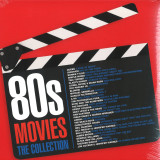
"30 unforgettable hits from the decade that brought movie classics from The Breakfast Club to Back To The Future.
There was no greater era for movie soundtracks than the 80s! Featuring some of the most iconic and memorable soundtrack moments including the title track from Ghostbusters, ‘Holding Out for a Hero’ from Footloose, ‘I’ve Had The Time Of My Life’ from Dirty Dancing, ‘A Kind Of Magic’ from Highlander, ‘Eye Of The Tiger’ from Rocky III, Gladys Knight’s classic Bond theme from Licence To Kill plus many more. This epic double vinyl will have you reminiscing on those beloved 80s film classics and their amazing music."
Next stop... Second reference in the PHASELAB catalog and twenty-third of our PHASE IMPRINT label! What a satisfaction to finally present this project (vinyl and digital) by Aizikovic, the yout from Madrid who is trying to bring an especially fresh, as well as profound, vision to our city. This EP transmits us; altered visions in music, many experiences linked to the dance floor and feelings of light in a dark space. And in case anyone wanted a little more, Comissar Lag aka Lag has prepared a melting remix for us.
Many thanks for the designs to the snowboarder of the strokes @judyisangry, to Mario Castillo for the Master and to Pedro O'Connor for the Mix.
Demuja unveils 'Blueprint', the first release on his label MUJA to feature collaborations with other artists. After celebrating the label’s 10-year milestone, Demuja felt it was the right moment to take the next step, and he's excited to launch this new phase with a carefully curated VA compilation.
This 12 Inch sampler includes contributions from iconic figures in the scene, such as Boo Williams, Kyle Hall, Gonno, and Lefto, among others. While the compilation offers a variety of sounds, it stays true to its core, remaining focused on deep and underground house music!
Australian producer and current Berlin resident Holo makes his highly anticipated return to Shall Not Fade with his third EP on the independent Bristol-based label.
Known for his signature sound that blends emotive melodies with infectious grooves, Holo has carved out a space for himself as a forward-thinking artist with a deep understanding of mood and atmosphere. His recent releases, including Nights Over Melbourne and a self titled LP in 2024, have both garnered widespread acclaim for their evocative production and seamless fusion of house, techno, and atmospheric elements. With every new release, Holo pushes the boundaries of modern dance music, establishing himself as a key figure in the underground scene.
Pink Wax delivers warm, hazy deep house at its finest, showcasing Holo's distinctive talent for creating music that evokes lasting memories. The EP is a stunning blend of lush synth lines, ethereal vocals, and smooth drums, offering a timeless interpretation of modern dance music.
Over Under marks a significant evolution in Secondo's artistic journey, showcasing a refined balance between the functional and the experimental within house music and techno. The release reflects two decades of musical exploration and innovation, while drawing inspiration from his early production style. Now, fueled by the lessons learned over the years, Secondo returns, synthesizing new ideas from his roots in the ’90s.
Opening with the beatless, kosmische pulse of Occhi Nuovi, Over Under crosses different tempos and moods, shifting from club-ready tracks — like the alien funk of the first single Unlikely Companions and the album’s tense coda Nowhere Man — to the bubbling, mid-tempo step of Slow Space, and deeper, more reflective moments like the modulating jazz moods of the title track and the centerpiece Solar Funk. The album’s progression ebbs and flows, guiding the listener through a carefully crafted narrative. Narrative, it seems, is key to Over Under.
Very excited to have this EP out, goes without saying that I'm very into the music that Comfort Zone makes and that I'm very envious of his ability to make such confident melodies in his tunes.
I've worked with him previously on Future Retro London when we collaborated on Emerald Dreams, which was on Meeting Of The Minds Vol. 5, as well as working with him on an EP for Banoffee Pies and tracks for Repertoire & Dalston Chillies.
He is absolutely one to watch out for and hopefully, there's more to come from him in the near future. Many thanks to him for allowing me to release these tunes of his and for letting me remix Tunnel Vision, which was my favourite track on this release.
One the most prolific talents in the last forty years of house music, the ever-innovative Jerome Sydenham goes toe-to-toe against the emerging talents of Berlin's mysterious Cosmic Soldier, working together to deliver a potent two-tracker as the weighty first release of 2024 on Planet E.
Showcasing a new angle of the eternal, quintessential blend of house and techno on Carl Craig’s legendary imprint, ‘Deeplight’ soars on impressive layers of psychedelic texture and raw percussion as a querying, prophetic vocal leads towards a valley of urgent chords.
Mixed with the same undeniable weight and power, the hammering, insistent ‘Black Dog’ skirts with darkness before upending it with vintage Detroit keys, waves of euphoria rolling out of the gloom to move the dance.
At long last: the classic Steely Dan catalog is back on vinyl. Led by Walter Becker and Donald Fagen, Steely Dan released 7 albums from 1972-1980. The vinyl series continues with Aja, the band’s 1977’s platinum-selling jazz-rock masterwork, which includes the three hit singles –“Deacon Blues,” Peg” and “Josie” – and the elegant title cut. The LP has been remastered by Bernie Grundman from an analog, non-EQ’d, tape copy.
So many stellar albums by Fagen and Becker in the 70′s but this one is timeless. Amazing songs produced and performed to perfection by some of the best session musicians and singers in the business. An Absolute masterpiece from start to finish!
360 mcn white-white light cardboard paper / one side only hand plasticization / 2 separated parts prints / hand gluing / PVC outers / original artwork / gatefold sleeve / Bandcamp limited edition 30x60 cm insert with extended liner notes by Tony Higgins and Interview with Babs Robert and Sébastien Gorlé with exclusive pictures and self-portrait by Babs Robert himself printed on GF Smith "Takeo Tant Select" Canvas Paper tip-on left jacket panel / Exclusive never released Memorabilia from Babs Robert's vault.
Personnel:
Babs Robert - alt sax, tenor-sax, electric tenor-sax, Bin Recorder, Acme siren, Chinese-bell, sleigh-bells, maracas, tambourine,hand-rattle,claves)
John Van Rymenant - baritone-sax, fluegelhorn, Bala, tambourine, sleight-bells, cowbell, triangle, claves
Johnny Peret - vibes, bongo's, cowbell, maracas, castanets, rattle-snakes, tambourine, drums, woodclock, trinagle
Johnny Brouwers - piano, prepared-piano, triangle, cowbell, sleigh-bells, maracas, caves,hand-rattle, guiro, woodblock, tambourine
Paul Dubois - bass, triangle, cowbell, claves, rattlesnakes, hand-rattle, woodblock, tambourine
Michel Gobbe - bass,Chinese-bell, claves
Robert Pernet - drum, tambourine, seven-notes M'Bichi, guiro, alarm-siren, home-made metal xylophone, African telephone-drum, triangle, sleigh-bells, Siku
Notes:
Despite its modest role on the world stage, Belgium has produced a number of internationally renowned musicians and composers. There is the iconic gypsy jazz guitar maestro Django Reinhardt, whose position remains unassailable, and guitarist/harmonica player Toots Thielemans, who became an internationally renowned artist performing and recording with Bill Evans, Oscar Peterson, Ella Fitzgerald, Peggy Lee, Shirley Horn and Quincy Jones. The other key Belgian figure is composer/arranger Francy Boland, co-leader with US bebop drumming legend Kenny Clarke of Europe's leading big band of the 60s, the Clarke-Boland Big Band.
The Love Planet performed in the main clubs of Brussels, such as Blue Note, Pol's Jazz Place, and Smog as well as in major musical events throughout Belgium including to big festivals in 1969 - the Avant-Garde Festival in Ghent and the First International Jazz Event in Liege – where the Love Planet shared the bill with Miles Davis - and the Bilzen Jazz Festival in 1970. The contrast between the musical architecture of the themes and sonic freedom in the improvised playing perfectly illustrated the polymorphism – an order within disorder – which the Love Planet aimed for.
The initial original quartet line-up was Babs Robert (sax), Paul Dubois (bass), Johnny Brouwers (piano), and Johnny Peret / Robert Pernet (dru- ms). On the album session, the quartet was augmented with the addition of John Van Rjimenant (saxes) and Michel Gobbe (bass). As well as their main instruments, the band members also played an array of unusual instruments, principally percussion. This is the first official re-release
of the 'Babs Robert and the Love Planet'. Original copies of the album fetch many hundreds of Euros on the collecting circuit and it remains a curious and fascinating window into a moment in time that still resona- tes some fifty years later. Come with us to the Love Planet. (Tony Higgins)
"For Toronto outsider pop auteur Saya Gray, music is a glittering mosaic of endless influences. Her debut album is akin to a sonic chimera; its limbs assembled from disparate, but complimentary musical organisms. Does she make pop? Folk? Rock? R&B? The moment you think you’ve got her pinned, she’s gone like a flash.
Gray’s often collage-like sonicspheres, blanketed with layers of riffs upon layers of electronic chatter, demonstrate the limitless potential of music as an art form.
Saya Gray has received support from Pitchfork, The Guardian, The Times, Colors, The New York Times, BBC Radio 1, BBC Radio 6, NTS, Fader and has recently recorded an incredible Tiny Desk session to be release around her new album. "
A perfect mix, 4 versions, a unique psychedelic trip , special guest The godfather,Howie B with a special remix ;dark ambient and drone music style, the essence of cosmic sound, by Daniele Baldelli, from Malaysia with Love, Kamal Sabran -lo -fi beats, and the original version of
Kabaret Maker
Following releases from Dublin’s Fio Fa & naive label head Violet, LA-based Cromie & Timedance affiliate rRoxymore and various artists compilation Visions Vol. 1, Holly Lester prepares the next chapter of dualistic bleeps, bloops and blends from Utrecht producer Tifra on Duality Trax. Re-imagining vintage club sounds through a contemporary lens, Tifra is no stranger to stretching the electronic music template into new forms and ideas. His left-field house and old-school breaks have found their way onto Gestalt Records and Rough Recordings, and here the producer turns in three cuts of blissed-out electronica, hedonistic progressive and jungle-run club with its sights firmly fixated front left, complete with a wicked remix from one of modern dance music's most reliable names Roza Terenzi. ‘Plastic Replicant’ is a vocal-laced electro-house roller that takes inspiration from the golden-era of 90s electronic music and fuses it with the organic, multi-genre blends of the current gen. The ravey continuum is laced with high-frequency vocal stabs and deep basslines designed for a heads-down approach on the dancefloor, before ‘Entomology’ captures the playful side of the club with its shape-shifting acid-lines, trance-licked melodies and kaleidoscopic blend of colour, feeling and mood. Out of the club and onto the beach, ‘International Waters’ is a trip-hop inspired, downtempo dub that will delight ambient and laid-back electronic-revellers with its chirpsing birds and aqua-like aesthetic, before Roza keeps the dualism alive with a stripped-back jungle flip of the original; the perfect score for the perfect daydream.
The album’s title deftly gestures to the sheer vastness of astronomical dimensions, while simultaneously capturing the musical breadth within, where the eight planets are imagined as the eight notes of an octave. The work draws inspiration not only from earlier compositions —most notably Gustav Holst’s The Planets—but also from the rich astronomical and cultural contexts surrounding these celestial bodies. Here, the focus transcends direct citation of melodic motifs, instead embracing an intriguing conceptual approach on a meta level, unfolding in a series of vividly contrasting soundscapes. These contrasts shape a sweeping sonic journey, one that fully embraces the album format with both arms, inviting the listener to venture into realms both strange and wondrous, feeling the immensity of the interstellar space that lies between them. Contrast, after all, is the brushstroke that enriches our world.
Embarking on an auditory voyage, "Astral Guide" establishes the sonic framework that propels us into the boundless expanses of the cosmos. Its ethereal tones evoke the vastness of space, crafting a mood ripe for exploration within the realms of sci-fi. The subsequent tracks unfold like constellations, weaving a rich tapestry of sound that seamlessly marries cinematic soundscapes with pulsating, club-oriented rhythms. This album invites listeners to traverse its immersive landscapes, whether nestled in the comfort of home or dancing under the starlit sky, each note a guide through the transcendent experience of a nocturnal journey.
"Solar Flares" draws its inspiration from the awe-inspiring expanse of solar phenomena, capturing the majestic power of the sun as it reaches into the cosmos. This track resonates with the idea that energy, while vital, can also be a force of destruction when unleashed with overwhelming intensity. The composition beautifully mirrors the sun’s duality, where brilliance and devastation coexist, inviting listeners to reflect on the delicate balance between creation and annihilation. Through its rich textures and dynamic shifts, "Solar Flares" serves as both a homage to the celestial and a poignant reminder of nature's formidable power.
"Mercury – The Winged Messenger" embodies a meticulously crafted soundscape where artistry meets astronomy. The tempo of 173.6 BPM, derived from precise astronomical data, propels the composition into a vibrant realm that resonates with cosmic energy. Synthwave sound design intertwines seamlessly with the fluid rhythms of Drum’n’Bass, imbuing the piece with an uplifting dynamism that evokes the ethereal grace of Mercury itself. In this sonic exploration, listeners are invited to ascend on wings of sound, navigating the celestial tapestry of the universe with each invigorating beat.
"Venus, The Bringer of Peace" strikes a decidedly cozy note, presenting a poignant contrast to the more tempestuous themes often found in cosmic narratives. This composition evokes a nostalgic vision of an optimistic era, one in which humanity transcended borders and embraced the infinite possibilities of space exploration, where no destination felt too distant. The dense, languid atmosphere envelops the listener, creating a tangible sense of serenity that unfolds gradually, allowing for a meditative journey through sound. Each note serves as an invitation to linger in this tranquil embrace, reflecting on the harmonious potential of our collective aspirations and the beauty of connection in a vast universe.
The central theme of „Gaia, The Bringer of Life“ —originally not part of the planetary cycle— is the profound enabler of life on Earth. The arrangement delicately mirrors the slow, tentative unfolding of this potential, marked by an initially sparse orchestration that gradually builds in momentum. This progression crescendos, embodying the explosive dynamism of the Cambrian burst of life, ultimately culminating in a euphoric fanfare—a triumphant, celebratory flourish echoing life’s victorious emergence.
"Blue Moon" unfolds as a contemplative reverie on the tranquil clarity of a night sky, now seldom glimpsed in its natural purity, unclouded by the relentless haze of urban light. The listener is drawn into the vast embrace of the star-strewn firmament, a journey that sways between euphoric awe at nature’s sublime beauty and a profound melancholy for its fragile and imperiled state. Musically, this duality finds expression in the delicate interplay of modal mixtures, while an ever-shifting triplet groove, poised at the intersection of Outrun and melodic house, lends a pulse that is both nostalgic and forward-looking—echoing the beauty and transience of a world on the brink.
Rather than replicating the original composition of „Mars, The Bringer of War“, this interpretation seeks to evoke its profound, foreboding atmosphere. Cyberpunk emerges here as an ideal genre, channeling the dark, relentless march synonymous with Mars, the ancient god of war. The piece reverberates with intensity, as distorted vocalizations rise, embodying the anguish and visceral torment that shadow war’s violent crescendo. This auditory descent into conflict captures the relentless pulse of warfare, where sound itself becomes an embodiment of suffering and fury.
Majestically, "Jupiter, the Bringer of Jollity" emerges on the celestial stage, sweeping away the somber tones with its radiant vigor. Drawing inspiration from the triumphant strains of the original, and borrowing a melodic motif in the refrain, the piece expresses joy and buoyancy through a shift to a major key and the lilting sway of a danceable 12/8 meter. Spirited and exuberant, it leaps boldly from major to minor and back again, playfully shifting time signatures to capture a mood of unbridled festivity and jollity.
Here, a more conciliatory concept is chosen than in the original inspiration. „Saturn“ aligns with the number six, being the sixth planet from the Sun and bearing the iconic hexagonal pattern at its northern pole. What, then, could be more fitting than to render this piece in a 6/8 time signature? The arrangement unfolds with a multifaceted richness, mirroring the countless stones and ice fragments that form the foundations of Saturn’s majestic rings.
„Uranus“ adopts the theme of a light-footed, dancing instrumentation, giving the impression of perpetual motion, never quite settling. This musical choice harmonizes with the planet’s own orbit, as it spins with breathtaking velocity, teetering and swaying, seemingly unable to attain rest or stability.
The chill and vastness of the cosmos find expression in „Neptune, The Mystic“. At its core, an electronic soundscape envelops a classical arrangement, its unreachability intensified by an ethereal, otherworldly choir. Hovering at the outermost boundaries of the solar system, where warmth is but a distant memory, the composition lingers in a slow, contemplative tempo, evoking a realm where space for speculation stretches wide and silence reigns supreme.
Though Pluto may have lost its planetary status, and its companion Charon never achieved one, this shift in classification subtly aligns with the cosmic scale invoked here—one that mirrors the musical tradition of an eight-note sequence. Fittingly, the album closes with „Kuiper Belt“, a composition emblematic of the turbulence and vitality of countless smaller
celestial bodies that, though diminutive, find their rightful place within the vast architecture of the solar system.
They say nature is the greatest composer, shaping the universe with a symphony of chaos and order, beauty and danger. It is this duality that fuels the artistic vision of Edictum—a producer who, armed with a doctorate in chemistry, delves as deeply into the mysteries of molecules as he does into the depths of sound. In the tension between the vastness of the cosmos and the microscopic processes that dictate life’s rhythm, Edictum creates sonic landscapes that dissolve the boundaries between science and art.
His music is a story of contrasts—a sonic tale where the raw forces of nature clash with the intricate structures of human culture. Opposites intertwine to form a harmonious whole: the primal rhythms of the earth meet the celestial melodies of the cosmos, the rigid laws of physics blend with the boundless freedom of art. Edictum explores these polarities with meticulous devotion, each composition an expedition into uncharted soundscapes—a quest to give voice to the unfathomable.
With over 20 years immersed in the realms of electronic music, Edictum has honed a keen sense for rhythm and movement. His driving beats compel both body and mind into a hypnotic flow. Yet beyond the pulse of dance lies a complex framework of conceptual thought. Today, his creative focus revolves around holistic album projects—self-contained worlds with overarching narratives that embrace contrast and complexity. Each track stands alone as a fragment of the whole, but together, they weave a cohesive tapestry, much like the chapters of a novel that guide the listener on an emotional and sonic journey.
Edictum’s distinctive musical signature has earned him international recognition. With over 150 releases, many on prestigious platforms like the iconic *NewRetroWave* label, and collaborations with artists such as Jan Johnston, Azumi Inoue, Powernerd, and Turbo Knight, he has solidified his place in the global electronic music scene. His latest work, *A Cosmic Scale*, marks his seventh vinyl album and is released under his own label, *Echoes of Expanse*. The label’s name is no coincidence—it captures the essence of his art: echoes of infinity, the vibrations of the universe distilled into a singular sonic experience that carries the listener ever further into the boundless expanse of sound and space.
The Kid That Did is the fourth studio album from acclaimed rapper and Detroit staple, Babyface Ray. Known for his effortless, conversational flow and sharp wordplay, Ray has been building momentum over the past few years, and his latest project promises to be another milestone in his career.
Following the success of 2022’s FACE, which reached #3 on Apple Music’s all-genre chart and earned praise from outlets like Billboard and Complex, and MOB, which featured collaborations with heavyweights like Lil Durk and Blxst, Ray’s new work showcases an artist at the peak of his game. His recent singles “Green Carpet,” “Money On My Mind,” and “Understand” each pulled in over 1.5 million streams in their first week, setting the stage for The Kid That Did to be his biggest release yet.
Fresh off a label deal with EMPIRE and riding the success of his first RIAA-certified gold record, Babyface Ray’s influence continues to grow. After a sold-out tour and major appearances, including a performance on Jimmy Fallon and being named to XXL’s 2022 Freshman Class, Ray is ready to take things to the next level with The Kid That Did.
With his signature Detroit sound and an impressive lineup of collaborators including Bossman Dlow, Peezy, Fabolous, G Herbo, DJ ESCO & more, The Kid That Did is set up to be a defining moment for Ray as he solidifies his place in modern hip-hop.
Marbles is the legendary 1970 proto punk / dance classic from John McLaughlin’s US debut album 'De?otion', recorded at the time in which he played on Miles Davis' Bitches Brew and taped the Record Plant session with Jimi Hendrix.
Marbles didn't just deliver jazz rock's most danceable 4/4 beat, played by Band of Gypsies / Electric Flag drummer Buddy Miles. It is also centered with a once-in-ageneration bass line performed by Billy Rich. Larry Young's otherworldly Hammond textures predate a lot of what synthesizers were about to do much later, and the blowtorch energy emanating from John McLaughlin's cranked amp went beyond what most would had dared during the defining era of heavy rock guitar. An apex achievement at the intersection of jazz rock, guitar rock and dance music without parallel, before or since.
Background: John McLaughlin arrived in New York in 1969 to join Tony Williams' new group Lifetime which also featured Larry Young and eventually Jack Bruce (of Cream). On the second day in town he found himself in the studio with Miles Davis, recording 'In a Silent Way.' His playing would also take center stage in Bitches Brew, Jack Johnson, On The Corner and several other Davis key works of his much beloved first electric era. In between a busy schedule with Lifetime and Davis, McLaughlin also recorded two solo albums in 1970, 'De?otion' with an all-electric group and ‚'My Goa|’s B?y?nd' as its acoustic counterpart. By the time he formed his group Mahavishnu Orchestra in 1972, John McLaughlin was firmly established as the most important practitioner of his instrument of his generation within and well beyond the emerging jazz rock / fusion genre, and he has continued to evolve and surprise until today.
Here, a thorough remaster is supplemented by a new and throbbing techno version by Stefan Goldmann.
Boys Noize presents ONES and ZEROS OAZ, a new experimental record label with the mission of breaking open the space of possibilities for techno and beyond. Reflecting new modes of subcultural circulation and integrating music,
objects, and a pluralistic network of artists, OAZ debuts with the 22-track Bo compilation, including two Boys Noize solo tracks, one of them “Bvrning” (Vinyl Only), as well as tracks by Locked Club, Safety Trance & umru, DJ Babatr, Slim Soledad, Schacke, KFR, TINKERHELL, David Löhlein, MarcelDune, and more.
Here at Four Flies, we kind of feel we need a bigger word than 'proud', this time, to present, in collaboration with Beat Records, the first-ever release of the original soundtrack written in 1976 by Guido & Maurizio De Angelis for the legendary Squadra Antifurto, the second chapter of the comedy-infused crime saga directed by Bruno Corbucci and starring Tomas Milian as the iconic Italian Police Marshal Nico Giraldi.
The excitement in this case is nothing short of gigantic, difficult to rein in for those who, like ourselves, grew up adoring the character played by Milian as one of our cult heroes, and dreaming that the soundtracks of the first three films in the saga – the only ones composed by the De Angelis brothers – would one day be released.
Since the launch of our label, Squadra Antifurto has been at the top of the list of film scores we most wanted to release. Until a few months ago, this dream of ours seemed destined to remain just that, so strong was the conviction in all of us that the master tapes were definitively lost, that they had forever vanished into thin air. That's why their recovery, made possible by Maurizio De Angelis himself and the persistence of our friends at Beat Records, is an extraordinary feat.
Nearly 50 years after it was first heard in cinemas, the soundtrack penned by the De Angelis brothers is resurrected in its entirety and can finally shine its incredible power all over us.
Beautifully seeping through this score – like many others composed by the golden duo in the 1970s – are elements from the Italian, and especially Roman, folk tradition, for instance in the warm, heartfelt ballad sung by Alberto Griso, "E nun ce voio sta," which first plays in the opening credit sequence and is then reprised in various forms throughout the film, culminating with the soul-stirring orchestral version that closes the album's tracklist.
But as in any Italian crime film worthy of that name, a different soundscapetakes centre stage: it's the music that accompanies the countless scenes of tension, action, and pursuit that punctuate the film, and which has made us fall madly in love with this score.
The main theme is a prog-funk joyride, drawing inspiration from the traditional tarantella but elevated to irresistible energy thanks to a rock orchestration featuring psychedelic flutes, wild percussion, distorted electric guitars, piano chords, and various feedback and delay effects.
The resulting groove is just mind-blowing, and we almost can't believe it's finally available on a record, completely remastered for vinyl.
We really couldn't be prouder, and dedicate this release to all passionate fans of Italian crime films, the De Angelis brothers, and Tomas Milian aka Nico Giraldi.
Available starting April 12th on standard black vinyl and limited coloured vinyl (transparent amber, limited to 300 copies).
Here comes a true South American LATIN JAZZFUNK treasure from Argentina!!!
Sound Essence is more than proud to present these lost recordings from 1974 to music lovers again in all their glory.
CARLOS FRANZETTI, who has once again been in the spotlight in recent years thanks to the re-release of his strong late 70s JazzFusion record "Graffiti", was also in charge of this record called DEDOS. The story behind:
In 1974, after CARLOS FRANZETTI was living in Mexico and worked as the musical director of FERMATA International, he returned to Argentina. In Buenos Aires his friend MOCHIN MARAFIOTTI was recently appointed A&R at the local recording label MUSIC HALL . Marafiotti asked Carlos if he wanted to record some of his music and he answered that he had in mind a group playing LATIN JAZZ . After a couple of meetings they came out with the idea of covering the RUBEN RADA tune DEDOS recently recorded in the US by AIRTO MOREIRA along with the OPA TRIO. Carlos contributed his own composition "Doce y Diez" . He selected the group consisting of his friend and member of the uruguayan Band TOTEM, Ruben Rada on percussion, Ricardo Lew on guitar , Emilio Valle on bass and Osvaldo Lopez on drums covering keyboards and vocals himself . This formation recorded tracks and vocals in a three hour session and the next day the track was mixed. Music Hall released "Dedos" and "Doce y Diez" on a single record and after months of discrete airplay and not so good sales the project for an album was draped.
"It is a rewarding experience to see a re-release of this two songs a half century after the original release.
It was hot and it looks and sounds even hotter now. I love it!" (Carlos Franzetti, New Jersey, December 2024).
The record captures an expansive performance in Poitiers, France in November 2023. First working together in an unpredictable trio with minimalist legend and eccentric extraordinaire Charlemagne Palestine, Ambarchi and Thielemans quickly established a remarkable musical chemistry that led to an ongoing series of duo concerts, including the performance documented on their LP Double Consciousness (Matière Mémorie, 2023).
Kind Regards finds the duo refining their shared language while continuing to take risks, allowing the music’s gravitational pull to lead them from meditative calm to unexpectedly expressive passages of melodic invention and rhythmic drive.
Recorded in sparkling fidelity and carefully mixed by Ambarchi’s longtime collaborator Joe Talia, the LP contains a single unbroken performance, stretching out for over 45 minutes. Guitar and drums weave together into a symbiotic whole that nevertheless affords us ample opportunity to marvel at the highly personal approaches these two musicians have developed to their chosen instruments through decades of diverse collaboration and prolific performance. The set begins with Thielemans’ hypnotic tom patterns, around which Ambarchi’s wavering, shimmering guitar tones—achieved with the help of the rotating speaker of a Leslie cabinet—flurry and swirl. Thielemans’ drums play subtle tricks with time and perception, adding and dropping beats within repeated patterns to create an effect at once rhythmically insistent and liquified. Growing at first into a rapidly pulsing texture of brushed drums and flickering harmonics, the music builds momentum into an irregular groove over which Ambarchi’s guitar is transformed into haunting, monumental electric organ chords, strikingly recalling the Wurlitzer work of Alice Coltrane, before settling into a section of gentle portamento melody embedded into the tactile clicks and clangs of Thielemans’ percussion.
When Thielemans adopts a more traditional jazz approach to the kit in some of the set’s second half, the results are stunning, demonstrating a feel for shifting accents and sensibility to the touch of the stick on the drum or cymbal that recalls greats like Jack DeJohnette or Billy Hart (one of Thielemans’ mentors). And when Ambarchi turns up the heat, he does so in an unexpected and delightful way, letting loose a swarm of jittering delayed tones straight out of Henry Kaiser’s classic It’s a Wonderful Life, with a more active use of the guitar’s fretboard than his usual approach to the instrument allows. As the performance draws to a close after a climactic episode of distorted harmonic groans and crashing cymbals that manages to be at once thunderous and carefully attuned to detail, it is clearer than ever that, for these two serial collaborators, this is a very special pairing.
Kind Regards shows us the kind of magic that can happen when two masters who have dedicated decades to reimagining their instruments simply begin to play, following the music wherever it goes.
Restoring balance to our series of earthly compilations, one that has brought to you an array of different artists, all with the collective goal of sharing the joy of exploring musical wonders with no borders, we have Earthly Tapes 04.
In keeping with the series so far, nature and electronica intertwine in unison to share a space as befitting to hedonistic dancefloor groovers as it is to homebound explorations. With this release, we have 7 wonderful artists expressing their creativity across 6 carefully curated tracks, with native roots connected to 5 different countries across South America and Europe.
2 years in the making and chopping and changing as it’s passed through the motions, what has remained is the concept behind it. On this edition, we're shining a light on a small portion of female producers within a music scene that we’re fortunate to be a part of.
Each artist that has carefully created a track for this compilation, has also contributed their beautiful crafts within the Organica/Folkloric/Downtempo scene and we’re truly blessed to be able to share them with you. The countdown to the release of this next chapter finds us coinciding fittingly with International Women’s Day.
Spanish imprint Clock Poets returns with its sixth release, a nicely curated three-track V.A. that brings together Dan Andrei, Root, and label founders Marco and Javier (Clock Poets). Aptly titled Surrealism, the EP explores different shades of minimal techno and micro-house, offering a dynamic range of textures and grooves.
Dan Andrei sets the tone with 'Si Un Ecou' (A1), a stripped-back, bass-heavy roller with a raw, hypnotic energy. Laced with eerie, Hitchcockian tension, the track simmers with understated menace until a burst of heavily modulated synth chords cuts through the groove like a sudden flash of light — turning the mood on its head. Subtle yet striking creative decisions like these highlight Andrei's refined sonic evolution. On (A2), Root's 'Apophis' is a swing-heavy slice of classic micro-house. Shuffling drum patterns dart unpredictably, locking the dancefloor into a stealthy groove while growling synth textures add an air of mystique and atmospheric tension. A nod to the golden era of the genre, yet firmly grounded in the present.
Clock Poets close the EP with 'Galaxy' (B1), a sprawling 14-minute live-recorded behemoth, through microscopic sound design and intricate rhythm programming. Filtered, syncopated drum patterns weave through evolving bass stabs and delicate melodic fragments, crafting a hypnotic groove that pulls listeners deeper with every loop.
"Surrealism" is a carefully balanced record with a range of moods and styles for the lovers of thoughtful minimal dance music, and yet another compelling addition to the Clock Poets catalogue — refined and immersive.
Electronic music has never been solely about the music itself or its fame. It has been a fight, a totem. Every week it becomes a universal communion, a celebration, a reconciliation with both ourselves and others. No frontiers, no territories, no certainties other than being as authentic as possible.
As a musician and producer, after five albums, I clearly know that my proposition will always be about diversity more than a single crafted sound. This is how I am: multifaceted, nourished by social human exchanges and my encounters in science, art, and technology. I have one life and different bodies. I can be physical and digital, technological and organic, house, techno, and soul. This album is about shedding light in a vertical period where the fight for truth and visibility becomes crucial, where Blockchain might become our right to vote. It's about making complex things sound simpler, joining the dots. A proposition more than a promise: Unshadow.
The metamorphosis is happening; embracing all generations on the same song with Nile Rodgers and Madison McFerrin! Embracing the diversity of backgrounds, styles, and geography, from Sacha Rudy to Dominique Fils-Aimé (Canada), through Natalie Sade (Australia). As a citizen of the world, having traveled endlessly for 30 years now, I know how lucky I have been to experience and experiment with various situations. If this album can simply share some of the joy I have received and spread some goodwill and white magic to the listener, I will be the happiest seeing the light that chases away the shadow.
After a Classic/Defected release and a string of edit projects/remix work Snips returns to his own Barbershop Records for his latest release "Blasphemy", a project drawing solely on Gospel samples from Snips' personal collection. Barbershop sticks with the theme of re-imagining the past to create something new while continually offering an alternative to todays mainstream. With Gospel music being the least commodified of its contemporaries yet the most essential element of them all, it would seem the perfect sample source for a Barbershop release and a sonically perfect fit for Snips' brand of Hip Hop, Soul & House inspired beats. From future club friendly anthems like "Feed The People" and "Feel The Spirit" to the true school Boom Bap sensibilities of "Pattersons Pilgrims" and "Never Waltz Alone" this release has all bases covered.
Parade Ground march back to Dark Entries with The Hidden Side, a compilation of B-sides and unreleased material. Brothers Jean-Marc and Pierre Pauly started Parade Ground in Brussels in 1981. Their Dada-laced brand of post-punk fuses propulsive drum machines and icy synths with skeletal guitar riffs and Jean-Marc’s distinct and powerful voice, pioneering the subgenre of emotional body music. The brothers met Daniel B. and Patrick Codenys of Front 242 in 1982, marking the beginning of an enduring collaborative partnership. In 2011, Dark Entries released The Golden Years, a compilation chronicling the band’s A-sides and exposing them to a new generation of EBM enthusiasts. The Hidden Side continues this mission, illuminating lesser-known facets of the band’s oeuvre. The tracks here were written between 1982 and 1989, and showcase Parade Ground’s range of styles - all cold, dark, and brooding. Tracks like “Riddle in the Stain Glass Window” and the previously unreleased “Looking Through Keyholes” see the band in menacing coldwave mode, rocking chorus-drenched bass guitar and blasts of analog synth. The band’s dancier proclivities shine elsewhere, like on “Off-Balance” or the supremely funky “Hollywood (The Sexiest Fish),” a floor-filler driven by bass guitar and thumping digital drum machine beats. Also included is “Marble Mind,” a previously unreleased latter-period track from the band recorded by Patrick Codenys at 242 Studio. The Hidden Side includes liner notes featuring lyrics and a photo of Jean-Marc and Pierre Pauly. Additionally, a newly remastered edition of The Golden Years will be released along with The Hidden Side.
The sixth release on Fear No System: our first vinyl release by New Zealand-based musician, synth warper, and drum creator Go Nuclear, delivering an EP filled with nasty booty beats, featuring renowned producer and beat creator Detroit's Filthiest (AKA DJ Nasty).
The four-track EP includes remixes from Raw Takes, the creator of the NO SERVICE label, straight from LA; acid master Wheez-ie; and DJ/Producer Aura T-09, co-owner of Evar Records.
For Peggy Gou, recording an instalment of !K7’s DJ-Kicks series was one of the items on her list of career goals. “It’s the premier class of DJ mixes,” she says. “Some of my favourite selectors have contributed to it.” In 2019, Peggy Gou was able to tick that off her list as she proudly presented the 69th edition of the mix series.
To kickstart 2025, which is !K7's 40th anniversary year, the release is re-issued on a tigerfur-coloured 2LP. Peggy started working on the mix in 2018. It was a busy time for the then 28-year-old: she’d just scored her first Mixmag cover and her single ‘It Makes You Forget (Itgehane)’ was receiving awards and critical acclaim. Each month she would DJ in 20 nightclubs all over the world. And yet, the goal for her mix was ambitious: instead of trying to capture the energy of her DJ sets, she aimed to create a portrayal of her own musical journey.
An 18-track listening session that takes you straight into Peggy Gou’s living room where she plays you the formative tunes from her collection. No genre boundaries – she moves across disco, house, techno and electro. No tempo limits – the mix ranges from 90 to 150 BPM. And no age restriction – the earliest tunes on the mix are from 1983.
The same level of attention was brought to the arresting cover artwork, in which the well-documented animal lover references both Korean iconography and the endangered status of the creature of the country's foundational mythology, the tiger. The album artwork shows Gou posing alongside a tiger. "As the first Korean woman to contribute to the DJ-Kicks series I wanted to do something from my heritage," she said in a statement. "I chose the tiger, which is very important in Korean traditions and a metaphor for my personality. As it is inhumane to shoot with a real tiger, I and the photographer Jonas Lindstroem used a library image to make a composite. The tiger disappears when you turn to the inside-cover photo, to highlight that these beautiful animals are already extinct in my home country and in danger of disappearing from our world entirely.”
A Strangely Isolated Place presents a long-lost collaboration between Polish artists Olga Wojciechowska and Tomasz Walkiewicz as Monoparts—a partnership formed many years ago that resulted in an album once destined to remain unreleased.
Olga Wojciechowska, known for her modern-classical masterpieces such as Infinite Distances (2019) and Unseen Traces (2020), as well as her 2022 collaboration with Scanner, breaks all known expectations with Soothsayers. In a dramatic departure, Olga unveils a new and unexpected side, debuting her haunting vocals—a delicate, spellbinding performance that recalls the golden era of trip-hop, and comparisons to the sounds pioneered by Tricky, Massive Attack, and Martina Topley-Bird.
With Tomasz adding layers of depth through intricate beats and electronics, Olga’s voice becomes the emotional core of the record, conjuring an intimate and nostalgic atmosphere.
"This album is like becoming one with the earth itself—feeling the rawness of the wood, tasting the earth in your mouth, and sensing the presence of ancient spirits. The music carries a deep, primal energy, like being part of the forest, with creatures watching you from the shadows." - Olga Wojciechowska
To complete the journey, ASC lends his signature touch with a stunning drum’n’bass reinterpretation, amplifying the album’s nostalgic essence. Soothsayers emerges as a spellbinding ode to times gone by, in more ways than one.
Featuring artwork by Moon Patrol, with mastering and lacquer by Andreas LUPO Lubich.
The album SATO was made by the Ukrainian Crimean Tatar pianist and composer Usein Bekirov.
SATO was created during the difficult wartime for Usein’s motherland Ukraine and for the author himself.
Despite circumstances, the compositions of SATO express the ideas of the beauty and revival of Ukrainian music, a part of which is Crimean Tatar folklore.
The uniqueness of the release is caused both by the concept of the album and by the performers' star crew.
The jazz sound of the compositions of SATO is directed to the stylistic course of ethno-jazz and world music.
Rhythms and melodies of colorful Crimean Tatar folk music became the main source of inspiration in the creation of the album.
We can find both Usein's original author's themes, skillfully stylized to the oriental sound,
and referenced to the classic jazz vocabulary in its juicy riffs and grooves with features of fusion and funk music.
The name of the album reflected the inheritance of generations through music.
Sato is not only a folk instrument but also the name of the first Crimean Tatar jazz band, which made the first jazz arrangements of Crimean Tatar songs.
The music of this band became the basic musical experience of Usein Bekirov, because one of the members of the group was his father Riza Bekirov, to whom the album is dedicated.
The author and producer of the album is Usein Bekirov - Ukrainian pianist, composer, arranger, sound producer, and author of music for a number of films and theater performances.
Usein Bekirov cooperates with both foreign and Ukrainian musicians of the highest rank.
This is evidenced by the participants of the album Sato: Dennis Chambers, Randy Brecker, James Genus, Mike Stern, Ada Rovatti (USA), Hadrien Feraud (France), and Cenk Erdogan (Turkey).
Each performer reinterprets the author's material of Usein Bekirov through the prism of his own experience, character, and manner of performance, which was expressed in the daring stylistic combinations within a jazz style.
A special role in the creation of the album was taken by the participants of the recordings, especially, legendary jazzmen Dennis Chambers, Randy Brecker, James Genus, Mike Stern.
Their ideological and creative support became an important part of the creativity process.
Musicians expressed their impressions in small addresses for the audience.
One of the reviews of the musicians:
"The process of recording compositions was really exciting! This music reflects Usein's national origin and sense of his native culture.
It is full of real emotions. Actually, this music is quite difficult, but it is very well written and produced!
I sincerely hope you will notice this album, which also took part in Dennis Chambers, James Genus, Mike Stern, Ada Rovatti, and others.
I think it's going to be a really special album, can't wait to hear the final version.
When you hear about the premiere, I highly recommend listening to this new album created by Usein Bekirov.
It will be great!" Randy Brecker
Born in 1989 in Bamako, Mali, Nfaly Diakité is a member of the Donsow, Bambara animist hunters. Nfaly Diakité is named after his grandfather, the late Nfaly Diakité, one of Mali’s most respected donso chiefs. His grandfather did not play, but as a leading figure in the donso brotherhood, he was always accompanied by musician Yoro Sidibé. Nfaly grew up alongside Yoro Sidibé, who became his first master of the donso ngoni, a type of eight-stringed antelope skin harp. After leaving school to devote himself to his instrument, Nfaly continued his apprenticeship with Diakaria Diakité and Oumar Sidibé, two donso masters from the Wassolo region.
He quickly made a name for himself in the donso community and was much asked to play at the traditional ceremonies of his brotherhood. He then met percussionist Ibrahim Sarr and joined the BKO Quintet, with whom he recorded an album and toured Europe and the United States. His virtuosity on the donso ngoni soon attracted attention, and he took part in numerous music and dance festivals in Mali and abroad, with the aim of raising awareness of this little-known traditional instrument.
Nfaly Diakité is also a Kônô, meaning that he is responsible for passing on the history and culture of the Bambara people through music and song. He pursues his mission by combining tradition with more contemporary sounds and by collaborating with artists from a wide range of musical backgrounds. For him, music is a means of conveying messages of peace, love and harmony, and his compositions evoke the values of respect, tolerance and open-mindedness.
‘Tribute to Toumani Koné’ is Nfay Diakité’s first solo album, recorded in Bamako in June 2020. On the album, Nfaly is the only singer, providing backing vocals and playing the donso ngoni and keregne. The album is a tribute to the storyteller and poet Toumani Koné, the greatest donso ngoni player since N’gonifo Bourama. Nfaly Diakité is a representative of the new generation of donso ngoni players and he wishes to pay tribute to Toumani Koné, who throughout his long career has been a symbol of courage, daring, loyalty and honesty.
The nine-track of this solo album leaves no room for hesitation. Three instruments (donso ngoni, voice and keregne) manage to carry one into another dimension without ever tiring. The fitting and precise rhythm is a deep but melodious transe. Nfaly’s voice plays between expressive urgency and calm wisdom, and the choruses with his own voice multiply the planes of dimension of the music. The donso n’goni, of which Nfaly is an excellent player, sounds rough and earthy but always clear and sharp. All the strength of a music that does not belong to a single musician but to a long cultural tradition of which he is the spokesman is expressed here. The young Nfaly, thanks to his experience and sensitivity, succeeds on his own in pushing us into this world without feeling the weight of tradition but only the liberation of music that sounds all the more contemporary. This album is to be listened to in its entirety as one tight journey between repeated formulas, highlights and moments of rest within the same relentless rhythm. The densest moment is probably found in the heart of the album, between the tracks Nankama (the predestined one) and Mogote Diabeye (no one can please everyone). Here, the message, which can be deciphered from the translation of the lyrics, seems to transcend language barriers and intepret us directly about our human condition, urging us to move our bodies to the dense rhythm of life.
‘Colours Revisited’, a revision of Adam F’s MOBO Award-winning 1997 debut album is a story of musical rebirth and passion. Adam F, realising that ‘Colours’ had found a new audience—partly thanks to artists like PinkPantheress—decided to recreate the album. Instead of simply remastering the tracks, Adam went all in. Over two years, he meticulously reworked the original music, from restoring vintage instruments like his Fender Rhodes piano to enlisting UK jazz legends like Julian Joseph. Vocalists including Kirsty Hawkshaw and the late MC Conrad re-recorded their parts, while new solos from world-class musicians added fresh life to the tracks.
“Colours holds a special place in my heart because it was not only my first solo album, but also because I had the opportunity to collaborate with diverse talents,” says the seminal producer on his ground-breaking album. “Musicians of a calibre such as Dave Ital (Guitars), The Jazz Great Julian Joseph (Keyboards and Fender Rhodes), MC Conrad (MC/Artist), Roni Jordan (Jazz a guitarist who had a hit with Miles Davis’ “So What”), Tim Philbert/Tim the Bass (Bass), Greg Leicester (Bass), Maurice Capillaire/MC MC (Live MC)…”
Adam continues “We were honoured to be nominated for MOBO “Best album of the year” alongside renowned acts of that time, including Hinda Hicks, Des’ree, Lighthouse Family, and Massive Attack. In fact, I was so convinced that we wouldn't win that I didn't prepare a speech, and that definitely showed in my genuine surprise. Colours also went on to be a top 20 UK National Chart hit which lead to Metropolis winning Tune of the Year at the Underground Awards. Music In My Mind from the same album was inspired from Herbie Hancock ‘Rocket’ and ‘I Thought It Was You’.
“Fast forward to 2020, I never thought of ever revisiting ‘Colours’. But it seems that time has come round full circle, the interest is there.” The revisited album deftly weaves together the energy of new live instrumentation with the 80’s British electronica and jazz fusion inspired sounds of the original.
The result is a project which not only brings the album into the glistening present but somehow manages to add further depth and sense of understanding of the original ‘Colours’, the influences latent within it and how and why it has gone on to influence so many others since it’s inception throughout the world. This is a must have album which pays homage to what has become a cornerstone of British electronic music history.
‘Colours Revisited’, a revision of Adam F’s MOBO Award-winning 1997 debut album is a story of musical rebirth and passion. Adam F, realising that ‘Colours’ had found a new audience—partly thanks to artists like PinkPantheress—decided to recreate the album. Instead of simply remastering the tracks, Adam went all in. Over two years, he meticulously reworked the original music, from restoring vintage instruments like his Fender Rhodes piano to enlisting UK jazz legends like Julian Joseph. Vocalists including Kirsty Hawkshaw and the late MC Conrad re-recorded their parts, while new solos from world-class musicians added fresh life to the tracks.
“Colours holds a special place in my heart because it was not only my first solo album, but also because I had the opportunity to collaborate with diverse talents,” says the seminal producer on his ground-breaking album. “Musicians of a calibre such as Dave Ital (Guitars), The Jazz Great Julian Joseph (Keyboards and Fender Rhodes), MC Conrad (MC/Artist), Roni Jordan (Jazz a guitarist who had a hit with Miles Davis’ “So What”), Tim Philbert/Tim the Bass (Bass), Greg Leicester (Bass), Maurice Capillaire/MC MC (Live MC)…”
Adam continues “We were honoured to be nominated for MOBO “Best album of the year” alongside renowned acts of that time, including Hinda Hicks, Des’ree, Lighthouse Family, and Massive Attack. In fact, I was so convinced that we wouldn't win that I didn't prepare a speech, and that definitely showed in my genuine surprise. Colours also went on to be a top 20 UK National Chart hit which lead to Metropolis winning Tune of the Year at the Underground Awards. Music In My Mind from the same album was inspired from Herbie Hancock ‘Rocket’ and ‘I Thought It Was You’.
“Fast forward to 2020, I never thought of ever revisiting ‘Colours’. But it seems that time has come round full circle, the interest is there.” The revisited album deftly weaves together the energy of new live instrumentation with the 80’s British electronica and jazz fusion inspired sounds of the original.
The result is a project which not only brings the album into the glistening present but somehow manages to add further depth and sense of understanding of the original ‘Colours’, the influences latent within it and how and why it has gone on to influence so many others since it’s inception throughout the world. This is a must have album which pays homage to what has become a cornerstone of British electronic music history.
Heavyweight Black Vinyl / Original glued prints on Thick Cardboard 700 gram / 2 Separated parts hand-glued / Glossy lamination / PVC outer sleeve / Insert with 10 pages Booklet 30 x 30 cm printed on Gmund Colro Felt Red Purplea d 90 Gram Favini papers with detailed interview between Tony Higgins and Mustafa's family (his sisters and children are all musicians), as well as an insight into the recording of the album with Gregory Bufford, the drummer for the session, lyrics and exclusive pictures.
Colored Vinyl Details:
Heavyweight "A side - B side solid purple + transparent blue" vinyl / Original glued prints on Thick Cardboard 700 gram / 2 Separated parts hand-glued / Glossy lamination / PVC outer sleeve / Insert with 10 pages Booklet 30 x 30 cm printed on Gmund Colro Felt Red Purplea d 90 Gram Favini papers with detailed interview between Tony Higgins and Mustafa's family (his sisters and children are all musicians), as well as an insight into the recording of the album with Gregory Bufford, the drummer for the session, lyrics and exclusive pictures.
Peronnel:
Mustafa Abdul Rahman - Tenor Saxophone, Percussion, Producer
Ahmed Abdullah - Trumpet
Malachi Thompson - Drums
Gregory Bufford - Bass
Richard Radu Williams - Piano
Rafik Abdur Rahim
Tony Smith - Guitar
Larry Banks - Synthesizer
Khalil Abdullah - Congas
Babafumi Akunyon - Percussions
Odell Grier Backing Vocals – Fred Harley, Hilda "Asia" Richbow , Linda Hall
Notes:
In the course of our deep research, we sometimes discover a hidden thread that unites musicians, songwriters, artists, and poets linked by music. Mustafa's 'Polygamy' is no exception. Apart from the music - the main reason we decided to work on this first ever re-press, a jewel at the crossroads between jazz funk, spiritual jazz and proto rap - are the many other things that make Mustafa an intriguing and fascinating character. For starters, he was a childhood friend of the Ayler brothers with whom he played in different formations. He also played with other beloved figures such as Noah Howard and Charles Tyler, on a still unreleased album recorded for Amiri Baraka's Jihad label, and worked with The Legendary Master Brotherhood and Steve Reid. This and much more will be revealed in a detailed interview between Tony Higgins and Mustafa's family (his sisters and children are all musicians), as well as an insight into the recording of the album with Gregory Bufford, the drummer for the session.
"The acclaimed 2007 album reissued on 1LP clear vinyl. Taken from the original 2007 masters when Pete Doherty was at the pinnacle of his creative powers, ‘Shotter’s Nation’ followed in the footsteps 'Down In Albion’, the band’s debut album, and Doherty’s first album outside of his first band - the era-defining Libertines. Both were met with commercial and critical acclaim, breaking into the top 10 of the album charts.
‘Shotter’s Nation’ is unmistakably Doherty. Melodic, stark, catchy, raw, brilliantly unique - his music has always created an unflappable loyalty from his many fans, remaining timeless, yet still sending a nostalgic excitement through its listeners. The album also features four songs co-written by Doherty’s then-girlfriend Kate Moss who also regularly performed live with them.
The approach to the recording and release of the album was an escape from Doherty’s previous methods. Stephen Street (The Smiths, Blur, Morrissey, The Cranberries) took over producer duties from The Clash's Mick Jones, and it was and his first album released by a major label, Parlophone."
In 2016, Universal Music and The Walt Disney Company France presented ‘Jazz Loves Disney’, followed in 2017 by ‘Jazz Loves Disney 2 – A Kind of Magic’, as part of the We Love Disney series.
Produced by Jay Newland, arranged and directed by Rob Mousey, the project brought together talented and renowned artists to pay tribute to the most beautiful and symbolic tunes of Walt Disney’s magic world and render exclusive jazz versions.
The remarkable cast includes Gregory Porter, Melody Gardot, Stacey Kent, George Benson, Madeleine Peyroux, Laura Mvula, Jacob Collier, Bebel Gilberto, Jamie Callum and Eric Cantona.
The NOW Yearbook series continues with the ultimate soundtrack to one of pop’s most dynamic years: 1998 - out February 14th! This collection brings together the biggest and most iconic tracks from the year, presented across three stunning coloured vinyl discs, pressed in neon violet with 43 tracks from the era and two CD editions available as a standard 4-CD set, and as a special edition 4-CD set in ‘hardback book’ packaging, which includes a 28-page booklet packed with notes about all of the 80 featured tracks that capture the unforgettable sounds from the year. Whether you’re reliving the hits or discovering them for the first time, this collection brings you the best from the singles charts of 1998.. Whether you're revisiting these unforgettable hits or discovering them anew, NOW - Yearbook 1998 brings you the best from the singles charts of 1998!
4LP set containing 29 original / extended / full-length / 12” versions of Queer club classics – 1980-1989
‘More Sin’ features Pet Shop Boys, Sylvester, Divine, New Order, Eartha Kitt, Grace Jones, Hazell Dean, Desireless and many more.
Highlights include the hard-to-find 12” version of ‘Can’t Stop The Music’ by Village People and the rarely compiled underground club anthems ‘Pistol In My Pocket’ by Lana Pellay and ‘After The Rainbow’ by Joanne Daniëls.
All tracks fully annotated and with a foreword by Ian Wade – author ‘1984: The Year Pop Went Queer’. Following the success of the first ‘Box Of Sin’ in 2023, Demon / Edsel and Disco Discharge are proud to announce the sequel – ‘More Sin: Box of Sin 2’ will be released on 31st January 2025.
Over 4 LPs, ‘More Sin’ presents 29 choice selections from the music you might have heard on Queer dancefloors between 1980 and 1989 – a decade of dance in all its devilish delights. Meticulously researched from the published gay club charts at the time, the LP set encompasses full-length versions of Diva, High Energy, Alternative, Pop, Europop and House classics. Not only were the ‘80s Queer clubs where you were most likely to hear the latest groundbreaking developments in dance music, there was a lot of diversity on offer – on a given night you might hear a legendary soul singer’s new opus right next to some post-punks from Manchester and the latest European pop chart topper.
‘More Sin’ aims to reflect this. On ‘More Sin’, the space-age soulful club sound of Jean Carne rubs up against the widescreen Europop beauty of Desireless and cutting-edge house music from London courtesy of Wee Papa Girl Rappers… and along the way come some of the most important and era-defining artists of the decade – from Sylvester to Siouxsie & The Banshees, from Pet Shop Boys to Divine, from Hazell Dean to Grace Jones. Producing and mixing these classics is like a roll-call of the era’s studio giants – Trevor Horn, Larry Levan, Clivillés & Cole, Ian Levine, John Luongo, Bobby “O”, Martin Rushent and Stock, Aitken & Waterman to name a few. It’s time to give in to sin again.
Oversized custom cut LP jackets (13” / 33.02 cm width)
Silkscreened with bespoke iridescent citrus green ink by Mark Rice
Short story by Natalia Zuluaga
Flexi 7”:
steaming mescaline (extended mix by bad lsd trips)
Citrus green metallic foil stamp
Pressed in full stereo
Edition of 150
I.
bad lsd trips is the collaborative duo of makers doris dana and domingo castillo flores. Respectively the two have fostered practices that have sprawled out through various approaches and, whether in the lanes of the musical or the contemporary arts, the phenomenology of the social and inclusive prevails. On ultrafest, this motif continues through the psychedelia of its eight time-defying recordings, welcoming the listener into an open temporal architecture of the stereo field as a signifier of environment. It is worth noting that the group began collaborating in Miami, Florida with longer form improvisations recorded to a stereo cassette deck. In these recordings, the paved geographical sprawl and oceanic view permeated the approach to amassing long swaths of sound material. Listening back on that work at the time of this writing, each track feels as though one is walking into an active space, arriving to an event already in full swing and finding your place inside of it. On ultrafest (this album) something different occurs. The space and events are built around you as you move through the record.
II.
The name of the album is ultrafest, which should effectively provoke your mind's eye the imagery of young people dancing, salivating, grinding, and imbibing chemical compounds to the perversely formalized musical genres of “Electronic Dance Music” and latter-era Dubstep often heard in European Uber rides and energy drink commercials. A far distance from the icy and machinic reverie of Techno’s finest rave eras or the notable historical contributions of Miami’s cerebral producers to IDM’s global output, ultrafest is a libidinal catharsis as festival scaled to a multinational corporation of hedonistic excess. The festival has been a hallmark of Miami cultural industry production and optical enticement for tourism, purportedly bringing in nearly a billion dollars in revenue to the city since 2012. Scores of documentation exist wherein this decadent escapism leaves the concertgoer, usually in some neon garment on a near nude body potentially adorned with fluffy faux fur leg warmers, facing a comedown from the combination of volume, sun, dehydration, and methylenedioxy-methylamphetamine. This MDMA experience characterizes an aspect of the way bad lsd trips employs vocals and pitch on this album. The detached, high octaved longing of a high pitched vocal is decoupled from its typical auditory body of song. High-pass clicks and pops touch the (h)air on the back of the neck, promising goosebumps and teasing towards euphoric rushes of dopamine, yet also exist decoupled from the body of song. As the dopamine depletes and the sun imposes itself, Miami’s downtown of skeleton real estate is your company as you meander towards your parked vehicle to rest your fatigued senses, elevated heart rate, and quench the need for air conditioning on your skin. The immediacy of bombastic social immersion to architectural alienation palpable here.