THEODOR is a psychedelic sweet soul band formed by members with diverse musical backgrounds.
Whilst on a road trip to Italy Rob and Lui were listening to tapes of contemporary soul music. The idea was born to record an album channeling a moody and relaxed soundscape. „Right after our trip we called up our good friends Max and Greg, who were immediately on board. We wrote and recorded deep in the pandemic. Those weekend sessions captured this peaceful solitude“ The outcome was their self-titled debut album which will be released in February 2023 on the french label Broc Recordz.
The rich sonic texture and unconventional arrangements of their very first single SHEPARD’S LULLABY gives a hint on what is to be expected on their forthcoming LP. THEODOR created a perfect soundtrack for a hot and humid summer day having a magic dash in your twelve o’clock tea. Playful melodic bass lines and the soulful acoustic drums build the playground for the warm and dreamy keys such as farfisa organs, fender rhodes and 80's synths. The lush instrumentals are spiced by the very different yet complementary voices of Max and Lui.
out of Stock
Last delivered 16 months ago available to reorder, subject to availability
Real House fans rejoice! The King of Swing, Frits Wentink is back on WOLF Music. Following on from last years ‘Remember That Feeling’ the prolific Frits steps up again with ‘Club Land Special’ for the second in the Frits x WOLF series. Doing exactly what it says on the tin, four special club ready cuts guaranteed to make you move.
out of Stock
Last delivered 14 months ago available to reorder, subject to availability
Alternative pop duo, YOVA release their brand new album ‘Dreamcatchers’ on 1st March 2024. Featuring nine tracks the album was written over a nine year period stretching from the duo’s inception in 2014 through to 2022. The album was recorded and mixed 2021-23 between home studios in Dorset and London. Discussing the themes behind the record YOVA explain: “The lyrics of the songs delve deeply into our lost and unrealised dreams and ideals, whether from a personal perspective or within a more global context. The tracks relate to how our dreams are caught then nurtured, realised, abandoned or destroyed. This can apply to our personal lives, but it equally informs our helplessness and on-going quest for self-identity at a time of deep geopolitical and ecological uncertainty.” Produced by YOVA in collaboration with Rob Ellis, Alex Thomas and Martin McDougall, the record features the duo’s earlier singles “Dreamcatchers”, “Hurt Like No Hurt” and “Feel Your Fear” alongside six brand-new tracks. YOVA assembled a collective of like-minded musicians to create the sonic tapestry of Dreamcatchers including Terry Edwards (NIck Cave, Gallon Drunk, The Jesus & Mary Chain), James Sedwards (The Thurston Moore Group/ And This Is Not This Heat), Rob Ellis ( PJ Harvey, Marianne Faithfull), Daniel O’Sullivan ( Grumbling Fur, Tim Burgess), and Alex Thomas (John Cale, Anna Calvi). YOVA are Jova Radevska and Mark Vernon. With Vernon a seasoned veteran of the alternative music scene who has managed and recorded with John Cale and co-produced tracks on PJ Harvey’s debut album ‘Dry’, a chance encounter with Macedonian vocalist and songwriter Jova paved the way for their bewitching collaborative project. Their debut album ‘Nine Lives’ was released in late 2021 to praise from the likes of Louder Than War, Electronic Sound and MOJO, with the latter hailing the album as “a beguiling debut from a duo of sonic adventurers” in their four star review
Wir haben so großartiges Feedback zur Future Sounds Of Kraut Vol. 1 bekommen, also kommt hier Volume 2: 17 moderne Kraut-Elektronik-Tracks (9 davon exklusiv und vorher unveröffentlicht) inspiriert von Kraftwerk, Can, Neu!, Cluster, Harmonia, Klaus Schulze und vielen anderen. Kuratiert und zusammengestellt von Compost-Künstler Fred und Luna. Die Collage auf dem Cover wurde - wie schon auf Vol. 1 - exklusiv von der fantastischen Künstlerin Norika Nienstedt aus der Kraut-Metropole Düsseldorf gestaltet.
Gar nicht einfach oder im Grunde unmöglich, den Begriff "Kraut" stilistisch zu beschreiben. Dennoch begeben sich Compost Records und Fred und Luna auf eine Zeitreise, um die unterschiedlichen Elemente deutscher elektronischer Musik der 1970er- und 1980er-Jahre und ihre Auswirkungen auf die neuere deutsche und weltweite Musikszene zu entdecken.
Nach dem großen Erfolg von Volume 1 wurde umgehend ein Nachfolger gestartet, der stilistisch an seinen Vorgänger anknüpft und darüber hinaus - da dies eine der Grundideen der Reihe ist - das musikalische Spektrum Schritt für Schritt um neue krautige Elemente erweitert. Auf Volume 2 finden sich deshalb nun auch ein paar cluborientierte und experimentelle Tracks.
Compost und Fred und Luna wünschen viel Pläsier beim Krautifizieren!
Format: - Schwarze 2LP mit Content-Sticker inkl. 9 exklusiven/unveröffentlichten Tracks
DJ Quotes:
- "A great compilation with a unique approach!" - Hans Nieswandt
- "Amazing contributions from all the artist involved ! Love this album ! Thank you Fred & Luna !" - Peter Kruder
- "Very interesting compilation ... Great music" - Laurent Garnier
- "Superb in every way" - Nick Warren
out of Stock
Last delivered 11 months ago available to reorder, subject to availability
The final volume of this mammoth collection of music from Bristolian electronic music pioneer Krust is finally upon us, and like the previous parts of this collection it boasts an assemblage of music of different energies, vibes and feelings. The music contained within spans decades yet somehow refuses to be locked to one 'era' or 'style'. This is what makes this release unmissable for the hardcore fan, newcomer or completist.
'Irrational Numbers' is a meticulously curated collection of five parts, available on both vinyl and digital formats. The compilation is a treasure trove of hand-picked records and archival gems from Krust's extensive discography, thoughtfully remastered and presented anew for both devoted fans and newcomers.
'Irrational Numbers' features a dizzying array of self-released 12" cuts, exclusive unreleased VIPs and dub-plates, alongside epic major label widescreen classics. It's an unmissable journey through the sonic output of one of the UK's most distinctive and forward-looking producers.
Featured on part 5 are some groundbreaking entries into Krust's massive back catalogue. The live bass driven jazz inflected 'Second Movement' from his acclaimed 'Coded Language' LP jostles alongside the speaker smashing machine funk of 'Break Ya Neck' as well as a couple of more recent productions including the sleek and sinister 'The Portal', which is undeniably the man at his best, in full electronic stealth mode.
For longtime Krust enthusiasts, this project serves as a fond reminder of the boundless creativity and originality that flourished during the early 1990s and beyond. For those new to his work, it presents an enthralling introduction to innovative electronic music that has comfortably set the tone for generations to come. Get ready to experience the evolution of sound and immerse yourself in the visionary artistry of Krust.
out of Stock
Last delivered 2 years ago available to reorder, subject to availability
With 'Why Don't You Go Home' Fingier produces a monster Rhythm & Blues tune that will take you straight to the King and Federal R&B sound, and for the B side, 'Cocktail De Medianoche' is the perfect mix of Boogaloo and Northern Soul. Percussion, flute and horns will make this a Fingier favourite for lovers of Latin grooves and Uptempo Soul.
Diane Ward is singer from USA, who grew up singing Gospel in her local church. Music was always a big part of her life, and she has always had a deep interest in Rhythm & Blues and Jazz. She lived in Argentina for a couple of years, and one night Kevin saw her perform and instantly her voice blew his mind. In his words:
“She’s a proper R&B singer, she reminded me to Ruth Brown, MaryAnn Fisher or Lula Reed. She has that potent and obscure soundthat took me to those lately 50s early 60s Popcorn tracks”
With two monster tracks, calling this a ‘Double Sider’ wouldn’t be enough, both with that '60s sound we've come to expect from Fingier Records.
out of Stock
Last delivered 2 years ago available to reorder, subject to availability
We are pleased to introduce our new single coming out on 16th of February featuring ever productive Guiding Star Orchestra eleven-man roots reggae ensemble from Copenhagen, Denmark and young, upcoming, Jamaican roots Artist Azizzi Romeo (son of legendary Max Romeo) on “In Jah Sight” riddim. Coming out on both vinyl and as a high quality digital release.
The song contains conscious lyrics on top of a meditating steppas riddim with beautiful arrangements from GSO horn section and includes an amazing dub version made by the great Roberto Sanchez from A-Lone Ark Music Studio. Two wicked collaborations on both sides of a heavy slab of 7” record!
The song is an uplifting statement about putting trust in your faith. “When thirst cover your mouth, Jah will send the Rain!” A strong message from a young Artist who’s ready to take over the world of conscious roots reggae music. This is the first time Orchestra has done a collaboration with a vocalist and we have many more collaborations planned for the future as well as some brand new solo material coming this year. Stay tuned!
out of Stock
Last delivered 2 years ago available to reorder, subject to availability
Rare as hen's teeth digital dancehall from out of late 80s/early 90s NYC, via Cooly aka Koolindian aka Super Cat's cousin Andrew Maragh, originally released on his own Mad Indian Records - reissued here for Death Is Not The End sub-label 333.
Maragh sang in church choirs and on soundsystems in Jamaica before moving to New York in the 1980s where he quickly became involved on the underground music circuit, taking inspiration from his cousin the legendary Super Cat. "Freedom" was penned while he was incarcerated, and details the unfairness of the judicial system at that time, alongside the heartfelt need to "hustle everyday to make ends meet, whether that's picking up scrap metal or cutting lawns or voicing dubplates, whatever you do to make a dollar", says Maragh.
Having bought an Ampex tape in Manhattan, Maragh headed over to the legendary Philip Smart's HC&F studio on Long Island with the intention of laying down his lyrics on the version to Dennis Brown's "Children of Israel". After hearing the song however, Smart went ahead and built this one-away "Freedom" rhythm on the spot. The track was then carried to Count Shelly's Super Power Records where it was then pressed & distributed as the first and only release on the Mad Indian label around the turn of 1989/1990.
out of Stock
Last delivered 2 years ago available to reorder, subject to availability
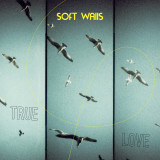
Soft Walls is the solo recording project of Dan Reeves, who has spent his entire adult life kicking around in the dust of the UK's underground music scenes. Cutting his teeth in the South West's post-hardcore scene; centred around Exeter's The Cavern club, before moving to the South East and forming his own record label; Faux Discx, and the propulsive post-punk band: Brighton via London's Cold Pumas. Projects have come and gone over the years, but Reeves' Soft Walls has remained, an outlet for whatever musical whim takes his fancy.
'True Love' is Soft Walls' 4th album. Written and recorded at home, during breaks in work. During the aftermath of you-know-what.
For this album Dan leaned heavily in to his guitar playing, searching for those purest moments of true emotion and connection. Aiming to strike an instant blow. "Emotional guitar music. But not Emo." The result of falling in love with an instrument again and playing for the joy of it, much like he did as a teenager. Just older, wiser(?) and certainly more world-weary / teary-eyed.
Thematically, 'True Love' revels in stating its love for everything that is dear to Reeves. Odes to marriage, romance, unconditional love, parenthood and creativity pierce through the record's down-swings that tackle existential crisis and the feeling of falling in to depression. Each song attempts to encapsulate a vivid feeling, be it positive or negative. It's all part of a life worth living.
Although recorded at home, this album marks a leap in to digital mid-fidelity for Soft Walls, embracing a wider, richer sound beyond the tape hiss of earlier releases. That same spirt is still in the mix, but is presented wide-eyed and caffeinated in to clarity. Elevated by the input of a handful of collaborators contributing to the performances and helping to shape it sonically, 'True Love' ends up being the truest version of Soft Walls committed to (digital) tape thus far.
The cinematic opening track Inthenever starts off as a film >> somewhere on a desolate coast, where everything has already ceased. This is going to be an album with a story and depth, a fearless tour of the barren shores of our days // or is it possibly just a mirage conclusion of their razor-sharp sound brutalism? Tittingur's third album, Epiphany, is here, pounding with waves they had not done before.
It seems as though this dyad has disposed of all the genre confines that had locked them in, and have grasped the sound of new subject matters, for which the moniker of experimental techno is finally too narrow. With utter urgency and candid to their emblematic, thunderous sound, Dominik's and Matus's deafening mallets collide in beats which are now, more than ever, drenched in a mass of palpable gloom and anguish. As though we could touch the rising levels of the oceans, and smell the melting of the glaciers themselves.
In one way or another, the music of Tittingur has always been about nature, its fierce essence, and its stark contrast with the post-era that we have found ourselves living in. However, whereas before, it was the sound of old, weather-stained concrete, and the pounding of abandoned, overgrown buildings, now it is, unavoidably, their most direct and honest return to nature landscapes, and to human, age-old traditions, referenced in the Slovak folk motives, recordings and found sounds.
On Epiphany, Tittingur's sound becomes yet more abstract, in a sound world that is ambiguous but also unified, and works on its own. The duality of nature and technology, of inland human folklore and the trenches of deepest oceans, invite us to come closer and observe the volatile obliteration taking place. Can we even attempt to re-assess our position with nature, or is this whole experiment doomed to fail?
Unsurprisingly, in the echoes, all the ingredients of the classic Tittingur sound are still present, distilled into new forms >> the ever-present over-saturation, the exaggerated, maximalist approach and megalomania >> the sound of impending climate change, doom, and near-apocalyptic visions, the scent of borovička mixed with the wild North Sea, the agony of contemporary urban life, and the adventure of wilderness: ferocious synths, monumental beats, aggressive basslines and crumbling noise-scapes built of a found-sound, music concréte-like, collagist approach.
At moments, it seems the means have changed. Just until you realise that the sentences of this story are spoken in a new language. If you dive deep enough, and listen to the essence that the music of Tittingur articulates, it's surprisingly easy to understand >> although the notions and emotions are difficult to put into words. The profound narrative of Epiphany is that of an endless inner struggle of society, anxiety, crises, and ambiguously easy // difficult solutions in the post-modern global chaos. It is the calm before a storm. It is the storm. Is it the calm. It is all of it, in itself. credits
Patsy Cline was the first true Queen of Country, putting down markers in a male dominated musical world for the likes of Kitty Wells, Brenda Lee and Loretta Lynn. She is now revered by a new generation of performers. Invited to sing on American television’s Arthur Godfrey Talent Scouts show, the show’s producers insisted she sing Walkin’ After Midnight. The standing ovation it won from the studio audience told its own story, and a Number 12 Pop hit resulted. She came back strongly, recording another crossover hit in Crazy, written by Willie Nelson. It became her biggest seller, reaching Number 9 in the Billboard Pop listing that October. Other 1962-vintage tracks featured here are She’s Got You, When I Get Thru With You (You'll Love Me Too) and So Wrong, show an artist at the top of her game. But while 1962 would bring more acclaim, the story ended for Patsy Cline all too soon. However, her recordings ensure Patsy’s name lives on through her songs Heartaches, You're Stronger Than Me, Lonely Street, Stop, Look And Listen, Why Can't He Be You, You Belong to Me, Strange and the Hank Williams cover Your Cheatin' Heart.
Elvis Presley was not only the first but also the greatest star of the rock’n’roll era. His energetic, genre-blurring recordings have retained their appeal for more than half a century, and will do so forever. Elvis has often been criticised for the movies he made, particularly later in his Hollywood career where they became formulaic, and he was often typecast in romantic musical dramas. However, the quality of his music is not in question, and after his 1956 cinematic debut featuring the title song Love Me Tender, Loving You followed in 1957. The latter film featured some great rock’n’roll songs, but most notably the sentimental love song Have I Told You Lately That I Love You? Almost seven decades later, the music of his early years, some of the greatest rock’n’roll love songs ever produced, still stands as his monument.
REKORDER is "a kind of retrospective of myself", says M.RUX about his second, long-awaited solo album. For over 10 years, Marten Rux aka M.RUX appears as a DJ, producer, editor, remixer and multi-instrumentalist all over the world and has developed an idiosyncratic sound that opens up subtle fields of tension: M.RUX mixes a sound between experimental sound design and hooklines that stay in your ears forever. Between wild percussion and contemplative harmonies, between ecstasy and meditative calm. In his DJ and live sets, M.RUX usually steps up to the controls with a smile, discreetly bobbing his head, while the audience goes wild. He circumnavigates clichés with trustworthy certainty and develops his very own guiding threads in his selection beyond BPM or genre straitjackets. One constant is his warm, often stoically slow kick drum, which holds all that playfulness together. REKORDER is a manifestation of this typical M.RUX sound. Similar to his concept album "Vermonische Melodien" from 2020 (on the Pingipung label), the artist's curiosity is directed towards the musical visions of the past. When new music technology projected great visions of the future and when new sounds had not yet solidi ed into clichés. REKORDER refers to the recording device, spelled in a German way, because most of the recordings were made in Germany (and in England as well). Phonography is a miracle that has only been around for 150 years: Technology gifts upon us prosthetics for remembering sound. Every recording is a process, and every playback a new performative act. Recordari (Latin) is a beautiful word. It literally means to take something to heart (cor) once again (re-). This doesn't just refer to remembering, but also to a ponderous, loving, sometimes doubtful contemplation. It is a perfect headline for M.RUX’ approach to processing sound. REKORDER draws deeply from its own archive, which has ourished quite splendidly during the pandemic. Multi-instrumentalist M.RUX mixes his own recordings of banjo, guitar, auto-harp, synths, percussion and jews harp with fragments from sessions with friends that have accumulated since 2020. They unfold in the process of re-listening in the mix and transform into a solid musical tapestry. A typical gesture for this album? M.RUX bows deeply to the history of pop music - especially the blues and its melancholy, coolness and shuf ing groove. The harmonic framework of the album is based on blues scales throughout. Instead of conveying blue emotions via lyrics or the tone of the voice, as the original genre does, the synthesizer takes on this role on REKORDER. With his sound design, M.RUX achieves an ecstatic sorrow in his melodies, this gurgling portamento that is reminiscent of R&B (or even the ingenious title melody of the series "Bojack Horseman”). If voices are heard on REKORDER, then as hypnotic fragments that guide us through the groove as conjunctions: "Because...", says the voice in the track of the same name. That's enough. There are no lyrics, no literal weariness, no love-songs or storytelling, REKORDER processes all of this into timbres and groove as vessels for the album’s individual, contemplative melancholy. Never forgetting, with a gentle smile, to swing a leg.
out of Stock
Last delivered 21 months ago available to reorder, subject to availability
LIMITED RED COLOURED VINYL!
REKORDER is "a kind of retrospective of myself", says M.RUX about his second, long-awaited solo album. For over 10 years, Marten Rux aka M.RUX appears as a DJ, producer, editor, remixer and multi-instrumentalist all over the world and has developed an idiosyncratic sound that opens up subtle fields of tension: M.RUX mixes a sound between experimental sound design and hooklines that stay in your ears forever. Between wild percussion and contemplative harmonies, between ecstasy and meditative calm. In his DJ and live sets, M.RUX usually steps up to the controls with a smile, discreetly bobbing his head, while the audience goes wild. He circumnavigates clichés with trustworthy certainty and develops his very own guiding threads in his selection beyond BPM or genre straitjackets. One constant is his warm, often stoically slow kick drum, which holds all that playfulness together. REKORDER is a manifestation of this typical M.RUX sound. Similar to his concept album "Vermonische Melodien" from 2020 (on the Pingipung label), the artist's curiosity is directed towards the musical visions of the past. When new music technology projected great visions of the future and when new sounds had not yet solidi ed into clichés. REKORDER refers to the recording device, spelled in a German way, because most of the recordings were made in Germany (and in England as well). Phonography is a miracle that has only been around for 150 years: Technology gifts upon us prosthetics for remembering sound. Every recording is a process, and every playback a new performative act. Recordari (Latin) is a beautiful word. It literally means to take something to heart (cor) once again (re-). This doesn't just refer to remembering, but also to a ponderous, loving, sometimes doubtful contemplation. It is a perfect headline for M.RUX’ approach to processing sound. REKORDER draws deeply from its own archive, which has ourished quite splendidly during the pandemic. Multi-instrumentalist M.RUX mixes his own recordings of banjo, guitar, auto-harp, synths, percussion and jews harp with fragments from sessions with friends that have accumulated since 2020. They unfold in the process of re-listening in the mix and transform into a solid musical tapestry. A typical gesture for this album? M.RUX bows deeply to the history of pop music - especially the blues and its melancholy, coolness and shuf ing groove. The harmonic framework of the album is based on blues scales throughout. Instead of conveying blue emotions via lyrics or the tone of the voice, as the original genre does, the synthesizer takes on this role on REKORDER. With his sound design, M.RUX achieves an ecstatic sorrow in his melodies, this gurgling portamento that is reminiscent of R&B (or even the ingenious title melody of the series "Bojack Horseman”). If voices are heard on REKORDER, then as hypnotic fragments that guide us through the groove as conjunctions: "Because...", says the voice in the track of the same name. That's enough. There are no lyrics, no literal weariness, no love-songs or storytelling, REKORDER processes all of this into timbres and groove as vessels for the album’s individual, contemplative melancholy. Never forgetting, with a gentle smile, to swing a leg.
out of Stock
Last delivered 2 years ago available to reorder, subject to availability
With 8 tableaux, I tried to give musical form to a painting. Music is an art that takes place over time. Painting is a freeze-frame at a precise moment in the painter's creative flow.
So how do you combine these two art forms? Do you have to stop time? How do you stop time in music? By basing the structure of the pieces on cycles that recur again and again, we can make the listener believe that the music was there before, and that it will also be there afterwards.
With no beginning and no end, all that's left is this musical freeze-frame. In taking this approach, it became clear to me that music and painting both appeal to contemplation. Another concept I worked on for this record is the notion of randomness in music. Riopelle is often associated with the Automatist movement.
For me, his major works from the 50s are more reminiscent of romantic abstraction or even a great organic and organized chaos (a link to be made with nature here). It was on the basis of this reflection that I tried to integrate the notion of controlled chance or, rather, of chaos filtered through emotion.
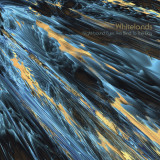
The eagerly awaited debut album from the London-based four-piece * At the forefront of the new generation of Black British guitar music with Big Joanie and Bob Vylan * Supporting Slowdive on their UK tour in February * Singles playlisted by BBC Radio 6 Music, Spotify and others Whitelands are Etienne, Jagun, Vanessa and Michael and they are ostensibly a shoegaze band ever since Etienne stumbled across Slowdive's KEXP session in his recommended videos on YouTube a few years ago. However, they come at the resurgent, Gen Z-soundtracking genre from a refreshingly different angle thanks to their mishmash of musical backgrounds. There's also the fact that their line-up is fully PoC in what is traditionally seen as a predominantly white genre. "There's an underlying narrative that it's OK for white men to be romantic, sensitive, emotional and make dreamy music and, by contrast, young Black men should be making angry music," says Vanessa. "We've all grown up with these stereotypes and therefore I think people are mystified when they see Whitelands." "I consume a lot of media," says Etienne of his wide range of influences. "Videogames, music, news, paintings, manga, animations and film are my go-to, especially anime. There is this drive to want to understand and feel the whole weight of an expression. So, the songs are based on other songs, pictures, aesthetics, 'vibes', an emotion someone else felt. Fundamentally, you are what you eat." As a result of this diet, the lyrics are stunning, dealing with everything from unbalanced relationships and vulnerability to depression, being diagnosed with ADHD and, on the new single 'Tell Me About It' (featuring vocals by Dottie from the band's Sonic Cathedral labelmates deary), trying to navigate love following that diagnosis. The album is bookended by two poetically political songs - 'Setting Sun' and 'Now Here's The Weather' - that deal with imperialism, racism and performative ignorance. "We've experienced tokenism, micro-behaviours, envy and resentment," concludes Vanessa. "So we feel we have to continually prove ourselves. We know we're making a positive impact, but I want Whitelands to really break some barriers."
« Tas Malonumas »
Lithuanian word
Def: meaning That Pleasure
Example: conversation between a young, inexperienced person and an elderly person who’s near death’s door. The old one is telling the young one how life is an unceasing search for pleasure.
Track: takes the form of a mental stroll that takes you far, far away.
« Room of Men Eaters »
Human expression of cannibalism
Def: absurd situation in which men and women eat each other in a room
Track: the contrast between the absurdity of the situation and the apparent normality of speech told by the vocoded voice of Shkema is just astonishing.
« Sarka Syrkaza »
From the future
Def: meaning “super sarcasm”
Example: one day you wake up in the morning and you feel that something within you has changed. All seems to be nonsense and you start to look at everything through the grey glasses of sarcasm. One might look enjoying oneself, but in reality this is an extremely draining state of mind.
Track: musical expression of that state of mind
« Je n’aime pas les fêtes »
World expression
Def: parties are boring
Track: Shkema remix of his friend Afrodelic is a wacky version that contrasts French lyrics talking about how disastrous parties feel with a beat that just makes you want to dance.
out of Stock
Last delivered 23 months ago available to reorder, subject to availability
Here In, Absence" ("Here, In Absence" for the book) is the result of the dialogue between the Finnish photographer Mikael Siirilä and the music artists The Humble Bee & Offthesky initiated by IIKKI, between March 2023 and January 2024.
After a first release in 2019 on IIKKI ("All Other Voices Gone, Only Yours Remains"), a second one in 2020 on LAAPS ("We Were The Hum Of Dreams"), Craig Tattersall (The Humble Bee) and Jason Corder (Offthesky) come back with a third stunning out-of-time beauty, paired with the Mikael Siirilä photography works.
Craig Tattersall is a former member of The Remote Viewer and Famous Boyfriend bandmate Andrew Johnson. Tattersall's music can be found these days more often under his alias The Humble Bee; as a founder member of The Boats; and in his collaborative works with the likes of Bill Seaman in The Seaman And The Tattered Sail. He has run the wonderful label Cotton Goods from 2008 to 2015 and since 2009 he has recorded 16 solo albums on his moniker The Humble Bee and almost the same under his name on some collaborations.
Jason Corder is experimental-ambient multimedia artist based in Denver, CO. He has been producing music, video art, audio software, and the occasional interactive sound sculpture, for over 20 years. He teaches private courses on generative music and occasionally lectures on various sound design topics at Denver University. He currently is the Audio Director at the Denver based videogame studio Dire Wolf. Over the years, he has worked with labels such as Home Normal, 12k's term, Facture, LAAPS and more. Over the years he has performed at Mutek, Decibel, Communikey and other festivals, sharing the bill with likeminded artists Pole, Matmos, William Basinski, and more.
Mikael Siirilä: "I am a darkroom artist (b. 1978) based in Helsinki, Finland. My small individual photographs examine the themes of absence, presence and outsiderhood. My characters appear immersed in their inner worlds and moments of being: simultaneously absent and intensely present. The pictures also reveal the outsider’s gaze, lost in observation and reflection. My pictures are true observations captured with minimal interaction with the subjects. Their origin is in the act of looking, and they feel causally connected to the world. The craft of printmaking is inseparable from my artistic expression. I work solely with black & white film and the darkroom. The slow, contemplative process lends the pictures a calmness. I make physical pictures I want to stare at, feel and become lost in. Again and again."
Fine Art Book, Ltd. to 500 copies:
Hardcover book printed on Munken Lynx 150g/m2 // 80 pages, 18cm x 24cm, 51 photos // Logo and slot embossed // Selective UV varnish // Visible seam and cutting cover pages // Hand-numbered, hand-stamped.
Limited orange vinyl. We've all heard the axiom, "if you ignore it, maybe it'll go away." That goes double for a lot of people who wish to apply that saying to rap music. But when it comes to the West Coast "gangsta rapper" genre made popular by the likes of NWA, Eazy E, Ice-T and his Rhyme Syndicate cohort, King Tee, the truth is hard to ignore. King Tee aligns producer DJ Pooh on this Bass EP consisting of tracks recorded in 1987. They're joined by The Compton Posse that includes the late Mixmaster Spade and J-Ro from Tha Alkaholiks. This EP sharpens the skillful word play King Tee made famous on his debut album Act A Fool. From song to song, this EP has a superior sheen, a tightness and cohesiveness between rhyme and music. Born in Los Angeles and now a resident of the infamous West Coast rap capital, Compton, California, King Tee truly is a product of the streets. He openly admits to running with gangs in his youth, causing his mother endless embarrassment and frustration. So much so that, in a desperate attempt to turn his life around, she turned King Tee into the authorities when she discovered him stealing from her. Once out of jail, King Tee ran of to Houston, Texas. Trouble is that he was underage atthe time, so his mother again had King Tee locked up in a juvenile camp. When King Tee finally realized why his mother did what she did, he decided to turn his life around by dedicating himself to music. He listened obsessively to the radio and chose to become a DJ. When King Tee was released from juvenile camp he secured a mixing gig at KSU and then KYOK in Houston. Between station gigs he handled the mix at various venues and clubs. After gaining the necessary experience behind the tables, King Tee moved back to Los Angeles and hooked up with Ice-T. In rapid succession, King Tee met Du Pooh who enlisted him into his rap group (after King Tee bugged Pooh for months), then Pooh introduced Tee to DJ Unknown with whom he made several 12" records for the Techno Hop labelwhich is now released on this EP for the first time since then. Ice-T's influence brought Rhyme Syndicate Management's Jorge Hinojosa into the picture. King Tee eventually signed with Hinojosa who then secured a contract with Capitol Records for King Tee. The result was 1988's Act A Fool.
Reissued for the first time on vinyl is ‘Taking All The Love I Can’ by Newark, New Jersey outfit The Chosen Few.
Initially released on Maple Records in 1971, their debut album boasts incredibly moody ‘Northern Soul’ and perfectly represents the golden age of New Jersey R&B.
The Chosen Few are swaggering with confidence throughout the LP and draw comparisons to fellow Maple artists Lee Moses and Gloria Barnes.
‘Taking All The Love I Can’ is a highly sought after record with original issues fetching upwards of $500 when found in the wild. On High Records is
thrilled to present this modern reissue which is remastered and pressed on audiophile virgin vinyl for music lovers worldwide.
For a long time, the music of Congo-born Bony Bikaye had to be sought in the purgatory of "world music", where diamonds in the rough cohabited with bland nightmares of white dudes who froze rumba like fish sticks. Worse, they did put it on the menu, when so many longed to move on. Take Bikaye, who grew up listening to modern european music, digs Krautrock, struggles with tradition, obviously looking for trouble in the genre. In Brussels, he recorded a few albums with CY1 (Loizillon/Micheli), and brilliant defectors from Aksak Maboul, produced by Hector Zazou. Now it's up to french trio TONN3RR3 to take up the torch and build this project that proudly brags: "It's a bomb". Thought up at home by Guillaume Gilles (compo/keyboards), the album was finished at One Two Pass It studio, with Olivier Viadero and Gae"lle Salomon on percussion, Yoann Dubaud (machines & bass) and Guillaume Loizillon (synth of CY1 fame, and matchmaker of this affair). It's a deeply musical record, crafted by no-attitude reference players with nothing left to prove, and you can hear it. Floats well above the fray. "Keba na butu", beware. Indeed : beyond the simple pleasures of soukouss, or the rumba guitar riff that spins like a merry-go-round that skipped technical inspection, lie lush orchestrations. Freestyle, synthetic : something old, something new, something what-the- fuck-is-that-now. There's straight, there's syncopated, there's 808 and knee-jerk inducing bass patterns_with a vision. BIKAY3 plays his voice more than ever. His crazy vibrato has improved like hard liquor over the years. In "Zela" and "Balobi" in particular, he puts it to good use with flamboyant, Screamin' Jay Hawkins-style antics. He can also resort to pure storytelling : "La fore^t et les dieux", is a French-spoken excursion into the wild, moving along in grasslands of synths and percussion with TONN3RR3. A tale of gods and spirits, plain and simple. Nicole Mitchell brings the occasional flute in "Akei" for this trip in the bush of ghosts where lingala and kikongo rub with English and French. They saved "It's a bomb" for the end, a bastardized rumba, with rimshots that slap like a cool hand on willing skin. We're living in a golden age of reissues coming out in droves and satisfying our desire to catch up on our neighbors' musical heritage, but let's not miss the boat : it's now or never to listen to the music of the living. - Halory Goerger
Donovan’s Original
A Gift From a Flower to a Garden made for a few firsts: the first double LP of Donovan’s
career, one of the first box sets in pop and, most importantly for Donovan himself; the first
pop album for the children of tomorrow.
He resolved to make A Gift From a Flower to a Garden an album of two halves. The first,
Wear Your Love Like Heaven, was intended for his own generation as they started to think
about the kind of world they wanted to leave behind. The second, For Little Ones, was for
the children they had or would have in the years to come. The result was a kaleidoscopic
folk-jazz suite on the power of love, imbued with all the romance and mystery of an Arthur
Rackham illustration for an ancient English fairy tale. The songs, remarkably adventurous
given Donovan was a globally famous singer at his commercial height, combined the
influences he had amassed so far.
There is something about A Gift From a Flower to a Garden that could never be repeated,
though. It is such an innocent evocation of the childlike imagination, so redolent of its time,
yet set apart from it too. All these years later, the peaceful qualities of this pioneering,
enchanting, deeply unusual album feel more valuable than ever.
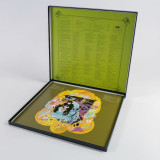
The state51 Box Set
With authenticity core to the project, The state51 Conspiracy engaged one of the UK’s
leading experts in box set design, Daniel Mason at Something Else, to painstakingly recreate
the box, records and accompanying ephemera. The first challenge was to find the deep blue
leatherette paper the original box set was covered in; a problem since it was no longer in
production. “I knew people who had stacks of it, gathering dust on top shelves, so I bought it
up wherever I could find it,” says Mason. Then came the reproduction of 12 loose leaf lyric
sheets on fine art watercolour paper, each of them featuring a watermark and a fairytale-like
illustration by Donovan’s artist friends Sheena McCall and Mick Taylor. Where, though, to
find the same paper stock? “I found out that it was made at a paper mill in North Wales
called Abbey Mills. Unfortunately the mill dissolved in the early 70s and very little of the
paper remained. However enough paper remained to allow us to produce the numbered
certificate also signed by Donovan that sits within the box.”
Then to the iconic cover image. Donovan and Jimi Hendrix’s personal photographer Karl
Ferris, used infra-red film to achieve the psychedelic effect on the cover, but the original
negatives couldn’t be found. Mason then used digital technology to ramp up the colour levels
on a reproduction from an original copy of the album while allowing it to remain a little bit
faded, as it would be after half a century. The same labour of love and care has gone into
producing all elements of the box; from the rebuilding of the famous front cover font to the
hand-numbered and signed certificate; letterpress printed on the original paper stock of the
1968 UK release lyric sheets.
To cap it all off the original mono master tapes were waiting safely in the EMI Donovan
Archive and transferred from tape to digital by Abbey Road Studios where new lacquers
were cut, ensuring Donovan's favoured mono version of the album would be presented both
physically (and digitally for the very first time) in striking audiophile quality. The final touch to
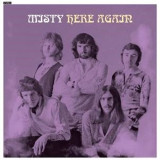
First ever vinyl release of the album recorded in 1969/70 by UK prog-psych band Misty. Including their terrific mod-psych “Hot Cinnamon” 45.
A dazzling fusion of classically-inspired progressive rock and song-based psychedelic pop with an organ-based sound, in the vein of Procol Harum and The Nice.
“In October 1969, King Crimson released their debut, In The Court Of The Crimson King, Pink Floyd unleashed Ummagumma and Led Zeppelin put out their second LP. At the same time, Misty were in London’s Regent Sound Studios recording what turned out to be the only album of their career with producer, Adrian Ibbetson, who had cut his teeth as an engineer working with everyone from the Beatles to the Equals.
After only a handful of gigs, Misty signed a deal with Parlophone and began to gather momentum with the release of Hot Cinnamon. Although they received a lot of airplay, the single failed to chart and the band’s hopes of releasing their debut album were dashed. Reluctantly, Misty went their separate ways and the Here Again master tapes sat gathering dust on a shelf until Gelardi came across the original acetate and decided it was time for the album to finally see the light of day.
Bridging late psych and early prog, songs like Life Has Just Begun, Witness For The Resurrection and the title track were played with a perfect mix of high-flying experimentation and virtuosic musicianship. Blurring the fine lines between rock, jazz, classical and chamber pop, Here Again is a transcendent kaleidoscope of colour that is beyond definition.
Maybe you can tell an album is truly timeless when it takes half a century for it to be properly appreciated. Misty were a rare bird, a brilliant, truly original band who should have left an indelible mark instead of joining what now seems like the never-ending line of half-remembered and long-forgotten flotsam and jetsam of the psychedelic era.
Both the first and the final statement from a group who never really got their chance to be heard, Here Again is a slice of pristine psychedelic pop that so embodies the dizzying energy and the progressive spirit of the time, it’s astonishing that it stays afloat under the weight of its own intentions. But float it does, like mist in the air - a half-forgotten diaphanous dream slowly coming back to you after 50 years of silence.” – Jonathan Wingate
Skyllumina represents a new evolution of London-based, Italian-born composer, bassist, and vocalist Ruth Goller. Goller is known for her bass and vocal work with Alabaster DePlume, whose music she elevates in live contexts with her genre-less improvisational intuition, and an incredibly diverse résumé that includes performance and recording with Bex Burch"s Vula Viel, Shabaka Hutchings, Rokia Traore, Melt Yourself Down, Sam Amidon, and even a very brief moment with Paul McCartney. For Skyllumina, her International Anthem debut, Goller expands upon the concept of her first solo album Skylla - de-tuned bass harmonics with layered voices - this time collaborating with a different drummer on each track. Her accompanists on the album include The Smile"s Tom Skinner, go-to London drummer Seb Rochford, Berlin-based International Anthem labelmate Bex Burch, and ex-pat Chicago legend Frank Rosaly. But more importantly, the music is an immersive hyperfocus for Goller and her patently distinct, singular compositional vision.
Skyllumina represents a new evolution of London-based, Italian-born composer, bassist, and vocalist Ruth Goller. Goller is known for her bass and vocal work with Alabaster DePlume, whose music she elevates in live contexts with her genre-less improvisational intuition, and an incredibly diverse résumé that includes performance and recording with Bex Burch"s Vula Viel, Shabaka Hutchings, Rokia Traore, Melt Yourself Down, Sam Amidon, and even a very brief moment with Paul McCartney. For Skyllumina, her International Anthem debut, Goller expands upon the concept of her first solo album Skylla - de-tuned bass harmonics with layered voices - this time collaborating with a different drummer on each track. Her accompanists on the album include The Smile"s Tom Skinner, go-to London drummer Seb Rochford, Berlin-based International Anthem labelmate Bex Burch, and ex-pat Chicago legend Frank Rosaly. But more importantly, the music is an immersive hyperfocus for Goller and her patently distinct, singular compositional vision.
Albert Hammond is one of the most prolific, versatile songwriters and performers of his or any generation. His earliest solo hits include “It Never Rains in Southern California” and “The Free Electric Band.” His contributions to popular music (writing and and/or contributing to hit songs by Tina Turner, Whitney Houston, Willie Nelson and Julio Iglesias, Diana Ross, Starship, The Hollies, Joe Cocker, Johnny Cash, Aretha Franklin) cross genres and generations. Body of Work is an all-new, original, and essential addition to this iconic canon. Written during a time of tumultuous change, Body of Work is the moment a master songsmith takes a step back to reflect on the world, “This is the first step I had to take and the album is what I discovered about me and all of us once I started here,” says Albert. “I can feel the discomfort and impatience in it. That’s just the honest feeling when the world changes for you from oasis to desert, from beauty to chaos… freedom to fences.” From gutsy opener “Don’t Bother Me Babe” through the wistful “Looking Back” and closing with the reflective “Goodbye LA,” Body of Work is an album for the ages, crafted with 50 years of words, experience, and wisdom.
Since the early 80's Allan Crockford has been a major figure in Medway's garage rock scene, including playing for The Prisoners, Billy Childish's Thee Headcoats, the original line-up of the James Taylor Quartet, The Solarflares and many more. Since 2010 he has fronted his own band, The Galileo 7, as writer, guitarist, and lead vocalist. Their unique blend of powerful '60s garage rock'n'roll, psychedelic vocal harmonies and quality songwriting has now featured on no less than eight albums. Their ninth, You, Me and Reality, sounds like the work of a seasoned rock 'n' roll band dialling things up one and approaching its zenith. The group performances of the quartet of Allan Crockford, Viv Bonsels, Paul Moss and Mole ooze energy and dynamics - whether it's the garage ramalama of opener 'Can't Go Home', the woozy psychedelics of 'Slow Down', the chipper folk-rock of 'A Simple Man' or the '60s mod-pop stomp of the title track. As with 2019's last album proper, There Is Only Now, all four group members share lead vocal duties, with Viv's contributions adding an affecting indie-pop flavour that coyly suggests new directions. You, Me & Reality largely eschews its predecessor's predilection for ambling unplugged off the beaten path, instead sticking with up-tempo ensemble performances that showcase the players' musical chops and vocal interplay in the kind of warm, fizzy, analogue soundscape that's become a touchstone of many Medway bands.
Swart Waling Koolhaas is the new album by jazz pianist Joost Swart, drummer Bjorn Waling and producer Jesse Koolhaas. The music is the result of a two-day session where improvisations were recorded and several well-known guest musicians from the Dutch Jazz scene were invited, like Reinier Baas, Joris Roelofs and Jeroen Vierdag. The recorded improvisations on grand piano, drums, and other instruments, combined with the sounds from Jesse Koolhaas’ vintage synthesizer collection fuses into a type of music you can’t really put your finger on. Straight forward jazz, or electronic music. It is both and neither.
Tommy was born in 1945 in Homestead, Florida, and after his first foray into music in a church choir, he launched his secular recording career in Jackson, Mississippi, working mostly with Tim Whitsett and his Imperial Showband in the latter half of the 1960s. After a short stint with the Nightingales, he signed with KoKo in 1971 and had six impressive singles released, followed by records on Sundance, Juana and Urgent Records.
“I Can’t Do Enough for You Baby” is a mellow and melodic slow-to-mid-tempo song that sounds almost inspirational, while “Hold On” is a beautiful waltz-time ballad which James Carr released on Atlantic in 1971. Both of these songs were cut as demos probably in 1969 after Tommy and Carson Whitsett had signed a deal to become staff writers with Malaco Records.
Tommy was a magnificent singer and songwriter, who never got the credit he deserved mainly because of poor business choices and unfortunate incidents throughout his career. However, he was a beautiful person, gentle and humble.
Termination is an album inspired by the halting problem in computer theory, i.e. whether the program will finish running or continue to run forever. The halting problem is undecidable, meaning that no general algorithm exists that solves it. This is true also for human life, as it goes up and down and one can’t program it, because simply you cannot predict the future, and even if we could there are so many variables that can easily f*ck up any sort of forecast. Modern Stars is an Italian neo psych rock band which showcases a unique musical style characterized as instinctive, flickering, fuzzy, aerial, groovy, bizarre, distorted, harmonious, and dissonant. Influenced by bands like Spacemen 3, Primal Scream, Suicide, and lesser known musicians. Termination is Modern Stars' fourth studio album, following Silver Needles (2020), PsychIndustrial (2021) and Space Trips for the Masses (2022).
Fire! have always been about finding the essence by getting to the core of the music. Their 8th album sees the trio - for the first time on record - stripped down to the bare-bones essentials; with no flutes, no electronics, no guests and no extras, recorded live in the studio to analogue tape - the Steve Albini way - with the master himself at the controls in Electrical Audio in Chicago. Thus, this album stands as a true testament to the group's expressive power and glowing intimacy. Musically, Testament can be seen as an extension of their previous full length album Defeat, released two years ago, to the month. A solitary bass figure from Johan Berthling, quickly joined by a stout drum groove, gets it all going in a familiar fashion before Gustafsson adds desolate cries and whispers from his baritone sax. This approach is even more honed on the second track, with the most simplistic groove you're likely to hear in jazz and Gustafsson shifting between extended, lonely, tortured lines, only once abrupted by a series of short bursts. The third track starts with loose and relatively lively drums that continue throughout, but the mournful saxophone maintains a subdued atmosphere. Track four is a real beauty with the trio slipping into a trance-like dream state before shifting gear halfway into its nine minutes. The final track is the most dynamic of the lot, shifting between bursts of energy and lyrical beauty. Fire's debut album, You Liked Me Five Minutes Ago, was released in 2009 to wide international acclaim. "The basic strategy of pairing the expressive energy of free jazz with a sturdy sense of groove has yielded something potent and self-contained" (New York Times). Between this and Testament there's been six albums, including collaborations with Jim O'Rourke (Unreleased?) and Oren Ambarchi (In The Mouth A Hand), as well as the Requies EP with Stephen O'Malley and David Sandström in 2022. Testament was recorded and mixed during a three-day stint at Steve Albini's Electrical Audio studio in Chicago in December 2022. Mats Gustafsson - baritone sax Johan Berthling - bass Andreas Werliin - drums.
Fire! have always been about finding the essence by getting to the core of the music. Their 8th album sees the trio - for the first time on record - stripped down to the bare-bones essentials; with no flutes, no electronics, no guests and no extras, recorded live in the studio to analogue tape - the Steve Albini way - with the master himself at the controls in Electrical Audio in Chicago. Thus, this album stands as a true testament to the group's expressive power and glowing intimacy. Musically, Testament can be seen as an extension of their previous full length album Defeat, released two years ago, to the month. A solitary bass figure from Johan Berthling, quickly joined by a stout drum groove, gets it all going in a familiar fashion before Gustafsson adds desolate cries and whispers from his baritone sax. This approach is even more honed on the second track, with the most simplistic groove you're likely to hear in jazz and Gustafsson shifting between extended, lonely, tortured lines, only once abrupted by a series of short bursts. The third track starts with loose and relatively lively drums that continue throughout, but the mournful saxophone maintains a subdued atmosphere. Track four is a real beauty with the trio slipping into a trance-like dream state before shifting gear halfway into its nine minutes. The final track is the most dynamic of the lot, shifting between bursts of energy and lyrical beauty. Fire's debut album, You Liked Me Five Minutes Ago, was released in 2009 to wide international acclaim. "The basic strategy of pairing the expressive energy of free jazz with a sturdy sense of groove has yielded something potent and self-contained" (New York Times). Between this and Testament there's been six albums, including collaborations with Jim O'Rourke (Unreleased?) and Oren Ambarchi (In The Mouth A Hand), as well as the Requies EP with Stephen O'Malley and David Sandström in 2022. Testament was recorded and mixed during a three-day stint at Steve Albini's Electrical Audio studio in Chicago in December 2022. Mats Gustafsson - baritone sax Johan Berthling - bass Andreas Werliin - drums.
Formed in 2006 in Boston, Massachusetts and now based in Berlin, Germany; Arms and Sleepers is the electronic trip hop project of producer Mirza Ramic (formerly a duo with Max Lewis), who has subsequently released 13 full albums and 20 EPs of glitched-out grooves that take as much inspiration from leftfield hip hop experimentalism as they do from the slowburn ambience and panoramic euphoria of contemporary post-rock. His forthcoming 14th full-length album, `What Tomorrow Brings' is a breathtaking aural account that charts the life-changing journey of being forced out of your home over four distinct, musical sections. Initially inspired by watching Kenneth Branagh's award-winning coming-of-age drama Belfast as the fighting in Ukraine broke out, MIrza found himself reflecting on his own experience as a child and how it has formed the man he is today. As such, the album's four sections, titled `Innocence', `Melancholy', `Rupture' and `Reflection', serve as the reification of the life and experience that Mirza lost as well as a representation of the identity he has since shaped for himself. Whereas more recent Arms and Sleepers releases, such as 2022's full-length `former kingdoms', are peppered with the sultry saxophone refrains, syncopated 16ths and smoky ambience of a New York jazz bar; `What Tomorrow Brings' is instead acute and driving, with complex drum breaks reminiscent of powerful post-rock acts such as BATTLES, Mogwai and Caspian brought insistently and urgently to the fore. Double vinyl in single colour orange!
A pioneer of the home recording movement, Linda Smith released several collections of delicate, bewitching solo music on cassette in the 1980s and 90s. The 2021 release of Till Another Time: 1988-1996, Captured Tracks' compilation of Smith's work, has helped bestow rightful critical acclaim to the ahead-of-her-time artist. Now, Captured Tracks dives deeper into Smith's catalog with the release of two full-length companion albums, Nothing Else Matters and I So Liked Spring, available for the first time on vinyl & streaming formats. Recorded at Smith's home in Baltimore in 1995, Nothing Else Matters chronicles the tension between the mundanity of daily life and the creative impulse: Traffic noises on the charmingly boisterous "Little To Be Won" showcase this levity, as does the addition of playful hand claps and a laugh track to her striking cover of Young Marble Giants' "Salad Days." I So Liked Spring, recorded the following year, saw Smith experimenting with the unique challenge of putting another artist's words to music. She'd come across a biography of the English poet Charlotte Mew and found her wistful poetry rife for musical interpretation. The songs on I So Liked Spring are delightfully unpredictable, full of upbeat melodies and spellbinding vocal harmonies. This is perhaps best showcased on the title track, one of Smith's most popular songs to date, a lovelorn anthem that recalls the airy melodies of early dream pop. Both of these albums showcase the mesmerizing charm of Smith's songwriting, often compared to the likes of the Velvet Underground and Laurie Anderson. Home recording technology has come a long way since Smith first began recording demos on her tape machine, but her influence reverberates through the work of today's bedroom artists. The release of these two essential albums seeks to further illuminate this connection, welcoming a new generation of listeners to the work of this trailblazing artist.
A pioneer of the home recording movement, Linda Smith released several collections of delicate, bewitching solo music on cassette in the 1980s and 90s. The 2021 release of Till Another Time: 1988-1996, Captured Tracks' compilation of Smith's work, has helped bestow rightful critical acclaim to the ahead-of-her-time artist. Now, Captured Tracks dives deeper into Smith's catalog with the release of two full-length companion albums, Nothing Else Matters and I So Liked Spring, available for the first time on vinyl & streaming formats. Recorded at Smith's home in Baltimore in 1995, Nothing Else Matters chronicles the tension between the mundanity of daily life and the creative impulse: Traffic noises on the charmingly boisterous "Little To Be Won" showcase this levity, as does the addition of playful hand claps and a laugh track to her striking cover of Young Marble Giants' "Salad Days." I So Liked Spring, recorded the following year, saw Smith experimenting with the unique challenge of putting another artist's words to music. She'd come across a biography of the English poet Charlotte Mew and found her wistful poetry rife for musical interpretation. The songs on I So Liked Spring are delightfully unpredictable, full of upbeat melodies and spellbinding vocal harmonies. This is perhaps best showcased on the title track, one of Smith's most popular songs to date, a lovelorn anthem that recalls the airy melodies of early dream pop. Both of these albums showcase the mesmerizing charm of Smith's songwriting, often compared to the likes of the Velvet Underground and Laurie Anderson. Home recording technology has come a long way since Smith first began recording demos on her tape machine, but her influence reverberates through the work of today's bedroom artists. The release of these two essential albums seeks to further illuminate this connection, welcoming a new generation of listeners to the work of this trailblazing artist.
Drum-machine soul, funk, disco and boogie from Buffalo, NY. Rare 7" singles and previously unreleased tracks presented as a complete album. In the early 70s, Jessie Key and Sylvester Cleary - two passionate idealists living in Buffalo, New York - formed a close friendship based on a mutual mission to better their city. The Attica State Prison Riot of 1971 was a burning memory, and the Arthur vs. Nyquist lawsuit - brought against the City of Buffalo for creating and maintaining a racially segregated school system - was on the docket. Key was once a cotton-laborer in Mississippi, who journeyed north for school where he met his kindred spirit, Cleary. The two struck up an intense friendship, bought a drum machine and recorded their first 45, "A Man," a paean to self-actualization and Black American empowerment, which they custom pressed and issued privately. Dozens of recordings followed over a decade long span, issued on local labels and warehoused on cassette tapes. Perennial optimists, Key & Cleary tried any - perhaps every! - path they could demarcate in hopes of forwarding their agenda of self-effected, positive change. They formed Buffalo’s first minority-owned construction company, opened a health food restaurant in a building previously occupied by a fast food chain, and even concocted a candy bar called "The Buffalo Treat," which they manufactured and sold locally. Eventually they started their own label, Buffalo’s Reflection. On it they released their masterpiece, "What It Takes To Live," a sought-after disco and Northern Soul classic, which previously appeared on Now-Again”s Soul Cal anthology. This album collates the breadth of Key & Cleary’s recordings from 1970 until the mid 1980s, both with songs issued on rare 7" singles and previously unreleased. It presents a conjoined musical vision and tells the story of a duo years ahead of their time, both musically and culturally. Love Is The Way was their ethos - their goal was to enlighten humanity and to bend history in a more loving direction through communion.
Now-Again Records presents catalog-wide reissues of Latin music propellant Joe Bataan’s legendary Ghetto Records. The series concludes with Drug Story - Rare and unreleased material from Joe Bataan and his Ghetto Records vaults, including an entire side of Bataan’s neverbefore-issued Latin Funk that spans the gamut from Salsa to Soul. Drug Story was inspired by true events and ranks highest among Bataan’s finest achievements as the poet laureate of El Barrio. Ghetto Records was Joe Bataan’s way to get over on “The Man” and out of the ‘hood, a bold move by an artist looking for independence and creative control in an industry that had exploited his talents and treated him like chattel. As Bataan puts it today, “Ghetto Records was part of my journey, a stepping stone to everything else that I’ve done. I learned enough that it enabled me to get out of the box with my thinking, it showed me how to deal with adversity.” Like many dreams and schemes born of the street, this one was audacious, perhaps even reckless to a fault. Hatched from desperation yet full of hope Ghetto Records came crashing down shortly after its inception. The seven albums in its discography languished out of print - until now. These are the definitive reissues of these albums, licensed from Joe Bataan, with his oversight and input into a 16 page oversize book by Pablo Yglesias that details Bataan’s larger-than-imagination life and his little Latin label that could.
The Glass Hours are American songwriters Brad Armstrong and Megan Barbera. Their music blurs between Sunday afternoon country-folk and the Golden Age of the 1970s. With the exception of Sue Westcott on fiddle (Chet Atkins, Tom Jones), the album was written, performed, recorded and produced by Brad and Megan in Brad's home studio in Red Hook, New York.
Like much of the work they've done in their respective solo careers, the new album dances between this and that, drinking from the same wells as Gram Parsons and Emmylou Harris, Tom Waits and Lucinda Williams. The songs go where they want to go; Brad and Megan simply try to stay out of the way. Although it is nearly impossible, in this new world of niche artistry, not to pick a genre camp and pitch a tent, The Glass Hours seem intent on trying. Yet, there is a thread that ties the whole thing together: the constant tension and tapestry of their voices harmonizing. Every song on 'The Glass Hours' was written with the idea of this harmony and interaction, point and counterpoint. Two voices trying to come together as one.
After a limited self-financed release this self-titled album can be seen as the proper debut by Indigo Girls. The album immediately boosted them up the charts, earning them a Grammy back in 1989, eventually reaching platinum in
1991. Featuring the complementing songwriting of Emily Saliers and Amy Ray and guest vocals by R.E.M.'s Michael Stipe, the album is a showcase for jangling folk-rock, beautiful balladry and poetic lyrics.
In the wake of the new acoustic song-based styles of Suzanne Vega, Tracy Chapman and 10,000 Maniacs, Indigo Girls would manage to garner respectable mainstream success and maintain their rabid core following throughout the three decades after this release.
Hollow Coves are a dynamic indie-folk duo of Matt Carins and Ryan Henderson, who are brimming with their passion for travel and observing different shades of the world. The group's tender melodies and poignant lyrics have resonated with fans around the world with the band amassing over half a billion global streams to date. Hollow Coves have received acclaim from the likes of Billboard, Clash, Sunday Times, Ones To Watch, Under the Radar, and more and continue to connect with the hearts and minds of listeners across borders and time zones.
On their sophomore album, the earthy acoustics and breezy rhythms provide a soundtrack to the feeling of change. The essence of shifting one’s perspective is a theme Hollow Coves meditate on as they go through their own musical evolution. They invited friend and acclaimed Aussie artist Matt Corby to help co-produce and bring their new songs to life.
Nothing To Lose by Hollow Coves, released 1 March 2024, includes the following tracks: "Milk and Honey", "Harder to Fake it", "Purple", "Be Alright" and more.
This version of Nothing To Lose comes as a 1xCD in a(n) Digipak packaging.