WOW. Daniel O'Sullivan's transcendent new album, Eros, is one of the greatest things we've ever heard. A simply stunning song cycle of hypnotic, experimental contemporary chamber music composed for a 14-piece ensemble. Combining minimalism, complex syncopation, detailed acoustic textures, weird intervals and samurai precision, this record will elegantly blow your mind. When Daniel first sent us this, he pitched it as “Liquid Swords meets Michael Nyman”. Trust us, he wasn't wrong. A "unique hybrid orchestral music", it presents a confluence of Daniel's longstanding fixations; indeed, there's elements of Nyman, Antonio Carlos Jobim, Magma, Aaron Copland and RZA. But this is wholly O'Sullivan's. Originally commissioned for the Sonoton Music Library in Munich, Eros now receives a deluxe vinyl release courtesy of Be With Records, bringing this meticulously crafted work to a wider audience. Limited to just 500 copies for the world, these are gonna fly.
An English composer and multi-instrumentalist, Daniel O'Sullivan’s career has been marked by versatility and innovation. In addition to his work with Sonoton, he has composed extensively for the legendary KPM music library, contributing to its storied legacy of production music. As a deep virtuoso and collaborator, O'Sullivan has also played in a number of influential projects, including Ulver, Sunn O))), This Is Not This Heat, Grumbling Fur and Miracle (with Steve Moore), leaving an indelible mark on the contemporary experimental music landscape.
O’Sullivan’s first foray into classically informed chamber music, Eros is a culmination of his long-standing fixations and expansive musical influences. The album features arrangements that are as detailed as they are emotionally resonant, showcasing his unparalleled ear for intervals and mastery of counterpoint. The music brims with complex rhythmic syncopation and a sensitivity to texture and space, resulting in a soundscape that is both intoxicating and dauntingly precise.
Recorded June 2023 and February 2024, in Brussels, London and Carmarthenshire, Wales, Eros features members of Echo Collective (Neil Leiter and Margaret Hermant), Thighpaulsandra (from seminal post-industrial band Coil), and jazz pioneer Oren Marshall. Daniel's sonic weapons of choice, in his own inimitable words, were "Big Bad Drum, Pee Anne Oh, Low End Brass, Willowy Winds & Samurai Strings." You get the picture. As a cyclical suite, this is a record that really needs to be heard in its entitreity, from start to finish, to truly appreciate the genius at work here.
A jaw-dropping statement of intent, the minimalist "Golden Verses" sets the tone with its complex cue which has your neck snapping right when it feels like it needs to. Listen and you'll understand. A syncopated tangle of sharp strings, crunchy bass, drums percussion and bright piano and mallets vie for position with French horn and woodwind melody in the most compelling and unexpected ways. Quite simply, it's one of the finest album openers I've ever heard. It's followed by the atmospheric rippling minimalism of "Lyre Lyre", a gorgeous gem with shimmering chimes, bright melody, human percussion and syncopated pizzicato strings. It kinda comes on like a less-abstract Boards Of Canada, bursting with typical wonderment. The piano and string-drenched "Dolorous Stroke" effortlessly builds its warm, pastoral orchestration with flowing piano arpeggio, steadfast drums, expressive string quartet, rich low brass, woodwind and lyrical flute. Just sublime.
The insistent frenetic propulsion of "Plain Paper" is utterly beguiling, featuring a determined string motif, urgent drums and percussion, driving low brass and breathless, energetic flute. The haunting, interweaving string arpeggios that propel "Grapes Draped" presents a claustrophobic minimalism for chaos and darkness, with growling low woodwind and brass, spiky harpsichord, skittering flutes and tight drums. Up next, "Xanix Annum" is a stately minimalist waltz with expressive lyrical string quartet and delicate woodwind, anchored by drums and percussion. "Painting Rose" is a bouncy stop-start track with angular syncopated strings and a piano pulse underneath bright harpsichord and flutes. "Rotunda Garden" presents ethereal textural minimalism for landscapes and reflection with flowing string arpeggios, warm, low woodwind drones, floating choir and cymbal swells. Closing out this extraordinary side of music, the glowing, flowing minimalism of "Flowry Orb" features urgent organ, piano and woodwind arpeggios, half-time drums with shimmering cymbals, a soaring, beautiful violin solo and hypnotic vocal chant.
Side 2 opens with "Theia Mania" a determinedly off-kilter, angular track featuring low wind, brass and drum stomp in dialogue with lively string trio, woodwind and solo horn. The light, airy minimalism of "Painting Percy" is built around an interplay of rhythmic motifs for piano, low brass, bassoon, fluttering flutes, urgent strings, drums and percussion whilst "For Archetypes" is a delicate, gently syncopated chamber cue for nostalgia, nature, reflection and moments of calm, with steady piano motif, intimate woodwind and French horn, and warm, graceful strings. The urgent Ars Memoriae is a propulsive march for progress, processes and industry, underpinned by driving tuba, with determined strings, resolute drums, and vivid, expressive flute, clarinet and French horn.
The syncopated energetic minimalism of "Mirrored Seven" presents layers of melodic and cyclical piano, drums, low brass, harp, flute and strings. "Pure Ornament" follows, a slowly evolving chamber cue with flowing clarinet, string and harp arpeggio, plodding tuba and percussion, fluttering flute and graceful, lyrical solos. Stunning! Up next, "Brave Boy" moves from its tender, warm, lullaby-like intro with lyrical flute, clarinet and strings before opening into a playful backend driven by a bouncy tuba riff and syncopated piano, woodwind, string trio, and drums and percussion. Rounding out this astonishing piece, "Waxen Waned" is a warm, pastoral chamber cue with light lyrical woodwind, tender French horn and subtly pulsing string trio.
The album's title is a reference to Plato’s conception of Eros, which is more than romantic or physical desire. It is a dynamic and creative force that drives individuals to seek perfection whether in art, relationships, philosophy or the pursuit of truth. Wholly appropriate, here, we think. When asked what his influences were in making this astounding record, he answered thusly: "Non-musical: Householding, Pythagoras, Goethe, Grail romances, Hermeticism, Doctrine of Signatures (Parcelsus, Bohme, Pliny), Eric Rohmer, John Stezaker, Yasujiro Ozu. Musical: Duke Ellington (late suites), Smile-era Brian, early RZA, Wagner (Parsifal Overture), Magma, Mancini, Axelrod, YMO, Hildegard, Nyman, Penguin Cafe Orchestra, Jobim (Stone Flower), Alessandro Alessandroni, Tavener, Moondog, Orthodox Music, Secular Music." That's some pretty deep shit. Makes you want to dive in, no?
Mastering for this vinyl edition was overseen by Be With regular Simon Francis, and it was cut by the esteemed Cicely Balston at Abbey Road Studios to be pressed in the Netherlands by Record Industry. Truly, Eros is a work of extraordinary depth and sophistication. It invites listeners to immerse themselves in its intricate layers, to lose themselves in its hypnotic rhythms, and to marvel at the precision of its execution. With this release, O’Sullivan reaffirms his position as one of the most inventive and uncompromising voices in contemporary music. Do. Not. Sleep.

Suche:music is the answer
The Ramones were punks before punk rock was even invented. With their catchy, sing-along tunes, iconic hair styles and outfits, Joey, Dee Dee, Johnny and Tommy rewrote rock history and are now, as part of the first wave of US punk, firmly considered part of the subcultural world heritage. In the DUB-cultural world, on the other hand, their footprint has been pretty slim, particularly if one considers their stomping, three-chord songs, instantly recognizable chants (“Gabba gabba hey!”) and laconic humour. There are a few reggae and Latin versions of their songs online, but never before have the Ramones been honoured with an entire album in early reggae style…until now, bang on time for the band's 50th anniversary in 2024. The label Echo Beach, a bit of a specialist for missions such as these with a string of releases including “Bad Brains in Dub”, “Dubby Stardust”, got together with André Meyer (production, bass) and Manougazou (production, guitar). Both were part of the 2008 Echo Beach New Wave/Dub project DubXanne and were involved in the production and subsequent live shows. Also back in the team is keyboarder and DubXanne mastermind Guido Craveiro, who plays Hammond organ and piano on half of the tracks. The other two additions to the core team are singer and all-round instrumentalist Sebastian Sturm and drummer Raul Pfeffer. Together they homed in on the 11 most iconic Ramones three-minute-singalongs, including "Blitzkrieg Bop", "I Wanna Be Sedated", "Pet Sematary" and "Rock'n'Roll Highschool", and treated them to a reggae make-over. The whole process was kicked off by a slightly off-beat question (reggae music does that to you): What if Joey, Johnny, Tommy and Dee Dee had gotten together not in NYC, but in Kingston? And then stepped up to the mic alongside local singing and deejay greats? In musical terms the answer is surprisingly plausible and the line-up is sensational, even for a label like Echo Beach with its unrivalled connections. From up-and-coming youngsters to living legends, everyone is included, albeit with a focus on the elder statemen and stateswomen: the vast majority of the guests are over 60 and look back on deeply impressive careers! The artists come from Jamaica, the USA, the UK and Germany. All contributed one or two songs, and all of them tackle the songs in pairs with infectiously good humour, transforming legendary punk rock bangers into unpredictable dub tracks. Ramones’ classics such as "Blitzkrieg Bop" with its trademark battle cry "Hey! Ho! Let's Go!", "Sheena Is A Punkrocker" and "The KKK Took My Baby Away" are slowed down and underpinned with roots and rocksteady riddims. It almost goes without saying that the lyrics have been adapted to everyday Jamaican life with a great deal of fun and creativity. And amidst all the icons of early reggae, the Ramones also make an appearance: in the opening track "Pinhead", for example, we learn that the Ramones did actually listen to reggae and had even been planning a reggae album. Features guest vocals from Susan Cadogan, Ranking Joe, Ranking Ann, Prince Alla, Welton Irie, U Brown, Earl Sixteen, Dennis Alcapone and more
''Stop'' is the emblem of Italo-Disco par excellence even if in 1983 it was inserted by Carlo Favilli and Stefano Zito on the B-side of the 12''of the nascent label House of Music. However, the song, although recorded in a hurry and with evident sound defects, is the perfect example of the musical genre that was developing in Italy in those very early 80s. ''Stop 4 Remixes'' is long-awaited answer that followers have been waiting for over 4 decades and now it lives with its own light with 4 new versions that testify how the piece was a driving force for the entire Italo-Disco movement."Pushed Up'' is the remix by Woody Bianchi, who according to Claudio Casalini (who does not allow any discussion on this matter) is the best Italian disc-jockey for the technical quality of the mixes and the artistic choice of the pieces to play. It would take a book to retrace the stages of his prestigious career. So here just a bravo' to Gino (Woody Bianchi). Ditto with potatoes for Danilo Braca who works assiduously in the clubs of the Big Apple, spinning only tracks by Italian composers and arrangers. Once again this Italian DJ-producer (Danyb is his old nickname), author of two very pregnant extensive versions: ''The Remix'' and ''Re-Visited'', shows his ability as a 'remixer', known everywhere, but especially in Ibiza especially where the DJs ((DJ Harvey included) often use his ''edits' existing only on pen drive. Among those who have madly loved ''Stop'' near Florence there are certainly Luca Pardini (Dirtyelements), Guido Sonato and Edoardo Guccione (Drunkdrivers) who when they are together form the renowned they Tuscan trio of DJ-producers Dirtyelements & Drunkdrivers with very interesting and successful experiences on Pusic Records, Masterworks Music, Samosa Records and Lego Funk. The approach to sounds in their ''Acid Re-Solution Remix'' is absolutely decisive. Here too, skill and passion seasoned with a pinch of art and... why not?... madness !!!
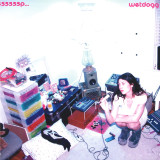
wetdogg was born in a grotto in Detroit, Michigan with a mission to information to the masses. Through sonic awakening, wetdoggs mission is to enlighten the subconscious and shine light on the deepest crevices of the human psyche. Allowing pathways back into animalistic intuition and away from the technocracy, dig a hole, plant a seed, run in circles and free your mind.
Coming out of Detroit based label Hold Me Records started by Detroit Techno aficionado MGUN and Underground don of all dons Ryan Spencer, wetdogg releases her first Album pssssssp…
From the artist:
"When a dog runs into a river and comes out and shakes itself dry, there is no data collected, technology does not aim to control those that it cannot. Numbers are definite and infinite, a linear path to doomsday. With every move we make, we are tracked and traced and categorized in order to sell ourselves into data hell. Intimacy used to have meaning, the present moment, truth and love but so much of it has been taken captive by technology that seeks to psychologically manipulate and control. A dog runs into the water because that is what dogs do, but it seems these days we are starved from our natural instincts, instead relying on someone else's answer that we of course seek online. "
Using the primitive technology of the password journal (often marketed to little girls to keep their secrets) wetdogg uses the idea of the password journal to imagine a utopia free of the surveillance state in her upcoming album pssssssp…
Founded in 2022, Hold Me Recordings is an independent record label based in southwest Detroit, MI. It is run by Manuel Gonzales (MGUN) & Ryan Spencer, who with a deep-rooted connection to the city's musical history, showcase innovative sounds that challenge the status quo and push the boundaries of contemporary electronic music. Focused on promoting both emerging and established artists, Hold Me is releasing genre-defying tracks that blend unconventional productions with the sincerity of Detroit's legacy. From experimental techno, to downtempo and ambient, Hold Me is committed to offering music that sounds fresh, exciting, and unlike anything you've heard before.
- A1: Lapis Lazuli
- A2: It's All Devo! Ft Gerald Casale (Devo)
- A3: Res Q Me Ft Bill Laswell
- A4: Guerrera
- A5: Gloomy Afternoon
- A6: Disturbia Ft Mark Stewart
- B1: Where Do Comets Come From Ft Bill Laswell
- B2: Starless Sea
- B3: La Canzone Un Po' Storta
- B4: Ganja Provide The Answer Ft Flowdan
- B5: Tabula Rasa
- B6: Aural Plasticine
Black Vinyl[21,64 €]
PHONOLAB is the new collaborative project from Anglo-Italian musician, solo artist and producer Gaudi and experimental electronica composer Eraldo Bernocchi Both fearless creators known for pushing the boundaries of sound for almost four decades, the duo's new album 'Disturbia' is set for release on the 11th April via Subsound Records and features contributions from heavyweights including Gerald Casale (Devo), Flowdan, Bill Laswell and the late Mark Stewart (The Pop Group).
With its eclectic blend of electronic innovation, deep basslines, and cutting- edge sound design, 'Disturbia' challenges and captivates listeners with its bold, genredefying vision, resulting in a deeply immersive and forward-thinking sonic experience. The title of the album was created by late post-punk pioneer and lead singer of The Pop Group, Mark Stewart, who was recording with PHONOLAB, shortly before he died. Some of the disruption and creative defance Stewart embodied can be heard throughout the album including tracks such as the glitchy 'Lapis Lazuli' and album title track, 'Disturbia.' The album acts as a homage to one of the most infuential post
- Pieces
- I Want You To Know
- Ocean In The Way
- Plans
- Your Weather
- Over It
- Friends
- Said The People
- There's No Here
- See You
- I Don't Wanna Go There
- Imagination Blind
- Houses
- Whenever You're Ready
- Creepies
- Show
Black Vinyl[31,05 €]
15th Anniversary Edition. Lime Green Vinyl. When Dinosaur Jr. reunited, more than 20 years after their formation and legendary dissolution, the worry was that these guys were just flogging the back catalog, taking the old show on the road as a marketing gimmick. But the 2007 release of Beyond gave a hearty Marshall-driven "F**K YOU!" answer to those inquiring ears. Restoring the sound established by the unassailable hat-trick gambit of their first three albums -- Dinosaur, You're Living All Over Me, and Bug -- Beyond continued the band's march into rock greatness by making old ears smile and new ears bleed afresh. And then came Farm, the 9th full length record by the original line-up: J Mascis, Lou Barlow, and Murph. If Beyond was Dinosaur Jr.'s return to form, Farm is proof that Dinosaur Jr. could (and still do, to this day!) deliver timeless, exhilarating rock music. Farm encompasses Dinosaur Jr.'s signature palette: soaring and distorted guitar, unshakable hooks, honey-rich melodies. At times wholly 70's guitar-epic, at times perfect for sitting by a babbling brook with Joni and Neil, these songs get into your head and stay there, bouncing happily around. The ear-catching "Plans" is nearly seven minutes of classic whipped-topping rock dessert, while "I Don't Wanna Go There" is a meat-and-potatoes main dish, mixing unapologetic lead guitar with straight-ahead delivery a la James Gang or Humble Pie. This expanded deluxe edition of Farm features four songs never pressed to vinyl and never given worldwide release:"Houses", "Whenever You're Ready" (The Zombies Cover), "Creepies" (Instrumental), and "Show". "Whenever You're Ready", a cover of classic pop-rockers The Zombies, is impossibly good for a hidden gem; Murph stomps in with a sledgehammer to the kit, J and Lou layer low-end and fuzz like two halves of one brain, and right when things feel biggest, airy and colossal, there's J with a lightning bolt of a guitar solo. Pure electricity and melody like only he can make. Recorded in J Mascis' Bisquiteen studio in Amherst, Massachusetts, Farm was produced by Mascis himself, and delivers the singular, unique energy of one of America's greatest living rock bands.
- Annunciation 06:12
- Riel 04:52
- Stone Leaf And Pond 04:11
- Katwijk 04:01
- Dongen 05:20
- Tilburg 03:09
- Maryam 04:51
- Two Wings 04:53
Originally released on Ben Chasny's own Pavilion imprint in 2011.
"I was invited by the Incubate Festival and the city of Tilburg to participate in an artist residency where I would explore the region’s unique chapels built for the Virgin Mary. After writing the music for about six months by drawing on memories of the encounters with the chapels and using techniques inspired by Gaston Bachelard’s Poetics Of Reverie, I flew back to Tilburg to perform the music at the Incubate Festival. We recorded the evening and I released the result on my Pavilion label. Each cover was hand painted white on white in the old Pavilion style. I created a stencil and used graphite powder to make the design that is inspired by the sun imagery in Athanasius Kircher diagrams."
Roadside chapels express the identity of the inhabitants of North Brabant, a Dutch province, bordering on Belgium. Roman Catholicism has been the dominant religion in this southern part of the Netherlands since the eighth century. For about a century and a half this religion was strongly suppressed. Only when the French revolutionaries preached freedom of belief around 1800 could the people of North Brabant exercise their faith again. This was the start of a very strong emancipatory development from which a special form of the Roman Catholic faith arose that fully determined everyday life of the people here. This faith was the determining factor in life and the measure of all things. After the second Vatican Council (1962-1965) the reins of the catholic faith in Brabant were loosened as well. This was the start of a revolutionary process of secularisation. Within a decade hardly anything was left of the almighty influence of the Roman Catholic Church and this situation has lasted up to the present day.
In spite of the almightiness of the official, Vatican ruled, Roman Catholic faith, North Brabant has always and perhaps notoriously fostered an undercurrent of popular belief as well. This is a kind of belief in which elements of the official faith and age-old pre-Christian traditions are combined. Worshipping relics, holding pilgrimages and processions, the use of water from holy wells, popular art, recitations and songs, festivals, rituals, folk traditions, superstition and the like are all examples of popular devotion. These matters have strongly influenced and formed the identity of the present-day population of North Brabant. It is part of their immaterial heritage.
An obvious and still very much visible form of popular devotion are the roadside chapels. In Brabant some 400 can be found, most of which have been devoted to Mary. Chapels are small buildings in which Mary or other saints are worshipped. They can be found within villages or towns or in natural surroundings. Always at the finest spots! The beauty of the environment adds a primary religious or mystical feeling to the visitor. Local people attach great value to their chapels. In spite of the overall secularisation in society they are still at the centre of cultural and social life. Where people in North Brabant can hardly be found in the churches nowadays, this doesn’t mean at all they are no longer religious. On the contrary, religious feelings are perhaps stronger than ever, but now people have to find their own expression of them. That’s why they fall back on the age-old popular belief in which chapels play an important role. We can even witness new forms of popular belief with chapels as their focal point. An example of this is the scattering of ashes of people who have been cremated. Chapels clearly also play a role in the lives of young people. On an average five new chapels are added every year.
I have studied the popular culture and belief and the identity of the inhabitants of North Brabant for over thirty years. I have published over forty books on these subjects. In 2010 I was approached by the organisation of the Incubate Festival in the North Brabant town of Tilburg. Their request was for me to lead the American composer and guitarist Ben Chasny around a number of chapels in the province devoted to Mary. He had been invited to North Brabant to write some new compositions. Ben Chasny then chose to be inspired by these chapels and that’s how we met. I was especially curious how an American would react to something as specific and small as a roadside chapel in North Brabant, since we tend to think here of (people in) America in terms of ‘big-bigger-biggest’. Would an inhabitant of this enormous country with this prevailing culture be able to grasp and respect the identity of some 2.5 million people in North Brabant with their chapels? The answer to this question lies hidden in the compositions he made and that can be listened to on this album. Yes, Ben Chasny has been able to convert the phenomenon of a simple chapel devoted to Mary into music. The physical and the spiritual have found each other. What a beautiful world…just listen! - Paul Spapens
- Blu-Bop
- Flying Saucer Dudes
- Turtle Rock
- Flight Of The Cosmic Hippo
- The Star Spangled Banner
- Star Of The County Down
- Jekyll And Hyde (And Ted And Alice)
- Michelle
- Hole In The Wall
- Flight Of The Cosmic Hippo (Reprise)
How many albums virtually upend a genre? And how many erstwhile bluegrass bands top a contemporary jazz chart?! The answer to these questions, is, one, very few, and two, only Béla Fleck & the Flecktones! Their second album, 1991’s fancifully entitled Flight of the Cosmic Hippo, did indeed top Billboard’s contemporary jazz albums chart and scored a couple of Grammy noms. But more importantly, this record really made explicit the Flecktones’ bebop leanings, as they devised the term “Blu-Bop” to describe their unique fusion of bluegrass and jazz. Stylistic whiplash has never felt so good or sounded so sweet; check out their warm, instrumental wizardry on chestnuts like “Michelle” and “The Star Spangled Banner”…and don’t miss Béla’s banjo power chords on “Turtle Rock!” We had Mike Milchner at Sonic Vision remaster this classic for vinyl for maximum fidelity, and gave it a repress in cobalt blue vinyl limited to just 900 copies. Essential!
- A1: Brainwave Playground
- A2: Promised Land Utopia
- A3: Lucidity Gone
- A4: Life Out Of Balance
- B1: Satan's Waltz (Metamorphosis Stage 1)
- B2: Bambino Illuminatus
- B3: Bambino Criminale
- B4: Over The Rainbow
- B5: An Answer
- B6: V Day Baby
- B7: The Moaning Pyramid
- C1: Mind Splitting Lab (Metamorphosis Stage 2)
- C2: I Feel Seperated
- C3: Fascinating Child
- C4: 8-Bit Trauma
- D1: The Monarch's Pyramid
- D2: To You All Kids Will Come (Metamorphosis Complete)
Stylish, intelligent and cinematic, the second series of the cult UK TV series UTOPIA in 2014 reinforced the impact of Emmy Award winning
Series 1 and gained the show an even larger following. Integral to the action is Chilean composer Cristobal Tapia de Veer's original music
for the programme, recognised by the Royal Television Society who awarded it Best Music (Original Score), Record Collector who gave
it five stars and Mojo who placed it at No. 4 in their Top 10 Soundtracks of the year.
This record was originally released for Record Store Day 2015 and is repressed on a new colour by popular demand. Cristobal Tapia de Veer’s
music has more recently found a new audience with his soundtrack to HBO hit show The White Lotus and the film Babygirl (2024).
Two years after releasing the acclaimed Crash Recoil, Anthony Child aka Surgeon returns to Tresor with new LP, Shell~Wave. Retaining the minimal equipment list and studio-version-of-live-show-sets approach of the previous album in order to focus on the work itself, Shell~Wave is a deeply personal document of both where Surgeon is and has been, converging three decades of experience with a continued curiosity in the untested.
“To make this project, I had to dig really deep in terms of what my relationship was to techno; I’ve been involved with it for a really long time and there’s a lot about it I feel dislocated from, so I had to really think hard about what techno is to me. I often get asked “what is techno to you?” but I can’t answer that with words; this album is the answer.” From the complex, twisting track Infinite Eye to the caustic Soul Fire, the eight tracks that make up the body of the album are single-take explorations of the vast, hard yet minimal techno Child is synonymous with.
Neatly dividing the record in two, the emotional centre of the record comes in the form of Dying, a vibrating, beatless piece that with a mantra-like vocal loop steeped in reverberating effects. Further echoes of dub production appear throughout the record as tracks like Divine Shadow, and Empty Cloud have an almost ever-present mist of reverberation, driven by the appearance of a new delay unit in the equipment list; while much of the philosophy of Crash Recoil’s creation is present, the process and the instruments have changed as Child again switches up his approach to studio work.
This insistence on trying novel techniques doesn’t preclude returning to old ones, as this use of modern digital machines with live, hands-on takes that are as inspired by 60s producer Joe Meek and 70s reggae as they are by this year’s synthesiser expos.
“For me, it’s an interesting experience returning to old techniques again after 30 years. I’m always exploring and finding myself back at the beginning. Connecting the present with the past.”
This philosophy of ‘time travel’ is inherent to the music itself as the synchronised loops repeat while the delay and effects branch out, forming unique eddies; distinct quantum moments within the circular whole; the future leaking through the spaces between the sounds. All of the concepts on the album are perfectly communicated through the painting by Taiwanese artist Jazz Szu-Ying Chen which suggests the movement of water, sound waves, and the chitinous shells of sea creatures.
- 1: The Heart Of Life
- 2: Time To Fly
- 3: I Won’t Make It
- 4: Walking In Daylight
- 5: Deep Water Suite I: Introduction
- 6: Deep Water Suite Ii: Launch Out, Pt. One
- 7: Deep Water Suite Iii: Fires Of The Sunrise
- 8: Deep Water Suite Iv: Storm Surface
- 9: Deep Water Suite V: Nightmare In Paradise
- 10: Deep Water Suite Vi: Launch Out, Pt. Two
- 11: Deep Water Suite Vii: New Revelation
- 12: Deep Water Suite Viii: Launch Out, Pt. Three
- 13: Deep Water Suite Ix: The Door To Heaven
If you are a celebrated progressive rock musician who has produced dozens of albums, how do you make an album that is different to what is usually expected? One answer is to work with musicians who also have decades of experience and worldwide recognition, plant a few seeds, then stand back and see what happens. For the Cosmic Cathedral project and their debut album ‘Deep Water’, this is exactly what Neal Morse did, joining up with Chester Thompson (Genesis), Phil Keaggy & Byron House. Much of the album was created from jam sessions where Morse’s long-time audio partner Jerry Guidroz put the best parts together, such as for the 38 minute epic, Deep Water Suite. Says Morse, “Time To Fly, also came directly from one of the jam sessions, where we took one of Phil’s ideas and all four of us elaborated on it.” What resulted from all this was a more groove-orientated feel, which Morse calls a “prog meets yacht rock meets The Beatles” kind of album, with an unmistakable jazz fusion influence: “These guys are real groovers: even if they're playing proggy stuff, it has more of a Steely Dan feel to it, but when Phil and I start singing it sounds like The Beatles!” Available as Limited CD Digipak, Gatefold 2LP & as Digital Album.
- 1: Love.jones
- 2: Choosin
- 3: Diamonds And Pearls
- 4: Rotation
- 5: * Star*
- 6: Drive Thru
- 7: Never Change
- 8: Straight Up
- 9: Gemini
- 10: Can't Let Go
R&B duo THEY. — songwriter Drew Love and producer Dante Jones — have developed a smooth, future-facing sound for nearly a decade. In the early days, it was simple; two artists aligning on an appreciation for '90s R&B, new jack swing, and the height of soul-sampling hip-hop. Jones making beats and Love on the lines, a basic, balanced, and open-ended setup, free from major label expectations (which they'd feel on their 2017 breakout Nü Religion: Hyena) and high-profile collaborations (explored on 2018's Fireside, 2020's The Amanda Tape, and 2023's Nü Moon). They're proud of every stop along their story, while hindsight and a fresh perspective after signing to Secretly-affiliate label drink sum wtr have afforded them some distance to reflect on where THEY. goes next. The answer is LOVE.JONES. Here the duo exudes a whole new energy by reasserting their artistry in its most potent and pure form, just Love and Jones, making straight-fire, love-making music indebted to the golden neo-soul era that gave us the namesake 1997 film. “Forget the features, forget bringing in the big producers and writers. It's really just a return to our original dynamic," says Jones. Refined and reinvented, THEY. have arrived at their boldest work, a stacked, high-energy collection celebrating Black art, culture, and "the intense feelings of Black love."
The Vendetta Suite is back to light up the early part of 2025 with a brilliant brace of singles on Hell Yeah. Kicking things off is a glorious acid house/disco thriller backed by a soothing out of body escape.
We’ve often referred to The Vendetta Suite as Belfast’s best kept secret, but with the quality music he keeps releasing he is rightly picking up ever more of a profile. The Hell Yeah regular has long been a key part of his native Northern Irish scene thanks to the way he mixes genres; ambient, post-rave Balearic, dub and acid house all in the mix with his own unique psychedelic magic.
First up is ‘The Jam Answer’, which taps into plenty of classic sounds but reinvents them for modern dancefloors. Bendy acid lines weave in between the dusty analogue drums, familiar acid house vocal samples and fizzing chord stabs bring the heat before a cosmic synth lead sings out with sunny soul. ‘Island Hill Microdot’ channels dreamy Chicago house, the futuristic styles of IDM with the blissed out warmth of Balearic. Carried along with gentle percussion, it’s an immersive soundscape that makes for the perfect tropical distraction.
Two very different but equally effective cuts from The Vendetta Suite.
- Lapis Lazuli
- It's All Devo! Ft. Gerald Casale (Devo)
- Res Q Me Ft. Bill Laswell
- Guerrera
- Gloomy Afternoon
- Disturbia Ft. Mark Stewart
- Where Do Comets Come From Ft. Bill Laswell
- Starless Sea
- La Canzone Un Po' Storta
- Ganja Provide The Answer Ft. Flowdan
- Tabula Rasa
- Aural Plasticine
Bourgogne Vinyl[25,17 €]
PHONOLAB is the new collaborative project from Anglo-Italian musician, solo artist and producer Gaudi and experimental electronica composer Eraldo Bernocchi Both fearless creators known for pushing the boundaries of sound for almost four decades, the duo's new album 'Disturbia' is set for release on the 11th April via Subsound Records and features contributions from heavyweights including Gerald Casale (Devo), Flowdan, Bill Laswell and the late Mark Stewart (The Pop Group).
With its eclectic blend of electronic innovation, deep basslines, and cutting- edge sound design, 'Disturbia' challenges and captivates listeners with its bold, genredefying vision, resulting in a deeply immersive and forward-thinking sonic experience. The title of the album was created by late post-punk pioneer and lead singer of The Pop Group, Mark Stewart, who was recording with PHONOLAB, shortly before he died. Some of the disruption and creative defance Stewart embodied can be heard throughout the album including tracks such as the glitchy 'Lapis Lazuli' and album title track, 'Disturbia.' The album acts as a homage to one of the most infuential post
- A1: Do U Fm
- A2: Novelist Sad Face
- A3: Green Box
- A4: Dusty
- A5: The Linda Song
- A6: Dm Bf
- B1: I Tried
- B2: Melodies Like Mark
- B3: Wildcat
- B4: How U Remind Me
- B5: Pocky
- B6: Bon Tempiii
- B7: Pt Basement
- B8: Alberqurque Ii
- B9: Mary's
Yellow Coloured Vinyl[29,37 €]
Kneading dough is tricky – you should know how it’s supposed to feel. If you try too hard you could make it worse. It’s a beautiful practice – creation with a gentle touch, to work at something so it can be left alone. “If it’s too drawn out it’s awful. It’s easy to give too much.” Dance in the mirror. Contemplate your veiny hands. Who do they remind you of?
You begin by mixing flour and water. “What happens when your people die? Why’d they move the rock to the other side of Ulster Park?” Eliza Niemi asks two seemingly unrelated questions in a rising melody with guitar accompaniment, like fingers playing spider up to the nape of your neck. Gentle pressure. Strands of gluten form to bind the mix. A new question lingers in the binding. When she admits “but I don’t know how to tell if I’m feeling it or not,” that question surfaces through the text. It is reiterated throughout the album. When I’m working with dough I think the same thing to myself.
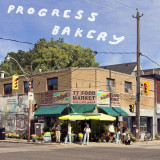
On Progress Bakery, her second album as a solo artist, Eliza knows to leave some questions alone – to let juxtaposition and tension be the proof. It doesn’t have to be hard. The feelings and revelations they provoke rise in the heat. The smell is sweet. Crispy on the outside and soft all the way through. She playfully slip-slides through words and sounds and images, delighting in surprise, skimming ideas like stones cast across clear water, touching down briefly with uncommon grace.
The question provoked between those opening lines resurfaces in the strands between songs – “Do U FM” is fully formed and beautifully layered, while “Novelist Sad Face” is a short, acapella rendering of gentle curiosity. What is holding these ideas together? Some songs demand more, seem to carry a whole load – eventually the skipping stone will halt to sink and resume its idle duty – while others drift in and out of focus, the way thoughts and dreams become interwoven before the mind is sunk into true sleep.
Music and words don’t always have to interact. Where she decides to keep them apart gives a new contour to where and how she puts them together. The kind of thing you’re supposed to take for granted with songs and their singers comes alive in Eliza’s hands – the little miracle of mixing, kneading, stretching, and stopping.
So often on Progress Bakery, Eliza teases out truth and meaning by asking questions. “Do I wanna be crying?” “Do you want me good or do you want me bad?” “Do I need an eye test?” “I’m writing songs in my head while you’re going over stuff with me — is that cruel??” In “Pocky” Eliza ends with a question that feels to me like the actual biography, succinct and revealing:
I don’t wanna be made to see
I just wanna ask “what’s that?”
Grace that ought to be rare, but in its care and precision is offered humbly, with great generosity, and without announcing itself. Eliza’s simple, miraculous music is given further form and shape by a group of collaborators – invaluable guest musicians Jeremy Ray, Evan Cartwright, Steven McPhail, Kenny Boothby, Ed Squires, Carolina Chauffe, Dorothea Paas, Louie Short, and Avalon Tassonyi. Together with Louie Short, who recorded, mixed, and produced the album along with Jeremy Ray and Lukas Cheung, Eliza has cultivated a richness in sound and texture that prods and provokes the ticklish ear. Barely audible guitar tinkering, a brief lo-fi field recording of trumpets, the harmonic clicking of a looped synthesizer, a flourish of reeds, a child’s conversation, each uncanny sound perfectly placed, rippling out under a soft breeze.
Lay in bed alone at night and ask aloud to the stillness,
“What were you doing at the Albuquerque Airport?
What were you doing there??”
And hear your question answered by a dream of swelling, undulating cellos. Try to grasp at the melody and structure. It’s not an answer (if there could be one), but it moves deeper, closer to the weird layer of fleeting moments and disconnected images, barely perceptible at its core. Wait for the dream reel to click into place.
Eliza took me for a ride in Nicole (her beloved Dodge Grand Caravan) and told me she’d been thinking of the album as an embodiment of transition – and I think every transition, known or unknown, carries the weight of new meaning, skittering off the surface tension of life as you know it, creating ripples, sometimes bouncing off and sometimes breaking through. There is a trick you can use to tell if a dough is glutinous enough. You’re supposed to stretch it out as thin as you can without breaking it and hold it up to the light. If you can see through, even if it renders the world murky and uncertain, you should leave it alone. I love this trick. It’s one that Eliza seems to know intuitively: work gently and ask questions and don’t always expect answers, and when you can, take a glimpse at something new, and then leave.
Kneading dough is tricky – you should know how it’s supposed to feel. If you try too hard you could make it worse. It’s a beautiful practice – creation with a gentle touch, to work at something so it can be left alone. “If it’s too drawn out it’s awful. It’s easy to give too much.” Dance in the mirror. Contemplate your veiny hands. Who do they remind you of?
You begin by mixing flour and water. “What happens when your people die? Why’d they move the rock to the other side of Ulster Park?” Eliza Niemi asks two seemingly unrelated questions in a rising melody with guitar accompaniment, like fingers playing spider up to the nape of your neck. Gentle pressure. Strands of gluten form to bind the mix. A new question lingers in the binding. When she admits “but I don’t know how to tell if I’m feeling it or not,” that question surfaces through the text. It is reiterated throughout the album. When I’m working with dough I think the same thing to myself.
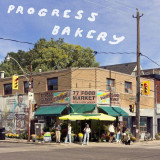
On Progress Bakery, her second album as a solo artist, Eliza knows to leave some questions alone – to let juxtaposition and tension be the proof. It doesn’t have to be hard. The feelings and revelations they provoke rise in the heat. The smell is sweet. Crispy on the outside and soft all the way through. She playfully slip-slides through words and sounds and images, delighting in surprise, skimming ideas like stones cast across clear water, touching down briefly with uncommon grace.
The question provoked between those opening lines resurfaces in the strands between songs – “Do U FM” is fully formed and beautifully layered, while “Novelist Sad Face” is a short, acapella rendering of gentle curiosity. What is holding these ideas together? Some songs demand more, seem to carry a whole load – eventually the skipping stone will halt to sink and resume its idle duty – while others drift in and out of focus, the way thoughts and dreams become interwoven before the mind is sunk into true sleep.
Music and words don’t always have to interact. Where she decides to keep them apart gives a new contour to where and how she puts them together. The kind of thing you’re supposed to take for granted with songs and their singers comes alive in Eliza’s hands – the little miracle of mixing, kneading, stretching, and stopping.
So often on Progress Bakery, Eliza teases out truth and meaning by asking questions. “Do I wanna be crying?” “Do you want me good or do you want me bad?” “Do I need an eye test?” “I’m writing songs in my head while you’re going over stuff with me — is that cruel??” In “Pocky” Eliza ends with a question that feels to me like the actual biography, succinct and revealing:
I don’t wanna be made to see
I just wanna ask “what’s that?”
Grace that ought to be rare, but in its care and precision is offered humbly, with great generosity, and without announcing itself. Eliza’s simple, miraculous music is given further form and shape by a group of collaborators – invaluable guest musicians Jeremy Ray, Evan Cartwright, Steven McPhail, Kenny Boothby, Ed Squires, Carolina Chauffe, Dorothea Paas, Louie Short, and Avalon Tassonyi. Together with Louie Short, who recorded, mixed, and produced the album along with Jeremy Ray and Lukas Cheung, Eliza has cultivated a richness in sound and texture that prods and provokes the ticklish ear. Barely audible guitar tinkering, a brief lo-fi field recording of trumpets, the harmonic clicking of a looped synthesizer, a flourish of reeds, a child’s conversation, each uncanny sound perfectly placed, rippling out under a soft breeze.
Lay in bed alone at night and ask aloud to the stillness,
“What were you doing at the Albuquerque Airport?
What were you doing there??”
And hear your question answered by a dream of swelling, undulating cellos. Try to grasp at the melody and structure. It’s not an answer (if there could be one), but it moves deeper, closer to the weird layer of fleeting moments and disconnected images, barely perceptible at its core. Wait for the dream reel to click into place.
Eliza took me for a ride in Nicole (her beloved Dodge Grand Caravan) and told me she’d been thinking of the album as an embodiment of transition – and I think every transition, known or unknown, carries the weight of new meaning, skittering off the surface tension of life as you know it, creating ripples, sometimes bouncing off and sometimes breaking through. There is a trick you can use to tell if a dough is glutinous enough. You’re supposed to stretch it out as thin as you can without breaking it and hold it up to the light. If you can see through, even if it renders the world murky and uncertain, you should leave it alone. I love this trick. It’s one that Eliza seems to know intuitively: work gently and ask questions and don’t always expect answers, and when you can, take a glimpse at something new, and then leave.
Manchester-based original soul collective The 7:45s release their debut single.
Named after 7-inch 45-rpm vinyl, The 7:45s write short and snappy soul singles. Their debut is a double A-side, giving you two bops for the price of one. Inspired by Charles Bradley, 'The Way that I Love You' is full of contrasts: the piano chimes and horns respond, a man calls and a woman answers. It's laidback then intense, major then minor, nostalgic then heartbroken. On the flip-side, 'Too Little Too Late' is an upbeat northern soul stomper, featuring an earworm of a vocal hook over an infectious bassline that's sure to ruffle tail feathers.
Recorded with vintage equipment at EVE Studios in Stockport, both songs feature the captivating vocals of collaborator Martin Connor. On 'The Way that I Love You', Connor's vocal rises from a crooning baritone to a fever pitch, culminating in spine-tingling ad libs. Magic moments like this are heightened by songwriter and bassist Sam Flynn's perfectionist arrangements, which feature dozens of musicians: spotlighting vocal harmonies, horns, and even strings on 'Too Little... more
credits
releases March 7, 2025
Been in UK soul chart and played on all the indie soul stations , Starpoint , solar etc
Too little Too Late was Played on BBC radio six Craig Charles Funk and soul show twice and the Way That I Love You was played on BBC radio six Craig Charles day time show
Track of the week on Simon Phillips Jazz FM
Featured in Blues and Soul and Echoes Mag
180g black vinyl - limited to 200 numbered copies.
"What is my heart now"is the debut solo album by Ziemowit Klimek, known so far from bands such as Immortal Onion, Hania Rani, and Magda Kuraś Quintet. It is a cycle of five improvised compositions – "What," "Is," "My," "Heart," and "Now" – unified by a unique artistic concept, with each piece created in collaboration with a different musician.
The creative process for each of the five duets began with a conversation between Ziemowit, the guest artist, and the video team. Deconstructing the title word into its fundamental elements through questions like "What does 'What' mean? What emotions and associations does this word evoke in us? How can we capture its essence in sound and image?" became the starting point for artistic exploration.
To preserve the authenticity of the material as much as possible, both sound and image were recorded live, with no cuts or post-production editing. Equally important was the choice of spaces that corresponded to the meaning of each title word. Instead of sterile studios, the recordings took place in a variety of unique locations – "Heart" was captured in Ziemowit's most personal space, his bedroom, while "Now" was recorded inside a car during a dynamic drive, where the physical forces acting on the musicians significantly influenced their decisions while playing.
The album resonates with dialogue – not only musical but also emotional and intellectual. It is a meeting of individualities who, for Ziemowit, are not only inspirations as artists but also significant people in his life."What is my heart now"is an album about defining one's identity and capturing the moment, created in an atmosphere of honesty and trust. Ultimately, the question arises: is it even possible to definitively answer the question posed in the album's title?
"What Is My Heart Now"
Ziemowit Klimek (Double bass, Bass, Piano, Moog)
feat.
Krzysztof Hadrych - Guitar
Michał Jan Ciesielski - Saxophon, Volca
Hania Rani - Piano
Mikołaj Kostka - Violin
Jacek Prościński - Drums
- Oath
- Augury
- Knife Edge Effect
- Tears In The Fibre
- A Silent Bridge
- End Transmission
- Home
OATH EDITION[34,87 €]
With breakneck rifs and explosive dynamics already earning a formidable reputation for avant-garde post-metal quartet Telepathy, their fourth album `Transmissions' sees the band turn their gaze inward to explore the rich sonic landscape of their creative and cultural origins. A new arsenal of cinematic synth textures and alien soundscapes pushes the band's genre-defying ethos towards more nostalgic and introspective ter- rain as they come to terms with the unknown. The band's latest ofering `Transmissions' marks the culmination of four years of introspection, experimentation and revitalisation for Telepathy, representing the band at its expressive core. Inspired by faded photographs unearthed in the brother's family home and the surprise discovery of a long lost relic, `Transmissions' is a cluster of musical messages that hurtles between nostalgic snapshots of the past and the everyday chaos of the present. Amongst precious memories and family treasures, the Turek brothers stumbled upon a recording of the frst radio broadcast of statesman Jo'zef Pilsudski, widely regarded as the founder of modern Poland. The wonder and optimism in his voice, captured over 100 years ago, ignited an inspirational drive to refect this time- less sense of awe in the present by pushing their musical creativity further than ever before. This revolutionary reinvention is immediately apparent on the opening track and lead single `Oath', which poured efortlessly out of the band in just one day. A recreation of that famous radio transmission introduces eight formidable minutes of widescreen rifs, thundering drums and otherworldly synth work that simultaneously feels like the blink of an eye. Subsequent track `Augury' rises from the dying whispers of `Oath', signalling Telepathy's renewed focus on composition and storytelling. The sense of open space and weightlessness from the song's halftime groove, soaring guitar arpeggios and an audio sample declaring that "the answer lies in the future" pushes the band beyond the familiar into exciting, uncharted territory. FOR FANS OF Tool, Russian Circles, The Ocean (Collective), Hans Zimmer, Mogwai, Kokomo
BLACK VINYL[29,20 €]
With breakneck rifs and explosive dynamics already earning a formidable reputation for avant-garde post-metal quartet Telepathy, their fourth album `Transmissions' sees the band turn their gaze inward to explore the rich sonic landscape of their creative and cultural origins. A new arsenal of cinematic synth textures and alien soundscapes pushes the band's genre-defying ethos towards more nostalgic and introspective ter- rain as they come to terms with the unknown. The band's latest ofering `Transmissions' marks the culmination of four years of introspection, experimentation and revitalisation for Telepathy, representing the band at its expressive core. Inspired by faded photographs unearthed in the brother's family home and the surprise discovery of a long lost relic, `Transmissions' is a cluster of musical messages that hurtles between nostalgic snapshots of the past and the everyday chaos of the present. Amongst precious memories and family treasures, the Turek brothers stumbled upon a recording of the frst radio broadcast of statesman Jo'zef Pilsudski, widely regarded as the founder of modern Poland. The wonder and optimism in his voice, captured over 100 years ago, ignited an inspirational drive to refect this time- less sense of awe in the present by pushing their musical creativity further than ever before. This revolutionary reinvention is immediately apparent on the opening track and lead single `Oath', which poured efortlessly out of the band in just one day. A recreation of that famous radio transmission introduces eight formidable minutes of widescreen rifs, thundering drums and otherworldly synth work that simultaneously feels like the blink of an eye. Subsequent track `Augury' rises from the dying whispers of `Oath', signalling Telepathy's renewed focus on composition and storytelling. The sense of open space and weightlessness from the song's halftime groove, soaring guitar arpeggios and an audio sample declaring that "the answer lies in the future" pushes the band beyond the familiar into exciting, uncharted territory. FOR FANS OF Tool, Russian Circles, The Ocean (Collective), Hans Zimmer, Mogwai, Kokomo