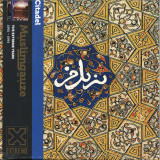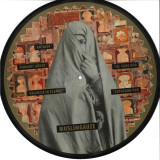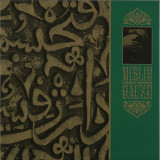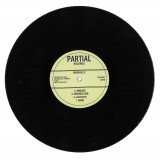
»Single #Two« offers another bite-sized portion of Muslimgauze. This one almost falls into traditional »A-side/B-side« territory, with side A containing a single buzzy, frenetic track just over 3 minutes in length. Densely looped percussion, vocal sample, and fuzzy keyboards meld together into a blurry rush.
The side B is longer, more chill, and less immediate; still utilizing the same ingredients but here spaced out, with the sampled singing only coming to prominence a few minutes in. If the first might provoke a twitch response, the second seems calibrated more for head-nodding.
Buscar:muslimgauze
People believe that the magic of Muslimgauze works best with looong tracks. Think the same? Then “Al-Zulfiquar Shaheed” is exactly for you! 75 minutes of mellow eastern-style hypnotism. Consisting of only five parts, the album shows Bryn’s ability to create lengthy and detailed compositions filled with Arabic percussion, droning keyboards, vocal samples and ethereal atmospheres.
A strong rhythmic, yet melodic album, that should be in the collection of every Muslimgauze fan. Definitely one of Bryn’s best ever albums!
Those not familiar with Jones' style will listen slack-jawed at the sheer anticipatory nature of his sound collage. The five extended tracks are based on hypnotic and somewhat menacing grooves: a repetitive dub bass beat, waves of Middle Eastern strings and voices, layers of building hand percussion. The washes of sound and percussion come and go, often creating a sense of motion and change. All of the tracks are similar and even share elements. Mid-East tension is so accurately captured through the use of the region's instrumentation (especially percussion), sinister electronics, samples of men chanting, women crying, sounds culled from the horrors of war, and occasional angry distortion that the listener will be transported to the belly of the beast.
»Mullah Said« displays two aspects of the work of Muslimgauze. Firstly, musically, it is in the delightful drifting ambient vein. The percussion is mainly acoustic hand drums - providing a rhythm of aural features - the trademark shimmering string sound heard on a number of releases is much in evidence, rhythms are generally slower, there are lots of samples of people speaking in conversation, markets wherever. 'Mullah said' opens the disc with the lovely mix of these sounds. »Every Grain of Palestine Sand« continues the mood, with a slightly faster tempo, and more emphasis on the beat. But it soon locks into a mesmeric lassitude as various effects echo or smear the sounds, drums come in for short moments, different string sounds enjoin the play. »Muslims Die India« follows the mood though the voices seem darker, sadder, and then comes »Every Grain of Palestinian Sand« followed by »Muslims Die India«. Yes - not a typo, these tracks are repeated. Muslimgauze trend – to remix himself. Prime Muslimgauze middle eastern ambience - if you like that side you will love this album. The final track is short and different, a crackling ground over which a singer chants a song interrupted by machine-gun percussive bursts - »An End«.
Those not familiar with Jones' style will listen slack-jawed at the sheer anticipatory nature of his sound collage. The five extended tracks are based on hypnotic and somewhat menacing grooves: a repetitive dub bass beat, waves of Middle Eastern strings and voices, layers of building hand percussion. The washes of sound and percussion come and go, often creating a sense of motion and change. All of the tracks are similar and even share elements. Mid-East tension is so accurately captured through the use of the region's instrumentation (especially percussion), sinister electronics, samples of men chanting, women crying, sounds culled from the horrors of war, and occasional angry distortion that the listener will be transported to the belly of the beast.
»Mullah Said« displays two aspects of the work of Muslimgauze. Firstly, musically, it is in the delightful drifting ambient vein. The percussion is mainly acoustic hand drums - providing a rhythm of aural features - the trademark shimmering string sound heard on a number of releases is much in evidence, rhythms are generally slower, there are lots of samples of people speaking in conversation, markets wherever. 'Mullah said' opens the disc with the lovely mix of these sounds. »Every Grain of Palestine Sand« continues the mood, with a slightly faster tempo, and more emphasis on the beat. But it soon locks into a mesmeric lassitude as various effects echo or smear the sounds, drums come in for short moments, different string sounds enjoin the play. »Muslims Die India« follows the mood though the voices seem darker, sadder, and then comes »Every Grain of Palestinian Sand« followed by »Muslims Die India«. Yes - not a typo, these tracks are repeated. Muslimgauze trend – to remix himself. Prime Muslimgauze middle eastern ambience - if you like that side you will love this album. The final track is short and different, a crackling ground over which a singer chants a song interrupted by machine-gun percussive bursts - »An End«.
Intifaxa is the first part in a series of 4 outstanding double vinyl albums with bonus songs, previously released on CD between 1990 and 1994 on the Australian cult label Extreme Music.
Intifaxa is full of heavy percussion fire with deep tribal grooves, embedded in modulated field recordings. The album is a transcendental journey into Eastern soundscapes and a secret weapon for DJs who enjoy to tear down the borders of tribal underground house and psychedelic trance music.
The original tracks were perfectly remastered for this first time ever vinyl release and the new masters received high praise from the Extreme Music owner Roger Richards.
New sleeve designs were created by Oleg Galay, who is famous for his artworks for many Muslimgauze reissues.
All 4 album covers are made from extra heavy cardboard with deluxe spot UV finish and inside print.
At this point the vast swathes of unreleased Muslimgauze material Bryn Jones left behind when he passed away over 25 years ago is as legendary as any of his work. And sure enough, there's still some being unearthed today. The new »Single #One« is the first in a series of four (three 7"s and one 12") taken from one of Jones' customary completely unlabelled DATs he sent to labels seemingly as fast as he finished them. Both sides here indicate that, even on what might have been throwaway efforts for other artists, Jones was constantly chasing his muse around new corners.
Side A begins with the kind of tough percussion loop often found on Muslimgauze releases, but even as foreboding synths start to swell in the background, Jones introduces a rhythmic, peppy little keyboard riff far jauntier than most things he created. Side B, meanwhile, takes Jones' looped hand percussion in a dubbier direction, but unlike other times he explored that space there are some elements (phased zaps, a slightly skanking rhythm) that, while not reggae exactly, makes this feel more like a traditional dub than Jones tended to make. Both sides stand in testament to a creator who never stayed in one place for very long.
English musician Bryn Jones is one of the most original and productive artists on the post-industrial scene. He has released an incredible amount of music in just 16 years. According to current estimates, he has released at least 200 albums for a total of over 1,900 songs in circulation.
The Extreme Years 1990-1994 is a compilation of all Muslimgauze's music, released on the Australian label Extreme Music between 1990 and 1994.
According to many critics and fans, this was a unique and very special period in Bryn's work, during which he went from amateur musician to experimental sound sculptor. Sadly, Bryn passed away in early 1999 at the age of 38.
The original tracks have been perfectly remastered for this first vinyl release and the new masters have been praised by Extreme Music owner Roger Richards.
Originally released in 1983 on Hessian.
Bryn Jones’ work was justly known for its excess—of tracks created, of rhetoric, of volume levels, of repetition, of length—and the sometimes indiscriminate way he produced material as Muslimgauze carried over into his approach to the part of the business that involved getting people to actually hear his music. Known for the deluge of DATs he’d share with the labels he worked with, Jones also didn’t necessarily restrict himself to just one outlet.
Very early in his career, in the same year the first two Muslimgauze LPs came out (1983), Jones released an obscure 7” single with completely blank black sleeve art on a label called Hessian. »Hammer & Sickle« is to date the only release on Hessian (which may have just been Jones himself?). Those two LPs, Kabul and Opaques, are fascinating in the context of the full swath of Jones’ work. They’re much spacier, more drifting, and notably less interested in using the kind of Middle Eastern percussion and other instrumentation that’s such a distinct element on many Muslimgauze releases. »Hammer & Sickle« operates in a similar territory, but if anything a little further out from the main body of Jones’ work.
The side-long title track and the three b-sides here are all cut from the same cloth, spacious productions that mainly play rounded synth percussion against echoing, ›bag of wire‹-style dub hits. After the lengthy examination of »Hammer & Sickle« itself, the other three cuts experiment with altering pitch, duration, tempo, and other elements as if testing the ways Jones could vary the effects of the title track without ever ditching its component parts. His sound was already quickly evolving (even the next year’s Buddhist on Fire is closer to what fans likely picture when they think of the »Muslimgauze sound«), leaving »Hammer & Sickle« an intriguing and valuable portrait of one of Jones’ early side investigations.
United States Of Islam is the second part in a series of 4 outstanding double vinyl albums with bonus songs, previously released on CD between 1990 and 1994 on the Australian cult label Extreme Music. Armed with a cleverly provocative title, USoI showcases a moodier side of Muslimgauze. While the trademark blend of driving percussions and minimalism reigns supreme as always, the general feel is much more dreamy and mysterious than on some of Bryn Jones’ more forthright pieces.
The original tracks were perfectly remastered for this first time ever vinyl release and the new masters received high praise from the Extreme Music owner Roger Richards.
New sleeve designs were created by Oleg Galay, who is famous for his artworks for many Muslimgauze reissues. All 4 album covers are made from extra heavy cardboard with deluxe spot UV finish and inside print.
First volume of the Extreme Years serie (1990-1994) of the prolific artist - all released for the first time on vinyl. The three other titles will be released every 2 months starting March.
Intifaxa is the first part in a series of 4 outstanding double vinyl albums with bonus songs, previously released on CD between 1990 and 1994 on the Australian cult label Extreme Music.
Intifaxa is full of heavy percussion fire with deep tribal grooves, embedded in modulated field recordings. The album is a transcendental journey into Eastern soundscapes and a secret weapon for DJs who enjoy to tear down the borders of tribal underground house and psychedelic trance music.
The original tracks were perfectly remastered for this first time ever vinyl release and the new masters received high praise from the Extreme Music owner Roger Richards.
New sleeve designs were created by Oleg Galay, who is famous for his artworks for many Muslimgauze reissues.
All 4 album covers are made from extra heavy cardboard with deluxe spot UV finish and inside print.
muslimgauze vs species of fishes
The story of this unexpected collaboration dates back to the summer and autumn of 1998 when Bryn Jones AKA Muslimgauze, the politically conscious music genius from Manchester, discovered Species Of Fishes' albums through the Dutch label Staalplaat. Jones embarked on a journey of reinventing the Muscovites' tracks, infusing them with hypnotizing noise pulsations that were both harsh and sharp, yet profoundly humane, while evoking ethereal Arab echoes.
The original remixes became the inaugural release on Species Of Fishes' self-titled label in 1999, with a limited circulation of 500 CDs. Another edition was later released in the United States in 2007 by Tourette Records, with a circulation of 1000 CDs. The first edition featured a selection edited from the original DAT cassette, accompanied by minor revisions, while the second one faithfully reproduced the entire studio session, providing insight into the creative process rather than focusing solely on the final result.
In this new reissue, Species Of Fishes have curated the tracks, discarding repetitions, unsuccessful takes, and technical pauses. The result is a more dynamic compilation that retains the core elements of the original work while reducing the total duration by almost half.
'Trip Trap', 'Some Songs of a Dumb World', and 'muslimgauze vs species of fishes' comprise three chapters of Species Of Fishes' album triptych, which unveils the originality of the Russian duo, pioneers of the unparalleled electronic scene who were ahead of their time.
d B1. Ctrl+S
d B1. Ctrl+S
Brilliantly remastered (picture) LP/CD with new stunning artwork!
Lo-Fi India Abuse was recorded in 1998, some tracks are “pure” Muslimgauze and some are re-mixs of tracks from Systemwide’s “Sirius” CD (see also Systemwide meets Muslimgauze “at the City of the Dead” 12″). Nearly all of the tracks have hand percussion in varying tempos and intensities and at least 1/2 make use of electronic noise surges. The sound is very crisp and clean, extremely well produced, recorded and nicely varied throughout the length of the disc. Some track by track comments: “Antalya” is obviously from the same sessions as “Fakir Sind” seeing as it shares the same hand percussion sound, whistles, vocal wailing, cut-ups and delays. “Valencia Flames” sounds like a Systemwide remix. A dub bass line, hi-hat and background vocal of some sort are all obliterated by numerous delays, starts, stops and re-starts with an unpredictable nature in these cut-up tracks. “Al Souk Dub” injects background voices, market sounds and drones into the cut-up mix of slow hand percussion playing. “Catacomb Dub” and the final two tracks make use of twinkling synth waves, presumably a Systemwide sound source. “Dust of Saqqara” has a heavy pulsating electronic sound wave over an old beat box rhythm. “Android Cleaver” is brutal (as is “Nommos’ Afterburn”) hand percussion, jabs of noise and an oft repeated, unintelligible vocal sample. Yes, Lo-Fi India Abuse is yet another great Muslimgauze release, grab it!
All tracks recorded by Muslimgauze 1998
Some tracks are re-mixes from Systemwide’s “Sirius” album
Re-mastered by Višeslav Laboš
Sleeve by Oleg Galay
Originally released in 1999 via BSI Records (BSI 1999-3).
'Martyr Shrapnel' was originally released by The Muslimgauze Preservation Society in 2012 in a limited CD edition. Now available on double vinyl.
Written, played, and recorded by Bryn Jones aka Muslimgauze from 1996 to 1998.
Mastering by Yuriy Bulychev.
Design by Zavoloka. Photography & production by Dmytro Fedorenko.
Shrapnel and destroyed machine-gun cartridge were kindly provided by Maryna Fedorenko and Georgiy Potopalsky.
Brilliantly remastered (picture) LP/CD with new stunning artwork!
Lo-Fi India Abuse was recorded in 1998, some tracks are “pure” Muslimgauze and some are re-mixs of tracks from Systemwide’s “Sirius” CD (see also Systemwide meets Muslimgauze “at the City of the Dead” 12″). Nearly all of the tracks have hand percussion in varying tempos and intensities and at least 1/2 make use of electronic noise surges. The sound is very crisp and clean, extremely well produced, recorded and nicely varied throughout the length of the disc. Some track by track comments: “Antalya” is obviously from the same sessions as “Fakir Sind” seeing as it shares the same hand percussion sound, whistles, vocal wailing, cut-ups and delays. “Valencia Flames” sounds like a Systemwide remix. A dub bass line, hi-hat and background vocal of some sort are all obliterated by numerous delays, starts, stops and re-starts with an unpredictable nature in these cut-up tracks. “Al Souk Dub” injects background voices, market sounds and drones into the cut-up mix of slow hand percussion playing. “Catacomb Dub” and the final two tracks make use of twinkling synth waves, presumably a Systemwide sound source. “Dust of Saqqara” has a heavy pulsating electronic sound wave over an old beat box rhythm. “Android Cleaver” is brutal (as is “Nommos’ Afterburn”) hand percussion, jabs of noise and an oft repeated, unintelligible vocal sample. Yes, Lo-Fi India Abuse is yet another great Muslimgauze release, grab it!
All tracks recorded by Muslimgauze 1998
Some tracks are re-mixes from Systemwide’s “Sirius” album
Re-mastered by Višeslav Laboš
Sleeve by Oleg Galay
Originally released in 1999 via BSI Records (BSI 1999-3).
Emak Bakia - a long out of print Muslimgauze masterpiece from 1994. Re-mastered and with new stunning artwork available on limited pic disc or gold vinyl.
The relationship between Bryn Jones’ music as Muslimgauze and the track/abum titles he would provide (sometimes right on the tapes he would send in for release, but often determined later, sometimes even giving two different pieces months apart the same title, accidentally or not) has always been a little mysterious. Jones himself can no longer be asked, and as we continue to investigate the swathes of material he provided, you hit sources like the DAT or DATs that make up the contents of the new double LP »Turn On Arab American Radio«. Nine tracks, the first LP/four tracks titled »Turn On Arabic American Radio,« and the other LP/five tracks labelled only »Arabic American Radio.« None of them sound particularly radio-esque, although given the simultaneous vastness and ornate focus of Jones’ Muslimgauze work that gap between name and sound is far from atypical.
Instead here the de rigeur percussion loops that underpin this particular set of tracks, while occasionally clipping into the fierce distortion that Jones either loved to use or couldn’t get away from, steer away from both the more consistent application of that distortion as well as the Middle Eastern and Asian influences he often used. It’d be a stretch to call anything here basic boom-bap production but they come closer to it than a lot of Muslimgauze production. And while those loops are, as always prominent, they’re not actually the focus; settling into steady vamps as structures for Jones to pursue an extended and often more gentle exploration of the other sample sources he has here. There are stringed instruments, the sound of water, but most prominently or strikingly the human voice. Nothing is in English but tone and the occasional word ('familia', 'passport') still provide guides. There are ululations, snatches of melody; but most often speech, dialogue, often tense and harried sounding. Is this what Jones was thinking of or referring to with his Arabic American Radio?
As with so many other questions about Muslimgauze, we’ll never know the answer to that one. (Most pertinently in this case we might wonder who appears here, and what the context of these recordings is. But Jones never provided that with his submissions.) Here, even though those inexorable loops pound on, indefatigable, that emphasis on some of the people Jones chooses lends a measured gentleness to much of »Turn On Arabic American Radio«, at least within the context of his body of work. The last thing you hear at the end of the second LP is one last question from one of the many speakers on this peculiar Muslimgauze radio, echoed away into infinity. We may never have answers, but those questions continue to resonate.
"Brilliantly remastered picture LP / LP / CD with new stunning artwork!
A1 taken from VA – 110 Below – No Sleeve Notes Required (110 Below, 1995)
A2 taken from VA – Assemblage Volume Two (Extreme, 1996)
A3 taken from Nonplace Urban Field – Golden Star (Incoming!, 1996)
B1 taken from VA – Le Sacre Du Printemps (Gonzo Circus, 1994)
B2 taken from VA – X-X Section (Extreme, 1991)
B3 taken from VA – Directions 2 (Direction Music, 1989)
An Other Voices Records / Kontakt Audio Co-operation Release
Compiled by Terry Bennett and Oleg Galay
Re-mastered by Višeslav Laboš
Artwork by Oleg Galay"
"Brilliantly remastered picture LP / LP / CD with new stunning artwork!
A1 taken from VA – 110 Below – No Sleeve Notes Required (110 Below, 1995)
A2 taken from VA – Assemblage Volume Two (Extreme, 1996)
A3 taken from Nonplace Urban Field – Golden Star (Incoming!, 1996)
B1 taken from VA – Le Sacre Du Printemps (Gonzo Circus, 1994)
B2 taken from VA – X-X Section (Extreme, 1991)
B3 taken from VA – Directions 2 (Direction Music, 1989)
An Other Voices Records / Kontakt Audio Co-operation Release
Compiled by Terry Bennett and Oleg Galay
Re-mastered by Višeslav Laboš
Artwork by Oleg Galay"
"Extremely intense Arabic dub noise music, designed to blow minds and loudspeakers.
2021 Remastered reissue with new artwork Originally released in 1997 by Soleilmoon."
It is possible that a deeply fickle Bryn Jones, who was never happy with remixes of Muslimgauze music apart from his own, might be with this one.
Extreme, an earlier Muslimgauze label, had a long history of remixing the material Bryn sent to them and this was the main reason for the artist to move to the staalplaat label.
It’s an interesting coincidence that Extreme hired Anders Peterson to remaster Muslimgauze for them. In the process of listening to masters and studying the music, the idea of a remix or ‘rework’ seemed an intuitive next step, reflects Peterson, “The remixes are based on various material from about 6 DAT tapes. I did not choose any specific tracks, rather sections and parts of all the recordings on those tapes. I did not seek to do a remix, it just grew up of that remastering project. I think I could not find any artist in any genre, anywhere, that would be more interesting to rework / remix than Muslimgauze, so I definitely feel very honored having been able to record these remixes.”
Musically, this release falls in line with the more deep spiritual, meditative, abstract side of Muslimgauze, which is often overlooked. The music remains timeless, the production as crisp as ever. Those familiar with the Muslimgauze oeuvre know this music is more than just a series of infectious rhythmic works. Rather a historical document, a musical commentary on the tumultuous times that inspired it; a reflection on the Iran/Iraq war, Operation Desert Storm, the Soviet invasion of and retreat from Afghanistan and the first Intifada. Anders Peterson brings the music of Muslimgauze and successfully found new ways to reveal the artistries from one of the 20th century’s more intriguing artists. Through circumstance, Staalplaat is to ensure that the remix project sees the light of day, now available on the evidently timeless medium of a vinyl record.”
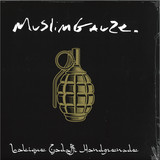
Given Jones' rather slack approach to track titles (both being consistent with and sometimes even just supplying them), it's a bit of a relief to realize that two tracks with the same name are indeed related. In the case of "Arab Jerusalem", which makes up nearly half of the newly-released Lalique Gadaffi Handgrenade, that kinship is immediately apparent even though both tracks are clearly their own experiences. Released as the first track on the Minaret-Spearker picture disc 7" in 1996, "Arab Jeruzalem" (spelling also sometimes being fairly slack) is 5:42 of effectively shifting dark ambience, wordless female vocals drifting over the hand percussion, chimes, and static of the track, with eventual conversational loops discussing ... something underneath.
The end of that version is especially striking for the way the woman's wordless singing starts being sampled in such a way that it overlays the whole track (and, slightly, itself). The almost 24-minute "Arab Jerusalem" here might be called the Deer Hunter version of the same story, building with great patience and many more abstract detours towards what now seems like simultaneously an excerpt and, now, a climax.
As with many of Jones' more ambient tracks, the great length just lets it cast its spell more thoroughly and entrancingly. The other three tracks, meanwhile, suggest some of Jones' other work but never evoke them as directly as "Arab Jerusalem". "Jordan River" is nearly as long (a second shy of 20 minutes) but strips out the vocal elements in its predecessor, focusing instead on a more active percussive workout (analogue and digital both) and a river of hiss running down the center of the track. The title track of Lalique Gadaffi Handgrenade might bring to mind the title of "Lalique Gadaffi Jar" from Libya Tour Guide (last reissued by Staalplaat in 2015), but if they're sonically related Jones must have practically melted the other track to get this one.
And the closing "Desert Gulag" (like the title track, a much more manageable length than the first two epic tracks here) bears a slight resemblance to "Negev Gulag" from 1996's Fatah Guerrilla, here what was a piercing, repetitive drone is softened and looped over more of Jones' percussion. The result is a well-rounded release that shows off many aspects of Jones' sound as Muslimgauze, while existing (like many of these DAT tapes do) in conversation with much of his previously released work.
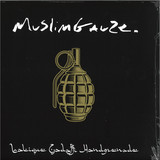
iven Jones’ rather slack approach to track titles (both being consistent with and sometimes even just supplying them), it’s a bit of a relief to realize that two tracks with the same name are indeed related. In the case of “Arab Jerusalem”, which makes up nearly half of the newly-released Lalique Gadaffi Handgrenade, that kinship is immediately apparent even though both tracks are clearly their own experiences.
Released as the first track on the Minaret-Spearker picture disc 7” in 1996, “Arab Jeruzalem” (spelling also sometimes being fairly slack) is 5:42 of effectively shifting dark ambience, wordless female vocals drifting over the hand percussion, chimes, and static of the track, with eventual conversational loops discussing... something underneath. The end of that version is especially striking for the way the woman’s wordless singing starts being sampled in such a way that it overlays the whole track (and, slightly, itself). The almost 24-minute “Arab Jerusalem” here might be called the Deer Hunter version of the same story, building with great patience and many more abstract detours towards what now seems like simultaneously an excerpt and, now, a climax. As with many of Jones’ more ambient tracks, the great length just lets it cast its spell more thoroughly and entrancingly.
The other three tracks, meanwhile, suggest some of Jones’ other work but never evoke them as directly as “Arab Jerusalem”. “Jordan River” is nearly as long (a second shy of 20 minutes) but strips out the vocal elements in its predecessor, focusing instead on a more active percussive workout (analogue and digital both) and a river of hiss running down the center of the track. The title track of Lalique Gadaffi Handgrenade might bring to mind the title of “Lalique Gadaffi Jar” from Libya Tour Guide (last reissued by Staalplaat in 2015), but if they’re sonically related Jones must have practically melted the other track to get this one. And the closing “Desert Gulag” (like the title track, a much more manageable length than the first two epic tracks here) bears a slight resemblance to “Negev Gulag” from 1996’s Fatah Guerrilla, here what was a piercing, repetitive drone is softened and looped over more of Jones’ percussion. The result is a well-rounded release that shows off many aspects of Jones’ sound as Muslimgauze, while existing (like many of these DAT tapes do) in conversation with much of his previously released work.
Pre-Order. Releases June 21.
Unsurprisingly for a creator as prolific as Muslimgauze’s Bryn Jones was, when he was asked for a contribution for any sort of group project, he would tend to provide more options than necessary. In the case of longtime label Staalplaat’s 1996 compilation Sonderangebot, where Jones would find himself in the company of everyone from Charlemagne Palestine to Reptilicus, the selected track was the characteristically headspinning “Kaliskinazure”, nine minutes of insistent digital percussion bouncing the listener back and forth between samples of wailing women’s voices and a trebly, blurry little whirr that traces the percussion. It’s distinctive enough even among the vast Muslimgauze corpus, but as the continued excavation of DATs Jones submitted to his labels continues, sure enough there’s more to that track’s story, too.
An extended “Kaliskinazure” makes up the second of four tracks on Babylon Is Iraq, although it’s been lost to the mists of time whether an outside editor excised the more drifting, less needling coda that makes up the extra six minutes found here, or whether Jones simply submitted both versions of the track at different times. This more complete version of “Kaliskinazure” is surrounded by shorter tracks, with the opening “Kaliskinazure — Momada” sounding not very much like either track it references (instead being a barely-there wisp of far-away sampled wind instruments and what sounds like treated cymbal sounds) and the title track constantly coming to a full, roiling digital boil. The lengthy “Momada” closes out the album with a different, more tersely internal arrangement surrounding the same percussion pattern that will be familiar to any Sonderangebot fans, although the way the quieter atmosphere transforms the feeling of that rhythm indicates once more than Jones’ way of reconfiguring his pieces over and over was perhaps more purposive and even more effective than he’s sometimes given credit for. The result is a fascinating expansion on one of Muslimgauze’s strongest stand-alone moments.
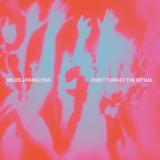
An EP of the darker side of electronic dance music is always a welcome addition to Especial. Up and coming producer / DJ Miles J Paralysis steps away from releasing on his own Crying Outcast label to explore left of centre, new wave and cosmic sounds; songs woven from his own vocals and samples.
A love of Dub, Hip Hop and Electro-Funk led into electronic music. Sampling TV shows, making beats, jamming. Exposed to Leeds and Manchester club cultures, seeking the more experimental. African Head Charge, Muslimgauze, The Rootsman and Weatherall were early influences in forming a no rules philosophy.
Born and raised around West Yorkshire, the beauty and bleakness of the moors have a strong bond on Miles Henry aka Miles J Paralysis and his music. Folklore and the occult link and connect an interest in Northern Hauntology. Unresolved histories, stuck between past glory and phantoms of possible futures.
The EP starts with It’s Only Shadows Talking. A play on the Paralysis persona, the spectral dub house groove meets industrial overtures, encasing his own eerie and unsettling vocals to begin the narrative.
Don’t Forget The Ritual takes a direct link from British folk traditions. Sacred and ceremonial; the laid-back breakbeat, samples and delays are the transition to the evocative embrace of melancholia.
Come On Fleet, the hypnotic Latin (vocal) sample creates a lurking murmuration, rimshot percussion meets gothic sound design for the EPs’ most straight forward and direct club cut.
Surreal and dreamlike soundscape, closing track The Delicate Fairytale is the perfect platform for Miles own phantasm. Inspired by the stories of Dorothy K Haynes and Robert Hickman, the pervading sense of a David Lynch aesthetic, exploring the nostalgic nature of memory.
Our journeys into uncharted lands of the Reducerverse continue.
Essential must-buy shit for all disciples of: The Rootsman x Muslimgauze, Love's Secret Domain era Coil, Chris & Cosey, Meat Beat Manifesto, early Reinforced Recs, Shut Up & Dance, He Dark Age, Zombies Under Stress, SPK.
If you've just joined us: Reducer ARE the greatest lost dub punks. Rumoured to have almost signed to On-U Sound but told Sherwood to stuff it when he wanted his hands on the desk. Fame never found them, cos they didn't want it anyway. Living in the obscure memories of the select squatters and weirdos lucky enough to have had their minds blown, their first recordings were scraped off the linings of the cosmic dustbin recently through a series of self-released 12"s, cassettes, USBs and strangest of all a 3D performance screened at the Cube (in association with pals Bokeh Versions).
In short: Reducer's the most thrilling fairytale resurrection these pages have been privy to, joining 23 Skidoo, Killing Joke, PiL, Slits, Terminal Cheescake etc on the Mount Olympus of the Punky Reggae Party.
This latest slice of karmic justice comes from The Human Aerial aka Reducer's guitarist and prime mover Hooly. And ohhhh what a justice it is. Drawing on 40 years of private solo recordings across 7 tracks from Abu Ama style dabke jaguar steppas punishment to thumping bass-led electro, peak Depth Charge dubby big beat to careening breakbeat hardcore, trashcan gamelan spirituals and Jamie Vex'd style maximalist beats blissouts,
Tying together this jaw-dropping range of styles and fashions is a relentless sampladelic bombardment. The Human Aerial's habitual pilfering of TV and radio for into lovingly spliced tape loops and samples showcases humanity at its best and absolute worst. Tele-evangelists rub shoulders with long dead chieftans: "there is no death, only change of worlds" "We're MAD AS HELL AND WERE NOT GONNA TAKE IT ANYMORE" "THe land is sacred, a cathedral of the spirit". These wisdoms and grave sins slip into us subliminal through the dance, the needle drops like a waking dream.
While the Reducer archives may be running low, we assure you the Human Aerial coffers are full. And long may our minds be blown by this ongoing renaissance.
Makyo taps into his love of roots reggae for this deep, dark and dreamy cover of Things Ah Get Tough by the legendary Bristol band Talisman. The Tokyo-based producer transforms the original, while keeping true to the essence of the original, whose lyrics meditate on the greed and destruction caused when corporations benefit from a nation’s downfall.
Makyo has charted his own course through the world of dub, often with an eastern or tribal twist, since the early 90s, working with collaborators like Bill Laswell, Natacha Atlas and Muslimgauze, but with this release, he’s entering a new phase.
“I’ve listened to this song for years,“ notes Makyo, “and it just felt more relevant than ever when I started working on it in 2024, with all the wars, election madness, wildfires, inflation and nuclear posturing. The mood just seemed to reflect where people were at.”
Having overcome crippling tinnitus and hyperacusis (to the point that he couldn’t even listen to music for several years), Makyo’s finding joy in the past whilst looking to the future, with this sparse and bittersweet version of Talisman’s tune the first in a series of contemporary covers he has planned.
A series of non-dogmatic loops from the 90s Belgium. Coming from conspirator operating on the intersection of techno, post-punk and deathly ambient music, currently a scuptor and a visual artist For fans of Muslimgauze and 90s Mark Broom alike... and inquisitive goths in general, this sampler EP is also a good representation of the sounds rrrkrta's Brutaz used to broadcast on the innocent youth of Poland.
Featuring music from a lost tape of devotional keyboard jams, field recordings of migrating birds, mysterious bells, meditative noise and crooked new beat/EBM, made god-knows-when and subsequently discovered in a Thessaloniki charity shop years later. It now somehow finds its way to vinyl, newly mastered by Rashad Becker, and sounding like a lost Hype Williams x Muslimgauze madness.
Originally discovered in a musty charity shop by Live Adult Entertainment, and issued in minuscule numbers on CD in ’21, Christian Love Forum’s raverential debut ‘Naked Light’ documents the fraternal post-church jams of siblings, Scott, Kiro and N•X, plus their mate Steve, who would regularly channel the light and pain of Sunday mass sermons into their ecclesiastic crud.
As previously heard on their blink ’n miss ‘Unconditional Love’ tape, the trio express their higher purpose thru ribboning microtonal keyboard jams that sound like Gurdjieff with a Casio and a knackered drum machine after too much sacramental wine. They hit the strangest, most affective seam of religious cinematic epic soundtracks, gnarled noise and clandestine Belgian new beat that seriously pushes our buttons, sounding quite unlike anything in the contemporary sphere, but eerily also echoing sentiments explored on record by James Leyland Kirby or Bryn Jones.
Now reshuffled and clad in custom artwork, ‘Naked Light’ is unveiled to believers and skeptics as a definitive article of faith. The lord works in mysterious ways within, manifest in stages of sun-bleached post-church field recordings, whirligig melodies, blown-out bouzouki and choral tape howls and a Béla Tarr soundtrack-like campanology on the A-side, before letting their passions flow in ‘Wicked City (Parts I-IV)’; a spellbinding side-long collage of slurred synths, neo-noir hardbeat rhythms and speaking-in-tongues vox recalling V/Vm’s new beat apocrypha as much as bits from Hype Williams’ hypnagogic ‘One Nation’, thee dustiest gooches of Dirk Desaever’s archive, or even aspects of Rat Heart at his cruddiest.
‘Naked Light’ rarely fails to induce uncontrolled eye movement in susceptible skulls, destined to become an occult hit with lapsed churchgoers, new beat fiends and anyone missing the enigma and ineffable flavour of ‘00s underground noise tapes in this auspicious year of AD2023.
Suns of Arqa is a sonic mission created by luminary Michael Wadada, who began in 1979 after receiving higher guidance in Jamaica while working with roots reggae chanter Prince Far-I. It is a prolific traveling music collective that has seen over 200 collaborators, meant to connect people from all cultures and walks of life through a “deeply spiritual vibration that merges cultures, faiths and musical genres”. Wadada combines ancient Hindustani raga systems with Piobaireachd and Nyabinghi roots drumming, creating ritualistic world music infused with dub and reggae.
The lyrics combine both mystical and sensory elements, often including prayer and referencing a higher power but finding root in experiences common to all people- memory, sight, and physical sensation.
Their first album, Revenge of the Mozabites, was a collaboration between Wadada and On-U Sound creator Adrian Sherwood. Following its 1980 release,Peter Gabriel invited them to perform at the first WOMAD festival. Today, the record is regarded by some as a cult classic. Over the years they have played at many major music festivals including Glastonbury, Big Chill, Telerama Dub Festival, and Transmusicales, and released over 40 albums on Virgin, EMI, Interchill Records, Antler Subway, Red Rhino, and their own label, Arka Sound.
Suns of Arqa has had a seminal influence on the World Beat sound, and continued to make appearances at seasonal festivals and sacred ritual spaces all over the world until 2021. Michael Wadada passed away in the midst of planning their U.S. tour for this release. The record is a compilation of some of Wadada’s and Sleepers Record’s favorite old Sun of Arqa tracks, mixed by Youth and Adrian Sherwood, and mastered by Eroc (drummer of Grobshnitt).
Notable collaborating artists include: Guy Called Gerald, UK producers Youth and John Leckie, Greg Hunter, 808 State's Graham Massey, Finley Quaye, Sounds From the Ground, Bryn Jones aka MuslimGauze, Adrian Sherwood, John Cooper-Clarke, The late great Professor Stanley Unwin, Eric Random, New age guru Tim Wheater, Astralasia, Prince Far-I, The Orb's Alex Patterson, Zion Train, and Gaudi.
"And although the Great Spiritual being Michael Wadada has returned to source and his body to earth at our time, his music is alive and will continue to be a great force for higher spiritual realms and raising vibration through occult frequencies...Suns of Arqa will continue to raise the vibration of the hearts and minds of humanity" – Angela aka Angel-Eye (Wadada's wife and bandmate)
"High urgency music with a very personal expression of the artist: in one way or another", this has always been the important or maybe even the core factor of every Cortizona release so far.
So it was just a matter of time until DJ Marcelle/Another Nice Mess, longtime fan of The Fall and Jiskefet, topnotch producer, dj wizard with three turntables (and a lovely person in general) - and myself - would collaborate towards a Cortizona release.
I guess the initial idea of working together with DJ Marcelle/Another Nice Mess dates back to 2019. One day she called me four times in five minutes just to hear Mark E. Smith's voice message on my phone. Since then there has been no going back. I mean: what's not to love about her?
Some time ago, she sent me the digital files of her new LP 'Sorry, No Service'. One of the tracks, 'Sorry, No Silence', features the Nan Goldin sample: 'this is clearly ethnic cleansing', taken from Goldin's impressive speech to which the audience cheered in support at the opening of her exhibition at the Neue Nationalgallerie in Berlin end of 2024.
Two weeks later Marcelle contacted me again: her German label refused to release the track. This was the moment we had both been waiting for: at last Cortizona and Marcelle would work together!
The album is due to be released later this year, but, with things as they are in Gaza, it is important to issue 'Sorry, No Silence' as a stand-alone track as soon as possible.
Talking about urgency!
'Sorry, No Silence' resonates feelings of global despair over the genocide in Gaza and the moraland political bankruptcy of 'western values'. It does so over a repetitive, militant tribal beat, complete with heavy basslines. The spirits of Mark Stewart, On-U Sound and Muslimgauze loom over the track, but as is always the case with Marcelle, both on stage and in the studio: she has an authentic style of her own, where playfulness meets courage and - also in this case - anger meets rhythm.
'Sorry, No Silence' is a track I didn't know I was waiting for. A track reflecting the sign of the times. The 12'' also features an even more heavy (and faster) dub version and the avant garde track 'Never Again Means', featuring more Nan Goldin samples: 'never again means never again for everyone'.
For obvious reasons the proceeds of this 12 inch and the digital Bandcamp release will be donated to PCRF, Palestine Children's Relief Fund.
Support more than welcome.
(written by Philippe Cortens)
Efficient Space honours the memory of producer and MC Ali Omar with Hashish Hits, a posthumous selection from the dub rebel’s self-released discography.
One of ten children in working-class Liverpool, Omar drew deep influence from his father's Arabic heritage—a thread central to his identity and sample origins. After art school and a spell clubbing during Manchester's halcyon days, he relocated to Sydney, where he cofounded the blunted downbeat duo Atone with fellow British expatriate Andy Fitzgerald. As an MC, he infiltrated the city’s house, dub, jungle, and bass circuits, becoming a regular fixture at the Bentley Bar, where he commanded the mic with his versatile, rumbling baritone and charisma.
Freakishly talented in the studio, Omar was a pioneer of the Akai sampler and Atari, deftly recording live sessions straight to DAT. Drawing on industry insights from his sister, Merseybeat firebrand Beryl Marsden—who supported The Beatles on their final UK tour and was signed to Decca and Columbia—the non-conformist sought to build a self-sufficient business model. Between 1998 and 2004, he independently issued four albums on CD through his Hashish Studios imprint, hustling copies directly to local record stores and live shows for instant returns, even hand-sewing screen-printed hessian sleeves for his final release.
Uncompromising in his principles and refusing to suffer fools or charlatans, Omar relished the opportunity to collaborate with those who embodied the same spirit. Hashish Hits offers a snapshot of his inner sanctum—Fitzgerald on the opening track's billowing smoke stacks, the serpentine vocals of Gina Mitchell and the magic hands of mixer Louis Mitchell on 'On Release,' and Wicked Beat Sound System’s Kye on 'Poor Man Beggar Man Thief'. Meanwhile, 'Suicide Bomber' smoulders with the tension of a lost Muslimgauze relic, as the instructional 'Roll Up' and 'The Last Straw' spiral deeper into Omar’s signature production vortex— where space stretches in slow motion and walls reverberate with ricocheting delay.
A true icon of Sydney’s underground scene, the larger-than-life Omar passed away on 23 June 2009 after a valiant battle with cancer. He is remembered for his assertive spirit, larrikin humour, wild anarchic personality, and enduring mantra: “Love and live your life”.1
* Brand new outing from dub producer I David who takes us on a dubby journey on the Orient Express into Istanbul and further into Anatolia.
* The track titles are mostly belly-dancing related which gives to clue to the content.
* Featuring an instrumental and three dub excursions of the same tune.
* For fans of The Rootsman, Muslimgauze etc.
* 300 copies only
In an inspiring collaboration uniting artists from different corners of Europe and the Middle East, Palestine's Muqata'a, French-Irish Zoë McPherson, and Lebanon's Rabih Beaini have merged their creative forces to remix the Belgian/Iraqi band Use Knife's influential album 'The Shedding Of Skin'.
'Peace Carnival', released on Berlin’s Morphine Records, challenges the narrative around peace through its percussion, glitches, distortions, and Muslimgauze-esque minimalism to critique and rethink perceptions of justice and freedom.
This year, Carnival's usual satire and mockery should be directed towards the so-called and one-sided definition of 'peace'.
Four dazzling, extended engagements with mbalax master-drumming.
The contribution from Holy Tongue is chase-the-devil steppers — thumping, clangorous, reverberating — super-charged with energy and atmosphere. From the off drummer Valentina Magaletti detonates a hard rain of small bombs, rounds of fire, ticking fuses. Musical co-ordinates are somewhere between classic On-U Sound crew like African Head Charge, The Mothmen, and Creation Rebel, and the experimental funk of the Pop Group and 23 Skidoo, at their funkiest. Thrillingly, the two dubs are increasingly deranged.
Adjusting the same wavelengths as her superb Workaround LP, Beatrice Dillon plays spaced-out, abstract synth-work against the bodily physicality of the ancient, shifting mbalax rhythms. The music is poised, mindful, tentative; but also limber, fleet, and magical.
Phantasmagorical and efflorescent, Lamin Fofana’s one-two is simply stunning. Both excursions are wide-open, beautiful, epic, and propulsive — the first mix is banging and headlong, the second more syncopated and serpentine — teeming with freshly sublime, funkdafied updates on Jon Hassell’s Fourth World possible musics.
The two parts of LABOUR’s Etu Keur Gui engage the same sequence of drum patterns (called bakks) from different perspectives. The duo performed portions of this piece at the opening ceremony of the Dakar Biennial in 2022, at the Grand National Theater, with thirty sabar players from the family of Doudou Ndiaye Rose. This Wolof phrase for the inner-court of a home — a meeting-place — doubles here as a metaphor for inner space on a metaphysical level; and Pan Sonic, Muslimgauze, Zoviet France, early Shackleton… all ghost across the threshold.
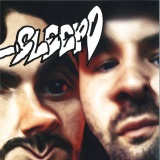
Naarm alchemists Sleep D's revelatory new synthetic 'Electronic Arts' is ready for circulation.
Having released 4 EPs of mind-altering club tackle since 2019's 'Rebel Force', the duo overcome second album syndrome, boiling down their chaos with a more developed sense of songwriting. Never banging one drum, 'Electronic Arts' mirrors the anything goes mania of their DJ sets, tactfully shifting through different sounds and styles. Tempos intensify and decelerate, at times pushing the threshold to 150 bpm from docile canine dreamscapes to full tilt Space Invaders in AR mind games.
Largely built on road tested material from their live performances, the album is a tangible Butter Sessions gathering, busting out the gate with Martian rave initiation Planet Waves, Outdoor System's polyrhythmic beatdown and the Orb-like hero dose affirmations of Sunrise In The Crater (I Exist). While 'Electronic Arts' is otherwise a self-dependent effort, Punch Drunk is brewed ever more potent by the hypnagogic vocals and lucid trumpet cycles of former futsal team member YL Hooi. Their unified energy incidentally manifests a profound matrix of ambient techno, motorik, Don Cherry and Everything But the Girl.
Also touching on apocalyptic doof and minimal, the album is not exclusively peak time with Maryos Syawish and Corey Kikos' specialty curveballs also playing their part. From Village To Empire finds the duo rooting down in Syawish's heritage with a tapestry of purposefully deployed Iraqi and Syrian ethnographic samples and field recordings, dubbed within range of Muslimgauze and On-U Sound. As minimal techno finale Textile trails off into footsteps wandering back to base camp with a satisfied exhale, one wonders where Sleep D's existential pathfinding could possibly take us next?
Kundan Lal is a highly understated artist. Little is known about his background, though some refer to him as Kunsaf Halil, his personal life remains largely a mystery.
Gathering a cult following amongst people like Den Sorte Skole or DJ Marcelle with his previous releases, he is now set to sail new shores. There is a sense of wanderlust as he opens his box of field recordings, collected on his many travels. From the buzzing streets of Alexandria, early sunday markets in Tafraoute or a crackling bonfire down by the banks of the river Ganges. Each track takes you places.
Kundan's second album is a captivating blend of dubby beats, collages, and exotic instrumentation. Drawing from classic tools like the Roland 808, SC7 and the famous Space Echo, Kundan has created a unique and minimalistic sound that is sure to captivate listeners. At once nostalgic and experimental, "Power of Ra" is a must-listen for both electronic music purists and fans of adventurous soundscapes.
Compelled to work from home on his computer during lockdown, Kundan dusted his pawnshop e-piano, downloaded some orchestral soundkits and started to digitize almost forgotten field recordings. The "Power of Ra“ came to him.
“Illgrimage” is a good example of his approach. Combining atmospheric soundscapes with swirling strings, trombones and pianos. Echoes of birds and children playing in the streets. A small town filled with life and a theremin leading the way while you hear the faint yet powerful words of Greta Thunberg saying: "Imagine...“
“Raqaqa,” a powerful orchestral journey with a hip-hop edge. Tinkling chimes add a groovy vibe, while lush layers of wind instruments weave a masterful soundscape. It’s the slow-burning intensity of this track that pulls you in.
"Nasi Chip" is a signature song that exemplifies Kundan Lal’s musical prowess. An engaging beat coupled with chopped up vocals, 8-bit synth melodies and an arpeggiated piano provide an energetic atmosphere that is both cunning and unique.
”Cen" lures you into the egyptian realm. A Harmonium slithers serpent like around a pounding beat.Horns gently swaying to the rhythm of the desert.
It is hard to put your finger on his style or genre. You can feel Kundan Lal‘s DIY spirit in his production, carving his own ethnic genre. For enthusiasts of Roberto Musci or Muslimgauze, this avant-garde album is one for your collection. Keep your senses open and let the Power of Ra pass you to another world.
"El Pasaje del Aumento" is a collection of syncopated rhythms for hypnotic slow dance. An accident of oppressive atmospheres with a humorous sense of rhythm and composition, which moves between downtempo, African rhythms and dub. With a certain oriental softness, it introduces you into a state of enchantment, spell... a hypnotic and mysterious restlessness, almost uncomfortable. Sentuhlà squeezes his Yamaha Rm1x on this second album, creating rhythms that you would never believe possible with a single synthesizer. He spins, twists and strangles it to the limit, til getting the last drop of frequency and oscillation.
Without too obvious references, it recalls the rhythms of Toulouse Low Trax or Wolf Müller, the experimentation of Muslimgauze, the repetition of Huerco S... But if you ask Sentuhlà himself, he will also mention Fela Kuti, Sun Ra, Can, Cabaret Voltaire, Tom Zé or Lee Scratch Perry...
Sentuhlà is one of the many aliases of musical jack of all trades José Guerrero, a long-standing figure in the already rich underground scene of Valencia. In this solo excursion, he explores the vast possibilities of mechanical repetition, the machine funk of dirtbag rhythms, and proper boogie DIY synth music, sculpting a syncopated sound that is both modern and atavistic. Coming from a deep knowledge and ability to communicate very diverse sounds, slow jams unfold into dance music for clear-eyed lounge lizards for whom sleaze comes not dizzy but focused. Whitened African rhythms beat up no-wave disco pleasure points, managing the hard task of being very cool and nonchalant, but also hot and dedicated.
Modal Analysis proudly presents Het Zweet - Archives Volume 1: 1982-1988, a compilation of the Dutch outsider legend painstakingly picked from over 100 hours of unheard tape. An early electronic pioneer who deployed an array of homemade instruments alongside synths and a tape recorder to craft his searching sound, Marien Van Oers occupies a lonely branch on the tree of this music's early efforts, sliding between pounding industrial grooves, ambient fragments, and extended, entrancing compositions bridging this divide. Most closely akin to Muslimgauze, Test Dept. or Fad Gadget, who shared his outsider practice while remaining thoroughly entrenched in contemporary sounds, Het Zweet is striking for his diversity and for its meticulous composition, formed of carefully arranged layers of sonic detritus culled from his collection of homemade devices and electronic distortions. Finally rising to greater exposure since his death in 2013, Modal Analysis passionately continues this mission with our first volume of archives dedicated to the memory of this bold innovator gone before his time.
- 1: Into The Light (Edit Version)
- 2: Saiyidi Dub
- 3: Tribal Dervish Union Of Souls
- 4: Arab Quarter
- 5: Arid Land
- 6: Mother Of Nature
- 7: Tribute To Hasni
- 8: Ancient Vibrations
- 9: Spirit Of The Nile
- 10: Canaanite Call
- 11: Serengeti
Deluxe double 12'' vinyl housed in a 2 pantone sleeve Including insert with liner notes Akuphone is pleased to present the first compilation dedicated to musician John Bolloten, aka The Rootsman. As a precocious punk, he formed his first band, State Oppression, in his teens. Yet he is best known for his dub music, a genre that gave him international recognition. Largely influenced by the rhythms of North Africa and the Middle East, he built his musical identity around samples from these regional repertoires. His encounter with Bryn Jones - better known as Muslimgauze - further defined his artistic path. This selection offers an overview of his work from 1996 to 1998, a prolific period when Into The Light, 52 Days To Timbuktu, Union Of Souls (with Celtarabia) and Distant Voices (with Pachakuti) were released. A visionary production that predicted today's growing international predilection for the musical heritage of the MENA regions. The compilation is enriched with an explanatory preface by Mabrouk Hosni Ibn Aleya and illustrated with rare archival photos- all of which are contained in a superb jacket designed by the artist Ghiya Haydar.
repressed !
Emotional Rescue reissue 'Into Dark Water', the second album from UK post-industrial ambient pioneers O Yuki Conjugate (OYC).
The willfully obscure OYC formed in Nottingham in 1982 and have had a sporadic career on the outskirts of musical culture ever since. Initially associated with the early 80s post-industrial scene - along with Soviet France and Muslimgauze - OYC quietly forged their own brand of ambient music at a time when it was distinctly unfashionable to do so.
Always reluctant to categorise their sounds, OYC have been variously described as post-industrial, ambient, darkwave, tribal ambient, chill out, electronica and Fourth World. Take your pick.
'Into Dark Water' was recorded in 1986 over four days in an eight-track garage studio in Nottingham. Produced and engineered by John Kaukis, the result was a blend of flutes, percussion, electronics and loops that focused their sound and became for many the definitive OYC album.
Originally released in 1987 on the Leeds-based Final Image label, 'Into Dark Water' quickly sold out and has been highly sought after ever since. The re-issue, featuring a lovingly recreated sleeve, makes a vinyl version of this classic available again for the first time in over 30 years.