* Lou Reed's final solo album finally available again * First time on vinyl * Produced in partnership with Laurie Anderson and the Lou Reed Archive * Booklet features unseen photography by Lou, Q&A with Laurie Anderson & Jonathan Cott, essay by Eddie Stern, and archival interviews with Lou and Hal Willner * Remastered by GRAMMYr-nominated engineer John Baldwin * Package designed by multi-GRAMMYr-winning artist Masaki Koike // "I first composed this music for myself as an adjunct to meditation, Tai Chi, and bodywork, and as music to play in the background of life, to replace the everyday cacophony with new and ordered sounds of an unpredictable nature. New sounds freed from preconception. ...over time, friends who heard the music asked if I could make them copies. I then wrote two more pieces with the same intent: to relax the body, mind, and spirit and facilitate meditation." - Lou Reed Light in the Attic Records in cooperation with Laurie Anderson and the Lou Reed Archive, proudly announces a definitive re-release of Hudson River Wind Meditations, the pioneering artist's final solo album. Originally released in 2007, the deeply personal project combines Reed's love of creating drone music with his passion for Tai Chi, yoga and meditation. The album's ambient soundscapes have been described as a counterpoint to his intense Metal Machine Music album-but they are similar outliers in Reed's 40+ year exploration of drone music and feedback harmonics. The album has been remastered by the GRAMMYr-nominated engineer John Baldwin with vinyl pressed at Record Technology Inc. (RTI). The Double LP set is presented in a gatefold jacket designed by GRAMMYr-winning artist, Masaki Koike and features new liner notes by renowned Yoga instructor and author, Eddie Stern, who guided Reed's practice for years. Also included in the physical editions is a fascinating conversation conducted earlier this year between author/journalist Jonathan Cott (Rolling Stone, The New Yorker) and Reed's wife, artist Laurie Anderson, who discusses the album, as well as her husband's devotion to Tai Chi - one of the album's primary inspirations. Hudson River Wind Meditations marks the latest release in LITA's Lou Reed Archival Series. Launched in 2022 in tandem with the late artist's 80th birthday, the ongoing series has celebrated one of America's most influential songwriters through such acclaimed collections as Words & Music, May 1965 featuring many of Reed's earliest (and previously-unreleased) recordings, including the earliest-known versions of "I'm Waiting for the Man" and "Pale Blue Eyes."
Suche:my friend sam
Vladislav Delay's complete "Hide Behind The Silence" series. Intuitive and raw music, momentary and reflective, released on Ripatti's own label Rajaton.
Stillness is a myth. Consider concepts such as ”still water”, or ”still air” for that matter. Go to a restaurant, ask them for a glass of still water, hold it against the light and see where we’re at. Even though the water itself has been captured and imprisoned in the glass, it never stops breathing. It’s filled with tiny particles, dancing. Everything can be explained on a molecular level, but since we’re not scientists – and even if you happen to be – it’s the natural world of perception that moves me.
Still air is very similar. A hot summer’s day with zero wind feels completely still. It’s the closest I have felt to complete stillness. Or for a more urban adaptation, imagine the same vibe inside a normal apartment. In those moments, revelations and mind- blowing experiences can be had with experiments in stillness.
Try this: Just sit down for a minute on a sunny day, making sure there’s enough natural light. Do absolutely nothing. Try not to breathe for a bit. (If you need a mental anchor, you can play Cage’s 4’33” in your head but nothing else.) Watch the tiny dots of dust dancing :..’ ̈.:; ́ ́*°.,’:,. ̈ ̈ ̈ ̈:,.’
The movement is crazy, but the feeling of stillness comes from witnessing how subtle it is. In (perceived) complete stillness, every act of microscopic mobility seems to speak volumes. Yet, it feels both reassuring and oddly threatening that the stillness is never complete. What if we would need absolute stillness? Or is it just enough that we can perceive something as such? Extremes attract, so for both water and air, extraordinary movement is equally fascinating. That is also a luxury item of sorts. For us to enjoy a very ”loud” body of water or air, we need to be safe, in enough control of the situation. So when you are, it’s worthwhile to pay attention and take it all in.
A rapid flowing free with extreme strength and just barely in control. Look at that water go! No still water on this one, only ”sparkling”. A windy day when birds seem surprised how hard it is to fly, but in the end they make it. Trees bend but don’t break. The wind shows you its movement but doesn’t hurt you. It feels friendly, like a big clumsy dog that doesn’t quite understand its size.
It’s beautiful to be a guest of the elements, but not at the mercy of them. A new kind of dialogue forms.
Q&A with Sasu Ripatti:
1) Tell us something about the EP series ”Hide Behind the Silence”, what’s the idea and what can we expect?
Exploration of inaction. Of many kinds. In arts and in personal life, or at bigger and more serious levels. Questioning myself as a human being as well as an artist. Acknowledging the growing activism all around, and the very clear need for it, and how it reflects my own inaction.
Musically speaking, after Rakka, Isoviha and Speed Demon, I finally found some relief, but more importantly lost the need to go musically ever more outward and intensive. I felt quite strongly certain periods/moods from the past and they made me revisit some musical ideas or states of mind I was exploring early on.
It’s about live moments being captured, not much premeditation or editing. More intuitive and raw, even though the end result (to me) feels and sounds quite introspective and calm. It’s not very ambitious. Momentary and reflective.
2) Your music doesn’t sound very silent. Does it come from somewhere behind the silence?
Oh, this time to me it sounds quite quiet and playing with space if not silence. I don’t know what’s actually behind silence, but I think silence is the source of everything. We just don’t understand it yet.
3) What kind of thoughts or experiences gave inspiration to this series?
Writing this in Nov ’22, it’s not a stretch to say the world has been really unwell. Sometimes, like Mika Vainio put it, the world eats you up. I feel a bit like that. And I try to hide in my studio and stay away from it all, but it’s getting harder by the day. I’ve been questioning myself and thinking if what us artists are doing is worth anything, and whether it’s just a selfish thing I’ve been doing for the past 25 years, running away from everything. I haven’t come to a conclusion yet.
4) Is it easy for you to be in silence, or around silence?
Absolutely. I not only hide behind silence but I also love silence. It’s only since I started going back to nature as a grown-up person that I sensed and was enveloped by silence, true silence. I have begun to appreciate it a lot. I think all the people should spend more time in silence.
All tracks composed and produced by Sasu Ripatti.
Artwork by Marc Hohmann, photography by Shinnosuke Yoshimori.
Mastering by Stephan Mathieu for Schwebung Mastering.
Vinyl cut by SST Brueggemann.
Publishing by WARP Music Ltd.
- To The New World!!
- Rebirth! The Straw Hat Pirates
- Jinbei Strait
- Surgeon Of Death
- Master’s Scornful Laughter
- Enemies Appear
- Spirit Of Guru
- The Weak Power Strengthens!
- A Man’s Battle
- I Think Of The Past
- Go Go! The Straw Hat Pirates!!
- Country Of Love, Passion & Toys, Dressrosa
- Frenzy! Colosseum
- Donquixote Doflamingo
- Trafalgar Law
- Admiral "Fujitora
- Violet’s Dance Of Passion
- Love Cannot Be Stopped
- Fight In The Colosseum
- Fierce Battle In The Colosseum
- Revolutionary Army’s Chief Of Staff, Sabo
- Gear Fourth
- Ballad Of Sadness
- Approaching! Birdcage Encirclement
- Garuchu~!!
- The Mink Tribe’s Battle
- The Samurai And Mink Tribe’s Bond
- Dressrosa’s Hidden Secrets
- Brook ~Healing Violin~
- Eyecatch ~New World Version~
- To The Origin Of Ace! – Main Title ~ Teachings Of Rayleigh
- Things We Desired
- World Vs Luffy: Final Battle
- Destroyer Of The World! World
- Loneliness, Solitude
- Gathering Of The Straw Hat Pirates! Towards Battle
- Releasing The Trap
- Straw Hat Pirates Vs Mad Treasure
- Luffy, To Victory
- Escape From Bonbori-Sama
- Next Time Preview ~We Go! Version~
- Doflamingo ~Overwhelming Force~
- The Thousand Year Island, Zou
Best OF[52,31 €]
Rediscover the original New World soundtrack for the first time on vinyl! Over 80 minutes to relive the adventures of Dressrosa, Punk Hazard, etc.... Fully Licensed.
Luffy, a mischievous boy, dreams of becoming the king of the pirates by finding the "One Piece", a fabulous and mysterious treasure. But, inadvertently, Luffy one day swallowed a "magical devil fruit" that turned him into a rubber man. Since then, he is able to contort his elastic body in all directions, but he has lost the ability to swim, the height for a pirate! Over the course of ever more incredible adventures and chance encounters, Luffy will gradually compose his crew and multiply friendships with the peoples he discovers, while facing formidable enemies.
Kohei Tanaka worked on the composition and arrangement of this album.
The latest by Texan-turned-Angeleno progressive vaporwave producer Carlos Ramirez aka AURAGRAPH finds him shifting focus to the dance floor across eight chrome clockworks of cosmic acid house and liquid rave glide: 'New Standard'. Inspired by lessons learned during a 5K mile American road trip tour in the summer 2022, he set to work in his Simi Valley Tuff Shed of synths and hardware, pursuing an explicitly DJ-friendly muse: "I realized I wanted to make a record where every track could go off in a live setting."These cuts do just that, revved and rhythmic, peppered with slap bass, Madchester whistles, filtered acid, gated snares, baggy cowbell, and sample pack classics - record scratches, orchestral stabs, the "Yeah! Woo!" from Lynn Collins "Think (About It)." Ramirez describes the process as immediate and instinctual: "I'd turn on the MPC, pick a tempo, and just improv - it was incredibly fun."From sleek freeway techno ("110 Cruising") to arcade lurker acid ("Coast 2 Coast") to big room bangers ("666 Ambience"), the tracks time-travel across the canon of club music, sifting tricks and styles to fashion fresh anthems of hypnagogic jack. It's an album channeled as much as crafted, tapping into the decks of mythic warehouse infinities past and present, where the system rips all night and acid never dies.
After the fall of the Deep City label, Rocketeers bandleader Frank Williams set up shop under the name of his twin daughters Saadia and Giwada and got to work reinventing the Miami Sound. Tracked between 1968-1970, this LP gathers 15 of Saadia's funkiest and deeply soulful moments, featuring Pearl Dowell, Joey Gilmore, Little Beaver, Frank Williams' Rocketeers, Robert Moore, Brother Williams, and Sam Baker. Your next sample, first dance, workout jam or closing credits is buried in here somewhere.
Super Funky Forest Green and Blue Splatter Vinyl.
After the fall of the Deep City label, Rocketeers bandleader Frank Williams set up shop under the name of his twin daughters Saadia and Giwada and got to work reinventing the Miami Sound. Tracked between 1968-1970, this LP gathers 15 of Saadia's funkiest and deeply soulful moments, featuring Pearl Dowell, Joey Gilmore, Little Beaver, Frank Williams' Rocketeers, Robert Moore, Brother Williams, and Sam Baker. Your next sample, first dance, workout jam or closing credits is buried in here somewhere.
* Lou Reed's final solo album finally available again * First time on vinyl * Produced in partnership with Laurie Anderson and the Lou Reed Archive * Booklet features unseen photography by Lou, Q&A with Laurie Anderson & Jonathan Cott, essay by Eddie Stern, and archival interviews with Lou and Hal Willner * Remastered by GRAMMYr-nominated engineer John Baldwin * Package designed by multi-GRAMMYr-winning artist Masaki Koike // "I first composed this music for myself as an adjunct to meditation, Tai Chi, and bodywork, and as music to play in the background of life, to replace the everyday cacophony with new and ordered sounds of an unpredictable nature. New sounds freed from preconception. ...over time, friends who heard the music asked if I could make them copies. I then wrote two more pieces with the same intent: to relax the body, mind, and spirit and facilitate meditation." - Lou Reed Light in the Attic Records in cooperation with Laurie Anderson and the Lou Reed Archive, proudly announces a definitive re-release of Hudson River Wind Meditations, the pioneering artist's final solo album. Originally released in 2007, the deeply personal project combines Reed's love of creating drone music with his passion for Tai Chi, yoga and meditation. The album's ambient soundscapes have been described as a counterpoint to his intense Metal Machine Music album-but they are similar outliers in Reed's 40+ year exploration of drone music and feedback harmonics. The album has been remastered by the GRAMMYr-nominated engineer John Baldwin with vinyl pressed at Record Technology Inc. (RTI). The Double LP set is presented in a gatefold jacket designed by GRAMMYr-winning artist, Masaki Koike and features new liner notes by renowned Yoga instructor and author, Eddie Stern, who guided Reed's practice for years. Also included in the physical editions is a fascinating conversation conducted earlier this year between author/journalist Jonathan Cott (Rolling Stone, The New Yorker) and Reed's wife, artist Laurie Anderson, who discusses the album, as well as her husband's devotion to Tai Chi - one of the album's primary inspirations. Hudson River Wind Meditations marks the latest release in LITA's Lou Reed Archival Series. Launched in 2022 in tandem with the late artist's 80th birthday, the ongoing series has celebrated one of America's most influential songwriters through such acclaimed collections as Words & Music, May 1965 featuring many of Reed's earliest (and previously-unreleased) recordings, including the earliest-known versions of "I'm Waiting for the Man" and "Pale Blue Eyes."
KID FRANCESCOLI, leader of the French Riviera Touch is back with the stellar album SUNSET BLUE out Sept 22nd 2023.
After a first sold-out world tour (over 200 concerts in Europe, USA, Asia...), and successful hits such as Nopalitos, Blow Up or Moon (now certified diamond, with more than 200 millions streams), the Marseille-based producer, crooner and multi-instrumentalist, Mathieu Hocine, is eager to share his most accomplished LP ever. This fine collection of soulful songs honor his Mediterranean roots, with elegant and pop melodies. His most recent success and the creation of his first original soundtrack with AZURO, installed him as one of the best French songwriters of his generation, with a unique signature sound.
"I live in Marseille, I spent my childhood in Corsica, I have Algerian origins, my first vacations with friends were in Barcelona, vacations with my first girlfriend in Roma,... Then, I had the chance to perform in Morocco, Greece, Turkey and Egypt: each time I spent time in the Mediterranean region, the people I met there made me feel like I was part of the same country. This shared multiculturalism is really comforting, it has its own poetry and strength, bringing uniqueness and empathy to the people. It is essential for me. I love my city: it’s the perfect place to feel good with sun, sea, family, friendships, love... It gets me emotional, bringing tears with a smile".
With his new musical gem, Mathieu Hocine unveils 11 elegant tunes of his finest craft: sunbathed French Touch (Run Run, 1986), romantic chillwave (Corsica), uplifting synthpop (You Are Everywhere, Like Magic), electronic-soul (Casino Soul), cinematic disco (Solaris), cosmic R&B (Sweet and Sour, Take Time), … Everything is in this record.
For the first time ever, Kid Francescoli paid tribute to his mixed origins with his collaboration with world-renowned lute and mandolin player Hakim Hamadouche (Rachid Taha, Patti Smith, Brian Eno, Tricky...), whom added Algerian patterns to the introspectives songs Drift in Blue and The Morning After.
"My ambition is to create pictures in people's heads with music, to transport them instantly into a movie"
SUNSET BLUE is an instant-crush album: crystal-clear, strong, personal but universal at the same time.
It's an ecstatic soundtrack for this moment when time is suspended, the golden hour when everything seems possible. It feels like Love is in the air, you're living your best life and you're at the right place at the right time. This album embodies this magic moment where we would like to last forever… Like an epiphany, Kid Francescoli's new album is a moment of pure pleasure, a soothing way to escape reality.
"I see myself as a melodist.I would like my music to feel like velvet. There's something cinematic, classy about it, and yet comforting. It's very simple, popular and synonym of love and passion"
His friend French 79 co-produced the album, while the american rapper Bamby H2O brought his NYC swag (on Sweet & Sour), Stan Neff (Polo & Pan, Kungs, Christine and the Queens...) took care of the mix and Alex Gopher (Daft Punk, The Blaze, Bon Entendeur...) added a final touch of magic when mastering. Nicolas Despis (known for his work with Etienne Daho, Hoshi, Juliette Armanet... and many famous French rappers) later joined this dream-team to craft custom-made artworks. SUNSET BLUE is a deeply personal quest, a human adventure for Mathieu Hocine (whom explores his maghrebian origins, his feminine side, his subconscious space, ...). It's a male's work, but don't get it wrong, this LP would be nothing without women’s touch : Julietta (on Run Run and Take Time), Sarah Gaugler from Turbo Goth (on You Are Everywhere and Like Magic), and iOni (on Drift in Blue).
“Music has this magical power to broaden your vision of the world. It's fascinating because, like dreams, it's the kind of irrational things science can't explain and that makes life exciting."
Planets aligned perfectly on this project and thanks to this five-star cast of collaborators, Kid Francescoli achieved his personal holy grail : he orchestrated a great 21st century pop-music album.SUNSET BLUE is a new turning point between organic and electronic, both a mediterranean travel and a Californian dream, a bridge between Ennio Morriconne and modern electronic music.
Also, while it might be called SUNSET BLUE in honor of the sea and the Portuguese / Brazilian concept called “saudade”, but it is a really optimistic album, whose true colors would rather be "yellow-orange-red" in nod to the sun.
Created in the midst of the world tour, SUNSET BLUE is a direct result of the lives’ energy and fans’ joyful vibes: going back in the studio after smiling, singing and dancing with people all around the world inevitably gave Kid Francescoli the desire to retranscribe this ecstatic feeling in music. This album is a sensitive experience, from sunrise to sunset, from first track to last one. It’s an exploration of an everlasting summer, reaching its climax in the very final seconds of the track Corsica, making us want to press play and dive into this jewel all over again.
A beautiful cosmic trip, whether you like to stay in bed cocooning, to travel far, far away or to dance ‘till dawn, to catch the first rays of light.
Make sure to catch Kid Francescoli on his next world tour to have a good time.
Following an inspiring moment during a back-to-back live appearance at Fool’s Gold Presents: A-Trak & Friends in Oasis Wynwood during this year's Miami Music Week, The Magician and long-time friend A-Trak have collaborated on the captivating new single 'Love On You' (ft. Griff Clawson).
The Magician - known for his seminal Magic Tapes compilation series - heads up Potion Records and is a veteran of high-profile collaborations with Kolombo and Samaran, amongst many more. He has a mystic touch and spellbinding sound full of emotion and has taken it to places like Ushuaia Ibiza, Tomorrowland, and CRSSD festival in San Diego while also holding down his influential residency at Elsewhere Brooklyn. Here, he works with A-Trak, a.k.a. Alain Macklovitch, a legendary talent on the decks, president of Fool's Gold Records and a quintessential cultural connector. His 25-year career has seen him take turns as an internationally renowned DJ and World Champion turntablist, as well as being one half of the Grammy-nominated duo Duck Sauce and The Brothers Macklovitch, all of which have meant he continues to reshape the very role of the DJ as tastemaker and storyteller.
Their sublime 'Love On You' (ft. Griff Clawson) is an uplifting dance track that radiates positive vibrations. The rhythm section is married to tender piano chords and plenty of subtle synth details that bring it to life. The standout feature is the well-treated vocal that sounds fresh and futuristic but comes laden with a bittersweet sense of emotion that hooks you in and is sure to be sung back by vast crowds worldwide.
Support from: Purple Disco Machine, Junior Sanchez, Feenixpawl, Swanky Tunes, Olugbenga, ROOG (Hardsoul), Mr. Belt & Wezol, Judge Jules, Sugarstarr, Keanu Silva, Dots Per Inch, DJ Phantasy, Micha Moor, Patric La Funk, Borgore, Don Diablo, Claptone.
Temple, Bassey, MacLaine and now, Hurt; in a world of Shirleys, the name Sophia Ruby Katz has chosen for her music is perhaps prophetic as it captures her stunningly emotive vocal approach. And whilst Shirley Hurt might be the perfect nom de plume for the creative Toronto-based artist, it’s her self-titled debut album which positions her as protagonist of her own universe.
Traversing sonic landscapes, Shirley Hurt’s vocals ebb and flow like lyrical Ley lines tracking the contours of her own well-travelled map. By the age of 18, Hurt had travelled extensively, having lived in upwards of 20 different apartments and houses, as a result never really feeling “at home” anywhere. At this age was when Hurt found herself in New York, dipping her toes into various scenes and musical realms. The first and only place she ever felt at home, and a partial home-base for her, she travelled between Toronto and New York until the age of 26.When the project she was working on in New York reached a dead-end she returned West, moving in with musicians Harrison Forman (Hieronymus Harry, Zones) and Patrick Lefler (Roy, Possum). Being surrounded by their improvising at all hours, a new approach emerged. “Harrison is a virtuosic guitar player, and I hadn't picked up a guitar in any serious way since I was 16,” she says, “by osmosis I started playing again for fun.” Without agenda, the process grew organically from there.
Hurt and Forman decided to travel across the US and Canada in a trailer for half a year, with the entire album written in the final months of their trip. Hurt had been writing loose ideas here and there but felt blocked creatively. When the pair reached Berkley, they wound up house-sitting for a tuned-in friend who recommended she pray, in a very direct way, to remove the block. “I took her advice and to my surprise it worked. The album was conceptualized and finished within a couple of months.” Shapeshifting in tone and phrasing, Hurt’s music alchemizes the furthest corners of experimental indie folk, pop, and country into a singular sound with elegant unpredictability.
Whilst Shirley Hurt’s lyrical and structural ideas may have emerged on the road, the album was self-produced and recorded at Joseph Shabason (The War on Drugs)’s Aytche studio in Toronto’s West End. It was engineered by Nathan Vanderwielen and Chris Shannon (Bart), and Hurt enlisted collaborators Jason Bhattacharya, Nick Dourado, Patrick Lefler, and Harrison Forman to hone her vision. “I wasn’t sure what was going to happen with the songs until we returned to Toronto,” she recalls. “Joseph and I had been talking about working together after sending across some demos and Jason happened to recommend his studio at the exact same time, so everything came together naturally at that point.”
Whilst her most recent adventures may have seen Shirley Hurt bound for Texas as an official SXSW artist (hand-picked by Gorilla Vs Bear to perform at their own showcase), she currently resides in her native Canada, more specifically rural Ontario, close to friends and family, and is already working on her second album. The ties to lineage are interwoven in the fabric of the music. Hurt’s mother, artist Leala Hewak, instilled a lust for life and innate value of creativity in her from a young age as she explored the role of gallery owner, vintage jewellery show host, mid-century modern furniture expert, real estate agent, painter. Hurt’s father, a civil litigation lawyer and new-wave obsessed music lover with an extensive vinyl collection, introduced Hurt to a wide-range of artists at a young age such as Nina Hagen, Laurie Anderson, Tom Tom Club, and endless others.
In her video for ‘Problem Child’ Hurt’s grandmother walks her through a generationally revered pie-making process. One would be tempted to hear this, and other songs, as autobiographical. Yet, Hurt’s lyrics are rarely pulled from her relationships or personal history––at least not consciously. Rather, they arise from somewhere less tangible or defined. “Lyrics tend to come to me when I am doing non-musical things - washing dishes, brushing my dogs, walking to the grocery store. I have a lot of voice memos on my phone and half-filled notebooks and when I hear something, I have to stop what I'm doing to get the idea down. Usually it’s bits and pieces. It's rare a full song comes to me in one go, but it's great when they do, and those are often my favourites.”
Carving out a space of her own in an all-encompassing universe, Shirley Hurt is the introduction to a long artistic story, and if the journey so far is anything to go by, it will be stippled with evermore unpredictable chapters.
For Fans Of... Magic Sam, Otis Rush, GA-20, Albert King, Elmore James. Never before heard blues from 1969! The 2023 RSD release is now also available on black vinyl and CD! Pressed right in Cleveland, Ohio at Gotta Groove Records. On Remined Records, Colemine's re-issue imprint. Produced by Eli 'Paperboy' Reed. Recorded by Eli's father in 1969. Tapes have been hidden for over 50 years, now being released for the first time ever. "Fred Davis was a legend, but only in my living room. As a teenager, I started digging deeper and deeper into the blues records in my Dad’s collection. That was when I started to get the Fred Davis story in fits and starts. Fred could play like T-Bone Walker and had a keen voice like J.B. Lenoir, he said. He used to front a jump band in Kansas City, before something went down that sent him to prison at Leavenworth. In the summer of 1967, he ended up working alongside my Dad at Harco, the Cleveland factory where my grandfather was an executive. They became friends, bonding over the B.B. King and Bobby Bland records blaring from the AM radio on the factory floor. Fred taught my Dad the rudiments of blues guitar, but his style. Instead of barring with his first finger, he wrapped his thumb around the back of the neck. That left his other fingers free to create big, ringing voicings that imitated the Kansas City horn sections he heard in his youth. Fred could play up and down the neck and, even when he played and sang just by himself, he sounded like a full band. Or, at least, so the legend went. These were only foggy memories from thirty years previous, passed down from a father to a son. But then we found the tape. A quarter inch reel in a plain white cardboard box, hiding on a shelf in the attic. My Dad explained how it came to exist: He found some friends (acquaintances really) who had a band and some equipment. They setup in my grandparents living room where the upright piano was, and he invited Fred over to record some of his songs with the band backing him up. We found a place nearby that could dub the tape and put it on a CD for us. When we finally got the transfer back, the legend became real. With this music now professionally transferred and remastered, I can only hope that Fred Davis can finally receive the acclaim that he deserves; that he never received in his lifetime. The legend can finally go behind the confines of my living room and, with any luck, to the whole world." Eli 'Paperboy'
Legendary bass player, songwriter and vocalist of The Moody Blues and Rock and Roll Hall of Famer, John Lodge, is releasing his version of the iconic album ‘Days of Future Passed’, entitled ‘Days of Future Passed – My Sojourn’, to accompany his tour of the same name. The album was recorded over the last year, and has grown from John’s current live show as he, and his 10,000 Light Years Band, lovingly recreate this classic album. The album also features a special recording by the late Graeme Edge and performances by Jon Davison of YES. It is being released as part of John’s celebration of the album ‘that changed his life’, and with the hope that it will continue to introduce fans to the original iconic recording. The album’s orchestration is by John’s long-term collaborator, and great friend, Alan Hewitt. Now as a vinyl LP record.
ONE LEVEL is delighted to announce its latest release, the captivating 'Big Tal's Elements' EP by French DJ/Producer, ALEQS NOTAL.
Following the resounding success of One Level's debut release, the awe-inspiring Afro-futurism of Hagan's 'Forward Focus' EP - a production that ignited a dynamic and fruitful chapter for the London-based artist - the label has been meticulously crafting its return. One Level prides itself on championing quality over quantity, and this ethos is beautifully demonstrated in its second release...
Aleqs Notal, the former scratch champion and consistently evolving producer, joins the label family with a collection of four remarkable tracks. Despite his years of experience, Aleqs admits that he's still in the process of refining his own sound and with 'Big Tal's Elements’, a nickname affectionately bestowed by longtime friend and fellow artist Manaré, his four carefully curated house joints encapsulate a wealth of influences, all beautifully combining to create a modern and innovative soundtrack.
Following his early years of turntable virtuosity, and having embarked on a new creative chapter in the studio, it was 2014 and as a founding member of the innovative ClekClekBoom collective - a group of young French talents who spearheaded a groundbreaking movement that reshaped the Parisian electronic landscape - that saw Notal continue to cultivate his own sound, one rooted in the sounds of Detroit and Chicago. He became a respected DJ on the cities’ club circuit, and has gone on to to feature his music on esteemed labels including Phonogramme, Salon Recordings, Release Sustain and Patrice Scott's Sistrum Recordings.
The EP opens with 'Untwisted Delight', a homage to the timeless sound of the Motor City. A bass-driven DJ tool, pulsating with the resonance of the 808, evoking echoes of Pittman, and igniting a powerful dancefloor energy.
‘Save Ya’ is an ode to determination and self-preservation. A track with its roots deeply embedded in the dancefloor and featuring an archive sound-bank vocal alongside glorious hi-hats, it is a firm favourite of Notals. “I think its from my scratch background. I always work with the hi-hats. For me, when I hear the hats its as though I hear somebody singing." Fully road-tested at Fabric London, Save Ya is now set to rescue many a night.
'Come Get It' channels the spirit of early Chicago house. A fusion of spirited 606 and 808 drum patterns, coupled with the enchanting allure of resounding hi-hats, it offers a heartfelt homage to the revolutionary sounds that defined an era and continue to influence so much of today’s music.
Concluding the EP is 'Hymn Of Passion', a track inspired by Ron Trent's Future Vision imprint. Drawing on a diverse palette of Nigerian percussive elements and samples garnered from past projects, Aleqs weaves a sonic mosaic. Crafted in a single jam session, the track elegantly melds a rhythmic finesse with resonant congas, intertwining with the emotive Rhodes piano, to craft an unforgettable finale.
With a diverse array of influences seamlessly interwoven, Aleqs Notal’s ‘Big Tal's Elements’ EP is a journey through sound that fully captivates the listener.
- A1: Ben E King - Stand By Me
- A2: The Platters - The Great Pretender
- A3: Ella Fitzgerald - Georgia On My Mind
- A4: Barry White - Lady, Sweet Lady
- A5: James Brown & The Famous Flames - Please, Please, Pleas
- A6: Timmy Thomas - Why Can't We Live Together
- B1: Sam Cooke - (What A) Wonderful World
- B2: George Mccrae - Rock Your Baby
- B3: Jimmy "Bo" Horne - Clean Up Man
- B4: Carla Thomas - B-A-B-Y
- B5: Dionne Warwick - Don't Make Me Over
- B6: Mavis John - Use My Body
- B7: Screamin' Jay Hawkins - I Put A Spell On You
- C1: The Isley Brothers - Right Now
- C2: Etta James - At Last
- C3: The Clovers - Love Potion No 9
- C4: Little Willie John - Fever
- C5: The Mar-Keys - Last Night
- C6: Brenda Lee - I'm Sorry
- C7: Aretha Franklin - God Bless The Child
- D1: Gwen Mccrae - 90% Of Me Is You
- D2: Curtis Mayfield & The Impressions - Gypsy Woman
- D3: Booker T & The Mg's - Green Onions
- D4: Bobby Byrd - Back From The Dead
- D7: Nina Simone - Work Song
- E1: Gil Scott-Heron - Lady Day And John Coltrane
- E2: Ray Charles - Unchain My Heart
- E3: Jackie Wilson - Reet Petite
- E4: Jerry Butler - He Will Break Your Heart
- E5: Mary Wells - The One Who Really Loves You
- E6: Smokey Robinson & The Miracles - You Really Got A Hold
- F1: Diana Ross & The Supremes - Your Heart Belongs To Me
- F2: Ike & Tina Turner - I'm Jealous
- F3: Doris Duke - Woman Of The Ghetto
- F4: Solomon Burke - Cry To Me
- F5: The Marvelettes - Please Mr Postman
- F6: Gladys Knight & The Pips - Every Beat Of My Heart
- F7: Dinah Washington - Mad About The Boy
- G1: Quincy Jones - Soul Bossa Nova
- G2: Betty Wright - Clean Up Woman
- G3: Esther Phillips - Release Me
- G4: The Everly Brothers - All I Have To Do Is Dream
- G5: Latimore - Let's Straighten It Out
- G6: Aretha Franklin - Try A Little Tenderness
- G7: Marvin Gaye & The Vandellas - Stubborn Kind Of Fellow
- H1: Otis Redding - These Arms Of Mine
- H2: Aaron Neville - Hercules
- H3: Rufus Thomas - The Dog
- H4: Sir Joe Quaterman & Free Souls - (I Got) So Much Troubl
- H5: Lavern Baker - Love Me Right
- D5: Lonnie Liston Smith & The Cosmic Echoes - Expansions
- H6: Gene Chandler - Duke Of Earl
- H7: Al Jarreau - Ain't No Sunshine
- I1: Ibeyi - River
- I2: Aloe Blacc & King Most - With My Friends
- I3: Kimberose - I'm Sorry
- I4: Terry Callier - Running Around (Fug City Mix)
- I5: Jamie Lidell - Building A Beginning
- I6: Asa - The Beginning
- J1: Selah Sue - This World
- J2: Cunnie Willams Feat Monie Love - Saturday
- J3: Cookin' On 3 Burners Feat Kylie Auldist - This Girl
- J4: Alice Russell & Nostalgia 77 Seven Nation Army
- J5: Greyboy & Quantic Feat Sharon Jones - Got To Be A Love
- D6: Stevie Wonder - Contract On Love
- You Were Right On Time
- Be My Friend
- I Don't Know What It Is, But It Sure Is Funky
- I'll Be Right There Trying
- Get Off
- See The Light In The Window
- A Funky Song
- Willie, Pass The Water
- Dance, Lady Dance
- Ripplin
Seminal rare groove funk and deep soul album originally released in 1973 on GRC Records now released 50 years later on Soul Jazz Records in this fully remastered edition of this CLASSIC album. The album "Ripple" contains the all-time classic "I Don"t know What It Is, But It Sure Is Funky", one of the most memorable funk tunes of all time and sampled many times over. Ripple"s unique blend of funk, soul, rock, proto-disco and more stood them alongside groups like Funkadelic, Brass Construction, Mandrill, Pleasure, Kool and the Gang and The Blackbyrds, who were all blending these styles while remaining firmly focussed on the dancefloor. Like the group Funkadelic, Ripple hailed from Michigan and in 1976 opened for the group on their Parliament/Funkadelic Mothership Connection tour. This classic album has been out of print for nearly 30 years on vinyl and is now fully remastered and presented here in its original artwork.
Favorite Recordings comes back with the 2nd edition of its compilation series: Fusion Global Sounds. 8 rare and hidden tracks produced between 1976 and 1984 in various parts of the world. As a fine collector of Jazz-Funk and Fusion for many years, Charles Maurice cooked another fine selection of forgotten Fusion Jazz productions, this time driven by a common Brazilian influence.
On this 2nd edition, recordings come from Brazil, Philippines, Netherlands, Poland, and US, all again from underrated artists mostly unknown from the masses. You'll find here the best elements of the Fusion genre: fine vocal arrangements, catchy Fender Rhodes and synthesizers, irresistible basslines, and classy horns section, altogether bringing a unique groove infused with Brazilian flavors.
The compilation starts with Lerma dela Cruz, a quite occult songstress from Philippines. “Free” was part of a very rare compilation titled “Tropical Jazz Fusion”, released in 1983 on A&W Horizon label (also home of Boy Katindig). With its blowing Samba / Jazz-Funk vibes, it was an obvious match to open this collection. The following song could only enhance this ambience, since that of Brazilian saxophonist, Nivaldo Ornelas, present on this opus with 2 titles taken from his album A Tarde (1983). On “Cactus”, Nivaldo is supported on keyboards by his friend Marcos Resende, both also known for their album on the MPBC series released by Phonogram-Polygram between 1978 and 1981, which has clearly been an inspiration for Charles Maurice in building this second edition.
We could continue telling stories and details about the others great tracks included in Fusion Global Sounds Vol.2, but we believe that the best way is to listen to it and pursue your trip through Fusion Jazz combined with Brazilian styles, including surprising stopover in Poland, or Netherlands.
- A1: Downhill From Here
- A2: Starfighter Pilot
- A3: The Last Shot Ringing In My Ears
- A4: Absolute Gravity
- A5: Get Balsamic Vinegar… Quick You Fool
- A6: Mahogany
- A7: Nyc
- B1: Little Hide
- B2: Make Up
- B3: Velocity Girl
- B4: Days Without Paracetamol
- B5: Fifteen Minutes Old
- B6: Favourite Friend
- B7: One Hundred Things You Should Have Done In Bed
Limitierte Deluxe-Edition zum 25-jährigen Jubiläum des Snow Patrol-Debütalbums 'Songs for Polarbears' (1998), von dem damals nur 1.000 LPs erschienen. Die Jubiläums-LP kommt als Arctic White-farbiges Vinyl mit zusätzlichem Art-Print, basierend auf dem Original-Werbeposter 1998 samt Textzitat auf der Rückseite. Das von James Watson produzierte Album enthält die Singles 'Velocity Girl' und 'Starfighter Pilot', Mitglieder von Belle & Sebastian waren an mehreren Songs beteiligt.
The last twelve months have been a whirlwind for Henry Counsell and Louis Curran, the men who make up Joy (Anonymous). Having established themselves during the Covid-19 era by playing impromptu meet-ups on London’s South Bank, they have graduated to bigger venues, travelled to far-flung locales and recorded their second album, Cult Classics, while maintaining the spontaneous energy and irrepressible joy that made their name. Their music revels in the euphoria of being alive and all the feelings, good or bad, that come with it. It invites us into a community, draws us close and promises the night of our lives.
Recorded over the course of a year, the blueprint for Cult Classics was laid down over a two-week span at Imogen Heap’s Round House in east London. Joy (Anonymous) invited friends old and new to visit - they’d record live instruments in jam sessions upstairs and then retreat to a second room to flip and loop and generally mess with the sounds, moulding them into sizzling dance tracks. “Loads of people were coming up to me like ‘I thought this was going to be a dance record?’” Louis says, remembering the quietly beautiful music they’d be recording. “I’d be like, don’t worry about that, just keep playing.” He’d send it back to people later and they’d be floored - “That was my bit and you’ve made it... jungle!”
It was an organic and creatively fulfilling approach, one that didn’t allow any of the music to get stale or stagnate. As they built the tracks from the sounds they’d collected, Joy (Anonymous) would weave the new songs into their famously improvised live sets, testing them, refining them, taking note of the audiences’ reactions. In a year punctuated by a lot of travel, they’d also incorporate the voices of people they met along the way - “Beazley’s Poem”, which opens the record, features the words of a man who was working security at a Fred Again show at New York’s Terminal Five. “He was basically doing the opposite of his job and being a hype man, climbing on the fence and ramping up the crowd - we ended up hanging out with him - like, who’s this legend?” Louis explains. “He just speaks really amazingly about his life, all these amazing thoughts and opinions - he started jumping on the mic when we were playing, preaching these amazing messages to the crowd, like that we all need to be nicer to each other. The first time we played the record in its entirety, he introduced us and that’s the recording we’ve used.”
Joy (Anonymous) remain dedicated to the spirit of spontaneity. They shut a street down with a surprise waterside party in New York. On a trip to Copenhagen they played an impromptu set in a cafe, which turned into a house party and a night-long good time. In Lithuania, they ended up playing in a decommissioned prison. It’s harder, perhaps, to keep that spirit alive now that they are operating more within the confines of the music industry but they will keep lugging their kit to wherever the party calls for as long as they can. “I think if we lose that, we’ve kind of lost what makes us us,” Henry says.
Bursting with multi-genre reference points and disparate influences, Cult Classics is very much a dance album. The samples we made ourselves or we took from music that is quite different to dance music, but we definitely wanted to shout out a lot of the dance influences that we love,” Henry says. They listened to a lot of Daft Punk and Basement Jaxx as well as The Prodigy (“more rage stuff”), taking songwriting tips from their dance forebears, but also recording bits that felt more like jazz and motown (see: A Place I Belong and the lovely album closer, You’re In Or You’re Out). Emir Taha’s gentle classical guitar runs like a thread throughout Cult Classics, washing into the undertones of the record, tying it all together.
The album follows the beat of a night out, from frenetic, sweaty movement to the gentler winding down as the dawn breaks. At times it is euphoric, celebratory and pure, whirling fun, at others it seeks the joy in the darker emotions that life throws our way. 404 is designed to encapsulate everything about the Joy (Anonymous) journey so far. Skittering beats and ghostly vocals give way to vibrating house chords: sirens blare as we approach a dubstep drop. It’s dramatic and wild, ratcheting up, seeming to settle then hitting you with an intense and frantic breakdown before the ghostly vocal returns to lull us back into the world. It has the feel of a hungry cat playing with a mouse, toying with it before letting it get away.
What sounds like someone playing the spoons on playful, housey How We End Up Here is actually Louis’ restless habit of clicking his rings on everything, one of a myriad of calling cards and easter eggs that day one fans will recognise. They rework Miley Cyrus and Swae Lee’s Party Up The Street into a French-electro-inspired future classic, adding a note of melancholy to a tune that you can imagine hearing blaring from every car on a summer drive. The lyrics on Cult Classic are generally reassuring, inspirational, originally drawn from Henry in stream-of-consciousness freestyles. You’re fine the way you are, they seem to say - the repeated “No need to try” of A Place I Belong, the assurance that “It’s in me all the time” on In Me All The Time. Even the summery but regretful Did You Wrong hints at the growth that is possible from less than ideal behaviour. For Joy (Anonymous), joy isn’t about just being “happy” all the time - it’s about relishing every element of your being.
The name ‘Joy (Anonymous)’ is taken from the work Henry did with Alcoholics Anonymous groups: it is a way to build a community around sharing joy. Their impromptu live sets are known as ‘meetings’; they encourage fans to share moments of joy to their website. They care deeply about the scene they’ve come up in and are determined not to leave it behind. Every show is another chance to reach out and connect with people who love to come together and revel in music as loud as it can go.
Support slots for Fred Again and The Streets, wild B2Bs with Fred and Skrillex, and a set at Four Tet’s Finsbury Park all-dayer this summer have given the duo the opportunity to live out childhood dreams and introduced their infectious live shows to new audiences at huge venues.
With an album as assured and joyful as Cult Classics on the horizon (and a killer collab with The Blessed Madonna coming up), they’re only going to reach higher heights. But the essence of Joy (Anonymous) remains on the South Bank. Between shows at Ally Pally in September, they dragged their camping chairs and gear back down to the banks of the Thames: and it just felt right.
Vladislav Delay presents the fourth EP in his "Hide Behind The Silence" series with five 10" releases coming throughout 2023. Intuitive and raw music, momentary and reflective, released on Ripatti's own label "Rajaton".
Stillness is a myth. Consider concepts such as ”still water”, or ”still air” for that matter. Go to a restaurant, ask them for a glass of still water, hold it against the light and see where we’re at. Even though the water itself has been captured and imprisoned in the glass, it never stops breathing. It’s filled with tiny particles, dancing. Everything can be explained on a molecular level, but since we’re not scientists – and even if you happen to be – it’s the natural world of perception that moves me.
Still air is very similar. A hot summer’s day with zero wind feels completely still. It’s the closest I have felt to complete stillness. Or for a more urban adaptation, imagine the same vibe inside a normal apartment. In those moments, revelations and mind- blowing experiences can be had with experiments in stillness.
Try this: Just sit down for a minute on a sunny day, making sure there’s enough natural light. Do absolutely nothing. Try not to breathe for a bit. (If you need a mental anchor, you can play Cage’s 4’33” in your head but nothing else.) Watch the tiny dots of dust dancing :..’ ̈.:; ́ ́*°.,’:,. ̈ ̈ ̈ ̈:,.’
The movement is crazy, but the feeling of stillness comes from witnessing how subtle it is. In (perceived) complete stillness, every act of microscopic mobility seems to speak volumes. Yet, it feels both reassuring and oddly threatening that the stillness is never complete. What if we would need absolute stillness? Or is it just enough that we can perceive something as such? Extremes attract, so for both water and air, extraordinary movement is equally fascinating. That is also a luxury item of sorts. For us to enjoy a very ”loud” body of water or air, we need to be safe, in enough control of the situation. So when you are, it’s worthwhile to pay attention and take it all in.
A rapid flowing free with extreme strength and just barely in control. Look at that water go! No still water on this one, only ”sparkling”. A windy day when birds seem surprised how hard it is to fly, but in the end they make it. Trees bend but don’t break. The wind shows you its movement but doesn’t hurt you. It feels friendly, like a big clumsy dog that doesn’t quite understand its size.
It’s beautiful to be a guest of the elements, but not at the mercy of them. A new kind of dialogue forms.
Q&A with Sasu Ripatti:
1) Tell us something about the EP series ”Hide Behind the Silence”, what’s the idea and what can we expect?
Exploration of inaction. Of many kinds. In arts and in personal life, or at bigger and more serious levels. Questioning myself as a human being as well as an artist. Acknowledging the growing activism all around, and the very clear need for it, and how it reflects my own inaction.
Musically speaking, after Rakka, Isoviha and Speed Demon, I finally found some relief, but more importantly lost the need to go musically ever more outward and intensive. I felt quite strongly certain periods/moods from the past and they made me revisit some musical ideas or states of mind I was exploring early on.
It’s about live moments being captured, not much premeditation or editing. More intuitive and raw, even though the end result (to me) feels and sounds quite introspective and calm. It’s not very ambitious. Momentary and reflective.
2) Your music doesn’t sound very silent. Does it come from somewhere behind the silence?
Oh, this time to me it sounds quite quiet and playing with space if not silence. I don’t know what’s actually behind silence, but I think silence is the source of everything. We just don’t understand it yet.
3) What kind of thoughts or experiences gave inspiration to this series?
Writing this in Nov ’22, it’s not a stretch to say the world has been really unwell. Sometimes, like Mika Vainio put it, the world eats you up. I feel a bit like that. And I try to hide in my studio and stay away from it all, but it’s getting harder by the day. I’ve been questioning myself and thinking if what us artists are doing is worth anything, and whether it’s just a selfish thing I’ve been doing for the past 25 years, running away from everything. I haven’t come to a conclusion yet.
4) Is it easy for you to be in silence, or around silence?
Absolutely. I not only hide behind silence but I also love silence. It’s only since I started going back to nature as a grown-up person that I sensed and was enveloped by silence, true silence. I have begun to appreciate it a lot. I think all the people should spend more time in silence.
All tracks composed and produced by Sasu Ripatti.
Artwork by Marc Hohmann, photography by Shinnosuke Yoshimori.
Mastering by Stephan Mathieu for Schwebung Mastering.
Vinyl cut by SST Brueggemann.
Publishing by WARP Music Ltd.
In March of 2020, after learning that a dear friend’s life was coming to an end, Johansing sat down and in one sitting wrote the song “Daffodils”. An elegiac tribute to someone facing death with grace and curiosity, the lyrics confront Johansing’s own mortality by observing the brief lifespan of a Hlower. Only a week later when the world came to an abrupt standstill, she soon found herself processing this recent loss while trying to make sense of a new global reality. Across the ensuing months, Johansing found herself increasingly untethered by a world of isolation and political upheaval.
Having been a frequent touring member of bands like Hand Habits and Fruit Bats, and often being called into the studio to lend her harmonies and multi-instrumental talents to records, Johansing’s phone no longer rang. Living in Los Angeles she feared her musical community was vanishing, as friends and collaborators continually announced they were leaving the city. It was in returning to her piano nightly that she found the greatest solace, feverishly writing the songs that would be collected on her next album. Resulting from this new sense of time and focus was a deepening of her songwriting. As Johansing recalls, “I felt like a metamorphosis happened during that time. There was a lot of personal growth and healing.”
Throughout Year Away Johansing traverses uncharted emotional landscapes brought upon by the changes occurring all around her. The forced self-reflection of the moment is aptly captured by “Old Friend”, featuring an aching melody and swooning production that recalls the best of Harry Nilsson. The epic piano and saxophone-driven “Smile with My Eyes” addresses the loss of community as friends became distant and political divides between family grew. On “Smile” Johansing pushes her vocals further than ever, expanding her range and using her peerless voice as the singular instrument it is. Facing the loss of a family home due to environmental destruction, “Shifting Sands” is marked by soaring Hlutes, Hield recordings and glassy synthesizers that nod to Japanese New Age.
“Daffodils”, the stunning album centerpiece, is built from a pastiche of looping samples, swirling Mellotron and dazzling vibraphone. “Keep your heart open wide, you never know your time / Keep your heart wild, true Hlower child”, Johansing sings as she says goodbye to an elder, while the band reaches a grief-stricken crescendo of woodwinds and chiming bells. On the title track, Johansing takes listeners on an eerily meditative journey of collective experiences. “I wanted to keep the progression simple and repetitive so that musically we could add new elements little by little, while the emotional tone of the lyrics becomes increasingly more strained and expressive”. The song grows to a fever pitch as Johansing sings higher than she thought possible; the tension of the repeating chords Hinally resolving into a hopeful coda as multiple soloists weave around each other.
Amidst heavier themes, Johansing still leaves room for her love of irresistible pop melodies and lush production. The driving “Last Drop” and mid-tempo “Valley Green” are two of her catchiest songs to date. On the former Johansing sings the anthemic chorus, “As if it were the last drop, and nothing ever lasts forever / As if it were the last stop, too far out to come back ever”, longing for a love that she’ll never take for granted, while also admitting that she doesn’t always know how good she has it. “Valley Green” features shimmering layers of 12- string guitars, stacked horns and an impeccable solo by co-producer and multi- instrumentalist Tim Ramsey (Vetiver, Fruit Bats), hinting at a love for bands like NRBQ.
Having been eager to capture the initial spark of songwriting, Johansing booked time at Highland Park’s 64 Sound Studio the week that it reopened. Over the course of three days, she and her band gathered basic tracks for 10 songs, before returning home to Hinish the record with Ramsey. Setting forth to make an album that paid homage to the music that kept them company during the months spent alone together, the duo pulled inspiration from a wide net including Burt Bacharach, John Carroll Kirby & Haruomi Hosono. Ramsey’s newfound love of early digital synthesizers dovetailed effortlessly with Johansing’s fondness for classic 70’s horn and string arrangements, creating a sound that is distinctly modern yet warm and familiar.
Once again Johansing called upon some of the Hinest players of Northeast Los Angeles’ vibrant music community to lend a hand with the record. The 70s R&B-folk of “Watch It Like a Show” features an electric guitar solo from Hand Habits’ Meg Duffy, while album closer “Endless Sound” boasts backing vocals from electronic musician Kaitlyn Aurelia Smith and swooping Indian-inspired violins from Amir Yaghmai (HAIM, The Voidz). The record shines brightly thanks to an ace mix from veteran producer Rob Schnapf (Beck, Elliott Smith, Cat Power), woodwinds from Logan Hone (John Carroll Kirby, Eddie Chacon), and a featured rhythm section of drummer Josh Adams (Jenny Lewis, Bedouine) and bassist Todd Dahlhoff (Feist, Devendra Banhart). Recorded across multiple studios including LA’s famed Sunset Sound, the album remains steadfastly buoyed by the adept engineering of Tyler Karmen (MGMT, Alvvays).
Though born of turbulent times, Year Away is ultimately interested in moving forward. The album ends with “Endless Sound,” where Johansing laments seismic global changes, (“The water is hotter, the mighty thaw / The current’s reversing, the last are lost”) but vows to keep going (“No storm can take me down / Endless light, endless sound”). It’s Year Away’s resilience that shines through despite the darkness. It’s a sound all her own and Johansing’s most cohesive set of songs yet.
Special Edition[24,33 €]
Flyte' is the third album from London duo of the same name, and their first efforts as an independent artist. The record is centred around poetry, love and was greatly inspired by vocalist Will Taylor's
elationship with fellow musician, Billie Marten. Capturing vignettes of their life together and considering the wider themes of relationships and love. Featuring a whole host of friends and collaborators, performance credits include Laura Marling on 'Tough Love', Billie Marten, Suren De Saram (Bombay Bicycle Club), M Field and William Rees (Mystery Jets). Flyte will be appearing at summer festivals in the UK, with US and UK touring coming post the release of the album in autumn 2023
Original[21,43 €]
Flyte' is the third album from London duo of the same name, and their first efforts as an independent artist. The record is centred around poetry, love and was greatly inspired by vocalist Will Taylor's
elationship with fellow musician, Billie Marten. Capturing vignettes of their life together and considering the wider themes of relationships and love. Featuring a whole host of friends and collaborators, performance credits include Laura Marling on 'Tough Love', Billie Marten, Suren De Saram (Bombay Bicycle Club), M Field and William Rees (Mystery Jets). Flyte will be appearing at summer festivals in the UK, with US and UK touring coming post the release of the album in autumn 2023
Now on vinyl - limited to 200 copies. Brazilian composer, guitarist and singer Pedro Rosa release his debut album ´Midnight Alvorada". Pedro, who was born in São Paulo in Brazil but has lived in Spain for over 15 years, has a long musical road behind him and soon share his debut album that reveals his most intimate and respectful relationship with music and composition since he was 10 years old. Midnight Alvorada is an invitation to see with someone else's eyes. Above all, to feel with the heart of the other.
The album features a combination of rhythms, such as samba, baião, ijexá, bossa nova and waltz and features the participation of prominent names in Brazilian music, such as Jurandir Santana, Mônica Salmaso, Vanessa Moreno, Zé Luis Nascimento and Ivan acerdote.. "This album was conceived with my songwriting partner Rafael Mourão, who wrote 8 of the 10 songs on the album in partnership with me.
Rafael is an extension of me and vice versa. A bizarre similarity in the way of seeing and feeling the universe " says Pedro. In Midnight Alvorada, Pedro had great support from Jurandir Santana, an instrumentalist, composer and music director residing in Barcelona. "Jurandir, who has been one of those favorite musicians for a long time, and I started to have an increasingly strong friendship. He is an artist who is motivated by the sound. If he likes
Jorja Smith is officially back. Further to making a recent return to the musical sphere with her singles ‘Try Me’ and ‘Little Things’, today she has confirmed the details of her highly anticipated second album, ‘falling or flying’, set for release globally on September 29th 2023 via FAMM and available to pre-order now - here.
Alongside the announcement, Jorja has also unveiled the album's poignant artwork; a stunning portrait of her, shot on film by the prestigious British photographer, Liz Johnson Artur. In addition, Jorja has also announced a series of UK live shows in September, commemorating the release of the album. Further details below.
Through her new record, Jorja has delivered an undeniable modern classic, effortlessly condensing any number of disparate styles and genres into music which thrillingly broaches any gap between Jazz, Soul, R&B and Funky House. A bold, brave and courageous leap forward from her critically acclaimed debut album ‘Lost and Found’ - ‘falling or flying’ is an album that speaks to the musical and emotional era where Jorja is now, and how she got here. It isn’t so much an exploration of how she’s found herself but more a statement that she has arrived, and that her understanding of her life, her relationships, and her feelings, have deepened, matured and crystallised as she enters her twenty six year. ‘And despite it all,’ she says, ‘it's definitely a journey I've just started. That's what's crazy.
It's only just begun.’ Sonically, this album, a no-skips body of work, isn’t like anything you’ve heard before. It sits masterfully in this same space of excitement, self-exploration and self-assertion that Jorja does. Compromised of deep, thumping drums, racing basslines, irresistible hooks and distinctive beats, ‘falling or flying’ runs at the same pace that Jorja’s mind does. ‘I don't slow down enough’ she says. ‘This album is like my brain. There’s always so much going on but each song is definitely a standstill moment.’
Much of the creative energy that shaped the album emerged from studio sessions with the producer duo DAMEDAME* back in her hometown of Walsall, where, to Jorja, the heart is. The album is both a sonic and an emotional tour of where she’s been, and what she’s been about, in the two years since she dropped her latest offering, ‘Be Right Back’. ‘It touches on breakups, relationships with my friends, relationships with old friends, relationships with myself.’ She says. ‘It's definitely about a lot of relationships, but every song I write I can sing it to myself.’
Of the many British voices in music today, Jorja is among the most commanding, writing at a pitch of intensity and urgency that few can match. Over the past five and half years, since the release of her debut album ‘Lost & Found’, she has been celebrated unanimously across the world for her evocative song-writing, powerful delivery, pure emotion and unbridled talent as a young woman navigating her way through life and in 2021 was the year Jorja’s hiatus from music was broken. Enter ‘Be Right Back’, the holding space between the sensation that was ‘Lost & Found’, and ‘falling or flying’. ‘Be Right Back’ was born from playing, jamming, freestyling, and sounding out what Jorja had been on the edge of expressing all her life. It was a project entirely for her fans. “Be Right Back did exactly what I wanted it to do. It was a little waiting room so people knew I was coming back.”
And come back she has - entering a chapter of her return to music that’s certain to draw in and intoxicate Jorja’s fans and new listeners alike. And what has changed for her, in the five years since ‘Lost & Found’ dominated the charts and the soundscape? “I like this world that I've just come into. And I’m still figuring things out. Always figuring things out.” Jorja says. “This is the first time I’m putting stuff out there that I can connect with right now.” Over the last few years, it’s been a reflective and transformative step into her mid twenties for her.
She’s been able to step into herself and evolve as a songwriter and a woman despite an ever-changing musical landscape.
While she recognises that the global pandemic has been completely devastating, she acknowledges that it allowed her to stay still, to come more into herself, and to be more in control of the person she is, and of her musical output. Like some of the legendary musicians that came before her, Jorja is looking at the chaos and disorder in the world right now with resourceful, refined eyes, and she sees the glorious opportunity and enormous responsibility that affords. The net result is that while ‘falling or flying' sounds very much like Jorja Smith, it sounds like no Jorja Smith album you have ever heard before.
‘falling or flying’- released on September 29th
The eponymous debut disc from German-Swedish supergroup 4
Wheel Drive went straight to the top spot as Best-Selling Jazz Album
In Germany For 2019. And the media didn’t hold back with their
praise either: “Four first-league jazz musicians with pure joy of playing
and a love of good pop music,” said ZDF’s ‘heute-journal’ about this
spirited and enjoyable group that combines trombonist / singer Nils
Landgren, pianist Michael Wollny, bassist / cellist Lars Danielsson
and drummer Wolfgang Haffner.
For ‘4 Wheel Drive II’, it is evident that things have shifted up a gear
right from the start, with the rocky, pulsating opening track, ‘Chapter
II’, straight from Wollny’s compositional workbench. Landgren likes to
let his trombone roar like a sports car engine. In similarly dynamic
vein are pieces like Danielsson’s final track of the album, ‘The
Wheelers’, which, thanks to Haffner’s nimble brushwork, makes you
think you’re on a high speed train.
Compared to the first album, there has been another change, an
increase in the proportion of original compositions written by all of the
participants, as Lars Danielsson, who has contributed a sensitive,
poppy ballad to the new album, ‘Just Another Hour’, remarks.
“Interpretations of worldwide hit songs were a factor behind the huge
success of the debut album, but the ratio to original compositions
here is getting closer to 50:50. That said, the fuel powering 4 Wheel
Drive has remained the same: this band is all about creating music
from deep within, and with like-minded people whom you can
absolutely and implicitly trust to be in the driving seat.”
“It just flows,” enthuses drummer Haffner, “we’re a group of close
friends with nothing we need to prove, we can just go for it. I've had
so many magic moments with this band, it really is incredible!”
On the new album, listeners are treated to several new moments of
pure magic, continuing 4 Wheel drive’s illustrious story. For example,
their new instrumental version of the Simon & Garfunkel classic,
‘Sound of Silence’, has something mysteriously Nordic about it. Or
their newly-cast version of the surprisingly infrequently covered
Genesis ballad, ‘Hold On My Heart’, putting it into a jazz context. The
courage to approach pop tunes that have become so ingrained in
many people’s minds from a completely different perspective pays off
in full. Within 4 Wheel Drive are four originals at work, each of whom
can be recognised from the very first note they play or sing.
- A1: Lady Rain
- A10: Little Woman By My Side
- A2: Insomnia Blue
- A3: Fine Anyway
- A4: Express Line
- A5: My Baby, She Is As Down As I Am
- A6: Everything You Want
- A7: Waiting For It Everyday
- A8: Dancer On The Ceiling
- A9: Sad Sad Songs
- B1: Every Body Is Going Home
- B2: Sitting In The Sun
- B3: Had To Come Back Wet
- B4: The Wizard
- B5: (Such A) Trip Thru Time (Such A)
- B6: Keep Going
- B7: Gone Away Again
Rogér Fakhr is a musician from Lebanon. He recorded these songs in the late 1970s in Beirut (and some during a brief exile in Paris). Some were circulated on hand copied cassettes among friends, others like "Had To Come Back Wet" were never released. His music effortlessly combines folk with touches of jazz and soul. He wrote, composed and arranged all songs. While working on his own music he also played for Ziad Rahbani, Fairouz and other musicians.
When we first heard Roger's music we were blown away! The music was a mixture of folk with touches of other genres. Maybe one could also refer to it as "singer-songwriter", since all of the songs were Roger's own compositions. Songs of unique beauty both musically as well as lyrically. At the same time they gave me the feeling of them being somehow time and space isolated capsules. Nothing really revealed, where they could've been recorded and without knowing it was Beirut, my first guess maybe would have rather been California, sometime in the 1970s. The immersive effect of his compositions and voice are just incredible. I was stunned and proposed Roger to work on a re-release, which he politely declined, saying he had no interest in this music being reissued.
The vinyl version comes with a 8 page booklet and a DL code. CD digipak version comes with a 16 page booklet.
- 1: And Then He Wrapped His Wings Around Me (Feat. Meg Baird And Walt Mcclements)
- 1: 2Arrivederci (Feat. Lol Tolhurst)
- 1: 3Blender In A Blender (Feat. Roy Montgomery)
- 1: 4Music For Applying Shimmering Eye Shadow
- 1: 5Horses, Glossy On The Hill
- 1: 6Yesterday's Parties (Feat. Rachel Goswell And Samara Lubelski)
INKWELL VINYL[24,83 €]
Through evocative, emotionally resonant music, Goodbye, Hotel Arkada , the new LP from American harpist and composer Mary Lattimore , speaks not just for its beloved namesake _ a hotel in Croatia facing renovation _ but for a universal loss that is shared. Six sprawling pieces shaped by change; nothing will ever be the same, and here, the artist, evolving in synthesis, celebrates and mourns the tragedy and beauty of the ephem - eral, all that is lived and lost to time. Documented and edited in uncharacteristically measured sessions over the course of two years, the material remains rooted in improvisation while glistening as the most refined and robust in Lattimore's decade-long catalog. It finds her communing with friends, contemporaries, and longtime influences, in full stride yet slow - ing down to nurture songs in new ways. The cast includes Lol Tolhurst (The Cure), Meg Baird, Rachel Goswell (Slowdive), Roy Montgomery, Samara Lubelski, and Walt McClements . "When I think of these songs, I think about fading flowers in vases, melted candles, getting older, being on tour and having things change while you're away, not realizing how ephemeral experiences are until they don't happen anymore, fear for a planet we're losing because of greed, an ode to art and music that's really shaped your life that can transport you back in time, longing to maintain sensitivity and to not sink into hollow despondency." For the title and inspiration, Lattimore's mind returns to the island of Hvar in Croatia, where she first saw those silver ladders at the water's edge. "There's a big old hotel there called the Hotel Arkada, and you could tell it had been hosting holiday-goers for decades in a great way. I walked around the lobby and the empty ballrooms and it looked like a well-worn, well-loved place. My friend Stacey who lives there told me to `say goodbye to Hotel Arkada, it might not be here when you get back' and I heard soon after that it was actually going to be renovated in a very crisp, modern way." Lattimore became fixated on the ingredients that make a place special _ for Hotel Arkada, the patinaed chandeliers, the patterned bedspreads, the echoes of its intangible charm _ and how when those leave this world, as they inevitably always will, it feels import - ant to memorialize them, "to bottle it for a brief second.
- 1: And Then He Wrapped His Wings Around Me (Feat. Meg Baird And Walt Mcclements)
- 1: 2Arrivederci (Feat. Lol Tolhurst)
- 1: 3Blender In A Blender (Feat. Roy Montgomery)
- 1: 4Music For Applying Shimmering Eye Shadow
- 1: 5Horses, Glossy On The Hill
- 1: 6Yesterday's Parties (Feat. Rachel Goswell And Samara Lubelski)
Black Vinyl[24,83 €]
Through evocative, emotionally resonant music, Goodbye, Hotel Arkada , the new LP from American harpist and composer Mary Lattimore , speaks not just for its beloved namesake _ a hotel in Croatia facing renovation _ but for a universal loss that is shared. Six sprawling pieces shaped by change; nothing will ever be the same, and here, the artist, evolving in synthesis, celebrates and mourns the tragedy and beauty of the ephem - eral, all that is lived and lost to time. Documented and edited in uncharacteristically measured sessions over the course of two years, the material remains rooted in improvisation while glistening as the most refined and robust in Lattimore's decade-long catalog. It finds her communing with friends, contemporaries, and longtime influences, in full stride yet slow - ing down to nurture songs in new ways. The cast includes Lol Tolhurst (The Cure), Meg Baird, Rachel Goswell (Slowdive), Roy Montgomery, Samara Lubelski, and Walt McClements . "When I think of these songs, I think about fading flowers in vases, melted candles, getting older, being on tour and having things change while you're away, not realizing how ephemeral experiences are until they don't happen anymore, fear for a planet we're losing because of greed, an ode to art and music that's really shaped your life that can transport you back in time, longing to maintain sensitivity and to not sink into hollow despondency." For the title and inspiration, Lattimore's mind returns to the island of Hvar in Croatia, where she first saw those silver ladders at the water's edge. "There's a big old hotel there called the Hotel Arkada, and you could tell it had been hosting holiday-goers for decades in a great way. I walked around the lobby and the empty ballrooms and it looked like a well-worn, well-loved place. My friend Stacey who lives there told me to `say goodbye to Hotel Arkada, it might not be here when you get back' and I heard soon after that it was actually going to be renovated in a very crisp, modern way." Lattimore became fixated on the ingredients that make a place special _ for Hotel Arkada, the patinaed chandeliers, the patterned bedspreads, the echoes of its intangible charm _ and how when those leave this world, as they inevitably always will, it feels import - ant to memorialize them, "to bottle it for a brief second.
KID FRANCESCOLI, leader of the French Riviera Touch is back with the stellar album SUNSET BLUE out Sept 22nd 2023.
After a first sold-out world tour (over 200 concerts in Europe, USA, Asia...), and successful hits such as Nopalitos, Blow Up or Moon (now certified diamond, with more than 200 millions streams), the Marseille-based producer, crooner and multi-instrumentalist, Mathieu Hocine, is eager to share his most accomplished LP ever. This fine collection of soulful songs honor his Mediterranean roots, with elegant and pop melodies. His most recent success and the creation of his first original soundtrack with AZURO, installed him as one of the best French songwriters of his generation, with a unique signature sound.
"I live in Marseille, I spent my childhood in Corsica, I have Algerian origins, my first vacations with friends were in Barcelona, vacations with my first girlfriend in Roma,... Then, I had the chance to perform in Morocco, Greece, Turkey and Egypt: each time I spent time in the Mediterranean region, the people I met there made me feel like I was part of the same country. This shared multiculturalism is really comforting, it has its own poetry and strength, bringing uniqueness and empathy to the people. It is essential for me. I love my city: it’s the perfect place to feel good with sun, sea, family, friendships, love... It gets me emotional, bringing tears with a smile".
With his new musical gem, Mathieu Hocine unveils 11 elegant tunes of his finest craft: sunbathed French Touch (Run Run, 1986), romantic chillwave (Corsica), uplifting synthpop (You Are Everywhere, Like Magic), electronic-soul (Casino Soul), cinematic disco (Solaris), cosmic R&B (Sweet and Sour, Take Time), … Everything is in this record.
For the first time ever, Kid Francescoli paid tribute to his mixed origins with his collaboration with world-renowned lute and mandolin player Hakim Hamadouche (Rachid Taha, Patti Smith, Brian Eno, Tricky...), whom added Algerian patterns to the introspectives songs Drift in Blue and The Morning After.
"My ambition is to create pictures in people's heads with music, to transport them instantly into a movie"
SUNSET BLUE is an instant-crush album: crystal-clear, strong, personal but universal at the same time.
It's an ecstatic soundtrack for this moment when time is suspended, the golden hour when everything seems possible. It feels like Love is in the air, you're living your best life and you're at the right place at the right time. This album embodies this magic moment where we would like to last forever… Like an epiphany, Kid Francescoli's new album is a moment of pure pleasure, a soothing way to escape reality.
"I see myself as a melodist.I would like my music to feel like velvet. There's something cinematic, classy about it, and yet comforting. It's very simple, popular and synonym of love and passion"
His friend French 79 co-produced the album, while the american rapper Bamby H2O brought his NYC swag (on Sweet & Sour), Stan Neff (Polo & Pan, Kungs, Christine and the Queens...) took care of the mix and Alex Gopher (Daft Punk, The Blaze, Bon Entendeur...) added a final touch of magic when mastering. Nicolas Despis (known for his work with Etienne Daho, Hoshi, Juliette Armanet... and many famous French rappers) later joined this dream-team to craft custom-made artworks. SUNSET BLUE is a deeply personal quest, a human adventure for Mathieu Hocine (whom explores his maghrebian origins, his feminine side, his subconscious space, ...). It's a male's work, but don't get it wrong, this LP would be nothing without women’s touch : Julietta (on Run Run and Take Time), Sarah Gaugler from Turbo Goth (on You Are Everywhere and Like Magic), and iOni (on Drift in Blue).
“Music has this magical power to broaden your vision of the world. It's fascinating because, like dreams, it's the kind of irrational things science can't explain and that makes life exciting."
Planets aligned perfectly on this project and thanks to this five-star cast of collaborators, Kid Francescoli achieved his personal holy grail : he orchestrated a great 21st century pop-music album.SUNSET BLUE is a new turning point between organic and electronic, both a mediterranean travel and a Californian dream, a bridge between Ennio Morriconne and modern electronic music.
Also, while it might be called SUNSET BLUE in honor of the sea and the Portuguese / Brazilian concept called “saudade”, but it is a really optimistic album, whose true colors would rather be "yellow-orange-red" in nod to the sun.
Created in the midst of the world tour, SUNSET BLUE is a direct result of the lives’ energy and fans’ joyful vibes: going back in the studio after smiling, singing and dancing with people all around the world inevitably gave Kid Francescoli the desire to retranscribe this ecstatic feeling in music. This album is a sensitive experience, from sunrise to sunset, from first track to last one. It’s an exploration of an everlasting summer, reaching its climax in the very final seconds of the track Corsica, making us want to press play and dive into this jewel all over again.
A beautiful cosmic trip, whether you like to stay in bed cocooning, to travel far, far away or to dance ‘till dawn, to catch the first rays of light.
Make sure to catch Kid Francescoli on his next world tour to have a good time.
Jorja Smith is officially back. Further to making a recent return to the musical sphere with her singles ‘Try Me’ and ‘Little Things’, today she has confirmed the details of her highly anticipated second album,
‘falling or flying’, set for release globally on September 29th 2023 via FAMM and available to pre-order now - here.
Alongside the announcement, Jorja has also unveiled the album's poignant artwork; a stunning portrait of her, shot on film by the prestigious British photographer, Liz Johnson Artur. In addition, Jorja has also announced a series of UK live shows in September, commemorating the release of the album. Further details below.
Through her new record, Jorja has delivered an undeniable modern classic, effortlessly condensing any number of disparate styles and genres into music which thrillingly broaches any gap between Jazz, Soul, R&B and Funky House. A bold, brave nd courageous leap forward from her critically acclaimed debut album ‘Lost and Found’ -
‘falling or flying’ is an album that speaks to the musical and emotional era where Jorja is now, and how she got here. It isn’t so much an exploration of how she’s found herself but more a statement that she has arrived, and that her understanding of her life, her relationships, and her feelings, have deepened, matured and crystallised as she
enters her twenty six year. ‘And despite it all,’ she says, ‘it's definitely a journey I've just started. That's what's crazy. It's only just begun.’
Sonically, this album, a no-skips body of work, isn’t like anything you’ve heard before. It sits masterfully in this same space of excitement, self-exploration and self-assertion that Jorja does. Compromised of deep, thumping drums, racing basslines, irresistible hooks and distinctive beats, ‘falling or flying’ runs at the same pace that Jorja’s mind does. ‘I don't slow down enough’ she says. ‘This album is like my brain. There’s always so much going on but each
song is definitely a standstill moment.’
Much of the creative energy that shaped the album emerged from studio sessions with the producer duo DAMEDAME* back in her hometown of Walsall, where, to Jorja, the heart is. The album is both a sonic and an emotional tour of where she’s been, and what she’s been about, in the two years since she dropped her latest offering, ‘Be Right Back’. ‘It touches on breakups, relationships with my friends, relationships with old friends,
relationships with myself.’ She says. ‘It's definitely about a lot of relationships, but every song I write I can sing it to myself.’
Of the many British voices in music today, Jorja is among the most commanding, writing at a pitch of intensity and urgency that few can match. Over the past five and half years, since the release of her debut album ‘Lost & Found’, she has been celebrated unanimously across the world for her evocative song-writing, powerful delivery, pure emotion and unbridled talent as a young woman navigating her way through life and in 2021 was the year Jorja’s hiatus from music was broken. Enter ‘Be Right Back’, the holding space between the sensation that was ‘Lost & Found’, and ‘falling or flying’. ‘Be Right Back’ was born from playing, jamming, freestyling, and sounding out what Jorja had been on the edge of expressing all her life. It was a project entirely for her fans. “Be Right Back did exactly what I wanted it to do. It was a little waiting room so people knew I was coming back.”
And come back she has - entering a chapter of her return to music that’s certain to draw in and intoxicate Jorja’s fans and new listeners alike. And what has changed for her, in the five years since ‘Lost & Found’ dominated the charts and the soundscape? “I like this world that I've just come into. And I’m still figuring things out. Always
figuring things out.” Jorja says. “This is the first time I’m putting stuff out there that I can connect with right now.” Over the last few years, it’s been a reflective and transformative step into her mid twenties for her. She’s been able to step into herself and evolve as a songwriter and a woman despite an ever-changing musical landscape.
While she recognises that the global pandemic has been completely devastating, she acknowledges that it allowed her to stay still, to come more into herself, and to be more in control of the person she is, and of her musical output. Like some of the legendary musicians that came before her, Jorja is looking at the chaos and disorder in the
world right now with resourceful, refined eyes, and she sees the glorious opportunity and enormous responsibility that affords. The net result is that while ‘falling or flying' sounds very much like Jorja Smith, it sounds like no Jorja Smith album you have ever heard before. ‘falling or flying’- released on September 29th
Jorja Smith is officially back. Further to making a recent return to the musical sphere with her singles ‘Try Me’ and ‘Little Things’, today she has confirmed the details of her highly anticipated second album, ‘falling or flying’, set for release globally on September 29th 2023 via FAMM and available to pre-order now - here.
Alongside the announcement, Jorja has also unveiled the album's poignant artwork; a stunning portrait of her, shot on film by the prestigious British photographer, Liz Johnson Artur. In addition, Jorja has also announced a series of UK live shows in September, commemorating the release of the album. Further details below.
Through her new record, Jorja has delivered an undeniable modern classic, effortlessly condensing any number of disparate styles and genres into music which thrillingly broaches any gap between Jazz, Soul, R&B and Funky House. A bold, brave and courageous leap forward from her critically acclaimed debut album ‘Lost and Found’ - ‘falling or flying’ is an album that speaks to the musical and emotional era where Jorja is now, and how she got here. It isn’t so much an exploration of how she’s found herself but more a statement that she has arrived, and that her understanding of her life, her relationships, and her feelings, have deepened, matured and crystallised as she enters her twenty six year. ‘And despite it all,’ she says, ‘it's definitely a journey I've just started. That's what's crazy.
It's only just begun.’ Sonically, this album, a no-skips body of work, isn’t like anything you’ve heard before. It sits masterfully in this same space of excitement, self-exploration and self-assertion that Jorja does. Compromised of deep, thumping drums, racing basslines, irresistible hooks and distinctive beats, ‘falling or flying’ runs at the same pace that Jorja’s mind does. ‘I don't slow down enough’ she says. ‘This album is like my brain. There’s always so much going on but each song is definitely a standstill moment.’
Much of the creative energy that shaped the album emerged from studio sessions with the producer duo DAMEDAME* back in her hometown of Walsall, where, to Jorja, the heart is. The album is both a sonic and an emotional tour of where she’s been, and what she’s been about, in the two years since she dropped her latest offering, ‘Be Right Back’. ‘It touches on breakups, relationships with my friends, relationships with old friends, relationships with myself.’ She says. ‘It's definitely about a lot of relationships, but every song I write I can sing it to myself.’
Of the many British voices in music today, Jorja is among the most commanding, writing at a pitch of intensity and urgency that few can match. Over the past five and half years, since the release of her debut album ‘Lost & Found’, she has been celebrated unanimously across the world for her evocative song-writing, powerful delivery, pure emotion and unbridled talent as a young woman navigating her way through life and in 2021 was the year Jorja’s hiatus from music was broken. Enter ‘Be Right Back’, the holding space between the sensation that was ‘Lost & Found’, and ‘falling or flying’. ‘Be Right Back’ was born from playing, jamming, freestyling, and sounding out what Jorja had been on the edge of expressing all her life. It was a project entirely for her fans. “Be Right Back did exactly what I wanted it to do. It was a little waiting room so people knew I was coming back.”
And come back she has - entering a chapter of her return to music that’s certain to draw in and intoxicate Jorja’s fans and new listeners alike. And what has changed for her, in the five years since ‘Lost & Found’ dominated the charts and the soundscape? “I like this world that I've just come into. And I’m still figuring things out. Always figuring things out.” Jorja says. “This is the first time I’m putting stuff out there that I can connect with right now.” Over the last few years, it’s been a reflective and transformative step into her mid twenties for her.
She’s been able to step into herself and evolve as a songwriter and a woman despite an ever-changing musical landscape.
While she recognises that the global pandemic has been completely devastating, she acknowledges that it allowed her to stay still, to come more into herself, and to be more in control of the person she is, and of her musical output. Like some of the legendary musicians that came before her, Jorja is looking at the chaos and disorder in the world right now with resourceful, refined eyes, and she sees the glorious opportunity and enormous responsibility that affords. The net result is that while ‘falling or flying' sounds very much like Jorja Smith, it sounds like no Jorja Smith album you have ever heard before.
‘falling or flying’- released on September 29th
The album features 15 tracks, showcasing Bastien’s truly cinematic sound while exploring new sonic territories. The album touches on the melancholic funk drifting between voiceovers of longing and hurt, through surreal, hallucinogenic folk ballads. It’s the juxtaposition of these genres sewn together with ambient synth skits that really makes the album a musical journey. Playful and serious, as the album title suggests, Bastien manages to induce a rye smile with a tear in the eye.
In Seb’s words, “The album tells the story of a failed relationship, as the man narrators missing his other. Whilst he imagines her comforting him, before accepting the end of the relationship, and feeling that the love he feels, she never did.”
Sharing common ground with luminaries such as David Axlerod, Kate Bush, Roy Orbison, Madlib and The Delfonics; Keb plays guitar, trumpet, bass, drums, piano, flute and more Keb’s writing and recording approach is slightly unique. He explains a little about how his records sound the way they do...
“I have a lo-fi approach to recording, for me it’s about the moment, all my records are time capsules of a certain time in my life, so the sound of the recording is secondary. It’s all about heart, that’s all I’m interested in. If I get a melody I have to record it asap, if the mic isn’t plugged in I use the macbook mic, if I’m not by the computer I’ll record into my phone.
For me personally using/sampling other peoples music isn’t making your own music, using your own soul, showing your own heart, it's just my personal opinion. It’s not right for me. No slur on those that do. If there are any samples on my records, it’s me sampling me. For me, this means the music is mine. It’s ‘of me’. That’s really important for me, because I feel that’s where the honesty is. If my music sounds ‘dusty’, that’s why”.
This approach provides us with a wonderfully inclusive record. The album feels almost ‘performed’ to us, live, on each listen. Coupled with Bastien’s capacity to write music which is almost visual, the album is quite enveloping.
Bastien returns to Def Pressé with this new album after the brilliant, Holy Mountain. Released under the name Grandamme, with friend and collaborator Claudia Kane.
It’s been nearly eight years since the last Mondo Drag album came out. In that time, the Bay Area psych-prog band toured the US and Europe, performed at major festivals and—once again—reformed their rhythm section. But in the context of the band’s nearly two-decade existence, this period may have been the most fraught. Vocalist and keyboardist John Gamiño lost friends and family members. Meanwhile, humanity suffered the throes of a global pandemic. “It was a dark chapter,” he recalls. “I was going through a lot of stuff personally—there’s been a lot of death, loss of family members, and grief. Plus, the band was inactive. It felt like time was slipping away from me. I felt like I was wasting my opportunities. I felt like I wasn’t participating in my story as much as I could have.” This feeling of time slipping away is the prevailing theme on Mondo Drag’s new album, Through the Hourglass. “For me, Through the Hourglass really encompasses the quarantine/pandemic years,” Gamiño says. “But in a way that includes a couple of years before that for us, because the band was stagnant during that time. Living with that was really impactful on our daily lives. So, the album is reflective. It’s looking at time—past, present, future.” Luckily, Mondo Drag emerged from this dour period reborn. Freshly energized by bassist Conor Riley (formerly of San Diego psych squad Astra, currently of Birth), who joined in 2018, and drummer Jimmy Perez, who joined in 2022, Gamiño and guitarists Jake Sheley and Nolan Girard have triumphed over the seemingly inexorable pull of time’s passage. “Astra was the one contemporary band that we felt was on the same tip as us,” Gamiño says. “We saw the similarities and felt the same vibe. Conor moved to San Francisco in 2018 and heard we were looking for a bassist, so we got in touch. For us, it was like, ‘The synth player from Astra wants to play bass for us?’ We couldn’t think of anybody more perfect.” Perez, meanwhile, brings deep psych-prog knowledge and impeccable skill. “He’s an amazing drummer, and he allowed us to do what we’ve been trying to do,” Gamiño says. “Before he came along, it was like, ‘Where are the drummers who like psych and prog and can play dynamically?’ We ended up trying out metal drummers, but they couldn’t swing. Jimmy was the final piece of the puzzle.” The result is a dazzling and often plaintive rumination on the hours, days, and years—not to mention experiences—that comprise a lifetime. Two-part opener “Burning Daylight” smolders with melancholy, offering a whirl of multi-colored and hallucinatory imagery. “It’s about the California wildfires and a feeling of helplessness,” Gamiño explains. “There’s a juxtaposition between the dark lyricism and upbeat music which is meant to imply a sort of delusional state—and choosing our own delusion to overcome the crushing despair of reality.” Eleven-minute centerpiece “Passages” is a sprawling prog-rock adventure, festooned with lofty guitar melodies, sweeping organ flourishes and a delicately finger-picked outro. But the heaviest song, thematically speaking, might be the mournful and hypnotic “Death in Spring,” which borrows its title from the like-named Catalan novel. “In the novel, people are placed inside opened trees and their mouths filled with cement before they die to prevent their souls from escaping,” Gamiño explains. “The song is about three people I knew who lost their lives to gun violence, addiction, and mental health. It’s my way of cementing their souls in song form.” Mondo Drag fans might be surprised by this blend of hard reality with literary surrealism, but it’s a perfect example of how the last several years have impacted Mondo Drag—and Gamiño in particular. “On all of our previous albums, the lyrical content is more psychedelic and out there,” he acknowledges. “This is the most personal stuff I’ve ever done, so I’m definitely feeling vulnerable on this one.” The title Through the Hourglass comes from the opening of the long-running soap opera Days of Our Lives. It’s less inspired by a predilection for daytime TV than Gamiño’s connection with his late mother, who passed during the time since the last album. “I used to watch Days of Our Lives with her everyday growing up,” he explains. “The song is kind of a reinterpretation of the theme song, although it’s different enough that probably no one will catch it. Now that I’m getting older, I like to put these little Easter eggs in the songs for myself and for archival purposes—for memories.” Through the Hourglass was tracked at El Studio in San Francisco, with an additional ten days of recording at the band’s rehearsal space, which doubles as a hybrid analog-digital recording studio. The album was engineered and mixed by Phil Becker, drummer of space-punk mainstays Pins Of Light. “We’re still here,” Gamiño says. “We’ve been in the studio working on our craft and honing our skills. Now we’re re-emerging for the next stage of our life cycle.”
Big Daddy Mugglestone is back, with his first full-length solo release in over 2 decades! Rumi Sounds is proud to present this collection of songs about Life, Love, and God that really embody the idea of Americana Gothic.
The songs are dark but not bleak, giving a glimpse of forgiveness...even the 12-minute long murder ballad for which the album is named is still a love song.
With a mixed band of Denver and Berlin-based friends, Mugglestone steps out of the shadowy depths to create a record you and yr auntie could listen to while doing the dishes or lounging on the sofa on a rainy day.
The psyche-melodic guitar swirls of Oska Wald and the alluring back-up vocals of MTN GRL elevate his wry croon, not quite country but not quite contrary. Something like if Lee Hazlewood and John Prine both wanted to buy the same vintage lamp...
- A1: Anticipation?
- A2: It Was So Easy?
- A3: Alone? - Demo *
- A4: The Best Thing?
- A5: Dan, My Fling?
- B1: I've Got To Have You?
- B2: The Love's Still Growing?
- B3: Summer's Coming Around Again?
- B4: Our First Day Together?
- B5: Embrace Me, You Child?
- C1: Legend In Your Own Time?
- C2: That's The Way I've Always Heard It Should Be?
- C3: The Carter Family?
- C4: Angel From Montgomery?
- C5: Julie Through The Glass?
- D1: His Friends Are More Than Fond Of Robin?
- D2: Reunions?
- D3: The Right Thing To Do?
- D4: We Have No Secrets?
- D5: You're So Vain?
Als Carly Simon bei Jac Holzmans Elektra Records unterschrieb, war dies der Beginn einer Beziehung, die auf Vertrauen und gegenseitiger Bewunderung beruhte.
Zur Feier ihrer Zusammenarbeit hat Jac eine Sammlung von Tracks aus Carlys ersten drei Elektra-Alben zusammengestellt, die seiner Meinung nach ihre Zusammenarbeit und den Bogen ihrer Partnerschaft am besten repräsentieren. Mit Erinnerungen von Jac und Carly, herausgegeben von Ted Olson, erforscht diese "Sammelalbum"-Sammlung die Art und Weise, wie ein junges Talent und ein erfolgreicher Labelboss zusammenwirkten, um einen Sound zu schaffen, der die Singer/Songwriter-Bewegung definierte, die mit dem Feminismus der frühen 1970er Jahre zusammenfiel.
Worriers' new album Trust Your Gut is what happens when a queer Springsteen sleeper cell emerges to throw an indie rock house party. It’s the opening scene of Empire Records if it were soundtracked by Frightened Rabbit. It’s about yearning for a better self when you constantly feel neither here nor there. While that isn’t entirely about their gender, it’s absolutely a part of songwriter Lauren Denitzio’s lived experience as a millennial. After Worriers released an album the same week as the 2020 lockdown - and after a history of what can only be described as music industry slapstick comedy - Denitzio rebuilt their songwriting practice from scratch. Armed with a small artist grant, new collaborators, and a lot of time on their hands, Trust Your Gut was written by taking everything apart and putting it back together again. The album was written and arranged with drummer Atom Willard (Against Me!, Angels & Airwaves), pianist Franz Nicolay (The Hold Steady), and guitarist Frank Piegaro who joined the band in 2019. With bass recorded by Allegra Anka (Cayetana) and strings by Ethan Philbrick, Trust Your Gut crafts a world of heart-punching indie rock with pop and folk influences after a career of fierce punk-leaning anthems.
A long-in-the-works project of ours, here comes A Tribe Called Kotori's first foray into full-length territories, as the immensely talented Rampue takes us on a melancholy-riddled ride across his phantasmatic mindscapes. A true sound explorer, deftly steering his ship down the junction of electronica, abstract and balearic-infused prog house, the Berlin-based vibist has us transfixed and elevated throughout the twelve cuts that form the backbone to this lushly textured promenade in sound - at times understatedly euphoric, at others rivetingly exotic.
Of the creative process that lead to 'Bubblebath Trance', Rampue explains "It all started and ended in the same moment: my cherished feline companion, my laptop awash with an unintended bath, and alas, a dearth of backups. The resultant calamity, an echo of chaotic tranquility." Under the generous layer of irony lies some unaltered truth about Rampue's debut long-player for A Tribe Called Kotori: this sense of serenity that goes with stepping into this warm and bubbling primitive chaos of sorts infuses the listening experience far and wide. Distantly emulating the "euphonious strains" of iconic PS1 video games soundtracks from his youth days, the album has us surfing a constant paradox of emotions, wistful but not abandoning itself to sorrow, dynamic yet suspended in some sort of mind-expanding stasis. As if you were looking at the world beneath you in exploded view, conscious of all thing, slowly moving up the many layers of our atmosphere towards uncharted skies.
A paragon of Rampue's most poignant take on classic electronica tropes, 'Harmonie' blazes with a poetic fire that engulfs about everything in its wake. Just figure yourself riding a chocobo across the sand-covered expanse of North Corel (toasting to the FFVII nerds here) as this blasts out in the distance. From this trancey bubblebath emerge lots of musical shades and nuances, from the nicely dubbed-out, brass-heavy coastal jazz of 'Schattenschranz' to the choppy, trip-hop-adjacent future electronics of 'Inside', via the exuberantly joyous mess of faux-organic number 'Tripomatic' and cinematic charisma of 'Ich hasse Sonne' high-flying orchestrations.
Connecting the dots between that trance-indebted ebullience and further downtempo-friendly attraction, 'Verfahren' perhaps encompasses best what 'Bubblebath Trance' is about: gracefully walking the tightrope in-limbo nostalgia-soaked inner movements and a powerful outward thrust, burning to let the feelings ooze out from the shell that holds them.Clad in purely 90s-compatible breaksy motion, 'Salz' is another attempt to reconcile emotional and physical dissonance, like kneading all states - solid, liquid and vaporous - into an impossible mega-vibe of its own; malleable, strong and enveloping in equal measure. Borrowing from two-step and UK garage, 'Take Away' is a definite high in Rampue's master unfolding of musical twists and turns, summoning a Boarder Community-esque atmosphere and clashing it alongside floor-ready footwork motifs to fascinating effect.
An ode to his studio companion, 'Buchla Trip' finds Rampue's exploring his machinic friend's quirky yet soulful array of electronic potentialities - making it sound like a conversation you'd have with R2-D2 in the heart of a Sandcrawler, whereas 'Kajal' beams us up to a fragmented headspace, halfway altered PC-Pop and arps-loaded electronica on amphetamines. Effusive and transporting, the title-track 'Bubblebath Trance' could well figure as the album's no.1 medley in essence: a bountiful lucid dream of dancing forms, colours and sentiments to wrap your head around, confidently drifting from a liminal state of consciousness down the rapids of one's troubled inner workings.
Rounding off the package, the languid ambient finale of 'Die Leiden des hungrigen Fruehstuecks' rubber-stamps the feeling that 'Bubblebath Trance' belongs to that rare category of albums. The ones that mint their own alphabet aside from typical norms and expectations, teaching you the ropes of their new language as it unreels between your ears - real and unreal, elusive to any other meaning than the one your guts and brains will be inclined to give it to, in real time. A crystal-pure object if you will, that shall not reveal its secrets, even after a thousand listens and just as many wowing moments.
The new LP by Krefeld-born, Berlin-based artist Philipp Otterbach entitled 'The Dahlem Diaries'.
Recorded in a little-visited corner of the German capital, 'The Dahlem Diaries' is a convergence of ideas, sketches and tracks, both old and new, most of which were produced between 2020-2022. Whilst eerie atmospheres, electronics and drums have played a pivotal role in Philipp’s earlier releases, his latest is a rather more introspective affair, in which the guitar takes a leading role. A role Otterbach uses to quietly bring light and hope to his music.
Speaking about his writing process, Philipp explains that, based around his original compositions, “Friends were nice enough to contribute additional parts on their instruments which I then reworked, put together and re-contextualized. The recordings encapsulate a very specific moment in time, one that would have sounded perhaps very different the day before or after.”
Combined with a strong use of effects and field recordings, 'The Dahlem Diaries' feels somewhat like a scene or fragment from a story, in which the narrative remains undefined. It is a playful album that is something of a blurred underwater adventure, sounding as bright as it is hazy, even psychedelic at times, yet with an almost melancholic positivity. In Philipp’s own words: “It could be an album about friendship and being at one with myself, whilst at the same time bringing a certain seriousness to my music, but not necessarily to myself; there is also a playful humour hidden in there. ”
On its’ release in November 2022, Daniel Stenger’s debut mini-album as Flashbaxx, Take Care My Friend, won plenty of plaudits for its’ enticing blend of jazz-funk instrumentation, audible warmth, effortless musicality, and memorable, sun-soaked songs. Now the set returns in remixed and reworked form, with a sextet of artists taking it in turns to put a new spin on the German producer’s carefully crafted and immaculately executed tracks.
The six-cut vinyl version boasts two revisions that have already made waves on digital download: a genuinely life-affirming hip-hop-soul take on ‘Strangers’ courtesy of East Midlands’ maestro Atjazz, where Katherine Kempf’s smouldering lead vocals rise above head-nodding beats, woozy electric piano chords, yearning horn arrangements and smooth bass guitar, and a sublime Moods mix of ‘Love Boat’ that re-frames the track as a languid, groove-fired shuffle through Balearic jazz-funk territory.
The other four reworks, which are exclusive to this EP, are similarly inspired. Chris Pookah collaboration ‘City Lights’ is given the remix treatment not once, but twice. First NuNorthern Soul regulars Mike Salta and Mortale re-imagine the track as a gently breezy, dusk-ready blend of bouncy, samba-influenced grooves and colourful Balearic nu-disco, before BJ Smith – the first artist to release music on Phil Cooper’s imprint way back in 2012 – takes the track into semi-acoustic, blue-eyed-soul-meets-Balearic jazz-funk territory. Gentle, tactile, and vibrant, it’s a stunning, soul-stirring revision.
To round off the EP, two producers renowned for creating atmospheric, sunrise-ready soundscapes deliver their versions of Stenger’s kaleidoscopic, musically rich aural visions. Marshall Watson handles ‘Alright’, smothering a languid, slow-motion drum machine beat in jazzy double bass, delay-laden electric piano motifs, lazy jazz guitars, rising synth strings and the dreamiest of pads.
Then, to round things off in considerable style, Tambores En Benirras reworks title track ‘Take Care My Friend’, teasing out the track’s inherent musical colour and warmth whilst adding his own distinctive spin. Pleasingly hard to pigeonhole, his remix makes extensive use of deep, dubby bass, Latin-style percussion, leisurely beats, blossoming synth sounds and all manner of effects-laden instrumental flourishes – including guitar solos that recall some of Dave Gilmour’s most laidback, eyes-closed moments. It provides a genuinely brilliant conclusion to an effortlessly impressive set of remixes.
- A1: We Crossed The Atlantic
- A2: The Love You Bring
- A3: When I Was Howard Hughes
- A4: Failed Adventure
- B1: Stars (Twilight Mix)
- B2: Grand Central
- B3: International Exiles
- B4: Merry-Go-Round
- B5: Radios Appear
- C1: City Terminus
- C2: Min Min Light
- C3: Oregon Snow
- C4: Cherry Lake
- C5: Blackout
- D1: Please Don’t Say Goodbye
- D2: Museum Station
- D3: Blue Train
- D4: You Were There
- D5: Something Better Beginning
Selected Songs 1997-2003 compiles some of the finest moments in the recording history of Hydroplane, the Melbourne-based indie-pop three-piece that operated alongside The Cat’s Miaow through the second half of the nineties. It’s the third release in what feels, now, like a loosely planned series by World Of Echo, documenting the music made by this group of friends in Melbourne sharehouses (The Cat’s Miaow’s Songs ’94-’98, 2022), or in the case of The Shapiros (Gone By Fall, 2023), while traversing the International Pop Underground.
Hydroplane would be familiar to anyone already following these breadcrumb trails – Andrew Withycombe, Bart Cummings and Kerrie Bolton were the group’s core, all members of The Cat’s Miaow. With Cat’s Miaow drummer Cameron Smith itinerant, having moved to London, the trio used this opportunity to expand their music. It’s a subtle, but important shift. If The Cat’s Miaow was about the perfect, minimalist, two-minute pop song, Hydroplane’s music was far more open-ended, embracing the loops and drones, sampled house-y shuffle beats, the burbling of a Roland Jupiter-4 synth, all of which the trio joined, effortlessly, to their endless capacity for moving, elegant melodicism.
They may have only planned to release one seven-inch single, but the sound Hydroplane created was so bewitching, so compelling, that the project’s lifespan ran for around half a decade, and they ended up releasing three albums, including a self-titled debut recently reissued by Efficient Space, and seven singles. There are all kinds of compelling things happening in the music compiled here – the hazy repetition of the gentler side of Krautrock is in here, somewhere, which also suggests Stereolab at their most intimate and disarmed; the gently drifting guitars, gauzy and oneiric, set the songs adrift and floating, each one lost in its own imagined, distracted world. Songs like “The Love You Bring” set indistinct tonal floats across dance rhythms, in a way not quite heard since My Bloody Valentine’s “Instrumental” – but with the added gift of Bolton’s gorgeous voice.
This loose coalition with dance music, and the quiet experimentalism at the heart of Hydroplane, also gestures towards peers like Hood, Acetate Zero and Other People’s Children, and releases on renegade labels like Wurlitzer Jukebox and Enraptured. Like those groups and labels, The Cat’s Miaow were reconciling independent pop music’s past – sweet melody and melancholy, chiming and droning guitars – with the futures promised by DIY electronics and nascent digitalia, the interface of indie and IDM that led to some of the underground’s most blissful, texturally swoonsome music. All that is here, but also, the poise of the melodies is pure Cat’s Miaow, though, with Bolton’s voice sailing, pacifically, over some of the most pared-down, gorgeous music made during their decade.
It was a time, too, when such music could make waves – “We Crossed The Atlantic”, one of their early singles, was picked up by John Peel, who played it repeatedly on his legendary radio show, the song reaching #13 on his 1997 Festive 50. That the song itself was a cover of a tune by 1960s Australian beatnik-pop-poet Pip Proud felt even more perfect – a group of outsiders paying tribute to another outsider, played on the radio one of the few broadcasters brave and human enough to take a chance on this music. But it was a time where everything was up for grabs, and genres were flowing into each other: folk songs went drone; indie re-discovered noise; ambient pop floated, again, out onto the dancefloor. And while they may have been sequestered away in Melbourne, Australia, Hydroplane felt core to that scene, a quietly driving force.
Compiling material from across their brief but mercurial career, this double album perfectly captures the magic and mystery of Hydroplane’s dreamlike, perfect pop songs.
In the past, Mapache recording sessions have been pretty laid-back
affairs, with friends coming and going, the sessions starting and stopping
at the band's discretion--as relaxed a process as the immaculately sunny
vibes that their four albums would suggest - But on their dynamic and
ambitious fifth album of cosmic-folk, Swinging Stars, Sam Blasucci and
Clay Finch decided to take a trip and hunker down somewhere
particularly special
"It's a pretty impactful place," Finch says of the Panoramic House, the artist
retreat where Swinging Stars was recorded. "It's kind of dramatic. It's a castle-y
building on a hill, way up overlooking the Bay."
Located in Stinson Beach in Marin County, California, the Panoramic House has
recently hosted acts like My Morning Jacket, the War on Drugs, and Cate Le Bon,
and was the ideal combination of scenic beauty and self-imposed confinement to
allow Mapache to settle in for their most cohesive album yet.
"That environment yields itself to a higher level of focus because everybody's
together for a week," says Finch, explaining that the band stayed there during the
process, sharing every bit of their time and energy on a shared vision. "We were
all captive. No one could escape," he laughs.
Swinging Stars, an album of calm, second-nature swagger, is the natural result of
a band that's existed in one form or another for its founders' entire adult lives.
Finch and Blasucci first met as students at La Canada High School, just north of
Los Angeles, where they both had a guitar class: "There wasn't much supervision
or anything," remembers Blasucci. "It was really nice. And we got to just play
guitars together."
Attarazat Addahabia & Faradjallah's album came to us as quite a mystery. Our friends from Radio Martiko got access to the studio archive of the Boussiphone label and a reel labeled “Faradjallah” was among the items they had found there. After listening to the selection of reels they borrowed, Radio Martiko felt it was not a fit for their label and helped us licensing it from Mr. Boussiphone instead. We knew nothing about the band. We just had the reel with the music but very little information. What we knew was that the music was incredible and very unique. Gnawa sounds were combined with funky electronic guitars, very dense layers of percussions and female backing vocals more reminiscent of musical styles further south than Morocco. We started asking around whether anyone knew the band with no immediate success until we asked Tony Day, a musician from Morocco who helped us during our search for Fadoul’s family. His sharp memory came through once again, remembering all the names of the Attarazat Addahabia band members and even how to contact the bands singer and leader Abdelakabir Faradjallah. After visiting him at his home in Casablanca with our Moroccan colleague Sabrina multiple times, he shared his personal story. His father arrived in Casablanca from Aqqa at the age of six and his mother came from Essaouira. Abdelakabir was born in the neighbourhood of Benjdia in 1942. Abdelakabir Faradjallah studied fine arts in Casablanca, graduating in 1962. He also played soccer in the second team of "Jeunesse Societe One". His brother-in-law Ibrahim Sadr worked for one of the biggest football teams of the time in Morocco called "Moroco Sportive Union", which allowed him to travel to France occasionally. While Ibrahim was never part of the band he brought along a few instruments from trips.
Yet the majority of the instruments they could not afford to buy were build by Faradjallah and Abderrazak, Faradjallah's brother who passed away early. For instance they had built a Spanish guitar and a drum made of wood barrel and sheepskin by themselves.During the 1950s Faradjallah was booked as a singer for surprise parties with friends. He started to write his first songs including "L’gnawi" in 1967 and wanted to make people discover Gnawa culture, or maybe rather his take on the culture to be more exact. Faradjallah recalls his first interaction with the genre in the streets of the Dern neighbourhood, where he used to go to elementary school. Gnawa is one of the essential musical genres of Morocco. It combines ritual poetry with traditional dances and music linked with a spiritual foundation. Musically a lot of influences originated from West Africa as well as Sudan. Gnawa is usually played by a selection of specific instruments such as the qaraqab (large iron castanets centrally associated with the music), the hajhouj (a three string lute), guembri loudaâ (a three stringed bass instrument) and the tbel (large drums). People would put shells on their clothes and instruments and use incense at their parties. "Sidi darbo lalla - lala derbo khadem..." came from Gnawa verses Faradjallah used to sing when he was 14. The lyrics tackle a global (im)balance of power and the question of social status in this course. The band Attarazat Addahabia was formed in 1968. The original line-up included 14 members, all from the same family. They played their first small concerts here and there starting in 1969. Later in 1973 they performed bigger shows for instance at the Municipal Theatre followed by the "Al Massira Show" at Velodrome Stadium in downtown Casablanca. Their first album "Al Hadaoui" (the one you are listening to) was recorded at Boussiphone studios in 1972 and was never released before. Nobody seems to remember the exact reason why Boussiphone ended up deciding not to put the album out. The album's title track also served as the basis for Fadoul's "Maktoub Lah", who frequented the same circles as the band for some time.
Their shows sometimes could go as long as 12 hours, starting at 5pm in the afternoon, with an occasional break here and there. In the 1980s the band took a brief break. Faradjallah recalled the reason for that break like this: "Zaki, the bands drummer, had fallen in love with a young girl from Mohammedia. Soon after, he fell very ill. The group members were convinced that the girl had given him ‘s'hor’ (a kind of local Moroccan version of "black magic"). For four years, the whole group stopped playing. It was unthinkable to find another drummer to replace Zaki, even temporarily." So they waited four years for Zaki to "get back on his feet" before going back on stage. Apart from very few gigs here and there Faradjallah stopped playing music in the mid 1990s. Some members from the younger generations formed a new band and still play frequently to this day. Faradjallah runs a television repair shop coupled offerings beverages and snacks in the Belevedere /Ains Sbaa district of Casablanca. While Faradjallah was primarily a musician, he would work for the local cinema and paint their posters for new movies by hand and he designed all artworks and cover posters of the band.
And this eventually led to him participating actively in our first exhibition dealing with Habibi Funk’s work in Dubai 2018. He helped us by creating calligraphic complementations on large photo prints for that show.
The collaboration between Klara Lewis and Nik Colk Void somehow seemed inevitable. Both artists having seen their releases published by Editions Mego, individually carving out idiosyncratic voices in the worlds of extreme, abstract electronic music. With Full-On, Lewis and Void explore and assimilate the very edge of their individual practice where a unique collaborative interface allows two voices to combine and morph into a third voice.
Lewis and Void play ping pong with the conversation of sounds, generating ideas and bouncing them off each other, simultaneously encouraging the other to go further with their ideas opening up an opportunity to engage with previously unexplored terrain. Guitars, synths, euro rack modular systems, voice, sampling and outboard processing are folded in a playful unification with a propensity to tease, explore and extract new ideas and shapes, sometimes brutal, sometimes playful.
Trust was also a compositional tool allowing instinct to freely move on any aspect of the sound and space. This sound/feeling/instinct/association let this wild and wonderful material grow organically into something new.
The result of this exploratory interplay are 17 intense miniatures reveling in the process of unadulterated experimentation and whimsical interplay, not just between the humans, but the machines themselves. United in an endless series of sonic U-turns, this daring duo intertwine pop and noise whilst also bringing together visions of tender techno and forthright ambient.
The various zones which manifest from all this reveals vocals shifting in mysterious ways, dust drenched beats churning limpidly and devilish string loops navigating a disorientating domain. The experience of listening to Full-On is to be confronted with a range of ideas resulting in a platter of emotions. A place where beauty and the beast collide with the impulsive and outright weird. What a wonderful world.
‘Dear Departed’, the second album from Sam Burton, arose from a time of rebirth. In the last few years, Burton basically started over. There’s a freedom in leaving everything behind, and Burton embarked on a wandering phase. He went and stayed at a friends’ family home in a rural region further north in California, where he holed up in a cabin and helped the grandmother farm to earn his keep. He crashed with friends all around Los Angeles, until he found himself a new gig and a new apartment of his own. Along the way, he was writing songs.
‘Dear Departed’ was produced by Jonathan Wilson (Angel Olsen, Father John Misty, Margo Price), and recorded at Wilson’s Topanga Canyon studio with some of the best studio players in LA.
Why fiddle and voice? They say the fiddle is the instrument that most resembles the human voice. It’s like I get to sing three part harmony with myself, preparing to be able to play the songs with others. I have played violin as long as I can remember… it changed to fiddle in college after being inspired by so many great fiddle players I ran into at camps and festivals. About a decade ago, when I first heard Bruce Molsky, I remember vividly listening to his album, Soon Be Time over and over, and then going down a rabbit hole to watch videos of him playing and singing at the same time. Then, as I saw others perform in this way, notably Tim O’Brien, Laura Cortese, it would continually floor me. The way the two voices weave as one. The threads of the double stops often accounted for two unique voices, lifting the authenticity of the lyrics. I could feel the lyrics, so vulnerable and exposed, cut through. I was scared to perform this way for years, finally giving it a go in a situation where I was asked to perform and my band members were unavailable. I have always felt that as a musician I want to have strength as a collaborator… Now I am realizing that requires a musician to be able to carry the song alone. If you can feel the groove, the chords, the melody and the meaning all at once, then it makes it easier for others to connect to the song, and lift it up. How is this album a natural progression for you at this point in your career? For years, I have been fortunate enough to play with some extremely talented collaborators. My hope is that never ends, and that this album gives me the chance to learn how to stand firmly on my own two feet, rooted in the song in my heart, calling in friends and collaborators with the resonance of my spirit as naturally as they appear in my life.
Mike Cooper wrote his final songwriter record, a suite of gloaming glam-rock anthems performed with a spiritual jazz trio, while living on the Costa Tropical of Granada, Spain, an era when he was considering retiring from music altogether. A chance encounter and a last-ditch record deal convinced him to make one last album, which he recorded in 1974 at Pathway Studios in London, with “The Greatest Rock and Roll Band in the World,” featuring the inventive South African jazz rhythm section of Louis Moholo and Harry Miller with UK saxophonist Mike Osborne. This first-ever reissue includes a bonus CD of Milan Live Acoustic 2018, a previously unreleased solo set that represents Cooper’s return, after forty-four years pursuing free improvisation and electronics, to a new, deconstructed approach to singing, steel guitar, and songcraft. The deluxe LP+CD edition also features a six-panel insert with additional artwork and an essay by the artist about both records. The deluxe 2xCD gatefold edition features an eight-panel version of the same insert. In the wake of his magisterial triptych of early 1970s avant-folk-rock records Trout Steel (1970), Places I Know (1971), and The Machine Gun Co. (1972) the British songwriter, guitarist, and fledgling improviser Mike Cooper retreated to the Costa Tropical of Granada, Spain. With no prospects for touring or recording again, his fiery band the Machine Gun Co. had disintegrated. Cooper sets the scene in his liner notes of the first-ever reissue of his unjustly forgotten next album Life and Death in Paradise (1974): No one came running with offers of fame and riches, and we fell apart, and I left the country and headed for the beach, disillusioned and a bit disorientated musically. I went to Almuñécar in Andalusia, a place I had been going since 1969, because a painter friend from Reading, Rowland Fade who made the collage in the gatefold of my earlier album Trout Steel had moved there in 1968. It was in this synthetic coastal “paradise,” unmoored and adrift, considering retiring from music altogether, that he began tentatively writing new songs. A chance encounter with producer Tony Hall, who offered Cooper a last-ditch record deal on Hall’s nascent Fresh Air label, convinced him to make one last album with the stipulation that he could assemble what he called “The Greatest Rock and Roll Band in the World.” I told Tony that I would do it if I could hire some of my South African jazz musician friends that I had used on my Pye/Dawn albums and some friends from Reading that I still knew and admired. I called up Harry Miller, Louis Moholo, and Mike Osborne, who were in fact a trio at the time … and several local Reading heroes, including the singer-songwriter Terry Clarke. The result, recorded live with minimal overdubbing at Pathway Studios in London, was Life and Death in Paradise, an utterly singular suite of gloaming glam-rock anthems performed with a spiritual jazz trio comprising the inventive South African jazz rhythm section of Moholo and Miller with UK saxophonist Osborne. Unlike anything else in Cooper’s extensive catalog. Fresh Air fizzled, and Life and Death became Cooper’s final record as a songwriter, having pushed the form as far as he could. Drifting north from Spain back to the UK, he fell into the scene of the London Musicians Collective (LMC) including Paul Burwell, David Toop, and saxophonist Lol Coxhill, Cooper’s bandmate in the Recedents and fully embraced free improvisation. He was still, however, interested in singing and lyrics, so, influenced by Tom Phillips, William Burroughs, and Brion Gysin, he began experimenting with text collage and cut-up techniques, arriving at his own hybrid compositional strategy for improvisatory songs. The previously unreleased solo set Milan Live Acoustic 2018 represents Cooper’s return, after more than four decades pursuing free improvisation and electronics, to a new, deconstructed approach to singing, lap steel guitar, and songcraft. Presented here together with Life and Death in Paradise, the two records provide fascinating bookends to Mike Cooper’s long, mercurial, and pioneering practice as a songmaker.
La Bestiole comes back with her dancefloor eclectism: 4 tracks celebrating friendship with various producers & musicians and different approaches.
BEST006 musical journey begins with a classic sample-based latin house track, including a cheesy Pleyel grand piano introduction. An oriental & electronic downtempo track follows, to bring some mystery on the classic foor of the floor pattern.
B-side changes the rhythm with two breakbeat productions: deep & sweet electro on B1, and a funky jam to conclude, with the help of Paris jazzmaster Anthony Honnet for the fire synth solo.
As always, a bunch of loops are included, for the skilled DJ to play with and to do your remix yourself.
Limited to 100 copies with stencil handsprayed cover art.
In 1990, a friend was thinking about acquiring a synthesiser...
Synthesisers... mysterious keyboard instruments with lots of knobs that made strange sounds. Something we’ve always known about but never really had an opportunity to experience up close. Most of the music we grew up listening to and loved featured synths.
So we trawled through the Trading Post and found an old Roland JX-8P going cheap. I had a car, my friend had the cash - now we had a synth! We wanted to make electronic music, but something was missing...
Shortly after, a drum machine was acquired. Like the synth, we had no clue about them but very soon a Roland TR-707 was acquired. Pooling our remaining funds, we purchased a 4-track tape recorder and began to learn how to use these instruments to compose music.
Fast forward to 1991, SWLABR was born. I'd fallen down the techno rabbit hole and amassed several more electronic devices... synths, samplers, sequencers and began composing tunes with a techno flavour in my bedroom studio - some of which feature on this EP in all their original glory, tape hiss included!
Renowned Italian spiritual jazz master, DJ, producer, guitarist, and bandleader Nicola Conte proudly presents his new album Umoja via London based label Far Out Recordings.
A joyous exultation across ten tracks, Umoja taps into the abundant well of knowledge Conte has amassed over his career as connoisseuring compiler and archivist of deep jazz, latin, afrofuturist, bossa-nova and soul music from around the world. Expressing unity, oneness and harmony in Swahili, Umoja coalesces universal feelings through the multifaceted global music Conte has spent his life studying and researching.
Having released music with Blue Note, Impulse! and Schema records, Nicola Conte’s relationship with Far Out began over a shared love of hard-edged bossa-nova and swinging samba-jazz. Between 2009-2013 Nicola Conte compiled five volumes of forgotten 60s Brazilian music for his Viagem series. He then released his critically acclaimed Natural album: a collaboration with vocalist Steffania Dippiero, featuring jazz standards alongside covers of lesser known Brazilian gems.
The music of Umoja draws on the deep-dug 70's independent spiritual and free jazz sounds, private-press soul records, and African and Afro Caribbean rhythms in Conte’s collection. But he equally recognises his debt to many of the decade’s more celebrated musical icons, such as North American cosmic jazz masters Lonnie Liston Smith and Gary Bartz, and Afrobeat originators Fela Kuti and Tony Allen.
Since founding the Bari-based bohemian cultural movement and club night Fez at the dawn of the nineties, Conte has proven to be a pillar of the contemporary, international soul-jazz scene. Composed alongside his long time friend, guitarist Alberto Parmegiani, Conte brings together a dazzling host of guests from around the world, including award winning British vocalist Zara Mcfarlane, acclaimed Finnish saxophonist Timo Lassy, french vibes player Simon Mullier, US vocalist Myles Sanko, rising South African drummer Fernando Damon, former Roy Hargrove bassist Ameen Saleem and Serbian flute sensation Milena Jancuric.
Proudly revivalist, Umoja was recorded direct to analog tape, with just two takes for each track. “Searching for an unadulterated, spontaneous, almost improvised feeling”, Nicola made sure that the few overdubs were also transferred to tape in order to retain the colour and warmth of the analog sound. “Very little post production or editing has been added, so what you hear is largely what happened in those magical live sessions”.
- A1: Get A Load Of That Walk - Randy Van Horne & The Tigers
- A2: Lonesome Road - Jackie Jocko & The Barrett Singers
- A3: Rock Mr. Banjo - Bobby Schmidt & Sein Sextett
- A4: Medianoche Y Madison - Los T.n.t. (Tim, Nelly & Tony)
- A5: Leave My Heart - Mary Del & Archie Bleyer Orchestra
- A6: Neptune Part 1 - Sammy Benskin & The Spacemen
- A7: Oriental Rock - Georgie Manis
- B1: The Swingin' Shepherd Blues - Kirk Stuart & The Honeydreamers
- B2: Out Of The Picture - Mike Phillips & The Vocalaires
- B3: Papa Luigi - Billy Hope & The Badmen
- B4: Yucca Bean - The Four Friends
- B5: Git To Dat - Babs Gonzales
- B6: Just Leave Me My Guitar - The Vagabonds
- B7: Kiss Kiss Kiss - Dorita & Jack Costanzo Orchestra
- B8: Mambo Polka - Cousin Fuzzy & His Cousins & Milkmaids (Bonus Track)
Rock & Roll, Rhythm & Blues, Mambos, Cha Chas, Exotisches, unglaublich Seltsames! Zusammengestellt wurden diese raren Stücke von Professor Bop, der vielen eigentlich als Radiomoderator bekannt ist. In mühsamer Kleinstarbeit wurden längst vergessene Geheimnisse der Musikgeschichte geborgen und liebevoll zusammengestellt.
"Down At The Ugly Men's Lounge" ist eine skurrile Zusammenstellung dieser Raritäten und soll dem Zuhörer eine Tür in die Vergangenheit öffnen, zum Hören und Tanzen anregen.
Militarie Gun aus Los Angeles kündigen ihr Debütalbum ”Life Under The Gun” an, das am 23. Juni über Loma Vista Recordings erscheinen wird.
Außerdem kündigten Militarie Gun für den Juli zwei Deutschland-Shows mit Rival Schools an. Zuvor brechen sie zu einer Reihe von weiteren EU- & UK-Terminen auf, darunter eine bereits ausverkaufte Show in London.
Es ist fast unmöglich, ”Life Under The Gun” zu beschreiben, ohne sich in Widersprüche zu verstricken. Ist es ungewöhnlich aggressive Popmusik oder ist es ungewöhnlich eingängiger Hardcore? Ist es zutiefst intellektuell oder ist es befriedigend urwüchsig? Ist es ein verletzlicher Versuch, lebenslange Verletzungszyklen auszupacken, oder ist es eine Sammlung von weltbewegenden, absurden Punk-Hymnen? Die Antwort liegt auf der Hand: Es ist alles davon. Es ist Militarie Gun.
In collaboration with Croatian label Sareni Ducan, Discom proudly presents an official reissue of a very rare self-titled album of Yugoslavian 80’s funk band Boom Selekcija.
Boom Selekcija was a short-living group of musicians from Belgrade, active from 1979 to 1983. They recorded their debut and only album for the label Diskos in 1983 and after that disbanded. The line-up included musicians from Boban Petrovic’s backing band and Silva Delovska from Kim Band on vocals. The quality of recorded material and the complete lack of information about the band set them as a cult act among DJs and crate diggers. This is one of the albums which makes you ask ”What is this?” when you hear it, but nobody around could tell you an honest answer.
A side of the record begins with a track called Moje Cake (eng. My Tricks). It is a groovy theme with mellow vocals-a story of the poser who thinks he is very interesting. The same groove continues in the song Rokenrol Štipaljke (Rock And Roll Easy Girls) where friends are preparing for a crazy go out in a discotheque. It ends in a Balearic atmosphere in the songs Studentski San ( eng. A Student’s Dream)- a song about dreaming luxurious life on the Adriatic coastline) and Vladina Gitara (eng. Vlad’s guitar)-a nice dreamy guitar instrumental in the 70’s Yugoslavian style.
Equally groovy and interesting B side portrays naive and charming 80’s Belgrade: discotheques, parties, girls, tough guys, urban stories about real-common people and their destinies … all packed with such style and grace like you are in New York City suburbs in the late ’70s and enjoy perfect funk/soul musicianship. In this sense, you can hear: amazing slap bass by Vladan Mracic in the song Zuljas Me ( eng. You Are Going To My Nerves); cool funky guitar licks by Aleksandar Stefanovic in the song Bora Klej; authentic soul singing style of Mile Perisic and beautiful electric piano solo of Oliver Polak in song Frizerka Nada (eng. Nada, The Hairdresser) and convincing funk rhythm drumming by Zoran SImovski all way through.
This record will remain a significant point for investigating Yugoslavian funk history and it will be welcomed on every dance floor in the world that favors lesser-known grooves. We hope that we will manage to bring it closer to the younger audience and show how people used to live and have a good time in Belgrade and Yugoslavia.
In the five years since Creep Show’s acclaimed Mr Dynamite album was released it’s fair to say that we’ve all been through a fair bit. Sitting here, in 2023, things don’t seem to be getting any better. There’s the cost of living crisis and political meltdowns; we're in deep water with global warming and to top it all there’s a war on our doorstep.
Back in 2018 everything seemed less complicated. Sure, there was stuff to get riled about, but we knew nothing about what was to come. Mr Dynamite was a fairground ride into the dark corners of a world that was on the brink of being blitzed in a blender. It was a record teetering on the edge. Five years down the line you’d expect the follow-up, Yawning Abyss, would double-down and bring the white-knuckled, teeth-gritted fury of the last five years to the boil. And yet….
A quick recap? No problem. Wrangler + John Grant = Creep Show. And Creep Show? “A band of musical misfits who have found a voice or two”, says Wrangler’s Ben “Benge” Edwards, whose Bond villain studio on the edge of a moorland is Creep Show Grand Central as well as home to an analogue synth arsenal that could sink ships.
Wrangler have known each other for a while. Tunng’s electronics wizard Phil Winter and Cabaret Voltaire’s trailblazing, pioneering frontman Stephen Mallinder go way back, while Phil and Benge crossed paths in the 21st century when they seemed to be increasingly in the same venues at the same times. Meanwhile, Mal had been living in Australia since the mid-90s and when, in 2007, he returned to the UK his old pal Phil suggested he meet Benge and the three of them immediately began working together.
Wrangler collectively bumped into Grant at their soundcheck for Sheffield’s Sensoria Festival in 2014 where they were playing with Carter Tutti. A friendship blossomed and when they were invited to perform together for Rough Trade’s 40th anniversary show at London’s Barbican in 2016, well, they jumped at the chance... and Creep Show was born.
Let’s talk about the new album... What is the ‘Yawning Abyss’? You might well ask. According to Mal, it’s “a cosmic event horizon that I can see from my attic window when stand on a chair”. Yeah. Thanks.
“On this album”, offers Benge, feet firmly on the floor, “Wrangler wrangled some vintage synths, mostly Roland, Moog, and the ‘Crystal Machine’ - then John Grant joined in the fun at Memetune Studios where lots of musical experiments were carried out. Then Mal and John ran off to Iceland with the master tapes and recorded a load of madcap vocals. Back at Memetune, me and Phil were left to try and make sense of it all. Which wasn’t hard because what they did in Iceland was totally magnificent.”
Which kind of brings us back to where we began. You’d imagine ‘Yawning Abyss’ would be blowing steam out of its furious ears. Mr Dynamite but kicking a wasps nest. Repeatedly. And yet…
Opener ‘The Bellows’ comes on like a modular ‘Radio Ga Ga’, the singalong ‘Moneyback’ (“You want your money back? / I didn’t think so”) sounds like Godley & Creme’s ‘Snack Attack’ meets Prince Charles And The City Beat Band (“Pennies, pounds, dollar bills, signed agreements, death wills”). ‘Yahtzee!’ is an unhinged electro breakdance party in four minutes and nine seconds.
Where Mr Dynamite was menace, a mélange of mangled voices, with Grant and Mallinder being heavily treated, pitched up or down, rendering their contributions largely indistinguishable, Yawning Abyss takes a more direct approach. You hesitate to say feelgood, but there’s a skip in the step here for sure.
The title track plays John Grant’s vocal straight. Completely. It’s good, so very good. Like ‘Axel F’ covered by Vangelis. The delicious shimmering synths of ‘Bungalow’ also plays those Grant pipes with a straight bat. ‘Matinee’ delves into darker, very funky territory. With Mal upfront it comes on like ‘The Crackdown’. Choice lyric: “You are starting to breakdown / And it’s so fun for me to see / You should have thought of that / You should have come prepared / You can see what’s happening and you look a little scared”.
So, you know, not all feelgood. But it does feel good. It’s probably best to draw your own conclusions... This is Creep Show after all.
- A1: Madman (4 22)
- A2: Keep Right On (5 30)
- A3: Reconsider (3 51)
- B1: When Will I Ever Learn 2 (3 44)
- B2: Out Of My Head Is The Way I Feel (3 05)
- B3: Carried Away (3 32)
- C1: Stoned Part 2 (4 13)
- C2: Positively Beautiful 2 (4 09)
- C3: Throw Me A Line (3 42)
- D1: Shame 2 (3 34)
- D2: Won’t Fade Away (4 05)
- D3: Keep On Keeping On (4 47)
Part 1[30,21 €]
Stoned Part II is Lewis Taylor's pure, perfect dance-pop album. His second self-released album and fourth album proper, it initially appeared on his own label Slow Reality in 2004. It's been licensed to Be With for this long-awaited double LP release, its first ever vinyl edition. Gravely misunderstood at the time by hardcore fans and the music press alike, it has aged quite magnificently. An experiment in the sounds of contemporary pop and dance music, Lewis's wonky take on funky pop would annihilate anything kicking around the charts, then or now. If only it were given half a chance.
Stoned Part II is brimming with Lewis's trademark soul, his singing as beautiful as ever, but the rhythms throughout are more upbeat, the overall sound a more smooth and slicker dance-funk presentation. Roughly half the tracks are absolutely essential, fascinating re-workings of tracks from the eternal Stoned Part 1, as Lewis explains: "When we were doing Stoned we were trying different approaches with everything so we ended up with more than one version of nearly all the songs which left us with more than an album's worth of material. There was a lot of really cool house tunes around at the time which we were both really into and that shaped the sound and production, some songs more directly than others." Amen to that.
The swoonsome, string-drenched opener "Madman" is quite the departure, a bleepy, bumping soulful disco-house record with a bassline to die for. Is there anything he can't do? It's followed by another huge dancefloor stomper, "Keep Right On" again riding another killer bassline over funky drums and featuring Lewis's dazzling vocals. There's no let-up with the sparkling "Reconsider" which sounds an awful lot like Daft Punk meets Nile Rodgers (prescient as ever, our Lewis). The wide-eyed French filtered house vibe is to the fore here, and how this wasn't picked up by someone like Kylie and taken wholesale to the top of the charts is something we'll never understand.
Opening the B-Side, "When Will I Ever Learn 2" really slaps, presenting a breezier, more upbeat funk take on the brilliant original and incorporating "From The Day We Met" from Stoned Part I. "Out Of My Head Is The Way I Feel" is absolutely fantastic and one of Lewis's very best songs. The vocals, self-harmonising and virtuoso playing are next level. To close out the side, "Carried Away" is a real standout, Lewis's gorgeous falsetto riding a quasi D&B groove to begin with before adorning a more classically funky 2-step rhythm. The marriage of undulating synths and guitars is stunning, giving way to Lewis indulging his goosebump-inducing Brian Wilson harmonies.
The funky, Rhythm King drum machine soul of "Stoned Part 2" refashions the original in the style of an unearthed Sly Stone classic, circa There's A Riot Going On. Yes, it's that good. On we then glide to "Positively Beautiful 2" which, if it's even possible, manages to be better than the original. The epic, orchestral opening truly captivates before Lewis truly gets down with kaleidoscopic dancefloor-slaying Philly soul-funk. It's surely tracks like this which help explain why he was soon to be tapped up by Dangermouse and Cee-Lo for the musical director role with Gnarls Barkley. "Throw Me A Line" closes out the side
"Shame 2" is a blissful, restrained version of the massive original, without the crazy psych-soul wig-out. Definitely more radio-friendly, that's for sure. The gorgeous mellow vibe continues with "Won't Fade Away", featuring more Beach Boys harmonies over a barely-there pulse (a version of which later pops up in an altered state on The Lost Album). The album bows out with - you guessed it - a psych-soul wig-out! "Keep On Keeping On", a real highlight, opens with looped sampled drums a la Massive Attack and Lewis's multi-layered self-harmonising again very much high in the mix. It amps up gradually to feature vocals dripping with tune and bite before screaming guitars and crashing drums really blast this whole set into the stratosphere.
Simon Francis’s vinyl mastering, approved by Lewis himself, presents the twelve tracks over a double LP so it sounds exactly as it should. The records have been cut by Cicely Balston at Air Studios and pressed at Record Industry. Allow Lewis Taylor to get you Stoned, Part II.
- A1: Same As It Ever Was
- A2: Shake Our Way Out (Feat Billy F Gibbons)
- A3: Peace I Need
- B1: Made My Peace
- B2: Your Only Friend
- B3: Dreaming Out Loud (Feat Ivan Neville & Ruthie Foster)
- C1: Head Full Of Thunder
- C2: The River Only Flows One Way (Feat Billy Bob Thornton)
- C3: After The Storm
- D1: Just Across The River (Feat Celisse)
- D2: Long Time Coming
- D3: Gone Too Long
”Peace...Like A River”, das 12. Studioalbum der Band und der Nachfolger ihres chartstürmenden und Grammy-nominierten Blues-Albums ”Heavy Load Blues”, wird am 16. Juni 2023 über Fantasy Records veröffentlicht. Die 12 Songs umfassende Rocksammlung enthält auch Gastauftritte von Billy Bob Thornton, Celisse und Billy F. Gibbons, der mit Haynes am vergangenen Sonntagabend bei den CMT Music Awards eine unglaubliche Hommage an Lynyrd Skynyrd darbot. Zusätzlich enthält die ”Peace...Like A River” Deluxe Edition (nur auf CD erhältlich) das 12-Track-Originalalbum plus die spezielle 5-Track ”Time Of The Signs” Bonus EP, die vier brandneue, unveröffentlichte Tracks und eine alternative Version des Albumtracks ”The River Only Flows One Way” enthält, bei der Warren die Lead Vocals übernimmt.
- A1: Jpye & E11E - Freedom Ain't Free
- A2: Jpye & Da Roc - You Freak Out
- A3: Jpye & E11E - Shiver
- B1: Jpye & Da Roc - Xcuse My French
- B2: Jpye & Renato - Va La-Bas (Feat Michael T)
- B3: Jpye & Renato - Tutto Ok
- C1: Jpye & Leonidas - Lazyjack
- C2: Jpye & Renato - Take Off
- C3: Jpye & Da Roc - Spinnaker
- D1: Jpye & Iamrobd - Fingers Crossed
- D2: Jpye - Freedom Ain't Free (Instrumental)
- D3: Jpye & Da Roc - Spinnaker (Instrumental)
Jean-Philippe Altier’s first full-length excursion as Jpye, 2021’s Samba With You, was heralded a contemporary Balearic pop gem – a superbly summery, sun-kissed set full of atmospheric instrumentation, colourful synth sounds, strong songs and star turns from a wide variety of musical friends and guest performers.
Bleu Your Mind, his hotly anticipated follow-up, takes a similar sonic approach to its predecessor, with Altier being joined in the studio by friends old (vocalist e11e, keyboardist Michael T and fellow Twonk members Leonidas and Renato Tonini all reprise their roles from ‘Samba With You’) and new (Da Roc and Iamrobd) on a set that effortlessly mixes and matches elements of nu-disco, jazz-funk, laidback synth-pop, Italo-disco and Balearic beats.
Those who savoured ‘Samba With You’ will feel at home right away, as e11e sings softly and sweetly atop the gentle Latin infused shuffle, dusk-ready instrumentation and chiming vibraphone solos of ‘Freedom Ain’t Free’. French composer and keyboardist Da Roc make’s his first appearance on the following track, the duelling electric pianos and synths of sun-splashed instrumental Balearic pop gem ‘You Freak Out’, before e11e returns on the throbbing and suspenseful ‘Shiver’– a re-imagined and genuinely glassy-eyed cover of Marie Laure Sachs’ sleazy 1978 Italian disco jam of the same name. So, it continues, with Altier and his collaborators painting scintillating sonic pictures in kaleidoscopic colours.
Impeccable arrangements and pin-sharp instrumentation work in perfect harmony with seductive grooves that pack plenty of subtle swing. Even more impressively, ‘Bleu Your Mind’ is an album that genuinely rewards repeat listens, with each successive spin revealing more musical touches and cannily crafted melodic motifs. As a result, highlights come thick and fast throughout, from the delay-laden jazz-funk-goes-electrofunk fizz of ‘Xcuse My French’ (with Da Roc), and the humid afternoon heat of ‘Va Là-Bas’ – a gorgeous and immersive, sunset-ready affair produced alongside Renato and featuring dazzling kets from Michael T) – to the slow-motion Gallic/Italian reggae-pop of ‘Tutto OK’ (a nod to the tropical-tinged reggae sounds created in France during the 1980s), and the slap-bass sporting, smoothed-out (but low-down) grooves of Renato hook-up ‘Take Off’.
As ‘Bleu Your Mind’ progresses, the musical details become more refined, the grooves drowsier and the mood more horizontal. This subtle shift can be heard in Leonidas co-production ‘Lazyjack’ – all chiming lead lines, languid bass guitar, snappy drum machine beats and glistening guitar motifs – the vocoder-sporting stoner funk of ‘Spinnaker’, and the yearning brilliance of ‘Fingers Crossed’. The album’s most emotive and immersive moment by some distance, ‘Fingers Crossed’ sees Altier and collaborator Iamrobd (also a fellow Twonk member) tease out a slow-motion groove in combination with lilting Spanish guitar solos, ultra-dreamy chords, twinkling pianos and delay-laden drum machine hits. Bittersweet and brilliant, it’s a track guaranteed to send shivers down your spine. By the time it fades out, via a sustained piano chord, you’ll be sat or stood in wide-eyed, open-mouthed wonder.
Fredfades is finally ready with his second album as a solo artist. The producer and DJ and has remained active as a musician ever since his debut single in 2008. Since he released his debut solo album 'Warmth' six years ago he's ben diving into a bunch of different genres and cross-ing musical landscapes such as ambient, hip-hop and house, which has led to releases and productions across labels like his own Mutual Inten-tions imprint, as well as bigger labels like Stones Throw, Fresh Selects and Jakarta Records. This sonic voyage has resulted in ‘Caviar’ - an album that tells the story of a producer who's ready to let go of his youthful love and indulge himself to electronic music.
Fredfades name is more often seen on foreign club posters than back home in Norway. This has colored the musical expression of the Oslo-born multi-artist, and on ‘Caviar’ he is gathering inspiration from every corner of the world where he has traveled. You can clearly hear the inspi-rations from the sounds of Rome, Manchester, South-Africa, Detroit, New York, Berlin, Paris and the Balearic ocean, which are all well repre-sented throughout the album's eight tracks. If you close your eyes and put your ears close to the speakers you will hear loons, running water, African percussion instruments, roaring saxophones, bit-crushed samples, moaning women, TB 303’s, bottom-heavy basslines and recordings of whales communicating at the bottom of the ocean. Everything seamlessly put together for Fredfades’ own sonic world view. The album features a bunch of talented friends of Fred, such as Telephones or the vocalists MoRuf and Kristian Hamilton.
Despite being known as more of a progressive and edgy DJ that haunts down a lot of indie and private press electronic music, Fredfades has cultivated a more elegant and controversial output in his own music. His progressions often consist of dwelling jazz chords from electric pianos or mellow sub-filtered synth patches that creates space where he can unleash rowdy basslines, rhythm sections and leads just as confident and captivating as the man himself. On the jazzy ‘Tenerife 1994’ you can hear a tribute to one of Fred’s greatest heroes in music: Pharoah Sanders, while on ‘My Heart Is On The Edge’ and ‘Summer of Love’ the energy and euphoria is boiling over and directs your mind towards the summer raves which Fredfades is known to throw down in Oslo.
On the LP covers backside Fredfades is posing with a Korg Wavestation in front of the block where he grew up in the suburbs outside Oslo, while the front cover is showing an airbrushed illustration of Caviar from sturgeon - ‘From block to Beluga’. The black vinyl contains magic grooves created by an electronic musical convertite, with the power to transport the listener from a perpetual winter to the 90s warm dance floors and the 'Second Summer of Love’.
Repress!
It can take a while for an artist to find their musical voice. For Alex Andrikopoulos, it’s been a journey that’s taken the best part of two decades. Now he’s set to mark a major milestone in his transition from record store owner, label co-founder and DJ to producer with the release of his long-promised first solo album for Leng, Waving. The Greek artist first joined the Leng Records roster in the autumn of 2020 and has since gone in to release the acclaimed ‘Punta Allen’ EP for the imprint. Before that, he spent the first decade of the century running the popular Radical Sounds record shop in Athens, before refocusing on running Quantized Music with fellow DJ/producer Tolis Q and developing his DJ career, where his unique blends of disco, house and techno tracks earned him bookings at some of Europe’s most storied clubs.
Waving, which appears on the back of a handful of fine EPs for a variety of labels, is his boldest and strongest statement yet as a musician and producer. Created with a little help from guest musicians and collaborators including keyboardist Artis Boriss, bassist Brotha Gilla, percussionists Ilario Arnel and Harold Perez, pianist Luciano Ledesma and guitarist Alex Searle, the album brilliantly blurs the boundary between 21st century disco, afternoon-ready downtempo grooves, and the kind of dancefloor-minded Balearic fare that’s devilishly difficult to pigeonhole.
Fittingly, the set begins with previous single ‘Punta Allen’, an eight-minute chunk of organic dancefloor goodness which slowly unfurls before rising towards and gorgeous and joyous conclusion, and ends with the squelchy, slo-mo cosmic funk of ‘Patrol Di Caribe’, where trippy synthesizer lines, layered percussion and more tuneful style pan style lead ins catch the ear.
In between, highlights are plentiful, from the driving, piano solo-laden dub disco brilliance of ‘Down My Soul’ and the languid, sun-kissed, beach-ready downtempo grooves of ‘The Jamail Pass’, to the rubbery, pitched-down electrofunk of ‘Window Spells’ (featuring a fine lead vocal from Max Giovara, the flash-friend, dubwise Balearic funk of ‘Waving’, and the throbbing brilliance of ‘La Di Da Di’, whose crunchy Clavinet lines, fluid electric piano solos, snappy drums and pulsating, arpeggio-style bass encapsulate all that is good about the album.
The digital edition of the album also comes bundled with eight more tracks not featured on the double-vinyl LP. Featuring the same blend of expansive musicality, organic drums and dancefloor nous, this octet effectively extends the album via a string of similarly playable, club-ready and sofa-friendly tracks. Standouts include the non-stop, nu-disco-meets-house excellence of ‘Large Stacks’, Hammond-laced head-nodder ‘Take The High Road’, horizontal Balearic funk shuffler ‘Prezend’ and hazy, vocal-sporting dub disco roller ‘Angels of Rhythm’, which previously appeared on the flipside of Lex’s ‘Punta Allen’ 12”.
Carole King’s The Legendary Demos will be released April 24th, 2012 via Hear Music / Concord Music Group. A previously unreleased collection of 13 history-making Carole King recordings of some of her most celebrated songs, The Legendary Demos traces King's journey from her days as an Aldon staff writer in the 1960's, where she crafted hit after hit for other artists, to the dawn of her own triumphant solo career in the 1970's, and contains her original recordings of future standards like "(You Make Me Feel Like) A Natural Woman," "It's Too Late," and "You've Got A Friend." Featuring liner notes by acclaimed author and Rolling Stone contributing editor David Browne, the collection brings to light a heretofore missing link in the chain of King's career. Fittingly, The Legendary Demos serves as a companion to King’s long-awaited memoir, A Natural Woman, which is being released April 10th, 2012 via Grand Central Publishing.
Aldon Music used these demos—short for “demonstration records”—to pitch King's material to other artists, from Gene Pitney and Bobby Vee to Aretha Franklin and the Monkees. While the recordings have long been coveted and collected within the industry, they have never before been released to the public.
Whether it was a potential single for the Monkees or a solo performer like Pitney, King’s demos were remarkable in their completeness. “When she sat down to the piano and played a demo of one of her songs, the whole arrangement appeared right in front of your eyes magically,” recalls Brooks Arthur, who engineered a number of these efficient sessions for King at one of several midtown Manhattan studios. “A lot of the smarter producers would adhere to Carole’s demos. If you stuck to that, you’d come home a winner.”
King and then-husband / songwriting partner Gerry Goffin signed with Aldon Music in 1959, and anyone who listened to the radio during the first half of the ‘60s will recognize the songs of teen passion and devastating heartbreak heard in King’s original recordings. “Take Good Care of My Baby” was a No. 1 hit for Bobby Vee in 1961. Goffin’s gift for tapping into teen anguish—in this case, hiding behind a stoic public face—was never conveyed better than in “Crying in the Rain,” which the Everly Brothers took into the top 10 in early 1962. “Just Once in My Life” was the Righteous Brothers’ follow-up to their still-spine-tingling “You’ve Lost That Lovin’ Feelin’,” and King’s demo reveals how she and Goffin were instantly able to tap into the duo’s (and producer Phil Spector’s) dramatic, impassioned sound.
Like many of their fellow songwriters at the time, King and Goffin wrote songs for Don Kirshner’s TV show about a fictional, Beatles-derived pop band that debuted in September 1966. The Monkees turned out to be more credible singers (and musicians) than anyone initially expected, as their high-charting 1967 version of King and Goffin's “Pleasant Valley Sunday” revealed. The Monkees also cut “So Goes Love,” a dreamier ballad heard here, but the track didn’t make their first album and wasn’t released until long after they’d disbanded.
The Legendary Demos includes early takes of six tracks that formed the basis for King’s world-wide solo breakthrough Tapestry. King and lyricist Toni Stern’s ever-poignant “It’s Too Late” is here, along with King’s own “Way Over Yonder,” “Beautiful” and “Tapestry,” all three bursting with the artistic and spiritual renewal infusing King’s life during this period.
Among the collection’s numerous gems is the original 1967 demo for Goffin, King, and producer Jerry Wexler’s “(You Make Me Feel Like) A Natural Woman,” a song that would later appear on Tapestry and of course be famously cut by Aretha Franklin later that same year. King’s version offers several different takes from the Franklin and Tapestry versions. Her delivery in the opening lines is looser (check out the way she stretches out “Lord” in “Lord, it made me feel so tired”), and the bridge is even more imbued with palpable romantic and sexual heat.
And finally, there’s King’s initial take on “You’ve Got a Friend,” a classic entry in the Great American Rock Songbook. Milling around in the Troubadour balcony during soundcheck, her friend James Taylor heard King perform the song on a bare stage and was immediately taken with it; his own version, a massive hit, would arrive the following year.
Vladislav Delay presents the third EP in his "Hide Behind The Silence" series with five 10" releases coming throughout 2023. Intuitive and raw music, momentary and reflective, released on Ripatti's own label "Rajaton".
--
Stillness is a myth. Consider concepts such as ”still water”, or ”still air” for that matter. Go to a restaurant, ask them for a glass of still water, hold it against the light and see where we’re at. Even though the water itself has been captured and imprisoned in the glass, it never stops breathing. It’s filled with tiny particles, dancing. Everything can be explained on a molecular level, but since we’re not scientists – and even if you happen to be – it’s the natural world of perception that moves me.
Still air is very similar. A hot summer’s day with zero wind feels completely still. It’s the closest I have felt to complete stillness. Or for a more urban adaptation, imagine the same vibe inside a normal apartment. In those moments, revelations and mind- blowing experiences can be had with experiments in stillness.
Try this: Just sit down for a minute on a sunny day, making sure there’s enough natural light. Do absolutely nothing. Try not to breathe for a bit. (If you need a mental anchor, you can play Cage’s 4’33” in your head but nothing else.) Watch the tiny dots of dust dancing :..’ ̈.:; ́ ́*°.,’:,. ̈ ̈ ̈ ̈:,.’
The movement is crazy, but the feeling of stillness comes from witnessing how subtle it is. In (perceived) complete stillness, every act of microscopic mobility seems to speak volumes. Yet, it feels both reassuring and oddly threatening that the stillness is never complete. What if we would need absolute stillness? Or is it just enough that we can perceive something as such? Extremes attract, so for both water and air, extraordinary movement is equally fascinating. That is also a luxury item of sorts. For us to enjoy a very ”loud” body of water or air, we need to be safe, in enough control of the situation. So when you are, it’s worthwhile to pay attention and take it all in.
A rapid flowing free with extreme strength and just barely in control. Look at that water go! No still water on this one, only ”sparkling”. A windy day when birds seem surprised how hard it is to fly, but in the end they make it. Trees bend but don’t break. The wind shows you its movement but doesn’t hurt you. It feels friendly, like a big clumsy dog that doesn’t quite understand its size.
It’s beautiful to be a guest of the elements, but not at the mercy of them. A new kind of dialogue forms.
Like a winding system of trails and paths cutting through a digital forest-scape, M. Sage's Paradise Crick is shaped by time. Full of wonder and charm, designed patiently and from a rich, curious mulch of synthesized and acoustic sound, the versatile American artist and magic realist's new suite of music is an imaginary destination and a pastoral fantasy that envisions the natural and fabricated worlds as one. Matthew Sage is a musician, intermedia artist, recording engineer and producer, publisher, teacher, partner, and parent. Assembling a sprawling and idiosyncratic catalog of experimental studio music between Colorado and Chicago since the early 2010s, recent highlights include The Wind of Things (Geographic North, 2021), an ensemble-recorded expression of bow-splashed nostalgia, and the four seasonal albums of Fuubutsushi, the improvisatory ambient jazz quartet he formed with friends from afar in 2020. Sage renders projects with nuanced velocity and a completist sensibility _ when it's finished, it's done _ which is what makes Paradise Crick, his debut for RVNG Intl., a compelling outlier. Sage first staked his tent in Crick's conceptual campground five years ago from his home studio in Chicago (he's since returned to Colorado, home to the mountains and prairies often personified in his work). He had just read Richard Brautigan's Trout Fishing in America, a kaleidoscopic reflection of pastoral America's shifting identity by way of magical fishing sojourns. Inspired by that feeling, of getting lost but finding oneself in through the outdoors, he amassed over seventy demos documenting a fictional soundtrack for camping. Pull up to this park, and the sign might read, "Welcome to Paradise Crick. Fire Danger Is Low." The sequence, pruned down to thirteen tracks, courses the dewy mornings, afternoon hikes, and firelit nights of a weekend expedition. While Sage is not a filmmaker, he views the method of making this album as a similar form of world-building via structure, narrative, formal elements, and editorial refinement. Contrasted with his collaborative craft, here he is a sole auteur reclined in total autonomy, able to improvise scenes and implement special effects at will. A parallel precedent for such unchecked imagination in the M. Sage canon is A Singular Continent, his 2014 album that tilted its compass to a faraway land. Where Continent built its world layering samples as composition, Paradise Crick deploys a balance of accessible song structures with experimental instrumentation and sound design. Speckled with harmonica, autoharp, chimes, penny whistle, voice, hand percussion, and other mysteries, Crick's texture is treated as a sensorial adventure; the swamps gurgle, the lakes glisten, and the valleys breathe in robust HD. The rhythms are loose and buoyant, bursting with a few `kick and snare' moments shaped by Sage's lifelong love for drumming and headphone prone electronic music. Crick bumps more than most anything he's done before; crackling static pulses and lush vibrations reveal an intrinsic groove, a hidden beat map. In the landscapes of Paradise Crick, science and magic co-exist, 5k boulders and midi frogs share the frame with real-life memories of Midwest camping trips and the desire to feel extra human in a digitized space. Sage strived for "nature in the holodeck" but couldn't help leaving fingerprints in the simulation, and it's these traces of spirit and character that give Paradise Crick its strange allure. The album's bubbling sense of play, melody, and timbre takes cues from left-field electronic lineage; synth pioneers like Tomita and Raymond Scott up through the more expressive pop tendencies of Woo, Stereolab and the Cocteau Twins, and into contemporary composers like Sam Prekop. The album's vocabulary is uncomplicated; the gestures are sweet and inviting, intended to lull the listener. As much as Sage continues to be an experimentalist by nature in his work, with Paradise Crick, he spins a narrative. Not necessarily a concept album, but rather an invitation to take off for a weekend. That's the modus operandi down here in the Crick, we stretch out. M. Sage's Paradise Crick will be released May 26, 2023 in LP, CD, and digital editions. A portion of the proceeds from this release will benefit Earthjustice, the premier nonprofit public interest environmental law organization.
- A1: Feel Again (Feat. Wrabel)
- A2: Oumuamua
- A3: No Fun (With The Stickmen Project)
- A4: Human Touch (Feat. Sam Gray)
- B1: Come Around Again (With Billen Ted Feat. Jc Stewart)
- B2: Let You Down
- B3: Start Again (Feat. Jesse Fink)
- B4: Pas De Bourree (Feat. Lucky Lou)
- B5: Love We Lost (With R3Hab Feat. Simon Ward)
- B6: Offshore (With Avira Vs Chicane)
- C1: One More Time (Feat. Maia Wright)
- C2: Superman (With Blasterjaxx Feat. 24H)
- C3: Forever & Always (With & Gareth Emery Feat. Owl City)
- C4: Roll The Dice (Feat. Philip Strand)
- C5: I’m Sorry (Feat. Scott Abbot)
- D1: Computers Take Over The World
- D2: Clap
- D3: Hey (I Miss You) (Feat. Simon Ward)
- D4: Something Beautiful
- D5: Live On Love (With Diane Warren Feat. My Marianne)
- D6: Shot At Love
- E1: Tocando El Sol (With Azteck)
- E2: Typically Dutch (With Wildstylez Feat. Pollyanna)
- E3: Easy To Love (With Matoma Feat. Teddy Swims)
- E4: Dayglow (Feat. Stuart Crichton)
- E5: La Bomba (With Blasterjaxx)
- E6: Do Right (Feat. Zoi)
- E7: On & On (With Punctual Feat. Alika)
- F1: Vulnerable (Feat. Vanessa Campagna)
- F2: Letting Go (Feat. Matluck)
- F3: Reflexion (Asot 2023 Anthem) (With Cosmic Gate)
- F4: State Of Mind (Feat. Alba)
- F5: Rhythm Inside (With Ahmed Helmy)
- F6: Feel Again (Reprise) (Feat. Wrabel)
One day, you wake up with a cloud in your head. You feel out of place and uninspired, and juggle so many worries the balance is skewed. That was Armin van Buuren three years ago. He put so much love and passion into his work and found it hard to cope with the fact that not everyone can be pleased. Something needed to change. So, he reformed his life routines, took up meditation to calm the storm and did everything he could to negate the numbness. And what he ended up with was a newfound love for music and an incredible three-part album: Feel Again.
From "No Fun" and "Computers Take Over The World" to "One More Time", "Come Around Again" and "Roll The Dice", the Feel Again album sonically represents the journey of an artist extraordinaire radically looking for harmony within himself. Its 34 tracks may be different in terms of sound, but together, they reflect an equilibrium that could only come from a man in balance.
From reconnecting to friends, family, and fans to finding inner peace, Feel Again means acknowledging harsh truths, finding out what really matters and letting that power a new step forward. Because in the evergreen words of Armin van Buuren himself, “we're still learning and will never stop learning till the day we die”.
Feel Again is available as a deluxe limited edition box set, including 3 LP's, which are housed in printed innersleeves. The set also includes 5 exclusive Armin van Buuren lithos. This deluxe boxset is limited to 3000 individually numbered copies on turquoise marbled (LP1), white marbled (LP2), and orange marbled (LP3) vinyl.
Multi-Award winning, hugely influential musician Feist returns with Multitudes, her sixth solo album and first since 2017’s Pleasure.
Multitudes was produced by Feist with longtime collaborators Robbie Lackritz (The Weather Station, Bahamas, Robbie Robertson) and Mocky (Jamie Lidell, Vulfpeck, Kelela). Blake Mills (Bob Dylan, Fiona Apple, Perfume Genius) and Joseph Lorge came in to mix, with Mills as a co-producer in the final stages.
Multitudes took shape soon after the birth of her daughter and sudden death of her father, a back-to-back convergence of life-altering events that left the Canadian singer/songwriter with “Nothing performative in me anymore.” As she cleansed her songwriting of any tendency to obscure unwanted truths, Feist slowly made her way toward a batch of songs rooted in a raw and potent realism which is touched with otherworldly beauty.
Largely written and workshopped during an intensely communal experimental show of the same name through 2021 and 2022, the songs on Multitudes developed in parallel with and were deeply influenced by the mutuality of the unconventional experience. The production, developed by Feist with legendary designer Rob Sinclair (David Byrne’s American Utopia, Peter Gabriel, Tame Impala) was formulated to bring people together as they re-emerged from lockdown while providing an outlet for connection between artist, art, and community.
repressed !
A lot can happen in 15 years. Few things manage to thrive for a decade and a half, especially in music. But a scrappy, left of center, Bay Area house music label, Dirtybird, has managed to do just that. Claude VonStroke, Dirtybird’s founder, is marking this 15-year milestone the only way he knows how… working. This year, VonStroke will throw two dozen-plus parties, three festivals (including the famous Dirtybird Campout), host his traveling Dirtybird BBQ series in major cities across the US, publish a coffee table book, release a seasonal clothing line, stage art shows, produce a fly on the wall docu series...and kick it all off by releasing a new album, out February 21st.
What began as a free party, turned basement record label, has morphed into a truly thriving community whose familial, fun and welcoming vibe has won over hearts and minds across the world. And while Dirtybird has grown and evolved, VonStroke’s core focus on music remains unwavering. The new album ‘Freaks & Beaks’ is a celebration of quirky innovation and a relentless pursuit of something new and fresh, while hearkening back to the freewheeling spirit that inspired the launch of his label. This is a project that draws upon the inspirations of family, old friends, new fans and proper dancefloors.
Claude will let his flock wet their beaks while they wait in anticipation of the new album with two new singles demonstrating the breadth of the dance music landscape explored on the record. Youngblood touches on the deeper sides of Claude VonStroke, a throwback to the label’s early days, featuring local LA music house talent Wyatt Marshall, while All My People in the House is a dancefloor heater that is sure to unite new and old Dirtybird fans together.
Today, Claude also delivers fans part one of an intimate video series, shot by his sister Emily (an accomplished filmmaker), documenting the creation of ‘Freaks and Beaks’, celebrating this historic milestone and taking a deeper dive into the day to day life of Claude VonStroke on the road.
‘Freaks and Beaks’ is the fourth artist album and sixth full-length project from Claude VonStroke. He approached the album with a new process, including committing to daily creative time, experimenting with a lot of new hardware and having fun creating a huge amount of sketches. He made music on many levels of gear all the way from complex modular synths to simple drum apps on his iPad. Keeping it all DIY, he sampled his own voice and his two children on several tracks as well. He allowed himself to breathe while creating over 130 ideas, which were whittled down to the finished 11 album tracks.
Freaks & Beaks nods at the inspirations that underpin VonStroke’s world, inside jokes between him and Justin Martin (FlubbleBuddy), unused experimental live sessions (Session A), playful noodling on synths (Alpine Arpline), obscure French producers (Frankie Goes To Bollywood), championing new talent (Youngblood), irreverent self-aware humor (Birthday Messages) and genre inspirations that range from ghetto tech and drum n bass to hip-hop and breaks. This is VonStroke’s love letter to the vibrancy and genre diversity that have made Dirtybird such a singular label.
My music is Italo-ghetto. The climax is the one of the noise of cutlery and news coming out of the buildings at dinner time, the scents of foreign spices that join the bubbling of traditional sauteed vegetables. My sound speaks as if it were a friendly discussion between grandmothers, prostitutes and drug dealers who frequent the same benches drinking iced tea in the afternoon. The determination of my music is the same as those who have nothing to lose and want to overturn the existing. Mine is a message of deep love that sounds like machine gun bursts in the middle of the night.
With Cruisin', their second album for Telephone Explosion, Toronto's Bernice distils their playful sense of composition resulting in the most affecting collection of their young career. Across fifteen tracks, a special kind of contemporary, jazz-inflected pop unfolds, miraculous for being both fun and musically adventurous, all in the name of emotional resonance. Each groove in the bassbin is matched by a little scratch at the listener's heartstrings. The album was recorded at home with Phil Melanson (Sam Gendel, Andy Shauf) and Thom Gill (Beverly Glenn-Copeland, Joseph Shabason), led by songwriter and vocalist Robin Dann (Martha Wainwright) and producer Matthew Pencer, with additional contributions from longtime members Dan Fortin and Felicity Williams (Bahamas) being captured remotely.
Throughout their eleven years as a group, working at the intersections of several scenes and spotlights (many of which begin and end at Toronto's beloved Tranzac Club), Bernice have developed an idiosyncratic musical language that feels immediately inviting and wonderfully refreshing. The group's two previous releases, Eau De Bonjourno (2021) and Puff: In The Air Without A Shape (2018) received generous nods from both Stereogum and Pitchfork, who described the music as "unusually mesmerizing". With the songcraft a little more crystalline and the vulnerability notched up, Cruisin' feels like the right record to open Bernice up to a much wider audience.
Development of the album began in Spring, 2021 during a writing retreat at the family farm in Bond Head, Ontario. Members of the band luxuriated in slow time, tinkering with lyrics and melodies, sharing meals, knitting. From this communal gathering, the concept of 'dedication' emerged as a guiding theme. Specifically, developing songs in an almost epistolary form; as love letters or check-ins for friends, community members, pets and other more elusive acquaintances (a longtime working title for the project was 'Songs For People').
Lead single 'Underneath My Toe', one of the first pieces developed under this theme, finds the group at their most graceful and direct. Beginning with songwriter/vocalist Robin Dann singing simply 'Hi / I miss you all the time', the composition proceeds to shift subtly between soft jazz balladry and low-bit funk, revelling in the intimate beauty of a long-time-no-see letter to a dear old friend.
Though being a band that so deeply values the art of fartin' around, Bernice couldn't settle on such a straightforward approach. During the creative process, a clarifying question arose: 'Can you cruise to it?'. This somewhat ambiguous aesthetic criteria became a guiding light for the album. 'Sure, it's a beautiful song about building trust with a new nonagenarian friend... but can you cruise to it?'.
Case in point, both follow up singles, 'No Effort To Exist' and 'Second Judy', fall into a more nebulous, bewildering category of song. Undoubtedly affecting, emotionally charged, existentially searching, yet also undeniably juicy. Drum patterns skitter into place while synth tones shift on a dime to meet thematic twists. There's errant whistling and curious overdubs. Then in come elegant backing vocals, elevating the narrative while an unlikely, left-field groove is established. Miraculously, the listener is not just moved, but Cruisin'.
Therein lies the marvel of Bernice: they remind us that the rec room funk of Mario Kart 64 need not exist in mutual exclusivity to a rich tapestry of human emotions. Even as we live through this most cursed timeline, we can look into the heart of things, dwell on the challenges we're called to witness, and find a little levity to carry us through; grab a lil' mushroom and cruise the existential soup.
For polymath artist Wesley Joseph, writing a song is like shooting a film - he sees in terms of scenes and colors, lighting the proper mood, drawing the right emotional arc. Music and filmmaking are Joseph’s two great loves. Film came first—he started making DIY videos at age 12 to entertain himself and his friends growing up in a small town in the UK. “There wasn’t really much happening,” he remembers, “and from a young age it created this mindset that doing everything myself was the only way to do it.”
But when he moved to London to study as a filmmaker, he discovered something in the freedom and independence of city life that demanded to be captured in song, and found a crew of collaborators—including A.K. Paul, Dave Okumu, Joy Orbison, Leon Vynehall, Lexxx, Loyle Carner and his childhood friend Jorja Smith—to help him do it. The result was his breakthrough single ‘Ghostin’’ and the 2021 debut ULTRAMARINE - released on his own imprint EEVILTWINN - a deeply textured collection of avant-R&B and soulful future-pop that stretched from psychedelic ballads to hard hip-hop bars (often in the span of a single track) and crystallized the mood of a young cohort trying to find love and live their dreams while the world is falling apart. Whilst his collaboration with Loyle Carner on single ‘Blood On My Nikes’ lead to him featuring on the artist’s critically acclaimed - and #3 charting album - earlier this year.
Now the nascent auteur returns with his Secretly Canadian debut GLOW, eight more songs of love, loss, anxiety, and joy about coming of age at a time of unprecedented change. Showcasing his range across songwriting, performing, and production—not to mention his flawless transitions between singing and rapping, between character studies and raw emotional honesty—it’s a stunningly beautiful work that makes it clear Joseph’s on the path to becoming a world-changing talent.
GLOW opens with the title track’s warm analog synths and cascading vocals that channel the harmonious Northern soul Joseph’s dad raised him on, a shimmering bed of clouds for the project’s opening credits. But like any good director, he quickly deepens the mood, drawing together disparate influences and emotions to build a unique sonic world spilling over with synchronicities and juxtapositions. “MONSOON” conjures nocturnal hedonism at the same time as it contemplates grief.
As on previous projects, Joseph is providing his own visual accompaniments for GLOW, creative directing its artwork and adding to his growing filmography as a director—he’s repped by the renowned production company Stink—with its first video. “COLD SUMMER” finds Joseph singing from a supervillain’s perspective over woozy film-score strings, and the concept bleeds over into its video accompaniment, a cryptic post-post-Tarantino film shot in Kazakhstan.
“I've never really seen them separately,” Joseph says of music and film. “They kind of just constantly drift into each other. And when they come together, it's like it was meant to be in my head the whole time.
It’s usually hyperbole to call an artist as young and new as Joseph “visionary,” but it’s undeniable that he has a vision, one that transcends old ideas of genre and medium, one that seems to get bigger and richer every time he steps into a studio or behind a camera. GLOW is one of the deepest and most satisfyingly cinematic listening experiences of the year—and Wesley Joseph is just getting started.
Hell Yeah heads to Brazil and the cultured sounds of Pedro Bertho for a hot new 12" that features Mariana Gehring and remixes from Romain FX and My Friend Dario. The digital version includes two bonus cuts while the vinyl is the first to have all-new artwork by FJD.
Now based in France, inclusive party promoter Pedro Bertho’s music is a melting pot of sound that draws on his own personal heritage and a life spent digging for records. That means that afro rhythms, Italo melodies, rolling reggae, deep house, and plenty more all get mixed up into something new.
They have come on the likes of Cracki Records and always search out innovative ways to bring euphoria to the dance floor.
For the first tune, he works with Mariana Gehring, a Sao Paulo-based singer and composer influenced by new MPB and other signature Brazilian sounds like Forro, Maracatu and Samba.
Their excellent 'Tornei' is a mix of full-fat bass and sensuous vocals. Fizzing synths, percussion and FX bring the energy while Gehring arrives in the breakdowns to bring the spine-tingling soul. Romain FX is a scene mainstay, label head at fauve, boiler room veteran and has released on the likes of Kalahari oyster cult and many more.
His version is a retro workout with lush cosmic melodies and slinky grown-up grooves sure to get the floor full.
Next is 'Elephants au 5eme', a busy mix of analogue drums and hits, wild elephant trumpets and fleshy synths that bring unusual tropical heat to any party. The same track is remixed by label regular and new school Balearic boss my Friend Dario.
He plays with the vocals, layers in shimmering chords, and keeps things dubby to make for another of his signature grooves.
Following in the footsteps of "Mind Palace" and "Lost Spirits", respectively issued in 2018 and 2021, Hidden Empire return to Stil vor Talent with their eagerly anticipated third studio full-length, "Momentum". Going the same route that came to define their sound throughout the years, Branko Novakovic and Niklas Schäfers cook a savvy mix of deep electroid flavours and prog techno magnitude which flourishes in the long-playing format. Orbiting the frontier between proper no-nonsense, floor-focussed effectiveness and a trademark exploratory take on electronics, Hidden Empire here delivers one of their most accomplished slices to date, which not only spans the largest span of their many-faceted influences, from tribal anchorage to hypermodern escapology, but breathes a truly epic wind into it.
Draped in luscious, silken envelopes and easternmost ambiences, "Dawn" gets the ball rolling on a mystique-imbued note, halfway meditation-friendly material and square-shouldered club busting wares. Moving into Afro-infused house grounds, "Modesty" finds Branko and Niklas heading for the deeper end of the spectrum, as they pull out a clinically precise blender of rattling percussions, opaque incantations, lush synth swashes and verbed-out machine talk, tailored for nightly boogie rituals in the forest. "Avalanche" opts for a more brooding, deadlier approach. Cutting its path away from prying eyes, this one finds Hidden Empire pulling the stealth weaponry to absolute hypnotic effect - perfect for serious in-between peak time business with its thick, thriller-like tension, mist-shrouded atmosphere and surgical focus. Featuring Felix Raphael on vocals, "Who We Are", is a pop-influenced chugger that perhaps best defines Hidden Empire's ambivalent style, both hi-NRG and innervated with a melancholy that infuses down to the bass and most functional elements. Geared up for big-room traction with its seesawing synths and clinical drumwork, Raphael's moving timbre does more than offer a sensible counterpoint to the track's overall sturdy backbone, it takes it to a whole other dimension completely.
"Repeat The Good" ft. Wolfson balances out a fast-ticking groove with those subtle melodic lines Hidden Empire champion to astounding vibrancy, offering a particularly satisfying glimpse into their vortical imaginarium, whereas "Last Call" has us journeying to straight out Moroder-esque territories, flush with the aptly configured palette of fuzzy space disco bass, fast-paced Italo churn and vocodized talk for good measure. All in breaks and chopped-up euphoria, "Vivid" runs the hoodoo down in muscular fashion and with impressive levels of energy throughout, all set at cranking up the heat one notch further, while "Rebel" provides us with the kind of rough-around-the-edges EBM horsepower and neon-clad synth engineering that'll get the basement in a state of alert. Encompassing all of the pair's idiosyncratic merger of styles - from pop-laced Italo to spaced-out techno wares, through jagged motorik and heavily mecched-out jacking house, "Alright" shows off Hidden Empire's wide arsenal of pyrotechnics under the most compelling of lights. A more openly jagged and quirky weapon that hatches into a full-fledged solar number around the half, "Momentum" roars up the club's highway at full throttle, proving a formidable asset when it comes to plunging dancers into a state of weird, left-of-centre euphoria.
A stroboscopic eclipse is predicted as "Dark Sun" enters the room, deploying its obscure wingspan over the ravers, not quite a bad omen as it lets more light in with every bar, its brittle piano lines and heart-wrenching vocals cutting a path into the crowd's pulsating hearts. Graceful as Hidden Empire's music can be, a moment of utter exhilarating beauty. "Savasana" wraps up the voyage with a pure slab of cyphered 4x4 seduction, as an ASMR-like voice guides us across the soul-questioning haze that blankets our pathway onto a luminous finale. A piece of elusive nature, clearly designed for the club and yet telling a tale of off-piste initiation through twelve fascinating movements, "Momentum" will undoubtedly etch on the listeners' mind as one of the German pair's most strikingly powerful emanations.
Download:
1. Hidden Empire - Dawn Interlude
2. Hidden Empire - Modesty
3. Hidden Empire - Avalanche
4. Hidden Empire & Felix Raphael - Who We Are
5. Hidden Empire & Wolfson - Repeat the Good
6. Hidden Empire - Last Call
7. Hidden Empire - Vivid
8. Hidden Empire - Rebel
9. Hidden Empire - Alright
10. Hidden Empire - Momentum
11. Hidden Empire - Dark Sun
12. Hidden Empire - Savasana
13. Hidden Empire & Felix Raphael - Who We Are (Instrumental)
‘When There’s Love Around’ is GRAMMY Awardwinning artist Kiefer’s second album for Stones Throw.
For the first time, Kiefer is joined by a full band, including Sam Wilkes, Carlos Niño, DJ Harrison (Butcher Brown) and many more. Release to be supported with extensive global PR / radio campaigns and national and international touring.
For fans of Kamaal Williams, Kamasi Washington, Blue Lab Beats, Sam Wilkes, Moses Boyd, Yussef Dayes.
Kiefer is one of LA jazz’s most exciting new artists, with a broad international fanbase. Previous press and radio highlights include 6
Music, Radio 1 / 1Xtra, Radio 2, Pitchfork, Mojo, FACT, Mixmag, Drowned in Sound. Double vinyl cut at 45rpm for top audiophile
quality. Bonus track ‘thinking of you’ exclusive to vinyl release. (Not available on digital format.) Available to independent retailers on blue and yellow coloured vinyl. Headline European tour in February 2022.
40th Anniversary Edition - newly remastered from the master tapes, with an additional bonus LP of instrumentals and the previously unreleased "Narration Theme."
Daytime Viewing (1979-80) is an extended narrative song, based on a casual analysis of daytime television drama and the audience phenomena such programming addresses. The piece explores the use of fantasy as a survival mechanism against loneliness, illustrating the human compulsion to inflate the mundane to mythological proportions. A central female character weaves tales, using threads of personal experience and the idea of TV as friend, as mantra, and as transformational window between imagined spectacle and the pedestrian plane.
Originally released as a private cassette edition recorded, 1982; Chez Hum-Boom release, 1983 documenting the collaborative performance piece of the same name by Jacqueline Humbert g David Rosenboom. This heady, thoroughly enjoyable work was first made available on CD and LP in 2013 by Unseen Worlds. Jacqueline Humbert (aka J. Jasmine) is a songwriter of brains and wit on
par with Robert Ashley, with whom she's worked extensively. David Rosenboom's complex, harmonic electronic arrangements are accentuated brilliantly by percussion from William Winant. Daytime Viewing can happily be added.
A Late Lunch’ is the soundtrack to Akiko Iimura’s eponymous movie realized in 1978. It is based on acoustic instruments and field recordings, brilliantly reconfigured and mixed by Bekaert to create a surreal, immersive soundscape. The technique used includes superposition and speed change of recordings, radical sound effects and juxtapositions of sounds. The players were prominent musicians of the 1970’s, including Maggi Payne, George Lewis, David Rosenboom and Blue Gene Tyranny.
‘A Summer Day at Stony Point’ was composed in 1969, with participation of David Behrman, Shigeko Kubota and Charlotte Warren. The piece was commissioned by English composer Hugh Davies who presented it at the Harrogate festival the same year. Stony Point is a small village in New York State where John Cage co-owned a small pseudo-commune art resort where like-minded artists gathered. ‘A Summer Day at Stony Point’ is nothing more than a page of a journal, a fragment of a notebook that utilizes a series of sound sources recorded at Stony Point on one beautiful day in the summer of 1968. Other electronic sound sources were recorded at the Brandeis University where Alvin Lucier was professor. The final realization of the piece was done at Henri Pousseur’s APELAC Studio in Brussels, 1969.
The soundtrack for Akiko Iimura’s ‘Mon Petit Album’ was composed on the basis of a simple description of the technique of the film and its time span. It includes David Behrman on alto, from an outdoor recording at Stony Point, plus excerpts from a Transition concert in London, the band Bekaert formed in 1971 with Michel Herr, Takehisa Kosugi and Ryo Koike, both members of the Taj Mahal Travelers. The atmosphere is quiet and pastoral throughout with a very dreamlike flavour.
Jacques Bekaert (1940-2020) was a man of many gifts: author, journalist, composer, photographer, visual artist, wine connoisseur, radio talk show host, diplomat and expert in Southeast Asian affairs. His whole life Bekaert has been actively involved in music but not much of his work got recorded or published. In the early 60’s Bekaert studied with Pousseur and through his frequent visits to the US he became friends with artists like John Cage, David Tudor, Charlotte Moorman and most of all David Behrman with whom he had a close friendship ever since. Bekaert helped organize the first European tour of The Sonic Arts Union (David Behrman, Robert Ashley, Gordon Mumma, Alvin Lucier) and in the early 70’s he formed the group Transition (with Belgian jazz pianist Michel Herr, Takehisa Kosugi and Ryo Koike, both members of the Taj Mahal Travelers). His meeting with Japanese experimental film-maker Akiko Iimura resulted in two film soundtracks featured on this one of a kind discreet avant garde album.
When asked in a 1979 interview about his double life as a musician and a journalist, Bekaert replied, “I suppose they’re both unsafe, unstable, questioning jobs—composing and reporting. Journalism takes me to places, shows me the world as it is. My music is my wish for the kind of world I’d want to live in. The little peaceful state I dream for everyone, where you can be yourself, and happy, and as collective as possible without giving up total privacy.”
Originally released in 1981 on the Belgian Igloo label this reissue comes with the same sleeve as originally designed by Alain Géronnez.
Ground Groove, the third full-length release from the LA-based, Iranian-American producer and DJ, Maral, begins with an invocation: the sprawling, achingly heavy Feedback Jam opens the floodgates of history. Conventional (linear) spacetime collapses, crushed beneath the track’s lumbering 4/4 heartbeat and successive waves of distortion. As each wave recedes, samples trickle forward in the mix — seeking, perhaps, to fill the void. Voices and instruments rise and fall in uncanny reverse. Overlapping, implied melodies flicker into focus, then flit away. Feedback Jam is at once an initiation ritual, and a thesis statement for the record that follows.
Drawing upon a vast personal archive of Iranian folk, classical, and pop recordings (some sourced from mixtapes made by her parents in the eighties/nineties), Maral presents, on Ground Groove, a further refinement of the signature “folk club” sound she developed as a live DJ— a sound she would later codify on Mahur Club (2019) and Push (2020). By collecting, dissecting, and re/presenting sonic fragments from Iran, Maral practices a kind of dance-floor ethnomusicology. The subject of her inquiry: Iranian
culture and contexts, throughout history and in the present. But, crucially, this inquiry is instantiated within and throughout the body of the listener, whether this listener is dancing in the club, or riding the train, nodding along with headphones on.
Maral speaks of being in collaboration with her samples, treating each as a distinct bandmate, often consulting with an artist’s catalog (or even a single recording) as one would a trusted creative partner. In so-doing, Maral claims to seek to transcend the self. In this regard, her output neatly triangulates contemporary dance and heavy music with much of the traditional religious music that she samples. Broadly speaking, each of these idioms addresses a desire —shared by audience and performer alike—to transcend the self through volume, repetition, and movement.
Having, in her youth, studied the Setar under Nader Majd (the founder of Virginia’s Center for Persian Classical Music), Maral cycled through various genres (ex: punk, emo, dub) in her adolescence and early twenties, all the while expanding her knowledge of, and appreciation for, Iran’s diverse musical traditions during regular summer trips to Tehran. In college, Maral taught herself to make beats with a ripped copy of Ableton (which remains her DAW of choice), eventually transitioning to playing and hosting various club nights. Forever abiding by an autodidactic, DIY impulse to create art and foster community, Maral relocated to Los Angeles in 2013, where she quickly immersed herself in the city’s numerous overlapping music scenes.
Collaboration (beyond sampling) has proven an important component of her process, with notable spoken word contributions from the likes of Lee Scratch Perry and Penny Rimbaud, as well as a 2021 Panda Bear collab track (On Your Way), which the Animal Collective founder co-produced. Maral is equally attentive to the visual components of her records (album art, music videos, etc.), drawing upon the work of peers and friends for inspiration.
Indeed, the genesis of Ground Groove can be traced back to an audio-visual collaboration between Maral and the artist Brenna Murphy, originally commissioned for the 2021 Rewire Festival — a project that would eventually serve as the album’s foundation. Tracks eight through eleven on Ground Groove comprise Maral’s half of this installation, with tracks one through seven composed afterwards, inspired by the fruits of Maral and Murphy’s collaboration. Murphy’s visuals will be released alongside Ground Groove as a visual accompaniment. Additionally, Murphy designed the album’s art, directed the video for the lead single (the aforementioned Feedback Jam), and is featured on track six, Shy Night.
Composed largely on Ableton, Ground Groove features more frequent and more prominent live recordings from Maral (guitar, bass, and vocals) than either Push or Mahar Club. The cult favorite Roland MC-909 groovebox rears its head on Mari’s Groove. Mixed by Trayer Tryon (Hundred Waters) and mastered by Daddy Kev, the attention to sonic quality on Ground Groove constitutes another significant step in Maral’s development as a studio artist.
Ground Groove’s eleven tracks are “grooves” in the obvious sense, in that they are each driven by a persistent, propulsive rhythm, but the album’s title may just as well suggest the glacial passage of time—the scope of human history, in which individual voices, like streams, carve paths (impossibly) through earth and stone, winding their way to the vast sea of the present.
- A1: Diamond Door Feat. Princess Shaw
- A2: I’m The Best Rapper In The World
- A3: Choosy Choosy (Feat. Yunoka Berry)
- A4: My Favorite Ghost (Phantom Pains) (Feat. Anjelika “Jelly” Joseph And Nigel Hall)
- B1: Bang Bang Bang
- B2: Who’s The Best? (Dear Young Lb)
- B3: Go Ape Shit (Feat. L-Deez & Cut Chemist)
- B4: Alligator Boots (Feat. Say Sway)
- B5: Greatness On Repeat (Go Me!) (Feat. D Sharp)
“This is me at my most imaginative, freakiest, and yet still most grounded and introspective,” says Japanese American rapper/actor Lyrics Born not only about his new album Vision Board, but also his “self” and his existence. “I feel like a new man! I’m healthier physically, spiritually, mentally, and emotionally.” The lead single and video “Diamond Door” is a pop/rap banger that lands you with an infectious barb and keeps you hooked for days, and is a thinly-veiled tribute to a particular style of female appreciation, but it can also be taken as a welcome mat to the new era of Lyrics Born. The accompanying video which shows Lyrics Born in his current physical form - svelte, stylish and with a confident swagger - reinforces this next chapter in his life. 60 pounds lighter, he lost the weight during the pandemic when he knew he needed to make a change. “Touring was becoming harder, and I was having all these weird health problems, but nothing that anybody could put their finger on,” he explains “My anxiety was high. I was not sleeping well. I was on the verge of really bad health.” And this improvement brought more confidence which shows in his new album. Vision Board is a focused affair that found him stretching his creativity farther and challenging himself to write in a way he’s never written before. Recorded primarily in New Orleans and produced by Rob Mercurio of Galactic (who also produced 2015’s Real People and 2018’s Quite a Life), it posited him in a new environment that helped his creative juices flow even more fluidly. “There’s nothing like recording in the Crescent City. It just gets in your blood, and the results are always funky and wild.” “This is about as psychedelic as I’ve ever been,” LB says. “I’m so proud of this album. I’m in a different space. The world is in a different space, and I wanted to celebrate that, loosen up and really create some imagery and share some emotion that I never have. I was listening to a lot of Shuggie Otis; a lot of obscure psychedelic soul and later Temptations,” he explained. “This is like if Alice in Wonderland was Japanese.” Vision Board was also inspired by another Bay Area rap luminary, although one who’s no longer with us - Gift of Gab. The dexterous Blackalicious MC and fellow Quannum Projects alum had a profound effect on Lyrics Born’s life, both creatively and philosophically. “I asked myself on some of these songs: ‘How would Gab approach them?’” he said. “I’d play with certain cadences, certain styles; I tried to stretch stylistically, lyrically and vocally on every single song. None of the patterns are the same.” Lyrics Born’s vulnerability shines through on the nine-track effort, something he’s not ashamed to admit (nor should he be). At one point during the pandemic, he was losing one friend, peer or family member every other week - from Zumbi of Zion I to Gift of Gab to Digital Underground’s Shock G. While many of the songs are deeply introspective, he had to “write some fun shit,” too. Celebratory horns, uptempo rhythms and fiery bars pepper the project from start to finish, and truly encapsulate Lyrics Born’s evolution of not just a groundbreaking Asian-American MC but also a human being. As the only Asian-American MC to release 10 studio albums, the first Asian-American to play major music festivals like Coachella and Lollapalooza and the first Asian-American to release a greatest hits compilation, Lyrics Born has been breaking barriers his entire life - and he’s not going to stop anytime soon. From the bombastic and tribal “I’m the Best Rapper in the World” with its self-winking boastfulness to the playful scat of “Bang Bang Bang” that slinks like an outtake from West Side Story, to the smooth and seductive “Who's The Best? (Dear Young LB)," to the psychedelic and swoony ”Alligator Boots” with it dreamy “Walk on the Wildside”-esque reverby sway, Vision Board sees Lyrics Born tackling different tones, textures and genres without fear and making them completely his own. It's an eclectic body of work that boasts more synths, more psychedelia and is generally more abstract.
An elusive Soul/Funk masterpiece from mid-70s Lakeland, Florida. The Riley siblings; Carrie, Horace & James laid the foundation for the two songs they would bring to Auburndale's custom recording studio, Central Sound to be released on the Nashville/Florida label, 'Music City'. Jerome McNeil, William Freeman, Bruce Bolden & Sam Graham would complete the outfit and be collectively known as 'Carrie Riley & The Soul Fascinations'
It's been 15 years since Now Again & Jazzman showcased the Deep Funk rarity 'Super Cool' on their Florida Funk compilation, however it's James Riley's group harmony B-side, 'Living In A Lonesome House With You' that has remained at large, unknown, collectively showcasing the talent encapsulated by The Fascinations.
'During the early 70’s The Riley family members who formed the Fascinations (originally the Soul Fascinations), James, Horace and Carrie along with a few friends, were destined to develop and perform musically as music flowed through our veins. Our father was a musician who played piano and sang the blues. As children we gathered around an old upright piano after dinner to hear our father play and sang. By the time I was 14 and my brothers, James and Horace were 16 and 17, we had all learned to plan an instrument. My focus was on vocals with many role models to learn from in the music industry such as; Dianna Ross, Chaka Khan, Gladys Knight and Mable Staple. My brothers loved the Commodores, Kool and the Gang, Rick James and Earth Wind and Fire. The Isleys’s were a favorite of ours also. James was the driver of our success in recording as he made sure we practiced for hours on end. Sometimes we would practice popular songs until 2 in the morning. James began to write songs and develop melodies that he would share with Horace and I. We would make suggestions for revisions such as arrangements and melodies. Before long we traveled to Miami where we recorded, Super Cool which was our title song, 'Living in A Lonesome House' and a few other tracks. 'Super Cool' is a song that is personal to me. It is a song about relationships and trust, while the Lonesome house song was about love affairs and breakups. So much great music came out of the 70’s. I am grateful that our music contributed to the industry during a time when great music was about love and relationships.
Lovingly
Carrie'
With his new album, Gecko Turner confirms that he is a standout artist in the global groove scene, a must for the outernational sounds aficionados.
Somebody From Badajoz is the fifth studio album in his much lauded discography and his first in seven years, eagerly anticipated by both his fans and himself: "this business of dedicating yourself to music and making songs... it's a long game."
With the release of his first two, remarkable, albums, Guapapasea! (2003) and Chandalismo Ilustrado (2006), Gecko started cultivating what one astute journalist defined as Afro-maduran soul—the "maduran" bit referencing Extremadura, a region in central-western Spain.
Badajoz, Gecko's birthplace, is the biggest city in the area, on the border with Portugal, by the Guadiana River. It is a place that oozes history, where there is constant movement at the border, and people's character is friendly and open-minded with foreign habits.
Gecko's Afro-maduran soul isbuilt on Afro-American music and drenched in Brazilian, African, Latin American and Jamaican sounds. There are also echoes of a youth marked in equal parts by our man's admiration for the Beatles and the flamenco that could be heard everywhere in Badajoz in the seventies. It makes for a singular sound and a musical language of its own—spicy, succulent, full of nuances, but with a very personal flavour.
The album opens with the Nigerian talking drums of Twenty-twenty Vision, (neo) soul in a magical falsetto, carried by a sumptuous orchestral arrangement with a cinematic flavour: "I'd been thinking about doing something called 'Twenty-twenty Vision' for some time, making a play on words with the vision we have of the world after the year 2020 and the medical expression, which, in ophthalmological terms, means 'normal or complete vision.' Beyond that particular song, I think that's the mood of the album: a look at society in the twenties of the 21st century and the feelings and demons it produces."
It's followed by De Balde, a very special song born from a posthumously discovered lyric by the great writer Carlos Lencero, a regular collaborator of Camarón, Pata Negra, and Remedios Amaya, and also from Badajoz. While conceived as a fandango, Gecko has moulded it into his sound in such a seamless way it now seems as if the words could only have been written to be embraced by the percussion, brass, and backing vocals heard on the album. It's the only lyric on Somebody From Badajoz not written by Turner, still it sits rather comfortably with the rest, sharing the same emotivity and sensitivity, as well as the trademark humour and irony.
Other tracks see more protagonism for the rhythm.The beat-driven Ain't No Fun Preachin' to the Choir features Gecko's vocals walking the thin line between singing and talking over a phenomenal afro-disco-funk-infused trailblazer. In Am I Sad? it's impossible to not bob your head to the queen of Papatosina's mongrel rhythm, as close to the banks of the Guadiana river as it is to the shores of the Mississippi. Qué Siesta Tan Buena, He Babeao Y To! is an ode to the snooze in true Afro-Maduran fashion. And in Come And Try, the Caribbean influence is evident—lovers' rock that invites you to dance in good company.
In these songs, and throughout the album, for that matter, the musicians accompanying Gecko, who himself plays many of the instruments as well, shine brightly. All hailing from Extremadura, Javi Mojave (percussion), Álvaro Fdez 'Dr. Robelto' (bass), and Rafa Prieto (guitar) have been carrying him with delicate forcefulness since he started out as a solo artist. At the same time, the wonderful and essential voices of Deborah Ayo, Astrid Jones, Fani Ela Nsue, and Miriam Solís give the album a sunny variety of colours. And there are many more—a sensational group of musicians contributes dazzling harmonic bursts to many of the songs. The palette of sounds is very diverse and rich in textures and nuances, including, for example, the ngoni, bells, and various repurposed kitchen utensils.
The groove is always around, moving between the magical border sound of Everybody Knows Somebody From Badajoz and Little Dose, the silky soul of The Sibariteo Appreciation Society, and the exultant celebration of End Of The World (which surprisingly sees Gecko turning to the occasional use of autotune), a piece that could be used for the final credits of a Monty Python film and, in fact, closes the album.
Gecko Turner has done it again with Somebody From Badajoz, looking to the future without losing sight of the roots. In times of upheaval all over the globe, when people are looking for purity, he delivers a formidable piece of work: risky, optimistic in spite of everything, and with a decidedly bastard sound. Let's rejoice.
Gondwana Records announces 'Goodbyes' the debut album from Estonian pianist and composer, Hanakiv, a deeply beautiful, meditative piano album featuring special guest Alabaster dePlume
"This is an album about healing. It is about saying your goodbyes to everything that doesn't serve you anymore. Each of these songs has a little goodbye in it. So, these are very beautiful and necessary goodbyes".
Hanakiv is a young composer and musician from Estonia (now based in London) who creates meditative piano-based ambient music with elements from classical and electronic music. 'Goodbyes' is her debut recording and draws on influences as diverse as Tim Hecker, Björk "Vespertine", Kara-Lis Coverdale, Arvo Pärt, Erkki-Sven Tüür and Aphex Twin as well as her own cultural heritage. Music has an important part in Estonian culture, especially choir music and its traditions, but Hanakiv also draws on her love of nature – the beautiful Estonian seaside and forests - and on her time in Iceland. However, it was moving to London that gave her the freedom to make her own music: "London gave me the freedom and courage to really be who I am (as a person and musically)" and her heritage and her new home both offer inspiration to Goodbyes, as Hanakiv moves between these two opposite places, a bustling metropolis and a small country full of nature, drawing inspiration from both as she sculpts her own voice.
Hanakiv had an unconventional music education – she started studying music at a school for handbells when she was nine and was part of a handbell ensemble for eight years. Starting on piano at the same time she went on to study composition at high school, and later at the Estonian Academy of Music. Eventually switching to electroacoustic composition, she studied in Reykjavik, and did internships in Malmö, and again Reykjavik before moving to London. She grew up in a musical family and her grandmother was a piano teacher and choir conductor.
"I would always ask her to take me to her choir rehearsals. I remember sitting under the grand piano, listening to the choir and just being mesmerised by the sounds. She also teaches in a local music school in the south of Estonia with about ten pianos, and I'd spend a lot of time there as well. I believe this was the starting point for me to get to where I am now. The last two pieces on the album (Home II and Home I) are composed in this same music school, so it feels like a full circle.
An early influence was Regina Spektor "the first artist who made me really want to play piano" alongside dream pop and Sigur Rós' as well as Estonian contemporary composers such as Erkki-Sven Tüür and Arvo Pärt. Later her studies took her to Reykjavík: "There is this amazing record shop called 12 Tónar in Reykjavik where you can drink espressos and listen to all their vinyls. I spent quite a lot of time there. There is something about Icelandic music that really excited me (the mixture of contemporary electronic sounds with melancholy, emotionality). This is when I started getting more into electronic music, and experimenting outside of classical music". Following a year long break from studying and inspired by making an electroacoustic soundtrack for a friend's abstract video, she was inspired to complete a masters in electroacoustic composition, diving fully into the worlds of sound recording and mixing and focusing on surround sound and how to position and move sounds in space, eventually doing an internship with composer Kent Olofson in Malmö, who works with multi-speaker systems for theatre productions. "I learnt a lot from him and he introduced me to some of my favourite plugins I've used a lot on this album as well."
Hanakiv moved to London just as the pandemic hit and found herself trapped, in a big new city, without any network or family and so just concentrated on making music. "I stayed in my room with my basic equipment - keyboard, Korg minilogue, SM 58 and Rode nt1-a microphones, laptop and speakers. I was reading about mixing, and trying out different things and listening to a lot of music to get the sense of the mixes and production and finishing a commission piece for 5.1 multi speaker system at that time so I set up four speakers for quadrophonic surround sound in my room!". She also found her way back to piano - my instrument – and started practicing again, playing the pieces she used to play, but also just improvising, and this was the beginning of what would become her debut album, 'Goodbyes'.
"I started appreciating everything about music again (even melody!), and everything just came together naturally, and I arrived to a point where I finally found my voice, and I had something that I wanted to say and share. I composed "Meditation I" first and started with "Goodbye", and all the other pieces are derived from that. Without "Meditation I" there wouldn't be this album. If you listen closely, "Meditation I" starts where "Goodbye" ends; "Meditation II" is born from "Meditation I".
But it was meeting Fi Roberts, a sound engineer based at the legendary Strongrom Studios in Shoreditch, London in December 2020 that really brought the album into focus. The pair bonded over an interest in prepared piano and a similar approach to production ideas (a balance of not overdoing it, and letting the songs speak for themselves, but being open to explore) and Fi became a friend but also a confidant and eventually co-producer
"Fi has a big impact on this record but I don't know how to really explain that properly. Of course, this album is sonically stunning thanks to her amazing mixes and recording skills, but she also believed in this music so much and it created something very special - that's difficult to measure with words. She just works with heart, and I really appreciate that"
This then is 'Goodbyes', the first offering from a major new voice, who offers us a meditative work full of space and tranquillity but also life and friendship and meaning. And we are very proud to welcome her to the Gondwana family.
"Hello, my friends. It's a big honor for me to release this EP on YUKU because I sincerely love lots of releases of this label and follow them practically since the day they started. I've created 5 tracks specially for this release.
They turned out to be very diverse, quite different, but at the same time cohesive.
5 tracks - like 5 variations and 5 stairs of my life. The cover by my friend, Kyiv-based artist Bohdan Burenko, perfectly outlines the mood of this EP. It shows 5 faces, 5 characters, and 5 stories.
I should mention that some demos for these tracks I wrote back in 2018, when I lived in California. And the basis for 'The Wall' I wrote in the suburbs of Los Angeles in a small town Walnut. This explains the song title. Back then, I listened to a lot of old-school Metalheadz tracks, and I guess this music had a big impact on the atmosphere of this track. Same story with 'Runnin' Out' - I made the demo in US, then finished it when I was preparing the release for YUKU. 'Offset Range1' is my personal favorite. I wrote it in Kyiv, when I had Covid and was tweaking knobs on my sampler and automation on my synth. 99' is my nostalgia for good ol' breakbeat and 'Vezhlivy Otkaz' has the most unusual drop I have ever written. Of course, it's an honor for me to have a remix by Tim Reaper on board, because I'm his fan.
I'm writing this text now in Kyiv. Because of Russian invasion, I'm not sure what my future will be like, but I don't see any reason to postpone this release. All the profit from this EP I'd like to send for the charity & restoration of the infrastructure of Ukraine.
Big thanks to YUKU team for understanding, professionalism and support."
Igor (Hidden Element)
- A1: Linus (Feat. Martin Hederos)
- A2: Saved By A Friendly Reminder (Feat. Bebe Risenfors) 03:13
- A3: No Wonder The Heart Was First To Go (Feat. Bebe Risenfors)
- A4: Peer Pressure (Feat. Vilma Flood & Bebe Risenfors) 04:34
- A5: Valentine (Feat. Martin Hederos & Henrik Meierkord)
- A6: Licking My Wounds (Feat. Bebe Risenfors & Sam Florian)
- B1: In Orbit (Feat. Martin Hederos)
- B2: Make Up A Good Time (Feat. Martin Hederos) 03:28
- B3: Glue (Feat. Nightbird)
- B4: Second Wave (Feat. Niamh Regan)
- B5: The Crane Fly Season
- B6: Beginning Of A Great Song
Splatter Vinyl[27,69 €]
- A1: Linus (Feat. Martin Hederos)
- A2: Saved By A Friendly Reminder (Feat. Bebe Risenfors) 03:13
- A3: No Wonder The Heart Was First To Go (Feat. Bebe Risenfors)
- A4: Peer Pressure (Feat. Vilma Flood & Bebe Risenfors) 04:34
- A5: Valentine (Feat. Martin Hederos & Henrik Meierkord)
- A6: Licking My Wounds (Feat. Bebe Risenfors & Sam Florian)
- B1: In Orbit (Feat. Martin Hederos)
- B2: Make Up A Good Time (Feat. Martin Hederos) 03:28
- B3: Glue (Feat. Nightbird)
- B4: Second Wave (Feat. Niamh Regan)
- B5: The Crane Fly Season
- B6: Beginning Of A Great Song
Black Vinyl[26,85 €]
With his new album, Gecko Turner confirms that he is a standout artist in the global groove scene, a must for the outernational sounds aficionados.
Somebody From Badajoz is the fifth studio album in his much lauded discography and his first in seven years, eagerly anticipated by both his fans and himself: "this business of dedicating yourself to music and making songs... it's a long game."
With the release of his first two, remarkable, albums, Guapapasea! (2003) and Chandalismo Ilustrado (2006), Gecko started cultivating what one astute journalist defined as Afro-maduran soul—the "maduran" bit referencing Extremadura, a region in central-western Spain.
Badajoz, Gecko's birthplace, is the biggest city in the area, on the border with Portugal, by the Guadiana River. It is a place that oozes history, where there is constant movement at the border, and people's character is friendly and open-minded with foreign habits.
Gecko's Afro-maduran soul isbuilt on Afro-American music and drenched in Brazilian, African, Latin American and Jamaican sounds. There are also echoes of a youth marked in equal parts by our man's admiration for the Beatles and the flamenco that could be heard everywhere in Badajoz in the seventies. It makes for a singular sound and a musical language of its own—spicy, succulent, full of nuances, but with a very personal flavour.
The album opens with the Nigerian talking drums of Twenty-twenty Vision, (neo) soul in a magical falsetto, carried by a sumptuous orchestral arrangement with a cinematic flavour: "I'd been thinking about doing something called 'Twenty-twenty Vision' for some time, making a play on words with the vision we have of the world after the year 2020 and the medical expression, which, in ophthalmological terms, means 'normal or complete vision.' Beyond that particular song, I think that's the mood of the album: a look at society in the twenties of the 21st century and the feelings and demons it produces."
It's followed by De Balde, a very special song born from a posthumously discovered lyric by the great writer Carlos Lencero, a regular collaborator of Camarón, Pata Negra, and Remedios Amaya, and also from Badajoz. While conceived as a fandango, Gecko has moulded it into his sound in such a seamless way it now seems as if the words could only have been written to be embraced by the percussion, brass, and backing vocals heard on the album. It's the only lyric on Somebody From Badajoz not written by Turner, still it sits rather comfortably with the rest, sharing the same emotivity and sensitivity, as well as the trademark humour and irony.
Other tracks see more protagonism for the rhythm.The beat-driven Ain't No Fun Preachin' to the Choir features Gecko's vocals walking the thin line between singing and talking over a phenomenal afro-disco-funk-infused trailblazer. In Am I Sad? it's impossible to not bob your head to the queen of Papatosina's mongrel rhythm, as close to the banks of the Guadiana river as it is to the shores of the Mississippi. Qué Siesta Tan Buena, He Babeao Y To! is an ode to the snooze in true Afro-Maduran fashion. And in Come And Try, the Caribbean influence is evident—lovers' rock that invites you to dance in good company.
In these songs, and throughout the album, for that matter, the musicians accompanying Gecko, who himself plays many of the instruments as well, shine brightly. All hailing from Extremadura, Javi Mojave (percussion), Álvaro Fdez 'Dr. Robelto' (bass), and Rafa Prieto (guitar) have been carrying him with delicate forcefulness since he started out as a solo artist. At the same time, the wonderful and essential voices of Deborah Ayo, Astrid Jones, Fani Ela Nsue, and Miriam Solís give the album a sunny variety of colours. And there are many more—a sensational group of musicians contributes dazzling harmonic bursts to many of the songs. The palette of sounds is very diverse and rich in textures and nuances, including, for example, the ngoni, bells, and various repurposed kitchen utensils.
The groove is always around, moving between the magical border sound of Everybody Knows Somebody From Badajoz and Little Dose, the silky soul of The Sibariteo Appreciation Society, and the exultant celebration of End Of The World (which surprisingly sees Gecko turning to the occasional use of autotune), a piece that could be used for the final credits of a Monty Python film and, in fact, closes the album.
Gecko Turner has done it again with Somebody From Badajoz, looking to the future without losing sight of the roots. In times of upheaval all over the globe, when people are looking for purity, he delivers a formidable piece of work: risky, optimistic in spite of everything, and with a decidedly bastard sound. Let's rejoice.
Als sich das deutsch-griechische Paar Local Suicide und die aus New York City stammenden Curses in Berlin, dem Epizentrum der elektronischen Musik, trafen, war die künstlerische Chemie sofort offensichtlich. Dieses zufällige Zusammentreffen führte zu mehreren fruchtbaren Kollaborationen, wobei die jüngste "Magia" ist, eine dunkle und mysteriöse Vier-Track-EP. Diese Veröffentlichung ist die perfekte Gelegenheit für die beiden Künstler, ihre genreübergreifende Mischung aus 80er New Wave & Dark Disco, die ihren früheren Kollaborationen bereits viel Lob eingebracht hat, auf ein ganz neues Niveau zu heben.
Die EP kommt nach einem beeindruckend produktiven Jahr für das vielbeschäftigte Powerhouse Local Suicide, nach der Veröffentlichung ihres weltweit gefeierten Debütalbums "Eros Anikate" mit Kollaborationen mit The Hidden Cameras, Lena Platonos, Theus Mago und Curses selbst, sowie vier Remix-EPs mit Remixen von befreundeten Produzenten wie Adana Twins, Silicone Soul, Echonomist, Biesmans, Die Selektion und vielen mehr. Der vielseitige Künstler und Chef des Ombra International Labels Curses hat kürzlich sein düster-romantisches zweites Album “Incarnadine” mit Features von Jennifer Touch und Terr veröffentlicht, nachdem sein erstes Album auf Jennifer Cardinis Label Dischi Autunno hochgelobt wurde. Für diese Zusammenarbeit hat er seinen unverwechselbaren Sound weiterentwickelt, der Punk-, Italo-Disco- und EBM-Einflüsse zu einem düsteren und nostalgischen Gesamtkunstwerk vereint.
Local Action is proud to present Cyclorama, the long-awaited debut album by Ariel Zetina.
A resident DJ at Chicago’s iconic Smartbar, a long-standing Discwoman family member and a key part of the city’s dance music and LGBTQ+ communities, Ariel has established herself as one of the most exciting electronic artists operating today - through releases such as 2020’s acclaimed MUAs at the End of the World and 2017’s Organism, and her meticulous approach to DJ mixes - as recently evidenced on Sestina, her 2020 contribution to Mixtape Club.
Written across 2021 and honed this Spring, Cyclorama is Ariel’s most impressive and all-encompassing work yet, showcasing her as a producer, vocalist and also curator, pulling together an ensemble cast of her peers in Chicago (Cae Monāe, Mia Arevalo, DANNN) and some of the most exciting names in contemporary club music (Violet, Bored Lord).
Conceptually, Cyclorama draws heavily from Ariel’s background as a theater writer and producer. Popularized in 19th century German theater, a cyclorama (or cyc) is a large curtain, placed on the back wall of the stage. This creates an illusion of extra depth in the background, and often is used to represent the sky. In Ariel’s words, “I imagine all the tracks on this as the lights and action projected onto the cyclorama. The whole album is like the cyc, a representation of the sky. Or an imagined sky. An imagined dancefloor. An imagined theatrical production.”
As well as drawing conceptually from Ariel’s background in theater, the album draws on a personal level from Ariel’s journey as a trans woman of color - most directly on Cyclorama’s three vocal tracks, ‘Gemstone’, ‘Slab of Meat’ and lead single ‘Have You Ever’.
On ‘Have You Ever’, Ariel collaborates with Cae Monāe, a dear friend and fellow trans woman of color. “‘Have you ever been with a girl like me before?’ and all the lyrics refers to the fear and anxiety that cis men who are attracted to trans women feel, and also any woman that doesn’t fit the mold of a stereotypical woman”, Ariel explains. “Cae and I - and many trans women - have been in so many situations where society tells cis men they cannot be with trans women and this explores that and gives power to all trans women in this situation. The techno reflects that, as well as the “Spell my name” section at the end, showing the true power of trans women.”
On ‘Slab of Meat’, Ariel delivers a hypnotic solo vocal performance that builds in intensity with each line (“I am treated like a slab of meat both emotionally and sexually sometimes, especially one left in the freezer on the back burner. Why did you bring this meat home from the market? For what? You’re wasting meat!”), while ‘Gemstone’, a collaboration with Mia Arevalo, continues the empowering themes of ‘Have You Ever’ in a different context:
“‘Gemstone’ is a call for trans women to take time with your transition because it will all happen eventually. As two girls who have started our transition almost a decade ago, I think we have both seen that we have always needed to take our time to take our time. Reminders not to rush or compare yourself to other girls. I love the metaphor of gemstone months representing different periods of transition. I’ve been so many different women in recent years, and I'm excited to continue my journey.”
It’s immediately followed by album closer ‘Tropical Depression’, the title of which is a reference to Ariel growing up with tropical depressions, storms and hurricanes affecting her hometown of Jacksonville, Florida as well as her family in Belize City:
“This track for me is about living day to day and continuing while dealing with my really intense clinical depression. The sample comes from “Why can’t you let me go?” but is supposed to be transformative and not necessarily legible. How we hold on to our trauma and depression like a protective shell. This is an attempt to deal with it in a different way.”
The Cyclorama album cover, directed by Dylan Bragassa, stars Ariel alongside Monāe and Arevalo in an imagined theater production. In Ariel’s words, “a theoretical performance starring only trans women of color - I wanted an ensemble shot to represent the ensemble nature of this album! Love how Dylan combines so many ideas to create a very unique image that asks so many questions.”
Pink Vinyl
Canadian producer Dylan Khotin-Foote has kept his Khotin alias going for the better part of a decade; the impressionistic electronic project shifts with the movements in his life. Sometimes it leads, like when the club-friendly grooves of 2014's Hello World immersed him in the heart of Vancouver's underground dance scene, and sometimes it follows, like 2018's Beautiful You, a downtempo salve for DJ fatigue His melodic sensibility and playful ear for atmosphere remain the rippling core of the project's fingerprint; whether beat-driven or ambient, a foggy smear or a dusted and pristine print, a Khotin track has a distinct and instantly recognizable swirl. During and after the 2020 release of Finds You Well, his second LP on Ghostly International, Khotin-Foote settled back into a slower vibe in his hometown of Ed- monton. Even before the pandemic, his pivots to softer production, and away from DJing, left him with fewer opportunities in Vancouver and club bookings overall, and as a self-identifying introvert, he was fine with that. But the change of pace did open space for Khotin-Foote to grapple with concepts of adulthood and career. At his lowest, he almost walked off this musical path altogether; instead, he doubled down on the craft _ the tone, pacing, and dynamism of new material _ arriving at a definitive full-length. With Release Spirit, Khotin releases himself from the pressure of expectation, fusing and refining everything we know about his music. The warmth and familiarity of Khotin's dreamy, dulcet style meet new ideas and frameworks, a natural progression, a modest revelation; Khotin confirms it is okay to move slowly and he's never sounded better doing it. The album title borrows from the "release spirit" mechanic in the video game World of Warcraft. When players die, they are prompted to release their spirit and return as ghosts to find their corpses and come back to life. Khotin sees it as a worthy metaphor for the impending change his return home presented and the resulting process of purging artistic expectations to find his creative self again. On this go- around, he is freer, more playful, and more intentional within his palette of warped synth, breakbeats, and piano sounds _ including the classic Casio SK-1 presets he's used since the start _ mingling with wistful samples, field recordings, and other abstract snippets. For the first time, he enlisted Nik Kozub to do the mix and assist with sequencing. Khotin-Foote has long worked with the Edmonton-based musician and engineer in the mastering phase, as well as their days co-running the label Normals Welcome, and this time was able to involve his ears earlier given their newfound proximity. "I think it's my best sounding record to date." We begin on "HV Road" or Happy Valley Road, where Khotin-Foote spent time during a family vacation in British Columbia's Okanagan Lake. His plans to record crickets at night are quickly foiled by his younger siblings; the cute exchange orients the listener to a core memory of sorts, setting the tone of universally understood warmth and wonder that has defined some of Khotin's most transportive tracks. Hazy percussion takes hold, and we are swept further into the wisp of "Lovely," a grooving, melodic standout built on the interplay between the beat and human voice-like hums. Khotin knows this zone well; equally suited for a reverie or a club warm-up. The bubbling atmosphere and absurdity of "3 pz" offer a cosmic/comic interlude and also speak to reflections on his family's move to Canada two generations ago, and the audio tutorials they used to learn English. "I can only imagine my grandpar- ents repeating some of the bizarre phrases." "Fountain, Growth" finds Khotin in collaboration with Montreal's Tess Roby (Dawn to Dawn) for the project's first-ever vocal track. Roby's soft cadence echoes atop spiraling air pockets of rhythmic production, lending a breezy, almost shoegaze pop feel. Throughout the single and the album, wind gusts between the compositional layers, akin to the roaming spirits of its namesake, curving around the birdsong of "Life Mask" and seamlessly reaching "Unlimited <3." The latter bumps in slow motion; disembodied whirrs from his Casio collide with 808 drums and sub-bass for a vibe that teeters on trap and instrumental hip-hop. Release Spirit rests in a dream sequence. Oscillating synth lines dance around the heartbeat of "Techno Creep," a hyperactive REM state before the digitized ambient sprawl of "My Same Size." In the final pass, Khotin imagines transcontinental travel from the glow of his screen. He recorded "Sound Gathering Trip" to soundtrack a genre of YouTube videos he's taken to that follows train routes through Europe and Japan. The scene is serene and moving; piano keys warble as static-filled sound design shimmers off the rails, from cityscapes to the countryside, an introspective ride through a world beyond his bedroom. It doubles as an apt parting image for Khotin's project as a whole: dreaming big but happiest when riffing on the details, shaping environments from the inside out. Over the last decade, he has stretched from his core in Edmonton, leaving a trace in Vancouver and beyond; but when all signs point home, he loops back to see it all from a different vantage, revitalized, refined, and free.
Canadian producer Dylan Khotin-Foote has kept his Khotin alias going for the better part of a decade; the impressionistic electronic project shifts with the movements in his life. Sometimes it leads, like when the club-friendly grooves of 2014's Hello World immersed him in the heart of Vancouver's underground dance scene, and sometimes it follows, like 2018's Beautiful You, a downtempo salve for DJ fatigue. His melodic sensibility and playful ear for atmosphere remain the rippling core of the project's fingerprint; whether beat-driven or ambient, a foggy smear or a dusted and pristine print, a Khotin track has a distinct and instantly recognizable swirl. During and after the 2020 release of Finds You Well, his second LP on Ghostly International, Khotin-Foote settled back into a slower vibe in his hometown of Ed- monton. Even before the pandemic, his pivots to softer production, and away from DJing, left him with fewer opportunities in Vancouver and club bookings overall, and as a self-identifying introvert, he was fine with that. But the change of pace did open space for Khotin-Foote to grapple with concepts of adulthood and career. At his lowest, he almost walked off this musical path altogether; instead, he doubled down on the craft _ the tone, pacing, and dynamism of new material _ arriving at a definitive full-length. With Release Spirit, Khotin releases himself from the pressure of expectation, fusing and refining everything we know about his music. The warmth and familiarity of Khotin's dreamy, dulcet style meet new ideas and frameworks, a natural progression, a modest revelation; Khotin confirms it is okay to move slowly and he's never sounded better doing it. The album title borrows from the "release spirit" mechanic in the video game World of Warcraft. When players die, they are prompted to release their spirit and return as ghosts to find their corpses and come back to life. Khotin sees it as a worthy metaphor for the impending change his return home presented and the resulting process of purging artistic expectations to find his creative self again. On this go- around, he is freer, more playful, and more intentional within his palette of warped synth, breakbeats, and piano sounds _ including the classic Casio SK-1 presets he's used since the start _ mingling with wistful samples, field recordings, and other abstract snippets. For the first time, he enlisted Nik Kozub to do the mix and assist with sequencing. Khotin-Foote has long worked with the Edmonton-based musician and engineer in the mastering phase, as well as their days co-running the label Normals Welcome, and this time was able to involve his ears earlier given their newfound proximity. "I think it's my best sounding record to date." We begin on "HV Road" or Happy Valley Road, where Khotin-Foote spent time during a family vacation in British Columbia's Okanagan Lake. His plans to record crickets at night are quickly foiled by his younger siblings; the cute exchange orients the listener to a core memory of sorts, setting the tone of universally understood warmth and wonder that has defined some of Khotin's most transportive tracks. Hazy percussion takes hold, and we are swept further into the wisp of "Lovely," a grooving, melodic standout built on the interplay between the beat and human voice-like hums. Khotin knows this zone well; equally suited for a reverie or a club warm-up. The bubbling atmosphere and absurdity of "3 pz" offer a cosmic/comic interlude and also speak to reflections on his family's move to Canada two generations ago, and the audio tutorials they used to learn English. "I can only imagine my grandpar- ents repeating some of the bizarre phrases." "Fountain, Growth" finds Khotin in collaboration with Montreal's Tess Roby (Dawn to Dawn) for the project's first-ever vocal track. Roby's soft cadence echoes atop spiraling air pockets of rhythmic production, lending a breezy, almost shoegaze pop feel. Throughout the single and the album, wind gusts between the compositional layers, akin to the roaming spirits of its namesake, curving around the birdsong of "Life Mask" and seamlessly reaching "Unlimited <3." The latter bumps in slow motion; disembodied whirrs from his Casio collide with 808 drums and sub-bass for a vibe that teeters on trap and instrumental hip-hop. Release Spirit rests in a dream sequence. Oscillating synth lines dance around the heartbeat of "Techno Creep," a hyperactive REM state before the digitized ambient sprawl of "My Same Size." In the final pass, Khotin imagines transcontinental travel from the glow of his screen. He recorded "Sound Gathering Trip" to soundtrack a genre of YouTube videos he's taken to that follows train routes through Europe and Japan. The scene is serene and moving; piano keys warble as static-filled sound design shimmers off the rails, from cityscapes to the countryside, an introspective ride through a world beyond his bedroom. It doubles as an apt parting image for Khotin's project as a whole: dreaming big but happiest when riffing on the details, shaping environments from the inside out. Over the last decade, he has stretched from his core in Edmonton, leaving a trace in Vancouver and beyond; but when all signs point home, he loops back to see it all from a different vantage, revitalized, refined, and free.
On Origins Chris Bartels takes on the role of singer-songwriter for the first time under his Elskavon moniker, unveiling a voice that wouldn't sound out of place next to vocal-forward artists like Justin Vernon, Jónsi, or Baths, who master the balance between conventional songcraft and bold, idiosyncratic experimentation. Origins is vast yet intimate, fluttering yet cohesive, tattered yet clean, a little like rainfall during sunlight. Shedding the ambient-classical confines of his previous output, the album's opener and title track, offers a swirling mosaic of acoustic textures that recall the beloved duo The Books, laced with warped vocal utterances flitting in and out of a club-friendly beat. "Origins" is followed by the equally danceable "Coastline," which drives home the smiling melodies and intricate sound-design that form the spine of Origins, keeping Bartels' voice in a largely decorative and impressionistic role up to this point. "Blossom and the Void" dissolves the introductory tension as Bartels comes out lyrically swinging, his digitized voice chanting widely over the mutated New Wave-esque anthem. Here, Bartels shows his instinct for dynamics by rising to bombast and quickly dispelling it, making steep yet grace- ful descents into skillfully delicate sound-design. Throughout Origins, the patient glacial aesthetic of his previous work is still discernible-- there are wordless, expansive panoramas that stretch out patiently for minutes at a time and smartly resist the impulse to pack each moment with a persona made even more impactful when Bartels chooses to wield it. At other times, his spokesmanship is woven discreetly into a larger tapestry, like on "See Out Loud" (and its ambient reprise) where Bartels' voice shimmers from a distance, covering the scene in diffuse splendor. "There is so much warping, mangling, re-sampling, reversing and pitching," Bartels says of his intricate vocal manipulations. "I printed a lot of the vocal recordings onto a tape machine from the `60s, first at one speed, and then I'd halve, or double the speed going back into my comput- er," he elaborates, illustrating how this kind of analog processing freed him from his habits. "Sometimes I'd do this multiple times on one recording or layer-- it gave me such a unique and unexpected sound. At this point, I threw away any inhibition on what type of vocals to have, or not have, on the album." This newfound freedom is palpable in the peaks of soaring grandeur that dot the emotional landscape of Origins. "All These Years" cathartically reaches one such summit in its second half after laying a path of gently plodding indie-IDM in its first. The cinematic vignette "Dreymur Aftur" provides pause for reflection amid its brisk procession of string plucks and rhythmic synthesizer while marching wordlessly into album-closer "This Won't Last Forever." Here at the end, Bartels' guitar playing is laid bare in the mix, skeletally framing a single ribbon of his voice as it unfurls into the atmosphere. Though the track isn't expressly lyrical, its starkness still exemplifies the new leaf of vulnerability Bartels has turned over on Origins, an album that documents his hard-won evolution from musician, to producer, to composer_ and finally_ his confident arrival in the role of songwriter.
RED APPLE MARBLE VINYL REPRESS.
Everything changed for The Beths when they released their debut album, Future Me Hates Me, in 2018. The indie rock band had long been nurtured within Auckland, New Zealand’s tight-knit music scene, working full-time during the day and playing music with friends after hours. Full of uptempo pop rock songs with bright, indelible hooks, the LP garnered them critical acclaim from outlets like Pitchfork and Rolling Stone, and they set out for their first string of shows overseas. They quit their jobs, said goodbye to their home town, and devoted themselves entirely to performing across North America and Europe. They found themselves playing to crowds of devoted fans and opening for acts like Pixies and Death Cab for Cutie. Almost instantly, The Beths turned from a passion project into a full-time career in music.
Songwriter and lead vocalist Elizabeth Stokes worked on what would become The Beths’ second LP, Jump Rope Gazers, in between these intense periods of touring. Like the group’s earlier music, the album tackles themes of anxiety and self-doubt with effervescent power pop choruses and rousing backup vocals, zeroing in on the communality and catharsis that can come from sharing stressful situations with some of your best friends. Stokes’s writing on Jump Rope Gazers grapples with the uneasy proposition of leaving everything and everyone you know behind on another continent, chasing your dreams while struggling to stay close with loved ones back home.
"If you're at a certain age, all your friends scatter to the four winds,” Stokes says. “We did the same thing. When you're home, you miss everybody, and when you're away, you miss everybody. We were just missing people all the time.”
With songs like the rambunctious “Dying To Believe” and the tender, shoegazey “Out of Sight,” The Beths reckon with the distance that life necessarily drives between people over time. People who love each other inevitably fail each other. “I’m sorry for the way that I can’t hold conversations/They’re such a fragile thing to try to support the weight of,” Stokes sings on “Dying to Believe.” The best way to repair that failure, in The Beths’ view, is with abundant and unconditional love, no matter how far it has to travel. On “Out of Sight,” she pledges devotion to a dearly missed friend: “If your world collapses/I’ll be down in the rubble/I’d build you another,” she sings.
“It was a rough year in general, and I found myself saying the words, 'wish you were here, wish I was there,’ over and over again,” she says of the time period in which the album was written. Touring far from home, The Beths committed themselves to taking care of each other as they were trying at the same time to take care of friends living thousands of miles away. They encouraged each other to communicate whenever things got hard, and to pay forward acts of kindness whenever they could. That care and attention shines through on Jump Rope Gazers, where the quartet sounds more locked in than ever. Their most emotive and heartfelt work to date, Jump Rope Gazers stares down all the hard parts of living in communion with other people, even at a distance, while celebrating the ferocious joy that makes it all worth it -- a sentiment we need now more than ever.
PUPPY formed in 2015 when school friends Jock Norton (vocals, guitar) and Billy Howard (drums) met bass player Will Michael while working in a London bar. Later that same year, the band released their eponymous debut EP, that quickly earned comparisons to acts like The Smashing Pumpkins and Dinosaur Jr. A second EP quickly followed in 2016, and “Vol ii” saw the band take their first major steps into the live sphere, with UK festival appearances at Download and 2000 Trees. The Goat, Puppy's debut album, was released in January 2019, while the band were midway through an epic European tour with Monster Magnet. In support of the album, the band recorded a live set at BBC’s iconic Maida Vale studios (their second), and racked up festival appearances everywhere from Glastonbury to Bloodstock Open Air. That year also saw PUPPY travel to the US for the first time, selling out a headline show in Brooklyn’s iconic St Vitus Bar for Revolver Magazine. Without missing a beat, the band saw out the year by releasing a surprise EP, ‘iii’, and is now ready to open a new chapter.
Gotts Street Park are a proud bunch of throwbacks. The Leeds-based trio - Josh Crocker (bass, production), Tom Henry (keys) and Joe Harris (guitar) - met through various music studies and friendship networks. Individually their tastes are diverse: from North Indian classical to experimental jazz, soul to alternative hip hop but their vision is united: “The idea of doing things live in one room has always been important,” remarks Josh. “That’s how they used to do it. Our identity evolved from that.”
The inception of the collective goes back to around 2012. There have been minor line up tweaks - they currently record with a rotating list of drummers - but the philosophy has stayed the same: an ongoing pursuit to capture the raw, unparalleled vibe that comes from recording music together, usually as one take, sometimes to analogue tape.
That approach is a deliberate call back to the methods made famous by legendary studios like Sun and Stax in Memphis, or FAME and Muscle Shoals in Alabama and their in-house bands. That’s why for years, GSP set up their own studio in a shared house in a tough (but, crucially, affordable) corner of west Leeds, Armley. Gotts Park (historically the home of industrialist Benjamin Gott) was close by - the group’s name was a nod to their local geography but also the fact it sounded like an area plucked straight out of some of their favourite East Coast hip hop releases.
Their work was quickly noticed, and it was from that base where they began working with an eye catching list of collaborators: Rejjie Snow, Kali Uchis, Cosima, Yellow Days, Chester Watson, Greentea Peng and Benny Mails. Tom also played keys in Mabel’s band. Early on, while performing as a band for hire for those artists, they were simultaneously honing their own sound; a deliberately retro “heavy, saturated” atmosphere that married the languid vibe of traditional soul with the pin sharp clarity of contemporary hip hop. Old leanings, sure, but upcycled with their own modern twist. “We’re constantly trying to build a catalogue,” says Tom. “Writing new stuff and sending it out to people.” That’s why after the release of their debut EP, ‘Volume One’, in 2017 the invitations kept coming; most notably from Brits Rising Star award winner Celeste, with whom they recorded two tracks on her debut EP ‘Lately’.
‘Volume Two’ once again features an impressive raft of vocalists - all female - from established names to fresh talent. This time, musically, the overall tone is lighter; less gritty, more optimistic. “It’s definitely not as gloomy,” says Josh. “Still though, there is this kind of dark, mysterious thing that we do a lot that works,” he continues. “Like the song we’ve done with Grand Pax, for example - it’s got that kind of witchy darkness to it. I think if you do a really straight male soul voice, it can be a bit cheesy and sound like you’ve heard it a million times before.”
Their collaborations might be some of the freshest of 2020 but make no mistake: Gotts Street Park are out there looking to create something timeless.
Back in 2010 Caribou's Dan Snaith hosted a remix competition for his track 'Sun' from his then-new album Swim. The winner was an unknown producer called altrice.
Hailing from Tucson, Arizona of Iranian/Mexican descent, altrice took the bright euphoric highs of the original and crumbled them into rumbling lows, the crystalline edges becoming rough and undefined. Along with a bursting goody-bag of prizes, Snaith also provided altrice with the stems for the rest of Swim and the offer to remix the whole album track-by-track, creating 'stem'. Aside from a further dream-come-true remix of Radiohead, this is largely the last we heard from altrice in the past 12 years.
A year and a half ago though, having kept up correspondence with Snaith over the years, altrice began sending new material. With encouragement from Snaith he eventually wound up with an EP which has since become essential DJ material for Snaith and the cohort of friends he's shared it with, as well as appearing in Leon Vynehall's Radio 1 Residency, KH (Four Tet)'s recent Essential Mix and more.
With three tracks already released from the EP receiving further DJ support from Avalon Emerson, Floating Points, Yu Su, Sofia Kourtesis, Mano Le Tough and more, today the EP is released in full officially via Snaith's own Jiaolong label. compciter is a collection of music that for the first time is entirely altrice's own sound, alluring and off-kilter, a wealth of sounds and styles that are tied together by an irresistible warmth.
Speaking of the EP, altrice says:
"This EP is the result of allowing my stylistic boundaries to be nudged in a new direction, putting away a self-inflicted notion that I’m only fluent in certain subgenres of electronic music. I made some production choices that, for better or worse, will make this project stand out. I’ve been overwhelmed by the reactions in clubs and at festivals, and individuals reaching out with kind words about the music. It’s surreal."
From the huddled and obscured yet comforting vocal samples - described by Pitchfork as "a beacon of light in an uncertain landscape" - of 'bda creature' to the swinging 90s eurodance drums of 'places faces' and the way the welcoming guitar melody and soulful vocals of 'eyes' gives way to a full on bass pummel, the tracks that have been released so far from the EP are already causing a stir both on and off the dancefloor. Today, the chopped up vocals and vast roomy sound of 'yoni' along with '1609km' - which would almost be straightforward house if it didn't pull the rug out to make way for delicate piano and harmonica flourishes - complete a set that fulfils a promise 12 years in the making..
- A1: Logic System - Unit
- A2: Kraftwerk - Computerwelt (2009 Remastered
- B1: Whodini - Magic's Wand
- B2: Rocker's Revenger - Walking On Sunshine (Feat Donnie Calvin
- C1: Klein & Mbo - Dirty Talk (European Connection
- D1: Liaisons Dangereuses - Los Niños Del Parque
- D2: Yello - Bostich
- E1: The The - Giant
- F1: The Residents - Kaw-Liga
- G1: Clan Of Xymox - Stranger
- G2: A Split - Second - Flesh
- H1: Severed Heads - Dead Eyes Opened
- H2: The Weathermen - Poison!
- I1: New Order - Blue Monday
- J1: Anne Clark - Our Darkness
- J2: 16 Bit - Where Are You?
- K1: Phuture - We Are Phuture
- K2: Model 500 - No Ufo's (Vocal
- L1: Frankie Knuckles Feat Jamie Principle - Your Love
- L2: Quest - Mind Games (Street Mix
- M1: Jasper Van't Hof - Pili Pili
- N1: Guem Et Zaka Percussion - Le Serpent
- N2: Hugh Masekela - Don't Go Lose It Baby
- O1: Sly & Robbie - Make 'Em Move
- Q1: The Ecstasy Club - Jesus Loves The Acid
- R1: Foremost Poets - Reason To Be Dismal?
- S1: Lhasa - The Attic
- S2: A Guy Called Gerald - Voodoo Ray
- T1: M/A/R/R/S - Pump Up The Volume - Usa 12" Mix
- T2: Bobby Konders - Nervous Acid
- U1: Meat Beat Manifesto - Helter Skelter
- V1: Raze - Break 4 Love
- W1: Sueño Latino With Manuel Goettsching Performing E2-E4 - Sueño Latino (Paradise Version
- X1: Off - Electrica Salsa
- O2: Brian Eno - David Byrne - Help Me Somebody
- P1: Primal Scream - Loaded (Andy Weatherall Mix
For this uniquely personal retrospective spread over twelve vinyl discs, Sven Väth takes us back to the early days of his DJ career. On What I Used To Play we meet great pioneers of electronic music, gifted percussionists, obscure wave bands, and innovative producers of a bygone 'new electronic' era. Rough beats and irresistible grooves from the identification stage of house, techno, and acid remind us not just how far electronic music has evolved over the past four decades, but how great it was to dance to EBM, techno, and house for the very first time.
If there is one protagonist of the electronic music scene who has remained curious, innovative and at the very cutting edge of music for over four decades, it's Sven Väth. His multi-layered artist albums and Sound of the Season mix compilations have been defining the genre for over two decades, and even today, he is constantly on the lookout for the next top tune to add to the highlights of his next set. At least, that's the case when he's not producing them himself as an artist or remixer. "Actually, it's always been part of my DNA to think ahead," and nothing had been further from his mind than looking back at his past, but when in spring of 2020 the international DJ circuit had to be scaled down to virtually zero, the 'restless traveler' suddenly had time. Time to stop and reflect on "how it actually was back then, at the very beginning of my career..."
"It was a great trip and with every track, beautiful memories came flooding back".
In the London apartment, he had just moved into, Sven has set up a "little music room", where he cocooned himself for several days, "to look way back for the first time and review my musical journey through the eighties, so to speak."
The interim result was six thematically oriented playlists with a grand total of 120 tracks from 'early 80s' to 'Balearic late 80s', together with excursions into afrobeat, European new wave, and EBM sounds and a few epochal techno/house tracks from the USA in between. From these 'Best of Sven Väth's favorites', the project What I Used To Play crystallized. Sven remembers how the Cocoon team reacted to his proposal: "They found the idea of making a compilation out of it MEGA from the beginning and everyone said 'Sven, go for it', but then, of course, the work really started, namely, to clear the rights and to get clean sounding masters of the up to 40-year-old tracks. There was also disappointment, of course. We couldn't clear certain titles because the rights holders in the USA had fallen out with each other or simply disappeared from the scene. In short, it wasn't easy, but now I can safely say we got the most important tracks."
Finally, after two years of research, curation, design, and administrative fine-tuning, the "little retrospective" from 1981 to 1990 is available. The exquisitely packaged, and three-kilo heavy box set is not only physically impressive, WIUTP is also the definitive record of Sven Väth's musical development. On each of the twenty-four sides of vinyl, you can trace track by track, what influenced him during which phase, and how he took off as a DJ from his parents' Queen's Pub straight into the spotlight at Dorian Gray. There and at Vogue (later OMEN), Sven became the style-defining player in the DJ booth that he still is today.
1981 - 1990: Future Sounds of Now
In the early eighties, the crowd in clubs like Vogue and Dorian Gray danced to what nowadays we call 'dance classics' - mainly disco, funk, soul, and chart pop. It was up to a new generation of DJs, including Sven Väth, the youngest protagonist in the Rhine-Main area at the time, to create their own club-ready music mix. Good new tracks and potential floor-fillers were rarities that had to be sought out and found, in order to prove oneself worthy.
Without MP3s, internet streaming, or other digital download possibilities, music didn't just gravitate to the DJ, instead, it had to be tracked down. In well-stocked record stores in Frankfurt and Wiesbaden or even in Amsterdam, London, or New York, Sven and friends sourced the material for countless magical nights. On WIUTP we can follow Sven's very personal journey through this wild, innovative era in which synth-pop, funk, hip-hop, and disco were successively replaced as 'club music' by house, techno, acid, and breakbeat. By the end of the decade, it was clear to see that these once exotic 'fringe' phenomena would soon become 'mass' phenomena.
Early 80s
Dirty Talk by the Italian-American duo Klein & M.B.O. represents the most innovative phase of the Italo-disco genre in the early eighties like no other track. Mario Boncaldo (I) and Tony Carrasco relied entirely on the original synthetic drum and percussion sounds of the Roland TR-808, coupled with the raunchy vocals of Rossana Casale and guitar accents of Davide Piatto. Of course, other tracks from this period were also influential in style, most notably Unit by Logic System, which worked as the perfect soundtrack to the laser lighting system at the legendary Dorian Gray club. With stomping beats and robotic rap interludes, Bostich by Yello also belongs on Sven's eternal playlist - after all, it caught the attention of Afrikaa Bambaataa, who invited the Swiss duo to perform at the Roxy in New York in 1983.
EBM Wave - Mid 80s
From today's point of view, the almost ten-minute-long, downtempo track Giant by Matt Johnson's band project The The, would probably not be considered an obvious club classic. However, a closer (re)listen reveals the rhythmic intricacies of the percussion overdubs by JG Thirlwell (aka Foetus) on Johnson's composition, and it becomes clear why this exceptional piece of music is one of Sven's absolute favorites. Other classics from this phase include Kaw-Liga by the mysterious The Residents, the hypnotic-synthetic Our Darkness by Anne Clark (and David Harrow), and last but not least, the somber, monotonous anthem Where Are You? by 16Bit, one of Sven Väth's projects together with Michael Münzing, Luca Anzilotti from 1986.
US House - Late 80s
You certainly can't talk about Chicago house without mentioning Frankie Knuckles. The resident DJ at the Warehouse not only gave the name to an entire genre, but also produced epochal floor fillers on the Trax label like the timeless Your Love, sung (and moaned) by Jamie Principle. Acid house protagonists Phuture also hail from Chicago, and on We Are Phuture (also released on Trax) we hear the chirping acid sounds of the legendary Roland TB-303 in full effect. Another featured classic is No UFO's by Detroit's Model 500 aka Juan Atkins, who is rightly considered the 'Godfather of Techno' even if the genre-defining track from 1985 still breathes with the spirit of hip-hop and electro from the first breakdance era.
Afrobeat
Le Serpent, by Algerian-born Abdelmadjid Guemguem, is a track that sounds completely different from everything else on WIUTP. Made in 1978, it's a monumental, rousing groove created without bass or synths, just with five congas! Even though Guem sadly passed away in 2021, his immortal, acoustic beats are understood all over the world and will continue to enrich many thousands of DJ sets for years to come. Another classic that not only Sven appreciates beyond measure is Hugh Masekela's Don't Go Lose it, Baby. In addition to being one of the most important jazz pioneers, the trumpeter and freedom fighter from Johannesburg was very experimental, integrating electronic sounds into his music in later years, in a similar vein to Miles Davis and Herbie Hancock. Dutch jazz pianist Jasper van't Hof's afrobeat project Pili Pili has also aged well. The trance-like, almost sixteen-minute-long track of the same name, manages to fill a whole side on the seventh of twelve vinyl discs in the WIUTP box.
UK-US-Euro - Late 80s
Time for a change of scene, in the truest sense of the word, and from a musical perspective, this section is like landing on another planet. First up is Andrew Weatherall's classic remix of Primal Scream's Loaded, featuring the iconic Peter Fonda sample (lifted from the 1966 biker film Wild Angels) that came to personify the mood triggered by the British Second Summer of Love in the late eighties: "We wanna be free to do what we wanna do, and we wanna get loaded...". This period also saw the emergence of M/A/R/R/S whose only single, 1987's Pump Up The Volume, became a club classic with support from DJ legend CJ Mackintosh. In this most eclectic of sections, we also encounter New York house and reggae producer Bobby Konders and his seminal Nervous Acid.
Balearic - Late 80s
Those who know him, know that Sven had already lost his heart to the 'magic island' of Ibiza as a teenager, so with that in mind, the WIUTP project couldn't end without a Balearic chapter. Inspired by Manuel Göttsching's E2-E4, the immortal, eponymously titled Sueño Latino belongs in there without question. Equally popular on the island was, and still is Break 4 Love by Raze, which thinking about it, would also fit perfectly into the house chapter. Last, but not least, there's an overdue reunion with Sven Väth himself, in his role as frontman of the successful Frankfurt trio OFF. Together with Michael Münzing and Luca Anzilotti (later of Snap!) this 'Organization For Fun' created the off-the-wall club hit Electric Salsa in 1986 which incidentally turned into an international chart smash, putting Sven in the enviable position of having to decide between pop stardom and a DJ career. Well, we all know how that decision turned out and the rest, as they say, is history. A not insignificant part of his story is What I Used To Play. Enjoy!
‘Living Rooms’ is a full-blooded debut of rich, playful, experimental pop from the artist Fe Salomon – full of unabashedly big songs and sumptuously big sounds. Fe’s soulful and arresting lead vocals weave amongst soaring strings and big band brass sections; clattering percussion and disjunctive rhythms; dirty electro synth and butchered guitar. A collaboration with producer and contemporary classical composer Johnny Parry, ‘Living Rooms’ is a true pop album with a distinct, exuberant and deeply generous sound.
Born in Northampton, Fe moved to London at 18 for a place at Theatre College; but soon left to concentrate on music and songwriting, falling quickly into the Camden music scene, and earning her a prolific career as a singer. Building on her diverse musical background and honing her unusual sonic style, this album has been percolating at the back of Fe’s mind for a long time. The perfect storm of personal and external factors thus created the moment to make it. ‘Living Rooms’ tells stories of multiple lives lived and lost
in the city, of friendships that meant everything and the characters you’ll never meet again, of transience and loneliness, and of getting by and moving on.
At the forefront of the album is an organic and fiercely honest lead vocal performance. However, Fe permits her voice to be twisted and distorted into the fabric of the instrumentation. The un-doctored lead vocals are frequently haunted by angels and demons, created through Fe’s uninhibited willingness to this manipulation, and capturing the more visceral emotions within the expression of the human voice.
‘Living Rooms’ navigates a wide spectrum of sounds and emotions. Take album opener “Polka Dot”, a track that mixes emotive vocals with an avant-garde alt/pop production to conjure a cut as stylish as it is shrouded in shadowy mystique. A track “about mourning innocence, and the darkness that’s picked up along the way, with an ‘up yours’ sarcastic tone, and not wanting to grow old”, it sets the scene for a twisting collection that up-ends expectations at every opportunity.
Elsewhere, the chunky hooks of “Super Human”, the sci-fi/country/big band of “Wired of Caffeine”, or the intimately sung vocals and Vaughan-Williams-esque string sections of “Taxicabs”, all contribute to an album that evolves like a rich and constantly surprising tapestry.
Although the conception of the album was a frenzy of wild experimentation. The album is faithful too, and celebratory of many joyous pop traditions; but searches for ways to reinterpret the familiar. And no less so than on the off-kilter centre-piece “Quintessential England”. Through wry lyricism and vivid imagination, the track paints a lucid, if lonely, depiction of a life lived out in the sticks; one that ultimately arrives at the conclusion that perhaps “the grass isn’t always greener”.
Gifted with the kind of superpowers that have blessed Alison Goldfrapp with her unwavering glam-pop allure and Stevie Nicks with that invincible soul, Fe Salomon’s empowering first release will prove she’s cut from the same cloth and ready to be your newest musical hero.
Stillness is a myth. Consider concepts such as ”still water”, or ”still air” for that matter. Go to a restaurant, ask them for a glass of still water, hold it against the light and see where we’re at. Even though the water itself has been captured and imprisoned in the glass, it never stops breathing. It’s filled with tiny particles, dancing. Everything can be explained on a molecular level, but since we’re not scientists – and even if you happen to be – it’s the natural world of perception that moves me.
Still air is very similar. A hot summer’s day with zero wind feels completely still. It’s the closest I have felt to complete stillness. Or for a more urban adaptation, imagine the same vibe inside a normal apartment. In those moments, revelations and mind- blowing experiences can be had with experiments in stillness.
Try this: Just sit down for a minute on a sunny day, making sure there’s enough natural light. Do absolutely nothing. Try not to breathe for a bit. (If you need a mental anchor, you can play Cage’s 4’33” in your head but nothing else.) Watch the tiny dots of dust dancing :..’ ̈.:; ́ ́*°.,’:,. ̈ ̈ ̈ ̈:,.’
The movement is crazy, but the feeling of stillness comes from witnessing how subtle it is. In (perceived) complete stillness, every act of microscopic mobility seems to speak volumes. Yet, it feels both reassuring and oddly threatening that the stillness is never complete. What if we would need absolute stillness? Or is it just enough that we can perceive something as such?
Extremes attract, so for both water and air, extraordinary movement is equally fascinating. That is also a luxury item of sorts. For us to enjoy a very ”loud” body of water or air, we need to be safe, in enough control of the situation. So when you are, it’s worthwhile to pay attention and take it all in.
A rapid flowing free with extreme strength and just barely in control. Look at that water go! No still water on this one, only ”sparkling”. A windy day when birds seem surprised how hard it is to fly, but in the end they make it. Trees bend but don’t break. The wind shows you its movement but doesn’t hurt you. It feels friendly, like a big clumsy dog that doesn’t quite understand its size.
It’s beautiful to be a guest of the elements, but not at the mercy of them. A new kind of dialogue forms.
2023 Repress
Bump 'n Grind Wax strikes again in 2022! A close friend of the Bump 'n Grind camp, Jacques Renault brings disco flare and funky house to two infectious edits on this limited release 7". One to make the vinyl diggers salivate.
The Let's Play House records boss shows off his affection for the baby-powered dancefloor on the A-side, "That's What You Are". A progressive tune that eventually leaves the listener swinging from a disco ball suspended from lush clouds overhead. Playful cymbals and guitar stabs decorate the sing-a-long hook, reminding us: we are all diamond-drenched dancing fiends.
Jacque's B-side edit of "My Love is Guaranteed" is a funky chokehold of a groove. A driving bassline of love leaves no doubt. A song filled with golden horns and a glimmering sample becomes the perfect selection for a DJ playing at a massive festival... or a wedding. Versatility!
Eric Clapton’s studio albums for Reprise Records are among the most beloved of the guitarist’s storied career and the focus of a new series of limited-edition, vinyl-only boxed sets. The first instalment, The Complete Reprise Studio Albums – Volume I, is available now The 180-gram, 12-LP set features Clapton’s first six studio albums for Reprise (Money and Cigarettes, Behind the Sun, August, Journeyman, From the Cradle, and Pilgrim) along with an additional LP of rarities from the era. The second instalment, coming in January, features 10 LPs that cover all five albums Clapton recorded for Reprise between 2001 and 2010, plus an LP exclusive to the collection that includes rarities from the same time.
The Complete Reprise Studio Albums – Volume II will be available on January 13, 2023. The set contains newly remastered versions of five studio albums pressed on 180-gram vinyl: Reptile (2001), Me & Mr. Johnson (2004), Sessions For Robert J (2004), Back Home (2005), and Clapton (2010). All the albums will be released as double-LPs except Sessions For Robert J, which makes its vinyl debut in the collection as a single LP.
Rarities (2001-2010), the collection’s final LP, brings together eight hard-to-find recordings from this prolific era in Clapton’s recording career. Highlights include the B-side “Johnny Guitar” and the Japanese-only bonus track, “Losing Hand.” “Midnight Hour Blues,” another rarity, was released in 2010 as a bonus track for Clapton.
VOLUME II covers a nine-year period that starts in 2001 with Reptile, Clapton’s 14th solo studio album. It reached #5 on the albums chart in the U.S. and sold more than 2.5 million copies worldwide. Two singles from the album – “Superman Inside” and “Reptile” – were nominated for Grammy Awards, with the latter winning for Best Pop Instrumental Performance.
Clapton returned in 2004 with Me and Mr. Johnson, an album of cover songs originally written and recorded by Delta-bluesman Robert Johnson, a trailblazing artist who profoundly influenced Clapton. Packed with passionate performances, the record sold more than two million copies worldwide and was nominated for a Grammy Award. The album is presented as a double-LP in the new collection and features an etching of the album cover on the final side.
Also in 2004, Clapton released Session for Robert J, a companion piece to Me and Mr. Johnson. The album captures acoustic and electric performances by Clapton and his band in Dallas and England as they rehearsed and recorded songs for Me and Mr. Johnson. The album, which makes its vinyl debut in this collection, includes fantastic versions of “Terraplane Blues” and “Sweet Home Chicago.”
Clapton’s hot streak continued in 2005 with Back Home, his 17th studio album. Certified gold in the U.S., the record featured guest performances by Vince Gill, John Mayer, Robert Randolph, Billy Preston, and Steve Winwood. On the album, Clapton paid tribute to his close friend George Harrison with a cover of Harrison’s 1979 song “Love Comes To Everyone.” Back Home won the 2006 Grammy Award for Best Engineered Album, Non-Classical.
Clapton is the final studio album on Volume II. It debuted in 2010 and peaked on the album charts at #6 in the U.S. and #7 in the U.K. Once again, Clapton was joined in the studio by an all-star group of guest musicians that includes Derek Trucks, Wynton Marsalis, Allen Toussaint, and J.J. Cale. On the album, Clapton mixed Tin Pan Alley standards and New Orleans jazz with new songs like “Run Back To Your Side,” which was nominated for a Grammy Award in 2011.
The Complete Reprise Studio Albums Vinyl Box Set - Volume 2 track listing
Reptile
• Reptile
• Got You On My Mind
• Travelin’ Light
• Believe In Life
• Come Back Baby
• Broken Down
• Find Myself 5:15
• I Ain’t Gonna Stand For It
• I Want A Little Girl
• Second Nature
• Don't Let Me Be Lonely Tonight
• Modern Girl
• Superman Inside
• Son & Sylvia
Me & Mr Johnson (3-sided Album)
• When You Got A Good Friend
• Little Queen OF Spades
• They're Red Hot
• Me And The Devil Blues
• Traveling Riverside Blues
• Last Fair Deal Gone Down
• Stop Breakin' Down Blues
• Milkcow's Calf Blues
• Kind Hearted Woman Blues
• Come On In My Kitchen
• If I Had Possession Over Judgement Day
• Love In Vain
• 32-20 Blues
• Hell Hound On My Trail
Sessions For Robert J
• Sweet Home Chicago
• Milkcow's Calf Blues
• Terraplane Blues
• If I Had Possession Over Judgement Day
• Stop Breakin' Down Blues
• Little Queen Of Spades
• Traveling Riverside Blues
• Me And The Devil Blues
• From Four Until Late
• Kind Hearted Woman Blues
• Ramblin' On My Mind
Back Home
• So Tired
• Say What You Will
• I'm Going Left
• Love Don't Love Nobody
• Revolution
• Love Comes To Everyone
• Lost And Found
• Piece Of My Heart
• One Day
• One Track Mind
• Run Home To Me
• Back Home
Clapton
• Travelin' Alone
• Rocking Chair
• River Runs Deep
• Judgement Day
• How Deep Is The Ocean
• My Very Good Friend The Milkman
• Can't Hold Out Much Longer
• That's No Way To Get Along
• Everything Will Be Alright
• Diamonds Made From Rain
• When Somebody Thinks You're Wonderful
• Hard Time Blues
• Run Back To Your Side
• Autumn Leaves
Rarities Vol 2
• Johnny Guitar
• Midnight Hour Blues
• You Better Watch Yourself
• Traveling Riverside Blues
• Little Queen Of Spades
• Take A Little Walk With Me
• Losing Hand
• I Was Fooled
- A1: Zed Bias & Kc - Let Me Know (Zed Bias Remix)
- A2: Industry Standard - Taken All My Time
- B1: Strickly Dubz - Realise
- B2: Underground Solutions - I Need You Baby
- C1: Anthill Mob Aka T Juice - Blinded
- C2: Dj Double G Feat. Anita - Special Request
- D1: Groove Committee - Heart And Soul (Original Mix)
- D2: Dub Monsters - Waiting
Volume 1[28,78 €]
MORE COLLECTIBLE CLASSICS ON VINYL FROM THE UKs BIGGEST GARAGE BRAND PURE!
A second instalment of the best-selling UKG compilation of all time, returns with a stunning stack of high value collectible classics on DJ friendly vinyl.
Pure Garage Collectible Classics Volume 2 is jam packed full of funky UKG flavas from legends of the scene including Zed Bias, Anthill Mob & Scott Garcia remastered and cut to two slices of heavyweight black vinyl.
The platinum selling compilation brand needs no introduction and these first ever exclusive boutique vinyl releases are truly something very special.
Kicking off this compilation is a collaboration between Zed Bias & KC, the Let Me Know (Zed Bias Remix) is a pumping UKG stomper featuring a catch vocal hook & succulently squelchy analogue bassline. Taken All My Time by Industry Standard features the soulful vocals of Abi, this is the DJ Deller Mix, copies of which have been selling for three figure sums on the resellers market!
The flip side opens with another high value sought after track, Strictly Dubs with Realise. Followed by a tune that received an extremely limited release back in the UK Garage heyday of 1997. I Need You Baby by Underground Solutions is selling on reseller sites for as much as £70!
Anthill Mob come with the goods on side C with Blinded, a must for any UKG DJ set, backed up with Special Request from DJ Double G.
We keep up the pressure on side D with Groove Committee’s track Heat + Soul, a prime example of UK Garage with pumpin' vocal snippets and funky sampled loops. Finally, this release closes with a Waiting by Scott Garcia which previously got a very limited vinyl release back in 1997.
PURE GARAGE COLLECTIBLE CLASSICS VOL 2 will be released on double vinyl on 16th December 2022!
- A1: Release Date
- A2: Symphony In X Major (Feat. Dr Dre)
- A3: Multiply (Feat. Nate Dogg)
- A4: Break Yourself
- B1: Heart Of Man
- B2: Harder (Feat. The Golden State Project)
- B3: Paul
- B4: Choke Me, Spank Me (Pull My Hair)
- B5: Losin' Your Mind (Feat. Snoop Dogg)
- C1: Bk To La (Feat. M.o.p.)
- C2: My Name (Feat. Eminem & Nate Dogg)
- C3: The Gambler (Feat. Anthony Hamilton)
- C4: Missin' U
- C5: Right On
- D1: Bitch Ass Niggaz (Feat. Eddie Griffin)
- D2: Enemies
- D3: My Life, My World
- D4: What A Mess
- D5: (Hit U) Where It Hurts
"I was 27 when this album came out, LA was a whole different animal. I was going back and forth from NY to LA, touring a lot and trying to make progress for me and my close friends and family.
Oct 1 2002 seems like it was yesterday... The day we released the album, I got a call from Nas, completely caught me off guard. He complemented me on the writing of “Release Date” the first track on the album. Those are some of the moments I think of when I reminisce about dropping this project. It was such a turning point in my life, I was coming off of a huge push with “Restless” and the follow up had to be a smash, at the same time I was still finding my standing as a man, a young father, and an artist. It was always my dream to work with the people I’ve now been able to work with and I can listen to this album and remember exactly where I was and who I was with, it’s like time travel.
Fast forward 20 years later and I am thrilled to be able to share this body of work with you and more generations to come.
Thank you for rockin' with me for all this time.
Enjoy the 20th Anniversary Edition of MAN VS MACHINE,
From its dramatic intro, "Release Date," to the thundering West Coast march "Enemies," Xzibit's fourth and mythical album, Man vs. Machine produced by no less than Dr Dre, spent a total of 19 weeks on the "Billboard" 200 chart and was certified gold only a month after its release with over 500,000 copies sold.
The legendary album that features a heavyweight cast of featurings with the likes of Snoop Dogg, Eminem, M.O.P, Nate Dogg, DJ Premier and Dr Dre himself is now available for the first time since its original release, to celebrate its 20th anniversary!
[q] D3. My Life, My World [Bonus Track]
[r] D4. What a Mess [Bonus Track]
[s] D5. (Hit U) Where It Hurts [Bonus Track]
Recorded both in Spain and Finland, the 13-track album Myriadi documents Tatu Rönkkö and Raúl Pastor Medall's first standalone collaboration, entirely created, performed and mixed by the pair. With Myriadi, the two artists walk listeners into a world that somehow manages to feel ancient and modern at the same time. It is peaceful and dreamy but also raw, solemn and unsettling. Tatu's improvisational, crude and almost ritualistic sonic approach blends in seamlessly with Raúl's more melodic and melancholic schemes of composition. With its simplicity and clarity, Myriadi belongs in the realms of dark ambient and drone as much as it belongs to a tradition of minimal acoustic music. Myriadi embraces loose ends, harmonic freedom and even atonality; regardless of whether it involves the sound of glass-blowing water bottles, a small Finnish harp, bell-like sounding metal plates or piano strings played with paint brushes and sticks, the overall improv-based character of the project gives Myriadi a primal, unpredictable and meditative feel. This spontaneous study of form and timbre has room for bold rhythmic pieces played with a drum set consisting of six floor toms, but also for hypnotic chants of granular flute-like sounds and spoken word poetry (featuring voices by Raúl and Tatu's moms). The spontaneity and lack of premeditation that permeate through Myriadi paradoxically reinforce the cohesiveness of the record, reminding us that sometimes creativity really benefits from avoiding too much analysis and overthinking. Rauelsson (Raúl Pastor Medall's musical moniker) and Tatu Rönkkö met in 2015 through common friends. They both have released music on the Berlin-based label Sonic Pieces and have collaborated on stage and in the studio on a number of occasions. Tatu appeared as a guest musician on Rauelsson's Mirall (2018) and contributed significantly on some film and TV projects that Raúl has worked on for the last couple of years. For the recording sessions of the dystopian TV Series Anna (2021) Tatu travelled to Spain where they explored countless rhythmic ideas with relatively untraditional instrumentation. These free and relaxed creative meetings led to other recording sessions completely unconnected to any scoring project, planting the seed for what Myriadi would become. RIYL: Ben Salisbury and Geoff Barrow, Alva Noto and Ryuichi Sakamoto, Jefre Cantu-Ledesma, Rafael Anton Irisarri, Brian Eno TRACKLIST: A1 Rombo A2 Vidre A3 T A4 Keinu A5 Ryminä A6 Ö B1 K B2 Silta B3 Golondrina B4 U B5 Kuvakudos B6 Pont B7 Muinoin
Debut album by Dutch producer w1b0, who passed away in August, to be released in November on U-TRAX.
Wibo Lammerts' sudden death on August 15thshocked the worldwide electro community, and also left the record label, that had been working on the debut album with the artist known as w1b0 for the past two years, dumbfounded and in grief.
Wibo had jokingly always called his upcoming debut album 'his legacy', which now sadly has become a painful truth. With the support of Wibo's family, U-TRAX is now doing the only thing that doesn't feel totally wrong: proceed as planned, and release 'When Humans Ruled The Earth' on November 11.
W1b0 made quite a name for himself with heavy electro tracks that he released on labels like Bass Agenda, Hilltown Disco and Discos Antónicos. Standing at 202 meters, and combined with a cheerful character, most people remember him as the gentle giant of electro.
For this album, Wibo wanted to steer away from the dark and heavy electro he mostly made until then. The idea of having a platform to create delicate electronic music in different styles, and make it a showcase of his versatility, was very appealing to him. And that is where he and U-TRAX found each other.
The full-length album (over 75 minutes on cd and digital) comes after 'The Pilex Program EP', released in October, that featured a remix by Detroit's Ectomorph of 'Pilex Driver' and saw 'Program Yourself To Feel' remixed by a well-known Dutch producer that recently created the new 'techno alias' Human Form.
As usual with U-TRAX, the album comes in three different editions, with the 11-track double vinyl version containing the Ectomorph and Human Form remixes. The CD and digital version boast original versions only, plus four additional tracks: 'Alternate Reality Interface', 'Mixed Matter Fluctator', 'Synthetic', and 'In There'. The cassette version more or less has the same track list as the CD/digi version, but has both aforementioned remixes and a bonus track in the incredibly hypnotizing 'I Wanted You', a track that unfortunately couldn't be on the CD and vinyl versions.
Buyers of the physical releases get treated on superior quality products, another trademark of U-TRAX. The vinyl edition boasts over one hour of music, on two 180 grams, green vinyl discs, in a black & white & neon green gatefold sleeve. The eye-catching artwork is created by Utrecht artist Leffe Goldstein, known amongst others for his psychedelic beer can designs for Utrecht brewery Maximus. Wibo, being the beer lover he was, had zero doubts about having Leffe Goldstein do the cover for his album. The CD has a total playing time of 75 minutes and comes in a beautiful 6-panel digipack, while the cassette will have full-color on-body print and comes in a plastic-free Maltese cross fold-up sleeve.
Opener 'Acid Whip' is one of the oldest compositions on this album, in which a dark 303 bassline hums over layers of spacey strings. Wibo named it after the legendary Whip It party in Amsterdam's De Melkweg. 'Alternate Reality Interface' then presents bouncy rhythms toying around with all sorts of analog (bass) synthesizers, before we go really deep with the epic ambient techno track 'Wandering Souls'.
Then things get a little lighter spirited: 'Mixed Matter Fluctator' is an electro track that builds on sounds created by Matt Buggins. It has very strong Detroit influences, the city Wibo loved so much and that he made a pilgrimage to with a group of friends that called themselves 'The Techno Tourists'. The tempo goes up a notch in 'Program Yourself To Feel', that halfway opens up in wide science fiction strings that evoke memories of Star Wars, the movie series that Wibo was a great fan of, and that was the source of many of his tracks' names. The Human Form remix opens the vinyl edition of this album and is a downright belter of a track.
Next is a somewhat experimental intermezzo named 'Synthetic'. Erratic beats and pounding bassdrums get accompanied by very subtle eerie-sounding strings, before melancholic synthesizers and piano chords take over. This is an excellent prelude to the epic 'Hologram Computing', a track that is one of our favorites. It slowly and softly builds and builds, before a pounding bassdrum breaks loose and a hypnotic arpeggio takes you to higher planes.
Not ready to letting the listener relax, w1bo then serves 'Beilstein Reference', which again presents his trademark cocktail of down-to-earth electro rhythms and catchy melodies, covered in all sort of little sounds and noises, giving the song a lot of energy. What follows is 'Hit me', a track loosely based on a song by Dutch indie rock band Mr. Joe Abe. Wibo met the band's singer on a camping site while being on holidays and the two decided Wibo should do a remix of one of their songs. Nothing was left of the original except the vocals, and the result is a remarkable cheerful, poppy electro song.
'Anticipated Input' is one of the more recent tracks Wibo made for this album, combining electro, acid and, yes: epic strings. But not all is peace and quiet on this album, as 'Pilex Driver' shows. This is w1b0 going experimental in a danceable fashion: Industrial sounds make the track sound like we're passing a construction site that is playing loud electro music. On the vinyl version of this album, Ectomorph totally decomposed the original and made it into a mysterious, almost subdued, and totally brilliant electro track that sees a main role for the retro Roland CR drum machines sounds.
TFHats, Wibo's fellow member of the Transhumanism collective, added lyrics to 'Cartesian Coordinates'. His vocals add a pleasant New Wave flavor to this song, that has breaks that remarkably reminds one of Nirvana's 'Smells Like Teen Spirit'. What follows is the most personal track on this album. 'Fornan' is a song that Wibo made for his wife Nanette, and was added as the last piece of the puzzle that creating an album is. The warm Detroit techno atmosphere in this electro song couldn't be a more beautiful tribute to his love, and mother of their two young boys.
The album then takes a surprising detour through a 1980s landscape with 'In There', that features the Joy Division-esque vocals of another one of Wibo's friends, indicated only as Vincent. The super slow and gloomy track is a treat for anyone that loved the darker side of New Wave. The album has a worthy closer in the sensitive, yet playful 'Schlegel Diagram'.
h 08: Hit Me (w1b0's Slugfest Assault Dub) feat. Mr Joe Abe
Death Is Not The End launch sub-label 333 with a first-time vinyl reissue for the late Devon Russell's Darker Than Blue LP - put together as a tribute to the great Curtis Mayfield. First issued in 1993 but featuring material originally recorded as far back as 1979, the collection includes a cast of prominent players across it's 10 tracks - featuring musical contributions from Sly Dunbar, Aston "Family Man" Barrett, Earl "Wire" Lindo, Dean Fraser, Bobby Ellis, Leroy "Horsemouth" Wallace, Prince Lincoln Thompson and many others - plus production & arrangment from Earl "Chinna" Smith, Sly Dunbar & King Tubby's Firehouse Crew alongside Russell himself. Limited to 333 copies.
"The concept for Darker Than Blue dates back to 1979. Returning from South Amerrica with my partner (in duo Lloyd & Devon) Lloyd Robinson, we did "Red Bum Ball" which had been a massive hit in the 60's. It was around this time that Earl Chinna Smith (of The Wailers and Soul Syndicate fame) approached me with the idea of re-making some Curtis Mayfield songs. "Darker Than Blue" was the first track we did, followed by "Move On Up" in 1981, both of which received great reviews.
On returning to Jamaica from a UK tour in 1986, my good friend King Tubby had taken on five men from my school of music, from which the Firehouse Crew were born. Within 3 years they had matured to become Jamaica's No.1 instrumental band, winning the Rockers award. Then in the spring of 1990, together we managed to record the album "Money, Sex & Violence", during a tour of the UK & France, on which we did Mayfield's "Give Me Your Love". The track was played to Steve Barrow who suggested we do more Curtis tracks.
Sly Dunbar and I have known each other for as long as I can remember. We grew up in the same hood and used to jam regularly in our youth. I told Sly about the further Mayfield tracks I wanted to do and he agreed that it would be a good idea. So Sly, myself and The Firehouse Crew went to work at the Leggo Studios in Kingston, Jamaica and created the remaining tracks for the Darker Than Blue LP, a tribute to Curtis Mayfield.
We grew up on the sounds of Curtis Mayfield and The Impressions. Everyone in Jamaica loved them. His death was a terrible thing, but while there is life, there is hope."
- Devon Russell, 1994.
333, under license from Prestige Elite Records Ltd.
1200 x Signed Prints
“Mrs Wibbsey, you may have done something absolutely catastrophic!”
For the first time on limited edition vinyl, Demon Records presents a second series of unique audio adventures
starring Tom Baker as the Doctor, following the success of Doctor Who - Hornet’s Nest.
Once again every copy includes an exclusive, frameable portrait of the Fourth Doctor, hand signed by Tom Baker
himself - just one of the treats inside this stunningly designed package.
An intricately die-cut, removable outer sleeve reveals a Demonic lidded box, inside which are 10 individual, beautifully
illustrated LP sleeves featuring full cast and credits for each of the five stories.
The Time Lord’s encounters with the mysterious Demon are detailed in The Doctor’s Journal, a large 16-page full
colour booklet featuring notes and illustrations from this epic pursuit through Time.
Presented across 10 x 140g alternating Red and Black vinyl discs, this full-cast audio adventure by Paul Magrs stars
Tom Baker as the Doctor, with Susan Jameson as Mrs Wibbsey and Richard Franklin as Mike Yates.
The supporting cast includes Nigel Anthony, Samuel West, Jan Francis, Trevor White, Lorelei King and Finty Williams,
and original sound design accompanies the familiar Doctor Who theme from the BBC Radiophonic Workshop.
LP 1&2: The Relics of Time
LP 3&4: The Demon of Paris
LP 5&6: A Shard of Ice
LP 7&8: Starfall
LP 9&10: Sepulchre
When key components from the TARDIS are stolen in exchange for a bag of strange curios, the Doctor and his
housekeeper Mrs Wibbsey are reunited in adventure. Each object leads the unlikely friends, along with the trusty
Mike Yates, to a place and time where danger awaits them. As their pursuer’s net closes around the Doctor, he
realises that the mysterious Demon is in thrall to a much higher power…
Many Worlds Interpretation is a collection of cosmic Americana for electronics, guitar, and percussion culled from Jon Iverson’s extensive home-studio archive. 1984, Los Osos, California. In a small cinderblock cottage, hand-painted with bright psychedelic flora, Jon Iverson created vibrant new worlds. He spent long days and nights immersed in sound, perfecting home recording on his 8-track reel-to-reel, combining his love for kosmische and Berlin School electronics with an infatuation with ethnographic sounds and expansive guitar music. In a duo with fellow sonic traveler Thomas Walters, Iverson released missives from the studio on a self-titled LP released on country legend Guthrie Thomas’ Eagle Records. That release featured
three electro-acoustic compositions (“Naningo”, “River Fen”, and “Fox Tales”) as well as a gathering of guitar duo tapestries. Many Worlds Interpretation re-imagines those interplanetary works alongside several unreleased compositions that also feature synthesizer, guitar, and percussion, creating a re-visioned album which leans into Iverson’s electronic studio wizardry.
All songs have been carefully transferred from analog tape to high resolution digital, retaining their vintage studio warmth, but mixed and mastered for modern ears and audio systems. The album is pressed at 45rpm, further enhancing the audiophile experience.
Artist Statement
I worked in a Harley Davidson parts warehouse in the summer of 1976 in the San Francisco Bay Area. The goal was to save enough money to buy transportation for college and a Teac 4 track 1/4" reel to reel tape machine. By September there was a rusting monkey-vomit green car in the driveway and shiny new Teac with a Sony condenser microphone in the bedroom. At this point I had been playing guitar for a dozen years and like most children of the sixties, dreamed of joining
a band.
Went to college instead to study business.
But all was not lost. 1978-1979 was spent as Weird Al Yankovic's roommate and we recorded and created enough songs to play shows around San Luis Obispo, California, where we were attending college. Many of those recordings have yet to be heard by the public, including the first performances of My Bologna and many other parodies of pop songs of the day. We sent tapes to Dr. Demento, we auditioned for The Gong Show and were barred from playing at the local college after one memorable performance. Wild times.
I, however, was more intent on working on "serious" music, with albums from Vangelis, Tangerine Dream and Jean Michel Jarre providing inspiration. DJing at the local college radio station and then public radio outlet provided exposure to an endless stream of obscure albums (Sky Records from Germany was a particular favourite). Most of them would never make it to the air, but my buddies and I would pass them around like exotic treasure.
Fast forward a couple more years and I had picked up a Mini-Moog and eventually a Prophet V synthesizer as well as starting a collection of instruments from around the world. The Teac and synths formed the basis for a growing DIY studio that had taken over a modest-size garage (pictured on the cover) that had been converted into a two room cottage in Los Osos, California.
The Teac was eventually joined by a rented Otari 1/2" 8-track and then finally a vintage MCI JH-100 2" 16-track. The compositions on this album were recorded on these three machines between 1982 and 1989. At some point an Apple II computer with Alpha Syntauri sound card and keyboard were added and then later the first personal computer sampling hardware/software kit, the Decillionix DX-1. The DX-1 forms the rhythm track for “Fox Tales” and the Alpha Syntauri was programmed to create the pulsing synth for “Naningo”. “River Fen” was tracked with both the Alpha Syntauri and the Prophet V.
I knew this music wasn't commercial, but didn't care. It was inspiring working with the first computer-based synths and semi-pro gear. Home studios were still rare in the early 80s until the Tascam Portastudio blew the DIY door wide-open. But I was more interested in sound quality so stuck with reels of tape instead of lower fidelity cassettes.
During the time these songs were recorded, I was also collaborating with my good friend and mandolinist, Tom Walters. “River Fen”, “Naningo” and “Fox Tales”, were solo recordings that also ended up on the first Iverson & Walters album, First Collection. The other four pieces on this new LP were never fully finished or released until now.
— Jon Iverson, September 2022
The current moment in music is an interesting one: electronic music is more popular than ever, but at the same time there is a growing counterworld of new bands and musicians who are inventing new styles by reinterpreting old styles and combining live music with electronic production. Many of these new musicians are switching between "scenes" and styles - just like many young listeners do today. Kryptox, the sub-label of Toy Tonics, is a platform for these new hybrid musicians. Noah Fürbringer is one of these new talents. Moving in these intermediate worlds - a virtuoso drummer, composer and busy band leader who is at home in many genres and besides writing his own great music which he debuts on this album he also is a side musicians for some big names of the German rap and indie pop scene.
Here is the sound of momentum: Sarah Lee Langford and Will Stewart
roving together through the oldest tropes of country music and every
other genre
Here find rugged landscapes, whiskey barrooms, the same old bad luck and love.
And yet the nine-song romp delivers a hundred fresh takes.Langford and Stewart
are frequent collaborators. They perform here with friends Keelan Parrish (Vulture
Whale), Brian Gosdin (Dexateens), and Ford Boswell (Early James), as well as on
Langford's previous LP Two- Hearted Rounder (Cornelius Chapel Records). But
that album came out in 2019, back when we all lived on another planet. Their
latest full-length release together Bad Luck & Love resonates with all that we've
survived.
These are Birmingham, Alabama's hymns to the hard work of getting by, in
relationship and on stage. If exploration is a theme of Bad Luck & Love, the pedal
steel that makes the record so red-dirt earthy ends by taking us to outer space. "I
thank my lucky stars 'cause I think stars are lucky / Plus we're spinning around in
space, no place to lay our heads."
“It was so great to see what came back when I gave these tracks from Flicker to various comrades, friends and heroes to play with,” says Andy. “They’ve given them a new technicolour life.” “David Holmes requested the opening track as he had formed a bit of a connection with it, and what he came up with turns the song into an hallucinogenic beast, taking pride of place here as the opening track but in a whole different way to how Flicker opens. “James Chapman AKA Maps has taken ‘It Gets Easier’ to a bigger, brighter and shinier place, he’s given quite a downbeat track a euphoric and epic sheen. James is an absolute master of electronic production and he’s taken the same care and attention over this remix as he does with his own wonderful music. “I couldn’t put Richard Norris’ lovely widescreen take on ‘Something Like Love’ better than the man himself – in his own words he found the ‘hitherto undiscovered sweet spot between ‘Roscoe’ and ‘Outdoor Miner’’ and he tapped into the melancholy euphoria at the core of the song. “bdrmm’s remix of ‘Way Of The World’ is one for headphones. There are so many great moments to love, all held together by a bassline worthy of Jah Wobble (by way of Andrew Weatherall). Astonishing!” A1 The Sky Without You (David Holmes Radical Mycology Remix) A2 It Gets Easier (Maps Remix)B1 Something Like Love (Richard Norris Remix) B2 Way Of The World (bdrmm Remix) Reworkings of songs from Flicker by David Holmes, Maps, Richard Norris and bdrmm.
Sky Blue Vinyl[35,25 €]
Ltd edition Double Sky Blue Vinyl, Gatefold sleeve w/ spot gloss, liner notes + DL card. Classic Double Black vinyl, Gatefold sleeve w/ spot gloss, liner notes + DL card. Bending scuzzy boundaries, ‘Good Bad Not Evil’ is a coming-of-age garage rock classic record. Full of hedonistic delinquent anthems, the fourth studio album from Atlanta punks Black Lips reaches it’s 15 year anniversary. This deluxe edition includes unearthed photos and new liner notes from Jared Swilley and King Khan. The second disc features B-sides and rarities including ‘Cruising’, ‘I Wanna Dance With You’ and ‘Leroy Faster’. ‘Good Bad Not Evil’ perfectly encapsulates the disillusionment of the mid-00s America, slammed between warehouse parties, DIY generator shows and scattered party pics, which was recorded in a little house in Atlanta that had been converted into a studio called the Living Room. Referencing Shangri-Las in the title, this is where their knack for garage gems met Motown; with bass heavy grooves (later remixed by Diplo), a certified country twang and unabashed bravado. Instant hits like ‘Veni Vidi Vici’, ‘Cold Hands’, ‘Bad Kids’ and ‘O Katrina!’ immediately became Black Lips staples. This was a band caught in the eye of the storm, the touring continued, the parties didn’t stop, this was a band bending the scuzzy boundaries of their chosen genre. The record was hailed by the likes of Pitchfork, who proclaimed, “Black Lips are a go-to band for vintage lo-fi freaks, and their raucous live shows have helped them cross over outside of crusty dive bars. ‘Good Bad Not Evil’, however, is the record where naysayers, disinterested friends and acquaintances, people on the street, and anyone else within earshot has to sit up, shut up, and listen.” …and, shut up and listen they did. “A perfect tapestry of sordid pleasure.” NME // “The same rapturous energy as the Sonics and the 13th Floor Elevators.” The Guardian // Track List: Disc One – Good Bad Not Evil. A1 I Saw A Ghost (Lean) A2 O Katrina! A3 Veni Vidi Vici A4 It Feels Alright A5 Navajo A6 Lock and Key A7 How Do You Tell a Child That Someone Has Died B1 Bad Kids B2 Step Right Up B3 Cold Hands B4 Off The Block B5 Slime and Oxygen B6 Transcendental Light… Disc Two - B-Sides & Rarities. C1 Cruising C2 Make It C3 I Wanna Dance With You D1 Best Napkin I Ever Had D2 My Trouble D3 Leroy Faster D4 Buried Alive
Black Vinyl[31,72 €]
Ltd edition Double Sky Blue Vinyl, Gatefold sleeve w/ spot gloss, liner notes + DL card. Classic Double Black vinyl, Gatefold sleeve w/ spot gloss, liner notes + DL card. Bending scuzzy boundaries, ‘Good Bad Not Evil’ is a coming-of-age garage rock classic record. Full of hedonistic delinquent anthems, the fourth studio album from Atlanta punks Black Lips reaches it’s 15 year anniversary. This deluxe edition includes unearthed photos and new liner notes from Jared Swilley and King Khan. The second disc features B-sides and rarities including ‘Cruising’, ‘I Wanna Dance With You’ and ‘Leroy Faster’. ‘Good Bad Not Evil’ perfectly encapsulates the disillusionment of the mid-00s America, slammed between warehouse parties, DIY generator shows and scattered party pics, which was recorded in a little house in Atlanta that had been converted into a studio called the Living Room. Referencing Shangri-Las in the title, this is where their knack for garage gems met Motown; with bass heavy grooves (later remixed by Diplo), a certified country twang and unabashed bravado. Instant hits like ‘Veni Vidi Vici’, ‘Cold Hands’, ‘Bad Kids’ and ‘O Katrina!’ immediately became Black Lips staples. This was a band caught in the eye of the storm, the touring continued, the parties didn’t stop, this was a band bending the scuzzy boundaries of their chosen genre. The record was hailed by the likes of Pitchfork, who proclaimed, “Black Lips are a go-to band for vintage lo-fi freaks, and their raucous live shows have helped them cross over outside of crusty dive bars. ‘Good Bad Not Evil’, however, is the record where naysayers, disinterested friends and acquaintances, people on the street, and anyone else within earshot has to sit up, shut up, and listen.” …and, shut up and listen they did. “A perfect tapestry of sordid pleasure.” NME // “The same rapturous energy as the Sonics and the 13th Floor Elevators.” The Guardian // Track List: Disc One – Good Bad Not Evil. A1 I Saw A Ghost (Lean) A2 O Katrina! A3 Veni Vidi Vici A4 It Feels Alright A5 Navajo A6 Lock and Key A7 How Do You Tell a Child That Someone Has Died B1 Bad Kids B2 Step Right Up B3 Cold Hands B4 Off The Block B5 Slime and Oxygen B6 Transcendental Light… Disc Two - B-Sides & Rarities. C1 Cruising C2 Make It C3 I Wanna Dance With You D1 Best Napkin I Ever Had D2 My Trouble D3 Leroy Faster D4 Buried Alive
Caution alert! On the volume 3 of the Resurrection series, Simoncino teams up with one the greatest & biggest voice in House Music: the great Robert Owens. The voice behind Mr Fingers and so many other timeless titles. He alone sums up our history, all the greatest tracks that paved the way for our sound & community (yes still though instagram & the self worships) since 40 years. The master sang for Larry Heard but also Frankie Knuckles, Satoshi Tomiie, Photek, Layo & Bushwacka!, Mr. C, Quentin Harris, Marshall Jefferson, Michael Watford, DJ Spen, Gene Hunt, Soul Clap, K' Alexi Shelby, Sandy Riviera and so many others! He is simply the greatest soulful underground vocalist for a generation of househeads. The Italian prodigy simoncino gives us a daunting ep of 6 tracks (!) which navigate between deep techno (that could be a easily played in Berghain) and the purest original house where he excels. Its inimitable style is a clever mix of chicago house tinged with the most classy techno touches. The A side composed of Riccione Part I, Riccione Part II & Masonry is completely dedicated to this kind of techno sound, very pure, very mental and at the same time incredibly funky. It's a total trip. The B side explores the more house influences of the genius of peruggia, notably on All my soul & All My Soul (Riviera Ambient Mix) in direct homage to the italo dream house sound. Pure gold. An absolute marvel. I'll Be Your Friend 4 Ever, Skylax 4 Ever ! Note that on the label's bandcamp, with the purchase of the vinyl, you can get 1 exclusive bonus track : Simoncino "Love Me Forever Or Love Me Not"
- A1: It's Your Thing
- A2: Work To Do
- A3: That Lady (Part 1 & 2)
- A4: Summer Breeze (Part 1 & 2)
- B1: Harvest For The World
- B2: Live It Up (Part 1 & 2)
- B3: Hello It's Me
- B4: Groove With You
- C1: Fight The Power (Part 1 & 2)
- C2: Hope You Feel Better Love (Part 1 & 2)
- C3: For The Love Of You (Part 1 & 2)
- C4: The Highways Of My Life
- D1: Footsteps In The Dark (Part 1 & 2)
- D2: It's A Disco Night (Rock Don't Stop) (Rock Don't Stop)
- D3: Say You Will (Part 1 & 2)
- D4: Between The Sheets
The Isley Brothers “Knowledge is power. I’m a witness to that. Our parents wanted us to have a complete musical education. They exposed us to everything, classical to country, standards, show tunes.” Ronald Isley, Mojo Magazine, 2000 The Isley Brothers have delighted audiences since the 1950’s and are celebrating their eighth decade in show business. Morphing from their roots in gospel and doo-wop through funk, rock and then, finally, into slow-jam R&B, the Isley Brothers remain one of the most fascinating groups of all time.
This album contains some of the most life-affirming music ever recorded: Ronald Isley’s keening yelp offering strength and sensitivity as it is supported by brothers Rudolph and O’Kelly. Our collection picks up their story in 1969. By this time, they had been recording for 12 years for many legendary labels, from RCA, to Atlantic, to Motown.
The brothers decided to go it alone on their own label, T-Neck. The repurposed Isleys broke onto the scene with the US R&B No.1/Hot 100 No. 2, ‘It’s Your Thing’. The album of the same name was a Top 30 smash and the group’s decision was vindicated. ‘It’s Your Thing’ marked a meeting point of influences: Sly Stone, James Brown, gospel and one-time group member Jimi Hendrix, laying the template for the Isleys’ next decade, from the gritty rock covers of Givin’ It Back to the era-defining ‘3 + 3’ (with the formal addition of the two younger Isleys, Ernie and Marvin, plus brother-in-law Chris Jasper).
After the 1972 release of ‘Brother, Brother, Brother’ (featuring the classic ‘Work To Do’) T-Neck moved to CBS leading to their first Platinum-selling album (1973’s ‘3+3’). Produced with Malcolm Cecil and Robert Margouleff, ‘3+3’ was practically prescribed to every soul boy in the UK (witness Wham’s cover of ‘If You Were There’). For the Isleys to take their old R&B hit, ‘Who’s That Lady’ and turn it into hard-rocking psychedelic soul was a blazing statement of their
intent. Their version of Seals and Croft’s pretty ‘Summer Breeze’ became one of their biggest hits, with Ronald and Ernie stamping their authority on the ballad. A period of phenomenal success followed. For every standout ballad (‘For The Love Of You’, or ‘The Highways Of My Life’), there was strident, take-no-prisoners political funk - as typified by ‘Fight The Power’, a US R&B No. 1 in 1975.
It was written by Ernie on the same day as another of their greatest moments, ‘Harvest For The World’.
This collection is a beautiful overview to the group, a most fabulous re-introduction to old friends. This era is affectionately known by the Isleys as the ‘gold and platinum years’ - one listen and you will understand why.
Minas-cover Minas is a world music duet comprised of Orlando Haddad and Patricia King. Minas reflects a perfect musical marriage with a stage presence and chemistry that only a lifetime can produce. Drawing on the passionate styles of Brazilian and American roots music, the two create a fresh and innovative sound. With a catalog of 8 recordings released on their label Bluezul and a collection of over 100 songs, they have been building their reputation. Multi-talented as composers, vocalists, and instrumentalists, and equally comfortable in Brazilian jazz, folk, and classical genres, Minas is now bringing their world music approach to the Beatles with their latest album titled Beatles in Bossa. This re-imagination of fourteen Beatles' songs is infused with American Jazz and Brazilian styles of Bossa Nova, Samba, Choro, Partido Alto, Afoxé, Marcha Rancho, and Frevo. "Blackbird" has a nylon-strung guitar and vocal intro that sets the tone for this Brazilian-themed arrangement. Minasminas-1 transforms the melody to something new while still keeping the theme recognizable. The male and female vocals of Haddad and King blend beautifully as the band builds a relaxed Brazilian feel. John Swana plays an expressive Evi solo, adding a modern color while still being vivid. Haddad wrote this creative arrangement with a fresh approach to this classic Beatles melody. "With A Little Help From My Friends" is another Brazilian arrangement that is all Minas. The concept came from Haddad and King with the horn arrangement provided by Andrew Neu. Haddad's nylon-strung guitar keeps a Latin pattern as the horns accent the two vocalists trading phrases of the melody. Neu plays an exciting solo. The arrangement is rewarding, enabling us to hear the melodic lines, harmony, and orchestration from a different perspective.minas-2Minas' Beatles in Bossa impresses with its natural, vibrant, and heartfelt presence, allowing us to hear and appreciate the colors and textures of the exceptional music of the Beatles through a Brazilian perspective and thoughtful performances.
- A1: I See You Baby (Ga25 Mixes)
- A2: Song 4 Mutya (G5 Mix)
- A3: Back To My Roots (Feat Richie Heavens)
- B1: Superstylin
- B2: If Everybody Looked The Same
- B3: Purple Haze
- C1: My Friend
- C2: Chicago
- C3: Easy
- D1: Edge Hill
- D2: The Girls Say
- D3: Get Down
- D4: At The River
- CD1 01: I See You Baby
- CD1 02: Song 4 Mutya
- CD1 03: Easy
- CD1 04: Superstylin
- CD1 05: If Everybody Looked The Same
- CD1 06: Purple Haze
- CD1 07: Get Down
- CD1 08: My Friend
- CD1 09: Chicago
- CD1 10: Love Sweet Sound
- CD1 11: Edge Hill
- CD2 01: One Way (Feat J Lamotta)
- CD2 02: As The Light Breaks In (Feat Saint Saviour)
- CD2 03: Dance Our Hurt Away (Feat Paris Brightledge (R&D)
- CD2 04: 2000 People
- CD2 05: Edge Of The Horizon
- CD2 06: Together In Love
- CD2 07: Paper Romance
- CD2 08: History 25
- CD2 09: Hold A Vibe (Feat Red Rat)
- CD2 10: Holding Out Forever (Feat James Alexander Bright)
- CD2 11: Shekins (Groove Armada Terrace 2000 Remix)
- CD2 12: At The River
- CD1 12: The Girls Say
- CD1 13: Back To My Roots (Feat Richie Havens)
The stage is set for an almighty celebration as Groove Armada approach a huge milestone and mark the anniversary with a return to the road. New music plays a key part of the GA25 celebrations, with the duo recruiting some of today’s leading underground artists to remix their most iconic tracks, packed into a box set celebrating an award winning career that has seen them produce an impressive, record-breaking body of work.
25 years on from their debut, Groove Armada have become one of the most influential and successful dance acts of the 21st century, a position they have maintained, proving to be an influential force in the UK and globally. Over two decades of prolific productions and tireless touring they’ve proved that it’s possible to daringly explore a multitude of sounds while achieving critical and commercial success.
From huge outdoor performances to intimate parties, travelling the world, delivering their diverse dance floor-focused sound to raucous crowds on every continent, the duo have done it all. Despite their extensive list of achievements, there’s still plenty of motivation to have another huge party and go the extra mile to make GA25 one to remember, for fans new and old.
Ever since he remixed Abimaro & The Free’s ‘Mark’ back in 2014, NuNorthern Soul boss Phil Cooper has kept in touch with Daniel Stenger, the producer and self-taught multi-instrumentalist behind the Flashbaxx project. Cooper was always convinced that Sanger would be capable of crafting a very special release for the label but was willing to give him time to come up with something special.
With Take Care My Friend, a mini-album inspired by the German producer’s deeply rooted love of jazz-funk, Stenger has repaid the faith shown in him. He’s deliv-ered a collection of quality cuts marked out by audible warmth, effortless musicality and memorable, sun-soaked songs.
As he makes clear in the liner notes included with the vinyl version of the mini album, the project began with the recording of luscious, Rhodes-laden opener ‘Al-right’. After staying up all night recording the track, Stenger not only decided to continue recording with the same relatively limited set of instruments (think bass and electric guitars, drums, piano, electric piano, organ, hand percussion and a handful of synthesizers), but also stick to a hybrid sound that added a subtle Lat-in shuffle to his Balearic-minded take on jazz, funk and soul fusion.
We’re biased of course, but there’s no denying that Stenger’s creative choices have resulted in a superb set of tracks. While the restricted kit list provided focus during the music-making process, there’s still plenty of musical variety across the six tracks that make up the set.
For proof, compare and contrast the jazzy, loose-limbed headiness of ‘It Just Happens’, where simmer-ing synth-strings, twinkling melodic motifs and glis-tening guitar licks rise above smooth jazz-funk bass and a gentle broken beat rhythm, and the slow-motion soul brilliance of ‘Strangers’, where Kathryn Kempf’s evocative and poignant lead vocals rise above a sump-tuous downtempo groove and heart-aching piano lines.
This subtly varied but musically coherent vibe contin-ues across the mini album. Stenger indulges in a bit of New York daydreaming on ‘Brooklyn Love Boat’, a wonderfully musically detailed chunk of 1970s style jazz-funk heat that offers knowing nods to Roy Ayers, Herbie Hancock and the jazz-fusion stylings of Azymuth, before opting for a deeper, slower and even more seductive sound on the Hammond-sporting bliss of ‘Take Care My Friend’.
Closing cut ‘City Lights’, a gorgeous, soft-focus affair smothered in echoing Rhodes riffs and immersive chords, has the feel of an underground classic in wait-ing: a stirring, string-drenched future sing-along whose emotion-packed lyrics are delivered brilliantly by Glasgow-born singer/songwriter Chris Pookah.
Despite the song’s subject matter – the painful final breakdown of a relationship – there’s something strangely uplifting about the combination of Pookah’s pitch-perfect vocal delivery and the absorbing warmth of Stenger’s comforting and sonically detailed music. It provides a fittingly impressive finish to a mightily immersive mini album.
The Microphones, Bon Iver, Lomelda, Vegyn, Hovvdy, Dijon. “Lemon Cream” vinyl is for Indies Only. Follow up to 2019’s critically acclaimed ‘bunny’. Sam Hall’s new album as ghost orchard, ‘rainbow music’, is a collage of patience and meditation. It’s filled with nuances as quietly imperceptible as the seasons, or the profound movement of time, where one day looking back you realize your whole spirit has shifted. Where 2019’s critically revered ‘bunny’ was a love letter to a romantic relationship, ‘rainbow music’ documents the culmination of Hall’s first personal experience with loss in several forms. At the end of 2020, his longterm childhood pet passed away, and with it the last continuing threads of familiarity between being a kid and adulthood. Still based in the Grand Rapids, Michigan town he’d grown up in, the static ease of familiar living seemed to be coming apart at the seams, as friends moved on to bigger cities, relationships shapeshifted and in a short period of time, another kitten he’d adopted passed away prematurely, leaving Hall to question the trajectory in which he himself was headed. Like “songs in the key of life,” the title ‘rainbow music’ refers to the myriad of colors and qualities within Hall that are refracted throughout. It’s a symbolization of hope and the aftermath, the flickering light at the end of the tunnel (or “when a rainbow shows up after a big storm”). “Wish I could have fun anymore,” Hall ruminates on “dancing”, as well as confessing he “wish he made more upbeat bangers.” But reality packs more of a punch, and this collection of songs sees him finally be at peace with the current state of affairs. Relatable to anyone who has contemplated what it means to settle down, or even just catch your breath in an era where anguish is commonplace, the release of ‘rainbow music’ is a happy ending in its own right, a marker of survival that remains close to the bone. // Ghost Orchard’s “bunny” is a blushing, beatific beat. - The FADER // Fluttering and transportive, a swirl of beats and plucky guitar and strings that feels like a cocoon. - Stereogum // Hip-hop inflected, stream-of-consciousness confessionals that’ll have you swooning in the lazy summer sunlight. – Paste // Track listing: 01. Rest 02. Jessamine 03. Cursive 04. Maisy 05. Cut 06. soot 07. memory storage 08. Dancing 09. bruise 10. sweet song 11. comfort (rainbow)
repress
Levon Vincent returns with his fourth full-length studio album Silent Cities a striking departure from his previous records. This, his first release experimenting with the cassette format, Silent Cities is a kind of mixtape through more private moods and personal pitches (literally given Levon’s non-standard tunings).
While Levon has always pro
duced dance floor jams with the intention of raising people’s heart rates, Silent Cities began with 72 bpm: his average resting heart rate, and the concept of tuning the music he was making to his own body rather than increasing anything. This brought the tempos down to 72 bpm or even half of that, at 36bpm. Programming the record during the empty cityscape of Berlin lockdowns, this is the first time Levon’s created an album for the home stereo or for headphone listening whilst navigating through a city. A mixtape specialist in his youth; he was always wanted to play with the cassette format. The results are sure to delight any listener, with the ever-present ambient, krautrock, shoegaze, hip-hop and electro influences coming to the foreground on this work.
“I was expanding further along the lines of a surprise favourite from my previous LP, a song called She Likes To Wave To Passing Boats which was not a 4 on-the-floor piece to play in clubs but a more impressionistic piece of music that I wrote to expound some emotions one day” says Levon. “It was a song written using just intonation. I really love how warm the pure 4ths sound, so when working on the new LP Silent Cities I decided to use my own tunings”.
Historically, the use of just intonation has meant that such instruments could sound "in tune" in one key but at the expense of more dissonance in the other keys. None of the songs on Silent Cities use standard Western equal temperament, Levon created his own scale designs coupled with the ancient ratios found in just intonation.
Born in Houston in 1975, Levon’s life changed dramatically when his parents moved their family to New York in 1981, uprooted from what he knew, the shock, the change from Houston to New York at 6 years old, is referred to constantly in Levon’s Musical output over the years. Levon's family moved houses in and around NYC from 1981 -2010, never more than a mile or two from the WTC. He lived on the Lower East Side during his teenage years and early 20s. This time period and this locale are also a big theme recurrent in his music as he tries to convey how the "downtown" lifestyle and culture-melding affected him so much at a tender age. He cut his teeth working in record shops around lower Manhattan, and while working at the Halcyon Record shop in Brooklyn he (alongside DJ Jus-Ed) was instrumental in creating the wave that came to be known as the "NYC House Renaissance" circa 2010. During the Y2K years he studied 20th C post-minimalism at Purchase college of New York under James McElwaine (who tangentially produced Man Parrish’s Self-Titled proto-hip-hop debt LP). Levon was fortunate to study theory with avant-garde composer Dary John Mizelle and orchestration under conductor Joel Thome. He undertook masterclasses with Philip Glass and also served as intern for John Kilgore, engineer for Steve Reich, where he was present for notable mix sessions such as “Violin Phase.”
Post-minimalism clearly remains an influence not to mention the early sampler stars of 80s freestyle and synth pop. Mixing such far-reaching influences is something Levon executes tremendously well. The first track Everlasting Joy moves at a head nodding 96 BPM tempo, reflecting formative influences like Paul Hardcastle’s Rainforest or Art Of Noise’s Moments in Love. “Those types of songs were a big eye opener for me as a youth, because it was where I realised songs in popular culture didn’t have to be kept to just 3 minutes, and they didn’t require vocals either. So, Everlasting Joy is a song with that intention, one that might be radio-friendly, despite the long arrangement and without vocals. You could say it was inspired by 107.5 in NY because that was a station I listened to a lot in the 1980’s.”
The majority of demos on Silent Cities were recorded before Covid-19 hit the world - when Levon had found a studio space outside of home in his adopted city of Berlin. It was a career first - working on music outside the bedroom. This riding the train or bicycling ‘going to work’ in Berlin opened up a new mood in his music, using the time back and forth to be inspired - commuting as an NYC transplant who still feels as a tourist in Berlin, with a pair of headphones, looking out the window on the train, or stopping on bridges and parking his bike to enjoy Berlin's skyline and horizon. Then, the pandemic struck and “work” came to a halt. Levon had recorded so much material during that year in the studio out of house it seemed like an inflection point for him to lighten the burden of the possessions he was carrying.
“People close to me have watched me give away synths and hardware regularly and I have given away my record collection every few years for my whole life. As a struggling artist in my 20s who had worked in record stores that whole time, I learned that moving constantly with 12k records just wasn't the way to live. So, in light of the pandemic, I set up a shop online, and sold all my music equipment. I also created a separate shop for all my sneakers and clothes. Easy come, Easy go. This provided me with a slow drip type of income that carried me quite well through the pandemic and it allowed me to focus on my own art and music. Getting rid of all my possessions felt like a weight being lifted from my shoulders and I was able to stay the course and remain committed to the music. I needed a further 2 years to mix and arrange the LP. If it weren’t for the pandemic, I would not been able to make this type of LP, so in light of everything, I was able to turn a depressing time in to something lasting and musically very positive.”
You can hear how his approach to a cassette release retains the "Medium is the Message." ethos. Silent Cities is a spooling, warm piece about life memories and embodiment.
Reggie B returns with his much awaited NBN release "Tinky's Jam.” This is his first full length album since “Soulofunkaquarian” released with INnatesounds. The album was most definitely worth the wait. It takes the listener through a personal and musical journey inspired by the birth of his son, who he affectionately calls “Tinky,” and the connection they share. Tinky was a major part of this album, oftentimes found in the studio during the conceptions of many of the songs. This album is unlike any other record released by the Kansas born producer, multi instrumentalist, singer and arranger. After the birth of his son, he was inspired and encouraged to get back into the musical game by the head of NBN, Onra. "Tinky's Jam" is something of a family affair with friends and old collaborators playing their part.
Born into a musical family to parents who were two sides of the same coin, a father who was one of the most renowned drummers in Topeka, Kansas funk and jazz fusion scenes and a mother who was one of the most prominent gospel singers in the city. The apple didn't fall far from the tree and Reggie has spent his life performing and playing with a healthy slew of releases.
This album is the result of countless days in the studio which yielded scores of a dozen slabs of head nodding funk.
Mostly instrumental and showcasing Reggie's many styles from the heavy bounce of "Futuristic Slow", to the George Clinton nod on "P For Life", and the crafted soul of "Gone Fishing" with Dominique Sanders to the cool street jazz feel of "Realize" with Donald Hates's sax adding flare as well as the beat of "Nose Dive" providing the nod factor for the heads.
Closing out the LP ``Tinky's Dance" - a raw soulful jam that lies somewhere between Prince and Larry Heard - for Reggie "the whole project felt like a gift to me and my baby boy Tinky! I wanted to let him know he’s always in my heart and soul and I love my Tinky man infinitely! It’s a children's album for the elevated child like Tinky!”
If you ever wondered what ambient music of the 21st century could sound like, then you should explore the musical spheres of "ifsonever". This colorful debut-album draws a blueprint of an urban ambient club record of a parallel universe. A collage of beautifully improvised pieces, strictly recorded in "one takes". A gripping fusion that brings together the warm analog textures of classic vintage synthesizers and electronic urban ambiences.
Trying to appreciate the recent times of silence and deceleration, Daniel Helmer aka ifsonever has quickly developed a tonal language as a solo artist. With a non-compromising approach he would visit his studio, a cozy garden shed, to record one new track a day in strictly analog fashion as "one takes". His aim for this project was to capture the innocence and instinctive creative energy of the present moment. These 9 timeless pieces invite the listener to explore hypnotic and meditative atmospheres such as on the opener "transpose" or on "jonesy dreams of birds", as well as gloomy and almost mystical sounding tracks such as "total global" or "an unexpected error has occurred". ifsonever is a wonderful amalgamation of organic, laid-back sounds and electronic, club oriented elements.
Recorded at a time when social contact was forbidden and culture was at a standstill, many professional musicians felt challenged not to feel useless when performances and sessions in public were cancelled, while the need for expression, participation and communication persisted. What happens when you've read all your books, when you're tired of looking at screens, and when you're digitally saturated? Then the unbearable lightness of being will begin. Daniel Helmer decided to let his creativity flow into a picture depicting that moment in time. He gave himself the opportunity to reflect this period through the creation of music. Not always an easy thing to do when the only social interactions would be cats passing by or the sound of children playing nearby. However that can be exactly the perfect tranquil surrounding to ground oneself in the here and now and draw inspiration from the inside. This self titled album reflects a peaceful journey from start to finish.
Two old friends have been invited to contribute overdubs in hindsight. MillianX is a film composer and noise artist, a colleague from the viennese filmacademy. Both worked together on the film score for the science fiction movie "Rubikon" while the album was in its final stages. So a collaboration was an obvious choice. The creamy arpeggiated synthline created for "jonesy dreams of birds"' was extended by Millianx with some field recordings and a big cloudy synthwave that dips into a vast sea of noise.
Guido Spannocchi is a london based jazz musician. Both knew each other for several years but never had the chance to work together. When Daniel Helmer wrote "an unknown error has occured" he imagined a saxophone layer to accompany the existing synthline. But when the two musicians finally got together to record in the legendary jazz club "Porgy & Bess", Guido just let his creativity flow and jammed freely to the track with a totally unique jazz vibe.
Between film, music & sound Daniel Helmer is continuously searching for a spot to call his own. Expanding boundaries, pursuing the unheard and breaking genre definitions are byproducts of his curiosity and his drive to avoid repetition. Daniel Helmer resides in Vienna where he studied at the local film academy. He became one of the founding members of the techno-punk band "Gudrun von Laxenburg" with album releases on the legendary Skint label, collaborated with Sam Irl on "International Major Label" as the production duo "Mantra Mantra" and released an album as "Yogtze" on Gerd Janson's imprint "Running Back Incantations", together with Feater. At the moment he is focusing on his work as a film composer and is currently working on two feature films in Austria.
"ifsonever" offers a timeless ambience to help you slow down, reflect and enjoy the beauty of nothingness. It might help us to learn and accept a state of being unutilized without feeling futile and benefit from this rare silence.
The cover artwork is a collaboration between Jazz & Milk graphic designer Tim Schmitt and photographer Frank Hulsbömer. A scan of the artist's head, hand and foot was 3D printed, photographed and transformed into an otherworldly scenery that visualizes the musical atmosphere.
12 track vinyl LP and 18 track CD including bonus single and demo recordings. The Daggermen all went to Rede Secondary School in Medway, Kent. It was a school for those that failed their 11 plus, or who passed it but decided to go there anyway (as Jon pretends). Being in some of the same classes we became friends and found we liked the same music; The Who, The Small Faces, The Kinks, The Beatles and The Jimi Hendrix Experience. We started going to Carnaby Street, wearing Beatle boots and generally being a bit Moddy. Dave’s older brother, James Taylor, played organ in The Prisoners and we’d listen to cassette tapes of them along with other local band, The Milkshakes as we bounced on the trampoline during P.E. After watching both bands play live in local venues such as the M.I.C. club in Chatham we formed The Daggermen, working out who was going to play which instrument as we stood next to the now demolished school sports hall. No one can quite remember who thought of the name, The Daggermen (it was me) or how comes Jon was playing bass on a guitar in the band at the very start and then Terry took over when we started gigging (it was because he had a real bass guitar and a car). But the next thing was that we were supporting The Prisoners both in Medway and places such as the 100 Club in Oxford Street. Then, one sunny day at around the age of 17, I bumped into Billy Childish walking across a field. I formally introduced myself and told him that he should definitely come and see our band that night because we were “fucking brilliant”. He did turn up and bought us a tray of whiskies whilst we were on stage, a sure sign that he had liked it. This led to him and Russ Wilkins, bass player in The Milkshakes alongside Billy, asking us if we wanted to record an E.P. for Russ’s label, Empire Records. This was our first ever recording called Introducing The Daggermen which was made in a brick arch under Rochester bridge that we rented for £2 a week to rehearse in and lovingly referred to as ‘The Hole’. We got ourselves a “manager” (our mate, Vic Templar) and started playing up and down England, drinking as much as possible in the van on the way to each gig, often paralytic by the time we went on stage. Our musical style was a sort of mixture of punk and mod and we played covers such as ‘Heatwave’ (The Who’s version) and ‘Get Ready’ by the Temptations, along with Dave and Terry’s originals. Then came a change of line up when Jon resumed his position as bass player and Terry left for America. We started wearing military jackets thanks to Jimi Hendrix and made our first long player, Dagger In My Mind (I got the title off an episode of Star Trek, although I remembered it wrong and it should have been ‘Dagger Of The Mind’). The album was produced by James Taylor and Allan Crockford of The Prisoners at Woolly Studios on the Isle of Sheppey in 1986. This line-up played together for a couple of years up and down the country (also with a few gigs in France) before we called it a day and sailed off into the future in bands such as The James Taylor Quartet, The Kravin’ “A”s, The Solarflares and Billy Childish and The Buff Medways. As energetic youths we had a lot of fun and I am very proud to have been part of The Daggermen. We hope you enjoy these recordings, now all gathered together for the first time. Sincerely yours, Wolf Howard, Cafe Mozart, Chatham CD TRACKLISTING 1 – It’s You I See 2 – What Do I Do For You 3 – There’s No Escaping 4 – I’ve Been Hurt 5 – I Have Lost Heart 6 – You Were Meant To Be 7 – Every Moment 8 – Dagger In My Mind 9 – That Girl 10 – D’you Think Of Me 11 – I Feel The Regret 12 – I’ve Been Searching 13 – Now It’s You I Need 14 – Ivor 15 – One More Letter 16 – I Wish You Were Mine 17 – Bundle 18 – No Reason LP TRACKLISTING 1 – It’s You I See 2 – What Do I Do For You 3 – There’s No Escaping 4 – I’ve Been Hurt 5 – I Have Lost Heart 6 – You Were Meant To Be 7 – Every Moment 8 – Dagger In My Mind 9 – That Girl 10 – D’you Think Of Me 11 – I Feel The Regret 12 – I’ve Been Searching
At any given time, you’re likely to find Jim Lauderdale making music, whether he’s laying down a new track in the studio or working through a spontaneous melody at his home in Nashville. And if he’s not actively crafting new music, he’s certainly thinking about it. “It's a constant challenge to try to keep making better and better records, write better and better songs. I still always feel like I'm a developing artist,” he says. This may be a surprising sentiment from a man who’s won two Grammys, released 34 full-length albums, and taken home the Americana Music Association’s coveted Wagonmaster Award. But forthcoming album Game Changer is convincing evidence that the North Carolina native is only continuing to hone his craft. Operating under his own label, Sky Crunch Records, for the first time since 2016, Lauderdale recorded Game Changer at the renowned Blackbird Studios in Nashville, co-producing the release with Jay Weaver and pulling from songs he’d written over the last several years. “There's a mixture on this record of uplifting songs and, at the same time, songs of heartbreak and despair—because that's part of life as well,” he says. “In the country song world especially, that's always been part of it. That’s real life.” Lauderdale would know: He’s been a vital part of the country music ecosystem since 1991, when he released his debut album and began penning songs for an impressively long roster of country music greats. “When I was a teenager wanting to be a bluegrass banjo player, I never would have imagined that I would get to work with people like Ralph Stanley and Robert Hunter and George Jones and Elvis Costello and John Oates,” he muses. “Getting to work with them inspires me greatly to this day, and I know it always will.” From rollicking guitar riffs on “That Kind of Life (That Kind of Day)” to the slow, sweet harmonies of “I’ll Keep My Heart Open For You,” Game Changer shows off Lauderdale’s ingenuity as a singer, songwriter, and producer—while reestablishing him as one of Americana’s most steadfast champions..”
Die legendäre belgische Band Vaya con Dios, mit über 10 Millionen verkauften Alben weltweit, kehrt mit einer Sammlung von Neuaufnahmen ihrer größten Songs, inklusive ihres Hits 'What’s A Woman', zurück. Die Songs werden nur von der Klavierbegleitung und der der Stimme der Sängerin Dani Klein getragen und zeichnen sich so durch eine ganz besondere Intimität aus.
After surfacing online with an unknown identity Nancy has been described as a musical auteur, a provocateur, a surrealist, both male and female, a mysterious necromancer, in the same sentence both classy and trashy, weird and wonderful, Sgt Peppers for degenerates.
LP FORMAT DETAILS:
Eco-friendly vinyl
· Over 60% reduction in energy consumption
· 85% reduction in carbon impact
· Pressed from a unique innovative plastic
· Less waste
· Faster manufacturing
· More recyclable
· Audio quality as good as standard vinyl – in fact the manufacturers claim that the quality can exceed standard pressing due to the benefits of injection moulding
- White Colour LP
The Older I Get, the Funnier I Was, which follows Thomas’ brilliant 2020 HBO special The Golden One and his Can't Believe You're Happy Here EP released earlier this year, surveys a range of emotion and offers a broad sonic palette, moving between pop punk, electro, and the obvious influence of the singer-songwriters he grew up listening to in early childhood. It conjures the ennui of Bright Eyes alongside the barefaced storytelling of John Prine, the overstuffed lists of Fred Thomas with the lackadaisical humor of Colleen Green, among many others.
Thomas attributes the dexterity of the record to Duterte, who recorded and engineered most of it in addition to serving up plenty of encouragement when Thomas got down on the process. “As a comic, I used to test out new songs during sets to see if the funny bits were hitting, but since I wrote this in isolation I ended up writing lyrics and worrying less about making jokes,” Thomas says. That said, the album’s plenty funny. Stand-out and lead single “Rigamarole” opens with a Thomas-voiced infomercial that recalls his oft-cited lookalike Jim Carrey as the Grinch, before launching into a buoyant pop song about being depressed.
Whitmer Thomas will admit that when he traveled home to small town Gulf Shores, Alabama to record his HBO stand-up special, The Golden One, he expected to be greeted as a returning hero, a conquering king, or at minimum, a guy with a moderately successful career as an entertainer in Los Angeles. “I expected a big welcome home, open arms, but when I went back I realized: nobody fucking knows me. Nobody remembers me,” Thomas says. “In the years I’d been performing that show, I’d been romanticizing my childhood in this mythologized place, but the visit made me see that I’m not really from there anymore.”
The sense of alienation compounded when Thomas recognized how few people in town remembered his mom, to whom The Golden One is dedicated and largely about. Thomas grew up watching her perform with her twin sister at the legendary Flora-Bama Lounge, where he set the special, and still counts her as one of his musical influences. His new album, The Older I Get, the Funnier I Was, isn’t overtly about his mom, her presence is deeply felt throughout. While in Gulf Shores, Thomas discovered dozens of her old recordings, all of which had been wrecked by Katrina, but upon returning to LA, Thomas paid “a fancy place in Hollywood” to fix the tapes and hired Melina Duterte (Jay Som, Bachelor, Routine) to mix them. The two struck up a collaborative friendship, and Thomas had the sound of his mom’s voice back. “I was listening to songs she recorded when she was about my age, just these heartfelt, sweet Americana songs,” he says. “I decided then that I wanted to lose the Ian Curtis voice I always sing with; I wanted to do what came naturally, because my mom always sounded like herself, even when she was singing some cheesy reggae song about, like, Jamaica.”
Thus he went into The Older I Get, the Funnier I Was knowing it was time to retire his darkwave persona, and leaning into his natural, chirpier voice, which he says sounds “like a 12-year-old’s.” It makes sense: much of the album chronicles what Thomas calls “being a kid and feeling like you have no control and overcompensating by being annoying.” “So much of the album is about witnessing drug and alcohol addiction as a kid and seeing what it does to people, but also realizing that there's nothing you can do about it,” Thomas says. It’s familiar territory (see: “Partied to Death”) but the methodology is different this time around; true to its title, The Older I Get, the Funnier I Was isn’t always looking for laughs. Thomas might’ve left his hometown behind, but his kid self is still tagging along, a Peter Pan shadow he can’t untether himself from. The first line he sings on The Older I Get, the Funnier I Was is: “There should be a room at every party where you can just sit and watch a movie.” Find a 12-year-old who wouldn’t say the same.
- A1: Rock This Mother
- A2: Talk To Me Girl
- A3: You Can Find Me
- A4: Check This Out
- A5: Jesus Going To Clean House
- A6: Hope You Understood
- A7: Is It What You Want
- A8: Love Is Everlasting
- A9: This Is Hip-Hop Art
- A10: Opposite Of Love
- A11: Do You Know What I Mean
- B1: Saving All My Love For You
- B2: Look Out Here I Come
- B3: Girl You Always Talking
- B4: Have A Great Day
- B5: Take My Hand
- B6: I Need Your Love
- B7: Your Town
- B8: Talk Around Town
- B9: Booty Head/Take A Little Walk
- B10: I Love My Mama
- B11: I Never Found Anyone Like You
Vinyl LP[23,49 €]
As the sun sets on a quaint East Nashville house, a young man bares a piece of his soul. Facing the camera, sporting a silky suit jacket/shirt/slacks/fingerless gloves ensemble that announces "singer" before he's even opened his mouth, Lee Tracy Johnson settles onto his stage, the front yard. He sways to the dirge-like drum machine pulse of a synth-soaked slow jam, extends his arms as if gaining his balance, and croons in affecting, fragile earnest, "I need your love… oh baby…"
Dogs in the yard next door begin barking. A mysterious cardboard robot figure, beamed in from galaxies unknown and affixed to a tree, is less vocal. Lee doesn't acknowledge either's presence. He's busy feeling it, arms and hands gesticulating. His voice rises in falsetto over the now-quiet dogs, over the ambient noise from the street that seeps into the handheld camcorder's microphone, over the recording of his own voice played back from a boombox off-camera. After six minutes the single, continuous shot ends. In this intimate creative universe there are no re-takes. There are many more music videos to shoot, and as Lee later puts it, "The first time you do it is actually the best. Because you can never get that again. You expressing yourself from within."
"I Need Your Love" dates from a lost heyday. From some time in the '80s or early '90s, when Lee Tracy (as he was known in performance) and his music partner/producer/manager Isaac Manning committed hours upon hours of their sonic and visual ideas to tape. Embracing drum machines and synthesizers – electronics that made their personal futurism palpable – they recorded exclusively at home, live in a room into a simple cassette deck. Soul, funk, electro and new wave informed their songs, yet Lee and Isaac eschewed the confinement of conventional categories and genres, preferring to let experimentation guide them.
"Anytime somebody put out a new record they had the same instruments or the same sound," explains Isaac. "So I basically wanted to find something that's really gonna stand out away from all of the rest of 'em." Their ethos meant that every idea they came up with was at least worth trying: echoed out half-rapped exhortations over frantic techno-style beats, gospel synth soul, modal electro-funk, oddball pop reinterpretations, emo AOR balladry, nods to Prince and the Fat Boys, or arrangements that might collapse mid-song into a mess of arcade game-ish blips before rallying to reach the finish line. All of it conjoined by consistent tape hiss, and most vitally, Lee's chameleonic voice, which managed to wildly shape shift and still evoke something sincere – whether toggling between falsetto and tenor exalting Jesus's return, or punctuating a melismatic romantic adlib with a succinct, "We all know how it feels to be alone."
"People think we went to a studio," says Isaac derisively. "We never went to no studio. We didn't have the money to go to no studio! We did this stuff at home. I shot videos in my front yard with whatever we could to get things together." Sometimes Isaac would just put on an instrumental record, be it "Planet Rock" or "Don't Cry For Me Argentina" (from Evita), press "record," and let Lee improvise over it, yielding peculiar love songs, would-be patriotic anthems, or Elvis Presley or Marilyn Monroe tributes. Technical limitations and a lack of professional polish never dissuaded them. They believed they were onto something.
"That struggle," Isaac says, "made that sound sound good to me."
In the parlance of modern music criticism Lee and Isaac's dizzying DIY efforts would inevitably be described as "outsider." But "outsider" carries the burden of untold additional layers of meaning if you're Black and from the South, creating on a budget, and trying to get someone, anyone within the country music capital of the world to take your vision seriously. "What category should we put it in?" Isaac asks rhetorically. "I don't know. All I know is feeling. I ain't gonna name it nothing. It's music. If it grabs your soul and touch your heart that's what it basically is supposed to do."
=
Born in 1963, the baby boy of nine siblings, Lee Tracy spent his earliest years living amidst the shotgun houses on Nashville's south side. "We was poor, man!" he says, recalling the outhouse his family used for a bathroom and the blocks of ice they kept in the kitchen to chill perishables. "But I actually don't think I really realized I was in poverty until I got grown and started thinking about it." Lee's mom worked at the Holiday Inn; his dad did whatever he had to do, from selling fruit from a horse drawn cart to bootlegging. "We didn't have much," Lee continues, "but my mother and my father got us the things we needed, the clothes on our back." By the end of the decade with the city's urban renewal programs razing entire neighborhoods to accommodate construction of the Interstate, the family moved to Edgehill Projects. Lee remembers music and art as a constant source of inspiration for he and his brothers and sisters – especially after seeing the Jackson 5 perform on Ed Sullivan. "As a small child I just knew that was what I wanted to do."
His older brother Don began musically mentoring him, introducing Lee to a variety of instruments and sounds. "He would never play one particular type of music, like R&B," says Lee. "I was surrounded by jazz, hard rock and roll, easy listening, gospel, reggae, country music; I mean I was a sponge absorbing all of that." Lee taught himself to play drums by beating on cardboard boxes, gaining a rep around the way for his timekeeping, and his singing voice. Emulating his favorites, Earth Wind & Fire and Cameo, he formed groups with other kids with era-evocative band names like Concept and TNT Connection, and emerged as the leader of disciplined rehearsals. "I made them practice," says Lee. "We practiced and practiced and practiced. Because I wanted that perfection." By high school the most accomplished of these bands would take top prize in a prominent local talent show. It was a big moment for Lee, and he felt ready to take things to the next level. But his band-mates had other ideas.
"I don't know what happened," he says, still miffed at the memory. "It must have blew they mind after we won and people started showing notice, because it's like everybody quit! I was like, where the hell did everybody go?" Lee had always made a point of interrogating prospective musicians about their intentions before joining his groups: were they really serious or just looking for a way to pick up girls? Now he understood even more the importance of finding a collaborator just as committed to the music as he was.
=
Isaac Manning had spent much of his life immersed in music and the arts – singing in the church choir with his family on Nashville's north side, writing, painting, dancing, and working various gigs within the entertainment industry. After serving in the armed forces, in the early '70s he ran The Teenage Place, a music and performance venue that catered to the local youth. But he was forced out of town when word of one of his recreational routines created a stir beyond the safe haven of his bohemian circles.
"I was growing marijuana," Isaac explains. "It wasn't no business, I was smoking it myself… I would put marijuana in scrambled eggs, cornbread and stuff." His weed use originated as a form of self-medication to combat severe tooth pain. But when he began sharing it with some of the other young people he hung out with, some of who just so happened to be the kids of Nashville politicians, the cops came calling. "When I got busted," he remembers, "they were talking about how they were gonna get rid of me because they didn't want me saying nothing about they children because of the politics and stuff. So I got my family, took two raggedy cars, and left Nashville and went to Vegas."
Out in the desert, Isaac happened to meet Chubby Checker of "The Twist" fame while the singer was gigging at The Flamingo. Impressed by Isaac's zeal, Checker invited him to go on the road with him as his tour manager/roadie/valet. The experience gave Isaac a window into a part of the entertainment world he'd never encountered – a glimpse of what a true pop act's audience looked like. "Chubby Checker, none of his shows were played for Black folks," he remembers. "All his gigs were done at high-class white people areas." Returning home after a few years with Chubby, Isaac was properly motivated to make it in Music City. He began writing songs and scouting around Nashville for local talent anywhere he could find it with an expressed goal: "Find someone who can deliver your songs the way you want 'em delivered and make people feel what you want them to feel."
One day while walking through Edgehill Projects Isaac heard someone playing the drums in a way that made him stop and take notice. "The music was so tight, just the drums made me feel like, oh I'm-a find this person," he recalls. "So I circled through the projects until I found who it was.
"That's how I met him – Lee Tracy. When I found him and he started singing and stuff, I said, ohhh, this is somebody different."
=
Theirs was a true complementary partnership: young Lee possessed the raw talent, the older Isaac the belief. "He's really the only one besides my brother and my family that really seen the potential in me," says Lee. "He made me see that I could do it."
Isaac long being a night owl, his house also made for a fertile collaborative environment – a space where there always seemed to be a new piece of his visual art on display: paintings, illustrations, and dolls and figures (including an enigmatic cardboard robot). Lee and Issac would hang out together and talk, listen to music, conjure ideas, and smoke the herb Isaac had resumed growing in his yard. "It got to where I could trust him, he could trust me," Isaac says of their bond. They also worked together for hours on drawings, spreading larges rolls of paper on the walls and sketching faces with abstract patterns and imagery: alien-like beings, tri-horned horse heads, inverted Janus-like characters where one visage blurred into the other.
Soon it became apparent that they didn't need other collaborators; self-sufficiency was the natural way forward. At Isaac's behest Lee, already fed up with dealing with band musicians, began playing around with a poly-sonic Yamaha keyboard at the local music store. "It had everything on it – trumpet, bass, drums, organ," remembers Lee. "And that's when I started recording my own stuff."
The technology afforded Lee the flexibility and independence he craved, setting him on a path other bedroom musicians and producers around the world were simultaneously following through the '80s into the early '90s. Saving up money from day jobs, he eventually supplemented the Yamaha Isaac had gotten him with Roland and Casio drum machines and a Moog. Lee was living in an apartment in Hillside at that point caring for his dad, who'd been partially paralyzed since early in life. In the evenings up in his second floor room, the music put him in a zone where he could tune out everything and lose himself in his ideas.
"Oh I loved it," he recalls. "I would really experiment with the instruments and use a lot of different sound effects. I was looking for something nobody else had. I wanted something totally different. And once I found the sound I was looking for, I would just smoke me a good joint and just let it go, hit the record button." More potent a creative stimulant than even Isaac's weed was the holistic flow and spontaneity of recording. Between sessions at Isaac's place and Lee's apartment, their volume of output quickly ballooned.
"We was always recording," says Lee. "That's why we have so much music. Even when I went to Isaac's and we start creating, I get home, my mind is racing, I gotta start creating, creating, creating. I remember there were times when I took a 90-minute tape from front to back and just filled it up."
"We never practiced," says Isaac. "See, that was just so odd about the whole thing. I could relate to him, and tell him about the songs I had ideas for and everything and stuff. And then he would bring it back or whatever, and we'd get together and put it down." Once the taskmaster hell bent on rehearsing, Lee had flipped a full 180. Perfection was no longer an aspiration, but the enemy of inspiration.
"I seen where practicing and practicing got me," says Lee. "A lot of musicians you get to playing and they gotta stop, they have to analyze the music. But while you analyzing you losing a lot of the greatness of what you creating. Stop analyzing what you play, just play! And it'll all take shape."
=
"I hope you understood the beginning of the record because this was invented from a dream I had today… (You tell me, I'll tell you, we'll figure it out together)" – Lee Tracy and Isaac Manning, "Hope You Understand"
Lee lets loose a maniacal cackle when he acknowledges that the material that he and Isaac recorded was by anyone's estimation pretty out there. It's the same laugh that commences "Hope You Understand" – a chaotic transmission that encapsulates the duality at the heart of their music: a stated desire to reach people and a compulsion to go as leftfield as they saw fit.
"We just did it," says Lee. "We cut the music on and cut loose. I don't sit around and write. I do it by listening, get a feeling, play the music, and the lyrics and stuff just come out of me."
The approach proved adaptable to interpreting other artists' material. While recording a cover of Whitney Houston's pop ballad "Saving All My Love For You," Lee played Whitney's version in his headphones as he laid down his own vocals – partially following the lyrics, partially using them as a departure point. The end result is barely recognizable compared with the original, Lee and Isaac having switched up the time signature and reinvented the melody along the way towards morphing a slick mainstream radio standard into something that sounds solely their own.
"I really used that song to get me started," says Lee. "Then I said, well I need something else, something is missing. Something just came over me. That's when I came up with 'Is It What You Want.'"
The song would become the centerpiece of Lee and Isaac's repertoire. Pushed along by a percolating metronomic Rhythm King style beat somewhere between a military march and a samba, "Is It What You Want" finds Lee pleading the sincerity of his commitment to a potential love interest embellished by vocal tics and hiccups subtlely reminiscent of his childhood hero MJ. Absent chord changes, only synth riffs gliding in and out like apparitions, the song achieves a lingering lo-fi power that leaves you feeling like it's still playing, somewhere, even after the fade out.
"I don't know, it's like a real spiritual song," Lee reflects. "But it's not just spiritual. To me the more I listen to it it's like about everything that you do in your everyday life, period. Is it what you want? Do you want a car or you don't want a car? Do you want Jesus or do you want the Devil? It's basically asking you the question. Can't nobody answer the question but you yourself."
In 1989 Lee won a lawsuit stemming from injuries sustained from a fight he'd gotten into. He took part of the settlement money and with Isaac pressed up "Saving All My Love For You" b/w "Is It What You Want" as a 45 single. Isaac christened the label One Chance Records. "Because that's all we wanted," he says with a laugh, "one chance."
Isaac sent the record out to radio stations and major labels, hoping for it to make enough noise to get picked up nationally. But the response he and Lee were hoping for never materialized. According to Isaac the closest the single got to getting played on the radio is when a disk jock from a local station made a highly unusual announcement on air: "The dude said on the radio, 107.5 – 'We are not gonna play 'Is It What You Want.' We cracked up! Wow, that's deep.
"It was a whole racist thing that was going on," he reflects. "So we just looked over and kept on going. That was it. That was about the way it goes… If you were Black and you were living in Nashville and stuff, that's the way you got treated." Isaac already knew as much from all the times he'd brought he and Lee's tapes (even their cache of country music tunes) over to Music Row to try to drum up interest to no avail.
"Isaac, he really worked his ass off," says Lee. "He probably been to every record place down on Music Row." Nashville's famed recording and music business corridor wasn't but a few blocks from where Lee grew up. Close enough, he remembers, for him to ride his bike along its back alleys and stumble upon the occasional random treasure, like a discarded box of harmonicas. Getting in through the front door, however, still felt a world away.
"I just don't think at the time our music fell into a category for them," he concedes. "It was before its time."
=
Lee stopped making music some time in the latter part of the '90s, around the time his mom passed away and life became increasingly tough to manage. "When my mother died I had a nervous breakdown," he says, "So I shut down for a long time. I was in such a sadness frame of mind. That's why nobody seen me. I had just disappeared off the map." He fell out of touch with Isaac, and in an indication of just how bad things had gotten for him, lost track of all the recordings they'd made together. Music became a distant memory.
Fortunately, Isaac kept the faith. In a self-published collection of his poetry – paeans to some of his favorite entertainment and public figures entitled Friends and Dick Clark – he'd written that he believed "music has a life of its own." But his prescience and presence of mind were truly manifested in the fact that he kept an archive of he and Lee's work. As perfectly imperfect as "Is It What You Want" now sounds in a post-Personal Space world, Lee and Isaac's lone official release was in fact just a taste. The bulk of the Is It What You Want album is culled from the pair's essentially unheard home recordings – complete songs, half-realized experiments, Isaac's blue monologues and pronouncements et al – compiled, mixed and programmed in the loose and impulsive creative spirit of their regular get-togethers from decades ago. The rest of us, it seems, may have finally caught up to them.
On the prospect of at long last reaching a wider audience, Isaac says simply, "I been trying for a long time, it feels good." Ever the survivor, he adds, "The only way I know how to make it to the top is to keep climbing. If one leg break on the ladder, hey, you gotta fix it and keep on going… That's where I be at. I'll kill death to make it out there."
For Lee it all feels akin to a personal resurrection: "It's like I was in a tomb and the tomb was opened and I'm back… Man, it feels so great. I feel like I'm gonna jump out of my skin." Success at this stage of his life, he realizes, probably means something different than what it did back when he was singing and dancing in Isaac's front yard. "What I really mean by 'making it,'" he explains isn't just the music being heard but, "the story being told."
Occasionally Lee will pull up "Is It What You Want" on YouTube on his phone, put on his headphones, and listen. He remembers the first time he heard his recorded voice. How surreal it was, how he thought to himself, "Is that really me?" What would he say to that younger version of himself now?
"I would probably tell myself, hang in there, don't give up. Keep striving for the goal. And everything will work out."
Despite what's printed on the record label, sometimes you do get more than one chance.
For Fans Of : The Black Keys, Otis Rush, J.B. Lenoir, The Ramones, Hound Dog Taylor, Christone Kingfish Ingram, Magic Sam. GA-20 clearly is on to something big. It’s a movement, a new traditional blues revival. The dynamic, throwback blues trio are disciples of the place where traditional blues, country and rock ‘n’ roll intersect. “We make records that we would want to listen to,” says guitarist Matt Stubbs. “It’s our take on the song-based traditional electric blues we love.” Stubbs, guitarist / vocalist Pat Faherty, and drummer Tim Carman have been at the forefront of this traditional blues revival since they first formed in 2018. It’s no wonder they skyrocketed to the top of the Billboard Blues Chart. According to Stubbs, “Since we started the band we’ve focused on the story, the melody, and on creating a mood. Playing live as much as we do, we’re finding more and more that people are discovering how cool it all is. Traditional country, soul and funk music have all had these massive recent revivals, but traditional blues so far has not.” With their new Colemine album, Crackdown, and an intensive tour schedule, that’s all about to change. On Crackdown, GA-20’s third full-length release, the band creates an unvarnished, ramshackle blues that is at once traditional and refreshingly modern. Expanding on their previous releases (2019’s Lonely Soul and 2021’s Try It…You Might Like It! GA-20 Does Hound Dog Taylor) GA-20 finds inspiration on the edges of the genre, where early electric blues first converged with country and rock ‘n’ roll. The album’s nine original songs include the loping, Louisiana-flavored Dry Run, the dirty, and bare-bones Easy On The Eyes and the melodic, garage-tinged Fairweather Friend. With tight, propulsive performances and a brevity and punk energy reminiscent of The Ramones, Crackdown is rowdy and fun, filled with instantly memorable, and well-crafted songs. Tracks: 1. Fairweather Friend 2. Dry Run 3. Easy On The Eyes 4. Crackdown 5.Just Because 6. By My Lonesome 7. I Let Someone In 8. Double Gettin' 9. Gone For Good 10. Fairweather Friend (Final Goodbye)
2022 Repress
LP+MP3 - Carefully ReEdited, 100% Original
Lady of Mine is the 1989 debut LP by self-made Italian-American Joe Tossini. An astoundingly honest, passionate record of cosmopolitan lounge music, he willed this charming suburban oddity into existence without any formal musical training.
Special remarks : LP with digital download card
Lady of Mine is the 1989 debut LP by self-made Italian-American Joe Tossini. An astoundingly honest, passionate record of cosmopolitan lounge music, he willed this charming suburban oddity into existence without any formal musical training.
Sicilian by birth, Tossini drifted around the world between Italy, Germany and Canada, before finally settling in New Jersey. After the passing of his mother and the breakdown of a second marriage, an anxious and depressed Tossini took to songwriting as a form of therapy, crafting disarmingly candid lyrics from his extraordinary life and loves. Whatever industry savvy or musical virtuosity he lacked was made up for by unflinching resourcefulness and infectious charisma. Befriending bandleader Peppino Lattanzi at local club The Rickshaw Inn, he was encouraged to animate his singular songs with an ambitious cast of 9 players and 5 backing vocalists, sincerely credited as his Friends.
The Atlantic City basement sessions are a low budget, high romance testament to Tossini's character and the power of positive thinking. From the defiant, Casiotone samba of If I Should Fall In Love, to Wild Dream's dizzying escapism and the native tongue croons of Sulla Luna and Sincerita, Lady Of Mine hums with the inimitable magic of a true original. Piercing the heart with an effectively sparse combination of humming keys, CompuRhythm drums, horn flourishes and backing divas, ample room was left for Tossini to frankly deliver his much-needed life lessons.
Underperforming commercially at the hands of short lived label IEA Records, Lady Of Mine has since earned a place in the outsider music canon. Recently peaking interest as a cornerstone of the Sky Girl compilation, the private press trades for inordinate sums, typically with no financial benefit to its creator. Lady Of Mine is now finally reissued on the artist's own terms via Joe Tossini Music, in partnership with Efficient Space, restored from original master tapes with unseen photos, extensive liner notes and Tossini's trademark wisdom.
Devoutly independent, Tossini has previously self-released the 2015 instrumental album When You Love Someone as well as two books - a new fiction novel The Devil In White and his autobiography The Account of My Life.
George is Lord is a celebration of all things George Harrison - What began
as an exercise inlearning to play the drums, became a band - Anna
Pomerantz quit her job as Interior Designer to the stars and called upon
old friend Lindsay Glover, to teach her to play the drums
Lindsay, who has played in local LA favorites, Whiskey Biscuit and Future Pigeon,
began by teaching Anna the fundamentals and quickly it turned into learning
songs. "One of the first songs we learned was 'Something.' I've actually spent
most of my life hating the Beatles, but hearing them again for the first time
through the drums, made me fall completely in love, especially with George and
Ringo" recalls Anna. "I began teaching Lindsay the guitar and we started playing
together." The duo went on to learn a number of songs like, "Long, Long, Long," "All
Things Must Pass," and "Give me Love" when they realized they were ready to play
with other people. Lindsay asked friend Cody Porter of Pearl Harbor and Puro
Instinct to come play bass. "In our lessons, Lindsay had taught me how to sing
while playing the drums to keep my place in songs. I didn't think I was going to be
a singer in a band, it just happened." The missing ingredient was a lead guitar
player, and the trio invited Sam Blasucci of the popular LA folk duo Mapache if
he'd be willing to jam with us. He brought his magic and completed George Is
Lord. George is Lord recorded their first album of covers with producer Jason
Quever (Beach House, Cass McCombs). Dean Wareham (Luna, Galaxie 500)
appears as a guest. The ten song record includes a variety of George favorites
from the Beatles catalogue and throughout George's solo career.
LP comes with a Side D etching in triple gatefold jacket + full album download. The Will to Live was produced by Titus Andronicus singer-songwriter Patrick Stickles and Canadian icon Howard Bilerman (Arcade Fire, Leonard Cohen, The Whole Nine Yards) at the latter’s Hotel 2 Tango recording studio in Montreal. Drawing on maximalist rock epics from Who’s Next to Hysteria, Bilerman and Stickles have crafted the richest, densest, and hardest hitting sound for Titus Andronicus yet. All at once, the record matches the sprawl and scope of the band’s most celebrated work, while also honing their ambitious attack to greater effect than ever before. “It may strike some as ironic we had to go to Canada to record our equivalent to Born in the USA,” quips Stickles, “but the pursuit of Ultimate Rock knows no borders. ”For his recent stretch of personal stability, he credits a newfound domestic bliss and steadfast mental health regimen (“Lamictal is a hell of a drug”) as well as the endurance of what has become the longest-running consistent lineup of Titus Andronicus—Liam Betson on guitar, R.J. Gordon on bass, and Chris Wilson on drums. On the crueler side of the coin, however, The Will to Live was created in large part as an attempt to process the untimely 2021 death of Matt “Money” Miller, the founding keyboardist of the band and Stickles’ closest cousin. Stickles explains: “The passing of my dearest friend forced me to recognize not only the precious and fragile nature of life, but also the interconnectivity of all life. Loved ones we have lost are really not lost at all, as they, and we still living, are all component pieces of a far larger continuous organism, which both precedes and succeeds our illusory individual selves, united through time by (you guessed it) the will to live.” “Naturally, though, our long-suffering narrator can only arrive at this conclusion through a painful and arduous odyssey through Hell itself,” he qualifies. “This is a Titus Andronicus record, after all.” When Titus Andronicus made their long-awaited return to the stage in 2021, it was to celebrate the anniversary of their landmark breakthrough The Monitor, and the act of playing that material before an ecstatic audience left the band determined to deliver an album that would reach for those same lofty heights, relying this time less on the reckless fire of youth and more on the experience and perspective at which a band only arrives with a thousand shows under their belt. Through this golden ratio, Titus Andronicus have arrived at the peak of their creative powers. From its adrenalizing opening instrumental “My Mother Is Going to Kill Me” to its wistful closing benediction “69 Stones,” The Will to Live conjures a vast landscape and sends the listener on a rocket ride from peak to vertiginous peak. Rock fans will find themselves a feast, whether they crave barn-burning rock anthems such as “(I’m) Screwed” and “All Through the Night,” rapid-fire lyrical gymnastics (“Baby Crazy”), symphonic punk throwdowns (“Dead Meat”), or an adventurous excursion into the darkness that delivers thrills as it breezes boldly past the 7 minute mark, “An Anomaly.” As if that wasn’t enough gas for the tank, The Will to Live features sterling contributions from members of the Hold Steady, Arcade Fire, and the E Street Band, as well as duets with the aforementioned Betson, former Titus Andronicus drummer Eric Harm, and Josée Caron of the Canadian rock band Partner. The album comes packaged with gorgeous triple-gatefold artwork by illustrious illustrator Nicole Rifkin, a Hieronymus Bosch–inspired triptych which mirrors the three-part structure of the narrator’s perilous voyage across the corresponding three sides of vinyl. All together, this esteemed ensemble, with Stickles and Bilerman determined and defiant at the helm, have found The Will to Live—now, the question is… will you?
SIDE A 1. My Mother is Going to Kill Me 2. (I’m) Screwed 3. I Can Not Be Satisfied 4. Bridge and Tunnel SIDE B 5. Grey Goo 6. Dead Meat 7. An Anomaly SIDE C 8. Give Me Grief 9. Baby Crazy 10. All Through the Night 11. We’re Coming Back 12. 69 Stones SIDE D Etching
- 1: Selah Sue - This World
- 2: Jordan Rakei - Say Something
- 3: Anaiis & Azekel - Learn To Love
- 4: Sarah Mccoy - Beautiful Stranger
- 5: Al Jarreau - Lean On Me
- 6: Greyboy & Quantic Feat. Sharon Jones - Got To Be A Love
- 7: Gil Scott-Heron - Lady Day And John Coltrane
- 8: Alice Russell & Tm Juke - Hurry On Now
- 9: Mysie - In My Mind
- 10: Marvin Gaye - (I'm Afraid) The Masquerade Is Over
- 11: T Om Misch - It Runs Through Me (Feat. De La Soul)
- 12: Júníus Meyvant - Beat Silent Need
- 13: Aloe Blacc & King Most - With My Friends
- 14: Terry Callier - Running Around (Fug City Mix)
- 15: Otis Junior & Dr.dundiff - The
- 16: Kimberose - I'm Sorry
- 17: Aaron Neville - Hercules
- 18: Jamie Lidell - Another Day
- 19: Sam Cooke - (What A) Wonderful World
- 20: Normanton Street - Take A Walk With Me
- 21: Moonchild - Cure
- 22: Asa - The Beginning
Andreas Toftemark is a young and talented Danish saxophonist and composer, who has spent the last 8 years of his life making a career for himself abroad; with 1 year in Sweden, 3 years in Amsterdam and 4 years in New York - where he was very inspired and influenced by the capital of jazz. Toftemark has studied with prominent names, such as Joel Frahm, Ben Wendel, Sam Yahel and Eric Alexander. He has performed around the world and he has played with many internationally acclaimed jazz musicians, like Peter Bernstein, Rodney Green, Ethan Iverson and Paul Sikivie. The six tracks on 'A New York Flight' are melodic and driven by the rhythmic open-mindedness that jazz is moving towards today. This is something that can be heard on both the two tracks that Andreas Toftemark has composed himself and on the four jazz standards which the quartet also play. It is swinging and at the same time open to the individual interpretations of both the listeners and of the musicians. The overall subject of the songs are love and passion, whether it's the love for New York - or perhaps the regained love for Denmark...? - or the love expressed on the track, which was the first single from the album, and which also has the most mysterious title of all of the tracks on the album, '2223', which is a row of numbers that seem to follow Toftemark in love and in friendships. Andreas Toftemark Quartet consists of some of the absolutely finest young musicians on the contemporary Danish jazz scene; Felix Moseholm on bass, Andreas Svendsen on drums, Calle Brickman on piano and, of course, Andreas Toftemark himself on sax. Each one of them is an overwhelming joy to listen to, and brought together in a band, they bring music to a both sincere and playful level.
- A1: Ragz Nordset - You Started It All (Ron Basejam Rework)
- B1: Captain Sunshine - The Ocean Inside (Part One)
- C1: B J. Smith - Hold On To It (Jonny Nash Remix)
- D1: B J. Smith - Over Land And Sea (Original)
- E1: Ryo Kawasaki - Hawaiian Caravan (Andi Hanley Rework)
- F1: Torn Sail - Disconnected (Original)
- G1: George Koutalieris - Early Morning Ferry (Sun Fanatics Beatless Mix)
- H1: Jim - Whisper In The Wind (Begin Remix)
- I1: My Friend Dario - Fenice (Willie Graff Beatless Remix)
- J1: Tambores En Benirras - Camino A Cala Llonga (Original)
A decade is a long time in music, but it feels less epic when the music in question is timeless, picturesque, and immersive. Founded in London, run from Bali for a period, and now based in Ibiza, NuNorthern Soul has grown from humble roots to become one of the most popular outlets for Balearic music on the planet.
NuNorthern Soul started in the late 1990s, long before the label launched, NuNorthern Soul was a regular Sunday session in a bar in Chester, UK where label founder Phat Phil Cooper and school friend Jim Baron (Ron Basejam, Crazy P, JIM) sat behind the decks and played laidback, eclectic musical selections to wind down the weekend. The name was suggested by one of the event’s regular punters, who likened the community feel of the event to his experiences as a Northern Soul dancer.
Fast forward to 2011. Following a move to London, Cooper was introduced to Ben Smith, a singer-songwriter and producer whose music he’d long admired. After bonding over a few pints of Guinness, Smith offered to hand over a hard drive full of unreleased tracks; together, the pair put together what would become the NuNorthern Soul label’s first ever release: a fine album of beautiful, boundary-free music entitled The Movedrill Projects.
Another EP from Smith, Dedications to the Greats, followed in early 2013, with the sometime Fug and Akwaaba band-member recording emotive, life-affirming cover versions in his signature style. It was followed by an EP of opaque, sunset-ready songs from Ragz Nordset, and NuNorthern Soul was on its way. While the label has subtly moved around musically since, offering up EPs and albums that incorporate elements from a multitude of becalmed and blissful styles, the core ethos remains the same. Significantly, those early Ben Smith and Ragz Nordset releases still stand up to scrutiny all these years on.
Smith has remained a big part of the NuNorthern Soul family ever since, and it’s fitting that two of his tracks – the stunning, undulating downtempo epic ‘Over Land & Sea’, from improvised 2019 album From The Ash, and Jonny Nash’s glistening, shuffling 2015 rework of ‘Hold On To It’ – are featured on this 10th birthday celebration of the NuNorthern Soul story so far.
It’s right, too, that Jim Baron, whose stints behind the decks with Cooper in Chester began the NuNorthern Soul story, also makes two appearances. His chugging, jangling, wide-eyed 2014 Ron Basejam rework of Ragz Nordset’s ‘You Started It All’ – a track that has so far racked up over three million streams on Spotify – was an early label hit, while his fragile, softly spun masterpiece as JIM, ‘Whisper in the Wind’ (featuring none other than Ben Smith on guitar), features here via a deliciously stretched-out, sunrise-ready remix from James Holroyd under his Balearic-friendly BEGIN guise.
Sentimentality aside, the success of NuNorthern Soul is rooted in Cooper’s ability to pick music to release from a wide variety of artists that fits the label’s colourful, atmospheric, and tactile sonic vision. This lovingly curated box set is testament to that, with immersive, yearning efforts from veteran musicians such as Jon Tye (here appearing as Captain Sunshine, via the breath-taking ‘The Oceans Inside’) and the late, great Ryo Kawasaki (remixed by Mancunian, former Body & Soul NYC resident DJ Andi Hanley) being joined by wonderfully on-point productions from relatively recent signings such as Torn Sail (the Balearic folk swell of ‘Disconnected’), George Koultalieris, My Friend Dario and Tambores En Benirras.
10 Years, 5 EPs, 10 tracks, exclusives, previously unreleased and hard to find NuNorthern Soul treasures. Packaged in a full colour commemorative designed box with full colour inner sleeves. 1 track per side of vinyl for maximum audio pleasure. Comes with 4 page NuNorthern Soul insert. Limited edition.
- A1: Rock This Mother
- A2: Talk To Me Girl
- A3: You Can Find Me
- A4: Check This Out
- A5: Jesus Going To Clean House
- A6: Hope You Understood
- A7: Is It What You Want
- A8: Love Is Everlasting
- A9: This Is Hip-Hop Art
- A10: Opposite Of Love
- A11: Do You Know What I Mean
- B1: Saving All My Love For You
- B2: Look Out Here I Come
- B3: Girl You Always Talking
- B4: Have A Great Day
- B5: Take My Hand
- B6: I Need Your Love
- B7: Your Town
- B8: Talk Around Town
- B9: Booty Head/Take A Little Walk
- B10: I Love My Mama
- B11: I Never Found Anyone Like You
Cassette[11,72 €]
As the sun sets on a quaint East Nashville house, a young man bares a piece of his soul. Facing the camera, sporting a silky suit jacket/shirt/slacks/fingerless gloves ensemble that announces "singer" before he's even opened his mouth, Lee Tracy Johnson settles onto his stage, the front yard. He sways to the dirge-like drum machine pulse of a synth-soaked slow jam, extends his arms as if gaining his balance, and croons in affecting, fragile earnest, "I need your love… oh baby…"
Dogs in the yard next door begin barking. A mysterious cardboard robot figure, beamed in from galaxies unknown and affixed to a tree, is less vocal. Lee doesn't acknowledge either's presence. He's busy feeling it, arms and hands gesticulating. His voice rises in falsetto over the now-quiet dogs, over the ambient noise from the street that seeps into the handheld camcorder's microphone, over the recording of his own voice played back from a boombox off-camera. After six minutes the single, continuous shot ends. In this intimate creative universe there are no re-takes. There are many more music videos to shoot, and as Lee later puts it, "The first time you do it is actually the best. Because you can never get that again. You expressing yourself from within."
"I Need Your Love" dates from a lost heyday. From some time in the '80s or early '90s, when Lee Tracy (as he was known in performance) and his music partner/producer/manager Isaac Manning committed hours upon hours of their sonic and visual ideas to tape. Embracing drum machines and synthesizers – electronics that made their personal futurism palpable – they recorded exclusively at home, live in a room into a simple cassette deck. Soul, funk, electro and new wave informed their songs, yet Lee and Isaac eschewed the confinement of conventional categories and genres, preferring to let experimentation guide them.
"Anytime somebody put out a new record they had the same instruments or the same sound," explains Isaac. "So I basically wanted to find something that's really gonna stand out away from all of the rest of 'em." Their ethos meant that every idea they came up with was at least worth trying: echoed out half-rapped exhortations over frantic techno-style beats, gospel synth soul, modal electro-funk, oddball pop reinterpretations, emo AOR balladry, nods to Prince and the Fat Boys, or arrangements that might collapse mid-song into a mess of arcade game-ish blips before rallying to reach the finish line. All of it conjoined by consistent tape hiss, and most vitally, Lee's chameleonic voice, which managed to wildly shape shift and still evoke something sincere – whether toggling between falsetto and tenor exalting Jesus's return, or punctuating a melismatic romantic adlib with a succinct, "We all know how it feels to be alone."
"People think we went to a studio," says Isaac derisively. "We never went to no studio. We didn't have the money to go to no studio! We did this stuff at home. I shot videos in my front yard with whatever we could to get things together." Sometimes Isaac would just put on an instrumental record, be it "Planet Rock" or "Don't Cry For Me Argentina" (from Evita), press "record," and let Lee improvise over it, yielding peculiar love songs, would-be patriotic anthems, or Elvis Presley or Marilyn Monroe tributes. Technical limitations and a lack of professional polish never dissuaded them. They believed they were onto something.
"That struggle," Isaac says, "made that sound sound good to me."
In the parlance of modern music criticism Lee and Isaac's dizzying DIY efforts would inevitably be described as "outsider." But "outsider" carries the burden of untold additional layers of meaning if you're Black and from the South, creating on a budget, and trying to get someone, anyone within the country music capital of the world to take your vision seriously. "What category should we put it in?" Isaac asks rhetorically. "I don't know. All I know is feeling. I ain't gonna name it nothing. It's music. If it grabs your soul and touch your heart that's what it basically is supposed to do."
=
Born in 1963, the baby boy of nine siblings, Lee Tracy spent his earliest years living amidst the shotgun houses on Nashville's south side. "We was poor, man!" he says, recalling the outhouse his family used for a bathroom and the blocks of ice they kept in the kitchen to chill perishables. "But I actually don't think I really realized I was in poverty until I got grown and started thinking about it." Lee's mom worked at the Holiday Inn; his dad did whatever he had to do, from selling fruit from a horse drawn cart to bootlegging. "We didn't have much," Lee continues, "but my mother and my father got us the things we needed, the clothes on our back." By the end of the decade with the city's urban renewal programs razing entire neighborhoods to accommodate construction of the Interstate, the family moved to Edgehill Projects. Lee remembers music and art as a constant source of inspiration for he and his brothers and sisters – especially after seeing the Jackson 5 perform on Ed Sullivan. "As a small child I just knew that was what I wanted to do."
His older brother Don began musically mentoring him, introducing Lee to a variety of instruments and sounds. "He would never play one particular type of music, like R&B," says Lee. "I was surrounded by jazz, hard rock and roll, easy listening, gospel, reggae, country music; I mean I was a sponge absorbing all of that." Lee taught himself to play drums by beating on cardboard boxes, gaining a rep around the way for his timekeeping, and his singing voice. Emulating his favorites, Earth Wind & Fire and Cameo, he formed groups with other kids with era-evocative band names like Concept and TNT Connection, and emerged as the leader of disciplined rehearsals. "I made them practice," says Lee. "We practiced and practiced and practiced. Because I wanted that perfection." By high school the most accomplished of these bands would take top prize in a prominent local talent show. It was a big moment for Lee, and he felt ready to take things to the next level. But his band-mates had other ideas.
"I don't know what happened," he says, still miffed at the memory. "It must have blew they mind after we won and people started showing notice, because it's like everybody quit! I was like, where the hell did everybody go?" Lee had always made a point of interrogating prospective musicians about their intentions before joining his groups: were they really serious or just looking for a way to pick up girls? Now he understood even more the importance of finding a collaborator just as committed to the music as he was.
=
Isaac Manning had spent much of his life immersed in music and the arts – singing in the church choir with his family on Nashville's north side, writing, painting, dancing, and working various gigs within the entertainment industry. After serving in the armed forces, in the early '70s he ran The Teenage Place, a music and performance venue that catered to the local youth. But he was forced out of town when word of one of his recreational routines created a stir beyond the safe haven of his bohemian circles.
"I was growing marijuana," Isaac explains. "It wasn't no business, I was smoking it myself… I would put marijuana in scrambled eggs, cornbread and stuff." His weed use originated as a form of self-medication to combat severe tooth pain. But when he began sharing it with some of the other young people he hung out with, some of who just so happened to be the kids of Nashville politicians, the cops came calling. "When I got busted," he remembers, "they were talking about how they were gonna get rid of me because they didn't want me saying nothing about they children because of the politics and stuff. So I got my family, took two raggedy cars, and left Nashville and went to Vegas."
Out in the desert, Isaac happened to meet Chubby Checker of "The Twist" fame while the singer was gigging at The Flamingo. Impressed by Isaac's zeal, Checker invited him to go on the road with him as his tour manager/roadie/valet. The experience gave Isaac a window into a part of the entertainment world he'd never encountered – a glimpse of what a true pop act's audience looked like. "Chubby Checker, none of his shows were played for Black folks," he remembers. "All his gigs were done at high-class white people areas." Returning home after a few years with Chubby, Isaac was properly motivated to make it in Music City. He began writing songs and scouting around Nashville for local talent anywhere he could find it with an expressed goal: "Find someone who can deliver your songs the way you want 'em delivered and make people feel what you want them to feel."
One day while walking through Edgehill Projects Isaac heard someone playing the drums in a way that made him stop and take notice. "The music was so tight, just the drums made me feel like, oh I'm-a find this person," he recalls. "So I circled through the projects until I found who it was.
"That's how I met him – Lee Tracy. When I found him and he started singing and stuff, I said, ohhh, this is somebody different."
=
Theirs was a true complementary partnership: young Lee possessed the raw talent, the older Isaac the belief. "He's really the only one besides my brother and my family that really seen the potential in me," says Lee. "He made me see that I could do it."
Isaac long being a night owl, his house also made for a fertile collaborative environment – a space where there always seemed to be a new piece of his visual art on display: paintings, illustrations, and dolls and figures (including an enigmatic cardboard robot). Lee and Issac would hang out together and talk, listen to music, conjure ideas, and smoke the herb Isaac had resumed growing in his yard. "It got to where I could trust him, he could trust me," Isaac says of their bond. They also worked together for hours on drawings, spreading larges rolls of paper on the walls and sketching faces with abstract patterns and imagery: alien-like beings, tri-horned horse heads, inverted Janus-like characters where one visage blurred into the other.
Soon it became apparent that they didn't need other collaborators; self-sufficiency was the natural way forward. At Isaac's behest Lee, already fed up with dealing with band musicians, began playing around with a poly-sonic Yamaha keyboard at the local music store. "It had everything on it – trumpet, bass, drums, organ," remembers Lee. "And that's when I started recording my own stuff."
The technology afforded Lee the flexibility and independence he craved, setting him on a path other bedroom musicians and producers around the world were simultaneously following through the '80s into the early '90s. Saving up money from day jobs, he eventually supplemented the Yamaha Isaac had gotten him with Roland and Casio drum machines and a Moog. Lee was living in an apartment in Hillside at that point caring for his dad, who'd been partially paralyzed since early in life. In the evenings up in his second floor room, the music put him in a zone where he could tune out everything and lose himself in his ideas.
"Oh I loved it," he recalls. "I would really experiment with the instruments and use a lot of different sound effects. I was looking for something nobody else had. I wanted something totally different. And once I found the sound I was looking for, I would just smoke me a good joint and just let it go, hit the record button." More potent a creative stimulant than even Isaac's weed was the holistic flow and spontaneity of recording. Between sessions at Isaac's place and Lee's apartment, their volume of output quickly ballooned.
"We was always recording," says Lee. "That's why we have so much music. Even when I went to Isaac's and we start creating, I get home, my mind is racing, I gotta start creating, creating, creating. I remember there were times when I took a 90-minute tape from front to back and just filled it up."
"We never practiced," says Isaac. "See, that was just so odd about the whole thing. I could relate to him, and tell him about the songs I had ideas for and everything and stuff. And then he would bring it back or whatever, and we'd get together and put it down." Once the taskmaster hell bent on rehearsing, Lee had flipped a full 180. Perfection was no longer an aspiration, but the enemy of inspiration.
"I seen where practicing and practicing got me," says Lee. "A lot of musicians you get to playing and they gotta stop, they have to analyze the music. But while you analyzing you losing a lot of the greatness of what you creating. Stop analyzing what you play, just play! And it'll all take shape."
=
"I hope you understood the beginning of the record because this was invented from a dream I had today… (You tell me, I'll tell you, we'll figure it out together)" – Lee Tracy and Isaac Manning, "Hope You Understand"
Lee lets loose a maniacal cackle when he acknowledges that the material that he and Isaac recorded was by anyone's estimation pretty out there. It's the same laugh that commences "Hope You Understand" – a chaotic transmission that encapsulates the duality at the heart of their music: a stated desire to reach people and a compulsion to go as leftfield as they saw fit.
"We just did it," says Lee. "We cut the music on and cut loose. I don't sit around and write. I do it by listening, get a feeling, play the music, and the lyrics and stuff just come out of me."
The approach proved adaptable to interpreting other artists' material. While recording a cover of Whitney Houston's pop ballad "Saving All My Love For You," Lee played Whitney's version in his headphones as he laid down his own vocals – partially following the lyrics, partially using them as a departure point. The end result is barely recognizable compared with the original, Lee and Isaac having switched up the time signature and reinvented the melody along the way towards morphing a slick mainstream radio standard into something that sounds solely their own.
"I really used that song to get me started," says Lee. "Then I said, well I need something else, something is missing. Something just came over me. That's when I came up with 'Is It What You Want.'"
The song would become the centerpiece of Lee and Isaac's repertoire. Pushed along by a percolating metronomic Rhythm King style beat somewhere between a military march and a samba, "Is It What You Want" finds Lee pleading the sincerity of his commitment to a potential love interest embellished by vocal tics and hiccups subtlely reminiscent of his childhood hero MJ. Absent chord changes, only synth riffs gliding in and out like apparitions, the song achieves a lingering lo-fi power that leaves you feeling like it's still playing, somewhere, even after the fade out.
"I don't know, it's like a real spiritual song," Lee reflects. "But it's not just spiritual. To me the more I listen to it it's like about everything that you do in your everyday life, period. Is it what you want? Do you want a car or you don't want a car? Do you want Jesus or do you want the Devil? It's basically asking you the question. Can't nobody answer the question but you yourself."
In 1989 Lee won a lawsuit stemming from injuries sustained from a fight he'd gotten into. He took part of the settlement money and with Isaac pressed up "Saving All My Love For You" b/w "Is It What You Want" as a 45 single. Isaac christened the label One Chance Records. "Because that's all we wanted," he says with a laugh, "one chance."
Isaac sent the record out to radio stations and major labels, hoping for it to make enough noise to get picked up nationally. But the response he and Lee were hoping for never materialized. According to Isaac the closest the single got to getting played on the radio is when a disk jock from a local station made a highly unusual announcement on air: "The dude said on the radio, 107.5 – 'We are not gonna play 'Is It What You Want.' We cracked up! Wow, that's deep.
"It was a whole racist thing that was going on," he reflects. "So we just looked over and kept on going. That was it. That was about the way it goes… If you were Black and you were living in Nashville and stuff, that's the way you got treated." Isaac already knew as much from all the times he'd brought he and Lee's tapes (even their cache of country music tunes) over to Music Row to try to drum up interest to no avail.
"Isaac, he really worked his ass off," says Lee. "He probably been to every record place down on Music Row." Nashville's famed recording and music business corridor wasn't but a few blocks from where Lee grew up. Close enough, he remembers, for him to ride his bike along its back alleys and stumble upon the occasional random treasure, like a discarded box of harmonicas. Getting in through the front door, however, still felt a world away.
"I just don't think at the time our music fell into a category for them," he concedes. "It was before its time."
=
Lee stopped making music some time in the latter part of the '90s, around the time his mom passed away and life became increasingly tough to manage. "When my mother died I had a nervous breakdown," he says, "So I shut down for a long time. I was in such a sadness frame of mind. That's why nobody seen me. I had just disappeared off the map." He fell out of touch with Isaac, and in an indication of just how bad things had gotten for him, lost track of all the recordings they'd made together. Music became a distant memory.
Fortunately, Isaac kept the faith. In a self-published collection of his poetry – paeans to some of his favorite entertainment and public figures entitled Friends and Dick Clark – he'd written that he believed "music has a life of its own." But his prescience and presence of mind were truly manifested in the fact that he kept an archive of he and Lee's work. As perfectly imperfect as "Is It What You Want" now sounds in a post-Personal Space world, Lee and Isaac's lone official release was in fact just a taste. The bulk of the Is It What You Want album is culled from the pair's essentially unheard home recordings – complete songs, half-realized experiments, Isaac's blue monologues and pronouncements et al – compiled, mixed and programmed in the loose and impulsive creative spirit of their regular get-togethers from decades ago. The rest of us, it seems, may have finally caught up to them.
On the prospect of at long last reaching a wider audience, Isaac says simply, "I been trying for a long time, it feels good." Ever the survivor, he adds, "The only way I know how to make it to the top is to keep climbing. If one leg break on the ladder, hey, you gotta fix it and keep on going… That's where I be at. I'll kill death to make it out there."
For Lee it all feels akin to a personal resurrection: "It's like I was in a tomb and the tomb was opened and I'm back… Man, it feels so great. I feel like I'm gonna jump out of my skin." Success at this stage of his life, he realizes, probably means something different than what it did back when he was singing and dancing in Isaac's front yard. "What I really mean by 'making it,'" he explains isn't just the music being heard but, "the story being told."
Occasionally Lee will pull up "Is It What You Want" on YouTube on his phone, put on his headphones, and listen. He remembers the first time he heard his recorded voice. How surreal it was, how he thought to himself, "Is that really me?" What would he say to that younger version of himself now?
"I would probably tell myself, hang in there, don't give up. Keep striving for the goal. And everything will work out."
Despite what's printed on the record label, sometimes you do get more than one chance.
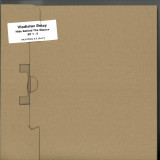
- A1: Enfant La Mouche Les Allumettes
- A2: Enfant Au Royaume Des Mouches
- A3: Danse Des Mouches Noires Gardes Du Roi
- A4: Danse De L Enfant Et Du Roi Des Moushes
- A5: Le Roi Des Mouches Et La Confiture De Rouse
- B1: Enfant Assassin Des Mouches
- B2: Les Garde Volent Au Secours Du Roi
- B3: Mort Du Roi Des Mouches
- B4: Pattes De Mouches
- B5: Le Papier Tue-Enfant
- B6: Petite Agonie De L Enfant Assassin
Within the last ten years the resurgence of sixties Gallic Pop, once known as Ye-Ye music, has escalated beyond an inter-stellar dizzy height. What might have been a waning, embarrassing genre destined for a shelf life/death gathering dust amongst the Eurovisions of yesteryear, the ‘jerk-beat’ psychsploitation records of the latter day French-Disco had soon found new floor space in some of the most credible nightspots in London and Japan.
Without a shadow of doubt, the flagship LP with best odds on becoming a discerning household object was “Histoire de Melody Nelson” by one Serge Gainsbourg. An inimitable, 45-minute concept LP handcrafted by a bass-driven psychedelic rock group and a heaven sent, 1001 piece orchestral and choral symphony. The album left hip hop producers alongside progressive rock aficionados crying out for more and more for years to come. This LP was in a league of its very own… or was it?
The seldom-sung musical arranger for Melody Nelson has become one of the most enigmatic names in French-funk; lorded by many as the “French David Axelrod” Jean-Claude Vannier’s name is the lesser-spotted, tell-tale seal of sample-friendly quality when it comes to crate-digging ‘en Francais’. Suitably, when rumours amongst French record dealers claiming “the band who played Melody Nelson recorded a follow-up lp” became a legend of psychedelic folk-lore. Another unconfirmed rumour about JCV taking the remaining out-takes of the beloved Melody Nelson to create a promo-only experimental rock LP left sample hungry producers and DJs in turmoil…
For those in the know the answers to these mysteries lay flat between the anonymous gatefold sleeve of an undiscovered conceptual album bizarrely entitled “L’Enfant Assassin des Mouches” by a custom-built avant-rock entourage called Insolitudes. The rocking-horse manure treasure hunt began.
So here we have it. The mythical teen-tonic for all those suffering from Melody Nelson withdrawal symptoms. For record collectors looking for that special something, this LP contains the extra-special EVERYTHING. Peruse the following genres: Psychedelic, Classical, Soundtracks, Jazz, Hip Hop, Samples, Avant Garde, Funk. Then place a copy of “L’Enfant Assassin des Mouches” in each section.
History denotes that when ‘our man in Paris’ Msr. Gainsbourg first heard the initial bones of this LP he took his poetic pencil to paper providing bizarre liner notes, thus consummating the most extraordinary concept album of all time. The story “The Child Assassin Of The Flies” was to be included as the only information to grace the LPs highly collectible, concertina gatefold sleeve. The story in full is reproduced in its native-tongue on this very special re-release package. The CD also includes the bonus track “Je M’ Appelle Geraldine”, a beat heavy John Barry-esque track taken from Vannier’s super-rare 7? EP “Point D’Interrogation”.
DJs and Producers such as Jim O’Rourke, Stereolab’s Tim Gane and David Holmes have spent sleepless nights in perusal of original copies of this perfect release and now regard it as ‘One Of The Best’. Recent copies on eBay have commanded ridiculous price-tags, and is now one of the most sought-after articles amongst the vinyl hungry hip-hop community.
Grey Marbled Vinyl
Clear water hits the surface of a grainy ball. The stream slowly dissolves and flows down the spherical structure until it finally drops on a candle. The flame extinguishes; fragile streaks of smoke ascend until they hit the rough surface of the colossal globe again.
The cover art to Marble Arch, the second long-player of Vienna- and Berlin-based artists Oberst & Buchner, depicts masterly the dramatic juxtapositions the musicians have always been reflecting in their musical outcome.
The massive density of a giant sound wall is contrasted by spacious openness. Fragile sonic details are sparkling out of colossal pitch-black clouds. The songs are filled with gentle warmth and cold roughness, bright digital clarity and deep analogue crackle, ranging in style from pulsating dark-disco over classic pop to experimental ambient.
The duo's two-week artist residency in a 250-year-old house, located in the mystic landscape of the Bavarian woods set this specific mood for the 10-track album which became a mixture of electronic synthesis, organic instrumentals and field recordings. Heavy-weight basslines in combination with bitter-sweet orchestral instrumentation and the minutiae of precise percussion recordings and drum programming are the characteristics that formed the sound of Marble Arch.
Oberst & Buchner's way to deal with tension is in how they compose their song structures as extreme arcs of suspense in a near classical manner. Their intense dynamic arrangements always alternate between rise and explosion or implosion and fall. This way the compositions pick up the motive of creation and destruction throughout the long-player in the same way as the cover-art.
Taken together, all these fragments form the duo`s signature cinematic articulation of dramatic slowed down club music and moments of surprise.
BIO
Oberst & Buchner are two friends and musicians living in Vienna and Berlin. They look back on a mutual musical journey that is as rich in variety as it is more then 15 years long. For one thing, countless high-energy DJ sets in clubs and at festivals all over Europe in recent years have earned them a reputation as a dynamic duo infernale. At the same time, their own productions draw from the full palette of moods and emotions.
Boiled down to the very essence, there's one common denominator running through the duo's musical works: colossally massive elements are masterfully set against a shimmering backdrop of incredibly detailed layers. Each so full of subtle suspense that they feel like the first raindrops before a monstrous thunderstorm. You can literally hear the calm before the storm in every break they build up, then feel the force of the wind in your face when it hits you.
Ranging from pulsating electronica over slow organic sounds derived from both nature and acoustic instruments to deep dance pop ballads, their songs are full of suspense and packed with drama. In their productions, the two friends conjure up soundscapes that are extremely dense and at the same time infinitely open and spacious. Within this framework, they play with stark contrasts of antithetic elements: repetition and improvisation, functionality and emotions, emptiness and overload, clarity and crackling.
Recorded live in 10 days, with minimal overdubs, Shuttered Dreams is a blast of uncompromising truth reminding us to stay awake when the vultures are circling. The album was mixed by Sean Genockey (Shame, Richard Ashcroft, The Who, Black Crowes).
Margate in March 2021 was a time to test your resolve. If the wind howling round the closed down shops and cafes didn’t send you spinning out of control the out of season coastal melancholy could drag you down as surely as any dead eye mermaid. Add in a murderous virus and a frozen gig scene and it was a time to stay frosty and fight off the demons. Dan had some experience to draw on.
“Instead of baking banana bread or knitting, I decided to upgrade my home studio but after a couple of months of writing it was obvious that the songs needed to breathe as much as I did. They’re all about real people and raw feelings and I felt they wouldn’t get justice by being turned into zeroes and ones so early in life “.
It was decided to record the masters live with his new band featuring Dom Hall (drums), Henry Gabbott (bass) and Freya Warsi (vocals) and engineer friend, Harry Armstrong. Armed only with a Vox Marauder, a skeleton recording studio, and a pad of lyrics, Dan moved in with The Tenants to The Tom Thumb Theatre which like everywhere was closed for business but had just received Arts Council recovery funding and was offering residencies for artists.
“Musically I wanted to try to work within a strict palette of sound, using the same acoustic and electric guitars for every song, and Henry’s Wurlitzer and Mellotron to flesh things out a bit.” Dan explains, “We played all of the songs live, sometimes up to sixty or seventy times until we were happy with a take, we might then add a bit of extra electric, percussion or backing vocals, but what you hear on the record is pretty much what was happening in the room. That makes me feel proud, as all the records I love listening to were made in that way.”
- A1: Careful What You Wish For
- A2: Ayor
- B1: Nature Is A Language
- B2: Fire Of The Green Dragon
- B3: Algerian Basses
- C1: Copacabbala
- C2: Paint Me As A Dead Soul
- C3: Backwards
- D1: Princess Margaret's Man In The D'jamalfna
- D2: Ayor Live Pornmod (It's In My Blood) (It's In My Blood)
- D3: Ambient Basses Hijack Mix 1
- E1: Backwards Dist Vox
- E2: Drone Geff Master
- E3: Carny Master
- F1: Drone Skellies
- F2: Choir Droney Skellies
- F3: Backwards Live Wip (Fixed Softer Backwards)
"“The New Backwards” was conceived by Peter “Sleazy” Christopherson in 2007, revisiting stray tracks which hadn’t seemed to gel with the material he had chosen for the more somber “Ape of Naples” from 2005, COIL’s initial posthumous release, a sort of requiem and a kiss-goodbye to his then recently deceased partner John Balance.
Significantly different to its sister release, this album collects the brilliantly chaotic and outrageously rhythmic material from the original sessions for the album that was begun as early as 1993 and had originally been conceptualised as the follow-up to “Love’s Secret Domain”. These songs are as diverse and wild as the places they originated from, partly infamously spawned in Sharon Tate’s former home in the Hollywood Hills, the Nine Inch Nails home base in New Orleans and London’s Swanyard, remixed and restructured with the help of long-term friend Danny Hyde in Thailand, this collection has its own unique flow and an atmosphere not found on any other COIL release.
Both “AYOR” and “Backwards” had by the time the album was first released already become favourites in COIL’s manic live performances. Some of the other tracks had only leaked in demo versions and are here presented updated and polished as Christopherson and Hyde intended them to be heard. It is interesting to consider Balance’s vocal contributions, too. Whilst on the albums COIL did release at the time this material was first put aside (“Black Light District” and “ElpH”) his voice is all but absent, his vocal performances and his lyric writing here are arguably more closely indebted to the previous “Love’s Secret Domain” era, especially the epic “Copacaballa” is noteworthy in that respect.
The New Backwards” effectively became the final official COIL studio release of all new material whilst Peter was still alive and is here presented for the first time fully supervised by Danny Hyde, its co-creator.
The stunning cover uses a detail from artist Ian Johnstone’s “Cubic Raven” painting, licensed from the estate of IJ..
It is high time to rediscover this timeless album with the Infinite Fog release boasting eight further tracks of previously unheard material from the same sessions, rough working stages and surprising remixes which will surely delight the dedicated COIL archaeologists, as they shine yet another light on the creative process and on what could have been.
Recorded at Swanyard, London and at Nothing Studios, New Orleans, 1996.
Thanks to everyone there, especially Trent Reznor who made it all possible.
Written & Produced by Coil & Danny Hyde.
Remixed by Peter Christopherson & Danny Hyde, Bangkok 2007.
For that session Coil were: Peter Christopherson, Jhonn Balance & Drew McDowall.
Mastered by Jessica Thompson.
Front artwork by Ian Johnstone.
Artwork licensed from The Estate of Ian Johnstone.
Layout Cold Graves and Oleg Galay."
Opening with the buzz of a smartphone on vibrate, First Hate’s sophomore album Cotton Candy launches to life with “Someone New,” a synth-driven statement of intent. The Danish duo’s charged songs are rooted in a recognizable universe, but traverse a wide array of genre experiments and pop detours. Cotton Candy follows the quest of its protagonist stumbling through a crumbling world, winning and losing lovers, swinging from extreme highs to hopeless lows. The title alludes to transience and ecstasy, the surge of a sugar rush before nausea sets in, the way cotton candy dissolves into nothingness leaving only sticky fingers. Throughout, the productions glitter with synthetic detail and hypermodern finesse, effervescent but elusive. “Life is a rollercoaster and we’ve ridden the ups and downs.” During the recording sessions, a collage of Copenhagen musicians flowed through the studio. First Hate is a fixture of the city’s creative community, but ultimately exists in their own sphere, carving a niche as parallel universe pop stars, embracing sweet and bitter, risk and reward: “Sometimes the ones who love you most are the ones who hold you back.” Anton and Joakim grew up in Copenhagen and met when they were 15 through common friends on the street where they lived. “I didn’t enjoy being home so I used to stay at my friend Jakob's basement in an old church on Willemoesgade street,” says Wei. “His mom was the priest. She baptized Anton at age eight during his Jesus phase when he demanded a late baptism from his atheist parents. Jakob was friends with Elias who lived up in Anton’s end and they introduced us to each other. One summer my parents finally married after 20 years of dating. Joakim moved in for two weeks and we accidentally trashed the apartment while they were on their honeymoon. Later on Jakob, Elias, and two other friends, Dan and Johan, formed the band Iceage. Watching our friends’ growing success was a catalyst in creating our own project. At that point everybody in our friend group was making punk music, so the most punk thing we could think to do was start a pop duo.” The First Hate catalog comprises more than nine years of work, including their 2017 cult classic, A Prayer For The Unemployed, a collaborative album Dittes Bog, two EPs and several singles. All of the recordings are self-produced, until they are ready to be finished in the studio. “We have sort of a twin alliance. Like couples finishing each other’s spaghetti at restaurants, we finish each other’s music. Having people enter this sacred mix has been such a pleasure.” On stage Anton and Joakim embody the contrasting yet complimentary energies of yin and yang: Joakim pushing buttons, steering the ship, working synths and samplers with harmonious calm, while Anton’s body bullets around the stage, pounding out his kinetic dance moves. The name Anton means fragile flower, an apt metaphor for his stage presence. A fragile flower shooting through concrete. To behold a performer who consistently delivers such intense live performances is a rare pleasure. “Live means love. When everything is right. When we meet the audience heart to heart. Then the planet spins even faster.” First Hate has performed over a hundred shows across Europe, Asia, the U.S., and Russia, both as headliners and alongside fellow Copenhagen acts Iceage, Lust For Youth, Communions, Soho Rezanejad, Trentemøller and Grand Prix. “We are on a quest of love, yes it’s as cheesy as that.”
The Outer Edge (formerly known as The Artless Cuckoo) is proud to present a second vinyl release by Ghia. The first single is sold out for a while and already became a collectible item. Now, we present a piece from Ghia's past - a very limited 7" with two unreleased recordings from 1985: "Down At The Hilton" on side A and the equally fantastic tune "Curacao Blue" on the flip side. This is just the beginning of a series of more unissued songs by the band. Two albums are currently in the works - and there will be more material to follow.
For now, here is what label founder Günter Stöppel a.k.a. John Raincoatman says about the project: "For the past three years I've been asking Ghia about further recordings. Lutz Boberg and Frank Simon, the two original band members who later joined with Lisa Ohm as a singer, always were communicative, friendly and interested in releasing more music. But at the same time nothing really happened. Accept for a bunch of newer demo tracks they offered on their Bandcamp page for a while, I never was able to hear anything more. Anyway, a few month ago, I suprisingly received a picture by email. A photo showing a box of 11 demo tapes by Ghia with basically all tracks they ever recorded. I couldn't believe my eyes! After a few complications the package with the cassettes arrived in Berlin. I didn't really know what to expect. Everything was taped chronologically, the first cassette included early recordings from 1984 and 1985. I put it in my tape deck and I couldn't believe what I heard. It started with a minimal electro funk track, the next song was '80s funk with rap vocals, and then came a track entitled "Down At The Hilton". This was EASILY the best Balearic jazz funk track I had ever heard. The warm sound, the melodies, the drum computer beats, the solos - everything was almost too unreal to believe. I really didn't understand why Boberg and Simon never considered that some of their early works could be of interest to other people. But they simply thought of it as some sort of learning curve remnants or simply forgot that the music existed."
The story goes on - but we are going to end it here for now. The vinyl single "At The Hilton" is now available. Once you hear the songs we are sure that you'll agree that the music by Ghia needs to be heard and shared with the world.
The sixth release on Italian imprint Tempo Dischi comes from Alessandro Bernabeo, aka Raduan, the Italian DJ and producer behind 'Taki-Naki-Naki', one of the most eclectic and unconventional electronic records made in Italy in the late 1980s.
"At the age of 7, I started attending a music school learning to play the piano. At 11 I began working as a speaker in various radio stations, and at 14, I joined Punto Radio where I grew up professionally and launched my own radio show, PLAY MUSIC, under the name Alessandro Giordani. The success was impressive, and thanks to my friend Gianfranco di Lizio, I also started my DJ career by playing in some of the best dance clubs under the artist name Raduan or Rad-one. Mixing funk, soul, afro and cosmic disco in my music gave me a chance to meet and establish relationships with many of the protagonists of this new musical scene, like l’Ebreo, Fari, Maselli, Claudio Mozart Rispoli, Pery, Rubens. In 1988 I was a resident DJ in a well-known club at the time, the 'RIO CLUB', and together with my keyboardist and percussionist, I had the idea to produce a maxi single. The song was recorded in about 40 hours without sleep at the Cicero Bros studio in Cassino in April 1988, with the support of Lino Rufo, a great artist from Molise, as well as his dear friend and old producer Toni Ochiello. The initial project was completely reworked. The original sampled drums were coupled with an acoustic one, and new melodies and fantastic spacey new sounds and effects were created by keyboardist Bengha. The hypnotic and repetitive voice of Cristina, Claudio Baglioni's background vocalist at the time, and that of Jamaica, originally from Mauritius, made the project even more interesting. 'Taki Naki Naki' is an Italo song, with Cosmic disco and Afro influences, and it's the title track of the EP originally released in June 1988 on Bmg Ariola, ex RCA. The EP includes two other songs 'Nightflight' and 'Hiroshima'. The record was a big hit in all the Italian Disco clubs and launched me into the international dance music scene. It was a fantastic time, with different styles of music and House Music was also on the way. There was a lot of research spirit and the people of the club were ready for various types of change. This record has left a mark, international DJs and shops from all over the world still contact me to ask if I have a vinyl copy left in my archive."
Note price increase and cat number change from last time around. In the late 1960s, the American trumpet player and free jazz pioneer Don Cherry (1936-1995) and the Swedish visual artist and designer Moki Cherry (1943-2009) began a collaboration that imagined an alternative space for creative music, most succinctly expressed in Moki's aphorism "the stage is home and home is a stage." By 1972, they had given name to a concept that united Don's music, Moki's art, and their family life in rural Tagårp, Sweden into one holistic entity: Organic Music Theatre. Captured here is the historic first Organic Music Theatre performance from the 1972 Festival de jazz de Chateauvallon in the South of France, mastered from tapes recorded during its original live broadcast on public TV. A life-affirming, multicultural patchwork of borrowed tunes suffused with the hallowed aura of Don's extensive global travels, the performance documents the moment he publicly jettisoned his identity as a jazz musician, and represents the start of his communal "mystical" period, later crystallized in recordings such as Organic Music Society, Relativity Suite, Brown Rice, and the soundtrack for Alejandro Jodorowsky's The Holy Mountain. The musicians in Don Cherry's New Researches, hailing from Brazil, Sweden, France, and the US, converged on Chateauvallon from all over Europe. The five-person band Don and Moki Cherry, Christer Bothén, Gérard "Doudou" Gouirand, and Naná Vasconcelos performed in an outdoor amphitheater and were joined onstage by a dozen adults and children, including Swedish friends who tagged along for the trip and Det Lilla Circus (The Little Circus), a Danish puppet troupe based in Christiania, Copenhagen. The platform was lined with Moki's carpets and her handmade, brightly colored tapestries, depicting Indian scales and bearing the words Organic Music Theatre, dressed the stage. As the musicians played, members of Det Lilla, led by Annie Hedvard, danced, sang, and mounted an improvised puppet show on poles high up in the air. The music in the Chateauvallon concert aspired to a universal language that would bring people together through song. In a fairly unprecedented move, Don abandoned his signature pocket trumpet for the piano and harmonium, thereby liberating his voice as an instrument for shamanic guidance. The show opens with him beckoning the audience to clap their hands and sing the Indian theta "Dha Dhin Na, Dha Tin Na," and the set cycles through uplifting and sacred tunes of Malian, South African, Brazilian, and Native American provenance including pieces that would later appear on Don's albums Organic Music Society and Home Boy (Sister Out) all punctuated by outbursts of possessed glossolalia from the puppeteers. "Relativity Suite, Part 1" notably spotlights Bothén on donso ngoni, a Malian hunter's guitar, prior to Vasconcelos taking an extended solo on berimbau. A vortex of wah-like microtonal rattling, Vasconcelos's masterful demonstration of this single-stringed Brazilian instrument is a harbinger of his work to come as a member, with Don, of the acclaimed group Codona. The sounds of children playing on the ensemble's achingly tender rendition of Jim Pepper's oft-covered beacon of spiritual optimism, "Witchi Tai To," lends the proceedings an especially intimate, domestic glow. Given the context of the star-studded international jazz festival, the concert's laid back, communal vibe feels like an attempt by the Cherrys to show Don's jazz audience that he was moving on. At the same time, however, Don was extending a warmhearted invitation for them to come along for the ride. With liner notes by Magnus Nygren. Track list: 1. Intro: Dha Dhin Na, Dha Tin Na 2. Butterfly Friend 3. Elixir 4. Amazwe 5. Interlude with Puppets 6. Ganesh 7. Elixir Reprise / Witchi Tai To 8. Resa 9. Relativity Suite, Part 1 10. Berimbau Solo 11. Interlude / North Brazilian Ceremonial Hymn 12. Elixir Reprise / Ganesh 13. Ntsikana's Bell / Traditional Melody
How Do I Get That Star is Zannie Owens' debut record under their own
name, as well as the first release with Kill Rock Stars
Previously, they performed as Potted Plant and they co-helmed the band Really
Big Pinecone alongside Michael Buishas (0 Stars, .michael). This latest effort is
self- produced, and features contributions from friends in New York, as well as
zannie's brother Sam, who plays bass and also mixed the record. Made over the
course of four years, the record deals with feelings of pining for the unknown, the
mystical, and the mundane. To paraphrase zannie, the record was produced
mitotically from their mind. The resulting 11 songs (picked precisely because of
the number's magical, symmetrical qualities), are warm to the touch. To listen to
How Do I Get That Star is to immerse oneself in a sound bath or look up at the
stars on a summer night in the middle of nowhere.
First ever vinyl edition of this one off collaboration between Philippe Poirier (Kat Onoma) and Stefan Schneider (to rococo rot / TAL) which was initiated by La Batie - Festival de Geneve, in 2002. The original recordings of the album took place the same year at Bleibeil Studios, Berlin. Engineered by Bernd Jestram. Restauration and mastering by Detlef Funder at Paraschall, Düsseldorf in 2022.
"19 or 20 years, what difference does it make if the beautiful things in life are able to transport us back to Year Zero - again and again. The moment when this album was created. It is the timeless horizon that motivates the artist. “Dad, what’s the line doing there ?” - a good start for a story. Philippe Poirier and Stefan Schneider recount tales of slow travel, far beyond the known continents.
The adventures of a certain Corto Maltese, mysterious love stories in long forgotten harbours. A love that creates its own time, just like a chess game, an ocean liner or propeller airoplanes. The enthusiasm for cartography which Philippe Poirier and Stefan Schneider share, time and again, similar to dream. The dream of an idea, of exploration, of finding. The first lines of a drawing that become the great painting. The sequences and the words which design a world in its own right. A tremendous reservoir and my old friend knows that there is an ideal companion for every journey. This time Philippe Poirier is a narrator who finds a sound like sand flowing through fingers and who knows how deep each object accompanies each love. Les Choses de la Vie." Detlef Weinrich (tolouse low tax), Paris 2021
- A1: Let The Light In (Feat Douglas Dare)
- A2: Wknd (Feat Liz)
- A3: Don't Wanna Dance With U (Feat Albertina)
- A4: Sweat (Feat Liz)
- B1: X Hopeless Romantic (Feat Little Boots)
- B2: Remember To Forget Me (Feat Chester Lockhart)
- B3: Joyful Death (Feat Tyler Matthew Oyer)
- B4: Remember 2 Forget Me (Feat Douglas Dare - Piano Version)
SONIKKU announces the release of their new album ‘Joyful Death’, via Bella Union. “I love songs that make you want to cry and dance at the same time,” says Tony Donson, the London-based musician who records as SONIKKU. That sense of unfettered release and liberation drives their new album, ‘Joyful Death’. A fluent, fertile and full-colour hybrid of vibrant Italo-house, liquid synth-pop, righteous disco and French philosophical asides, it’s an album that signals the emergence proper of SONIKKU - a fully formed dancefloor artist. It’s also a farewell of sorts, perhaps, but with an emphatic rebirth at its heart. “This album feels like a transformation in the sense that I’m creating the music I’ve always wanted to make. A fully realised, coherent pop record that showcases my craft as a song-writer and producer.” Total control of their craft is swiftly asserted on ‘Let The Light In’, where the
influences of lost-in-music disco and the Pet Shop Boys merge under vocals from immersive, exploratory British singer-songwriter Douglas Dare. The pace accelerates as ‘WKND’ gets into a groove pitched somewhere between Madonna, Daft Punk and Indeep, with LA future-pop singer LIZ primed for dancefloor abandon on vocals. Meanwhile, SONIKKU’s independent intent is firmly asserted on the freestyle-inspired ‘Don’t Wanna Dance with You’, where singer Aisha Zoe coolly brushes off unwanted advances in favour of dancefloor pleasures.
LIZ assumes vocal duties again for ‘Sweat’, a song fully equipped to make dancefloor devotees do as its title suggests. Dreamily melodic evidence of SONIKKU’s dynamism (and love of melancholy Swedish electro-pop queen Robyn) beckons on ‘X Hopeless Romantic’, where Little Boots contributes a sweetly loved-up vocal over a sublimely
infectious chorus. Pummelling synths signal a dramatic shift of pace on the almost electro-darkwave dash of ‘Remember To Forget Me’, where actor/singer Chester Lockhart presides over a summit meeting between Depeche Mode and New Order. Performance artist Tyler Matthew Oyer takes the vocals for the Italo-disco-inspired title-track, a vividly imagined album manifesto - of sorts - inspired to varying degrees by an 1892 poem, French thinker Gilles Deleuze’s concept of the “body without organs” and a 1997 anime called The End Of Evangelion. Finally, that grand piano takes over as Dare returns, presiding over an achingly stripped-back version of ‘Remember To Forget Me’. With help from friends and artists they admires on vocals, ‘Joyful Death’ is a hugely confident and self-contained leap forward for SONIKKU after his time as a feted DJ. Having moved from Derby to London at the age of 18, Donson worked as an intern (at MTV, Dazed & Confused, SHOWstudio and elsewhere) then turned to DJing (from
London to Tokyo, Paris and Berlin) after they were signed to London label Lobster Theremin. Though they continues to DJ regularly at Tottenham’s LGBTQ rave-up Adonis, they have extra ambitions in mind: “I love DJing but I’m more looking forward to developing a live show.” LP pressed on mint green vinyl with digital download.
Like meeting an old friend again, Dalmata Daniel welcomes DJ Overdose back to their catalog. Six years ago the infamous Dutchman's '05 Poly 800 Loop' EP was released, which served as a powerful launch to Dalmata Daniel, opening the first chapter in their story. Later in 2019, a split release with Sematic4 was also a highlight in the life of the label; and now, 3 years later, DJ Overdose checks in with the 'Powers of Ten EP' with a J. Mono remix, available both in digital and vinyl format, the latter having 2 bonus tracks.
The distinct, crunchy sound of DJ Overdose, bearing aspects of old school hip-hop-infused sampling and contemporary analog vibes creates the perfect blend of both worlds. 'Garden of Lust' opens up the adventure with a combo of warm basslines and solid drum-programming. This initial track feeds us these cardinal elements as the bread and butter they are: subtle variations and fine spices do appear here and there as the track goes along, but the key, beating pulse in 'Garden of Lust' brings massive hits stable as a sledgehammer in the hands of a blacksmith.
'Feed The Beats' elevates the game to cinematic territories: its majestic string-like central melody makes me alert and ablaze, making me feel like I'm in a late 80s L.A. setting facing malevolent zombie-aliens in my Wayfarer shades. Blasting beats and Carpenterian coolness all over the place, while the spooky bassline just keeps sneaking up on me endlessly.
If you are wondering when's the best time of the year to bring out your boombox at last, then this is your lucky day: with 'BOB', the first bonus track on the vinyl, we can experience some roarin' bassdrums, snappy snares, MCs with the speed of light and all that jazz. The low-bit sampling and vinyl scratching come and kick you right in the face so hard that it becomes pretty obvious you'll can't help but start some serious beatbox battles in your bathtub with your rubber duck.
A feverish groove in the prime time of a funky bash, in the haze of a sensual rave-up: that's all one really wants when going for a Saturday night out. We definitely get this and much more from 'Room 714', another vinyl-only bonus track. A berserk voice and ethereal chords guide us through this mysterious track, but while we are busy trying to impress our crushes on the dance floor, things around us are slowly getting very, very freaky, maybe a bit way too freaky.
As wobbly and jolly as it gets, our Dutch friend ends his session with 'Ðr ¡v€ M€ ¢r@z¥', a vocoder-heavy disco banger, full of merry vocal FX and smart rhythmic glitches as he completes his flight. To close the EP, our local hero, J. Mono delivers an insane remix of 'Ðr ¡v€ M€ ¢r@z¥': one can clearly imagine how he grabs and turns the BPM knob all the way up, fires up some arpeggios on his mighty synths and casts a complete reimagination of the original track.
incl. mp3
A deepening sense of life, love, health, loss, and luck shaped the outlines of Tuttle’s fifth, and most collaborative album to date. Following a surprising exhilaration and exhaustion from the hitherto most innocuous of moments in mid-2020 - a half-hour drive to collect an online order, the furthest distance he’d traveled in months; Tuttle commenced working on new musical ideas loosely based around navigating the aftermaths and interregnums of a restless era. “I was thinking about what’s going on in the world and how localised it has become for so many of my friends in different places,” Tuttle explains. “Not in a negative way but more so focusing on how lovely it is when things are good.”
Thinking of musician friends and peers around the world – each confined to their own immediate surroundings – Tuttle’s generative and collaborative musical practice became a silvery through-line, connecting American innovators Steve Gunn, Chuck Johnson, Luke Schneider and Michael A. Muller (Balmorhea), to French/Swedish violinist Aurelie Ferriere and Spanish guitarist Conrado Isasa, back to Australian friends such as Voltfruit (aka Flora Wong and Luke Cuerel) and Darren Cross (Gerling) – among many others – each fitting seamlessly into Tuttle’s vibrant musical world.
Whilst previously a feature of Tuttle’s music, the exploration of space and texture found within Fleeting Adventure feels particularly vast and generous. The involvement of Chuck Johnson and Lawrence English mixing and mastering the album respectively, as with their work on Tuttle’s previous and breakthrough album Alexandra (Room40, 2020), inspired Andrew to develop songs that are as serene and patient as he’s ever sounded. Stripping elements back, the idea of pulling the songs apart somewhat, was just as important as adding the work of Andrew’s collaborators. “It is spacious through intent, process and assistance,” he confirms. "I thought carefully about what instruments - both what I played and what I asked others to provide based on my unadorned banjo track - would best work with what I was wanting to create.”
The road to Fleeting Adventure has been both long and short, but it sits as a tender and perhaps even vital reflection of an era in progress, in retrospect and in anticipation. A poignant contemplation on the many bonds that make up our lives from friends and family to the myriad places we inhabit and pass through along the way. The idea that an adventure doesn’t necessarily have to be a grand statement Andrew Tuttle has gathered up a number of his contemporaries and crafted something quietly spectacular, a new beginning to familiar habits.
“Tuttle’s plaintive banjo is encircled by an array of majestic sounds: serpentine electric guitar from Steve Gunn, enveloping electronics courtesy of Balmorhea’s Michael A Muller, violin swirls from Aurelie Ferriere , and the gentle saxophone of Joe Saxby. The result is a lush and unabashedly beautiful sonic landscape.’’ 8/10 UNCUT LEAD REVIEW
Andrew Tuttle's new single New Breakfast Habit is the perfect sonic condiment for the most important meal of the day. A banjo flecked ambient/cosmic journey with a psychedelic video courtesy of Matmos
His new album 'Fleeting Adventure' is the soundtrack of the world re-emerging and getting a release on Basin Rock (Julie Byrne, Aoife Nessa Frances, Johanna Samuels) this summer.
UK label Dawn State continue their hot streak this summer with further eclectic moods for the dance floor and beyond. On the tools for the fifth outing on the label is KIDWHO, a blossoming talent who through the last years whilst enduring the pandemic found light by burying himself in his studio experiencing new creative flows. The “Warez House” EP varies in tastes, similar to the highs and lows of the times that just passed us by.
Diving into the deep end is the title track, “Warez House”, loopy and hypnotic, swaying between shades of low end leaned house and techno. Off kilter synths and pads maneuver their way around the driving force of the track. “It came together layer by layer, eventually turning into a dense (and at times, unruly!) groove. A final touch
of atmospherics from an old Roland ROMpler and the track was done - bar a generous helping hand in mixdown from Joel Kane (who also turned out a heads-down dub version which might make an appearance!).”
Leaning in a more hazy direction is the blissful cruiser, “Leploop Lagoon”, a deep and emotive vibe crafted especially for the early mornings. A sophisticated deep house energy from the talented producer. “‘Leploop Lagoon’ is the oldest track on the EP, a cleaned-up version of a rough jam I made around four years back. It takes its name from the Leploop, a quirky semi-modular analogue groovebox of sorts, hand-built in Italy. A very unique and unpredictable machine, it’s on bass duties here as well as providing some percussion sounds via the MPC sampler.”
On the flip side lies “Spectral Pattern”, and it packs a certain punch. The rolling arrangement converses in harmony with icy hi-hats that flash in and out teasing the energy, all of the elements having space to breathe and work their magic.“‘Spectral Pattern’ came together quickly one very productive weekend in the studio last year. It developed from the bass sequence, which comes from a Yamaha TG-33, an unassuming 80s digital synth known for its glassy mix of ROM samples and FM tones - very New Age sounding, or 90s computer game soundtracks. But when you strip it back to basics, it punches hard in the low-end.”
Slipping on to the B side is a five minute transcendental trip, offering yet another series of textures to this otherworldly EP. The final track “At Least We Hav Music” is an ethereal soundscape waiting to be explored, wandering amongst ambient realms throughout. “The label was keen to include an ambient track on the release, and I wanted to record something specially for them. At first I had in mind something droning and melancholic, but after a few experiments with cassette
loops and reverb pedals this was the one that stood out. It was recorded during one of the lockdowns, and I guess I needed to create something that sounded more hopeful than brooding. I messaged DS boss Tom Haus with a rough version, and we went on to have a grumble about the gloomy state of things, locked-down in our respective cities and missing friends, family, activities… At some point I wrote ‘at least we have music’ - and almost as soon as I had sent it I knew I had found the track’s title. I’m very lucky to have had my home studio as a refuge through the long months of lockdown, and I’m honoured to have the chance share some of my output from this period on this record.”
KIDWHO fitting the Dawn State ethos to a tee here as they set up shop for what looks to be another fantastic release. “Each of these tracks came about in quite different ways. Like many creative people, I had moments of struggle during the pandemic, where the lack of variety and day-to-day stimulation lead to periods of writer’s block, and so I used those times to focus on smaller, more manageable projects such as making synth patches, recording sounds and and throwing together short loops in my samplers for later use. A number of
these short loops eventually laid the foundations for title track ‘Warez House’. Big thanks to Dawn State, Joel Kane, El Choop and everyone else who has helped make this happen.” -
KIDWHO
- A1: South Funk Blvd - Skying High (Getting Off On Your Lovin')
- A2: Ad Libs - Don't Need No Fortune Teller
- A3: Atlantis - Hung Up About You
- A4: Smoke Inc - Waitin' For Love
- B1: Mandisa - Summer Love
- B2: City Lites - Now You've Gone Away
- B3: Papaya - Favela
- C1: Alcione - Este Mundo Tem
- C2: Quintaessencia - Serrado
- C3: Superior Elevation - It Was September
- C4: Keith Chism & Light - My Life & Song
- D1: Belita Woods - Magic Corner
- D2: Spare Hare - Ain't No Doubt About It
- D3: Sammy Acuna - Never Found A Girl
- D4: Sweet Mixture - House Of Fun & Love
Black Vinyl[26,85 €]
Here we are at the dawn of a new compilation series and we’re kicking things off with an absolute gem that features a selection of hard-to-find records (some impossible to find) and some that have been hiding in plain sight all along. They all share common qualities, being that they are beautiful, soul quenched songs that sing of love, peace and unity.
‘With Love: Volume 1’ has been compiled by Miche and presents a curated selection of rare Brazilian, gospel, modern soul and jazz-fusion fire. We have Brazilian rarities by Alcione and Quientaessencia, UFO gospel by Keith Chism & Light, the jazz-funk/AOR sounds of City Lites taken from a Radio Station album, and the anthemic feel-good emotional soul of Belita Woods to name but a few.
Tracking down artists and musicians from the past is an art form. Like a seagull swooping for treats, sometimes the prizes are easily found, and at other times, it’s the result of very late nights trolling through Facebook profiles, message boards, hitting dead ends and following red herrings, and yet still the search goes on. This compilation is a true labour of love with all the artists tracked down and licensed by Miche. It has long been an ambition of the London based musical connoisseur to compile an album, and like anything that requires craft, care, and knowledge - it takes time. There are many twists and turns in the hunt for those records that make your jaw drop.
In 2018, when just 24, Miche became a music programmer for London’s illustrious Spiritland group of venues. From this musical sanctuary, he was able to listen, learn and meet some of the best selectors from around the world. It was a musical education, and he was particularly drawn to the deep sessions by DJs such as Mark Taylor, George Arthur, Kev Beadle, Patrick Forge, Dr. Bob Jones, and Colin Curtis to name a few. He also used this time to begin running his re-issue label Discs of Fun and Love with co-owner and friend Frederika.
Sometimes the cynical knock compilations, there is certain snobbery amongst some about the original pressing, but music shouldn't just be about lucky collectors giving over large sums of money to record dealers. It's also about a bridge to the past, a celebration of the legacy of somebody’s art, and a second chance for initially overlooked work to shine. As with all the best compilations, it has been compiled with love…
- A1: Mad 45 - You'll Own Nothing
- A2: Lee Scratch Perry - Many Names Of God (Feat Lsk)
- A3: Tackhead - Rulers & Foolers (Feat Lsk)
- A4: Rita Morar - Meri Awaaz Suno (Hear My Voice) (Hear My Voice)
- A5: African Head Charge - Asalatua
- A6: Horace Andy - Watch Over Them
- B1: Mark Stewart - Storm Crow
- B2: Creation Rebel - Stonebridge Warrior
- B3: Jeb Loy Nichols - What Does A Man Do All Day?
- B4: Denise Sherwood - This Road
- B5: Sherwood & Pinch - We No Normal (Anger Management) (Anger Management)
- B6: Andy Fairley - Your Best Tune
Vol. 7[20,97 €]
On-U Sound announce latest volume in the Pay It All Back series with unreleased Lee “Scratch” Perry track, plus 40th anniversary live concerts
On-U Sound is proud to present the latest volume in the much-loved and collectable series of On-U Sound label samplers, packed with exclusives, alternate mixes and previews of upcoming releases. Includes unreleased tracks from Lee “Scratch” Perry, Tackhead, African Head Charge, Mark Stewart, Creation Rebel, Andy Fairley and more.
The first music to be shared from the album is an unreleased track with the late, great Lee “Scratch” Perry - “Many Names Of God” is an outtake from the sessions that produced the Rainford and Heavy Rain albums and also features vocals from Nightmares On Wax collaborator LSK aka Leigh Kenny.
The release of the new compilation also coincides with a very special concert taking place at the Forum in London, originally scheduled for 2020 but delayed because of the pandemic. Celebrating 40 years of the On-U Sound label, it brings together musicians and artists from at least four different continents for a unique evening with Horace Andy, Tackhead, African Head Charge, Creation Rebel and most of the other musicians featured on the album.
Label boss Adrian Sherwood comments: “As usual with the Pay It All Back series, the intention is to promote our upcoming releases and productions. Also on offer are previously unreleased gems, versions of tracks exclusive to this release and more from artists that we’re keen to promote. Sadly in the last year we have lost so many music giants from amongst us, including Lee “Scratch” Perry, George Oban and John Sharpe. Lee Perry laughed at death. It was to him just a part of life and another beginning...I trust Lee. I’m very proud of this album, it goes out to all On-U Crew, our missing and irreplaceable friends.”
Please note that the Rita Morar and Mark Stewart tracks are vinyl only, are not currently available digitally, and therefore are not accessible via the download card.
- Spec: Limited edition transparent blue vinyl in 3mm colour printed sleeve with printed inner , full sleevenotes, fold-out 24” x 12” Pay It All Back concert poster and download card
Bonus tracks accessible via DL card:
1. Tackhead ft. MAD 45 - I Don’t Wanna Work A Fake Job
2. Sherwood & Pinch - Excessive Drinking
3. Ital Horns - Metropolis
4. LSK - Money Masters
5. Andy Fairley - Deranged Man
Recorded under a loft bed in the guest bedroom of his Nashville home, Michael Ruth aka Rich Ruth’s “I Survived, It’s Over” starts in a humble space. And while many contemporary music projects are produced in such an environment, “I Survived, It’s Over” sets itself apart in its transformative properties as well as its transparency. What we have here is honest sound exploration, session musician-level instrumentation, and a true love for nature run through the fingers of a dude who can channel some acute and undeniable magic. This music goes deep. "I conceived much of this record amidst the quiet and tumult of 2020 in my neighborhood that had recently been ravaged by a tornado," Ruth recalls, "I spent most of my days working on these pieces between bicycle rides - watching the beautiful Tennessee ecosystem flourish in Shelby Park, listening to Keith Jarrett’s The Koln Concert and John Coltrane’s Ascension." Underneath the swell of the strings and the shredding of the guitars, this record has hard working, rustbelt, drum-heavy roots all over it (which makes sense as Ruth hails from outside of Toledo, the album was mixed by John McEntire from Chicago band Tortoise). Many of the flutes, saxophones, pedal steel, and other instruments were recorded remotely because we live in the future, but this only adds to the collage of sampled and sample-able material that Rich Ruth has to offer. The organic relationships between the artist and other musicians on the album is evident even in the compilation style sampling that needs to occur in putting such a project together. "Working on this music is a daily meditation," says Ruth. "I constantly experiment with sound until it reflects the way I am feeling and attempt to sculpt something meaningful from it. Through years of being a touring musician, it is a constant inspiration and privilege to collaborate with the individuals that graced this record with their voices." And those relationships pay off, because “I Survived, It’s Over” is a sonic meal. It’s rich (no pun intended) with massive instrumentation that’s usually reserved for more symphonic delights. But at the same time it’s simple and leaves space to breathe–space you didn’t know you needed. In his own words; "I Survived, It’s Over is a meditation on healing, confronting trauma, surrendering, and finding peace. I wanted to encapsulate the tranquility and disarray found within this process." Ruth’s heart and the peace that his presence produces is all over this album. And despite his midwestern humility and willingness to brush off any praise, he’s put together something really special that carries its own weight. It's the kind of record that only comes around every once in a while and it's worthy of all the head-bobs, acclaim, and celebratory potlucks that Mike and the gang have coming their way. “I Survived, It’s Over” is a record you should buy for your friend, your foe, and yourself. It’ll sit perfectly on your shelf between Alice Coltrane and Hiroshi Yoshimura.
- A1: The Plastik Beatniks Feat. Angel Bat Dawid - The Sun Is A Negro
- A2: The Plastik Beatniks Feat. Doseone - Hollywood Beat
- A3: The Plastik Beatniks Feat. Allen Ginsberg - What He Looks Like_
- A4: The Plastik Beatniks Feat. Angel Bat Dawid - Westcoast Sound 1956
- A5: All Those Streets I Must Find Cities For
- A6: The Plastik Beatniks Feat. Angel Bat Dawid - Bagelshop Jazz
- B1: The Plastik Beatniks Feat. Moor Mother - War Memoir
- B2: The Plastik Beatniks Feat. Angel Bat Dawid - Harwood Alley Song
- B3: The Plastik Beatniks Feat. Patti Smith - Ginsberg (For Allen)
- B4: Would You Wear My Eyes
- B5: A Particular Police Officer
- B6: The Plastik Beatniks Feat. Angel Bat Dawid - The End Always Comes Last
Sounds like supergroup. Rarely have outstanding figures of such a variety of musical styles collaborated on one album to pay homage to a nearly forgotten artist, one of the few black Beatnik poets, Bob Kaufman.
"All Those Streets I Must Find Cities For" by The Plastik Beatniks is an attempt to acoustically reanimate Bob Kaufman, to return the Beat to him in a transatlantic collaboration. It is a shimmering psychedelic, at times jazzy concept album, sometimes reminiscent of Krautrock or hip hop, about a Beat-era poet who was as great as he was forgotten. It takes spoken word to a new level, as a transatlantic showcase of musical avant-gardes and a joyful "sound archaeology" of modernity, in which the tracks of the "Plastik Beatniks" meet the best voices of America.
The 12 wildly different songs and audi collages, on the transatlantically-produced album, "All the Streets I Must Find Cities For," is based on lyrics by Beat author Bob Kaufman. They were originally part of the radio play "Thank God for Beatniks," for which author Andreas Ammer ("Ammer & Einheit"), Notwist‘s Markus Acher and Micha Acher and loop maker Leo Hopfinger ("LeRoy") formed "The Plastik Beatniks." On the eastern side of the Atlantic they composed music and crafted soundscapes. On the west side of the ocean, they asked three of the most renowned singers, activists and producers in the U.S. to recite or sing Bob Kaufman's poetry.
Punk-pop icon Patti Smith immediately signed on to read Kaufman's poem "Ginsberg (For Allen)". Free jazz vocalist Moor Mother passionately performed Bob Kaufman's "War Memoir". American jazz clarinetist, composer, singer and “International Anthem” labelmate Angel Bat Dawid, a legitimate successor to Sun Ra, polyphonically read and sang such poems as "The Sun is a Negroe" and "West Coast Sound 1956" and included some clarinet solos on top. Also on the album, Bob Kaufman himself recites his previously unknown poems "Hollywood Beat", "Would You Wear My Eyes", and the "Jail Poem" "All Those Streets I Must Find Cities For". Beat chronicler Raymond Foye, who still lives at the Chelsea Hotel in New York, contributed an interview he conducted with late beatnik Allen Ginsberg about Bob Kaufman. Completing the circle was hip-hop artist Adam "DoseOne" ("13&God"), who once gave Markus Acher a well-thumbed volume of Bob Kaufman, whom he admired. He contributed some raps. Thus 12 tracks emerged, as diverse as the artists, poets and musicians who contributed to it. More than an album. An epitaph. A work for the eternity of Beat.
Regarding Bob Kaufman - of course the FBI kept a file on him – first as a sailor, then a communist, and finally a Beat poet. As one of the mainstays of the movement, he edited the literary magazine "Beatitude" in San Francisco and defined "Beatnik" to Allen Ginsberg: half rhythm, half sputnik. Bob recited his poetry loudly on the streets (when he wasn't sunk into years of silence in protest of the Vietnam War) and in the bars and bagel shops of North Beach. Once, he almost landed a pop hit ("Green Green Rocky Road"), which then made Dylan's companion Dave van Ronk famous. That Kaufman is today less known than his friend Allen Ginsberg may be because he was a black Beat poet, and also a Jew. This was not compatible with fame in the US of the 1950s. Though Kaufman had the same publisher, City Lights, as Ginsberg, he was frequently arrested and jailed, and was treated with electric shocks until he developed serious mental heath issues. There he wrote his "Jail Poems". The seventh of these lent this album its name:
"Someone whom I am is no one / Something I have done is nothing Someplace I have been is nowhere / I am not me What of the answers / I must find questions for? All these strange streets I must find cities for, Thank god for beatniks."
Pye Corner Audio releases a new album, Let’s Emerge!, for Sonic Cathedral. It’s his first studio outing for the label following the acclaimed live recording Social Dissonance, which came out earlier this year, and it features Ride guitarist Andy Bell playing on five of its ten tracks. From the first glimpse of the artwork to the first note of the music it’s a marked deviation from Pye Corner Audio’s more traditional shadowy sounds. Whereas his last outing for Ghost Box (2021’s Entangled Routes) was inspired by the underground fungal pathways through which plants communicate, this one is very much above ground, bathed in sunlight and acid-bright psychedelia.
“This is a departure to sunnier climes, but a departure nonetheless,” says Pye Corner Audio, aka Martin Jenkins. “It’s something that I’d been thinking about for a while. I try to tailor my work slightly differently for the various labels that I work with, and this seems to fit nicely with Sonic Cathedral’s ethos.” Designer Marc Jones’ bold and ultra vivid artwork consciously references the likes of LFO, Spacemen 3 and the early output of Stereolab. “I think it mixes together many of my earliest influences,” explains Martin. “I’ve been a long-time fan of Spacemen 3 and Stereolab.
Their moments of repetition and drone have always seeped into what I’ve tried to create.
“I was living in a small apartment and I’d stripped down my studio set-up when I was recording this album. This enabled me to focus on a few key pieces of equipment and explore them fully.” The recordings were fleshed out by Andy Bell, who Martin first met at the Sonic Cathedral 15th birthday party at The Social in London back in 2019 – the same show that became the live album Social Dissonance.
“New alliances were formed and friendships made in that basement in Little Portland Street,” recalls Martin. “When I met Andy, we agreed that we needed to work together in some way. After I’d remixed a few tracks from his album The View From Halfway Down, he kindly repaid the favour.” The end results – mastered in New York by acclaimed engineer Heba Kadry – are incredible, from the first stirrings of opener ‘De-Hibernate’, via the glorious ‘Haze Loops’ and ‘Saturation Point’, the album slowly but surely awakens, blinking and feeling its way into the light. It all culminates in the epic closing track ‘Warmth Of The Sun’ which, with its vocal harmonies and acid breakdown, is seven and a half minutes of pure release.
“That one’s about life’s simple pleasures,” concludes Martin. “The Beach Boys, tremolo guitars, infinite drones, Spacemen 3. Let’s emerge from this darkened era and feel the ‘Warmth Of The Sun’. “The last few years have seen huge changes, both personally and in a wider perspective. The album title is a reaction to this, a collective (tentative) sigh of relief. Here’s to new beginnings and a sense of hope.”
Legendary American musician Brian Jackson announces his first solo album in over 20 years,
‘This Is Brian Jackson’, produced by Phenomenal Handclap Band founder Daniel Collás and
released on BBE Music.
Brian Jackson earned mythic status among music fans thanks to his pioneering work with Gil
Scott-Heron in the 70’s, where his flute and electric piano performances on ‘Pieces of a Man’
and ‘Winter In America’ virtually defined the sound of an era. From the 80s onwards he went
on to record with Kool & The Gang, Will Downing (whose debut album he produced), Roy
Ayers and Gwen Guthrie among many others, and while many veteran musicians tend to
stick with the sounds they know best at some point in their careers, Jackson remains an
unusually adventurous, vital and broad-minded artist to this day.
When the Phenomenal Handclap Band’s Daniel Collás first met Brian Jackson at a
performance in New York, right off the bat he said “I think I could produce you”. “I wasn’t
sure why he thought that,” says Jackson “but I considered it a challenge to find out. Turns
out that he was right.”
Early on in their friendship, Brian mentioned that he’d embarked on a solo project right
around the time he recorded ‘Bridges’ with Gil Scott-Heron in 1976. There were even some
unfinished demos, but the album had never materialised. Daniel leapt on the idea, asking
“what would a Brian Jackson album sound like if the 21st century Brian were to complete
that 1976 album today?” Completed in a series of twice weekly sessions over 11 months in
Daniel’s Williamsburg studio, ‘This Is Brian Jackson’ provides the answer.
“We sketched out musical ideas, drank way too much coffee, consumed way too many
tacos and sampled perhaps a few too many exotic whiskeys while talking about things that
were important to both of us personally. The lyrics for the songs are a result of those
conversations” says Jackson.
Contributors to the album range from Jackson’s guitarist, bassist and longtime friend Binky
Brice (Billy Ocean, Evelyn Champagne King, Roy Ayers), Collás’s occasional writing partner
Morgan Phalen, Latin Grammy-winning flautist Domenica Fossati, drummers Moussa Fadera
and Caito Sanchez, and Phenomenal Handclap Bandmates Juliet Swango and Monika
Heidemann.
And the music? Vintage, soul-stirring Brian Jackson, with the great man’s warm vocals,
distinctive flute and lyrical keys taking centre stage. The songwriting feels timeless, the
arrangement effortless, the production human and analogue. From golden-era soul-funk
opener ‘All Talk’, through soaring Afrobeat-inspired dreamscape ‘Mami Wata’ to compact
groover ‘Little Orphan Boy’ which closes the album, ‘This Is Brian Jackson’ is simply some of
the veteran artist’s best work yet, subtly and lovingly framed by Daniel Collás.
- A1: Gwen Mccrae - 90% Of Me Is You
- A2: Gil Scott-Heron -Lady Day And John Coltrane
- A3: Al Jarreau - Ain't No Sunshine
- A4: Darondo - Didn't I
- A5: Barry White - Ghetto Letto
- B1: Nina Simone - Work Song
- B2: Ray Charles - Unchain My Heart
- B3: Otis Redding - These Arms Of Mine
- B4: Curtis Mayfield & The Impressions - Gypsy Woman
- B5: Diana Ross & The Supremes - Let Me Go The Right Way
- B6: Sam Cooke - (What A) Wonderful World
- B7: Dionne Warwick - Don't Make Me Over
- B8: Ben E. King - Stand By Me
- C1: James Brown & The Famous Flames - Please, Please, Please
- C2: Aretha Franklin - Try A Little Tenderness
- C3: George Mccrae - Rock Your Baby
- C4: Ella Fitzgerald - Georgia On My Mind
- C5: Ike & Tina Turner - A Fool In Love
- C6: Marvin Gaye & The Vandellas - Stubborn Kind Of Fellow
- C7: Etta James -I Just Want To Make Love To You
- D1: Aaron Neville - Hercules
- D2: Terry Callier - Running Around (Fug City Mix)
- D3: Aloe Blacc & King Most - With My Friends
- D4: Cookin' On 3 Burners Feat. Kylie Auldist - This Girl
- D5: Nostalgia 77 Feat. Alice Russell - Seven Nation Army
Following the precursor singles of 2021, Formality Jerne-Site’s unveiling is finally cast upon her already-growing fanbase. Trained classically as a composer and completing a masters at the Royal Danish Academy of Fine Arts, Jura introduces a highly-anticipated playground of carefully sculpted characters, plots and lessons - sometimes charming, sometimes nefarious, always absolute and sincere. A fictional land opens its doors and roof to us. A trio of trans kids run amok in rural suburbia. Various sorcerers of the wild future enter the scene on some songs; on others, the mind is cast to sun-drenched drives and journeys of yesteryear. At the heart is a pop sensibility: yearning, reflections, vanity, guesswork, hope. Jura is adamant about practice and precision. Dead seriously she offers, about making music: ‘Nothing should be half-hearted or an accident.’ There’s a maturity and elegance to her compositions, arrangements that - although at first sound seem abstract - lean away from experimental, somehow. She sing-speaks in English, and somehow not typically theatrically for such a play of a record. The theatrics are all real. It’s a fantasy land for sure, but it's based on hard facts. Like academia subdivided into poetry. It’s that weird-ass specificity she mentioned. Opener ‘Someone’s Lifework’ introduces less a choir of voices, than a choir of personalities. The art of storytelling is at the center of the musical expression. A protagonist relinquishes control of chaos that’s bigger than them on a perilous journey on some vessel: they comfort their co-passengers. There’s a sense that the hero - or anti-hero - might be more canny and cunning than the sweetness they first sell to fellow players. 'Is this our getaway chance?’ sings fellow Copenhagener Ydegirl amongst swelling synths and reverb that become so definitely Jerne-Site as the quest continues. The search? For intimacy, perhaps. ‘Same late Age (dIcK bIfFeReNcE)’ imbibes at once, some further disorientation, perhaps a little hallucinatory feeling which may come over the listener. Through a synthesizing of political themes that work across time ‘Same Late Age (dIcK bIfFeReNcE)’ bears reminiscences of the musical expressions of anti-capitalism in the 1980es, although in a new body and context. “I have a feeling that music reconjures societal morals and ideas from the time in which it was written when we press play or hear a live performance. From the moment at a concert when the symphonic orchestra starts tuning in, the time traveling begins. So I imagined how it would be to be trans sitting there playing the first violin, having the job of producing that first tone that all the other musicians around me tune in ona, ” Jura explains. The listener yearns for more; and subsequent tracks deliver. On ‘How Intimate It Gets,’ Jura meditates on the futility of closeness, begging the audience to enter the blood and guts of their own entanglements, the blueprints of focusing entering. Jura sings richly about fingers being lines, pointing or bending, and we’re reminded of their own wicked ways we can’t control. A history of singing in choirs informs the harmony of myriad inner voices heard across the album. At once prophetic and enigmatic, some of the songs rearrange historical events out of pop musical language. The enormously entertaining ‘Pinot-Botticelli Toast to European Users’ conjures scenes of Cold-War world leaders stuck on a cruise in the Transatlantic vacuum, and the protagonist watches a devastating heartbreaker careen on into the picture, led by his own hips on ‘The Lasceaux Associate’. Finally, on title track ‘Formality Jerne-Site’, American English rises to the occasion like a verdict around the narrative of three trans teenagers in rural Colorado: language turns into something sensual and haptic, playing with the snare and sizzle of syllables. The words twist and bend, while the music follows its own synaesthetic logic: “around us pop culture made a vow to a normative desire, drawing in like water color percussion”. Anyines is a site of play and documentation, with a canon so far quite nice. Their future is one that envisions supporting the galaxies their dear friends embody, be it music, performance, video games or beyond. Highlights from their discerning back catalogue include myriad formats: live and digital, plus releases binded to physical artefacts that enhance the live experience such as sculptures and scents. Their history also includes disappearing time-sensitive shadow-tracked material and cross-disciplinary opportunities that reflect deep professionalism and a totally non-schooled semblance of sound and drama. Recent releases include a dance-theatre soundtrack, a traditional shiny pop record, and the acclaimed ML Buch sophomore, Skinned.
- A1: Kaiser Chiefs - Ruby
- A2: P!Nk - Just Like A Pill
- A3: Owl City - Fireflies
- A4: Melee - Built To Last
- A5: Nelly Furtado - I'm Like A Bird
- A6: Orson - No Tomorrow
- A7: Elbow - Grounds For Divorce
- B1: The Script - Breakeven
- B2: Amy Winehouse - Back To Black
- B3: Daniel Bedingfield - Gotta Get Thru This
- B4: Keane - Everybody's Changing
- B5: Uncle Kracker - Follow Me
- B6: Gabriella Cilmi - Sweet About Me
- B7: The Black Eyed Peas - I Gotta Feeling
- C1: La Roux - Bulletproof
- C2: Groove Armada - My Friend
- C3: Joss Stone - Super Duper Love
- C4: The Dandy Warhols - Bohemian Like You
- C5: Corinne Bailey Rae - Put Your Records On
- C6: Train - Drops Of Jupiter
- C7: Duffy - Warwick Avenue
- D1: The Feeling - Fill My Little World
- D2: Sia - The Girl You Lost To Cocaine
- D3: Hoobastank - The Reason
- D6: Mika - Grace Kelly
- D7: Amy Macdonald - This Is The Life
- D8: The Fratellis - Chelsea Dagger
- D4: Alphabeat - Fascination
- D5: Tatu - All The Things She Said
Translucent yellow vinyl[36,09 €]
The Decades Collected compilations are part of the new Collected compilation series, which is a collaboration between Universal Music and Music On Vinyl. The compilations bring together the biggest names of each decade, combined with forgotten hits and less discovered gems, giving the listener an experience of listening to their favorite tunes while uncovering new musical grounds at the same time.
Various Artists - Zeroes Collected features Nelly Furtado “I’m Like A Bird”, The Script “Breakeven”, The Black Eyed Peas “I Gotta Feeling”, Alphabeat “Fascination”, T.A.T.U. “All The Things She Said” and Mika “Grace Kelly” amongst others.
Songs My Friends Wrote is an album I've been threatening to make for
years - It's a bunch of tracks that are my versions of a bunch of'songs my
friends wrote
I'm fortunate to count a lot of world class songwriters as good pals and I wanted
to shine a little light on some of my favorite examples of their work. In most
cases I've picked relatively obscure songs that have always spoken to me, even
though many of them won't be so familiar to people. The best part about
recording all these tunes was that they reminded me of all the people who I
haven't been able to hang out with for the past two years because of the plague
we've all been dealing with. All of these tunes bring a smile to my face and I hope
they do the same for you. - Corb Lund
Tiptoe between the toadstools of Liverpool’s city parks, and amongst the foliage you might find a Strawberry Guy, contemplating his next chord-progression. Composing hi-fi symphonies from within his humble abode, the Welsh-born songwriter is ready to share the fruits of his labour with debut album Sun Outside My Window. A timeless vista of ethereal balladry looking towards 19th Century musical maestros and works of art, it brings new meaning to the term ‘Modern Classic’ and is the most optimistic of lockdown records yet.
“It’s about seeing the simple things in life and them making you happy,” tells Alex Stephens, the Guy behind the Strawberry. “I remember this day when I was really down… looking out the window, the sun beaming in was beautiful, it made me want to go outside – it was simple but made me so happy in that instance.”
A one-man impressionist, painting majestic soundscapes, Strawberry Guy blends truthful lyrics with lush arrangements to conjure new emotive worlds. Inspired by composers of the Romantic period, or Debussy, Ravel, and other classical artists of the 1800s, his wonderland moves like a Monet painting where arpeggios dance between meadows of dazzling dynamics and dramatic key changes. As former keyboard player of The Orielles and Trudy and The Romance, the light through his floor to ceiling windows has caused a dramatic Greenhouse Effect and now ripening on solo terms, his innocent uploads of ‘Without You’ and ‘F-Song’ comfort 2 million Spotify listeners a month. ‘Mrs Magic’ has received 40 million streams, landing at #13 in its chart and countless fan-created videos have appeared on YouTube. “Throughout history composers have tried to capture emotion, painting their own impressionist pictures with musical brush strokes… I guess I’m just trying to do the same and people enjoy that,” he suggests modestly.
Named by musical friends Her’s after his impeccable taste in milkshakes, Strawberry Guy upturns ‘bedroom artist’ perception, as each idea is crafted into a widescreen wonder where vocals tag-team instrumentals and countermelodies flourish within the Georgian walls of his Liverpool flat’s small space. “I want it to sound like I’ve squeezed an 80-piece orchestra into my room, and for listeners to wonder how all those strings got there,” he says. “Working on the 4-part harmonies, the orchestra became real; I began believing in myself.”
Imitating nature’s effect on emotion, like 70s songwriters, or the fantastical soundtracks accompanying vibrant scenes in the Japanese animated Studio Ghibli films and video games, landscape is brought to the fore. Monet’s picturesque Meadow at Giverny features as the album’s accompanying artwork – perhaps a reminder of the rural Welsh countryside views through his childhood home’s window; “I was inspired by how calm and peaceful the image felt. Its painted lines show real-life scenes in a magical way, which to me reflects my music.”
Just as the first Strawberry Guy EP Taking My Time To Be offered a slowing down for the soul, Sun Outside My Window is musically unhurried, written and recorded over 2 years. “Recording as a lone berry meant I could run with my emotions in the moment and deliver something true; it would have been an entirely different album had it been recorded in a studio,” he says.
Modern Classic? Only time will tell. For now this Guy’s happy-sad world is here to get the juices flowing and with, pandemic permitting, a US tour in 2022, life looks a whole lot sweeter. Until then, take it slow, be at one with the wilderness and remember, when life gives you lemons, swap them for Strawberries.
- A1: In The Wee Small Hours Of The Morning
- A2: Mood Indigo
- A3: Glad To Be Unhappy
- A4: I Get Along Without You Very Well
- A5: Deep In A Dream
- A6: I See Your Face Before Me
- A7: Can't We Be Friends
- A8: When Your Lover Has Gone
- B1: What Is This Thing Called Love
- B2: Last Night When We Were Young
- B3: I'll Be Around
- B4: Ill Wind
- B5: It Never Entered My Mind
- B6: Dancing On The Ceiling
- B7: I'll Never Be The Same
- B8: This Love Of Mine