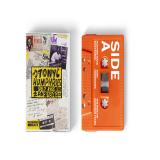
Eine Ambient-Symphonie aus ätherischem Verfall, die zum Klassiker des 21. Jahrhunderts avanciert ist. Aufgenommen zu Hause im Jahr 1992 mit einer 12-saitigen Gitarre, einem 4-Spur-Recorder, einem Loop-Pedal, unendlichem Hall und dem strukturierten Gurren der rätselhaften Sängerin Melissa Arpin Duimstra verwandelte Scott Cortez' Projekt ,loveliescrushing" postadoleszentes Tagträumen im Schlafzimmer in ein ruhiges, mondbeschienenes Gleiten auf einem endlosen Meer. Diese erweiterte und remasterte Doppelalbum-Edition enthält fünf weitere, von Verzerrung geprägte Reflexionen aus dem Archiv, zusammen mit Texten und einer Nachbildung einer Postkarte, in denen man sich unterwegs verlieren kann. Hier braucht man keine Augenspülstation - Blindheit ist beabsichtigt.
out of Stock
Last delivered 3 months ago available to reorder, subject to availability
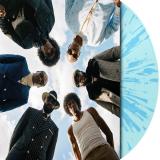
Sky Blue Opaque Vinyl. Eine Ambient-Symphonie aus ätherischem Verfall, die zum Klassiker des 21. Jahrhunderts avanciert ist. Aufgenommen zu Hause im Jahr 1992 mit einer 12-saitigen Gitarre, einem 4-Spur-Recorder, einem Loop-Pedal, unendlichem Hall und dem strukturierten Gurren der rätselhaften Sängerin Melissa Arpin Duimstra verwandelte Scott Cortez' Projekt ,loveliescrushing" postadoleszentes Tagträumen im Schlafzimmer in ein ruhiges, mondbeschienenes Gleiten auf einem endlosen Meer. Diese erweiterte und remasterte Doppelalbum-Edition enthält fünf weitere, von Verzerrung geprägte Reflexionen aus dem Archiv, zusammen mit Texten und einer Nachbildung einer Postkarte, in denen man sich unterwegs verlieren kann. Hier braucht man keine Augenspülstation - Blindheit ist beabsichtigt.
out of Stock
Last delivered 3 months ago available to reorder, subject to availability
Atkinson first saw Les yeux sans visage when she was a teenager, around the turn of the century. The film made an impact for its iconic imagery and the way Franju draws on the aesthetics of early filmmaking, from its score that relies on stylistic markers typical of the 1940s or 50s to the decision to shoot in black and white. Even four decades after its first release, it was clear that this was a work that stood outside of the cultural moment that birthed it, speaking through time in ways that were uncanny, but profound.
A quarter-century later, Atkinson was approached by the Belgian cultural center VIERNULVIER to create a new score for Les yeux sans visage for its celebrated Videodroom series, which has seen artists like claire rousay, Mabe Fratti, Lee Renaldo, and many more create new original scores for cult classics and genre cinema. Atkinson's music, with its sublime meditations on space and proximity, its elusive sense of narrative development, mirrors the pacing and mystery at the heart of horror filmmaking. There is a shadow at the heart of her soundtrack to Les yeux sans visage, an ever-shifting wisp and an insinuation of encroaching transfiguration. Echoing a climactic moment in the film, the music obliquely points to "the Beyond," an impossible place of discovery and revelation.
Atkinson envisioned her music as something akin to the air moving throughout and beyond the many cages that appear in the film, unconstrained by the bars and with undefined borders. Those cages hold the victims of a madman surgeon, determined to graft a new face onto his daughter, the protagonist Christiane Génessier, who lost hers in a car accident while he was behind the wheel. Atkinson was reminded of her predecessors at the pioneering French studio the GRM, who approached sound in a less sinister, but similarly surgical manner, and took inspiration from their playful approach to cerebral soundmaking for the electroacoustic topography into which the piano is embedded. As such, Atkinson’s reactions to the larger themes and the minute-by-minute happenings onscreen are both audible simultaneously.
A film about a man who destroys the lives of young women marked by their beauty and similarity to his daughter in a shame-fueled rage has clear, continuous cultural resonance. "Through the music, I decided to bring back their empowerment despite what they endure," says Atkinson. "This is why the record is also dedicated to Gisèle Pelicot, whose trial happened while I was in the process of composing the music and kept thinking of her strength and her decision to share her trial in order to reverse the shame."
This recorded version of the soundtrack is a 34-minute synthesis of the full 90-minute score, presented on LP along with an essay by writer-musician Claire Cronin and drawings by Momo Gordon, together forming a complex reflection on the film's themes. If these sounds move as if the bars of cages are no barrier, they also intimate the freedom and power of those held behind them. Rather than simply mirroring the fear and confinement shown onscreen, Atkinson offers an elusive escape, a beacon for the characters, and the listener, to follow as they reckon with the narrative and move through it.
out of Stock
Last delivered 3 months ago available to reorder, subject to availability
Zeitgleich mit dem 40-jährigen Jubiläum der Band wurde Complete B Sides: 1988-97 von Pixies neu remastert und wird 25 Jahre nach seiner ursprünglichen CD-Veröffentlichung erneut herausgebracht. Das Album erscheint als Doppel-LP auf schwarzem Vinyl, als Doppel-LP auf klarem Vinyl sowie als Doppel-CD. Außerdem wird diese Veröffentlichung damit zum ersten Mal überhaupt auf Vinyl gepresst. Complete B Sides versammelt alle B-Seiten aus der klassischen 4AD-Ära der Band und enthält einige der besten "anderen" Songs der Pixies, darunter "Wave of Mutilation (UK Surf)", "Into The White" und "The Thing". Ursprünglich 2001 auf CD veröffentlicht, als sich die Band bereits seit fast einem Jahrzehnt in einer Pause befand, enthielt Complete B Sides: 1988-97 alle 19 Nicht-Single-Tracks aus der unglaublichen Reihe von Singles, die die Band zwischen 1988 und 1991 veröffentlichte. Zum Abschluss wurde die instrumentale Version von "Letter to Memphis" hinzugefügt, die zuvor nur auf der US-Version der Veröffentlichung der Alec Eiffel-Maxi-Single erschienen war. Da auf vier Vinylseiten Platz für mehr Musik vorhanden ist, enthält diese aktualisierte Version zusätzlich sechs Live-Tracks, die aus späteren Pixies-Veröffentlichungen stammen, darunter aus der 1997 erschienenen Neuauflage von Debaser. Für diese aktualisierte Edition wurden alle Titel von ihren ursprünglichen analogen Bändern von Kevin Vanbergen neu remastert. Das Ergebnis klingt erstaunlich frisch und vervollständigt zugleich seine umfangreiche Arbeit am gesamten Katalog der Band. Diese neue Vinyl-Edition fungiert außerdem als Begleitstück zur kürzlich erschienenen Compilation Live at the BBC. Designer Chris Bigg (v23) hat dafür ein eindrucksvolles neues Artwork geschaffen und dabei Fotos aus dem Archiv von Simon Larbalestier verwendet, die ursprünglich für die Pixies vorgesehen waren, später jedoch verworfen wurden. Beide arbeiteten seit vielen Jahren mit der Band zusammen und gestalteten beide Veröffentlichungen parallel, um an den verstorbenen visuellen Direktor der Band, Vaughan Oliver, zu erinnern und ihn zu ehren.
out of Stock
Last delivered 3 months ago available to reorder, subject to availability
ALERT: BIG 90s ITALIAN RAVE COMP - a lot of very in demand tunes on here.
Navigators
Franco Falsini and the Interactive Test Universe
There are musicians who follow their time.
And then there are those who seem to move along a different trajectory—like navigators crossing sonic eras without ever truly belonging to any one of them. The story of Franco Falsini belongs to the latter. It is a story that begins long before raves, before techno, before the word “electronic” had even become a recognizable musical genre. A story that moves across continents, technologies, and sonic visions, eventually arriving at a small creative laboratory born in Italy in the early 1990s: Interactive Test. This compilation is a fragment of that universe. But as often happens with the hidden histories of music, understanding it requires going back. Far back.
The Beginning: Machines, Tape and Space
In the late 1960s Franco Falsini leaves Italy and moves to the United States. It is not merely a geographical journey—it is also a journey into a new idea of music. At the time, synthesizers are only just emerging from research laboratories. Multitrack tape recorders allow musicians to build entire sonic worlds on their own. Technology is still far from standardized: every studio is almost an experimental workshop. In Virginia, Falsini builds one of his own. Among cables, oscillators, electric guitars and reels of magnetic tape, a kind of music begins to take shape that resembles nothing else being made at the time. It is not simply rock, and it is not yet truly electronic. It moves somewhere in the space between the two. Out of these explorations emerges Sensations' Fix, the project through which Falsini releases a series of albums during the 1970s. Records that seem to come from a parallel dimension: cosmic landscapes, electronically treated guitars, synthesizers drifting like satellites. Many years later those albums would be rediscovered as visionary works. But at the time they were simply the result of relentless curiosity. A curiosity that would never fade.
The City That Never Sleeps
In the 1980s Falsini’s trajectory leads him to New York. The city is a sonic organism in constant transformation. In its clubs and recording studios something entirely new is beginning to take shape: music built from drum machines, sequencers, and samplers, created for the body before the living room. It is the dawn of modern dance culture. Falsini works as a sound engineer, producer and experimenter. From close range he observes electronic music transforming into a global language. Machines become more accessible, computers begin entering studios, and rhythm takes on an increasingly central role. Yet even in this phase Falsini does not simply follow what is happening. He absorbs. Observes. Reimagines. When he eventually returns to Italy, he brings back not only technical experience but also a clear vision: the conviction that electronic music is an open space, a territory still waiting to be explored.
Tuscany, Early 1990s
At the beginning of the 1990s something is happening in Italy as well. In clubs, abandoned industrial warehouses and clandestine parties, a new scene is beginning to form. It is rave culture: a spontaneous movement bringing together DJs, producers and listeners in a collective experience driven by rhythm, technology, and creative freedom. It is within this context that Franco Falsini, together with his brother Riccardo, creates Interactive Test.
The name almost sounds like a scientific experiment. In many ways, it is. Interactive Test does not emerge as a traditional record label. It begins as a laboratory—a place where ideas, sounds and musical identities can be tested and explored. Around the Falsini studio in Tuscany a small constellation of artists and DJs begins to gather, helping to shape the sound of Italy’s emerging electronic scene. Among them are Andrea Giuditta, Francesco Farfa, Gabry Fasano, Roby Mastelloni, Roby J and many others. Each brings a different musical sensibility. But they all share the same intuition: electronic music is not a genre. It is a language.
The Laboratory of Identities
One of the most fascinating aspects of the Interactive Test universe is its constant play with identity. Franco Falsini releases music under several different names: Open Space, Youth Wave, Agent Fylfoyt, Man Myth Magic. These are not simply pseudonyms.
They are different sonic perspectives, as if each project were a window opening onto a parallel musical universe. Open Space, for example, explores more atmospheric and visionary territories. Youth Wave moves between electronic groove and club-oriented rhythms. Other projects experiment with digital psychedelia or hypnotic techno textures. Interactive Test becomes something more than a label. it becomes an ecosystem.
Domestic Machines, Infinite Worlds
Looking back today at the technology used in those productions, one might almost smile. Many tracks were created on Amiga computers, MIDI sequencers and analog synthesizers wired together in home studios—tools that appear modest when compared to today’s digital possibilities.
Yet precisely these limitations became a creative force. Every sound had to be built, shaped and reinvented. Sequences developed slowly, almost like living organisms. The tracks did not always follow traditional dance music structures; often they felt like genuine sonic journeys. Music built from space.
A Hidden Constellation
Many of the records released by Interactive Test in the 1990s remained for years almost invisible objects, circulating quietly among DJs, collectors, and devoted listeners. Yet it is precisely this underground existence that helped preserve them. Listening again today, one perceives something rare: the feeling of music that does not fully belong to its own time. Music suspended between different eras. Perhaps because it comes from a vision that both precedes and transcends trends.
Continuing the Journey
Looking at Franco Falsini’s entire path—from the electronic psychedelia of Sensations’ Fix to the rave culture of the 1990s—a surprisingly coherent line emerges.
A line defined by exploration.
Each project, each pseudonym, each record appears as a new route within the same great sonic voyage.
Interactive Test was one of its stations.
A laboratory.
A community.
A creative platform.
This compilation gathers some of its traces.
Not as a simple archive of the past, but as a map of a musical territory that continues to expand even today.
Like all true sonic explorations.
out of Stock
Last delivered 3 days ago available to reorder, subject to availability
Kercha’s debut album ‘Open The Door’ arrives this April via DNO Records. The Black Sea artist’s mystical, disorienting style has set the tone for the label since he dropped the inaugural release six years ago. Now, across 16 tracks — including collabs with Mystic State, Congi, NST, Khromi and Finnoh — his smoky sampledelic dubstep is tighter, heavier, and more curious than ever, with a new sense of danger and bubbling rage that feels fit for our chaotic times.
Themes of movement and change course through the LP. On the opening gambit ‘A Path Into The Unknown’, twinkling arpeggios emerge from the gloom like stars lighting the way. Tracks like the eponymous ‘Open The Door’ and ‘Mind Extraction’ deliver that classic Kercha sound, where left-field samples dart in at right angles. ‘Dangerous Road’ weaves between the call and response action of grotty stabs and devilish subs. ‘Take A Break’, featuring Mystic State, goes on the attack with searing acid. ‘Can’t Wait For Today’, though lethargic in its pace, sees San Francisco-based rapper Finnoh deliver stream-of-consciousness bars that skewer our present and nudge us to revolution.
Work took place over the course of several years, during which Kercha relocated with his family from Russia to Georgia, where he now resides in the capital, Tbilisi. “Sometimes I wrote music while travelling on a bus, sometimes late at night while my family was asleep, sometimes just sitting on the grass in a park, and of course in my home studio as well,” he says. “By the time the album was finished, it included music from different periods, and it may vary in sound and concept.”
Any major upheaval in life will result in moments of hardship, but also hope. Both can be found throughout ‘Open The Door’. There’s times when the darkness threatens to envelope everything: during the cold, crackling ‘Disclosed’ and the eerie, dystopian ‘Infection Of Lies’; on ‘Trigger Activation’, with its grunting lows and broken glass hook, and ‘Ballistics’, where a wall of sub-bass is pierced by shrapnel stabs.
The balancing light comes on ‘4 AM’, featuring Nottingham duo Congi, when clashing swords and cinematic strings, meet a soft Rhodes piano — the juxtaposition between heavy low-end and floaty keys and vox reflecting those moments of transcendence often found in the early hours. From the injection of garage energy on ‘Bubs’, with Edinburgh’s Khromi. And on with ‘My Feeling’, featuring South Russian vocalist NST, which closes the album on a deep but expansive note, bookending the experience with more starlight synth tones.
“It’s a reflection of my life journey and the changes connected with emigration and overcoming various difficulties,” explains Kercha. “This period means a lot to me, which is why the album includes tracks from the time of preparing to leave up to adapting to a new country.”
Still, he wants listeners to be able to derive their own understanding. “I think the essence lies in the ability to contemplate, not in any predetermined meaning,” he says. “I can only say one thing: thank you for appreciating what I do and for your support. I hope it inspires you to make the same firm decisions to change for the better as it did for me.”
Out via 4 x 12” vinyl, ‘Open The Door’ is a captivating artistic statement, showcasing the journey of an artist with a truly original signature sound — a rarity that should be treasured and celebrated.
Rhythms of postmodern realism at the very bottom of the DNO.
out of Stock
Last delivered 17 days ago available to reorder, subject to availability
MELODI is the debut full-length album from Norwegian artist Sommerfeldt; a collection that takes listeners through the artist's mind, inspirations, experiences, and travels.
With a 20 year track record and releases on labels such as Full Pupp, Paper Recordings, and his other home Badabing Diskos, this album showcases a playful approach to genre, where a tight drum machine groove forms the foundation of a colourful record that touches on ambient, '80s, new wave, deep house, balearic, and downpitched progressive trance from the early millennium (which Sommerfeldt himself highlights as his formative years).
The album has been four years in the making. Several of the tracks were recorded around the world on hardware samplers and synths; bird sounds and ocean waves were captured, processed, and later finalised in his studio in Oslo.
Joining him is a stellar team of contributors; Embla Maria, Sigmund Floyd, Toshybot, Guro Kverndokk, Kristian Solhaug and Magnus JJ, adding outstanding vocal performances, gritty guitars, and oval percussion, the original cover artwork signed by Sommerfeldt's own favourite artist, Quentin Desveaux.
All of this is woven together into a cohesive whole that will make you want to listen again and again.
The six track musical masterpiece is set for physical release May 29th 2026 on a bold orange 12"
out of Stock
Last delivered 3 months ago available to reorder, subject to availability
"Chance animates the smallest parts of the universe: the scintillation of the stars is its power, a wildflower its incantation."
—Georges Bataille, Le Petit
"Even on my way to the gambling hall, as soon as I hear, two rooms away, the clink of the scattered money I almost go into convulsions." —Fyodor Dostoevsky, The Gambler
Video gambling addicts, academic researchers, and industry professionals alike describe the trancelike state into which problem gamblers suspend themselves with remarkable consistency: they unanimously call it the machine “zone,” a kind of inner experience during which the rhythmic flow of human-machine collusion borders on mysticism. Time is abolished in the act of contemporary video gambling —simulated slot reels roll, virtual poker decks deal, and all worldly concerns are lost—leaving only the aura of total zone immersion in its wake. Sometimes characterized as the crack cocaine of gambling, the intensity of the machine zone is a symptom of casino ergonomics: emotionally manipulative fragrance-saturation, mesmerizing lights, subtly controlling walkways and, as captured here, meticulously engineered sonic environments all play a role in evoking the timeless void of the zone.
Although I was not yet aware of the extent to which casinos tailor their environments for maximum comfort (and, correspondingly, profit), I did know as I crossed the threshold of my first casino floor last year that I would be back for more. Hit by a cornucopia of slot machine tones, triggering aleatorically and coalescing into shimmering masses, I was struck by the need to return and record the sounds that so entranced me. It wouldn't prove to be easy—casino security is intense—and due to the clandestine nature of the operation, my recording techniques were by no means sophisticated. Equipped with nothing but an Olympus LS-11 recorder's internal microphone stashed in a sweaty coat pocket, I allowed the lure of the zone to guide me through a series of ambling recording sessions, the best of which are included here.
I learned a lot about casino sonics in the process: game designers, for example, once tuned all their machines to the key of C major in order to optimize harmonic cohesion (strict adherence to the key is no more but C still dominates the game floor); one team of designers, the story goes, even spent a month perfecting a single 'ding' sound on one machine. In the interest of preserving the true ambient sounds of the casino these recordings are untreated, but lost in the sea of chance I did exert some affirmative control by means of meandering intent and my actual playing of the machines. And by participating in the games myself I got a taste of the financially debilitating consequences that accompany the enchantment of video gambling. The cassette in your hands represents my endeavor to bring you the zone experience without the harsh comedown of its unfortunate reality.
Telling a tale of house music’s early days or roots without mentioning Tony Humphries as a club DJ, remixer and radio disc jockey would make it an incomplete, forged and most of all a bit of a yawn.
Born in Brooklyn in 1957, Humphries’ musical journey is synonymous with New York City’s dance music history and the evolution from uptempo soul music to house: from being a dancer at David Mancuso’s infamous Loft parties to becoming a mobile DJ and getting the call from Shep Pettibone to become his right hand at
the then new Kiss FM radio station, followed by countless remix offers and a legendary residency at Newark’s Club Zanzibar. Next to that one, is was especially his work as a radio disc jockey for said station during most of the 1980s until 1994 that gave him majestic clout. Breaking new records week in, week out,
putting New Jersey acts like Adeva and Jomanda or countless up-and-coming producers from there on the musical map, while simultaneously playing the hottest imports from Europe, trax from Chicago, dance classics and all things straight from New York’s music factory that never seemed to stop.
Going to his vast and almost complete archive of radio shows from way back when he graced those airwaves, we at Running Back Records have pickedNew Release Information original recordings that symbolize his importance as an industry giant and ambassador of this style of music.
„But one thing I would like to point out is that, as a DJ, the music I play is not my music. I want to make it perfectly clear that it is music that is released, and it’s everyone’s music. I do not take any other credit than being the middle person exposing this music.“
(Tony Humphries in: What Kind of House Party Is This?, Jonathan Fleming, 1996)
out of Stock
Last delivered 4 months ago available to reorder, subject to availability
2026 Repress
Twenty five years after its initial release, and accompanying the re-release of 'Internal Empire' Tresor Records is proud to present a new cut and pressing (180gm) of Robert Hood's essential 'Master Builder'.
The ongoing importance of this single and its adjacent album is indisputable, essential both to techno and to Tresor. It is a history intertwined.
This work elevates its maker as master, and remain a cherished moment in the Tresor story, sharing an irrefutable singular magic, sounding as present and indispensable as when first created. To understand this work fully is to stand back and celebrate its impact.
Originally released in 1994, 'Internal Empire' marks a point of transition for Robert Hood moving on from his previous collaborations within Underground Resistance. Robert Hood advanced uncovering the power of true minimalism. Deep soul through a simplicity that showed how much could be done with so little. The devastating rhythms of this album forge the unmatched spirit of this sound, influencing generations to come.
"25 years ago, I was faced with the challenge of following up on 'Minimal Nation'. I cancelled all my tour dates for that summer, setup my studio in the living room and began to work on 'Internal Empire'. My intention was to create something distinctively di erent. Looking out my living room window in Detroit watching people go by gave me a new perspective. It made me look at the world within myself. 25 years later I am still discovering.' - Robert Hood
out of Stock
Last delivered 3 months ago available to reorder, subject to availability
‘MASH DOWN BIRMINGHAM: THE EARLY RECORDINGS OF MUSICAL YOUTH’ NEWLY UNEARTHED EARLY RECORDINGS BY THE FIRST LINE-UP OF MUSICAL YOUTH Mastered from the original tapes by Guy Davie at Electric Needle Mythology, the label founded by music writer, author and broadcaster Pete Paphides, is thrilled to announce ‘MASH DOWN BIRMINGHAM: THE EARLY RECORDINGS OF MUSICAL YOUTH’ – an album of rare and unheard early recordings by Musical Youth, the Birmingham reggae group propelled to worldwide fame with the release of their chart-topping single PASS THE DUTCHIE. ‘MASH DOWN BIRMINGHAM: THE EARLY RECORDINGS OF MUSICAL YOUTH’ combines songs from Musical Youth’s first John Peel session, recorded in 1981 with newly unearthed recordings taken from quarter-inch reels stored for over 40 years by the group’s mentor and producer Toney Owens. The project was seeded as early as 2020, when Paphides sent a speculative message to Owens, after he saw his producer credit on the group’s independently released 1981 single Generals/Political. Paphides wanted to know if Owens had made more recordings of the group in a similar heavier roots reggae vein to those on their debut single. Happening upon the message by chance three years later, Owens allowed Needle Mythology access to his archive of quarter-inch tapes, dating back as far as 1978. The recordings gathered together on ‘MASH DOWN BIRMINGHAM: THE EARLY RECORDINGS OF MUSICAL YOUTH’ shine a light on the exceptional musicianship inculcated into the group by their first frontman Frederick Waite, formerly singer with revered Jamaican rocksteady group The Techniques. Backing Frederick Waite in the early lineup of Musical Youth (originally billed by Toney as Cultural Musical Workshop Youths, were two pairs of brothers) Patrick and Junior Waite, and Kelvin and Michael Grant.
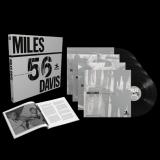
Released to celebrate Miles Davis’ centennial, Miles ’56 collects together recordings from the year that Davis recorded his most influential work on Prestige. With cuts from “Cookin,” “Relaxin,” “Workin” and “Steamin”, this collection includes the Quintet of Davis, Coltrane, Garland, Chambers, & Jones. Released on limited 4-LP and remastered from the original analog tapes by GRAMMY-winning engineer Paul Blakemore the set Included new liner notes by GRAMMY-winners Ashley Kahn and Dan Morgenstern.
Written, recorded and produced by Coxon, it saw the musician explore a heavier, more punk sound than its predecessor across 10 tracks, including the song 'Ooochy Woochy'. The 12-track album also includes two covers, 'Fame and Fortune' and 'That's When I Reach For My Revolver' by American post-punk band Mission of Burma. The Golden D features original cover artwork by Graham Coxon. The Sky Is Too High and The Golden D are the first in a comprehensive reissue of Coxon's complete solo catalogue, spanning 9 studio albums and 2 soundtracks, to be released across the next 12 months.
Rough Trade Records veröffentlicht eine remasterte Doppel-Vinyl-Neuausgabe von Love Is Overtaking Me. Die Sammlung vereint Folk-, Pop- und Country-Songs von Arthur Russell, darunter "Planted a Thought", "Close My Eyes" und "I Couldn"t Say It to Your Face". Die ursprüngliche Ausgabe erschien 2007. Für die neue Edition wurden frisch entdeckte Originalbänder verwendet und von Timothy Stollenwerk in Portland neu gemastert. Ergänzt wird das Release durch überarbeitetes Artwork von Molly Smith sowie ausführliche Linernotes von Tom Lee. Seit über zwanzig Jahren macht Audika Russells vielseitiges Werk zugänglich und hat maßgeblich dazu beigetragen, ihm posthum ein größeres Publikum zu erschließen. Heute gilt er als visionärer Künstler und Einfluss für viele zeitgenössische Musiker. Schon zu Lebzeiten arbeiteten zahlreiche Künstler mit ihm, darunter Produzent John Hammond. Auf dem Album finden sich außerdem Aufnahmen mit The Flying Hearts sowie Projekten wie The Sailboats, Turbo Sporty und Bright & Early. Aus über acht Stunden Material zusammengestellt, umfasst das Album Aufnahmen von 1973 bis 1991. Einige Stücke sind auch im Film Wild Combination: A Portrait of Arthur Russell von Matt Wolf zu hören.
The 1970s/'80s duo is most well-known for the most requested song ever on the Dr. Demento radio show, "Fish Heads." The video for the hilarious classic track had national TV exposure airing on Saturday Night Live in December 1980. The clip often aired in the early days of MTV and it has over 6.9 million views on YouTube. Their "Best of" compilation was an early Rhino Records release back in 1987 and this 16- track album features many beloved Demento classics like "Boogie Woogie Amputee" and "Party In My Pants." Includes their version of "What's New Pussycat" from Devo's late Bob Casale and the track "Blithering" from Gerry Beckley from the band America. Also features guest appearances from Steve Perry of Journey, Dewey Bunnell of America and Joseph Williams of Toto on the track "Don't' You Wanna Go To The Moon". The album has never been re-released.
DJ Mart presents the new Dodge compilation *Dodge with Friends*. I am very proud of this exceptional compilation. *Dodge with Friends* reflects the musical and electronic diversity of my label Dodge, which I founded in Bochum in 1995 to promote electronic music from the Ruhr region. The new Dodge compilation *Dodge with Friends* features artists who have helped shape the evolution of music on Dodge and who are my friends—some of whom haven’t been able to release music on Dodge yet because they aren’t from the Ruhr region. All 16 of these artists have made a name for themselves in their respective fields over the years. You are the future with friends *
out of Stock
Last delivered 3 months ago available to reorder, subject to availability
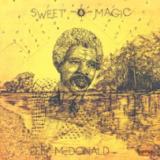
Originally released in 1981 on the New Jersey-based Debbie Label, Sweet Magic is the one and only album by Lee McDonald. Produced by Ron Foster -
best known as a member of Ecstasy, Passion & Pain—the album is widely regarded as a standout modern soul classic, covering everything from uplifting
Philly-style dancers to sweet and mellow slow jams.
The album also features superb arrangements that update well-known classics into vibrant Philly soul, including The Carpenters’ smash hit “We’ve Only Just
Begun” and Ecstasy, Passion & Pain’s “I’ll Do Anything For You.” This reissue is pressed on limited yellow-colored vinyl inspired by the album’s iconic
illustrated sleeve, long cherished by rare groove collectors.
Vor zehn Jahren gründeten drei Mitarbeiter von JI's Market and Cafe die Band Styrofoam Winos. Lou Turner, Trevor Nikrant und Joe Kenkel fanden zueinander durch ihre gemeinsame Begeisterung für Bob Dylan, Patti Smith, Leonard Cohen und Country-Platten aus dem Schnäppchenkorb. Sie beflügelten sich gegenseitig in ihrer Begeisterung und waren total aus dem Häuschen bei jedem neuen Song, den sie entdeckten. Nachdem ein Freund weggezogen war und ein Schlagzeug zurückgelassen hatte, lernten alle drei Winos, Schlagzeug zu spielen. Die ersten Versuche im gemeinsamen Songwriting entstanden aus Jam-Sessions und Erasure Poetry, bei der man Wörter in alten Büchern schwärzte, um neue Gedichte zu schaffen. Sie sangen alle mal die Leadstimme und tauschten regelmäßig die Instrumente. Michael Hurley zum ersten Mal zu sehen, hinterließ einen bleibenden Eindruck und gab der Band einen ihrer kreativen Leitsterne. Jahre später gab Snock den Winos selbst seinen Segen, ihre Kassette mit Coverversionen seiner Songs zu veröffentlichen. Die Styrofoam Winos sind immer mit dem Strom geschwommen, was ,Any River" zu einem passenden Titel für ihr neues Album macht, dem Nachfolger von ,Real Time" aus dem Jahr 2024. Ihre spielerische Herangehensweise wird durch das Können erfahrener Musiker untermauert, die bereits viele hundert Konzerte gespielt haben - sowohl gemeinsam als auch als Tourmitglieder von Ryan Davis and the Roadhouse Band, MJ Lenderman and the Wind und als Solokünstler. Das ist eine ihrer größten Stärken, die man gar nicht hoch genug einschätzen kann: Sie sind extrem gute Musiker! Wenn drei talentierte Menschen eine so tiefe Chemie entwickeln, ist das Ergebnis einfach grandios. Jeder Song auf ,Any River" entstand aus Jam-Sessions in Turners und Nikrants Heimstudio, und schon bald folgte ein gemeinsames Google-Dokument mit den Texten. Sie nahmen in Louisville auf - ihr erstes Album außerhalb von Nashville - zusammen mit Roadhouse-Bandkollege und Equipment Pointed Ankh-Mastermind Jim Marlowe. Marlowes zurückhaltende Produktion brachte die einzigartige Synergie der Band voll zur Geltung. Das führt zu einem weiteren wesentlichen Punkt dieser Band. Es gelingt ihnen, eine perfekte Balance zwischen Ehrfurcht und Respektlosigkeit gegenüber den musikalischen Traditionen zu finden, in denen sie arbeiten. Ihr Wissen über den Kanon ist gelehrt, aber diesem Wissen folgt immer ein Augenzwinkern. Kein Moment auf der Platte verkörpert dies besser als das Trompetensolo in ,New Friend". Es ist eine geschickte Darbietung, aber die Art und Weise, wie Kenkel unter die Tonika absinkt, bevor er die letzten Noten des Solos auflöst, ist urkomisch. Bei Live-Auftritten spielt er das Solo Note für Note auf einer Kazoo, während er gleichzeitig Schlagzeug spielt. Diese Musik stammt von erfahrenen Verwandlungskünstlern, die sich einer einfachen Kategorisierung entziehen und dennoch sofort wiedererkennbar bleiben.
Yes here we are 50 years on from year zero 1976 (where did that go!!!). To celebrate this and the fact we are all still here and talking about the importance of the Punk Rock movement i put together an album under the banner Punk Rock Daze. The title reflects it was all such a daze, as it ran by so fast and also as a reminder of an old Malcolm McLaren remark that came to mind. That when the band and management were discussing the look and name of the Sex Pistols forthcoming album ‘Never Mind The Bollocks’. Malcolm remarked, lets sell it as you would sell washing powder, bright, simple and with fluorescence colours. Great idea so here is my homage to that thought.
So I hope you enjoy the gesture and here’s to another 50 years of Alchemy, Joyousness and
instruction (Anarchy, Chaos and Destruction).
Ashtar Afterhours is Kenneth Graham - originally from Los Angeles, he has been a defining presence in electronic music ever since the 90s. Buying his first classic synthesizer, a Yamaha CS01, in 1984, he delved into music production at an early stage. Kenneth put out over 40 releases over the years- under his own name as well as stepping up under various aliases- Estelle Montenegro, KG Beat, Exit Strategy and many others. Kenneth also formed some super-groups together with friends, his Sun Children / Sunkiss project- together with David Alvarado- put out highly influential music on legendary Peacefrog Records.
Body Music was originally released on Plastic City in 2001 and it has been a Smallville favourite since a long time, so we are super happy to present this beauty as a repress, as always with a full cover artwork by Stefan Marx.
All tracks written & produced by Kenneth Graham, B3 w&p by Kenneth Graham & Gabriel Ortega
Vinyl cut by Helmut Erler at Lathesville
out of Stock
Last delivered 4 months ago available to reorder, subject to availability
Soul Jazz Records celebrate 25 years of working in partnership with Studio One with brand new editions of FIVE of their best-selling CLASSIC Studio One collections all released on limited-edition one-off pressing coloured double vinyl. Also available in new limited-edition card wallet CD editions. The new edition featured albums are Studio One Funk, Studio One Dub, Studio One Ska, Studio One Roots and Studio One Classics.
A blistering collection of non-stop Ska classic tunes featuring classic cuts from the originators of Ska alongside a heavy dose of superb rarities from the might vaults of 13 Brentford Road - pure fire! This compilation features classic tracks from The Skatalites, Bob Marley & The Wailers, Delroy Wilson alongside super-rare tracks from the likes of Ken Boothe, The Maytals, Jackie Mittoo, Tommy McCook and many more. Clement ‘Sir Coxsone’ Dodd’s musical empire was founded on Ska, the first explosive and most exciting music to come out of newly independent Jamaica. This album is a celebration of the music of Studio One Records’ seminal Ska releases and features a who’s who of some of the most important artists in the history of reggae music.
out of Stock
Last delivered 4 months ago available to reorder, subject to availability
Strut presents the second studio album from Brian Auger’s Oblivion Express and a firm favourite with Auger aficionados, the “little known masterpiece” A Better Land from 1971. Marking a clear evolution from their more jazz-rock leaning debut, the band shifts into a mellower direction on these tracks, echoing the feel of Befour released in the Trinity's later years. A Better Land embraces warmer, more melodic and understated compositions, primarily written by guitarist Jim Mullen. With its languid and spacious approach, the album brings an grounded message to make the most of the simple pleasures in life with a hopeful, but wary, eye to the future. Musically, Auger brings acoustic guitars, country rock melodies and three-part vocal harmonies into his musical palette. Key tracks include the groove-driven title track ‘A Better Land’, the sparse ‘Dawn of Another Day,’ (sampled by Air and Black Milk among others) while ‘Fill Your Head With Laughter’ returns to Auger's trademark driving Hammond-led sound, akin to early Traffic.
The record features the Brian Auger’s unique sound on organ and electric piano, joined by Jim Mullen on guitar, Barry Dean on bass and Robbie McIntosh on drums and percussion, with Auger, Mullen and Dean all contributing vocals. Mullen co-wrote seven of the album’s nine tracks, with additional contributions from Alan Gorrie (later of Average White Band). These songwriters should take immense pride in their work as Auger’s favourite singer of all time, Sarah Vaughan, recognised the quality of these compositions by covering three of them; ‘Trouble’, ‘On “Thinking It Over’, and ‘Tomorrow City’ for her 1972 album A Time in My Life. This new official Strut reissue is curated by Greg Boraman of Impressive Collective in collaboration with Brian and Karma Auger. Fully remastered by Cosmic Audio, it is presented as a high-quality single LP replica edition.
Towards the end of 1965 some say due to the extreme heatwave that was hitting the island, the people that followed the Sound System Dances demanded a slower beat so they could still move and groove to the all night musical affairs.
So sit back and enjoy the tunes that rocked the island between 1966-1968 the Rocksteady Sound that hit the town…..
Written and recorded throughout 2025 in their longtime ex-taxi-office-turned studio 'Cherry Lips', and produced by frontman Richard Archer alongside longtime collaborator Wolsey White.
The album looks outside the window to the fractured present, and paints it in bold musical strokes, with the same sharp- eyed social commentary that powered their classic debut Stars of CCTV, but with fresh perspective, new sounds and hard-earned freedom.
Written and recorded throughout 2025 in their longtime ex-taxi-office-turned studio 'Cherry Lips', and produced by frontman Richard Archer alongside longtime collaborator Wolsey White.
The album looks outside the window to the fractured present, and paints it in bold musical strokes, with the same sharp- eyed social commentary that powered their classic debut Stars of CCTV, but with fresh perspective, new sounds and hard-earned freedom.
“All I can do is make my art from an honest place with an honest intention.” Earth-o-Naut.
Earth-o-Naut is a songwriter, drummer, musician and producer. He was born in Liverpool and raised in one of its satellite towns, Skelmersdale. He was raised by his mum and uncles on music from every genre, falling in love, amazement and awe with the groove and the craft of songwriting. Nothing has changed to this day. Songwriting has also always been a constant. That quest to create something original and use the songwriting process as some form of catharsis. Learning guitar and piano was the next logical step, to help with the creation of new ideas into new songs. A lot of time was spent playing drumming gigs and then taking his own songs on the road, solo with just an acoustic guitar, learning the ropes and serving his apprenticeship. Great songwriters The Beatles, Curtis Mayfield, Bill Withers, Neil Finn and many others inspire Earth-o-Naut to this day.
Earth-o-naut has worked hard for many years on his studio chops and is the writer, arranger, recording engineer, mix engineer and producer on all of his own material, and he also works with other artists as a producer. Earth-o-Naut's debut album, 'This Is Nowhere. This Is Everywhere.' will be released on Agogo Records in June 2026. The debut album features UK drumming legend, Steve White and also the vocals of Amalia Estradas and Suzanne Maddock. 2026 will also see Earth-o-Naut take his songs on the road and play some live shows.st singular, emotive, and genre-defying releases of its era.
John Ringhofer, der Mann hinter Half-Canded Cloud, ist ebenso fröhlich und genügsam wie seine Musik. Als sparsamer Mensch zieht Ringhofer die U-Bahn dem Taxi vor, recycelt Plastik, macht sich zwanghaft Notizen und ist ein geborener Optimist. Half-Canded Cloud begann 1999 als Heimstudio-Projekt in Chattanooga, Tennessee. Ringhofer lebte später über ein Jahrzehnt lang in der kalifornischen Bay Area (wo er als Teilzeit-Hausmeister arbeitete), bevor er 2015 mit seiner jungen Familie nach Helsinki, Finnland, zog, um die linguistische Forschung seiner Frau zu unterstützen. Half-Canded Cloud versteht es, komplexe theologische Konzepte in eingängige und erhabene Kinderlieder zu verpacken, die sich weder ihrem Thema noch ihrem Zuhörer herablassend nähern.
* Begleittext vom legendären Musiker, Autor und Compiler Lenny Kaye (Patti Smith, Nuggets) * Das Booklet enthält bisher unveröffentlichte Fotos und Raritäten * Das Cover wurde restauriert und auf ein Gatefold-Cover erweitert * Neu remastert * Platz 5 auf Kurt Cobains Liste der 50 Lieblingsalben 1968 schnappten sich drei Schwestern aus Fremont, New Hampshire, ihre Instrumente und nannten sich ,The Shaggs". In diesem Moment begann eine eigentümliche Geschichte, die weit über die fünfjährige Existenz der Gruppe hinausreichen sollte. Dot, Betty und Helen (und gelegentlich Rachel, die vierte Schwester) spielten in der Gruppe auf Drängen ihres Vaters, Austin Wiggin Jr., der überzeugt war, dass sie groß rauskommen würden. Jahre zuvor hatte Austins Mutter ihm aus der Hand gelesen und vorausgesagt, dass ihr Sohn eine strohblonde Frau heiraten würde, dass er nach dem Tod seiner Mutter zwei Söhne bekommen würde und dass seine Töchter eine beliebte Musikgruppe gründen würden. Die ersten beiden Vorhersagen traten ein, also war Austin sicher, dass auch die dritte eintreffen würde. Mit unerschütterlichem Selbstvertrauen und der kühnen Vorhersage seiner Mutter beschloss Austin, dass seine Töchter auf den Besuch der örtlichen Highschool verzichten und stattdessen zu Hause unterrichtet werden sollten, unterbrochen von einem strengen Programm aus Instrumental- und Gesangsübungen sowie Jumping Jacks und Sit-ups. Bald darauf betraten The Shaggs die Fleetwood Recording Studios in Revere, Massachusetts, um ihr einziges Album ,Philosophy Of The World" aufzunehmen, eine Sammlung von Garage-Rock-Songs, die Charme und Dissonanz gleichermaßen in Einklang brachten. Austin gab den Großteil seiner Ersparnisse nicht nur für die Aufnahmen aus, sondern auch für die Produktionskosten, um 1.000 Exemplare des Albums zu pressen (von denen 900 nach Fertigstellung auf mysteriöse Weise verschwanden). Im gesamten Album werden einfache Wahrheiten durch die Feder von Schwester Dot, der Songwriterin der Band, offenbart. Die Reichen wollen das, was die Armen haben, genauso wie die Armen das wollen, was die Reichen haben. Deine Eltern lieben dich. In der Nähe liegt Glück und in der Ferne Traurigkeit. Das Album erfüllte Austins Erwartungen an den Rockstar-Ruhm nicht, doch die Gruppe blieb bis zum Tod ihres Vaters zusammen und trat regelmäßig im Rathaus von Fremont und in einem örtlichen Pflegeheim auf; weitere Alben wurden jedoch nicht veröffentlicht. Das hätte das Ende sein können, bis die Rockband NRBQ eine Kopie bei einem Radiosender in Massachusetts entdeckte und sie 1980 neu veröffentlichte. Der damalige Rezensent des Rolling Stone beschrieb es als ,die atemberaubend schrecklichste wunderbare Platte, die ich seit Ewigkeiten gehört habe". Fast 50 Jahre später zählt das Album zu den polarisierendsten LPs aller Zeiten. Manche sagten, es sei das Schlimmste, was je produziert wurde. Andere empfanden es als eines der großartigsten Langspielalben des 20. Jahrhunderts. Frank Zappa bezeichnete die Band bekanntlich als ,besser als die Beatles", während Kurt Cobain das Album auf Platz 5 seiner Liste der 50 Lieblingsalben setzte. Originalausgaben des Albums erzielen Preise von 10.000 Dollar. Jahrzehnte später könnte man argumentieren, dass Austin vielleicht die ganze Zeit recht hatte. Wir sind alle hier und immer noch fasziniert von der Reinheit der Shaggs.
Michael J. Sheehy has been making records for almost three decades, initially as founder and mouthpiece of mid-"90s cult band Dream City Film Club, then as a solo artist and frontman of rootsy garage rock act Miraculous Mule. He has toured with the likes of Kristin Hersh, Tindersticks, John Cale and Peter Murphy, while his songs have been utilised in films such as "Intimacy" and the TV show "Deadwood". Following a six-year hiatus, Sheehy has just "Don"t We Deserve Some Kind of Love?", his seventh solo album but first for Dimple Discs. "Don"t We Deserve Some Kind Of Love?" features contributions from Fiona Brice (violin), Sandy Mill (backing vocals), Ian Burns (drums) and Patrick McCarthy (guitar). It was recorded at home over a five-year period while Sheehy was a stay-at-home father and working evenings at a bar in Camden, north London.
Younger Than Yesterday is The Byrds' fourth album and was originally released in 1967. As on its predecessor, the album features elements of psychedelic rock like experimenting with new musical textures, including brass instruments and reverse tape effects.
On the other hand, the first country and western influences can be found on the album, being early indicators of the country rock direction the band would pursue on their later albums. Younger Than Yesterday is considered one of The Byrds' finest albums., as illustrated by the fact that Rolling Stone magazine, who ranked the album at #124 on their 2003 list of The 500 Greatest Albums of All Time.
Younger Than Yesterday is available as a limited edition of 1500 individually numbered copies on turquoise vinyl.
Freddie McGregor was born in Clarendon, Jamaica on June 27, 1956. At age seven, he started singing backup for a local ska harmony duo called The Clarendonians and did his first recordings aged 10 years with the name "Little Freddie" or "Young Freddie", and as a duo with Ernest Wilson aka "Freddie & Fitsy".
During the 1970s, McGregor was closely associated with the legendary Studio One label. He sang lead for groups like Generation Gap and Soul Syndicate, and also recorded off and on as a solo act during the '70s. In 1975, McGregor converted to Rastafarianism.
His debut album Mr. McGregor was released in 1979. The album opens with "We Got Love" featuring a Tower of Power influenced horn section underneath McGregor's tale of love conquering all. The classic "Rastaman Camp" combines muted horn and an earthy, Nyahbinghi-like chorus for one of producer Niney's deeper constructions, but the lightweight fare is equally welcome as the easy strolling and not too sugary version of "Brandy" displays.
Mr. McGregor is available as a limited numbered edition of 750 copies on orange vinyl.