Die Ersatznadel für das Concorde MKII Elite verfügt über ein speziell geformtes Gehäuse mit echter Goldbeschichtung. Umgeben von diesem Gold ist ein elliptisch nackter Diamant, der auf einem steifen Aluminium-Nadelträger montiert ist. Ein solcher elliptisch nackter Diamant wird normalerweise in HiFi-Tonabnehmern verwendet und liefert einen so kraftvollen und detaillierten Klang, dass seine Performance an ein Live-Konzert erinnert.
Dieser Diamant weist durch seine Bauweise als kompletter, nackter Diamantstift eine geringere bewegte Masse auf und sorgt damit für eine verbesserte und detailreiche Klangqualität. Sein schlankes Profil ermöglicht es ihm, den Schwingungen der Plattenrillen genauer zu folgen und somit komplexere Details herauszuarbeiten und selbst höchste Frequenzen sicher abzutasten.
Kanalbalance bei 1 kHz
1 dB
Ausgangsspannung bei 1 kHz, 5cm/Sek
8,5 mV
Kanaltrennung bei 1 kHz
25 dB
Kanaltrennung bei 15 kHz
15 dB
Tracking-Fähigkeiten bei 315Hz bei empfohlenem Auflagekraft
100 μm
Compliance, dynamisch, lateral
13 μm/mN
Abtastdiamant
Elliptisch, nackt
Diamant-Verrundungsradien
r/R 8/18 μm
Auflagekraftbereich
2,0 - 4,0 g
Empfohlene Auflagekraft
3,0 g
Abtastwinkel
20°
Tonabnehmergewicht
Ersatznadel = 1 g
With the Do For You EP, Fossar embarks on a deeply personal yet universal journey that’s as adventurous as our label’s name - Zissou. Known for his beautifully textured releases on Fuck Reality and Feuilleton, Fossar delivers a five-track exploration into the highs and lows of forging your own path. Each track reflects a different shade of the journey - passion, doubt, euphoria, and self-discovery, all woven together through Fossar’s signature warm basslines, hypnotic melodies, and crisp, driving rhythms.
More than just an EP, Do For You is a soundtrack for the summer, a call to take charge, and a reminder that the true adventure lies within. The path isn’t always clear, but the music is here to guide you.
out of Stock
Last delivered 16 months ago available to reorder, subject to availability
Signs & Gestures is a various artists limited vinyl pressing which will be available digitally later this year. The vinyl version was mastered by Todd Mariana at Chicago's newest cutting studio, Deep Grooves Mastering.
The compilation features four tracks. Longtime friends Awoke (aka John Griffin) and Jack Buser write the two cuts on the A-side. These guys have known each other for many years and the complimentary nature of their tracks echo their years long relationship. Both use analog gear in their productions. In fact, that is an understatement as both are engineers by day and admitted audio gear junkies by night. Awoke's Untitled #2843 is a quirky drama builder throwing the In My House vocal over squelches and acid lines. Buser's Midi Boson is a classic exercise in simplicity. Drums from an MPC and a lead from Elektron's Monomachine are all it takes for this groove to rattle the dance floor.
Side B is also the work of two close friends. Nathan Drew Larsen remixes Little Turtles by Souls Found. Mazi edits Nathan's remix (released earlier on Fresh Meat's When Bad People Cook Good Food Volume 3) to 6 minutes, removing the atmospheric outro and reducing some of the extended sections. What remains is an energetic workout that is uncommonly melodic and emotional. As Audio Soul Project, Mazi's remix 3 of Sentimental Love combines sections from the first two of his remixes of this song released on Vizual Records back in 2011. This new version will hopefully express the care and love that went into preserving the message of Joshua Iz and Chez Damier's original.
'Coups Et Blessures' is the debut 7" EP from Paris Oi! band RIXE. The four track EP harks back to the glory years of Bologna's finest NABAT mixed with the classic 80's French Oi! sound via RAS or L'INFANTERIE SAUVAGE and a heavy BLITZ vibe. The sound is rough, direct and angry and driven by a distorted bass and a vocalist that chews on glass for fun. Like the now defunct CRIMINAL DAMAGE and newbies Pittsburgh's NO TIME and Brest's SYNDROME 81, RIXE are the new voice of a Generation.
We are thrilled to announce the Playedby020 vinyl compilation, a special edition celebrating Playedby's 10th anniversary. This exclusive collection features 20 notable tracks from renowned international producers. As we mark a decade of musical innovation and passion, the Playedby020 compilation showcases the diverse and cutting-edge sounds that have defined our journey. Join us in celebrating ten years of incredible music with this limited edition vinyl box, a must-have for any electronic music aficionado or committed collector. Thank you for being part of our journey—here's to many more years of musical excellence!
out of Stock
Last delivered 8 months ago available to reorder, subject to availability
An official retrospective (1967 to 1985) of the legendary Beninese Composer, Gentleman & Salsero Gnonnas Pedro, who recorded dozen of albums & singles from the 1960s the 2000s with mythical bands such as Los Panchos, Les Dadjes & Africando !
21 tracks covering the extremely wide musical spectrum of this mythical artist in 40 years of career : Afrobeat, Salsa, Funk, Soul, Jerk & Folk frenzied grooves that will set any dancefloor on fire !
Available in a beautiful Limited Deluxe 2xLP gatefold edition (with a digital voucher including a Bonus track) & in HQ digital format with very detailed biography & liner notes in French & English, + Exclusive pictures, never seen before.
Bonus track : "À Ma Fille" (Digital only, includes with the download voucher of the album that comes with the release)
out of Stock
Last delivered 16 months ago available to reorder, subject to availability
Big new release by Peter Van Hoesen! Continuing his exploration of intricate techno systems, their effect and direct perimeter of action, Peter van Hoesen turns in his newest four-track piece, ‘Prime Directive’: a fascinating dive into the artist’s shape-shifting headspace and inner creative chaos.
Fuelled on a furnace-hot mix of abstract-leaning immersion and hi-octane rhythmic thrust, ‘Prime Directive’ looks at contemporary techno from the angle of experimentation and intuitive abandon. The result comes in the form of four distinct movements, each carving out their own logic and associated behaviour out an endless pool of potentialities. Here comes chaology unfolding in all its unadulterated, visceral glory.
‘Definition by Absence’ breaks the trip in to the sound of a faux-random symphony: its train-like swing and fiery bass seesaw coalesce through an elliptic fluttering of sorts, iterative and not, patterns moving in and out of synchronicity as van Hoesen applies more or less pressure on both ends. All in gusty in-your-face-ness, ‘Variables Edit 1’ whirls and swirls like an ominous vengeance of nature; Its puncturing kicks and whistling menace set against stellar winds and rabid machinery on the prowl for its next victim.
An even more unsettling piece of disjointedly arrhythmic, anti-club music for the dance floor, ‘Prime Directive’ will have you zoning out like a bad dream, flush with metronome-faced monsters and molten clocks hanging from dead trees. ‘Morphology’ could be PVH’s attempt at giving his concepts a carnal carcass to hold onto. Here, rhythm becomes somewhat less erratic, offering his 360-degree vision more melodic surface and actual room for dispersion. One to keep the boundaries pushed and status-quo challenged, this is techno at its most entrancingly bold and fearless.
*This new four-track epic from Peter van Hoesen comes draped in a fine piece of artwork courtesy of Atact, and pressed according to our standards in 180g audiophile quality so you get to experience the Belgian master's chiselled sound design in all its glory.
out of Stock
Last delivered 3 months ago available to reorder, subject to availability
The Ibex Band, with Giovanni Rico and Selam Woldemariam at the creative helm, provided the musical backbone for legends like Aster Aweke, Girma Beyene, Tilahun Gessesse, Mulatu Astatke, and Mahmoud Ahmed, including the iconic album Ere Mela Mela, shaping modern Ethiopian music as we know it today. This 1976 album (Ge’ez Year 1968) played a pivotal role in that legacy and has now resurfaced to set the record straight.
There’s a tendency to talk about the seventies as a golden age of Ethiopian music. There are good reasons for that, and just as good reasons against it. However, the notion of a golden past privileges the role of Western explorers and suggests that the pinnacle of Ethiopia’s musical culture is something only a foreigner can appreciate and unearth. It downplays the complexities of Ethiopia’s culture and history, creating an artificial divide between then and now. And it underestimates the constantly evolving sound that has followed.
The legendary musical outfit The Ibex Band, later metamorphosed into The Roha Band, has played a central role in defining the sound of many of the greatest stars on the music scene of Ethiopia from the mid-seventies onwards–but their golden output has never really waned. The story of the origins of the band that provided the musical backbone for greats such as Aster Aweke, Girma Beyene, Tilahun Gessesse, backing the solo career of group member Mahmoud Ahmed as well as backing Mulatu Astatke and many others has yet to be properly told.
Two misconceptions plague the image of Ethiopian music, one is that the music is pure because it is, by some notion, unexploited, the other is that it is all traditional. To begin with, a combination of political changes between the late sixties and the mid-nineties created an environment where only the most dedicated and skilled musicians struggled on and pursued a musical career against fierce odds. The whole Ibex Band, with Giovanni Rico and Selam “Selamino” Seyoum Woldermarian at the creative helm, are arguably the origo of the vibrant scene in the mid-seventies, and the said pair are foremost responsible for not only navigating the band through troubled times, but also modernizing the 6/8 chickchicka rhythm to a contemporary form. Giovanni laid the rhythmic foundation with heavy looped basslines that reinvented traditional melodies as dance music, and with Selamino’s innovative guitar work they influenced scores of musicians from Abegaz Kibrework Shiota to Henock Temesgen. Even Giovanni’s Fender bass and Selamino’s Gibson guitar inspired younger musicians in their choice of instruments. Not only in choice of instruments but also in sound–even as the digital revolution hit Ethiopian music, a lot of popular music still took its cue from the masters from Ibex and Roha.
Ibex emerged out of the ashes of the sixties group the Soul Echos band, adding Giovanni and Selamino to their ranks and taking their cues from a slew of influences, such as Motown and The Beatles, fused with traditional music. A tighter-knit unit than most bands at the time – Ibex has remained six to seven members throughout their whole career, compared to many bands that were as large as fifteen or sixteen men strong when Ibex set out. Their playing has been viciously focused, economical yet heavy. Just a year before the recording sessions of the album in your hands, Giovanni and Selamino made a contribution to the popular musical lexicon of Ethiopia that was simply defining the popular sound: their arrangement and recording of bandmate Mahmoud Ahmed’s solo effort and real commercial breakthrough tune and eponymous album, Ere Mela Mela, from 1975.
Selamino has never limited himself to being an adroit lead guitarist, but has always been a scholar of history, and as such he has probably contributed as much to modern Ethiopian music with his guitar playing and compositions as with a deepened understanding of modern or contemporary – Zemenawi – Ethiopian music. Selamino’s contributions serve as a metaphor for those of the whole band, at one and the same time creating and defining a new, danceable and updated sound anchored in Giovanni’s bass, whilst also elevating the broader scene through their support for others on the scene and on top of that, increasing the understanding of the music.
There is an understandable desire to romanticize the musical heyday Ibex and Roha were at the forefront of, because so much of the output is sorrowfully hard to come by. Ibex creativity was nothing short of ridiculously fierce compared to many of their Western contemporaries. Based on their sheer recorded output alone they could have usurped the title “hardest working in show business” from James Brown, recording more than 250 albums or 2500 songs in the seventies and eighties. Some only surface as cassettes today, others were never given full LP release, and some are simply impossible to find today. In the light of that, it’s nothing short of a miracle that the recording Stereo Instrumental Music from 1976 (Ge’ez Year 1968) has resurfaced. Unearthed in perfect condition on a chrome cassette, this is musical history comes alive–to set the future straight. Stereo Instrumental Music was recorded in collaboration with Karl-Gustav Lundgren, a Swedish national working for the Radio Voice of the Gospel. It took two sessions at the Ras Hotel ballroom in Addis Ababa. The Ibex Band was the first band in Ethiopia to employ a four-track recorder for their recording (the first available in the country, lent by Karl-Gustav). Later the same week, Giovanni and Selamino realized that, lengthwise, the recorded material fell short of what they wished for, so they recorded four more tracks in one more session on a single-track recorder. The Ras Hotel and Ghion Hotel, where the Ibex Band held musical residencies were to Ethiopia in general and Addis Ababa in particular what Motown was to the USA and Detroit a few years earlier – a hotbed of musical creativity and showmanship.
The most astonishing thing about Ethiopian music of the last half century is how tradition and modernity are intertwined. Because of this feature, it’s kind of hard to tell when there ever was or when we are in a “golden age”. So much of music from the past has been criminally neglected, but because of the hardships in the past, it would be an oversimplification to say that said past was a golden age. Probably, the golden age is what we are approaching, because for the first time both the past and future are accessible, and the monumental contributions from before can lay a firm foundation for a thriving music scene today. The Ibex Band stands firmly in the past, present and the future. That, if anything, is golden.
The detailed history of Stereo Instrumental Music is in many ways unique. To begin with, it couldn’t have been recorded earlier (there were no four-track recorders available) and it really couldn’t have been recorded afterwards either, at least not in the years directly following, because of the toll the musical scene took from the unfavorable political climate that followed when the nascent Derg regime and rival groups tried to assert themselves, the musical equipment lent from The Voice of Gospel Radio simply disappeared from Ethiopia when the radio station folded in 1977. Karl-Gustav Lundgren,
the Swedish foreign national who assisted during the recording, worked with the Ethiopian Evangelical Church Mekane Yesus at the time, recalls how they only had about fifteen minutes to get the microphones in place for the recording as to not alert neither the management at Ras Hotel nor the authorities and most importantly, to complete the recording before the curfew came into effect at midnight. In leaping to the opportunity to use previously unavailable equipment to push their sound forward and improvising to meet the logistical challenges, the Ibex Band displayed the very avant-gardism and adaptability that explains their longevity as a band through the years. The recording of Stereo Instrumental Music is from a given time in history, but it sounds as beyond time.
Much of the energy that burst out of the scene that Stereo Instrumental Music came out of dissipated or got sidetracked during the societal changes Ethiopia went through in the 1970s and 80s. Whilst leaders might have professed to be revolutionary, the work ethic of the Ibex Band can truly be described as that. They never called it quits, but adapted, toured extensively abroad in Africa, Europe, and the Middle East, and found ways to work even in the face of the curfew that curtailed a lot of musical life. They even played major arenas in the nineteen eighties, despite said curfew and restrictions. The whole extent of their legacy has never been told, but their music speaks louder than words, so therefore… tune in to the Ibex Band’s Stereo Instrumental Music.
out of Stock
Last delivered 15 months ago available to reorder, subject to availability
Art Longo, multi-instrumentalist and composer, has just released your next favourite album. Dwelling in the self-selected confines of a humble home recording studio for years, cooking up psychotropical pop hits heavily influenced by the late eighties music culture and dub.
The album, Echowah Island, in its entirety manifests a soundscape drenched in orange sunsets and cool breezes. The production, smothered in spring reverbs, space echo delays and wah wah (Echo + Wah), always grounded by the satisfying chugging rhythms of various old drum machines.
It is a creative endeavour and prosperous collaboration alongside Claudia Jonas, whose airy mysterious voice brings to mind the classic french femme fatale singers of the sixties. Her lyrics, almost kaleidoscopic in nature paints a nostalgic, rose-tinted dreamworld but never fails to challenge the listeners imagination and sense of reality.
out of Stock
Last delivered 14 months ago available to reorder, subject to availability
For their second album 'The Foel Tower', Quade holed up in an old stone barn in the cradle of a Welsh mountain valley.
The valley was a stark and windswept backdrop with little daylight, as the band would huddle around crackling fires each evening. “There was very much a feeling of being on the complete fringes of society,” the band says. “The last vestiges of settlement before the unrelenting barren moors that loomed over us.”
It was an environment that would shape the band – a Bristol four piece made up of Barney Matthews, Leo Fini, Matt Griffiths and Tom Connolly – and the record they have made. It’s an album that is as dreamy as it is melancholic, and as quiet and tender as it is forceful and potent – gliding across genres like winds blowing over those wide-spanning Welsh hills – to arrive at something the band half-jokingly, yet somewhat accurately, describe as “doomer sad boy, ambient-dub, folk, experimental post-rock.”
Quade is a band but it’s also a very close-knit group that have been friends since childhood who use this musical vehicle for interpersonal explorations and connections. “We’ve individually experienced a lot of difficulty over the last several years and Quade has represented a space to shelter from these,” the band says. “This means we often communicate extensively with each other about the issues affecting us individually and collectively. These conversations and concerns are central to The Foel Tower.”
In many ways, the making of this record – or any Quade record – goes way deeper than the simple writing, construction and recording of music. It is a profoundly deep and meaningful experience. “A key theme of the album relates to why we connect with specific places in the way that we do,” the group says. “We often remove ourselves to isolated valleys, sheltered from some of the painful personal struggles that we have experienced as a band. These become spaces in which we collectively purge ourselves of some of these difficulties hoping to make Quade a physical and emotional place of solace. This album celebrates these places that we’ve been able to retreat to and recuperate.”
It is a deep, dense record that is stuffed with musical, cinematic and literary influences – from Ursula La Guin and Cormac MacCarthy through to RS Thomas and Yeats – but despite the heavy, introspective and anxious nature of some of the material, it is also a record that is remarkably deft, agile and considered.
Made with producer Jack Ogborne and mixer Larry ‘Bruce’ McCarthy, there is a pleasing duality to the final sound of the record. One that feels fragile and intimate but also powerful and forceful, as introspective as it is expansive, and a record that is as detailed and textured as it is wide open and spacious.
The album title also pays homage to the place that shaped it so greatly. Within this remote Welsh valley stands the Foel Tower, a stone structure filled with valves and cylinders that can raise and lower the level of the reservoir to draw off water. Which it can then send as far as 70 miles to Birmingham. However, in the late 1800s this land was occupied by local farmers and families in the hundreds until the British Government acquired the land, cleared the valleys, and promptly displaced them in order to begin serving the vastly expanding industrial English city. The band dug into the history and politics of this and wove it into the themes they were already thinking about, using what the Foel Tower stands for as something of a contemporary metaphor. “This tension was something that we wanted to explore without the haughty judgement of our more metropolitan lifestyles,” they say. “And to explore how this specifically relates to ourselves: how can we envisage a genuinely ecological future for ourselves – one that is accessible, affordable and in harmony with endangered rural practices.”
What makes The Foel Tower such an incredible record is that it feels born of a time, place and situation that only existed in that very moment. It’s a snapshot of those 10 days spent in rural Wales and all the feelings and anxieties the band were experiencing at that specific time, magically caught on tape. “The album very much feels tied to this valley for us and the conversations and experiences we shared there,” they say. “It brings up a great deal of poignancy for us, an emblem of some fleeting respite from the strains we all have to experience. But there’s also deep sadness knowing how transient these moments are – in fact, there’s just a great deal of sadness in this album. But it’s also a record that while personal, resigned, and emotionally burdened, is ultimately hopeful.”
out of Stock
Last delivered 17 months ago available to reorder, subject to availability
“Trustworthy”. is the meaning of “danama”, this Bambara word from Mali. Believing in oneself, in others, in the word given, in desirable futures. Advocating optimism, momentum towards the future, collective strength and the wise magic of cultural blending… especially during these troubled times of endless wars, of nationalist withdrawals or the abundance of naturals disasters, all encouraged by a carnivorous capitalism?
So confidence, we need tons of it. Maintained by the flame, the phlegm and the stratagem of these afro-groove scientists, without ignoring their sorrows nor the scandals of History. This is the athletic art of Arat Kilo, who remain without question the best ethio-jazz orchestra in France, on the trail of this fifth album recorded in the Spring of 2024. Confidence was also needed to change the way things worked. For all the previous albums, the band came together in the studio to play each track together, all in the same room, in the romantic idea of a warm, lively, organic gesture, in the manner of the great Ethiopian masters of the 60s and 70s.
For Danama, the music was initially collected in tandem: guitar/bass, drums/percussion, saxophone/trumpet, and the two voices. A few new instruments were added along the way : dark synthesizers, a bass clarinet, a tiny guitalélé (similar to the ukulele) and a Malian n'goni (sometimes described as ‘the griot's lute’). Then, and above all, there was the question of experimenting with real sound production, using sound design, multi-track exploration and effects applied to the textures collected over eight days at the Gong studios in Montreuil and OneTwoPassIt in Bagnolet just outside Paris.
In this way the band, all growing up influenced by the hip French Radio Nova's ‘Grand Mix’, were completely free to express their natural taste for fusion between genres. Borrowing from the frantic rhythms of Newark's jersey club, English 2-step or New Orleans brass bands, grafted onto Arat Kilo's musical base: tezeta, the famous minor pentatonic scale typical of Ethiopian jazz, melancholic to perfection. The result is layers of sound, collages of emotions, like the album cover, created by artist Clément Laurentin from multicoloured fragments of posters torn up in the street.
So Arat Kilo are back: The same band, the same collective strength, the same fight for values, their new album “Danama” carries the demand for a better world even further, with words of hope from singer Mamani Keita and the social critique of American MC and poet Mike Ladd ! The result is this luminous voyage down the Danama canal. In all, eleven songs and an instrumental, mixed by Mathieu ‘Gib’ Gibert - one of French band La Fine Équipe's beatmakers - set to drive the crowds wild and remind us how to stick together again.
Nach den beiden limitierten 12inches erscheint das neue Album des britischen DJ/Produzenten Pangaea (aka Kevin McAuley), sein erstes seit der gefeierten Debüt-LP In Drum Play (2016), nun als kompakte Doppel-LP, inklusive dem aktuellen Clubit 'Installation' als Opener. Pangaeas neue Tracks sind galoppierend, ansteckend und hypnotisch und fangen seine Fähigkeit ein, Banger mit einer experimentellen Neigung zu konstruieren, ohne auf Wirkung zu verzichten. Ihr Fokus auf den Dancefloor ist dringend, nachdrücklich und von einer unbestreitbaren Präzision. Die beeindruckenden, unaufhaltsamen Grooves glänzen wie Marmor auf Beton: glatt und doch rau, attraktiv und doch aggressiv. Wie ein Zwielicht mitten in der Nacht, mit mysteriösen Elementen, die sich nicht als Bedrohung anfühlen, versprüht die Musik eine Wärme, die die Dunkelheit durchdringt.
out of Stock
Last delivered 13 months ago available to reorder, subject to availability
Exclusively designed E.T. character on top and "THUD RUMBLE" and "OSGEMEOS" tags on both sides of the cartridge. Features the exact "industry standard" audio specifications of DJ Q.Bert's Concordes with the deluxe allure of Gold.
The Q.Bert has a supreme ability to trace the grooves of your records and it is tailored specifically for scratch.
Due to its enomous output, it is perfect for scratch of all music with deep bass frequences.
Q.Bert Gold stylus Technical data
- Output voltage at 1000Hz, 5cm/sec. - 11 mV
- Channel balance at 1kHz - 1,5 dB
- Channel separation at 1kHz - 22 dB
- Frequency range at -3dB - 20-18.000 Hz
- Frequency response - 20-20.000 Hz -3 dB
- Tracking ability at 315 Hz at recommmended tracking force - 980 μm
- Compliance, dynamic lateral - 12 μm/m N
- Stylus type - Spherical
- Stylus tip radius - R 18 μm
- Tracking force range - 2,0-4,0 g (20-40 mN)
- Tracking force recommended - 3,0 g (30 mN)
- Tracking angle - 20°
- Internal impedance, DC resistance - 1.680 Ohm
- Internal inductance - 920 mH
- Recommended load resistance - 47 kOhm
- Recommended load capacitance - 200-400 pF
- Cartridge weight - 18,5 g
Compatible with cartridges - Q.Bert Gold Anniversary (discontinued and no longer available) and Q.Bert
Nancy Never Knew by Supersister, released 21 March 2025, includes the following tracks: "Out of the Darkness", "Anywhere the Wind", "Never in a 100.000.000 Dreams", "60’s Medley" and more.
Mit SOMETHING ABOUT APRIL III (SAA III) treibt Adrian Younge das musikalische Franchise mit furchtloser Überzeugung voran und übertrifft seine Vorgänger SAA I und SAA II. Dieses mit Spannung erwartete Album ist der Inbegriff analoger Transzendenz, eine Klangwelt, die von einem 30-köpfigen Orchester, analogen Synthesizern, Breakbeats und brasilianischen Sängerinnen, die psychedelische Melodien auf Portugiesisch singen, angetrieben wird. Ein unverzichtbares Stück der heutigen Vinyl-Kultur.
Just Like You is the follow up to Falling In Reverse"s 2013 release Fashionably Late. The album debuted at #2 on the Billboard Top Hard Rock Albums chart, #4 on the Modern Rock Albums chart, and #3 on the Top Independent Albums chart. Falling In Reverse"s first album, The Drug in Me Is You debuted in the Billboard Top 20 in 2011. In 2012, Alternative Press gave Falling In Reverse the title of Artist of the Year while Revolver named Ronnie Radke one of the 100 Greatest Living Rockstars. Additionally, Falling In Reverse/frontman Radke have been on numerous magazine covers worldwide, including Alternative Press, Las Vegas Weekly, Rocksound, Hysteria, and Kerrang!. In 2014, Kerrang! named Ronnie one of the 50 Greatest Living Rockstars in the World, in the company of Lemmy, Slash, Steven Tyler, and Ozzy Osbourne. Reissued on Clear with Neon Pink Splatter vinyl to celebrate the 10th anniversary of it"s release.
“Egypt’s “official” popular music throughout much of the 20th Century was a complex form of art song steeped in tradition, well-loved by the middle and upper classes, and even accommodating to certain non-Arabic influences. It was highly structured by professional musicians working an established industry centered in the capitol, Cairo. However, far from the bustling cosmopolitan center of Cairo, north and northwest, in towns like Tanta and Alexandria and extending across the Saharan Desert to the Libyan border, dozens of fully marginalized artists were developing a raw, hybrid shaabi/al-musiqa al-shabiya style of music, supported by smaller upstart, independent labels, including the short-lived but deeply resonant Bourini Records. Launched in the late 1960s in Benghazi, Libya, Astuanat al-Bourini اسطوانات البوريني (Bourini Records) published some 40 to 50 titles from 1968 to 1975. Bourini released 7-inch 45 RPM singles by 15 artists, all but one of them Egyptian, igniting brief careers for Alexandrian singer Sheikh Amin Abdel Qader and the blind Bedouin legend Abu Bakr Abdel Aziz (aka Abu Abab). The tracks compiled here comprise a full range of styles covered by the label, while highlighting some of its most gobsmacking moments, from Basis Rahouma’s beastly transformation into a growling and barking man-lion by the end of “Yana Alla Nafsa Masouda,” to Reem Kamal’s hopeful-if-bitter handclapping party pivot “Baed Al Yas Yjini,” which descends into an almost Velvet Underground outro-groove of nihilistic dissonance. All the tracks on this compilation were laid down in stark divergence from the mainstream Egyptian popular music topography of heightened emotions buoyed by lush arrangements. The contrast is most evident in Mahmoud al-Sandidi’s “Ana Mish Hafwatak,” wherein his voice weaves heavily but deftly through a constant accordion drone, and Abu Abab’s “Al Bint al Libya,” a sparse, slow-burning lament with minimal percussion, violin, and Abab’s nephew Hamed Abdel Muna'im Mursi on lyre. Whereas the Egyptian mainstream was aspirational, attempting to reflect Egyptian culture at its most refined, the performances captured by Bourini were manifestations of everyday life lived by the mostly otherwise ignored masses. More than half century old, this music has lost none of its urgency, presence, or relevance. We hear these artists as if they’d just joined us in our living room, and not on a stage decades ago surrounded by tens of thousands of long-forgotten acolytes.
The precision of naming takes away from the uniqueness of seeing. In the case of Yan Cook, all come together in harmony, Yan joins the label with 4 very well crafted cuts, after a very steady profile and career, now is the time to make him shine even more.
out of Stock
Last delivered 7 months ago available to reorder, subject to availability
Mint Green Vinyl. Graham Jonson is drawn to the comforts of melody and noise. How the two conspire in tension, tonally and atonally, stirring up memory and mood. This quality animates the technicolor world of quickly, quickly, the psych-pop project that emanates from Kenton Sound, his basement studio in Portland, Oregon. "Everywhere your eye lands, there's another curio to marvel over," noted Pitchfork's Philip Sherburne when he visited Jonson's recording space for a Rising feature just after the release of his "strikingly original" 2021 debut LP, The Long and Short of It. Since then, Jonson formed a live band, released his Easy Listening EP in 2023, and navigated the up-and-downs of a young musician, the sustainability of tours and relationships. While shaped by personal bouts and fallouts, his highly-anticipated full-length follow-up finds Jonson making music that's universal, open-ended, and rewarding, like great songwriters can do. He set out to make a folk album but couldn't help coloring it in with noise; a confluence of lush instrumentation and unexpected sounds. Ambitious yet intimate, hi-fi yet homespun, the idiosyncratic songs on I Heard That Noise curve around the contours of everyday life with warmth, wit, and dissonance.
In den letzten 24 Jahren war Tunde Adebimpe vor allem als Mitbegründer, Co-Sänger und Hauptkomponist von TV On The Radio bekannt. Die mehrheitlich schwarze Art-Rock-Band überstand zwei Jahrzehnte des unbeständigen kulturellen Wandels und wurde zu einer der beliebtesten, beständigsten und einflussreichsten Gruppen der New Yorker Rockszene der frühen 2000er Jahre. Obwohl Tundes poetisches Songwriting und seine überragende Stimme im Mittelpunkt von TV On The Radio stehen, wird die Band immer eine Zusammenarbeit zwischen einer Gruppe von Musikern sein. Tundes persönliche Geschichte verläuft parallel dazu, er ist eine Art kreativer Polymath. Er ist Musiker, aber auch Illustrator und Maler. Er ist ein ehemaliger Animator und Stop-Motion-Filmemacher (Celebrity Deathmatch). Er ist ein Fernseh- und Filmschauspieler, mit Rollen in Jump Tomorrow (2001), Rachel Getting Married (2008), Spider-Man: Homecoming (2017), Twisters (2024) und Star Wars: Skeleton Crew (2024). Und jetzt ist er auch ein Solokünstler, mit seinem allerersten Soloalbum, "Thee Black Boltz". Das Album wurde von Tunde Abebimpe & Wilder Zoby produziert, mit Zoby als ausführender Produzent, mit zusätzlicher Produktion und Beiträgen von Jaleel Bunton & Jahphet Landis (von TV On The Radio) und anderen. Tunde hatte die Idee zu diesem Album im Jahr 2019, als TV On The Radio eine Pause einlegten. Zwei Jahre später, als sich die Welt von der Covid-Pandemie erholte, begann er ein Notizbuch mit Worten, Illustrationen und Ideen zu erstellen, das er als "Mixtape der Emotionen, die die Musik hervorrufen könnte. Eine Art Gefühlskarte" bezeichnet. Auf diese Weise beginnt Tunde die meisten seiner Projekte, und 2021 begann er, diese Ideen mit Hilfe des Multiinstrumentalisten Wilder Zoby (Run The Jewels), mit dem er sich in Los Angeles ein Studio teilt, in Musik umzusetzen. "Thee Black Boltz" ist kein TV On The Radio-Album. Aber die Aufregung, etwas alleine zu machen, entfachte in Tunde einen ähnlichen Funken wie in den frühen TV On The Radio-Tagen. Der Songwriting-Prozess ist derselbe, aber ohne seine TVOTR-Bandkollegen hatte Tunde "nicht dieses Gerüst, an dem er sich festhalten konnte. Das war sowohl beängstigend als auch aufregend". Das Herzstück des Albums ist sein Titel, eine Anspielung auf Tundes Neigung, über den Zustand des Menschen zu schreiben und zu singen, in all seinen Formen, unter all seinen großen und kleinen Stressfaktoren. Es ist seine Antwort auf das makroökonomische Unbehagen einer Welt nach der Pandemie, die sich auf einen gewalttätigen Autoritarismus zubewegt, und auf die persönliche Trauer, die durch den Verlust der letzten Jahre entstanden ist, insbesondere durch den plötzlichen Tod seiner jüngeren Schwester während der Aufnahmen zu diesem Album. "Thee Black Boltz" ist Tunde's verzweifeltes Festhalten an kleinen Momenten der Freude inmitten der Dissonanz und Traurigkeit, auf jede erdenkliche Weise. "Es war meine Art, mir einen Felsen oder eine Plattform inmitten dieses verdammten Ozeans zu bauen." Tunde schreibt in sein Notizbuch: "Die Funken der Inspiration/Motivation/Hoffnung, die inmitten von (und manchmal als Ergebnis von) tiefem Kummer, Depression oder Verzweiflung aufblitzen. Wie Elektronen, die sich in Gewitterwolken ansammeln und zusammenstoßen, bis sie einen Blitz abfeuern und einen Ausweg erhellen, wenn auch nur für eine Sekunde." Er fügt hinzu: "Außerdem ist es ein guter Name für eine coole Metal-Band, und ich denke, dass die meisten Leute mich als eine sehr coole Metal-Band bezeichnen würden."
Nachdem sich die Sache in den letzten Monaten bereits abgezeichnet hatte und Julien Baker & TORRES kürzlich auch ihre erste gemeinsame Single "Sugar in the Tank" veröffentlichten, kündigen die beiden nun ihr Debütalbum "Send a Prayer My Way" an. Es erscheint am 18. April bei Matador. Die Idee, zusammen ein Country-Album zu machen, kam bereits 2016 auf, als Baker & TORRES ihre erste gemeinsame Show spielten. So entstand ein Werk, das wie alle beständigen Country-Alben daran erinnert, dass niemand auf dieser Welt allein und Musik ein verlässlicher und steter Begleiter ist. "Send a Prayer My Way" enthält zwölf Song von radikaler Empathie, in denen zweite und auch dritte Chancen gewährt werden und es bei allem Ringen und Bedauern auch Humor und Widerstand gibt. Mit der Ankündigung des Albums erscheint die neue Single "Sylvia", eine Hommage an einen Wegbegleiter ganz besonderer Art. TORRES berichtet: "An dem Morgen, an dem ich loswollte, um Sylvia aus dem Tierheim zu holen, machte ich mir zu Hause noch einen Kaffee und schaltete das Radio ein. Dolly Partons "Cracker Jack" lief. Ich brach in Tränen aus - es fühlte sich an, als würde das Universum mir sagen, dass sie mir gehören würde - dabei war Sylvia nur als Pflegehund vorgesehen. Ich weiß noch, wie ich dachte, dass ich gerne einen Song wie diesen schreiben würde, einen Song, den die Menschen innerhalb von fünf Sekunden nach dem Einschalten im Innern spüren können. Denn jeder, der schon einmal die Ehre hatte, sein Zuhause mit einem heißgeliebten Haustier zu teilen, weiß, dass es zur Familie gehört." Den ersten Vorgeschmack auf ihr neues Album hatten Julien Baker & TORRES bereits vor einem Monat mit einem Auftritt bei Jimmy Fallon gegeben. Dort spielten sie ihre Debütsingle "Sugar in the Tank". Der Song berichtet von Erfahrungen beim Aufwachsen als queere Person in den Südstaaten. Er spiegelt nicht nur die Liebe der beiden zur dort tief verwurzelten Country-Musik wider, sondern transportiert auch die Traditionen und die Ikonographie des Genres ins Hier und Jetzt. "Send A Prayer My Way" ist ein Country-Album, geschrieben und gesungen in bester Outlaw-Tradition - trotzig, subversiv und entschlossen, trostspendend und aufrichtig. Es erscheint am 18. April 2025.
Nachdem sich die Sache in den letzten Monaten bereits abgezeichnet hatte und Julien Baker & TORRES kürzlich auch ihre erste gemeinsame Single "Sugar in the Tank" veröffentlichten, kündigen die beiden nun ihr Debütalbum "Send a Prayer My Way" an. Es erscheint am 18. April bei Matador. Die Idee, zusammen ein Country-Album zu machen, kam bereits 2016 auf, als Baker & TORRES ihre erste gemeinsame Show spielten. So entstand ein Werk, das wie alle beständigen Country-Alben daran erinnert, dass niemand auf dieser Welt allein und Musik ein verlässlicher und steter Begleiter ist. "Send a Prayer My Way" enthält zwölf Song von radikaler Empathie, in denen zweite und auch dritte Chancen gewährt werden und es bei allem Ringen und Bedauern auch Humor und Widerstand gibt. Mit der Ankündigung des Albums erscheint die neue Single "Sylvia", eine Hommage an einen Wegbegleiter ganz besonderer Art. TORRES berichtet: "An dem Morgen, an dem ich loswollte, um Sylvia aus dem Tierheim zu holen, machte ich mir zu Hause noch einen Kaffee und schaltete das Radio ein. Dolly Partons "Cracker Jack" lief. Ich brach in Tränen aus - es fühlte sich an, als würde das Universum mir sagen, dass sie mir gehören würde - dabei war Sylvia nur als Pflegehund vorgesehen. Ich weiß noch, wie ich dachte, dass ich gerne einen Song wie diesen schreiben würde, einen Song, den die Menschen innerhalb von fünf Sekunden nach dem Einschalten im Innern spüren können. Denn jeder, der schon einmal die Ehre hatte, sein Zuhause mit einem heißgeliebten Haustier zu teilen, weiß, dass es zur Familie gehört." Den ersten Vorgeschmack auf ihr neues Album hatten Julien Baker & TORRES bereits vor einem Monat mit einem Auftritt bei Jimmy Fallon gegeben. Dort spielten sie ihre Debütsingle "Sugar in the Tank". Der Song berichtet von Erfahrungen beim Aufwachsen als queere Person in den Südstaaten. Er spiegelt nicht nur die Liebe der beiden zur dort tief verwurzelten Country-Musik wider, sondern transportiert auch die Traditionen und die Ikonographie des Genres ins Hier und Jetzt. "Send A Prayer My Way" ist ein Country-Album, geschrieben und gesungen in bester Outlaw-Tradition - trotzig, subversiv und entschlossen, trostspendend und aufrichtig. Es erscheint am 18. April 2025.
What happens when Bristol's noisiest export BENZO QUEEN decides to fight themselves? You get this split record - a double-headed beast of post-hardcore fury and experimental noise. Side A delivers "NO GODS NO MASTERS NO SLEEVES" - BENZO QUEEN's sophomore album captured raw and bleeding after months of destroying stages with Mclusky and Whores. Twelve tracks of controlled chaos recorded live on New Year's Eve in Bristol - because why not start the year by breaking something? Side B introduces BENZO AND THE QUEENS - this iteration emerged like a bad rash at Bristol's annual Dean Lane Hardcore Funday. Nobody asked for more, so naturally they recorded an EP. Think of it as BENZO QUEEN's evil twin, if evil twins were actually more evil than their evil siblings.
If there's a group in this age that faithfully carries the torch of real group soul harmony, it must be these three cats from the US west coast by the name of Thee Baby Cuffs. Currently composed of Joe Narvaez and Reality Jonez, the trio prances on the stage with their new song "There Ain't Enough Roses". Produced together with the Timmion house band Cold Diamond & Mink, these gentlemen lay down pure soulful romantics enough to fill a jacuzzi. Even though they seem to be walking out from the candy and flower shop empty handed to meet their lover, they are equipped with lyrics and falsetto flows that can melt any heart. Continuing with their tried and tested downtempo ballad style, Thee Baby Cuffs deliver a soul boulder just as potent as their previous Timmion releases "My My Baby" and "You're My Reason", not to forget the brilliant work that they have put out on the Raza Del Soul label from California. So hop on in the passenger's seat and let Thee Baby Cuffs serenade you all the way to the sunset. In case you're more for the instrumentals, flip the single over to reveal the flute-led version that'll send you to that sweet Steve Parks lowrider territory in no time.
If there's a group in this age that faithfully carries the torch of real group soul harmony, it must be these three cats from the US west coast by the name of Thee Baby Cuffs. Currently composed of Joe Narvaez and Reality Jonez, the trio prances on the stage with their new song "There Ain't Enough Roses". Produced together with the Timmion house band Cold Diamond & Mink, these gentlemen lay down pure soulful romantics enough to fill a jacuzzi. Even though they seem to be walking out from the candy and flower shop empty handed to meet their lover, they are equipped with lyrics and falsetto flows that can melt any heart. Continuing with their tried and tested downtempo ballad style, Thee Baby Cuffs deliver a soul boulder just as potent as their previous Timmion releases "My My Baby" and "You're My Reason", not to forget the brilliant work that they have put out on the Raza Del Soul label from California. So hop on in the passenger's seat and let Thee Baby Cuffs serenade you all the way to the sunset. In case you're more for the instrumentals, flip the single over to reveal the flute-led version that'll send you to that sweet Steve Parks lowrider territory in no time.
Als Warped Tour Pop-Punk und American Apparel Indie-Rock das seltsame Post-Y2K-Milieu Gitarren-Band-Milieu dominierten, lieferten Bostons Karate einen fesselnden Schuss Rock, der sich ständig zwischen verschiedenen Schattierungen von unterirdischen Klängen bewegte. Die ruhigen Momente auf Karates viertem Album haben viel von der alten, ungezügelten Intensität, verwoben mit gedämpften Jazz-Melodien und Slowcore-Zurückhaltung. Diese 25-jährige Jubiläumsausgabe von Unsolved entspricht der Originalpressung aus dem Jahr 2000 und enthält auf Seite D die zwei Tracks der "Death Kit" 7" und den Song von der Crownhate Ruin Splitsingle.
Cherrie Coke Bottle Vinyl. Als Warped Tour Pop-Punk und American Apparel Indie-Rock das seltsame Post-Y2K-Milieu Gitarren-Band-Milieu dominierten, lieferten Bostons Karate einen fesselnden Schuss Rock, der sich ständig zwischen verschiedenen Schattierungen von unterirdischen Klängen bewegte. Die ruhigen Momente auf Karates viertem Album haben viel von der alten, ungezügelten Intensität, verwoben mit gedämpften Jazz-Melodien und Slowcore-Zurückhaltung. Diese 25-jährige Jubiläumsausgabe von Unsolved entspricht der Originalpressung aus dem Jahr 2000 und enthält auf Seite D die zwei Tracks der "Death Kit" 7" und den Song von der Crownhate Ruin Splitsingle.
AFIN returns to Frank Music with round 3! Alexander Franz is back on the sampler, delivering another fierce pack of tracks for the dancefloor. First up is "Disko Inferno", a peak-time-power-disco-house (PTPDH) banger that lives up to its name, igniting the energy. Next, "The Beloved" brings a groovy vibe, perfect for those with dancing feet and open hearts. Rounding out the release is "Body Rock", a track that gets your body moving, featuring a special vocal announcement that adds extra flavor. Once again, Birbs and Planties delivers solid gold basslines, locking in the rhythm.
Get ready for non-stop movement as AFIN delivers the goods. This one’s vinyl-only, so don’t wait—snag your copy and let’s make this spring real fun.
out of Stock
Last delivered 11 months ago available to reorder, subject to availability
'Liberation' ist das neue Album der Blueskünstlerin ZZ Ward, auf dem sie ihre Liebe zum Blues zelebriert. Das Album ist ihre dritte Veröffentlichung bei Sun Records und vereint Eigenkompositionen wie 'Mother', ein Song über ihre neue Rolle als berufstätige Mutter, mit Coverversionen von Klassikern wie 'Grinnin' In Your Face' von Son House. ZZs kühne Stimme glänzt auch bei ihrer Interpretation von Songs aus dem historischen Sun-Katalog, wie 'Cadillac Man' von The Jesters und 'Something You Got' von Alvin Robinson.
- Ltd Col. LP: (Psychedelic Waves Vinyl mit bedruckter Innenhülle)
The first ever reissue of 1994 sound poetry masterpiece »BLANKSMANSHIP«, a high point in the work of legendary avant-garde poet and artist John M. Bennett. Editions Basilic and Luna Bisonte Prods previously collaborated on »A Flattened Face Fogs Through: Selected Sound Poetry (1986-1994)«, an anthology of Bennett’s sound poetry released in 2022 to widespread acclaim.
John M. Bennett’s »BLANKSMANSHIP« is a totemic representation of something impossible: a linguistic object containing a totality. Written and recorded in the early 1990s and released as a sound poetry cassette and chapbook, »BLANKSMANSHIP« begins and ends with a ten word mantra, distilling the poem’s ten cantos that act as phases of an extended meditation. Performed by the author accompanied only by minimalist shakuhachi flute and bell, a narrative emerges from a mythic place, spoken by a single voice that eventually multiplies into a horde of selves. The author states that »BLANKSMANSHIP« refers to a state of mind, the "empty yet swarming void from which the poem’s voice arises, as if it were the voice of completeness itself".
RIYL: Robert Ashley, Akio Suzuki, William S. Burroughs, Steve Dalachinsky, Max Headroom, Japanese Shakuhachi Flute Music
Macht euch bereit für eine unvergessliche musikalische Reise, denn Polo & Pan melden sich 2025 mit der Veröffentlichung ihres mit Spannung erwarteten Albums '22:22' am 28. März zurück. '22:22', die magische Spiegelstunde, ist ein Symbol für Träume und erfüllte Wünsche und spiegelt das Universum des Duos wider, in dem alles möglich zu sein scheint.
out of Stock
Last delivered 16 months ago available to reorder, subject to availability
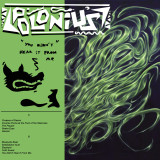
Full page feature in Wire Magazine (March 2025, Issue 493) 'the freak audio series continues with the lysergic You Didn't Hear It From Me which combines dubbed out sampledelia and metallic beats with ghostly saxophone soaked in an acid bath'
Polonius AKA Egyptian-French artist Seif Gaber, whose works spans a decade of “science fiction archeomiragical time travel" explorations and is an important piece of the healthy electronic/far out mosaic in Milan.
With a considerable number of releases under his name, both self released and through such likeminded labels as Ikuisuus, Goaty Tapes or Sun Araw's Sun Ark, Polonius grand vision encompasses a myriad of languages culled from kosmische travelings, exotica's dreamlands, soundtrack psychedelia, spiritual jazz escape routes and transmuted beat science to convey them into a sonic fiction where all these trails intertwine in a cosmological soundscape filled with wonder and speculation.
Building on last year's more beat-centric excursions of his self-titled vinyl debut on Stoned to Death, Polonius' first entry into the Discrepant extended family via Souk finds him dwelling deeper into rhythmic mystic extrapolations through a series of hallucinatory tracks. Conveying jungle's kinetic energy, dubwise meditations on bass weight, collapsing beats, globetrotting percussion accents and synth-driven night drives, 'You Didn't Hear It From Me' finds Polonius with a strong sense of purpose and direction, reconvening bits and pieces from the netherworld into a more urban scenario, not quite any we can stand or dance on. Just dream of.
CHIME OBLIVION began out of the blue. David Barbarossa reached out to John Dwyer saying he was a fan of OSEES and he was invited to a show in London. The two hung out and hit it off, "then I rabbit holed on Bow wow wow too…," Dwyer recalls. "I reached out to David and suggested that we try and write some songs together... I flew David out, we met at my studio and spent five days writing basin drums ideas." The two got to know each other and had a lot of laughs. Dwyer then brought in Weasel Walter, knowing that he would be perfect "to add all that legitimate old-school weird proto-punk no wave guitar scratch to it, which of course he did masterfully." Next came Tom Dolas to play fuzzy marimba, and the fabulous H.L. Nelly, "as I knew her from a record I’d put out back in the day for a band called Naked Lights from Oakland. I knew that she could pull off the vocal style I had in mind." Together, the group created their debut self-titled album, due for release via Deathgod on April 18th. CHIME OBLIVION will be released as a 45 rpm 12" vinyl, CD & on digital. They're sharing the first taste of the album today, in the form of lead single, "NEIGHBORHOOD DOG." "For fans of Adam & the Ants, Bow Wow Wow, Crass, The Slits, and any other wierdo punk we fell in love with as youths." CHIME OBLIVION is due for release on April 18th via Deathgod.
CHIME OBLIVION began out of the blue. David Barbarossa reached out to John Dwyer saying he was a fan of OSEES and he was invited to a show in London. The two hung out and hit it off, "then I rabbit holed on Bow wow wow too…," Dwyer recalls. "I reached out to David and suggested that we try and write some songs together... I flew David out, we met at my studio and spent five days writing basin drums ideas." The two got to know each other and had a lot of laughs. Dwyer then brought in Weasel Walter, knowing that he would be perfect "to add all that legitimate old-school weird proto-punk no wave guitar scratch to it, which of course he did masterfully." Next came Tom Dolas to play fuzzy marimba, and the fabulous H.L. Nelly, "as I knew her from a record I’d put out back in the day for a band called Naked Lights from Oakland. I knew that she could pull off the vocal style I had in mind." Together, the group created their debut self-titled album, due for release via Deathgod on April 18th. CHIME OBLIVION will be released as a 45 rpm 12" vinyl, CD & on digital. They're sharing the first taste of the album today, in the form of lead single, "NEIGHBORHOOD DOG." "For fans of Adam & the Ants, Bow Wow Wow, Crass, The Slits, and any other wierdo punk we fell in love with as youths." CHIME OBLIVION is due for release on April 18th via Deathgod.
Die vielleicht größte Herausforderung für jeden Musiker ist es, zu lernen, als Künstler zu wachsen und sein Repertoire zu erweitern und gleichzeitig eine kohärente, übergreifende Vision für die eigene Arbeit beizubehalten. Seit ihren Anfängen und über die Spanne von drei Alben hinweg haben Blackwater Holylight stets eine Aura, als ob die Mitglieder der Band sowohl den Raum als auch das Vehikel gefunden hätten, ihre emotionale Abwehr zu senken, indem sie ihre Position mit purer klanglicher Kraft verstärken. Diese anhaltend eindringliche und bezaubernde Qualität hat sich in einer Vielzahl von Ansätzen manifestiert. Gleichermaßen versiert in Doom-Riffs, narkotischen Neo-Folk-Melodien, lysergischen psychedelischen Streifzügen und zerklüftetem Art-Rock-Abrieb, decken Blackwater Holylight mit ihrem Arsenal an Gitarre, Bass, Schlagzeug, Synthesizer und Stimme ein breites Spektrum an Klangfarben ab. Auf ihrer neuesten EP If You Only Knew gehen Blackwater Holylight den eingeschlagenen Weg konsequent weiter. Letztlich ist "If You Only Knew" ein mutiger Schritt, der die Ungewissheit im Privatleben der Bandmitglieder widerspiegelt. der Bandmitglieder widerspiegelt.
Defiant Life – die zweite Duo-Aufnahme von Vijay Iyer und Wadada Leo Smith für ECM – ist eine tiefgründige Meditation über den Menschen in der Gesellschaft und das damit verbundene Leid, aber auch die
Resilienz. Zwischen Leo Smiths unverwechselbaren Trompetenflügen und Vijays feinfühligen Erkundungen
an Klavier und Fender Rhodes schimmert ein ätherisches Funkeln durch mehrdimensionale Räume hindurch,
die Platz für nachdenkliche musikalische Konversationen schaffen. ”Wir arbeiten mit unseren individuellen
Sprachen und Materien”, schreibt Vijay in seinem ausführlichen Begleittext, „aber auch mit unseren Methoden der akustischen Einstimmung und mit dem, was ich als eine gemeinsame Ästhetik der Notwendigkeit
bezeichnen würde”. Eine Notwendigkeit, die sowohl von Dringlichkeit als auch Frieden gezeichnet ist, sich
im ersten langen Stück „Sumud” unheilvoll äußert, dann mit bluesigen Untertönen auf „Floating River
Requiem” wieder auftaucht, immer noch zweifelhaft, aber mit Silberstreifen auf „Elegy: The Pilgrimage”
zu hören ist und schließlich auf dem abschließenden ”Procession: Defiant Life” schrecklich schön zum
Ausdruck gebracht wird. Defiant Life wurde innerhalb von zwei Tagen im Auditorio Stelio Molo in Lugano
aufgenommen und von Manfred Eicher produziert.