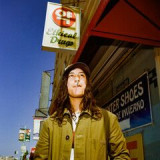
Hip-Hop lost one of its most talented wordsmiths when Fred The Godson passed away due to complications with Covid-19 last year. However, his family has continued his legacy by launching the nonprofit Fred The Godson Foundation, as well as releasing some of his most sought-after music on vinyl and CD. Ascension is the first posthumous release with all new material from the South Bronx emcee. The tracks were handpicked by Fred's brother Russ and they are a prime example of the creative high he was on just before his passing. The collection of songs includes production from The Heatmakerz and guest spots from G Mims, Guap Sinatra, M City, Reef Hustle, Bandz Dinero and more. This album is a celebration of Fred's life and so, fittingly, the LP dropped digitally on his birthday, February 22. On the same day, New York City officials unveiled a new street name in the South Bronx honoring the respected lyricist: Fredrick "Fred The Godson" Thomas Way. A lot of artists make street music, but only a handful have ever received a tribute with street signs.
Cerca:nam
- It Didn't Mean Nothing
- In Your Head
- Bruised
- If I Had To Go I Would Leave The Door Closed Half Way
- Wish You Would Notice (Know This)
- Ghosts
- Pressure Makes A Diamond
- Head In A Wheel
- Bluebird
- Ny Ny
LP[28,15 €]
"I decided to just let myself go," Zzzahara says of their new record, 'Spiral Your Way Out' "I think I finally came to this acceptance that I don't have to be perfect. I want to be a good role model to my fans and stuff like that, but I also don't want to hide who I am." Zzzahara's music wades into the deep waters of love, lust, and self-discovery in a part of the world where artifice and authenticity co-exist. Emerging from the heart of LA's alternative music scene, their sound is raw in feeling and rebellious by nature.
Their 2022 debut album, Liminal Spaces, chronicles a coming- of- age in Highland Park, following painful childhood memories through to late- night, live- fast coping mechanisms, and the changes the neighbourhood has endured over the same period of time. Their 2023 follow- up, Tender, marked a period of slowing down, looking inward, and embracing a softer side of being. 'Spiral Your Way Out' sees Zzzahara evolve again. Emotionally, its foundations are built on scorched earth.
The album finds Zzzahara in the aftermath of a relationship spent trying to fit someone else's mould, being jerked around by indecision, and then hitting "emotional rock bottom." Made in a three-month burst that let all their pent-up frustrations loose, 'Spiral Your Way Out' is in part a work of self-reclamation, swapping there 2nd album Tender's meditative state for something fiery and more assertive. The new album marks another sonic evolution as much as an emotional one. Zzzahara's songs have always come wrapped in a warm glow that reflects how they were written -namely at home in their bedroom.
That glow remains on 'Spiral Your Way Out', but it also packs an ambitious streak and a gutsy punch. Taking a more collaborative approach than usual, Zzzahara worked with a range of producers including Jorge Elbrecht (Japanese Breakfast, No Joy, Sky Ferreira), Sarah Tudzin (boygenius / Cloud Nothings / The Armed), former Ducktails guitarist Alex Craig (Jelani Aryeh / re6ce) and Halsey tour drummer Franco Reid, who helped harness their intimate style of writing and blow it up into something more panoptic. After a year of upheaval, Zzzahara finally feels "calm." The musical equivalent to going several rounds on a punching bag, 'Spiral Your Way Out' finds solace between extremes. It licks its wounds in a place where pain and love, healing and abandon, sit side-by-side. If it has a message, it's one of standing tall in your own shoes - scuffs and all.
"I decided to just let myself go," Zzzahara says of their new record, 'Spiral Your Way Out' "I think I finally came to this acceptance that I don't have to be perfect. I want to be a good role model to my fans and stuff like that, but I also don't want to hide who I am." Zzzahara's music wades into the deep waters of love, lust, and self-discovery in a part of the world where artifice and authenticity co-exist. Emerging from the heart of LA's alternative music scene, their sound is raw in feeling and rebellious by nature.
Their 2022 debut album, Liminal Spaces, chronicles a coming- of- age in Highland Park, following painful childhood memories through to late- night, live- fast coping mechanisms, and the changes the neighbourhood has endured over the same period of time. Their 2023 follow- up, Tender, marked a period of slowing down, looking inward, and embracing a softer side of being. 'Spiral Your Way Out' sees Zzzahara evolve again. Emotionally, its foundations are built on scorched earth.
The album finds Zzzahara in the aftermath of a relationship spent trying to fit someone else's mould, being jerked around by indecision, and then hitting "emotional rock bottom." Made in a three-month burst that let all their pent-up frustrations loose, 'Spiral Your Way Out' is in part a work of self-reclamation, swapping there 2nd album Tender's meditative state for something fiery and more assertive. The new album marks another sonic evolution as much as an emotional one. Zzzahara's songs have always come wrapped in a warm glow that reflects how they were written -namely at home in their bedroom.
That glow remains on 'Spiral Your Way Out', but it also packs an ambitious streak and a gutsy punch. Taking a more collaborative approach than usual, Zzzahara worked with a range of producers including Jorge Elbrecht (Japanese Breakfast, No Joy, Sky Ferreira), Sarah Tudzin (boygenius / Cloud Nothings / The Armed), former Ducktails guitarist Alex Craig (Jelani Aryeh / re6ce) and Halsey tour drummer Franco Reid, who helped harness their intimate style of writing and blow it up into something more panoptic. After a year of upheaval, Zzzahara finally feels "calm." The musical equivalent to going several rounds on a punching bag, 'Spiral Your Way Out' finds solace between extremes. It licks its wounds in a place where pain and love, healing and abandon, sit side-by-side. If it has a message, it's one of standing tall in your own shoes - scuffs and all.
- Prologue Amateur
- Sax Addict
- Notre Soleil Est Mort
- Tinder Surprise
- Igor Stravestit
- Amoureuse
- 5: Th
- Ok Boomer
- Ouais
- Je Cours
- En Conversation
- Laura Palmer
- Yahourt A L'italienne
- Ou T'es?
'OK Crooner' the debut LP from French drummer and percussionist Vincent Taeger under his own name (after previous album under his alter ego Tiger Tigre) and his debut on vocals - mixes avant pop with jazz-fink and AOR.
Taeger, who has worked with Air, Damon Albarn, Justice, Lenny Kravitz, Skepta, Tony Allen, Oumou Sangare, Jeff Mills, Archie Shepp and Sampa the Great, during COVID started frantically listening to French vocalists such as Alain Souchon, Alain Chamfort, Richard Gotainer, and Christophe. Inspired by his elders, while not renouncing his attachment to the meticulous arrangements reminiscent of Alain Goraguer's soundtracks, he picked up a pen to jot down snippets of songs to accompany his increasingly sophisticated compositions. Coming from rap, he has a knack for punchlines. Throughout the album, he alternates between risque humour, Gaulish wit, and poetry.
While Vincent Taeger is the chief fireworks maker, playing most of the instruments, some of his longtime collaborators come to support him on a few tracks, forming the Jazz Kamasutra: Ludovic Bruni (bass), Sylvain Daniel (bass), Arnaud Roulin (piano, synth), Fred Soulard (synth), Maud Chabanis (vocals), Bettina Kee (vocals), Mathias Allamane (double bass), Emile Sornin (ondioline), and Remi Sciuto (saxophones). Vincent Taurelle, mixed the abum. Recently, he has worked on albums by Justice, Seun Kuti, Raphael, and Clara Luciani.
- Born To Rock´n´roll
- Fight
- Gotta Know Why
- King Of The Road
- When The Wild Gets Wilder
- Only You
- Shout It Up Loud
- Unchain Your Thoughts
- Back In The City
- Rockify
- There Is No End
Im Französischen sagt man oft, dass man in alten Töpfen die besten Suppen kocht. Dieses Sprichwort trifft auf Rash Panzer in idealer Weise zu. Anfang Dezember veröffentlichte die Genfer Power-Rock-Combo ihr neues Album, ihr fünftes, und das mehr als 40 Jahre nach der Gründung der Band! Im Januar folgt nun die Vinyl-LP für alle Liebhaber! Zu sagen, die Musik der Band sei älter und feiner geworden, wäre eine Untertreibung. Das neue Album von Rash Panzer, das den Namen „Born to Rock‘n Roll“ trägt, ist eine kleine Perle des kraftvollen und melodischen Hardcore, die Fans von Aerosmith, AC/DC und den Ramones begeistern wird. Aber weit davon entfernt, eine x-te Kopie der oben genannten Bands zu sein, sind die Kompositionen des Sängers JJay Guertchakoff und des hervorragenden Gitarristen Renato Dani furchterregend effektiv und originell. Sowohl beim Anhören des Studioergebnisses als auch live verdient diese „Born to Rock‘n Roll“ zwei Dinge: einen Platz in der eigenen Diskothek und einen Platz auf dem Plakat von Festivals. Denn neben der Musik wäre auch JJays Stimme allein schon eine Reise wert. Im Gegensatz zu anderen Vokalisten, die über 60 Jahre alt sind, ist sein kraftvolles Organ nicht gealtert. Rash Panzer ist ein sicherer Wert und sein Rock ist unsterblich.
Gold Vinyl[46,18 €]
Slomosa from Bergen is one the great rock bands from Norway the last few years. Bringing desert rock from what is probably the least desert country in the world, Norwegian rockers Slomosa are due to release their 5th vinyl edition of their highly popular and regarded self-titled debut album. The three singles and album have so far amassed about 4 million streams and counting - and with their music's international reach the band has managed to gain a following in countries such as USA, Germany and Sweden, making the band "Norway's new shooting stars of huge rock", as music blog The Obelisk aptly puts it. Joined by a love for the rock scenes of the past, the band has made a name for themselves with their heavy and catchy sound, dubbed "tundra rock" by the band itself.
- A1: The Sweet Vandals – Too Much
- A2: Diesler – Revelations (Jazzinvaders Remix)
- A3: The Bamboos Feat Ohmega Watts – Get In The Scene
- A4: Naomi Davis & The Knights Of Forty First Street – Forty First Street Breakdowne
- A5: Eli Goulart E Banda Do Mato – Sunny
- B1: Daddy-O Of Stetsasonic – Drumma Man
- B2: The Supersonics – The Chosen One
- B3: Sharon Jackson & The Soul Destroyers – Fakin' It
- B4: Carlton Jumel Smith And Cold Diamond & Mink – Remember Me
- B5: Jay Are Feat Tiffany Page – It's Jay Are
This Is DJs Choice Vol. 4 brings you a great selection of Funk, Soul, Latin and Hip Hop.
Five years after the last installment of the series, Volume 4 is compiled by Gu, a long-time friend and DJ partner of Unique label founder Henry Storch, and the tracks represent the two decades they have known each other and played records together, as well as the music they enjoyed.
All choices are originally 7 Inch records from Gu's crates put together like a DJ-Set for you to enjoy: The Soul of The Sweet Vandals and Carlton Jumel Smith, the Deep Funk of Naomi Davis & The Knights Of Forty First Street, The Supersonics and Sharon Jackson & The Soul Destroyers, the Latin sounds of Diesler and Eli Goulart E Banda Do Mato and the Hip Hop grooves of Jay Are (aka J.Rawls and John Robinson), The Bamboos featuring Ohmega Watts and Daddy-O of Stetsasonic.
This compilation is a celebration of music from beginning to end.
About This Is DJs Choice:
The series started as a friendship project by Henry Storch, who wanted to immortalise friends and allies from the DJ scene, who picked vinyl as their format of choice. The genre didn't matter, as long as the vibe was right. In 2008 Vol. 1 featured a selection of organic Club Sounds and Break Beats put together by Soulinus & Pun, followed by Keb Darge & Lucinda Slim and their favorite Rhythm & Blues, Rockabilly and 60s Soul tunes on Vol. 2 in 2009. In 2019 Les Intouchables aka Marc Hype and DJ Suspect presented a variety of funky and soulful music with an addition of the occasional Boogie, Reggae and Hip Hop track.
About Gu:
Gu is a DJ, musician, label owner, producer, writer and producer from Northern Germany. His dedication to music started in his pre-teens in the late eighties and he is playing vinyl ever since. Over the years he has worked with a number of his favorite DJs and artists like Keb Darge, Andy Smith, Snowboy, The New Mastersounds, Osaka Monaurail, The Sweet Vandals, The Allergies, Andy Cooper of Ugly Duckling, Daddy-O of Stetsasonic and Chuck D of Public Enemy to name a few. His DJ career took him all over Europe again and again.
In 2005 he started Our Label Records with his brother Tom to release new Funk music on 7 Inch vinyl and added the Hip Hop 45 imprint Origu in 2015. Since 2009 and he is on air every week with his radioshow Home Diggin', which was also picked up by Chuck D's Rapstation in 2019. Additionally he is lead singer/rapper for the Songcore duo Sorry We're Closed and the Hip Hop outfit Alder Ego. He also does readings of his book of one-liners and competing on Slam Poetry stages.
Kit Sebastian - bestehend aus K. Martin und Merve Erdem - veröffentlichten ihr neues Album, „New Internationale“, auf Brainfeeder.
Textlich porträtiert „Metropolis“ die Erfahrung von Immigrant:innen, indem es den Druck und die Enttäuschungen hervorhebt bei dem Versuch, Kontrolle, Bedeutung und ein Gefühl der Zugehörigkeit in einer scheinbar gleichgültigen und fremden Welt zu finden, während man sich mit den Kompromissen zwischen der Ausübung der Kunst als Beruf und der Suche nach Stabilität auseinandersetzt. Es geht um die Projektion der eigenen Hoffnungen und Sehnsüchte auf eine neue Stadt, das naive Gefühl von Freiheit, das sich daraus ergibt, und die unvermeidliche Desillusionierung und Verzweiflung, die darauf folgt. „New Internationale“, ihr musikalisch unbändiges und emotional anspruchsvolles drittes Album und ihr Debüt für Brainfeeder, ist auf eine Art und Weise durchdacht, wie es Kit Sebastian noch nie waren. „New Internationale“ ist eine fesselnde Synthese aus den Klängen und Stilen, die Kit Sebastian schon seit langem faszinieren, nämlich französischer Pop und anatolischer Psych, klassische Tropicália und früher Rock’n’Roll, mit einer Brise Soul und Prog, die durch die offenen Fenster der kollektiven Vorstellungskraft der beiden weht.
- A1: Jimmy Carter & Dallas County Green - Travellin
- A2: Mistress Mary - And I Didn't Want You
- A3: Plain Jane - You Can't Make It Alone
- A4: Dan Pavlides - Lily Of The Valley
- A5: Angel Oak - I Saw Her Cry
- B1: Kathy Heidiman - Sleep A Million Years
- B2: Deerfield - Me Lovin' You
- B3: Arrogance - To See Her Smile
- B4: Jeff Cowell - Not Down This Low
- B5: Kenny Knight - Baby's Back
- C1: The Black Canyon Gang - Lonesome City
- C2: Allan Wachs - Mountain Roads
- C3: Mike & Pam Martin - Lonely Entertainer
- C4: Bill Madison - Buffalo Skinners
- D1: White Cloud - All Cried Out
- D2: Ethel Ann Powell - Gentle One
- D3: Sandy Harless - I Knew Her Well
- D4: Fj Mcmahon - The Spirit Of The Golden Juice
- D5: Doug Firebaugh - Alabama Railroad Town
Over 19 tracks, Wayfaring Strangers: Cosmic American Music mines gold from dollar bin country-rock detritus to reconstruct events as seen from the genre's wild west - Americana's vast private press substructure. As progenitor and contemptuous poster boy for the music that came to be Cosmic American, Gram Parsons found himself mired in a recording career spent mostly in scouting the perimeters of chart success. "He hated country-rock," Parsons collaborator Emmylou Harris would later reflect. "He thought that bands like the Eagles were pretty much missing the point." Parsons had been orbiting the idea of Cosmic American Music for some time. In 1968 he'd parted ways with the Byrds and was looking to take air with a new project. "It's basically a Southern soul group playing country and gospel-oriented music with a steel guitar" he told Melody Maker, on the subject of The Flying Burrito Brothers. So it was that when A&M's Burrito Brothers debut The Gilded Palace of Sin made it to shelves in February of 1969, early adherents to the Cosmic American gospel were already echoing its message from areas flanking Gram Parsons' Southern California hills and canyons. There was F.J. McMahon in coastal Santa Barbara, Mistress Mary further inland in Hacienda Heights, and Plain Jane of Albuquerque, New Mexico, each responding by committing their own private readings to tape before day one of the 1970s. Parsons himself might've disdained them, had he even been aware of such minor ripples, shimmering at the edges of his desert oasis. But these were true believers all the same, given over fully to his roots music concept, each filling vinyl grooves with non-rock instrumentation like fiddle, banjo, and pedal steel guitar, the last undoubtedly Cosmic American Music's most distinguishing stringed signifier. Only too predictably, big labels did the grunt work of confining and defining the movement, as ABC, United Artists, RCA, and more played catch-up with Asylum's raptor rock juggernaut, via backwoods crossover also-rans with names like Gladstone, American Flyer, and Silverado. Twang reigned, the shitkickers kicked shit, and the vaguely western-sounding guitar records piled up. Country-rock became "the dominant American rock style of the 1970s," as Peter Doggett's comprehensive Are You Ready for the Country put it much later. Wayfaring Strangers: Cosmic American Music picks up and dusts off golden ingots from the dollar-bin detritus of that domination, to reconstruct events as seen from the genre's real Wild West-America's one-off private press label substructure.
The Acidboychair music project started in the early noughties as a commentary on what journalist Simon Reynolds would summarise a few years later as Retromania. Initially conceived by Thomas Baldischwyler and Andreas Diefenbach as a performative revival travesty with large-format drum computers and synthesizers reconstructed from cardboard, everything took a surprising turn when DJ Mooner (the man behind the now defunct Munich music label Erkrankung Durch Musique) took an interest in the adventurous audio material produced by Baldischwyler. In 2005, the LP 1987 (EDM1016), produced almost exclusively with long-forgotten software (SoundEdit 16, RB-338, etc.), was released on Mooner's label. As a result of the growing number of bookings, Baldischwyler had to think about improving the performability of his intentionally amateurish productions. Fortunately, the Ableton Live programme became a DAW with a MIDI sequencer and support for VST plug-ins as early as 2004 - and this made it easier for him to execute his intuitive, error-friendly version of acid house. This can be heard on the first two sample-heavy tracks on the A-side of Come Down Easy, which were recorded in 2005 and 2006 respectively at Acidboychair gigs at Hamburg's Golden Pudel Club and Munich's Registratur. The first two tracks on the B-side (produced sometime between 2006 and 2008) were actually supposed to be part of a solo release on the Acido label run by Dynamo Dreesen, but this never materialised. However, the final tracks and the 133.3 BPM lock grooves that follow are the title and central to this catalogue number TBG123: Through ethno-musicologist Arthur Boto Conley, who had already released a one-sided 12 on his label with material from one of Baldischwyler's audio installations, he met Florian Meyer (Don't DJ) and Marc Matter (Spoken Matter), who introduced him to their collaborative project Institut F?r Feinmotorik (IFFM). Baldischwyler's attempt to approach the sound aesthetics of IFFM led to the tape 60 Minutes Of Barely Modified Lock Grooves (TCCC06), recorded in Rome in 2018. A buyer of this tape introduced him to the Detroit collective Pure Rave, which he immediately contacted and introduced to the work of the IFFM. It was important for Baldischwyler to have an analogue update made and so both the Detroiters and IFFM, who now live in Berlin, were given 8 copies of EDM1016's backstock to remix the material in their own way. At their jam in Detroit, Pure Rave opted for the almost identical material that IFFM had also used for a live performance in the Hamburg project space Beek. The dominant jumps in both arrangements come from the track Eightyseven, produced in the early 2000s for the LP 1987, an awkward remix of the Spacemen 3 track Come Down Easy, which is also referred to in the liner notes on the inner sleeve of TBG123. The almost two-decade-old revival idea thus turns into false memory syndrome and runs into a - in keeping with our times - clean-cut (endless) groove. Kassem Mosse (The KM of MM/KM) on Come Down Easy after a first listening session: I think it all works very well as a mix, no matter where you start it carries you further forward back in the loop. if I understand the liner notes correctly, it's about the music's turn from tradition preservation (doing everything right) to ecstatic delusion (not doing everything right when intoxicated). Now that I'm reading again instead of listening, the titles give me a different understanding of the connections; how the skipping belongs together, which playtime is connected. Now I can name my favourites. Thank you for the journey!
2024 feiern die Broilers ihren runden Geburtstag: 1994 - 2024, 30 Jahre Broilers. 30 gemeinsame Jahre bedeuten Wachsen und Zusammenwachsen. Auch miteinander streiten und zusammen streiten – für die gute Sache. Zusammen feiern und zusammenstehen, in den Besten aller Zeiten und den Schlechtesten aller Zeiten. Und weil es für jede gute Geburtstagsparty auch die passende Musik geben muss, hat die Band zum ersten Mal alle ihre Hits und Lieblingslieder auf einem Album versammelt. Und nicht nur das, die Broilers machen sich selbst ein Geschenk: Zehn der 22 enthaltenen Songs, nämlich alle, die vor 2011 eingespielt wurden, haben sie noch einmal komplett neu aufgenommen. So erstrahlen legendäre Broilers-Klassiker in zeitgemäßem Glanz, ohne ihre Wurzeln zu verleugnen. Die Broilers sind ein Phänomen: Seit über einem Jahrzehnt gehören sie konstant zu den erfolgreichsten Rockbands im deutschsprachigen Raum. Millionen verkaufter Konzertkarten, Nummer- 1-Charts-Platzierungen, Edelmetallauszeichnungen in Folge, kaum ein Superlativ, den die Gruppe sich noch nicht zu eigen gemacht hätte. Ein paar Schulfreunde aus den Vierteln am Stadtrand von Düsseldorf gründeten 1994 eine Band, die sich am ruppigen Sound einer Streetpunk-Variante orientierte, der schon Anfang der 80er-Jahre unter der Bezeichnung „Oi!“ auf der britischen Insel das Licht der Welt erblickte. Die bedingungslose Liebe, die ihnen bis heute von vielen ihrer Anhängerschaft entgegengebracht wird, hat ihren Ursprung in dieser Zeit. Neben den Liedern, mit denen sie über die Jahre ihren Hörern stets aufs Neue aus dem Herzen sprachen, führte aber auch die Kombination der individuellen Charaktere der einzelnen Musiker an die Spitze: Wie fünf Superhelden aus einer Comicserie bündeln sie als Team ihre Kräfte, begeistern so die Fans und können aus dieser Unterschiedlichkeit Kraft schöpfen und spenden. Die Broilers haben keine Angst vor Pathos, Emotionen und Kontrasten: In ihrer Musik sind wuchtige Bläsersätze, Offbeats, da ist Soul und Rocksteady, da sind Flirts mit Power-Pop und Kitsch und das alles, als wäre es das Logischste und Normalste auf der Welt. Diese eklektische Mischung trauen sich nicht viele. Die Broilers wollen es sich anders gar nicht mehr vorstellen. »Jolly Good Fellas – Best of Broilers 1994 - 2024« legt davon eindrucksvoll Zeugnis ab!
“My introduction to “noise” came from a record shop in Lake Worth, Florida ran by a musician named Kenny 5. Kenny had left Detroit sometime in the mid nineties and had begun selling used records and CD’s from the downtown strip of this tiny southern Florida city in a humble shop sandwiched between a deli and a dog grooming business. Kenny previously was on labels like Amphetamine Reptile and timeSTEREO, and the records and videotapes that would be on repeat at his shop were a vast sonic expanse that spoke to the eclecticism of his experience as a touring musician participating and adjacent to American noise culture through the early to late 90’s. In 1998, I was eleven years old and I would order a pizza with him and watch VHS tapes of Japanese noise and deathmatch bootlegs, as well as any other sonic and subcultural rarities that far outstripped my age to comprehend (notably the RRR “Journey Into Pain” compilation and various Vanilla Tapes videos). This widecast net of information formed an introduction to a reality that did not fall deaf on me, but it took many years later for me to reorient the specific freedoms of what this dense and cathartic sound culture had imparted on my life and would continue onward to.
What does this have to do with this selection of choice recordings from the Secret Boyfriend catalog for the enmossed label? For the uninitiated, Secret Boyfriend is the long running moniker of Ryan Martin, North Carolina musician and label proprietor of the Hot Releases imprint. For over a decade from this writing I have watched Secret Boyfriend, and Hot Releases by extension as a curatorial and archival effort, embodying the multiplanal capacity that noise loosely functions from as an umbrella ideology and formalist avenue for sound creation. For anecdotal purposes, from (before) 2006 until roughly 2023 the East Coast of the United States showcased a vibrant network of eclectic regional festivals that saw wide swaths of artists addressing and negotiating the notion of what qualified “noise” from a conceptual and ideological perspective. Some festivals honed in on particularities in aesthetics and tropes, and others had a kind of “catch-all” implementation that allowed for a salvation of the sort of alienated and singular artistry that was amassing throughout these territories. While clear guidelines had been set from regional predecessors as to how noise with a capital “N” should maneuver, Secret Boyfriend is emblematic in the spirit of fluidity that was either implicitly coupled to the notion of the genre, or grew to evolve towards or devolve from.
Within Secret Boyfriend performances, I have seen and admired a mirroring from a ravenous appreciator of this culture at large back towards itself. Typical of a Secret Boyfriend set is an interchangeable narrative arc wherein blistering feedback laden scrap metal improvisations are forayed into naive ambient or “pop” songs, or skipping CDs, or mixer feedback play, or delayed Roland 707 drum workouts all at once and in a unique hegemony. Secret Boyfriend's stylistic mastery of each endeavor is at once an homage to a history of loving listening and enacting, while a brave step into the realm of actualizing the unique fluidity of his own practice. In performance and the action of network engagement, Secret Boyfriend operates a survey of that which he sought to hear and that which he cultivates around his work. His operations are mirrors, and the project (alongside his other peers) is a reflection on the ethos of his time.
Conversely his recording practice narrows in on these moments and allows for a different kind of intimacy or alienation for the non live listener. This record of selected “pop songs” (let's call them that) is particularly poignant at a time when the culture Martin mirrors is at a strange crossroads with itself. The aforementioned festival networks necessarily change and shift. The onlookers become the artists, the artists find new horizons, and the spaces for these cycles fade into locales of a distant memory. It seems, from my perspective, that audiences currently yearn for a more bottlenecked experience, searching for some ontologically vetted manifestation of an idea, of a sound and less for an experience that functions in opposition to our collective banalities. This makes sense in the face of general global catastrophism that plagues us. We need certainty of what something is somewhere, don’t we? Noise as an idea has expanded and contracted to so many iterations of itself it is hard to tell what it even is, and it is particularly difficult to identify in the absence of solid network activations a moment to reflect on its own complexities and nuances. In the face of so much change, I argue that the language of noise culture at large has on one hand become increasingly didactic and predictable, and laughably inclusive and non linear on the other. Probably has always been this way, but now we are in the midst of a moment of extreme access and indexicality, which somehow cauterizes expansion and naivety and chance.
This record highlights the Secret Boyfriend that obscures didacticism by highlighting output that opens up for more challenging catharsis and emotive signal processing. It provides an entry to the materialism of a cultural field full of ecstatic complexity and beautiful inconsistency. In these muted moments Secret Boyfriend has given us over his career we have an argument for evolving languages that further challenge our notions of what is supposed to happen and how it is supposed to be presented. In his more song oriented expansiveness, we can punctuate the ability to think in new modalities. Listening to these recordings reminds me of the polarity of sitting in the record store as a kid and understanding that His Name Is Alive is on 4AD and (gasp!) timeSTEREO. This trite early impression that nothing is really as different as our imaginations might want them to be, and that we can do whatever we want mostly within the creative realms we work through is an important filter to look through Secret Boyfriend as a project and a vessel. If we can achieve abandon and vulnerability through our artistic endeavors, then we have a sound model for, maybe, new potentialities. If that’s too much projection, or just complete liberal bullshit, I am fine with that. Secret Boyfriend's oeuvre at best offers us moments of reprieve to ponder these complexities, or at least a moment to zone out on a drive through North Carolina Highway 54.
You have one pocket of life that you must do whatever you want to inside of. Secret Boyfriend does it affectionately, in a variety of forms, and always with deep sentimentality. These recordings are a wonderful set of songs to begin further investigation from. Thank you Ryan for allowing as many avenues as possible to continue a broad cultural exchange and conversation that intersect and refract while being the kind of artist that is brave enough to not phone in the effort.”
- Nick Klein , May 2024
"Atria" is an exceptionally deep, easy-to-play-on-repeat work from Denver-based FOANS, a continuity of heartbreaking melodic interludes and nostalgic, otherworldly softness. Originally self-released in 2014, "Atria", comprised of 9 tracks simply titled "Diorama", is a plunge into dubby textures, meditative rhythmic cadence, lamenting chords, and shimmering neon pads. While growing to become a household name, especially for fans of 100% SILK and the now sadly defunct Danish label Speaker Footage, FOANS has offered numerous beloved releases over the last decade, showing listeners who stumble across his artistic microcosm that he has his own trademark sound, one that is often very recognizable even in a crowded space; a remnant from his early years as a bedroom producer, Atria shows us that FOANS’ sound has always shimmered, has always moved through heavy emotions and uneasy silliness. It will likely continue to do so for years to come.
Perfect Location Records is honored to commit this stunning work to vinyl for the first time, with a digital remaster for digital collectors as well. The record will be packaged in a black die-cut jacket and include a download code along with a small matte print of the acrylic-on-canvas cover art by painter Andrea Willems.
Limited run of 200 physical copies.
BACK IN PRINT ON BLACK VINYL
“To understand the significance of the word ‘featuring’ on Featuring Pharoah Sanders And Black Harold, consider how infrequently Sun Ra used it and the exact way it had been used.
“The October Revolution in Jazz, organized by Bill Dixon in the West Village in 1964, presented a vivid cross section of approaches to the new music, including a sextet led by Ra. For the October Revolution’s continuation, titled Four Days in December, held at nearby Judson Hall on the last days of 1964, the Arkestra performance presented Pharoah Sanders as well as a flautist (who was and remained obscure thereafter) named Harold Murray, nicknamed Black Harold.
“It wasn’t until long after Sanders had achieved worldwide acclaim with John Coltrane that Ra and manager Alton Abraham decided to issue the music they’d recorded at Judson Hall. After its first release in plain or hand-decorated covers in 1976, Featuring Pharoah Sanders And Black Harold remained an exceptionally rare item in the El Saturn discography, known to a few lucky collectors.
“We’re lucky to have this glimpse of what Sanders sounded like in such a different context, galvanizing the large group and in turn being inspired to make his first significant contribution on record.”
—John Corbett (excerpt from the liner notes)
A Sonic Journey Through Time. Kronert, a name synonymous with high production standards and innovative sound aesthetics in the electronic music scene, lends his distinctive sonic signature to this 4-Tracker. He weaves together fast-paced rhythms with nostalgic soundscapes, creating a symbiosis of past and future. This EP not only invites you to dance but also to reflect on the temporal nature of music. Characterized by deep basslines and complex rhythmic structures, this tracks proves to be an essential component of any sophisticated DJ session. Embark on a musical journey that challenges the boundaries of time and space, offering a forward-looking perspective on the house and techno genre.
Out of the murky, mystic world of Komodo Kolektif slides the Gamma Knife.
In the corner of a dank, dark mind, a nebulous notion condenses and solidifies, featureless and blind...and from that Komodo Klay a new kreature is hacked, molded and (mal)formed.
“The foundations of some of these pieces were laid almost a decade ago, others more recently. All of them came into being as sketches intended as Komodo Kolektif tracks to develop but for various reasons this didn't happen. The Seven Heavenly Elements was first presented to the group in 2019 but partly through personal differences in musical taste as well as COVID throwing a spanner in the works it was put aside and never worked on collectively. The two Disciple of the Drum 'dubs' are essentially rhythm tracks using the rhythm and percussion of Disciple Of The Drone, also from 2019, stripping away the drone, the gamelan melody and finally, even the bass line, which was initially intended to be the fundamental driving force of at least one of these dubs. In the end neither of these two tracks became anything like the idea that I had in mind, but that's how creativity works sometimes. The vocal parts in Cantation Dub were added most recently, just a few months ago. Fire Dub is just an exercise in me trying to rein in some insane delays and barely managing. The Ghost of Water is an anomaly because many of the fundamental parts are taken from the same jam session recorded in 2015 that led to Djakarta 3001 from the first EP. If you listen closely you'll hear Graeme Miller on guitar (back when guitar was still featured in our weekly jam sessions). I discovered this unedited hour-long jam session on an older hard drive in late 2023 and decided to fashion something from it until what became Ghost of Water materialised: the heavily delayed saron instruments, the jaw harp, the percussion and so on. What makes the track an anomaly is that it is in some ways both the oldest and newest piece of the five. The Seventh Element takes one of the seven elements of The Seven Heavenly Elements (in this case the Mopho synth tuned to the Indonesian pelog scale and ran through the Boss DE-200's depth modulator) to which I then added some gong parts and field recordings from Bali.
Once complete, I realised with an album's worth of material sitting there which was more “Komodo Kolektif” than anything I would normally produce solo, there came the problem of trying to work out what to do with this distinctly Komodo-esque, non-Komodo material. I came up with the idea of releasing it under the name Komodo Kuts...but a part of me felt I'd be cashing in on the Komodo name so ditched that part entirely...but the kuts remained, which seemed appropriate when used alongside my Gamma Knife moniker (which has a long story of its own...in a nutshell I had a benign brain tumour which only 1 in 10,000 people get and which is most frequently removed with a gamma knife (radiation). In medical parlance the device used in this treatment is often shortened to GK machine. I had been using the DJ name GK Machine, which came from my signature GK Mackinnon, since 1994, in other words long before this diagnosis. In the end I had brain surgery in Spain without use of gamma radiation...but the synchronicity of the name connection fascinated me nevertheless. Sometimes the world works in mysterious ways).
Lastly, now that I've sent these tracks out into the world, I feel somewhat liberated and can move on from this fairly niche and specific sound. The gamelan instruments have been returned to Gamelan Naga Mas, from who we'd borrowed them, and the masks hung up. This does not mean that Graeme Miller and I won't work together again in future...I'm sure we will...it just means we won't be tied to working within the constraints of gamelan, synths, percussion and dub that we became known for. So stay tuned...surely something lurks around the corner” GKM, November 2024
- A1: El León
- A2: Don't Mention It (Feat. Sadat X)
- A3: Lion Vs Panther
- A4: Hunting Methods
- A5: Melana Dorada (Feat. Rlx)
- A6: Fumemos
- B1: Camino Solitario
- B2: Vida Mantequilla
- B3: Paw Prints In The Sand
- B4: Quanto Te Quiero
- B5: Bulevar
Prepare to embark on a sonic odyssey as CRIMEAPPLE and PRESERVATION unveil the inaugural chapter of their groundbreaking trilogy with "EL LEÓN”. The album's title, a nod to the undisputed king of the jungle, serves as a meta-phorical beacon for the unyielding hunger that the lyrical predator has always shown.
On this audio hunting expedition, CRIMEAPPLE, the lyrical monarch, roars with an intensity that mirrors the lion's fe-rocity over a wild musical tapestry provided by PRESERVATION, with each track being a testament to the insatiable appetite and predatory instincts needed to navigate the wilderness of today’s music industry, a game that both artists have never bowed down to but always dominated from the outside in.
CRIMEAPPLE has always proven to be a leader of the pride, with the non-stop grind he’s been putting into his MAN-TECA imprint and with legendary collaborations with producers such as DJ Muggs and DJ Skizz carving his name as one of the prominent stars in the game today.
On the production side, PRESERVATION’s musical journey, whether with long-time collaborator Yasiin Bey (fka Mos Def), or as one half of Dr. Yen Lo with Brooklyn emcee Ka, or through legendary collaborations with the likes of billy woods, MF DOOM, Roc Marci, RZA, Sean Price, Raekwon and countless others, have made him an iconic name in musical alchemy.
As the trilogy begins, "EL LEÓN" stands as the beginning of a new hunting season for the two, where CRIMEAPPLE and PRESERVATION are sure to transcend boundaries and reign supreme.
Post-Nuclear Mind Music? Lizard Strategies? Void Spirit...? These bizarre titles are just a few of the self-coined terms that Australian electronic musician Ian MacFarlane has conjured to represent his eccentric sonic world. An artist whose unique style of electronic experimentalism has balanced dangerously close to the edge of popular convention, existing outside the mainstream and extending well beyond the fringe of any sanctioned independent scene. A futurist outsider whose extraordinary musical vision has explored the uncharted realms of consciousness and fantasy. Following a brief stint with the legendary Australian Krautrockers Cybotron, MacFarlane produced three independent solo albums throughout the late 1970s and early 1980s. His debut LP Void Spirit, an experimental album issued under the pen name 'Violet Lightning', was followed by a further two albums published under his own name, the cosmic influenced Back From Beyond and finally the privately issued electro-ambient suite Planetarium. Presented with hours of unreleased home recordings, The Roundtable has begun a dedicated search through the fascinating archives of this under exposed artist. Beginning with a vinyl release of the rare cassette-only album Planetarium; this private press sees MacFarlane armed with a bank of Roland Synthesizers, Drum Machines and field recordings, spawning a mutant amalgam of German Kosmische Musik, French Library electro and Private Issue New Age. Surrender to the stars and welcome to the first instalment of "Muzak To Moralize By".