Buscar:new african orchestra

Estilos
Todo
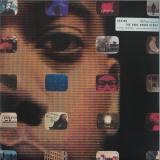
New African Orchestra - The Ron Trent Collection Vol.1 LP

The Ron Trent Collection Vol. 1 launches the long-awaited return of the legendary Nite Grooves label, revisiting the deep house roots that helped define the sound of New York’s underground scene.

Kicking off the relaunch with house pioneer Ron Trent, this first volume brings together a selection of his productions and aliases from the label, including New African Orchestra, Lost Tymeez and USG.

With deep rhythms, rich percussion and hypnotic grooves, these tracks showcase the musical depth and spiritual house sound that has made Ron Trent one of the genre’s most respected producers.

As the first release in the relaunched Nite Grooves catalogue, this collection offers strong appeal for both deep house DJs and collectors of classic New York house.

A strong opening chapter for the return of Nite Grooves and an essential addition for stores supporting deep and soulful house.

Reservar12.06.2026

debe ser publicado en 12.06.2026

12,82
Marion Brown - Awofofora

First time reissue of JP / US free jazz rarity.

The 1970s were Marion Brown’s most searching decade, a period during which he sought to move beyond the free jazz of the previous era and find more personal approaches to structuring improvisation and composition. After leaving New York for Europe in 1967, Brown began reshaping his music into what he described as “a more deliberate kind of music that had more structure to it,” pacing it so that moods and modes could develop over time. Albums such as In Sommerhausen, Afternoon of a Georgia Faun, Geechee Recollections, and Sweet Earth Flying trace this evolution: rhythmic structures moved to the foreground, harmony receded, and composition became a matter of orchestrating interlocking rhythmic parts as one would polyphonic lines.

Released in 1976, Awofofora is an overlooked but crucial entry in that sequence. At the time, its use of funk and reggae beats, electric guitars, and grooves drawn from contemporary Black popular music led some to misread it as a jazz-rock detour. In retrospect, it is entirely consistent with Brown’s methodology. As he admired in the Art Ensemble of Chicago, the stimulus comes from within the community. Here Brown filters Afro-Caribbean rhythms and funk through his own sensibility, abstracting their structural qualities rather than adopting surface style.

“La Placita,” making its first recorded appearance, layers distinct rhythmic phrases in a manner reminiscent of African drum ensembles, over which Brown and trumpeter Ambrose Jackson spin extended improvisations. The standard “Flamingo” is reshaped through diasporic rhythm and lyrical soloing, while “Pepi’s Tempo” and “Mangoes” harness crisp funk and reggae grooves to generate what Brown called a “manifestation of community” through collective improvisation. Even the overdubbed solo feature “And Then They Danced” reflects his structural thinking, ingeniously re-voicing a duet composition for two alto saxophones performed by one player.

This was the only recording by a short-lived band that briefly polarized audiences during festival appearances in 1976. Yet Brown consistently sought unity across change: different sounds, same principles — rhythm as structure, melody as architecture, collective improvisation, and above all, the primacy of tone. Awofofora stands not as a departure, but as a vivid synthesis of the elements he had been refining since the late 1960s, its grooves and golden alto lines conveying a sound drawn, in his words, “from life and from the world of experience.”

Reservar05.06.2026

debe ser publicado en 05.06.2026

28,15
Gap Mangione - Diana In The Autumn Wind (LP)

Gap Mangione's monumentally influential Diana In The Autumn Wind. AKA BEWITH200LP. And, without question, Be With's White Whale.

They said it could never be done. And with good reason.

We've spent the past 12 years trying to license this legendary 1968 recording from Gap and, after much work, it's finally here. Remarkably, this is the first ever vinyl reissue of Gap Mangione's Diana In The Autumn Wind, produced with the full and extensive participation of Gap. An exceedingly rare album, it's been coveted by funk, soul, jazz and hip-hop sample fiends for decades.

It's unarguably *the* most sought after album for J Dilla / Madlib sample collectors. It has also been brilliantly sampled by A Tribe Called Quest, Large Professor, Ghostface Killah, Kendrick Lamar and Talib Kweli.

But this record is so much more than a sample-spotters curio. It's solid gold throughout. Bursting with killer funky-jazz grooves and tracks adorned with warm electric piano, the release is notable for featuring some extremely significant players at the very outset of their careers; Tony Levin, at 21, whose superb playing on both acoustic and electric bass was the harmonic mainstay of the trio and Steve Gadd, at 23, one of the greatest drummers of his generation.

With acceptable copies of this holy grail changing hands for $400, to call this reissue "much-needed" underplays just how vital it is. Gap's story is told in his words alongside rare photos across a sumptuously designed 2-page insert and, to augment this deluxe edition further, its all wrapped up in a beautiful, no-expense-spared luxury tip-on sleeve, as per the original hens-teeth release. And, while we're talking packaging, just take a look at that cover - a work of art in and of itself.

The tracks are short but complex, with that extraordinary rhythm section backing the beautiful piano, organ and electric piano work of Gap. It's like the best ever library funk breaks record you never heard - but all your favourite golden age rap producers were all over it, long ago. It's a stunning blend of the vibrant, driving music of the Gap Mangione Trio coupled with the sensitive composition and superb orchestration of Gap's legendary brother, Chuck Mangione, who helmed an amalgam of seemingly disparate elements – rock, big band jazz, solo improvisation and "classical" music - into a spectacularly cohesive whole that has aged wonderfully well. As Gap himself notes in the liners, "with this group I was able to explore and add new and exciting elements from rock, Brazilian and then-current pop music."

Opener "Boy With Toys" triumphantly swaggers out the gate, all big band horns, flutes and dextrous organ work. The synthesis of everything going on is nothing short of stunning. When one wise YouTube commentator called this tune "old school superhero music", Gap agreed. Rap luminaries did, too, amongst them Talib Kweli, who rapped over DJ Scratch's chopped up intro for "Shock Body" on his Quality album back in 2002.

You've barely recovered from that incredibly affecting opener when you get hit over the head with the exquisite title-track. And now you see how two of the greatest beats of all time emerged from one single track produced nearly 50 years earlier. Unforgettably utilised by Dilla for Slum Village's heartbreakingly good "Fall In Love" and then Madlib for his "Official" beat for Dilla to rap over, on the Jaylib record. Regardless of the records it went on to spawn, this is just a staggering tune in its own right. Be beguiled by the flutes and the flutter tonguing, the counter-melody from the trombones, the soprano sax solo. All of it. Simply beautiful.

The questing organ and horn workout "Long Hair Soulful" deserves a lot more attention, overshadowed somewhat by the opening two monsters but no less fantastic. It swings, it grooves and Gadd and Levin truly cook. Up next, Gap's wonderfully percussive, mellifluously piano-heavy cover of "Yesterday" by some fellas called The Beatles. It's a subtly arresting gem. "The XIth Commandment" is damn fine, with thick, gorgeous electric piano and snappy drum work underpinning chaotic soundtracky horns. To close out the side, "St. Thomas" showcases the "fourth" member of the Gap Mangione Trio, conga drummer Dhui Mandingo. Having performed with the Trio since 1965, Dhui‘s African-based and jazz-latin-influenced style amazed listeners and its way to hear why.

Opening the B-Side, standard "You're Nobody Till Somebody Loves You" breezes along in the late-night jazz club fashion before things get super deep with the outstanding and - up to now - un-sampled "Pond With Swans". It's simply heavenly, and how its moody, melancholic intro has yet to be pilfered is anybody's guess. It oscillates between gentle, sombre movements and bombastic grooves, equally hypnotic and joyous. The rendition of "You Are My Sunshine" is yet another showcase for Gap's virtuoso playing and Gadd's mastery of the pocket. Indeed Gadd's drumming on "Free Again" is nothing short of neck-SNAPPING! Ghostface took it for not one but two "Iron's Theme" tracks across his seminal Supreme Clientele. It's got that Galt MacDermot "Coffee Cold" feel. Suuuuuper cool. The frantic "Dream On Little Dreamer" hurtles along and must've surely had the whole room absolutely swinging from the chandeliers back in Rochester in the late 60s. The album closes with the magnificent Graduate Medley, featuring memorable renditions of "Scarborough Fair", "The Sounds of Silence" and "Mrs. Robinson". The warm electric piano lines of the former were sampled by The Ummah (Dilla again!) for Tribe's "Pad & Pen" from their reappraised final album, The Love Movement, as well as by Large Professor on his much-loved "The LP (For My People)".

Under the watchful eye - and extremely attentive ears - of Gap Mangione himself, the audio for Diana In The Autumn Wind has been carefully remastered by Be With regular Simon Francis, with a few much needed tweaks here and there, according to the artist's wishes. At the prestigious Abbey Road Studios, Cicely Balston's expert skills have made sure nothing is lost in the cut whilst the records have been pressed to the highest possible standard at the always stellar Record Industry in Holland. The artwork restoration has taken place here at Be With HQ and has that drop-dead gorgeous cover artwork popping like new. Buy on sight!
Disponible

En el almacen y preparando para el envío

32,73
SKYJACK - LET THE SKY OPEN UNDER YOUR FEET LP 2x12"

Skyjack — the borderless five piece band spread across South Africa and Switzerland — announce their fourth studio album, Let The Sky Open Under Your Feet, out 3rd July.

Recorded in December 2025 at a secluded studio outside Stellenbosch, South Africa, the album captures the vibrant live energy of the band at its most expansive — drawing together free improvisation, South African jazz traditions, chamber music, kinetic groove, and ecstatic collective interplay into a singular body of work.

“This record is a very articulate representation of our sound, having grown deep roots into the earth with high branches reaching upward and outward”, says bassist Shane Cooper. “My desire is always to create sonic universes that can envelope the listener.”

The album’s title comes from a line in a poem by the 13th-century Persian poet Rumi, reflecting the music’s balance between groundedness and transcendence. Here, Skyjack move fluidly between meditative improvisation and lush orchestration across twelve tracks of free-spirited, cosmic journeying. Inspired both by the cultural traditions and natural environments of South Africa, Let The Sky Open Under Your Feet is a testament to the band’s intuitive connection and innate musical curiosity.

It arrives just over a year after Light Cycle (2024), a short gap that reflects the momentum built on tour. After exchanging sketches remotely across two continents, the band reunited in Johannesburg in late 2025, workshopped the new material onstage across South Africa, and then headed directly into the studio, where much of the album was recorded live in first takes — preserving the looseness and unpredictability central to Skyjack’s sound.

Comprised of Kyle Shepherd (piano), Shane Cooper (bass), Jonno Sweetman (drums), Andreas Tschopp (trombone), and Marc Stucki (saxophones), Skyjack first formed in Cape Town in 2013 during a fertile moment in South African jazz, as a new generation of musicians pushed against rigid genre definitions and opened the music outward toward broader sonic possibilities. Over the past decade, the band has built a singular sound drawing equally on South African groove traditions and European improvisation.

Individually, the members move between jazz, electronic music, film scoring, rock, hip-hop and experimental composition, with collaborations spanning artists including William Parker, Lionel Loueke, Zim Ngqawana, Ben LaMar Gay, Jorge Rossy, Shabaka Hutchings, William Kentridge, Makaya McCraven and Sylvie Courvoisier.

Since their self-titled debut in 2015, followed by The Hunter (2019) and Light Cycle (2024), the group has developed a reputation for immersive live performances and music that continuously reshapes itself in motion — rooted in what they describe as “warm menacing African grooves,” while refusing fixed stylistic borders.

Reservar24.07.2026

debe ser publicado en 24.07.2026

25,17
Various - MUSIC FOR A REVOLUTION VOL 2 - GUINEA'S SYLIPHONE RECORDING LABEL (1968-1980) LP 2x12"

On October 2 1958, after over 60 years of colonial rule, Guineans voted overwhelmingly for their independence, and Guinea was declared a Republic with Sékou Touré as President. Guinea was the first of West Africa’s Francophone colonies to gain independence. To free Guinea from its colonial legacy, president Touré sought to restore dignity to his nation and give cause for Guineans to take pride in their culture, history and newfound freedom. To achieve this, he instructed his government to implement new cultural policies that were intended to revitalise and celebrate indigenous culture. The focus of these new policies was on music.

In 1961, President Touré launched authenticité, the name of his new cultural policy for Guinea. One of its first acts was to assemble the best Guinean musicians into a new state-sponsored orchestras that were tasked with presenting traditional Guinean music in a new and modern style. All musicians in Guinea’s orchestras were officially designated as members of the public service. During the years of Sékou Touré’s presidency (1958 – 1984), the government’s cultural policy of authenticité was applied strictly to the creative arts. Guinea’s sole political party, the Parti Démocratique de Guinée exercised complete authority over artistic production. The scale of the Guinean government’s commitment and efforts to invigorate its indigenous musical cultures was unmatched in Africa, and it presented a clear contrast to the minimal endeavours undertaken by Guinea’s former colonial rulers.

From 1967 to 1983, Guinea’s government presented selections of songs from the Voix de la Révolution catalogue on its own recording label, Syliphone. These recordings were described as ‘the fruit of the revolution’. Syliphone was revolutionary in many aspects: it was the first recording label to feature traditional African musical instruments such as the kora and balafon within an orchestre setting; it was the first to present the traditional songs of the griots within an orchestre setting; and it was the first government-sponsored recording label of post-colonial Africa. Syliphone represented authenticité in action, and over 750 songs were released by the recording label on 12-inch and 7-inch vinyl discs. All are highly sought after by collectors worldwide.

This is the second of a two-volume release which presents a selection of the best songs from Guinea's Syliphone recording label. This volume focuses on recordings from the 1970s, when Guinea’s authenticité policy had transformed the nation's music through a network of over 30 orchestras, each representing their local region, and each presenting Guinean musical traditions alongside the influences of Cuban music, jazz and funk.

Disponible

En el almacen y preparando para el envío

28,78
TONI TORNADO - TONI TORNADO LP

TONI TORNADO

TONI TORNADO LP

12inchVAMPI339
Vampisoul
15.01.2026

Originally released in 1972, Toni Tornado's self-titled debut is a landmark in Brazilian soul and funk - a gritty, groovy record that helped define the sound of the Black Rio movement. Blending deep soul, psychedelic funk, and bold orchestration, this album channels the revolutionary energy of James Brown with the tropical swagger of Rio's streets. From the urgent rhythms of 'Torniente' to the undeniable strut of 'Mané Beleza' and 'Tornado,' Toni's music pulses with a fierce sense of pride and liberation. It's the sound of a new cultural identity taking shape - where African-American soul met Afro-Brazilian reality. Often compared to the legendary Tim Maia, Tornado brought his own explosive edge to Brazil's growing soul scene. By the 1970s, other Brazilian musicians, such as Banda Black Rio, Cassiano, Gerson King Combo, Jorge Ben and Gilberto Gil, began making soul records. DJs started throwing soul-only parties. Toni Tornado's voice carries grit and passion, his grooves hit hard, and his message is crystal clear - Black is beautiful, and the funk is real. Back on vinyl for a new generation, this reissue is more than a collector's gem - it's a time capsule from an era when music moved bodies and minds. Essential listening for fans of vintage soul, global funk, and revolutionary sounds. Reissue on 180g vinyl.

Disponible

En el almacen y preparando para el envío

28,53
Gaudi & The Brixton Heights Orchestra - Am I The Same Man?

Brixton Heights Records proudly presents the brand new single ‘Am I the Same Man?’, a soulful roots-reggae gem featuring a heavyweight all-star lineup including: Mafia & Fluxy on drum and bass respectively, the Ital Horns on brass, Gussie Clarke on mastering and Gaudi on falsetto vocals + BVs, dub mixing, piano and co-production alongside The Brixton Heights Orchestra.

Drawing inspiration from the timeless instrumental groove ‘Soulful Strut’ by Young-Holt Unlimited, the track channels vintage soul through a deep lovers-rock lens. A fresh and earnest reinterpretation of Barbara Acklin’s 1968 classic ‘Am I the Same Girl?’, this version flips the narrative with an adaptation on the lyrics voiced by none other than Gaudi singing in falsetto, resulting with a smooth, dub-infused love song that combines classic soul and international reggae into a modern masterpiece.
Gaudi is not stranger to falsetto-singing and backing vocals, in fact he has lent his distinctive vocal talent to albums by reggae giants such as Steel Pulse, Horace Andy, Lee “Scratch” Perry, Don Letts, Johnny Clarke, Mad Professor, Hollie Cook, Michael Rose, Creation Rebel, Africa Unite, Awa Fall, African Head Charge, Lion D & Capleton.

Mixed and co-produced by Gaudi at his Metatron Studio in London UK and mastered by Gussie Clarke at Anchor Studios in Kingston Jamaica, ‘Am I the Same Man?’ is more than a cover version, it’s a heartfelt transformation that captures the emotional core of the original song while creating a whole new vibe that speaks to today’s lovers and soul seekers alike.

The B-side presents a meticulously crafted dub version by Gaudi, produced exclusively with analogue equipment and vintage studio hardware. The mix brings forward the intricacies of the original instrumentation and enhances the lyrical elements through spacious delays and warm, analogue textures. Last but not least, in order to maintain the highest level of authenticity and an organic sonic texture, all recordings were done at 432Hz, tuned to resonate naturally.

14,92
Carl Craig - Desire: The Carl Craig Story LP 2x12"

The official soundtrack to Jean-Cosme Delaloye's documentary about the life and career of Detroit techno pioneer Carl Craig, Desire: The Carl Craig Story is set for release on digital platforms on 20th June 2025, with 2x12” Vinyl and CD editions to follow on 18th July 2025.

The collection, coming via his prolific and seminal Planet E Communications, features music from across Craig’s vast catalog, including several tracks that have never previously seen full digital release. Its selections span his many aliases and projects, offering a rare glimpse into the full scope of his groundbreaking career. rare glimpse into the full scope of his groundbreaking career.

Among the rare and remastered tracks featured is No More Words - originally released in 1991, newly reissued on vinyl and available digitally for the first time. A foundational track in the Detroit techno canon, No More Words captures the emotive synths and tight grooves of Craig’s sound that would soon resonate across dance floors worldwide. Its reissue marks a moment of reflection on the genre’s roots and evolution.

Another remastered track from Craig’s extensive archive is The Truth, a deep cut from Craig’s discography under his Designer Music alias, now widely available for the first time a quarter-century after its original release. The film’s end credits are scored by the contemplative Meditation 4, an ambient production previously only available on Craig's 2013 Masterpiece compilation CD for Ministry of Sound.

Iconic remixes such as his Grammy-nominated rework of Junior Boys’ Like A Child is included alongside lesser-known but equally epic remixes such as his sublime 2012 mix of Slam’s Azure, which is employed for the film’s title credits and had previously only seen a limited release. Also featured across the soundtrack’s multiple formats are iconic Carl Craig productions under his 69, Psyche/BFC and Innerzone Orchestra aliases, and collaborations with Moritz von Oswald and Francesco Tristano. Oswald and Francesco Tristano.

The soundtrack serves as a companion to the new documentary directed by Jean-Cosme Delaloye and produced by Sovereign Films, which follows Carl’s journey from Detroit’s middle-class roots to global stardom, set against the city’s decline and recovery. The film explores his work at the intersection of music, art, and culture, from his collaborations with Bottega Veneta to his Party/After-Party installation, acquired by the Detroit Institute of Arts and exhibited at MOCA Los Angeles. MOCA Los Angeles.

Featuring interviews with Gilles Peterson, Roni Size, Laurent Garnier, DJ Minx, Kenny Larkin, Moritz von Oswald, and James Lavelle, Desire highlights Carl’s championing of Detroit’s Black creative excellence and the often-overlooked African-American roots of electronic music.

Disponible

En el almacen y preparando para el envío

27,64
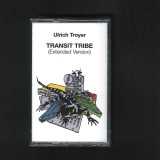
Ulrich Troyer - Transit Tribe MC (TAPE)

Ulrich Troyer has been producing music now solidly for over twenty years within a largely genre free framework, but whilst navigating forms such as avant-garde, techno, leftfield, field recording, electronica, glitch and ambient it is the aesthetics of dub that guide his creative direction. Not really recognisable in an orthodox form as remixed versions of roots reggae songs but in the way sonics are manipulated with space, the application and layering of delay, reverb and echo that fixes his output well within the scope of what might be called futurist dub.

The nearest comparisons to his new album TRANSIT TRIBE can only be established by a synthesis of some of the more adventurous explorations in modern music such as African Head Charge, Jon Hassell, Pole (Stefan Betke), Bill Laswell or even Miles Davis; featuring a diverse selection of artists and friends not only from Vienna and environs but also from around the world, sounds are not so much fused but allowed to float along the continuous flowing tide of warm waves of bass.

Rather than to allow the names of Ulrich Troyer's collaborators be merely listed in the album credits, what they bring to this joyful affair needs to be outlined, albeit briefly: Co-producer credits go to Osman Murat Ertel from Istanbul, who employed a variation on the old foolproof Nick Lowe method for checking out the impact quality of his own sound productions by playing tracks through his car sound system speakers!

Murat is a member of the electro-psych-folk group Baba Zula where he plays electric saz, oscillators and theremin and played a key part in the creative development of the album. Mamadou Diabate, the balafon master originally from Burkina Faso and now resident in Vienna, has developed his own unique technique of playing solos that replicate the sound of three instruments playing in unison; however the multi-talented Mamadou is engaged here on singing and playing the talking drum. From South Tyrol Reinhilde Gamper is a member of the experimental trio Greifer who are bringing the sound of the zither into the twenty-first century using new playing techniques and electronic gadgets. Susanna Gartmayer is an Austrian composer and bass clarinetist specialising in improv and multimedia sound research. Diggory Kenrick has been engaged with creating new dub fusions and also re-energising classic rocksteady and roots reggae classics, renowned for his interventions on flute. Didi Kern is an electronic dance musician and drummer from Vienna with a focus on free improvised music. Hamidou Koita, a singer and multi-instrumentalist, is from a traditional Griot family in Burkina Faso but now resident in Vienna and a regular musical partner of Mamadou Diabate playing drums and calabash. Austrian Lukas Lauermann is both a studio and live musician playing cello, also working on electronic sound design and writing string arrangements. He has recorded extensively and appeared on stage with both Mark Lanegan and Hans-Joachim Roedelius. Martin Mallaun is a Tyrol-born specialist in both the development of the zither in modern music and also as a researcher in the effects of climate change on the vegetation of Alpine ecosystems. Mystica Tribe is the musical alias of Tokyo-based dub/techno producer Taka (Takafumi) Noda. He collaborated with Vienna's own Vegetable Orchestra on 2020's "Transplants (Mystica Tribe Version)". After studying classical percussion Flip Philipp is now a jazz vibraphone player and member of the Vienna Symphony Orchestra. Wolfgang Pfistermüller is a member of the Vienna Trombone Quartet and the developer of the incredible bass-trombone Aurora with its uniquely warm and resonant sound. Roger Robinson is a renowned British poet, winner of many contemporary poetry prizes and member of the experimental music group King Midas Sound. Kwame Yeboah is a Ghanaian born UK based keyboard wizard who tours regularly with Yusuf / Cat Stevens, Ms. Dynamite and Pat Thomas.

So contained on the album is an astonishing mix of musicians and instruments: sounds of cowbells recorded in the South Tyrolean alps processed by modular synthesizers and heavy analogue bass synths combined with instruments such as zither, bass-zither, electro saz, flute, talking drum, trombone, cello, vibraphone, marimba, djembe, contra-alto clarinet, melodica, Farfisa - all bound together by organic live-drums and dub effects.

Liner notes by Steve Barker

Disponible

En el almacen y preparando para el envío

14,92
Nubiyan Twist - Jungle Run

Nubiyan Twist

Jungle Run

2x12inchSTRUT198LP
STRUT
26.11.2024

Strut proudly present the brand-new studio album from Nubiyan Twist, 'Jungle Run'.

Now one of the leading lights in the UK's new generation of soulful, genre-fluid artists, the Leeds-born and now London-based 12-piece collective have created their finest recordings to date, effortlessly weaving together elements of jazz, soul, hip hop, African styles, Latin, dub, hip hop and electronics in a flow of thought-provoking and life-affirming music.

Recorded at the band's own self-built Henwood Studio in rural Oxfordshire, the album effortlessly moves through different voices from the band's circle. The inimitable, timeless vocals of Nubiya Brandon lead the way on the album's title track about breaking preconceptions and promoting equality, 'Where you from I'm from wherever I be.' Saxophonist Nick Richards vocals the killer first single from the album about inner turmoil and a search for the truth, 'Tell It To Me Slowly' while rising Ghanaian star K.O.G. appears on the Afro jams 'Basa Basa' and 'They Talk'. Percussionist Pilo Adami (Nina Miranda / Afrosamba) voices the infectious bossa-jazz jam 'Borders'. The band also draft in two African legends for guest duties with the original Afrobeat maestro Tony Allen on 'Ghosts' and Ethio jazz pioneer Mulatu Astatke contributing vibes on the sinuous 'Addis To London'. 'The depth of talent and ideas that every member of this group has brought to the table for this album is incredible,'

says producer and orchestrator Tom Excell. 'Conceptually, 'Jungle Run' is all about connecting different people and cultures whilst exploring the journey of individuals. This album is the pinnacle of everything we have done to date and to collaborate with the godfathers of Afrobeat and Ethio Jazz and celebrate their music in a modern context was very humbling.'

The album is another landmark for a band that has been consistently developing their sound since their formation in 2015 at Leeds College Of Music. 'One of the biggest factors in our sound was the exciting music scene in Leeds,' explains saxman Joe Henwood. 'From a reggae night called 'Sub Dub' to venues playing whacked out experimental jazz.' Since then, the band's self-titled debut album (2015), EP 'Siren Song' (2016) and single 'Dance Inna London' (2017) have become classics in their own right and their live show has become an essential ticket; previous live highlights have included high profile slots at David Byrne's Meltdown at the South Bank and Glastonbury West Holts

'Jungle Run' is released on 15th February on CD, 2LP and digital. Cover artwork comes from acclaimed designer Marcus Davies and the album is mastered by The Carvery. Nubiyan Twist tour across Europe from November.

Disponible

En el almacen y preparando para el envío

31,05
Ulrich Troyer - TRANSIT TRIBE

Ulrich Troyer has been producing music now solidly for over twenty years within a largely genre free framework, but whilst navigating forms such as avant-garde, techno, leftfield, field recording, electronica, glitch and ambient it is the aesthetics of dub that guide his creative direction. Not really recognisable in an orthodox form as remixed versions of roots reggae songs but in the way sonics are manipulated with space, the application and layering of delay, reverb and echo that fixes his output well within the scope of what might be called futurist dub.

The nearest comparisons to his new album TRANSIT TRIBE can only be established by a synthesis of some of the more adventurous explorations in modern music such as African Head Charge, Jon Hassell, Pole (Stefan Betke), Bill Laswell or even Miles Davis; featuring a diverse selection of artists and friends not only from Vienna and environs but also from around the world, sounds are not so much fused but allowed to float along the continuous flowing tide of warm waves of bass.

Rather than to allow the names of Ulrich Troyer's collaborators be merely listed in the album credits, what they bring to this joyful affair needs to be outlined, albeit briefly: Co-producer credits go to Osman Murat Ertel from Istanbul, who employed a variation on the old foolproof Nick Lowe method for checking out the impact quality of his own sound productions by playing tracks through his car sound system speakers!

Murat is a member of the electro-psych-folk group Baba Zula where he plays electric saz, oscillators and theremin and played a key part in the creative development of the album. Mamadou Diabate, the balafon master originally from Burkina Faso and now resident in Vienna, has developed his own unique technique of playing solos that replicate the sound of three instruments playing in unison; however the multi-talented Mamadou is engaged here on singing and playing the talking drum. From South Tyrol Reinhilde Gamper is a member of the experimental trio Greifer who are bringing the sound of the zither into the twenty-first century using new playing techniques and electronic gadgets. Susanna Gartmayer is an Austrian composer and bass clarinetist specialising in improv and multimedia sound research. Diggory Kenrick has been engaged with creating new dub fusions and also re-energising classic rocksteady and roots reggae classics, renowned for his interventions on flute. Didi Kern is an electronic dance musician and drummer from Vienna with a focus on free improvised music. Hamidou Koita, a singer and multi-instrumentalist, is from a traditional Griot family in Burkina Faso but now resident in Vienna and a regular musical partner of Mamadou Diabate playing drums and calabash. Austrian Lukas Lauermann is both a studio and live musician playing cello, also working on electronic sound design and writing string arrangements. He has recorded extensively and appeared on stage with both Mark Lanegan and Hans-Joachim Roedelius. Martin Mallaun is a Tyrol-born specialist in both the development of the zither in modern music and also as a researcher in the effects of climate change on the vegetation of Alpine ecosystems. After studying classical percussion Flip Philipp is now a jazz vibraphone player and member of the Vienna Symphony Orchestra. Wolfgang Pfistermüller is a member of the Vienna Trombone Quartet and the developer of the incredible bass-trombone Aurora with its uniquely warm and resonant sound. Roger Robinson is a renowned British poet, winner of many contemporary poetry prizes and member of the experimental music group King Midas Sound. Kwame Yeboah is a Ghanaian born UK based keyboard wizard who tours regularly with Yusuf / Cat Stevens, Ms. Dynamite and Pat Thomas.

So contained on the album is an astonishing mix of musicians and instruments: sounds of cowbells recorded in the South Tyrolean alps processed by modular synthesizers and heavy analogue bass synths combined with instruments such as zither, bass-zither, electro saz, flute, talking drum, trombone, cello, marimba, djembe, contra-alto clarinet, Farfisa - all bound together by organic live-drums and dub effects.

Disponible

En el almacen y preparando para el envío

23,49
JJ Whitefield & Forced Meditation - The Infinity of Nothingness LP

Having plied his trade around the world for more than three decades, German guitarist, bandleader and musical explorer Jan Whitefield has always instilled in his craft a natural aesthetic of authenticity, a key component which has seen him amass a sizeable and varied catalogue of material which has remained timeless where some of his contemporaries have faded away.

In the early 90s, as various UK bands were signed up by sizeable labels and enjoyed even mainstream chart success in the Acid Jazz and rare groove boom, Jan and his brother Max formed the Poets Of Rhythm, self-releasing their own uncompromisingly hard-edged take on 70s street funk on the then completely unfashionable 7" single format, forerunning the Deep Funk scene by almost a decade. 30 years on, in spite of a legion of retro-focused bands having followed in their wake, few have yet to come close to matching the energy and spirit of those early Poets 45s.

Since then, Jan has applied himself to all manner of new incarnations and innovative side-projects, releasing further funk surveys as the Whitefield Brothers before leading his own band under the pseudonym Karl Hector, with releases on labels such as Stones Throw, Daptone, Ninja Tune, Mo'Wax, Strut and more. An avid music lover, explorer and record collector extraordinaire, Whitefield's music has effortlessly absorbed his expanding interests along the way, particularly drawing influence from Ethiopian Jazz and West African funk and highlife, as well as Kraut-rock and ambient via his Rodinia alter-ego.

More recently, Whitefield has begun to venture into the astral planes of what's now commonly referred to as 'spiritual jazz', and this is very much where we find him manifesting on 'The Infinity Of Nothingness'. A set of mature, delicate and meditative orchestrations, like much of Whitefield's best work the album is studiously true to its key influences - and in this instance the twin figureheads of Sun Ra and Pharoah Sanders are particularly preeminent - but also completely avoids falling into a trap of mere tribute or facsimile. With subtle yet diverse accents of Hip Hop, Library and the Avant Garde appearing wholly unobtrusively, the album is unified by a marked trance-like feel, beginning with the sparse, processional opener 'Nothingness' through to the 3 part 'Infinity Suite' of 'Time', 'Space' and 'Energy'.

As he did as a schoolboy with the Poets of Rhythm, with 'The Infinity Of Nothingness' Whitefield achieves that exceptionally rare feat of creating music that is not only worthy of sitting alongside that of his overarching influences, but will also stand up with it against the tests of time.

Disponible

En el almacen y preparando para el envío

25,63
Idrissa Soumaoro - Diré

Idrissa Soumaoro

Diré

12inchMRB-ML01-019
Mieruba Record Label
03.06.2024

‘Diré’, Idrissa Soumaoro new album, comes as a surprise to Malian and international audiences. Composer, singer, guitarist and master of the kamalen n’goni Idrissa Soumaoro presents here a beautiful collection of songs on his third album, Diré, named in honor of the town where he met his wife and where his first daughter, who is no longer with us, was born.
In 1971, after his studies at the INA in Bamako, Idrissa was transferred to Diré to teach music at the lPEG (Pedagogical Institute of General Education). He was 22 years old when he arrived in Diré. Idrissa has always been nostalgic for this beautiful place in the 333 Saints of Timbuktu region. As Idrissa sings in ‘Diré taga’ (Going to Diré), the track that opens the album, the city evokes deep emotions for the artist, as if it were a long-lost friend or lover. Celebrating the memory of the city of Diré leads the artist to retrace stories and lived situations that marked and animated him in years gone by: ‘I really miss the people, the colleagues, the friends and that period. Despite the time that has flown by, I would ardently wish to see Diré again’. Today, at the difficult time Mali is experiencing, remembering the city of Diré in the 1970s also means for the artist not giving up hope for peace: ‘The memory of Diré, a beautiful town in northern Mali, strengthens my hope for peace, union and real independence for the happiness of my people’; as he sings in ‘Sababou’, ‘Without hope, there is no life. Together we will succeed’.
The ten highly original compositions of the album are strongly based upon traditional music of Mali, but Idrissa’s life experiences, travels, education, collaborations and personal musical career have led him to compose and perform music with other influences. As Idrissa quotes: ‘My inspiration generally comes from the donso n'goni, a Bambara instrument played by and for hunters throughout Mali. This is a pentatonic instrument, similar to the blues exported to the USA by black African slaves. I've also spent so much time playing a variety of music that my music also reflects rumba, salsa (as well as Bamanan blues and a few derivatives: jazz, country, soul, rhythm and blues) etc. I have looked for and hope to have found my own form of expression from these influences’.
Throughout the album, his strong, clear voice sings in French, Bambara and English. It rides seamlessly upon a complex rhythmic sea of distinctly West African stringed instrumentation and percussion with accents of flute and balafon. There are keyboards in a few songs, but these, happily, do not dominate the music as we hear so often in today’s music. This album presents the music of a mature artist who has ‘been there, done that’ and returned to celebrate his country, his roots and his dreams in a flawlessly produced collection of songs of love, reassurance, fatherly advice and hope.
The album already has a long history: it was initiated in 2012 by Marc-Antoine ‘Marko’ Moreau, former producer and manager of Amadou and Mariam. Moreau had plans to produce the album and invited Idrissa Soumaoro to start recording in Manjul's studio in Bamako. When Moreau suddenly passed away, work on the album was still missing. The pandemic still added time for the production to continue. With the help of Climax Orchestra, arrangements and orchestrations were finalized in France. At the artist's behest, 'Diré' will finally be presented to the public by Mieruba, the independent label based in Ségou, the home of the blues in Mali. 'Let's stand together so that Mali can flourish': from conception to production and distribution, this is the message that 'Diré' carries.

Disponible

En el almacen y preparando para el envío

21,81
Various - Rumba Rules - Original Motion Picture Soundtrack

The official soundtrack of the 2021 'Rumba Rules, New genealogies' documentary movie by Congolese artist Sammy Baloji and Quebec filmmaker David Nadeau-Bernatchez. A deep dive into Kinshasa’s vibrant Rumba scene, including remastered classics by Brigade Sarbati, Werrason, Papa Wemba, Franco & le Tout Puissant O.K. Jazz

Rumba Rules, New genealogies is about contemporary rumba in Kinshasa, but this music has deep historical roots nevertheless. Born in the interstices of the colonial world and thriving during the three decades of the Mobutu era in Zaïre, Congolese rumba has been iconic and popular all over Africa for decades. The roots of Rumba are even deeper, and the many paths it evokes trigger the imagination. The story goes that this music came with the migration of the ‘Kumba’ drum and dance in previous centuries, African slaves having carried it all around the Americas and giving birth to Cuban ’Rumba’, Colombian ‘Kumbia’ and many others. With its varied rhythms, guitars and horns, through LPs and radio stations, Rumba came back to (re)conquer Africa throughout the 20th century, paving the way for new practices. One could say this music is a sort of palimpsest, a memory in itself of Atlantic migrations and histories.

Rumba is nowadays discussed all around the world, igniting many debates among the Congolese diaspora. Being the constant talk of the town sometimes overloads public debate, and many people get tired of this broken record. Thus, over the last decade, enterprising producers have worked hard to promote Kinshasa’s musical diversity and tried to emulate new sounds to reach worldwide attention. But Kin’ locals and urban dwellers will not be fooled : new shoots cannot hide the forest. Despite some difficulties to innovate, despite the pastoralist sermons and the diaspora fighters pushing for concert cancelations, rumba is still at the core of the Congo today. Talented artists such as Fally Ipupa, Ferré Gola, Brigade Sarbati and others are leading the fifth generation, and the religious world has also proven to be a nurturing environment for the cultural and economic dynamism of this music.

Focusing on the music of Brigade Sarbati and his Orchestra, this record offers a deep dive into Kinshasa’s rumba scene. Halfway between professional studios and Zoom H4 field recordings, the rumba herein is about today’s youth: dense, full of energy and breakdowns, insights and name-dropping. The cavacha rhythm, the solo and bass guitar’s playing style, the singing style and numerous dedications all resonate with the history of Rumba. In an era where digital sound is taking over, it is interesting to highlight the instrumental and live performance compositions of this music. Digital technology is indeed used during the recording and mixing phases, but Congolese rumba still relies strongly on instrumental playing. There is all that but also, many other things to hear on this record… It’s time to let it be. A big thanks to Étienne Tron for making it possible: it is on his initiative and through his patience that this album is in your hands today. (David Nadeau-Bernatchez, december 2021)

Disponible

En el almacen y preparando para el envío

17,23
IVAN JULLIEN - LIVE AT NANCY JAZZ PULSATIONS

It was in 1973, on the 14 of October, late in the afternoon; on a pretty Sunday under the Big Top in the heart of the “Parc de la Pépinière”, in Nancy; it was the “premiere”, the world
first hearing, and it has so far remained the only one commissioned by composer and trumpet player lvan Jullien, for the first international Nancy Jazz Pulsations festival. In order to complete this work of composition and orchestration, Ivan asked the great Eddie Louiss on organ, and chose to do without a double bassist who would have been drowned in a telluric outburst, for the best drummers in Europe and beyond had accepted out of sympathy to offer their contribution to such a festival. The only melodist with Louiss was the English John Surman (born in 1944) here on soprano saxophone, discharging torrents of incandescent lava.
Conversing with drums, cymbals, xylophones, kettledrums, vibraphones, tumbas, djembes and all other percussive things that you’ll like to imagine – a bunch of talents such as those
of the French André Ceccarelli, Daniel Humair or Bernard Lubat, the New Yorker Stu Martin, who reminds of Paul Motian in his “breaks”, South African Louis Mo-Holo, young Lamont Hampton, the great trombonist “Slide” Hampton’s son and the Malagasy Franck
Raholison, the Senegalese Lamine Konte. And we will scrupulously refrain from omitting the four musketeers, here representing
percussion in classical music, namely the Percussion Quartet of Paris under the leadership of Mr. Lucien Lemaire.

Disponible

En el almacen y preparando para el envío

14,50
Teleseen - The Emotional Life Of Savages

the producer, multi-instrumentalist, DJ and record collector Gabriel Cyr AKA Teleseen releases 5th album 'The Emotional Life of Savages' via French imprint Goldmin Music.

African rhythms, Latin heat and otherworldly electronics collide like neurons, processed through a New York state of mind. The pancontinental sounds are mirrored in his own life, which has oscillated back and forth between various countries.

A jazz background combined with a love for house and techno are ingrained in the grooves. Also key is the samba, baile funk and MPB that inspired him while living in Rio de Janeiro, plus the sounds he reabsorbed on returning to NYC's club scene.

This wide range of influences spanning the global underground coalesces into a rich, vital and coherent whole. Warm and soulful, but also evoking an intoxicating, heady atmosphere, the hypnotic and ultra-rhythmic tracks subtly shift and build to fever pitch, due primarily to deft polyrhythmic drums and percussion - both played and sequenced.

"Working on this record I finally found myself able to manifest a certain sound I'd been hearing in my head for years, combining the rhythmic intensity of afro-house and afro-Brazilian music with the more cosmic sounds of Detroit and deep house", explains Cyr on his musical vision.

The gentle sundowner glow of 'Myrtle Avenue' with its textured synth waves and wandering Parrish-esque keys acts as a precursor to the potent nocturnal adventure to follow: 'Espelhos' captures a similar essence to Black Science Orchestra's classic 'Save Us (The Jam)', before the heat goes up and heads go down for the eastern-tinged, autotune-laden fire of 'Khalil'.

The album then intensifies further still on the percussion-heavy, big bottomed cosmic throb of 'Jaguar', whilst Brazilian flavour meets tech house rush on 'Fundos', before the party reaches its feverish close on the wiggling batucada- meets-tribal-house of 'Temporada De Seca'.

Born in the north eastern United States, as an adult Cyr has always been nomadic. He has sought to live and immerse himself in other cultures and absorb their sounds, but eventually always succumbs to the Big Apple's magnetic pull. Back home, a key inspirational catalyst for the album was the Brooklyn-based party Africainoir, where he's a resident DJ.

Alongside cutting his teeth producing illbient/hip hop and working as an engineer, he ran his own studio for period, before starting his own label Percepts, on which to release his dub techno style debut. He has since released on 100% Silk, Boomarm Nation and Feel Up Records, and now 'The Emotional Life Of Savages' marks Teleseen's first album for Goldmin.

No en stock

Haga su pedido ahora y le encargaremos el artículo en nuestro proveedor.

8,82

Ültimo hace: 7 Años
Intercommunal Free Dance Music Orchestra - Vol. 1 Concert A Prades Le Lez
  • On N'est Pas Chez Les Colonels
  • Intercommunal Blues
  • Mazir
  • Kan-Ha-Diskan - We Shall Over Come
  • African Rythm-N-Logy
También disponible

2[23,95 €]


Concert at Prades-le-Lez marks the origins of the Intercommunal Free Dance Music Orchestra. In 1974, François Tusques and his companions (Michel Marre, Jo Maka, Adolf Winkler and Guem), in the spirit of Don Cherry or Chris McGregor, playfully dismantle all borders and all styles of creative music.

On this first volume, the Intercommunal takes its audience from New Orleans to Brittany and on to North Africa. The journey was bold, without a doubt—and its memory remains unforgettable.

“The music that we make is primarily meant to be listened to live,” warned a leaflet from the Intercommunal Free Dance Music Orchestra. This is precisely why the (restored!) reissue of the two volumes of Concert at Prades-le-Lez, recorded on January 25 and 26, 1974 by François Tusques and his comrades, is such an important event.

In 1971, after recording a series of albums that would leave a lasting mark on French jazz (Free Jazz, of course, with Michel Portal, François Jeanneau, Bernard Vitet, Beb Guérin and Charles Saudrais, but also Le Nouveau Jazz with Barney Wilen, or the solo Piano Dazibao), François Tusques founded the Intercommunal—a grouping whose very name called for the fraternization of the various communities making up the country: Our music will help, we hope, to resolve the contradictions that exist between workers be longing to different communities, by breaking down various forms of national chauvinism, and more particularly the chauvinism of certain French people toward the cultures of Third World countries… Long live the friendship between the peoples of the whole world!

Among the great records made by the Intercommunal Free Dance Music Orchestra, the two volumes of Concert at Prades-le-Lez come first, before L’Inter Communal, Vol. 4, Le Musichien, and Après la marée noire (four titles already reissued by Souffle Continu). François Tusques and his companions (Michel Marre and Jo Maka on saxophones, Adolf Winkler on trombone, and Guem on percussion) performed on January 25 and 26, 1974 at the Moulin de Prades-le-Lez, a few kilometers from Montpellier. It was thus in the southern region of Occitanie that the first echoes of this musical vision of a borderless brotherhood were recorded.

“We’re not among the Colonels,” the Intercommunal reassures us right away, performing a stride piano tune carried by African winds that the audience cannot resist for long. The energy is already striking and it never lets up throughout these two recordings, from start to finish: jazz, blues, traditional music, minimalism, even funk… The musicians of the Intercommunal have heard a lot of great music and now delight in reinventing it by mixing it all together.

“We want the song form to take its place as a weapon in the struggle against capitalist exploitation and all those who oppress us morally and materially,” declared an Intercommunal leaflet, quoting Jean-Baptiste Clément, author of the lyrics to “Le Temps des cerises.” The struggle was therefore serious—but it did not prevent François Tusques and his group from waging it in a festive spirit: each piece on Concert at Prades-le- Lez sends out a call for love and fraternity. Fifty years later, the message remains as relevant as ever—and once again, it is François Tusques who makes it heard.

Reservar17.04.2026

debe ser publicado en 17.04.2026

23,95
Lino Capra Vaccina - Antico Adagio (Complete 1978 Sessions) LP 3x12" (Boxset)
  • Elegia
  • Voce In Xy
  • Canti Delle Sfere
  • Frammenti Di Sonno
  • Movimenti E Silenzi Per Spazi Bianchi
  • Antico Adagio
  • Ondulazione Melodica
  • Motus
  • Frammenti Di Suono
  • Vocis
  • E Echi Armonici Part 1
  • F Echi Armonici Part 2

For the first time, all the 1978 recording sessions of Lino Capra Vaccina's legendary Antico Adagio - including Frammenti da Antico Adagio and Echi Armonici da Antico Adagio - collected in one definitive deluxe edition. Minimalism, and so much more. Sheets of resonance, stunning harmonic interplay, intricate rhythms rising as one. Sidelong works of pulsing, hypnotic, ritualistic drone built from vibraphones, marimbas, gongs, bells, and cymbals, threaded by the sustained vocal tones of Juri Camisasca and Dana Matus. A trance-inducing, meditative, cosmic world of sonic interplay - the world beyond, joined with that which lays within.

Before an aberrant idea of progress ludicrously sped up our daily lives, even in hectic Milan it was possible to "play slowly" - with no pressure, simply following the path your art was showing you. This music moves between modal fascinations, ritual evocations, and states of hypnotic trance, evoking the acoustic environment of Tibetan and Zen Buddhist ceremonies and the temporal structures of Noh theatre, from which Vaccina took the name of his original label, Nō. Now, fittingly, this complete collection appears on Ubi Kū, the label of the Italian Buddhist Union.

Lino Vaccina (1953) first gained note as a member of Aktuala, creating a hybrid of rock, avant-garde, and ancient musics while incorporating sonic traditions from across the globe. After leaving in 1974, he studied at Milano's Civica Scuola di Musica, collaborating with Franco Battiato and Juri Camisasca, and forming Telaio Magnetico in 1975. In 1978 he self-released Antico Adagio in a tiny edition and wouldn't be heard from again until 1992. From 1979 to 1985 he was percussionist with the Orchestra of Teatro alla Scala under maestros such as Abbado and Ozawa. His career has been marked by an incredibly high bar of quality and a tragically slim recorded output - a rigorous and sensual language fusing Oriental, Mediterranean, and African influences with ritual elements and a cosmic sense of time.

As Massimo Torrigiani writes: "Lino Vaccina's music captivates through its internal coherence and its ability to generate states of suspension and deep listening - through undulations, small melodic fragments, dialogues between acoustic instruments and resonances that seem to evoke a phantom orchestra. An example of personal exploration, discipline and openness that speaks across time to anyone willing to be drawn into its sound."

Frammenti da Antico Adagio and Echi Armonici da Antico Adagio contain material from the original sessions, restored and issued by Die Schachtel in 2014 and 2017. The new masters, prepared by Giuseppe Ielasi, are based on those restorations and the original material. The package includes previously unpublished photographs from the May 1978 sessions and liner notes by Mauro Radice in Italian, English, and French. Cover art by Dana Matus. Printed by Legno, Milano & Mother Tongue, Verona.

Personnel: Lino Capra Vaccina (vibraphone, marimba, tablas, wooden drums, darbuka, cymbals, gong, metal sheets, bells, bass drum, tom, snare drum, piano, voice), Dana Matus (voice, percussion, cetra), Juri Camisasca (voice), Mario Garuti (violin), Roberto Mazza (oboe). Original production by Massimo Villa & Lino Vaccina with Piero Cannizzaro. Recorded May 1978 at Circle Studios, Milano.

The heights of the Italian avant-garde, at their very best.

Reservar13.02.2026

debe ser publicado en 13.02.2026

119,12
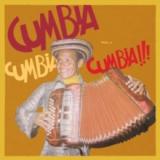
Various Artists - Cumbia Cumbia Cumbia!!! 2x12"
  • Cumbia Ma
  • Cumbiambera
  • Mi Sendero
  • Amores Conmigo
  • Cumbia De Valledupar
  • Dame Un Besito Manuela
  • Yolanda
  • El Clarn De La Montaña
  • Cumbia Pachanga
  • Tiburn Con Pelo
  • Cumbia Panormica
  • La Tormenta
  • Satans
  • Leobigilda
  • Suéltale La Trenza
  • Cumbia Bogotana
  • La Amanecedora
  • El Indio Fiestero
  • La Serrana
  • Cumbia Que Me Alegras
  • La Democracia
  • Cumbia Marina
  • Cuando Te Vayas
  • Sal Con Limn
  • El Mundo Se Va A Acaba
  • Cumbia Casino
  • La Palma
  • Cumbia Continental

After digging deep into the overwhelming archives of Discos Fuentes, Codiscos and Discos MAG in our previous volumes, this fourth instalment in the series "Cumbia Cumbia Cumbia!!!" comprises 28 Colombian cumbia bangers for the dance floor from the deep vaults of Discos Tropical, all of them originally released between 1960 and 1984. The historical origins of cumbia are nebulous and imprecise. The mythology surrounding it suggests an ancient past when Amerindian, African and European musical sounds were mixed together. Discos Tropical was a Barranquilla-based label founded in the mid-1940s by Luis Emilio Fortou Pereira, a visionary who helped define Colombian dancing habits and tastes from the previous century. Until the late '50s, most cumbias were orchestral-based. However, even though formats and styles diversified from the following decade onward, these highly popular big bands spectacularly defined the sound of Discos Tropical and livened up the most cosmopolitan dances in the major coastal cities. After the mid-'60s, the big bands gradually fell into decline, but the popular demand for tropical music did not. Facing this situation, the major record companies created smaller-format groups with one particular feature: they mixed accordion music with brass bands. This new volume of "Cumbia Cumbia Cumbia!!!" combines well-known classics and rarities that are difficult to find in their original formats. An invitation to enjoy and be amazed, above and beyond ethnographic and academic concerns. Double Vinylalbum

Reservar06.02.2026

debe ser publicado en 06.02.2026

29,20
ORCHESTRA SUPER MAZEMBE - THEIR GREATEST HITS LP
  • A1: Kasongo
  • A2: Shauri Yako
  • A3: Kayembe
  • B1: Nabimakete
  • B2: Salima
  • B3: Atia-Jo

Super Mazembe's "Greatest Hits," serves as a definitive collection celebrating the band's remarkable contributions to East African music. Released in 1986, this compilation features a carefully curated selection of the band's most iconic tracks, encapsulating their vibrant sound and the infectious energy that made them a household name. Highlights include fan favorites like "Shauri Yako" and "Kasongo" each track showcasing the band's skillful musicianship and unique ability to blend traditional rhythms with contemporary styles. "Greatest Hits" not only pays homage to their illustrious career but also introduces new audiences to the timeless music of Super Mazembe, solidifying their legacy as significant figures in the African music scene. This LP remains a cherished collection for both long-time fans and newcomers alike, capturing the essence of a band that defined an era and continues to inspire musicians and music lovers across generations.

Reservar31.01.2026

debe ser publicado en 31.01.2026

19,75
Artículos por página
N/ABPM
Vinyl