Santana's self-titled debut album announces the arrival of a new Guitar God. Made during the legendary bandleader's most fruitful and creative period, the classic 1969 set functions as an accessible entry point into the tangy worlds of Latin music by way of an intoxicating blend of Afro-Cuban percussion, jazzy tempos, exotic leads, bluesy riffs, and psychedelic accents.
Indeed, separation between Carlos Santana's fluid fills, spicy solos, and broiling grooves and pianist Gregg Rolie's soulful Hammond organ runs allows the music to come alive with a newfound freshness and radiance. Songs simmer, with each passage bursting forth with vibrant colour. Just like the equally essential follow-up Abraxas, Santana also lays claim to one of the biggest (and unfortunate) production gaffes in music history.
For nearly four decades, copies were produced with the left and right channels reversed, meaning that everything was placed in a backwards manner. This even extended to compilations on which individual songs from Santana were included. Rest assured that, in addition to boasting reference audiophile sonics, this 180g 45RPM 2LP set gets all the specifications exactly right. And with a record of this magnitude, you want everything to be perfect.
Bound by natural chemistry and earthy spirituality, the record's innovative synthesis of myriad styles goes beyond anything that came before – as well as nearly everything that's followed. Playing with the finest band that the iconic guitarist ever had, Santana doesn't water down any exotic roots or simply incorporate mainstream Western styles into a Latin framework. This is a true hybrid, responsible for opening up borders, transcending cultural divides, and, most importantly, exhilarating the senses.
Released just weeks after the band blew minds at Woodstock, the groundbreaking record stands alongside Miles Davis' Bitches Brew and Jeff Beck's Beck-Ola as a pillar of rock fusion. Featuring the Top Ten radio smash "Evil Ways" and jam favorite "Soul Sacrifice," it hasn't aged a day. Hear like never before why Rolling Stone says Santana is #149 on its list of the Greatest Albums of All Time.
This second volume of Mangle Rojo is a tribute to the spirit of celebration and diversity that reigns in the festivities of Colombia´s town squares. We created this compilation in vinyl format, in which we continue to explore the traditional sounds of the Caribbean and Pacific coasts, which have a rooted Afro tradition.
We begin this journey with field recordings of traditional groups such as Sexteto Tabalá from Palenque de San Basilio, who plays the sextet format heir to the Cuban Son and Los Alegres del Telembí, exponents of the marimba music of the Colombian South Pacific.
We continue this voyage with proposals that fuse traditional rhythms with modern instruments and musical genres: The popular singer Nelda Piña makes a featuring with the afrobeat orchestra La BOA and the marimba band Saborimba, from a small town on the Pacific coast, collaborates with urban musicians.
In addition, we find new protagonists like the big band formats that have been popular in Colombia since the beginning of the 20th century: the Papayera band (Calentanos Brass Band) and the Chirimía format (Chirrimía Balsámica), this last one with the collaboration of the renowned singer Alexis Play.
Finally, we invite artists who use traditional rhythms to develop electronic proposals, such as Ghetto Kumbé and the well-known singer Nidia Góngora.
out of Stock
Last delivered 3 years ago available to reorder, subject to availability
The next chapter of the Natural Information Society is here. Since Time Is Gravity, credited to Natural Information Society Community Ensemble with Ari Brown, presents a newly expanded manifestation of acclaimed composer & multi-instrumentalist Joshua Abrams nearly 15 year, 7 albums &-counting flagship ensemble. Joining the core NIS of Abrams (guimbri & bass), Lisa Alvarado (harmonium) Mikel Patrick Avery (drums) & Jason Stein (bass clarinet) are Hamid Drake (percussion), Josh Berman & Ben Lamar Gay (cornets), Nick Mazzarella & Mai Sugimoto (alto saxophones & flute), Kara Bershad (harp) & Chicago living legend of the tenor saxophone Ari Brown. Recorded live to tape at Electrical Audio & The Graham Foundation, cover painting Vibratory Cartography: Nepantla, by Lisa Alvarado. 2xLP on Eremite USA, 2xLP & CD on Aguirre/Eremite Europe. Out 14-04.
Since first developing Natural Information Society in 2010, Joshua Abrams has been gradually expanding the group’s conceptual underpinnings, its musical references & the sheer number of the group’s members. Its music is, in a sense, an expansive form of minimalism, based in repeated & overlaid rhythmic patterns, ostinatos & modality. Its roots, its scale & its meaning become clearer in time. If time is gravity, it also allows us to carry more. Having begun as fundamentally a rhythm section with Abrams’ guimbri at its core, the version here can stretch to a tentet, including six horns.
Abrams has been expanding his minimalism gradually, but he has long understood a key to minimalism’s potential: the breadth of its roots in the late 1950s & early 1960s, ranging from the dissatisfaction of young European-stream composers with the limitations of serialism to the simultaneous dissatisfaction of jazz musicians with the dense harmonic vocabulary of bop & hard bop. The former began exploring rhythmic complexity & narrow tonal palates in place of harmonic abstraction (Steve Reich’s Drumming, Philip Glass’ Music with Changing Parts; perhaps above all Terry Riley’s In C & his late ‘60s all-night organ & loop concerts); the later reduced dense chord changes to scales (signally with Miles Davis' Kind of Blue, but rapidly expanding with John Coltrane’s vast project). In the 1950s the LP record opened the world with documentation of Asian & African musics, key influences on both minimalists & jazz musicians. If John Coltrane’s soprano saxophone suggested the keening shehnai of Bismillah Khan, the instrument was rapidly taken up by two key minimalists, LaMonte Young & Riley, similarly appreciative of its flexible intonation, the same thing that kept it out of big bands.
If the guimbri, the North African hide-covered lute that Abrams plays with NIS, involves a rich tradition of hypnotic healing music associated with the Gnawa people, Abrams’ music also touches on other musics as well — other depths, memories & healings, different drones, rhythms & modes. As the group expands on Since Time Is Gravity, he has made certain jazz traditions in the same stream more explicit as well. If there is a mystical & elastic quality involved in the experience of time, both in direction & duration, you will catch it here. The parts for the choir of winds expand on the roles of Abrams’ guimbri, Mikel Patrick Avery & Hamid Drake’s percussion & Lisa Alvarado’s harmonium: at times, the winds are almost looping in the tentet version, each hitting a repeating note in turn, at once drone & distinct inflection on temporal sequence. The brilliance of the work resides in Abrams’ compositions, the NIS’ intuitive execution & in Ari Brown’s singular embodiment of the great tenor saxophone tradition, including the oracular genius of Eddie “Lockjaw” Davis, & Yusef Lateef. The three pieces by the expanded NIS featuring Brown —the opening “Moontide Chorus” & “Is” & the ultimate “Gravity”— have an immediate impact, & togther might be considered a kind of concerto for tenor saxophone. Here Brown presses almost indistinguishably from composed melody to improvised speech, getting so close to language that he might have a text. Everything here is a sign. Note the tap of the Rhythm Ace that links “Moontide Chorus” to “Is”, the attentive heart always present, even when signed by a machine. There’s a link here to the methodologies & meanings of dub music & the linear & vertical collage of beats, textures & tongues: treated with reverence, a sample of a beat-box can be as soulful, as hypnotic, as a mbira or a tamboura. If those pieces with Brown are heard as a suspended concerto, the three embrace & enfold the other works, like the sepals of a flower. That placement will also touch on the mysteries of our perception of time.
Particularly in “Is”, but elsewhere as well, a phenomenon of transcendence arises in which time appears to be tripartite, at once moving backwards & forwards & standing still. This is an act of technical brilliance certainly, but also an illumination of music’s ability to represent temporal consciousness through polymetrics. This particular listener has only heard it before in a few places, including the horn shouts & bowed basses of Coltrane’s Africa, in moments of Charles Mingus’ The Black Saint & the Sinner Lady, in certain pieces where tapes were literally running backwards, & earlier still in Dizzy Gillespie’s Cubana Be, Cubana Bop, in which the composer George Russell & conguero Chano Pozo found a music that spoke at once in the voices of Stravinsky’s Rite of Spring & the vestigial rites, rhythms & songs of the Yoruba language & Santeria religion of inland Cuba.
In Joshua Abrams’ compositions & the realization of them by the NIS, in the time of one’s close listening & memory thereof, distinctions between the “natural” & the “social”, the “quotidian” & the “transcendent” are erased, suspended or perhaps irrelevant. Consider two of the ensemble pieces, one named for nature, the other social science. In “Murmuration” the repeated wind figures of flute & alto saxophone combine with the interlocking patterns of harp, guimbri & frame drum (tar) to create a perfect moving stillness, not an imitation but a witness to the miracle of the starlings’ astonishing collective art, a surfeit of beauty that might be the ultimate defense tactic.
“Stigmergy” takes its name & concept from the Occupy movement’s Heather Marsh, who proposes a social system based on a cooperative rather than competitive models, one in which ideas are freely contributed & developed as ideas rather than an individual’s property. In its form, Abrams’ “Stigmergy” is the closes thing to traditional jazz, a series of accompanied solos by each of the wind players. However, the composed accompaniment is a radically collectivist notion: a repeated rhythmic figure, call it ostinato or riff, in which the different winds each play only a note or two of the figure, a concept both more collectivist & individualistic in its conception than any typical unison figure. It suggests another of the underlying recognitions that propel the Natural Information Society, the group as social organism, the teleology of hypnotic anarchy, all parts in place, functioning systematically, evolving & expressing itself, its nature & society, as a transformative organism.
George Lewis has described music as “a space for reflection on the human condition”. This suggests that, rather than a “distraction”, at least some music might serve as a distraction from distraction. It’s a focus, a clarity, a awareness, an external invitation to interiority, as if music itself is a model for form & contemplation, an organism contemplating for us or as us. If that is a possibility, & I am sure I have heard such musics, than this music is among them. How many of our rhythms, melodies & harmonies (cultural, historical, biological, psychic) might such music carry, translate & transform in the particulate ecstasy of our own murmuration? (Stuart Broomer, April 2022)
out of Stock
Last delivered 3 years ago available to reorder, subject to availability
Exotica, ye-yé cumbia, guaracha infused twist, rock’n roll mambo, Spanish rumba, boogaloo beat, tropical garage and other unexpected bastard genres are featured in this festive compilation of bizarre hits taken from the glorious catalog of records released during the 60s and 70s on the Peruvian label Discos MAG. Some clearly unite genres, others are projects with creative names, but all are bold musical initiatives that got and will always get people onto the dance floor. “Sabroso Go Go” brings together fourteen musical mixes created in the recording studios of Manuel Antonio Guerrero (MAG), in which music directors combine rhythm with alchemy in a quest to find the philosopher's stone of the dance. Exotica, ye-yé cumbia, guaracha infused twist, rock’n roll mambo, Spanish rumba, boogaloo beat, tropical garage and other unexpected bastard genres are featured in this festive compilation. Although this compilation begins in 1957, experiments like this (some more memorable than others) were not new in Peru. The songs on this album were however much more successful hybrids. Some clearly unite genres, others are projects with creative names, but all are bold musical initiatives that got and will always get people onto the dance floor. At the end of the fifties, rock music shook the foundations of Peru, and orchestras rushed to cover hit songs and explore the possibilities of mixing them with tropical music. Lucho Macedo's orchestra took up the mantle and reinterpreted a well-known guaracha by Celia Cruz ('Rock and Roll') in mambo style, renaming it 'Rock and roll Mambo'. 'Maestro de Rock and Roll', a hit by the Cuban Conjunto Casino, received similar treatment. Another mix in this vein is the rock tune 'El Rock de los Chinos' by the Mexican Manolo Muñoz (author of 'Speedy González') recorded by the Chilean Choche Mérida for MAG in 1961. The following year, Chubby Checker’s 'The Twist' hit the scene and was immediately fused with guaracha by maestro Nelson Ferreyra. A legendary MAG musician, Carlos Pickling, composed 'La Charanga del Espacio' in 1963. The space sounds are produced by Pickling and his inseparable Hammond. He himself is the one who leads the orchestra that accompanies Benny Del Solar, Lita Branda and Pablo "Melcochita" Villanueva in the tropicalized version of Spanish Rumba, when the beats of the Iberian rumba were still exotic in South America. Around that time, the Chilean Willy Marambio was already living in Lima. In the track included on this album, the go-go style showcases his virtuosity on the trumpet. Another outstanding trumpet player, Roberto "Tito" Chicoma from Chiclayo, played as a session musician with MAG from 1959. A few years later, he became one of the most popular Colombian cumbia players, a talent he demonstrates in the song on this compilation, which blends the fun of go-go with yé-yé beats. 'Batijugando' was a hit from Mexico and was played in all the rhythms played across the Hispanic world since 1967. Inspired by the "Batman" series, it was performed at MAG by the Betico Salas orchestra, with vocals by the Panamanian lady crooner Nallye Fernández. 'Computador Electrónico' is another surprise on this album, performed by Panamanian vocalist Patty Pastel, it is the only known version in Spanish of 'Der Computer Nr. 3', originally sung in German by France Gall. Two other songs feature Edgar Zamudio. The versatility of Zamudio y Los Vikingos (originally a Chilean group) is demonstrated in the guitar-heavy song composed specifically for the late sixties skate fashion ('Go Go en Patines') and in his idiosyncratic protest song ('Día de Pago') performed in beat style. In the mid-seventies, Los Kintos, led by guitarist Francisco Acosta, developed different harmonic ideas in an instrumental track that veers from boogaloo to salsa, the fashionable rhythm of the day. Finally, in 1976, when the bumping hips dance craze swept the continent, Manuel Guerrero was quick to jump onto the bandwagon, composing a Bump song, together with his son Carlos. The Italian musician based in Lima, Luciano Luciani performed the song 'A Bailar Bump' backed by his band of local musicians Los Mulatos.
out of Stock
Last delivered 3 years ago available to reorder, subject to availability
The second in Jazz Room's occasional Pure Latin releases this Underground Masterpiece first emerged in 1980 and is an outstanding example of the Classic Era Nu Yorican El Barrio Underground Sound! If you dig the Tata Vasquez LP on Jazz Room then this is for you.
Featuring the Afro-Cubano Salsaero Jazz Heavyweights of the day including Chocolate Armenteros, Jose Mangual, Mauricio Smith and Orestes Vilato and a huge seven man Percussion Section it really blasts out the Afro-Latin message.
A part history of the Afro-Cuban Music Journey from the Hinterlands of Cuba via Havana and eventually arriving in Jazz Age New York it is a welcome addition to the Jazz Room Catalogue (as well as being Jazz Room Head Honcho's favourite albums).
Floor filler cuts for Latin Lovers with "Esa Brujeria" always turning up the heat.
out of Stock
Last delivered 3 years ago available to reorder, subject to availability
Belgian junk jazz trio schroothoop (which translates as 'junk yard') bring together multi-instrumentalists Rik Staelens (wind & string instruments), Timo Vantyghem (bass & thumb piano) and Margo Maex (percussion). Their new album called 'MACADAM' will be out April 7 via Sdban Records, home of many strongholds in the lively contemporary Belgian jazz and groove scene.
In 2020, schroothoop first emerged with their much-acclaimed and infectious debut album Klein Gevaarlijk Afval (Small Hazardous Waste). "Music on homemade instruments with a surprisingly good result" (De Standaard). "Schroothoop show that material limitation can be liberating and that sometimes the source of new sounds is just old junk."(Written in music). "We assure you that this "scrap heap" is worth gold!" (Le Grigri).
On their second album, to be released on April 7, schroothoop explore the vast sounds of discarded objects found on the macadam streets of Brussels. Wooden crates turn into guitars and lyres. Scrap metal becomes a thumb piano, a cimbalom, or percussion bells. Their compelling collection of semi-improvised songs is born out of several fruitful residencies and live performances during which Margo Maex, Rik Staelens and Timo Vantyghem dive deeper into the possibilities and unique timbres of their DIY instruments.
The junk jazz trio find inspiration in traditional Afro-Cuban and North-African rhythms, New Orleans second line grooves, and Arabic Hijaz scales. On Macadam, the band also explore the realms of electronic music, not shunning hints of drum and bass, dub riddims and ambient soundscapes, using pitch shifting delays or gauzy reverbs. The album delivers a mesmerizing trip through the most diverse capital of Europe, mixed and post-produced by none other than sound wizard Dijf Sanders.
The trio originally met in the Brussels street orchestra scene. One night they found themselves jamming on trash cans, buckets and other illegally dumped materials. Soon after, they started building their own DIY instruments from street trash. Imagine flutes made out of pvc pipes, a scrap metal drum kit, thumb pianos made out of old kitchen knives, a tin can violin, worn-out cutting discs as gongs, and a washtub bass. Delivering their own brand of "junk jazz", Schroothoop literally gives junk a second life by immortalizing a whole range of lost and found objects through music. The Brussels-based group effortlessly incorporates jazz, Northern African music, and Afro-Cuban rhythms, resulting in a danceable and hypnotic trip through the city's melting pot.
Belgian junk jazz trio schroothoop (which translates as 'junk yard') bring together multi-instrumentalists Rik Staelens (wind & string instruments), Timo Vantyghem (bass & thumb piano) and Margo Maex (percussion). Their new album called 'MACADAM' will be out April 7 via Sdban Records, home of many strongholds in the lively contemporary Belgian jazz and groove scene.
In 2020, schroothoop first emerged with their much-acclaimed and infectious debut album Klein Gevaarlijk Afval (Small Hazardous Waste). "Music on homemade instruments with a surprisingly good result" (De Standaard). "Schroothoop show that material limitation can be liberating and that sometimes the source of new sounds is just old junk."(Written in music). "We assure you that this "scrap heap" is worth gold!" (Le Grigri).
On their second album, to be released on April 7, schroothoop explore the vast sounds of discarded objects found on the macadam streets of Brussels. Wooden crates turn into guitars and lyres. Scrap metal becomes a thumb piano, a cimbalom, or percussion bells. Their compelling collection of semi-improvised songs is born out of several fruitful residencies and live performances during which Margo Maex, Rik Staelens and Timo Vantyghem dive deeper into the possibilities and unique timbres of their DIY instruments.
The junk jazz trio find inspiration in traditional Afro-Cuban and North-African rhythms, New Orleans second line grooves, and Arabic Hijaz scales. On Macadam, the band also explore the realms of electronic music, not shunning hints of drum and bass, dub riddims and ambient soundscapes, using pitch shifting delays or gauzy reverbs. The album delivers a mesmerizing trip through the most diverse capital of Europe, mixed and post-produced by none other than sound wizard Dijf Sanders.
The trio originally met in the Brussels street orchestra scene. One night they found themselves jamming on trash cans, buckets and other illegally dumped materials. Soon after, they started building their own DIY instruments from street trash. Imagine flutes made out of pvc pipes, a scrap metal drum kit, thumb pianos made out of old kitchen knives, a tin can violin, worn-out cutting discs as gongs, and a washtub bass. Delivering their own brand of "junk jazz", Schroothoop literally gives junk a second life by immortalizing a whole range of lost and found objects through music. The Brussels-based group effortlessly incorporates jazz, Northern African music, and Afro-Cuban rhythms, resulting in a danceable and hypnotic trip through the city's melting pot.
First solo LP by the talented Peruvian artist Betico Salas, lead trumpet player of the great Sonora de Lucho Macedo, one of the best ensembles playing Cuban repertoires in the early '60s. This 1966 album features Alfredo Linares on piano and sonero vocals by Benny del Solar, and combines a mix of guarachas, guanguancó and even cumbias. Betico Salas would later release two more albums and become a legendary trumpet player in Peruvian musical history. First time reissue.- DETAILS: Alfredo Linares on piano and sonero vocals by Benny del Solar stand out on this album. Benny del Solar sings lead vocals on the cumbia of Argentine origin 'Nos vamos a casar'; the Colombian 'Lo que pasa es que la banda está borracha', a continental hit since the early sixties; the guaracha 'A los muchachos de Belén', by Puerto Rican musician Tito Rodríguez; the guaracha 'Ritmo del amor'; the elegant Cuban guaguancó 'Así namá', also well known for Tito Rodríguez's rendition; and the cumbia 'Qué le digo a mi mujer'. Singer, César Gonzales, who would have an extensive career in Peruvian tropical music, sang lead vocals in the guaguancó by the Sonora Matancera 'Lindo Omelenko' and the bolero 'El árbol', a hit for the singer Roberto Ledesma, also recorded that same year by Peruvians Carmita Jiménez, Anamelba, Raul del Mar and Lucho Macedo himself, who decided to sing for his new record label. The mythical singer Johnny Arce, years later known as Mr. Macondo, also appears on the album on the two guarachas: 'La renga', a composition by Esther Forero, known as La novia de Barranquilla; and 'Yo soy candela', a composition by the Colombian Ray Rodríguez. Finally, 'La chola' is a cumbia by Peruvian composer Tomás Benítez; and 'Mambo Jazz' is a version of the descarga 'Yayi's instant mambo', an innovative instrumental track performed by Puerto Rican Willie Rosario, who recorded it in the United States at the start of 1966 with his own orchestra. Betico Salas would later release two more albums and become a legendary trumpet player in Peruvian musical history.
out of Stock
Last delivered 3 years ago available to reorder, subject to availability
'Unconscious Collective' is the first album by PS5 - the new ensemble led by Pietro Santangelo (Nu Guinea, Slivovitz, Fitness Forever) - and it will be out for Hyperjazz Records on 21th May 2021.
It's a musical experiment where layered memories and hidden feelings resonate as if they arise directly from the most recondite part of the unconscious and produce a suspension of the stream of consciousness. With the aim to create a state of trance and override the human reason, this is an imaginary round trip across the Mediterranean Sea and the Atlantic Ocean, ideally connecting Naples with North Africa and Latin America.
The arrangements wrote by Santangelo are based on great freedom of improvisation: while the melodic textures of the two saxophones didn't give any clear references, the other musicians followed the rhythmic pulse and its unpredictable ways. The music moves naturally along an imaginary line highlighting the ancestral connection between Jamaica and Ethiopia or between Nigeria and Cuba. In the background, Naples is a synthesis of all the sonic ingredients, mixed and cooked in its own mystical and spicy belly.
Besides Santangelo himself on the tenor and soprano saxophones, the collective is made up of: Paolo Bianconcini, a brilliant Neapolitan percussionist with a very deep Afro-Cuban background; Giuseppe Giroffi, young and talented alto and baritone saxophonist; the bassist Vincenzo Lamagna and the drummer Salvatore Rainone, both loyal members of the former Santangelo's trio.
Recorded live at the Auditorium Novecento in Naples, the legendary studio of Phonotype Records, 'Unconscious Collective' is mixed in analog format by Fabrizio Piccolo, and mastered by Davide Barbarulo at his 20Hz20KHz Studio.
Pietro Santangelo
Pietro was born, lives and plays in Naples. As a saxophonist and composer, he has released five albums with Slivovitz and one with his PS3 trio (Clinamen, Emme records 2017). Graduated in Digital Sound Processing at the Faculty of Physics of Federico II University, he is involved and engaged in the Italian scene of radical improvisation (Franco Ferguson, Elio Martusciello and Officina Arti Soniche, Collettivo NISE).
Multi-instrumentalist since forever, he has collaborated with Nu Guinea, Enzo Avitabile, Fitness Forever, Marzouk Mejri, Dennis Bovell and many others.
He's also author of soundtracks and electronic musician. He appreciates analog photography, loves walking outdoors. He hates biographical notes.
out of Stock
Last delivered 19 months ago available to reorder, subject to availability
First time reissue of a legendary and undeservedly obscure salsa collector’s album from 1969. Led by rebel accordionist Alfredo Gutiérrez and featuring singer Lucho Pérez of Sonora Dinamita fame, “Así es… Con salsa!” is just that: raw, heavy duty NYC salsa performed through a Colombian “Costeño” tropical filter, with trombone, accordion and deep bass. Contains three hot bonus tracks in the same style and insert with liner notes. “¡Así es… Con salsa!”, by Colombia’s Alfredo Gutiérrez y Los Caporales del Magdalena, is a legendary collector’s album, yet still undeservedly obscure (and perhaps sonically surprising) for the uninitiated. It’s an experimental mash-up of seemingly disparate genres from different origins that on paper would seem to be at cross purposes. Yet at the same time the release is a masterpiece of raw pan-Latin fusion from the dawn of Colombian salsa that holds its own as a bonafide heavy duty pioneering record of the genre, despite its outsider status. Probably the most shocking musical element is Alfredo Gutiérrez’s fiery accordion, an unexpected instrument in the idiom of salsa, as it’s usually associated with the tropical music of Gutiérrez’s Caribbean home region of Sucre. Gutiérrez has always been a provocateur, never shying away from the controversial or outlandish, which has earned him the richly deserved sobriquet, “El Rebelde Del Acordeón” (The Rebel of The Accordion). Gutiérrez started Los Caporales in 1968 as a rival to Discos Fuentes supergroup Los Corraleros de Majagual, and the band had made three popular albums prior to “¡Así es… Con salsa!”, yet most of the repertoire on those records consisted of typical Colombian tropical and coastal rhythms and genres, none were purposely devoted to the newly minted genre of salsa. From the start, Gutiérrez lays down a salsa manifesto when the album kicks off with ‘Guadelupe no va’, a four-minute workout with pile-driving force that demonstrates the uncompromising power of this 14 piece orchestra. The listener is instantly hooked by the rawness of the sound, the bouncy energy, heavy brass and piano arrangements and the looseness of the improvisational sections. Gutiérrez was given the green light by Codiscos A&R head Humberto Moreno to dedicate an album to New York style salsa, giving more prominence to the voice and compositions of Lucho Pérez, an already proven expert in Cuban genres who previously had been only one among many vocalists in the band. Several tunes on the record are remakes of older compositions by Lucho Pérez from his early tenure with Discos Fuentes group La Sonora Dinamita, the new versions are much more raw and menacing, as if put through a Bronx filter. The band was made up of Codiscos’ regular stable of ace studio musicians from Medellín for the recording date. The album was both a success and also not abnormal in its mixing of salsa and costeño Colombian sounds, as there were several other similar hybrid records by other artists at the time. Both the desperation of the lyrics (about not being able to afford anything) and Lucho Pérez’ forceful delivery leave an indelible impression of street wise authenticity, which is backed up by the fact that both band members grew up poor
out of Stock
Last delivered 3 years ago available to reorder, subject to availability
Anticipated by the "Soul Drum" 12" EP (SCEP507, 2022), Gerardo Frisina's new double record "Joyful Sound" represents as usual another step forward inside his indefinite travel towards new musical paths. A journey made of wisely distilled notes, bright and sometimes mysterious atmospheres, harmonies that wander through shadows, silences, lights. A chameleonic Gerardo enchants with every release, mixing jazz, Latin, Afro-Cuban sounds, oriental fragrances, electronic beats, tribal percussions, funky variations and, dulcis in fundo, elegant symphonic arrangements with refined mastery.
out of Stock
Last delivered 3 years ago available to reorder, subject to availability
A shaven-headed chanteuse hiding the voice of a soul legend beneath her fluffy bear hood, Sharon Kovacs is an enigmatic phenomenon. Emerging from the music college and improvised open mic nights in Eindhoven in the Netherlands, she has forged her own unique path through life’s devious twists and tangles, and entranced the globe with her wicked allure. The Bond-like tango noir of her
2013 EP My Love, partly recorded in Cuba, was an instant European hit, even
reaching #1 in Greece. In 2015 her debut album Shades Of Black charted in
36 countries, making the top 10 in Germany and hitting #1 in her homeland. 60 million YouTube views, a modelling contract with Viva Paris, a clutch of awards and high-profile sets at major festivals and a Robbie Williams support slot later, Kovacs’ dark, raw, bare-hearted soul with distinct touches of the greats (Holliday, Simone, Bassey, Winehouse, Portishead’s Beth Gibbons) is on the verge of making her a sultry superstar.
Child Of Sin is the brand new 2023 album. Its title track and also first single features German singer and megastar Till Lindeman. The album features the additional singles “Not Scared Of Giants”, “Fragile”, “Bang Bang” and “Goldmine”. This 10-track set is available as a limited edition, pressed on voodoo coloured vinyl and includes an insert.
If, among the Afro-Peruvian music groups that have emerged in recent years, there is one that has dared to take the sound to new dimensions, it is Perkutao. Heirs to the best Afro-Peruvian tradition, they have been able to integrate Afro-Cuban elements and various contemporary popular styles, which they play with amazing with speed and precision. "Mis ancestros", is their debut album for Buh Records. Perkutao is an Afro-Peruvian percussion ensemble founded in 2005, directed by Percy Chinchilla, musician, percussionist, zapateador and teacher of young generations of percussionists. "Mis Ancestros" (My ancestors) is their first record under the production of Manongo Mujica and is the fourth title of the collection "Perspectivas de la Música Afroperuana" (Perspectives on Afro-Peruvian Music). Chinchilla shares the artistic direction of Perkutao with William Nicasio 'Makarito', another outstanding percussionist. Both grew up in the famous Callejón del Buque, in the district of La Victoria, a spot preferred by bohemians and known by local music partying -jaranas criollas. Both were also formed in Perú Negro, an emblematic Afro-Peruvian ensemble, and both carry in their blood the cult of percussion and Afro tradition. Chinchilla comes from a family of Afro-Peruvian musicians including Caitro Soto and Ronaldo Campos. And Makarito is the son of Macario Nicasio and grandson of El Niño, legendary Cuban percussionist in charge of introducing congas and bongo to Afro-Peruvian rhythms. Perkutao arose precisely from the merging of these traditions, Afro-Peruvian, Afro-Cuban and Caribbean music, and have become one of the most sought-after percussion ensembles due to the intensity of their sound and their powerful performances that include stage movements and surprising acrobatic skills. In addition to Chinchilla and Makarito, the ensemble is completed by Edu Campos, Andree Liendo and Víctor Sánchez Pitín. "I follow in the footsteps of my ancestors, to the beat of the cajita, the quijada and the cajón, to the rhythm of a zamacueca, a festejo and a good landó". This is an excerpt of the lyrics of "Poema", the opening track of the album, the rhythmic base accompanies Chinchilla's voice and then increases in a crescendo that announces the paths to be explored by Perkutao. "Azañero Colorao", "Trucutum Kiti Pa" and "Cancha con Sabor", composed based on minor percussion (cajita, quijada), zapateo and cajón, respectively, are compositions that serve as an introduction, a tribute to the essential instruments of the Afro-Peruvian tradition. The last one in particular already defines Perkutao's style: a trepidant and orgiastic rhythm, hypnotic and hard hitting, Dionysian and cathartic. With "Madre Africa" and "Al Tayta Bukense", for djembes and congas, respectively, we find Perkutao retaking the Afro-Cuban heritage embedded to the Afro-Peruvian sounds, abakuá and festejo. "Lloraré", a version of a famous Cuban song, mirror the ensemble's fascination with Caribbean music (salsa is another genre cultivated by its members). "Mis ancestros" is an album about a tradition, but it is also a renewal. Perkutao opens a new direction for Afro-Peruvian music, its sound is an evocation and the here and now, it is deep-rooted but freely flowing percussion. Perkutao are Percy Chinchilla, William Nicasio "Makarito", Edu Campos, Andree Liendo y Víctor Sánchez Pitín. Produced by Manongo Mujica y Daniel Mujica. Recorded and mixed by Juan José Salazar at La Encía del Leopardo Estudio, Chorrillos, Lima, Perú. Mastered by Mario Breuer en Sensei Mastering, Córdoba, Argentina. Cover and Design by Yerko Zlatar.
This compilation brings together 22 sound poems, including both pioneering and current pieces, and constitutes itself as the first great overview of sound poetry from Peru. It continues a cycle that began in 2009 with the appearance of a CD called Inventar la voz: Nuevas tradiciones orales To Invent the Voice: New Oral Traditions and was followed up in 2011 with another one called Irse de lengua [To Let It Slip], both of which contributed to articulate diverse manifestations of poetry that used technological means, also in the context of intense activity in the local scenes of experimental music and sound art that opened spaces for interdisciplinary dialogues. What we know as sound poetry is the product of a technological revolution associated with the appearance of various means of recording, transmission and amplification of the voice. A long process that took shape in the 20th century, until it became a discipline, articulated as an international movement which, based on phonetic research, expanded into a universe of oral/vocal artistic practices as part of a new technological context. The recordings gathered here comprise a time frame that goes from 1972 to 2021. We find poems that work with montage techniques, either because they explore simultaneity or juxtaposition, such as those by Mario Montalbetti, Frido Martín, Florentino Díaz, Carlos Estela, Luisa Fernanda Lindo, Macri Cáceres, Rodrigo Vera Cubas, Tilsa Otta, Giancarlo Huapaya/Omar Córdova, Virginia Benavides, Lisa Carrasco and Luis Alvarado. Others emphasize vocal/oral performance: we find the phonetic poems of Carlos Germán Belli and Eduardo Chirinos, as well as the concrete conceptual poems of Michael Prado, Sandra Suazo, Peru Saizprez, and the oral/guttural poem of Omar Aramayo. Finally, we find another group of pieces where the poem starts with the creation of a computational parameter or algorithm, as is the case with the pieces by Jorge Eduardo Eielson and Enrique Verástegui, eventually reaching the use of Artificial Intelligence as in the poems by Francisco Mariotti and Paola Torres Núñez del Prado. The Verbal Matter: An Anthology of Peruvian Sound Poetry is part of a series produced by Buh Records for Centro del Sonido, a website set up as a digital archive of Peruvian experimental music and sound art. The compilation has been made by Luis Alvarado and is published in a limited edition of 300 copies in vinyl format. It includes extensive notes and visual documentation. Mastered by Alberto Cendra. Art by René Sánchez.
"Matasuna Records" musical journey takes the listener this time to "Panama" - a country in Central America, which offers a rich and breath-taking variety of musical treasures. In a first reissue, two songs from the legendary "Loyola Records" label were selected, both released in 1969: one by "Camilo Azuquita" and one by the group "Panama Brass". Two super-rare tunes that fetch crazy prices, if you're lucky enough to find a copy at all. Available for the first time as an official remastered reissue on 7inch vinyl - the song by Panama Brass even makes its 7inch premiere. Don't sleep on it!
The A-side features the killer boogaloo tune "Borombon" by "Camilo Azuquita". Its take of the song composed by "Javier Vasquez" is undoubtedly the best version of this song. The striking piano, driving bass and rich horns are fueled by percussive accompaniment and especially by Azuquita's powerful voice. A terrific song that has also recently gained new notoriety in movies and series - such as "Better Call Saul".
The B-side features the instrumental Latin Jazz/Guaracha tune "Con La Mano En La Biblia" by "Panama Brass" - an orchestra led by the excellent organist "Cristobal Munoz Jr." and consisting of Panama's best musicians. A no less energetic and furious song composed by "G. Garcias". The musicians of the orchestra combine a great musicality and diversity in the song, delivering a special delicacy.
"Camilo Luis Argumédez" is a singer and composer born in "Colon (Panama)" on February 18th 1945. He became world famous under his stage name Camilo Azuquita. He began his career at a young age, when he participated in various competitions organized by local radio stations. He left Panama for the first time for an engagement in "Lima (Peru)" - the prelude tocountlesstrips.
After returning to Panama, another engagement in 1966 took him to "Puerto Rico", where he also recorded music. Due to a tour he was involved in, he ended up in "New York City" where he made new & fruitful acquaintances with other artists that resulted in some more recordings.
In 1968 he returned again to Puerto Rico, where he joined a band to record an album. In the following years, tours and concerts followed, as well as an engagement in a club where he musically accompanied many stars of Latin American music.
Between 1972 and 1976 he spent four years in "Los Angeles", where he performed in night clubs, recorded two albums and toured California with his own band "Melao". In LA, through a brother of the "Fania" boss, he got a contract with "Vaya Records", a subsidiary of the Fania label, which brought him back to New York City in 1976. There he joined the band "Tipica'73" and their two following albums brought him much success.
A tour led him to "Paris", where he met the journalist "Pierre Goldman". A proposed project became reality two years later: Azuquita opened the first Parisian Salsa Club. As this became a complete success and the audience filled the club on each of the evenings, a first engagement of one month was extended to several years. In France, he performed at the world-famous "Olympia Theater "or played at the "Old Bourget airport", opening for a live concert by reggae legend "Bob Marley" in front of 75,000 people. From France, he traveled throughout Europe, where the performances in front of European audiences brought him enormous prestige.
From 1985 to 1987, "Azuquita y su Melao" toured extensively in "California", where he signed a 1-year contract at "Club Candilejas" in "Hollywood" in 1988. In the following decades, he recorded many more albums - in NYC, Cali (Colombia), France or Havana (Cuba), among others. In addition, he was still very active on tours, festivals and concerts around the globe. An extremely remarkable artist, whose activity has brought him to the top.
---
"Panama Brass" was an orchestra directed and orchestrated by the excellent organist "Cristobal Munoz Jr." The orchestra consisted of one of the best musicians of Panama at that time. Munoz was an exclusive artist of "Loyola Records" at the time and was considered a promising or up-and-coming conductor. That this album could be realized at all had only been possible thanks to Hubert J. Pretto. Pretto, then Assistant Vice President & General Manager of "Coca Cola Panama" arranged the funds necessary for the realization of this album and supported the campaign to promote music culture in Panama. This album would remain the only one released by this group.
out of Stock
Last delivered 3 years ago available to reorder, subject to availability
'Debes Llorar' is the second of two super limited 7"s being dropped by Dez Andres on the fledgling Future Rootz label this month. Like the other one, this 45 pulls out plenty of the Cuban influences Dez is known for. A-side 'Debes Llorar' is all life-affirming chords that fans of his classic 'New 4 U' will recognise, but stitched over ticking and raw drum beats with a Latin shuffle and Spanish vocals. 'Aqui Estamos' takes things down a notch with a more sunset sound, hip-hop flecked deep house beats and seductive vocal sounds next to gorgeous little acoustic guitar riffs.
out of Stock
Last delivered 2 years ago available to reorder, subject to availability
One of pianist Ray Pérez's rarest releases and his first on his own label Pyraphon, "They Do It" (1971) was also his final collaboration with Perucho Torcat, a talented sonero who died tragically young in NYC the following year. The record sports an impressively diverse array of rhythms and genres, including the popular Cuban, Puerto Rican and New York sounds that the young Venezuelan salsa groups excelled in at the time (guaguancó, bolero son, son montuno and Latin soul / boogaloo). Other Caribbean modes like calypso (the coast of Venezuela is very near Trinidad and Tobago), pambiche (a slow form of Dominican merengue developed for tourists), and even traditional Venezuelan merengue (a completely different rhythm from the Dominican genre of the same name) appear on the album. Full of classic dance floor burners, the album has been lovingly restored, mastered from the original tapes, fully licensed, with its original artwork intact, preserving the legacy of this great Venezuelan music for today's generation of salsa dura lovers everywhere. The LP is highly collectible and is now being reissued by Vampisoul for the first time.
out of Stock
Last delivered 3 years ago available to reorder, subject to availability
Eliades Ochoa has been renowned for over 40 years as a Cuban singer, guitarist and performer, including as a key contributing artist to the multi-million selling 1997 ‘Buena Vista Social Club’ album. World Circuit now releases a Special Edition of Ochoa’s latest album ‘Vamos A Bailar Un Son’. Originally released in 2020, the album features Eliades’ interpretations of songs by important Latin American composers like Ñico Saquito and Agustín Lara, as well as compositions by Eliades himself. The new Special Edition is available on CD, LP and digital formats and features 3 previously unheard bonus tracks. Ochoa continues to explore new collaborations, having recently teamed up with Spanish rapper C. Tangana on his track ‘Muriendo De Envidia’. Eliades comments: “This album has made me feel more alive. I am thrilled that more and more young people are connecting with my music.”
out of Stock
Last delivered 3 years ago available to reorder, subject to availability
Repressed! Illmatic, the 1994 studio debut of Nasir "Nas" Jones, was more than just a critical success for the Queensbridge-based rapper. At a time when East Coast hip-hop was increasingly being taken less seriously than their West Coast counterparts, Illmatic's raw jazz and soul-based production, dire atmosphere and lyrics, coupled with Nas' uncompromising flow was integral in restoring interest in the East Coast as a hotbed of hip-hop artistry. Along with key releases from Wu-Tang Clan and Notorious B.I.G.,it shifted attention away from the funky, dayglo synth-based G-funk coming out of California and back to the grimy streets of New York. After such an unprecedented debut record, expectations were understandably high for Nas' follow-up. What came next threw critics and fans for a loop, but was no less influential than Illmatic, and would become the most commercially successful album in the entirety of Nas' discography. The 1996 sophomore follow-up was titled It Was Written, and in contrast to the urban bleakness of his debut, had Nas dipping his toes into the world of mafioso rap. Amidst production from heavy hitters like Trackmasters, Dr. Dre, L.E.S., Havoc of Mobb Deep, and Illmatic-collaborator DJ Premier, among others, Nas weaves evocative narratives of gang warfare, downtrodden neighborhoods, drug deals gone awry, and gangsta triumph, against a backdrop of samples from Sam Cooke, Etta James, the Isley Brothers, and even Chuck Mangione. It Was Written was not hard up for top-tier guests either, featuring major guest turns from Lauryn Hill and Joel "JoJo" Hailey of K-Ci & JoJo. It also introduced the world to The Firm, the brief Nas-led supergroup featuring rappers AZ, Foxy Brown, and Cormega. It even managed to cause some minor controversy in the hip-hop community for its collaboration with West Coast producer Dr. Dre, at a time when the East Coast/West Coast rap feud was reaching a fever pitch, briefly attracting the ire of one Tupac Shakur. Not only was It Was Written received warmly by critics, but became a major commercial success, reaching the top of the Billboard 200 charts, reaching platinum sales status four times, and alongside albums like Raekwon's Only Built 4 Cuban Linx, helped usher in the era of mafioso rap in the mainstream. It rendered chart hits out of singles like the Eurhythmics-mimicking "Street Dreams", and the Grammy-nominated "If I Ruled The World (Imagine That)", and proved to be a major influence on artists like Kendrick Lamar, Lupe Fiasco, and many more.
out of Stock
Last delivered 3 years ago available to reorder, subject to availability
Running Back regular Feater aka Daniel Meuzard puts his newly-transplanted studio through its paces for the first time since relocating from Vienna, swapping out the bustle of the city for the fresh mountain breeze of the West Alps. The Positive People EP proves that a change is as good as a rest, as the wide open nature not only had some rejuvenating effects on the creative process - it also gave Feater some room in his head to ponder questions about nature, nurture, and whether our inner morality is externally programmed.
The taut jazz funk of opening track Coding springs into action like the montage music of a lost ‘70s TV show, while the title track Positive People plays on the ambiguity of its title, with cascading synth notes, tastefully dubby 303 stabs, and an afro-cuban drum figure that forms the foundation for a spaced-out dancefloor workout. It's a combo of tracks that should appeal to chat room moderators and serotonin programmers alike.
Expensive Zeit kicks off sounding like grime maverick XTC had been brought up on Murder Capital electro rather than East London garage - before it morphs into a bumpin electrofunk and percussion session, with its sights set firmly on an aquatic worm hole. The EP rounds out with Decline All Cookies, which breaks out of a flanged-out half-time drum 'n' effects intro to reveal a lush chord progression, flipping a soul jazz piano mood into a trippy slice of modern instrumental funk.
Can man be the master of his own destiny? It seems with this change of location and musical direction, Feater might just have figured out the answer.
out of Stock
Last delivered 3 years ago available to reorder, subject to availability
Wah Wah 45s are proud to present a new set of remixes, as well as originals released on vinyl for the very first time, from Afrobeat supergroupEparapo. Having come togetherduring the unprecedented events of the pandemic and the Black Lives Matter movement, and despite being a project born from the privations of lockdown, their music is ultimately an expression of hope, resilience & resurgence.
The word "eparapo" means "join forces" in Yoruba, the language of Afrobeat. It's also the title of a track by the late, greatTony Allen- drummer for Afrobeat legendFela Kutiand lifelong friend and mentor of our very own "Afrobeat Ambassador",Dele Sosimi. Not only did Tony help to invent Afrobeat, he always looked for ways to push the boundaries, never content with recreating what had gone before but constantly expanding and developing the genre. This project hopes to pay homage to his legacy, and that of Fela Kuti himself. Its aim is to innovate, fuse and diversify while still retaining the essence of the music.
The force behind Eparapo is bassist, composer & producerSuman Joshi.He has been a member of Dele Sosimi's Afrobeat Orchestra for nearly a decade and has performed on stage with the likes of Tony Allen, Seun Kuti, Ginger Baker & Laura Mvula. He is also bassist with UK jazz ensemble Collocutor and fusion project Cubafrobeat.
Featured vocalist on both original tracks, and remixes, is the aforementioned Dele Sosimi - keyboard player and musical director for Fela's Egypt 80 as well as Wah Wah 45s recording artist on both his solo material and the recent collaboration with house music producer, Medlar.
The rest of the group comprises of bandleader ofAfrik Bawantuand percussionist for Ibibio Sound Machine and Keleketla,Afla Sackey; highly rated UK jazz vocalistSahra Gure; saxophonist, composer, producer and bandleader of the renowned forward thinking jazz outfit Collocutor,Tamar Obsorn; keyboard player, producer and front man for Lokkhi Terra and Cubafrobeat,Kishon Khan; one of the UK's finest and most in demand trumpeters,Graeme Flowers, who has played with Quincy Jones, Gregory Porter and many more; trombonist for Bellowhead and mainstay of Dele's Afrobeat Orchestra,Justin Thurgur; and finally drummer for Steamdown and Sons of Kemet, as well as the man behind the Nache project,Eddie Wakili Hick.
From London To Lagoswas inspired by a talk given by writerRoberto Savianoat the Hay Book Festival in 2016, just before the Brexit referendum. In it he described the UK as the "most corrupt country in the world". This was a reminder of how the leaders of so-called developed countries, conveniently suffering from colonial amnesia, still point disparagingly at the rest of the world and talk of "endemic corruption" and "Banana Republics". All the while the ill-gotten gains of organised crime syndicates, corrupt multinationals and military juntas across the globe are funnelled through financial centres such as London. Same trouble, different methods, greater scale. Of course the best way to divert the population from all this is to find distractions such as populist leaders who declare their countries "world beating" and scapegoats such as refugees, immigrants and other members of the underclasses. It has always been thus but it doesn't always have to be so.
This track was once more recorded remotely during lockdown and features an all star lineup of world class musicians from the UK Afrobeat and jazz scenes. Members of the Dele Sosimi Afrobeat Orchestra, Keleketla, Sons of Kemet and beyond have come together to create this powerhouse of a band. They encapsulate the meaning of "eparapo" and "join forces'' to fight a common enemy in the shape of corrupt and divisive ideologies.
Its remix comes fromWheelUP- the moniker of West London broken beat revivalist Danny Wheeler, who here delivers something of a smoother straight up Afro flavoured house workout that's sure to be heard across dance floors and festivals this summer. The Tru Thoughts signed artist adds gliding synths and tight drums that ride the original's hypnotic melody perfectly and make for a future club classic.
Black Lives Matterwas obviously inspired by the movement of the same name and was the first track to be released by Eparapo in late 2020. Dele's voice tell the story slave ships leaving West Africa in the fifteenth century, the brutal conditions that were experienced on board, and the continued suffering of the African diaspora today. As always, half of the artist's income for this song will be donated to the NAACP - a civil rights organisation in the United States, created for the advancement of black people by means of following judicial policies.
The remix here comes from Birmingham based producer signed to Jalapeno Records,Sam Redmore. Sam's love for breaks and beats comes into play well here, subtly chopping up the original to create a bass worrying version that still sends that very important message of justice and equality - Black Lives Matter!
a 01: From London to Lagos (WheelUP Remix) feat. Dele Sosimi
[c] 03: Black Lives Matter (Sam Redmore Remix) [feat. Dele Sosimi]
out of Stock
Last delivered 3 years ago available to reorder, subject to availability
27 of the greatest hits by the central figure in the golden age of Cuban
music and multiple Grammy Award winner, Bebo Valdes
Includes the classics 'Lágrimas Negras', 'El Manisero', 'Descarga Caliente', and
'Ansiedad'. Package comes with a comprehensive 12- page booklet. Presented
here are Cuban pianist and legend Bebo Valdés' greatest hits recorded during the
most prolific period of his career from the mid-'50s to the beginning of the '60s.
Bebo is the leader on all of these recordings, which feature diverse formations
and include many of the greatest Cuban jazz musicians, as well as the singers
Celeste Mendoza, Pacho Alonso, Rolando Laserie, Fernando Alvarez, and Pío
Leyva.
This sampler compiles 14 killer tropical tracks for the dance floor, all taken from the vaults of Peru's MAG records, including cumbias to descargas, boogaloo to salsa. Classic songs such as 'Arroz Con Coco' or 'Aprieta (Oye Como Va),' and also obscure recordings like the stunning 'Ritmo Veregua' by Tito Chicoma or the totally under-the-radar -recorded in Lima- 'Mi Son Combinado' by Cuba's legendary Orquesta Revé. MAG will turn 70 in 2023 and is a pivotal label in Peruvian music, mainly focused on tropical rhythms although its extensive catalogue also includes rock, pop and jazz recordings. This compilation celebrates the recent addition of Discos MAG to the Vampisoul family, where the best and most elusive titles from the MAG archive will become available again. MAG has been, since its foundation in 1953, an essential label in the music scene of Peru, allowing the development of the careers of both tropical artists and musicians of other genres. At the head was Don Manuel Antonio Guerrero, its founder, whose name comes from the acronym of the label itself (M.A.G.). In 2021 MAG was acquired by the Spanish company Distrolux SL, owner of the Munster and Vampisoul record labels, after years of previous collaborations in which some of the most emblematic titles in the catalog were already reissued for the international market: Nils Jazz Ensemble, Sonora Casino, Traffic Sound, Al Valdez, Pax_ "14 MAGníficos" is a 14-track compilation that celebrates a new era in the history of the label, now under the Vampisoul umbrella, with a selection of astonishing dance floor-oriented gems. This is also a perfect introduction to MAG, showcasing the amazing musical variety sported by the Peruvian label throughout the years. The comp includes juicy Cuban songs like 'Mi Son Combinado', an outstanding original taken from the extremely scarce LP recorded by Cuba's finest Orquesta Revé for MAG in Lima, and the explosive guaracha 'Tin Marin' by Los Kintos, a group lead by guitarist Pancho Acosta. Also classic songs such as 'Arroz Con Coco' or 'Aprieta (Oye Como Va),' and obscure recordings like the stunning 'Ritmo Veregua' by Tito Chicoma.
out of Stock
Last delivered 3 years ago available to reorder, subject to availability
Press play on Lanois’ captivating new instrumental collection, Player, Piano, and you’ll be transported, too. Each song here is a portal, an invitation to lose yourself in the moment and disappear into a world of imagination and memory. Lanois recorded the entire collection himself, capturing a series of gentle, exotic piano performances at his studio in Toronto with the help of co-producer Dangerous Wayne Lorenz, and the results are both intimate and expansive all at once. Melodies unfold slowly with patience and grace; ethereal arrangements drift around them like fog rolling through the mountains. More than just an album, Player, Piano is a gateway into a cinematic sonic universe full of mystery and wonder, a place where the lines between reality and fantasy blur and deep truths and desires reveal themselves in profound and unexpected ways.
“Making this record transported me,” says Daniel Lanois. “I got to travel to Cuba and Mexico and Jamaica. I got to visit with the ghosts of Erik Satie and Oscar Peterson and Harold Budd. I got to go back in time to my work with Brian Eno and Kate Bush and Emmylou Harris. And I did it all without ever leaving my studio.”
Two decades since they formed in New York City and over ten years since their last album, Tel Aviv based quartet Shotnez are back with Dose a Nova, an album of 10 exhilarating jazz filtered jams, with vibrations indebted to tuareg desert blues, Ethiopian-jazz, 1950's Afro Cuban recordings, surf- rock and folk from across the East Mediterranean basin.
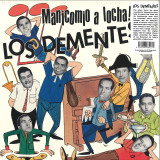
This album marks the debut recording for Venezuela's Velvet label by pianist Ray Pérez and his trombone-led salsa band Los Dementes. Heavy dance numbers and the distinctive vocals of Perucho Torcat make this historic 1967 rarity a sought-after collector's item. Now the LP has been lovingly restored, mastered from the original tapes, with its original artwork intact, preserving the legacy of Los Dementes for today's generation of salsa lovers everywhere. First time reissue. Salsa pianist, vocalist, composer and arranger Ray Pérez, acquired his nickname "Loco" by being a free, independent spirit, an innovator and iconoclast who was initially branded as "crazy" for the freshness and audacity of his sound. Amazingly, he is not that well known in the US, where he spent some time in the late 1960s and salsa was king during the 1970s. Yet he was quite popular in his home country from the beginning, especially amongst the working class of Caracas and Maracaibo, who adopted Cuban music played by New York Puerto Ricans as their own and called it "salsa" years before the term was employed by US labels like Fania as a marketing tool. Pérez is revered in Venezuela, as well as in Mexico and Colombia, and his storied career, which spans seven decades and thousands of concerts, has yielded more than 35 albums recorded by his various bands, including Los Dementes, Los Kenya, and Los Calvos, all of which are collector's items today. At the start of 1967 Pérez debuted Los Dementes, with vocalists Claudio Zerpa and Perucho Torcat backed by an ace band featuring only trombones in the brass section. Titled "¡Alerta mundo! Llegaron los 'The Crazy Men'" the record was released on the small Venezuelan label Prodansa. Soon after, Prodansa folded and Los Dementes were left without representation or much compensation for their efforts, being paid only in records. In the end of February of that year, Pérez returned to Caracas from a stint in Maracaibo in order to finish his first LP with the well-established and larger Velvet label, entitled "Manicomio a locha". In the first quarter of 1967, Velvet unleashed a trilogy of salsa records in order to compete with rival label Palacio and their recent success with Federico y su Combo Latino: "Porfi '67 Salsa & Boogaloo" by Porfi Jiménez y su Orquesta, "Guasancó" by Sexteto Juventud and lastly "Manicomio a locha". The LP begins appropriately with the boisterous title track, written by the band's conguero Carlos "Nené" Quintero, who would become a legend in coming years. Torcat describes a jam session in mental institution and introduces the band, with tasty solos by trombonist Rufo García followed by Ray on piano. Already you can hear something was different about Ray and his "Crazy Men"-a sound as wild and innovative as what was happening in New York with Eddie Palmieri, but with a more unhinged, raw feeling in line with Willie Colón and other younger Nuyorican bands. Next up is an intriguing track sung in a mix of Italian, English, Spanish and Papiamento by Pérez himself, performed in the complicated rhythm of the mozambique, an Afro-Cuban carnival beat developed in the early 1960s. This is followed by the heavy dancer 'Rico guaguancó', penned by Angelito Pérez, which changes from the guaguancó to the mozambique rhythm mid-way through, proving that Los Dementes were "different from the rest" as the lyrics say. 'Puerto Libre', sung by Torcat, is dedicated to the Venezuelan island of Margarita in the Oriente region, and the independent spirit of its working people. The rhythm changes from guaguancó to guajira and back again but remains danceable all the way through. The side closes out with a "3 in 1" medley inspired by the popular formula of the mosaicos of Billo's Caracas Boys, seamlessly knitting together several different tempos, rhythms, moods and compositions. Side two starts strong with the fierce yet satirical 'Corte e' patas', then 'Alma Cumanesa', a typical folk song refashioned as a guaguancó. This is followed by the funky 'Guajira con Boogaloo'. The tune echoes the sound of young Latin New York, pointing out the connection between Cuban and African American soul music. The pace picks up again with 'Fiesta de trombones', a hot descarga and then the album closes with another medley. Though this marks the end of a rather short album, it also signaled the emerging success of Los Dementes and their involvement with the salsa boom in Venezuela, quickly selling out of its initial run of 1000 records and making for a memorable debut on the Velvet label. Now this rare and sought-after LP has been lovingly restored, mastered from the original tapes, with its original artwork intact, preserving the legacy of Los Dementes for today's generation of salsa lovers everywhere.
out of Stock
Last delivered 3 years ago available to reorder, subject to availability
Previously only available on a limited pressing on the Music On Vinyl label in 2012. Rubyworks are pleased to present a newly remastered tenth anniversary pressing of 'Area 52' by Rodrigo y Gabriela. Recorded in Havana with some of the best Cuban musicians on the island, with a stellar guest line-up including John Tempesta on drums, Anoushka Shankar on sitar, Carles Benavent on bass guitar and Les Trio Joubran on ouds. Newly mastered for vinyl by John Webber at Air Studios in London, working with the original mixes supplied by Grammy award winning mixer Rafa Sardina. This new edition comes on 2 x sky-blue and red splattered 140gsm vinyl records in a spot-UV finish, gatefold sleeve with a 12" x 12" colour insert on 150g art paper. Long unavailable, 'Area 52' sells for upwards of $65.00 on Discogs.
out of Stock
Last delivered 4 years ago available to reorder, subject to availability
Ghent based psych jazz collective Compro Oro, are set to release new album 'Buy The Dip' on the 2nd September via the groove-obsessed Sdban Ultra label. Having received critical acclaim for their 2020 album 'Simurg' - a collaboration with Murat Ertel, co-founder and frontman of Istanbul's cult psychedelic folk band BaBa ZuLa and his singer partner Esma Ertel - the band's fifth album is less ethno- and more techno-logy, both on a musical and conceptual level.
With tastemaker fans including BBC 6 Music's Gilles Peterson and Stuart Maconie alongside Jazz FM's Jez Nelson, the band's spontaneous quest for psychedelic sounds and jazz grooves has not stopped expanding since their formation in 2014.
After imaginative musical trips to Havana, Mogadishu and Istanbul for previous releases, Compro Oro went looking for sounds and inspirations from other corners of the globe for 'Buy The Dip'. Synthesizers and electronic effects spice up Compro Oro's distinctive musical marriage of vibraphones, electric guitars, jazzfunk rhythms, exotic percussions and dubby bass patterns. Band leader and composer Wim Segers created these new compositions often on piano or vibes in a more analogue way, leaving enough room for his band mates to colour each track when fine tuning the song.
Segers was inspired by the world of crypto markets and the specific concept of 'buying the dip': bitcoin diggers who play the markets at specific 'low' moments to gain higher profits when prices go up again. Are we all reduced to consuming creatures, seeking for nothing more than the thrill of pointless spending and endless profits? It's a fairly philosophical question - especially for an instrumental album - but it's key for the punchy and eclectic sounds on 'Ben Hur' and 'Bitcoins'.
Apart from those synths and fx, a fair bunch of neo-noir western vibes sprout up on this album as well - think detuned piano's, flamenco-like guitars, rattling snare drums, and imminent whistles. Add to that some laid back sunny pop sounds ('Kayak'), off-hook and swaying Turkish psychedelica ('Karsilama') and even some haunted, kraut-ish vocal parts ('Dungeon'), it's evident Compro Oro has a musical voice without any equal in Belgium and beyond.
Compro Oro released their first album 'Transatlantic' in 2015, an ode to jazz vibraphonist Cal Tjader, an icon of the 1950's Latin jazz movement. The release received critical acclaim back home, lauded in the press as a drunken mix of Buena Vista Social Club and guitarist Marc Ribot's, Cubanos Postizos. Subsequent live shows have been called a celebration for the hips, the ear and the soul.
2017 saw the release of 'Bombarda', a bold EP that sailed South and East of Cuba, incorporating different ethnic rhythms and melodies in elaborate jams. No palm trees and cocktails in Havana this time, but instead dingy basements and LSD in West African cities. The critically acclaimed 'Suburban Exotica' followed in 2019 with 'Simurg', released in 2020, earning the band global success.
out of Stock
Last delivered 4 years ago available to reorder, subject to availability
Presenting a brand new vinyl compilation featuring artists from the electic Funkiwala label – from Brasillian Afrobeat to Bengali Funk to Indo-Cuban-Nigerian Jazz to European Jazz Soul to traditional Baul Myticism - 3 newly released tracks by Phil Dawson, Cubafrobeat and Lokkhi Terra, with other tracks previously released digitally or on CD only - "if further proof were needed that London is a hotbed of cross-culturally inspired expression, it's new record label Funkiwala"Evening Standard
1. QUE BELEZA - Phil Dawson feat Nina Miranda and the +2s (Domenico, Moreno and Kassin)
A funky version of a Tim Maia classic from the legendary 'Racional' period. Guitarist Phil Dawson grooving with Brasillian musicians Moreno Veloso, Domenico Lancelotti and Kassin Alexandre (the +2s), vocalist Nina Miranda and co-producing with Marco Dalle Luche
2. ON A SUMMERS DAY - Archie the Goldfish -
A project co-led by trumpet player Graeme Flowers and guitarist Chris Bestwick. This track is a nod to the great Miles Davis electric albums of 50 years ago, taken from a 5-track EP "Water & Light' incorporating elements of jazz, drum & bass, funk and hip hop (released in 2021)
3. ENI AGEE - Cubafrobeat -
Formed out of the collaboration between London fusionistas LoKkhi TeRra ("probably the worlds best Cuban-Afrobeat-Bangladeshi group"Songlines) and UK's Afrobeat Ambassador Dele Sosimi ("A true legend"Clash), Cubafrobeat was initially the name of their critically acclaimed album from 2018 (" A total Stonking Blinder"All About Jazz). This has evolved naturally into an entirely new musical beast – and this is their first single.
4. HARMONIUZINHO - Lokkhi Terra
Taken from their debut CD album "No Visa Required" (2010), this is one of the tunes that put Lokkhi Terra on the map. Recorded in Kishon Khan's home studio the track captures the beginning of this London band's journey.
5. KANDE REVISITED - Lokkhi Terra
This a reworking of Lokkhi Terra's version of a classic Bangla Folk song written by Hason Raja. Maintaing the spirit of unique sound clashes, the track combines a typical London Afro Funkiness with the sublime Bengali vocals of Aneire Khan, Sohini Alam and Aanon Siddiqua. The original version was released on their 2012 CD album "Che Guava's Rickshaw Diaries".
6. NUORACLE - Justin Thurgur
Originally released as a digital single, this release from Justin Thurgur, composed in collaboration with Kishon Khan, is a Cuban Jazz track that features driving Timba bass lines and Afrobeat inflected horns and is a nod to the Nuyorican Latin Jazz scene of the '50's, '60's and '70's, which has been a big inspiration to them.
7. EU TOPO - Beiju
Beiju is the combined work of two unique practictioners: Firstly, Adma Macedo Newport from Salvador da Bahia, a singer who has integrated the great Afro-brazilian musical traditions of her native city with that of those she's lived in on her travels. Secondly, Phil Dawson, a London-based guitarist and music writer who has collaborated with many stylistic originators internationally, including those from all four corners of Africa. .
8. SHADHO KI RE AMAR - Shikor Bangladesh All Stars
Taken from their debut album "Soul of Bengal" - This Folk super group is made up of legendary session musicians from Bangladesh. This track features the late great Baul Rob Fakir and is written by the great mystic, Baul Lalon Shah, whose songs are still be found throughout the Bengal today.
out of Stock
Last delivered 4 years ago available to reorder, subject to availability
Ghent based psych jazz collective Compro Oro, are set to release new album 'Buy The Dip' on the 2nd September via the groove-obsessed Sdban Ultra label. Having received critical acclaim for their 2020 album 'Simurg' - a collaboration with Murat Ertel, co-founder and frontman of Istanbul's cult psychedelic folk band BaBa ZuLa and his singer partner Esma Ertel - the band's fifth album is less ethno- and more techno-logy, both on a musical and conceptual level.
With tastemaker fans including BBC 6 Music's Gilles Peterson and Stuart Maconie alongside Jazz FM's Jez Nelson, the band's spontaneous quest for psychedelic sounds and jazz grooves has not stopped expanding since their formation in 2014.
After imaginative musical trips to Havana, Mogadishu and Istanbul for previous releases, Compro Oro went looking for sounds and inspirations from other corners of the globe for 'Buy The Dip'. Synthesizers and electronic effects spice up Compro Oro's distinctive musical marriage of vibraphones, electric guitars, jazzfunk rhythms, exotic percussions and dubby bass patterns. Band leader and composer Wim Segers created these new compositions often on piano or vibes in a more analogue way, leaving enough room for his band mates to colour each track when fine tuning the song.
Segers was inspired by the world of crypto markets and the specific concept of 'buying the dip': bitcoin diggers who play the markets at specific 'low' moments to gain higher profits when prices go up again. Are we all reduced to consuming creatures, seeking for nothing more than the thrill of pointless spending and endless profits? It's a fairly philosophical question - especially for an instrumental album - but it's key for the punchy and eclectic sounds on 'Ben Hur' and 'Bitcoins'.
Apart from those synths and fx, a fair bunch of neo-noir western vibes sprout up on this album as well - think detuned piano's, flamenco-like guitars, rattling snare drums, and imminent whistles. Add to that some laid back sunny pop sounds ('Kayak'), off-hook and swaying Turkish psychedelica ('Karsilama') and even some haunted, kraut-ish vocal parts ('Dungeon'), it's evident Compro Oro has a musical voice without any equal in Belgium and beyond.
Compro Oro released their first album 'Transatlantic' in 2015, an ode to jazz vibraphonist Cal Tjader, an icon of the 1950's Latin jazz movement. The release received critical acclaim back home, lauded in the press as a drunken mix of Buena Vista Social Club and guitarist Marc Ribot's, Cubanos Postizos. Subsequent live shows have been called a celebration for the hips, the ear and the soul.
2017 saw the release of 'Bombarda', a bold EP that sailed South and East of Cuba, incorporating different ethnic rhythms and melodies in elaborate jams. No palm trees and cocktails in Havana this time, but instead dingy basements and LSD in West African cities. The critically acclaimed 'Suburban Exotica' followed in 2019 with 'Simurg', released in 2020, earning the band global success.
Nine-piece West Africa-via-Melbourne ensemble Ausecuma Beats and improvised collective Zeitgeist Freedom Energy Exchange, also known as Z*F*E*X, reveal a new collaborative EP out August 19 via Music in Exile.
Call it a match made somewhere in musical heaven, the minds behind Ausecuma Beats, comprised of members from Senegal, Mali, Cuba and Guinea, found they melded easily with Z*F*E*X following weeks of recording and sharing material remotely together.
Z*F*E*X themselves, an ensemble comprised of drummer Zeke ‘Ziggy’ Zeitgeist, keyboardist and producer Lewis Moody, bassist Matthew Hayes, and a rotating cast of guests, are prolific musicians themselves with weighty credentials spread across their base locations of Australia, the United Kingdom, and Europe.
Thus, from a backyard shed in Dandenong North, Australia, some of West Africa’s finest would record simple percussive tracks, which then surfed the airwaves via studios in Melbourne, Berlin and London, to finally land back on listeners doorsteps as a forthcoming collaborative EP, Deep Heat/Tropical Storm.
Starring two guest vocalists who are some of the most invigorating in their respective scenes - Latin America via Berlin star Gotopo, and Melbourne’s own Rara Zulu - the EP’s beginnings in percussive exploration are transformed into a must-have record of all bangers.
Expect the duelling minds of two highly respected acts to reveal a combined EP of complex compositions that remain wholly accessible thanks to addictive harmonies and melodies. Emotionally thrilling, and easy to love, listen and dance to.
out of Stock
Last delivered 4 years ago available to reorder, subject to availability
1970 album that marked a milestone in the history of Peruvian tropical music comprising an outstanding repertoire of Cuban rhythms as a response to the trends of the moment: boogaloo and Colombian cumbia. Guitarist Pancho Acosta lead the band and Kiko Fuentes delivered the vocals across some juicy descargas and guarachas. In the late sixties, a generation of young Peruvian musicians, who were fans of tropical sounds, chose Cuban rhythms over the onslaught of boogaloo and Colombian cumbia. This musical movement attracted a legion of young followers, mostly from popular districts of Lima. In 1969, percussionist Domingo Guzmán Villanueva was commissioned by the MAG record label to get together a group to revive Cuban musical tradition. To lead the project he recruited, Francisco "Pancho" Acosta, founder and guitarist of the Company Quinto. The new group was baptized Los Kintos, in a nod to their desire to carry on playing in the Compay Quinto style. The link between the two groups appears on this first album, as the group's name is written in two different ways: Los Kintos, on the front cover; and Los Quintos, on the back. Recordings began in 1969 and included the stunning 'Descarga Kinto', Richie Ray and Bobby Cruz's original 'Pancho Cristal' -renamed here 'Pancho Guzmán- and Cuban classics from the repertoire of the historic Trio Matamoros like 'Lágrimas Negras' or 'Mentiras', all with lead vocals by Kiko Fuentes. The success of their concerts would take them on tours across the country, always recognized as outstanding figures of Cuban music in Peru. This reissue brings back an album that marked a milestone in the history of Peruvian tropical music and revives the fame of the group's legendary live performances. First time vinyl reissue.
This mega-rare 1969 album pays tribute to the Bronx and Brooklyn neighborhoods where young Latinos had invented the boogaloo a few years earlier. This record highlights the quality of Peruvian boogaloo and the talent of musicians such as pianist Otto de Rojas and percussionist Coco Lagos. First time reissue. In the mid-sixties, when young Latino musicians in New York fused Afro-Cuban rhythms with rock, soul and jazz, they had no idea that their boogaloo bang bang would reverberate just as strong and loud in a distant South American country. From 1955, La Sonora Macedo, took Cuban music to every corner of Peru, backed the leading musicians of the Peruvian tropical universe, such as Ñiko Estrada, Joe di Roma, the double bass player Pepe Hernández, and the trumpet players Tito Chicoma and Charlie Palomares. All diehard fans of Cuban music, always alert to any new artist arriving from the island. In the early sixties, light rock, doo-wop, ballads, Italian songs and bossa nova paraded across Lima's stages, making performances by Cuban bands, previously so frequent, a thing of the past. Moreover, the unanimous success of the Beatles from 1964 onwards, gave the impression that music from the English-speaking world would dominate the rest of the decade. But this was not the case. In large part because of Manuel Guerrero's good relations with U.S Latino labels, such as Alegre Records, which released the initial recordings by Johnny Pacheco and Charlie Palmieri, allowing listeners in Lima to follow the development of the salsa movement almost from the beginning. MAG was undoubtedly the best representative of these new sounds. In 1969, the LP "Acabo con Lima, huyo pa' Nueva York" was released on this label, a project which brought together three figures from Lima's show business world: Manuel Antonio Guerrero, owner and founder of MAG, who wasn't shy of joining in on the chorus and percussion during recordings, Pablo Villanueva "Melcochita", a multifaceted artist from a talented musical family from the popular district of La Victoria, was responsible for the vocals and percussion on the album. And the third Lima show business figure in this project was the musician, singer and comedian Alberto Montroy Laostervened, who gained fame in the sixties while still in his twenties for his imitation of Cantinflas, the Mexican actor. Alberto bore a devilish resemblance to Cantinflas, not only in his gestures but also physically. Under the name of Pepe Moreno "Karamanduka" he also went on to record songs abroad such as "El boogaloo de Cantinflitas". "Acabo con Lima, huyo pa' Nueva York" was immediately re-released in other countries, highlighting the quality of Peruvian boogaloo and talent of musicians such as pianist Otto de Rojas and percussionist Coco Lagos, who feature prominently on the album. Songs such as 'Vuela mi descarga', 'Peruvian boogaloo' and 'Peruvian guajira', pay tribute to the Bronx and Brooklyn, neighborhoods where young Latinos had invented the boogaloo a few years earlier.
out of Stock
Last delivered 4 years ago available to reorder, subject to availability
With arrangements and piano by Alfredo Linares, this is a thrilling double-sider sought after by collectors and DJs because of the funky dancefloor cuts 'Enyere Kumbara' (covered by Quantic a few years back) and 'INS-Rock'. Proper Afroantillano party business melting Cuban, Nuyorican and Colombian tropical traditions. First time reissue on 7" vinyl. Julián y su Combo was founded in 1962 by left-handed guitarist Julián Angulo Ponce, who was originally from Guapi, Cauca, Colombia and made his name in Cali and Buenaventura, signing initially with Bogotá's Sello Vergara in 1966. During a 20-year period Julián y su Combo released eight records (with several band name variations). Angulo was part of the first generation of artists from the Colombian Pacific who migrated to Bogotá in the 1970s, and his combo enjoyed popularity in his adopted city as well as in Medellín and Mexico. The band also travelled to Venezuela and the US. Angulo described his sound as Afroantillano, combining Cuban, New York Latin and Puerto Rican elements with Colombia's own tropical traditions. The combo's arrangements were distinguished by the bandleader's funky, jazzy electric guitar work (Angulo played without changing the order of the strings), a hot rhythm section and the potent brass line-up of two saxophones and a trumpet (much like Cortijo y su Combo). At that time Alfredo Linares was musical director at INS and this album -the first one Julián Angulo recorded for the label- bears his influence in the funky 'Mambo Rock' sections (breaks and handclaps galore!) and hot Cuban and Latin jazz piano styles that also graced his own records.
out of Stock
Last delivered 3 years ago available to reorder, subject to availability
"Ésta sí es salsa!" is one of the most sought-after records in the impressive catalog of the Discos Fuentes tropical all-star group Los Corraleros de Majagual. The record is high on collectors' want lists for many reasons: excellent sound quality, diverse and highly danceable repertoire infusing its grooves, and the inclusion of the Cuban genres of descarga and charanga. The album includes outstanding cover versions of '60s New York salsa but featuring the unusual sound of the accordion and the heavy bass playing of Julio Estrada. First time reissue. "Ésta sí es salsa!" is one of the most sought-after records in the impressive catalog of the Discos Fuentes tropical all-star group Los Corraleros de Majagual. It was released in 1970, nine years after the band was first conceived by Alfredo Gutiérrez, Calixto Ochoa and label boss Don Antonio Fuentes as an orchestra to play mostly typical folkloric Colombian genres like porro, cumbia and paseo and the occasional guaracha or pachanga, but with a fully orchestrated big band sound that combined the accordion with a complete rhythm and brass section. The record is high on collectors' want lists for many reasons, not least of which is its excellent sound quality and the diverse repertoire infusing its grooves, ranging from expected coastal tropical Colombian rhythms like paseaíto, paseo and pasebol (all related to cumbia and vallenato), to more exotic modes like sonsonete, casatschok, and the Cuban genres of descarga and charanga. There was never any doubt with the label's intentions of introducing this "new" genre of salsa on this LP, albeit as seen through the lens of Colombian musicians only recently converted to the movement, and indeed, the title unequivocally proclaims: "¡Ésta sí es salsa!" ("This is definitely salsa!"). The proof is in the fascinating (and long) cover versions of Nuyorican artists from the burgeoning Big Apple salsa scene that are the centerpiece of the album. Two massive dance tracks on the record are 'Ocho días' and 'Amanací tomando', but neither was inspired by exposure to New York salsa, as they are very "typical" Colombian numbers. First time reissue.
out of Stock
Last delivered 4 years ago available to reorder, subject to availability
Of the many great talents of the classic Nigerian highlife scene, none contained the existential depth, transcendence and grace of Celestine Ukwu. During his brief time in this world, he pursued education, music, and philosophy; first as a school teacher, then ultimately a singer, lyricist and musician, first as a member of Gentleman Mike Ejeagha's Premier Dance Band, and eventually fronting his own groups, The Music Royals and The Philosophers National. Beginning in the early 1970s, The Philosophers National established a radical shift in the possibilities of Nigerian highlife by moving away from the typical mid-century style and cutting a new path with a distinctly hypnotic and cerebral atmosphere. This sense of depth was apparent in the lilting, multi-layered and pulsing music of The Philosophers National, as well as the concise and clear-eyed lyrics sung so beautifully by Celestine Ukwu. The arrangements establish a living, breathing environment for each song; muted trumpet solos, hypnotic guitar runs, driving percussion; every instrument gracefully following a tide of patience, tranquility, wonder, climax, knowing and unknowing. "Celestine ditched the jaunty dance rhythms and relatively facile lyrics typical of the reigning highlife tunes, and ignoring the soul music tropes most of the highlife bandleaders were appropriating in an effort to inject new life to their ailing format. Instead Celestine concocted a new highlife style that was more contemplative and lumbering; with the layering of Afro-Cuban ostinato basslines and repetitive rhythm patterns that interlocked to create an effect that was hypnotic, virtually transcendental. Meanwhile, Celestine himself sang as he stood coolly onstage in a black turtleneck and a sportscoat, looking like a university professor. The message was clear: this was not necessarily music for dancing_even though the rhythms were compelling enough. This was music for the thinkers." - Uchenna Ikonne This LP compiles some of Celestine Ukwu's deepest and most affecting songs from the 1970s, which have been gorgeously restored and remastered by Tim Stollenwerk to highlight the brilliant details of Celestine and the entire Philosopher's National. Pressed on 160 gram black vinyl at Smashed Plastic in Chicago, and comes in heavy 3 spot-color jacket, with fold-over insert with bilingual lyrics and notes by Uchenna Ikonne (Comb & Razor Sound).
Pink Floyd are to release two physical versions of their first newly recorded music in over 25 years, ‘Hey Hey Rise Up’. The single, which was initially released digitally in April in support of the people of Ukraine and was #1 in 29 countries, will be available on 7” and CD single. Both formats will also feature a newly reworked version of ‘A Great Day For Freedom’ from the band’s 1994 album, The Division Bell. The track sees David Gilmour and Nick Mason joined by long time Pink Floyd bass player Guy Pratt, with Nitin Sawhney on keyboards and a lead vocal by Andriy Khlyvnyuk of Ukrainian band Boombox. It also has vocal harmonies by Romany and David Gilmour
When the track was first recorded at the end of March, Andriy, who left his band’s US tour to return home and fight for his country, was in a hospital bed in Kyiv recovering from a shrapnel injury. Proceeds for the physical release and the ongoing digital proceeds will go to Ukraine humanitarian relief.
For this limited edition release, David Gilmour revisited The Division Bell track ‘A Great Day For Freedom’. He has reworked the song using the original tapes which, as well as David, feature Nick Mason on drums and Richard Wright on keyboards, along with backing vocals from Sam Brown, Claudia Fontaine and Durga McBroom. The artwork for the track ‘The Sunflower Look’ features a painting of the national flower of Ukraine with a twist by the Cuban artist Yosan Leon. The cover is a direct reference to the woman who was seen around the world giving sunflower seeds to Russian soldiers and telling them to carry them in their pockets, so that when they die sunflowers will grow.
out of Stock
Last delivered 4 years ago available to reorder, subject to availability
“I’ve been playing since I was 11 years old,” says Charlie Gabriel, the most
senior member of the legendary Preservation Hall Band. “I never did anything in
my life but play music. I’ve been blessed with that gift that God gave me, and I’ve
tried to nurse it the best way I knew how.”
While he’s faced plenty of challenges nursing that gift for more than 78 years,
none likely rank with last winter’s passing of his brother and last living sibling,
Leonard, lost to COVID-19. For the first time ever, Gabriel put down his horn,
filling his days and weeks instead with dark reflection, a stubborn despondency
broken now and then by regular chess matches in the studio kitchen of Hall
leader Ben Jaffe, working overtime to bring his friend some light.
One such afternoon also included Joshua Starkman, sitting off in a corner
playing his guitar and half-watching the chess from a distance. When Charlie
returned the next day, he brought his saxophone. “I was just inspired to try it, to
play again. It had been a long time, and a guitar makes me feel free. I do love the
sound of a piano, but it takes up a lot of a space, keeps me kind of boxed in.”
That day was to be the first session for ‘Eighty Nine’, almost entirely the work of
Gabriel, Jaffe and Starkman, recorded mostly right there, in the kitchen, by Matt
Aguiluz.
Charlie Gabriel’s first professional gig dates to 1943, sitting in for his father in
New Orleans’ Eureka Brass Band. As a teenager living in Detroit, Charlie played
with Lionel Hampton, whose band then included a young Charles Mingus, later
spending nine years with a group led by Cab Calloway drummer J.C. Heard.
While he’s also fronted a bebop quintet, played and/or toured with Ella
Fitzgerald, Tony Bennet, Aretha Franklin and many more, this is the first time his
name appears on the front of a record, as a bandleader.
Since 2006, Gabriel has been a member of the Preservation Hall Jazz Band,
featuring prominently on ‘That’s It, So It Is’, and ‘Tuba to Cuba’. ‘Eighty Nine’ was
different, and not simply due to a smaller ensemble. “We had no particular plan,
or any particular insight on what we were gonna do. But we were enjoying what
we were doing, jamming, having a musical conversation,” Charlie says, further
musing, “Musical conversations cancel out complications.”
The album includes six standards and three newer pieces on which Gabriel is a
writer: ‘Yellow Moon’, ‘The Darker It Gets’ and ‘I Get Jealous’. The record also
marks Charlie’s return to his first instrument, clarinet, on many of the tracks. “The
clarinet is the mother of the saxophone,” he says. “I started playing clarinet early
in life, and this taught me the saxophone.”
Finally, ‘Eighty Nine’ includes three tracks of Charlie singing. “I always sung, but
it wasn’t my forte to become a singer,” he says. “The truth is, people often
develop a real relationship with a song once they hear the words. Sometimes I
enjoy singing them.”
First pressing on translucent gold Loser Edition coloured vinyl
Libreville Records presents Totāl Cuevas, a seminal compilation album of legendary DJ Guy Cuevas's own music.
Guy Cuevas is a French-Cuban writer, musician, and DJ, pioneer of the art of modern DJing.
A key figure on the Paris night scene, Guy Cuevas gained a cult status as the resident DJ of the mythical nightclub Le Palace, gathering thousands of people every night under his booth, shepherding them with his music towards euphoria. He also collaborated with a great number of Fashion brands, such as Yves Saint Laurent, Kenzo, Dior, Hermès and many more.
In the early 80s, Guy Cuevas released a handful of records, channeling his hedonism and natural grandeur into his sound, creating a unique music of his own.
Totāl Cuevas brings together music from his three singles Ebony Game (1981), Obsession (1982), and Gallo Negro (1984), and includes previously unreleased alternate mixes.
Guy Cuevas’s most iconic output, "Obsession - The Nassau Mix" (mixed by François K) gets a fresh new reboot with "Obsession - The Paris Version".
Remastered from the master tapes.
out of Stock
Last delivered 2 years ago available to reorder, subject to availability
26 original recordings with comprehensive 12-page booklet
The music of Cuba, including its instruments, performance, and dance, comprises
a large set of unique traditions influenced mostly by West African and European
(especially Spanish) music. Cuban music is among the richest and most
influential regional music in the world.
Cuban music has contributed to the development of a wide variety of genres and
styles around the globe. Examples include the son Cubano, guarachá, danzón,
bolero, rhumba, Afro- Cuban jazz, salsa, and a wide variety of genres in Latin
America. Many of these styles are represented on this outstanding collection,
which presents 26 of Cuban music's greatest hits performed by the most
celebrated Cuban stars.





![Eparapo - From London To Lagos (Remixes) [feat. Dele Sosimi]](https://www.deejay.de/images/l/1/5/1008215.jpg)