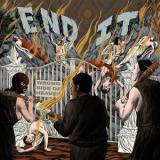
Baltimore's End It is telling it like it is on their debut album, Wrong Side Of Heaven, set for release this summer. The hardcore band has built a reputation through being unapologetically outspoken, playing fast, ripping songs, and putting on an electrifying live show. Now they're ready to enter their next era. Formed in 2017, the band consists of vocalist Akil Godsey, drummer Chris Gonzalez, guitarist Ray Lee, and bassist Patrick Martin. Signed to Flatspot Records, End It came out strong with the release of their self-titled EP the same year they started, and followed it up with 2020's One Way Track EP. In the summer of 2022, the band took the hardcore world by storm with their Unpleasant Living EP, solidifying the Baltimore outfit as one of the most exciting acts in the genre. Following the release, End It embarked on a packed touring and festival schedule across North America and Europe, playing alongside No Warning, Terror, Cold World, Drain, Speed, Angel Du$t, Scowl, and many more. The band's reach goes even farther with breakout single "New Age Slavery" featured on the soundtrack for Tony Hawk's Pro Skater 3 + 4. No matter where they are and what they're doing, End It is true to keeping things authentically them and that shines through on the forthcoming Wrong Side Of Heaven. Entering Salad Days Studio with renowned producer Brian McTernan (Turnstile, Snapcase, Hot Water Music) the band came in with a few demos and wrote the majority of the album during the two month recording process in early 2025. Taking direction from classic hardcore, thrash, and soul music, End It has crafted a 15 song magnum opus centered on "Spreading awareness of the change that's coming to Americans, personal growth, and maintaining the ethics and integrity of hardcore."
Some recordings herald the future in ways that are impossible to see in real time. Teodros Makonnen With His Organ (ቴዎድሮስ መኮንን ከኦርጋኑ ጋር), by the artist Teodros Makonnen, also known as Teddy Mak, is one of those. Today, electronic sounds, synthesizers, and digital production are taken for granted in Ethiopian music, but in the early 1980s, they were novelties that polarized opinion. Even to this day, the story of Teodros Makonnen’s legacy has never been properly told. He played a decisive role in defining the sound of the digital era of Ethiopian music that emerged in the 1980s and beyond, both as a keyboard player and as a producer, songwriter, performer, and sound designer.
Ethiopian music was at a crossroads in the early 1980s. Much like music in the rest of the world, technology and automation heralded either a quantum leap in musical development or the annihilation of musicianship, depending on who you’d ask. The changes were incremental nonetheless, but with the benefit of hindsight one can clearly see that the changes meant different things in different contexts. Drum machines and electric organs came to replace many hotel bands because, all of a sudden, one musician could control drums, melody, and accompaniment. Teodros was one of the first musicians in Ethiopia to explore the possibilities this opened up.
Teodros’ father, Captain Makonnen Beri, was a chief pilot at Ethiopian Airlines and a music enthusiast at that. This would prove important to his development, as Makonnen brought back a piano from Germany, which would lead to the first steps in Teodros’ long musical career. Captain Makonnen’s work as Head of Flight Operations and as a pilot exposed him to the wider world that was far from commonplace for most Ethiopians. In a house where music captivated the whole family, the piano gave Teodros’ talent an outlet. Not only was a piano at home rare in Ethiopian households, his father also brought an Indian teacher to their home to teach Teodros and his brother, Captain Samuel Makonnen, music theory (solfeggio or ear training) and piano. Teodros and his youngest brother, the late great Dereje, a member of both the legendary Ibex Band and the Ethiopian reggae group Dallol, took up music from that point onward, with Teodros beginning to develop his proficiency at the age of eight. His father encouraged him to practice tirelessly at home, and Teodros later received musical schooling at the German School in Addis Ababa. His obvious talent led to studies and formal education at the Yared School of Music, followed by continued studies in American jazz at Northern Virginia Community College in Virginia. Teodros cut his teeth professionally in his mid-teens, not only as a keyboardist, but also as an arranger for the Wabi Shebelle and Dahlak bands in the 1970s. He mastered electronic sequencing early, rising to prominence through the midnight recording sessions held during the military curfew. The pressures imposed by the curfew required precise and disciplined recordings, and Teodros delivered just that. This, in turn, led to collaborations with iconic artists such as Mulatu Astatke, Aster Aweke, Menelik Wossenachew, Tilahun Gessesse, Mahmoud Ahmed, and Alemayehu Eshete. In those days, he sat in as a keyboardist with the Dahlak Band when Dawit Yifru took a hiatus to study in Russia, and also with the Ethiostar Band. He secured a residency at the Wabi Shebelle Hotel with the Shebele Band, together with Zelalem Tadese (drums), later succeeded by Elias Bekele, Mulugeta Hailu (bass), Teferi ‘Bibisha’ Mengesha (guitar), Kumelachew G/Selassie (trumpet), and Teshome Deneke (saxophone). A friendly competition developed between the bands associated with the Ras Hotel (the Ibex Band), Ghion Hotel (the Dahlak Band), and Wabi Shebelle Hotel (the Shebele Band). The music scene at Wabi Shebelle saw teenagers commanding the spotlight in an industry otherwise dominated by musicians of an older generation. At the Wabi Shebelle Hotel, Teodros met a diplomat from Saudi Arabia and later visited him at his home in Addis Ababa, a meeting that had unexpected musical consequences. The man owned a Yamaha double-deck keyboard. That evening, they recorded Teodros Makonnen With His Organ (ቴዎድሮስ መኮንን ከኦርጋኑ ጋር) in one take. This recording, a cornerstone in the early digital sound of Ethiopian music, came about almost by chance, simply because Teodros got the opportunity. Traditional Ethiopian songs were cast in a wholly electronic style. Once freed from backing duties, Teodros’ keyboards could explore dreamlike soundscapes that took Ethiopian music in new directions. Even though the cassette contained well-known Ethiopian songs, they were given highly original arrangements, performed on an electric organ with drum machine backing and rhythm patterns that left the listener with suggestive, lingering sounds. “Libesh Kabashen” (also known as “Anchi Bale Game”) and “Odu Gol Golesa” wrap you in the very stuff that dreams are made of. Originally released on cassette only, this recording exudes a mystique that surpasses even some of the most obscure Ethiopian recordings of the day. It remained more or less unknown outside of Ethiopia until now. Some of the tracks, like “Addis Fikir,” are permeated with an almost naive buoyancy, free-floating sounds that lost contact with the ground the moment they were conceived. Others, like “Meche New Hageren Yemayew” and “Lelitu Alnega Alegn,” carry a moodier, quirkier timbre, with pulsating rhythms in the background. Yet even the darker pieces contain an unmistakable wave, something essentially Ethiopian. If most recordings of Teodros’s contemporaries at the time were teeming with atmosphere, his songs seem instead at home in the stratosphere, almost ethereal. Some of the music here could be filed under “lullabies,” were it not for the recurring, almost brooding feeling that engulfs the listener on the aforementioned tracks. You could easily be forgiven for drifting into a blissful haze as the music washes over you.
Up to the advent of electronic music production, Ethiopia was totally dominated by big bands on the one hand, and small groups on the other. The former were tied to large institutions such as the military, the latter emerged from the entertainment industry, in hotel bars and nightclubs. These groups were commercially driven, and bands ultimately had to foster a mercenary approach to employment, albeit not to the passion for music. In the light of this, Teodros’ musical legacy can be seen in two ways. On the one hand, he is a key player in Ethiopian music from the 1970s onwards, leaving an indelible mark through hundreds of compositions and arrangements, including soundtracks for numerous documentary films and advertisements for different companies. On the other hand, the way he and others employed electronics brought Ethiopian music onto a fork in the road.
The replacement of traditional instruments with electronic equipment was seen as impending doom by some. Others, like Teodros, saw new avenues for performance, production, and creativity. Just as later producers like Abegasu Shiota of Admas, Teodros was a trailblazer who opened paths that it took Ethiopian music as a whole more than a decade to rush into. The hotel scene had already been pushed toward electronic music by financial necessity and cost-cutting. Today’s revived global interest in Ethiopian music from the seventies and eighties, alongside a broader resurgence, has changed the reasons for using digital means of music production. They have become tools for musical dreaming. This is where the dreaming began.
out of Stock
Last delivered 11 days ago available to reorder, subject to availability
Curses' dark, romantic take on electronic music is often linked to EBM, new beat, synth-pop, and the offshoots in between - but, as the artist states, it's feelings, not genres, that motivate his music. Especially the underground and its niche sounds, brimming with collective energy, drive and passion, make for a major impetus. It's no coincidence that he's drawn to the era when man turned to the machine, as a collaborative force, and a new kind of liveliness, timelessness, emerged. In Curses' practice, this synergy translates into an enticing mix of synthesisers and voices, electronic drums and guitars. Nostalgia operates as an influence rather than a motive, though: despite its affinities with the past, his music is stridently contemporary and idiosyncratic. On the "Perfect High" EP, this approach is rendered in a resolutely dancefloor-oriented selection. It's rich in detail and constantly evolving; each time a new element appears, it's treated with such delight and care that you could imagine the track to flit off and turn it into the main theme. This doesn't happen, however, as the sense of cohesion and momentum is paramount: there's a relentless forward drive that keeps engagement tight from start to finish. The detuned, chorus-heavy leads of title track "Perfect High" and the clockwork-tinged percussion of "Weapon Of Time" jell with lustrous hooks. The ominous choirs on "Dare To Dream" and the proto rolling-and-scratching squelches of "Killer Instinct" similarly fall into place. Bravado never stands in the way of flow. Everything is kept in check by gated R-50 rhythms, and in the vocal department, Curses finds the sweet spot between his own voice and a slew of off-kilter samples. On closer "Blasted" NYC royalty Andi joins for a slab of synth-driven groove. It's shiny and sensuous, like patent leather - a perfect distillation of club music channeled through pop aesthetics, and thus a right coda for ALT028.
out of Stock
Last delivered 24 days ago available to reorder, subject to availability
A long-lost Japanese acid folk gem, Niningashi’s 1974 private press debut Heavy Way shimmers with originality, deft song writing and a dream-like groove.
Although he was training as a pharmacist, Kazuhisa Okubo was much more interested in prescribing musical medicine.
A coming-of-age album, Heavy Way captured a turning point in Okubo’s life, and Japanese society more widely as a nostalgia for the pastoral calm of the traditional life, met the cosmopolitan thrill of coffee, sex and cigarettes in the big city.
Intoxicated by Tokyo, driven by a passion for music and surrounded by a thriving acid folk scene, the young student filtered his experiences through a psychedelic cocktail of soulful influences from the US and Japan.
Niningashi was his first band, and Heavy Way was their only album. It was honest and raw, deep and strangely funky, in an off-beat kind of way. Across nine tracks, Okubo and the 6-piece band put their own spin on the new folk sound of Japan, combining witty lyrics with electric guitar-driven solos and crisp, understated grooves.
Melancholy and profound, opening track ‘Ameagari’ feels like a synthesis of Harvest-era Neil Young and Haruomi Hosono’s Happy End. Then there’s the whimsical washboard country sound of ‘Semai Boku No Heyade’; the moody, low-lit charm of ‘Restaurant’; and ‘Hitoribotchi’, a sensitive portrayal of childhood, steeped in memories of rainfall that will resonate with fans of Woo and Mac Demarco.
While Okubo would go on to taste success with psychedelic folk bands Neko and Kaze, the latter of which scored three #1 albums, little is known about his mysterious debut with Niningashi.
Self-released by Okubo in 1974, and featuring album artwork by his brother, it has slowly generated a cult following online, intrigued by its soft and enchanting sound. So few records were ultimately pressed that those remaining have fetched up to £1,500 online.
Featured on Time Capsule’s era-spanning collection Nippon Acid Folk, Niningashi’s Heavy Way is a deep-cut grail of a vibrant time in Japan’s musical history, where even the pharmacists were making jams.
out of Stock
Last delivered 19 months ago available to reorder, subject to availability
Children of Zeus return with their third studio album ‘As The World Burns…’
Five years on from their highly-acclaimed sophomore album ‘Balance’, Manchester’s kings of hip hop soul, Tyler Daley and Konny Kon, bring us a brand new 16-track opus.
Sonically the duo continue their story where they left off; crafting an amalgamation of street soul, alternative r&b and boom bap hip hop, with a sprinkle of flavours taken from their original multi-genre pirate radio influences, and a dash of forward-thinking new sounds, ensuring all tracks are destined to become future classics.
The features are sparing but powerful, enlisting the talents of revered UK rapper Knucks (‘Before We Drown’), Colorado-native Young Old Soul (‘Dopamine’), MCR family K S R (‘Do You Want To Get High’, & Australian/Mauritian up & comer Anieszka (‘Water & Vibes’).
As with previous projects, this album is largely produced by the duo themselves, though there are guest productions from previous collaborators too, including Grammy Award-winner Beat Butcha, Grammy-nominated Teo, and broken beat pioneer K15, along with an assortment of new players making moves in the underground neo-soul & beats circuit.
Conceptually, this project continues on with the story to date. An eternal search for sunsets and soulfood, as a respite to the anxieties of the modern world; personally, professionally and globally. Assertive swagger is matched with brutal but sincere candidity. As ever, it encapsulates the rough with the smooth, with reflections on where they’ve been, where they’re at and where they’re headed. There’s no preaching to be found here; just an acceptance of things as they are, an embrace of the environment and people they were nurtured by, and a celebration of some of the finer things in life; slow jams, weed & rum, water & vibes. Raps for listeners, blunt heads, fly ladies and prisoners. All packaged together as another perfect sonic love letter to sound system culture. 50 minutes of big people music.
Since the release of their anthemic debut single ‘Still Standing’ a decade ago, to the subsequent EP ‘The Story So Far’, and their critically-lauded debut album ‘Travel Light’, the duo have received numerous accolades, including nominations for AIM Awards & Worldwide Awards both, along with tons of ‘Album of the Year’ nods care of Clash Magazine, Bandcamp, Complex, Wordplay and many more. This along with huge swathes of support from DJs, radio stations, press outlets, tastemakers, luminaries & fellow artists across the globe.
Children of Zeus have performed sessions for COLORS, Soulection (Apple Music), DJ AG, Boiler Room, BBC 6 Music and at the infamous Maida Vale studios for BBC 1Xtra as well as touring across Europe, Australia and South Africa. This is in addition to collaborating & touring with Mercury Award Winner’s Ezra Collective, including a Wembley Arena show. Other collaborations over the years have included Shy FX, Juls, Goldie, Black Milk, Kofi Stone and the late great Lenzman.
From the Broke ’n’ English / Hoodman-era, to the present day, Children of Zeus have been omnipresent in the fabric of British black music. Proud ambassadors of Manchester music, and of UK soul, it really is “Zeus to the world”.
Children of Zeus have been adorned with plenty of flowers over their career. The unbridled quality and poignance of the music and the message on display throughout this project will see the algorithmic needle move some more. It’s undoubtedly set to be a Zeus Summer. As the world burns…
Available on all digital platforms and physical formats, Friday September 4th 2026.
t 07: Do You Want To Get High? (feat. K S R ) - Children of Zeus03:26
t 07: Do You Want To Get High? (feat. [ K S R ]) - Children of Zeus03:26
[t] 07: Do You Want To Get High? (feat. [ K S R ]) - Children of Zeus03:26
[g] B3 | Do You Want To Get High? (feat [ K S R ]) - Children of Zeus03:26
out of Stock
Last delivered 10 days ago available to reorder, subject to availability
DE-CMG / DE15YR Dark EntriesBooks21.09.202621.SEP.26
Dark Entries Collected Music Graphics Compiled by Josh Cheon and Eloise Shir-Juen Leigh To celebrate 15 years of Dark Entries, this zine showcases the label’s visual aesthetic, bringing together some of the most iconic designs that we’ve released. While Dark Entries’ sonic mission has included sounds as diverse as synth-pop, Italo disco, darkwave, house, and techno, it is equally staggering to see the breadth of visuals the label has encountered and collected over the years. Included here are selected typography, logos, and illustrations from the label’s extensive catalog — well over 300 releases to date. Designs have been created using DIY analogue techniques as well as more contemporary digital approaches. A full discography is included at the end for reference and an essay by Shawn O’Sullivan (Led Er Est, Further Reductions). This zine serves as a source of inspiration for artists as well as a means of preserving and documenting these distinct graphics. DARK ENTRIES RECORDS is a San Francisco-based record label that was born in July 2009. Helmed by Josh Cheon, a vinyl-focused DJ and collector, the label has focused largely on excavating the 1980s underground era – but releases have spanned from sultry vintage disco to bleeding-edge contemporary techno. Graphic designer Eloise Shir-Juen Leigh has been responsible for most of the label’s artwork, whether reproducing original designs accurately for reissues or creating exciting new ones. Much care and attention is given to each release to represent the music in a memorable way as well as tell the stories behind these projects. Hand-stamped and limited to 200 numbered copies. 64 pages with neon cardstock covers. Measures 5×7 inches.
The album title, Bachar Mar-Khalifé Plays Christophe, inevitably comes as a surprise: the Lebanese composer, singer, and multi-instrumentalist ventures into the world of the pop dandy who escaped the yé-yé era… From the very first notes, one thing becomes clear: splendor flows effortlessly from melodies restored to their fragility and simplicity. Bachar Mar-Khalifé explores the hypnotic melancholy of a world that is both sophisticated and crystal clear. A fascinating plunge “into this collapsing luxury,” as the lyrics of Paradise Lost say. Seven tracks with his collaborators Dogan Poyraz on drums and Aleksander Angelov on bass, seven narratives unfolding the musical richness of Christophe’s songs as much as that of Bachar Mar-Khalifé’s playing and singing. A captivating journey, both on record and on stage. It all started there, in fact. In April 2025, BMK dared to pay tribute to Christophe at the Fragile Festival, at the Cirque Zingaro, five years after his death. At first glance, it wasn't his familiar world. "I haven't idolized him my whole life," he explains. "I really knew Christophe personally before I knew his work in detail." During his childhood in Lebanon, and then after arriving in France in 1989 at the age of six, the music played at home left little room for Christophe's pop. "We listened more to Brassens, Brel, Ferré, Barbara. I hardly knew anything more than 'Les Mots bleus.' Then we met. Christophe loved the night, young musicians, exploring together..." In 2018, Bachar and Christophe recorded a Unik session for FIP, which involved recording a 45 rpm single live, followed by a concert at the Maison de la Radio. The younger brother has the opportunity to discover a legend, but also how it works: “His melodies allow you to go very far—even him, who seems to be searching for a new version with each interpretation, as if he wanted to return to the organic aspect of the song. A researcher who, out of a need for freedom, wants to escape the image people have of him.” So there was no question of overproducing these covers as one might do with the stage fright of tackling an intimidating work. “I tried to go very fast to deliver each song, as if I had composed it myself.” Working instinctively, very spontaneously, the bulk of the album comes from the trio's rehearsals and the concerts that followed. “I chose songs that moved me. Very beautiful melodies and very beautiful lyrics.” Whether the lyrics are by Jean-Michel Jarre or Alain Kan, “they often speak of love in danger.” “I like to hear this quote from Paradise Lost: ‘Dandy, a little cursed, a little aged / In this crumbling luxury.’ Here and there, he pruned the lyrics, as if to make them more audible, in Les Mots bleus, ‘The winter wind blows in April / I love the still silence’ – an evocation of the month of Christophe’s death. And he chose a little-known song from the yé-yé era, Les Amoureux qui passent, in which we hear the young trumpeter Siméon Petrov, who further expands the play on the archetypes of vintage romantic song. Between accepted fragility and the vertigo of feeling, between virtuosity of lightness and unfathomable depths, Bachar Mar-Khalifé unfolds an unexpected kinship with Christophe.” A kinship of silences and sonic surprises (a synthesized zurna sound in "Emporte-moi," for example) that will continue on tour. He is also preparing an album of original songs, his first since 2020, after many compositions for film and collaborations with other artists. He writes songs of love and dance, at a time when Lebanon and the world are experiencing such dark times. Perhaps this is yet another lesson from Christophe: to love and sing "in this crumbling luxury."
Her sound remains vast and yearning, with gut-punch drums pushing through explosions of colored powder; her voice is a chrome-plated sigh, and her agile melodies soar effortlessly. - Pitchfork *BEST NEW MUSIC*
she achieves some serious cinematic grandeur. - Stereogum
Simply too sublimely crafted to ignore. - Consequence of Sound
A catchy ethereal piece of pop - Brooklyn Vegan
Rose's layered, reverb-laden vocals hit like waves of sunlight, warming her lines almost to the point of wordlessness. - Paste Magazine
"Hila. A record about loss. What persists beyond the range of ordinary perception? The place mourning keeps returning to - not quite transcendence, not quite doubt. The edge of what we can see."
Frankie Rose has spent fifteen years building one of the most quietly distinctive bodies of work in American independent music. Bursting out of the shackles of her legacy on 2024's Love As Projection, 2026's Hila builds on the muscular, dance-ready songwriting and transcendent melodies to result on Rose's most exploratory and affecting record of her career. Imbued with yearning melodies and brooding post-punk dynamics, Hila is Frankie Rose at her most impressionistic and expansive.
Self-produced at her home studio featuring collaborations with drummer Justin Welch (Elastica/Lush), Hila was recorded following extensive touring with The Jesus & Mary Chain and Swervedriver. The result is the most confident, searching music Rose has produced; muscular in its production yet emotionally vulnerable in its diffracted neon glow. A record informed by loss and the way grief mutates our senses, it's fitting that Rose channels the nuanced darkness of later Coil, at times the pounding EBM-production of Skinny Puppy and the near-spiritual alien-ness of Cocteau Twins. On Hila, the doors of perception are constantly melting, revealing the porous nature of the seen and unseen. The result is a synesthesia that flips the senses.
If Love As Projection was an outward-looking record looking to embrace the world, Hila brings the dark cosmos into inner space. Rose's love for 80s production and soaring melodies remain, they're cornerstones to her craft after all, but there's something more assured and gothic underneath the massive waves of sound. Opener Olo shimmers into a pulsating, cinematic brooder, Rose's vocal transcending and swan diving between registers in the chorus breakdowns. First single Cant Be Wrong serves as a transition from the optimistic pop of Rose's previous album, introducing a thumping 80s funk rhythm track under the soaring vocal performance. The ebullient Shadow Twin is that song's sibling, recalling major label-era Strawberry Switchblade melancholy mixed with Robin Guthrie's twinkling guitar work.
Hila blossoms darkly from here on in, blowing out into a glacial wide-screen sonic dynamic. On Rainman and the title track the listener is transported to a rain-soaked, nocturnal cityscape ridden with desire, moonlight cutting through blinds, intoxicating chasms without bounds. Rose's use of saxophone and digital synthesis recalls the nightmusic of Hats-era Blue Nile or the more ambient end of Emeralds' catalog. Indeed, in the towering synthetic cello sounds that climb into the mind on Hila, there's a distinct flavour of the instrumentals on Bowie's Low. This is musick to play in the dark, to light the way a little, just enough to trick the senses.
Leading into the strobe-filled haze, single Manifest pounds forward with a massive Industrial 4/4 beat and post-punk/goth musicality, an exercise in unlit ecstasy. For Best Of Times, the liberal saxophone passages feel like a suppressed, 80s Michael Mann soundtrack with Frankie Rose's effortless, melodic vocal performance probing, searching for connection. Navigating through the dry, iced landscape into a rising sun, closer Velvet Refrain flips the melancholy of the preceding passages. With a massive sound dripping with harmony, the clanging guitar and vocal duet feels they're sound-tracking an unexpected happy ending after bouts of darkness."
Houston’s premier street griot is stepping into his most profound chapter yet with his highly anticipated upcoming album, O.Y.N. Throughout a decorated career that spans over 1.2 billion global streams and a fiercely loyal fanbase, Maxo Kream—born Emekwane Ogugua Biosah, Jr.—has established himself as one of rap’s most authentic, uncompromising storytellers. From the raw trenches of Alief to the critically acclaimed triumphs of Punken, Brandon Banks, Weight of the World, and his triumphant 2024 independent pivot Personification, Maxo has long been celebrated by Pitchfork, NPR, and Complex for his cinematic, hyper-detailed world-building. Now, O.Y.N. finds the Houston icon turning his gaze inward, pairing his signature Texas grit with an expansive, global perspective that redefines his artistic boundaries.
If his previous work was about Maxo taking full creative control as an independent force, O.Y.N. is about him uncovering who he is at his core. Following the passing of his father, Maxo found himself searching deeper for his family origins, leading to a pivotal moment of artistic and personal rebirth. For the first time in his life, Maxo traveled to Lagos, Nigeria, anchoring his new music in a profound celebration of his Nigerian heritage. The emotional centerpiece of this journey is the JPEGMAFIA-produced single “Time Out,” an introspective track that moves away from the frantic energy of his past releases to offer a stripped-back look at love, loss, and legacy. Featuring a heavy, resonant drum presence on the outro, the song’s accompanying music video was filmed on location in Lagos, capturing Maxo navigating his ancestral roots in real-time.
While O.Y.N. reaches new emotional depths, it doesn't sacrifice the hard-hitting, volatile street persona that made Maxo a star. The album expertly balances soul-baring vulnerability with cutting-edge hip-hop experimentation, showcasing elite chemistry with some of the genre's most forward-thinking visionaries. Look no further than “Fake Jeezy,” a collaborative explosion featuring Denzel Curry and masterminded by JPEGMAFIA. The track is a masterclass in industrial chaos, combining sharp lyricism and early-2000s trap imagery with cold, surreal visual aesthetics. This duality highlights Maxo's unique positioning in the culture as a trusted street general who can effortlessly trade bars with rap's avant-garde elite.
From his early days flipping Kendrick Lamar's “Rigamortis” to sharing marquee tracks with the likes of A$AP Rocky, Travis Scott, and Tyler, The Creator on hits like “Big Persona,” “Cracc Era,” and “Cracc At 15,” Maxo Kream has always been a rapper's rapper. O.Y.N. represents the ultimate synthesis of this incredible journey. It is an album born from the soil of Alief but elevated by the spirit of Lagos—a raw, beautiful, and heavy-hitting testament to an artist who has survived his past, honored his losses, and fully embraced his destiny.
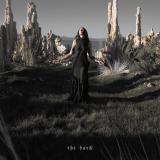
Chelsea Wolfe enters a new era with The Dark, forged in newfound sobriety and deep self-reckoning. Lead single "Cold" is the album's emotional doorway: the ache of being in relationship yet feeling utterly alone, of loving someone and still knowing they are toxic for you. It's about letting go of the person, the path, and the version of yourself that kept returning to the same wound — not dramatic escape, but the quiet terror of finally saying it plainly: "I'm letting you go."
Tiffany Day has quickly emerged as one of the most compelling voices in hyper-digital pop, blending emotional chaos, internet-born edge, and forward-thinking production into a sound entirely her own. Born in Toronto and raised in Kansas, Tiffany first broke through with a viral cover of “Hallelujah,” building a YouTube audience of over 500,000 subscribers before graduating high school. She began releasing original music in college, quickly developing a devoted fanbase drawn to her wit, vulnerability, and genre-fluid instincts.
A self-directed creative force, Tiffany has made her live show a defining pillar of her artistry, fusing choreography, visuals, and electronic-driven transitions that push her beyond traditional pop performance. In 2024, she independently funded and sold out several headline shows across a North American tour. She later expanded into the DJ scene, launching BASSFLUFF, a series of standalone events that generated viral moments DJing everywhere from gyms to nail salons.
Her 2025 releases marked a sharp sonic evolution, leaning into electroclash and hyperpop textures. Singles like “BREAKUP,” “TELL ME WHAT I DID,” and “START OVER” generated millions of views across platforms and earned coverage from NME, Ones to Watch, On The Radar, and beyond, positioning her at the forefront of a new wave of digital-native pop artists.
That momentum culminates in her album HALO, released April 3, 2026 via Broke Records. The project debuted at #1 on the Apple Music Electronic chart and #25 on the Billboard Electronic/Dance Albums Chart, drawing early co-signs from artists like Laufey and Yunjin (LE SSERAFIM) alongside coverage from Pitchfork, The FADER, NYLON, LA Times, and more. To mark the release, Tiffany staged three headline shows—each of which sold out in under five minutes. With her production across nearly every track, HALO marks Tiffany's most cohesive and ambitious work to date, solidifying her not just as an artist to watch, but as a defining voice in the next era of hyperpop.
Tiffany Day has quickly emerged as one of the most compelling voices in hyper-digital pop, blending emotional chaos, internet-born edge, and forward-thinking production into a sound entirely her own. Born in Toronto and raised in Kansas, Tiffany first broke through with a viral cover of “Hallelujah,” building a YouTube audience of over 500,000 subscribers before graduating high school. She began releasing original music in college, quickly developing a devoted fanbase drawn to her wit, vulnerability, and genre-fluid instincts.
A self-directed creative force, Tiffany has made her live show a defining pillar of her artistry, fusing choreography, visuals, and electronic-driven transitions that push her beyond traditional pop performance. In 2024, she independently funded and sold out several headline shows across a North American tour. She later expanded into the DJ scene, launching BASSFLUFF, a series of standalone events that generated viral moments DJing everywhere from gyms to nail salons.
Her 2025 releases marked a sharp sonic evolution, leaning into electroclash and hyperpop textures. Singles like “BREAKUP,” “TELL ME WHAT I DID,” and “START OVER” generated millions of views across platforms and earned coverage from NME, Ones to Watch, On The Radar, and beyond, positioning her at the forefront of a new wave of digital-native pop artists.
That momentum culminates in her album HALO, released April 3, 2026 via Broke Records. The project debuted at #1 on the Apple Music Electronic chart and #25 on the Billboard Electronic/Dance Albums Chart, drawing early co-signs from artists like Laufey and Yunjin (LE SSERAFIM) alongside coverage from Pitchfork, The FADER, NYLON, LA Times, and more. To mark the release, Tiffany staged three headline shows—each of which sold out in under five minutes. With her production across nearly every track, HALO marks Tiffany's most cohesive and ambitious work to date, solidifying her not just as an artist to watch, but as a defining voice in the next era of hyperpop.
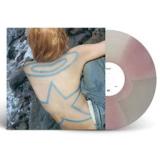
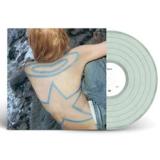
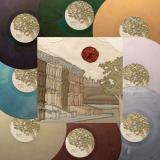
Celebrate a decade of Turnover's iconic sophomore album Peripheral Vision with this 10 Year Anniversary Edition. Retaining the album's iconic cover art, the packaging has been completely overhauled to include a new lyric poster & printed photo inner sleeve. This special limited edition is pressed on limited edition color vinyl also includes two bonus tracks from the era - "Humblest Pleasures" and "Change Irreversible." Released on May 4th, 2015 via Run For Cover Records, Turnover's second album Peripheral Vision is widely regarded as an essential body of the work in the band's discography, maturing its sound into a shoegaze-inflected post-punk direction following the band's 2013 debut record Magnolia. Described as "a tour de force" by Kerrang!, the album set the stage for an extensive and prolific touring history over the past decade and three subsequent albums, including their most recent LP, 2022's Myself in the Way.
Josephine Foster's peculiar 2000 home recorded debut There Are Eyes Above is an essential introduction to her music that’s unfolded now for over two decades. Released for the first time on vinyl, this limited edition 10-inch pressing comes packaged with brand new artwork and is adorned by one of Josephine’s illustrations. Lo-fi and unaffected by tradition or commercialism these initial recordings are sepia-tinted, folk-art music with powered by uke minimalism; it’s outsider music that still doesn't fit in. Just 30-minutes caught in time before her 2001 follow up Little Life - this humble first incarnation includes here for posterity super personal lullabies and a glimpse into her songwriting evolution. It’s music from an era that only exists in your mind, with a bow to Tin Pan Alley for good measure. This super rare collection, originally only released on CDR and sold at shows, remains an essential part of the curious oeuvre of this unique songwriter and singer. “A dissonant soprano and lyrics about benevolence and old-time faith, Foster expertly weaves ancient and modern” The Guardian. Track listing: Side A 1 One Hundred Songs I Sing 2 Emily Told Me 3 Teeter Totter 4 Little Life 5 I Am A Guest In Here. Side B 6 Robber Song 7 Hey Matthew 8 There Are Eyes Above 9 Godcake 10 Yippee I'm Leaving 11Two Not One
When Pouya dropped The South Got Something To Say in the summer of 2019, it wasn’t just a title—it was a definitive statement of growth. Nodding to André 3000’s iconic 1995 Source Awards declaration, the Miami pioneer used his third studio album to prove that his raw, independent formula had mutated into something deeper, more mature, and entirely unmatched in the underground rap landscape. Now, for the first time since its digital release, this pivotal moment in Florida hip-hop history is finally available on wax, offering listeners something tangible they have been anticipating for years.
The South Got Something To Say captures Pouya at a lyrical and sonic turning point. While maintaining the blistering flows, heavy bass, and visceral Florida energy that initially put him on the map, the album opens the door to intense themes of mortality, legacy, and the heavy toll of independent success. It bridges the gap between the frantic energy of the SoundCloud era and a mastery of songwriting, offering fans a remarkably transparent look into the mind of an artist surviving the very chaos that birthed him. Standouts like "Cruisin' in the MIA" and "Florida Thang" showcase his signature rapid-fire delivery, perfectly balancing the record's darker, more introspective moments.
The sonic diversity of the project is anchored by a stellar lineup of collaborators who push Pouya into new creative territory. He enlists Three 6 Mafia royalty Juicy J alongside heavy-hitting underground peers like Ghostemane and City Morgue, while seamlessly pivoting into the melodic, hazy soundscapes of indie-pop artist Cuco and longtime producer Rocci on tracks like "Talk to Me Before I Die" and "Mood Swing Misery." This striking balance of aggressive phonk and melodic vulnerability solidifies the album as a cohesive, genre-bending journey rather than a mere collection of singles.
For years, vinyl collectors and die-hard fans have begged for this underground masterpiece to be immortalized on wax. This first-ever vinyl pressing delivers the booming low-ends and intricate, therapeutic bars exactly how they were meant to be experienced. From the opening nostalgic chords to the final fading beats, this release stands as an essential artifact of the modern underground rap movement, finally giving a landmark Southern album the premium physical presentation it deserves.
For any collaborative project to succeed, the artists involved need a creative unifier – a meeting point, if you will, of their disparate interests and experiences. In the case of Mondo Love & Betrayal, the joint project of Nottingham musical mainstays Neil ‘Nail’ Tolliday and Henry Claude Scott, there were two creative unifiers: a mutual love of classic 1980s synth-pop, as well as shared admiration for each other’s work.
Even so, such shared interests and respect for prior mutual endeavours is no guarantee of success. Yet as their eponymous debut album emphatically proves, the duo’s disparate experiences, characteristics and musical strengths have not only dovetailed beautifully, but also resulted in serious sonic gold. Put simply, Mondo Love & Betrayal is a stunning debut album rich in emotive songs, colourful melodies, atmospheric chord progressions and infectious grooves. Throw in the sun-splashed warmth and saucer-eyed, loved-up tactility of late 80s dance beats, and you have a breakthrough album whose timelessness is evident from start to finish.
The project’s roots lie in Tolliday’s desire to work with Scott, a virtuoso guitarist, talented producer and secret songwriter best-known for his work alongside Huw Costin as Torn Sail, and John ‘Ming’ Thompson as Brown Fang – both projects known for prioritising organic instrumentation and sunset-ready soundscapes over dancefloor-rooted beats.
Tolliday, of course, is one of British electronic music’s true polymaths – a long-serving house producer best-known for his long-running Bent project alongside fellow Nottingham resident Simon Mills. He initially approached Scott with the idea of providing vocals on a house track he was working on, but quickly suggested something else: an exploration of a classic synth-pop sound inspired by his love of Pet Shop Boys, New Order, Depeche Mode and the producers who worked with them – the likes of Martin Hannett, Arthur Baker, Stephen Hague and John Robie.
Scott accepted the invitation, seeing it as an opportunity to explore a different side of his musical personality. Their first recording session resulted in the ear-catching and memorable brilliance of ‘Correspondence’ – a tongue-in-cheek breakup song inspired by the death of landlines and the rise of mobile communications – and soon they were working on their debut album.
The resultant 10-track set is simply sublime, with Scott’s expressive delivery of his own lyrics on life, love, heartache and rejection working in perfect union with Tolliday’s kaleidoscopic and pleasingly authentic backing tracks – gorgeous and beautifully rendered instrumentals rich in memorable melodies, bittersweet chords, and subtle nods to ‘80s and early ‘90s dance-pop culture, from Shep Pettibone style remixes and Bernard Sumner guitar licks, to Beloved-esque piano parts and Chris Lowe chord progressions. Some listeners may also draw favourable comparisons with 21st century synth-pop practitioners, particularly Parcels, Private Agenda and the deeply emotive songs showcased by Junior Boys.
For proof, wrap your ears around such album highlights as opener ‘Boo Boo’, where Scott warns that “love and betrayal will haunt you” atop sparkling synths and Vince Clarke style grooves, the Behaviour-era PSB melancholy of recent single ‘Your Latest’, the mid-tempo dreaminess of ‘Beyond The Rainy City’, the early Depeche Mode chug of ‘Whatever Happened To Me’ and the tactile warmth of ‘Across The Plane’.
We could go on. In truth, the whole album is – in Scott’s words – “magical musical alchemy”. Wherever they choose to go next, Mondo Love & Betrayal is a seriously good sonic statement of intent.
out of Stock
Last delivered 31 days ago available to reorder, subject to availability
Still hot on the heels of compiling the first volume of the Italian Dancefloor Outsiders, and moved by the urge to explore new musical landscapes and discover sounds produced in subsequent years, we decided to continue our quest of tracking an alternative map of what was happen- ing in the Italian electronic music scene. This second volume takes inspiration from the concept of “Mezzanotte Mezzogiorno” (literally “from Midnight to Midday”), a term first used for a now legendary party held in 1992 at Club Imperi- ale in Tirrenia, Tuscany. The owner of the club, Roberto Pannocchia, was eager to attract a different kind of audience to his venue and so decided to extend the closing time until midday, well beyond the Italian law limits. But as Imperiale was a members club, he was allowed to do it, and he already knew that this act would forever shape the Italian club scene. "Mezzanotte Mezzogiorno" was then used to describe long dancing marathons that lasted for the whole weekend, spread across clubs, after-parties and more off-the-grid open air venues but, most of all, became the symbol of an era. The music ranged from slow, pitched-down landscapes to epic techno progressions, filling both feverishly packed big rooms and colourful chillout zones. A parabola of musical move- ments related to specific genres was born, reaching its peak and then fading towards the end of the millenium.
out of Stock
Last delivered 18 days ago available to reorder, subject to availability
Originally released on the legendary Rat Records in 2000, Old Skool quickly established itself as one of the defining records of the emerging Bassline Breaks movement. Now, over 25 years later, it returns fully remastered on Cyberfunk Records, bringing this underground classic back to a new generation of DJs and listeners.
Produced by DJ Quest and Kalibre, Old Skool perfectly captures the raw energy of the era, combining infectious vocal hooks, rolling breakbeats and heavyweight basslines that still sound as fresh today as they did on its original release.
A landmark release that bridged the worlds of UK Garage and Breakbeat, Old Skool helped shape the Cyberfunk sound that would follow. This remastered edition preserves all the character and atmosphere of the original while delivering the power and clarity expected on modern sound systems.
Tracklisting
A. Old Skool (2001 Original Mix)
The original version that helped establish DJ Quest as one of the pioneers of the emerging Bassline Breaks sound. Fusing infectious old-school vocal samples, rolling breakbeats and heavyweight basslines, this timeless underground anthem perfectly captured the crossover between UK Garage and Breakbeat. More than two decades on, its unmistakable groove and dancefloor energy continue to make it a favourite with DJs and fans around the world.
AA. Old Skool (Paket Remix)
Spanish breakbeat heavyweight Paket delivers a fresh interpretation for today's dancefloors, retaining the iconic vocal hooks and recognisable feel of the original while introducing tighter drums, modern production and his trademark bass-driven energy. Respectful of the source material yet built for contemporary sound systems, Paket's remix gives this classic a powerful new lease of life.
——
Frazer Ray lands on Time Is Now with Masha EP. Four tracks of killer, stripped back FWD facing proto/future garage effortlessly pushing the sound into a new direction.
FACTS:
1. Frazer Ray knows how to make a dance. IYKYK…. Recently he’s been shelling Live UKG cooked right in front of you on a custom modular rig. Mad energy. 100% party business.
2. Frazer Ray knows a thing or two about making UK soundsystem music. The artist FKA Soundbwoy Killah is now a decade deep in his discography. And first as ‘Soundbwoy Killah’ and now as ‘Frazer Ray’ he is 2 for 2 with aliases that never miss.
3. New Frazer Ray is always something to get excited about. For 10+ years he’s kept it super tight. Quality over quantity. Always holding dubplates. When releases have landed they drop on only the best labels; including both Rinse and Rinse’s new INGRAM imprint, Ninja Tune’s Technicolour imprint, Sneaker Social Club, Interplanetary Criminal’s Locked On and IPC & Main Phase’s ATW Records. (side note - his Soundbowy Killah - ‘Halcyon Daze’ LP on Sneaker is IMO an all time classic - do not sleep on that one). Aaaannd… if the dubplates got too heavy he’s also occasionally dropped weight on his own U-Phorix label.
Also…..what has always struck me about Frazer’s music is that it’s simultaneously integral in the hardcode continuum while also pushing it forward. It’s always complete. Fully formed. You never bristle. There’s no failed experiments. Just a firm nod to the future for anyone looking.
OK… Run the tracks.
Masha’s vocal licks tell it straight, this one is “Fire”. Proper club business to test the stacks. The drums roll steady in front of a wall of sub bass. A killer mix of post dubstep era goodness, techno sound design and the shuffle & swing of proto dubstep.
Settle Down There’s something 90’s tek step about this one. Dark and moody with a wall of bass. It bristles with texture and atmosphere before – a moment of reprieve in this absolute weapon – Frazer opens up into a dubwise oasis before skittering back into the darkness.
Syren Song is exactly what it says on the tin, alluring Dancehall vocals chatter and roll. Who knew auto-tune and Garage paired so well… Frazer did that’s who.
No Reasons Left is an ethereal closer for the end of the night / start of the morning after. Gliding warm & introspective dubwise breaks with a Reese bassline that hangs in the space between garage and hardcore.
Frazer says…
“This EP feels like I've finally nailed integrating my modular setup (and VCV rack for all you nerds out there) into my productions. I wanted to create deeper production while still ensuring the tracks translate well in the club.”
If this is only the beginning then strap in.
out of Stock
Last delivered 32 days ago available to reorder, subject to availability
They live! If this summer’s endless bout of heatwaves seems an odd setting for a new Altar Of Eden record, maybe we should consider that the fast-accelerating destruction of life on Earth is an appropriate setting for more deathrock. The eagle-eyed among you might recognise guitarist Ben Redman from recent lineups of symphonic noiseniks …And You Will Know Us By The Trail Of Dead, while vocalist Albert Efraim has been making a thrillingly unholy racket with Texan hardcore faves like the Creamers and Nosferatu - and they both played together in gothed-out sensations Altar Duata before that band’s untimely demise. Altar Of Eden have thus far produced two mighty LPs of smartly chilling post-punk for Drunken Sailor - 2020’s wondrous The Grotto Screams and 2022’s superb follow-up Chimeras - but now they return with a sequel to their debut: The Grotto Screams II.
In keeping with their previous offerings, it’s superb. Redman’s guitar is brittle and minimal, but lurches into eardrum-lacerating strafes of deafening, brutal noise without warning, while Jake Cloud brings driving, pulsating basslines to the fore, dripping with the influence of Killing Joke’s Youth as they hold it all together somehow. Efraim intones his lyrics solemnly over the top, drenched in reverb and tucked deep into the mix; as much a texture as a means of delivering hooks. He’s cited the poetry of Jean-Pierre Duprey and Rene Daumal as influences in the past, and tracks like The Erasure and Light And Shade certainly contain their own suffocating sense of surrealism and obfuscated reality. It all builds to the epic finale of closing track The Moon, which handles their signature tricks in moodily grandiose fashion - a bleakly compelling version of post-punk that sears and soars even as it chills the heart. Arguably Duprey’s most famous line goes, “I shouldn't have got stuck in this galaxy,” and as humanity brings about its own destruction, it’s worth suggesting that this applies to us all. But at least Altar Of Eden bring a hell of a soundtrack while we all burn.
In an era where pedalboards, laptops and samples have become commonplace, American blues-rock/metal guitarist and singer Eric Steckel goes against the grain and harkens his listeners back to the days when great guitars were played loudly through great amps. Hailed by many as the top rising star of Blues/Rock, Eric delivers a powerhouse performance that has left audiences in 30 countries (and counting) mesmerized. "My forthcoming new album, 'Sandstorm' is the most fun I’ve had making a record in my career thus far," comments Eric Steckel. "The incredible vibe in the studio brought forth tons of new and spontaneous material such as the title track 'Sandstorm' which instantly became my favorite track on this album and a perfect representation of this body of work." Eric has toured worldwide sharing the billing with Steve Vai, Gregg Allman, Johnny Winter, John Mayall, Ray Charles, Larry Carlton, Robben Ford, and others and was voted into Total Guitar magazine's list of "The 100 Greatest Blues Guitarists of All Time" and named one of "10 Future Blues Stars” by Guitar Player.
Strut presents Nigeria 80, the next essential chapter in the legendary Nigeria 70 series, diving deep into the explosive sound world of 1980s Nigeria.
Following the global impact of 2001's Nigeria 70, which helped introduce rare Nigerian recordings to international audiences, Nigeria 80 continues the journey, unearthing a rich, restless, and wildly creative decade of music from Lagos to Enugu. Despite economic instability and restrictive political conditions in the 1980's, Nigeria’s music industry flourished, driven by a growing network of independent labels such as Tabansi and Phonodisk, which championed local artists and expanded creative freedom. The 1980s also marked a significant rise in visibility for female artists, with trailblazers like Onyeka Onwenu helping to reshape the landscape and open doors for a new generation of performers, writers, and producers.
Nigeria 80 showcases the extraordinary breadth of this era, with all tracks reissued here for the first time. The compilation brings together essential recordings from across Nigeria’s musical spectrum: highlife greats Victor Uwaifo and Nico Mbarga appear alongside Paulson Kalu, whose personal favourite “Akugbue Nwa Ewu” stands out as a prime example of the style. Prince David Bull’s “Soko Soko” (later reinterpreted in Starboy’s Afrobeats hit “Soco”) features as a key touchpoint between eras. Segun Adewale delivers a driving juju workout, while Lekan Animashaun, longtime bandleader of Africa 70, contributes a late-era Afrobeat classic produced in collaboration with Fela Kuti.
The compilation also highlights more experimental and hybrid sounds, from I.C. Rock’s proto–hip hop gem “Advice” to Evi-Edna Ogholi’s self-produced reggae statement “The World”. The set closes with “Apama” by Ibealaoke Chukwukeziri, the “Apama Boy” from Achi in eastern Nigeria, featuring hypnotic vocals and percussion from his Anaedeonu band.
Nigeria 80 is available as a black vinyl 2LP housed in a gatefold sleeve or CD digipak, which includes a 16-page booklet with artist photos and liner notes by Francis Gooding. Compiled by Duncan Brooker. Audio restoration by See Why Audio. Mastered by The Carvery.
out of Stock
Last delivered 37 days ago available to reorder, subject to availability
Analog Africa follows up its Dur-Dur Band Volume 1 & 2 reissue with the next two volumes and they again capture the Mogadishu group at their creative peak. Formed by drummer Adan Handal and Isse Dahir Qassim after their military band days, Dur-Dur became a house band at the legendary Jubba Hotel where they fused Somali melodies with funk, disco, reggae and soul into colourful new fusions. This music was recorded amid personal tragedy, including Qassim's death and key members' departures, and pushed further into electronic percussion. It's a unique window into Mogadishu's golden era, presented as ever in excellent style with photos and liner notes.
out of Stock
Last delivered 39 days ago available to reorder, subject to availability
Kerri Chandler begins a brand-new chapter with the launch of his self-titled label, Kerri Chandler, and its debut release; the Downtown EP Pt. 1.
The release includes four tracks reconnecting with the spirit of Kerri’s iconic Downtown Records era while offering something fresh for the next generation of listeners. 3 of the tracks come straight from that timeless catalogue and firm favourites among Kerri’s community, now beautifully presented on vinyl once again.
Part 1 also features one brand-new, exclusive track, giving fans something truly special: a glimpse of Kerri’s sound, and an invitation to join him on a journey through his remarkable catalogue. This release marks the start of an ongoing celebration of Kerri’s music, his evolution, and the sound that continues to inspire house music lovers around the world. Every detail, from the sleek new sleeve design to the thoughtful presentation, reflects Kerri’s care and respect for his music and the people who’ve supported it. It marks the beginning of something bigger; it’s a series of reworks, reissues, and rediscoveries that will guide listeners through the depth of Kerri’s catalogue and his lifelong love for house music. For long-time followers and new listeners alike, Downtown EP Pt. 1 captures everything Kerri Chandler represents, soulful, honest, and made with nothing but heart.
“The first three are innocent in a way, because we didn’t have an audience when we were making them,” Oberst says. “But from Lifted on, I was definitely aware of an audience. Lifted was well-received right away, and then everything happened with Wide Awake and Digital Ash.” Those two albums came out simultaneously. And their lead singles – “Take It Easy (Love Nothing),” from the austere, remote Digital Ash, and “Lua,” from the warm, folky Wide Awake – debuted in the top two slots on the Billboard Hot 100. “First Day of My Life,” also from Wide Awake, would later be voted the Number One love song of all time by NPR Music’s reader’s poll. Bright Eyes had officially broken through. It was a heady, exciting time, but also fraught and tense, both because of the band’s careening new fame, and because of the state of the world. When Bright Eyes made their Tonight Show debut in 2006, they chose to perform none of their shiny new hits, instead delivering a searing, harrowing rendition of their caustic anti-Bush anthem, “When The President Talks To God.” These days, Oberst is still amusing himself by messing with the extremes Bright Eyes baked into this era’s releases, extremes that reflected the polar, with-us-or-against-us, fractious feel of the times. The reworked Digital Ash tracks, originally so clean and elegant, are, on the companion EP, full of “harmonica and mandolins – folky vibes,” Oberst says. While the analogue sweetness of the Wide Awake songs have been put through a detached nihilism filter.
The deluxe 10th anniversary edition of case/lang/veirs features the new track "Accidental Tattoo" and twelve never-before-released live recordings alongside the original studio album from supergroup of singer-songwriters Neko Case, kd lang and Laura Veirs. Released in 2016, case/lang/veirs is a true collaboration between three phenomenal, self-driven artists: "the strongest voices in their field - lang the full-voiced seductress, Case the hurricane, and Veirs the wry storyteller" (Pitchfork). The women wrote all 14 songs and shared lead vocals equally, sometimes even within the same track. Full of stunning harmonies and spellbinding rhythms, case/lang/veirs travels through aches and eras, torch songs and tributes to the undersung. "There"s a generosity of spirit to case/lang/veirs," NPR praised upon the album"s release, "a worthy extension of three tremendous catalogs, in which three great singer-songwriters sound enhanced and invigorated by the challenge of living up to each other"s legacies." They worked over two and a half years in Portland, Oregon, where lang and Veirs both live, sometimes in lang"s loft with a view of Mount St. Helens, others in Veirs" dining room or backyard studio. The album was written from the ground up without any real plan beyond a desire to make music together and a faith that it would reveal itself. They produced the album with Tucker Martine, at his Portland studio in November 2015.
The deluxe 10th anniversary edition of case/lang/veirs features the new track "Accidental Tattoo" and twelve never-before-released live recordings alongside the original studio album from supergroup of singer-songwriters Neko Case, kd lang and Laura Veirs. Released in 2016, case/lang/veirs is a true collaboration between three phenomenal, self-driven artists: "the strongest voices in their field - lang the full-voiced seductress, Case the hurricane, and Veirs the wry storyteller" (Pitchfork). The women wrote all 14 songs and shared lead vocals equally, sometimes even within the same track. Full of stunning harmonies and spellbinding rhythms, case/lang/veirs travels through aches and eras, torch songs and tributes to the undersung. "There"s a generosity of spirit to case/lang/veirs," NPR praised upon the album"s release, "a worthy extension of three tremendous catalogs, in which three great singer-songwriters sound enhanced and invigorated by the challenge of living up to each other"s legacies." They worked over two and a half years in Portland, Oregon, where lang and Veirs both live, sometimes in lang"s loft with a view of Mount St. Helens, others in Veirs" dining room or backyard studio. The album was written from the ground up without any real plan beyond a desire to make music together and a faith that it would reveal itself. They produced the album with Tucker Martine, at his Portland studio in November 2015.
The second volume of this (already) cult series of British proto-metal compilation albums. Every artist on here was a regional band in their local underground scene of the late 1960s/early 1970s. The main thing that differentiates this series to any other, is the fact that none of the artists included had any kind of commercial release during their existence (apart from Fusion Farm, who self-released an extremely rare private press LP titled 'Rush Job' in 1971). All the artists were discovered after extremely lengthy searches of old music magazines, local newspapers, concert posters, government agencies.... By any means possible! It was a lot of work, but the results speak for themselves. The one thing that joins all these bands together (apart from being exclusively British), was their desire to play as loud and heavy as possible. This was a magical era in rock music, where Black Sabbath were the undisputed kings, but the industry simply didn't want to recognise the countless other band that existed in their gloomy wake. All of the recordings on Yeah Man, It's Bloody Heavy! are taken from demos, whether originating from crusty old 1/4 inch tapes, dusty acetate discs or third generation cassette tapes. Basically, whatever format was available. As a result, sound quality varies, though we did our utmost to get these precious artefacts sounding as killer as possible. For instance, Bonehead were close friends of Led Zeppelin. Their guitarist/vocalist Paul Lockey had previously played with Robert Plant and John Bonham in the Band Of Joy. Their track, 'Free To Escape', was actually an audition tape for Atlantic Records, which had been instigated by Robert himself. Unfortunately, the band broke up not long after the recording. So, their recording is top notch, whereas others were taken from rehearsal tapes (such as Fusion Farms' - Keys To Hell). But the main thing is, there's a spirit that unites them all. Sit back, roll up a fat one and let your mind be blown by the obnoxious sounds and sheer weight of vintage gravity that is: 'Yeah Man, It's Bloody Heavy! Vol 2'.
Lily Allen’s era-defining iconic debut album Alright, Still celebrates its 20th anniversary with this limited-edition picture disc. Housed in a gatefold sleeve with silver foil featuring new anniversary artwork, the tracklist includes the hits 'Smile', 'LDN', 'Alfie' and 'Littlest Things', plus the bonus track 'Nan You're a Window Shopper'.
Blood White usher in a new era with "From Hell" – 12 tracks of uncompromising energy and dark atmosphere. Singles like "Run Or Die", "Guns & Fear", and "Unholy Water" prove their vision: brutal, direct, unfiltered. From rebellion to rage, they play by their own rules. Unvarnished. Unforgettable.
Blood White usher in a new era with "From Hell" – 12 tracks of uncompromising energy and dark atmosphere. Singles like "Run Or Die", "Guns & Fear", and "Unholy Water" prove their vision: brutal, direct, unfiltered. From rebellion to rage, they play by their own rules. Unvarnished. Unforgettable.
Flaw is an American nu‑metal band from Louisville, Kentucky, formed in 1996 by guitarist Jason Daunt. Lead vocalist Chris Volz joined after responding to an ad in a local newspaper. Following a series of raw independent recordings throughout the 1990s, the band signed with Republic and Universal Music Group, releasing two major‑label albums Through the Eyes in 2001 and Endangered Species in 2004. Breakups, lineup changes, and internal conflicts affected the band for much of the decade, though from 2015 to 2017 they reunited with three core members to tour and write new material.
Originally released at the height of the early‑2000s alt‑metal wave, Flaw’s explosive debut Through The Eyes quickly became a defining record of the era. Led by the unmistakable voice of Chris Volz, the band crafted a sound that fused emotional intensity, sharp guitar work, and melodic hooks that resonated with a generation. The album reached #119 on the Billboard 200, and produced two singles, “Payback” and “Whole”. Another standout track, “Only the Strong”, was featured on the soundtrack of the 2002 action film The Scorpion King.
Now celebrating its 25th anniversary, Through the Eyes is available on vinyl for the first time as a double album. This edition includes an insert with lyrics and features a bonus hidden track.
"The electroclash genre sure has been having a bit of a renaissance moment. During its first coming an odd 25 years ago the French act Sweetlight was a favorite over here. Originally active between 2002 and 2010, they quickly positioned themselves within a refined strand of the global underground scene: inspired by 90s acid house club culture, they rose to prominence by releasing a sparse selection of original tracks and a multitude of remixes that were both dancefloor-effective and immediately recognizable. After the EPs stopped coming, the project seemed to have faded. But their tracks never left our bag: they combined minimalism with ambiguous elegance and retained a distinct, timeless quality, easily transcending the turn-of-the-century style they were most closely associated with. We are delighted, in what we consider nothing less than a full-circle moment, to release "Selected Recordings: 2004 - 2006" and shed light on an underrated yet, in our eyes, absolutely essential project. ALT022 is an anthology release featuring four extensive, remastered cuts. Abusator, arguably the act's hallmark track and a crossover hit, kicks off the EP. It is joined by Mecaniques Remontees, which opened the milestone Suck My Deck mix by Ivan Smagghe, and Too Shy, both initially part of the same EP back in 2004. Noir Comme Le Beat, an unreleased curiosity from the same era, closes the record. You will find dark, endless, ever-modulating arpeggiator basses, Detroit-via-Paris chord progressions, and spartan drums. The work is, in the artists' own words, low-profile, detail-oriented, and built for late hours. It's an ideal compilation or - depending on the case - introduction, especially now that new work is rumored to be finally on its way."
out of Stock
Last delivered 42 days ago available to reorder, subject to availability
Ândy Bell, Erasure-Frontmann und Electro-Pop-Legende, veröffentlicht mit "Extended Blue" sein Solo-Debütalbum "Electric Blue" (2005) als limitierte Deluxe-Edition auf dreifarbig-blauem Vinyl neu. "Electric Blue" - samt den Duetten mit Claudia Brücken (xPropaganda) und Jake Shears (Scissor Sisters) - wurde gemeinsam mit Manhattan Clique geschrieben und produziert, einem Duo, das zwei Jahrzehnte lang die Welt der Pop-Dance-Club-Remixe dominierte und mit Weltstars (Katy Perry, Britney Spears, Lady Gaga, OneRepublic, Moby) und wegweisenden Electronic-Acts (The Human League, Soft Cell, OMD, The B-52s und natürlich Erasure) zusammenarbeitete.
John Tchicai (1936 – 2012) was one of the most important free improvising saxophonists of the 20th Century: an artist of rare vision and aptitude whose lines soared and stood out even in the most hallowed company, and whose body of work as a leader / composer is among the most singular and distinct within the entire canon of that music. But Tchicai’s importance doesn’t end there. Born in Copenhagen, Denmark, to a Danish mother and a Congolese father, his life and career represent a crucial bridge between the European and American traditions of free jazz. Initially trained on violin as a child, Tchicai shifted his focus to the clarinet and alto saxophone during his mid-teens, and began touring Europe as a professional musician by his early 20s, which landed him at a socialist youth festival in Helsinki, Finland, where he met the trumpeter Bill Dixon and saxophonist Archie Shepp. Impressed by what they heard, Dixon and Shepp encouraged the young saxophonist to move to New York, and in so doing changed the history of jazz forever.
Tchicai’s arrival in New York marks the rare occurrence of a European player joining the intimate circle that was first wave of American free jazz. Following his landing in the city in November of 1962, in addition to regularly sitting in with Don Cherry’s group, Tchicai began playing with Bill Dixon's band alongside Archie Shepp and Roswell Rudd, forming the nucleus of the foundation of the New York Contemporary Five - one of the most important groups of the era - which counted Tchicai, Shepp, Cherry, Don Moore, and J. C. Moses as its members. From the ashes of this group, Tchicai would go on to found the legendary ensemble, New York Art Quartet, with Roswell Rudd, Milford Graves, and Lewis Worrell, as well as working within Albert Ayler's band, recording “New York Eye and Ear Control”, Shepp’s band, recording “Four for Trane”, the ensemble that recorded John Coltrane's “Ascension”, and the Jazz Composer's “Orchestra”.
By the time he decided to return to Denmark in 1966, had Tchicai chosen to record little else, his legacy within the history of music would have been ensured. Incredibly ambitious, his arrival home marked the beginning of an incredible period of activity which saw him radically expanding his creative explorations, which by the end of the decade would include becoming a founding member of Amsterdam's Instant Composers Pool and helping to record John Lennon and Yoko Ono's “Unfinished Music No.2: Life with the Lions”. This, however, was proceeded the formation of a new orchestra, Cadentia Nova Danica, led by Tchicai, dedicated to radical cross-disciplinary exploration. Remaining together between 1966 and 1971, the group and its shifting membership regularly fell into collaboration with artists and composers, notably Musica Elettronica Viva, who existed beyond the realms of jazz, as well as participating within multi-media events that incorporated the visual realms.
Cadentia Nova Danica’s only two LPs - “Cadentia Nova Danica” (Polydor, 1968), and “Afrodisiaca” (MPS, 1969) - are effectively Tchicai recorded efforts as a leader, and are legendary. There’s little mystery, once heard, why the later landed on Thurston Moore’s iconic “Top Ten from the Free Jazz Underground”, published by Grand Royal in 1996. Sadly, despite playing extensively during their five year run, with exception of a CD documenting a performance at Jazzhus Montmartre, in 1966, until now there has been no other publicly available recordings that allow us to capture a glimpse of this astounding band at work. Alga Marghen / Formalibera’s vinyl pressing of a never before released body of recordings, made in Copenhagen between 1969 and 1970, changes that in the most exciting of ways.
Comprising three pieces - “Mc Gub Gub, (I–VIII)”; “Ode to Skt. John”; and “Pladepip” - the material on this stunning LP comes from two specific events. The first, which encompasses the first side, “Mc Gub Gub, (I–VIII)” was recorded by Cadentia Nova Danica - in this instance, Tchicai, Sune Weimar, Theo Rahbek, Christian Kyhl, Niels Holt, Jørgen Thorup, Michael Schou, Morgens Bollerup, Allan Gregersen, Ole Matthiessen, Pierre Dørge, Willy Jaegert, Anthony Barnett, and Jon Finsen - on May 29th, 1969, at the ABC-Theatre in Copenhagen. Penned by Tchicai, the piece is a sprawling, evolutionary composition at the outer reaches of free jazz, rooted in large blocks of colliding tonality and rhythm - a sound only accessible to larger ensembles - that push territories explored by Charles Mingus to previously unimagined heights, threaded by moments of hard blown fire. Writhing like a stormy sea - skronking and devilish - “Mc Gub Gub, (I–VIII)” is a work of profound complexity that singlehandedly illuminates not only Tchicai’s singular vision as a composer, but also the power and uniqueness of Cadentia Nova Danica during the band’s most vital period.
The two pieces - “Ode to Skt. John” and “Pladepip” - taking up the flip side, were recorded on February 21st, 1970, at the Danish Broadcasting Corporation’s Radio House, and are the outcome of Cadentia Nova Danica’s extended residency there between 1969 and 1970. In many ways, these two recordings offer some of the best insights into the broad collaborative approaches that defined the band, in this case encountering them working with Danish experimental composer, Svend Erik Werner, who was among the earliest in his country to embrace stylistic pluralism and the use historical forms within a modern context. “Ode to Skt. John” - based on aspects of Gregorian music - was penned by Werner, incorporating heady improvisation by the members of Cadentia Nova Danica, this time made up by Tchicai, Sune Weimar, Hugh Steinmetz, Theo Rahbek, Christian Kyhl, Michael Schou, Morgens Bollerup, Ole Kühl, Torben Enghoff, Mauritz Tchikai, Kjeld Ipsen, Willy Jaegert, Ole Matthiessen, Ole Thilo, Pierre Dørge, Steffen Andersen, Jon Finse, and Clause Bøje. The piece is a fascinating binary of the composed and improvised, utilising the band’s large scale to introduce a remarkable sound within its slow progressions and furious, driving free moments, in this incredible meeting of worlds.
The album’s final piece, “Pladepip”, is arguably its most historically significant: an entirely singular piece, unlike anything in Tchicai’s recorded canon as his foray into musique concréte. Drawing upon two recordings of full-band improvisations by Cadentia Nova Danica, for its creation Tchicai also gouged the surfaces of 78rpm records in his collection to skip and create repeated phrases and patterns, creating a stunning sound collage of hard angles and abrupt phrase, that creates a striking counterpoint to the band’s flowing improvisations that bookend those passages. The result is an engrossing listen and easily one of the most unique and culturally important gestures in the entire history of musique concréte.
Truly incredible, Alga Marghen / Formalibera’s vinyl pressing of this never before released body of recordings, made by John Tchicai’s Cadentia Nova Danica, in Copenhagen between 1969 and 1970, offers an unprecedented window into one of the most important groups working in Europe during that period, significantly expanding their rare and slim discography to date. Accompanied by extensive exploratory liner notes by veteran jazz writer, Ed Hazell, this is easily one of the most historically important archival releases of the year and is impossible to recommend enough. Absolutely essential on every count.
Led by the lightning-fast guitar work of Alvin Lee, the band had quickly evolved from a traditional blues outfit into one of the most exciting and commercially viable acts of the late '60s British rock scene. This album reflects that transition, combining their Chicago blues roots with heavier rock, boogie rhythms, and early progressive influences. Recorded at a time when studio experimentation was becoming central to rock music, Cricklewood Green shows the band expanding beyond their live reputation into more layered and exploratory territory. The hit single "Love Like a Man" became a defining track of the era, earning chart success and cementing the group's reputation on both sides of the Atlantic. Newly remastered at Air Mastering, this reissue restores the album's original power and nuance. In addition to the album is a newly mixed performance by Charlie Russell of their second set at the Fillmore East on Friday 27th February 1970 on disc two, the sheer power of the band is on full display. On the CD are a selection of rarities with the standout being a newly discovered "Cricklewood Jam" demo, recorded during the album's sessions and never heard until now..
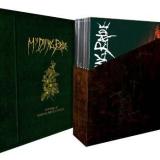
After a career spanning over thirty five years, from UK underground upstarts and outliers, to major success on the international stage - including tours with UK icons Iron Maiden and genre legends Dio - My Dying Bride have themselves become a firmly established pillar of metal history with a refined and influential brand of Death/Doom metal. With enduring popularity across subsequent decades, My Dying Bride remains a productive and captivating vessel for tragedy and despair, with their studio output spanning fourteen full-length albums to date.
As part of the “Peaceville Three”, along with fellow countrymen Paradise Lost and Anathema, My Dying Bride truly became a primary force in highlighting Britain as an epicentre of this Doom revolution of the time, creating a highly distinguishable sound assisted by the inclusion of violin & a more poetic approach to the delivery of morbid and salacious topics, lending an additional air of eccentricity and eloquence to the darkness.
Anthology of Sombre Reflections is an expansive and comprehensive collection of the early and much-celebrated works of the Doom Gods, from the formative deathly rawness of the revered Towards the Sinister demo, ‘God is Alone’ 7” tracks and subsequent debut album, As the Flower Withers, through to the gothic-tinged funereal seductive delights of 1996’s highlight, Like Gods of the Sun.
With the addition of all-time genre classic opuses Turn Loose the Swans, and The Angel and the Dark River also representing My Dying Bride’s much-loved early to 90’s period, the band’s three cult EPs are also featured in this deluxe eight-vinyl boxset, with each record presented on 180gm heavyweight black vinyl. The four studio albums themselves have also been treated to new half-speed masters courtesy of Air Studios.
Accompanying the audio is a 48-page book featuring photographs and artwork, plus new interviews with Andrew Craighan and Aaron Stainthorpe exploring some of the influences and thought-processes behind the creation of such cherished works of the 90s, as well as reflections of their output over this period.
Anthology of Sombre Reflections also contains 2 large posters depicting the Turn Loose the Swans CD artwork image, plus the original poster included in As the Flower Withers. A selection of photo prints of the band from this era are also included.
Magi Merlin’s debut LP, POWER HOUSE, is a high-production, 12-track masterclass in modern pop - an infectious, high-energy record that feels deceptively familiar at first touch, yet every time you reach for a comparison, you realize it doesn't quite fit; a one-of-one project that remains as polished as it is daring.
Conceptually, POWER HOUSE is an exploration of the internal architecture we all inhabit, housing the conflicting rooms of anger, fear, vanity, and ultimately, a reclaimed sense of power. Where Magi Merlin’s previous work, Gone Girl, was a study of external strength, this new era is an ode to the realization that inner work is the only true outer work. With a perspective that is both empathetic and furious, and a grow-as-you-go philosophy, she proves that real change starts small but sounds massiv
They're leaders of a new generation of songwriters who honour the genre's history while pushing its boundaries, too - musicians who treat bluegrass not as a tradition, but as a living, breathing language. That language evolves and expands with Appalachian Smoke , an album that combines the live- wire energy of the band's concerts with the bold, wide-open exploration of the recording studio. Produced by six- time Grammy winner Vance Powell , Appalachian Smoke came together during a whirlwind era that found Mountain Grass Unit hitting the highway, transforming their grassroots audience into a national following. For years, they'd squeeze their concerts into the narrow margins of long weekends and summertime breaks. When college graduation spilled the musicians out into the real world in 2025, Mountain Grass Unit committed fully to the road, selling out more than 30 shows that year and winning the International Bluegrass Music Association's Momentum Artist of the Year award.
Originally released in 2016, 'Your Wilderness' marked a pivotal moment in The Pineapple Thief's evolution, expanding the band's sonic palette & establishing a creative partnership with renowned drummer Gavin Harrison that would help define the group's next chapter. Widely regarded as one of the band's most ambitious & emotionally resonant works, the album remains a landmark release in modern progressive rock. Now, to celebrate its 10th anniversary, Kscope presents a newly remastered edition of 'Your Wilderness' on clear double vinyl, featuring a 2026 remaster by Steve Kitch &, for the first time on vinyl, the companion album '8 Years Later'. Previously only available as part of the sold- out 'Your Wilderness' Earbook, '8 Years Later' collects material written during the same creative period, offering a deeper insight into one of the most fertile eras in The Pineapple Thief's catalogue.