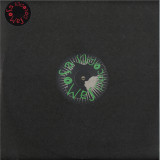
Brand new reissue of the NIGHTSTALKER legendary debut album Side FX. Nightstalker's debut album, recorded in 1993 and released in 1994, captures the raw, rebellious energy of the era, blending gritty, Motörhead-inspired heaviness with infectious grooves. Emerging from Greece during the height of grunge and alternative music, the band delivers a sound that's unapologetically rough and driven by a heavy, rhythmic pulse. Their music channeled the raw power of '90s rock while Nightstalker carved out their own space with their hypnotic riffs, groovy basslines, and a dark, rebellious spirit. A bold first step, this album sets the tone for Nightstalker's journey.
Buscar:new rhythmic
Brand new reissue of the NIGHTSTALKER legendary debut album Side FX. Nightstalker's debut album, recorded in 1993 and released in 1994, captures the raw, rebellious energy of the era, blending gritty, Motörhead-inspired heaviness with infectious grooves. Emerging from Greece during the height of grunge and alternative music, the band delivers a sound that's unapologetically rough and driven by a heavy, rhythmic pulse. Their music channeled the raw power of '90s rock while Nightstalker carved out their own space with their hypnotic riffs, groovy basslines, and a dark, rebellious spirit. A bold first step, this album sets the tone for Nightstalker's journey.
- 01: Un Mondo - Generato Da Un Seme Casuale - Con Un Inventario Vuoto
- 02: Sottaceti Di Mare Che Si Generano In Un Burrone Sotterraneo
- 03: Il Nether Presenta Un Terreno Unico Simile A Una Caverna Senza Cielo
- 04: La Foresta Cremisi È Densa Di Funghi Distorti
- 05: Slime In Un Mondo Superpiatto Nella Versione 1.1
- 06: Una Immagine Ingrandita Di Una Foresta Distorta
- 07: Il Portale Dell&Apos;End Conduce Ad Una Dimensione Oscura Che Si Trova Nel Vuoto
nobile, one half of the former Milanese duo Voronoi, presents a new series of recordings of ephemeral ambient soundscapes, organic throbs and broken rhythmic textures that sublimate the more instinctual and playful side of his poetics.
The project is haunted by cavernous sounds and an obsession with the 'netherworld' of the videogame Minecraft, and by Le Matin des Magiciens - the classic and revolutionary book that popularised occultism, alchemy and paranormal phenomena in the 1960s. "...FANTASTICO INTERIORE is" - as the artist puts it - "a fantastic journey inside the body, perhaps also a journey into the unconscious to understand my gastritis?"
The seven tracks traverse underworlds, infused with fantastic realism, where odd sounds materialise like poltergeists of digital folklore. Creepy voices emerge from the hell-like nether, intertwined with clusters of gelatinous percussive sounds that trudge to the surface. Earthy streams of crackling white noise carry volatile sonic particles that bounce off walls with short delays and reverberations, giving an almost visible form to the space.
But it is not always serious. As soon as you come across the curiously long titles of the tracks (which are rough translations of the Minecraft manual into Italian) a subtle irony emerges. The imagery appears to be harmless and eventually, as in a video game, you can switch to safe-mode and refill your health-bar along the way...
No panic attacks in the soft-occultism of FANTASTICO INTERIORE ;)
"We could go so far as to say that it is the human condition to be grotesque, since the human animal is the one that does not fit in, the freak of nature who has no place in the natural order and is capable of re-combining nature's products into hideous new forms." So reckoned Mark Fisher in 'The Weird And The Eerie', which chronicled the means by which the uncanny can enter the everyday. Mwg Drwg, the second album from South Wales psychic seers Obey Cobra, is an album that dwells in exactly this kind of headspace, where the otherworldly meets the kitchen sink. Always a band who've sought out new dimensions to explore via their trademark warped post-punk, electronic and industrial influences, Obey Cobra have crafted surreal new shapes here. Taking influences as diverse as Diane Arbus, David Lynch and Sonic Youth, they balance out heaviosity and grace on the likes of the majestically discordant 'Ten Of Wands' Elsewhere, on the title track, the band sculpt a Jesus Lizard-esque rhythmic pulse, eerie vocal abstraction and the crepuscular downtempo atmosphere of Massive Attack's Mezzanine into a uniquely haunting dreamscape. Mwg Drwg is where the weird and eerie are amplified to intimidating proportions It's where grotesquely and beauty happily cohabit. It's an aural exorcism of William Friedkin proportions that demands your immediate attention.
Silver Metallic Vinyl[31,72 €]
Body Meπa is the New York-based quartet of Greg Fox (drums), Sasha Frere-Jones (guitar), Melvin Gibbs (bass), and Grey McMurray (guitar). As luminaries in the intersecting traditions of improvised music, rock, jazz, fusion, and contemporary classical music, the four artists have each spent decades building diverse practices that extend beyond sound into multiple disciplines. Prayer in Dub, their second release on Hausu Mountain, follows the band’s 2020 album The Work Is Slow.
The album presents a band whose collective intuition as instrumentalists and live-in-the-room songwriters has deepened with each take that they put to tape. Prayer in Dub finds Body Meπa taking up new experiments with song structure and atmosphere, fanning out into a wide menu of both longer and more concise pieces that suggest deliberate shifts in energy and emotional resonance. The album presents a thrilling contrast between storms of precise rhythmic interplay and slowly expanding fields of multi-guitar and bass texture, alternately pushing the narrative toward explosive peaks of intensity and dipping into ambient expanses. Contemplative guitar lines, both bone dry and effected into total abstraction, ripple together over dub-indebted rhythm section grooves before shifting the dial towards beatific twang. Knotty distorted solos surge out of the fray over networks of arpeggios and drum fills.
On Prayer in Dub, Body Meπa pursues a strain of euphoria charged with elegiac grandeur and the looming potential to crumble at any moment under the psychic weight of confusion. It speaks to the band’s goals and general outlook that chaos never completely consumes their sessions. The band channels the kinetic energy of a “supergroup” of veteran musicians into communal works that evolve beyond their creators’ extensive pedigrees into new forms both intimate in sentiment and majestic in scope.
Black Vinyl[28,99 €]
Body Meπa is the New York-based quartet of Greg Fox (drums), Sasha Frere-Jones (guitar), Melvin Gibbs (bass), and Grey McMurray (guitar). As luminaries in the intersecting traditions of improvised music, rock, jazz, fusion, and contemporary classical music, the four artists have each spent decades building diverse practices that extend beyond sound into multiple disciplines. Prayer in Dub, their second release on Hausu Mountain, follows the band’s 2020 album The Work Is Slow.
The album presents a band whose collective intuition as instrumentalists and live-in-the-room songwriters has deepened with each take that they put to tape. Prayer in Dub finds Body Meπa taking up new experiments with song structure and atmosphere, fanning out into a wide menu of both longer and more concise pieces that suggest deliberate shifts in energy and emotional resonance. The album presents a thrilling contrast between storms of precise rhythmic interplay and slowly expanding fields of multi-guitar and bass texture, alternately pushing the narrative toward explosive peaks of intensity and dipping into ambient expanses. Contemplative guitar lines, both bone dry and effected into total abstraction, ripple together over dub-indebted rhythm section grooves before shifting the dial towards beatific twang. Knotty distorted solos surge out of the fray over networks of arpeggios and drum fills.
On Prayer in Dub, Body Meπa pursues a strain of euphoria charged with elegiac grandeur and the looming potential to crumble at any moment under the psychic weight of confusion. It speaks to the band’s goals and general outlook that chaos never completely consumes their sessions. The band channels the kinetic energy of a “supergroup” of veteran musicians into communal works that evolve beyond their creators’ extensive pedigrees into new forms both intimate in sentiment and majestic in scope.
Angelo Harmsworth's lands on Warm Winters Ltd. with his newest album titled 'Without Blinking', imbued, as usual, with a kind of gentle de(con)struction. Comprising of two longer compositions and a shorter piece featuring Felisha Ledesma, 'Without Blinking' is music on the verge of collapse, barely held together by its syrupy textures, intoxicated rhythmic gestures and characteristically raw emotionality. It's Harmsworth trying to map the limits of the senses, playing with our perceptions of time, place and sound, creating something hallucinatory, pseudo-slow-motion, yet fundamentally cathartic in its extremes. He describes his approach as "gestural complexity alongside uncomplicated tonality", and recommends listening with your "eyes wide shut" – telling descriptions from an artist who tries to reconcile false dichotomies through intense yet captivating sonics.
'Without Blinking' follows Harmsworth's releases on enmossed/Psychic Liberation, Angoisse, Opal Tapes, and Lime Lodge, and continues his ongoing collaboration with Felisha Ledesma.
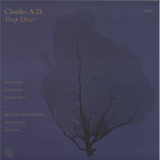
The sea has long been central to Japanese culture, symbolizing both sustenance and spiritual depth. Charles A.D.'s Deep Diver draws inspiration from this, channeling the ancient traditions of diving and fishing into his music. Historically, the sea has influenced everything from Shinto rituals to the livelihoods of coastal communities. In Deep Diver, this reverence flows through aquatic soundscapes, where rhythmic waves of 90s house and Detroit techno meet Japanese minimal production techniques, New Age and Pacific Jazz. Like the tides, the album ebbs and flows, creating a serene yet dynamic homage to the timeless connection between Japan and the sea.
The opening track 'Deep Diver' plunges into the depths, its abstract sound design capturing the sensation of deep-sea propulsion. Rhythmic bubbles pulse gently alongside slow-moving chords, creating an otherworldly atmosphere. The textures are lush yet restrained, setting a tranquil stage that pulls the listener into a submerged world. 'Underwater Ruins' builds on this aquatic theme, introducing rhythmic layers and bass-heavy notes reminiscent of mid-90s Japanese ambient techno. The smooth, melodic flow nods to pioneers like Mr.YT and Susumu Yokota, while subtly incorporating the Detroit techno influence through soulful, deep basslines.
The track feels like a fusion of ambient and techno, balancing serene tones with a rolling groove, emblematic of Japanese techno soul. As the album progresses into 'Bubble Ring', it becomes clear that Charles A.D. is a master of minimalism. The production is timeless, leaning
on analog techniques where echo-drenched chords and carefully layered soundscapes take on an addictive, hypnotic quality. The simplicity of the composition is deceptive, as each element carries weight, drawing the listener deeper into the rhythm and space between the notes.
'Merperson' is where organic rhythms truly come into play. Charles A.D. gently evolves the patterns, allowing each percussive hit to flow naturally into the next. Soothing melodies emerge from within the track’s structure, eventually reaching an emotional peak without ever feeling forced. The organic nature of the arrangement creates an effortless progression that feels deeply connected to the natural movement of water.Starting the second half with 'Deep Exploration', the theme of underwater excursions becomes even more pronounced. Light, steady drumming anchors the track, allowing the melodic layers
to develop gradually. It unfolds with a calm, measured pace, before ending softly, almost as if the sounds are drifting off into the oceanic depths. 'Diffuse Reflection' stands out as the most dub house-influenced on the album, with rolling rhythms and hypnotic elements reminiscent of Maurizio's deep, pulsing sound. Yet here, the production feels submerged, with aquatic effects swirling around the rhythmic core, blending dub house with a fluid, oceanic touch. 'Traitors' delves even deeper into dub-inspired territory. Deep, resonant bass hits combine with wooden drums, while static-like sounds evoke the image of a radio tuning through static to find clarity.
Chords shimmer briefly before fading back into the liquid depths, evoking the ebb and flow of the tide. The final track on Deep Diver 'Levitation', is a fitting conclusion, as the rhythms merge and overlap like waves gently lapping the shore. The minimalistic arrangement allows each element to blend effortlessly into the next, creating a sense of unity and closure. The sounds move with the gentle grace of water, ending the album in a way that feels both complete and
open-ended, like the infinite motion of the sea.
Pedro Bertho, following the positive reception of his debut
album Mêlé, which features notable tracks like "Tigueretá"
and "Jour 4"—both frequently highlighted in Boiler Rooms
and sets around—has launched his own label, Chez Pedro.
Dedicated to consistently releasing new music, the label
plans to unveil monthly tracks, showcasing Bertho's ongoing
creative drive and deep passion for music without
distinctions of genre. His latest offering, Starlit Craves,
compiles tracks curated over the past two years. Previously
unreleased, these tunes have been meticulously crafted for
the dance oor. Each track on this EP reects Pedro Bertho's
distinct style and artistic vision, guiding listeners through an
immersive and exhilarating musical journey. Let Me Tell You:
Infused with electro vibes and inuenced by Detroit’s rich
musical legacy, this track blends intricate rhythms with
soulful melodies, delivering a captivating sonic experience.
Blue Hot Monday: A hypnotic techno odyssey where
pulsating beats merge with deep bass grooves, creating an
enveloping atmosphere that lingers long after the music
ends. Shaved: A dynamic fusion of house and techno,
pulsing with rhythmic intensity and layered textures, inviting
listeners on a groove-driven exploration. Rouya: Radiant
melodies and hypnotic rhythms transport listeners to a sunlit
realm, intertwining uplifting harmonies with intricate sonic
nuances seamlessly. Have You Ever Played in Abidjan:
Exploring percussive intricacies and dub-infused textures,
this track offers a captivating blend of rhythmic diversity andatmospheric depth, evoking vivid imagery and immersive
storytelling.
Something About Livingis an album of live recordings by experimental jazz composer/multi-instrumentalist Robert Stillman. The music was captured over the course of Stillman's time as the solo support act for The Smile (Thom Yorke, Jonny Greenwood, Tom Skinner). The album weaves excerpts from various theater and arena shows along the tour's North American routing into a seamless whole, creating a 40-minute program that represents an expanded version of Stillman's ever-transforming live set.
Something About Livingis the product of a steady, on-stage evolution that happened over the course of the nearly 60 shows opening for the Smile across the EU, UK, US, Canada and Mexico. However, the creative origins of the set began in relative isolation during the pandemic, through Stillman's work on projects like his multi-media installationUnseen Forcesand his monthly broadcast for Margate Radio, both of which drew upon solo improvisation using saxophone, cassettes, Yamaha DX7 synthesizer, and effects.
"At the time The Smile asked whether I'd like to open for them on their first tour, I felt like I'd already been preparing without really knowing it," says Stillman. "I'd been doing this music constantly, but always for a hypothetical audience" During the pandemic, Stillman's solo set-up served as the research lab where he worked on all the concepts he was interested in: solo improvisation, creating and manipulating cassettes, FM synthesis, analogue delays chains, no-input mixing, and non-metric rhythmic pulses. So when he was offered the first Smile tour, the idea was to bring "the lab" onto the stage.
What Stillman could not have prepared for was the experience of playing in venues with capacities of up to ten thousand listeners. "The first tour was in summer 2022, so not that long after the worst of the pandemic, when I had pretty much made peace with the idea that I might never be able to perform for an audience again. Then all of a sudden I found myself in front of huge numbers of people, and felt the massive responsibility of being with an audience, of this thing I'd done alone for so longactually being witnessed, and it was completely overwhelming!" On the flip-side, Stillman also recalls, was a new appreciation of how powerful the live performance was as a social phenomenon. "It's a cliche, but also true: the moment of making and hearing music in a shared time and space has a very specific meaning and power; there was a sense that everyone in the venue was necessary to make it real, regardless of what they were doing, or how they felt about it. There was an inevitability about it that I'd never fully appreciated."
Over the course of the tours that followed, Stillman transformed this appreciation of the shared moment into an ethic of spontaneity that guided the development of his live set. "An important reference for this set has always been an Animal Collective show I saw when I first moved to New York, probably in 2001 or so, that has always set the high-water mark for what I wanted to do live- they were improvising a lot, and out of what would seem to be absolute chaos they'd find their way to something structured, and then back out again into the unknown. It was so thrilling to witness".
ThoughSomething About Livingcompiles recordings from different dates along the tour, Stillman has edited and mixed them into a work that seeks to reflect the ebb and flow between 'chaos and control' that characterizes his live set. Among the compositions featured are some from previous album releases ("Time of Waves", "What I Owe", "What Does it Mean to Be American") as well as some new compositions ("The Dream of Waking", "Renaissance 2.0," and the title track, "Something About Living").
The album/track title "Something About Living" is a reference to a line from Stillman's favorite film,My Dinner With André: "André Gregory is explaining the value of life experiences that, as he says, are'to do with living'.That really struck me, the way he articulated it. I strongly believe live music situations can ask these kinds of questions, for performers and audiences. I hope that's reflected in this music."
[a] 01: Time of Waves (Live in Miami FL) [Live]
[b] 02: What Does It Mean to Be American (Live in Forest Hills NY) [Live]
[c] 03: The Dream of Waking (Live in St Augustine FL) [Live]
[d] 04: Something About Living (Live in Richmond VA) [Live]
[e] 05: What I Owe (Live in Chesterfield MO) [Live]
[f] 06: Renaissance 2.0 (Live in Chesterfield MO) [Live]
Fat Freddy’s Drop hit the ground running with new studio album SLO MO, a bass-heavy blast of redemption and resolution. Described by Fitchie as 'afro rhythmic soul music, an exploration of Black music from Polynesia’, this heady mix creates the undefinable Freddy’s sound. Renowned worldwide for euphoric live shows, the Aotearoa band stepped inside their BAYS studio in Wellington, sunup to sundown, to craft a sixth studio album. SLO MO is the strongest studio representation yet of a Freddy’s live show’, says Chopper Reeds. 'Usually we take the stage to the studio and this time, we're excited about taking our studio creation on to the stage.'
Emerging with nine tunes, SLO MO will drop first on double vinyl, opening the door for the full length album to be experienced as a body of work curated as Freddys intended.
Chopper Reeds continues, 'Towards the latter part of the record, Joe Dukie’s vocal presence becomes quite spectral allowing listeners to inject themselves into the music.
The evocative cover art is by Dan Tippett, Aotearoa New Zealand Artist, who describes the image as ‘an ancient ngahere forest in a Jurassic Aotearoa dreamtime.’
Fat Freddy’s Drop hit the ground running with new studio album SLO MO, a bass-heavy blast of redemption and resolution. Described by Fitchie as 'afro rhythmic soul music, an exploration of Black music from Polynesia’, this heady mix creates the undefinable Freddy’s sound. Renowned worldwide for euphoric live shows, the Aotearoa band stepped inside their BAYS studio in Wellington, sunup to sundown, to craft a sixth studio album. SLO MO is the strongest studio representation yet of a Freddy’s live show’, says Chopper Reeds. 'Usually we take the stage to the studio and this time, we're excited about taking our studio creation on to the stage.'
Emerging with nine tunes, SLO MO will drop first on double vinyl, opening the door for the full length album to be experienced as a body of work curated as Freddys intended.
Chopper Reeds continues, 'Towards the latter part of the record, Joe Dukie’s vocal presence becomes quite spectral allowing listeners to inject themselves into the music.
The evocative cover art is by Dan Tippett, Aotearoa New Zealand Artist, who describes the image as ‘an ancient ngahere forest in a Jurassic Aotearoa dreamtime.’
Oakland's Naked Roommate have been slinking around the Bay Area lighting up stages, shaking asses & confounding listeners since 2018, when the group - originally just the duo of real-life partners Andy Jordan & Amber Sermeno (both formerly of The World) - self-released a cassette of demos (2018's "Naked Roommate"). Members Michael "Mig" Zamora & Alejandra Alcala (Blues Lawyer) joined soon after to augment the sound & live band with their proper full-length album "Do The Duvet", co-released in September of 2020 via UK label Upset! The Rhythm & Trouble In Mind. 2024 finds the lineup expanded even further to incorporate the horn section of Geoff Saba & Jeanne Oss on tenor & alto saxophones as well as percussion & marimba as the band readies their sophomore effort, the dizzyingly ecstatic "Pass The Loofah" Recorded by members Andy Jordan & Mig Zamora from 2021-2023 as time & restrictions allowed, "Pass The Loofah" retains the wild energy of their debut, but leans into the rhythmic throbs perpetuated by forbears like Kid Creole & The Coconuts, Lizzy Mercier Descloux & ESG; the signature sound of UK's On-U Sound & NYC's 99 Records, but with a decidedly West Coast irreverence & a knack for absurdist exposition. Make no mistake, this is music designed to make your body MOVE & Naked Roommate won't stop until they 've made sure every ass is shook. The band freely incorporates elements of the dancier side of post-punk (think A Certain Ratio or Liquid Liquid) as well as disco, funk, & house music. However, the group's uplifting melodicism belies a deeper subtext, understanding the importance of the sense of community of dance music & the culture surrounding it and leaning into a Neo-socialist lyrical context. Shit is fucked, & we get thru it by helping one another & acknowledging & addressing the failures of disaster Capitalism & tech-bro hegemony (a state the band is all-too familiar with, living in The Bay Area) Take the first single "Bus"; a four-on-the-floor banger & salutary paeon to the ups & downs of the people's transport that throbs & pulses with a late-night sashay (and a bridge that launches the tune into the stratosphere). Elsewhere, "Fight Flight "s funky horn stabs and Sermeno's slinky vocals swoon over Numan-esque synth squiggles that are fortified & funkified toward the dance floor. "Broken Whisper " edges into new territor y for the group, adding a Caribbean flavor a'la Kid Creole or The Specials that punctuates the persistent & synthetic beats underneath. Meanwhile instrumental interludes like "Ducky & Viv", "G-Y pt. 1" & "G-Y pt. 2" oscillate into zones of sci-fi meets soap opera soundtracks, sounding not unlike the electronic experiments of UK industrial pioneers Chris & Cosey. Album closer "I Can't Be Found" might be the album's secret weapon; It 's swooning synth melody & processed vocals recall early Daft Punk or MGMT by way of Derrick Carter & The Au Pairs. It 's a beautiful song; perfect for the late night (or early morning) car ride home from the club. "Pass The Loofah" is released worldwide on October 25th, 2024 via Trouble In Mind Records digitally via most DSPs & on black vinyl & limited "disco ball " silver vinyl.
Limited metallic silver/white "disco ball" splatter vinyl available while supplies last.
Oakland's Naked Roommate have been slinking around the Bay Area lighting up stages, shaking asses & confounding listeners since 2018, when the group - originally just the duo of real-life partners Andy Jordan & Amber Sermeno (both formerly of The World) - self-released a cassette of demos (2018's "Naked Roommate"). Members Michael "Mig" Zamora & Alejandra Alcala (Blues Lawyer) joined soon after to augment the sound & live band with their proper full-length album "Do The Duvet", co-released in September of 2020 via UK label Upset! The Rhythm & Trouble In Mind. 2024 finds the lineup expanded even further to incorporate the horn section of Geoff Saba & Jeanne Oss on tenor & alto saxophones as well as percussion & marimba as the band readies their sophomore effort, the dizzyingly ecstatic "Pass The Loofah" Recorded by members Andy Jordan & Mig Zamora from 2021-2023 as time & restrictions allowed, "Pass The Loofah" retains the wild energy of their debut, but leans into the rhythmic throbs perpetuated by forbears like Kid Creole & The Coconuts, Lizzy Mercier Descloux & ESG; the signature sound of UK's On-U Sound & NYC's 99 Records, but with a decidedly West Coast irreverence & a knack for absurdist exposition. Make no mistake, this is music designed to make your body MOVE & Naked Roommate won't stop until they 've made sure every ass is shook. The band freely incorporates elements of the dancier side of post-punk (think A Certain Ratio or Liquid Liquid) as well as disco, funk, & house music. However, the group's uplifting melodicism belies a deeper subtext, understanding the importance of the sense of community of dance music & the culture surrounding it and leaning into a Neo-socialist lyrical context. Shit is fucked, & we get thru it by helping one another & acknowledging & addressing the failures of disaster Capitalism & tech-bro hegemony (a state the band is all-too familiar with, living in The Bay Area) Take the first single "Bus"; a four-on-the-floor banger & salutary paeon to the ups & downs of the people's transport that throbs & pulses with a late-night sashay (and a bridge that launches the tune into the stratosphere). Elsewhere, "Fight Flight "s funky horn stabs and Sermeno's slinky vocals swoon over Numan-esque synth squiggles that are fortified & funkified toward the dance floor. "Broken Whisper " edges into new territor y for the group, adding a Caribbean flavor a'la Kid Creole or The Specials that punctuates the persistent & synthetic beats underneath. Meanwhile instrumental interludes like "Ducky & Viv", "G-Y pt. 1" & "G-Y pt. 2" oscillate into zones of sci-fi meets soap opera soundtracks, sounding not unlike the electronic experiments of UK industrial pioneers Chris & Cosey. Album closer "I Can't Be Found" might be the album's secret weapon; It 's swooning synth melody & processed vocals recall early Daft Punk or MGMT by way of Derrick Carter & The Au Pairs. It 's a beautiful song; perfect for the late night (or early morning) car ride home from the club. "Pass The Loofah" is released worldwide on October 25th, 2024 via Trouble In Mind Records digitally via most DSPs & on black vinyl & limited "disco ball " silver vinyl.
Atlas plays out like a half-remembered Greek epic of avant-pop proportions, piecing together earthy woodwinds, old-school synths, and shifting rhythmic patterns that enhance Jacob"s myth-inspired spoken word and bilingual vocals, delivered in Dutch and English.
Why the Eye is an experimental masked quartet from Brussels that propels bodies into trance during its live performances. All instruments are DIY and played in real time, without loops or sequencers. Fans of The Residents, Société Étrange, Autechre, Boards Of Canada, The Meridian Brothers and Fulu Miziki could easily relate to their sound. Describing their music as "Prehistoric Techno", Why The Eye are set to release their new album ‘Inspirex’ on the 4th of October via Exag Records. Opening with the fidgety JNSP, the vindictive summons La Machine is a brash, abstract experience with a deep yearning to set us free from everyday political confinement while the raw Où cours-je explodes into a wild rage of disorder and mayhem. At the heart of each track are the DIY instruments band member DjP (Jean Paul Domb) has assembled over the years, some of them directly inspired by the African sanzas. With names such as ‘radiocaphone’ and ‘castabignettes’, the instruments are cleverly connected to different effects pedals and are the heartbeat of Why The Eye. Elsewhere, the album title track reveals a snappy rhythmic quality with skittish sounds while Prairies and Animal are tribal-like in delivery with a deep-lying punk ethosele
Fat Freddy"s Drop hit the ground running with new studio album SLO MO, a bass-heavy blast of redemption and resolution. Described by Fitchie as "afro rhythmic soul music, an exploration of Black music from Polynesia", this heady mix creates the undefinable Freddy"s sound. Renowned worldwide for euphoric live shows, the Aotearoa band stepped inside their BAYS studio in Wellington, sunup to sundown, to craft a sixth studio album. SLO MO is the strongest studio representation yet of a Freddy"s live show", says Chopper Reeds. "Usually we take the stage to the studio and this time, we"re excited about taking our studio creation on to the stage."
Black Truffle is pleased to announce a tenth anniversary reissue of Oren Ambarchi’s Quixotism, originally released on Editions Mego in 2014. Recorded with a multitude of collaborators in Europe, Japan, Australia and the USA, Quixotism presents the fruit of two years of work in the form of a single, LP-length piece in five parts. Quixotism takes the driving rhythmic aspect of works such as Sagittarian Domain to new levels, with the entirety of this long-form work built on a foundation of pulsing double-time electronic percussion provided by Thomas Brinkmann. Beginning as almost subliminal propulsion behind cavernous orchestral textures and John Tilbury’s delicate piano interjections, the percussive elements (elaborated on by Ambarchi and Matt Chamberlain) slowly inch into the foreground of the piece before suddenly breaking out into a polyrhythmic shuffle around the halfway mark, and joined by master Japanese tabla player U-zhaan for the piece’s final, beautiful passages.
The pulse acts as thread leading the listener through a heterogeneous variety of acoustic spaces, from the concert hall in which the Icelandic Symphony Orchestra were recorded to the intimacy of crys cole’s contact-mic textures. Ambarchi’s guitar itself ranges over this wide variety of acoustic spaces, from airless, clipped tones to swirling, reverberated fog. Within the complex web Ambarchi spins over the piece’s steadily pulsing foundation, elements approach and recede in a non-linear fashion, even as the piece plots an overall course from the grey, almost Nono-esque reverberated space of its opening section to the crisp foreground presence of Jim O’Rourke’s synth and Evyind Kang’s strings in its final moments. Formally indebted to the side-long workouts of classic Cologne techno, the long-form works of composers such as Éliane Radigue and the organic push and pull of improvised performance,
Quixotism is constantly in motion, yet its transitions happen slowly and steadily, often nearly imperceptible, the diverse elements which make up the piece succeeding one another with the logic of a dream.
At the time of its first release, Quixotism was clearly a summation of Ambarchi’s work in the years leading up to it. Now, listening back a decade later, it also seems like an arrow pointing to the future, suggesting paths that would be explored further in works to come: the pulsating guitar layers of Hubris, the album-length collaboration with Jim O’Rourke and U-zhaan on Hence, Shebang’s joyous layering and percussive drive. Now sounding better than ever in a new remaster by Joe Talia, the time is ripe to rediscover its quixotic charms.
* After the stunning success of their critically-acclaimed third album Sharpener, which reached number 3 in the jazz charts and number 14 in the independent music charts, London’s brass juggernauts Hackney Colliery Band blaze back onto the scene with their first collaborative album, ushering in a whole new era for the band.
* Featuring collaborations with a host of key names in jazz and world music including amongst others the father of Ethio-jazz Mulatu Astatke, British jazz funk legend James Taylor, trombonist Dennis Rollins, UK saxophonist Pete Wareham and Beninese singer-songwriter and Grammy Award-winner Angélique Kidjo, Hackney Colliery Band have effortlessly transformed their explosive live energy into 11 original recordings that push the groove and form in an accomplished manner.
*On ‘Collaborations: Volume One’, writers Steve Pretty, Olly Blackman and Luke Christie have between them penned the outfit's most dynamic material to date. ‘Mm Mm’ (feat. Angélique Kidjo and Roundhouse Choir) merges Beninese grooves with wah pedal trumpet textures, and the rousing call-and-response between Kidjo’s soaring vocal and the exhilarating choir adds a richness and depth to the composition.
*On ‘Snowfire’, innovative Norwegian pianist Bugge Wesseltoft brings a euro/nu-jazz feel to the album, while Dennis 'Funkybone' Rollins adds his trademark virtuoso trombone to the carnival-flavoured ‘Ricochet’.
*There’s an energy, respect for tradition and the exuberance of London in Hackney Colliery Band’s work, best exemplified in the evocative and downright thrilling James Taylor collaboration ‘Hypothetical’, with Taylor’s Hammond organ recalling the Acid Jazz era in which he made his name.
*New single ‘Netsanet’ (feat. Mulatu Astatke) is a deep exploration of Mulatu's trademark Ethio-jazz, while ‘Crushing Lactic’, composed by Tom Rogerson (fresh from a recent collaboration with Brian Eno) has a frenzied flow, with big horns and driving rhythm section.
*Elsewhere, Pete Wareham (stalwart of the London jazz revival) lends his free-flowing sax to ‘What’s Gone Before’, leading us into a powerful communion of jazz and brass as Mulatu Astatke’s ‘Derashe’ takes the listener down a vibrating rhythmic path while accompanied by blasts of horns and Mulatu’s trademark vibraphone.
*Two spoken word compositions (‘Why Yellow’ and ‘Climbing Up My Own Life Until I Die’) featuring York born writer and comedian Rob Auton lend an introspective voice to ‘Collaborations: Volume One’.
*A band never content to rest on its laurels, Hackney Colliery Band already have a number of collaborations in the works for ‘Volume Two’, and with further live shows planned for 2019, including the album launch at the famous Ronnie Scott’s Jazz Club, 2019 looks set to be HCB’s biggest year yet, both live and on record.
* Steve Pretty, the band’s frontman said: “It’s hard to believe that 2019 is our tenth anniversary, but now we’re ten years older it felt like the right time to get back to our jazz roots. It’s been such a privilege to work with so many of our musical inspirations both old and new on this record, and we’re super excited to be ushering in the next ten years with this new collaborative spirit: this is called ‘Volume One’ for a reason…”
Hardwarez, the third LP by Master Boot Record (aka MBR) on Metal Blade, sees multi-instrumentalist mastermind Vittorio D'Amore (aka Victor Love) aurally exploring the duality of technology and humanity in 9 intense and incandescent tracks. The LP, which follows 2022’s Personal Computer and 2020’s Floppy Disk Overdrive, comes from the expansive mind of Love, an Italian producer who emerged from the underground as an anonymous project in 2016 to create the soundtrack for the cyberpunk point-and-click adventure game VirtuaVerse. The project seamlessly evolved into a standalone entity, releasing over 14 albums in just a few years.
To create Hardwarez, the technologist worked by live streaming his desktop on YouTube while composing new music. Everything is programmed via MIDI. “The very first song I wrote is actually also the first single, “CPU,” he says. “Even though the other songs on the album have a quite different style, the type of riffing and the different melodic section of this track worked as a base to upgrade the sound before moving forward.” “CPU” is also where Love decided to test the real guitar overdubs and was inspired by the results.
“With every album I’ve upgraded bits of the sounds, adding new layers,” he says. “In Hardwarez the core sounds for synth guitars, leads and pads are still those that constitute the trademark MBR sound, but what makes this album very different is the addition of guitar overdubs that play along synth guitars for both the rhythmic and solo sections.”
Intensive touring augmented with live musicians helped Love to make the decision to include real guitars to achieve a massive sound and boost the enhanced frequency spectrum of the instrument. “On this record there are a lot of heavy riffs with palm muting and my lead guitarist Shreddy recorded most of those leads and solos as well playing in unison with synth leads and adding extra energy to them.”
Hardwarez, the third LP by Master Boot Record (aka MBR) on Metal Blade, sees multi-instrumentalist mastermind Vittorio D'Amore (aka Victor Love) aurally exploring the duality of technology and humanity in 9 intense and incandescent tracks. The LP, which follows 2022’s Personal Computer and 2020’s Floppy Disk Overdrive, comes from the expansive mind of Love, an Italian producer who emerged from the underground as an anonymous project in 2016 to create the soundtrack for the cyberpunk point-and-click adventure game VirtuaVerse. The project seamlessly evolved into a standalone entity, releasing over 14 albums in just a few years.
To create Hardwarez, the technologist worked by live streaming his desktop on YouTube while composing new music. Everything is programmed via MIDI. “The very first song I wrote is actually also the first single, “CPU,” he says. “Even though the other songs on the album have a quite different style, the type of riffing and the different melodic section of this track worked as a base to upgrade the sound before moving forward.” “CPU” is also where Love decided to test the real guitar overdubs and was inspired by the results.
“With every album I’ve upgraded bits of the sounds, adding new layers,” he says. “In Hardwarez the core sounds for synth guitars, leads and pads are still those that constitute the trademark MBR sound, but what makes this album very different is the addition of guitar overdubs that play along synth guitars for both the rhythmic and solo sections.”
Intensive touring augmented with live musicians helped Love to make the decision to include real guitars to achieve a massive sound and boost the enhanced frequency spectrum of the instrument. “On this record there are a lot of heavy riffs with palm muting and my lead guitarist Shreddy recorded most of those leads and solos as well playing in unison with synth leads and adding extra energy to them.”
As we approach the threshold leading us back to the Black Lodge on our transformative 8th journey, we are escorted through and beyond the mystical portal by the vigorous and fierce forces of Sneaker. Portrait in House is a collection of 3 resonant works, which are unified into a singular vision within its uncanny language that is rooted deeply in the foundations of Jak, New Beat, EBM, and Wave. Existing inside the liminal spaces of where light meets dark, we are presented with a documentation of dissonance and harmony. We begin our voyage with Jihad, a sluggish and slogging piece that unforgivingly drags us through the grime and the dirt in a ritualistic fashion that would have the ghost of Georges Bataille dancing in circles. Voices call out and howl into the dark as the drum patterns of the 707 rhythmically grasps onto its anarchic components. In the dark, we can see the light beyond the known universe. In the words of Sneaker "The name is not our message, but a document of an evident, traditional concept in (y)our world." As we find ourselves sprawled out on the ground following the 1st sonic stanza, a menacing voice bellows and warns that this is a Sax Track. Referencing Chicago icon Lil Louis, this work juxtaposes classical elements of house music together with the bare knuckled spirit of Jak. A magical spell led by disharmonious Portasound FM keys in conversation with a teetering sub bass, where at its core, this plus this, equals something that is uniquely familiar and unfamiliar at the same time. A number fit for any uncanny ritual that will fall under the night sky. Bringing our cosmic procession to a close we pick up the pace with a commanding number titled, Dance On, a no holds barred work that will possess your soul in the name of Jak. Flangers wail unforgivingly alongside a pulsating 101, as samples of the human voice are chopped up and arranged into a conversation that hypnotically calls for our bodies to be transformed into soft machines, while powered by ceremonious motions that are generated from the liberating process of ritual movement. We command you to dance! Words by Justin Aulis Long
“Worldwide Heavy Industries Vol.1: A Bold New Vinyl Release fromFlux Musical Art and Brutal Forms Flux Musical Art and Brutal Forms have teamed up to release Worldwide Heavy Industries Vol.1, a groundbreaking vinyl that promises to push the boundaries of industrial and rhythmic music. This limited edition release, available in just 300 copies, offers an immersive exploration of mechanized soundscapes and futuristic themes. An Industrial Sonic Journey The album presents a compelling journey through industrial rhythms and dystopian landscapes, with each track showcasing a unique interpretation of the genre. On side A, Dominik Müller opens with “Too Many Posers,” delivering an intricate and immersive soundscape characterized by his signature depth and complexity. Following this, Ryuji Takeuchi’s “In Your Mind” introduces innovative rhythmic structures, adding a fresh and dynamic dimension to the release. The B-side features a powerful collaboration: 6SISS and Hypnoskull’s “Losss” combines intense rhythms with a raw, industrial edge, creating a track that is both abrasive and compelling. Low Order’s “Taste My Venom” delves into the darker and more experimental aspects of industrial music, bringing a raw, experimental touch. Closing the release is Skumring’s “CorpseRidden,” which blends precise rhythms with expansive sound design, offering a rich atmospheric quality that reflects his role as co-founder of Brutal Forms. With only 300 copies available, this limited edition vinyl is a coveted collector’s item. Each record features bespoke artwork that complements the album’s industrial theme. *Worldwide Heavy Industries Vol.1* is set to reach a global audience of dedicated collectors and fans. This release is more than just a vinyl; it’s a journey into a futuristic world through the lens of industrial music. For further details on track listings and purchasing options, visit Flux Webzine or the official websites of Flux Musical Art and Brutal Forms. Dive into this cutting-edge release and experience the forefront of industrial music with Worldwide Heavy Industries Vol.1.”
Hardware Emotions
2024 Repress
The unassuming maestro of techno music Donato Dozzy returns to Tresor Records on its 30th year with a new EP entitled 124.
The record follows a majestic appearance on the Tresor 30 anniversary compilation and his expert devotion to the Roland TB-303, Filo Loves The Acid. True to form, 124 meddles sharp rhythmic minimalism and diverse textures, each track pushing at the epiphanic threshold as the boss of Spazio Disponibile allows his deeply intuitive productions to take effect.
messy kafka world introduces a frenetic and concentrated atmosphere of rhythmic forces, hallucinatory and euphoric in effect. Its dizzying staccato loops are given structure by strengthening beats and bleak synthetic pillars. synthi chase emits radical powers, as buzzing rhythms and monotone synths make raw gestures towards altered states. It shares a kindred spirit with cassiopeia 36, seen in particular through its determined and primitive pulses, nested within wobbling wood percussion and nervous synth repetitions. wooden dolls don’t cry stamps a warm groove, its tempered percussion taking centre stage as shimmering melodic loops threaten spiralling feedback.
These dark, hypnotic tracks are flawlessly programmed to cast mesmeric momentums onto club floors and into loosened limbs. 124 represents Donato Dozzy ever-expanding his powers and musical freedom. His innate groove and inventive sound design push minimal and serene techno with a substantial weight and voice that sets him apart from others.
2025 Repress
For Fuse's fifth release, Brussels' Altinbas returns for a whirlwind of meditative and harmonious techno. Solidifying his identity of focused yet vibrant club music, the Fuse resident and label co-curator offers his second contribution 'Sustain' as a dancefloor-enveloping take on modern techno. Known for rich chords, whipping pads, and dry percussion, Altinbas proves once again that his touch as a producer revolves around balance and calculated effect.
'Trail of' kick starts the EP with flourishing synthwork and a taste of dub as has become the Belgian artist's signature. Dotting toms as rhythmic accents and a low to the ground shaker make for a swaying introduction with an infectious groove. Breaking things up in the second track, 'Life Force' presents Detroit style chord stabs and playful rhythmic work. With a mental synth at the foundation, the track presents 909 drums to reinvigorate atmospheric synths that make 'Life Force' a subtle hybrid of classic club genres. With a wink at Fuse's heritage and a peak into its future, Altinbas' focus on enduring music can be felt throughout 'Sustain' and truly understood in the Brussels club. As a fitting follow up, 'Purpose' opens the B-side with illuminating chords and rounded sound design and a pulsating low-end. With almost a lighthearted tone, the record fits across genres and rooms, claiming movement instead of mood as its sole medium. The title track 'Sustain' proves just that - a melodic sequence and progressive arrangement make for an intensely euphoric closing. Evolving melodies, opening filters, and big but calculated buildups sum up Altinbas's work for Fuse's fifth release on the new label. The record brims with warmth and yet it finds its way on darker dance floors with ease, providing a refined style of music that belongs only to him across the international scene.
This year is set to be another vivid chapter for Rarefied, whose special brand of Dubstep has stretched the genre into outer-national and psychedelic headspaces with transmissions from Soukah, T.A.R and Sibla.
The newest artifact from Primer is par-for-the-course. Four tracks that weave field recordings from windswept bogs, worldly sample digging from molding phonographs found in dusty basements, and loose rhythmic constructions that are a mongrel blend of contemporary rap, Croydon Dubstep, and Brainfeeder.
From the ghostly oud playing that graces across the homespun percussion of 'Nowhere and Nothing', the refracted horn sections of 'Drowned' to the shimmering addendum of 'Tal pt.II, Primer chalks a fine line between headphone moments and dance floor material. Ultimately, the melodic, hypnagogic fragility of 'I Had a Faraway Dream' is an especially poignant curtain call for Rarefied's first record of 2019.
It is summer dawn . . . and you are alone. Here is music for your strange mood. The piano starts the first track, slow tempo beat, a strict beat, a swinging beat. Lillemor—here minor harmonies give the tune a rural, romantic feeling of some place in Spain or France. The tempo changes to medium fast—the flute solos. Light phrasing contrasts beautifully to the earthy, swinging beat of the rhythm section and the repeating piano figures. The trombone adds a new color, a counterpoint of sound and phrasing, backed by the pulsating beat of this wonderful rhythm and the driving piano. Summer dawn . . . This music has more to offer, because it shows the personality of Sahib Shihab at its best. Sahib is a universal musician who reflects musical experiences in jazz since the end of the thirties. He lived through the important periods of modern jazz with his heart and mind wide open toward everything that was good music, regardless of being termed "Mainstream", "Bop", "Cool", "Westcoast", "Eastcoast", "Hard Bop'', et cetera. When you listen closely to his music, you will find traces of all these, but they are immersed in his deep musicianship and his true jazz personality. Sahib Shihab's background reads like the record of a master of advanced studies. Furthermore he played and collaborated with the coolest jazz musician of that period. Above all let's name Budd Johnson, Theolonius Monk, Tadd Dameron, Milt Jackson, Dizzy Gillespie, Illinois Jaquet, Elmer Snowden, Luther Henderson, Larry Noble, Fletcher Henderson, Roy Eldridge. In his early professional years, Sahib was heard mostly on alto sax; later, more often on baritone sax and flute. Today, his name is inseparably connected with these two instruments. The unity of his jazz performances is not alone bound up with the com¬positions and the arrangements of Sahib Shihab, though in their understated simplicity they have a melodic beauty that is seldom found in jazz of today. The rhythmical subtleties add to the overall qualities of being relaxed vehicles for free-blowing, but there is an immediacy that you hear and feel every moment when listening which defies analysis. The playing of the rhythm section helps greatly to promote the sense of flux and contrasting constant renewal that makes listening to this record so invigorating an experience. Well, this is no surprise, with Kenny Clarke as the nucleus of the rhythm group. Kenny 'Klook' Clarke is a major figure and contributor in jazz, one of the founders of modern jazz, and is ranked as one of the all-time great drummers. He influenced a whole generation of musicians with his playing, though living in Paris since the middle of the fifties somewhat dimmed his name to the general American public. Nevertheless, his name alone will assure a connoisseur to expect top class musical experiences. Talking of the rhythm section we have to name Jimmy Woode's bass, which together with Kenny's drumming, is the driving force for the group and the reliable harmonic anchor for the improvisors. By the way, Jimmy has been with the Duke quite a while, and this alone is an award for extraordinary craftsmanship and artistry. The good sounding rhythm with its full-bodied color is also a result of the added bongos of Joe Harris, who manages to stay out of the way of the players—a quality not often found with drummers—but his playing is felt through the set. There are two members of the group not yet mentioned. Two Europeans, pianist-composer-arranger Francy Boland from Belgium, and trombonist Ake Persson from Sweden. Francy Boland this time is a sideman, though normally he is a leader of recording sessions, both as composer-arranger and as musical director of the band. In the fifties he was in the States writing arrangements for different name-bands, such as Basie and Goodman. In Europe, he is famous for his swinging modern big band arrangements; and his inventiveness as a writer is reflected in his piano playing. He has the talent of using the right dynamic approach every moment, thus making his playing helpful to soloists and interesting for listeners as well. Ake Persson has been Scandinavia's out-standing trombone player for about ten years. There are only a few trombonists in Europe who might match his talents at times, but they lack the consistency of his playing. He is impressive, whether playing in a big band, or whether main soloist in his own small groups. American musicians love the sound of his slide trombone and his easily flowing romantic improvisations, so he often joins American name-bands as they travel in Europe. The music speaks alone . . . , we said it before. You have your soul to feel the beauty, to follow lines and structure, and to enjoy the spiritual excitement. Whether you enjoy the flowing, easy sounding theme of "Please Don't Leave Me", or the climaxing piano solo in the same piece—the bass solo in "Waltz For Seth" or the swinging baritone sax—listen to the first bars of this solo and pay attention to Kenny. Whether you listen to "Campi's Idea", (named after Gigi Campi, the well known Cologne jazz enthusiast who organized this recording) with the romantic flute solo of Sahib, the interesting tempo changes, the piano comping, the moving trombone solo; or to the up-tempo "Herr Fixit", with the cooking Kenny and humorous, driving flute solo, you know that these six musicians where in the right mood, in the right stimulating surroundings to feel what we all feel when it's: SUMMER DAWN.
This release documents the coming together of two fallible musical instrument systems and their creator-operators. In June 2023, Graham Dunning's Mechanical Techno and Sam Underwood's Acoustic Modular System took a train journey to Galerie Paradise in Nantes, France. Following a period of exploration, points of cohesion, jeopardy and happenstance were exploited to create these nine unruly pieces that appeared initially on the ultra-limited vinyl release on the gallery’s record label. Now they celebrate a new pressing of Beaux Timbres on Accidental.
Using innovative methods, they create abstract, rhythmical and textural experimental soundscapes. Graham uses an extended turntable: a regular DJ turntable with numerous sensors, modified vinyl records and synthesizers creating irregular rhythmic patterns. Sam presents his Acoustic Modular System: a device for creating acoustic sounds with bellows, feedback and chaotic sequencers.
Dame Area's highly anticipated fourth studio album, "Toda la verdad sobre Dame Area" ("The Whole Truth about Dame Area"), a collaboration with the renowned labels Mannequin Records and Humo Records.
Formed in 2017 within the vibrant underground scene of Barcelona's Màgia Roja club, Dame Area comprises the Italian-Catalan duo Silvia Konstance and Viktor Lux Crux. They fuse industrial-tribal polyrhythms with minimalist synth basslines, drawing profound inspiration from avant-garde masters such as Esplendor Geometrico, Throbbing Gristle, Suicide, Einstürzende Neubauten, Can, Coil, Swans, Big Black, and Wolf Eyes.
This record represents a new phase in Dame Area's discography. It's a big step up in terms of sound, composition and ideas. This record it's the perfect representation of what they have been playing live the last three years and what most people know them for. Also it serves as a companion piece to 2022’s Toda la mentira sobre Dame Area ("All The Lies About Dame Area"), which had a stronger focus on melody, while this latest record is more aggressive and industrial-influenced, with a greater emphasis on percussion.
Tracks like the Suicide-influenced "Si no es hoy cuando es" and "Sempre Cambiare" are an onslaught of industrialism and experimentalism—formidable, volatile, and unpredictable avant-garde subversion. Silvia explains, "One of our biggest influences is doing what our influences wouldn't do. We're more into dynamics and structures atypical of electronic music, with changes in time signatures, starts and stops, and dynamics more typical of rock music. We use any musical idea from any genre. Some songs on the album are based on flamenco rhythms, others influenced by '60s experimental pop, heavy metal, or contemporary electronic music."
The confrontational "Vengo dall'aldilà" accelerates with heavy percussion, while "Tu me hiciste creer" builds into a rhythmic, transcendent noise of yelled vocals and hypnotic beats. Viktor adds, "This song took us more time to complete than any other we have recorded. It was a very organic process, evolving slowly from some instrumental percussive stuff we were doing live. Then we started using feedback as a rhythmic element (through a metallic sheet), and this was the first song where we incorporated this element, typical of noise-rock and experimental rock."
Elsewhere, "Esto Es Nuestro Ruido" represents a manic, eclectic form of contemporary industrial music, post-punk, and EBM. Silvia notes, "It's the first album we recorded outside a studio. Although we've been playing live with metallic percussion and floor tom from the very start, in the studio, with some exceptions, it was mostly sample-based until now. On Toda la verdad sobre Dame Area, all drums and almost all metallic percussion have been recorded live."
With a growing reputation as one of the best live bands around since their inception, Dame Area has toured extensively across Europe, performing at renowned festivals like Atonal, CTM, Nuits Sonores, Dour, and Fusion, as well as legendary clubs such as Berghain, Tresor, Apolo, and Spook Factory.
Recorded at Sol de Sants Studios and Estudio Hermetic between August and November 2023
Silvia Konstance: vocals, synths, percussions, electronics, production
Viktor L. Crux: synths, drums, percussions, electronics, production
Mixing and additional production by Guillermo Sánchez Rojo
Mastering by Paul Mac at Hardgroove Mastering
Designed by Leo Sousa
Photography by Fabio Calabretta
Photo concept by Dame Area
Gil Tamazyan is the founder and president of Capsule Labs, a boutique pressing plant, record label and analogue mastering studio in Los Angeles. He has been making cultured sounds for twenty years and does everything from deep house to Italo disco while drawing on a wide range of influences from the words of jazz, funk and more.
-On “Morning Cleanser,” Gil Tamazyan beautifully crafts a deep house record with notes of jazz sprinkled throughout.
-Pressed on 180g black vinyl for the best listening experience.
Gil Tamazyan unveils "Morning Cleanser," a musical gem that masterfully blends house and jazz, showcasing his signature authenticity and groove. The EP begins with "Bumper Car Theater," where Gil's craftsmanship paints a spacious sonic landscape. A steady bassline anchors the track, while ethereal chords drift, inviting introspection and calm. As dawn breaks, the title track "Morning Cleanser" emerges with vibrant chords and infectious beats. The groovy bassline sets the rhythm, and spirited vocals infuse the track with energy, awakening the senses and stirring the soul.
Continuing the journey, "My Body" offers a sultry exploration of sound and sensation. Smooth keys intertwine with dreamy vocals, creating a warm and intimate ambiance. The rhythmic groove carries listeners away, transporting them to a realm of pure musical delight. Closing the EP, "News Cast" weaves a tapestry of rhythm and melody. Powerful kicks and a punchy bassline drive the track, while a sultry saxophone ties back to the opening track, adding a sense of allure. With "Morning Cleanser," Gil Tamazyan delivers a mature and grounded musical experience, inviting listeners to tune in and vibe out.
Sun-scorched riff-rock propelled from the windswept heart of the desert! Blue Heron expand on their unyielding desert sound with a new slab of propulsive, sun-scorched riff-heaviness. Everything Fades finds the band reveling in low-tuned roil and amplifier hum, churning out swerving grooves as if the atavistic, primordial spirit of the desert itself compels them. Balanced between laid back, meditative atmospherics and heavier, more aggressive lunges, these cruising jams and gritty stoner romps call to mind echoes of Kyuss, Clutch and Soundgarden, along with modern contemporaries like Valley of the Sun and High Desert Queen. Full of rhythmic intensity, sledgehammer riffing, and vocals ranging from clean and moody to howling and raw, Blue Heron cover a wide expanse of musical ground that shows how familiar influences can still be molded into inventive, exciting new forms. New album of grooving, raw desert rock for fans of Kyuss, Valley of the Sun, Clutch and High Desert Queen Presed on sleek blue vinyl, available as Digipak-CD, too.
On October 4, 2024, Vel will make a splash with the release of her debut LP, MTY-011 «There is Always a Solution», through Anetha’s label, Mama Told Ya. After 3 exciting EPs and the recent rise of her Live performance, Vel made waves last year with the track «Velds1» on MTY-AIR «Mille Attaques, Les Vents Contrèrent» in collaboration with LDS. She is now ready to unveil her first full-length album.
«There is Always a Solution» flows with two slippery vinyl records and 10 immersive tracks. Nine tracks are produced solely by Vel, while one is co-produced by Vel and Anetha. Once again, Mama Told Ya returns with a valuable lesson: no matter the challenge, you will flow a way.
Vel is back with a mesmerizing new album featuring 10 tracks that draw you in with her captivating energy. Are you ready to heed the call? The High Priestess of Drums plunges us into a world of vibrant Techno and brisk Tribal rhythms, while her Ambient passages offer a calming retreat and her Mental influences are bound to stir your emotions. Rest assured, “there is always a solution.” Renowned for her expertise in rhythmic innovation and spatial soundscapes, Vel presents a revitalizing and dynamic release. MTY-011 promises to cleanse and rejuvenate—let yourself be immersed.
With a hint of irony, The Babe (A1) playfully teases, “Do you love me? Do you love my music?” But Vel’s real question is more reflective: you’re in deep water. Dive into the sound bath of Humans in Cafe (A2), close your eyes, and let the drums, the kicks, the bangs, and the buzz wash over you. One Xanax Introspection (A3) later, Vel is inviting us to explore the full spectrum of frequencies—a galloping race of deep bass and high treble in this ambient choreography.
« Don’t let the relentless BPM Anxiety (B1) drown you. Its tortured synth may try to hold you back, but you’re free. You’re in your Pop Tribe (B2), and nothing can stop you—DRUM BIG. »
Darling it's better down where it's wetter: joining Vel for a jam session « under the sea », it’s Anetha! Driving percussions are combining with a pulsating psytrance bassline, pure magic: « Ain’t We Mermaids (C1), dear? » Vel, ever the master of the salty beats, slows it down just enough to say, «I Don’t Care (C2),» as she deconstructs. A few moments later… She’s at it again—just when the BPMs are peaking, she draws us into a state of floating lethargy. That’s the absorbing power of Ambient Core (C3).
The current is strong with this one—prepare for a challenge. Deep Tracks Don’t Sell (D1) will drift you away in a swirl of intertwining undulations and dripping drums. It’s time to return to the surface: with a bubbly twist of whimsy, Oh La La (D2) pops in, full of new-wave energy. Vel gently swims us back to shore.
For this new LP, the artwork was crafted in-house under Vel’s artistic direction. The design was skillfully executed by Diplomatie Studio, while mastering was entrusted to In Aeternam Vale, Vel’s close friend and mentor.
2024 Repress
In the frontline of new generation techno, Kenji Hina aka Alarico sets the precedent of density and rhythmic essence with his Tokyo Rythms Trilogy and leads the way ahead of the curve. Each district gives an insight in his imaginary vision of what the depths of Tokyo is about techno wise. An example of the past and the future with clearly a framework in which no rules exist, he's pushing fundamental elements to new extremes.
Prepare to experience a true soul gem reimagined for the modern age with this special 7-inch reissue of Matt Covington’s classic, I'm So In Love With You. Originally released in 1983, this rare groove masterpiece captures the essence of early '80s R&B with its smooth, heartfelt vocals and lush instrumentation. Covington’s romantic delivery and the track's elegant arrangement have made it a coveted piece for collectors and soul aficionados alike, with the original pressing becoming increasingly hard to find over the years. For the first time ever, I’m So In Love With You is being reissued, allowing a new generation of listeners to discover its timeless charm. On the flip side, we’ve included Muhammad Ali, a standout cut from Covington’s self-titled album that resonates with soul, funk, and infectious energy. A favorite of acclaimed DJ Floating Points, Muhammad Ali pays tribute to the legendary boxer with a groove that’s as fierce as its namesake. Whether this has been sat in your wantlist for years or new to Matt Covington’s music, this 7-inch offers an essential addition to your collection. With its impeccable blend of silky soul and rhythmic punch, this reissue promises to become as cherished as the original release.
Red/Black Splatter[11,72 €]
This vinyl goes beyond conventional music creating a profound exploration of electronic artistry. Introducing "Real Good" by Trik, the fourth vinyl release from this seasoned artist. It's a rhythmic blend of house and techno, with each track crafted for the dance floor. The sounds are simple yet impactful, and expressive vocals create a unique atmosphere. "Real Good" also features a remix by Dragomir, offering a fresh perspective on Trik's tracks with pulsating beats and mesmerizing melodies, elevating the EP to new sonic heights. Black vinyl.
Black[11,72 €]
This vinyl goes beyond conventional music creating a profound exploration of electronic artistry. Introducing "Real Good" by Trik, the fourth vinyl release from this seasoned artist. It's a rhythmic blend of house and techno, with each track crafted for the dance floor. The sounds are simple yet impactful, and expressive vocals create a unique atmosphere. "Real Good" also features a remix by Dragomir, offering a fresh perspective on Trik's tracks with pulsating beats and mesmerizing melodies, elevating the EP to new sonic heights. Black vinyl.
2024 Repress
Pitch Black’s “Electronomicon”, a landmark album in New Zealand’s electronica scene, finally gets pressed on vinyl.First released in 2000, “Electronomicon” shows Pitch Black developing their deep dubby sound further by creating long and involved song structures that traverse a range of sonic experiences. The resultant album journeys from organic ambience and layered soundscapes to skanking keyboards, cutting acid riffs and thumping rhythmic grooves, with dub being the glue that holds it all together.
“Electronomicon” reached 28 in the New Zealand album charts and led to a sell-out 30-date tour of New Zealand and Australia. It has since gone on to become one of the duo’s most popular albums, regularly finding new fans around the world.
To celebrate the 20th anniversary of the release, the band dug out the original audio files and Angus McNaughton has remastered them for this vinyl release. Hamish Macaulay has also adapted the original artwork, creating a brand new collage for the centerfold out of pictures taken at the time.
DEFTR (pron - ‘Defuture’): The Revolutionary Collaboration Redefining Ambient and Techno Music
DEFTR, the newly formed alias of Answer Code Request and Jan Wagner, presents their debut album “Run Away” on npm, introducing a captivating fusion of ambient and techno. This collaborative project marks a departure from Answer Code Request's renowned 4/4 techno framework, venturing into expansive auditory realms enriched by Jan Wagner's classical expertise.
Spanning eight meticulously crafted tracks, DEFTR's debut album explores a spectrum of blissful and resonant soundscapes. The compositions unfold with a delicate balance of ambient textures and rhythmic innovation, punctuated by evocative vocal samples that enhance the album's atmospheric depth.
Having previously released three EPs that hinted at this innovative direction, DEFTR solidifies their unique sonic identity with this full-
length release. The interplay between Answer Code Request's intricate rhythms and Wagner's ambient sensibilities creates a dynamic tension, resulting in a listening experience that is both immersive and transformative.
DEFTR's vision extends beyond the studio, aiming to bring their sound to life on stage with a focus on live performance elements, including drum machines and synths. While details of the debut album release show are forthcoming, Berlin is anticipated to host this significant event.
With their debut album, DEFTR not only establishes a new creative path for Answer Code Request and Jan Wagner but also sets a high standard for npm's inaugural release, promising an engaging and profound auditory journey.
The single features a collaboration between Studio Kosmische from UK and Cloud Canyons from Italy. Side A is a rework by Studio Kosmische of “Under Neon Stars”, a track from Cloud Canyon’s 2023 debut album “Dreaming Of Horses Running In Circles”: by adding a few parts and alchemically blending the original elements of the song - the relentless motorik pulse, the ethereal female vocals, the multilayers of monophonic analogue synths - Studio Kosmische’s version moulds a shrouding and lilting veil on the 9-minutes long original track. Side B features a brand new track, “Black Fruit”, also sprung from the creative dialogue between the two bands and clocking at about 9 minutes side-long. Born as an instrumental piece by Studio Kosmische, “Black Fruit” developed in a full song thanks to the vocal additions by Michelle Cristofori, Laura Storchi and Stella Baraldi (Cloud Canyons’ singers) and a rich yet minimalistic array of instrumental parts by Studio Kosmische’s Dom Keen, who ingeniously shaped the keys harmonies and rhythmic textures around the vocal lines. Accomplished by some subtle electronics treatment by Cloud Canyons’ Nicola Caleffi, “Black Fruit” ideally complements “Under Neon Stars” as a two-sided creature, hanging somewhere between krautrock and electronica.
Samosa Records dips its toes back into the Afrikano waters with Volume 3 of the Afro themed, genre-busting series and features four deadly tracks from some of Samosa’s most trusted lieutenants.
Breaking the ice as the first track of this exceptional EP is Vincent Galgo and ‘African Rebel’. Mr Galgo has clearly read the brief here – giving us a 125bpm marauder that’s a melting pot of unstoppable horns, furious rhythms and an Afro-pop style bass that is the beating heart of the track.
Track 2 is Samosa regular Frank Virgilio who introduces us to his ‘Mistress’. As a straight up jazz-infused, mid-tempo rhythmic chugger, ‘Mistress’ quickly gets down to the important business of racking up the beats and instrumentation. The generous spread of guitar riffs, assertive bass and organ stabs are expertly lifted by the layered and always rolling drums and bongos induce a trance-like state of mind, so be warned!
On the B-Side Samosa newcomer Casper Leo wears his Tribal heart on his sleeve with the enchanting and utterly captivating jangler - ‘Tom Tom’. You can never have too much Kora guitar and ‘Tom Tom’ has lashings of it, with delicious sprinkles of melodic Marimba – perfect for West African sunsets.
Closing the EP off in style is Afro beats grand master, Lego Edit and the filthy-sexy ‘El Safari’. No other producer can take the essence of the Afro beat structure and bend it to their will like Lego Edit can. Like a late night fist-fight in Club Coco Bongo, ‘El Safari’ punches its way out of the doors. A slinky, wily alley cat of a tune that digs deep with its claws and doesn’t let go and another masterpiece from Lego Edit.
Afrikano Vol.3 has done the impossible and set the bar even higher for this wonderfully diverse Samosa series. We want more. We want ‘4’. With this in your record box, you’ll come with a warning.
- Ocean Motion Mildew Mind
- Yes Sir Ree
- I Can’t Stand It
- Country Time
- If I Were A Poet
- Torero Piece
- Peachy Keen-O
Carving an unlikely and elaborate niche in the stoney academic landscape
which she once shared with the likes of Phill Niblock, John Cage and Sorel
Hayes, the excitable proto-punk poèmes sonores of the linguistic loose
cannon known as Beth Anderson first rolled through New York in the mid-
1970s (from Kentucky via San Francisco) like a jumbled tumbleweed of lost
Letterism, face paint and threadbare drummy funk to astonish gallery floors,
lecture theatres and loft apartment stages.
One thousand leagues under the radar of the commercial music industry,
with a sense of humour that elevated way above her highbrow peer group,
the music of Beth Anderson has successfully evaded the pressing plant for
most of her creative career, and not unlike fellow New York gallery actionist
Suzanne Ciani, it has taken decades to successfully collect and contextualise
these early recordings - expanding her elusive discography beyond the rare
and mysterious solo single entry in the process.
When uttered amongst the type of vinyl vampires that haplessly gravitate
between both art school vintage vanity pressings and family funded plunder
funk, there’s an outside chance that the name Beth Anderson might muster
some vague recognition on account of her one and only solo wax sojourn
into the expansive DIY market. In 1980 the 45rpm single, ‘I Can’t Stand It’,
combusted into the consciousness of adventurous participants with its deep
rhythmic backbeat (courtesy of future Sonic Youth / Dinosaur Jr producer
Wharton Tiers, member of the new wave band Theoretical Girls), climaxing
with two colourful and commanding linguistic tantrums before disappearing in
a puff of smoke leaving would-be fans dumbstruck without so much as a
label name or distribution contact to explain what they had just heard.
For those who have spent the subsequent years on the edge of that same
seat, it might come as some comfort knowing that somewhere out there,
there is also a contrasting world of gallery patrons and experimental sound
poetry enthusiasts that similarly didn’t know that their regular performance
poet Beth Anderson even made the ambitious pop record. For the uninitiated,
the enigmatic Beth Anderson has straddled both sides of the art / rock fence
placed between two equally niche pastures.
Hopefully this first ever vinyl compendium will succeed in joining the dots,
loops, yelps, squeaks, beats and repeats. Let us follow Beth’s lineage, along
her magnetic tape highways crossing multiple boundaries in a hope to bridge
unlikely anti-genres like ‘yoga punk’, ‘ramble rap’, ‘combustion pop’ and
‘formroom funk’… all of which were officially neatly bracketed under the
curious Text-Sound movement where Beth garnered utmost respect as a key
practitioner.
If there's one musician in the last decade that you may hear in wildly diverse musical contexts it is Belgian electric bassist and sound sculptor Farida Amadou. Not only can you enjoy the unerringly skillful command she has over her instrument but also the transformative power to reinterpret and expand her material in spontaneous and unconventional ways.
Amadou is self-taught and radically aware of her idiosyncratic relationship with the bass guitar. She neither emulates the virtuosos of the electric bass, nor does she use the instrument as a pure sound generator that merely emits humming and feedback. She takes a completely independent and unique approach. This freedom enables her to create an overwhelming wall of sound, as well as simple, clear structures that are rhythmically concise yielding a wide associative space that lands somewhere between free jazz and noise.
Her work is often concentrated and circular where motifs are established and developed outward. It is an organic sound in the literal sense of the word, constantly in motion, yet resting in itself. The three solo pieces she has recorded for Week-End Records emphasize her impressive ability to ignite ecstasy from tranquility, to fan out a whole range of moods from a few potent ideas.
These attributes make her a musician who enriches every group she plays in, because she is present with her assured and crystallized sound but refrains from being domineering. However, her strengths are even more apparent when she plays solo: the contrasts between the dark, heavy clouds of sound and the rhythmic passages, and the transitions between movements which always sound "logical" yet surprising.
Her new solo album, "When It Rains It Pours" presents Amadou as an inspired improviser who follows her musical intuition and acumen to create a truly unique soundworld. Rarely has improvised music sounded so succinct and compelling.
Wenn es in den letzten zehn Jahren eine Musikerin gegeben hat, die man in den unterschiedlichsten musikalischen Kontexten immer wieder hören will: nicht weil sie eine passable Mitspielerin wäre, sondern weil sie diese Kontexte jedes Mal bereichert und auf spontane, unkonventionelle Weise erweitert, umdeutet, in neue transformiert, dann ist es die belgische E-Bassistin und Klangskulpteurin Farida Amadou.
Sie ist Autodidaktin - und sie versteht diese Selbstaneignung des Instruments radikal. Weder eifert sie den Virtuosen des E-Basses nach, noch verwendet sie das Instrument als reinen Klangerzeuger, der bloß Brummen und Feedbacks von sich gibt. Sie geht von einem völlig eigenständigen Ansatz aus. Der ermöglicht es ihr, eine überwältigende Wall of Sound zu kreieren genauso wie einfache, klare Strukturen, die rhythmisch prägnant sind und einen weiten Assoziationsraum zwischen Free Jazz und Noise eröffnen.
Ihre Musik ist konzentriert, hat einen langen Atem, kreist um Motive, entwickelt daraus neue Linien, die Amadou im Spiel weiterverfolgt. Es ist ein im Wortsinne organischer Sound, ständig in Bewegung, dabei in sich ruhend. Die Stücke, die sie für Week-End Records aufgenommen hat, unterstreichen ihre beeindruckende Fähigkeit, aus der Ruhe die Ekstase zu entfachen, aus wenigen Ideen eine ganze Palette an Stimmungen aufzufächern.
Das macht sie zu einer Musikerin, die jede Gruppe, in der sie spielt, bereichert, weil sie präsent ist, ohne zu dominieren, weil ihr Sound so prägnant ist, ohne die anderen zu übertönen. Im Solo treten die Stärken ihres Spiels aber noch stärker hervor: die Kontraste zwischen zwischen dunklen, schweren Klangwolken und den rhythmischen Passagen, vor allem die Übergänge, die immer „logisch“ klingen, aber zunächst unerwartet kommen und ihren eigenen Weg einschlagen. Ihr neues Solo-Album, “When It Rains It Pours” zeigt sie als inspirierte Improvisatorin, die sich nie bloß ihren Einfällen hingibt, sondern die Ideen zu Ende denkt, oder besser: spielt. Selten klang improvisierte Musik so kompakt und zwingend.
With extensive practical and academic understanding of the ‘remix’ process, Stian Balducci takes on the role of audio architect in this refined and redesigned remix album.
His meticulous approach has not replaced, but built upon Kjetil Jerve’s piano material and boasts a thorough dedication to mood and timbre through-out. The outcome combines new strokes of colour and delicately layered textures, offering fresh perspectives to an old canvas. The aural landscape takes shape in progressive, parabolic pulsations, coupled with sparse, rhythmic heart-throbs that embody the faint silhouettes of drum reverberations. This atmospheric landscape is complimented with subtle, pensive keys from Kjetil’s piano recordings that add emotional depth to the work and pay diligent tribute to the free structures of jazz.
The final project may be understood as a window, giving view to life’s sentient and evocative themes, without ever infringing on their delicacy. The sonic progressions tap into nature’s cycles through meditative repetition and offer the listener some brief respite from innate human habits of over-thinking.
As the contents of the album unfold, we are taken reassuringly by the hand to familiar, foreign lands, filled with curious sonorous tales and subtle insights that shed light on a world of deeper perception.
In keeping with the communal ethos of Dugnad Rec, ‘Tokyo Tapes: Piano Recycle’ reflects a thoughtful exchange between Stian and Kjetil. Stian professed that the project went ahead with just one rule: “to work only with the original source material, no external samples or sound sources”. This puritan approach spotlights a shared characteristic between them; namely, a unified desire to explore vibrations and a wholistic dedication to sound experimentation.
- A1: Peaks & Ferns
- A2: Sit In Your Discomfort
- A3: The People's Changes
- A4: The People's Shadow
- A5: To The Before Time
- A6: When We Could Dance Together
- A7: African Folk Song
- B1: Back In The Days
- B2: A Night In Berlin
- B3: Two Chords & The Truth
- B4: Quinnies For The Boys
- B5: Ancestral Mathematics
- B6: Crisis & Oppprtunity
Having gathered up praise from Mary Anne Hobbs, Cerys Matthews, Jamie Cullum, Gilles Peterson, Huey Morgan, The Guardian, Jazzwise and more, for his lauded ‘Crisis & Opportunity’, drummer and composer Myele Manzanza returns with the fourth instalment of his series, titled ‘Meditations’.
On ‘Meditations’, we see Myele revert to a purely acoustic line-up, channeling a focused and razor-sharp return to his Jazz roots. Showcasing an incredible level of musicianship between three musicians at the top of their game - including Matthew Sheens (Ross McHenry, John Patitucci) on piano and Matt Penman (Joshua Redman, Sfjazz Collective) on double bass - the trio exchange motifs over the length of 7 tracks.
Opening proceedings with frenetic rhythmic improvisation, complimented by melancholic and cinematic layers of sound, ‘Crayford’s Room’ is a tribute to Myele’s musical mentor back in New Zealand. Remembering his time as a student in Wellington, Myele shows his deep connection to his origins, manifesting itself as lament on ‘Winter’ and ‘Homesick’. Introducing hypnotic, contemplative melodies take centre stage on ‘Something Old Something New’ (the first single to be released from the project)’ It maintains a sense of tension and intrigue throughout, and intensity rises to a crescendo sending sonic particles sprawling into space.
Intuitive, darker and deeply contemplative, Myele shares his innermost thoughts on ‘Crisis and Opportunities Vol.4 - Meditations’. He divulges:
‘The personal angst and existential frustration I was going through across 2020 - 2022 I believe is well reflected here. The album is deeply informed by the musicianship and sound of my trio, Matthew Sheens on piano and Matt Penman on double bass. Knowing that musicians of their calibre were going to be involved gave me licence to go further in my writing, deploying odd time signatures, sharing the melody roles across the piano and the bass, and delving deeper into the nuances of what the acoustic piano / bass / drums trio can do. The compositions present a challenge even to the best musicians, and I knew that it was essential to have a team on this level to really move the music beyond an academic exercise and draw out the emotion and colour from the material.’
Hot off the heels of an active summer tour across the festival circuit, South London Samba present their debut EP "Tempo!". Across 5 tracks, band leader Adam Ouissellat drives a tight rhythmically focused sound, with influence from Brazil and across the African diaspora.
"We have been performing these tunes for a long time and it felt right to archive them when we came up to our 10 year anniversary (the band started in April 2013).
We recorded them at Midi Music Company which is where we have rehearsed and ran classes since the beginning! These tunes have stood the test of time and are loved by audiences wherever we play."
Recorded in Deptford in single takes without overdubs, and expertly engineered by Ahmad Dayes (brother to Yussef).Tempo!is a vignette of their live performances. It encapsulates the raw power of a drumming orchestra carefully disposed to drive a unique interpretation of samba rhythms.
Adam says"The idea was to capture the spirit of carnival whilst adding to the rhythmic culture of drumming ensembles. Each piece has melodies and motifs running throughout which makes it a listening experience as well as something anyone can groove to."
Tempo!collects global inspiration from the Caribbean, Dutch Brass bands and Latin America and represents a desire to grow their community, and to "push the genre into new territory".Having already supported the likes of the Black Eyes Peas, Disclosure and performed at the O2 arena and regulars at Notting Hill Carnival, SLS are cementing their prowess with a technical dexterity that is immediately profound.
Celebrated Norwegian singer and composer Susanna announces her new album, Meditations on Love, out August 23rd via her own label SusannaSonata. Having spent five years writing material, Meditations on Love reflects the complexities and difficulties of maintaining love. So many songs celebrate the giddy joy of a new connection or lick the wounds from a break-up, but Meditations on Love explores what happens in between, examining the work required by a healthy relationship and contemplating the conditions that turn love into something toxic. Susanna's mastery of balladry is well documented, but on Meditations on Love, she introduces a rhythmic presence new to her work. The result is one of Susanna's strongest and most dynamic recordings of her career. The Norwegian artist Susanna has released albums as Susanna and the Magical Orchestra/Susanna/Susanna Wallumrod since 2004 on labels like Rune Grammofon/ECM/Grappa Musikkforlag and since 2011 on her own label SusannaSonata. Critically acclaimed for both her own songs and her highly personal interpretations of other people's songs, she wanders lightly and intented between champer folk, avantgarde, electronica, jazz and independent pop. Highly riyl Joanna Newsom, Sufjan Stevens, Kate Bush
goat (JP) are renowned for two albums released in 2013 and 2015 that took Kraftwerk’s man-machine concept back to its roots with swingeing, inch-tight drums, bass and guitar patterns that needed to be heard to be believed. For their long-in-the-making new album ‘Joy In Fear’, band leader Koshiro Hino (YPY, KAKUHAN) describes the process as “90 percent pain” - and we can well believe it - few other records we can think of transmute DAW-composed rhythmic precision into such an expressive instrumental performance. It really is a feat of determination, skill and execution that seems to defy human dexterity.
Make no mistake - an academic exercise it ain’t - in the most visceral sense, goat (JP) make BODY music, for dancing, flailing, for losing yourself in completely. As usual, Hino plays guitar, backed by bassist Atsumi Tagami, while Akihiko Ando joins on saxophone, while Takafumi Okada and Rai Tateishi step in to handle percussion, with the latter moonlighting on flute. Every sound is sculpted into a fragment of cadence: guitar and bass prangs alternately echo and dance between the drums, and Ando's sax is mutated into a respiratory slobber of guttural smacks and phantom breaths.
In some respects, it's tempting to label it jazz, but the kind of jazz that Miles Davis spearheaded on the game-changing 'On The Corner', the blueprint for so much post-punk, electronic music and avant rock. goat (JP) take that raw alloy and sharpen it like a blade, mangling the template with the knotty metrics of Autechre or Ryoji Ikeda. The accuracy is galvanic; it's almost impossible to comprehend each player keeping a mental note of the mathematical time signatures, and yet they floss them out with trills and icy stutters that seem to evaporate around the thick, taiko-like thuds.
They practically get our teeth gnashing with the bruxist rictus chatter of ‘III I IIII III’ , before ‘Cold Heat’ introduces subtly harmonised, new aspects to their sound with slivers of Hassellian flute and ringing overtones of their percussion, while the winding sensuality of ‘Warped’ slips down very nicely. Their links to OG no-wavers like Glenn Branca & Wharton Tiers’ Theoretical Girls - is manifest in the 8 mins of chipping stop/start pulse and parry to ‘Modal Flower’, while a total left turn into Mark Fell-meets-Ligeti-esque messed up metronomics in ‘GMF’ ties it off with a properly beguiling flourish.
Simon Huxtable’s alias Inhmost, returns to Tonight's Dream Records with a new album, Breaks & Dreams, a continuation of his 2022 release, Space & Awareness. This album is a captivating blend of deep baselines, downtempo breaks, and atmospheric ambient textures. Its rhythmic breaks and ethereal melodies create a nostalgic tranquillity that invites you to immerse yourself in its delicate atmosphere and let your mind wander and dream.
Black Truffle is thrilled to announce a reissue of Chico Mello and Helinho Brandão’s self-titled release from 1984, the first return to vinyl of this classic of Brazilian experimental music with its original cover art and complete track listing. An under-recognised figure whose work inhabits a singular terrain where radical new music techniques and music theatre meet musica popular brasileira, Mello has lived and worked in Berlin since the late 1980s. A student of Dieter Schnebel, Mello played in the 90s iteration of Arnold Dreyblatt’s Orchestra of Excited Strings alongside compatriot Silvia Ocougne, with whom he produced a radical and hilarious deconstruction of MPB classics on Musica Brasileira De(s)composta (an early and rather atypical release on Edition Wandelweiser).
On this release, his only recording predating his move to Europe, Mello works with the alto saxophonist Helinho Brandão, who appears to be otherwise unknown outside Brazil. The record’s six tracks range from solo saxophone improvisation to densely layered ensemble works bridging minimalism, acoustic sound art and a plaintive melodic sensibility that calls up Edu Lobo or Milton Nascimento. Beginning with a dramatic, dissonant wind and string surge from which emerge ominously pounding piano chords, opener ‘Água’ slowly builds in intensity, a halo of clustered vocal harmonies gradually closing in on Brandão’s squealing sax until the piece opens up to reveal a gorgeous passage of melodic singing. The piano accompaniment reduces to tolling bass notes as the voice begins a repeated incantation, suggesting a ritualistic atmosphere reminiscent of parts of Xenakis’ setting of Oresteia. Dissonant, sawing tremolos on the strings climb to a crescendo before disappearing into the sounds of water being poured and splashed into metal vessels, presented not as a field recording but as a percussive element performed by the ensemble. A child’s voice then appears, singing to piano accompaniment the same melody heard earlier in the piece. After a brief solo alto improvisation from Brandão, working with the guttural pops and fleeting melodic gestures of Braxton or Roscoe Mitchell, the remainder of the first side is dedicated to the leisurely unfolding of ‘Baiando’ over the course of twelve minutes. A trio for Brandão on soprano saxophone, Mello on a very period-appropriate phased nylon string guitar and Edu Dequech on bongos, the performance eases its way hypnotically through subtle variations on a set of rhythmic and melodic patterns, almost derailed at points by Brandão’s wild forays into extended technique but held together by Mello’s droning guitar notes.
The second side opens with another multi-part epic for a larger ensemble, ‘Matraca’, which makes use of strings, electric guitars and a wide range of South American percussion instruments. Rasping violin harmonics hover as drum hits, repeated guitar notes and triangle accompany a slowly descending bass glissando. A sudden change in direction introduces a thrumming, incessantly repeated bowed bass tone, beginning a series of episodes of minimalist phasing and pattern variation, the combinations of electric guitars and orchestral instruments giving the ensemble an ad hoc charm like the early Penguin Café Orchestra but with more percussive drive. Eventually the piece is overrun by a cacophony of the titular matracas (a kind of ratchet/cog rattle). Following a lyrical trio improvisation by Mello, Brandão and Gerson Kornin on bass, the final ‘Danca’ focuses entirely on Mello’s layered acoustic guitars and vocals, using this restricted palette to build up a haunting piece of almost orchestral density, reminiscent of the 70s work of Egberto Gismonti in how it thickens a folkish ambience with harmonic sophistication.
Arriving in a starkly beautiful gatefold sleeve and sounding better than ever in its new remaster, one might call the stunning music contained on Chico Mello/Helinho Brandão ahead of its time. But what (other than some of Mello’s own work) produced in the years since its initial release has really touched the organic fusion of minimalism, free improvisation, radical instrumental technique and popular song achieved here? Forty years after its first release, Chico Mello/Helinho Brandão remains music of the future.
3 Feet Deep is back with a new record infused with personal significance - five UKG tracks cooked up by French artists. Folklore associates Bernardo & Stefan Dubs deliver two enthralling dark 2-step tunes respectively on A1 and B1 while Enrico Dragony, DJ W!LD, and Pépé Elle explore the rhythmic realms of 4x4 beats. The record is guided by the loose, instinctive style of each artist, evolving organically following their own interpretations of UKG.
An elaborate, authoritative acoustic re-imagining of Taylor Deupree’s seminal electronic album Stil. (2002), Sti.ll is the result of a multi-year collaboration between Deupree and arranger/producer Joseph Branciforte to bring Deupree’s explorations of extreme repetition and stillness into the world of notated chamber music. Clarinet, vibraphone, cello, double bass, flute, and percussion stand in for the digital loops and granular processing of Deupree’s original, with meticulously notated arrangements preserving the all rhythmic, formal, and textural complexity of these compositions. Transcribed and arranged by Greyfade’s Joseph Branciforte and performed by an ensemble of notable New York creative musicians — Madison Greenstone, Ben Monder, Laura Cocks, Christopher Gross, and Sam Minaie, alongside Branciforte and Deupree themselves — Sti.ll is a landmark recording situated between the electronic and acoustic worlds.
2024 Repress
Dauw welcomes Berlin based musician Midori Hirano to the label with her new album Soniscope. Award winning composer Robot Koch provided a rework of the track Patterns under his recently announced new ambient project Foam and Sand.
With releases on acclaimed labels such as Longform Editions, Sonic Pieces and Alien Transistor, Midori Hirano is no stranger within the field of electro-acoustic piano music. While she is more known for her studio-work, it is often forgotten that she also has a long tradition of writing for films and theatre productions. This forms an important part in her work and a constant inspiration for her autonomous work. Soniscope is no exception in that regard. While working on the film Mizuko (Kira Dane, Katelyn Rebelo, 2019), a still of many little Jizo statutes got her attention and came to be the first steps of her new album.
“I was fascinated by the combination of the image and sound which well emphasized the stillness with a slight of emotion.” (Midori Hirano)
With the Jizo statutes on her mind, Midori Hirano wanted to make an album and started envisioning several personal narratives. Soniscope can be considered as the soundtrack of her own personal stories related to these statues of which Mizuko Jizo was the starting point. With Soniscope, Hirano continues in the same vein as her previous albums in which piano and electronic arrangements hold a central place. However, on this record she specifically explored new possibilities in terms of techniques and instruments.
Midori Hirano is a Japanese musician, composer and producer, born in Kyoto and living in Berlin since 2008. She started learning the piano as a child, and this triggered what was to later see her study classical piano at university. Therefore her productions are based on the use of acoustic instruments such as the piano, strings or guitars, but yet experimental and an eclectic mixture of modern digital sounds with subtle electronic processing and field recordings.
Her first two albums were released on noble records, and her second, “klo:yuri”(2008), saw her further develop of her sound, garnering critical acclaim from various media including TIME magazine , BBC radio and FACT Magazine. Over the following years Midori has performed in venues and festivals as diverse as Club Transmediale, Heroines of Sound Festival, Erased Tapes Sound Gallery, L.E.V. Festival, Boiler Room Berlin, and Wonderfruit Festival.
The nine solo albums and numerous single track releases to date include the works of her other moniker MimiCof, in which she explores the realm of experimental music and detailed rhythmic patterns, combined with an idea of drawing melodic shapes and harmonies. Her recent works have been released by labels such as Sonic Pieces, Daisart, Alien Transistor, raster-media, 7k! Music and Longform Editions.
Besides producing her own works, she composes music for films, video installations and dance performances. The films that have commissioned works by Midori have been screened at Berlin International Film Festival, SXSW Film Festival, International Documentary Film Festival Amsterdam and among others.
Comes with insert and download coupon.
Imagine a Latin remake of Back to the Future. The mad scientist is Arsenio Rodriguez (the godfather of salsa) and the young student who travels through time with him is Eblis Alvarez (Meridian Brothers). This album can only be described as the perfect soundtrack for that movie that never was.
After the massive buzz generated by his first solo album, Mentallogenic, Alex Figueira got back in the studio to work in a more collective fashion this time, carefully assembling the second album of his largest project to date, Conjunto Papa Upa; a team of 6 musicians, spanning 3 generations of some of the best talent in the Latin and avant-garde scenes.
In an era where tropical music is dominated by purely electronic and rhythmically uniform sounds, the ten songs encompassed in “Fruta Madura” (“Ripe Fruit”) wander through the most diverse tempos, rhythms, and motifs effortlessly. A real breath of fresh air that gracefully incorporates soul, funk, jazz, psychedelia, and electronics into a solid tropical, irresistibly polyrhythmic foundation, without ever succumbing to the many genre clichés.
The distinctive production and catchy songwriting of Figueira shine in a very distinctive light on this second full-length. Living up to his reputation (Miles Cleret, founder of Soundway Records, called him “one of the scene's truly authentic and eccentric producers”), he takes the opportunity to show he’s not afraid to keep walking his own path.
Taking the band for a wild ride through the traditions of Africa, America, and the Caribbean; contrasting them with a ridiculously wide plethora of vintage, contemporary, and futuristic sounds, and pivoting on the exuberant musicality displayed by his musicians; the result leaves no doubt: this album is destined to be considered a future classic of the exciting tropical psychedelic music of the 21st century.
Addressing the most diverse themes in this new collection of songs, things take on a much more mature tone, as the title clearly suggests.
The opening track “El segundo es más sabroso” (“The second one is tastier”) sets the tone in the most assertive way imaginable, with the band boldly declaring, through multiple metaphorical references (laid upon a crazy mix of Dominican merengue, Detroit techno, classic and free jazz, dub, and electro), that the bar will be set higher with this second album.
The remaining compositions touch upon the most diverse subjects, with a fair dose of humor, sarcasm, and postmodern “magic realism”. “El Algoritmo” (The Algorithm) is a parranda-cumbia hybrid (for lack of a specific term) about the omnipresence of technology in our lives. The sophisticated Latin soul of the titling track “Fruta Madura” makes a case for the beauty of the maturity process. Some key philosophical teachings of Marcus Aurelius (the role of causality, the impositions of “the logos” and the importance of self-control) get a twisted cumbia treatment on “Reos del Deseo” (Prisoners of Desire). “No le pongas Coca-Cola” (“Don’t put Coca Cola in it”) shows us the most satirical side of the band, accusing those who mix Coca Cola with Rum of committing "sacrilege", on a powerful base of Dem Bow (the grandfather of Reggaeton), intertwined with touches of soul, salsa, and Cuban comparsa.
"Háblame Claro" (“Talk to me clearly”) is a story of heartbreak that evokes in its first part the spirit of the erotic salsa of the 80s (a subgenre deeply despised by purists), and after an unexpected samba interlude, leads to the hardest salsa of the 70s (a subgenre adored by purists), to end up in the surprising form of pure Afro-Cuban ceremonial music.
“Tu mamá tenía razón” ("Your Mom Was Right") is an attempt to exalt the spirit of the Latin American soap opera in the key of “acid bachata”, to recount a real-life case, witnessed by the band on countless occasions: the partying woman who arrives at the show accompanied by her bitter husband, who obviously does not like to dance. A very cheeky song to talk about the very serious and pertinent topic of female empowerment.
“La misma vaina” (“The same thing”) with its indescribable blend of bantú, candomblé, and Mozambique rhythms with abstract synthesizers, is an ode to adventure in favor of the aversion to taking risks and seeking predictability.
“Amigas picadas” (“Salty friends”) is another humorous song recounting another real-life case witnessed by the band on countless occasions: a love encounter sabotaged by the girlfriend's friends, who all happen to fancy the same guy. A jazzy take on the ancient Dominican rhythm of pambiche (grandfather of merengue), with generous psychedelic touches, resembling the classy late 60s releases of Guadeloupe's legendary producer / label owner Henri Debs.
“Vinimos a hablar” (“We came to talk”) takes sarcasm to the highest level, to ridicule the absurdity (also experienced by the band firsthand) seen in live music venues where people pay a ticket to go and have conversations that could be carried out much better on any bar, where no band is playing. The music alternates between a delicate melody with loose, sparse percussion and a full-on, pumping Angolan semba, with a techno kick drum included; bringing things to an apotheotic grooving finale, where the peculiar swing of Venezuelan calypso from the Callao region is thrown on top of all the precedent elements; closing the album in the most uplifting, “end of the carnival parade” feel.
The artwork is a delicate and impactful oil painting by Colombian artist Kevin Simón Mancera, who has collaborated many times with the label before (“Maracas, tambourines and other hellish things” tape and the Lola’s Dice LP).
What the experts are saying:
“Alex (Figueira) dove into this work with a brutal cohesion between lyrics and synths. Timbre poetry, sound poetry (you name it). And that, superimposed on his always impeccable percussive base, confirms the title of “avant-garde visionary of our beautiful Latin music”".
EBLIS ALVAREZ (MERIDIAN BROTHERS)
“Papa Upa's infectious quirkiness is a balm against boredom. A mature album, but without an expiration date”.
GLADYS PALMERA
“Here there is a lot of strength, drum, cadence and psychedelia, lost dance rhythms, united in an intercontinental Latin/African/and Caribbean journey, a unique winning combination that we could consider the new “Ritmo Figueira”.
DISCODELIC
Conjunto Papa Upa are:
Alex Figueira - Timbales, percussion, vocals.
Gerardo Rosales - Congas, percussion, vocals.
Ramón Mendeville - Bongos, percussion, vocals.
Randy Winterdal - Bass.
Andrew Moreno - Guitar.
Nico Chientarolli - Organ, piano, synths.
All songs written by Alex Figueira.
Arranged and performed by Conjunto Papa Upa.
Recorded, produced, mixed and mastered by Alex Figueira at Heat Too Hot, Amsterdam.
Asmaa Hamzaoui stands out as a pioneering female figure in the traditionally male-dominated realm of Gnawa music. With her group, Bnat Timbouktou, she brings a dynamic and spiritual dimension to the genre, infusing it with the vibrant energy of desert blues. Despite the essential role women have played in Gnawa rituals, female musicians have historically been underrepresented. Hamzaoui, however, is at the forefront of changing this trend. Born into a family deeply entrenched in Gnawa traditions in Casablanca, Hamzaoui was immersed in this musical heritage from a young age. Her father, a master musician, and her mother, a dancer, provided a rich environment for her early education in music. She learned to play the guembri, a three-stringed lute central to Gnawa music, and began performing with her father's band on the qraqeb, metal castanets used in Gnawa music, and in the choir. Encouraged by her father, she eventually formed her own group, Bnat Timbouktou. The group's debut album, "Oulad Lghaba," recorded in collaboration with the Swedish label ajabu! Records, was critically acclaimed and nominated for a Songlines Music Award. This album, along with their upcoming release "L'bnat," showcases Hamzaoui's commitment to preserving and revitalizing Gnawa music. "L'bnat," will emphasize the female traditions and spiritual aspects of Gnawa culture. Hamzaoui's performances are characterized by her powerful voice and the rhythmic, percussive playing of the guembri. Her music not only pays homage to the spiritual and healing qualities of Gnawa but also aims to keep the tradition alive by introducing it to new audiences worldwide.
Highly wanted amongst collectors for its unique sound, this Italian psychedelic percussion heavy disco single was originally only released on 7" format sometime in the late 70s on the Idea label. Quite experimental for its time, it stands out not only for the reckless use of percussion but also the use of early synthesiser sounds in very rhythmic conscientious manners, some moments almost sounding as if a pioneering example of Acid House years before its time. While it seems like all possible percussion instrument sounds are chaotically employed into the drum salad that unfolds, the clavinet and vibraphone offer a contrasting dreamy nuance via a simple and slowly moving melody. Besides the original “Parte 02a” version this release comes with a new remix “Drum Implosion (Parte 10a)” further propelling the chaos commenced in the original release with the aid of flangers and delays, already striking the fancy of DJs like Marcell Dettmann. Severely remastered at Manmade mastering, now featured in 12” format with full cover artwork.
YESYESPEAKERSYES is the first vinyl release of the remarkable collaboration between Chicago foot-work founder Kavain Wayne Space (aka RPBoo) and London duo experiment XT (drummer Paul Abbott and saxophonist Seymour Wright). The trio’s synthesis of rhythms, sounds, strategies, technologies and traditions collapse genre, distance, boundaries and preconceptions into a total, and totally unique, brain-body music.
Its two 15-minute vinyl sides are cut from a 60-minute live set at Cafe OTO, London on Friday 8th October, 2021 also available as digital download. This was the fourth meeting of the trio followed, instead of being followed by*, an RPBoo DJ set.
Each time the trio play it pushes further into new technical, emotional and creative space. The collaboration needs ears, instruments, imaginations and bodies to be used in new ways. This need is transformative. Together they – and we – learn. This unique trio combination is rooted in deep conceptual foundations, that push into real and imaginary spaces of innovation and learning in a creative practice of 'interruption' far beyond genres or what is supposed to be. And what emerges each time is a trio technology - a total dance technology for any and all bodies.
Kavain, Paul and Seymour share a fascination with the musical history of Chicago – a source of which is of continual nourishment to their ongoing practice. While Kavain’s pioneering footwork work develops the rhythmic structures of Chicago house and the samples, grooves and melodies of 60’s/70’s Chicago soul, disco and R&B, Seymour and Paul share a fascination with these musics, and bring to this lineage a long-term engagement with Chicago’s jazz traditions, from Baby Dodds to the AACM through their unique prism of club, dance, free-jazz and improvised club structures, technologies and musics.
The LP was expertly mixed by Billy Steiger and mastered by Amir Shoat. Every purchase comes with a bonus download of the full, unedited live set from Cafe OTO.
The album includes artwork by Benedict Drew and text by Edward George.
Coloured vinyl repress of Penguin Cafe album Rain Before Seven… A sense of optimism infuses Penguin Cafe’s fifth studio album, not the braggadocious, overconfident kind, but more a blithe, self-effacing optimism in keeping with the national character. Even when all signs point to the contrary, it operates within the certainty that things are going to be alright. Probably.
The title comes from an old weather proverb with the rhyming prognostication — fine before eleven — hinting at a happy ending, irrespective of the science: “I found it in a book and I'd never heard it before,” says Arthur Jeffes, leader of Penguin Cafe. “It has faintly optimistic overtones and I quite like it. It's fallen out of usage recently but it does describe English weather patterns coming in off the Atlantic.”
From the widescreen reverie of opener ‘Welcome to London’ with its cheeky nod to Morricone to ‘Goldfinch Yodel’, the self-described “Maypole banger” at the denouement, there’s a welcome sense of sanguinity, always with an undercurrent of exotic rhythmic exuberance. Playfulness pervades, with a titular nod to A Matter of Life... from 2011, the last album title that concluded with an ellipsis. That Penguin Cafe debut is the bridge between the legendary Penguin Cafe Orchestra, led by Arthur’s father Simon Jeffes, and the much- loved descendent, led by Arthur.
“Stylistically it's really satisfying to get back to playful rhythms and instruments,” says the younger Jeffes, who kept the group’s debut from 12 years ago in mind when writing the new album. “Certainly when starting out, I became aware that we’d stopped using quite a few of the textures that had been there at the beginning—and it was certainly there in my dad's earlier stuff. So there's a lot of balafon and textures from completely different parts of the world, musically and geographically: ukuleles, cuatros and melodicas that you can hear.”
Encouraged by co-producer Robert Raths, the rhythmic elements of Rain Before Seven... have never been more to the fore and, at times, even hint at the electronic. ‘Find Your Feet’, for instance, is underpinned with more than just a pulse. Mixed by Tom Chichester-Clark, it brings to the musical melange what Arthur describes as a “near electronic feel”. He adds, excitedly: “There are elements of fun here which we haven't really done with the last three records.” Another ebullient highlight is ‘In Re Budd’, dedicated to the late ambient godfather Harold Budd, who Arthur discovered had died on the day he’d been writing the celebratory ear worm with a deceptively tricky syncopation. Played on an upright piano with some “prepared” felt to accentuate the bounce, Jeffes feels a track with an Afro Cuban Cafe vibe would appeal to Budd’s contrariness.
Facta & K-LONE’s Wisdom Teeth imprint continues its busy schedule of 10 year celebrations with the debut LP by H TO O: a new collaborative project by Japanese ambient artists H. Takahashi and Kohei Oyamada. Set across six distinct movements, the LP maps the different stages of the cosmic cycle through a series of dynamic ambient set pieces: from the exponential expansion of the universe in its infancy - here invoked by the bright, chiming album opener ‘Inflation’ - through to its inevitable collapse and rebirth, captured by the record’s driving, ominous closer, ‘Ever’. The record started life in Takahashi’s hands, initially intended as a solo follow-up to his acclaimed 2018 LP, Escapism. The Kankyō Records founder shared his early sketches with friend and collaborator Oyamada, who began to play with the arrangements, taking the work in an experimental new direction. Naturally the project evolved into a cooperative effort, and its final form is the result of an honest and fluid back-and-forth between the two artists. The collaboration marks a considerable shift in energy to the artists’ previous works - most of all in its foregrounded use of rhythm. Where Escapism was built from a series of gently lilting, dream-like vignettes, each movement of Cycle has a clear sense of forward momentum and purpose. Each composition builds from a set of sparse, meandering elements into something dense, cinematic and, at points, discordant. Although Cycle is at heart an ambient record, there is a club-informed feeling of forward motion running through the record, placing it in a similar sonic world to the beatless-but-rhythmic ambient techno of artists like Barker, Lorenzo Senni and Sunareht. Delicate and dramatic in equal measure, Cycle is a vital and exciting debut dedicated to the building of worlds - and to their eventual and inevitable dissolution. Genre: Electronic / Ambient
Archeo Recordings' rewarding relationship with Tony Esposito continues on AR027, as the label provide a remastered reissue of his transcendent fusion-pop masterpiece "Pagaia" alongside a trio of brand new reworks from Perugia's mighty Feel Fly. Whether you're looking for cosmic house, mellow acid, trancey techno or dubby downbeat, these remixes have you covered, and the original remains a true work of art. Available in all good record stores on 12th July as a 50 copy super limited edition on Solid Blue Vinyl (including gadget scarf) and limited black vinyl edition.
50 copy Solid Blue Vinyl Edition (including gadget scarf), and also limited black vinyl run "Pagaia" hails from the Neapolitan percussionist's 1982 LP Tamburo, his first release for the brilliant Bubble imprint. Though the album delights and excites from start to finish, dancing through jazz-funk, Mediterranean pop, slow disco and smooth fusion, it's "Pagaia" which is first among equals. Esposito's nuanced hand drums lay the foundation for Claudio Pizzale, Sara Borsarini and Simona Pirone's wordless vocals, a life affirming chorus which carries us onto the swell of bass, piano and horns which drive the track through four and a half minutes of emotional release. Emphatic and expressive, the track transports the listener into a state of body moving rapture, all driven by Tony's rhythmic fluency. The song found its way into Italian living rooms over the credits of TV show Domenica In, and found its way into club culture thanks to fanatical support from the likes of Daniele Baldelli, who even included it on his first official Cosmic compilation.
Following a string of essential releases for the likes of Internasjonal, International Feel and New Interplanetary Melodies, Daniele Tomassini, better known as Feel Fly, now joins the Archeo family with a trio of contemporary club translations of the killer "Pagaia". The Perugian's "Cosmical Remix" extends that familiar introduction into a deep and DJ-friendly blend of drum and voice, awash with airy reverb and augmented by additional percussion, building through the original piano and bass into the churn of a dance floor wormhole. Driven by an unstoppable sequencer throb, the interpretation skirts the dark side of space before landing in the light of the miracle, those heavenly vocals and lush keys leading the way. The "Instrumental Cosmical Remix", not entirely instrumental, but utterly cosmical nonetheless, sees Daniele serve a tense and tracky arrangement of his first rework, perfect for deep space exploration. Stripped of the joyful exuberance of the original, this variation is a complex blend of shadowy trance idents and the mature techno we'd expect from the likes of François K. Not content with soundtracking either side of the peaktime, Feel Fly serves up a third version, following the Compass Point through a musical map of club-dub to turn out an immersive interpolation of deep bass, spring reverb and stabbing keys that sits perfectly beside the Rhythm & Sound catalogue. Each interpretation is an emphatic demonstration of Tomassini's musical talent, production prowess, and stylistic range, and furthermore a fitting tribute to the lasting genius of Esposito's original.
There are albums that tap into the very heartbeats of rhythm, melody and intricate sound design, pulsating with every musical note. This is the case of 'Séptimo Sentido', the new album by Buenos Aires-based producer Seph.
Sebastián Galante aka Seph is no stranger to these realms; with almost two decades of experience under his belt, he has established himself as one of the leading talents in the Argentina techno scene and as one of the most intriguing minds in alternative Latin American electronic music. His productions have found a home in cutting edge labels such as Insurgentes –a platform led by the DJ and producer from Medellín (Colombia) Verraco, and sister label of TraTraTrax, which has reduced gaps between the Latin electronic scene and the rest of the globe– or his own label Aula Magna Records. He has also fostered collaborations, among which stands out his project Oscean alongside Andrés Zacco, a project that was recently released on the legendary Berlin label Tresor.
In his new album 'Séptimo Sentido', Seph exhibits superlative production skills and masterfully showcases the widest palette of the braindance sound, that intersection where countless genres and sub-styles can coexist. Here we hear echoes from the mid-90s that revive undeniable references of early IDM; but with a renewed form, under a fiercely contemporary new skin.
At the core of this intriguing album, we find an artist whose devotion to experimentation takes his rhythmic and melodic obsessions through vibrant magical-techno-urban landscapes, where radiant colors and mutating forms collide in a bold and imaginative sonic journey.
'Séptimo Sentido' hails from the prism of perception, beyond the five senses and a step further than instinct, hunting for mysterious resonances with the cosmos; like a space portal inviting us to float a handspan above the ground.
Pleasure Planet’s kaleidoscopic debut album has been a long time coming, but good things come to those who wait. Developed over years of late-night studio improvisations, ‘Pleasure Planet’ is an affectionate and colorful patchwork of the New York City-based trio’s knotted influences that’s suspended between the rave and the chill-out room, weaving glistening pads and chunky basslines into vocal earworms and warm, saturated rhythmic cycles. Bandmates Andrew Potter, Kim Ann Foxman and Brian Hersey enter into a lysergic dialog with their discrete personal musical histories, drawing inspiration from vintage EBM, ambient music and heady early ’90s West Coast rave sounds and launching these classic elements into a transcendent new sonic universe.
Celebrated DJ and producer Foxman was a lead singer of Hercules and Love Affair when she first ran into DC rave veteran Potter, and the two rapidly realized their musical interests overlapped. So when Potter was recording with his studiomate Hersey, a NYC underground club scene mainstay, and they needed to bring in a vocalist, the choice was simple. Working together was a refreshing, freeing experience for the three seasoned artists, and the more they experimented, the closer they became; Foxman ended up moving into the studio, and Pleasure Planet was manifested into existence. “We’re like family,” says Potter. “We’re always on the same page – we couldn’t make this music solo.”
For Foxman, the open-ended jam sessions provided her with a chance to try something new, a few steps from the dancefloor-forward DJ tracks she’s best known for producing. And as the trio pooled their adolescent rave memories, reflecting on them with more mature ears, they began to develop the signature sound that was first heard on the Throne Of Blood-released ‘Animals’ 12″. Pleasure Planet aren’t trying to re-capture the past, but suggest a poetic contemplation that layers their recollections and musical obsessions into a hypnotic sci-fi dream. Harnessing a self-described “Aladdin’s cave” of analog and digital gear that help galvanize the timeline, they bridge the gap between avant-pop and icy bleep techno, curving suggestive words through lattices of tightly-engineered electronics.
On ‘Endless’, Foxman’s voice is echoed into a glistening haze that hovers around ethereal pads and tense, electroid pulses. Slow-moving and evocative, it’s a track that capture the open endedness of post-rave euphoria, touching the afterparty but moving far beyond the material world. She’s more recognizable on ‘Alien’, the album’s most upfront track, singing in a glassy, upper-register coo over urgent bass bumps, taut guitars and florid electronic atmospheres. “Are you an alien, or are you an angel?” she asks, fractalizing the borders between genres. And the band’s sense of cosmic togetherness bubbles to the surface on ‘Saved by the Bells’, a meditative after-hours experiment that diminishes the pulsing beats for a moment to bring out a spectrum of interconnected, serpentine melodies.
Modular bleeps and echoing percussion anchor the swooning ‘Planet Love’, one of Pleasure Planet’s most recent compositions and one of the album’s most outwardly psychedelic cuts, while the urgent and anthemic ‘Go With Madness’ steps back towards the main stage, evaporating Foxman’s memorable calls into a thumping procession of analog drums and squelchy, acidic bass tweaks. But they save the best for last, tugging at the heartstrings with ‘Remember (In Dreams)’, a giddy spiral of blipping synth arpeggios and haunting, reverberated chorals. It’s the perfect way to conclude an album that cryptically gestures towards the vulnerability of friendship, celebrating the shared experiences that result in some of the most meaningful memories of all.
- A1: Nataniel Melo - Girasoles
- A2: Ginger Bamboo - Stinlo
- A3: Jeannette Azzouz Belles Combo - So Close To Me
- A4: Mython - Arizona
- B1: Homar Jackson - Sea Trip
- B2: Harry Panday - Love Your Mother And Father
- B3: Errol Ince - Sabrosito As
- B4: Mameen 3 - Tropicamellow
- C1: Leoparden - Borster Kapa
- C2: Joe Tempo Caesar - Soca Mosa
- C3: Zouratie Kone The Astral Synth Transmitters Suba
- D1: Jeremy Alonzi - Friture 4000
- D2: Sexo Y Fantasia - Mangoface
- D3: Carlo Alexandre Teixeira - Teko Pora
Les Disques Bongo Joe are proud to be home of the new volume of DJ soFa's well known curation work Elsewhere series with Elsewhere CC! This ninth exploration of our beloved Bruxelles based cratedigger and producer (Mameen 3, Nyati Mayi & The astral Synth Transmitters, ...) is an ode to summer and groove!
The ninth edition in the Elsewhere series is a real digger’s paradise of tropical gems, from Trinidad to Brazil, Poland, Dominica, and beyond. The compilation is an eclecticmix of outernational, tropical-wave, Calypso, multi-rhythmic percussive beats, lo-fi disco jams, and other such styles that lie somewhere in that magical in-between zone. Compiled by Brussels-based DJ, tastemaker and producer soFa, Elsewhere Vol.9 CC is a perfect collection of Balearic, good-vibe, sunshine rarities, to soundtrack a cocktail session on a reclusive, tropical beach, featuring rare tunes and some of the artist’s own unique productions and collaborations.
Modern day selector, 7” detective, international cratedigger, and self-styled musical activist DJ soFa, aka. soFa Elsewhere, is renowned for his borderless approach to curation. Adapting his unconventional and radical approach to DJing to his acclaimed compilation series, soFa’s goal has always been to expand horizons, highlight scenes, and tell stories. And herein lies the beauty behind the latest edition in the Elsewhere series. Behind every great record, is an even bigger story, and Elsewhere CC, has plenty of them...
Sun Reflector is the debut LP collaboration by Heffernan (Ivan The tolerable, All Structures Align, King Champion Sounds, University Challenged) and Pärk (Black Tempel Pyramid, Teeth Of Glass, Kosmonaut). Sun Reflector is steeped in a haze of primitive drum machines, fanned phase and sustained scuzz-rippled guitar chimes, an ambient electronic creation with emphasis on repetitive trance-inducing rhythmic pulsations of electronic sound and subtle counterpoints that slowly unfold as the rhythmic drive marches forth utilizing the Motorik 4/4 beat with the lysergic kosmische sonic textures of Cluster. With Heffernan (bass, guitars and drones) based in the Northeast of England and Pärk (synths, drones and loops) based in Colorado USA on the border with New Mexico - the portal they opened up between these environments creates a travelogue that unites physical and inner space, a series of trance induced states rendered in vivid colour, a delirious portal into the ether. ‘Harmonic Coast’ opens and is a heady downtempo affair, an earthly vibration that slips effortlessly between peyote peaking trekking trips & Balearic sunset vibes. The somnambulistic drift of 'The Sun' sets the stage with a series of shimmering, circular synth pulses where hidden details slowly emerge over multiple listens. Album closer ‘Fever Mirage’ creates a clear-eyed appreciation of the pastoral beauty that surrounds us, it’s a journey that summons up an occult-like dream of glacial arpeggios and whispering synths that pull your attention in to this hypnotizing listening experience. Sun Reflector is a collective sound in which a lot is allowed, and a lot is done. That combined with the compositional ingenuity where the heterogeneous timbres create a time travelled cosmic mysticism that summons up the spirits and visions of Harmonia, Cluster, Eno and Phillip Glass. Shimmering and transcendent we present to you for your listening experience ‘Sun Reflector’
A lost solo piano record from the Night Tripper! Originally put to tape in ‘82 & ‘83 for the Clean Cuts label, these tracks have remained unheard until now.
Two numbers feature the doc's raspy growl while his solo piano navigates us through the rest of the train ride, past touches of blues, jazz, and foot stompin’ boogie-woogie jive. It's the kind of magic that can only come from a dusty tape box.
In 1981, Dr. John began recording his first of two solo piano albums. The “new” performances featured on this release are of the same quality as the music on Dr. John Plays Mac Rebennack and The Brightest Smile In Town.
His left hand creates a three-note rhythmic pattern that forms the foundation for the performance while his right soulfully plays the melody and then builds off of it in the tradition of the New Orleans piano blues masters. In other songs, it begins as a nostalgic and heartfelt ballad, picking up steam during the performance and switching moods several times before returning to where it began.
While it is a real shame that he would never again record a full album of unaccompanied solos (Dr. John enjoyed leading a band too much), the release of Frankie & Johnny gives one an additional opportunity to discover just how brilliant and spirited a pianist Mac Rebennack was during his colorful career.
Freerange regular Simbad is back with a new 4 track EP following on from his 2021 Peaceful Revolution EP which got big support from Ron Trent, Gilles Peterson, Osunlade and Horse Meat Disco to name a few. Having based himself in Cape Town the last 5 or so years, the French born producer and DJ is one of the most prolific artists in the scene having notched up countless EP’s, remixes and production work for labels like Apron, G.A.M.M. Faces, Hyperdub, Atjazz, BBE & Brownswood. His association with Gilles Peterson and Worldwide runs deep, hosting regular shows on WWFM as well as traversing the globe delivering his unique and eclectic sets from Africa to Asia and beyond.
Lead track Nuphoria kicks things off in typical Simbad genre-bending style, sitting in a sweet spot between the Baltimore house of Karizma, the epic, uplifting techno of Laurent Garnier and the UK-centric rave sounds of Bicep and Kieren Hebden. Not an easy track to pigeon-hole but one that can’t fail to grab the dancers attention if dropped at the right time on a discerning dance floor.
Up next we have Dream featuring SA native Sanele who delivers a beautiful, raw and intimate vocal performance which fits perfectly with Simbads’ roughed-up drums and chiming Rhodes chords.
Flipping over Simbad delivers an alternate Pretoria Mix of Nuphoria which slows the pace of the original, adds a more rhythmic bassline and spoken word sample. A deeper alternative to the original which retains the euphoric quality thanks to its epic synth line and chords.
Closing out the release we have Wake Up featuring Frederick of Fifty Fathoms Deep who contributes to a bright and breezy house track with soulful chords and bouncing square wave bass line.
J Axel and Eva Essa find magical harmony on this new collaboration on the Do It Now Recordings Vinylized label. 'Turned Your Back' is a perfectly heart-melting, life-affirming bit of soul-drenched and intimate deep house with gorgeous vocals and super smooth drums all healing you to your core as the gentle rhythms wash over you time and time again. It's a faultless original but one that is also ripe for remixing and who better than Atjazz who slightly ups the tempo but keeps the deep, wavy rhythmic vibes and adds a little cosmic magic in the synths. A sublime package indeed.
Black Vinyl[50,38 €]
Repressed mint coloured vinyl for the 10th anniversary of the first Flenser pressing! Double Vinyl-LP including digital download code & comes with a 75-page zine. Layout by Niels Geybels (Agalloch, Planning for Burial), note new price on the mint edition. Long requested CD version back in print, note new price. For fans of Enemies List Home Recordings, Giles Corey, Black Wing, Planning For Burial. In 2008, Have A Nice Life released their now cult classic Deathconsciousness album to a whimper and critical non-interest. Six years after its release the band followed up with 2014's stunner The Unnatural World, and by then Deathconsciousness had become a force of influence and fanatic obsession. Seamlessly blending shoegaze, post punk, new wave, industrial and noise with unparalleled depth and weight, the album was originally released by Enemies List Home Recordings founded by HANL members Dan Barrett and Tim Macuga. The 75-page booklet accompanying the deluxe format of Deathconsciousness details the dark and forgotten history of the Antiochean cult. Blurring the lines between novella, liner notes, and academic text, the zine itself presents an engrossing narrative. The corresponding album is rhythmic, primal and expansive, and is a gloomy-post-punk masterpiece a mediation on death, loss and existence. It feels more fresh and engaging with every listen and has held up as a remarkable piece of art. Fans of Have A Nice Life exhibit both cultic thought and action for good reason it is perhaps a fanbase as dark and mysterious as the Antiochean's, which the album itself revolves around. Quotes : "Deathconsciousness is probably a perfect record" - Last Train To Cool // "A masterpiece of depression" - The Quietus // "85-minute powerhouse of a double-album" - The Needle Drop // "Have a Nice Life's Deathconsciousness could quite possibly move the Earth" - Sputnik Music (5/5 rating)".
Gambian kora virtuoso Dawda Jobarteh and Danish master drummer Stefan Pasborg join forces to release their exhilarating live album, "Live In Turku"Turku". A captivating fusion of traditional West African sounds and contemporary improvisation. Jobarteh was born and raised in Brikama, Gambia into a musical legacy - his uncle and grandfather before him are recognized as great masters of the kora. Initially learning calabash and all other kinds of percussion at the feet of his uncle, it wasn t until Dawda s travels to Denmark that he picked up the 2121-stringed kora. He s since gone on to tour worldwide with the famous Pierre Dorge & New Jungle Orchestra and release five albums under his own name to rave reviews from leading magazines such as Songlines. Stefan Pasborg, godson and protege of famous Danish drummer Alex Riel, is a world class drummer with a deep understanding of African music few western musicians possess, evidenced by his many collaborations with the likes of Morocco s Majid Bekkas and their joint project Magic Spirit Quartet, as well as Danish trio Ibrahim Electric. Drawing on their rich musical backgrounds and extensive experience, Jobarteh and Pasborg deliver an electrifying performance that transcends borders and genres. Recorded during a mesmerizing live set at a festival in Turku, Finland in April of 2023, the album captures the essence of their collaborative spirit and explorative energy. A followup to their landmark 2016 release "DUO"", at the heart of "Live In lies a deep connection between two extraordinary musicians. Jobarteh brings his soul soul-stirring melodies and innovative approach to the traditional instrument - going electric and drawing from the explosive energy of Jimi Hendrix in jangling improvisations soaked in psychedelic futurism. Meanwhile, Pasborg, renowned for his dynamic drumming style and eclectic musical palette sits somewhere between Art Blakey, Mitch Mitchell and John Bonham, providing a rhythmic foundation that propels the music to new heights. The album"s repertoire spans a diverse range of influences, from traditional West African rhythms to contemporary jazz and beyond. Tracks such as " first recorded in 1979 by a band of Ornette Coleman alumni, pay homage to the Jazz s origins in African music, while originals like "Communication of a Kind" showcase the duo"s improvisational prowess and boundless creativity.
Analogue Stories Vol 1 kicks off with“That Real Live” a spoken word riff from a classic New York film, depicting a tale of the Warriors street gang traversing the five boroughs in an effort to get home, sets the tone for this analogue excursion. Wrapped in “Abacus” synthetics and dub echo guitars.
Warm, rich deepness for your solar plexus! “Ignition sequence starts…” Channeling “Sun Ra” Austin cooks up a hypnotic lo-end wiggler filled with arpeggios and synths, topped off with haunting melodies and rhythmic nuances. To quote “Sun Ra” ….Space is the place “ On the B Side “Blacktronica”… a homage to the Belleville 3, The Detroit second wave, Wally Badarou, Herbie Hancock, George Clinton and all the melanated electronic experimenters past and present.
Abacus concocts some machine funk for your soul. Rounding out the Analogue Stories is “In4mation”, a play on word structure begging the question “Do we all get the same information?” With subtle grooves ,warm stabbing synths and a fluted rushes of melody , this one will make you say ummm....
Released in 1999 on Taylor Deupree’s 12k label, »optimal.lp« was the debut album by Dan Abrams under his Shuttle358 moniker. For its 25th anniversary, Keplar presents it on vinyl for the first time with three previously unreleased tracks—the digital version also includes a alternative version of »Tank«—as well as a new artwork recreated by Daniel Castrejón and a remaster by Andreas LUPO Lubich based on the original pre-masters that were been restored and cleaned up for the reissue project by Abrams. »optimal.lp« was inspired by the rich tradition of ambient music and the rhythmic complexity of 1990s electronica while also sharing many traits with the then-emerging clicks’n’cuts movement, making it a true sui generis piece of work—both informed by tradition and visionary, idiosyncratic and seminal for many artists after him.
Abrams developed an interest in ambient music when he was still a child, scouring through cassette tapes of environmental sounds, new age music, and world percussion. Discovering Brian Eno’s »Thursday Afternoon« as a young teenager marked a turning point for him. »It gave me the idea that ambient music could be an intentional creative act, that tone itself is a legitimate form of expression,« he says today. During the 1990s, he increasingly immersed himself in the electronica scene and the output of labels such as Instinct, where Deupree worked as an Art Director and released his first records as Human Mesh Dance. Abrams found a home on 12k after sending Deupree a demo tape that would later evolve into »optimal.lp,« released as the label’s fifth catalogue number.
Abrams was still in college when he started experimenting with a sound module, his laptop and a mixer as well as a MIDI card and a small controller. »Each note was composed in MIDI and played back when I was ready to record,« he explains his working process at the time. »The tracks could be replayed, but the sound interactions with glitches and noise would be a little different each time. I decided to base the concept of the album on these interactions.« Each piece started with a single sound or tone that, as Abrams puts it, already contained the entire composition: »I let these interactions guide me, and tried to complement them as I added sounds. It’s a conversation of sorts with the medium.«
While refining this technique that he would go on to use on every album until 2004’s »Chessa,« reissued by Keplar in 2021, he also used the first-ever Native Instrument product, the Generator soft synth, to write the record’s title track—possibly making it the first album on which it was being used. »optimal.lp« is marked by this curious interplay of cutting-edge technology, the limitations with which every college student with a small budget is faced, and boundless creativity. »I’ve talked with other artists about how we feel about our early work,« Abrams says today. »We all agreed that there were elements that remain a part of us in a timeless way, despite our techniques—or lack thereof—at the time. ›optimal.lp‹ has a lot of things that will always be with me, that are me. I think I left some clues in there for my future self.«
This sense of timelessness remains tangible after a quarter of a century after the album’s original CD release and is even being expanded upon by the vinyl reissue, which is complemented by three pieces that were made while Abrams was working on the album. The digital release even features an entirely new take on the original album’s final piece, »Tank.« While Abrams let one of the masters go through his customised reverb unit when preparing the reissue, he started recording the results of this accidental dialogue between past and present. It’s a fitting tribute to an album whose delicate circular rhythms, rich textures, and ethereal melodies are precisely so exhilarating because their interplay seems to suspend the passing of time altogether.
Black Truffle is thrilled to present the first vinyl reissue of David Rosenboom’s unique Future Travel, originally released on the short-lived Detroit label Street Records in 1981 and here presented in an expanded edition with an additional LP of wild, previously unheard live and studio material from the same period.
Future Travel emerged from the confluence of two important streams in Rosenboom’s work at this time. First, his exploration of ‘propositional music’, defined as ‘complete cognitive models of music’ that start from the radical question, ‘What is music?’ In this case, the music belongs to the universe of Rosenboom’s In the Beginning (1978-1981), in which proportional relationships determine the material available to the composer in all musical parameters (harmonic relationships, melodic shapes, rhythmic subdivisions, dynamics, and so on). Second, the work documents a key moment in Rosenboom’s long collaboration with synthesizer pioneer Don Buchla. Having played a role in developing concepts for some of the modules of the Buchla 300 Series Electric Music Box (an innovative analogue modular system controlled by micro-processors), Rosenboom went on to write the software for Buchla’s hybrid analogue-digital keyboard synthesiser, the Touché, the instrument heard most prominently here.
In a way that no purely analogue synthesizer could, the 300 Series and Touché allowed Rosenboom to work with the In the Beginning algorithms in real time, the synthesizers becoming ‘intelligent instruments’ that actively collaborate with the performer. Developing the open structures of the electronic pieces from In the Beginning, Future Travel explored the possibilities of simply ‘playing the system’, recording live at Francis Ford Coppola’s Zoetrope studio in San Francisco. Working from loose sketches, Rosenboom added acoustic instruments to the electronic sounds and, on some pieces, the processed voice of Jacqueline Humbert. Like Rosenboom’s collaboration with Humbert on the abstracted synth-chanson of Daytime Viewing, this music set out deliberately to challenge the ‘stratified and illusorily coagulated identities in the musical culture of the time,’ refusing distinctions between ‘serious’ and popular music. But where Daytime Viewing achieves this in part through genre references, Future Travel is bracingly sui generis, existing in a unique universe where radical formalisation à la Xenakis spontaneously gives rise to expressive jazz harmonies and old-timey folk melodies.
The crystalline quality of many of the Touché sounds gives Future Travel a sparkling, immediately enticing surface, its layers of shifting ostinato patterns pulsating outside conventional meter, rippling like waves on the surface of water. On opener ‘Station Oaxaca’, ping-ponging synth arpeggios and hand percussion accompany a sentimental violin melody, abruptly overtaken by layered keyboard runs, before the entry of tinkling marimba-like sounds reframe the scene as sci-fi Martin Denny exotica. ‘Time Arroyo’ begins as an austere study in staccato synth sounds in multiple overlapping tempi, reminiscent of Ligeti’s famous ‘clock’ rhythmic effects. Before long, it opens up into a melodic passage with the gentle heroism of classic Roedelius, which proves to be only a brief interlude before the layers of rhythmically distinct synthesiser patterns begin to build and accelerate into an increasingly dense cacophony. The wildest twists and turns are saved for the epic closer ‘Nova Wind’, where the arrangement focuses on Rosenboom’s virtuoso piano playing, perfectly embodying the project’s radical disregard of stylistic orthodoxies as he moves from hyperactive pointillistic flurries to a kind of space-age gospel.
At several points throughout the record, the distinctive voice of Jacqueline Humbert is heard reading passages from the text component of In the Beginning, a dialogue between The Double (an embodiment of humanity’s timeless desire to replicate itself in spiritual and technological copies) and two Spirit Characters. Fittingly, as all are conceived as embodiments of a future form of techno-human collective consciousness, distinctions between the three characters are not immediately evident in Humbert’s delivery, just as the music blurs the boundaries between intelligent computing and human spontaneity. Adorned with a striking retro-futurist cover (and here accompanied by extensive new liner notes and archival images), Future Travel is a time capsule of radical imaginings at the birth of our digital age, reminding us of utopian possibilities of which our own present seems so often to fall short.
D&V were a duo formed in Sheffield by Andy Leach on drums and Jef Antcliffe on vocals. The group released their first EP ‘The Nearest Door’ on Crass Records. With Penny Rimbaud as producer, their musical simplicity was combined with uncompromising avant-gardism to achieve new heights. The group would go on to release a second album in 1984 entitled ‘Inspiration Gave Them Motivation To Move On Out Of Their Isolation’ with a more refined sound and additional vocals by Crass' Eve Libertine and Joy de Vivre.
Penny Rimbaud tells us; “D&V are so named because they turned up to play at the now legendary squat gig of 1982 at the Zig Zag Club in North London. At that time, they didn’t have a moniker, so they were chalked up on the day’s order of play as D&V (drums and vocals) because that’s what they were and that’s how they remained. Simple and to the point, they were precursors to rap which later both rhythmically and vocally came to mirror their fierce rhetoric. A northern band with streetwise sentiments, they spoke loud and clear of disenfranchisement (call it slavery) and the vicious class system which created it. From street to stormy skies, D&V were on the up, and hard rains began to fall.”
Alphawaves, is a new project by dj and electronic music producer Alex Tsotsos combining both the meditative as well as the healing power of music! The idea behind Alphawaves is to stimulate mind, body and soul through broad and repetitive soundscapes that unfold on top of elegantly pulsating rhythmics.
Each track is recorded live in the studio and moves along the lines of techno in the ultra deep field. Single takes performed in real time until the tape stops rolling. Alphawaves is inspired by the analog sound pioneered by acts like Rhythm and Sound, Maurizio and Alpha and Omega.
A01020304 EP is the sophomore release of Lowpass recordings. A record label that explores the analog realm of underground electronic music and deep techno.
Returning to Ransom Note Records sub-label, Insult to Injury, Timothy Clerkin is back with incendiary new record, Fading EP. An overt, Acid-Techno analogue assault on the senses, all tracks were performed live in Clerkin's vintage synthesiser recording facility. Backed with a vinyl exclusive remix from the mighty Posthuman (not available digitally) and limited to a run of 100, hand stamped 12”s, you’ll need to be fleet of foot to get your hands on it!
Titular track, Fading, features the inimitable vocal talents of Brighton based Shoegazers HANYA’s front person Heather Sheret, whose heavenly articulation offsets the high voltage, rhythmic battering that opens the record. Booming 909’s propel us forward as we’re launched headlong into the rave maelstrom where squelchy bass lines and breakbeats grapple with trancelike strings for dominance.
Next out of the gate, Sigma hurls itself from the cocoon and slaps us around the face, hugging it tightly like an Acid-Techno Xenomorph. A face melting melange of retro sounds & futurism, it’s underpinned by the nihilistic vocal sample that belies Clerkin’s antiestablishment Punk musical past. Hold onto your hats and remember to BREATHE!
ITI Records are very excited to have head honcho of the I Love Acid parties, Balkan Vinyl and record producer extraordinaire, Posthuman on remix duties. Never one to disappoint, he ‘breaks’ Fading down into tiny pieces and rebuilds it in his own image. Taking inspiration from early Hardcore and Acid aesthetics, we’re treated to a proper dance floor workout of 808s, Rave Hoovers and breakbeats.
Rounding off, Collapsed Lung is a slightly more introspective affair. Jam packed with glitched drums and sequenced, mechanical tones, it builds towards an etherial climax. This slightly distant, intangible and dreamlike number glides out of view just as quickly arrived, leaving us feelin incongruously all warm and fuzzy, after the absolute clobbering that opened the record.
Yogg announces his own imprint Polarized Future.
Decomposing synth work and percussion, the new label takes aim at grain and layered sound design as a means of exploration through obscure soundscapes.
Marking the crosspoint between seemingly opposed club genres has been a focus of Yogg’s since his first EP in 2016, so it feels appropriate that the first record of Polarized Future embodies that sound. When textural and ambient experiments become the center of the sound, code-breaking rhythmic work is a subtlety, rendering ‘Exercise in Tragedy’ at its simplest a cold and moody batch of steppers.
Pushing the boundaries of intelligent dance music higher into experimental-adjacent analogue territories, where abstract serenity and complex analogue developments entangle in an organic symbiosis of sorts, Noordens newest puzzle in sound comes courtesy of two label habitues, Orion Moustache and Panta Rex. Staying true to their genre-unbound DNA and innovative vision, both artists each contribute a trio of oblique sound equations, conjuring up both identifiable rhythmic patterns and off-piste downtempo digressions to shape a grammar truly their own - not quite your usual function-oriented DJ tool, but not floor-opposed either. Hybrid and agile, this co-op between Orion Moustache and Panta Rex oozes inspirational spaciousness and ascetic sophistication thru and thru.
The Guardian wrote “the Canadian songwriter has one of the all-time great singing voices in popular music, an intensely romantic Chet Baker-ish instrument that seems to float with piercing direction, like a paper aeroplane thrown hard through mist.” With Uncut describing his songcraft “as delicate and lovely as a rare orchid” and Record Collector praising the album’s “sublime alien balladry” such are the accolades that have accrued throughout Chenaux’s unique and consummately uncompromising solo music for well over a decade now. Delights Of My Life opens a new chapter for the singer/guitarist and formally introduces the Eric Chenaux Trio, with Toronto-based musicians Ryan Driver on Wurlitzer organ and Phillipe Melanson on electronic percussion. Driver is a longtime collaborator, appearing on several of Chenaux’s solo albums (even embedded into the very title of the 2010 masterpiece Warm Weather With Ryan Driver). Melanson has a long list of involvements that include Bernice, Joseph Shabason, and U.S Girls, and a recent release with his Impossible Burger project on Chenaux’s own experimental label Rat-drifting, but this marks the first fulsome involvement between the two as players on a recording. In many ways Delights Of My Life also picks up right where Chenaux’s previous album left off, in its subversions of a classic, timeless jazz-inflected balladry, while the interplay of the trio formation indeed unfurls many new delights. Recording together at Chenaux’s spartan home studio in rural France, Driver’s harmonically warped organ and Melanson’s electroacoustic sampling and percussion hold time in newfound ways. Where previously Chenaux relied on a freeze/sustain pedal and minimalist rhythmic triggers to generate both pulse and chordal foundations, Melanson now paints timekeeping with expressive and intricate colourations, through live deployments of fluid sampled percussion (including orchestral timbres like timpani, kettle drums, and woodblock) that blur the boundaries between acoustic and electronic. Driver also ramps up his role in the song arrangements (prefigured in his support playing on Say Laura), teasing out chords and melodic filigree on Wurlitzer that percolate more prominently with Chenaux’s signature fried guitar solos and succulent singing. Both trio members add dulcet backing vocals, most notably on the 10-minute tour-de-force of fuzzed and ring-modulated swing “This Ain’t Life” that opens the record. All seven songs on the album groove and sway, simmer and sparkle, like nothing in the inestimable Chenaux discography to date. Chenaux’s tunes have the uncanny ability to sound like jazz standards; songs you feel you’ve heard before, though certainly never quite like this. Yet these are of course all originals, compositionally and interpretively, bent through an inimitable avant/out-music lens. Delights Of My Life conveys warm familiarity, shot through with the exuberantly experimental subversion and playful, even mischievous, iconoclasm that continues to mark Chenaux as defiantly, virtuosically, and genially one-of-kind
Club music culture necessarily shifted gears in many ways during and after the course of the pandemic. Older participants found their way into other interests and younger participants took new reigns to orient spaces they felt good inside of. The agenda for the music, and the cultural industry surrounding it at large, took a more frivolous and “fun” turn. Clubs needed to recoup lost money, people needed more refreshing catharsis for their nightlife escape, and in some pockets scattered around the globe a newer and younger cadre of producers/promoters/DJ’s pulled optical cues from a scattering of “darker” influences to give an alternate aesthetic to the aforementioned “vibes” culture. In the midst of this, a large polarization of conceptual energy shifted within the compositional and utilitarian machinations of the club music culture leaving behind the brooding and cerebral placeholders for different kind of enjoyable hedonism. Terrestrial Paradise’ “Artificial Hell” harkens to another prescient time before that shift occurred. “Artificial Hell’ might just be an illustration of what all of this fun escapism encapsulates.
Terrestrial Paradise is the latest moniker from Montreal come Los Angeles based producer Jaclyn Kendal. Having developed and cemented her sonic positionality with releases on North American labels like Ascetic House and Summer isle over the years, as well as a series of monolithic live sets, Bank is pleased to announce Kendal’s Terrestrial Paradise first full length album “Artificial Hell”. Over the course of nine recordings, “Artificial Hell” gives a master class in pressurized industrial techno of the slower variety. Fitting with the legacy of Bank’s output since it’s inception, Terrestrial Paradise’s aesthetic sensibilities sit within the canon of a certain tinge of club music imbued with a sense of natural grit, sans pretense.
“Artificial Hell” nods to artists like Scorn, Regis, and 400 PPM while maintaining it’s own territory in the landscape of cerebral and brooding rhythmic techno. Ominous, mechanistic drones sit above succinctly exacted percussion composition and sound design. Throughout “Artificial Hell”, Kendal shows her proficiency with the push and pull of building and releasing tension. On tracks like “Salvation” and “Relativity” she melds her synth wash wallscapes with driving percussion, serving as both a hint and counterpoint to the the entirety of the latter part of the album taking on spartan ambient compositions as a way to keep the listener in a subdued stasis. This album is a statement piece from a long time participant in the North American underground music sectors. It reminds the listener through perilous, considered rhythms and darker drone impositions to cement themselves back into a place where not
everything is always a good time.
London based brothers, Timoti, launch their new record label, Below Surface, with 4 original tracks from French artist Nikizi.
A1 ‘Church Sound’ consists of groovy baselines, dreamy pads, topped off with an array of trippy effects to keep the mind occupied.
A2 ’We Moving Forward’ is a heavy hitting breakbeat with its rumbling low ends that will have the dance floor shaking.
B1 ‘Hey Back Off’ is an uplifting groover with a constant flow of rhythmical drums to keep the energy running high.
B2 ’Space Sex’ is a mind bending, hypnotic loop with its repetitive drums and dark bouncy baselines keeping the energy going throughout and its “space”vocal delaying and panning around the room will have the listener locked infrom start to finish.
As the winds of music blow, a wise heart navigates the spiral, finding wisdom in each of its twists and turns.
As the releases of DUBBLACK’s catalogue pile up, the novelty and exploration for new music keeps on thriving.
A brand-new record is approaching, as always available both on a 12” vinyl – limited to 300 copies – and in digital format, featuring the presence of two Masters from the Electronic Music scene: A2 Abd El Monim and Tocchitek.
The two-track EP baptised “Dark Side” includes the gems “Euriale” and “Steno”; two expansive compositions that, also due to their length, masterly observe the task of narrating two complementary stories, each with its distinct moments, yet marked by a strong rhythmic temper. Both tracks are planned to share similar sonic elements: a pulsating 160 bpm kick drum, ghostly pads serving as an inevitable backdrop, and indispensable rhythmic details enriching the whole structure and arrangement.
A2 Abd El Monim, born Alan Abd El Monim, is an Italian-Egyptian artist/composer. He expresses himself through the creation of music ranging from electronic to purely instrumental, and through the interaction between the arts. His poetics opens in a “dark” dimension that considers and interprets the facts through the notion of shadows and darkness but also through penombre. His “dark” vision stands as a filter through which he reads the world and its interactions, therefore using also the notion of light. His music has been performed in Festivals including Musica d’arte (Riccione – Italy), Luci d’Artista (Salerno – Italy), GAMO (Firenze – Italy), Spazio Musica (Cagliari – Italy), On Air – On site (Den Haag -Netherlands), Sound Spaces (Malmö – Sweden), etc.
He composed songs for the solo exhibition “La pelle degli oggetti” and for works Lui&Lei by the artist Giovanni Oberti. In 2020 he undertook a collaboration with the poet Milo De Angelis , putting to music the lyric “A volte , sull’orlo della notte, si rimane sospesi”. He wrote music for several theatre performances by director Emily Tartamelli and has written music for several directors films including Reto Gelshorn, Enea Francia, Paola Piscitelli and Fabio Corbellini. He collaborated with the London based fashion brand B DODI and was invited as an artist to participate in the collective exhibition “Instructions to Light-Keepers” (Milano – Italy). In March 2023, “Periodo Nero”, its interactive and generative installation music and video, was selected for the tribute to Picasso in the city of Florence, will be presented at the Certosa of Florence in September of the same year. In 2017 he won the International Competition of Composizione Silenzio Musica, in 2020 the diploma from President and Artistic Director of Winterreise International Composition Competition Moscow, in 2021 the Call For Scores banned by the Cultural Association Esecutori di Metallo su Carta. A2 Abd El Monim is signed to international label F.M.T Records and Dubblack Records, with which he regularly publishes his electronic music.
Tocchitek is an underground Tekno producer and performer born in Milan, Italy. He started playing live in 2007 as part of the “Approdo Caronte” sound system based in Milan. His first significant appearance as a live performer was at a “Mayday Parade” in 2008 in Milan. In 2009, he joined the “R909 Records” chapters crew based in Milan, bringing his live set to many local club dance floors. Meanwhile, he collaborated and played with many crews around Europe, spreading his music in the free Underground Tekno movement. In 2021, in Milan, he launched “F.M.T Records”.
Simplicity is often the hardest thing to achieve when producing this type of music, primarily designed for uncompromising dance-floors, but the duo successfully channels their message with purity and truthfulness.
The visual aspects of layout and design are once again entrusted to Vittorio Valigi, who puts a greyscale spiral at the center of the cover. A spiral within which one an eye can be glimpsed – the eye of the musical soul of DUBBLACK harmoniously fused with that of A2 Abd El Monim and Tocchitek, who become worthy ambassadors of the Dubblack’s sonic mission.
'Quintela', the debut album by Carme López, a performer, teacher and researcher of traditional oral music from Galicia, is a new experimental work for Galician bagpipe. Influenced by the approach of composers like Éliane Radigue or Pauline Oliveros, the Spanish composer creates slowly modulating sound environments, and stretches the sonic the possibilities of the bagpipe to its absolute limit. 'Quintela' is structured in four movements, plus a prologue and an epilogue, which serve as a link to the contemporary language of the instrument.
The bagpipe is strongly tied to traditional musics; its use in different genres and musical contexts is extremely limited and unimaginative. 'Quintela' brings it to a wholly unknown field, decontextualising the bagpipe in order to elevate a personal approach, and leaving behind its male-dominated past (in which it relates to ideas of prestige, dominance or carries even sexual connotations). López expertly demonstrates its grandeur and breadth; the music on 'Quintela' ranges from barely audible sounds of air passing through the hide bag through rhythmical use of its reeds to all-encompassing drones with complex harmonic structures and vibrant overtones.
The narrative arc focuses on the composer's past, its people and places, and could be conceived as a journey in and of itself. A homage to those in our memories, but also a step into the unknown, 'Quintela' is an ambitious, graceful and captivating debut.
GATECREEPER return with their highly anticipated new album Deserted. The new album, a furious mix of snarling guitars and driving, rhythmic pummeling takes death metal from its 80's Floridian roots and 90's Swedish expansion straight into the here and now. In fact, the vanguard of death metal in 2019 can be found under Arizona’s searing sun. That’s where GATECREEPER members—Chase Mason, guitarist Eric Wagner, bassist Sean Mears, drummer Matt Arrebollo and guitarist Nate Garrett—make their homes. Of course, the band nodded to their scorching home state with the title of their 2016 full-length debut, Sonoran Depravation. The theme continues on Deserted, which boasts songs like “Sweltering Madness,” “Boiled Over” and the double-meaning title track. You can hear the results on “From The Ashes,” a crushing cut primed for the European festival circuit. Over on side two, “Boiled Over” fuses classic BOLT THROWER with the pulverizing power grooves of sludge titans CROWBAR. Album closer “Absence Of Light” upholds GATECREEPER's tradition of finishing their records with a deathly doom dirge. Deserted was recorded at Homewrecker Studios in Tucson, where GATECREEPER co-produced the album with engineer Ryan Bram. CONVERGE guitarist Kurt Ballou handled the mix at Godcity in Salem, MA, and Brad Boatright mastered the album at Audiosiege in Portland, OR. Deserted’s hallucinatory cover art was created by Brad Moore (TOMB MOLD, MORPHEUS DESCENDS, and more.)
Hello! Tim here. My band is called Strand of Oaks. This is my eighth record and it's called Miracle Focus. I spent over three years building Miracle Focus. In the midst of writing, I became a painter and spent two seasons acting on a television show (Mayans MC). The dichotomy of painting for days in my garage and then flying out to LA to play a villainous biker on TV was one of the most thrilling experiences of my life. The idea of Miracle Focus was born out of one simple concept: to make people feel good. Throw in a healthy mix of Ram Dass, yoga, Freddie Mercury, Alice Coltrane, and Beastie Boys, plus over a year of writing and building the extremely dense architecture of the songs, and Miracle Focus was born. The result is FUN, wild, rhythmic music filled with synth layering and mantra-like lyrics intended to uplifting and hopefully bring some light to whoever listens. In many ways, this record is a love letter to bliss. Through meditation, I found a way to connect with something greater, a positive force that allowed me to write music as a manual towards a more love-focused life. And the miracles I refer to aren't asking the universe for anything; it's just acknowledging and celebrating this complex beautiful moment that we all get to share. It will be gone, it will re-emerge as something new, that will be gone, repeat....repeat... repeat - this eternal cycle. My most sincere hope is that whoever listens might through sonic osmosis experience a similar joy. Sending peace and love. Thank you for your time. - Tim
Guzzle the momentum. Slap the door behind you. Run faster. The feeling pure. The attention fried. Rush from left to right. Repetition. Doorbells ringing. Where do I stand? Organizational chaos is a theory that predicts the here, the now, the never before seen or known. My attention is as pure as it is fried. Thrilled to announce that Thrills In +41 welcomes us with sheer brilliance. Let's Purifry The Attention. Solidified action. Embrace the filter. You feel it? Kicks and incredulous rhythmic action. Stuttered chopped vocals. A dash of madness and you're there. Open the door. National discoveries are about to be found. Discovery 70D is a gateway to a new portal known as... Skipman. Pull it in. Acidic drops drop harder than acid drops when you drop it because it's hot right now in the midst of this after-summer delight. Long sentences stretch like honey clinging on to your buttered knife as you make yourself toast because we're all toasted and we wrote a poem called d'Ache together that one night. Ahhh, the beat goes on. It's basically a Visual Illusion. An ambient setting wraps up this rap. Imagine tender vocals summoning the night over the howls of dusty vinyls and the digital embodiment of contemporary music making machines. We are a music making machine.
If you can judge an artist's quality by the company they keep, then FaltyDL is up there with the best of them. The label history of the producer known to his friends as Drew Lustman reads like a "who's who" of 21st century electronic music imprints - Ninja Tune, Unknown to the Unknown, Planet Mu, Studio Barnhus, the list goes on.
WithIn the Wake of Wolves, we can now add Central Processing Unit to this illustrious roster. The Sheffield label joins the party at a notable juncture - while FaltyDL has kept up an impressive clip of releases throughout his career,In the Wake of Wolvesis both the NYC-based producer's first LP for two years and his first full-length release away from his own Blueberry Records for almost a decade.
In the Wake of Wolvesproves to be both a great match for CPU and also further evidence of the label's burgeoning sonic palette. While CPU has built its reputation on top quality electro joints, recent releases have delivered adventurous electronica experiments (Proswell'sPeople Are Giving And Receiving Thanks At Incredible Speeds), hard-wired breakbeat techno (Baby T'sI Against I) and golden-age synth explorations (twenty-fifth anniversary reissues of Bochum Welt'sDesktop RoboticsandFeelings on a Screen, both of which first emerged via the legendary Rephlex Records).In the Wake of Wolvestakes things further still - this is a brilliantly genre-voracious record, one which marries the rhythmic cut-and-thrust that we have long known FaltyDL for with all manner of adventurous stylistic choices.
Those familiar with the FaltyDL experience will recognise the trademark blend of synthetic grit and harmonious softness in album opener 'I Need You'. This could pass for Four Tet or even Hannah Diamond at points, the steady build of pulsing synths and looped vocals recalling a more mysterious version of the PC Music sound. 'I Need You' stands shoulder-to-shoulder with any of FaltyDL's other great atmospheric album openers - no small feat given the competition. 'Further', the following number, is yin to 'I Need You's yang. This is a pulsating track which gleefully skitters between machine-funk, tubing darkside bass and breakcore-adjacent drum programming, all of which is peppered with some genuinely beautiful work in the higher synths.
'Further' sets the scene for several of the more club-facing cuts here. 'Minds Protection' similarly features all manner of strange percussive sounds to surprise the ear, and it also boasts a thrilling mid-section in which the bottom falls out the track to incorporate a short snippet of blown-out junglism. With its tunnelling low-end and clattering drums, 'Full Spectrum' kicks off a delightful run of grime-influenced joints which take cues from Mr. Mitch, Logos and many of those other producers who took the Eski sound to exciting new places in the 2010s. 'Forget Me Not', the album's longest track which is placed three spots from the end, feels like the record's climactic point - a pitter-patter post-house joint that has a hint of Caribou in its DNA, it'll take the clubs by storm.
But as much as FaltyDL may consistently bring the heat in terms of the beat programming, the thing which has long marked Lustman out as a special talent is the musicality of his compositions. No matter how much drums clatter or bass bangs, FaltyDL always hooks the ear back in with a sonorous synth or pleasing nugget of melody. Nowhere is this more apparent than onIn the Wake of Wolves' more weightless numbers, each startling in their prettiness. 'Half Spectrum' is a new-era beat track packed full of ear candy; the keening keys of 'GasGas' are potent with feeling; and on the album's closer, the evocatively-titled 'Mila Stans In A Meadow For The First Time Eating Strawberries', we get a gorgeous synth vignette that joins the dots between the modern mastery of Yung Sherman and the most emotionally affecting moments of Aphex's Twin's catalogue.
At once wistful and hopeful, archival and futuristic, FaltyDL's brilliantly unpredictableIn the Wake of Wolvesis a feather in the cap for both this seasoned producer and the Central Processing Unit label.
RIYL: AFX, Bochum Welt, Mark Fell, Mrs Jynx, Boards of Canada
Turman first came onto the industrial scene in the late 70’s as the ominous ‘other half’ of legendary noise outfit NON. Shortly after recording the classic 1977 single Mode of Infection, Turman went on to pursue his own unique vision as a solo artist. Fusing every possible influence at his disposal while laying his ideas down on self-released cassettes like Flux (1981), Spirals of Everlasting Change (1987), Way Down (1987) and the massive Chapter Eleven cassette box set (1988). After a hiatus Turman resurfaced in 2005 to team up with seminal noise musician Aaron Dilloway. Since then, he has been gradually adding new titled to his already impressive discography.
For this archival release Turman selected 7 tracks that were recorded between 1980 and 1984. A welcome supplement to his library of avantgarde music that was released in the 80s. This album fits in nicely between the early industrial noise, the long-form minimalism of Flux and the rhythmic industrial of Way Down. Focusing on slowly shifting hypnotic loop-based layers of sound, it covers a specific side of Turman. It feels like there’s a direct link to his earliest works but it’s also a precursor to some pieces that were recorded much later. A missing link that finally gives us the opportunity of a complete overview of his early audio work.
All 7 tracks on this album have a connection to the written word in the form of a poem. Scans of the original typewriter poems are included together with collages and drawings from this specific time frame to create an essential and singular piece of art.
A bit more than half a decade on from his widely acclaimed debut Vanishing Points from 2018, Swiss guitarist, composer, and improv musician Manuel Troller releases his new record Halcyon Future. A rhythmically dense and ambiguous, yet joyful ride for unstable times, a plea for warmth and hopeful resistance.
Troller’s mode of incorporating, zooming in, and expanding on small elements from improvised sessions creates a multilayered work of driving rhythms and abstract, vibrating textures. Opening with Halcyon Future I’s distinctive open pulse, this first piece guides us through subtle harmonic shifts that are almost unrecognizable as they take place over extended time, overlapping and creating a sense of ambiguity until the piece reaches an almost optimistic level with Mario Hänni’s unexpected introduction of driving acoustic drums. Relentlessly and with increasing excitement, heavy electronic 80s bass drums and an armada of layered hi-hats push them on, leading to the all-incorporating melodic finale.
The two long pieces Halcyon Future I and Halcyon Future II focus on forward momentum. In between them stands DNA, a purposely directionless contemplation on emotion as such. It is raw, naked, and confrontational, with a tender and subtly changing chord progression creating intimacy and proximity, abstraction and warmth, like a beautifully vibrant hologram for the listener to walk around in.
The B-side with its 20-minute Halcyon Future II features playful futuristic guitars, enhancing and challenging the stereo image that Troller is already well-known for. As it’s given time to develop and take root, the ever-varying guitar interactions densify and the staccato patterns jump out of the speakers with joy, creating excitement and building momentum. Compared to Side A, things turn to a slightly more complex rhythmical, melodic, and harmonic feel here. There are easy references, such as Manuel Göttsching’s E2-E4 or Pat Metheny performing Steve Reich’s Electric Counterpoint, but Troller goes a different and very much more concrete way. Although the piece has been recorded in various places and through a long process of overdubbing, there is an astonishingly strong live feel to it, from beginning to the end, from the slow rise to the full spectrum and the almost krautrock-like finale. Improvisers Hans Koch on soprano saxophone and Michael Flury on heavily fuzzed trombone join in, while Troller and Mario Hänni on many guitars, bass, drum machines, and acoustic drums provide a joyous driving entity, not giving up until it all breaks down again. There is overkill and brute force, though never without depth and a vision of future.
In the musical scope of Halcyon Future, there is no need for an absolute definition of things. A continuously changing interpretation of repetitive and variable elements fading in and out of focus tells a story of an excited sense of acceptance. Feelings of transcendence stem from Troller’s layering of constantly shifting rhythmic structures with unforeseen improvised harmonic changes. Drum machine parts overlayed with acoustic drums shift between musical modes, anchoring the album on the verge of a jazz-influenced, motorik, post-ECM balearic plateau. Abstract textural elements gently swirl around and behind all that is rhythm, providing a submissive counterpoint. As with much of Troller’s work, Halcyon Future is an album that unfolds slowly, revealing more of its richness, detail, and subtle beauty at each listen.
Halcyon Future is a joint release by three:four records and meakusma.
Following the release of Eric Chenaux's last album Say Laura (2022), The Guardian wrote "the Canadian songwriter has one of the all-time great singing voices in popular music, an intensely romantic Chet Baker-ish instrument that seems to float with piercing direction, like a paper aeroplane thrown hard through mist." With Uncut describing his songcraft "as delicate and lovely as a rare orchid" and Record Collector praising the album's "sublime alien balladry" such are the accolades that have accrued throughout Chenaux's unique and consummately uncompromising solo music for well over a decade now. Delights Of My Life opens a new chapter for the singer/guitarist and formally introduces the Eric Chenaux Trio, with Toronto-based musicians Ryan Driver on Wurlitzer organ and Phillipe Melanson on electronic percussion. Driver is a longtime collaborator, appearing on several of Chenaux's solo albums (even embedded into the very title of the 2010 masterpiece Warm Weather With Ryan Driver). Melanson has a long list of involvements that include Bernice, Joseph Shabason, and U.S Girls, and a recent release with his Impossible Burger project on Chenaux's own experimental label Rat-drifting, but this marks the first fulsome involvement between the two as players on a recording. In many ways Delights Of My Life also picks up right where Chenaux's previous album left off, in its subversions of a classic, timeless jazz-inflected balladry, while the interplay of the trio formation indeed unfurls many new delights. Recording together at Chenaux's spartan home studio in rural France, Driver's harmonically warped organ and Melanson's electroacoustic sampling and percussion hold time in newfound ways. Where previously Chenaux relied on a freeze/sustain pedal and minimalist rhythmic triggers to generate both pulse and chordal foundations, Melanson now paints timekeeping with expressive and intricate colourations, through live deployments of fluid sampled percussion (including orchestral timbres like timpani, kettle drums, and woodblock) that blur the boundaries between acoustic and electronic. Driver also ramps up his role in the song arrangements (prefigured in his support playing on Say Laura), teasing out chords and melodic filigree on Wurlitzer that percolate more prominently with Chenaux's signature fried guitar solos and succulent singing. Both trio members add dulcet backing vocals, most notably on the 10-minute tour-de-force of fuzzed and ring-modulated swing "This Ain't Life" that opens the record. All seven songs on the album groove and sway, simmer and sparkle, like nothing in the inestimable Chenaux discography to date. Chenaux's tunes have the uncanny ability to sound like jazz standards; songs you feel you've heard before, though certainly never quite like this. Yet these are of course all originals, compositionally and interpretively, bent through an inimitable avant/out-music lens. Delights Of My Life conveys warm familiarity, shot through with the exuberantly experimental subversion and playful, even mischievous, iconoclasm that continues to mark Chenaux as defiantly, virtuosically, and genially one-of-kind.
Released only eight months after his exhilarating debut, Bruce Springsteen's The Wild, the Innocent & the E Street Shuffle contains rousing dispatches from the boardwalk, the street, the beach, and the bedroom. It explodes with energy, dares to dream, teases with humour, crackles with tragedy, clings to hope, and overflows with discovery, youthfulness, and personality. It features an unforgettable cast of characters — corner boys, teenage hustlers, doomed lovers, jazz men, junk men, factory girls, fortune tellers, alley cats, pimps, escorts, and more — illuminated by vivid colour, breathtaking detail, and poetic action.
Musically, the heartfelt 1973 record is inhabited by sympathetic vignettes and cinematic arrangements steeped in rock 'n' roll, soul, jazz, and R&B. It finds the New Jersey native looking beyond the parameters of his preceding record and seeking to move on from environments he knows well (and chronicles here) by rushing headlong toward unknown territories, adventures, and people. Underpinned by the singer-guitarist's ambitious poetic enterprise and will to succeed, The Wild, the Innocent & the E Street Shuffle is the album on which Springsteen becomes the Boss.
Mastered on Mobile Fidelity's renowned mastering system, pressed at RTI on MoFi SuperVinyl, and strictly limited to 7,500 numbered copies, Mobile Fidelity's UltraDisc One-Step 180g 33RPM LP set is the definitive-sounding version of Springsteen's sophomore record. Benefitting from SuperVinyl’s nearly non-existent noise floor, superb groove definition, and dead-quiet surfaces, The Wild, the Innocent & the E Street Shuffle plays with a clarity, energy, presence, and openness that complement the expressiveness, dynamics, and scope of the seven restless songs that comprise a work Rolling Stone ranked the 345th Greatest Album of All Time.
Beyond the audiophile sonics that practically place you behind the console at 914 Sound Studios — listen to the separation between the instruments, natural decay of the notes, interplay within the widescreen soundstaging, and nothing-to-lose youthfulness of Springsteen’s voice — this reissue takes seriously this record’s influential merit by presenting it in packaging that underlines its status. Tucked in a beautiful slipcase, the LP is housed in a special foil-stamped jacket with faithful-to-the-original graphics. This reissue is made for listeners who prize sound quality and who want to engage themselves in everything involved with the invigorating set that busted Springsteen loose from the club circuit and landed him on the radio
Determined to liberate anyone within earshot and unafraid to come on strong, The Wild, the Innocent & the E Street Shuffle serves as the debut of the E Street Band — not only heard but seen for the first time by most of the public courtesy of the back-cover photograph. This is where saxophonist Clarence Clemons, organist-accordionist Danny Federici, and pianist David Sancious step out of the shadows — and drummer Vini Lopez and bassist Garry Tallent again stoke a fiery rhythmic engine that helps drive the untamed, reimagined big-band swing of “Kitty’s Back,” breathless R&B thrust of “Rosalita (Come Out Tonight),” and carefree dance steps of the funky “The E Street Shuffle.”
Of course, the main attraction remains a then-24-year-old visionary on the precipice of becoming a sensation and turning a then-bloated rock scene on its head. Recorded over three months while Springsteen and company were busy touring his debut LP, The Wild, the Innocent & the E Street Shuffle reflects the high-octane approach the vocalist embraced onstage and drifts away from the label-dictated acoustic-based frameworks of his debut. The set also witnesses Springsteen deepening his observational skills, with narratives such as the romantically tinged “4th of July, Asbury Park (Sandy)” and redemptive epic “Incident on 57th Street” mirroring changes taking place in the singer’s own life, small towns, and America at large.
A thrilling collision of memories, reflections, and composites — Sandy, Rosalita, and the latter’s parents are all based on actual people Springsteen knew, as is the community depicted in the opening track — the aptly titled The Wild, the Innocent & the E Street Shuffle resonates decades on due to its truths, authenticity, and spirit. Those characteristics — as well as the fact that many of its lengthy songs come on as the equivalent of sweaty, feverish soul revue that won’t stop until you’ve been exhausted — also explain how this now-iconic album triumphed over the reservations of industry “experts” that both demanded Springsteen re-record it and instructed deejays not to play it.
Yet there’d be no stopping a record that saw the past, present, and future, a band whose will would not be denied, and a phenomenon who was born to run. A never-ending invitation to act real cool and stay up all night, The Wild, the Innocent & the E Street Shuffle always feels alright.
The Slovak band Shallov releases their new track "Refrain" on the experimental label Weltschmerzen just one year after the release of "Coexist". Two tracks that both span more than 10 minutes in length, work together as one coherent audiovisual art piece and are out as an EP on 10" vinyl. Music videos do not only visually supplement both tracks but they are equally autonomous art pieces.
The visual feature of the music pieces is highlighted by the vinyl's cover painted by Slovak artist Michal Fízik. The previous back cover carries a photograph which served as an inspiration for the painting while the current back has been created via AI reinterpretation.
The musical component of Refrain is based on a repetition building into a hypnotic trance, gradually disintegrating so it eventually ends in a monumental climax. It contrasts the band's previous work as well as the track Coexist which uses rather neverending rhythmic variations, and a changeable vibe and atmosphere.
The concept of the visuals in Coexist is a result of a collective fusion between the theatre director Adam Dragun, Viktor Ori and dozens of other participating non-actors. The video depicts individualistic egoist actions shaping a contradicting and incomprehensible totality of the world which ultimately seems to be alienated to everybody.
Refrain is an introspective journey leading to the dissolution of the individualistic experience of human existence. The video's concept, direction and production was conducted by the visual artist and performer Jak Užovič who also tends to inter-media art and object installations.
As Shallov and Jak Užovič explain the track's conceptual background: "The idea of owning one's own body and mind is an unnatural way of looking at ourselves imposed by the dominant paradigm. It's a blind ideology - the view of a body as a machine or a commodity is incomplete and represents a materialistic utopia which is being systematically internalized. We're not a community that acts right or wrong, our intentions are determined by an ideology which pretends not to exist - our relations are relations of masters and slaves, of domination and exploitation. We are a society bound by these features and even though we refuse to admit it, the world presented to us is only a legend we're striving to keep alive at all costs, while believing that there is no alternative. Our quality doesn't stem magically from the inside, on the contrary, it's determined by the conditions within which we interpret it through collectively shared fictions. We don't get to know our consciousness through ourselves, but we recognize it through others as they create and form us."
Clear/Black Smoke Vinyl[38,87 €]
Svart Records are proud to release the long-awaited full length album "SÁLA" by Kati Rán in May 2024
If the most profound treasures are often the most deeply buried, the journey to uncover them is vital process of discovery. Five years after the 15-minute single “Blodbylgje” signaled the birth of a new, more primordial, and immersive vision after the dissolution of her band L.E.A.F., Nordic dark folk artist Kati Rán has expanded on its oceanic theme for her long-awaited full-length album, “SÁLA”. Embarking on a far-reaching musical and personal travelogue, it’s a reawakening of both the feminine narratives submerged and fragmented within Norse mythology, and the enduring, healing powers held within.
Named after the Old Norse word for ‘soul’ and ‘sea’, “SÁLA” is an act of ‘soul retrieval’, the shamanic art of trauma recovery, be it illness, death, heartbreak or loss, and the reintegration of a splintered self. Across its 13, wide-ranging, elegantly unfolding tracks, the album is an embodiment of different feminine voices and perspectives – from the Norse nine daughters of the sea, or ‘billow maidens’, through various historical and fictional figures to the late-night voices we hear in our most liminal states – all with tales to tell, riddles to solve, challenges to be accepted and guidance to offer. It’s a multiplicity that, like the ocean itself, belongs to a vast, restless dynamic: a matrix of mysteries, unfathomable depths and ever-shifting currents, accumulating into an elemental, regenerative source of power.
Recorded in a barn in Húsafell, Iceland – home to glacier ice caves and a rare lava stone marimba rediscovered for the track “Stone Pillars” – as well as Finland, Norway and at home in Kati’s native Netherlands, “SÁLA” is as much chronicle of Kati’s own perspective-shifting recording process as it as a pilgrimage through different viewpoints and internal states. That itinerate urge is also reflected in the use of different languages, ranging across Norwegian, Old Norse, Icelandic, and, for the first time, English, her combination of ancient texts, historical reimagining’s and unguarded personal reflection backed up by deep research into the most resonant recesses of Nordic lore.
Spun throughout every thread of “SÁLA” is a sense of communion - with the power of stories to offer moral guidance and the thrill of the unknown; with the element of water, recreated across the album both in field recordings and the agelessly organic nature of the music itself; with the archetypes whose qualities we are called upon to embody at our most critical moments; and with the internal hidden realms forever whispering at us from the far edges of our consciousness.
Appropriately, it’s a collaborative venture too. As well as working closely together with Finnish producer Jaani Peuhu, there are contributions from across the musical spectrum, including extreme metal vocalist extraordinaire Gaahl, the Icelandic female choir Umbra Ensemble, renowned Norwegian jazz musician Karl Seglem, Björk and Brian Eno contrabassist Borgar Magnason, members of pagan folk acts Völuspá, Gealdýr, Heilung and Theodor Bastard and even Napalm Death’s Mitch Harris on vocals.
For all the many sources “SÁLA” draws from, the result is a singular, intimately transformative rite of passage, and a retuning of the heart to the reverent continuity of the sacred. It will take you from the opening title track’s chest-pounding rhythmic pulse emerging from a traditional Norwegian bukkehorn (recorded by Karl Seglem), a galloping horse-rider and Kati’s glacial, velveteen chant, through “Kólga’s” recounting of female persecution through the ages borne on the most gossamer-light yet unbreakable of timbres and “Stone Pillar’s” gently percolating, deep wells of abandonment and incantations to recovery. “SÁLA” closes with the track “Sátta” - Old Norse for ‘peace’ and ‘reconciliation’ – ending the album as it began with the bukkehorn, as it weaves rich drones and experience-stamped poems and prayers, Kati’s vocals the most sensitively tuned of emotional barometers. An album made in dedication, and in thrall to, its own sense of destiny, “SÁLA” is, as all quests must ultimately be, a homecoming.
Album introduction written by Jonathan Selzer.
Black Vinyl[34,87 €]
Svart Records are proud to release the long-awaited full length album "SÁLA" by Kati Rán in May 2024
If the most profound treasures are often the most deeply buried, the journey to uncover them is vital process of discovery. Five years after the 15-minute single “Blodbylgje” signaled the birth of a new, more primordial, and immersive vision after the dissolution of her band L.E.A.F., Nordic dark folk artist Kati Rán has expanded on its oceanic theme for her long-awaited full-length album, “SÁLA”. Embarking on a far-reaching musical and personal travelogue, it’s a reawakening of both the feminine narratives submerged and fragmented within Norse mythology, and the enduring, healing powers held within.
Named after the Old Norse word for ‘soul’ and ‘sea’, “SÁLA” is an act of ‘soul retrieval’, the shamanic art of trauma recovery, be it illness, death, heartbreak or loss, and the reintegration of a splintered self. Across its 13, wide-ranging, elegantly unfolding tracks, the album is an embodiment of different feminine voices and perspectives – from the Norse nine daughters of the sea, or ‘billow maidens’, through various historical and fictional figures to the late-night voices we hear in our most liminal states – all with tales to tell, riddles to solve, challenges to be accepted and guidance to offer. It’s a multiplicity that, like the ocean itself, belongs to a vast, restless dynamic: a matrix of mysteries, unfathomable depths and ever-shifting currents, accumulating into an elemental, regenerative source of power.
Recorded in a barn in Húsafell, Iceland – home to glacier ice caves and a rare lava stone marimba rediscovered for the track “Stone Pillars” – as well as Finland, Norway and at home in Kati’s native Netherlands, “SÁLA” is as much chronicle of Kati’s own perspective-shifting recording process as it as a pilgrimage through different viewpoints and internal states. That itinerate urge is also reflected in the use of different languages, ranging across Norwegian, Old Norse, Icelandic, and, for the first time, English, her combination of ancient texts, historical reimagining’s and unguarded personal reflection backed up by deep research into the most resonant recesses of Nordic lore.
Spun throughout every thread of “SÁLA” is a sense of communion - with the power of stories to offer moral guidance and the thrill of the unknown; with the element of water, recreated across the album both in field recordings and the agelessly organic nature of the music itself; with the archetypes whose qualities we are called upon to embody at our most critical moments; and with the internal hidden realms forever whispering at us from the far edges of our consciousness.
Appropriately, it’s a collaborative venture too. As well as working closely together with Finnish producer Jaani Peuhu, there are contributions from across the musical spectrum, including extreme metal vocalist extraordinaire Gaahl, the Icelandic female choir Umbra Ensemble, renowned Norwegian jazz musician Karl Seglem, Björk and Brian Eno contrabassist Borgar Magnason, members of pagan folk acts Völuspá, Gealdýr, Heilung and Theodor Bastard and even Napalm Death’s Mitch Harris on vocals.
For all the many sources “SÁLA” draws from, the result is a singular, intimately transformative rite of passage, and a retuning of the heart to the reverent continuity of the sacred. It will take you from the opening title track’s chest-pounding rhythmic pulse emerging from a traditional Norwegian bukkehorn (recorded by Karl Seglem), a galloping horse-rider and Kati’s glacial, velveteen chant, through “Kólga’s” recounting of female persecution through the ages borne on the most gossamer-light yet unbreakable of timbres and “Stone Pillar’s” gently percolating, deep wells of abandonment and incantations to recovery. “SÁLA” closes with the track “Sátta” - Old Norse for ‘peace’ and ‘reconciliation’ – ending the album as it began with the bukkehorn, as it weaves rich drones and experience-stamped poems and prayers, Kati’s vocals the most sensitively tuned of emotional barometers. An album made in dedication, and in thrall to, its own sense of destiny, “SÁLA” is, as all quests must ultimately be, a homecoming.
Album introduction written by Jonathan Selzer.
“Depas strikes a fine balance between raw energy and subtle melodic hooks.” (DMY) “Throughout the pounding track Midnight Ride, the Italian beat smith expertly blends lush synths with intricate rhythmic components and gritty bass.” (EDM com)
“Depas' approach to techno is a veritable melting pot of influences, blending sounds from the 80s and 90s with contemporary symphonic and cinematic elements.” (Magnetic Mag)
Following his recent ‘Rave The Planet’ EP at the end of February, Milanese hard techno producer Maike Depas is back with a brand-new release on well-renowned label The Innovation Studio. His newest EP is named ‘The Age Of Chaos’ and features a five-track banger arsenal – including a special remix by Italo-American producer Matasism, which was also included in his recent BPtich Control mixtape.
“This EP is the result my own experience throughout an inner dystopic reality, where energy-ridden sounds and epics all collide into a very personal version of the hard techno legacy I’m devoted to.”
‘No Redemption’ is a proper big-room belter, with explosive drop divided by a big break and a statuesque vocal that feels like a claim: “Techno is my only drug”. Same goes for ‘Tesseract’ and it’s rave-like atmosphere and hypnotic hook. ‘Dystopia’ is pure groove and makes the listener dive into a distorted and futuristic metaverse, while ‘Cyber Attack’ and its remix include synthetic vocals tha aim to symbolize an artificial imposition: man against machine, fiction against reality.
‘The Age Of Chaos’ will be available from April 19th via The Innovation Studio.
Composed by Jim O’Rourke and pieced together by Jim together with longtime collaborator and trumpeter Eivind Lønning at Jim and Eiko Ishibashi’s home in the Japanese mountains, this engrossing new album blows brass wails and tense fanfares across O'Rourke's manipulated Kyma tapestries for a deep, captivating trip into the aether.
Eivind Lønning has been sharing ideas with O'Rourke for several years: the duo collaborated on music for the Whitney's 'Calder: Hypermobility' exhibition, and Lønning played trumpet on O'Rourke's brilliant 2020 album 'Shutting Down Here'. For this new work, Lønning headed to O'Rourke and EIko Ishibashi's home studio in the Japanese mountains, where he teased unfamiliar, alien textures from his trumpet to open the labyrinthine three-part composition. O'Rourke took the material and subsequently funnelled it through his Kyma system, transforming it into a swirl of sound that hums alongside Lønning's original takes. The album was composed, mixed and mastered by O'Rourke, with everything's based on Lønning's virtuosic performance.
The album begins by cautiously introducing us to its sonic palette: wavering, bird-like horn wails that O'Rourke contorts around quiet synth oscillations and computerised swarms. Lønning's spittle-drenched blasts are given the spotlight, but O'Rourke's manipulations - often gentle and illusory, and sometimes utterly lacerating - lift the sounds into completely new territory. When Lønning begins to turn rhythmic cycles using the trumpet keys, popping with his mouth to compliment its leathery timbre, O'Rourke replies with dense, hallucinatory drones, juxtaposing unstable electronics with Lønning's breathy, sustained notes. All these sounds coalesce into a dizzy vortex, but O'Rourke is careful not to overwhelm the senses, dropping to near silence as the first act transitions into the second. O'Rourke pelts Lønning's vertiginous wails, steadily mutating them into Xenakis-like stabs until they sound like cybernetic strings and icy tones that extract the tension from Lønning's brassy harmonics.
The third act is more screwed, with O'Rourke allowing Lønning's improvisations wail into cathedral-strength reverb, accompanying the sound with glassy penetrations and throbbing subs. Here, Lønning sounds as if he's heralding the arrival of a celestial being, piercing the atmosphere with bright, sustained tones and muted, jazzy flourishes. O'Rourke hangs back, carefully spinning the notes into naturalistic fibres and orchestral drapery, before he allows the electronics to subside completely and the trumpet to echo into the imposing negative space.
'Most, but Potentially All' is a dumbfounding piece that shifts the dial on contemporary experimental music; dizzyingly complex but never showy, it's the kind of record you can spin repeatedly and hear something different each time. As an exploration of the trumpet, it's a unique expression, and as a progression of electro-acoustic compositional techniques, it draws a deep trench in the sand, setting a new standard.
One of the most essential works from Nurse With Wound, coming in an extended luxury 3x picture LP and 2CD edition, with many unreleased, alternative versions and songs.
This album is the sister album to Current 93’s same titled album and it’s a crownjewel for collectors of avantgarde and experimental music.
The original release of Nurse with Wound’s gargantuan “Thunder Perfect Mind” in 1992 coincided with that of Current 93’s homonymous genre-defining album. Legend has it that the gnostic name initially appeared to Steven Stapleton in a dream as the title of Tibet’s then still nameless upcoming album. Both records feature contributions from David Tibet, Colin Potter, Rose McDowall, John Balance of Coil, Alan Trench of Orchis and Joolie Wood amongst others. The title and the partial overlap of the personnel on both albums isn’t quite where the similarities end, both albums have since become undisputed milestones in their respective artists’ oeuvre. At the core of the definitive 2023 Infinite Fog re-release fully overseen by Steven Stapleton are the two original tracks “Cold” – a classic unsettling rhythmic Nurse collage-fest, significantly closer to jittery psychelia than the oft-cited “industrial feel” and the epic “Colder Still”, easily one of the most mind-bending breathtaking NWW compositions up to this point and well beyond. The track soothes ghostly atmosphere and reveals new surprises with every listen, not least of which is a direct link to its sister release from c93 as well as the first appearance of the signature rhythm loop that would mutate and re-emerge on several later tracks. The album also is the first full-length collaboration with genius sound wizard Colin Potter who has since become a ubiquitous sidekick both on Nurse albums as well as in live performances. As a follow-up to what is widely acknowledged as one of the best-loved exercises in drone of the 20th century “Soliloquy for Lilith”, TPM is a much more varied but at least equally rewarding experience. Infinite Fog are beyond pleased to be able to offer a significantly enhanced, remastered and extended 3 LP version for old and new fans alike.
Church Andrews and Matt Davies weave intricate patterns from Fibonacci sequences on new mini-album, Yucca.
Producer and composer Church Andrews (aka Kirk Barley) and drummer Matt Davies return to explore the outer limits of rhythm on a six-track suite that is at once angular and fluid, natural and systematic. Drawn to the restrictions of working solely with one synth and live drums, the pair found creativity in limitation, developing a compositional dialogue between the sonic timbres of Kirk’s productions and Matt’s percussive practice.
Evoking the primitive yet complex form of the plant from which it takes its name, Yucca features tracks that are built around rhythmic ratios of the Fibonacci sequence. Mirroring spiral patterns exhibited in nature, each track evolves like a cellular structure of its own, from the livewire syntax of ‘Chirp’ and the deconstructed ebb and flow of ‘Ferns’, to the mini-album’s title track, where crisp grooves flit between modulated electronics like fireflies.
“I’ve always been inspired by music that is complex without sounding complex,” Matt explains. He maintains a sense of bounce amid the intricate phrasing and cites drummers Roy Haynes and his grandson Marcus Gilmore as inspirations, alongside sabar drummers from Senegal and Mridangam drumming of South India.
With a shared background in hip-hop and the swung beats of J Dilla and Flying Lotus, Kirk Barley and Matt Davies were also inspired by the minimalism of Terry Riley and the sparse palette of dub techno.
Written and recorded in Lewisham in the spring and summer of 2023, Yucca follows the release of Axis in 2022, with the duo having also performed at festivals such as Rewire and Waking Life, and recorded live sessions for FACT magazine and Worldwide FM.
The third release on Yorkshire-based Odda Recordings, following Kirk Barley’s Marionette and Flaer’s Preludes, Yucca confirms the label’s reputation for championing music on the unstable ground between the organic and the synthetic.
The legend continues. The pioneer cult band Esplendor Geométrico offers us their new album, Strepitus Rhythmicus, of machine-like and futuristic post-industrial music. The new album includes 9 tracks on a limited-edition vinyl LP and 11 tracks on the CD digipack version. After recording an album of the amazing new project ASA together with Uwe Schmidt/ATOM TM (Raster 2023), the pioneer cult band Esplendor Geométrico offers us their new album. Electric pulse of mechanical rhythms, hidden voices, and factory noises. E.G. reinvent themselves again and again without losing their unique essence. Based now in Islamabad and Rome, Arturo Lanz & Saverio Evangelista have not stopped their live performances all over the world in the last years with great success. Born in 1980 as a trio, and currently a duo formed by Arturo Lanz (founding member) and Saverio Evangelista (member since 1991), Esplendor Geométrico is an influential and international electronic cult band and also a rare case in the Spanish music scene, as they have developed their own independent path aside from tags, fashion or trends, in spite of being often classified as industrial music. Their career during this four decades hasn't had interruptions. They haven't stopped composing, releasing albums or playing live (with more intensity since the nineties), and they have continued for the simple pleasure of making music. Esplendor Geométrico has achieved a personal and distinct style that can be appreciated from their 80's albums, when they used analog synthesizers and primitive electronic percussion, to the present time with new digital tools. Their influence has marked many later artists, usually classified in the so-called industrial music or rhythm & noise, as well as artists from current techno and certain types of experimental noise music.
The singles also smashed onto Spotify's New Music Friday, All New Rock, The Rock List and shockwave playlists, alongside support from DORK Magazine, The Punk Site, Noizze and many more alternative tastemakers. Featuring the high- pitched snarl of Jamie Glass, the melodic guitar stylings of James Simpson, the rhythmic force of Rob Simpson on drums, and the ribcagerattling basslines of Oliver Nunn, Indoor Pets have finally returned triumphant from their self- imposed hiatus with the promise of tour dates, a behemoth sophomore album, and a far darker mood.
repress !
Following acclaimed singles from Powell, Blood Music, Shit & Shine and Prostitutes, the next release from Diagonal is a landmark. It marks both the London label's first full-length album release, and the return of abrasive and furiously funky hip-hop deconstructionists Death Comet Crew, one of the most quietly influential underground acts to emerge from the creative melting pot of 1980s New York.
Ghost Among The Crew documents the group's return to studio operations for the first time since the 80s, as well as their first ever full-length studio album. It's a remarkable trip: a consolidation of their early feral disassemblies of hip-hop and electro, but also broader in scope, chewing up and spitting out fragments of soul, jazz fusion, punk and industrial music.
Death Comet Crew were founded in New York City in 1983 by Stuart Argabright, a founder member of post-punk/industrial mavericks Ike Yard and the mind behind Dominatrix and later Black Rain. Their sound, then as now, was a singular proposition: urban in mood, exploratory, often compellingly danceable, yet confrontational. It emerged from the interweaving talents of the group's varied members: guitarist Michael Diekmann (of Ike Yard), bassist Shinichi Shimokawa (later of Black Rain) and Nick Taylor aka DJ High Priest, frequently joined by the late, great hip hop artist and graffiti writer Rammellzee. Having recorded two studio EPs - 1985's At The Marble Bar (featuring Rammellzee) and its follow-up Mystic Eyes - the group disbanded barely a year after forming. They left behind a reputation for their incendiary live performances, several recordings from which were gathered on crucial 2004 compilation This Is Riphop.
The musical climate that first birthed Death Comet Crew was one of fertile cross-pollination of styles. In the late 1970s and early 1980s, the seeds of modern day urban musics - hip hop, punk and post-punk, no wave - were taking root in the streets of recession-struck New York City. Argabright recalls dancing at the downtown Mudd Club around 1980 to a bold mixture of styles, with DJs cutting from synth-pop and post-punk to funk, soul and early hip-hop: Bowie and James Brown next to Run DMC, Ultravox and Gary Numan. Indeed, the names of his New York contemporaries operating around the same time - the likes of Liquid Liquid, Run DMC, Afrika Bambaataa, Arthur Russell, ESG, Swans, Sonic Youth, Bill Laswell and more - have since been inscribed in modern music history.
With previous projects Dominatrix and Ike Yard having recently become inactive, in 1984 Argabright formed Death Comet Crew as a means of exploring new sonic avenues. He'd been experimenting with tape, recording and procesing the sounds of his surrounding environment and dialogue from films and TV. Joined by Shimokawa, Diekmann and Taylor, and using drum machines, turntables, spidery guitar and bass, the group assembled a scrambled collage of rhythms and sampled voices. Their live performances were, in Argabright's words, "aurally violent, sharp-edged, downright lacerating", hacking gleefully away at hip hop and electro's rhythmic frameworks. Rammellzee joined the group to vocal 1985 debut EP At The Marble Bar; his MC turn on highlight 'Exterior Street' is all the more remarkable for having been entirely freestyled in the studio. When Death Comet Crew reformed in 2003 for a string of live shows, he continued as an active member of the group, touring and working with them during the recording of Ghost Among The Crew, until he sadly passed away in 2010.
After reforming, Death Comet Crew began writing and recording new material. Now, following on from their just-released Galacticoast 12" through Citinite, Ghost Among The Crew - its title a homage to Rammellzee - hones the group's abrasive early experimentations while tripping into bold and astrally minded new territory. Alongside the core quartet of Argabright, Diekmann, Shimokawa and Taylor are new voices, including Rapscallion (a friend of Rammellzee's), Jessica 6/Hercules & Love Affair singer Nomi Ruiz, and Carolyn 'Honeychild' Coleman. Its eight tracks are steeped in the impulsive spirit of electric Miles and the deep space romances of Sun Ra, and possessed of an enigmatic yet undeniable pop edge. But equally they're pricked with urban paranoia and dread, traits that have long been hallmarks of Argabright's musical projects.
'Me Czar Of The Magyars' opens the album in a twist of tension like the turning of a ratchet. Its taut electroid shudder is paired with machine gunned cymbal hits and a voice telling of "wormwood and opium dens" - the sound of being teleported from everyday city streets into the astral plane, where every sensory input is heightened and the promise of danger or pleasure lurks unseen around every corner. Later, Coleman's lyrics pay tribute to Rammellzee on the sci-fi funk of 'Deep Space Woman'. 'Let The Clubs Ring' melts lounge bar organs and frazzled guitar into freakishly unstable shapes, while 'Drag Racing' matches its title, rocketing along frantically atop clattering drums. 'Moons On Titan's Seas' is halfway interlude pause for rest, like an exotic cocktail in a bar orbiting some as-yet-undiscovered new world. These varied strands are somehow all summarised in album closer 'Ignition Spark', which sets Ruiz's vocals alongside Taylor's and Argabright's. The zone the trio inhabit in this final track exists in perpetual push-pull between contemplation, memory, intrigue and violence, a decisive opening of a new chapter in Death Comet Crew's history.
As with all Diagonal releases, the initial vinyl pressing will be packaged in unique, specially designed artwork.
"ECHOES PART 1 and 2 scheduled for release on 17th of May is the first of three singles set to introduce the next album project of Ulrich Troyer - TRANSIT TRIBE - to be released later this year.
Featuring the jazz vibes of Flip Philipp of the Vienna Symphony Orchestra, "ECHOES" has all the resonance of pure gamelan in dub, stately, processional and instrumentally rhythmic with its sparser second part isolating contrasting pulses as the complexity unfolds and dazzles.
Twenty years in the making, now the fully developed vision of multi-instrumentalist Vienna-based Ulrich Troyer can be heard coming to its final fruition. The interface of electronics and the unique warmth of human interplay is apparent on this track as well as all the other sounds to be heard on the album where a remarkable array of new and old friends contribute to the proceedings. Thematically the album, as may be gathered from its title, is a clear appeal for humanity to be shown as the people of the world struggle to cope with increasing problems, whether caused by movement or lack of movement."
Steve Barker (DJ, Radio Presenter - On the Wire, BBC 1984 – 2023,
now Slack City Radio & reggae/dub columnist and contributor to The Wire)
Credits:
Flip Philipp: vibraphone, c-marimba
Ulrich Troyer: analog synthesizers, drum-machine, sampler, field recordings, dub effects
Written & arranged by Ulrich Troyer
Recorded by Ulrich Troyer at 4Bit Studio & 4Bit Bungalow except Vibraphone, C-Marimba recorded by Ulrich Troyer at Konzerthaus, Vienna
Mixed by Ulrich Troyer at 4Bit Bungalow, Vienna
Produced by Osman Murat Ertel & Ulrich Troyer
Mastering & Lacquer Cut by Kassian Troyer at Dubplates & Mastering, Berlin
Cover Drawing by Ulrich Troyer
Kindly supported by the City of Vienna (MA7 - Kultur), Federal Ministry Republic of Austria (Arts, Culture, Civil Service & Sport), SKE-FONDS (AT) & Amt für Kultur, Bozen (IT)
Special Thanks: Steve Barker, Osman Murat Ertel, Eva Kelety & Flip Philipp
Our 20th celebration year continues with a very special comeback! It’s exactly ten years now since the last Ben La Desh release on our label, his sublime “Stellar Talk EP” hit big waves and together with the “Midnight Rendez-Vous EP” from 2012 he cemented himself in the lo-fi deep space house scene as an artist to look out for, no one produced deep house like he did back then. After a longer break from releasing music he is back and we think stronger as ever, with analogue gear and well curated sampling and live field recording we present you his “Fine Rise EP”.
The opener “Heel Goed” is an amazing track with that distinctive 909 beat and DX bass driven “La Desh” flavour and a truly wonderful vocal sample from a 90s TV commercial, hilariously funny and brilliant at the same time! We can’t wait to see the faces of people, especially on the Dutch dancefloors, when they try to figure out and discover what the ladies are talking about! Second A side track is the super funky “Lift Adrift” that flanges itself to outer space, etherical with chopped break beats and various percussive and rhythmic Pearl Syncussion layers running through effect pedals, Lift Adrift!
On the other side we start out with the deep title track “Fine Rise”. Here Ben treats us again to his trademark spaced out effects driven sound and on top a killer bass line and synth lead melody, reminiscent of the golden age of (good) trance music. Followed by the break beat gem that is “Asanti”, cautiously cut up breaks and layered machine drums with bubbly Syncussion sounds, rain drops falling down on different surfaces recorded in a garden in the French Drôme and processed African Kalimba. Did we already say Etherical? It is!
Closing out this great new record is the ambient piece “Expanding Signal”, an analogue tune that consists of field recordings and deep dubby chords, a building Juno pulse, swooshes and again a profound DX bassline, think of “Sun Electric” or “The Orb”.
Enjoy this one and play it loud on the dance floors or silently in your bedroom, it works everywhere as far as we are concerned!
All tracks mastered by Salz Mastering in Cologne. Photography & Art by Break 3000.
Mexican sensation Pahua comes to Razor-N-Tape via a huge remix project featuring some of the hottest producer names in current outer-national dance music. This special 7 inch version features two newcomers to the RNT remix roster.
On the A side, global groove merchant Poirer delivers a stripped down and hypnotic mix in his signature style Pahua’s uptempo anthem ‘Espantapájaros”.
On the B side, Detroit Latin production legend John Beltran adorns the melancholic ‘Flor de Jazmin’ with a samba-inflected rhythmic foundation and a lush horn arrangement that transports you straight to Cafe del Mar, Ibiza.
This package honors the essence of the original music, while flipping it in quintessential RNT club-ready fashion.
Music From Memory is delighted to present ‘Elevations’, a new album from Manchester based artist Tom Burford, aka Contours.
Drawing heavily on his background as a drummer and percussionist, ‘Elevations’ began as an exploration of the Balafon, a Malian tuned percussion instrument, before organically growing into its final form; a delicate suite of compositions centered around rhythmical interactions of percussion, synthesizer and strings.
Recorded during the pandemic and the period following, the album reflects a desire to lose oneself in the expanse of nature - the title ‘Elevations’ being a direct nod to the mountainous area of Cumbria where Tom grew up. The album also represents the joy of creating with friends; it features performances from several of his musical contemporaries, many of which were recorded at his home in Manchester. Slowly taking shape, the final result is a record that seamlessly blends electronic and acoustic, operating at the intersection of Minimalism, Jazz, Fourth World and Contemporary Classical music.
Who is Leon Dinero? From whence did he come? The soulful singer dropped his first single this past June, tearing up a ska version of Lee Fields & Sugarman 3's classic "Lover Like Me". Backed by The Frightnrs, and with Victor Axelrod in the producer's chair Leon returns with "If You Ask Me", a gorgeous piece of wax that draws inspiration from the deep vaults of Jamaican Rocksteady.
Originally penned for The Frightnrs' debut long player but never tracked as such, this version showcases Dinero's timeless vocal delivery - his voice etched with honey-dipped imperfections that call to mind the classic vocals of Alton Ellis and Hopeton Lewis. Gracing the flip-side is"Bandits", a lyrical takedown of the continuing gentrification of New York City that rides the A-Side's instrumental in pure Jamaican DJ style. Vocal duties for this stellar side are brought to you by Screechy Dan, who's often described as the glue that holds the NYC reggae community together.
Beyond his classic tunes like"Pose Off" and "Big Bills", Screechy has nurtured generations of young artists, sound systems and selectors, forging deep ties that bind Jamaica to New York and veteran artists to the new school. Victor Axelrod expertly handles the production by employing the rhythmic powerhouse that is The Frightnrs to help mine the sweetness of rock steady for the A-side whilst tempering it with the drum and bass toughness of classic rub-a-dub for the flip. We're looking forward to much more to come from this extraordinary group of musicians!
In 1984, Jasper Van’t Hof, a prominent European jazz pianist, propelled to fame with the energetic ‘Pili Pili’ a 15-minute trance collaboration with Guinea's Isaac Tagul Group. Inspired by a fiery red pepperoni, the track sold over 100,000 copies, leading the group to adopt the name Pili Pili, becoming a hit in the club and disco scene.
Pili Pili's musical roots trace back to Van’t Hof's 1982-83 tour in Central Africa, where he discovered a love for African music. The band embraced authenticity by collaborating with diverse African musicians from Mali, Congo, Senegal, and Guinea. In 2000, Van’t Hof initiat-ed a project with the young Zulu choir Phikelela Sakhu-la from Durban, South Africa.
Pili Pili's style, described as experimental fusion, blends intricate African rhythms with jazz, fusion, funk, and dance. Van’t Hof emphasized the importance of groove over complex solos, stating that intellectual approaches are lost in their music.
The band's performances, marked by their energetic fusion of jazz and African rhythms, gained acclaim across Europe. Regular tours and festival appearances, such as the Jazz Festival of Montreux, solidified Pili Pili's reputation as an excellent live band. Reviews praised the band's dynamic and explosive music, turn-ing every performance into a rhythmic and fiery expe-rience.
Kulku return to Phase Group with the release of their new album ‘Reset To Be’.
Formed in Berlin at the turn of the millennium, Kulku have evolved as a highly unique and free-formed collective of musicians that make trance-inducing, jazz-entwined, percussive and soulful (mostly) acoustic music that takes cues from the rhythmic propulsion of Jaki Leibezeit’s Can, the street-folk of Moondog, the minimalism of Steve Reich, and the droning rock n’ roll of the Velvet Underground, forming a sound that they themselves have coined ‘No-Age Krautrock’.
Following on from last year’s sold out debut LP ‘Fahren’, ‘Reset To Be’ offers 5 new songs across 2 sides of vinyl. This is a record that perfectly showcases the unique identity the band have been developing over the past 20 years, a sound crafted through experimentation and innovation with primarily acoustic instruments; droning harmoniums, repetitive and phasing xylophones, timpani, cello, scrap metal and woodwind reeds, all sitting alongside soulful saxophone and the voice of frontman Andreas Riska, singing in both German and English.
‘Reset To Be’ is a truly special offering that we’re proud to be able to share with you on Phase Group. The album will be available on April 30th 2024 on vinyl and digital, with distribution via Bordello A Parigi.
Hunting for rhythm, as if our lives depended on it, as if, without rhythm, we’d starve to death. Can body and soul live without rhythm? Seizing its different forms, dissecting it, ingesting it, digesting it, could very well be akin to the Rhythm Hunters’ creative process. What are the rhythmic principles that lead us to develop its polyphonic, groovy and trance-like aspects (Africa), or mathematically complex ones (India), or irregular pulsations that transcend asperities (Balkans), among others? To go on a rhythm hunt, why not explore all these places, appreciate the infinite diversity of rhythms and, back home, try to understand and experiment with enriching your own rhythmic vocabulary with the basic principles underlying each musical tradition. What can these principles contribute if you transcend borders and begin to adapt your musical knowledge and experience to the new ramifications of the rhythm you’ve just discovered? The music of The Rhythm Hunters is one of the answers.
A few years ago, the musicians in this band and I began a specific practice on unusual mixes of rhythmic ideas, inspired by traditions from various parts of the world, with the intention of integrating them until they became a personal vocabulary and means of expression. The result is on this album.
Stéphane Galland & The Rhythm Hunters by Stephane Galland & The Rhythm Hunters, released 26 April 2024, includes the following tracks: "Positivv ", "Artemis" and more.
This version of Stéphane Galland & The Rhythm Hunters comes as a 1xCD in a(n) O-Card packaging.
You get older, you have a family, and you start to slow down-that's how things are supposed to go, right? Not for Montreal band Corridor, who have returned on their fourth album, Mimi, with a sound and style that's more widescreen and expansive than anything that's preceded it. The follow-up to 2019's Junior is a huge step forward for the band, as the members themselves have undergone the type of personal changes that accompany the passage of time; even as these eight songs reflect a newfound and contemplative maturity, however, Corridor are branching out more than ever with richly detailed music, resulting in a record that feels like a fresh break for a band that's already established themselves as forward-thinkers. Mimi immediately recalls the best of the best when it comes to indie rock-Deerhunter's silvery atmospherics immediately come to mind, as well as the spiky effervescence of classic post-punk-but despite these easy comparisons, Corridor remain impossible to pin down from song to song, which makes Mimi all the more thrilling as a listen. "The goal was to work differently, which is the goal we have every time we work on a new album-to build something in a new way," Robert explains. "This time, we took our time." And so in the summer of 2020, Corridor's members-Robert, vocalist/bassist Dominic Berthiaume, drummer Julien Bakvis, and multi-instrumentalist Samuel Gougoux-holed away in a cottage to engage in the sort of creative experimentation that would lead to Mimi's ultimate creation. Corridor tinkered with the songs' raw parts digitally and remotely over the next few years, with co-producer Joojoo Ashworth (Dummy, Automatic) lending their own specific talents in the theoretical booth. The process was a byproduct of not having access to their rehearsal space due to the COVID-19 pandemic, but also a result of the four-piece leaning harder into incorporating electronic textures than on previous records. "For a long time, we identified as a guitar-oriented band, and the goal of making this whole record was trying to get away from that," Berthiaume states. Berthiaume also describes Mimi as a record about "getting older" and "figuring out new parts of life"-but despite any claims of transitional growing pains from the band, Mimi is a record bursting with new energy and life, a vibrance that's owed in no small part to Gougoux joining the band full-time after pitching in on live performances in the past. "I come more from a background of electronic music, so it was nice to involve that with the band more," he explains, and Mimi contains a distinct rhythmic pulse reminiscent of classic era-post-punk's own melding of dance and rock textures. Over bright, chiming guitars and ascending synths, Robert addresses his looming mortality on "Mourir Demain": "I wrote it when my girlfriend and I were shopping for life insurance," he laughs. With our little daughter growing up, we also considered making our will. I said to myself, 'Oh shit, from now on I'm slowly starting to plan my death." Don't mistake this as music about dead ends, though, as Mimi embraces and champions unfettered creativity while paving a way for Corridor's own bright future. "We just focused on making a record that sounded the way we wanted," Gougoux exclaims while discussing the band's aims. "There were no limitations when it came to what was possible."
Toe is a Japanese music group long revered in post-rock circles, while their song structures and dynamics have taken on elements from all styles of music, ranging from math-rock, jazz, pop, and R&B. toe is composed of Kashikura Takashi on drums, Mino Takaaki on guitar, Yamane Satoshi on bass guitar, and Yamazaki Hirokazu on guitar. The band has formally played with this lineup since their inception in 1998. The vast majority of the music is instrumental and features the swift, agile drumming of Takashi. The band is also known for melodic, clean guitar, often employing the juxtaposition of electric and acoustic. While the compositions feature the repetition of typical rock motifs, the subtle changes in beat and rhythm form a unique rhythmic dialect. The band has consistently expanded their sound throughout their musical tenure by incorporating singing, rhodes piano, mallet percussion, and electronic production elements.
Previously unreleased LP by two former Swell Maps, Epic Soundtracks & Jowe Head from 1981. A classic 12" single, 'Rain Rain Rain' b/w 'Ghost Town' was released by Rough Trade in 1981, but the duo ran oiut of funds to mix the LP, which has now been mixed by Jowe Head from the recently rediscovered original master tapes. Many of these pieces are intense rhythmic pieces, partly influenced by their emerging interest in African music, particularly the Burundi drumming style. They were also excited by some of the No Waqve sounds coming out of New York at the time, such as The Contortions, and Teenage Jesus & The Jerks, as well as the current German records by DAF, SYPH, Holger Czukay .
FUJI||||||||||TA returns to Hallow Ground with his second full-length for the label after we had released his international breakthrough album »iki« in early 2020. Active since 2006, the Japanese composer and sound artist has become prolific since the release of »iki,« releasing a slew of records while also touring the world. His new album »MMM« is Yosuke Fujita’s most complex so far. Changing the set-up of his pipe organ by switching to an electric air pump allowed him to activate new sonic and compositional potentials of the instrument, while he also expanded upon his experiments with his own voice. »MMM« is a masterpiece of conceptual and formal rigour—a testament to how multi-layered and versatile the music of FUJI||||||||||TA can be.
Previous releases had already showcased Fujita's interest in working with the rhythmic potentials of the organ he built himself in 2009. Replacing its hand-operated air pump with an electric one allowed him to work with it more freely and simultaneously record its sounds. This marked the starting point for the opener »M-1,« for which he recorded the pipes by waving a gun microphone close to it, thus creating shifting rhythmic patterns. The piece engages in a perpetual play of repetition and difference, balancing sonic intensity with compositional dramaturgy. For »M-2,« the artist uses his voice and works with a singing technique he has developed over more than a decade: constantly exhaling and inhaling, he puts a strain on his internal organs in order to create what he calls a »third voice.« The resulting piece is built on a throbbing rhythmic foundation topped by wordless melodies.
»M-3« closes the album as a synthesis of these two pieces, but is far more than the mere sum of its parts. The subtle tonal shifts of the organ take on a more subdued role this time, and Fujita’s scat growling and singing reappears in processed form. »M-3« combines the rhythms and melodies of the previous pieces to let something entirely new emerge out of them, much like the album is based on perpetual changes and recombinatory strategies. In fact, Fujita explains, the acronymic title can be read in many ways: this album is minimalistic, but freely mixes and mingles different materials in magical and even metaphorical ways while also paying its dues to his wife and daughter—M. and M. Just like its title can mean a lot of different things, »MMM« itself is ever-evolving, traversing different moods and opening itself up to a plethora of interpretations at each of its many turns.
Drummer Kendrick Scott and bassist Alexander Claffy join rising-star Danish pianist RasmusSorensen for the release of a special trio project - BalancingAct- recorded in true jazz spirit in the heart of New York City. Timeless repertoire and intricate originals combine in a piano trio session which captures thetradition of years gone by: three players meeting in a studio to produce music which somehow sounds as if they spent a lifetime together. Sorensenrelocated to New York City in 2018 to pursue his studies at the Manhattan School ofMusic on a full-tuition scholarship and within five years had proved himself as a compellingcreative force, playing alongside some of the scene"s most reputable musicians and performing his original compositions in some of the world"s mostrevered jazz clubs. In line with New York"s fast paced spirit, the session with Claffy and Scott was set up, planned and recorded within a matter of days, with the musicians meeting on the day and spending just three hours together in the studio. It"s something of a rite of passage for pianists to showcase their treatment of classic jazz repertoire;Sorensen choses a selection of Great American Songbook classics and a lesser-knownColtrane number for this, his sophomore album. Alongside a handful of originals, the recording with two veteransof New York"s prestigious scene is a masterclass in energetic, spontaneous, playful and exciting piano trio playing. Effortless groove, rich contemporaryharmony, virtuosic improvisations, dextrous rhythmiccomplexity and intricate arrangements make for an adventurous and thrilling listen; the first meeting of three fearless and experienced masters of their craft. Jazz is no stranger to the concept of passing the baton from one generation to the next, not through loud exclamations and accolades, but by who the greats choose to work with. With Balancing Act, Sorensenhas not only produced a beautiful trio album, but staked his claim - with the help of Scott and Claffy - as one of the ones-to-watch from the new generation of pianists.
Is this the future sound of black American jazz - an inclusive yet rhythmically complex groove based music that owes as a much to black urban culture - predominantly hip hop and trap music rhythms - as it does to jazz improv techniques and rhythms? It's certainly interesting that similar elements swim through the music of Robert Glasper and Kamasi Washington, who along with Scott are currently big box office, pulling-in substantial new audiences for their music. Ruler Rebel is the first album of a trilogy celebrating 100 years of recorded jazz, and will be followed by Diaspora and Emancipation Procrastination later. At the heart of this music are polyrhythmic grooves that might come from jazz, New Orleans black Indian music, trap, Malian rhythm Kassa Soro and the interplay between an SPD drum machine and live drumming. Largely featuring Scott's trumpet, the record introduces his articulate and frequently eloquent voice as the narrator of Ruler Rebel, much like the Persian Princess Scheherazade narrating her tales of the mysterious east to Sultan Shahriar over one thousand and one nights. A key track is `Encryption', a summation of Scott's direction of travel on the album. Here the running rhythm is derived from the New Orleansian Afro-Indian culture married with Malian Kassa Soro. This is in turn is layered with SPD-SX electronic drum machine and sampling machine played by Joe Dyson and Cory Fonsville that introduce rhythmic elements from trap and hip hop. Sounds complex? Well it is, but it works. Other highlights include `New Orleansian Love Song' and `New Orleansian Love Song II' and a celebration of Afro-Indian culture on `The Coronation of K. Atunde Adjuah'.
Black[24,79 €]
Is this the future sound of black American jazz - an inclusive yet rhythmically complex groove based music that owes as a much to black urban culture - predominantly hip hop and trap music rhythms - as it does to jazz improv techniques and rhythms? It's certainly interesting that similar elements swim through the music of Robert Glasper and Kamasi Washington, who along with Scott are currently big box office, pulling-in substantial new audiences for their music. Ruler Rebel is the first album of a trilogy celebrating 100 years of recorded jazz, and will be followed by Diaspora and Emancipation Procrastination later. At the heart of this music are polyrhythmic grooves that might come from jazz, New Orleans black Indian music, trap, Malian rhythm Kassa Soro and the interplay between an SPD drum machine and live drumming. Largely featuring Scott's trumpet, the record introduces his articulate and frequently eloquent voice as the narrator of Ruler Rebel, much like the Persian Princess Scheherazade narrating her tales of the mysterious east to Sultan Shahriar over one thousand and one nights. A key track is `Encryption', a summation of Scott's direction of travel on the album. Here the running rhythm is derived from the New Orleansian Afro-Indian culture married with Malian Kassa Soro. This is in turn is layered with SPD-SX electronic drum machine and sampling machine played by Joe Dyson and Cory Fonsville that introduce rhythmic elements from trap and hip hop. Sounds complex? Well it is, but it works. Other highlights include `New Orleansian Love Song' and `New Orleansian Love Song II' and a celebration of Afro-Indian culture on `The Coronation of K. Atunde Adjuah'.
Grain is the third Innode release following on from Gridshifter in 2013 and syn in 2021.
A new methodology to make the album is applied yet again from the trio of Bernhard Breuer, Steven Hess and Stefan Németh. The approach is more an anti approach where the trio let the process of creation itself steer the development of the recording, without any prior conceptual agenda.
Irregular rhythmic patterns often served as the initial springboard for each piece with Breuer creating a loop either by playing drums or with the aid of a modelling percussion synthesizer. The results often bypass existing formulaic grids. The outfit embraced these anti-precision steps building shapes around the tarnished templates.
The process of building upon the core structures laid forth alters throughout. In the case of "Splitter" you can hear an example of Bernhard´s core loops dominating a skeletal audio sphere. The title of the track "Impactopium" reflects the process of its construction being a conglomeration of individual titles meshed into a whole. The audio is a non-linear compendium of several fragments of individual elements. A conscious method of exploring a more decentralised architecture saw three disparate elements layered randomly on top of each other with some synths added as a sonic seasoning at the later stages.
Elsewhere sonic elements are restructured in unusual ways. One member's contribution is completely stripped away, quiet sounds captured with contact mics are highly amplified, the last track introduces twisted themes of the first track.
The title Grain refers to the roughness resulting from these explorations. It also takes note of the term grain as used in analogue photography or in the case of audio as a distorted signal, or "noise". All of these elements, normally eschewed, are here embraced as a thematic thread to instigate the exploratory proceedings.
This is a playbox of inventiveness, a hall of mirrors and an endless search for unusual tactics and fresh results.
Tackling the initial loop tracks from a wide variety of strategic approaches Innode has concocted a strangely cohesive work. From sparse source material to heavy overdubs of overdubs grain is a uplifting collection of works from this relentlessly curious and exploratory Austrian outfit. Humans make the work but the random embracing of unexpected processes means the gentleman of the outfit is not fully ruling what becomes of these works.
US progressive metal band EXIST make their return this Spring with their fourth album, Hijacking the Zeitgeist, set for release via Prosthetic Records on April 12. EXIST’s latest full-length sees the group expand upon their established dichotomy of extreme metal technicality and sanguine atmospherics with an intentionally more concise approach to songwriting, resulting in the most direct and emphatic album of their 14 year career. Similarly to 2020’s Egoiista, EXIST took on a keen co-production role as recording sessions commenced in early 2022, with the band emphasising a collaborative approach to the songs arrangements. Drum co-production was handled by John Douglass (Mr. Bungle, Entheos and The Contortionist) before vocals were handled by Mike Semesky in the winter. Hijacking the Zeitgeist’s sonic heft isn’t without its diaphanous counterpoints too, as Phelps and new addition Charles Eron (guitar and synths) craft deceptively complex interplay on album high points in Thief of Joy (featuring Sanjay Kumar of Inferi and Wormhole), Blue Light Infinite and soaring closer Window to the All. EXIST’s sonorous sonic landscape is bolstered by immersive rhythmic lock-ins between Alex Weber (bass and vocals) and Brody Smith (drums), that shine in Anup Sastry’s mix and Kris Crummett’s mastering work. At the core of Hijacking the Zeitgeist lies a multifaceted exploration of algorithmic rabbit holes, conspiratorial paranoia, and the universal traits that lie within humanity - these cautionary tales are tied together in striking detail with album art by Sebastian Jerke. EXIST treats both the allure and perils of both digital mazes and the real world, with equal parts wide eyed awe and horror.
Revision of new beats on the horizon
Every 20 years or so, certain musical movements come full circle. Young musicians are inspired by genres dating back two decades, channelling them through their modern sensibility. The legendary J Dilla’s Donuts album was released in 2006 and instantly marked a starting point for the work of musicians worldwide, laying the foundations especially for the beat scene in Los Angeles. A whole young generation of musicians brought up on the new, instrumental and abstract hip-hop has carried jazz into a new era. The four London-based musicians who make up Uniri have gone one step further by abandoning the idea of a jazz band and "bedroom production" in favour of collective composing, creating a new look at the new-beat aesthetics, framing it as a road novel set in an unspecified time and space.
Uniri translates as ‘one unified dream’ and is the key driving motto of the project conceived by Chiminyo (Cykada, Maisha), the band's founder and head honcho. The project materialised in his private studio, where he invited fellow jazz musicians Amane Tsuganami (Jorja Smith, Maisha), Al Macsween (Nubya Garcia, Gary Bartz, Kefaya) and Luke Wynter (Nubyan Twist, Golden Mean) to spontaneously compose together. Hence, despite this being the band's first album, it wouldn't be right to call them rookies. The result of Uniri's collaborative work is the psychedelic, rhythmic album Infinite Reflections, packed with cosmic and warm synths, which neatly balances hip-hop beat and jazz composition. It's safe to say this music is even more appealing when played live, although it's equally suited to the club dancefloor.
UK Jazz has become a permanent fixture in the London landscape, but also across Europe and the US. Today, the musicians who shape the new wave of jazz are drawing on more and more genres, reducing solo improvisation for the benefit of composition and increasingly drawing on influences from the beat scene. Among such formations are the British NOK Cultural Ensemble, the Polish Błoto, the Belgian ECHT!, and the Dutch Comité Hypnotisé. Uniri is part of this emerging yet already international trend, creating an entirely fresh aesthetic that echoes artists such as Flying Lotus, Samiyam, Dorian Concept, Ras G and Nosaj Things oriented around the Californian 'new beats generation' scene.
The title Infinite Reflections alludes to a phenomenon observable on the open sea or during intercontinental flights. Gazing at the horizon blurs the boundary between the ocean and the sky, forming an infinite palette of blue shades. This inspiration sparked an elusive musical narrative, navigating between a sea voyage and an astral journey, destination unknown.
Monika Enterprise welcomes a new act to her roster with Berlin based experimental pop duo Post Neo releasing their new EP. Individually known as Nicole Luján and Pauline Weh, both musicians pursued their own solo projects before forming the duo Post Neo. On “Alles Immer Wieder” they combine as more than the sum of their parts to produce 5 songs of dark and powerful experimental avant- pop which is released as an exclusive 10” vinyl.
Pauline and Nicole met making music in Berlin during the summer of 2019 and kept collaborating online, until Nicole moved to Berlin in 2022. The musicians' different musical backgrounds result in diverse intuitions which complement each other perfectly when producing tracks together - Nicole was more into synthesis and electronic music production in Mexico City while Pauline received a classical piano education in Munich before she started doing electronic music.
In 2022 they released their first EP, «do you?», which consists of five tracks that were composed and produced as an inter-continental project between Berlin and Mexico City. In autumn of that year Post Neo received a residency at Sternhagen Gut from Musicboard Berlin where they caught the ear of monika head Gudrun Gut who was so taken with their compelling mix of techno beats and dreamy melancholic atmospheres she immediately signed them to her label.
The EP’s opening and title track “Alles Immer Wieder” (trans. Everything again and again) is a reflection on repetition and monotony as transcendence in the form of sleep, dreams, work and other daily cycles. The rhythmic juxtapositions and tempo shifts make for a captivating opening track. “Ganz Schön Was Los” (trans. A lot happening) has a proper synthwave electro pop vibe while the vocals lend a little light hearted humanity to the otherwise calculated computer music aesthetic. With its fusion of synthesizers and drum machines track B1 “Die Verwirrung” (trans. The confusion) brings a sense of melancholic doom. The flow of B2 “Wenn Wir Wüssten” (trans. If we knew what would happen) is a future-focused reflection on the unidirectional movement of time's arrow. Sampled harmonies and instrumental breakdowns make it possibly the most emotive track on the EP. And the record comes to a close with “Dreh dich” (trans. Turn around) which lures us in with delicate vocals before menacing synthesizer sounds blast us into oblivion. It is an invitation to turn the record over and start listening from the beginning again.
Post Neo’s music is steeped in minimalism: at once managing to be hugely expressive and evocative while still retaining a sense of privacy and mystery for the listener to decrypt. Like all great pop music their songs are musically captivating while also conveying a strong message. As their band name suggests, Post Neo are essentially futuristic and with live shows at some of Berlin’s hottest underground venues under their belt as well as in their hometowns of Munich and Mexico City, plus the release of „Alles Immer Wieder“ in 2024, great things are in store for the electronic pop duo.
"The Night is The Night is the ambitious follow-up to singer, pianist and composer Rotem Geffen’s seminal debut You Guard the Key. For this new recording she’s been collaborating with producer Alex Zethson (keyboardist with Sven Wunder, Mariam the Believer, Goran Kajfes Tropiques, Angles 9, Fire! Orchestra) and co-producer/mixing engineer Anton Toorell (Dammit I’m Mad, Invader Ace), and together with some of Stockholm’s finest musicians they’ve created an irresistible masterpiece. The instrument setting varies, but the piano and voice form a common thread. However, on 'Ich vermisse dich,' the piano sound is abstracted by a felt-covered tone, while on 'River,' the spoken voice is intertwined with Hernandez's violin. 'I Always Know' stands out as the only song with a clear percussive rhythmic element, skillfully crafted by percussionist and sound artist Henrik Olsson.
Unlike her debut album, this release prominently showcases the harmonium as a recurring instrument in its sound palette. Additionally, the album introduces the flute as a new element. Isak Hedtjärn, a longstanding collaborator with Rotem Geffen, expands beyond playing clarinet and bass clarinet. Notably, on 'I Beg,' Hedtjärn's flute and Leo Svensson Sander's cello elegantly spiral upwards, as if entwined in each other. The lyrics, written in German, English and Hebrew, explore themes of memoring, love, grief, loss, and the night as a vibrating room. The ”I” and the ”You” are drawn as relational organisms, with boundaries that shift, blur and are redrawn in the encounter with each other. With a varied and dynamic instrumentation, the songs are imbued with a naïve shimmer that is balanced by darkness, depth and a low-key intensity – in both lyrics and music. This work is certain to resonate with fans of artists such as Julee Cruise, Björk, Nico, PJ Harvey and Fairuz, to name a few.
Recorded by award-winning mastering engineer Kevin Gray's record label, Anthony Wilson's Hackensack West is Cohearent Records' follow-up to Kirsten Edkins' Shapes & Sound album. Produced by Joe Harley and recorded all-analogue/all-tube at Gray's studio, Cohearent Recording, the AAA vinyl release is pressed on 180-gram vinyl at RTI and housed in a deluxe tip-on gatefold jacket.
From the liner notes:
The week before these sessions in the summer of 2023, I sat down each morning with the goal of composing one new song by day's end. I knew I'd soon be in the room with my dear friends Gerald Clayton, John Clayton, and Jeff Hamilton, three musicians whom I trust the most, and with whom I've played the most over the last couple of decades. I tried to imagine themes that would feel natural to us, the kinds of songs we could simply dive into without much thinking. When we headed to Kevin Gray's studio to record, I brought seven new songs along with me. Five are included on this album.
"Daido" is dedicated to Japanese photographer Daido Moriyama, who became known in the late 1960s for his grainy, sometimes blurry, high-contrast black and white images made throughout Japan. I love his pictures taken on the streets of various Tokyo neighbourhoods such as Shinjuku. His portrait of a menacing stray dong, from his series "A Hunter," is the kind of picture that, seen just once, is unforgettable. These days Daido is still out on the street making pictures, at the ripe young age of 85.
"Verdesse" has a sinuous, chorinho-like melody and rhythmic feel. The tune seems to weave and bob playfully in a space of brightness the way a grapevine seems to curl towards the sunlight. So I named it after a wine grape native to the pre-Alpine region of Isère, near Grenoble in eastern France, that makes a particularly delicious and drinkable white wine.
I wrote "Sunday," well...on Sunday. It unfolds slowly, like a good Sunday does when there's nothing to do, you can sleep in, you've got your person beside you, and you just relax into the day.
"The Lands" is dedicated to a family very dear to my heart: that of tenor saxophonist Harold Land. My mother met Harold when they were both teenagers growing up in San Diego, California. The two of them became lifelong friends, and a little later, Harold enjoyed a fruitful musical association and close friendship with my father, Gerald Wilson. Harold, his lovely wife Lydia, and their son Harold Jr. were extended family for us; they looked after me with love and care. Some of my first gigs ever as a young guitarist were with Harold's incredible band that included Oscar Brashear, Billy Higgins, Richard Reid, and Harold Land Jr.
I've loved Todd Rundgren's "Marlene" since I first heard it on his epic double-album Something/Anything. With its tender, well-contoured melody buoyed by a few special harmonic surprises, it almost seems like something from the pen of Burt Bacharach. It tells such a complete musical story. Rundgren's recorded version has a beautiful endlessly repeating tag. So we played the melody simply, and used the tag as a small staging area for a bit of improvising.
Hackensack West is our alias for engineer Kevin Gray's studio Cohearent Recording, a place inspired by Rudy Van Gelder's first studio in Hackensack, New Jersey. Located inside Van Gelder's parents' home, the musicians played in the living room! It was there, in 1954, that Thelonious Monk recorded his classic tune "Hackensack," a "contrafact" melody over the chord changes to the Gershwins' "Oh, Lady Be Good!" In contrafact-like fashion, my own bebop-spirited melody "Hackensack West" seems to nod toward the changes of a few recognizable standards, without corresponding to any particular one.
Miles Davis' boundlessly influential On the Corner was so far ahead of its time upon release in 1972, the jazz cognoscenti rejected its groundbreaking concoction as middling in nature. Yet time has a way of righting wrongs and shifting views by adding needed context and perspective to visionary ideas, music, and approaches — the likes of which fill Davis' boldest and most controversial — undertaking. Designed to bring the focus back on the groove and bottom-end frequencies, the funk-loaded On the Corner revolutionized jazz. It also set new standards for record production, presaging remixing and electronica by more than a decade. And the work has never sounded more thrilling thanks to this very special pressing.
Sourced from the original master tapes and pressed on MoFi SuperVinyl, Mobile Fidelity's numbered-edition 180g 33RPM SuperVinyl LP of On the Corner exposes the internal mechanisms, free-associated playing, and then-unmatched studio techniques in vivid fashion. The low end, crucial to every composition here, is both heard and felt, with locked-in bass lines and low-range percussion conveyed as taut, solid, and visceral passages. You can discern the multiple layers of rhythm Davis employed on complex tracks such as "Black Satin," as On the Corner stands as his first effort to use overdubbing and multiple tape machines. As a pioneer, Davis likely would’ve loved MoFi’s groundbreaking SuperVinyl profile that features the lowest-possible analogue noise floor as well as pristine transparency, dead-quiet surfaces, and superb groove definition.
New degrees of spaciousness and airiness — equally important to the musique concrete arrangements — give the impression Davis and Co.'s creations float in space. Instruments are portrayed in three-dimensional manners, rhythmic loops retain tonal purity, and horn solos skitter across an extra-wide soundstage that takes listeners into Columbia's Studio E. Mobile Fidelity's SuperVinyl LP captures Teo Macero's innovative production — and the trumpeter's cutting-edge aural collages — in definitive fashion.
Heavily inspired by Sly and the Family Stone, On the Corner portrays street vibes and remains Davis' Blackest-sounding record. The conscious attempt to connect with youthful audiences tapped into rock and funk is evident not only on the colorful cartoon cover art depicting hot-pants and zoot-suit revelers, but in the music's emphasis of recurring drum and bass grooves. Distinct from Davis' earlier fusion experiments, the record's long-misunderstood set dials back improvisation in favor of beats, loops, and atmospherics that generate trance-like effects. While Davis utilizes his band for core duties — Chick Corea and Herbie Hancock prominently figure — he also relies on an all-star cast of side-men for concentrated soloing and additional support.
With rhythm providing the basic foundation, other notes fall into place, with their positioning steered by Macero and Davis' editing-room techniques. Looking to the manipulation-based work of Karlheinze Stockhausen and teaming with Stockhausen disciple Paul Buckmaster, Davis re-imagines what grooves constituted and could accomplish throughout On the Corner. The shapes of the songs become completely transformed as they progress. Faint melodies, spacey chords, chunky riffs, wah-wah fills, and repeated motifs bounce in and out of a sonic funhouse that wouldn't be out of place at a Harlem block party.
Exotic, intrepid, and filled with Davis' "jungle sound," On the Corner remains daringly hip more than four decades later.
- A1: Brand New Girl - Billy Garner
- A2: Mister Bass Man - The Fatback Band
- A3: Bad On Bad - Chet Ivey
- A4: Grits And Gravy - The Fame Gang
- A5: Foolish Man (Part 1) – The Huck Daniels Co (Featuring Johnny Adams)
- A6: Funky Kingston - Tribe
- A7: Over Dose (Of Your Love) – The Two Things In One
- B1: Stop! - Camille "Lil" Bob
- B2: Hypocrisy - Millie Jackson
- B3: Do It - Billy Sha-Rae
- B4: Mother Popcorn - The Mello Matics
- B5: Here Comes The Judge - Larry & Tommy
- B6: Soul Feeling Pt 1 - Eddy Giles
- B7: Get Me Back On Time, Engine #9 – National Soul Review
This Is Street Funk” is part of a new series aimed at vinyl buyers who want a genre specific compilation to excite their ears. They will appeal to long-standing, discerning music acolytes and recent converts alike. Two sides of fantastic music, at an affordable price, hand-picked with TLC from Ace and its associated catalogues.
Compiled by Dean Rudland, who also writes the liner notes, “This Is Street Funk” brings you 14 tracks of hard hitting, heavy funk, and sums up the sound of 70s Black America. A combination of fatback drums, syncopated bass, rhythmic guitars and explosive vocals.
The line-up of tracks includes classics from the Fatback Band and Millie Jackson, dancefloor favourites from Billy Garner and Billy Sha-Rae and screaming organ instrumentals from the Fame Gang and Larry & Tommy.
This is fourteen tracks that defy you to start dancing.
Anna Gréta goes gentle...into her second album on ACT, “Star of Spring”. The Reykjavik-born pianist, singer and a songwriter, who has lived in Stockholm since 2014, has her own way of approaching the art of quiet, artful, deeply personal songs, often drawing inspiration from the beauty and power of Iceland’s natural landscape. Her 2021 ACT debut "Nightjar in the Northern Sky" was named after a bird, and this follow-up album lands gracefully on a flower, the “glory of the snow”, also known as the "star of spring", which symbolises the ending of winter and the arrival of spring.
But look closer, and there are always other levels of meaning. Her "Nightjar”, the rare bird she once saw in front of the northern sky, was a metaphor for the search for the things which are special and essential. In fact, almost all of Anna Gréta's lyrics have more than one significance, and her storytelling has now taken a leap forward on "Star of Spring". She says of the little flower on the title track: "I wasn't just inspired by the way it takes over the meadows in spring and turns them from green to blue, but also by the fact that it blooms because it is compelled to do so. It cannot do anything else."
Anna Gréta's starting point to creating music was and is the piano. She first studied classical music, then switched to jazz. She only started singing later, when she was writing the songs for Nightjar and wanted to express herself in words. Anna Gréta's debut as a singer, pianist and songwriter earned her international acclaim: Downbeat Magazine called it „an album with the metamophoric diversity of a year’s seasons and a voice like the everchanging colours of the Northern lights“, France Musique “a remarkably immersive experience” and Jazzwise “starkly beautiful”.
On "Star Of Spring" Anna Gréta has further developed her individual style. Her vocal lines can resemble piano motifs, often doubling them and resonating with an impressively quiet vibrato, sometimes quirkily reminiscent of Björk, at other times with the brooding ease of Norah Jones. The album also bears a very distinctive production style. For each of the songs, Anna Gréta has created her own little world of choirs, rhythmic textures and various smartly used keyboard instruments. The album ranges from the hymnal and elegiac - in "She Moves" or in the title track - to the playful and cheerful "Space Time" or the extremely pared-down melancholic ballad "Denouement". And even if the general mood of the music exudes above all warmth and comfort, Anna Gréta also deals with serious topics, such as the forced birth control of women in Greenland during the 60s and 70s in the song "The Body Remembers".
There is a directness of expression and emotionality, even sensuousness about the new album, and that is not least because Anna Gréta’s band has developed and become a properly played-in unit with the experience to take this album’s more complex arrangements in its stride. The sheen and brightness of her piano playing is contrasted with a deeper voice, that of her father Sigurður Flosason's bass clarinet, on three tracks. "This album is more playful and experimental," she says. "A lot of things were easier for me than on the first album. And while I was still completely focussed on my own world then, now I was even more conscious and aware of what was going on around me."
The result is music that is rooted in jazz, but at the same time goes far beyond it in a very subtle and deeply touching way.
Steeped in the sounds of electro disco, italo and new beat, Ace Vision is an artist raised on the synthesizer traditions of Italy.
Following on from his debut EP,”Not An Ordinary Story”, the musician returns with four pieces of crafted electronics; Snapping percussion lays a path for arcs of melody, bruised bass and computer game chords for the driving energy of “Enigmatic Flow.” The same rhythmic strength is carried into “Middle of the Night.” Kicks and snares are the foundation from which perfumed keys ascend. In the exquisite “Goodbye,” warm analogue waves are punctuated by beats while rolling arpeggios and soaring lines drift above vocoder lyrics. “Synthpop Voyager” ends the EP. Warm playful melodies are central in this elegant and emotional finale, crisp drum patterns being the central columns around which Ace Vision weaves his analogue tapestry. Four tracks that tell a very different musical tale.
- A1: Sahar - Soul Work (Aera Remix) Mp3
- A2: Sahar - Different Days (Hardt Antoine Remix)
- B1: Presia - To Love (John Falke Remix)
- C1: Mironas - Get Movin (Tom Peters Remix)
- C2: Mironas - Adam (Argia Remix)
- D1: Ivory - Hyper (Upercent Remix)
- D2: Imeïa - Aleph Mim Iane (Auggië Remix)
- E1: Clavis - Art Of Duplicity (Dj Counselling Remix)
- E2: Alican- Floridiana (Gunce Aci Remix)
- F1: Alican - Stronger (Edone Remix)
- F2: Aldebaran - Volo Onirico (Colossio Remix)
As the beats echo through time, Isolate proudly marks its fifth anniversary with a resounding celebration of creativity. Five years of great music, unforgettable events, and unwavering support from our dedicated community have brought us to this momentous occasion.
With gratitude for the boundless talents of our artists, the steadfast support from our community, and the dedication of our team, Isolate reflects on this joyful journey. Building on the anticipation we shared earlier this year, we are excited to unveil the grand finale—a remix compilation that breathes new life into some of our most cherished tracks.
This compilation isn't just a retrospective; it's a heartfelt exploration of Isolate's history. From melodic transformations to rhythmic reinterpretations, this remix compilation stands as a tribute to the nuanced fusion of emotions and relationships intricately woven into the fabric of our musical community.
Isolate's fifth anniversary transcends being a mere marker of our past; it stands as a promise for the future. It's a strong affirmation of our dedicated commitment to supporting emerging talent, offering a platform for them to share their distinctive musical stories. In this celebration, we see not just where we've been, but where we're heading—a future that echoes with the distinct voices of those yet to be discovered.
Stay curious, join the rhythm, and come celebrate with us
Katà Métron is the Greek mythology-inspired collaborative album from Italian ambient auteurs ILUITEQ and Lorenzo Montanà.
For ILUITEQ, Ancient Greek culture, with its myths and philosophy, has strongly influenced their everyday lives and has provided constant inspiration in their musical endeavors. The Greek expression "Katà Métron" means "according to the right measure," representing how human beings should live in harmo- ny with themselves and nature. More often than not, the dominant model is to go beyond our limits, and having a "sense of measure" is not capitalistically profitable as we must nourish our constant desire to always wish for more, not caring for the consequences of such a "bulimic" attitude.
Lorenzo Montanà should need little introduction, with a more than two-decades-long career, a vast body of work on labels such as FAX and Projekt, and highlighting such collaborative partners as Pete Namlook and Alio Die. ILUITEQ approached Montanà as they admired his textural take on ambient. The duo presented the Greek mythology concept in which they might collaborate, and Montanà became instantly inspired to partici- pate. Montanà's contributions to "Katà Métron" shape the sound of ILUITEQ in new, evocative music territo- ries, where meticulously crafted rhythmic patterns and melodic echos blend with the Italian duo's soothing and ethereal ambient soundscapes.
Heavee is a Queer Chicagoan DJ & producer with a long history in footwork. His 2022 'Audio Assault' EP on Hyperdub showcased synth-driven, melodic footwork, but ‘Unleash’ goes much further into audio world-building, with a fresh, spongy and citrus-y sound palette and rich, bright chord sequences.
It's minimal, airy, balancing light and dark, sometimes breezy and sometimes clinical. Heavee works simultaneously outside and inside the box, rebuilding footwork's framework and vibe to his own unique specification. Rhythmically, it's dance floor ready, using footwork's 160 template as a springboard for building new drum sounds to express these rhythms, and draws from R&B, rap, jazz and grime, with a sprinkling of bitter-sweet vintage Detroit techno.
‘Unleash’ takes footwork’s “eats all” approach to music and leads it in a fresh direction with a freedom of spirit. It's a strong addition to the footwork cannon and shows that experiments in dance music can be fun.
HJirok is a mythical figure, conceived as a fictional character by Iranian-born Kurdish singer and artist Hani Mojahedy. Together with versatile music producer And Toma of Mouse On Mars, she combined a variety of sounds collected during their joint travels to Iraqi Kurdistan and elsewhere with heavily processed recordings of Sufi drum rhythms and setar melodies. The result is a driving, dubbed-out, and deeply intricate soundscape that perfectly sets the stage for Mojahedy's extended, unconventional vocal techniques and polyglot lyrics. Both informed by tradition and rigorously forward-looking, »Hjirok« (with a lowercase J) is at once a profoundly personal album and a universal utopian promise. As a ghost from the past, HJirok draws on Mojtahedy's memories to mould a new future out of them.
The foundation for »Hjirok« was laid in the city of Erbil in the Kurdish part of Iraq. During one of their stays in the region, Mojahedy and Toma recorded the three percussionists Hadi Alizadeh, Jawad Salkhordeh and Serdar Saydan as well as setar player Ali Choolaei from Motahedy's backing band while they were playingthe rhythms and notes that she had grown up with in the house of her grandfather in the Iranian city of Sanandaj. Her memories of that place revolve around hypnotic Sufi music, dervishes in deep trance, and ecstatic singing. Much like this music seemed to open a portal to other dimensions, the inhabitants of the house lived in a sort of alternative reality: It provided them with a hideaway from political circumstances. Following the Iranian revolution in 1979, a Kurdish rebellion ensued but was met with the utmost brutality by the new regime, which resulted in the death of thousands.
It is no coincidence that the music on »Hirok« would draw on rhythmic patterns that were passed on from one generation to the next for hundreds of years. »The project is rooted in the figures of the Sufi dervishes and thus a culture that precedes today's political, social, cultural, and religious systems,« explains Mohtahedy. »The Sufi sound travelled around the entire world. I like to think of it as a dialogue between peoples-one based on the rhythms of the drums and the sound of their voices.« Toma adds that by electronically transforming the recordings and enriching them with field recordings from both rural and urban spaces, they were able to use the stories told by the drums and the setar to create an entirely new narrative.
The story told by these eight pieces is hence a deeply personal, but also inherently political one. Moitahedy herself left Iran in 2004 and relocated to Berlin in 2010. Having continued to use her art as a platform to tirelessly advocate for the rights of the Kurdish people and women under oppressive regimes, she has not been allowed to return to her country of origin ever since. »Hani is singing for equality and there are people who are afraid of that-her femininity, her strength.« Toma says. Much like earlier Hirok sound installations addressed human-made climate change and other systemic ills, also »Hjirok« can hardly be disconnected from far-reaching struggles for liberation and equality.
This is also true on a thematic and even linguistic level. »The lyrics are about a promise,« Mojahedy says, citing Kurdish writer Ebdulla Pesêw as an inspiration. »At their core, these are about that day on which violence and fear become a thing of the past; what they tell you is ot not give up, to keep hoping,« she adds. The promise embedded in them is an emancipatory one. These contents are mirrored on a linguistic level: The lyrics were written in both Kurdish and Farsi, blurring the lines between the two languages and thus, Kurdish and Persian cultures.
Mojahedy, or rather HJirok, conveys these philosophical themes with elegance. Herversatile vocal performance is only loosely basedo n established styles. »Of course everything started with traditional rhythms, but we kept pushing things further and further, so Idid the same with my voice,« Mojahedy explains. »There were no boundaries.« The same can be said of the field recordings that she and Toma used. Whether it's conversations between members of the Pesmerge, the Kurdish armed forces, having a chat in meadow full of bunnies or the humming and buzzing of metropolises like Tehran: »Hirok« paints a sonic picture that is quite literally autopian one; that of a non-place in which different soundscapes, cultures and ways of life coexist peacefully.
What the album conjures up from Mojahedy's memory is not only a very specific place during a unique time in history as experienced by a single person. It is also ametaphorical home open to anyone who wishes to enter - promise of a better, more egalitarian future for everyone. Hence, HJirok will bring it on tour, presenting the material as an audio-visual live show that makes use of the photo and video material that Mojahedy and Toma have collected during their travels through Kurdistan.ja
Statiqbloom's new album "Kain" is embodying the true essence of industrial music, going beyond just a particular sound and encapsulating an outlook on the world. The fusion of forward-thinking, dystopian sounds, pulsating basslines, and mid-tempo rhythmic beats, all of which contribute to a masterfully crafted industrial techno experience.
It all started with a crashed computer and it certainly didn’t end there. »Cinnte le Dia« is the third collaborative album by Hanno Leichtmann and Valerio Tricoli, their first entry into Ni Vu Ni Connu’s duo series that focuses on Berlin’s Echtzeitmusik scene and beyond. Having already released two joint records on the now-defunct Entr'acte label, the two musicians wanted to document a 2018 concert in Berlin, but technology failed them. Undeterred, the sound artist and percussionist and the electroacoustic composer went to the former’s Static Music Studio to record six of the eight tracks on this record straight to tape, with two additional ones being recorded during a performance at Eupen’s Meakusma festival in 2019.
After 2016’s »The Future of Discipline« saw the duo enter the studio for a one-take session with added synth-bass overdubs and 2018’s »La Casa delle Chimere« documented a live gig in Kyiv, »Cinnte le Dia« presents a synthesis of the two approaches. Mixing the album together and adding overdubs—Leichtmann with his synth-bass again, Tricoli with his trusted Revox B77—the duo combined the special energy of their performance in front of a live audience with the intimate atmosphere of a studio session between two exceptional improvisers and composers. The pieces are accordingly marked by their sonic density, but also a rhythmic intricacy that makes the album as a whole negotiate its place in music history between bass-heavy, dubbed-out club music and electroacoustic as well as musique concrète techniques.
Leichtmann worked with a mix of acoustic percussion routed through a modified looper and a granular live sampler as well as electronic drums consisting of three modular sampleplayers, a Syncussion drum synth and a bass drum module. Depending on the current set-up, the two fed this input through Tricoli’s B77 either individually or collectively to further manipulate single elements or the entire sound. What might look complicated on a tech rider sounds intuitive on record: these are two versatile musicians engaging in a play of difference and repetition, acting and reacting to each other in real-time, but also creating additional layers by inserting new elements after the fact. In a very literal way, »Cinnte le Dia« is the duo’s most refined album, yet at the same time a testament to the uncanny energy they unleash during their improvisations. It’s solemn and moody, spontaneous and driving at once. Of course a computer couldn’t handle that.
Italian hard techno DJ-producer MAIKE DEPAS announces EP "Rave the Planet" (out 29 February) ahead of MAIKE DEPAS 2.0 audio-visual makeover
"Depas strikes a fine balance between raw energy and subtle melodic hooks." (DMY)
"Throughout the pounding track Midnight Ride, the Italian beatsmith expertly blends lush synths with intricate rhythmic components and gritty bass." (EDM com)
"Depas' approach to techno is a veritable melting pot of influences, blending sounds from the 80s and 90s with contemporary symphonic and cinematic elements." (Magnetic Mag)
Upon the return from the dark and dreamy regions of his previous EP "Euphoria", Milanese hard techno DJ-producer MAIKE DEPAS (Michelangelo De Pasquale) announces new EP "Rave the Planet", out 29 February via The Innovation Studio, ahead of MAIKE DEPAS 2.0 audio-visual makeover. Sending tremors through the electronic underground scene, Depas joins Kobosil and In Verruf in carrying the torch of uncompromising Berlin techno while keeping his feet firmly planted in the melodic 1990s trance of Push, Jam & Spoon, and Cygnus X.
Introducing his new heavy-duty fusion of face-melting techno and trance carrying "Go Hard or Go Home" warning sign, Depas makes the crowd grind their teeth with a behemoth of an opener "Heartbreaker" only to fill the dancefloor with dread on the shiver-inducing "Vortex", a power move designed to set the scene for the title track"s fervent rave sermon delivered in a cyborg voice by Depas, followed by the erotic undertones of throbbing closer "Float Together" including the blistering remix by the Italian DJ Amstra.
"Rave the planet / Stay together / In techno we trust / Rave the planet" - MAIKE DEPAS, Rave the Planet
At its core, "Rave the Planet" is Depas" personal paean to the true spirit of the original rave culture as represented by Lukas Havlik"s (Ludenworks) Luis Royo-esque artwork of a pulsating cybernetic planet of complex, interconnected nerve fibres wrapped around the Depas globe logo. “As a raver, you feel this sense of unity with community and it"s similar to a religion we"ve had for thousands and thousands of years,” Depas compares. “We are the planet, we are the culture, so both are the reflection of ourselves in the wider world.” For Depas, the concept of solidarity runs deep within techno culture. Coming right from the heart, Depas is driven by the opportunity to bring people together for one thing and one thing only: “Just for the love of techno and to celebrate the music in a club.”
"As a raver, you feel this sense of unity with a community similar to a religion we"ve had for thousands and thousands of years." - MAIKE DEPAS
"Rave the Planet" is released in conjunction with MAIKE DEPAS 2.0, a tectonic audio-visual shift that entails a wide array of digital content as varied as DJ sets live streamed from Berlin"s Teufelsberg and other dystopian locations around Europe as well as enhanced PR-photos featuring cyberpunk-inspired outfits designed by Demobaza, a cyberpunk-inspired casual couture brand best known for their sustainable Dune X Demobaza collection. Over the course of upcoming metamorphosis from a flesh-and-blood individual into a mysterious CGI character, Depas is another step closer to revolutionising the dance music scene through the metaverse.
Hot wiring dancefloors with their immersive orchestration of uplifting sonic waves, Soft Crash sets out to soundtrack the unified, euphoric heartbeat of the crowds they foster with their mechanical yet fantastical, Italo Body Music. Presenting their highly anticipated EP ‘NRG’, the Berlin-based collaborative project of Berghain resident and BITE label head Hayden Payne (aka Phase Fatale) and French prolific producer Pablo Bozzi works to forge Soft Crash’s unique vocabulary of post-humanist production with the harmonic grandeur of their rhythmic, machine-made anthems.
Fresh off the back of their 2022 debut album ‘Your Last Everything’, Soft Crash present their latest 4 track EP ‘NRG’, chronicling their synonymous surrealist visuals infused with the contagious punch of Italo and Synth-wave. Geared towards the dancefloor from a fresh perspective, Bozzi and Payne pull from their respective wheelhouses to curate a sound additionally influenced by Wave-Pop, Acid House and Post-Punk sensibilities.
Procuring their cerebral yet zealous indentation of dance music, the EP features sanguine vocals from Kyiv-based singer and musician Ready in LED on the first single ‘Free Yourself’. She comments about the track “I became captivated instantly with the idea of the track that Hayden and Pablo sent me. At that moment, I was a bit tired of carefree disco and wanted to reveal my dark side in music. The demo sounded very daring. This track demands attention to itself from the first seconds. My sources of inspiration were glam rock and grunge. I had a blast in the studio, and I hope the people on the dance floors will feel that energy too.”
While full throttle vitality and booming grooves on the title track ‘NRG’ showcase Soft Crash’s take on 90’s sample-filled techno. Closing the extended play with an updated cut of the bewitching ‘Your Last Everything’, featuring Canadian musician and producer Marie Davidson, Soft Crash breathe a new life into the namesake track from their preceding album, concluding with an additional remix of the track by cult favourite producer Alen Skanner. The intrinsic dance floor vigour emulated in NRG further fleshes-out the pair’s recognisable DNA of nurturing a revitalised techno sound, cementing them as pioneers of the Italo Body genre.
Written and produced by Hayden Payne & Pablo Bozzi
Mastered by Conor Dalton at Glowcast Mastering
Best known for his work for legendary Thai director Apichatpong Weerasethakul (he even designed the enigmatic “bang” in 2021’s labyrinthine ‘Memoria’), Japan’s Koichi Shimizu has been honing a unique musical language since the early ‘90s, where some of his earliest material can be found on a split LP with Yoshiteru Himuro via once-iconic imprint Worm Interface (itself home to music from Autechre side-line Gescom). ‘Imprint’, was initially released quietly back in 2021 and has been remastered for this new edition, removing one track and bumping it up with four more, making it all available on vinyl for the first time.
The album offers a perfect overview of Shimizu’s broad palette, ranging from fine-wrought keys to electronic brutalism and guttural rhythmic pulses, plotted with an underlying narrative cadence that evinces his ability to heighten the impact of moving image, whilst also colouring the imagination with ephemeral sound imagery. His tekkerz are in bracing, anticipatory effect on a retooled, expanded version of his music from ‘Memoria’ within the convulsive, swarming silhouette of ‘Imprint’, and ‘The Path’ finds his aural accompaniment to ‘Uncle Boonmee...’ given room to breathe and develop into an unexpected, OOBE-like experience. In ‘Moth’ he magnifies and anthropomorphises a winged insect with finely chiselled technical nous, and his exquisite arrangement to ‘Faded Sign’ is somehow comparable to the ephemeral emotional register of cinematic collaborations between Ryuichi Sakamoto and Carsten Nicolai.
Warehouse Find!
Azymuth drummer Ivan 'Mamao' Conti's forthcoming self-titled solo project, remixed by West London broken beat pioneer IG Culture for a scorching club monster, alongside three future-funk remixes from 22a records family Tenderlonious, Reginald Omas Mamode IV and Jeen Bassa.
Ivan 'Mamao' Conti is one of the greatest drummers on earth. A true rhythmic innovator, he is Brazil's answer to Tony Allen, Steve Gadd, and Bernard Purdie (no small claim considering the country's famed samba connection). Known by most as one third of Azymuth, his career spans far beyond with over half a century's worth for recordings with the likes of Milton Nascimento, Eumir Deodato, Marcos Valle, Hyldon, Gal Costa and Jorge Ben. More recently Mamao recorded an album with hip-hop royalty Madlib under the shared moniker 'Jackson Conti'.
Now aged seventy, Mamao's work ethic is as strong as ever. In anticipation of a new Ivan Conti solo album set for release in 2017, Far Out Recordings have commissioned a series of remixes to be spread across two separate 12's. The first is a strictly London affair, with a fiery broken-boogie club monster from West London pioneer IG Culture, joined by the signature future-funk of 22a Records family Tenderlonious, Reginald Omas Mamode IV and Jeen Bassa. The second 12' will host remixes from Max Graef, Glenn Astro and Contours.
French pianist Dorian Dumont is an exceptionally gifted, Brussels-based jazzman and member of electronic experimentalists, ECHT! In 2021, he released his debut solo album 'APHEXionS' - a challenging exercise of solo piano focussed entirely on the music of one of the most influential and important artists in contemporary electronic music, Richard James, aka Aphex Twin. Dumont's sophomore album, 'to the APhEX', released 23rd February via W.E.R.F. Records, continues that fascination with his musical hero and acts as a musical love letter of sorts - a groundbreaking experience, where the enchanting world of classical piano collides with the electronic brilliance of Aphex Twin. Richard James' music serves as a starting point for Dumont's musical developments which are sometimes composed and often improvised, letting him find his playing field around the concepts and the poetics of the genius of electro music. Contrary to what one would expect, there are no electronics involved but Dumont carefully transcribes a wide selection of Aphex Twin's music to the grand piano, giving the songs a whole new dimension. Dumont starts from the melody lines and rhythmic structures found in the original tracks but builds on them, deconstructing pieces and adding his own improvisations. Lovingly recreated, the songs take on a completely new dimension, and it exposes both the genius and musicality of Aphex Twin and Dumont himself. "Aphex Twin is a fascinating artist and character. At first, I started transcribing his pieces just to understand them. I then sat on my acoustic piano for the pleasure of hearing these pieces that I loved so much only to realize that in the end I was improvising, I was playing. In short: I was having fun. That's how this project was born: through pleasure and games. The challenge then was to develop the concept of this project to find my own playground and my own responses around the musical principles of Mr. Richard James, in order to make this project a celebration on my own terms."
Always curious about new sounds and cultivating eclecticism, 'to the APhEX' stays truthful to the minimalistic aesthetics from the original tracks. From the unruly, emotionally stirring '180db_ 130' to the simple beauty of 'Windowlicker', Dumont is part of a new generation of musicians who have no intention of sticking to the rules. Dumont dances across the keys, perfectly capturing the mood and feeling of Aphex Twin, where classical meets electronic. Elsewhere, 'PAPAT4 155[pineal mix]' is stripped to the core showcasing Dumont's ingenuity, while 'Avril 14th' and album finale '#3 (Rhubarb)', unfolds with delicate piano, evoking a sense of tranquil introspection.
Born in Montpellier where he studied classical piano at the Conservatory, in 2005, Dumont achieved the highest distinctions in piano and chamber music. With a broadening interest in jazz and improvised music, he moved to Brussels in 2008 and after studying in the Jazz sections at the Royal Conservatory of Brussels then at the Koninklijk Conservatorium van Brussel, he obtained his master's degree in 2013. In recent years, he has played an integral part of the critically acclaimed four-piece 'ECHT!' which breaks the boundaries between jazz, electronic music and hip-hop. In addition, Dumont also participates in numerous other projects across various genres including 'Edges' with Guillaume Vierset, Jim Black, and Anders Christensen or 'Easy Pieces' with Ben Sauzereau and Hendrik Lasure. He also collaborates with bands including Juicy, Vaague, Kuna Maze, and Pol Belardi's Force, among others.
[a] A1. 180db_ [130]
[d] A4. PAPAT4 [155][pineal mix]
Sublime Christian folk jazz from 1970s Norway. In the '60s and '70s churches throughout Europe had serious competition for the attention of its younger members. The ecclesiastical establishment was shocked to hear teenagers expressing 'Sympathy for the Devil' rather than sympathy for Christ and his teachings. In Norway at this time the same situation was prevalent as was happening across Europe; teenagers were turning their back on the church and embracing the temptations and pleasures of the flourishing new pop culture. Priest Olaf Hillestad was all to aware of what was going on, and instead of relying on the floundering traditional methods of rounding up his flock, he embraced the musical aspirations of his younger followers. In so doing he founded the Forum Experimentale in Oslo, an organisation that promised in its statutes to "boldly work for a renewal in service life, church music and church art". It was here in the late '60s where That's Why founder members Jan Simonsen and Per Arne Løvold became responsible for the jazz masses at Forum Experimentale's chapel. Together with some top-notch musicians from other Christian music centres around the Oslo district, they recorded two albums in 1970 and 1971 under the moniker That's Why. That's Why blended deep acoustic and electric jazz with elements of Norwegian folklore and Christianity. They also included interpretations of young and old transcendental Norwegian poets such as Sidsel Mørck Krogdahl, Alfred Hauge and Aslaug Vaa, as well as introducing English and Swedish songwriters such as Åke Rosenstrøm and Charles Wesley and even William Blake's "Children of the Future Age" into the mix. This highly original fusion of secular rhythmic music, jazz improvisation and a distinguished selection of transcendental lyrics is one of the standout qualities of That's Why, separating them from more programme-orientated Christian music. The unique mix leads the listener to think they are hearing among the record grooves the tightness of grey, sober Protestantism along with the ecstasy of a lay preacher. This listener, for one, has never heard anything quite like it.
Arketip Discs is a Barcelona-based vinyl and digital imprint co-founded by Spear and Makuto that has featured music by Reeko, Truncate, Temudo, ORBE and Eduardo De La Calle.
Makuto is the label head from Spain with a growing reputation and who has kept his productions exclusively to Arketip Discs so far. ''Sfera'' is a hypnotic and atmospheric cut with modular accents and tones that morph and expand in sleek style.
A. Morgan is from Manchester, UK and has been establishing his productions with revered releases on the likes of Jay Clarke's Blackaxon, Joton's New rhythmic, Hans Bouffmyhre's Sleaze and Berlin's BCCO. ''Vogue One'' has a stripped-back style and groove focused rhythm with creative sound design and precise percussion highlights.
VIL is known as a core member of the Portuguese outfit HAYES, and has released music on Ben Klock's Klockworks, Ben Sims' Hardgroove, Shlomi Aber's Be As One, and TWR72's Float amongst others. ''The Reaction'' has a shuffling and quirky rhythm with deep, floating chords and electric elements creating a unique vibe.
Also from Spain, Psyk is the Non Series label owner whose back catalogue includes Tresor, Luke Slater's Mote Evolver, Scuba's Hotflush, Reeko's Mental Disorder and Chris Liebing's CLR to name only a few. Psyk's impressive remix of ''The Reaction'' succeeds in expanding distinct electric fragments from the original into a tapestry of organic, modular soundscapes
Extra Characteristics
Printed Sleeve
Egil Kalman has levelled up on this one; we were stunned by his last solo opus, and on ‘Forest of Tines’, the bassist/synthesist has traded the EMS Synthi 100 for the Buchla Series 200, recording at Stockholm’s illustrious Elektronmusikstudion (EMS). Here, he builds on themes he explored on his debut with a generous 20 track double album that marks firmer lines between Scandinavian folk music and contemporary electro- acoustic minimalism.
Using woody, synthesised tones that gradually open into sawing wails, Kalman suggests harmonies that lie between the 17th century polska and earlier, pre-Renaissance sounds, mimicking the tonal and textural fluctuations of strings with advanced tuning and sequencing techniques. There are plenty of artists delving into the past to unravel their identity, but Kalman’s approach is refreshingly unadulterated. He recorded the entire set on the fly, using just spring reverb to add extra texture, without overdubs or modern DAW-style layering, the Buchla 200 played almost like an acoustic instrument.
There’s a glimmer of vintage acid on the lithe ‘Dub One’, a complex, rhythmic experiment that lashes its pulses together with willowy portamento slides. And on ‘Klystron’, he absorbs warehouse techno’s architectural oomph, splaying psychedelic, reverberating ascending sequences over jagged kicks; listen carefully, and there’s something else going on in the background too, as Kalman meets his stabs with flute-like echoes. It’s a peculiar cocktail of ideas and provocations: ‘Mbira’ finds the composer shaping his synth into dusty, fluttering hits that resemble the titular Zimbabwean finger harp, and on ‘Drums’, he pipes pre-recorded percussion through the system, triggering its oscillators and helping shape its rhythmic patterns. He’s most comfortable when he’s mines a hazier past, ‘Autumn Leaves’ is a mystickal, just intoned droner that harmonises with Mattias Petersson’s awesome ‘Triangular Progressions’, and ‘Subtines’ sounds as if Kalman has deployed his instrument in a subterranean crevice, resonating his rumbles around synthetic water droplets.
If it’s uncanny court music you’re particularly interested in, there’s plenty of that too. ‘Polska’ is another sublimely hauntological Swedish folk interpolation, while closing track ‘Ocquet’ appears to blur Kalman’s ideas more thoroughly, melting folk phrasing and peaceful, uneasy drones to draw us to a neat conclusion. Soft-hearted but animated, it’s modern electronic music that isn’t afraid of employing vintage techniques to suggest new directions.
repressed !
It is a smart and airy groove of atoms in space that rules this mesmerizing album, leading off with an irresistibly deconstructed downbeat monstrosity deceptively tagged as the 'Modern Hit Midget' as opposed to actually being a giant. One giant of seven, to be precise: safe in harbour are the seven giants of free Funk who proceed through a variety of way-out psychedelicacies. Which increase in flavour under headphones. The wane of Villalobos' and Loderbauer's free-floating energy of their Re:ECM work is more than offset here by the increase in rhythmic push through sensual syncopation and eruptive bass energy. The duo is the impetus in Perlon's great new swinging machine.
Skylax Welcome Back Nicolas Aftalion With Another Powerful Ep "Spirit of House Ii" After His Sensational Debut on the Label, Acclaimed by the Queen of the Genre Cinthie. Deeply Inspired by the New Jersey House Sound Popularized by Tony Humphries, and the Vibrant Energy of the New York Scene. This Release Embodies the Essence of Original House Music, Delivering an Exhilarating and Impactful Experience. Following the Success of "Spirit of House I", This Sequel Is a Natural Progression in Aftalion's Musical Journey. Prepare to Be Transported by the Enchanting Tracks Within. "Cruise in Paradise" Blends Jazz and Spanish Influences, Reminiscent of the Iconic Moments on the Album "Forever Changes" by the American Band Love (As Crazy as It Sounds), Fusing Original House With Free Jazz in an Improbable Yet Captivating Manner. "A Message to Mad Mike" Pays Homage to the Visionary Dj and Producer of Underground Resistance, Expressing Profound Admiration and Love. This Is a Monumental Record That Encompasses Everything Contemporary Electronic Music Has Forgotten. "Paris Is Burning" Serves as an Ode to the Voguing Culture of the '90s, a Celebration of Queer Expression and Vitality. "Soulful in Paris" Takes Us Back to the Soulful and Rhythmic Sounds of Strictly Rhythm and the Timeless Energy of Ultra Naté. as a Digital Bonus, Indulge in the Excellence of "Baby Driver" and "Blaster." "Spirit of House Ii" Is a Masterpiece That Captures the Essence of House Music's Roots While Embracing Innovation and Artistry. Prepare Yourself for an Extraordinary Musical Journey That Showcases Nicolas Aftalion's Profound Understanding of the Genre and His Ability to Create Timeless and Groundbreaking Compositions....
toechter is an all-female trio operating from Berlin. toechter’s 2nd full-length album »Epic Wonder« sees its classically trained members blend elaborate string arrangements with ethereal indie pop and delicate rhythms. Katrine Grarup Elbo, Lisa Marie Vogel and Marie-Claire Schlameus exclusively use analogue sound sources (such as violin, viola, cello, and their voices), which were then electronically processed.
Named after the Greek god of the wind, toechters 2022 album »Zephyr« exhaled deeply with concurrently invigorating and confusing sounds. »Epic Wonder«, their second album, was created in the spring and summer of 2023. Playing with forms and contours, the music sounds like the awakening of something new. One seems to be listening to an ongoing conversation, an exchange about what music could be, where it wants to go and how it contributes to our view of life. It all rests on a simple premise:
»Every sound you hear in our universe comes from us. The string trio is the core of toechter, the starting point of all our work.«
Those looking for new worlds of sound can find them in the work of this classically- trained musicians. Whether they add voices or percussive instruments, sample the sounds, or manipulate them electronically; ultimately they are exploring the string trio's place in a world shaped by the digital.
»Prelude« opens the album, seemingly a conversation, yet not only between humans. We catch the word ›love‹ which soon morphs into pure sound images, while a violin theme tentatively takes over. Is it the dawning of a new day? The chorus of sound transforms into a fascinating rhythmic figure, creating a club-like experience that fades out in delicate structures. A perpetual transformation.
According to toechter, »Epic Wonder« is all about making connections. Connections between people, animals, plants, fungi, rocks, soils, oceans, ice caps, stars, and planets. One imagines oneself in a folk-pop song of the 60s, or even blown around by Morricone's desert wind:
»The world as we see it is in desperate need for a deeper understanding; for compassion, for empathy. We have to understand that we are all part of the same organism. Epic Wonder is a dream, a wish, a longing for kinship between all species that share the world - all that is alive.«
The acoustic throbbing and knocking in »Sea Of Serenity« makes you think of encounters with mythical creatures or planetary oceanography; and out of the mechanically clacking groove of »Shift Souls« a gentle, but steady movement awakens with voices that seem to sound from the depths of the sea. Everything is in flux, floating in and out of dimensions and elements.
The album ends with »Mercury«, spherically elegant and almost science fiction-like. Here, a pizzicato melody leads us back to the baroque, simultaneously representing a detail of intertwined sonic worlds, while the steady, housy baseline develops its driving theme.
»Creating the music for the album, we allowed ourselves to waft away with the aspiration that connections are possible. Sometimes dwelling on subtle, yet marveling phenomena like the evening fog covering a valley on Midsummer, sometimes on grandiose splendors like the genesis of mountains or the birth of a child - letting interactions and encounters with other beings float through the musical universe as drips of emotional perceptivity.«
For the visual manifestation of »Epic Wonder«, toechter has engaged with Finish up-and-coming lens-based artist Aino Kontinen. Her work will grace both the cover art of the album and accompany the first single and video as an ephemeral tale in motion.
Craig Clouse has devoted the past several decades to exploring a wide range of avant-garde avenues for his brainchild Shit & Shine. The monolithic riffs of raw and powerful psych'n'roll hysteria, the freeform dance miasma, sub-heavy electronica and the blissful stupidity crafted for ecstatic ascension: all perfectly-placed in the idiosyncratic world of Shit & Shine. There's also fertile soil for twisted noises in their lowest form, often obscured by groovier comrades in S&S releases yet vitally important for the substance of Clouse's compositional carcass and OOH-sounds has given him the required space to stretch out his longtime interest in developing loose structures and crackling landscapes to transcend his rhythmic comfort zone.
Making an enthusiastic transgression into noisy tones, "Joy Of Joys" has a friendly way of presenting difficult material. The rough and ready cheapo electronics sparkle in full electrifying mode, welding an ascetic gamut of aural hypnotics with a wormhole of uncompromising loop brut. Clanks, bangs, twangs and creeping, ragged globs of sound bloom on the bones of repetition to focus on the swinging stream of dirty anarchy. Stepping out of any context and genre disciplines, S&S finds new sonic trajectories in "Joy Of Joys" which perfectly sit in-between a wobbly cabal of international sub-underground acts: the idiot-avant strategies of LAFMS, early Mego bad digitalia, no-brow enthusiasm of Wolf Eyes family, micro-DIY ethos of Chocolate Monk and the sheer hellish nonsense of US noise circa '00s.
Clouse was already established as a landscape painter with a series of faux naïf paintings charmingly accompanying his releases. With his heart full of passion for abstract minimalism, he continued these narrative forms but was always in search of the confidence to paint non-figurative art. The first step into the chaotic abyss is coming from his sonic side by abandoning the beat and riff layers of his previous works to complete nakedness and reductionist courage. At once Clouse makes an evolutionary lurch into extremes as well as taking us back to basic forms in "Joy Of Joys". He creates an entire new parallel world to Shit & Shine with his maverick imagination presenting us with one of the most mutant releases to bear his name. Arthur Kuzmin
After two years and a half, Pietro Santangelo (formerly Nu Genea sax player) and his PS5 ensemble are back to Hyperjazz Records with a brand new album: Echologia.
'Echologia' draws inspiration from the idea of natural biodiversity as an expression of contamination, coexistence and balance. In the same way as the biological agents contribute to the life of a certain ecosystem, seemingly distant musical languages act as elements of balance in a fertile and blooming musical system. Multiculturalism becomes coexistence.
As in the previous 'Unconscious Collective' (Hyperjazz, 2021), suggestive saxophones textures interwine on a solid rhythmic equilibrium and move naturally along an imaginary line highlighting the ancestral connection between Africa and Mediterranean Sea. On the background, the tribute to the earlier Jamaican dub masters with a strong use of vintage echoes in the mixing phase.
Album cover by Sabrina Cirillo is inspired by the myth of the nymph Echo, the Oread condemned by Juno to be able to express herself by repeating only the last words of theinterlocutor, who died of pain due to the impossibility of communicating her love to Narcissus.
ITALIAN LIBRARY GEM RE-IMAGINED BY BEATMAKER KORALLE AND RAPPER ILLA J
Four Flies is proud to present a new installment in the RELOVED series, 'New Levels / Chartreuse', with an original track from late-70s Italian ensemble Modern Sound Quartet and a rework from producer and beatmaker Koralle featuring iconic rapper Illa J.
In keeping with the aim of the series, which is to put a modern and urban spin on tunes from Italian golden age soundtracks and library music, Koralle has used the unique jazz-funk sound of the original sample to create a smooth and stylish hip-hop beat to which Illa J adds irresistible swag and coolness. More than a remix, 'New Levels' is a new composition that takes 'Chartreuse' into the world of contemporary hip-hop and rap.
Lorenzo Nada, aka Koralle, is a musician, beatmaker and producer from Bologna, Italy. Nada is best known for his project Godblesscomputers, which kicked off a couple of years ago while he was living in Berlin. After releasing four albums/EPs and touring Europe with a four-piece band, Nada is heading into a new direction as Koralle. Firmly rooted in hip-hop, Koralle is taking his jazz crates and field recordings to the studio. Equipped with an array of synths, Rhodes and bass, he creates deeply textured tracks that touch mind, body and soul. "Each beat is like an object found at the bottom of the sea," says Koralle to describe his music. And adds: "The samples emerge from the depths of my record collection and find a new meaning, transformed, like corals from the bottom of the ocean."
Rapping on Koralle's beat is Detroit artist Illa J. Raised in a musical family (his father played piano, his mother sang, and his older brother is the late hip-hop producer J Dilla), he grew up surrounded by jazz, gospel and soul, before building a name for himself as a rapper with a distinctive flow and timbre, but also as a singer and songwriter. Illa J has said of his approach to lyric writing that "the melody comes first, then I bring the words in, even when I'm rapping, you know rhythmically. I'm a singer, so melody comes first, but in terms of the subject matter, the music tells you."
The Modern Sound Quartet was an ensemble led by Milanese pianist and composer Oscar Rocchi. It included Rocchi on keys, Andrea Surdi on drums, Ernesto Verardi on guitars, and Luigi Cappellotto on bass. 'Chartreuse' (written by Cappellotto) comes from their 1976 library LP Cocktail Bar – a collection of jazz-funk/jazz-rock/fusion tunes, each named after a famous spirit. While little known to the general public, Cocktail Bar is highly sought after by diggers, DJs and beatmakers.
'New Levels / Chartreuse' is the fifth release in the RELOVED series, following Jolly Mare's retouch of Piero Umiliani's 'Discomania' (12"), Free The Robots' rework Gianni Safred's 'Autumn 2001' (7"), Dengue Dengue Dengue's remix of Giuliano Sorgini's 'Oasi Nella Giungla' (7"), and Fratelli Malibu's reversioning of Alessandro Alessandroni's 'Tema di Susie' (12"). The 7" releases are co-curated by fellow independent label Little Beat More.
Early Life Forms is a new quartet fronted by Belgian guitarist and sound wizard Vitja Pauwels, and on the 26th January, they are set to release their self-titled debut album via W.E.R.F. Records; a stunning, one-off live show recorded with American guitarist Marc Ribot (Robert Plant, Tom Waits, Wilson Pickett, Marianne Faithfull, The Black Keys, John Zorn).
Having already earned his spurs as a sideman with artists including Naïma Joris, Bombataz and Lara Rosseel, rising Belgian star Pauwels released his debut album 'Day at Half Speed' in 2019, which explored the possibilities of acoustic guitar and live electronics. This experiment became a new artistic path for Pauwels and showcased his musical versatility, with second album 'Drift By, Sink In', released to critical acclaim in 2022.
The same year, Pauwels was invited as special guest by the BRAND! Festival, Mechelen, to showcase new material and he came up with the idea of putting together his 'dream' live band which included his hero Marc Ribot, one of world's most accomplished and acclaimed guitar players. Reaching out to him via videos and early demos for this new recording project, Ribot liked what he heard and agreed to perform with Pauwels and his new project Early Life Forms in what would be the band's first ever live show.
Joined by Frederik Leroux (baritone guitar), Laurens Dierickx (Hammond organ) and Casper Van De Velde (drums), during the lead up to the festival, Pauwels wrote a number of songs he felt would work for the live show, with the only agreement being that there would be no rehearsals ahead of the performance, only a brief soundcheck beforehand with Ribot. The music was stripped down to its essentials - compelling melodies, themes, and clear forms but with the possibility to change direction at any given moment. "The music was played and heard for the first time, and it felt like a birth of something that needed to be alive. We felt connected in the right state of mind - relaxed and focused - and it all happened in a rush of shared energy. No ego's or fear, only connection and the music", states Pauwels.
Drawing on latin, jazz, cuban, and rock with a touch of exoticism and cinematic explorations, 'Early Life Forms' cites Ry Cooder, Henry Mancini, Los Lobos, Ennio Morricone and of course Ribot, as heavy influences. There is something existential, primary, something epic and at the same time youthfully uncomplicated, which is strongly associated with the music. From the mischievous and imaginative 'My Little Renaissance' to the adventurous and hypnotic 'Latin Dancer', 'Early Life Forms' is overflowing with sharp twists and turns, with Ribot's heavily rhythmic, distorted guitar amplifying the cinematic feel to the sound. The on-stage relationship between each member of the band and Ribot is childishly uncomplicated, something primary but always epic. The music is left to the moment and the magic of their first encounter with their hero Ribot. "Marc's commitment in the music was better than I could have hoped for. What he played was with 200% intention, putting the rest of us in a state of hyperfocus. Given the fact that it was a one-time thing and a recording, we took risks without 'overplaying' or overthinking it. Right before the gig, we felt an urge to play, Marc said, "Let's rock!!" and we hit the stage", says Pauwels.
Crypt of the Wizard is proud to present Peace Vaults - I & II on vinyl and digital formats. New blood from the Viennese gutters. Amidst the vile and hostile ravines of sooted stone and waste filled waters is a glade to be found. Peace Vaults erect four pillars of crude and stoic Black Metal, guided by luring vocals and synth melodies, which shimmer like ominously kaleidoscopic light through cracks in the walls of rat filled sewers. Hissing through cracked and blackened feedback Peace Vaults produce jangly off-kilter rhythms, awash with raw metal energy and diffuse post punk lethargy. Frantically pulling chaotic drum patterns and howling guitar leads into rhythmic structure until, wild, they pull themselves apart again. This compilation of the band's two demo tapes rightly now presented on vinyl marks the beginning of an ongoing union between Peace Vaults and Crypt of the Wizard with new material due in the not so distant future
The latest by Texan-turned-Angeleno progressive vaporwave producer Carlos Ramirez aka AURAGRAPH finds him shifting focus to the dance floor across eight chrome clockworks of cosmic acid house and liquid rave glide: 'New Standard'. Inspired by lessons learned during a 5K mile American road trip tour in the summer 2022, he set to work in his Simi Valley Tuff Shed of synths and hardware, pursuing an explicitly DJ-friendly muse: "I realized I wanted to make a record where every track could go off in a live setting."These cuts do just that, revved and rhythmic, peppered with slap bass, Madchester whistles, filtered acid, gated snares, baggy cowbell, and sample pack classics - record scratches, orchestral stabs, the "Yeah! Woo!" from Lynn Collins "Think (About It)." Ramirez describes the process as immediate and instinctual: "I'd turn on the MPC, pick a tempo, and just improv - it was incredibly fun."From sleek freeway techno ("110 Cruising") to arcade lurker acid ("Coast 2 Coast") to big room bangers ("666 Ambience"), the tracks time-travel across the canon of club music, sifting tricks and styles to fashion fresh anthems of hypnagogic jack. It's an album channeled as much as crafted, tapping into the decks of mythic warehouse infinities past and present, where the system rips all night and acid never dies.
Aptly titled Two Worlds, Tigers Jaws sophomore full-length draws on the strengths of the band's raw, minimalist atmospheres and driving grunge-rock rhythms, funneling them into a catchy, brooding and brilliantly focused album. Sounding as confident as ever in abandoning dependence on traditional pop structures, songs ebb and flow naturally as the band explores fresh tones and textures. Firmly planted in their own niche of the 90 s-era Midwestern emo sound, Two Worlds probes Superchunk's indie-punk stylings, Weezer's discordant pop moments and the far edges of Kurt Cobain's brain while managing to sound almost nothing like those groups. Chimey clean guitars weave in and out of the mix, juxtaposing a gain guitar laden with thick grit. Standing alone, the tones create familiar Tigers Jaw moods, but when combined, the effect lays the foundation for swelling walls of sound. Pulsing bass fills the low end, locked with the drums in rhythmic unison, alternately tracing guitar lines and stepping forward to grab the listener s car. Similarly, the drumming style perfectly compliments the songwriting with steady beats and measured flash. Lush and resonant cymbal splashes constantly flourish, adding color and a new spaciousness. Keyboards swell in a wave of warmth creating the band s defining ambiance, in parts taking on more adventurous melodies and chord tones. At its core, Two Worlds is a Tigers Jaw album through and through. It evokes many moods the band is known for, but adds a depth that will leave listeners discovering new reasons to love them with each new listen.
Delasi, the Koforidua-based producer, singer and rapper has released his new single ‘Amplifier’ featuring Nii Noi Nortey.
Prophetic, spiritual and frenetic, ‘Amplifier’ is Delasi’s testimony in musical form. A manifestation of Delasi emerging triumphant after many years in limbo as he searched for a long-awaited breakthrough in the music industry.
Produced by Delasi himself alongside Morgan Greenstreet, ‘Amplifier’ is underpinned by the texture of coastal rhythms indigenous to Accra and tightly ornamented with bustling drum breaks, electronic synth lines and jazz sensibilities.
Veteran Ghanaian multi-instrumentalist and sound designer Nii Noi Nortey appears on the track to deliver an explosive and rhythmically intense saxophone performance throughout as it tastefully builds to an emphatic crescendo.
Self-described as a prayer, the track’s maximalist and percussive instrumentation is cleverly juxtaposed with minimal lyrics where Delasi’s faint vocal repeats a series of repeated phrases like evoking the mood and semblance of a meditative chant and religious experience. Harkening to the work of afrofuturistic jazz musicians like Sun Ra and Pharaoh Sanders.
Speaking on the track’s meaning, Delasi said: “‘Amplifier’ is my prayer and like with other songs of mine it can scare me because I write things and then it’ll manifest in exact detail. The song is basically outlining how hard I’ve worked and how I need an amplifier to have my desires fulfilled. It's like a mantra and that’s why it's not so lyrical”.
‘Amplifier’ marks Delasi’s first release as a lead artist since his 2015 self-released project ‘#thoughtjourney’ which garnered support and praise from Rolling Stone, BBC6 Music, Worldwide FM, KCRW, Afropop Worldwide, Deutschlandfunk Kultur, NRK and legendary French DJ/Producer Laurent Garnier. Additionally parlaying into touring and festival gigs across Nairobi, Berlin, Morocco, Denmark and Sweden.
Delasi is an artist that has been quietly prolific for over a decade. Honing his musicianship exploring sonic possibilities with Ableton and Teenage Engineering. Eventually entrenching himself in the Ghanaian rap scene via collaborations with Hammer of The Last Two, Reggie Rockstone and Yaw P with whom he would release a joint project ‘Imperfections: The Break Up Vol 1’ in 2013.
He was musically raised on a diet heavily influenced by his father who exposed him to the sounds of Marvin Gaye, Bob Marley & The Wailers, Bobby McFerrin, Jim Reeves and Billy Ocean alongside the soundtracks for movies like Doctor Zhivago, The Sound of Music and La Bamba. Delasi’s own tastes would be heavily informed by linchpins of US Hip-Hop like Wu-Tang Clan, Nas, Onyx and M.O.P in addition to alternative R&B artists Frank Ocean and James Blake.
After many years of operating as a proudly independent and self-contained artist, Delasi has now partnered with Gilles Peterson’s Brownswood Recordings. One of the world’s leading indie labels, famed for their instrumental role in breaking the likes of KOKOROKO, Yussef Dayes, Swindle, Joe-Armon Jones, Shabaka And The Ancestors, Zara McFarlane and Ghostpoet.
With Delasi now being granted resources to give his music the grand and worthy footing, he is now on the cusp of the artistic breakthrough that was long out of reach. Speaking further on how the deal with Brownswood inspired the new single, Delasi said:
“The music I’ve created this go round is so strong that I can’t handle it all by myself. Though I had a lot of fun doing it all by myself with ‘#thoughtjourney’, this time around I needed it to be with a home who could properly amplify it.”
Divino Nino's new album Foam feels like catching up with a lifelong friend. There's undeniable songwriting chemistry between guitarist Camilo Medina and bassist Javier Forero, who met as kids in Bogota, Colombia and years later reconnected by sheer happenstance after their families had both moved to Miami. Both studied at the School of the Art Institute of Chicago where they met guitarist Guillermo Rodriguez and eventually Drummer Pierce Codina. Now Chicagoans, their rhythmic, soulful - and at times bilingual - Latinx punk songs are a reflection of their continent-spanning bond and proof that Divino Nino couldn't have formed without unlikely but happy coincidences.The ten tracks on Foam feature wistfully romantic lyrics like the yearning plea on the title track ("I really wanna run away with you"), and sunny, honeyed arrangements. Songs like "Quiero" trade-off between English and Spanish with woozy guitars and harmonies anchoring the sweetness of the lyrics. The quartet's Latin American roots seep in throughout the LP's silky psychedelic flourishes but especially on single "Maria," which is sung entirely in Spanish. Inspired in equal parts by Argentine punk and the narratives of Mexican telenovelas, the personality-filled track is one of the most memorable on the record.
Story Of Collapsed Dimention unfold in 4 tracks multi-genres musical accompaniment and 12 frame comics, as artwork. The EP symbolizes a journey of personal transformation, the courage to confront the unknown and fight against circumstances and suffering. In order to become something new, we need to give up what we are now.
The tracks span across various styles, including funky house with a live-band feel, featuring infectious rhythms and vibrant instrumentation. There is a breakbeat track infused with a groovy bassline seized from NBA Live 95 on Sega Genesis, accompanied by turntablism hard drops and scratchy sounds that add an edgy and gritty vibe.
B-side explores psychedelic frequency modulations of polyharmonic intertwined with jungle-oriented breaks, creating a mesmerizing fusion of intricate melodies and rhythmic complexity. Finally, the EP concludes with an electro banger that has been accidentally reinvented with its captivating energy and a profound message.
Overall, the EP showcases a diverse and dynamic musical journey through these genres, offering a rich and immersive listening experience or valuable universal DJ-tool.
The artwork features hand-drawn comics by the talented artist Larisa Shalyapina, script and production by CDA.
The unique texture, blurriness, and overall quality of the illustration are meticulously preserved through a process of manual assembly and duplication, resulting in a visually captivating and tactile experience.
Used gear: Roland MC-808, Roland MC-505, Moog Subphatty, Waldorf Wave XT, MAM33, Volca FM, Volca Bass, Tascam Midistudio 644, Jomox t-resonator II, Boss Digital Delay, Teletron SAQ-206B Amp, KME Sound GBA 80 Bassbox, Culture vulture distortion, Distress compressors. DAW Ableton.
conceptualization:
Tracks are written during frequent relocations, capturing experienced moments and raw emotions. As the physical changes in our living environment are comparable to the collisions and evolving paths within the domain of knowledge reflected in the trials of spiritual awakening.
In Berlin, a city of expats, it has a special relevance to people who came here to find themselves. It also resonates with those who have been brought here by circumstances.
Record id released with all Ukrainian brothers and sisters in heart.
While we find comfort in our safe spaces, it is inevitable that some stress will eventually provoke us to take action. We may long for that period of comfort and feel a sense of anger or sadness for what once was. Once the truth is revealed, much like the unveiling of light, there is no turning back — a path to enlightenment shall be accepted.
Within the EP, each track serves as a chapter for this path.
A1
First track encapsulates escapism by chasing a feel-good sense in the run from responsibilities into fantasy-land. In the moment of careless life in careless time, where the future is sacrificed in the name of immediate pleasure.
A2
Robotboy incorporates a superficial state of mind with a reactive personality rooted in a narcissistic ego, dishonestly denying the righteous path. Subconscious struggle from hedonistic lifestyle with no relief.
B1
A deeply intimate and personal, embodied introspective sentiment kept hidden from the world, revealing when we’re alone and usually stifled with distraction and entertainment. Nostalgic feeling of loss follows us during the abandonment of a beloved place. Overwhelming weight of regret in presents.
B2
Taking action of the first step makes us unstoppable and disclosure of knowledge leads to destruction of the illusory world. Finding out the truth, same as seeing the light, excludes the retreat into darkness. As comprehension is the way to enlightenment.
There are two versions of the vinyl - classic black and triple-color limited Indie Shop edition.
Both have special insert inside with the bands bio and photos.
Generacja JAZZ is a project showing a fragment of the new wave of Polish jazz, treading its own path, creating, touring and jamming across Europe. Borders don't exist - especially musical - the new generation is engaging with nightclubs, festivals and playlists. The time has now come to show its broader perspective. We created a project which involves a handful of groups that have already racked up debut albums and festival wins, as they set out on their musical odyssey. The groups also have other things in common, like their passion, originality and, for the needs of the project, age - all the artists during the recording of this album were under 30 years old. This is the new generation - the Jazz Generation.
For the Jazz Generation record we invited five bands who had already released debut albums: Immortal Onion, Klawo, Rejoin, Twoosty Mayonez and USO 9001. We also reserved two spots on the compilation for the winners of our open call competition, whereby on the basis of the jury's choice (jury: Monika Borzym, Paulina Przybysz, Envee, Wojtek Mazolewski i Marcin Groh Grośkiewicz) we met the winning bands: Kosmos and quietet.
The sleeve artist is Kornelia Nowak, who won our open call for young designers and graphic artists. Here once again we could rely on the opinion of a prestigious jury comprised of: Beata Śliwińska Barrakuz, Bovska, Maciej Animisiewasz Grochot, Grzegorz Forin Piwnicki i Marcin Groh Grośkiewicz.
Generacja JAZZ LP is also a start of the new imprint - U JAZZ ME, which will be focused on jazz from Poland.
And here are the bands from the album:
1. Immortal Onion - A band from the Tri-City playing a broad spectrum of instrumental music.
Band members: Wojtek Warmijak (percussion), Tomir Śpiołek (piano, synths), Ziemowit Klimek (Upright Bass, synths).
The band Immortal Onion has already established itself as one of the most interesting projects of the new wave of Polish jazz, and is consistently being labelled as such abroad. After two well received albums ("Ocelot of Salvation" (2017) and"XD Experience Design" (2020) U Know Me Records) they released their third album "Screens" in 2022, which was recorded with the well known Tri-City composer and saxophonist - Michał Jan Ciesielski.
The inspiration behind the band's formation were such artists as: Esbjörn Svensson, Hiromi Uehara, Tigran Hamasyan and Tosin Abasi.
The group's guiding principle from the very beginning was the fusion of often disparate musical styles, which bore "post instrumental aggressive gay pop". Despite the stylistic discrepancies, between which they swim, the group has forged its own identifiable language, characterised by complicated rhythmical structures, energetic riffs and trance beats with lyrical melodies.
The trio has performed its original material at many venues and festivals around Europe and Asia.
2. Klawo - seven adventurous adventurers from Gdańsk, who were brought together by their love for music, halvah and throwing Frisbee. Their self-named début album, released in 2022 on the local label Coastline Northern Cuts, is an amalgam of the inspirations of each of the team members and played backwards contains tips on how to reach the Kashubian pyramids. After a win at the international competition Jazz in the Park, held in Cluj-Napoca in Romania, the band began work on their second album. Meanwhile, they were also travelling the length and breadth of Poland on a mission to infect people with the idea of Baltic Funk.
3. Kosmos is a Łódż based jazz quintet. It was formed in 2020 by Pianist Stanisław Szmigero, Saxophonist Iwo Tylman and Trumpeter Jan Ostalski. However, it wasn't until 2022 that Kosmos found its true form when Kamil Gużniczak (Upright bass) and Kacper Kuta (Percussion) joined the line-up.
Their compositions are influenced by Polish yass bands, electronic music and hip-hop. Kosmos music is a mix of lyricism, space, intensity and elements of experiment.
The band members are all eccentric characters possessing different means of musical expression - looking at them, one could even argue they are a group of oddballs. Despite this, for reasons unbeknownst to themselves, the members of Kosmos complement each other on stage and form a unified artistic vision of the world around them.
Kosmos officially released their début single "Ja" in June 2023. They regularly play concerts across Poland and recently were selected as distinguished artists at JAZZiNSPIRACJE (JAZZiNSPIRATION) - a competition held during the 13th Lublin Jazz Festival.
4. Quietet (formed at the beginning of 2023) is the result of meetings between five talented musicians with a deep passion for musical creation. Its sound is a unique blend of Jazz and classical music with a hint of hard rock. The band is inspired by the Scandinavian approach to making music, which brings a characteristic atmosphere and melodies to their work. Their music captivates listeners with its originality, refined improvisations and flawless technique. Both classical and modern musical trends feed their inspiration when creating passionate and emotional compositions.
Their works are full of sound experimentation, which equally surprise and expose new musical horizons. Through their compositions, "Quietet" aims to share their emotions evoked during performances, creating a musical journey that affects and inspires.
5. Connecting jazz with electronic music in fresh interpretations, six young musicians make up the group Rejoin. The group re-formed in 2020 after a four-year break, playing their debut concert at Lotos Jazz Festival Bielska Zadymka Jazzowa. The musicians in Rejoin have performed alongside such artists as: Urszula Dudziak, Krystyna Prońko, Marcin Masecki, Szczyl, Kuba Więcek and Paulina Przybysz.
Most of the members of Rejoin are students from the Katowice Music Academy, where they also develop their own projects. Rejoin was a recipient of the Fabryki Norblin Music Masterclass Foundation scholarship.
6. Twoosty Mayonez is something your grandad would listen to with his younger sister. The non-standard approach to jazz alongside a pursuit of strange sounds, culminated in the conceptual album entitled "Carmin". The material was created by Bartosz Wolerta (percussion) and Dominik Kaniewski (bass guitar/synths). "Triceradiplodocus" tells the story of a mechanical dinosaur that lives on the yet undiscovered planet Carmin.
Delft-based label Omen Wapta's second release is An, an EP by Japanese producer Yuki Matsumura. Born and raised in Kochi, Yuki has previously released two albums of avant-glitch techno through Moph Records and Artificial Domain. On his new EP, the artist continues to pursue a sparse and introspective sound, defined by his heavy processing and editing techniques, labyrinthine sound design, and distinctive rhythmic patterns.
Saint Abdullah & Eomac is a long distance, ongoing collaboration between New York based Iranian-Canadian brothers Mohammad and Mehdi Mehrabani (Saint Abdullah) and Ian McDonnell a.k.a. Eomac, based in Wicklow in Ireland. They tested the waters with their first album on Nicolas Jaar's Other People label last year, but 'Chasing Stateless' is their fullest expression so far.
The creative mindset behind the album starts with bravery and eschews escapism. Says Saint Abdullah's Mohammad, "As a collective, we exist to test the revolutionary possibilities within sound and sonic storytelling. As a means to finding a vision of the future and for building cultural dialogue today. Our belief is that the expressiveness of this vision should be pushed to its utmost limits to reveal anew. I always felt that the intensity of the middle eastern soul needs to be revealed more potently. Ian and the Irish have it too. I suspect most historically oppressed cultures do."
The music on 'Chasing Stateless' avoids easy middle eastern tropes — "I think what we're proposing here is that you don't need to water down our culture, you don't need to take only the bits that fit your idea of who we are, what we are. You ought to take it in its entirety."
Musically, the album approaches established genres and re-orientates them towards middle eastern rhythm and melody with an iron soul. Songs are rough and intense. Rusty polyrhythms, daf drums wrapped in a thick coating of distortion or punchy kicks with micro-edited samples of middle eastern life spiralling across them. Mournful melodies are squeezed out until the music teeters on the edge of rhythmic collapse. 'Chasing Stateless' is rough and energetic but also tender and reflective too. It's a human sound, utilising technology but not about technology. Sample heavy with expressions of anger, sadness and hope present and deeply felt.
The album's title speaks to a loss of collective societal imagination; of 'chasing status'. As Moh says "This generation, man, we're really good at putting up walls, despite all our openness. But where does this all lead to? What exactly are we chasing? This is where I especially love the name 'Chasing Stateless,' because if all this continues, we indeed will end up stateless, society-less, community-less, neighbor-less. Just a bunch of same-sies, living in an imaginary bubble, where we all look / think / say / CHASE the same things."
Deluxe Vinyl[22,90 €]
After an international tour, the multi-instrumentalist FKJ presents his new 6-tracker jazz EP : Ylang Ylang
Produced in an intimate context, the project, both bright and melancholic, is a real journey within the artist's time capsule.
Its numerous instruments - often accompanied by warm choruses - between apotheosis and rhythmic lull, tell the different parts of his life. Story of musical and familial love, loneliness and passing time, this project spotlights his name, coming from a soothing local flower.
Full of influences, there is Bas - the first rapper signed on Dreamville, label created by J.Cole - on the single "Risk", which deals with similar themes. French Kiwi Juice introduces us to a sweet orchestral ballad. Finally, between gratitude and lightness, he states "I am still the same".
Known for his viral video series Sexta dos Crias, Ramon Sucesso is a virtuosic DJ who crushes, reimagines, and rearranges songs to such a degree that the original tracks become virtually unrecognisable. He has turned his controller into a particle accelerator, creating firework-like bursts of classic funk carioca samples, his own productions, mainstream tracks, nonsense TikTok sound bites, and tons of his trademark beat bolha. All contained within an unparalleled, mischievously non-linear rhythmic flow.
‘Ramon’s social network profiles are as outrageously unpredictable as his mixes. He posts interactive emoji games, bountiful fast-food feasts with his family, comments about the Flamengo football team, and videos of him playing FIFA. He has a prolifically restless mind, constantly riffing and improvising; he does whatever it takes to get by, to navigate the reality of life in Brazil and overcome the daunting challenges of the music industry.
‘Sexta dos Crias is the culmination of Ramon’s DJ work. A LP that embodies the newest in funk carioca, a faithful transposition of the bailes to vinyl. Ramon has unpretentiously ushered in a new age of experimentation for the genre – making a daring and unprecedented foray into a territory where extreme and radical sounds abound.’