When Billy Eckstine’s band dissolved in the mid-1940s, adventurous drummer Art Blakey spent two years in Africa, where he briefly converted to Islam; back in New York, he gigged with Miles and Monk, before fronting his own Jazz Messengers. 1957’s Orgy In Rhythm drew on the sounds of North Africa and the Middle East, Blakey’s unfettered drumming accompanied by Latin percussionists such as Potato Valdez and Evilio Quintero, with Herbie Mann on flute. The musical arrangement is stunning, at times melodic or primordially rhythmic, but never short of pure brilliance. Overall, an excellent and astounding release!
Cerca:new rhythmic
For fans of post-Chicago post-"Second Summer of Love" acid; Chris & Cosey, Terekke, Cabaret Voltaire, Anthony Naples, JTC, D.K., Luke Vibert, Khotin. The latest by Texan-turned-Angeleno progressive vaporwave producer Carlos Ramirez aka AURAGRAPH finds him shifting focus to the dance floor across eight chrome clockworks of cosmic acid house and liquid rave glide: New Standard. Inspired by lessons learned during a 5K mile American road trip tour in the summer 2022, he set to work in his Simi Valley Tuff Shed of synths and hardware, pursuing an explicitly DJfriendly muse: "I realized I wanted to make a record where every track could go off in a live setting." These cuts do just that, revved and rhythmic, peppered with slap bass, Madchester whistles, filtered acid, gated snares, baggy cowbell, and sample pack classics - record scratches, orchestral stabs, the "Yeah! Woo!" from Lynn Collins "Think (About It)." Ramirez describes the process as immediate and instinctual: "I'd turn on the MPC, pick a tempo, and just improv - it was incredibly fun." From sleek freeway techno ("110 Cruising") to arcade lurker acid ("Coast 2 Coast") to big room bangers ("666 Ambience"), the tracks time-travel across the canon of club music, sifting tricks and styles to fashion fresh anthems of hypnagogic jack. It's an album channeled as much as crafted, tapping into the decks of mythic warehouse infinities past and present, where the system rips all night and acid never dies.
Seven Steps to Heaven arrived at a crucial junction in Miles Davis' career. Recorded at two separate locations in spring 1963, it served as Davis' first release in more than a year – a layoff that was then unprecedented for the jazz visionary who had issued at least one LP a year since debuting in the early '50s. Equally notable, Seven Steps to Heaven marks the point at which the core of Davis' Second Great Quintet started to assemble. The twice Grammy-nominated effort is also Davis' final studio record to blend standards with originals. And it happens to be one of the expressive, well-played albums in the jazz canon.
Sourced from the original master tapes, pressed at RTI, and housed in a Stoughton gatefold jacket, Mobile Fidelity's 180g SuperVinyl LP of Seven Steps to Heaven adds yet another step (or more) towards the bliss suggested by the album title. Playing with standout clarity, detail, tone, and balance, this audiophile reissue pulls back the curtain on the instrumentalists. Afforded the tremendous advantages of SuperVinyl – including a nearly inaudible noise floor, dead-quiet surfaces, and superb groove definition – this numbered-edition version presents Davis and Co. amid a wide, deep soundstage whose dimensions and solidity help bring the record's historical importance and musical merit into focus. Warm, organic, and present, the SuperVinyl LP of Seven Steps to Heaven is what great-sounding hi-fi is all about.
And there's nary a passage on this 1963 landmark that isn't great. That Davis manages to make it feel so cohesive and seamless is a testament to the inspired performances and engaging compositions. Davis didn't draw it up the way it unfolded. No matter. He held trump cards that stayed up his sleeve for the next three decades: A drive to be nothing less than superb, a refusal to settle for mediocrity, and standards to which nearly no other composer or player could match. "The toughest critic I got, and the only one I worry about, is myself," Davis wrote in the liner notes. "The music has to get past me."
Davis' demanding approach partly explains why he switched up his band between the first and second sessions – and underscores how fast his mind was racing with new ideas. Seven Steps to Heaven acts as the stable bridge between the transitional period that followed the dissolution of his First Great Quintet and formation of the Second; without it, Davis perhaps doesn't invite then-23-year-old Herbie Hancock and a still-teenage Tony Williams into the fold. The trumpeter not only got his men – he preserved in amber for the only time (well, magnetic tape anyway) the chemistry and vibe he achieved with pianist Victor Feldman, drummer Frank Butler, tenor saxophonist George Coleman, and bassist Ron Carter.
That line-up gels for half of the six songs on Seven Steps to Heaven. Captured in Los Angeles April '63, the quintet stretches out on a luxurious reading of the late '20s New Orleans staple "Basin Street Blues"; lays on the romance for a candlelit stroll through the '40s standard "I Fall in Love Too Easily"; and explores the rounded contours and melodic crevices of the early blues "Baby Won't You Please Come Home." The performances are refined, elegant, emotional; the band lets the feelings linger and gives the listener time to absorb the colours and textures.
A month later, Davis returned to New York City with Coleman and Carter, and partnered them with Hancock and Williams. Tellingly, the quintet tried its collective hand at the title track and "Joshua" – Feldman-penned songs already recorded in Los Angeles – as well as the yearning "So Near, So Far." Those are the tunes that comprise the other piece of Seven Steps to Heaven, with the revised quintet's liquid pulse, articulate dynamics, and timing shifts a harbinger of things to come.
It's also worth mentioning that the interpretations of the bounding "Seven Steps to Heaven" – a showcase for Davis' trumpet – and interlocking "Joshua" netted considerable radio airplay and attracted the attention of other contemporaries who covered the songs. Keeping Carter and Williams as the rhythmic engine, and Hancock as the anchor between solo flights and structural motifs, Davis would soon soon welcome Wayne Shorter into the family and transform jazz. Again. The aptly – and, in hindsight, perhaps prophetically titled Seven Steps to Heaven – is how he got there.
This music unites our common love for the essence of music, which contains harmonic structures and emotionality without borders." — Musique Infinie
Musique Infinie, the new duo consisting of Noémi Büchi and Feldermelder, is rooted in a shared desire to intertwine two composing veins, and to merge them into a new, massive core. While Büchi combined her background in classical and electro-acoustic music with a bold approach to composition on her highly acclaimed debut album 'Matter' (-OUS, 2022), multi-disciplinary musician and artist Feldermelder has been expanding his artistic practice into unexplored realms for over 20 years. Mutually, they've challenged themselves to fully engage on an artistic exploration aimed at making use of the elementary forces that unfold between them.
Their debut album, simply titled 'I', is a musical hybridization. The compositions make use of simple motives that are radically transformed by expanding them into intricate structures and fantastic layerings. The overcoming of genres with eclectic elements from classical music, jazz, film music and traditional music, combined with the vocabulary of experimental electronic music, complete the vertical plunge into this thickness. The emerging pieces lead into a paradoxical world, both disturbing and euphoric. Pieces that don't give in to calculations and expectations, but progress through ruptures and repetitions. The richness of the compositions and their analog, acoustic and orchestral character reflect the density of the world with its violence, its decadence, its fragility, but also its power, its ingenuity and its beauty.
Composer and sound artist Noémi Büchi creates electronic, symphonic maximalism. Her music is defined by a delicate synthesis of textural rhythms and electroacoustic-orchestral abstraction. She explores the potential of consonance and dissonance, contrasts rhythmic physicality with disruption and playfully emphasizes irregularities, creating an expansive listening experience marked by detail and elevation.
Feldermelder is a polymathic creative whose artistry spans composition, sound design, installation and code. He is co-founder of -OUS Records and an active member of Encor.studio, a collective specialising in creating immersive audio-visual installations. Through his work, he explores the idea of secrecy and its impact on our lives, using music and sound to create a thought-provoking and immersive experience for his audience.
Berlin-based artist Avilynn fuses electro, breaks, rave and IDM on modular driven '6' EP for her own Taisha Records this October.
Avilynn has been slowly unveiling releases via her fledgling Taisha imprint, showcasing her unique sound which encapsulates a variety of influences, always laced with a dynamic feel, sonic hypnotism and gritty drive. Following on from 2021's acclaimed 'Five Million Sunsets', Avilynn returns to Taisha Records with her new '6' EP. Blending sonic experiences from the Berlin cityscape and coupling them with provocative and sophisticated instrumentation.
'Air and Bubbles' leads the release and lays down cinematic strings, tension building atmospherics, a vacillating rhythmic groove and murky bass grooves. '66 33'48.8' follows next, coordinates possibly, a hidden destination, a journey complete. This one sees Avilynn shift focus towards textural soundscapes layered with ethereal, billowing voices atop intricate off-kilter drums and swirling synth flutters.
Title-cut '6' then opens the flip-side, embracing a brighter aesthetic with cosseting pads and resonant bubbling synths delicately intertwined with a winding low-end groove and a combination of electronic and acoustic drums to create the composition's bumpy
breaks. 'Fobias' then rounds out the EP, edging back into darker realms bringing crunchy saturated bass stabs and shuffled percussion into the forefront while sweeping strings, intricate melodies and voice-like textures unfurl as the composition progresses.
2023 Repress!
Since 2009’s critically acclaimed Machine Dreams they have not sat still, touring the globe and making some high profile friends along the way.
No one in their right mind would have expected the future of soul music to come from Gothenburg, Sweden. But there it is in the dreamy, rhythmical, shifting, moody rainbow creature that is Little Dragon. It is easy to see why some of the world’s top musical luminaries are falling over themselves to work with them. Stylishly seductive in their own right, their 2007 selftitled debut was filled with classy songwriting and cool production, with the stunning track ‘Twice’ getting played on Grey’s Anatomy and countless adverts since it’s release. Machine Dreams showed a bouncier side, as they flexed their dancing nous and came up with an album that would turn Prince’s head.
Damon Albarn invited them to collaborate on two tracks for last year’s Gorillaz record Plastic Beach, which became album highlights for the critics with Pitchfork describing the songs ‘Empire Ants’ and ‘To Binge’ as “two of the most arresting things here; they’re airy, elusive and amazingly beautiful”.
Little Dragon started 2011 with a headlining tour of the U.S. and a performance on Late Night with Jimmy Fallon in March, thanks to a recommendation from super-fan Questlove of The Roots. In May, the band appeared on the track ‘Just Don’t’ from Raphael Saadiq’s Stone Rollin’, a record some are already calling the album of the year. Then Big Boi and DJ Shadow called to invite the group to work on new music.
Introducing Biel Solsona: A Barcelona pianist with a vibrant musical background. His debut solo album, "· i · ", showcases a fusion of jazz, electronic, and cinematic sounds. Featuring Ferran Puertas on double bass and Eudald Font on drums, they weave a mesmerizing tapestry of original compositions where piano harmonies blend seamlessly with synthesizers and rhythmic beats, revealing a unique musical landscape. Their rendition of "Sunday Disco Dawn", an original composition of spanish disco dons Fundación Tony Manero, stands out, taking things into a more spacy direction. Experience the synergy of melodies, discover new textures, and immerse yourself in Biel Solsona's musical universe.
One of the very first compositions by Bruno Sanchioni (Age of Love, BBE), released in 88 just at the beginning of the New Beat phenomenon that marked the history of Belgian music.
Along with Confetti's and Amnesia, it was one of the most popular tracks of its time and marked the start of a long and promising career for Bruno Sanchioni. Just 2 years later, he composed the original bassline for the legendary track "Age of Love", which, thanks to Jam & Spoon's remix, was to stamp the electronic music scene for several generations. Based on video clash created by the visionary Lil'Louis, the original slow tempo was enhanced by the highly recognisable vocal "The Story" and a simple but highly effective melody. It was already remixed 10 years later by Viper, with a rhythmic pattern once again inspired by the Chicago pioneers.
25 years on, this track still evokes emotion and still inspires a good number of artists to want to touch it up, and for the track's 35th anniversary it seemed appropriate to pay it a vibrant tribute by offering several remixes split into two different vinyl projects. In a faster, more acid-influenced style, the first project features a remix by DJHS, Manu Kenton and Furax, emblematic artists from the north of France, and is completed by Viper's excellent 98 remix for those who haven't heard it yet. DJHS is behind the legendary acid track 'Spokesman', Manu Kenton is one of the flagship artists of the 'Ghoststyle' label and Furax is behind 'Big Orgus'.
With Scream If You Don’t Exist, Richie Culver metamorphoses from outsider musician to underground fixture, feeling his way from the fringes towards a growing community of musicians that have gravitated towards his singular sound world. Building upon the stark catharsis of his previous dispatches, on his sophomore album the artist draws from grimdark drone, industrial noise, experimental hip-hop and UK rave to map out a space for himself, caught between genre and discipline. While on his debut, I Was Born By The Sea, Culver took a last glimpse back at his grey, salt-flecked past while struggling towards somewhere brighter, here, he documents the process of finding fresh waters, parsing through the complexity of inhabiting a more open and optimistic place while contending with the weight of his resolve, staring hard won self-acceptance in the face. The album’s title speaks to this creative and emotional work, serving both as the foundational paradox from which the artist’s new discordant sound emerges and as a call to action, a defiant cry in the face of existential angst.
Part of this process involves visiting familiar territory with renewed focus. Macabre opener ‘Hottest Day Of The Year’ signals an unpleasant memory with crow caw, queasy, gas leak ambience and dental drill whir as Culver recalls a life lived in nihilism: “Everything is just something that happened / Reductionism, muscles spasms, a mother’s first contraction.” Yet, on Scream If You Don’t Exist, Culver’s irresistible formula for ragged machine poetry is shot through with palpable urgency. No longer listless and despairing, he finds new intricacies for these compositions, tracing a stark interplay between crushing bass excavations and penetrating vocal clarity, a contrast picked out in the delicate threads of rhythmic pulse suggesting themselves in the blunt pressure and skittering creep of ‘Weakness’, on which Culver offers up vulnerability as a tentative solution to self-described emotional constipation: “Please do / Do take my kindness for weakness / For I am weak / And that is ok.” The amniotic soundscape of ‘YOLO (then u die)’ gives way to depth charge drone and unnerving machinic improvisations, like a noise show heard from deep in the Mariana trench, while on ‘Underground Flower’ the low-end fog lifts to reveal a brighter, colder scene. “Love me for who I could be / Not who I am,” he pleads, tending gently to his own tenacious bud.
Scream If You Don’t Exist gives us a glimpse of this flower in bloom. On the album’s cursed self-help tape title track stuttering loops of off-kilter keys and childlike repetition make light of the very real risk of disappearing all-together, a nervous breakdown rendered as a malfunctioning nursery rhyme. Paranoiac anthem ‘Say 4 Sure’ introduces bit-crushed boom-bap stomp, as though hammered out on a water-logged Game Boy, swarms of loose-wire noise sparking up against guttural grunts and ragged exhalations, while ‘On The Top’ enacts a seance for the hardcore spirit, with loops of rave piano and hiccuping vocal chops pirouetting through knackered samples, air raid sirens and the ghostly crash of breakbeat cymbals. As though in response to the solitary nature of much of his musical exploration, this time, the artist invites other voices into the world of Scream If You Don’t Exist. On ‘Swollen’, the unflinching, brimstone prophecy of Billy Woods sounds clear through an expanse of spirallic bass, preaching the same frayed gospel as Culver when he issues the quietly devastating contemporary diagnosis: “Computer broke but it still works for now / That’s the best you can say for most of us anyhow,” while another fearless correspondent from the fringes, Moor Mother, brings earthbound heft to the ambient drift and obliterating barrage of ‘Restaurants,’ teasing out meaning with elongated intonation and pitch-shifted intensity.
It’s during the album’s most meditative moments that we might recognise this space Culver has found for himself for what it really is. ‘OMG They’re Gone’ follows a chopped and slowed monologue from Culver’s wife, who works as a death doula, reflecting on her own experiences with grief and the reality of living within a culture both terrified and ignorant of the process. Floating over glistening ebb, etherised croons and luminous chimes, her words stand as a prescient reminder of the power of ephemerality. Just as Culver flourishes in imperfection, here we can find enormous strength in transcience. But it’s with ‘Just Jump In,’ which unfurls like a buoyant counterpart to the sparkling oil rigs of ‘I was born by the sea’, that Culver illuminates the hopeful waters we realise we’ve been making our steady way towards. “I know now / That you loved me,” he admits, a revelation a lifetime in the making. Through the rawest reflection Culver has found a way forward, driven by an optimism drawn from a resolve to be better, to love and be loved, an admission to weakness and the discovery of a new kind of strength. “Don’t test the water,” he reassures us and himself, “just jump in.”
Scream If You Don’t Exist will be released in November 2023 by Participant, on limited edition vinyl, and digital download . The release will be accompanied by a series of films directed by Mau Morgo, Josiane M.H Pozi, William Markarian-Martin, Simon Bus, and Bruxism.
IT Recordings finally comes back with a new release, offering a sequel to its sound-vision.
This Various Artists project is a culmination of the refinement of IT Recordings sound-vision, guaranteeing a spacey atmosphere filled by groovy low riffs.
Eric Fetcher’s composition is the starting point of this 4-tracks story, made of a distinct atmosphere associated to some dynamically sequenced kicks.
Then follows Alexis Vogel’s Divergence made of a bright melodic synth, groovy low end and varied rhythmic patterns maintaining an intense energy throughout the track.
The 3rd composition is a fast paced rolling cut designed by Corium, that marks the highest point of this 4-tracks story.
Finally Matthieu Benjamin’s Early Mornings is the perfect conclusion to this EP, maintaining the groove of the previous tracks. A refreshing breeze after the storm, makes this project a consistent and diversified tool for the dancefloor.
DJ Manny's new album 'Hypnotized' is full of fresh ideas which push the footwork format of 160bpm hyper-rhythmic music in really enjoyable new directions. He builds on the romantic themes of his last album 'Signals In My Head' and evolves them with shades of blue, taking very natural sounding experimentation into new moods and musical colour while never making the album inaccessible. Arguably this is a fine successor to the ground broken by DJ Rashad's 'Double Cup' album, which of course Manny also worked on. 'Hypnotized' solidifies Manny's style, from relaxed r'n'b rollers to moments of romantic distress - like 'WTF Goin On' and the reflective 'You N You (ft. DJ Phil)', to more intense moments like the dubstep inflected 'Ooh Baby' from the vaults, co-produced by DJ Rashad himself. Other tracks like 'Want U Bad' retool Robert Hood style minimal techno whereas dark, nervous belters like 'Turn Me Up' sound like Paul Johnson at his most wild but welded to footwork rhythms and a pumping jump up drum & bass-line. There are also moments of enjoyably hype daftness like the acid and diva head-fuck of 'Opera' or the old school Bukem style jungle homage 'Lost In Da Jungle'. 'Hypnotized' is an album that expands footwork's template with natural ease and outstanding skill.
Hot on the heels of their fifth fantastic LP ‘Thee’ - their first for 25 years and debut for Acid Jazz - house stalwarts X-Press 2 have enlisted David Holmes to remix album track ‘Phasing You Out’.
The original version of ‘Phasing You Out’ features Kele Okereke from Bloc Party and sits at the heart of the new album which again showed that Rocky and Diesel remain dedicated to proper house music.
David Holmes has had a 25-plus year career in music that has seen him release several vital albums and remix artists like Andrew Weatherall, Primal Scream and Noel Gallagher’s High Flying Birds, hold down a cult NTS radio show and turn out a seminal mix for Late Night Tales.
David Holmes brings plenty of signature musicality to what is a standout remix - his version of ‘Phasing You Out’ is an intense one that unfolds over eight minutes of percussive density, dusty drum work and careful treatment of the original vocal. The whole arrangement is lavishly decorated with wispy pads and glassy sound effects, police sirens and a rhythmic intensity that never lets up and will work any floor into a frenzy.
Swim is super happy to welcome their first 12” record into the world, and Mark Lando is up for his second release! The first side is a body affair, with acid-tinged techno dominating both cuts. Formation is a fun, muscular take on the format, while Scope zones in on his industrial forays. The other side gives time to heady, joyous gear, sporting two tracks spreading far in style and tempo. The title track is nimble and fast on its feet, a rhythmic workout indebted to bass music as much as to new age experiments. Rounding things out, In This Light harks back to the heydays of atmospheric trance excursions, leaving in its wake a warm note of care.
Good Time is Teenanger boiled down to its very essence. A lean and muscular eight-song album that is the sound of a band who simultaneously has everything and nothing to prove. It’s what happens when seasoned songwriters flex their chops in an environment that fosters boundless creativity. It is also Teenanger’s most fun album. Choruses soar to previously unattained heights, descending to a rhythmically fertile ground to pull earworms that will stick inside listeners’ heads for days. If its songs were citizens, they would reside in a diplomatically neutral city-state, melting pots of art rock, pop, dub, post-punk and new wave.
The music of Good Time certainly elicits pleasure, but lyrically things are more weighty. The band does not shy away from its commentary on contemporary issues. There are calls to reject societal norms, ruminations on humanity’s obsession with technology and warnings about our impact on the environment. Teenanger never gets too earnest, delivering everything with an irreverence that has been there since day one.
Recorded at: Studio Z. Mixed by: Sandro Perri. Mastered by: Noah Mintz. Cover Photo: Colin Medley. Graphic Design: Thomas van Ryzwyek & Jonathon Yule.
This project is funded in part by FACTOR, the Government of Canada and Canada’s private radio broadcasters. Ce projet est financé en partie par FACTOR, le gouvernement du Canada et les radiodiffuseurs privés du Canada.
This album was created with the generous support of the Ontario Creates.
ONE LEVEL is delighted to announce its latest release, the captivating 'Big Tal's Elements' EP by French DJ/Producer, ALEQS NOTAL.
Following the resounding success of One Level's debut release, the awe-inspiring Afro-futurism of Hagan's 'Forward Focus' EP - a production that ignited a dynamic and fruitful chapter for the London-based artist - the label has been meticulously crafting its return. One Level prides itself on championing quality over quantity, and this ethos is beautifully demonstrated in its second release...
Aleqs Notal, the former scratch champion and consistently evolving producer, joins the label family with a collection of four remarkable tracks. Despite his years of experience, Aleqs admits that he's still in the process of refining his own sound and with 'Big Tal's Elements’, a nickname affectionately bestowed by longtime friend and fellow artist Manaré, his four carefully curated house joints encapsulate a wealth of influences, all beautifully combining to create a modern and innovative soundtrack.
Following his early years of turntable virtuosity, and having embarked on a new creative chapter in the studio, it was 2014 and as a founding member of the innovative ClekClekBoom collective - a group of young French talents who spearheaded a groundbreaking movement that reshaped the Parisian electronic landscape - that saw Notal continue to cultivate his own sound, one rooted in the sounds of Detroit and Chicago. He became a respected DJ on the cities’ club circuit, and has gone on to to feature his music on esteemed labels including Phonogramme, Salon Recordings, Release Sustain and Patrice Scott's Sistrum Recordings.
The EP opens with 'Untwisted Delight', a homage to the timeless sound of the Motor City. A bass-driven DJ tool, pulsating with the resonance of the 808, evoking echoes of Pittman, and igniting a powerful dancefloor energy.
‘Save Ya’ is an ode to determination and self-preservation. A track with its roots deeply embedded in the dancefloor and featuring an archive sound-bank vocal alongside glorious hi-hats, it is a firm favourite of Notals. “I think its from my scratch background. I always work with the hi-hats. For me, when I hear the hats its as though I hear somebody singing." Fully road-tested at Fabric London, Save Ya is now set to rescue many a night.
'Come Get It' channels the spirit of early Chicago house. A fusion of spirited 606 and 808 drum patterns, coupled with the enchanting allure of resounding hi-hats, it offers a heartfelt homage to the revolutionary sounds that defined an era and continue to influence so much of today’s music.
Concluding the EP is 'Hymn Of Passion', a track inspired by Ron Trent's Future Vision imprint. Drawing on a diverse palette of Nigerian percussive elements and samples garnered from past projects, Aleqs weaves a sonic mosaic. Crafted in a single jam session, the track elegantly melds a rhythmic finesse with resonant congas, intertwining with the emotive Rhodes piano, to craft an unforgettable finale.
With a diverse array of influences seamlessly interwoven, Aleqs Notal’s ‘Big Tal's Elements’ EP is a journey through sound that fully captivates the listener.
For fans of post-Chicago post-"Second Summer of Love" acid; Chris & Cosey, Terekke, Cabaret Voltaire, Anthony Naples, JTC, D.K., Luke Vibert, Khotin. The latest by Texan-turned-Angeleno progressive vaporwave producer Carlos Ramirez aka AURAGRAPH finds him shifting focus to the dance floor across eight chrome clockworks of cosmic acid house and liquid rave glide: New Standard. Inspired by lessons learned during a 5K mile American road trip tour in the summer 2022, he set to work in his Simi Valley Tuff Shed of synths and hardware, pursuing an explicitly DJfriendly muse: "I realized I wanted to make a record where every track could go off in a live setting." These cuts do just that, revved and rhythmic, peppered with slap bass, Madchester whistles, filtered acid, gated snares, baggy cowbell, and sample pack classics - record scratches, orchestral stabs, the "Yeah! Woo!" from Lynn Collins "Think (About It)." Ramirez describes the process as immediate and instinctual: "I'd turn on the MPC, pick a tempo, and just improv - it was incredibly fun." From sleek freeway techno ("110 Cruising") to arcade lurker acid ("Coast 2 Coast") to big room bangers ("666 Ambience"), the tracks time-travel across the canon of club music, sifting tricks and styles to fashion fresh anthems of hypnagogic jack. It's an album channeled as much as crafted, tapping into the decks of mythic warehouse infinities past and present, where the system rips all night and acid never dies.
Having gathered up praise from Mary Anne Hobbs, Cerys Matthews, Jamie Cullum, Gilles Peterson, Huey Morgan, The Guardian, Jazzwise and more, for his lauded ‘Crisis & Opportunity’, drummer and composer Myele Manzanza returns with the fourth instalment of his series, titled ‘Meditations’.
On ‘Meditations’, we see Myele revert to a purely acoustic line-up, channeling a focused and razor-sharp return to his Jazz roots. Showcasing an incredible level of musicianship between three musicians at the top of their game - including Matthew Sheens (Ross McHenry, John Patitucci) on piano and Matt Penman (Joshua Redman, SFJAZZ Collective) on double bass - the trio exchange motifs over the length of 7 tracks.
Opening proceedings with frenetic rhythmic improvisation, complimented by melancholic and cinematic layers of sound, ‘Crayford’s Room’ is a tribute to Myele’s musical mentor back in New Zealand. Remembering his time as a student in Wellington, Myele shows his deep connection to his origins, manifesting itself as lament on ‘Winter’ and ‘Homesick’. Introducing hypnotic, contemplative melodies take centre stage on ‘Something Old Something New’ (the first single to be released from the project)’ It maintains a sense of tension and intrigue throughout, and intensity rises to a crescendo sending sonic particles sprawling into space.
Intuitive, darker and deeply contemplative, Myele shares his innermost thoughts on ‘Crisis and Opportunities Vol.4 - Meditations’. He divulges:
‘The personal angst and existential frustration I was going through across 2020 - 2022 I believe is well reflected here. The album is deeply informed by the musicianship and sound of my trio, Matthew Sheens on piano and Matt Penman on double bass. Knowing that musicians of their calibre were going to be involved gave me licence to go further in my writing, deploying odd time signatures, sharing the melody roles across the piano and the bass, and delving deeper into the nuances of what the acoustic piano / bass / drums trio can do. The compositions present a challenge even to the best musicians, and I knew that it was essential to have a team on this level to really move the music beyond an academic exercise and draw out the emotion and colour from the material.’
Tenor saxophonist Ben Webster (born Kansas City, 1909) needs little introduction, Webster is regarded as one of the three foremost swing era tenor saxophonists - the two others being Coleman Hawkins and Lester Young. His ballad playing and sound inspired such later fellow saxophonists as Archie Shepp, Sonny Rollins and John Coltrane. Webster became famous for his unique sound, quick tempos, his solos that contained great virile rhythmic momentum, a rasping timbre and an almost brutal aggressiveness filled with growl, while his ballad playing was breathy, tender and sensual. The list of his collaborations is long, Ben Webster worked, recorded and played with legends from the likes of Art Tatum, Count Basie, Cab Calloway, Roy Eldridge and Dexter Gordon_but a dream came true when he was offered a permanent job in Duke Ellington's orchestra where his personal style matured. Webster stayed with Ellington until 1943, after which he formed his own groups and played with other small ensembles. From 1952 on he spent his time between Los Angeles and New York playing, freelancing and recording with a variety of soloists, among them high-profile singers like Billie Holiday, Ella Fitzgerald, Carmen McRae and Frank Sinatra. Despite excellent reviews of his albums, it was difficult for Webster to find steady work in the US during the early 1960's, and when in 1964 he got offered to play for a month in London he accepted and sailed to England. Webster never returned to the United States. In Europe he found plenty of work, playing residences in Scandinavia, settled in Amsterdam (1966-69) and then in Copenhagen (where he even has a street named after him). He toured frequently, playing in clubs and at big festivals with local bands or with visiting American musicians. Ben Webster suffered a stroke in Amsterdam in September 1973 following a performance in Leiden and died on September 20. Even when his health started to decline during his last years, his playing never did. To the last day Webster played with passion and intensity, delivering weight on every note. Webster is the subject of two renowned documentaries and two extensive biographies have been published about his legacy. Responsible for a plethora of excellent recordings he remains THE best-selling tenor saxophonist in jazz. Ben Webster was one of those unique jazz musicians whose presence came through on every recording (He recorded for prestigious labels including Verve, Impulse!, Prestige, Reprise, Blue Note_and countless others. On the album we are proudly presenting you today (Wayfaring Stranger recorded in 1970 by the NPS Radio network in The Netherlands) you will find mind-blowing high-quality Dutch sessions that were left dormant on a shelf and weren't commercially released for over 30 years! On 'Wayfaring Stranger' the listener is treated to no less than nine sublime tracks that document Webster's trademark relaxed-swinging but imaginative playing style that never gets boring. The album features an all-star line-up from the likes of Rob Langereis (Toots Thielemans), John Engels (Chet Baker, Dizzy Gillespie) and Cees Slinger (Dexter Gordon, Slide Hampton). Expect a 61-year-old Ben Webster in excellent form giving a warm, dusky, gritty yet funky performance where he delivers everything from up-tempo material, 12-bar blues jams to soulful expressive ballads. Webster's quartet is in constant musical dialog with each other, creating a unique back and forth between musicians at the top of their game. Tidal Waves Music now proudly presents the FIRST EVER vinyl release of this fantastic album (originally released as a limited Compact Disc edition back in 2000). This unique record comes as a deluxe 180g DOUBLE vinyl edition (strictly limited to 1000 copies) with obi strip.
For years Feeling Figures have tinkered away at the edge of the Montreal scene, never fitting neatly into the ebb and flow of the city's cultural trends or its more traditionalist camps. A geographer, a music therapist, a writer, and an underground arts biz maverick, the four Figures have long been friends and collaborators in various musical formations and continue to propel multiple projects. At the core of Feeling Figures is the Zakary Slax and Kay Moon songwriting partnership, which itself stretches back a decade, the pair first crossing paths in a vibrant period of musical upheaval in Sackville, NB - a college town on Canada's East Coast. In the big city, a series of self-releases, shifting monikers, and revolving live lineups eventually coalesced with Thomas Molander & Joe Chamandy as the ultimate rhythmic vehicle and spiritual consorts for Slax & Moon's unconstrained syntheses of multiple eras of indie rock, punk, psychedelia, folk, and outsider pop. Their debut 7" of 2021 was an early entry in Montreal upstart label Celluloid Lunch's catalog. We're nearly 3 years past the debut 7" from Montreal quartet Feeling Figures and in some ways it feels like 300, Such are the seismic changes that have occurred during that spell. But enough about Feeling Figures' musical depth and laser-like lyrical focus, I understand some things have happened in the real world, too. 'Migration Music' is not this generation's first ramshackle-as-fuckk art punk album and I'm not sure it's even the 30 thousandth. But I do know Feeling Figures have arrived fully formed, with a real voice of their own (several in fact, that must be a really good microphone). This album is simply too much fun to have been the product of years of serious study, though I'm told students occasionally have fun, too. I wouldn't know, i'm a university drop out. I did once see an episode of the television adaptation of "The Paper Chase" where one of the new Harvard Law hopefuls had a Kiss poster over his bed and that seemed highly implausible. The utter lack of affectation on 'Migration Music' may or may not be considered a selling point (affectation seems pretty huge — almost always) but Feeling Figures' rock'n'roll atom smashery is nothing short of astonishing. Maybe there will be a better record in 2023 perhaps two or three, even. But for now, this is the band to beat. 10 tracks 33RPM
- A1: Celloloop / More That Connects Us
- A2: Rain Gutter
- A3: Fourth Floor
- A4: Nairobi Traffic Light
- A5: Possibility / Kardio Loop (A)
- A6: Stonerella
- A7: Don't Kill It By Naming It
- A8: Insanely Alive
- A9: El Condor Pasa
- A10: Kardio Loop (B)
- B1: Can't Escape Into Space
- B2: Kardio Loop (C)
- B2: Celloloop / Stronger Than This
- B4: Im Treppenhaus (A)
- B5: Late For The Webinar
- B6: Kardio Loop (D)
- B7: Kantine
- B8: Ocean Walk
- B9: Give Me A Shadow
2023 Repress
Moon in Earthlight describes the phenomenon one can see in the first few days after a New Moon, when the slim crescent of the moon is completed into a full circle by a faint light that is not lit by sunlight but by the light reflected from Earth. It is also the apt title for the first album from an artist whose first love was astronomy. After 6 EPs over the course of 5 years, Wolfgang Tillmans now releases his first album, Moon in Earthlight, a singularly plural 53-minute piece comprised of 19 tracks.
Opening with more that connects us than divides us, 'Celloloop / More That Connects Us', a looped cello sets out a discursive path for a bright keyed melody to flirt with while the sounds of the organ and synthesizer build their supporting roles, all along a bouncing four-to-the-floor beat punctuated with bright electronic chimes and the rhythmic tempo of a shaker. The invitation is hard to resist as a yearning voice opens up to let us know he's left his "place in security." And, "you're shining … All the way down to this glittering place … you're shining." Where voices and laughter are then overheard in the background of another field recording sounding water dripping from a 'Rain Gutter' later caught by the soft, warm rhythmic bounce between two synth notes on 'Fourth Floor' where chime-like and percussive timbres resonate from the metal tine keys of the kalimba creating a meditative acuity, which Tillmans peppers with arpeggiated synth riffs.
A composition of multiplicities, Tillmans' album debut is a collage of sounds, field recordings, words, studio jam sessions and live recordings, voice, soundscapes, and instrumentation scored with audible space to breathe along the way. Keeping pace, the first 'Kardio Loop' is a vocal callisthenics contemplating 'the possibility of a happy life' and/or the propositional properties of its semantic constructions backed by the recording of a heartbeat from a cardiogram. This movement is gradually accompanied by a set of orchestral synth pads that build to a crescendo before the soft, twirling melody of 'Stonerella' carries us along a carousel-like melodic, pop, instrumental timed in the percussive clapping of pebbles.
Not knowing where one leaves off and the other begins is part of this album's enigma, as we move in and out of these aural spaces choreographed with the slightest, open hand, where we can float through 'Don't Kill It by Naming It' before dancing along 'Insanely Alive' all the while contemplating the inherent, fragile complexities of language and being.
This enigma also stems from the raw vulnerability of Tillmans' voice. Whether lyrically playful or introspective, it is always giving: intimately unfolding as in the surprising take on Simon & Garfunkel's 'El Condor Pasa' or shapeshifting in 'Can't Escape into Space' or fully naked as raw material expression in 'Kantine' and 'Ocean Walk'.
Whether it's Tillmans voice or voices overheard, a field recording or a pop synth melody, these sounds defy track listings, audibly held together as one of many in an aural space that becomes a reflective cycle that develops over the course of the album. The accumulative effect of which (reminiscent of the artist's installations), drives the singularity of each of the album's elements into a complete, unconsolidated whole. Like a phenomenon that marks time, Moon in Earthlight is the shadow and the reflection, fifty-three minutes in time.
A Flor de Piel, the new album from singer-songwriter and composer Maria Monica Gutierrez (aka Montañera), is a meditative journey of self-discovery across oceans, time, and the traditional confines of genre. Originally from Bogota, Colombia, Gutierrez began the album as a way to explore her identity after a difficult move to London left her feeling untethered in a strange new place. The result is an examination of the immigrant's experience through a rich sonic lens of ambient pop textures, inspired by sources as disparate as Colombian traditional music, traditional Senegalese music, and whalesong from the depths of the Atlantic. The album begins with the title track "A Flor de Piel," Gutierrez's indelible vocals floating above a vast expanse before being joined by deep, silky bass and the plucks of a koto-like stringed instrument. "The song was inspired by traditional Japanese music," Gutierrez explains, "It's about making my heart a little lighter; I know that inside of me I can be as light as mist in heat, I can be fragile as the song of a sparrow." That sentiment perfectly encapsulates much of what makes A Flor de Piel so special. The album comes with a message of healing for all people, without forgetting the centuries of struggle and hurt that form the bedrock of modern society. The track "Santa Mar," for instance, is inspired by the musical traditions of afro-pacific women in Colombia, and the crucial role that they play as peacebuilders in the region. Backed by a hypnotic beat, the song features contributions from marimba player Cankita, alongside Las Cantadoras de Yerba Buena, an all-female vocal group that utilizes traditional Afro-Colombian music to preserve their history and promote peace. Standout track "Como Una Rama" is a futuristic take on bullerengue, a traditional style of music and dance originally developed by Maroon communities on Colombia's Caribbean coast. Deeply affecting, the song combines Gutierrez's indomitable voice with electronics that recall Steve Reich's rhythmic minimalism. "Cruzar," the final track on the album, feels almost like a lullaby, with a meditative harmonic style and trance-like vocal melody. "The lyrics," Gutierrez explains, "are a personal reminder of what is important to me: healing, letting go, breathing, evaporating, forgetting, changing, crystallizing." Across the 40-odd minutes of A Flor de Piel, Gutierrez triumphs at recontextualizing traditional sounds and sentiments into a modern form using synth-based and electronic textures. It's a fitting representation for the personal struggles that the artist endured during her move to London. Rather than dwelling solely on the past Guitierrez uses A Flor de Piel to summon the strength of past generations, and forge a new path forward. As she describes it, "The album has accompanied me through inner journeys of finding myself in a new territory _ of redefining myself, of remembering who I am _ in a strange place." As we drift towards an increasingly frightening and uncertain future, perhaps Montañera's A Flor de Piel is exactly what we need: something to give us strength, to bring us peace, and to accompany our journey into a strange new place.
Frozen reeds presents the only recorded duo playing of two legendary musical figures. Derek Bailey and Paul Motian – two longstanding pioneers of distinct strains of improvised music – came together for a brief period of collaboration in the early 1990s. Tapes of their two known live performances (one at Groningen’s JazzMarathon festival in the Netherlands, the other a year later at New Music Cafe, NYC) were recently unearthed in the Incus archives, and their contents will surprise and delight fans of both supremely idiosyncratic musicians.
The Groningen concert (1990) is released on vinyl, while the New York date (1991) is included with the digital download, free of charge for all purchasers. A conversation between Bill Frisell and Henry Kaiser on Bailey, Motian, their intertwined backgrounds, and the significance of these recordings is included as sleeve-note insert.
“This is one of those moments that we’re always hoping for, and it's so rare. And it's so hard to talk about, because it's so beautiful. It's like you're seeing some new species of plant that you never knew existed or something.” – Bill Frisell
Each player bringing decades of crucial experience to their encounters – with histories taking in vast swathes of the development of jazz and free improvisation – these fleeting shared moments provide some of the most riveting playing in the career of either.
There is precious little recorded evidence of Motian as a free improviser, but his mastery is beyond any doubt in these recordings. From knife-edge precision to textural haze, Motian’s palette is astounding, but perhaps even more impressive is his confidence in the non-idiomatic conversation itself. Pushing far beyond the established vocabulary of free percussion, his playing allows a measured degree of repetition to take form, giving rise to almost song-like structures. The covert influence of the drummer’s work on the post-rock genre (just taking its first nascent steps in the early 1990s) is made overt here.
In turn, Bailey allows some of his most unashamedly melodic passages to unfold without a mote of his trademark contrariness or antagonism. Patterns that would be acerbically disrupted elsewhere are allowed to settle, with variations of note and timbre introduced more gradually than is typical of his playing. When forceful changes in dynamics or tone do arrive, they do so in such close tandem with Motian’s rhythmic and textural transitions as to beggar belief. The guitarist’s duos with percussionists (Jamie Muir, Han Bennink, John Stevens…) arguably provide some of the highlights of his discography. ‘Duo in Concert’ represents a strong addition to the list.
An elegant sense of construction pervades the sets, as the duo ably fulfil the promise of free improvisation: carving out hugely compelling, expertly balanced, and thrillingly paced music as if from thin air.
- A1: Sciame (Adams Alpha Marimba)
- A2: Enigma (Adams Alpha Marimba)
- A3: Bosco (Adams Alpha Marimba)
- A4: Viaggio (Adams Alpha Marimba)
- A5: Corale (Adams Alpha Marimba)
- A6: Treno (Adams Alpha Marimba)
- A7: Sguardi (Adams Alpha Marimba)
- B1: Appuntamento (Adams Alpha Marimba)
- B2: Racconto (Adams Alpha Marimba)
- B3: Respiri (Vienna Symphonic Library Trumpet)
- B4: Ribattuti (Vienna Symphonic Library Trumpet)
- B5: Imperfezione (Vienna Symphonic Library Trumpet)
- B6: Atollo (Petrof Grand Piano)
Tape
Atollo« is the debut solo album of the Italian percussionist and composer Daniele Di Gregorio, a virtuoso of the marimba and the vibraphone who has worked with a large number of artists, including Donato Dozzy, Giorgio Gaslini, Tony Scott, Randy Becker, Luis Agudo, as well as Mina, Andrea Bocelli, Fabio Concato, Malika Ayane, and many others. He also has a long-standing collaboration with poet and composer Paolo Conte.
His latest work »Atollo« is divided into three very different sound paths. The first and most extended section is entirely played with the marimba, an instrument that is still fairly new and in full evolution. Some pieces have been performed using special gloves and see the over-layering of two marimbas, in order to build polyrhythmic designs and hypnotic sequences. Other marimba pieces have been performed in “solo” versions using soft, medium and hard mallets.
Secondly we encounter the trumpets of the Vienna Symphonic Library, which pieces after dissecting sound by sound build up the compositions with overlapping rhythmic and melodic loops. »Atollo« the piece that gives the title to this album is the closing track and is created with the Petrof Grand Piano, an evocative and hypnotic piece intended to describe the sound of the sea and the movement of its waves.
All the compositions are deliberately descriptive of the title they take, and are a sonic journey into the composer's past and present.
Composed and performed by Daniele Di Gregorio
Produced and mixed by Niccolò Di Gregorio
Mastered by Luca Sammartin
Original artwork and layout by Marco Ciceri
Synth pioneer and musical polymath, Wally Badarou is a genius. But you know that already. A vinyl version of his majestic Colors Of Silence has been craved by the Balearic cognoscenti ever since its low-key 2001 release. Indeed, when we first started work on Be With, we asked some pals with exquisite taste what their dream release would be. We asked Balearic legend Moonboots and, without hesitation, he said Colors Of Silence by Wally Badarou. We didn't know Wally had made this album. And most still don't. But that's about to change.
Colors Of Silence is ostensibly a new age album. As ever though, Wally's sophisticated synth textures and expressive keyboard runs are so full of character, so full of life, that this work of art transcends any easy genre categorisation. It's simply stunning, throughout. It sounds like A.r.t. Wilson or Suzanne Kraft, with traces of CFCF and Jonny Nash. But it was made a good decade earlier than the work of these modern giants. Sometimes, it doesn't seem far from some Larry Heard albums.
Island Records founder Chris Blackwell's friend Nathalie Delon asked Wally to provide music for the yoga DVD she was to release. Lack of time on both sides made them agree on using "quality demos" Wally had in his ideas bank. It's understandable why Colors Of Silence remains somewhat of a lost gem. As Wally explains: "Total lack of promotion made it an 'intimate' release, which was exactly what I was looking for: just a buzz-maker and time-buyer that would allow me to concentrate on the real thing as soon as I'd have time, which could also turn into a rare collecting item later, once the final versions made their way to success. You never know."
Over the years, Colors Of Silence has become a true cult record for the ambient/Balearic heads.
The beguiling but brief "Dance In The Dust" is the shuffling, hyper-percussive, hypnotic opener. It gives way to the deep serenity of "Amber Whispers". It's a gliding, divine, mini melodic masterpiece. It'll make you swoon in its extreme beauty. The bright and breezy "Where Were We" follows, a tropical, reggae-tinged bounce through the islands.
The uptempo groove is maintained on the keys-drizzled soca-funk of "The Lights Of Kinshasa" before Side A is rounded out with "Pictures Of You". It starts with stately, melancholic, unadorned piano and this alone would make for a beautiful song. But Wally always gives us that bit extra and he effortlessly introduces warm, dreamy pads and minimal, slo-mo percussion to augment a frankly stunning piece of work.
Ushering in Side B, Wally's mesmeric piano playing is to the fore again, in the intro to uber-chilled "Serendipity For Two". The playing becomes more mellifluous as the track progresses and adds warmth through exotic percussion, woodwind, sweeping synths and digi-drums. It has echoes of, er, Echoes. It segues seamlessly into the more propulsive, wavy "Smiles By The Millions". If you're not nodding and grinning along widely to the gently throbbing bassline underpinning this, we can't help you. The meditative "Higher Still" follows, cinematic in feel and ever so slightly sinister with the strings. It sounds particularly Badalamenti-esque, if you ask us.
That unmistakable, almost peculiar Badarou funk - so lyrical, so texturally rich and so rhythmically spacious - is all over "Oriental". Next up, "Days To Wonder" brings the serenity back, insistent yet melodic keys, as if played in a place of worship, coupled with birdsong, conjure a kind of instant nostalgia for halcyon days of youth. The contemplative "Dawn Of Europa" is a sombre, beatless, ambient journey whilst the glorious, too-brief "Crystal Falls" features soft percussion and sparkle before fully glistening with some gentle head-nod beats. Wally brings this incredible collection to a mellow, tender close with the graceful "Purple Lines".
There can be few artists more under-appreciated given their vast influence than Wally Badarou. His solo work practically defined the sound of the Balearic DJs of the 1980s, and thus the more sophisticated sound of dance culture thereafter. A synth specialist, Badarou was the long-time associate of Level 42. He was one of the Compass Point All Stars (with Sly and Robbie, Barry Reynolds, Mikey Chung and Uziah "Sticky" Thompson), the in-house recording team of Compass Point Studios responsible for a series of albums in the 1980s recorded by Grace Jones, Tom Tom Club, Mick Jagger, Black Uhuru, Gwen Guthrie, Jimmy Cliff and Gregory Isaacs. Badarou's keyboard playing could also be heard on albums by Robert Palmer, Marianne Faithfull, Herbie Hancock, M (Pop Muzik), Talking Heads, Manu Dibango and Miriam Makeba. He also produced Fela Kuti. Phew!
Meticulously remastered and cut by both Simon Francis and Cicely Balston respectively, it has been pressed to the highest possibly quality at Record Industry in Holland. Special thanks must go to Apiento from Test Pressing who first introduced us to Wally and facilitated all those early zoom meetings. It couldn't have happened without his help. Not least on pulling the art together, too, which features striking original photography by Mads Perch. Benji Roebuck of Roebuck Press did his thing brilliantly in art working the whole package to completion. All in all: essential.
Orange Vinyl[13,40 €]
Berlin party series and label AWAY Music continues its limited vinyl series called "Reissued", dedicated to re-releasing iconic cuts from the vast collaborative catalog of Move D & Pete Namlook. The third installment "Reissued 3", which follows the series' first two EPs from previous years, features again some exceptional pieces that were previously only available on CD. Move D and Pete Namlook are electronic visionaries whose 26-album relationship explored and intertwined psychedelic synthscapes, deep house and techno, future jazz, and downtempo on Namlook's cult imprint Fax Records. Their innovative and influential works keep inspiring electronic music producers today, showcasing their willingness to collaborate and push the boundaries of electronic music. First up on the A side, “Der Strahlender Verlierer”, from the 2006 Album “Let the Circle Not Be Broken”, begins atmospherically before pushing subtly into open filter and undulating synth territory. Introspective and accepting, the piece gradually lets the sum of its parts coalesce into a peaceful whole with sustained chords and the flicker of played steel strings.
“Hardwired Tangent” from the 2001 Album “Wired” rounds out the first side with edgier and more ominous tones. Brooding and bubbling its way through artificial textures absorbed by carefully weighted rhythmic tension. Shuffling jazz electronics. The moody low-mid hum providing buoyancy throughout. Also from the 2001 album, the B side’s “Hardwired Hypotenuse + Asymptote” is a synthetic journey. Textural, pseudo-organic, pulsating with urgency. The motoric percussion imparting structure to the sonic alchemy. Tactile yet integrated components offer the listener (or dancer) multiple entry points into the music. This is both artful and kaleidoscopic — a treatise on contemplative and psychoactive house music.
"Reissued 3" is a true testament to the innovative spirit and pioneering work of Move D and Pete Namlook. With these tracks now available on vinyl for the first time, AWAY's limited series is a must-have for old and new fans alike.
Black Vinyl[12,14 €]
Berlin party series and label AWAY Music continues its limited vinyl series called "Reissued", dedicated to re-releasing iconic cuts from the vast collaborative catalog of Move D & Pete Namlook. The third installment "Reissued 3", which follows the series' first two EPs from previous years, features again some exceptional pieces that were previously only available on CD. Move D and Pete Namlook are electronic visionaries whose 26-album relationship explored and intertwined psychedelic synthscapes, deep house and techno, future jazz, and downtempo on Namlook's cult imprint Fax Records. Their innovative and influential works keep inspiring electronic music producers today, showcasing their willingness to collaborate and push the boundaries of electronic music. First up on the A side, “Der Strahlender Verlierer”, from the 2006 Album “Let the Circle Not Be Broken”, begins atmospherically before pushing subtly into open filter and undulating synth territory. Introspective and accepting, the piece gradually lets the sum of its parts coalesce into a peaceful whole with sustained chords and the flicker of played steel strings.
“Hardwired Tangent” from the 2001 Album “Wired” rounds out the first side with edgier and more ominous tones. Brooding and bubbling its way through artificial textures absorbed by carefully weighted rhythmic tension. Shuffling jazz electronics. The moody low-mid hum providing buoyancy throughout. Also from the 2001 album, the B side’s “Hardwired Hypotenuse + Asymptote” is a synthetic journey. Textural, pseudo-organic, pulsating with urgency. The motoric percussion imparting structure to the sonic alchemy. Tactile yet integrated components offer the listener (or dancer) multiple entry points into the music. This is both artful and kaleidoscopic — a treatise on contemplative and psychoactive house music.
"Reissued 3" is a true testament to the innovative spirit and pioneering work of Move D and Pete Namlook. With these tracks now available on vinyl for the first time, AWAY's limited series is a must-have for old and new fans alike.
A hidden gem of Uruguayan music, Los Terapeutas's second album, released in 1990, is an original take on candombe and its hypnotic groove, blending pop songcraft with expansive soundscapes, never losing their rhythmic pulse. Los Terapeutas is a band of songs, where new wave, candombe beat, funk and rock were mixed in a unique way, with a strange frontman who had traces of Eduardo Mateo, Damo Suzuki, Frank Zappa and David Byrne. "Candombe del no sé quien soy" is related to what the group did live at that time: looking for a state of hypnotic hanging with their songs. The playing of the candombe drums was obviously an inspiration to look for that trance state, as was the music of Mateo and that of Opa, but influences can also be traced from the rhythmic experiments of German band Can of the 70s. The album was released in the late 1990s, a complicated time for Uruguayan music. The album was released on vinyl, a format that was losing weight compared to the CD. They would not release an album together again until 1997. In the 2000s, Los Terapeutas slowly expanded their audience, while also leaning towards a more electric sound. The new generation of Uruguayan musicians recognized the pioneering work of the band and Alberto Wolf was seen as a kind of godfather by several of the rock groups that were beginning to become massive.
Formed in 1987 in Umeå, Sweden, Meshuggah has been called "one of the ten most important hard and heavy bands" by Rolling Stone and enjoys the respect and admiration of fans and musicians alike. It is impossible to talk about experimental or avant-garde metal without mentioning this truly groundbreaking band: MESHUGGAH mix ultra-complicated rhythmic patterns with massive riffs and aggressive growls, combining death metal, mathcore, thrash and progressive metal to create their unique style. The year 2023 now marks the 25th anniversary of one of the band's first milestones, "Chaosphere".
Originally released on November 9, 1998, Meshuggah's third studio album shows the band toning down some of the thrashier sounds of earlier releases in favor of the more technical, polyrhythmic and groove-oriented sound they would explore on subsequent albums.
The album includes the songs "New Millennium Cyanide Christ", "Corridor of Chameleons" and "Neurotica", among others, which are some of the band's most streamed tracks.
Formed in 1987 in Umeå, Sweden, Meshuggah has been called "one of the ten most important hard and heavy bands" by Rolling Stone and enjoys the respect and admiration of fans and musicians alike. It is impossible to talk about experimental or avant-garde metal without mentioning this truly groundbreaking band: MESHUGGAH mix ultra-complicated rhythmic patterns with massive riffs and aggressive growls, combining death metal, mathcore, thrash and progressive metal to create their unique style. The year 2023 now marks the 25th anniversary of one of the band's first milestones, "Chaosphere".
Originally released on November 9, 1998, Meshuggah's third studio album shows the band toning down some of the thrashier sounds of earlier releases in favor of the more technical, polyrhythmic and groove-oriented sound they would explore on subsequent albums.
The album includes the songs "New Millennium Cyanide Christ", "Corridor of Chameleons" and "Neurotica", among others, which are some of the band's most streamed tracks.
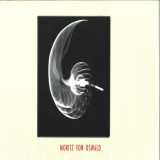
What are the differences and similarities between human and artificial sound, between oscillations generated by vocal cords and synthesizer voices, voltage amplified by speakers? On Silencio, his latest album for Tresor Records, Moritz von Oswald works with a 16-voice choir to explore this concept.
Drawing from the ensemble works of long-standing inspirations Edgard Varèse, György Ligeti and Iannis Xenakis, von Oswald and Vocalconsort Berlin delve into the space between sounds, creating a deeply textured collection that shifts between light & ethereal and
dark & dissonant.
As masterfully demonstrated in the early work of von Oswald and Mark Ernestus’ influential Basic Channel project, repetition and reduction are key elements here, much in the tradition of techno and minimalism. The vast dynamism of the human voice adds to the
profound weight of electronics while offering up a rhythmic source and sonic noise palette unexplored in von Oswald’s repertoire. In Silencio, von Oswald dredges a dank murk, pulling clouds over a distant pulse. It hangs, ready to take on new forms.
The compositions were written in von Oswald’s Berlin studio on classic synthesizers, such as the EMS VCS3 & AKS, Prophet V, Oberheim 4-Voice and the Moog Model 15. These abstract recordings were transcribed to sheet music for choir by Berlin-based Finnish composer and pianist, Jarkko Riihimäki and performed by Vocalconsort Berlin in Ölberg church in the city’s Kreuzberg district, only few metres down the road from where Dubplates & Mastering and Hard Wax opened their doors for music enthusiasts for many years so long. The recordings of the choral versions were then incorporated into the synthesized parts of the album and brought into anew electronic context; in Silencio, the focus is not on using one means to imitate the other, but to sonically discuss the tensions and harmonies between the two worlds and create a dialogue between them.
The relationship between von Oswald and Tresor Records goes back thirty years, all the way to Blake Baxter’s Dream Sequence in 1991 - which von Oswald engineered alongside Thomas Fehlmann. The collaboration with Fehlmann lived on, seeing the duo team up as 3MB with Eddie Fowlkes or Juan Atkins. More recently, the Detroit-Berlin connection continued as Juan Atkins & Moritz von Oswald present Borderland.
For von Oswald, Tresor Records and also the participating guest musicians of the choir, this release brings together audiences from other musical areas, cross-pollinating; Silencio is an album that stands for itself beyond the musical genre boundaries.
“A piece of music never truly comes to An end. Revisiting a theme illustrates this idea that life goes on.” These are the words of Wayne Shorter, uttered in 2018 upon the release of Emanon, his final opus. On this record, the octogenarian uses dusky hues to shade in the passions of his youth - drawing and science-fiction, as well as the causes he has defended all his life - the fight against ecological upheaval and structural racism. This sentiment did not fail to resonate with Julien Lourau, who has reached a stage in life where he has begun to look back over certain pages written by the man he has always considered one of the masters of his trade. Five years later, this Parisian native has also chosen to revisit his glory days, offering reworked versions of specific tracks composed by his titular elder throughout the 80s. “When I play this music, I find myself back in my teenage bedroom. These are my standards, and they remind me of autumn in Rambouillet.” At that time, after practising his scales, Julien would also play Dungeons & dragons, and immerse himself in SF as well as heroic fantasy - epic influences which are not without a certain connection to the dreamworlds Shorter conjured up, as another fan of landscapes beyond the grasp of reality.
This album features four themes taken from Atlantis, which came out in 1985, and two from Joy Ryder, released three years later. To these, he has added a composition penned at around the same time for Sportin’ Life, the penultimate LP by Weather Report. This is rounded off by a tune taken
from Native Dancer, the record which, ten years earlier, in 1975, brought together this saxophonist who learnt his trade alongside Art Blakey, before joining Miles’ second quintet, and Brazilian Milton Nascimento.
“Between Native Dancer and Atlantis, Shorter did not release anything under his own name, but he took the time and care to really perfect his writing. Upon his return, he injected a very Brazilian form of subtlety into his compositions, especially rhythmically. And from a harmonic point of view, these themes are extremely sophisticated, and reveal truly singular colours. In fact, he decided to display the score as if it constituted the liner notes of Atlantis.”
Julien Lourau is a fan of every Wayne Shorter era, from his Blue Note days, where Mr Gone defined the bases of a truly unique repertoire, all the way to his final quartet - a reference like no other. He decided to focus on this “highly electric” period, which is not necessarily Shorter’s best known, nor his most widely appreciated - despite being a unanimous reference, Shorter has nonetheless never had a direct descendent. In Lourau’s line of sight there lies a desire to focus on typically South American tonic accents which characterise this repertoire, twinned with the ambition to switch up their actual sound “by attempting to open up onto a production highly influenced by eighties fusion". However, he admits that modifying the structures of these most unique of worlds constituted a fresh challenge. “There’s this labyrinthine harmonic system where you’ve no idea how it holds together, but where it’s actually impossible to touch the slightest element without the whole edifice wavering. It is in fact a very difficult thing to achieve!”
In order to successfully transcribe all this creativity free of obstacles, Julien Lourau once again called upon the help of Mathieu Debordes. From January 2023 onwards, Mathieu endeavoured to break down all the musical elements, on paper, before creating any actual music. The record was therefore constructed on the faith of these scores, without necessarily transiting through a creative residency - just two live gigs, to make sure the setup worked. Besides Mathieu Debordes and his synthesisers, Julien Lourau has assembled an ad hoc team by his side. On the bass, according to the track, we can hear erstwhile companion Sylvain Daniel or a new acolyte on the fretless bass, Joan Eche Puig.
Stéphane Edouard, on percussion, even dives headfirst into an unlikely proto-rap of sorts, on Pearl On The Half Shell (where, on the original version, Bobby McFerrin adjusted his interventions in a rather madcap style). Aesthete and drummer Jim Hart as well as pianist Leo Jassef also figure on this release - both were present on previous project devoted to label
CTI. “At sixteen, I wanted to sound like Michael Brecker rather than Ben Webster - that was equated with modernity in those days”, adds Julien with a smile, as for him, all this rings out a little like a logical next step, a joyful immersion into the fountain of youth. And if, for this record, he plays the soprano more than ever, the saxophone Shorter set in his sights on, he never tries to replicate an unattainable ideal note by note. What would be the point?
“Wayne Shorter is not just a saxophonist’s saxophonist. In fact, I don’t know a single person who has risen to challenge of his solos. I have not done it myself either, but on the other hand, I have retained a lot of his phraseology. His way of approaching the instrument reveals a more evanescent language, a work on colour and shape. Keeping this in mind has allowed me to gravitate towards certain elements, that in hindsight, I find echoes of in my work, even in Groove Gang.” Shorter etches out these phrases, creating a groove within which Lourau had traced subtle punctuation, managing, from a highly written base, to create fresh apertures, promises of a great escape. Emblematic of this standpoint, his regal version of Ponte de Areia, originally a wonderful dialogue between Milton Nascimento and Wayne Shorter. Here, the Frenchman takes liberties with the original melodies, without ever growing distant from the original spirit, extending one section with delicacy, offering a rubato development and then a groove “like a little suite”. Julien Lourau also renews with an accomplice from last century, Magic Malik, who lends his high-pitched vocals to the track. Though they had not recorded together for more than twenty years, the two of them got on as if they had only ceased collaborating yesterday, everything flowed naturally. The track was wrapped up in just one take, much like other themes, such as opener Who Goes There where the flautist deploys smooth, enchanted and smoky wisps.
Fundamentally, reflecting of the sleeve which features a child playing with a ball, image that could symbolise the sun just as much as the moon, Julien Lourau manages to translate the ambiguous candour which characterizes Shorter’s work - solar and crepuscular at the same time, that of a visionary and poet definitively situated outside of all chronology, but with whom Julien shares surprising and ‘timely’ coincidences. Shorter was born August 25, 1933, the same day as Julien’s father, “if we take time zones into account”, and who died on Lourau’s birthday, March 2, 2023. Should we take this as a random fact? Or could we not see here the sign of a destiny connecting the agnostic Frenchman to the man who, as a fervent Buddhist, believed in the transmission of his spiritual flow ?
For new beginnings, one must sometimes look into the past. Amb.Caveti has done such thing by inviting producer Martin Abrahamsson to the label under the moniker Deltidseskapism. Originally released in 2004 on Source Records, Martin’s aptly titled ‘Nattmusik’ mimics exactly that - the long drawn out winters of Sweden.
Floating basslines and ethereal high’s leave the imagination to roam, whilst rhythmic clicks and cuts maintain focus on the journey ahead. It’s one for the drive home or late night wander, amidst the icy fog and solitary streetlights.
DEVO’s Hardcore documents the group’s beginning as pre-punk outcasts in the fertile Akron, Ohio, underground rock scene. Spawned at the nearby college of Kent State, site of the infamous May 4 Massacre, DEVO formed as a conceptual art project armed with the radical philosophy of de-evolution. Brothers Mothersbaugh (Mark, Bob and Jim) and Brothers Casale (Jerry and Bob) along with drummer Alan Myers soon whipped up an otherworldly brand of “devolved blues” that could hold its own alongside the beatnik groove of 15-60-75 (a.k.a. The Numbers Band) or the primal rock poetry of The Bizarros. Recorded on various four-track machines and in tiny studios, basements and garages between 1974-1977, Hardcore reveals their strikingly clear vision: rock ’n’ roll stripped bare of its collective cool and jerked back into propaganda fit for post-modern man. It’s no surprise that these transmissions would soon catch the eye and ear of Brian Eno, who later produced their landmark 1978 debut album. Noisy synth, strangled guitar chops and a primitive rhythmic thud power the early DEVO sound. Threaded beneath it all are lyrical themes of post-McCarthy paranoia, middle-class ephemera and DEVO’s long-running topic of choice: sex, or lack thereof. Few moments in pop music history can match the grinding, pent-up energy of “Mongoloid” and the spastic bounce and sputter of “Jocko Homo” (two anthems presented in their earlier and superior versions here). Cult favorites like “Mechanical Man” and “Auto-Modown” make Volume 1 essential listening. Superior Viaduct and Booji Boy Records are proud to present DEVO’s Hardcore to a new generation of spuds, lovingly packaged with Moshe Brakha’s stunning cover photography. As David Bowie said in 1977, DEVO is indeed “the band of the future.”
Obliques and Atmospheric are very happy to present their new album “Golden Apples of the Sun”. It is the result of a close cooperation between Suzanne Ciani and Jonathan Fitoussi. The American electronic music pioneer (5 time Grammy award-nominated) has joined the French composer to sign a four-hand album around mythical synthesizers like Buchla, Moog and Ems...
Mainly recorded in California, facing the Pacific Ocean, the white sound of synthesizers mixes constantly with the sound of the waves and wind.The music generated is directly blended with the surrounding elements of nature.It is both organic and live, hypnotic and rhythmical, powerful and dreamlike.
Suzanne is a five-time Grammy award-nominated composer, electronic music pioneer, and neo-classical recording artist who has released over 20 solo albums. Her work has been featured in films, games, and countless commercials as well. She was inducted into the first class of Keyboard Magazine's Hall of Fame alongside other synthluminaries. Most recently, she is the recipient of the Independent Icon Award from A2IM. Suzanne has provided the voice and sounds for Bally's groundbreaking "Xenon" pinball machine, created Coca-Cola’s pop-and-pour sound, designed logos for Fortune 500 companies, and carved out a niche as one of the most creatively successful female composers in the world.
Straight Outta Caledonia is the first commercially available “Greatest Hits” of the outsider songwriter Jackie Leven, an artist
who has largely remained in obscurity in his native Scotland despite being one of the greatest wordsmiths – and singers – it ever
produced. A well-travelled musician who began making psychedelic, progressive music in the late 60s before emerging as an
epic storyteller full of pathos, humour and humanity in the 90s, Leven lived and wrote like many of the fragile, gregarious
characters of his songs; large, full of life and empathy. Leven passed away in 2011 after recording 30+ albums under different
guises or with his briefly successful New Wave band Doll by Doll. Straight Outta Caledonia is a compilation collated by Night
School Records on its Archival label School Daze that seeks to introduce Leven’s music to new generations.
In an age of isolation, alienation and loss of visceral experience, Jackie Leven’s music can be massive and welcoming. It feels
connected to some universal humanity and vibrates with vitality. His songs are often full of tragedy and comedy simultaneously,
cutting straight to the heart, often plugging directly into the nervous system of the listener. His lyrics are rich, dense with imagery
that can veer from apocalyptic to the comically banal in a sentence, with a songwriting panache that can be heavy handed to
almost bursting point before skewering the song with a clownish, warm punchline. His productions ranged from Bob Dylan’s
Rolling Thunder Revue style rock band orchestrations with strings and organ as on the epic Ancient Misty Morning or they could
be pared down to the purest form of folk song as on Poortoun: Leven on stage alone with an acoustic guitar, albeit played with a
mastery of the instrument that he often only hinted at. Musically his sound can bend traditional structures or stay completely
confined within them yet still forever push towards an ecstatic release, as on the cinematic Snow In Central Park.
The most exciting, jaw-droppingly effective tool at Leven’s disposal was his voice. A multi-octave instrument that, though
damaged during a savage assault in Fife, he used with flair; he had both a brazen disregard for the rules and a deep humility, all
of which is evidenced with every phrasing. A baritone that could flit up through the register – always touched by his gentle
Kirkcaldy accent – it’s the prime delivery method for his songs. Leven’s voice enabled him to inhabit the characters in his songs to
an uncanny degree, a skill that in turn enables the listener to empathise with them and, subsequently, the singer. It’s most evident
in stand out song The Sexual Loneliness Of Jesus Christ, a breathtaking re-telling of the life of its protagonist, not as a pure,
sinless messiah but as a sexually frustrated, solitary man condemned to an existential loneliness no one else will ever feel. In
many ways the track is the archetypal Jackie Leven song. Produced by Pere Ubu’s David Thomas, what strikes the ear first –
after the samples of unemployed workers in Glasgow following the closing of the Clyde shipyards – is the audacious, rhythmic
tremolo effect Leven employs through the verses before the production opens up to allow Leven’s vocal to lift into a soar, a
freeing glide powered both by the force of the singer’s chutzpah and the inherent, doomed destiny of the protagonist. With any
other singer such subject matter could come across as gauche or worse, pretentiously sonorous, but Jackie Leven’s genius was
such that he could be this cinematic and brazen while touching something elemental and true in the beholder. It’s a skill evident in
every song on Straight Outta Caledonia, the trademark of a songwriter who revelled and excelled in intensity with a lightness of
touch.
In his lifetime, Jackie Leven toured, wrote and recorded at a ferocious rate. He recorded under aliases to avoid record contract
restrictions, played house shows in Europe after or instead of official concerts, events which were often spoken word story telling
masterclasses as well as performances of his often bewilderingly dense songbook. His music has traditionally been catalogued
as “folk” music and has been largely banished to a small, dedicated group of international fans and apostles both private and well
known, like author Ian Rankin or Glenn Matlock. Since his passing in 2011 however, there has been a growing recognition
amongst a newer generation, with artists like James Yorkston or Molly Nilsson publicly stating the influence of the unsung
troubadour on their own craft. Jackie Leven’s fairytales for hard men are often forensic deconstructions of masculinity, sad and
ecstatic, light and shadow, always endlessly rich, a resource as bountiful as Leven himself’s human spirit undoubtedly was.
New York-based label Kindergarten Records is thrilled to unveil Ayesha’s debut album, ‘Rhythm is Memory’ – 10 boundary-pushing tracks, a shape-shifting percussive journey with electric moments.
While intended for maximum dancefloor impact, Ayesha’s first LP is also conceptually thought-provoking and playful, exploring how bodies store and channel creative knowledge.
A self-taught producer, Ayesha relies on her instincts to make music: sensing what her body wants to feel and hear. To her, essential to building a groove is channeling what is already inside us –
memories – whether they are based on lived experience or coded in the body: culturally, ancestrally, or intergenerationally. The result is this Indian-American producer’s distinct rhythmic voice, with its
many configurations boldly expressed across her debut album.
Kindergarten first released Ayesha’s material in 2020 with her ‘Natural Phenomena’ EP, a four-track journey which she described as “an undulating love letter to nature and the dancefloor, a space
where her biophilia collides with her yearning for the dancefloor.” Subsequently, she continued to build upon her luminous, scintillating sound with a contribution to ‘Fluo II’ titled “Aspara Dub”, followed
by “Varanasi” and “Downpour” on ‘Ether’, a split release with Sha Ru in 2021. With each release, Ayesha's sound evolved, adding shades, layers, and perpetual rhythmic nuance to a mind palace of
dancefloor possibilities.
That is why her and Kindergarten are a perfect match -- driven by their mutual fascination with exploratory sonics and a shared commitment to the community that inspires them. Kindergarten
Records has shaped itself into a trailblazing label, uniting a diverse and innovative collective of local and international producers, while embodying a strong familial atmosphere.This debut LP represents
a significant step-up for both the artist and the imprint, as they strive harmoniously towards a shared goal: delivering a sonic experience full of colorful, otherworldly bass-fueled expansion.
‘Rhythm is Memory’ captures Ayesha’s signature love for driving techno and organic percussion, while at moments veering into newer electro territory while keeping it psychedelic, spacious, dubby, and
always playful. This feels intuitively right for a producer at a crossroads in her career. All tracks intricately weave together pulsing drum grooves, slinky synths, nuanced melodies, and delightfully
unexpected twists. No single genre can do justice to describing this project as Ayesha delicately nods to many, reveling in the spaces between.
Undoubtedly, across A and B sides, 'Rhythm is Memory' imparts the joy of sonic experimentation to listeners and dancers. Ayesha invites us into her creative process and its steady evolution – rooted in
many days and nights of exploration, reflection, and repetition. "The ritual practice of cultivating and tending a garden is what comes to mind if I were to visualize this record. Beautiful things can emerge
from care and consistent attention," says Ayesha. While she refers to her specific experience making 'Rhythm is Memory,' this powerful album culminates a decade of working in nightlife for Ayesha – a
project slated to leave an indelible mark on the underground. To mark this impressive milestone in their catalog, Kindergarten Records is proud to return to pressing vinyl after a hiatus since 2020,
recognizing the significance of putting out a physical release to behold such a moment in both the label's and the artist's trajectory.
Dreyblatt"s minimalist conception - a rhythmic drone played on a double-bass strung with piano wire, playing in concert with other stringed instruments performing in 20 unequal microtones per octave and changing key but keeping the same fundamental pitch - dates back to the 1970s, while he studied under La Monte Young and Pauline Oliveros. Resolve acts in intermittent dialogue with the first Orchestra of Excited Strings release, 1982"s Nodal Excitation.
Since then, Dreyblatt has formed new orchestras across various countries and decades, with each phase of his music requiring several overlapping periods of gestation and arrangement.
The current Orchestra is formed by Konrad Sprenger, Joachim Schütz and Oren Ambarchi. On Resolve, each of the members" playing brings new angles to the compositions. Konrad Sprenger"s involves solenoids, sine waves and a computer-controlled multi-channel electric guitar (as well as a relentless style behind the drum kit and oversight of the album production), while Joachim Schütz"s individual conception of electronics and electric guitar and Oren Ambarchi"s undeniable innovations with signal path work together with Dreyblatt"s bass (still strung with piano wire) as magnetic component parts of Resolve.
These contributions lead to Resolve"s dialogue with the early Orchestra of Excited Strings canon - for instance, the track previewed here, "Flight Path" takes off at a pace not often found in the minimalist genre - a rolling lope! Yet the sense of play is palpable: the ensemble scale their microtonal keys with punkish brio, a stance sharing much with the original Orchestra"s downtown pulse, even as as the new Orchestra burn their own path through Dreyblatt"s music.
Approaching his 70th birthday, with over 40 years of work as a solo artist, collaborator, composer, educator and bandleader, Arnold Dreyblatt views Resolve as an important expression within the long story of The Orchestra of Excited Strings. The album title"s tendency to mean different things is an indicator of the dynamic qualities of his music in all its different phases - an evolution that continues to produce new dimensions in acoustic sound with every new release.
It's been a little over ten years since Hailu Mergia reemerged on the international music scene. Following the first in a series of his classic recordings reissued in collaboration with Awesome Tapes From Africa, Mergia assembled a band and began performing live again after many years driving a cab in Washington, DC. His first show back appeared on the front page of the New York Times along with a stellar review and he took off from there performing his flavor of Ethiopian jazz all over the world in the years since, including Radio City Music Hall and Montreal Jazz Festival. Finally, we have a recorded document of the keyboard player's powerful DC-based trio _ which practices each weekend in his basement _ featuring Kenneth Joseph on drums and Alemseged Kebede on bass. Beautifully captured at one of their fiery live shows at the venerable Brooklyn non-profit cultural center Pioneer Works on July 1, 2016, the concert was recorded by PW staff and mixed by Ted Young with mastering by ATFA's expert audio extraction collaborator Jessica Thompson. The performance clarifies what many people across the globe already know: in his fifth decade of music-making Hailu Mergia continues to push the boundaries of his remarkable abilities. Mergia and his veteran band energetically and playfully unpeel layer after layer of harmonic and rhythmic interest out of a spectrum of Ethiopian repertoire. Modern jazz demands constant reinvention and improvisation, night after night creating new works out of known modes and classic standards. This band is unstoppable when it comes to turning age-old melodies (like "Tizita" or "Anchihoye Lene") upside down and inside out until they emerge as molten new works, often spontaneously. Mergia's original compositions (like "Yegle Nesh") shine brighter than ever here as well. Moving from keyboard to organ to accordion to melodica, he deftly switches instruments _ often during the same song. Mergia at 77 years old seems to be working harder than musicians half his age. "Pioneer Works Swing (Live)" brings into focus the kind of onstage group improvisation and deadly solo passages that reach for places Mergia and the band have never gone, on festival and club stages across four continents. Now that Mergia has released two new recordings along with four classic reissues, he is eager to let everyone hear what he's been doing on the road since he re-took the global stage for his victory laps. So much more than an old act from yesteryear, Mergia balances his legendary Ethiopian recordings with good old fashioned sweat-soaked live concert triumphs such as the one we have here.
It’s been a little over ten years since Hailu Mergia re- emerged on the international music scene. Following the first in a series of his classic recordings reissued in collaboration with Awesome Tapes From Africa, Mergia assembled a band and began performing live again after many years driving a cab in Washington, DC. His first show back appeared on the front page of the
New York Times along with a stellar review and he took off from there performing his flavor of Ethiopian jazz all over the world in the years since, including Radio City Music Hall and Montreal Jazz Festival.
Finally, we have a recorded document of the keyboard player’s powerful DC-based trio—which practices each weekend in his basement—featuring Kenneth Joseph on drums and Alemseged Kebede on bass. Beautifully captured at one of their fiery live shows at the venerable Brooklyn non-profit cultural center Pioneer Works on July 1, 2016, the concert was recorded by PW staff and mixed by Ted Young with mastering by ATFA’s expert audio extraction collaborator Jessica Thompson. The performance clarifies what many people across the globe already know: in his fifth decade of music-making Hailu Mergia continues to push the boundaries of his remarkable abilities.
Mergia and his veteran band energetically and playfully unpeel layer after layer of harmonic and rhythmic interest out of a spectrum of Ethiopian repertoire. Modern jazz demands constant reinvention and improvisation, night after night creating new works out of known modes and classic standards. This band is unstoppable when it comes to turning age-old melodies (like “Tizita” or “Anchihoye Lene”) upside down and inside out until they emerge as molten new works, often spontaneously. Mergia’s original compositions (like “Yegle Nesh”) shine brighter than ever here as well. Moving from keyboard to organ to accordion to melodica, he deftly switches instruments—often during the same song. Mergia at 77 years old seems to be working harder than musicians half his age.
Pioneer Works Swing (Live) brings into focus the kind of onstage group improvisation and deadly solo passages that reach for places Mergia and the band have never gone, on festival and club stages across four continents.
Now that Mergia has released two new recordings along with four classic reissues, he is eager to let everyone hear what he’s been doing on the road since he re-took the global stage for his victory laps. So much more than an old act from yesteryear, Mergia balances his legendary Ethiopian recordings with good old fashioned sweat-soaked live concert triumphs such as the one we have here.
- A1: Euphoria 1 49
- A2: Soft Hallucinations 2 00
- A3: Sky Move 2 40
- A4: Destroyed Dreams 2 06
- A5: Horror Trip 1 39
- A6: Floating Illusions 2 23
- A7: Lost Chance 1 46
- A8: The Morning After 3 15
- A9: Random Thoughts 1 12
- B1: Heroin 2 44
- B2: Night Trip 2 54
- B3: Day Trip 1 21
- B4: Dealer's Corner 3 23
- B5: Sad And Hopeless 1 53
- B6: Riding Pegasus 3 32
- B7: Hopeless Chaos 2 15
- B8: Goin' Mad 2 06
Sven Torstenson's notorious Drugs is a loopdigga's fever dream, bursting with breaks for days and featuring possibly the most iconic cover of all library music's cult classics. First released in 1980, it's now a hyper-rare and seriously sought-after electronic album full of experimental soundscapes and samples just waiting to be flipped. It's both terrifying and terrifyingly good. So much so, it's been brilliantly sampled by Kendrick Lamar and Chance The Rapper.
The sleeve describes Drugs as containing "the newest dimensions of electronic sounds. Dramatic underscores for all problems of today's life and society, at the border between reality and delusion." That's pretty spot-on. The fast moving "Euphoria" is an incredible, unignorable opener. It's loaded with disorientating effects and really needs to be heard to be believed. It's followed by the gorgeous "Soft Hallucinations", containing quiet, meditative and beautiful sounds - as the title suggests. One listen and you'll want to live in the warm embrace of this beatless, harmonic gem. Sinister squelchy synth stabs don't distract from the sheer beauty of the track's main (gentle) thrust. They only serve to elevate its trippy magic.
Next up, "Sky Move"'s agitated and repetitive rhythm makes it an intense listen but with a broad melody that will appeal to many. "Destroyed Dreams" utilises a muffled church organ and it sounds heavenly to begin with but it gradually invites increasingly distorted elements. Yes, you've had trips like this, we're pretty certain. Mental! Talking of bad trips, never have they sounded so good as "Horror Trip"; this fractured drama-synth just needs some some dusty beats to hold it up - get involved.
"Floating Illusions" almost sounds like a beatless Spiritualized bomb from the early-mid 90s; melodic, synthy, church organ-drenched. The mournful, dramatic "Lost Chance" pulses along on a bed of acidy synths whilst "The Morning After" is the sonic equivalent of the extreme fear and doom experienced in the aftermath of the previous night's carnage. Whilst somewhat uncomfortable listening, again, it's pretty compelling thanks to the myriad effects being expertly utilised. Fascinating. The sprawling, fragmented "Random Thoughts" is described as containing "confused melody phrases" - yeah, pretty much sums this one up.
The B-Side is ushered in by "Heroin" and it's as sketchy as you might think, all mysterious minor chords with a dominating - but not overbearing - bass refrain. Next up, the dream-like synthy fanfare of "Night Trip" climaxes after a few minutes of dramatic, ecclesiastical sounds whilst "Day Trip" layers its melody over a repetitive rhythmic base.
Next up, one of the *REAL* highlights makes itself known. Absolutely not to be missed, "Dealer's Corner" is all shifting tenors from quiet to hectic and back around again. The hectic parts are like a totally synthed-out-the-eyeballs jazz-funk collective wigging out with the latest electronic toys from 1980. This one totally SMOKES.
The dramatic "Sad And Hopeless" is appositely replete with dissonant, minor church-organ chords whilst "Riding Pegasus" uses a creepy ostinato bass melody to create irrational bleepy menace that's ripe for sampling. The penultimate track, "Hopeless Chaos" is another disorientating trip, a bleepy confection of sounds and phrases whilst closer "Goin' Mad" is all electronic percussion with an unpleasant rhthymic feel and irritating melody. Music to annoy your partner with!
Established in Munich in 1965 by Gerard and Rotheide Narholz, Sonoton introduced library music to Germany. Initially intended to cater to the country's new TV market, the library also provided an avenue for Gerhard Narholz's astonishing musical prolificacy, and soon became a haven for a wide range of European composers and musicians. In 1969, Sonoton struck a deal with the British label Berry Music for international publishing rights, exposing its catalog to a worldwide audience; when Berry was bought out by EMI in 1973, Sonoton transitioned into a full-fledged international label, with successes in the library and commercial fields and many innovations to its credit. Now a worldwide operation with hundreds of producers and composers under its employ, Sonoton nonetheless remains an independently run business still helmed by its founders - a remarkable achievement in an era when nearly every other major library has been absorbed by a multinational conglomerate.
The audio for Drugs has been remastered by Be With regular Simon Francis, ensuring this release sounds better than ever. Cicely Balston's expert skills have made sure nothing is lost in the cut whilst the original, iconic sleeve has been restored here at Be With HQ as the finishing touch to this long overdue re-issue.
Structured Records presents the continuation of their previous work, signed by The Wire Alliance, untitled "Mathspace."
The new EP consists of 4 solid and impactful Techno remixes, where the diversity within each track defines this 12-inch as the perfect tool to set the dancefloor on fire.
Silez, Swarm Intelligence, Rommek, and Irrational Language dive into a whirlwind of drones, aggressive rhythmic patterns, exquisite basslines, and other sonic elements that creatively and deeply dissect the original songs.
A compilation that at times sounds reminiscent of early 2000s Birmingham, while at other times injects a sound closer to IDM, all without straying from its own essence: precise Techno execution, without frills or pretensions but with a lot of personality and a clear direction—to provide timeless material for the most demanding DJs.
Structured Records' new release is here to stay in your record collections. And we're not just saying it, just hit play. We love what we do. Enjoy it.
Next up on Tofistock comes a MYKI release. tofistock home runner and producer energizing with 4 tracker dynamos programmed for a pure sense-floor bizz. Bringing up a rave thunderstorm A-side filled with rhythmic juggling work, crunchy stabs, and silky sneaky basslines. The elegantly rude B-side contains samples from the timeless UFO by ESG and his own reso master trademarks. This boutique toolpack is the essential firebone starter and the 1st in tofistock’s sense-floor new dance series.
Echolocation is the astonishing debut album from Mendoza Hoff Revels,
an electric & formidable new unit led by Ava Mendoza (electric guitar,
compositions) &Devin Hoff (electric bass, compositions) and featuring
James Brandon Lewis(tenor sax) & Ches Smith (drums)
A super-group of our time, all profound creative artists in their own right, rocking
mightily together, in their prime. 21st Century progressive rock played by punk
rockers with serious improv skills & jazz feel. And non-stop wicked catchy tunes,
riffs & grooves.
Strong sonic references are The Stooges' Funhouse, rendered by a band readily
adept at rapidly swinging rhythmic & harmonic shifts, (plus tenor sax on every
track!) and also Minutemen, both their whole body of music & their fundamental
egalitarian punk ethos.
- A1: Turn Ix 03:47
- A2: Super Freeloader 03:41
- A3: Turn X 07:57
- A4: Turn Xi 03:10 Site
- B1: Turn Xii 03:25
- B2: Zeit Ohne Harmonie Iii 05:45
- B3: Turn Xiii 01:57
- B4: Turn Xiv 02:12
- B5: Festival Mood Iii 00:56
- C1: Turn Xv 02:14
- C2: Turn Xvi 06:00
- C3: Turn Xvii 02:34
- C4: Turn Xviii 04:32
- D1: Turn Xix 04:41
- D2: Turn Xx 06:08
- D3: Turn Xxi 01:38
- D4: Festival Mood Iv 01:47
With the label MPS, post-war musical history was written in Germany: noble music productions with many international greats come from the Black Forest and are timelessly legendary. In this tradition, HGBSBlue releases selected projects on high-quality vinyl.
The DLW trio has been working together for twelve years now and is now setting the tone in the modern European music scene, as the trio has long since left the boundaries of jazz behind. DLW, that is the sound-painting vibraphonist Christopher Dell, the virtuoso Danish bassist Jonas Westergaard and the German star drummer Christian Lillinger.
Time and again, the three jazz musicians from Berlin play together with artists from classical or avant-garde music. "Supermodern"
is the project that brings the three DLW musicians together with US pianist Bob Degen. This music is also unikal. It is a reverence
to the legendary Modern Jazz Quartet (MJQ), which in the 1950s was the link between chamber jazz and European classical music.
With "Supermodern," this reference to the MJQ is illuminated from the perspective of European avant-garde music, rather than
its African-American roots, which nevertheless resonate respectfully throughout.
DLW has "developed a concept based on repetition and difference. The starting point for a piece is always a single bar, which is
rhythmically interlaced and repeated trance-like until the smallest irregularities occur, which are written down and creatively
processed further. From this "superimposed combinatorics" (Christopher Dell) a perpetuum-mobile-like sound movement
develops, which is further radicalized on record by sound alienations and cut-up techniques." Thus respectfully wrote the Neue
Züricher Zeitung in August 2023.
Word has long since spread outside the German jazz scene that the DLW projects are always musically new. This is also the case
with the double LP "Supermodern 2", with recordings made in 2021 in analog at the MPS studio in the Black Forest. Together
with US pianist Bob Degen, who has been one of the creative voices of the German jazz scene for about 50 years, they play highenergy music, with sparkling virtuosity and close communication. A musical treat, further enriched by the immensely present
analog sound of this recording.
Takeo Moriyama, Japan’s leading jazz drummer, loved by many new and old fans. Since the late 1960s, he has swept the free jazz world with the Yosuke Yamashita trio. After leaving the group, the radiating heat was condensed into an ensemble, evolving and deepening the musicality in a more melodic and rhythmic direction. And that activity will reach a peak in this work “Smile”.
Supported by Roger Gerressen, Andrey Pushkavev, E.Wan, Hermanez, youANDme, Philipp Priebe, Ohm, Jason Kendig, Barbara Preisinger
French Berlin-based producer and DJ Anthony Georges Patrice returns to his own Ausblick imprint this October with 5NRG accompanied by a remix from the much loved Playhouse artist LoSoul.
Throughout the past decade France's Anthony Georges Patrice has been steadily unveiling his productions on the likes of Berlin's Lossless, Ghetto Rhythms Records and of course his own Ausblick where he returns here, all the while honing his skills as a DJ through regular appearances on his adopted home turf of Berlin and further afield to Amsterdam, Paris and beyond.
Here, Anthony makes awelcome return to Ausblick with a new 12" release and leading the way is on the a-side is the original mix of ‘X5NRG’, a DJ tool like clubcut fuelled by trippy vocal loops, murky atmospherics, a throbbing bass groove and resonant synth sweeps all underpinned by a crisp4/4 rhythm.
On the flip-side Germany's groove maestro LoSoul flips the original with his own unique twist, laying down a near twelveminutes of subtly unfurlinghypnotisminhis signature fashion. Fragments of the originals atmospherics and vocals are dubbed out while LoSoul's raw, skippy rhythmic style and unfaltering drive keeps listeners locked in
throughout.
Polish jazz rebels sneaky jesus are back with their second studio album For Chaching Taphed.The highly imaginative quartet out of Wroclaw comprising Maciej Forreiter (Guitar), Matylda Gerber (Saxophones), Ben Łasiewick i(Bass) and Filip Baczyński (Drums) have won fans around the world for their restless, quirky brand of jazz which takes in breakbeats, twisting chord progressions and improvisation as well as a wealth of musical influences.
The band have been touring their asses off ever since they surprised the world with their debut album For Joseph Riddle in 2021. From out of nowhere their debut LP of 500 copies sold out in a month and they quickly went on to sell close to 1,000 CDs of the album. Fast-forward to 2023 and the band are sharing stages with artists such as Ill Considered and Theon Cross.
For Chaching Taphed was created in complete isolation. The group locked itself in a barn at the Museum of Agricultural Technology in Piotrowice Świdnickie. It worked on its sophomore output surrounded by machinery, trucks and carriages. These new compositions mirror the abstract conversations which the group frequently has just for fun. Contrary to For Joseph Riddle, this album is simple and does not rely on ongoing grooves. This enabled the group to be much more experimental. The band was joined by friends Flautist Mariya Mavko on Piękno Niemożliwe (Impossible Beauty) and her playing is sampled in Hipotetyczny Taras (Hypothetical Terrace). Pięciu Pszczelarzy (Five Beekeepers) closes the album featuring EABS' Jakub Kurek on trumpet. His fiery solo is one of the most intense moments of the album.
Spacer Po Nadodrzu (A walk around Nadodrze) opens the album and is inspired by one of the districts of Wrocław. It is a sonic story depicting a walk through Nadodrze late at night. A steady bass rhythm imitates a careful pace and the responding sax line is a spooky theme that might pop to oneʼs head in a moment of uncertainty.
The album's first single Krztusiec (Whooping Cough) finds the group diving head first into their most recent influences. The trackstarts with drum improvisation, rolling into a solid hip-hop backbeat provided by Ben Łasiewicki on Bass and Drummer Filip Baczyński. Sax and Guitar weave steady but dissonant lines, written by Maciej Forreiter after many hours spent listening to the Ethiopian jazz greats. The track takes off right after that. Matylda Gerber delivers a fiery Sax solo, while the group picks up the tempo and quickens the groove. The essence is the middle section, a dubby collective improvisation. Forreiter, Gerber and Baczyński take turns playing both classic dub phrases and fierce avant grade lines. Łasiewicki keeps everybody in check with a steady bassline. The energy slows down until Baczyński's drum solo, which explores phrasing detached from the rest of the tune.
Second single Chiński Sprzedawca Smażonych Kasztanów (Chinese roasted chestnut seller) is a fusion of breakbeats, energized songo rhythms and motifs inspired by South African melodies. Presenting the group with spacious and rhythmic horn lines, guitarist Maciej Forreiter wrote a chord progression while Beniamin Łasiewicki and Filip Baczyński took care of the rhythm section. This first part of the track suddenly drops out and explodes into the dramatic main motif which includes double sax and fierce guitar playing in harmony, plus the rhythm section playing more and more jungle-esque. Powerful guitar and sax solos feature before we return to the main theme with a completely different rhythmic backdrop.
W Klatce z Bykiem (In a cage with a Bull), starts like a race. The music plays with an incredible nerve and when the theme is right on edge it suddenly stops. It is followed by an animalistic growl on the saxophone and a doom metal-esque bash of downtuned, distorted guitars and heavy drums. In this heavy fashion it slowly approaches the finishing line hitting one final metallic clang.
Piękno Niemożliwe (Impossible Beauty) features wonderful flute playing of Mariya Mavko (Kadabra Dyskety Kusaje). Her work in the opening motif evokes sounds of Polish and Ukrainian folklore. This brief mellow moment serves as a contrast to the usual frantic sounds of sneaky jesus. It is an appreciation of thepolish jazz music of the past, intrinsically-linked to folklore. The band took this idea and reworked it into their own unique style.
Hipotetyczny Taras (Hypothetical Terrace) is built on top of a lengthy vamp in an unusual 7/8 time-signature. The bass anchors the quartet in a simple line, while the rest of the quartet share an emotional conversation. This track is the most open of the whole project and it ends accordingly. The final burst is a call back to the basics ofspiritual jazzand the whole band shows every emotion simultaneously and gracefully fades out.
Pięciu Pszczelarzy (Five Beekeepers) is For Chaching Taphed's conclusion and is a non stop assault of heavy horn lines, punk rhythms and noise. The band is joined by the extraordinary trumpeter Jakub Kurek from EABS, who blends in perfectly with sax and guitar. His exchange of solos with Maciej Forreiter is a combination of classic jazz phrasing and discordant clatter. In the same fierce manner the whole group works within the motif, switching up accents and breaks.
In the short space of two years, sneaky jesus has gone from ambitious upstart looking to break out from its home city playing spit and sawdust venues, to touring Europe as well as prestigious Jazz clubs such as Jassmine in Warsaw. In the process, it has delivered two full-length albums that don't stay in lane or pander to established jazz sub-genres as so many groups do. Some artists make the same record twice or even more than that, but not sneaky jesus. For Chaching Taphed shows the band as restless, experimental, fun, irreverent but purposeful as never before.
“A lot of over-hyped improv / jazz projects out there at the moment and Sneaky Jesus are genuinely excellent and out on their own. Drawing on the expansive atmospherics of a barn as the recording's setting, the album immediately pulls you in with the unsettling 'Spacer Po Nadodrzu' and lifts off on 'Krztusiec', effortlessly moving from angular, abrasive jazz to trippy dub and cinematic intrigue. Tempos shift and intensities shift naturally. The whole set warrants a deep listen from start to finish and watch out for two great guest features from flautist Mariya Mavko and Jakub Kurek bringing some mad fuzz licks to the boisterous closer. Brilliant album.”
Quinton Scott — Strut Records
Betamax of The Comet Is Coming and Pete Bennie of Speakers Corner Quartet are Coma World. They have come together again to produce a further batch of rhythmically enlightened Dystopian Jazz, alongside illustrious graphic and sound artist Raimund Wong (Floating World Pictures) for this record - 'Coma Wong' (out 6 October 2023 on Byrd Out). The storm clouds are gathering at sea, with the white horses dancing ever faster on the waves. Coma World chose to ride out the tempest, sail up, speeding along together towards who knows what… Expect drums precision engineered with just the right degree of insouciance, drone-bathed sounds rippling and depth charge bass that explodes beneath the surface across 12 tracks. The Wire on their first album, the self-titled ‘Coma World’: “a bold drum ‘n’ bass affair, a nervy meeting between dub and jazz experimentations with new channels explored track by track”. Tom Ravenscroft on BBC 6 Music on ‘Calamari’ from the new album: “I think this is like my favourite track right now… Love it.”
Teakup is Lauri Reponen, the Columbus, Ohio DJ, producer and torch-bearer for the city’s proud Techno heritage. Following in the footsteps of Columbus originators, Titonton Duvanté, Archetype and Todd Sines, Teakup has spent the past decade forging a sound of his own via a genre alchemy that embraces genres past and present. Hardcore’s staccato samples and chopped breakbeats, UKG’s crunchy triplet hi hats and mellifluous House melodies combine in novel forms. Titonton’s wonky Tech House takes, Todd Sines’ stripped minimalism and Archetype’s broken rhythmic exploration are more key ingredients in the Teakup stew. This recipe has cooked up a massive cache of unreleased tunes as well as previous 12”s on is / was, Residual, Shut Off Notice and Lauri’s recently-minted TKP imprint.
Compiled from over 200 demos, Signal 23 has Lauri flexing a new level of genre-mastery. The title track explores Spiral Tribe’s ripping, psychedelic Freetekno. ‘Valve’ is cutting-edge rhythm hypnotism. ‘Felopzd’ loops into ecstatic trippy crescendo and ‘Pad Thai Mystic’ takes you on the spiritual voyage of late-night food delivery in middle America. Four modes, four hitters – to warm floors, open hearts or split psyches.
“Cinematic electronica embraces intelligent Indian infused beat making”.
Belgian beat collective Up High Collective return with their new album 'Koinonia.' Their second full-length comes five years after their debut album in 2018. For 'Koinonia' they have invited Belgian iconic drummer Lander Gyselinck (STUFF.) and several other guest musicians. The first single 'Koi' is available now, the record is set for release on Wednesday October 11 on vinyl, Bandcamp and via all digital platforms via San Kofa Rhythm Records.
"Going with the cinematic tides of sound: first single 'Koi' features compelling South-Asian sitar, imminent strings, drums by Lander Gyselinck and carefully constructed beat making."
Spearheaded by producer duo Koen De Petter and Renaldo Maria, this record is Up High Collective’s most ambitious music project to date and has been in the works since 2015. The name of the record - Koinonia is Greek for "fellowship" or "community" - refers to the intense and inspiring interplay between the collective and several musicians they invited to contribute.
Raw analog recordings and beats by the producer duo, brimming with imperfections and samples from original Indian music, laid the foundation for live studio sessions by Bert Cornelis, one of the few sitar players in Belgium, drummer Lander Gyselinck (Lander & Adriaan, STUFF.), double bassist Jens Similox (Orchestre Collone) and multi- talented bassist Boris van Overschee (Okon, Delv!s). From their intrinsic penchant for deconstruction, the live elements were cut up by the producers, heavily rearranged and presented as new sounds. After several sessions in their Up High Studio (Leuven), carefully constructed collages gradually started to form with all of its layers filling the deepest corners of the sound space.
The result is a record that balances perfectly between cinematic electronica with complex harmonies to get lost in and solid club oriented beats with crunching textures and off the grid rhythmic patterns.
"All of these songs share an underlying, invisible force bound by the intense interplay and mutual inspiration between us and the live musicians.
- A1: Hybr Id Ectopia Environment
- A2: Hybr Id Ectopia Elastic 1
- B1: Hybr Id Ectopia Quarks Minus
- B2: Hybr Id Ectopia Removing Infinities
- B3: Hybr Id Ectopia Elastic 2
- C1: Hybr Id Ectopia Interacting
- C2: Hybr Id Ectopia Radiation Mechanics
- D1: Hybr Id Ectopia Field 1
- D2: Hybr Id Ectopia Singularity
- D3: Hybr Id Ectopia Gravitation
HYbr:ID Vol. 2 is the second installment of Alva Noto’sHYbr:IDseries initiated in 2021. The new album captures the music commissioned to score RichardSiegal's Ectopia performed in 2021 by Tanztheater Pina Bausch with Shooting into the Corner (2008-09) by Anish Kapoor. Building upon the captivating blend of immersive dub and electronica from the first installment, HYbr:ID Vol. 2 takes the listener on a journey into the realm of intricately manipulated digital production. These ten compositions delve into infinity, drawing inspiration from resonance and elasticity, concepts rooted in Minkowski's four-dimensional spacetime model.
Throughout the album, Carsten Nicolai summons precise rhythmic patterns that gracefully hover, reminiscent of celestial bodies orbiting in perfect cosmic unison. The sonic landscape gradually unfolds with somber and brooding tones, incorporating spacious sound design, ethereal atmospheres, and cascading metallic percussions. These elements are delicately crafted with artistic finesse, set against a backdrop of expansive dub textures. At times, the music takes unforeseen turns, as melancholic chords skitter and meander through a digital haze, evoking an atmosphere of introspection and emotion. The ten compositions are accompanied by graphic notations informed by the album’s sonic and acoustic codes.
I feel a deep sense of loss listening to this music, but at the same time the possibility of going beyond it through sound. It doesn't want to illustrate anything, but I would like it to be transformative, even of a feeling that sounds like death. It is an elegy." — Furtherset
The Infinite Hour is a shattered elegy synthesized in electronics. Furtherset's music does not explain, settle or justify, it rather simply manifests the grip of anguish. As a whole, the album's six compositions resemble the labored breathing of one who mourns a disappearance and fears oblivion. A feeling like having one's chest weighed down by a stone, while still being attentive to one's breath, and aware of what remains. From this dimension The Infinite Hour arises and transfigures loss into a space that is always extending: the hour is infinite, the melody is circular, and even stasis has its own measure that is exceeded into eternity.
The album was created between 2020 and 2022, in a slow process of writing and continuous refinement parallel to the previous EP, Auras. The compositions found their final form during the mixing process carried out together with composer & sound artist Bienoise (Mille Plateaux). They were later named based on references to authors who influenced and are dear to Furtherset: Amelia Rosselli, Vladimir Chlebnikov, Hubert Damisch, Dante Alighieri. Each track, composed with its live rendition in mind, manifests itself to the listener as a possible variant of a path that is never definitive. Their live performance, an increasingly distinctive moment within Furtherset's work, is a gesture of concentration and extension, where every composition is developed through meticulous variations of each singularity.
The Infinite Hour is one possible manifestation of an ever-changing musical landscape, a universe with unmistakable sounds but always on the verge of disintegrating, collapsing, and opening up spaces, times, infinities.
Furtherset is the musical project of artist and musician Tommaso Pandolfi (1995). His compositions' distinctive traits are stratifications and recursive shifting modulations, synthetic clusters and sampling, alongside rhythmic and embracing harmonies. The project is envisaged as formal research that follows a path towards saturation and layering, but is always capable of generating voids in which the listener can take their place and fill them according to their own focus.
In our little history, the number 7, besides a kind of esoteric fascination, has marked important milestones in our evolutionary journey. This is why Raw Culture has decided to pay homage in grand style to its seventh year as an independent sound guarantor. To do so, it weaves a co-production with Oderso Rubini, historical memory of the Italian New Wave and head of Italian Records in the 80s. Out of this synergy comes our 24th release, Ping Pong, a dancefloor of dissonant bounces, where free-form suggestions, electronics and rhythmic improvisation find synthesis in a high-intensity competitive match. Starting from the sampling of Korean ping pong matches and the voices of the speakers, Renzini and Passini build a framework where the sound or voice of the electronically harmonised hoover amalgamates with powerful and syncopated drumming, a sound experiment poised between improvisational heavy jazz and Korean-style electronics.
The record is ideally divided into two converging visions highlighting the duplicity of the game, side A or Master Ping collects the first improvisations made by the duo in 2018 leaving almost unchanged the improvisational spirit close to a kind of degenerate free jazz. Side B or Master Pong made later explores more musical forms, with influences of the krautrock and electronic disco matrix, and sees the collaboration with other musicians from Bologna’s historic rock scene such as Gianluca Patini (Surprize, Slava Trudu, Volkwerk Folletto) on guitars, Giorgio Lavagna on vocals (Gaznevada, Stupid Set) and Enrico Serotti on electronic samples (Confusional Quartet, Stupid Set).
Black Vinyl[17,86 €]
After an international tour, the multi-instrumentalist FKJ presents his new 6-tracker jazz EP : Ylang Ylang
Produced in an intimate context, the project, both bright and melancholic, is a real journey within the artist's time capsule.
Its numerous instruments - often accompanied by warm choruses - between apotheosis and rhythmic lull, tell the different parts of his life. Story of musical and familial love, loneliness and passing time, this project spotlights his name, coming from a soothing local flower.
Full of influences, there is Bas - the first rapper signed on Dreamville, label created by J.Cole - on the single "Risk", which deals with similar themes. French Kiwi Juice introduces us to a sweet orchestral ballad. Finally, between gratitude and lightness, he states "I am still the same".
After an incredible journey spanning 8 years and 40 releases, Marked is proud to unveil a monumental milestone - their first EP released on the timeless medium of vinyl. There is no better way to do this than with upcoming superstar Amazingblaze. His Stargaze EP is a journey of pure power and brightness -a dopamine rush- waiting to find its place of honor within your cherished wooden vinyl cabinet.
Starting with Treasures, this is one of those musical gems that keeps on overflowing with life with an almost mystical quality. A sound and melody that have emotions run deep, while the heart of the track keeps your pulse racing at its beats per minute.
The answer to a surefire way to light up the dancefloor is Quantumness. The lead synth and perc rhythm make a deadly and irresistible groove. Its notes soar and dive, creating a rhythmic anchor that holds everything together.
In Geerson's remix of Quantumness, most of the original's iconic lead synth is kept intact. In this version, the kicks fire in rhythmic drum salvos. The sonic landscape traverses peaks and valleys, sending you to both extremes in orbit.
Powerhouse Tham brings in the Club Kid remix of Pittsburgh by sending new life into one of the layers of the lead synth. Tham's signature sound is applied to turn it into a full-fledged hammer track: the sound is ruthless, the groove contagious.
"Tale Spinnin'" - Joe Zawinul (keyb, perc, voc); Wayne Shorter (ts, ss); Alphonso Johnson (b); Alyrio Lima (perc); Leon "Ndugu" Chandler (dr)
»We played music that people listened to every day just as they watch the news every evening, music which changed constantly - just like the weather«, reminisced Joe Zawinul when talking about coming up with a name for the group. This would probably frighten off listeners in today's mass market. But back in those days CBS was satisfied with the group's sound being somewhat similar to the Miles Davis Combo and offered them a recording contract without carrying out the usual sound check. The magic potion "Bitches Brew", which Zawinul and Wayne Shorter had conjured up with Miles Davis, was promising of exhilarating new things to come.
The heart-stopping mix of motivic fixed points and exciting improvisations, »the sketchy melodies, all that a synthesizer and other similar electronic devices could offer, combined with a Milky Way of rhythms« (Der Spiegel) was the pathway down which the group went - without ever becoming pure routine. The fifth album, "Tale Spinnin'", is captivating for its wealth of distinctive, often warm, synthesized sounds, which are further enhanced by Wayne Shorter's bright, twangy soprano saxophone, lending it a jazzy aura. To be sure, this gripping jazz fusion never progresses steadily all the time, but takes up snatchy, though seemingly familiar, melodic ingredients and combines them to produce a new mixture. "Badia", however, is completely different: a quietly flowing and totally rhythmic ethnic work, which today would be classified as World Music.
Another dream coming true! One of Giuliano Sorgini's finest and most sought-after titles is finally available as an official LP reissue – the first ever – remastered from the original tapes.
Originally released in 1971on the small library music imprint FAMA, which operated as a sub-label of RCA Italy, the record contains the original music written for Scappo per cantare, a small, pseudo-psychedelic 'musicarello' (musical comedy film) broadcast on RAI television and starring, among others, Italian singers Gianni Morandi and Mauro Lusini.
The only credited album artist is Sorgini, but it's impossible not to perceive, in this record, the hand of his close friend and colleague Alessandro Alessandroni.
This should not come as a surprise. In the early 70s, the two composers and multi-instrumentalists had a fruitful collaboration that saw them, under the monikers Braen (Alessandroni) and Raskovich (Sorgini), produce an abundance of works together, most of which have now gained the recognition they deserve. These include, among others, two 7" singles from their band The Pawnshop, three records in the series Alle sorgenti delle civiltà (Folkmusic), the crime/noir library albums Quarta pagina (Usignolo) and Inchiesta giudiziaria (Octopus Records), as well as the LP Tempo Libero (Panda Records), which was released shortly after the record presented here and in some ways drew rhythmic inspiration from it.
While their collaboration remained unacknowledged on the original release of Scappo per cantare (this was not uncommon at the time, especially in the field of library music), the record sounds perfectly in line with other works composed by Alessandroni in the early 70s, such as Complesso Gisteri's Mostra Collettiva (co-written with Oronzo De Filippi), or even a landmark album like Spontaneous, where Sorgini contributed to a handful of tracks.
So, yes, the sheer beauty of Scappo per cantare is the result of an incredible synergy between two heavyweights of Italian library music! Airy and sweeping melodies à la Zoo Folle, psychedelia à la Under Pompelmo, and various percussion instruments played by Sorgini seamlessly blend and fuse with elements and touches provided by Alessandroni.
More specifically, we find Alessandroni's signature, melancholy whistle in "Desolazione"; the peaceful and dreamy sound of his 12-string guitar in "Scogliere" and "Con Amore"; the trademark harmonies of his vocal ensemble Cantori Moderni in the last two tracks mentioned and in "Per cantare"; and his ingenious use of distortion on his Fender Stratocaster in the suspenseful transitions "Concentrazione" and "Fantocci", as well as in the frantic/hypnotic hippie numbers "Mordente" and "Fendente" (as a side note, it is worth remembering that Alessandroni experimented extensively with distortion in the rock-infused album Underground, co-written with De Filippi and released in 1971 under the moniker Braen's Machine, probably a reference to British psychedelic band Soft Machine).
The creative relationship between Sorgini and Alessandroni was so symbiotic that it would be useless to try to identify in more detail their respective contributions to the sound of Scappo per cantare. The alchemy between these two musical geniuses is the key to the album's exquisitely Italian mixture of cheerful lounge, sweet psychedelia and smooth easy listening.
To do justice to the quality of the music, this remastered reissue is enriched by a new artwork by Eric Adrian Lee, who drew inspiration from the psychedelic visual culture of the period in which the album was written and recorded.
Rarely could a project be called such a culmination point of a career as what Kris Defoort presents with Pieces of Peace. Just about all the backgrounds, influences and acquaintances the iconic Belgian composer and improvising pianist collected throughout his long career come together in this distinct and original musical adventure.
Together with vocal artist Veronika Harcsa and three fellow musicians, he forms a chamber orchestra in the strict sense of the word, although they are by no means restricted to that one idiom. As an experienced opera and classical composer, Kris Defoort dribbles the timbres, harmonies, dynamics and, if you like, drama of a complete (opera) orchestra through these compositions, supplemented by an inescapable layer of jazz, obviously the other form of music that remains continuously prominent in Kris' life and DNA.
As always in his work, also improvisation is added as a core element, not least thanks to the voice and inventive personality of Hungarian vocalist Veronika Harcsa, a true European reference in this field. This duo has worked together regularly over the past decade, including for Diving Poet Society (2017, W.E.R.F.148) and in DUET: pure vocal and piano improvisations, on poems by Theodor Roethke, Peter Verhelst and William Blake.
Those musical ideas formed the framework when composing the final new song cycle Pieces of Peace. The duet was then quickly expanded into a quintet, with Lode Vercampt on cello, Jean-Philippe Poncin on clarinets and Benjamin Sauzereau on electric guitar. These three musicians are as well compagnons de route of Kris has since many years, allowing him to incorporate each one's own playing style in a special way throughout these compositions: therefore, the entire orchestral spectrum (woodwinds, strings, percussion) is thus prominently represented through these five instruments.
Intimate and joyful, playful and complex, lyrical and rhythmic, ... and layered and full of detail, each track on the eponymous record unfolds like a story in itself. They are all states of emotions, impressions from real life - another reference to opera. They are also an ode to the voice, the human instrument par excellence. As improvised compositions (or composed improvisations?), Pieces of Peace represents a constant evolution that offers hope, softness and inspiration in times when all this sometimes dares to be lacking.
Too Pure are excited to get Moonshake’s debut album, ‘Eva Luna’, back in
print, releasing a deluxe edition, re-mastered from analogue 1Ú2” tape, on
blue double vinyl.
The reissue contains 19 tracks - the album’s original 10, the non-LP threesong single ‘Secondhand Clothes’, the two B-sides from the ‘Beautiful
Pigeon’ single and four tracks from a November 1992 John Peel session.
The release also includes an 8-page full-colour booklet.
Moonshake were formed in 1991 by David Callahan (vocals, guitars,
samplers), formerly of The Wolfhounds, and New York musician Margaret
Fiedler (vocals, guitars, samplers). Callahan and Fiedler recorded a demo for
Creation Records, and were joined by John Frenett (bass) and Miguel
Morland (‘Mig’, drums) to record and release the ‘First EP’ for Creation in
1991.
They took their name from a 1973 single by Can. Both Fiedler and Callahan
wrote songs, and they would (generally) sing on the songs that they wrote.
Their output of shared inspiration produced wildly different results - Can, PIL,
Kraftwerk, MBV and Erik B & Rakim were a melting pot that made
Moonshake somewhat uncategorizable, and as Margaret noted in an
interview, “Moonshake was a collision - it was supposed to be a collision.”
Their debut album, ‘Eva Luna’, took its name from a novel by Chilean author
Isabel Allende, and the tracks on it are split evenly between the two
songwriters. Callahan’s songs are somewhat angry, dissonant, post-punk
affairs, while Fiedler’s are just as angular, but her quieter sometimes near
whispered vocals compliment her writing partner’s equally. Producer /
engineer Guy Fixsen, fresh from his work on My Bloody Valentine’s
‘Loveless’, was instrumental in making the album cohesive.
This album has been critically revisited often since its original release, with
Tiny Mix Tapes describing their sound as “an updated take on Can and
Public Image Limited’s rhythmic propulsion with noisier guitar work and a
predilection for sampling influenced by The Young Gods.” Last year, in a
wonderfully long piece to celebrate the album’s 30th anniversary, Louder
Than War wrote that they were blown away by the album’s “utterly
spellbinding, dizzyingly genre-defying approach at articulating explicitly the
sound of a city in the throes of urban psychosis and derangement... ‘Eva
Luna’ really is one hell of a ground-breaking record, and it stands resolutely
alone among all of the albums released in 1992 as no other band has
managed to create anything remotely similar before or since. It really is a
unique album with few equals.”
In 1993, the original incarnation of the band split up, and Margaret Fiedler
and John Frenett went on to form Laika with Guy Fixsen. Callahan and
Morland continued on with guest musicians, with Callahan ultimately
remaining the band’s sole original member. Moonshake ended in 1997 but
their legacy is indisputable.
One of the most prolific and celebrated blues-rock artists in the UK,
Danny Bryant is to release a brand-new album - 'Rise' - on 29 September through Jazzhaus Records
His 13th album, it is Danny at his dynamic best - his distinctive guitar once again complementing his gravel tone vocal that exudes with the raw emotion this new body of work intended.'Rise' follows the release of his critically acclaimed 2021 album 'Rage To Survive' which Blues Matters! Magazine described as"... everything I part with money for and this will be played and played" and Classic Rock Magazine noted Danny's true blues- rock credentials by describing it as"... new songs with blues- rock provenance." Written by Danny (except for the Bob Dylan cover 'I Want You') and co- produced with Ian Dowling and mastered by Gwyn Mathias, 'Rise', like all twelve albums previous, further deepens Danny's authority as one of the leaders in British blues- rock proving his genuine authenticity.
The album opens with title track 'Rise' - 2 mins 52 of pure blues-rock with Danny's playing evolving throughout to then fade and almost blend into 'Animal In Me' which raises the tempo with its more classic blues rhythmic pattern allowing his vocal to stretch and shine before track three - 'Louise' - slows the album back down with a more solemn acoustic feel that brings anguish out in the track.
Track four - 'Hard Way To Go' - goes back to the more riff- heavy- guitar playing Danny is known for before beautifully contrasting with the toned down acoustic playing of 'Scarlett Street'. 'Into The Slipstream' moves the album into a positive optimistic direction beautifully encapsulated by a gospel vocal accompaniment that supports and builds the track throughout before once again contrasting yet blending brilliantly with track seven 'Julienne' that is more piano focused, relying on Danny's vocal to bring the emotion while still running gospel vocal through the track.
The final three tracks of the album are almost an encapsulation of the whole album. 'Silver and Gold' has a more traditional, stripped back blues feel, whilst Bob Dylan cover 'I Want You' follows a simple acoustic chord pattern and once again Danny's vocal carries the tracks passion throughout with light and shade demonstrating his vocal power before going into the final track 'Drown Jam' that as the title suggests, is Danny playing with pure feel. The album's final trio of
tracks is testament to why Danny is one of Britain's great blues-rock artists.
If the name of this collection of traxxx offends you, move on — there’s no hope for you here. If, on the other hand, Toribio’s salacious fun-pun cracked your cool exterior, here’s an introduction to a set of bangers that helps exemplify New York’s increasingly exuberant dancefloor, and what producer/DJ Cesar Toribio brings to it. His is a ribald, rhythmic take on dance music, neither for the weak of musical character (purists need not apply) nor for the weak of ass (-shaking). In fact, the proof is right there, in Toribio’s label’s and monthly party’s name: Bring Dat Ass. This command is not optional, but *the* key ingredient for a good time.
The five songs Toribio has created for “Tongue In Cheeks,” BDA’s first release, comprise a horny melting pot of tribal house and Linn-drum plug-ins, minimalist synth textures and basslines, hi-hats reminiscent of electro and freestyle classics, some of which are infused with New York’s Latin club history and futures. The lead-off track, “No Pare,” is based on the producer’s 808-driven reinvention of the call-and-response hook from Proyecto Uno’s 1993 merengue-house smash “El Tiburón,” marking the first time the group has ever cleared a sample of this Nuyodominican classic. We predict that “No Pare” will be a Fall 2023 monster.
Guest vocal appearances by The Illustrious Blacks and Maluca, cornerstones of different dance-floor scenes in a city currently hitting peak-energy levels, show the breadth of Toribio’s regard for community: There is a lot of crossover to how the punky Dominicana MC from Washington Heights chooses to slang-tastically “Werk It Out,” and how the Neo-Afro-Futuristic-Psychedelic-Surrealistic-Hippys Monstah Black and Manchildblack infuse a dollop of booty into “Work Dat Shit.” And the two different metallic beats point at seemingly separate parts of Toribio’s musical heritage uniting. There’s no formula, but if there was, it would be: Make it sexy. Make it (consensually) grindy. Make it funny to the point of ridiculous but so funky that the laughter becomes more fuel to the joyous momentum propelling the movement. Then make it home — or try to.
Cesar Toribio’s home is, originally Tampa — and the DR, where he’d spend summers with family. He was a drum-corps prodigy who went to Berklee to become a jazz drummer and be like Gil Evans. He idolized Miles’ orchestral arranger’s work as much as Dilla’s beats, but then discovered house music, so it was a wrap. The 2021 band album Toribio made under the name Conclave — which included his sister Sharin and musicians from such great projects as Standing On the Corner, No Regular Play and Irreversible Entanglements — unearthed the work of a singer-songwriter-arranger-producer of immeasurably nuanced, soulful jazz-house music. But when Toribio started DJing more and more, he decided to listen to the devil on his shoulder who told him to Bring Dat Ass. As Cesar damn-well knows, it’s the devil who has the better jokes and holds the better parties, so his ears perked up. “Tongue in Cheeks” is the music Toribio says he made to play at these parties, because he can’t find it anywhere else. It’s hard to disagree.
What comprises a dream?
An astral plane of our own making where thoughts, love, and desires of the inner mind abound with irreverence - ripe with connection & perspective beyond constraints of time, set, and setting.
Azu Tiwaline exists within the wonders of these interstitial worlds, diving deeper towards inner sanctums of mystic imagination, sublime intrigue, & profound understanding on her second full length LP “The Fifth Dream”.
Released again through her beloved partnership with I.O.T Records, “The Fifth Dream” finds Azu painting an expansive vision towards unified multitudes, mercurial realities, & abundant inner sanctums.
Where her first album “Draw Me a Silence” was a loving ode to her family & upbringing in the form of an elegant diptych, “The Fifth Dream" is the enactment of actualizing her roots into new routes, taking her multifaceted identity into new means of communication towards herself, the world, & the cosmic unknowns that surround her.
Throughout The Fifth Dream’s 54-minute runtime, we hear all elements of the uniquely transcendental sound that Azu is beloved for worldwide. “Antennae Opening”, “Blowing Flow”, & “Amen Dub” embody her talents for tectonic, dubwise soundscapes that channel the innately maternal elements of bassweight into bold & abstracted pulsations, indebted to the most psychedelic & body activating ends of dubstep.
Still attuned to the spatial awareness of dub sonics but giving way to the hypnotic syncopation & synaptic frequencies of techno, “Reptilian Waves”, “Long Hypnosis”, & “Mei Long” bring forth her spectacular expertise for entheogenic rave rhythms - guiding us warmly towards trance-inducing hyper states of dance & delight. Fluctuating between an adventurous velocity and enveloping stasis, the expansive abyssal planes of “Golden Dawn”, “Night in Palm Tree”, & “Canope Imaginaire” conjures a wondrously invigorating rhythmic enlightenment & celestial comprehension - simultaneously moving us forward, inwards, & outwards through Azu’s uniquely omnidirectional & kaleidoscopic musical visions.
Adorned with sampled field recordings of her deeply inspiring home in the desert of El Djerid in South Tunisia, Azu opens a portal into the synergistic inner sanctums of being, self, and the world around us that’s essential to her work as an artist - from the macro levels of humanity’s naturally intimate connection to the Earth we share, down to each of our own micro levels of culture, ancestry, and belonging. All of this is alchemized through a combination of timeless Saharan knowledge & modern cybernetic tools, creating new dimensions of bewitching, euphonious sonic energy. This is music that gives back as much as the listener wants to give themselves unto it - detailed and layered, orbiting a steady core as ethereal swirls and intonations of the natural world embrace us warmly within a spellbinding journey.
8 of the album’s 9 tracks feature a deep level of collaboration from innovative Franco-Iranian percussionist Cinna Peyghamy. Cinna’s use of Tombak, the principle drum of Iranian music throughout time, is beautifully sonorous - channeling the passion of centuries of Southwest Asian rhythm & expression into his own personalized flourishes, with Azu adding her own electrifying frequencies & undiluted artistic freedom to their shared interplay. This profoundly communicative diasporic essence is transmuted between Azu & Cinna, their expression, & the listener. Both are music lovers, intimately connected to their respected Iranian and Tunisian cultures - concurrently acknowledging the wisdom of their resonant pasts, while proudly bringing the sounds of their heritage into the present & future.
“The Fifth Dream” embodies a cosmic anodyne for those feeling caught in between life’s abyssal inbetweens, whilst aiming for a consonant awareness of where our home truly lies in the swells of life’s spiritual maelstrom. This dream belongs at once to none & to many, that of a common language unified in concentric depth - finding beauty in all aspects of our world, and ultimately, within oneself.
Dreams are made and displaced on Mark Fell & Rian Treanor’s oneiric electro-acoustic inception 'Last Exit', borne from long days in the family garden, and assembled into a mesmerising masterpiece of minimalist modal rhythm and atmospheric exploration, into rapt smallsound detailing in breathtaking form. It’s a bit like listening to Virginia Astley’s ‘From Gardens Where We Feel Secure’, with washes of Autechre seeping into the mix from outside.
‘Last Exit…’ originally appeared in a different form as a cassette release for our Documenting Sound series in 2021, and was edited this year by Mark and Rian for this new expanded and altered edition, mastered by Rashad Becker. It renders a painterly,psychedelic, and diaristic depiction of sublime atmospheric tension, occasionally ruptured by their typical, asymmetric rhythm impulses in a form that rudely transcends their respective aesthetics. Across four parts, they kern, juxtapose and diffract synthesised percussion and field recordings into polymetric arrangements riddled with timbral nuance of a highly unpredictable nature.
While patently inflected with nods to Indonesian gamelan, Ugandan folk, Indian Carnatic classical, Morton Feldman-esque minimalism, free jazz improvisation and a sort of rhythmic cubism that speaks to their mutual, voracious listening habits and tastes, the results are arguably without direct compare. Attentive listeners will recognise, however, that ‘Last Exit’ effortlessly transcends their respective styles, achieving a new high watermark of imaginary future-hyperfolk expressed in a sort of personalised but highly relatable meta-musical language.
Seriously, they’re working beyond known conventions here; opening to a sublime frisson of Feldman-esque keys, birdsong and distant car engines, and closing to a combo of just-intoned drone and wafts of distant ballroom music. The 80 minutes in between feel like returning to a dream, with flashes of FM strings dabbed to sloshing rhythms and domestic detritus, tilting into a nervously tentative tension ruptured with abstract dance dynamism and angular free jazz ballistics.
The rejigged recordings also reflect the fidelity of memory recall, expressing an altered perspective on their time spent in the multigenerational family’s Rotherham garden during spring/summer 2020, replete with their mum/grandmother on piano and overheard singing and in convo, but now fraught with a more melancholic, distempered quality that makes for a genuinely unforgettable listening experience. A long-form isolationist fantasy, consider it crucial listening if yr into Robert Ashley's 'Automatic Writing', Graham Lambkin, Autechre or Nuno Canavarro.
Organic Analogue makes it to double figures with a sublime new split EP from HVL and Gacha Bakradze. The A-side is opened up with 'Infinitesimal', a stripped back and icy bit of minimal dub techno, then 'AgneffC01' gets more rhythmically physical with scattered beats and hits and 'Collective Genius' is tense, kinetic techno with a real sense of paranoia. 'Routes' is the first B-side joint with Gacha Bakradze bringing some direct but economical drum machine grooves under meticulous percussion and then 'Chain' layers smeared cosmic pads with twitchy details and 'Widow' ends with a heavy heart.
- A1: Intro
- A2: Drumgita
- A3: Ancient Boogie (Mantra)
- A4: Artnam
- A5: Mantra
- A6: (One) Boogie Home Going
- B1: Going Home Boogie (One)
- B2: Un Minuto (One)
- B3: Un Minuto (Two)
- B4: Going Home Boogie (Two)
- B5: Going Home Boogie (Three)
- C1: Drumsong (One)
- C2: Drumsong (Two)
- C3: Drumsong (Three)
- C4: Strumelody
- D1: Drumelody (One)
- D2: Drumelody (Two)
- D3: Ydolemurd
- D4: Hum Drum Dring (One)
- D5: Hum Drum Dring (Two) (The Freedrum Song)
Occasionally, you find music outside the commercial mainstream, outside of everything – the music of visionaries, eccentrics, inventors, loners, the keepers of secrets, the path-finders. Moondog, Daphne Oram, Harry Partch are from this mould. And so too is Lori Vambe.
New on Strut, the first ever reissue of Vambe’s privately pressed original albums from 1982, Drumland Dreamland and Drumgita Solo. A self-taught drummer, inventor, and sonic experimentalist, Lori Vambe is a unique figure in British music. Creator of his own instrument, the drumgita (pronounced ‘drum-guitar’) or string-drum, Vambe intended to create a kind of music that had never been made in order to pursue access to the fourth dimension.
Vambe was born in Harare, Zimbabwe and his father, Lawrence Vambe, was a noted Zimbabwean journalist and author. Moving to London in 1959, Vambe immersed himself in the Brixton squat movement of the early 1970s, teaching himself to drum and creating a short-lived performance group, The Healing Drums of Brixton (Vambe, the sculptor Alexander Sokolov and outsider musician Michael O’Shea). Vambe later had a dream-vision involving a feeling of ecstasy while playing an unknown instrument that extended from his own umbilical cord; the instrument would manifest itself as the drumgita. In 1982, he privately produced a pair of home recordings, the diptych set Drumgita Solo and Drumland Dreamland, releasing them on his own label Drumony. On these records, he rejected any commercial aesthetic and employed tape effects, temporal shifts, reversed sound and overdubbing to investigate space-time and access the fourth dimension. Combining layered drums with the rhythmic throb of the drumgita and, on Drumland Dreamland, an improvised piano performance by Brazilian concert pianist Rafael Dos Santos, the albums are both hypnotic and perturbing.
Both albums were cut at Portland Studios by Chas Chandler and stand as a concealed monument of Black British experimental music. 500 copies of each record were originally pressed, and both were released together. The albums were never performed live.
For this first ever reissue of Drumland Drumland and Drumgita Solo, Strut presents the two albums in their original artwork, housed in a deluxe slipcase including an additional 8-page 12”-sized booklet featuring unseen photos, liner notes and an interview with Lori Vambe by The Wire magazine writer Francis Gooding. Both albums are fully remastered by The Carvery.
David Eugene Edwards has always been larger than life. His music with innovative heavy droning folk band Wovenhand, and before that the haunting revivification of high lonesome sound antique Americana of 16 Horsepower breathed a near apocalyptic sense of urgency and power into musical archetypes long abandoned in the latter-20th Century. On his first-ever solo album under his own name, Hyacinth, David Eugene Edwards delivers a sound uniquely his own, with a vulnerability and introspection unheard from him before. Stripping back the heavy rock of his recent work with Wovenhand, Hyacinth puts the man's voice, and sparing instrumentation into the main focus. There's a somber beauty and world-weary tone throughout these songs. The album could've been considered a slight return to the more melodic sounds of 16 Horsepower's Secret South (2000) and the first, self-titled Wovenhand album (2002). But there's more going on here: a rhythmic, pulsating undercurrent reminiscent of the tape loops and rudimentary rhythms of 80s Industrial post-punk as well as 808 Drill Style beats. The overall effect is often as if we're hearing the clock ticking away our own mortality. "Hyacinth was a sort of vision," Edwards says. "A dream. I sought out of my old wooden banjo and nylon string guitar a hidden path. Secrets they had kept from me within themselves all these years and created a new Mythos to myself of philosophical and spiritual ideas or concepts." Once he'd harnessed the music within, he enlisted multi-instrumentalist and producer Ben Chisholm (The Armed, Chelsea Wolfe, Converge) to help him realize the album's recording and mix. "Overall, the album is a weaving of narratives ancient and modern, of humankind's search for understanding of this world we find ourselves in and of each other. In all its simplicity and complexity," Edwards continues. "Hyacinth is a reference to the Greek myth of Apollo. And, the word meaning a precious stone and blue larkspur flower of purple and pall."
a-Musik, the Cologne-based bastion of sonic exploration, unveils a new chapter in their quest for boundary-pushing sounds.
Timekeepers II, a split LP featuring recordings of two duos by Marcus Schmickler with Jaki Liebezeit and with Hayden Chisholm. Side A bears the imprint of Liebezeit's rhythmic flow fusing with Schmickler's digital Shepard Tone interpretation. A studio recording taken before a performance at Moers Festival in 2014. On side B, Schmickler's electronics converge with Chisholm's bagpipe drones. The piece was composed for their show at Art's Birthday at Berghain and a-Musik's 20th anniversary at Gebäude 9.
Tim Berresheim's artwork serves as a visual backdrop. Berresheim mostly works with computer rendered images, which have been created for a solo exhibition at JUBG in Cologne in 2022.
David Eugene Edwards has always been larger than life. His music with innovative heavy droning folk band Wovenhand, and before that the haunting revivification of high lonesome sound antique Americana of 16 Horsepower breathed a near apocalyptic sense of urgency and power into musical archetypes long abandoned in the latter-20th Century. On his first-ever solo album under his own name, Hyacinth, David Eugene Edwards delivers a sound uniquely his own, with a vulnerability and introspection unheard from him before. Stripping back the heavy rock of his recent work with Wovenhand, Hyacinth puts the man's voice, and sparing instrumentation into the main focus. There's a somber beauty and world-weary tone throughout these songs. The album could've been considered a slight return to the more melodic sounds of 16 Horsepower's Secret South (2000) and the first, self-titled Wovenhand album (2002). But there's more going on here: a rhythmic, pulsating undercurrent reminiscent of the tape loops and rudimentary rhythms of 80s Industrial post-punk as well as 808 Drill Style beats. The overall effect is often as if we're hearing the clock ticking away our own mortality. "Hyacinth was a sort of vision," Edwards says. "A dream. I sought out of my old wooden banjo and nylon string guitar a hidden path. Secrets they had kept from me within themselves all these years and created a new Mythos to myself of philosophical and spiritual ideas or concepts." Once he'd harnessed the music within, he enlisted multi-instrumentalist and producer Ben Chisholm (The Armed, Chelsea Wolfe, Converge) to help him realize the album's recording and mix. "Overall, the album is a weaving of narratives ancient and modern, of humankind's search for understanding of this world we find ourselves in and of each other. In all its simplicity and complexity," Edwards continues. "Hyacinth is a reference to the Greek myth of Apollo. And, the word meaning a precious stone and blue larkspur flower of purple and pall."
After already having taken forward-thinking extreme music to unprecedented heights over the course of their short but propulsive career, Richmond's INTER ARMA are back with another opus of epic proportions. Like the band's previous works, the new album Paradise Gallows is direct and foreboding while maintaining a nuanced, artful perspective. INTER ARMA's signature palette of dissonant high-end and abyssal low-end has been augmented with swathes of thick, impressionistic melody that lend Paradise Gallows a truly biblical sense of scale, both lyrically and in terms of the album's sonic content. Harsh and acoustic passages (including the band's first-ever foray into clean vocals) spar with complex rhythmic structures across nine sweeping tracks over 71 minutes of expansive, progressive heaviness. Dense, funereal, and richly evocative, Paradise Gallows is a vibrant blend of doom, post-metal, sludge, avant-garde, black and death metal, and is a singular and powerful new addition to the band's already monumental discography. Includes Digital Download
Repress!
LA producer Blake Robin aka LUXXURY’s new full-length album finds the bassline obsessed disco addict experimenting with funk, synthpop and even (gasp!) pure instrumentals. ‘Increasingly in my most recent singles I’ve been treating vocals like instruments’ says Robin, ‘backgrounding and balancing them as sonic elements instead of centerpieces, so the listener gets lost in the groove.’ And indeed the star of these 11 songs is undoubtedly the 11 stellar basslines that ground the swirling synths and melodies as vocal fragments coolly dip in and out of the mix along.
Highlights include: KCRW fave ‘What Are We Gonna Do?’; the slap bass workout ‘Somebody Tonight’; the contemplative ‘…At Any Moment’ (playlisted by Purple Disco Machine) and its sister track, the title track ‘Alright’; while playful disco-house burner ‘Let’s Stay Together’ blends house and jazz funk rhythms with his trademark dusty basslines.
The album was 100% created by Robin, who wrote, performed, recorded and mixed all 11 songs, and even created the artwork. The 11 songs on LUXXURY’s album are all infectiously rhythmically-oriented while exploring new disco direction
Detroit-based duo Ataxia and Mister Joshooa come together on Life and Death with their new EP 'Mastermind'. The record marks a new installation of Ataxia's punk forward house vibe; however, this time the group has their blinders on - this mini album is 100% dance floor oriented, all suited up to scratch the insatiable itch of the worldwide dance
Starting off strong with 'Mastermind', the collaboration delivers from the second we hit play. The A-side maintains similar elements such as a resonant kick and skipping percussive beats masterfully intertwined with vocals that echo and stutter. Record scratches, cowbell, and classic vocal hits can all be found on the B-side, bringing old-school sounds to the forefront with dynamic, rhythmic grooves.
Brussels-based power trio Don Kapot are set to release their rousing new album 'I Love Tempo' on the 15th of September via W.E.R.F. Records - NEWS distribution.
A lifeboat of free jazz, afrobeat and krautpunk sailed by Giotis Damianidis (bass), Viktor Perdieus (baritone saxophone) and Jakob Warmenbol (drums), the album follows the release of their critically acclaimed 2022 album 'Un Peu Live' recorded with Dutch multi-instrumentalist, vocalist and composer Fulco Ottervanger, and described by Bandcamp Daily as a 'very fun mix of modern jazz and krautrock.'
Don Kapot strike hard with their fourth album, mixed and co-produced by Greg Saunier (Deerhoof). Using a wide range of instruments, they evolve their sound into a solid complex rhythmic wave, shaken by demented samples and punk attitude.
From the vibrant, pounding rhythms of opening track 'Me Pig' to the off-kilter, whimsical beats of 'Macarona' and 'Terryble,' Don Kapot integrate new instruments and sounds into their repertoire, including keyboards and sampling. The groove remains a central element to the sound as the trio deliver a palpable blend of high tension and joyous energy where genres are demolished.
Elsewhere, the funk-heavy 'Bernadette' allows the magical, freestyle sax work of Perdieus take centre stage while 'Don Be No' is an urgent, flippant blast of vigour and zest before the album title track 'I Love Tempo' is an exhilarating and hypnotic journey that combines the freedom and verve of free jazz with the trance-like zeal of artists such as Tony Allen, Fela Kuti and Kologbo
Releasing their self-titled debut album in 2018 via Mr. Nakayasi Records, in 2021 they signed to Flemish record label W.E.R.F. Records and have released three albums under the label and have performed sold-out shows across Belgium and the Netherlands.
The players in Don Kapot also extend their musical adventures to other projects. Damianidis leads Punk Kong and has performed with Akira Sakata, Sakis Papadimitriou, Oghene Kologbo, Tony Allen, Baba Ani, Balasz Pandi and Gonzalo Almeida among others. Warmenbol was a member of The Unrevealed Society, Robbing Millions and M(h)ysteria. He also performs with Ruth Tafebe & the Afrosoul Messengers (with Giotis), Under The Reefs Orchestra and Monolithe Noir. Perdieus performs in Punk Kong and with Pompelmoes and The Milk Factory and took part in Ifa y Xango, Laia Arkestra, Bolhaerd, Nest and VVolk. He has also recorded and played with Andrew Cyrille (Bambi Pang Pang).
Color Vinyl[28,99 €]
"A marvellous piece of lazy rock"n"roll that does for the current American new wave what Teenage Fanclub"s "A Catholic Education" did for British guitar music... Almost unintentionally they"ve forged one of the most refreshing American noises for ages," - NME "Perhaps because one half of Pavement lives in New York City and the other in a sleepy, rural, central California town called Stockton, the spirit of the band"s music is split right down the middle. Simultaneously sophisticated and unpretentious, heartfelt and totally goofy - but always entirely sincere - Pavement exhibits its genius casually. The group"s first full-length album, Slanted and Enchanted, is brimming with beautiful pop songs, soured a bit by the rhythmic clamour of harder guitar rock. You can hear Pavement"s effortless charm in the evocative lyrics of songs like "Loretta"s Scars" ("How can I make my body shed for you?") and, ultimately, in the sheer, clangy joyfulness of the band"s playing. Pavement does lapse occasionally into superdense experimental noise fests, but it more than compensates for these indulgences with 10 cuts of solid songwriting. No matter where Pavement lived, it would be brilliant." - Entertainment Weekly
Black Vinyl[24,16 €]
"A marvellous piece of lazy rock"n"roll that does for the current American new wave what Teenage Fanclub"s "A Catholic Education" did for British guitar music... Almost unintentionally they"ve forged one of the most refreshing American noises for ages," - NME "Perhaps because one half of Pavement lives in New York City and the other in a sleepy, rural, central California town called Stockton, the spirit of the band"s music is split right down the middle. Simultaneously sophisticated and unpretentious, heartfelt and totally goofy - but always entirely sincere - Pavement exhibits its genius casually. The group"s first full-length album, Slanted and Enchanted, is brimming with beautiful pop songs, soured a bit by the rhythmic clamour of harder guitar rock. You can hear Pavement"s effortless charm in the evocative lyrics of songs like "Loretta"s Scars" ("How can I make my body shed for you?") and, ultimately, in the sheer, clangy joyfulness of the band"s playing. Pavement does lapse occasionally into superdense experimental noise fests, but it more than compensates for these indulgences with 10 cuts of solid songwriting. No matter where Pavement lived, it would be brilliant." - Entertainment Weekly
Repress!
Oliver Dollar debuts on Rekids with disco-fuelled three tracker, ‘Strings for Life’ EP.
Initially appearing on Rekids as a remixer in 2012, Berlin-based Oliver Dollar returns to Radio Slave’s imprint with the Spring-time funk of his ‘Strings for Life’ EP this April.
The rich, stirring strings of the title track open ‘Strings for Life’ with real soul. Warm, euphoric and built atop a rocksteady discoid groove, it’s a track that’s familiar, new and classic all at the same time. ‘School Daze’ follows with rhythmic shakers, funk-infused chopped guitar and bass licks while nifty vocal samples and cosseting chords provide the hooks. Closing out is ‘Sophisticated Funk’ which sees Dollar double down on the disco with an epic, emotive beatdown.
With releases from Radio Slave, Eddie Fowlkes, Cromby, Dave Angel, Star B and Alinka on Rekids in
recent months, Matt Edward’s imprint is as fresh as ever and Oliver Dollar’s ‘Strings of Life’ EP joins the catalogue in fine style.
“Orlando Furioso is a haunting, one-of-a-kind statement, from an important new voice in improvised music.” - Steve Lehman
“…imagining instruments that haven’t been invented yet: space harps, cosmic gamelan, Venusian banjo. It’s the purest distillation of Atria’s musical language, simultaneously grounded and unearthly.” - Stewart Smith for The Wire (November 2022)
“Making liberal use of microtonal harmony and hypnotic, ostinato rhythms – as well as the occasional stylistic smash-cut, reminiscent of John Zorn – Orlando Furioso announced itself on Wednesday as a punchy, creative force on the New York scene. (…) Atria’s rhythms had a welcoming, social propulsion, and the microtonality of his writing for keyboard proposed an individual – even insular – language.” - Seth Colter Walls for The New York Times.
Early European composers felt that their work reflected in its structure the divine nature of the material world. Via tuning, form, and contrapuntal alchemy, these musicians sought to illuminate and edify the complex and perfect order of existence. The music recorded here also reflects the contours of an ordered world, but it is no place any of us has ever visited. By assembling far-flung building blocks from the detritus of a 21st-century musical vocabulary, Orlando Furioso brings the listener into a bizarre new cosmos. The result is deeply expressive music that speaks not with the voice of a narrator or memoirist, but with that of a cartographer.
Like a science-fiction Dante, the listener is taken on a tour of many diverse and colorful provinces of an alien world. Though each composition references its own set of real-world musical locales (from the Andes to Indonesia to Italy to New Orleans), they are bound by stylistic consistency into a coherent, continuous geography. Permeating this world is an uncompromising commitment to microtonal harmony, rhythmic intensity, and an ability to deploy the esoteric (Nicola Vicentino's notorious 31-tone temperament) and the head-smackingly obvious (a surprise djent breakdown) with equal conviction. Though Vicente's compositions are steering the ship, serious recognition is due to all the players on the record for their ability to meet these demands.
Our omnivorous musical diets offer real abundance. They enrich our craft by providing access to limitless approaches from which to choose - more masters to study, traditions to absorb, and techniques to hone than is possible in multiple lifetimes. They can also inflict heavy and often contradictory burdens of influence. When every corner of the map has been charted, it becomes difficult to find a new direction in which to travel. One solution I hope to see more often is the one pursued on this record: breaking down distinct musical worlds into component parts and reassembling them into a language. When completed with precision and with no stone left unturned, the seams between the pieces vanish and the listener is deposited somewhere beautiful and strange, left to assign their sensations meanings of their own. - Mat Muntz
Orlando Furioso is led by Vicente and features David Acevedo, David Leon, Andrew Boudreau, Alec Goldfarb, Daniel Hass, Simón Willson, and Niña Tormenta. Orlando Furioso celebrated its release at Roulette Intermedium in Brooklyn, NY, as a part of Wet Ink Ensemble's 24th Season opening concert, a performance which The New York Times heralded as "virtuosic", "punchy, creative" and "even revelatory."
Winner of the Deutscher Jazz Preis: Best International Debut Album 2023
teely Dan's gold-selling third studio album Pretzel Logic, charted at No. 8 on the Billboard 200 and restored the group's radio presence with the single "Rikki Don't Lose That Number," which became the biggest pop hit of their career and peaked at No. 4 on the Billboard Hot 100. The 1974 album was produced by Gary Katz and was written primarily by Walter Becker (bass) and bandleader Donald Fagen (vocals, keyboards). The album marked the beginning of Becker and Fagen's roles as Steely Dan's principal members.
They enlisted prominent Los Angeles-based studio musicians to record Pretzel Logic, but used them only for occasional overdubs, except for drums, where founding drummer Jim Hodder was reduced to a backing singer, replaced by Jim Gordon and Jeff Porcaro on the drum kit for all of the songs on the album. Steely Dan's Jeff "Skunk" Baxter played pedal steel guitar and hand drums.
Pretzel Logic has shorter songs and fewer instrumental jams than the group's 1973 album Countdown to Ecstasy. Steely Dan considered it the band's attempt at complete musical statements within the three-minute pop-song format. The album's music is characterized by harmonies, counter-melodies, and bop phrasing. It also relies often on straightforward pop influences. The syncopated piano line that opens "Rikki Don't Lose That Number" develops into a pop melody, and the title track transitions from a blues song to a jazzy chorus.
Other standout tracks include "Any Major Dude Will Tell You," a reflective ballad with lush harmonies, and "Parker's Band," a playful ode to the jazz great Charlie Parker.
Lyrically, the album explores themes of nostalgia, lost love, and the struggles of the creative process. In "Barrytown," the band reflects on their early days as struggling musicians, while in "Through with Buzz," they offer a biting critique of the music industry and the pressure to conform to commercial expectations.
One of the defining characteristics of Pretzel Logic is its use of unusual chord progressions and unexpected musical twists and turns. The band's intricate arrangements and skilled musicianship are on full display throughout the album.
Rolling Stone praised the album, calling Steely Dan the "most improbable hit-singles band to emerge in ages."
"When the band doesn't undulate to samba rhythms (as it did on 'Do It Again,' its first Top Ten single), it pushes itself to a full gallop (as it did on 'Reelin' in the Years,' its second). These two rhythmic preferences persist and sometimes intermingle, as on 'Rikki Don't Lose That Number,' which jumps in mid-chorus from 'Hernando's Hideaway' into 'Honky Tonk Women.' Great transition." — the review said.
AllMusic gave the album 5 stars, with reviewer Stephen Thomas Erlewine noting that "instead of relying on easy hooks, Walter Becker and Donald Fagen assembled their most complex and cynical set of songs to date." Dense with harmonics, countermelodies, and bop phrasing, Pretzel Logic is vibrant with unpredictable musical juxtapositions and snide, but very funny, wordplay.
The album's cover photo featuring a New York pretzel vendor was taken by Raeanne Rubenstein, a photographer of musicians and Hollywood celebrities. She shot the photo on the west side of Fifth Avenue and 79th Street, just above the 79th Street Transverse (the road through Central Park), at the park entrance called "Miners' Gate."
After a brief battle with esophageal cancer, Walter Becker died on September 3, 2017 at the age of 67. Steely Dan has sold more than 40 million albums worldwide and were inducted into the Rock and Roll Hall of Fame in March 2001. VH1 ranked Steely Dan at No. 82 on their list of the 100 Greatest Musical Artists of All Time. Rolling Stone ranked them No. 15 on its list of the 20 Greatest Duos of All Time.
This stereo UHQR reissue will be limited to 20,000 copies, with gold foil individually numbered jackets, housed in a premium slipcase with a wooden dowel spine.
Overall, Pretzel Logic is a standout album in Steely Dan's discography. The album's blend of catchy hooks, complex arrangements, and thoughtful lyrics has made it a favorite among fans of classic rock and pop music.
Brand new 7-inch from the incredible duo The Double. Their first release since their debut album Dawn Of The Double in 2016. The Double are Emmett Kelly and Jim White—two dudes with resumes so massive it's not even worth bothering to try and drop names. For the recording session that produced this single they brought in bassist Matt Lux. The music The Double make is rhythmic, hypnotic and percussive. Says The Double of this new single, “after the Dance Craze, we took off to go relax in the jungle with our buddy Matt Lux”. 400 copies made.
Legendary drummer Kenny Clarke compared Jean-Luc Ponty to Dizzy Gillespie Fellow violinist Stuff Smith marveled, "He plays violin like Coltrane plays saxophone." Born in 1942, the French violinist Jean- Luc Ponty transported jazz violin playing into the world of modern jazz. On Frank Zappa's urging, Ponty moved to the States in 1970. Over the next years he toured with Zappa, the Mahavishnu Orchestra, and Chick Corea's "Return to Forever".In the early 1970s Ponty bought himself a sequencer and synthesizer and carried them around while traveling so he could record new ideas. By 1982 Ponty had a well- deserved reputation as a forerunner in jazz-rock and jazz fusion.
In a retrospective interview for this re- release of the 1983 album Individual Choice, JLP said:
"What I was recording in that new sequencer gave me the idea to go for a totally different concept, to use these recordings as rhythmic backgrounds, sometimes without drums or percussion. I planned to record a new album in which I would play all the background parts with my synthesizers and add my violin later on in the studio."
Ponty also invited a couple guests to contribute to the recording.
They were no less than George Duke (keys), Allan Holdsworth (guitar), Rayford Griffin (drums) and Randy Jackson (bass).
Individual Choice has been re- mastered by 2023 Grammy Nominee Christoph Stickeland includes new liner notes.
warehouse find !
4th Wave appeared on the Techno scene in the mid-90’s and like a comet shone blindingly before quickly passing rarely to be seen again.
Fortunately 2 glorious EP’s were left in its trailblazing wake; the Touched EP for Carl Craig’s Planet E label in 1995 and Attention Please for Kirk Degiorgio’s Op-Art offshoot label in 1996.
This release has been approved by Steve Paton - the producer behind 4th Wave - who wasn’t easy to track down. Lovingly remastered from the original first generation DAT masters, this EP adds a bonus track “Lounge Music” previously released on the Objet’s D’Art III Compilation and never before available on vinyl.
The music is classic golden-age UK Techno. Detroit influenced with a European twist - the original copies are scarce and only available for collectors prices on the used market. This re-issue makes all four 4th Wave Op-Art tracks available to a new generation and collectors alike.
Akumandra’s newest release, DIGITAL WATER by German producer, Coss, offers a neat, rhythmically fluid sound that, like water, is both dreamy and soothing as well as energetic. In the first of the EP’s four tracks, ENTRY POINT OBSCURING, a syncopated beat exudes rhythmic energy as watersounding synths plunge us into the track’s intricacies, opening the possibility for rapturous introspection.
Track number 2, ESCAPE FROM PELOG SELISIR, contrasts a deep bass with modulated synth-progressions, to deliver a sound that calls for motion as well as reflection. LOVE LETTER FOR YOU emphasizes bright, upbeat progressions to maximize the ecstatic energy built up
throughout the track.
The currents of emotions stirred by the EP culminate with TWOWORLDS, the smoothest track in the EP. A hi hat groove sustains the rhythm as a bassy synth gives amplitude to the track, creating a subaquatic feeling of depth and wonder.
Unhuman & Petra Flurr is the collaborative synthpunk-technoid project of BITE label stalwart, Berlin-based Greek artist Unhuman and legendary queer wave figure Petra Flurr. 'Mala Vida' is their debut album on BITE that further evolves their sound beyond genre borders. The duo deliver an 8-track LP consisting of punk body music exhibiting the team's mastery on production, their androgynous vision and diverse influences. Petra Flurr's staggered, often effected, vocals cruise over pounding beats, bold iconic hooks and psychedelic atmospheres. His lyrics reference the seedy underbelly of Berlin's sex underground. Meanwhile, Unhuman's productions broadly range from the post-punk references of 'Labyrinth' to the new beat grooves of 'Short Life' featuring Ukrainian duo Garden Krist to the melodic orchestrations of 'Rush'. All this is reinterpreted by techno duo New Frames on a digital remix of 'Unzivilisiert'. 'Mala Vida' is a direct inspiration from their debut performance at Berghain for last year's BITE label night. After which, they swiftly retreated to the studio to compose, still in their platform heels. The two paint a coat of neon red over their preexisting batcave of sound. While the artwork by Liam Noonan compliments the gender fluidness of the album, distorting and digitally manipulating images of the creators themselves. Using heavy rhythmics, wavy mandates, an androgynous stare and unavoidable sexuality, Unhuman & Petra Flurr introduce us to their culled brand of queer death techno. Always with a wink.
British epic doom metallers Godthrymm (featuring members once
involved in such luminaries as My Dying Bride, Anathema, Vallenfyre, and
Solstice) return with their new album, Distortions
The follow- up to 2020's widely- lauded 'Reflections' shows the Halifax- based
quartet of Hamish Glencross (guitars/ vocals), Catherine Glencross (keyboards/
vocals), "Sasquatch" Bob Crolla (bass), and Shaun "Winter" Taylor-Steels (drums)
elegantly expanding upon their sound and vision. With tracks like "Follow Me,"
featuring former My Dying Bride compatriot Aaron Stainthorpe, "Echoes," and
"Devils," Distortions advances Godthrymm into the hallowed halls of the genre
they adore to death.
"I absolutely wanted to create a much more layered and complex arrangement in
the sound," says Godthrymm's Hamish Glencross. "Totally amping up the
contrasts to the extreme--the light shines brighter, and the darker depths are vast
trenches. There is a lot more harmony and melancholy for much of it, but also
some slab-heavy riffing, too. We wanted a total progression in the production and
more class and clarity in the sound, as opposed to Reflections, which could get
quite dense in tone."
Distortions is the second part of Glencross' Visions trilogy-- the third part,
Projections, is already in the works. Throughout its seven- track, hour- long
expanse, Godthrymm's sophomore effort delves deeper into the despondent
march of post-pandemic singles "Chasm" and "In Perpetuum," the latter released
exclusively on Decibel Magazine's Decibel Flexi Series in 2022. Glencross'
emotionally-charged vocals pair perfectly with his towering riffs and thoughtful,
crestfallen harmonies. The rhythmic foundation of Crolla and Taylor- Steels is
absolutely critical to Glencross' woebegone eclat. With Catherine Glencross'
angelic vocals and atmospheric keyboards stitched into the monumental "As
Titans," the granite-hard "Obsess and Regress," and the stirring "Pictures Remain,"
Distortions has it all.
The songwriting for Distortions began during the first lockdown. For an album
centered lyrically on grief, loss, regret, resolve, love, and determination, it's hard to
imagine something inexplicably heavy yet remarkably beautiful. Producer Andy
Hawkins (Hark, Grave Lines) was the perfect man for the job. Spread across The
Nave Studio in Leeds and Sasquatch Music Studio in Huddersfield, he captured
Godthrymm at their most menacing ("Unseen Unheard") and vulnerable ("Follow
Me"). The tones he extracted from Glencross, Crolla, and Taylor-Steels absolutely
crush, while the brighter moments (like Catherine Glencross' spell-binding vocals
on "Obsess and Regress") splinter Godthrymm's disheartened darkness in two.
Distortions was mastered by Mark Midgley (Doom, Hellkrusher) for Northern
Mastering Co.
Men at Work already had an album in the Top Ten when the Australian ensemble released Cargo, which continued the momentum gained by its record-setting debut. As ambitious and even more diversified than its initial salvo, the 1983 effort firmly established the band as new-wave pioneers – a group whose goofy playfulness, sharp hooks, brass accents, and memorable choruses helped define the decade's landscape. Any doubts about Men at Work's quirky sensibility were promptly answered by the iconic cover art gracing this multi-platinum set.
Mastered on our world-renowned mastering system and pressed at RTI, this LP not only brings the artwork back into full-scale glory but also takes the enjoyably melodic pop-rock to new sonic heights courtesy of improved imaging, separation, and balance. Previously obscured details jump to the surface, and leader Colin Hay's unique voice takes on life-like dimensions that hover between the speakers.
While remaining true to the approach that garnered them a Grammy Award for Best New Artist, Men at Work expands the creative palette on Cargo by giving guitars a more prominent role and increasing the rhythmic textures. With the sweeping ballad "Overkill" and politically savvy cynicism of "It's a Mistake," the band furthered their radio domination and extended their run of Top 10 singles. A third hit, "Dr. Heckyll and Mr. Jive," cracked the Top 30. Well-tailored melodies and whimsical imagination definitely had a place in the public's consciousness, and no group understood this more.
As the final album captured by the original lineup, Cargo remains an indelible piece of the 1980s audio terrain and a reminder of the era's endless fun. Bolstered by lively saxophone solos, self-effacing humor, and instantly catchy refrains, the album is as good as excuse as any to turn on the stereo, sit down, forget your worries, and dance to leisurely pursuits so perfectly captured by this beloved group.
The concept of strict musical genre has arguably been dead for decades, and the latest offering from Danish powerhouses Gustaf Ljunggren and Emil de Waal once again reinforces this notion. Their third collaborative album "Stockholm Kobenhavn", a spacious, cinematic and boundaryless exploration of their shared musical connection is set to release on July 7th on April Records. Emil de Waal has been one of Denmark"s leading drummers for three decades. Gustaf Ljunggren initially studied the saxophone at the Rhythmic Conservatory of Copenhagen, where whispers spread throughout the school that he was the best saxophone player in town and yet never practiced. His career has seen him prove that he can bring grace, musicality and heart to any instrument he touches, from the pedal steel guitar, to the bass, piano, and more. In the words of Danish multi-instrumentalist Kresten Osgood, "Although an instrument may be new to him he is able to play it like he has had a lifetime of experience working with it. Over the years I think the only instrument I haven"t seen him play is the drums." "Stockholm Kobenhavn" has a vast array of influences including Jazz, Americana, Film Music and Electronica. It is full of space, coaxing the listener into a meditative state and inviting them to drift away with their own imagination. The record plays as a series of open-ended sketches or moods, absent of big defining melodies or familiar song-like structures. Each piece evolves over time, providing musical interest in the form of rhythmic ideas, rich harmony, texture, and repetitive melodic patterns from a guitar or rhodes. Imaginative electronic production techniques combine the warm sounds of acoustic instruments with a constantly developing palette of otherworldly textures and effects. Grounded by an unwavering pulse, the combination of programmed beats and acoustic drums provide the hypnotic foundation over which the pair explore and challenge their common musical ground. The album closes with an intimate recording from a performance at STUK in Belgium, with a comforting guitar-led Americana tune bringing the listener back into the room and sharing in the joy the duo have felt in playing together over the past twenty years.
Freak Frequency was a fitting title for the new material Greg Obis was planning for Stuck, the frenetic and twisted post-punk outfit he formed in 2018. Inspired by the doomy social economics of Mark Fisher’s Capitalist Realism, the bleak worldbuilding of horror games Demon’s Souls and Bloodborne, and the bombastic yet arty satire of Devo, Obis channelled his audio analogy into Freak Frequency, an album ringing out with explosive sounds and ideas.
Stuck formed after Obis’ previous projects, Yeesh and Clearance, called it quits in short proximity. Obis is on guitar and vocals, which span from booming theatrics to ecstatic yelps. The project’s rhythm section is completed by shoegaze guitarist-turned-chugging bassist David Algrim and tightly wound drummer Tim Green—also a graphic designer, and the artist responsible for Stuck’s distinctively unified visual aesthetic. Original co-guitarist Donny Walsh contributed freely inventive lines for the first few years of the project, including on Freak Frequency; Ezra Saulnier of Red Tunic, the newest member of the band, now brings calculated contrapuntal riffs to match Obis’ parts.
The building blocks of Stuck include the egg punk eccentricities of Uranium Club and The Coneheads filtered through noise rock power, à la Jesus Lizard or Slint; that melange is glittered with the precision microtones of Unwound and Women. “I want the feeling of immersion and chaos and tension, with a big guitar amp playing a big chord,” says Obis of his inspirations, citing friends and peers Cloud Nothings and Preoccupations. “But I want it delivered by having a lot of smaller points of light poking through.”
In fact, writing for Freak Frequency began while Content’s recording was still underway—beginning with “Scared,” which features acoustic layers under feedback squalls. “Time Out,” with motoric guitars in the sputtering lineage of Wire, was also composed in late 2019. Obis wrote it about the cycles of compulsion and shame woven into social media use, and the way negativity drives algorithmic engagement. It became an exciting exercise for the group in ramping up speed; “I thought I knew how far I could push Tim’s tempos,” Obis recalls. “But Tim kept insisting we do it 20 bpm faster than what I had. He is an absolute monster for playing that.”
Album opener “The Punisher,” a spiral staircase of disembodied guitars and rhythmic slams over a 2/4 beat, came in the aftermath of the January 6 insurrection. It felt immediately emblematic to Freak Frequency, and Obis describes it as his favorite Stuck track: one he wishes he could write again and again. “It hits all the boxes that Stuck can do: it’s goofy, but there’s a lot of intricate guitar interplay, and at the end, there’s a big payoff,” he explains. The last song written was “Do Not Reply,” a pre-album single that came to Obis after engineering for Melkbelly and channelling their earworm melodies. Algrim wouldn’t let it on the record unless Melkbelly’s front person Miranda Winters dueted on vocals; she was happy to oblige, and the gritty epic closes Freak Frequency.
With slippery snark, percussive heft, and funhouse mirrors of sludge, Freak Frequency delivers its needed screeds with gratifying nuance. If Stuck’s interpretation of this messed-up world goes down like a bitter pill, it’s only because its sugar coating is too delicious to keep from eating.
Today, powerhouse mande jazz ensemble Balimaya Project announce
their second album When The Dust Settles to be released by New Soil in partnership with Jazz re:freshed on July 21, 2023
A dynamic maturation of the group's thrilling big band sound, When The Dust Settles is a personal and cathartic expression of grief, rage, love and joy.
Fusing West African rhythmic tradition with the energy of London's jazz continuum, the album celebrates the restorative power of Black male brotherhood among diaspora communities in London.
Led by composer/arranger and UK-based Djembe player Yahael Camara Onono, Balimaya Project have established themselves as one of the most exciting and forward-thinking ensembles in Britain.
Enlisting guest vocalists Afronaut Zu, Obongjayar and Fassara Sacko across ten groove- laden and punchily percussive tracks, each song on When The Dust Settles engages intentionally with the significance of folkloric rhythms to illuminate themes that include the death of Camara Onono's older brother, losing a child, becoming a father, migration, survival and a search for truth.
As Camara
Onono describes: "One thing that's really linking us is that concept of family and the bonds are getting stronger every time ... It was important to me to go deeper and address not just tradition and culture, but also address emotion."
Codek is the brainchild of Jean-Marie Salaun who grew up in Paris influenced by the folklore of the inner city. In 1978 he joined art rock group SpionS and collaborated with Robin Scott (M 'Pop Music'). He began working as Codek, a play on the brand name Kodak with the 'Me Me Me' single released in 1980. In 1981 the 'Tam Tam'/'Closer' single was released on West African Music, a tiny label from the Ivory Coast, and re-released a year later by Island Records in the UK (where the B-side was re-named 'Tim Toum'). 'Tam Tam' was inspired by Burundi drummers playing in the plaza in front of Beaubourg where the song was recorded. Jean-Marie enlisted one of the drummers from the circle, Georges Atta Dikalo, to lay down percussion for the song. The female singers were from the French Caribbean and added falsetto tribal chants. Claude Arto achieved complex rhythmic patterns using a modular synthesizer and heavy processing. Jean-Marie recorded himself beating his chest for the thump noises. The recording of spanned over two years. They started on 16-track in Studio d'Auteuil, where Jean-Marie blew the woofers, before resuming in Studio Centre Georges Pompidou with an added 8-track recorder.
In 2017 we reissued the 'Tam Tam'/ 'Closer' single and shortly after the 24-track master tapes were discovered in Paris by original engineer Gérard Chiron. We arranged for graphic designer Maycec to pick up the tapes and immediately began to think of remixers for this project. First up is producer and DJ Daniele Baldelli who gave the original single a spiritual home in the Cosmic 80s scene of Italy. Here he's teamed up with Marco Dionigi for two remixes. Remix A goes full on funky disco baseline while Remix B a more balearic affair. We remember Justin sharing a memory of DJing the original Island Records promo at the Mudd Club in 1981 so we had to ask him for remix. He teamed up with his Whatever/Whatever production partner Bryan Mette and delivered an hypnotic pulsing house remix and an extended edit. All songs have been mastered for vinyl by George Horn at Fantasy Studios in Berkeley. The jacket is new twist designed by Eloise Leigh on the 1981 edition artwork by Angela Boy, inspired by primitive electronics and African paintings.
After taking time out from working together to focus on separate musical projects, maverick composer Alan Roberts (Jim Noir) and crowd-rousing vocalist Leonore Wheatley (International Teachers of Pop / The Soundcarriers) have re-joined forces to introduce Co-Pilot. Each the other’s wing person, they’re plotting an escape through Manchester’s claustrophobic grey skies with the pencil case colour of a hand-sewn multi-coloured primary school patchwork quilt. “We are both the creators in charge of navigating Co-Pilot’s overall sound which changes from track to track,” Leonore hints at what to expect. “There are about 6 different genres on one album, it's a pick n mix record!”
Happy in the haze of many boozy hours the album was recorded over just a few months whilst holed up and hanging out in Al’s city centre Dookstereo studio. The former Mill allowed the pair to relax, laugh and create without constraint. Armed with their original demos and vocal recordings from Al’s flat, they’d nip by the offie to pick up some Dutch courage before setting to work: building arrangements from a drum beat and basic chord pattern, the pair were so in tune they rarely spoke, allowing only the music to lead the way. “We’d communicate through nods of agreement or grimaces of dismay,” Leonore recalls. “Using the instruments with Al in production mode, we let the sound dictate the process whilst being drunk enough to follow it.”
The sound of life coming full circle after honing their separate crafts, Leonore had previously played keys and vocals in Jim Noir’s live band before moving on to front International Teachers of Pop for two critically lauded albums of joyous dancefloor filling bangers - their self-titled debut (2019) and Pop Gossip (2020). During that time Al would further expand Jim Noir’s universe with AM Jazz, which was celebrated as the no.1 album in Piccadilly Records’ ‘End of Year Review’ (2020), followed by the Deep View Blue E.P. (2021) cementing his status as one of Manchester’s finest songwriters.
As Leonore added her vocal magic to Al’s early demos of what would eventually become Co-Pilot’s ‘Spring Beach’ and a crooked original version of closing track ‘Corner House’, the vibe was prophetic “like the ending of Grease as Danny and Sandy take flight through the clouds”, letting their imaginations fly. The songs were the catalyst to spark a new phase of the pair working together, picking up where they left off. “From messing about with sounds during rehearsals in the very beginning it was always clear we liked the combination of sounds we made,” Leonore recalls.
Powered by a ‘try anything’ approach, Co-Pilot blends the musical DNA of what you’ve come to expect from each of the pair’s previous flight paths. “Whatever is switched on or nearby gets used. There's no 'correct' for us. If it sounds good, record it,” Al tells. United through typically turbulent wonky pop and lurking samples, whether culled from 70s TV themes or recreations of past and found sounds (see Al’s 60s tropicalia guitar on ‘Brick’, or the innocent ‘Swim to Sweden’ which opens with an ice cream van jingle Al recorded from his bedroom window) their process offers up a bucket load of Easter eggs. The album even features snippets from dearly departed pal Batfinks whilst ‘Motosaka’ is perhaps the most expensive 2-minutes on the album, featuring a Columbia Records Japan-cleared sample of Ryuichi Sakamoto’s ‘Thousand Knives’. Its synth squelches and Tom Tom Club funk also received the blessing of Haroumi Hosono, Godfather of Japanese Electronica, who agreed to being sampled in an original version of the song. “We just kept listening back and hitting gold,” Al recalls. “I was thinking ‘yeah, not sure what this is but I like it! We were buzzing with what we had made.”
But the sound wouldn’t come without self-imposed instrumental challenges. Thanks to an old mellotron sample on ‘Move To It,’ the moog riff and nautical accordion breaks on ‘Swim To Sweden’ and the 6/8 and 7/8 jaunt of ‘Brick’, time signatures were lovingly skewed to create Co-Pilot’s unique mood. “It was a bastard getting the drums right,” Leonore reveals, “but I like the wonkiness”. Levelling up through the lyrics, the words of smoky and evocative ‘She Walks In Beauty’ are based on a Lord Byron poem, with the sentiment of remembering Leonore’s late grandparents. “I wanted to see how much I could get away with just singing on one note, and how I could harmonically change everything else around it vocally,” she says. Elsewhere ‘Can You See’ was written from the perspective of a concerned sister to a brother which tells of keeping someone safe. “The lyrics are quite metaphorical about day-to-day happenings, people loved and lost. Others are rhythmic nonsense! It’s up to the listener to figure out what’s true.”
It’s clear from Al’s productive production techniques and Leonore’s knack for vocals and lyricism, Co-Pilot’s course is engineered by two aeronautically adept sonic storytellers. “We share a pretty similar sense of humour,” Al tells, “It is funny listening to this quite serious album but knowing we were giggling as we recorded it all. It’s been great to have another brain to bounce off.” Their destination might be unknown, but the clouds are about to part for a sound that is light years ahead. “You'll like at least one song,” Leonore suggests, “and hopefully them all.”
Next up in Veyl’s ever-evolving and diverse catalog comes of an experimental sonic experience from Llimbs.
The project of Hagen Ebejer, he began making music in the early 2000’s and started Llimbs in 2016, which allowed him to officially release music and perform live, making his debut at Berlin’s legendary Tresor. Now he arrives on Veyl with Midnight Amber, an 8-track album which fully realizes the Llimbs sound and vision. Inspired by dark and experimental sounds, Midnight Amber is a tour de force of genre-bending compositions, conjured using downtempo and dreamlike sounds which explore both the organic and digital.
The result is an undefinable affair which is both haunting and infectious at once. 'Unfold' commences the album with a soft yet powerful piece of melodic melancholy, inviting the listener through the gates and into the world of Llimbs. 'Divergent' picks things up with a ritual work of stirring chants which leads us to the evocative chords on 'Origin'. Finishing off side A is 'Absent', a slow burning rhythmic piece which encapsulates the listener, creating an almost nostalgic atmosphere for a time unknown.
'Phase' begins the B side with cinematic flair, creating a palpable tension which then evaporates into the ether. 'Eclipse' returns to a familiar dreamworld, traversing the skies which feel both familiar yet mysteriousbefore 'Fragment' dives deeper into a hidden universe of emotion, fusing ancient works with modern technology. Concluding the album is 'Midnight', a perfect end to a journey which exists at the intersection of the natural and mechanical, reality and surreality, marking a tremendous finale which can only lead to a new beginning.
OUTER HEAVEN return with their crushing new album, Infinite Psychic Depths! The album, an exploration into the darkest depths of extreme music, showcases OUTER HEAVEN's muscle, as the band churns out some of 2023's most visceral and frenetic slabs of twisted Death Metal. Taking advantage of guitarists Jonathan Kunz’s and Zak Carter’s penchant for technical prowess and rhythmic galloping with melodic catchiness, OUTER HEAVEN bridges the worlds of dark n’ dank despair and upbeat hookiness. Austin Haines' vocal delivery is as unchained as ever, barking and growling through interwoven stories of societal collapse, hallucinogens, mutations, and more, connecting Infinite Psychic Depths to their acclaimed debut, Realms of Eternal Decay. Methodological riffing swirls around muscular half-time clobbering in both “Soul Remnants” and “Unspeakable Aura". “Pillars of Dust” and “Liquified Mind” take the listener on a journey from the furthest reaches of the Earth’s exosphere to the sweat and spilled beer of a dive bar moshpit. “Fragmented Suspension” gives a backhand to the genre tunnel vision with a tendinitis-inducing palm muted shuffle that’s part Norwegian black metal iciness and part classic ‘80s L.A. hardcore skate punk. Recorded by Ryan Reed and mixed and mastered by Greg Wilkinson at Earhammer Studios, Infinite Psychic Depths throws a few tricks and guest appearances into the mix with bass playing by Derrick Vella from Tomb Mold, as well as vocal contributions from Pig Destroyer’s JR Hayes, Morbid Angel’s Steve Tucker and Alex Jones from Undeath. The new album also features a special appearance by Dave Suzuki (Churchburn, ex-Vital Remains) doing a trade-off solo on “Rotting Stone/D.M.T.”
S Transporter is Izaak S and Ryan Spencer, a pan-American duo of exact origins unknown. With roots spanning from Detroit to San Francisco, the project is somewhere around four years old, though no one remembers exactly when it started. The songs were initially demoed in Ryan's bedroom and promptly forgotten about in the chaotic whirl of both members’ efforts in other music projects, DJing, and party-throwing ventures until Ryan played them at his weekly, Monday Is The New Monday (co-founded with PGS' Ben & Zach). Immediately, the songs burst with new life into our ears, and we excitedly requested to hear more. In a tale every creative can relate to, Ryan simply didn't know if they were any good. We found them extraordinary.
What followed were several months of additional recording sessions in a collective effort to finalize the tracks, done at Ryan's apartment in Southwest Detroit, Izaak's in SF, and the Portage Garage in Hamtramck. Bay area DIY underground luminary Anya Ghiorzi joined the group and contributed her vocal talents to the songs, which began to exhibit a sound representative of the genre-collisions featured at MITNM– from krautrock and boogie to trance, acid, and house– in a way other PGS releases have hinted at, but have not fully expressed until now.
S Transporter is the name of the EP, the project, and all four songs. A maximalist sound with a minimalist presentation, naming the songs - so many years after their inception - would, perhaps, take away from the feeling that struck all three of us the first time we heard them on a club-grade sound system.
Izaak S and Anya Ghiorzi are San Francisco residents, musicians, and DJs in the Loveshadow dance collective.
Ryan Spencer is a Detroit resident, DJ, co-founder of Monday Is The New Monday, and is a member of Freakish Pleasures.
"S Transporter 1"
Uptempo, backspin-laden electro/acid with a winding 303 bassline that reveals itself slowly over the pulsing breakbeat backbone. Immersive, haunting and enchanting.
"S Transporter 2"
Downtempo electro. Slap bass. Heavy boogie. Sensual vocals reminiscent of early Chris N Cosey carry you through this industrial funk heater. Heavy synth lines and rhythmic grooving guitar that is club-ready for dance floors of all kinds.
"S Transporter 3"
A fast paced, percussion forward adventure with balaphone melodies and bending synth pads. Spoken words guide the journey, arriving at a movement inducing Juno ascension that dances into a calm end.
"S Transporter 4"
Encompassing the seemingly disjointed, individualistic styles of S Transporter 1-3, ‘4’ combines elements of the entire release into one final gesture. ‘4’ could be Byrne/Eno ("Regiment"), but it's something else - the product of decades of dance music history, distilled by two musicians & DJs into one song.
credits
releases July 19, 2019
PGS 010
S Transporter
"S Transporter"
EP
2015-2019
Written, Mixed and Produced by Izaak S & Ryan Spencer
Vocals by Anya
Bass on “2” by Lucas De Leon Turner
Percussion & additional production on "3" by Shigeto
Percussion on “3” by Julian Spradlin
Mastered by Josh Bonati at Bonati Mastering
Recorded at Izaak's apartment in San Francisco, Ryan's apartment in Southwest Detroit and the Portage Garage
Records Pressed at Archer Record Pressing, Detroit, MI
Design by Will
MMXVIX
Your most excellent perversity returns to conquer the throne of its own sound universe, deepening and expanding its aesthetic range with new sounds and rhythms. Tito Ramirez's rhythmic and stylistic melting pot is broad and encompasses Latin music in its different facets, with Afro-American and Anglo-Saxon rhythms. An already legendary album before its release, which surely should not be missing in your library.
Rollover Milano is back with another killer release from Lorenzo Morresi entitled ‘Isla’ EP. The label is still kicking up the cosmic disco dance dust at their longstanding weekly party at the Apollo Club, Milan.
This glam affair has hosted a long list of luminaries, which is mirrored on the labels roster and output of dark disco, deep house, and Italo space funk. Lorenzo Morresi, a producer, and DJ who is constantly searching for new sounds, blending genres, merging analog and new technologies. With releases on 22a Records, Fly by Night Music, Roots Underground, Wall of Sound, INRI, and SuperEclectic, his sound spans other worldly vibes, jazz-funk sonics, and blazing electronica as a DJ and live performance. Isla is one of the main protagonists of the movie ‘The Holy Mountain’ by Alejandro Jodorowsky.
She is a companion of the Alchemist who tries to find the Holy Mountain to find the secret of immortality. This whole EP is inspired by Jodorowsky’s work. Morresi imagines transforming the dreamlike atmospheres that accompany Jodorowsky’s dystopian vision into music, bringing them to the club, primed to be played at high volume, in dark light, on discerning dancefloors. 'Jodo' is recorded live, and flows between electronica and experimental jazz, but with a dark and ritualistic core.
'Odissey Venezia' originates from studio recordings that Lorenzo made while playing the Loutar – a Moroccan stringed instrument - combined with a deadly dancefloor backdrop made up using a Roland TT303. 'Isla' is based on slower rhythms, organic percussion, and decontextualized voices of old sampled records. The 'Outro' uses some quotes from Jodorowsky’s books, robotic and digitally generated phrases combined with a rhythmic beat that encapsulates the meaning of this EP, being Lorenzo Morresi’s life long focus on the fusion between dance rhythms, psychedelia, and musical transcendence.
Voitax continue their forward thinking, explorative musical and visual output with the latest release on the label from the dynamic and multi-talented DJ and producer Giordano. Italian-born and Berlin-based, Giordano has established himself as a genre-defying selector whose vibrant, charismatic sets deliver unsurpassable energy via old-school rave, retooled UK bass wobblers, acid-dripped electronica and clever club experimentalism. On this six-tracker his sophisticated production skills and vast musical knowledge burst to the forefront, forging an irresistible path to all four corners of the dancefloor and beyond. Following previous releases on the likes of Soma and Savy Records, here Giordano reaches a new production zenith with "Transmute", crafting a metamorphosing set of breaks-infused bangers and carefully-sculpted rhythmic grooves.
Three timeless tracks from the esteemed D.C. LaRue back catalogue get brand new remixes from three equally exciting producers to give a modern spin to these ‘70s classics.
LaRue joined the music industry by recording two top 40 pop records influenced by the teen-idol era. In his early adulthood, he began writing songs about the fast-growing club and bar subculture he frequented where the most outcast of society’s young and marginalized could safely congregate after being ostracized in work, church, school, and often family. In this relatively brief selection of LaRue classics, contemporary remixes paradoxically bring out the timelessness of his songs, in tone, message and musicality.
First up, ‘Do You Want the Real Thing’ gets a fresh update from re-edit royalty Opolopo in the style of the lush yet sharp Motown and Philadelphia production pieces that inspired the arrangement originally, still resonates as a nightly inner dialogue or negotiation, another of LaRue’s literary signatures.
‘Let Them Dance’ greeted in its time as a one of the breakthrough moments of new music technology, is reinterpreted by Dr Packer mainly with its live acoustic tracks, also retaining bright, rhythmic synthesizer hooks with results that are still true to his intentionally oblique lyric, a novelistic portrayal of the drug dealers, the LGBTQ+ underground community, and the powerful upper class elite that made up the multi-racial, socially integrated crowds on the dance floors at the height of disco.
Last up, ‘Indiscreet’ from LaRue’s 1976 concept album, ‘The Tea Dance,’ tells much of the story about how disco had already birthed its own far more popular and influential successor form, Hip-Hop, by the time it was declared dead by the superannuated establishments of the radio, media, and record businesses. Released in a highly limited, personally inscribed 12-inch 45 rpm edition for a select list of top disco DJs, its complex, elastic polyrhythm made it as irresistible to younger black DJs and breakdancing teens as any of the year’s other big street breakouts. Only Good Vibes Music head honchos and Scotland’s finest The Knutsens give it the magic touch for the modern dancefloor.
Eaux proudly announces the second full length LP from Rrose, Please Touch, released on vinyl, CD, and digital download. The LP follows 2019's Hymn to Moisture in ways that are both subtle and striking: Please Touch further hones the artist's tensile sound while exploring new aesthetic vistas and basking in an undeniably erotic sense of play. Moving with undulating power, the album's nine tracks drift across tempos from a weightless 0 bpm to a crawling 100 to a lunging 140 and back, with a rich palette of sculpted noise and cross-talking microtones.
Rrose's compositional process, rooted in their studies with West Coast avant garde trailblazers at Mills College, centers on "seed" sounds being fed through elaborate webs of interrelated audio processing. The result is a world where changes in any one element have downstream implications for some or all the others. It's a rich interdependence that lets the tracks breathe, grow and mutate with uncanny organicism. Please Touch addresses in equal measure the perceptual and the corporeal: these are sounds that sink into the body, exhibiting a tactility that pushes, pulls, bends and yields with fearsome vibrancy.
The album splits its time between radical techno iterations and pieces which pare back the percussion, letting the synth textures uncurl in their own time and space. The quivering drone and rolling sub-bass of "Joy of the Worm'' set the tone for the record, while "Rib Cage," Spore" and "Spines " swing with stepping rhythmic underpinnings. Building with finely calibrated tension, they use their few elements to startling, snarling effect. "Pleasure Vessels" is a rare moment of becalmed introspection in Rrose's oeuvre, hinting at a melodic ambiance that is practically unseen in previous works. It glows with a soft, dawn-like light before dissolving into a tidal fizz. "The Illuminating Glass'' brings the tempo down to a languorous chug, nodding its way through a field of glistening chirps and leaden gasps. "Feeding Time," "Disappear" and album closer "Turning Blue'' meanwhile nod to the cerebral psychedelia of Rrose's forebears, with mesmeric, looping textures and long, magisterial tones not dissimilar to the spectral works of James Tenney (whose work Rrose regularly performs) and the deep listening pieces of Pauline Oliveros.
The title of the album refers playfully to the tactile quality of the music while hinting at a forbidden sensuality that is only permitted within the confines of this microcosm. The phrase is also another nod to Marcel Duchamp, who gave this title to a 1947 exhibition of Surrealist art. Across the nine tracks, Rrose follows the lead of the sound(s) rather than trying to impose on the flow of the sonic material. Each move changes the parameters of a track's evolution. Thus, a non-hierarchical, symbiotic relationship forms between the so-called "music-maker" and the music itself. Please Touch acts as a collection of limbs, organs, parasites, and growths which both devour each other and keep each other alive.
The continuing growth of Maik Krahl as a melodic improviser, bandleader, and composer is distinctly evident in this new release. In-Between Flow, Krahl’s third outing as leader, is a portrait of a young artist who has gone through many years of dedicated hard work, study, experimentation, and refinement in order to achieve this level of instrumental and artistic progress. Krahl belongs to a new generation of improvisers who have acquired a breadth of technical and theoretical facility, while not losing the spontaneity and rawness of this music we call jazz. As a bandleader, he chooses his colleagues wisely and for this date is joined on a few tracks by the visionary guitarist Kurt Rosenwinkel, whose brilliant playing adds a cherry on top of this already delicious line up.
The title In-Between Flow refers to ever evolving progression of our human condition. As in nature, the human spirit can expand and unfold, maturing to a new state where it may settle for a while until some new impulses inspires another transition. These transitions, sometimes subtle, sometimes abrupt; as well as the times of contentedness and serenity are the inspirations for this music.
The record opens up with an ode to the town Krahl calls home. Cologne 4 AM, begins with a haunting melody by Krahl’s soft yet powerful horn before settling into a perfect vehicle to display his command of melodic and motivic story telling. There is something about the time of 4 AM that seems to permeate literature and music, and this track will add to the canon of artistic references to this magical time where the night meets the morning.
Mr. Rosenwinkel joins the band for Slosetta, which is a great example of Krahl’s ability to craft a tune. As is to be expected, Rosenwinkel weaves through the changes with grace and mastery, obviously enjoying the communication with the rhythm section, who are undeniably inspired by his harmonic, rhythmic and melodic ingenuity.
Jakob Kühnemann, a Bandleader and composer is his own right, has been an in demand bassist on the German and European scene for several years, and his contribution to this record is proof of why that is. Although Krahl takes the lead on Drizzle Counter, in a great display of technical virtuosity, it is Kühneman who stands out on this track. It is not only in his improvisation, but more so in his poly rhythmic pulses dancing up from the deep and the harmonic insinuations in his accompaniment of Krahl’s solo that demonstrate his musical mastery.
Rosenwinkel joins again for No Claim Claim, a composition so balanced that I would not be surprised to hear other artists recording or performing it in the future. After Krahl’s melodically inventive statement, Rosenwinkel shifts the band to the next gear building the intensity towards the out head.
Constantin Krahmer has been Krahl´s piano player since his debut record, Decidophobia. His patience, ingenuity, and big ears make him a perfect accomplice to Krahl, and his sensitive yet powerful approach and accompaniment on Reconstruction of a Dream as well as his harmonic and melodic inventiveness on Vinaceous Clouds (where he plays Fender Rhodes) make it clear why he is an integral part of this unit.
Ms Ludgate is a funky composition with angular melody that is another feather in the cap of the band leader. Kurt Rosenwinkel is back, and seems more than willing to engage in some rhythmic dialogue with the spectacular young drummer on the date, Fabian Rösch. Throughout this entire record Rösch is subtly but strongly guiding the band, playing his role as a supportive and interactive proponent to the music. We will surely be hearing much more from this young man with such a refined sound and clear rhythmic conception.
Flawless Sunday, a perfect closing statement for this record. The melody is another great example of Krahl’s growth as a composer. The whole rhythm section really shines on Krahmer’s choruses, where the three colleagues push and dare each other rhythmically as well as harmonically before Krahl enters and brings the record to a close with his beautiful rich tone and melodic playing.
It is a great pleasure to hear the growth of a young artist with such dedication and vision. Hearing how Krahl and his band mates navigate through the vicissitudes of this music is an inspiration that can be mirrored in everyday life. A lesson in accepting the ever changing flow from one state to another. Growing, learning, and evolving into a new state, until the process begins anew. In-Between Flow.
Repress!
Japanese crustpunk and grindcore icon Eri Fuzz-Kristiansen, aka Gallhammer’s Viviankrist, keeps
the curveballs coming on Diagonal with a bloodied mastication of charred noise and and rhythmic
electronics, following up the label’s acclaimed sides by Sote and Not Waving/Jim O’Rourke
Co-released with the metal-minded Ritual Productions label, ‘Cross-Modulation’ is a brutal
testament to the acridly personalised sound that Viviankrist has explored solo since 1995 in Tokyo,
when she performing vocals, sax and SP-202 sampler in her first industrial/noise unit. 23 years
later her music is still sorely raw, yet riddled with a new found poignance and atmospheric unease
that places her music sometimes as close to Kali Malone’s see-sawing dissonance as the power
electronics of Pan Sonic or the possessed pulses of Conrad Schnitzler and Merzbow.
Since the demise of Eri’s main project Gallhammer at the start of this decade, when she moved
from Tokyo to Oslo (home of her husband and bandmate in Sehnsucht, Maniac - also former
vocalist for BM legends Mayhem), she returned to her early Viviankrist alias from 2017 as a place
to express her primitivist-futurist urges, resulting a trio of CDs including the vicious solo strike
of ‘Morgenrøde’ for Cold Spring. Now on ‘Cross-Modulation’ she intuitively tempers that album’s
phosphorous burn with a deadly incisive application of what Black Metal/Techno pioneer Black
Mecha terms “mentation electronics.”
Alloying avant-metal with rhythmic noise, ambient techno and mind-bending drone to a
metallurgic tang, ‘Cross-Modulation’ serves a dense flux of energies in seven parts, piercing a path
thru maelstrom electronics in ‘Eleventh’ to churn up grizzled Vainio-esque rhythms in ‘Blue Iron’,
while the tenderly bruised ambience of ‘Midnight Sun’ provides a bittersweet palette cleanser for
the tart technoid prang of ‘Insects’, a bout of slow gripping psychedelia in ‘Out of Body’, and the
rugged North European pastoralism of ‘Behind Mirror.’
Jason Mraz is living full spiral. It’s not full circle, exactly, because he’s changed and his experiences have changed, but on his eighth album, Mystical Magical Rhythmical Radical Ride, the musician has found himself returning to a familiar junction in space. The new songs, which are unabashedly pop, see Mraz reuniting with numerous collaborators, including Los Angeles band Raining Jane and producer Martin Terefe, who helmed 2008’s We Sing. We Dance. We Steal Things. In fact, as Mraz looked at the number eight, he instead saw an infinity sign.
Repress!
Leeds soul and funk label ATA Records are proud to announce the new single from The Sorcerers. Available on 7" vinyl and Digital Download from Friday 30th March, this single is a driving Ethiojazz track aimed squarely at the dancefloor, backed by the Yorkshire Film & Television's original recording of "The Anderson Spectrum" (Later re-recorded and re-named by The Sorcerers as "The Viking Of 5th Avenue")
Taking influences from Ethiopiques Ethiojazz as well as the soundtracks to the European horror films of the 60s and 70s, The Sorcerers seamlessly blend these disparate elements into one cohesive package. Based in ATA Records' home of Leeds, The Sorcerers are made up of the cream of the city's jazz and world scene. Forming the backbone of the ATA Records house band they incorporate bass clarinets, flutes, and vibraphone alongside bass, guitar organ and drums, providing Ellingtonian textures on top of a solid rhythmic foundation.
Initially inspired by the work of Ethiopian composer Mulatu Astatke, The Sorcerers have developed their sound from the foundations laid out on their debut LP "The Sorcerers"."In pursuit of Shai Hulud" eschews the atmospheric textures of their previous material, replacing them with driving percussion and propulsive bass. Organ and flute tear into the melody as temple blocks beat out an insistent rhythm throughout.
The B-Side ("The Anderson Spectrum") is the original track from The Yorkshire Film & Television Orchestra that The Sorcerers re-recorded and re-named "The Viking Of 5th Avenue" when they recorded it for their debut. Tremolo-fuzz guitar and heavy brass place the track firmly in the sonic realm of 1960s British Library Music, bringing to mind the work of John Barry and Portishead rather than Mulatu Astatke.
A tale of two Indians recorded in Cologne, Stockholm & Berlin.
Anurag Choudhary & Pawas Gupta are Non Solo.
Friends from more than two decades, these gentlemen decided to bring together their knowledge of music at Anurag's apartment in Stockholm back in 2008. Anurag’s life journey took him to Stockholm,
Sweden and Pawas’ culminated in Berlin, Germany; both cities a cultural and a musical powerhouse in their own right. Anurag, a professionally trained Flautist (bamboo Flute or “Bansuri”) in the traditional Hindustani Classical Music and Pawas, someone who has been exploring the realms of electronic music since 1997 as a DJ and releasing records under different monikers since 2007 decided to bring in their forces on a gloomy Stockholm afternoon.
You may ask, why Non Solo? Well, for obvious reasons!
In traditional Indian classical music you are trained as a soloist, mastering a single instrument and each instrumentalist has a deep understanding of the common syntax and rules of engagement that produce some brilliant duets. Both Anurag and Pawas have been pursuing their solo music careers and mastering their craft. However, ‘Non solo’ brought these two (soloists) together to collaborate on something that has not been done before in this way so two soloists coming together and forming NON SOLO.
It all started over a “Fika” which translates to “ a concept, a state of mind, an attitude and an important part of Swedish culture. Many Swedes consider that it is almost essential to make time for fika every day.
It means making time for friends and colleagues to share a cup of coffee (or tea) and a little something to eat” in Anurag’s favourite Cafe, not to forget his exquisite palette for Coffee. After a short brainstorming on how to create something new and fresh without it being too cliched and with the help of impeccably roasted coffee beans that were freshly brewed, the men decided to jam it out to see where this goes.
The first attempt resulted in the second track on the record “Svar” which means “note or tone” which was a one take track. Motivated and excited, they both decided to continue working on this project.
A few months later Anurag visited Pawas' previous Studio in Cologne to record, where Sarang, Tandav and Bhoop were born. Even though the creation had happened, they felt it wasn't the right time to put
it out there just yet. However, time flew by and after almost 14 years of waiting, the men came back to what they had created and decided it was now the time to release it.
The title track “Sarang” is inspired by raga Brindavani Sarang, where Anurag infuses the romantic and mystical flavour of this raga with his flute and Pawas brings his deep repertoire of electronic grooves and
atmospheric sounds to create an intelligent track that touches the listeners.
Svara is inspired by raga Hansadhwani (translated ‘svan song’ or ‘sound of swan’) is an endearing melange of Indian classical and house music.
Tandav is a high energy track based on a variation of Sarang raga. With Pawas’ in-depth knowledge of both Indian classical percussion and electronic music….. This track combines multiple rhythmic layers
manifesting in one exhilarating track that is filled with polyrhythmic cadence and interludes.
Bhoop is melancholy and nostalgia infused into one melodious offering inspired by raga Boopali laid over a bed of organic drums and bass.
The Feel:
Svara is falling in love, the feeling you get when you are walking after that first wonderful date, smile on your face and so much anticipation and joy in the heart for all that excitement that is about to come.
Sarang is being in love, when you start to experience all those emotions you didn’t know even existed inside your heart. It is a complete journey.
Bhoop has a tinge of melancholy, longing and missing each other , while Taandav is coming back together after a long time away from each other. Re-discovering each other and re-experiencing all those
emotions at an even deeper level and celebrating the togetherness, be it in friendship or relationship.
Non solo is first in its kind to bring the melodious/musical depth inspired by the raga traditions to the exhilarating rhythmic world of deep house and electronica.
Available now in your favourite digital store and on limited edition Vinyl with an exquisite typographic artwork by Shantanu Suman in collaboration with Masala Movement's Manoj Kurian!
Long out-of-print release available digitally for the first time. Extensive notes by a local writer in English and French. Previously unpublished family photos. Urbanized traditional music at a dance-floor-friendly tempo. The very definition of an "Awesome Tape From Africa". Roger Bekono made a deep mark in the contemporary history of Cameroonian music through the four-on-the-floor, ribald intensity of bikutsi. The Ewondo-language dance-pop style that forms an undulating tapestry of interlocking triplet rhythmic interplay came to international prominence in the European "world music" scene as the 90s began. But the relentless sound of bikutsi developed in Yaoundé at the hands of Bekono and many others, as it developed from a village-based singing style performed mostly by women into a cosmopolitan music force that rivaled the popularity of established musics like Congolese rhumba, merengue and makossa. With his unique—some say suave—voice, Bekono contributed much over a period of more than 10 years as part of the evolution of this traditional rhythm-turned-urban dance movement. Bekono worked with legendary producer Mystic Jim, who had built a prolific home studio along with a crack team of musicians. They joined as part of the production of his self-titled album, which became known locally as "Jolie Poupée," the name of the album's lead single and most popular song. For "Jolie Poupée" Mystic Jim programmed the kick or bass drum, adding effects to have a heavier bass. Overall the album represented a new level of finesse and professionalism for his second release. In the middle of 1989, Jolie Poupée was released by the label Inter Diffusion System and aggressively hit the radio, discos and national television. The music video for the title track was on loop on TV. It felt like everyone was talking about it, even artists in adjacent music scenes like makossa. The album came out on vinyl and cassette and remains Bekono's best-selling recording to this day. With Jolie Poupée Bekono finally made an impact outside Cameroon as the record captured listeners in some Central African countries like Equatorial Guinea, Gabon, Republic of Congo and Sao Tome & Principe. In these countries, we find the Fang or Mfan people (also known as Ekang), Bantu-speaking ethnic groups that are also found in Cameroon. This umbrella language group includes the language in which bikutsi is mainly sung. Most of Bekono's songs are in French, Ewondo (of which Beti is a dialect) and Pidgin. The four songs on Jolie Poupée are all considered bikutsi classics. On September 15, 2016, Bekono died of a long illness at the age of 62. In the wake of his passing the media published a wave of tributes, thanking him for what he did for Cameroonian music. He was an admired musician, songwriter and guitarist, and some of his old colleagues and some of the new generation of performers showered Bekono with vibrant tributes via social media, many of which noting something to the effect of: "The artist dies but his works remain."
The next chapter of the Natural Information Society is here. Since Time Is Gravity, credited to Natural Information Society Community Ensemble with Ari Brown, presents a newly expanded manifestation of acclaimed composer & multi-instrumentalist Joshua Abrams nearly 15 year, 7 albums &-counting flagship ensemble. Joining the core NIS of Abrams (guimbri & bass), Lisa Alvarado (harmonium) Mikel Patrick Avery (drums) & Jason Stein (bass clarinet) are Hamid Drake (percussion), Josh Berman & Ben Lamar Gay (cornets), Nick Mazzarella & Mai Sugimoto (alto saxophones & flute), Kara Bershad (harp) & Chicago living legend of the tenor saxophone Ari Brown. Recorded live to tape at Electrical Audio & The Graham Foundation, cover painting Vibratory Cartography: Nepantla, by Lisa Alvarado. 2xLP on Eremite USA, 2xLP & CD on Aguirre/Eremite Europe. Out 14-04.
Since first developing Natural Information Society in 2010, Joshua Abrams has been gradually expanding the group’s conceptual underpinnings, its musical references & the sheer number of the group’s members. Its music is, in a sense, an expansive form of minimalism, based in repeated & overlaid rhythmic patterns, ostinatos & modality. Its roots, its scale & its meaning become clearer in time. If time is gravity, it also allows us to carry more. Having begun as fundamentally a rhythm section with Abrams’ guimbri at its core, the version here can stretch to a tentet, including six horns.
Abrams has been expanding his minimalism gradually, but he has long understood a key to minimalism’s potential: the breadth of its roots in the late 1950s & early 1960s, ranging from the dissatisfaction of young European-stream composers with the limitations of serialism to the simultaneous dissatisfaction of jazz musicians with the dense harmonic vocabulary of bop & hard bop. The former began exploring rhythmic complexity & narrow tonal palates in place of harmonic abstraction (Steve Reich’s Drumming, Philip Glass’ Music with Changing Parts; perhaps above all Terry Riley’s In C & his late ‘60s all-night organ & loop concerts); the later reduced dense chord changes to scales (signally with Miles Davis' Kind of Blue, but rapidly expanding with John Coltrane’s vast project). In the 1950s the LP record opened the world with documentation of Asian & African musics, key influences on both minimalists & jazz musicians. If John Coltrane’s soprano saxophone suggested the keening shehnai of Bismillah Khan, the instrument was rapidly taken up by two key minimalists, LaMonte Young & Riley, similarly appreciative of its flexible intonation, the same thing that kept it out of big bands.
If the guimbri, the North African hide-covered lute that Abrams plays with NIS, involves a rich tradition of hypnotic healing music associated with the Gnawa people, Abrams’ music also touches on other musics as well — other depths, memories & healings, different drones, rhythms & modes. As the group expands on Since Time Is Gravity, he has made certain jazz traditions in the same stream more explicit as well. If there is a mystical & elastic quality involved in the experience of time, both in direction & duration, you will catch it here. The parts for the choir of winds expand on the roles of Abrams’ guimbri, Mikel Patrick Avery & Hamid Drake’s percussion & Lisa Alvarado’s harmonium: at times, the winds are almost looping in the tentet version, each hitting a repeating note in turn, at once drone & distinct inflection on temporal sequence. The brilliance of the work resides in Abrams’ compositions, the NIS’ intuitive execution & in Ari Brown’s singular embodiment of the great tenor saxophone tradition, including the oracular genius of Eddie “Lockjaw” Davis, & Yusef Lateef. The three pieces by the expanded NIS featuring Brown —the opening “Moontide Chorus” & “Is” & the ultimate “Gravity”— have an immediate impact, & togther might be considered a kind of concerto for tenor saxophone. Here Brown presses almost indistinguishably from composed melody to improvised speech, getting so close to language that he might have a text. Everything here is a sign. Note the tap of the Rhythm Ace that links “Moontide Chorus” to “Is”, the attentive heart always present, even when signed by a machine. There’s a link here to the methodologies & meanings of dub music & the linear & vertical collage of beats, textures & tongues: treated with reverence, a sample of a beat-box can be as soulful, as hypnotic, as a mbira or a tamboura. If those pieces with Brown are heard as a suspended concerto, the three embrace & enfold the other works, like the sepals of a flower. That placement will also touch on the mysteries of our perception of time.
Particularly in “Is”, but elsewhere as well, a phenomenon of transcendence arises in which time appears to be tripartite, at once moving backwards & forwards & standing still. This is an act of technical brilliance certainly, but also an illumination of music’s ability to represent temporal consciousness through polymetrics. This particular listener has only heard it before in a few places, including the horn shouts & bowed basses of Coltrane’s Africa, in moments of Charles Mingus’ The Black Saint & the Sinner Lady, in certain pieces where tapes were literally running backwards, & earlier still in Dizzy Gillespie’s Cubana Be, Cubana Bop, in which the composer George Russell & conguero Chano Pozo found a music that spoke at once in the voices of Stravinsky’s Rite of Spring & the vestigial rites, rhythms & songs of the Yoruba language & Santeria religion of inland Cuba.
In Joshua Abrams’ compositions & the realization of them by the NIS, in the time of one’s close listening & memory thereof, distinctions between the “natural” & the “social”, the “quotidian” & the “transcendent” are erased, suspended or perhaps irrelevant. Consider two of the ensemble pieces, one named for nature, the other social science. In “Murmuration” the repeated wind figures of flute & alto saxophone combine with the interlocking patterns of harp, guimbri & frame drum (tar) to create a perfect moving stillness, not an imitation but a witness to the miracle of the starlings’ astonishing collective art, a surfeit of beauty that might be the ultimate defense tactic.
“Stigmergy” takes its name & concept from the Occupy movement’s Heather Marsh, who proposes a social system based on a cooperative rather than competitive models, one in which ideas are freely contributed & developed as ideas rather than an individual’s property. In its form, Abrams’ “Stigmergy” is the closes thing to traditional jazz, a series of accompanied solos by each of the wind players. However, the composed accompaniment is a radically collectivist notion: a repeated rhythmic figure, call it ostinato or riff, in which the different winds each play only a note or two of the figure, a concept both more collectivist & individualistic in its conception than any typical unison figure. It suggests another of the underlying recognitions that propel the Natural Information Society, the group as social organism, the teleology of hypnotic anarchy, all parts in place, functioning systematically, evolving & expressing itself, its nature & society, as a transformative organism.
George Lewis has described music as “a space for reflection on the human condition”. This suggests that, rather than a “distraction”, at least some music might serve as a distraction from distraction. It’s a focus, a clarity, a awareness, an external invitation to interiority, as if music itself is a model for form & contemplation, an organism contemplating for us or as us. If that is a possibility, & I am sure I have heard such musics, than this music is among them. How many of our rhythms, melodies & harmonies (cultural, historical, biological, psychic) might such music carry, translate & transform in the particulate ecstasy of our own murmuration? (Stuart Broomer, April 2022)
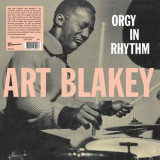
More than four years after his previous EP and after having released some remixes and collaborations with Agar Agar, Black Devil Disco Club or the Italian design studio Burro Studio, LeonxLeon comes back with a new EP, passing to the electronic shaker the styles of music listened since the last release.
4 tracks all as different as each other with first Itanewa, where the Parisian producer tries for the first time to give voice, without vocoder, well aware that on a track inspired by South African productions of the 80s, an instrumental version only would not be enough to do justice. It is thus in a kind of invented Esperanto that the lyrics, a call to lightness and simplicity according to the artist, are distilled between synthetic bass, keyboards and other percussions.
On Piano Mondo, we leave rather in the direction of South America with pianos of Bossa inspiration on a bass italo-disco, rises and descents as if we were in Val d'Isere and breaks just long enough to catch its breath.
The idea of Solid Dose is completely different since it was a question of taking the post new-beat dance sound of the beginning of the 90s, with a big blow, hence the title, of the synthetic bass sound "Solid Bass" which will be used in a lot of ways at this period and which is coming back in force nowadays, and to mix it with the Nordic touch of dance music for a soaring, evolving track, with arpegios which cross each other and an acid line which finally makes its appearance here.
The last track is a wink to the well-known movie that gave its name to the whole project: it is indeed Luc Besson's Léon that we are talking about, re-cut on the dialogues of Nathalie Portman and Jean Reno, supported by a simple rhythmic, analogical bass and electronic kick at the service of a dark atmosphere, closing the record at the antipodes of the first track, without ever having left the universe of melodies and percussions that already characterized the previous releases of LeonxLeon.
Pacific Northwestern doom metal monolith BELL WITCH will see the
release of their new album "Future's Shadow Part 1: The Clandestine
Gate" on 2LP/2CD, June 9th.For their new album, bassist/vocalist Dylan
Desmond and drummer/vocalist Jesse Shreibman exploded Bell Witch's
bounds
Like 2017's lauded "Mirror Reaper", "The Clandestine Gate" is a single 83-minute
track -- a composition that pulses and breathes on a filmic timeframe. It
constitutes the first chapter in a planned triptych of longform albums, collectively
called "Future's Shadow." While traces of organ and synthesizer hovered over
"Mirror Reaper" and Bell Witch's 2020 collaboration with Aerial Ruin, "Stygian
Bough Volume 1", "The Clandestine Gate" drew those instruments closer to the
center of its compositions.The band reunited with their longtime producer Billy
Anderson as they began negotiating these new compositional weights. On "The
Clandestine Gate", Bell Witch's twinned voices build off of the chantlike textures
of previous records while steering toward more developed melodic lines,
structured harmonies, and rhythmic death metal growls.
The immense gravity of a work like "The Clandestine Gate", which features
exclusive stunning cover art by Jordi Diaz Alama, allows ideas to simmer in a way
that feels profoundly and somatically intuitive -- not just a philosophical exercise,
but an embodied truth. By slowing down both their creative process and the
tempo of the music itself, Bell Witch digs even deeper into their long standing
focus: the way life spills on inside its minuscule container, both eternal and
fleeting, a chord that echoes without resolution.
Fellow violinist Stuff Smith marveled, "He plays violin like Coltrane plays saxophone." Born in 1942, the French violinist Jean- Luc Ponty transported jazz violin playing into the world of modern jazz. On Frank Zappa's urging, Ponty moved to the States in 1970. Over the next years he toured with Zappa, the Mahavishnu Orchestra, and Chick Corea's "Return to Forever".If Ponty's 1983 album Individual Choice was the sketchbook of his decision to take his music in a new direction, Open Mind (1984), released the following year, was a deeper
exploration of the emerging world of synthesizers and sequencers and their impact on live and studio performance. Here, complex rhythmic patterns shift in the background while new sounds appear and disappear on the surface in colorful bursts, and outstanding jazz improvisors create familiar music in new settings. It's almost an audio version of a kinetic wind sculpture.
Ponty chose to use a Roland rhythm machine instead of faking real drum and percussion sounds and played all the keyboard parts himself in order to further explore the concept he had introduced in Individual Choice. He additionally asked two longtime friends to solo on various tracks: George Benson, whom JLP had met and played with when they were both 21 years old, and Chick Corea, who
excels on two tracks with his Moog synthesizer. Open Mind has been re-mastered by 2023 Grammy Nominee Christoph Stickeland includes new liner notes.
Jimmy LaValle’s The Album Leaf has spun from solo outlet to full band and back in its nearly 25 years. His acclaimed catalog spans releases for labels such as Sub Pop, City Slang, Relapse, and others. He also composes music for film and television, scoring over 20 projects (narrative features, documentaries, and TV series) since 2009. The cinematic sensibilities of The Album Leaf were present from the beginning. His 1999 debut introduced the start of a signature sound: melodic and meditative electro-organic soundscapes constructed with guitar, percussion, Rhodes, and field recordings.
His seventh full-length LP, and first since 2016, arrives in 2023 via Vancouver’s Nettwerk Records. FUTURE FALLING finds LaValle working with an array of musicians, shaping slightly darker, more spacious, and synth-driven songs with contributions from Bat For Lashes, Kimbra, and many others.
The music registers a shade darker and more synth-driven than most moments in his acclaimed catalog, a bridge between shadowy, cerebral terrain and dreamy precision pop, where softly percussive frameworks meet shimmering sound design and emotive instrumentation.
LaValle sees the construction of FUTURE FALLING as less conventional than past work. Contributions were done remotely with a “throw everything at it” mindset, making LaValle the arranger of layers from all over: drums, synths, horns, violins, voice, and more. LaValle created a pastiche of these layers and elements; in some cases even moving vocal takes to new tracks entirely. Without the in-the-room dynamics, he had more time to experiment, adding and subtracting ad infinitum.
The album opens on “PROLOGUE,” an evocative, slow-building instrumental that rides a pattern into a symphonic sea of static. Keys and horns glide atop the rhythmic pulse of “DUST COLLECTS,” setting the contemplative scene for “AFTERGLOW,” the record’s most pop-minded performance. Here Kimbra, the Grammy-winning New Zealand singer-songwriter, renders a striking recollection of past love as percussive elements shimmer and swirl.
A plaintive piano line moves throughout “Cycles 19.9” encircled by light ambient washes, both a valley between two peaks and a powerful composition in its own right. “Future Falling” follows; with origins tracing back to 2015, the track embodies the full sonic journey LaValle has taken. All the hallmarks of The Album Leaf — melodic builds, vivid sprawl, tonal shape-shifting — assemble to a blissful finish.
For the next stretch, “Cycles” begins with a uneasy Rhodes loop that builds and erupts into a wall of texture paving its way into “Give In,” where LaValle models a movement that begins subtle and measured before curving up with skyward, percussive bursts (“Stride”) and settling back down to the album’s back-half centerpiece, “Near” featuring the acclaimed English artist Natasha Khan aka Bat For Lashes. “Do you feel me near?” she sings into a mist of widescreen synths and soothing, distant drum beats as if searching through the dark.
Their masterpiece? With breaks for dayyyyyys and an almost ambient, heavy jazz atmosphere throughout, *this* is the apex of British jazz-rock fusion. We'll Talk About It Later was first released on Vertigo in 1971 and original copies are now very tricky to score. Like all the Nucleus records, it’s aged ridiculously well and this Be With re-issue, re-mastered from the original analogue tapes, shows off just why this deserves to be back in press.
Genius trumpeter and visionary composer Ian Carr was one of the most respected British musicians of his era. He was a true pioneer and saw the potential in fusing the worlds of jazz with rock, just as Miles Davis and The Tony Williams Lifetime did in the US. In late 1969, following the demise of the Rendell-Carr quintet, and tiring of British jazz, Carr assembled the legendary Nucleus. Regarding music as a continuous process, Nucleus refused to “recognise rigid boundaries” and worked on delivering what they saw as a “total musical experience”. We can get behind that.
Under bandleader Carr, Nucleus existed as a fluid line-up of inventive, skilled musicians. This constant evolution and revolution was all part of the continuous musical exploration and discovery that took jazz to new levels. And the music has kept relevant. To steal a line from a review of our re-issue of Roots, when it comes to anything Nucleus “it’s basically already hip-hop”.
We'll Talk About It Later is arguably Nucleus's best album. Not only that, it's in the top 5 of all fusion albums. By the time Nucleus entered Trident Studios in September 1970 to record Elastic Rock's successor, they had already won a best group award at the Montreux Jazz Festival. Once again presented in a Roger Dean designed die-cut gatefold sleeve it continued to demonstrate the chemistry and interplay that worked so brilliantly on Elastic Rock; Carr's sumptuous trumpet and flügelhorn lines, Karl Jenkins's funk-filled electric keyboards, Chris Spedding's wah-wah guitar, Brian Smith's sax and the rhythmic foundation of drummer John Marshall and bassist Jeff Clyne.
The group work and insane musicianship Nucleus were famed for is in evidence from the off. The intensely funky "Song for the Bearded Lady" is absolute FIRE, blasting out the speakers to leave listeners floored. Counterpoint riffing segues into a spacious groove and a Carr trumpet solo demonstrating the influence of electric Miles from the period. The stop-start funk of "Sun Child" would appeal to Soft Machine devotees whilst the genuinely touching "Lullaby for a Lonely Child" is a lovely downtempo ballad. Featuring an understated, reflective horn line from Carr and Smith and atmospheric, shimmering bouzouki from Spedding, there's an exotic flavour which contributes to the bliss. The ominous, sleazy title track retains a swaggering menace and is not the only track to lend a sort of heavy stoner rock atmosphere. The guitars and bass are deep and low throughout, conjuring heavy psych moments to go with the actual jazz and even funk. To say this album was in conversation with Bitches Brew would not be overstating the sheer brain-frying brilliance.
The Weather Report-adjacent "Oasis" opens Side B, a colossal track featuring nearly 10 minutes of steadily building melodic horns, keys and choppy guitar riffs. So ace, it could easily go on for another 10. Mesmeric. Spedding adds unique vocals to the undeniable groove of "Ballad of Joe Pimp" whilst saxophonist Smith's duet with drummer Marshall at the conclusion of "Easter 1916" - inspired by the Yeats poem about the Irish nationalist uprising in Dublin - adopts the wildness of the most incendiary free jazz.
This Be With edition of We'll Talk About It Later has been re-mastered from the original Vertigo master tapes, Simon Francis’ mastering working together with Cicely Balston's cut at AIR Studios to weave their usual magic with these wonderful recordings. The stunning die-cut sleeve has been restored with the original gatefold window pane depicting the Irish uprising in 1916. Incredible, timeless, guaranteed spine-chills.
Drop a needle on Psyché's debut album and you'll see visions, or rather Mediterranean visions, be they of waves of heat shimmering above dunes of sand, or of women dancing around a bonfire on a rocky plain, or of bushy cliffs overlooking emerald-green and turquoise sea. The name Psyché is of course ancient Greek for 'soul' or 'mind', signifying the band's love of psychedelic funk, but also the wide range of Mediterranean influences – from Southern Europe to the Balkan Peninsula, and from Anatolia to the Maghreb – that provide an endless source of inspiration for their hypnotic sound and minimalist style.
Psyché members Marcello Giannini (Guru, Nu Genea, Slivovitz), Andrea De Fazio (Parbleu, Nu Genea, Funkin Machine) and Paolo Petrella (Nu Genea) have been active in the Naples music scene for almost two decades, most notably during the first wave of the new Neapolitan Power movement (Slivovitz, Revenaz Quartet). Over the years they have often crossed paths and collaborated on side projects in various genres (math-rock duo Arduo and, more recently, synth-pop duo Fratelli Malibu), before working together as the rhythm section of Nu Genea's live band. Following their first tour with Nu Genea in 2018, they started Psyché with the intent of exploring more minimalist styles and making music with just a few elements.
A unique combination of psychedelia, groove and improvisation, the music of Psyché goes back to the roots of our future; it evokes visions of a mythical past, blending centuries-old music traditions and mixing them with modern genres. Like a warm Mediterranean breeze, it travels across lands, seas and eras, distilling essential rhythms and cosmic pulsations.
The album's opener "Kuma" (titled after the first ancient Greek colony on the Italian mainland, now an archeological site near Naples) is like a vibrant, magical wave. With its deliberately simple harmony and sharp guitar riffs, it travels across the Mediterranean from Italy to North Africa, first lapping gently on Greek and Turkish shores – with some compositional elements reminiscent of Italian pop legend Lucio Battisti – and then speeding up and landing on the driving, syncopated rhythms of afrobeat. While listening to it your eyes fill with images of small white houses shining in the sun, of fig trees heavy with fruit, of spice bazaars and colourful medinas, and you can almost feel the desert wind blowing in your hair.
The journey continues with two examples of Psyché's bold and elegant approach to contemporary afrobeat and cumbia fusion: "Cumbia Mahàre" and "Amma". The former combines minimal synths and exhilarating rhythmic patterns of drums, percussion, guitar and bass, drawing us into the movements of an imaginary ritual dance (the term mahàre was used in Southern Italian dialects to indicate witches). Next is the cinematic and mysterious ambiance of "Angizia" (a snake goddess worshipped by the Marsi in ancient Italy), another fascinating mixture of different sonic traditions and cultures where hip-hop/funk drums are blended with Maghreb influences, Balkan echoes, and hypnotic, Theremin-like synths that have sort of a sci-fi movie quality to them.
The title track "Psyché", with its uptempo afro-rhythms, ethereal vocalizations and refined percussion, is almost a manifesto of the band's style and confirms the freshness of their minimalism, which is not afraid of taking in the sun of lands confined between the sea and the desert. The following "Manea" (named after the Roman-Etruscan goddess of the dead) is an afro-funk number with smooth and introspective dreamy jazz touches, and with an arrangement dominated by a guitar that, dripping notes like drops of water, creates a delicate, cinematic sound. Next, we come to "Hekate" (the Greek goddess of magic, witchcraft and crossroads), a track that fuses psychedelia, spacious Latin guitars and a fast, tight groove. The album comes to a close with the exquisite melodic ballad "Kelebek", which seamlessly combines hip-hop drums and dreamy guitars, and whose warm, flowing sonorities and evocative atmospheres conjure the image of a butterfly (which is what kelebek means, in Turkish) floating over the Mediterranean and, from there, the world.
Octave One's deep and downtempo album “Never on Sunday” arrives in late April 2023. Before that, they release a special reworking of the album single “The Bearer”. Injected with the spine-tinglingly vocal performance from Karina Mia, the Burden Brothers revisit the track with a stripped sultry production ready for dance floors and playlists alike. Leading up to their new collection of deep rhythmic journeys and thoughtful atmospheric material, the ‘Brother’s Burden Pt1’ mix is a soulful mid-tempo groove that introduces you to Octave One’s “Never on Sunday” album in fine style.
Hot on the heels of dropping a double LP's worth of downtempo shenanigans for Fresh 86, Coco Bryce serves up another full length album, this time for his own Myor imprint.
Computer Love sees the bpm's being turned up a notch again, mainly operating within the 160 realm, whilst taking the occasional side street into UKG and breakbeat house.
Although the jungle and D&B vibes are still clearly present on tunes such as House Music and the previously released singles Night Safari and Trust Issues, Coco opts for slightly more off-kilter and genre-defying drum programming on the album's title track and the pleasantly subdued Eye New.
All in all the rhythmic, and stylistic, diversity on display here makes for an album equally suited for dancefloors and home listening alike.
Murmer is the long-standing project for Estonian field recordist and composer Patrick McGinley, and in Tether, The Helen Scarsdale Agency welcomes Murmer back to our roster, over a decade since he graced us with his last production for the Agency. His field recordings often center upon the amplification and activation of resonance from a particular space, landscape, or object. Such sounds emerge from a condition as begin fleeting, inconsequential, or ephemeral and explode into that which alien, sublime, and profound. Here lies the tremendous prowess of the contact microphone, as wielded by an accomplished musician! The source material cited by McGinley includes cables, fences, wires, and vents.
There is a heft to many of these sounds as heard throughout all of "Taevast" with deep throbbing pulsations from arctic wind generating subharmonic patterns upon thick high-tension wires. Elsewhere the subtle dissonance from a rasping cooling fan blooms into a brooding ambience that is sublimely rich in its metallic timbres and complex reverberations. McGingley has long been an exemplary artist in the field of phonography even as he is less prolific than others. On Tether, he has produced a majestic if occasionally foreboding work on par with the mythic wire recordings of Alan Lamb, Jacob Kirkegaard's haunted resonance from Chernobyl, and much of the Touch catalogue for that matter!
Patrick McGingley on Tether:
In 2006, I made a collection of recordings at a mobile phone mast in Mooste, southeast Estonia. It is a guyed tower, 80 meters tall, affixed to 3 support points with heavy cables. I attached my self-made contact microphones to these cables with poster tack, and spent many hours over several weeks recording the various wind and weather variances (it was summer), and the birds that passed or settled on the tower or cables. This was one of my first visits to estonia, where i now live, and one of the things that marked me about that experience was the access: the tower had no fences or protections around it (I have not been back there recently to answer my own question of whether or not this is still the case); it stands in the middle of a field of tall grass along a dirt road in the countryside, just out of view of the few nearby houses, and during all the hours I spent there I was never disturbed or shooed away.
For more than 16 years, I have been thinking about this location and these recordings, and have made several attempts to work with them. I have used the sounds in installations a handful of times, and uploaded one short edit to the Aporee soundmaps, but have never managed to use them in any composed work. They always seemed too big for any structure I could provide them, whether I left them on their own, or partnered them with other sounds. Finally, in 2019, after putting them down and picking them up again repeatedly over so many years, they seemed to allow me in, although it took me another few years before they were happy with what I could offer. They stand now not quite alone - the majority of the layered sounds in the piece come from various edits of those cable recordings, but I added two other contrasting sounds, related to one another: one is snowflakes landing delicately on a plastic cakebox with microphones inside it, and the other is a frosted field of grass thawing on a lightly warming autumn morning (both these recordings can also be heard on their own on the Aporee maps).
Coming back to those cables brought to mind so many other wind-driven sounds that I had spent time with and recorded, but never returned to, that I began digging through my archives looking for them. I ended up with a pool of sounds from resonant wires, cables, fences, poles, fans, and vents, which became the basis for the 2nd work on this release. One of these sounds is among the first sounds I ever recorded, possibly within a month or so of buying my first microphone and minidisc recorder: the rhythmic fan of a beer cooler in a pub where I worked in North London in 1999. Other sounds in the piece include another phone tower, recorded on the northern coast of France in 2008, a telephone pole recorded in the Beaujolais region in 2010, the drone of ventilator fans at a factory in Tezno, Slovenia in 2012, an electric sheep fence in the Scottish borders in 2013, a hanging wire in a storage space in Rovaniemi, Finland in 2016, and, with no relation to cables or wind at all, calcium deposits being cleaned from the inside of an electric kettle here in Estonia in 2019.
I offer these two new pieces as my first solo publication since 2018, the first release on a physical medium since 2016. No one has ever accused me of working too fast, or being too prolific. I have a need, it seems, to leave a physical space of time around my work, before I can consider it 'finished'. Perhaps it is a simple need to forget how I did something, or that I did something; perhaps I have a need to be able to hear a work as a first-time listener would, before I can consider it ready for such an encounter. In some part of my mind I have to forget it before I can let it go. Well, I've just about forgotten that London beer cooler now, and that walk in the Beaujolais (with my father, who has since passed away), and that sheep fence next to our campsite in the borders, and that kettle that is now leaky. So I guess it's time.
Counting from one to ten is one of the first things we learn when we try to speak a new language. It's also a universal language we use in our beats. Numbers are the inspiration source of this album, and its roots are in the inherent rhythmical existence of numbers in music. There is a numerical theme in all the tracks. Every number matches with different grooves and rhythms, and it all comes together around a single "groove pallet".
- Granul
Clear Vinyl
* Eomac has injected a new level of consciousness into beat making by recording water drips and drops. This edge of real life and water frequencies feels like opening a door in your mind and taking a rhythmic sound shower, finding tiny minimal melodies within the water itself.
*Distorting reality, in the most beautifully crafted and playful manner, Eomac’s Water Tracks are made with natural sounds of water and they not only make your body want to dance, they are a joy for the minds ear; sound design full of life and character, refreshing for the soul too. If hyper-real Techno was a genre - perhaps Eomac has invented it here - the idea to use micro melodies found in drips, drops and sploshes of water feels clever and inventive, Swimming up-stream against the standardized sound of Techno’s machine-made Electronic presets.
* Eomac is a project from Irish composer and producer Ian McDonnell, releasing genre-spanning electronic music via Planet Mu, The Trilogy Tapes, Bedouin Records, Killekill, Phantom Limb, Emika Records and more. Eomac’s sound draws from obscure samples and raw sound design in a continuing exploration of the furthest reaches of intense, visceral music for body and soul. He digs deep into light and dark mysticism for the dancefloor, as experienced in numerous performances at festivals and clubs across the globe.
Distorting reality, in the most beautifully crafted and playful manner, Eomac’s Water Tracks are made with natural sounds of water and they not only make your body want to dance, they are a joy for the minds ear; sound design full of life and character, refreshing for the soul too. If hyper-real Techno was a genre - perhaps Eomac has invented it here - the idea to use micro melodies found in drips, drops and sploshes of water feels clever and inventive, Swimming up-stream against the standardized sound of Techno’s machine-made Electronic presets.
GRAPH embarks on a search for sound beyond trends within electronic music. The focus is on sound and rhythmic structures that are constructed and deconstructed with the help of digital musical instruments and effects. The focus here is on the attempt to create a living, organic "soundspace".
On their seventh album, GRAPH work with vocals for the first time in their 17-year history, and the result is astonishing! The track "Mad World (astonished)" is a cover version of the Tears For Fears classic, dressed in GRAPH-typical electronic garb and produced atmospherically dense. With "Instabil", GRAPH present one more completely newly produced and extremely danceable track. The whole thing is rounded off with a remix of "Instabil" by Bob Humid. Stunning, astonishing, allways unconventional and very Düsseldorf!
Beta Librae returns to Incienso with her third album, “DAYSTAR”. Whereas her previous album for the label, “Sanguine Bond” was an altogether more heady affair - “DAYSTAR”, like the name implies, is a bright and bold waypoint in the ever expanding Beta Librae universe.
On eight songs, including a striking collaboration with james K on the lead single “Late At Night”, Beta gathers up new elements of sound and pairs them her unmistakable rhythmic shapes to bring us the most wide-ranging and cohesive B.L. album yet.
At only 19 years old, Dar Es Salaam's DJ Travella represents a new wave of singeli producers who are driving Tanzania's breakneck dance sound into fresh, innovative spaces. Unaffiliated with any of the well-known studios like Sisso and Pamoja, Hamadi Hassani's music points singeli's fusion of taraab and techno towards the stars, locating a cyber-singeli style that's dense, kinetic and unashamedly sexy. Hassani started producing at 15, and a few years later his debut is a jagged set of hi-nrg dance music that pulls influence from across the globe, folding together elements of dembow, rave, R&B, and trap. But nothing's straightforward: opening track 'Crazy Beat Music Umeme 2' juxtaposes grinding 200bpm rhythmic intensity with urgent plucked strings, sounding like Timbaland conjuring a Thunderdome soundtrack for a Tanzanian street party. 'Crazy Beat Music Umeme 4' is even more barbed, with neon rave synths and hand-jammed percussion that's one part 808 Mafia and one part DJ Diaki. On 'London Bandcamp', Travella meshes hi-speed singeli backbeats with downtempo dembow kicks, squeezing out unexpected sleaze in the process, while on 'London Uwoteeee' there's an almost romantic sparkle, with ethereal vocals draped across woodblock cracks and whistles. But Travella sounds most nimble when giving the nod to Atlanta, and his merging of earworm synth hooks and neck-snapping East African rhythms on tracks like 'London Jomon Beat' will leave no doubt that the young producer is capable of bending singeli completely to his will.
Tom Zé and Faust collide in Domenico Lancellotti's "machine samba"
Domenico Lancellotti's SRAMBA reaches back to the roots of samba whilst completely revamping its blueprint, indoctrinating guitar and percussion-led rhythms with analogue synthesisers, courtesy of album producer Ricardo Dias Gomes.
The majority of SRAMBA was recorded over two months in The Cave - Domenico's home studio in Lisbon, the city both Brazilian ex-pats reside in, where the arrival of a couple of Russian-designed synths purchased by Ricardo influenced the direction of their initial experimentation: "Ricardo had these instruments, modular machines" remembers Domenico, "and I had my guitar, some percussion instruments. On the first day we started making sounds and recording them, and songs started to appear, sambas started to appear."
The son of a renowned samba songwriter, at home Domenico would watch his father play and compose. At parties, the adults would hand his father a tamborim (a small tambourine) and ask him to play along. "I grew up inside samba, it's my roots", he says. "For me, everything is samba, I bring it into whatever style of music I am making".
Domenico and Ricardo instantly saw how the synthesisers were not at odds with the sambas they were playing, instead they had a similar sound to its typical percussion instruments (ganza, repinique, surdo, tarol). What's more, they saw a connection with roots samba, the samba that existed before bossa nova and samba jazz came along. This was rhythmic samba, with grooves that could go on ad infinitum. "It's samba de clave, geometrically structured" says Domenico. "It's ostinato samba", adds Ricardo.
"Diga" is a great example of what their proposal is capable of, as what begins as a glitchy machine whirring into action soon turns into a glorious samba in which the gurgles and scratchy beats coming from the analogue equipment only add to the arrangement. Likewise, on "Tá Brabo" it's an aching melody from one of the synths that gives the guitar rhythm its needed counterpoint, and shows how the duo's greatest accomplishment is not in invention alone, but in creating a great samba album. It's an album that can go from the opening track "Ere" with its reverberant bass thud, mantra-like vocals and staccato rhythms to the string-accompanied "Nada Sera de Outra Maneira", a swooning samba that pays tribute to the Brazilian ensemble Tamba Trio, who along with Tom Zé's Estudando O Samba, Domenico names as the biggest influence on their treatment of samba.
Other important reference points are made clear on "Um Abraço No Faust". One of three instrumentals on the album its title riffs off a JoãoGilberto song, "Um Abraço no Bonfá", but whereas JoãoGilberto was giving a hug (um abraço) to bossa nova guitarist Luiz Bonfá, Domenico and Ricardo are giving theirs to the German avant-gardists Faust. "Quem Samba", with its horn section and dramatic melody give a whiff of Domenico's Italian ancestry, while "Descomunal" is devoid of rhythm whatsoever, guest vocalist Tori singing over a bed of electronic drums, cello and swirling synths, that highlights the duo's unwillingness to stick to a particular formula.
Both Domenico Lancellotti and Ricardo Dias Gomes are revered names within Brazilian music over the past 20 years. As a member of the +2's, with Moreno Veloso and Kassin, Domenico released a trio of albums on Luaka Bop in the early 00s that pioneered a new Rio samba sound with elements of funk and psychedelia. With Veloso and Kassin he would later form Orquestra Imperial, a big band intent on reviving ballroom (gafieira) samba, and that has worked with guest vocalists such as Seu Jorge, Elza Soares and Ed Motta. SRAMBA is his fourth solo album. Multi-instrumentalist Ricardo Dias Gomes first came to notice as a member of Caetano Veloso's band Cê which helped reinvigorate Caetano's career with a sound influenced by British new wave. As well as collaborations with Lucas Santtana, Negro Leo and Thiago Nassif, and work with his own group Do Amor, he has released a series of acclaimed solo albums that reveal a restless music-maker.
SRAMBA is a glorious showcase of the duo's style, uniting Domenico's playful lyrics and rhythmic, samba-rooted songs with with Ricardo's assured accompaniment of unorthodox textures and instrumentations. It may be a new language for samba, machine samba (samba de máquina), but as Domenico says, "samba da máquina is samba".
Berlin-based French-Irish sound artist Zoë Mc Pherson levels up on their third full-length "Pitch Blender", mangling years of experience DJing and performing live into a tight set of cybernetic soundsystem experiments that flicker between the rave and the art space. Described as a "vanguard" by DJ Mag and "fearless" by Hyponik, Mc Pherson has performed tirelessly across the world, appearing at Berlin's CTM Festival, Madrid's LEV, Malmö's Intonal and presenting installations at Berlin's Silent Green and Monom. They also curate the ambitious A/V-focused imprint SFX with visual artist Alessandra Leone and maintain creative partnerships with Jessica Ekomane and Ciarra Black (as Carbon 96).
Pulling in influence from British bass music and the outer fringes of experimental sound art, "Pitch Blender" is Mc Pherson's most ambitious album to date, splicing bold vocal performances with psychedelic modular synth flourishes, illusory environmental recordings and relentlessly abstract polyrhythmic beats. It's music that's able to balance a constant exploration for newness with a rhythmic pulse that never ignores the dancefloor, connecting the nodes between artists like aya, Elvin Brandhi, ZULI and Slikback. Cinematic and sub-heavy, "Pitch Blender" is a dizzying work of sonic fiction that's permanently in flux, dissolving breaks, beats and acidic leads into queasy, pressurized tracks that act as an antidote to contemporary malaise.
I was dancing when I was out, I was dancing when I was in. Is it strange to dance so late? Is it strange to dance so soon? Cosmic dancers always ball. Dancing with themselves, dancing space away. Right into the smallest hole a human brain can create: the inner cosmos, a psychedelic region, where time gets space and space turns to haze.
Berlin based producer TM Solver is such a kind of cosmic dancer. He has danced late. And so soon. Since 2008 he released yearly one, sometimes two albums via the German Berlin School dedicated label Syngate and its experimental subdivision Luna. Intensely meandering synthesizer journey music, that is pirouetting on inner universes, genuinely crafted in the tradition of Berlin School and Krautrock. You can catch the unearthly nuances of Can and the spaciously swinging psychedelic corners of Amon Dül, Embryo, Tangerine Dream, or Klaus Schulze. As TM Solver has been a lover of analog synthesizers for almost 30 years, all pulsates on analogue sound orbs under the zigzagging guidance of machines like Moog Prodegy, Korg MS20 and GRP A4, as well as state-of-the-art systems as ASM Hydrasynth and Korg Wavestate. When he got in touch with the Berlin club scene and all its propelling grooves in 2006, a new rhythmic universe joined his vast musical space of sound latitudes. “Tinkering around with sound structures is my thing. Leading the listener into a combination of music and sound spaces.“ he reveals on his emotive musical art. How affecting it works, is now displayed with four epic compositions for R.i.O., Berlin Wedding’s label of novel ways for caved rhythmic patterns. Grooving between 90 to 240 BPM, they offer a vast variety of emotional landscapes, slowing down, rolling up, drifting into genuinely layered tonality magic. Headspace music for vigilant wanderers. Utterly psychedelic and yet so clear. His R.i.O. debut “Subtraktiv Additiv“ comes with five additional remixes, fashioned by R.i.O. conspirator Benedikt Frey, Amsterdam based DJ and producer Mayo, “Die Orakel” magician O-Wells from Frankfurt, Siamese Twin Records co-runner Sunju Hargun, and the versatile club and beyond production duo Red Axes. They all respect TM Solver’s analogue zones and pitch them into the 115 to 130 BPM districts, while transcending his absorbing synth compositions into the world of nervous acid-laden ambient, slow-mo techno, industrial bass, post-trance, and all that hallucinogenic echo house. Nine subtle energy vibrations, epic and full of countless facets, shaped to turn on, tune in, and drop out.
Mammal Hands announce spell-binding new album 'Gift from the Trees', their fifth studio album, pointing to subtle shifts and exciting new departures for the unique trio
"We're at a point now where playing and writing together can sometimes feel almost telepathic, that as individuals we can tune in to a collective resonance..."
Mammal Hands fifth album 'Gift from the Trees' offers a fresh perspective on the unique trio's singular music. The first to be recorded in a residential studio, the band enjoyed the opportunity to go late into the night searching for a deeper, more organic experience, closer to both their writing process but also their trance-like live performances. While some of the music was pre-composed and had even been performed live, the band also enjoyed the opportunity to improvise ideas in the studio. Drummer Jesse Barrett explains:
We wanted to have a more immersive experience that felt closer to our writing process. One thing that was really important to us was feeling free to jam out ideas as they came to us. We're at a point now where playing and writing together can sometimes feel almost telepathic, that as individuals we can tune in to a collective resonance and just follow that thread where it wants to go. Sometimes it's something as simple as a rhythmic, textural flow, like in Sleeping Bear.
There was also a conscious decision to move away from the sound and ambiance of the recording studio, with the band opting to engineer the record with their go-to live engineer Benjamin Capp before mixing the sessions with Greg Freeman in Berlin. The idea was to try and capture more of the energy of the band's captivating shows, saxophonist Jordan Smart explains:
Considering the group of tracks we had, it made sense to try and capture this process as organically and honestly as possible, and so a change in studio environment felt like the right move to us. Some of the tracks have a raw joy and energy that came with being able to play together again after a long period of time of having been apart, and capture that feeling of just being happy to be in a room with our instruments altogether again.
Whereas for pianist Nick Smart there was also the chance to really go deep into the band's music:
The new studio environment really opened us up to different ways of working and thinking because we could record at any hour of the day or night. I think this allowed us much more freedom to try unusual ideas and push elements of the music to extremes because we had the time to really focus in on the detail and work on things without time pressure. With some tracks, we were trying to find the boundaries of our playing ability and push beyond that point. With others, it was just getting into the right mindset and putting as much energy and emotion into the take as possible.'
The Welsh environment outside the studio doors seeped into the music presented on Gift from the Trees, with two recording sessions (one in winter and one in the spring) bringing different moods: one bleak and wintery, the other more hopeful and bright – an energy that permeates through tracks such as Kernel and Dimu.
Gift from the Trees opens with wonderfully elevating The Spinner which grew from one of Nick's piano parts and was developed and arranged into a complete tune without losing the feeling of constant flow and motion. It is almost like a dance, with the interaction of different melody parts and the doubling of certain parts melding together and fitting into the overall energetic flow, while Jesse's drums are both floating and deeply melodic. Riser aims to capture the band's raw energy and intriguingly is influenced by both breaks and modern drum production but also minimalist classical composition. Nightingale features the band at their most delicate and lyrical – a band favourite it draws heavily on modern folk with a beautifully realised melody that came unforced to pianist Nick Smart before being jammed out together. It was recorded early one morning, bringing an extra light and brightness to this beautiful performance.
Another album highlight is Dimu which utilises one of drummer Jesse Barret's favourite rhythmic devices from the Tabla repertoire and draws inspiration from Indian, Greek and Arabic music as well as modern folk arrangements. Dimu starts with saxophone over a bed of drones and percussion and moves through many different sections that frame and present the melodies in unique ways. The beguiling, intimate Deep within Mountains aims to place you in the room with the band as they play; it was recorded late at night to capture a dreamlike, liminal ambiance. The piano solo really reflects this mood and energy while the tenor is some of the softest and closest on the recording. Elsewhere, the remarkable Labyrinth started with what Nick describes as "some weird recording on my phone from a soundcheck, where Jordan was playing some crazy sounding bass clarinet part and I quickly recorded him", giving birth to a captivating, complex slice of propulsive 'almost' contemporary classical that like so much of the music on Gift from the Trees really couldn't be any other band than Mammal Hands.
Finally, the album draws to a close with the glorious Sleeping Bear, a tune that was wholly improvised in the studio. Nick and Jesse entered a simple but 'weird' locked groove and Jordan improvises melodies over the top. The track came about without any planning or thought; it was one of those special things that came by surprise and the band felt offered the perfect ending to their latest gift to us all: a deeply enthralling album that captures so much of what makes Mammal Hands a special band while mapping out new routes and paths for their beautiful, beguiling music.
2023 Repress
it was in february 2015 when japanese producer and sound designer kuniyuki takahashi, sometimes known as koss, releases with the ep 'newwave project '2' a record, that tapped some roots of his musical education: new wave, german electro punk from bands like a daf, ebm from acts like front 242 as well as industrial music.
styles, about kuniyuki claims that they are his 'favourite music'. now, nearly two years after his first newwave project ep, he drops an album that is leaning towards his musical love from the past. compared to his former work, that was rooted in worlds of classic, jazz, house, ambient, and electronic song-writing, his new tunes are full of melodic drifts and rhythmical shifts.
as usual all is loaded with tones and rhythms straight from the heart that filter and modulate human emotions without losing their natural source. to get a sound that is fresh but still leaning to the 1980ees, he used some old synthesisers like a roland jupiter 8, a juno 60, a korg ms 20, an old tape echo machine but also new instruments like the roland aira. furthermore, his modular synthesizers talk too.
instead of having a masterplan, kuniyuki just made sound, drifted on his machines and moved into a territory, that his far away from his former sound. also the use sampled voices and other alienated sound sources of unknown origin inject his new tunes otherworldly atmospheres.
his skills as a fine instrumentalist is evidence as kuniyuki also played the piano, percussions or flute, if he felt their warm sound is needed for his freely grooving tracks. some dance in a house or techno outfits.
other slam like a mix of funk and ebm. tunes like 'puzzle' or 'body signal' are twisted treasures that bemuse deeply. in-between you hear the echoes of cosmic spheres, the darkness of the cold war days and some bewitching tribal jungle vibes. a new, moving, unorthodox and yet catchy side of kuniyuki takahashi.
it is not totally novel to him, as he already released some industrial, ebm and electronic with the project drp in 1990 on the belgium label body records. but for his listeners, that know him for detailed house, jazz and classic or that love him as a man of collaborations who already worked together with artists like innervisions jazz house heavyweight henrik schwarz, the famous japanese pianist fumio itabashi or the british synth-pop protest spoken word icon anne clark, the 'newwave project' sheds a light on a different artistic side of kuniyuki takahashi.
it is diversified, has many rhythmical and atmospheric turns but stays stirring and compelling in all twelve tracks. a true new wave, formed, played in and envisioned with a view on the past that was filtered through the now while feeling the future. the cover art work comes from the swiss artist augustin rebetez - a man who also loves to generate unknown poetic universes in his drawings, sculptures, videos and installations.
The duo WILDES from the south of Germany, consisting of Jana Pantha and Jenny Tulipa, presents a musical mix of electro-synth-pop, post-punk and dark disco influences. After the release of their first EP “RAWWR” in 2021, their debut album entitled “KLISCHEE” will be released on 3 February 2023. Released via the Kommando 84 label, the album features 11 songs and a musical re-interpretation of German-language Neue Deutsche Welle sounds. The songs combine spoken word passages in which the singers combine a certain irony with word-playful rhymes. In addition to world-political, social issues, the songs revolve around the complexity of the new romance in love - between cosmos and stereo. The strong and experimentally avant-garde lyrics accompany the danceable pulse of the drum computer, melodic synth waves and the shimmering solos of the lead guitar.
The album “Klischee” begins with an electro-pop track that combines consistent grooves with atmo- spheric sound arrangements and a lead guitar that accompanies our journey to the moon. With the chorus’ high-pitched words, „Konsum - leg mich auf den Moon“ (“Consumption - put me on the Moon”), WILDES dryly yet humorously allude to a society that couldn’t fly “higher”.
The following cheeky song Leger in Schwarz combines impeccable post punk with influences from the NNDW scene. A short love story led by the electronic beat of the synthesizer makes the hearts of the night beat faster. With casual reduction, a guitar riff leads through the song. The guitar solo finally rounds off the plea about the longing for a good flirt.
Italo disco shimmers and pulsates on the driving song Capri. With lyrics like “Pack the boats - Vai a bordo”, Capri is a homage to the tried and tested Italo feeling with a cappucino on the terrazza, or indeed on the yacht with a view of the rocky walls of the island. An electric charge of sequencers and synth tracks acts here as a lightness of being in contrast to the porosity of the rock.
An electrifying electric guitar solo kicks off the fourth track with a mysterious invitation to Steig ein translated, get in. Hypnotised by the lights of the road, dazzled in the side mirror, a clearly repeating rhythm leads into the chorus and through the coming verses. English spoken-word lyrics add to the stoicism of the German language. The song’s great power ends with the line Lost in the dark, holding open the finale of the “Night Drive” encounter.
Digital and stereo on all channels, the distinctly tight and robust rhythm sounds in the song Apparat. A clear and simple synth melody is heard as a contrast and the electric bass gives the balance of the machine at points. Hiddenly, WILDES points here to the superior power that can control human action beyond all limits. A piece as a laudation to all the science fiction novels that play with the switching of the individual parts.
Side One of the vinyl is finalised by a song called La Grande Bellezza that motivates to dance and sing along. The punky pop craft lives through the recurring beat of the rhythm guitar. Here the focus is on the woman in all her facets. The great beauty, una donna, who can do everything as well as wanting everything and nothing...a strong woman who, however, also staggers and wants to jump off the cliff. Clearly and distinctly, the musical accompaniment of the drum machine and the accompanying synth melody reflect hidden parallel worlds and the ambiguity of character - of life? We get a desire for more and turn the round record.
The B side starts with a powerful guitar riff, complemented by a catchy and strong bassline that runs through the song. In this work, WILDES provocatively describes the West’s lust for the much-cov- eted Schwarzes Gold black gold. The song is reminiscent of the works of the band D.A.F. and thus ties in with the electronic punk sound spate.
The driving guitar riff joins in with the reduced synth bass sequence - the electro-pop song with the title Hitze (Heat) came onto the digital music market as the first single from the LP in the summer of 2022. Pulsatingly, the drum computer lets the beats vibrate to the rhythm of heated air. The duo po- etically describes heat with supercooled voices, a clarity in the sky that makes everything flow, that makes the breath dry. The work ends with a melodic synth solo.
Ich lad dich ein, I invite you - we have all said or heard this sentence before. A chance meeting of two people later leads to the altar in love. A far-reaching question that more or less arises in many love relationships at some point “Do you dare?” positions itself in lyrical contrast to the simple ques- tion in the refrain “Do you need sugar?”. WILDES plays with laconic poetry and, full of irony, makes the listeners think about living together. Krautrock contours are skilfully used in this piece. Reduced to the essentials, the chorus immediately sticks in the ear. A cheerful mix of steel drums and infec- tious solo.
Toccami - touch me! We sit on padded leather chairs - “you’re a rocket! Peng Puff Peng” - this song by the band WILDES joins experimental art-punk-pop, electronically with flowing synth waves we take off immediately. Melodically sung, lyrical layers of lyrics dance loosely light and gracefully in the ears of the viewer. The rhythmic beat visualises the feeling of floating in a spaceship. It’s love in the universe - “I love you, my darling” sounds tipsy in the beat-heavy disco refrain.
Hypnotically, WILDES launches into the final song of the entire LP. The title Zone takes us on a journey through time. Inspired by the film Stalker, we find ourselves in a science fiction setting that couldn’t be more present in today’s European events. The musicality of the electric guitar riffs ac- companied by simple new wave drums drives the listener into unknown realms.
Repetition and electronic synth sounds play a compositional role alongside rocking guitar riffs like their forerunners in the NDW scene. Lyrically, each song varies between pop-romantic and politically critical passages. Listeners start pondering about hedonistic life and its consequences. Sometimes it feels like listening to a Tarantino soundtrack in German, other times it feels like listening to an 80s track by a James Bond. Science fiction fantasies and reality add up in dadaistic theatricality to spir- ited synthpunk of the New German Wave from the South. Discoid beats and driving drums in digital are included.
"The Concert" is the first discographic collaboration between percussionist Alexandre Babel and visual artist Latifa Echakhch. The record is intimately linked to the eponymous exhibition presented at the Swiss Pavilion during the 59th Venice Art Bienniale.
For her exhibition in the Swiss Pavilion, Latifa Echakhch created an orchestrated and enveloping experience, a rhythmic and spatial proposal that allowed the visitor a complete perception of time and of his own body. What is the origin of rhythm? How does the body perceive time? How does the mind rearrange it? Can we substitute one perception for another, the visual for the sound? Can fragments of memory go back in time and recreate a different story?
Her proposal entered a dialogue with the building around it, designed by Bruno Giacometti. The artist revisited its architectural programme as well as the prototypical progression of these exhibition spaces, originally defined for the display of classical art. She appropriated the entirety of the spaces, simultaneously exploring continuity, movement and sequence. Their relationship to light, and the different sounds that emerge from them. Yet the exhibition was entirely silent and the musical composition "The Concert" functions as its sound rendering, by following a similar path.
This one-sided vinyl is a complementary and inseparable partner piece to the exhibition and its eponymous catalogue, the latter having been published in April 2022 by Sternberg Press. The music features field recordings made at the Swiss Pavilion itself as well as pre-recorded percussion sounds and significant contributions by the Berlin-based musicians Jon Heilbronn, Rebecca Lenton, Theo Nabicht, Nikolaus Schlierf.
The record, available only after the closing of Latifa Echakhch’s exhibition offers a concluding phase to the project. The resonance of its sensory score. It reactivates the experience of the physical journey of the installation, without imposing itself as a transcription or an illustration. Through texture, temporality and its totality, the record stands as a resonance of the rhythms that have structured the pavilion, the harmonies that have composed it and the sounds that have inhabited it.
Latifa Echakhch Lives and works in Vevey, Switzerland. She graduated from the École nationale supérieure d’arts in Cergy-Pontoise and the École nationale des beaux-arts in Lyon. Galleries representing her include kamel mennour (Paris and London), kaufmann repetto (Milan and New York), Dvir Gallery (Tel Aviv/Brussels) and Pace (New York). She took part in the main exhibition of the Venice Biennale Arte in 2011 and was awarded the prix Marcel-Duchamp in 2013 and the Zurich Art Prize in 2015. Through her interdisciplinary installations, Latifa Echakhch is recognized for the fine balance between forcefulness and fragility of her visual language, inserting surrealist and conceptual elements, and her use of symbols that–in her own words–are both "political and poetic".
Alexandre Babel Lives and works in Berlin. He is a drummer, composer, and curator. His projects redefine the boundaries of musical convention, confounding listener expectations in the conquest of new contexts. Babel has been the artistic director of the contemporary percussion group Eklekto 2013–2022. In 2020, the monographic Festival Les Amplitudes in La Chaux-de-Fonds focused on Babel’s compositional and curatorial work. He is a laureate of the Swiss Music Prize from the Federal Office of Culture 2021.
Emotional Rescue can be relied on to dig up obscure, left of centre dance gems and serve them up to newer, wider audiences. Adu's reggae-pop cut 'Burkina Faso' is a great example, re-purposed for the dancefloor without any of its original flavour lost in the overhaul. A
South Saharan/West African emigre to Brixton, Rauf Adu would go on to fairly sizeable European fame with the Eddy Grant-esque 'Human To Human'. This, however, is his 1982 debut for Copasetic Records, another reggae-pop inspired, ludicrously catchy effort with scorched electric guitar and a Compass Point-style drum/bassline providing rhythmic rocksteadiness. As well as the buffed up original, there's a dub mix, which gives his beautiful guitar plenty of room to breathe, and an appearance from the Isle of Jura Sound System boss Kevin Griffiths , whose remix completes the trio of mixes.
Edition OF 500 copies, Comes with insert and download code.
An album that sounds like The Menahan Street Band playing in a tropical jungle, at dawn, right at the point when the first rays of sunlight penetrate the dark depths of the forest. During the 2022 summer of natural disasters, under an unprecedented heatwave, and haunted by news reports of ancient relics, sunken ships, and hunger stones resurfacing as rivers dried-up all-over Europe, Amsterdam based multi-instrumentalist producer Alex Figueira started to hear uncanny metallic vibrations And eerie melodies of untraceable origins, day and night. He recalls nightmares of winged creatures inside timeless structures of Escherian architectures playing cosmic instruments amidst tropical storms
and acid rains. As the visions came more often, his wife reported that he babbled during his sleep about South American demon Yurupari. Soon, Alex found himself in a sleepless state and decided to cleanse the studio, with hallowed rites and
the intense burning of Palo Santo. After almost burning the studio down, he turned to his neighbourhood’s most experienced psychic, seeking answers. He was told there were “cosmic entities” trying to manifest a message “too complex for us to understand in this dimension” and the only way he could find peace was to deliver those messages in a decipherable form. It was then he decided to transmute his hallucinations into music, an all-or-nothing cathartic solution.
Alex entered a feverish dream, fuelled by the kaleidoscopic motion of the cosmos, ancient meteor showers, and visions of forgotten interstellar South American gods. He remembers very little of the work, but the outcome is this record. Entirely composed, recorded, produced, and mixed in a frenetic nine-day studio stint.
How the experts describe it:
”Just when outernational vinyl vampires thought they had it all sewn up, the metronomic makeshift
magician known as Alex Figueira unravels the entire fabric of your record collection to expose a gaping
hole where PUNKUMBIA and Transplant-Tropicalia should be. Reducing an expansive palette of
influences to a recipe that tastes wildly exotic but comfortably over-familiar, Alex’s roles as both
scavenger and chef, bookend a whole ensemble of other highly adept musical personalities in between.
Discover this record NOW, or wait until all your friends (or enemies) recommend it to you later.”
Andy Votel (Finders Keepers)
“Incendiary, lysergic takes on South American and Caribbean music from one of the scene's truly
authentic and eccentric producers. You can always count on Venezuelan-born, Amsterdam-based,
multi-instrumentalist, music-fanatic Alex Figueira to surprise and innovate, whilst consistently keeping it
true and real. The former Fumaça Preta drummer & front-man's debut solo album does not disappoint!”
Miles Cleret (Soundway)
“The one man band Alex Figueira comes through with some major flavors on this one. Cumbia beats and
psychedelic elements with that Latin touch of soul & Funk!”
Kenny Dope (Masters at Work)
“I really respect Alex Figueira’s DIY ethos. From running his own little funky recordstore to running his
own label and making his own music by playing every instrument himself. I was already a fan of the song
“Aprende” which he released on 7 inch and with“Mentallogenic” he takes it a step further in that same
vibe. From songs like “La Culebra” making use of a vocoder in his typical latin sound to songs like
“Serious” playing with rhythmic changes and topping it off with some synth flavors. A lovely and fun
album”.
Antal (Rush Hour).
An intergenerational meeting of minds, Galaxy is the first collaborative EP from Meanjin, Brisbane musicians Sam Poggioli aka Sampology and Charlie Hill. Equal parts brain dance and body music, Galaxy’s seven tracks represent a vivid intermingling of 70s jazz-funk, fusion, machine-funk, Latin house and broken beat, accented by flourishes of minimalist composition. Considered as a whole, it evokes the possibility and potential of a space-age future where technology and nature exist in simpatico.
One of the most in-demand young jazz drummers in the Meanjin (Brisbane) music scene, Charlie started producing electronic music on his laptop three years ago. It was a vibe shift that hit him after several months spent immersing himself in Europe’s jazz and electronica scenes on the eve of the global coronavirus pandemic. After returning home, he approached Sam about recording some music together.
Sam, a well-travelled Australian DJ, producer and Worldwide FM radio host, was cautious about starting a new side project. However, when he heard his demos, he realised Charlie was blending rhythmic fundamentals he’d learned while completing a music degree with a beautifully wide-eyed approach to jazz-tinged electronica.
With Charlie on drums and Sam on MPC, they set about recording the songs on Galaxy, along the way discovering Sam’s mother taught Charlie visual art as a child. They also learned that Charlie’s mother plays with Sam’s father in the Queensland Symphony Orchestra, synchronicities which made their collaboration feel like it was meant to be.
As part of the Galaxy sessions, Sam and Charlie collaborated with fellow Australian vocalists Tiana Khasi and Merinda Dias-Jayasinha. On ‘Constant Call’, Tiana threads neo-soul/modern soul melodies through a backdrop that sounds like Burial on a future jazz tip. ‘Merinda’, on the other hand, sees Merinda laying a repeated Steve Riech-style vocal refrain over a man/machine instrumental accented by stargazed synths.
At the same time as they were creating Galaxy, Charlie was also busy recording his debut solo EP Yore, both of which are due for release in August 2023, respectively, through Middle Name Records.
Red Vinyl
Infonabeat Records (Mexico) is proud release ISSR A002
A Compilations of tracks from VA producers around the world
that projects a contemporary vision of Techno that emphasizes on industrial and obscure sonic scenarios.
with tracks By:
Olēka:The new alter ego of the already well-known Bosnia & Hercegovina-based DJ/Producer Forest People, He has affirmed himself as a new powerhouse in today's techno scene,
This moniker emphasizes the more industrial, and distorted side of techno.
Dahraxt: DJ producer and label owner based in Berlin Germany has a proposal with heavy basses and delicate rhythmic transitions.
Voca Negra : This project is the collaboration of Label Owners Ricardo Carmona (Ixbalanke) Based out of Tijuana Mx. and Miguel Angel Vazquez (Netika)Based out of San Diego Ca/ Tijuana Mx
This project portraits a contemporary and fresh approach to techno representing the region, displaying it with complex rhythmic patterns,
hard and robust bases with non conventional lead designs and vision.
Ixbalanke: Ricardo Carmona DJ/Producer and Label Owner Portrays a Obscure and abstract landscapes ,penetrating and vibrant sequences with unique Leads
- A1: Petit A Petit (Feat Agnès Hélène) 4 20
- A2: Man Bo Diak (Feat Amatah Keo) 5 06
- A3: Femme Qui Danse (Feat Pat Kalla) 4 11
- A4: Bas Les Masques (Feat Charly Sanga) 4 14
- A5: Oh Ma Cherie (Petit À Petit Part 2) (Feat Agnès Hélène & Charly Sanga) 3 39
- B1: Love Is Jokin (Feat Pat Kalla) 4 35
- B2: Metissage (Feat Sana Bob) 4 24
- B3: Kinkeliba (Feat Jy Cooly) 3 33
- B4: Electro Highlife (Instrumental) 5 10
- B5: T’es Haut (Instrumental) 4 18
After Joao Selva, Dowdelin, The Bongo Hop, Underdog Records continue their exploration of the Black Atlantic with IREKE.Ecstatic brass, 70’s keyboards, elastic guitars, round bass and world percussion: from this sonic heritage, Ireke makes a unique fusion, enhanced by the audacious contribution of his dub science, and a few electronic touches
IREKE
Ireke? Sugar cane in Yoruba. Like her, the duo loves tropical climates and intoxicating rhythms, quick to liberate the bodies gathered on a dancefloor. Afrobeat urgency, funk suppleness, dub alchemy, highlife jubilation: with Tropikadelic, Ireke summons the heritage of the masters and the audacity of machines to give life to new sonic territories. At the crossroads. For the love of groove.
From the West, with their ears to the Black Atlantic, Julien Gervaix and Damien Tes- son are both children of the collective and of improvisation, playgrounds for these complete multi-instrumentalists.
The first one puts his talents of arranger-saxophonist at the service of the Nantes collective Soulshine and of numerous formations - in turn funk or rhythm’n blues - where swinging is the rule.This is notably the case of the afrobeat group Walko, in which Julien Gervaix had the honour of sharing the stage and the studio for several years with Kiala Nzavotunga, guitarist extraordinaire for Fela Kuti and Egypt 80. Meanwhile, Damien Tesson was being trained as a dubmaster-guitarist-arranger at the reggae roots school with the digital option of the Vendée collective Shi Fu Mi Temple.This initiation led Damien Tesson to join, among others, the Nantes-based group BIBA (Bingy Band) and then to collaborate with Jideh High Elements, a key figure on the international dub scene, Roberto Sanchez and the team of his Lone Ark Studio, as well as Sana Bob, a famous reggae singer from Burkina Faso.And then, life being well done, the paths of Julien Gervaix and Damien Tesson ended up crossing within the jazz-funk combo Playtime, before meeting again in the Vendée a few years later.
With an obvious tropism for Afro-Latin grooves, tropical colours, electronic tricks and furious swaying, the two musicians create Ireke like a glass of well arranged rum. Here’s to us, here’s to you! As if guided by the spirit of the plant, Ireke toasts the immense richness of these danceable rhythms, true generators of life, connection and energy.
Like Legba, the Yoruba orisha of intersections and crossroads, Ireke thrives in the between worlds.Aware of the lineage of goldsmiths who preceded them, Ireke
knows his classics and humbly draws inspiration for Tropikadelic from the musical genius of Pat Thomas, Poly-rythmo Orchestra, King Tubby,Tony Allen, Fela Kuti, Maître Gazonga, Ernesto Djédjé or the Vikings of Guadeloupe. Ecstatic brass, 70’s keyboards, elastic guitars, round bass and world percussion: from this sonic heritage, Ireke makes a unique fusion, enhanced by the audacious contribution of his dub science, and a few electronic touches patiently flushed out in the studio - which the duo considers as an instrument in its own right.
Finally, to give voice to his compositions, on Tropikadelic, Ireke calls upon an army of serious enthusiasts, each member of which has come up with his or her own lyrics. Thus, alongside Ireke, we find the groove griot Pat Kalla (“Femme qui Danse”,“Love Is Jokin”), the Franco-Laotian reggaeman Amatah Keo (“Man Bo Diak”), the Vendée- based Agnès Hélène (“Petit à Petit”,“Oh Ma Chérie”) and Charly Sanga (“Bas Les Masques”,“Oh Ma Chérie”), the Burkinabè lion Sana Bob (“Métissage”) as well as the Nantes soulman Jy Cooly (“Kinkeliba”).
For the duo, music is above all a collective practice, an active liberation, a rhythmic approach to letting go, a source of communicative joy... In short, groove is the weap- on! And Ireke knows how to use it.
Drop a needle on Psyché's debut double-sider – the debut album is out on May 19th – and you'll see visions, or rather Mediterranean visions, be they of waves of heat shimmering above dunes of sand, or of women dancing around a bonfire on a rocky plain, or of bushy cliffs overlooking emerald-green and turquoise sea. The name Psyché is of course ancient Greek for 'soul' or 'mind',signifying the band's love of psychedelic funk, but also the wide range of Mediterranean influences – from Southern Europe to the Balkan Peninsula, and from Anatolia to the Maghreb – that provide an endless source of inspiration for their hypnotic sound and minimalist style.
Psyché members Marcello Giannini (Guru, Nu Genea, Slivovitz), Andrea De Fazio (Parbleu, Nu Genea, Funkin Machine) and Paolo Petrella (Nu Genea) have been active in the Naples music scene for almost two decades, most notably during the first wave of the new Neapolitan Power movement (Slivovitz, Revenaz Quartet). Over the years they have often crossed paths and collaborated on side projects in various genres (math-rock duo Arduo and, more recently, Italo-disco duo Fratelli Malibu), before working together as the rhythm section of Nu Genea's live band. Following their first tour with Nu Genea in 2018, they started Psyché with the intent of exploring more minimalist styles and making musicwith just a few elements.
A unique combination of psychedelia, groove and improvisation, the music of Psyché goes back to the roots of our future; it evokes visions of a mythical past, blending centuries-old music traditions and mixing them with modern genres. Like a warm Mediterranean breeze, it travels across lands, seas and eras, distilling essential rhythms and cosmic pulsations.
"Cumbia Mahàre", on side A of the 7-inch, dives deep into the origins of rhythm, drawing us into the movements of an imaginary ritual dance (the term mahàre was used in Southern Italian dialects to indicate witches). Through the interplay between minimal synths and exhilarating rhythmic patterns of drums, percussion, guitar and bass, Psyché take a fresh and bold approach to contemporary afrobeat and cumbia fusion.
"Ophis", on side B, is a mesmeric blend of African, Balkan and Turkish rhythms and sounds. Ethereal vocalizations and warm, hypnotic bass lines combine with psychedelic riffs and haunting melodies on guitar to evoke ancient cultures whose spiritslithers like a snake across the dunes of a sun-scorched desert.
Mercury Prize-nominated cross-genre composer/producer Anna Meredith releases her new project in collaboration with contemporary string quartet Ligeti Quartet. Nuc started life as a conversation between Anna Meredith and Richard Jones (Ligeti Quartet viola) after a decade of collaboration, honouring a shared attitude towards creating music which pushes boundaries whilst also speaking very directly to the listener. In addition to string and electronic recordings of Anna's music from throughout her career, performed by Ligeti Quartet, Richard also developed new arrangements of existing compositions by Anna, and Nuc came to embody a celebration of forward-thinking pop composition rooted in classical instrumentation. The result is a joyful, occasionally furious, never too serious, sometimes energetic and sometimes restful collection of tracks which dazzle with Anna’s signature compulsive harmonies, rhythmic shifts of gear and sparkling textures.
Mammal Hands announce spell-binding new album 'Gift from the Trees', their fifth studio album, pointing to subtle shifts and exciting new departures for the unique trio
"We're at a point now where playing and writing together can sometimes feel almost telepathic, that as individuals we can tune in to a collective resonance..."
Mammal Hands fifth album 'Gift from the Trees' offers a fresh perspective on the unique trio's singular music. The first to be recorded in a residential studio, the band enjoyed the opportunity to go late into the night searching for a deeper, more organic experience, closer to both their writing process but also their trance-like live performances. While some of the music was pre-composed and had even been performed live, the band also enjoyed the opportunity to improvise ideas in the studio. Drummer Jesse Barrett explains:
We wanted to have a more immersive experience that felt closer to our writing process. One thing that was really important to us was feeling free to jam out ideas as they came to us. We're at a point now where playing and writing together can sometimes feel almost telepathic, that as individuals we can tune in to a collective resonance and just follow that thread where it wants to go. Sometimes it's something as simple as a rhythmic, textural flow, like in Sleeping Bear.
There was also a conscious decision to move away from the sound and ambiance of the recording studio, with the band opting to engineer the record with their go-to live engineer Benjamin Capp before mixing the sessions with Greg Freeman in Berlin. The idea was to try and capture more of the energy of the band's captivating shows, saxophonist Jordan Smart explains:
Considering the group of tracks we had, it made sense to try and capture this process as organically and honestly as possible, and so a change in studio environment felt like the right move to us. Some of the tracks have a raw joy and energy that came with being able to play together again after a long period of time of having been apart, and capture that feeling of just being happy to be in a room with our instruments altogether again.
Whereas for pianist Nick Smart there was also the chance to really go deep into the band's music:
The new studio environment really opened us up to different ways of working and thinking because we could record at any hour of the day or night. I think this allowed us much more freedom to try unusual ideas and push elements of the music to extremes because we had the time to really focus in on the detail and work on things without time pressure. With some tracks, we were trying to find the boundaries of our playing ability and push beyond that point. With others, it was just getting into the right mindset and putting as much energy and emotion into the take as possible.'
The Welsh environment outside the studio doors seeped into the music presented on Gift from the Trees, with two recording sessions (one in winter and one in the spring) bringing different moods: one bleak and wintery, the other more hopeful and bright – an energy that permeates through tracks such as Kernel and Dimu.
Gift from the Trees opens with wonderfully elevating The Spinner which grew from one of Nick's piano parts and was developed and arranged into a complete tune without losing the feeling of constant flow and motion. It is almost like a dance, with the interaction of different melody parts and the doubling of certain parts melding together and fitting into the overall energetic flow, while Jesse's drums are both floating and deeply melodic. Riser aims to capture the band's raw energy and intriguingly is influenced by both breaks and modern drum production but also minimalist classical composition. Nightingale features the band at their most delicate and lyrical – a band favourite it draws heavily on modern folk with a beautifully realised melody that came unforced to pianist Nick Smart before being jammed out together. It was recorded early one morning, bringing an extra light and brightness to this beautiful performance.
Another album highlight is Dimu which utilises one of drummer Jesse Barret's favourite rhythmic devices from the Tabla repertoire and draws inspiration from Indian, Greek and Arabic music as well as modern folk arrangements. Dimu starts with saxophone over a bed of drones and percussion and moves through many different sections that frame and present the melodies in unique ways. The beguiling, intimate Deep within Mountains aims to place you in the room with the band as they play; it was recorded late at night to capture a dreamlike, liminal ambiance. The piano solo really reflects this mood and energy while the tenor is some of the softest and closest on the recording. Elsewhere, the remarkable Labyrinth started with what Nick describes as "some weird recording on my phone from a soundcheck, where Jordan was playing some crazy sounding bass clarinet part and I quickly recorded him", giving birth to a captivating, complex slice of propulsive 'almost' contemporary classical that like so much of the music on Gift from the Trees really couldn't be any other band than Mammal Hands.
Finally, the album draws to a close with the glorious Sleeping Bear, a tune that was wholly improvised in the studio. Nick and Jesse entered a simple but 'weird' locked groove and Jordan improvises melodies over the top. The track came about without any planning or thought; it was one of those special things that came by surprise and the band felt offered the perfect ending to their latest gift to us all: a deeply enthralling album that captures so much of what makes Mammal Hands a special band while mapping out new routes and paths for their beautiful, beguiling music.
Circassian-Turkish Producer Sine Buyuka debuts new solo project Sinemis with lush, graceful album ‘Dua’, gently combining the ancestral Sufi music of her homeland with sophisticated techno-inflected ambient. Dua’s life began with a life-threatening illness. “I started feeling unwell last year and no one could figure out the reason,” Sine writes. “It was a scary time, not knowing and trying to manage symptoms while they slowly worsened. In late 2021, while I was visiting my family in Turkey during the Christmas break, I was taken into A&E. After more tests, I had a diagnosis and had surgery in January.” Following this, within the healing process - highly emotional as well as physical - Sine was drawn to the traditional Sufi music of Turkey and the Middle East. Ritualistic music to accompany ancient sema ceremonies, in which whirling dervishes enter a transcendental consciousness through ecstatic movement and repetition. With this influence at heart, Sine began work on ‘Dua’, with a newly-formed artist name to signify new, unfamiliar music from a celebrated electronic producer. For her, the album marks a significant step in her recovery. But it is also a potent marriage of contemporary and ancestral trancestates, interweaving sci-fi synthesis and floor shaking bass tones with mystic imagery, textures and timbres. A meditative, spiritual balm that melds field recordings, found sounds, ambient soundscapes, electronics and acoustic instrumentation to celebrate life and survival in challenging circumstances. The breathy, cinematic tones of album opener ‘Dua’ hover and shiver in preparatory stasis as broken-machine punctuation begins to dot rhythmically through the space. A yearning, repeated vocal sample - a living, beating heart inside the machine - characterises a crucial theme for the album: the marriage of digital instrumentation with the analogue, the human and the organic. Later, ‘Elegy’ reflects its title with heartbreaking chordal shifts and glitching birdsong, conjuring a sound world somewhere between KMRU and Max Richter. Key track ‘Gazel’ moves in glacial slo-mo, like whirling dervishes frozen in time at the peak of their trance. Euphoric ceremony made haunting and poignant without losing a mote of power…Across the album, the timbres of Sufi ritual are often captured by the otherworldly presence of the historic ney flute, said to be as old as the Holy Books. “Sufi music can be created using several different instruments but the ney flute is at the heart of it. The sounds emanating from this fascinating instrument kept capturing my imagination,” Sine tells us. Working both with samples and with Turkish musician Omar Faruk Tekbilek, Sine achieves a rare balance of reverence and recontextualisation for such a time-honoured instrument, here performed by a lifelong student of its intricacies and mysteries. In Sinemis’ hands, the processing and sonic treatment of the ney even sometimes renders it indistinguishable from Dua’s synthesis and sound-design
Born in Milan to a Cameroonese father and a Polish/Lithuanian mother, Nathan Dawidowicz moved at the age of 6 to Jerusalem. He was spending his childhood in a Jewish ultra-orthodox environment playing the piano and dreaming of being a Fashion designer and musician. After waking up from the reality he was raised in, he moved to Venice and started to explore the "outside world" of the mental barriers of religion. Music and fashion were his medicine, and he quickly became addicted to musical textures and vinyl. His love for music brought him quickly to Berlin, where he currently lives and loves.
Sanctuary Of Ideas is a very personal and optimistic journey by Nathan Dawidowicz. His first solo album is a spiritual path, as cosmic and adventurous as Nathan`s trajectory, with beautiful twists and psychedelic twirls into Dawidowicz personal rabbit hole. A record full of memories and positive affirmations, filled with Jazzy yet psychedelic Cosmic and Krautrock elements. A fusion of inspiration - and a perfect reflection of Dawidowicz heritage.
Idea`s Eve is a stargate to our ancestral power. The source of our inspiration is connected to our past - to the spirits of our ancient memories. Dawidowicz leaves a lot of space to breathe in this magical opener. Enchanting melodies and bubbling sounds surround the listener while his voice keeps repeating a mantra of an ancient love spell. A track where you feel your DNA spiraling up the ladder of evolution. Yet so natural and healing.
Full Moon Dance is the spiritual continuation of the first track. A swirl of magical melodies, yet jazzy but truly cosmic walking up the ladder to another dimension, where warm moon rays and fluffy clouds surround love. The synth lines represent the playful and smooth moon rays reflected on a rhythmical heart-beating ground where tears can be joyfully spent to honor the emotions we usually oppress.
To close the EP, Nathan Dawidowicz worked a half a year to finalize the last track in full detail. 23 Minutes and 18 Seconds long is the Capricorn Rising Over Jerusalemite Temple. This story is where the listener is brought to a higher level of consciousness. Against the rules of our consumerist world, Nathan Dawidowicz focuses on a dramaturgy full of patience for our own lifetime. Acidic lines come and go, powerful synth solos trigger unknown brain parts, and an epic melody accompanies the listener and lets dark emotions melt in a brass-filled part where a voice tells us that time is on our side. The song ends with an epic twist and promises a new start, where our most lovely memories stay in a vortex of light. Beam me up Nathan.
- A1: Tolouse Low Trax - Sketches Of A Destroyed Meadow
- A2: Infuso Giallo - Torus
- A3: Claude De Tapol - Du Train Jaune
- B1: Puma & The Dolphin - The Grass Drum
- B2: T-Woc - Marty Eek
- B3: Houschyar - Intercontinental
- C1: Lamusa Ii - Artificiale
- C2: Ynv - Dw3
- C3: Bolva - Rite Ii
- D1: Anatolian Weapons - Float
- D2: Urverhext - Ubertan
- D3: Velvet C - Exalt Cut
Emotional Response is delighted to present elsewhere LVI. The 4th of soFa's compilation series, this double LP takes us to the darker side of the elsewhere ouvre, via another 12 artist / 12 track travelogue.
With certain future-retro feelings, this is club music for the open minded. An album that roams from dreamy ambient territories to rhythmic patterns - internationalism for the adventurous DJ.
Rusty slow-mo bangers and post-industrial synth-wave kidnap the listener to a dystopic and shady wasteland. Elements of ethnic folk, vintage vocoders and Gamelan samples all united on one homogeneous selection.
With artists now known to welcoming new brethren, this is an audio trip to leave reality behind. Exotic, hypnotic, tactile, trance-inducing meditations, washed down with a spoonful of magick.
Orange Vinyl
Kero & Steph’s landmark collaboration Syndrome now sees a sumptuous release on vinyl and evocative music video, spinning data into densely layered visual treats.
Steph’s coolly ethereal voice and poignant writing drift in harmonies atop the sliced-up, glitched, hard-hitting precision of Kero’s productions. The unforgettable directness of her compositional sense is here, as her long resume of scores and placements would suggest. It finds an urban-technological counterpart in Kero’s frenetic sounds. The DU label boss is in full force straight from the chilling post-pop of the opening titular cut. “Walk in the park” is a production masterwork, punchy organic percussion against grinding bass. “Who am I to complain” is at once arresting and vulnerable with vocals, but still packs an emotional gut-punch in the accompanying instrumental. “Count down from 7” is more stripped down and urgent, melodic hooks propelled by lo-fi rhythmic mechanism’s menace.
For the remixes, Oberman Knocks unleashes utter digital destruction - computer memory banks dropped through a wormhole. That thoroughly deconstructs Mtch into composite textures -- and opens “Walk in the Park” to near-unrecognizable, yet somehow danceable mayhem.
The new physical and motion elements find a visual language for these sonic strata of imagination and digital construction. From designer Christoph Grünberger, known for his tome The Age of Data: Embracing Algorithms in Art & Design, we get the packed outer sleeve and 2D design. These enshroud a calm-looking Steph in a Shibuya Crossing-style trip inside Defasten’s geometries, opposite a catalog of branching visualizations and glyphs.
Defasten, known for his live AV work fusing virtual reality and performance, here explodes faceted 3D cubes, in the cover and further in the music video. These pulsing crystalline hyper-geometries delve into data as expressive medium, shifting and vibrating with the glowing tones and crisp percussive hits of Kero and Steph’s composition. It’s a rare music video that matches the music in intricacy and form - a world that can only exist in virtual space, but that feels as immersively dreamy as the sound score.
“Sugar coated fabric … in braided covers” and “silver linings” were never so tempting.
- A1: Thando (Feat Black R, K Dalo & Lah Presh)
- A2: Akulalwa (Feat Black R, K Dalo & Frego)
- A3: Bo Mbali Leboh Palesa (Feat Dea Rebbedy)
- B1: Dlozi Lam (Feat Jay, Frego & Gentow)
- B2: Lepiano (Feat Black R, K Dalo & Frego)
- B3: Lovey (Feat Black R, Frego & Khence)
- C1: Mekete (Feat Thapzin, Statah & Preshy Dee)
- C2: Mjolo (Feat Golden Krish & Black R)
- C3: Oskido (Feat Sphiwe, Black R & K Dalo)
- D1: Qhude (Black R, K Dalo & Frego)
- D2: Umshato (Black R, K Dalo & Frego)
- D3: Drive Through
There's more than a hint of ambition on the double LP sophomore effort from Sam Austin Rabede, the producer known as DJ Black Low. Pretoria, South Africa-born and based, the young man makes amapiano with new ways of expressing this local- turned-global style of dance music. In DJ Black Low's musical imagination, the songs manage to smoothly vacillate between dreamy and firmly-grounded. Adorned with vocalists across most of the twelve tracks, there's a new dimension to Black Low's now-signature approach to abstract, angular deconstruction of the rhythmic developments in his songs. The album references influences and ambitions in its song titles and lyrics while the music itself is anthemic in its sonic and structural aspirations. On many of the songs a slow-burning tension transforms into something unexpected until you're somewhere else as the track concludes. There is an emotional and compositional maturity that builds on his earlier work. Vocals and lyrics are in focus. Production collaborators among Black Low's Gauteng Province circle add to the constantly churning array of ideas that populate this consistently surprising release. Despite being a relative newcomer, DJ Black Low is onto something here.
Bella Boo is back on Studio Barnhus with her most direct and club-focused material yet. A veteran of the Stockholm underground, named “one of the most promising new artists not only on Studio Barnhus, but in house music in general” by Resident Advisor, Bella has channelled the energy of her recent DJ dates at Berlin’s Panorama Bar and London’s Phonox into this Looney Talks EP, a collection of four intoxicating dance trax full of intense rhythmic themes and inventive new takes on classic rave sounds.
It"s 2023, and even the turn of century seems a long time ago now - but oddly, Purling Hiss"s guitar-band ethos feels ever more timeless. The Hiss aren"t just a simple part of the tradition going back 50-odd years Their DNA, pulsing in waves of punk and classic radio rock, grunge and slacker, is ineffably, re-singably music - but their signature crushed guitar harmonics, fused with deep soulfulness, meld into something that cuts us with fresh heartbreak, an eternal recurrence that seems to be happening right now today, as it pours off the turntable and runs down the street. Drag On Girard, the first Purling Hiss album in six years, cruises through these states of mind and places in time. As before, but with new twists, Mike Polizze and his gang let loose with the chaos and noise implied by their name, applying high-end splatter and slow-rolling low end to eight vehicles, running the gamut from gleaming pop gems to head-cleaning epic jams before they"re done. One of the unique qualities of Drag On Girard is a specific lead-rhythm arrangement of the guitars, emitting the expected formidable roar while setting a certain type of rhythmic strut for the band. The two guitars style also trips power-pop impulses in the tunes, with sung-along harmony vocals that evoke classic collective magic and burnish the tunes one by one. Once this vibe"s established, side two turns around and stretches out with the molten flow of Purling Hiss at their very most epic; couched within loose improvisatory structures, the title track and "Shining Gilded Boulevard" play further with the yin/yang of nostalgia and truth as they trade places looking meditatively back to them old days and all their harshness and beauty.
- A1: Cobra
- A2: Languid Boredom
- A3: Subtitle Bridge
- A4: Fleeting Happiness
- A5: Messenger From Hell
- A6: Pursuer
- A7: Cosmic Dust
- A8: Walking Into The Unknown
- A9: Rush Hour
- A10: A Gleam Of Hope
- A11: Window Shopping
- A12: Abend
- B1: Labyrinth
- B2: Evil Conspiracy
- B3: My Blue Little Angel
- B4: Seesaw Game
- B5: Twilight Memory
- B6: Silhouette
- B7: Tarcalos Blues
- B8: Smoke Of A Cigar
- B9: Suspicions
- B10: Pulse Of Justice
- B11: Dawn To The Universe
- C1: Solidary Souls (Fast Tempo)
- C4: Reunion With Old Friends
- C5: Ancient History Of Mars Chapter Iii
- C6: Sorrow And Determination
- C7: Python 77 Magnum
- C8: Mirage
- C9: Relaxin’
- D1: Memoirs
- D2: Sorrow And Determination (Fast Tempo)
- D3: A New World
- D4: Secret Desire (Instrumental)
- D5: Turning Your Back On The Sunset
- D6: Fleeting Happiness (Fast Tempo)
- D7: Sunset Rendez-Vous
- D8: Corridor To Purgatory
- D9: Whispers Of The Devil
- D10: Solidary Souls
- E1: Special Moment
- E2: Cogito Ergo Sum
- E3: The Psychogun
- E4: Death March
- E5: Pastoral
- E6: Trailer
- E7: Sweet Happening (Sax Ver.)
- E8: Sweet Happening (Piano Concerto Ver
- F1: Sayonara Man’s World
- F2: Sweet Happening
- C2: Escape To Peace
- F3: Lady
- F4: Secret Desire
- F5: Cobra (Karaoke)
- C3: Joyful Voyage
Space Adventure Cobra is the animated series from the masterpiece of Buichi Terasawa, produced by the prestigious studio TMS Entertainment and broadcasted from 1982. The series was a huge success and remains to this day one of the most appreciated in the world of Japanese animation.
In order to celebrate the 40th anniversary of Space Adventure Cobra, we are pleased to offer this sublime vinyl box set of the OST with its 3 discs gathering a very large selection of music, all the songs (long versions) as well as several covers and rare unused tracks composed at the time, all completed by a 12-page booklet, illustrated with the most beautiful artworks of the master Terasawa!
The legendary soundtrack of Space Adventure Cobra, composed by Kentarô Haneda and YûjiÔno, has greatly contributed to the reputation of the series with notably rhythmic tracks, sublime jazz pieces and unforgettable songs.
Here it is now completely remastered in vinyl format & double CD in this collector's edition!
Elias Devoldere is the drummer in bands such as Nordmann, Hypochristmutreefuzz, Suwi, Robbing Millions, and John Ghost. Following an ep, Kaiku, released last summer, Bloomed > Exploded is his debut full length as a solo artist. Besides writing and singing, he composed, played, recorded, and produced the bulk of the ten songs himself. 'Everything blooms', he explains the title of his first album. 'Until it explodes, and something else is able to grow from it'. In this case, what came full cycle is an intimate coming-of-age album of intangible atmospherics, crisp melodies, and understated rhythmical patterns.
BLOOMED >
'As a kid, I just wanted to play football, you know?', says Elias. 'But when I was eight years old, my parents made me choose between drawing school and music school'. And thus began a dedication to rhythm for Elias. At 18, he enrolled at the Royal Academy of Fine Arts in his hometown of Ghent, opting for a jazz education. 'Not because I aspired to become a master 'jazz drummer', but to learn music, to become a good musician'. It was at the academy that, after an impromptu jam session, Nordmann first came together. The exhilarating instrumental quartet went on to win second place at the prestigious Humo's Rock Rally in 2014, and released three albums to critical acclaim, with a new one in the works.
Devoldere, in the meantime, had completed his degree with a craving - ironically - for music. 'I was in over my head with jazz for such a long time, and went on an epic discovering spree. Moses Sumney, James Blake, Kendrick Lamar, Connan Mockasin... Lots of stuff I had missed over the years. In a way, I reconnected with the kind of music I was into before jazz dominated my life. Pink Floyd was my first love, for instance, and later Radiohead proved to be a game changer. Diving back into those kind of sounds, I was feeling the urge to follow my old dreams, of being a solo artist - or something more than 'just' a drummer, anyway. So I bought a guitar, an interface for my laptop, and started writing'.
EXPLODED
When he released his 5 track ep Kaiku in the summer of 2021, it summarised a lot of firsts for Elias. First time writing lyrics, first time as a lead vocalist, first time recording his own songs all by himself. The songs had been around for a while, but taking those leaps took a long time. 'Making the ep helped me to find my voice, in every way possible'. Still, in the aftermath of the pandemic, the songs on Bloomed > Exploded sprouted in a time of upheaval. 'Musically the album is quite serene, gentle even. But the themes speak of internal unrest and uncertainty. There are a lot of questions on the album, as it turned out. Duality, as the title suggests, coming from the struggle between a wish to turn everything upside down and a search for peace. Honestly: the prospect of my 30th birthday was messing with my head too'.
Recording during a period of solitude in France, Elias initially relied heavily on synthesizers and drum machines. 'Explode / Boalis was one of the first songs I wrote for this album, and pivotal for its atmosphere, based mostly on electronic elements. Later, I did use 'real' drums on most of the other songs, though, and contributions from other musicians, but the overall mood is very cohesive'. 'Pure', that's how Bruno Ellingham, the UK engineer who mixed the album, described it. Much to the delight of Elias, who reached out to Ellingham because of his previous work with bands such as Massive Attack and Portishead. 'Hearing the end result, I thought he really captured the essence of the original demo's. For me, that adds to this album being a sincere reflection of my true self. 'Take a dive/ Into the place where it's more quiet', as I sing in the last song, that kind of sums it up for me'.
'Unconscious Collective' is the first album by PS5 - the new ensemble led by Pietro Santangelo (Nu Guinea, Slivovitz, Fitness Forever) - and it will be out for Hyperjazz Records on 21th May 2021.
It's a musical experiment where layered memories and hidden feelings resonate as if they arise directly from the most recondite part of the unconscious and produce a suspension of the stream of consciousness. With the aim to create a state of trance and override the human reason, this is an imaginary round trip across the Mediterranean Sea and the Atlantic Ocean, ideally connecting Naples with North Africa and Latin America.
The arrangements wrote by Santangelo are based on great freedom of improvisation: while the melodic textures of the two saxophones didn't give any clear references, the other musicians followed the rhythmic pulse and its unpredictable ways. The music moves naturally along an imaginary line highlighting the ancestral connection between Jamaica and Ethiopia or between Nigeria and Cuba. In the background, Naples is a synthesis of all the sonic ingredients, mixed and cooked in its own mystical and spicy belly.
Besides Santangelo himself on the tenor and soprano saxophones, the collective is made up of: Paolo Bianconcini, a brilliant Neapolitan percussionist with a very deep Afro-Cuban background; Giuseppe Giroffi, young and talented alto and baritone saxophonist; the bassist Vincenzo Lamagna and the drummer Salvatore Rainone, both loyal members of the former Santangelo's trio.
Recorded live at the Auditorium Novecento in Naples, the legendary studio of Phonotype Records, 'Unconscious Collective' is mixed in analog format by Fabrizio Piccolo, and mastered by Davide Barbarulo at his 20Hz20KHz Studio.
Pietro Santangelo
Pietro was born, lives and plays in Naples. As a saxophonist and composer, he has released five albums with Slivovitz and one with his PS3 trio (Clinamen, Emme records 2017). Graduated in Digital Sound Processing at the Faculty of Physics of Federico II University, he is involved and engaged in the Italian scene of radical improvisation (Franco Ferguson, Elio Martusciello and Officina Arti Soniche, Collettivo NISE).
Multi-instrumentalist since forever, he has collaborated with Nu Guinea, Enzo Avitabile, Fitness Forever, Marzouk Mejri, Dennis Bovell and many others.
He's also author of soundtracks and electronic musician. He appreciates analog photography, loves walking outdoors. He hates biographical notes.
Official reissue of Civilistjävel!'s first, self-titled archival LP in sky-blue embossed sleeve, 500 copies.
A minor masterpiece of high-lonesome, ultra-spacey existential electronics, recorded in the ‘90s and early 2000s, the music on this album had never been heard outside the Swedish artist’s private tape/CD-R trading networks until 2018 - when London’s Low Company presented it in a hand-assembled vinyl edition of 250 with scant context or biographical info. Some people understandably thought the project might be a ruse - was it really plausible that material this accomplished and affecting had fallen under the radar for 20-odd years? Implausible, perhaps, but true nonetheless. Five years on we know that Civilistjävel is indeed the real deal: the alter ego of a discreet but by no means reclusive solo artist based in Uppsala who has for decades been quietly honing his craft without worrying about who's listening. Since 2019 he has become more visible: performing live several times in and around Europe, and last year releasing a brand new studio album, Järnnätter, on Felt Records. Meanwhile Low Company has put out four subsequent, vinyl-only volumes of archival material. These have increasingly tended towards the more rhythmic/techno-oriented impulse in Civilistjävel, so it’s interesting to return now to Volume 1: comprised of the most introspective and isolationist of his works, tapping into deep wells of northern European melancholy. It’s a music made with no audience in mind, but simply to suit itself: cold-world kosmische, intimate minimal synth etudes, bowled percussion clusters and impossibly yearning, 30-days-of-night ambient dronescapes. Created mostly using a Juno60 and Korg MS20, and home-recorded to DAT (crackles and surface-noise preserved intact), you can hear in these seven expansive instrumentals unconscious echoes of Serge Bulot and Anna SjalveTreje’s crepuscular dream-sequences, Scandinavian black metal's mist-cloaked forest-fantasies, the austere dub-techno of Thomas Köner and Basic Channel, and the gristly, consumptive concrète of Nurse With Wound and Asmus Tietchens.
- A1: The Star Of A Story Ft. Lisa Fischer
- B1: Deep Burnt Ft. Axel Tosca
- C1: Change Your Mind Ft. Bernard Fowler
- D1: Another Day In My Life
- E1: Seven Mile Ft. Moodymann
- F1: Come Away Ft. Kerri Chandler
- G1: Music Is My Life Ft. Unlimited Touch
- H1: You Got Me Dancing Ft. Audrey Wheeler & Cindy Mizelle
- I1: Chimi Ft. Elements Of Life
- J1: Love Has No Time Or Place Ft. Elements Of Life (Unreleased Instrumental Dub)
- K1: Atmosphere Strut Ft. Dj Spinna
- L1: Cosmic Witch Ft. Anané
- M1: How He Works Ft. Nico Vega
- N1: A Place Where We Can All Be Free Ft. Janine Lyons
- O1: Touch The Sky Ft. Tony Momrelle
- P1: Dreaming Ft. Cindy Mizelle
- Q1: All My Love Ft. Robyn
- R1: Feel So Right Ft. Honey Dijon
- S1: Free To Love (Louie Vega & Karen Harding)
- T1: It's All Good (Louie Vega Remix) (Bebe Winans Ft. Debbie Winans Lowe & Korean Soul)
There is a global musical movement happening right now, and an integral part of this rhythmic and cultural evolution is the legendary Grammy award-winning DJ / Producer / Artist Louie Vega.The movement is comprised of the Expansions In The NYC album and the Expansions NYC events, and it represents the very best in music, dance and club culture from New York City to London to Miami to Ibiza and every locale around the world where people appreciate the power of house music.
Up next in the continuing series of product releases and events in connection with the Expansions juggernaut, a limited edition Expansions In The NYC 7” boxset on Nervous Records.
“Releasing vinyl has always been part of my mantra, but this is a unique one,” said Louie Vega. “For the first time having our music released on a (10) piece 7” set along with new original art by Andrew Thiele (who also created the Expansions In the NYC Album cover), it’s a highlight in the history of all my vinyl releases. Not too many artists release 10 pieces of vinyl within a set. And what makes it even more special is the calibre of all the amazing artists who worked on the tracks and songs with me. This is a landmark and essential collector’s item. A veritable “Must Have!” Never before have all these artists graced one album together from Honey Dijon to Lisa Fischer, Moodymann to Bernard Fowler, Robyn to Unlimited Touch, and Karen Harding to Kerri Chandler. It’s a dancer’s and vinyl collector’s paradise.
2023 Repress
Sasha continues to make this year his own as he drops his debut EP on Watergate, 'GameOvr'. The EP features two original tracks, including the long-awaited 'Trigonometry', and first class remixes from Cassy and La Fleur. After his recent critically acclaimed sell-out live shows at the Barbican and his 'Out Of Time' EP on Kompakt, not to mention gearing up for his RESISTANCE residency with John Digweed in Ibiza, Sasha officially confirms his debut release on Watergate Records. 'Trigonometry' has been a highlight in Sasha's sets in recent months and has sparked many a heated debate online, from excited pleas for a Track ID, to urgent demands for a release date. The track is as ethereal as it is compelling, constantly building up to the sublime break down and those iconic chords that have left ravers spellbound worldwide. Swedish born Berlin-based La Fleur puts her stamp on the remix, keeping the riff but adding gravitas with a rhythmic bassline. She's fast become a key player on the house and techno circuit, with a string of releases on the likes of Cocoon, Watergate, and Sasha's own Last Night On Earth imprint. 'GameOvr' shows the producer's tougher side; a strong techno track in keeping with Sasha's constant focus on the future, always exploring new directions, though his signature groove is still on board. Revered Panorama Bar resident Cassy, whose stunning album 'Donna' was one of 2016's outstanding releases, turns her hand to remixing the title track, delivering a harder edged driving cut with a heavier kick drum, echoing chords and hypnotic percussion. This EP marks yet another creative landmark in this, one of the most fruitful and exciting phases in Sasha's distinguished career.
The new album of Swiss artist Martina Lussi joins what no longer is conjoined. Conceived and realized over a period marked by major changes in both the private sphere and the world at large, Balance brings together the before and after. The album is held together by a common feature: Lussi’s voice, with which every composition began. Her singing, modified by effects, is supplemented by other sounds, which are light at times, bittersweet at others, and sometimes replace her voice altogether, like on the album’s fulcrum “Fragments of Attention.” On the first half of Balance, Lussi’s singing plunges “Meditation on the Multitab” into a cosmic soundscape; occasionally a rhythm irrupts into it. On “Time Laps,” a track from the album’s second half, the artist’s singsong articulates rhythmical elements and propels them towards a reluctant euphoria.
Balance appears open and fragile, at times even vulnerable, but Lussi’s relentless openness derives from the immense strength needed to weather changes both small and large.
2023 Repress
His five years at the helm of IDO (Intercontinental Dance Organization) have provided Valentino Mora the outlet to explore his concept of "active meditation", through the lexicon of deep and organically-textured ambient house and techno. Now with the inking of sub-label imprint EDO (Exothermal Dance Organization) Mora's newest output finds direct, molecular inspiration from deep in the aquaverse. Taking its name from the chemical release of heat, EDO's exothermic first EP delivers four tracks of heady, transformative techno atmospheres. Charting Mora's evolution from multi-channel acoustic recordings, samples and digital-analog hybridity, Hydrosphere EP continues his production complexity yet arrives at this point via the singular expression of modular synthesis. "Erosion" opens as a cryptic transmission from submersed entities, with haunting tone tendrils emerging from within the indigo unknown. A subtle echo of reverb softens the edge of its propulsive kick drum, creating an entrancing, enticing and unsettling journey into the deep. The snaking minimalist shimmer of the title track "Hydrosphere" evokes a landscape of frozen tundra, with a backdrop of shifting, urgent techno precision. Bewitching through endless motion and slow deliberation, chimes and pings are stretched out and warped to mind-bending effect. "Doppler Shift" takes a forthright approach, leading with prominent looped bass tones, percussion and rhythmic sweeps. Rounded shapes move rapidly through the inkinesss, forming repetitions that only intensify in pace and energy. To complete the resynthesis, "Solarized" embodies the life-giving warmth of it's name, beaming irregular shafts of illumination into dark, bass-heavy, chugging terrain, forming melodic wisps of tonal condensation.
Taka Noda AKA Mystica Tribe has been releasing deep music on vinyl since 2011 on labels including SD Records, Solar Phenomena, Silent Season, and his own Mystica Tribe Records. Working in the dub/techno continuum, he is one of only a handful of artists who creates brilliant tunes at both ends of the spectrum, from heavy, psychedelic warehouse techno to beautifully orthodox reggae-infused dubwise. For his first ZamZam, he leans hard into the latter.
Noda describes his approach to these tunes as a “virtual live band,” and while “the only real live instrument is the melodica, I wanted to capture the energy of a live band with this song.”
A master of both melody and rhythm, Noda does exactly that with “Ido” (which means a well for water). The mood hits immediately with a loose & confident groove built from impossibly-live sounding drum work, a perfect orthodox bassline, and achingly beautiful interplay between piano, clav, and melodica. Somehow both melancholy and bright, it captures that moment when winter gives way to the first hint of spring, sun finally breaking through clouds after months of rain and darkness.
Rather than a simple dub of the A side, the version is a complete rebuild of the tune. “Ido - Renren Version” (which means flowing like tears, or a river) drops the tempo down to 120 but goes harder rhythmically in spite of its slower tempo. Opening with a stark, dark, and menacingly driving bassline and warped dub siren, the vibe is completely transformed from above-ground to below. Hard percussion, new melodica parts, and 4-4 hats & kick take it into that full post-punk dub territory that the world needs more of. Much more!!
As a self-described “sponge for club music”, London-based Bristol transplant Ian DPM has cut a singular figure in both the West Country and the capital in just a handful of years. Already situated as the tastemaker behind music curation platform Definite Party Material, co-owner of Scuffed Recordings, and Noods Radio and Rinse FM resident, Ian DPM’s emergence as a producer has marked him as an expansively curious, bass-forward figure at the bleeding edge of genre boundaries.
After retreating to his hometown of Portsmouth during lockdown to absorb the blueprints of ‘90s techno, Ian emerged with a new phase of experimentation: techno-inspired and indebted, yet eschewing loops and grids for a loose-limbed, open minded engagement of the form.
Taking inspiration from the iconic carnival rides that are inseparable from their high-octane happy hardcore soundtrack, “One For The Waltzers” begins with a distant rumble of muffled breakbeats that inch ever closer. But rather than dizzying lights and in-the-red maximalism, “One For The Waltzers” gradually reveals its knowingly deep shimmy and groove. It is a drum-heavy and rhythmic production, masterfully using negative space to showcase every contour of its slowed-down rave horns and acid house synth lines.
“KE01” inhabits the flipside of the same sonic world “One For The Waltzers”. Here, feverish percussive energy contrasts against pensive melodic synth chords. It’s a heady warehouse affair, familiar and complex, referential yet contemporary, and only adds to the momentum that Ian DPM is gathering.
In the late 1980s, the renowned American jazz pianist, composer, and arranger John Hicks formed one of the most influential ensembles consisting of musicians that had played music at the highest level all their lives and gained their status as both stand-alone artists and important sidemen. Each of them had participated in many of jazz’s great moments and all shared the ability, documented on many albums, to inspire their fellow musicians to even greater heights. The ‘John Hicks Trio’ had several line-up changes over the years that included greats such as Clifford Barbaro (Strata East, Blue Note, Sun Ra Arkestra, Charles Tolliver), Clint Houston (Prestige, Nina Simone, Roy Ayers, Azar Lawrence), Ray Drummond (Freddie Hubbard, Art Blakey, Lalo Schifrin), Marcus McLaurine (Muse, Verve, Weldon Irvine, Kool & The Gang) and Victor Lewis (Steve Grossman, Stan Getz, Charles Mingus, Cedar Walton, Chet Baker).
On the album we are presenting you today (I’ll Give You Something To Remember Me By from 1988) the trio consists out of some of the biggest and best players in the jazz, funk and soul scenes:
On piano we have the Atlanta based trio’s bandleader JOHN HICKS (1941-2006). He served as a leader on more than 30 albums and played as a sideman on more than 300 other recordings. After being taught piano by his mother, Hicks went on to study at Lincoln University of Missouri, Berklee College of Music, and the Juilliard School. After playing with a number of different artists during the early ’60s (including Oliver Nelson and being part of Pharoah Sanders’s first band) he joined Art Blakey & The Jazz Messengers in 1964. In the early ’70s he taught jazz history and improvisation at Southern Illinois University before resuming his career as a recording artist. Next to his many solo recordings for labels such as Strata East and Concord, Hicks would collaborate with all the big names in the scene, including Archie Shepp, Mingus and Alvin Queen. In 2014 & 2015, J Dilla paid homage to John Hicks by sampling two of his songs.
On drums we have the legendary IDRIS MUHAMMAD (1939-2014) who to this day is still considered as one of the most influential drummers covering a multitude of genre-transcending styles. Born in New Orleans, he showed early talent as a percussionist and began his professional career while still a teenager, playing on Fats Domino’s ‘Blueberry Hill’. He then toured with Sam Cooke and would later go on to work with Curtis Mayfield. Next to his landmark solo recordings for Prestige Records, Idris would collaborate with iconic musicians and acts from the likes of Manu Dibango, Ahmad Jamal, Melvin Sparks, Charles Earland, Walter Bishop, Ceasar Frazier, Roberta Flack, Gato Barbieri, Nathan Davis, Sonny Rollins, Lou Donaldson, Galt MacDermot, Lonnie Smith…and countless others. Idris Muhammad’s work was sampled by renowned performers such as Drake, Beastie Boys and Fatboy Slim.
On bass we have CURTIS LUNDY (born 1955) who originates from Florida. Lundy is a well-respected bass player (and a master of his instrument), choir director, arranger, composer and producer who was part of performances and recordings of renowned acts and artists such as Pharoah Sanders, Frank Morgan, Cole Porter, Chico Freeman, Khan Jamal… and many others!
On I’ll Give You Something To Remember Me By (recorded at the legendary Dutch Studio 44 in March 1987 and released on Limetree Records in 1988) the listener is treated to eight majestic tracks of the highest caliber (including an excellent Thelonious Monk cover-tune) and features a remarkable outing of advanced musicianship by three jazz-giants in their prime, delivering an inspirational gem of an album.
These recordings sound as successful, young and vibrant as ever! Expect supercharged ragtime Post Bop with striking notes, no-holds-barred musicianship, high swinging solos, screaming choruses and plenty of solid virtuosity to spare. The up tempo none stop Latin beat is complimented by the terrific drum solos of Idris Muhammad and the rhythmic bass strokes of Curtis Lundy. This electrifying set of tracks makes this release a bonafide hit and a must have for any self-respecting jazz fan or collector.
clear yellow viny
Long-running acid master Luke Vibert returns on De:tuned with a new 11 track album devoted to the iconic silver box. 'Machine Funk' characterizes Luke's unique perspective on the acid house movement. The LP portrays an idiosyncratic blend of acidic squelch and raw energy with a signature fresh and playful vibe expressed in rhythmic compositions of a particular finesse and elegance. Essential 303 business!
Ian Anderson at The Designers Republic created all the graphic work. Mastered by Matt Colton at Metropolis and pressed on 180 gr vinyl. A separate digital release will also be available at the usual digital shops. Stay tuned!
If you find the time, please come and stay a while in abracadabra’s beautiful neighbourhood; a magically wonky wonderland where strangers leave as friends to a block party soundtrack as eclectic as it is infectious. The California duo’s album shapes & colors is a dazzling collage of psych-fuelled synthscapes and contemporary Baroque-pop of anti-capitalist movements and escapism, precisely pieced around their own working lives in a blue-collar town.
In the heart of Oakland’s industrial Jingletown above a former auto-repair shop in what was once a mechanics’ break room where poker rounds ensued, Hannah Skelton (Vocals, Synthesizers) and Chris Niles, (Bass, Synthesizers) constructed the angular 80s-tinged anthems (think John Hughes montages to Talking Heads) of their new album, to positively offset the pandemic’s amplification of dysfunctional society. “It reflects our current reality: a huge mess that is systematically broken but isn’t entirely lost,” Hannah tells. “We’re inviting listeners to conjure up every drop of hope and willpower left inside them, pour that into the giant vat of anger and frustration bubbling inside us all, and with this potion collectively enact the necessary change to bring love and light into this dark space.”
When Covid forced Hannah from her salon in San Francisco to become a backyard mobile hairdresser, what she saw inspired them both and the lyrical foundations for their new record. “I’d drive to mansions and people would complain about how hard the pandemic had been next to their swimming pool and tennis courts.” First meeting after the album’s co-producer Jason Kick (Mild High Club, Sonny and the Sunsets) recruited the pair for a Halloween band covering Eurythmics’ art-rock debut ‘In The Garden,’ the pair hit it off and shapes & colors is a product of the years that followed. It combines Chris’ own rhythmic demos following years on the road touring and opening for Amon Tobin, Matthew Dear and Generationals in Maus Haus with Hannah’s lyrical musings honed from project Cassiopeia, so even when topics are as heavy as the beats, they’re met with luminously positive arrangements of hope and warmth.
The by-product of a psychedelic New Year’s Eve escaping a monotonous 2020 reality, the title track itself captures fireworks over East Oakland as viewed from the pair’s couch whilst listening to Mort Garson’s Plantasia for 6 hours straight. The daydream collage of ‘inyo county’ is “a little souvenir taking me back into the bottled-up essence of a slow lazy morning, waking up in bed far from home,” Hannah tells recalling those enforced stay-at-home days. “It fell out of me because I was craving that blissful flavour.” Meanwhile ‘dawn of the age of aquarius’s new parallel reality evolved from a happy accident when their demos had reset to a drone which Jason reworked into a Laurie Anderson-esque breathy vocoder effect. Even bloops and beeps from a forgotten recording session at the Vintage Synthesizer Museum in Emeryville can be heard, where the pair used Mini Moog, Fairlight EMI and ARP 2600 to arrange their sound into shapes whilst distortion and dirt from mixing on 1979 Neve 5313 Console added to the recordings’ color.
Casting a brighter rainbow still, in all its pastel-hued glory, Hannah, also illustrated a self-portrait of the band for the album artwork. “It reflects our makeshift recording studio to encapsulate all aspects of that time and space,” she shares of their abode where, over an intense two-week period and fuelled by the aroma of fermenting vino from the winery below, their single chord, bass and drum-heavy, groove-first momentum took them on an unexpected journey whilst the next-door couple would fire pizzas in their yard and a grandfather across the road would sweep the street clean. “We’d drink coffee and start the day, consistently working, without interruption,” Chris tells of finding their flow. “The loft is a cool space with skylights, tall ceilings and no shared walls so we could be as loud as we wanted to be.”
Just as well. Diving into decades of electronica and crunchy sound effects, field recordings and animal sounds, blended with an infectious Latin influence, shapes & colors is bolstered by live percussionists Greg Poneris (drums), K. Dylan Edrich (Vocals, Percussion: congas, bongos, chimes, cow bells and wood blocks, tone drum and tri-tone whistle) and Tom Smith (Guitar, Synthesizers, Vocals).
NIMBY crews grab those earplugs now. abracadabra is your new noisy neighbour, and there’s no turning this party down.
WRWTFWW Records is very excited to present a new full-length collaborative project by Japanese ambient/environmental legend Takashi Kokubo (Ion Series) and Italian/Swiss trombonist Andrea Esperti (Esperti Project): Music for a Cosmic Garden.
Recorded during the heights of the pandemic and completed in February 2021, the majestic 8-track ethereal/botanical soundscape created by Kokubo and Esperti is available as a limited edition double LP, a digipack CD, as well as in digital format.
Takashi KOKUBO, environmental music figure, celebrated sound designer, and founder of Studio Ion, has released over 20 albums, including the genre-defining and highly sought-after Ion Series. He's also played a major role in the sonic identity of Japan, creating the country’s mobile phone earthquake alert sound, credit card payment validation jingles, and much more. In 2020, Takashi Kokubo received a Grammy nomination for his track "A Dream Sails Out to Sea, Scene 3" off Light in the Attic’s Kankyo Ongaku compilation. He is known for recording “sound scenes from nature” around the world using a binaural CyberPhonic microphone of his own invention and for his very unique brand of healing music.
Andrea ESPERTI is a Swiss trombonist and composer originally from Puglia (Italy). He plays in multiple genres (classical, pop, world, electro, jazz) with a globe-trotting approach: encounters with peers, rhythmic exchanges, and unplanned music projects; this is where lies the foundation of his work.
Music for a Cosmic Garden is an ode to celestial botanics, a contemporary and hallucinogenic take on the soothing ambient genre immortalized by artists such as Midori Takada and Satoshi Ashikawa, a beautiful pairing of synthesizers and the mighty trombone, taking you to a meditative galaxy far, far away, where other-worldly is just another word for cozy.
Recommended track for maximum pleasure: "Gaia’s Love Theme".
Parisian quintet En Attendant Ana have dazzled since day one. From the muted strains of their 2016 EP "Songs From The Cave", to the assured 2018 TiM debut "Lost & Found", to the sparkling refrains of "Juillet"; released just before the world collapsed around us, and which stood as the band's rebirth and purest statement of their music ambitions - until now. "Principia" is the band's third album and is without a doubt their best yet. Bandleader & principal songwriter Margaux Bouchaudon's voice anchors many of the songs on "Principia", her crystalline delivery ringing out like a bell as the band swoons & sways beneath her. The songs on "Principia" were composed from a place of confusion about the state of the world and her place in it, looking outward and inward for answers. They question our perception of others, the one they have of us and finally the one we have of ourselves in a society where the individual is king and the group is forgotten. Guitarist Max Tomasso - newly joined just before the recording of "Juillet"- feels more "moved-in" on these tunes, his sly guitar-work gliding effortlessly through. No showboating - only prickling at the precise moment necessary in suit of the song itself. New member Vincent Hivert (their touring sound man, Hivert joined the group just as touring was underway for "Juillet", replacing founding member Antoine Vaugelade)'s bass-work is rubbery & flexible, bouncing around and thru the melodies on a rhythmic sugar-high, practically urging on drummer Adrien Pollin's metronomic swing. The band's secret weapon, multi-instrumentalist Camille Frechou's trumpet & saxophone are more present & considered in the arrangements, adding a new layer of sophistication to the group's already debonair indie pop. Her beatific harmonies add a yearning to Bouchaudon's lilting phrases; sometimes uplifting, other times melancholic. Bouchaudon says "One of the most important points we tried to focus on was the place given to each instrument. For the first time, we withdrew parts, we were careful not to play everyone at once and I think that the result is a much lighter album in which every musician has a specific place and moment". But this album is also the first one to have been shaped entirely by the band, from the conception to the production. The meeting of Vincent Hivert and Margaux Bouchaudon gave birth to a duet in which the technical and artistic aspects were intertwined from the very beginning of the conception of "Principia". Apart from reshaping En Attendant Ana's dynamic, Vincent Hivert was able to think as a musician and producer as soon as they started working on Margaux Bouchaudon's demos which brought a new dimension to their music. The two of them recorded and mixed the album together reuniting their references and artistic goals. "Principia" is a great step forward without sacrificing the things that make the band unique. The nods to French pop (both current & classic) still permeate the proceedings, and the group's penchant for Anglo-Saxon indie pop from The Nineties (think Electrelane, Stereolab, American Analog Set) still rings out, but there's an air of - dare we say - maturity in "Principia"s twelve songs. The group always felt a little 'out-of' and 'ahead-of' its time, but tunes like "Wonder" "The Cutoff" and "Same Old Story" are cinematic and romantic, and absolutely feel like the next great phase of an already great band.
Peach Vinyl
Parisian quintet En Attendant Ana have dazzled since day one. From the muted strains of their 2016 EP "Songs From The Cave", to the assured 2018 TiM debut "Lost & Found", to the sparkling refrains of "Juillet"; released just before the world collapsed around us, and which stood as the band's rebirth and purest statement of their music ambitions - until now. "Principia" is the band's third album and is without a doubt their best yet. Bandleader & principal songwriter Margaux Bouchaudon's voice anchors many of the songs on "Principia", her crystalline delivery ringing out like a bell as the band swoons & sways beneath her. The songs on "Principia" were composed from a place of confusion about the state of the world and her place in it, looking outward and inward for answers. They question our perception of others, the one they have of us and finally the one we have of ourselves in a society where the individual is king and the group is forgotten. Guitarist Max Tomasso - newly joined just before the recording of "Juillet"- feels more "moved-in" on these tunes, his sly guitar-work gliding effortlessly through. No showboating - only prickling at the precise moment necessary in suit of the song itself. New member Vincent Hivert (their touring sound man, Hivert joined the group just as touring was underway for "Juillet", replacing founding member Antoine Vaugelade)'s bass-work is rubbery & flexible, bouncing around and thru the melodies on a rhythmic sugar-high, practically urging on drummer Adrien Pollin's metronomic swing. The band's secret weapon, multi-instrumentalist Camille Frechou's trumpet & saxophone are more present & considered in the arrangements, adding a new layer of sophistication to the group's already debonair indie pop. Her beatific harmonies add a yearning to Bouchaudon's lilting phrases; sometimes uplifting, other times melancholic. Bouchaudon says "One of the most important points we tried to focus on was the place given to each instrument. For the first time, we withdrew parts, we were careful not to play everyone at once and I think that the result is a much lighter album in which every musician has a specific place and moment". But this album is also the first one to have been shaped entirely by the band, from the conception to the production. The meeting of Vincent Hivert and Margaux Bouchaudon gave birth to a duet in which the technical and artistic aspects were intertwined from the very beginning of the conception of "Principia". Apart from reshaping En Attendant Ana's dynamic, Vincent Hivert was able to think as a musician and producer as soon as they started working on Margaux Bouchaudon's demos which brought a new dimension to their music. The two of them recorded and mixed the album together reuniting their references and artistic goals. "Principia" is a great step forward without sacrificing the things that make the band unique. The nods to French pop (both current & classic) still permeate the proceedings, and the group's penchant for Anglo-Saxon indie pop from The Nineties (think Electrelane, Stereolab, American Analog Set) still rings out, but there's an air of - dare we say - maturity in "Principia"s twelve songs. The group always felt a little 'out-of' and 'ahead-of' its time, but tunes like "Wonder" "The Cutoff" and "Same Old Story" are cinematic and romantic, and absolutely feel like the next great phase of an already great band.
Tape
Parisian quintet En Attendant Ana have dazzled since day one. From the muted strains of their 2016 EP "Songs From The Cave", to the assured 2018 TiM debut "Lost & Found", to the sparkling refrains of "Juillet"; released just before the world collapsed around us, and which stood as the band's rebirth and purest statement of their music ambitions - until now. "Principia" is the band's third album and is without a doubt their best yet. Bandleader & principal songwriter Margaux Bouchaudon's voice anchors many of the songs on "Principia", her crystalline delivery ringing out like a bell as the band swoons & sways beneath her. The songs on "Principia" were composed from a place of confusion about the state of the world and her place in it, looking outward and inward for answers. They question our perception of others, the one they have of us and finally the one we have of ourselves in a society where the individual is king and the group is forgotten. Guitarist Max Tomasso - newly joined just before the recording of "Juillet"- feels more "moved-in" on these tunes, his sly guitar-work gliding effortlessly through. No showboating - only prickling at the precise moment necessary in suit of the song itself. New member Vincent Hivert (their touring sound man, Hivert joined the group just as touring was underway for "Juillet", replacing founding member Antoine Vaugelade)'s bass-work is rubbery & flexible, bouncing around and thru the melodies on a rhythmic sugar-high, practically urging on drummer Adrien Pollin's metronomic swing. The band's secret weapon, multi-instrumentalist Camille Frechou's trumpet & saxophone are more present & considered in the arrangements, adding a new layer of sophistication to the group's already debonair indie pop. Her beatific harmonies add a yearning to Bouchaudon's lilting phrases; sometimes uplifting, other times melancholic. Bouchaudon says "One of the most important points we tried to focus on was the place given to each instrument. For the first time, we withdrew parts, we were careful not to play everyone at once and I think that the result is a much lighter album in which every musician has a specific place and moment". But this album is also the first one to have been shaped entirely by the band, from the conception to the production. The meeting of Vincent Hivert and Margaux Bouchaudon gave birth to a duet in which the technical and artistic aspects were intertwined from the very beginning of the conception of "Principia". Apart from reshaping En Attendant Ana's dynamic, Vincent Hivert was able to think as a musician and producer as soon as they started working on Margaux Bouchaudon's demos which brought a new dimension to their music. The two of them recorded and mixed the album together reuniting their references and artistic goals. "Principia" is a great step forward without sacrificing the things that make the band unique. The nods to French pop (both current & classic) still permeate the proceedings, and the group's penchant for Anglo-Saxon indie pop from The Nineties (think Electrelane, Stereolab, American Analog Set) still rings out, but there's an air of - dare we say - maturity in "Principia"s twelve songs. The group always felt a little 'out-of' and 'ahead-of' its time, but tunes like "Wonder" "The Cutoff" and "Same Old Story" are cinematic and romantic, and absolutely feel like the next great phase of an already great band.
Canto Ostinato is the new volume of classical minimalism from musician and producer Erik Hall. Written for four pianos in 1979 by Dutch composer Simeon ten Holt, the piece is freshly framed as an intimate, hour-long solo performance consisting of multitracked grand pianos, electric piano, and organ. Modern yet warm, ethereal yet tangible, Hall's Canto Ostinato expertly bridges a revered piece of meditative concert repertoire with a tactile and highly personal studio setting. Chicago-born and Michigan-based, Erik Hall is known as a multi-instrumental pillar for the groups NOMO, Wild Belle, and his own songwriting moniker In Tall Buildings. He has composed music for feature films, and as a producer/engineer he has shaped records for Natalie Bergman and Western Vinyl labelmates Lean Year. In a 2020 creative pivot, he chose to reinvent composer Steve Reich's monumental contemporary classical masterpiece Music for 18 Musicians as a solo undertaking, applying the piece's score to the familiar keyboards, guitars, and synthesizers in his studio. "At the time I think I was working through my identity as a musician and an artist," Hall explains, "and on a level there was some sort of exorcism of a long held pop spirit." The album was celebrated for being "freshly thrilling" and "legible in history but assertive of the moment" (Pitchfork) and "beguiling, meditational, and magical" (Electronic Sound). It won the 2021 Libera Award for Best Classical Record, and it quickly joined the canon of the piece's quintessential recordings. "There is a pseudo-meditational benefit to working on a longform piece that's built on repetition," Hall says. "Every stage- from internalizing the music, to executing the performance, to editing and mixing the record- requires deep and sustained presence of mind. I've always been drawn to a hallucinatory combination of harmony and repetition, and I found the entire process addictive." An apt second chapter, Canto Ostinato is inherently vast, and its score gives great creative license to the performer. Comprising 106 sections, complete freedom is given to repeat each one as many or as few times as desired. Additional leeway is given with regard to dynamics, articulation, and even instrumentation. On the heels of his previous, rather maximal arrangement, Hall chose to limit this album's palette to three foundational keyboards of his studio: a 1962 Hammond M-101 organ, a 1978 Rhodes Mark I electric piano, and his family-heirloom 1910 Steinway grand piano. "This particular piece brought the added challenge of rekindling my dexterity as a pianist, something I haven't maintained in earnest since I was a teenager," he admits. The ensuing five-note rhythmic motif- the piece's primary building block- is steady and workmanlike, forgoing virtuosic flare for depth, texture, and resonance, and eventually giving way to the stunning gratification of a gorgeously lyrical left turn. As with Music for 18 Musicians, Hall employed no loops nor quantization nor any programmed or sequenced instruments of any kind. Every part was performed live in a room and captured with microphones, one at a time, each informed by, and reacting to the last. In this way the record breathes with interplay and an organic humanity, complete with flaws, noise, and the faint sound of turning pages. The recording quality is nonetheless toneful and saturated, characteristic of Hall's production style and straying from the usual transparency of classical albums by using gear with tubes, transformers, and various stages of compression in the signal path. Always there is unmistakable realism and the feeling of being present in the room, sitting among the keys, hammers, and tines. Ten Holt said: "Time, patience and discipline are the prerequisites for making a genetic code productive." His landmark composition provides Hall once again with a wondrous space in which to reverently embody this sentiment and deftly convey the elegant beauty of this music.
Oráculo Records joins forces with Banshees Records to release the vinyl debut of the spaniard act JG OUTSIDER. In between futuristic industrial, electro, ebm and new beat sounds, JG OUTSIDER sound is harsh and fresh, as well as rhythmic but experimental, you could expect all that at the same time. This debut EP comes with four original tracks plus one blasting remix by our berlinese partner in crime SKELESYS, a darky plastic bomb ready to fire up any darky dance floor. Comes presented in a one-off truly limited edition of 300 copies lacquered pressed on 180gr. high quality solid black vinyl. All tracks have been specially remastered for long cut vinyl by Daniel Hallhuber at Young and Cold Studios.