Tricky is back. Back with a new studio album, False Idols, and his own label (also bearing the False Idols name), but also back in a personal sense. I was lost for ages, he says. I was trying to prove something to people, trying to do something to please other people and also myself at the same time, which is never going to work. To be honest with you, Ive been floating around since Chris Blackwell and Island. My last two albums, I thought they were good, but I realise now they werent. This album is about me finding myself again.
It opens with a cover of a Van Morrison song, Somebodys Sins, which sees Tricky and vocalist Francesca Belmonte whispering Jesus died for somebodys sins, but not mine over a sparse groaning bass. The lead single Parenthesis, which features a vocals from Peter Silberman of The Antlers, has more rhythmic grunt, which gives a different dimension to the dark gothic atmosphere that pervades the record. No-one does this kind of thing better.
The resemblance to Maxinquaye is undeniable, though the material on False Idols is gentler; more mature. Many of the songs feature artists signed to Trickys new label, including 24-year Londoner Francesca Belmonte and Fifi Rong. The album also includes collaborations with Nigeria's new global star Nneka, the afore-mentioned Peter Silberman. In the months before the albums release, False Idols will also release an EP "Matter of Time" showcasing the labels roster on new non-album material produced by Tricky.
Why the name False Idols Because theres so much bollocks going on at the moment mate, Tricky fires back. People follow celebrities and read every little thing they do. Its living vicariously through someone else. Get your own life. All this stuff is false idols. In this new album Ill stand behind every track, Tricky says. I dont care whether people like it. Im doing what I want to do, which is what I did with my first record. Thats what made me who I was in the beginning. If people dont like it, it dont matter to me because Im back where I was.
Cerca:new rhythmic
On Origins Chris Bartels takes on the role of singer-songwriter for the first time under his Elskavon moniker, unveiling a voice that wouldn't sound out of place next to vocal-forward artists like Justin Vernon, Jónsi, or Baths, who master the balance between conventional songcraft and bold, idiosyncratic experimentation. Origins is vast yet intimate, fluttering yet cohesive, tattered yet clean, a little like rainfall during sunlight. Shedding the ambient-classical confines of his previous output, the album's opener and title track, offers a swirling mosaic of acoustic textures that recall the beloved duo The Books, laced with warped vocal utterances flitting in and out of a club-friendly beat. "Origins" is followed by the equally danceable "Coastline," which drives home the smiling melodies and intricate sound-design that form the spine of Origins, keeping Bartels' voice in a largely decorative and impressionistic role up to this point. "Blossom and the Void" dissolves the introductory tension as Bartels comes out lyrically swinging, his digitized voice chanting widely over the mutated New Wave-esque anthem. Here, Bartels shows his instinct for dynamics by rising to bombast and quickly dispelling it, making steep yet grace- ful descents into skillfully delicate sound-design. Throughout Origins, the patient glacial aesthetic of his previous work is still discernible-- there are wordless, expansive panoramas that stretch out patiently for minutes at a time and smartly resist the impulse to pack each moment with a persona made even more impactful when Bartels chooses to wield it. At other times, his spokesmanship is woven discreetly into a larger tapestry, like on "See Out Loud" (and its ambient reprise) where Bartels' voice shimmers from a distance, covering the scene in diffuse splendor. "There is so much warping, mangling, re-sampling, reversing and pitching," Bartels says of his intricate vocal manipulations. "I printed a lot of the vocal recordings onto a tape machine from the `60s, first at one speed, and then I'd halve, or double the speed going back into my comput- er," he elaborates, illustrating how this kind of analog processing freed him from his habits. "Sometimes I'd do this multiple times on one recording or layer-- it gave me such a unique and unexpected sound. At this point, I threw away any inhibition on what type of vocals to have, or not have, on the album." This newfound freedom is palpable in the peaks of soaring grandeur that dot the emotional landscape of Origins. "All These Years" cathartically reaches one such summit in its second half after laying a path of gently plodding indie-IDM in its first. The cinematic vignette "Dreymur Aftur" provides pause for reflection amid its brisk procession of string plucks and rhythmic synthesizer while marching wordlessly into album-closer "This Won't Last Forever." Here at the end, Bartels' guitar playing is laid bare in the mix, skeletally framing a single ribbon of his voice as it unfurls into the atmosphere. Though the track isn't expressly lyrical, its starkness still exemplifies the new leaf of vulnerability Bartels has turned over on Origins, an album that documents his hard-won evolution from musician, to producer, to composer_ and finally_ his confident arrival in the role of songwriter.
Pink Vinyl
Canadian producer Dylan Khotin-Foote has kept his Khotin alias going for the better part of a decade; the impressionistic electronic project shifts with the movements in his life. Sometimes it leads, like when the club-friendly grooves of 2014's Hello World immersed him in the heart of Vancouver's underground dance scene, and sometimes it follows, like 2018's Beautiful You, a downtempo salve for DJ fatigue His melodic sensibility and playful ear for atmosphere remain the rippling core of the project's fingerprint; whether beat-driven or ambient, a foggy smear or a dusted and pristine print, a Khotin track has a distinct and instantly recognizable swirl. During and after the 2020 release of Finds You Well, his second LP on Ghostly International, Khotin-Foote settled back into a slower vibe in his hometown of Ed- monton. Even before the pandemic, his pivots to softer production, and away from DJing, left him with fewer opportunities in Vancouver and club bookings overall, and as a self-identifying introvert, he was fine with that. But the change of pace did open space for Khotin-Foote to grapple with concepts of adulthood and career. At his lowest, he almost walked off this musical path altogether; instead, he doubled down on the craft _ the tone, pacing, and dynamism of new material _ arriving at a definitive full-length. With Release Spirit, Khotin releases himself from the pressure of expectation, fusing and refining everything we know about his music. The warmth and familiarity of Khotin's dreamy, dulcet style meet new ideas and frameworks, a natural progression, a modest revelation; Khotin confirms it is okay to move slowly and he's never sounded better doing it. The album title borrows from the "release spirit" mechanic in the video game World of Warcraft. When players die, they are prompted to release their spirit and return as ghosts to find their corpses and come back to life. Khotin sees it as a worthy metaphor for the impending change his return home presented and the resulting process of purging artistic expectations to find his creative self again. On this go- around, he is freer, more playful, and more intentional within his palette of warped synth, breakbeats, and piano sounds _ including the classic Casio SK-1 presets he's used since the start _ mingling with wistful samples, field recordings, and other abstract snippets. For the first time, he enlisted Nik Kozub to do the mix and assist with sequencing. Khotin-Foote has long worked with the Edmonton-based musician and engineer in the mastering phase, as well as their days co-running the label Normals Welcome, and this time was able to involve his ears earlier given their newfound proximity. "I think it's my best sounding record to date." We begin on "HV Road" or Happy Valley Road, where Khotin-Foote spent time during a family vacation in British Columbia's Okanagan Lake. His plans to record crickets at night are quickly foiled by his younger siblings; the cute exchange orients the listener to a core memory of sorts, setting the tone of universally understood warmth and wonder that has defined some of Khotin's most transportive tracks. Hazy percussion takes hold, and we are swept further into the wisp of "Lovely," a grooving, melodic standout built on the interplay between the beat and human voice-like hums. Khotin knows this zone well; equally suited for a reverie or a club warm-up. The bubbling atmosphere and absurdity of "3 pz" offer a cosmic/comic interlude and also speak to reflections on his family's move to Canada two generations ago, and the audio tutorials they used to learn English. "I can only imagine my grandpar- ents repeating some of the bizarre phrases." "Fountain, Growth" finds Khotin in collaboration with Montreal's Tess Roby (Dawn to Dawn) for the project's first-ever vocal track. Roby's soft cadence echoes atop spiraling air pockets of rhythmic production, lending a breezy, almost shoegaze pop feel. Throughout the single and the album, wind gusts between the compositional layers, akin to the roaming spirits of its namesake, curving around the birdsong of "Life Mask" and seamlessly reaching "Unlimited <3." The latter bumps in slow motion; disembodied whirrs from his Casio collide with 808 drums and sub-bass for a vibe that teeters on trap and instrumental hip-hop. Release Spirit rests in a dream sequence. Oscillating synth lines dance around the heartbeat of "Techno Creep," a hyperactive REM state before the digitized ambient sprawl of "My Same Size." In the final pass, Khotin imagines transcontinental travel from the glow of his screen. He recorded "Sound Gathering Trip" to soundtrack a genre of YouTube videos he's taken to that follows train routes through Europe and Japan. The scene is serene and moving; piano keys warble as static-filled sound design shimmers off the rails, from cityscapes to the countryside, an introspective ride through a world beyond his bedroom. It doubles as an apt parting image for Khotin's project as a whole: dreaming big but happiest when riffing on the details, shaping environments from the inside out. Over the last decade, he has stretched from his core in Edmonton, leaving a trace in Vancouver and beyond; but when all signs point home, he loops back to see it all from a different vantage, revitalized, refined, and free.
Lütfen is a new project by Tayfun Sarier (1/2 of 25 Places). Releasing his first solo EP 7PM In Leyton on his
new imprint LTFN Records.
The EP arrives with a set of tracks representing authentic sounds by blending attitudes and colliding modern-day genres such as house and techno. Strictly inspired by and dedicated to today’s dance floor.
Gaze into the moment with 7PM In Leyton to witness how low-toned and organ-esque sounds naturally unfold. Define the atmosphere with 808 Views with never-ending rhythm sections. Shift gear with Red Extreme with percussion-based drum patterns designed to exist as a big room tool in small room venues. Step out of the routine with Untitledx 22 by changing direction rhythmically with vocal chops and chord pads bringing in the warmth at any given moment.
All tracks have been mixed, written, and produced by Tayfun Sarier in London and mastered by Salz Mastering in Cologne.
Distributed by Wordandsound and EPM Music.
Canadian producer Dylan Khotin-Foote has kept his Khotin alias going for the better part of a decade; the impressionistic electronic project shifts with the movements in his life. Sometimes it leads, like when the club-friendly grooves of 2014's Hello World immersed him in the heart of Vancouver's underground dance scene, and sometimes it follows, like 2018's Beautiful You, a downtempo salve for DJ fatigue. His melodic sensibility and playful ear for atmosphere remain the rippling core of the project's fingerprint; whether beat-driven or ambient, a foggy smear or a dusted and pristine print, a Khotin track has a distinct and instantly recognizable swirl. During and after the 2020 release of Finds You Well, his second LP on Ghostly International, Khotin-Foote settled back into a slower vibe in his hometown of Ed- monton. Even before the pandemic, his pivots to softer production, and away from DJing, left him with fewer opportunities in Vancouver and club bookings overall, and as a self-identifying introvert, he was fine with that. But the change of pace did open space for Khotin-Foote to grapple with concepts of adulthood and career. At his lowest, he almost walked off this musical path altogether; instead, he doubled down on the craft _ the tone, pacing, and dynamism of new material _ arriving at a definitive full-length. With Release Spirit, Khotin releases himself from the pressure of expectation, fusing and refining everything we know about his music. The warmth and familiarity of Khotin's dreamy, dulcet style meet new ideas and frameworks, a natural progression, a modest revelation; Khotin confirms it is okay to move slowly and he's never sounded better doing it. The album title borrows from the "release spirit" mechanic in the video game World of Warcraft. When players die, they are prompted to release their spirit and return as ghosts to find their corpses and come back to life. Khotin sees it as a worthy metaphor for the impending change his return home presented and the resulting process of purging artistic expectations to find his creative self again. On this go- around, he is freer, more playful, and more intentional within his palette of warped synth, breakbeats, and piano sounds _ including the classic Casio SK-1 presets he's used since the start _ mingling with wistful samples, field recordings, and other abstract snippets. For the first time, he enlisted Nik Kozub to do the mix and assist with sequencing. Khotin-Foote has long worked with the Edmonton-based musician and engineer in the mastering phase, as well as their days co-running the label Normals Welcome, and this time was able to involve his ears earlier given their newfound proximity. "I think it's my best sounding record to date." We begin on "HV Road" or Happy Valley Road, where Khotin-Foote spent time during a family vacation in British Columbia's Okanagan Lake. His plans to record crickets at night are quickly foiled by his younger siblings; the cute exchange orients the listener to a core memory of sorts, setting the tone of universally understood warmth and wonder that has defined some of Khotin's most transportive tracks. Hazy percussion takes hold, and we are swept further into the wisp of "Lovely," a grooving, melodic standout built on the interplay between the beat and human voice-like hums. Khotin knows this zone well; equally suited for a reverie or a club warm-up. The bubbling atmosphere and absurdity of "3 pz" offer a cosmic/comic interlude and also speak to reflections on his family's move to Canada two generations ago, and the audio tutorials they used to learn English. "I can only imagine my grandpar- ents repeating some of the bizarre phrases." "Fountain, Growth" finds Khotin in collaboration with Montreal's Tess Roby (Dawn to Dawn) for the project's first-ever vocal track. Roby's soft cadence echoes atop spiraling air pockets of rhythmic production, lending a breezy, almost shoegaze pop feel. Throughout the single and the album, wind gusts between the compositional layers, akin to the roaming spirits of its namesake, curving around the birdsong of "Life Mask" and seamlessly reaching "Unlimited <3." The latter bumps in slow motion; disembodied whirrs from his Casio collide with 808 drums and sub-bass for a vibe that teeters on trap and instrumental hip-hop. Release Spirit rests in a dream sequence. Oscillating synth lines dance around the heartbeat of "Techno Creep," a hyperactive REM state before the digitized ambient sprawl of "My Same Size." In the final pass, Khotin imagines transcontinental travel from the glow of his screen. He recorded "Sound Gathering Trip" to soundtrack a genre of YouTube videos he's taken to that follows train routes through Europe and Japan. The scene is serene and moving; piano keys warble as static-filled sound design shimmers off the rails, from cityscapes to the countryside, an introspective ride through a world beyond his bedroom. It doubles as an apt parting image for Khotin's project as a whole: dreaming big but happiest when riffing on the details, shaping environments from the inside out. Over the last decade, he has stretched from his core in Edmonton, leaving a trace in Vancouver and beyond; but when all signs point home, he loops back to see it all from a different vantage, revitalized, refined, and free.
Golf Trip is the new solo project of Gautier de Bosredon, former member of the Camel Power Club that he co-founded in 2013. The tracks he co-produced and co-wrote have now accumulated over 50 million listens on streaming platforms and the project is now touring all over Europe to present them.
Resulting from a writing that was done since his departure from the group, the music of Golf Trip is goovy and solar. The will to make a record which is soft and positive was the thread of all its realization. Long sessions allow the elaboration of a musical framework based on straight rhythmics, funky guitars and soft synthesizers.
A quiet fleet on board which the listener embarks for 6 tracks whose arrangements and mixing were realized by the Norwegian Olefonken (aka Hubbabubbaklubb).
A new label out of Mexico, Short Attention Records launches its second release with a five track offering of proper melodic house & techno from Hector Ram with the word 'quality' stamped large upon them. 'Midnight Sounds' starts things off with the grand rhythmically-building 'Midnight Sounds', almost New Order-esque at times. 'For Our Small Parties' follows, old skool again in flavour, blending subtly employed breaks and a sturdy house framework, then 'Dear Dancefloor', probably the gentlest and most fragile effort here, opens side two. 'On The Road' boasts a more electro feel and Orbital-esque synths, and is deemed worthy of a second airing via a nicely throbbing remix from Detroit's Generation Next closing proceedings.
Kelman Duran introduces LA’s Holodec to his Scorpio Red label with a debut album of flickering R&B torchsongs and ambient trap-soul that aches in a very special way. RIYL Dawuna, Burial, Junior Boys, MssingNo, claire rousay, Joy O, Triad God, Sampha…
The smouldering ’All Dogs Come From Wolves’ is a definitive statement by a quietly gifted artist who operates inside the long shadow of late ‘90s US R&B and the space where it intersects ambient, neo-classical, and the weightless bass interzones of contemporary UK club music. Bare boned and bathed in a dusky Californian half-light, the album’s 11 songs feel unnervingly stark yet full of tongue-tip sensuality, making a virtue of negative space and atmosphere with a lo-fi soundtrack-like quality that evokes the idea of nostalgic reflection as the route to the future; “a reminder to look to the past to remember where you’re from, to see where you’re going.”
Holodec's been assembling rugged dancefloor constructions for years now, teetering between 2-step, jungle, nu-rnb, and vaporous ambient forms, but rarely has he been as pointed or full-bodied as he is on ‘All Dogs Come From Wolves’. It's an album that can't possibly be cleaved from the place where it comes from, documenting LA's immigrant experience (Holodec is Asian-American), and finding thematic common ground with Space Afrika's "Honest Labour", absorbing prismatic reflections of footwork, rnb and hip-hop instead of trip-hop and dub techno.
Holodec croons soulfully over muted piano motifs on 'Tiles', evoking the spirit of Sampha or Dawuna, but with a gaseous glamor that's unmistakably Californian. The mood carries into 'The Wild', utilising wistful pads and saturated noise but refusing to let his music sink into the background. If you feel yourself drifting, there's inevitably a voice, a womp, or a stifled drum sound to drag you back into its presence. 'Bounce' is rhythmically heavy, but still somehow smudged around the edges; beats don't so much pump as fray, the closer you listen the more you hear it falling out of time and just out of space. It's more like a memory of neon-hued dance forms than a replication of the thing itself.
Even at the album’s rudest, the flinty jungle drums of ‘Black Market’ still remain desiccated, just out-of-reach, suggesting not telling, in a way that makes the album’s other highlights such as the vaporous R&B voice note of ‘And My Angel Dies Too’ or the shivering baroque figures of ‘Spirit’ so unusually seductive with their nuanced grasp of inference and a reserve of humility.
LA veteran techno producer, AXKAN, lands his new full-length album on SONIC GROOVE. Inspired by a wave of torturous dreams during the pandemic, AXKAN dedicated his isolation time to curate the sound of this 12-track LP, NIGHTMARES. Dropping his signature soundtrack of angst fueled broken beat industrialized techno, AXKAN further displays his sophisticated sound architecture by delving into darker melancholic, experimental and rhythmic noise territories. Add three collaboration pieces featuring long-time friends ORPHX, UVB and AYARCANA and we have a well rounded album of monstrous proportions.
Initially planned as a trilogy, given the success of this project, the series of 12” EPs featuring reinterpretations of tracks from the album “People Need People” - the brilliant work by Nicola Conte and Gianluca Petrella released in 2021 - closes with this fourth chapter, with the excellent contribution of Fred P. and his Interpretations.
Artist, DJ, Producer, Remixer and A/V Designer - born in New York and now living in Berlin - Fred P. has encompassed what it truly means to be an artist in the 21st century. With a discography growing exponentially year after year, he continues to push forward in his sound and his mind.
These two new interpretations of his constitute a little jewel in which Fred P. offers us a skilful blend where afro, jazz and house music create a cosmic spiritual journey at times nocturnal, suitable for the most sophisticated dance floors - in both cases with different rhythmic patterns, broken-afro for “African Spirits” and cosmic-house for “Tribes”, Fred creates here an open space, deep and simply at the centre of the music!
- A1: Logic System - Unit
- A2: Kraftwerk - Computerwelt (2009 Remastered
- B1: Whodini - Magic's Wand
- B2: Rocker's Revenger - Walking On Sunshine (Feat Donnie Calvin
- C1: Klein & Mbo - Dirty Talk (European Connection
- D1: Liaisons Dangereuses - Los Niños Del Parque
- D2: Yello - Bostich
- E1: The The - Giant
- F1: The Residents - Kaw-Liga
- G1: Clan Of Xymox - Stranger
- G2: A Split - Second - Flesh
- H1: Severed Heads - Dead Eyes Opened
- H2: The Weathermen - Poison!
- I1: New Order - Blue Monday
- J1: Anne Clark - Our Darkness
- J2: 16 Bit - Where Are You?
- K1: Phuture - We Are Phuture
- K2: Model 500 - No Ufo's (Vocal
- L1: Frankie Knuckles Feat Jamie Principle - Your Love
- L2: Quest - Mind Games (Street Mix
- M1: Jasper Van't Hof - Pili Pili
- N1: Guem Et Zaka Percussion - Le Serpent
- N2: Hugh Masekela - Don't Go Lose It Baby
- O1: Sly & Robbie - Make 'Em Move
- Q1: The Ecstasy Club - Jesus Loves The Acid
- R1: Foremost Poets - Reason To Be Dismal?
- S1: Lhasa - The Attic
- S2: A Guy Called Gerald - Voodoo Ray
- T1: M/A/R/R/S - Pump Up The Volume - Usa 12" Mix
- T2: Bobby Konders - Nervous Acid
- U1: Meat Beat Manifesto - Helter Skelter
- V1: Raze - Break 4 Love
- W1: Sueño Latino With Manuel Goettsching Performing E2-E4 - Sueño Latino (Paradise Version
- X1: Off - Electrica Salsa
- O2: Brian Eno - David Byrne - Help Me Somebody
- P1: Primal Scream - Loaded (Andy Weatherall Mix
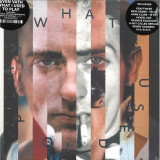
For this uniquely personal retrospective spread over twelve vinyl discs, Sven Väth takes us back to the early days of his DJ career. On What I Used To Play we meet great pioneers of electronic music, gifted percussionists, obscure wave bands, and innovative producers of a bygone 'new electronic' era. Rough beats and irresistible grooves from the identification stage of house, techno, and acid remind us not just how far electronic music has evolved over the past four decades, but how great it was to dance to EBM, techno, and house for the very first time.
If there is one protagonist of the electronic music scene who has remained curious, innovative and at the very cutting edge of music for over four decades, it's Sven Väth. His multi-layered artist albums and Sound of the Season mix compilations have been defining the genre for over two decades, and even today, he is constantly on the lookout for the next top tune to add to the highlights of his next set. At least, that's the case when he's not producing them himself as an artist or remixer. "Actually, it's always been part of my DNA to think ahead," and nothing had been further from his mind than looking back at his past, but when in spring of 2020 the international DJ circuit had to be scaled down to virtually zero, the 'restless traveler' suddenly had time. Time to stop and reflect on "how it actually was back then, at the very beginning of my career..."
"It was a great trip and with every track, beautiful memories came flooding back".
In the London apartment, he had just moved into, Sven has set up a "little music room", where he cocooned himself for several days, "to look way back for the first time and review my musical journey through the eighties, so to speak."
The interim result was six thematically oriented playlists with a grand total of 120 tracks from 'early 80s' to 'Balearic late 80s', together with excursions into afrobeat, European new wave, and EBM sounds and a few epochal techno/house tracks from the USA in between. From these 'Best of Sven Väth's favorites', the project What I Used To Play crystallized. Sven remembers how the Cocoon team reacted to his proposal: "They found the idea of making a compilation out of it MEGA from the beginning and everyone said 'Sven, go for it', but then, of course, the work really started, namely, to clear the rights and to get clean sounding masters of the up to 40-year-old tracks. There was also disappointment, of course. We couldn't clear certain titles because the rights holders in the USA had fallen out with each other or simply disappeared from the scene. In short, it wasn't easy, but now I can safely say we got the most important tracks."
Finally, after two years of research, curation, design, and administrative fine-tuning, the "little retrospective" from 1981 to 1990 is available. The exquisitely packaged, and three-kilo heavy box set is not only physically impressive, WIUTP is also the definitive record of Sven Väth's musical development. On each of the twenty-four sides of vinyl, you can trace track by track, what influenced him during which phase, and how he took off as a DJ from his parents' Queen's Pub straight into the spotlight at Dorian Gray. There and at Vogue (later OMEN), Sven became the style-defining player in the DJ booth that he still is today.
1981 - 1990: Future Sounds of Now
In the early eighties, the crowd in clubs like Vogue and Dorian Gray danced to what nowadays we call 'dance classics' - mainly disco, funk, soul, and chart pop. It was up to a new generation of DJs, including Sven Väth, the youngest protagonist in the Rhine-Main area at the time, to create their own club-ready music mix. Good new tracks and potential floor-fillers were rarities that had to be sought out and found, in order to prove oneself worthy.
Without MP3s, internet streaming, or other digital download possibilities, music didn't just gravitate to the DJ, instead, it had to be tracked down. In well-stocked record stores in Frankfurt and Wiesbaden or even in Amsterdam, London, or New York, Sven and friends sourced the material for countless magical nights. On WIUTP we can follow Sven's very personal journey through this wild, innovative era in which synth-pop, funk, hip-hop, and disco were successively replaced as 'club music' by house, techno, acid, and breakbeat. By the end of the decade, it was clear to see that these once exotic 'fringe' phenomena would soon become 'mass' phenomena.
Early 80s
Dirty Talk by the Italian-American duo Klein & M.B.O. represents the most innovative phase of the Italo-disco genre in the early eighties like no other track. Mario Boncaldo (I) and Tony Carrasco relied entirely on the original synthetic drum and percussion sounds of the Roland TR-808, coupled with the raunchy vocals of Rossana Casale and guitar accents of Davide Piatto. Of course, other tracks from this period were also influential in style, most notably Unit by Logic System, which worked as the perfect soundtrack to the laser lighting system at the legendary Dorian Gray club. With stomping beats and robotic rap interludes, Bostich by Yello also belongs on Sven's eternal playlist - after all, it caught the attention of Afrikaa Bambaataa, who invited the Swiss duo to perform at the Roxy in New York in 1983.
EBM Wave - Mid 80s
From today's point of view, the almost ten-minute-long, downtempo track Giant by Matt Johnson's band project The The, would probably not be considered an obvious club classic. However, a closer (re)listen reveals the rhythmic intricacies of the percussion overdubs by JG Thirlwell (aka Foetus) on Johnson's composition, and it becomes clear why this exceptional piece of music is one of Sven's absolute favorites. Other classics from this phase include Kaw-Liga by the mysterious The Residents, the hypnotic-synthetic Our Darkness by Anne Clark (and David Harrow), and last but not least, the somber, monotonous anthem Where Are You? by 16Bit, one of Sven Väth's projects together with Michael Münzing, Luca Anzilotti from 1986.
US House - Late 80s
You certainly can't talk about Chicago house without mentioning Frankie Knuckles. The resident DJ at the Warehouse not only gave the name to an entire genre, but also produced epochal floor fillers on the Trax label like the timeless Your Love, sung (and moaned) by Jamie Principle. Acid house protagonists Phuture also hail from Chicago, and on We Are Phuture (also released on Trax) we hear the chirping acid sounds of the legendary Roland TB-303 in full effect. Another featured classic is No UFO's by Detroit's Model 500 aka Juan Atkins, who is rightly considered the 'Godfather of Techno' even if the genre-defining track from 1985 still breathes with the spirit of hip-hop and electro from the first breakdance era.
Afrobeat
Le Serpent, by Algerian-born Abdelmadjid Guemguem, is a track that sounds completely different from everything else on WIUTP. Made in 1978, it's a monumental, rousing groove created without bass or synths, just with five congas! Even though Guem sadly passed away in 2021, his immortal, acoustic beats are understood all over the world and will continue to enrich many thousands of DJ sets for years to come. Another classic that not only Sven appreciates beyond measure is Hugh Masekela's Don't Go Lose it, Baby. In addition to being one of the most important jazz pioneers, the trumpeter and freedom fighter from Johannesburg was very experimental, integrating electronic sounds into his music in later years, in a similar vein to Miles Davis and Herbie Hancock. Dutch jazz pianist Jasper van't Hof's afrobeat project Pili Pili has also aged well. The trance-like, almost sixteen-minute-long track of the same name, manages to fill a whole side on the seventh of twelve vinyl discs in the WIUTP box.
UK-US-Euro - Late 80s
Time for a change of scene, in the truest sense of the word, and from a musical perspective, this section is like landing on another planet. First up is Andrew Weatherall's classic remix of Primal Scream's Loaded, featuring the iconic Peter Fonda sample (lifted from the 1966 biker film Wild Angels) that came to personify the mood triggered by the British Second Summer of Love in the late eighties: "We wanna be free to do what we wanna do, and we wanna get loaded...". This period also saw the emergence of M/A/R/R/S whose only single, 1987's Pump Up The Volume, became a club classic with support from DJ legend CJ Mackintosh. In this most eclectic of sections, we also encounter New York house and reggae producer Bobby Konders and his seminal Nervous Acid.
Balearic - Late 80s
Those who know him, know that Sven had already lost his heart to the 'magic island' of Ibiza as a teenager, so with that in mind, the WIUTP project couldn't end without a Balearic chapter. Inspired by Manuel Göttsching's E2-E4, the immortal, eponymously titled Sueño Latino belongs in there without question. Equally popular on the island was, and still is Break 4 Love by Raze, which thinking about it, would also fit perfectly into the house chapter. Last, but not least, there's an overdue reunion with Sven Väth himself, in his role as frontman of the successful Frankfurt trio OFF. Together with Michael Münzing and Luca Anzilotti (later of Snap!) this 'Organization For Fun' created the off-the-wall club hit Electric Salsa in 1986 which incidentally turned into an international chart smash, putting Sven in the enviable position of having to decide between pop stardom and a DJ career. Well, we all know how that decision turned out and the rest, as they say, is history. A not insignificant part of his story is What I Used To Play. Enjoy!
The new album Octagon Sphere by Duesseldorf duo Strafe F.R. comprises of four pieces recorded in 2020 and 2021 at the group's own studio. The work features heavily treated female vocals and includes rhythmic patterns and electronic sounds contributed by invited guest musician Detlef Klepsch (of the group keit). The overall atmosphere is tense and moody, both dark and uplifting at the same time. Octagon Sphere was mastered by Kai Blankenberg at Skyline Tonfabrik.
Octagon Sphere is the sister release to last year's CD Soundless Sphere – both albums are tied together by rhythmic alchemy and sound manipulation in highest detail.
STRAFE FÜR REBELLION was founded in 1979 in Düsseldorf by the two artists Siegfried Michael Syniuga and Bernd Kastner. Conceived as an experimental project rather than a band, the duo is active since the early 1980s, they continue to work together to this day.
They demonstrated their subtle abilities in numerous performances and concerts. The members of STRAFE FÜR REBELLION see themselves as researchers on different visual and acoustic levels; they always make use of their idiosyncratic and unusual humor. The duo emphasize that they not only explore the world of music, but also incorporate elements of knowledge, and thus all usable influences, into their experiments. Working plans, storyboards, and compositional schemas usually serve as the basis for new musical projects.
Their texts reflect their interest in science, history, philosophy, as well as everyday phenomena, mass media, and popular culture: in their experimental sound experiences, performances, and installations STRAFE FÜR REBELLION are absolutely avant-garde, working at the forefront of research-performatively, acoustically, visually, and in a variety of media. Their motto always remains aesthetically uncompromising with serious pleasure.
If naming is a form of claiming, of being claimed, how is one tethered to both the physical landscape that surrounds us, as well as our own internal emotional landscape_at times calm, at times turbulent, and ever changing? H.C. McEntire's new album Every Acre grapples with those themes_themes that encompass grief, loss, and links to land and loved ones. And naming_claiming land, claiming self, being claimed by ancestry and heritage_permeates the hauntingly beautiful landscape that is this poignant collection of songs. The songs straddle the line between music and poetry. In "New View," McEntire cites poets "Day, Ada, and Laux, Berry, and Olds"_fixtures in the world of writing, whose works are beacons of light over bleak horizons. The beginning of the song is backed by soft guitar plucks that fall on the downbeat and spangle like stars, and, throughout, guitar, bass, and drums swell together gently, mimicking ebbing and flowing tides under the moon. McEntire's voice (at once tender and fierce) intones the truth of both giving and taking, releasing and claiming: "Bend me, break me, split me right in two. Mend me, make me_I'll take more of you." Permeated by heartbeat-like drums, "Shadows" develops quiet ruminations on surrender and loss_reminiscing, moving on. This ponderous, dreamlike song asks the question of how "to make room." How does one make room, for self and for renewal and surrender, when it is so difficult to leave what you know behind? Playing with slivers of descending chromatics, along with the occasional downward-stepping bass, here McEntire yearns for home, and for nesting. Perhaps one of the more grief-stricken songs, "Rows of Clover" is a lamentation, one that touches on the loss of a "steadfast hound." The lone piano in the beginning of the song is rhythmically hymn-like. The stark verse arrangement gradually leads to a chorus that reads like a moody exhale, swollen with lush guitar strums and a Bill Withers-esque understated soul groove. But what stands out the most is an image of being "down on your knees, clawing at the garden"_the only explicit mention of a person in the song. "It ain't the easy kind of healing," sings McEntire, seemingly from further and further away as her voice echoes; and healing ta;kes time, time takes time_truths that linger painfully. "Dovetail" is a song that tells of various women. The song moves back and forth between solo piano and the addition of bass and drums under vocals. McEntire's gentle, trembling vibrato_harmonized in thirds in a celebratory manner_calls to mind a rejoicing psalm and shines through these images, leaving the listener cuttingly fraught with emotions_such as wonder, sadness, nostalgia_that can only arise with these juxtapositions. Gracious (and graceful) with its lilting melodies and lush harmonies, Every Acre ex - plores the acres of our physical and emotional homes. These songs are reaching for the kind of home that we all seek: one where we can rest and lay down (or tuck away) our burdens of loss. And maybe, moving through every acre of a world that often tries to tear our sense of identity and heritage down, McEntire sheds light on what it is to be human in this life_both stingy and gracious, both hurtful and kind.
Orange Viny
If naming is a form of claiming, of being claimed, how is one tethered to both the physical landscape that surrounds us, as well as our own internal emotional landscape_at times calm, at times turbulent, and ever changing? H.C. McEntire's new album Every Acre grapples with those themes_themes that encompass grief, loss, and links to land and loved ones. And naming_claiming land, claiming self, being claimed by ancestry and heritage_permeates the hauntingly beautiful landscape that is this poignant collection of songs. The songs straddle the line between music and poetry. In "New View," McEntire cites poets "Day, Ada, and Laux, Berry, and Olds"_fixtures in the world of writing, whose works are beacons of light over bleak horizons. The beginning of the song is backed by soft guitar plucks that fall on the downbeat and spangle like stars, and, throughout, guitar, bass, and drums swell together gently, mimicking ebbing and flowing tides under the moon. McEntire's voice (at once tender and fierce) intones the truth of both giving and taking, releasing and claiming: "Bend me, break me, split me right in two. Mend me, make me_I'll take more of you." Permeated by heartbeat-like drums, "Shadows" develops quiet ruminations on surrender and loss_reminiscing, moving on. This ponderous, dreamlike song asks the question of how "to make room." How does one make room, for self and for renewal and surrender, when it is so difficult to leave what you know behind? Playing with slivers of descending chromatics, along with the occasional downward-stepping bass, here McEntire yearns for home, and for nesting. Perhaps one of the more grief-stricken songs, "Rows of Clover" is a lamentation, one that touches on the loss of a "steadfast hound." The lone piano in the beginning of the song is rhythmically hymn-like. The stark verse arrangement gradually leads to a chorus that reads like a moody exhale, swollen with lush guitar strums and a Bill Withers-esque understated soul groove. But what stands out the most is an image of being "down on your knees, clawing at the garden"_the only explicit mention of a person in the song. "It ain't the easy kind of healing," sings McEntire, seemingly from further and further away as her voice echoes; and healing ta;kes time, time takes time_truths that linger painfully. "Dovetail" is a song that tells of various women. The song moves back and forth between solo piano and the addition of bass and drums under vocals. McEntire's gentle, trembling vibrato_harmonized in thirds in a celebratory manner_calls to mind a rejoicing psalm and shines through these images, leaving the listener cuttingly fraught with emotions_such as wonder, sadness, nostalgia_that can only arise with these juxtapositions. Gracious (and graceful) with its lilting melodies and lush harmonies, Every Acre ex - plores the acres of our physical and emotional homes. These songs are reaching for the kind of home that we all seek: one where we can rest and lay down (or tuck away) our burdens of loss. And maybe, moving through every acre of a world that often tries to tear our sense of identity and heritage down, McEntire sheds light on what it is to be human in this life_both stingy and gracious, both hurtful and kind.
If naming is a form of claiming, of being claimed, how is one tethered to both the physical landscape that surrounds us, as well as our own internal emotional landscape at times calm, at times turbulent, and ever changing? H.C. McEntire’s new album Every Acre grapples with those themes that encompass grief, loss, and links to land and loved ones. And naming claiming land, claiming self, being claimed by ancestry and heritage permeates the hauntingly beautiful landscape that is this poignant collection of songs. The songs straddle the line between music and poetry. In “New View,” McEntire cites poets “Day, Ada, and Laux, Berry, and Olds” fixtures in the world of writing, whose works are beacons of light over bleak horizons. The beginning of the song is backed by soft guitar plucks that fall on the downbeat and spangle like stars, and, throughout, guitar, bass, and drums swell together gently, mimicking ebbing and flowing tides under the moon. McEntire’s voice (at once tender and fierce) intones the truth of both giving and taking, releasing and claiming: “Bend me, break me, split me right in two. Mend me, make me I’ll take more of you.” Permeated by heartbeat-like drums, “Shadows” develops quiet ruminations on surrender and loss reminiscing, moving on. This ponderous, dreamlike song asks the question of how “to make room.” How does one make room, for self and for renewal and surrender, when it is so difficult to leave what you know behind? Playing with slivers of descending chromatics, along with the occasional downward-stepping bass, here McEntire yearns for home, and for nesting. Perhaps one of the more grief-stricken songs, “Rows of Clover” is a lamentation, one that touches on the loss of a “steadfast hound.” The lone piano in the beginning of the song is rhythmically hymn-like. The stark verse arrangement gradually leads to a chorus that reads like a moody exhale, swollen with lush guitar strums and a Bill Withers–esque understated soul groove. But what stands out the most is an image of being “down on your knees, clawing at the garden” the only explicit mention of a person in the song. “It ain’t the easy kind of healing,” sings McEntire, seemingly from further and further away as her voice echoes; and healing takes time, time takes time truths that linger painfully. “Dovetail” is a song that tells of various women. The song moves back and forth between solo piano and the addition of bass and drums under vocals. McEntire’s gentle, trembling vibrato harmonized in thirds in a celebratory manner calls to mind a rejoicing psalm and shines through these images, leaving the listener cuttingly fraught with emotions such as wonder, sadness, nostalgia that can only arise with these juxtapositions. Gracious (and graceful) with its lilting melodies and lush harmonies, Every Acre explores the acres of our physical and emotional homes. These songs are reaching for the kind of home that we all seek: one where we can rest and lay down (or tuck away) our burdens of loss. And maybe, moving through every acre of a world that often tries to tear our sense of identity and heritage down, McEntire sheds light on what it is to be human in this life both stingy and gracious, both hurtful and kind.
Samosa Records heads into the autumn with a crackling and enchanting EP from one of the masters of funky grooves and dusky beats, LTJ EDITS.
Opening the EP on the A-side, we have the perfectly pitched ‘Somebody’. Tight bassline merges with church- like organ chords, a sharp guitar riff and a soulful vocal that you feel in deep your bones. Meticulously constructed, this track will resonate with anyone familiar with LTJ Edits’ work (and newcomers alike).
A2 brings us the title track, Mr Man. This masterpiece has everything you want from a slow, thumping groove. At 98 bpm, it’s a trademark LTJ Edits smackdown, but oh boy - it has so much more in the trunk. Mesmeric, hypnotic - the familiar smooth mid-range tenor vocal gives you goosebumps on your goosebumps. An instant classic.
The B side kicks things off with mid-tempo stomper ‘Give All’. Make no mistake, this is LTJ Edits in the kitchen cooking soul food with a hint of blues and lashings of rare groove. A rolling, powerhouse of a track that also delivers a message to the masses, you’ll have this one thumping out of your speakers for a long, long time. Everybody needs it. Got to have it.
Finishing off this outstanding release is the cherry on top of the funky cake - simply entitled ‘James’. As soon as the guitar riff and bass starts, you get the meaning behind the title. This is all about the raspy, unmistakeable vocal, chanking guitar and funkadelic, bluesy bassline. A rhythmical, funk infused JB bath bomb from start to finish. After your first listen, you’ll want to go straight back on this ride.
The Mr Man EP is a serious chunk of vinyl and LTJ Edits has found a perfect home at Samosa Records. You have this in your record box and you’re ready for anything.
- A1: Kronos Island: 1St Mvt
- A2: Kronos Island: 2Nd Mvt
- A3: Kronos Island: 4Th Mvt
- A4: Kronos Island: 6Th Mvt
- B1: Ares Island: 1St Mvt
- B2: Ares Island: 2Nd Mvt
- B3: Ares Island: 4Th Mvt
- B4: Ares Island: 6Th Mvt
- C1: Chaos Island: 1St Mvt
- C2: Chaos Island: 2Nd Mvt
- C3: Chaos Island: 4Th Mvt
- C4: Chaos Island: 6Th Mvt
- D1: Rhea Island
- D2: Ouranos Island
- D3: Theme Of Starfall Islands
- D4: Theme Of Koco
Released in partnership with SEGA of Japan and composer Tomoya Ohtani, The Music of Starfall Islands is a collection of beautiful instrumental and classical-inspired tracks which are used as the background music for the various islands in Sonic Frontiers. The music for each island is presented as a suite, containing several movements that layer upon one another and build up to a climax, each with its own distinctive tone and feel, much like the islands themselves, which range from green meadows, to arid deserts, volcanoes and beyond. The music, composed solely by Tomoya Ohtani, is often stripped down, melancholic, and unexpectedly experimental, featuring an array of unusual sound sources (including Iranian percussion, Celtic vocal samples and Armenian folk instruments). In other moments, it is often rhythmic and emotive, with the addition of subtle electronics and the grandiose strings of The Nashville Scoring Orchestra.
While this release is by no means the complete soundtrack to Sonic Frontiers, we are thrilled to be able to present these beautiful and intriguing tracks as a collection on their own. With its downbeat tone and new compositional approaches, this music is unlike any Sonic soundtrack that has come before and may well subvert the expectations of some long-term fans, but should also surprise and delight audiences both new and old.
As Tomoya Ohtani explains in his liner notes for this release: “I wanted to create an atmosphere for each song that, despite the sadness it carries, also has a glimmer of hope. I do not believe there are many other pieces of Sonic game music that focus so much on the atmosphere as the tracks on Sonic Frontiers do.”
It's an all electronic affair, harmonically maximalist, predominantly symphonic-synthetic, requiring active listening. Some pieces function as challengers of musical structural habits, provoking the short attention span culture, others present a problem-solution scenario, collectively via a neoteric noise aesthetic and detailed melodic weaving. Ultimately, the objective was to engineer an assortment of works full of sound, euphonic and vivid in nature.
The making of this album was intentionally a very personal process, going into self therapy territory at times interpreting the composer's contemplating mind dealing with tolerance, destruction, compassion, misery, grace and tyranny in an auditory manner. Some pieces function as challengers of musical structural habits, provoking the short attention span culture, others present a problem-solution scenario, collectively via a neoteric noise aesthetic and detailed melodic weaving. Ultimately, the objective was to engineer an assortment of works, awash with euphonic sound vivid in its essence, with a deep focus on various synthesis techniques within a compositional framework.
Dedicated to Peter Rehberg aka Pita
Ata 'Sote' Ebtekar composes music with a deeply-held conviction that rules and formulas should be deconstructed and rethought. He alters musical modal codes from their original tonality and rhythmic tradition to achieve vivid, synthetic soundscapes. Over the last three decades, his work has been published by labels such as Warp, Sub Rosa, Opal Tapes, Diagonal, Mute and Morphine, among others. In 2018, he founded a new label called 'Zabte Sote', which focuses on releases by Iranian experimental electronic composers from around the globe.
Known for creating compositions that range from the delicate to the abrasive, using sounds both of acoustical and electronic origins, Ebtekar sees music as the expression of cultural habits in sound and anti-sound (silence). Seeking to expand such traditions he creates music that, while rooted in many cultures at once, belongs to none in particular. Sote's work deals with various blueprints, in particular his solo all synthetic music, his electroacoustic audio/visual group project, and his multi-channel sound installations. Sote is on the jury panel of The DAAD Artists-in-Berlin Program, and has created commissioned work for and performed at a.o. Berghain and CTM Festival (Berlin), Unsound Festival (Krakow), Cafe Oto (London), Jazzhouse (Copenhagen), TodaysArt Festival (The Hague), Bozar (Brussels), Ultima Festival (Oslo), Donaufestival (Krems), Donaueschinger Musiktage, Mira (Barcelona), Terraforma (Milan), and many more.
After their stellar and acclaimed live performance at
Wacken Open Air 2022, which generated a lot of
resonance within the scene, Leipzig-based heavy
psychedelic and instrumental trance rock band
Godzilla In The Kitchen are ready with their new
album, ‘Exodus’.
Heavily infected by great alternative bands such as
Tool, Faith No More, Helmet and Kyuss, these three
youngsters debuted in 2016 with their impressive selftitled album.
The three-piece band finally return now with their
second album, which contains a vibrant mixture of
melodic recognizability and rhythmic complexity;
instrumental psych post-rock in a very genuine way.
For fans of My Sleeping Karma, Tool, Mastodon,
Russian Circles, Aiming For Enrike, The Ocean,
35007, Karma To Burn and Monkey3.
LP pressed on clear vinyl
Berlin’s Pure Hate releases the first record in their new Various Artist series ‘Noise Bleed’ featuring tracks by Ryuji Takeuchi, Gaja, Swarm Intelligence & STRISC. Ryuji Takeuchi: Making a return to Pure Hate after his infamous ‘Essentials EP’ on PH002, Ryuji Takeuchi is renowned for his driving, hypnotic, atmospheric, raw, emotional interpretation of Techno. he has released on some key labels over the years including Inner Surface Music, LK Rec, Arms, Clan Destine Records, Infidel Bodies, Instruments Of Discipline, Depth. Request, his own LSN & Hue Helix imprints and more recently Mord and Dax J’s Monnom Black. Gaja: Once locked into the throes of Berlin’s ceaseless techno throb and now back home in Albenga, Italy, Gaja represents the gnarly, noisy extremity of modern dance music. It’s a desolate, distorted place where blasts of noise spit in the empty footprints once shaped by snares and hi-hats, and the bass bleeds out over everything. Having recently released his debut album ‘Morning Fist’ on his own Ophism imprint, Gaja makes his Pure Hate debut in style with track ‘Hangman’. Swarm Intelligence: From rhythmic noise to the brutal and bleak constitute a distinctive sound that Simon Hayes has been honing for more than a decade under his Swarm Intelligence guise. Having remixed MDD on PH003 The Dublin-born artist has cemented his place in the Techno underground with critically acclaimed LPs and EPs on labels like 47, Instruments of Discipline and Voitax plus standout sets at clubs like Berghain and Basement NY. Simon also recently launched his own self titled vinyl imprint Swarm Intelligence as a platform to explore his own imaginings of futuristic industrial music. STRISC.: Last but not least and rounding the record off in his trademark brutal style, label head STRISC. finally makes his anticipated debut on Pure Hate with track ‘Melt Pit’. VHXX1 is available in stores from 16th January 2023, distributed by Ready Made Distribution, Berlin. Mastered by Joe Farr. Artwork by Slave To Society. Tracklist: A1. Ryuji Takeuchi – Spur A2. Gaja – Hangman B1. Swarm Intelligence – Deviant B2. STRISC. – Melt Pit
Red Transparent Vinyl
This Geneva-based band have finely honed their instrumental "post-internet groove", creating the perfect blend of old-school funk, afro-beat, 70s soundtrack fusion, always adding a pinch of futuristic production and a touch of modernity aimed at bring the groove genre to new generations.
Side A, 'Funky Splash' is an original composition, understated in its groove but with the punch and crunch falling in all the right places, hence can be enjoyed either stewing in the background or as a dancefloor filler. The wah-wah and off-the-wall synths are both used to great rhythmic effect.
Side B, 'O Caminho do Bem', is a cover version of the Brazilian musical heavyweight Tim Maia. Always hard to revisit a classic, but L'Eclair's tight musicianship, perfect pacing and futuristic twist all add an extra layer of groove onto the mellow funk of the original.
Another slice of immaculate sounds for the ears and feet from Switzerland's finest export, Rocafort Records.
Art Blakey was an exceptional musician, but not only because he succeeded in recruiting the best players to join his Messengers. He also had the skill to blaze new trails through forms of jazz that continuously evolved. Beginning in the Forties with the big bands of Fletcher Henderson and Billy Eckstine, he went on to play with Charlie Parker, Thelonious Monk and Dizzy Gillespie… And then Blakey met up with Horace Silver in the mid-Fifties to found the Jazz Messengers. It was with this band that Blakey would open his arms to all the best young musicians of this generation: he nurtured the likes of Hank Mobley, Jackie McLean, Lee Morgan,
Wayne Shorter, Freddie Hubbard and many others. The first two sides of this album give an all too brief illustration of this aspect of the drummer, while sides three and four feature the inventiveness and rhythmical sense of a great percussionist who never renounced his African origins.
In summer 1958, João Gilberto -an unknown 28 year-old Brazilian guitarist and singer from Bahia- made his recording debut as a singer with two songs "Chega de Saudade" and "Bim Bom." With a new rhythmic feeling, batida, and rich harmonies he laid the basis of the modern Brazilian samba, now known as Bossa Nova. Underpinned by his insouciantly swinging guitar, Joãos seductive, vibratoless vocals caressed both ear and soul in a mesmerizing, highly addictive combination, refreshing and modern. Chega de Saudade was a hit, launching Gilbertos career and the bossa nova craze. Soon, singers and guitarists were trying to imitate him and composers were all on a Desafinado (the second Gilbertos hit) and Chega de Saudade kick. The longawaited renewal of the Brazilian samba was now a fact. Antonio Carlos Jobim said: Gilberto appeared as a light, as a big star in the firmament, in the heavens. He became a focus, because he was pulling the guitar in one way and singing the other way, which created a third thing that was profound. Yes, the guy who brought the Bossa Nova beat to the world was João Gilberto.
1988 saw the release of several timeless and remarkable EPs from Nurse With Wound, one of those classics is Alas the Madonna Does Not Function. Madonna in some respect was a turning point for NWW. It's a record that whilst unmistakably retaining that ineffable NWW character brought rhythmic and almost 'musical' elements into play. Madonna could be seen along with the Soresucker and Cooloorta Moon EPs as the bridge between the old and the new, the natural precursors to Thunder Perfect Mind and Rock 'n Roll Station. Some 34 years later Madonna still sounds fresh and unique, a true one off, proving NWW to be one of the few genuinely enduring and uncompromising artists of their time. Added to this re-issue is the fan favourite I am the Poison. With its plodding cyclical bass, minimalist sound and distorted vocal lines it could be argued that Poison is a forgotten, yet divergent, post punk classic. Beautifully remastered by Andrew Liles. This arrives in a beautiful die-cut sleeve with Babs Santini artwork.
The debut from new splinter alias of Manchester producer, sequencer designer, and Cong Burn label boss John Howes was made entirely on a Nord Modular G2, Elektron Machinedrum, and Monomachine – a rig he characterizes as “an authentic 2006 studio, best listened to on Windows XP Media Player or Winamp.” Paperclip Minimiser’s self-titled full-length collects eight elusively multi-dimensional constructs of stereo panned synthetics and slithering ambient techno, born of a web of generative patches subjected to improvisational alterations. Taking things further, Howes’ process involves “planting ghosts in the machines,” instilling each element with “some self-correcting behavior in a cybernetic / lo-fi AI / semi-autonomous agent kinda way.” The result is an ambiguous and dynamic hybrid of accident and intention, chaos and control, shuffling through an innerspace wilderness of psychic circuitry.
The title alludes to a 2003 thought experiment about the existential risk of artificial intelligence; how even a mundane objective, algorithmically extrapolated, could culminate in catastrophe. Here the notion is inverted, demonstrating the sonic infinities to be mined by “pushing and pulling at the strings” of musical systems. Howes aptly samples a vintage interview with electronic music pioneer Bebe Barron – co-composer of the Forbidden Planet soundtrack – discussing the anthropomorphic potential of randomized audio generation: “We thought of our circuits as actors in a script.” Paperclip Minimiser descends from a similar family tree, coaxed as much as crafted, flickering rhythmic synchronicities glimpsed in a mirage of wires and glass.
If, among the Afro-Peruvian music groups that have emerged in recent years, there is one that has dared to take the sound to new dimensions, it is Perkutao. Heirs to the best Afro-Peruvian tradition, they have been able to integrate Afro-Cuban elements and various contemporary popular styles, which they play with amazing with speed and precision. "Mis ancestros", is their debut album for Buh Records. Perkutao is an Afro-Peruvian percussion ensemble founded in 2005, directed by Percy Chinchilla, musician, percussionist, zapateador and teacher of young generations of percussionists. "Mis Ancestros" (My ancestors) is their first record under the production of Manongo Mujica and is the fourth title of the collection "Perspectivas de la Música Afroperuana" (Perspectives on Afro-Peruvian Music). Chinchilla shares the artistic direction of Perkutao with William Nicasio 'Makarito', another outstanding percussionist. Both grew up in the famous Callejón del Buque, in the district of La Victoria, a spot preferred by bohemians and known by local music partying -jaranas criollas. Both were also formed in Perú Negro, an emblematic Afro-Peruvian ensemble, and both carry in their blood the cult of percussion and Afro tradition. Chinchilla comes from a family of Afro-Peruvian musicians including Caitro Soto and Ronaldo Campos. And Makarito is the son of Macario Nicasio and grandson of El Niño, legendary Cuban percussionist in charge of introducing congas and bongo to Afro-Peruvian rhythms. Perkutao arose precisely from the merging of these traditions, Afro-Peruvian, Afro-Cuban and Caribbean music, and have become one of the most sought-after percussion ensembles due to the intensity of their sound and their powerful performances that include stage movements and surprising acrobatic skills. In addition to Chinchilla and Makarito, the ensemble is completed by Edu Campos, Andree Liendo and Víctor Sánchez Pitín. "I follow in the footsteps of my ancestors, to the beat of the cajita, the quijada and the cajón, to the rhythm of a zamacueca, a festejo and a good landó". This is an excerpt of the lyrics of "Poema", the opening track of the album, the rhythmic base accompanies Chinchilla's voice and then increases in a crescendo that announces the paths to be explored by Perkutao. "Azañero Colorao", "Trucutum Kiti Pa" and "Cancha con Sabor", composed based on minor percussion (cajita, quijada), zapateo and cajón, respectively, are compositions that serve as an introduction, a tribute to the essential instruments of the Afro-Peruvian tradition. The last one in particular already defines Perkutao's style: a trepidant and orgiastic rhythm, hypnotic and hard hitting, Dionysian and cathartic. With "Madre Africa" and "Al Tayta Bukense", for djembes and congas, respectively, we find Perkutao retaking the Afro-Cuban heritage embedded to the Afro-Peruvian sounds, abakuá and festejo. "Lloraré", a version of a famous Cuban song, mirror the ensemble's fascination with Caribbean music (salsa is another genre cultivated by its members). "Mis ancestros" is an album about a tradition, but it is also a renewal. Perkutao opens a new direction for Afro-Peruvian music, its sound is an evocation and the here and now, it is deep-rooted but freely flowing percussion. Perkutao are Percy Chinchilla, William Nicasio "Makarito", Edu Campos, Andree Liendo y Víctor Sánchez Pitín. Produced by Manongo Mujica y Daniel Mujica. Recorded and mixed by Juan José Salazar at La Encía del Leopardo Estudio, Chorrillos, Lima, Perú. Mastered by Mario Breuer en Sensei Mastering, Córdoba, Argentina. Cover and Design by Yerko Zlatar.
Gold Vinyl
No binaries, no simple opposition. Either/or is subsumed by infinite relations and dizzying possibilities, by the perpetual crest of and/and. Freedom is the key to bring about all complex and incongruous multiplicities. Embodied, embedded, relational freedom is the key.
Mue is a duo based in Tiohtià:ke/Montréal composed of Catherine Debard and Léon Lo. Formed in the Spring of 2020, the electronic musical project merges two distinct practices and explores the way they interact with each other. Drawing on early-IDM, illbient, minimalism, and natural phenomena, the resulting real-time hardware improvisations weave asymmetric patterns, create spaces, and digest various sounds.
Recorded in 2020, Les vasières explores unsynchronized hardware electronic impro-visations where individual sonic elements come to life by creating new and complex layers and organizational logics — melodically and rhythmically modulating each other.
The French album title translates to “The mudflats.” Sounds from disparate sources form an aural silt that is brought to life by waxing and waning cycles, each improvi-sation presenting a new, different mudflat scenario.
Mue asked visual artist Katherine Melançon to create the album’s artwork, which was the artist’s first dive into compost as source material. The resulting image—an otherworldly organic smear, both intimate and alien — was incorporated into graphic designer Haley Parker’s montage, hard frames recalling the flatbed scanner used by Melançon, and branch-like typography nodding to the organic concerns of all the artists involved.
We are very proud to present you the third release on Schatzimusik with the reissue of the much sought after I.B.M. – Computer Love 12″ inch and an unreleased track and a remix. For this release we have teamed up with none other than Dario di Pace & Raffelle Arcella from Naples, better known as Mystic Jungle and Whodamanny. The two have done numerous remixes for very well-known Italo-Disco songs. For this remix, they have delivered a brilliant reinterpretation of Computer Love. Rhythmic, driving, funky and playful, they put Computer Love in a new light. The release is rounded off with the previously unknown track “Metropolis” and the long version of “Computer Love”. A little background info on the original vinyl. Thomas Waver & Rudi Raders the two originators of the group I.B.M. emigrated to Alicante (Spain) in the 80s. They stored the records of Computer Love in the attic of Thomas’ aunt. Unfortunately, she died, and the attic was dissolved along with the records. So, the original vinyl is unfortunately a rarely seen item.
Limited Gold Vinyl
Son Lux reemerge with their forthcoming fifth full-length LP, Brighter Wounds, finding the trio in command of a daring, multidirectional sound, expressing naturally the proclivity for surprise and contrast that characterize the project's output. The new release explores the violence of love, the beauty of sacrifice, and the specter of impermanence.Anchored by its cinematic heart, All Directions,' the album ranges from the thunderous charge of Dream State' to the sputtering, soulful lilt of Slowly.' Ryan Lott's devastating vocal on "Aquatic," guitarist Rafiq Bhatia's blooming flower melismas on "Labor," and drummer Ian Chang's nearly inhuman rhythmic calculus on "The Fool You Need" illuminate a curious and delicate balance of precision and pain.Since 2015's Bones, the band's profile has grown in the worlds of music, dance, and film. Each member now charts their respective solo paths, and their individual adventures find a home within the purview of Son Lux. On Brighter Wounds, collaborators range from longtime cohorts Rob Moose (Y Music, Bon Iver, The National) and DM Stith (Sufjan Stevens), to new friends trumpeter Dave Douglas and reedist/instrument builder Arrington de Dionyso.Son Lux has made invention its hallmark through continued exploration and experimentation. With Brighter Wounds, the triad NPR proclaimed the world's most lethal band" now grips exhilaration and heartache in full embrace. In the words of the album's closing refrain, "is this what the resurrection feels like"
Teno Afrika's 2020 debut Amapiano Selections drew an international wave of support sparked by the producer's deftly minimal take on the emergent style. Amapiano combines the South African predilection for deep house alongside a melange of endemic influences like kwaito, jazz and gqom. The 20-year-old's new crop of songs Where You Are expands on his rhythmic subtlety hooded in warm bass adorned by amapiano's telltale shakers, hi-hats and mid-tempo shuffle. Lutendo Raduvha hails from Pretoria, South Africa, where he produces music incessantly and DJ's parties around Gauteng province. He hangs with a crowd of musical friends, many of whom join him on Where You Are. For his second album Teno Afrika brings more vocalists into the sonic picture, unlocking an emotive and timbral escalation to his rapidly mushrooming catalog of work. Singers Leyla and KayCee feature on the title track and "Fall In Love," respectively. Regular cohort Diego Don joins for two driving, pad-propelled works of significant vibrancy, "SK Love" and "AK Love." The album's dramatic closer "Duma ICU" features another returning collaborator, Stylo MusiQ, who helps bring an icy, almost cinematic conclusion to a slice of the sound Teno Afrika is pushing at the moment. There's a palpable feeling of not knowing where the young producer might go next.
Teno Afrika's 2020 debut "Amapiano Selections" drew an international wave of support sparked by the producer's deftly minimal take on the emergent style. Amapiano combines the South African predilection for deep house alongside a melange of endemic influences like kwaito, jazz and gqom. The 20-year-old's new crop of songs "Where You Are" expands on his rhythmic subtlety hooded in warm bass adorned by amapiano's telltale shakers, hi-hats and mid-tempo shuffle. Lutendo Raduvha hails from Pretoria, South Africa, where he produces music incessantly and DJ's parties around Gauteng province. He hangs with a crowd of musical friends, many of whom join him on "Where You Are." For his second album Teno Afrika brings more vocalists into the sonic picture, unlocking an emotive and timbral escalation to his rapidly mushrooming catalog of work. Singers Leyla and Kaycee feature on the title track and "Fall In Love," respectively. Regular cohort Diego Don joins for two driving, pad-propelled works of significant vibrancy, "SK Love" and "AK Love." The album's dramatic closer "Duma ICU" features another returning collaborator, Stylo Musiq, who helps bring an icy, almost cinematic conclusion to a slice of the sound Teno Afrika is pushing at the moment. There's a palpable feeling of not knowing where the young producer might go next. Also Available From Teno Afrika: Amapiano Selections LP/CD. Track listing: 1 Teno Afrika ft Leyla “Where You Are” 2. Teno Afrika & Diego Don “SK Love” 3. Teno Afrika “Bells” 4. Teno Afrika ft KayCee “Fall in Love” 5. Teno Afrika “Gomora Groove” 6. Teno Afrika “Halaal Flavour” 7. Teno Afrika & Diego Don “AK Love” 8. Teno Afrika ft Stylo MusiQ “Duma ICU”
- A1: Second Chance Ft. Kimberly Davis (Club Mix)
- A2: Try My Love (On For Size) Ft. Teni Tinks (Club Mix)
- B1: Life Is A Dancefloor Ft. Kimberly Davis (Club Mix)
- B2: Look, Don't Touch Ft. Teni Tinks (Extended Mix)
- C1: Bring On The Rain Ft. Joss Stone
- C2: When Love Breaks Down Ft. Teni Tinks
- D1: Slippery People Ft. Ramona Renea & Fiorious
- D2: Tell Me It's Not Over Ft. Adi Oasis
- E1: Love's Been Waiting Ft. Kimberly Davis
- E2: You Ain't Love Ft. Teni Tinks (Club Mix)
- F1: Finally Ready Ft. Billy Porter (Extended Monologue Mix)
- F2: The One That Got Away Ft. Obi Franky (Extended Mix)
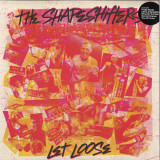
From an aspiring b-boy to working with luminaries Billy Porter, Joss Stone, Kimberly Davis and Teni Tinks, The Shapeshifters, Simon Marlin announces the release of his brand-new studio album “Let Loose”.
Wrapped in a defining optimistic mood and colourful palette, “Let Loose” plays with the friction between musical persona and influence, delivering a masterclass in Simon’s flourishing depth of integrity as a producer and admiration to those that exert their enduring influence upon him.
“I'm a facilitator of talent. I'm blessed that over the years I've managed to put a team of people together - as a producer, that's what I do, very much in the old school sense like a Quincy Jones or Gamble & Huff, they’re the guys I try to emulate - and make something magic out of nothing, but do it in a contemporary way. That’s what really floats my boat, and that's what this whole project is about.” Simon Marlin – The Shapeshifters
Across the latest and long-awaited studio album “Let Loose” The Shapeshifters pledge rhythmic allegiance to the golden era disco records and their spellbinding qualities; embracing the tension often found between tradition and future to craft a euphoric, certifiable body of work presented to the devoted audience he deserves. The Shapeshifters exemplify a scene in rude health one that is now switching on an ever-younger fan base, and with Marlin being the beating heart of it it’s easy to see why The Shapeshifters are more in demand in the clubs than ever.
The twelve-track album is illuminated with vocal collaborations including the recently released and debut collaboration with the Grammy, Tony and Emmy Award-winning Billy Porter.
Layers of rushing strings, flares of brass and hedonistic grooves provide refreshing dancefloor power dynamics and deliver a liberating, triumphant and inherently uplifting record.
Taking an impeccably smooth course through disco-infused house, The Shapeshifters continue the rich relationship with Glitterbox and its record label; one that has yielded instant classics that epitomise the label’s ethos for preserving disco’s mission to uplift and empower.
Soft Raw is a new label from Danielle – a natural extension of the Bristol-based DJ’s expansive tastes within contemporary club music. Over the past few years the NTS resident has become a leading light in the multifaceted world of modernist techno abstractions, ably balancing soundsystem pressure and propulsive rhythmic intensity with experimental textures and explorative energy variations. Soft Raw seeks to continue that mission with releases which will progress stylistically from one approach to another, taking in exciting, emergent producers unique in their approach but bound together by the idiosyncratic curation of Danielle – a faithful reflection of her proven skill as a selector.
The label launches with a six-track drop from Slacker. Sam Black has been winding up a potent strain of needlepoint techno which leans towards jungle and half-time D&B in its tempo and structure. Across a selection of various releases, Black’s sound has evolved into an accomplished and detailed style which draws on moody atmospheres and advanced engineering in the grand tradition of UK soundsystem music. Across this EP the Slacker sound matches up to the spirit of Soft Raw, balancing fierce kinetic energy with delicacy and finesse and leaving some space for outright ambience. At times he locks into a half-step warm-up mode, while elsewhere the amens creep in for a more pronounced jungle rinse-out.
It’s a strong opening statement for this new label, but crucially this doesn’t spell out the future in absolute terms. True to Danielle’s broad outlook, subsequent releases are set to take in everything from straight up 4/4 and acid to footwork and electro, with a narrative binding each release together according to her internal logic and the tension between soft and raw qualities explored across consistently cutting-edge tracks.
16 track compilation of 1980s classics.
Formed in Scotland in 1979, APB were a post-punk trio blending edgy
guitars with funk and new wave sounds
The band had many early 80s alternative radio and rock dance club hits including
‘Shoot You Down’, ‘Rainy Day’ and ‘Palace Filled With Love’.
New York-based Link Records originally issued ‘Something To Believe In’ in 1985,
and the ten- song title was perceived at the time to be APB's debut album
although it was actually a compilation drawn from the band's previous eight
independent singles. The band's 1981 debut single ‘Chain Reaction’ is now added
as a bonus track to the vinyl release, while that song and an additional five tracks
will appear on the expanded edition CD. ‘Danceability’ will appear in its original
mix on the vinyl LP, while the CD will feature the song in its extended ‘Danceability
Parts 1 & 2’ form.
"When I bought the second APB single, 'Shoot You Down'. I was blown away by
the pure energy and sparse funk groove that drove the record." said Matt Pinfield,
former host of MTV's 120 Minutes. "Over the course of the next few years, I saw
the band live about 15 times. They would always pack clubs in New York, New
Jersey, and Long Island -- anywhere they received airplay." In 2018's Beastie Boy
Book, band member Adam "Ad-Rock" Horowitz referred to ‘Shoot You Down’ as a
"punk dance-floor classic."
In 2022, APB remains an active touring band, which includes original members
Slater, Roberts and Cheyne. Over the decades, APB's sparse, rhythmic sound has
influenced everyone from the Red Hot Chili Peppers to Franz Ferdinand. A new
generation is primed to make their acquaintance.
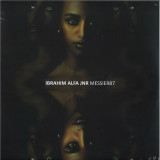
Ibrahim Alfa Jnr released techno music since the age of 17. He started to play piano when was six years old and has a master degree in sonic arts. As a Live Act and DJ he is world wide known.
His first album on Mille Plateaux is a fine example of Hypercussion, which implies a new rhythmic A-logic when beats split or shoot each other off, or when they overlap and mutate into high-pitched hums and rattlesnake breaks; accelerating, before music again blurs into the grains of noise or calm science fiction landscapes and at the same time builds gigantic sound walls. And such music, as far as its conceptualization is concerned, does not have to submit itself to technology at all, but must understand itself as a form that can be recombined with technology.
If you've been in the club scene for many years like David Dorad, you will one day face the big, essential, serious questions that each of us will ask ourselves sooner or later:
Are marmots pack animals?
Can marmots sign language?
Do marmots plan their lives according to European or Chinese zodiac signs?
Do marmots need a special passport, after all they don't have a thumb to turn the pages?
What happens when a marmot eats Coke and Mentos at the same time?
And with all those questions whistling, hissing and muttering in his head, David grabbed piano, baton and BioBassline to crochet his new EP.
This is called "Marble" and offers 6 different approaches to solve these big questions.
As a source of ideas, he has competent partners at his side in Roman Flügel, Mira, Christopher Schwarzwälder, Canson and Sascha Cawa.
A1 -
Murmeli - original
The marmot tribe awakens. Get up to brush your teeth. Gets your toes tapping. Makes you snap your fingers. Dare to roll your hips. Later rhythmically to turn. To look elegant at the same time. Eyes closed - eyes open.
Murmeli, the regular leader, sits at the piano.
Everyone is dancing, toothpaste in the corners of their mouths and a smile that takes the toothpaste by the hand.
A normal morning in marmot houses.
B1 -
Murmeli - Mira & Christoph Schwarzwald RMX
Mira and Christoph Schwarzwalder take over from Murmeli. They vary, combine and subtract. The first marmots raise their thumbless fists in the air - showing their passports, ready to take off.
B2 -
Murmeli - Canson RMX
Canson also sits next to Murmeli. Caress the theme, tickle the groove.
Murmeli has the best ideas early on: "Boy, let's try Mentos with Cola, we'll definitely take off."
Canon is in!
C1 -
Murmelot - Original
The sun goes down in Murmelhausen too. Then Murmelot is ready. Gives his advanced Pilates class, which the whole tribe takes. The village wants to remain mobile.
Murmelot's motto is "Why not stretch while walking?"
And so shall it be. He sets the rhythm on his wooden Fairtrade 303 and our furry friends shave shaky and obscene messages down each other's backs while impatiently hopping for the drop.
D1 -
Murmelot - Roman Flügel Remix
Roman Flügel and Murmelot are old buddies. Struck while carving the 303.
Roman happily takes over the Pilates class, the dancing crowd. Enchanted until the razor's batteries are empty and only dancing remains, only dancing is important.
D2 -
Murmelot - Sascha Cawa RMX
Sascha Cawa takes his trunk by the hand, wants to motivate her again shortly before the second sunset of the day. Whispers little obscene Pilates positions in their ears. That motivates. Murmelot switched from piano to percussion.
The marmots' sweat feeds the golden orchids in the clearing for the next six months.
Corn, originally released in 2015, features nine tracks Russell recorded in 1982 and 1983. In collaboration with Russell"s partner Tom Lee, Audika"s Steve Knutson compiled Corn from Arthur"s original, completed 1/4" tape masters. Russell himself compiled this material on three separate test pressings-labelled El Dinosaur, Indian Ocean, and Untitled, respectively- in 1985. Russell fans know something of the Corn sound from Audika"s debut release, "Calling Out of Context" (2004), which included four songs from these sessions: "The Deer In The Forest Part 1," "The Platform on the Ocean," "Calling Out Of Context," and "I Like You!" This new collection includes rhythmic alternate versions of "Lucky Cloud," "Keeping Up," "See My Brother, He"s Jumping Out (Let"s Go Swimming #2)," "This Is How We Walk on the Moon," and "Hiding Your Present From You," along with "Corn," "Corn (Continued)," "They and Their Friends," and the closing instrumental "Ocean Movie," one of the most beautiful and curious Russell tracks ever to see the light of day.
Originally released in 2014, “Instruction Booklet N. 1232” marks the first cassette release on Dauw for Tatersall under his The Humble Bee moniker. Taking advantage of the format, each side on “Instruction Booklet N. 1232” is reserved for a single piece nearing the 20-minute mark.
“Exploding View” (aka Side A) swells into existence with a very grand sounding synth-driven melody. Of course the other thing that’s present is the decaying sound of the tape loop that’s working to bring that music to life. At first, the melody grows and grows, fairly undisturbed, but eventually the sound of so-much tape warble threatens the rising nature of the piece until it sounds as though it is one loop away from total decay and simply fluttering out of existence.
But of course that’s the point. There’s a tension between that grand melody that opens these moments and that warble. It’s a lesson in opposites: the mechanics of a tape loop, guaranteed to break down, placed in contrast with those signature Tatersall melodies, which somehow seem eternal. And just as that tension seems too much to bear — the melody dies to be replaced by something altogether new. What comes next is something much quieter, driven by a sub-aquatic bassline, some rhythmic tape hiss and some gentle piano.
It’s a very dramatic and sudden break. The technical elements of that could be attributed to Tattersall’s understanding of how far a melody can be pushed before it succumbs to the abuse of being processed out of existence — perhaps the tape had been looped and processed to its breaking point. Regardless of whether it was a technical or artistic choice, that hard break serves an important narrative function. Frequently in instrumental music, musicians play with opposites (quiet-loud, clean-distorted) to create a narrative to their work since they don’t have words/lyrics as a tool. In the case of The Humble Bee’s use of tape loops, one set of opposites in tension is always driven by the fragility of the melodies and the limitations of a machine guaranteed to inevitably decay the media it is designed to support. And where one thrives, the other takes a backseat. As side A winds down, the melodies are much more sparse — appropriate for en ending, yes; but it also gives more space for those hisses and crackles to claim their moment.
Side B is filled out by “Manual with Foot Pedal” and it begins as gently as its predecessor ended. Slowly eking outing it existence – it’s as if watching Tatersall set the board, showing his players on opposite sides of the table before really setting them in motion to do their thing. By the piece’s midpoint, melody has taken centre stage as a glitchy, piano-led rhythm marches its way forward, clearly carving out its space and claiming its territory. And almost immediately following that: the decay takes over again and those tape loops seem processed to near death — the melody almost barely decipherable as it flutters under the weight of the history of being looped/played ad nauseum. And in the very final moments, the melodies are sparse again, giving the tape hiss room to play its part — it’s as if Tatersall is giving both players enough space to take their final bows.
Berlin-based producer Rampue has not released an album in 14 (in words: fourteen) years. Between 2008 and 2020 he toured the world and worked mainly on his live sets in the meantime. So now only a worldwide pandemic had the power to prevent the traveling musician from continuing this hustle and bustle and eventually share a new record with the public. Corona was what brought this standstill and the otherwise well- traveled individual experiences cabin-fever during lockdown. Hence, the new Rampue album "Tragweite" came into existence in February 2021, which portrays the artist's desire for experimentation.
Inspired by a modular synthesizer (Buchla), Rampue has seemingly put himself into a kind of trance, in which he lets the machines work and combines randomly created sounds with airy structures such as low drums or simple grooves. Rampue accomplished to break free by using random sounds as a new impulse and a way out of a creative crisis, which stemmed both from the enforced home isolation and from the self-perceived paralysis. The result is literally unique, as many of the sound products cannot be reconstructed and are preserved in album form for the general public.
Listening to "Tragweite" one gets the impression that the dialectical relationship between chaos and order, further supported by its production, is the defining theme of the album. After an initially perceived chaos, a delicate order, which is determined by structuring drum patterns and basslines, takes over throughout the course of the album.
Later, it frays and loses itself again in sounds and tones created mechanically However, it never seems arbitrary, but willful and skillfully staged. For instance, "Furo?" begins with apparent arrhythmia. The combination of bass and subtle percussion, however, gives this arrhythmia a shape, guiding the track which gradually becomes more and more driving without losing its original playfulness.
Although one might be inclined to think of genres such as Downtempo or Ambient at the beginning in the further course of the album results in such a diverse sound and rhythmic landscape that one willingly questions one's own perception of music while listening and finally throws every type of categorization overboard joyfully. The listening experience is too intoxicating and enlightening to stick to simple genre boundaries. The musical spectrum ranges from straight arrangements that live entirely without a drum foundation ("Fu?r Dich") to almost meditative sound collages ("Regengesicht") to the four-to-the-floor banger "Kembang" which adds a grimmer note with a certain industrial appeal to the overall rather melancholic-progressive curation. "Direct Faden" on the other hand, surprises with its simple guitar-based foundation on which the omnipresent synth snippets and pads are allowed to let off steam towards the end of the record. The track that most closely combines the progressive production style with a danceable club atmosphere is probably "Phobia". Wafting, partly breaking away synthesizer sounds rise higher and higher, while the driving mixture of bass and drums consistently march forward.
Rampue breaks with his old, musical habits as "Tragweite" creates the impression of improvisation and jam character without getting lost. Rampue takes his listeners on a journey that is stirring and moving, sometimes demanding or even a bit disturbing, yet always one thing: incredibly exciting.
- A1: A Recipe To Cure Historical Amnesia
- A2: To Remember (Feat Kushal Gaya)
- A3: Utopia Is A Colonial Project
- A4: Back In The Day, Things Were Not Always Simpler (Feat Noni-Mouse)
- A5: The Past Is Not Only Behind Us, But Ahead Of Us
- B1: Kal Means Yesterday & Tomorrow
- B2: Remember Begum Rokheya
- B3: That Clocks Don't Tell But Make Time (Feat Kodo)
- B4: Remember Circles Are Better Than Lines
- B5: Remember To Look Out For The Signs
- B6: Kalak A Means To An Unend
Green Vinyl[21,22 €]
Sarathy Korwar returns with new album KALAK. The follow up to the politically charged, award-winning More Arriving is an Indo-futurist manifesto - in rhythmic step with the past and the present, it sets out to describe a route forward. It celebrates a rich South Asian culture of music and literature, which resonates with spirituality and community, while envisaging a better future from those building blocks. Recorded at Real World studios with meticulous production by New York electronic musician, DJ and producer Photay, who translates these communal rhythms and practices into a timeless and groundbreaking electronic record. There"s a spirituality and warmth at play in the polyrhythms, group vocals and melodic flourishes. The KALAK rhythm is the fulcrum upon which the 11-track project balances. After an intense lockdown induced period of reflection and meticulous note-making, Korwar boiled this down to the circular KALAK symbol which he then presented to his band before recording began. With the symbol projected on the walls in order to de-code and improvise around, Korwar had utter faith in the musicians he"d assembled and conviction in the concept.
BLACK VINYL REPRESS
NYC´s Superbloom debut LP Superbloom is Brooklyn’s latest entry into the alternative rock scene. Their debut album, “Pollen” is a 12-track love-letter to heavy alternative music that spans infectiously bouncy hard rock, instantly nostalgic acoustic songs, sing-along choruses and undeniable hooks. The album was mastered by Will Yip (Quicksand, Mannequin Pussy, Code Orange), mixed by Joe Reinhart (Remo Drive, Joyce Manor, Hop Along) and produced by Superbloom. The album’s two recent singles, “Whatever” and “Mary on a Chain” have both landed in several Spotify curated playlists including All New Rock, New Alt-Rock Mixtape, Noisy and Alternative Noise. While the album’s feedback-laced instrumentation is hard-hitting at every turn, the band’s sonic signature is embedded in the vocal performance that fills each track with complex layering, earworm melodies and lush harmonies that deliver discoveries of nuanced detail with each listen. Press Quotes: "Your next grunge revival obsession." -The Noise "...buzzing guitars that aren’t too far away from the ones that dominated DGC Records during their heyday... reminiscent of a bygone era when rock dominated the airways. Superbloom are most definitely a guitar band and they play their instruments loud and with the urgency of a ticking time bomb, it’s aggressive and in-your-face, but also catchy as hell." -The Alternative "The group's sonic approach is rooted in the fuzzy guitar atmospherics of bands like Hum and Amusement Parks on Fire. The hooks are plentiful, the arrangements lean and mean, and there's a bouncy rhythmic quality to much of their work so far." -No Echo
Bristolian power-improv duo Run Logan Run continue their link-up with Worm Discs and producer Riaan Vosloo on Nature Will Take Care Of You – a monumental slab of contemporary energy music that draws on the heavy soul of David Axelrod and the fiery commitment of Archie Shepp. Working with an expanded line-up that includes singer Annie Gardiner (daughter of the late guitarist Ricky Gardiner, who played and collaborated with Iggy Pop and David Bowie) plus a string quartet and a brass section, saxophonist Andrew Neil Hayes and drummer Matt Brown have once again steered Run Logan Run in a dramatic new direction. Churning, future-forwards and emotionally tuned in, Nature Will Take Care Of You reaches out towards propulsive rock and psychedelic soul, while keeping one foot in the radical jazz-not-jazz of Bristol’s ever fertile improv scene.
The core of Run Logan Run’s sound is the dynamic conjunction of Matt Brown’s agile and powerful drums with Andrew Hayes’ looping, pedal-treated sax motifs. No matter how the duo augment and enhance their music, the kernel of their art has always been the spiralling energies generated by this essential musical relationship. Explorations of repetition, dissolution and dervish-like disorientation remain a central part of their project, with Brown weaving a tight rhythmic armature for Hayes’ unshackled journeys into sound. But though they began within Bristol’s improvised music scene, their vision has been increasingly structured and expansive, and the arrival of producer and bassist Riaan Vosloo (Nostalgia 77) for 2021’s For a Brief Moment We Could Smell The Flowers allowed to them move outwards to explore pulsing, cinematic synth-scapes. Vosloo is behind the boards again on Nature Will Take Care of You – and the duo’s vision has broadened a step further.
San Diego born and raised DJ/Producer, Dillon Marinez, today releases his latest EP ‘Wormhole’, out now on Dirtybird.
Curated by Claude VonStroke, the compelling two-track project presents a dynamic soundscape showcasing the sonic duality of one of Dirtybird’s newest rising stars. The chaotic, high-energy sound of its titular track ‘Wormhole’ is instantly mesmerizing, while its companion ‘Facelift’ is a deep, rolling burner.
Regarding the EP, Dillon Marinez said, “My first Dirtybird Campout inspired both tracks. Claude’s set especially was full of some thick stabby bass which was right up my alley. This sound gave me an idea for each lead and the rest flowed naturally.”
Continuing to grow as a consistent member of the Dirtybird flock, Marinez’s latest EP, ‘Wormhole’ marks his fifth release on the esteemed label following last year’s ‘No Pressure’ EP and earlier singles like ‘Dance For Me.’
Taking inspiration from funk, hip hop, and reggae, Marinez credits his father and brother for exposing him as a kid to the multi-genre sounds that shape his music style today. A bassist since childhood, it was only natural for Dillon to be drawn to the ebbs and flows of house music. Learning Ableton in college, Marinez was able to incorporate a blend of rhythmic elements to create his unique bass lines and incredibly catchy beats known to captivate crowds.
Releasing music on Dirtybird marks a full circle moment for Dillon, as he has previously named Dirtybird’s artists Justin Martin and Shiba San as major sources of inspiration for his music.
Marinez invites fans to join him on his rhythmic journey and stream ‘Wormhole’ today.
Favorite Recordings proudly present a new series of 7" reissues with a simple concept: each side dedicated to one French funky track coming with its original artwork. You just have to flip it!
Starting with "Funky Baby Love" by Paul Fathy, it could not get funkier! The French boogie track originally compiled by Charles Maurice on French Disco Boogie Sounds Vol. 3, is your perfect tool for the dancefloor. It brings together all the ingredients of a great production with irresistible disco strings, a catchy chorus supported by beautiful backing vocals and its final climax will bring the dancers to a point of no return.
On the other side, you get an exclusive reissue of West-Indies band Corail', with their song "Karukera C'est Comme Ça" taken from their eponymous album. This under-the-radar, zouky and funky track will surprise every listener with its appealing arrangement and lyrics: "Ça va danser / Sur l'île aux oiseaux". Soon, you won't be able to get it out of your head. The bass is groovin', the rhythmic guitar is infectious and digital keyboards are on point: we're pretty much sure this one will become sooner or later a banger of its own.
Wau Wau Collectif's second album, Mariage, is instilled with a newfound sense of purpose. Expanding upon the inspirational themes of their acclaimed 2021 debut, Yaral Sa Doom (Educate The Young), this long distance collaboration from musicians in Senegal and Sweden's Karl Jonas Winqvist is an even more stylistically expansive affair. Joyful children's songs collide with fuzzy guitar solos and thumping hip-hop beats. Shimmering synths lift off from the plunky percussion of the balafon and versatile sounds of the 22-string kora. Familiar voices from the first album return with more explicitly political lyrics, while the music feels both rhythmically dense and sonically weightless, flowing from one spellbinding moment to the next. For Mariage, band members from each country were inspired to include a wider array of instrumental flourishes unique to their cross-continental collaboration. "Yay Balma" revolves around the cycling riffs of Jango Diabaté's xalam guitar, as this song's fuzzy tones and soaring sax solos open side two with a bang. "Pitchi Goubidi" provides a stark contrast, with the kora played like a harp and Gilbert Badji's gravelly lyrics about "the bird of the night" disappearing into dubbed-out chamber pop. Winqvist's omnichord hovers back into focus on "Yonou Natangue," a free-floating jam that maintains the messages of Wau Wau Collectif's debut, promoting youth education to address the social issues facing contemporary Senegal: "Peace is the better wealth / The way to wander."
RIGHTFUL RULER returns the legendary Jamaican vocalist Earl 16 to the center stage of international roots reggae music. This four song showcase style ep demonstrates that matching an A-class veteran singer/ songwriter with the sounds of the Zion I Kings (ZIK) production team serves to revitalize the musical forces long associated with the classic reggae tradition- roots, reality, and culture!
Earl 16's career now spans five decades and is marked by hits and highlights throughout. HIs Jamaican recordings from the cornerstone studios (Studio One, Black Ark, Channel One) are still sought after gems from the golden age. But, unlike many of his peers, Earl 16 successfully adopted the changing sounds and styles of reggae in the U.K.(where he resides) and collaborated with top producers like Mad Professor and Nick Mannaseh. He has remained current into the new millennium with "Release The Pressure", a notable vocal to LeftField's breakthrough drum & bass hit.
The all star lineup of musicians on RIGHTFUL RULER is anchored by drums provided by ace producer and multi-instrumentalist Roberto Sanchez (A-Lone Productions). Keyboards by Pau "Nattykeyz" Dangla Valls and trumpet by Patrick "Aba Ariginal" Tenyue complement the rhythmic foundations set by ZIK core players David "JAH David" Goldfine (bass) and Laurent "Tippy I" Alfred (rhythm guitar, piano, organ). Sheldon Bernard's flute and Errol "Blacksteel" Nicholson's background vocals are heard on the title track and lead guitars by David Prout and Andrew "Moon" Bain appear on "Find A Way", a feature with the dynamic toasting of Mr. Williamz. All dub mixes are done by JAH David with cover art by Ato K.D. Roberts .
John Scofield's first guitar-solo-recording ever gives a résumé of all the
influences and idioms he has cultivated over his career in performances
on guitar, accompanied by his own rhythmic pulse and chordal backing
using a loop machine
Besides jazz, John is known to have always also had a soft spot for the rock and
roll and country music he grew up with, revealed here in unencumbered renditions
of Buddy Holly's "Not Fade Away" and Hank Williams' "You Win Again". Between
elegant and personal readings of standards, like "It Could Happen To You", the
traditional "Danny Boy" and Keith Jarret's "Coral", Scofield presents his own
timeless compositions - some new, others known.
For the guitarist, it's all about "the way you get the sound out of the string and
what you do with it after you attack it."
John Scofield: electric guitar and looper
Press:
"Scofield is as fiery as ever, plugged in and using loops to give himself a
background groove on some of his gritty originals or putting a punkish spin on
romantic ballads." - **** The Times
"This isn't an album to listen to in a hurry; but if you were pressed for time, the last
two tracks alone would give you a sense of Scofield's extraordinary range. The
bebop- heavy Trance De Jour is antic, angular, questing. But then we close with
You Win Again, a Hank Williams cover, serene as a sunset over the prairie." - ****
The Daily Telegraph
"Here he has distilled his decades in this crazy business into a baker's dozen of
songs that may appear modest in ambition - only one track runs to more than five
minutes, several run to barely three - yet is mighty in impact...This album needed
no other title. This is John Scofield." - **** Jazzwise
"(8/10) The result offers an intimate insight to Sco's skills as both guitarist and
arranger. It's a late-night album - quiet, introspective and really quite beautiful, too,
with Sco's musical soul laid bare before us." - Guitarist
- 1: A Recipe To Cure Historical Amnesia
- 2: To Remember (Feat. Kushal Gaya)
- 3: Utopia Is A Colonial Project
- 4: Back In The Day, Things Were Not Always Simpler (Feat
- 5: The Past Is Not Only Behind Us, But Ahead Of Us
- 6: Kal Means Yesterday And Tomorrow
- 7: Remember Begum Rokheya
- 8: That Clocks Don't Tell But Make Time (Feat. Kodo)
- 9: Remember Circles Are Better Than Lines
- 10: Remember To Look Out For The Signs
- 11: Kalak - A Means To An Unend
Black Vinyl[20,04 €]
Sarathy Korwar returns with new album KALAK. The follow up to the politically charged, award-winning More Arriving is an Indo-futurist manifesto - in rhythmic step with the past and the present, it sets out to describe a route forward. It celebrates a rich South Asian culture of music and literature, which resonates with spirituality and community, while envisaging a better future from those building blocks. Recorded at Real World studios with meticulous production by New York electronic musician, DJ and producer Photay, who translates these communal rhythms and practices into a timeless and groundbreaking electronic record. There"s a spirituality and warmth at play in the polyrhythms, group vocals and melodic flourishes. The KALAK rhythm is the fulcrum upon which the 11-track project balances. After an intense lockdown induced period of reflection and meticulous note-making, Korwar boiled this down to the circular KALAK symbol which he then presented to his band before recording began. With the symbol projected on the walls in order to de-code and improvise around, Korwar had utter faith in the musicians he"d assembled and conviction in the concept.
Etceteral are a Slovenian experimental trio (saxophone & electronics, drums, visuals) who create a propulsive, polyrhythmic futurist jazz. It is a sound marked by abstract modular explorations, hypnotic drumming, ricocheted horn textures and crystalline production. Interzones between Dub, Krautrock, Afro-rhythms, free improvisation and quantized electronic music are brightly lit on this thrilling second album. The idea of musical elasticity is central to Rhizome, the sophomore album of the Slovenian audio-visual electronic jazz trio Etceteral, the newest member of the Glitterbeat family, who debuted in 2020 with the album Ama Gi for Kapa Records. Following a series of domestic and international gigs, the band consisting of Bostjan Simon (saxophone, synth, electronics), Marek Fakuc (drums) and Lina Rica (visuals) returned to the studio, taking their ambition to meld audio and visuals to a whole new level on their debut for the tak:til imprint. On Rhizome, the band explores the interzone between groove-driven contemporary jazz, quantized electronic music, abstract modular explorations and free improvisation. Like rubber that is able to stretch and be returned to its original shape, Etceteral expands its arrangements to the point of no return, pushing its sonic architecture to the maximum without ever letting it collapse onto itself. "I like to think in terms of sonic rubber bands. We can stretch our music both rhythmically and harmonically, change tonality and return to the main theme through a different key. This process opens up new space for discovery. We recently listened a lot to Joshua Abrams and Evan Parker, musicians who know how to make their music airy and spacious," says saxophonist Simon
- A1: Ataxia - Detroit Gospel
- A2: Ataxia & Andres - Pine Island
- A3: Ataxia - Language
- B1: Ataxia & Dj Minx – Maxia
- B2: Ataxia - Spit In Your Percolator
- B3: Ataxia - 98 Degrees
- C1: Ataxia - Number Streets
- C2: Ataxia - The Formulator
- C3: Ataxia - The Pusher
- D1: Ataxia & Mister Joshooa - Feels Like
- D2: Ataxia – Wm
- D3: Ataxia - Dance The Bridge
Having torn up raves for well over a decade, the Detroit duo Rickers and Ted Krisko AKA Ataxia present their debut longplayer ‘Out Of Step’. Featuring guest spots from close peers DJ Minx, Andrés and Mr Joshooa, they twist house, techno, electro, breakbeat and rave into revitalized new shapes; embellished with a touch of soul, funk and hip hop. With backgrounds in hardcore and punk, Ataxia’s debut is suffused with that energy, attitude, and approach; this is raw, lean and unashamedly no-nonsense dance floor tackle that goes straight for the jugular. Heavily analogue, the album experiments with tape saturation, which harks back to the duo’s formative years in bands, recording demos to cassettes. These straight-up, in-the-red tracks give preference to overdriven drum machines, rather than generic polished sheen, but conversely, it’s all deceptively well-crafted too; ‘Out Of Step’ is a standout record that’s big in character, bringing to mind the renegade spirit of Underground Resistance, and the bombastic brilliance of The Prodigy and Chemical Brothers.
Defiantly optimistic despite the state of the world, a “life is good” vocal sample meets minor chords sliding over 808 hats on the exemplary house/techno pumper ‘Detroit Gospel’, before a lighter moment on the album, but no less impactful with its hefty low-end thump, is ‘Pine Island’ featuring Motor City hero Andrés. Together they cook up a Motown-inspired house cut awash with horn swells and backup singers, bouncing to wide swung funk bass, in classic 313 style. ‘Language’ turns the club on its head – busting out one of the most distinct basslines in recent times, and bristling with buzzy, undulating chords, whilst ‘Maxia’ features influential Detroit royalty DJ Minx. Inspired by her classic ‘A Walk In The Park’, with a fat distorted kick and stealthy bass groove, this is low-slung, stripped-back, heads-down coolness. The high-tech funk of ‘Spit In Your Percolator’, is laser-guided in its efficiency, with a strobe-like, increasingly intensifying energy, peppered with clever, tripped up vocal chops. With the next cut, conveyor belt noises and fast churning low-end gives way to a dubbed-out breakdown, on the deep breakbeat roller ‘98 Degrees’. Charged with a blistering, rave intensity, ‘Number Streets’, is a futuristic distorted techno workout that booms through the subs, whilst ‘The Formulator’ mixes filtered snippets, abstract synth noises and melodic bleeps with a bassline echoing Paperclip People’s ‘The Floor’. Closer to the UK definition of hardcore, combining 4/4 and breakbeat, ‘The Pusher’ evokes the spirit of late 80s orbital raves, adding a natty keys solo, and deadly bass used sparingly, for even deadlier effect. ‘Feels Like’ sees Rickers and Ted team up their studiomate and fellow TV Lounge resident and club booker, Mister Joshooa. Inspired by Photek but also almost UKG in style, this breakbeat session is stamped with MJ’s signature chopped vocals and intricate rhythmic interplay. The bubbling, wobbly loose swing of ‘WM’ is constructed around a classic chopped-up MTV cribs sample, with a filtered vocal creating a far out psychedelic effect – all of which is propelled apace by a huge bruising LFO. The LP concludes in fine style with ‘Dance The Bridge’, where bouncy beats and wigged-out keys meet bright, gently uplifting synth chords that bring a clear-skied mood; ending the record as it began, on an optimistic note.
‘Out Of Step’ marks another chapter in the ongoing relationship between Life and Death co-founder DJ Tennis and Ataxia. Their connection goes back to the earliest days of the label, where they played gigs together on some of Tennis’ initial visits to Detroit. It’s a friendship that’s blossomed organically over the last decade through their shared love of punk and hardcore, and led to the fruition of one of Ataxia’s most compelling projects to date. Labels to release Ataxia’s output include legendary Detroit techno imprints Planet E and KMS, plus the seminal American house label Nervous Records. Their catalogue also includes music for Visionquest, Leftroom, 20/20 Vision and Seth Troxler’s Play It Say It.
Selected Productions is a collection of tracks produced by Tom Chasteen in the late 90s and released on the Exist Dance label.
Exist Dance started in Los Angeles in 1991 and was among the first labels to emerge from the LA Rave scene of the time, although musically the label pursued its own path , sometime in tune with rhythmic warehouse madness, sometimes heading elsewhere.
These tracks emerge from later in the Exist Dance story, when Tom Chasteen was living in Prescott, AZ, performing at Phoenix and Tucson raves and clubs and steadily releasing small pressings of 12” singles and EPs.
Ghost Story is a high desert tale, emerging from the hours long Roland 303 and Space Echo based live performances Tom was doing at the time, condensed into a dramatic vinyl side and featuring guest guitar work from Clive Wright.
Champion Sound is a remix of a 1991 Exist Dance release, the original being perhaps the first “Breakbeat” track from the West Coast. This version expands the concept of remix to its limits, keeping only some vocals from the original and setting them free in a new psychedelic landscape.
The Accident Of Birth takes the breakbeat style to a darker galaxy.
On their debut LP “Pome”, Liai has given us a stunning work of expertly crafted rhythmic ambience, inspired by the intimacy and solitude of the midwestern countryside. Having grown up in rural Missouri, Liai channels the mixed feelings that can accompany solo contemplation in nature - expansiveness, sentimentality, vulnerability and eeriness. This deeply personal set of tracks took 3 years to make, revealed in the precision of sound design and use of space. The work feels at once familiar and organic, yet technical and futuristic, almost alien - a product of digital melodies, granular processing and frequent sampling of their own previous works.
Bio:
By way of rural Missouri to Chicago to New York, Liai melds sonic elements of each city from pastoral, expansive drones to Chicago experimentalism and the rhythmic ambient that’s arriving on both coasts of the US. With two albums forthcoming, their work marks the meeting point of experimental sound design with emotional pop-like melodies.
6 face-melting gurners for the 21st Century’s, wilted and jilted generation.
Glasgow’s Lady Neptune follows her New Gorbals Gabber cassette E.P. with her debut vinyl release NOZ. Over the course of 23 bloody fisted minutes, Lady Neptune’s – aka Moema Meade - hyper destructed take on Gabber and Happy Hardcore breaks down the genre tropes before rebuilding them as a new pop music. If 2020’s New Gorbals Gabber showed an artist building their own language from fragments of different genres, 2022’s NOZ goes harder into the cyberpunk-ass future and takes no prisoners. Recorded and mixed at Glasgow’s legendary Green Door Studios and mastered by Rashad Becker, here Lady Neptune evolves into a monster.
With the classic weapons of Dutch Gabber – distorted 909 kick drums, bursts of noise and world-eating Rave-O- Matic hoovering synth riffs, Lady Neptune’s 6 tracks constantly threaten to careen off the speaker into the sweatiest, most gibbering, messy corners of the club. The two years since her debut has seen Meade destroying festival dancefloors, training for the full assault that is NOZ. Live performances have seen foam guns, tequila-pistols, neon stage dancers and a full, maxed-out orgy of fast-as-hell BPM, rave music burning up the cones. The experience reaps rewards from the outset on recorded form here. APOCOLYPS begins with monstrous vocals and the all-consuming kick, pulled back and taut for launch. The arsenal builds; warbling synths and high-pitched synth-strings before dropping into Bald Terror-sized hoovers and stuttering 4/4s. It quickly bleeds into MASTERER, with a looped, pitched up vocal intersecting with the synth riff. The aesthetics might be Happy Hardcore but the dynamic feels like a synthetic, evil Nu Metal-influenced Industrial music. Constantly evolving and twisting with its own natural drama, the drop at 2:15 is pure ecstatic release. fusing Meade’s inclination for pop hooks with the first out-and-out 180BPM (ish, who’s counting?) anthemic melter of the E.P., TELL ME has THE big catchy chorus, used sparingly and sung by Meade with angelic devilishness, coming at you in waves of XTC. It’s a repeater.
It’s then massive fists in the air for the ruthless Side B opener WIT. In the Welsh-Brazilian artist’s adopted home of Glasgow it translates directly as WHAT!? Itt makes sense. g. Sharp, weaponised, rhythmic punishment abounds before OH responds. Pitched up vocals and another mid-frequency synth hook wipes the slate clean. Like the best Gabber, the tension and release dynamic is used to full effect by Meade, with the thunderous low end kick -expertly tweaked in the mastering by Rashad Becker – slipping into the ghostly cavern. Industrialized 4/4 and noise-snares propel onwards to be utterly squashed by that bloody synth, stinging and horribly brilliant. Proving her genius for a ridiculous A-N-T-H-E-M, TIME 2 MAKE U FEEL GOOD closes the 23 minutes of ragged, drugged glory with a festival-slamming chorus built from the wreckage. It’s a song that does that thing we all know and love but can’t put our finger on. Sad, happy, tragedy, ecstasy, joy, horror...There’s big, minor chord changes (yes there’s some CHORDS on this slammer), the kick is submerged in layers of pads and Meade’s actual secret weapon: her vocal and knack for writing a chorus line. In the listener’s mind it’s over before it’s begun, a track destined for the big rewind.
NOZ is a breathless, E-number riddled eternal ecstasy.
F.B.I…Funky Business Incorporated under the direction of Root Jackson, described as the Godfather of Britfunk with his 9-piece band. They caused a sensation on the British Funk scene in the 1970s. Regulars at Ronnie Scott s, the band also supported KOOL & THE GANG and THE TEMPTATIONS and toured with BEN E. KING.
This self-titled debut album was originally released in 1976 on Tony Visconti’s Good Earth label. Root Jackson first reissued the album (in a new sleeve) on his own Kongo Dance label in 1992, Kongo also first releasing “There’s Nothing Like This” by his nephew Omar. It was in 2001 Soul Brother Records reissued the album again (in it’s original sleeve) on both LP and CD.
F.B.I.’s rhythmic, soulful sound has drawn comparisons to the early EARTH, WIND & FIRE and has influenced generations of British R&B artists including INCOGNITO,
BRAND NEW HEAVIES and SOUL II SOUL. Due to demand, the LP is back again on Soul Brother. It contains the rare groove classic “Talkin About Love” a multi paced track that is still very in demand today and a great version of 'Love Love Love' which was made famous by Donny Hathaway.
Horse Lords return with Comradely Objects, an alloy of erudite influences and approaches given frenetic gravity in pursuit of a united musical and political vision. The band's fifth album doesn't document a new utopia, so much as limn a thrilling portrait of revolution underway. Comradely Objects adheres to the essential instrumental sound documented on the previous four albums and four mixtapes by the quartet of Andrew Bernstein (saxophone, percussion, electronics), Max Eilbacher (bass, electronics), Owen Gardner (guitar, electronics), and Sam Haberman (drums). But the album refocuses that sound, pulling the disparate strands of the band's restless musical purview tightly around propulsive, rhythmic grids. Comradely Objects ripples, drones, chugs, and soars with a new abandon and steely control. This transformation came, in part, due to circumstance. Sidelined from touring their early 2020 album The Common Task in a world turned upside down, Horse Lords promptly returned to their Baltimore practice space and began piecing together the music that became Comradely Objects (Bernstein, Eilbacher, and Gardner have since relocated to Germany). Removed from their tried and true method of refining new music on the road, the quartet invested less energy ensuring live playability and more rehearsing and recording. The deliberate writing and tracking process, a rarity since the band's earliest days, led to a collection of pieces that signal a new peak of creativity and musical heft without devolving into studio sprawl or frippery. Comradely Objects reflects familiar elements of Horse Lords' established palette_the mantra-like repetition of minimalism and global traditional musics, complex counterpoint, the subtleties of microtonality, a breadth of timbres and textures drawn from all across the avant-garde_with some standout stylistic innovations. At different moments, the album veers closer to free jazz than anything else in the band's catalog, channels spectral electroacoustic tones, and throbs with unexpected yet felicitous synth. While these new elements are evidence of additional studio time and care, Comradely Objects retains the dizzying obsessive rhythmic energy that galvanizes the best moments of the band. Music for people who like Mdou Moctar, This Heat!, Battles, Ndagga Rhythm Force, Can, Captain Beefheart, Art Ensemble of Chicago, LaMonte Young.
Futurismo are proud to present a deluxe remastered vinyl package of the classic 1980 album: Red Exposure by the uncompromising Chrome.
Arguably considered the San Francisco bands greatest work, Red Exposure, the fourth album to feature core members Damon Edge
and Helios Creed, was the definitive version of Chrome’s idiosyncratic approach to sound: a projected vision of near future dystopia via an undefinable guise of experimental space rock and punk-tinged alien soundscapes. Here, the band simultaneously draw from the otherworldly noises of their past records, whilst pushing their synthesizers forward into, albeit oblique, pop song structures.
Edge’s vocals are structured more like an instrument than a voice, lyrics painting images of humanities future on the edge of total destruction. As Creed’s guitar work multilayersit’s way into a completely different aural spectrum, beautiful yet violent, slashing against rhythmic pulsations, loops and experimentations, to create a sound that even today feels beyond the here and now. This distillation of the bands repertoire seemed to envision a deconstruction of rock ‘n’ roll, aimed to break past the shell of cliché that it would of course eventually come to inhabit. Which is why despite it’s age Red Exposure remains a record that still sounds like the sonic product of a far off civilisation, making this disk of new wave nihilism vital for fans of Space rock, Krautrock, Throbbing Gristle, Cabaret Voltaire and Suicide.
The deluxe remastered version of this out of print 1980 LP is presented here in ltd edition coloured vinyl. It comes packaged in a chromed mirrorboard sleeve, contains a large screen printed poster printed with neon ink featuring unseen photographs of the band, and a bonus track.
Some of the greatest jazz musicians of all time have passed through Art Blakey's Jazz Messengers: Horace Silver, Hank Mobley, Kenny Dorham, Wayne Shorter and Donald Byrd, among many others. However brief their stay, working with the demanding and full-throttle drummer not only increased their visibility, but also their chops and interpretive capacity. Blakey's ability to drum up the best players in the game may have even eclipsed his superhuman ability to play drums.
Altoist Jackie McLean, trumpeter Bill Hardman, bassist Spanky deBrest, and pianist Sam Dockery deliver whole-bop goodness on five propulsive, fiery tracks. True to its title, this LP bops hard, with a ferocious swing, boundless energy and telepathic communication between players - especially Blakey and Hardman. Considering the rhythmic demands of Blakey's locomotive playing style, this was an incredible achievement.
Impex Records has cut this gorgeous 180-gram LP with the original analogue mono master tapes and without computer processing of any kind. You hear all the vivacious interplay that occurred on that weekend in 1957 when Blakey and crew forged a bold new vision of muscular, funky jazz. This is music that still resonates over 50 years later. Not to be missed!
Dark-folk songwriter Chantal Acda and beyond drums-percussion musician extraordinaire. Eric Thielemans propose a new score for Koyaanisqatsi, re-actualising the incredibly beautiful, raw, rhythmic and touching images of this 80’s cinematographic masterpiece. Slow deep electric waves, lonely synths in sonic desert landscapes, rhythmic pulses, transporting drums and bells, and deeply longing sounds and voices make up the audible fundamentals of this imagined, neo shamanic, ritualistic music to accompany the Earth as it keeps on supporting our post human frenetics even today. This release contains a selection of the musical material scored for a live performance together with the screening of the movie. The live performance premiered on Film Festival Gent and Vooruit in the fall of 2022. Tracklisting LP SIDE A 1 Koyaanisqatsi Part I / 23'36 SIDE B 2 Koyaanisqatsi Part II / 13'00 3 Koyaanisqatsi Part III / 10'48
Treviso, Italy-based two piece Kill Your Boyfriend will release their fourth album 'Voodoo' on October 14th via Sister 9 Recordings (Europe), Little Cloud Records (North America) and Shyrec (Itay). A frantic and hypnothising bacchanalia of Psych & Industrial tinged soundwaves, the new album is a collection of reverb laden necromantic charms, summoning the souls and bones of the greats in the Rock & Roll pantheon of the 1950s. The duo delivers such glittery dark enchantment via 7 hoodoo hymns, travelling with a crumbling, ghostly and magically whizzing Rocket 88, in the company of Marie Laveau and madame Lalaurie. It's a relentless whirl of Voodoo-Psych, Industrial-Billy, Electro-GrisGris, which you can dance to. The new LP follows 'Killadelica', where Kill Your Boyfriend had refined their debut signature sound, bridging the gap between the semi-obscure but hauntingly fascinating tradition of Veneto's Post-Punk (Death In Venice, Evabraun, Pyramids, etc.) and contemporary Psych-Nouveau. With 'Voodoo', Matteo Scarpa and Antonio Angeli, explore new genres and expand the sonic borders, without losing their original intent. They replace the synth bass with a bass-guitar, adding more fluidity and weight to a renewed and punchier rhythmic section. Electronic and acoustic percussion are fuller and heavier, and the band's new stomp-machine is a hyper-convulsive version of the saturated Rock & Roll and R&B drumming, from the cheap garage studios of 1950s indie labels. Sida A is the most Rock & Roll of the two, and it is inspired by Michael Ventura's essay "Hear that Long Snake Moan", which brought forward the idea that "the Voodoo rite of possession by the god became the standard of American performance in Rock’n’Roll" where the performers "let themselves be possessed not by any god they could name but by the spirit they felt in the music”. Each song invokes one or a set of the lost souls of the Rock & Roll era, with 'The Day The Music Died' referring to the infamous 3rd of February 1959. Side B descends deeper into the magic swamps of Creole magic, with music taking on a much more liturgical function, conjuring shamanic possessions via extra layers of tribal percussion. The band says of side B: "we see it as a one long ritualistic descent into a psychedelic underworld made of echoing voices, claustrophobic spaces populated by lost souls, enchanters and witchdoctors."
TRACKLIST 1. The King 2. The Man In Black 3. Mr Mojo 4. Buster 5. The Day The Music Died 6. Papa Legba 7. Vodoo
Remastered reissue of the eponymous debut album by legendary genre scramblers, Cerberus Shoal. Available on vinyl for the first time in over 25 years. Limited edition Toasted Peach colored vinyl, 500 only pressed. The long out-of-print, eponymous debut album by the prescient, genre-scrambling collective, Cerberus Shoal, showcases their humble beginnings as a progressive punk band with extraordinary promise. Recorded in 1994 and originally released the following year, Cerberus Shoal disTRR024LPC1 is an Indie Retail Exclusive on Rouge Colored Vinyl, 500 only while supplies last. The long out-of-print breakthrough third album by the forever forward-thinking New England collective, Cerberus Shoal, is rightfully considered a high-water mark for the band, and a quintessential example of what would eventually be commonly defined as “post-rock.” The first studio album to feature the members of fellow local experimental rock troupe, Tarpigh, Homb exemplifies the transitional magic and mystery that marked Cerberus Shoal’s brilliant early era. Unraveling their various influences – early 90s post-hardcore, shoegaze, avant-rock, psych-folk, early New Age – and weaving them into something uniquely rich and resonant seemed almost effortless to Cerberus Shoal, and perhaps no album epitomized that more than the lush tapestry of Homb. Finally available on vinyl for the first time ever, Homb Anniversary Edition is packaged in restored artwork with extensive new liner notes written by the band. The record has been newly mastered for vinyl by Bob Weston at Chicago Mastering Service, and pressed onto audiophile-grade vinyl. “It’s another milestone for the always intriguing Cerberus Shoal.” Pitchfork // “Formed in the early 90s, this six-piece collective has steadily gained a name for themselves as one of the most interesting and original bands coming out of the North American indie scene today.” tilled the band’s earliest creative and philosophical influences – the rhythmic post-hardcore of Dischord Records; the disarming histrionics of Ebullition and Gravity Records; and the ominous, patient dynamics of Slint and Moss Icon – into a concise six-song document that is as much a snapshot of an era as a blueprint for much that followed. Cerberus Shoal Anniversary Edition is packaged in restored artwork with extensive new liner notes and newly uncovered photos from the earliest era of the band. The record has been newly mastered for vinyl by Bob Weston at Chicago Mastering Service, and pressed onto audiophile-grade vinyl. The enclosed digital download coupon includes a massive 30-minute instrumental bonus track not available on the LP. Track Listing 1. Rain (2:44) 2. Daddy As Seen From Bar Harbor (11:25) 3. Elena (4:56) 4. Change (7:31) 5. Breakaway Terminal Cable (6:24) 6. Rain (Reprise) (5:34)
The expansive & emotive, 'Screamnasium' is O R k's most essential album
to date - Spontaneous yet intricately crafted, it is perhaps the most
concise statement of the band's sonic aims yet. With the quartet having
formed a strong creative bond over the course of three previous studio
albums & with countless miles clocked up on tour, the highly anticipated
follow up to 2019's acclaimed 'Ramagehead' has finally arrived
The pent up, derailed energies of O.R.k. have found a release with their gutsy &
striking new album 'Screamnasium'.Setting the pace, lead single/ album opener
'As I Leave' delivers the distilled O.R.k. spirit directly to the listener. Lef's powerful
vocals, Carmelo Pipitone's energetic riffing, Pat Mastelotto's inventive rhythmic
accompaniment & Colin Edwin's distinctive bass tones all infuse 'Screamnasium'
with a refreshed intensity & a new luminosity. Energy levels are maintained
throughout the 42-minute runtime as O.R.k. state the case for optimism, tolerance
& inclusivity - these are hopeful anthems for an increasingly uncertain world.
A highlight is 'Consquence', where Lef spars with Grammy winning vocal phenom
Elisa, best known outside her native Italy for her collaboration with the legendary
Ennio Morricone on Quentin Tarantino's 'Django Unchained' soundtrack.
Album closer 'Someone Waits' features virtuoso cellist Jo Quail who provides
seductive, intertwining melodies which contrast the huge riffs underpinning
Screamnasium's sound.
The creative duo of Grammy winning art director Adam Jones (of Tool) & Marvel/
DC Comics illustrator Denis Rodier have handled the artwork & layout to create an
iconic album artwork with remarkable visual imagery, while mixing & Mastering
duties have been undertaken by Machine (Lamb of God, King Crimson, Clutch).
Encompassing a wide breadth of emotional landscapes, 'Screamnasium' is the
perfect catharsis for our troubled times.
Remastered reissue of the eponymous debut album by legendary genre scramblers, Cerberus Shoal. Available on vinyl for the first time in over 25 years. Limited edition Toasted Peach colored vinyl, 500 only pressed. The long out-of-print, eponymous debut album by the prescient, genre-scrambling collective, Cerberus Shoal, showcases their humble beginnings as a progressive punk band with extraordinary promise. Recorded in 1994 and originally released the following year, Cerberus Shoal distilled the band’s earliest creative and philosophical influences – the rhythmic post-hardcore of Dischord Records; the disarming histrionics of Ebullition and Gravity Records; and the ominous, patient dynamics of Slint and Moss Icon – into a concise six-song document that is as much a snapshot of an era as a blueprint for much that followed. Cerberus Shoal Anniversary Edition is packaged in restored artwork with extensive new liner notes and newly uncovered photos from the earliest era of the band. The record has been newly mastered for vinyl by Bob Weston at Chicago Mastering Service, and pressed onto audiophile-grade vinyl. The enclosed digital download coupon includes a massive 30-minute instrumental bonus track not available on the LP. Track Listing 1. Rain (2:44) 2. Daddy As Seen From Bar Harbor (11:25) 3. Elena (4:56) 4. Change (7:31) 5. Breakaway Terminal Cable (6:24) 6. Rain (Reprise) (5:34)
This two sided split record between Roberto Auser and Melting Dogmas is a showcase of two sides of contemporary elektro… on one side there is the music of electro veteran Roberto Auser… his modular synth sounds are minimal electronics and 80’s inspired… but these two tracks are a bit different then the beat driven music he released mostly these past few years… despite his recognizable sound these two tracks deliver something new to his repertoire… less beat driven but still very much rhythmic… some industrial and pulsating sounds keep these tracks going and even suitable for the dancefloor late at night or early in the morning… I wish for more of this from Herr Auser! Melting Dogmas is 4Cantons together with Numèric… if you are familiar with the debut EP by 4Cantons then you will recognize his dark elektro sound… but these two debut tracks of Melting Dogmas are a bit more complex… without losing their club minded attitude… the sounds of Melting Dogmas is idm driven with elektro and techno elements all there in a perfect mix and maybe even making these tracks punchier as the music by 4Cantons… and at the same time also a bit more daring… the structure is less straight forward with a good balance between building up the tension and full out beat parts… just like 4Cantons I cannot recommend enough to keep an eye out for Melting Dogmas… it is very hopeful to have musicians like this around with such good and daring sounds…
An original and particular approach to rhythmic electronics, with an incredible sound, like in all of Potter's works. Six hypnotic tracks from Colin's archive of rarities, for the first time on vinyl, perfect to play really loud.
These six pieces were recorded between the late 80s & mid-90s at IC Studio, which was then located in Tollerton, North Yorkshire.
“I wanted to make some tracks which were much more rhythmic. By then the studio was a 16-track and I had acquired more equipment for making sounds and changing sounds. There was an Akai S950 sampler, an Emulator II, Roland TR727 and Yamaha RX11 digital drum machines, a Roland Juno 60, and some new effects processors. I even, briefly, used an Atari for MIDI sequencing, but using a computer in the studio felt a bit weird in those days. Ironic really, given the situation now. There were a lot of new methods to learn and the tracks on this album were the result of some of these experiments, during which I also found ways of integrating the old analog synths with the newer machines. Mixing was still done hands-on, in real-time, with alternative and often radically different takes being made of the same multitrack. Very different to the way things are done now. Better or worse? Who knows? But different.” - Colin Potter, IC Studio, London 2022.
Colin Potter is a sound engineer and musician currently based in London. He has worked within the fields of electronic and experimental music for over 40 years, collaborating with the likes of Current 93, The Hafler Trio, Organum, Andrew Chalk, and most notably as a key part of Nurse With Wound alongside Steven Stapleton. He started the esteemed ICR (Integrated Circuit Records – still active today) label in 1981 releasing a several wonderful home studio recordings of his own, as small run cassette releases.
After his appearance on Frigio Allstars Vol 3, Scannoir (also half member of the amazing GOTT project) delivers his first full length EP with "Through My Silence". Emotive and raw, the style pursued blurs the lines between synth wave, EBM and techno. “Industrial Technology” opens with powerful percussion and thick strings as distant vocals recite the coming of change. “Get Ready (For Sorry)” maintains the stern drum patterns as samples and lyrics float on rumbling chords. The breadth of Scannoir’s style is truly remarkable, with this amazing 5 track EP being emblematic of his range. The flip takes a different direction, the lovelorn lament of “Through My Silence” melts sweetened synth lines with cold pain-streaked words before blooming into a brooding burner. A shaky alliance between samples and vocals runs through the rhythmic assault and violent undertones of “Why Old News.” The closure comes with the marching melancholy of “Alles Wird Gut”, a dark and moody end to this debut EP.
Corrie Dick, a musician and composer specialising in euphoric, sonically-inventive drumming, is at the rhythmic epicentre of a new era of innovative British jazz. He is lauded for his dynamism, his melodic slant and for his playfully subversive take on style and genre. An artist of prolific and varied output, Corrie has long been an essential component of Laura Jurd’s music including Mercury Prize shortlisted Dinosaur; is a crucial co-pilot in Elliot Galvin Trio and Rob Luft Group; and co-writes music with an abundance of artists including alternative Indie band Ink Line. His 2015 release Impossible Things which skilfully fused Celtic folk and contemporary jazz with new takes on African rhythms culminated in sold out touring and concerts across the UK. Now Corrie resets for an album which further embraces the eclectic whims of a child of the iPod shuffle generation - finding cohesion among disparate elements. Concerning the idea behind Sun Swells, his latest project, Corrie explains: “I wanted to write a jazz album that had rock instrumentation at its core: guitar-bass-drums. Rob Luft (guitar), Tom McCredie (bass) and I have been improvising and writing together for years and years and we’ve forged a sound that is uniquely crunchy yet summery, so I wanted that sound at the centre but decorated with all sorts of elements. I basically wanted to make folk-rock-jazz but treat it how electronic music producer Mura Masa treats his tracks--chucking the whole damn fruit bowl at the thing but somehow keeping space and air in the arrangement and the mix.” The music on Sun Swells is highly unique in a way that is becoming a trademark for the highly gifted artist.
Oscean comes out firing from the outset on their new 12” entitled Multirays. The Argentinian duo of Andrés Zacco and Sebastián Galante are following up on the first release of their collaboration, Ideoma, also released on Tresor Records. With Multirays, this burgeoning collaboration reveals a promising evolution, moving into
more rhythmically diverse environments and playful structures.
The opening track, Multidimensional, strikes with confronting beats and a searching, woolly bass sound.
Constantly growing, it moves confidently with its skittering percussion work, ebbing and flowing through filter movements and expansive synths. Invisible Rays draws in breathing techno pulses, as Zacco and Galante cast drenches of feedback across the spectrum. A
deceptively mellow melody, recalling Spiral from their debut EP, teases at a deeper melodic progression, but the focus stays locked on the animated rhythms, tempting towards divergent grooves but expertly keeping feet on the floor.
In Drivion, Oscean investigates electro territories, simultaneously bubbling and driving. Echoed arpeggiations and upfront beats funnel impulses between neurons. Broad synth gestures oer gateways into abstraction before, without barely a hint, the rhythms beat once more.
On the closing track, Horizonsz, the duo drive forth through skipping rhythms and soul-searching bass murmurs. Synth pads beckon with fresnel lens reflections and rising warmth, motioning towards a
stunning moment of euphoria, where futurist mirages coexist with distant memories.
Wonky noir specialist, Kercha, is back with five spun-out cuts, merging dubstep, jazz, garage, techno and a whole lot of weird.
‘Disarray’ is as discombobulating as its title suggests, a slinky beat hidden among umpteen odds and ends from Kercha’s cabinet of curiosities. A subby wiggle here, a far-off siren there, the warm tinkling of a Fender Rhodes, and was that someone falling down the stairs? Our only constant allies are a vaguely disturbing vocal and a bass clarinet that’s definitely up to no good.
‘Witness’ employs a similar palette but switches tactics, stripping back to the basics as faint whispers and the ever-growing presence of a whirring alarm suggest something dangerous might be lurking around the corner.
‘Conjugate’ is more direct, the percussion elevated from its usual backseat as thudding kicks and taught snares make their presence felt among the digi-dub wobbles — a theme repeated on digital bonus track ‘New World’, though there, jagged mid-bass lines provide an extra dollop of screwface-inciting muck.
And bringing this leg of DNO’s journey to a close is ‘Long Way’, which rumbles along like a lonely night train, its chugging bassline matched with eerie engine whistles, the rhythmic clink of a cowbell and, somewhere deep in the mix, the familiar clickety-clack of tracks.
Weaving together disparate worlds like some interdimensional architect, Kercha simultaneously places us among the inebriated haze and freewheeling expression of a basement jazz club, and the 10-tonne rhythms that have fuelled DNO’s parent party The Mine for the past decade, and will continue to do so into the future.
Rhythms of postmodern realism at the very bottom of the DNO.
On his fourth solo album, much as in Oh! (2020), the French composer, pianist and vocalist follows his ongoing exploration of the crossroads between poetry and songs, piano and synth, old-time verses and contemporary sounds. Inspired by the rhythms, effects and speech patterns of urban music, he also delivers, with a warm and moving voice, the texts of three poetesses from the past.
Since 2013, Ezéchiel Pailhès has been crafting a unique French synth pop. On his first three albums, he switched between songs inspired by poetry, instrumental ballads and electronica with hummed
choruses. This latest record is a collection of eleven new songs, two of which he wrote: "Opaline" and "Ni toi, ni moi" (neither you nor me). The others are adaptations of poems written in the 16th, 18th and
19th centuries by French poetesses Louise Labé (1524-1566), Marceline Desbordes-Valmore (1786- 1859) and Renée Vivien (1877-1909).
Poetesses from the past...
From classical music to songs, poetry adaptation is an old French tradition. "My universe has always embraced the musicality of this literary genre," the artist recalls. He actually started this project in 2017 with poems and sonnets by William Shakespeare, Pablo Neruda, Victor Hugo and above all Marceline Desbordes-Valmore, who can be heard again on songs such as "Dors-tu?" (Are you sleeping?),
"Élégie" or "L'attente" (The wait). A figure of romanticism, the author left her mark on the early 19th century through the quality of her texts and her formal inventions, particularly praised by Balzac, and
apparently a decisive influence on Verlaine and Baudelaire. "Marceline's poetry is very musical," says Ezéchiel admiringly. "Her use of rhythm and repetition sounds great and takes on a new perspective when set to music. In fact, she wrote some of her texts with singing in mind.”
“Ces longs secrets dont l'amour nous accuse, Viens-tu les rompre en songe à mes genoux ? Dors-tu, ma vie ! ou rêves-tu de moi ?”
“These long secrets for which love accuses us, Do you come to my knees to break them in a dream?
Are you sleeping, my life! or do you dream of me” (“Dors-tu ?”, after “Les pleurs” (the tears), 1833)
Besides her, we find the more famous, and rebellious, Renée Vivien, whose texts inspired three songs, "Regard en arrière" (Looking backwards), "Mélopée" (Melopoeia) and "La fille de la nuit" (The
night girl). Sometimes nicknamed "Sapho 1900", this figure of lesbian culture and, more broadly, of female genius, combined in her work the themes of desire, dreams, melancholy and the relationship with nature.
“Ta forme est un éclair
Ton sourire est l’instant Tu fuis, lorsque l’appel
T’implore, ô mon Désir !”
"Your shape is a spark of lightning
Your smile, the very moment
You flee, when the calling
Begs you, O my Desire!"
(After “Parle-moi, de ta voix pareille à l’eau courante” (Speak to me, with a voice like flowing waters) and “Ta forme est un éclair” (Your shape is a spark of lightning), Renée Vivien, 1901)
Lastly, with "Tant que mes yeux" (As long as my eyes), Ezéchiel was inspired by a 1555 poem by Renaissance poet Louise Labé, whose main topic explored female love, physical and spiritual desire,
and the torments and pains they generate.
" At the start of the project ", Ezéchiel continues, " I was interested in many poets, men and women, past and present, before my selection was narrowed down to these three female authors. Their works,
often written in difficult or secret conditions, express a raging romanticism, a passionate soul, fuelled by desperate and tormented love. I found it interesting, as a man coming from another world and time, to face this otherness, to trade viewpoints. Obviously, I could loudly claim that the album was the result of a concept, that it reflects today's world, and that it allows me to explore the notion of gender,
giving visibility to the work of a few women, while at the same time pairing these ancient texts with a more modern and rhythmic music, and obviously, there is some truth in that. But more than anything, I
wanted to serve the text itself, to express the emotion and connection I felt with these works.”
Today's rhythms and prosody...
Ezéchiel Pailhès combines texts from French literature with electronic music, its effects and rhythms, as well as a form of scansion that echoes rap, R&B or the current fusion between hip hop and pop,
which is part of our musical background and that of younger generations. "I wanted to cross-reference texts from the beginning of the century with this type of music. I wanted to use today’s techniques to tell the tale of different daily lives and experiences.
The album is thus marked by contemporary electronic orchestrations, in which he drops his favourite instrument, the piano, and his digital collage technique to use more extensive synth melodies, enhanced by drum machines, bringing a gentle and bright vibe to the romantic texts. Lastly, we can hear slight digital tones of Auto-Tune, which Ezéchiel uses sparingly and inventively.
Beyond its sophistication, the term "melopoeia" means a "sung declamation", a "recitative song", sometimes interpreted in a monotonous way. On this album, it could also refer to a sense of phrasing, which does not come from rap, but rather from jazz, Ezéchiel's first love. " In the past, I tried to hide my jazz culture, but it naturally came back on this new album, as can be heard, for instance, in Regard en arrière.” With its verses anchored in our literary memory, the following track "Mélopée", perfectly illustrates the album's vision. It manages to transcend eras, mixing past romanticism with a modern
prosody, fuelled by the nonchalance of hip hop and the warm chords of jazz.
“Qu’un hasard guide enfin mon désespoir tranquille
Vers l’eau d’une oasis ou les berges d’une île,
Où je puisse dormir, mon voyage accompli,
Dans la sécurité profonde de l’oubli”
"May chance guide my quiet sorrow, at last
To the water of an oasis, the shores of an island,
Where I may sleep, having traveled my way,
In the safe depths of oblivion".
(After “Sillages” (Trails), René Vivien, 1908)
Clear Vinyl
Laila Sakini and Lucy Van’s sought after 2017 EP Figures resurfaces on a newly expanded and remastered edition, deploying taut poetry and creeping electro-pulses for an alchemical suite of slowly encroaching trip hop x dub-pop.
Long before releasing her slow-burn classic ‘Vivienne’ and last year’s compelling Princess Diana of Wales album, Laila Sakini was at work with acclaimed poet Lucy Van for an impromptu session for a local noise and spoken word night in Naarm, Australia. Those initial ideas marinated and eventually resulted in ‘Figures’ - an EP that was originally released on tape via Purely Physical Teeny Tapes, offseting Sakini’s minimal production against Van’s text, spoken in a carefully enunciated dialect lifted and wrapped around Sakini’s nocturnes. It’s the sort of thing that reminds us of Tin Man & Rashad Becker’s ‘Wasteland’ sessions, fused with the spirit of the contemporary Naarm/Melbourne scene.
For all those references, Sakini and Van’s songs are displaced from the contemporary wellspring too. The dusky blue waltz of opener ‘Those Who See’ comes off like a lighter Leslie Winer or melodic, early AFX, as Van dryly intones “...all my enemies in an orgy, of IQ to body ratio,” while ‘Deep End’ sees them nudge into more claustrophobic introspection, before shoring up a dank sort of trip hop sleaze with the title song, slithering with a similar energy to early 90’s Autechre as the narration echoes to a blur.
The three previously unreleased songs flesh out the release into the full album it always should have been, cut of equally rare, hand-spun fabric. With its post-Sleng Teng B-line and noctilucent chords, ‘What You Need’ feels like an Eski rhythmic bump accompanied by sub-aquatic synth bass, and the opalescent, gumtree-shaking shimmer ‘Rough Desires’ secretes its intimations with an absorbingly hypnagogic slow-burn that pools into the perfect curtain closer; ‘Trees Make Me High’.
“If you can imagine a late 1960s folk-rock approach allied to a doomy atmosphere with added touches of lo-fi psychedelia, then you’re getting close to the timbre of Finland’s Hexvessel. There are clearly nods towards King Crimson, Black Sabbath, the Beatles, HP Lovecraft and The Doors, but what the band have managed to do is create something that belongs specifically to them.” – Malcolm Dome, Prog Magazine Hexvessel’s fan-favorite album from 2012, No Holier Temple, gets a luxury 10-year anniversary reissue via Svart Records! No Holier Temple was Psychedelic Forest Folk band Hexvessel’s second full-length album, released to critical acclaim, cult status and some of their biggest sales figures to date. The Finnish “mushroom-devouring pixies” follow up to 2011’s critically acclaimed debut album, Dawnbearer, was described by Roadburn Festival as “a passionate, urgent and gorgeously strange musical spell.” Hexvessel’s break-through album No Holier Temple reached new heights for the band with two Emma Gala (Finnish Grammy Awards) nominations. No Holier Tample also won two Femma awards, which is the Alternative Finnish Grammy Awards. Hexvessel played the prestigious Roadburn Festival in The Netherlands for the first time that year in the church venue of Het Patronaat. The festival sold out in 7 minutes. No Holier Temple also landed in the Main Finnish Charts at #20 and in Alternative charts at #7. No Holier Temple fuses the acoustic 70s folk vibe of its predecessor into a more psychedelic, electric, doom-folk sound with Manzarek-like keys, screeching rhythmic Velvet Underground violins, Miles Davis trumpets and hypnotic freakouts. Weaving the uncanny songs together are the narrative vocals of Mat McNerney, who on this album has matured into the bastard child of Burke Shelley, young Jon Anderson and Paul Simon. Inspired by the progressive, spaced-out haze of bands like Amon Düül II, Van Der Graaf Generator and Ultimate Spinach, whose song “Your Head Is Reeling” they cover with religious abandon. Their sound now expands outward from their eerie, signature, ritual-esque intros into a genre-twisting cauldron of otherworldly rock and the late-night, dreamy spoken-word of artists such as Jim Morrison (An American Prayer) and Ken Nordine.
First time reissue of one of the essential and most sought-after Venezuelan rock albums, originally released in 1970, along the lines of what other artists such as Santana or El Chicano were doing from the United States in those same years. Grupo Pan was led by Carlos "Nené" Quintero, former member of Los Dementes, Ray Pérez's group, and through this record he aims to retain the rhythmic strength and brass arrangements typical of salsa, but also explore other sounds based on powerful guitars. This reissue includes original artwork, liner notes and exclusive photos. 180g vinyl Grupo Pan was formed in 1970 in the popular Caracas neighborhood of Marín at the initiative of Carlos "Nené" Quintero together with his brother Jesús "Chú" Quintero. His experience as a professional musician as part of Los Dementes, Ray Pérez's group, would allow him to retain the rhythmic strength and brass arrangements typical of salsa, but also explore other sounds based on powerful guitars. The band would be completed with Alfredo Padilla (percussion), David Azuaje and Carlos Guerra (trombones), Henry Camba (trumpet) and Rubén "Micho" Correa (electric guitar), already with a solid reputation as a guitarist after years playing in rock bands. Nené Quintero would resume contact with his acquaintance Mario Tepedino, at that time artistic director of 2001 Juvenil, a Venezuelan tv show focused on the promotion of young musical values, who would offer them to appear on said program. Through the popularity provided by their frequent television appearances, they were offered the opportunity to record an album. In December 1970 their first and only LP would release, recorded at the Fidelis studios in Caracas and produced by Mario Tepedino. It was published by Souvenir, a label responsible for the release of many other essential Venezuelan rock albums, such as the highly sought-after records by The Love Depression or Ladies W.C. "Pan" successes in overcoming through its grooves the eternal rivalry between the followers of the hard rock sounds and those who, on the contrary, were devotees of salsa. All the songs on the album are written by "Nené" Quintero himself and remain as fundamental milestones in the history of Venezuelan rock. The album would contribute to the birth of a new paradigm of Latin rock, along the lines of what other artists such as Santana or El Chicano were doing from the United States in those same years. After this Souvenir release, the band would also record two singles on another label called Promus. Grupo Pan would remain active until 1973 when the band members would follow different paths. "Pan", their only LP, has become one of the essential and most sought-after Venezuelan albums, and we are pleased to now be able to present the first-time reissue, including liner notes and exclusive photos.
- A1: Careful What You Wish For
- A2: Ayor
- A3: Nature Is A Language
- B1: Fire Of The Green Dragon
- B2: Algerian Basses
- B3: Copacaballa
- C1: Paint Me As A Dead Soul
- C2: Backwards
- C3: Princess Margaret's Man In The D'jamalfna
- D1: Ayor (Live Pornmod)
- D2: Ambient Basses (Hijack Mix 1)
- D3: Wur Click Wur Ruff 1994
- E1: Backwards Dist Vox
- E2: Drone Geff Master
- E3: Carny Master
- F1: Drone Skellies
- F2: Choir Droney Skellies
- F3: Backwards (Live Wip)
"“The New Backwards” was conceived by Peter “Sleazy” Christopherson in 2007, revisiting stray tracks which hadn’t seemed to gel with the material he had chosen for the more somber “Ape of Naples” from 2005, COIL’s initial posthumous release, a sort of requiem and a kiss-goodbye to his then recently deceased partner John Balance.
Significantly different to its sister release, this album collects the brilliantly chaotic and outrageously rhythmic material from the original sessions for the album that was begun as early as 1993 and had originally been conceptualised as the follow-up to “Love’s Secret Domain”. These songs are as diverse and wild as the places they originated from, partly infamously spawned in Sharon Tate’s former home in the Hollywood Hills, the Nine Inch Nails home base in New Orleans and London’s Swanyard, remixed and restructured with the help of long-term friend Danny Hyde in Thailand, this collection has its own unique flow and an atmosphere not found on any other COIL release.
Both “AYOR” and “Backwards” had by the time the album was first released already become favourites in COIL’s manic live performances. Some of the other tracks had only leaked in demo versions and are here presented updated and polished as Christopherson and Hyde intended them to be heard. It is interesting to consider Balance’s vocal contributions, too. Whilst on the albums COIL did release at the time this material was first put aside (“Black Light District” and “ElpH”) his voice is all but absent, his vocal performances and his lyric writing here are arguably more closely indebted to the previous “Love’s Secret Domain” era, especially the epic “Copacaballa” is noteworthy in that respect.
The New Backwards” effectively became the final official COIL studio release of all new material whilst Peter was still alive and is here presented for the first time fully supervised by Danny Hyde, its co-creator.
The stunning cover uses a detail from artist Ian Johnstone’s “Cubic Raven” painting, licensed from the estate of IJ..
It is high time to rediscover this timeless album with the Infinite Fog release boasting eight further tracks of previously unheard material from the same sessions, rough working stages and surprising remixes which will surely delight the dedicated COIL archaeologists, as they shine yet another light on the creative process and on what could have been.
Recorded at Swanyard, London and at Nothing Studios, New Orleans, 1996.
Thanks to everyone there, especially Trent Reznor who made it all possible.
Written & Produced by Coil & Danny Hyde.
Remixed by Peter Christopherson & Danny Hyde, Bangkok 2007.
For that session Coil were: Peter Christopherson, Jhonn Balance & Drew McDowall.
Mastered by Jessica Thompson.
Front artwork by Ian Johnstone.
Artwork licensed from The Estate of Ian Johnstone.
Layout Cold Graves and Oleg Galay."
Andreas Toftemark is a young and talented Danish saxophonist and composer, who has spent the last 8 years of his life making a career for himself abroad; with 1 year in Sweden, 3 years in Amsterdam and 4 years in New York - where he was very inspired and influenced by the capital of jazz. Toftemark has studied with prominent names, such as Joel Frahm, Ben Wendel, Sam Yahel and Eric Alexander. He has performed around the world and he has played with many internationally acclaimed jazz musicians, like Peter Bernstein, Rodney Green, Ethan Iverson and Paul Sikivie. The six tracks on 'A New York Flight' are melodic and driven by the rhythmic open-mindedness that jazz is moving towards today. This is something that can be heard on both the two tracks that Andreas Toftemark has composed himself and on the four jazz standards which the quartet also play. It is swinging and at the same time open to the individual interpretations of both the listeners and of the musicians. The overall subject of the songs are love and passion, whether it's the love for New York - or perhaps the regained love for Denmark...? - or the love expressed on the track, which was the first single from the album, and which also has the most mysterious title of all of the tracks on the album, '2223', which is a row of numbers that seem to follow Toftemark in love and in friendships. Andreas Toftemark Quartet consists of some of the absolutely finest young musicians on the contemporary Danish jazz scene; Felix Moseholm on bass, Andreas Svendsen on drums, Calle Brickman on piano and, of course, Andreas Toftemark himself on sax. Each one of them is an overwhelming joy to listen to, and brought together in a band, they bring music to a both sincere and playful level.
(Cargo Collective Title) RIYL: Barker, burger/ink, Andy Stott, Shackleton, Monolake, Jan Jelinek, Perila, Fax. 180gLP in 350gsm jacket + 190gsm inner + DL. CD in custom mini-gatefold paperboard jacket. T. Gowdy has kept up a productive albeit mostly virtual pace since the release of Therapy With Colour (his third full-length album and first for Constellation) which dropped just as things were locking down back in spring 2020: performances at numerous festivals including MUTEK Montréal, Node Festival and NEW NOW; audiovisual pieces exhibited at various European galleries and events; a track and video for Constellation’s Corona Borealis Longplay Singles Series; sound design for the documentary Atalaya by filmmaker Emma Roufs. Gowdy now returns with Miracles, his second full-length for Constellation, which draws on source materials originally performed in 2018 for an unreleased audio/visual project based around surveillance footage—a precursor to video1capped, monitor-based horizons that soon took on new meanings. Re-immersing himself in those recordings, Gowdy disassembles and deploys them as raw source material for new experiments with vactrols, noise gates and analog-to-digital triggering and aliasing, the original recordings juxtaposed anew amidst their successive textural and rhythmic treatments. Gowdy keeps this re-composition process stripped down, elemental and purposive, guided by an ascetic Aufhebung: synthesis as sublation—subjecting a temporal material/theme to analysis and transformation, reintegrating to form a whole that overcomes what it preserves without erasure, reshaping and intrinsically carrying its origins forward. Where Therapy With Colour was strictly and rigorously a set of stereo live performances, Miracles fuses iterative—though still spartan—layers of performance. “Therapy With Colour was about healing through self-hypnosis; Miracles is about forging a future with memory through subjection to trigger mechanisms” notes Gowdy. The result is a captivating collection of minimal IDM and oscillated electronics from the Montréal/Berlin producer, working primarily in a 120-140 BPM zone of tonal percussion and corrugated pulse. Gowdy’s sensibility and sound palette gets deeper and dirtier, summoning new pathways of alluvial flicker and abraded euphoria. As the album progresses, low-pass gate vactrols coalesce into a clear and vital theme, conveying immanence through woody timbres at times reminiscent of the Shinrin-yoku aesthetic (Japanese ‘forest bathing’), though always with a grainy transcendence rather than invoking any clean pure sheen. Gowdy consistently heats and heightens the presence of each component in the mix, balancing different elements in democratic compression/distortion, attaining an unornamental and earnest form of mantric-industrial majesty. Miracles is live, corporeal, activated electronic music of the highest caliber, deployed with monastic and meditative focus. Tracklist: 1 350J 2 Miracles 3 Déneigeuse 4 Transcend I 5 U4A 6 Vidisions 7 Clipse 8 Transcend II
Merging the simple with the complex. Whereabouts will be the second release from Danish guitarist/composer Rasmus Oppenhagen Krogh and compared to Krogh's critically acclaimed debut album, Distill, from 2017, this album marks new artistic directions for Krogh, both in terms of exploring the spheric versus the rhythmic dimensions, in the meeting between organic and manipulated sound sources and through its special focus on percussion. Whereabouts explores the intersection between improvisation/composition and simplicity/complexity, the relation between time and space and the sonic qualities of the musicians gathered in unity. The group consists of some of the leading voices of the contemporary Danish jazz scene, who have all worked across genres and borders, and are known for their work with internationally acclaimed bands/artists such as Girls in Airports, Jakob Bro, Paul Motian and IRAH among others. Krogh's debut album Distill was released by Centrifuga/Gateway in 2017 to positive reviews. The album was selected as album of the week by Danish Radio P8 Jazz and was highlighted as one of the ten best Danish jazz releases that year by the acclaimed Danish jazz blog Jazznyt. Besides his work as a composer and as a bandleader, Krogh has worked, as a guitarist, with artists such as Takykardia, Kentaur, Guldimund, Schultz and Forever, Jesper Zeuthen and many more.
In a world hurtling towards new frontiers of horror on a daily basis, there’s precious little time for pause. For the self respecting artist, the only reasonable solution is psychic warfare. Such is the terrain of Petbrick on the titanic and transformative Liminal. Here on their second album the duo of Wayne Adams (Big Lad/Johnny Broke) and Iggor Cavalera (Sepultura/Cavalera Conspiracy/Soulwax) lays waste to all or any constrictions in its path, Blending a vast sonic landscape with a relentless compunction to break the pain barrier, Liminal is a dizzying exercise in overdrive which can take in industrial abrasions, pulverising rhythmic drive, acid-damaged freakery, cinematic tension and balladic gravitas in disarmingly coherent fashion. Other heads and personalities also came on board to add richness and intrigue to the onslaught - “I believe we got an amazing team of collaborators - from old school friends like Neurosis’ Steve Von Tilll and Converge’s Jacob Bannon to new school artists like Paula Rebbeledo from Rakta and New York doom rappers Lord Goat and Truck Jewelz” notes Iggor. This is an album birthed in difficult times and expressly engaged with raging against the dying of the light. As Iggor puts it “Liminal is an insane mirror of what being isolated feels like - madness through noise experimentations” An alchemical vision fit to both elevate the spirit and destroy everything in its path, ‘Liminal’ is the sound of Petbrick blasting their way through the boundaries of a fresh hell. Tracks: 01. Primer 02. Arboria 03. Pigeon Kick 04. Raijin 05. Lysergic Aura (Feat. Lord Goat & Truck Jewelz) 06. Damballa 07. Ayan 08. Grind You Dull (Feat. Jake Bannon) 09. Chemical Returns 10. Distorted Peace (Feat. Paula Rebellato) 11. Reckoning (Feat. Steve Von Till
Toronto-based musician and producer David Psutka aka ACT! (fka Egyptrixx / Anamai / Ceramic TL) will release his latest project ‘Strange Bounty / About Life’ for his own Halocline Trance imprint.
‘Strange Bounty / About Life’ is Psutka’s debut album proper as ACT! following the release of the “sonic mixtape” ‘Universalist’ in 2018 and the augmented reality soundtrack ‘Grey Matter AR’ in 2021; a series of Snapchat filters created by artist Karen Vanderborght and soundtracked by ACT! which explored the poetic and existential potential of AR and social media.
The new album represents a refinement of aesthetic and compositional ideas that exist across Psutka’s various projects and collaborations. It is a bold blend of new psychedelia braided with ecstatic groove. It’s a collage of physical sound, composition and freeform electronics that is simultaneously original, bold, and balmy whilst retaining a certain timeless familiarity and the obvious, indelible hallmarks of Psutka’s creative vision.
“‘Strange Bounty / About Life’ is in some ways my most refined record. The previous period of solo material was quite experimental and spontaneous, whereas this was written slowly and with more intentionality, and as a result, feels very clarified. Robin Dann of Bernice, and Alanna Stuart of Bonjay both contributed lovely vocal work to the record and it was written and performed primarily on guitar. I think it is fair to call this an 'experimental guitar record'.” David Psutka (ACT!)
On opener ‘Oblivion Shuffle’ synths trickle and squelch beneath vintage arcade bleeps, an off-kilter rhythm and mournful vocals. The palette of faintly dystopian electronics, unnerving ambience and scorched, wonky rhythmic pulses reoccur across the album on tracks like ‘Separation Code Is Togetherness Meta’, ’50 Million Motives For Making’, ‘Peace Javelin Heaven Bound’ and ‘Street Racer’.
Elsewhere on the record the guitar is more obviously prominent, and its presence allows the thematic subtleties of ACT’s music to flourish. It becomes clear after numerous listens that there is a push and pull at play across the whole project; one of optimism vs existentialism, of anxiety vs hope - a consistent theme of Psutka’s back catalogue. The track titles themselves even begin to reveal juxtaposition contained within and a deeper inspection of the lyrics reveals more.
‘Lotto’ and ‘Rebuild Your Body’ and title track, ‘Strange Bounty / About Life’ all feature slick classic soul hooks, silky vocals and smooth Balearic guitar licks over the idiosyncratic beats and distinctive electronic instrumentation. A perfect melding of the two seemingly disparate stylistic directions on the album. A real testament to the refinement promised by Psutka on this project.
In addition to ACT!, Psutka has released music with numerous projects including Anamai, Egyptrixx and Ceramic TL, he has collaborated widely with artists such as Junior Boys, Ipek Gorgun, and Kuedo as well as Jessy Lanza (2016) and an official remix for Massive Attack’s ‘Hymn of the Big Wheel (2012). The contributions on this album, from Robin Dann and Alanna Stuart, reflect the deeply collaborative nature of the Halocline Trance label and the Toronto creative scene more broadly.
Many of Psutka’s releases have received critical acclaim from media outlets such as Pitchfork, Exclaim, The Quietus and Resident Advisor. As a live performer, he has toured extensively including performing at Sonar Festival, Roskilde, Mutek, MOMA PS1 Warm-UP and CTM Festival. He’s also presented sound installations at various institutions such as Galeria Civica Commune di Modena, and Art Gallery of Ontario (AGO).
In 2015, Psutka launched Halocline Trance as a home for his various sound projects, events and collaborations. Now a creative collective and label, it has grown to include a diverse array of artists including Casey MQ, Xuan Ye, Myst Milano, Colin Fisher and others. The label is described as “genre-agnostic” and conceptually open, supporting work across a wide spectrum of creative fields including soundtrack recording, AR design and traditional artist albums. Their impeccable roster also includes, theorist/improviser Eldritch Priest, and AR/VR artist Karen Vanderborght. In recent years, Halocline Trance has established itself as a platform that facilitates many of Canada’s most exciting creative music projects. Many of the releases have received critical acclaim from outlets including Pitchfork, Exclaim, Bandcamp and Resident Advisor.
Dark-folk songwriter Chantal Acda and beyond drums-percussion musician extraordinaire Eric Thielemans propose a new score for Koyaanisqatsi, re-actualising the incredibly beautiful, raw, rhythmic and touching images of this 80-ties cinematographic masterpiece. Slow deep electric waves, lonely synths in sonic desert landscapes, rhythmic pulses, transporting drums and bells, and deeply longing sounds and voices make up the audible fundamentals of this imagined, neo shamanic, ritualistic music to accompany the Earth as it keeps on supporting our post human frenetics even today. This release contains a selection of the musical material scored for a live performance together with the screening of the movie. The live performance premiered on Film Festival Gent and Vooruit in the fall of 2022.
Currently based in Belgium, Dutch-born Chantal Acda (b. 1978) has worked under the Sleepingdog moniker since 2006, making three acclaimed albums that closed on the 'With Our Heads in the Clouds and Our Hearts in the Fields' (2010) album for which she collaborated with Adam Wiltzie (Stars of the Lid, A Winged Victory For The Sullen). They toured the UK and Benelux with Low in 2011. After all this, it was time for her first real solo record. Playing in various formations (Isbells, True Bypass, Marble Sounds) had made her conscious of the patterns that we all, as humans, share in. So, she sought out kindred spirits with whom she might record an album filled with freedom and intensity, and who were conscious of the patterns we so often fall back on. Nils Frahm was the first of these to cross her path. The inventive German pianist and producer is an intense and adventurous performer and was a perfect match for it. Acda also experienced a direct bond with Peter Broderick, a multi-instrumentalist known from his solo work (on labels such as Bella Union and Erased Tapes) and from his work with, among others, Efterklang. Cellist extraordinaire Gyda Valtysdottir from Icelandic group Múm had previously worked with Chantal as a member of the Sleepingdog live band. And lastly, Shahzad Ismaily stumbled into this picture by chance, but when Acda and he found themselves in the same room they formed an instant rapport. After this first record, 3 other solorecords followed. Chantal kept on searching for a deeper connection with the outside world and recorded "The Sparkle In Our Flaws" (2015) and "Bounce Back" (2017). She also released some live recordings with her band and also Bill Frisell, a highly respected jazz guitarist.(2018). These records were released on the German label Glitterhouse. Chantal and her band toured with these records in Europe. In 2019 Chantal created her first music/theatre performance P_wawau for Oerol Festival, The Netherlands. She worked with Valgeir Sigurdson (Björk, Bonnie Prince Billy,...) and singers from Het Nederlands Kamerkoor. As a result of this, she released the recorded music: Puwawau (2019). In 2021 Chantal released her most recent album Saturday Moon. (2021) For this album she worked with her band (Eric Thielemans, Alan Gevaert, Gaetan Vandewoude and Niels Van Heertum) but also with Bill Frisell, Shahzad Ismaily and Mimi and Alan Sparhawk (Low). Saturday Moon was very well received, internationally, by the press.
Eric Thielemans is a drummer and percussionist. Travelling across music scenes and disciplines, Thielemans navigates by means of his own compass. Most known for his resonant solo works like a Snare is a Bell, Sprang, Aural Mist and Bata Baba Loka and many collaborations with musicians in the experimental music scene, as well as the Jazz scene, and indie folk/pop/rock scenes Thielemans keeps on pushing the borders and expanding conscious aural spaces and territories. Recently, Thielemans has collaborated with PVT - a trio together with Mika Vainio & Charlemagne Palestine (album released April 2020) , PAT - a new trio together with Oren Ambarchi and Charlemagne Palestine, A new duo together with Oren Ambarchi, Billy Hart ("Talking about the Weather"), Chantal Acda ("The Sparkle in our Flaws", "Bounce Back", "Puwawau", "Saturday Moon"), Marshall Allen (Sun Ra), Tape Cuts Tape, Distance Light & Sky, Jozef Dumoulin, Trevor Dunn, Shahzad Ismaily, Vaast Colson, Nico Dockx, and many more. Currently Thielemans is working on r-e-s-o-n-a-n-c-e , a culminative work that encompasses and brings to the surface the underlying currents within his life in and with music. Withing r-e-s-o-n-a-n-c-e he investigates the everyday magic through conversations, writing and score writing to invite as many souls as possible to experience and co create the magic in the everyday.
Clear Vinyl
An album such as this obviously owes a lot to the atmosphere in which it was recorded, which we can imagine was magical. We know it took place in Fromentel, Normandy, in a farm converted into a studio by the producer Jacques Denjean, known for his work with Dionne Warwick or Françoise Hardy as well as having been a member of the Double Six. It was also at Fromentel, that Denjean would record two fantastic albums with Albert Marcoeur. When Emmanuelle Parrenin followed in his footsteps a year later she was in good company: the sound engineer at the studio was her partner and therefore uniquely capable (we imagine) of creating an adequate soundscape for her delicate universe. What is more, five years previously, Bruno Menny, the sound engineer partner, recorded his first and only album, but what an album: in electroacoustic terms we can hear things which make him appear as the spiritual son of his mentor Iannis Xenakis!
What makes Maison Rose unique is exactly this fusion between the two conceptions of Emmanuelle Parrenin and Bruno Menny, creating a perfect marriage of tradition and experimentation. The tradition comes from the songs collected by Emmanuelle Parrenin in rural areas, in a similar vein to the work carried out by Alan Lomax and Shirley Collins. The experimentation is in the sound captured by Bruno Menny, who both arranged and recorded the album. This is not to forget those who came with their guitar (Denis Gasser), or their lyrics (no less a figure than Jean-Claude Vannier). On the one hand we have the humble and non-demonstrative singing, with melodies which remind us of songs we would sing to calm a child's nightmares, and on the other hand a pronounced rhythmic intensity at certain points, such as on "Topaze" where the drums in particular evoke the Motorik of krautrock legends Faust.
A real haven of peace, Maison Rose is enchanting with its aura of mystery and spirituality, with soft, gentle songs which seem both ancestral and futurist. Originally published by Ballon Noir in 1977, this album follows on from other folk marvels such as Le Galant Noyé from the pre-Mélusine period. On the subject of Maison Rose, if we had to risk a few comparisons we would mention Vashti Bunyan, Linda Perhacs, Joanna Newsom, Collie Ryan, Shirley Collins, Trees Community, Sourdeline and Véronique Chalot as those which spring spontaneously to mind. But this is too reductive for the timeless singularity of Emmanuelle Parrenin: because Maison Rose was recorded in 1977, in the midst of the punk revolution.
Dirtiness and Divergency
It's a mystery what the handwriting of an artist is made of. What are the ties between artist and art? Why do we recognize the sound of a music producer even if they suddenly create music of a differnet genre?
On his new album "Kiss Dance Kiss" F.S.Blumm remains unmistakably himself, even if he assembles dub- infected, saturated, overdriven instrumental tracks. It may be his signature guitar sound, the disarmingly straightforward melodies, or the irresistible groove: This groove is compelling but unobtrusive. Three, sometimes four notes create timeless melodies.
F.S.Blumm unleashes his love for beats and dub by allowing the bone-dry riddims to dive deeply into the genre typical echo-chamber, combined with sweet guitar arpeggios and melodic basslines. These are friendly dub monsters. It doesn’t all fit seamlessly into the homogeneous sound. Take "Nimbb" with it's angular electronic groove, devoid of any melody, or the surprising horn timbres on "Twistert".
As with all of Blumm‘s works, there is a familiar intimacy even within big echo chambers.
His music searches for the sweet spot. He waits for the right time to record a piece, allowing for the exact degree of maturity of an idea, the magical moment when guest musicians meet, the collision between a well-planned process and happy coincidence. Finding the perfect spot for microphone placement, walking the fine-line between too slow and too fast, pinpointing the right delay-time are all inherent in Blumm's craft. It is a music full of these fragile constellations, interferences and synergies.
The concept of 'composition through duplication' is repeated visually on the cover:
Repetition creates blur and noise. Patterns rub against each other. Sound waves flutter in the wind. A simultaneous sunrise and sunset indicate the search for the perfect overlap.
Each track acts like a rhythmic serving suggestion for individual dance moves. Music for the daily dance around the kitchen table. A lookbook for kraut-dub, analog-electro or adult-instrumental-pop.
.. and now out into the sun.
Vente (The Danish word for "wait") was released in 2021 and was the sixth album and the latest result, of a long-running collaboration between drummer Emil de Waal, clarinetist Elith "Nulle" Nykjær, multi-musician Gustaf Ljunggren and hammond organist Dan Hemmer. Emil de Waal has played drums with an impressive line-up of names in Danish rock, pop and jazz, ranging from Bagdad Dagblad, over Old News and Maluba Orchestra, to his current band Kalaha, an ensemble known for mixing electronic music with elements of jazz and African music. Elith "Nulle" Nykjær, who is 84 years old, is a living legend in Danish jazz and has had an impressive career as an actor, writer, musician and composer at DR (The Danish Broadcasting Corporation). Since the late '80s, he has toured in both Europe and in the US with his ensemble, Nulle & Verdensorkestret ("Nulle & The World Orchestra") and the repertoire of this very popular group has affected the repertoire on Vente. Gustaf Ljunggren was born in Stockholm, Sweden and lives in Copenhagen, Denmark, where he studied to become a saxophone player at The Rhythmic Music Conservatory. He became a household name in Denmark when he was the bandleader on the Danish talkshow 'Det Nye Talkshow' in the period 2009- 2011. He has performed and recorded with a wide variety of artists, such as Robyn, Teitur and Caroline Henderson. Ljunggren is often referred to as a "multi-instrumentalist" and he masters both wind instruments, strings and keys. Dan Hemmer is known as one half of the duo, Lindberg Hemmer Foundation, with the late, great Danish cult figure, entertainer and bass player, Morten Lindberg aka Master Fatman. Besides that, Hemmer has played with virtually everyone within all genres of music, and over the last decade or so, he and Danish saxophonist Michael Blicher, have been playing with none less than American funk master - drummer Steve Gadd. The four musicians on Vente all come from their individual musical backgrounds, bringing with them elements of their personal history. And when they get together to play, they don't intend for the music to come out in any particular way - it just has to feel right for all of them. This free-spirited approach to playing music, combined with the album's delicate mixture of originals, written by various members of the ensemble, and carefully selected jazz-standards, played with the group's groovy personal touch, gives the music on Vente a nostalgic, yet timeless, quality.
- A1: Careful What You Wish For
- A2: Ayor
- B1: Nature Is A Language
- B2: Fire Of The Green Dragon
- B3: Algerian Basses
- C1: Copacabbala
- C2: Paint Me As A Dead Soul
- C3: Backwards
- D1: Princess Margaret's Man In The D'jamalfna
- D2: Ayor Live Pornmod (It's In My Blood) (It's In My Blood)
- D3: Ambient Basses Hijack Mix 1
- E1: Backwards Dist Vox
- E2: Drone Geff Master
- E3: Carny Master
- F1: Drone Skellies
- F2: Choir Droney Skellies
- F3: Backwards Live Wip (Fixed Softer Backwards)
"“The New Backwards” was conceived by Peter “Sleazy” Christopherson in 2007, revisiting stray tracks which hadn’t seemed to gel with the material he had chosen for the more somber “Ape of Naples” from 2005, COIL’s initial posthumous release, a sort of requiem and a kiss-goodbye to his then recently deceased partner John Balance.
Significantly different to its sister release, this album collects the brilliantly chaotic and outrageously rhythmic material from the original sessions for the album that was begun as early as 1993 and had originally been conceptualised as the follow-up to “Love’s Secret Domain”. These songs are as diverse and wild as the places they originated from, partly infamously spawned in Sharon Tate’s former home in the Hollywood Hills, the Nine Inch Nails home base in New Orleans and London’s Swanyard, remixed and restructured with the help of long-term friend Danny Hyde in Thailand, this collection has its own unique flow and an atmosphere not found on any other COIL release.
Both “AYOR” and “Backwards” had by the time the album was first released already become favourites in COIL’s manic live performances. Some of the other tracks had only leaked in demo versions and are here presented updated and polished as Christopherson and Hyde intended them to be heard. It is interesting to consider Balance’s vocal contributions, too. Whilst on the albums COIL did release at the time this material was first put aside (“Black Light District” and “ElpH”) his voice is all but absent, his vocal performances and his lyric writing here are arguably more closely indebted to the previous “Love’s Secret Domain” era, especially the epic “Copacaballa” is noteworthy in that respect.
The New Backwards” effectively became the final official COIL studio release of all new material whilst Peter was still alive and is here presented for the first time fully supervised by Danny Hyde, its co-creator.
The stunning cover uses a detail from artist Ian Johnstone’s “Cubic Raven” painting, licensed from the estate of IJ..
It is high time to rediscover this timeless album with the Infinite Fog release boasting eight further tracks of previously unheard material from the same sessions, rough working stages and surprising remixes which will surely delight the dedicated COIL archaeologists, as they shine yet another light on the creative process and on what could have been.
Recorded at Swanyard, London and at Nothing Studios, New Orleans, 1996.
Thanks to everyone there, especially Trent Reznor who made it all possible.
Written & Produced by Coil & Danny Hyde.
Remixed by Peter Christopherson & Danny Hyde, Bangkok 2007.
For that session Coil were: Peter Christopherson, Jhonn Balance & Drew McDowall.
Mastered by Jessica Thompson.
Front artwork by Ian Johnstone.
Artwork licensed from The Estate of Ian Johnstone.
Layout Cold Graves and Oleg Galay."
"Kontakt Audio and Infinite Fog Productions proudly present the 25-th anniversary reissue of the one of most unique albums on avantgarde/neoclassic music – Ihor Tsymbrovsky – Come, Angel.
Recorded in 1995 in Ukraine and released in 1996 just as a small run on cassette on Polish label Koka Records, the album without any promotion little by little became legendary and madly wanted by many fans all around the world. And from the first seconds, you can hear why it is so. Pretty hard to explain what songs play Ihor, moreover that would be senseless. “Come, Angel” is one of those albums which are so unique that takes you in a vacuum of verbal forms in an attempt to describe the record. In a few words, this is definitely very intimate and deeply emotional music with an absolutely incredible voice. The first associations could forward you to Antony Hegarty from Antony And The Johnsons, Marc Almond, Arthur Russell, Baby Dee, Bjork. Experienced listener familiar with these great artist knows that all of them are inimitable and Ihor Tsymbrovsky is totally inimitable as well.
In 2016 well-known German label Offen Music published 3 tracks from the album “Come, Angel” which brought a lot of attention to Ihor’s music. This time we’re excited to announce the first full album reissue on CD, Double vinyl, and tapes. Beside the full version of the album, you’ll find an exclusive bonus song from the cult compilation “Music The World Does Not See” – Nefryt Records 2000.
~
“For me, music is a certain way of cultural survival. Here I do not set myself theoretical problems or experiments.
The connotations of life are important: rhythms, melodies, their connection with language, poetry, real life, virtual or imaginary space. It is very important to me how the recitation of work sounds, how consonant and vowel sounds dissolve in singing, how they combine musically. I understand sound space as a field of my interpretations, preferences, priorities, and I do not use direct imitation. If I hear a melody or a musical phrase, and it is fixed in my memory, later I extract it in my own interpretation, as already formed by this field. In art, the goal is in the work itself, not outside it. For me, the expression “To be is to create a new reality” is another winged reality.” – Ihor Tsymbrovsky
~~
“Tsymbrovsky – an architect, musician, a poet, an artist; one of the most underestimated musicians in Ukraine’s artistic world. Many critics pulled their hair out trying to get to the bottom of Tsymbrovsky’s music. It has been inspired by jazz, minimal, modern, ethnic, and meditation music. Tsymbrovsky is not a virtuoso, however, he creates whole worlds with his astonishing falsetto. Although Cymbrovsky’s music is simple it is made of many elements. Filled with magic and unusual sensitivity and warmth it can be therapeutic for the listener. This is that kind of music, which can be listened to many times – in a different way each time.” – Koka Records.
~~~
“Igor Tsymbrovsky’s only album “Come Angel” (1995) still remains perhaps the most bizarre phenomenon in Ukrainian music since independence. The story of its author is a vivid example of cultural amnesia. In the pre-Internet era, Tsymbrovsky was a prominent figure in the Ukrainian underground, performed on the “Red Route”, went on tour in Germany. However, he left a minimum of evidence of his activity and became a silent legend for a few. We talked to Igor to find out where he came from and where he was going.
The album “Come Angel” is eight compositions performed with a falsetto to the accompaniment of a piano. (Tsymbrovsky’s falsetto is a legacy of the Lviv Dudaryk choir, where he sang as a child.) It would seem that it could be easier. But, despite such ascetic tools, Tsymbrovsky managed to create a phenomenon unique to Ukrainian culture. Some people compare him to Benjamin Clementine and Anthony Hegarty, but no comparison will be exhaustive. The lyrics of the songs attract special attention: two of them were written by Tsymbrovsky himself, the others demonstrate his remarkable literary knowledge. Here and Guillaume Apollinaire, and Mikhaijl Semenko, and even less obvious poets, such as Mykola Vorobyov or Jozsef Attila.
The young performer’s first performance took place in 1987 in the club of the Forestry Institute. It is quite symbolic that this room used to be a Jesuit church because such a chamber environment suits his songs about angels much better than the noise of big festivals. However, there were also many festivals in Tsymbrovsky’s career: in 1989, Chorna Rada and Chervona Ruta, in 1991, Kharkiv’s Nova Scena and Ukrainian Nights in Gdansk, Alternativa in Lviv. Ihor calls his first performances musical performances and notes that they sounded completely different. Unfortunately, we will never know exactly how.” – Amnesia
~~~~
“The magicians at Dusseldorf’s Offen Music pluck a madly beguiling pearl of late-night songcraft by Ukraine’s Ihor Tsymbrovsky to follow their vital releases by Toresch and Rex Ilusivii. Come Angel was first recorded in Lviv, Ukraine, in 1995, and issued on cassette by Poland’s Koka Records in 1996. There appears to be no prior mention of the release or artist on the internet and quite how it came into of Offen Music possession is not disclosed, and that only ratchets the record’s enigma to astonishing degrees once you’ve heard the music. In a quivering, high register, androgynous trill, Ihor Tsymbrovsky beckons heavenly beings in the remarkable A-side Come, Angel against a swirling backdrop of phasing, subtly delayed organ. It was recorded in one take (this is the 2nd version), and, if we’re not mistaken, you can hear the keys being pressed rhythmically in the background, which seems to be the song’s only tangible connection to this mortal world as Ihor vaults octaves high and close-in-the-mix with the sort of alien, dreamlike vocal that requires pinching oneself to make sure you’re awake. Spellbinding is definitely the word. On the other side he (we’re assured it is a ‘he’ in the promo text) sets two poems by Mykola Vorobyov and Mykhal Semenko, respectively, to emphatic piano keys, this time more shy of FX save for some delay, placing that willowing, avian vocal at a dreamy arms reach in Roses for the Poet, and with a sort of liturgical dark jazz feel, sorta like Lewis repenting his sins as a castrato monk, in the spare atmosphere in By the Sea. This is gold-seal business, we tell ya. Clock the clips and clear some swooning room.” – Boomkat
credits:
Music By – Ihor Tsymbrovsky
Lyrics By: Ihor Tsymbrovsky (tracks: C2, D1)
Atilla Joszef (tracks: B1)
Mychajl Semenko (tracks: B2, C1,C3, D2)
Mykoła Worobjow (tracks: A1,A2)
Engineer – Edward Hryhorjew
Remastering – Ihor Tsymbrovsky"
One of the most highly awaited records on the planet. In true Bad Company UK style, going against the grain to bring you what you want. Oxygen - Prolix Remix and Dogs on the Moon - Delta Heavy Remix have been immortalised together on one piece of vinyl #1, kickstarting the BCUK Remix vinyl project which has been evolving and developing over the past 7 years, to bring you something very special. As supported by the likes of Andy C, The Prototypes, AMC, Audio and everyone else, these tracks are locked and loaded.
Dogs On The Moon Delta Heavy Remix - A bouncy catchy remix by Delta Heavy, with a bass line and drop that is an energetic anthemic Bad Company UK dance-floor classic. Fit for the old school Drum & Bass heads while also being a perfectly modern new age banger with a fast tempo for those who like to move, dance, run, exercise or just enjoy DnB at its best.
OxygenProlix Remix - An uptempo Drum & Bass remix from the highly talented Prolix, of the classic Bad Company UK deadly sinister theme - Oxygen. The old school Drum & Bass generation are thrilled to see the ‘Drilla Killa’ classic updated for 2022, giving the new age fans who are more and more interested in the foundation of the scene, a slice of the past with a modern twist. This rhythmical beast will get you showing off your best moves while screwing up
your face.
Dj support: UKF, Andy C, A.M.C, DC Breaks, Ed Rush, Audio, Prolix, Futurebound, The Proto- types, Dj Marky, Bryan G, Mampi Swift, Jumping Jack Frost.
"What took you so long?" might be a valid question concerning the ten year gap between Zanshin's new album "In Any Case By Any Chance" and his first album "Rain Are In Clouds".
Of course it is a question that the Viennese musician has asked himself quite startled in his usual self-critical manner, just to realize at a closer look that it has not been a lack of creativity or laziness at least. He used the Zanshin moniker on four EP releases and several remixes, plus a game soundtrack. Not to forget all his output as one half of producer duo Ogris Debris (the album "Constant Spring" from 2016 and roughly two dozen singles and remixes) and the many, partly award-winning audiovisual installations and performances with Leonhard Lass as DEPART (depart.at). Furthermore he has also built two sound installations in 2021, "I Gong" at Elevate Festival and "Cymatic Sands" at Ars Electronica. In addition, Zanshin performs with the Max-Brand-Synthesizer from time to time as part of the compositions by Elisabeth Schimana, and together with label mate Dorian Concept he has also composed and performed the piece "Half Chance/Music for Moogtonium" for this unique instrument, built by Bob Moog himself.
Not spared by certain global developments of recent years, but rather invigorated by exploring his own resilience, Zanshin had a talk with Affine Records Operator Jamal in the beginning of 2021, speaking of future ideas and releases. And what was initially a single release spawned into a whole album in seemingly no time. An old skit ("Polar Polychrome") on the Roland MC-505 groove-box that had never really been forgotten, but was rather waiting patiently somewhere in the back of his mind, suddenly proved to be the initial spark for the album.
The term "Zanshin", roughly translated as un-focussed attention, is in fact more than just a pseudonym but rather a directive in the artists life. Zanshin really likes to go in several directions at once, kind of according to Wittgenstein's claim that "The world is everything that is the case.", to find out where his love for music might lead him this time. He also somehow went back to his roots with this album. Not necessarily in the sense of certain musical influences or genres, because then the album would be even more eclectic than it already is. More like a focus on the core values in the fabrication process of the music itself, the freedom to rather follow the structures and sounds than to shape them in a completely predetermined way. Somebody once called it, "to weave what the music demands."
In this regard, Zanshin often feels more like a sculptor and tries not toadhereto strongly to the rules of specific sub-genres of electronic music. Searching for sounds and designing them is one of the energies that fuels his interest the most, thus at the beginning of a lot of tracks there are small skits and ideas that have the freedom to grow in whatever direction.
Hence this album has no elaborate story to tell, there is no extensive "narrative" or big time "storytelling" at work. "In Any Case By Any Chance" is not a novel but rather a collection of short stories (which are certainly dense and have complex plots nonetheless). The result is a long-player where playful electronica, skillful songwriting, extrovert dance music and symphonic film music enter into a symbiotic relationship. Returning to another Wittgenstein quote, "Whereof one cannot speak, thereof one must be silent", the emotional impact of music is the main focus and the results can be quite solemn at times, but around the corner always lurks the next bone-breaking rhythm pattern and gnarly sound design.
The infamous saying, "writing about music is like dancing about architecture", is another brick in the wall of sound in Zanshin's approach to music. He rarely roots himself in traditions or uses them too overtly, he really likes to agglomerate sounds, to challenge the listeners. It seems like he tries to avoid classification on purpose, because he knows that everyone has their own perception anyway. The only thing that this music demands implicitly is a willingness to listen attentively.
Very dense, at times really heavy and massive, then again airy and playful. "Music for clubs that don't exist.", might be another fitting caption to describe this album, which lasts for a little more than an hour.
The opener "Heatseeker" rushes to a sudden head start with its steel pan extravaganza, tropical vibes meet a bass line drenched in electro funk, and electrified synth stabs support the declaration of love in the lyrics. Kind of Jamie XX meets Electro meets Diva House. The monster that is "Bronteroc Brawl" is up next, a serious test for the speakers and a wild ride with metallic, growling sounds. The aggressive sound design reminds of suspense ridden shark chases, vicious dogs and cunning dinosaurs, in any case a track for people who love a proper bass stomper.
A new approach for the "indie discotheque" brings the emotional roller-coaster "In Gloom" with snappy drums and hypnotic synth motives á la Alessandro Cortini, creating an epic atmosphere together with the multi-layered vocals. A psycho-acoustic treat is position 4, the crisp instrumental "Polar Polychrome", you could even go as far as calling this a Zanshin signature track. Like mentioned before, the roots of this track go back to 2002 and you can hear the unmistakable influence of beat wizards like Photek, a piercing bass line is supported by poly-rhythmic drums, while dense pads try to escape the claustrophobic lockdown mood of winter 2020/21.
Another round of intense pathos waits for the listeners in the ensuing track "In Search Of". Moderat say "Hello", a melancholy piano melody is rushed to a climax by a wild bass arpeggio and forceful drums, the desire for a perfect sunrise at the next after-hour to the max. Initially just an appendix to the preceding track, "Time After Thought" swiftly developed from a mere improvisation to an ambient epic with a croaking alien piano, as if Keith Jarrett were on his way to Alpha Centauri.
Up next is the first single "Because Why", a breakbeat driven, synth-heavy track with winged vocals and a popular film quote. The title refers to the movie "Alphaville" by Jean-Luc Godard, a dystopian science fiction film noir, in which an omniscient computer system named Alpha 60 is ruling society and humans can only say "because" but never "why". As if the gears of a galactic mechanism were spinning into motion sounds "Identity Slices". A raspy chord structure finds its counterbalance in a kind of stumbling, wonky beat, and Zanshin would never deny the huge influence that Autechre's sounds and structures always have had on his music. Micro- and macrocosm meet on the same level and this friction is also a metaphor for questions of identity and self-awareness, without using voices or lyrics.
Off we go into the IDM bubble bath of "Enzyme Enigma", the bass drum is stomping and a fizzy acid-line is twisting in all directions behind rolling dub-techno chords. "Corrosion Creak" is a kind of acoustic degradation process, the rave dogs are finally let loose and everything happens at once, funky synths shred, string sounds wail and then there is this bass that sounds like smashing a rusty metal plate in the junk yard with a vengeance.
Towards the end everything slows down a bit, the beat in "Whatever Words" is Warp school cerebral hop at its best and therefore loads of glittery, creaky sounds swarm out until the synapses are overloaded, cumulating in a mighty bass ending. Last but never least, "Rebus Redux" guides us into the limitless night sky, with long indulgent pads dotted by an aimlessly wandering piano, while a compact net of tamed resonances and meandering sub frequencies unfolds in the background, enticing navel-gazing imagination.
- A1: Revue Noire
- A2: Swinging In The Rain
- A3: La Pegre
- A4: The End Of A Love Affair (Billy In The Sky) (Billy In The Sky)
- A5: Drum Rain
- A6: Les Annees Folles
- A7: Swing Swing
- B1: The Drummer
- B10: Soul Computer
- B2: Black Musette
- B3: Tambours Battants
- B4: Negro Digital
- B5: La Nuit Mene Une Existence Obscure
- B6: Be Bop Vaudoo
- B7: The Dancer
- B8: Harlem Jungle
- B9: Tant Qu'il Y Aura Des Etoiles
For the first time Nicolas Repac's album Swing-Swing, originally out in 2004, is released on vinyl LP!
He has a reputation as a musician's musician, a talented Jack-of-all-Trades as much at ease playing the guitar alongside his old accomplice, French songwriter Arthur H, as he is when tinkering with all kinds of machines by instinct, and creating made-to-measure contexts for instrumentalists like Michel Portal. Everyone knew he had a secret garden, the song' world of a composer and performer who was difficult to categorize, a world not only lyrical but also dark and full of tender melancholy, not to mention easily surrealist (his first record of songs, La vile', which was released on the Indigo label in 1997, has a sequel in preparation in the form of a new opus, Lovni'.) But, once again,
Nicolas Repac had a surprise in store, because he has turned up where no one was expecting him: Swing Swing is a record as magnificent as it is difficult to place, with electro ramblings around jazz (its subjects and virtues, its spirit and memory), wanderings that are playful, light, fluid in gesture and crammed with ideas, discoveries and intuition, they are at once naive and instinctive (Repac is an erudite amateur, the Ferdinand Cheval of the already-established world of electronic music), and extremely elaborate in their crushed samples, hallucinatory, rhythmic whirls and sensual, dreamlike atmospheres.
With their album "B-3 Vol.1" the Hanoverian Lutz "Hammond"
Krajenski aka krajenski. on the B-3 organ, Ben Kraef from Berlin on
the saxophone and Peter Gall from southern Germany on the drums
break new ground even if the old path of the Hammond-infected Blue
Note refinement always remains in view.
An organist, a saxophonist and a drummer - the classic organ trio has been arousing special expectations to Jazz listeners since the glory days of Jimmy Smith, Groove Holmes and the McDuffs and McGriffs. The organist can spread out, the saxophonist can follow him and the drummer swings and provides the groove "in the pocket". With their album "B-3 Vol.1" the Hanoverian Lutz "Hammond" Krajenski aka krajenski. on the B-3 organ,
Ben Kraef from Berlin on the saxophone and Peter Gall from southern
Germany on the drums break new ground even if the old path of the
Hammond-infected Blue Note refinement always remains in view. KraefKrajenski-Gall do their thing and that very consistently. They play with the different readings of the format with reflections from Jimmy Smith to Larry Young. They play with expectations and play around clichés with sophisticated twists and tongue-clicking rhythmic and harmonic treasures.
It's an album to dig out the phrase "No fillers, all killers" for.
- A1: Sisters! Brothers! Small Boats Of Fire Are Falling From The Sky!
- A2: This Gentle Heart Like Shot Bird's Fallen
- B1: Built Then Burnt
- B2: Take These Hands & Throw Them In The River
- C1: Could've Moved Mountains
- C2: Tho You Are Gone I Still Often Walk With You
- D1: C'mon Come On (Loose An Endless Longing.) (Loose An Endless Longing.)
- D2: The Triumph Of Our Tired Eyes
Back in soon, note new price. The second Silver Mt Zion album featured an expanded band, with a similarly expanded band name. The addition of cello, second violin and second guitar allowed SMZ to develop richer, denser arrangements while preserving live ensemble playing. The opening instrumental pieces picked up where the debut left off, with found-sound loops and treatments introducing repeated melodic themes that move slowly through various counter-melodies the greater breadth of instrumentation brought extra subtlety, complexity and harmonic range to bear on these neo-classical dirges. Guitars and vocals moved to the fore on the album’s centerpiece tracks. “Take These Hands And Throw Them In The River” is an astounding juxtaposition of rhythmic thrust and ricocheting vocals, driven by a battered lyrical paranoia that conjures equal parts fear and rage. The calm after this storming piece comes by way of another vocal tune, this time fragile and near-whispered, with dual lines that alternately mask and reinforce each other. A piano and cello interlude prefaces the last side of the record, which features two guitar-driven songs, the first a blazing rock piece that builds to an exuberant distorted climax, the second as close to a pop masterpiece as this band is likely to craft, highlighted by a lovely arpeggio guitar riff and the defiant refrain “musicians are cowards”. While remaining anchored in an underlying sadness and mourning over this failed world, this album reveals an angrier, more urgent face as this unique ensemble charted ever-widening sonic and emotional terrain.
[c] B1 . Built Then Burnt [Hurrah! Hurrah!]
Oli Stewart is Casbah 73. American-born, Madrid-based DJ, producer, vinyl collector and selector extraordinaire with several decades of experience under his belt.
Classic soul, funk and disco at its finest, with releases on mainstay outlets such as Glitterbox and Lovemonk, we're extremely proud to have him in the Boogie Angst record bins.
Casbah 73's Boogie Angst debut is a two-sided live band funk workout reminiscent of early 70's acts and labels such as 24 Carat Black, Black Heat and Strata East, but also connects to the current sounds of Black Jazz Chronicles, Sault and Nu Genea.
Let's Invade the Amazon is a highly grooved piece of live musical wizardry, with vocal performances to match. Beautifully extended and ongoing, the steady backbone interplay with funky electric pianos, with the occasional synth riff popping up for a breath of fresh air. And in the words of Casbah himself: "Quite possibly - no, definitely, the only soul-disco track ever to be inspired by Michael Mann's book "The New Climate War", The Clash, Sun Ra... and Dr Seuss".
On the B-side we find Pale Splash of Blue; some top shelf live Moog-, Rhodes- and Hammond featuring jazz funk. Punchy organs stab away alongside Casbah 73's signature electric piano sprinkles, bouncing around his unique rhythmic groove. All resulting in a driving pace and attractive up-tempo moment; more than worthy of that evening beach club get-together.
Casbah 73's sound is a clear amalgamation of his broad range of influences, and the two songs on this release are a definite showcase of his love for funk, soul and disco.
With some excellent remixes on their way, keep an eye out for the upcoming limited edition vinyl release.
'Casbah 73 – Let's Invade the Amazon' is out on all digital portals on May 20, 2022, via Boogie Angst
(Ricardo Villalobos, Ada & Tolouse Low Trax Remixes)
This EP is more than your usual remix package—»Remixed« is a meeting of kindred, idiosyncratic spirits. Ricardo Villalobos, Ada, and Tolouse Low Trax each give a new spin to one track from »You're Super In Diagonal«, the latest album by Ant Orange. Their versions of »Monogome«, »Flutter«, and »Cracker« are complemented by the brand-new track by the elusive artist, »FFF«.
Villalobos keeps it short and sweet—at least by his standards. His rendition of »Monogome« translates the mutant jungle vibes of the original into an entirely different dialect while maintaining its psychedelic qualities. The chugging, nine-minute-long »Siebhouse Remix« is at once rhythmically intricate and positively disorientating. Ada proves to be as imaginative as ever with her first remix in three years. Her take on the album opener »Flutter« extracts the track’s warmth and transplants it into a laid-back downbeat track. She also incorporates the vocals from »Monogome«, but gives it a very different spin and adds a healthy dose of autotune to it in the process. Dreamy, hazy, blissful.
On the flipside, Detlef Weinrich approaches things very differently. His »Bo Bo Zy Remix« of »Cracker« offers industrial at its most inebriated, dub riddims after a bottle of hard liquor instead of a spliff. Ant Orange’s »FFF« then seems to mediate between those three very different approaches: danceable yet melancholic, challenging yet restrained, it picks up on the underlying concept of »You're Super In Diagonal«, combining IDM’s penchant for complex rhythmic structures and a directness inherent to hip-hop music since the early days of the genre up until the age of UK drill.
Jdotbalance is a Chicanx producer from Texas currently based in Chicago. They run the GUD4U newsletter, party and mix series and have been featured for mixes on DAISYCHAIN, BIZAAR BAZAAR, PAPI JUICE, JEROME, RUMORS, and NEW WORLD DYSORDER. Here they are with a backboard smashing vinyl debut dunk full of a futuristic mix of sexy, raucous club and fast techno propulsions that showcases just how varied the energy palette of North American club music is.
“Let’s” opens up the A side with a fast techno kick and panned static flickers. Wonky pings wander left and right. This track is a true traveler…start to finish this will have the dancefloor wishing this condensed fantasy epic, inexhaustibly traversing moods and instruments, would swallow up the club and continue the stomping ride down down down the devil’s gut. A2 has a different boom but the same amount of bump. Claps dance around the 2s and 4s, showing you how to move to Jdot’s vision of gyrating, high-energy club music. A vocal sample swells like a siren. The kick moves in triplets. The peak is psycho. The track comes down just in time to pick its energy back up with big bass melodies that take it to a sonar underwater close.
Flip to the B side. “Wilin’” brings the club kicks and undulating melody that floats on top together in rhythm. Interesting rhythmic changes make you rethink your body. One can hear shimmers of the UK wobbling in to snuggle up with the ever-evolving contemporary US club landscape. “Whippit” closes out the whole shabang with a spinning, up-tempo jaunt that packs a dense punch, all bringing home the point that Jdotbalance is not messing around. CAUTION! HIGHLY FLAMMABLE TRACKS!
John Ondolo spent his life traveling between Tanzania, where he was born, and Kenya, where he recorded a string of singles for independent labels in the late 1950s and early 60s. Unlike most guitarists from the region, Ondolo used open tuning (a favorite of American blues guitarists), creating a hypnotic drone over which he laid down endless rhythmic variations on his main themes. Inspired by the exploding pop music scene in Nairobi, the newest rock and roll imports from the US, and the Abakuria tribal music of his youth, Ondolo transposed traditional instruments and rhythms to his guitar, playing it more like a traditional harp at times, and inventing a sound totally unique in the recorded history of African guitar. This album brings together John Ondolo's rare early 78rpm recordings in the first-ever overview of this innovative but overlooked artist. The music traces Ondolo's creative output, from the resonant acoustic guitar masterpiece Tumshukuru Mungu to the relentless guitar and flute (!) interplay of Kenya Style to his later electric guitar, bass, and drum recordings with the Jolly Trio, all tied together by Ondolo's unique rhythmic sense and vocal style. The breadth and variety of Ondolo's recordings may be a result of his sporadic recording history. Unlike more famous artists, Ondolo wasn't sucked into the Nairobi nightlife scene of the early 60s, instead traveling from his farm in the foothills of Kilimanjaro on occasion to record. An outsider and devout Catholic whose music was sometimes at odds with the style of the times, he later left music entirely, shifting to film and driving a mobile cinema van for the Tanzanian government, introducing socialist and Pan-African films to the countryside. An accident in his mobile cinema led to the loss of his left arm, though he continued his travels. He died in 2008 in Dar Es Salaam, leaving behind two wives and 11 children. Over a decade in the works, Hypnotic Guitar of_ includes an insert with lyrics and translations, as well as notes by Tanzanian musician and historian John Kitime. Expertly restored and mastered by Michael Keiffer and pressed on 160gm black vinyl at Smashed Plastic in Chicago. Licensed from the Ondolo family in Tanzania.
**Hardcore, FWD dance music from two leading sound artists. Edition of 500, Mastered and cut by Matt Colton** Mark Fell and Gábor Lázár ratchet the game with their razor-sharp debut collaboration, 'The Neurobiology of Moral Decision Making'. As promised in the wake of Gábor's acclaimed vinyl debut, 'EP16', the duo have colluded on a full set of ten tracks, ranging from short synapse bursts thru to an uncannily emotive 12 minute masterpiece on the closing side. As the 10th release on The Death of Rave, it demonstrates the distance travelled since the early '90s paradigm shift of original rave culture, effecting a radical recalibration of meter and tone conventions in electronic/dance music, and by turns, acutely probing our perception of time and space. Essentially it's incredibly "funky", if "funk" is taken to mean syncopation or a play on tension-and-resolution. By utilising the grid-morphing potential of Max/MSP software, they unlock mutant ballistic patterns cleanly weaving between and recoding the tendons and ligament of techno, garage, footwork and hardcore with muscle memory-reprogramming impact. Kicks, claps and visceral chromatic stabs land at irregular, blind-spot junctures, acutely rewiring our sense of rhythmic anticipation and offering a thrilling new freedom of expression and dancefloor discipline in the process. It's a masterful step forward from Yorkshireman, Mark Fell's Sensate Focus output and SND classics, and, likewise, a logical leap from Budapest-based Max whizz, Gábor Lázár. If you're into Mumdance, Errorsmith, Lorenzo Senni, Autechre, Actress or SND; we'd say it's as essential as they come.
NEW 45 BY DEEP-FUNK PIONEER LUCKY BROWN RECORDED DURING THE MYSTERY ROAD SESSIONS!
"Funk is a living, breathing, creative and generative entity and The New Lucky Seven celebrate its life with a mysterious and authentic sonic snapshot from the iconic Mystery Road sessions: WOODHEAD!"
Woodhead is a steady medium groover built around an acute chanky guitar part that Joel Ricci aka Lucky Brown composed while living in the "Woodhood" district of Bellingham Washington, USA in the fallout shadow of an industrial area on the outskirts of town. The Woodhood was so named because the streets were all named after different kinds of trees; Cottonwood, Alderwood, Birchwood, etc. Though members of the band had been performing Woodhead since as early as 2004, it had never been officially committed to tape. So during the 2013-2014 span of living room "Magik Carpet" sessions at drummer, Oliver Klomp's house in West Seattle, the combo dubbed by Lucky as "The New Lucky Seven" casually hit the head a couple times before calling it a night as Lucky rolled tape.
Opening with the now world-famous guitar player, Jabrille "Jimmy James" Williams dropping deftly into his rhythmic part, Lucky chants in the background the words "don't stop" as the tension builds up into the moment the whole band comes in. With Bob Heinemann on bass, Marc Hager on Rhodes and Oliver Klomp on drums, the thick but honest groove is instantly palpable. Trombone player Mars Lindgren and Sax player Thomas Deakin, along with Lucky on Trumpet lay down the 'head' to the tune right off the bat with everyone in the band giving that hard hit on the 4 count of the last bar of the repeated figure. This 'hit' returns again to form the breakpoint between soloists Jimmy James, Marc Hager, and on side B, Thomas Deakin, and Lucky Brown on the flute. The horn section microphone was situated on the dining room table and Lucky just had to lean over to reach it with his instrument! Michael Iris of Bell Creek Studio transferred and mixed these two tunes from Lucky Brown's cassette machine.
This tune was left off of the Mystery Road compilation album but comprises one of the last tracks created during those sessions therefore the concept, vibe, style, and intention should resonate and be interchangeable with the rest of the 45s from that epic Box Set TR-9043 released by Tramp Records on May 4, 2015.
As you spin and interact with the Mystery Road recordings, you are invited to allow Woodhead to take its rightful place specifically alongside the other "The New Lucky Seven" recordings and generally as a part of the suite of crude and naive living-room "Magik Carpet" funk of the rest of the Mystery Road.
As illuminated before in Lucky's artist statement regarding the Mystery Road sessions, the music contained therein was always intended to put emotion, vibe, feeling, and spirit before technical, spatial, or even performance constraints and to serve as a gift of discovery to lovers and aficionados of the deep funk idiom and the rare 45rpm format. Funk is a living, breathing, creative and generative entity and The New Lucky Seven celebrate its life with a mysterious and authentic sonic snapshot from the iconic Mystery Road sessions: WOODHEAD!
Dewa Alit, Bali’s master of contemporary Gamelan composition, returns to Black Truffle with Chasing the Phantom, presenting two recent works played by the composer’s Gamelan Salukat, a large ensemble that performs on instruments specially built to his designs, using a unique tuning system that combines notes from two traditional Balinese Gamelan scales. Alit explains that the ensemble’s name suggests “a place to fuse creative ideas to generate new, innovative works” and both compositions demonstrate the composer’s ability to wring stunning new possibilities from variations on the traditional Gamelan ensemble. While using familiar elements of Balinese Gamelan music, such as unison scalar melodies and stop-start dynamics, Alit’s music is overflowing with harmonic, rhythmic, and timbral inventions, the latter often facilitated by unorthodox playing techniques.
“Ngejuk Memedi”, an English translation of which gives the LP its title, results from Alit’s reflection on the complex relationship between tradition and modernity in Balinese culture, particularly in the way that belief in the phantoms or spirits known as ‘memedi’ are shared through social media using digital technologies. Embodying this uncanny co-existence, the opening passages of the piece are at once immediately recognisable in their use of the metallophones of the Gamelan ensemble and strikingly reminiscent of electronics in their timbre and movement. At points, what we hear seems to have been fragmented with digital tools, or even to originate in some incessantly glitching DX7. Short melodic figures loop irregularly, with the ensemble splintering into polyrhythmic shards before unexpectedly recombining for intricate unison passages. After several minutes of this manically tinkling metallic sound world, the metallophones are joined by drums for a meditative passage of lower dynamics, as the uniformly high pitch range explored in the opening sections gradually opens up to include resonant low gong hits. Recovering some of the manic energy of the opening, but now enhanced with the full range of percussion, the piece weaves through a series of tempo changes to a stunning passage of rapid-fire melodies and ringing chords that sweep across the metallophones, their unorthodox tuning creating complex clouds of wavering harmonies.
“Likad”, written during Covid-19 lockdowns, channels anxiety and uncertainty into musical form, resulting in a piece that, even by Alit’s standards, is stunning in its complexity and the virtuosity it demands of Gamelan Salukat. Its opening section is perhaps most remarkable for its mastery of texture, with rapid transitions between dry, muted strikes and metallic shimmers calling to mind the use of filters in electronic music. At points, the complex irregular repetitions of short melodic patterns, where the music seems to get stuck or be suddenly interrupted by a skip, recall the mad sampler works of Alvin Curran or the skittering surface of prime period Oval more than anything familiar from acoustic percussion music. Moving through a dizzying series of twists and turns, the piece ends with a majestic sequence of chords possessing an almost hieratic power. A major statement from a radical contemporary composer, one cannot help but agree with Alit when he sees Chasing the Phantom as an answer to the “question of the future of Gamelan music”.
Jon K & Elle Andrews' MAL imprint returns with its second release - a long rumoured excursion from Equiknoxx skippers Gavin “Gavsborg” Blair and Jordan “Time Cow” Chung operating under the Gav & Jord masthead for the first time. It’s their most probing x tight set of productions thus far - showcasing that naturally wild rhythmic mutability that’s earned them followers in every corner of the experimental paradigm over the last few years.
‘Writings Ov Tomato’ ties off a loop between Equiknoxx and their early supporter Jon K, who was pivotal in bringing their productions to the attention of Sean Canty at DDS, who went on to release their by-now seminal ‘Bird Sound Power’ album a good half-decade ago. This new set of tracks came about after MAL urged to the duo to explore any under-excavated musical territory they’d been thinking about since they began to tour the world, and the result is this incredible, purely instrumental LP that romps between Autechrian mutations, avant R&B swangers, Jersey-style sluggers and proper, wig-flipping club missiles.
Who else would boot off a new LP with a track titled ‘Childish House Mafia’? The fact it sounds like Actress formulating an industrial noise tape using ritual chants just makes it all the more screwy. The title track returns the duo to more familiar ground, with prickly “Bird Sound Power” drums notched up a few BPM and spliced with whirring trap hats and disorienting synths. ‘A Yow Jon K’ is a Kingston-fried take on sun-bleached Miami electro, with a rolling beat filled out by Gav & Jord’s hard boiled soundboard x foley crunches, before ‘Pig Pilot’, the record’s most substantial cut, loops JBC Radiophonic Workshop convulsions around a booming 4/4 that wouldn’t sound completely out of place at Berghain’s Klubnacht. Saturating the hook and allowing ferric hats to fill in the gaps, the pair manage to fabricate a sound closer to 1970s library music than Villalobos, and we’d wager you ain’t ever heard owt like it.
Combine all this with lower-key slithering industrial-ambient moments like the plughole-wonked outro ‘Brent Bird’ (named after Gav’s producer brother), the tuned tinkle of ‘No Sweat in my Sweatpants’ and the airborne elegance of ‘Appinness’, and you’ve got another Equiknoxx joint that draws from the syncretic mosaic of Afro-Latin-Sino-US influences and re-contextualises them into remarkably odd and effective structures that dance in the integers of a myriad styles.
The exemplary and well-travelled cornetist Kirk Knuffke presents a bold
new trio, with bassist Michael Bisio and pianist Matthew Shipp, on an
intimate and expansive double album
'Gravity Without Airs features' the three world- class musicians on Knuffke
compositions and in open form, creating a tour-de-force of poetry and verve. It's
available as a 2CD in deluxe 8-panel digipak and a 2LP in deluxe gatefold sleeve
with download card, the liner notes are by Francis Davis.
This is Knuffke's debut as a leader for TAO Forms. Accolades for the cornetist's
recent work as leader include NPR's Jazz Album of the Year laurel for 2017's
Cherryco, his homage to Don Cherry, a prime influence. DownBeat praised the
way that album showcased Knuffke's "nonchalant versatility and ebullient
melodic gifts," while esteemed critic Francis Davis called it "nothing short of
spectacular." Davis also wrote the liner notes for Gravity...noting the allure of
Knuffke's instrumental aplomb: "Kirk plays as if his cornet is a part of him - he
plays with it, not just on it."
On his guiding artistic impulse, Kirk Knuffke says: "I'm concerned with making
beautiful music. Beauty is always first, though not in a precious way. It can be in a
rough way, too." A prolific, lauded record- maker, 'Gravity Without Airs' fulfils his
poetic aims as well as any recording he has made. This work finds Knuffke in the
rare, even unique, trio format of cornet, piano and double-bass. His partners are
two ever- estimable pillars of creative music, and the work they've created
together here brims with melody and mystery, intimacy and dynamism.
"Rhythmically precise, New Orleans funky and full of grace, Kirk Knuffke's music is
a reflection of his multifaceted personality: part musical sage, part jazz
philosopher, a self-taught musician with wide interests, endless curiosity and an
abundance of good humour." - DownBeat
Surfacing from ethereal and dreamier planes, UK shoegaze and
dreampop act GRAYWAVE are one of the latest additions to the Church
Road Records roster
Following on from their 2021 debut EP proper, Planetary Shift, GRAYWAVE is set
to release their second extended play, Rebirth, on June 24.Formed in Birmingham,
UK in 2019 as a solo venture and creative outlet for Jess Webberley, GRAYWAVE
has already amassed a steady stream of singles and qualitative short form
releases - drip feeding fans a highly ambitious and modern take on dreampop and
shoegaze’s storied sonic spectrum. Returning in 2022, Rebirth is the most
revealing and entrancing look into GRAYWAVE’s evolution as an artist. Trading in
some of the lo- fi tendencies of her earlier output, Rebirth sees Webberley
embrace darker soundscapes and sonic weight across the release’s five
tracks.GRAYWAVE’s latest effort is a confident seizing of identity and assured
meeting point for the project’s initial potential and newfound blossoming. Opener,
Build, and Rebirth’s title track rattle with rhythmic unease and confrontation, as
Webberley’s voice drifts between somnolent hypnosis and arresting command.
Elsewhere, Closer and Exoplanet effortlessly tie together 90s influence in the vein
of Cocteau Twins and Drop Nineteens with a modern touch similar to US
contemporaries Citizen.Following their recent union with Church Road Records,
2022 will see GRAYWAVE continue to shine across the UK live circuit. Having
already sold out hometown shows, as well as getting through to the latter stages
of the Isle of Wight Festival’s ongoing musical showcase that offers a spot on the
festival’s New Blood stage, and performing with UK hardcore upstarts Cruelty.
Living up to its name, Rebirth is already proving to be a fruitful time of growth for
Webberley and GRAYWAVE’s creative self- actualisation - offering fans new and
old the most conceptually realised iteration of the project’s limitless avenues of
artistic promise yet.
For a prolific artist as Gerardo Frisina, almost two years without a new release from him seems like an eternity: this brand new 12" EP entitled 'Soul Drum' breaks the silence, giving us three new works composed by Gerardo, made up of four recordings if we consider the two versions of the title track.
This EP anticipates the full album already in the works, scheduled for release at the end of 2022.
Without losing his Latin trademark, Gerardo continues his research into hypnotic and pulsating rhythmic patterns in both acoustic and electronic form, which are now a fundamental stylistic element of his. As on his previous album 'Moving Ahead', the rhythmic style blends naturally with echoes of tribal voices, piano keys and wind instruments (trumpet, saxophone, flute), creating the 'Joyful Sound' (title of the forthcoming album) that reverberates on the surface. With an artist as meticulous as Gerardo Frisina, it is to be expected that even the simplest beat has been deeply thought out and chosen from a potentially infinite sound palette, and this can be heard perfectly in the depth of sound of the four tracks of this release.
"Soul Drum" is dedicated to the loving memory of bassist Enzo Frassi, who contributed to this EP - along with 'usual guests' Fabrizio Bernasconi, Gendrickson Mena, Alfonso Deidda and Ernesto Lopez.
restock!
Written and recorded during 2020, a year marked by forced quarantine with in turn proved to be a prolific time for musical composition. It is an album about change, aging and the fading memories one has, often more of a product of the current state of a person than an accurate description of those remembered moments. With age we tend to forget or lose contact with particular moments and parts of our own story and context become erased forever, as though they never happened. With this album, peter bjärgö takes the first steps into something new, bringing along his signature sound from past projects into a slowly evolving transition to a sonic world beyond his previous achievements. Leaning towards a more ethnic, rhythmic sound, integrated with his now trademark melancholic guitar work and deep solemn vocals, these are the first steps to a new horizon he’s ceaselessly crafting for our listening pleasure.
Limited to 500 copies worldwide.
Heavy as f-ck and deep as hell, this devastating split album gleefully corrupts and corrodes Dub’s sunshine reflections. Celebrating rhythm & noise in its dank echo chamber, these demolition dub tracks are built from obsessive studies in distortion, overdrive and seriously ruff textures, amongst an absolutely insane amount of sub-bass level.
‘Disintegration Dubs’ is a three way low end collision, between G36 (The Bug aka Kevin Martin/Gorgonn’s rig torturing beat project) and JK Flesh (Justin Broadrick of Godflesh/Jesu etc…). As the album title suggests, this instrumental pile up of floor crawling, sound system crushers, is a clearer sign than ever, that these three producers crave their dub cuts to be mutant and heavyweight, totally damaged and completely atomised. Dub as sonic obliteration
Anyone previously smitten by Techno Animal’s deeply psychedelic face off with Porter Ricks, on the long out of print ’Symbiotics’, or who worshipped Zonal’s recent rhythmic wreckage via Relapse records, will surely gorge greedily on Disintegration Dubs’. Likewise, newbies, who have snapped up this year’s ‘Fire’ by The Bug or ‘New flesh in dub’ by Godflesh, will find endless pleasure within these dread-tech, annihilated dubs and Industrial strength steppas rhythms. Echoes of Basic Channel, early Iration Steppas, Public Image Limited or even Andy Stott can be heard within this collection’s haunted atmospherics and bulldozing rumble. Yet, these three individual producers have obviously found their own recognisably original sound, within these monolithic grooves, and what makes this album so utterly refreshing, is just how well the three disparate sound manipulators complement each other fully, as they collectively set their sights on some shared, relentlessly futuristic sci-fi vision, for a new form of dub.
Obviously, Martin as The Bug, and Broadrick with his colossal dubs of Godflesh and his filthy back catalogue of JK Flesh releases, have both long since subscribed to the genre, aesthetic and fragmentation of Dub. Meanwhile relative newcomer, Gorgonn, is The Bug’s long time, live soundman, and former bandmate with DJ Scotch Egg in Devil Man, as well as having formed Dokkebi Q with Kiki Hitomi (ex-King Midas Sound), so he is no stranger to the art of deviant dubs either…
G36 dropped their appropriately titled debut EP ’Floor Weapons’, in 2018, on PRESSURE, as well as providing the backing riddim for the first ever release from Jamaican MC phenomena Nazamba, with his startling debut, ’Vexed’. Alternately, Justin has previously released seven albums solo, as JK Flesh, that systematically contorted, distorted and completely bastardised techno for labels such as Hospital Productions, Downwards and Speedy J’s Electric Deluxe… (Next year will also see a full JK Flesh album on PRESSURE too…!)
This album is Mastered by Stefan Betke aka POLE, at Scape Mastering.
WRWTFWW Records and MEG Museum (Geneva) are honored to present the first new solo album by renowned Japanese percussionist Midori Takada (Through The Looking Glass) in 23 years, Cutting Branches From A Temporary Shelter, available on vinyl LP, housed in a 350gsm sleeve, with OBI, and liner notes, as well as on digipack CD.
Recorded in a live setting and played with instruments conserved in the collections of the MEG Museum, Cutting Branches For A Temporary Shelter is Midori Takada’s very own rendition of "Nhemamusasa", a traditional work emblematic of the musical repertoire for mbira of the Shona of Zimbabwe, well known worldwide, thanks notably to its version by Paul F. Berliner included on the famed 1973 album The Soul of Mbira.
The choice of this title by Midori Takada evokes the links between traditional African and contemporary music which are the foundation of this work, and it also translates the resolutely multicultural vision of the artist.
Midori Takada explains: "African music is remarkable for its polyrhythms. Not only are there simultaneously several rhythmic motifs, sometimes as many as ten, but furthermore it may be that the part played by each musician has its own starting point and its own pace, all combining to form a cycle. All the cycles progress at the same time according to a single metrical structure which functions as a reference point, but which is not played by any one person from beginning to end. The structure emerges out of the multi-level parts, all different. With the Shona, the musical system is based on the polymelody: one performs simultaneously several melodic lines which are superimposed, each having its own rhythmic organization. It is truly captivating. In Western classical music, one four-beat rhythm induces some precise temporal framework and regular reference points, which come on the strong beats 1 and 3. But in the logic of the Shona musical system, and in other African music, the melody can begin in the very middle of the cycle and be continued up to some other place in an autonomous manner, as if it had its own personality. It’s very rich."
The album comes with in-depth liner notes that include an interview by Midori Takada, a point of view by Zimbabwean scholar, musician and activist Forward Mazuruse, and background information on the project by Isabel Garcia Gomez and Madeleine Leclair from MEG Museum.
The sleeve features an artwork by celebrated Zimbabwean painter Portia Zvavahera.
Part of the budget for the album was donated to Forward Mazuruse’s Music For Development Foundation whose aim is to identify, nurture, and record young but underprivileged musicians in Zimbabwe.
The album is released in conjunction with Midori Takada and Shomyo of Koya-san's You Who Are Leaving To Nirvana, also available on LP and CD on WRWTFWW Records.
- 1: Shimmy She Wobble
- 2: Bounceball
- 3: Short?Nin? / Henduck 4. Too Slow
- 5: Shimmy She Wobble
- 6: Station Blues 7. Shake ?Em
- 8: My Babe 9. Boogie
- 10: How Many Mo? Years
- 11: Roll & Tumble
- 12: 2-Stepping Place
- 13: Granny, Do Your Dog Bite?
- 14: Shimmy She Wobble
- 15: Glory, Glory, Hallelujah!
- 16: Memory Of A Goat Picnic
The trance blues stylings of Otha Turner and his Rising
Star Fife And Drum Band should be a music classification
unto itself, a whole new primitive take on drum and
bass. This music is the oldest still-practiced post-colonial
American music, and Turner was one of its greatest artists
of the 20th century. Blowing the cane fife with a band
of drummers as back up, The Rising Star Fife And Drum
band was legendary in the hills of Tate County, Mississippi,
where they would perform during the yearly goat picnics
on Turner’s farm. These tracks were recorded by Luther
Dickinson during such picnics and released when Turner
was ninety years old. Everybody Hollerin’ Goat shows
first hand the hypnotic and rhythmic style of fife and drum
music at its best—raw and beautiful.
It is every bit as essential a document of America’s folkmusic
heritage as anything Harry Smith or Alan Lomax ever
offered up for posterity. Turner’s band included some of his
children and grandchildren that have gone on to continue
the fife and drum tradition since his death in 2003.
This first ever vinyl release of Everybody Hollerin’ Goat
contains a whole side of unreleased recordings from one
night of the picnic and is intended to bring the experience
of hollerin’ for goat in Senatobia, Mississippi to the living
room. Dancing around the plants is recommended (but
don’t eat the pickled eggs). The entire album is remastered
by legend Gary Hobish.
While awaiting the release of Dignity Of Labour, The Ex headed back into the studio in early 1983; this time with a new friend – The Mekons' Jon Langford – helping produce.
Originally released in April 1983 (only a month after Dignity Of Labour), Tumult marks a major evolution in Ex-sound. Opener "Bouquet Of Barbed Wire" emerges snarling out of post-punk atmospherics with Terrie Ex's glacial guitar, Bas Masbeck's loping bass and cascading tom-toms from new recruit Sabien Witteman, while "Fear" and "Survival Of The Fattest" bring to bear the rhythmic core of the band, their signature angular style.
Lyrically, the songs on Tumult cycle through a series of familiar concerns: animal rights, squatters, the working class, punk's penchant for radical chic and the creeping fascism of nationalist sentiments. G.W. Sok's voice is squalling and perfectly wry throughout.
Tumult remains a high-water point of early Ex, serving as both developmental guide and way-station. The next 18 months would see the departure of Bas and Witteman and the arrival of long-serving bassist Luc Klaasen and drummer Kat Bornefeld (whose supple rhythms propel the group to this day). The album stands as one of the most compelling and unique documents of early '80s DIY exploration. If Mark E. Smith had only one favorite Dutch punk band, then it would undoubtedly be The Ex.
This first-time vinyl reissue comes with 28" x 39" full-color poster
'Accosting Form, Pure Intent" - Nathaniel Young's new album for Mysteries of the Deep - is a contradiction that makes sense. At once raw and elegant, it emerges from a place of constraint and desire. Its individual tracks reflect this paradox as the album unlocks itself like a koan: a riddle that, once solved, dawns on the listener like an epiphany.
Metallic emanations in "Communal Dysphoria" and "Comfort in Form," interpolated with echo and reverb, arise from the void and disappear back into it, moving like scattered precipitation over rugged, rhythmic terrain. Certain tracks speak to certain influences: in "Extrasolar" and "May I Speak Candidly," drone is tempered by synth pads and wistful ambience. "Zion Waits for No One" brings to mind a sense of the Chthonic: a dark, primitive creature submerged. A monster from the loch that at times breaks through the still, watery surface.
Despite the assorted elements at work, a visceral quality binds everything together. Even the record's more subdued works are textured and tangible, at times balancing or playing against the serrated edges of its more structured pieces. Like all compelling works, the sounds here exist in a liminal space that is not entirely classifiable. Still, it is wholly cohesive in both its moodiness and its adeptness.
Releases on Umor Rex, Blankstairs, Phinery Tapes, Hospital Productions
Like the MIMIKOTO project’s previous albums, also “Blackbird’s Philosophy” can be described as a symbiosis of jazz with electronic music and other styles of groovy stuff.
On this album the electronic elements melt into the acoustic sounds and rhythms on a quite subtle way, while the acoustic patterns partially adopt styles of electronic music reminding of deep house, ambient and Detroit house.
Jazzy Rhodes, bass, drums and sax solos performed by jazz-rooted musicians like Darius Blair, Uli Schiffelholz, Johannes Schwarting and Justin Zitt, play a more important role than on former releases and bring nuances of funk, modal jazz, free jazz and bebop to this album.
With Fabio Kumori’s string orchestral sound created with upright bass, effects and looper in the track “Notes from Kirishima”, even elements reminding of classical music and atmospheres from soundtracks become a part of this album. These elements merge with rhythmic sound arpeggios of analog synths and vibraphone, which create a maybe unknown style of new music.
On the last track of the album, namely on the track “Blackbird’s Philosophy (Part II)”, you hear the soulful and expressive voice of Noomi Mae Coleman, who joined the MIMIKOTO crew in 2020.
The MIMIKOTO project was founded in 2019 as a collective of musicians related to jazz, funk, soul and electronic music, after a certain period of composing and playing as duo, trio and quartet
Joona Toivanen Trio makes their We Jazz Records debut with their new album "Both Only", out 25 Feb 2022. A landmark work for the long standing group, the album showcases a new sound for the band, trekking deep into new ideas for an acoustic jazz piano trio. Since their formation as teenagers in mid-1990's, the trio of pianist Joona Toivanen, bassist Tapani Toivanen and drummer Olavi Louhivuori (of Superposition, Ilmiliekki Quartet and Linda Fredriksson "Juniper") has developed their remarkably coherent band sound step by step, touring the world over. Nowadays, the trio is geographically split between Gothenburg, Sweden (Joona), Copenhagen, Denmark (Tapani), and Helsinki, Finland (Olavi), but the unit has never sounded so together as one, and as adventurous as on "Both Only".
"Both Only" by Joona Toivanen Trio is a cocoon, a welcoming shelter of sound that opens up naturally for the listener to inhabit. The album is moody and introspective, even dark at times, but by the time you get to the closing track, "This and This", you'll likely notice something hopeful brewing up. This is not music dealing with nostalgia or a world lost. Instead, it's a body of work with delicate dynamics, taking a minute just to listen and to look inwards to learn something, to move forward.
The first single "Enlightened" is perhaps the most traditional piece on the album, yet it flows like a vessel beyond genre, conveying a mood, a feeling and an idea. Listen to how the piano, bass and drums discuss, how the groove moves with the instruments having their clear roles but also supporting each other and documenting a musical aging process exactly as that of a quality bottle of red wine. As a song like "Direction" proves, the melody is there all the way, yet there is nothing obvious about how it's carried by the trio. Things remain surprising, fresh and moving at all times. "Except For" keeps its intensity, while nearly erupting into a full on 4-to-the-floor banger. Nearly! The key here is how the energy sustains itself, building the intensity within the music.
"Both Only" is a powerful statement from a band ready to renew itself time and again, and one willing to do it slowly, outside of the hype. This process makes the impact enduring, nuanced and lovely.
WJLP37 Joona Toivanen Trio "Both Only" is available on vinyl as a black vinyl edition and as a LP+7" bundle also including WJ0716 "Except For (7" Edit)" / "Keyboard Study No. 2".
“More excellent poetic soundscapes from We Jazz! Love the flow through the tracks here – textural pieces moving into more rhythmic jazz abstractions. Beautifully recorded too.”
Quinton Scott — Worldwide FM
“Following on from the excellent Linda Fredriksson album We Jazz extend the journey with this innovative Joona Toivanen Trio set.”
Paul Bradshaw — Straight No Chaser
“You’ll look in vain here for extravagant splashes of color or bright swathes of sound, but what you will discover are a finely-chiselled set of compositions that make the most of the trio’s limited palette: flint-sharp melodies hewn from the ice, crisp and crackling rhythms.”
Cal Gibson — Ban Ban Ton Ton
“Incredible album from Joona Toivanen Trio and a strong start to the new year from We Jazz.”
Kerem Gokmen — Dubmission
“Encapsulating a new movement in jazz.”
Jay Scarlett — Sounds Supreme
“Interesting listen on the shortest day of the year. They have a very definite and saturated style.”
John Chacona — All About Jazz
“Airplayed the track”
Tom Ravenscroft — BBC6 Music
“Jazz album of the year released already in February?”
Ralf Sandell — Hufvudstadsbladet
“★★★★★”
Iida Simes — Voima Magazine
Ivo Neame's twisting grooves and harmonic ingenuity have helped
establish his distinct voice in international contemporary jazz
The celebrated Phronesis pianist returns to Whirlwind for 'Glimpses of Truth', a
powerful artistic statement marking the first time Neame's big band
compositions have been committed to disc. Neame's most assured body of work
to date will undoubtedly be remembered as one of this period's most impressive
artistic achievements. "Having lots of people play this intricate polyrhythmic
music can be really emotionally powerful," says Neame. Taking inspiration from
Phronesis' large ensemble projects, the compositions also played a didactic role,
as a way of introducing newcomers to complex rhythmic structures. The
pandemic flipped that idea on its head: faced with dwindling opportunities to hear
these compositions live, Neame thought "'I'm just going to plough on regardless
and record it all'." Composed, multi-tracked (Neame plays all the tutti sax lines),
videoed, mixed and mastered remotely over the pandemic period, 'Glimpses of
Truth' embraces the digital on a global scale, as Gilad Hekselman, Jim Hart and
Ingrid Jensen appear alongside a stellar selection of UK musicians.
Neame stumbled across an article which claimed that 12 million Americans
believe interstellar lizards run the United States. "I wanted to write a tune that
would encourage people to wake up and question their beliefs" - 'Rise of the
Lizard People' is what followed, immediately dropping you into Neame's world of
pulsing rhythms and shifting feels.
The album finds Neame well equipped on his continued search for hard- fought
truths.
Wave to Mikey, the fourth album from the Los Angeles-based actor, musician and photographer Danny Lane is a nocturnal, neon-lit ode to the friendships that shape us. “I made this album for my friend Mikey from back home,” Danny explains. “We were pretty much inseparable for a large part of our lives, and our musical and social minds were always in sync in a special way. Then with age, we drifted apart, especially since I moved to Los Angeles. This album is just a little wave hello to an old friend and a kindred spirit.”
Equal parts avant-garde composition, instrumental city-pop, ambient, Kankyō Ongaku (environmental music) and Fourth World music, Wave to Mikey is an impressionistic and reflective cycle of eleven richly detailed memory portraits. Throughout the album, the influence of Jon Hassell, Arthur Russell, Hiroshi Yoshimura and Yellow Magic Orchestra hangs in the air like late-night mist, adding character but never overshadowing the rhythmic ambience of Danny’s musical visions.
Wave To Mikey began as a series of sketches on analog synthesisers, guitar, sample and found percussion sketches, initially recorded in Danny’s home studio. Once he’d located the vibe, Danny called on his friends E Talley II, Solange collaborator John Carroll Kirby and Destroyer session musician Joseph Shabason, who respectively added flute, spiritual synth textures and saxophone to the record.
For Glossy Mistakes founder Mario G.R., who originally discovered Danny through his photography, Wave To Mikey captures a vivid feeling of melancholy and peace. “He's able to encapsulate emotions in a very straightforward way, either in his portrait or songs,” Mario says. “I think that's a kind of virtue or skill given to talented artists, no matter the field.”
Born and raised in Staten Island, New York, Danny began playing music with his friends when he was thirteen, before putting that passion on pause to study Fine Arts (Theatre) at Rider University in Lawrence Township in pursuit of an acting career. Acting led him to photography, after playing a photographer in a film, he was inspired to pursue the medium. Danny began shooting photos on film for magazines and lifestyle brands, spent a stint living in New York’s Chinatown neighbourhood, and eventually relocated to Los Angeles in 2017.
Four years ago, Danny started recording and releasing music under his own name, leading to the trilogy of releases that preceded Wave To Mikey, How To Empty A Cup (2019), Memory Record (2019) and CAPUT (2021). Over the course of these releases, he’s revealed himself to be a sophisticated composer and producer with a studied ear from years spent digging through record bins for ambient, experimental, new age, jazz and electronica records from around the globe, with a particular emphasis on Japan.
“Music is something that’s always been involuntary for me,” Danny reflects. “It’s unconditional, always there. It’s something I just have to do. I’ve taken breaks and it’s always gloomy when I’m not playing. I just want to get better and better and understand more and more.”
Here at Glossy Mistakes, Wave To Mikey marks our second contemporary album release, following on from Evenings by Japanese composer Metoronori. We’re proud to be able to present Danny, Metoronori and other modern musicians' work alongside reissues of classic works from Stevia aka Susumu Yokota, Akira Ito, Yuji Toriyama & Ken Morimura, and Takashi Kokubo.
Mastered by Damian Schwartz, Wave To Mikey will be released on Vinyl LP Glossy Mistakes on June 27 2022. Besides the regular black vinyl, a limited clear vinyl will be available in an edition of 100 copies. Both editions come packaged with original cover art photography shot by Danny.
Running with the ball that 2020’s “Serve To Serve Again” punted forward, this album marks another energetic break towards the goal for Vintage Crop. ‘Kibitzer’ sees the band define their field of play, more melodic at times, still bruising, forever droll. These ten tracks of ‘snappy as elastic’ Australian punk are packed with tensile riffage, hefty beats and witty refrains of everyman curiosity.
‘Kibitzer’ was written in quick response to their critically lauded ‘Serve To Serve Again’ album. Harsh guitars, a brutish rhythm section and a knack for always having the right words at hand are still abundant, but this time Vintage Crop’s songs expand upon their forceful nature with greater harmonic arrangement. It was recorded by Jasper Jolley in one single session on a former apple orchard in Geelong, a backdrop that mirrors the band’s own organic growth whilst highlighting their willingness to approach capturing their own sound their own way. The album was then mixed and mastered by Mikey Young.
‘Kibitzer’ delves into themes of identity, resilience and acceptance; some of the more upbeat notions that the band have dealt with to date. ‘Casting Calls’ opens the record, slamming through the speakers with gusto and setting the tone for the following 30 minutes. “It’s rolling, we’re rolling, we’re winding back the tape, we’re getting better with each take” sings lead songwriter Jack Cherry. Accepting your limitations and taking pride in your work are key themes on ‘Kibitzer’. In fact ideas around learning, growing and being able to take things in your stride are strongly felt through their entire body of work. These themes hit home with the album’s title too, with Cherry feeling that ‘Kibitzer’ is an apt way to describe a lot of the band’s focus. “I feel like a lot of our lyrics over the years have been our unsolicited opinions on other people’s situations, the very definition of the word Kibitzer. So for this record we wanted to lean into that tendency by acknowledging it and even go as far as stamping it on the album cover.”
Musically the band have expanded their palette on this album; exploring a world of rhythmic harmony and a newfound vocal melodicism. There’s also greater lyrical elaboration and considered song structures at play. ‘The Duke’ is a mob of rollicking chants and heavy hitting, catchy to the core. ‘The Bloody War’ is a more sanguine reflection of tumbling drums, struck chords and shrill keyboard warble. “He’s got the keys to the universe and they’re hanging from his belt loop, his wit is as quick as lightning, his disapproving gaze is the thunder that follows” pipes Cherry on ‘Double Slants’, guitars chiming through the hubbub. ‘Hold The Line’ turns the wry amusement of dealing with cold callers into a fidgety anthem of knowing frustration. Whilst ‘Switched Off’ even welcomes the introduction of horns (courtesy of Heidi Peel) to the group’s repertoire, ushering in an unexpected serenity into their tough sound.
In their first outing since They Can't Be Saved, released on Skam in 2020, they enlist British rapper King Kashmere, who features on two tracks. Where James Ruskin has appeared
on Tresor Records for his seminal albums Point 2, Into Submission, The Dash and his recent Siklikal EP, the only appearance of Mark Broom on the label is a 2002 remix of
The Golden Apple by Eddie “Flashin” Fowlkes.
The duo unveiled this new work and collaboration with King Kashmere in a live show for a 30th Anniversary event for
Tresor Berlin televised on Arte, performing amidst a battery of lights and fogged-up refraction. It demonstrated their
rough-hewn fundamentals, roving melodies and investigative power, newly advanced by voice.
Death Switch is the first appearance by King Kashmere, savaging questions on segregation and suering, encoding
into our brains the much-repeated refrain - “You wanna know, why they wanna flip the death switch“. Spinning Globe
captures Kashmere in a gritty flow over a swaggering beat, bouncing and resonant. This unsanded voice lends an
enhanced texture and tension to the highly-processed sonic palette of Broom and Ruskin, accumulating with innate mettle.
Elsewhere, Appi dredges depths as widescreen beats lurk, digital artefacts pave the way to a hauntingly melancholic
coda. Lacovset features singer Ella Fleur who has worked with Mark Broom on his solo release Fünfzig. It enacts a
pointillist gated vocal alongside dolphin-like percussive communications. On LFIVE, the duo embalms their sonic textures with digital eects that flutter austerely with
syncopation in the crosswind of a beat that recalibrates at points.
An urgency slowly draws in on title track Slinky through fizzing electronics and fractured drums all corroded. Eem
locates a semblance of euphoria, with a tranceinducing release led by swirling arpeggios. Closer KZAP finds
the calmest moment on the record, with its wafting, nebulous synths and swamped hip hop beat.
Slinky finds an ever-evolving project, The Fear Ratio shapeshifting by bringing in the voice into their work and
continually pushing with their incredibly-eected rhythmic styles and peculiar, wandering synthesis.
»Tableau« is Rolf Hansen's second full-length album under his given name and acts as a sequel to his solo debut »Elektrisk Guitar«, released in 2019 through Karaoke Kalk. On the 14 new pieces, the Copenhagen-based composer and musician further explores the sonic possibilities of the electric guitar by opting for a radically different approach and putting great limitations on himself as a performer. »Tableau« is an experimental record in the truest sense of the word, eschewing conventional modes of playing the instrument and instead turning the guitar into a sound source for compositions that are at once abstract and concrete.
Already on his last album, Hansen had found a different approach to playing and composing, but this time went even further and created a set-up in which the electric guitar becomes a different instrument altogether. This is also expressed in its title: a tableau is, broadly understood, an image-forming momentary bodily pause in a dramaturgical or narrative process. In the context of the album, tableau is the form and sound that emerge when the musician’s usual approach to playing and the compositional practice is halted and transformed. To achieve this, the guitar is placed on a table with microphones installed around it and tuned in a static microtonal modality thanks to wooden replacement frets that have been inserted under the strings. This alters how the sounds are being generated with the instrument, which is now played from above, occasionally strummed or stroked with a tool.
The opener »Begyndelse« already sets the tone by punctuating dense layers of sound with a one-note melody that provides a rough rhythmic structure and harmonic anchor for the track that still seems to mutate wildly the further it progresses. Even in moments in which Hansen opts for a more directly accessible approach like on the following »Over Grænsen« or »Tid«, the pieces’ emotional qualities are greatly amplified by their sonic idiosyncrasies. This is best exemplified by the first track on the second side of the LP, »Højre hånd«. Using high microphone gain to magnify the high-frequency acoustic sounds of the electric guitar, Hansen captured a rich near-symphonic changing spectrum of overtones. This is typical for the attention to detail put into the overall record whose approach maximises the music’s affective impact by focusing on minute nuances.
»Tableau« is full of moments marked by almost unnoticeable shifts and changes, offering a wealth of sounds that are as evocative as they come unexpectedly. Despite their aesthetic differences, the kinship between its predecessor »Elektrisk Guitar« and these 14 compositions is undeniable. Both are based on self-imposed constraints, a radical form of reduction that made it possible for Hansen to broaden his sonic palette and compositional approach. Though mostly short, concise, and abstract-sounding, the pieces on »Tableau« speak a clear, varied and simple language.
Running with the ball that 2020’s “Serve To Serve Again” punted forward, this album marks another energetic break towards the goal for Vintage Crop. ‘Kibitzer’ sees the band define their field of play, more melodic at times, still bruising, forever droll. These ten tracks of ‘snappy as elastic’ Australian punk are packed with tensile riffage, hefty beats and witty refrains of everyman curiosity.
‘Kibitzer’ was written in quick response to their critically lauded ‘Serve To Serve Again’ album. Harsh guitars, a brutish rhythm section and a knack for always having the right words at hand are still abundant, but this time Vintage Crop’s songs expand upon their forceful nature with greater harmonic arrangement. It was recorded by Jasper Jolley in one single session on a former apple orchard in Geelong, a backdrop that mirrors the band’s own organic growth whilst highlighting their willingness to approach capturing their own sound their own way. The album was then mixed and mastered by Mikey Young.
‘Kibitzer’ delves into themes of identity, resilience and acceptance; some of the more upbeat notions that the band have dealt with to date. ‘Casting Calls’ opens the record, slamming through the speakers with gusto and setting the tone for the following 30 minutes. “It’s rolling, we’re rolling, we’re winding back the tape, we’re getting better with each take” sings lead songwriter Jack Cherry. Accepting your limitations and taking pride in your work are key themes on ‘Kibitzer’. In fact ideas around learning, growing and being able to take things in your stride are strongly felt through their entire body of work. These themes hit home with the album’s title too, with Cherry feeling that ‘Kibitzer’ is an apt way to describe a lot of the band’s focus. “I feel like a lot of our lyrics over the years have been our unsolicited opinions on other people’s situations, the very definition of the word Kibitzer. So for this record we wanted to lean into that tendency by acknowledging it and even go as far as stamping it on the album cover.”
Musically the band have expanded their palette on this album; exploring a world of rhythmic harmony and a newfound vocal melodicism. There’s also greater lyrical elaboration and considered song structures at play. ‘The Duke’ is a mob of rollicking chants and heavy hitting, catchy to the core. ‘The Bloody War’ is a more sanguine reflection of tumbling drums, struck chords and shrill keyboard warble. “He’s got the keys to the universe and they’re hanging from his belt loop, his wit is as quick as lightning, his disapproving gaze is the thunder that follows” pipes Cherry on ‘Double Slants’, guitars chiming through the hubbub. ‘Hold The Line’ turns the wry amusement of dealing with cold callers into a fidgety anthem of knowing frustration. Whilst ‘Switched Off’ even welcomes the introduction of horns (courtesy of Heidi Peel) to the group’s repertoire, ushering in an unexpected serenity into their tough sound.
- Eye For An Eye
- No Hope = No Fear
- Bleed
- Tribe
- Bumba
- First Commandment
- Bumbklaatt
- Soulfly
- Umbabarauma
- Quilombo
- Fire
- The Song Remains Insane
- No
- Prejudice
- Karmageddon
- Back To The Primitive
- Pain
- Bring It
- Jumpdafuckup
- Mulambo
- Son Song
- Boom
- Terrorist
- The Prophet
- Soulfly Ii
- In Memory Of…
- Flyhigh
- Downstroy
- Seek 'N' Strike
- Enterfaith
- One
- L.o.t.m
- Brasil
- Tree Of Pain
- One Nation
- 9-11: 01
- Call To Arms
- Four Elements
- Soulfly Iii
- Sangue De Bairro
- Zumbi
- Prophecy
- Living Sacrifice
- Execution Style
- Defeat U
- Mars
- I Believe
- Moses
- Born Again Anarchist
- Porrada
- In The Meantime
- Soulfly Iv
- Wings
- Cangaceiro
- Ain't No Feeble Bastard
- Possibility Of Life's Destruction
- Chaos
- Soulfire
- I Will Refuse
- Under The Sun
- Tribe (Tribal Terrorism Mix)
- Quilombo (Zumbi Dub Mix)
- Umbabarauma (World Cup Mix)
- Terrorist (Total Destruction Mix)
- Berimbau Jam
Driven by Max Cavalera's unrelenting energy, unmistakable growl, and instantly recognizable riffage, the earthy tones and motivational rhythmic bounce of Soulfly maintain a gritty spiritual heart while pushing the boundaries of what's possible in metal. Nowhere is that more apparent than on the four triumphant, redemptive, and crucial eclectic offerings presented in this brand new box set, celebrating the first six years of the band career.
Soulfly (1998) was a riotously heavy escalation of the innovation established on Max's final album with Sepultura, launching a brand-new era. Primitive (2000) and 3 (2002) stomp with tribal groove; Prophecy (2004) is as unsettling but evocative as the tombs of the martyrs across Europe. Max introduced metalheads to the berimbau. His music is brutal yet unapologetically transcendent punk-infused extremity. To commune with the burning muse of metal's shamanistic tribal leader is to envelop oneself inside a post-modern sonic sweat lodge. Brutal riffs, trippy esoteric ritual, unrelenting percussion, primal screams; no matter what Cavalera hammers out on his four-string guitar, it always sets souls free.
Rising star Amy Dabbs delivers us another huge house EP, dropping as the debut release on her brand new label Dabbs Traxx. The modern take on classic house that she's become renowned for in her recent
highly acclaimed releases permeates every track on Four Track Mind EP, serving up Amy's trademark pacey rhythmic percussion, emotive melodies, and fat subby basslines.
Ghosts kicks things off with ticking clocks and haunting melodies woven throughout, creating a deeply atmospheric track. It surrounds you with thick layers of pads and strings, underpinned with tear-jerking chords and vocals, sprinkled with touches of Amy’s beloved Juno 106. This track relays a moving tale of facing the ghosts of your past which, alongside Ghosts’ powerful percussive drops, is guaranteed to give the dancefloor goosebumps in more ways than one.
Til You See takes us in an uplifting direction, with a powerful bassline blazing against a backdrop of soaring pads and delicately placed arpeggiators, leading towards a spine-tingling yet subtle vocal as the track reaches its peak. Bringing Amy's desire to create music that moves you to life, this stunning track is brimming with jubilance and optimism from beginning to end.
Last but by no means least comes the EP's title track, Four Track Mind, its nostalgic organ sounds, bouncy percussive chops and big basslines ensuring it will be a huge dancefloor moment when played out. This energetic track takes you into the heavens with its relentlessly uplifting transitions throughout, Amy's intention clearly to place you firmly in the centre of the dancefloor with a massive smile on your face.
Having recently been named as one of BBC Radio 1's Future Stars 2022, and with a string of solo EPs coming out over the next 6 months, it's quickly becoming clear that Amy Dabbs is going to be a name we'll be hearing a lot more of this year
"“The New Backwards” was conceived by Peter “Sleazy” Christopherson in 2007, revisiting stray tracks which hadn’t seemed to gel with the material he had chosen for the more somber “Ape of Naples” from 2005, COIL’s initial posthumous release, a sort of requiem and a kiss-goodbye to his then recently deceased partner John Balance.
Significantly different to its sister release, this album collects the brilliantly chaotic and outrageously rhythmic material from the original sessions for the album that was begun as early as 1993 and had originally been conceptualised as the follow-up to “Love’s Secret Domain”. These songs are as diverse and wild as the places they originated from, partly infamously spawned in Sharon Tate’s former home in the Hollywood Hills, the Nine Inch Nails home base in New Orleans and London’s Swanyard, remixed and restructured with the help of long-term friend Danny Hyde in Thailand, this collection has its own unique flow and an atmosphere not found on any other COIL release.
Both “AYOR” and “Backwards” had by the time the album was first released already become favourites in COIL’s manic live performances. Some of the other tracks had only leaked in demo versions and are here presented updated and polished as Christopherson and Hyde intended them to be heard. It is interesting to consider Balance’s vocal contributions, too. Whilst on the albums COIL did release at the time this material was first put aside (“Black Light District” and “ElpH”) his voice is all but absent, his vocal performances and his lyric writing here are arguably more closely indebted to the previous “Love’s Secret Domain” era, especially the epic “Copacaballa” is noteworthy in that respect.
The New Backwards” effectively became the final official COIL studio release of all new material whilst Peter was still alive and is here presented for the first time fully supervised by Danny Hyde, its co-creator.
The stunning cover uses a detail from artist Ian Johnstone’s “Cubic Raven” painting, licensed from the estate of IJ..
It is high time to rediscover this timeless album now!
Recorded at Swanyard, London and at Nothing Studios, New Orleans, 1996.
Thanks to everyone there, especially Trent Reznor who made it all possible.
Written & Produced by Coil & Danny Hyde.
Remixed by Peter Christopherson & Danny Hyde, Bangkok 2007.
For that session Coil were: Peter Christopherson, Jhonn Balance & Drew McDowall.
Mastered by Jessica Thompson.
Front artwork by Ian Johnstone.
Artwork licensed from The Estate of Ian Johnstone.
Layout Cold Graves and Oleg Galay."
"“The New Backwards” was conceived by Peter “Sleazy” Christopherson in 2007, revisiting stray tracks which hadn’t seemed to gel with the material he had chosen for the more somber “Ape of Naples” from 2005, COIL’s initial posthumous release, a sort of requiem and a kiss-goodbye to his then recently deceased partner John Balance.
Significantly different to its sister release, this album collects the brilliantly chaotic and outrageously rhythmic material from the original sessions for the album that was begun as early as 1993 and had originally been conceptualised as the follow-up to “Love’s Secret Domain”. These songs are as diverse and wild as the places they originated from, partly infamously spawned in Sharon Tate’s former home in the Hollywood Hills, the Nine Inch Nails home base in New Orleans and London’s Swanyard, remixed and restructured with the help of long-term friend Danny Hyde in Thailand, this collection has its own unique flow and an atmosphere not found on any other COIL release.
Both “AYOR” and “Backwards” had by the time the album was first released already become favourites in COIL’s manic live performances. Some of the other tracks had only leaked in demo versions and are here presented updated and polished as Christopherson and Hyde intended them to be heard. It is interesting to consider Balance’s vocal contributions, too. Whilst on the albums COIL did release at the time this material was first put aside (“Black Light District” and “ElpH”) his voice is all but absent, his vocal performances and his lyric writing here are arguably more closely indebted to the previous “Love’s Secret Domain” era, especially the epic “Copacaballa” is noteworthy in that respect.
The New Backwards” effectively became the final official COIL studio release of all new material whilst Peter was still alive and is here presented for the first time fully supervised by Danny Hyde, its co-creator.
The stunning cover uses a detail from artist Ian Johnstone’s “Cubic Raven” painting, licensed from the estate of IJ..
It is high time to rediscover this timeless album now!
Recorded at Swanyard, London and at Nothing Studios, New Orleans, 1996.
Thanks to everyone there, especially Trent Reznor who made it all possible.
Written & Produced by Coil & Danny Hyde.
Remixed by Peter Christopherson & Danny Hyde, Bangkok 2007.
For that session Coil were: Peter Christopherson, Jhonn Balance & Drew McDowall.
Mastered by Jessica Thompson.
Front artwork by Ian Johnstone.
Artwork licensed from The Estate of Ian Johnstone.
Layout Cold Graves and Oleg Galay."
For more than twelve years, Morphology have been re-writing the rules of electronics. Michael Diekmann and Matti Turunen have melted electro, IDM and techno into their own unique sound. To celebrate their achievements, FireScope has sifted through the impressive discography of this Finnish pairing to bring long out of print tracks back to life.
Twelve 2 brings together a decade’s worth of music released between 2009 and 2019, a dozen works that traverse genres and labels like Abstract Forms, AC Records, Analogical Force, Central Processing Unit, Cultivated Electronics, diametric., Inner Space Records and Vortex Traks. Spliced beats and bulging bass lines introduce the album with "Karma Flies.” Rhythmic patterns are condensed and stretched in “Inversion Layer” and “Amphidiscosa”, the latter’s aquatic undercurrents melting an organic touch with the coldness of the machine. Darker tones lurk, the long shadows cast by “Convince the Computer” spread to other tracks like “Nucleosynthesis.” Yet, despite these more sombre shades, pieces with a human element punctuate the album. The frenetic pace of “Fluid Dynamics,” with its playful melody, throbs with the pulse of a city while the ebbs and flows of the watery “Active Optics” explore an ever morphing and shifting sound. An imagined future is never far away in Morphology’s machinations. These other places are given sound in the frigid grooves of “Sentinel,” the primal beauty of “New Horizons” and the stark structures of “Landforms.”
Not only does this double LP gather rare tracks never heard together before, but also each piece has been lovingly remastered to breath new life into these wonderful works. Twelve 1 celebrates the music of Morphology in all its glory, two masters of modern electronic music who continue to re-define and re-design genres.
New album by the Berlin-based musician, composer and producer MIDORI HIRANO aka MIMICOF, entirely recorded using the EMS SYNTHI100 at Electronic Studio Radio Belgrade during an artist residency: contemporary electronic music / ambient for the advanced listener.
Midori Hirano is a Japanese musician, composer and producer based in Berlin. She started learning the piano as a child and later studied classical piano at university. Therefore the music she releases under her own name is based on the use of piano, but yet experimental and an eclectic mixture of modern digital sounds with subtle electronic processing and field recordings. So far, Hirano released 7 solo albums under her civilian name on labels such as Sonic Pieces and DAUW.
Under the moniker MimiCof she explores the realm of more experimental music and detailed rhythmic patterns, combined with an idea of drawing melodic shapes and harmonies. As MimiCof she performed at prestigious festivals and events such as CTM, Heroines of Sound Festival, Boiler Room Berlin and L.E.V. Festival, and was selected by Frank Bretschneider for the first volume of the "Sichten" compilation series on his raster label.
Besides producing her own works, Hirano has composed music for dance performances, video installations and films which have been screened at Berlin International Film Festival, Krakow Film Festival, SXSW Film Festival and HongKong International Film Festival (among others) and remixed tracks by artists including Rival Consoles, Foam And Sand aka Robot Koch, Liars and Pascal Schumacher.
While the last MimiCof album "Moon Synch" (2017, Alien Transistor) was recorded on the Buchla analogue modular Synthesizer at EMS Elektronmusikstudion in Stockholm, her latest effort "Distant Symphony" (the 4th as MimiCof) was created on a different synthesizer: the EMS SYNTHI 100 Synthesizer at Radio Belgrade. All sounds from this instrument were recorded as single sound samples at first, then mixed and modified into three long pieces of music, so that the audience can experience the machine's uniqueness and versatility of sound. Hirano understands this work as a gesture of respect for the SYNTHI 100's character: though a vintage instrument, it has never lost the beauty of its modern sound.
Clear Vinyl
Music became an escape for Greta during lockdown, and her new songs tell us about the feelings of love and longing that became an essential part of the pandemic for the German, Copenhagen based singer-songwriter. The songs follow last year’s successful debut album ‘Ardent Spring’ and together they make up her new album ‘Forever We’ll Be Dancing’, which will be released on February 4th 2022
Like so many of us, Greta spent most of last year trapped inside her apartment. While some have been making puzzles or knitting sweaters Greta has been writing songs about love, euphoria and longing; longing for the clubs of Berlin, longing for social contact and trying to find a way out of an emotional darkness.
During the Corona lockdown, Greta found herself in a romantic symbiosis with her husband and though the isolation brought them closer, it was also a challenging time where Greta’s husband struggled with depression.
»Music became my escape and if I needed to take a break and connect with myself, I could disappear into my computer and write a lot of songs. That was a good thing. Difficult, but good. It’s extremely hard to be close to someone who’s in pain when you have to carry them because they’re not able to carry themselves. In that sense, lockdown has been a good thing. My husband needed me and because of the lockdown I didn’t have to worry about missing out on anything. I feel that I’ve reached a deeper understanding of his feelings because we’ve had time to talk about them«, Greta says.
»Zwei Herzen«
The bubble of love and depression became a source of strength and personal growth, but it also caused Greta to miss the world outside and her family in the small German town Husum. Because of this, Greta wanted to fulfill a wish she had kept for a long time – she wanted to write songs in her native tongue, German. This is why multiple of her songs carry titles such as ‘Nicht Allein’, ‘Genug’ and ‘Drei’.
»I’ve been crazy homesick and that has definitely inspired the album. I have not written in German before, so for me this was a way of connecting with my roots. I can listen to German with Danish ears now, because I’ve lived here for so long now, and it allowed me to use the language differently and more rhythmically«.
- A1: Signe" (Eric Clapton) - 3:13
- A2: Before You Accuse Me" (Ellas Mcdaniel) - 3:36
- A3: Hey Hey" (Big Bill Broonzy) - 3:24
- A4: Tears In Heaven" (Clapton, Will Jennings) - 4:34
- B1: Lonely Stranger" (Clapton) - 5:28
- B2: Nobody Knows You When You're Down And Out" (Jimmy Cox)
- B3: Layla" (Clapton, Jim Gordon) - 4:46
- B4: Running On Faith" (Jerry Lynn Williams) - 6:35
- C1: Walkin' Blues" (Robert Johnson) - 3:37
- C2: Alberta" (Traditional) - 3:42
- C3: San Francisco Bay Blues" (Jesse Fuller) - 3:23
- D1: Malted Milk" (Robert Johnson) - 3:36
- D2: Old Love" (Clapton, Robert Cray) - 7:53
- D3: Rollin' & Tumblin'" (Muddy Waters) - 4:10
Strictly limited to 10,000 numbered copies, pressed on MoFi SuperVinyl at RTI, and mastered from the original master tapes, Mobile Fidelity's ultra-hi-fi UltraDisc One-Step 180g 45RPM 2LP collector's edition enhances the blockbuster work for today – and the ages to come. Surpassing the sonics of any prior version, it peels away any remaining limitations to provide a transparent, lively, ultra-nuanced presentation of a record that won six Grammy Awards – including prizes for Album of the Year, Best Male Rock Vocal Performance, and Best Rock Song. The expanse and depth of the soundstage, fullness of tones, natural snap and extension of the guitar strings, realistic rise and decay of individual notes, and roll of Clapton's vocals all attain demonstration-grade levels.
Housed in a deluxe box, the UD1S Unplugged pressing features special foil-stamped jackets and faithful-to-the-original graphics that illuminate the splendor of the recording and the reissue's premium quality. No expense has been spared. Aurally and visually, this UD1S reissue exists as a curatorial artifact meant to be preserved, touched, and examined. It is made for discerning listeners that prize sound quality and production, and who desire to fully immerse themselves in the art – and everything involved with the album, from the images to the finishes.
Truly, everything about Unplugged matters. Having sold more than 10 million copies in the U.S. and more than 26 million copies worldwide, the 1992 work resonates with listeners of all generations and speaks a universal language. Recorded for MTV before a very small audience on January 16, 1992, the 14-track set became the signpost for future acoustic-based endeavours that witnessed artists of all stripes re-examining their catalogues and, in many instances, as Clapton does here, placing familiar originals in fresh contexts and unveiling spirited versions of cover material. Needless to say, Clapton's session turned MTV's series into can't-miss programming for which the likes of Rod Stewart, Tony Bennett, Nirvana, Pearl Jam, and more would soon participate.
Kicking off his performance with a spirited instrumental to establish the mood, Clapton immediately wades into the style that originally caught his attention as a British teenager in the early 1960s: American blues. Backed by a superb band that includes guitarist Andy Fairweather Low, pianist Chuck Leavell, bassist Nathan East, and drummer Steve Ferrone, Slowhand delivers a rhythmic, toe-tapping rendition of Bo Diddley's "Before You Accuse Me" that announces he's come to reconnect with his muse. What follows over the course of nearly the next hour stirs the heart, shakes the soul, moves the mind, and invigorates the senses.
Of course, there's no talking about Unplugged without keying in on "Tears in Heaven," the striking ballad Clapton penned about the death of his four-year-old son. More emotional, direct, spare, and healing than the studio version released a year prior, it crackles with an intimacy, maturity, poignancy, honesty, sweetness, and integrity that inform the entire concert. Indeed, how Clapton frames other favorites here – transforming "Layla" into a relaxed, comfortable stroll and ruminating on the seasoned ripples flowing throughout "Old Love," for example – indicate both a creative rebirth and gleeful acceptance of the next phase of his career.
And that very direction (two of Clapton's next three albums would be all-blues projects) is what really makes Unplugged so indispensable. Equivalent in mastery if not in volume to the output that earned him his "God" nickname, interpretations of Jesse Fuller's "San Francisco Bay Blues" (complete with kazoo!), Big Bill Broonzy's "Hey Hey," Robert Johnson's "Walkin' Blues" and "Malted Milk," and Muddy Waters' "Rollin' & Tumblin'" showcase a learned professor in his element and all the wheels turning.
In every regard, Clapton's Unplugged session was appointment listening when it came out in August 1992. With the arrival of MoFi's UD1S pressing, that sensation is more urgent than before.
More About Mobile Fidelity UltraDisc One-Step and Why It Is Superior
Instead of utilizing the industry-standard three-step lacquer process, Mobile Fidelity Sound Lab's new UltraDisc One-Step (UD1S) uses only one step, bypassing two processes of generational loss. While three-step processing is designed for optimum yield and efficiency, UD1S is created for the ultimate in sound quality. Just as Mobile Fidelity pioneered the UHQR (Ultra High-Quality Record) with JVC in the 1980s, UD1S again represents another state-of-the-art advance in the record-manufacturing process. MFSL engineers begin with the original master tapes and meticulously cut a set of lacquers. These lacquers are used to create a very fragile, pristine UD1S stamper called a "convert." Delicate "converts" are then formed into the actual record stampers, producing a final product that literally and figuratively brings you closer to the music. By skipping the additional steps of pulling another positive and an additional negative, as done in the three-step process used in standard pressings, UD1S produces a final LP with the lowest noise floor possible today. The removal of the additional two steps of generational loss in the plating process reveals tremendous amounts of extra musical detail and dynamics, which are otherwise lost due to the standard copying process. The exclusive nature of these very limited pressings guarantees that every UD1S pressing serves as an immaculate replica of the lacquer sourced directly from the original master tape. Every conceivable aspect of vinyl production is optimized to produce the most perfect record album available today.
MoFi SuperVinyl
Developed by NEOTECH and RTI, MoFi SuperVinyl is the most exacting-to-specification vinyl compound ever devised. Analog lovers have never seen (or heard) anything like it. Extraordinarily expensive and extremely painstaking to produce, the special proprietary compound addresses two specific areas of improvement: noise floor reduction and enhanced groove definition. The vinyl composition features a new carbonless dye (hold the disc up to the light and see) and produces the world's quietest surfaces. This high-definition formula also allows for the creation of cleaner grooves that are indistinguishable from the original lacquer. MoFi SuperVinyl provides the closest approximation of what the label's engineers hear in the mastering lab.
SACD
Mastered from the original master tapes, Mobile Fidelity's numbered hybrid SACD enhances the blockbuster work for today – and the ages to come. Peeling away remaining sonic limitations to provide a transparent, lively, ultra-nuanced presentation of a record that won six Grammy Awards (including prizes for Album of the Year, Best Male Rock Vocal Performance, and Best Rock Song), it places Clapton and company in your room. The expanse and depth of the soundstage, fullness of tones, natural snap and extension of the guitar strings, realistic rise and decay of individual notes, and roll of Clapton's vocals all attain demonstration-grade levels. A perennial audiophile favourite, Unplugged now tosses its hat into the ring as a demonstration disc.
Peer through the windows of the sun-dappled homes in Sicily and you will be faced with a small, strange ceramic object adorning each hallway. It is a glistening pine cone standing upright – a pigna – the longstanding symbol of Sicilian openness and welcome hospitality.
The pigna is a delightfully unusual and yet apt symbol for the title of the third record from Benjamin Harris, AKA Yarni. Ever since his debut LP release in 2017, Yarni has established a following committed to his musical openness, an intuitive curiosity that has spanned everything from house and techno to cinematic ambience and Japanese percussion, as well as jazz horns and afrobeat fanfares. For Yarni, anything goes and everyone is welcome. Now, Pigna sees Yarni reach his fullest and most musically diverse expression, taking its name and ethos from Sicily, but finding a sonic home in the luscious orchestration of a new ensemble of musicians.
Here, at the helm of a nine-person ensemble, Yarni artfully pieces together live improvisations to create the warmth of a seasoned group performing deep within the groove. Opener “Midnight Getaway” places the listener squarely within the disco-funk of Daft Punk as Yarni’s top-line synth intersects with a rolling bassline and a lyrical flute solo from Rachel Shirley. This optimistic tone of sunlit spaciousness is then heightened on “Utopia”, as Yarni’s horn section comes to the fore to pay homage to the ineffable syncopations of Fela Kuti’s pioneering afrobeat.
Rather than scratch at the surface of these musical genres, Yarni’s attuned ear embodies the emotive essence of his various sounds by paying intimate attention to their creation. There is the punch of that afrobeat sax on “Utopia”; the rhythmic skitter of breakbeats on “The Astral”; the sludging thump of funk in the bassline on “Nova”. Collaborators are given free reign, too, to incorporate their own unique stylings into this remarkable whole, from vocalist Emily Marks’ languid tone on “In A Dream”, to saxophonist Jonoa’s innate swing on “Cherub”, and the metronomic movement of bassist Ally McMahon’s playing throughout.
Listening to Pigna is ultimately to find yourself squarely within the comforting embrace of Yarni’s musical mind. It is a truly LP experience – a record to be placed on the turntable’s platter and then left to play, allowing yourself an immersion in these journeying soundscapes. It is no wonder fellow sonic travellers such as the late Andrew Weatherall and DJ Harvey have been supporters of Yarni’s work, since here is a kindred spirit – an artist shaped in the form of radical openness, speaking the hospitable, universal language of beautiful music.
Peer through the windows of the sun-dappled homes in Sicily and you will be faced with a small, strange ceramic object adorning each hallway. It is a glistening pine cone standing upright – a pigna – the longstanding symbol of Sicilian openness and welcome hospitality.
The pigna is a delightfully unusual and yet apt symbol for the title of the third record from Benjamin Harris, AKA Yarni. Ever since his debut LP release in 2017, Yarni has established a following committed to his musical openness, an intuitive curiosity that has spanned everything from house and techno to cinematic ambience and Japanese percussion, as well as jazz horns and afrobeat fanfares. For Yarni, anything goes and everyone is welcome. Now, Pigna sees Yarni reach his fullest and most musically diverse expression, taking its name and ethos from Sicily, but finding a sonic home in the luscious orchestration of a new ensemble of musicians.
Here, at the helm of a nine-person ensemble, Yarni artfully pieces together live improvisations to create the warmth of a seasoned group performing deep within the groove. Opener “Midnight Getaway” places the listener squarely within the disco-funk of Daft Punk as Yarni’s top-line synth intersects with a rolling bassline and a lyrical flute solo from Rachel Shirley. This optimistic tone of sunlit spaciousness is then heightened on “Utopia”, as Yarni’s horn section comes to the fore to pay homage to the ineffable syncopations of Fela Kuti’s pioneering afrobeat.
Rather than scratch at the surface of these musical genres, Yarni’s attuned ear embodies the emotive essence of his various sounds by paying intimate attention to their creation. There is the punch of that afrobeat sax on “Utopia”; the rhythmic skitter of breakbeats on “The Astral”; the sludging thump of funk in the bassline on “Nova”. Collaborators are given free reign, too, to incorporate their own unique stylings into this remarkable whole, from vocalist Emily Marks’ languid tone on “In A Dream”, to saxophonist Jonoa’s innate swing on “Cherub”, and the metronomic movement of bassist Ally McMahon’s playing throughout.
Listening to Pigna is ultimately to find yourself squarely within the comforting embrace of Yarni’s musical mind. It is a truly LP experience – a record to be placed on the turntable’s platter and then left to play, allowing yourself an immersion in these journeying soundscapes. It is no wonder fellow sonic travellers such as the late Andrew Weatherall and DJ Harvey have been supporters of Yarni’s work, since here is a kindred spirit – an artist shaped in the form of radical openness, speaking the hospitable, universal language of beautiful music.
Joona Toivanen Trio makes their We Jazz Records debut with their new album "Both Only", out 25 Feb 2022. A landmark work for the long standing group, the album showcases a new sound for the band, trekking deep into new ideas for an acoustic jazz piano trio. Since their formation as teenagers in mid-1990's, the trio of pianist Joona Toivanen, bassist Tapani Toivanen and drummer Olavi Louhivuori (of Superposition, Ilmiliekki Quartet and Linda Fredriksson "Juniper") has developed their remarkably coherent band sound step by step, touring the world over. Nowadays, the trio is geographically split between Gothenburg, Sweden (Joona), Copenhagen, Denmark (Tapani), and Helsinki, Finland (Olavi), but the unit has never sounded so together as one, and as adventurous as on "Both Only".
"Both Only" by Joona Toivanen Trio is a cocoon, a welcoming shelter of sound that opens up naturally for the listener to inhabit. The album is moody and introspective, even dark at times, but by the time you get to the closing track, "This and This", you'll likely notice something hopeful brewing up. This is not music dealing with nostalgia or a world lost. Instead, it's a body of work with delicate dynamics, taking a minute just to listen and to look inwards to learn something, to move forward.
The first single "Enlightened" is perhaps the most traditional piece on the album, yet it flows like a vessel beyond genre, conveying a mood, a feeling and an idea. Listen to how the piano, bass and drums discuss, how the groove moves with the instruments having their clear roles but also supporting each other and documenting a musical aging process exactly as that of a quality bottle of red wine. As a song like "Direction" proves, the melody is there all the way, yet there is nothing obvious about how it's carried by the trio. Things remain surprising, fresh and moving at all times. "Except For" keeps its intensity, while nearly erupting into a full on 4-to-the-floor banger. Nearly! The key here is how the energy sustains itself, building the intensity within the music.
"Both Only" is a powerful statement from a band ready to renew itself time and again, and one willing to do it slowly, outside of the hype. This process makes the impact enduring, nuanced and lovely.
WJLP37 Joona Toivanen Trio "Both Only" is available on vinyl as a black vinyl edition and as a LP+7" bundle also including WJ0716 "Except For (7" Edit)" / "Keyboard Study No. 2".
“More excellent poetic soundscapes from We Jazz! Love the flow through the tracks here – textural pieces moving into more rhythmic jazz abstractions. Beautifully recorded too.”
Quinton Scott — Worldwide FM
“Following on from the excellent Linda Fredriksson album We Jazz extend the journey with this innovative Joona Toivanen Trio set.”
Paul Bradshaw — Straight No Chaser
“You’ll look in vain here for extravagant splashes of color or bright swathes of sound, but what you will discover are a finely-chiselled set of compositions that make the most of the trio’s limited palette: flint-sharp melodies hewn from the ice, crisp and crackling rhythms.”
Cal Gibson — Ban Ban Ton Ton
“Incredible album from Joona Toivanen Trio and a strong start to the new year from We Jazz.”
Kerem Gokmen — Dubmission
“Encapsulating a new movement in jazz.”
Jay Scarlett — Sounds Supreme
“Interesting listen on the shortest day of the year. They have a very definite and saturated style.”
John Chacona — All About Jazz
“Airplayed the track”
Tom Ravenscroft — BBC6 Music
“Jazz album of the year released already in February?”
Ralf Sandell — Hufvudstadsbladet
“★★★★★”
Iida Simes — Voima Magazine
The 5th anniversary of Bravers was marked by a vinyl release and the start of a distinctive label. These European artists have done a lot for the electronic scene and are gathered under the auspices of the Bravers in this debut. They have been welcome guests at their parties and have opened up boundaries to new sounds.
The A1 is the combined work of Kovyzain D and Alexander. In ‘Modularity’ they've united shades of Belgium new-beat and EBM and have added rhythmic and futuristic synths. The result - a perfect closing track for a journey through the industrial and cosmic layers of electronic music.
A2 ‘Proven Witch Psalm’ is done by British sound producer Antoni Maiovvi. The track was written upon his arrival to the US and was designed to be a relentless funk of machine abuse and futurist analog arpeggios.
B side starts with the track ‘Espace’ done by Marselle’s musician Millimetric. He decided to explore the theme of space conquest, the fears and difficulties of interstellar voyages. This is captured through the use of a futuristic mixture of sturdy bassline and electronic anxious sirens.
B2 track ‘Vardi’ by Moscow DJ and Bravers founder Anton Levdikov is a mixture of arpeggiator roaring bass and Industrial stabs. The sound is complemented by a new-beat and Italo’s sound legacy.
Modes continues the forward thinking soundscapes explored on Dyne’s recent album Teal, which garnered acclaim from peers and fans alike -including Late Night Tales, Toddla T, Ransom Note, and BBC6 Music presenters - and sold out quickly on vinyl.
Lush synths and dreamy vocals are paired with up-tempo afro-inspired house, with tinges of percussive jazz and future soul. Dyne's trademark slick production can be relied upon once more, as well as the music's insistent rhythmic drive and intensity.
Modes employs some of New Zealand's most well known and iconic vocalists, in addition to many new rising stars. Frequent collaborators Lord Echo, Ladi 6 and Mara TK (Electric Wire Hustle) return, alongside soul legends Dallas Tamaira aka Joe Dukie (Fat Freddys Drop), Che Fu and Troy Kingi.
Fractal head rearrangement from Keith Fullerton Whitman on his first vinyl release in what feels like years, here blessing Japan’s NAKID label with a new instalment in his forever-evolving Generators project, arcing from bleeping post-Kosmische sounds into completely unexpected drum mutations in footwork and grime modes. It’s properly head melting gear that links the algorithmic mind-fukkery of Laurie Spiegel with the floor-bending rhythmic experimentation of Mark Fell, Rian Treanor or Jana Rush, and the first in a three part series that offers some of the strongest gear we’ve heard from one of the very best in the game.
Modular synth scientist, critic and historian Keith Fullerton Whitman first debuted his »Generators« set in 2009, using a modular setup to create non-repeating melodic patterns that basically came close to generating themselves. Over the course of hundreds of live shows (and a handful of releases on Root Strata, Editions Mego and other labels), Whitman glacially honed his process and allowed the concept to slither down different avenues, mutating as it picked energy from the various venues it was situated in. His rigorous method meant ‘Generators’ was never played out the same way twice, veering from psychedelic Kosmische experimentation to obliterated, off-grid Techno.
In 2019, on the tenth anniversary of the project, Whitman was invited by the GRM in Paris to set up in Studio C, where he avoided the arsenal of pristine, museum-worthy modular synthesizers and instead reprogrammed his classic ‘Generators’ patch. Recorded in a single take using luxe analog- to-digital convertors, the result is a 45-minute durational piece, split into two distinct sides for this release.“Very little manual interaction happened,” Whitman explains. The music is, as its title suggests, generative, and at this point basically sounds as if it reached its most advanced, final form. The first few minutes of the opening side mine the original theme, with clocked LFO shapes triggering oscillator blips in mind-expanding non-looping patterns. Soon, percussion enters the matrix, at first wrong-footing us with a 4/4 fake-out - possibly nodding to the piece’s 2010 Root Strata iteration - before splitting into staccato polyrhythmic abstractions of the most loose- limbed and deadly variety.
General MIDI drums can sound almost hilariously boxed-in, but handled by Whitman they show off a plastic cultural sheen to piercing effect, deployed in a way that re-draws the rhythmic bass music of someone like Jlin while nodding to Mark Fell and Rian Treanor’s quasi-generative dance explorations. These comparisons take on even more weight on the second side, where Whitman opens up his filters to allow the synth bleeps to sing even more loudly, introducing that all- important clap/hat interplay that dialogues with Atlanta and Chicago simultaneously.
Single includes download. “Virginia Wing are not from the sedate school of dream-pop escapism…a hazy subversion of the traditional monochrome evocations of post-punk, a photo negative of an established form.” - The Quietus // “South London three-piece ally buzz and drone with sweetness and light” Guardian – New Band Of The Week // "A piece of noir-pop majesty that consistently pushes its own boundaries and frequently shatters the listeners’ sense of expectation" Loud and Quiet // "They possess a rare ability to dive deep beneath the skin.. a ghostly mix that flirts hard and fast with the avant garde while retaining a sly pop lustre" Mojo 4* // Following the 2015 release of their acclaimed debut album ‘Measures Of Joy’ on Fire Records, Camberwell based outfit Virginia Wing return with a striking new single. ‘Rhonda’, released for Record Store Day on 12” vinyl with a disco cut sleeve featuring artwork from longtime collaborator Florian Brooks. Recorded at Hackney-based Holy Mountain Studios with Misha Hering, ‘Rhonda’ sees the band expand the deep and varied sonic palette displayed on their debut ‘Measures Of Joy’. Featuring guest musician Koichi Yamanoha of Grimm Grimm, the single unfolds slowly as meditative incantations give way to a sprawling piece of experimental pop for the dance floor. The ambitious A-side flirts with disco beats and draws influence from a variety of schools of contemporary dance music whilst still remaining, at heart, a pop song. This is pop music with texture, depth and nuance; a daring and progressive piece. The B-side includes two new tracks: ‘Sisterly Love’ and ‘Daughter Of The Mind’ which further hint at the deviations we can expect on their second LP. Field recordings, ambient mediations and rhythmic experimentation abound; the new material sees Virginia Wing refining and reworking the sound conjured on their debut, a masterful workout.
The tide turns once again. From tumultuous oceanic depths French legend BLUT AUS NORD erupts onland in all its singular dissonant glory: be-tentacled, malformed, accursed, fearsome.
Following up the purported 'new era' of melodicism ushered in by 2019's lauded "Hallucinogen", new work "Disharmonium - Undreamable Abysses" finds the leaders-in-perpetuity of Avant-garde Industrialised Black Metal compelled to reassume their rightful throne, crowning nigh-on 28 years of consistency with seven mesmerising tracks of bleakly-maximalist harmonic unease.
Comparable to naught except BLUT AUS NORD, the inimitable leads, eroded melodies and uncanny vocal textures of "Disharmonium" ooze and uncoil, leeching into vast hyper-skilled rhythmic structures which traverse sea-mountains of madness towards lightless echelons far beyond comprehension. The reflexive darkness we all demand. The Order of Outer Sounds.
The tide turns once again. From tumultuous oceanic depths French legend BLUT AUS NORD erupts onland in all its singular dissonant glory: be-tentacled, malformed, accursed, fearsome.
Following up the purported 'new era' of melodicism ushered in by 2019's lauded "Hallucinogen", new work "Disharmonium - Undreamable Abysses" finds the leaders-in-perpetuity of Avant-garde Industrialised Black Metal compelled to reassume their rightful throne, crowning nigh-on 28 years of consistency with seven mesmerising tracks of bleakly-maximalist harmonic unease.
Comparable to naught except BLUT AUS NORD, the inimitable leads, eroded melodies and uncanny vocal textures of "Disharmonium" ooze and uncoil, leeching into vast hyper-skilled rhythmic structures which traverse sea-mountains of madness towards lightless echelons far beyond comprehension. The reflexive darkness we all demand. The Order of Outer Sounds.
The tide turns once again. From tumultuous oceanic depths French legend BLUT AUS NORD erupts onland in all its singular dissonant glory: be-tentacled, malformed, accursed, fearsome.
Following up the purported 'new era' of melodicism ushered in by 2019's lauded "Hallucinogen", new work "Disharmonium - Undreamable Abysses" finds the leaders-in-perpetuity of Avant-garde Industrialised Black Metal compelled to reassume their rightful throne, crowning nigh-on 28 years of consistency with seven mesmerising tracks of bleakly-maximalist harmonic unease.
Comparable to naught except BLUT AUS NORD, the inimitable leads, eroded melodies and uncanny vocal textures of "Disharmonium" ooze and uncoil, leeching into vast hyper-skilled rhythmic structures which traverse sea-mountains of madness towards lightless echelons far beyond comprehension. The reflexive darkness we all demand. The Order of Outer Sounds.
purple marbled vinyl
VA - 08
Creating a distorted reality, Jacidorex chose to reunite various artists from different horizons with strong personalities bringing all bunches of stuff to the table, creating a dark reality helped with sonorities reaching from trance to UK dubstep.
Disk Space - Matrix
A good introduction to what trance blended with techno can do and how a repetitive beat can sharpen a track transcending trance, techno and more. This track will definitely create a matrix in you, thanks to the use of low and quick riffs creating a tension that will keep you dancing.
Charlie Sparks - Senshi
Charlie Sparks may have discovered how to break jaws with the simple use of a baseline. Starting with a Japanese sample and a mysterious vibe, this track sound like a heart warming remembrance of hooligans songs, and the 90's Gabber spirit all mixed to create a new GTO manga soundtrack, but better.
Axyom - Blackout
It all started with a dark riff and a sharp voice, then it went crescendo creating a UK dubstep Burial kind of track in a more rhythmic way. A melodic synth and a whispering female voice achieving to create a forgotten memory lost on the dance floor, served with a crunchy acid side. This track mold with concrete and sounds, will surely leave a loud deeper feeling in your mind.
Dorian Parano - Locked Down
After years of lockdowns and stay at home jobs, there's one sentence that nobody wants to hear anymore, and as you may imagine reading the name of this track, French artist Dorian Parano have is own way to cope with the pandemic. Hopefully, his cinematic piece makes things much easier using a synthetic voice and a dark futuristic aesthetic. This track will definitely be locked in your mind!
Clear Vinyl
Bartosz Kruczynski - the sometimes-ambient producer also known by his more club-ready moniker, Earth Trax - returns to the Shall Not Fade catalogue with his third full-length album. The Sensual World LP draws from both the moody, industrial soundscape of the cold wave-inspired LP1; and the warmer, more ethereal undertones of its successor. Whilst lending stylistic aspects from both, his latest release maintains their mercuriality and textural complexity whilst at the same time resembling something distinctly new. This 13-tracker sees the Warsaw producer continue to prove himself as one of the most versatile and consistent producers in the game.
Composed and produced during the 2020 pandemic, The Sensual World contemplates eco/environmental aesthetics and recontextualizes the genres that Kruczynski took as a springboard for the inception of his musical career. The aptly-named "Dream Pop" and "Fireflies" use arpeggiated melodies, vocal chops and luscious pads to capture the transportive allure by which early Earth Trax releases have been recognised; whilst later in the record, "Pearl" and "Splash" pair these tropes with those of industrial techno to create two pulsating dancefloor heaters. Elsewhere, the focus is on sound design and rhythmic complexity, with sharp, crystalline acid melodies ("Metal") and "Dreams Made Flesh's" broken drill beats and epic synths. Whilst other tracks see Kruczynski tap into the "bittersweet dance floor moments" for which he has become renowned over the course of his illustrious career ("Nowhere"), The Sensual World also offers its listeners sonic respite with some stripped-back, down-tempo slow burners "Nowhere" and "Everlong".
A protean producer who nonetheless has succeeded in helming a truly inimitable and idiosyncratic sound, The Sensual World LP sees Kruczynski cater for everyone - from the emotional ravers to the more hard-faced warehouse dwellers.
- A1: Pawkarmayta - Qaaq
- A2: Qoqeqa - Xi
- A3: Sebuky - A Que No Me Lleva El Alcatraz
- A4: Mangle - Cacerola
- A5: Cruzloma - Brisas (Feat Humazapas)
- A6: Selvagia - Flores (Feat Corina Lawrence)
- A7: La Color - El Baucha (Yoyoyo Remix)
- A8: Akilin - Guaca Amarilla (Feat Bomani)
- A9: Maga Bo - Cade Ze (Feat Rosangela Macedo)
- A10: Galo Vermelho - Domingo Cura
- A11: Tremor - Subibaja
Born out of an underground Buenos Aires party and first launched in 2008, ZZK Records has spent more than a decade at the forefront of Latin American music, carving out space for artists putting a futuristic (and often electronic) spin on classic rhythms and folklore traditions. Along the way, the label spread across the globe and helped launch a few stars-Nicola Cruz, Chancha Vía Circuito, La Yegros and Son Rompe Pera among them-but ZZK's search for new artists, sounds and perspectives is never complete. ZZK Sound Vol. 4 brings together a fresh crop of talent from across Latin America, along with a pair of choice selections from veteran acts Maga Bo (Brazil) and Tremor (Argentina). Compiled by ZZK co-founder DJ Nim-the label's original A&R (and Chancha Vía Circuito's older brother), he'd actually taken a five-year hiatus from the project prior to 2020-the compilation's origins can be traced back to the early days of the pandemic. As the world went into lockdown, he put out a call for submissions, and within three months, he'd received more than 1000 tracks. Nim literally listened to them all, whittling the pile down to his 11 favorites, and after hearing his selections, Grant C. Dull-another ZZK co-founder, who runs the label's day-to-day operations-couldn't believe his ears. Nim had done it again. There were no notes, and no changes to the tracklist. ZZK Sound Vol. 4 was quickly put into production. At this point, few music fans need to be sold on the appeal of Latin music, but ZZK, which has been operating in this sphere long before the genre became the "next big thing," is dedicated to the idea that the potency of these sounds extends well beyond the pop charts. Hopping between continents and recontextualizing rhythmic lineages that date back centuries, ZZK Sound Vol. 4 is both an arresting snapshot of Latin America's electronic avant garde and a thrilling preview of its next wave.
Pachakuti is a musician and producer with family roots in Colombia. He plays keys, tenor saxophone and clarinet. While living and working in Berlin, he draws inspiration from the natural world, investigative travels, and ancestral traditions of Latin America and beyond. His expressive and rhythmical playing and his instantaneous compositions are directed at the human core, arousing subtle experiences. While not being conformed to one style, it always invokes a sense of liveliness and depth to be delved in. young.vishnu is a producer and DJ. He has studied philosophy and music in Hildesheim, Germany, which heavily influenced his views on meaning and mythology in music. In his DJ sets he selects and plays classic and contemporary Funk, Soul and Afrobeat. His practice as a DJ informs his work behind the boards directly, adding also more organic grooves and broader spectrum of musical styles to his in Hip-Hop based production. If you had to put one single tag on their forthcoming album Dédalo, the best choice would be Jazz. That being said, Pachakuti and young.vishnu's sound worlds might be better described in their own words: "We just make music and try to incorporate what we love about it". They are musical freethinkers with shared interests in eastern philosophy and botany who interweave Hip-Hop, Latin and Funk with musical storytelling and world mythology. Undoubtedly, their most ambitious work to date, Dédalo (Spanish synonym for labyrinth), recorded and produced over the course of a year, shows Pachakuti & young.vishnu's ambitions and growth. Where their debut work Semilla (2020) centered around the image of the seed, Dédalo takes on the entire garden. Besides playing multiple instruments by themselves, Pachakuti & young.vishnu invited a growing group of befriended musicians into the studio, including percussionist maestro Eric Owusu (Pat Thomas, Ebo Taylor, Jembaa Groove) and drummer Leon Raum (Bokoya, Wyl), as well as Brazilian newcomer vocalist Laíz, and members of their former band project Soularkestra. The 16 recorded songs, ranging from 1:19 to 14:58 minutes, take you on an emotionally honest, metaphoric journey through the maze of human existence, of modern society and mythic poetry. The mostly instrumental tracks build on expressive melodies, layered rhythms, and a wide range of musical instruments, merging the sounds of Jazz with the classical word of orchestras and choirs, and urban soundscapes with traditional instruments such as the Andean Kena and Charango, the Colombian Gaita and Marimba de Chonta, and an Indian harmonium. The Album thus weaves together past and future, and diverse cultural threads, sounds and ideas in an act of cultural appreciation and global conscience. Mixed and mastered by Roe Beardie at The Brewery Studios, Berlin. The album artwork itself merges the visionary art of Mexican painter Sergio Chávez Hollar with an original artwork-inlay of Brazilian artist Laíz and the work of Carsten Pölking of the Nima Compositions Archive.
Dédalo will be available digitally and on double-vinyl with inside-out print cover and colored inlay with credits and painting by Laís De Mello Barbero.
LNDFK (aka Linda Feki) presents her ground-breaking debut album, "Kuni" on Brooklyn-based Bastard Jazz Recordings. Undeniably on the rise after her 2019 breakout performance at Primavera Sound, LNDFK has already caught the attention of Pitchfork, Rolling Stone, Clash Magazine, Noisey, and Brooklyn Vegan (among many others) while being championed by the likes of Gilles Peterson, Tom Ravenscroft, and Jamz Supernova & landing spots on tastemaker playlists like Spotify's "Pollen" and "Fresh Finds."
"Kuni" is a spellbinding exploration of dichotomies: Love & Death (Eros & Thanatos), Flower & Fire, Delicacy & Violence, Poetry & Realism, Purification & Destruction. These opposites are reified in the 10-track LPs multifarious and multifaceted sounds, elegantly meandering through a variety of styles and genres, spearheaded by Linda and features the production wizardry of Darrio Bassolino who co-wrote the album.
"Kuni" opens with "Hana-bi," an ambient instrumental piece that sets the tone for the album. Inspired by the Takeshi Kitano 1997 film of the same name – particularly Joe Hisaishi's stunning soundtrack, as well as Kitano's paintings which appear in the film. "Hana-bi" expresses the dialoguing opposites of flowers and fire, the first of many dichotomous representations throughout the album. "Takeshi" acts as an extension and to "Hana-bi," albeit one of opposing sound, with its driving, highly syncopated drums (which reappear throughout "Kuni") – à la Karriem Riggins, Questlove, or Yussef Dayes – frenetic bass line, and jazz chords. Linda's sultry voice is interspersed, initially jumping around in scat fashion, being triggered as if a sample, before her lyrics come in; her vocals are used like an additional instrument, adding to the song's rich texture. "Kuni" truly hits its stride with the next song, "Smoke – a moon or a button" (its title lifted from the 1959 book by Ruth Krauss and Remy Charlip), which is structured like a jazz standard yet flows into neo-soul territory sonically with those prodigious drums a highlight once again.
LNDFK touches on experimental hip hop in two songs on the record (both of which were released as singles in 2021): "Don't Know I'm Dead or Not (feat. Chester Watson)" – track #4 – and "How Do We Know We're Alive (feat. Pink Siifu)" – track #9. Although they embrace a more hip hop-leaning sound, these songs by no means shy away from the exploratory theme, and feature two of the alt-rap scenes rising stars with Chester Watson and Pink Siifu who offer provocatively impressing verses, combining dense word play with unconventional flows. While these tracks may first appear to be outliers on the album, they are undeniably in tune with "Kuni's" message and sonic palette, acting as testaments to LNDFK's willingness to explore and experiment.
Meanwhile, "Ku" – the third and last single before the album release – furthers the pre-established future soul sound while meandering through nu jazz and left-field electronic. Inspired by the graphic novel and film, "Sin City," and its female assassin protagonist Miho, "Ku" is a musical interpretation of Miho's story, incorporating both her beauty – the first half of the song – and murderous tendencies – the second half – to create a stunning juxtaposition, culminating in an ambient finale that suggests the character's vulnerability and inner peace. The song gracefully bridges the gap between Hiatus Kaiyote-esque songwriting, Dilla's rhythmic syncopation, and Thundercat's instrumental prowess (LNDFK has shared a stage Brainfeeder labelmate Kamasi Washington).
Mixed in throughout "Kuni" are a series of instrumental pieces that function as something akin to an interlude. The aforementioned intro, "Hana-bi," and the album closer "se mi stacco da te, mi strappo tutto:" act as bookends, while "Om" indicates the half-way mark, and "Ktm" sees Jason Lindner add his sound the album. These tracks are the ambient foundation of "Kuni," representing the thematic duality of the work. Clocking in at only 24 minutes, "Kuni" packs an astonishingly diverse array of sounds, styles, and themes, all while showcasing virtuosic musicianship and instrumental prowess.
Appearing on "Hana-bi" and "Ktm," renowned international artists Asa-Chang and Jason Lindner add an additional perspective to "Kuni": Asa-Chang on "Hana-bi," and Jason Lindner on "Ktm." Asa-Chang - famously of the Japanese avant-garde group Asa-Chang & Junray - provides vocals and percussion to an alternate version of the instrumental opener, while the acclaimed keyboardist Jason Lindner offers his synth expertise on "Ktm." These features highlight the spirit of collaboration found in LNDFK's music, always willing to try out new ways of working.
LNDFK is a singer and songwriter, born of two cultures – an Italian mother and Arab father. She grew up in Naples, away from her father, the Sahara, her homeland and traditions, which has helped nourish the desire to rediscover – through art – an engagement to her roots. Her music melts with jazz, neo-soul and hip-hop influences, filtered through her experiences and sensibility.
Her first EP, "Lust Blue," was composed with the artistic production of Dario Bass and released by Feelin' Music; after that she released several singles that saw international radio support (BBC, NTS, Wordwide FM) and gained a massive audience on digital platforms. Together with her band, she toured around Europe, performing alongside such notable artists as Kamasi Washington and Mndsgn, among others. Most recently she toured Italy, and performed at Primavera Sound Festival 2019 in Barcelona.
"Kuni," is due out on NYC label Bastard Jazz Recordings in February, 2022, while the vinyl LP will follow shortly after.
Ferocious JP / US free jazz bomb. A rare meeting between the NYC free jazz scene and the Japanese free music scene. Old-style Gatefold LP, with rare photographs & liner notes by Alan Cummings.
Following hot on the heels of the first, mid-sixties generation of Japanese free jazz players like Kaoru Abe, Masayuki Takayanagi, Yōsuke Yamashita, Motoharu Yoshizawa, etc., an exciting second wave of younger players began to emerge in the seventies. Two of its leading members were the saxophonist Kazutoki Umezu and multi-instrumentalist Yoriyuki Harada. Both were post-war babies and immigrants to the city, Umezu from Sendai in the north and Harada from Shimane in the west. They first met as students in the clarinet department at the Kunitachi College of Music, a well-known conservatory in western Tokyo. Harada was already securing sideman gigs on bass with professional jazz groups and was active in student politics, making good use of his connections to set up jazz concerts on campus. It was around this time that the two began to play together in an improvised duo, with Umezu on clarinet and bass clarinet and Harada on piano. They also experimented with graphic scores and prepared piano.
These experiments eventually led to the creation of a trio, with a high-school student called Tetsuya Morimura on drums, that they decided to name Seikatsu Kōjyō Iinkai (Lifestyle Improvement Committee) in joking reference to the Marxist discourse of the student radicals of the time. Around 1973, Umezu and Harada decided to call it a day and go their separate ways. Umezu began playing with the Toshinori Kondo Unit and Harada with the Tadashi Yoshida Quintet. In 1974 Harada formed his own trio and began to play at jazz coffeehouses across Japan.
Then, in September 1974 Umezu travelled alone to New York, where he set about building connections with the loft jazz scene in the city. It was a fortuitous moment to arrive in New York. Rents were cheap in the Lower East Side, possibilities for squatting existed, so many musicians and artists had moved to the area. Umezu soon became known on the scene as Kappo and he started to make connections with some of the young musicians like David Murray, Arthur Blythe, and Oliver Lake. He recalls making the rounds of the lofts every evening, checking out the performances, and getting the chance to sit in with many groups including Juma Sultan’s Aboriginal Music Society and trumpeter Ted Daniel’s orchestra.
Things were going so well that Umezu wrote to Harada and invited him to come to New York. He accepted and arrived in the city in July 1975. Harada and Umezu took the opportunity to resume their artistic collaboration. Their first concert together in over two years took place on July 20th at another loft, Sunrise Studios at 122 2nd Avenue. Umezu remembers Sunrise as an unusually sunny loft with the rarest of things, a grand piano. He invited along Ahmed Abdullah, a trumpeter he had got to know while playing with Ted Daniel. Abdullah led his own group and was a long-term Sun Ra sideman. William Parker, one of the key figures in the loft jazz scene of the period, was on bass. Abdullah also brought along Rashid Sinan on drums. Sinan drummed in Abdullah’s units throughout the seventies, but he had also played on Frank Lowe’s immortal Black Beings album and collaborated with Arthur Doyle, playing on Doyle’s Alabama Feeling album. By all accounts the evening was a huge success, with speed and dynamism of Harada’s piano playing gaining him lots of support.
Since they had managed to save some money from their day jobs, Umezu and Harada decided to set up a recording session with the same line-up on August 11 at Studio We, where there was a well-equipped studio on the third floor. Umezu recalls the session as follows, Of course, we recorded our performances in one take, with zero retakes as far as I remember. On all the tracks we recorded, we moved as one unit, sharp and fast. That was the nature of Lifestyle Improvement Committee, New York Branch.
Umezu and Harada would later become known for the elements of parody and entertainment that they brought to their music, a freewheeling blend of pastiche, humour and on-stage performativity that paralleled the approaches of the Art Ensemble, Sun Ra, and Holland’s ICP. But here, on their first recordings, the humour element is not yet present. Instead, there is a febrile sense of joy in creation and connection. On the Umezu-penned “Kim”, for example, Harada opens the piece with a speedy exploration of the full-range of the keyboard, hitting hard on the bass keys to create a rhythmic bed out of which patterns begin to emerge. Umezu enters at a much slower pace, longer held notes that at first float weightlessly over the urgency of the piano before they begin in splinter and accelerate. When Parker and Sinan kick in, it’s a rollicking tempo with Parker plucking deep and hard and the left-handed Sinan skittering hard across the topside of his kit. Abdullah kicks in a glorious solo twelve minutes in, bright and breathy at once. The piece slows and grows more spacious towards the end, giving Parker a chance to showcase some arco work that shades beautifully into the air against Abdullah’s trumpet.
T. Gowdy has kept up a productive albeit mostly virtual pace since the release of Therapy With Colour (his third full-length album and first for Constellation) which dropped just as things were locking down back in spring 2020: performances at numerous festivals including MUTEK Montréal, Node Festival and NEW NOW; audiovisual pieces exhibited at various European galleries and events; a track and video for Constellation's Corona Borealis Longplay Singles Series; sound design for the documentary Atalaya by filmmaker Emma Roufs. Gowdy now returns with Miracles, his second full-length for Constellation, which draws on source materials originally performed in 2018 for an unreleased audio/visual project based around surveillance footage_a precursor to videocapped, monitor-based horizons that soon took on new meanings. Re-immersing himself in those recordings, Gowdy disassembles and deploys them as raw source material for new experiments with vactrols, noise gates and analog-to-digital triggering and aliasing, the original recordings juxtaposed anew amidst their successive textural and rhythmic treatments. Gowdy keeps this re-composition process stripped down, elemental and purposive, guided by an ascetic Aufhebung: synthesis as sublation_subjecting a temporal material/theme to analysis and transformation, reintegrating to form a whole that overcomes what it preserves without erasure, reshaping and intrinsically carrying its origins forward. Where Therapy With Colour was strictly and rigorously a set of stereo live performances, Miracles fuses iterative_though still spartan_layers of performance. "Therapy With Colour was about healing through self-hypnosis; Miracles is about forging a future with memory through subjection to trigger mechanisms" notes Gowdy. The result is a captivating collection of minimal IDM and oscillated electronics from the Montréal/Berlin producer, working primarily in a 120-140 BPM zone of tonal percussion and corrugated pulse. Gowdy's sensibility and sound palette gets deeper and dirtier, summoning new pathways of alluvial flicker and abraded euphoria. As the album progresses, low-pass gate vactrols coalesce into a clear and vital theme, conveying immanence through woody timbres at times reminiscent of the Shinrin-yoku aesthetic (Japanese `forest bathing'), though always with a grainy transcendence rather than invoking any clean pure sheen. Gowdy consistently heats and heightens the presence of each component in the mix, balancing different elements in democratic compression/distortion, attaining an unornamental and earnest form of mantric-industrial majesty. Miracles is live, corporeal, activated electronic music of the highest caliber, deployed with monastic and meditative focus.
Remember Rainbow Bridge', the new album by Croatian Amor, is a homage to youth and the delicate metamorphosis that occurs as childhood trips into maturity. Focused on this tender flux, the songs on 'Remember Rainbow Bridge' are infused with the restless energy of adolescence and a dawning sense of mortality. From the sun-kissed title track, to the night burn and wet pavement of 'Paper Birds', monumental highs are shuffled with great lows that we perhaps feel most clearly and earnestly in those formative years. Since the earliest collages committed to tape under the name of Croatian Amor, Loke Rahbek's alias has at every step gravitated towards constant discovery and experimentation. The sound collages are still present while the unity of each song's construction now often conceals the juxtapositions and overlapping edges. Employing a medley of diffuse electronic music traditions, fantastical synthetic worlds are evoked and while 'Remember Rainbow Bridge' heavily relies on rhythmic structures to propel the compositions, Croatian Amor continues to tend a highly textured field in his own inimitable way. 'Remember Rainbow Bridge' is a celebration of the liminal space between phases of life, the chrysalis of youth. It is a record about coming to terms with our ever-changing place in the world, its title urging us to see the world with a child's eye, to never forget the miraculous at play only an arm's-length away. "This world as we see it is passing away"
Milanese producer Nelson of the East sets out on a deeper exploration of percussive house/techno on Sub Erotic, the first release on Tartelet Record’s new dance floor-focused sub-label DANCEMPORIUM – out May 6th.
Following his 2021 album release of Kybele, Nelson of the East (Nicolas Meyer) is embarking on a new area of sonic exploration rooted in club music motifs. His forthcoming EP, Sub Erotic, builds on his accomplished artistic imprint, balancing the urgent pulse of dance music with the rhythmic sensibilities of non-Western cultures. “After the release of Kybele, it took me a while to figure out what would be a good sequel, and I found myself deconstructing tracks from the album,” says Nelson. “I came to the conclusion that the most important thing on the new EP would be the relationship between the different elements, while trying to use fewer layers.” While the lilt and sway of organic musicality remains at the heart of his sound, the Berlin-based producer applies these qualities in a variety of ways. On “Ellipsis”, for example, live percussive patterns were recorded and recreated using synthesis, which Nelson found to be more effective than the acoustic originals. The result is three tracks that pivot around danceable structures while moving well outside the established norms of house and techno. From the pinging textures and staggered beat impulses of “Ellipsis” to the Go Go-flavored funk of “Sub Erotic” and the trance-inducing acid incantation of “Memoria”; Nelson’s distinctive inspirations spill out of his music in intriguing formations.
Danish mainstay Kasper Marott rounds out the EP, applying a seductive pulse to push “Ellipsis” towards a psychoactive peak. The perfect brooding partner to the original, while reinforcing Nelson’s vision of an electronically minded album. Sub Erotic marks the first release on DANCEMPORIUM, Tartelet Records’ new home for dance floor-oriented music. Having grown to become a broad church of musical modes and expressions, the label is now breaking out into more focused sonic spheres. With his use of rich timbres and adventurous spirit, Nelson of the East is the perfect inaugural candidate.
»Tides« marked a radical change in direction for Arovane. After Uwe Zahn had made a name for himself with cutting-edge IDM rhythms and slick ambient textures on a slew of releases, his sophomore album saw the prolific producer opt for a sample-based approach that resulted in a more organic sound and laid-back downbeat grooves. Having reissued Arovane’s seminal »Atol-Scrap« as a double LP in 2021, the Berlin-based Keplar label now makes »Tides« available on vinyl for the first time since its original release in 2000 through the legendary City Centre Offices. The new version has been remastered by Kassian Troyer at Dubplates & Mastering and comes with a brand new cover artwork. It shines a new light on a release for which Zahn quite literally ventured into previously unknown territory — »Tides« is an album that emits a timeless, quiet calm and nonetheless stays constantly in motion.
»The idea for the album came to me after a vacation in France«, says Zahn. Inspired by the landscape, especially the coastline and the sea, he made field recordings throughout his trip that were also used on the record, giving it its sensual feel. The foundation of the album however, the loose yet gripping grooves at the heart of every track, result from Zahn working extensively with samples. »I wanted to make use of drum sounds and small excerpts from old jazz vinyl records«, he explains. He maintained the unique sound signatures and rhythmic flutter of the source material while building intricate beats with them. Most of the material was culled from the record collection of Christian Kleine, whose spontaneous guitar improvisations over the first musical sketches were recorded and edited by Zahn and can be heard on four tracks. Also employing the occasional cembalo or spinet sound, he worked with a hardware sequencer and a delay to integrate the different, discrete elements into nine tracks that feel both dense and light at once.
What’s astonishing still 22 years later is how spacious »Tides« sounds. This is due to the fact that Zahn not only paid close attention to the sonic idiosyncrasies of his source material, but also to what happened in between those sounds. »Mark Hollis’s solo album was a huge inspiration at that time«, says Zahn. »What I find fascinating about it until this day is how silence and the subtle hiss of the mixing boards were being used on that record.« Silence was also an important stylistic element on »Tides« and adds greatly to the overall atmosphere of an album that with the appropriately named »Theme« immediately sets the mood with intricate spinet melodies: Zahn opens a door for his listeners and invites them to follow him to see a specific part of the world through his very own lens.
As a whole, the album mirrors Zahn’s trip that took him along the steep cliffs on a foggy day (»Seaside«), to an abandoned house in which he found old maps (»A Secret«), along the coastline during a long car ride (»Deauville«), to a sleepy village and the slowly moving sea (»Tides«) and finally back home to his native Germany where he started reflecting upon his experiences, ultimately deciding to translate them into music (»Epilogue«). »Whenever I listen to this album now, the images and memories it evokes are incredibly vivid and vibrant«, he says. It’s not hard to see — or rather hear — why. »Tides« may have been a deeply personal project, but it effortlessly evokes universal feelings by (re-)building an entire world in the course of only a few pieces of music.
Benoit B aka Terra Utopia breaks out into another auspicious alias for Step Ball Chain, Blu:sh - metamorphosed; coming in hot and heavy, sexy and sophisticated. Bass down, *ss up! The ambitious 6 tracker “Lovebite” fuses forms of dance; reworking elements from niche corners of the Step stratosphere that can result in freaky combustion. Breathing life and lust into every phrase, we are fortunate to be offered an intimate glimpse into a complex world of sound, filled with bold and brash inspired statements, rhythmically rolling the dice with snap lock precision. The cherry on top is served via a vocal collusion from fellow associate noff, the web expanding as the label delves deeper into futuristic tech territory, the prolific producer pushing their own boundaries and desires for new meticulous audio spectrum and ethereal realms.
The trio of flirtatious tracks laid bare on the A side read as a love letter to 4/4 naughty nocturnal testimonies. Opening auspiciously; Tighten Up dips into nasty grit, a sub centered excursion into the technological domain, sleazy and stripped back with modest tenacity. Candy Land sugarcoats the status quo of pumped up prog, playfully in the driver's seat and revving 100 miles per hour toward Hush highway; narrated by Greek cyber enigma noff.. An atmospheric deep trance kissed club chant. Opposites attract and find points of connection on the flip of Lovebite, the B side boasting a mutually slick sharpness permeating the record; blending sparse bass focused broken beat expeditions with liquid dnb; genially abstract mood boards of sampling mayhem; cut and spliced in addictive fashion. Flushes of gorgeous esoteric harmonic soundscapes fill out the rhythmical chaos, grounding and expanding the mind through a lush & plush tint woven in Recess and Heaven Spot alike.
A perfect prophecy destined for Step Ball Chain, Blu:sh’s first, yet expertly curated EP sets the bar high as hell. Divine dance music that can’t help but push boundaries; confronting and challenging our archival references and perceptions of genres and classifications, arguably the best kind of auditory statement.
Bristol techno, noise and hardcore supremos SCALPING are
releasing their highly anticipated debut album ‘Void’.
‘Void’ comes on the heels of an extremely exciting 2021 for the
band, which saw them play to sold-out crowds at the Roundhouse
twice in two weeks - both on tour with Squarepusher and at
Pitchfork Festival London - as well as releasing two widely
acclaimed EPs titled ‘FLOOD’ and ‘FLOOD Remixed’, the latter of
which featured treatments from producers Hodge, Azu Tiwaline,
object blue, AQXDM and Laurel Halo and Scottish instrumental
rock legends Mogwai.
SCALPING are heavy metal in 4D; the sound is moody, distorted
and rhythmic, but the use of electronic techniques gives the finer
details room to breathe, making more space for experimentation.
Tracks such as ‘Tether’, featuring Oakland rapper DÆMON, puts
a modern, metal twist on Bristolian trip-hop, whereas album closer
‘Remain in Statis’ features fast-rising artist Grove, a Bristol-based
rapper and self-professed metalhead whose commanding
presence sets the track alight.
In the heat and darkness, it’s a swarm of low-end frequencies and
ripping guitars, somewhere between Black Sabbath-esque
psychedelica and The Bug’s sub-bass headfuckery. Live, the
effect is immense. SCALPING play continuously for the duration of
their sets, generating a storm of metal-and-techno through a rising
beats-per-minute count.
‘Void’ will be put to the test, as the band kicks off an eight-date UK
headline tour, culminating in a live performance at fabric on May
5th. As live shows return in 2022, SCALPING will continue to
prove themselves as one of the UK’s most impressive, ambitious,
and original new live bands.
Linda Fredriksson (they/them) shares their debut solo album "Juniper" on We Jazz Records, 29 Oct 2021. Linda (of Mopo and Superposition) has been working on the compositions heard on the album for several years, composing them mostly on guitar, keys and by singing. Only later have they been arranged for the band heard on the album, including Fredriksson on saxes and various instruments, Tuomo Prättälä (of ilmiliekki Quartet) on rhodes, moog and piano, Minna Koivisto on modular synth, moog and OP, Olavi Louhivuori (of Superposition) on drums, and Mikael Saastamoinen (of OK:KO and Superposition) on bass, plus featuring the Swedish artist Matti Bye on piano.
At heart, "Juniper" is a "singer-songwriter album", performed by an instrumental jazz band. The end result is unique, personal, and as Linda themself puts it "quiet and introspective". The first single from the album is "Neon Light and the sky was trans", "a song from the shining streets – the beginning of something new", featuring field recordings of rain falling down behind the window of Linda's Helsinki working space.
It's a fitting introduction to an album full on wonders and carefully crafted secrets ready to be discovered. "Juniper" is a world unto itself, and Fredriksson describes the process as one of isolation and of learning slowly to do new things. After the demo stage, the songs were taken to the full band, but what's on the record often stays true to the minimal nature of the early demos. Linda credits their co-producer Minna Koivisto as a key ally in the process of maintaining the demo sessions' fragile beauty on the actual finished record.
With regards to instrumentation, those who have heard Linda Fredriksson in Mopo and Superposition are likely to be surprised by their credit listing including not only alto and baritone saxophones, plus bass clarinet, but also guitar, Rhythmic8 synths, ambience recordings and drum programming. Linda describes the way of finding new sounds through their beloved old guitar as follows: "It's an old acoustic guitar that has been hit by a car and is literally full of holes, but that makes the sound just perfect for this album and you can hear the instrument on 'Pinetree song' and 'Lempilauluni' (Finnish for 'My Loved Song')."
In fact, Linda began their music-making with guitar and vocals, and the debut of the hole-filled vintage acoustic guitar makes perfect sense here, while also describing the album's immediate sound perhaps better than any other individual instrument used. The influence list for the album name checks the likes of Feist, Neil Young, Susanne Sundfør, Alice Coltrane, Pharoah Sanders, Eric Dolphy and Fever Ray, yet the number one inspiration for Fredriksson prior to making the album was "Carrie and Lowell", the 2017 album by Sufjan Stevens. Different as the albums are in terms of instrumentation and general scope, it's fascinating to draw parallels between them by listening to the quietness and immediacy of the music. "Nana – Tepalle" also relates to the world of "Carrie and Lowell" in being a dedication to a lost family member, Linda's grandmother (she is featured in the digital single artwork).
Throughout the album, Linda plays their saxophones in a way that is serving music first and foremost. The musician's ego, so often at the forefront in jazz, takes a backseat, and the songs themselves remain. Linda thinks as a composer, utilising their instrument where and how necessary, not presenting "chops". "It's sometimes hard to play simple," they say, "but I tried to follow my instinct about what the songs need. The mood rules here, any solos or improvisations happen around that at all times."
"Juniper" can still be heard as a jazz album, but perhaps one reminding that the word doesn't need to mean any one thing in particular. At its best, jazz music is highly personal and "of the moment", both true on "Juniper". The album has been made in two different studios, three homes, two summer cottages and four working spaces. It was recorded with professional studio equipment but also with an iPhone and on a basic built-in laptop speaker. With that, "Juniper" stands as a remarkable musical diary of a creative musician and composer during the early 2020's.
Limited to 200 copies!! hand-numbered
Back with his second release on DEMO TEST, Roy Vision explores the different layers of an original, raw and multidisciplinary house music.
“4” represents 4 variation styles that the producer fell for many years ago. The selected tracks were produced between 2017 and 2019, with dance in his sight, as demonstrated by the success of the track “La Danse Groove” in the eyes of House Dance lovers.
"Nina’s Talk" give off strong and mastered rhythmics; the energy of the tracks sends us directly to New Jersey of the 90’s. “Feelings” stays geographically close since it crawls in underground New York, where jazz and house music met.
“LL Tribute” is a spiritual connection between Chicago and NYC. It’s a hidden tribute to one of the main characters of the underground New York scene, between The Loft and Paradise Garage, where all social and cultural background were blending, dreaming of a passionate freedom.
There is a tendency within modern electronica to pigeonhole and categorise, to package music into easily digestible formulae. In direct revolt comes Dutch artist Satori and his new album Dreamin’ Colours, released globally April 22nd, 2022, on renowned imprint Crosstown Rebels. Recorded at the esteemed Sonic Vista Studios in Ibiza, the nine-track LP has been greatly anticipated off the back of its proceeding’s singles: Yellow Blue Bus ft. Laska, Lalai ft. Ariana Vafadari and most recently Gin Song.
An ethereal, swirling body of work, Dreamin’ Colours is rich in texture, colour and imagination. Satori stretches himself out through languorous, mystical explorations of both the digital and the analogue elements of music, the result a beautifully conspired collection of world music, steeped in electronic and Balkan roots, and straddling a multitude of genres from blues and indie electronic to opera, folk and beyond.
Colourful Dream begins proceedings, taking the form of a gently-building opener. From the pluck of a guitar string to hypnotic flute-like elements, we soon arrive at the enchanting world of Lalai ft. Ariana Vafadari. Recorded in a four-hundred-year-old water well, it showcases the transcendent sound with which Satori has become best known, meandering through rustling hats and tribal-like drum patterns whilst the dulcet tones of Ariana shimmer softly throughout.
Tuti ft. Kalima takes on a harder edge, with gritty drum patterns opening into melancholic chords early on. Kalima’s vocals add an emotive touch to the piece, paving the way for Moj Dilbere: a euphoric cut that feels tribal and reflective in one.
We land at a similarly ethereal soundscape on The Gin Song ft. Mybaby, as star-like synths pulse alongside punchy percussion before Yellow Blue Bus ft. Laska takes its place. It begins with real-life ambience, made up of sounds recorded live in Ibiza as a bus passes and birds chirp merrily in the background. This swiftly gives way to a guitar-flecked bassline, opening neatly into the vocal offerings of both Satori and Laska.
Troublemaker ft. El Mundo retains an inherent melodic quality, progressing through poignant strings and whispering kick-hat combos. Powerful and poignant, the mesmeric sounds of Ora Dea and Moshe meander subtly into Lonely Boy (Redux) ft. Hugo Oak. The closing saga brings things to a wonderfully subdued finish, rounding off the album on a wholeheartedly calming note.
Although raised in the Netherlands, where commercial electronic music is of course king, on Dreamin’ Colours it is undeniably Satori’s Balkan heritage that layers his production with dreamy, ethereal, Eastern European influences. The album’s overriding voice lies in his exultant celebration of Eastern European music, weaving vibrant threads of its earthy, melodic, rhythmic sounds into his thick musical tapestry. Written during the pandemic and driven by the ache of separated love, the album is, Satori says, his most personal yet.
From holding down an eighteen-month residency at Heart, Ibiza to having nearly four-hundred-thousand listeners on Spotify each month, Satori is a truly worldwide artist in today’s electronic music scene. Having been championed by Damian Lazarus early on in his career, he has emerged as a must-see live act for fans from all corners of the globe. November 2021 marked the start of his USA tour, where his Maktub concept adorned some of the country’s most iconic clubbing institutions, whilst his discography speaks for itself, with a plethora of acclaimed releases on labels including Crosstown Rebels, Sol Selectas and DGTL Records to name a few. As Dreamin’ Colours introduces him to an ever-growing audience, Satori remains one of the most exhilarating, untamed and truly authentic forces in music.
Acclaimed saxophonist, producer and composer Yasuaki Shimizu will release Kiren, his unreleased album from 1984, on the Palto Flats record label on February 25, 2022.
Liner notes by music historian Chee Shimizu, and credits in both Japanese and English.
By the early 1980s Yasuaki Shimizu had established himself on the Japanese new wave scene, producing many important experimental pop records and releasing several albums as the bandleader of
Mariah. Following the release of his widely regarded solo classic Kakashi, from 1982, and the otherworldly Utakata No Hibi, by Mariah in 1983, he went into the studio the following year with frequent
collaborators, producer Aki Ikuta and Morio Watanabe (bassist of Mariah), to record a mystifying collection of experimental dance music. Utilizing cutting-edge technology and studio trickery, Kiren
showcases Shimizu's trademark playfulness, marrying richly layered production techniques to off-kilter, sometimes traditional sounding rhythms and melodies. Portending his work with the Saxophonettes as well as forecasting trends in techno, new wave, and futuristic rhythmic music, this formerly lost album represents an important period of Shimizu's artistic expression, an artist at his peak, while successfully exploring the intersections of fusion, synthpop, new wave, and jazz.
As Chee Shimizu (no relation) writes in the liner notes, Kiren, and his concurrent release Latin were “born out of a free environment of collaboration that existed between Yasuaki and Aki Ikuta ... (exemplifying) his most energetic works.” In listening to Kiren, we might share with Yasuaki Shimizu the joy and excitement of experimentalism and movement that went into the making of this album, now released for the first time many years later.
Paris-based producer Alexandre Bazin returns to Umor Rex with another side to his music approach. If in Full Moon (Umor Rex 2016) he explored the analog electronic music merged with classical minimalism, in this new work, Bazin dives into totally rhythmic terrains while maintaining his devotion to electronic exploration and acoustic drums. Four Steps even rubs shoulders without discretion with techno music and the dancefloor, and retains his refined obsession with melody and structure.
In these pieces, Bazin lends space to electronic soundscapes, experimentation, and computer programming, everything derived from precise compositions. With melodies created with Buchla Music Easel, EMS Synthi, among other instruments, Four Steps –through the drone and ambient music– crosses roads with elegant and infinite techno loops. The album is a 4 track EP released in vinyl 12" in 45 rpm, finely mastered by John Tejada with a focal point in harmonics and dimension, offering an exquisite hi-fidelity experience even for the digital lossless audience.
Alexandre Bazin has been a member of the France GRM (Groupe de Recherches Musicales) since 2005.
Composed & mixed by Alexandre Bazin at Château Rouge. Drums in Four Steps III by François Desmoulins. Mastered by John Tejada in Sherman Oaks. Artwork & photos by Daniel Castrejón in Mexico City.
3x12"
Extraordinary musical talent returns with a deeply textured third outing on Blu Mar Ten Music.
Having made serious waves with the release of his debut album "Coeur Calme" in 2014 and the incredible 2016 follow up album "Zawadi", Kimyan Law steers his sound in a darker, more introspective direction with the twelve heavily themed set-pieces of his new album, "Yonda".
The album title, "Yonda", homophonically flits between a location in Kimyan Law's native Congo and definitions of something situated at a distance but still visible, foreshadowing the artist's move away from his typical uplifting palette into less playful territory.
While previous work seemed to be a personal exploration of joy-tinged melancholy, "Yonda", feels much more sober and pensive, infected with external events. In conversation with Kimyan Law the artist described one piece ("Krieg") as his "portrait of war", with the music moving through phases of violence, silence, panic, redemption and peace. Ever the allegorist, Kimyan Law relates themes of conflict and war not just to obvious geopolitics but also to his own physical struggles, and even an obsessive battle with the music itself, ("Yonda" has been more than three years in the making). In 2017 the artist wrote, "I've reached a point where I couldn't sleep because it bothered me so much... I have found myself unable to make any music except for Krieg".
An accomplished drummer in his own right, Kimyan Law's intricate rhythmic sensibility is the lifeblood that runs throughout the album, incorporating ever more outlandish sources of percussion recorded from his natural surroundings and filtered through technology.
"Yonda's opener, "Jaardin", is deceptively gentle, with off-kilter rhythms and pianos providing fertile ground for Elyn's delicate singing before the whole piece careens off into what can only be described as orchestral proto-jungle territory. It soon becomes apparent that this placid introduction is misleading, with subsequent tracks fluctuating between pounding tribal beats ("Arboreal Epitone" / "Kin"), chilling orchestration ("Byo" / "Krieg") and rehabilitated jungle forms ("Seven Ant Foley"). A constant mix of light and dark, futuristic yet primitive atmosphere hangs over the album, with waves of luscious synths and deeply musical string arrangements lovingly cloaked over the razor-sharp drum work.
Unusual conceptual themes litter "Yonda"; "Dor Rhythm" is about a Dung Beetle's journey, "Lampion" is about paper lanterns, "Nova" is about plant growth while "Kilele" is a song about peace, featuring Kimyan Law's own vocals in a new language he created himself, conjuring memories of Cocteau Twin's Liz Fraser.
While "Yonda" contains moments of incontestable beauty it can often be a difficult listen, an illustration of an anxious mind yearning for peace. An obsessive and intricate musician, Kimyan Law's use of African percussion, finely honed polyrhythmic patterns and celestial sprinklings of keys melded with slabs of sub-bass power and sheer energy makes for an intoxicating listen. As ever, Kimyan Law has delivered a profoundly serious piece of work that expands the vocabulary of his genre. Despite the darkness saturating the work, a soft light still breaks through the window. It is the east, and Kimyan Law is the sun.
- A1: Careful What You Wish For
- A2: Ayor
- A3: Nature Is A Language
- B1: Fire Of The Green Dragon
- B2: Algerian Basses
- B3: Copacaballa
- C1: Paint Me As A Dead Soul
- C2: Backwards
- C3: Princess Margaret's Man In The D'jamalfna
- D1: Ayor (Live Pornmod)
- D2: Ambient Basses (Hijack Mix 1)
- D3: Wur Click Wur Ruff 1994
- E1: Backwards Dist Vox
- E2: Drone Geff Master
- E3: Carny Master
- F1: Drone Skellies
- F2: Choir Droney Skellies
- F3: Backwards (Live Wip)
"“The New Backwards” was conceived by Peter “Sleazy” Christopherson in 2007, revisiting stray tracks which hadn’t seemed to gel with the material he had chosen for the more somber “Ape of Naples” from 2005, COIL’s initial posthumous release, a sort of requiem and a kiss-goodbye to his then recently deceased partner John Balance.
Significantly different to its sister release, this album collects the brilliantly chaotic and outrageously rhythmic material from the original sessions for the album that was begun as early as 1993 and had originally been conceptualised as the follow-up to “Love’s Secret Domain”. These songs are as diverse and wild as the places they originated from, partly infamously spawned in Sharon Tate’s former home in the Hollywood Hills, the Nine Inch Nails home base in New Orleans and London’s Swanyard, remixed and restructured with the help of long-term friend Danny Hyde in Thailand, this collection has its own unique flow and an atmosphere not found on any other COIL release.
Both “AYOR” and “Backwards” had by the time the album was first released already become favourites in COIL’s manic live performances. Some of the other tracks had only leaked in demo versions and are here presented updated and polished as Christopherson and Hyde intended them to be heard. It is interesting to consider Balance’s vocal contributions, too. Whilst on the albums COIL did release at the time this material was first put aside (“Black Light District” and “ElpH”) his voice is all but absent, his vocal performances and his lyric writing here are arguably more closely indebted to the previous “Love’s Secret Domain” era, especially the epic “Copacaballa” is noteworthy in that respect.
The New Backwards” effectively became the final official COIL studio release of all new material whilst Peter was still alive and is here presented for the first time fully supervised by Danny Hyde, its co-creator.
The stunning cover uses a detail from artist Ian Johnstone’s “Cubic Raven” painting, licensed from the estate of IJ..
It is high time to rediscover this timeless album with the Infinite Fog release boasting eight further tracks of previously unheard material from the same sessions, rough working stages and surprising remixes which will surely delight the dedicated COIL archaeologists, as they shine yet another light on the creative process and on what could have been.
Recorded at Swanyard, London and at Nothing Studios, New Orleans, 1996.
Thanks to everyone there, especially Trent Reznor who made it all possible.
Written & Produced by Coil & Danny Hyde.
Remixed by Peter Christopherson & Danny Hyde, Bangkok 2007.
For that session Coil were: Peter Christopherson, Jhonn Balance & Drew McDowall.
Mastered by Jessica Thompson.
Front artwork by Ian Johnstone.
Artwork licensed from The Estate of Ian Johnstone.
Layout Cold Graves and Oleg Galay."
Even in trying times, “there is no love without electricity.” Electricity is the fourth and most progressive album from Ibibio Sound Machine, and like all good Afrofuturist stories, it begins with an existential crisis. “It’s darker than anything we’ve done previously,” says Eno Williams, the group’s singer. “That’s because it grew out of the turbulence of the past year. It inhabits an edgier world.”
Electricity was produced by the Grammy Award and Mercury Prize nominated British synthpop group Hot Chip, a collaboration born out of mutual admiration watching each other on festival stages, as well as a shared love of Francis Bebey and Giorgio Moroder. The fruits of their labor reveal a gleaming, supercharged, Afrofuturist blinder. Electricity is the first album Ibibio Sound Machine have made with external producers since the group’s formation in London in 2013 by Williams and saxophonist Max Grunhard. True, 2017’s Uyai featured mixdown guests including Dan Leavers, aka Danalogue, the keyboard jedi in future-jazz trio The Comet Is Coming, but Hot Chip and Ibibio Sound Machine worked together more deeply throughout the process, collaborating fully. Along the way, the team conjured a kaleidoscope of delights that include resonances of Jonzun Crew, Grace Jones, William Onyeabor, Tom Tom Club, Kae Tempest, Keith LeBlanc, The J.B.’s, Jon Hassell’s “Fourth World,” and Bootsy Collins.
The hook of opener “Protection From Evil” has Williams wielding a massive synth line from Hot Chip’s Al Doyle like a spiritual shield against unspecified, malign forces unspecified because Williams is speaking in tongues. Her lyrics are onomatopoeic: their meaning is defined in her energetic delivery. As Electricity takes off, so do Williams’ words towards a brighter future, alternating between English and Ibibio, sometimes within verses, and propelled by Joseph Amoako’s unabating afrobeat. She digs into this sentiment further on single “All That You Want,” coolly assuring her romantic interest while also requesting reciprocity. Meanwhile, Scott Baylis’ playful Juno synth guides the listener’s feet along the dancefloor.
Electricity is a deep and seamless realization of Williams’ and Grunhard’s ambitious founding manifesto to combine the singularly rhythmic character of the Ibibio language which Williams spoke growing up in Nigeria with a range of traditional West African music and more modern electronic sounds. While the band enjoys veering further into electronic territory with the help of mutuals like Hot Chip, Grunhard emphasizes, “For us, it’s not just a matter of embracing new technology. What’s key is to keep the music grounded in African roots.” Ibibio Sound Machine best exemplify this on Electricity’s “Freedom.” That track was inspired by the water-drumming rhythms of Cameroon’s Baka women, which in turn fueled its lyrics, which in turn prompted Hot Chip and Ibibio Sound Machine to layer joyfully kinetic electronic counterparts on top in the studio. As the track culminates with the mantra of “rage, hope, cope, soul,” it’s clear that Ibibio Sound Machine have channelled, harnessed, and distilled these words as guiding principles, both for the album and for the turbulent world that awaits it.
The Ricardo Villalobos / Samuel Rohrer partnership has yielded increasingly interesting results over the past few years, with the former’s remixes of the latter’s trio Ambiq being supplemented by further reinterpretations of Rohrer’s solo work and live meetings at select events like Berlin’s Funkhaus and Radialsystem V. As should be the case with any strong collaboration, this partnership has been based on mutual challenge rather than compromise,
seeing each participant shuttle key technical and emotive aspects of the other’s work to previously unexpected places.
Those who have been closely following this relationship will notice a definite sense of continuity between previous outings and the new collaborative release entitled MICROGESTURES. As with those earlier Villalobos / Rohrer pairings, these four new pieces are defined by a special quality of being many things that once: that is to say, depending on the listener’s own level of focus, these can feel very tightly constructed and disciplined, or playful and freely wandering. That the tracks are equally engaging regardless of one’s chosen listening “mode” is a testament to the level of thought put into them; you could almost imagining the creators poring over some elaborate sketched set of architectural blueprints rather than coolly monitoring the usual multi-track editing software.
Altogether the music here is firmly a-melodic and percussive, but within these deliberate limitations there is still a greater variety of individual sounds than most would bother with. Each track is its own observatory of microgestures clustering together into a dense communicative fog or a sort of robotic sound swarm. Yet while all
these tracks are variations on that theme, each one has its own character and, consequently, its own rewards in terms of the exact sectors of the imagination that it activates.
Take for example “Cochlea” and its twin “Helix,” on which the magnetizing, busy layers of percussion are tempered with mischievously disruptive blossomings of digital noise, as well as sampled radio communications (which again bring us back to the idea of listeners’ attentiveness changing the meaning of this music - these
curious transmissions can either be taken as a purely aesthetic element or as something to be actively decoded).
Club-oriented elements are also not absent from this suite, particularly on “Incus” with its traditional sequenced baseline, crisp synthetic trap and hats, and dizzily sliding set of bell-like tones laid on top.?
Yet this track, too, is powered as much by its restless desire to deviate as by its rhythmic consistency: throughout the eleven-minute running time, a mass of ambiguous and restless machine sounds build a parallel narrative, and will maybe prompt the occasional glance over the shoulder as they seem to be taking on their own life. “Lobule” rounds out the program with the most rhythmically eventful sound set off the five.
What this all adds up to is a confident music which builds that quality from its faith in possibilities rather than firm conclusions: it’s an inspiring addition to both the musical landscape and reality in general
Loraine James' new ambient-minded alias, Whatever The Weather, follows her 2021 solo LP Reflection (Hyperdub). In contrast to her club music sensibilities, this mode embraces keyboard improvisations and vocal experimentation, foregoing percussive structure in favor of shaping atmosphere and tone. From this divergent headspace emerged new coordinates and climates, a new outlet: Whatever The Weather. A longtime fan of ambient-adjacent Ghostly International artists such as Telefon Tel Aviv (who she'd ask to master the album), HTRK (whose singer Jonnine Standish features on Nothing), and Lusine (whom she remixed at the start of 2021), James saw the label as the ideal home for this eponymous album of airy, transportive tracks as they began to formulate. The titling on Whatever The Weather works in degrees; simple parameters allowing James to focus on the nuances as a mood-builder. Her suspended universe fluctuates; freezing, thawing, swaying and blooming from track to track. James describes her jam-based approach for the sessions as "free-flowing, stopping when I felt like I was done," allowing her subconscious to lead. The improvisations have an intrinsic fluidity to them, akin to sudden weather events passing over a single environment - the location feels fixed while the conditions vary. The album opens at "25°C," a sunshower of soft hums and keys. As the longest piece, it serves to establish stability, the inflection point where any move above or below this temperate breeze breaks the bliss. Given James' proclivity for organized chaos in her production, this scene is fleeting, naturally. From that utopia, we plummet to the most melancholic read on the meter, "0°C," its isolated synth line traversing a hailstorm of steely beats and static. Next, the dial jumps for the propulsive standout "17°C." Like a timelapse of springtime in the city, the single accelerates across a frenzy of frames; car horns, screeching brakes, and crosswalk chatter fill the pauses between rapid jolts of multi-shaped percussion. For portions of the work, James leans neo-classical, rendering pensive vignettes of cascading piano keys and warm delay. "2°C (Intermittent Rain)" ends the A-Side on a short and stormy loop; a resulting sense of reset permeates the B-Side's opener, "10°C." The producer mingles intuitively on echoed organ, locking into and abandoning atypical rhythms that suggest her jazz-oriented interests. "4°C" and "30°C" display the range of James' vocal experiments. The former chops and pitches her voice to a rhythmic, otherworldly effect, the latter reveals James at her most straightforward (she cites Deftones' Chino Moreno and American Football's Mike Kinsella as inspirations), singing tenderly and unobstructed for nearly the duration before beats collide in the climax. Whatever The Weather closes at "36°C," while a sweltering heat by any standards the track eases along comfortably on a chorus of synth waves, acting as an apt bookend for this evocative, sky-tracing collection that started in a similar state. Cyclical, seasonal, and unpredictable, true to its namesake.
Tammo Hesselink inaugurates his newly launched imprint Rear View Memory, intended for occasional dumps of personal works. On this first release the Dutch producer combines his rhythmic side with his modern hypnotic techno approach. The A side contains two UK techno inspired tracks that lie between soundsystem-ready dj tools and atmospheric floaters. The B side contains a percussive techno-not-techno roller and a halftime drum & bass workout in collaboration with Romanian producer DYL.
Straight from the melting pot of Berlin, Luca Musto serves up a solid and fresh house dish in his first album on Moodfamily.
The songs stretch the imagination and touch the borders of hip hop and electronic beats. He intertwines his own musical journey with the sounds of his hometown. It is also the attempt at a new genre by blending hip hop elements with electronic music to create something unique.
This funky fusion expresses itself in three original tracks. “What We Witness” introduces us into the rhythmic exploration of the record. It adds some spicy P-Funk vibes and blurs your senses with drowsy horns, served on a velvet platter. "Toledo" - the first single of the EP - gives a thrilling continuation to the EP. This one is sure to cause a ruckus on the dance floor. Finally, “Keep Rollin” further defines the genre-blending character of this project, and gives a slight nod to the West coast of the US.
Xinobi (Lisbon, Portugal / Discotexas) and Mosley Jr. (Gent, Belgium / Moodfamily) deliver some exciting remixes to the EP, both with their unique signature spin.
- “This shit’s gonna break the rules.
Early support from Support Super Flu, Audiofly, Acid Pauli, Florian Rietze, Maxim Lany, Be Svendsen, Maga, Iorie, Stavroz, Paco Osuna, …
Jlin's new EP "Embryo" marks a key point in the multi-platform artistic growth of the Indiana-based producer. It features a bold and fiery sound palette recalling the futurism of nineties Detroit techno and British IDM without succumbing to their clichés. With faint echoes of classic Model 500, it sounds like music for automated cars, robot cop junctions and virtual freeways in the air. A fifth wave techno? "Connect The Dots" is one of the standouts from her recent lives sets, with the kind of rhythmic complexity only Jlin can bring, underpinned by a glitch reborn and transmuted into something utterly of the here and now. Jlin comments "I wrote all these pieces in between commissions and trying to stay afloat mentally." She singles out final track "Rabbit Hole" as a highlight "It made me feel nostalgia yet connected me to my own evolution." Jlin is currently working on a new full length album for Planet Mu.
10th anniversary reissue of this rhythmically churning one-man-band monster of an album, recorded in a single inspired studio session & originally released in 2012 on Editions Mego.
From the original Editions Mego press release:
“For anyone who still associates Oren Ambarchi exclusively with the clipped, bass-heavy tones of solo electric guitar works such as Suspension, this rhythmically churning one-man-band monster of an album-length piece might seem to come out of nowhere. However, listeners who have followed the breadth of his work for the last few years (solo and in projects with collaborators from Jim O’Rourke to Stephen O’Malley and Keith Rowe to Keiji Haino) will have noted how Ambarchi has allowed increasingly clear traces of his enthusiasms as a music listener (for classic rock, minimal techno and 70’s fusion, among other areas) to surface in his performances and recordings, all the time filtering them through his signature long-form structures and psychoacoustic sonics.
Recorded in a single inspired studio session, Sagittarian Domain displaces Ambarchi’s trademark guitar sound from the centre of the mix, its presence felt only as an occasional ghostly reverberated shimmer. Endlessly pulsating guitar and bass lines sit alongside electronic percussion and thundering motorik drumming (familiar from his work with Keiji Haino) at the core of the piece, locking into a voodoo groove like Faust covering a 70’s cop show theme. The work is founded on hypnotic almost-repetition, the accents of the drum hits and interlocking bass and guitar lines shifting almost imperceptibly back and forwards over the beat as they undergo gradual transformations of timbre. Cut-up and phase-shifted strings enter around the half-way mark like an abstracted memory of the eastern-tinged fusion of the Mahavishnu Orchestra’s classic Visions of the Emerald Beyond, before returning for an extended, stark yet affecting come-down coda, equal parts Gavin Bryars and Purple Rain.
While Sagittarian Domain contains traces of a diversity of influences, it mines all of them to uncover something that is clearly an extension of Ambarchi’s own investigations up to this point, exhibiting the same care for micro-detail and surrender to the physicality of sound that are present in all of his work, extending them in new ways to repetition, pulse and rhythm”.