From her first single "Muscles" in 2012 to her new album Nini, through numerous collaborations (Sabrina Bellaouel, Chassol, Varnish La Piscine, Hubert Lenoir, etc.), singer-songwriter Bonnie Banane crosses the French musical landscape with a pace that's all her own. With alchemical brilliance, she sets out to reconcile the most opposing realities: cold death, burning passion, and all those timid in-betweens to whom few songs are dedicated. Inspired by what surrounds her, her own story and those of others, between the surreal poetry of Brigitte Fontaine and the gospel of D'Angelo, she cultivates the art of being enigmatic, sexy and eccentric. Nourished by life, her music returns to it: on stage, it's between the exuberance of the clown and the dignity of the mourners that she teaches us to dance with doubt, laugh with gloom, forming the unexpected soundtrack of our lives. With her second album, Nini, Bonnie dedicates herself in a new way to the delicate art of doing what she likes. She chooses to extend the spectrum, finding her own signature in the most uninhibited of eclecticisms.
Erstmals seit 1982 auf Vinyl erhältlich: 'Psychotic Jonkanoo' war das sechste Creation Rebel-Album in drei Jahren, ursprünglich lizenziert an das Glasgower Post-Punk-Label Statik. Ein weiterer solider Killer-Dub, weniger instrumental, mehr ausgereichtet auf bewusste Vocals im militanten Stil samt unterstützenden Harmonien im Black Uhuru-Stil. Mit Backing-Vocals der Punk-Legende John Lydon (The Sex Pistols, Public Image Limited) und einer ausgesprochen experimentell-britischen Herangehensweise an traditionell-jamaikanischen Roots-Reggae, was zu einem unverwechselbaren Hybrid-Sound führt, der immer noch frisch klingt.
'Anybody searching Adrian Sherwood's catalogue for an easy point of entry would do well to start here, and everyone else can simply applaud Psychotic Jonkanoo as the last truly great roots reggae album of the 1980s.' - All Music
out of Stock
Last delivered 2 years ago available to reorder, subject to availability
The birth of rock steady portrayed in a consummate collection from the vaults of Federal Records
Most of them drawn directly from Ken Khouri's master tapes this miscellany of cool rock steady includes marvellous music from the originator of the genre, the one and only Lynn Taitt, alongside an array of Jamaica's greatest singers and vocal harmony group
American rhythm & blues fervour, boosted by a multitude of sound systems playing 78rpm records on increasingly larger sets, gripped Jamaica from the late forties onwards but, towards the end of the decade, the American audience began to move towards a somewhat softer sound. The driving rhythm & blues discs became increasingly hard to find and the more progressive Jamaican sound system operators, realising that they now needed to make their own music, turned to Kingston's jazz and big band musicians to record one off custom cut discs. These were not initially intended for commercial release but designed solely for sound system play on acetate or 'dub plates' as they would later be termed. These 'specials' soon began to eclipse the popularity of American rhythm & blues and the demand for their locally produced music proved so great that the sound system operators began to release their music commercially on vinyl and became record producers. Clement Coxsone' Dodd, Duke Reid 'The Trojan' and Prince Buster, who operated his Voice Of The People Sound System, were among the first to establish themselves in this new role and the nascent Jamaican recording industry now went into overdrive.
In 1954 Ken Khouri had numbered among the first far sighted entrepreneurs to produce mento records with local musicians (mento is Jamaica's original indigenous music) before progressing to opening Jamaica's first record manufacturing plant. Three years later he moved his operation to Foreshore Road (later renamed Marcus Garvey Drive) where, with the assistance of the inestimable Graeme Goodall, he updated and upgraded his recording studio. The importance of this enterprising move was critical to the development of Jamaican music and its influence both profound and far reaching.
"It was Ken Khouri's Federal Recording Studio, the womb that gave birth to the talented writers, artists and musicians that gave Jamaica its musical identity." Prince Buster
Federal Records was not only the place for the sound system men to record their music but it was also where they had their records manufactured and, consequently, the company enjoyed a near total monopoly on recording and record pressing in Kingston. In 1963 Ken Khouri sold his one track board to Clement 'Coxsone' Dodd, who established Studio One, and Ken imported the first stereo equipment to Jamaica and Federal began making stereo records. The following year WIRL (West Indies Records Limited) opened but the competition served to drive the company on to higher heights. Ken Khouri continued to work on his own productions and, in 1966, the seven inch release of Hopeton Lewis' 'Take It Easy', recorded under the guidance of Trinidadian guitarist Lynn Taitt, ushered in the rock steady era.
These two essential albums showcase a stunning selection of well known hits, and not so well known rarities, from the vast Federal catalogue. All tracks have been transferred direct from the master tapes and assembled with the invaluable assistance of Ken Khouri's son, Paul Khouri, who generously gave Dub Store unlimited access to the Federal tape vaults. The extensive liner notes feature extracts from extensive interviews with Paul Khouri whose knowledgeable recollections of working on Marcus Garvey Drive, not only as a producer but as an engineer and musician, are illuminating and educational. Both sets present an insight into the birth and growth of Federal Records and the Jamaican recording industry and are essential to an understanding of the real roots of reggae music.
Escape Music are pleased to announce the release date for long awaited Turkish Delight studio album titled “Volume 1" with 500 limited edition double Vinyl “Side A+B Snowy White colour and side C+D Skull Gold colour” all will be numbered 1-500! ‘Turkish Delights Volume One’ celebrates the absolute joy that Escape Music co-owner Khalil Turk has for the kind of music he loves so much and has spent the last thirty and then some years championing. Indeed, his enthusiasm for a new band or a new song today is no different from when I first met him in the mid ‘80’s. I lost count of the number of phone calls he made to me when I was working for ‘Kerrang!’ magazine, where he would excitedly tell me ‘Dave, you just have to listen to this! It’s brilliant! You’ll love it!’ before playing me something over the phone – new and often obscure - he had picked up on his international record buying trips. Nine and a half times out of ten he’d be right!! Khalil’s quality control has been such that the record label he co-founded with fellow melodic rock enthusiast Barrie Kirtley in 1995 remains reliably and solidly in place all these years later. Escape continues to deliver monthly doses of quality hard rock, melodic rock and AOR to a very devoted following. Khalil had first entered the music business in the early ‘90’s, effectively as a talent scout for the German owned Long Island label. However, after the company folded, Turk felt that, rather than look at opportunities with other labels, he had the enthusiasm and now had rather more knowledge of the inner workings of the music business to put something together himself alongside the equally enthusiastic and astute Kirtley. We’ve seen hundreds of solid album releases from a huge variety of acts (including AXE, Steve Walsh (Kansas), John Elefante (Kansas), Lonerider, Shadowman, Alliance, Pinnacle Point, Mass, Heartland, Grand Illusion, Overland, Last Autumn’s Dream, Punky Meadows, ColdSpell, Chris Ousey, Ozone and Touch, to name just a few) as well as reissues (from Aviator, Sugarcreek, Jon Butcher Axis, Franke And The Knockouts, FM, Tantrum and Surrender, Zon, Hanover Fist etc) ever since. So here we are, over twenty-five years since that first Escape Music album appeared hot off the presses (Heartland’s ‘III’ album in November 1995, if you’re asking) and this collection of songs, personally chosen by Khalil, reiterates that pure joy he still possesses for the music he is utterly immersed by. With material from the pens of Steve Overland (FM), Chris Ousey (Heartland), Steve Morris (Export/Ian Gillan/Heartland), Mick Devine (Seven), Steve Newman (Newman/Compass) and Tommy Denander (Radioactive) there’s also a list of musicians culled from Khalil’s contact book that, quite frankly, is VERY impressive. Just a few names appearing on ‘Turkish Delights’ to throw at you include Ronnie Platt (Kansas), Billy Greer (Streets/Kansas), Billy Sheehan (Talas/David Lee Roth/Mr Big), Gary Pihl (Sammy Hagar/Boston/Alliance), Gene Black (Device), Jeff Pilson (Dokken), Jeff Scott Soto, Chris Childs (Thunder), Mike Slamer (City Boy/ Streets/Seventh Keys/ Steelhouse Lane) Joel Hoekstra (Whitesnake/Joel Hoekstra’s 13), Mark Mangold (American Tears/Touch/ Drive, She Said), Mark Stanway (Magnum), Mat Sinner (Sinner), Marco Mendoza (Thin Lizzy/Whitesnake/Journey), Ricky Phillips (The Babys/Bad English/Styx), Robin Beck, Robin Mc Auley (Grand Prix/MSG), James Christian (House Of Lords) Steve Overland (FM), Jerome Mazza (Pinnacle Point/solo), Terry Brock (Strangeways) and Vince DiCola (‘Transformers’/Thread/Storming Heaven). This is a cast of thousands. Well, it at least appears that way! It’s a very interesting package and, as Khalil would surely say, you’ll love it! - Dave Reynolds / August 2022. Produced by Khalil Turk for Turkish Delight Productions / Mixed and Mastered by Stephen DeAcutis at Sound Spa Studio, New Jersey, USA / *Mixed by Andy Zukerman / *Mastered by Fredrik Folkare / **Mixed and Mastered by Brian J Anthony (Vinyl Only) - Artwork Design by Hugh Syme (Rush/Bad English/Elton John) - Turkish Delights: The Musicians are: Ronnie Platt: Lead vocals (Kansas) / Billy Greer: Lead vocals (Kansas/Seventh Keys/Streets) / Jeff Scott Soto: Lead and backing vocals (Talisman/Yngwie Malmsteen/Trans-Siberian Orchestra) / Robin McAuley: Lead and backing vocals (Michael Schenker Group/Grand Prix/solo artist) / Chris Ousey: Lead vocals and Backing vocals (Heartland/Ousey-Mann/Virginia Wolf/Ozone)/ Jerome Mazza: vocals (Pinnacle Point/Steve Walsh) / James Christian: Lead and backing vocals (House Of Lords)Terry Brock: Lead vocals (Strangeways/Kansas) / Lee Small: Lead and backing vocals (Phenomena/Lionheart/Shy) / Mick Devine: Lead and Backing vocals (Devine Intervention/7/solo artist) / Ronnie Romero: Lead and backing vocals (Rainbow/Michael Schenker Group) / Tony Harnell: Lead vocals and backing vocals (TNT/Westworld/Starbreaker/Morning Wood) / Steve Overland: Lead and backing vocals (Lonerider/FM/Shadowman/solo artist) / Robin Beck: Backing vocals (solo artist) / Matt Sinner: Bass (Primal Fear/Sinner) / Joel Hoekstra: Guitars (Whitesnake/Trans-Siberian Orchestra/13) / Mike Slamer: Guitars (City Boy/Streets/Seventh Key/Steelhouse Lane) / Jeff Pilson: Bass (Foreigner/Dokken) / Gary Pihl: Guitars (Sammy Hagar/Boston) / Steve Morris: Guitars and Keyboards (Heartland/Lonerider/Ian Gillan Band/Shadowman) / Gene Black: Lead Guitars (Tina Turner/Rod Stewart/Device) / Billy Sheehan: Bass (Mr Big/The Flood/Talas) / Tracy Ferrie: Bass (Stryper/Boston) / Ricky Phillips: Bass (Baby’s/Styx/Bad English) / Rocky Newton: Bass (Michael Schenker Group/Lionheart) / Josh Devine: Drums (One Direction/Levara/Devine Intervention) / Takeaki Itoh: Bass (Pinnacle Point) / Jim Kirkpatrick: Slide guitar (FM/The Flood/Bernie Marsden Band) / Chris Childs: Bass (Thunder/Lonerider) / Steve Mann: Keyboards (Michael Schenker Group/Lionheart/Ousey/Mann) / Vince DiCola: Keyboards (Rocky4/Staying Alive/Transformers/Storming Heaven/Thread) / Mark Mangold: Keyboards (Touch/American Tears/Drive She Said) / Alessandro Del Vecchio: Keyboards (Revolution Saints/Edge Of Forever/Hardline) / Stevie D: Lead guitar / Marco Mendoza: Bass (Whitesnake/Thin Lizzy/Journey) / Jimmy Nicholas: B3 (Faith Hill/Kenny Loggins/Van Zant/Jim Peterik/Juice Newton) / Tommy Denander: Guitars and keyboards (Radioactive/Steve Walsh/Robert Hart)) / Brain J Anthony: Bass (Steve Walsh/Lonerider/Robert Heart/Robbie LeBlanc) / Brian Tichy: Drums (Whitesnake/Dead Daisies/ Foreigner) / Mark Stanway: Keyboards (Magnum/Grand Slam) / Robin Beck: Backing vocals (solo artist) / Nikolo Kotzev: Lead guitars (Brazen Abbot/Robin Gibb) / Fredrik Folkare: Guitars (Unleashed/Heartwind) / Mikael Rosengren: Keyboards (Heartwind) / Steve Newman: Guitars/keys/backing vocals (Newman/Compass) / Eric Ragno: Keyboards (Baby’s/Joe LynnTurner) / Fredrik Bergh: Keyboards (Talk Of Town/BloodBound) - CD Track listing: Intro; Live Again; Crazy Days; Bad Enough; Never Will Forget; Harder They Fall; Get Out Of Here; Believe; Hangman Blues; State Of Mind; Belly Of The Beast*; Holy Water; Sweet Serenity; Take It Away; Bad To Good. Vinyl Track listing: Intro; Live Again; Crazy Days; Bad Enough; Never Will Forget; Harder They Fall; Get Out Of Here; Believe; Hangman Blues; State Of Mind; Belly Of The Beast*; Holy Water; Sweet Serenity; Take It Away; Bad To Good; The Year 2000; Frozen Rose
out of Stock
Last delivered 2 years ago available to reorder, subject to availability
A quietly influential figure among electronic and experimental circles since the late 90s, Berlin based sound artist Hanno Leichtmann has been developing a sprawling and idiosyncratic vision both as a creator and curator.
With a keen sense for charting new territories, Leichtmann's work spawns a multitude of languages that go from deli-cate ambient excursions to techno explorations or abstract sceneries on numerous sound installations, releases on such esteemed labels like Entr'acte or The Tapeworm and collaborations with artists like Valerio Tricoli or Jan Jelinek. A reflection of his keen sense of discovery.
Centered around the Villa Aurora Organ, an intriguing and mostly unknown instrument built in 1928/29 by the Artcraft Organ Company in Santa Monica, California, 'Outerlands' presents a deeply personal approach to the instrument's particular properties, very much in line with Discrepant's ethos. Consisting of a pipe organ, a wall mounted marimba and a two octave tubular bells/chimes ensemble, remotely controllable by MIDI, the Villa Aurora Organ's rich palette of sounds is translated into 12 short tracks capable of conveying the mesmerising spirits of minimalism, exotica and de-votional music.
Starting with the ecstatic sound of the pipe organ, 'Lucero' sets up the hypnotic mood for 'Outerland's excursions through moments of spiralling repetition - 'Tramonto' -, blissful contemplation - 'Sunset' or 'Notteargenta' - or underly-ing tension - ‘Coperto’. 'Espera' amps up the unease, with queasy organ tones lurking beneath marimba harmonic motifs that wouldn't sound out of of place on some survival horror movie, while 'Miramar' or 'Revello' bring an uncanny sense of familiarity through its repetitive melodies.
Drifting seamlessly through a variety of moods that somehow feel connected - the outerlands are within you, if you allow yourself to let go.
out of Stock
Last delivered 2 years ago available to reorder, subject to availability
* 50th anniversary reissue of the ground-breaking set, originally released on Charisma in 1974.
* A record that at the time straddled the world between `Pub Rock’ scene and the then seemingly new sound of reggae music, at least to UK years.
* Released hot-on-the-heels of the Wailers’ `Catch a Fire’ and `Burnin’’ when “reggae fever” was starting to take root in the UK.
* G.T. Moore had previously been part of the legendary folk group Heron, before becoming the first white musician to make any serious attempt to make authentic reggae.
* The eponymously titled debut set from the Reggae Guitars featured session musician John `Rabbit’ (who has worked with Wailers, Free and The Who) and was mixed by Tom Platt who engineered the `Catch a Fire’ album.
* The set mostly consists of originals with the exception of covers of tracks by Bob Dylan, Heptones and Diana Ross.
out of Stock
Last delivered 2 years ago available to reorder, subject to availability
Second in a series of reissues from Pierre Jaubert’s Parisound studio archive on Strut Record IS Lafayette Afro Rock Band's elusive funk/Afro original album, 'Soul Makossa' originally released in 1973. Transparent blue colored LP
In 1971, an undocumented seven-member Afro-American ensemble known as the Bobby Boyd Congress made a transformative journey from the United States to France. Bandleader Frank Abel recollects, "We sensed that the soul and funk market was saturated back home, and our original plan was a brief 6-month stint in Paris. Surprisingly, we ended up staying for a decade." Upon lead singer Bobby Boyd's return to the U.S., the group rebranded as Ice and crossed paths with independent producer Pierre Jaubert, a seasoned studio professional with credits on groundbreaking recordings alongside Charles Mingus, John Lee Hooker, and Archie Shepp, among others.
Drawing inspiration from Motown's work ethic, Jaubert initiated regular rehearsals with Ice. He recalled, "I didn't want to mimic Berry, but with seven talented musicians collaborating daily, something unique emerged." The band, residing in Paris and immersed in the African-dominated Barbesse district, began infusing African elements into their music frequently performing with Paris-dwelling Camaroonian and legendary composer Manu Dibango.
Rechristening themselves Lafayette Afro Rock Band, the group's musical direction shifted towards predominantly instrumental compositions, characterized by a weightier, more intricate Afro-funk sound. Their debut recording under this new moniker, 'Soul Makossa,' made a powerful impact with a dynamic rendition of Dibango's classic, coupled with the intense break of 'Hihache' and the contagious 'Nicky.' Initially released by Musidisc in France and later in the U.S. via Editions Makossa, the album omitted the title track due to publishing clearance issues.
Despite modest sales upon its initial release, the album's enduring influence became evident as hip-hop culture surged in the '80s, establishing it as a primary source for samples and riffs. The iconic 'Hihache' break found fame in Biz Markie's 'Nobody Beats The Biz,' and tracks from the album were lifted by LL Cool J, The Beatnuts, Kruder & Dorfmeister, and numerous others.
out of Stock
Last delivered 2 years ago available to reorder, subject to availability
Returning to the well of Roger Doyle once again, his “Babel” project spans a decade of composition work before its’ initial release in 1999 as a 5CD set. Over 100 pieces and almost 50 collaborators it marks a journey through a virtual tower of Babel with each piece corresponding to a room within an imagined giant tower city. For the 25th Anniversary vinyl edition Doyle has revisited it- remastering it and providing its first vinyl edit - 80 minutes spread across two 180gm LP’s - rounding out the package with extended liner notes and a download code to the full 6 hours.
We’ve previously explored Roger’s Operating Theatre days and the idea for this project came in the early nineteen eighties while Doyle was heavily involved with the experimental theatre group. Working with emerging technologies and across a variety of genres he realised that he would be unlikely to achieve an overarching compositional style. Instead deciding to make a virtue out of the fact that he composed so schizophrenically, he wished to create a musical alphabet out of short abstract sounds with these sounds being analogous to phonemes in speech. With Blade Runner and sci-fi embedded in the zeitgeist of the times he came to the idea of the Tower of Babel as both a futuristic skyscraper and also an embodiment of language.
In the spring of 1990 Babel was finally begun and kept growing until it reached over 6 hours of music and was released in 1999.A large-scale musical structure making use of many technologies and music languages, with each piece of music being thought of as a 'room' or place within an enormous tower city. Each track in the main section corresponds to a virtual sonic architecture. The pieces are divided into two kinds: aural representations of actual spaces like The Dressing Room, The Stairwell and Mr. Brady's Room alongside internalised dream spaces like the Room Of Rhetoric, the Spirit Levels and the Mansard childhood memory room. Listeners can navigate their way differently through this virtual building at each hearing. As a supplement to the Babel Tower KBBL - the fictitious radio station – broadcasts a number of shows. Each has its own style and atmosphere. Collaborating with DJs, actors, writers and singers, KBBL is made to sound like a real radio station with ads, traffic reports and phone-ins.
Examples of the connections within the project can be found via the architecture were the saxophonist in the off-stage dressing room is rehearsing for her solo in the concert-hall (heard in Pagoda Charm) or the room off the stairwell, where the sounds of piano lessons and apartment life can be heard and the apartment where a muffled KBBL can be overheard At a molecular level The Iron Language Alphabet is a sound alphabet containing tiny fragments of sound representing letters or characters of an alien alphabet. This sound alphabet can be heard scattered through other pieces like The Room of Rhetoric, Pagoda Charm and in KBBL in Johnny’s Body at 002. Other molecular scatterings can be found in Cantilena where two songs sung by Operating Theatre’s Elena Lopez in KBBL are exploded and re-arranged to form new entities.
Doyle’s Babel celebrates language - a slight variation on the Biblical morality tale - and musical expression in all its variety.
To abandon animals for music – and avant-garde jazz at that –, could seeming shocking to some people. However, it is exactly what Manuel Villarroel did, as he was a vet for three years before leaving his native Chili for Europe and a career in music. And though the animals may have suffered, the world of music can be grateful.
Born in 1944, Manuel Villarroel lent an ear to the best pianists from North America: Oscar Peterson and Erroll Garner then Herbie Hancock, McCoy Tyner and Cecil Taylor. Manuel left Santiago in September 1970 to participate in the Contemporary Music Workshop in Berlin. To pursue his musical career, he rapidly decided to remain in Europe.
The following year in Paris, Manuel began a quartet with saxophonist Jef Sicard (who would also play with his brother Patricio, in the Dharma Quintet). But the group would rapidly expand: Villarroel and Sicard added Gérard Coppéré (saxophone), William Treve (trombone), François Méchali (bass) and Jean-Louis Méchali (drums). And with the arrival of Sonny Grey, a Jamaican trumpeter heard ten years earlier with Daniel Humair, the Matchi-Oul Septet was complete.
Complete and ready: on May 8th, 1971, Matchi-Oul was in the studio for Gérard Terronès’ Futura label. The septet recorded seven of the pianist’s compositions. A succession of tracks which flow magically from one to the next: from the first drum strokes to the last deep notes of the bass, the successive waves roll over the piano and whistle through the wind instruments. And when they all come together it gives even greater force to Villarroel’s beautiful songs. Terremoto is a masterpiece of collective expression: but what else could we expect from a “supergroup’’ of this stature?
"Back in the 1990s original Verve pressings of this record were hot items pushed into prominence in great part by write-ups in The Absolute Sound, particularly by my friend Frank Doris. I found a few, and even a few in pretty good condition, but none of them begin to compare to this double 45 RPM set that offers more of everything, particularly transparency and instrumental separation. ...Ella's on a microphone with a slightly rising high end but if it sounds icy, don't blame the recording or the mastering. It's your system. If it's well-balanced and your cartridge is a good tracker, the vocal transparency and clarity are spooky and the sibilant articulation is precise. These double LPs cut at Sterling Sound use the original tapes, not copies of the original tapes and the clarity and transparency coupled with QRP's drop-dead silent pressings are remarkable. The original pre-MGM buyout LP has a pleasingly nostalgic quality and the added warmth produces a bit more room sound, but in my opinion it can't compare to this reissue unless you like hearing things through rose-tinted loudspeakers. Elegantly produced, arranged and recorded and easy to recommend ..." Music = 9/11; Sound = 9/11 - Michael Fremer, February 15, 2013.
Fourteen numbers from the heyday of swing, composed sometime between 1930 and 1945 - played and sung time and time again in ballrooms, or on the radio to advertise biscuits or war bonds, were recorded by Ella in completely new and personal interpretations in 1961. No one should be put off by the rather unfortunate cover. Clap Hands... is absolutely top notch as regards musicality, perfect recording quality, superb accompaniment by a small ensemble, with room for improvisations; it offers a wonderful opportunity to discover something new in these evergreens, despite the occasionally banal lyrics. The songs of this recording conjure up bygone days, with listeners in the 21st century being offered a highly personal homage to one of the most successful periods in the 100-year history of jazz.
s Luminessence, ECM's new audiophile vinyl-reissue series, is a kaleidoscope, shedding light on the jewels of the label's deep catalogue in elegant, high-quality editions - audiophile vinyl pressing, high-grade tip-on gatefold sleeves that include new liner notes Recorded in 1977 and now reissued in ECM's audiophile Luminessence vinyl series, the debut album of the Azimuth trio was truly ahead of its time. Formed by adding Canadian-born trumpeter Kenny Wheeler to the British duo of pianist John Taylor and vocalist Norma Winstone, the group's futuristic musical palette embraced hypnotic, minimalistic pulse patterns, otherworldly synthesizer sounds, songs, collective improvisation and solo flights. In recent seasons, the number of listeners under Azimuth's sway has grown exponentially, as the music has adapted itself to new contexts. The vast international audience that has heard fragments of Azimuth's "The Tunnel" as part of a major rap hit by Drake in 2023 (on his 200M+ streaming "IDGAF"), can now discover the original in its pristine form, still magical after all these years - as is the whole album.
Out of print as a stand-alone release for decades since its original 1974 issue. Produced by George Harrison, Shankar Family & Friends is an almost-forgotten masterwork – an emotional and sonic pact between two like-minded souls to both advance their spiritually minded bond and unite musical styles, cultures, and sounds in wondrous fashion Contributions from Ringo Starr, David Bromberg, Billy Preston, Nicky Hopkins, Jim Keltner, Klaus Voorman, and a host of virtuosic Indian musicians add to a diverse album that melds Eastern and Western traditions; encompasses jazz, funk, bhajan, Indian, and pop; and represents the spirit and breadth of Harrison's Dark Horse Records imprint.
Memorable contributions from an A-list of American and English musicians — Ringo Starr (drums), David Bromberg (electric guitar), Billy Preston (organ), Nicky Hopkins (piano), Jim Keltner (drums), Klaus Voorman (bass), Robert Margouleff (Moog), Malcolm Cecil (Moog), Tom Scott (saxophone) included — add to the richness of a set that melds Eastern and Western traditions. These “names” mesh with a host of Indian virtuosos — Alla Rakha, Ashish Khan, Kamala Chakravarty, Hariprasad Chaurasia included — who turn Shankar Family & Friends into a journey laced with percussive, string, and vocal components that aren’t soon forgotten.
Throughout, Shankar Family & Friends remains true to its title — a mesmerizing record named to reflect the group participation approach of its creators. The idea started when Shankar told Harrison about a ballet he wrote. The Beatle, who first met Shankar in June 1966 — roughly a year after Harrison became interested in Indian music after overhearing it in a restaurant while filming Help! — immediately was convinced they needed to record it. Harrison’s staunch admiration of Shankar and serious approach to Eastern styles are reflected throughout the album.
Indeed, for Harrison, Shankar Family & Friends marks the culmination of a years-long effort to master the sitar, study Hinduism, and incorporate elements such as drones, unusual chords, and expressive picking into his own songs. The seeds of this unique collaboration can be heard in Beatles works such as “Norwegian Wood,” “Love to You,” and “Within You Without You.” Both musicians were also fresh from performing at the 1971 Concert for Bangladesh shows. Yet Shankar Family & Friends remains entirely unique in each visionary artist’s history — and ultimately, led to a collaborative tour Harrison and Shankar staged across North America.
Encompassing jazz, funk, bhajan, Indian, and pop, Shankar Family & Friends is thematically split into halves. Side One reveals Shankar’s uncanny ear for melody — even when applied to Western forms. The lead-off “I Am Missing You,” the first single ever released by Dark Horse Records and reportedly the first pop composition Shankar completed, underscores his skills as a composer and global ambassador. Beautifully sung across three octaves by his sister-in-law, Lakshmi Shankar, the devotional song features multiple drummers and production that mirrors Phil Spector’s Wall of Sound approach. Harrison plays autoharp and guitar; Starr sits in on drums; Scott handles flute and soprano saxophone. It’s the inviting start of a musical adventure teeming with color, majesty, and mysticism.
A second version of the track — designated with a “(Reprise)” tag — appears minutes later. Unfolding in different ways, it follows a folk ballad structure stitched together with Indian instrumentation. Here, according to Shankar, the musicians “attempted to convey the sounds and atmosphere of Vrindavan, the ancient holy place where Krishna grew up.” Both renditions speak to the cross-continental fusion that came so naturally to Harrison and Shankar, whose oversight on the side’s other vocal tracks ensures listeners familiar with Western methods gain easy access to the hypnotic allure of his native country’s music.
Nowhere is this more evident than on Dream, Nightmare & Dawn (Music for a Ballet), the side-long piece that served as the genesis for Shankar Family & Friends. Launched with an airy overture and unfolding across three movements, the mostly wordless suite features everything from call-and-response interplay and classical lyricism to uptempo dance figures, stacked rhythms, and intoxicating grooves. Blurring the lines between contemporary and traditional, and Western and Eastern, the inspirational work is the exclamation point on a record that defined “world music” well before the term became co-opted as a catch-all genre.
The album "Vital - Van der Graaf Live 2CD Edition" by Van der Graaf Generator is a captivating live recording that showcases the band's exceptional talent and energy on stage. Released by Cherry Red Records, this 2CD edition offers fans an immersive experience of the band's electrifying performances.
Recorded during their European tour in 1978, "Vital" captures the essence of Van der Graaf Generator's unique sound and intense live presence. The album features a selection of tracks from their critically acclaimed albums, including "Pawn Hearts," "Godbluff," and "Still Life."
From the opening track to the closing notes, each song on "Vital" is performed with precision and passion. The band's signature blend of progressive rock, jazz influences, and poetic lyrics shines through in every moment. Peter Hammill's powerful vocals soar above the intricate instrumentation provided by Hugh Banton on keyboards, Guy Evans on drums, and David Jackson on saxophone and flute.
The remastered audio quality of this 2CD edition enhances the listening experience, allowing fans to fully appreciate the dynamic range and nuances of each performance. The package also includes a booklet with rare photos and extensive liner notes written by renowned music journalist Sid Smith.
Whether you are a longtime fan or new to Van der Graaf Generator's music, "Vital - Van der Graaf Live 2CD Edition" is a must-have addition to your collection. Immerse yourself in the energy and artistry of one of progressive rock's most influential bands with this exceptional live recording.
Recorded by award-winning mastering engineer Kevin Gray's record label, Anthony Wilson's Hackensack West is Cohearent Records' follow-up to Kirsten Edkins' Shapes & Sound album. Produced by Joe Harley and recorded all-analogue/all-tube at Gray's studio, Cohearent Recording, the AAA vinyl release is pressed on 180-gram vinyl at RTI and housed in a deluxe tip-on gatefold jacket.
From the liner notes:
The week before these sessions in the summer of 2023, I sat down each morning with the goal of composing one new song by day's end. I knew I'd soon be in the room with my dear friends Gerald Clayton, John Clayton, and Jeff Hamilton, three musicians whom I trust the most, and with whom I've played the most over the last couple of decades. I tried to imagine themes that would feel natural to us, the kinds of songs we could simply dive into without much thinking. When we headed to Kevin Gray's studio to record, I brought seven new songs along with me. Five are included on this album.
"Daido" is dedicated to Japanese photographer Daido Moriyama, who became known in the late 1960s for his grainy, sometimes blurry, high-contrast black and white images made throughout Japan. I love his pictures taken on the streets of various Tokyo neighbourhoods such as Shinjuku. His portrait of a menacing stray dong, from his series "A Hunter," is the kind of picture that, seen just once, is unforgettable. These days Daido is still out on the street making pictures, at the ripe young age of 85.
"Verdesse" has a sinuous, chorinho-like melody and rhythmic feel. The tune seems to weave and bob playfully in a space of brightness the way a grapevine seems to curl towards the sunlight. So I named it after a wine grape native to the pre-Alpine region of Isère, near Grenoble in eastern France, that makes a particularly delicious and drinkable white wine.
I wrote "Sunday," well...on Sunday. It unfolds slowly, like a good Sunday does when there's nothing to do, you can sleep in, you've got your person beside you, and you just relax into the day.
"The Lands" is dedicated to a family very dear to my heart: that of tenor saxophonist Harold Land. My mother met Harold when they were both teenagers growing up in San Diego, California. The two of them became lifelong friends, and a little later, Harold enjoyed a fruitful musical association and close friendship with my father, Gerald Wilson. Harold, his lovely wife Lydia, and their son Harold Jr. were extended family for us; they looked after me with love and care. Some of my first gigs ever as a young guitarist were with Harold's incredible band that included Oscar Brashear, Billy Higgins, Richard Reid, and Harold Land Jr.
I've loved Todd Rundgren's "Marlene" since I first heard it on his epic double-album Something/Anything. With its tender, well-contoured melody buoyed by a few special harmonic surprises, it almost seems like something from the pen of Burt Bacharach. It tells such a complete musical story. Rundgren's recorded version has a beautiful endlessly repeating tag. So we played the melody simply, and used the tag as a small staging area for a bit of improvising.
Hackensack West is our alias for engineer Kevin Gray's studio Cohearent Recording, a place inspired by Rudy Van Gelder's first studio in Hackensack, New Jersey. Located inside Van Gelder's parents' home, the musicians played in the living room! It was there, in 1954, that Thelonious Monk recorded his classic tune "Hackensack," a "contrafact" melody over the chord changes to the Gershwins' "Oh, Lady Be Good!" In contrafact-like fashion, my own bebop-spirited melody "Hackensack West" seems to nod toward the changes of a few recognizable standards, without corresponding to any particular one.
Miles Davis' boundlessly influential On the Corner was so far ahead of its time upon release in 1972, the jazz cognoscenti rejected its groundbreaking concoction as middling in nature. Yet time has a way of righting wrongs and shifting views by adding needed context and perspective to visionary ideas, music, and approaches — the likes of which fill Davis' boldest and most controversial — undertaking. Designed to bring the focus back on the groove and bottom-end frequencies, the funk-loaded On the Corner revolutionized jazz. It also set new standards for record production, presaging remixing and electronica by more than a decade. And the work has never sounded more thrilling thanks to this very special pressing.
Sourced from the original master tapes and pressed on MoFi SuperVinyl, Mobile Fidelity's numbered-edition 180g 33RPM SuperVinyl LP of On the Corner exposes the internal mechanisms, free-associated playing, and then-unmatched studio techniques in vivid fashion. The low end, crucial to every composition here, is both heard and felt, with locked-in bass lines and low-range percussion conveyed as taut, solid, and visceral passages. You can discern the multiple layers of rhythm Davis employed on complex tracks such as "Black Satin," as On the Corner stands as his first effort to use overdubbing and multiple tape machines. As a pioneer, Davis likely would’ve loved MoFi’s groundbreaking SuperVinyl profile that features the lowest-possible analogue noise floor as well as pristine transparency, dead-quiet surfaces, and superb groove definition.
New degrees of spaciousness and airiness — equally important to the musique concrete arrangements — give the impression Davis and Co.'s creations float in space. Instruments are portrayed in three-dimensional manners, rhythmic loops retain tonal purity, and horn solos skitter across an extra-wide soundstage that takes listeners into Columbia's Studio E. Mobile Fidelity's SuperVinyl LP captures Teo Macero's innovative production — and the trumpeter's cutting-edge aural collages — in definitive fashion.
Heavily inspired by Sly and the Family Stone, On the Corner portrays street vibes and remains Davis' Blackest-sounding record. The conscious attempt to connect with youthful audiences tapped into rock and funk is evident not only on the colorful cartoon cover art depicting hot-pants and zoot-suit revelers, but in the music's emphasis of recurring drum and bass grooves. Distinct from Davis' earlier fusion experiments, the record's long-misunderstood set dials back improvisation in favor of beats, loops, and atmospherics that generate trance-like effects. While Davis utilizes his band for core duties — Chick Corea and Herbie Hancock prominently figure — he also relies on an all-star cast of side-men for concentrated soloing and additional support.
With rhythm providing the basic foundation, other notes fall into place, with their positioning steered by Macero and Davis' editing-room techniques. Looking to the manipulation-based work of Karlheinze Stockhausen and teaming with Stockhausen disciple Paul Buckmaster, Davis re-imagines what grooves constituted and could accomplish throughout On the Corner. The shapes of the songs become completely transformed as they progress. Faint melodies, spacey chords, chunky riffs, wah-wah fills, and repeated motifs bounce in and out of a sonic funhouse that wouldn't be out of place at a Harlem block party.
Exotic, intrepid, and filled with Davis' "jungle sound," On the Corner remains daringly hip more than four decades later.
Il Quadro di Troisi presents La Commedia
Everything changes, all things evolve: four years after their eponymous debut, Il Quadro di Troisi return with a new album and a new line-up.
The perfect circle traced by Eva Geist (aka Andrea Noce) and Donato Dozzy (aka Donato Scaramuzzi) becomes a triangle with the permanent addition of Pietro Micioni, who collaborated in the previous recordings and had been part of ll Quadro’s live set.
Nothing stays the same, and the world is a lot different from what it was in 2020. The global crisis generated by the constant escalation of conflict and by the pandemic was mirrored by a time of individual crisis and personal, often irreversible transformation that underscored the entire period of the album’s composition.
The influence of these turbulent times is felt in the writing: La Commedia is about turning a crisis into an opportunity and using change as a catalyst for rebirth. Much like the characters in classic Italian comedies, who are masters in using irony to face life’s hardships, Il Quadro di Troisi explores the vast and unpredictable terrain between the lighter and darker sides of the human experience, matching the magical with the mundane.
La Commedia is about the many facets of life: each song is named after an archetype (e.g. the truth, the night, the Earth, the prophet), as though our existence were a tarot deck and its reading an exercise in collective consciousness.
La Commedia marks the band’s embrace of a more traditional song form, shaped by a very personal and distinctive musical style. The distinguishing elements of Il Quadro di Troisi’s music – classic Italian songwriting with an electronic spin – meld into a unique mix that is both seductive and eerie, elegant and earthy, contemporary and timeless. La Commedia celebrates the band’s cultural roots while constantly moving into new territory, balancing nostalgia with a forward-thinking approach.
La Commedia is a rare gem that confirms Il Quadro di Troisi’s relevance in the international music scene, as demonstrated by the number of top-level artists featured on the album: from Suzanne Ciani, a legend and a pioneer of independent music with a career spanning five decades, to Aimee Portioli, aka Grand River, a Dutch-Italian musician, composer and sound designer based in Berlin, along with Francesca Colombo’s eclectic violin (the de facto “fourth angle” of Il Quadro di Troisi’s frame), Fiona Brice’s strings, cultural agitator and icon of the Roman underground scene Stefano Di Trapani (aka Demented Burrocacao and a member of Trapcoustic and System Hardware Abnormal, among other projects), Maestro Daniele Di Gregorio, an excellent musician and a longtime collaboration of songwriting legend Paolo Conte, and Tommaso Cappellato, whose professional description goes well beyond “drummer” and who has been working with artists like Rabih Beaini and Maurice Louca.
The cover of the album, as well as those of the singles, was designed by Francesco Messina, another icon of Italian music. Messina is a longtime Franco Battiato collaborator and co-author, a cult musician (his Prati Bagnati del Monte Analogo, made in collaboration with Roul Lovisoni, is considered a seminal record by the alternative Italian music scene), as well as a photographer, visual artist and the author of legendary record covers.
out of Stock
Last delivered 11 months ago available to reorder, subject to availability
Black Truffle is thrilled to announce a major archival release from legendary American composer and live electronics innovator Richard Teitelbaum, centred around his soundtrack for Suzan Pitt’s cult 1978 animation Asparagus. Best known to some listeners for introducing Europe to the Moog synthesizer as a founding member of Musica Elettronica Viva in Rome, Teitelbaum’s extensive and radically experimental body of work includes collaborative recordings with master improvisers like Anthony Braxton, Andrew Cyrille and George Lewis, intercultural experiments combining electronics with non-Western instruments such as the shakuhachi, works for computer controlled piano, and large-scale multi-media operas. Recorded at York University, Toronto in 1975–1976, ‘Asparagus (European Version)’ sprawls across both sides of the first LP. Discovered by composer Matt Sargent in Teitelbaum’s tape archive, this is a previously unheard major work for Moog modular and Polymoog synthesizers, unique in Teitelbaum’s oeuvre for its lushness and gently melodic quality. The music unfolds slowly, submerging lyrical melodies and burbling arpeggios into uneasy, glacially shifting harmonic swells, the luscious texture thickened with subtle changes of modulation and phase, calling up the shifting layers of Costin Miereanu’s classic Derives or the kosmische Musik tradition more than any academic synthesizer exercise. Teitelbaum incorporated much of this material into his soundtrack for Suzan Pitt’s Asparagus, which receives its first official release here. Asparagus, famously paired with David Lynch’s Eraserhead for a two-year run of midnight screenings at New York’s Waverly Theatre, uses hand-drawn and stop animation to unfurl an oneiric succession of images, beginning with a sequence in which the female protagonist defecates two stalks of asparagus, which multiply and float out of the toilet bowl to form the letters of the title. Teitelbaum’s soundtrack interweaves delicate drifting tones from the ‘European Version’ with contributions from Steve Lacy and Steve Potts on saxophones, George Lewis on trombone and Takehisa Kosugi on violin. Edited closely to the film, even without images the soundtrack proposes a surreal journey through floating synth tones, squealing horns, propulsive arpeggios, distant chatter, and an old-timey waltz. The final side of the set presents a new realisation of Teitelbaum’s text score ‘Threshold Music’, performed at a memorial concert at Roulette, New York in 2022 by Leila Bourreuil (cello), Alvin Curran (sampler and objects), Daniel Fishkin (daxophone), Miguel Frasconi (glass objects) and Matt Sargent (lap steel). The piece asks musicians to match their instrumental volume to that of the sounds of the environment in which they play, sometimes with the addition of recorded environmental sounds, reinforcing frequencies they encounter in listening deeply to their surroundings. Here the players use a field recording taken at Teitelbaum’s home in Bearsville, New York, their long tones and shimmering, glassy textures delicately emerging from the white noise of the location recording. Released with the full approval of both Richard Teitelbaum and Suzan Pitt’s estates, Asparagus is illustrated with striking images from Pitt’s film and accompanied by detailed liner notes by Francis Plagne. These previously unheard pieces shed new light on the work of a key composer in the American experimental tradition, offering up some of Teitelbaum’s most beautiful and engaging music.
out of Stock
Last delivered 2 years ago available to reorder, subject to availability
The Orquesta Broadway played a significant role in the evolution of Cuban music, and the album ‘Pasaporte’ stands as a testament to its creativity and lasting impact on the music scene. Released in 1976 on the Coco Records label, the album is often praised for its influence in merging different musical styles, including salsa and Afro-Cuban jazz. It features dynamic compositions and sophisticated arrangements that further solidified Orquesta Broadway’s reputation in the world of Latin music. Unavailable for many years, it is now released in a limited edition on TRANSPARENT RED vinyl.
‘’Music is a gift and a burden I’ve had since I can remember who I was. I was born into music. The decision was how to make the best use of it.’’
Recorded during a tumultuous period in the 1960s, “Rebellious” is a compilation album that captures Nina Simone at the height of her artistic prowess. Soul, with its roots in gospel and R&B, is an integral part of Nina Simone's musical identity. The album serves as a powerful soundtrack to the civil rights movement, capturing the zeitgeist of the era and inspiring generations to come.
In 1972, Rick Hall moved distribution of his Fame label from Capitol to United Artists. This was to give his label more heft internationally as well as Stateside. The first single from this new agreement was Candi Staton’s ‘In The Ghetto’ which was released in May 1972. Not only did the single do well, but Staton received a personal note from Elvis Presley telling her how much he had enjoyed her version of the song.
Two more successful singles – ‘Lovin’, You, Lovin’ Me’ and ‘Do It In The Name Of Love’ – followed before her third Fame album – “Candi Staton” – became the first LP to be distributed under the new agreement with United Artists.
Containing all three singles and B-sides such as ‘You Don’t Love Me No More’ and ‘The Thanks I Get For Loving You’ “Candi Staton” is a ten track beauty, a fantastic album and a cornerstone of Southern Soul.
Ace have already reissued Staton’s first two Fame albums – “I’m Just A Prisoner” and “Stand By Your Man” – which received rave reviews and put Staton’s classic music on the turntables of an old and new generation. This is the third card in that three card trick to complete the series.
With liner notes by our own Ian Shirley and fantastic photos from the FAME archive, “Candi Staton” looks as good as it sounds.
Whitney Houston’s self-titled debut album has few parallels. Viewed solely through the lens of sales numbers, Whitney Houston is a watershed statement on par with the most commercially successful and culturally dominant LPs ever released. Having sold more than 14 million copies in the U.S. and upwards of 25 million units worldwide, the 1985 LP became the equivalent of the television show or blockbuster film that everyone collectively experiences and discusses. Nearly four decades later, it’s lost none of its appeal or magnetism — and its artistic significance and historical import have only grown.
Sourced from the original master tapes, pressed at RTI on MoFi SuperVinyl, and strictly limited to 4,000 numbered copies, Mobile Fidelity's 180g SuperVinyl LP of Whitney Houston presents the breakthrough in audiophile sound for the first time. The signature traits Houston exhibits on every song — her three-octave range, radiant warmth, personal conviction, impossibly controlled register — come across with exceptional clarity, focus, and presence. Free of artificial ceilings and constricted dynamics, this reissue plays with an openness, airiness, and balance that put the singer’s once-in-a-lifetime instrument and immortal artistry into proper perspective.
It does the same for the songs’ cascading melodies and captivating arrangements. Individually produced by one of four renowned industry veterans — Kashif, Micheal Masser, Jermaine Jackson, and Narada Michael Walden — each composition feels grander, closer, more genuine. A vocal spectacular, Whitney Houston benefits from the high-end characteristics of SuperVinyl, which include a nearly inaudible noise floor, superb groove definition, and dead-quiet surfaces. This is how an album that changed the direction of popular music — opening previously inaccessible doors for Black artists; bringing smooth-singing vocalists back into the mainstream; kickstarting a movement that soon included several “divas” who would command the charts through the early 21st century — should look and sound.
Though Houston’s seemingly effortless performances suggest otherwise, creating the record Rolling Stone ranks as the 257th Greatest Album of All Time wasn’t easy. Nearly 18 months were required to identify songs suitable for a still-unknown singer who did not fit into the conventional frameworks of the mid ‘80s. Confident, powerful, and prodigiously talented, Houston would forge her own parameters with Whitney Houston. In the process, she obliterated the stubborn lines between R&B and pop, Black and white radio. She dared to reimagine who could be a superstar and then went out and defined the role. Recorded for nearly $400,000 and released on Valentine’s Day, the LP exceeded the wildest expectations of those most closely associated with it — save for Houston and her family.
Having made her first public appearance at the age of 11 singing at a Baptist church, Houston understood pressure and knew her way around, inside, and through a song. The invaluable guidance and support she received from her mother, Cissy, an accomplished gospel vocalist who backed Aretha Franklin and Elvis Presley, are on display throughout Whitney Houston. They arrive in the types of authoritativeness, discipline, and diction rare for even most seasoned veterans — and unheard-of for a 21-year-old newcomer. Houston brings a soulful elegance, understated glamour, and in-the-moment rapture to every note. Moving up, down, or staying in the middle of the vocal ladder; channelling softness or sweetness; showing restraint or increasing the volume, she is a marvel of emotionalism, a dynamo who can seamlessly transition from one mood to another within a verse.
Though the 10-track LP largely concerns itself with the ballad tradition, Houston covers the bases, getting into an R&B groove on the fleet “Thinking About You,” turning up the heat on the duet “Take Good Care of My Heart,” and investing the contagious dance-pop confection “How Will I Know” with all the anxiety, hope, energy, and enthusiasm its lyrics demand. Featuring her mom on background vocals and Houston’s pitch-perfect tone, uncanny precision, and skyscraper highs (no AutoTune here, friends), the synth-based anthem propelled Whitney Houston into the stratosphere, the vocalist into regular MTV rotation, and the term “crossover” into popular parlance. The double-platinum single reached No. 1 on the Hot 100, Hot R&B, and Adult Contemporary charts — a trifecta that foreshadowed accomplishments that would ultimately crown Houston as the most-awarded female artist of all time.
Whitney Houston became the first album by a Black female performer to top the Billboard charts. It remained there for 14 non-consecutive weeks en route to claiming the title of the best-selling LP of 1986. It stands as the first debut and first album by a solo female artist to spawn three No. Hits, as well as the first album by a Black female artist to top the year-end charts in Australia and Canada. These are just a handful of the accolades — along with four Grammy nominations — that surround a set that also contains the unforgettable ballad “Saving All My Love,” string-accompanied “Greatest Love of All,” and sensual “You Give Good Love.”
As TIME observed in an article written two years after the album took the world by storm: “This is infectious, can't-sit-down music, and her performance dares the listener not to smile right back.” We’re still smiling.
Norwegian outsider artist Arvid Sletta started his musical career in the band Easy Riders in the mid 80s. When the band broke up, Arvid continued as a solo artist, and recorded the album "Statement" in 1990. A record that gave him comparisons to artists like Daniel Johnston and The Shaggs, and has since become a sought-after collector's item with great cult status. Now reissued on vinyl for the first time since its release in 1990.
This Is Street Funk” is part of a new series aimed at vinyl buyers who want a genre specific compilation to excite their ears. They will appeal to long-standing, discerning music acolytes and recent converts alike. Two sides of fantastic music, at an affordable price, hand-picked with TLC from Ace and its associated catalogues.
Compiled by Dean Rudland, who also writes the liner notes, “This Is Street Funk” brings you 14 tracks of hard hitting, heavy funk, and sums up the sound of 70s Black America. A combination of fatback drums, syncopated bass, rhythmic guitars and explosive vocals.
The line-up of tracks includes classics from the Fatback Band and Millie Jackson, dancefloor favourites from Billy Garner and Billy Sha-Rae and screaming organ instrumentals from the Fame Gang and Larry & Tommy.
This is fourteen tracks that defy you to start dancing.
Limited pressing of 700 on splatter vinyl. Remixed from the original 2” master reels at Abbey Road by founder member Brian James to give a rockier contemporary sound. Cover art painting by original Lords cover designer Graham Humphries.
The Lords of the New Church was an English/American gothic rock supergroup with a lineup consisting of four musicians from 1970s punk bands (Dead Boys, Sham 69, The Damned & The Barracudas). They were launched in 1982 until they disbanded in 1989. The band
toured the world none stop adding extra musicians to some tours. Their stage antics became notorious early in their career, with Bators stunts on one occasion reportedly resulting in his clinical death for several minutes. They took advantage of the MTV era by providing as provocative videos as they could get away with (or not, in the case of the Derek Jarman directed promo for ‘Dance with Me’).
Kjetil Mulelid's various projects have received international acclaim, ranging from his duo with Siril Malmedal Hauge, his trio, and the quartet Wako. His first solo album, "Piano" (Rune Grammofon, 2021) received plaudits that placed him in the same company as pianists like Keith Jarret, Brad Mehldau, and Bill Evans. With "Agoja" Mulelid demonstrates what a musician and composer worthy of such acclaim can do with an ensemble cast of musicians of the highest calibre. On "Agoja" three features are immediately apparent. First, that Mulelid's compositions are melodic, yet frequently surprising in their path from their beginning to end; second, that he is a generous band leader, allowing the musicians both to be themselves and to express themselves, often while he merges almost completely into the background; finally, that each composition has its own unique identity, yet bears Mulelid's hallmark clearly and distinctly. Kjetil Mulelid (b.1991, Hurdal, Norway) has distinguished himself as an inventive artist, blending jazz, psalms, and improvised music in both his own playing and compositions. After graduating from the famous "Jazzlinja" in Trondheim back in 2014, he has been heavily touring the world's nooks and crannies with his own music and projects. He has played concerts in large parts of Europe and Japan and released several well-received albums as a solo artists, as well as with his own Kjetil Mulelid Trio, the jazz quartet Wako, with singer Emilie Storaas as the duo Kjemilie, and with singer Siril Malmedal Hauge - both as a band and as a piano / vocal duo.
"I Oughtta Give You a Shot in the Head for Making Me Live in This Dump is the debut studio album by American alternative rock band Shivaree. The album was originally released in 1999 and featured their big hit “Goodnight Moon”, which featured in the tv-series Dawson’s Creek and the films Kill Bill: Volume 2 and Silver Linings Playbook. The album spawned a second single, “Bossa Nova”. I Oughtta Give You a Shot in the Head for Making Me Live in This Dump celebrates its 25th anniversary and is therefore available on vinyl for the first time and includes an insert. "
I Oughtta Give You A Shot In The Head For Making Me Live In This Dump by Shivaree, released 29 March 2024, includes the following tracks: "Daring Lousy Guy", "Oh, No", "Goodnight Moon", "Pimp" and more.
This version of I Oughtta Give You A Shot In The Head For Making Me Live In This Dump comes as a 1xLP. This release comes with (a) Insert(s).
"Soul artist Bettye Swann was born in Shreveport, USA on October 24, 1944 and spent her first nineteen years in Louisiana. She moved to California and signed a deal with Money Records, recording her breakthrough hit ""Make Me Yours"" in 1967, which is still her biggest selling record. After the contract expired, she signed to Capitol Records and teamed up with producer Wayne Shuler and recorded a R&B version of Hank Cochran's country song ""Don't Touch Me"". On this comprehensive self-titled double album, compiled by Mark Ainley, classic songs such as ""Tell Me Like It Is"", ""Stand By Your Man"", ""(My Heart Is) Closed For The Season"", ""Willie & Laura Mae Jones"" plus 18 heartfelt soul songs showcase Bettye's unique voice. Bettye Swann is available as a 2LP and includes an insert with liner notes written by Tim Tooher. "
Bettye Swann by Bettye Swann, released 29 March 2024, includes the following tracks: "I'm Lonely For You", "Little Things Mean A Lot", "Just Because You Can't Be Mine", "Sweet Dreams" and more.
This version of Bettye Swann comes as a 2xLP. This release comes with (a) Insert(s).
■ Limited Edition Classic LPs
• High-Definition Premium Vinyl Pressing - For Super Fidelity!
• The Way This Music Was Meant To Be Heard!
• 180 Gram Vinyl –Audiophile Pressing
• The Complete Album + 2 Bonus-Tracks
■ Commemorating 100 years of her birth: RITA REYS (1924-2013) CENTENARY LIMITED EDITION.
Once billed as "Europe's First Lady of Jazz," Rita Reys was a legend overseas during the second half of the 20th century, and certainly one of the top European jazz singers. Born in Rotterdam, The Netherlands, in 1945 she married drummer Wessel Ilcken, who introduced her to the post-war jazz scene.
After a successful visit to U.S.A., they recorded the present LP “The Cool Voice of Rita Reys No.2”.
The norwegian group Boastein was founded by Are Storstein and Øistein Boassen in 1970. Boastein's debut album "Jeg har min egen luke" became something of a holy grail within alternative music in Norway. This is DIY rock from the anarchist basement with a sound and lyrics that was quite groundbraking when it came out. It was also one of the very first independent releases in Norway. The album can be described as free and progressive underground rock filled with dark humor, political sting and a good amount of weirdness. The record was first released in 399 copies in 1977.
Organic, electric, freeform. Pete Jolly's Seasons is comprised of melodies and textures composed live and without pretense—its grooves contain a complete and divine listening experience that surpasses all others of the era in which it was originally released, coming as close to transcendent musical meditation incarnate as one could possibly imagine. Seasons is an unsung masterpiece of ensemble groove and stellar musicianship, equally unsurpassed and inspired in its quiet excellence
While Seasons never had significant commercial success upon its release, it has since amassed a cult following, leading collectors to pay top dollar for copies of the rare record. Out of print since 1971, it has only been reissued once on CD.
In his liner notes accompanying this release, Dave Segal puts the album’s massive demand in perspective: “British label owner Jonny Trunk put up an original pressing of the LP for sale for an undisclosed but large sum on Instagram in January 2023, and it sold in five minutes. With Seasons back in circulation, maybe Pete Jolly will finally gain the broader audience that his phenomenal skills merit,” writes Segal. “If nothing else, it serves as a valuable lesson to artists: venturing outside of your comfort zone can bring the most interesting, enduring results.”
Remastered from the original analog master tapes by Kevin Gray at Coherent Mastering, this record not only foreshadows the roots of hip-hop but manages to embody the richness of a full album listening experience that few records can offer. Its timeless appeal is rare—and its dynamic range sets it apart as an album that straddles both the jazz and pop worlds in a way that almost no others can. Sit back, relax, and enjoy the changing and complex colors of Seasons for the first time ever since its initial release.
Organic, electric, freeform. Pete Jolly's Seasons is comprised of melodies and textures composed live and without pretense—its grooves contain a complete and divine listening experience that surpasses all others of the era in which it was originally released, coming as close to transcendent musical meditation incarnate as one could possibly imagine. Seasons is an unsung masterpiece of ensemble groove and stellar musicianship, equally unsurpassed and inspired in its quiet excellence
While Seasons never had significant commercial success upon its release, it has since amassed a cult following, leading collectors to pay top dollar for copies of the rare record. Out of print since 1971, it has only been reissued once on CD.
In his liner notes accompanying this release, Dave Segal puts the album’s massive demand in perspective: “British label owner Jonny Trunk put up an original pressing of the LP for sale for an undisclosed but large sum on Instagram in January 2023, and it sold in five minutes. With Seasons back in circulation, maybe Pete Jolly will finally gain the broader audience that his phenomenal skills merit,” writes Segal. “If nothing else, it serves as a valuable lesson to artists: venturing outside of your comfort zone can bring the most interesting, enduring results.”
Remastered from the original analog master tapes by Kevin Gray at Coherent Mastering, this record not only foreshadows the roots of hip-hop but manages to embody the richness of a full album listening experience that few records can offer. Its timeless appeal is rare—and its dynamic range sets it apart as an album that straddles both the jazz and pop worlds in a way that almost no others can. Sit back, relax, and enjoy the changing and complex colors of Seasons for the first time ever since its initial release.
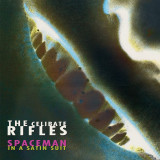
High-level reissue of one of the legendary and world-renowned bands that emerged in Australia, essential for any lover and collector of Australian Rock and Punk Rock / High Energy. "Spaceman In a Satin Suit' was released in 1994 and it is one of the best and most mature works in Celibate Rifles' discography, and now for the first time on vinyl since its initial release. This great LP reflects the simple spirit of the Rifles' rock'n'roll with catchy choruses and signature guitars, with another part that they began to play with after this album, a more experimental and introspective side. The 14 songs of the Celibate Rifles introduce you with an electric storm, oppressively dense, hard and heavy, which then become faster, sharper and stronger, where they overflow Punk, which remains their hallmark, with sharp guitars, wounded and full of fury, until they reach a kind of breaking point towards a more experimental part, together generating an interesting sonic boom (The Ramones team up with Blue Oyster Cult in a particularly gloomy alley). Lovelock's lyrics exude more optimism than on previous LPs and this peaks with 'Big World', a declaration of love to his beloved planet Earth. There is also room for his usual biting social commentary. On the album we also find a tribute to one of its musical influences, 'Let's Do It Again' by Sonic's Rendezvous Band (with the participation of Fred 'Sonic' Smith, ex-MC5).
Halle Weissensee (or Weißensee if you wish) starts where Sascha Funke’s last Ep for Running Back stopped. Mesmerizing house and techno music that interweaves classic forms with modern means and looks through the lenses of nostalgia with an open mind.
The Halle was a former engine plant in Berlin that got converted into a rave areal for the now legendary Mayday raves and one of the birthplaces and leading spots of the nineties. Coincidentally and unknowingly, 1993’s winter edition was attended by Funke and Gerd Janson and a conversation about it spawned this record. Don’t be mislead: this is not a retro rave fest, but an ode to the esprit of the times, the possibilities if an envisioned future and maybe most of all an afterglow. While Reality (sounding like a Relief record if the label would have been a topic at Bauhaus university) and the warped bleepiness of Halle Weissensee itself come closest to the actual sound aesthetic of that very night, Fantasy invokes the language of contemplative deep house from vintage New York, while Puzzle evokes a notion of what the same thing could be with the prefix progressive instead. Reality often falls short behind fantasy, but once in a while both complement each other very well.
out of Stock
Last delivered 11 months ago available to reorder, subject to availability
Taken from from Skinshape’s 8th studio album ‘Craterellus Tubaeformis’. For fans of Khruangbin, El Michels Affair, Madlib, Bonobo. Will Dorey aka Skinshape has proven himself time and again a connoisseur for the cosmopolitan, across a prolific career expertly exploring understated sounds and theatrical textures. Taking his place alongside the likes of Khruangbin, Tame Impala, Bonobo and Madlib, Skinshape’s global kaleidoscopes are loaded with warmth and wisdom created on vintage analogue equipment applying a perfectionist’s touch. As a former member of indie band Palace, he has played everywhere from Glastonbury and BBC Maida Vale to headlining Shepherd’s Bush Empire. Skinshape’s words on the tracks. The Ocean: “This one is dedicated to all the surfers out there. Following the theme of 1960s rock and combining it with subtle elements of 90s beats (that you may not be able to hear).” The Longest Shadow (feat. Andy Platts): “This song takes a more experimental route than some of the more 'psych' tracks on the album. The hot vocals of Mamas Gun frontman Andy Platts lends the track a deep soul vibe, whilst Jon Moody (of the band Franc Moody) lends his piano skills for an electric solo in the latter part of the track.” Support from BBC 6 Music, BBC Radio 2, Jazz FM, Soho Radio, MOJO, Uncut, Shindig etc.
Cookin’ is the first of four albums derived from the Miles Davis Quintet’s fabled extended recording session on Octobre 26, 1956; the concept being that the band
would document its vast live-performance catalogue in a studio environment, rather than preparing all new tracks for its upcoming long-player. The bounty of material in the band’s live sets –
as well as the overwhelming conviction in the quintet’s studio sides – would produce the lion’s share of the Cookin’, Relaxin’, Workin’ and Steamin’ albums.
As these recordings demonstrate, there is an undeniable telepathic cohesion that allows this band – consisting of Miles Davis (trumpet), John Coltrane (tenor saxophone), Red Garland (piano),
Paul Chambers (bass) and Philly Joe Jones (drums) – to work so efficiently both on the stage and the studio. This same unifying force is also undoubtedly responsible for the extrasensory dimensions
scattered throughout these recordings. The immediate yet somewhat understated ability of each musician to react with ingenuity and precision is expressed in the consistency and singularity of each
solo as it is maintained from one musician to the next without the slightest deviation. « Blues by Five » reveals the exceptional symmetry between Davis and Coltrane that allows them to complete each others’ thoughts musically.
Cookin’ features the pairing of « Tune Up / When the Lights Are Low » which is, without a doubt, a highlight no only of this mammoth session, but also the entire tenure of Miles Davis mid-‘50’s quintet.
All the éléments converge upon this fundamentally swinging medley. Davis’s pure-toned soloes and the conversational banter that occurs with Coltrane, and later Garland during
« When the Lights Are Low », resound as some of these musicians’ finest moments.
The final album originally released in 1985 from Austin, TX, punk icons, Big Boys, now available on limited edition 180 gram purple vinyl. The Big Boys got their start in the late 1970's Austin punk scene. The band was fronted by the occasionally cross-dressing Randy "Biscuit" Turner, with Tim Kerr on guitar, Chris Gates playing bass, and a series of drummers - the best known of which is Rey Washam (Scratch Acid). Unlike the rest of the early hardcore scene of the day, they weren't afraid to stray away from superfast tempos in favor of some nice white boy skate funk. Beyond the funk tendencies, the band at times played an early brand of post-punk not unlike their contemporaries The Minutemen. Thanks to their inclusion on some of Thrasher magazine's first "skate comps," the Big Boys were hugely popular amongst the new 80's skate punk crowd. They were also known for the encouragement of crowd participation, breaking down the barriers between performer and audience. They even covered Kool & the Gang, never wavering when venturing into uncharted musical territory. Now y'all, go start your own band… Also Available From Big Boys: Where's My Towel / Industry Standard LP, Lullabies Help The Brain Grow LP
Sophomore album originally released in 1983 from Austin, TX, skate-punk stalwarts, Big Boys, now available on limited edition 180 gram pink vinyl. The Big Boys got their start in the late 1970's Austin punk scene. The band was fronted by the occasionally cross-dressing Randy "Biscuit" Turner, with Tim Kerr on guitar, Chris Gates playing bass, and a series of drummers - the best known of which is Rey Washam (Scratch Acid). Unlike the rest of the early hardcore scene of the day, they weren't afraid to stray away from superfast tempos in favor of some nice white boy skate funk. Beyond the funk tendencies, the band at times played an early brand of post-punk not unlike their contemporaries The Minutemen. Thanks to their inclusion on some of Thrasher magazine's first "skate comps," the Big Boys were hugely popular amongst the new 80's skate punk crowd. They were also known for the encouragement of crowd participation, breaking down the barriers between performer and audience. They even covered Kool & the Gang, never wavering when venturing into uncharted musical territory. Now y'all, go start your own band… Also Available From Big Boys: Where's My Towel / Industry Standard LP, No Matter How Long The Line Is At The Cafeteria, There's Always A Seat! LP
Debut album originally released in 1981 from Austin, TX, punk visionaries, Big Boys, now available on limited edition aqua blue vinyl. The Big Boys got their start in the late 1970's Austin punk scene. The band was fronted by the occasionally cross-dressing Randy "Biscuit" Turner, with Tim Kerr on guitar, Chris Gates playing bass, and a series of drummers - the best known of which is Rey Washam (Scratch Acid). Unlike the rest of the early hardcore scene of the day, they weren't afraid to stray away from superfast tempos in favor of some nice white boy skate funk. Beyond the funk tendencies, the band at times played an early brand of post-punk not unlike their contemporaries The Minutemen. Thanks to their inclusion on some of Thrasher magazine's first "skate comps," the Big Boys were hugely popular amongst the new 80's skate punk crowd. They were also known for the encouragement of crowd participation, breaking down the barriers between performer and audience. They even covered Kool & the Gang, never wavering when venturing into uncharted musical territory. Now y'all, go start your own band… Also Available From Big Boys: Lullabies Help The Brain Grow LP, No Matter How Long The Line Is At The Cafeteria, There's Always A Seat! LP
LP back in again soon, note new price. 5 stars; ‘50 Essential Albums of the 1970s.’ Eccentric & uncompromising, savage & beautiful, literate & guttural. Rolling Stone // Raunchy, pithy, and deeply redolent ... lines quiver with a raw vision rarely heard in folk or country. Pitchfork // Legendary Texan artist Terry Allen occupies a unique position straddling the frontiers of country music and visual art; he has worked with everyone from Guy Clark to David Byrne to Lucinda Williams, and his artwork resides in museums worldwide. Widely acclaimed as a masterpiece, his deeply moving (and hilarious) satirical second album, a complex memory palace to his West Texas hometown Lubbock, is often cited as the urtext of alt-country. Produced in collaboration with the artist and meticulously remastered from the original analog tapes, this is the definitive edition: the first to correct the tape speed inconsistencies evident on all prior versions; the first U.S. vinyl reissue. “Lubbock’s got a hard bark, with little or no self-pity; its music has an edge that can be smelled, like Lewter’s feed lot. No one from Lubbock ever apologized for what they were or where they lived.” – Terry Allen (2016) Three hundred forty-four miles of “blue asphaltum line” separate Ciudad Juárez, Mexico from Lubbock, Texas. Even if Allen’s music is more accurately described as art-country, Lubbock (on everything) sowed the seeds of alt-country’s emergence a decade later. It’s no accident that Lloyd Maines went on to play on classic albums like Uncle Tupelo’s Anodyne (1993) and Wilco’s A.M. (1995), and to produce Richard Buckner, nor that Sturgill Simpson and Jason Isbell play “Amarillo Highway” in concert. This is the urtext, the template for everything that followed
LKEMY is a legendary Italo house producer from the Adriatic Riviera. Active since 1991 when his first 12″ was released, in the 1990s composed and produced several dozen tracks that are now cult favorites among young DJs and collectors of the genre. Now he returns to produce in the same style of the time two tracks that impressed two well-known Italian DJs, one of the old school and one of the new, who wanted to make their own versions. Dj Ralf, one of the most historical, notorious and active DJs in Italy, has remixed “Cloud” for his warm and intense Dj sets around Italy. In “Cloud Detox”, GNMR (Gianmaria Coccoluto) doesn’t approach as just a remixer; rather, he doesn’t distort or eliminate/replace the important parts of the track but transports and renews them in a new musical realm of his own. Where ethnic elements, live-played drums, and intentionally unquantized rhythms give birth to a unique body under the moon of Goa in India. Mysticisms, transcendental worlds, lengthy dances free from others’ judgment, and closer to supernatural contact make Detox a journey towards purification.
out of Stock
Last delivered 18 months ago available to reorder, subject to availability