The music Charles Mingus and his group recorded during his landmark 1960 sessions for Candid Records produced three of the most revered jazz albums of the era. INCARNATIONS is a new masterpiece thoughtfully assembled from rare and unreleased material from those sessions that stands proudly in the Mingus canon of masterworks. All but one of the tracks here are from the November 11th, 1960 sessions Mingus and producer Nate Hentoff put together. The date was split into two halves: one a pure Mingus-led date, featuring a six-piece band that expanded into an octet for two additional tunes, and another, a partial reunion of a collective that had assembled in opposition against George Wein’s Newport Jazz Festival that past July. (That collective, calling themselves The Jazz Artist Guild, would release the album Newport Rebels, on Candid in 1961.) Of special note here is the one track recorded during the Mingus October 20th 1960 sessions. It is a previously unreleased track titled “All The Things You Are (All.)” Found on a tape that contained material from both of these fall 1960 dates, the piece has its roots in an Art Tatum rendition of “All the Things You Are,” which Mingus had recorded before in various settings. Featuring Booker Ervin, Eric Dolphy, Charles McPherson, Ted Curson Lonnie Hillyer, Roy Eldridge, Jimmy Knepper, Britt Woodman, Tommy Flanagan, Paul Bley, Dannie Richmond and Jo Jones. With audio restored and remastered by Bernie Grundman, and liner notes by Pitchfork and New York Times contributor Hank Shteamer, this album is a must have for any Mingus fan.
Phantom Of The Paradise is a legendary 1974 American musical horror film written and directed by Brian De Palma, and starring Paul Williams, William Finley and Jessica Harper.
In the film, a disfigured composer writes his music for a woman he loves so that she will perform his music. However, a record producer betrays him and steals his music to open his rock palace, The Paradise. Betrayed, the composer dons a new appearance and exacts revenge on the producer.
Initially, the film was a box office failure and received negative reviews, however it earned praise for its music, receiving Academy Award and a Golden Globe nominations. Over the years, the film has become a true cult classic.
Of the countless accolades and analyses that surround Blue, no point is more significant than the fact that the 1971 Joni Mitchell album continues to become more popular, revered, referenced, and relevant with each passing day. Such vitality is not only extremely singular; it is the ultimate measure of great art and, in the context of Blue, indisputable proof of the record's accessibility, integrity, and timelessness. If the most brilliant and everlasting music seeks to find truths shared by all of humanity, Blue can be said to be universal doctrine.
Sourced from the original analogue master tapes, pressed on MoFi SuperVinyl, and strictly limited to 12,000 numbered copies, Mobile Fidelity's UltraDisc One-Step 180g 45RPM 2LP box set presents the landmark album with reference-grade detail, tonality, and directness. Marking the first time the beloved LP has received audiophile-quality treatment, it's one of six iconic 1970s Mitchell records Mobile Fidelity is reissuing on definitive-sounding vinyl and SACD sets.
Everything about Blue sounds more intimate, involving, and inescapable on this transparent pressing, which benefits from a virtually non-existent noise floor and superior groove definition. Mitchell's voice, positioned front and center, and primarily accompanied by minimalist acoustic guitar, piano, and dulcimer playing, comes across clearly and prominently. Suspended notes and radiant chords double as question marks, commas, and phrases. The in-the-room presence and spatial dimensionality make absolute the full-range spectrum of introspective emotions — hurt and distress, self-awareness and joy, difficulty and uncertainty, warmth and desire — Mitchell navigates, queries, and contemplates throughout the record. The defencelessness the singer once spoke about is laid bare here like never before.
The packaging of the Blue UD1S set complements its distinguished status. Housed in a deluxe box, both LPs come in special foil-stamped jackets with faithful-to-the-original graphics that illuminate the splendor of the recording. This UD1S reissue exists as a curatorial artifact for listeners who prize sound quality and production, and who desire to engage themselves in everything involved with the album, including the unforgettable cover photograph of a ruminative Mitchell shot by Tim Considine.
Deemed the third Greatest Album of All Time by Rolling Stone; universally celebrated by critics, fans, artists, and educators; and defined by a spell of disarmingly vulnerable songs that are at once confessional, intense, spare, honest, painful, hopeful, and exquisite, Blue charts love, spiritualism, independence, and loss like no record before or since. Widely considered the album that established the singer-songwriter template, the largely autobiographical LP changed everything shortly after its original release in June 1971. Amazingly, it continues to do so more than five decades later.
An incalculable influence on generations of artists, it stands as the through-line from Carole King, Elton John, James Taylor, Joan Armatrading, and Leonard Cohen to Patti Smith, Carly Simon, Emmylou Harris, and Rosanne Cash to 21st century contemporaries like Brandi Carlile, Taylor Swift, Sharon Van Etten, and Courtney Barnett. Teetering between agony and optimism, it is — to borrow a phrase from Mitchell's eternal "A Case of You" — a bottomless "box of paints."
The beauty of the stripped-down arrangements, intoxicating melodies, and Mitchell's wisdom on Blue didn't go unnoticed. Critical acclaim, coupled with the depth of the material and Mitchell's reputation, propelled the album into the Top 20 in the U.S. and Top 10 in the U.K. Yet while so much pop music diminishes with age, Blue has defied norms and headed in the opposite direction. Its 50th anniversary year witnessed an outpouring of tributes, reflections, and testimonials that helped frame the record's escalating importance and symbolism — apt in an age in which women have become the prominent trailblazers in rock, R&B, and hip-hop.
Perhaps most succinctly, in a 2021 article celebrating the LP, the Los Angeles Times declared: "In 1971, nothing sounded like Joni Mitchell's Blue. 50 years later, it's still a miracle." Nothing, indeed. Yet "miracle" suggests Blue partially owes to a divine agent or inexplicable circumstance. And though Mitchell's bracing conviction and forthright sincerity can appear otherworldly, her musical approach and lyrical storytelling is nothing if not personal and human. What we hear is pure truth — no matter how aching, complicated, or stark.
Much has been written about the circumstances that inspired the songs on Blue: Mitchell's romances; her time overseas; her disdain for celebrity; her lingering sense of loss at having given up her daughter for adoption; her treatment by the very same industry that her music made uncomfortable; her prolonged search for resolution. These situations and experiences pushed Mitchell to question everything — especially big-picture concepts that have always obsessed mankind: fulfilment, autonomy, love, honesty, being.
"I wanna make you feel free," Mitchell sings on the record-opening "All I Want." Mission accomplished. Blue is liberation — and the start of a freedom that continues to impact music, culture, and identity today.
More About Mobile Fidelity UltraDisc One-Step and Why It Is Superior
Mobile Fidelity Sound Lab's UltraDisc One-Step (UD1S) technique bypasses generational losses inherent to the traditional three-step plating process by removing two steps: the production of father and mother plates, which are created to yield numerous stampers from each lacquer that is cut. For UD1S plating, stampers (also called "converts") are made directly from the lacquers. Since each lacquer yields only one stamper, multiple lacquers need to be cut. Mobile Fidelity's UD1S process produces a final LP with the lowest-possible noise floor. The removal of two steps of the plating process also reveals musical details and dynamics that would otherwise be lost due to the standard multi-step process. With UD1S, every aspect of vinyl production is optimized to produce the best-sounding vinyl album available today.
"For a long time, I'd come across these discs without really understanding what connected them, apart from a button and that famous logo designed by René Dessirier. Then, with a little more digging, I discovered the "self-production" link. For choirs, schools, folk singers, young pop groups, popular homes and even great composers who engraved unique copies of certain recording sessions...
The French equivalent of the English "Derby Service", the Kiosque d'Orphée, formerly at 7 Rue Grégoire de Tours in the 6th arrondissement, was taken over by Georges Batard in 1967 and moved to 20 Rue des Tournelles in the 4th arrondissement of Paris. The adventure lasted until 1991. Georges Batard was a sound engineer who used a Neumann tube engraver to engrave acetates from the tapes he received, before printing the precious vinyls in the press factories of the day, where he was able to produce very small runs of between 50 and 500 copies.
Of course, there were other structures for releasing his records, such as Voxigrave or, later, FLVM, but none of them had so many records in their catalog. Le Kiosque d'Orphée was neither a label nor a publisher, but a structure that allowed you to press your own vinyl, at a time when it was quite an adventure to get your first 45 rpm or 33 rpm album released!
Georges Batard was described as passionate and conscientious. His son, bassist Didier Batard, wrote of him:
"Georges was passionate about recording and reproducing the stereo sound of his great passion, music. He paid close attention to distortion rates, signal-to-noise ratios, response curves, rise times and other damping factors in audio equipment. He was looking for the exact reproduction of concert hall sound in his living room (with the same sound level, if possible...). In the late '50s/early '60s, he found other sound enthusiasts in AFDERS (Association Française pour le Développement de l'Enregistrement et de la Reproduction Sonores). He became its honorary president. Every Saturday afternoon, its members met to test au- dio equipment. Their opinions were published in the monthly Revue du Son.
All you had to do was send in your tapes and choose the number of record copies you'd like to take home with you, so you could finally share your creations and, in a way, exist. You could opt for a generic sleeve, available in several colors, directly customizable with your name and credits, or you could design your dream sleeve yourself in your living room or at a printer's.
This "Do It Yourself" temple gave birth to some superb pouches. Stencilled, hand-written, illustrated with paintings, drawings, illustrations by friends or girlfriends of the time, photo prints hastily stuck in the middle of a blank, white sleeve, on which the traces of time would leave their imprints, so that collectors and the curious would come and buy them decades later, with the promise of a musical discovery, unfortunately not always fulfilled...
What most of these records have in common is the youth of their songwriters, whether or not they've had a career. Stories of buddies, of getting by and dreams of glory made up this catalog. Most of them were amateur productions, both in terms of the level of the musicians and the quality of the recordings, made on a two-track or, the ultimate luxury, a 4-track in a teenager's bedroom or parents' living room.
It was the beginning of the home studio, thanks to the advent of the Revox portable tape recorder. A bit of a shaky DIY system, but, in return, the luxury of setting no limits: one-sided tracks, no outside censorship, no artistic director, no manager, no Barclay or EMI/Pathé Marconi logos...
When you finally had your own record, you could give it away or sell it to friends, family or after concerts. You could also drop it off at the nearest record shop, with undisguised pride.
It was also a calling card that could be sent to radio stations or music labels, in the hope of launching a career...
Many of the protagonists in this story tried to sign with labels, but in those days, bridges were not so easy to build between one's hometown, or even one's village, and the major or more specialized label that might have released these records. At the time, the advertisements published in the press by the Kiosque d'Orphée opened up the field of possibilities for provincial composers. It was now possible to make their own record, without having to go through the process of signing with a label.
Some of the composers who have gone on to make a career have used this channel to release their first record or parallel projects (Claude Engel, Dominique A, Andy Emler, Michel Deneuve, Claude Mairet, Mick Piellard, Tristan Mu- rail...) and sometimes even single or very limited pressings of work or promotional copies (Bernard Parmegiani, Jef Gilson...).
This album is the conclusion of a long investigation, begun six years ago. It took a long time to find the records, scattered all over the place, in the homes of collectors and sometimes the musicians themselves, and then to listen to them, sometimes painstakingly, to unearth these moments of grace.
From this work, 23 tracks remain, but there are dozens of others that could have been included, so we had to choose, and the choice had to be as universal as possible. This selection is obviously not objective, but I hope you'll like it.
Jards Macalé’s biography is a testament to the electrifying energy of music and the unwavering spirit of artistic rebellion. Macalé has remained true to his vision, unapologetically embracing the unconventional and challenging the status quo. His music, a conduit of emotion and a mirror to society, continues to weave a sonic tapestry that resonates with the souls of listeners.
In 2022, Macalé celebrated the momentous 50th anniversary of his debut solo album, a groundbreaking masterpiece released by Philips in 1972. This iconic record gifted us timeless tracks such as “Vapor Barato”, “Mal Secreto”, “Farinha do Desprezo”, “Revendo Amigos”, and “Hotel das Estrelas”. Its sheer brilliance united the realms of Brazilian music, infusing samba and bossa nova with the fiery essence of rock, classical harmonies, and the improvisational spirit of jazz. As the years passed, a new generation of musicians and fans discovered this gem, fueling its resurgent popularity and inspiring fresh collaborations.
Last year, Jards Macalé assembled a formidable new band, igniting stages across Brazil with a tour that now sets its sights on Europe. Together with Gui Held on guitar, the Paulo Emmery on bass, and Thomas Harres on drums, Macalé conjures an exhilarating homage to his illustrious body of work. This live performance embodies the untamed spirit and boundless musical freedom that define this visionary artist, transporting audiences to a realm where the past intertwines with the present in a breathtaking display of artistic prowess.
out of Stock
Last delivered 2 years ago available to reorder, subject to availability
Miles Davis' A Tribute to Jack Johnson is the best jazz-rock record ever made. Equally inspired by the leader's desire to assemble the "greatest rock and roll band you have ever heard,” his adoration of Johnson, and Black Power politics, Davis created a hard-hitting set that surges with excitement, intensity, majesty, and power. Bridging the electric fusion he'd pursued on earlier efforts with a funkier, dirtier rhythmic approach, Davis zeroes in on concepts of spontaneity, freedom, and identity seldom achieved in the studio — and just as infrequently accepted by the mainstream.
Sourced from the original analog master tapes, pressed on MoFi SuperVinyl, and housed in a Stoughton jacket, Mobile Fidelity's 180g LP reissue brings it all to fore with startling realism. Benefitting from SuperVinyl’s nearly inaudible noise floor, superb groove definition, and clean, ultra-quiet surfaces, this 180g LP showcases everything — from the bold tonality of the headliner's white-hot trumpet solos to the decay of crashing cymbals, carry of wiry guitar notes, and echoes of the studio — in reference fashion.
Bristling with exuberance, Davis' high-register passages explode with authority and commanding presence. Around him, a barrage of urgent backbeats, knifing riffs, and supple bass lines emerge amidst black backgrounds. One of the most prominent differences long-time fans will notice is how much more aggressive, immediate, and vibrant the music sounds, with those aspects central to the composer's original desires.
Utilizing wah-wah and distortion, the go-to instrumentalist of the performances— guitarist John McLaughlin — attacks with a nasty edge, slashing style, and vicious streak that allows A Tribute to Jack Johnson< cross the until-then-impenetrable divide between rock and jazz. Davis puts both feet in the former camp and erases any gap. The stories of the record’s creation are nearly as legendary as the sounds within: Two sessions, multiple jams, different sets of musicians (several uncredited), and near-miraculous production perfectionism that made it all appear cohesive.
The least-well-known masterpiece of Davis' career, the 1971 record — seamlessly assembled and spliced together by producer Teo Macero — was a victim of limited record-label promotion. Audiences also didn’t immediately know what to make of its original cover art — faithfully replicated here. In addition, the powers that be at Columbia Records were directing the public’s attention to Miles at Fillmore, a completely different kind of album guided by two keyboardists. A Tribute to Jack Johnson practically lives in a different universe, one from the future. To many listeners who did manage to hear it — among them critic/musician Robert Quine, Stooges leader Iggy Pop, and renowned critic Robert Christgau — it surpassed everything that came before.
Indeed, Davis treated it as a personal manifesto: An opportunity to salute the Black championship boxer admired for his threatening image to the establishment and impeccable taste in clothes, cars, women and music. Davis explains in the liner notes his affinity for Johnson — a stance mirrored by the defiant music, which hits with a prize fighter's force and reflects the graceful elegance with which a pugilist navigates the ring — and closes the album with a Johnson quote read by Brock Peters.
Inspired not only by Johnson but by Jimi Hendrix and Sly Stone, Davis changed his approach and his band. He surrounds himself with a cadre of musicians in their 20s and, in the case of bassist Michael Henderson, a 19-year-old fresh from touring with Stevie Wonder. Henderson gives Davis what he requested: boogie-based grooves that don’t lose shape or direction. Soprano saxophonist Steve Grossman, drummer Billy Cobham, and organist Herbie Hancock adhere to a similar aesthetic that prizes brazenness, innovation, and energy.
In that vein, during a portion of “Yesternow,” Davis segues into a separate performance (which became known in its entirety as “Willie Nelson”) played by guitarists McLaughlin and Sonny Sharrock, bass clarinetist Bernie Maupin, keyboardist Chick Corea, bassist Dave Holland, and drummer Jack DeJohnette. Dig it!
Talking with jazz scholar Bill Milkowski — who himself noted how McLaughlin’s unrestrained style, decibel-forward volumes, and rapid-fire power chords engendered himself to the rock crowd at the same time that his harmonics and syncopation still definitely made him a jazz player — guitarist Henry Kaiser summed up part of the appeal of A Tribute to Jack Johnson as well as anyone, saying: “It’s a jazz record that way way more open than other jazz records at the time, but still not free jazz. McLaughlin’s rhythm guitar playing on ‘Right Off’ — the use of different chords in a rock shuffle than what anybody had used before — was revolutionary.”
And to think that’s just one aspect of a record that contains multitudes. “Never let them forget it.” Indeed.
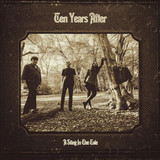
In 1967 Four Young Musicians From Nottinghamshire, England Formed Ten Years After. Alvin Lee, Chick Churchill, Ric Lee & Leo Lyons Became One Of The Most Explosive Quartets On The World Stage And Cemented Themselves As One Of The Biggest Bands In Rock N Roll History.
The Band Scored Eight Top 40 Albums On The Uk Albums Chart And Twelve Multimillion Selling Albums On The Us Billboard 200 Between 1967 And 1974.
In 2014 Founder Members Ric Lee And Chick Churchill Put Ten Years After Back Together With A New Lineup. This New And Exciting Lineup Features British Bass Icon Colin Hodgkinson (backdoor, Peter Green, Alexis Corner, Spencer Davis, Chris Rea, John Lord) And Multi British Blues Award Winning Guitarist And Singer Marcus Bonfanti (van Morrison, Ginger Baker, Ronnie Wood).
This New Lineup Has Been Touring Extensively Since 2013 With Over 150 Shows Under Their Belt And Has Received Rave Reviews From All Corners Of The World As They Continue To Produce The High Energy Of A Vintage Ten Years After Show 50 Years Down The Line.
To Tie In With The Bands 50th Anniversary In 2017, Ten Years After Have Recorded A New Studio Album,a Sting In The Taleand Are Touring Throughout The Year To Promote This New Release And To Celebrate Their Anniversary.
"The True North" ist das zweite Soloalbum von Peter Garrett, dem Sänger von Midnight Oil und Vorreiter des weltweiten Umweltkampfes. Es bezieht seine Inspiration und Kraft aus den lebendigen Farben der australischen Natur und Landschaften. Die Band, die an seiner Entstehung beteiligt war, besteht aus Martin Rotsey (Midnight Oil) an der Gitarre, Heather Shannon (The Jezabels) an den Keyboards, Evan Mannell am Schlagzeug und Rowan Lane am Bass. Freya Schack-Arnott am Cello und Ollie Thorpe an der Pedal Steel schlossen sich ihnen an, ebenso wie 2 von Peters Töchtern May und Grace, die bei den Key-Tracks sangen. "The True North" wurde von Tony Buchen (Smashing Pumpkins, Montaigne, G-Flip, Tim Finn) produziert
out of Stock
Last delivered 2 years ago available to reorder, subject to availability
On a faim!" was originally an anarchist music fanzine created in 1984.
An entire network, with no geographical ties, grew up around the fanzine, helping to write articles and distribute them (often by hand). The fanzine's name even began to appear in connection with the organisation of concerts (Ludwig Von 88, Raymonde et les Blancs Becs, les Thugs, Les Ejectés, Kortatu, Yo Pizza Jump, etc.) and the creation of radio programmes.
The On A Faim ! label came into being at the end of the 80s, following the release of a host of live tapes and themed compilations: "A Bas Toutes Les Armées", "Cette Machine Sert A Tuer Tous Les Fascistes", "Ni Jah Ni Maitre", "Pogo Avec Les Loups". Then came the first artistic albums with Désert Culturel, Un Dolor, Have Nots, Kargols, Pleum, Mister Moonlight, Rude Boy System... Here again, the artistic choices were made primarily on the basis of human encounters, the attention paid to the bands' approach and discourse, and their attitude to the public... even before listening to the slightest demo!
Archives de la Zone Mondiale wanted to pay tribute to this inspiring label, which marked the history of independent and committed music for nearly 15 years. With one of its founders, Jean Pierre Levaray, we have cleverly concocted a sort of musical anthology retracing the essential bands that have marked the history of the label and the fanzine.
On A Faim ! - Anarchy & Musik is a double 20-track vinyl compilation in a highly graphic gatefold sleeve, retracing the label's extraordinary trajectory regardless of musical style: punk, of course, but also ska, hardcore and popular chanson...
Last but not least, all the royalties from this double vinyl compilation are donated to the Uzine (Le Havre) and Fanzinarium (Paris) fanzine libraries.
"Worship Me or Die! is the 1987 debut studio album by heavy metal guitarist and violinist The Great Kat. As a Juilliard School alumnus, it’s no surprise that she’s best known for her thrash metal interpretations of well-known pieces of classical music. Her classical background, technical skills and self-promotion are sometimes compared to Yngwie Malmsteen. The album Worship Me or Die! includes the track “Metal Messiah”, which remains one of her most popular tracks to date. For the first time since its original release, Worship Me or Die! is being reissued. A limited edition of 1000 individually numbered copies is available on silver coloured vinyl, which includes an insert."
Worship Me Or Die! by The Great Kat, released 15 March 2024, includes the following tracks: "Death to You ", "Worship Me or Die! ", "Speed Death ", "Ashes to Dust " and more.
This version of Worship Me Or Die! comes as a 1xLP. This release comes with (a) Insert(s).
Before coming to Europe, in 1970, pianist Manuel Villarroel was a vet in his native Chilli. A few years later, as leader of the Machi Oul Big Band, he returned to the animal kingdom. A very specific kind of animal, for sure, the Quetzalcoatl, also known as the Feathered Serpent. What is behind this title (also the name of one of the three original compositions on this album released on the Palm label in 1976), is first and foremost a sort of homecoming...
After discovering the jazz of Herbie Hancock, McCoy Tyner, Miles Davis and John Coltrane, Villarroel was taken by the free jazz which was all the rage at the time in America and Europe, and this would inspire the first version of his Machi-Oul, project. This was a septet, with which the pianist would record, in 1971, the tremendous Terremoto (re-released by Souffle Continu FFL085). After this masterstroke Villarroel was invited to record with Perception (Perception & Friends) and with Baikida Carroll (Orange Fish Tears). While these were notable contributions, Villarroel was already looking into other combinations.
“I had to deal personally with my situation as an expatriate, without disavowing it. I tried not to betray my roots, I tried to translate into my music what was essential to me, to reflect my origins – Latin America, its musical and above all human feelings – while remaining faithful to jazz, which is the mode of expression of the musicians in the group”. This then is the ‘homecoming’ we mentioned, which would incite Manuel Villarroel to compose what he would call “structured free music”. In January 1972 the pianist enlarged his formation to reach the size of a real big band: the Septet became the Machi-Oul Big Band. Three years later in January 1975, with producer Jef Gilson at the helm, fifteen musicians including those from the old Septet (Jef Sicard, François and Jean-Louis Méchali, Gérard Coppéré) worked on a rare form of jazz. From togetherness to dissonance, we danse to it “Bolerito” then shake it up on “Leyendas De Nahuelbuta”. As for the concluding serpent, it is a piece which is impossible to pin down: “Quetzalcoat” is as impressive as it is difficult to grasp. To remind ourselves of this, lets listen to it again.
"""Volume 2"" is an album by the renowned trumpeter Miles Davis, recorded for the Blue Note label. Released in 1953, this recording is a bold continuation of Davis's exploration of modern jazz. Accompanied by talented musicians such as Sonny Rollins and Art Blakey, the album showcases energetic improvisations and original compositions. ""Volume 2"" is a captivating testament to Miles Davis's musical innovation and enduring influence on jazz. 180GRAM VINYL - LIMITED EDITION 1,000 UNITS - ONE TIME PRESSING."
Celebrated new wave compilation from Japan reissued for the first time on Glossy Mistakes.
A much-cherished gem from the 1980s underground Japanese music scene returns as Soft Selection 84 is reissued by Glossy Mistakes for its 40th anniversary. Originally released on DIY label Soft, the compilation sees 13 tracks from nine acts spanning minimal, ambient, zolo and more for a beguiling listen.
The result is a charming time capsule of eclectic creativity in which nothing sounds dated. Take La Sellrose Can Can, whose two party jams predate Kero Kero Bonito's hyperpop by decades. In addition, an impeccable remastering from the original master tapes adds to the "could have been recorded yesterday" feel of the collection.
Soft Selection 84 also includes the eccentric Picky Picnic. One of the few featured artists with recordings beyond the anthology, the trio is an essential act for those curious about Japanese art pop of the era. There is also new wave introspection from Name, whose "Do We All Need Love" plays out as a sensual nod to John Lennon. In a similar vein is Clä-Sick, the recording name of Goro Some, the compilation's original producer and founder of Soft.
The record's rerelease comes with Some's blessing, along with his original artwork and photography. Ultimately, the listener is left tantalised by his selection and its bold excursions into no wave, synth pop, radioplay and bizzaro house. Most of the artists on this release would fade into obscurity, but the transient nature of the potential showcased has helped cement the compilation's reputation over the years.
Soft Selection will be released on vinyl LP by Glossy Mistakes on March 2024, with a remastering from the original master tapes.
out of Stock
Last delivered 2 years ago available to reorder, subject to availability
Miles Davis created just one studio album with his original sextet: Milestones. And he made every moment count. Pairing with Cannonball Adderley, John Coltrane, Red Garland, Paul Chambers, and Philly Joe Jones, Davis not only laid the groundwork for the modalism that immediately followed but tailored a genuine modern-jazz masterwork laden with performances among the most explosive of his distinguished career. Sandwiched between the more famous 'Round About Midnight and the epochal Kind of Blue, Milestones remains a seminal work of art.
Sourced from the original master tapes and pressed on dead-quiet SuperVinyl, Mobile Fidelity's numbered-edition 180g LP grants each musician their own space amid broad soundstages. Afforded the benefits of a nearly non-existent noise floor and supreme groove definition, this vinyl reissue doubles as a time machine back to the February-March 1958 recording sessions.
Colors, shapes, and dimensions appear in the manner that resembles what you'd glean from behind a studio control room's window. Davis' burnished trumpet is rendered in three-dimensional perspective and seemingly coaxes the band to play with unburdened zest. Coltrane's trademark saxophone teems with lifelike tonality and images with specificity; his solos work in tandem with and against the driving rhythms. Garland's swaggering piano lines? Visualize the keys as he hits full stride, the chords and fills slithering around skeletal frameworks.
Inducted into the Grammy Hall of Fame and selected as a "Core Collection" record by the Penguin Guide to Jazz, Milestones is as famous for its title track – widely considered ground zero for modalism and bolstered by Jones' hallmark "Philly Lick" rim shot – as the players that produced it. The launching pad for many of Davis' improvisational flights, the album teases the explorations Coltrane would soon chase. Davis' own solo work broaches territories that far exceed what he had done in his bop-rooted past. Every song is a highlight.
Take the bravado "Dr. Jackle," featuring a hot-foot pace and bebop strains, or "Sid's Ahead," which continues the album's blues theme while juggling edgy harmonics and inside-out structures. On "Billy Boy," distinguished with an arco bass solo from Chambers, Garland gets a turn in the spotlight and channels the openness practised by one of his heroes, Ahmad Jamal. Even more instructive is the band's reading of Dizzy Gillespie's "Two Bass Hit." Three years removed from the version Davis and company recorded for the trumpeter's Columbia debut, this interpretation demonstrates the extent to which the group had jelled in a relatively short amount of time.
Then there's "Straight, No Chaser," the definitive rendition of Thelonious Monk's signature piece. Coltrane's marbled playing pulls at the tune's borders, Adderley takes liberty with solos, and Davis dances around his mates, at one point quoting "When the Saints Go Marching In" while demonstrating his knowledge of tradition and casting an eye towards the future.
About that future. Garland already had one foot out the door during the Milestones sessions to the extent Davis spells him on "Sid's Ahead." Jones would stick around for a bit longer but soon plot his exit. History proves Davis navigated the changes with visionary aplomb. Yet the chemistry, excitement, and beauty the sextet achieves on Milestones cannot be overstated. This reissue helps put the album in proper perspective – and presents the music the fidelity it deserves.
Dire Straits never made a big to-do about its final run. In classic understated British fashion, the band simply let its music speak for itself. And how. Originally released in September 1991, On Every Street became the group's swan song – a lasting testament to the influence, musicianship, and integrity of an ensemble whose merit has never been tainted by cash-grab reunions or farewell treks. It remains an essential part of the Dire Straits catalog and a blueprint of the distinctive U.K. roots rock the collective played for its 15-year career.
Sourced from the original master tapes, housed in gatefold packaging, and pressed at RTI, Mobile Fidelity's 180g 45RPM 2LP set of On Every Street presents the album like it has always been meant to be experienced: in reference-grade audiophile sound. Recorded at AIR Studios in London and produced by Dire Straits leader Mark Knopfler, it features all of the band's sonic hallmarks – wide instrumental separation, visceral textures, seemingly limitless air, broad soundstages, atmospherics that you can almost reach out and feel. Each element is made more vibrant, physical, and lifelike on this collectible reissue, which marks the first time this 60-minute work has been available at 45RPM speed.
Afforded generous groove space and black backgrounds, the songs from On Every Street burst with nuanced details and vibrant colors. Dire Straits' playing appears to float, their intricate performances organized amid hypnotic, fluid, three-dimensional arrangements. Mobile Fidelity's definitive-sounding set also brings into transparent view Knopfler's finely sculpted guitar lines, expressive tones, and laid-back vocals – as well as the balanced accompaniment from his band mates. Here's a record on which you can hear the full blossom and decay of individual notes, and imagine the size and shape of the studio. It is in every regard a demonstration disc. And it happens to be filled with timeless fare.
Remarkably, On Every Street almost never came to light. Dire Straits initially dissolved in September 1988 after touring behind its blockbuster Brothers in Arms and suffering the departure of two members. At the time, Knopfler professed his desire to work on solo material; bassist John Illsley also explored side projects. But Knopfler's decision in 1989 to form the country-leaning Notting Hillbillies reignited a spark to reconvene his primary band and craft a fresh batch of songs. Six years removed from Brothers in Arms, Knopfler, Illsley, keyboardist Alan Clark, and keyboardist Guy Fletcher teamed with A-list session pros – steel guitarist Paul Franklin, percussionist Danny Cummings, saxophonist Chris White, guitarist Phil Palmer included – to create what still stands as an unforgettable farewell.
The platinum record brings the band full circle in that it returns Dire Straits to a quartet formation; finds the group refreshingly out of step with the era's prevailing trends; and sees Knopfler and Co. knocking out song after song with the deceptive ease of a punter tossing back a pint at a pub. That subtle cool, clever poise, and innate control – signature traits that no other band ever matched – dominate On Every Street. Knopfler's clean, virtuosic six-string escapades unfurl with dizzying melodicism and economical efficiency. Led by his winding fills and focused solos, Dire Straits traverse a hybrid landscape of rock, jazz, country, boogie, blues, and pop strains with near-faultless prowess.
More than any other entry in the group's oeuvre, On Every Street welcomes quick detours down back alleys and into the depths of human souls. What makes it more brilliant is its staunch refusal to cater to commercial expectations or take advantage of prior successes; every passage feels true, every measure echoed in the service of song. It's evident in the humorous satire of "Heavy Fuel," closeted desperation of the witty "Calling Elvis," and shake-and-bake bounce of "The Bug." It pours from the album's darker corners, as on the high-and-lonesome melancholy of the title track and bruised emotionalism of "When It Comes to You."
Hinting at the open-minded approaches and boundless curiosity he'd embrace as a solo artist, Knopfler doesn't limit himself when it comes to style or subject matter. Look no further than "You and Your Friend," a shuffle whose all-inclusive lyrics encourage an array of interpretative meanings. Another of the album's deep cuts, "Iron Hand," comes on as one of the band's most memorable moments – the narrative addressing the abuses of power at the 1984 Battle of Orgreave during the U.K. miners' strike. Given cinematic heft by the expert production, the true-fiction account puts into perspective the richness, poetry, and depth of On Every Street.
"Every victory has a taste that's bittersweet," sings Knopfler on the title track. At least that bittersweetness seldom sounded so damn good on record.
Recorded in Oslo in September 1970, Afric Pepperbird was released on New Year's Day in 1971. Half a century later, it still conveys the freshness and excitement of discoveries being made. The album signalled the arrival of four Norwegian improvisers - Jan Garbarek, Terje Rypdal, Arild Andersen and Jon Christensen - at the fledgling ECM label. It was the start of a lifelong association with each of the musicians, whose influence was soon to reach far beyond the borders of their homeland. In extended passages on Afric Pepperbird, with Christensen and Andersen stretching out, it's quite often Rypdal effectively holding the centre with taut chords. Everybody is roaring here, with Garbarek deep into his free jazz vocabulary. "Garbarek should be heard," wrote reviewer Joe Klee in DownBeat. "I would venture that not since Django Reinhardt has there been a European jazz musician so original and forward-looking as this young Norwegian."
Back in stock ! With his 1966 debut for Atlantic, jazz vibraphonist and marimba player Dave Pike and an all-star lineup produced a perfect blend of Jazz, Latin, Soul and R&B that stands the test of time. Produced by Pike’s frequent collaborator Herbie Mann, "Jazz for the Jet Set" featured a young Herbie Hancock on organ (an instrument he rarely played again), Clark Terry on trumpet, Billy Butler on guitar, Grady Tate on drums, and many other talented musicians. From an artistic perspective, the album marked a pivotal time in Pike’s career, where he began to move away from straight ahead jazz and forge a relationship with soul music, Latin rhythms, pop arrangements and more experimental styles. With this official re-issue courtesy of Nature Sounds, "Jazz For The Jet Set" is now back on limited-edition vinyl while supplies last.
Suffolk-based singer songwriter James Varda’s fourth and final album before his death from a long battle with cancer in 2015, Chance And Time, set for a vinyl only reissue on Unspun Heroes is an astonishing aural document of a creative, forward -thinking musician coming to terms with a life slowly evaporating away. There is hubris, melancholy and an undeniable weight of sadness in these ten songs but, miraculously, there is also a stoic realisation and acceptance from Varda that is both heart-wrenching and deeply affecting. On Chance And Time Varda reconnects the human spirit to the land, a heavy, fearful heart to an optimistic soul, and in a beautiful poetic flourish gives a real tangible sense of loving and hope to his family and friends offering genuine reassurance and even, at times, a green light for celebration.
Carrying a certain air of mystique, that same sense of a ‘other worldliness’ if you will of say a Karen Dalton or a Jeff Buckley, Varda’s delivery and tone carries huge emotional weight here and an unique ability to add an honest perspective and warmth to the starkest of realities. The hard hitting impact of the opening tracks is blunt and sharply defined. There is pain, hardship, and fear wrapped in these tales - ‘The Doctor Spoke, Two Hearts Broke” - made all the more hitting as this is a real life journey in the here and now being catalogued. As we move towards the second half of the record there is something even deeper and truly incredible at play. Varda’s whole demeanor is one of understanding and acceptance - hear the celebratory shamanic vibe of the extraordinary ‘Pass It On’ and the poignantly reflective, chokingly sad finale ‘We Won’t Dream’ - bringing to an end a record that will leave a mark on everyone who hears it. Real art is both timeless and omnipresent, these songs from James Varda will hang in the air forever and be there for those who look to find understanding, joy and a sense of hope. Chance And Time is both an extraordinary record and poignant study of life and living, of death and what comes after.
James Varda released four albums between 1988 and his death in 2015. A fledgling career beginning on the singer-songwriting folk scene where his arrival was met with both curiosity and critical acclaim as was his debut, the John Leckie produced Hunger. Any momentum was lost however as it would be ten years before the next, In The Valley was met with a ruffle of applause. Cancer took hold of the troubadour and for a number of years Varda lived life and wrote songs until The River And The Stars appeared like a phoenix from the flames as he began to wrestle with the realities of his situation. It’s a record that beautifully lays the ground for this his masterpiece that was to follow.
Unspun Heroes, a new label set up by Simon White, has the sole purpose of finding and reissuing albums that he considers both undervalued and seemingly ignored. All releases will be on vinyl only complete with Obi strip and extensive liner notes. Each will be individually numbered and limited.
Seit ihrer ersten Albumveröffentlichung "GOLD VON MORGEN" im Jahr 2014 hat Alexa Feser einen festen Platz im deutschen Musik-Kosmos und befindet sich seither in einem stetigen Entwicklungsprozess. Nach dem Top-3-Album "ZWISCHEN DEN SEKUNDEN" (2017) und den TOP10 Alben "A!" (2019) und "LIEBE 404" (2022) sowie begleitenden äusserst erfolgreichen Tourneen arbeitet die Künstlerin bereits wieder an ihrem neuen Album. "KINO" wird im Frühjahr 2024 veröffentlicht und dieses Mal fungiert Alexa auch als Produzentin. Alexa klingt urban und verkörpert das Gefühl der Grossstadt. Ihr turbulentes Leben in Berlin fliesst in ihre Alben ein und macht sie zu einer konstanten musikalischen Zeugin der Entwicklung. Sie ist eine vollkommene Musikerin mit dem Anspruch, niemals fertig zu sein. Weiterentwicklung ist ihr Credo. Sie bleibt nicht stehen, sie kommt nicht an, sie transformiert sich immer und verändert sich stets. Am liebsten setzt sie ihre Vision im kleinen Kreis um. Sie nimmt das Beste aus beiden Welten mit. Obwohl sie bei einem Major-Label ist, bleibt alles DIY. Dabei möchte sie nicht einfach dem Sound der Zeit folgen; Nein, sie macht ihn sich zu eigen und verleiht ihm ihre ganz eigene Note - nicht zuletzt durch ihre einzigartige Stimme. Mit Features wie dem King Of Rap Kool Savas, Sero, Disarstar oder Esther Graf beweist die Künstlerin einmal mehr ihre Fähigkeit, ein unerschöpflicher musikalischer Hybrid zu sein. Was man hören kann, ist das Selbstbewusstsein einer Künstlerin, die sich weiterentwickelt, ihrer Eigenheit treu bleibt, auf ihre Instinkte vertraut, sich immer wieder neu erfindet und dabei authentisch bleibt.
Immerse yourself in the enchanting world of 'Perfections', Koralle's new EP, now available on Little Beat More!
Koralle, aKa Lorenzo Nada, musician, beatmaker and producer, formerly an underground legend under the moniker Godblesscomputers, returns to put his 'hands in the dough' a few months after the release of his third album 'Insomnia', fusing jazz vibes with the elements that characterise the deep roots of hip-hop in four stylish pearls that capture body and soul in an increasingly intimate dimension.
Listening begins with the EP's title track, "Perfections," a perfect chill awakening, accompanied by fleeting piano notes and a bass drum and snare rhythm in the tradition of the beatmaking masters.
The second track, "Leaf," hints at melancholic and mysterious nostalgic undertones, to be followed by the single "From the Heart," which features the extraordinary participation of Brooklyn lyricist Awon, a mainstay of American jazzrap, who fits in perfectly with Koralle's eclectic sound world.
Finally, the fourth track, 'Come Back to Me Baby,' is a homage to the blues and black music roots of the 1950s, an invitation to rewind the tape and listen to the album all over again.
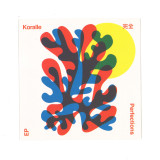
The EP is enriched by the art of Bernardo "Beerbo" Raspanti: a brightly coloured and variegated coral that tells of the different influences that come together in the artist's work and of a profound and engaging musical experience that will enchant connoisseurs and fans of the noble art of beatmaking.
out of Stock
Last delivered 22 months ago available to reorder, subject to availability
Immerse yourself in the enchanting world of 'Perfections', Koralle's new EP, now available on Little Beat More!
Koralle, aKa Lorenzo Nada, musician, beatmaker and producer, formerly an underground legend under the moniker Godblesscomputers, returns to put his 'hands in the dough' a few months after the release of his third album 'Insomnia', fusing jazz vibes with the elements that characterise the deep roots of hip-hop in four stylish pearls that capture body and soul in an increasingly intimate dimension.
Listening begins with the EP's title track, "Perfections," a perfect chill awakening, accompanied by fleeting piano notes and a bass drum and snare rhythm in the tradition of the beatmaking masters.
The second track, "Leaf," hints at melancholic and mysterious nostalgic undertones, to be followed by the single "From the Heart," which features the extraordinary participation of Brooklyn lyricist Awon, a mainstay of American jazzrap, who fits in perfectly with Koralle's eclectic sound world.
Finally, the fourth track, 'Come Back to Me Baby,' is a homage to the blues and black music roots of the 1950s, an invitation to rewind the tape and listen to the album all over again.
The EP is enriched by the art of Bernardo "Beerbo" Raspanti: a brightly coloured and variegated coral that tells of the different influences that come together in the artist's work and of a profound and engaging musical experience that will enchant connoisseurs and fans of the noble art of beatmaking.
out of Stock
Last delivered 2 years ago available to reorder, subject to availability
Authenticity is important in music culture, at least to those whose relationship with it is a lifelong love affair. As listeners, we instinctively respond to artists whose musical output is an authentic representation of their inspirations, experiences and working methods.
By any measure, Guillaume Metenier’s collaborative Soul Sugar project oozes authenticity. It began in the late 2000s as an outlet for the virtuoso organist and producer’s updated takes on ‘60s and ‘70s soul-jazz and Hammond funk, but over the years it has evolved into something entirely different: a vehicle for classic dub and reggae inspired musical fusions made in collaboration with friends and like-minded musicians. As a result, Soul Sugar albums mix impressive musicianship with great grooves and untold nods to the sounds and artists that have helped shape Metenier’s musical outlook.
This authentic approach and soul-enriching sound is naturally in evidence on Soul Sugar’s firth studio set, Just a Little Talk, which is set to be released by Metenier’s own Gee Recordings label in March 2024. This time round, Metenier’s close circle of musical collaborators includes Blundetto, Samuel Isoard, Yvo Abadi, Jolly Joseph, Jahno, Shniece, Slikk Tim and Leo Carmichael. While many are old friends who have appeared on previous albums and singles, there are some first-time collaborators too.
This familiar-but-also-fresh approach is mirrored by the blend of tracks on offer on Just a Little Talk. New songs and instrumentals sit side by side with a small selection of on-point cover versions – something Metenier has been doing since the inclusion of Jimmy Smith and Dr Lonnie Smith covers on 2009 debut album Nothing But The Truth. Memorable covers since have included ‘Why Can’t We Live Together’, ‘I Want You’ and ‘Never Too Much’, all featuring the honeyed voice of Leo Carmichael.
This time round, the headline-grabbing covers are undeniably special. You’ll find takes on Curtis Mayfield’s ‘Makings Of You’, re-framed as a languid roots reggae song featuring voiced by the returning Carmichael, and Donald Byrd’s ‘Blackbyrd’, which Metenier has brilliantly re-imagined as a fabulous fusion of Studio One dub and Blaxploitation funk.
Yet it’s the album’s original compositions that arguably stand out. For proof, check lovers rock-influenced reggae-soul treat ‘The End of Your World’ (featuring heart-aching roots style lyrics and Junior Murvin-esque lead vocals by Jolly Joseph), the similarly conscious ‘Just a Little Talk’ and recent single ‘Top of My List’– an effortlessly emotive gem marked out by Metenier’s weighty dub bassline and Shniece’s incredible lead vocal.
The original instrumentals, in which Metenier often trades licks and solos with guitarists Slick Tim and Samuel Isoard, are similarly impressive – and, to return to our theme, as authentic as they come. Fittingly, one of these – ‘Tubby’s Ghost’ – was originally written and recorded in 1998 with bassist Patrick Bylebyl, who was then Metenier’s partner in a project called Seven Dub. It is, then, a new cover of one of Metenier’s own tunes – and a pleasingly heavyweight one at that. It delivers a genuinely pleasing conclusion to Soul Sugar’s most true and authentic album to date.
out of Stock
Last delivered 8 months ago available to reorder, subject to availability
"Brothers Jackie, Tito, Jermaine, Marlon, and Michael Jackson formed the R&B pop band The Jackson 5 in 196Originally released in 1979, Boogie is the compilation album of both previously released and unreleased songs by The Jackson Included on the album are ""ABC"" and Grammy Award nominated ""Dancing Machine"" (sampled by MC Hammer's in his hit ""Dancing Machine""), ""Never Can Say Goodbye"" and seven more songs. Boogie is considered as one of the rarest Jackson 5 albums, as it was released on the Motown subsidiary record label Natural Resources. Boogie is being reissued for the first time since its original release in 1979."
Boogie by Jackson 5, released 15 March 2024, includes the following tracks: "ABC", "One Day I'll Marry You", "Oh, I've Been Blessed", "Just Because I Love You" and more.
"The American hard rock band Mountain was formed in 1969 by Leslie West, Felix Pappalardi, Steve Knight, and Norman Smart. The year after, they released the debut studio album Climbing!, which peaked at #17 on the US Billboard Top Albums chart. It includes the group's best-known song, ""Mississippi Queen"", which became a hit, and ""Never in My Life"", which was regularly aired on contemporary FM radio. Both were sung by West, while Pappalardi supplied the vocal on another radio favorite, ""Theme for an Imaginary Western"" (co-written by Jack Bruce). Climbing! is available on black vinyl and includes an insert."
Climbing! by Mountain, released 15 March 2024, includes the following tracks: "Never in My Life", "For Yasgur’s Farm", "The Laird", "Boys in the Band" and more.
This version of Climbing! comes as a 1xLP. This release comes with (a) Insert(s).
Brazilian producer and DJ Pedro Bertho, now based in France and an active member of Lyon's electronic music scene, releases his first EP on Cracki Records.
With "Mêlé", he attempts to translate what it feels like to be a black, Brazilian man living in France in the 21st century.
A complex patchwork of experiences, accents and heritages that he translates on this powerful record, mixing baile funk, house, electro or acid house, sprinkled with TR-808 and iPhone recordings.
The mix extends to the remixes, with Brazilian underground queen Badsista signing a hard-hitting version of "Jour 4", while Chilean Alejandro Paz tackles the bouncy "3333".
out of Stock
Last delivered 18 months ago available to reorder, subject to availability
John Coltrane's landmark 1961 jazz album My Favorite Things was born of the same recording sessions that yielded a majority of the albums Coltrane Plays the Blues (1962), Coltrane's Sound (1964), and Coltrane Legacy. That My Favorite Things was recorded in less than three days was in itself, remarkable. This record marked a significant turning point in Coltrane's career and showcased his distinctive playing style, which continues to inspire and influence musicians to this day. Coltrane's playing on My Favorite Things can be described as innovative, exploratory, and deeply emotive. The unforced, practically casual soloing styles of the assembled quartet — which includes Coltrane (soprano/tenor sax), McCoy Tyner (piano), Steve Davis (bass), and Elvin Jones (drums) — allow for tastefully executed passages à la the Miles Davis Quintet, a trait Coltrane no doubt honed during his tenure in that band, notes AllMusic. Coltrane was known for pushing the boundaries of jazz and expanding the possibilities of the saxophone as an instrument. Throughout the album, Coltrane's improvisations are characterized by their intensity, virtuosity, and sheer creativity. The title track is a modal rendition of the Rodgers and Hammerstein song "My Favorite Things" from The Sound of Music. Coltrane's use of modal playing made him a pioneer — modal jazz emphasizes improvisation over specific chord progressions. Coltrane's modal approach allowed him to explore a broader range of tonal colors and to create more open and expansive musical landscapes. Each track of this album is a joy to revisit. The ultimate listenability may reside in this quartet's capacity to not be overwhelmed by the soloist. As a soloist, the definitive soprano sax runs during the Cole Porter standard "Everytime We Say Goodbye" and tenor solos on "But Not for Me" easily establish Coltrane as a pioneer of both instruments. In 1998, My Favorite Things received the Grammy Hall of Fame award. The album attained gold record certified status in 2018, having sold 500,000 copies. We've given this definitive reissue of such a landmark album the presentation it deserves: Mastered directly from the original master tape by Ryan K. Smith at Sterling Sound and cut at 45 RPM. Pressed on 180-gram vinyl at Quality Record Pressings, and housed in tip-on old style gatefold double pocket jackets with film lamination by Stoughton Printing.
Rock & Roll, indeed. Ruth Brown’s sizzling full-length debut — also known by its eponymous title — symbolizes what was exciting, fresh, invigorating, and raw about the burgeoning style in its halcyon days. Originally released in 1957, and reissued here in audiophile quality for the first time in partnership with Atlantic Records’ 75th anniversary, the set remains a testament to one of the most pioneering and talented vocalists to ever command a stage.
Mastered on Mobile Fidelity Sound Lab's renowned mastering system in California, pressed at RTI, housed in a Stoughton jacket, and strictly limited to 2,000 numbered copies, Mobile Fidelity’s 180g mono LP of Rock & Roll plays with an immediacy, vibrancy, and fullness that showcase the reach, power, and emotionalism of Brown’s voice. The sound of her support musicians — brassy horns, swinging rhythm combos, echoing backing vocalists, rollicking pianists, jaunty guitarists — is made clear and vivid, helping the upbeat fare to jump, juke, and jive with newfound energy and exuberance. In a related manner, Brown’s slower, more understated material crackles with an intimacy and passion that let you know you're in the presence of a woman who has lived what she sings. The longtime Rock and Roll Hall of Fame member deserves nothing less.
In an era dominated by big-throated vocalists, few — if any — came grander than Brown. The singer, whose repeat million-selling ‘50s success with Atlantic Records led many to call the then-indie label “The House That Ruth Built,” charted two dozen R&B hits in the span of a decade for the fledgling imprint. Rightly coined “Miss Rhythm,” the extroverted Brown put Atlantic on the national map, became the best-selling female musician of the ‘50s, and established a precedent that would ultimately lead to Grammy and Tony Awards. Her early works have lost none of their fire or flair.
Akin to many full-length LPs of its era, Rock & Roll doubles as a collection. Its 14 tracks comprise some of the more famous sides Brown recorded for Atlantic, beginning in 1949 with the all-time-great rendition of the ballad “So Long,” and continuing through 1956. After the song caught the public’s ear, the Virginia native briefly became known for her smoldering style with lovelorn material and torch songs, approaching them (see “Oh What a Dream,” “Old Man River”) with a combination of pained sadness and hardened resilience that had no contemporary equal. Encouraged to pursue the style by Atlantic Records co-founder Ahmt Ertegun, her R&B-driven material soon made her a constant chart presence.
Demonstrating what fellow legend Bonnie Raitt deemed “sex with class and dignity,” Brown merges blues and jazz, swing and gospel in electrifying fashion. She dares you not to move, dance, and get on your feet. A majority of Rock & Roll explodes with uptempo runs and jaunty readings of hot-blooded R&B numbers. Sweaty and sultry, bawdy and bold, Brown eclipses the anthemic blare of the saxophones and joyful clatter of the 88s, singing with a slight catch in her voice and hurricane-gale force that threatens to blow the roof off whatever room her voice occupies.
Evidence abounds. Listen to her prod the band and encourage the band members to blow a fuse on a sizzling “Hello Little Boy,” complete with cries and wails; stretch her phrasing to the heavens on the swaying “Wild Wild Young Men,” laden with romp-and-stomp beats; plead and persuade on the snaking “5-10-15 Hours,” which flips the script on the age’s notions of dominance; use her raspy tones, high notes, and breath control to mesmerizing effect on the smash “Mama He Treats Your Daughter Mean,” recorded with a group led by Ray Charles; survey the scene and take charge on the steaming “As Long as I’m Moving”; and tap a classy albeit flirtatious vein on “Lucky Lips,” which dented the pop charts as her first crossover hit.
Throughout Rock & Roll, Brown knows the lyrical connotations and spirited architecture of the songs inside-out. Her assertive voice — never harsh, strident, or false — is the epitome of the passionate desires and sonic strains that turned into nascent rock ’n’ roll. Brown played a pivotal role in helping the style develop, the record a timeless reminder of a lasting legacy that will never be forgotten.
An avant-garde masterpiece, a vocal-instrumental suite, a work of collective improvisation, directly addressing the racial and political issues of it’s day, We Insist! Max Roach’s Freedom Now Suite is one of the most important artistic statements of Civil Rights Movement and one of the most groundbreaking jazz albums of all time. Max Roach was already almost a decade into his career as one of the most influential jazz drummers and composers when he teamed up with lyricist Oscar Brown Jr. to collaborate on a piece they planned to perform at the centennial of the Emancipation Proclamation in 1963. Recorded just months after the February 1960 Greensboro sit-ins, the album stands as an early musical testament to the burgeoning rage, anger and passion that would take the Civil Rights Movement from its early victory in Montgomery in 1955 into a future that would dramatically alter race relations in the United States. The second release from the newly launched New York City based jazz label Candid Records, and produced by label co-founder, famed music critic and social activist, Nat Hentoff, the album is a bold statement, focused on civil injustices in black history ranging from slavery to contemporary racial prejudices, and featuring some of the finest jazz musicians ever, including Abbey Lincoln, Coleman Hawkins, Eric Dolphy, Booker Little, and Michael Babatunde Olatunji. The five movements of the work are organized as a historical progression through African-American history, a shape similar to the one in Duke Ellington’s Black, Brown and Beige. The Freedom Now Suite moves from slavery to Emancipation Day to the contemporary civil-rights struggle and African independence. The LP includes extraordinary liner notes written by Hentoff himself, giving a context and insight that adds to the experience of hearing these magnificent performances.
Third album from Norwegian jazz musician Bendik Hofseth. His career started in Oslo with the bands Chipahua and The Heavy Gentlemen together with Knut Reiersrud. He then went to study in the United States, where he also worked for several years as Michael Brecker's successor in the band Steps Ahead (1987-92) "Planets, Rivers and .... IKEA" first released in March 1996 is an album divided into three main parts. Four IKEA songs performed with pop/rock musicians. Performed with things like a piano prepared with screws from IKEA, rubbish bin, and a homemade Berimbau. Four "River songs" with a more jazz-oriented band and Three "Planet" melodies performed by a string quartet and a horn quintet. Despite an apparently wide-ranging use of musicians, it appears as a well-composed and coherent album, with an unmistakable Bendik Hofseth touch!
THE YUM YUMS have been Norway's leading power pop ambassadors for nearly 20 years, and still going strong with a solid following outside of Norway. Power-pop, with 70's punk and glam rock influences, played fast with sweet harmonies that would give The Beach Boys cavities. "Sweet As Candy" was originally released in two different versions. First in 1997 by german label Screaming Apple, then, a year later on Universal Music in Norway. This here is the Norwegian version on vinyl for the first time.
The elusive gemstone of 1970s Harlem soul and funk from the Ray Alexander Technique, officially reissued with bonus tracks. Renowned for its enviable combination of musical muscle and malleability, guitarist/songwriter Raymond Alexander Jenkins’ tight four-piece unit was so revered on the uptown club circuit that it was offered the opportunity to serve as the Apollo Theater house band. Jenkins demurred, hopeful and confident in his groupís chances at making it on its own, and Let’s Talk is the sublime result of their hard work. Independently released and recorded with a distinctly lo-fi charm, it is a collection of unabashedly sincere songs that perfectly encapsulates the era’s heady milieu of Black pride and cultural awareness, and the plaintive emotion of struggling to realize dreams whilst navigating a city and neighborhood in decline. Personal tragedy coupled with Jenkins’ inability to gain traction as a musician, would haunt him for years. But Let‘s Talk’s reputation would eventually spread via word-of-mouth praise amongst soul and funk connoisseurs and record collectors. Now elevated to exalted status, it may finally be more widely appreciated as a testament to Jenkins’ gifts. The main album is augmented by two songs by Ray Alexander Technique with Chris Bartley, not available on the original album.
THE COMPLETE DILLA INSTRUMENTALS FROM THE CLASSIC ALBUM PRESSED ON RANDOMLY MIXED COLORED VINYL
The contributions of the late Detroit producer James DeWitt Yancey - better known to the world as J Dilla- to the world of hip-hop can’t be overstated, and nowhere is his legacy more apparent than his work as a member of Slum Village. A founding member of the trio, (Alongside rappers T3 and Baatin) Dilla provided the groups distinctly esoteric, free-wheeling sound, built around winding basslines, quirky drumbeats, subtle low-end frequencies, and classic jazz & soul samples. After the success of Slum’s 1997 studio debut, Fan-Tas-Tic Vol. 1, the group went to work on their follow up. Though the project was completed in ‘98, label turmoil kept the project on ice until 2000. By the time Fantastic Volume II hit, Dilla was well on his way to his status as a hip hop legend having produced cuts for Common, Busta Rhymes, Erykah Badu, A Tribe Called Quest and many more. Later works from Slum Village may have had more of an impact sales-wise (in the immediate) but Fantastic Volume II had fans and many critics saying that Slum Village, and Dilla in particular, may single-handedly save rap music. Perhaps that statement is hyperbole but many consider Fantastic Volume II to be Slum Village’s, and J Dilla’s, finest work ever. Ne’Astra now presents the complete Dilla instrumentals from this landmark release.
Punk pioneers Crass continue their vinyl reissue series, re-pressing their limited releases by adjacent artists through Crass Records, in association with One Little Independent. The series, including over twenty bands and solo artists recorded at the legendary Southern Studios and produced by Penny Rimbaud, continues with two more historic pieces from the Crass Records catalogue; ‘Barbed Wire Halo’ by Annie Anxiety and ‘Neu Smell’ by Flux of Pink Indians.
They follow records from the likes of Captain Sensible, Omega Tribe, Honey Bane, Jane Gregory, Lack of Knowledge, Sleeping Dogs, Rudimentary Peni and Zounds. First released on 7” vinyl, limiting the sound, the new series has been remastered for 12” by Alex Gordon at Abbey Road Studios, allowing them to be heard as never before. This, plus enlarged replicas of the original covers, brings new gusto to their already radical sound.
New York City musical maverick and performance artist Annie Anxiety, aka Little Annie aka Annie Bandez, began her illustrious career (including work with Adrian Sherwood, Coil, Current 93, and Lee ‘Scratch’ Perry) with Crass. They released her first solo single, 1981’s ‘Barbed Wire Halo’ alongside ‘Cyanide Tears’, an extraordinarily prescient piece of jagged electronics, samples, and skeletal rhythms, led by Annie’s nightmarish vocals.
She tells us; “When creating this single with Penny I hadn’t heard the word ‘avant-guard’ nor could I spell it – I only got explained ‘concretism’ via an interview I did in Berlin regarding some of my work three years ago – My father was a printer so I grew up with sound of printing press and subway train beats and always heard melodies and cross rhythms within those beats – I was just making dance music / disco tunes to my mind and Pen heard those same tunes I was hearing – my first recording, in retrospect I guess, was pretty ‘out there’ at its release, but to us it was dance floor for a club yet to be invented- one day”.
Penny Rimbaud expands; “Annie Anxiety is a total enigma, a passionate voice in the wilderness of consensual reason. Dada in instinct, Monroe in affection, Rambo in inflection, Annie rams it home with divine thunder. An instigator and innovator, she’s the bonkers angel of Yonkers, NYC. With no time to spare, Annie takes to the road with complete conviction, overtaking Kerouac halfway down 5th Avenue. Catch her if you can”.
Most audiophiles know Alan Parsons Project's I Robot by heart. Engineered by Parsons after he performed the same duties on Pink Floyd's Dark Side of the Moon, the 1977 record reigns as a disc whose taut bass, crisp highs, clean production, and seemingly limitless dynamic range are matched only by the sensational prog-rock fare helmed by the keyboardist and his creative partner, Eric Woolfson. Not surprisingly, it's been issued myriad times. Can it be improved? Relish Mobile Fidelity's stupendous UltraDisc One-Step 180g 33RPM box set and the question becomes moot.
Mastered from the original master tapes and pressed at RTI on MoFi SuperVinyl, I Robot comes to life with reference-setting realism on this numbered, limited-edition reissue. Boasting immaculate highs and lows, generous spaciousness, and see-through transparency that takes you into the studio with Parsons and Woolfson at Abbey Road, this definitive edition is designed to demonstrate the full-range capabilities of the world's best stereo systems while offering listeners the convenience of having all the music on one LP.
Featuring a nearly inaudible noise floor, this transcendent UD1S edition functions as a repeat invitation to savor reference-grade soundstages, immersive smoothness, sought-after instrumental separation, three-dimensional imaging, and consummate tonal balances. Able to be played back at high volumes without compromise or fatigue, it is a demonstration record for the ages – the likes of which are no longer being made. This is the very reason you own and invest in high-end audio gear.
The special characteristics of this UD1S version extend to the premium packaging. Housed in an elegant slipcase, the reissue features special foil-stamped jackets and faithful-to-the-original graphics. Aurally and visually, it is made for discerning listeners who prize sound quality and production, and who desire to fully immerse themselves in everything about this conceptual landmark. The Alan Parsons Project's most famous record deserves nothing less.
Inspired by and loosely based around the Isaac Asimov stories of the same name, I Robot delves into themes of artificial intelligence and technological dominance that make the record extremely relevant in the 21st century. Indeed, Parsons and Woolfson's pinnacle creation dovetailed with the ascendency of Star Wars, which itself is experiencing a rebirth in an age of self-driving cars, smart devices, and mindless automation. Lyrically, songs such as "The Voice" call into question human behavior – and their relationship to increasing robotic supremacy – in everyday life. Parsons and Woolfson reflect the associated paranoia, dichotomy, and transformation via shifting sci-fi arrangements steeped in drama and moodiness.
The absorbing tunes on I Robot also continue to fascinate due to their perfectionism and innovation. Borrowing from Pink Floyd's strategies, Parsons and Woolfson utilize a looped sequence on the title track to create new downbeats. "Some Other Time" employs two different lead vocalists and yet gives the illusion that only one is involved. Captivating strings, a piccolo trumpet, and bona fide pipe organ grace "Don't Let It Show." The origins of "Nucleus" stem from a unique analog keyboard concoction dubbed "the Projectron," devised by Parsons and electronic engineer Keith Johnson. Andrew Powell's orchestral and choral arrangements top it all off, with "Total Eclipse" arriving as a frightening track that presages the climactic "Genesis Ch. 1 V. 32."
Does man or machine win in the end? Decide as you get lost in Mobile Fidelity's UltraDisc 180g 33RPM LP pressing. Secure your numbered copy today!
More About Mobile Fidelity UltraDisc One-Step and Why It Is Superior
Mobile Fidelity Sound Lab's UltraDisc One-Step (UD1S) technique bypasses generational losses inherent to the traditional three-step plating process by removing two steps: the production of father and mother plates, which are created to yield numerous stampers from each lacquer that is cut. For UD1S plating, stampers (also called "converts") are made directly from the lacquers. Since each lacquer yields only one stamper, multiple lacquers need to be cut. Mobile Fidelity's UD1S process produces a final LP with the lowest-possible noise floor. The removal of two steps of the plating process also reveals musical details and dynamics that would otherwise be lost due to the standard multi-step process. With UD1S, every aspect of vinyl production is optimized to produce the best-sounding vinyl album available today.
MoFi SuperVinyl
Developed by NEOTECH and RTI, MoFi SuperVinyl is the most exacting-to-specification vinyl compound ever devised. Analogue lovers have never seen (or heard) anything like it. Extraordinarily expensive and extremely painstaking to produce, the special proprietary compound addresses two specific areas of improvement: noise floor reduction and enhanced groove definition. The vinyl composition features a new carbonless dye (hold the disc up to the light and see) and produces the world's quietest surfaces. This high-definition formula also allows for the creation of cleaner grooves that are indistinguishable from the original lacquer. MoFi SuperVinyl provides the closest approximation of what the label's engineers hear in the mastering lab.
Following the sold out Theo Parrish remix of Marcos Valle's '1985', here's the second in Far Out's Brazilika 12" with three scorching remixes from UK dance veteran Ashley Beedle. Three peak time excursions into percussive, soulful house on a stylish, cosmic Brazilian party tip.
Following the sold out Theo Parrish remix of Marcos Valle's '1985' back in April, the second release in Far Out's Brazilika 12' series features a highlight from Sabrina Malheiros' 2011 album 'Dreaming': the blissed-out, sun soaked samba classic 'Opara', which gets three scorching remixes from UK dance veteran Ashley Beedle.
Currently celebrating a decade since the release of her critically acclaimed debut album 'Equilibria', Sabrina Malheiros has remained at the forefront of modern, soul-infused Brazilian music. Growing up in Rio, the daughter of Alex Malheiros, bassist of Jazz-funk pioneers Azymuth, Sabrina has taken the legacy of samba and bossa nova and forged her own forward-thinking path, taking with her all the style and substance of the early days.
Produced under his Afrikanz On Marz moniker, Beedle's remix brings all the right elements of the original to the fore. The result is three peak time excursions into percussive, soulful house on a stylish, cosmic Brazilian party tip, infused with rich, warm rhodes, synth and flute throughout.
The vocal mix on the A side provides a spacious backdrop of twinkling keys and buoyant percussion to Malheiros' gently floating strains. The other mixes offer similarly floor-focused variations: the aptly titled 'Galactic Flute Remix' on the flip pairs the titular wind instrument with a deeper groove that retains the loose-limbed appeal of the original, plus a bonus instrumental to boot. A sure fire heat bringer and certainly one of the most colourful dance 12's we've heard this year.
The Brazilika 12' series is the new vinyl home to the previously unreleased dance exclusives taken from the Spiritual South mix on CD2 of Far Out's 20th anniversary double compilation, released in May 2015.
HJirok is a mythical figure, conceived as a fictional character by Iranian-born Kurdish singer and artist Hani Mojahedy. Together with versatile music producer And Toma of Mouse On Mars, she combined a variety of sounds collected during their joint travels to Iraqi Kurdistan and elsewhere with heavily processed recordings of Sufi drum rhythms and setar melodies. The result is a driving, dubbed-out, and deeply intricate soundscape that perfectly sets the stage for Mojahedy's extended, unconventional vocal techniques and polyglot lyrics. Both informed by tradition and rigorously forward-looking, »Hjirok« (with a lowercase J) is at once a profoundly personal album and a universal utopian promise. As a ghost from the past, HJirok draws on Mojtahedy's memories to mould a new future out of them.
The foundation for »Hjirok« was laid in the city of Erbil in the Kurdish part of Iraq. During one of their stays in the region, Mojahedy and Toma recorded the three percussionists Hadi Alizadeh, Jawad Salkhordeh and Serdar Saydan as well as setar player Ali Choolaei from Motahedy's backing band while they were playingthe rhythms and notes that she had grown up with in the house of her grandfather in the Iranian city of Sanandaj. Her memories of that place revolve around hypnotic Sufi music, dervishes in deep trance, and ecstatic singing. Much like this music seemed to open a portal to other dimensions, the inhabitants of the house lived in a sort of alternative reality: It provided them with a hideaway from political circumstances. Following the Iranian revolution in 1979, a Kurdish rebellion ensued but was met with the utmost brutality by the new regime, which resulted in the death of thousands.
It is no coincidence that the music on »Hirok« would draw on rhythmic patterns that were passed on from one generation to the next for hundreds of years. »The project is rooted in the figures of the Sufi dervishes and thus a culture that precedes today's political, social, cultural, and religious systems,« explains Mohtahedy. »The Sufi sound travelled around the entire world. I like to think of it as a dialogue between peoples-one based on the rhythms of the drums and the sound of their voices.« Toma adds that by electronically transforming the recordings and enriching them with field recordings from both rural and urban spaces, they were able to use the stories told by the drums and the setar to create an entirely new narrative.
The story told by these eight pieces is hence a deeply personal, but also inherently political one. Moitahedy herself left Iran in 2004 and relocated to Berlin in 2010. Having continued to use her art as a platform to tirelessly advocate for the rights of the Kurdish people and women under oppressive regimes, she has not been allowed to return to her country of origin ever since. »Hani is singing for equality and there are people who are afraid of that-her femininity, her strength.« Toma says. Much like earlier Hirok sound installations addressed human-made climate change and other systemic ills, also »Hjirok« can hardly be disconnected from far-reaching struggles for liberation and equality.
This is also true on a thematic and even linguistic level. »The lyrics are about a promise,« Mojahedy says, citing Kurdish writer Ebdulla Pesêw as an inspiration. »At their core, these are about that day on which violence and fear become a thing of the past; what they tell you is ot not give up, to keep hoping,« she adds. The promise embedded in them is an emancipatory one. These contents are mirrored on a linguistic level: The lyrics were written in both Kurdish and Farsi, blurring the lines between the two languages and thus, Kurdish and Persian cultures.
Mojahedy, or rather HJirok, conveys these philosophical themes with elegance. Herversatile vocal performance is only loosely basedo n established styles. »Of course everything started with traditional rhythms, but we kept pushing things further and further, so Idid the same with my voice,« Mojahedy explains. »There were no boundaries.« The same can be said of the field recordings that she and Toma used. Whether it's conversations between members of the Pesmerge, the Kurdish armed forces, having a chat in meadow full of bunnies or the humming and buzzing of metropolises like Tehran: »Hirok« paints a sonic picture that is quite literally autopian one; that of a non-place in which different soundscapes, cultures and ways of life coexist peacefully.
What the album conjures up from Mojahedy's memory is not only a very specific place during a unique time in history as experienced by a single person. It is also ametaphorical home open to anyone who wishes to enter - promise of a better, more egalitarian future for everyone. Hence, HJirok will bring it on tour, presenting the material as an audio-visual live show that makes use of the photo and video material that Mojahedy and Toma have collected during their travels through Kurdistan.ja
out of Stock
Last delivered 2 years ago available to reorder, subject to availability
During the late 1970s, after No Wave pioneer Lydia Lunch met saxophonist James Chance, she began setting her angry and disjointed poetry to anti-music, founding her ground-breaking band Teenage Jesus and The Jerks with Lunch’s shouted lyrics matched by her non-conventional use of electric guitar. The group’s self-titled debut EP is a fast and furious affair, produced by Robert Quine of the Voidoids/Lou Reed, with future Nick Cave drummer Jim Sclavunos on bass and Bradley Field on minimalist percussion; steeped in aggression and audacity, it’s an awesome disc that rebuffs punk’s easy cliches and refuses to be categorized. This reissue also includes the ‘Pre’ EP and the tracks from the legendary No New York compilation.
out of Stock
Last delivered 2 years ago available to reorder, subject to availability
NOW Music is proud to present the third in our ongoing series of vinyl compilations, NOW That’s What I Call 80s Dancefloor. Each edition features an essential collection of tracks representing key genres of 1980’s Dance music. This volume, featuring 30 tracks across 2 LPs pressed on flaming yellow and orange vinyl, presents the best from the era of Soul and Disco.
The first LP kicks off with Tina Turner's landmark remake of ‘Let's Stay Together,’ a testament to her timeless vocal prowess. Jocelyn Brown’s ‘Somebody Else’s Guy’, brings a fabulous fusion of Funk and Soul, followed by Gwen Guthrie’s anthem ‘Ain’t Nothin’ Goin’ On But The Rent. Womack & Womack's ‘Teardrops’ blend of captivating lyrics and rhythm, leads into Joyce Sims' ‘Come Into My Life’, before the Stock Aitken Waterman written & produced ‘Say I’m Your Number One’ from Princess. Loose Ends' ‘Hangin' On A String’ offers a smooth, jazz-infused sound, echoed by Will Downing's very first hit, ‘A Love Supreme’, which closes this side.
Side B takes you on a whirlwind trip around the dancefloor with Whitney Houston's ‘How Will I Know,’ showcasing her stellar vocal range. Alexander O'Neal’s ‘Criticize’ and Aretha Franklin's ‘Who's Zoomin' Who?’ bring a blend of irresistible beats. Lionel Richie's ‘Dancing On The Ceiling’ makes you want to move, and Laura Branigan’s ‘Self Control’, alongside Imagination's debut single, ‘Body Talk’, offers a cross of Hi-NRG Disco with a sensual groove. Hi-Gloss's ‘You’ll Never Know’ is a gem of smooth, elegant Soul to finish the first LP.
Side A of LP 2 begins with the iconic duo Ashford & Simpson's ‘Solid,’ a celebration of enduring love. Up next is the #1 Disco anthem ‘Fame’ from Irene Cara, and Diana Ross's ‘My Old Piano’ - showcasing her unique ability to blend Pop with Soul on this Chic-produced classic. Donna Summer's Grammy-nominated single ‘Love Is In Control (Finger On The Trigger)’ fuses Disco with a Funk edge, while Odyssey's ‘Inside Out’ provides a smooth, and melody filled dance. Terri Wells's ‘I'll Be Around’ is a soulful delight, and Hall & Oates' ‘I Can't Go For That (No Can’t Do)’ mixes Rock with Soul, and became a hugely sampled and influencial track. The side ends on a romantic note with Fat Larry’s Band's ‘Zoom’.
The final side opens by showcasing Rufus and Chaka Khan’s ‘Ain’t Nobody,’ a masterpiece of Funk and Soul synergy. Womack & Womack make their second appearance with ‘Love Wars’, followed by Steve Arrington's ‘Feel So Real’ - a true example of the era's crossover with Disco and Soul. Miami Sound Machine's ‘Dr. Beat’ injects Latin-infused Pop rhythms, while Jermaine Stewart's biggest hit ‘We Don't Have To Take Our Clothes Off’ became a global dance-floor smash hit. Billy Ocean's Grammy award winner, ‘Caribbean Queen (No More Love On The Run)’, blends Soul, Disco and Pop, and Sister Sledge's ‘Thinking Of You’ is the perfect closer, uplifting and full of joy.
A Limited edition pressing, and an essential addition to any collection. Perfect for collectors, DJs, and anyone who loves to get down to the greatest dance-floor-fillers of the ‘80s. NOW That’s What I Call 80s Dancefloor: Soul & Disco is released on February 23rd 2024.
out of Stock
Last delivered 15 months ago available to reorder, subject to availability
Musician and visual artist Kim Gordon returns with her second solo album, The Collective, which will be released March 8th on Matador. Recorded in Gordon"s native Los Angeles, The Collective follows her 2019 full-length debut No Home Record and continues her collaboration with producer Justin Raisen (Lil Yachty, John Cale, Yeah Yeah Yeahs, Charli XCX, Yves Tumor), with additional production from Anthony Paul Lopez. The album advances their joint world building, with Raisin"s damaged, blown out dub and trap constructions playing the foil to Gordon"s intuitive word collages and hooky mantras, which conjure communication, commercial sublimation and sensory overload. Die erste Single "BYE BYE," is out now, driven by a snaking drill bassline which guides us through a haunting packing list. Gordon will also play six live shows around The Collective"s arrival, beginning March 22 in Washington, D.C.
out of Stock
Last delivered 20 months ago available to reorder, subject to availability