Emergency Ward! (1972) is Nina Simone’s statement on the Vietnam War, and by dealing with matters more spiritual than political, this album aptly reflect the events of the day. The entire first side consists of a 18-minute medley of George Harrison’s “My Sweet Lord” and a poem by David Nelson called “Today Is a Killer,” set to music by Simone. This is a very strong, gospel-like performance, sometimes resembling the Capitols’ “Cool Jerk” with a call-and-response vocal arrangement - one of Simone’s finest moments. It was performed together with the Bethany Baptist Church Junior Choir of South Jamaica, New York. Side two consists of the Lennie Bleecherâ’s Jeremy Wind song “Poppies” and George Harrison’s “Isn’t It A Pity”. Tracks 1 and 3 were recorded november 18, 1971 at Fort Dix, and track 2 is recorded at the RCA Studio in New York City.
• 180 GRAM AUDIOPHILE VINYL
• INSERT
• 1972 ALBUM FEATURING “MY SWEET LORD / TODAY IS A KILLER” MEDLEY
• LIMITED EDITION OF 1000 INDIVIDUALLY NUMBERED COPIES ON TRANSPARENT RED VINYL
out of Stock
Last delivered 6 years ago available to reorder, subject to availability
Nairobi, Kenya, 1978. In the Phonogram Ltd. music studio, the popular Congolese Rumba band Les Mangelepa is finishing a session. Things are going well: they have recorded all the music they planned and still have an hour to kill before giving back the studio keys. How about improvising one last song on the spot? And this is how “Nyako Konya” was born. An incredible 9 minutes hypnotic jam, that’ll eventually become one of their biggest tunes, earning them a Gold record and international acclaim throughout Africa. Meticulously restored and remastered by French engineer Nicolas Thelliez, the original version is featured here together with remixes by three talented producers: French House/Disco producer extraordinaire Yuksek and his wall of sound skills, Netherlands’ Afro lovers and world famous studio maverick Umoja delivering a space dub Lee Scratch Perry style, and last but not least, the trademarked syncopated stabs from Brooklyn’s Uproot Andy.
out of Stock
Last delivered 5 years ago available to reorder, subject to availability
Music Mania and Indica Dubs is proud to present the 16th release: Dubs Convention LP. This killer LP was originally released in 1996! This joint album features UK Dub legends; The Bush Chemists, and The Dub Organiser.
This gem shows the true 90s Dub vibes through the raw mixing skills used throughout the album. From the lightening sounding reverb on the snare, to the phasing phaser on the chords; this is the sort of original sound that shaped the Dub scene into the “steppers style” that it is today!
The original artwork of the cover and labels have been maintained to keep the authentic look of the original pressing from the 90s. As well as the original master tapes to keep the audio at the best quality possible!
out of Stock
Last delivered 6 years ago available to reorder, subject to availability
"The two Portuguese-speaking African islands of Sao Tomé & Principe, located in the Gulf of Guinea, created an unique music called Puxa : a refined mixture of various musical components from both sides of the Atlantic Ocean. A blend of Semba, Merengue, Kompas, Soukouss, Coladeira patterns, often pushing forward with a voodoo-like energy, solid bass lines, delicate melodies and backing harmonies of the rich Sao Tomean melodic traditions. Very first compilation focusing on the golden age of these island’s sounds, the 16 tracks selected will surely set fire on all dance floors !
Léve-Léve is the first ever compilation devoted to music from São Tome and Principe, two small islands situated off the coast of Gabon in central Africa. The album unravels a story of liberation where the music of Africa, Europe and the Americas unify with a carefree spirit personified by a phrase the islanders use all the time: “léve, léve” (“take it easy”). With echoes of Angolan semba and merengue, of Brazilian afoxê, of coladeira from Cape Verde and dance music from the Caribbean, it is a sound fiercely proud of its island heritage, sung in local dialects and using distinctive local rhythms.
On this record you can hear the cultural and social history of São Tome and Principe, and how live music represented its beating heart. Once known as the “Chocolate Islands” (remarkably, these two tiny islands were the largest cocoa producers in the world, though now this title acts as a reminder of its colonial past), through the years leading up to independence from Portugal, music would be a fundamental voice of liberation and conviviality. Os Úntués were one of the first groups to make an impression, releasing a couple of 7 inches in Angola – the litmus test of success for any of the islands’ groups. They united unique rhythms and dances like socopé, puita and dança-congo – borne from the islands’ largely slave-descendant population – with the sound of pop music beamed in on the radio from Europe, even adding in a little bit of soukous and Brazilian instrumentation. Their main rivals were Conjunto Mindelo, who fused São Toméan rhythms with rebita, an Angolan style, to create high energy puxa, a truly original island rhythm.
From the mid-1970s, coinciding with independence from Portugal in 1975, the islands’ groups featured an even stronger African influence and nowhere was that more apparent than with Africa Negra. They would listen to the latest records from Gabon, Zaire and Cameroon, taking inspiration and trying out phrasing from the greats of Central African guitar playing, developing a devoted fan base off the islands, as well as on. A score of other bands would follow a similar musical path, with a few getting their dues overseas in Angola, Cape Verde, Portugal and across Africa.
Os Leonenses (led by the iconic Pedro Lima), Conjunto Sangazuza, Sum Alvarinho and Conjunto Ecuador were just some of the other bands that formed a lively home-grown music scene that lit up the islands’ bars and open-air shows from the 1950s through to the mid-90s. Regardless of class or age, they were responsible for keeping the population entertained come the weekend, with Sunday matinee shows the highlight of the week, the music not stopping from midday until midnight.
As a Portuguese island colony that was for many years populated with slaves brought from Africa, São Tome and Principe has much in common with other Lusophone countries and boasts a richly complex and idiosyncratic musical DNA. Whilst the musical tapestries of Angola and Cape Verde are well known, São Tome and Principe’s secrets were assigned to the islanders themselves. Until now."
out of Stock
Last delivered 6 years ago available to reorder, subject to availability
Hugh Masekela and Miriam Makeba’s double-bill Lesotho concert was a daring, defiant and ultimately dazzling act. For the first time since its limited release in South Africa in 1981, Matsuli Music is proud to re-issue this gem of a pan-African, funk-infused, extended audio double album with unpublished photographs and new liner notes from Atiyyah Khan. The Christmas-weekend stadium-filled concert deeply challenged and disturbed South Africa’s apartheid regime. Makeba and Masekela were banned from entering South Africa, yet tens of thousands of their South African fans invaded Lesotho to party with their musical heroes. Live in Lesotho documents an inspired Hugh Masekela and his stellar New York band putting a new spin on crowd favourites. Another South African jazz gem from Matsuli Music’s growing catalogue of essential high-quality reissues. For an artist as prolific and famous as Hugh Masekela, it is a real surprise that this particular recording took so long to resurface.
out of Stock
Last delivered 6 years ago available to reorder, subject to availability
Still deeper forays into the musical landscape of the Windrush generation. A dazzling range of calypso, mento, joropo, steelband, palm-wine and r’n'b. Expert revivals of stringband music, from way back, alongside proto-Afro-funk. An uproarious selection of songs about the H-Bomb and modern phones, prostitution and Haile Selassie, mid-life crisis and the London Underground, racism and solidarity, the Highway Code and a 100% West Indian Royal Wedding.
For example some frantic British-Guianan joropo music-hall about Eatwell Brown from Clapham, who starts out biting off a piece of his mother-in-law’s face at a party, then devours everything in his path… a chunk of Brixton Prison, a Union Jack, a policeman’s uniform. Or Marie Bryant — collaborator of Lester Young and Duke Ellington — taking time off from skewering the South African PM Daniel Malan at her West End revue, to contribute some arch, swinging filth about uber-genitalia. Superior sound, courtesy of Abbey Road, D&M and Pallas; lovely gatefold sleeve; full-size booklet, with full notes, and fabulous previously-unseen photographs, including a set from the family archive of Russ Henderson (who led the first, impromptu Notting Hill Carnival march, in 1966).
out of Stock
Last delivered 5 months ago available to reorder, subject to availability
Christina Aguilera, Donny Hathaway, and Gregory Porter. If you are curious to learn how these three names are connected with Movements Vol.10 then all you got to do is to keep on reading.
Those of you who have been enjoying Tramp Records' Movements series from the very beginning know that this series is not just about funk. It actually covers a wide spectrum of genres: early Rhythm & Blues, Soul-Jazz, Latin-Soul, heavy James Brown-style Funk, and mid-70's pre-Disco. The track listing is, as on all previous volumes, selected in chronological order.
For this, our 10th jubilee album, we go back in time more than 60 years. The Frankie Greer Quartet opens the set with their beautiful composition "Spooky". Just as sweet is "Early in the Morning" by the Bill Beau Trio which was recorded in 1958. What Eunice Haze, Phylis Hendricks and the Eddie Buster Band have in common is the fact that each of them has recorded only one 45rpm single in their musical career.
Johnny Spinosa's "Come On" is a fierce Rhythm 'n Blues monster of the highest order. The same goes for The New Philadelphians. No one would question if "The Mustang" was announced as an unreleased Blue Note recording by Lou Donaldson from 1968. Cleveland Eaton, who became one of the most versatile and best jazz bassists in 1970s, started out with his band The Kats in the late 1960s. "Under the Covers" was arranged by none other than Donny Hathaway (of "The Ghetto" fame) with who he has worked closely together in his early days.
Probably one of the finest and most sought after versions of "Coming Home Baby" out there has been recorded by a german dude and bis band, Ronny Pellers Satin Sound. Another excellent cover version is delivered by The Lido which should leave any latin-jazz fan speechless. "El Mexicano" is an inconspicuous little groover while the next two tunes by Herb Crawford's Jazz Ensemble and The Runningboards are more in the soul-jazz vein. Listen to the dummer on "Louisville Assembly Plant" who goes nuts!
out of Stock
Last delivered 6 years ago available to reorder, subject to availability
Available on vinyl for the first time since its original release in 1984, Outernational Sounds proudly presents Build An Ark pianist Nate Morgan’s second outing for the celebrated Nimbus West label – the conscious and spiritualised sounds of Retribution, Reparation.
Pianist Nate Morgan (1964-2013) was a central figure on the Los Angeles jazz undergound. A core member of the circle around the legendary bandleader, pianist and community organiser Horace Tapscott, Morgan had been part of Tapscott’s U.G.M.A.A. (Union Of God’s Musicians and Artists Ascension) since he was just a teenager, and was a key member of the Pan Afrikan People’s Arkestra, known as ‘The Ark’. Through the 1980s and 1990s he kept the PAPA flame alive, organising the Ark’s sprawling songbook, running legendary jam sessions, and keeping LA’s deep jazz roots well watered. By the early 2000s he was bringing hard won knowledge to a new generation as part of the Build The Ark collective. He was a musician’s musician, at the beating heart of the radical, community-minded Los Angeles jazz network that Tapscott and his associates had first put together in the early 1960s.
Retribution, Reparation was the second of the two LPs Morgan recorded for Tom Albach’s storied Nimbus West imprint. His first, Journey Into Nigritia (Outernational Sounds OTR- 008), had been a declaration of arrival laced with energies drawn from Cecil Taylor and Coltrane. One year later, with nods to Herbie Hancock (‘One Finger Snap’) and Ellington (‘Come Sunday’), Retribution, Reparation was a confident statement of purpose. Politically charged with pan-Africanist and Black nationalist sentiments inspired by Marcus Garvey, and titled with uncompromising directness, the album focusses the soundworld of the Ark into a surging, restless masterpiece of spiritualised modal jazz. With Danny Cortez on trumpet and Ark stalwart Jesse Sharps on saxophones the frontline is explosive (this set is also one of the few places the extraordinary Sharps can be heard in a small group setting), while Fritz Wise and Ark regular Joel Ector hold down the rhythm section. Morgan’s forceful, Tyner-like chords and virtuosic solos and bind the music together. From the poised drama of the opening dedication to Tapscott’s U.G.M.A.A. (‘U.G.M.A.A.GER’) to the propulsive militancy of the title track, Retribution, Reparation spreads the word: ‘Advance to Victory, Let Nigritia Be Free!’
out of Stock
Last delivered 6 years ago available to reorder, subject to availability
“Andy Bey is one of those few jazz vocalists who are so singularly personal and distinctive in style that they communicate the material they choose more in the manner of an instrumentalist than a vocalist. On these recordings from 1995, his first after 1974’s “Experience And Judgment”, he sings and accompanies himself on piano on a series of standards, including four by Duke Ellington (including “I Let A Song Go Our Of My Heart” and “In A Sentimental Mood”), two by George & Ira Gershwin (“Someone To Watch Over Me” and “Embraceable You”), Cole Porter’s “You’d Be So Nice To Come Home To”, Jerome Kern’s “Yesterdays”, and others by Ann Ronnell and Tadd Dameron. The setting is intimate and showcases his broad range from baritone to falsetto and his angular and often sparse piano accompaniment. This is the first time these recordings have been issued on vinyl.”
out of Stock
Last delivered 6 years ago available to reorder, subject to availability
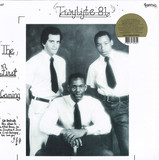
We are very proud to presents this official and first ever reissue of The First Coming, by Twylyte ’81, an extremely rare and underrated Soul-Jazz album produced and released in 1981. Twylyte ’81 was a 3 pieces band composed of Frank Jones Jr., Alfred Brown Jr. and John
Belzaguy, who, except for John, have never recorded anything else than this incredible album. The First Coming is primarily standing out by a superb composition, mixing touch of Soul, Jazz, and Disco together. It secondly shines thanks to the amazing deep and spiritual
voice of the band leader, Frank Jones Jr., whose vocals style can sometime remind of John Lucien. Even more impressive is the fact that these 3 fellas were all less or close to 18 years old when composing and recording this beauty. As did others brilliant hidden projects such as Ted Coleman Band, or Minority Band, it was also useful for Twylyte ’81 to receive the support of JSR Records, a kind of non-profit label dedicated to help young bands and artists in recording and producing their own records. Here are a few words from Al Brown Jr. about this release: “After 38 years, I still have the euphoric feeling while listening to this album. I would say that this was one of my greatest achievements. I want to say "Thank you" Pascal Rioux and associates for sharing the group's vision with the rest of the world. I pray the listeners will feel a portion of what we tried to convey through these songs. When I first began this project, I thought it was just killing time. Being 17 years old at the time, I didn't see the music we worked on being recorded. We (Frank and I) were in a basement practicing each song. Who knew that this music would be recorded let alone picked up 38 years later? I still remember every beat, drum roll, every stop/start; everything. Wow, the nostalgia of it all. I wish this album much successful and I hope in the future I can perform this album live.
out of Stock
Last delivered 15 months ago available to reorder, subject to availability
Limited edition of 300 copies on white vinyl of the third release on "90's Tapes". Endangered Species' “Intangible” was an underground classic released in 1999 on cassette in a very limited run, when word got out this music somehow spread from Calgary throughout Canada to Chicago, Australia, Europe & beyond. The producer / MC combo of Nohow & Infinite P produced the record on the ASR-10 in their dusty home studio using records & a Roland digital 8 track. The only guest appearances were from Agape (Isosceles) & DJ Vinroc (5th Platoon / Triple Threat DJ’s) a song they recorded on tour. 21 years later this record finally gets it’s proper reissue treatment.
out of Stock
Last delivered 6 years ago available to reorder, subject to availability
In der Pause' (During the Pause) was the title of the last track on the b-side of , the first album by Die Tödliche Doris. In der Pause' was pause music, as well as the announcement of the interval between their debut album, released in 1982, and the box format project 'Chöre und Soli' that followed in 1983. The original sounds of In der Pause' survived on a single audio tape dating from 1981.Now, about 35 years later, Chris Dreier and Wolfgang Müller have used the material recorded on the audio tape as the source for five new tracks of pause music. The material on the original audio tape has was reworked using Moog analogue effect modules and Ableton Live. It has been supplemented with archived announcement interludes from radio and television stations, including German stations WDR, NDR and HR, Radio Italy IBF and Radio Kamerun.Sprechpause' was recorded in 1981 — 1982 by Chris Dreier, Nikolaus Utermöhlen and Wolfgang Müller and reworked by Wolfgang Müller and Chris Dreier in 2017.
out of Stock
Last delivered 6 years ago available to reorder, subject to availability
Cai Bojsen-Møller co-founded the original Multiplex imprint and released his debut solo album A Bit of Something on the label in 1996. Cai is an accomplished drummer and his acoustic talents shine through in his electronic work and 909 skills. Out of the circuit for fifteen years, he now returns in stunning form!
Released as a two part EP, this is the second half of "The Spirit of Man and Machine". The idea behind which, evolved around the point where organic elements meet and elevates the programmed part of the music. Much music today is completely quantized, but to make things flawless, risks the loss of feeling to digital perfection. Emerging from the Danish rock scene in the early 80's, correctness was nothing to strive for. With the formula of analog synths through an analog mixer and the drums and sequences recorded live, with a mindset for the right vibe, Cai's new tracks ties in well with his 1990's productions.
Mark Broom returns to Multiplex to deliver his “Skank Mix” of Cai’s “Decomp” track, which Broom has churned into a massive, deep, thumbing, dub-techno tune. This is followed by the original version - a timeless example of chord-driven, minimalistic techno. On the flip side we find the beautiful melodies of the melancholic “FaxImprov”, before rounding things of with Skudge, who has remixed the track, resulting in his great signature sound for the dark floor.
out of Stock
Last delivered 6 years ago available to reorder, subject to availability
Zenit is a jazz ensemble from Krems in Lower Austria, founded in 1976 by Hannes Treiber and Willi Langer. Their music was celebrated locally, but to reduce them to their local fame would be a shame: After all, their first two LPs, Stimmungswechsel (Change of Moods) and Früchte (Fruits), quickly gained them a much wider audience of discerning listeners. Arguably, however, Zenit’s third and final LP Straight Ahead is the most special of their records. It initially came out in 1986 on the producer’s label Spray Records, and is today one of the hardest-to-find Austrian jazz records. Its centrepiece is the infectious slow-motion disco piece “Waiting,” with vocals by American jazz singer Linda Sharrock. Effortlessly bringing together pop, soul and new age vibes, this is a record that is as unique as it is difficult to date. Does it sound like from the 80s? We’re not sure. To our minds at least, it could also be from the future.
out of Stock
Last delivered 5 years ago available to reorder, subject to availability
The Word is one of the better kept secrets of 1980s Austrian disco music. Yet once you put the needle on this record, you notice that it sounds oddly familiar. The awe inspiring signature piece “Lobster” has the same analogue, slow moving aesthetic as Zenit’s timeless “Waiting” that was featured on Edition Hawara’s first release. The same goes for the three other wonderfully unconventional, proto electronic songs: “Easy”, “All My Life” and the eponymous “ The Word”. And there are even more commonalities with Zenit’s LP: The vocals are Linda Sharrock’s, who here teamed up with Karl “Charly” Ratzer and Peter Ponger, the twin brother of legendary Falco producer Robert Ponger. The result of this collaboration is, well, also quite legendary. How this kind of sound emerged in Vienna in 1984 is still a bit of a mystery, but clearly all the stars were aligned when Sharrock, Ratzer and Ponger were jamming in the studio. We are very proud to share this secret with you. Just as there are very few lobsters in landlocked Vienna, there are very few records like this out there.
out of Stock
Last delivered 2 years ago available to reorder, subject to availability
The first release in Ernesto Chahoud’s ‘Middle Eastern Heavens’ reissue series for BBE Music, we are delighted to present Lebanese maestro Ihsan Al-Munzer’s 1979 album ‘Belly Dance Disco’.
In late 70's and early 80's Beirut, Lebanese organist, composer and arranger Ihsan Al-Munzer made a series of pioneering synth-driven fusion albums that reimagined Middle Eastern music. The records came at a pivotal time in Lebanon’s musical history of avant garde experimentation that was blossoming, just as the country’s 15-year civil war took hold.
Ihsan Al-Munzer’s first release as a solo artist, ‘Belly Dance Disco’ aimed to fuse ‘Western’ modern music and bellydance to make it more accessible to the local audience in the late 1970s. “I wanted to put a mixture of European beat with Arabic percussion, but I made the European rhythm and harmony very easy to listen to for the Arabic ear – soft and understandable” says Al- Munzer.
Today, the composer’s music has made the return journey back to the West; with tracks on the album featured by hip hop artists such as Mos Def, who sampled Al-Munzer’s composition ‘Joy of Lina’ on his 2009 song ‘The Embassy’.
The 10-track album was released in 1979 on the legendary Voix De L’Orient label, which was also home to pioneering Lebanese composers The Rahbani Brothers. One of the earliest artists to introduce the synthesizer to Middle Eastern music, Al-Munzer leads the band, playing the main melody lines on the Kawai Organ and Solina String Synthesizer. Three of his original compositions feature on the album, alongside creative re-imaginings of Turkish and Arabic folklore and modern classics, pushing the boundaries of bellydance music to chime with the international scene.
Al-Munzer’s five titles from the 1970's and 1980's are part of BBE’s ‘Middle Eastern Heavens’ reissue series, a collection of groundbreaking productions from Lebanon, curated by Lebanese DJ, compiler and music researcher Ernesto Chahoud.
Notes by Natalie Shooter, a music journalist and researcher based in Beirut, edited by Will Sumsuch.
out of Stock
Last delivered 6 years ago available to reorder, subject to availability
Eastwood Rides Again follows the theme of Lee ‘Scratch’ Perry & The Upsetters previous classic, Return Of Django - and like that one, the groove isn’t just the rocksteady rhythms you’d expect – but also maybe this more spacious version of the style. They got their funk on with the inspiration of Spaghetti Westerns and soul music. The record is largely instrumental and it's a representation of Perry’s significant production skills. Lee ‘Scratch’ Perry was a pioneer in the 1970's development of dub music and worked together with artists such as Bob Marley and the Wailers, The Clash and The Beastie Boys. Nowadays he’s still performing and recording music.
out of Stock
Last delivered 6 years ago available to reorder, subject to availability
Canyons are places of mystery and beauty. The interesting thing is, while they are one of the great wonders in the history of planet earth and attract scientists of all kinds of disciplines, they have also been a popular retreat for artists and musicians. You will have heard of Topanga Canyon, Rickie Lee Jones and Chicago recorded here. Laurel Canyon is even more well known, a mythical place where Crosby, Stills & Nash developed their unique vocal sound while hanging around Mama Cass' place. Or was it in Joni Mitchell's house on Lookout Mountain? Ok, you get the picture. There is something unexplainable, almost magical going on in canyons.
Maybe that's why Andy Platts and Shawn Lee were thinking of "Canyons" when they wrote and recorded their third album as Young Gun Silver Fox. With "West End Coast" and "AM Waves" these two very talented musicians, singers, songwriters, arrangers and producers already explored all things Westcoast, AOR, Softrock and Boogie. But - especially if you are a into the golden age of this sound running from circa 1976 to 1984 - you will be aware that there is no return once you started digging these unconditional musical delights with their timeless compositions, untouchable musicianship and refined arrangements. The great albums from that era appeared when punk broke and the musical establishment was shaken to the ground. Today they sound more up to date than ever. Who would have thought back then?
On "Canyons" Young Gun Silver Fox turned it up to eleven. They are nothing but "Kids" cruising in the fast lane, totally over the top searching for the "Dream Woman", touching down in Tokyo caught in a "Long Distance Love Affair", imagining the theme for a lost 70s TV series starring "Danny Jamaica", being on the winning side in a "Private Paradise", getting deep and soulful in "Things We Left Unsaid" and wondering how to spread "All This Love". Their bass lines, sound layers, brass arrangements and harmony vocals are immaculate. Everything fits perfectly. Just like this. "Who Needs Words" when everything is crystal clear? Exactly!
"Canyons", after all, are magical places of rare beauty. (Mr. Mellow - Porcaroc Club/Mr. Mellow's Sunday Scene/Soho Radio).
out of Stock
Last delivered 6 years ago available to reorder, subject to availability
Changes, always changes! That is the path than an artist travels in his musical career. But road always as a goal. And Jesus Gonsev gives us one of them in his first album as an artist. Eight tracks for enjoy this long tour and see his influences on it. An album where different styles are played, Deep House, Breaks, Electro, Techno. But harmoniously converge with that characteristic Gonsev's touch. Now is the time to start this journey by placing the needle on the vinyl. Do you want to change your life? A new life...
out of Stock
Last delivered 4 years ago available to reorder, subject to availability
Rarely does a record so perfectly encapsulate the essence of Hawai‘i.
During the 1970s and 1980s, Hawai‘i’s live music scene was at its peak. Countless clubs, lounges, and bars filled the islands. Musicians embraced and experimented with all manner of ideas.
Among them were Steve Ma‘i‘i and Teresa Bright, a harmonizing guitar-and-bass duo that floated somewhere between nostalgia and an unassuming island sound. They could fill a concert hall or bring the family together at a backyard kanikapila with their music.
Both singers share backgrounds rooted in native Hawaiian culture; Steve once the bassist for musician/ activist George Helm, and Teresa the daughter of hula dancer Carol Bright and musician Daniel Bright. Together, they crafted a refreshing approach to jazz standards, traditional Hawaiian tunes, and hapa-haole classics.
Steve and Teresa enchanted every listener they encountered, including engineer Rick Keefer, who convinced the pair to record at his Sea-West Studios in nearby Hau‘ula.
At home, in the islands of Cabo Verde, there was grog, or grogu, a strong sugarcane moonshine not dissimilar to Colombian aguardiente, copiously consumed at Funaná parties. In the diaspora, in Europe, there was leite quente (hot milk). "I can still remember the taste of the first leite quente I drank in Lisbon," says Antonino Furtado Gomes, Pilon's drummer and current band leader.
Synthesize the Soul, Ostinato Records' second compilation, revealed chapter one of the Cabo Verde cultural story in Europe, zooming in on visionaries like Paulino Vieira who made Lisbon the headquarters spearheading the musical revolution taking place within Cape Verdean emigre communities across Europe in the 1980's. Musicians from across the diaspora would eagerly travel to the Portuguese capital to record.
Grupo Pilon represents the second chapter of the Krioulu diaspora story. In smaller pockets, second generation musicians were independently contributing to one of the most lush periods of cultural innovation by immigrants in Europe. In Luxembourg, in 1986, a group of teenagers formed the largely unknown (outside of Cape Verdean circles) but consistently brilliant band named after the blunt instrument used in the islands to pound corn for Cabo Verde's national dish, cachupa.
With only five members, Pilon combined searing estilo Krioulu drumming and the hybrid ColaZouk style with blissful synth work and rugged guitar licks, creating a stripped-down, addictive sound that masterfully straddled two worlds, a seductive electro-Funaná carnival born from the first few sips of hot milk.
The band drew from the inspiring political changes of the day: the release of Nelson Mandela in South Africa and the fall of the Berlin Wall. The right to democracy became a constant theme in Pilon's songs.
With access to better opportunities than their parents' generation, Pilon's roster were part time musicians. Music was not part of their academic upbringing nor a full-time gig. Their rhythm and style were wonderfully imperfect, made out of rawer skills and inexperience. Pilon did not follow the templates established by revered Cabo Verde bands. Keyboard player Emilio Borges played off beat and the band preferred arranging their songs to start from the beat normally heard in the middle of a composition rather than the beginning.
These two elements made Pilon's music simple, unique, and inimitable. From 1997-2015, a lack of concerts and professional musicians proved near fatal. Today, Antonino and what remain of the original quintet are slowly piecing back together the puzzle of their once mighty outfit from an unlikely pocket of Europe. In it's heyday in the 90's, Pilon serenaded audiences in Paris, Lyon, Marseille, Lisbon, Rotterdam and Frankfurt, securing their reputation as a respected and unifying cultural force.
This LP, drawing from the six most powerful songs from Pilon's three-album catalog, is the serving of still fresh leite quente to spice the summer and maybe even fuel the next generation of musicians in the Krioulu corners of Europe.
out of Stock
Last delivered 3 years ago available to reorder, subject to availability
Soul Jazz Records new ‘Apala: Apala Groups in Nigeria 1964-69’ is the first ever collection of Apala music ever to be released outside of Nigeria. The album focusses on a wide selection of recordings made in Nigeria in the 1960's, a time when Apala music was at the height of its popularity. Apala is a deeply rhythmical, hypnotic and powerful
musical style that combines the striking nasal-style vocals and traditions of Islamic music, the Agidigbo (thumb piano), and the equally powerful drumming and percussion rhythms and
techniques of the Yoruba of Nigeria.
The most significant figure in Apala music is undoubtedly Haruna Ishola who features throughout this album. Ishola holds an almost mythological status in his role as populariser of Apala music in
Nigeria. Ishola’s singing was believed to be so powerful that, without proper restraint, it could kill the recipient of his music.
Apala is a popular music that also functioned as a form of cultural resistance – Apala music involved no western instrumentation and is sung in the Yoruba language, its aesthetic an implicit cultural
rejection of the British Empire’s colonial rule over Nigeria which lasted from 1901 until independence in 1960. Apala music was popular and widely accepted in Nigeria due to its philosophical and profound
lyrical content alongside the complex rhythmic patterns of this heavily percussive style, which highlighted many of the percussion instruments of south-west Nigeria.
He's one of a number of popular urban styles of music that came out of Nigeria in the 20th century and sits alongside the more well-known (in the West) styles of Fuji, Highlife, Juju and Afrobeat. Of these modern forms Apala remains perhaps the most ‘roots’ style (sometimes described as ‘neo-traditional’) due to the authenticity of its sound. It has similar Islamic roots to other neo-traditional styles of Nigeria – including Waka and Sakara – examples of which are also
included on this collection contextualising the music of Apala.
These recordings were originally made and released locally by Decca and EMI Records as well as a variety of independent labels in Nigeria and have never been released outside of the country before. Soul Jazz Records are releasing this album as a deluxe double gatefold vinyl (download code), CD, slipcase and booklet, both containing full text and photography.
out of Stock
Last delivered 5 years ago available to reorder, subject to availability
Wewantsounds is delighted to continue its Akiko Yano reissue program with the reissue of her superb double album recorded with YMO at a time when she was part of the group’s touring line up between 1979 and 1980. The album is pure Akiko Yano featuring her superb singing and piano playing, enhanced by touches of YMO’s synth-pop sound (check her cult version of YMO’s classic, “Tong-Poo”). It is the first time the album is released outside of Japan and the deluxe 2-LP set features the original artwork with gatefold sleeve and 4-page insert.
When "Gohan Ga Dekitayo" came out in 1980, Akiko Yano had been touring with Yellow Magic Orchestra for more than a year. She'd play keyboards alongside the three founding members, Haruomi Hosono, Ryuichi Sakamoto and Yukihiro Takahashi, plus guitarist Kenji Omura and Synth wizard programmer Hideki Matsutake (as part of the 1980 North American tour, she'd also feature in the group's cult TV appearance on Soul Train for a memorable rendition of "Tighten Up") and they are all present on "Gohan Ga Dekitayo."
The double LP, whose title could be translated by "Dinner is ready," was co-produced with Ryuichi Sakamoto and recorded at two legendary studios: Tokyo's Alfa Studio "A" and Los Angeles' Sound City. It was Akiko's first shift towards a fuller synth sound following four studio albums mixing Pop and Jazz Funk, including her landmark debut from 1976, "Japanese Girl". A shift that would continue with the release of "Tadaima" in 1981, also featuring the YMO musicians.
?The fourteen tracks featured on "Gohan Ga Dekitayo" find Akiko in top form mixing her singer-songwriter's sensitivity with the electro-pop sound of YMO. It's interesting to note though that it is very much an Akiko Yano album even if the group is present on the album (interestingly they do also play analog instruments on the album). Akiko is clearly the one in charge with a string of beautiful compositions and the rendition of one of the group's classics, "Tong Poo" which she reinvents as a slower, less metronomic-paced song adding her own lyrics.
?Other highlights on the album include "Dogs Awaiting..." an hypnotic composition featuring fascinating electro arrangements or "Coloured Water" sung in English by Akiko accompanying herself on Fender Rhodes with subtle percussion by Tatsuo Hayashi and electronics by Ryuichi Sakamoto.
There are many more great moments on this superb album which announces the further experiments of "Tadaima". "Gohan Ga Dekitayo" is an album that urgently needs to be (re)discovered by her growing international fanbase and Wewantsounds is happy to reissue it worldwide for its 40th anniversary.
out of Stock
Last delivered 6 years ago available to reorder, subject to availability
Samuel Rohrer CONTINUAL DECENTERING With his Arjunamusic label and a growing catalog of categorydefying releases, Samuel Rohrer continues to quietly, yet confidently, make a name for himself as a genuinely unique Gigure within the European electronic music realm. In the current era, talk of blurring boundaries between musical genres and attitudes is more the rule than the exception, but not always something done with any degree of success. Rohrer is one of those rare alchemical explorers to have truly created a hybrid which is all his own, one that does not just exist to melt distinctions for its own sake, but is a natural result of years of experimentation with both the determination of electronic music and the ludic spirit of ‘free improvisation.’ On his newest offering, Continual Decentering, this vision is applied to a set of mostly in real time (live) performed explorations. In keeping with his many years’ worth of fruitful collaborations, the tonal palette on this new record is one that is expectedly rich for those familiar with his work, yet still surprising in terms of how exactly the differing tonal colors come together. Representative tracks like Spondee and The Fringe are brimming with dub pulses, noir shivers and blooming timbral variations that are in many places carefully isolated / focused and in other places blended together in vivid fusions. In terms of the emotional atmosphere created here, the pensive and questioning tone hearkens back to the ‘wide open’ state of electronic music in the mid-late 1990s, yet with a greater clarity and maturity of vision that makes this music feel like a possible answer to aesthetic questions being raised at that time. As with Rohrer’s most recent solo work, like the Range of Regularity LP, Continual Decentering showcases the artist’s skill in turning the drum kit into a lead instrument. While the term “lead instrument” denotes a kind of exuberant “Glash,” or a clear separation from the rest of the voices in an ensemble, we can take the term to mean something different throughout this listening program of 13 short vignettes: that is to say, everything else within the audible environment exists to complement the character of the percussive playing rather than to stand apart from it. It helps that Rohrer has, in fact, developed a unique and complex hybrid system in which drum hits trigger modular synthesizer processes, the use of which makes for an incredibly fluid response time between distinct sonic events. In contrast to the previous Range... LP, this new offering is propelled less by interlacing threads of intensity and more by a shared sense of deep listening. As displayed on pieces like All Too Human, there is a profound sense of attention to silences or thoughtful pauses that maybe hints at another crucial aspect of Rohrer’s style: over the course of this program, we tend to hear the player not only playing but listening, an activity which makes perfect sense given the sense of instrumental dialogue already mentioned. All of the above come together to give Continual Decentering a “live”-ness that will easily translate from recorded document to dynamic performance.
out of Stock
Last delivered 6 years ago available to reorder, subject to availability
To call Marcos Valle 'a legend' of Brazilian music is much more than just easy press-release hype. As singer, writer, musician and record producer, Marcos has played an integral role shaping the sound of the country’s music from the 'golden era' of the 60's and 70's, through to the modern day. Alongside his brother, Paulo Sergio Valle, they have penned a huge catalogue of classic songs, not just for themselves but for other greats such as Elza Soares, Astrud Gilberto, Claudia to name a few.
‘Braziliance!’ takes things back to the early heady days of Marcos’ career with the bright and optimistic sound of Rio's Bossa Nova scene. It includes an instrumental version of ’Crickets Sing For Anamaria’ or 'Os Grilos’ in Portuguese, which would also be re-recorded with vocals. Though only in his early twenties at the time, ‘Braziliance!’ depicts very sophisticated production for a musician so young. Recorded in 1966, produced by Louis Oliveira and Ray Gilberts with arrangements by the very talented Emir Deodato, the album was released on Warner Bros. Records.
The artwork presents a very clean-cut, wholesome looking Marcos but darker things were around the corner for Brazil. The ‘Tropicalica’ movement was on its way and about to shake thighs up both musically and politically.
Unlike some of his Bossa Nova contemporaries, Marcos continued to stay relevant, surfing the changes and adapting to the musical developments that culture and society projected and needed, without comprising his art. Under exclusive license to Light In The Attic Records & Distribution, LLC | Mr Bongo Records.
out of Stock
Last delivered 5 years ago available to reorder, subject to availability
When Elena Colombi launched the Osàre! Editions label in the autumn of 2019, she explained that the label would become home to bold, daring, future-facing music rooted in experimentation and free-spirited musical abandon. These are all descriptions that could apply to the label’s latest release, a retrospective album of little-known works by Greek musician and producer Thanasis Zlatanos.
Many will not have heard of Zlatanos, or Nekropolis, the band he fronted alongside dear friend and regular collaborator Trygve Mathiesen, yet the music he made during the 1980s was otherworldly, intergalactic and undoubtedly alluring. These songs and instrumentals made extensive use of analogue synthesizers and lo-fi drum machines, as well as Zlatanos’s trusted Gibson Les Paul guitar and his own distinctive voice.
Stylistically, the musician and producer refused to settle on a specific sound, preferring instead to create inspired, often mind-altering pieces that join the dots between wave music, skewed leftfield pop, ambient, prototype electronic and Madedonian folk music. Operating for much of the period from a crumbling house earmarked for demolition, Zlatanos kept up a daily music-making vigil that resulted in a vast vault of music, most of which has remained unissued since the 1980s.
The breadth of and width of Zlatanos’s distinctive approach is laid bare on Retrospective, a compilation album prepared by Colombi and the artist himself that draws on tracks from his numerous albums, those by Nekropolis – whose sophomore set “The New Europeans” was banned in Norway – and his epic archive of previously unheard material.
The artist’s singular but wide-ranging musical vision is free for all to see across the 13 tracks stretched across the vinyl version of the album (digital buyers also get a further four superb cuts). It veers attractively from the ghostly, traditional-meets-futuristic new age electronica of “The Crystal Sight (Excerpt)” and the doom-laden coldwave throb of “Master Chameleon”, to the undulating, soft-touch creepiness of “Surreal Moment”, the Vocoder-laden operatic poignancy of “The New Barbarians” and the squally guitar solos and effects-laden electronics of “The Light”.
Words from the artist___:
"I live in the Internet. Visits from outer space make me compose. I breathe here. I am the master chameleon, the psychedelic clown. I am not here anymore, neither in the picture, nor the reflection. Our bed is a boat that takes us tomorrow without us.
Here is an album of dreams and digital emotions. Analogue recordings made with a Prophet, a Moog Rogue, a tape recorder and a Gibson Les Paul guitar.
As far as I can remember I have always been in a recording studio. I listen to, understand and live my life through songs and music. I have worked alone and with friends such as Trygve Mathiesen. Although I am a guitarist, I continue to work with synthesizers on music that blends elements of Macedonian folk music, recordings from the streets and embryonic electronic sounds.
Some of my albums have been critically acclaimed, others banned by radio stations. For years I worked on endless recording sessions in a crumbling house that should have been torn down. The music on this retrospective compilation was recorded at various points between 1982 and the present day. Some of the compositions first appeared on previous albums, while others have never been released before. They were sat on tapes waiting for a saviour. Now that saviour has arrived and they can be free.
For further proof of Zlatanos’s unique sonic approach, check the startling contrast between the bass-laden slacker pop headiness of “No Expectations” and the spacey ambience of “The Dead Don’t Remember”. Considered together, the selected pieces and those elsewhere on Retrospective forms a snapshot of a genuinely unique and visionary musician, composer and producer. It’s a celebration of someone whose work has previously been overlooked."
out of Stock
Last delivered 6 years ago available to reorder, subject to availability
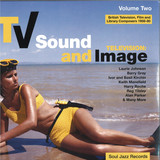
The 36 track 2CD album comes with 50-page book featuring text, biographies and photography. It also comes in a limited run two volume double-vinyl super-loud super-heavy gatefold sleeve editions. Compiled by Stuart Baker (Soul Jazz Records) and sleevenotes biographies by Jonny Trunk (Trunk Records).
TV Sound and Image features British composers who worked in television, film and music libraries the second half of the 20th century.
Aside from John Barry, whose work on the James Bond films made him a household name, or Tony Hatch and Laurie Johnson, the majority of composers featured here - Simon Park, Keith Mansfield, Reg Tilsley, Syd Dale, Keith Papworth – remain relatively unknown. And yet ironically they have created some of the most recognisable songs in British popular culture, their music widely disseminated on television.
A quick role call of these would include Neil Richardson (who composed the theme tune to Mastermind) and Barry Stoller (who wrote Match of the Day). The Simon Park Orchestra’s Eye Level, theme song to the BBC series Van der Valk, reached number one in 1973. CCS’s cover of Led Zeppelin’s Whole Lotta Love was the theme tune to Top of the Pops. And so on.
This album is not however a stroll through the TV memories of the mind, but an exploration of the serious contribution that these creative musicians have on the landscape of popular music in Britain.
Here then is a guide to the amazing music of many of the composers (both well-known and obscure) responsible for some of the most widely known music ever to come out of Britain in the second-half of the 20th century.
Reviews:
Quietus
Der Spiegel: "spannende Klänge ... die oft funky und immer lässig klingen"
"thrilling sounds.... often funky and always chilled"
New Zealand Herald: ***** "Every track is a killer... This is more than just music to mooch too."
Irish Times: **** "downright funky"
Volkskrant: "Ze leverden spanning op maat, die onbekende makers van fenomenale Britse film en tv-muziek. Door de cd TV Sound and Image opnieuw in de aandacht"
Evening Standard: "deeply funky"
Uncut Magazine "excellent 36 track set ... welcome additions to your collection"
When Air’s Nicolas Godin released his debut solo album, Contrepoint (2015), he channelled the influence of Bach into a rich, resonant and hugely rewarding spread of musical explorations. One soundtrack (A Very Secret Service) later, Godin builds on equally fertile conceptual foundations for the follow-up. Released through Because Music on 24th January, Concrete and Glass is an exquisitely crafted set of variations on architectural reference points: mounted with minimalist precision and delivered with an abundance of pop warmth, it finds Godin in his element, working seductive wonders with poise and style to spare.
For Godin, the album circles back to his formative work as half of ground-breaking French electronic group Air. Revered modern architect Le Corbusier was an influence on the young architecture graduate’s music, notably on his 1997 debut “Modular Mix”. Twenty-plus years later, Le Corbusier featured on a list of modernist architects Godin was invited to compose tributes for, tributes intended to be heard as the soundtrack to site-specific installations around the world.
In its soft ambient pulse and melting minimalism, lead track “The Border” is a perfect entry-point to Godin’s hymns to buildings, arranged and co-produced with Pierre Rousseau. Its levitating synths, vocoder vocals and scudding bass hove into view with understated elegance, all the better to accommodate the discreet slow-build of delicate details within. As with Air, Godin makes gorgeously light work of every angle: this is music that seems entirely unperturbed by gravity, occupying an elevated atmosphere of its own.
Elsewhere, the title-track’s clean synth lines, crisply apportioned arrangements and tender timpani offer another inviting entry-point, sculpted with architectural clarity. While Godin’s vocoder vocals also hark back to Air’s early work, the album accommodates a diverse spread of guest vocalists elsewhere. Hot Chip’s Alexis Taylor guests on the falsetto-soul dream-pop of “Catch Yourself Falling”, one of Godin’s sweetest melodies yet. Oxnard singer/activist Cola Boyy brings soul to the righteously engaged “The Foundation”; the squelchy synths and buoyant grooves burn slow, allowing the stealthy arrangements and message room to resonate. Psychedelic soul singer Kadhja Bonet sings with measured serenity over tremulous synths on “We Forgot Love”, while Russian experi-pop artist Kate NV brings a gracefully aching romanticism to the blissful swoon-pop of “Back to Your Heart”.
Additionally, Australian conceptual provocateur Kirin J Callinan contributes a vocal of restrained drama to “Time on My Hands”, a midnight-drift soft-pop ballad with a silky allure. One of the quickest tracks to record for the album, it emerged in collaborations between Los Angeles (”During some lively sessions in Mac DeMarco’s studio,” notes Godin) and Paris. After he missed his flight home, Callinan stayed in France for a day as the guitar solos were recorded, complementing the song's air of sleek luxuriousness.
Between its title-track and the sultry, smoky jazz stylings of closer “Cité Radieuse”, Concrete and Glass is an album that truly travels, in tune with its global pitch. For Godin, it marks another milestone in a musical journey that began when Air’s 1998 debut album, Moon Safari, became the sublimely weightless soundtrack of its time. For Concrete and Glass, Godin builds on his storied past with tremendous finesse, charm and fluency, opening fresh windows of perspective at every lovingly executed turn.
out of Stock
Last delivered 5 years ago available to reorder, subject to availability
Album features Ernie K Doe’s ‘Here Come The Girls’, The Meters, Eddie Bo, Professor Longhair, Lee Dorsey, Wild Magnolias and more.
This is the definitive collection of New Orleans Funk featuring acknowledged masters next to some of the earlier artists who shaped the meaning of funk. The album is also filled with many rare, sought after and undiscovered funk tracks. It covers the period from the emergence of New Orleans Funk in the early 1960's through to the mid-seventies.
The record is an essential part of anyone in any way interested in Funk's record collection. It has some vital ingredients in it that you can't find elsewhere. With the sound of the New Orleans Funeral March Bands, Mardi Gras Indian Tribes and Saturday Night Fish Fries all as inspiration New Orleans Funk developed into a unique sound.
New Orleans is a port town. Originally owned by the French, this was where many slaves were brought from the West Indies. Many of these slaves came from Haiti and brought with them the religion of Voodoo and its drums and music. It became one of the first parts of America to develop a strong African-American culture leading to the invention of Jazz in the early 1900's.
A main feature of Jazz in New Orleans were the Jazz Funeral Marching bands. Solemn Brass bands accompanying a coffin would, on burial, be joined by a second line of drummers and dancers which would turn the event into a celebration of the spirit cutting free from earth. This African tradition is strong in New Orleans and still goes on to this day. The backline drums play a syncopated style that is neither on the beat nor the off-beat. It is these rhythms that are the basis of New Orleans Funk.
The album comes with a booklet presenting a historical explanation to how and why this music came about, and with lots of information about the people involved.
Reviews: "A Perfect Primer For Funk Fans" Q (Top 5 albums of the year). "Probably the finest compilation that Soul Jazz has released. Essential" Time Out.
Five track EP of previously unreleased drum heavy Gallic hard-bop and risqué acidic folk.
The long-lost Parisian skin flick ‘Jeunes Filles Impudiques’ (AKA ‘Schoolgirl Hitchhikers’) marks a particularly vulnerable period in the career of one of the most underrated and misunderstood directors to emerge from the rising smoke of the 1968 Parisian social explosion.
From a director with early links with the Paris underground, the letterists, the surrealists, improv theatre and the free-press comes the reclaimed audio tracks from one of his rarest celluloid moments - but let’s not confuse this for high-art. Finders Keepers make no bones, this is Jean Rollin’s maiden voyage into adult entertainment, directed under the pseudonym of Miche Gentil with a flimsy plot, questionable acting skills and an awesome little schizophrenic soundtrack.
This long-lost movie has been buried for some 40 odd years, with a musical score bursting to jump out of the can and down your tone arm, now made possible by a recently renovated negative print and new source material. These original Pierre Raph (of ‘Requiem For A Vampire’ infamy) compositions from the publishing Library Of Paris’ Musicale Editions Dellamarre (of Acanthus / Unity fame) come straight from Rollin himself as an introduction to Finders Keepers’ new Rollinade series documenting some of the finest musical moments of the director’s career as an avant-gardener, counter-culture vulture and Gallic vamptramp, all housed in their original hand-painted promotional artwork.
out of Stock
Last delivered 6 years ago available to reorder, subject to availability
Peter Brown is one of the ultimate in Harlem underground music business entrepreneurs. From the 70's, all through the 80's he had a stream of releases on a plethora of labels, but ultimately under the
P&P banner. From soul, to disco to the birth of hip hop, he covered all the street sounds of New York and in a series of comps Demon are exploring his legacy. P&P soul and funk covers the 1970's with a number of rare, sought after masterpieces and some
equally essential obscurities.
From the former category we have the magnificent ESP by Four
Below Zero, Dennis Mobley's Rare Groove instrumental version of Superstition and Florence Miller's soul floor filler 'The Groove I'm In' Super rare funk is present from Wild Honey, Smokey Brooks and Flame & The Sons. The roots of disco is well represented with Magnetic Touch's original version of Ain't No Big Thing and Ella Hamilton's I'm Gonna Fool You.
out of Stock
Last delivered 5 years ago available to reorder, subject to availability
Soul Jazz Records new release takes us on a serious road trip into the North-West region of the USA, 1986-97, to explore the amazing lost and forgotten sounds of the Grunge era.
This Deluxe massive 28-track Double CD with 44-page outsize booklet features extensive text, band features and interviews, exclusive photos. Also Worldwide digital release + Ltd.Edition Two seperate double-vinyl albums with full notes and free download code.
The underground music scene of the North-west of America arose from the early 1980's, strung out in isolated towns across the vast state of Washington. In its early days bands who showed an allegiance to their roots of punk. Yet, by 1991,Nirvana, the biggest band in the world, had been born from this community of outsiders.
This compilation features some of the many divergent bands who emerged out of the North-west during this era. Intensely researched and documented this album features many bands who have now disappeared from history after releasing maybe just a couple of singles, or an album, or even never making it onto vinyl – alongside some bands that continue to this day.
Perhaps most fascinating is the wide-ranging styles that these grunge bands incorporated - from punk to metal, experimental and more.
All Roads lead to Nirvana: 17 of the bands featured here played alongside Nirvana in the period 1987 to 93. All 23 bands featured feature members who shared a stage with Nirvana. Jack Endino (The Ones) produced 37 Nirvana songs. Dave Foster (Helltrout) was Nirvana's 3rd drummer. Bundle of Hiss became TAD who played more gigs with Nirvana than any other band.
With fantastically in-depth sleevenotes, interviews with most of the bands, exclusive photography and all sonically remastered tracks this is a comprehensive double CD (and 2 volumes of 2x12" vinyl releases) bringing together the hidden, lost and forgotten sounds of the North-west grunge era.
Reviews & Articles: Seattle Times feature here. Irish Times here. Read article by compiler Nick Soulsby in Nirvana Legacy here Read second article by the compiler here. Read article about the artwork here.
"Art Is A Cat" is The Dining Rooms' eighth studio album - thirteenth if we also consider five remix and rework records - in over twenty years of career. It comes out five years after the fully instrumental "Do Hipsters Love Sun (Ra)?", and shows itself as a new milestone in the artistic path of the Milanese duo formed by Stefano Ghittoni and Cesare Malfatti.
In fact, "Art Is A Cat" hosts every facet of The Dining Rooms' music, mostly nourishing the intuitions delivered in past albums such as "Experiments in Ambient Soul" (2005) and "Ink" (2007). It preserves all the characteristics of their typical signature: songs balanced between folk and soul, dub expansions, instrumental hip hop and cinematic atmospheres. Not to renounce to any of these aspects and given the high quality of the recorded material, Stefano and Cesare decided not to sacrifice anything, and wrote and produced a 19-song full-length for a total duration of about sixty minutes.
"Art Is A Cat" also hosts a large group of guest singers, both historical voices of the band and absolute novelties, who also co-wrote the lyrics; the vocal parts are interspersed with the group's instrumental classics, from funk-fueled visionary downtempos to more experimental micro-songs. Sean Martin and Georgeanne Kalweit therefore return with two songs each (one of the two sung by Georgeanne has its lyrics written by Jake Reid, a London-based singer who already collaborated with The Dining Rooms in "Lonesome Traveler" in 2011).
Among the new entries we have, first of all, the Italian-Tunisian Rahma Hafsi on the sensual ballad "Little Girl" sung both in English and Arabic, while the very young Italian-Salvadoran Beatrice Velasco Moreno sings, together with Sean on backing vocals, the spoken-word "Teach Me To Dance", the spiritual "Sweet Love" and the title-track, an orchestral folk moment among the most inspired ones in the entire band's history; Lola Kola, queen of Tropicantesimo, also brings an absolute novelty in the world of The Dining Rooms, presenting for the first time an Italian-sung piece: "Nella Sua Loca Realtà", a post-melodic song dedicated to the fragility of love.
The vocal parts series ends with two episodes in which Stefano resumes his past as a singer (in the '80s with Peter Sellers & The Hollywood Party) with the Indian-flavoured "Ohm And Raga" and the existentialist ballad "She Says I'm Bad".
"Art Is A Cat" is therefore a complete and very fascinating album, destined to excite and leave its mark.
out of Stock
Last delivered 6 years ago available to reorder, subject to availability
In opposite to other Nigerian acts which hardly got known beyond the borders of their homeland, BLO were always very popular in the Western world. Accompanying Ginger Baker of CREAM fame was the first step to break them into the western popular music market of the 70s and what followed could be called an African fairy tale.
Still this, their fifth album from 1979, waited a long time for a proper reissue, especially on hot black wax with originals in good conditions fetching prices of 300 € and more. For fans of 5th Dimension, The Temptations, Hot Chocolate, Earth, Wind & Fire. First ever and long overdue official reissue of this long lost Nigerian disco classic from 1979. Fifth album by one of The most outstanding Nigerian 70's afro beat acts.
out of Stock
Last delivered 6 years ago available to reorder, subject to availability
Like many an influential album in rock history, the cultural significance of Happy Monday' Bummed was apparent to precious few listeners upon it's first release on 5 November 1988.
Within a decade or two, Bummed would be hailed as one of the best records of the '80s, often by the self-same publications that had slated it back in the day - a harbinger of the seismic shift about to take place in British popular music, away from the squeaky-clean, corporately ordained pop-radio fodder which had increasingly dominated the charts since punk, and back towards the more aggressive, unruly and experience-hungry urges which had always pulsed through rock 'n' roll.
With artwork lovingly replicated by original Manchester designers Central Station Design, this album is on vinyl for the first time since it's original release. Featured the singles "Wrote For Luck" and "Lazyitis - One Armed Boxer"
out of Stock
Last delivered 3 years ago available to reorder, subject to availability
The newest solo work by Roger Eno in nearly a decade. This Floating World holds rustic and melancholic piano works, as grey and mossy as a country cottage. I hear the LP chiming from the dark corners of a pub, soaking in the damp wood like spilled ale.
I first fell in love with Roger's music with his 1985 debut album Voices, which cradled many rainy and caffeinated mornings when I was living in San Francisco years back. He played on the infamous Apollo, Music for Films vol. 3, and recorded a theme for the Dune soundtrack. Pad-keyboards and veils of reverb pour through those processed tracks.
I later rediscovered Roger Eno in a different light with his 1997 album The Music of Neglected English Composers. A playful and beautiful album of chamber pieces guised as the works of forgotten (and fabricated) composers from the past century. His compositional sensibilities remind me of my favorite recent English composers... Hobbs, White, Bryars, Skempton, etc.
This Floating World feels like a hybrid of these two styles, a melding of both his ambient and 'prelude'-esque compositions. Warm and feathered furniture music. An antique on the shelf gifted from an a cherished relative.
In our communication Roger has been a real charmer, ending every email with Roger and out.' A curious fellow, with a knack for tracing the understated beauties of this world.
In addition to the lovely LP, Roger wrote some brief stories which are set in a 12-page booklet alongside his photography.
out of Stock
Last delivered 6 years ago available to reorder, subject to availability
From the cosmic creative musical mind of Swiss/Catalan studio whizz, Zeleste Nightclub engineer, video nasty film composer, occasional Jaume Sisa (Muìsica Dispersa) collaborator and future electronic music therapy pioneer J. M. Pagaìn comes the synth-ridden, vocoder-loaded 1984 sci-funk soundtrack to Barcelona’s daytime TV response to the universal E.T. phenomena. Get ready to meet your new alieniìgena amic and the unidentified flying object of thousands of Catalonian kids’ affections through the 1980's as Finders Keepers present Pagaìn’s lost lunar modular synth score to ‘Kiu I Els Seus Amics’ (Kiu And Friends aka Kiu Is Your Friend).
From the same intergalactic phenomenon that brought such delights as Turkey’s exploito cash-in ‘Badi’ or South Africa’s lo-rent homage ‘Nukie’ to our unregulated small screens and the same craze which filled international airwaves with the likes of Extra T’S electro smash single ‘E.T. Boogie’ or the million selling Columbian ‘Cumbia De E.T. El Extraterrestre’ smash hit... not to mention a wide range of unofficial theme-tune cover versions from Holland, Austria, France and Germany (lest we forget an inspired late period Lee Scratch Perry Album).
In 1982 the diaspora from Steven Spielberg’s small fictional mid-American neighbourhood that played host to everyone’s favourite torch fingered, three toed, Skittle-scoffing space goblin touched virtually every family home in every major city resulting in one of the biggest cinematic merchandise phenomenas of the 21 st Century, resulting in an unexpected high-demand / short-supply play-off in which bootleggers, copyists and counterfeiters rose to the challenge like never before.
When Spielberg regrettably told interviewers that he had no intention of making a sequel to ‘E.T. The Extra Terrestria’ it instantly became open-season for the imitators... but way before somebody squeezed-out ‘Mac & Me’, ‘ALF’ and ‘The Purple People Eater’, a team of kid’s TV executives in Catalunya were ready to fill the widening gap in the market without haste. Created in 1983 by Luna Films and Televisioì de Catalunya (TV3) and screened exclusively in Catalunya, ‘Kiu I Els Seus Amics’ was one of the first E.T. ‘tributes’ to make it out of the gate and with a crew of five individual directors and writers to ensure that the five episode, one-off series hit the wave of phone-home-fever, Kiu has since remained a short but sweet micro- memory in the hearts of an entire generation of Catalonian cosmonauts.
This special Finders Keepers edition comes complete with all of Pagaìn’s cosmic synthesiser soundscapes fully intact (barring striking comparisons with the likes of Tangerine Dream, John Carpenter, Vangelis and the soundtrack music of Suzanne Ciani), as well as some rare, unreleased, incidental TV edits. The bulk of this LP is made up of tracks taken from the rare full-length album, which was released after the TV programme had already been aired and coincided with sales of jigsaws and rubberised play figures in an attempt to catch-up with the unexpected mega-success of the show, needless to say, with a short promotional window, the LP (and cassette edition) did not benefit a re-press and with most copies sold to children, few vinyl pressings have escaped repeat needle scratches and decorated sleeves.
out of Stock
Last delivered 6 years ago available to reorder, subject to availability
The project of Trimolo was setup more or less in 1984. The group won a price at a band contest 1987 where they stepped up from a basement band to a highly asked live band in the upcoming years between 1987 and 1992.
After winning the price they earned their first studio experience and the first two songs published on an LP – the Rock Feierwerk 1987 Sampler. The year after they released their debut LP that is a master piece.
The sound of Trimolo is a melting pot of all 4 musicians that is not divisible from each other. All of them giving a unique sound that blends different styles together to one. Trimolo sometimes sounds like a jazz record but with influences that can sound like a Caribbean or an oriental or a classical record.
The original press of the debut album is nowadays high in demand and a collectors item that has been sold recently for more than 200€. Back in the days it was pressed in a tiny number and was only sold on concerts around the Bavarian capital Munich.
out of Stock
Last delivered 6 years ago available to reorder, subject to availability
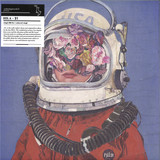
"21" is the well-crafted, sharp and original first album by the duo HILA, composed by American cellist Artyom Manukyan (who already worked with Kamasi Washington, Daedalus, Flying Lotus, Run DMC, Gretchen Parlato, Raphael Saadiq, Clive Lowe Mark...) and french producer Dawatile.
The combination of jazz, Los Angeles beat-scene and the vibrations of 80s and 90s Soviet Armenia make it a striking and unprecedented fusion. These kind of nostalgic and unconventional references forcefully shake the codes of mainstream culture to create a sincere, raw and intimate expression.
"HILA" was born from a spontaneous and intense creative impulse between Artyom Manukyan, a Los Angeles-based Armenian celloist and his partner in crime, David Kiledjian aka Dawatile, a French multi-instrumentist of Armenian descent. This project is proving to be a true master stroke given that it only took 21 days for the duo to make it a reality.
"HILA" was made in less a moon cycle but captivates and electrifies audiences upon its first outings. "H.I.L.A" colors the warmth of the Californian "High" with Armenian vibes. The artists chose this name for their creation since both have a close and valuable connection to these locales. This journey began in 2007, on the day Dawatile went to Yerevan, the capital of this small country in the Caucasus mountain to realize a first fusion project centered around local folkloric music genres.
There he was introduced to local musicians including the Armenian Navy Band, one of the country's foremost groups in which Artyom played the bass and cello. In this context, he also met many musicians such as Tigran Hamasyan and Norayr Kartashyan. This will be the beginning of connections between Lyon, Yerevan and Los Angeles. The following year, the two artists will be be seen performing next to Taylor Mc Ferrin at the Jazz à Vienne festival. More recently, they partnered up again when the cellist, who had freshly relocated in California, invited Dawatile to produce his album. As soon as the studio’s threshold was crossed, they decided to postpone this record and create a joint project: Hay (as the Armenians call themselves) / High In Los Angeles. HILA was born at the end of these 21 days of intense creation. The association of Artyom Manukyan and Dawatile is the combination of two visions, two versions of Armenia, two personalities, the reunion of the Eastern and Western blocs.
One grew up nurtured by the sounds of hip-hop and jazz in Europe and the other by art music and Russian-influenced 1980s Armenian folkloric music before moving to L. A., Ca. The cornerstone of it all, the glue that unites everything : Armenia and music. They generate a new identity synthesizing two perceptions, their complicity transcending these cultural discrepencies. To achieve this, they will scour through images of Artyom’s childhood, within the popular culture of Soviet Armenia. Together, they revisit this decidedly retro vibe, based on the work of Caucasian groups inspired by African American music. This background is rehashed and fused with ancestral Armenian sounds. The DNA of the album "21" is molded by these dear influences.
We can also hear the ancestral sounds of Armenia, a country at the edges of both Europe and Asia. The presence on two tracks of Armenian music Master Norayr Kartashyan, infuses the languor of past melodies and traditions. These purposeful anachronistic sounds offer a fantastic depth to this powerful opus. Listening to the album, one can appreciate the successful fusion of styles and influences. Those combinations, however, manage to preserve individual identities only to enhance the art through an adamant musical dialogue.
Being driven by the urge to transpose Armenian musical traditions into a unique universe, the daring artists, offer an innovative combination by blending, for the first time, these ancestral sounds with the world of Los Angeles beat-scene and jazz. An invention largely fueled by the magic strings of Artyom and maestro Miguel Atwood-Ferguson, a pillar of the genre in Los Angeles combined. These associations resonate with a triumphant equilibrium. HILA is musical uncharted territory in which Artyom's cello strings intertwine to ignite the harmonies of keyboards, the machines, the vocals and electronic layers Dawatile pieced together. HILA plays the soundtrack of an adventure set between Armenia around the end of the Soviet era and a mysterious near future.
Artyom Manukyan grew up in Armenia in the 90s. At the time, he studied Russian classical music while learning jazz with assistance by his father, a music journalist. Being an unconditional music lover, he went on to sharpen his skills at the prestigious Berkelee College of Music. Subsequently, he’s been lucky enough to travel the world touring with numerous acts and mainly with the Armenian Navy Band. The group has fostered alacritous success honored by a BBC Award as a crowning achievement. He moved on 10 years ago and made his way to L.A. with his cello on his back. In the City of Angels, he quickly became a popular figure of the jazz and hip-hop scenes thanks to his first album "Citizen". He’s accompanied prestigious musicians such as Kamasi Washington, Melody Gardot, Daedalus, Flying Lotus, Run DMC, Gretchen Parlato, Raphael Saadiq, Clive Lowe Mark, or Vulfpeck. He released his solo album on the cello, "Alone" in October 2019.
Dawatile is a bold producer and multi-instrumentist as well as a passionate and resolute musician molded by jazz. As a versatile artist, he handles and juggles the saxophone, the keys, the bass and composition. Simultaneously, Dawatile produces cross-over projects and soundtracks for the movie industry. He, as well, has had the opportunity to be a part of many tours, including with his electro hip-hop band, Fowatile and more recently with the "Future Kreyol" trio, Dowdelin. Being the ever workaholic, he has under his belt a string of prestigious collaborations with the likes of Talib Kweli, Foreign Beggars, Roy Ayers, Tigran Hamasyan, Mathieu Boogaerts, Voodoo Game and Piers Faccini. His taste for developing new musical recipes and his know-how in production make him a much sought-after album producer. In concert, the HILA duo offers a sober, precise and rhythmic performance. "21" is an aerial and lively album taking the audience on an at times joyous and sometimes melancholic dreamlike journey. The magic of "HILA" operates at the speed of light and positions it already as an avoidable group.
out of Stock
Last delivered 6 years ago available to reorder, subject to availability
For The Geek and VRV, everything is a matter of time. Since they first met six years ago, the two beatmakers have been broadcasting their music to the four corners of the world, and their collaboration is as strong as ever after the years. Vanguards of the French instrumental hip-hop scene, they’re coming out today with their first album, Time Machine, a synthesis of the sounds and the ideas they’ve been working on from the very beginning of their careers. A trip back through time, as its name suggests, demonstrating the range of sound possibilities that they created in previous projects and on their international tours.
The release of their hit “It’s Because” in 2013 launched them on the scene as French producers who managed to break into the United States, with sampling as their musical base. Closer to home, the Coachella, Osheaga, and Solidays music festivals were won over by the pair’s complementarity, which made the success of their BTOS beat tapes and their EPs, Electric City and Origami.
But since everything is a matter of time, it was sometimes necessary to just let things go, take a break and think things over before coming back even stronger. A year and a half ago, The Geek and VRV started to slow things down, in order to take a step back and concentrate on this new album. With one overriding idea: to explore different eras and time periods, and transpose them into our modernity. Each track is associated with a pivotal year in music. With “Paris Jazz Club 1920”, the first single on the album, we're plunged into the cozy atmosphere of the cabarets, featuring the virtuoso Montreal pianist Anomalie. A meeting made possible thanks to the famous beatmaker Gramatik, who was a fundamental inspiration for their music, and who is also present on the album, as well as the flagship producers Fakear and Møme.
On Time Machine, The Geek and VRV have turned on their time machine to bring us to the year of James Brown’s birth, and find the unstoppable groove of “Get Funky 1933”. Always with hip hop in sight. The explosion of disco inspired them to record “Roller Disco Party 1980”, and the film Back to the Future was behind “Time Machine 1985”. The mixing of different time periods means that the styles, genres and atmospheres are channeled to perfection. The Geek and VRV have been preparing for this trip for five years now. With Time Machine, the time has come for them to begin their exploration, and to take us along for the ride.
out of Stock
Last delivered 5 years ago available to reorder, subject to availability