How does one express the bone-chilling loneliness of having lost the love of his or her mate, even as the relationship continues in the present tense? We would venture to say that “Element Of Love”, the inaugural 45 on S’plat Records, and the record debut of vocalist Gervis Myles, pretty well answers the question. The song and the performances elevate this record well beyond many efforts which seem to get lost in the mannerisms of soul, but ultimately miss the point. Gervis Myles tears into the song, which has the feeling of a scorching King Records hard soul lament from, say, 1960. He moans, shouts, unleashes falsetto outbursts, and hits ever more impossibly high non-falsetto notes as the song goes on. Bootsy Collins commented: “Y’all takin’ me back while moving forward. I love the way you funkin’ with me!” The band, which we call “Suite Crude Revue”, consists in this instance of Andrew Spadofora on saxophone, whose solo work on the record contributes considerably to its searing intensity, John Paul Simons (upright bass), Bryan Rogers (piano), Dave Schoepke (drums) and Daniel Zelonky on guitar. The B side, “I’m Thirsty,” is a rhythm and blues stomp about drinking away “woman problems.” Standout piano work from Rogers and a blistering solo by Spadafora, in addition to the raw vocal performance, make one want to …. drink! Written, arranged, and produced by Daniel Zelonky (aka Low Res).
Cerca:no comment
Gombloh’s forgotten masterpiece
What if you have Brian Wilson and Bruce Springsteen rolled into one? And what if he came of age as an poor buskers in in Surabaya, Indonesia, but then summoned enough strength to record six albums that flew in the face of everyone in the country’s rock scene back in the early 1980s?
Genius, be they Brian Wilson or Soedjarwoto “Soemarsono” Gombloh, don’t conform to rules written for us mere mortals. They have their own way of doing things and in the case of Gombloh, writing music, conducting recording session and spending cash from his music, must be conducted on his own terms and his terms only. Studio time was expensive back in the early 1980s, yet Gombloh could be three-hour late for his session, and while engineers, session musicians and producers were jittery about the prospect of another botched session, Gombloh took his time for a nap before the recording begun.
Yet, some of his greatest works came into being in the wake of this napping session. Recording session for Sekar Mayang is no exception, despite the fact there’s foreboding sense of doom with Gombloh being unsure about the possibility of selling enough units to help his label break even. This is, after all, this is his last record with his band Lemon Tree’s. No one knew that Gombloh was operating with all his cylinders running and what came out of this Indra Record session, in the waning days of 1980, were some of the best compositions ever committed to magnetic tapes (to wax, if now you’re holding this on vinyl).
This is Gombloh at the peak of his creative genius. You can argue that his debut album Nadia & Atmospheer (what’s with the spelling mistake?) is the most sprawling and complex album (both sonically and thematically), but Sekar Mayang certainly had the best songs and I can make the argument that this album’s 10 songs are strong contenders for biggest hits in blues, country, psychedelic rock charts. “Prahoro & Prahoro” is one of those impossible song which appears to have sprung from a bottomless well of inspiration, encompassing King Crimson’s sprawling epic, Deep Purple’s deepest blues and Genesis’ most progressive tendencies. Or “Sekaring Jagat”, which begins as Lennon-McCartney lullaby before launching a thousand ships traveling to the end of the rainbow with children choir singing heavenly melodies backed by droning harpsichord and synclavier, while a buzzing Hammond B3 tightly locks with Gombloh’s guitar strumming.
For many of his fans, Gombloh is known as generous man of the people. A Robin Hood type if you please. He spent his royalty checks to buy foods for beggars and buskers and dish out some more to buy undergarments for Surabaya’s prostitutes. In Sekar Mayang, Gombloh went full Springsteen mode in “Mitra Becakan,” a social commentary that cut so deep you can end up with tears in your eyes and lump in your throat (even if you don’t understand any of its Javanese language lyrics). This is one the most devastating social commentary ever recorded for a pop song, and even if you discount the greatness of its musical composition, you chalk this up as a great social-realism poetry. His years of hanging out with pedicab drivers, street vendors and street-bound prostitutes certainly gave him enough insight into their (in)human condition.
Yet, a record this stellar was largely forgotten. First, this record was a flop upon its release in 1981. Indra Records reportedly only did one pressing on cassette tape and be done with it. For those who were lucky enough to have come across one of songs from this album on the radio were likely growing up in East Java, where Gombloh had a massive cult following early in the 1980s. Nothing was heard from this record again.
There were only a handful of cassette tapes from the first pressing found on second-hand market and I recently stumbled upon one online with a price tag of Rp 50 million (US$3,500). It’s no longer available now.
In Sekar Mayang, Gombloh harbours an obsession for a long-lost utopia, Java’s distant past, where farmers have their barn full of rice and corn, where blacksmith working around the clock making tools and children singing and dancing in their seminaries. Or the fact that he opens the song with stanza from Serat Weddhatama, arguably the most monumental poem in neo-classic Javanese literature, could be his pledge of allegiance. The question for him is should a modern-day Indonesia, rife with poverty, corruption and environmental degradation not be an anathema to that utopia?
In the end, you don’t need to be someone fluent in Javanese to enjoy this majestic record. And if this record turns out to be the last in Elevation Records catalogue and we shut down this label tomorrow, we will be very happy. Mission accomplished!
The debut album of soul singer, Maiiah is also the third full-length by Hamburg collective, Angels of Libra, following on from the success of their collaboration with Irish singer, Nathan Johnston.
Maiiah is a singer with roots in the Balkans but residing in Düsseldorf, the city of the legendary Unique Club and the label of the same name. Soul left its mark on her early on, and when she met Hamburg producer, musician and composer Dennis Rux (Hamburg Spinners/Yeah! Yeah! Yeah! Studios) during the pandemic, the two realized they shared a similar musical vision. Their common love of soul music and old rhythm & blues brought them together, and they started recording music together in Hamburg with the Angels of Libra. Lo and behold, their first single together "Obey" got into rotation at tastemaker station Radioeins and confirmed them as a winning team.
Following in the footsteps of many a classic soul tune, second single, "No No No (I'm So Broke)" is a social critique and commentary. In it Maiiah literally wears her heart on her sleeve, as she sings about the back- breaking job she was working at the time and the poor earnings as a hotel service employee.
But naturally life has more to offer than just work and so a large part of the songs on this record revolve around love. Maiiah gives her own spin to the classic "I'm A Good Woman", which the spirited singer has performed live many times. The story goes that the late DJ and Unique Records label owner Henry Storch sent Maiiah the original song by Barbara Lynn to comfort her after a heavy heartbreak. The song thus holds a very important place in Maiiah's heart, and it was released as the third advance single, recorded during her tour with Nathan Johnston at Bekegg Studios in Rastede, Lower Saxony.
With Dennis Rux at her side and the powerful arrangements of the Angels of Libra, Maiiah has found the right partners for her personal debut. On "Kava" & "Plenty of Life", Hamburg's jack-of-all-trades Carsten Meyer aka Erobique is featured as a guest on the keyboards, so here the rhythm section of the Hamburg Spinners comes together again. The love for old soul, rhythm & blues and the analog sound of the sixties is also fully expressed on this album. The longings and deep feelings in Maiiah's lyrics are carefully picked up musically, whether as a classic R&B song as in "Please Come Home" or in boogaloo party mode as in the Croatian-sung "Kava", the fourth single. "Plenty of Life" is a song for self-cheering and a call to open up to the beautiful sides of life despite all adversity. In "I wanna go", on the other hand, Maiiah longs for her Croatian homeland. The crowning finale of the album is the intense "Infinity" about life's phases and the recurring ups and downs as the essence of human existence.
The ingredients of Maiiah and the Angels of Libra's recipe are authentic lyrics, to the point arrangements, tight horns, rousing background vocals and the spirit of the golden age of soul music, as it was shaped by labels like Motown and Stax. Recorded in part with original equipment from the 50s. Producer Dennis Rux says, "We wanted to create a record that people would go dance to at the Komet" (a neighborhood club on St. Pauli in Hamburg, the band's second home). The joint album combines the Hamburg soul of the Angels of Libra with the passion of Maiiah, who can fully live out her temperament on the mic.
Most of Gen X-ers who grew up in the mid-1980s Indonesia must have seen Soedjarwoto Soemarsono, known with his nom de guerre “Gombloh” performing on a state-run television station, playing some of his biggest hits from that era, pop gems like “Kugadaikan Cintaku (I Pawn Off My Love)”, “Setengah Gila (Half-Crazy).”
But of course, it is not fair to judge Gombloh only from these hits. Dig deeper and you will find buried treasure in his early stuff from Indra Records, and there are many of them.
His album with the band Lemon Tree’s Anno ‘69 (yes, that’s the name of the band) is all remarkable, but what he did for Chandra Records was no less spectacular. How can you go wrong with songs like “Kebyar-Kebyar”, the unofficial national anthem for Indonesia, dan “Berita Cuaca” one of the better epic songs in a catalogue full of epochal songs? These were all long out of print and in our journey to source the original master for these albums we met Bob Djumara of Nirwana Records, the Surabaya, East Java-based label which broke Gombloh into the mainstream in the mid-1980s. Almost all albums Gombloh recorded for his early labels, Indra Records and Chandra Records were critically acclaimed, but commercially they bombed, big time. Nirwana Records came up with an ingenious plan. What if they recorded Gombloh performing live and release it as is. After all, the first song in Gombloh debut record Nadia & Atmospheer is him strumming on his guitar backed by the cheering of a crowd, who could be heard going wild when he hurled that epithet “bastard” at the end of the song
The end result is a brilliant recording which despite being recorded live the sound quality so pristine leading many to doubt the claim of being live. Regardless, Nirwana shipped a decent number of units and Gombloh could buy his first car, a Katana Jeep, with money from the royalty.
One of the best things about Live Gila is its perfect sequencing, beginning with Gombloh’s social commentary on the rich’s debauched lifestyle of preying on young boys and girls, one of the most popular subjects allowed by the censoring machine of the New Order authoritarian government. The second song “Untuk Persada” is a soaring ode to the nation. For this song, Gombloh could be heard drawing his inspiration from The Police, which was undoubtedly popular in the early 1980s, even in a faraway port city like Surabaya.
Listening to this record as a whole (we omitted the last song from the original master tape “Bagimu Negeri” which sounds too jingoistic), we could not help but point to some of similarities it has with Bob Dylan’s Blood on the Tracks. Not a single composition in this record sound indigenous (the Malay-influenced rock of Panbers or Koes Plus come to mind); they all sound modern and effortlessly catchy, and had it not been for the language, this album could be mistaken for a musical output from someone growing up in Laurel Canyon or Southern France.
There are only limited copies of vinyl records in the second-hand market today available for Gombloh music, if at all. For his ardent fans, they have to scavenge for old cassettes to continue to be able to enjoy his music and have to pay top dollar for that. In Indonesia, where he was a superstar in the early 1980s, Gombloh was largely forgotten. With this project, we can only hope that the time is ripe for Gombloh to reemerge and now, more than ever, his music could speak to a bigger audience.
Jaya The Cat are a US band from Boston now based in Amsterdam with a
loyal worldwide following
Touring constantly, they play an original mix of reggae, punk rock and ska music,
from booze fuelled anthems to chilled out dance tracks to political commentary.
This will be their fifth album and the first to have a full UK release.
Orange vinyl. Time is supposed to mellow us, but for Petrol Girls it has distilled their feminist politics into an ever more potent cocktail. Fitting, given that their logo from day one has been a flaming molotov. Since their formation in 2012, the band has been known for playing fast-paced, chaotic punk that takes aim at everything from sexual violence to immigration policy, but over the last few years their sound has evolved in a more nuanced direction. Their 2016 debut album Talk of Violence was a blast of pure political rage, while 2019's Cut & Stitch saw vocalist Ren Aldridge exploring familiar themes from a more personal perspective. Now their latest offering, Baby - to be released through the London-based independent label Hassle on June 24th - sees the band turn another new corner. This time, by embracing irreverence. "We wanted this album to be less epic and less preachy from day one," Aldridge says. "I hate sanctimoniousness. Like, really fucking hate it. But I also know that I have been mega preachy, and felt very pressured to be sanctimonious, because we've always played in a very political punk scene. I lost my fun side, and I really needed to come back to that." Recorded with Pete Miles at Middle Farm Studios in Devon, Baby embraces a more playful sound. A focus on groove and repetition - driven by guitarist Joe York, drummer Zock and bassist Robin Gatt - give the songs a Talking Heads feel, while retaining the band's formative post-punk energy. The lyrics, too, are a departure for Aldridge. While she continues to address heavy topics like burn out, femicide and police violence, the lyrics balance directed anger with tongue-in-cheek humour where appropriate. Angular opener "Preachers" puts the self-aggrandising nature of call-out culture on blast with lyrics like "feeling dead important in the comments", while lead single "Baby, I Had An Abortion" is intentionally puerile from title to finish. On the flip side, tracks like "Violent By Design" see the band kicking back against carceral feminism in the wake of a news cycle dominated by Black Lives Matter protests and PC Wayne Cousins' brutal murder of Sarah Everard. Similarly, "Fight For Our Lives" - a harsh, borderline industrial song - was lyrically co-written by activist and vocalist Janey Starling. Aldridge deliberately wrote the verses to sound like a manifesto, and the lyrics reference Starling's Dignity For Dead Women Campaign with Level Up, which successfully called for the UK media to change the way it reports on fatal incidents of domestic violence. Baby saw Petrol Girls working in new ways - scrapping entire songs rather than trying to force things that didn't feel right, recording to tape for the first time, and deliberately leaving in imperfections. It was a more carefree process, which Aldridge - having gone through a particularly bad period of mental ill-health at the start of 2021 - welcomed. "Our whole thing for a long time, and a big focus of the last record, was making political struggle sustainable," Aldridge says. "And I think having a good time where possible, and things being not totally serious all the time, is really essential."
Color Vinyl[20,97 €]
In the decade or so that hard-working New York quartet Sunwatchers have operated, the group has steadily & subtly refined their sound - a brain-blasting mixture of jazz, psychedelia, krautrock, punk, noise, & Saharan blues - into something that is avant-leaning enough to appeal to the discerning jazz & experimental music fan & weird & wooly enough to get the true heads' toes tapping. "Music Is Victory Over Time" is the band's 5th album, and fourth for Chicago-based Trouble In Mind Records, seeing the long-running lineup of Peter Kerlin (bass guitar), Jim McHugh (guitars), Jason Robira (drums), and Jeff Tobias (alto saxophone and keyboards) in prime form. Album opener "World People" is a classic Sunwatchers number whose title expresses their Anarcho-Internationalist ideology (and the atypically multi-culti make up of their crowds), with an underlying melodic resonance to New Orleans funeral marches à la Albert Ayler _ a triumphant call to arms to all peoples. Live fave "Too Gary"'s gang vocal shout punctuates a motorik rager named for a phrase often uttered by a badass eight year old skateboarder McHugh knew with a speech impediment (it means "that's too scary"). "T.A.S.C." (or "Theme For Anarchist Sports Center") is inspired by Sonny Sharrock's maligned 80's output & sounds exactly like a wrathful, mutant version of a prime-time athletic show theme, replete with the requisite "sitcom ending." The sun- scorched "Foams" - a longform piece intended to depict natural stuff like tides, nightfall, and time slowly passing, ancient, peaceful and slightly gross all at once - practically jumps out of the speakers, its palpable intensity crackling in your eardrums. The title of "Tumulus" might reference an ancient burial mound, but the music itself might be the group's most high-tech song to date, complimented by an arpeggiating sequencer, three different forms of tape delay and an electric saxophone; ecstatic, fiery & deeply spiritual. "There Goes Ol' Ooze" is a smoky creeper that lets Tobias & Kerlin take a walk for a while, with respectful nods to the Stones and Steve Reich. "Song For The Gone" closes out the album, showcasing a sincerely tender moment for the gang, as an expression of love and resolve for dear friends who had recently, tragically died. Its cascading, bluesy melody attuning itself to our own collective unconscious grief. Having the distinct pleasure of being the first band to record in John Dwyer 's new LA-based recording studio Discount Mirrors, "Music Is Victory Over Time" boasts a beefed up sound. The band worked closely with in-house engineer Eric Bauer - facilitator, troubleshooter, sonic obsessive, a legendary freak and a DIY lifer. The band also had full access to the studio's epic armory of gear: amps, axes (it's Dwyer's Eddie Harris model electric sax), synths, a bass guitar once belonging to Klaus Flouride of the Dead Kennedys. Crucial for the sounds and the vibe. The album art was created by Josh MacPhee, the activist artist, author, archivist and founding member of both the radical artist collective Just Seeds and Interference Archive, a public collection of materials from social movements based in Brooklyn. MacPhee's participation in the project works as a statement of Sunwatchers' progressive utopian intentionality, and organically underscores their involvement in revolutionary projects within and without of their hometown. Listening to "Music Is Victory Over Time", Sunwatcher's rebellious spirit & unbridled enthusiasm remain fully intact, but the secret sauce is their infectious irreverence in the face of the horrors of this world. Much of our best cultural commentary is Trojan-horsed to the general public via humor & satire & the band has a knack for lacing the ridiculous with the radical. It's good to have them back. "Music Is Victory Over Time" is released worldwide digitally via most DSPs, on CD, black vinyl & a limited "Sunflare" blue/red splatter vinyl while supplies last.
Black Vinyl[20,97 €]
In the decade or so that hard-working New York quartet Sunwatchers have operated, the group has steadily & subtly refined their sound - a brain-blasting mixture of jazz, psychedelia, krautrock, punk, noise, & Saharan blues - into something that is avant-leaning enough to appeal to the discerning jazz & experimental music fan & weird & wooly enough to get the true heads' toes tapping. "Music Is Victory Over Time" is the band's 5th album, and fourth for Chicago-based Trouble In Mind Records, seeing the long-running lineup of Peter Kerlin (bass guitar), Jim McHugh (guitars), Jason Robira (drums), and Jeff Tobias (alto saxophone and keyboards) in prime form. Album opener "World People" is a classic Sunwatchers number whose title expresses their Anarcho-Internationalist ideology (and the atypically multi-culti make up of their crowds), with an underlying melodic resonance to New Orleans funeral marches à la Albert Ayler _ a triumphant call to arms to all peoples. Live fave "Too Gary"'s gang vocal shout punctuates a motorik rager named for a phrase often uttered by a badass eight year old skateboarder McHugh knew with a speech impediment (it means "that's too scary"). "T.A.S.C." (or "Theme For Anarchist Sports Center") is inspired by Sonny Sharrock's maligned 80's output & sounds exactly like a wrathful, mutant version of a prime-time athletic show theme, replete with the requisite "sitcom ending." The sun- scorched "Foams" - a longform piece intended to depict natural stuff like tides, nightfall, and time slowly passing, ancient, peaceful and slightly gross all at once - practically jumps out of the speakers, its palpable intensity crackling in your eardrums. The title of "Tumulus" might reference an ancient burial mound, but the music itself might be the group's most high-tech song to date, complimented by an arpeggiating sequencer, three different forms of tape delay and an electric saxophone; ecstatic, fiery & deeply spiritual. "There Goes Ol' Ooze" is a smoky creeper that lets Tobias & Kerlin take a walk for a while, with respectful nods to the Stones and Steve Reich. "Song For The Gone" closes out the album, showcasing a sincerely tender moment for the gang, as an expression of love and resolve for dear friends who had recently, tragically died. Its cascading, bluesy melody attuning itself to our own collective unconscious grief. Having the distinct pleasure of being the first band to record in John Dwyer 's new LA-based recording studio Discount Mirrors, "Music Is Victory Over Time" boasts a beefed up sound. The band worked closely with in-house engineer Eric Bauer - facilitator, troubleshooter, sonic obsessive, a legendary freak and a DIY lifer. The band also had full access to the studio's epic armory of gear: amps, axes (it's Dwyer's Eddie Harris model electric sax), synths, a bass guitar once belonging to Klaus Flouride of the Dead Kennedys. Crucial for the sounds and the vibe. The album art was created by Josh MacPhee, the activist artist, author, archivist and founding member of both the radical artist collective Just Seeds and Interference Archive, a public collection of materials from social movements based in Brooklyn. MacPhee's participation in the project works as a statement of Sunwatchers' progressive utopian intentionality, and organically underscores their involvement in revolutionary projects within and without of their hometown. Listening to "Music Is Victory Over Time", Sunwatcher's rebellious spirit & unbridled enthusiasm remain fully intact, but the secret sauce is their infectious irreverence in the face of the horrors of this world. Much of our best cultural commentary is Trojan-horsed to the general public via humor & satire & the band has a knack for lacing the ridiculous with the radical. It's good to have them back. "Music Is Victory Over Time" is released worldwide digitally via most DSPs, on CD, black vinyl & a limited "Sunflare" blue/red splatter vinyl while supplies last.
In apartheid-era South Africa, gospel music provided solace and served as a tool for covert communication to circumvent the censorship of the settler regime. By the 2010s, South African gospel, deeply ingrained in the soul of Soweto, assumed a new role—as a heartfelt cry against persistent failures and shortcomings, a cry mourning a South Africa that never materialized.
A new South Africa needed a new gospel sound.
In 2016, nine young men from different parts of Diepkloof, a celebrated neighbourhood brimming with talent within Soweto's sprawling township, came together to form the sound of a new South Africa under the name Diepkloof United Voice.
Diepkloof United Voice's music has gone viral multiple times on TikTok, YouTube, and Facebook, garnering between 60,000 to 2 million views. The comments section displays flag emojis from Brazil to India, showcasing the global reach of their music.
This album was recorded on site in Soweto, in an abandoned classroom of Lebowa Elementary School in Diepkloof Zone 3, where the choir rehearsed for years. Amid rolling blackouts, Diepkloof United Voice poured their heart, soul, and vocal chords into their debut record, combining classic South Africa gospel, Soweto's own kasi soul, American blues, and Zulu flavor, to present the contemporary gospel sound of a changing South Africa.
The promise of a new South Africa might finally be realized, as Diepkloof United Voice guarantees the country's future is guided by the truth, uttered with each gasp of breath from their inimitable voices.
In apartheid-era South Africa, gospel music provided solace and served as a tool for covert communication to circumvent the censorship of the settler regime. By the 2010s, South African gospel, deeply ingrained in the soul of Soweto, assumed a new role—as a heartfelt cry against persistent failures and shortcomings, a cry mourning a South Africa that never materialized.
A new South Africa needed a new gospel sound.
In 2016, nine young men from different parts of Diepkloof, a celebrated neighbourhood brimming with talent within Soweto's sprawling township, came together to form the sound of a new South Africa under the name Diepkloof United Voice.
Diepkloof United Voice's music has gone viral multiple times on TikTok, YouTube, and Facebook, garnering between 60,000 to 2 million views. The comments section displays flag emojis from Brazil to India, showcasing the global reach of their music.
This album was recorded on site in Soweto, in an abandoned classroom of Lebowa Elementary School in Diepkloof Zone 3, where the choir rehearsed for years. Amid rolling blackouts, Diepkloof United Voice poured their heart, soul, and vocal chords into their debut record, combining classic South Africa gospel, Soweto's own kasi soul, American blues, and Zulu flavor, to present the contemporary gospel sound of a changing South Africa.
The promise of a new South Africa might finally be realized, as Diepkloof United Voice guarantees the country's future is guided by the truth, uttered with each gasp of breath from their inimitable voices.
“I hope you die by my side, the two of us at the exact same time, I hope we die not long from now, the two of us at the exact same time”
By the time Molly Nilsson released History, she had already established a fledgling cult status built on homemade YouTube videos and home-burnt Cdrs. Writing from a distance, it’s clear that History is the first classic album in her canon and arguably a classic of the 21st Century underground music panorama.While the methodology on History hadn’t changed from Nilsson’s previous 3 albums – it was recorded solo at The Lighthouse, Nilsson’s home studio based on a Berlin crossroads – on this record the songwriting reached a new peak and the emotional scythe cut deeper. Here, Nilsson managed to combine a cosmic, outward looking perspective with an intimate knowledge of the human condition and its place in these turbulent times. In truth, no other songwriter has excavated the modern psyche so clearly and perfectly.
The tracklist to Nilsson’s fourth album reads as an early greatest hits for Molly Nilsson followers and also serves as the perfect entry point to a whole world the artist has been building for the last 10 years. In Real Life crystalises the millenial obsession with relationships built online, with a generation paying for the baby boomer’s excesses with their anxiety towards the harshness of every day life. It’s a call to arms for a generation who fell in love on Skype. On I Hope You Die, one of Molly Nilsson’s most iconic songs, the songwriter flips the song title into a tale of doomed romance, a relationship based on discommunications and the thrill of the other. It’s also one of the most heartfelt songs full of pathos written by anyone, an ode to obsession. Doomed romance, life lived on the flipside of day and the role of the outsider in society are themes that crop up through-out History. On
Bottles Of Tomorrow, the narrator is sweeping up, in love with the night and examining the remains a society leaves behind.
On City Of Atlantis, Nilsson veers from the plaintive balladry she had begun to make her name with, embracing trance-like synth and dance music details to create an unlikely anthem using the mythological city as a means to comment on the patriarchal rendering of history by power. With by now trademark panache, she turns complicated subject matter into a glorious song that transforms into an ecstatic pop moment.
Hotel Home, another Nilsson classic, paints loneliness not as a debilitating anxiety, but as a powerful to that propels the artist forward through her travels. It’s a song that hints at an endearing self-awareness also; the writer is never at home, living life on the road, content that “the world will find me when the time is ripe.”
There’s never been a greater time.
Hard-hitting, outspoken West Coast metalcore trio MUGSHOT has announced plans to release a new EP, "Cold Will," on November 3rd with their new label Pure Noise Records. The furious 5-track, neck-snapping record is an uninhibited commentary on sociopolitical travesties infecting the country, set to the tone of merciless rage and crushing riffs. Commenting on the EP, the band says: "'Cold Will' is crafted by the pains of life: Abuse, depression, manipulation, trauma, and other existential themes that present themselves as the rudder that directionally steers this record’s “ship.” Lyrical themes are met by and married with the crushing weight of dissonant riffs and frenetic drum patterns that further push the listener into this mental space of this record’s daunting thoughts and overall aggression. The hardcore inspired metal record consists of a frenzy of chaotically heavy riffs, abrupt tempo changes, and pure unbridled anger that all coalesce into one definitive statement. This record serves as the callout to any abusive person that has manipulatively used their power or title to take advantage of another. And to the people who we’ve lost because of these types of actions – this record is dedicated to them. When one’s voice is lost due to the distortions of life – our responsibility should be to amplify their voice and bring awareness to it."
- A1: Jezebel 03:46:00
- A2: La Vie En Rose 03:46:00
- A3: L'accordéoniste 03:27:00
- A4: Exodus 03:45:00
- A5: La Foule 03:06:00
- A6: Milord 04:44:00
- B1: L'homme À La Moto 02:07:00
- B2: Mon Manège À Moi 03:01:00
- B3: Padam Padam 02:56:00
- B4: Mon Dieu 02:58:00
- B5: L'hymne À L'amour 03:35:00
- B6: À Quoi Ça Sert L'amour 02:27:00
- B7: Sous Le Ciel De Paris 03:17:00
- B8: Non, Je Ne Regrette Rien 02:21:00
- C1: L'amour En Robe Noire 02:44:00
- C2: La Vie En Rose 03:31:00
- C3: L'hymne À L'amour 03:26:00
- C4: Milord 04:35:00
- C5: Padam Padam 03:09:00
- C6: Les Trois Cloches 04:31:00
- C7: La Goualante Du Pauvre Jean 02:03:00
- D1: Non, Je Ne Regrette Rien 02:27:00
- D2: La Vie En Rose 03:48:00
- D3: Mon Dieu 02:54:00
- D4: L'hymne À L'amour 03:38:00
- D5: La Vie En Rose 03:45:00
- D6: Le Noël De La Rue 02:50:00
- D7: Je Sais Comment 03:30:00
"Die neue Edith Piaf" - so nannten die Menschen Mireille Mathieu, als sie am 21. November 1965 im französischen Fernsehen ihre magische Stimme entdeckten, während sie Piafs Lieder sang. 200 Millionen verkaufte Tonträger weltweit und fast 60 Jahre später präsentiert Mireille Mathieu eine besondere und abwechslungsreiche Neuauflage ihrer sehr erfolgreichen Hommage an die französische Ikone Edith Piaf. Diese neue, remasterte Ausgabe von Piafs zeitlosen Liedern wird auf allen digitalen Plattformen, als Doppel-CD im Digipack und zum ersten Mal auf Double Gatefold Vinyl erhältlich sein. Mit vielen seltenen alternativen Versionen, zwei bisher unveröffentlichten Live-Tracks aus dem Jahr 1965 und einem brandneuen, von Mireille Mathieu selbst komponierten und von Claude Lemesle geschriebenen Tribut-Track mit dem Titel "L'amour en robe noire" ("Liebe im schwarzen Kleid") wird diese Wiederveröffentlichung 2023, die an Edith Piafs sechzigsten Todestag erinnert, sicherlich ein ganz besonderes Highlight sein. Die mit einem großen Orchester aufgenommenen Interpretationen und die einzigartige Stimme von Mireille Mathieu zeugen von ihrer musikalischen Leidenschaft und Bewunderung für Edith Piaf und ihre weltberühmten Melodien. Dieses unverzichtbare Doppelalbum von Mireille Mathieu, einem zeitlosen Star des französischen Chansons, der sein Leben dem Gesang gewidmet hat, ist eine Hommage an die große Edith Piaf, für die Mireille bei ihren Konzerten auf der ganzen Welt immer noch einige ihrer ikonischen Lieder singt.
For 14 years Throat have been the sonic equivalent of forcing a square peg into a round hole; often abrasive, causing utmost irritation at times and on a rare occasion a feverishly pleasant dose of brooding darkness in one's otherwise dull existence. The peg now fits. We Must Leave You sees Throat dropping pegs of all shape and size through the same hole. The last confines of musical genres are behind them, resulting in an album which can be regarded as the easiest listening Throat has ever presented or simultaneously their most difficult and puzzling work to date. Thematically what we have here is a breakup album. Never ones for thinking small, Throat breaks up with the world. Enough is enough. Bring back lockdown. No need for petty social commentary on how the world is burning. Let it burn. Throat is already walking away and it remains to be seen where they end up next. If anywhere. Breakups always require dramatic music and We Must Leave You more than fits the purpose. Throat have already hinted at new directions and new sounds on their previous two albums, but here it all breaks loose. Rooted in the same heavy, dark rock sound as always, but a touch of gothic drama from the 80s has been injected to the band's sonic palette which obviously means a few deeper shades of black. The noise and dissonance remains, but this time it all has been dipped in honey and black grease paint. We Must Leave You was written over a few years time and finally recorded in 2023 at Tonehaven Recording Studio with Tom Brooke and the band's own Amplified Human Audio. Once again, Andrew Schneider mixed the album at Acre Audio and Carl Saff handled mastering duties at Saff Mastering. Photography by Dorota Brzezicka and design by Stefan Alt of Ant-Zen.
Orchestral Manoeuvres In The Dark (OMD) return with their 14th studio album Bauhaus Staircase, over six years after the triumph of their Top 4-charting record The Punishment of Luxury. The album was born from the impetus to kickstart new explorations during lockdown when as Andy McCluskey admits: “I rediscovered the creative power of total boredom.”
The album’s first offering as a single is the title track which serves as a nod both to Andy McCluskey’s love of the Bauhaus era & the power of protest art. “I am a huge lover of visual arts especially mid 20th century movements” Andy comments. “The song is a metaphor for strength and artist passion in the face of criticism and adversity. When times are hard there is a tendency for Governments to look at cutting funding for creativity just at the moment when the arts are most needed to nourish our souls. It seems appropriate that the song and its eponymous album were created during Covid Lockdown.”
Ranging further from the beautiful film noir ballad of ‘Veruschka’ and the dance stylings of ‘Anthropocene’ - a term for the current epoch in Earth’s evolution to the sinister ‘Evolution Of Species’ and the hectic ‘Kleptocracy’ - OMD’s greatest straight-up protest song - the new album is a broad electronic sonic masterpiece that lyrically tackles the topics of the future. The record closes on ‘Healing’ - a moment of reflective calm.
By rights OMD should be in semi-retirement performing classics like Enola Gay and Maid Of Orleans on the nostalgia festival circuit like so many peers. Instead they’ve created a landmark album worthy of their finest work. Bauhaus Staircase remains unmistakably the work of a duo who are still perfectly in sync 45 years after their first gig at legendary Liverpool club Eric’s.
“I’m very happy with what we’ve done on this record" McCluskey summarises. “I’m comfortable if this is OMD’s last statement.”
Nouveau Départ is the eighth album from Bordeaux-based composer Franck Zaragoza and his electronically focused Ocoeur eponym.
Zaragoza's recent Ocoeur collections have focused on personal introspection as a solid thematic basis, and Nouveau Départ continues an arch that began with 2021's Connection. In recent years, Zaragoza began practicing attentive mindfulness, consciously focusing on his connection with the world, believing that happiness is attainable in the moment and not something that is only fleetingly tangible in the future. Zaragoza comments, "We can all transform our emotions from anger and sadness to happiness and compassion. Such a transformation in thought can profoundly affect the people around us. Nouveau Départ was composed in the spirit of love, empathy, and deep understanding."
Nouveau Départ is an aural representation of this kind of mindfulness and could be viewed as a soundtrack to foster feelings of humanity and thoughtfulness for those around us. Beginning such consideration is the start of a journey, and Nouveau Départ is a great companion for such passage.
'Last January, Benjamin Biolay gave a concert event in his hometown, with the orchestra National de Lyon and in the incredible room which is the Auditorium of Lyon. This timeless concert is now available in CD book and double vinyl. You will re-discover his greatest titles such as "La Superbe", "Comment est ta peine?", "Ton Héritage", or "Lyon presqu'île" in the new symphonic version.Reviews and Ads – R2, Mojo and London Macadam
Brutter continue with their deep dives into the endless possibilities of beat music. The duo has a gravitation towards headstrong bass drums and pulsating patterns that contain remnants of everything from dub to disco, from hip-hop to mechanical workshop. On their fourth album 'Outta', Brutter steps out of their good dogmatic rhythm skin and brings strings into the mix. Auto-harp and lap steel guitar contribute twisted sweet tones and floating comments to everything that otherwise thumps and beats. 'Outta' gives a precise sound picture of where Brutter has ended up after 10 years of digging for rare beat metal. Brutter is the duo consisting of Norwegian brothers Christian and Fredrik Wallumrød, founded in 2012. Christian Wallumrød is a well renown pianist and composer, releasing music since 1996 on labels like ECM Records, Jazzland and Hubro. Fredrik Wallumrød was educated at the Trondheim Music Conservatory, same as his brother, with focus on drums and jazz as a genre. He has later changed his course for rock/metal and more pop-oriented music, such as Span / El Caco / Dog Almighty, in addition to his work with singer/songwriter Susanna and soul / r&b artist Jarle Bernhoft. Christian Wallumrød – drum machines, electronics, auto harp Fredrik Wallumrød – drums, drum synth, electronics, lap steel.
Repress!
'What The World Needs Now...', released September 4th 2015, is the 10th studio album from legends Public Image Ltd (PiL).
Released on CD, double vinyl and digital download, the 11-track album follows the huge critical success of 2012's 'This is PiL', the band's first album in 17 years. In winter 2014 PiL returned to Steve Winwood's Wincraft studio in the Cotswolds' to record the new album 'What The World Needs Now...' . Commenting on the album, John Lydon says, "Buy now while stocks last." PiL will be on tour in UK/Europe/North America from September 2015. What The World Needs Now...', is self-funded by PiL and released on their own label 'PiL Official' via Cargo UK Distribution. The artwork for the album, partly inspired by Native American Hopi characters, was designed and painted by John Lydon.
Stark, cavernous and politically critical dub-poetry lands next on FELT in a vital sign-of-the-times fashion. Where much new music in our scene seems to act as a conduit for escapism, usually via melodic mind-balm or, if vocal at all, lyrical surrealism and ambiguity, the collaborative works of ELDON & Withdrawn take the left turn. The sound design perfectly fits into the FELT jigsaw puzzle: cold, slightly glitch-inspired, echo/reverb minimalism etc, but things are kicked up a stratosphere with the half dancehall-toasting, half scathing analysis of modern Britain coming straight from the mouth of ELDON.
Processed, enveloping kalimba notes shatter off into the distance in the opening moments of 'reGenaRation' before we're plunged into the depths. Bleeding into the title track, the A-side is all claustrophobic commentary on trickle down economics, overdrafts, killer shark metaphors and empire. Adam & Eve? Rewind and there's Shango, god of thunder and lightning. 5 rewinds later - still going. The B-side continues with equal strength, amazing wordplay and broken, industrial rhythms for a broken United Kingdom.
IYA SHILLELAGH is ELDON & Withdrawn
Recorded at Zig Zag Zig Studios
A2 co-produced by How-du
B1 co-produced by Shifting Borders
Mastered by GENG PTP
Design by Fergus Jones
- A1: Memory Of The Gods (Full Version)
- A2: Opening Act
- A3: Carbo Village ~ Pious Believers
- A4: A Deus
- A5: Dangerous Zone
- A6: That Which Lurks In The Darkness
- A7: Garmia Tower
- B1: Fight!! Ver.1
- B2: You Won’t Be Able To Kill Me Just Like That!
- B3: Come On, Let’s Travel
- B4: Agear Town ~ Cursed Land
- B5: Commercial City Of Liligue ~ Pretense Of Prosperity
- B6: The Broken Seal
- B7: Having Dinner
- C1: Purification Of Darkness ~ Battle With The Parts
- C2: Nightmare Village Mirumu ~ A Good, Unknown Anxiety
- C3: Fight!! Ver.2
- C4: St. Heim Papal State ~ Pious Believers
- C5: Granas Sanctuary
- C6: Granasaber
- D1: Cyrum Kingdom ~ Prosperity And Freedom
- D2: Live! Live!! Live!!!
- D3: Cyrum Castle
- D4: Cyrum Kingdom Announcement ~ March
- D5: Romance At A Windy Isle
- D6: Have Faith In Yourself
- D7: Fight!! Ver.3 ~ Middle Boss Battle
- D8: Heh, They Didn’t Even Get To Fight Back!
- E1: Skye’s Reminiscence
- E2: Nanan Village ~ Placid Nature
- E3: Traditional Song ~ The Villager’s Chorus
- E4: Despair And Hope
- E5: Elegy
- E6: Collapse
- E7: The Mythical World
- F1: Valmar
- F2: A Farewell, And Decision
- F3: Ryudo Awakens ~ Prayers Of The People
- F4: Fight!! Ver.4 ~ The Final Battle
- F5: Canção Do Povo
Join Ryudo and his team on their greatest adventure yet! We're delighted to be collaborating again with Game Arts on this new vinyl edition of the Grandia II soundtrack, composed and arranged by Noriyuki Iwadare and entirely remastered for the vinyl format!
A cult title for the Dreamcast released in Japan in 2000 and acclaimed in particular for its innovative combat system, the game recently benefited from a remastered version in 2019 on Nintendo Switch and PC.
The Grandia II Memorial Soundtrack Edition comes in the form of a luxurious vinyl box set, newly illustrated for the occasion by the game's original character designer, Youshi Kanoe.
It contains 3 yellow color discs inserted in individually illustrated sleeves and a newly designed 16-page booklet with illustrations by Youshi Kanoe and new comments from the team, including Kei Shigema (Scenario Writer), Atsuko Nishida (Designer), Noriyuki Iwadare (Composer) and vocal Kaori Kawasumi.
The Grandia II Original Soundtrack CD Edition comes in the form of a luxurious box set, newly illustrated for the occasion by the game's original character designer, Youshi Kanoe.
It includes 2 CDs and a 16-page booklet with illustrations by Youshi Kanoe and new comments from the team, including Kei Shigema (scriptwriter), Atsuko Nishida (designer), Noriyuki Iwadare (composer) and singer Kaori Kawasumi.
Read any article or comment thread about the Seattle noise-rock outfit GREAT FALLS and you're likely to see descriptors like cathartic, heavy, crushing, and unhinged. Maybe even psychotic. And sure, those are all apt: For over a decade, vocalist/guitarist Demian Johnston and bassist Shane Mehling (who also played together in the early-2000s noisecore band PLAYING ENEMY and the experimental duo HEMINGWAY) have honed their sludgy, overwhelmingly intense brand of heaviness, punctuated by delectably discordant riffs, terrifyingly low, thwacking bass lines, and mesmerizingly tight percussion. In the live setting, too, they’re notorious for a stage presence that is so aggressively confrontational and menacing that Mehling once broke his own arm mid-set.
But the most striking aspect of GREAT FALLS, setting them apart from the murky sea of sludge metal and AmRep-inspired noise-rock bands, is their ability to paint a deeply, utterly human story through an all-out assault on the senses: an art the band has perfected on their fourth full-length album OBJECTS WITHOUT PAIN, out September 15 via NEUROT RECORDINGS.
The album is not only their NEUROT debut, but also the first LP featuring drummer Nickolis Parks (GAYTHEIST, BASTARD FEAST), who joined the band prior to the release of their exhilarating, cacophonous 2023 EP,FUNNY WHAT SURVIVES.
OBJECTS WITHOUT PAIN takes us on a bleak, purgative journey through a separation–a snapshot of the turmoil and indecision that occurs after the initial realization of someone's misery, and before the ultimate decision to end a decades-long partnership. From the foreboding intro riffs of “DRAGGED HOME ALIVE” to the end of the 13-minute closer “THROWN AGAINST THE WAVES,” its eight tracks explore the thoughts that come up when a person is staring down the barrel of blowing up their life: How did this happen? Is it too late for a new life? Will the kid be OK? What will make me happier: familiar torment or unknown freedom?
2023 Repress
Bronky Frumu Rehand Despite all the collaborations on last year's Amygdala by Pampa cult leader DJ Koze, there was still one recurring comment from the public: The album still had DJ Koze's trademark stamp all over it. That is why have been taking the proper steps to rectify this problem, offering a remix series, to further disassociate DJ Koze from this otherwise respectable assortment of songs. Here is the second installment. First up is Roman Flügel, co-founder of the legendary label powerhouse Ongaku/Klang/Playhouse, not to mention his more recent releases on Clone and Live At Robert Johnson. We have no idea what kind of app he used, but somehow he transformed the title track 'Amygdala' from a laid-back, wind-chiming electro-pop number into a clock-working tech-house fairy tale. Roman wisely and tastefully retains the original guest spot from Milosh (of the duo Rhye), offering a grittier backdrop for his lulling vocal delivery. Next comes Robag Whrume, who is no stranger to any Pampa fan, having released an album and a mix CD with us, aside from his countless other works. Here he has taken the pleasant puffiness of DJ Koze's 'Nices Wölkchen' and incubated it in a deep house cocoon. The witch-shifted voice of guest singer Apparat is given a new life, hovering amidst a mesmerizing mechanical groove. As always, there's nothing formulaic about Robag's formula as he serves up little moments of magic.
Working with Bat For Lashes producer David Kosten (aka Faultline), the recording of Man Alive was completed mainly in a chapel in North Wales. The album sounded unique. Nothing dates like the future, yet Man Alive sounds dateless, placeless, and as a result, stands up perfectly many years later.
Man Alive was only the beginning of the group's adventures in – to use their words – 'Mismatched styles of music mashed together.' The result is often exhilarating; there are Brazilian drums and a prog guitar breakdown in Schoolin', classical influences, as well. Its subject matter is often way outside the realms of conventional songwriting; MY KZ, UR BF explored the different Americas: the cosy self-centred domesticity of programmes such as Friends versus a foreign policy
based on killing; Qwerty Finger examines imperialism. Anglo Saxon guilt is also present.
The album's artwork was striking – a photograph of a fox by Swiss photographer, Laurent Geslin, reflecting the track Tin (The Manhole) which deals with the theme of depression, through, as the band said in 2010, "the story of an urban fox that ingests all our pollution and grows massively in a sort of dream sequence. We chose photos of an urban fox for this reason, but we partly attacked the code of the digital image to create a glitch distortion . . . a reference to digital manipulation and chaos as well as our modern lives online".
Released in August 2010, Man Alive made the UK Top 20 and was well reviewed.
For example, BBC Music commented that the group "know more than most how to craft a song, how to make an album. They know how to give it depth, light and dark, and they - crucially - know when to stop." Man Alive was shortlisted for the 20th Mercury Music Prize in 2011.
The original LP edition of the album is super- scarce, released before the 'vinyl revival' kicked in, hence the original pressing now selling in the high three figures.
This re-issue is presented with scrupulous attention to the detail of the original UK first pressing, complete with gatefold sleeve, poster and 8 page booklet. It is pressed on 140gm vinyl.
- Jimmy Somerville's debut solo album Read My Lips is re-issued with rarities and new remixes.
- Originally released in 1989, the album enjoyed Gold Sales and 3 Top 30 hits, as well as Jimmy's Top 10 cover of Sylvester's 'You Make Me Feel (Mighty Real)'.
- Across these expanded versions are remixes from Gerd Janson, AMYL, Arpeggius and William Orbit; unreleased demos, B-Sides and rarities such as 'From This Moment On' (from Red, Hot + Blue)
and I Believe in Love (with Arthur Baker and The Beat Disciples).
- New liner notes from journalist and author Paul Burston.
- Jimmy Somerville's debut solo album Read My Lips is re-issued with rarities and new remixes.
- Originally released in 1989, the album enjoyed Gold Sales and 3 Top 30 hits, as well as Jimmy's Top 10 cover of Sylvester's 'You Make Me Feel (Mighty Real)'.
- Across these expanded versions are remixes from Gerd Janson, AMYL, Arpeggius and William Orbit; unreleased demos, B-Sides and rarities such as 'From This Moment On' (from Red, Hot + Blue)
and I Believe in Love (with Arthur Baker and The Beat Disciples).
- New liner notes from journalist and author Paul Burston.
- 1: Street Dance – Bonnie Jean
- 2: That's No Way To Spend My Time - The Pen Etts
- 3: Boy Trouble - The Rev-Lons
- 4: I Can Tell (I'm Losing Your Love) – Lena Calhoun & The Emotions
- 5: You Really Never Know Till It's Over – The Vel-Vetts
- 6: Heart For Sale - The Fran-Cettes
- 7: One Way Street - The Swans
- 1: No More Tears - The Sweethearts
- 2: To Know Him Is To Love Him - The Darlings
- 3: Boy You Move Me - Joan Moody
- 4: Lonely Girl - The Lovettes
- 5: My Heart Tells Me So (Aka I Know It's You) – The Del-Phis
- 6: Surfers Memories - The Fashions
- 7: He's Groovy - The Front Page & Her
• “Hearts For Sale” is the fifth and latest in our series of 12-inch vinyl albums spotlighting the US girl group sound of the 1960s. The collection opens with ‘Street Dance’ by Bonnie Jean, a little-known must-have for collectors of the genre, with Darlene Love and the Blossoms clearly audible on background vocals. Issued on Lew Bedell’s Doré label, this exciting faux-live deck in the style of Shirley Ellis’ ‘The Nitty Gritty’ was written by Guy Hemric and Jerry Styner, a hip team known for supplying songs for the soundtracks of B movies such as Muscle Beach Party and Thunder Alley.
• The Hollywood-based Doré imprint is also the source of ‘You Really Never Know Till It’s Over’ by the Vel-Vetts (which shares a backing track with the Superbs’ ‘I Was Born When You Kissed Me’), ‘One Way Street’ by the Swans, a soulful update of the Teddy Bears’ ‘To Know Him Is To Love Him’ by the Darlings and – featuring lead vocals by Sheilah Page, a former member of groups such as the Bermudas, Becky & the Lollipops, the Majorettes, Joanne & the Triangles and Beverly & the Motor Scooters – ‘He’s Groovy’ by the Front Page & Her.
• Other highlights include the Sweethearts’ Supremes-influenced ‘No More Tears’, the sophisticated slowie ‘Lonely Girl’ by the Lovettes (that’s them on the front sleeve), ‘My Heart Tells Me So’ by the Del-Phis (an early incarnation of Martha & the Vandellas) and the Fran-Cettes’ terrific recording of ‘Heart For Sale’. As with the earlier volumes in the series, the album comes with a fully-illustrated inner bag featuring a 2,500-word track commentary by compiler Mick Patrick.
My bioluminescent heart is glowing. My post-apocalyptic fae world is here for you to journey into. My wings have been ripped out, but I’ve built them anew using WEEDKILLER machine parts. I am the one sent here to eliminate you, WEEDKILLER.
Debut album WEEDKILLER is a collection of irresistible songs that perfect the bold, genre-blending sound that has defined Ashnikko’s work to date. However, as Ashnikko fans will know, she is known for transporting listeners into her universe and WEEDKILLER is no exception. The WEEDKILLER universe that Ashnikko has created is a dystopian fantasy that tells the story of a fae civilization occupied and destroyed by machines that feed on organic matter where the faerie protagonist seeks revenge by becoming part machine - a poetic commentary on environmental disaster and the rapid evolution of technology. Full of equal parts naked vulnerability and joyful rebellion, WEEDKILLER gives a thundering voice to the oppressed.
* Clear with Purple Center Vinyl * Fully printed inner sleeves * Liner notes by Larry Mizell Jr. // The album is named for the combs used to maintain an Afro hairstyle, and that's significant. The group's Ishmael "Butterfly" Butler said it summed up what they wanted to do with it: "It means the utilization of the natural, a natural style," he has said. Like with 1993's debut _Reachin' (A New Refutation of Time and Space)_, 'utilizing the natural' meant creating hip hop that blended jazz with the formidable rap skills of the aforementioned Butterfly, Craig 'Doodlebug' Irving and Mary Ann 'Ladybug Mecca' Vieira. Unlike that debut, it meant broadening to include guests such as Gang Starr's Guru, Jeru the Damaja, and Jazzy Joyce. Following the gold-selling commercial success of their debut, they here set out to prove their artistic prowess. This is intelligent, alternative hip hop that sounded like party music. Its lyrics are dense with wit, social commentary and politics - and its original inner sleeve was modeled on the newspaper of the Black Panther movement.
When he first came on the scene, Phil Woods was often referred to as
"The New Bird," in a nod to the legendary Charlie Parker - A testament to
his genius on the saxophone to be sure
But while obviously indebted to Parker - as all modern jazz saxophonists of a
certain era were - there is no question that Phil Woods was an original. After
earning a degree in music from Juilliard in the early 1950's, Woods found himself
in the orbit of the great Quincy Jones. At Jones' invitation Woods joined Dizzy
Gillespie's infamous Jazz Ambassadors - a tour sponsored by the US State
Department as part of a global cultural diplomacy initiative - and subsequently
became a member of Jones' own touring band. This recording, his 9th album as a
band leader, consists entirely of Woods' five- part Rights of Swing Suite. An
ambitious large-scale composition based solidly on jazz traditions. A culmination
of the influences the then 30 year artist had absorbed. Arguably considered one
of Woods finest recordings, the record features a stellar section made up of
Wood's fellow Quincy Jones band members. (It should be noted that these same
musicians, for the most part, are also the section on Benny Bailey's Candid
Records recording, Big Brass, recorded a a few months prior in November of
1960). Recorded at the Nola Penthouse Studios in New Your City on two dates in
January and February of 1961, and conducted by Quincy Jones. The LP includes
extraordinary liner notes by Candid A&R man and producer Nat Hentoff, and indepth commentary from Woods himself, giving a context and insight that adds to
the experience of hearing these extraordinary performances
Brilliantly remastered (picture) LP/CD with new stunning artwork!
Lo-Fi India Abuse was recorded in 1998, some tracks are “pure” Muslimgauze and some are re-mixs of tracks from Systemwide’s “Sirius” CD (see also Systemwide meets Muslimgauze “at the City of the Dead” 12″). Nearly all of the tracks have hand percussion in varying tempos and intensities and at least 1/2 make use of electronic noise surges. The sound is very crisp and clean, extremely well produced, recorded and nicely varied throughout the length of the disc. Some track by track comments: “Antalya” is obviously from the same sessions as “Fakir Sind” seeing as it shares the same hand percussion sound, whistles, vocal wailing, cut-ups and delays. “Valencia Flames” sounds like a Systemwide remix. A dub bass line, hi-hat and background vocal of some sort are all obliterated by numerous delays, starts, stops and re-starts with an unpredictable nature in these cut-up tracks. “Al Souk Dub” injects background voices, market sounds and drones into the cut-up mix of slow hand percussion playing. “Catacomb Dub” and the final two tracks make use of twinkling synth waves, presumably a Systemwide sound source. “Dust of Saqqara” has a heavy pulsating electronic sound wave over an old beat box rhythm. “Android Cleaver” is brutal (as is “Nommos’ Afterburn”) hand percussion, jabs of noise and an oft repeated, unintelligible vocal sample. Yes, Lo-Fi India Abuse is yet another great Muslimgauze release, grab it!
All tracks recorded by Muslimgauze 1998
Some tracks are re-mixes from Systemwide’s “Sirius” album
Re-mastered by Višeslav Laboš
Sleeve by Oleg Galay
Originally released in 1999 via BSI Records (BSI 1999-3).
Brand new album from Nine Mile Station.
• With tracks mixed by the late, great and legendary Al
Schmitt whose 23 Grammy's is a record
among producers and engineers.
• One of Schmitt's last before he died in April 2021…
bookended by sessions with Neil Young and Willie
Nelson.
• First vinyl pressing is exclusive as the track ‘She Walks’
was later replaced with ‘Who You Love’, inspired by
the growing hostilities to the LGBTQ community.
Lead singer Will Hawkins discovered NMS guitarist
Fernando Perdomo while watching the awardwinning documentary Echo in the Canyon which featured
Fernando performing with Jakob Dylan, Fiona Apple,
BEck, Brian Wilson, Roger McGuinn, Michelle Phillip and
Neil Young.
Coachella Valley Weekly called the NMS debut album the
“best heartland rock album in 30 years” and
MusicConnection commented on their live show: “Nine
Mile Station is a rockin Americana music band like no
other!
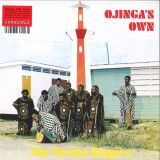
The 1974 debut album Ojinga’s Own and single Basa Bongo/Black Pepper by Guyanese Afro-Folk band The Yoruba Singers has been remastered for vinyl and digital.
The Yoruba Singers formed in Georgetown, Guyana in 1971. Despite their name they were not from Nigeria, but identified strongly with the area from which so many of the African diaspora in Guyana and neighbouring regions were originally descended.
The group started adapting Guyanese traditional folk music as well as writing their own - blending a mixture of protest, social commentary, blues, and genres inspired by the times. Beginning with about 12 people sharing vocal duties, most of the early repertoire was inspired
by folk songs that started life on plantations or in religious settings accompanied by a few sparse musical instruments.
Integral to the Yoruba Singers’ sound are echoes of Obeah traditions which are very closely related to the Santería religion of Cuba and the Orisha and Shango traditions of Trinidad and Tobago. Calypso and steel band culture from nearby Trinidad and Tobago was to some extent part of the musical DNA of the group, but they were naturally also influenced by the massive volume of rocksteady and roots-reggae coming from Jamaica.
ME LOST ME led by Newcastle-based artist Jayne Dent announces a new album RPG via Upset The Rhythm on 7th July, and is touring across the UK including support dates with Pigs x7. RPG (recorded in Blank Studios with Sam Grant of Pigs x7) is ME LOST ME’s fourth outing as a collective, having transitioned from an ambitious solo project in 2017, Jayne now regularly collaborating with acclaimed North-East jazz musicians Faye MacCalman and John Pope.
ME LOST ME delights in experimenting with songwriting and storytelling, creating a beguiling mix of soaring vocals and atmospheric electronics that playfully weave together disparate genres, drawing influence from folk, art pop, noise, ambient and improvised music. Hauntological in part, RPG is concerned with tales and with time - are we running out of it? Does insomnia cause a time loop? Do the pressures of masculinity prevent progress? Jayne Dent asks these questions and more on RPG, her homage to worldbuilding and the story as an artform, calling back to those oral traditions around a campfire, as well as modern day video games - bringing folk music into the present day as she does so.
ME LOST ME presents sound reaching in opposite directions, straddling time towards the archaic and timeless traditions of folktales, and towards the possible and potential futures of pastoral Britain and the world at large. Part speculation, part reminiscence, what results on the new album RPG is music that sounds ultimately displaced and yet omnipresent, adjacent to a hapless Vonnegut hero whose life is scattered throughout time and history, but full of wonder and curiosity rather than fear.
On track “The Oldest Trees Hold The Earth”, we see time stretched out between the branches of impossibly old beings in the woods. This track was co-written in Aarhus, Denmark with fellow Newcastle folk musician (with Danish heritage) Ditte Elly. The pair wordlessly passed a sheet of paper between each other to write the lyrics, inspired by Højbjerg and Mosegård, the woods they were sitting in. “How long should I wait/Before the moss grows?/On my skin, on my outstretched arms,” the lyrics are sung in a round, the close harmonies delicate and detailed.
A central thesis of this album is the joy of creation, something which is paid homage to in the album’s final track, “Science And Art” (Not because we need it to last/just because we needed to make it - so we invented the words/this language). It is also reflected in the definition that Jayne gives for “folk” itself. She comments, “To me, folk is quite an expansive idea. I think of it as creative work that's often made ad-hoc, with things that are at hand and more often than not it's born of a DIY ethos. It is songs and stories of the people, as in the traditional sense, but also creative coding, game design etc. Whatever outlet someone has for their creative expression could be described as folk. It's the things we make because humans need to make things, and the stories we tell about ourselves and the world around us.”
Crucially, on latest album RPG, Dent expands her songwriting and looks towards the unreal locations of worldbuilding in video games for inspiration. She comments, “I think the main similarity is the importance of a song's setting/environment to inform its narrative and textures, I'm often most inspired when out walking in the natural landscape, in cities and travelling to places I've never been before - the environment I'm in really impacts the work I make. While writing this album, however, I found myself inspired by imaginary landscapes, those in video games, paintings, etc. I was writing stories into these unreal locations instead. Even the songs inspired by real places, like The Oldest Trees Hold the Earth, have a very surreal quality to them in the songs, like they're being warped and turned into something not of this world. I think that's the main difference for me in terms of the thematic content and inspiration behind this album - I've been getting more and more interested in balancing surreal and fantastical environmental elements with ordinary and everyday settings.”
RPG upends the concept of the eternal return - we may be in the midst of inevitable repetition, but we tell stories whilst awaiting the passage of time.
"Being familiar with, and a fan of Jayne's earlier work, it was great to get the opportunity to work with her on the production of her new record. I had in mind a sense of what the record might be, but what came of the sessions, led by the vision Jayne had for the record, totally exceeded my expectations. As far as albums go, it has a breadth of writing and a sonic depth that made it a truly brilliant record. Having Jayne join us on a leg of the Pigs x7 tour in April is going to be ace. The creative nature, the sincerity and bold strokes of ME LOST ME put it in that space outside of any genre pigeonholes, and between our two sets I imagine the audience is going to have a proper sonic bath..."
Sam Grant, Pigs Pigs Pigs Pigs Pigs Pigs Pigs, 2023
“The music of Me Lost Me is beguiling, idiosyncratic and cinematic - or should that be video-game-omatic? This suite of songscapes often hits the sweet spot between ancient and modern with its masterful blend of stark folk, neon electronic burbling and unusual arrangements. Jayne's singing is refreshingly straightforward and nuanced - it's exquisite! - and perfectly punctures the nebulae of synths and brass which billow around the old wooden frames of the songs. Whilst listening I had images in my mind of what Northumberland might look like through the eyes of Simon Stalenhag - foggy moors, a robot looking across the sea to Lindisfarne, twinkling lights on metal towers.... that sort of thing. It's a really great album.”
Richard Dawson, 2023
This record is named after Vedyanta, an ancient philosophy based on the Vedas, the sacred scriptures of India. The music, originally composed and produced by Joseph S Joyce and later remixed by Sebastian Mullaert of Minilogue, was greatly inspired, after reading commentaries from Swami Rama Tirtha's biography "The Scientist & Mahatma" - Chapter 1 - Vedanta and The Secret of Success. Now, some nine years later, it gets served up as a remix EP.
There's a dark El Choop Reconstruct, a gorgeous ambient version from Sebastian Mullaert, a minimal headscape from Van Bonn, Federson SF goes warm and dubby and then a crisp, tech-edged vibe from Paul 90 ends the EP in style.
- 1: Little Plastic Castle (2023 Remaster)
- 2: Fuel (03 Remaster)
- 3: Gravel (202 Remaster)
- 4: As Is (2023 Remaster)
- 5: Two Little Girls (2023 Remaster)
- 6: Deep Dish (2023 Remaster)
- 7: Loom (2023 Remaster)
- 8: Pixie (2023 Remaster)
- 9: Swan Dive (2023 Remaster)
- 10: Glass House (2023 Remaster)
- 11: Independence Day (2023 Remaster)
- 12: Pulse (2023 Remaster)
- 13: Gravel (Bed Tracks)
- 14: As Is (Bed Tracks)
- 15: Two Little Girls (Bed Tracks)
Orange Vinyl[39,92 €]
Twenty-five years later, Little Plastic Castle feels like a greatest hits collection. Her highest charting release on Billboard (peaking at #22) and containing her third Grammy nomination for Best Rock Performance - Female (“Glass House”), Ani DiFranco’s ninth studio album shows the Little Folksinger grappling with her independent career bubbling up into the mainstream — dissection of her fashion choices, a new expanded listenership encroaching on the die-hards, examination of what it means to sell out — encapsulated in singalongs so indelible that they’re staples of her live set decades later. This 25th Anniversary Edition sees a new remaster by Heba Kadry, the addition of three bonus tracks mixed by Tchad Blake, and a new CD package and first-time release on vinyl (2 LP). To make Little Plastic Castle, Ani returned to one of her favorite places to record in that era—the live-in studio the Congress House in Austin, Texas. In this relaxed setting she commented, "This album seemed to happen more organically than earlier studio releases." Ani is joined by drummer Andy Stochansky and bassist Jason Mercer who played with her on her 1997 tours, as well as bassist Sara Lee who toured with Ani in 1996. LPC also prominently features outside musicians including drummer Jerry Marotta (Peter Gabriel, Indigo Girls), a horn section composed of three Austin session musicians who add flavor to "Little Plastic Castle" and "Deep Dish," and trumpeter Jon Hassell (Brian Eno, Talking Heads) providing the sustained subtle solo on the 14-minute final track "Pulse." The three bonus tracks are recordings of Ani playing with the rhythm section of Sara Lee and Jerry Marotta, a trio that never reassembled after their single day of tracking. Though Ani described it as “the most light-hearted album I’ve made in a long time,” this record covers a wide range of topics — the impermanence of existence ("Fuel"), mutual respect ("Pixie"), forgiveness ("As Is"), drugs (“Two Little Girls”) — and emotions.
- 1: Little Plastic Castle (2023 Remaster)
- 2: Fuel (03 Remaster)
- 3: Gravel (202 Remaster)
- 4: As Is (2023 Remaster)
- 5: Two Little Girls (2023 Remaster)
- 6: Deep Dish (2023 Remaster)
- 7: Loom (2023 Remaster)
- 8: Pixie (2023 Remaster)
- 9: Swan Dive (2023 Remaster)
- 10: Glass House (2023 Remaster)
- 11: Independence Day (2023 Remaster)
- 12: Pulse (2023 Remaster)
- 13: Gravel (Bed Tracks)
- 14: As Is (Bed Tracks)
- 15: Two Little Girls (Bed Tracks)
Black Vinyl[39,92 €]
Twenty-five years later, Little Plastic Castle feels like a greatest hits collection. Her highest charting release on Billboard (peaking at #22) and containing her third Grammy nomination for Best Rock Performance - Female (“Glass House”), Ani DiFranco’s ninth studio album shows the Little Folksinger grappling with her independent career bubbling up into the mainstream — dissection of her fashion choices, a new expanded listenership encroaching on the die-hards, examination of what it means to sell out — encapsulated in singalongs so indelible that they’re staples of her live set decades later. This 25th Anniversary Edition sees a new remaster by Heba Kadry, the addition of three bonus tracks mixed by Tchad Blake, and a new CD package and first-time release on vinyl (2 LP). To make Little Plastic Castle, Ani returned to one of her favorite places to record in that era—the live-in studio the Congress House in Austin, Texas. In this relaxed setting she commented, "This album seemed to happen more organically than earlier studio releases." Ani is joined by drummer Andy Stochansky and bassist Jason Mercer who played with her on her 1997 tours, as well as bassist Sara Lee who toured with Ani in 1996. LPC also prominently features outside musicians including drummer Jerry Marotta (Peter Gabriel, Indigo Girls), a horn section composed of three Austin session musicians who add flavor to "Little Plastic Castle" and "Deep Dish," and trumpeter Jon Hassell (Brian Eno, Talking Heads) providing the sustained subtle solo on the 14-minute final track "Pulse." The three bonus tracks are recordings of Ani playing with the rhythm section of Sara Lee and Jerry Marotta, a trio that never reassembled after their single day of tracking. Though Ani described it as “the most light-hearted album I’ve made in a long time,” this record covers a wide range of topics — the impermanence of existence ("Fuel"), mutual respect ("Pixie"), forgiveness ("As Is"), drugs (“Two Little Girls”) — and emotions.
Brazilian soul, psych, bossa and jazz, reimagined from Berlin, via the Dead Sea, on Moriah Plaza’s dreamy first album for Batov Records.
Moriah Plaza co-founders Tamir Chen and Moosh Lahav first encountered and fell in love with the beautiful and hypnotic sounds of Brazilian bossa nova and samba as children in Tel Aviv in the nineties, via the many local bands and tribute groups that had sprung up since the first wave of bossa had hit swept across the world. Likewise
they developed a fascination with elevator muzak, film soundtracks, and even the hotel pianist performing day-by-day in the lobby of the Sheraton Moriah where Tamir’s mother worked, overlooking the Dead Sea.
Relocating years later to the vastly different environment of Berlin, capital of a country that enjoyed its own Brazilian moment, Tamir and Moosh’s shared passion for Brazilian music would encourage them to create their own songs inspired by the warm pulse of Brazil, albeit a world apart, through a vastly different lens.
Whilst the initial inspiration for Moriah Plaza can be traced back to Tel Aviv and the Dead Sea, the band itself was conceived by Tamir and Moosh in Solarium Studio, Berlin, from the broken fragments of their former shoegaze band, Soda Fabric, who had the honour of backing outsider legend Daniel Johnston. They would go on to write and record their debut album in close collaboration with two Brazilians and fellow Berlin residents,, poet and singer Cecília Erisman, and singer, songwriter, synth operator and Tropical Disco Club founder Flavia Annechini.
The album opens with “Desendereçada”. Dirty drum machine beats thud away under flutes and extraneous noises and a spoken word commentary. The oddness and allure of the intro is a perfect introduction to the world of Moriah Plaza.
The pace picks up on “Mais Amor”. A beautiful Brazilian soul jazz number with a sublime vocal from Flavia Annechini that will surely appeal to the global dancefloor jazz scene. “Te Peço” daws us in deeper with sweetest jazz vocal over an irresistible bassline and bossa drums that transforms halfway through into a modern soul rhythm crowned by flute and horns. A flute solo from Moosh Lahav leads us into the final uplifting refrain.
The Pharoah Sanders meets Ravi Shankar in Rio grooves of “Estelar”
have that fresh feeling that will certainly appeal to fans of modern favourites Rebecca Vasment and Ruby Rushton. Next up, the mysterious “Lagoon de Merim” is practically two songs in one, the first half an atmospheric string-topped number somewhere between Arthur Verocai and Cinematic Orchestra, before snappy drums beats and playful organ chords introduce a slow brassy samba that fills the whole sonic room.
“Teu Porto” is a must for all DJs, mixing calypso, highlife and house, lilting guitars and smooth vocals by Cecilia Erismann.. The deep samba house grooves of “Samba Moosh” close us out. The rich blend of sweet vocals, soaring flute and gritty synths carry us off into the sunset.
Moriah Plaza’s self-titled debut album is a major addition to the global soul and jazz scene. providing the perfect summer soundtrack for music lovers around the world.
A1 - Divine Intervention - ASC opens up with intent a heavy piece, thick analogue kicks thumping around the expertly crafted breakbeats, switching the pace effortlessly as the backdrop melodies float along with some trademark vocal hits. ASC once again proves himself to be a true master of his craft, delivering an emotive, powerful track that's both technically impressive and emotionally resonant.
A2 - Variable State - Changing the pace we see ASC introduce an edgy, nervy energy to Variable State, combining classic breakbeats more modern beat accompaniment before a catchy wavy key melody overtakes. Soon the anxious vibes pull us back as Variable State lives up to its name, ebbing and flowing several times before we reach our conclusion, almost serving as a commentary on modern times in old school language.
B1 - Azure - A delightful roller continues the proceedings with Azure, featuring gentle, lingering bells that craft the melody over a bed of deep, rolling basslines and intricate percussion. The track is both uplifting and introspective, perfect for late night listening while the rain dots the window and you gaze out into the twilight hours.
B2 - Loose Ends - Tying things up for the EP we have Loose Ends, opening with off-beat breaks and FX, slowly enveloped by haunting synthwork. Soon the intense, moody bassline notches up the intensity before the track does a 180 and an uplifting rhythmic key melody provides some respite. The creepy ambience returns soon enough, completing this curiously cohesive creation in style.
**Debut album from former 'Eighties Matchbox B Line Disaster' front man Guy McKnight's new band.** **ORANGE MARBLE COLOURED VINYL - VERY LIMITED!!** The DSM IV’s debut album, “NEW AGE PARANOIA,” is an impressive collection of stories, beats, guitars, and noise. The album seamlessly weaves together sobering but dream-filled songs that explore the ways in which our collective minds are influenced by mass media, entertainment industries, and social media. Formed by Guy McKnight of critically acclaimed and cult favourite The Eighties Matchbox B-Line Disaster. The DSM IV has a dark sound that blends noise-rock, synth-pop and industrial, that delivers a unique musical experience. Their music is cacophonous and epic, featuring rich textures and melodic hooks that keep listeners captivated. The band’s powerful soundscapes, combined with their thought-provoking lyrics, create a mesmerizing atmosphere that both entertains and encourages introspection. The album prompts important questions about our society, such as what’s driving the normalization of a narcissistic culture that prioritizes personal desires over altruism. It delves into the ways in which technology, social media, and mass media shape our collective psyche and affect our relationships with ourselves and each other. The DSM IV’s music offers a timely and compelling commentary on these issues. The DSM IV is a band that creates music with a powerful message that resonates with people who feel that a kinder world is possible. Their songs are both nasty and nice, reflective and entertaining. With “NEW AGE PARANOIA,” The DSM IV has crafted an album that will captivate and inspire listeners, while also prompting deeper reflection on our society’s values and priorities.