Thom Morecroft’s new live single 'The Beast' is unafraid to show the scars. Liverpool, UK — Thom Morecroft’s new 7 inch single ‘The Beast’ has
already been described by writer Paul Du Noyer (NME, Q, Mojo, Word) as “that killer finale”. Recorded live at Studio2, Parr Street, it captures the Shrewsbury-born singer-songwriter closing the launch of his latest album in his hometown of Liverpool.
Following the release of the rich and layered ‘Feng Shui and the Sushi’ album, ‘The Beast’ brings everything back home to an acoustic guitar, the raw voice and a captive audience. A personal story of family alcoholism and mistaken identity, it captures a
young artist at his most direct and vulnerable; giving just a little too much away.
After a UK album tour cut short (and the thrill of a huddled audience for many a distant memory) Thom wanted to reach out with a song that could only really be heard live.
Available on 7” Vinyl and across all digital platforms. For more information, promo requests, or to arrange an interview, get in touch via details at the top.
Suche:no home
There is a blink-and-you’ll-miss-it anecdote tucked into one of
the many fine documentaries about seminal 20th Century artist
Jean-Michel Basquiat regarding the habits of his studio practice.
As we watch inspiring footage of Basquiat darting from one
piece to the next with rapid-fire brush strokes, a friend or
gallerist in a voice over says that it was not unusual for
Basquiat to be working on several paintings in the same
moment as several radio stations and televisions played in the
background. Not much more time is spent on the anecdote but
it feels like a skeleton key into Basquiat’s endlessly alluring,
neoexpressionist work.
And while Bryan Devendorf’s solo curio ‘Royal Green’ doesn’t
possess the only-in-New York vibe of Basquiat’s work, there is
something shared in its many-channels-open style of creation.
Satellite signals, strange voices from lost television
documentaries and radio operas are all woven into its fabric -
like it’s using these endless tides of media and information to
unlock the subconscious. Even its covers - Bob Dylan,
Fleetwood Mac, The National (with a nice big wink), The
Beatles - are like stunning, albeit satanic takes on hymns, or
like American standards almost dragged into the underworld.
Like the best of Spacemen 3, Sparklehorse or massively
underrated San Fran band Skygreen Leopards - the music
makes you queasy in one movement and lulls you into
blissmode in the next. It’s the very edge of outsider pop
songwriting.
For all the amphitheaters and festival fields Devendorf has
played to over his career, ‘Royal Green’ almost feels like an unlearning and a newfound love of homemade/found/fractured
sounds - and how, if collaged just so, detritus can become
stunningly gorgeous and surreal. And not without hooks. Look
no further than ‘Frosty’, which could be Little Billy Corgan’s
decayed demo tape from just before the Smashing Pumpkins
appeared on the scene. And the unspooling, slightly unglued
dream-pop of ‘Breaking the River’ is as rapturous as it is
sinister. And that’s probably where Devendorf wants it.
We’ve recorded an intimate and homely acoustic version of Not So Manic Now to celebratethe 25th birthday of Disgraceful. It’s out now digitally, but we’re also releasing a souvenir7” to commemorate the occasion.The b-side is a cover of Free As A Bird.Why? When our debut album came out in 1995, werealised that it was coincidentally John Lennon’s birthday, and when Not So Manic Nowwas in the Top 20, Free As A Bird was too, which gave us the unexpected privilege ofbeing in the charts at the same time as the Beatles. Including it here seems to heightenthe nostalgia of the occasion, as it were.
The trinity of piano, bass and drums is an ensemble construction with a particularly prominent place in jazz, past and present. Indeed, some of these piano trios are among the most revered and popular groups the music has seen.
The standing of the piano trio in the Norwegian jazz landscape is no different. And like a lot of modern jazz from Norway it has also taken on flavours very distinct to this country.
Pianist Torvik met and played with double bassist Bjornar Kaldefoss Tveite and drummer Oystein Aarnes Vik during a short stint in Oslo.
They quickly hit it off, and the idea of making an album with this trio began to take shape. The resulting album, ‘Northwestern Songs’, was recorded at Newtone Studio in Oslo, June 2019.
Here, Torvik continues to explore the relationships between pop sensibilities and jazz, which was also a feature of the music on his debut as a leader, the 2016 quintet recording ‘Northwestern Sounds’. At the same time, the open and revealing nature of the trio format allows him to further explore and challenge himself as piano player.
Personnel: Arne Torvik (piano), Bj rnar Kaldefoss Tveite (bass), ystein Aarnes Vik (drums)
For Rhye’s Michael Milosh, the home is the center of creativity and community. It transcends conventional understandings of walls, stairs and hardwood floors. A culmination of a wayfarer’s journey, the home is a balm for a restless spirit — a place to simply be.
For much of his life, the Canadian singer, songwriter and multi-instrumentalist has wandered, decamping in Toronto, Montreal, Thailand, the Netherlands, Germany and Los Angeles at varying times. Since the meteoric rise of Rhye’s 2013 debut Woman, he’s mostly lived on the road—playing between 50 and one hundred shows a year. But over the last couple of years something changed. On the heels of some major life changes, including a new relationship, Milosh yearned for a more permanent space. “It's this idea of creating a safe place that's not just conducive to creativity, but one that’s truly an anchor point from which to make art and be creative,” he says.
That longing was fulfilled in August of 2019 when Milosh and his partner Genevieve happened upon the perfect place in Topanga. It had been on and off the market for two years as the owner sought the perfect buyer, one who would carry on its creative tradition. “She did this ceremony somewhere on the property where she was trying to call in the right people, and apparently we came the next day,” Milosh explained. “The right kind of home presented itself to us, and we presented ourselves to it. It was like a union between us and the home.”
Written throughout 2019 and early 2020, recorded at Milosh’s home studio, United Recording Studios and Revival at The Complex, and mixed by Alan Moulder (Nine Inch Nails, Interpol, My Bloody Valentine, U2, The Killers), Home is familiar in its synthesis of propulsive beats, orchestral flourishes, piano ruminations and sultry, gender-nonconforming vocals, but never have they sounded more cohesive or alive.
“I'm always trying to always accomplish musical goals that are connected to the way I listened to and interact with music as a child,” Milosh says. The sentiment also underscores a broader, less obvious, but no less important theme echoed through his new record: No matter where life takes us, we can always go home.
There is a blink-and-you'll-miss-it anecdote tucked into one of the many fine documentaries about seminal 20th Century artist Jean-Michel Basquiat regarding the habits of his studio practice. As we watch inspiring footage of Basquiat darting from one piece to the next with rapid-fire brush strokes, a friend or gallerist in a voice over says that it was not unusual for Basquiat to be working on several paintings in the same moment as several radio stations and televisions played in the background. Not much more time is spent on the anecdote, but it feels like a skeleton key into Basquiat's endlessly alluring, neoexpressionist work. And while Bryan Devendorf's solo curio `Royal Green' doesn't possess the only-in-New York vibe of Basquiat's work, there is something shared in its many-channels-open style of creation. Satellite signals, strange voices from lost television documentaries and radio operas are all woven into its fabric _ like it's using these endless tides of media and information to unlock the subconscious. Even its covers _ Bob Dylan, Fleetwood Mac, The National (with a nice big wink), The Beatles _ are like stunning, albeit satanic takes on hymns, or like American standards almost dragged into the underworld. Like the best of Spacemen 3, Sparklehorse or massively underrated San Fran band Skygreen Leopards _ the music makes you queasy in one movement and lulls you into blissmode in the next. It's the very edge of outsider pop songwriting. For all the amphitheaters and festival fields Devendorf has played to over his career, `Royal Green' almost feels like an un-learning and a newfound love of homemade/found/fractured sounds _ and how, if collaged just so, detritus can become stunningly gorgeous and surreal. And not without hooks. Look no further than "Frosty" which could be Little Billy Corgan's decayed demo tape from just before the Smashing Pumpkins appeared on the scene. And the unspooling, slightly unglued dream-pop of "Breaking the River" is as rapturous as it is sinister. And that's probably where Devendorf wants it.
Discodelic presents the second release in this series of exclusive 45 RPM records. From the Caribbean coast of Costa Rica, province of Limón, the town of Cahuita, we present you with the incredible BOCARACÁ!
Bocaracá is without a doubt a gem from Caribbean Central America, bridging a spectacular concoction of Psychedelia with Afro Latin rhythms. Created by Isidor Asch and Luis Jákamo, two restless "limonenses", who were on the path of discovering their Latin musical roots since childhood, while also experimenting with soul and Rock in their own compositions. Together and on their own, they have written a big chunk of the history of Soul in Costa Rica with their subsequent outstanding groups: Marfil, Grupo Stop, and Manantial.
This limited edition is part of a project that has been in the making for several years. This is a labor of love and respect for the music of this singular band. Four “maes” who were known as “the only hippies in Limón” in their hometown.
This reissue includes historic material that was originally recorded between 1973 and 1974 in Audio Centro, a recording facility in San José. It’s a priceless and important document, a window to what was happening with music in the largely abandoned and forgotten province of Limón, where a musical revolution was cooking in the early ’70s, and where Bocaracá was the cornerstone.
Get to know the full story of Bocaracá in the special liner notes included in the release, prepared with love for all of you, featuring band anecdotes and photos.
You could think of the collection of tracks here as a library record of sorts, and each track inhabits its own universe. Tropical fits various moods and situations, and it could soundtrack any number of activities at home or on a dancefloor - whether real, imaginary, or hallucinated. Strangely enough, it sounds like it could have been constructed from obscure Italian library breaks, when instead every instrument has been played and panned, several times over, across magnetic tape.
The genesis of many of these tracks began when CV Vision moved to Berlin in 2014. His flat had a small chamber where he could fit a drum set, so he treated the walls with foam, and in true DIY style, dived headfirst into recording these tracks. It was the natural next step on an audio adventure that first began when CV Vision picked up the guitar in his teens, and a couple years later started recording with friends in his home town of Bayreuth. Fast forward ten years and here is his debut - a culmination of practising chops and learning instruments, mastering recording techniques and fine-tuning the CV Vision sound.
It’s a sound that condenses elements of acid rock, psych soul, library funk and new wave oddities into a movie soundtrack for your mind. It’s a journey from ‘60s west coast LSD-drenched excursions to ‘80s synth and post-punk mutations. Tropical is a plunge into another time, another music you can simply swim around in and explore.
Side A opens up with Tropical Tune In, which rides in on a clave and a warm wind, blowing a distinctly herbal aroma and recalling exotica dons like Les Baxter and Martin Denny. Following on with the aural equivalent of a sea breeze through your mind, Spaziergang am Meer blows away the cobwebs and conjures some nice library moments like Stringtronics or F eelings . Next, Ba_c_k(Lava) bounces out of a cold wave post-punk melting pot and crashes through the speakers like a blazed Zebedee, with some sweet eastern synths for added flavour, before the rolling bass licks of Der Böse Schamane take us into another dimension, landing somewhere between a psych rock freak out and a Black Ark dub session. Mr Maze channels the arpeggiators of synth outsiders like Mort Garson and Bruce Haack, creating a glorious interlock of robotic electronics and freakbeat vocals. The side comes to a close with the guitars of Der Strand (außer Rand und Band) letting loose like syrupy springs, and setting a languid mood like the bedroom scene in Bedazzled (1967 version). Side B kicks off with Parallel Universum, which comes through like a woozy krautrock workout, all ducking synths with big chord shifts to create an epic deranged beehive of a soundtrack. Im Land der Ameisen evokes the spirit if not the sound of White Rabbit, when logic and proportion have fallen sloppy dead, before waking up and wandering through the side alleys of Marrakech with the West Coast Pop Art Ensemble and the Electric Prunes, as Ritual (No. 4) blares out the speakers of passing tuk tuks. Ein Wasserfall plumbs the deep synth depths, like Raymond Scott in scuba gear, modular rack strapped to his back delivering oxygen as he swims between connector cables and seaweed forests through a watery underworld. Banana King sounds like a lost soundtrack to Donkey Kong or Mario Cart, if the cart radio was tuned into a synth
documentary hosted by James Pants, while Das Kloster am Berg takes the baton from Brenda Ray and her Naffi cohorts, all dubbed-out niceness and post punk swagger. The LP closes out with Tropical Drop Out, a dreamscape rather than a wake up call, coaxing you deeper into the trek across the desert of your mind.
And that’s Tropical in its essence: capsules from another time, snapshots of another sound, messages from another mind - all in the service of inducing the visions in your head.
written by Max Cole
Harry Bertoia's Glowing Sounds LP contains three versions of the same composition, each transferred at different tape speeds in accordance with the artist's instructions. This is the third LP to be released from Bertoia's extensive tape archive and it's the first, of many, to be released using instructions left behind by the artist himself.
Bertoia wrote the concept for this Glowing Sounds LP on a note in 1975 and slipped it into the master tape case where it sat unread for 45 years. The idea was simple, transfer the original recording at its original speed and two slower speeds. Bertoia noticed that the results, however, were profound.
Recorded on January 20, 1975 using two large gongs, Glowing Sounds is one of the most powerfully minimal recordings yet discovered in Bertoia's collection. The artist's note left with the tape indicated that it was recorded at a speed of 15 IPS (inches per second) but slowing it down to speeds of 7.5 IPS and 3.25 IPS were quite effective for enhanced playback. Side A features the original 15 IPS recording and the 50% slower 7.5 IPS recording. Side B features a 20 minute, ultra-slow version at 3.25 IPS.
Long, deep drones and powerful overtones define the sound of this recording. Comparison of the three speeds provides a revealing magnification of Bertoia's gongs, overtones and the artist's inventive approach to performance, composition and recording.
Bio:
Harry Bertoia first gained some artistic visibility in the early 1940s, then came into prominence with his sculptural, ergonomic chairs, produced by Knoll Furniture beginning in 1952, which quickly became classics of modernist furniture. Inspired by the resonant sounds emanating from metals as he worked them and encouraged by his brother Oreste, whose passion was music, Harry restored a fieldstone "Pennsylvania Dutch" barn as the home for this experiment in sounding sculptures which he had begun in the late 1950s. Bertoia was an obsessive composer and relentless experimenter, often working late into the night and accumulating hundreds of tapes of his best performances; Oreste, too, would explore and record the sculptures' sounds during his annual visits to his brother's home in rural Pennsylvania.
Harry Bertoia's recently dismantled Sonambient barn collection was an attentive listener's paradise full of warm, expressive instruments that were gorgeous visually and audibly. Nothing could prepare you, even on return visits, for the overwhelming experience of entering the spacious wood and plaster interior where gongs, some of them giant, hung among the ranks of standing sculptures of various metals. Over nearly twenty years of adding, culling and rearranging, Bertoia carefully selected nearly 100 harmonious pieces ranging in height from under a foot to more than fifteen feet. He considered this barn a full experience, sights and sounds comprising not a collection of works, but one piece unto itself. It was here, deep in the woods, that his Sonambient recording work took place.
Learning by experimentation was common for Bertoia and he mastered the art of tape recording, turning the Sonambient barn into a sound studio with four overhead microphones hanging from the rafters in a square formation. He would experiment with overdubbing by performing along to previous recordings, sometimes backwards, constantly improving his methods while also honing his performance skills. Bertoia was a careful editor of his own work and only chosen recordings remained, each with a date and carefully considered observations written on a note included with each tape. Through these pieces of paper a the artist's logic can be uncovered, a careful approach to composition, ideas, feelings and forms. The story of Sonambient barn collection will slowly be told through the release of recordings from the archive as well as installations and performances built from Bertoia's own recordings, lectures and a book.
- A1: Noriko Miyamoto - Arrows & Eyes
- A2: Mishio Ogawa - Hikari No Ito Kin No Ito
- A3: Yoshio Ojima - Days Man
- B1: Mkwaju Ensemble - Tira-Rin
- B2: Rna-Organism - Weimar 22
- B3: Naoki Asai - Yakan Hikou
- B4: Takami Hasegawa - Koneko To Watashi
- C1: Mammy - Mizu No Naka No Himitsu
- C2: Dip In The Pool - Hasu No Enishi
- C3: Wha Ha Ha - Akatere
- D1: D-Day - Sweet Sultan
- D2: Perfect Mother - Dark Disco-Da Da Da Da Run
- D3: Neo Museum - Area
- D4: Sonoko - Wedding With God (A Nijinski) (A Nijinski)
Somewhere Between: Mutant Pop, Electronic Minimalism & Shadow Sounds of Japan 1980–1988 hovers vibe–wise between two distinct poles within Light In The Attic’s acclaimed Japan Archival Series—Kankyō Ongaku: Japanese Ambient, Environmental & New Age Music 1980–1990 and Pacific Breeze: Japanese City Pop, AOR & Boogie 1976–1986. All three albums showcase recordings produced during Japan’s soaring bubble economy of the 1980s, an era in which aesthetic visions and consumerism merged. Music echoed the nation’s prosperity and with financial abundance came the luxury to dream.
Sonically, Somewhere Between mines the midpoint between Kankyō Ongaku’s sparkling atmospherics and Pacific Breeze’s metropolitan boogie. The compilation encompasses ambient pop, underground electronics, liminal minimalism and shadow sounds—all descriptors emphasizing the hazy nature of the nebula. Out–of–focus rhythms wear ethereal accoutrements, ballads are shrouded in static, and angular drums snake skyward on transcendent tones. From the Avant–minimalism of Mkwaju Ensemble and Yoshio Ojima, to the leftfield techno-pop of Mishio Ogawa and Noriko Miyamoto (featuring members of YMO), and highlights from the groundbreaking Osaka underground label Vanity Records, these are blurry constellations defying collective categorization.
These tracks also exist in a space of transition when the major label grip on the Japanese recording market began to give way to the escalation of independents. Thanks to the idyllic economic climate and innovations in domestically–manufactured music gear, creators on the edges were empowered to focus on satisfying their artistic visions in the open headspace of home studios. While labels like Warner Music and Nippon Columbia explored new sounds through traditional channels, it was possible for Vanity, Balcony and other indie labels, not to mention self–released artists like Ojima and Naoki Asai, to publish their work via affordable media such as cassettes, 7" vinyl, and flexi–discs.
Expertly curated by Yosuke Kitazawa and Mark “Frosty” McNeill (dublab), Somewhere Between is a collection of music, much of it released for the first time outside Japan, that is bound more by energetic vibration than shared history, genre or scene. They are the sounds of transition and searching—a celebration of the freedom found in floating.
Note: The track “Days Man” by Yoshio Ojima is only available on the LP and Cassette versions.
- A1: Yes We Can Can – Allen Toussaint
- A2: World I Never Made – Dr. John
- A3: Back Water Blues – Irma Thomas
- A4: Gather By The River – Davell Crawford
- A5: Cryin' In The Streets – Buckwheat Zydeco
- B1: Canal Street Blues – Dr. Michael White
- B2: Brother John Is Gone / Herc-Jolly-John – Wild Magnolias
- B3: When The Saints Go Marching In – Eddie Bo
- B4: My Feet Can't Fail Me Now – Dirty Dozen Brass Band
- B5: Tou' Les Jours C'est Pas La Meme (Every Day Is Not The Same) – Carol Fran
- C1: L'ouragon (The Hurricane) – Beausoleil
- C2: Do You Know What It Means To Miss New Orleans –Preservation Hall Jazz Band
- C3: Prayer For New Orleans – Charlie Miller
- C4: What A Wonderful World (Feat. Donald Harrison) – The Wardell Quezergue Orchestra
- C5: Tipitina And Me – Allen Toussaint
- C6: Louisiana 1927 (With Members Of The New York Philharmonic) – Randy Newman And The Louisiana Philharmonic Orchestra
- D1: Do You Know What It Means – Davell Crawford *
- D2: Let's Work Together – Buckwheat Zydeco & Ry Cooder *
- D3: Crescent City Serenade – Dr. Michael White *
- D4: Walking By The River – Dr. John *
- D5: Do You Know What It Means (Feat. Donald Harrison) – The Wardell Quezergue Orchestra *
Nonesuch releases a remastered, special edition of the 2005 record Our New Orleans for the first time on vinyl. The two-LP set, also available digitally, includes five previously unreleased tracks: ‘Do You Know What It Means’, by Davell Crawford; ‘Let's Work Together’, by Buckwheat Zydeco and Ry Cooder; ‘Crescent City Serenade’, by Dr. Michael White; ‘Walking By the River’, by Dr. John; and ‘Do You Know What It Means’, by The Wardell Quezergue Orchestra featuring Donald Harrison.
The $1.5 million raised from the 2005 release went toward providing housing in partnership with low-income musicians and others through the New Orleans Habitat Musicians’ Village, a concept that was developed by New Orleans Area Habitat for Humanity, working with Branford Marsalis and Harry Connick, Jr. Habitat–built homes in the village now provide musicians and others of modest means the opportunity to buy decent, affordable housing. The centerpiece of the village is the Ellis Marsalis Center for Music, dedicated to celebrating the music and musicians of New Orleans and to the education and development of homeowners and others who live nearby.
For Our New Orleans, many of the Crescent City’s best-known musicians recorded songs that are integral to their lives and that express their feelings about the city and the trauma of Katrina. The album was made swiftly and simply, over the course of a month, in one-day sessions across the country. Nick Spitzer, host of public radio’s New Orleans–based American Routes, contributed liner notes to the record, as did Pulitzer Prize–winning author Richard Ford, also a Crescent City resident. Other producers who made enormous contributions include Mark Bingham, Ry Cooder, Joel and Adam Dorn, Steve Epstein, Joe Henry, Doug Petty, Matt Sakakeeny, and Hal Willner.
Nonesuch’s parent company – Warner Records, part of the Warner Music Group – donated all production costs for Our New Orleans as part of the Group’s larger efforts on behalf of hurricane victims on the Gulf Coast. Many others involved in creating the album also generously donated their time and services.
Nonesuch President David Bither recalls, “What was most remarkable to me was the immediate response of the musicians. Many were in New Orleans when Katrina struck. Many lost everything they owned including even the musical instruments that are their livelihood. Yet they responded within days to the question of whether they might participate in this project. The emotion and the power of Our New Orleans come both from their anguish and from their incredible generosity.”
And the label’s Chairman Emeritus Bob Hurwitz said, “When we pick up a CD booklet, we usually skip over the page that says, ‘Special thanks to…’, but in the case of Our New Orleans, it is, after the listing of the musician’s names, the most important part of this package. Everyone wanted to help – studios that insisted on contributing free time, caterers, photographers and videographers, instrument rentals, producers, engineers – every step down the line, people gave, not only their profits, but absorbed all of their costs. It was an incredible outpouring of generosity.”
“Our New Orleans is a testament to the power of music to heal and provide a sense of community,” said Marguerite Oestreicher, Executive Director of New Orleans Area Habitat for Humanity. “Musicians helped the city heal after Hurricane Katrina, and Musicians’ Village helped them come home. We’re grateful to Nonesuch and everyone who worked on this album. This year has brought new challenges to everyone, but especially to our culture-bearers. This re-release could not be more timely.”
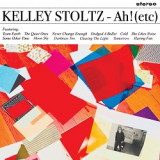
**400 ONLY REPRESS PHOTOLUMINESCENT COLOUR VINYL///!! 200 FOR EUROPE** “I was guzzling wine at my favorite bar in San Francisco, the Rite Spot, and the entertainment that night was some local opera singers singing along with a big video screen showing a collage of various operatic moments with subtitles. One particular subtitle, ‘Ah!-(etc)’ made me laugh, I thought it was a perfect description of life - the joy of existence against the etcetera of it all, the struggle. With a heavy head of rose’ it seemed like ecstatic poetry! I scribbled it on a napkin and thought it might make a good title for something” And so the mystery behind the title of Kelley Stoltz new record is solved. Less of a mystery is the quality contained therein… after 12 self-titled releases and a several more under pseudonyms, Stoltz is the word for “one-man-band-home-recording-pop-songs of idiosyncratic character.” A quick follow up to his more power pop and pub rock LP only “Hard Feelings” offering in the summer, “Ah-(etc)” finds Stoltz returning to his sweet spot, writing songs that never were, but should have been in the 60’s and 80’s.
As with other LPs Stoltz makes virtually every noise on the album which was written and recorded in 2019 at his Electric Duck Studio in. San Francisco. A few friends popped in to play along… Stoltz former bandmate, Echo & the Bunnymen’s Will Sergeant adds electric guitar to “The Quiet Ones” a sort of Scott Walker lyrical take on strangers and neighbors. Karina Denike formerly of Dance Hall Crashers adds gorgeous vocals on the bossanova groover “Moon Shy”, where Sergeant pops up again in a spoken word role on the outro. Allyson Baker of SF’s Dirty Ghosts sings on “She Like Noise”, a song Stoltz wrote for her in celebration of her love of seeing live bands.
The album was mastered by Mikey Young in Australia.
In 2019, the power-acoustic musician Francisco Meirino presented A New Instability a commission for the venerable Ina-GRM in paris. Of course, this institution is the pre-eminent center for the research and study of electro-acoustic music dating back to founding of Groupe de Recherches Musicales in 1958 by Pierre Schaeffer. To this day, Ina-GRM continues to be at the vangarde of the electro-acoustic composition, and it is quite an accomplishment and very appropriate for Meirino to receive such a commission.
This recording for A New Instability condenses the 32-channel original piece down to a still very active stereo version. here, Meirino continues to amplify and refine his compositions that walk a fine tightrope between raw expressivity of brutalist noise and conceptual rigor of more academic pursuits. Such a work ranks him in with the likes of Zbigniew Karkowski, Dave Phillips, Puce Mary, and Illusion Of Safety.
Field recordings from a kendo dojo in his hometown of Lausanne, Switzerland cast a pugilistic, combative arch to these recordings which snap, burst, explode, and erupt with utterances of men and women engaged in hand-to-hand combat. Searing frequencies build, swarm, and amass out of these episodes rise to psychologically tense crescendo that rupture at their heights, quickly turning attention towards a violence that originates from within. It is as if the objective observations of those martial arts recordings are sublimated within a subjective experience of psychic unease, disquiet, and imbalance.
A New Instability is another magnificent chapter in the ongoing body of work for this accomplished composer of electro-acoustic noise.
It’s a decade since The Staves self-released their first EP and a lot has happened since then. Their third album Good Woman was written and recorded amid major upheaval, heartbreak and bereavement. The new-found boldness, loudness and lyrical directness on this record are indicative of lives forced to become a serious concern.
In early 2020 the band resumed touring, unveiling their expansive and exhilaratingly powerful new sound, and previewing these emotionally affecting songs in intimate venues across the country; with tickets selling out in seconds. They ended the tour with a triumphant homecoming appearance at the 6 Music Festival.
The Staves’ first album in five years is an accumulation of everything that life has thrown at them in that time.
Emily: “You find strength in the vulnerability and you find beauty in the sadness and magic in the despair. We lost so much, but we found so much. And while the album is not all about mum, something shifted in us when she died that made us make the record in the way that we made it. We became more fearless.”
Camilla: “It feels more about trying to take ownership of these events and not letting sadness or trauma rule you.”
Jessica: “It’s a record about sisterhood, motherhood and daughterhood; love, loss, change and trying to be a good person, a good woman.”
For the Perth group, creativity and production hasn’t stopped in 2020. Despite
much of this year’s tour plans being put on pause, Psychedelic Porn Crumpets have used their time off road to continue preparing themselves for the release of their fourth studio release, and an eventual blistering return to stages
around the world with a heavy-hitter of an album primed for the live space.
Psychedelic Porn Crumpets have already given fans an early taste of the forthcoming SHYGA! era, with ‘Mr. Prism’ in August. The creation of SHYGA! The
Sunlight Mound, especially off the back of 2019’s huge LP And Now For The
Whatchamacallit, came together in a different environment for McEwan and
the results speak to the band’s evolution and McEwan’s evolution as a songwriter.
“For the first time in a long time I was home without any tours booked, no
work, no deadlines and I felt free to create. My writing process became ritualistic; every morning starting with a small walk to the local bottle shop at 11am
and writing whatever flowed, allowing myself to design in all styles without
boundaries, and not trying to theme the album early on. I haven’t had the luxury of writing this way since the first record, which I spent almost a year working
on. It felt like I was myself again, creating without opinion or constraints. I was
gliding through weeks with a day seeming to pass.
The Luka State are Cheshire Cats, Conrad Ellis (voice, guitar), Sam Bell (bass, voice), Jake Barnabas (drums) and Lewis Pusey (guitars). Their hometown is famous for salt mining, and not much else. Yet being halfway between Liverpool and Manchester – hence, every kid in the town wanting to be a footballer or pop star the minute they can kick a ball or play a guitar. The Luka State chose music.
The band racked up 68 shows around the UK in the twelve months leading up to the lockdown, and despite not having the chance to play their latest releases live, they have amassed over 6 million Spotify streams. This is no mean feat for an independent band, so it’s no wonder that Shelter/BMG jumped at the chance to sign them.
[i] 9. [Insert Girls Name Here]
Vinyl Only
Yet again the enigmatic Atlanta, USA-based label makes their second release with the EP "Spiritual Breath" by one of their very own "Isai". The A-side features two original compositions from Isai (aka Angel Jack) taking us into a sultry smooth outer orbit. The B-Side features remixes from Gab JR and Tom Ellis that take distinct interpretations of Spiritual Breath. This EP has classic 4/4 house grooves with signature leads and keys that dance to punchy 909's, colorful stabs and deep melodic atmospheres making the listener feel compelled to move and wonder to a nostalgic bliss. Touching all horizons, this window into Isai's Mithraic world can be utilized at home or on the dancefloor depending on the mood which is desired.
"As above, so below, as within, so without, as the universe, so the soul..." - Hermes Trismegistus
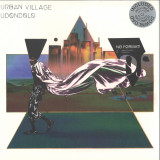
Signed to Parisian label N F rmat! (home to Oumou Sangar , Blick Bassy & M lissa Laveaux), Soweto-based 4 piece band Urban Village present their debut album, ‘Udondolo’.
Marrying the day-to-day experiences of black South Africans with ebullient elements from traditional Zulu music, Urban Village is the alias of four experimental musicians all born & raised in the township of Soweto at the tail end of apartheid.
Urban Village release music under a name which specifically references the blend of cultures, music & rites which were assimilated into the now 1 million strong population of Soweto, when black South Africans from multiple provinces were brought to the area during the establishment of apartheid, under strict segregation from Johannesburg’s white suburbs.
Born for the most part in the last years of apartheid, whilst growing up the band plunged happily into house and dance music that turned the page of a heavy past. Guitarist Lerato came across older Zulu musicians and their style of maskandi playing. Lerato has since mixed styles from homelands and rural areas, sharpened in club jam sessions (where he went on to meet Tubatsi and form Urban Village) during which spoken word, hip-hop and jazz rub shoulders freely.
‘Udondolo’ - partially recorded at legendary Downtown Studios in the heart of Johannesburg and at Figure of 8 studios in the leafy suburbs of Randburg, - is a journey through all the colours of Soweto. This is where it draws its consistency, strength & identity. That of Soweto itself - a dormitory town designed to
monitor those who were sent there, it has become a laboratory of music where the hopes of an entire people resonate, even today.
DeWolff return with their new album, Wolffpack, released on 5th February 2021 via Mascot Records.
DeWolff, the kaleidoscopic warriors were not long into their 2019 Tascam Tapes European Tour when the Covid19 pandemic broke and they, like so many others, had to turn back and head home. They started working on the new album Wolffpack.
The album kicks off with the first song they finished, the soulful psychedelic funk of "Yes You Do," featuring Ian Peres and longtime friend of the band, Judy Blank. "We wrote it in a Zoom meeting!" Pablo says. "Treasure City Moonchild," struts in with a funky swagger and Piso's trademark swirling Hammond, with Dawn Brothers' Levis Vis providing some Bass juice. "Do Me," includes Theo Lawrence on vocals and is through the eyes of an anti-hero who realizes he isn't worthy of the woman of his dreams, and dates back to 2019 and the Next of Kin live show. "I consider this the best song I ever wrote, so I couldn't stand the idea that it was only used for those Next of Kin shows and then never again! That's why I brought it to DeWolff, but it needed some rearranging," he says. Another song from the Next of Kin sessions was "Sweet Loretta" and features Dawn Brothers' Stefan Wolfs and Darilyn's Diwa Meijman. "Loretta is the protagonist's childhood sweetheart. She has a rich dad, but he's really conservative, and so she can only inherit his money if she marries a man. But she's lesbian. So, the protagonist, who's also out for this old guy's money, suggests they play pretend and marry so they can split the money."
They sweep through disco on "Half Your Love," swamp rock on "Bona Fide" and take on sci-fi and the Old Testament on "RU My Savior." Their tour buddies The Grand East show up on "Roll Up the Rise." Written in the first days of quarantine, it's about the end of the quarantine - told from a future perspective. "Lady J," came after Pablo watched the documentary "13th." "I was quite shaken up by it," he admits. "The lyrics are based on the idea that Lady Justice seems to have a scale that doesn't measure the "weight" of your crime but the tone of your skin. She is supposed to be blindfolded, but the people who act in "her" name aren't blind at all: they discriminate between white and black."
The album ends with the forlorn "Hope Train." Based on the Pulitzer prize-winning novel by Colson Whitehead about two slaves in the US during the 19th century, who make a bid for freedom from their Georgia plantation. "I found it really hard to envision the world in which it takes place," he says. The band used a 1970s Fisher-Price Toy cassette recorder in the intro, "We wanted to see if we could somehow approach the sound of those very early country blues recordings, like the ones by Blind Willie Johnson.”
After much anticipation, UK-talent Ben Westbeech returns under his Breach moniker next February. Serving up the long-awaited Sun Salutations on André Hommen’s These Eyes imprint, the EP marks his first release under the alias since 2018, and features Dekmantel mainstay Cinnaman on the second track. The ethereal sound of Sun Salutations sets the feel of the release, as progressive synths reside atop a distinctive kick-hat backbone. We’re soon graced with an enchanting mid-track breakdown, paving the way for a tribal-leaning bassline and dreamy, flute-like chords. New Horizons feat. Cinnaman brings things to a gentle close, as warm keys converge on reverberating vocals to form a soothing, slow-building cut that’s perfect for sunrise, sunset or anywhere in between. Ben Westbeech AKA Breach is no stranger to the scene. Cutting his teeth on Gilles Peterson’s Brownswood Recordings, it was in 2013 that Claude Von Stroke picked up Breach’s Jack EP for a release on his iconic Dirtybird imprint, the likes of which charted at number nine in the Official UK Top 40 Chart. Since then, the UK-talent has refocused his attention on the underground, launching his Naked Naked label as well as producing standout productions for the likes of Crosstown Rebels, Ninja Tune, Aus music and many more besides. André Hommen's These Eyes has cemented its standing as one of Germany’s leading labels, with the likes of Tlak (Denis Horvat), Marc Romboy and Jonathan Kaspar finding a home on the imprint in recent times. Refusing to be pigeon-holed by genre or style, Breach’s debut highlights the eclectic sound through which the label has become best known, a testament to the vision of label-founder Andr é Hommen.