Now a two-times Number 1 UK Albums artist, Jack Savoretti’s 2015 album ‘Written In Scars’, a UK Top Ten, is now regarded as his breakthrough. A stunningly confident, almost effortless collection of songs, it contains co-writing and production from the likes of Adele / Sia musical collaborator Samuel Dixon and, on one highlight ‘Tie Me Down’, Matty Benbrook (aka Jake Bugg). Released in very limited quantities on vinyl at the time, and unavailable on the format for some years to the chagrin of Jack’s dedicated fanbase, this new repress of ‘Written In Scars’ comes on limited edition Aztec Gold vinyl, this new repress of ‘Written In Scars’ is looking and sounding better than ever on the format.
The new vinyl repress of Written In Scars represents another step in the celebration of Jack’s phenomenally successful years with BMG. After a successful mini digital campaign around ‘Christmas Morning’ in December 2021, this long-overdue vinyl repress of Jack’s first album with the label, comes courtesy of demand from diehard fans and all the new fans he has won over since its original release in 2015. Both Sleep No More and Singing To Strangers will follow with their own special vinyl editions in time.
Search:no home
Vocalists/multi-instrumentalists Claus Lessmann and Michael Voss, who also produces acts such as Michael Schenker: a combination that makes rock fans sit up immediately. Considering the two’s various collaborations - lately as members of PHANTOM V - spread over several decades, »Rock Is Our Religion« is way more than a debut. The album, which was recorded and produced by Voss at German Kidwood Studios Münstertal and Kidroom Studios Greven (only Vincent Golly’s drums were tracked by Mathi Brandstetter at Home Studios Hamburg, Germany), rather is a relevation, a bow down to genuine rock packed in 49 minutes of handmade music performed to the point. Lessmann and Voss complement each other over these 12 tracks as if they hadn’t done anything else before: from mysteriously starting opener 'Medicine Man' to lead single 'Smoke Without A Fire', the recording of 'Take My Heart And Run', circling back to one of their earlier songwriting cooperations in the '90s, and the duo’s interpretation of AMERICA’s 1975 hit song 'Sister Golden Hair' (feat. Kenny Lessmann on drums and Martin Huch on pedal steel guitar), this album impressively shows that it still doesn’t need many frills to create impactful heavy music nowadays. Amen!
Very limited pressing of 300 units only. Following on from the two sold out records together, Freschard and Stanley Brinks come together for 12 brand new tracks. Lion Heart is an irresistibly charming collection of late night tales, woozy ballads and uptempo sing-alongs. Clemence Freschard’s beautiful vocal tones lend this a rich, French indiepop/chanteuse vibe, complemented by Stan’s wistful timbre and characteristic warm instrumentation. Stanley Brinks is renowned for his unique anti-folk style: both playful and suggestive, insightful and entertaining. Brinks was born in Paris, France, in 1973. He studied a bit of biology and worked as a nurse for a while. Half Swedish, half Moroccan, strongly inclined to travel the world, he soon began spending most of his life on the road and developed a strong relationship with New York. By the late 90s he’d become a full time singer-songwriter – André Herman Düne – as part of three piece indie-rock band, Herman Düne. Several albums and Peel sessions later and after a decade of touring Europe, mostly with American songwriters such as Jeffrey Lewis, Calvin Johnson and early Arcade Fire he settled in Berlin. The early carnival music of Trinidad became a passion, and in the early 21st century he became the unquestioned master of European calypso, changing his name to Stanley Brinks. Under this moniker he has recorded more than 100 albums, collaborated with the New York Antifolk scene on several occasions, recorded and toured with traditional Norwegian musicians, and played a lot with The Wave Pictures. Freschard grew up in a farm in French Burgundy. Aged 18 she moved to Paris, where she baked pies and cakes in a cafe. There, a local musician and regular customer called Stanley Brinks wrote a few songs for her to sing. Homeless in Paris, she saved up just enough money to get herself a ticket to New York. There she found an old electric guitar and started writing her own songs. In 2004 she moved to Berlin, where she recorded her first LP, "Alien Duck". Her second album, "Click Click", recorded in 2006, features electric guitar by Stanley Brinks. On her third album, she plays the drums herself. On her fourth “Shh...” she also plays the flute, and she breaks out the washboard on her fifth “Boom Biddy Boom”. On Midnight Tequila, Freschard brings it back to just drums and vocals // “an absolute joy.” Q // “...a set that’s as wistful and charming as it is playful and self-concious.” Uncut // “quietly charming” Pitchfork
Grammy-nominated album features some of Albert's most popular tracks
like "I Ain't Drunk," "Lights Are On But Nobody's Home" and "Too Many
Dirty Dishes
" The Master of the Telecaster's last Alligator release, and his favorite, finds him
backed by a hand- picked all- star band featuring organist Jimmy McGriff and
guitarist Mel Brown, plus the Uptown Horns. All tracks remastered.
Sistrum Recordings returns with a new addition to the family, producer Riccardo Masi better known to dancefloors as Reekee. This alliance came together quite naturally, following up on a remix that label head Patrice Scott did for Reekee's Wrong Notes label. The sophisticated vibe of his productions is very much at home on Sistrum.
- A1: Legacy
- A2: First Step
- A3: Auditory Hallucination
- A4: Between Worlds
- A5: Healing
- B1: God Of War
- B2: Next Dimension
- B3: Through The Roof
- B4: Foggy Times
- C1: Thought Bubble
- C2: Dark Corners
- C3: Purgatory
- C4: Eyes Of A Ghost
- C5: Lump Sums
- D1: Overnight
- D2: Feeling Strange
- D3: The Climb
- D4: Problematic
- D5: Blind Faith
High Focus Records are proud to present the latest collaboration from Verb T & Illinformed. ‘Stranded in Foggy Times’ both continues and completes the trilogy that began back in 2015, with ‘The Man with the Foggy Eyes’, before broadening the horizons with last year’s release ‘The Land of the Foggy Skies’. This final chapter returns to the same conceptual landscape as its predecessors, but also sees Verb T & Illinformed returning to a more classic approach to album making. In spite of its concept, the Foggy Trilogy is something of a personal outpouring for Verb T, with the original aim being to vicariously discuss the trials and tribulations that play a part in his life, including his struggles with chronic illness and the feeling of alienation from leaving his hometown, while also reflecting on the state of the world as a whole. Their approach to making the album meant taking it back to the most natural form, where the idea for the track would be outlined, Illinformed would make the beat, Verb T would write to it and then they would tweak and adjust accordingly. The result is 19 of the most finely crafted tracks to emerge from the UK shores this year. As with the previous albums, ‘Stranded in Foggy Times’ finds Illinformed moving away from the more rugged sound that has shrouded the British scene over the last few months, thanks to his collaborations with the likes of Datkid and Wish Master, instead providing Verb T with an arguably more mellow backdrop. From the string and piano driven introduction on ‘Legacy’, to the blissful head-nod vibes of the closing track, ‘Blind Faith’, the union between beats and rhymes sits at the perfect level. The album also boasts one of the most impressive guestlists of the year, one that is very much a product of both players’ worlds. Thanks to Illinformed’s Bristol connection, there are features from the likes of Res One, Datkid, Leaf Dog, Smellington Piff and Chillman, as well as some locally sourced cuts from DJ Rogue. While on Verb T’s side of the fence, we have features from Rye Shabby and Moreone, along with a collaboration that reignites the same creative spark he found in his early days, as King Kashmere steps into the booth on Feeling Strange. All in all, ‘Stranded in Foggy Times’ does exactly what it sets out to do, by drawing the trilogy to a close while also providing insights into Verb T’s personal world and the world at large. The fact that it also happens to be one of the strongest rap albums of the year is the icing on the cake
- A1: Legacy
- A2: First Step
- A3: Auditory Hallucination
- A4: Between Worlds
- A5: Healing
- B1: God Of War
- B2: Next Dimension
- B3: Through The Roof
- B4: Foggy Times
- C1: Thought Bubble
- C2: Dark Corners
- C3: Purgatory
- C4: Eyes Of A Ghost
- C5: Lump Sums
- D1: Overnight
- D2: Feeling Strange
- D3: The Climb
- D4: Problematic
- D5: Blind Faith
High Focus Records are proud to present the latest collaboration from Verb T & Illinformed. ‘Stranded in Foggy Times’ both continues and completes the trilogy that began back in 2015, with ‘The Man with the Foggy Eyes’, before broadening the horizons with last year’s release ‘The Land of the Foggy Skies’. This final chapter returns to the same conceptual landscape as its predecessors, but also sees Verb T & Illinformed returning to a more classic approach to album making. In spite of its concept, the Foggy Trilogy is something of a personal outpouring for Verb T, with the original aim being to vicariously discuss the trials and tribulations that play a part in his life, including his struggles with chronic illness and the feeling of alienation from leaving his hometown, while also reflecting on the state of the world as a whole. Their approach to making the album meant taking it back to the most natural form, where the idea for the track would be outlined, Illinformed would make the beat, Verb T would write to it and then they would tweak and adjust accordingly. The result is 19 of the most finely crafted tracks to emerge from the UK shores this year. As with the previous albums, ‘Stranded in Foggy Times’ finds Illinformed moving away from the more rugged sound that has shrouded the British scene over the last few months, thanks to his collaborations with the likes of Datkid and Wish Master, instead providing Verb T with an arguably more mellow backdrop. From the string and piano driven introduction on ‘Legacy’, to the blissful head-nod vibes of the closing track, ‘Blind Faith’, the union between beats and rhymes sits at the perfect level. The album also boasts one of the most impressive guestlists of the year, one that is very much a product of both players’ worlds. Thanks to Illinformed’s Bristol connection, there are features from the likes of Res One, Datkid, Leaf Dog, Smellington Piff and Chillman, as well as some locally sourced cuts from DJ Rogue. While on Verb T’s side of the fence, we have features from Rye Shabby and Moreone, along with a collaboration that reignites the same creative spark he found in his early days, as King Kashmere steps into the booth on Feeling Strange. All in all, ‘Stranded in Foggy Times’ does exactly what it sets out to do, by drawing the trilogy to a close while also providing insights into Verb T’s personal world and the world at large. The fact that it also happens to be one of the strongest rap albums of the year is the icing on the cake
- A1: Legacy
- A2: First Step
- A3: Auditory Hallucination
- A4: Between Worlds
- A5: Healing
- B1: God Of War
- B2: Next Dimension
- B3: Through The Roof
- B4: Foggy Times
- C1: Thought Bubble
- C2: Dark Corners
- C3: Purgatory
- C4: Eyes Of A Ghost
- C5: Lump Sums
- D1: Overnight
- D2: Feeling Strange
- D3: The Climb
- D4: Problematic
- D5: Blind Faith
High Focus Records are proud to present the latest collaboration from Verb T & Illinformed. ‘Stranded in Foggy Times’ both continues and completes the trilogy that began back in 2015, with ‘The Man with the Foggy Eyes’, before broadening the horizons with last year’s release ‘The Land of the Foggy Skies’. This final chapter returns to the same conceptual landscape as its predecessors, but also sees Verb T & Illinformed returning to a more classic approach to album making. In spite of its concept, the Foggy Trilogy is something of a personal outpouring for Verb T, with the original aim being to vicariously discuss the trials and tribulations that play a part in his life, including his struggles with chronic illness and the feeling of alienation from leaving his hometown, while also reflecting on the state of the world as a whole. Their approach to making the album meant taking it back to the most natural form, where the idea for the track would be outlined, Illinformed would make the beat, Verb T would write to it and then they would tweak and adjust accordingly. The result is 19 of the most finely crafted tracks to emerge from the UK shores this year. As with the previous albums, ‘Stranded in Foggy Times’ finds Illinformed moving away from the more rugged sound that has shrouded the British scene over the last few months, thanks to his collaborations with the likes of Datkid and Wish Master, instead providing Verb T with an arguably more mellow backdrop. From the string and piano driven introduction on ‘Legacy’, to the blissful head-nod vibes of the closing track, ‘Blind Faith’, the union between beats and rhymes sits at the perfect level. The album also boasts one of the most impressive guestlists of the year, one that is very much a product of both players’ worlds. Thanks to Illinformed’s Bristol connection, there are features from the likes of Res One, Datkid, Leaf Dog, Smellington Piff and Chillman, as well as some locally sourced cuts from DJ Rogue. While on Verb T’s side of the fence, we have features from Rye Shabby and Moreone, along with a collaboration that reignites the same creative spark he found in his early days, as King Kashmere steps into the booth on Feeling Strange. All in all, ‘Stranded in Foggy Times’ does exactly what it sets out to do, by drawing the trilogy to a close while also providing insights into Verb T’s personal world and the world at large. The fact that it also happens to be one of the strongest rap albums of the year is the icing on the cake
Bristol-based singer, songwriter and bandleader, who has powered her
way to the-forefront of the British blues and roots scene in recent years,
unveils her eagerly-awaited third album 'Shining in the Half Light'
Crammed with vibrant originals brought to life with her A-list touring band, it's yet
another significant step forward in a career already feted with awards and
acclaim.'Shining in the Half Light' is Bailey's first full length album recorded in the
UK & feature's Joe Wilkins on Guitar, Jonny Henderson on Ivories, Matthew Waer
on Bass duties and Matthew Jones on drums. It was recorded in deepest Devon
in December 2020 at Middle Farm Studios and produced by Dan Weller, best
known for his long working relationship with Enter Shikari. Elles wanted this
record to feature 'gospel style vocals' so in steps Izo Fitzroy, an incredible artist in
her own right, who arranged the stunning background vocals on 'Shining In The
Half Light', and performed them alongside Jade Elliot and Andrusilla Mosley.
An exciting team of co-writers feature with three credits for Ashton Tucker & Will
Edmunds, who both wrote with Elles for 'Road I Call Home', plus she teamed up
with longtime guitarist Joe Wilkins to write the slow-flowing, philosophical 'Riding
Out The Storm'. Other kindred spirits include guitar maestro Martin Harley, for the
gentle and romantic 'Different Kind Of Love' and Matt Owens, co-founder of the
hugely successful indie- folk outfit Noah and the Whale, on the aforementioned
'Sunshine City'. The album comes to a striking conclusion with its title track, cowritten with Nashville's Craig Lackey, written over Zoom in May 2020.
Front cover features in Blues in Britain (Jan) and MNPR (May) Features in Record
Collector, Rock and Reel, Blues Matters, HRH Magazine, Fireworks Mag,
Powerplay, and Maverick
Reviews in Record Collector, Maverick, Powerplay,Fireworks,Blues Matters,HRH
Mag
Online press in Music News, Maximum Volume, Rush On Rock, All About The
Rock, Vents, Bluesdoodles, Rock and Blues Muse,Blues Rock Review, Blazing
Minds, Decibal Report, Maverick Country
Radio- BBC Radio 2 Cerys Matthews and Johnnie Walker, Planet Rock A playlist.
Bristol-based singer, songwriter and bandleader, who has powered her
way to the-forefront of the British blues and roots scene in recent years,
unveils her eagerly-awaited third album 'Shining in the Half Light'
Crammed with vibrant originals brought to life with her A-list touring band, it's yet
another significant step forward in a career already feted with awards and
acclaim.'Shining in the Half Light' is Bailey's first full length album recorded in the
UK & feature's Joe Wilkins on Guitar, Jonny Henderson on Ivories, Matthew Waer
on Bass duties and Matthew Jones on drums. It was recorded in deepest Devon
in December 2020 at Middle Farm Studios and produced by Dan Weller, best
known for his long working relationship with Enter Shikari. Elles wanted this
record to feature 'gospel style vocals' so in steps Izo Fitzroy, an incredible artist in
her own right, who arranged the stunning background vocals on 'Shining In The
Half Light', and performed them alongside Jade Elliot and Andrusilla Mosley.
An exciting team of co-writers feature with three credits for Ashton Tucker & Will
Edmunds, who both wrote with Elles for 'Road I Call Home', plus she teamed up
with longtime guitarist Joe Wilkins to write the slow-flowing, philosophical 'Riding
Out The Storm'. Other kindred spirits include guitar maestro Martin Harley, for the
gentle and romantic 'Different Kind Of Love' and Matt Owens, co-founder of the
hugely successful indie- folk outfit Noah and the Whale, on the aforementioned
'Sunshine City'. The album comes to a striking conclusion with its title track, cowritten with Nashville's Craig Lackey, written over Zoom in May 2020.
Front cover features in Blues in Britain (Jan) and MNPR (May) Features in Record
Collector, Rock and Reel, Blues Matters, HRH Magazine, Fireworks Mag,
Powerplay, and Maverick
Reviews in Record Collector, Maverick, Powerplay,Fireworks,Blues Matters,HRH
Mag
Online press in Music News, Maximum Volume, Rush On Rock, All About The
Rock, Vents, Bluesdoodles, Rock and Blues Muse,Blues Rock Review, Blazing
Minds, Decibal Report, Maverick Country
Radio- BBC Radio 2 Cerys Matthews and Johnnie Walker, Planet Rock A playlist.
- A1: Sunken Rags (Home Demo For Glastonbury Fayre Album) (Home Demo For Glastonbury Fayre Album)
- B1: Jitterbug Love
- B2: Sunken Rags
- Tyrannosaurus Rex had headlined at the very first Glastonbury in September 1970, as last-minute replacements when The Kinks pulled out.
- Released in April 1972, the triple "Glastonbury Fayre" album featured contributions from a host of contemporary stars, including the Grateful Dead, David Bowie, Hawkwind, Brinsley Schwarz, the Pink Fairies, Pete Townshend and Marc Bolan.
- Bolan's contribution was a stereo home demo recording of a new song, "Sunken Rags", a veiled dig at the music industry of the time. This is now re-issued for the first time since 1972, on 7" orange vinyl.
- The B-side features the T. Rex studio recording of the song, along with "Jitterbug Love", both tracks appearing on the b-side of "Children Of The Revolution".
Battering Ram kommt aus einer kleinen schwedischen Bergbaustadt - Filipstad. Ein Ort, von dem Sie noch nie gehört haben, ein Ort, an dem Sie noch nie waren und den Sie höchstwahrscheinlich nie besuchen werden. Dort oben im Norden, in den skandinavischen Wäldern, ist der Mensch noch ein Mensch, das Leben ist noch einfach, und die Seelen sind noch frei. Dort oben ist die Musik noch rocken. Hart. Hart wie ein Fels.
Das 2017 in den tiefsten Wäldern Schwedens gegründete, schwergewichtige Quartett erweckt schnell großes Interesse bei den Rockfans daheim in Skandinavien, aber auch auf internationalem Boden. Rocker auf der ganzen Welt haben erkannt, dass es bei den Gnomen und Trollen in den nordischen Märchenwäldern gegossen wurden.
Hart wie ein Stein und härter als Hardrock. Schwer wie Blei und doch nicht nur Metall. Dennoch, am Ende ist das, was Battering Ram spielt, ist schnörkelloser Rock'n'Roll mit viel Gewicht, Power und Attitüde.
Mit ihrem ersten Full-Length-Album haben Battering Ram die Türen zur Rockszene förmlich aufgestoßen. Ihr selbstbetiteltes Debütalbum, das 2020 erschien, erhielt zahlreiche positive Kritiken in Musikmagazinen wie dem Sweden Rock Magazine, Metal Temple und
Roppongi Rocks. Und jetzt ist die Filipstad mit einer neuen Ladung von Killer-Songs zurück. Second To None" wird dem hohen Anspruch gerecht, den Battering Ram mit ihrem Debütalbum setzten und liefert eine Sammlung von Songs, die zeigen, wie Hard Rock und Heavy Metal klingen sollten, wenn sie aufeinander treffen: roh, heavy und mit gigantischen Hooks! Diese Band steht für alles, was Rockmusik der alten Schule einmal ausgemacht hat. Die Band ist sowohl in Sound und Qualität nahe an den Schwergewichten des Genres, deren Ursprünge in den 1970er und 80er Jahren liegen. Während die solide Basis von Battering Rams Sound echt und authentisch ist, verpassen sie ihrer Musik dennoch ihre eigene moderne Handschrift.
- 01: Intro (Dateline Ii)
- 02: Hometune
- 03: Vaders
- 04: Morning Papers
- 05: Dateline Iii
- 06: Tasty Leather Jackets
- 07: All Over London
- 08: Rolls Royce &Amp; A Big House
- 09: Beauty Contest
- 10: Dinner &Amp; Dance
- 11: Warehouse Experience
- 12: Rhythms Of The Universe
- 13: Roller Skating Session
- 14: Dedications
- 15: Lazerdrome
- 16: Heathens
- 17: Champagne Raffle
- 18: Legal Pulse
- 19: Opposite The Fridge
- 20: Wicked Entertainment
- 21: South East Fourteen
- 22: Kebab House
- 23: Monster Soundsystem
- 24: Family Fun Day
- 29: Big Roadblock
- 30: The Beginning
- 31: Dress To Impress
- 32: Fabulous Riches
- 33: Christmas Hardcore Bash
- 34: Soul &Amp; Reggae Alldayer
- 35: Spp
- 36: Come Get It
- 37: Reggae Awards
- 38: Nye &Apos;93
- 39: 100% Niceness Guaranteed
- 40: Spin Offs
- 25: La Plaza
- 26: Stunning Dimension
- 27: Redemption
- 28: Independence Celebration Dance
LP[11,35 €]
If there's one thing we’ve all gained over the past two
years, it's Perspective.
With live music in jeopardy during the COVID pandemic, Pigeons Playing Ping Pong retreated to Wright Way Studios in their hometown of Baltimore, MD to record their sixth studio album and remind themselves of the healing power of music. Perspective’s
Sunny Ozuna is a living legend and a man worthy of praise on many levels. In the Texas and Latin Music pantheon, few have been at it longer and are more revered by their fans and peers than Sunny is. He became a star right out of high school in the late `50s and hasn't looked back in the seven decades since. Among countless other honors and notable achievements, Sunny was the first Latino artist to appear on Dick Clark's "American Bandstand" (in 1963). He penned "Smile Now, Cry Later," a hit for him and The Sunliners, which along with the theater masks that grace the album's cover, became staples in the Chicano Soul and Lowrider Soul cultures. We have been fans of Sunny & The Sunliners' music for a long time. We first got in touch with Sunny to try to reissue some of his records in 2013 but we didn't sign a deal until 2015. It took a trip to San Antonio and then two years of steady phone calls before they decided "if you have been chasing us for this long, you must be serious." With Sunny's blessing we started getting everything mastered, scanned, and planned. First we released 2017's Mr Brown Eyed Soul Vol. 1 compilation that put rare 7" sides next to some of his biggest hits and mixed in some choice album cuts for good measure. In the wake of that, we released three of Sunny's full lengths with their original track lists and art: Smile Now, Cry Later, Little Brown Eyed Soul, and The Missing Link - all of which were Record Store Day releases that raised money for the victims of 2017's Hurricane Harvey. For the 7" collectors, we reissued 45s, making some very hard to come by sides widely available again and pressing some tunes on the format for the first time. In 2020, as an homage to Sunny, we released Dear Sunny... a compilation of Big Crown artists covering Sunny & The Sunliners songs. Through all of this we were able to do what we set out to do: get Sunny's music to a new audience of people and make it all accessible and available again to his existing fanbase. Sunny still keeps a busy schedule and loves performing as much as he did as a teenager. His music and the music that it directly influenced are seeing a resurgence in popularity in the last few years. With any luck at all, our efforts played some small part in that, and on that note, we present Mr Brown Eyed Soul Vol. 2 - another compilation curated by us, where we dig a little deeper into Sunny's catalog and pull some lesser known gems that hold court with his hits. Hats off again to Mr Brown Eyed Soul himself, San Antonio's own, Sunny Ozuna, we are sure you will enjoy the music.
lynyn sounds like if Aphex Twin or Autechre could compose for symphony and shred jazz. Though lynyn is a new Artist, his debut LP lexicon is essential listening for anyone interested in the compositional heights of electronic, synth, and modular music. So, who is lynyn? lynyn is the moniker of Chicago artist Conor Mackey, a working symphonic composer who has scored for institutions including the Illinois Philharmonic Orchestra and Brain.fm (the neuroscience driven musical platform where he is currently lead composer on staff). He is also a guitarist / composer in the Chicago jazz fusion quintet Monobody. After years of quietly mastering the creation of electronic music in his home, Mackey first introduced his electronic alias lynyn as producer of NNAMDI's Are You Happy EP in the Fall of 2021 (Pitchfork described his production on that project as "a novel intersection of IDM" and contemporary pop). lynyn now offers up his debut electronic oevure lexicon via Chicago label Sooper Records. lexicon displays a mastery of both musical composition and sound design, as well as a deep appreciation of the vocabulary and history of the electronic genre_ with particular emphasis on the 90s IDM movement. Throughout lexicon we are propelled through the sounds of musique concrete, footwork, hip-hop, ambience, glitch-core, IDM, drum and bass, dub, break beats, and so much more. These influences work in tandem to produce a linear experience that can be spellbinding, euphoric, and sometimes destabilizing, but without ever feeling listless or wandering. The dense arrangements of lexicon are intentionally constructed with a painstaking attention to the most minute detail, and also with a masterful awareness of the macroscopic sound design profile of the entire work. Synth sequences and modular tones merge with sounds that seem wholly organic to create a series of purposeful movements from start to finish. Mackey is particularly adept at taking disparate, often difficult to control elements and introducing them harmoniously. He is a fastidious architect and designer of sound tinkering away in his modular laboratory. lexicon is an innovative entrant into the history of IDM and electronica with all the makings of an essential contribution. What Mackey accomplishes with lexicon is a progression; he's taking the sum articulation of a genre and attempting to carry it forward by imbuing it with his own unique language as a symphonic composer. His melting together of genres and techniques is a gateway into a more wide-ranging expression of the artform, particularly with respect to the sophistication of melodic composition. The result is arguably a landmark. While rightfully positioning the lynyn moniker as an electronic alias, lexicon leaves no doubt that Mackey is a composer above all else.
Black Vinyl[21,64 €]
lynyn sounds like if Aphex Twin or Autechre could compose for symphony and shred jazz. Though lynyn is a new Artist, his debut LP lexicon is essential listening for anyone interested in the compositional heights of electronic, synth, and modular music. So, who is lynyn? lynyn is the moniker of Chicago artist Conor Mackey, a working symphonic composer who has scored for institutions including the Illinois Philharmonic Orchestra and Brain.fm (the neuroscience driven musical platform where he is currently lead composer on staff). He is also a guitarist / composer in the Chicago jazz fusion quintet Monobody. After years of quietly mastering the creation of electronic music in his home, Mackey first introduced his electronic alias lynyn as producer of NNAMDI's Are You Happy EP in the Fall of 2021 (Pitchfork described his production on that project as "a novel intersection of IDM" and contemporary pop). lynyn now offers up his debut electronic oevure lexicon via Chicago label Sooper Records. lexicon displays a mastery of both musical composition and sound design, as well as a deep appreciation of the vocabulary and history of the electronic genre_ with particular emphasis on the 90s IDM movement. Throughout lexicon we are propelled through the sounds of musique concrete, footwork, hip-hop, ambience, glitch-core, IDM, drum and bass, dub, break beats, and so much more. These influences work in tandem to produce a linear experience that can be spellbinding, euphoric, and sometimes destabilizing, but without ever feeling listless or wandering. The dense arrangements of lexicon are intentionally constructed with a painstaking attention to the most minute detail, and also with a masterful awareness of the macroscopic sound design profile of the entire work. Synth sequences and modular tones merge with sounds that seem wholly organic to create a series of purposeful movements from start to finish. Mackey is particularly adept at taking disparate, often difficult to control elements and introducing them harmoniously. He is a fastidious architect and designer of sound tinkering away in his modular laboratory. lexicon is an innovative entrant into the history of IDM and electronica with all the makings of an essential contribution. What Mackey accomplishes with lexicon is a progression; he's taking the sum articulation of a genre and attempting to carry it forward by imbuing it with his own unique language as a symphonic composer. His melting together of genres and techniques is a gateway into a more wide-ranging expression of the artform, particularly with respect to the sophistication of melodic composition. The result is arguably a landmark. While rightfully positioning the lynyn moniker as an electronic alias, lexicon leaves no doubt that Mackey is a composer above all else.
Debut full-length collaboration from Jack Burton and Rory Glacken (Tourist Kid)
Follows Jack Burton's solo LP on Analogue Attic and Tourist Kid's solo LP on Melody As Truth
Early support from Ben Fester, Best Effort/DJ Earl Grey, Biscuit (Good Morning Tapes), Brian Not Brian, Ewan Jansen, Kato, Merve, Sleep D & Wax'o Paradiso
Dentistry is the dual energies of Rory Glacken and Jack Burton, Boorloo originals now living in Naarm. The pair have previously released an EP, "Ribbons," on their own Deep Water label, and a track on its local showcase comp "Greenhouse Vol. I" at the end of 2021. This transmission is their debut full length offering, channeled through hometown beacon Good Company Records.
"LP1" was created in unusual conditions between September and December of 2020, when the duo's shared Northcote studio became a site of remote collaboration. One person would start working on a track and leave the session open for the other, with no overlap of physical space shared. Responding to an invitation from GCR to make a record, the initial impulse was to write dance music. But what dance floor were these incorporeal partners writing for?
The album takes a spectral approach to the dance space, wrapping up air in a strata of textural tech, pulsing dub house and fractal illbience. Drawing on dub production techniques, "LP1" combines the structure of an ambient record with intricate percussive elements. Results are both atmospheric and material, abstract and palpable: a synthesis which expresses sonic relations of surface and depth, with the correlating mirage of light and shadow.
At times tinkering methodically and others in mercurial lurch, there is an immediacy to this album that stems from the way it was produced, using a mixing desk and outboard gear to rich and living effect. When we listen, we commune with the artists in the heat of working out of an otherworldly space, and feel every tweak and and turn. "LP1" is a current which carries the substance of process in communicable form. Intuitive and moving, breathing, dancing.
- 1: Esseks - The Devil 02:43
- 2: Thrpy & Dj Ride - On Lock 0:48
- 3: Stylust - Woah! 02:42
- 4: Dope - Pull Up 03:06
- 5: Pigeon Hole - We Run U 02:34
- 6: Dranq - Gravity 03:07
- 7: Jleon & Kowta - Loaded 04:2
- 8: Donkong - Chinese Cycling 02:11
- 9: Crimes! - Clicc 02:08
- 10: Coltcuts - Airports 03:06
- 11: Jimmy Pé - Whales Vs. Crickets 02:28
- 12: Fly & Toadface - Splitter 02:55
- 13: Skew - 999 03:12
- 14: Tobacco Rat - Mudpool 03:15
Saturate Records, a bass music label based in Hamburg, Germany that started in 2010, has come together with Stylust's (formerly Stylust Beats) Sleeveless Records to bring the world Saturated Warriors, a sweltering new compilation album featuring heavy-hitters from all around. Both labels pride themselves on only putting out the freshest music, always catering to the counterculture crowds and only accelerating with the times. Over the years, Saturate and Sleeveless have had releases from some of the current biggest names in the bass-music scene, including Herobust, G Jones, Zeke Beats, Conrank, Shlump, and more. Finding their niche in giving young talent a platform, these labels have become a home for young producers that aren't afraid to experiment.
Now Presenting Saturated Warriors!"
- A1: The Tale Of Clan Sakai
- A2: Lightning In The Storm
- A3: Sacred Medicine
- A4: The Battle For Iki Island
- A5: Eternal Blue Sky
- B1: Ankhsar Khatun, The Eagle
- B2: The Eagle's Curse
- B3: The Legacy Of Kazumasa Sakai
- B4: May Your Death Benefit All Beings
- B5: Forged In Blood
- B6: The Forbidden Ritual
- B7: Sukhbataar's Revenge
- B8: Oni Of The Void
• Ghost of Tsushima: Music from Iki Island and Legends builds on the groundbreaking soundtrack to Ghost of Tsushima, the third-person adventure game by Sucker Punch Productions and published by Sony Interactive Entertainment. Featuring music by Chad Cannon and Bill Hemstapat, it includes selections from Ghost of Tsushima’s popular Iki Island and Legends expansions.
• The 2020 award-winning open-world video game, Ghost of Tsushima, follows the samurai Jin Sakai, who must protect Tsushima Island from invasion, defeat the ruthless Mongol invaders and protect what’s left of his home and people. As he embarks on an epic adventure for the freedom of Tsushima, he is forced to set aside samurai traditions and become a new kind of warrior.
• This vinyl release from composers Chad Cannon and Bill Hemstapat features 45 minutes of all new music written for the Ghost of Tsushima Director’s Cut. It contains 15 tracks, of which 10 are from Iki Island and 5 are from Legends.
• This release includes a black LP housed in a beautiful gatefold jacket with a folded insert.
• Chad Cannon has worked with several of the world’s best-loved film composers as arranger and orchestrator. As chief arranger for Studio Ghibli composer Joe Hisaishi since 2017, Chad has created large symphonic suites for Kiki’s Delivery Service, Castle in the Sky, and Spirited Away. His score to the Academy Award- winning Netflix documentary American Factory has been called “stirring” (NY Times) and “graceful” (Washington Post) and was nominated for a Cinema Eye Honors Award for Outstanding Original Score. The film is the first release by Barack and Michelle Obama’s Higher Ground Productions.
• Originally from Thailand, Bill Piyatut Hemstapat is a composer and record producer based in LA whose works have been featured in Video Games, TV and cinemas all over the world. Bill’s passion for video games music has led him to working at Sony PlayStation’s music department. Along with his most recent work re-imagining Shunsuke Kida’s iconic music of Demon’s Souls for the PS5 remake, he also contributed additional music and arrangements for Ghost of Tsushima as well as music editing for God of War, Days Gone and Hideo Kojima’s critically acclaimed Death Stranding.
Tinges of Americana stand side-by-side with the ghosts of Eastern
European fiddle tunes and ancient a cappella ballad singing, melding into
an unusually accessible dark-folk sound on Mama's Broke 'Narrow Line',
now available on vinyl
Canadian folk duo Mama's Broke has spent the past seven years in a nearconstant state of transience, pounding the transatlantic tour trail. They've brought
their dark, fiery folk- without- borders sound to major festivals and DIY punk
houses alike, absorbing traditions from their maritime home in Eastern Canada,
all the way to Ireland and Indonesia along the way. Nowhere is the duo's art-inmotion approach more apparent than on their long- awaited sophomore record
'Narrow Line'; it's the sound of nowhere in particular, yet woven with a rich
synthesis of influences that knows no borders. The eleven songs on 'Narrow Line'
burrow deeply, with close harmony duets, commanding vocals, and poignant
contemplations on cycles of life, including birth and death. A careful listen of
'Narrow Line' invokes an ephemeral sense of place—whether real or imagined—
inviting us to take comfort in the infinite possibilities of life, whether or not we
ever choose to settle down.
Sunny Ozuna is a living legend and a man worthy of praise on many levels. In the Texas and Latin Music pantheon, few have been at it longer and are more revered by their fans and peers than Sunny is. He became a star right out of high school in the late ‘50s and hasn’t looked back in the seven decades since. Among countless other honors and notable achievements, Sunny was the rst Latino artist to appear on Dick Clark’s “American Bandstand” (in 1963). He penned "Smile Now, Cry Later," a hit for him and The Sunliners, which along with the theater masks that grace the album's cover, became staples in the Chicano Soul and Lowrider Soul cultures. We have been fans of Sunny & The Sunliners' music for a long time. We first got in touch with Sunny to try to reissue some of his records in 2013 but we didn't sign a deal until 2015. It took a trip to San Antonio and then two years of steady phone calls before they decided "if you have been chasing us for this long, you must be serious." With Sunny's blessing we started getting everything mastered, scanned, and planned. First we released 2017's Mr Brown Eyed Soul Vol. 1 compilation that put rare 7" sides next to some of his biggest hits and mixed in some choice album cuts for good measure. In the wake of that, we released three of Sunny's full lengths with their original track lists and art: Smile Now, Cry Later, Little Brown Eyed Soul, and The Missing Link all of which were Record Store Day releases that raised money for the victims of 2017's Hurricane Harvey. For the 7" collectors, we reissued ve 45s, making some very hard to come by sides widely available again and pressing some tunes on the format for the rst time. In 2020, as an homage to Sunny, we released Dear Sunny... a compilation of Big Crown artists covering Sunny & The Sunliners songs. Through all of this we were able to do what we set out to do: get Sunny's music to a new audience of people and make it all accessible and available again to his existing fanbase. Sunny still keeps a busy schedule and loves performing as much as he did as a teenager. His music and the music that it directly in‑uenced are seeing a resurgence in popularity in the last few years. With any luck at all, our efforts played some small part in that, and on that note, we present Mr Brown Eyed Soul Vol. 2 – another compilation curated by us, where we dig a little deeper into Sunny's catalog and pull some lesser known gems that hold court with his hits. Hats off again to Mr Brown Eyed Soul himself, San Antonio's own, Sunny Ozuna, we are sure you will enjoy the music. Tracks: Side A 1 I Can Remember 2 Sitting In The Park 3 Give Me Time 4 Should I Take You Home (Keyloc Version) 5 If I Could See You Now 6 Come Back Baby 7 Viva Mi Triestesa Side B 1 Runaway 2 Sharing You 3 I’ve Never Found A Girl 4 Together 5 I’m No Stranger 6 Best Of Both Worlds 7 Baby, I Apologize
A journey to the center of tinnitus and inebriation! TJSA's debut album
caterwauled like a drunk banshee through the final decade of the most
prosperous century on Planet Earth
A local rock band that conquered the world in its own modest fashion, Bait And
Switch perfected a homegrown approach to making raw, truly no-frills rock n' roll
culminating in the uproarious minute-and-a-half blitzkrieg of "RnR Hall Of Fame."
First ever reissue, pressed on Clear color vinyl!
Tartelet are proud to introduce the blissful, psychedelic electronic soul sound of ABUNAI on his sophomore album Chrysalis out May
20th. Across 11 songs the Oakland, CA-based multi- instrumentalist lays down a dreamlike style which should chimewith fans of Tame Impala, Khruangbin and James Blake alike. As well as the sun-soaked surrounding of his Californian home, ABUNAI’s family connection to Hawaii casts its influence over an album which has all the makings of a crossover success. Look no further than early support from the likes of Gilles Peterson, Don Letts, and Wayne Snow for further proof this album is set to blow up.
“My sound is definitely influenced by the live music I grew up with in the Bay Area,” says ABUNAI. “There's plenty of musical legacy here, including the '60s psychedelic and counterculture movements, the '90s rave scene, and the hyphy movement. "I'm always trying to connect the dots and blend all of my influences.
Chrysalis was, like so many recent albums, a project made largely in isolation during the pandemic, although ABUNAI did reach out to close collaborators Gravity and Raquel Marie to contribute some guest vocals, Kevin Farzad from Sure Sure for the acoustic drum parts and a few additional production touches from Tartelet regulars Glenn Astro and Max Graef. He bills the songs as an exercise in therapeutic self-care through lockdown as much as a balm for others. “It's music for healing,” ABUNAI explains, “for the listener to be able to marinate in the slow tempos, the dreamy textures, the swirling vocals, and the lush synthesizers. It’s very much about growth, re-emergence, and dreaming of a better future.”
As well as dealing in ear-catching pop melodies and sweet vocals, there’s an underlying theme of the ocean, which stems from his coastal surroundings and his family roots in the Pacific. “I think the album is aquatic,” he reflects, “and it feels like a voyage to me, or like a long shower, being reborn in the water. I played the album for my grandpa, who's a veteran sailor and pilot from Hawaii, and he said it was the perfect music to play when you're sailing on the open ocean at sunset.” Cast in nostalgic, soft-focus tones and endlessly soothing for the soul, Chrysalis is your new favourite record for tender moments, hazy days and starry-eyed reveries alike.
Jammy revisits a serious selection of missiles from the golden age giving the likes of Hugh Mundell, Junior Delgado, Sugar Minott, Frankie Paul etc. the King Jammy Superpower dub treatment.
With a specially commissioned illustrated sleeve by original Greensleeves album illustrator Tony McDermott
COVER ART POSTER ONLY INCLUDED IN THE FIRST PRESSING,
SUBSEQUENT PRESSINGS WILL NOT INCLUDE THIS.
Killer old schooled beats comes with his dreaming rap by CV Smiles after the long intro from SJT Remix.
On other side,Pure analog 139bpm techno session from the guy "PST" with 808.
Incl. Schacke Remix
Having been extensively road-tested this past year by DJs including Daniel Avery, HAAi and Gerd Janson, Highdive arrives with tangible anticipation. The work of less-than-shadowy figures Gramrcy and John Loveless, the pair have passed lockdown and beyond remixing artists such as WH Lung, Discovery Zone and Ghost Culture. Debuting their first original material, closely following Gramrcy’s recent appearance on Loveless’s own Hot Concept imprint, Highdive is a long-anticipated explosion of energy.
Built around a sonic-boom breakdown, glossy rave chords and pounding post-punk drums, Highdive feels immediately at home on Phantasy. Having worked closely alongside founder Erol Alkan in recent years to shape the imprint's diverse output, Loveless' collaboration with the Peach Discs founder nods to the electro landscape of the label's earliest days. Having never left dance floors since, Gramrcy & John Loveless take a golden opportunity to plunge dancers into the sublime and the ridiculous.
While a stripped-down ‘Beats Mix’ sees the pair adopt a less-maximal approach, leave it to Schacke to stretch Highdive into hardcore rave heaven. The already-influential Copenhagen artist underscores his refreshing funk in the ‘fast-techno’ scene through which he has risen, turning the screws and upping the tempo with intense but elastic results.
The Deslondes are a five-piece band from New Orleans
The band splits up songwriting and lead vocal duties among its five members,
continuing its democratic ethos and musical versatility. Multiple members have
released solo recordings between their sophomore release, Hurry Home (2016)
and their latest release Ways & Means but throughout the time between albums
the Deslondes continued to build on their inventive take on New Orleans country
and R&B. Ways & Means finds the band leaning on the country-folk of their debut
along with the sometimes- psychedelic, electrified gospel- soul sound of Hurry
Home. The sound will continue to draw comparisons to the country-funkiness of
The Band, Link Wray and others but Ways & Means is the sound of a band that
understands the history of American music, while embracing their own
contemporary approach.
Pitchfork: https://pitchfork/news/the-deslondes-announce-new-album-waysand-means-share-new-song-south-dakota-wild-one-listen/ No Depression: nodepression/refreshed-from-hiatus-the-deslondes-announce-returnwith-ways-means
Scopitones will release Locked Down And Stripped Back Volume Two by The Wedding Present on 1 July 2022. The album will also be released on vinyl only in North America by HHBTM Records. Locked Down And Stripped Back Volume Two features home recordings of Wedding Present classics along with a previously unreleased song: ‘That Would Only Happen In A Movie’. The first volume in the series came about when David Gedge’s annual festival At The Edge Of The Sea went ‘virtual’ in 2020 and the band recorded semi-acoustic versions of songs to be streamed. An album of the tracks was compiled and released due to popular demand. The same thing happened the following year and so Volume Two features tracks initially recorded for 2021’s online festival. There’s a bevy of guest stars on this second album! Jon Stewart of Platinum-album-selling Sleeper fame reprises his new role as Wedding Present guitarist but is joined here by some Wedding Present members of old. Peter Solowka, from the band’s first line-up appears on ‘Nobody’s Twisting Your Arm’ playing his second instrument, the accordion, while Hit Parade guitarist Paul Dorrington contributes to a re-working of the Top 30 single ‘Blue Eyes’. Long-time Wedding Present bass player Terry de Castro returns to infuse the album with her own unique style, while current Wedding Present bass player Melanie Howard takes over the lead vocal duties on a beautiful version of 1986’s ‘At The Edge Of The Sea’. Last, but certainly not least, Amelia Fletcher – backing vocalist on George Best and Bizarro – also returns to the party! As on the first volume, each musician recorded and filmed their parts at home and, as before, it is fascinating to see how stripped-back arrangements bring out different aspects of these brilliant songs. Track-listing Brassneck / No / Careless / Nobody’s Twisting Your Arm / What Have I Said Now? / Perfect Blue / Everyone Thinks He Looks Daft / That Would Only Happen In A Movie / At The Edge Of The Sea / Blue Eyes / Dare / Octopussy
On July 1st Ploy's ascendance continues with 'Unit 18' – a new EP dedicated to his record label and club night Deaf Test's spiritual home – Venue MOT Unit 18 in Bermondsey, South London. With an already loyal following and fabled atmosphere, the parties inform Ploy's productions and vice versa. "These are three rave tracks, all influenced by sound system culture, with my take on different styles, made for various times of the early hours in our sweaty venue", he comments. Maintaining the floor-focused approach of his previous, acclaimed 'Rayhana' EP, here Ploy brings more organized chaos. Sound waves blast away cobwebs with gale-force power, and jolt you awake, like an intravenous shot from the mains. These forthright, no-nonsense workouts appear simple, but are incredibly well-made, revealing discreetly clever touches likely to provoke 'how did he do that?’ scrutiny from other producers. With ten-ton-kick-drum pressure, snares like booted dustbins and an intense build of energy, on 'Stinky' a soundclash turns into a back alley brawl... with lazers. Influenced by drill bass lines, UK bass music and soundsystem culture, the 'stink and perspiration’ lyric will be surely be apt, especially with a July release date. Imagine the scene: whilst a deranged, malfunctioning robot MC yaps and undulates, vampires chase their victim through a packed rave, before feasting on flesh. Ravey and riotous, with horror flick tropes and a touch of electro, the 138bpm wallop of 'Ninety One' is an ode to his year of birth, when magpie like, sample heavy tracks made for innocent, non-overthought, but compelling anthems. Grimey like the dance after which it's named, title track ‘Unit 18’ is a 155bpm half-time stomper, with nods to bounce, 00s hip hop, UK drill and dubstep. Combining flying congas, wookie moans and a classic DMZ stye flute line, this low slung, personality filled throbber will stand out and turn heads.
This is the 3rd pressing of the standard black vinyl.
This next chapter of Timmion's talent scouting in the US will land home with the Purple Heart of Soul, and turn even the coldest of us to the love side. No prisoners taken. It's time for Jonny Benavidez to lay his falsetto over the ever smooth backing of Cold Diamond & Mink. With the sweet as candy mid-pacer "Tell Me That You Love Me" he should go the whole mile.
Those, who have an insatiable thirst for crossover soul sounds by groups such as The Commands and TSU Toronadoes, should snatch up this piece of wax without haste. Texas made and California raised, Jonny has polished his teeth for years in doo wop groups and sung backing harmonies for big names such as Archie Bell and Eugene Pitt from The Jive Five. Currently residing in Austin, Texas he's forming and coating even more sweet tracks for Timmion.
It might not break the charts, but for some with the proper ear for beauty, this will undoubtedly be the new soul record of the year. Have a listen, if you are one of those privileged people.
Naomi Alligator is fed up. She’s sick of trying to make relationships work that have already run their course, and tired of sitting in a wintry apartment waiting for her life to kick into gear. On »Double Knot«, the modern folk singer/songwriter from Virginia attempts to unwind her life from all that is holding her back. In a way, it’s a coming-of-age record about shedding what no longer serves you and, ultimately, finding something like deliverance.
On the opening track, “Seasick,” Naomi Alligator is already in the midst of a sort of awakening. Right off the bat, she sings, “I don’t know what’s happened to me / It’s like I turned 16 / It’s like I grew to be 6-feet tall.” This is the announcement of a wide-eyed artist coming out of hibernation and into their own. Still, Naomi’s vocals ache with guilt and longing, belying the track’s playful catchiness. Longing for what? Maybe attention from a crush, but mostly a sunnier place to call home.
Naomi Alligator began writing Double Knot while living in Philadelphia during the height of the pandemic and the deterioration of a longterm romance. “I scream: How’d the hell I end up here? / I’m 1-inch tall, it’s crystal clear,” she chants on “Neighborhood Freak,” returning to height and size as an emotional barometer. When asked though, Naomi rejects the notion that Double Knot is a breakup album, or autobiographical at all. Moreso, she says, it’s a personal reckoning in which, “the minute before you make a big decision, you tally up the reasons why you don’t want to do what you’re doing anymore.”
That desire to turn the page expands to the production of the album as well. Naomi Alligator generally houses her narratives in beds of minimal, home-tracked instrumentation—influenced by the stripped-down poeticism of Joan Baez and Liz Phair’s Girly-Sound tapes. Double Knot finds Naomi continuing to hone the winning combination of guitar and banjo she established on 2021’s Concession Stand Girl EP. For Double Knot though, Naomi wanted a fuller, more dynamic sound: more instruments, more harmonies, more layering, more, more, more. Inspired by the impressionistic melodies of Animal Collective and MGMT, Naomi peppers in computer-generated synths throughout the album, most notably on the song “Burn Out.” These electronic flourishes augment the more grounding string instruments, arriving somewhere more ethereal than Naomi’s earlier work while still maintaining her warm songwriting.
If anything, Double Knot is a reminder that you can always pack up your bags, try something new, and change your life. As for Naomi Alligator herself? She moved west, to California.
Felicia Atkinson’s music always puts the listener somewhere in particular. There are two categories of place that are important to »Image Langage«: the house and the landscape. Inside and outside, different ways of orienting a body towards the world. They are in dialogue, insofar as in the places Atkinson made this record—Leman Lake, during a residency at La Becque in Switzerland, and at her home on the wild coast of Normandy—the landscape is what is waiting for you when you leave the house, and vice-versa. Each threatens—or is it offers, kindly, even promises? —to dissolve the other. Recognizing the normalization of home studios these days, she revisited twentieth-century women artists who variously chose, and were chosen by, their homes as a place to work: the desert retreats of Agnes Martin and Georgia O’Keefe, the life and death of Sylvia Plath. Building a record is like building a house: a structure in which one can encounter oneself, each room a song with its own function in the project of everyday life.
At times listening to »Image Langage« is immediate, something like visiting a house by the sea, sharing the same ground, being invited to witness Atkinson’s acts of seeing, hearing, and reading in a sonic double of the places they occurred. In an aching moment of clarity in »The Lake is Speaking,« a pair of voices emerge out of the primordial murk of piano and organ, accompanying the listener to the edge of a reflective pool that makes a mirror of the cosmos. "I open my feet to fresh dirt, and the wet grass. I hold your hand. You hold his hand. In the distance without any distance. The comets, the stars." At other times, listening to »Image Langage« is more like being in a theatre, the composition a tangle of flickering forms and media that illuminate as best they can the darkness from which we experience it. On »Pieces of Sylvia,« a noirish orchestra drones and clatters beneath and around a montage of vocal images, stretching the listener across time, space, subjectivities. Atkinson says that "Image Langage" is like the fake title of a fake Godard film. There is indeed something cinematic about Atkinson’s work—not cinematic in the sense that it sounds like the score for someone else’s film, but cinematic in the sense that it produces its own images and langage and narratives, a kind of deliberate, dimensional world-building in sound.
»Image Langage« is built from instruments recorded as if field recordings, sound-images of instruments conjured from a keyboard, instruments Atkinson treats like characters, what she calls “a fantasy of an orchestra that doesn’t exist.” And then, speaking of Godard, there are the monologues, operating as both experimental-cinematic device and a literary style of narration. Voice can be a writerly anchor or a wisp of a textural presence. Atkinson’s capacious and slippery speech plunges into and out of the compositional depths, shifting shapes, channelling the voices of any number of beings, subjectivities, or elements of her surroundings—not unlike her midi keyboard, able to speak as a vast array of instruments.
»Image Langage« is an environmental record, in the vastest sense of the world. It is about getting lost in places imagined and real; it registers, too, the dizzying feeling of moving between such sites. It puts forth a concept of self that is hopelessly entangled with the rest of the world, born of both the ache of distance and the warmth of proximity.
For Félicia Atkinson, human voices inhabit an ecology alongside and within many other things that don’t speak, in the conventional sense: landscapes, images, books, memories, ideas. The French electro-acoustic composer and visual artist makes music that animates these other possible voices in conversation with her own, collaging field recording, MIDI instrumentation, and snippets of essayistic langage in both French and English. Her own voice, always shifting to make space, might whisper from the corner or assume another character’s tone. Atkinson uses composing as a way to process imaginative and creative life, frequently engaging with the work of visual artists, filmmakers, and novelists. Her layered compositions tell stories that alternately stretch and fold time and place, stories in which she is the narrator but not the protagonist.
Joe Rainey is a Pow Wow singer. On his debut album Niineta he demonstrates his command of the Pow Wow style, descending from Indigenous singing that's been heard across the waters of what is now called Minnesota for centuries. Depending on the song, his voice can celebrate or console, welcome or intimidate, wake you up or lull your babies to sleep. Each note conveys a clear message, no matter the inflection: We're still here. We were here before you were, and we never left. On Niineta, Rainey finds himself in between cultures, collaborating with producer Andrew Broder, who brought his turntablist sensibility to the project. The two of them met backstage at Justin Vernon's hometown Eaux Claires music festival before crossing paths more through the 37d03d collective, and both contributed to the last Bon Iver album before partnering up. "At first I didn't know what I could add," Broder says. "I came to understand everything is rooted in the drum-even the songs on our record that have no drum." Each song started with Broder's beats, the two of them experimenting with various sounds and tempos before orchestrating and recontextualizing the ancient sounds in strange, new in-between places, also pulling from Rainey's vast sample folder of pow wow recordings, layering in slices of his life. Niineta is a short version of the Ojibwe term meaning, "just me," and Rainey is using the term only in the sense that he's taking sole responsibility for the music. He is protective of Pow Wow culture-once outlawed by the US government and maintained in secret-while trying to figure out where he fits and how he can be creative with it. "These are my creations, but they're pow wow songs, and our language is sacred," he says. Rainey suggests conceptualizing the album as him working the door at a Pow Wow after party. "If I'm answering that door, I want to say, hey, yeah, come on in. But there's fucking tons of us in here. It ain't just me."
100 copies only
Apron Records has been instrumental in shaping the current landscape of contemporary electronic music coming out of the U.K. since 2014. After almost a decade of pushing their unique vision has made the Apron Records imprint one of the most in-demand labels in most independent record stores. Now more than 45 releases deep in their journey, Apron Records have teamed up with Patta Soundsystem to work on their first various artists release and to celebrate this monumental milestone, both camps have collaborated to create a clothing capsule to accompany this release. After working with the artist formerly known as Funkineven on ‘The Wave’ late last year, it was only right to showcase the diverse talents behind this movement.
Sharing a drawing board with Patta for the first time with Apron Records, together they have created a Trucker Cap and a Graphic T-Shirt that echo the racing theme of the whole project. Better Together is the slogan that runs throughout the entire collaboration, stressing how unity makes us stronger as individuals. Artwork for the record has been provided by Amsterdam based artist Jim Klok. His unique Acetone printing technique has now been immortalised on this LP, juxtaposing vintage cars with checkered racing flags to create a dynamic cover that would be right at home in a picture frame as well as a record bin.
System Olympia’s ‘Passi Mai’ is a beautiful 80’s inspired driving riddim layered with her own vocals that wouldn’t be out of place in an arcade or a sticky nightclub floor. Followed up by ‘Leven’ by Brassfoot, we get a wobbler from the NTS regular. Layed with Jamaican vocal samples and audacious arpeggiated bleeps, Leven is a soulful approach to techno tropes that have been bouncing around Brassfoot’s head. Shamos’ 737363 is a cryptic masterpiece. With dreamy pads as a backdrop for shuffling drum beats, euphoric sweeps and dynamically designed synthesis, this closes off the themes explored in the first half of the record.
Side B kicks off with J M S Khosah’s contribution to the record titled ‘Lessons’ which is a dancefloor filler, adorned with glamorous percussion, vocal samples and syncopated stabs ontop of a driving 4x4 kick pattern. Kicking things into 6th gear is a club-ready production from London's most soulful selector Shy One. Groovy basslines and a 2-step riddim make ‘Candy Floss’ an ode to the grimey and the glittery sides of London nightlife. This project champions one of the people that have been pivotal in the success of the label, Steven Julien whose track E46 is an emotional journey through his synth-laden East London studio. Bookending the project are two compositions from Compton’s-own AshTreJinkins. Showcasing his abilities to approach the project from both an ambient and a pure beat-making perspective in order to hold the whole project together.
Imperfect Stranger is the pseudonym of Glasgow based soundtrack composer and producer Kenny Inglis. “Everything Wrong is Right” is his debut solo album for Castles in Space.
Born in 1975, Kenny didn't listen to much music, unless it was the opening credits to a TV show or a film score that had caught his ear. "I loved the pre-title music on a lot of those 80's U.S. TV shows. From the family orientated stuff like The A-Team, to darker dramas such as The Equalizer. My mother would let me stay up to watch the opening sequence of the latter then send me to bed because the story would be too heavy for a kid. That left me with this hanging sense of ambiguity as to what would happen in that hour after the titles came up.”
Exposure to a work colleague’s tiny project studio in a kitchen cupboard was a lightbulb moment for him and the experience of utilising music technology as a way of writing and producing entire tracks stirred a wave of determination to chase a career in music using the opportunities that technology could offer. Kenny figured the best way to move forward was to start a small project studio and learn his craft as a recording engineer. "It was a bit of a shock to the system. I literally had no idea how to work any of the equipment. Kenny focused on learning as much about the craft as he could whilst winging his way through recording and mixing everyone from the likes of singer/songwriters to bands, to voiceovers artists and anything in between. "Eventually, I stopped writing the music I thought people would want to hear, and started writing the music I wanted to make. I didn't come from a music loving background, but I was always obsessed by the way music and film would interact - how music brings this atmosphere and tone to even the most mundane visual stuff. I wanted to capture that. I wanted to grab some of that ambiguity I felt from the TV shows of my childhood and make it into a project of some sort". That project was Spylab. A dark, downtempo project with a cinematic edge. The initial demo consisted of three tracks, with the melancholic 'This Utopia' leading the playlist.
"At the time you did demos on normal cassette tapes. I remember having this endless battle with the bias control to try and get the best sound I could on these little tapes. Ten went in the post one Monday morning, and the following Monday there were three offers from three different labels. Studio K7 were interested in a singles deal, as was Flying Rhino in London. But then there was an offer from a Chicago based label by the name of Guidance Recordings. They wanted an album, and were offering a $15,000 advance. It wasn't a difficult decision to make"
Writing and recording Spylab 'This Utopia' began in 1999. The album took a whole year to produce. The album was to catch the attention of Mary Anne Hobbs at Radio One. At the time Mary Anne was presenting The Breezeblock - a late Sunday night show with an eclectic playlist of alternative electronic music. Picking out the album's title track 'This Utopia', Mary Anne would go on to play it no less than 8 weeks in a row. A request for Spylab to DJ on the show was to follow. "I had never DJ'd before. I think I had a week to figure out how to do that and put a playlist together. I'm not entirely sure how I pulled that off.” In March 2001 the Spylab album was finally released to a hoard of excellent reviews. A North American live tour would follow. From the launch party in Los Angeles, to a sell out show at SXSW in Austin. "I then started a new project under the name Cinephile. It had some of the core elements of the Spylab sound but it was deeper, more cinematic.” Kenny received news that a track from the previous project Spylab had been requested by HBO for the first episode of a new TV drama called Six Feet Under. This was to become a major turning point in Kenny's career. The Spylab track 'Celluloid Hypnotic' dropped during a poignant party scene of the first Six Feet Under episode. Within a couple of days Kenny was getting requests for music from other music supervisors. "It was a chain reaction. The Six Feet Under sync was like the tip of an iceberg. One day I called CBS in America and they put me on to the CSI music supervisor and I managed to get on a call with him. I sent the Cinephile stuff out and within a few months I got this fax through from CBS - a quote request for one of the tracks for a potential use on CSI. It changed my life."
The tone and style of Kenny's music sat perfectly with the CSI score requirements. So much so he found himself part of a pool of incidental writers who worked on all three aspects of the franchise - CSI, CSI: NY, and CSI: Miami. This would continue until 2013, when the last of the series would come to an end.
"I was juggling a bunch of stuff for those ten years. Writing material for CSI, whilst releasing new Cinephile stuff and playing live. As Cinephile continued to gather pace, one of the tracks from Kenny's efforts on CSI was chosen for the Hollywood trailer for the Samuel L. Jackson film 'Lakeview Terrace'. Further trailers would follow, from Gangster Squad to Dead Man Down, Spike Lee's Undisputed Truth, to Fifty Shades Freed.
At the same time, Kenny picked up his first factual commissions in the UK, and this too would be the beginning of a regular run of fully scoring factuals and documentaries. By 2021, six of these had won BAFTAs. He also would find himself soundtracking adverts for the likes of Nike, Audi, and American AirlinesIn early 2020, Kenny made a return to focusing on his own music under the pseudonym Imperfect Stranger. A tweet from Colin Morrison from Castles In Space regarding a charity compilation album 'The Isolation Tapes' caught his eye. Kenny had made a start on his debut album as Imperfect Stranger and submitted the track 'Hymn To The Sun' (which would become the lead track on the album). Further discussions ensued, and the album found a home on CiS. "I had been doing TV and film stuff for almost ten years. It paid the bills and was as close to a 'real job' as I'd had, but I yearned to get back to writing for myself, so doing an album for Castles in Space was a joy.
“The music I write is like a diary. There's an authentic narrative to everything i do. I don't write tracks for the sake of writing. I write tracks to diarise and process the stuff that I've lived through, and the experiences that have come along with the passing years. That's what makes me tick. It's a very public and vulnerable way of expressing myself. If people want to know the real me, all they have to do is listen."
Produced by Heidecker, Drew Erickson, Eric D. Johnson and Mac DeMarco, High School sees Heidecker emerging as an increasingly playful and poignant story teller, infusing childhood tales with new gravity. In conjunction, he announces Tim Heidecker Live! Featuring Tim Heidecker and The Very Good Band, his first two-act tour of comedy and music. Since 2016, Tim Heidecker has chronicled the annals of adulthood on a series of supreme singer-songwriter albums. The crushing devastation of divorce and the existential malaise of middle-age, the minutiae of home ownership and the ritual of family vacation, child rearing and global warming: Heidecker has handled it all with humor and heart. But, there’s one pivotal lodestar of human development he has yet to mine that’s right, High School. First single “Buddy” is a composite of a few woebegone friends, which finds Heidecker reminiscing on the familiar tragedy of the adolescent stoner, manifesting the destiny of undiagnosed depression and parents who didn’t care much. The song itself is a jangly delight, but it’s hard not to mourn for “Buddy,” then re-count whatever blessings you may have. After initial and fruitful sessions with Jonathan Rado, Heidecker started recording tunes with DeMarco and Erickson, who had also worked on 2020’s collaboration with Weyes Blood, Fear of Death. At DeMarco’s studio, they added drum machines and synths and sidewinding solos to Heidecker’s big strummed chords. Johnson (Bonny Light Horseman, Fruit Bats) helped Heidecker finesse the tunes even more, making the music as rich as the feelings. Kurt Vile contributed to one song, as well. Through all those sessions, it slowly became clear: Heidecker was writing not only about the adventures and misadventures of life as a Pennsylvania teen in the early ’90s, but also how it felt to lose a juvenile sense of mystery and possibility as an adult. He was writing about high school and, really, the way it helped shape everything else. Back at Pennsylvania’s Allentown Central Catholic High School, Heidecker dreamed of making it with one of his many rock bands — Time and Other Things, Shaggy’s Beltbuckle, and (incredibly) The Pulsating Libidos. Two years shy of his graduating class’ 30th anniversary, Heidecker admits he had little of substance to say when he was 17, like all but the rarest of precocious minds. In college, though, he found the friends with whom he built his comedy career, largely apart from music and without much thought for his time back at Central Catholic. He was focused on his future. It is fitting, then, that as Heidecker has become such a delightful singer-songwriter and collaborator, he returns to the first scene of his time as a musician. Maybe he’s right — he didn’t have anything to say or sing about life back then. But across the earnest and amusing High School, he finds plenty to say about those weird and wonderful and ordinary times.
‘Jim, I’m Still Here’ is the second album from James Righton under his own name; produced by David & Stephen Dewaele of Soulwax and released on their label DEEWEE, the album follows The Performer released in 2020. James’ musical past is well documented; as the frontman of the genre inventing Klaxons, he helped create a revolution in British music and spawned a youth subculture. ‘Jim, I’m Still Here’ is a captivating meditation on the artists experience of the pandemic as James looks to conceptualize the myriad of emotions and events into a fascinating third person narrative. One of the album tracks features Benny Andersson from Swedish pop legendary band ABBA, with whom James has been working on putting together their new live band.
"I wrote this record during the first few months of the pandemic. At the time I wasn’t intending to make any music. I’d just released ‘The Performer’ on what turned out to be the first week of lockdown. The outside world shut down and I was busy being Dad. Then. I started making notes on my phone. Just words. In moments stolen from family life I’d head downstairs to my garage studio and put the words to music. When I was happy with a song I’d send it to Dave and Stef. Demos and Pro Tools sessions were passed back and forth between my home studio and the Deewee studio in Ghent. I was nervous about their response to the music I was making. It was personal, raw: unlike anything I’d ever written before. A conversation with the outside world during these times of isolation. For the most part my life was centred on the domestic. Getting to spend so much time with my family was a blessing. Making music was my play time. Isolation opened me to memories and allowed me to dream of the future. As the outside world tried to adapt to the pandemic I was asked more and more to promote ‘The Performer’ in live stream concerts on various platforms. As the pandemic went on, demands on production increased (more camera angles, better lighting, higher quality audio recordings). It became a one man show. I’d head downstairs to my garage, put on my Gucci suit, comb my hair and become someone else. Jim. Jim the deluded rock star, living out his fantasies from the confines of his garage. A lonely stardom. And yet, Jim was part me. He made me feel like I still existed. Jim became the centre of the new album. Dave, Stef and I worked into the sessions over the following months. It was always exciting to see where they would take my initial demos. The working method and the restrictions of making music together but in separate spaces, separate countries shaped the sound and feel of the record.
I won’t make another record like this again”.James/Jim
When the whole world collapses around you, sometimes the only thing you can do is stomp it all loose. Erin Anne's second album, the gleaming, electrified Do Your Worst, charts that uninhibited romp through disaster. Written amid the rubble of personal grief and professional disappointment, later exacerbated by the devastation of a global pandemic, the record deepens Erin's venture into the blur between human and machine, adding a new roster of digital instruments to the mix. Drawing on dark, glossy '80s synthpop as well as the unabashed bombast of bands like The Killers, the L.A.-based songwriter deploys a cyborg persona to articulate a feeling of displacement from the world as a queer artist struggling to survive the machinations of late capitalism. With bright, interweaving synthesizers and ripples of Auto-Tuned vocals, Do Your Worst poses a dare to the world: Whatever you have in store, I'll take it standing.
Erin began writing her second album not long after adding a MIDI keyboard and vocal processing hardware to her home studio setup. While exploring her new gear, she found that she could work in the same vein as the artists and producers she loved the most. Do Your Worst takes inspiration from the music of Patrick Cowley, the disco and hi-NRG producer best known for working alongside Sylvester. Erin was taken by Cowley's use of vocoder on the 1982 album Mind Warp, where his distorted vocals create a queer, mutant subjectivity. That album rang out against the cataclysm of the AIDS epidemic; Erin found resonance in Cowley's music during the present-day pandemic. "I have found the most catharsis and the most safety in listening to the music of people in really, really horrific circumstances making something lasting and profoundly beautiful," she says.
Throughout Do Your Worst, which was mixed by Sarah Tudzin of Illuminati Hotties, songs like "Typhoid Mary" and "Florida" reckon with loss, despair, and abjection. "This Hungry Body" sears through pandemic-era touch starvation, while "Mirror Mirror" attends to the noxious but necessary funhouse of social media. On the playful, guitar-driven “Eve Polastri’s Last Two Brain Cells Have a Debate,” Erin uses the spy thriller TV show Killing Eve to explore queer codependency and masochism. Among these fraught subjects, Erin Anne finds opportunities for release. She stages internal conflict on a scale so massive that its details start to become clear; if they don't resolve, they at least become palpable.
"I’m very much a maximalist when it comes to production. I like vast landscapes. I like a stratosphere and a core -- I want the bass to be beneath the floor," Erin says. "This record is, in a lot of ways, a collection of some of the first moments that I was technologically able to achieve accurate renderings of how I hear my own emotional world."
North London-by-way-of-Suffolk soundsmith Gerry Read delivers his first release for Circus Company with the Lean on Something EP. After countless examples of his bold production moves on many of our brother and sister labels including Herbert’s Accidental Jr to more recently on Koze’s Pampa Records, Read has always displayed a kindred spirit mindset to ours in his adventurous musical angles, and we are very happy to present this particular set of rock-solid and uniquely diverse pieces.
The title track “Lean on Something” starts things off in fine and classic Read form, with knocking found-sound percussion, fizzing textures and slick use of chopped and disorienting vocal sample
bits, as the track layers unfold into a whimsical and wondrous melodic stargazing anthem. “Wooer at the Well” then follows and picks up the tempo with those fly live acoustic drum lines that gives
Gerry’s tracks that special beyond-electronic feeling, while once again the deft layering of such a rich sound palette builds and builds giving other mavericks like Four Tet a sincere run for their money. The mood then brilliantly shifts on the next track “Paramol”, where Read treats us to an almost Robotnik-era Italo sprinkling amidst his otherwise forward-thinking club floor-filling tendencies, with an amazing array of synth sections and an arrangement that should satisfy even the neo-purists out there amongst us. Finally, “Risotto” wraps up the proceedings with a warm, jazzy bouncer reminiscent of both Read’s as well as our own catalog’s charming early offerings, and a kind of landing-at-home-base sensation with smoky cubist funk feelings and an equal parts rough-yet-undeniably cool effervescent groove.
Matte Gold 180g. Free MP3 Download. GUM aka Jay Watson is a multiinstrumentalist, founding member of POND and touring member of Tame Impala. Gum’s 2015 album Glamorous Damage has been newly remastered by tour mate Kevin Parker. ‘Glamorous Damage,’ is a warped comb running thru the shiny blonde hair of pop and disco. Produced and mixed by GUM and mostly recorded at home, the album is at times reminiscent of the elastic robo-glam of Prince, the sci-fi waves of Chrome, early Eno experimentalism and a love of Beach Boys melody. In 2015 ‘Glamorous Damage’ was critically acclaimed by the likes of Pitchfork, NME and Stereogum and featured on the longlist of the 2015 Australian Music Prize. Glamorous Damage features lead single ‘Anesthetized Lesson.’
Repress back in soon, now on black vinyl. Genre: Rock-Alternative; Dreampop, Indiepop, Lo-fi. RIYL: Jesus and Mary Chain, Galaxie 500, Belle and Sebastian, Sarah Records.
The purest a band can aim for is to present their milieu as a time capsule from the morning of. April Magazine deals deep in the hypnagogic charm of their surroundings. Since the 2018 release of “Shirley Don’t” a sneaky classic that first turned ears outside their SF Bay Area home the band has stirred out a handful of cryptic indie pop recordings nestled in warm aerosol hiss and scrappy hand-drawn cover art. Music that glints in the far back of an urban daydream where guitars could be bells, bells could be voices, and voices hardly find use in words. If The Ceiling Were A Kite is a document of things losing definition and time gone slack. The songs on If The Ceiling Were A Kite were recorded over a span of about two years, after Peter, Mike and Kati started playing together around a four track cassette player in Peter’s bedroom. Other kindred spirits like Julia Waves, Ian Collins, Anthony Comstock OBC, Zach Vito, and eventually David Diaz joined in on some of the recordings and live shows adding to the collective ‘whatever works’ ethos of April Magazine. April Magazine is Peter Hurley, Katiana Mashikian, Mike Ramos, David Diaz.
On June 17th, BLIXA SOUNDS will release a Deluxe Edition of The Las
Vegas Story, the classic 1984 album by punk rock legends The Gun Club -
This Deluxe Edition includes a second LP of the unearthed 1984 concert
at Scorgie's in Rochester, NY, and a download link to previously
unreleased footage – 1984 Home Movie: The Gun Club On The Road
The Las Vegas Story has been digitally re- mastered and comes in beautiful
gatefold packaging. The Deluxe Editionof this classic 1984 album features
extensive liner notes written by Gun Club members Terry Graham, Kid Congo
Powers, and Patricia Morrison, as well as guest musicians Dave Alvin, Phast
Phreddie Patterson, and producer Jeff Eyrich. The LP includes gatefold
packaging and printed sleeves that feature rare Gun Club photography. This
classic line- up only stayed together for this one album, featuring original
drummer Terry Graham, as well as guitar from Kid Congo Powers (The Cramps,
Nick Cave and the Bad Seeds) and bassist Patricia Morrison (Sisters Of Mercy).
This is considered by many to be the most iconic Gun Club line-up and was only
together for this one album and tour!
• Classic 1984 Gun Club album with bonus 2nd LP of an unearthed 1984 live
recording. • Download link includes never before seen backstage footage and
concert footage. • 2 LP collection comes in high quality gatefold packaging that
includes extensive liner notes and archival photos and images. • Digitally remastered.
Owing to a focused period of growth as a home recordist and producer,
there is a distinct, refreshing current that charges outtakes from 'bad
summer', the latest full-length album from Philly-via-Portland's cool
original (FKA cool american)
What under other circumstances might have been a string of homespun indie
rock songs is instead an energized pop- focused collection of tracks born from
what Nathan Tucker describes as 'the contrast between total formlessness and
rigid claustrophobia'. As heard almost immediately on album opener 'monad, no
windows', an electric atmosphere envelops outtakes from 'bad summer'. Pitchshifted vocal samples and previously- scrapped drum recordings fill out the
overture, setting the table for a patchwork of repurposed, resampled ideas
shaped into songs that rarely end up in the same place they started. The
unhurried and sentimental 'i just need a second' boasts the full spectrum of cool
original's songwriting prowess: foregrounded, infectious melody over subtly
chopped and screwed drums comprise the foundation for Tucker's own take on a
classic road song'a marked contrast to 'breaking my own rules', an experimental
pop number unlike any previous cool original work. Similar contrasts abound
throughout outtakes, making for a listening experience that's equal parts
rejuvenating and unpredictable.
- A1: Way Out
- A2: Greener (Feat Santana)
- A3: Us
- B1: The Mission
- B2: Can't Stop (Feat Little Dragon)
- B3: Ihm
- B4: Brass Necklace (Feat ((( O )
- C1: Different Masks For Different Days
- C2: A Moment Of Mystery (Feat Toro Y Moi)
- C3: Let's Live
- D1: Once Again I Close My Eyes
- D2: New Life
- D3: Does It Exist
- D4: Stay A Child
“V I N C E N T” is FKJ’s second album and signals a new dawn, not just as a go-to producer and remixer for artists like PinkPantheress and Moses Sumney but as an artist in his own right, continuously selling out headline tours across the globe with his acclaimed ‘one-man-band’ live shows, and having a billion plus streams across all platforms for his music.
The concept for “V I N C E N T” came about during a solo trip to Los Angeles before 2020. “I just stayed in this house totally on my own, turned my phone off and had some time away from everything to figure out what I wanted to do.” He realised he wanted to tap into the freedom of being a teenager: “back then, I was making music strictly for playfulness, without overthinking it,” he says. “V I N C E N T’s” opening and closing songs underline the sentiment of the new album: the future-jazz of ‘Way Out’ (a playful mini soundtrack in one; a dainty piano motif underscored by a skittering trap beat and serene strings) and the lullaby-styled “Stay A Child”. “I wanted to get back some of that lost innocence of making music purely for pleasure,” he says.
Back in his home studio in the Philippines, with no wifi and an impending global lockdown, FKJ was quite literally cut off from the world, able to explore music’s endless possibilities. “Sometimes I would get into it for the whole night and go to bed when the sun came up.” Out of this freedom comes an expressionistic, touching album that’s impossible to pin down. There’s no more hiding behind a branch of leaves, as he did on the cover of his 2017 debut: “V I N C E N T” marks FKJ out as a crucial new voice. He’s redefining chillout music with his bursts of late-night jazz sax and piano, coupled with his wood-cabin whispery vocals, recalling Bon Iver’s early work, and those Santana-styled guitar flourishes.
Much of “V I N C E N T” is wilfully romantic, sometimes super sexy, and often with its head in the clouds, as on tracks like “Us”, a dreamy ode to his wife June, or “IHM”, which has a 90s hip-hop flavour slowed right down to lights-out tempo. Not entirely a solo record, ((( O )))) appears on ‘Brass Necklace’ – which has the soft power of The Internet and Stevie Wonder’s keys. It’s no wonder that lead single ‘A Moment of Mystery’, featuring Toro Y Moi, has a spacey vibe: while recording in San Francisco together, FKJ, Toro and his keyboard player Tony took some of what Tony called “holy water” – “we shared this bottle and took a bit of a trip,” laughs FKJ. The result is a gentle electronic ode to long-term love that could rival Tame Impala for melodic progginess.
Little Dragon’s Yukimi Nagano vocal, meanwhile, laces its way through the stunning “Can’t Stop”, and there is a call back to FKJ’s dancier beginnings with “Let’s Live”, a galvanising techno-pop number that blends piano, handclaps and soulful vocals to dazzling effect. Each of FKJ’s songs glistens, lambently, with a myriad of ideas but it never sounds overblown or too dizzying.
“V I N C E N T” is a marvel – and testament to the magic that can happen when you dig deep. “This was a challenging record,” he says. “I’m a perfectionist and it’s hard to shake that off. But once I did, and I let the music take over, I felt totally free.”
Air, Nico, St Etienne, Kid Loco, Young Marble Giants, Sandy Denny, Vashti Bunyan, Andrew Weatherall, Robert Wyatt and Serge Gainsbourg. Limited edition first pressing of 500 copies on "Mock Turtle" Blue. International collaboration between artists in Glasgow, London, Paris & New York. Mastered by Shimmy-Disc founder Kramer. Accompanying visual art work by Film and art director Tim Saccenti. Inspired by the intensity of lockdown, the self-titled debut album by electro-pop project Gates of Light, is the result of a collaboration between five artists across four cities, three time zones and two continents. Hailing from Glasgow, singer-songwriter Louise Quinn and producer Bal Cooke teamed up with London-based DJ and producer Scott Fraser; Parisian musician, DJ and producer Kid Loco; and film director and photographer, New York’s Tim Saccenti - who has previously worked with Run The Jewels and Pharell- to create a sublime, electro-pop reflection on the grief, insularity and peculiar highs of lockdown. Immediately after hearing the album, revered post-punk musician and producer Kramer offered to release the vinyl edition on his iconic cult label Shimmy-Disc, which boasts an impressive back catalogue of artists including Daniel Johnson, Low and Galaxie 500. A project grounded on collaboration - born from a period of disconnect - Gates Of Light perfectly amplifies the longing, confusion, lucid dreams and appreciation of the outdoors that the pandemic ignited in so many over the last couple of years. Originally written and recorded by Louise and Bal from their bedroom studio in Glasgow whilst their one-year-old twins slept, the tracks were then sent to Scott and Kid Loco who remixed the tracks from home studios in London and Paris before Tim created the artwork and a video for the track ‘When The Leaf Falls’. Gates Of Light is the latest project from Louise and Bal who have released music in the past as A Band Called Quinn and DAWNINGS. Louise and Scott Fraser have also previously collaborated following a chance encounter at a nightclub in Glasgow. Their single ‘Together More’ was released on Andrew Weatherall’s renowned Birdscarer vinyl imprint in 2019 and featured a remix by the Guv’nor himself who described the track as “sublime magik”.
A lot has been said and repeated about the interiority of this club music - how the joyful tremor of the "Raingurl" refrain holds hands with such soft and doubtful verses. How special it is that house music so of New York can contain storytelling cultivated so far away. That repetition is born of people all over the world going out, and staying in, with this music as a compass; songs that define so many late night hangs for crews of friends, singalongs in DJ booths, contemplative 5am walks home from the club. What can get lost in that repetition, in the shifting canonization of these recordings as symbols of any one scene or moment, is what was behind the pair of round glasses reflecting so tirelessly outwards. Yaeji, an exceptional friend only at the very beginning of finding her path as a cross-disciplinary artist and collaborator. Yaeji wrote this music while going out nearly every night of the week to DJ and support her own NYC community of friends at their turns behind the decks. These tracks originated from explorations in dancefloor anonymity, growing from seeds planted by sharing her first musical experiments online.
- A1: The Ballad Of Bill Hubbard
- A2: What God Wants (Part 1)
- A3: Perfect Sense (Part 1)
- A4: Perfect Sense (Part 2)
- B1: The Bravery Out Of Range
- B2: Late Home Tonight (Part 1)
- B3: Late Home Tonight (Part 2)
- B4: Too Much Rope
- B5: What God Wants (Part 2)
- C1: What God Wants (Part 3)
- C2: Watching Tv
- C3: Three Wishes
- D1: It's A Miracle
- D2: Amused To Death
Long-time audiophile favorite returns as a 45 RPM on four 200-gram LPs! Plated and pressed at Quality Record Pressings! Every cricket chirp and dog bark in stellar detail! An essential upgrade to the listening experience; improved sonic intensity Roger Waters' take on America's entertainment-obsessed society
This audiophile favourite — and a brisk seller since its Analogue Productions 33 1/3 reissue in 2015 — is back with an upgrade. Now a 45 RPM 4LP 200-gram set, the remastered audio completed by long-time Roger Waters / Pink Floyd collaborator and co-producer James Guthrie is chillingly detailed — every cricket chirp and dog bark on this distinctive album has even more sonic intensity and dimension.
An unblinking look at an entertainment-obsessed society, Amused to Death addresses issues that have only grown in complexity and urgency over the past two decades. With Amused to Death, Roger Waters sounded the alarm about a society increasingly - and unthinkingly — in thrall to its television screens. Twenty-three years later, Amused to Death speaks to our present moment in ways that could scarcely have been anticipated two decades ago. In 2022, television is just one option in an endless array of distractions available to us anytime, anywhere, courtesy of our laptops, tablets and smartphones. With eyes glued to our screens, the dilemmas and injustices of the real world can easily recede from view.
The 2022 4LP 45 RPM 200-gram vinyl edition of Amused to Death features remastered audio completed by long-time Roger Waters / Pink Floyd collaborator and co-producer, James Guthrie, and has been pressed at Quality Record Pressings. The updated cover and gatefold art is by Sean Evans, the creative director of Waters' 2010-2013 "The Wall Live" tour and movie.
Minru is the project of Caroline Blomqvist, a Swedish musician based in Berlin. Woven from light and shadow, the interplay of her folk and indie-rock blend appears from a personal space of finding life after death. On her debut LP »Liminality« she paints melody in soft tones, whispering secrets to navigate feelings of loss.
Built around winding layers of acoustic guitar, piano, and strings, Minru is a surprisingly uplifting and stirring testament to Blomqvist’s own suffering from the passing of someone close to her. Returning to Berlin from Sweden feelings of grief, confusion, and pain travelled with her, and these emotions prompted the journey both of and within the album, heard as a dreamlike actualisation of wandering lost between them. "I read that Carl Jung used the word "»Liminality«” to describe the psychological process of transitioning. I instantly felt seen; it reflected my own experience and the feelings I carried whilst making the album – a sense of the old certainties being gone, but the new not being quite there yet,” she says.
Defined as "the threshold separating one space from another" »Liminality« moves between feeling the ground beneath your feet fall away, fighting through the darkness and the doubt, and the emerging shades of hope and light as you painstakingly make peace with mortality and find yourself as a person again. "I am happy to have encapsulated this moment of time in sound," Blomqvist says, "it will always be there as a memory."
Flourishing from a preferred position of solitude, »Liminality« sees Blomqvist’s vision radiate with intensity from her home-based studio in Neukölln - a small, 2-room apartment with squeaky old wooden floors. Capturing the intimacy of the space, she recorded vocals and synth on gear partly borrowed from friends (to swiftly reunite it with its owners), and the songs flow with a stream of consciousness as feelings become entwined with melody. Time-restraint drew the process to a natural close, preventing Blomqvist from losing herself to experimentation. “Maybe I would have been stuck in »Liminality«, trying out sounds forever,” she suggests of the way ‘Into the well’s instrumental swims into a warm stream of synth pads. "It’s the cosiest moment on the album,” she says, “Cosy is a feeling I always strive for in life."
Finished and self-produced at a Berlin-Lichtenberg recording studio alongside musical friends (Povel Widestrand, Tobias Blessing, Sunniva Lilian Shaw Of-Tordarroch, Marlene Becher and Liv Solveig Wagner), the result is beautifully detailed and rich like the folk of her Swedish roots. First picking up a guitar as a kid and becoming obsessed with it, she would skip school to spend extra hours mastering the instrument, grappling to perfect the ‘Stairway to Heaven’ intro. “As a child I was fascinated by my dad’s acoustic guitars around the house and would hit the strings to make them sound,” she recalls. After attending music high school in Gothenburg and playing in bands during her teens, Blomqvist later moved to Germany. As well as enjoying walks at Tempelhofer Feld and coffee at Leuchtstoff café, she performed with Tuvaband, Adna, and Tara Nome Doyle and played in Berlin venues Loophole and Schokoladen, where music became her world. With the passing of time she felt a growing urge to find an outlet for her own songs; Minru was the answer along with her first »Yearnings« EP.
Now writing whenever she returns to Sweden, within the calm and stillness of her family’s mountainside cabin, her skilfully constructed arrangements summon the comforting atmosphere of home. “I hope listeners will feel inspired to slow down a bit, create, draw, cook something. Just be in the moment that is now.” »Liminality« is the kind of record that rewards attention. Give this album your time, it will give you its soul.
The wiggy wanderings of Oog Bogo wind up on the same island of lost joys all at once, manufacturing a virtual jukebox of singles and side flips that won’t unplug, and just keeps reeling and raging on instead. A bright metallurgy of guitar pop, psych, post-punk and apocalypse disco embosses the sleek, multicoloured flash of ‘Plastic’.
Oog Bogo are a four-piece rock band from Los Angeles and their new album is ‘Plastic’, an electrifying set of songs and sounds that just don’t stop, working like a machine that makes joy and endless flips and repetitions, whether in front of the turntable or out in the real world.
In the past several years, Oog Bogo dropped two records that previewed this explosion in wildly divergent ways: 2019’s ‘Oogbogo’ EP, with wigged-out production, its contorted fun house mirror images pulling punk, psych and new wave in and out of focus in a chaotic procession of mutant tunes. 2021’s ‘EP2’ radiates a starkly different vibe, as chilled-out guitar-pop tunes conjure a flowing medley of plaintive echoes and atmospheres in a mellow mist of hiss.
Kevin Boog recorded these records in a largely hermetic state: at home on 4-track, playing all the parts, slowly drawing out the sounds. The songs for ‘Plastic’ were demoed this way too, as a starting point for a group interpretation - but when, for obvious reasons, logistics prevented everyone from getting in the same room to even rehearse, the planned recording session at Ty Segall’s Harmonizer Studios took on a different shape.
Starting off with only drummer Thomas Alvarez (Audacity) to accompany him, Kevin
realized that any obstacles to getting the record made were also opportunities, for
something else that was also right to happen. Rather than reach for the design of the
demos, he kept himself in the present moment, approaching every passage as fluidly
as possible, playing what he needed to play, staying open to what he needed to
know. It didn’t hurt that the laptop with all his songs crashed right after he walked into
the studio! There was no way possible but forward.
The direction was right on with the guys at Harmonizer - Ty Segall’s sense of
imagination made him the ideal production counterpart to walk together with Kevin
into this world, psyched to experiment and ready to get weird at any time. Ty and
engineer Matt Littlejohn met all requests and requirements in the form of sounds, with
gear and approaches that amazed and delighted, and an eternally ebullient spirit.
As this was Oog Bogo’s first time recording away from home, Kevin was a kid in a
candy store - where the store owner turns out to be a Wonka-esque philanthropist.
As band members Mike Kreibel (Dirty & His Fists) and Shelby Jacobson (Shannon
Lay) joined the session, there was a synchronicity and community with everyone
involved, finding an unexpected road to realizing the songs, with all the colours and
hues they added making everything pop that much harder.
Fluidity was key: ‘Plastic’’s tunes depict a polymorphic cast of characters. As in life,
they leap avidly from style to style; from pretty psych rock to new wave apocalypse
disco and harsh post punk bleakness, sometimes in a verse and a half. Corkscrewing
over and over like a riff-driven space-coaster, morphing in and out of each
successive moment with increasing momentum and gravity, ‘Plastic’ defines and
redefines Oog Bogo, with sweet tunes, barely-controlled intensity and sharp
production moves - a killer first album and an equally killer evolving state of mind.
The wiggy wanderings of Oog Bogo wind up on the same island of lost joys all at once, manufacturing a virtual jukebox of singles and side flips that won’t unplug, and just keeps reeling and raging on instead. A bright metallurgy of guitar pop, psych, post-punk and apocalypse disco embosses the sleek, multicoloured flash of ‘Plastic’.
Oog Bogo are a four-piece rock band from Los Angeles and their new album is ‘Plastic’, an electrifying set of songs and sounds that just don’t stop, working like a machine that makes joy and endless flips and repetitions, whether in front of the turntable or out in the real world.
In the past several years, Oog Bogo dropped two records that previewed this explosion in wildly divergent ways: 2019’s ‘Oogbogo’ EP, with wigged-out production, its contorted fun house mirror images pulling punk, psych and new wave in and out of focus in a chaotic procession of mutant tunes. 2021’s ‘EP2’ radiates a starkly different vibe, as chilled-out guitar-pop tunes conjure a flowing medley of plaintive echoes and atmospheres in a mellow mist of hiss.
Kevin Boog recorded these records in a largely hermetic state: at home on 4-track, playing all the parts, slowly drawing out the sounds. The songs for ‘Plastic’ were demoed this way too, as a starting point for a group interpretation - but when, for obvious reasons, logistics prevented everyone from getting in the same room to even rehearse, the planned recording session at Ty Segall’s Harmonizer Studios took on a different shape.
Starting off with only drummer Thomas Alvarez (Audacity) to accompany him, Kevin
realized that any obstacles to getting the record made were also opportunities, for
something else that was also right to happen. Rather than reach for the design of the
demos, he kept himself in the present moment, approaching every passage as fluidly
as possible, playing what he needed to play, staying open to what he needed to
know. It didn’t hurt that the laptop with all his songs crashed right after he walked into
the studio! There was no way possible but forward.
The direction was right on with the guys at Harmonizer - Ty Segall’s sense of
imagination made him the ideal production counterpart to walk together with Kevin
into this world, psyched to experiment and ready to get weird at any time. Ty and
engineer Matt Littlejohn met all requests and requirements in the form of sounds, with
gear and approaches that amazed and delighted, and an eternally ebullient spirit.
As this was Oog Bogo’s first time recording away from home, Kevin was a kid in a
candy store - where the store owner turns out to be a Wonka-esque philanthropist.
As band members Mike Kreibel (Dirty & His Fists) and Shelby Jacobson (Shannon
Lay) joined the session, there was a synchronicity and community with everyone
involved, finding an unexpected road to realizing the songs, with all the colours and
hues they added making everything pop that much harder.
Fluidity was key: ‘Plastic’’s tunes depict a polymorphic cast of characters. As in life,
they leap avidly from style to style; from pretty psych rock to new wave apocalypse
disco and harsh post punk bleakness, sometimes in a verse and a half. Corkscrewing
over and over like a riff-driven space-coaster, morphing in and out of each
successive moment with increasing momentum and gravity, ‘Plastic’ defines and
redefines Oog Bogo, with sweet tunes, barely-controlled intensity and sharp
production moves - a killer first album and an equally killer evolving state of mind.
Born in a Gambian griot family, kora virtuoso and afro-fusion pioneer Jally Kebba Susso has been active in the UK music
scene for twenty years. While based in London, he has tirelessly, through both personal and collective endeavours, built a
singular musical identity by working hard on making the timeless Mandinka kora, an instrument he's been playing since
his youth, sound like never before, combining the ancient West African strings with forward-thinking aesthetics and myriad
of musicians and producers from the thriving London music scene such as Onipa, Dark Sky and Kay Suzuki.
Jally Kebba Susso has already released two albums as a solo musician ("Malaye Warr", 2012 and "Banjul - London",
2017), as well as a member of the successful afro-fusion band Afriquoi, whose latest EP has garnered a very wide
support, culminating in several million streams and performances on some of UK's biggest festival stages (Boomtown,
Glastonbury).
Freedom! A heartfelt shout expressing the newfound joy of an African musician whose working conditions, despite his
long-standing roots in the London music scene, have sometimes been precarious.
A newfound freedom to be able to look ahead and fully persue one's need of self-actualisation. Hence this new EP, written
with the help of Jally's accomplished band members (Yuval Juba Wetzler, Nim Sadot and Oli Arlotto) and produced
by Tom Excell (Onipa, Nubiyan Twist), whose 4 tracks all deal with topics (identity, homesickness, family, social justice)
which are dear to Jally's heart as a Gambian native and West African musician settled in Europe.
A pleasant atmospheric opener, "Wulu Doula" rides on a classic Afrobeat groove, while Jally reminds us how we are only
what we become, no matter where we come from and who we inherit from.
"Justice" is a stomping mandinka funk hit, in which "freedom, equal rights and justice" are claimed by Jally for all fellow
artists and musicians from the West African diaspora working in Europe.
Clearly anchored in Gambian music tropes and reminiscent of the pioneering mandinka fusion of Ifang Bondi, "Fakoly"
tells the story of Jally's family lineage, as a member of the 74th Susso generation. As Jally puts it, "being a griot is a way
of life".
Homesickness can be a bitter feeling. But you can turn it around. That is exactly what Jally achieves with "Banjul", a
cheerful, funky tribute to the Gambian capital, in which Jally grew up, learning words of wisdom from his elders.
- A1: Maria Maria
- A2: Cozinha
- A3: Pilar (Do Pila) (Do Pila)
- A4: Trabalhos (Essa Voz) (Essa Voz)
- B1: Lilia
- B2: A Chamada
- B3: Era Rei E Sou Escravo
- B4: Os Escravos De Jo
- B5: Tema Dos Deuses
- C1: Santos Catholicos X Candomble
- C2: Pai Grande
- C3: Seducao
- D1: Francisco
- D2: Maria Solidaria
- D3: De Repente Maria Sumiu
- D4: Eu Sou Uma Preta Velha Aqui Sentada No Sol
- D5: Boca A Boca
- D6: Maria Maria
Repress incoming...
Far Out Recordings proudly presents Milton Nascimento's Maria Maria. Recorded in 1974 and unreleased until almost thirty years later, the album was written as the soundtrack to a ballet which dealt with the legacy of slavery in Brazil. Raw, atmospheric and emotionally charged, Maria Maria reveals one of Brazil's greatest ever songwriters at his creative peak. Featuring an all-star cast of fellow Brazilian legends including Nana Vasconcelos, Joao Donato, Paulinho Jobim, and members of Som Imaginario, Maria Maria holds what Milton considers to be the definitive versions of some of his classic songs, including 'Os Escravos De Jó' and 'Maria Maria'.
Originally released in 2003 as a double CD package, with Milton Nascimento's 1984 follow up ballet soundtrack Ultimo Trem, Maria Maria will be available on vinyl for the very first time from December 2019, with Ultimo Trem set for vinyl release early 2020.
Milton Nascimento possesses one of the most immediately recognizable voices in Brazilian music: high and sweet and as breathtakingly sublime as that of any soul singer. It was this voice that the legendary Brazilian singer Elis Regina fell in love with back in 1964, having heard Milton perform his song 'Canção do Sal (Sultry Song)' at a private party in Sao Paulo. Ellis went on to record the song in 1967 -giving Milton his first hit in Brazil and beginning a career that has spanned over 50 years.
Born in Rio on the 26th October 1942, Milton moved with his adoptive parents at the age of 18 months to Tres Pontas, a rural town in the state of Minas Gerais, 500 miles north of Rio. He began his musical career as a young teenager, singing in a crooner style he learnt from listening to Brazilian singers and US groups such as The Platters on the radio. Hungry for more opportunities to perform, Milton moved to Belo Horizonte, the capital of Minas Gerais, at the age of twenty. By the beginning of the 60s Milton had made a name for himself both as an accomplished singer and guitarist.
Milton became part of a local network of musicians, film makers, dancers, theatre directors and writers that included the journalist and song writer Fernando Brant as well as lyricist Marcio Borges and his younger brother Lo Borges. Together these four wrote and produced what would become Milton's milestone album, 'Clube da Esquina (Club on the Corner)'. The originality of 'Club da Esquina' shaped the local scene, and it reflects the essence of 'the Nascimento Sound'. Milton's religious upbringing as an Afro-Brazilian Catholic saw him exposed to church choral music from an early age. His love of this genre of music is apparent in both his celestial falsetto and vocal choral arrangements. This collection also displays his early fascination with evocative, non-verbal, scat-style singing, spare, harmonic guitar work and local folk music, jazz and rock.
In 1976, Milton and Fernando Brant teamed up with a new contemporary dance company called Grupo Corpo, whose Argentinian choreographer Oscar Araiz, would become a collaborator with the two musicians. Together, they conceived a show based on the composite life story of the daughter of a black slave called Maria. Nascimento wrote music to Brant's lyrics and "Maria Maria" was premiered in the main theatre of the Belo Horizonte Palacio das Artes that year. "Fernando wrote the lyrics for the ballet, but there were originally no lyrics for the theme song, "Maria Maria'". Milton and Fernando worked on the lyrics together, basing them on folk stories about black women of the countryside. Adds Milton "These memories are mostly things that we witnessed – Fernando and I – rather than what we experienced ourselves.
Milton's music is impressionistic, emotional and romantic. Relying on songs without lyrics as well as evocative vocalizing and choruses, Milton experimented heavily with Afro-Brazilian percussion and taped jungle sounds. His composing method for these recordings was highly unconventional: "I wrote the music for 'Maria Maria' in a tiny Rio apartment with friends and their kids running around and having fun! I love to be in noisy places, surrounded by people", he says.
The music on 'Maria Maria' was performed by an impressive group of young musicians who are today household names in Brazilian music, including Naná Vasconcelos (percussion and effects), Toninho Horta (guitars) and Paulo Moura (sax). Several vocalist including Naná Caymmi, Fafá de Belém, Beto Guedes, and Milton himself, had hits in years to come with reworkings of these songs.
Milton says his compositions follow his visions "like a movie", and he believes that reflects his long love affair with cinema. "I only began composing because of enjoying the movies so much," he says. "I wrote my first song "Peace for the Coming Love" after seeing 'Jules et Jim' (the cult 60s French film directed by François Truffaut), with my friend Marcio Borges. We went early in the morning and watched it four or five times in a row, then went to Márcio's home and wrote the song."
The songs also include solo spoken passages set to music, clearly influenced by this style of French art cinema. On the title track, Maria's story is narrated and translated to music through the use of African Percussion, drums and metal signifying the field slave tools of the day. 'Trabalhos (Works)' runs to work rhythms and whipcracks: no words, just pain. 'Lília' documents the beating of the slave woman. After 'A Chamada (The call)' and the triumphant 'Era Rei e Sou Escravo (I was a king now I am a slave' things begin to turn and Milton employs tropical jungle cries to symbolize freedom. 'Santos Catholicos x Candomble (Catholic Saints vs Candomble)' represents the battle between African and European religions through the music of both sides. Milton's heavenly falsetto pours into 'Francisco' and 'Pai Grande (Great Father)' and the outstanding 'Eu Sou Uma Preta Velha Aqui Sentada no Sol (I'm an old black lady, sitting under the sun)' conjures images of an old woman sitting deep in the forest, her memories painted in drums, piano and voices.
Tiptoe between the toadstools of Liverpool’s city parks, and amongst the foliage you might find a Strawberry Guy, contemplating his next chord-progression. Composing hi-fi symphonies from within his humble abode, the Welsh-born songwriter is ready to share the fruits of his labour with debut album Sun Outside My Window. A timeless vista of ethereal balladry looking towards 19th Century musical maestros and works of art, it brings new meaning to the term ‘Modern Classic’ and is the most optimistic of lockdown records yet.
“It’s about seeing the simple things in life and them making you happy,” tells Alex Stephens, the Guy behind the Strawberry. “I remember this day when I was really down… looking out the window, the sun beaming in was beautiful, it made me want to go outside – it was simple but made me so happy in that instance.”
A one-man impressionist, painting majestic soundscapes, Strawberry Guy blends truthful lyrics with lush arrangements to conjure new emotive worlds. Inspired by composers of the Romantic period, or Debussy, Ravel, and other classical artists of the 1800s, his wonderland moves like a Monet painting where arpeggios dance between meadows of dazzling dynamics and dramatic key changes. As former keyboard player of The Orielles and Trudy and The Romance, the light through his floor to ceiling windows has caused a dramatic Greenhouse Effect and now ripening on solo terms, his innocent uploads of ‘Without You’ and ‘F-Song’ comfort 2 million Spotify listeners a month. ‘Mrs Magic’ has received 40 million streams, landing at #13 in its chart and countless fan-created videos have appeared on YouTube. “Throughout history composers have tried to capture emotion, painting their own impressionist pictures with musical brush strokes… I guess I’m just trying to do the same and people enjoy that,” he suggests modestly.
Named by musical friends Her’s after his impeccable taste in milkshakes, Strawberry Guy upturns ‘bedroom artist’ perception, as each idea is crafted into a widescreen wonder where vocals tag-team instrumentals and countermelodies flourish within the Georgian walls of his Liverpool flat’s small space. “I want it to sound like I’ve squeezed an 80-piece orchestra into my room, and for listeners to wonder how all those strings got there,” he says. “Working on the 4-part harmonies, the orchestra became real; I began believing in myself.”
Imitating nature’s effect on emotion, like 70s songwriters, or the fantastical soundtracks accompanying vibrant scenes in the Japanese animated Studio Ghibli films and video games, landscape is brought to the fore. Monet’s picturesque Meadow at Giverny features as the album’s accompanying artwork – perhaps a reminder of the rural Welsh countryside views through his childhood home’s window; “I was inspired by how calm and peaceful the image felt. Its painted lines show real-life scenes in a magical way, which to me reflects my music.”
Just as the first Strawberry Guy EP Taking My Time To Be offered a slowing down for the soul, Sun Outside My Window is musically unhurried, written and recorded over 2 years. “Recording as a lone berry meant I could run with my emotions in the moment and deliver something true; it would have been an entirely different album had it been recorded in a studio,” he says.
Modern Classic? Only time will tell. For now this Guy’s happy-sad world is here to get the juices flowing and with, pandemic permitting, a US tour in 2022, life looks a whole lot sweeter. Until then, take it slow, be at one with the wilderness and remember, when life gives you lemons, swap them for Strawberries.
Momma, the band led by singers/guitarists Allegra Weingarten and Etta Friedman, will release their anticipated new album, Household Name, on July 1st, 2022.
Fresh off a series of dates with Wet Leg, the band’s new full-length Household Name reveals an exciting new chapter marked by both personal and artistic growth. Now based in Brooklyn, New York, after relocating from hometown Los Angeles, the duo upgraded from GarageBand and took their time writing and recording in a proper studio alongside multi-instrumentalist/producer Aron Kobayashi Ritch.
"The letter X marks the spot, crosses over, literally with a cross. It’s the former, the ex-. The ex-lover known simply as “an ex”. Ex- is the latin prefix meaning “out”. Exterior, an exit. Extraordinary. Excellent. It’s exciting. Generation X. X-files. X is the unknown. X is Extreme“
Extreme is Molly Nilsson’s tenth studio album. Recorded in 2019 and throughout the 2020 global pandemic at home in Berlin, Extreme is a departure for Nilsson, an explosion of angry love. It’s an album of anthems for the jilted generation, soaked with joy and offering solace, bristling with distorted, Metal guitars and planet-sized choruses that bring light to the dark centre of the galaxy. It’s an album of the times, by the times and for the people. It’s a record about power. About how to fight it, how to take it and how to share it.
Absolute Power explodes with massive guitars, double kick beats and the instantly iconic line “It’s me versus the black hole at the centre of the galaxy.” Nilsson’s performance itself portrays absolute power in its confidence but the song is a call-to-arms, an entreaty to grasp the here and now, to take the power back. It’s Nilsson pacing the ring and we’re instantly in her corner. Earth Girls takes familiar Molly Nilsson themes - female empowerment and subverting the patriarchy - but casually throws in one of the choruses of her career. “Women have no place in this world” she sings, but it’s the world that isn’t good enough. Stadium-sized but still warmly hazy, Earth Girls has its fists in the air, glorifying in harmony, almost ecstatic in its feeling good. Nilsson’s Springsteen-level conviction and righteousness bleeds through the speaker cones, the cognitive dissonance between the song’s cadences and angry lyrics redolent of Bruce in his prime. Female empowerment isn’t always an angry energy on Extreme, however. On Fearless Like A Child, Nilsson’s anthem to the female body and women’s sovereignty of it, she croons over a mid-80s blue-eyed Soul groove. It sets a nocturnal scene as the narrator surveys her past and her surroundings. Before we’re fully submerged in a dreamlike, Steve McQueen-era Prefab Sprout poem to learning from your mistakes the song erupts into one of those lines only Molly Nilsson can get away with: “I love my womb, come inside I feel so alive” she fervently sings. Against the backdrop of ever-encroaching, conservative rulings on women’s reproductive rights in places like Texas, it’s simultaneously angry and full of love.
Every song on Extreme is a gleaming gem in a pouch of jewels. On Kids Today, Nilsson is the voice of wisdom, archly commenting on the eternal struggle between youth and authority. Wisdom infuses Sweet Smell Of Success with a transcendent love that forgives the narrator’s shortcomings and celebrates the moment, it’s a letter to the author from the author that asks “what is success” and concludes that this is it, this song, this moment. It’s a rare moment of simple reflection that is generous in its insight to Nilsson’s inner life. “Success” is a tool of power and we don’t need it… We need power tools and there are moments on Extreme where it feels like Nilsson is showing us how to find them. It's an open conversation through out Extreme. She’s a warm, comforting presence through out the album and specially on these songs of encouragement, songs perhaps sang to a younger Molly Nilsson or, really, to whomever needs to hear them. “They’ll praise your efforts, they’ll call you slurs a rebel, a master, an amateur / Merely with your own existence, you already offer your resistance.” On Avoid Heaven she’s even more direct, pleading with us to avoid concepts of purity and to embrace the glorious, ebullient, emotional mess we’re often in as a method of upending the power structures who need things to be perfect.
They Will Pay brings back the big, distorted power chords in the form of a agit-punk, pop slammer. Of course, when Molly Nilsson does punk pop we get the catchiest chorus this side of The Bangles or The Nerves. It’s rendered in an off the cuff, throwaway manner that is just perfect in its roughness. However, it’s on Pompeii that Nilsson delivers the album’s epic, emotional heartbreaker. Like 1995 on Nilsson’s album Zenith, or Days Of Dust on Twenty Twenty, the lyrics of Pompeii are heavy with a transcendent sadness, an aching poetry that cuts to the truth of the heart like the best Leonard Cohen lines, though here delivered with an uplifting, life-affirming love. It contains the most personal moments of Extreme, a song lit by the dying embers of romance. Yet it’s here where the alchemy at the base of all Nilsson’s best work is found. Turning small nuggets of personal truth into big, generous universal moments that invite everyone to cry, to love and to fight the power. In an album of jewels, it might be the shining star.
Molly Nilsson’s biggest, boldest and most vital album to date, Extreme is about power. Against the love of power and for the power of love.
The Silvertones were steeped in the grand tradition of Jamaican vocal trios along with other greats such as The Heptones, The Abyssinians and The Kingstonians. Formed in 1964 by Delroy Denton, Keith Coley and Gilmore Grant, the group recorded under a variety of names in the ska and rocksteady era for Duke Reid’s Treasure Isle and Coxsone Dodd’s Studio One, before hooking up with producer Lee “Scratch” Perry.
Originally released in 1973, The Silvertones’ debut Silver Bullets was recorded at Perry’s Black Ark studio with vocal tracks captured at King Tubby’s Dromilly Avenue studio in a marathon, all-night session. While firmly planted in roots reggae, Silver Bullets’ dense harmonies and relaxed vibe harken back to rocksteady. The album marks an interesting point in Jamaican music where the past and the future are visible in the grooves of a single LP—from classic rocksteady-tinged love songs like “That’s When It Hurts” and “Rock Me In Your Soul” to the Rasta anthem “Rejoice Jah Jah Children.”
Antarctica Starts Here presents the first widely available domestic release of Silver Bullets. This reissue is part of an archival series that focuses on Trojan’s essential ’60s and ’70s catalogue. Liner notes by JR Gonne.
Robin Pecknold brings light to the bleakest of winters with Fleet Foxes' 'A Very Lonely Solstice,' a 13-track career spanning collection recorded in December 2020, at Brooklyn, NY's St. Ann & the Holy Trinity Church. Now being released for the first time on vinyl, CD and digital formats, 'A Very Lonely Solstice' captures a poignant moment in time. The recording was originally broadcasted as a live-stream event on the winter solstice of 2020, just days after New York declared a state of emergency tightening restrictions again in response to increasing COVID-19 cases. Pecknold describes the set as "me by myself on the longest night of the year... honoring the loneliness of 2020 with a nylon string and some songs new and old." Fans worldwide tuned in while quarantined at home, finding solace and a sense of community in a period of extreme isolation. Much of 'A Very Lonely Solstice' showcases a solo focus on Pecknold who offers up acoustic arrangements of fan-favorite songs spanning Fleet Foxes' catalog. Selections cover all four of the band's studio albums, including their 2008 self-titled debut album ("Tiger Mountain Peasant Song") to 2011's Helplessness Blues ("Blue Spotted Tail") and 2017's Crack-Up ("If You Need To, Keep Time On Me"), all the way to their latest release, Shore. Resistance Revival Chorus joins Pecknold on Shore tracks "Wading In Waist-High Water" and "Can I Believe You." Also featured: a cover of Nina Simone's "In The Morning" and a rearrangement of the traditional "Silver Dagger."
"Born in Crystal Palace in 1995, Max moved to Brighton aged five and following his parents’ separation much of his youth was spent travelling between his parent’s homes on the coast and his nan in South East London.
A constant in his world of uncertainty was music. In part, this was thanks to his music obsessive father, who would expose him to an abundance of genres whenever he visited. Max soon developed an insatiable musical appetite of his own. The urgent poetry of Gil Scott-Heron resonated, as did Nick Drake’s intricate folk and the Beatles’ pristine pop. Bill Withers, Graham Coxon, Donny Hathaway and Jimi Hendrix also hit home. Max’s musical church has always been startlingly broad, counting funk, bossa nova, blues, jazz and rock and roll amongst its number and explains why many of these styles surface in his own material."
No global pandemic can dull the drive of musicians to create. At the onsetof the Covid-19 crisis artists everywhere found themselves ponderingwhat music making looks like under quarantine. In the absence of touringand in-person recording New York’s Ben Pirani and Evolfo - members ofwhom play in Ben’s backing band The Means Of Production - prove thespirit of collaboration can still flourish under social distancing with the helpof file sharing. And so the idea to exchange remixes of existing materialrevealed itself. Each musician recording their parts from home andzapping them across the city to be assembled. Peachy, from Evolfo’s 2017 LP Last Of The Acid Cowboys released onBrooklyn’s Royal Potato Family is given a solemn reharmonization byPirani. Jumping off with cacophonous strings and horns it then shifts to awinter’s day post-bop groove with Matt Gibbs original vocal swirlingabove. Cacophony returns and bookends the track leaving the listener toponder the poetic lyric. Try Love, from Ben Pirani’s 2018 Colemine LP How Do I Talk To MyBrother is stripped to it’s vital elements and built up again. Evolfo’sreimagining unfolds with a searing sunshine fuzz guitar. As the uniquegroove heats up Matt and Raff stack Ben’s original vocals getting to themessage of the tune we, together. After two big key changes the tunepours into a psychedelic zone’s unknown punctuated by sheets ofdelayed saxophone.
- 1: Manu Dibango - Groovy Flute
- 2: Tenorio Jr. - Nebulosa
- 3: Mark Murphy - Why Don't You Do Right
- 4: Illinois Jacquet - Mambocito Mio
- 5: Frank Minion - Bongo Blues
- 6: Blue Mitchell - Mi Hermano
- 7: Lorez Alexandria - I'm Whishin
- 8: Marian Mcpartland - Coming Home Baby
- 9: Oliver Nelson - 125Th Street & 7Th Avenue
- 10: Ella Fitzgerald, Ernie Heckscher Big Band & Tommy Flana
- 11: Orchester Roland Kovac - Milky Way
- 12: Gene Ammons - Pagan Love Song
- 13: The Monty Alexander Trio - Monticello
- 14: Mel Tormé - Right Now!
- 15: Richard "Groove" Holmes - Six Million Dollar Man Theme
- 16: Dizzy Gillespie - For The Gypsies
- 17: Michel Sardaby - Welcome New Warmth
- 18: Art Farmer Septet - Mau Mau
- 19: Frank Minion - Watermelon
- 20: The Ibrahim Khalil Shihab Quintet - Before The Rain And
- 21 0: Gabor Szabo - Galatea's Guitar
Valentina Goncharova's fundamental conceptual musical work released in full uncut form as part of Hidden Harmony Lost Tapes series (HHLTS01). Restored and mastered from the original 6.3 mm analog tapes. A large-scale work comprising eleven parts of varied, brooding, mystical reflection in which the author alters the instrumentation to fit both programmatic and musical character of each section.
Includes a 12-page booklet, which detailly explains the album's conceptual basis, background and creation context, and provides insights into unique sound recording and technical solutions adapted during the album recording in 1988. Created and written with direct involvement of V. Goncharova and I. Zubkov.
From the Liner notes:
"My task is to allow the listener to penetrate deeper into the music. The music is wholly improvisational. It has no concept in the rational sense of the word. It’s concept is purely intuitive. It presumes The Law of Analogies: “As above so below. Man is the same as the Universe. The Universe is the same as Man.” ("Emerald Tablet” by Hermes Trismegistus"). This intuition is a kind of rephrased logic which uses many more symbols which contain not only philosophical but also imaginative meanings/ visionary interpretations.
This music is a stream of consciousness in its purest form: not an imitation of a stream, as in the ‘suggestive poetry’ of the 20th century, but a stream where one flow is superimposed on another (a multilateral passage of recording). And, if we think this flow of music will be better understood under the influence of a verbal flow, then the verbal flow should also be more intuitive and associative, as objective for this short write-up you are currently reading.
Ocean did not appear within the coordinate system of logical scientific thinking of the last four centuries. It can be said that it is based on an intuitive concept of representations of the world which are captured in music figuratively. Similar to how myths were created in time immemorial with only partial support from verbal associations. Ocean is an experience of passing the Human Soul and Mind through the different states of the material world: birth, development, and achievement of perfection, transformation at the points of The Way and Silence, the manifestation of the harmony of the world (Om), which until then had remained in a latent state. It is averse to both mainstream contemporary physics and fringe scientific research. It exists outside their explanatory power.
Ocean is the source of all forms that can receive their life within time and space. Here it is. It has everything: beautiful and terrible, good and evil, self-sacrifice and betrayal. Boundless love and inspired creativity. But contact does not happen immediately. The memory of a bygone civilization is still fresh, and of the dearest things left with it."
Written, performed and produced by Valentina Goncharova
Composition A1 to C4 recorded in Kose subdistrict, Tallinn, Estonia (Recording period August-October 1988)
Composition D1 recorded in artist´s home studio in Lasnamäe subdistrict, Tallinn, Estonia (Recording period May 2021)
Oslo-based American-Norwegian trio Buster Sledge releases their first
studio album Call Home in May 2022, following up on their self-recorded
and self-released debut Spirit (2020)
Fiddle, banjo, guitar and three voices are the vehicle for lyrical storytelling against
an orchestral background anchored in the acoustic music traditions of the United
States. Hailing from northern California, lead vocalist and songwriter Michael
Barrett Donovan mixes themes from personal experience with folk and country
music archetypes to breathe new life into time-tested song structures. Banjoist
Mikael Jonassen and guitarist Jakob Folke Ossum both share a thorough
appreciation for the fundamentals of bluegrass music, clear melodies and
harmony- singing through the lens of being trained jazz musicians. In eleven
tracks, Call Home tips its hat to artists such as Norman Blake, The Punch
Brothers, Tim O'Brien and John Hartford. Buster Sledge was the first group to
record in the recently relocated Globus Studio of Sjur Lyseid (Little Hands of
Asphalt) and his influence from behind the mixing board pushed the band into a
slightly-augmented acoustic sound with more streamlined arrangements which is
a suiting duet with the album art by William Hay that realizes a scene of a rider
overlooking a large river-valley in impressionistic swaths of color.
Banjoist Mikael Jonassen, from Bodo in the far north, is Norway's first and only
higher-education certified banjo player. Despite beginning with an electric banjo
and playing exclusively fusion jazz, Jonassen currently focuses his efforts on
Scrugg's style acoustic banjo and the playing of Bela Fleck and has taken several
trips to the US to learn from the masters. Jakob Folke Ossum, jazz- guitarist
turned flat- picking aficionado, discovered the sound of acoustic flat- picking
through Tony Rice and Bryan Sutton and meticulously taught himself from
records and videos. Fiddler Michael Barrett Donovan made a living as a musician
in New York City doing a master's in classical composition while touring with a
Grateful Dead tribute band. The three met in a comment section on a bluegrass
forum after Donovan moved to Norway in 2019. The rest of the story you'll have
to ask them at a show sometime. Buster Sledge has been on stage in many small
venues in southern Norway, don't miss them the next time they come to town!
Cardiff alternative rock duo James and the Cold Gun are pleased to announce the details of their debut EP False Start, set for release on April 29th 2022 through Gallows' label Venn Records and Seattle-based label Loosegroove Records, owned by Stone Gossard (Pearl Jam) & Regan Hagar (Malfunkshun, Brad, Satchel). False Start is available to digitally pre-order now, with a vinyl release scheduled for the summer: https://orcd.co/falsestartep Speaking of the new partnership between the band and Loosegroove Records, the influential indie label that was founded back in 1994, which has issued records from acts such as Critters Buggin, Malfunkshun, Weapon of Choice and Devilhead, and was the launching point for Queens of the Stone Age’s debut album in 1998, Stone Gossard said: “I heard James and The Cold Gun’s ‘Long Way Home’ on KEXP last year and thought this band fricken rocks! Who are these upstarts?! "This new track, ‘It's Mutual’ takes it to another level. Totally unhinged and letting it all hang out. Loosegroove Records is thrilled to be working with James and the Cold Gun on this new EP with a future full-length coming soon.” On 'It's Mutual', James Joseph said: "It's a song that embodies the feeling that you get when you hit a stalemate in a relationship, that feeling when you're both sat together but neither person is able to speak. We've all had those awkward silent car journeys where there has been an argument or something isn't right but we can't even chat about it. Next time you have an awkward car journey, grab the aux and chuck some Cold Gun on." James Biss adds, "We wrote these songs for False Start in our flat in 2020 during the pandemic and our first time playing them live as a band was to record them. It was pretty mad recording live around our drummer, hearing the songs played loud with real drums for the first time after months of being stuck inside writing them on the computer. Recording with Adrian Bushby was a dream though, he was bopping around the control room and egging us on to play louder and harder, he's technically the first person we ever played in front of." Taken from the EP, lead single 'It's Mutual' is out now: https://orcd.co/itsmutual The band have rapidly been building support from some of rock’s most respected taste-makers, including Kerrang! Magazine, Rock Sound, Punktastic, Dead Press, Running Punks, BBC Introducing Wales, Deezer’s Hot New Rock playlist, Triple J’s Short Fast Loud, Apple Music’s New In Rock, Beez at Mosh Talks on Twitch, Alex Baker at Kerrang! Radio, John Kennedy at Radio X, and Daniel P Carter on the BBC Radio One Rock Show.
Caamp formed when Taylor Meier and Evan Westfall met and bonded
over a shared love of music and a shared love of home, specifically the
inspiration they culled from the Midwest lives they grew up in
The two began writing and performing and quickly grew a rabid fan base. A selftitled 2016 debut album took flight, Evan and Taylor brought a third member and
longtime friend, Matt Vinson, to join on bass just before recording By and By. In
week one of the release of their full- length, By and By on Mom + Pop, Caamp
made multiple chart debuts. By and By entered the Billboard Top 200, was the #1
Heatseeker, #1 on the New Artist Alternative Albums, top 5 vinyl album sales for
the week and entered the Alternative and Emerging Artist charts. Caamp then
scored their first #1 at radio with their single 'Peach Fuzz,' made their late-night
television debut on Jimmy Kimmel Live!, and followed that up with a killer
performance on CBS This Morning Saturday. After a victorious 2019 festival
season playing Firefly, Shaky Knees, Forecastle, Outside Lands, Austin City Limits,
Great Escape and many more, Caamp kicked off a major US headlining tour in
September of 2019 and sold out show after show. In early 2020, Caamp
performed on the Late Show with Stephen Colbert. The performance was filmed
in Caamp's hometown of Columbus, OH during quarantine. The trio later released
their first live EP Live From Newport Music Hall. The five- track recording was
taken from one of their seminal hometown shows in Columbus, OH. The
recording contains live versions of songs off their most recent album, By and By.
Not long after the release of Live From Newport Music Hall, Caamp kept
themselves busy by releasing the singles and companion videos for 'Officer Of
Love' and 'Fall Fall Fall' via their label home, Mom + Pop. The band then
celebrated another victory in 2020 with their single 'By and By' resting snugly in
the Top 5 Most Spun on Sirius XM's Alt Nation. They kicked off 2021 with 'Officer
of Love' hitting #1 at AAA radio for 2 consecutive weeks. In 2022, the band will
release their highly-anticipated album 'Lavender Days' featuring 'Believe
- A1: Don't Get Around Much Anymore
- A2: Little Girl Blue
- A3: Nobody Knows When You're Down And Out
- A4: Out In The Cold Again
- A5: But Not For Me
- A6: Exactly Like You
- B1: I'm Just A Lucky So And So
- B2: Since I Met You Baby
- B3: Baby, Won't You Please Come Home
- B4: Trouble In Mind
- B5: You're Always On My Mind
- B6: The Song Is Ended
Sam Cooke was such an important pioneer of soul music that he was commonly known as the king of the genre. His distinctive emotive voice is one of the most easily recognizable of all in popular music and his work paved the way for countless other giants, including Otis Redding, Marvin Gaye, Curtis Mayfield and Al Green, among many others. A native of Clarksdale in northwest Mississippi that was raised in Chicago, he was the fifth of eight children born to a Pentecostal minister. Beginning his career with his siblings as The Singing Children, he led gospel group The Highway QCs in his teens and then joined The Soul Stirrers, reaching greater glory upon going solo in the mid-1950s, when he scored the first of many number-one hits for the short-lived Keen label, and then reached a wider audience upon switching to RCA in 1960. My Kind Of Blues was recorded for the label in 1961 (just as Cooke was launching his own SAR Records imprint), being a collection of show tunes and jazz standards, delivered in a soulful blues style by Cooke atop lush orchestration, arranged and conducted by trumpeter and bandleader, Sammy Lowe. Highlights include a soave version of Duke Ellingston’s “I’m Just A Lucky So And So,” a cool cut of “Nobody Loves You When You’re Down And Out,” a stirring take of George Gershwin’s “But Not For Me” and a lovely rendition of Irving Berlin’s “The Song Is Ended.”
- 1: The New Real
- 2: Don't Switch Me Off
- 3: Pink Beatles In A Purple Zeppelin
- 4: Dr Slumber's Eternity Home
- 5: Yellowstone Memorial Day
- 6: Parental Procreation Permit
- 7: Where Pigs Fly
- 8: When I'm A Hundred Sixty-Four
- 9: Lost In The New Real
- 10: E-Police
- 1: Our Imperfect Race
- 2: Battle Of Evermore
- 3: Welcome To The Machine
- 4: The Space Hotel
- 5: Some Other Time
- 6: So Is There No God
- 7: You Have Entered The Reality Zone
- 8: Veteran Of The Psychic Wars
- 9: The Social Recluse
- 10: I'm The Slime
This limited reissue of Arjen Lucassen’s (of Ayreon fame) second solo album from 2012 comes in a gatefold jacket and features the original booklet. The story of “Lost in the New Real” follows Mr. L, a twenty-first century man who was cryopreserved at the moment of clinical death from a terminal disease. The album begins as Mr. L is being revived at a point in the distant future, when technology has advanced enough to cure his disease. Mr L finds himself in a world that has drastically changed — to the point that the line between what’s real and what’s not is no longer clear. Arjen Lucassen as “Mr. L” Vocals, instruments, music, lyrics Rutger Hauer as “Dr. Voight-Kampff” Instrumentalists Arjen lucassen: all instruments, with the exception of those listed below Wilmer Waarbroek: backing vocals Ed Warby: drums Rob Snijders: drums Ben Mathot:violin Maaike Peterse: cello Jeroen Goossens: flute Elvya Dulcimer: Hammered dulcimer on “Battle of Evermore”
Playing in Dixieland jazz bands during his teens and then passing through some Kansas City jazz acts, New York-born alto saxophonist Steve Lacy became associated with the avant-garde jazz movement from the mid-1950s, playing on free jazz pianist Cecil Taylor’s influential debut LP and early work by the Canadian pianist Gil Evans, before serving a long tenure with the idiosyncratic improv pianist Theolonius Monk, whose work he would continue to reference throughout his career. Visiting Europe from the md-1960s, starting with a trip to Copenhagen with pianist Kenny Drew (who made the Danish city his home thereafter), Lacy later travelled to Italy to form a quartet with Italian trumpeter Enrico Rava (who had earlier played in Argentinian sax player, Gato Barbieri’s group), plus South African exiles and former Blue Notes members Johnny Dyani on double bass and Louis Moholo on drums. Lacy subsequently moved to Paris, which became his permanent base from 1970, leading a sextet there whilst also exploring the limits of the alto saxophone as a solo instrument. The disparate and often discordant album Threads was recorded in Rome at Mama Dog studio in 1977 for filmmaker-turned-record producer Aldo Sinesio’s Horo Records label; comprised of six of Lacy’s own compositions, the album saw Lacy supported by Alvin Curran on piano and Frederic Rzewski on flugelhorn, synthesizer and percussion, the pair both longstanding members of the experimental group, Musica Elettronica Viva.GO
Beginning life in 2018 in the home of songwriter Myles McCabe experimenting with shouty, electronic bedroom pop ME REX are equipped with multitudes of “surging gargantuan hooks”, McCabe was quickly joined by longtime friends Kathryn Woods (guitar/vocals), Phoebe Cross (drums/vocals) and Rich Mandell (bass/keys/vocals). In 2021 the band released their debut album Megabear: a record built from 52 short tracks intended to be played in shuffle mode in order for the listener to create their own perfect combination of songs. In 2022 they dove headfirst into follow-up EP Pterodactyl which saw them change pace and tact throughout — constructing delicate vocal layers with luscious swathes of guitars and keys to build a bridge between their raw DIY past and a bright, creative future. Across all four songs on new EP, Plesiosaur, ME REX focus their attention on catchy choruses and snappy rhythms. With Toilet of Venus acting as an extension of Lager Door, the former track looks at present struggles as opposed to the latters inherent nostalgia, Jupiter Pluvius looks theologically at the idea of projecting strength and power onto inanimate objects, all wrapped in sharp wordplay and vibrant fuzzed out guitars and keys that are addictive as hell. Described as “nothing short of an artistic triumph” by Brooklyn Vegan— as well as seeing praise from Pitchfork, DIY, Rocksound, Line Of Best Fit, BBC 6Music, Radio X, Amazing Radio, Audiotree, The I Paper and Baby’s Alright— ME REX are showing no signs of slowing down.
Nicki Bluhm's creative confidence and authentic vocals are front and
center on 'Avondale Drive', her sophomore solo album and the follow up
to her critically-acclaimed 2018 release 'To Rise You Gotta Fall'
The native San Franciscan who now calls Tennessee home possesses a
gorgeously emotive voice and her clear-eyed perspective on life informs the 10
tracks on the new release.
Produced by Jesse Noah Wilson and recorded in East Nashville, the new album
features a cast of musical luminaries including Oliver Wood, James Pennebaker,
Jay Bellerose, Jen Condos, Erik Slick, Erin Rae, Karl Denson and AJ Croce. The
album combines nostalgic country- rock with distinctly modern lyricism– an apt
contrast for the process of studying one's past in order to make a better future.
Stand out tracks include a duet with Oliver Wood on "Friends", the folksy "Juniper
Woodsmoke, the reflective "Learn to Love Myself and "Wheels Rolling," a
windows-down, hit-the-gas banger that ends the album.
The multi-instrumentalist duo that comprises Hermitude - Luke Dubber
(aka Luke Dubs) and Angus Stuart (aka El Gusto) - were in Japan when
Covid became a stark reality
Just making it back to Australia before the borders closed, they quietly slipped up
to Angus' place just outside of the Blue Mountain town of Blackheath as the rest
of the world went into meltdown.
The two holed up together in Angus' childhood home with a pared- back music
setup and began a process that was all about taking back control over how and
why they make music as Hermitude. As Luke says, "they say the artist is your
inner child, so it was like the children were out at play. There were no rules or
expectations; we just threw stuff at the wall. It was really fun, which is why we
started making music in the first place." A year and a half later, Mirror Mountain
was finished.
The album acts as a reawakening, a place to draw strength as time goes by..
Album first released 1983 and now re-released on 180 Gram vinyl
The Heptones are a Jamaican rocksteady and reggae vocal trio. They were a
significant force in that played a major role in the gradual transition between ska
and rocksteady into reggae with their three-part harmonies.
The Heptones: Barry Llewellyn, Earl Morgan & Dolphin ‘Naggo’ Morris
Recorded at Black Star Recording Studio, 46 Spencer Road, Tottenham, London,
N17 9UU, UK
Includes extensive sleeve notes.
Promotion across social media platforms
Advertising in, Echoes, Record Collector Magazine and Riddim
Winston 'Niney' Holmes AKA The Observer, must be one of Reggaes finest Roots Rebel producers. Capable of making some of the heaviest, innovative music, not only in sound but also in the Cultural/Political sense.
Born George Boswell, Montego Bay, Jamaica 1951, and name checked 'Niney' due to losing a thumb in a workshop accident. He began his career in music by organising bands to play at school dances. But his first steps learning the musical ropes came working under the tutelage of producer Bunny Lee around 1967, organising sessions for Bunny's stable of artists. He moved on to work alongside Lee Perry at Joe Gibb's 'Amalgamated' label setup, where on Lee Perry's leaving in 1969 to start his own 'Upsetter' label, Niney became chief engineer.
Inspired by Perry's success it wasn't long before his own 'Destroyer' label was under way. It was 1970, and his first production entitled 'Mr Brown' by DJ's Dennis Alcapone and Lizzy, proved to be a minor hit, but his own 'Blood and Fire' track released in December of that year would become a major hit. After initial problems with it's likeness to Bob Marley's track ' Duppy Conqueror' being ironed out, it's reissue on his now named 'Observer' label, saw it go on to become, Jamaican Record of the Year 1971. Far out selling Bob Marley's track to the tune of 30,000 copies in Jamaica alone. A roots classic...
Niney's reputation for building great roots tracks, was furthered with more success working with singer Max Romeo. Issuing cuts such as 'Beard Man Feast', the great 'Reggae Matic' and 'Aily Ailaloo' and renewing his friendship with Lee Perry on the track 'Rasta Band Wagon', who's production credit read Perry, Niney, Maxie. In 1973, Niney began working with Dennis Brown, who was already an established star from an early age, they found a chemistry that went on to produce some of Dennis' finest work. The 1973 hit 'Westbound Train' was followed in 1974 by 'Cassandra', 'I am the Conqueror' and the timeless 'No More Shall I rOam'. Another important connection around this time was the great King Tubby who Niney would take his tapes along to and even record some of his tracks at Tubby's house, 18 Drummlie Avenue, Kingston, which doubles as his Studio of Dub.
It's these tracks that we are concentrating on here. Tubby would strip the tracks back to the bone and rebuild then sometimes leaving off the hook line. Whether that be the horn line or keyboard line and adding effects over the top that could disguise the cut even more. Even Niney stating that when Tubby had finished with a cut, he found it hard to recognise the track himself. Its these tracks as dub plate specials that Tubby would play on his Hometown HI-FI Sound System and it's these such tracks that we have compiled for this release. Dub Plated that have not seen the light of day since tragically the great Osborne Ruddock AKA King Tubby was gunned won and murdered on the 06th December 1989. For a few dollars and a gold chain, reggae music has lost one of it's most creative, inventive forces.
Niney also cut tracks with many other Reggae giants such as Gregory Issacs, Michael Rose, Junior Delgado, Horace Andy and Delroy Wilson to name but a few. As in house producer at the legendry Channel Studios and supervising sessions at Dynamic and Randy's Studio 17, his magic touched many. DJ, Arranger, Producer, his Roots Rebel music still stands the test of time.
Hope you enjoy the set.....
- A1: Dateline Ii (Intro)
- A2: Hometune
- A3: Vaders
- A4: Morning Papers
- A5: Dateline Iii
- A6: Tasty Leather Jackets
- A7: All Over London
- A8: Rolls Royce & A Big House
- A9: Beauty Contest
- A10: Dinner & Dance
- A11: Warehouse Experience
- A12: Rhythms Of The Universe
- A13: Roller Skating Session
- A14: Dedications
- A15: Lazerdrome
- A16: Heathens
- A17: Champagne Raffle
- A18: Legal Pulse
- A19: Opposite The Fridge
- A20: Wicked Entertainment
- B1: South East Fourteen
- B2: Kebab House
- B3: Monster Soundsystem
- B4: Family Fun Day
- B9: Big Roadblock
- B10: The Beginning
- B11: Dress To Impress
- B12: Fabulous Riches
- B13: Christmas Hardcore Bash
- B14: Soul & Reggae Alldayer
- B15: Spp
- B16: Come Get It
- B17: Reggae Awards
- B18: Nye 93
- B19: 100% Niceness Guaranteed
- B20: Spin Offs
- B5: La Plaza
- B6: Stunning Dimension
- B7: Redemption
- B8: Independence Celebration Dance
Cassette[9,20 €]
The second volume in a two-part collection of pirate radio adverts & idents, taken from recordings of London stations between 1984 & 1993.
The debut self-titled album by singer JoJo. Originally released in 2004 by Da Family Entertainment and Blackground Records, the album features pop and R&B influenced tracks and vocal maturity well beyond typical thirteen year olds. Featuring the explosive single, "Leave (Get Out," the platinum selling album debuted at number four on the Billboard 200, and established JoJo as a pop force for years to come.
Having kicked off in Galway and then quickly on to Brisbane, we travel across the pond to Durham, to pick the brains of one dance music’s freshest minds and most exciting talents, Tommy 2000, for the all-encompassing GTOWN 003 - ‘2K Musik’.
5 tracks that will travel the length and breadth of your brain; from the epic opener and lead single, ‘Whales’, to the algebraic break sequences of ‘T-2000’, Tommy’s follow up to his debut EP on DJ Haus’ Dance Trax is about as mature a sound you could expect from any artist, let alone an 18 year old just dipping his toes in the water.
‘Whales’ leads the way as an almost orchestral breakbeat builder-style track that reaches its peak gradually and really takes us for a ride as we step into the world of 2K Musik. Following on from that, is the most classically-conventional track of the lot, ‘Baff’. The four to the floor backbone lulls the listener to be sucked into what is an entirely unique club track they’ve never even come close to hearing before. That is then spun on its head entirely when Tommy’s almost bookmark sound comes into play on the title track, ‘2K Musik’. Hammering us with breaks and unapologetic bass, this marriage of old school sounds with entirely dynamic arrangement and all around ingenuity tells us exactly what 2K Musik is all about.
We swap over to the B side then, without much of a break for air, and kick off with the ever-nautically themed ‘Tuna’. At this point, it’s more than evident that Tommy 2000 is entirely worthy of his placement as an artist that’s here to stay, as if he’s pulled us underwater to listen to what the sea creatures have to say to us. Totally transforming even more modern sounding breakbeat drum patterns and bending them to his will, GTOWN003 is almost like a portal into the mind of a music genius, not just an EP you sit down and listen to; this is an immersive exhibition into the world of Tommy 2000. The final stop on the line is ‘T-2000’. You want to stop and get off, but you can’t. Everytime you think you’ve got this track figured out, you haven’t. Snares coming crashing down and attacking the breaks just as you’ve began to comprehend the synthlines and pads that eb and flow off of each other as this crescendo takes us home and back to reality, as the needle lifts on what is only the beginning for one of dance music’s brightest stars on one of its realest labels.
GTOWN003 - 2K MusiK by Tommy 2000 lands on G TOWN RECORDS on June 24th. Are you Ready?
Cabaret Voltaire’s ‘The Covenant, The Sword and The Arm of The Lord’, as originally remastered in 2013, now reissued on White vinyl. Known for being the harder, more experimental album of their “Pop” period, ‘The Covenant, The Sword and The Arm of The Lord’ was originally released in 1985 and includes the classic ‘I Want You’. The album embodys Cabaret Voltaire’s industrial electro-funk sound and their punk ethos.
Cabaret Voltaire were very much ahead of their time, harmonising dance music, techno, dub, house and experimental electronics, making them, without a doubt, one of the most influential acts in electronic music.
“...The Covenant, the Sword and the Arm of the Lord is an exercise in paranoia with anxiety coded into the jittery sample-heavy structures of the music itself.” - Spectrum Culture
A lot has been said and repeated about the interiority of this club music - how the joyful tremor of the "Raingurl" refrain holds hands with such soft and doubtful verses. How special it is that house music so of New York can contain storytelling cultivated so far away. That repetition is born of people all over the world going out, and staying in, with this music as a compass; songs that define so many late night hangs for crews of friends, singalongs in DJ booths, contemplative 5am walks home from the club. What can get lost in that repetition, in the shifting canonization of these recordings as symbols of any one scene or moment, is what was behind the pair of round glasses reflecting so tirelessly outwards. Yaeji, an exceptional friend only at the very beginning of finding her path as a cross-disciplinary artist and collaborator. Yaeji wrote this music while going out nearly every night of the week to DJ and support her own NYC community of friends at their turns behind the decks. These tracks originated from explorations in dancefloor anonymity, growing from seeds planted by sharing her first musical experiments online.
“I’m closing a chapter in my life,” Barbie Bertisch says to me from a park bench in Greenpoint, “I spent the last four years working towards gaining confidence around my ideas and my creative perspective. This feels like a culmination of that process” The “this,” in question is Bertisch’s debut record Prelude, a collection of eleven songs that chronicle 5 years of Bertisch’s life. The legendary musician Anna Domino describes the record best: “Prelude is a record of layers and depths. The melting phases and soaring distances.”
Raised in Buenos Aires and Miami, Bertisch has called New York home for most of her adult life. When she started piecing together Prelude, she was in her Brooklyn kitchen. It was early quarantine. Stuck at home instead of DJing at clubs, she found the space to parse through the archives. What she previously considered unworthy of attention in the era of distractions, finally made sense as a whole once all the noise was turned down. Compiling a list of songs in various states of completion, Bertisch dreamed up an album, a chronicle in growth and healing frustrations of the past, an honest account of someone trying to find her own voice. That in and of itself was a journey. It took years for Bertisch to accept that she was an artist. “I felt like I was surrounded by men who ruled every space. I constantly felt like I had to ask permission to enter, always around bands but never the girl in the band” she says.
Prelude is an introspective record. It explores all of the valences of being and feeling. Some songs are chaotic and choppy. Others are soft and searching. There is rage and innocence, and moments of forced stillness, like capturing the aftermath of panic attacks, as in “After The Storm”. Bertisch also focuses on rhythm, bass guitar being her main instrument, and no stranger to the power of the beat. The record also draws on influences as varied as Kaitlyn Aurelia Smith, Cocteau Twins, Berlin School, and pioneering producer François Kevorkian. Both sonically and conceptually, Prelude is a portrait of who Bertisch is as a person.“Is This What You Wanted?” is fiery, a pointed provocation to domineering figures from her past. It’s full of strobing, strident synths, and heady lines of bass. It gives off the same vibe as a fire alarm, as a big room dance track that subverts your expectations of what it means to dance in a sea of bodies. “28,” the record’s opening track is more peaceful. It’s all languid keyboard arpeggios with the occasional flourish of a cascading synth effect.
Since most of the songs already existed in some form or another, Bertisch’s job on Prelude was to refine and reimagine music that had previously been private. She spent time rearranging, rewriting, adding elements newly available to her, such as the saxophone, and pushing the limits of the rough mixes to mold the universe she envisioned. Along the way, Bertisch grew more excited about her abilities as a musician. The resulting record is one that is inherently confident.
Prelude is also a homespun release. It’s coming out on Bertisch’s own label, Love Injection Records, which she runs with her partner Paul Raffaele. The two also DJ and make zines under the name, which started in 2015. Love Injection is a love letter to New York. Prelude is a word of encouragement to those struggling with self-actualization. The record was mixed by Justin Van Der Volgen and mastered by Walter Coelho. Love Injection Records holds the remix tradition in high regard, and they’ve enlisted reworks by some of Barbie’s favorite producers. It’s all a labor of love for Bertisch. Prelude is her: Barbie the musician.
©℗ Love Injection Records 2022
On May 20th On Rotation returns for their first VA release - Genetic Memories Vol. 1.
Anderson opens the release with the mystical ‘Polymorphic Magic’ - a low-slung builder combining deep synths with sampled instrumentation.
“I’m a huge fan of self resonating / overtone instruments so using the Fujara was a no brainer. A naturally psychedelic sounding instrument, I wanted to accompany the flutey pipe with a deeper and low-mid tempo chug.” - Anderson
Next up is Musty Head Records main man Jamie Leather - combining the tight drums and skilful melodic work of his previous releases with all the influences we love, ‘Discovery’ is sure to get any party going.
Leading the B-Side of the record is Ed Hodge's ‘Atreides’ - a tough yet playful banger drawing influences from across the spectrum of UK music. Gun fingers guaranteed!
“It’s probably the fastest, rowdiest track I’ve made under the Ed Hodge moniker and pulls influences from house, trance and speed garage.” - Ed
Closing the release, we speed things up and travel deep into the past with Phazma's ‘Arrakeen’. Featuring ethereal synths, driving rhythms and beefy low end, this floaty number works just as well at home as in the club - a perfect way to round off the EP!
“After some help from my musical peers and some heavy inspiration from the release of the new Dune movie, I managed to come up with something that I’m pretty stoked with!.” - Phazma
He may not have known it before, but Toronto-born, New York-based
guitarist Matthew Stevens, prized for his forceful, distinctive electric
sound was an ideal candidate to make an album fully devoted to solo
acoustic guitar: the intimate, unadorned, straightforwardly titled
'Pittsburgh'
September 2020, Stevens was hunkering down in his wife's family's hometown of
Pittsburgh, while navigating his way through the crisis. He had with him a vintage
Martin 00-17, a small- body mahogany guitar. Practicing daily on the Martin, he
began generating a series of short song "starts" - ideas and sketches he thought
might lead somewhere. Then one rainy Pittsburgh day, Stevens' bike slid out from
under him and he broke his right elbow. Rather than getting derailed musically, he
became immersed in a creative process that led straight to 'Pittsburgh': a
document of those short song "starts" from the notebook, now hatched as
completed compositions. "Playing this music became a big part of my rehab,"
Stevens recalls.
As the album took shape, it became clear to Stevens that he was headed in the
direction of a wholly unaccompanied recital, with no overdubs or sound layering
of any kind. Just him and this special Martin, two Neumann U89 mics and enough
peace of mind across two separate sessions to make 'Pittsburgh' the triumph that
it is.
In addition to his extensive high-profile work with Esperanza Spalding (serving as
co- producer on 'Exposure' and '12 Little Spells'), Stevens is also a member,
songwriter and co-producer of Terri Lyne Carrington's GRAMMY-nominated Social
Science band. He has made vital contributions to groups led by Dave Douglas,
Linda May Han Oh, Christian Scott aTunde Adjuah, Ben Williams and more. With
tenor saxophonist Walter Smith III he co-leads the In Common collective. Stevens
has also amassed many credits beyond the jazz world, collaborating on
forthcoming releases by Anna B Savage, Jamila Woods, Tyler Armes
(Murdagang) and Berlin-based electronic artist Robag Wruhme.
Vinyl is limited to 500 copies on black vinyl, no download card. Sunzoom have been making a stir from their Liverpool base and this highly anticipated debut is not to be missed. Lo-fi and DIY in equal measure, the record was only conceived of 4 weeks into the first lockdown when songwriter Greg McVeigh decided that recording music was the only way to stay sane. Building a makeshift studio in the kitchen of his North Liverpool home (and deciding to name the new project SUNZOOM after a favourite Captain Beefheart track) Greg set about learning the processes of home recording from the ground up. The album theme draws upon the peculiar aspects of lockdown; isolation, spiritual introspection, longing to be somewhere else, weird dreams, drinking too much and takes the listener on a journey of escape. The songs move the record through fields, countries, time, space, memories and longings to finally end back at home in the reality of the four walls. Digging into some past unreleased recordings, poems, unfinished snippets of tunes and writing new songs (usually sung into his phone during months of daily beach walks with his dog) Greg began to build a record within the claustrophobic environment of summer 2020. Friends were able to collaborate (by the magic of old recordings and new parts sent via email) and in early 2021 Sunzoom entered ARK Recording Studios in Liverpool to add live drums and vocal parts subsequently spending a month mixing the record back home in the familiar surroundings of the kitchen where the concept first began. The result is a snapshot of the period that magically transforms personal and public strife into glorious pop-folk psychedelia.
Wave to Mikey, the fourth album from the Los Angeles-based actor, musician and photographer Danny Lane is a nocturnal, neon-lit ode to the friendships that shape us. “I made this album for my friend Mikey from back home,” Danny explains. “We were pretty much inseparable for a large part of our lives, and our musical and social minds were always in sync in a special way. Then with age, we drifted apart, especially since I moved to Los Angeles. This album is just a little wave hello to an old friend and a kindred spirit.”
Equal parts avant-garde composition, instrumental city-pop, ambient, Kankyō Ongaku (environmental music) and Fourth World music, Wave to Mikey is an impressionistic and reflective cycle of eleven richly detailed memory portraits. Throughout the album, the influence of Jon Hassell, Arthur Russell, Hiroshi Yoshimura and Yellow Magic Orchestra hangs in the air like late-night mist, adding character but never overshadowing the rhythmic ambience of Danny’s musical visions.
Wave To Mikey began as a series of sketches on analog synthesisers, guitar, sample and found percussion sketches, initially recorded in Danny’s home studio. Once he’d located the vibe, Danny called on his friends E Talley II, Solange collaborator John Carroll Kirby and Destroyer session musician Joseph Shabason, who respectively added flute, spiritual synth textures and saxophone to the record.
For Glossy Mistakes founder Mario G.R., who originally discovered Danny through his photography, Wave To Mikey captures a vivid feeling of melancholy and peace. “He's able to encapsulate emotions in a very straightforward way, either in his portrait or songs,” Mario says. “I think that's a kind of virtue or skill given to talented artists, no matter the field.”
Born and raised in Staten Island, New York, Danny began playing music with his friends when he was thirteen, before putting that passion on pause to study Fine Arts (Theatre) at Rider University in Lawrence Township in pursuit of an acting career. Acting led him to photography, after playing a photographer in a film, he was inspired to pursue the medium. Danny began shooting photos on film for magazines and lifestyle brands, spent a stint living in New York’s Chinatown neighbourhood, and eventually relocated to Los Angeles in 2017.
Four years ago, Danny started recording and releasing music under his own name, leading to the trilogy of releases that preceded Wave To Mikey, How To Empty A Cup (2019), Memory Record (2019) and CAPUT (2021). Over the course of these releases, he’s revealed himself to be a sophisticated composer and producer with a studied ear from years spent digging through record bins for ambient, experimental, new age, jazz and electronica records from around the globe, with a particular emphasis on Japan.
“Music is something that’s always been involuntary for me,” Danny reflects. “It’s unconditional, always there. It’s something I just have to do. I’ve taken breaks and it’s always gloomy when I’m not playing. I just want to get better and better and understand more and more.”
Here at Glossy Mistakes, Wave To Mikey marks our second contemporary album release, following on from Evenings by Japanese composer Metoronori. We’re proud to be able to present Danny, Metoronori and other modern musicians' work alongside reissues of classic works from Stevia aka Susumu Yokota, Akira Ito, Yuji Toriyama & Ken Morimura, and Takashi Kokubo.
Mastered by Damian Schwartz, Wave To Mikey will be released on Vinyl LP Glossy Mistakes on June 27 2022. Besides the regular black vinyl, a limited clear vinyl will be available in an edition of 100 copies. Both editions come packaged with original cover art photography shot by Danny.
Das schwedische Quartett UNLEASHED gehört schon seit Ewigkeiten zu einer der agilsten und gleichzeitig
besten Bands der weltweiten Death Metal-Szene. Keine andere Band haut in regelmäßigen Abständen
so unberechenbare Todesblei-Longplayer unters Volk, und versteht es dabei, sich von Album zu Album
zu steigern. Hammer Battalion aus dem Jahr 2009 war ein weiterer Geniestreich aus dem Hause UNLEASHED und steht hochkarätigen Vorgängern in nichts nach. Noch heute gehört dieser Kracher zu
den besten Longplayern der Schweden-Combo. UNLEASHED liefern haargenau das ab, was die Fans von
ihnen erwarten. Hier gibt es reihenweise Elchtod-Granaten am Fließband !!! Gradlinige Songs wie ”Midsummer solstice” , ”Home of the brave”, ”Entering the hall of slain” oder ”Warriors of midgard” stehen
in allerbester Stockholm-Tradition, und lassen dabei andere Death Metal Bands locker im Regen stehen.
Hammer Battalion gibt es nun als LP in strikt limitierter Auflage!
"The past 5 years we have taken our music all over the world: Europe, Asia, Africa besides our homeland Denmark, and even though we cannot speak with many of the people we meet, our music is a universal language that transcends borders. The meetings we have had (and continue to have) all over inspire us to create new music. But of course we are the composers of the music, so this is our representation of those meetings.
Our 3rd album is called AFROTROPISM. Tropism is a biological phenomenon that indicates growth of a plant in response to the environment; so when you see a plant turning for the sunlight, this is tropism. In other words, this is not so much about the plant's roots but more about how it reacts when it touches the air, feels sunlight or rain - in other words the outside world. So AFROTROPISM refers to the fact that we are drawn towards the African traditions, but we are "growing" our own music.
On our first two albums we have recorded extensively with African musicians, and AFROTROPISM is centered around The KutiMangoes (TKM) as a band. We are developing our artistic direction by going more in depth with how we can mix our inspirations with our own musical heritage. Our musical mission is (and has always been) to mix cultures and create our own sound.
With our background in jazz music, TKM counts virtuoso instrumentalists with a heartfelt intent and sound innovators with our horns, effect pedals, synthesizers, drums and percussion from all over the world. AFROTROPISM is a further and deeper development of our trademark bold sound that experiments with synthesizers, soundscapes and a bit of electronic effects without losing it's focus on groove, melody, atmosphere and musicianship."
The KutiMangoes, July 2019
About each track:
STRETCH TOWARDS THE SUN
This track opens up with a synthesizer groove that is inspired by the polyrhythmic grooves played by the balafon (a predecessor of the piano) from West Africa. Our rolling sequence could not be played on the balafon because of the key changes, but the basic idea comes from that instrument. Quick and light, we wanted to write a song where you can feel the sun coming out and feel the energy it's rays give. The combination of the programmed groove, the horn-arrangement, the huge percussion section and the live instruments makes for a sound that we have not heard before, and it illustrates what this album is all about (and what the track's title refers to): that we stretch towards the things that give us energy – and that although our roots are in Denmark, when we encounter a musical tradition as rich as in West Africa, it changes us and our music.
A SNAKE IS JUST A STRING
The first time we saw Mali-bluesman extraordinaire Vieux Farka Touré on stage was just after we had played at a huge festival in Burkina Faso, and we almost literally caught on fire. Their groove was so strong and insistent that we were mesmerized, and it inspired us to come up with the opening guitar part of this song. Basically a bluesy tune with some unusual chord changes and a crazy synthesizer solo by Johannes Buhl Andresen reminiscent of that fuzzy guitar-sound we love so much in the Mali blues. The title is an homage to the Nigerian writer Chinua Acheba, who in his masterpiece novel "Things Fall Apart" tells that in the village during the night, to ward off the fear of darkness, people would call dangerous animals by a different name: don't be afraid, a snake is just a string.
KEEP YOU SAFE
It is a basic human necessity to have a place where you can feel safe. But there are far too many people in our world that fear for their safety, their livelihood, their children, their relatives – and this is surely not a feeling that helps us to flourish as humans. With this song we are saying that we all need to make it a priority to help our fellow humans to feel safe. And of course, if our song can offer a feeling of safety and comfort for a short time to those who listen, we are truly thankful.
MONEY IS THE CURSE
This track is directly inspired by Fela Kuti's ability to create music that is both physical and political. Dance music with a serious message about our times. For the solo part we wanted a more melancholy, pensive feel (than the full-on baritone-trombone melody) and also wanted to experiment with some choppy, stuttering effects to make the horns sound desperate. Money is the curse because it can become the objective of our life; money is the curse because it changes the relationships we have with our fellow humans. Money is the curse.
THORNS TO FRUIT
This melody is inspired by the scales and developments of a traditional Bambara folk-song. We love the way these melodies constantly evolve with small developments and changes. We felt like an accompaniment that is really dry, sparse and earthy would fit well and then made a contrasting solo part. As a group we are interested in how to develop our improvisations together and create sonic landscapes that evoke a distinctive atmosphere – so here, we have no soloist, but a collection of synthesizer parts, saxophone lines and guitar-sounds that together create a dreamy and lush ambience.
SAND TO SOIL
We started out with a short ngoni riff played by our good friend and master musician Aboubacar Konaté. We then sampled it, built soundscapes and our own both meditative and pumping groove around it. We created a melody with both melancholy and joy, with afterthought and impulse and then the brilliant Aske Drasbæk added an emotive and blistering saxophone solo. The title refers to the contrasts in our humanism. As part of our human nature, we have a dark side that drives us (and each other) towards destruction – making the fertile soil into barren sand. The title is an encouragement to emphasize the opposite movement in our nature: to create life and help it flourish. We keep ourselves human by insisting that we must never forget this side of our nature no matter how tough, tiresome or trying it might be. Let's keep our focus on the light, the warmth, the positive energy – that can turn the cold stone into fertile ground.
- A1: Linda Smith - I So Liked Spring
- A2: Karen Marks - Cold Café
- A3: Bruce Langhorne - Leaving Del Norte
- A4: The Seraphims - Conciousness Of Happening
- B1: Garry Davenport - Sarra
- B2: Some Of My Best Friends Are Canadians - Feeling Sheepish
- B3: The Rising Storm - Frozen Laughter
- C1: Warfield Spillers - Daddy's Little Girl
- C2: Joyce Heath - I Wouldn't Dream Of It
- C3: Joe Tossini And Friends - Wild Dream
- C4: Scott Seskind - I Remember
- D1: Angel - Driving (Down)
- D2: Nini Raviolette And Hugo Weris - Slow
- D3: Nora Guthrie - Home Before Dark
- D4: Once - Joanna
Sky Girl is a mysteriously unshakeable companion, a deeply melancholic and sentimental journey through folk-pop, new wave and art music micro presses that span 1961-1991. A seemingly disparate suite of selections of forgotten fables by more or less neverknowns, Sky Girl forms a beautifully coherent and utterly sublime whole deftly compiled by French collectors DJ Sundae and Julien Dechery. From Scott Seskind's adolescent musical road movie to Karen Marks' icy Oz-wave, the charming DIY storytelling of Italian-American go-getter Joe Tossini and the ethereal slow dance themes of Parisian artists Nini Raviolette and Hugo Weris, Sky Girl resonates on a wide spectrum historically, geographically and stylistically. It unites in a singular, longing, almost intangible ambience.
- 1: Falling
- 2: Not Easy Love (Feat. Demae)
- 3: Get By
- 4: Good Man
- 5: Like This
- 6: Walk These Days
- 7: Middle Of Eden (Feat. Sasha Keable)
- 8: Can’t Be Wrong
- 9: Time Away
- 10: Place And Time (Never Like This)
- 11: Something Special
- 12: Get Down
Maverick Sabre announces his much-anticipated fourth LP Don’t Forget To Look Up, out 28th January 2022 via FAMM. The follow up to 2019’s When I Wake Up, the introspective 12-track release was conceived in lockdown and sees Maverick examine and unpick love in its various iterations. Traversing recollections of previous relationships, to examining the societal pressures placed on couples, Don’t Forget To Look Up is both intimate and inquisitive at the same time. From the brooding vulnerability of opener ‘Falling’, to his recent Demae collaboration ‘Not Easy Love’ (which saw support from the likes of Crack, Complex, District, TRENCH, TLOBF and more), this sublime body of work places Maverick’s sultry tones in centre stage. Calling on the legendary Nile Rogers to provide the guitar on the shimmering, disco cut ‘Get Down’ and the vocal acrobatics of Sasha Keable for the evocative ‘Middle of Eden’ - Maverick carefully weaves collaborators through the project. A truly multifaceted artist, Don’t Forget To Look Up sees Maverick step up on production duties - producing half the tracks on the album. Maverick will be returning to the stage in 2022 for a 9-date UK + IRE tour, commencing with a homecoming show at The Academy, Dublin on 17th Feb and closing on 10th March at the Alexandra Palace Theatre, London. Platinum-selling, BRIT-nominated artist Maverick Sabre is the voice of a generation. Previously collaborating with the likes of Jorja Smith, Joey Bada$$, Bugzy Malone, Chronixx, Rudimental, Vintage Culture and George The Poet – Maverick has a flair for working with the best artists, producers and tastemakers in the scene. Imbuing each of his timeless releases with perceptive social commentary, introspective lyricism and his signature emotive delivery; this prolific, critically-acclaimed artist has been supported by the likes of The Guardian, The Arts Desk, Complex, GQ, NPR.
- A1: Main Title
- A2: Beth's Story
- A3: Methuen Home For Children
- A4: The Scholars Mate
- A5: You're Gloating
- A6: Training With Mr Schaibel
- A7: Am I Good Enough Now
- A8: Playing Mr Ganz
- A9: Ceiling Games
- A10: First Day At School
- A11: The Green Pills
- A12: Kentucky State Championship 1963
- A13: Top Boards
- A14: Playing Townes
- B1: Playing Beltik
- B2: The Lake - Cincinnati 1963
- B3: Playing Benny - Las Vegas 1966
- B4: Two Sides Of The Same Coin
- B5: Mexico City Invitational 1966
- B6: Playing Girev I
- B7: Playing Girev Ii
- B8: Borgov I
- B9: Beth Alone
- C1: Ohio Us Championship 1967
- C4: Paris Tournament 1967
- C5: Borgov Ii
- C6: Jolene
- C7: Returning To Methuen
- C8: Turning Point
- C9: Ussr
- C10: Moscow Invitational 1968
- D1: Close Your Eyes
- D2: Borgov Iii
- D3: The Final Game
- D4: Take It, It's Yours
- D5: Sygrayem (Let's Play) (Let's Play)
- D6: I Can't Remember Love
- C2: New York
- C3: Training With Benny
A rigorous recollection of all the music that went into last year's Netflix smash The Queen's Gambit. You were probably too busy trying to keep up with actress Anya Taylor-Joy's timer-stopping and piece-placing chops to notice the ingenuity of the soundtrack; packed with contemporaneous music to the time in which the series is set, from Donovan to The Monkees to The Vogues, we're duly thrown back by this new 2xLP edition (which comes to a special black and white colour vinyl). Check it, mate.
After a small nap, Tokyo’s finest Studio Mule is back on the scene, bringing the world some deeply composed guitar music from Japan, crafted by Shin Sasakubo.
Since almost 20 years the guitarist is specialized in classic and contemporary Andean and Peruvian music. a knowledge that he deepened through a three-year stint in Peru between 2004 and 2007.
During his time in Latin America, he played live in Argentina, Chile, or Bolivia and researched in the works of Peruvian novelist, poet, and anthropologist José María Ar-Guedas, as Shin Sasakubo’s take on art is not one-dimensional.
He also loves movies, painting, photography, writing, and theater - artforms that con-stantly influence his music on many different layers. since his return to his hometown Chichibu City in the japanese Saitama Prefecture, he launched the "Chichibu Avant-Garde School”, a college that looks through art and lectures on the Chichibu region, and his en-vironmental and folkloristic history.
As sincerely driven composer, he released three guitar leaning albums in the past ten years. his latest sensation “Chichibu”, originally only released in Japan, now travels the globe via Studio Mule, making his fantastique listening voyage available for all those souls that seek joy through the sound of guitar strings.
Running with the ball that 2020’s “Serve To Serve Again” punted forward, this album marks another energetic break towards the goal for Vintage Crop. ‘Kibitzer’ sees the band define their field of play, more melodic at times, still bruising, forever droll. These ten tracks of ‘snappy as elastic’ Australian punk are packed with tensile riffage, hefty beats and witty refrains of everyman curiosity.
‘Kibitzer’ was written in quick response to their critically lauded ‘Serve To Serve Again’ album. Harsh guitars, a brutish rhythm section and a knack for always having the right words at hand are still abundant, but this time Vintage Crop’s songs expand upon their forceful nature with greater harmonic arrangement. It was recorded by Jasper Jolley in one single session on a former apple orchard in Geelong, a backdrop that mirrors the band’s own organic growth whilst highlighting their willingness to approach capturing their own sound their own way. The album was then mixed and mastered by Mikey Young.
‘Kibitzer’ delves into themes of identity, resilience and acceptance; some of the more upbeat notions that the band have dealt with to date. ‘Casting Calls’ opens the record, slamming through the speakers with gusto and setting the tone for the following 30 minutes. “It’s rolling, we’re rolling, we’re winding back the tape, we’re getting better with each take” sings lead songwriter Jack Cherry. Accepting your limitations and taking pride in your work are key themes on ‘Kibitzer’. In fact ideas around learning, growing and being able to take things in your stride are strongly felt through their entire body of work. These themes hit home with the album’s title too, with Cherry feeling that ‘Kibitzer’ is an apt way to describe a lot of the band’s focus. “I feel like a lot of our lyrics over the years have been our unsolicited opinions on other people’s situations, the very definition of the word Kibitzer. So for this record we wanted to lean into that tendency by acknowledging it and even go as far as stamping it on the album cover.”
Musically the band have expanded their palette on this album; exploring a world of rhythmic harmony and a newfound vocal melodicism. There’s also greater lyrical elaboration and considered song structures at play. ‘The Duke’ is a mob of rollicking chants and heavy hitting, catchy to the core. ‘The Bloody War’ is a more sanguine reflection of tumbling drums, struck chords and shrill keyboard warble. “He’s got the keys to the universe and they’re hanging from his belt loop, his wit is as quick as lightning, his disapproving gaze is the thunder that follows” pipes Cherry on ‘Double Slants’, guitars chiming through the hubbub. ‘Hold The Line’ turns the wry amusement of dealing with cold callers into a fidgety anthem of knowing frustration. Whilst ‘Switched Off’ even welcomes the introduction of horns (courtesy of Heidi Peel) to the group’s repertoire, ushering in an unexpected serenity into their tough sound.
- A1: Take It Easy
- A2: Mighty Crazy
- A3: Your Own Fault, Baby, To Treat Me The Way You Do
- A4: I've Had My Fun If I Don't Get Well No More
- A5: The Trouble Blues
- A6: Lightnin's Piano Boogie
- A7: Wonder Why
- A8: Mister Charlie
- A9: Rainy Highway (Bonus Track)
- A10: When My First Wife Quit Me (Bonus Track)
- A11: Walk On (Bonus Track)
- A12: Lightnin's Guitar Boogie (Bonus Track)
- A13: Black Cat (Bonus Track)
- A14: Come Go Home With Me (Bonus Track)
Recorded November 15, 1960 at the Nola Penthouse Sound Studios in New York, Lightnin' In New York captures the legendary bluesman in classic form, including some rare solos on the piano. Produced by Candid Records label co- founder, famed music critic and social activist, Nat Hentoff, and recorded at a time when Hopkins was being "rediscovered" by white audiences, the bluesman was reluctant in accepting his new role as an "artist" before predominantly white audiences.
Running with the ball that 2020’s “Serve To Serve Again” punted forward, this album marks another energetic break towards the goal for Vintage Crop. ‘Kibitzer’ sees the band define their field of play, more melodic at times, still bruising, forever droll. These ten tracks of ‘snappy as elastic’ Australian punk are packed with tensile riffage, hefty beats and witty refrains of everyman curiosity.
‘Kibitzer’ was written in quick response to their critically lauded ‘Serve To Serve Again’ album. Harsh guitars, a brutish rhythm section and a knack for always having the right words at hand are still abundant, but this time Vintage Crop’s songs expand upon their forceful nature with greater harmonic arrangement. It was recorded by Jasper Jolley in one single session on a former apple orchard in Geelong, a backdrop that mirrors the band’s own organic growth whilst highlighting their willingness to approach capturing their own sound their own way. The album was then mixed and mastered by Mikey Young.
‘Kibitzer’ delves into themes of identity, resilience and acceptance; some of the more upbeat notions that the band have dealt with to date. ‘Casting Calls’ opens the record, slamming through the speakers with gusto and setting the tone for the following 30 minutes. “It’s rolling, we’re rolling, we’re winding back the tape, we’re getting better with each take” sings lead songwriter Jack Cherry. Accepting your limitations and taking pride in your work are key themes on ‘Kibitzer’. In fact ideas around learning, growing and being able to take things in your stride are strongly felt through their entire body of work. These themes hit home with the album’s title too, with Cherry feeling that ‘Kibitzer’ is an apt way to describe a lot of the band’s focus. “I feel like a lot of our lyrics over the years have been our unsolicited opinions on other people’s situations, the very definition of the word Kibitzer. So for this record we wanted to lean into that tendency by acknowledging it and even go as far as stamping it on the album cover.”
Musically the band have expanded their palette on this album; exploring a world of rhythmic harmony and a newfound vocal melodicism. There’s also greater lyrical elaboration and considered song structures at play. ‘The Duke’ is a mob of rollicking chants and heavy hitting, catchy to the core. ‘The Bloody War’ is a more sanguine reflection of tumbling drums, struck chords and shrill keyboard warble. “He’s got the keys to the universe and they’re hanging from his belt loop, his wit is as quick as lightning, his disapproving gaze is the thunder that follows” pipes Cherry on ‘Double Slants’, guitars chiming through the hubbub. ‘Hold The Line’ turns the wry amusement of dealing with cold callers into a fidgety anthem of knowing frustration. Whilst ‘Switched Off’ even welcomes the introduction of horns (courtesy of Heidi Peel) to the group’s repertoire, ushering in an unexpected serenity into their tough sound.
World renowned extreme Metal titans KREATOR are back. 5 Years after their incredibly successful “Gods Of Violence” album (2107, #1 in the German album charts, #4 in Austria, #7 in Czech Republic and Finland + chart entries in numerous other territories), the genre-defining band presents their most political effort to date. “Hate Über Alles” (in tradition of US punk icons DEAD KENNEDYS’ “California Über Alles”) is a bold statement against hate and the division of society in today’s world. While perfecting their signature sound of thrash metal that inspired countless other bands over the past 4 decades, KREATOR have managed to close the gap between the old and new school, still reaching new audiences, playing sold out shows to even bigger crowds as they move on. “
Hate Über Alles” features 11 tracks that once again show who’s boss in this game that many begin but only few ultimately last in. The crushing frenzy of the title track, the pounding “Strongest Of The Strong” featuring world famous vegan strongman Patrik Baboumian, the nostalgia of “Become Immortal” or the extravaganza of “Midnight Sun” make the band’s 14th album their most diverse and thrilling so far. “Hate Über Alles” will be accompanied by massive online and out-of-home campaigns, leading up to the band’s European co-headlining tour with Grammy-nominated US powerhouse LAMB OF GOD in November/December 2022. The album is available in various lavish vinyl editions featuring a beautiful, yet grim trifold artwork by famous artist Eliran Kantor (TESTAMENT, SOULFLY, HELLOWEEN, HEAVEN SHALL BURN, HATEBREED among others) as well as in a noble CD Digibook and bold box set including an extended Making-Of Book, a live album of the band’s 2021 Bloodstock Open Air appearance, an art print of the cover and a pin of the band’s iconic logo.
An absolutely legendary album from Lebanon by Issam Hajali’s group Ferkat Al Ard, “Oghneya” stands out as one of the great musical gems of the Arab world. A groundbreaking release from 1978 that represents the meeting point of Arab, jazz, folk and Brazilian styles with the talent of Ziad Rahbani, who did the albums arrangements. Filled with a variety of sounds and genres, from Baroque Pop to Psych-Folk to flashes of Bossa Nova, Tropicalia and MPB, “Oghneya” is like if Arthur Verocai took a trip to Beirut in the 70’s to record an album.
In 2015 we heard Ferkat Al Ard’s music for the first time, a Lebanese trio compromised of Issam Hajali, Toufic Farroukh and Elia Saba. It was a stunningly unique release that blends traditional Arabic elements, jazz and Brazilian rhythms hand in hand with poetic-yet-politically engaged lyrics. The band was active in the left-wing movement of Lebanon of the time and they communicated their political ideas candidly through their songwriting.
In our mind the idea was to see whether Issam was interested in re-releasing “Oghneya.” He was not opposed to it, but also made it clear that it was not his priority for a first project. He suggested we start with his first album, before Ferkat Al Ard was formed, “Mouasalat Ila Jacad El Ard,” which was recorded in 1977 in Paris together with his friend Roger Fakhr (whose work we have been privileged to re-release in the meantime as well.) “Mouasalat Ila Jacad El Ard” is melancholic, stripped-down, guitar-based folk intertwined with jazz-fused breaks, and the unique sound of the santour glistens through. While the music is very accessible, some song structures are rather atypical, neglecting common patterns of verse, hook, verse, hook. The lyrics mostly trace back to the poetic work of Palestinian author Samih El Kasem, with one song also written by Issam, who composed the music for the whole album.
We re-released Issam’s “Mouasalat Ila Jacad El Ard” in 2019 to a great reception, with positive reviews all over the place and an ongoing appreciation for the album. This meant it was time for us to undertake an “Oghneya” re-release again!
If you compare “Mouasalat Ila Jacad El Ard” and “Oghneya,” one apparent distinction is the strong Brazilian influence in the music. Issam Hajali explained that you can already hear traces of this influence on his debut, but it’s “Oghneya” where this musical relationship really peaks. Lebanon and Brazil have had a strong connection for nearly a century due to the continuous flow of immigrants from one country to the other. Today, Brazil has the largest Lebanese diaspora in the world, the “Brasilibanês”. The migratory route was not a one-way street, however, and some Lebanese returned to their home country, taking recordings of the music they learned to love in Brazil with them. They were followed by Brazilian musicians who visited primarily Beirut during the 1960’s and the first half of the 1970’s, just like many other musicians from around the world. In these years between the independence and the beginning of the civil war, Beirut became even more of a cultural center and regional hub than it already was.
Bossa Nova, at that time, was one of the defining sounds of Brazilian popular music. Issam Hajali remembers hearing it at a bar in Beirut’s Hamra district in 1974, which hosted musicians from Brazil playing the occasional gig. When Issam had returned from Paris in 1976 he got to know Ziad Rahbani, son of Fairouz, who had a shared passion with Issam for a lot of things, among them Brazilian music. Issam showed him some of the tracks he was working on, and Ziad agreed to help with arranging. The music that evolved from this cooperation between Ferkat Al Ard and Ziad Rahbani’s arrangement is, to put it lightly, outstanding. Issam’s singing is embedded into the uniquely beautiful string arrangements backed by the band’s poignant, swinging groove. The lyrics of the songs on “Oghneya” are based on poems by Mahmoud Darwish, Samih Al Qasem and Tawfiq Ziad, three pillars of Palestinian poetry within the last century, and their influence on “Oghneya” was itself a strong political statement during the Lebanese war.
“Oghneya” was eventually released in 1978 by the band themselves on cassette tapes. Finding a blank tape that fit the playing time proved to be impossible during the war so they needed to open up the case of each cassette to physically cut down the tape and customize it to the playing time. The album was well received, though some cultural critics deemed it too “occidental” in its sound. While the cassette was circulating, Ziad Rahbani started a label called Zida, together with Khatchik Mardirian. They decided to help the band with a re-release on vinyl in 1979, a year after “Oghneya” was originally released on cassette.
Sadly, there are two tracks from the original release of “Oghneya” that did not make it onto the reissue. “Ghfyara Ghaza” was replaced by the song “Juma’a 6 Hziran.” while “Huloul” was taken off without a replacement. This happened as a precondition from the band for this reissue to happen. We would have loved to include all tracks, but the decision ranged between having either a reissue like the one we put out or no reissue at all. Thus, an easy choice for us.
As always both vinyl and CD come with an extensive booklet with an interview with Issam as well as unseen photos from the recording sessions.
Kicking off proceedings on new label, Scene Unseen is Yorkshire’s finest, Jinjé a.k.a. Lee J Malcolm.
Scene Unseen will focus on exploring and showcasing scenes from around the world (some seen or some maybe unseen), as well as releasing music from artists who incorporate sounds from across the globe within a music style that's closer to home. This is where Jinjé steps in, delivering an EP of Afro-funk and Afro-tech. He draws upon his usual duties as a fine Techno, House and Electronica producer and combines them with rhythms inspired by African and Indian music, using instruments (played and recorded live by Jinjé) and field recordings from both regions.
Jinjé (Lee J Malcolm) has released on labels such as Messrs. Kicks & Drums, EPM Music, Mesh and Ostgut Ton. He was also a founding member and mainstay in the Leeds band, Vessels (Different Recordings), until leaving a couple of years ago to concentrate on solo projects.
The track names tell all, as Jinjé gives a clear nod to the Africanism is his music. First track, 'Ngoma' is a name used across Africa to describe certain drums and percussive instruments, which can be heard here, like Djembes from the Conga region, as well as live and acoustic components, blended with modular and other electronic sounds.
'Burkina Faso' takes us west and hits the ground running with a vocal sample of Tribal women from the area, singing praise and joy to engineers who have come to provide fresh water to the village: "Praise God for they have come to build us a well." The progression of the track is based around this joy and develops nicely alongside some intense bass and drums.
'Dusk' is inspired by thoughts of the Serengeti planes at night fall, all built around Jinjé's live M'bira plugged into a modular synth, grouped with live flute and field recordings from India which provide additional percussion.
'Ya Maji' is a collection of high energy rhythms from a Moroccan frame drum, congas, clapping, live bass, distorted marimba and the mighty Korg Ms20 playing the lead synth lines.
Last up is 'Jara', a nod to Steve Reich and his six marimbas, as well as drawing inspiration from Fela Kuti. Vocal samples bring in more of the field recordings Jinjé made in India, as well as the clapping elements. Acoustic and electronic sounds intertwine to great effect and sum up the EP as a whole.
Look out for more from Jinjé in this musical direction as he seeks to bring these tracks and future ones to a live band setup.
- A1: Cool Water (Feat Ivan Conti (Azymuth)
- A2: Cycle Of Many
- A3: Admira (Feat Gigi Masin)
- A4: Flowers (Feat Venecia)
- A5: Melt Into You (Feat Alex Malheiros (Azymuth)
- B1: Flos Potentia (Sugar, Cotton, Tabacco) (Sugar, Cotton, Tabacco)
- B2: Sphere (Feat Jean-Luc Ponty)
- B3: Warm
- B4: On My Way Home
- B5: What Do The Stars Say To You
White Vinyl[31,51 €]
In 1990 Ronald Lee Trent Jr. was the teenage creator of Altered States – a raw, futuristic techno-not-techno anthem, which in retrospect was something of a stylistic anomaly for the young artist. Across subsequent years, with time spent in Chicago, New York and Detroit, came the development of his signature sound, and renown as a world class purveyor of deep, soul infused house/garage. This story has already been told, and on casual inspection, the well-worn platitude ‘house music legend’ is an old shoe that still fits. However, in fact, he’s actually so much more, and has been for quite a while. A genuine musician, songwriter, and ‘producer’ in the proper, old-school sense, the artist today has more in common with Quincy Jones than he does your average journeyman DJ track-hack.
To those in the know, these broader skills haven’t gone unnoticed, which is why on the highly collaborative, career-topping new LP ‘What Do The Stars Say To You’, it took little persuasion to recruit serious star power. Brazilian royalty Ivan Conti and Alex Malheriros from Azymuth, violin maestro Jean Luc Ponty, ambient hero Gigi Masin, hype band Khruangbin and more performed, whilst NY cornerstone François K provided mastering duties. At various points Ron himself played drums, percussion, keys, synths, piano, guitar and electronics.
Harking back to the 70s and 80s boom in adventurous, luxurious albums, WDTSSTY is a love letter to the longplayer, where rich musicality and a liquid smooth, silky flow make seemingly odd genre bedfellows acquiesce harmoniously. Each song its own high-fidelity odyssey, Trent incorporated a broad range of live instruments and electronics into a sophisticated, euphonic whole. Described by him as being “designed for harmonising with spirit, urban life and nature”, this is aural soul food, gently easing you into balmy nights, where everything is alright.
Originally wanting to be an architect, Trent’s views his approach to collaboration and music in general as having the same principles. A firm believer in the nourishing qualities of sound, he sees direct parallels between the two disciplines, being as the purpose of good architecture is to improve quality of life. “With WARM, through sound design, I built frameworks for the musicians, who furnished and occupied these structures beautifully, which was a big compliment for me”, he comments.
The conditions required for a good collab are more than simply structural though, as Trent expounds, “I’m a huge fan of everyone on the record, especially Jean Luc and Azymuth, who’re part of my DNA. Each track was made with that guest in mind – for example, when I started writing ‘Sphere’, I immediately thought ‘this IS Ponty’. I played the keys in his style, and did a guide violin solo using a synth, which he then re-did, amazingly. ‘Cool Water’ is based around Azymuth themes, so when I sent it to Ivan, he could immediately see himself in the piece; He got what I was going for straight away. For ‘Melt Into You’ I hit up Alex on Instagram, sent him the track, he liked it, and within 24 hours he’d sent back six different bass passes!”
“Conversely, Admira began with a sketch sent by Gigi and became something combining Jon Hassell-esque chords and the feel of ‘Aquamarine’ by Carlos Santana, which links back to Masin’s recurrent nautical theme”, he adds.
With community, history and the need for racial equality never far from Ron’s mind, ‘Flos Potentia’ translates from Spanish as flower power, but rather than promoting some hippy idyll, instead it refers to plants which drove the slave trade: tobacco, sugar and cotton. Joined by Khruangbin, together they propel Dinosaur L, Hi-Tension and afrobeat into an ethereal, clear-skyed stratosphere.
Aside from these esteemed guests, other key influences cited by Trent include ‘Gigolos Get Lonely Too’ by Prince, ‘Beyond’ by Herb Alpert, David Mancuso, Jan Hammer, Tangerine Dream, The Cars, Trevor Horn, Alan Parsons Project and pre-Kraftwerk incarnation Organization. A multitude of others are audible too, including George Bension, Vangelis, Loose Ends, Maze, Flora Purim, Weather Report, Atmosphere, Grace Jones, James Mason and Brass Construction.
On the subject of influences, although opposed to the fences erected by genre tags, to understand where Ron is coming from, and where he’s at, it’s important to acknowledge just how big the palette is from which he paints. Traversing jazz funk, quiet storm, sophisti-pop, new age, new wave, kosmische, Balearic, samba, afrobeat, Latin rock, soft rock and yacht rock, his deeply entrenched digger’s knowledge pays off in dividends.
- A1: Cool Water Feat. Ivan Conti (Azymuth) And Lars Bartkuhn
- A2: Cycle Of Many
- A3: Admira Feat. Gigi Masin
- A4: Flowers Feat. Venecia
- A5: Melt Into You Feat. Alex Malheiros (Azymuth)
- B1: Flos Potentia (Sugar, Cotton, Tabacco) Feat. Khruangbin
- B2: Sphere Feat. Jean-Luc Ponty
- B3: Warm
- B4: On My Way Home
- B5: What Do The Stars Say To You
Black Vinyl[24,79 €]
In 1990 Ronald Lee Trent Jr. was the teenage creator of Altered States – a raw, futuristic techno-not-techno anthem, which in retrospect was something of a stylistic anomaly for the young artist. Across subsequent years, with time spent in Chicago, New York and Detroit, came the development of his signature sound, and renown as a world class purveyor of deep, soul infused house/garage. This story has already been told, and on casual inspection, the well-worn platitude ‘house music legend’ is an old shoe that still fits. However, in fact, he’s actually so much more, and has been for quite a while. A genuine musician, songwriter, and ‘producer’ in the proper, old-school sense, the artist today has more in common with Quincy Jones than he does your average journeyman DJ track-hack.
To those in the know, these broader skills haven’t gone unnoticed, which is why on the highly collaborative, career-topping new LP ‘What Do The Stars Say To You’, it took little persuasion to recruit serious star power. Brazilian royalty Ivan Conti and Alex Malheriros from Azymuth, violin maestro Jean Luc Ponty, ambient hero Gigi Masin, hype band Khruangbin and more performed, whilst NY cornerstone François K provided mastering duties. At various points Ron himself played drums, percussion, keys, synths, piano, guitar and electronics.
Harking back to the 70s and 80s boom in adventurous, luxurious albums, WDTSSTY is a love letter to the longplayer, where rich musicality and a liquid smooth, silky flow make seemingly odd genre bedfellows acquiesce harmoniously. Each song its own high-fidelity odyssey, Trent incorporated a broad range of live instruments and electronics into a sophisticated, euphonic whole. Described by him as being “designed for harmonising with spirit, urban life and nature”, this is aural soul food, gently easing you into balmy nights, where everything is alright.
Originally wanting to be an architect, Trent’s views his approach to collaboration and music in general as having the same principles. A firm believer in the nourishing qualities of sound, he sees direct parallels between the two disciplines, being as the purpose of good architecture is to improve quality of life. “With WARM, through sound design, I built frameworks for the musicians, who furnished and occupied these structures beautifully, which was a big compliment for me”, he comments.
The conditions required for a good collab are more than simply structural though, as Trent expounds, “I’m a huge fan of everyone on the record, especially Jean Luc and Azymuth, who’re part of my DNA. Each track was made with that guest in mind – for example, when I started writing ‘Sphere’, I immediately thought ‘this IS Ponty’. I played the keys in his style, and did a guide violin solo using a synth, which he then re-did, amazingly. ‘Cool Water’ is based around Azymuth themes, so when I sent it to Ivan, he could immediately see himself in the piece; He got what I was going for straight away. For ‘Melt Into You’ I hit up Alex on Instagram, sent him the track, he liked it, and within 24 hours he’d sent back six different bass passes!”
“Conversely, Admira began with a sketch sent by Gigi and became something combining Jon Hassell-esque chords and the feel of ‘Aquamarine’ by Carlos Santana, which links back to Masin’s recurrent nautical theme”, he adds.
With community, history and the need for racial equality never far from Ron’s mind, ‘Flos Potentia’ translates from Spanish as flower power, but rather than promoting some hippy idyll, instead it refers to plants which drove the slave trade: tobacco, sugar and cotton. Joined by Khruangbin, together they propel Dinosaur L, Hi-Tension and afrobeat into an ethereal, clear-skyed stratosphere.
Aside from these esteemed guests, other key influences cited by Trent include ‘Gigolos Get Lonely Too’ by Prince, ‘Beyond’ by Herb Alpert, David Mancuso, Jan Hammer, Tangerine Dream, The Cars, Trevor Horn, Alan Parsons Project and pre-Kraftwerk incarnation Organization. A multitude of others are audible too, including George Bension, Vangelis, Loose Ends, Maze, Flora Purim, Weather Report, Atmosphere, Grace Jones, James Mason and Brass Construction.
On the subject of influences, although opposed to the fences erected by genre tags, to understand where Ron is coming from, and where he’s at, it’s important to acknowledge just how big the palette is from which he paints. Traversing jazz funk, quiet storm, sophisti-pop, new age, new wave, kosmische, Balearic, samba, afrobeat, Latin rock, soft rock and yacht rock, his deeply entrenched digger’s knowledge pays off in dividends.
The Ray Alexander Technique were four gifted musicians from Harlem led by Raymond Alexander Jenkins, they recorded their solitary LP ‘Let’s Talk’ in 1974. Amongst 70s soul and funk albums it is in the exalted status category.
Selected as a first time on a 45 is ‘Taking The Long Way Home’, a wonderful mid-tempo opus conveying the message of never giving up.
Featured on Side 2 is the band’s final and hideously rare LU JUN 45. Ray’s friend Chris Bartley was enlisted and was the featured vocalist on both songs - ‘I Am In Love With You’ is a stunning sweet soul ballad, whilst ‘I Wonder Why’ takes the tempo up a few notches and packs an equally emotional punch thanks to the great arrangement and Bartley’s achingly wistful performance.
One of the most legendary LPs from Uruguay remains a hidden treasure in the rest of the world. It is the first LP by singer Diane Denoir. Diane was a regular in the “Conciertos Beat” (“Beat Concerts”) of Montevideo's 1960s scene where she performed with Eduardo Mateo on guitar (leader of El Kinto, one of the most influential bands in "candombe beat", and the ones who coined the term), Roberto Galletti on drums and Antonio Lagarde on double bass. Diane was also Mateo's muse throughout the early years of his career, he wrote several songs for her, among them “Esa tirsteza,” “Y hoy te vi,” and the classic “Mejor me voy.” Eduardo Mateo would become one of the biggest names of all times in Uruguay's musical scene. Diane, instead, found herself outside the country when the military coup installed a non constitutional government in Urugay in 1973 and was wisely advised by friends not to go back home to avoid trouble with the new dictatorial regime. A brave defendant of Human Rights, she had been very active against torture, thus becoming a target for the dictatorial regime military intelligence. She exiled in Argentina and Venezuela, and she later settled in Europe and didn't perform in public or record again until recent years when she returned to her home country.
On her eponymous 1972 debut album, Diane fused all her influences in one solid sound through songs created by Uruguayan songwriters (Eduardo Mateo, Urbano Moraes –bassplayer for El Kinto,– Daniel Amaro, Giuso Bellanca), plus Argentinian lyricist Edgardo Lisi. She had released a couple of 7" between 1966 and 1970, but it is her debut album –which would be her only one until her 2008 comeback– that made her legend grow among future generations of music lovers.
It's hard to name artists in the same dimension as Diane Denoir for reference, but be sure that you will love this LP if you like the candombe beat scene of El Kinto, Tótem or the Fattorusso brothers (Hugo and Osvaldo) in their post Los Shakers works, but also the bossa nova sound and even artists of their own like Vainica Doble.
Very limited edition, only 500 copies made. Remastered sound. Comes in upgraded artwork, gimmick cover with printed inner sleeve.
Post-Soviet punkrock/hardcore hailing from Riga, Latvia, with melodies and socio-political subtext leaving no one uninspired. HAVE NO HEROES started in 2016 and are now about to release their 2nd full-length album, titled "Letters to Nowhere" on Swedish record label Black Star Foundation, home of bands like: Atlas Losing Grip, Enemy Alliance, the Idoru, This Calling, Idle Class, Fights & Fires, Meleeh, etc.
Have No Heroes first album "Plastic World" was released by the band themselves. With no promotion and mostly by word of mouth the band's music got spread like wildfire and gained listeners all over the world (statistics says that most listeners are situated in Canada, but then… that's no lie to state that the Canadians know about the best political skatepunk available, huh).
By coincidence Swedish record label Black Star Foundation got to hear the band's music. With a fierce rhythm section, aggressive and melodic guitars, and "in your face" lyrics with actual meaning, it was impossible for BSF to not ask the band for future collaborations.
Have No Heroes is a four-piece band in the category of bands like Propaghandi, Rise Against, and already mentioned Atlas Losing Grip.
Sound Like: Pennywise, Rise Against, Propagandhi, Atlas Losing Grip
Without a brutal evaluation of their own becoming, TV Priest might have never made their second album. Heralded as the next big thing in post-punk, they were established as a bolshy, sharp-witted outfit, the kind that starts movements with their political ire. There was of course truth in that, but it was a suit that quickly felt heavy on its wearer's shoulders, leaving little room for true vulnerability. "A lot of it did feel like I was being really careful and a bit at arm's length," says vocalist Charlie Drinkwater. "I think maybe I was not fully aware of the role I was taking. I had to take a step back and realize that what we were presenting was quite far away from the opinion of myself that I had. Now, I just want to be honest." Having made music together since their teenage years, the London four-piece piqued press attention in late 2019 with their first gig as a newly solidified group, a raucous outing in the warehouse district of Hackney Wick. Debut single "House of York" followed with a blistering critique of monarchist patriotism, and they were signed to Sub Pop for their debut album. When Uppers arrived in the height of a global pandemic, it reaped praise from critics and fans alike for its "dystopian doublespeak," but the band - Drinkwater, guitarist Alex Sprogis, producer, bass and keys player Nic Bueth and drummer Ed Kelland - were at home like the rest of us, drinking cups of tea and marking time via government-sanctioned daily exercise. As such, the personal and professional landmark of its release felt "both colossal and minuscule" dampened by the inability to share it live. "It was a real gratification and really cathartic, but on the other hand, it was really strange, and not great for my mental health" admits Drinkwater. "I wasn't prepared, and I hadn't necessarily expected it to reach as many people as it did." As such, My Other People maintains a strong sense of earth-rooted emotion, taking advantage of the opportunity to physically connect. Using "Saintless" (the closing song from Uppers) as something of a starting point, Drinkwater set about crafting lyrics that allowed him to articulate a deeper sense of personal truth, using music as a vessel to communicate with his bandmates about his depleting mental health. "Speaking very candidly, it was written at a time and a place where I was not, I would say, particularly well," he says. "There was a lot of things that had happened to myself and my family that were quite troubling moments.Despite that I do think the record has our most hopeful moments too; a lot of me trying to set myself reminders for living, just everyday sentiments to try and get myself out of the space I was in." "It was a bit of a moment for all of us where we realised that we can make something that, to us at least, feels truly beautiful," agrees Bueth. "Brutality and frustration are only a part of that puzzle, and despite a lot of us feeling quite disconnected at the time, overwhelmingly beautiful things were also still happening." This tension between existential fear born from the constant uncertainties of life, and an affirmative, cathartic urge to seize the moment, is central to My Other People, a record that heals by providing space for recognition, a ground zero in which you're welcome to stay awhile but which ultimately only leads up and out. For TV Priest, it is a follow-up that feels truly, properly them; free of bravado, unnecessary bluster or any audience pressure to commit solely to their original sound.
Second Sub Pop album by acclaimed UK act TV Priest finds them building on the
post-punk of their early material and maturing into a powerhouse of tense, politically
caustic, and thoughtful rock music.
Without a brutal evaluation of their own becoming, TV Priest might have never made
their second album. Heralded as the next big thing in post-punk, they were
established as a bolshy, sharp-witted outfit, the kind that starts movements with their
political ire. There was of course truth in that, but it was a suit that quickly felt heavy
on its wearer’s shoulders, leaving little room for true vulnerability. “A lot of it did feel
like I was being really careful and a bit at arm's length,” says vocalist Charlie
Drinkwater. “I think maybe I was not fully aware of the role I was taking. I had to take
a step back and realize that what we were presenting was quite far away from the
opinion of myself that I had. Now, I just want to be honest.”
Having made music together since their teenage years, the London four-piece piqued
press attention in late 2019 with their first gig as a newly solidified group, a raucous
outing in the warehouse district of Hackney Wick. Debut single ‘House of York’
followed with a blistering critique of monarchist patriotism, and they were signed to
Sub Pop for their debut album. When ‘Uppers’ arrived in the height of a global
pandemic, it reaped praise from critics and fans alike for its “dystopian doublespeak,”
but the band - Drinkwater, guitarist Alex Sprogis, producer, bass and keys player Nic
Bueth and drummer Ed Kelland - were at home like the rest of us, drinking cups of
tea and marking time via government-sanctioned daily exercise. As such, the
personal and professional landmark of its release felt “both colossal and minuscule”
dampened by the inability to share it live. “It was a real gratification and really
cathartic, but on the other hand, it was really strange, and not great for my mental
health,” admits Drinkwater. “I wasn’t prepared, and I hadn’t necessarily expected it to
reach as many people as it did.”
As such, ‘My Other People’ maintains a strong sense of earth-rooted emotion, taking
advantage of the opportunity to physically connect. Using ‘Saintless’ (the closing
song from ‘Uppers’) as something of a starting point, Drinkwater set about crafting
lyrics that allowed him to articulate a deeper sense of personal truth, using music as
a vessel to communicate with his bandmates about his depleting mental health.
“Speaking very candidly, it was written at a time and a place where I was not, I would
say, particularly well,” he says. “There was a lot of things that had happened to
myself and my family that were quite troubling moments. Despite that I do think the
record has our most hopeful moments too; a lot of me trying to set myself reminders
for living, just everyday sentiments to try and get myself out of the space I was in.”
“It was a bit of a moment for all of us where we realised that we can make something
that, to us at least, feels truly beautiful,” agrees Bueth. “Brutality and frustration are
only a part of that puzzle, and despite a lot of us feeling quite disconnected at the
time, overwhelmingly beautiful things were also still happening.”
This tension between existential fear born from the constant uncertainties of life, and
an affirmative, cathartic urge to seize the moment, is central to ‘My Other People’, a
record that heals by providing space for recognition, a ground zero in which you’re
welcome to stay awhile but which ultimately only leads up and out. For TV Priest, it is
a follow-up that feels truly, properly them; free of bravado, unnecessary bluster or
any audience pressure to commit solely to their original sound.
· First ever reissue of this mega rare sought after French acid psych secret!
· Featuring an insert with liner notes and interviews by Quentin Orléan, plus photos!
· Limited edition of 500 copies only!
Ultra rare, sought after French acid folk psychedelic masterpiece, Long Orme is the work of singer-guitarist-songwriter Yves Fajnberg, his girlfriend singer Anne Marie Butel plus a full cohort of musician friends. The LP was laid down to a 2 track Revox Reel To Reel recorder between late 1974 and early 1975 and originally released in 1975 by Sonart Disques to such a limited run that an original copy sells nowadays for no less than 400 euros.
Together with Yves Chauvet, Fajnberg had worked on Dominique Droin's Wave On LP issued by Le Kiosque d'Orphée, all done on a small home studio set by Chauvet. They used the same facilities, mainly two 2-track Revox reel-to-reel magnetophones and an 8-track mixer, to produce a delightful peace of poetry and acoustic guitar acid folk sounds which will appeal to fans of artists such as Season, Jeff, Beautiful Losers, Yves, Serge & Victor, Manu Lannhuel, Denis, Jean Yves Tourbin, a.o.
Never reissued before, the Wah Wah edition features original sleeve artwork plus an insert with liner notes & interviews by Quentin Orléan. Limited edition, 500 copies only.
LOVE & FIRE is the seventh full-length studio album from the multi-platinum selling reggae hybrid band The Black Seeds. It was developed over the past few years, beginning with a series of creative sessions in 2018 at the band’s creative incubator The Surgery in Wellington, New Zealand.
The original plan was to then do a classic “band in a room recording,” which got thrown out the window once the pandemic hit and lockdowns began. At that point, the group got creative, working remotely between various home studios of the band members, and the result is as strong a record as they’ve ever done, managing to capture the feelings of the past few years in a cohesive set of new songs.
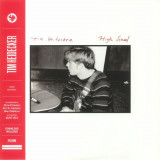
The Black Seeds continue to evolve musically while defying expectations, yet still always seem to sound like no one else but themselves.
Following the sublime smash debut "X17", LA-based label Elbow Grease head conductor Dave Aju continues on his righteous piece-by-piece journey toward a multi-genre multiverse, where deep musical roots come together in kaleidoscopic expression, and unfakeable funk reigns supreme.
"Spacio Tempo" picks up where we last left off, though with a notable drop in bpm as the title implies, with a rolling 4/4 textural tapestry that combines pulsating layers of soulful synth work, effervescent live percussion, and heavenly strings into a dense yet open-as-the-night-sky extended gem yet again. Just as the machine patterns of near-equator rhythms bubble over and begin to lock into a hypnotic groove, a bold left turn into a dank latin jazz noir vibraphone solo and SH-101 duet tango ensues, before landing us safely back at home base - right on time, at its own spacial pace.
As per the Elbow Grease release recipe so far, the B1 cut offers DJs a more driving flex, this time in the form of the "Acido Tempo Mix": a raw 303-driven take on the original which will undoubtedly stomp its way fiercely thru many bass bins in sweaty basements and warehouses worldwide. Finally the B2 blessing "Domingo Dub" closes things out, removing all but the highest vibes as an ambient drifting and uplifting take on the main theme, where the faintest of vocal tones, space echoes, and light percussive touches leave us elated in a West Coast, with subtle splashes from the D, sunset dream. Another solid single turned three-tracker sure-shot from EG.
- 1: The Moomins (Occarina Theme)
- 2: Raft Journey The Cave
- 3: Climbing The Lonely Mountain
- 4: The Moomin Hornpipe (Part One)
- 5: Woodland Band (Parade)
- 6: The Observatory (Unabridged)
- 7: Locusts
- 8: The Moomin Hornpipe (Part Two)
- 9: Indigenous Woodland Band
- 10: The Tornado
- 11: The Moomins End Titles (Occarina Theme)
From deep in the heart of Moomin Valley, frozen in time for many
midwinters passed, comes a genuine treasure chest of never
heard Moomin melodies and instrumental comet songs composed
for the continued animated adventures of our Fuzzy-Felt freak folk
friends who disappeared from UK TV pastures in the mid-1980s.
From the top of the Hobgoblin’s Hat and the bottom of Snufkin’s
satchel, original Moomins composer Graeme Miller (‘The Carrier
Frequency’) kindly shares this patchwork selection of spellbinding
sound poems and percussive peons made using the very same
selection of ocarinas, kalimbas, miniature squeak boxes, Waspy
synths, cornflake box shakers and a seemingly endless array of
talent and lo-fi home studio trickery.
Regarded as one of the most enigmatic, beguiling and haunting
imported children’s programmes to ever grace UK TV screens,
‘The Moomins’ was one of the first-ever commissions by Anne
Wood (‘The Teletubbies’) who ingeniously replaced the original
Polish/Austrian/Finnish soundtrack with homemade music
experiments by unknown post-punk theatre students Graeme
Miller and Steve Shill (aka The Commies From Mars) who, after
the screening of two unforgettable series in 1983 and 1985, were
left in eager anticipation of rescoring further Moomin adventures
with new melodies, arrangements and sound designs, which then
lingered in the ether waiting until the Groke awoke and
Snorkmaiden sang once more.
With future felt adventures screened exclusively in Poland and
Germany for many years (often as feature films) these unheard
recordings are the only genuine musical sequel to the bizarre UK
version of ‘The Moomins’ and stand as important inclusions in
Graeme Miller’s own portfolio of theatrical theme music and sound
installations as part of The Impact Theatre Cooperative, including
collaborations with artists and writers such as Russell Hoban.
Witnessed in fragmented form during a short run of incredible rare
live screenings at The Barbican Theatre and various film festivals,
this record marks the first time this music has been heard in its
original full-length form, free from sound effects, dialogue and
whimpers of euphoric joy and nostalgia from those who have
continued to crave the company of our Moomintrolls and their
mysterious music over the last five decades.
What do you get when you combine "Canada's Dopest Female MC" (Exclaim Magazine) with Canada's Best Kept Secret? You get FREE: the debut collaborative MC/Producer project between Juno-nominated Hip Hop Artist Eternia and the criminally slept on Juno-Award Winning Hip Hop Producer Rel McCoy.
The first full-length release for Eternia since the critically acclaimed "At Last" with producer MoSS (Fat Beats Records), Eternia returns with all the slice & dice super-lyricism audiences have grown to expect from her, as well as a depth and simplicity that can only be attributed to the maturation of her certified veteran MC status. Rel McCoy expertly provides some of the most sophisticated, moving, soulful & dynamic production we've heard Eternia rhyme on, in the same vein as a Pete Rock or a Hi-Tek but with a sonic stamp all his own.
FREE is the sonic equivalent of a baptism: a first step towards wholeness and liberation. The album holds the tension between rebirth, faith and peace of mind juxtaposed with the day-to-day realities of anxiety, fear, uncertainty and failed relationships.
Marc Brauner makes his return to the label, this time collaborating with fellow Berliner, Ulrich Harrison - better known by moniker Tender Games - on five summertime sweeteners.
These two producers are no stranger to working together, co-running their own imprint, Nostalgics Records in their home town of Berlin. This collaboration then came together naturally, and represents the ideal blend of Marc Brauner's syncopated rhythmic tendencies, and Tender Games' musical antecedents in soul music and penchant for instrumentation.
'Concrete Jungle' epitomises this fusion: a two-step rhythm carries a deep bassline which cruises beneath a blissed-out trumpet melody. 'You Keep Me Up' and 'Listen' are skippy old school bangers, the former complete with anthemic piano stabs a la Manix and Inner City and the latter peppered with blithe whispers of a saxophone. 'It Makes Me' follows suit, substituting hi-hats for a focus on funk-inflected low ends before the UKG-leaning 'Violation' draws things to a close with MC vocal chops and bass womp ruffage.
Concrete Jungle EP drops 17th June 2022 via Shall Not Fade
- A1: Bustin'stronghodes
- A2: Trickmonks
- A3: Swallowing The Water You Walk On
- A4: Can Shadows Praise You?
- A5: The Netherworld Squints At The Sight Of You
- A6: Trick Leash
- A7: Anamnesis
- A8: Asking For Fish
- A9: I'm The Weakest Link
- A10: Under Your Breath
- B1: Handles
- B2: What's Illumined Becomes Visible
- B3: Someone You Can Use
- B4: About Face
- B5: Periodically Yours
- B6: We Won't Survive This
- B7: Project Yourself Alive Onto My Corpse
- B8: We Belong To You, But How Now Is Soon?
The (seventh) new Half-handed Cloud album, ‘Flutterama’, is
a record of 18 jubilant indie-pop songs by John Ringhofer
that investigate spiritual incompetence with lively
arrangements and radiant melodies that skilfully dissolve into
deterioration using herky-jerky tape manipulation, analogue
wow-and-flutter, and an animated orchestra of homerecorded sound effects.
Ringhofer’s work on ‘Flutterama’ was inspired by Frances
Mary Hunter Gordon’s adolescent liturgies (recorded at
Abbey Road during The Beatles era), turbid sights and
sounds in Guy Maddin films, audaciously bold forms in Sister
Corita Kent’s devotional printmaking, the exquisite brittleness
of Elizabeth Cotten’s voice, Alberto Burri’s stitched wound
burlap assemblages, Alvar Aalto church design, Andrea
Büttner’s poverty-informed artwork, Lou Barlow/Dinosaur Jr’s
lo-fi ‘Poledo’ sound collage (which namechecks Jesus), Julie
Canlis book ‘A Theology of the Ordinary’, Wallace Berman’s
visual collage, and The Raincoats’ magnificently shaky DIY
aesthetic.
The album’s tape-fiddled tunes - recorded on the very same
16-track recorder last serviced by a sound technician who
also worked with The Beach Boys in their home studio -
employ surprisingly little synthesizer (“it felt like cheating,”
says Ringhofer) - he preferred to craft most of the album’s
effects the long way, frequently going behind the back of rock
instrumentation by hand-feeding ½” magnetic reel recordings
of chord organs, deflating balloons, some guitars, piano
(occasionally tracked with a baby on his lap), brass,
tablecloth swipes, and a quickly-cranked half-speed music
box. He was assisted by long-time Half-handed Cloud
contributor Brandon Buckner on drums, and single song
backing vocals from Anacortes, WA songsmith John Van
Deusen.
LP pressed on Opaque Brown vinyl
"“The New Backwards” was conceived by Peter “Sleazy” Christopherson in 2007, revisiting stray tracks which hadn’t seemed to gel with the material he had chosen for the more somber “Ape of Naples” from 2005, COIL’s initial posthumous release, a sort of requiem and a kiss-goodbye to his then recently deceased partner John Balance.
Significantly different to its sister release, this album collects the brilliantly chaotic and outrageously rhythmic material from the original sessions for the album that was begun as early as 1993 and had originally been conceptualised as the follow-up to “Love’s Secret Domain”. These songs are as diverse and wild as the places they originated from, partly infamously spawned in Sharon Tate’s former home in the Hollywood Hills, the Nine Inch Nails home base in New Orleans and London’s Swanyard, remixed and restructured with the help of long-term friend Danny Hyde in Thailand, this collection has its own unique flow and an atmosphere not found on any other COIL release.
Both “AYOR” and “Backwards” had by the time the album was first released already become favourites in COIL’s manic live performances. Some of the other tracks had only leaked in demo versions and are here presented updated and polished as Christopherson and Hyde intended them to be heard. It is interesting to consider Balance’s vocal contributions, too. Whilst on the albums COIL did release at the time this material was first put aside (“Black Light District” and “ElpH”) his voice is all but absent, his vocal performances and his lyric writing here are arguably more closely indebted to the previous “Love’s Secret Domain” era, especially the epic “Copacaballa” is noteworthy in that respect.
The New Backwards” effectively became the final official COIL studio release of all new material whilst Peter was still alive and is here presented for the first time fully supervised by Danny Hyde, its co-creator.
The stunning cover uses a detail from artist Ian Johnstone’s “Cubic Raven” painting, licensed from the estate of IJ..
It is high time to rediscover this timeless album now!
Recorded at Swanyard, London and at Nothing Studios, New Orleans, 1996.
Thanks to everyone there, especially Trent Reznor who made it all possible.
Written & Produced by Coil & Danny Hyde.
Remixed by Peter Christopherson & Danny Hyde, Bangkok 2007.
For that session Coil were: Peter Christopherson, Jhonn Balance & Drew McDowall.
Mastered by Jessica Thompson.
Front artwork by Ian Johnstone.
Artwork licensed from The Estate of Ian Johnstone.
Layout Cold Graves and Oleg Galay."
"“The New Backwards” was conceived by Peter “Sleazy” Christopherson in 2007, revisiting stray tracks which hadn’t seemed to gel with the material he had chosen for the more somber “Ape of Naples” from 2005, COIL’s initial posthumous release, a sort of requiem and a kiss-goodbye to his then recently deceased partner John Balance.
Significantly different to its sister release, this album collects the brilliantly chaotic and outrageously rhythmic material from the original sessions for the album that was begun as early as 1993 and had originally been conceptualised as the follow-up to “Love’s Secret Domain”. These songs are as diverse and wild as the places they originated from, partly infamously spawned in Sharon Tate’s former home in the Hollywood Hills, the Nine Inch Nails home base in New Orleans and London’s Swanyard, remixed and restructured with the help of long-term friend Danny Hyde in Thailand, this collection has its own unique flow and an atmosphere not found on any other COIL release.
Both “AYOR” and “Backwards” had by the time the album was first released already become favourites in COIL’s manic live performances. Some of the other tracks had only leaked in demo versions and are here presented updated and polished as Christopherson and Hyde intended them to be heard. It is interesting to consider Balance’s vocal contributions, too. Whilst on the albums COIL did release at the time this material was first put aside (“Black Light District” and “ElpH”) his voice is all but absent, his vocal performances and his lyric writing here are arguably more closely indebted to the previous “Love’s Secret Domain” era, especially the epic “Copacaballa” is noteworthy in that respect.
The New Backwards” effectively became the final official COIL studio release of all new material whilst Peter was still alive and is here presented for the first time fully supervised by Danny Hyde, its co-creator.
The stunning cover uses a detail from artist Ian Johnstone’s “Cubic Raven” painting, licensed from the estate of IJ..
It is high time to rediscover this timeless album now!
Recorded at Swanyard, London and at Nothing Studios, New Orleans, 1996.
Thanks to everyone there, especially Trent Reznor who made it all possible.
Written & Produced by Coil & Danny Hyde.
Remixed by Peter Christopherson & Danny Hyde, Bangkok 2007.
For that session Coil were: Peter Christopherson, Jhonn Balance & Drew McDowall.
Mastered by Jessica Thompson.
Front artwork by Ian Johnstone.
Artwork licensed from The Estate of Ian Johnstone.
Layout Cold Graves and Oleg Galay."
Propulsive tabla percussion and meditative drones collide in deep instrumental conversation on Shruti Dances, the debut collaborative album between UK heavyweights Auntie Flo and Sarathy Korwar, forthcoming on the newly relaunched, Make Music imprint.
Across six exchanges of dynamic electronic production and richly layered Indian classical percussion, Shruti Dances discovers two architects of rhythm and movement on an explorative journey through South Asian tonality and diasporic identity.
One an elemental force on drums, the other on the decks, London-based, Indian-raised drummer/composer, Sarathy Korwar and Scottish-Goan producer/DJ, Auntie Flo first connected back in 2019, unaware both were navigating opposite ends of the beat equilibrium. Where Auntie Flo (aka Brian D’Souza) was new to Korwar’s reimagining of jazz, Indian classical music, electronics and spoken word, Korwar was already a big admirer of Auntie Flo’s intl-facing club output, having first discovered D’Souza’s Rainfall On Red Earth off his Soniferous Garden 12” and 2019 SAY award-winning (Scottish Album of The Year), Radio Highlife. Once properly acquainted, Korwar invited Auntie Flo to remix a track off his landmark 2019 album, More Arriving, described by The Guardian as “a stylistic leap from jazz to hip-hop to spoken word…a protest record encompassing the breadth of immigrant experiences”.
The seeds of an unlikely yet powerful musical bond had been sown and when mutual friend, co-founder of Mixcloud, and Make Music label organiser, Nikhil Shah, asked the duo to inaugurate the label’s new live/electronic direction (previously home to Leon Vynehall, U and George Fitzgerald), Korwar and D’Souza hit the studio. Expanding on early conversations around traditional Indian instrumentation, practicing meditation and improvisation, Shruti Dances (a riff on free dance movement, Ecstatic Dance) was born. Meaning 'that which is heard' in Sanskrit, shruti refers to a note in musical terms, but in this case also references the album’s most prominent influence and instrument, the shruti box.
“The shruti box formed the basis of the sound of the project. It’s a drone instrument, similar to a harmonium, and it makes an amazing sound. I’ve spent the last two years studying sound therapy, and immersing myself in ambient and drone through the Ambient Flo project, and am particularly interested in how they can induce meditative states of consciousness. I was really excited to hear what the Shruti box could do with this EP.” Auntie Flo
Across six tracks, (each named after 6 of the 7 main musical notes in the Indian solfege system), Shruti Dances draws on a celestial mix of traditional percussion and processed digital effects. On opening track Dha, Korwar’s sparse tabla rhythms hop across D’Souza’s scattered, arpeggiated synths, where as on Pa, a Balearic shuffle channels Moroccan Gnawa music and Senegalese sabar meets Mark Ernestus’s Ndagga Rhythm Force. Harmonic speed tabla and roaming drones provide a sense of the ethereal and fourth-worldly on Ma, a track that’s resplendent, curious atmosphere would fit snug into the deep listening-focused programming of Auntie Flo’s Ambient Flo online radio station, a curatorial platform and avenue exploring his interest/promotion of mental health, launched over the UK’s first lockdown. Ni sees Korwar pick up the sticks, thrashing toms in a spirited frenzy, whilst downtempo album closer Sa offers some room for reflection, its slow, swirling chords cloud our focus, leaving us with all but the distant sound of birdsong.
- A1: Hortense Ellis - Can I Change My Mind
- A2: Marcia Griffiths - Melody Life
- A3: Myrna Hague - New World
- A4: Marcia Griffiths - Shimmering Star
- B1: Nora Dean - Heartaches
- B2: The Jay Tees - Buck Town Corner
- B3: Jennifer Lara - Turn Turn Turn
- B4: Doreen & Alton - I'm Still In Love
- B5: Doreen Schaeffer - Sugar Sugar
- C1: Denise Darlington - Feel So Good
- C2: Angela Prince - My Man Is Gone
- C3: Nana Mclean - Till I Kissed You
- C4: Nina Soul - Barb Wire
- D1: Jackie & Doreen - Welcome You Back Home
- D2: Nina Soul - Sleeping Trees
- D3: Rita Marley - Friends & Lovers
- D4: Hortense Ellis - Secretly
- D5: Marcia Griffiths - You're No Good
Soul Jazz Records follows up one its most popular Studio One releases with a brand new selection of rare and classic releases by women in reggae. Featuring legendary artists such as Marcia Griffiths, Rita Marley and Hortense Ellis (with a guest appearance by her brother Alton), alongside a host of rarities from lesser known names such as Nina Soul, Nana Mclean, Denise Darlington, Myrna Hague and also Doreen Schaeffer, a vocalist who was a founding member of The Skatalites.
There are notable covers (from Tyrone Davis’ soul classic Can I Change My Mind to the Band’s 60s psychedelic classic Turn Turn Turn in a rub-a-dub style!). Doreen Schaeffer reversions Alton Ellis’s seminal I’m Still in Love with You, Nina Soul reversions the slack rocksteady anthem Barb Wire. A number of these tracks are almost impossible to find and many have never been issued ever since their initial release.
The music on the album is of course 100% killer and features backing from all of the seminal groups at 13 Brentford Road including The Skatalites, Sound Dimension, Soul Brothers and the Brentford All Stars, and ranges from ska, rocksteady, roots, lovers and more from the 60s, 70s and 80s. All produced by Clement ‘Sir Coxsone’ Dodd at Studio One Records, the number one sound in reggae music.
The album is released on Soul Jazz Records as a double-vinyl with gatefold sleeve, download code, the CD comes in slipcase and both come with extensive sleevenotes.
For the second output of e s p e r p e n t o, Francesco Baudazzi evokes his enigmatic and esoteric side project Violet Poison after being part of the first Various Artists release as Red Lodge. ESPER002. includes 5 original tracks plus a stomper Remix by the Liber Null founder Unhuman.
Each track recalls the pleasure and disorientation resulted in perceiving the ruthlessness of the sea and its stillness right after. Retro-futuristic and cinematic elements, wistful melodies and mutant beats emerge from the marine environment tied to Violet Poison homeland. It is not without reason that the Ep title is inspired by “The Rime of the Ancient Mariner” by Samuel Taylor Coleridge (1798), a tale about a sea voyage with no return because of the uncontrollable power of nature and the misfortunes caused by the killing of an Albatros. The poem’s atmosphere too is connected with the eerie depictions and the deforming imagery of e s p e r p e n t o.
Moddi is 34-year-old Pal Moddi Knudsen from Northern Norway,
'Bratebrann' tells the story about a homecoming to a town that he once
knew, but has turned into something unfamiliar
It is in many ways a backlash to Moddi's Norwegian Grammy winning album
"Kaem Va Du?", moving away from the nostalgic narrative of the well- known
Northern Norway.
The theme of the album is the new, emerging Northern Norway, which according
to Moddi has yet to be written about.
Wick Records is proud to present Michael Rault, the eponymous new album from one of the most talented songwriters in the game. A remarkable re-imagination of '70s pop perfection, the album began to take shape during a time of endings. Michael, on the cusp of turning 30 and freshly off the road promoting 2018's A New Day Tonight, had just ended a romantic relationship, and cut ties with his management and touring band. Returning home to Montreal where his van was already buried in six feet of snow, he hunkered down in his bedroom studio and began writing. Over the span of five months he penned most of the album. From the drug-fueled, dance floor slow-stepper, "Neither Love Nor Money", to the introspective "Inside Your Heart", to the tongue-in-cheek playfulness of "Champagne", the body of work he created in this epoch of uncertainty is proof of just how crucial that time of endings really was. Bruised but certainly not beaten, Michael delivers a lush, timeless collection of songs - continuing his increasingly profound exploration into the worlds of progressive pop, psych folk, yacht rock and beyond. Trust us...you're gonna love it!
Key Selling Points
• Sophomore album on Wick Records.
• Indie Only Blue Galaxy vinyl Covered by Paste, Pitchfork, Stereogum and many others.
• “Hook after hook after hook” - PASTE
Wick Records is proud to present Michael Rault, the eponymous new album from one of the most talented songwriters in the game. A remarkable re-imagination of '70s pop perfection, the album began to take shape during a time of endings. Michael, on the cusp of turning 30 and freshly off the road promoting 2018's A New Day Tonight, had just ended a romantic relationship, and cut ties with his management and touring band. Returning home to Montreal where his van was already buried in six feet of snow, he hunkered down in his bedroom studio and began writing. Over the span of five months he penned most of the album. From the drug-fueled, dance floor slow-stepper, "Neither Love Nor Money", to the introspective "Inside Your Heart", to the tongue-in-cheek playfulness of "Champagne", the body of work he created in this epoch of uncertainty is proof of just how crucial that time of endings really was. Bruised but certainly not beaten, Michael delivers a lush, timeless collection of songs - continuing his increasingly profound exploration into the worlds of progressive pop, psych folk, yacht rock and beyond. Trust us...you're gonna love it!
Key Selling Points
• Sophomore album on Wick Records.
• Indie Only Blue Galaxy vinyl Covered by Paste, Pitchfork, Stereogum and many others.
• “Hook after hook after hook” - PASTE
- A1: The Perfect Idiot
- A2: Bring Me To Silence
- A3: Decoy
- A4: Hit Me Now
- A5: Simple Affairs
- A6: Sweet Tooth
- A7: We're Lost
- A8: The Dream Team
- A9: The Ancient Cause
- A10: Stormy Weather
- B1: No Writing
- B2: Rain Down
- B3: Unfinding
- B4: About Face
- B5: Go Down Softly
- B6: Goodbye
- B7: Crooks Like Children
- B8: Past Life
- B9: Mr Nice
- B10: No Title
Belgian / New York supergroup Fievel Is Glauque comprises of jazz keyboard auteur Zach Phillips, angel-voiced singer / rapper Ma Clément, and whichever other virtuosic noodlers happen to be slumped about the place.
Their cult tape "God's Trashmen Sent to Right the Mess" is a sprawling epic of pop, hip-hop and country inspired jazz arrangements. 20 tracks that form a jenga tower of expertly placed jazz chords, interlocking, sliding and collapsing with a short and sharp punk sensibility - all recorded live to tape.
Recommended if you like Arthur Russell's heart-on-sleeve wonky horn arrangements, or the infectious home-made jazz-hop of Louis Cole. We've pressed 300 copies of "Trashmen" to vinyl, and we don't expect them to stick around for long.
Clear Vinyl
Music became an escape for Greta during lockdown, and her new songs tell us about the feelings of love and longing that became an essential part of the pandemic for the German, Copenhagen based singer-songwriter. The songs follow last year’s successful debut album ‘Ardent Spring’ and together they make up her new album ‘Forever We’ll Be Dancing’, which will be released on February 4th 2022
Like so many of us, Greta spent most of last year trapped inside her apartment. While some have been making puzzles or knitting sweaters Greta has been writing songs about love, euphoria and longing; longing for the clubs of Berlin, longing for social contact and trying to find a way out of an emotional darkness.
During the Corona lockdown, Greta found herself in a romantic symbiosis with her husband and though the isolation brought them closer, it was also a challenging time where Greta’s husband struggled with depression.
»Music became my escape and if I needed to take a break and connect with myself, I could disappear into my computer and write a lot of songs. That was a good thing. Difficult, but good. It’s extremely hard to be close to someone who’s in pain when you have to carry them because they’re not able to carry themselves. In that sense, lockdown has been a good thing. My husband needed me and because of the lockdown I didn’t have to worry about missing out on anything. I feel that I’ve reached a deeper understanding of his feelings because we’ve had time to talk about them«, Greta says.
»Zwei Herzen«
The bubble of love and depression became a source of strength and personal growth, but it also caused Greta to miss the world outside and her family in the small German town Husum. Because of this, Greta wanted to fulfill a wish she had kept for a long time – she wanted to write songs in her native tongue, German. This is why multiple of her songs carry titles such as ‘Nicht Allein’, ‘Genug’ and ‘Drei’.
»I’ve been crazy homesick and that has definitely inspired the album. I have not written in German before, so for me this was a way of connecting with my roots. I can listen to German with Danish ears now, because I’ve lived here for so long now, and it allowed me to use the language differently and more rhythmically«.
Shirley Davis is centered, feet firmly planted and gazing right on into the future. The powerful soul singer takes no prisoners and holds no regrets on her third album, Keep On Keepin' On. As Shirley Davis & The Silverbacks, Davis harnesses the power of soul mothers past as well as her own history to deliver a record that rollicks from soul serenade to rocking ballad, then brings it on home with hard stepping soul.
Keep On Keepin' On embodies the best of the modern soul tradition, while showcasing a unique voice in its growing canon. Conjuring classic soul and funk sounds of the 1960s and '70s, as well as the mighty Sharon Jones – whose last words to Davis provide the album title -- Shirley Davis & The Silverbacks' latest is a highly personal tale of empowerment and self-realization, served up without losing an ounce of grooviness.
Since his debut with the "Darling Darling Darling"track, immediately spotted by the media as well as by electronic music lovers, Louis Warynski has continued to evolve a world that belongs to him alone, over the last ten years and eight albums.Like Lewis Caroll's universe, Chapelier Fou's music is multiple, simple and complex, serious and light, classic and modern. Louis Warynski's work is woven on a classical basis, but it is constantly disrupted by subtle electronic arrangements and rhythms, thus taking the tracks outside of all convention.We find in Chapelier Fou the facetiousness of French composers such as Erik Satie, François de Roubaix or Robert Cohen Solal, not hesitating to blend pop and concrete music, but also this formidable capacity to make serious what is not serious, and vice versa of course. His music, very much at home on screen as well as on stage, has everything that makes up the trait of genius composers: accessible in appearance and adaptable in all forms. This is how Chapelier Fou has performed on stage as a soloist, juggling between violin, guitar, keyboards and pedals, in trio, quartet and even in orchestral formation with the Orchestre National of Metz. Often described as "electronic chamber music", it was expected that one day Chapelier Fou would offer us a version of his music without a single electronic or electrified part. It is now done with this Ensemb7e who performed on the stage of L'Arsenal de Metz, broadcasted by Arte Concert. Chapelier Fou Ensemb7e has received direct support from a wide audience, but also from venues programmers where the septet has been performing since June 2021. Ensemb7e stands for a mainly wooden septet: violin, viola, cello, piano, clarinet and drums accompany the multi-instrumentalist composer. It's hard to resist such musical enthusiasm! The magic happens immediately because the re-reading of these little jewels in pop format gives a touching and fulfilling dimension to Chapelier Fou's work: even more dreamy versions, sometimes more mischievous, but the richness of the classical instruments and the obvious pleasure of the musicians in interpreting them give a new life to all these titles that have filled us with wonder. It therefore seemed obvious to us after listening to his Ensemb7e concerts that there was more than a concert to be recorded, but a real album to offer. A studio album, but with the energy and vitality of a live one, produced with the care and generosity of Thomas Poli (who has collaborated with Dominique A, Yann Tiersen and many others).
The other well known 7” from STARFIRE, titled “Almost Insane”, was initially meant to be the “flagship” single for the Long Player “Get Off With Us” released in 1976 on the Dynamic Artists label. Almost no one was aware of the existence of this ultra rare biscuit, once simply thought to be just an LP track. Soon after being unearthed, the luxurious Funk infused seventies soul arrangement and high audio fidelity of “Make The Most of It” backed by the insanely good “Out of The Ghetto” made it one of the most sought after 45 in the rare soul community soon becoming a firm play of a handful spinners to include Dave Ripolles and Yours Truly. Hard work to track the guys down, all well in their seventies, all in the name of spreading the love. Enjoy and support the venture, and if you like the Spice of Ice too, please bundle up and spare something. One in every home!
Truly sensational modern soul double sider. Fantastic group vocals, swirling string arrangement and top notch punchy production. Impossible to find on original format (came out on private press on KickBack Records). Spun only by a handful of deejay around the world, to include George Mahood and our very own Dj Camembert. Recorded at United Artist studio, Beverly & 3rd Street Los Angeles California in 1978. Co-Produced by JJ Wilson who was also the band leader at the time and Bert (Humberto) Agudelo who was also Chief Engineer on this project and is a mastering engineer known to have worked at Liberty/United Artists Recording Studio. He also produced the famous Rocky movie album on United Artist. Executive producer Cecil Lyde Holden from the well known Lyde, Fisher & Giles band, who has cut the classic Serve Me Right to Suffer in 1977 on HAB records. Enjoy and support the venture, and if you like the Starfire too, please bundle up and spare something. One in every home!
Whether having a lazy afternoon in the park or contemplating a relationship on the rocks, Dewey Kenmore's signature blend of west coast latin soul will surely fit the mood. "Before We Say Goodbye" opens dramatically with a whirling organ, setting the stage then crescendoing until the rhythm section takes over with a strikingly tough cha-cha inspired backbeat. Dewey's subtle yet relatable lyrics hit home as he pleads about unrequited love, repeating as if falling on deaf ears with seemingly no resolve.
World renowned extreme Metal titans KREATOR are back. 5 Years after their incredibly successful “Gods Of Violence” album (2107, #1 in the German album charts, #4 in Austria, #7 in Czech Republic and Finland + chart entries in numerous other territories), the genre-defining band presents their most political effort to date. “Hate Über Alles” (in tradition of US punk icons DEAD KENNEDYS’ “California Über Alles”) is a bold statement against hate and the division of society in today’s world. While perfecting their signature sound of thrash metal that inspired countless other bands over the past 4 decades, KREATOR have managed to close the gap between the old and new school, still reaching new audiences, playing sold out shows to even bigger crowds as they move on. “
Hate Über Alles” features 11 tracks that once again show who’s boss in this game that many begin but only few ultimately last in. The crushing frenzy of the title track, the pounding “Strongest Of The Strong” featuring world famous vegan strongman Patrik Baboumian, the nostalgia of “Become Immortal” or the extravaganza of “Midnight Sun” make the band’s 14th album their most diverse and thrilling so far. “Hate Über Alles” will be accompanied by massive online and out-of-home campaigns, leading up to the band’s European co-headlining tour with Grammy-nominated US powerhouse LAMB OF GOD in November/December 2022. The album is available in various lavish vinyl editions featuring a beautiful, yet grim trifold artwork by famous artist Eliran Kantor (TESTAMENT, SOULFLY, HELLOWEEN, HEAVEN SHALL BURN, HATEBREED among others) as well as in a noble CD Digibook and bold box set including an extended Making-Of Book, a live album of the band’s 2021 Bloodstock Open Air appearance, an art print of the cover and a pin of the band’s iconic logo.
**180g heavyweight vinyl** Les Racines is the latest solo album from the eminent guitarist and songwriter Vieux Farka Touré, and his first for World Circuit Records. Known as the ‘Hendrix of the Sahara’, Vieux has released 4 critically acclaimed solo albums to date, extending the boundaries of traditional West African music into new and uncharted territory. He has also released audacious collaborations with the likes of Dave Matthews and jazz guitarist John Scofield, and albums with American singer-songwriter Julia Easterlin and Israeli singer-songwriter Idan Raichel. With Les Racines, which translates as ‘the roots’, Vieux documents a deep reconnection with the traditional Songhai music of northern Mali which is one of the traditions that has come to be known in the West as ‘Desert Blues’. Vieux’s roots run deeper than deep – he is the son of Ali Farka Touré, widely acclaimed as the finest guitarist Africa has ever produced. Recorded in Bamako in Vieux’s home studio, the timeless grooves of the album are steeped in the traditional music of West Africa. But the fire of Vieux’s guitar playing and the urgency of the messages in his songs add an entirely contemporary relevance. “We are nothing if we abandon respect for the past,” Vieux says. The resulting album, the most profound statement of his career to date, marks out Vieux as the great Ali Farka Touré’s rightful heir and a major artist in his own right. “Early in my career people asked why I wasn’t just following my father. But it was important for me to establish my own identity,” Vieux says. “Now people know what I can do, I can return to those roots with pride and I hope a certain authority.”
In 2018, artists Haroon Mirza and Jack Jelfs spent two months in residency at CERN, the European Centre for Nuclear Research, and home of the Large Hadron Collider. From this collaboration the artists created the fictional reality of 'The Wave Epoch', a sprawling multimedia artwork drawing influence from science, mysticism and the nature of belief. ‘The Wave Epoch’ project spans live performance, film, art installations and their critically acclaimed 2020 album of the same title.
'one1one' is the latest transmission from this same universe, a magical incantation spoken by Jessica Barter, with words filtered through Google Translate to produce what the artists describe as “algorithmic mysticism”. This release presents remixes by Fracture and Jack Jelfs, alongside the original album track by Mirza and Jelfs, here on vinyl for the first time.
Experimental drum n' bass artist Fracture has transformed Mirza and Jelfs’ raw materials into a heavy 160 BPM workout that harkens back to the Blue Note-era Metalheadz sound of the mid-nineties, a crunching minimalist construction of metallic breaks and analogue sub bass. Accompanying his track is an AR (augmented reality) work by Scott Utting and Mirza.
- A1: All The Earth
- A2: Finding The Pattern
- A3: Liquid Light
- A4: The Sleep Of Death
- A5: For Ever
- A6: The Mourning Tree
- A7: Disappearing
- B1: All Of My Birds
- B2: A Choice
- B3: The Seventh Whistler
- B4: An Early Harvest
- B5: The Fragmenting
- B6: A Beautiful Morning
- B7: Carry Me Back To Her Arms
- C1: A Storm Over Yaughton
- C2: Little White Lie
- C3: Aurora
- C4: Clouds And Starlight
- C5: The Pattern Calls Out
- C6: The Manifestation
- D1: These Silent Numbers
- D2: Primary Conduit
- D3: I Hope You Find Peace
- D4: Slipping Away
- D5: Infinite Zero
- D6: The End Of All Things
- D7: I Am Not Afraid
- D8: The Light We Cast
The groundbreaking 2015 PlayStation® 4 game Everybody’s Gone to the Rapture tells the story of the inhabitants of a remote English valley who are caught up in world-shattering events beyond their control or understanding. Made by The Chinese Room - the studio responsible for the hauntingly beautiful Dear Esther - this tale of how people respond in the face of grave adversity is a non-linear, open-world experience that pushes innovative interactive storytelling to the next level. This story begins with the end of the world. The game has already won GameSpot’s Best of E3 and was nominated for Best in Show and Best PS4 game by IGN.
The soundtrack features the music by Jessica Curry, who is also joint Studio Head of the developer The Chinese Room. The music was recorded at the famedAIR Studios in London and features solo vocal performances by renowned Welsh soprano Elin Manahan Thomas, ethereal choir, and a tragically beautiful orchestral accompaniment. With her compelling soundtrack, Curry took home the BAFTA Games Award for Best Music.
Everybody’s Gone To The Rapture is available as a 2LP limited edition of 500 individually numbered copies on translucent red coloured vinyl and includes a
4-page booklet.
Fresh from delivering standout performances at Berlin’s renowned Panorama Bar and Amsterdam’s DGTL, Theo Kottis presents his first solo release on Permanent Vacation, the sparkling ‘On Your Mind’ EP, released on 1 July (vinyl & digital).
The creation of the six tracks on ‘On Your Mind’ EP, provided moments of escapism for Theo Kottis, during the depths of lockdown 2020. His nods to synth pop and italo fun, inspired by bands of the new wave era, are intended to bestow upon the listener those same blissed out moments. There’s more to these tracks than meets the ear, particularly stand out ‘On Your Mind’, the product of relentless pursuit. For Theo, the collaboration with Permanent Vacation was long awaited and is a memorable mark within his thriving career.
Theo Kottis said: “Thrilled to finally share these tracks, I worked on them 2 years ago and was fortunate enough to find them a home at Permanent Vacation, which has long been one of the labels I've admired most. As these tracks were a solo lockdown project, I've loved collaborating with PV on the release - particularly the creation of the vinyl. Next up - I can't wait to play them out IRL in parties this summer.”
Edinburgh-born and now London-based Theo Kottis is set for a big summer with a host of high profile worldwide festival and club dates, with forthcoming dates including his Beautiful Strangers label Off Sonar showcase party in Barcelona with KiNK, Saoirse, & a B2B with Ryan Elliott, Warehouse Project, El Dorado Festival, Ijland Amsterdam, Pikes Ibiza and Lost Village Festival.
Mondo, in partnership with Back Lot Music Wright, are proud to present the premiere physical release of Steven Price's electrifying score to LAST NIGHT IN SOHO, the latest film by Edgar Wright.
Edgar Wright wanted a score to soundtrack the two eras of Last Night in Soho and tie together the stories of these two very different young women. To achieve this, Wright turned once again to his now-regular composer, Academy Award® winner Steven Price, who successfully scored both Baby Driver and The World’s End.
While Price’s influences for the score included contemporary film music by the likes of Ennio Morricone and John Barry, a “’60s session band” sound with echoing fragments of dialogue add a different and sometimes subliminally sinister edge to the score. The sounds of ‘60s Soho blend into the present-day London scenes as Eloise is sucked further into the past. “The idea is that Sandie’s voice becomes part of the film, so you hear her siren song from the ‘60s coming through, and Anya became an intrinsic part of it… I was pleased that the lead actress is also the lead singer in the film score; the whole thing knitted together.”
The album also features songs performed by Anya Taylor-Joy, including the lead single from the film "Downtown (Downtempo Version)"
Peer through the windows of the sun-dappled homes in Sicily and you will be faced with a small, strange ceramic object adorning each hallway. It is a glistening pine cone standing upright – a pigna – the longstanding symbol of Sicilian openness and welcome hospitality.
The pigna is a delightfully unusual and yet apt symbol for the title of the third record from Benjamin Harris, AKA Yarni. Ever since his debut LP release in 2017, Yarni has established a following committed to his musical openness, an intuitive curiosity that has spanned everything from house and techno to cinematic ambience and Japanese percussion, as well as jazz horns and afrobeat fanfares. For Yarni, anything goes and everyone is welcome. Now, Pigna sees Yarni reach his fullest and most musically diverse expression, taking its name and ethos from Sicily, but finding a sonic home in the luscious orchestration of a new ensemble of musicians.
Here, at the helm of a nine-person ensemble, Yarni artfully pieces together live improvisations to create the warmth of a seasoned group performing deep within the groove. Opener “Midnight Getaway” places the listener squarely within the disco-funk of Daft Punk as Yarni’s top-line synth intersects with a rolling bassline and a lyrical flute solo from Rachel Shirley. This optimistic tone of sunlit spaciousness is then heightened on “Utopia”, as Yarni’s horn section comes to the fore to pay homage to the ineffable syncopations of Fela Kuti’s pioneering afrobeat.
Rather than scratch at the surface of these musical genres, Yarni’s attuned ear embodies the emotive essence of his various sounds by paying intimate attention to their creation. There is the punch of that afrobeat sax on “Utopia”; the rhythmic skitter of breakbeats on “The Astral”; the sludging thump of funk in the bassline on “Nova”. Collaborators are given free reign, too, to incorporate their own unique stylings into this remarkable whole, from vocalist Emily Marks’ languid tone on “In A Dream”, to saxophonist Jonoa’s innate swing on “Cherub”, and the metronomic movement of bassist Ally McMahon’s playing throughout.
Listening to Pigna is ultimately to find yourself squarely within the comforting embrace of Yarni’s musical mind. It is a truly LP experience – a record to be placed on the turntable’s platter and then left to play, allowing yourself an immersion in these journeying soundscapes. It is no wonder fellow sonic travellers such as the late Andrew Weatherall and DJ Harvey have been supporters of Yarni’s work, since here is a kindred spirit – an artist shaped in the form of radical openness, speaking the hospitable, universal language of beautiful music.
Peer through the windows of the sun-dappled homes in Sicily and you will be faced with a small, strange ceramic object adorning each hallway. It is a glistening pine cone standing upright – a pigna – the longstanding symbol of Sicilian openness and welcome hospitality.
The pigna is a delightfully unusual and yet apt symbol for the title of the third record from Benjamin Harris, AKA Yarni. Ever since his debut LP release in 2017, Yarni has established a following committed to his musical openness, an intuitive curiosity that has spanned everything from house and techno to cinematic ambience and Japanese percussion, as well as jazz horns and afrobeat fanfares. For Yarni, anything goes and everyone is welcome. Now, Pigna sees Yarni reach his fullest and most musically diverse expression, taking its name and ethos from Sicily, but finding a sonic home in the luscious orchestration of a new ensemble of musicians.
Here, at the helm of a nine-person ensemble, Yarni artfully pieces together live improvisations to create the warmth of a seasoned group performing deep within the groove. Opener “Midnight Getaway” places the listener squarely within the disco-funk of Daft Punk as Yarni’s top-line synth intersects with a rolling bassline and a lyrical flute solo from Rachel Shirley. This optimistic tone of sunlit spaciousness is then heightened on “Utopia”, as Yarni’s horn section comes to the fore to pay homage to the ineffable syncopations of Fela Kuti’s pioneering afrobeat.
Rather than scratch at the surface of these musical genres, Yarni’s attuned ear embodies the emotive essence of his various sounds by paying intimate attention to their creation. There is the punch of that afrobeat sax on “Utopia”; the rhythmic skitter of breakbeats on “The Astral”; the sludging thump of funk in the bassline on “Nova”. Collaborators are given free reign, too, to incorporate their own unique stylings into this remarkable whole, from vocalist Emily Marks’ languid tone on “In A Dream”, to saxophonist Jonoa’s innate swing on “Cherub”, and the metronomic movement of bassist Ally McMahon’s playing throughout.
Listening to Pigna is ultimately to find yourself squarely within the comforting embrace of Yarni’s musical mind. It is a truly LP experience – a record to be placed on the turntable’s platter and then left to play, allowing yourself an immersion in these journeying soundscapes. It is no wonder fellow sonic travellers such as the late Andrew Weatherall and DJ Harvey have been supporters of Yarni’s work, since here is a kindred spirit – an artist shaped in the form of radical openness, speaking the hospitable, universal language of beautiful music.
Markus Acher (best known as singer of The Notwist) typically produces his own music under the name Rayon – this time, however, is a different story. Using his real name, he sends a signal re: the circumstances he recorded the music in - at home in his old apartment in Munich, in a private setting, in a time when there was hardly anything else available. Accordingly, and rather fittingly, the four songs represent a bridge to the outside world: Acher tore the doors to his balcony wide open, inviting the outside in, capturing its sound on tape: rain falling, engine noise of passing cars. And at the same time the songs pushed outward, into that sphere that remained off-limits to us for some time (“Like a plane they can go everywhere”).
The four tracks - arranged for harmonium, acoustic guitar, banjo, glockenspiel, percussion, a children's harp and vocals - were released digitally in 2021 via the Japanese independent platform Minna Kikeru, run by Saya (member of the duo Tenniscoats and Markus Acher's bandmate in Spirit Fest), among others. For two songs of »Like A Plane«, Saya contributed vocal tracks as well.
»Like A Plane« now sees its vinyl release via Morr Music.
- 1: The Rain Drops
- 2: Another Time
- 3: Melted Car (Feat. Karina Gill)
- 4: Deep In Squalor (Feat. Griffin Jones)
- 5: Hey There Flower
- 6: Cliché (Feat. Kati Mashikian)
- 7: Say It Now (By Françoise Hardy)
- 8: Uneasy
- 9: Ode To Little Bird (Feat. Alexis Harper)
- 10: September Skies (Feat. Karina Gill)
- 11: The Portal
- 12: The Word
- 13: Unled Lives (Feat. Hannah Lew)
- 14: Saint Matthew
Solo bedroom-pop project of Michael Ramos (Flowertown, April Magazine, Hectorine). Mostly recorded between last Christmas and New Year's during a window of isolation at home, “Hey There Flower” preserves Tony Jay’s prowess at making beautifully eerie lo-fi pop; like a hazy memory where your favorite Sixties girl-group melody is perpetually slowed down. Without a band to practice with, Tony Jay recorded the music alone, but recruited a slew of friends to remotely record backing vocals: Karina Gill (Cindy), Griffin Jones (Galore), Kati Mashikian (Mister Baby), Alexis Harper (Al Harper), & Hannah Lew (Cold Beat). "Hey There Flower", the most recent release from the prolific and mysterious Tony Jay delivers real melodies -- both lacey with vocal harmonies and dusty with layered guitars -- as fans have come to expect. This release also carries forward and elaborates on Tony Jay's tradition of songs that express a kind of naked honesty about things we all know -- love and loneliness and all that -- while communicating at the same time a wry edge of skepticism, so that the songs are like coins spinning on edge before landing heads, tails, or lost under the couch. Tony Jay brings us into a nostalgia where we recognize moods from music of the past -- Marc Boland definitely comes to mind, as well as Velvet Underground of the Nico era, and Tony Jay even covers Francoise Hardy on this collection -- but the songs create a three dimensional space with what feels like a thousand layers so that instead of being thrown back in time, it's like stepping into a little world with its own laws of nature, of which the listener gets just a few hints. - Karina Gill, Cindy/Flowertown. “Hey There Flower” is introduced by thudding snare beats eliciting reverb-stained tattered noisy guitar scrapes, to weave abrasive shimmery emotive vibrations, imbued with shattered nostalgic dreams, lit by brittle yet dazzling forsaken keyboard flows, over submerged and distorted male vocal’s whispery deluge of obsessive longing, lonely melancholy, and dark desire to exude a hazy gritty concoction of awkward sadness and brooding unrest.” White Light // White Heat // “What Tony sketches are concise commentaries on love, loneliness and a few things in between. His mode of expression is sparse, intense, and captivating. The arrangements are invariably lo-fi and slow tempo, blanketed with a fuzzy hiss. And it only took one listen to decide that it is a very special album. It has a '60s feel, albeit washed in an eerie slowcore machine. An ace example is "September Skies", which could be the 1965 'last dance' at the prom for the introverted students.” - When You Motor Away
Debut album by Goatman, now repressed. A solo project by one of the mysterious members from the Swedish collective GOAT. Recorded in GOAT’s northern Swedish hometown of Korpilombolo In late 2017 - the 6 tracks on Rhythms reveal a true collision of African Rock, Jazz, Reggae, Gospel and Psych, but all put through the famous GOAT filters.
Limited Baby Pink Vinyl LP. P.H.F. is the recording project of Auckland, NZ songwriter and producer Joe Locke. From its origins in Locke's 2008 bedroom productions, P.H.F. has gone on to collaborate with artists like Clairo and ARTHUR, toured globally, and had music released on pioneering vaporwave label Crystal Magic, before settling at its current home, Danger Collective Records. P.H.F's highly anticipated 2022 LP Purest Hell stands as a love letter to Locke's close friend and essential collaborator Reuben Winter (milk, Totems) who passed away in September 2020. Expanding on the genre-bending ambition of New Metal, Locke uses musical experimentation as a way to process grief, incorporating shredding guitar, careening breakbeat chops, and heavy electronics as a way of paying tribute to, and feeling closer to Winter. While tracks like "Skincare" and "A Letter From Purest Hell" draw power from a deep and impactful sense of loss, the album is more than just an elegy, but a celebration of life of a beloved friend and musical innovator. Locke rises to the occasion, and with the help of collaborators Fantasyluv, Rew, and fellow 909 Worldwide members 99jakes & Forcefeeded, crafts his strongest and most affecting collection of songs to date // Also Available From P.H.F. New Metal LP/CD, Anthology LP
Now available at a much cheaper price. SOS JFK, the one and only album from folk two-piece The Children’s Hour, which featured Josephine Foster and Andy Bar. Initially released in 2003, the album introduced audiences to Foster’s enchanting vocals and poetic folk, which would be developed to staggering effect in her later solo recordings, such as the recently released critically acclaimed album Blood Rushing (Fire Records). The Children’s Hour were an acoustic duo comprised of members Andy Bar and Josephine Foster. The two friends first connected in 2000 in a short-lived rock trio called Golden Egg, and then on a lark formed the pop song-writing duo oriented toward more naïve themes. Foster was a recent opera school dropout and the band became a vehicle for her to explore singing in a non-operatic manner into a microphone and learn to play the guitar. Bar was finishing studies at the Art Institute of Chicago and was honing a personal and highly melodic fingerpicking style inspired by bossa nova in particular. They were heard performing in a Chicago dive bar and given a surprise invitation to make a studio recording (SOS JFK), which both found to be an extremely nerve-wrecking learning experience. Meanwhile fans of their music rose up from unexpected corners, even invited by the band Zwan to open all the shows of both bands´ maiden tour. Initially conceived of as a modest front porch collaboration and side project, the band did not withstand all the attention long. Bar and Foster took meandering paths in diverse directions, although the two remain stalwart pals and both continue to dedicate themselves to the muses.
Written in early 2020, and inspired by childhood memories of their
forborne General Store in Bishop's Mills ON - 'Front Porch' is a family
production that thrums with alt-roots and Americana warmth
The music also reflects much of the influences that informed Graham's musical
education - with nods to The Beatles, Dolly Parton and Lyle Lovett. In fact, the
entire new album serves as a time capsule filled with precious memories that
only come with being born, raised and homeschooled together in a house in the
woods a kilometer from the nearest neighbour. It was these memories and
moments that culminated in 'Graham's General Store' and it was presented to
their parents as a surprise for their 43rd wedding anniversary.
- Z]C To Infinity
- A2: Home Team
- A3: The Pit
- A4: Girl Guide Cookies (Feat Robo Robb & Eddie Quotez)
- A5: Well Wishers (Feat Illgil)
- A6: Translucence (Feat Kamilah Apong)
- A7: Years (Feat Nole)
- A8: To Friend Too Fortunate (Feat Thesis Sahib)
- B1: S Morganstern (Feat Ginzuintriplicate)
- B2: Nothin Fri3Ndly (Feat More Or Les, Wordburglar, Swamp Thing, The Mighty Rhino & Ghettosocks)
- B3: Lush Karma
- B4: Gjhs
- B5: What Would Buffy Ste-Marie Do? (Outro)
- B6:
The Library Steps is a new pairing of an old rapper named Jesse
Dangerously and a young producer named Ambition
The duo is named in remembrance of the now demolished stone stairs of the
Halifax Memorial Library entrance, where among a loose and ragtag assortment
of the city's rappers they would gather across generations every Friday as the
doors locked, to freestyle, beatbox, and play tapes in a cipher called Public Rhyme
Distribution. Jesse and Ambition have been members of the Canada- wide
collective Backburner since 2001 and 2009 respectively, but only started making
songs as a rapper/producer duo in the spring of 2017. It took them more than a
decade of intention to pair off as a team. All of the beats and rhymes for Rap Dad,
Real Dad were created in the next few months as a time capsule of that season's
preoccupations. The beats are jazzy, soulful, and moody, with a prominent nod
factor, and the rhymes are confessional and witty, vulnerable and boastful,
intimate and intimidating. Under their fingernails, no microscope is needed to
detect the DNA of golden era rapper/producer teams like Pete Rock & CL Smooth,
Gang Starr, a gentler Beatnuts, or any group that was part of Native Tongues or
Hieroglyphics. Just as present are the influences of turn- of- the- century
underground boundary pushers like Sage Francis, Aesop Rock, MF DOOM, and
Buck 65, and for that matter, just about everyone who was on Roc-A-Fella at its
peak. Refracted here, those chosen ancestors and more recombinate into a hiphop that challenges, from unexpected angles, traditional modes and narratives of
masculinity. They are your rap dads, and they just may be your real dads, too.
[n] B6 . [A,Z]A+[A,,Z]B+
Learning about what Deliluh has been through these past two years
brought the commands on a cassette player to mind: press rewind,
forward, play and eject The band, now a duo of Kyle Knapp and Julius Pedersen, relocated to Europe from their Toronto base with the ambition to plug into a continent that felt more cohesive in terms of a gig circuit and to map new spaces, both terrestrial and spiritual. This bold move came with several adjustments.
Fault Lines is also a European record in its making. It first took shape at a session in Copenhagen in January 2019 where the band, still a four piece, recorded the beds before heading out on tour. The plan was to take a post-tour break and track some ideas that could be worked on remotely until everyone got back together in the early summer. Then everything "kind of went sideways". Fault Lines stayed in an embryonic state for more than half a year, during which Deliluh reconfigured as a two piece. The lockdowns did, however, provide the time to rework material, or reposition ideas in line with the circumstances the pair found themselves in.
Julius Pedersen: "We did a lot of heavy lifting at home together in Berlin and Marseille, taking turns training back and forth, throwing shit at the wall and experimenting."
After all this upheaval, does Deliluh still dream of going to another place? Are places different and do they really have a bearing on the creative path? "There's always another place calling from beyond. Without it we would be stuck and hopeless
Blame It On Gravity is the seventh studio album and the first new album
in 4 years from alt-country pioneers Old 97's
The album finds the band turning up the amps and returning to the satisfying
crunch with a mix of rock, punk, pop and classic country that defined the band's
sound on earlier albums. The band credits the new album's enthusiasm to their
return to their hometown of Dallas, TX to record, the first time since their initial
independent release. The band, still comprised of original members Rhett Miller,
Murry Hammond, Ken Bethea and Philip Peeples, deliver what they believe is the
finest album of their 15-year career.
- A1: An Empty Space Is Not Just Filled With Air
- A10: Think, Blink, Breathe, Blink, Speak, Blink, Breathe
- A11: Drunk At Best
- A2: Cosy Nothing, Moving Coffin
- A3: A Silly Seal, Asleep, Rolling Down The Hill
- A4: Quatre - Vingt - Quatorze
- A5: Melancholy Eyes
- A6: Slvote
- A7: Love, Beers & A Queen Size Bed
- A8: Geranium
- A9: 15 Octobre
Equipe de Foot is a French duo of singer-songwriters who record pop
songs and play them much louder on stage
Since their formation in 2015, Alex & Mike have played hundreds of gigs, from the
sweaty basements of their hometown of Bordeaux to the stages of nationally
renown festivals and European venues, making a solid name for their band, and
little by little becoming part of the new wave of French rock. Equipe de Foot now
admit that their flaws might be their greatest strength, and bring their love for
English and American indie pop music and production to the forefront in their
songs. For 'Geranium' they have chosen to work with producer and sound
engineer (and fellow Beatles fan) Johannes Buff (Thurston Moore, Lee Ranaldo,
The Drones, Dalek and other various amazing projects) at Shorebreaker studio in
Tarnos, France. A meaningful choice both in terms of technical and artistic skills,
Johannes was able to assemble Equipe de Foot's good old wall of guitars, as well
as reach the heart of their pop songs to make the whole thing gloriously shine,
without altering the charming homemade vibe emanating from their beloved
demos.
The album is a constant rollercoaster, alternating lo- fi ballads and powerful
anthems, but always with a twist, be it a pitched loop on a chorus or an auto
tuned solo trumpet at the end of a sad piano song.
The past couple of years have provided an ideal breeding ground for periods of reflection. Of rediscovery. And for the reignition of dwindling flames. Perhaps this is why the meeting of Tom Churchill and 2Sox is the perfect match at the perfect time. A collision of minds stoking a fire that has sizzled away into a 12” slab of choice cuts. Introspective and deep, yet not forgetting what a dancefloor wants.
Tom started making music in the mid-90s, inspired by the house and techno records he was buying as a teenager growing up in Cardiff. Co-founder of cult 90’s label, Headspace Recordings and sister label Emoticon; Tom and partner Raeph Powell were responsible for some faultless releases in the 00’s. More recently, Tom has been one half of The Nuclear Family; a production, label and events project launched with Laurence Hughes in 2013. Much of what Tom has put his hand to over the years has been hot in demand. Incredibly, this is his first physical, solo release under his real name since 2002. Despite the 20 year gap, Tom’s enthuse for all things deep and electronic has arguably never been stronger.
“These tracks have been heavily inspired by two things - reconnecting with my surroundings and rediscovering my record collection - both of which have been made possible by the events over the past couple of years.” Tom says.
“As well as spending more time outdoors around my home on the west coast of Scotland, I recorded a lot of DJ mixes and radio shows during the first lockdown, which meant I spent a lot of time digging through older records. This reignited some creative energy that had been lying dormant for a while.
Before 2020 I’d been sporadically using a rented studio space to make music, but in that Spring I put together a basic, compact setup so I could work at home. My influences are pretty clear with these tracks - I’ve drawn on the palette of classic deep house, 90s techno and electro throughout - but while there are some retro elements and familiar sounds, I’ve tried to put my own twist on things. Being surrounded by nature and working exclusively on headphones has made for a more intimate sound, and these tracks are the most personal I’ve ever done.”
180g vinyl pressing.
During the late 2010s, music lovers around the world began obsessively listening to increasingly esoteric albums on Youtube. More often than not, they’d leave the browser on autoplay. This was how Facundo Arena, the composer and producer behind The Kyoto Connection, discovered the technonaturalistic pleasures of Kankyō Ongaku (environmental music), a distinctly Japanese interpretation of European, British and American minimalist composition and ambient music. “It was a kind of algorithmic magic,” he says.
Upload by upload, the utopian music of Hiroshi Yoshimura and his 80s Japanese contemporaries transported Facundo back to his childhood. When he was five, his father placed him in karate lessons and began watching martial arts movies with him. From those early experiences, Facundo became fascinated Japanese history, tradition, and culture, particularly that of Kyoto - the cultural capital of Japan. Kankyō Ongaku reminded him of hearing the sounds of Japanese folkloric instruments as a young boy, and suddenly, the way the influence of Japan had manifested in his music made sense. “I had the sensation that for many years, I’d been doing something similar to the style,” he explains.
Inspired, Facundo used an iPad and an old Akai cassette deck to record Postcards, his homage to Japanese minimalism and Kankyō Ongaku. By this stage, he was twelve years deep with The Kyoto Connection, the musical project he launched in 2005 in his hometown of Buenos Aires, Argentina. Over that late 2000s and 2010s, Facundo, later on joined by collaborators Rodrigo Trado (drums), Jesica Rubino (violin) and Marian Benitez (vocals, now his wife), released numerous D.I.Y albums. Project by project, they followed the threads between 80s synth-pop, ambient, new age, house, techno and acoustic composition.
Postcards introduced The Kyoto Connection to listeners around the world and brought Facundo into our orbit. During Argentina’s covid lockdown, Facundo received a set of soundscapes recorded in Kyoto by the Japanese musician and sound designer Masafumi Komatsu. Over several insular months, he decorated them with synthesisers, samples and subtle rhythms, creating The Kyoto Connection’s next album, The Flower, The Bird and the Mountain to be released via Isle Of Jura offshoot Temples Of Jura.
Ostensibly made up of twelve distinct tracks, listening to The Flower, The Bird and the Mountain feels more akin to spending calm, meditative time in twelve specific environments. Although the foundations they rest on are recordings made in geographic locations around Kyoto, Facundo has yet to visit Japan. As a result, the landscapes he paints sit somewhere between fiction and fact, richly pictorial sonic imagination juxtaposed with echoes of reality. Regardless, as his bubbling melodies and glistening synthesisers glide against Masafumi Komatsu's recordings, Facundo guides us into a blissful zone of tranquillity well worth spending time within.
A thin patch of fog has comfortably placed itself in the middle of the valley. Sleepy oaks and pines encircled the small valley, giving it a protection from an unwanted eye. 3 women danced freely in-between open flames. It seemed like the fog did not mind this and only embraced their bodies in a mutual dance. Every move, every sway and every step igniting the flames brighter and brighter. Nobody would ever know though, as the trees still stood guard.
~~~~~~~~~~~~~~~~~~~~~~~~~~~~~~~~~~~~~~~
Thrown is a producer from the North of Czech Republic, who already made his first appearance on Moving Pictures’ V/A compilation in 2020. This time we are happy to welcome him back with his own vinyl EP titled “Between Two Flames”. Liberec based producer delivers a three-tracker tale, complemented with a fourth track - a remix by label’s own duo Aerial. Nostalgic, melancholic, happy, hypnotic? This is for you to feel and decide.
180g vinyl[15,08 €]
Black Vinyl[16,60 €]
Clear/White Splatter Vinyl[26,68 €]
Clear Vinyl[20,80 €]
Marble Vinyl[25,00 €]
- A1: Live At The Sahara Tahoe, 1973 (Remaster 2022)
- A2: Farben Says Love To Love You Baby (Remaster 2022)
- A3: Muskeln (Remaster 2022)
- B1: Suntouch Edit (Remaster 2022)
- B2: Farben Says As Long As There's Love Around (Remaster 2022)
- B3: 6Ff (Remaster 2022)
- C1: Beautone (Remaster 2022)
- C2: Farben Says So Much Love (Remaster 2022)
- C3: T Microsystems (Remaster 2022)
- D1: Raute (Remaster 2022)
- D2: Silikon (Remaster 2022)
- D3: Farben Says Love Oh Love (Remaster 2022)
On textstar+ Jan Jelinek brings together the material from the CMYK series, four EPs he released between 1999 and 2002 under the pseudonym farben (the German word for both colours and paints), on a vinyl double LP for the first time. The selection of tracks has been remastered from the original tapes, joined by two additional pieces that appeared on compilations during the same period.
A Polaroid. Still life with tangled leads and consumer electronics, late twentieth century. Black and various shades of dirty white are the dominant non-colours. The image’s spatial depth remains diffuse, the links between its elements speculative. A note stuck to the wall (a legend, perhaps, or an all-explaining blueprint in text form?) is impossible to decipher. You can’t see what connects the picture’s signs. You have to hear it.
farben says: Every sound is a text. A bearer of meaning in search of a reader. Hoping the ideas inscribed in its autonomous existence will be understood as intended. While its beauty lies precisely in misunderstanding, in reading the coded message a new way every time. A thousand colours of sound, a thousand different ways to hear, to see, to understand.
On textstar+ Jan Jelinek brings together the material from the CMYK series, four EPs he released between 1999 and 2002 under the pseudonym farben (the German word for both colours and paints), on a vinyl double LP for the first time. The selection of tracks has been remastered from the original tapes, joined by two additional pieces that appeared on compilations during the same period. Another new element is the Polaroid, showing the origins of a world: Jelinek’s home studio in Berlin at the time.
farben says: Move your body! The project has its roots in Jelinek’s love of house as a reductionist vision of soul. Of four to the floor as a proposition that can be accessed anywhere. Of electronic dance music as a realm of possibility that can be continually expanded. farben was written as contemporary house music. As a text about excitement and euphoria. The arrangements were made directly while recording to DAT, on a twelve-channel mixing desk. Several track titles suggest a link to live concerts, coupled with the context of machine music and bedroom recording. Others affirm pop music’s most extravagant stock phrases about various states of love.
Jelinek produced the tracks with the aim of making music for dancefloors. An idea that failed very productively. In the locations to which it was originally addressed, the project barely figured. But people did listen, and they listened all the more closely to this music that opened up new acoustic and associative scope for house. farben is the opposite of genre: a music spawning new terms (clicks & cuts, micro-house) that never manage to fully capture it.
farben says: Signifiers. The four CMYK EPs are designed as a network of references that cannot be missed but that can also never be precisely deciphered. The vectors of sound, word and image point to Isaac Hayes and Ornette Coleman, to Detroit and the first generation of the Red Army Faction, to Karl Marx and Friedrich Engels. So multifarious that they are distorted to the point of recognition. Overall we hear sonic docufictions whose appealing vagueness derives precisely from this oscillation between clarity and ambiguity, which is also the source of their poetry: the lyricism of the pure circulation of signs.
The artwork is based on photographs of former Red Army Faction members, broken down into the four colours of the CMYK model. The motifs dissolve into individual dots of a single colour, so close to the faces that their expressions are only hinted at. Taken together, the individual colours compose a new whole out of fragmentary material, defying definition and thus maintaining their vibrancy. The same occurs on the level of sound. The sampler Jelinek used for these tracks had to be fed with floppy disks, imposing a memory limit of 1.44 megabytes per audio quotation from soul or jazz records. As a necessary consequence of this, the individual references, like the dots of colour, are dissolved into details and abstractions. They appear as splinters that recombine in new ways to create new meanings. The joy of collapsing metaphors.
farben says: New departures. Even two decades after its original release, textstar+ does not come across as an epitaph to the modern era. Instead, it appears as a euphoric affirmation of the utopias of the twentieth century, translated into new sound texts via the aesthetic strategies of abstraction, collage, networking and speculation. 1.44 megabytes of history, one thousand signifiers, one album. From “Live ...” to “... Love”.
Arno Raffeiner, 2021
Kavinsky is a zombie who came back from the dead after his Testarossa crashed in 1986.
His first song, "Testarossa Autodrive", was an instant success, and was followed by two singles. In 2007, he was chosen by Daft Punk to open their now legendary "Alive" tour.
In 2011, his track "Nightcall", produced with Guy-Manuel de Homem-Christo, became the theme song for the film "Drive", and consequently a worldwide success.
Kavinsky's first album, "Outrun", was released in 2013, followed by a collaboration with The Weeknd on the song "Odd Look".
In 2022, Kavinsky is back with "Reborn", his second album recorded at the famous Motorbass studio in Paris, due March 25th. While recording it, Kavinsky had this special project to record a sequel to his hit song "Nightcall", which after all sounded almost like a movie scene. This sequel would be called "Zenith".
Therefore, like in the original, he composed a duet between a girl and a man, but reversed:
the verse is sung by the woman, the chorus by the man.
Prudence (formerly from the successful duet The Dø) is the female vocalist, Morgan Phalen (who sung with Justice and is the vocalist of the band Diamond Nights) plays the male character along with a special guest: the saxophone.
"Zenith" showcases Kavinsky's romantic side on a muted and futuristic sound.
Kavinsky is a zombie who came back from the dead after his Testarossa crashed in 1986.
His first song, "Testarossa Autodrive", was an instant success, and was followed by two singles. In 2007, he was chosen by Daft Punk to open their now legendary "Alive" tour.
In 2011, his track "Nightcall", produced with Guy-Manuel de Homem-Christo, became the theme song for the film "Drive", and consequently a worldwide success.
Kavinsky's first album, "Outrun", was released in 2013, followed by a collaboration with The Weeknd on the song "Odd Look".
In 2022, Kavinsky is back with "Reborn", his second album recorded at the famous Motorbass studio in Paris, due March 25th. "Renegade" which was recorded in collaboration with Victor Le Masne and Gaspard Augé (half of Justice) reinvents the French producer’s unique recipe: dark mood but with a thunderous groove. With a vocal assistance from Cautious Clay, « Renegade » announces one of this years’ most anticipated comebacks.
"Big Time" entstand mit einem Peitschenhieb in den seltenen, fruchtbaren Momenten, in denen sowohl frische Trauer als auch frische Liebe gleichzeitig auftreten, in denen sich Kummer und Verliebtheit gegenseitig verstärken, verkomplizieren und erklären. Verlust ist schon immer ein Thema in Olsens Songs gewesen, aber nur wenige können Elegien mit einer derart rücksichtslosen Energie schreiben, wie sie. Wenn diese aus allen Nähten platzende, bergab rasende Energie für ihre Arbeit unüberwindbar schien, beweist "Big Time", dass Olsen jetzt von einem verwurzelteren Ort der Klarheit aus schreibt. Dabei arbeitet sie mit einer elastischen Beherrschung ihrer Stimme - sowohl klanglich als auch künstlerisch. In diesen Liedern geht es nicht nur um die Transformation von Trauer, sondern auch darum, Freiheit und Freude in den Entbehrungen zu finden, die diese mit sich bringen. "Big Time" ist ein Album über die expansive Kraft der neuen Liebe, geschrieben in der Zeit, als Angel Olsen sich als queer outete und ihre ersten Erfahrungen mit queerer Liebe und Herzschmerz machte. Aber dieser Glanz und Optimismus wird durch ein tiefes und vielschichtiges Gefühl von Verlust gemildert. Während Olsens Prozess der Auseinandersetzung mit ihrem Queer-Sein und der Konfrontation mit den Traumata, die sie davon abgehalten hatten, sich selbst voll und ganz zu akzeptieren, fühlte sie, dass es an der Zeit war, sich ihren Eltern gegenüber zu outen - eine Hürde, die sie eine Zeit lang vermieden hatte. "Some experiences just make you feel as though you're five years old, no matter how wise or adult you think you are", schreibt sie über diese Zeit. Nach diesem tränenreichen, aber erleichternden Gespräch feierte sie mit ihrem/ihrer Partner*in, ihren Freund*innen, mit Austern und Wein. "Finally, at the ripe age of 34, I was free to be me." Drei Tage später starb ihr Vater, dessen Beerdigung Olsen zum Anlass nahm, den/die Partner*in ihrer Familie vorzustellen. Nur zwei Wochen später erhielt Olsen den Anruf, dass ihre Mutter in der Notaufnahme lag. Eine Zeit im Hospiz kam bald darauf, und eine zweite Beerdigung folgte kurz nach der ersten. Eine weitere Reise zurück nach St. Louis, eine weitere Trauerbewältigung, eine weitere Vertiefung und Intensivierung dieser noch jungen Liebe. Drei Wochen nach der Beerdigung ihrer Mutter war Olsen im Studio, um dieses unglaublich weise und zärtliche neue Album "Big Time" aufzunehmen. Ausgelassene Anspielungen an Tammy Wynette und Kitty Wells tauchen auf "Big Time" ebenso auf wie die komplexen Orchestrationen ihres genreübergreifenden 2019er Albums "All Mirrors". Während jenes Album voller dramatischer Veränderungen und Wendungen war, liegen die Überraschungen hier in ihrer Einfachheit - ein langsames Anschwellen der Streicher, eine Instrumentierung, die wie ein Sturm zyklisch ist, oder funkelnde Hörner in einer lichtdurchfluteten Break-up-Ballade, während kaum ein Synthesizer in Sicht ist. "Big Time" wurde zusammen mit dem Co-Produzenten Jonathan Wilson in seinen Fivestar Studios in Topanga, Kalifornien, aufgenommen und gemischt. Drew Erickson spielte Klavier, Orgel und kümmerte sich um die Streicherarrangements. Olsens langjährige Bandkollegin Emily Elhaj spielte durchgehend den Bass.
On their first official collaboration, Japanese noise pioneer Masami Akita aka Merzbow and Australian sound sculptor Lawrence English present a harrowing, surrealist portrait of nocturnal industrial activity, spawned by field recordings made in a sprawling factory complex seven hours north of English's home in Brisbane. He characterizes the area as "uneasy and unsettling," awash in the sickly glow of smelters and refinement machinery, somehow not of this world - a liminal quality vividly captured in Andrei Tarkovsky's sprawling purgatorial opus, Stalker, to which the title alludes. Akita, too, described early drafts of Eternal Stalker as feeling "like the soundtrack to a dystopian science fiction opera." A mood of mechanical dread and ruined futures permeates each of the album's seven potent compositions. Opener "The Long Dream" sets the stage with steady rain on sheet metal, punctured by thunder and metallic echoes, reverberating to the rafters in a collapsing warehouse. Quickly the tempest rises. "A Gate Of Light" and "Magnetic Traps" both convulse in churning furies of electric demolition and rattling chains, roaring and relentless. "The Visit" and "Black Thicket" operate more at a distance, surveying the topography of steam, rust, and liquid metal from above, their flickers of violence swallowed by blankets of darkness. This is noise at its most elemental and unknowable: brooding, bristling, and opaque, stalking forbidden peripheries of chaos and creation. Discussing Akita's music, English refers to its "intense substrata that is purely psychedelic; it consumes and confounds." The seasick swells of friction and fracture subsume the listener, forcing an auditory surrender: "this saturation of the senses can be a euphoria." Proof comes halfway through "The Golden Sphere," when the howling mayhem subtly recedes, revealing an eerie siren drone hovering in the void, like the resonance of a dead star galaxies away. Slowly a seething, venomous wall of volume returns, shredding the signal until its frequencies fray, whipping away into the eye of the storm. The combined effect merges obliteration and liberation, rapture and ravagement; it's the sound of dissolution as resolution, uprooted and unmoored, finally freed from form.