Sean Johnston has put together some righteous compadres to form a new project - The Summerisle Six. Featuring Jo Bartlett (Yellow Moon Band) on vocals, Andy Bell (Oasis and Ride amongst others) & Duncan Gray on guitars, Kev Sharkey (That Petrol Emotion, The Undertones, Elvis Costello to name a few) on percussion, Mick Somerset Ward on Sax (Clock DVA, Was Not Was, Crooked Man). This Is Something is a driving pop groover reminiscent of a late 80's early 90's Indie Dance anthem. The Dub mix invites the OG mix to ALFOS, turns the lights off and presses the smoke button for a chuggy heartwarming trip across the dance floor. There are no words to describe Rico Connings mix other than to say this 10 min journey has to be heard to be believed. A genuine Balearic gem.
out of Stock
Last delivered 21 months ago available to reorder, subject to availability
Heist welcomes, late 80’s DMC World DJ Championship contender, Techno veteran, and house royalty Orlando Voorn to the label
with his ‘Heist Mastercuts’ EP.
Orlando Voorn is a man who needs little introduction. He’s played a pivotal role in the development of the electronic music scene in the Netherlands, as well as in the USA where he now lives. With countless aliases, he has released everything from old school hiphop to sample heavy breaks, to banging Detroit techno to soulful house music. His recent outings as ‘Frequency’ on Clone, as well as his latest EP on our sublabel Transient Nature, are proof that even after 30+ years, the man is still very much on top of his game.
The Heist Mastercuts EP sees Orlando dig deep in his archive for some of his undercover hits from the nineties that have been remastered for
this EP. On top of that, he delivers a new track in the form of soulful house bomb “Be with you.”
“Be with you” starts off with a hazy groove and distant pads. The steady beat and funky electronic chops set a steady foundation for a rush-inducing string sample that works together with looping diva vocals for maximum dancefloor excitement. No heavy drumrolls, FX or other tools necessary here: It’s clever sampling and Orlando’s soulful touch that make this track tick.
Next up is the vinyl only track “Love Feelings” – originally released in ’96 on Urban Sounds of Amsterdam-. Think 130+ BPM vintage house grooves with hazy pads and you’ll get an idea of what’s coming. Love Feelings is an up-tempo dreamhouse track that, even though it’s almost 25 years old, still ticks all the boxes of a contemporary festival groover.
On the B-side you’ll find 2 versions of “Tenderness”: The original mix and the Late nite dub, both originally released on Clubstitute records back in ’95. The original has a 90’s garage groove with male vocal chops, old school house keys and strings. The late night dub is exactly that: a dreamy ethereal deephouse groove with warm synth hits, introverted percussion some very on point sax loops.
The Heist Mastercuts EP is the first EP of Orlando Voorn on Heist Recordings but considering the connection we’ve built with him over the last year and having heard the music he’s shared with us, we’re sure you’ll see much more of him on Heist in the future.
Yours sincerely,
Maarten & Lars
out of Stock
Last delivered 5 months ago available to reorder, subject to availability
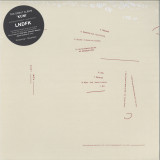
LNDFK (aka Linda Feki) presents her ground-breaking debut album, "Kuni" on Brooklyn-based Bastard Jazz Recordings. Undeniably on the rise after her 2019 breakout performance at Primavera Sound, LNDFK has already caught the attention of Pitchfork, Rolling Stone, Clash Magazine, Noisey, and Brooklyn Vegan (among many others) while being championed by the likes of Gilles Peterson, Tom Ravenscroft, and Jamz Supernova & landing spots on tastemaker playlists like Spotify's "Pollen" and "Fresh Finds."
"Kuni" is a spellbinding exploration of dichotomies: Love & Death (Eros & Thanatos), Flower & Fire, Delicacy & Violence, Poetry & Realism, Purification & Destruction. These opposites are reified in the 10-track LPs multifarious and multifaceted sounds, elegantly meandering through a variety of styles and genres, spearheaded by Linda and features the production wizardry of Darrio Bassolino who co-wrote the album.
"Kuni" opens with "Hana-bi," an ambient instrumental piece that sets the tone for the album. Inspired by the Takeshi Kitano 1997 film of the same name – particularly Joe Hisaishi's stunning soundtrack, as well as Kitano's paintings which appear in the film. "Hana-bi" expresses the dialoguing opposites of flowers and fire, the first of many dichotomous representations throughout the album. "Takeshi" acts as an extension and to "Hana-bi," albeit one of opposing sound, with its driving, highly syncopated drums (which reappear throughout "Kuni") – à la Karriem Riggins, Questlove, or Yussef Dayes – frenetic bass line, and jazz chords. Linda's sultry voice is interspersed, initially jumping around in scat fashion, being triggered as if a sample, before her lyrics come in; her vocals are used like an additional instrument, adding to the song's rich texture. "Kuni" truly hits its stride with the next song, "Smoke – a moon or a button" (its title lifted from the 1959 book by Ruth Krauss and Remy Charlip), which is structured like a jazz standard yet flows into neo-soul territory sonically with those prodigious drums a highlight once again.
LNDFK touches on experimental hip hop in two songs on the record (both of which were released as singles in 2021): "Don't Know I'm Dead or Not (feat. Chester Watson)" – track #4 – and "How Do We Know We're Alive (feat. Pink Siifu)" – track #9. Although they embrace a more hip hop-leaning sound, these songs by no means shy away from the exploratory theme, and feature two of the alt-rap scenes rising stars with Chester Watson and Pink Siifu who offer provocatively impressing verses, combining dense word play with unconventional flows. While these tracks may first appear to be outliers on the album, they are undeniably in tune with "Kuni's" message and sonic palette, acting as testaments to LNDFK's willingness to explore and experiment.
Meanwhile, "Ku" – the third and last single before the album release – furthers the pre-established future soul sound while meandering through nu jazz and left-field electronic. Inspired by the graphic novel and film, "Sin City," and its female assassin protagonist Miho, "Ku" is a musical interpretation of Miho's story, incorporating both her beauty – the first half of the song – and murderous tendencies – the second half – to create a stunning juxtaposition, culminating in an ambient finale that suggests the character's vulnerability and inner peace. The song gracefully bridges the gap between Hiatus Kaiyote-esque songwriting, Dilla's rhythmic syncopation, and Thundercat's instrumental prowess (LNDFK has shared a stage Brainfeeder labelmate Kamasi Washington).
Mixed in throughout "Kuni" are a series of instrumental pieces that function as something akin to an interlude. The aforementioned intro, "Hana-bi," and the album closer "se mi stacco da te, mi strappo tutto:" act as bookends, while "Om" indicates the half-way mark, and "Ktm" sees Jason Lindner add his sound the album. These tracks are the ambient foundation of "Kuni," representing the thematic duality of the work. Clocking in at only 24 minutes, "Kuni" packs an astonishingly diverse array of sounds, styles, and themes, all while showcasing virtuosic musicianship and instrumental prowess.
Appearing on "Hana-bi" and "Ktm," renowned international artists Asa-Chang and Jason Lindner add an additional perspective to "Kuni": Asa-Chang on "Hana-bi," and Jason Lindner on "Ktm." Asa-Chang - famously of the Japanese avant-garde group Asa-Chang & Junray - provides vocals and percussion to an alternate version of the instrumental opener, while the acclaimed keyboardist Jason Lindner offers his synth expertise on "Ktm." These features highlight the spirit of collaboration found in LNDFK's music, always willing to try out new ways of working.
LNDFK is a singer and songwriter, born of two cultures – an Italian mother and Arab father. She grew up in Naples, away from her father, the Sahara, her homeland and traditions, which has helped nourish the desire to rediscover – through art – an engagement to her roots. Her music melts with jazz, neo-soul and hip-hop influences, filtered through her experiences and sensibility.
Her first EP, "Lust Blue," was composed with the artistic production of Dario Bass and released by Feelin' Music; after that she released several singles that saw international radio support (BBC, NTS, Wordwide FM) and gained a massive audience on digital platforms. Together with her band, she toured around Europe, performing alongside such notable artists as Kamasi Washington and Mndsgn, among others. Most recently she toured Italy, and performed at Primavera Sound Festival 2019 in Barcelona.
"Kuni," is due out on NYC label Bastard Jazz Recordings in February, 2022, while the vinyl LP will follow shortly after.
out of Stock
Last delivered 4 years ago available to reorder, subject to availability
The stoner rock combo Karma To Burn, also known as K2B, are noted for their uncompromising, mostly instrumental sound. The band was founded in 1994 in subterranean West Virginia and was picked up by Roadrunner Records in 1997. Only short after their signing, their self-titled debut album came out. Their riff-driven, heavily grooving instrumental songs blend almost the entire history of rock music, with the example of the featured cover of Joy Division’s “Twenty Four Hours”.
Karma To Burn is available as a limited edition of 1500 individually numbered copies on crystal clear & black marbled vinyl and includes an insert.
South London based producer and multi-instrumentalist Neue Grafik announces his new EP 'Foulden Road Part II' from his Neue Grafik Ensemble band, released 25th March on Total Refreshment Centre. The sequel to their impressive 2019 release 'Foulden Road', Neue Grafik continues to incorporate 100% live takes with the ensemble, as well as solo productions that reflect Neue Grafik's past work with both the Rhythm Section and 22a labels.
Neue Grafik explains, "This EP is a reflection of the social context which surrounds me" – created in a year of much social isolation as well as political unrest, 'Foulden Road II' explores the complex feelings that he found himself battling. He adds "In 2019, we released 'Foulden Road Part I', which was a transitional album, exploring a new culture and navigating between two worlds: Paris and London. 'Part II' is a bit darker, closer to realness with a sprinkle of hope. I couldn't have predicted that I'd finish it encased in my flat, between four walls, in December 2020 after a year of lockdown, Brexit, George Floyd protests, and without London's brilliant culture mesmerising my mind. Everything was sad and closed. Hills were difficult to climb. But it also gave me the time to work hard and deliver this second part of Foulden Road, pushing it forward".
Combining an array of influences — from London, to Paris via New York, Nigeria and Cameroon — with well-measured confidence, ' Foulden Road II' allows you to reflect on the complexities of the last year, whilst braced with energy and hope to move forward positively. Heavy horns and hypnotic poetry form the backbone record, which will ignite any room. 'Foulden Road II' begins with the grounding poetry of MA.MOYO on 'Black Bodies'. The EP is dedicated to Adama Traoré, a black man who died in police custody in Paris. Neue Grafik explains "His name is not well known outside of France. I was shocked, devastated even, to learn that his story didn't cross the Channel". 'Queen Assa' is a heavily percussive dancefloor-hitter which honours French activist Assa Traoré, (Adama's sister) her family, and her struggle to support all families hurt by police brutality. Broken beat elements flow through the horn accompanied 'Officer, Let Me Go To School', while West London rapper Lord Apex offers an unapologetic and poignantly personal perspective on 'Step To It'.
Released on the Total Refreshment Centre label, based out of Stoke Newington's Foulden Road, the EP is a testament to his versatility as an ever-shifting figurehead. Engineered by Capitol K, recorded at Total Refreshment Centre, mixed by Marcus Linon at Greasy Records and mastered by Guy Davie at Electric Mastering – a significant pillar in Neue Grafik's musical career. Having played a DJ set there in 2017, he was convinced by TRC founder Lex Blondin to start a band after he was heard playing some compositions on the communal piano. After spending a couple of sleepless nights on the living room couch, his first gig was booked in the venue space downstairs a week later. The ensemble was established and he has remained in London ever since.
Neue Grafik Ensemble's musicians include; Matt Gedrych, Benjamin 'The Chief' Appiah, Jack Banjo Courtney, Chelsea Carmichael, Dougal Taylor, Yahael Camara-Onono, Xvngo, Rebekah Reid, Dan-Iulian Drutac, Jamie-lee Glinsman and Zara Hudson-Kozdój.
Neue Grafik hosts The Orii Jam Sessions, an energising weekly jam night at Hackney Wick's Colour Factory, which has become a pivotal weekly gathering, inspired by the likes of Unit 31 and Steam Down.
out of Stock
Last delivered 3 years ago available to reorder, subject to availability
2012 kam noch mehr Pomp, noch mehr Pathos, noch eingängigere Melodien, noch mehr traditionelle Zitate, noch mehr Chöre und noch mehr Hits dazu als auf allen SABATON-Alben zuvor. Und all das verpackt in einem Konzeptalbum, das nach der zuvor ausgeschöpften Weltkriegsthematik, die Geschichte der Heimat aufwühlt. »Carolus Rex« handelt vom schwedischen Königreich des 17. Jahrhunderts und hat sich im speziellen König Karl VII vorgenommen. Optisch wie selbstredend akustisch hätte man es nicht besser anlegen können, denn trotz des für SABATON typischen modernen Backgrounds, der trotz allem auf althergebrachtem Heavy Metal fußt, kann man die Schlachten und Geschichten jener Zeit bildlich vor dem geistigen Auge miterleben. Ob beim preschenden Opener 'Lion From The North', bei dem erstmals die großartigen Chöre (in Latein noch viel eindrucksvoller) zum Tragen kommen oder dem folgenden, zum Mitgröhlen prädestinierten 'Gott mit uns', bei dem der Hauptverantwortliche für den so bombastischen, transparenten und maximal drückenden Sound, Peter Tägtgren (PAIN, HYPOCRISY), einen kurzen Gastauftritt hinter dem Mikro absolviert – man spürt sowohl das blaue Blut hinter den Kulissen als auch das rote auf den Austragungsorten des Krieges.
Here is a brandnew doublesider by the amazing Andy Cooper of Ugly Duckling and The Allergies fame. Both tracks are featured on his upcoming album "L.I.S.T.E.N.", to be released on UNIQUE RECORDS in late September.
"The Man" is co-produced by DJ Moneyshot of The Allergies.
Two sides of funky Hip Hop that you can not miss out on!
out of Stock
Last delivered 4 years ago available to reorder, subject to availability
Remastered Reissue des 2002er Kultdebütalbums der Emo/Post-Hardcore-Band Desaparecidos von Conor Oberst (Bright Eyes), der zu einem der beliebtesten und aussagekräftigsten Statements seiner Ära wurde und die Entfremdung derjenigen einfing, die den Kriegsnebel für $$$$ nach dem 11. September durchschauten. 20 Jahre später sind die auf 'Read Music/Speak Spanish' zum Ausdruck gebrachte Angst und Abscheu sogar aktueller als damals, wirken eher prophetisch als paranoid und machen die Botschaft des Albums so notwendig wie seit je.
'Desaparecidos is like finding gold when you're looking for silver.' - Exclaim!
The Decades Collected compilations are part of the Collected compilation series, which is a collaboration between Universal Music and Music On Vinyl. The compilations bring together the biggest names of each decade, combined with forgotten hits and less discovered gems, giving the listener an experience of listening to their favourite tunes while uncovering new musical grounds at the same time.
Various Artists - Seventies Collected features classic tracks and forgotten gems: Queen “Somebody To Love”, Billie Joel “Movin’ Out (Anthony’s Song)”, Lou Reed “Vicious”, Blondie “Atomic”, Paul McCartney & Wings “Mrs. Vandebilt”, Rodriguez “Sugarman”, Patti Smith Group “Dancing Barefoot”, Roxy Music “Dance Away”, Big Star “Thirteen”, Leon Russell “A Song For You”, 10CC “Dreadlock Holiday”, Grace Jones “La Vie En Rose”, Rush “Closer To The Heart”, Gerry Rafferty “Right Down The Line”, Minnie Riperton “Les Fleurs”, The Brothers Johnson “Strawberry Letter 23” a.o.
Various Artists - Seventies Collected is available on black vinyl and includes an insert.
Eurovision Song Contest: The Story of Fire Saga is a 2020 American musical comedy film directed by David Dobkin and written by Will Ferrell and Andrew Steele. The film follows Icelandic singers Lars Erickssong and Sigrit Ericksdóttir (Ferrell and Rachel McAdams) as they are given the chance to represent their country at the Eurovision Song Contest. Pierce Brosnan, Dan Stevens, and Demi Lovato also star.
“Volcano Man” was the first song released from the album and features vocals from Will Ferrell and Swedish singer Molly Sandén (credited as My Marianne). Towards the middle of the film, as the characters of Lars and Sigrit get fully immersed in the Eurovision magic, the audience is treated to a “Song-A-Long”, producers mash-up iconic pop classics into a celebratory party anthem. Cher transitions into Madonna, which transitions into homages to the aforementioned ABBA and Celine Dion, capped off with a little from The Black Eyed Peas. The cherries on top are vocal cameos from Eurovision champions: Conchita, Netta, Jamala, Loreen, and Alexander Rybak. The album also features the cult hit “Jaja Ding Dong”.
The soundtrack has been nominated for Best Compilation Soundtrack For Visual Media at the upcoming 63rd Annual Grammy Awards.
Eurovision Song Contest: The Story Of Fire Saga is available as a limited edition of 1000 individually numbered copies on “Lion Of Love” pink coloured vinyl. The package includes a 4-page booklet and printed innersleeve with movie stills.
Limited edition 180g premium vinyl for super fidelity, presented in a
deluxe gatefold sleeve
'Porgy & Bess' was the third and final album collaboration between Ella Fitzgerald,
Louis Armstrong and producer Norman Granz. Featuring songs from the George
& Ira Gershwins opera, which was inspired by the DuBose Heyward play 'Porgy', it
received both critical acclaim and commercial success internationally.
"As the tracks progress, you think she is cutting Armstrong - only to turn around
and believe that Armstrong is cutting her. The truth, of course, is that they are
outdoing themselves. This is a Porgy performance you would be ill- advised to
miss." - Gene Lees, DownBeat
Before Madvillain, before Yesterday’s New Quintet and before Quasimoto or any other of his several alter egos, Madlib perfected his craft as an MC/producer in the Lootpack. Along with DJ Romes, and fellow rhymer Wildchild, they released the dusty full-length, Soundpieces: Da Antidote back in 1999, that laid down the foundation for the unique and dusty sound now associated with Madlib. The loose, freeform recordings on this collection are circa 1996 when the group was managed by Madlib’s father, and they show the now-renowned maverick producer in comparatively restrained form. Madlib’s scope and imagination was clearly fixated on East coast jazzy hip-hop production from the early ’90s, laying down soundscapes for his hungry crew including the likes of Kazi, Declaime and Medaphoar, who have all become well known underground rap vets. Madlib’s own strong mic presence is noticeable given his now only-on-rare-occasion rhyming, but it’s his production that is the most fascinating element here. While a resolutely hip-hop project, the burgeoning jazzy flourishes and Madlib’s heavily accomplished ear for sound makes the record an important starting point for adherents of his more recent exploratory work.
It is no surprise that the most populated Serpente record to date is also his most vibrant and emancipated. With collaborations from Maxwell Sterling, Kelly Jayne Jones, Pedro Sousa, Vasco Alves and Gabriel Ferrandini, “Dias da Aranha” is a leap from previous releases like “Parada” and “Fé/Vazio”, both on Ecstatic.
If you’re keeping in touch with Portuguese electronic music, then Bruno Silva’s music should be no stranger to you. If you’ve also been keeping tabs on his evolution throughout our catalogue, you’ll notice how mature and resolved his sounds feels in “Dias da Aranha”. There’s no restrain here, the beats evolve in a self-confident way and the way it assembles and incorporates other people's sounds is a bliss. Go straight to the last track, “Ritos de Poeira”, and listen to how organic everything feels, the endless rhythm and how Pedro Sousa’s saxophone is incorporated as a beautiful hopeful lament. Just put it on repeat. Bliss.
We have never heard Bruno – as Serpente or Ondness – so sure of himself. Escapism is very present in his music. In the past the idea of searching for it was key, in “Dias da Aranha” he lives in it. It is daring and luminous, streaming a continuous beam of bright ideas, making sure that they find the right course on their own (“Meio Ondness”). It never stops, keeps evolving, getting better and finding ways to surprise the listener. In some moments you can listen to the music breathing. Or sense some kind of field recordings shape. It doesn’t rely anymore on the idea of music as a work in progress. This is evolution. Welcome to the Serpente Era.
Having scooped the prestigious Record Store Day Unsigned 2020 award, her debut album 'In The Blue Corner' was released as a limited edition run on turquoise sparkle vinyl in November 2021. Now available on a full digital and physical release including a new vinyl pressing on dusk blue coloured vinyl. "Loving this. Really cool voice_ love the voice!" Craig Charles (6Music) // "The most original sound. Like Little Richard, Mark Ronson, Nina Simone and Nick Cave all got locked in a New Orleans speakeasy" Record Store Day Unsigned Panel 2020 // "Wow, I mean what's not to like about that? That is sensational! How groovy is that?! Mark Radcliffe, BBC 6Music // "What a voice!" Robert Elms, BBC London // "Her voice is stunning, powerful and unique, and her stage presence hits the back of the room at any venue she plays" DJ Anne Frankenstein, Jazz FM // Included in Craig Charles' Funk and Soul 'Ones to Watch 2022' list. From London via Lagos, charismatic chanteuse Sister Cookie will take you on an eclectic excursion into the roots & fruits of black music. Old sounds, new tricks. Sensuous, seductive and moody. As well as possessing a distinctive voice that's tender and sweet when it needs to be, she's a composer and self-taught pianist who writes honest and raw songs about pain, heartbreak, suffering - all that bad (meaning-good) stuff. A mainstay on the vintage Soul & R'n'R circuit since 2015 with slots at Wilderness, Latitude, Red Rooster, Port Elliot and more under her belt - as well as touring across Europe with her band - Sister Cookie has so far been supported by Craig Charles, Mark Radcliffe & Cerys Matthews at 6Music, Robert Elms on BBC London plus plays on Resonance, Jazz FM and Amazing Radio. Craig Charles is a big supporter on BBC 6 Music and has played current single 'Ain't No Good (But It's Good Enough For Me)' several times. Steve Lamacq and Lauren Laverne have also given the track multiple plays. The track has also been playlisted at Jazz FM. Singles from the album have been played many times across European radio stations including France Culture, Rock Radio (Greece), Radio Nova (Portugal), Mach 5 (Italy), HR Radio Sijeme (Croatia). She's performed at some of the UK's most esteemed venues including the 100 Club and Union Chapel, The Round Chapel and has enjoyed a number of stints as a guest vocalist with The Soulful Orchestra, Jim Jones & The Righteous Mind, Future Shape Of Sound & MFC Chicken. Sister Cookie Is going to be part of the judging panel for Record Store Day Unsigned competition in April, the competition she won in 2020.
The Decades Collected compilations are part of the Collected compilation series, which is a collaboration between Universal Music and Music On Vinyl. The compilations bring together the biggest names of each decade, combined with forgotten hits and less discovered gems, giving the listener an experience of listening to their favourite tunes while uncovering new musical grounds at the same time.
Various Artists - Sixties Collected features Love “Alone Again Or”, Cher “Bang Bang (My Baby Shot Me Down)”, The Who “Pinball Wizard”, Diana Ross & The Supremes “Love Child”, Steppenwolf “Magic Carpet Ride”, The Animals “House Of The Rising Sun”, The Beach Boys “Good Vibrations”, David Bowie “Love You Till Tuesday”, Bob Dylan “Subterranean Homesick Blues”, Tom Jones “It’s Not Unusual”, Nina Simone “I Put A Spell On You”, Rod Stewart “Handbags & Gladrags” a.o.
Various Artists - Sixties Collected is available on black vinyl and includes an insert.
To celebrate the 45th anniversary of iconic Dutch jazz label Timeless Records, Music On Vinyl is releasing a series that features albums that are part of the Timeless Records legacy and will be released mainly throughout 2021/2022.
American jazz drummer Billy Higgins recorded his second album The Soldier in 1979. Featured on this album are Monty Waters on alto saxophone, Cedar Walton on the piano, Walter Brooker on bass and vocalist Roberta Davis. The track “Peace” features guest performer Horace Silver and on “Sonny Moon For Two”, Higgins is accompanied by Sonny Rollins.
Higgins mainly played free jazz and hard bop. He was one of the house drummers for Blue Note Records and played dozens of Blue Note albums of the 1960s. His drums were an important addition to many recordings such as Dexter Gordon’s Go! and Herbie Hancock’s Takin’ Off.
The Soldier is available as a limited edition of 500 individually numbered copies on translucent green coloured vinyl and includes an insert with upcoming titles from the Timeless Records 45th Anniversary Jazz Series.
The Diva Faïrouz.
Her real name Nouhad Haddad, she was born in the Zokak el Blat district of Beirut. The eldest of a modest Maronite family, she developed a passion for singing very early on. Her parents are too poor to afford the luxury of a radio, so she spends most of her time listening, her ear glued to the wall, to the neighbors. Nouhad quickly memorizes the songs she hears and gives a few samples at parties organized by her school. It was there that she seduced her comrades with her vocal abilities and that she was noticed in 1947 by the composer Mohammed Fleyfel.
The echo of his velvety voice reaches Halim el Roumi, talent scout, renowned singer-songwriter and director of Lebanese Radio, who asks to audition him immediately. Literally fascinated, el Roumi introduced him to the choir of Radio Beirut, baptized it with the name of Faïrouz and became its appointed composer. Then, he introduces her to Assi el Rahbani, a young avant-garde composer who, in the company of his brother Mansour, wishes to renew a Lebanese song under profound Egyptian influence.
The teenager Faïrouz succumbed to the personal charm of Assi, whom she married in 1954, and to that of his compositions (the model couple of Arab song would be separated by the death of their husband in 1986). The heavenly trio causes, from the publication of its first titles, a real musical revolution. Traditionalists howl at sacrilege and distortion while sympathizers of the rejuvenation and modernization of Lebanese folklore, weary of insipid refrains and pale copies, show their enthusiasm.
In 1957, Faïrouz opened the International Festival of Baalbek (a locality mentioned in one of his flagship titles) and sang in the middle of the six columns of the Roman temple. This initial encounter with his audience, who warmly welcomed him, earned him the nickname "seventh column". Faced with this fabulous galloping success, the Rahbanis are stepping up their offensive and courageously playing the card of constant innovation. They wrote for Faïrouz musical sketches, operettas and, from 1962 to 1976, about fifteen sung plays in which she plays the role of a woman in love with Love, the true, the pure, the innocent. , and that of hope. She also appears in a few films but she quickly interrupts her cinematic odyssey.
It is still and always one of the major references of Arabic song and many of its titles, such as "Bint el Chalabia", are hummed as much by the new generation as by the old.
out of Stock
Last delivered 3 years ago available to reorder, subject to availability
Best known for his work with CL Smooth, and his remixes for Public Enemy, House of Pain, Mary J Blige and Mick Jagger to mention a few. Hailing from the little town of Mt. Vernon, NY, right next to the Bronx, Pete Rock & CL Smooth pretty much got together in their local high school when Pete noticed CLs dope and unique voice. After high school, Pete hooked up a weekend hip-hop show on WBLS-FM and was considered one of NYs premier DJs during his four year stint on the show. All Souled Out was Pete & CLs debut EP, it was the phenomenal production by Pete Rock which really drew people to this EP. If the legendary DJ Mark The 45 King was the first producer to incorporate horns, Pete Rock was the first to really perfect this new style of production with his trademark echoing horns laced throughout his music. This was done very nicely on two of the cuts off the EP, Creator and Mecca & The Soul Brother, and people were taking notice in a big way.
After the solid Mecca/Creator 12 inch, the duo unleashed one of those all-time classic LPs every MC dreams of having, Mecca & The Soul Brother featuring the monumental: They Reminisce Over You, Straighten It Out, Ghettos Of The Mind, and Lots Of Lovin. Songs to make you cry - damn, they were playing TROY at funerals everywhere. One of the greatest hip hop records ever made ...it never leads my box man...- (Tim Westwood)
Pete Rock on hip hop: Hip hop to me today is still important but we are going through a phase right now. Hip Hop as been injected by a virus, and right now weve got to find a cure to this. Which brings along myself. (Frank 151)
The Press ...from downtempo, funkdified sounds to hypnotic hip-hop beats, this is a wonderfully crafted album - (BPM July 2001)
This hypnotic ... album represents hip hops incredible ability to morph and manipulate a hodgepodge of sounds to create something unique...although the sound is now industrial, electronic and everything but natural Pete's version of hip hop will remain a classy affair that merges the elements of an orchestra, the roots of black music and the cacophony of the streets. - (Mass Appeal July 2001)
out of Stock
Last delivered 11 months ago available to reorder, subject to availability
Here is another doublesider from the legendary Daddy-O of Stetsasonic. Originally recorded in 1993 and shelved for over two decades "Psychedelic Sally" finally sees the vinyl light of day. This Hip Hop Version of the Jazz Dance classic is a true banger!
I heard it first on the 2016 digital release "#Everybodybutkrs" and I could not resist to put it on wax any longer.
The flipside (the "Soul Side") is a brand new track featuring R.A. The Rugged Man that will leave you amazed on how hard you can flow over a smooth instrumental.
True black gold!
out of Stock
Last delivered 4 years ago available to reorder, subject to availability
Until recently, it was thought that we had heard all there was to hear from Saâda Bonaire. The German studio project's 1980s recordings had been compiled on the now cult-classic double LP Saâda Bonaire, released by Captured Tracks in 2013. Though the group had continued working until 1994, founder Ralph "von" Richtoven had firmly stated that all of their post-1986 work was lost. Released now for the first time ever, 1992 compiles the band's long-lost early nineties material. Produced between Bremen and New York City, the 12 songs presented here capture the group's attempts at steering their trademark fusion sound (reggae, afro-funk, Eastern music, and sultry German female vocals) into uncharted nu jazz, trip-hop, and house territories. It's no surprise, given both the time lapse and the fluid nature of the project, that these recordings differ sonically from the 1980s material. 1992 finds Saâda Bonaire folding new influences from the time (house, hip-hop, rap) into their eclectic sonic universe. Vocalist Andrea Ebert's soulful voice -the result of a church choir background and an early love of American soul and jazz music- offset Stephanie Lange's laid-back, more German-sounding vocals. This unique interplay bolstered the band's new direction - evident in their inspired takes on James Brown's "Woman" and Syreeta Wright and Stevie Wonder's "To Know You Is To Love You". The American influence was also made literal via contributions by renowned DJ Matthias Heillbronn and rapper Jimmy Lee Patterson, both of whom lent some stardust to the tracks at François Kevorkian's Axis Studios in NYC. Unfortunately, the demo recordings were considered too bizarre for 1990s record label standards, and as a result were never published. As with all things Saâda Bonaire, the discovery of these discarded recordings feels like a sort of magical impossibility. It's been nearly ten years since the release of the last compilation, and thirty since the recordings were originally captured. That they still manage to sound fresh and avant garde is a testament to Saâda Bonaire's flair for creating pop music for past, present, and future outsiders.
out of Stock
Last delivered 18 months ago available to reorder, subject to availability
JOYFULTALK returns with its third album for Constellation; another vibrantly divergent stylistic take on the analog materiality and sensibility of electronic composer-producer Jay Crocker, whose previous two records forged trance-inducing polyrhythmic intricacy, each from a distinct angle and sound palette, each enlisting a single instrumental collaborator. Familiar Science rallies contributions from a larger cast of musicians into a looser, cosmic recombinant combo_still shot through with JOYFULTALK's singular mixing desk kinetics, but this time deep-diving into gnarled and twisted, spliced and diced out-jazz. Crocker draws inspiration from 1980s M-Base music and Ornette Coleman's harmolodic funk period, while his own prior history as an improv guitarist also resurfaces for the first time in many years_an element in this polyvalent artist's chemistry set that hasn't appeared prominently in his own music for over a decade. Familiar Science finds Crocker folding time (as lockdown will do), immersed in his present-day kaleidoscope of solitary art and music practices in rural Nova Scotia, while channeling his former life as a bustling jazz collaborator in Calgary, Alberta. Building outwards from roiling resampled acoustic drums, Crocker extracted additional sonic and rhythmic textures, then formed the head of each song using dusted-off archival recordings and his own bass, keys and midi sequencing. Albertan percussionists Eric Hamelin (Ghostkeeper, Chad Vangaalen) and Chris Dadge (Lab Coast, Alvvays) provided improvised drum tracks to be chopped and harvested; Nova Scotia-based Nicola Miller (Ryan Driver, Doug Tielli) laid down resplendent excursions on saxophone and flute; Crocker's own dexterous guitar appears on several cuts. Familiar Science also poignantly features samples from live recordings by the late Calgary saxophonisticonoclast Dan Meichel, catalysing some of the album's heaviest contortions. Crocker weaves all these raw materials into exuberant compositions that blur the line between sizzling corporeal combo and sampledelic futurist jamz, variously conjuring (leftfield) Flying Lotus, (later) Tortoise, BADBADNOTGOOD and Squarepusher's Music Is Rotted One Note. The rubbery hyper-compression of boom-bap opener "Body Stone" initiates the séance, and the album offers a panoply of skittering grooves and soaring melodic pathways thereafter, through quags of heady jazz alternately streaked with dayglo delirium and other more vaporous states of revelry. Crocker's own wordless stacked vocals are the giddy secret sauce on several cuts, and his lead guitar work (in kinship with the lean progressions of Mary Halvorson or Jeff Parker) features on "Take It To The Grave", "Stop Freaking Out!" and the album's title track. More honeyed passages on songs like "Blissed For A Minute" and "Ballad In 9" center around Miller's bouyant alto sax and flute. Familiar Science is a rousing feast of noise-tinged polychrome electronic avant-jazz: richly harmolodic compositions teeming with intersecting textures and turbulences; exploratory, exhilarated and indeed joyful.
Boogie Butt Records presents its new reissue. Originally Released in 1983 on Becket Records, Time To Throw Down, is a party banger, between P.Funk & Boogie, created by the one & only Paul Thomas, founder of the "Magic Crew", The Circle City Band. Bandleader Paul Thomas had produced three 12" single's released under the title Circle City Band in 1983-84, one of those records titled Magic became extremely popular in the mid1980's, but this record was supposed to be the 4th 12inch single on Becket Records.
At the same time in 1983, when Reggie Griffin and Paul Thomas was mixing this instrumental track in L.A, the reverend "Rickie Clark" originally from "Circle City" in Indianapolis, came to see them hearing what there was doing, and fall in love with this track, asking if he could used it for himself .
The "Circle City Band" (CCB) is made up of eight remarkably talented souls. The band is lead and managed by founder, producer/musician/singer/songwriter Paul Thomas otherwise known as "P" aka the "Funky Skunk" and also features long time friends and mentors, including the legendary award-winning, multi-musician/songwriter/producer Reggie “Mr. Everything” Griffin of Tech-No-Funk fame
out of Stock
Last delivered 3 years ago available to reorder, subject to availability
The Decades Collected compilations are part of the new Collected compilation series, which is a collaboration between Universal Music and Music On Vinyl. The compilations bring together the biggest names of each decade, combined with forgotten hits and less discovered gems, giving the listener an experience of listening to their favourite tunes while uncovering new musical grounds at the same time.
Various Artists - Eighties Collected features original hits like Wham! “Wake Me Up Before You Go-Go”, Duran Duran “Hungry Like A Wolf”, A-HA “The Sun Always Shines On TV”, The Cure “In Between Days”, Pat Benatar “Love Is A Batteflield”, Culture Club “The War Song”, Robert Palmer “Pride”, Frankie Goes To Hollywood “Relax”, Simple Minds “Sanctify Yourself”, ABC “When Smokey Sings”, The Human League “(Keep Feeling) Fascination”, UB40 “If It Happens Again” and many more.
The follow up to My Generation, A Quick One was released in 1966, it contains the experimental music Suite (a nod to Rock Operas that were to follow) A Quick One While He’s Away, famous for being performed at the Rolling Stones Rock N Roll Circus. The album contains songs such as Boris the Spider, are Don’t Look Away and has been mastered by long time Who engineer Jon Astley from the original tapes and is packaged in original sleeve with obi and certificate of authenticity. This black vinyl version is engineered by Miles Showell at Abbey Road Studios using a half-speed mastering technique which produces a superior vinyl cut.
"Released in 1965 My Generation was the debut album by The Who. The album peaked at no 5 in the UK charts and launched the band onto worldwide acclaim
The album contains songs such as My Generation, The Kids are Alright and The Ox, and has been mastered by long time Who engineer Jon Astley from the original tapes and is packaged in original sleeve with obi and certificate of authenticity. This black vinyl version is engineered by Miles Showell at Abbey Road Studios using a half-speed mastering technique which produces a superior vinyl cut."
Deutsche Grammophon honour the supreme artistry of Daniel Barenboim throughout the coming year as he approaches his 80th birthday next November. The anniversary celebrations of the great pianist and conductor’s remarkable legacy began on 31 December 2021 with the release of Debussy’s Clair de lune, one of the highlights of Maestro Barenboim’s first DG album of 2022. For this new record, specially recorded in Barenboim’s Pierre Boulez Saal in Berlin, the great multi-faceted musician lavishes his artistry on such gems as Debussy’s “Clair de lune”, Schumann’s “Träumerei” and an array of other masterpieces by Chopin, Schubert, Liszt and Albéniz and many more.
The Old School Collection is back with a new volume, dedicated to Reggae. Discover the germs of Reggae on a double vinyl with: BOB MARLEY - Max Romeo - Freddie McGregor - Gregory Isaacs - Horace Andy - Lee "Scratch" Perry & The Upsetters- Alton Ellis - Sly & Robbie - Black Uhuru
Der Eurovision Song Contest geht in die 66. Runde. Dieses Jahr ist die Ukraine der klare Favorit, was aufgrund der aktuellen Situation nicht verwunderlich ist. Deutschland wird in Turin von Malik Harris mit
seinem Song ”Rockstars” vertreten.
Die Compilation mit allen 40 teilnehmenden Songs gibt es in diesem Jahr nicht nur als 2CD und 2MC sondern h als 4LP
4 Of A Kind is the fourth studio album by the American crossover thrash metal band D.R.I. (Dirty Rotten Imbeciles), which consisted of Spike Cassidy, Josh Pappe, Felix Friffin and Kurt Brech. The album was produced by Bill Metoyer, who has recorded with Slayer, Morbid Angel and Hirax amongst others. D.R.I is fast as a Porsche and brutal as Thrash should be when it meets the roughness of Punk. 4 Of A Kind originally came out in 1988, only six years after the formation of D.R.I., and includes the track “Suit And Tie Guy”, which was the first track to get a music video.
4 OfAKind is available as a limited edition of 1500 individually numbered
copies on red & black marbled vinyl and includes an insert.
THE DEBUT STUDIO ALBUM OF EERIE DEATH/DOOM METAL DEPRAVITY
FROM GREG WILKINSON & CHRIS REIFERT OF US GORELORDS,
AUTOPSY
Static Abyss is the new mouthpiece for a rotten age consisting of the duo of Greg
Wilkinson (Guitars/ bass) & Chris Reifert (drums/ vocals), both members of
legendary American masters of sickness Autopsy, with Greg (also of cult act
Deathgrave) recently welcomed as new bass player for the long-running US act's
next studio opus & beyond.
Static Abyss' debut studio album, 'Labyrinth of Veins', presents an unnerving,
multi-layered eerie concoction of dirty doom & death, including themes exploring
the echoes of insanity manifested through human existence. The result, a sinister
onslaught of at times slow & bludgeoning brutal metal whilst at others whipped
into a storm of chaotic vile hysterics. The spirit of Autopsy is at times present in
the truly titanic riffs swathed in chilling atmospheric guitar leads, whilst Chris'
seemingly bottomless pit of morbid inspiration from the dark & twisted corners of
life permeate the release with his highly distinguishable delivery to further the
descent into madness.
'Labyrinth of Veins' was recorded at Earhammer Studios in Oakland, CA, & Great
American Music Hall, with engineering, mixing & mastering overseen by Greg
himself. Cover art appears courtesy of All Things Rotten.
This release presents all master takes from the legendary 1961 Village
Vanguard sets by the Bill Evans Trio, limited edition 180g high-definition
premium vinyl for super fidelity
Two classic albums culled from those sets: 'Sunday at the Village
Vanguard' (Riverside RLP9376) and 'Waltz for Debby' (Riverside RLP9399). It
would be the last recording by this formation of the group, with Scott LaFaro on
bass, and Paul Motian on drums, as LaFaro died ten days later in a car crash.
Back in 1998, RZA had already cemented his status as Wu-Tang Clan's man behind the boards, producing the entirety of the group's respective solo albums - When it came to his own breakout moment, the producer opted to introduce the world to Bobby Digital, a cartoonish, hedonistic mad-rapping alter ego and grew so fond of the character that he released another album under the moniker before finally delivering 2003's Birth of a Prince as the RZA.
Now it seems Bobby Digital is back in the picture and potentially set to square up with his host New album RZA vs. Bobby Digital features the hard- hitting single, Saturday Afternoon Kung Fu Theater. According to a press release, DJ Scratch handles production on the album. "Giving Scratch the reins as a producer and me taking the reins as an MC, that's what frees me up creatively and lets me play more with lyrical gags and lyrical flows because I don't have to be focused on everything", RZA explained in a statement.
out of Stock
Last delivered 3 years ago available to reorder, subject to availability
Famed free jazz concert registration of an early New Direction for the Art performance. Recorded in 1971. Old-style Gatefold LP, with rare photographs & extensive liner notes by Alan Cummings.
The performance by Takayanagi Masayuki New Direction for the Art at the Gen’yasai festival on August 14, 1971 was an intense, bruising collision between the radical, anti-establishment politics of the period in Japan and the febrile avant-garde music that had begun to emerge a few years before. The ferocious performance that you can hear here was received with outright hostility by the audience, who responded first with catcalls and later with showers of debris that were hurled at the performers. Takayanagi though described the group’s performance to jazz magazine Swing Journal as a success, “an authentic and realistic depiction of the situation”.
In 1962, Takayanagi, bassist Kanai Hideto and painter Kageyama Isamu went on to form an AACM-style musicians’ collective called the New Century Music Research Institute. Every Friday, members gathered at Gin-Paris, a chanson bar in the fashionable Ginza district of Tokyo, to push the outer limits of jazz creativity.
But the pivotal moment for his music was the creation a new trio version of his New Directions group in August 1969, with the free bassist Yoshizawa Motoharu and a young drummer Toyozumi (Sabu) Yoshisaburō. Experiments eventually led to the creation of two basic frameworks for improvisation that Takayagi referred to as Mass Projection and Gradually Projection.
“La Grima” (tears), the piece that was played at the Gen’yasai festival, is a mass projection and listening to it, you can get a clear sense of what Takayanagi was aiming at. Mass projection involves a dense, speedy and chaotic colouring in of space that destroys the listener’s perception of time, and thus of musical development.
The ferocity of the performance of “La Grima” at the Gen’yasai Festival in Sanrizuka on August 14, 1971 was consciously grounded by Takayanagi in a particular historical moment, ripe with conflict and violence. A month after the festival, on September 16, three policemen would die during struggles at the site. This was the context that the three-day Gen’yasai Festival existed within. The line-up reflected the radical politics of the movement, with leading free jazz musicians like Takayanagi, Abe Kaoru, and Takagi Mototeru appearing alongside radical ur-punkers Zuno Keisatsu, heavy electric blues bands like Blues Creation, and Haino Keiji’s scream-jazz unit Lost Aaraaff.
New Direction for the Arts trio topped the bill on the opening day, playing an aggressive, uncompromising “mass projection” set of polyphonic improvisation. Alongside drummer Hiroshi Yamazaki and saxophonist Kenji Mori, Takayanagi soloed hard and continuously for forty minutes. This was performance as precisely calibrated metaphor: three musicians responding to the demands of the moment with instinctive force and fury, untethered by rules, leaderless yet not rudderless (the direction part of the group’s name was no accident). The piece was entitled La Grima – tears - and the fusion between the palpable anger of the performance and hopeless sadness of its title were also perfectly apt for the situation. This was a fight that the state was always going to win. Yet, by all accounts, the band’s set went down like a fart at a funeral. The band were showered with catcalls and debris throughout, and by chants of “go home” when the music finally came to an end.
However, looking back at the event in the year-end issue of Japan’s leading jazz magazine, Swing Journal, Takayanagi was surprisingly upbeat: New Directions brought a solid political consciousness to our performance and succeeded in an authentic and realistic depiction of the situation. But journalism revealed its superficiality in its inability to penetrate the core of the music. I don’t know much about anyone else, but we at least left behind a competent record.
It’s a fascinating statement in many ways. Perhaps on one-hand it can be read as stubborn, solipsistic and self-justifying, yet in conjunction with his statement in 1971 there are points that guide us towards an understanding of just what Takayanagi intended with his performance at the festival. As Kitazato Yoshiyuki has argued, it becomes an almost religious act, directed at the earth deities of the land. A union of anger, sorrow and malevolence that can be placed nowhere effective, all it can do is find expression and channeling. The forcible land seizures at Narita, the eviction of farmers from land that had been in families for generations, the destruction of communities: none of this can be prevented, not least by an artistic action. All that can be done is an attempt to mark the land itself, to soak it with the combined force of emotions and the volume of the performances, to bury something there that cannot be drowned out, even by the coming roar of jet engines.
Ferocious JP / US free jazz bomb. A rare meeting between the NYC free jazz scene and the Japanese free music scene. Old-style Gatefold LP, with rare photographs & liner notes by Alan Cummings.
Following hot on the heels of the first, mid-sixties generation of Japanese free jazz players like Kaoru Abe, Masayuki Takayanagi, Yōsuke Yamashita, Motoharu Yoshizawa, etc., an exciting second wave of younger players began to emerge in the seventies. Two of its leading members were the saxophonist Kazutoki Umezu and multi-instrumentalist Yoriyuki Harada. Both were post-war babies and immigrants to the city, Umezu from Sendai in the north and Harada from Shimane in the west. They first met as students in the clarinet department at the Kunitachi College of Music, a well-known conservatory in western Tokyo. Harada was already securing sideman gigs on bass with professional jazz groups and was active in student politics, making good use of his connections to set up jazz concerts on campus. It was around this time that the two began to play together in an improvised duo, with Umezu on clarinet and bass clarinet and Harada on piano. They also experimented with graphic scores and prepared piano.
These experiments eventually led to the creation of a trio, with a high-school student called Tetsuya Morimura on drums, that they decided to name Seikatsu Kōjyō Iinkai (Lifestyle Improvement Committee) in joking reference to the Marxist discourse of the student radicals of the time. Around 1973, Umezu and Harada decided to call it a day and go their separate ways. Umezu began playing with the Toshinori Kondo Unit and Harada with the Tadashi Yoshida Quintet. In 1974 Harada formed his own trio and began to play at jazz coffeehouses across Japan.
Then, in September 1974 Umezu travelled alone to New York, where he set about building connections with the loft jazz scene in the city. It was a fortuitous moment to arrive in New York. Rents were cheap in the Lower East Side, possibilities for squatting existed, so many musicians and artists had moved to the area. Umezu soon became known on the scene as Kappo and he started to make connections with some of the young musicians like David Murray, Arthur Blythe, and Oliver Lake. He recalls making the rounds of the lofts every evening, checking out the performances, and getting the chance to sit in with many groups including Juma Sultan’s Aboriginal Music Society and trumpeter Ted Daniel’s orchestra.
Things were going so well that Umezu wrote to Harada and invited him to come to New York. He accepted and arrived in the city in July 1975. Harada and Umezu took the opportunity to resume their artistic collaboration. Their first concert together in over two years took place on July 20th at another loft, Sunrise Studios at 122 2nd Avenue. Umezu remembers Sunrise as an unusually sunny loft with the rarest of things, a grand piano. He invited along Ahmed Abdullah, a trumpeter he had got to know while playing with Ted Daniel. Abdullah led his own group and was a long-term Sun Ra sideman. William Parker, one of the key figures in the loft jazz scene of the period, was on bass. Abdullah also brought along Rashid Sinan on drums. Sinan drummed in Abdullah’s units throughout the seventies, but he had also played on Frank Lowe’s immortal Black Beings album and collaborated with Arthur Doyle, playing on Doyle’s Alabama Feeling album. By all accounts the evening was a huge success, with speed and dynamism of Harada’s piano playing gaining him lots of support.
Since they had managed to save some money from their day jobs, Umezu and Harada decided to set up a recording session with the same line-up on August 11 at Studio We, where there was a well-equipped studio on the third floor. Umezu recalls the session as follows, Of course, we recorded our performances in one take, with zero retakes as far as I remember. On all the tracks we recorded, we moved as one unit, sharp and fast. That was the nature of Lifestyle Improvement Committee, New York Branch.
Umezu and Harada would later become known for the elements of parody and entertainment that they brought to their music, a freewheeling blend of pastiche, humour and on-stage performativity that paralleled the approaches of the Art Ensemble, Sun Ra, and Holland’s ICP. But here, on their first recordings, the humour element is not yet present. Instead, there is a febrile sense of joy in creation and connection. On the Umezu-penned “Kim”, for example, Harada opens the piece with a speedy exploration of the full-range of the keyboard, hitting hard on the bass keys to create a rhythmic bed out of which patterns begin to emerge. Umezu enters at a much slower pace, longer held notes that at first float weightlessly over the urgency of the piano before they begin in splinter and accelerate. When Parker and Sinan kick in, it’s a rollicking tempo with Parker plucking deep and hard and the left-handed Sinan skittering hard across the topside of his kit. Abdullah kicks in a glorious solo twelve minutes in, bright and breathy at once. The piece slows and grows more spacious towards the end, giving Parker a chance to showcase some arco work that shades beautifully into the air against Abdullah’s trumpet.
T. Gowdy has kept up a productive albeit mostly virtual pace since the release of Therapy With Colour (his third full-length album and first for Constellation) which dropped just as things were locking down back in spring 2020: performances at numerous festivals including MUTEK Montréal, Node Festival and NEW NOW; audiovisual pieces exhibited at various European galleries and events; a track and video for Constellation's Corona Borealis Longplay Singles Series; sound design for the documentary Atalaya by filmmaker Emma Roufs. Gowdy now returns with Miracles, his second full-length for Constellation, which draws on source materials originally performed in 2018 for an unreleased audio/visual project based around surveillance footage_a precursor to videocapped, monitor-based horizons that soon took on new meanings. Re-immersing himself in those recordings, Gowdy disassembles and deploys them as raw source material for new experiments with vactrols, noise gates and analog-to-digital triggering and aliasing, the original recordings juxtaposed anew amidst their successive textural and rhythmic treatments. Gowdy keeps this re-composition process stripped down, elemental and purposive, guided by an ascetic Aufhebung: synthesis as sublation_subjecting a temporal material/theme to analysis and transformation, reintegrating to form a whole that overcomes what it preserves without erasure, reshaping and intrinsically carrying its origins forward. Where Therapy With Colour was strictly and rigorously a set of stereo live performances, Miracles fuses iterative_though still spartan_layers of performance. "Therapy With Colour was about healing through self-hypnosis; Miracles is about forging a future with memory through subjection to trigger mechanisms" notes Gowdy. The result is a captivating collection of minimal IDM and oscillated electronics from the Montréal/Berlin producer, working primarily in a 120-140 BPM zone of tonal percussion and corrugated pulse. Gowdy's sensibility and sound palette gets deeper and dirtier, summoning new pathways of alluvial flicker and abraded euphoria. As the album progresses, low-pass gate vactrols coalesce into a clear and vital theme, conveying immanence through woody timbres at times reminiscent of the Shinrin-yoku aesthetic (Japanese `forest bathing'), though always with a grainy transcendence rather than invoking any clean pure sheen. Gowdy consistently heats and heightens the presence of each component in the mix, balancing different elements in democratic compression/distortion, attaining an unornamental and earnest form of mantric-industrial majesty. Miracles is live, corporeal, activated electronic music of the highest caliber, deployed with monastic and meditative focus.
180g audiophile pressing of guitar great Larry Coryell's 2003 album
'Tricycles', which includes 2 bonus tracks and has been remixed and
remastered from the original tapes
On 'Tricycles', we hear the one-time associate of Miles Davis, Sonny Rollins and
Dizzy Gillespie and many other superstars in an intimate jazz setting. For the In
+Out recording he teamed up with two very special companions. The merits of
bass player Mark Egan, a pupil of the late Jaco Pastorius, cannot be overstated.
Paul Wertico, praised as an "impressionist painter" among jazz drummers, not
only participated in many Pat Metheny Group records, but is also a much soughtafter session musician and producer who has worked with avant-garde trios and
popular artists like Terry Callier and Special EFX. The abilities of this exceptional
troika are impressively captured on this album.
Anfisa Letyago has established herself as one of techno's key players. An intrepid selector with a positive attitude, and an infectious smile, the Napoli based starlet has been making seismic waves within the industry for several years. Her own imprint - N:S:DA has been a home for her own dark-brooding style of techno, but it welcomes a brand new project to kick off 2022, with the first of 3 remix packs featuring a host of very special artists and artwork designed exclusively by Sergio Fermariello.
DJ Rush, a master of hard techno and wicked percussive elements, he's committed himself to the art of rhythm and drums. A Chi-town hero whose music transcends continental boundaries now takes his hand to "Rising Sun". Staunch and unrelenting, the barrage of bass drums keeps momentum at a hauntingly steady pace through the entirety of the track. A true drum-machine wizard who said "It was a pleasure to put my stamp on Anfisa's release. I felt her vibe and wanted to keep the traditional feel to the song but give it that Rush bump".
Adiel has graced the stages of some of the industry's most accredited venues, Panorama Bar, Dekmantel, DC10 and Concrete. She continues to bring her unique take on techno and doesn't disappoint with her kaleidoscopic iteration of "Orizzonte". Renowned for her ability to manipulate crowds with her mind-bending DJ sets and mosaic-like track selection, Adiel twists the original mix into a living techno organism of sorts, evolving and shifting through a deep palette of atmospheric sounds and vocal cuts. "It was a lot of fun to remix 'Orizzonte', it's maybe one of my best remixes and I am really happy about it" - adds Adiel.
Boston 168 leads us deep into an acid laboratory for this reinterpretation of "Gravity", masters of sound design and reformation of classic drum machines like the Roland 909, 808 and 707, the psychedelic and twisting nature of this Italian duo's tracks is unmatched. Currently residing in one of techno's capital party cities - Tbilisi, the pair hold down a residency at the legendary Khidi. "Gravity is the track that inspired us the most with its deep vocal, so we merged this with our cosmic sound" add the duo.
Very few producers have rode the pinnacles of techno as it unfolds through the decades, Chris Liebing is one such figurehead. Revered for his energetic, seize-the-moment style of DJing and music production Liebing is forever finding new ways to innovate within the booth. "Remixing 'Not There' was a huge pleasure, and the production process was very organic. I tried to take it in a little less melodic direction by just hinting it in the break". Says Chris Liebing.
This Germanic trailblazer continues to ignite dancefloors internationally between running his label CLR and juggling family life. Liebing steps up to the plate with his own take on "Not There" to conclude the pack. Instantly drawing your attention with his trademark grit laden kick drums and sweeping dubbed-out vocal shots, along with a hypnotic and body-jolting start to a literal Pandora's box of remix material.
"Someone like Anfisa, with such a high spirit and a smile that lights up any room deserves to have that same representation to her music. Good music will always put a smile on your face" adds DJ Rush.
out of Stock
Last delivered 2 years ago available to reorder, subject to availability