The Running Man’, was composed by Harold Faltermeyer (Beverly Hills Cop, Top Gun, Cop Out, and the upcoming film Top Gun, Maverick).
The original (1987) 17 track album has been expanded to 35 tracks for this deluxe edition, which includes additional music and unreleased and alternate cues. The album was remastered by Chas Ferry from the original Paramount Pictures sources. The 2 LP gatefold package features original artwork created by Florian Mihr and includes images from the film and extensive liner notes by Daniel Schweiger on the inner sleeves.
In the year 2019, America is a totalitarian state where the favorite television program is The Running Man - a game show in which prisoners must run to freedom to avoid a brutal death. Having been made a scapegoat by the government, an imprisoned Ben Richards (Arnold Schwarzenegger) has the opportunity to make it back to the outside again by being a contestant on the deadly show, although the twisted host, Damon Killian (Richard Dawson) has no intention of letting him escape.
out of Stock
Last delivered 5 years ago available to reorder, subject to availability
Chicago blues exponent George “Buddy” Guy released multiple albums with renowned vocalist Junior Wells. One of those albums is this live acoustic album, Last Time Around: Live at Legends. The sessions were recorded in 1993 at Buddy’s world-famous Chicago blues mecca Legends. It features acoustic renditions of songs like “She’s Alright”, “I’ve Been There”, “Hoochie Coochie Man” and “Key To The Highway”. Originally recorded in 1993, the album was released in 1998, the same year that Wells passed away. It is now available on vinyl for the very first time.
Four Flies is proud and excited to present the first full-album release of the long-forgotten soundtrack composed by Armando Trovajoli for Piero Vivarelli's 1964 movie Il Vuoto.
Rightly considered by many to be a key figure, if not the key figure, in the history of Italian jazz, Trovajoli was responsible for fostering an appreciation and understanding of jazz among the generation of music listeners and musicians raised under Mussolini and Fascist nationalism. His outstanding work as a pianist, composer and conductor contributed immensely to the popularization of the genre among the general public and to the reduction of institutional bias against it.
The collaboration between Trovajoli and Vivarelli did not happen by chance. The latter, now regarded as one of Italy's "kings of the B's" for his work in the 'exotic-erotic' genre (Il dio serpente, Codice d'amore orientale, etc.), was a great music expert, a skilled talent scout for the Italian music industry, and a true lover of jazz.
Most of Trovajoli's score for Il vuoto has a refined smoothness that is clearly reminiscent of cool jazz – many tracks on the soundtrack are performed by a sextet featuring Trovajoli himself on piano, Carlo Zoffoli on vibraphone, Gino Marinacci on baritone sax and flute, Enzo Grillini on electric guitar, Berto Pisano on double bass, and Sergio Conti on drums and percussion. At the same time, Trovajoli explores other jazz styles or sub-styles in faster, more rhythm-oriented tracks influenced by bossa nova, samba, and even rock'n'roll, where instruments like drums and percussion, electric guitar, or flute take center stage.
This stylistic variety demonstrates both the maestro's versatility as a composer and the fine skills of the musicians who performed on the soundtrack. Like Trovajoli, they were all pioneers of Italian jazz and played in Italy's very first 'institutional' jazz orchestra: the Orchestra di Musica Leggera of the RAI (the Italian public broadcasting company), formed under Trovajoli's leadership in 1956 and credited as "his orchestra" in public performances and in the album The Beat Generation (RCA Italiana, 1960).
By making available for the first time ever almost all of the music recorded by Trovajoli for Il vuoto, this LP fills an important gap in the maestro's discography. Most importantly, it offers further insight not only into the history of Italian jazz, but also into the penetration of the genre into Italian film music, which was possible thanks to Trovajoli's mastery as a composer and to the virtuosity of the pioneering musicians who performed in his orchestra.
Tamiko Jones - born Barbara Tamiko Ferguson in 1945 in Kyle, West Virginia – debuted in 1967 on Atlantic with flautist and mentor Herbie Mann on the soul-jazz-bossa flavored ‘A Mann & A Woman’. Her solo career take off in 1968 with the rare groove inflected I'll Be Anything For You, released on A&M/CTI and produced by label owner Creed Taylor. Recorded and engineered by master Rudy Van Gelder at his own Studio in Englewood Cliffs, New Jersey, the album is such a lovely combination of soul-funk jams and r&b ballads with craft strings arrangements by Artie Butler and Don Sebesky. Featuring a who’s who line-up of classy session men – Bernard Purdie on drums and Eric Gale on guitar just to name a few - I'll Be Anything For You is namely one the best soul-pop crossover ever.
out of Stock
Last delivered 5 years ago available to reorder, subject to availability
Next up for Shall Not Fade's new Killer Cuts series is London-based DJ and label boss Tom Frankel. The up-and-coming producer has gained attention and respect for his slick techy house cuts that take from a range of classic house and UKG sound palettes. He makes his debut on Shall Not Fade with Milestones EP, six tracks of skippy house that reminisces early 90s raves.
The record meshes modern sounds with nostalgia; "Better Perspective" is a pulsing laid back house track but with a swerving bassline that gives it edge. Frankel experiments with the sounds of a warehouse rave in a nod to dancefloor romance, "Mandy Cuddles" - melding the classic M1 house piano with searing jungle vocals that cut through the melody like a laser.
Showing the cheekier side of his production, "Slippery Nipple" pays homage to filter house, a skippy garage bassline bringing it up to date. The funkiness of this one is unavoidable, making even the most static hips move; onto "Peak District", a throbbing 90s style roller to keep the pace going.
The two final tracks dabble in the darker end of Frankel's sound palette; "Tapas" adds heavy bass and percussive organ stabs to a clean house sound while "Cuckoo Land" is a deep, sweeping club track that formed a spaced out end to an otherwise high-intensity EP.
out of Stock
Last delivered 4 years ago available to reorder, subject to availability
‘Archive Series Volume no. 5: Tallahassee Recordings’ is the lost-in-time debut
album from Iron & Wine. A collection of songs recorded three years prior to his
official Sub Pop debut, ‘The Creek Drank the Cradle’ (2002). A period before the
concept of Iron & Wine existed and principal songwriter Sam Beam was studying
at Florida State University with the intent of pursuing a career in film.
‘Archive Series Volume no. 5’ documents the very first steps on a journey that
would lead to a career as one of America’s most original and distinctive singersongwriters. ‘The Creek Drank the Cradle’ arrived like a thief in the night with its
lo-fi, hushed vocals and intimate nature, while almost inversely Tallahassee
comes with a strange sense of confidence. Perhaps an almost youthful discretion
that likely comes from being too young to know better and too naïve to give a
shit.
The recordings themselves are more polished than ‘The Creek Drank the Cradle’
and give a peak into what a studio version of that record might have offered up.
‘Archive Series Volume no. 5’ was recorded over the course of 1998-1999 when
Beam and future bandmate EJ Holowicki moved into a house together. Beam
had not been performing publicly however, he was known for playing an original
song or two in the early morning glow of a long night. Holowicki - also in the film
program and who would go onto a career as a sound designer at Skywalker
Sound - had a mobile recording device and after some prodding convinced his
friend to record these late-night meditations.
Together they would record close to twenty-four songs, ideas and sketches, with
EJ on bass and Sam on vocals, guitar, harmonica and drums. The recordings -
all captured in the house where they lived - have a ‘live in the room’ feel akin to
say Neil Young’s ‘Harvest’ or Nick Drake’s ‘Five Leaves Left’, rather than the
homespun lo-fi 4-track home recording experiment taking place at the time.
These recordings, minus one track, have never been made available and were
instead left preserved on a hard drive for the last twenty years. The one track
that floated out there, called ‘In Your Own Time’ was shared without a title to
childhood friend Ben Bridwell (Band of Horses) at some point. The song became
known as the ‘Fuck Like A Dog’ song and Ben shared it with more than a few
folks during the golden era of mix CDs. Two of those folks were Jonathan
Poneman from Sub Pop and journalist Mike McGonigal, who included it on his
best songs of 2001 mix CD, passed out to friends and acquaintances. And for
many that is where the Iron & Wine story begins, until now.
‘Archive Series Volume no. 5’ is the foreword to your favourite book that you’ve
somehow skipped over time and time again. It’s an alternative history mixed with
some revisionist history told over the course of eleven songs. It’s also the debut
record by Iron & Wine some twenty years after the fact.
2020 has been one rough ride for everyone, forcing us all to review what we thought was normal and maybe, one would argue, even our priorities.
Two years have passed since their previous Inflict LP and we don’t really know how what recently happened impacted on the band’s mastermind Michael but what’s sure is that Veil Of Light are now a fully grown-up band.
Landslide is their fifth full-length (and their third on Avant!) and it’s definitely their most elaborated album.
Ten new songs, rather than the usual eight, with a perfect balance of Coldwave-inspired intimate atmosphere and synthpop catchy melodies. Musically speaking it’s still clear where the Swiss duo draws their influences from, right in between New Order’s moodiness and The Klinik trying one softer, less brutal approach to their Electro. But a new sense of privacy is reflected all through these new tracks, enhanced by lyrics now more personal than ever.
The Prayer Wheel is a page torn out of a private diary, Love And Money is a mechanical mantra for a no-way-out situation; Suburban War is a confession of defeat whispered at night, No Return is the last dance before reaching the point of.
This is the kind of record that takes its time, and takes its toll, we just need to sit down and listen because there’s much to discover.
RIYL: Depeche Mode, New Order, Naked Eyes, Lust for Youth, Black Marble
out of Stock
Last delivered 4 years ago available to reorder, subject to availability
Focus mode to the fullest. Berlin-based Lars Huismann strikes back on Voxnox Records, with his four-track EP "Take The Step".
Self-titled "Take The Step" kicks in first by delivering filthy hat shuffles on even nastier drums and a growing arpeggiator line. With small, yet effective vocal pieces emerging over the place, mysterious pad shapes build a tremendous climax ready to roll further into the future on this one. It's a Voxnox Fam thing with this perfect introduction!
With "Not The Same" stepping up next, Huismann showcases an ever-evolving percussion line on top of some tasty claps and flowing synthesizer plugs. Small voice parts enter the situation too as we get into deeper, atmospheric vibes bringing us a never stopping joy.
And so it's said that the B-sided "Bulletproof" takes nothing less but marching drum patterns and melody glitches coming out of nowhere to prove a forward-directed vibe afterwards. Eventually taking us back to the good old raving area, where eclectic synth lines were the regular state, followed by clever arrangement moves.
Rounding up this EP is the delivered "Bulletproof" remix by Manchester's powerhouse AnD. Taking a faster pitch on the original stems, this remix is a forward-moving rave machine par excellence. With synthesizers marching around the room, proofing that nothing can stop them, we get lost inside this epic round up for the 44th Release of VNR.
out of Stock
Last delivered 11 months ago available to reorder, subject to availability
1. SINGLE - EN Crowned by expert, airtight vocal domination from frontwoman Skye “Sever” Sweetnam, “Bystander” owns the listener with its aggressive, fast-paced attack of low, grooving metal riffage, relentless, erratic drums and slinking electronic accents. Tied together with a gritty hook, the track cements what “Cycos” can expect from the heavier side of Initiation. 2. SINGLE - EN Sauntering, forceful and haunting, “No Surrender” track shines as a prime pick on Initiation. The anthem fills the room with a pointed vocal attack and chugging lead riff of the heaviest metal, underlined by creeping electronic murmurs, seamlessly blending several more under-the-radar genre influences ranging from industrial to world while never losing its primary hard rock flavor. 3. SINGLE - EN Purely electrifying and in-your-face throughout, “Vertigo”, unlike its title suggests, is nothing but balanced – connecting like a sucker punch as soon as its electro-laced intro breaks into the first verse. Featuring the production mastery of Juno Award-winning producer Kane Churko (Ozzy Osbourne, In This Moment, Papa Roach), the anthem stands tall with its airtight, gritty pop rock sensibility. 4. SINGLE - EN As unpredictable and infectiously manic as the news itself, “Bad News” is a rollercoaster of charging, metallic rock riffage, jolting rhythms and catchy, sing a-long vocal lines. Poised as one of the most eclectic offerings on Initiation, lyrically, the timely track careens the listener down a road all too universally familiar – exploring tensions and eventual emotional explosions ignited by the cycle of never-ending bad news that has seemingly saturated the world.
Previously unissued 1999 live set from Alex Chilton (The Box Tops/Big Star) and Hi Rhythm Section Hi Rhythm Section has performed on seminal recordings from Ann Peebles, Ike & Tina Turner, O. V. Wright, Otis Clay, and Al Green Packaging contains liner notes from Memphis Mayhem author and Producer David Less “I never saw him have so much fun on stage. Without rehearsal, Alex called songs and the band locked in. The horn section consists of top Memphis session guys who huddled together when each song was called creating parts on the fly. The pure joy of playing this music so freely with such legendary musicians comes across in every groove of the record.” —David Less, from his liner notes Memphis is a city with music in its blood. When Fred Ford, co-founder of the Beale Street Music Festival, was diagnosed with cancer, David Less organized Fredstock, a fund raiser to help with his medical bills. Less contacted Memphis legend Alex Chilton (The Box Tops, Big Star), who was living in New Orleans, to ask him to participate. Alex said he didn’t have any musicians to play with in Memphis, so Less suggested the Hi Rhythm Section (the band behind classics from artists including Ann Peebles, Ike & Tina Turner, O. V. Wright, Otis Clay, and Al Green). Alex replied, “That will work.” This previously unissued live set contains versions of soul classics from The Supremes and Otis Clay, rock numbers from Chuck Berry and Little Richard, and even a cover of the KC & The Sunshine Band title track. Available on CD, Digital, and LP
Post-minimalist American composer Rafael Anton Irisarri makes his Umor Rex debut with his new album, The Shameless Years. Inspired by a troubled socio-political climate, buried melodies punch their way through a bleak cover of noisy drones, periodically veering into some of Irisarri's most eerily pertinent music to date.
One of Rafael Anton Irisarri's most thematically and sonically cohesive records to date The Shameless Years came together in a relatively short burst of creativity starting at the end of 2016. Rediscovering some relatively older tools - namely Native Instruments' Reaktor, Absynth, and Kontakt software - Irisarri combined them with his collection of guitars, pedals, amps, and analogue processing gear, turning his Black Knoll Studio north of NYC into a powerful writing tool. Completed quickly by Irisarri's standards, let alone during a period of social upheaval in American society, the record faces down several key personal themes. The title, suggests Irisarri, could in fact be seen as a reflection of the era of shamelessness we're currently living in, a time of fake news and alternative facts.
Two tracks were completely remotely between Irisarri in New York and Umor Rex veteran Siavash Amini from his home in Tehran, Iran. This music came together at the peak of all the anti-Muslim and anti-immigrant rhetoric happening in the USA, not to mention the banning of Iranians from entering the country, explains Irisarri. The diptych with Amini, 'Karma Krama' and 'The Faithless', seems bathed in additional waves of sorrow and dread. The wash of symphonic stormclouds of synth drones and processed notes on the latter gradually appears and disappears over the course of thirteen mournful minutes.
'Rh Negative' marches gigantic guitars through towering valleys of scarred ambient noise dealing with Irisarri's own heritage, many of his ancestors having come to America to escape poverty and oppression. The refusal of modern America to extend similar sanctuary to refugees escaping turmoil weighs heavily on the composer. Elsewhere an emotional onslaught of notes buried in mounds of greyscale noise on 'Sky Burial' aims to deal with Irisarri's very own mortality - something he was recently confronted with following health scares, an accident, and a near-death experience in 2016. Pushing 40 as this album was being made, the composer is constantly aware that he's already outlived his own father, who died at the age of 32. Facing down both intolerance and the void, the epic soundscapes of The Shameless Years are a vast cry of emotion from Irisarri. The clock is ticking - gotta make the most out of it while you still can.
All songs written and performed by Rafael Anton Irisarri, except #5 & #6 written and performed with Siavash Amini. Design by Daniel Castrejón, photos by Camilo Christen. Mastered by James Plotkin.
The Slovakian-Norwegian orchestra Angrusori releases its debut-album “Live at Tou” on Hudson Records in May 2021.
This album combines, and at times fuses two distinctive spheres of musical culture: on the one hand, an ancient migratory song tradition, and on the other, contemporary, experimental improvisation. Since 2016, a group of musicians from the Norway based Kitchen Orchestra and the Slovak Roma community have collaborated on the project Phuterdo re (open ear), now renamed as the band Angrusori (ring).
New connections have been developed between contemporary improvised
music from Norway and traditional Slovak Roma music, beautifully re-composed and hybridized by Nils Henrik Asheim and Iva Bittov - helped along by
contributing musicians and hours of collaborative work.
For a number of years, researcher Jana Beli ov has worked with the Roma
population in Slovakia, collecting and documenting songs rarely heard outside
the Slovakian countryside. This album offers a collection of these songs in a
remoulded and repackaged format, inviting both old and new listeners of Roma
music, and appealing to diverse audiences within and outside the Slovakian
vernacular.
These are songs from an otherwise secluded society, songs usually shared in
people’s homes and kitchens. They are songs telling stories of a different European reality, encompassing experiences of social segregation, abject poverty
and ill health, or love, jealousy and loss - stories of specific and universal human
tragedies, which nevertheless bear within them enduring qualities of resilience
and togetherness.
It is music that seeks to give renewed hope for our shared and interdependent
humanity, through its ability to cross borders.
Formed in 1977 by Tomata du Plenty (vocals), Tommy Gear (synthesizers, vocals), David Brown (electric piano) and KK Barrett (drums), the Screamers were deeply linked to Los Angeles' first wave punk scene, yet their music and high-energy performances stood apart – defying classification and evoking intense audience reactions.
"These songs were recorded a few months after the Los Angeles punk scene began. These five statements of intent transcend Punk and project forward into the future: to the analog synth wave of the late '70s and beyond, to the present day, four decades later, when they finally receive an official release. Sourced from the original reel-to-reels, they are a revelation compared to the countless copies that have been circulating by multiple generations of tape-traders. Here, for the first time, is the Screamers' initial and legendary manifesto.
The Screamers concept was simple, yet audacious: take the spirit and the look of Punk – the pseudo-psychotic aggression, the spiky hair, vacant stares and barely concealed sadomasochism – and match it to a different configuration than the typical '60s rock template. As launched, the Screamers featured two keyboard players (Tommy Gear and David Brown), a drummer (KK Barrett) and an intensely charismatic singer (Tomata du Plenty). The idea was to be confrontational – to evoke (as Tomata described in an early interview) a state of anxiety.
Forty years later, this release builds on the groundswell of interest in the Screamers that has been occurring in the early 21st century. There are web sites with detailed histories of the group and several bootlegs of demos and live material from 1977-79. The video of '122 Hours of Fear' – perhaps their peak moment, recorded at Target Video in August 1978 – has now passed over 650,000 views online. This is the Screamers' time, and the time is now."
BUFFET LUNCH are a Scottish group who make it their mission to craft satisfyingly imperfect pop songs filled with imagery and humour.The group’s elementary parts are Perry O’Bray (Vocals/Keys/Guitar), Neil Robinson (Bass), John Muir (Lead Guitar) & Luke Moran (Drums), united by a shared love of music on the ABBA-to-Beefheart axis.
These four ricochet between Glasgow and Edinburgh, creating music that bristles with DIY spirit and upbeat wonkiness. Their tracks are vigorous excursions, meandering into clattersome terrain as often as hiking up into the breezy, melodious foothills.The desire to lead the listener along a curious tale helps tie things together, showcasing a lyrical playfulness that pins down their puzzle of sound.
Having been an active band for a few years, playing regularly north of the border with like-minds such as Irma Vep, Robert Sotelo and Kaputt, Buffet Lunch spent early 2020 working on the follow-up to their two EPs on Permanent Slump.The fruits from such labour bore out as the band’s debut album ‘ThePower of Rocks’, out may 7th on UpsetTheRhythm.
‘ThePower of Rocks’ was recorded in a Crofters cottage/studio on the banks of Upper Loch Fyne in Argyll, over four nights and five days at the beginning of March 2020, before Covid-19 made itself such an ongoing concern. Back then four people could occupy the same space and make music, lunch and dinner together. Days fell into a pattern of long sessions and long meals.The album came together as a luminous mix of Buffet Lunch’s live chestnuts, some sparky recent songs and some new material entirely written and recorded in situ. All tracks were recorded by Neil Robinson acting as the in-house engineer.
As the seriousness of the virus and talk of national lockdowns developed - there was a feeling of anticipation more than fear in the air, but being holed up in cottage in a wild corner of Scotland surrounded by snowy mountains still took on an apocalyptic feel, albeit an apocalypse where the band were safe and overdubbing vocals. After leaving the cottage, reality (as it must) set in and finishing the album became a more remote task.
Over the following months, an extended period of listening awarded the recordings a deeper realisation, as they bounced between band members computers. Perry also started writing on his Casio keyboard and collaborated on a couple of songs (‘Ten Times’ & ‘Ashley’s New Haircut’) with Jayne Dent (of electronic music project Me Lost Me), drawing on her ethereal singing voice as a counterpoint to his own more ‘spoken’ vocals on the album. These gauzy, dreamlike tracks were then sent to other members of Buffet Lunch to add their respective parts, creating evocative new dimensions to close each half ofthealbum with.
The Power of Rocks’ rattles along like a short-story collection, exploring a variety of narratives. When it comes to the music itself, Perry describes their approach as “see what happens” but admits to a preference for simple synth melodies, plenty of percussion, and prickly guitar-parts. ‘Red Apple’ opens the album with a dizzy swagger, guitars and keyboard notes swirling in forays whilst its lyric tackles notions of social bravado. ‘Orange Peel’ follows equally serpentine with its blattering tune and jagged, yet jolly melodic twists.The themes across the album are wide-ranging and personal, from irritation with out of touch politicians (‘Pebbledash’), to love letters to seaside living (‘Bladderwrack’), to even the frailty and confusion of old age (‘Said Bernie’, ‘It Helps to Know’). Title track ‘ThePower of Rocks’ is an ode to the power of nature sunk within a rolling wave of cheery jangle. “Do you believe in the power of rocks when the sun is too hot on your face?” sings Perry as the song zigzags with consequence. ‘He Wore Two Hats’ sports similarly bop-worthy riffs and addictive nods as it deals with its story of savvy man who’d bitten off more than he could chew.
Buffet Lunch’s debut album accomplishes a lot in its brief 38 minutes. It stuns and startles, intrigues and entwines, drawing the listener further into its characterful world. When asked about any intent posed with this debut record Perry confides that “we hope people can hear the joy the band had making the album and the curiosity and frustration that went into the writing. There was no process or design, but there is detail, and deliberateness in our wish to explore and create.” It’s this attentive focus alongside a keen sense of humour that really sets Buffet Lunch apart, with ideas darting wilfully to and from the poignant truths at hand.
Recorded live on 9th November 2018 (their only UK show of 2018), ‘education entertainment recreation’ is a brand new live album from London’s Alexandra Palace.
Sonically spectacular, spanning 2 hours 20 minutes, the show joyously mixed New Order classics, their latest acclaimed album ‘Music Complete’ and Joy Division’s finest.
Opening with ‘Singularity’ from ‘Music Complete’, they eased back in time to 1993’s ‘Regret’, to ‘Love Vigilantes’ from 1985’s ‘Low-Life’ to ‘Ultraviolence from 1983 debut ‘Power, Corruption and Lies’.
Later, their power over the dance floor was proven by sublime performances in the manner of the celebrated extended 12 inch remixes they are synonymous with - on ‘True Faith’, ‘Blue Monday’ and ‘Temptation’ before a four song Joy Division mini set to end
Van Morrison will release ‘Latest Record Project: Volume 1’ on May 7th on Exile/BMG. His 42nd record and his most dynamic and contemporary album in years, ‘Latest Record Project: Volume 1’ is a 28-track delve into his ongoing love of blues, R&B, jazz and soul
Black Truffle is delighted to offer up a rare serving of unheard works by legendary Swiss artist Anton Bruhin. Active as a visual artist, poet, and musician since the 1960s, Bruhin has created important work in forms as varied as concrete poetry and landscape painting, imbuing everything he does with wit, humility, and absurdist humour. A recognised master of the jew’s harp (or Trümpi, as this ancient folk instrument is known in Swiss German), Bruhin’s sound work also encompasses tape collage, sound poetry, and manipulated bird song. On Speech Poems/Fruity Music we are treated to 26 short pieces made between 2006 and 2008 using the audio software Fruity Loops. These pieces carry on Bruhin’s long-running project of exploring the creative use and misuse of cheap, accessible technologies. In many of his analogue works, Bruhin explored the possibilities of simple cassette equipment. He invented DIY approaches to layering sounds by using multiple tape machines, experimented with distortion and tape speed, or, in his classic Inout (1981) created a maniacally single-minded audio monument to the pause button. Like the computer pixel drawings the artist produced around the same time as these recordings, Speech Poems/Fruity Music extends this approach to consumer software, presenting two parallel sequences of works that make use of Fruity Loops’ inbuilt synthetic instruments and its speech synthesis function. The instrumental works play like a twisted take on the aesthetics of 1980s video game soundtracks, using synthetic accordion and harpsichord sounds to realise jaunty little ditties that exploit their machine-realisation by making use of improbable pitch-bends and humanly impossible tempos and articulations. Between these samples of Fruity Music, we are treated to the Speech Poems, a series of recitations by a lone computer-generated voice. Many of them are in fact songs, as the synthetic voice crudely and hilariously changes pitch as it moves through its fragmented syllables and odes to cream in coffee. Carrying on Bruhin’s interest in the creative misuse of technology, many of the Speech Poems attempt to force Fruity Loops’ voice synthesis, designed only to speak English, to speak German. By entering phonetic text into the program, Bruhin gets it to produce a passable German alphabet and a series of approximations to a proper pronunciation of his name. Hilarious while strangely austere, entertaining but bizarre, Speech Poems/Fruity Music is classic Anton Bruhin, arriving in a beautiful mosaic cover by the artist, with the text of the ‘abc für anglophone’ on the back cover.
out of Stock
Last delivered 5 years ago available to reorder, subject to availability
Straight Outta Caledonia is the first commercially available “Greatest Hits” of the outsider songwriter Jackie Leven, an artist
who has largely remained in obscurity in his native Scotland despite being one of the greatest wordsmiths – and singers – it ever
produced. A well-travelled musician who began making psychedelic, progressive music in the late 60s before emerging as an
epic storyteller full of pathos, humour and humanity in the 90s, Leven lived and wrote like many of the fragile, gregarious
characters of his songs; large, full of life and empathy. Leven passed away in 2011 after recording 30+ albums under different
guises or with his briefly successful New Wave band Doll by Doll. Straight Outta Caledonia is a compilation collated by Night
School Records on its Archival label School Daze that seeks to introduce Leven’s music to new generations.
In an age of isolation, alienation and loss of visceral experience, Jackie Leven’s music can be massive and welcoming. It feels
connected to some universal humanity and vibrates with vitality. His songs are often full of tragedy and comedy simultaneously,
cutting straight to the heart, often plugging directly into the nervous system of the listener. His lyrics are rich, dense with imagery
that can veer from apocalyptic to the comically banal in a sentence, with a songwriting panache that can be heavy handed to
almost bursting point before skewering the song with a clownish, warm punchline. His productions ranged from Bob Dylan’s
Rolling Thunder Revue style rock band orchestrations with strings and organ as on the epic Ancient Misty Morning or they could
be pared down to the purest form of folk song as on Poortoun: Leven on stage alone with an acoustic guitar, albeit played with a
mastery of the instrument that he often only hinted at. Musically his sound can bend traditional structures or stay completely
confined within them yet still forever push towards an ecstatic release, as on the cinematic Snow In Central Park.
The most exciting, jaw-droppingly effective tool at Leven’s disposal was his voice. A multi-octave instrument that, though
damaged during a savage assault in Fife, he used with flair; he had both a brazen disregard for the rules and a deep humility, all
of which is evidenced with every phrasing. A baritone that could flit up through the register – always touched by his gentle
Kirkcaldy accent – it’s the prime delivery method for his songs. Leven’s voice enabled him to inhabit the characters in his songs to
an uncanny degree, a skill that in turn enables the listener to empathise with them and, subsequently, the singer. It’s most evident
in stand out song The Sexual Loneliness Of Jesus Christ, a breathtaking re-telling of the life of its protagonist, not as a pure,
sinless messiah but as a sexually frustrated, solitary man condemned to an existential loneliness no one else will ever feel. In
many ways the track is the archetypal Jackie Leven song. Produced by Pere Ubu’s David Thomas, what strikes the ear first –
after the samples of unemployed workers in Glasgow following the closing of the Clyde shipyards – is the audacious, rhythmic
tremolo effect Leven employs through the verses before the production opens up to allow Leven’s vocal to lift into a soar, a
freeing glide powered both by the force of the singer’s chutzpah and the inherent, doomed destiny of the protagonist. With any
other singer such subject matter could come across as gauche or worse, pretentiously sonorous, but Jackie Leven’s genius was
such that he could be this cinematic and brazen while touching something elemental and true in the beholder. It’s a skill evident in
every song on Straight Outta Caledonia, the trademark of a songwriter who revelled and excelled in intensity with a lightness of
touch.
In his lifetime, Jackie Leven toured, wrote and recorded at a ferocious rate. He recorded under aliases to avoid record contract
restrictions, played house shows in Europe after or instead of official concerts, events which were often spoken word story telling
masterclasses as well as performances of his often bewilderingly dense songbook. His music has traditionally been catalogued
as “folk” music and has been largely banished to a small, dedicated group of international fans and apostles both private and well
known, like author Ian Rankin or Glenn Matlock. Since his passing in 2011 however, there has been a growing recognition
amongst a newer generation, with artists like James Yorkston or Molly Nilsson publicly stating the influence of the unsung
troubadour on their own craft. Jackie Leven’s fairytales for hard men are often forensic deconstructions of masculinity, sad and
ecstatic, light and shadow, always endlessly rich, a resource as bountiful as Leven himself’s human spirit undoubtedly was.
Dalhous end the 5-year silence with the long awaited follow up to 2016's House Number 44, presenting the second volume of The Composite Moods Collection. "Point Blank Range" reinterprets the established narrative with an inverse look at the proceedings. Taking the “point of view of the disease", the perspective is now turned inside out, revealing an alternate account from the eyes of the photographed subject of House Number 44. If Vol.1 was a documented presentation of another person's condition, Vol.2 takes the listener behind the facade.
From the outset, the album offers a narratively uncooperative stance, weaving together layers of anxiety and painful specificity that often overtly manifests the psychotic protagonist's stormy interior state. A clearly subjective assault, which is made evident right from opening track 'Transceivers' through to the imploding nature of 'Intramuscular Administration’, to the vulnerable, psychedelic mania of 'Open As A Glade Unfolding'. Continuing to work within the framework of a soundtrack-like structure, Dalhous ramps things up to provide the aural equivalent of sound and picture, manifesting an almost quasi-visual experience.
The entire record can be listened to as a continuous piece, each track seamlessly linked together as though part of an interconnecting nervous system. Where House Number 44 offered airy, widescreen soundscapes of detached detail, Point Blank Range presents an altogether different form. Creating airtight vacuums of agitated twitching feeling, tracks are pulled to the forefront of the stereo field, continually mutating their densely painted neurochemical hallucinations with a breadth of sound previously unheard on previous releases.
Listeners will be able to decipher nods to long standing soundtrack influences from composers such as Fabio Frizzi, with his use of strikingly bold and haunting melodies, to Tangerine Dream’s distinctively foggy atmospheres of The Keep. There are moments that evoke the nihilistic drones of Brian Gascoigne’s soundtrack to Phase IV, and the more horrific passages of metal clanging ambience from the likes of Chu Ishikawa with his scores for Shinya Tsukamoto.
After their former record label Blackest Ever Black disbanded, Dalhous found themselves out on a limb. It took 5 years to find a new home with Denovali. Given the unusually extended period between records, Dalhous had the time to dive deeper into the material, rendering a level of experimentation previously unavailable to them. Over 4 hours of material was created, a total of 1TB of data. Countless revisions to the track listing ensued with some of the unused material being reutilised in the making of the final chapter in the trilogy to form a direct companion piece.
Karl Kave makes his appearance on Lux Rec for their first release in 7" format. Four terse tracks influenced by his past experiences, high and low as they come, tumultuous thoughts and life events. The result is a sombre nostalgia for all that is not there anymore. Coming from Rheintal, a valley on the eastern part of Switzerland, he uses English, German and his native Swiss dialect to sing. Dive into it, meet sadness.
out of Stock
Last delivered 5 years ago available to reorder, subject to availability
4LP box set including Angel Olsen’s latest two albums, ‘All
Mirrors’ and ‘Whole New Mess’, as well as an LP of bonus
audio. Also includes 40-page book including photo shoot
outtakes, pictures from the recording of these albums,
handwritten lyrics and items of meaning to Angel.
Originally conceived as a double album, ‘All Mirrors’ and
‘Whole New Mess’ were distinct parts of a larger whole, twin
stars that each expressed something bigger and bolder than
Angel Olsen had ever made. Released in 2019, ‘All Mirrors’
is massive in scope and sound, tracing Olsen’s ascent into
the unknown, to a place of true self-acceptance, no matter
how dark, or difficult, or seemingly lonely. ‘All Mirrors’ is
colossal, moving, dramatic in an Old Hollywood manner.
Recorded before ‘All Mirrors’ but released after, ‘Whole New
Mess’ is the bones and beginnings of the songs that would
rewrite Olsen’s story. This is Angel Olsen in her classic style:
stark solo performances, echoes and open spaces, her voice
both whispered and enormous. ‘All Mirrors’ and ‘Whole New
Mess’ presented the two glorious extremes of an artist who,
in these songs, became new by embracing herself entirely.
Now, with ‘Song of the Lark… And Other Far Memories’,
these twin stars become a constellation with the full extent of
the songs’ iterations: all the alternate takes, B-sides, remixes
and re-imaginings are here, together. Alongside, a 40-page
book collection tells a similar story, not just through outtakes
and unseen photos but through the smaller, evocative
details: handwritten lyrics, a favourite necklace, a beaded
chandelier. As if it could be more plainly stated (there’s
nothing more), Angel adds one cover here: a loving,
assertive rendition of Roxy Music’s ‘More Than This’.
It is a definitive collection, not just of these songs but of their
revelations and their writer, from their simplest origins to their
mightiest realizations.
Tkay Maidza is a tour de force on her new EP ‘Last
Year Was Weird, Vol. 2’.
Her sonic versatility takes centre stage on eight
tracks that include spitfire summer anthem and
lead single ‘Shook’, smooth boy-bye manifesto
‘Don’t Call Again (feat. Kari Faux)’ and trap-infused
‘Awake (feat. JPEGMAFIA)’, which was nominated
for a 2019 ARIA award and earned a best of the
decade nod from The Needle Drop, as well as
praise from Pitchfork, The FADER, Dazed,
Complex, and others.
The EP follows 2018’s ‘Last Year Was Weird, Vol.
1’, which established her as an exciting voice in
the new guard of hip-hop.
Michel Legrand was one-of the most gifted musicians of his generation. Born in a musical family, he studied at the Conservatoire in Paris where his precocious talents revealed themselves. Everyone noticed his entry into the jazz world in 1954 with an album of French popular songs for which he wrote jazzy arrangements. That first album’s success gave Legrand the right to make an album of his own with Columbia (Philips making a deal with Columbia US). This new album, entitled 'Legrand Jazz', was a sequel featuring legrandissime arrangements of American jazz standards. You could already, and even with tunes heard a thousand times, hear that distinctive Legrand style and the phrases, themes and leitmotifs that later appeared in 'Umbrellas of Cherbourg' or 'The Young Girls of Rochefort'. These album’s four sides feature all the ingredients composing Michel Legrand style that still “fills the world with envy.”
It Bites fifth studio album ‘Map Of The Past’, originally released in 2012, will be getting a remastered reissue, with the album available on new CD & Vinyl formats. Featuring a new remaster from John Mitchell, the CD edition also includes 2 bonus tracks as well as an additional booklet of liner notes written by the band. The vinyl will arrive as a Gatefold 180g 2LP+CD set including an LP-booklet and the bonus tracks on the CD. Map of the Past was the first concept album of It Bites twenty-five year career. It explores the theme of the past, as seen through old family photographs. There is a constant sense of nostalgia running through all of the songs and the listener gets to visit The Titanic along the musical journey.
On “Skeleton Elevator”, a hair-tingling, spine-popping, ribcage-rattling slab of twisted tundra boogie, Finland’s Cosmo Jones Beat Machine have their bony fingers on the global pulse of underground rock’n’roll, invoking the spirits of Beefheart, the Fall and Funkadelic. Cosmo Jones Beat Machine have a history that spans over two decades and starts in the woods and the wild in eastern Finland. Over the years the band have lived through five album releases, countless lineup changes and furious live appearances around Scandinavia and Europe that have brought the band a minor cult following. Skeleton Elevator is their sixth album altogether and the first in six years. The six years spent in cultivating the album now at hand have further tempered the band’s trademark sound, which is comprised of primitive but captivating rhythms and a terrifying racket. The vocalist Pharaoh Pirttikangas’ trademark raspy delivery, which has deepened over the years, weaves stories dug up from the Mississippi Delta in the pale moonlight and distilled through an eastern Finnish swamp. The new album’s Beefheartian clatter is at times spiced with influences from unexpected directions such as disco (Minimal Brain Dysfunction Generation) and Funkadelic-style space funk (Transformed). The band recorded the bulk of the album during a 24-hour session without sleep, which only adds to the record’s pleasantly unpolished, frantic edge.
Jazz meets Dance... GoGo Penguin Remixed - ein logischer Schritt!
Das in Manchester ansässige Jazz-Trio hat schon immer akustischen Jazz mit der Energie und Seele
elektronischer Musik verbunden und in Clubs wie auf Festivalbühnen Rave-artige Zustände erzeugt. Jetzt
gehen sie diesen Weg auf einem speziellen Albumprojekt weiter und lassen ihre Musik neu erfinden.
Auf ”GGP/RMX” widmen sich angesagte Producer und Remixer wie Squarepusher, Machinedrum, James
Holden oder Clark den besten Tracks des Trios und katapultieren sie in neue Klanglandschaften.
Divine Invasions is the sophomore release from Welsh electro post-rock duo Ritual Cloak. The album builds on the cinematic soundscape themes of their debut, with the addition of vocals scattered throughout the record.
Work on Divine Invasions began as soon as the first album had been finished back in September 2019. The first album saw sparing use of guitar, instead mainly writing around piano. When it came to writing the second, Sanders and Barnett didn’t want to fall into the same routine, choosing to embrace exploring new sounds, experiment with new effects, making guitars sound like synths and using vocals for the first time.
The title Divine Invasions is inspired by the Philip K Dick biography. Dick was plagued by nervous breakdowns and driven to near insanity by visions of God.
For Fans Of:Mogwai, Radiohead, Sigur Ros, Kiasmos
Daughters of Darkness is a 1971 English-language Belgian horror film. Directed by Harry Kümel this cult erotic vampire film stars Delphine Seyrig, Danielle Ouimet, John Karlen, and Andrea Rau. The film was well received, and a retrospective poll by Time Out in the early 2010s placed the film at number 90 in their top 100 horror films.
Its score was created by multiple award winning composer François de Roubaix. It has long been a much sought after title, with De Roubaix’ son Benjamin commenting that the “composer achieves a perfect balance and the result is a bleak and eerie soundtrack that stands on a par with the music of Ennio Morricone in A Lizard in a Woman’s Skin or - in a different style - that of Isaac Hayes for Shaft”. Parts of score would eventually be sampled by several hip- hop artists, including American rapper Lil Wayne on his song “President Carter”.
Shocking Blue was a Dutch rockband from The Hague that was at their peak in the sixties and seventies and gained major cross-Atlantic success. The band was founded in 1967 and after recruiting vocalist Mariska Veres, they soon became huge. With their single “Venus” they became the first Dutch band ever to reach the first spot on the American Billboard Hot 100. The band had a series of subsequent hits but decided to call it a day in 1975. Their influence reached well beyond their generation: even bands like Nirvana and The Prodigy used Shocking Blue’s ‘Love Buzz’.
3rd Album is, strangely enough, not their third full-length album but their fourth. It was originally released in 1971. This reissue comes with six bonus tracks consisting of singles and b-sides.
This release is available as a limited edition of 1500 individually numbered copies on turquoise coloured vinyl.
Formed in 1977 by Tomata du Plenty (vocals), Tommy Gear (synthesizers, vocals), David Brown (electric piano) and KK Barrett (drums), the Screamers were deeply linked to Los Angeles' first wave punk scene, yet their music and high-energy performances stood apart – defying classification and evoking intense audience reactions.
"These songs were recorded a few months after the Los Angeles punk scene began. These five statements of intent transcend Punk and project forward into the future: to the analog synth wave of the late '70s and beyond, to the present day, four decades later, when they finally receive an official release. Sourced from the original reel-to-reels, they are a revelation compared to the countless copies that have been circulating by multiple generations of tape-traders. Here, for the first time, is the Screamers' initial and legendary manifesto.
The Screamers concept was simple, yet audacious: take the spirit and the look of Punk – the pseudo-psychotic aggression, the spiky hair, vacant stares and barely concealed sadomasochism – and match it to a different configuration than the typical '60s rock template. As launched, the Screamers featured two keyboard players (Tommy Gear and David Brown), a drummer (KK Barrett) and an intensely charismatic singer (Tomata du Plenty). The idea was to be confrontational – to evoke (as Tomata described in an early interview) a state of anxiety.
Forty years later, this release builds on the groundswell of interest in the Screamers that has been occurring in the early 21st century. There are web sites with detailed histories of the group and several bootlegs of demos and live material from 1977-79. The video of '122 Hours of Fear' – perhaps their peak moment, recorded at Target Video in August 1978 – has now passed over 650,000 views online. This is the Screamers' time, and the time is now."
Gordon Koang, South Sudan’s enigmatic superstar and ceaseless fountain of infectious, upbeat pop music, kick starts 2021 by revealing a series of remixes from his recent Unity album, this time partnering with two of the undisputed leaders of electronic music in his adopted home city of Melbourne, Australia - Sleep D and Andras.
Stranded overseas after civil war tore apart their country over six years ago, Gordon and his cousin Paul Biel Kueth, who were on tour performing to expatriate communities in Australia, were forced to apply for humanitarian protection and made the heartbreaking decision to leave their families stranded at home, on the chance that citizenship would be granted and reunification made possible.
After languishing on the outskirts of Melbourne’s suburbs for many years, Gordon met the Music in Exile label, a not-for-profit run by members of Melbourne’s flourishing music scene in order to create more opportunity for the city's numerous refugee and migrant musicians. He immediately assembled a band and tracked his eleventh full-length album, Unity (his first recorded album featuring performances in English and made widely available).
In the midst of a successful run of singles and festival performances around Australia, the Covid-19 pandemic hit, derailing Gordon’s newfound success and growing status as the darling of Melbourne’s vibrant music scene. Forced to find alternatives, Gordon reached out to some of his newfound friends in that city’s community. The result - this set of startling remixes by some of the finest voices in electronic music today.
Gordon, who was born blind in a small village in South Sudan’s Upper Nile Valley, began composing on the thom, a five-stringed instrument sometimes referred to as a Sudanese banjo, He started busking on the streets of Juba, accompanied by his cousin Paul Biel, who would sell homemade cassettes and CD’s. His anthems of peace, love and unity struck a chord, and before long Gordon found himself as something of a folk hero and a voice for peace in a country torn by ongoing conflict.
Now resettled in Australia, Gordon records and releases music in order to support his family back home in East Africa. He still awaits Australian citizenship, and forges on in the hope that this may one day be granted, allowing him to reunite with his wife and family in his newfound home.
Unity is Gordon’s eleventh full-length album and first to be recorded in Australia. It was produced by Stefan Blair and Liam Parsons of Melbourne lo-fi legends Good Morning, and features an ensemble cast of Australian performers. South Sudan and Y Dah are taken from the album, reimagined here by Andras and Sleep D. The remixes were a gift to Gordon and his family, with no fees paid or royalties due - all proceeds go directly to Gordon to help him reunite with his family.
out of Stock
Last delivered 5 years ago available to reorder, subject to availability
This is Gianni and Erika third album, after two works released by Voodoo Rhythm Records and produced by Jim Diamond, musician and producer for two iconic bands from Detroit, The Dirtbombs and The White Stripes.
The record features former Screaming Trees vocalist - and acclaimed solo artist - Mark Lanegan and Chilean multi-instrumentalist Alain Johannes (Queens Of The Stone Age, Spinnerette, Ten Commandos, The Desert Sessions).
“The title track of the new album was born during our last day of re-cordings” - says Gianni Blacula and Switchblade Erika.. “Alain is an enthusiast of strings instruments, and on the last day he arrived at the studio with a Neapolitan mandola he bought in the historical centre of Naples. We were astonished about how a traditional instrument as the mandola can get a rock sound, so we followed up went to the recording room. Alain at the mandola and vocals and us on guitar and drums. There was suddenly the right atmosphere that to Alain reminded “ the Desert Sessions” , so much that the song came out at the first take. Then Alain wrote the lyrics and the last line “Beast Must Regret Nothing” affected us , we have chosen it as the title of the album because it totally reflects his mood, and it does taste of Devils!”
Gianni and Erika got in touch with Alain for the first time in September 2019, during a Spanish tour, while they were looking for inspirations for their new record.
In the same moment Alain was on a European tour which ended in Italy. The collaboration was born in a spontaneous way, for a mutual esteem between the Devils and the famous producer and musician. The album have been recorded in Naples, Italy, with a two weeks session in a historic studio equipped with a large tracking room with truly unique acoustics. Alain actively collaborated in the production of the album taking part to creative process and helping them with the arrangements.
The Devils formed in Naples in 2015 and their first two albums “Sin,You Sinners!” in 2016 and “Iron Butt” in 2017 were produced by Jim Diamond (The White Stripes, The Sonics and the Dirtbombs), pub-lished by Voodoo Rhythm Records. From 2016 the duo constantly tour, and has played everywhere doing over 400 shows between Europe and Canada. The Devils are the sound of desolation and chaos; their style is primitive, filled with sex, sin and rock’n’roll. They are wild, loud and sexy.
The name of the band was chosen has tribute to the movie “The Devils” by Ken Russell and they have been on tour with Jon Spencer, The Sonics, Boss Hog and The Monsters, and has open act around Europe for Mudhoney, Nashville Pussy, Guitar Wolf, Kid Congo and many more.
In many ways, DJ Black Low's debut album, Uwami, shows the signs of an artist's first offering in any musical genre. Showcasing fluency in a broad range of styles and stuffing a number of ideas to the record's brim is the 20 year-old producer's attempt to both introduce himself to a wide listenership and stamp a recognizable sound in their minds. In other ways, somewhat out of the young South African producer's control, Uwami goes against the grain. The album comes at a time when South African electronic music is being fundamentally disrupted. Amapiano, the electronic music movement which first gained popularity with a small, core group of followers, now dominates the mainstream. Well-known and pervasive, amapiano borrows from a diverse palette of musical styles which are popular in South Africa's largely Black townshipsjazz, kwaito, dibacardi, deep and afro house among them. Instead of pandering to the seemingly insatiable local appetite and growing global penchant for amapiano though, on Uwami DJ Black Low seeks out the limits of the sound du jour and tries to stretch them. On his solo productions, he uses the samples and compositional norms that make amapiano hits the bedrock on which to experiment and improvise. With collaborators, DJ Black Low improvises within the boundaries of listener-friendly grooves. The sound he creates has foundations of what could easily have progressed into captivating amapiano songs on their own. But he uses improvised but structured electronic percussion and distortion sounds to drive the tracks in a particular direction. What remains is something like a deconstructed amapiano. For a young producer living in the townships of the greater Pitori area of South Africa's Gauteng province, there were few avenues available for Radebe to pursue a career in music. His trajectory shows the vulnerability of this pursuit. "I had started producing in 2013 and it so happened that I lost my equipment in 2014. I couldn't afford to buy equipment. In 2017, a friend of mine who had been making music found a job and decided to quit music. He gave me his equipment and I was able to start producing again. That's when I started getting back to it. I tried to pick up where I had left off, with hip hop and commercial house but I found that amapiano was the popular music. I liked it, so I started producing it."
out of Stock
Last delivered 4 years ago available to reorder, subject to availability
black vinyl in mirrorboard gatefold jacket with die-cut! Much like the New Orleans-born artist who created it, Second Line is an unapologetic genre bender that pushes boundaries, expands possibilities, and shatters expectations. It's more than just an album: Second Line is a cohesive sensory experience that questions traditional ideas of sound, production, and visual aesthetics as they relate to music. Its interlocking parts tell an epic story about the quest for artistic expression, with Dawn describing her project as "a movement to bring pioneering Black women in electronic music to the forefront." She elaborates: "You never see women appreciated as producers and artists alike _ especially Black women in the electronic space. The time is now for us to start recognizing their talent, not only in electronic music but in all genres. I wanna be the reason why a young Black girl from the South can be whoever she wants to be musically, visually, and artistically." Second Line cuts to the chase with its opening suite of dancefloor bangers, immediately displaying Dawn's mastery of layered production and melodic hooks. Second Line treats Louisiana Creole culture, New Orleans bounce, and Southern Swag as elemental, allowing Dawn to weave in and out of house, footwork, R&B, and more. As she says, "I am the genre." The story of Second Line centers on Dawn's persona King Creole, assassin of stereotypes, a Black girl from the South at a crossroads in her artistic career. To move forward, she decides to look back, but where previous album New Breed took influence from her father, Second Line is illuminated by Dawn's mother. Her proud repeated proclamation of "I'm a Creole Girl" introduces the ecstatic dancehall pop of "Jacuzzi," and later, on the cinematic album centerpiece "Mornin | Streetlights," she answers Dawn's question of how many times she has been in love. Intimate conversations like this between the two are interlaced throughout Second Line, giving credence to how the protagonist came to be, and direction to build a lane forward. It's no surprise that King Creole's story parallels Dawn Richard's. As a founding member of Danity Kane, and later with Diddy's Dirty Money, Dawn was able to explore the ins and outs of commercial pop music. As a solo artist, she opted to selfrelease her music. Over the span of five critically acclaimed full-length albums, Dawn has made the message clear that she will not bow down or bend to industry norms. All the while, she's built her resume with enough extracurriculars to make your head spin: Cheerleader for the New Orleans Hornets? Check. Animator for Adult Swim? Check. Owner-operator of a vegan pop-up food truck? Check. Martial arts expert? Check! Second Line embodies the heritage of soul music and the roots of New Orleans, all surrounded by the influences of electronic futurism. "The definition of a Second Line in New Orleans is a celebration of someone's homecoming," says Dawn. "In death and in life, we celebrate the impact of a person's legacy through dance and music. I'm celebrating the death of old views in the industry. The death of boxes and limits. I'm celebrating the homecoming of the Future. The homecoming to the new wave of artists. The emergence of all the King Creoles to come." Dawn Richard is bold, confident, purposeful, and a King throughout Second Line. Are you ready to dance?
out of Stock
Last delivered 4 years ago available to reorder, subject to availability
Mandatory Descendents live show recorded right after the release of their classic second album ‘I Don’t Want To Grow Up’. The tour marked the end of a two-year hiatus for the band, during which singer Milo Aukerman had attended college and drummer Bill Stevenson had joined Black Flag. I Don't Want to Grow Up was the first of two albums the Descendents recorded with guitarist Ray Cooper.
"Matasuna" brings together two important pioneers of funk on its latest release: "The Meters" from "New Orleans"and "The Watts 103rd Street Rhythm Band" from "Los Angeles". The song "Giggin' Down 103rd" by "The Watts 103rd Street Rhythm Band" was first released as a single in 1968 (as Misspress) and is now available again for the first time. The song "Sing A Simple Song" by "The Meters" even premieres as a 45! Both tracks have been remastered to offer the best possible sound.
The A-side opens with "Sing A Simple Song" by "The Meters", a cover version of a song by "Sly & Family Stone" written by "Sly Stone". In direct comparison, "The Meters" cover sounds much more energetic and powerful. The ingredients are simple but effective: heavy drum breaks, funky guitar riffs, deepe bassline and a lively organ. A killer instrumental joint that exudes roughness & funkyness from the first second to the last!
On the flipside "The Watts 103rd Street Rhythm Band" follows up in similar fashion with the song "Giggin' Down 103rd". Instead of an organ like "The Meters", the band offers a super thight horn section backed by killer drums, guitars & bass. A special spicy recipe that thematically fits perfectly for this Funk45!
"The Watts 103rd Street Rhythm Band" was formed by "Charles Wright". Charles, a musician & composer born in 1940 in "Clarksdale, Mississippi", moved to "Los Angeles" in the 1950s. There he played as a singer & guitarist in various doo-wop groups. Beginning in 1962, he formed his own band, "Charles Wright & The Wright Sounds", which was joined in the following years by other musicians who would become known in the future band. The name "The Watts 103rd Street Band" was established in 1967. That same year they signed a record deal with "Warner Bros. Records" and released their first album. More LPs were released in the following years.
The band played mainly cover versions of popular R&B hits in the early years, but began to create their own songs and form their own sound in the late 1960s, which would have a strong influence on other musicians at the time.
Starting in 1969, the first members left the band to work on other projects. Charles also left the band in 1972 to further his solo career and release various albums.
In 1965, the group "The Meters"was founded by "Art Neville"with three other musicians in the musical epicenter of "New Orleans". They quickly made a name for themselves in the local scene. The musician "Allen Toussaint", who was to become one of the most influential record producers of the 1960s, discovered the band and signed them to his label "Sansu Enterprises". They first played as a backing band at live and studio performances of artists of the New Orleans scene, before getting their own record deal with "Josie Records". On this label they released three albums, before releasing more in the following years on "Reprise Records" and "Warner Bros. Records". The band officially disbanded in 1977 and reunited a few years later in 1989.
Since then they have been on stage in different formations as "The Meters", "The Funky Meters" or "The Meter Man".
Their innovative musical style, which was influenced by traditional New Orleans second line music, West African rhythms, Soul and rReggae, set a standard that would influence many musicians. Also, their music had a significant impact on the Hip Hop community, which sampled their songs hundreds of times.
out of Stock
Last delivered 4 years ago available to reorder, subject to availability
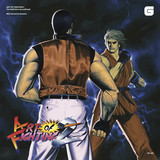
Beautiful and highly collectible item: 2xColored LP (Orange / Translucent) + Booklet + Gatefold. Both CDs and 2LP contains download code. Official licence with SNK.
The soundtrack for the sequel to SNK's classic fighting franchise, ART OF FIGHTING 2, is now available on vinyl! Featuring 34 breathtaking NEO GEO tracks across 2-LPs and CD, take the ART OF FIGHTING 2 soundtrack for a spin and relive the classic days of SNK music.
Is it really a musical?! The 33rd Guided By Voices album, Earth
Man Blues, is a magical cinematic rock album, full of dramatic
and surreal twists and turns. Lyrics and liner notes trace the
growth of young Harold Admore Harold through a coming of age
and a reckoning with darkness. Vivid scenes appear: snapshots
of youth, fantastical nightmares, unknown worlds.
The music hasn’t softened a bit. One will hear the impossibly
perfect melodies and word play that you expect from Robert
Pollard, with the band playing at peak-heavy. “Trust Them Now”
rocks like an instant classic, “The Batman Sees The Ball” is lean,
mean rock muscle. Opener “Made Man” tears and slashes at the
ears and heart. Sweeping, colossal tracks like “Lights Out (In
Memphis, Egypt)” and “Dirty Kid School” stretch far beyond
the ordinary vocabulary of rock.
Doug Gillard’s brilliant guitar playing explodes out of
the speakers. The rhythm section of Kevin March and Mark
Shue, always strong and reliable, has grown into a breathing
composite organism. Along with Bobby Bare, Jr on rhythm
guitar, they drive the songs and make one’s head shake. Producer
Travis Harrison ties the talents of the band together, once again
recorded remotely and individually, pandemic-style. This group
brings to life the sounds in Pollard’s technicolor imagination.