Optimo Music presents “Janara” the new album from Italy’s José Manuel. We always have our ears open for music that is unique, powerful and that can conjure up a ritualistic atmosphere, and this meistrerwerk did all that, and then some. We knew we had to release it after the first listen.
We’ll let José tell you about it….
This album is a result of the necessity of exploring and opening my mind to new musical horizons, by testing the main traditional instrument of the Italian region Campania, whose name is “Tammorra”. It is a big drum, which must not be confused with the typical tambourine, made from a wrap of wood shaped in a circle and covered with dried skin (almost always goatskin or sheepskin). This instrument was used during playful events, especially during rituals and ceremonies, such as the frequent devotional pilgrimages in honour of the Virgin Mary. By using this instrument, the sound, the rite and the magic could take possession of the mind and the body creating a perfect union. Also, the dancers, as if they were bitten by a tarantula and possessed by a strange evil, launched themselves to an uncontrolled dance by moving every part of their body.
In addition to the Tammorra, I also inserted some texts, which have been written by some Neapolitan friends and interpreted with Neapolitans voices, in honour of the “JANARA”. The Janara represents a popular belief of the Southern Italian regions, particularly of the Benevento area. The Janara is one of the many types of witches represented by folktales belonging to the rural tradition.
The Janara was expert in medical herbs, which were also be used for her magical practices, such as the manufacturing of ointment. The ointment gave her the power to become incorporeal with the same nature as the wind. According to the tradition, in order to snatch the Janara it was necessary to grab her by the hair. It was also said that if anyone was able to capture the Janara during her incorporeal moment then Janara herself would offer protection to them and their family for seven generations, in exchange for her freedom.
With this work I hope that the listener might get carried away by the spirit of this pagan and popular legend that can be still be considered as current. As a matter of fact, the folk tales speak of a probable comeback of the Janara, who after being burned at the stake seems to be thirsting for revenge for the evil suffered.
out of Stock
Last delivered 3 years ago available to reorder, subject to availability
The Impossible Kid, released in 2016 on Rhymesayers Entertainment, marked Indie-rap mainstay Aesop Rock's first solo venture since 2012's Skelethon. Aesop continued finding new ways to improve on the skills that have made him one of the kings of indie hip-hop. His creative process now includes a newfound willingness to open up about his personal life, going deep on topics like depression, his sometimes rocky relationship with his family, and the turbulent handful of years that culminated in Aesop leaving his adopted home of San Francisco to live in a barn out in the woods, where he recorded the foundations of The Impossible Kid. There's also moments of levity though, as Aesop taps into the funny side of his persona that he suppressed during the period where being taken as a serious lyricist was more of a priority. Like Skelethon, Aesop exercised complete creative control over every aspect of the album, from the production (which he handled himself, with instrumental help from Philly's Grimace Foundation) to conceptualizing the cover art by his friend Alex Pardee.
2LP on crystal clear vinyl. In these trying times, where intimacy and closeness are fraught with danger, Dans Dans (Dance Dance) brings you the sound of connection, communication, passion and togetherness.
In these trying times, where intimacy and closeness are fraught with danger, Dans Dans (Dance Dance) brings you the sound of connection, communication, passion and togetherness.
Dans Dans unites the talents of three of Belgium's most prolific music makers in Bert Dockx (Flying Horseman), Fred 'Lyenn' Jacques (Lyenn, Lanegan band) and Steven Cassiers (Dez Mona, DAAU). An utterly unique musical collective, the trio are set to release new album 'Zink' on the 23rd April via Ghent based independent, Unday Records.
From jazz, psychedelic blues and ecstatic noir soundtracks to spacey rock 'n' roll, Dans Dans cut their teeth on the cool jazz cafe scene in Flanders, Brussels with their sensational live performances and have since gone on to become a mainstay on the flourishing Belgian musical landscape.
Releasing their self-produced, eponymous debut album back in 2012, their highly distinctive, intuitive mix of musical styles and their ever-imaginative live shows caught the attention of discerning music lovers, journalists and promoters. A relatively unknown tour de force outside the Benelux region, Dans Dans have built a solid fan base since their inception with limited edition runs of early releases becoming collector's items among vinyl enthusiasts.
Well-received appearances at Cactus Festival, North Sea Jazz and Pukkelpop, as well as Gent Jazz, Ljubljana Jazz and Jazz Middelheim have confirmed their reputation as one of the most unique and exciting bands to come out of Belgium. In recent years, the group has been touring throughout Europe, garnering enthusiastic reactions beyond the Belgian borders as well. There's a case to be made that Dans Dans even played a key role in breaking down the wall between the Belgian jazz scene and the pop/rock circuit (years before pop journalists began referring to a New Wave of Belgian Jazz).
Opening with the moody noir rhythms of 'Cinder Bay', Dans Dans look to construct their own musical universe across 'Zink'. 'Naiad' unfolds into a devastating explosion of heavy feedback and wild, crashing drums before subtle electronica and baroque art-rock collide on 'Anemone' giving a good indication of Dans Dans' eclecticism. There's unquestionably a deep, underlying filmic beauty to the music, an evolving darkness and a perpetual sense of dread and paranoia. Elsewhere, 'Ravine' is intoxicating, provocative and uncompromising while the beatific 'Shell Star' is an infectious exploration of hypnotic grooves, atmospheric sounds and mind-bending melodies.
Producer Christine Verschorren (Philippe Catherine, Ivan Paduart) accentuates the music's wondrous fluidity throughout 'Zink'; the intriguing interplay; the subtle ties; the deep layering. Musical styles and influences are being blended organically and sublimated into what can only be called Dans Dans-music. "This is no fusion, no rock or jazz or ambient. This is the sound of the searching, intuitive human; of a timeless, mysterious dream; of the heart, the gut and the soul," says Dockx.
Rich in musical associations yet utterly singular in its voice, joyous with an inner tranquility, the music of Natural Information Society is unlike any other being made today. Their sixth album in eleven years for eremite records, descension (Out of Our Constrictions) is the first to be recorded live, featuring a set from London’s Cafe OTO with veteran English free-improv great Evan Parker, & the first to feature just one extended composition. The 75-minute performance, inspired by the galvanizing presence of Parker, is a sustained bacchanalia of collective ecstasy. You could call it their party album.
This was the second time Parker played with NIS. Joshua Abrams: “Both times we played compositions with Evan in mind. I don’t tell Evan anything. He’s a free agent.”
The music is focused & malleable, energized & even-keeled, drawing on concepts of ensemble playing common to musics from many locations & eras without any one specific aesthetic realization completely defining it.
“The rhythms that Mikel plays are not an exact reference to Chicago house, but that’s in there,” Abrams says. “I like to take a cyclic view of music history, can we take that four-on-the-floor, & consider how it connects to swing-era music? Can we articulate a through line? I dee-jayed for years in Chicago & lessons I learned from playing records for dancing inform how I think about the group’s music. The listener can make connections to aspects of soul music, electronic music, minimalism, traditional folk musics, & other musics of the diaspora as well. It’s about these aspects coming together. I don’t need to mimic something, I need to embody it to get to the spirit, to get to the living thing.”
For jazz fans, the sound of Parker’s soprano & Jason Stein’s bass clarinet might evoke Coltrane & Dolphy, even though they didn’t necessarily set out to do that & they play with complete individuality. Abrams sees a bridge to the historical precedent, too. “Since we first met in the 1990s, one of the things that Evan and I connected on was Coltrane’s music,” he says. “I hoped that we would tap into that sound world intuitively. In this case, I think that level of evocation adds another layer of depth, versus a layer of reference.”
Indeed, this is a performance in which the connections among the ensemble & the creative tension between improvisation and composition build into a complex mesh of associations & interactions. While the band confines itself to the territory mapped out by Abrams’ composition, they are remarkably attentive & responsive, making adjustments to Parker’s improvisations. When Parker’s intricate patterns of notes interweave with the band, the parts reinforce one another & the music rockets upward. Sometimes, Parker’s lines are cradled by the group’s gentle pulse & an unearthly lyrical balance is struck.
Drummer Mikel Patrick Avery is locked-in, playing with hellacious long-form discipline, feel & responsiveness. Jason Stein’s animated, vocalized bass clarinet weaves in & out with Lisa Alvarado’s harmonium to state the piece’s thematic material; the pulsing tremolo on the harmonium brings a Spacemen 3 vibe to the party. Abrams ties together melody & rhythm on guimbri, a presence that leads without seeming to. Like his bandmates, he shifts modes of playing frequently, improvising & then returning to the composed structure.
“As specific as the composition is, the goal is to internalize it & mix it up,” Abrams says. “The idea is to get so comfortable that we can make spontaneous changes, find new routes of activity, stasis & byways every gig. It’s like a web we’re spinning. If someone makes a move, we all aim to be aware of it, make room for it. Experiencing & listening is what it’s about, & Evan supercharges that.”
& “supercharged” is the word for this album. With Parker further opening up their music, descension (Out of Our Constrictions) is the sound of Natural Information Society growing both more disciplined and freer, one of the great bands of its time on a deep run.
Aguirre edition: Mastered by Helge Sten, Audio Virus, Oslo. Lacquers by Dubplates & Mastering. Liner Notes by Theaster Gates. LPs pressed on premium audiophile-quality vinyl at Pallas Records. US 2xLP edition available thru Eremite records.
out of Stock
Last delivered 5 years ago available to reorder, subject to availability
Nia Wyn grew up in Llandudno in North Wales where, despite the town’s breathtaking views, she found herself battling with demons relating to isolation, identity and mental health. In local junk shops she sought solace in old soul records, discovering the likes of Billie Holiday, Bob Dylan and Marvin Gaye as well as hip-hop artists such as Nas and Lauryn Hill. Growing up in a house with a dad who played a lot of northern soul, disco and reggae, Wyn took inspiration from a truly eclectic range. Her unique storytelling style, along with such distinctive and raw vocals, has made Wyn into one of the top emerging female artists now coming out of the UK, her classic influences filtering through her singular songwriting into an entirely modern sound.
Wyn accrued early praise from the likes of Clash, Earmilk and more. She’s been played on BBC Introducing, Radio 1, 6Music, Radio 2’s Blues Playlist and was tipped by Huw Stephens as one of BBC Introducing's Ones To Watch in 2019 after opening for Paul Weller and Paloma Faith.
Alan Vega’s name is synonymous with unfettered, tireless creativity. Beginning in the late 1950s, when he was a fine art student at Brooklyn College, through his years playing in Suicide, and all the way up until his death in 2016, Vega was constantly creating. That
process naturally led to a wealth of material that didn’t see the light of day immediately when it was recorded, which came to be known as the Vega Vault. Mutator is the first in a series of archival releases from the Vault that will come out on Sacred Bones Records.
Mutator was recorded alongside Vega’s longtime collaborator Liz Lamere at his NYC studio from 1995-1996, and it serves as a document of a particularly fertile time in his creative life. He had 11 full-length solo albums come out during the ’80s, ’90s and ’00s - plus numerous collaborations, and Suicide records A Way of Life and Why Be Blue. Mutator wasn’t shelved intentionally, but Vega’s back-to-thegrindstone M.O. meant that he had moved on to making his next record before this one was finished. Lamere and Vega’s friend and confidante Jared Artaud (The Vacant Lots) rediscovered the raw, unmixed recordings from the Mutator sessions in the Vault in 2019. Soon after, they mixed and produced them into the visionary album that was lurking within those tapes.
“Our primary purpose for going into the studio was to experiment with sound, not to ‘make records,’” Lamere recalls. “I was playing the machines with Alan manipulating sounds. I played riffs while Alan morphed the sounds being channeled through the machines.”
At the time of the Mutator sessions, Vega was massively inspired by what was happening in the streets of New York - not only the hip hop scenes that were exploding throughout the outer boroughs, but also the literal sounds of the streets, the traffic noise and industrial ambience of city living. That influence trickled into the sounds he and Lamere captured in those sessions. That sensibility, paired with Vega’s unmistakable voice and force of personality, is what made it the great album it is now. The final piece was the production job, completed by Lamere and Artaud 25 years after the songs were first captured.
Alan Vega’s name is synonymous with unfettered, tireless creativity. Beginning in the late 1950s, when he was a fine art student at Brooklyn College, through his years playing in Suicide, and all the way up until his death in 2016, Vega was constantly creating. That
process naturally led to a wealth of material that didn’t see the light of day immediately when it was recorded, which came to be known as the Vega Vault. Mutator is the first in a series of archival releases from the Vault that will come out on Sacred Bones Records.
Mutator was recorded alongside Vega’s longtime collaborator Liz Lamere at his NYC studio from 1995-1996, and it serves as a document of a particularly fertile time in his creative life. He had 11 full-length solo albums come out during the ’80s, ’90s and ’00s - plus numerous collaborations, and Suicide records A Way of Life and Why Be Blue. Mutator wasn’t shelved intentionally, but Vega’s back-to-thegrindstone M.O. meant that he had moved on to making his next record before this one was finished. Lamere and Vega’s friend and confidante Jared Artaud (The Vacant Lots) rediscovered the raw, unmixed recordings from the Mutator sessions in the Vault in 2019. Soon after, they mixed and produced them into the visionary album that was lurking within those tapes.
“Our primary purpose for going into the studio was to experiment with sound, not to ‘make records,’” Lamere recalls. “I was playing the machines with Alan manipulating sounds. I played riffs while Alan morphed the sounds being channeled through the machines.”
At the time of the Mutator sessions, Vega was massively inspired by what was happening in the streets of New York - not only the hip hop scenes that were exploding throughout the outer boroughs, but also the literal sounds of the streets, the traffic noise and industrial ambience of city living. That influence trickled into the sounds he and Lamere captured in those sessions. That sensibility, paired with Vega’s unmistakable voice and force of personality, is what made it the great album it is now. The final piece was the production job, completed by Lamere and Artaud 25 years after the songs were first captured.
Favorite Recordings and Charles Maurice proudly present the 5th edition of the AOR Global Sounds compilations series: 8 rare and hidden tracks, produced between 1977 and 1984 in various parts of the world. Started in 2015, the AOR Global Sounds series was born from the will of Charles Maurice (aka Pascal Rioux) to share his longtime love for the AOR and WestCoast movement and highlight its influence for many artists in the late 70s and early 80s. In this 5th volume, he selected again highly forgotten productions, deeply infused with Disco and Soul flavors.
Half of the compilation’s tracklist is naturally coming from the US, homeland of this music style, while the other half is made of productions from all over the globe, from France or United Kingdom to Venezuela. And for most of these beautiful songs, it came from artists and bands rather unknown and often released as private press.
Often, these records will have a special story, sometimes they’re just part of the universal quest of finding true love. Nonetheless, they all carry a wide range of emotions magnified by the music.
For example, “Don’t Take It Away” by Westside is as a love song about a new relationship, recorded in Minnesota and mastered on Sunset Bld. (Hollywood) by Bernie Grundman, who worked on Thriller – funny thing, the original LP is a picture-disc, which was still quite rare back in the days because the singer saw one from Mickael Jackson when visiting the studio. “Til’ Mornin’ Comes”, the only release by The Ferry Brothers, is also a love song, recorded in NYC with notably Gwen Guthrie, Vivian Cherry & Patti Austin singing as backup vocalists. On “What Its Meant To Me”, Jonathon Hansen remembers with emotion the good times spent with the members of his band including the vocalist he was in love with. On “J’Irai Squatter Ton Cœur”, Didier Makaga better-known as a French Boogie & Pop singer, arranger & composer, sings a charming declaration of love on a heavy and groovy eighties production. “You Never Know” by Rhapsody, recorded in Connecticut, sounds more like an East coast fusion of Soul and Jazz-Funk à la James Mason. “What You Do To Me” by Sugar Cane was highlighted on a Pittsburgh Rock Radio compilation: listening to this smooth ballad with its amazing Moog synth break will lift your soul. “Kailua” by Venezuelan Jazz-Funk band Esperanto, is a song about Hawaii which evocates bucolic dreamy nights facing the ocean, a typical AOR vibe. Finally, “I Need You” from Mark Williamson is a blue-eyed soul UK groover ending on a four-on-the-floor climax!
And we could detail stories but our guessing is the best way to learn more about all these gems is to listen to the compilation, fully remastered from originals, and whether your preference is for vinyl or CD formats.
out of Stock
Last delivered 22 months ago available to reorder, subject to availability
Sometimes a work of art comes unintentionally from a place from deep within the soul. It meanders and flops onto a table and sits and waits for its birth.
The album begins with "Wait Till The Stars Burn", a planetary ode to the Sun. The second track "Tribute to the Pharoahs Den", is a requiem for Danny Ray Thompson (R.I.P.) of the Sun Ra Arkestra, his music and legacy now floating above us in the infinity of space. Both tracks and featuring Marshall Allen and Knoel Scott (of the Sun Ra Arkestra).
The album ends with a requiem for Hal Willner (R.I.P.) whose devotion to celebrating the weird and insane was like an insatiable thirst leading to deep introspection and joy in harmony and sonic dissidence.
These compositions have all come from this place inside my bipolar, seroquil ridden mind. It is as much a tribute to the great composers who have inspired me; Alice Coltrane, Rahsaan Roland Kirk, Philip Kelan Cohran, Bernard Herrmann, Ennio Morricone, Miles Davis, Sun Ra, John Carpenter, Quincy Jones, Old Bollywood, Film Noir, to name just a few. In my 23 years of being a composer of music I have had the great opportunity to score several films all of which never got any commercial fame. These films were made from the blood and sweat of film directors and their crews who tirelessly made incredible documents that were ultimately ignored by humanity. But that never stopped them nor will it stop me. These tracks are from the infinite celluloid that runs deep in my mind, body and soul. In my lifetime i never thought i would see the deaths of "Celluloid" or "analog recording". I refuse to accept the coroner reports on said fatalities, so here is my offering to the canon of cinematic overtures and analog self-preservation, for the films in our heads yet to be made.
out of Stock
Last delivered 5 years ago available to reorder, subject to availability
Double album that includes;
45rpm bonus disc with the singles and B sides
Gloss laminated gatefold sleeve
printed inner sleeves, containing lyrics, photos and interview by The Mouth Magazine
“Pleasure Bag” containing 4 postcards, 2 stickers, A stencil, Repro Tour Poster, Repro promo posters for “Go For Gold” and “Politics/ Its Fashion” singles. Press photo and Press Flyer
In 1980 post punk pop indie band GIRLS AT OUR BEST came out of nowhere (Well, Leeds actually) with GETTING NOWHERE FAST and was the NME’s Single Of The Week reaching the Top 10 of the indie chart. The band, fronted by Judy Evans, released four further singles plus the album PLEASURE which reached the UK album charts in 1981, before splitting up two years after that first record.
Girls At Our Best were one of the finest, most life-affirming of a new breed of independent bands who cropped up at the turn of the 80s – long-standing fan John Peel once referred to them as one of the few groups that made the period bearable. Formed in Leeds from the ashes of punk band SOS, the group were fronted by distinctive female vocalist Jude ‘Jo’ Evans, forming a songwriting team with guitarist James Alan and bass player Gerard Swift after they met at art college. All four of their singles for their own Record Records, Rough Trade and Happy Birthday Records are included here as bonus tracks on a 45rpm 12”– including the wonderful ‘Getting Nowhere Fast’ (later covered by The Wedding Present), its coruscating b-side ‘Warm Girls’, ‘Politics!’, ‘Go For Gold’ and ‘Fast Boyfriends’
Their influence can be seen on innumerable C86/indie bands who came afterwards
out of Stock
Last delivered 5 years ago available to reorder, subject to availability
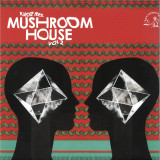
The MUSHROOM HOUSE compilation is a collection of balearic, afro and cosmic disco tracks that have been released on several Toy Tonics EPs over the last 5 years. Toy Tonics now releases some of these EPs on a double vinyl together. This is the second part. Featuring eleven tracks. (Vol 1 was released in 2020.)
Original tracks and remixes by friends of the label: Kiwi, Red Axes, Karl Hector, Hugo Capablanca, Harry Wolfman. Very special contributions by New York's legendary Joe Claussell and fashion designer Marcelo Burlon, who contributed the vocals to a song by Milan’s Barking Dogs. Art Alfie from Studio Barnhus is featured also with an exclusive track and legendary DJ Sprinkles with a magic rework of a Hard Ton song.
A few of the tracks had been already released on Gomma records. The now sleeping indie-electronica label that was the „mother“ of Toy Tonics records. Some were made exclusively for Toy Tonics.
out of Stock
Last delivered 12 months ago available to reorder, subject to availability
Melvin Ukachi needs little introduction, the Lagos (Nigeria) based vocalist and bandleader is a living legend. Melvin is known for his fantastic solo albums, his vocals for the afrobeat star-groups M.F.B. and Ozzobia_but his biggest legacy is without a doubt him being the singer and bandleader of Ofege. Melvin formed Ofege in the early 1970s (when he and the other band members were all still a bunch of teenagers). Due to their vibrant combo of sweet harmonies, hooks & fuzz, Ofege would become one of the most legendary Nigerian groups of all time, with expressive sales and national stardom to follow. At the turn of the century (and because of tracks appearing on various compilations) Ofege would receive international acknowledgment for being the first of their kind and THE ultimate West-African psychedelic funk band! Melvin Ukachi recorded four milestone albums with Ofege: 'Try and Love' (1973) 'The Last of The Origins' (1976), 'Higher Plane Breeze' (1977) and 'How Do You Feel' (1978). When the Ofege story came to an end, Melvin recorded two astonishing solo albums: 'Evolution-Bring Back The Ofege Beat' (1981) and 'I am Ok' (1985). Both of his solo recordings have now become much sought-after holy grails for collectors and fans alike. On the album, we are presenting you today (Evolution-Bring Back The Ofege Beat) the listener is treated to the trademark Ofege sound (as the title of the record obviously suggests). Next to the rootsy and raw Ofege sound, we're shown a perfect glimpse of the late '70s afrobeat works combining soul, jazzy rhythms, William Onyeabor style synths & fluid boogie-danceability Expect some serious 'all-star' guest musicians as well_featured on the album are Chyke Madu (The Funkees) on drums, Berkley Jones (Ofege) on guitar_and many other local legends. To top things off the tracks were recorded and mixed at the legendary Abbey Road Studios in London_all slickly engineered by Rafiu Ayoade (The Apostles) and produced by the president of sound himself Odion Iruoje (known for his work with Manu Dibango, Fela Kuti_and many others). 'Evolution-Bring Back The Ofege Beat' was released on EMI Nigeria in 1981 and is a total Afro-psych-funk classic that begs for a special place in your record collection. It's tight, funky and Melvin's soulful vocals are to die for. This record is a monster! Tidal Waves Music now proudly presents the first-ever reissue (supervised by Melvin Ukachi himself) of this amazing Nigerian Afrobeat album. This RARE classic (original copies tend to go for large amounts on the secondary market) is now finally back available as a limited 180g vinyl edition (500 copies) complete with the original artwork made at Grafikad (who were responsible for designing landmark sleeves for renowned artists such as Fela Kuti).
Zodiak Commune Records proudly presents its very first double LP made by label resident 1NC1N. High quality techno, acid and electro. Are you ready for the The Butterfly Effect Enjoy this limited release in the insectum serie!
A1. Digisynaptic Resonance
In this new age, technology is resonating on a digisynaptic level.
This track will surprise you...
A2. Voice Of Reason
Everyone has a voice of his own...for a reason.
Let your higher self speak!
B1. Nocturnal Humanoid
Not learning by experience.
Feeding by data is revolution.
B2. The Lost & The Missing (live)
Go back to the beginning of the Acid scene.
Relive the evolution.
C1. Walking Taiko
Listen to the rythmic art of Taiko.
Close your eyes...walk across Japan with all its beauty and hectics.
C2. The Ghost Of Holeenhyrst
Imagine a dark forest with a lost village.
You will be surrounded by this one person who supposed to be left...but did not.
D1. Whispering Transmission
Do not overuse a radio.
Sometimes it s better to communicate through whispering.
D2. Samsara
Embrace the infinity.
Ending it means start something new.
out of Stock
Last delivered 4 years ago available to reorder, subject to availability
Columbia, South Carolina’s Chaz Bundick (aka Toro y Moi) rose to the fore of the music blogosphere in sum- mer 2009 when he and a few peers made their hazy bedroom recordings the most talked-about sound of the season. Critics across the board took notice of the range of his compositions, and his debut album, Causers of This, showcased his ability to make elements of Brian Wilson’s pop, 80s R&B, and Stone’s Throw hip hop coalesce into a distinct sound that’s as suitable for a dancefloor as it is a pair of headphones.
When Chaz first signed to Carpark Records, the plan was to release two records in 2010 — one electronic and one with live instrumentation — and although it didn’t quite fit into the same calendar year as his debut, Underneath the Pine is that latter offering. This release sees him following the same creative urges to com- pletely different ends. Having spent the year listening to film composers like Ennio Morricone and François de Roubaix, Bundick returned to his home in Columbia, the birthplace of many Toro tracks of yore, to bring his new ideas to fruition. The result of these sessions is an album evocative of R. Stevie Moore’s homespun rumi- nations, David Axelrod’s sonic scope, Steve Reich-ian piano phrasing, and the pervasive funk of his first record. Underneath the Pine announces a new phase for an art- ist whose talent defies classification.
17 Track compilation of all of their studio recordings, remastered and pressed on Electric Blue Vinyl. Presented in gatefold sleeve with never seen before photographs ,a printed lyric inner sleeve and poster.
The VIP’s were formed in 1978 while at Warwick University. Within weeks they were gigging at clubs in the Midlands, often on the same bill as THE SPECIALS in Coventry. Soon they found a manager, Clive Solomon, who with Timmy Mallet (now a TV and Radio presenter) and both students at the university, financed the group’s first single the EP ‘Music For Funsters. In the summer of 1978 they built up a loyal following in London. The single was picked up by John Peel, who played it constantly on his BBC radio show through the year. The 3 track EP, featuring ‘I’m Perfect’, ‘I Believe’ and ‘Boys of the City’ was released on Clive Solomon’s own ‘Bust’ label.
In 1979 the VIP’s could be found playing all over the country, frequently on the same bill as Squire, stablemates on Clive Solomon’s label.
In early 1980 they went into Olympic Studios in Chiswick to record some tracks with ex-THE ANIMALS bass player and SLADE/Jimi Hendrix manager Chas Chandler. The track ‘I Thought You Were My Friend’ was recorded at these sessions A few weeks later a major record deal was agreed with Gem Records/RCA and ‘Causing Complications’ came out in March. To coincide with the release the VIP’s went on tour supporting SECRET AFFAIR.
After the tour the single ‘The Quarter Moon’ was released, another track produced by Mike Leander. It received extensive airplay around the UK and beyond, and was also picked as BBC Radio 1’s Record of The Week by DJ Mike Reid on his Morning Show, as well as being Radio Luxembourg’s ‘Power Play’ for two weeks. The constant touring, recording and radio play had earned them a spot on Top of The Pops but they were suddenly told -on the afternoon that they were due to appear - that an industrial dispute at the BBC had resulted in the show being cancelled. Disappointed, they continued to record and tour, this time with MADNESS, THE BEAT and DEXYS MIDNIGHT RUNNERS amongst others. This time Bob Seargent (of The BEAT and HAIRCUT 100 fame) was recruited to give ‘Need Somebody To Love’ that sparkle and edge to capture The VIP’s live sound on vinyl. Although perhaps the most representative of the band’s sound, Top of The Pops again eluded them.
By the end of 1980 the VIP’s were selling in Spain, Germany, Italy and France through the RCA label but they seemed to be losing heart with the business. Illness -Jed had been touring with a collapsed lung - and tensions saw the band play their last concert at Leicester University. A fourth and final GEM single, ‘Things Aren’t What They Used To Be’ (a song taken from their earlier Mike Leander recording sessions) proved to be their last. With several songs still to be recorded, it was a frustrating time for all.
Paul Shurey and Guy Morley has already made alternative plans for THE NEW VIP’s and recruited Simon Smith from THE MERTON PARKAS to play drums while Paul returned to his native keyboards. With Tony Conway on guitar and Andy Godfrey on bass they became MOOD SIX.
Paul Shurey played a central part in the birth and proliferation of the Rave movement in the 80’s, 90’s and 2,000’s, initiating a great a great many DANCE RAVES all around the world. Very sadly he died in 2017. He was also a gifted artist/cartoonist, and it’s his picture which graces the album’s sleeve. He is a brother very greatly missed.
Guy Morley works in film editing and Andrew Price is involved in developing community projects in and around his native Bristol.
“We became lifelong friends and shared a great and very exciting rock and roll dream.”
Live At Robert Johnson welcomes Amsterdam-based DJ and Producer Alain van der Born aka Perdu to the Club, who already made his marks with Releases on DGTL Records, Heist, and Let’s Play House amongst others. His contribution is a Four Track EP called Soaring Flights, including a Digital only Bonus Track. On this EP, Perdu champions a full-on 1980s sound, which hits more than one Chord in Live At Robert Johnson’s very own set of Styles.
Dystopia (co-produced by Tjade) is a High Energy Track, in which a raw and stoic Bass Riff slowly working its way into a Break. It’s the first Break in which the Atmosphere heats up significantly and subsequently sustains for the remainder of this quite enjoyable, and not quite dystopian rush on the Dance Floor. Retrograde immediately kicks off with a South American infused Rhythm Loop, joined by a deep and analogue Bass Serpentine, with bubbly Acid sprinkled along the way. Rise Of F5 brings back those 1980s signature pumping Kick and gated reverb Snare Drums, employing melodic and slightly haunting elements, which eventually dissolve in Euphoria and a Melody to hum along with (or shout, if you prefer). Somehow It’s Different Now concludes in a slightly different and quite mellow vein, that lets you leave this EP on the easy side. Available Digital Only is the Bells Mix Version of Perdu and Tjade’s Dystopia, for those inclined to a more melodramatic Dystopia with added playfulness thanks to—you guessed it—Bells (no whistles, we promise) …
out of Stock
Last delivered 4 years ago available to reorder, subject to availability
Isasa’s fourth LP is a guitar excursion from a skillful, humble guide. Minimal, contemplative songs, rich in atmosphere and warm in spirit.
Some musicians give their name to their first album, signifying introduction. Some hold it in reserve — it took Wire 39 years to get around to calling an LP Wire. But whenever they do so, they are making a statement. For Conrado Isasa, an acoustic guitarist from Madrid, Spain, the decision to call his fourth album Isasa reflects the fact that his music’s relationship to his own identity has evolved. Isasa presents an artist whose work reflects that he knows and accepts where he comes from.
Between 1993 and 2003, he played electric guitar in the hardcore metal band Down For The Count and the post rock combo, A Room With A View. These were collective statements, communications between small groups and a select underground community. After the latter group’s demise, Isasa stepped back from recording, and for a while from guitar playing as well. He spent some time learning to play the trumpet, but was inspired to return to the guitar in 2007 after he heard Geoff Farina play a Mississippi John Hurt song for the encore of a Glorytellers gig. Then came another period of learning, during which he studied the playing of Hurt, John Fahey, Jack Rose, and Glenn Jones.
Performing as Isasa, he made three records, each of which can be heard as confrontation with an artistic challenge. Las Cosas (2015) is between the man and his acoustic guitar; what could he do with his fingers, a slide, six steel strings, and a box of wood? Los Días (2016) faces the broader issue of how to deal with the requirements of the American Primitive guitar style. Like Fahey, Rose, and Jones, Isasa sought to make an album that used a cohesive sequence of guitar and banjo instrumentals to express personal experiences. With its references to the sights, sounds, and tastes one might encounter in Madrid, it is like a poetic diary written with the distance that comes from having mastered a second language. After making that record, Isasa toured parts of the United States, and played at The Thousand Incarnations Of The Rose, a festival that gathered representatives of American Primitive guitar’s past, present, and future in Takoma Park, the town where the style’s original synthesist, John Fahey, was born. Insilio (2019) began to look beyond that style, dealing with Hindustani raga forms and adding other instrumental textures.
And now comes Isasa. The name suggests something very personal, and it’s true that it draws upon Isasa’s closest relationships. Two compositions are either named for or feature the voices of his children, but their presence helps this music to transcend the purely personal. For what could be more universally shared than the joy and love one feels for children? Others invoke concepts — absence, liberty, love, reunion. They may mean one thing to Isasa, and another thing to you, but by sharing his reactions to them, he invites you to recognize yours. Isasa isn’t just using his experiences to tell you about his life; he is using what he knows about life to help us know a little more about ours.
Just like Freddy Krueger, Final Dream resurrects from the past to haunt your nights and deliver to the masses his threatening message. Author of a mighty album and three collector EP's on experimental techno label Audio Illusion Recordings from 1995 to 2002, British Electro veteran Phil Klein aka Bass Junkie returns with a vengeance under his most frightening alias. 19 years after his last transmission, he serves up a new four tracker full of his infectious strain of corrosive and weird electro.
The A-side opens with the mental "Dark Flow", a pounding tune based upon hammering beats surrounded by sinister strings and a gloomy atmosphere. The title track "Project Fear" coming next goes deeper into the realm, merging lethal frequencies to demonic beats.
The flipside introduces "Force Majeure", a milestone of an instant classic made of robotic drums sequences fused into subtle acid lines while "The Devil's Playground" concludes the 12" with 7 minutes of brain manipulations. Present "Project Fear EP" appears as an opened window to the future, an invitation to foresee what Evil is cooking for you in his laboratory. Just a reminder that there's no way to hide, accept your fate, nothing can stop the darkness!
out of Stock
Last delivered 4 years ago available to reorder, subject to availability
Hexvessel and Svart Records celebrate the 10 year anniversary of Hexvessel’s debut album Dawnbearer with a set of reissues, including CD, double vinyl. “Dawnbearer is a very important album for us, being our first album but also the first original album release for Svart Records. It’s also a very special record for our fans, and one that’s particularly close to my heart, in a world of its own when compared to the other records we have made. Considering that it’s been out of print now for some time, I’m delighted to be able to oversee a reissue of this album, together with original demos and out-takes, and liner notes showing the making of this album which carries the initial DNA of Hexvessel’s musical and spiritual journey”, says band leader Mat McNerney, “We haven’t touched a thing on the original layout, but added some bonus material for the limited edition, should you wish to own a luxury edition of this, our now classic debut.” Hexvessel band was founded by English singer/songwriter Mat McNerney (Beastmilk, Grave Pleasures, Carpenter Brut etc) after he moved to Finland in 2009. Their style of music has been referred to as “forest folk” or as Noisey/Vice puts it: “Weaving English folk, lilting Americana, and mushroom-induced psychedelia”. Their debut album 'Dawnbearer' was released worldwide in 2011 on Svart Records and is considered to be an influential classic record of the modern Occult Rock revival. Highly popular with Hexvessel fans and unique in their catalogue, featuring guitars by Andrew McIvor (Code), violin work of Daniel Pioro (who works on Paul Thomas Anderson’s soundtracks with Jonny Greenwood from Radiohead), the early production work of Jaime Gomez Arellano (Ghost, Paradise Lost), and guest vocals from Carl Michael Eide (Virus, Ved Buens Ende, Aura Noir). “Think Woven Hand, haunted ’60s/’70s pastoral folk, or a darker riff on Midlake. McNerney covers Clive Palmer’s post-Incredible String Band crew C.O.B. and successfully transforms and darkens Paul Simon’s “Diamonds On The Soles Of Her Shoes.” He quotes Crowley, Truman Capote, Isaac Babel, etc. Unlike black metal-ready folk, this is folk by a talented, ambitious black metal musician. But the energy’s there. As is the atmosphere.” - Stereogum “(Part of) a new wave of bands who share many of the original occult bands' musical and philosophical characteristics, spearheaded by Ghost, from Sweden, and the Devil's Blood, from Holland – have begun to lure in a new generation of fans, predominantly from the metal scene, their names alone – Ancient VVisdom, Hexvessel, Blood Ceremony– point to a focused step back to the age of Wheatley and Hammer. ” - The Guardian (2011)
The fourth title in the April vinyl batch marks the 30th anniversary of the death of the incredible Helmut Walcha. His acclaimed interpretation of three Bach Toccatas and Fugues (BWV 565, 540, 538), and the Toccata, Adagio & Fugue, BWV 564, played on the Schnitger Organ at St. Laurenskerk in Alkmaar, Netherlands, is now made available again on Archiv Produktion.
Chet Baker was the epitome of cool... the possessor of the kind of
looks that usually only featured in the most elegant of Hollywood
movies. He also played the trumpet in a way that transcended jazz
boundaries, and won him countless admirers among those who didn’t
normally stoke their hi-fis with bebop sounds. An opportunity to play
alongside the legendary Charlie Parker provided Chet’s start in the
jazz life - and that same year, 1952, he became a member of Gerry
Mulligan’s ground-breaking piano-less quartet - a combo that made
the sort of recordings that were essential to those of a hip genre.
Dean Martin was a real showbiz animal. Adept as a singer,
comedian and actor, he was probably most at home in the night
spots of Las Vegas, along with his fellow 'Rat Pack' members. This
collection of his greatest recordings demonstrates just why Dean
Martin was (and is) so popular. Enjoy
Winter Family is a duo made up of Ruth Rosenthal and Xavier Klaine, who met in Jaffa in 2004. Their dark, saturated and dense music is described as "Death Swing", "Weird Wave" or "Funeral Pop".
They recorded new parts of this new album in St Martin church of Maxéville, France. Xavier: "I recorded the pipe organ there, inspired by the Alsatian philanthropist organist Albert Schweitzer whose slow, bombastic performances, limited by faulty technique have always touched me deeply. In 2006, my aunt Loulou agrees to lend me the keys to the church. Ten years later, Loulou passes away, I play on this same pipe organ during her funeral. During the fall of 2018, in her room with old floral wallpapers, so cold, that I empty, surrounded by her missals and huge crucifixes I remix this pipe organs and the voice of Ruth. Through this late remixing, we wanted to deliver this woman from her agony, her eyes turned to the milkish Lotharingia sky and beyond, trying to illustrate this Catholic France of yesterday, as vain and terrifying as a month of November in this cold and humid garden, within reach of the incessant song of the A31 highway."
Afrikan Sciences carry the torch and grant the sight. This is his second offering for the ESP Institute. On the A side, 'The New Dun Language' shows us the meaning of loose. Literally everything about this masterpiece takes its time and operates in its own space, rhythms work together but stand apart, timbres inherently laidback are made aggressively present, like the diffused attack of a shaker that’s shook with such purpose it’s no longer granular but razor sharp. The soundstage drops all around you like percussion shrapnel, splitting your attention every which way, while the string lines remind you that no matter how deep inside your head you’ve gone, there is always a nearby exit to the comforts of familiarity.
Flip the record over, however, and the track 'In His Convenient Way' will even further discombobulate your sense of self. Do you have dreams you’re on a merry-go-round and with each revolution you try to hop off, but you can’t? Each time you cycle around, the tension grows and grows? Well, this is like that, menacing but not dark, a demented odyssey through an impossibly thick swamp where you swear the trees are whispering to you but can’t quite understand their language, yet still you manage to communicate. As the time passes, and you near end of the track, the impenetrable veil slowly lifts and you realize you’ve been in control all along. These two songs will two songs will help to contemplate, heal and transcend.
out of Stock
Last delivered 5 years ago available to reorder, subject to availability
The Iceberg/Freedom of Speech... Just Watch What You
Say is the third studio album by rapper Ice-T, released in
1989. The album has an uncharacteristically gritty sound, featuring some of the darkest musical tracks that Ice-T ever released. Instead of focusing heavily on gangsta rap, Ice-T made First Amendment issues the album’s dominant theme. Setting the album’s tone is the opener “Shut Up, Be Happy”, featuring Dead Kennedy’s Jello Biafra. There are a few examples of first-rate gangsta rap - including “The Hunted Child” and the chilling “Peel Their Caps Back” as well as some humoristic raps on “My Word Is Bond” and “The Girl Tried to Kill Me”. The Iceberg/Freedom of Speech... Just Watch What You Say is now available as a limited edition of 2000 individually numbered copies on transparent red coloured vinyl.
out of Stock
Last delivered 5 years ago available to reorder, subject to availability
· First release of the Jagjaguwar 25th anniversary celebration happening in 2021. · Features production and composition accompaniment from Bon Iver, Mary Lattimore, Angel Bat Dawid, Gia Margaret, and Sam Gendel. · Limited edition Opaque Green vinyl. Over the last 12 years, Ross Gay's poems have given us indelible images and phrases of radical empathy and unabated gratitude; about community, collaboration, connectedness and hard work. They have crept into our hearts and made a home of all of us. And so we are launching our 25th Anniversary celebration with `Dilate Your Heart', our first spoken word album since titan Robert Creeley's self-titled release twenty years ago. "Catalog of Unabashed Gratitude" is given a gorgeous, slowly creeping bed of vines by Bon Iver, as Gay's unadorned voices speaks a lifetimes of Thank You's. On "Burial," harpist and composer Mary Lattimore's lunar landscape follows Gay's voice into space, telling of our endless energy exchange with nature. Chicago's Angel Bat Dawid dances with the frenetic, joyous scene Gay leads us through on "To the Fig Tree on 9th and Christian," in which a group of Philadelphia strangers scramble together to harvest the fruit of the titular urban fig tree. Songwriter Gia Margaret provides a mystical, amniotic environment for Gay's "Poem To My Child If Ever You Shall Be," a love letter to an imagined future child, treating Gay's voice like a message in a bottle to a far off idea made only of love and potential. Sam Gendel, a secret weapon collaborator, affects Gay's voice on "Sorrow Is Not My Name" to something glassy and almost singsongy. Throughout, Gay recites his poems with bright aliveness, his voice as warm and easy when he speaks about death as when he speaks about mercy, or love.
Ed Cosens is stepping out of the shadows to take centre stage. The bewitching ‘If', his debut single, marks both the start of an overdue solo career and the latest chapter in the life of a longtime lynchpin of the Sheffield music scene. Best known as the guitarist/bassist and co-songwriter in Reverend & The Makers, Ed has spent 15 years conquering the charts and touring the world, yet leaving the limelight to others. With ‘If', the first song written for his forthcoming solo album, Fortunes Favour (due early 2021), he’s finally ready to reveal his true self. “It’s only taken 10 years or so for me to find the confidence!” says the self-depreciating singer, who shared stages with Arctic Monkeys members Matt Helders and Alex Turner before the Makers took off. “I subscribe to the fine wine way of thinking - allow things to mature fully before enjoying. Nobody wants to be Lambrusco!” ‘If' distils a lifetime of longing and loss, of dreams Vs. desires, into three mesmerising minutes of tremolo-rich, strings-soaked melody. Plangent chord progressions and mournful tones pair with poetic reflections on life’s twists and turns. Shades of The Beatles, Echo & The Bunnymen and Richard Hawley snake in and out. Emotions take over as Ed opens up fully for the first time. Drawing on Ed’s personal experience, he says of ‘If' "Its a love-lorn tale of the struggle between true love’s path and the path which you think you're destined to follow. It’s about the conflict between what you think you want, where you unwittingly lead yourself and ultimately where you should really be." “After several attempts, it became the song that sent me in the right direction. With a lot of albums, it takes one song to kick things off and this was that moment for me. It set out the stall for who I wanted to be as an artist with its strong sense of emotion and the journey that runs through it.” ‘If' was produced by Dave Sanderson, recorded at Giant Wafer studios in Wales at the tail end of 2018 and finally the man from Sheffield’s musical shadows can relish the start his solo career. “People ask why I waited so long, but there was no masterplan,” says Ed. “The time had to feel right. I found my voice along with an inner confidence and suddenly the itch was too much not to scratch. Once I'd started, I scratched like there was no tomorrow.”
“I wanted to try and showcase as many people as I knew on this mix. My idea of Late Night Tales was to distil a series of relaxing moments; the whole conceptual sonic of relax- ation. So, I was trying to think of all the collaborators and friends that I knew, who’d recorded stuff with this horizontal vibe. Plus, I was also trying to help my friends' stuff get into the world. I know the story of Khruangbin blowing up after appearing on the series (in fact, I think that's how I discovered them). So, the main idea was to create a certain atmosphere, but also to help some of my favourite collaborators and bud- dies to give their songs a little push out into the world. Hope you like it” Jordan Rakei
Due for release on 9th April, Late Night Tales celebrate their 20th anniversary with the release of multi-instru- mentalist, vocalist and producer Jordan Rakei’s majestic compilation. The 28-year-old modern soul icon effortlessly stamps his own jazz and hip-hop driven sound all over this gorgeous array of handpicked tracks. A beautifully layered blend that is mirrored in the music he’s made, itcomes as no surprise that such a supremely gifted songwriter should deliver a mix that is all about the song.
Rakei, born in New Zealand, but raised in Australia, moved to the UK in 2015; he released his debut album, Cloak, with Oz label Soul Has No Tempo, but his two subsequentLPs, Wallflower and Origin, came out on Ninja Tune, the former#2 in Album Of The Year for Gilles Peterson’s Worldwide poll, while Origin was nominated for Best Album at the AIM Awards. Jordan had this to say on his upcoming mix:
As Jordan says,there’s so much more to the song selection on Late Night Tales’latest outing than a random collection of artists. Many have some sort of personal connection, so just as Bonobo provided a platform for the breakout of Khruangbin on a previous LNT, this may have the same ef- fect for Rakei’s friends. After a soothing opener from Fink, good friend and big influence Alfa Mist (part of the Are We Live collective) delivers ‘Mulago.’ “I want to champion their sound and show the world how good he is, and I thought it’d be fitting to start the mix with family,” says Jordan.
Next up is Charlotte Day Wilson with ‘Mountains,’ followed by ‘Count A Heart’ from Moreton, an exclusive collab- oration with Jordan, who grew up on the same street in Brisbane, Australia. “She was the first artist I ever collabo- rated with, and one of the first artists to be involved in mycareer,” he explains. Elsewhere we hear Scottish producer and multi-instrumentalist C Duncan’s haunting ‘He Came from the Sun,’ Barcelona collective Oso Leone deliver a dreamy ‘Virtual U’ and Bill Lauren’s ‘Singularity,’ which evokes a striking sense of time and place.
Snowpoet’s ethereal ‘Evitenity’ is a “long mediative nar- rative over a beautiful soundscape,” which at times seems chaotic, nicely juxtaposed with undeniable beauty, and Maro’s kooky songwriting shines on ‘Always And Forever.’ Long-time buddy Armon-Jones contributes ‘Idiom,’ and Jordan’s exclusive cover version is a two-for-one, Radio- head’s ‘Codex’ merging with ‘Lover, You Should’ve Come Home’ by Jeff Buckley and another exclusive,original com- position by Jordan, ‘Imagination.’ The latter works as a piece with the spoken (Spanish) word voiced by movie director Alejandro González Iñárritu (Babel, Birdman, and The Reve- nant,) who is a big fan of Jordan’s. “He messaged me when I went to L.A and asked to come to my show. I was in such shock and we hung out after. I thought it would be nice to get him to do this in his native tongue, because I don’t think that’s been done yet on the series.” It certainly is a familyaffair. Not theblood is thicker than water kind, but certainly musical kindred spirits.
For Böser Herbst, Thomas Fehlmann returns to the sediment of ages, drawing from a similar lexicon of sounds to that used on 2018’s ‘1929 – Das Jahr Babylon’. Like that album, Böser Herbst was produced as the soundtrack to a documentary made by Volker Heise, ‘Herbst 1929, Schatten Über Babylon’, which offers historical insight to the third season of the television series Babylon Berlin. It adds yet another string to the bow of this most forward-thinking and creative artist, whose history takes in NDW (Palais Schaumburg), techno (3MB) and psychedelic ambience (The Orb), plus a clutch of gorgeous solo albums that explore wide terrain, from the dancefloor through supine home listening to compelling soundtrack work. Fehlmann’s approach here was to ‘capture’ samples of contemporaneous music, “picking up the dirt and dust of original 1920s archive sound and music excerpts and shaping the essence into this selection of tunes,” he recalls. After delivering the material to the editing room, Fehlmann “threw all the pieces up in the air, deliberately lost the overview in consequence, researched the atmospheric thread and assembled it for this album.” That explains the singular nature of the material here, and its ability to sit together so neatly and discretely, as its own entity. For Böser Herbst is a music box of possibilities, shadowed by its historical provenance, but never crudely beholden to it, rather “keeping the references only as a distant nod, a scent.”
It’s certainly an evocative listen, a cornucopia of textural pleasure and sensual, tactile assemblage. The spiralling, psychedelic cycle of “Karnickel” winds its way between the ears like thread to the needle; “Mit Ausblick” immerses the listener in deep, gaseous tones, only to be lifted into the air by the glassy drones of “Umarmt”. “Wunschwechsler” crackles with the unpredictability of weather systems while a guitar-like loop unspools across the horizon. Throughout, you can catch tiny tastes of the source material, but they’re pressed into greater service, Fehlmann using these sources for their evocative capacity and then saturating them with grain and rumble, abstracting outwards. It’s a music of temporal disjuncture and clairvoyant resonance, “speaking with the past – alert, distant and quixotic.”
Für “Böser Herbst“ schürft Thomas Fehlmann tief in den Sedimenten der Zeit und schöpft dabei aus ganz ähnlichen Klangquellen wie auf dem 2018 erschienenen Album “1929 - Das Jahr Babylon“. Auch “Böser Herbst“ wurde als Soundtrack zu der von Volker Heise gedrehten Dokumentation “Herbst 1929, Schatten über Babylon“ produziert, die den historischen Background der dritte Staffel der deutschen Fernsehserie “Babylon Berlin“ beleuchtet und dabei Archivmaterial mit Stimmen unterschiedlichster Zeitzeugen verknüpft. Das neue Album fügt eine weitere Saite zum Bogen dieses überaus voraus denkenden und kreativen Künstlers hinzu, dessen Geschichte NDW (Palais Schaumburg), Techno (3MB) und psychedelischen Ambient (The Orb) umfasst, plus eine Reihe von großartigen Soloalben, die ein weites Terrain erkunden, von der Tanzfläche über entspanntes Hören bis hin zu Soundtracks.
Fehlmanns Herangehensweise auf diesem Album war es, Samples aus jener Zeit "einzufangen", "den Schmutz und Staub der originalen 1920er Archiv-, Sound- und Musikaufnahmen zu sammeln und als Essenz in die einzelnen Tracks einfließen zu lassen", erinnert er sich. Nachdem Fehlmann das Material im Schnittraum abgegeben hatte, "warf er alle Teile in die Luft, verlor dabei absichtlich den Überblick, suchte sich dann einen atmosphärischen roten Faden und setzte alles wieder zusammen." Das erklärt die Einzigartigkeit des vorliegenden Materials und dessen Eigenschaft, sich fein säuberlich und gänzlich unangestrengt zu einer Einheit zusammenzufügen. “Böser Herbst“ ist eine Spieldose voll unbegrenzter musikalischer Möglichkeiten, umspielt von düsteren historischen Quellen ohne darin zu ertrinken – Fehlmann ging es stattdessen darum, "die Referenzen nur wie eine flüchtige Geste, wie eine Ahnung von etwas zu behandeln."
“Böser Herbst“ löst eine Vielzahl an unterschiedlichen Vorstellungen beim Hörer aus, es ist ein wahres Füllhorn an lustvollen Texturen und sinnlicher, taktiler Assemblage. Der spiralförmige, psychedelische Kreisel von "Karnickel" dreht sich in die Ohren wie ein Faden ins Nadelöhr; "Mit Ausblick" lässt den Hörer in tiefe, gasförmige Töne eintauchen, um anschließend von den transparenten Drones von "Umarmt" in die Luft gehoben zu werden. "Wunschwechsler" knistert mit der Unberechenbarkeit eines aufziehenden Unwetters, während sich ein gitarrenartiger Loop am Horizont abzeichnet. Überall kann man winzige Spurenelemente des Ausgangsmaterials erhaschen, aber sie werden in einen größeren Kontext gesetzt; Fehlmann benutzt seine Quellen nur als Mittel zum Zweck, um eine bestimmte Wirkung hervorzurufen, die einzelnen Teilchen werden angereichert mit Struktur und Körper und schließlich abstrahiert wieder ins Außen gesendet. Es ist Musik, an der die Zeit sich bricht und in die Zukunft schaut wie in einen Resonanzraum: Musik, "die mit der Vergangenheit spricht - hellwach, mit aller gebotenen Distanz und voller Rätsel".
out of Stock
Last delivered 5 years ago available to reorder, subject to availability
Limited editon LP format with extra heavy textured jackets and metallic silver ink. LP includes 12" square insert with lyrics and images of the artist, and download. The raw inspiration for Vague Tidings came from a 2006 DIY tour of the 49th state. It was a trip that went off the beaten path-sometimes a bit too far for comfort. Now, over a decade later, listeners find Joe O'Connell aka Elephant Micah stationed at a creaky spinet piano, singing about the Alaskan sky. Throughout, his lyrics take a new angle on a pet theme: human encounters with the natural world. Vague Tidings places these encounters in the American West and, at times, in its sci-fi corollary, outer space. Its imagery draws from the allure of Alaska, the idea of Western prosperity, and the human relationship to wilderness more broadly. Often, O'Connell sings about the goal of capturing and commodifying nature. In poetic sketches of resource extraction industries and dark sky tourism, frontier lust runs amok. Pipelines catch fire and stars disappear, all to the tune of a stark, uncanny Americana. Vague Tidings is a sustained, hallucinatory rendering of this theme. In style, its eight songs follow a switchback path between foggy incantations and mountain anthems. Made with a small cohort of acoustic instrumentalists, the record is rough hewn, but easy on the ears. To put Vague Tidings down on tape, O'Connell assembled some of his favorite musicians in Raleigh-Durham, North Carolina area, where he's lived since 2015: Libby Rodenbough (Mipso) bows and plucks a detuned fiddle, Matt Douglas (Mountain Goats) breathes life into various woodwinds, and Matt O'Connell (Lean Year) sets the pace on a two-piece drum set. Their loose, imaginative playing pushes Vague Tidings beyond the singer-songwriter genre into something richer in texture. Ultimately, this is foreboding but spacious music, with plenty of room for reconsidering life on earth. R.I.Y.L. Jason Molina, Bonnie Prince Billy, Bill Callahan, Damien Jurado.
I met SUGAI KEN a few years ago in Tokyo, outside the Dommune radio studios. His personality and music, a very special brand, touched me. His music is a coded vision of a dream world. A trade that is progressive yet traditional - in the most positive sense of the word.
Recently out of the blue, Sugai San sent me a collection of personal field recordings he made of folklore groups and public performances in Tokyo, Toyama, Kanagawa, Kyoto, Tottori, … The close listener already knows that Sugai San’s aesthetics speak of a great knowledge of these performing arts.
An open invitation: “the traditional local performing arts in the 21st century intrinsically conceive “fragility” as they are vulnerable to extinction. The Japanese local performing arts that appear in this recording is no exception, endangered by the declining birth rate and aging population which are typical to the country. (SUGAI KEN)”
I bring the original recordings into conversation with new elements like a ‘monomane’ - tr. imitating – sound game. But when i throw these old and new figurines together on the podium, the objects immediately disappear in the cracks of the stage wood. Thus only the understament of the suggestion remains. And relentlessly the significance of every movement now becomes a question.
Furthermore, what’s in focus? The manipulation? Or the content? Or are we zooming in on the aspect of archiving ~ preserving? Dubious.
In KAGIROI – tr. heat haze - people coexist for a moment severely carved in time like a high contrast still of dancing flames. When you bring this composition home, it will never boil yet merely evaporate. And when you gaze at the clouds of condensed droplets inside your own darkness, on a soft volume, You complete our puzzle."
The Reverend Peyton's Big Damn Band are the greatest front-porch blues band in the world. They are led by Reverend Peyton, who most consider to be the premier finger picker playing today. He has earned a reputation as both a singularly compelling performer and a persuasive evangelist for the rootsy, country blues styles that captured his imagination early in life and inspired him and his band to make pilgrimages to Clarksdale, Mississippi to study under such blues masters as T-Model Ford, Robert Belfour and David “Honeyboy” Edwards. The band has built through their legendary live shows. Playing as many as 300 shows each year, the band has one of the most dedicated followings out there. This following is sure to eat up the band's latest offering, Dance Songs For Hard Times, a country blues record that was made the right way — two feet on the ground and both hands getting dirty.
KingUnderground releases Other Mirror’s debut record. The album is mixed by legendary engineer ‘No Sleep’ Nigel, who has worked with a plethora of the UK Hip-Hop scene since the late ‘80s.
Other Mirror are James Tilley, Amelie Chevalier and Jonny Cuba. The 3 formed the band in 2018. They had talked for many years about starting a project together and after several years of pursuing their own creative endeavors, the school friends found themselves reunited and finally creating music with one another. Although the Self Titled LP is Other Mirror’s band debut, they’re far from newcomers. Jonny Cuba has been an active musician since the late 90s, with other collaborative highlights including The Herbaliser, Mike James Kirkland, and production for legendary British Library labels KPM, Bruton, and Cavendish. Tilley has had multiple releases with his first band, Fabric, from the early, to late 90s, and has collaborations with DJ Food, and recording sessions with John Peel. Chevalier is an accomplished vocal coach, dancer, and choreographer with various session work, including live shows at Glastonbury Festival, and Bestival. Rounding out the trio with her mystical vocal delivery and groovy bass lines.
The results of the band’s initial collaborations feel reminiscent of a Quintin Taratino movie, cinematic and groovy in nature. Other Mirror are particularly drawn to the power of music within film and TV. It’s ability to support and affect the narrative is similar to how the band taps into direct emotions.
“The music can be partially improvised with unexpected sections. Like films are made in the edit, we follow a similar approach when we are composing.” - Amelie Chevalier
The Other Mirror debut reflects the bands long standing rapport together. It often feels like there is a conversation happening within the music between the old friends. Their unconventional approach to composing adds a familiar flavor in each track on their self-titled LP.
On July 4th Kase Avila is set to raise the bar even higher with his latest effort ‘Minerva’ via Low Key Source. The Filipino-Australian producer is set to delve deeper into his artistry and penchant for the experimental with 14 new tracks.
When Covid-19 turned the world upside down, Kase sent himself into self-isolation. Confined to the studio, the Sydney beatmaker faced this tumultuous time with his love for producing music. Kase explored his love of 90’s boom bap, neo-soul, and the Soulquarians, while playing with the crisp sounds of electronic music to strengthen his perseverance and resolve. Taking its name from the Roman goddess of music, poetry, medicine and wisdom, ‘Minerva’ is a celebration of the resilience found in creativity when faced with uncertainty. The record envisions a sonic landscape that is as intimate as it is expansive. Lush chords pervade Kase’s signature hard hitting drum lines and smooth melodies like an evergreen being traced with graceful footsteps. The result is a sound that is regal in its confidence and joyous in it’s expressiveness. The lead single ‘Magic Birds’ strikes a harmonious balance between the sample-driven beats that have made Kase a fan favourite amongst the lo-fi hip-hop community, and ethereal synth flourishes that give the track a seamless fluidity.
Kase has long been a cornerstone of the Sydney music scene; his brand of ebullient and soulful beats have been filling dancefloors and bedrooms of hip-hop heads for the better part of a decade. In 2019 he released his first ever LP ‘Soul Calibre’, a project that also marked his debut on renowned label Low Key Source. ‘Minerva’ signifies Kase’s continuing ambition to preserve the purism of hip-hop while simultaneously pushing its boundaries with one kick, snare, and key at a time.
“A good piece of rocking jazz, miles away from an academic approach but with a good shot of euphoric guitar and down-to-earth energy instead.
Here the band “”Tini Thomsen MaxSax”” brings its own nuanced,
powerfully stylistic sophistication.
”Just moving up a gear,” says Tini Thomsen. One woman and one saxophone - a match made in heaven! In the hands of Katharina ”Tini” Thomsen, the baritone saxophone - a rather massive, heavy instrument, after all - attains a sonic beauty definitely worth listening to.
The spectrum ranges from robust, resounding rhythms to versatile melody parts and fast-paced, earthy solos and - occasionally! - on to excursions into the more tender and balladesque. Considering that the instrument is a rarity among male musicians, the combination, Thomsen & ”Bari” holds membership - both nationally and internationally - to a small and exclusive group of such ”duos”.
It is even more fortunate that, in Nigel Hitchcock on alto saxophone, she has found the perfect counterpart not only musically, but privately as well.”
‘Cuba: Music and Revolution’ is a new album compiled by Gilles Peterson and Stuart Baker (Soul Jazz Records) that explores the many new styles that emerged in Cuba in the 1970s as Jazz, Funk, Brazilian Tropicalia and even Disco mixed together with Latin and Salsa on the island as Cuban artists experimented with new musical forms created in the unique socialist state of Cuba.
The album comes as a deluxe double CD and heavyweight triple vinyl, complete with extensive sleeve notes, jam-packed with heavy basslines, synth and WahWah guitar funk combined with the heavyweight percussion, powerful brass lines and the all-encompassing Latin rhythms of Cuban music known throughout the world.
The album is released to coincide with the massive new deluxe large format book ‘Cuba: Music and Revolution: Original Cover Art of Cuban Music: Record Sleeve Designs of Revolutionary Cuba 1959-90’, which is also compiled by Gilles Peterson and Stuart Baker (Soul Jazz Records) and which features the music and record designs of Cuba, made in the 30-year period following the Cuban Revolution.
The music on this album features legendary Cuban groups such as Irakere, Los Van Van and Pablo Milanés, as well as a host of lesser known artists such as the radical Grupo De Experimentación, Juan Pablo Torres and Algo Nuevo, Grupo Monumental and Orquesta Ritmo Oriental, groups whose names remain largely unknown outside of Cuba owing to the now 60-year old US trade embargo which remains in place today and which prevents trade with Cuba - and thus most Cuban records were only ever available in Cuba or in ex-Soviet Union states.
The music on this album reflects the most cutting-edge of Cuban groups that were recording in Cuba in the 1970s and 1980s - who were all searching for a new Cuban identity and new musical forms that reflected both the Afro-Cuban cultural heritage of a nation that gave birth to Latin music - and its new position as a socialist state. Most of the music featured on this album has never been heard outside of Cuba.
Both Gilles Peterson and Stuart Baker have been involved in Cuban music for more than two decades - Gilles Peterson with his many Havana Cultura projects for his Brownswood label and Stuart Baker with a number of Soul Jazz Records albums recorded in Cuba. This Soul Jazz Records album is released in conjunction with Egrem, the Cuban state record company, and has been put together after the many crate-digging trips that both compilers have made on the streets of Havana and beyond in Cuba stretching over a 20-year period, searching out rare and elusive original Cuban vinyl records.
Press - Reviews & features in Mojo, The Wire, The Guardian, The Times, The Telegraph, Pitchfork, Irish Times, The Observer, Clash, Vice, Metro, Record Collector, Uncut, Independent, Q.
out of Stock
Last delivered 4 years ago available to reorder, subject to availability
Hell Yeah welcomes the Italian musical collective Aura Safari for a debut EP on the label.
The band, who are at the forefront of a new Italian fusion sound that blends jazz-funk, electronic and world sounds, is made up of acclaimed house devotee Nicholas Iammatteo, plus Alessandro Deledda, Lorenzo Lavoratori, Daniele Melloni and Andrea Moretti. They contributed a standout track to the Buena Onda - Balearic Beats compilation last year as well as releasing a full length LP on UK label Church to critical acclaim.
Opener 'Dreams of Music' is a lush, new age groove with rich musicality, wind instruments and live drums all glowing warmly as you roll into sundown. 'Oasis' then sinks into a reflective mood, with lazy drums and sensuous late night chords sounding like Roy Ayers all loved up and super stoned. The noodling keys really melt your heart before the excellent 'Slow Divers' pairs more majestic bass riffs with wet claps and splashing cymbals as a wandering lead drifts up to the heavens. It has a dubby swagger to it that is superbly subtle.
Closing out the EP 'Libra', is a heartwarming, slow motion, jazz-funk fusion packed with detail and life affirming synth playing.
These are gloriously heartfelt tracks that showcase this collective's supreme musical ability as well as their unquestionable understanding of jazz, funk and soul, past, present and future.
out of Stock
Last delivered 4 years ago available to reorder, subject to availability
Marvin & Guy return to Permanent Vacation with the "Migration" EP, which marks their third ep for the label and a new evolution in the M&G sound.
Migration means moving, understand when a territory is no longer hospitable and find new livelihoods. In this specific case means new inspirations, new ideas, exploring new sounds.
Marvin & Guy take birth from a synergy between two eclectic minds, more into sounds than technique that after several years into a specifically Dance scenario they’ve decided to start a transition towards a purer form of sound, more ancestral. To do this they’ve just benched all dogmas from the beloved Dance Music and they focused more on just playing and having fun with Synthesizers and Drum Machines to create a fully analog session like it was made 40 years ago. Migration was born out of jam sessions recorded in real time and then make them work it out with an intense postproduction and scrupulous editing.
Migration is the transition, their prelude of the very first M&G Album which will comes out in 2022.
out of Stock
Last delivered 5 years ago available to reorder, subject to availability
“Maestro melodist Christophe Petchanatz (aka Klimperei) and all around music fanatic David Fenech engage remotely in a repetitive exchange of recordings and overdubs on their debut album titled ‘Rainbow de Nuit’, sporadically spanning over the last decade. Evocations of experimental and improvised jazz, chansonesque songs, bluesy folk, and outsider music undulate harmoniously across the record. From music boxes and walkie-talkies down to plastic straws, plucking various stringed instruments such as the charrango and banjo, kazoos and snake-charmer ocarina and flutes, all the way through the sweet accordion and melodica, found and traditional tuned percussion - there is far from a shortage of sound sources on this freakishly inviting record. What germinates as an imaginative and emotional chord progression played by Klimperei, evolves with Fenech layering additional recordings, which would then find their way back home to Klimperei yet again, and so on, and so forth. This recursive compositional and improvisational loop, combined with Fenech’s musique-concrete-like mixing and editing techniques, transforms the acoustic recordings by way of compression, saturation, and reverberation or simple pitch changes - resulting in the duo’s recordings seemingly sound like they may very well be an octet in real time. While the majority of the recordings have been ping-ponged remotely, David and Christophe unite under one roof to record the closing track of the album.
The pieces presented on ‘Rainbow de Nuit’ treat the ears to a carousel ride waltzing through a multiverse made up of surrealist puppet theaters, dramatic film noir act changes, and a mosaic of polyphonic instruments and toys alike. In other words, a score to a fable brought to life with haunting yet charming melodies and occasional hallucinatory voices reminiscent of laughter and infantile epiphanies which we hear on Tarzan en Tasmanie and Madrigal for Lola. This is taken a step further by Fenech, to a brief libretto of incomprehensible tongues on Pocarina. Amid the mysterious and dark (Septième Ciel and Rugit Le Coeur) also lies tender and simple compositions (Rainbow de Nuit and Chevalier Gambette), murky suspenseful melancholy (Levy Attend and Eno Ennio), and casually slipping into pensive psychedelic backdrops (Un Cercueil à Deux Places) - forming a colorful blend of sounds. A world of echoes. A tale of tales. One persistent earworm that you’ll likely be whistling and humming along to on a first listen.”
out of Stock
Last delivered 5 years ago available to reorder, subject to availability
Zwerm is a Belgian-Dutch electric guitar quartet (with a backyard rehearsal shed located in Antwerp) that operates along the borders between styles and traverses traditions that are typically not convergent. Zwerm rhymes Larry Polansky with Nadah El Shazly and are galvanized by the likes of guitars pioneers like The Velvet Underground and Sonic Youth, the microtonal DYI-er Harry Partch, Middle Eastern sonorities and the prog-madness of Kind Gizzard & the Lizard Wizard. ‘Musical adventure’ is not just a hollow cliché for this quartet, but a genuine commitment. Zwerm calls itself a ‘guitar quartet’, but that can be interpreted broadly as well as with a pinch of salt: “If we want to do something on instruments we don’t really master, we’ll just figure out a way to make it work.”
Toon Callier, Johannes Westendorp, Kobe van Cauwenberghe and Bruno Nelissen all met in 2007 while working on a project with Glenn Branca. A new guitar quartet was born and it became clear rather quickly that staying in the strictly contemporary compositions lane was not for this quartet-with-five-to-six-members (an organizational chart is available upon request).
An appetite for new and lasting collaborations has been a constant theme throughout their artistic parcours. The group has shared stages with theatrical producers like Walpurgis and Post uit Hessdalen, dancers such as Ecce and with the musicians Fred Frith, Stephen O’Malley, Shiva Feshareki, Rudy Trouvé, Mauro Pawlowski, Larry Polansky, Eric Thielemans, Yannis Kyriakides, François Sarhan, Serge Verstockt and Stefan Prins. These projects have not always translated into records, but they have been decisive in creating a unique musical approach. In 2015, when Zwerm was asked by De Handelsbeurs to collaborate with Fred Frith, they proceeded to pen a few new musical sketches over which Firth sublimely improvised. In 2018 ‘Badminton in Tehran’ was released, their first record that was made up completely of only the group’s compositions.
“a basket full of buttons here
and if you push the wrong one: fear
and if you push the right one: love
or maybe none of the above”
The route that Zwerm has taken is often defined by the question “What if... ?” - like a dart thrown at a musical map, not quite blindly, but naive enough to lead to unexpected endings.
“What if we play Renaissance pieces written by John Dowland, but instead of playing lutes we play these tunes with a Telecaster – and then jam it through effect pedals and an amplifier?”
“What if we connect one hundred guitar pedals and just leave our guitars at home?”
“What if we record a record with ten different one-page-pieces that we found on the Internet?”
In 2020 our metaphorical dart landed on “What if we tried microtonality?”.
‘Microtonality’ sounds a bit creepy, but actually there is nothing to be afraid of: there are no out-of- tune notes, just alternate notes. On the continents where Western musical theory is less stringently applied, microtonality is the rule, and has become the subject of many deep and thoughtfully written theories. However for Zwerm, this phenomenon occurs in many, often surprisingly lighthearted forms. A dilapidated piano that has settled into a beautiful microtonal tuning of its own accord, enthusiastic choral singing, a guitar whose three strings are tuned a quarter-tone higher, a saz (Turkishquarter-tone lute), a maddening guitar pedal, ...
"the dreams they were convicted for telling only lies reality came after for claiming to be wise what you don’t see is what you get just never light a spark I’m a crow in the dark”
“And… what if we work with a drummer?” Enter Karen Willems - dummer, extraordinaire, and ardent player in groups, projects and collaborations galore. One chance meeting and the deal was done. It was obvious before the start that Willems was the versatile and creative percussionist-in-a-toy-store necessary for this project. And in the studio, to our delight, she demonstrated an easy dexterity when switching quickly from one idea to the next.
At the reins behind the scenes was producer Rudy Trouvé, who – during previous sessions for ‘Badminton in Terhran’, when the classically trained guitarists went completely off the rails, staring deeply and forlornly into their scores, looking for answers – was able to pinpoint the problem and get the wagons rolling in the right direction again. Completing the team were Mark Dedecker (recording)and Joris Calluwaerts (mixing).
The results are in and it’s called ‘ Great Expectations’ – a title that, in several ways, fits perfectly with these strange times.‘Great Expectations’ goes wide! Zwerm is at its best when it can run along the borders between style and across traditions that otherwise would not necessarily intersect. The most straightforward rockers have a proggy tinge while the dreamy psychedelic songs lean more toward Richard Youngs. And if a nice melody dared come to close to becoming a ‘Kit-Katjingle’, then barbs-a-la-Pere-Ubu were trailed, tracked, found and promptly embedded. ‘Heavy Machinery’ sits neatly somewhere between Captain Beefheart and Richard Wagner, and ‘On My Way To Aguno’, set to an Iranian folk song chord progression, grew into a hyper-personal lullaby. Zwerm used the saz (Turkish lute) and the sinter (Moroccan gnawa bass instrument) without falling into pastiche psychedelia, but you can still sense the orient.