HARDT ANTOINE is a London based DJ producer of French and West Indian descent, who continuously combines his hugely colourful and eclectic taste in music. He has also made a name for himself with his Reculture label and club nights.
His KOMPAKT debut clearly shows why he’s one to watch in the years to come. “Nobody’s Watching” is a dark grooving beast with bending synth lines and a haunting vocal; counterbalanced with uplifting Eastern analog pads. It’s from this rare breed of tracks that shine in a frantic peak time set and sexy late night moments alike.
“All We See” follows a similar path. Its mandatory bassline and dark melody evolve into something uplifting, as if to say – ‘We always see light at the end of our tunnel’.
Radial takes a more cinematic approach and largely neglects the dancefloor in a classic KOMPAKT 3-track EP fashion, following a lovely tradition that began with Dettinger’s KOM 2 and later on spawned the Pop Ambient movement.
Hardt Antoine proves himself a jack of all trades… Keep an eye on him!
HARDT ANTOINE ist ein in London ansässiger DJ-Produzent französischer und westindischer Abstammung, der seinen äußerst farbenfrohen und vielseitigen Musikgeschmack kontinuierlich durcheinender wirbelt. Auch mit seinem Label Reculture und Clubnächten hat er sich über London hinaus einen Namen gemacht.
Sein KOMPAKT-Debüt zeigt deutlich, warum man ihn in den kommenden Jahren im Auge behalten sollte. „Nobody’s Watching“ ist ein düsteres, groovendes Biest mit verzerrten Synthielinien und einer eindringlichen Stimme; mit erhebenden östlichen Analog Pads ausbalanciert. Es ist diese seltene Art von Tracks, die in einem hektischen Peak-Time-Set und sexy Late-Night-Momenten gleichermaßen glänzen.
„All We See“ geht einen ähnlichen Weg. Die zwingende Bassline und die dunkle Melodie entwickeln sich zu etwas Erhebendem, als ob sie sagen wollten: „Wir sehen immer Licht am Ende unseres Tunnels“.
Radial verfolgt einen filmischeren Ansatz und vernachlässigt die Tanzfläche weitgehend – in klassischer KOMPAKT-3-Track-EP-Manier, einer schönen Tradition folgend, die mit Dettingers KOM 2 begann und später die Pop-Ambient-Bewegung hervorbrachte.
Hardt Antoine erweist sich als Alleskönner … Behaltet ihn im Auge!
Suche:no made
Dial 303! The new and hopefully also durable sampler series on Running Back is here.
Dedicated to the twang of Roland’s silver baseline box with a varied string of artists: DVS1, Marko East & Jordi Chu (whose collaboration sparked the idea of a whole series), Like A Tim via Prins Thomas, Katerina and I:Cube.
The Parisian put it in a nutshell, too: „Although rinsed to death to the point of becoming a parody of itself, acid will last forever.“ Therefore, his Folie Noire is combining the original recipes with hypnotic European influences, while Marko and Jordi present a rough and direct 303-909 live jam, Prins Thomas puts his wickedest smile on Like A Tim’s Wonderline from 2005 and Katerina sets a lucid dream to sanguine music.
Finally, there is a rare and much desired musical outing by the unique DVS1. A direct ode to Chicago’s acid and beatdown styles and its Midwest companions, it is a heads-down-lights-down late night track made for driving up and down Lower Wacker Drive. Trippy trip artwork by the inimitable Gasius.
Trivia: If the piano is the bread of house music, the acid line is its butter!
Originally released in 1979 on Mistlur Records in Sweden, Nyanser is widely considered Thomas Almvqvist’s masterpiece.
It's almost unspeakably beautiful.
With his adventurous, virtuoso guitar technique to the fore, the album explores a unique path through world music, folk, jazz and acoustic experimentation, whilst retaining a very personal vision.
It’s aged very, very well indeed and is now rare and immensely sought-after, coveted for many years by collectors of all musical genres. This Be With re-issue, remastered from the original analogue tapes, shows off just why this deserves to be back in press.
The majority of the album is a solo exercise with Thomas playing Rhodes, flute, synthesizer and percussion as well as his idiosyncratic guitar on all tracks. Alongside Thomas in the studio were an array of young, experimental Swedish musicians in the nascent stages of their careers including the much lauded Swedish composer Ann-Sofi Söderqvist, vocalist Turid Lundqvist and perhaps the key contributor to the album, Hans Peter Andersson, whose alto, tenor and baritone saxophone contributions shift the album from into the realms of jazz, most notably on “Horisont” and “E.M.”
The whole ensemble comes together on the centrepiece of the album, the joyous aquatic harmony of “Coral Reef”, one we've been playing out for the past 5 years to dropped jaws. The album presents a very visual aesthetic, each track evoking images of landscapes and far-flung corners of the earth. Almvqvist himself considered the visual aspect of his sound very important, describing his approach as “picture music.”
Nyanser is considered one of the earliest examples of a fusion of world music, jazz and folk traditions, certainly from a Scandinavian artist. Despite its impact on release being minimal outside of those aficionados tuned into such sounds, over the years the album has become something of a "lost" cult classic and a fine example of the experimentalism going on in Scandinavian music at the time. The English translation of nyanser - ‘shades’ - is a particularly apt description of the sounds contained within.
Thomas very sadly passed away in 2008 at the age of 55. We hope this reissue will go some way to bringing his unique output to a wider audience and secure the legacy he deserves as one of Sweden’s great guitarists and musical visionaries. It sounds sensational, if we do say so ourselves. Working with audio from the original analogue tapes, the vinyl mastering chops of Simon Francis are on full show here in what he considers to be some of his best ever work for Be With. Pete Norman’s cutting skills have made sure nothing is lost whilst the beautiful artwork has been restored here at Be With HQ as the finishing touch to helping this revered work find a rightful place in every record collection.
"Hello, my friends. It's a big honor for me to release this EP on YUKU because I sincerely love lots of releases of this label and follow them practically since the day they started. I've created 5 tracks specially for this release.
They turned out to be very diverse, quite different, but at the same time cohesive.
5 tracks - like 5 variations and 5 stairs of my life. The cover by my friend, Kyiv-based artist Bohdan Burenko, perfectly outlines the mood of this EP. It shows 5 faces, 5 characters, and 5 stories.
I should mention that some demos for these tracks I wrote back in 2018, when I lived in California. And the basis for 'The Wall' I wrote in the suburbs of Los Angeles in a small town Walnut. This explains the song title. Back then, I listened to a lot of old-school Metalheadz tracks, and I guess this music had a big impact on the atmosphere of this track. Same story with 'Runnin' Out' - I made the demo in US, then finished it when I was preparing the release for YUKU. 'Offset Range1' is my personal favorite. I wrote it in Kyiv, when I had Covid and was tweaking knobs on my sampler and automation on my synth. 99' is my nostalgia for good ol' breakbeat and 'Vezhlivy Otkaz' has the most unusual drop I have ever written. Of course, it's an honor for me to have a remix by Tim Reaper on board, because I'm his fan.
I'm writing this text now in Kyiv. Because of Russian invasion, I'm not sure what my future will be like, but I don't see any reason to postpone this release. All the profit from this EP I'd like to send for the charity & restoration of the infrastructure of Ukraine.
Big thanks to YUKU team for understanding, professionalism and support."
Igor (Hidden Element)
- 1: Margaret Murie 02 46
- 2: Crux 04 07
- 3: Nameless 0 6
- 4: Eidetic 01 36
- 5: Thursday Night 03 09
- 6: Halve 03 12
- 7: Osco Drug 01 19
- 8: Lillian Isola 02 3
- 9: Safn 01 10
- 10: Maple Seed 02 21
- 11: Viridiana 03 29
- 12: Tet 01 51
- 13: God Innocent Controller 01 36
- 14: The Void 03 17
- 15: Alces 01 06
- 16: Pastel Dust 03 30
- 17: Where To 04 02
Dark Green Vinyl[24,33 €]
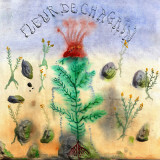
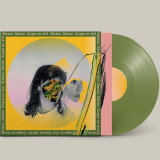
American singer-songwriter, poet, and photographer Thomas Meluch, known musically as Benoît Pioulard, returns with his most structured and vocal release to date. Titled »Eidetic,« a word denoting the ability to recall mental images with extraordinarily rich precision, the album presents unprecedented clarity and vitality for Benoît Pioulard. To access its thematic ground, Meluch looked inward with an affinity towards the people he loves during a period marked by his move from Seattle to Brooklyn in 2019. The resulting work engages with the universe's unflinching mortality and, as he says, »the ways it has modified and improved my relationships, especially with family.« Embodied by the creek, leaves, and ferns of the cover photography — taken in Michigan’s Burchfield Park, where he and his dad used to hike and »muse on existence« — the music glistens and unfurls with the flow of life he’s come to know. »Eidetic« is the culmination of Meluch's craft both as a producer and writer. An evocative sonic vocabulary meets deft lyrical introspection, articulated with the nuance, vulnerability, and confidence of a longtime artist hitting a stride.
Meluch has continually refined, redefined, and adjusted the focus of his gentle pop project over the last 20 years. Recorded primarily with guitar, tapes, and voice — and spanning labels with albums for Kranky, Morr Music, Beacon Sound, and Past Inside the Present — his catalog flows seamlessly between ambient improvisation and pop composition. Much like the analog photos that often accompany his releases, songs can feel dreamily softened and distant, and others beautifully vivid and detailed. 2021 full-length »Bloodless« found Meluch deep in droning decay, expressive yet wordless. With »Eidetic,« he swings back to sharpened forms. Lush banks of treated guitar and synth brush against hushed percussion; there is mist in the distance, but everything up close is intricately constructed and radiant. Meluch's voice is notably forward in the mix — a warm and calming tenor, a harmonic coo more than a whisper — ever-observant and actively processing.
To record much of the album, Meluch filled a cabin in rural Maine with his usual setup of simple percussion, a couple of Fender electrics, and a parlor guitar made by his friend who does bespoke luthier work. The modest utility is what he knows best, and here he pushes the output to its most pristine potential.
»Eidetic« opens in a swirl of familiar haze; »Margaret Murie« eases listeners in, as lush and verdant as the landscapes conserved by its famed namesake. With the setting established, Meluch, the narrator, enters the foreground with »Crux,« a tender piece written about finding new motivations in a new city. »We covet this rare green hue / Here at the farthest point from home,« he sings above a reassuring pattern of strums and percussion. Meluch's prose shines on the swiftly-moving »Nameless,« inspired by the neurological effects that came with the antiquated practice of manufacturing mercury mirrors; »folks would slowly go insane while looking into their own reflections every day,« he adds. The idea informs a series of surreal abstractions before everything drops out in the final minute, and we are left free-floating in eerie nothingness.
Across the album, labyrinthine lyrical ponderings scatter with dazzling imagery, artfully blurring scenes from world history with Meluch's more personal, present-day. The propulsive and earnest »Thursday Night« catches his mind overly active and too stoned, riffing on black holes and songwriting itself. »Halve« references the splitting of the atom, what he considers »the beginning of man's downfall,« and the unrealized initiative proposed by the US government that would have created 'nuclear refuges' in its national parks. Meluch's loved ones weave throughout; »Tet« holds his father's experience in Vietnam and its lasting effects. »Lillian Isola« touches on his maternal grandmother's spinal curvature, and »Pastel Dust« navigates the wake of his cat, who died on New Year's Eve 2020.
At first blush, Meluch's atmospheric and melodic sensibilities resonate purely in their own right. Upon closer meditation, his ability to render stories — many of which surround human tragedy, misfortune, and understanding — through the prism of his poetry makes »Eidetic« even more rewarding.
- 1: Margaret Murie 02 46
- 2: Crux 04 07
- 3: Nameless 0 6
- 4: Eidetic 01 36
- 5: Thursday Night 03 09
- 6: Halve 03 12
- 7: Osco Drug 01 19
- 8: Lillian Isola 02 3
- 9: Safn 01 10
- 10: Maple Seed 02 21
- 11: Viridiana 03 29
- 12: Tet 01 51
- 13: God Innocent Controller 01 36
- 14: The Void 03 17
- 15: Alces 01 06
- 16: Pastel Dust 03 30
- 17: Where To 04 02
Black Vinyl[24,33 €]
Dark Green Vinyl
American singer-songwriter, poet, and photographer Thomas Meluch, known musically as Benoît Pioulard, returns with his most structured and vocal release to date. Titled »Eidetic,« a word denoting the ability to recall mental images with extraordinarily rich precision, the album presents unprecedented clarity and vitality for Benoît Pioulard. To access its thematic ground, Meluch looked inward with an affinity towards the people he loves during a period marked by his move from Seattle to Brooklyn in 2019. The resulting work engages with the universe's unflinching mortality and, as he says, »the ways it has modified and improved my relationships, especially with family.« Embodied by the creek, leaves, and ferns of the cover photography — taken in Michigan’s Burchfield Park, where he and his dad used to hike and »muse on existence« — the music glistens and unfurls with the flow of life he’s come to know. »Eidetic« is the culmination of Meluch's craft both as a producer and writer. An evocative sonic vocabulary meets deft lyrical introspection, articulated with the nuance, vulnerability, and confidence of a longtime artist hitting a stride.
Meluch has continually refined, redefined, and adjusted the focus of his gentle pop project over the last 20 years. Recorded primarily with guitar, tapes, and voice — and spanning labels with albums for Kranky, Morr Music, Beacon Sound, and Past Inside the Present — his catalog flows seamlessly between ambient improvisation and pop composition. Much like the analog photos that often accompany his releases, songs can feel dreamily softened and distant, and others beautifully vivid and detailed. 2021 full-length »Bloodless« found Meluch deep in droning decay, expressive yet wordless. With »Eidetic,« he swings back to sharpened forms. Lush banks of treated guitar and synth brush against hushed percussion; there is mist in the distance, but everything up close is intricately constructed and radiant. Meluch's voice is notably forward in the mix — a warm and calming tenor, a harmonic coo more than a whisper — ever-observant and actively processing.
To record much of the album, Meluch filled a cabin in rural Maine with his usual setup of simple percussion, a couple of Fender electrics, and a parlor guitar made by his friend who does bespoke luthier work. The modest utility is what he knows best, and here he pushes the output to its most pristine potential.
»Eidetic« opens in a swirl of familiar haze; »Margaret Murie« eases listeners in, as lush and verdant as the landscapes conserved by its famed namesake. With the setting established, Meluch, the narrator, enters the foreground with »Crux,« a tender piece written about finding new motivations in a new city. »We covet this rare green hue / Here at the farthest point from home,« he sings above a reassuring pattern of strums and percussion. Meluch's prose shines on the swiftly-moving »Nameless,« inspired by the neurological effects that came with the antiquated practice of manufacturing mercury mirrors; »folks would slowly go insane while looking into their own reflections every day,« he adds. The idea informs a series of surreal abstractions before everything drops out in the final minute, and we are left free-floating in eerie nothingness.
Across the album, labyrinthine lyrical ponderings scatter with dazzling imagery, artfully blurring scenes from world history with Meluch's more personal, present-day. The propulsive and earnest »Thursday Night« catches his mind overly active and too stoned, riffing on black holes and songwriting itself. »Halve« references the splitting of the atom, what he considers »the beginning of man's downfall,« and the unrealized initiative proposed by the US government that would have created 'nuclear refuges' in its national parks. Meluch's loved ones weave throughout; »Tet« holds his father's experience in Vietnam and its lasting effects. »Lillian Isola« touches on his maternal grandmother's spinal curvature, and »Pastel Dust« navigates the wake of his cat, who died on New Year's Eve 2020.
At first blush, Meluch's atmospheric and melodic sensibilities resonate purely in their own right. Upon closer meditation, his ability to render stories — many of which surround human tragedy, misfortune, and understanding — through the prism of his poetry makes »Eidetic« even more rewarding.
“This music is staggeringly original and innovative, and while it’s possible to locate it in a chain of circumstance that links it to ‘Industrial’ music, P16.D4 indulged in none of the empty cliches associated with the genre, worked incredibly hard, and seem to have been aiming at a form of sound art that was much more profound, varied, subversive, and potentially dangerous. Kuhe In 1/2 Trauer’s accompanying credits indicate their radical approach to making music: lots of improvisation, lots of live electronics, extensive use of tape-loops, some conventional instrumentation, and much that isn’t – like the milk churn on ‘Paris, Morgue’ or the use of baking tray and washing machine elsewhere. Even when guitars, drums or keyboards are used, they’re played very weirdly. It’s not even made clear who was doing what; the main credit is ‘Concept,’ which I assume means that one of the three devised the framework in which the noise would operate itself, and while RLW gets the lion’s share of these credits, a lot of the cuts are evenly divided among the team and I have no doubt that the group operated in a very democratic or libertarian manner. None of this prepares you for the insane and troubling sounds that reach your ears, composed with scant regard for conventional logic and following an exciting, absurdist path, especially in the matter of tape edits and juxtapositions of recordings.” - Ed Pinsent, The Sound Projector.
“Though this German group started out as a the new wave band P.D., by the time of Kuhe in 1/2 Trauer, their first LP under the P16.D4 name from 1984, they had developed far beyond into extremely experimental music similar to other post-industrial artists working with abstract avant-garde soundscapes. There’s a bleak industrial feel to the gritty, lo-fi electronics and tape loops, while the group throws in enough curve balls to keep it interesting. On some pieces, strange, looped choirs bubble out of throbbing pulses and drones of feedback, while others have clanging and clattering, and elements of musique concrète and improvisation blur the boundaries even further. The opening track, “Default Value,” is one of those disorienting pieces with noises flying everywhere, while “Paris Morgue” takes excerpts from one of their old P.D. tracks and messes it up with additional instruments, while the ungainly titled fourth track throws in a heavy texture of percussive noises to create an edgy ambience about to teeter off the edge, and the even darker and more ambient title track takes the tension even further. Arrhythmic and amorphous and capable at moments of becoming quite noisy and abrasive, while at others far more somber and quiet, Kuhe in 1/2 Trauer is quite a fascinating release.” - Rolf Semprebon / AMG
P16.D4 was a German electronic noise music collective, active primarily from 1980 to 1988. P16.D4 embraced tape cut-ups, musique concrète, endless recycling and transformation of previously published material, and many long-distance collaborations with like-minded artists such as DDAA, Vortex Campaign, Nurse With Wound, and Merzbow. Their active participation in the international industrial tape scene yielded collaborative output such as their release Distruct, where bands such as Nurse with Wound, Nocturnal Emissions, Die Tödliche Doris, and The Haters provided the source material. The longest-term collaboration was with the installation and conceptual artist Achim Wollscheid, who used P16.D4 sounds as the basis for LPs he recorded under the name SBOTHI. Ralf Wehowsky, the only constant member of the group, later released solo material under the alias RLW.
Members of P16.D4 were also involved with Selektion, a collective of people involved with sound as well as the visual arts. Selektion published LPs, CDs, books, visual art and design.
The collective worked in a strongly improvised, spontaneous and anti-professional way, using acoustic and electronic instruments, using existing sound fragments, duplicating and alienating them, using repetition, distortion, changes in speed and playing direction. For this they used not only sounds of other artists but also their own material from earlier productions. Late works of the collective are associated with musique concrete.
The album serves as the recorded introduction of ex-Last Chance To Reason vocalist Michael Lessard to The Contortionist fold, ‘though he’s taken the stage live with his new band mates for well over a year already. Lessard lends his voice to the signature song craft developed by the original core of the band, guitarist Cameron Maynard and the brotherly duo of Robby and Joey Baca, on guitar and drums, respectively. They’re joined by new additions Jordan Eberhardt(bass) and Eric Guenther (keyboards).
“I can say that Mike is the most talented vocalist we've had in the band,” Robby declares unequivocally. “We’ve progressed, which has been a real, organic process. It will be cool
for people to hear the kind of songwriting and music we are creating with The Contortionist enhanced by a vocalist who is totally up to par.”
A different producer was drafted each time The Contortionist has made an album. Language was created together at North Carolina’s The Basement Recording with producer Jamie King(Between The Buried And Me, The Human Abstract, He Is Legend). As taste maker blog MetalSucks noted in a post with the headline, “Drop What You’re Doing and Listen to the New Contortionist Single Right Now!,” Language embraces the spacey adventurous flourishes of Intrinsic, with concise and streamlined certainty.
The album’s first single, “Language I,” was also the first song the group crafted for the album. The product of much time and deliberation,every moment transitions seamlessly to the next. “Primordial Sound” boasts an emphasis on chord progressions with key signature modulations, and yet it has an accessible rock n’ roll vibe and swing. “Thrive” is a wicked blend of the atmospheric heft of Deftones and The Contortionist’s own well established progressive attack.
Vinyl Sampler 1[17,61 €]
The inception of 49North marks the beginning of a brand new era for Duncan Forbes; who most emphatically made his mark on the WW scene as one half of legendary duo - Spooky - alongside Charlie May; releasing a string of landmark singles and albums over 3 decades, not to mention timeless remix / production work for International heavyweights like Depeche Mode, M83, Sasha, William Orbit, Mr.G and Apparat.
A1: ‘Burning Bright As Magnesium’
“Heading up this second ‘Distilled & Amplified’, 12” sampler is one of Duncan’s most leg-sweeping, curveball originals to date - 'Burning Bright As Magnesium'... a super tripped-out, Techno head-spinner; powered by an eerie, almost spectral kind of funk.
B1: ‘In The Mansion Of The Gods’ (Mr G’s ‘Home Alone’ Remix)
“And on the flip, we see Duncan’s second ever solo release - 'In The Mansion Of The Gods' - get the rework treatment from close friend Mr G, and his unrivalled brand of analogue magic. And if you haven't heard the Phoenix G man go full-throttle before - you're in for a barn-storming treat.”
- A1: Intro
- A2: The Magic Number
- A3: Change In Speak
- A4: Cool Breeze On The Rocks (The Melted Version)
- A5: Can U Keep A Secret
- A6: Jenifa Taught Me (Derwin's Revenge) (Derwin's Revenge)
- A7: Ghetto Thang
- B1: Transmitting Live From Mars
- B2: Eye Know
- B3: Take It Off
- B4: A Little Bit Of Soap
- B5: Tread Water
- B6: Potholes In My Lawn
- C1: Say No Go
- C2: Do As De La Does
- C3: Plug Tunin' (Last Chance To Comprehend) (Last Chance To Comprehend)
- C4: De La Orgee
- C5: Buddy (With Jungle Brothers & Q-Tip From A Tribe Called Quest)
- D1: Description
- D2: Me Myself & I
- D3: This Is A Recording 4 Living In A Full Time Era (Life) (Life)
- D4: I Can Do Anything (Delacratic) (Delacratic)
- D5: Daisy Age
Blue Version[18,28 €]
Orange Version[18,28 €]
Yellow VINYL[35,50 €]
Magenta version[35,50 €]
3 Feet High and Rising is the debut studio album by hip hop trio De La Soul and was released on March 3, 1989
It marked the first of three full- length collaborations with producer Prince Paul, which would become the critical and commercial peak of both parties. Critically, as well as commercially, the album was a success. It contains the singles, "Me Myself and I", "The Magic Number", "Buddy", and "Eye Know".
The album title came from the Johnny Cash song "Five Feet High and Rising". It is listed on Rolling Stone's 200 Essential Rock Records and The Source's 100 Best Rap Albums. When Village Voice held its annual Pazz & Jop Critics Poll for 1989, 3 Feet High and Rising was ranked #1. It was also listed on the Rolling Stone's
The 500 Greatest Albums of All Time. Released amid the 1989 boom in gangsta rap, which gravitated towards hardcore, confrontational, violent lyrics, De La Soul's uniquely positive style made them an oddity beginning with the first single, "Me, Myself and I". Their positivity meant many observers labeled them a 'hippie' group, based on their declaration of the 'D.A.I.S.Y. Age' (Da. Inner. Soul. Yall).
Sampling artists as diverse as Hall & Oates, Steely Dan and The Turtles, 3 Feet High and Rising is often viewed as the stylistic beginning of 1990s alternative hip hop (and especially jazz rap).
- A1: Intro
- A2: The Magic Number
- A3: Change In Speak
- A4: Cool Breeze On The Rocks (The Melted Version)
- A5: Can U Keep A Secret
- A6: Jenifa Taught Me (Derwin's Revenge) (Derwin's Revenge)
- A7: Ghetto Thang
- B1: Transmitting Live From Mars
- B2: Eye Know
- B3: Take It Off
- B4: A Little Bit Of Soap
- B5: Tread Water
- B6: Potholes In My Lawn
- C1: Say No Go
- C2: Do As De La Does
- C3: Plug Tunin' (Last Chance To Comprehend) (Last Chance To Comprehend)
- C4: De La Orgee
- C5: Buddy (With Jungle Brothers & Q-Tip From A Tribe Called Quest)
- D1: Description
- D2: Me Myself & I
- D3: This Is A Recording 4 Living In A Full Time Era (Life) (Life)
- D4: I Can Do Anything (Delacratic) (Delacratic)
- D5: Daisy Age
3 Feet High and Rising is the debut studio album by hip hop trio De La Soul and was released on March 3, 1989
It marked the first of three full- length collaborations with producer Prince Paul, which would become the critical and commercial peak of both parties. Critically, as well as commercially, the album was a success. It contains the singles, "Me Myself and I", "The Magic Number", "Buddy", and "Eye Know".
The album title came from the Johnny Cash song "Five Feet High and Rising". It is listed on Rolling Stone's 200 Essential Rock Records and The Source's 100 Best Rap Albums. When Village Voice held its annual Pazz & Jop Critics Poll for 1989, 3 Feet High and Rising was ranked #1. It was also listed on the Rolling Stone's
The 500 Greatest Albums of All Time. Released amid the 1989 boom in gangsta rap, which gravitated towards hardcore, confrontational, violent lyrics, De La Soul's uniquely positive style made them an oddity beginning with the first single, "Me, Myself and I". Their positivity meant many observers labeled them a 'hippie' group, based on their declaration of the 'D.A.I.S.Y. Age' (Da. Inner. Soul. Yall).
Sampling artists as diverse as Hall & Oates, Steely Dan and The Turtles, 3 Feet High and Rising is often viewed as the stylistic beginning of 1990s alternative hip hop (and especially jazz rap).
- A1: Breezeplate (2022 Remaster) 03 44
- A2: Squarewave Colorwheel (2022 Remaster) 04 33
- A3: Toypieceplate (2022 Remaster) 03 33
- A4: Dodecatheon (2022 Remaster) 04 21
- A5: Sunsculpture One (2022 Remaster) 03 10
- B1: Sienna (2022 Remaster) 02 42
- B2: Kekker (2022 Remaster) 04 45
- B3: Gauss (2022 Remaster) 02 30
- B4: Billionwatt (2022 Remaster) 03 44
- B5: Continentsunderclouds (2022 Remaster) 03 08
- B6: Sunsculpture Two (2022 Remaster) 04 30
»Holo« by the US-American three-piece Kiln, first released in 1998, is one of those rare records that managed to carve out a niche of its own while also building bridges to variety of genres like Chicago-style post-rock, the ambient mysticism of projects like Rapoon or the music made at the intersection of shoegaze, and electronic music in the late 1990s. Lush textures, subtle rhythms, jazzy inflections and electronic experimentation seamlessly blend into each other over the course of the eleven tracks. This reissue through the German label Keplar makes the fully revised version, self-released by the group in 2007 under the name »Holo re/lux,« available on vinyl for the very first time. »Twenty-five years later this newly mastered vinyl edition is evidence that the sound of ›Holo‹ continues to attract like-minded listeners,« says member Clark Rehberg III. »Which on many levels means that our mission was successful.«
Rehberg had embarked on this mission together with Kevin Hayes and Kirk Marrison in 1993. They had first worked together under the name Fibreforms as a live trio that used treated guitars, kit drums, and tapes of found sound to explore the balance between band composition and recording experiments, while Marrison made heavy use of the Akai S612 sampler as a fabricating strategy with the project Waterwheel. »Kiln seemed to encapsulate the evolution and melding of those previous approaches to one that insisted on the continual opening up of the compositional process, allowing more of the mystery that can be discovered through studio experiments—and accidents—to become important elements of creating our music,« says Rehberg of the trio that is still going strong after three decades. »The word Kiln implies heat and transformation, an attitude that we apply to every sound we use—we begin with notes and performance and then mosaic with shape and colour.«
»Holo« followed up on the trio’s debut self-titled EP that had been recorded in the summer of 1996. »That same year, during a lull in our collabs, Kirk began building pieces on a low-memory Mac using an early 8-channel DAW,« explains Rehberg. Enchanted by the unprecedented fidelity and energy of those recordings, the three reconvened to build upon them and make more music in that manner. »I’d say our intention was no different than any other time: create something immersive and compelling: dense melodic blasts of uniquely constructed but ultimately accessible audio moments.« The group worked individually and in pairs for about 18 months while being spread across the United States. »We poured everything into it that we had at the time, working dead-end jobs by day and on audio in every other open moment. I remember the struggle of that process, but also the pure joy as we pulled down countless moments of magic while the pieces took shape.«
Rehberg says that he still hears »a time-stamp of those efforts and the belief that we were creating a special audio experience« when listening back to »Holo,« a record the band itself chose to revise almost a decade after its initial release. »Ultimately we just felt those pieces needed more impact and we had the tools and ability to make that happen,« he explains. 16 years after that and a quarter of a century after it first introduced Kiln as a force to be reckoned with, the remastered version feels indeed timeless. It is both a snapshot of the first extensive album project by a group whose bond is still »diamond strong,« as Rehberg puts it, and a record that continues to sound fresh, if not visionary also today.
All tracks composed and recorded by Kevin Hayes, Kirk Marrison, Clark Rehberg III.
Originally released on Thalassa in 1998.
Remaster by Stephan Mathieu. Vinyl cut by LUPO.
Cover art by Kirk Marrison & Clark Rehberg III.
Text by Kristoffer Cornils.
Norwegian duo dibidim, made their debut album Riders in 2005 in Liverpool UK. Until now this lost classic has only existed as an undistributed self-released CD. We have the pleasure of reissuing this forgotten treasure on vinyl for the first time, remastered and with new artwork. There is so much to delight the eye and caress the ears that you cannot fail to relish this fine piece of audio bliss!
This Autumn, Nicole Willis rolls out with her third album made together with The Soul Investigators "Happiness In Every Style". It is bound to send shivers through backs all around the world. As the name suggests, the new album will offer variety and tilt towards a more positive note after the murky "Tortured Soul" from two years back.
This means Nicole and the boys have made things a bit more soothing for the listener, offering upbeat modern soul and even embrace more sophisticated melodies alongside their highly evolved raw funk sound. To get a taste of this, one only has to put on "Let's Communicate" or "One In a Million" to have their hands clapping and toes tapping in no time, or respectively, witness the dance floor explode. From minor key ballads such as "Thief In The Night" to the unapologetically poppy "Angel", the new album is bound to bring to the hearts of humans in every shade and style.
Whether you know Nicole Willis from before or not does not hold any weight here. After hearing her with The Soul Investigators on this new album, you will know they are for real, and out to offer you everything you need to fill up your soul supply. With Nicole's insightful lyrics and the band's hard-hitting music you are in good care.
Light in the Attic’s Pacific Breeze series has supplied the world’s growing legions of Japanese music fans with an expertly curated selection of the most sought-after City Pop recordings—the mesmerizing and nebulous genre of Japanese bubble-era music of the ‘70s-’80s that encompasses AOR, R&B, jazz fusion, funk, boogie and disco. These familiar sounds are spun through the unique lens of optimistic, cosmopolitan fantasy colored by Japan’s affluence at the time. Much of the music has previously been nearly impossible to acquire outside of Japan and continues to captivate listeners with its unique blend of groove-laden escapism, even birthing wholly new genres such as Vaporwave.
Pacific Breeze 3: Japanese City Pop, AOR & Boogie 1975-1987 marks the latest chapter in the famed series and features holy grails plus under-the-radar rarities. The collection bursts at the seams to reveal some of the greatest Japanese tracks ever laid to tape, pushing towards the edge of City Pop to reveal glimmers of the next waves of styles to spring forth from the country’s creative minds. The appearance of Pizzicato Five hint at the emergence of Shibuya-kei while the influence of hip hop and electro as an emerging global trend are also evident here through the prevalence of heavier programmed drum beats on tracks such as “Heartbeat” by Miho Fujiwara.
This volume of Pacific Breeze, like its predecessors, is a female-forward offering with many tracks being voiced by women who would become household names in Japan as actresses and pop idols. Their songs here subvert the norm and brim with an innovative spirit that shatters gender roles in favor of sonic transcendence. Techno-pop classics from Susan, Miharu Koshi and Chiemi Manabe sit alongside sublime funk from Atsuko Nina and Naomi Akimoto while Teresa Noda slides into the mix with a sultry reggae jam. The genre span is stretched wider with hypnotic jazz fusion by Parachute and Hiroyuki Namba, a synthesizer fantasy from Osamu Shoji, and magnetic pop by Makoto Matsushita and Chu Kosaka.
Although not front and center, the visionary members of Yellow Magic Orchestra are still very present on Pacific Breeze 3, with Haruomi Hosono, Ryuichi Sakamoto, and Yukihiro Takahashi taking up producer and musician roles on many of these tracks. Pacific Breeze 3 serves up a captivating musical journey that adds an essential chapter to the iconic compilation series.
Tracklist:
Naomi Akimoto - Bewitched (Are You Leaving Soon), Atsuko Nina - Tonkachi, Miho Fujiwara - Heartbeat, Miharu Koshi - Scandal Night, Chu Kosaka - Shirakechimauze, Teresa Noda - Tropical Love, Makoto Matsushita - Business Man Pt. 1, Susan - Ah! Soka, Yukako Hayase - Suiyoubi Madeni Shinitaino, Parachute - Kowloon Daily, Hiroyuki Namba - Tropical Exposition (Who Done It? Version), Pizzicato Five - Boy Meets Girl, Mari Iijima - Love Sick, 1986 Omega Tribe - Cosmic Love, Osamu Shoji - Pub Casablanca, Chiemi Manabe - Untotooku
Equipped with a cassette porta studio and a mic found in a recycling bin, Your Planet Is Next has put together an album of 10 tracks stripped down to their essentials. Half of the them were produced using a Yamaha CS-01 synthesizer and a Yamaha MR-10 drum machine — the perfect 1982 budget combo — while the other half were made solely with a Yamaha CS-10 synthesizer and a Boss DR-55 drum machine, both from the late 70s and budget options even in their heydays. As many times before throughout music history, pristine sound quality had to be sacrificed for pristine creativity... After all, ideas are what makes the world turn, not high fidelity!
Anne's 7th Opus in 13 Years, Containing 6 Fantastic Covers and 6 of Her Own Songs, Recorded in One of the Most Prestigious Studios in Montreal with Her Original Blue Mind Team
Fresh from the success of her single "Killing Me Softly" from her previous album Keys to My Heart, Anne Bisson, singer-songwriter and jazz pianist, decided to perform and record more standards from the American jazz songbook, as well as new arrangements of classic songs that were so much a part of her teenage years.
Be My Lover, Anne's seventh album is, therefore, a savoury feast of original compositions and classic songs in her own bold new arrangements for acoustic trio. While still in the 'Smooth Jazz' genre, the presence of a Fender Rhodes, the legendary '70s keyboard, along with an electric bass, impart the album with quite a unique tone.
After over 18 months of musical experimentation and other creative endeavours, Anne once again brought together master drummer Paul Brochu (Gino Vanelli, Michel Legrand, UZEB) and proficient bassist Jean-Bertrand Carbou from France, for a series of informal sessions to explore the songs that were being considered for this seventh release.
These two musicians have been valuable collaborators for several years now. Paul has been featured on many of Anne's albums, notably Blue Mind, which made a huge splash when it appeared, with over 35,000 hard copies sold, while Jean-Bertrand's playing has also graced several of her albums.
Since 2009, the three have performed at several important venues, including Le Festival International de Jazz de Montréal, as well as other festivals in the United States and Mexico.
What holds them together is an evident complicity which is present from the very first notes. Their musical contributions are precise and deeply heart-felt. Their virtuoso playing greatly enhances these songs without turning them into mere technical exercises.
With precision playing, subtlety and attention to detail, as well as being recorded in impeccable High Definition, these songs will definitely please Anne's audiophile fans, while also appealing to a wider audience.
All About Ultimate High Quality CD (UHQCD)
Many years have passed since the birth of the Audio Compact Disc (CD) back in 1982. By use of High-Quality materials and a totally different manufacturing method, the definitive version of audiophile audio CD was born. Playable on any CD player, the Ultimate High Quality CD greatly surpasses all previous CDs before it!
The Ultimate High Quality CD (UHQCD):
UHQCD is a radical change to the CD manufacturing process itself. The conventional wisdom about CD manufacturing, which had remained largely unchanged across the world for over 30 years, has been exhaustively questioned. Through this effort, the ultimate in quality was attained - a level of quality that is certainly impossible to achieve with existing CD discs.
The Ultimate High Quality CD was developed through an effort to improve audio quality by simply upgrading the materials used in ordinary CDs to higher quality materials. For the substrate a high-transparency and high-fluidity polycarbonate (a type of plastic) of the type used for LCD panels was used, while for the reflective layer, low-cost, common aluminium was replaced with a unique and expensive alloy of high-reflectivity.
Differences in manufacturing methods:
Conventional CDs are produced using the technique of injection moulding to form "pits" of data on polycarbonate material. Metal plate on which "pits" representing audio source data are formed is used as a die. This is called the "stamper." Polycarbonate is melted at high temperature and poured into the die to duplicate the pit patterns on the stamper.
This method is efficient because it enables high-speed production, but it does not enable totally accurate or complete duplication of the pits on the stamper. As a melted plastic, polycarbonate is inevitably viscous, so it cannot penetrate completely into every land and groove of the tiny pits of the stamper.
The Ultimate High Quality CD photopolymer is used instead of polycarbonate to replicate the pits of the stamper. In their normal state, photopolymers are liquids, but one of their characteristic properties is that they harden when exposed to light of certain wavelengths. The advantage of this property, perfect replication of very finely detailed pits was achieved. Photopolymers in the liquid state are able to penetrate into the tiniest corners of pits on the stamper so that the pattern of the pits is reproduced to an extremely high level of accuracy. The Ultimate High Quality CD reproduces audio with greater precision and at a level that is impossible to achieve using conventional CD production technology!
On the heels of their smash hit “Nobodys Clown” Los Yesterdays return with 'Who Made You You” - whose dark feel coupled with singer Victor Benavides' bell-like timbre makes for a dichotomy of vibes that makes for a sinister groover that's sure to get heads bobbing at discerning DJ nights around the globe. Imagine Eddit Holman cutting a side for Fania and you're getting warm.
On the other side of this future-classic you'll find quite possibly the best version of Richard Berry's classic “Louie Louie” since the Kingsmen! Giving it the low and slow treatment Los Yesterdays alters its DNA, creating a bonafide ballad banger posied to turn-on a whole new generation of folks on to this R&B party fav.
Hailu Mergia & Dahlak Band's Wede Harer Guzo is the third release on Awesome Tapes From Africa for Ethiopian keyboard and accordion maestro. In the years since Shemonmuanaye, Mergia has revamped his touring career, playing festivals and clubs worldwide, including a recent tour supporting Beirut. By 1978, Addis Ababa's nightlife was facing challenges. The ruling Derg regime imposed curfews, banning citizens from the streets after midnight until 6:00 am. But that didn't stop some people from dancing and partying through the night. Bands would play from evening until daybreak and people would stay at the clubs until curfew was lifted in the morning. One key denizen of Addis' musical golden age, Hailu Mergia, was preparing a follow-up to his seminal Tche Belew LP with the famed Walias Band. It was the band's only full-length record and it had been a success. But his Hilton house band colleagues were a bit tied up recording cassettes with different vocalists. Still Mergia, amidst recording and gigs with the Walias, was also eager to make another recording of his instrumental-focused arrangements. So he went to the nearby Ghion Hotel, another upmarket outpost with a popular nightclub. Dahlak Band was the house band at Ghion at the time. Together they made this tape Wede Harer Guzo right there in the club during the band's afternoon rehearsal meetings, with sessions lasting three days. Dahlak Band catered to a slightly more youthful, local audience, while Mergia's main gig with the Walias at Addis' swankiest hotel had a mixed audience that included wealthy Ethiopians, foreign diplomats and older folks from abroad. Therefore, their sets featured lighter fare during dinnertime and a less rollicking selection of jazz and r&b. Meanwhile, Dahlak was known more for the mainly soul and Amharic jams they served up for hours two nights a week to a younger crowd. Mergia released Wede Harer Guzo ("Journey to Harer," a city in eastern Ethiopia) with Sheba Music Shop, which was located in the Piazza district but has long since shut down. His cassette copy is the only known source we could find. Jessica Thompson at Coast Mastering managed to restore the recording to clean up layers of hiss, flutter and distorted frequencies, made worse by years of storage. Although there are some remaining sonic artifacts of the era's recording and cassette duplicating quality, this reissue captures the band's inimitable vibe. Recalling the audience's positive reaction to Wede Harer Guzo's novel arrangements, he says it sold well and found many fans. However, as no trace of the tape can be found online, there's no indication as to why the cassette appears largely forgotten until now
Electric Light Orchestra leader Jeff Lynne did more than figuratively reach for the sky on Eldorado. Daring to be bold, and creating imaginative worlds that invite the listener to escape the mundane, the visionary composer-musician achieved a multidisciplinary fantasia and, in the process, a prog-rock landmark. Nearly 50 years later, the concept album's brilliance can be experienced like never before in cinematic, IMAX-worthy fashion.
Sourced from the original analogue master tapes, pressed on MoFi SuperVinyl vinyl at RTI, housed in a keepsake box, and limited to 10,000 numbered copies, Mobile Fidelity's UltraDisc One-Step 180g 45RPM 2LP set of Eldorado allows the long-time audiophile staple to resonate with reference-setting dynamics, tones, and colours. Conjuring the feeling of journeying to different horizons, the record's songs teem with layer upon layer of details, which can now be heard as the producers intended. This very special release both pays tribute to the record's merit and enhances the spectacular program for generations to come.
Presenting the album with breathtaking clarity yet retaining the warmth, texture, and emotion that differentiate live music from reproduced sounds, the collectible reissue features beguiling levels of in-the-moment presence, grand-scale sound-staging, and instrumental balance. Bursting with a veritable cornucopia of stimuli, MoFi's Eldorado package also benefits from superb separation and immersive atmospherics that stem from the meticulous remastering process – as well as an ultra-low noise floor, industry-leading groove definition, and dead-quiet surfaces courtesy of the MoFi SuperVinyl properties.
The premium packaging and gorgeous presentation of the UD1S Eldorado pressing befit its extremely select status. Housed in a deluxe box, it features special foil-stamped jackets and faithful-to-the-original graphics that illuminate the splendour of the recording. No expense has been spared. Aurally and visually, the reissue exists as a curatorial artefact meant to be preserved, touched, and examined. It is made for discerning listeners that prize sound quality and production, and who desire to fully immerse themselves in everything involved with the album.
An artistic breakthrough that established Electric Light Orchestra as a pioneering band (and confirmed Lynne as the leading practising Beatles disciple), the 1974 effort remains notable for its involvement of a full orchestra and choral section, the range of which are captured with exquisite results on this LP. Eldorado distinguished itself from the band's first two works not only via Lynne's sharpened songwriting but due to the hiring of an orchestra that augmented the group's three string players. Co-arranged by Lynne and conductor Louis Clark, the symphonic movements bolster the contagious fare without ever drowning it. The accents also act as transports into the varied narrative universes.
Finished as a story before Lynne put notes down on paper, Eldorado ironically owes its inspiration to Lynne's father. In response to his dad's criticisms about the band, Lynne conceived a melodic tour de force that, like The Wizard of Oz, which informs the cover art, emphasizes the power of everyday dreams and everyman heroism. It's no coincidence that the sonic journey begins with an overture punctuated by the words of a cynic who condemns "the dreamer, the un-woken fool."
Beautiful yet fun, ambitious yet consistent, Eldorado proceeds to celebrate such romantics and escapists. A Technicolour escapade marked by lush melodies, fluid crescendos, and an intoxicating blend of energetic rock and sweeping orchestral elements, the album weds rich imagery and sweeping sounds in manners that make the two inseparable. In Lynne and company's hands, reality and fantasy collide, and dissolve any dividing lines. The proof is not just in the epic production, but in the timeless (and catchy) nature of songs such as the balladic "Boy Blue," power-pop packed "Illusions in G Major," and, of course, the aptly titled hit, "Can't Get It Out of My Head."
Decades later, Eldorado doubles as an invitation to break away from monotony whether you're listening to your Mobile Fidelity reissue on a large system or an excellent pair of headphones.
MoFi SuperVinyl
Developed by NEOTECH and RTI, MoFi SuperVinyl is the most exacting-to-specification vinyl compound ever devised. Analogue lovers have never seen (or heard) anything like it. Extraordinarily expensive and extremely painstaking to produce, the special proprietary compound addresses two specific areas of improvement: noise floor reduction and enhanced groove definition. The vinyl composition features a new carbonless dye (hold the disc up to the light and see) and produces the world's quietest surfaces. This high-definition formula also allows for the creation of cleaner grooves that are indistinguishable from the original lacquer. MoFi SuperVinyl provides the closest approximation of what the label's engineers hear in the mastering lab.
More About Mobile Fidelity UltraDisc One-Step and Why It Is Superior
Mobile Fidelity Sound Lab's UltraDisc One-Step (UD1S) technique bypasses generational losses inherent to the traditional three-step plating process by removing two steps: the production of father and mother plates, which are created to yield numerous stampers from each lacquer that is cut. For UD1S plating, stampers (also called "converts") are made directly from the lacquers. Since each lacquer yields only one stamper, multiple lacquers need to be cut. Mobile Fidelity's UD1S process produces a final LP with the lowest-possible noise floor. The removal of two steps of the plating process also reveals musical details and dynamics that would otherwise be lost due to the standard multi-step process. With UD1S, every aspect of vinyl production is optimized to produce the best-sounding vinyl album available today.
In 1976 Michael Hoenig had a brief collaboration with Ash Ra Tempel's
Manuel Gottsching in Berlin; A 48-minute recording of one of the
sessions, which was released in 1995 under the title "Early Water" on
Bernd Kistenmacher's Musique Intemporelle label.The album was deletedand unavailable for a long time
Now, finally, a re-issue of "Early Water" will be available again.
Michael Hoenig still remembers: "While I had been working on the "Departure From The Northern Wasteland" album, Manuel Gottsching had asked me if I would team up with him for some concerts in France, since his group had just gone through one of its hibernation
periods. We rehearsed in my place for three or four weeks. One evening we got a call regarding some missing guarantee, which ultimately led to the decision to cancel the tour. Just for fun, we played one of the planned sets for a last time.
Even though I do not recall pressing a record button, somebody recently dug up a Revox tape of that very set. After performing some digital sonic archaeology on it, it was just released under the very appropriate title Early Water."
And Manuel Gottsching adds: "Unfortunately, some of the concert dates were not confirmed in time and we had to cancel the complete tour just on the day before we wanted to leave for France.
On that evening, nevertheless, we recorded our last rehearsal "just in case". It turned out as a flowing harmonic piece, reflecting much of the optimistic air of 1976. Michael made his 'departure' to Los Angeles in the early 1980ies. When we met again in November 1994 I proposed to release this old track of ours. Michael took the original tape to Los Angeles, lovingly restored it and - well, here is it again!"
”Look up, into the light” she said, while the camera shutter clicked. ”Like this? Does it look holy?” His neck felt stiff. Her reply: ”Yes, just like that. What do you mean holy? Like religious? ”No, more like trying to look very far, somewhere beyond what we can see.” ”Okay, stand still, I’m going to come close to you now. The light hits your face great.” *click, click, click.
He noticed her fingernails. They were not polished. Natural. Even somewhat rugged, as if something wore out the fingers slightly. What had these hands held besides the camera? What made the edges of her fingernails drift off?
He thought it’s weird to look straight into the camera. The photographer had closed her left eye, the one not looking into the lens. Then it opened, she looked up, perusing the surroundings, then she closed her eye again, then looked up, closed, looking up, very quickly. It all seemed very professional. Maybe she calculated the light, making sure it’s close to perfect. ”What will these photos look like?” – the thought popped into his head briefly. It was liberating to think it wouldn’t matter.
”What’s that song playing?” he asked. ”Wait a sec, Ol’ Dirty Bastard?” she replied. ”Oh yeah, right. But the sample?” ”Hey, could you look up again, like that. No, lower.”
New directions: ”Look out from the window, turn left.” ”My left or yours?” ”Yours, I always try to think from the direction of my model.” How professional! This is a good shoot, so natural. Should I worry about how the photos look like? No, I don’t want to. His thoughts bounced around. What would the story be like? It’s a big newspaper, everyone will read it. Maybe someone drinks coffee and eats a stroopwafel while they do it. Will they place the waffle on top of the mug for a brief while, so that it gets hot and the syrup melts a little? Then it feels wet, and you can bend the cookie.
She broke his train of thought off midway through: ”Now turn right, but look left, and slightly up, but don’t turn your face right.” ”Umm, like this? Sounds like a set of pilates instructions.” she laughed ”You do pilates?” ”Yeah, it’s hard sometimes. Have you tried?” ”No”, she said. ”I’m not good for sports that are done in groups.” ”Yeah, but in pilates you can just be inside your mind, drowning in your private thoughts.”
”What are you thinking in pilates?” she asked, taking more photos. ”Well, mostly just which way is right. And which left.” *click, click.
LEMON YELLOW VINYL
As mui zyu, Hong Kong British artist Eva Liu navigates the tricky territory of ever-changing identity, merging fantasy and folklore to create a stage for self-acceptance and deliverance. On her debut full-length Rotten Bun for an Eggless Century, Liu utilizes chopped-up sound- scapes, delicate industrial ambience and sweet pop melodies to introduce a character--a guide--who can be stretched across worlds to offer the catharsis of patience, perseverance and understanding. This isn't a character formed from a desire to escape or flee the real world, but rather a way to submerge even deeper into ourselves. Rotten Bun for an Eggless Century is a reflection of everyone, and everything, that made us who we are. On her 2021 a wonderful thing vomits, Liu was praised for her seamless integration of darkened, often ominous instrumentation and pillowy-soft vocals. As the front person of UK indie-rock trio Dama Scout, Liu effortlessly navigates a disorientating genre-bending sonic landscape with a playful, gentle dexterity. Now, with the help of Dama Scout bandmate Luciano Rossi as co-producer, Liu's first solo full-length builds upon these previous worlds to form a blossoming, more upbeat patchwork of lo-fi percussion, poignant lyricism and oddly alluring arrangements. The writing process of Rotten Bun for an Eggless Century prompted Liu to explore more of her Hong Kong heritage, allowing a space for acceptance and celebration. "I am Chinese and I am owning it," she explains. "Before, I would resent it. I tried doing things that would make me like less Chinese somehow." As the album began to take shape, Liu read the traditional Chinese folklore writings of Pu Songling and joined local East and Southeast Asian groups. It opened a portal into a new self, where Liu could blend her love of video games and film scores with traditional Chinese instruments.
Red Vinyl
Initial LP copies pressed on opaque red vinyl! As its name suggested, the intimate and sultry Cuntry Covers Vol. 1 was always going to have a follow-up. Led by the brooding vocals of Bria Salmena, Cuntry Covers Vol. 2 is every bit as potent as its predecessor whose noir-inflected alternative country-rock stood in sharp contrast to the singer's commanding delivery as leader of post-punk revivalists FRIGS. Debuting the project in 2021, the languid, reverb-drenched Cuntry Covers Vol. 1 saw her artfully collaborating with multi-instrumentalist Duncan Hay Jennings and reimagining a carefully picked collection of Americana anthems. Vol. 2 pushes the envelope further and harder. Encompassing feverish takes on tracks by Gillian Welch, Paula Cole, Mary Margaret O'Hara, Robert Lester Folsom, Glenn Campbell - by way of Nick Cave - and the late, great Loretta Lynn, Bria's deliciously dark approach shimmers through these six startling songs. Created during a break from Salmena and Jennings' work in Orville Peck's world-conquering backing band, Vol. 2 was recorded directly after Peck's second album and Bria's US tour supporting Wolf Alice. Embracing contrast, the sunny circumstances in which Vol. 1 was made were flipped on their head. Instead of a bucolic barn in the Canadian countryside, they recorded the new tracks in chilly Toronto, huddled together in their tiny makeshift home studio, with Jennings at the controls. They enlisted the help of local Toronto musicians Lucas Savatti (FRIGS), Simone Baril (US Girls, The Highest Order, Darlene Shrugg, Partner), Andrew Manktelow, and frequent collaborator Jaime Rae McCuaig. While Vol. 1 was Bria's attempt at subverting country music's conservative roots and primarily white and heterosexual agenda, here the emphasis was on experimentation. While Vol. 2 might be less personal, it's just as idiosyncratic, with half of the reversions staying true to the originals and others taken to a different universe entirely. Building on the tried-and-true/bold-and-new duality of Cuntry Covers' first offering, Vol. 2 delivers a deeper dive into the duo's brilliant alchemy of traditional and contemporary reinterpretations. The added experimental flourishes, from dizzying electronica and pulsing bass to sax-driven soul, take Bria's new EP into previously uncharted territory, signalling a thrilling new step in Bria's adventurous evolution.
Souk is delighted to present the sophomore album from a true fixture in Cairo seething electronic scene who should, by now at least, remain anonymously famous behind the 3Phaz moniker. Both as a way to make focus on the music itself regardless of identity and to sever ties with past projects, 3Phaz acts like an entity in itself, a most suitable conjuration of sounds past and future gravitating on their own dimension. Though connections are inevitable and welcoming with home turf artists such as ZULI or Rozzma, the Souk catalogue or percussion obsessed travelers like DJ Plead or errorsmith, 3Phaz's dalliance with the traditional sounds of Shaabi and Mahraganat and possible intersections with Grime, Techno and Bass-heavy subcultures feel very much their own.
Stripping away some of the dankest & darkest layers that made his debut album - Three Phase - such a dystopic proposition, Ends Meet envisions a different kind of future, that while not necessarily utopian, feels less tense and more celebratory in the capture and release mastery of its syncopations. Through seven percussion workouts summoned from hard hitting kicks, flinty hand drums, darting rhythmic excursions and traditional flute-like synth melodies, 3Phaz creates a set of raw and ever-intriguing dj tools for adventurous dancefloors that escape the mere functionality associated with the term to bristle with a life of their own.
Bondo is four Los Angeles musicians collaging displaced tempos and fractured melodies. Their sparsely vocalised music conspires to bring into view a practical enlightenment, evoking the sandy contentment of an exhausted marine sunset. The organically mechanical compositions wander with the intention not to be aimless, but to be consumed in Process.
Bondo comes to Quindi Records to release its first full-length album, Print Selections, and it is saturated in the communal consciousness of the band. The songs call for the individuals to dissolve to make way for the music.
The lyrical content of the record tells of a mind made anew, cleared of its data & ego to witness nothing in particular. Bringing the past with them, the band makes clear allusions to their influences - their tones reminiscent of outfits like Duster, Unwound, Acetone & Fugazi, but also has heavy nods to more formless genres like the dub melodies of King Tubby and the jazz of Archie Shepp.
The music feels like the dusty bed of a scanner, plays like the light leaking from underneath its lid.
Record Kicks presents "Yours Truly", the new album by Bordeaux's "Soulboy", Mr. Alexis Evans.
Like fine Red Wine, "Soulboy" Alexis Evans gets better with Age. The best evidence of this is his brand new album "Yours Truly", set for release on February 3rd, 2023 on LP, CD and digital via Milan-based label Record Kicks. Produced and mixed by Louis-Marin Renaud (Lou Doillon, Theo Lawrence, Desmond Myers), "Yours Truly" is the third studio album by Bordeaux-based singer-songwriter Alexis Evans and sees the light 4 years after his previous LP "I've Come A Long Way", defined "Soul album of The Year" by Rolling Stone France. "Yours Truly" consists of 12 brilliantly soulful cuts that take direct inspiration from 60's & 70's classic soul music adding a sound that is firmly rooted in the new millennium.
Anticipated by the first single "Mr Right On Time", the album was recorded between Bordeaux and Nantes during 2021 and beginning of 2022. The idea behind the new album was to find a unique sound, mixing classic 60's & 70's soul music with more contemporary influences such as hip hop beats, jazz, reggae, and Caribbean sounds. To do that, Alexis paired up with producer Louis-Marin Renaud, known for his work with French-English singer, actress and model Lou Doillon and country-soul rising star Theo Lawrence, who took part in the arrangements and mixed the album.
"All instruments were recorded live, some titles were completely live and others got modified, cut, sampled, depending on the tunes in a kind of beatmaking way. It was a very fun and fulfilling project that will sound awesome on stage for sure," explains Alexis.
Lyrically, the album could be described as soulful everyday rhymes. "Love may be the number one subject in soul music and clearly has its place of honor in a few songs ("Close to me", "What is this feeling"), while other songs tend to deal with it in a more cynical but poetic way, for instance on "Mister right on time", in which beauty remains in simplicity," states Mr. Evans. He continues: "Another topic of the album is abandonment ("It matters to me", "The only apple", "Close to the water"). Whether it is the fear of being left behind or the sadness after a loss, this album still bears some traces of lockdown and I was aiming at giving another perspective on different matters, looking at them in a dreamlike way." The themes of the album are reflected in the cover artwork, made by Adrià F Marquès.
Alexis Evans, songwriter with a timeless style based in Bordeaux, France, found the love of music and learnt to play guitar thanks to his father, an English musician. His inspirations range from Marvin Gaye and Sam Cooke to David Bowie. At the age of 17 he debuted with his first project "Jumping to the Westside", with which he was awarded the "Cognac Blues Passion" prize and flew to the "International Blues Challenge" in Memphis, Tennessee, where he impressed the American audience even though he was still a teenager. Mr. Evanshas built a household name in the scene as the "enfant prodige of soul" starting with his first album, released in 2015, and consolidated his reputation with his second long play "I've Come a Long Way", released in 2019 on Record Kicks. Rolling Stone France described it as "The Soul album of the year", while Blues & Soul Magazine and BBC 6 defined him as "One of the most exciting additions to the international Soul Scene". Following the release of the album, Alexis toured in France and Europe extensively, stopped only in 2020 by the Pandemic. Thanks to the forced break, Alexis started to lay down the new album, and he's now ready to present the fruit of his hard work: "Yours Truly".
- 1: Song Against Sex
- 1: 2 You've Passed
- 1: 3 Someone Is Waiting
- 1: 4 A Baby For Pree
- 1: 5 Marching Theme
- 1: 6 Where You'll Find Me Now
- 2: 1 Avery Island/April 1St
- 2: Garden Head/Leave Me Alone
- 2: 3 Three Peaches
- 2: 4 Naomi
- 2: 5 April 8Th
- 2: 6 Pree-Sisters Swallowing A Donkey's Eye
- 3: 1 The King Of The Carrot Flowers Part One
- 3: 2 The King Of The Carrot Flowers Parts Two & Three
- 3: In The Aeroplane Over The Sea
- 3: 4 Two-Headed Boy
- 3: 5 The Fool
- 3: 6 Holland, 1945
- 3: 7 Communist Daughter
- 3: 8 Oh Comely
- 3: 9 Ghost
- 3: 10 Untitled
- 3: 11 Two-Headed Boy Part Two
- 4: 1 Oh Sister
- 4: 2 Ferris Wheel On Fire
- 4: 3 Home
- 4: April 8Th
- 4: 5 I Will Bury You In Time
- 4: 6 Engine
- 4: 7 A Baby For Pree/Glow Into You
- 4: 8 My Dream Girl Don't Exist
- 5: 1 Everything Is
- 5: 2 Here We Are (For W. Cullen Hart)
- 5: 3 Unborn
- 5: 4 Tuesday Moon
- 5: Ruby Bulbs
- 5: 6 Snow Song
- 5: 7 Aunt Eggma Blow Torch
- 6: 1 Little Birds
- 6: 2 Little Birds (Studio Version)
- 7: 1 You've Passed
- 7: 2 Where You'll Find Me Now
- 8: 1 Holland, 1945
- 8: 2 Engine
- 9: 1 A Baby For Pree
- 9: 2 Two-Headed Boy
- 9: 3 I Will Bury You In Time
- 9: 4 Garden Head/Leave Me Alone
- 9: 5 Two-Headed Boy Part Two
- 9: 6 I Love How You Love Me
- 9: 7 Engine
- 9: 8 Naomi
- 9: King Of Carrot Flowers Part Two
- 9: 10 King Of Carrot Flowers Part Three
- 9: 11 Oh Comely
The two full-length records that Jeff Mangum made as Neutral Milk Hotel sound both in and out of time. Like translations of a shared subconscious, 1996's On Avery Island and 1998's In the Aeroplane Over the Sea give voice to the perennial spirit of youthful epiphany, of beginning to see the world clearly, to process and express it-no matter when you encounter them. With lo-fi indie rock, accordion, singing saw, tape collages, the so-called "zanzithophone" and beyond, Neutral Milk Hotel created an eternal entry into their Elephant 6 scene and an enduring feeling of possibility. Mangum was born in the small city of Ruston, Louisiana, in 1970, coming of age within the '80s and '90s indie and punk undergrounds, a movement of teenagers recording in their bedrooms, sharing zines and trading tapes, listening to hardcore and experimental music on college radio. For all the mythology Mangum's elusive persona has accrued-particularly during the 15 years immediately following Aeroplane, when he abruptly left the band behind-it's the beguiling songs themselves that have resonated so deeply for generations. In 2011, Mangum collected nearly all of the band's recorded output in a limited-edition box set (self-released under Neutral Milk Hotel Records, a small operation helmed by Mangum and his mother) which is now re-pressed by Merge. // CONTENTS: Black matte box is a 2-piece telescoping casewrapped package. Outer shrink-wrap includes a front sticker with "Neutral Milk Hotel," and a back sticker listing box contents. The box set includes 2 folded posters, each printed one side and each 24 x 24 inches when flat, and 1 postcard, printed front and back with box set information and sized 3.75 x 5 inches. Vinyl records: 1. In the Aeroplane Over the Sea: LP is 11 tracks pressed 33RPM to black vinyl in a gatefold jacket + printed insert for full album download. --- 2. On Avery Island: 2-LP is 12 tracks pressed to double black vinyl in a gatefold jacket + 11 x 11 printed insert + printed insert for full album download. Sides A, B and C pressed 45RPM. Side D pressed 33RPM. --- 3. Live at Jittery Joe's: 12-inch picture disc is 11 tracks pressed 33RPM to a full color picture disc in a heavyweight poly jacket + printed insert for full album download. --- 4. Ferris Wheel on Fire: 10-inch is 8 tracks pressed 45RPM to black vinyl in a printed jacket + postcard insert + printed insert for full album download. --- 5. Everything Is: 10-inch is 7 tracks pressed 45RPM to black vinyl in a printed jacket + postcard insert + printed insert for full album download --- 6. "Little Birds": 7-inch is 2 tracks pressed 45RPM to black vinyl in a printed jacket + printed insert for full album download 7-inch housed in a heavy-weight poly jacket. --- 7. "You've Passed": 7-inch is 2 tracks pressed 45RPM to black vinyl in a printed jacket + printed insert for full album download. 7-inch housed in a heavy-weight poly jacket. --- 8. "Holland, 1945": 7-inch is 2 tracks pressed 45RPM to black vinyl in a printed jacket + printed insert for full album download. 7-inch housed in a heavyweight poly jacket.
Cream Colored Reissue
Kolonel Djafaar"s "Cold Heat" packs a mighty punch, combining the irresistible charm of Ethio jazz and psych rock with the power of a big band brass section, that has made them a formidable live force across Belgium. As they come into their own cinematic sound, now is the time for them to be enjoyed more widely, thanks to masters of exotic groove, Batov Records. Kolonel Djafaar"s debut release for Batov is an all-killer-nofiller EP. On "Bactrian Camel"" the four-man brass section picks up a thundering groove, only for the organ-led rhythm section to answer with their own snaking retort. Joris Wendelen"s electric guitar riffing adds a further Middle Eastern flavour to the stew. Written by trombonist Willem De Mol, who delivered the song after two months alone in Russia, "Lamentation" continues the Ethio vibe with a little Latin panache. The brass-led tone here is mysterious, the melody lingers. An almost surf-esque guitar solo transports the listener before the main groove on organ and brass recalibrates us to the solid rhythm.
• The Hytones were Nashville’s top soul group and under the tutelage of genius producer and songwriter Bob Holmes, made some great music. ‘You Don’t Even Know My Name’ was their first release on the short-lived Southern Artists label before it was released on Bell. It is an exceptionally smooth style of singing by the group - in unison for much of the track.
• ‘Good News’ by contrast is a gritty Stax-sounding mover that was first a 100 Club Anniversary single before being issued as a Kent 45. Now regarded as a rare soul classic, its release on a Southern Artists repro label will be welcomed.
BROODING PSYCHEDELIC REVELATIONS FROM THE STAVANGERIAN OUTSIDERCORE
The uncanny is never out of bounds in the debut release by shadowy Norwegian duo Firmaet Forvoksen. Gaute Granli and Thore Warland, two archetypes of the Stavanger experimental scene long active through solo work (Gaute Granli’s recent Ultra Eczema notoriety, for one) and other collaborative projects (Thore Warland’s ongoing drum devolutions with Golden Oriole, for another), have joined forces under multiple configurations over the years in order to finally coalesce under the FF banner. Together they project an ever-unfolding vision that sonically erodes into a radiant abyss, like some serious atonement from probable jazz school fugitives.
Undone Shal is an unfurling tapestry of erratic guitar pickings, muffled percussive conjurings, barging synths, and moans that are part lamentation, part incantation. These arrangements evoke a definite psychedelia, plunging the listener into unsettling yet luminous expanses of liminality that recall only the most brooding of outsiders. Like craggly rocks piled on top of each other forming an incomprehensible, gravity-defying tower, Firmaet Forvoksen’s disjointed musical deployments forge something lucid and concrete while grazing the edges of complete inscrutability. This strange relic of a record follows the lineage of KRAAK rosterees past and present - the KRAMPs, Ignatzes, Red Bruts and Calhau!s of our hearths - through its assemblage of crude elements that incite the universe to vomit its hidden harmonies and forcibly test the boundaries between fluency and unintelligibility. No Norwegian wood wisecracking to be made here, for these two dwell in a malleable zone where chaos aligns to draw you in, hinting at all that is obfuscated like a marching band to nowhere.
A Flock of Seagulls gleichnamiges Debütalbum wurde
1982 veröffentlicht und erreichte die Top 10 der
US-Charts, wobei die Hitsingle "I Ran" bis auf Platz 9 der
US Billboard Hot 100 kletterte. Das Album - mit seinen
bahnbrechenden New-Wave-Produktionstechniken - erhielt
damals begeisterte Kritiken und wurde von Produzent Phil
Spector als "phänomenal" bezeichnet.
Diese Sonderausgabe zum 40-jährigen Jubiläum enthält
das Originalalbum in remasterter Form sowie B-Seiten,
Singles, BBC-Sessions und ein BBC-Konzert im Paris
Theatre, London, das ursprünglich im Januar 1982
ausgestrahlt wurde. Darüber hinaus enthält "A Flock Of
Seagulls (40th Anniversary Edition)" als 3CD Edition von
dem Journalisten John Earls zusammengestellte Liner
Notes, die ein Interview mit dem Leadsänger und
Gründungsmitglied der Band Mike Score enthalten. Des
Weiteren erscheint das Album als limitierte remasterte
1LP-Edition auf orangefarbenem Vinyl
Truly intrigued as a kid by the weird sounds his DIY electronica building kit could make, Mich L. (aka Mich Leemans of Paper Hats and curator of AB Salon) never stopped his quest for more beauty in hidden frequencies and harmonics of modular synths and old tape recorders.
His search into the deep mysterious sound spectrum unexpectedly made a surprising u-turn after a seizure of increasing tinnitus and enduring nausea.
The concept of listening, as stated by Pauline Oliveiros as 'the involuntary nature of hearing and the voluntary, selective nature of listening' took focus in his being.
These new insights, together with a studio rearrangement and the purchase of the EMS Synthi A are the keystones which shaped the contours of his debut solo album 'air near silence'
A precious, fragile and ultra personal sonic exploration of the inner self translated in carefully constructed synth and tape compositions : a microscopic auditive dissection of time and soul.
Slow burning stripped down shifting patterns, patched and wired straight from the heart, crawling steadily under your skin, with no plans to leave.
Hushed analogue splendor for patient music lovers who dare to be surprised.
File under:
deep immersive and profound listening, (dark) ambient, electronica, analogue synths, tape compositions
Recommended if you like:
Eliane Radigue, Coil, Kali Malone, Lucy Railton, The Caretaker, Pauline Oliveiros, BBC Radiophonic Workshop, Throbbing Ghristle, early electronics, DEATHPROD...
Blackploid has become one of Central Processing Unit's stalwarts in the past couple of years. Martin Matiske's project contributed a trio of EPs to the Sheffield label across 2021 and 2022, with each of them showing off the kind of electro chops and production sensibilities that made Blackploid an ideal fit for an imprint which also boasts the likes of Cygnus, Silicon Scally and Bochum Welt among its catalogue.
Now, for CPU's first release of 2023, Matiske levels things up with the debut Blackploid LPEnter Universe. Across these twelve tracks, Matiske leaves us in no doubt that he's a prime mover in the world of modern electronic music.Enter Universedoes not let up from start to finish, delivering a dozen pieces of leftfield electro that draws from the sound's greats while also showcasing an unpredictability and flair that is all of Blackploid's own.
The tone is set from the first frosty chords of opening cut 'Pulsation'. The track traverses the starscape on pitter-patter drums and chirruping synths, a lively and slightly dystopian roller with an adventurous undercurrent reminiscent of classic Rephlex drops. It's a style which Blackploid often draws for throughout the rest ofEnter Universe, albeit with elements added or subtracted at each stage.
Indeed, this album features some of the most unusual production you will hear on any record this year. While the grooves pulse away in a manner reminiscent of Drexciya or Legowelt, Blackploid layers the mixes with a whole cornucopia of synth tones. 'The Mission' boasts a bleep-bloop breakdown that sounds like malfunctioning rotary telephones; 'Silent Room' is a ghoulish jam which harks back to Warp's legendary Artificial Intelligence compilations; 'Automatik' and 'Wormhole' are defined by some brilliantly strange low-ends - you'll be thinking of Mr. Oizo's 'Flat Beat' with the wiggly former, while the gurgling, writhing anti-lead that dictates 'Wormhole' is oddly thrilling and more than befits the track's title.
This inventive approach is also apparent in some of the structural choices onEnter Universe. While the tracks here all keep a steady, dancefloor friendly pulse, several of them surprise you by switching up the approach after a minute or two. 'Pulsation', 'Automatik' and 'The Mission' all feature moments where a new element - extra hi-hats, a synth line entering from leftfield - inject fresh impetus into the tune to keep the listener on their toes.
Blackploid may push the sonic envelope onEnter Universe, but this does not mean there is no room for melody. In particular, the cuts here which most strongly channel 'Computer World'-era Kraftwerk do so by fronting some slyly tuneful work, particularly in the low end of the mix. 'Unidentified' serves up delightfully springy chords, 'Cell Mutation' leads from the bassline, and 'Space Curve' features little cells of melody and counter-melody working together to closeEnter Universeout on a high.
Blackploid's debut LP Enter Universe marries Drexciyan electro and Warp-school electronica with some brilliantly inventive production choices.
- A1: Craftsman
- A2: Searchin (Ft. Kuf Knotz)
- A3: That Good Old Tomorrow
- A4: Come With Me (Ft. Victoria Bigelow)
- A5: Home
- A6: Freaky Circus (Ft. Napoleon Da Legend & Mr. Lif)
- B1: Forbidden Cabinet
- B2: Just Rock On (Ft. Mattic, Ill Conscious, David Bars, & Kuf Knotz)
- B3: Let Them Know (Ft. Voice Monet & Lojii)
- B4: Shaman In Your Arms (Ft. Jennifer Charles)
- B5: No More Magical (Ft. Mick Jenkins)
- B6: The Final Note
Wax Tailor announces the release of his new album "Fishing For Accidents" on February 10th, 2023, accompanied by a new international tour.
"The starting point of this record is a quote from the film director Orson Welles, which evokes the notion of accident in the creative process. I always thought that accidents were an integral part of creation and the job of a film or music director is also to know how to capture them in order to make the accident an artistic intention. I decided not to follow a well established concept but this more instinctive guideline and to go fishing for accidents".
In this new opus, Wax Tailor explores with his sampler a world of vinyls and cinematographic references, brandishing as a flag a stamped musical culture and multiplying references to the 7th art in a music written in 33 rpm and 24 images seconds. After the dark "The Shadow Of Their Suns" released in 2021, Wax Tailor takes us with "Fishing For Accidents", on a brighter and more colorful side without ever betraying his universe and his convictions.
A multi-recidivist talent scout, he gathers around him a prestigious cast ranging from hip hop (Mick Jenkins, Mr. Lif, Kuf Knotz, Lojii, Napoleon Da Legend, Ill Conscious, Voice Monet, David Bars, Mattic) to the indie rock scene (Jennifer Charles, singer of the legendary band Elysian Fields and Victoria Bigelow).
With one eye on the past and the other on the horizon, Wax Tailor instills the incandescence of an organic sound and distills his art of sound anachronism in a wide gap between nostalgia and modernity that has made him one of the leaders of the international electro hip hop scene for over 20 years.
- A1: Raymond Guiot - District Machine
- A2: Gabriel Yared - Vocal In Love
- A3: Slim Pezin - Mam's Song
- A4: Pierre-Alain Dahan - Rythmique N°3
- A5: Georges Chatelain - Piège Nocturne
- A6: Bernard Lubat - Rocket 2
- A7: Janko Nilovic - Pop Percussions
- B1: Raymond Guiot - Bass Duettino
- B2: Guy Pedersen - Les Copains De La Basse
- B3: Marc Chantereau & Pierre-Alain Dahan - Synthétiseur & Company
- B4: Bernard Estardy - Phasing Round
- B5: Pierre-Alain Dahan & Mat Camison - Mister Mistery
- B6: Raymond Guiot - Oriental Vibrato
- C1: Pierre-Alain Dahan & Mat Camison - West Coast Drive
- C2: Jean-Jacques Debout - Mitsuko
- C3: Hervé Roy - Percussionissimo
- C4: Luis Conti & François Langel - Midnight Rendez-Vous
- C5: Pierre-Alain Dahan & Mat Camison - Rythmique N°8
- C6: Michel Gonet - Suspense Time
- C7: Sauveur Mallia - Meteor One
- D1: Bernard Estardy - Gang Train
- D2: Pierre-Alain Dahan - Rythmiques N°2
- D3: Bernard Estardy - Vertigo Leitmotiv
- D4: Georges Chatelain & Hervé Roy - Voix D'eau
- D5: Luis Conti & François Langel - Sierra Sunrise
- D6: Jean-Jacques Debout - Bossa A Gogo
Welcome to the third part of the TELE MUSIC saga, the label founded by Roger Tokarz. He deeply marked the era with his audacity and his vision of music on film. This irresistible new selection tells the story from 1968 to 1985 of a prolific label that sometimes produced ten albums a year, and which delighted many French and foreign film directors who, to 'flavour' their films, drew on this sumptuous catalogue.
In this volume 3 TELE MUSIC, we have highlighted legendary artists who have left an indelible mark on the history of the music bookshop and on the history of music in general:
• Janko Nilovic (also known as Yanko Nilovic, Anady Loore, E. Orti or Alan Blackwell),
• Jean-Jacques Debout with his irresistible “Mitsuko” released in 1967 and re-released in 1969 on “Music Bazaar”, • Bernard Lubat, the impressive percussionist, vibraphonist, multi-instrumentalist and very good “scator” (Bernard played in the Doubles Six with Quincy Jones and Eddy Louiss),
• Gabriel Yared, the man with a hundred film scores. Arranger and composer for Johnny Hallyday and Charles Aznavour, among others!
• Hervé Roy conductor and writer for Nancy Holloway,
• George Chatelain, pianist, guitarist, clarinettist, founder of the famous studio “CBE” created in 1966 with his sister Janine Bisson and his high school friend Bernard Estardy.
All these composers were renowned for their acute sense of composition, arrangement, conducting and inter- pretation, and in their own way left their mark on many sound recordings of musical illustration "made in France!
CBE, the Chatelain, Bisson and Estardy studio is located in the 18th arrondissement of Paris. Still in operation and run by Julie Estardy, it has been receiving major artists for over half a century. It is a place of reference. At the time: Johnny Hallyday, Claude François, Sheila, Carlos, Françoise Hardy, Nino Ferrer recorded their hits there.
Now it's the turn of Sebastien Tellier, Bertrand Burgalat, Keziah Jones, Tony Allen, Jeff Miles to name but a few. CBE and its giant Bernard Estardy put TELE MUSIC in the best conditions to produce an atypical and powerful sound.
Bernard Estardy had a custom- built mixing console built by his German friend Gunther Loof, offering the perfect tool for recording 4 and then 32-track Arp 2000, Moog, Korg, Prophet synthesizers and all acoustic instruments. The field of experi- mentation was limitless.
Until now, the titles of this collection were only available in vinyl format, via rare and expensive prints that collectors sell for a high price on dedicated websites. This volume 3 gives you access to the "crème de la crème" of the legendary repertoire made in France!
- A1: The Dna Lounge - Lost In Translation
- A2: Height/Dismay – Girl From Ipanema
- A3: Will Kuiper – Diffusion
- A4: Drone – Music For Guitar + Piano
- B1: Tim Gruchy – Jungles
- B2: Tch – Moholy Nagy Takes A Holiday
- B3: Cameron Allan –Tango Bw
- B4: Electric Hand – Daintree
- C1: Buchanan Holbrook – Hunger
- C2: Colin Offord – Absolutely Wired
- C3: Roger Frampton's Intersection – Open, As The Sky
- C4: David Watson – The Key To A Code
- D1: Jane Stevenson – Soloaloha
- D2: Lime – Farmarimba Solo
- D3: Kiri Uu – Mis Sa Kavva Kodun Teid?
- D4: Clout – Two Can Too
- D5: Back To Back Zithers – Cicadas
Antipodean Anomalies 2 is Left Ear Records' most ambitious project to date, a compilation that took over 4 years to license and includes 17 artists across a double LP. AA2 picks up where the first iteration left off, with co-compilers Chris Bonato and& Bridget Small continuing to dig through the music of the geographically isolating and maverick landscapes of Australia and& New Zealand.
As with the first iteration, Left Ear continues its to excavation ofe the music from these vast micro-scenes that evolved out of a number of small community-focused domains, creating their own unique reinterpretation of musical influences from near and far, spanning the years 1980 – 1992.
The compilation scopes an overlooked epoch from Adelaide, presenting acts such as the DNA Lounge, TCH & Will Kuiper. A close-knit community of like-minded mates that made distinctive electronic music together throughout the 80’s, all of which remained unreleased until now. Holbrook Buchanan capture the ambiance of Perth’s heat prodded afternoon’s perfectly with their track Hunger, a breezy 9-minute minimal-jazz jam that includes kalimba, water samples & conga. Furthermore, artists like David Watson & Colin Offord use samplers and handmade instruments to offer a more abrasive and experimental aesthetic.
To round out the compilation, artists such as Jane Stevenson, discovered a 7” at an op-shop and found the needle stuck on the word, ‘Aloha’. Using tape loops, she chose to highlight imperfections rather than hide them and in unison managed to cross boundaries of time; the 60s (album voice) and the 80s (my voice), of location; Hawaii and Australia, and of language; “Aloha and Hi”. This ethos echoes the compilation's vision, to champion artists that implement impromptu creativity, and who have a desire to create regardless of their surroundings and resources. AA2 signs off with the Back to Back Zithers, drawing inspiration from the haiku poems of Basho. To illustrate this, Kari set a Kacapi improvisation to the backdrop of the cicada chorus of summertime in outer Melbourne.
Within any creative expression about love there's a shared experience, a sentiment hard to articulate but understood through emotion. One of the defining examples of a song that holds such sincerity is 'My Heart Is Broken' by 'The Four Dudes'.
Charles 'Pooky' Russell, the lead singer of 'The Four Dudes' shares his story of a broken heart; his ambition to pursue a life immersed in music is what led Charles to leave his hometown of San Antonio for Houston and in doing so, leaving his lady. Charles' music career began whilst studying at Sam Houston High during the mid-60s. During choir is where he met Reginald Whitaker & Lawrence Alexander, and the trio would go on to establish their first vocal harmony group, 'The Three Dudes'. The Dudes, inspired by groups such as The Cadillacs & The Platters, would gain a strong local following that led to their first single 'Sad Little Boy' & 'I'm Beggin' You' produced & released in 1967 on E.J. Henke's 'Satin' label.
By 1969, 'The Three Dudes' had become 'The Four Dudes' with the addition of Kenneth Ball. The Dudes had made the decision to pursue a full time career with their music and the opportunities available Houston propelled the move. Within the first year 'The Four Dudes' had found themselves a manager, James Davis, whom pieced the vocal group with Houston's own 'The Heavy Accents Band'. The group were gaining notoriety around town, performing several times a week, which led Davis to bring the outfit into the studio to release a single on his independent label, 'Sivad-J'. It was when Davis heard 'My Heart Is Broken' for the first time that they decided this would be the single, and within the same year would be recorded at SugarHill Studios & released as a 7" single.
The sincerity of the song is what serenaded Houston across the airwaves in 69', a staple for George 'Boogaloo' Frazier on his show for KYOK 1590 AM amongst many others. The single became a local hit however, due to the lack of distribution and small pressing, the single barely made it out the city limits. 'The Four Dudes' continued to perform in Houston for 3/4 more years before heading to Philadelphia and forming a group called 'Image'.
For the first time since its 1969 release, 'The Four Dudes' single is once again available through Symphonical Records as a limited 7" pressing. Licensed directly through the Davis family with the approval of Charles Russell.
“A unique and refreshing release.” — Earmilk
“Stellar… an exciting and surprising release” — Popmatters
Cut Copy’s January Tape, an ambient project originally released in 2016 as a limited-edition run of 400 cassette tapes, comes to vinyl for the first time on January 2023 via Cutters Records and Diggers Factory.
Dan Whitford of Cut Copy said the project took shape after the band took a break from recording the follow-up to 2013’s Free Your Mind. “Having worked for much of the previous 12 months on a new Cut Copy album, we decided in January it was time to give ourselves a well earned break, “Whitford stated. “But instead of retreating to the wilderness or decompressing on a beach somewhere, we spent ten days in the studio making a collection of ambient instrumental works. We wanted to share outtakes from these sessions in all their unedited glory with you, and put them out as an extremely limited edition cassette, available mainly through our webstores.” Now with this limited vinyl release, more fans will be able to grab a hold of a physical copy of the music (the OG cassette’s are now a long-gone and highly coveted collector’s item).
Composed and recorded by Whitford and Cut Copy’s guitarist Tim Hoey, January Tape was accompanied by a short video, January Trip, by Glen Goetze and Brendan MacLeod. The video takes from several parts of the tape, evoking the lush, cinematic and occasionally disparate moods in the music via split screen themed imagery, both man-made and elemental in origin. More meditation than music video, more hypnosis than hype, January Trip works as a harmonious visual companion to the soundscapes in the tape.
"Hello It’s Me" sings Signe Marie Rustad in her crystal clear, inimitable voice. And with that, she’s back, three years after the release of her successful third album, When Words Flew Freely. The above lyric is taken from a song bearing the same name, the first single off Rustad’s fourth album, Particles of Faith. Known for her poetic lyrics and vivid songwriting, and backed by a tight knit band that’s been with her for years, Rustad’s new album offers a natural transition from the already classic When Words Flew Freely (WWFF). However, Particles of Faith also brings something completely new and fresh. WWFF presented a broader, organic and piano-driven Laurel Canyon-sound, and less of the americana sound present on Rustad’s first two releases. Particles of Faith is harder to place in any genre, other than in the broader singer-songwriter tradition, helmed by pioneers such as Joni Mitchell and Carole King. But Rustad also points to a host of other inspirations. Alternative pop/rock from the 80’s and 90’s have always been a big influence on Rustad, and on Particles of Faith, this is more evident than ever. R.E.M., Fiona Apple, Crowded House and Tori Amos were important components both in the artist’s record collection and on her TV screen via MTV. Seeing as this era was also the golden age of the saxophone, it was only natural to include a three-minute-long sax solo, courtesy of acclaimed Norwegian jazz musician Harald Lassen – a solo that “made me cry” says Rustad. The album is produced by Rustad along with indie pop hero Kenneth Ishak. “This is the music coursing through my veins,” says Rustad about the album. Rustad has been critically acclaimed ever since her 2012 debut, but with WWFF, things really took off. Rave reviews, inclusion on several year-end lists, live performance on Norway’s biggest talk show and a booking to Norway’s biggest festival followed the release. The album was awarded a Spellemann award (Norwegian Grammy) for lyricist of the year. After widespread touring since the fall of 2019, Rustad’s performance on Øyafestivalen’s main stage in August 2022, marked the wrap up of the WWFF project, while it simultaneously introduced the next chapter, announcing the new album with the performance of two new songs. The songs on the album are snapshots from a life, and “particles of faith” refers to keeping the faith in yourself, love, the people around you and the world in general throughout everything that you endure in life. It can be a kind of strength that you may think comes from the outside, but is actually found inside of us.
"Hello It’s Me" sings Signe Marie Rustad in her crystal clear, inimitable voice. And with that, she’s back, three years after the release of her successful third album, When Words Flew Freely. The above lyric is taken from a song bearing the same name, the first single off Rustad’s fourth album, Particles of Faith.
Known for her poetic lyrics and vivid songwriting, and backed by a tight knit band that’s been with her for years, Rustad’s new album offers a natural transition from the already classic When Words Flew Freely (WWFF). However, Particles of Faith also brings something completely new and fresh.
WWFF presented a broader, organic and piano-driven Laurel Canyon-sound, and less of the americana sound present on Rustad’s first two releases. Particles of Faith is harder to place in any genre, other than in the broader singer-songwriter tradition, helmed by pioneers such as Joni Mitchell and Carole King. But Rustad also points to a host of other inspirations.
Alternative pop/rock from the 80’s and 90’s have always been a big influence on Rustad, and on Particles of Faith, this is more evident than ever. R.E.M., Fiona Apple, Crowded House and Tori Amos were important components both in the artist’s record collection and on her TV screen via MTV. Seeing as this era was also the golden age of the saxophone, it was only natural to include a three-minute-long sax solo, courtesy of acclaimed Norwegian jazz musician Harald Lassen – a solo that “made me cry” says Rustad. The album is produced by Rustad along with indie pop hero Kenneth Ishak. “This is the music coursing through my veins,” says Rustad about the album.
Rustad has been critically acclaimed ever since her 2012 debut, but with WWFF, things really took off. Rave reviews, inclusion on several year-end lists, live performance on Norway’s biggest talk show and a booking to Norway’s biggest festival followed the release. The album was awarded a Spellemann award (Norwegian Grammy) for lyricist of the year. After widespread touring since the fall of 2019, Rustad’s performance on Øyafestivalen’s main stage in August 2022, marked the wrap up of the WWFF project, while it simultaneously introduced the next chapter, announcing the new album with the performance of two new songs.
The songs on the album are snapshots from a life, and “particles of faith” refers to keeping the faith in yourself, love, the people around you and the world in general throughout everything that you endure in life. It can be a kind of strength that you may think comes from the outside, but is actually found inside of us.
Tricky is back. Back with a new studio album, False Idols, and his own label (also bearing the False Idols name), but also back in a personal sense. I was lost for ages, he says. I was trying to prove something to people, trying to do something to please other people and also myself at the same time, which is never going to work. To be honest with you, Ive been floating around since Chris Blackwell and Island. My last two albums, I thought they were good, but I realise now they werent. This album is about me finding myself again.
It opens with a cover of a Van Morrison song, Somebodys Sins, which sees Tricky and vocalist Francesca Belmonte whispering Jesus died for somebodys sins, but not mine over a sparse groaning bass. The lead single Parenthesis, which features a vocals from Peter Silberman of The Antlers, has more rhythmic grunt, which gives a different dimension to the dark gothic atmosphere that pervades the record. No-one does this kind of thing better.
The resemblance to Maxinquaye is undeniable, though the material on False Idols is gentler; more mature. Many of the songs feature artists signed to Trickys new label, including 24-year Londoner Francesca Belmonte and Fifi Rong. The album also includes collaborations with Nigeria's new global star Nneka, the afore-mentioned Peter Silberman. In the months before the albums release, False Idols will also release an EP "Matter of Time" showcasing the labels roster on new non-album material produced by Tricky.
Why the name False Idols Because theres so much bollocks going on at the moment mate, Tricky fires back. People follow celebrities and read every little thing they do. Its living vicariously through someone else. Get your own life. All this stuff is false idols. In this new album Ill stand behind every track, Tricky says. I dont care whether people like it. Im doing what I want to do, which is what I did with my first record. Thats what made me who I was in the beginning. If people dont like it, it dont matter to me because Im back where I was.
Turkish/Greek madness from Israel! 3 psych killers from Levitros, a lesser-known artist from what is known as the 'Israeli Greek craze' of the early 70's. Deep & intense, Kara Kaslar drops heavily after a long intro in what can only be described as a true tavern monster. On the B-side expect Farfisa and drum interpretations to Greek rooted tunes, made strictly to keep the crowds dancing all night long. Staple tracks from Fortuna's DJ sets, known only to few, until now !
Some records just stop you in your tracks. They resonate with you and feel instantly familiar like an old friend, even on the first listen. SOYUZ's third album ‘Force of the Wind’ is one of those records. It holds all the trademarks, beauty, and eccentricities of classic Brazilian recordings, from the 60s and 70s, that we have come to love. Think artists such as Milton Nascimento, Lô Borges, Burnier e Cartier, Arthur Verocai et al. But this record wasn’t made in Brazil and is in fact a brand-new release.
SOYUZ (which translates as 'union') is a creative collective from Minsk, Belarus, led by composer, arranger, and singer, Alex Chumak, multi-instrumentalist, Mikita Arlou, and drummer, Anton Nemahai. SOYUZ's previous albums explored and reimagined the legacy of jazz-oriented, non-English-language pop music of the 20th century. For their third album, there is a stronger focus, and it is influenced by 70s Música popular Brasileira and building bridges from it to present-day Belarus. Alex notes that from the moment he first encountered Brazilian music, he found in it a kind of concentrated emotion that felt as if it were familiar to him from his childhood. This non-verbal emotion and connection between the listener and musician echoes in the music, regardless of understanding of the language the album is recorded in.
‘Force of the Wind’ includes songs sung in Russian and Portuguese as well as instrumental compositions. Its musical palette is both acoustic and electroacoustic: rich warm Rhodes piano, soaring string arrangements, and a controlled drum swagger sounding both relaxed yet super tight. Alongside Alex's sublime vocals, that grace the majority of the tracks, the album features guest performances by multi-talented musician and vocalist Kate NV and rising Brazilian star, Sessa. Alex also recently arranged a number of tracks on Sessa's highly praised 2022 album 'Estrela Acesa'.
On the album, the trio is joined by a cast of friends; NY-based musician of Turkish origin percussionist, Cem Mısırlıoğlu, classically trained composer, Simon Hanes, who aided with string arrangements and conducting the string players, Netherlands-based Brazilian multi-instrumentalist, Gabriel Milliet, on flutes. With the collaboration of these friends SOYUZ have created nine songs/suites that are subtle and plenitude and like the best albums, leave you aching for more.
‘Force of the Wind’ is an enigma, Brazilian yet not Brazilian, vintage yet still contemporary, out of sync with modern culture yet completely relevant and necessary.
- A1: Ringa Ringa (The Old Pandemic Folk Song) (Feat. The Mediaeval Baebes)
- A2: Day One (Feat. Dina Ipavic)
- A3: Are You Alive? (Feat. Penelope Isles)
- B1: You Are The Frequency (Feat. The Little Pest)
- B2: The New Abnormal
- C1: Home (Feat. Anna B Savage)
- C2: Dirty Rat
- C3: Requiem For The Pre-Apocalypse
- D1: What A Surprise (Feat. The Little Pest)
- D2: Moon Princess (Feat. Coppe)
White Vinyl[33,24 €]
DOUBLE BLACK LP : 2 x 140 G Black Vinyl , Sleeve & 2 x Heavy Weight Printed Inner with UV Gloss Finish
Legendary electronic music duo Orbital return Early 2023 with new album “Optical Delusion”, the Hartnoll brothers first studio album since 2018’s Monster’s Exist. Recorded in Orbital’s Brighton studio, “Optical Delusion” includes contributions from Sleaford Mods, Penelope Isles, Anna B Savage, The Little Pest, Dina Ipavic, Coppe, and perhaps most surprisingly, The Medieval Baebes.
Earlier this year, Orbital celebrated their storied history with “30 Something” which, unlike other Best Of’s, contains reworks, remakes, remixes and re-imaginings of landmark Orbital tracks including “Chime”, “Belfast”, “Halcyon”, “Satan”, and “The Box”
SHORT BIOG:
“A human being experiences himself, his thoughts and feelings as something separate from the rest of humanity – a kind of optical delusion of his consciousness. This delusion is a kind of prison for us, restricting us to our personal desires and to affection for a few persons nearest to us. Our task must be to free ourselves from this prison…”
You many have seen this quote attributed to Albert Einstein on social media, the archetypal Smartest Guy Ever apparently having an out-of-character religious epiphany. It certainly leapt out at Paul Hartnoll of Orbital who spotted it in Michael Pollan’s 2018 book How to Change Your Mind: What the New Science of Psychedelics Teaches Us About Consciousness, Dying, Addiction, Depression and Transcendence.
“As soon as I saw ‘optical delusion’ I thought Oh hey, that’s the album title,” says Paul. “It just seemed to say so much about how people construct their own realities, how we see patterns that aren’t there, how we see what we want to see.
“But it’s actually a misquote. He never quite said that. In the German original what he’s really saying is that human experience is as relative as physics. Wouldn’t it be good if we could accept that, and find a kind of universal theory of everything for the human race? Then you look at everything from history to art to your Twitter feed and you think yeah, that’s what we’re all trying to do all of the time…”
Hence ‘Optical Delusion’, the tenth original Orbital album and the latest in a burst of renewed post-pandemic creativity for two brothers who’ve stayed at the top of their game longer than anyone from the post-1988 Class of Acid House.
Now with ‘Optical Delusion’ the Hartnolls dig deeper into the unquiet psyche of our increasingly surreal and disordered world. Sketched out partly during lockdown but fully recorded in the uncertain After Times, the album summons up conflicting emotions and sometimes beguiling images from years when the science fiction doomsdays that the Hartnolls watched on TV as kids finally came true. There are mesmeric tracks with names like ‘The New Abnormal’ and ‘Requiem For The Pre-Apocalypse’ and ‘Day One’. But there are also straight-up bangers and ethereal cosmic dreams, abstract sound wars and deeply human songs of separation and loss.
And it all starts with a bang. Lead single ‘Dirty Rat’, an outright Fall-meets-Front-242 class rant with vocals by Sleaford Mods mob orator Jason Williamson, harks right back to the Hartnolls’ days of politicised anarcho-squatpunk. It began as a remix swap (Orbital did the Sleafords’ ‘I Don’t Rate You’) and morphed into a comic, brutal, bass-driven harangue not so much against our rulers but at the petty, mean-spirited, frightened, Mail-reading voters who put them there: the people who are “blaming everyone in hospital/blaming everyone at the bottom of the English Channel/blaming everyone who doesn’t look like a fried animal.”
Also key to the album is opening track ‘Ringa Ringa (The Old Pandemic Folk Song)’ which returns to an Orbital truism, that time always becomes a loop. This chugging, cyclical Orbital groove gives way to an unnerving past-meets-present timeslip fit for ‘Sapphire And Steel’ as goth maenads The Mediaeval Baebes materialise to sing ‘Ring O’Roses’ – the innocent nursery rhyme whose roots are in the Black Death.
“I’ve always liked folk music and mediaeval sounds,” says Paul, himself an occasional Morris dancer. “I had the basis of that track and I wanted to spin it off somehow.” Trawling his archives he stumbled on The Mediaeval Baebes’ version of ‘Ring O’Roses’ “and my hackles just went up. I was like, my God, this is the original pandemic folk song.”
?his being Orbital, there are collaborations galore on the album, the roles once played by Alison Goldfrapp, Lady Leshurr or David Gray now filled by new talents. London singer-songwriter Anna B Savage contributes a compellingly fragile, Anohni-like vocal to ‘Home’, in which nature reclaims the scorched and vacant mega-cities. ‘Day One’ is a pulsing techno track featuring the singer Dina Ipavic. Paul got in touch with her after working on a score for a sculpture show of giant robotic installations by his friend Giles Walker during the pandemic. First Paul cut up his own score and Ipavic’s vocals on the track The Crane, which appears on the deluxe version of the album. Then he thought, Why not work with her for real? The result is school of ‘Belfast’, a bassy dreamscape with vocalised clouds billowing above.
The pensive ‘Are You ?live?’ adds to the Orbital product range of existential questions (‘Are We Here?’, ‘Where Is It Going?’) in collaboration Bella Union signings Penelope Isles, AKA brother and sister act Lily and Jack Wolter. “They’re our studio mates, they work upstairs!” says Paul happily. “And they’ve both got amazing voices.”
But Orbital are Orbital and never far from the dancefloor. “Eventually the more abrasive bits came back into the fold…” ‘You Are The Frequency’, first of two tracks to feature mysterious vocalist The Little Pest, surrounds the listener with warped voices ordering you to the dancefloor (Phil: “we wanted the idea that the music is kind of absorbing you”). And the second, the sinister ‘What A Surprise’, traps you in a paranoid electronic hall of mirrors.
In another nod to Orbital’s resurgent past the cover artwork once again comes from fine art painter John Greenwood, creator of fantastical grotesques for the covers of ‘Snivilisation’, ‘In Sides’ and Orbital’s most recent album, 2018’s ‘Monsters Exist’. Orbital had just had a slick Mark Farrow cover for ‘30 Something’ – this is a return to the overripe and bulbous techno-organic constructions that somehow express Orbital’s own uncontrollably fertile sound.
There are gaps in the future that Orbital are desperate to fill too; there will be tours and festivals and rooms and fields full of people. Those long paralysed months when we had little to look forward to but a Zoom DJ set made Paul and Phil appreciate the things that make life worth living.
- A1: Ringa Ringa (The Old Pandemic Folk Song) (Feat. The Mediaeval Baebes)
- A2: Day One (Feat. Dina Ipavic)
- A3: Are You Alive? (Feat. Penelope Isles)
- B1: You Are The Frequency (Feat. The Little Pest)
- B2: The New Abnormal
- C1: Home (Feat. Anna B Savage)
- C2: Dirty Rat
- C3: Requiem For The Pre-Apocalypse
- D1: What A Surprise (Feat. The Little Pest)
- D2: Moon Princess (Feat. Coppe)
Black Vinyl[31,05 €]
2 x Solid White LP, 5mm spine Sleeve UV Gloss Finish, 2x Heavy Weight Printed Inner Sleeve UV Gloss finish, marketing sticker.
Legendary electronic music duo Orbital return Early 2023 with new album “Optical Delusion”, the Hartnoll brothers first studio album since 2018’s Monster’s Exist. Recorded in Orbital’s Brighton studio, “Optical Delusion” includes contributions from Sleaford Mods, Penelope Isles, Anna B Savage, The Little Pest, Dina Ipavic, Coppe, and perhaps most surprisingly, The Medieval Baebes.
Earlier this year, Orbital celebrated their storied history with “30 Something” which, unlike other Best Of’s, contains reworks, remakes, remixes and re-imaginings of landmark Orbital tracks including “Chime”, “Belfast”, “Halcyon”, “Satan”, and “The Box”
SHORT BIOG:
“A human being experiences himself, his thoughts and feelings as something separate from the rest of humanity – a kind of optical delusion of his consciousness. This delusion is a kind of prison for us, restricting us to our personal desires and to affection for a few persons nearest to us. Our task must be to free ourselves from this prison…”
You many have seen this quote attributed to Albert Einstein on social media, the archetypal Smartest Guy Ever apparently having an out-of-character religious epiphany. It certainly leapt out at Paul Hartnoll of Orbital who spotted it in Michael Pollan’s 2018 book How to Change Your Mind: What the New Science of Psychedelics Teaches Us About Consciousness, Dying, Addiction, Depression and Transcendence.
“As soon as I saw ‘optical delusion’ I thought Oh hey, that’s the album title,” says Paul. “It just seemed to say so much about how people construct their own realities, how we see patterns that aren’t there, how we see what we want to see.
“But it’s actually a misquote. He never quite said that. In the German original what he’s really saying is that human experience is as relative as physics. Wouldn’t it be good if we could accept that, and find a kind of universal theory of everything for the human race? Then you look at everything from history to art to your Twitter feed and you think yeah, that’s what we’re all trying to do all of the time…”
Hence ‘Optical Delusion’, the tenth original Orbital album and the latest in a burst of renewed post-pandemic creativity for two brothers who’ve stayed at the top of their game longer than anyone from the post-1988 Class of Acid House.
Now with ‘Optical Delusion’ the Hartnolls dig deeper into the unquiet psyche of our increasingly surreal and disordered world. Sketched out partly during lockdown but fully recorded in the uncertain After Times, the album summons up conflicting emotions and sometimes beguiling images from years when the science fiction doomsdays that the Hartnolls watched on TV as kids finally came true. There are mesmeric tracks with names like ‘The New Abnormal’ and ‘Requiem For The Pre-Apocalypse’ and ‘Day One’. But there are also straight-up bangers and ethereal cosmic dreams, abstract sound wars and deeply human songs of separation and loss.
And it all starts with a bang. Lead single ‘Dirty Rat’, an outright Fall-meets-Front-242 class rant with vocals by Sleaford Mods mob orator Jason Williamson, harks right back to the Hartnolls’ days of politicised anarcho-squatpunk. It began as a remix swap (Orbital did the Sleafords’ ‘I Don’t Rate You’) and morphed into a comic, brutal, bass-driven harangue not so much against our rulers but at the petty, mean-spirited, frightened, Mail-reading voters who put them there: the people who are “blaming everyone in hospital/blaming everyone at the bottom of the English Channel/blaming everyone who doesn’t look like a fried animal.”
Also key to the album is opening track ‘Ringa Ringa (The Old Pandemic Folk Song)’ which returns to an Orbital truism, that time always becomes a loop. This chugging, cyclical Orbital groove gives way to an unnerving past-meets-present timeslip fit for ‘Sapphire And Steel’ as goth maenads The Mediaeval Baebes materialise to sing ‘Ring O’Roses’ – the innocent nursery rhyme whose roots are in the Black Death.
“I’ve always liked folk music and mediaeval sounds,” says Paul, himself an occasional Morris dancer. “I had the basis of that track and I wanted to spin it off somehow.” Trawling his archives he stumbled on The Mediaeval Baebes’ version of ‘Ring O’Roses’ “and my hackles just went up. I was like, my God, this is the original pandemic folk song.”
?his being Orbital, there are collaborations galore on the album, the roles once played by Alison Goldfrapp, Lady Leshurr or David Gray now filled by new talents. London singer-songwriter Anna B Savage contributes a compellingly fragile, Anohni-like vocal to ‘Home’, in which nature reclaims the scorched and vacant mega-cities. ‘Day One’ is a pulsing techno track featuring the singer Dina Ipavic. Paul got in touch with her after working on a score for a sculpture show of giant robotic installations by his friend Giles Walker during the pandemic. First Paul cut up his own score and Ipavic’s vocals on the track The Crane, which appears on the deluxe version of the album. Then he thought, Why not work with her for real? The result is school of ‘Belfast’, a bassy dreamscape with vocalised clouds billowing above.
The pensive ‘Are You ?live?’ adds to the Orbital product range of existential questions (‘Are We Here?’, ‘Where Is It Going?’) in collaboration Bella Union signings Penelope Isles, AKA brother and sister act Lily and Jack Wolter. “They’re our studio mates, they work upstairs!” says Paul happily. “And they’ve both got amazing voices.”
But Orbital are Orbital and never far from the dancefloor. “Eventually the more abrasive bits came back into the fold…” ‘You Are The Frequency’, first of two tracks to feature mysterious vocalist The Little Pest, surrounds the listener with warped voices ordering you to the dancefloor (Phil: “we wanted the idea that the music is kind of absorbing you”). And the second, the sinister ‘What A Surprise’, traps you in a paranoid electronic hall of mirrors.
In another nod to Orbital’s resurgent past the cover artwork once again comes from fine art painter John Greenwood, creator of fantastical grotesques for the covers of ‘Snivilisation’, ‘In Sides’ and Orbital’s most recent album, 2018’s ‘Monsters Exist’. Orbital had just had a slick Mark Farrow cover for ‘30 Something’ – this is a return to the overripe and bulbous techno-organic constructions that somehow express Orbital’s own uncontrollably fertile sound.
There are gaps in the future that Orbital are desperate to fill too; there will be tours and festivals and rooms and fields full of people. Those long paralysed months when we had little to look forward to but a Zoom DJ set made Paul and Phil appreciate the things that make life worth living.
On Origins Chris Bartels takes on the role of singer-songwriter for the first time under his Elskavon moniker, unveiling a voice that wouldn't sound out of place next to vocal-forward artists like Justin Vernon, Jónsi, or Baths, who master the balance between conventional songcraft and bold, idiosyncratic experimentation. Origins is vast yet intimate, fluttering yet cohesive, tattered yet clean, a little like rainfall during sunlight. Shedding the ambient-classical confines of his previous output, the album's opener and title track, offers a swirling mosaic of acoustic textures that recall the beloved duo The Books, laced with warped vocal utterances flitting in and out of a club-friendly beat. "Origins" is followed by the equally danceable "Coastline," which drives home the smiling melodies and intricate sound-design that form the spine of Origins, keeping Bartels' voice in a largely decorative and impressionistic role up to this point. "Blossom and the Void" dissolves the introductory tension as Bartels comes out lyrically swinging, his digitized voice chanting widely over the mutated New Wave-esque anthem. Here, Bartels shows his instinct for dynamics by rising to bombast and quickly dispelling it, making steep yet grace- ful descents into skillfully delicate sound-design. Throughout Origins, the patient glacial aesthetic of his previous work is still discernible-- there are wordless, expansive panoramas that stretch out patiently for minutes at a time and smartly resist the impulse to pack each moment with a persona made even more impactful when Bartels chooses to wield it. At other times, his spokesmanship is woven discreetly into a larger tapestry, like on "See Out Loud" (and its ambient reprise) where Bartels' voice shimmers from a distance, covering the scene in diffuse splendor. "There is so much warping, mangling, re-sampling, reversing and pitching," Bartels says of his intricate vocal manipulations. "I printed a lot of the vocal recordings onto a tape machine from the `60s, first at one speed, and then I'd halve, or double the speed going back into my comput- er," he elaborates, illustrating how this kind of analog processing freed him from his habits. "Sometimes I'd do this multiple times on one recording or layer-- it gave me such a unique and unexpected sound. At this point, I threw away any inhibition on what type of vocals to have, or not have, on the album." This newfound freedom is palpable in the peaks of soaring grandeur that dot the emotional landscape of Origins. "All These Years" cathartically reaches one such summit in its second half after laying a path of gently plodding indie-IDM in its first. The cinematic vignette "Dreymur Aftur" provides pause for reflection amid its brisk procession of string plucks and rhythmic synthesizer while marching wordlessly into album-closer "This Won't Last Forever." Here at the end, Bartels' guitar playing is laid bare in the mix, skeletally framing a single ribbon of his voice as it unfurls into the atmosphere. Though the track isn't expressly lyrical, its starkness still exemplifies the new leaf of vulnerability Bartels has turned over on Origins, an album that documents his hard-won evolution from musician, to producer, to composer_ and finally_ his confident arrival in the role of songwriter.
Ron Sexsmith is one of Canada"s most accomplished singer-songwriters. Born and bred in St Catherine"s near Niagara Falls and currently resident in Stratford, Ontario, he has released 16 albums to date. He has collaborated with the likes of Daniel Lanois, Mitchell Froom, Ane Brun, Tchad Blake, and Bob Rock. His songwriting appears on albums from Rod Stewart, Michael Bublé, k.d. lang, Emmylou Harris and Feist. Film-maker Doug Arrowsmith made an acclaimed documentary about Ron in 2010 called "Love Shines". In 2017 Ron published his first book, a fairy tale entitled "Deer Life". With one exception, these new songs all flowed from Sexsmith"s fertile musical and lyrical imagination in a short period of 2021 during covid. "The songs came out of nowhere," Ron explains. "I wasn"t really writing after the 2020 release of my previous album, Hermitage. The older I get, the more I think "maybe this is it," but then I found myself with new ideas again and got excited."
Ramrock on the cutting edge
Should 'The Great Encyclopaedia of Musical Genres' be at a loss for a word to describe the music of Ghent-based Ramkot, they wouldn't have to look far. 'Ramrock'; done. It's how the solidly carefree rocking Ghent triumvirate themselves describe the music with which they have been selling clubs, concert halls and festivals spicy maws since 2018. With two EPs to their credit, 'Ramkot' (2019) and 'What Exactly Are You Looking For' (2021), and a giglist that you can only be in awe of, the laureates of De Nieuwe Lichting 2021 thought it was high time to stamp their awe-inspiring sound on a first album.
Le nouveau Ramkot est arrivé: with 'In Between Borderlines', Ramkot delivers a debut full of particularly solid, yet danceable, 'ram rock' and bangs its way through the wall of sound to a - no doubt - very exciting future.
'In Between Borderlines' is the apotheosis of two years of rock hard work. Idea. Elaborating. Polishing. And there's the diamond. Ramkot is not the band to sit still and wait for the time to put their music on tape. The time is always ripe.
For 'In Between Borderlines', Ramkot dove into the studio for a year - at different times - where they canned eight songs, all with the familiar Ramkot signature: hard and cutting, melodic and danceable and now and then gleefully deviating from the usual path.
The two advance singles 'Exactly What You Wanted' and 'I Can't Slow Down' already beautifully indicated the tenor of 'In Between Borderlines': the back straight and firmly in line, ready to continue on the successful and - above all - very eager momentum. And did the music hit its mark? Absolutely. Studio Brussels, Willy and KINK were immediately on board. With a spot in De Afrekening, Catch Of The Day (Studio Brussel) and Daily Drop (KINK) as a result.
It is sometimes said that three is a magic number. It is. A three-piece band reduces music to its essence and cuts harder live than a Japanese chef's knife. Whereas during the recording process Ramkot was tempted to also get to work with synths, live they invariably opt for the more pared-down versions of their songs that - just like on the album - grab the audience by the neck and show them every corner of the room. And it is this playing live that has certainly not hurt the band in recent years. On the contrary, it made Ramkot more natural, tightened the reins and gave the band an even more distinctive look. 'In Between Borderlines' is brimming with the pleasure of playing, the desire and eagerness to go flat out until 'everything is broken'.
Ramkot never gets stuck. On 'In Between Borderlines' this manifests itself in multi-layered songs with tentacles in solid riffs, occasionally borrowing from other genres. Does a song have a ragtime feel to it? Or is there a hint of 'despacito'? The band is not afraid to blend some exotic influences with abrasive guitars and sulky drums. Extra flavour makes the dish more interesting. And as for 'In Between Borderlines', the starter, main course and dessert are immediately on the table. It may be finished in one sitting.
Ramrock on the cutting edge
Should 'The Great Encyclopaedia of Musical Genres' be at a loss for a word to describe the music of Ghent-based Ramkot, they wouldn't have to look far. 'Ramrock'; done. It's how the solidly carefree rocking Ghent triumvirate themselves describe the music with which they have been selling clubs, concert halls and festivals spicy maws since 2018. With two EPs to their credit, 'Ramkot' (2019) and 'What Exactly Are You Looking For' (2021), and a giglist that you can only be in awe of, the laureates of De Nieuwe Lichting 2021 thought it was high time to stamp their awe-inspiring sound on a first album.
Le nouveau Ramkot est arrivé: with 'In Between Borderlines', Ramkot delivers a debut full of particularly solid, yet danceable, 'ram rock' and bangs its way through the wall of sound to a - no doubt - very exciting future.
'In Between Borderlines' is the apotheosis of two years of rock hard work. Idea. Elaborating. Polishing. And there's the diamond. Ramkot is not the band to sit still and wait for the time to put their music on tape. The time is always ripe.
For 'In Between Borderlines', Ramkot dove into the studio for a year - at different times - where they canned eight songs, all with the familiar Ramkot signature: hard and cutting, melodic and danceable and now and then gleefully deviating from the usual path.
The two advance singles 'Exactly What You Wanted' and 'I Can't Slow Down' already beautifully indicated the tenor of 'In Between Borderlines': the back straight and firmly in line, ready to continue on the successful and - above all - very eager momentum. And did the music hit its mark? Absolutely. Studio Brussels, Willy and KINK were immediately on board. With a spot in De Afrekening, Catch Of The Day (Studio Brussel) and Daily Drop (KINK) as a result.
It is sometimes said that three is a magic number. It is. A three-piece band reduces music to its essence and cuts harder live than a Japanese chef's knife. Whereas during the recording process Ramkot was tempted to also get to work with synths, live they invariably opt for the more pared-down versions of their songs that - just like on the album - grab the audience by the neck and show them every corner of the room. And it is this playing live that has certainly not hurt the band in recent years. On the contrary, it made Ramkot more natural, tightened the reins and gave the band an even more distinctive look. 'In Between Borderlines' is brimming with the pleasure of playing, the desire and eagerness to go flat out until 'everything is broken'.
Ramkot never gets stuck. On 'In Between Borderlines' this manifests itself in multi-layered songs with tentacles in solid riffs, occasionally borrowing from other genres. Does a song have a ragtime feel to it? Or is there a hint of 'despacito'? The band is not afraid to blend some exotic influences with abrasive guitars and sulky drums. Extra flavour makes the dish more interesting. And as for 'In Between Borderlines', the starter, main course and dessert are immediately on the table. It may be finished in one sitting.
Ramrock on the cutting edge
Should 'The Great Encyclopaedia of Musical Genres' be at a loss for a word to describe the music of Ghent-based Ramkot, they wouldn't have to look far. 'Ramrock'; done. It's how the solidly carefree rocking Ghent triumvirate themselves describe the music with which they have been selling clubs, concert halls and festivals spicy maws since 2018. With two EPs to their credit, 'Ramkot' (2019) and 'What Exactly Are You Looking For' (2021), and a giglist that you can only be in awe of, the laureates of De Nieuwe Lichting 2021 thought it was high time to stamp their awe-inspiring sound on a first album.
Le nouveau Ramkot est arrivé: with 'In Between Borderlines', Ramkot delivers a debut full of particularly solid, yet danceable, 'ram rock' and bangs its way through the wall of sound to a - no doubt - very exciting future.
'In Between Borderlines' is the apotheosis of two years of rock hard work. Idea. Elaborating. Polishing. And there's the diamond. Ramkot is not the band to sit still and wait for the time to put their music on tape. The time is always ripe.
For 'In Between Borderlines', Ramkot dove into the studio for a year - at different times - where they canned eight songs, all with the familiar Ramkot signature: hard and cutting, melodic and danceable and now and then gleefully deviating from the usual path.
The two advance singles 'Exactly What You Wanted' and 'I Can't Slow Down' already beautifully indicated the tenor of 'In Between Borderlines': the back straight and firmly in line, ready to continue on the successful and - above all - very eager momentum. And did the music hit its mark? Absolutely. Studio Brussels, Willy and KINK were immediately on board. With a spot in De Afrekening, Catch Of The Day (Studio Brussel) and Daily Drop (KINK) as a result.
It is sometimes said that three is a magic number. It is. A three-piece band reduces music to its essence and cuts harder live than a Japanese chef's knife. Whereas during the recording process Ramkot was tempted to also get to work with synths, live they invariably opt for the more pared-down versions of their songs that - just like on the album - grab the audience by the neck and show them every corner of the room. And it is this playing live that has certainly not hurt the band in recent years. On the contrary, it made Ramkot more natural, tightened the reins and gave the band an even more distinctive look. 'In Between Borderlines' is brimming with the pleasure of playing, the desire and eagerness to go flat out until 'everything is broken'.
Ramkot never gets stuck. On 'In Between Borderlines' this manifests itself in multi-layered songs with tentacles in solid riffs, occasionally borrowing from other genres. Does a song have a ragtime feel to it? Or is there a hint of 'despacito'? The band is not afraid to blend some exotic influences with abrasive guitars and sulky drums. Extra flavour makes the dish more interesting. And as for 'In Between Borderlines', the starter, main course and dessert are immediately on the table. It may be finished in one sitting.
For the last five years, Los Angeles-based musician Noah Weinman has been Runnner, and for much of those five years, Runnner has been working. Working on his 2021 collection album, Always Repeating; working as a producer on the Skullcrusher records; and, of course, working towards his debut full-length, Like Dying Stars, We're Reaching Out. From LA to Ohio and the Northeast and back, he's been deep in the craft of sound. This is music made at home, using anything and everything: cell phones and handheld tape recorders, the hum of an a/c unit, voicemails from friends. Rubbing cardboard together, stretching acoustic sounds out to near liquid, or stacking delay pedals at random to scramble the smoothness of a song can make something known into something unknown –
something ordinary into something cosmic. These are songs where the edges have been left deliberately rough because perfection invites predictability, and imperfection imbalances, and those imbalances ask the listener to listen again, and again.
A fuzz-drenched, genre-crossing collection of cover renditions, filtered heavily through the spaced-out psychedelia of Jack Harlon's inimitable style - As Australia began a series of flash pandemic lockdowns in early 2021, Melbourne psychedelic fuzz rock band Jack Harlon & the Dead Crows' prolific frontman Tim Coutts-Smith began experimenting with home recording some of his favorite old songs. This rabbit-hole deep-dive eventually led him to bring the fans in on the project, with a social media post inviting suggestions of old underground songs they'd like to hear "Harlon-ified." The result is 'Hail to the Underground,' a collection of renditions by Jack Harlon & The Dead Crows selected for their musical importance and personal meaning, with the general throughline being that none of the original artists are household names. Filtered heavily through the spaced-out psychedelia of Jack Harlon's inimitable style, this fuzz-drenched, genre-crossing love letter includes songs by under the radar icons like Bauhaus, God, Butthole Surfers, Joy Division, The Melvins, and more. Perfect for fans of Lowrider, Domkraft, Mothership, Wo Fat and Freedom Hawk - Gorgeous first limited vinyl pressing on black and pink swirl colored LP!
160-gram heavyweight Vinyl LP with gatefold jacket displaying the painting series that inspired the music, and the story of Newtok. Newtok is a remote Alaska Native village situated on the Ningliq River, near the west coast of Alaska. Although a very remote and quiet place, Newtok has come face-to-face with climate change. Due to a combination of thawing permafrost, low levels of sea ice, and strong storms, the coastal land of Newtok is eroding dramatically. In 2016, Chicago visual artist Jennifer Cronin embarked on a trip to Newtok to document this changing environment. Upon returning, she spent the next several years developing a series of paintings and screen prints titled Seen and Unseen that captured this eroding landscape. In 2019, Cronin and musical Artist Patrick Mitchell (a/k/a Dusty Patches) began discussing the project after Cronin asked him to perform at the Gallery opening for the series. As a result, Mitchell created this album, Newtok - inspired by Cronin's Seen and Unseen series and the story of Newtok, Alaska. Mitchell is a multi-instrumentalist songwriter and producer from Chicago who has led numerous past projects in the Chicago DIY community including De Triomphe, New Color, and Whiskey Wise. He dove headfirst into synths in 2017 and adopted the electronic alias Dusty Patches. Dusty Patches released his debut project Filthy Four Track Machine: Volumes I & II (2018, Sooper Records), largely made with the Teenage Engineering Pocket Operators and OP-1. In 2020, he released Nocturnal Emissions from the Dablatory, his first project fully realized with modular synthesis. In approaching Newtok, Mitchell composed all of the constituent musical elements of the work and then recorded and live mixed the album during a single live performance on modular synthesizer. The album draws heavily on sprawling ambient synths, electric and acoustic post-punk guitar motifs, cryptic vocal sampling, vintage drum machines, and modular patches that often sound like birds or the sea. The subject matter of the album, the complexity of its arrangement, and its execution as a single live recorded performance makes Newtok a unique musical experience. About Newtok, Mitchell says: This record was an exploration of themes. When faced with the immense canvases Jen Cronin produced upon her return from the village of Newtok, one can't help but feel awe. With the sheer size of the works towering above you, you are compelled. There is overwhelming beauty, desolation, a sense of urgency, and a sense that it is, in fact, far too late. These visual themes, and the emotions they evoke, were connected to the sounds and compositions of this record. There is a coldness to the digital soundscape, but organic sounds of nature and humans tether and steer the album through a journey of musical storytelling. Newtok is a journey of musical storytelling about the tragedy of the Anthropocene in the age of climate change. FOR FANS OF: Mother Earth's Plantasia, Black Moth Super Rainbow, Boards of Canada, Bibio
In the midst of a wave of hybridizing ambient, drone, folklore and experimental electroacoustic music, Roxane Métayer has gained a cult following with only a couple of releases to date. Following her debut album (Éclipse Des Ocelles) for Morc with a split EP and a limited cassette for Wabi-Sabi, Roxane now turns to Marionette with her intimate narrative based multi-instrumental recordings, a match made in the heavens if you ask us. With her violin, woodwind, voice and various effect pedals, Métayer takes the listener on a newfound journey into the ancient, medieval, and primordial.
Perlée de sève is Métayer’s second full length, a sophomore to the critically acclaimed Éclipse Des Ocelles, where Métayer continues to sonically realize the map of the fictional habitats that inhabit her mind. Coming from a background of studying narration and different animation mediums, it’s no surprise that her recordings evoke vivid imagery and carry a trace of the environment they were conceived in. The instruments morph as extensions of her body and ultimately become new organs, a means of communicating these bio-memetic stories and creating a dialogue between herself and her surroundings. Meandering melodies intertwine with accompanying drones, mantra-like fragments and a handfeel percussion lend themselves as living and breathing elements in Roxane’s beguiling and spellbinding anecdotes.
Roxane is an observer of the world, her projects conceived from elements that inform her reality, such as the organic imagery and sounds of nature, then transforming that into a strangely familiar parallel universe that would not exist otherwise. Whether it's active research or taking her instruments to the forest, Métayer opens up her imagination by taking this mental journey to discover locations, creatures, and time periods then channeling that into her own fairy tales. The album and track titles act as a portal into those worlds, like chapters in a book where the protagonists are animalia, plantae, and fungi. As Métayer wrote in an interview: “Stories are a privileged way to create an awareness of a specific subject.”
Sophomore album from the singer who NPR are calling "the Next Queen Of Americana Folk." Boomerang Town marks a bold step forward for this country-folk-leaning singer-songwriter. It is an arresting, ambitious song-cycle that explores the generational arc of family, the stranglehold of addiction, and the fragile ties that bind us together as Americans. This is a record that understands that love and grief are two sides of the same coin. Jaimee Harris turned 30 during the pandemic. It’s a milestone that is a rite of passage even during normal times. But for this Texas-born singer-songwriter, it came in the midst of one of the strangest and most tumultuous periods in American history. When the world stopped during lockdown, Harris, like many others, found herself gazing back into the past, ruminating on the nature of her hometown and family origins, and reckoning with their imprint on her. The term ‘nostalgia’ derives from the Greek words nostos (return) and algos (pain), and if Harris’s Boomerang Town can be regarded as a nostalgic album, it is only nostalgic in the sense that the longing for home is a desire to return to the past and heal old wounds. For Harris, the album began gestating around 2016, a time of great loss for many in the Americana community, with the songwriter losing several musicians close to her. The shift in the nation’s political landscape had ushered in a new level of polarization that saw whole swaths of cultural life being demonized. For someone who grew up in a small town outside of Waco, Harris believed the values instilled in her by her parents were not entirely in line with how many on the left were viewing — and vilifying — Christians, citing them as responsible for the new change in leadership. As a person in recovery, Harris has had to re-evaluate her own connection to faith and find strength in a higher power (“Though he’s not necessarily a blue-eyed Jesus,” she laughs), though she certainly knows what it’s like to “be told how to vote” in a Southern church setting. It was from the intersection of these social, personal, and political currents the album was born. And while much of the material on Boomerang Town was inspired by personal experience, the songs on this collection are far from autobiographical xeroxed copies. More than anything, they come from a place of emotional truth. “My goal is to just write the best possible song I can write,” Harris says, “and I wanted to have ten songs that made sense together sonically.
Gordon is a great advertisement for live jazz. When he really starts “stretchin’ out” on a number, and his long, firmly anchored legs begin vibrating rapidly from side to side, the intense swing of his music has a natural visual counterpart. It’s true that you cannot see him in this album but you can feel the impact of his personality as it is poured into his music. This session was not recorded in a nightclub performance but in its informal symmetry, it matches the relaxed atmosphere that the best of those made in that manner engender. Everyone was really together, in all the most positive meanings of that word. It was so good that Blue Note put these four men in the studio again, two days later. We’ll be hearing that one in the near future. Meanwhile, proceed directly to Go! You won’t collect $200.00, but you will get a monopoly of Melody Avenue, Swing Street and Inspiration Place.
Repress !
The long-awaited reissue of the best ever album of rare Eastern and psychedelic Jazz music by this famous Hungarian guitarist
Gabor Szabo, originally released in 1968. For the first time as extended edition with 2 bonus tracks: radio versions of Fire Dance
/ Ferris Wheel from the 1969 7” single 7”. Deluxe 8-sided Digipak CD and Gatefold Vinyl come with long, exclusively written
inner notes by the famous researcher and biographer Douglas Payne. Remastered by Martin Bowes at Cage Studios (UK).
Gabor Szabo was one of the most original guitarists to emerge in the 1960s, mixing his Hungarian folk music heritage with a deep
love of jazz and crafting a distinctive, largely self-taught sound. Born in Budapest, on March 8, 1936, Szabo was inspired by a Roy
Rogers cowboy movie to begin playing guitar when he was 14 and often played in dinner clubs and covert jam sessions while still
living in his hometown. He escaped from his country at age 20 on the eve of the Communist uprising and eventually made his way
to America, settling with his family in California.
He attended Berklee College (1958-1960) and in 1961 joined Chico Hamilton's innovative quintet featuring Charles Lloyd. Urged
by Hamilton, Szabo crafted a most distinctive sound; as agile on intricate, nearly-free runs as he was able to sound inspired during
melodic passages. Szabo left the Hamilton group in 1965 to leave his mark on the pop-jazz of the Gary McFarland quintet and the
energy music of Charles Lloyd's fiery and underrated quartet featuring Ron Carter and Tony Williams.
Szabo initiated a solo career in 1966, recording the exceptional album, Spellbinder, which yielded many inspired moments and
"Gypsy Queen," the song Santana turned into a huge hit in 1970. Szabo formed an innovative quintet (1967-1969) featuring the
brilliant, classically trained guitarist Jimmy Stewart and recorded many notable albums during the late '60s. The emergence of
rock music (especially George Harrison, Eric Clapton, and Jimi Hendrix) found Szabo experimenting with feedback and more
commercially oriented forms of jazz.
During the '70s, Szabo regularly performed along the West Coast, hypnotizing audiences with his enchanting, spellbinding style.
From 1970, he locked into a commercial groove, even though records like Mizrab occasionally revealed his seamless jazz, pop,
Gypsy, Indian, and Asian fusions. Szabo had revisited his homeland several times during the '70s, finding opportunities to perform
brilliantly with native talents. He was hospitalized during his final visit and died in 1982, just short of his 46th birthday.
Originally released in May 2006 through the German label Karaoke Kalk, »Osaka Bridge« was an album that captured the joyful amateurism of Tori Kudo's free-spirited Japanese collective Maher Shalal Hash Baz and Bill Wells’ rich, wistful and easy sense of melody. Approaching brass band and jazz music with a knack for making playing imperfectly feel perfectly right, »Osaka Bridge« became nothing short of groundbreaking when it was released to critical acclaim, becoming an instant classic among musicians and fans alike. Coinciding with the release of the second LP of Wells’ on-going collaboration with Danielle Price on tuba, »The Sensory Illusions«, Karaoke Kalk makes this highly sought-after record available again on vinyl for the first time in 16 years.
The pairing of the prolific Scottish pianist and composer and the fluctuating collective active since the mid-1980s was an easy, natural one—a union particularly apt and complementary. But this is not to say that the 15 recordings which made up »Osaka Bridge« were in any way seamless. The horns played by these self-taught musicians strain and struggle with Wells’ luscious arrangements; each note is given all the stiff emphasis that you’d expect of a high school brass band at its first rehearsal. Songs fall in and out of rhythm, and a track like »Poxy« misses its intended swing feel by a country mile. Of course, this is all part of the magic. Maher Shalal Hash Baz take Wells’ melodies and strip them back to their emotional core, disallowing all artifice and revealing a stark, serene beauty.
Particularly affecting are »On The Beach Boys Bus«—described by colleague Jens Lekman as the »the most beautiful melody I’ve ever heard«—and »Time Takes Me So Back«, the two tracks sung by Kudo’s wife Reiko. Inspiration for both pieces came to Wells in dreams. The former was sung by a group of tanned Californians on the way to a Beach Boys convention, the latter by his grandmother shortly before she passed away. Reiko’s voice gives each song a haunting fragility that enhances their phantasmagoric character. »Cowtail Calypso«, on the other hand, was born when Wells asked Tori Kudo to sing Roger Miller’s »King Of The Road« over a syncopated, propulsive melody. Kudo’s ambiguous response (»maybe,« which according to Wells usually translated to »forget it«) resulted in a brief, idiosyncratic track that nevertheless exceeded all of Wells’ expectations.
Of the instrumental tracks, »Liquorice Tics« stands out for its rolling rhythms and circular melody, while »Family Sighs« creates a brooding atmosphere which perfectly encapsulates the conflicting feelings many people have for their immediate family. For the most part, the instrumentals are concise—a melody stated once and then dispensed with—but their brevity only heightens the impact. Even (or especially) 16 years later, »Osaka Bridge« continues to be an almost accidentally timeless document that captured fleeting moments and personal revelations at their most spontaneous and unaffected. As someone put it so aptly in a Discogs comment a few years back, »this is the album which is able to make aliens understand what humankind is about.« You better turn up the volume so that everyone can hear it everywhere.
'I Don't Know Why' is Kraak & Smaak's debut single from their legendary album 'Juicy Fruit', and it's an outstanding collaboration with Grammy-nominated soul royalty - Mayer Hawthorne.
It's a true meeting of minds which is exactly what you'd expect from these two class acts. Kraak & Smaak throw down the gauntlet in a popping boogie track with the Tuxedo frontman delivering his signature sweet and catchy soul melodies over the top. Sublime!
The flip sees another jewel in the K&S arsenal. The album version of their hit single 'My Mind's Made Up', which features live band member and regular collaborator Berenice van Leer, is a more funked up spin on the original. Nonetheless it brings more fire to play with on this one-off 7" release.
b B: My Mind's Made Up (Album Version) feat. Berenice van Leer
Repress !
The long-awaited reissue of the best ever album of rare Eastern and psychedelic Jazz music by this famous Hungarian guitarist
Gabor Szabo, originally released in 1968. For the first time as extended edition with 2 bonus tracks: radio versions of Fire Dance
/ Ferris Wheel from the 1969 7” single 7”. Deluxe 8-sided Digipak CD and Gatefold Vinyl come with long, exclusively written
inner notes by the famous researcher and biographer Douglas Payne. Remastered by Martin Bowes at Cage Studios (UK).
Gabor Szabo was one of the most original guitarists to emerge in the 1960s, mixing his Hungarian folk music heritage with a deep
love of jazz and crafting a distinctive, largely self-taught sound. Born in Budapest, on March 8, 1936, Szabo was inspired by a Roy
Rogers cowboy movie to begin playing guitar when he was 14 and often played in dinner clubs and covert jam sessions while still
living in his hometown. He escaped from his country at age 20 on the eve of the Communist uprising and eventually made his way
to America, settling with his family in California.
He attended Berklee College (1958-1960) and in 1961 joined Chico Hamilton's innovative quintet featuring Charles Lloyd. Urged
by Hamilton, Szabo crafted a most distinctive sound; as agile on intricate, nearly-free runs as he was able to sound inspired during
melodic passages. Szabo left the Hamilton group in 1965 to leave his mark on the pop-jazz of the Gary McFarland quintet and the
energy music of Charles Lloyd's fiery and underrated quartet featuring Ron Carter and Tony Williams.
Szabo initiated a solo career in 1966, recording the exceptional album, Spellbinder, which yielded many inspired moments and
"Gypsy Queen," the song Santana turned into a huge hit in 1970. Szabo formed an innovative quintet (1967-1969) featuring the
brilliant, classically trained guitarist Jimmy Stewart and recorded many notable albums during the late '60s. The emergence of
rock music (especially George Harrison, Eric Clapton, and Jimi Hendrix) found Szabo experimenting with feedback and more
commercially oriented forms of jazz.
During the '70s, Szabo regularly performed along the West Coast, hypnotizing audiences with his enchanting, spellbinding style.
From 1970, he locked into a commercial groove, even though records like Mizrab occasionally revealed his seamless jazz, pop,
Gypsy, Indian, and Asian fusions. Szabo had revisited his homeland several times during the '70s, finding opportunities to perform
brilliantly with native talents. He was hospitalized during his final visit and died in 1982, just short of his 46th birthday.
This land runs through Katherine Paul’s blood. And it called to her. In dreams she saw the river, her ancestors, and her home. When the land calls, you listen. And KP found herself far from her ancestral lands during a time of collective trauma, when the world was wounded and in need of healing. In 2020 she made the journey from Portland back to the Skagit River, back to the cedar
trees that stand tall and shrouded in fog, back to the tide flats and the mountains, back to Swinomish.
It is a powerful thing to return to our ancestral lands and often times the journey is not easy. Like the salmon through the currents, like the tide as it crawls to shore this is a story of return. It is the call and response. It is the outstretched arms of the people who came before, welcoming her home. The Land, The Water, The Sky is a celebration of lineage and strength. Even in its deepest moments of loneliness and grief, of frustration over a world wrought with colonial violence and pain, the songs remind us that if we slow down, if we listen to the waves and the wind through the trees, we will remember to breathe.
There is a throughline of story in every song, a remembrance of knowledge and teachings, a gratitude of wisdom passed down and carried. There is a reimagining of Sedna who was offered to the sea, and a beautiful rumination on sacrifice and humanity, and what it means to hold the stories that work to teach us something.
Chord progressions born out of moments of sadness and solitude transform into the islands that sit blue along the horizon. The Salish Sea curves along her homelands, and when the singer is close to this water she is reminded of her grandmother, how she looked out at these same islands, and she’s held by spirit and memory.
The Land, The Water, The Sky rises and falls, in darkness and in light, but even in its most melancholy moments it is never despairing. That is the beauty of returning home. When you stand on ancestral lands it is impossible to be alone. You feel the arms and hands that hold you up, unwilling to let you fall into sorrow or abandonment. In her songs Katherine Paul has channeled that feeling of being held. In every note she has written a love letter to indigenous strength and healing.
There is a joy present here, a fierce blissfulness that comes with walking the trails along the river, feeling the sand and th stones beneath her feet. It is the pride and the certainty that comes with knowing her ancestors walked along the same land, dipped their hands into the water, and ran their fingertips along the same bark of cedar trees.
This is a story of hope, as it details the joy of returning. Katherine Paul’s journey home wasn’t made alone, and the songs are crowded with loved ones and relatives, like a really good party. And as the songs walk us through the land it is important we hover over the images and the beauty, the moments that mark this album as site specific. The power of this land is woven throughout, telling the story of narrow waterways, brush strokes, salmon stinta, and above all healing.
Let it take you. Move through the story and see the land through her eyes, because it is a gift, a welcomed sʔabadəb.*
*The word “gift” in Lushootseed, the language of the Coast Salish people“
Part 31[19,71 €]
Part 6[14,92 €]
Part 4[14,92 €]
Part 15[14,92 €]
Part 43[14,92 €]
Part 17[14,92 €]
Part 26[14,92 €]
Part 27[14,92 €]
Part 12[14,92 €]
Part 9[19,71 €]
Part 3[19,71 €]
Part 2[19,71 €]
Part 7[19,71 €]
Part 41[19,71 €]
Part 40[19,71 €]
Part 37[19,71 €]
Part 39[19,71 €]
Part 44[19,71 €]
Part 38[19,71 €]
Part 29[19,71 €]
Part 20[19,71 €]
Part 19[19,71 €]
Part 33[19,71 €]
Part 42[19,71 €]
Part 45[22,06 €]
Part 21 Standard[22,06 €]
Part 22[22,06 €]
Part 5[29,79 €]
Part 8[29,79 €]
Part 18[29,79 €]
Part 35[29,79 €]
Part 16[29,79 €]
Part 3 Black/Orange Vinyl[26,01 €]
White/Purple Vinyl[26,01 €]
Part 21 Edition Or[26,01 €]
Nada is Bérurier Noir's first 45t EP, released in 1983, originally on vinyl, shared with the band Guernica. 6 punk-psychiatric, aggressive and cold tracks. All in a black and white sleeve, with a terribly disturbing illustration signed by François (singer).
"A delirious rhythm box, relentless guitars, impeccable lyrics, voices from hell, all in a sordid and unhealthy climate, puking as you wish. They walk in the forest, for sure, but their forest is made of concrete, psychiatric hospitals and torture rooms. They're getting uglier and uglier, it's true, but their ugliness is like their music, cold, dark and totally derisory. At last, a dirty record in which one can wallow with pleasure.
In Cauda Venenum n°7 - 1983
The band's name alone evokes the epic of alternative rock: rebellious and committed.
Born by mistake on a February evening in 1983, Bérurier Noir soon found itself the driving force behind a vast "Youth Movement", determined to take control of its life in the face of a society that was ultra conservative at the time. Times have hardly changed.
From the first self-produced records distributed by hand to the creation of self-managed labels, from concerts in squats and wild appearances in demonstrations, on the street or in the metro to endless tours, from interviews given to fanzines and free radio stations to unclassifiable appearances in the mainstream media, Bérurier Noir has waged the most exciting war of independence in the history of French rock, with only a microphone, a guitar, a drum machine, a few red noses and patched-up theatre masks.
The last finger of honour of this turbulent and irrecoverable raia, François, Loran and their "Troupeau d'Rock" commit hara-kiri, at the peak of their glory, during three last concerts in the heart of Paris in November 1989.
Forty years after its birth, Bérurier Noir's work still resonates, whether in demonstrations or free parties, nourishing the hopes of those who wish to overthrow this world to build a truly libertarian, united and fraternal society.
The label Archives de la Zone Mondiale reminds those who missed this unprecedented adventure, 8 discographic parts of the group Bérurier Noir in the form of reissues on particularly original colour vinyls (crown finish), in a limited series and distributed throughout the year.
- 1: La Nouille … L'air
- 2: Complainte De La Bete
- 3: Mordue
- 4: Les Vaches Musiciennes
- 5: La Fille Brule
- 6: Un Bezoar Dans Le Ventre
- 7: Failli Tomber
- 8: La Vie Secršte Des Doryphores
- 9: Boue Qui Roule
- 10: Vengeance Tardive
- 11: Ingurgiter Ton Image
- 12: Para Lo Lop
- 13: La Fontaine Noire
- 14: La Violeta
- 15: Je Suis Sur L'autoroute
- 16: Aucel Perdut
- 17: Chant Pour Dissuader L'etre Aim De Sortir La Nuit
Pauline Marx, formerly of the fantastic duo La Fureur de Vouivre, seems like a being from another time and place; namely, an escaped marauder lurking in the forests of a Bruegel painting and integrating the surreal flora and fauna of a Boschian creation into the scenery and lore of deep Brittany. Her invented mythology is loaded with murky rituals and contorted mantras, backed by the surprising sounds and textures of terrains so earthly and so unreal.
The Devil at the Crossroads
Where do you think you come from? Where do you think you're going? Lasciate ogni speranza, voi ch’entrate: you, with the noodle to the four winds, who pass the threshold of this disc, you better leave all hope there, and glide in the poisonous footstep of the devil your guide.
Where do you think you come from? The mountain is no longer just the mountain; after your passage, it will no longer even be a mountain. Like the whole landscape, it will have been eaten, sauced by invisible leeches. Your nostalgia for the ground and your thirst to find the source will have only discovered a forest of vain words and foul water. Where do you think you're going? At the crossroads, the world is consumed in the previous future. Only the devil will know how to make you overcome the disgust of traditions, and only the love for the devil will give you enough vim to reach your goal: a village, perhaps, but which belongs to no one, a haven to your excessiveness .
The dark tradition to which this game of ternary trampling belongs, like the rhythm of a heart in tune with the inverted world, has no country and no assigned time. Rather a topology of Eve awakened after a thousand-year sleep, an idiosyncratic and possessed reading of our common humus, made up of stories composted in the limbo of the past, of songs captured in extremis vitae and rebus in the privatized antechambers of death.
What does she tell us about? Of our automobile and in love roamings, of the porosity of the membranes that separate beings and things, of the constant inversion of signs. The seventeen stages of this short journey, where intertwine the throbbing of objects, blown horns and rubbed horsehair, form the map of a country never to be found, ours, where only the voice of an old child and the disgusting devil's poisonous charm can guide us.
A travelogue that unites physical and inner space, a series of trance states rendered in vivid colour, a delirious portal into the ether.
Marlene Ribeiro’s first albumunder her own name is all of this and much more. Toquei No Sol is a fresh new chapter for this unique artist, by far the most melodic and transcendent outing yet for her hypnotic dreampop.
This is only the latest release in a long history of sonic experimentation for Marlene, which includes her previous work as Negra Branca across a series of releases on labels such as Tesla Tapes and Zamzam and a long period as a member of audial iconoclasts and Rocket mainstays GNOD, not to mention collaborations with the like of Valentina Magaletti and Thurston Moore.
Toquei No Sol is also a record with a very distinctive and potent sense of place, paradoxically despite having been woven together from recordings made in Ireland, Wales, Portugal, Madeira and Salford.
It’s genesis came via a visit to Marlene’s maternal grandmother Emilia, whose influence as well as the sounds of her kitchen in Portugal.
can be heard on the album’s first track ‘Quatro Palavras’.
“Emilia ended up getting excited about me being able to record things there and then and - total news to me - told me she used to sing a lot when she was younger to the point of getting offered studio time but refusing it as she was fearful of what that could imply in those times” relates Marlene “From that point I planned to include her in this record as sort of the chance she never had of getting her voice out there.”
Elsewhere, a disarmingly catchy and irresistible grace is married to
a utilitarian approach to sound and texture. The ritualistic “Sangue De Lua de Lobo” (first released on a Sofia records compilation Songs Of The Lunar Eclipse) contains random objects from Marlene’s then-garden in Ireland, whereas on the drifting, beatific ‘Forever’ the percussion tracks are constructed from the sounds of pots and pans in her own Salford kitchen.
Yet at all times her fleet-footed approach to melody rings through even as the tracks conjure visions of heat-hazes, meditative spaces and late-night epiphanies. Although listeners may hear echoes of the
loop-driven psychedelia of Panda Bear’s Person Pitch or the incantatory ululations of Pocahaunted in these beguiling soundscapes and magick-strewn mantras, the truth is that the aesthetic here is
very much Marlene’s alone.
“It’s all a big misty haze of nostalgia, playfulness, self-reflection and hopefulness” is what Marlene reckons herself. Yet Toquei No Sol
is also a transporting vision from an artist both returning to her roots
and looking out to new celestial horizons.
Historically Fucked is a four way entanglement made to create short, eruptive songs and then set about obliterating them from the inside, like improvising a barrel to encase themselves in and then proceeding to lick their way out of it. It is about playing and laughing at playing, and it is about not doing either of those things sometimes. Sometimes it is to do with talking, howling or grunting, and sometimes it is to do with hitting and rubbing.
Historically Fucked contains four people, who each share the same duties, and whose names in sequence are Otto Willberg, David Birchall, Greta Buitkuté and Alecs Pierce. They are from Manchester and often other places. Guitar, bass, drums and voices keenly jostle amid the group’s frenzy of spontaneous rock throttles. Some of these rampant exercises in avant are collected on ‘The Mule Peasants’ Revolt of 12,067’, the band’s new album, released by Upset The Rhythm on February 3rd. This is the group’s first release since 2018’s mantlepiece staple ‘Aliven Wool’ (Heavy Petting). This is Rock and/or Roll as fertilizer, uncivilised and free, as if one were to imagine what the Plastic Ono Band would’ve hit upon if they had read ‘Riddley Walker’, the sound of an entire timeline of expression put back together back-to-front, misshapen and irradiated.
‘The Mule Peasants’ Revolt of 12,067’ is not mere Sedentary Rock but Blasted Basalt, Frog worshipping cave-funk, harmolodic hullabaloo-wop, a musical game of “badger in the bag”. It is the sound of sacks crammed full of aggregate, a chimerical mind-meld, a seductive din that is to a hound dog in blue suede shoes what a raking of the dorsal fin with a fat marrow pinecone is to a pelican in the midst of being fired from the academy.
‘The Mule Peasants’ Revolt of 12,067’ by Historically Fucked was recorded by Rory Salter, mixed by Otto Willberg and mastered by Mikey Young. The liminally worrisome artwork was painted by John Cobweaver.
“They say these days that History is Fucked. Nothing ever dies but continues to rule the earth as an undead tyrant that cannot accept its own decomposition, look earwardly upon the dance of the proudly dead and decrepit!”
Vymethoxy Redspiders, Leeds 2022
- 1: Intro (Live From Alien Research Center) 0 0
- 2: Into Love / Stars (Live From Alien Research Center) 08 14
- 3: Exit Strategy To Myself (Live From Alien Research Center) 04 17
- 4: Where You Find Me (Live From Alien Research Center) 03 0
- 5: Ship (Live From Alien Research Center) 04 8
- 6: Interlude (Live From Alien Research Center) 02 17
- 7: Into The Ice Age (Live From Alien Research Center) 06 16
- 8: Oh Sweet Fire (Live From Alien Research Center) 05 19
- 9: Sans Soleil (Live From Alien Research Center) 03 15
- 10: Loose Ends (Live From Alien Research Center) 06 41
A Notwist concert is a Notwist concert is a Notwist concert. The band around the core trio of Cico Beck and the Acher brothers Markus and Micha usually takes its studio recordings as a mere starting point for their live performances, considering them to be possibilities that need to be explored further. This is especially true for »Vertigo Days - Live from Alien Research Center,« a live record made under unusual circumstances. The band members rearranged songs from their ambitious 2021 album »Vertigo Days« in their studio in Weilheim to record and film a special performance. The songs took on a new life, becoming more psychedelic and intense when rearranged into a spontaneous, Krautrock-esque collage.
»Vertigo Days« was meant to transcend the conventional notion of a band as well as the creative and geographic boundaries inscribed into that concept. And even though life had other plans, this is precisely what the album did when it was released to both commercial success and critical acclaim in early 2021. Contributions by Tenniscoats singer Saya, Angel Bat Dawid, Ben LaMar Gay, Juana Molina, among others, as well as new member Theresa Loibl on bass clarinet, harmonium, and keyboard, expanded the band’s sonic palette, stylistic range, and even lyrical focus through the addition of different instruments, artistic approaches, and languages.
All of that was missing when the band retreated to their studio—dubbed Alien Research Center in response to, and in spite of, a nearby church called Christian Outreach Center—to further explore the possibilities of the source material. The band members considered this a challenge rather than an insurmountable problem and not only accepted, but fully embraced it. Trying to work as little as possible with the computers and samples—Saya’s voice on »Ship« being a notable exception—the band rearranged six tracks from »Vertigo Days« and a piece from the »One of Those Days« film soundtrack in order to allow themselves to improvise more freely, especially thanks to Loibl, who takes on a key role during these 45 minutes.
The intro sets the tone for what’s to come, contrasting loose jazz drumming with curious synthesizer rhythms in an abstract rendition of the first sounds that greeted the listeners on »Vertigo Days«. While the next four tracks—»Into Love / Stars«, »Exit Strategy To Myself«, »Where You Find Me« and »Ship«—follow the chronology of the album, they use the originals as a blank slate for further experimentation. The first track morphs into a feverish long-form jam that draws on the underlying groove to shift the dynamics from and leave behind the song structure of the studio version. It’s an exemplary piece in a recording that sees each individual musician leaving their mark on the overall sound, all while being perfectly attuned to what everyone else is doing around them. This continues up until the record’s triumphant finale, a whirring rendition of »Loose Ends.«
»Vertigo Days - Live from Alien Research Center« is at once a snapshot of a certain moment in the band’s history and the quintessential Notwist live record: a unique performance that both explores the untapped potential of the »Vertigo Days« studio recordings while also serving as an inspiration for upcoming live shows.
As with the studio album, the artwork for »Vertigo Days - Live from Alien Research Center« features photographs by Japanese artist Lieko Shiga, taken in the '00s.
WRWTFWW Records is thrilled to announce the first ever release of the soundtrack for the sci-fi Amiga demoscene wonder Odyssey by the Alcatraz group, with music from Greg - and what is possibly the first ever vinyl release for an Amiga demoscene soundtrack, if not the first ever vinyl release for a demoscene soundtrack whatsoever!
The special limited edition vinyl features the complete soundtrack of the demo sourced from the original masters as well as printed innersleeves, a 24x24 inch double-sided poster with extensive liner notes on the fascinating history of the Amiga demoscene on one side and a floppy disk print on the other, and a WRWTFWW sticker sheet. Odyssey is also available in digital format.
Wikipedia says: The demoscene is an international computer art subculture focused on producing demos: self-contained, sometimes extremely small, computer programs that produce audiovisual presentations. The purpose of a demo is to show off programming, visual art, and musical skills. Demos and other demoscene productions (graphics, music, videos, games) are shared at festivals known as demoparties, voted on by those who attend and released online.
In the demoscene galaxy, one era was particularly exciting: the Amiga years during which the demos were created for the Commodore Amiga home computer - a time of intense rivalry between programmers, graphics artists, and computer musicians, testing the limits of the (fixed) Amiga hardware.
The Odyssey demo was one of the largest productions ever released by an Amiga group, a real sci-fi movie on five floppy disks made with 3D sequences. It was presented at a demoscene party in 1991 and won the competition, setting a new standard for Amiga demo possibilities.
One of the highlights of the demo was the funky cosmic music from Swiss composer Greg, a true space opera, the 90s galactic soundscape you didn’t know was missing from your life! And so here it is, available for the first time, 10 tracks of pure video game music joy, adventurous computer pop, pixelated techno-trance, Star Wars gone floppy disk, and interstellar beats for days.
Svart Records, by kind permission from Nuclear Blast, present a 10th anniversary repress of the band's fourth album Legend, pressed on 180 gram vinyl and with the original gatefold artwork. 2012's Legend was a departure for Witchcraft in many ways. Not only did they change half of their lineup and leave the previous label, also gone was the fuzzy warm analog sound of their previous three albums. Witchcraft have never made the same album twice, and Legend is certainly no exception. The album boasts a muscular modern production by Jens Bogren that really make the band's trademark doom riffs shine, and the songwriting is confident over the album's ten tracks of perfect retromodern revivalist doom.
- 1: Free Cocaine
- 2: Dead Brides In White
- 3: Let's Get Pregnant
- 4: Fukking Life
- 5: Eat You To Survive
- 6: She's Dead
- 7: I'm In A Head
- 8: Nobody Likes Me
- 9: Hurricane Fighter Plane
- 10: Lesbian Nun
- 11: I Wanna Kill Your Boyfriend
- 12: Sit On My Face
- 13: That's Rock N' Roll
- 14: I'm A Man
- 15: Strange Movies
- 16: Motherfukker
- 17: She's Dead
- 18: Fukkhead
- 19: Fuck So Good
- 20: Real Creepy
- 21: Hate Street
- 22: Crawl
- 23: I'm Not Talking
- 24: Zap Gun
- 25: Don't Feel Alright
- 26: The Creep
- 27: Andy's Poem
- 28: Fukking Life
- 29: Sit On My Face
- 30: I Wanna Kill Your Boyfriend (Alternative Version)
- 31: Fukkhead
Originally Released in 1999, this much sought after package is back with new art and a suave ass gatefold jacket! Beginning their career as a Midwestern garage band, the Dwarves made an abrupt change once they moved to San Francisco, maintaining their recklessness, but getting faster and faster. Free Cocaine traces the arc of that development, collecting singles, demo tracks, and other sessions from that time period, beginning with the Lucifer's Crank EP, and progressing onward. Most early tracks betray tremendous musical inadequacies -- at this point, the Dwarves were hardly the polished pop-punkers they would become by the time they signed to Epitaph. Nonetheless, even this raw material has plenty of catchiness, playing ability issues aside. The album also collects compilation cuts like "Lesbian Nun" from the Amrep compilation Dope, Guns, and Fucking in the Streets and singles all the way up through the late '90s on Man's Ruin. Though known primarily for their hard-living, and reckless violence at shows, with most sets clocking in under 20 minutes, the Dwarves, at this juncture, were the best in the underground rock world at what they did: cooking up fast-as-hell, catchy, raunchy hardcore punk. (allmusic). Mixing Lucifer's Crank, Toolin' For a Warm Teabag and other early Dwarves singles, EPs and unreleased tracks this is the noise rock Dwarves at their most untamed. Zero production value, maximum profanity. Hits include Eat You To Survive, Fucking Life and Dead Brides in White.
Repress!
Just over a year after his last solo project on The North Quarter, FD returns to the label with ‘Pleasure Rooms’. For this four-track EP, the London-born producer once again shows off his bass line dexterity, along with his trademark grooved percussion and mood-building samples. Heavier, grime-reminiscent tracks ‘Shawn Kemp’ and ‘Mama Told Me’ featuring Bristol MC Hella are combined with a more melody-driven, colourful sound present on ‘Double Drizzle’ and ‘Sails’. Following the major success of his minimal, experimental project LIN000 with Satl, this EP further shows the wide-ranging progress FD has been making in recent years.
Named after the Tottenham venue where FD went to his first rave, ‘Pleasure Rooms’ pays homage to the place that spawned his love for Drum & Bass. FD:
“Pleasure Rooms was an old rave venue in Tottenham. My main memory is seeing Brockie & Det in a small room, sweat dripping off the ceiling and columns with mirrors on, totally fogged up. And going fucking mental. Being totally immersed in the music and the vibe, super excited and just hyped.
My Pleasure Rooms EP was made with thoughts of these kind of raves and parties in mind as this is a vibe and sound I've been enjoying quite a lot again recently - and it was such an important time for my love of Drum & Bass.
Gotts Street Park are a proud bunch of throwbacks. The Leeds-based trio - Josh Crocker (bass, production), Tom Henry (keys) and Joe Harris (guitar) - met through various music studies and friendship networks. Individually their tastes are diverse: from North Indian classical to experimental jazz, soul to alternative hip hop but their vision is united: “The idea of doing things live in one room has always been important,” remarks Josh. “That’s how they used to do it. Our identity evolved from that.”
The inception of the collective goes back to around 2012. There have been minor line up tweaks - they currently record with a rotating list of drummers - but the philosophy has stayed the same: an ongoing pursuit to capture the raw, unparalleled vibe that comes from recording music together, usually as one take, sometimes to analogue tape.
That approach is a deliberate call back to the methods made famous by legendary studios like Sun and Stax in Memphis, or FAME and Muscle Shoals in Alabama and their in-house bands. That’s why for years, GSP set up their own studio in a shared house in a tough (but, crucially, affordable) corner of west Leeds, Armley. Gotts Park (historically the home of industrialist Benjamin Gott) was close by - the group’s name was a nod to their local geography but also the fact it sounded like an area plucked straight out of some of their favourite East Coast hip hop releases.
Their work was quickly noticed, and it was from that base where they began working with an eye catching list of collaborators: Rejjie Snow, Kali Uchis, Cosima, Yellow Days, Chester Watson, Greentea Peng and Benny Mails. Tom also played keys in Mabel’s band. Early on, while performing as a band for hire for those artists, they were simultaneously honing their own sound; a deliberately retro “heavy, saturated” atmosphere that married the languid vibe of traditional soul with the pin sharp clarity of contemporary hip hop. Old leanings, sure, but upcycled with their own modern twist. “We’re constantly trying to build a catalogue,” says Tom. “Writing new stuff and sending it out to people.” That’s why after the release of their debut EP, ‘Volume One’, in 2017 the invitations kept coming; most notably from Brits Rising Star award winner Celeste, with whom they recorded two tracks on her debut EP ‘Lately’.
‘Volume Two’ once again features an impressive raft of vocalists - all female - from established names to fresh talent. This time, musically, the overall tone is lighter; less gritty, more optimistic. “It’s definitely not as gloomy,” says Josh. “Still though, there is this kind of dark, mysterious thing that we do a lot that works,” he continues. “Like the song we’ve done with Grand Pax, for example - it’s got that kind of witchy darkness to it. I think if you do a really straight male soul voice, it can be a bit cheesy and sound like you’ve heard it a million times before.”
Their collaborations might be some of the freshest of 2020 but make no mistake: Gotts Street Park are out there looking to create something timeless.
- A1: Danny - Maantielta Taloon (Nachts Scheint Die Sonne) (Nachts Scheint Die Sonne)
- A2: Koivistolaiset - On Siita Aikaa (Good Grief Christina) (Good Grief Christina)
- A3: Danny - Muuttokoon Maailma Taa (Cigarettes Women & Wine) (Cigarettes Women & Wine)
- A4: Virve Rosti - Antaudun (Giving Up Giving In) (Giving Up Giving In)
- A5: Mona Carita - Mona Carita Soita Mulle (Call Me - Theme From American Gigolo) (Call Me - Theme From American Gigolo)
- A6: Virve Rosti - Ohari (The Runner) (The Runner)
- B1: Markku Aro - Lady Lady Lady (Lady Lady Lady) (Lady Lady Lady)
- B2: Eini - Pista Valot Pois (Vamos A Bailar) (Vamos A Bailar)
- B3: Mona Carita - Mika Fiilis (Flashdance... What A Feeling) (Flashdance... What A Feeling)
- B4: Tarja Jykyla - Jos Valot Sammuttaisit (Turn Out The Night) (Turn Out The Night)
- B5: Seija Simola - Luotan Rakkauteen (Thief Of Hearts) (Thief Of Hearts)
- B6: Tauski Peltonen & Meiju Suvas - Kay Mun Vierellain (Hand In Hand) (Hand In Hand)
The pioneer of electric pop music, Giorgio Moroder (born April 26, 1940 in Ortisei, Italy) is an internationally acclaimed songwriter and producer who left his trace also in Finnish popular music. Several Moroder’s compositions and productions were released in Finland with Finnish lyrics in the 1970s and 1980s, when Moroder had his most creative peak. This compilation includes twelve Finnish Moroder covers from early bubblegum pop to electronic disco. Giorgio Moroder began his musical career as a singer. He gained success performing bubblegum pop in the late 1960s. He wrote some of his hits himself, but he also sang songs written by others. During his singer years he succeeded with songs Looky Looky (1969) and Son of My Father (1971). The latter became well known also in Finland, where it was covered by one of the most famous Finnish singers in 1960s and early 1970s, Ilkka Lipsanen alias Danny. The song found its way to Finland via Britain, where British band Chicory Tip had covered it first and made it to the charts with the song. Danny was not the only Finnish singer in the early 1970s who looked at Moroder’s repertoire when searching for good songs. Koivistolaiset was a singing and dancing duo of sisters Anja and Anneli Koivisto who were well-known celebrities in 1970s Finland. They released Moroder’s composition Good Grief Christina as On siitä aikaa in 1973. This song was also discovered from Chicory Tip’s repertoire. Cheerful and danceable bubblegum pop was an early 1970s phenomenon and in Finland it was the most popular music played in discos during those years.
Wewantsounds is delighted to reissue Fairuz"s classic album "Kifak Inta" produced by her son Ziad Rahbani in the late 80"s and only released on cassette and CD in 1991. Composed and arranged by Rahbani, who had already produced "Wahdon" (1979) and "Maarifti Feek" (1987), "Kifak Inta" features his usual blend of Jazz, funk and Arabic music, spiced up with Brazilian influences serving Fairuz"s beautiful voice. The album successfully pursue the path that made "Wahdon" and "Maarifti Feek" such in-demand albums, modernising the sound of the Lebanese Diva with contemporary arrangements. It is the first time "Kifak Inta" is released on vinyl, retaining the original cassette artwork. The album - curated by Mario Choueiry from Institut du Monde Arabe (Paris), who also wrote the liner notes (Fr/En) - has been newly remastered by Colorsound Studio in Paris.
Funkadelic’s eleventh studio LP, released in 1979, was more militant in tone than its predecessor 'One Nation Under A Groove' which described a Funk utopia. In contrast, ‘Uncle Jam Wants You’ stated mandate was to “rescue dance music from the blahs”. The album features a 15-minute version of what was to become the Funkadelic’s last hit single ‘(Not Just) Knee Deep’, an edited version of which made no.1 in the US R&B chart. This was Funkadelic’s first album since 1972 not to feature a cover design by artist Pedro Bell (although he did contribute the interior design). A reference to the “Uncle Sam Wants You!” US Army recruitment poster, the sleeve depicts George Clinton aka Dr Funkenstein in a Huey Newton Black Panthers pose. ‘Uncle Jam Wants You’ and Funkadelic-Parliament had a huge influence on Prince, The Red Hot Chilli Peppers, Bill Laswell, Tupac Shakar, De La Soul and many more across all musical genres. George Clinton’s genius Funk & Style will continue to be an influence for many more years to come... FUNKADELIC Masterminded by the larger-than-life figure of George Clinton, Funkadelic was a key component of his influential P-Funk empire. Funkadelic’s unique combination of Rock, Psychedelia, R&B & Soul led to the band crossing over to the pop mainstream & gaining a vast international following, becoming one of the most important & influential groups in music. On 6 May 1997, Parliament / Funkadelic were inducted into the Rock & Roll Hall Of Fame by Prince. To commemorate six decades of thrilling & delighting fans, George Clinton returned to the stage in 2022 for a series of concerts. To celebrate, Charly have reissued Funkadelic’s classic four albums ‘Hardcore Jollies’; ‘One Nation Under A Groove’; ‘Uncle Jam Wants You’; & ‘The Electric Spanking Of War Babies’ (originally released by Warner Bros during a golden period for the band between 1976-1981). Each album will be available as deluxe gatefold Digi-Sleeve CDs in PVC wallets + obi-strip & facsimile-edition gatefold LPs on 180-gram black vinyl & limited edition 180-gram colored vinyl + 1970s-style obi-strip in a protective PVC sleeve. “They played a HUGE role in creating the future of music.” PRINCE
Originally released on Axis records! This story takes place around the year 3216, in which space travel is something completely contemporary. Humanity is going too far in pushing Mother Nature's boundaries, and now the planet is in danger. Only one person is capable of saving Earth from destruction. Our protagonist travels to other planets to see if there is anything that can aid him in calling the downfall of our home world to a halt. The fragments on this disc are actually snapshots, made in between traveling, amid the rushing realization that a resolution to save the planet must be found. Quickly. DJ Surgeles has a longstanding professional relationship with Detroit legend Jeff Mills. Connected through music, DJ Surgeles learned the insides and tricks of Jeff. Many conversations and meetings over the years led to this new concept, The Escape Velocity. DJ Surgeles has also collaborated exclusively with Jeff Mills on the concepts Something in The Sky and STRMRKD, and produced a special Axis Records 10 year anniversary release, The Bells: DJ Mix back in 2007. I wanna thank Jeff Mills for making this album happen.
Vinyl Sampler 2[17,44 €]
The inception of 49North marks the beginning of a brand new era for Duncan Forbes; who most emphatically made his mark on the WW scene as one half of legendary duo - Spooky - alongside Charlie May; releasing a string of landmark singles and albums over 3 decades, not to mention timeless remix / production work for International heavyweights like Depeche Mode, M83, Sasha, William Orbit, Mr.G and Apparat.
A1: ‘Strobe Dancer’
“Duncan Forbes’ maiden solo voyage and first ever release on recently birthed imprint, 49North - 'Strobe Dancer' is 9+ minutes of exquisitely-paced, hypnotic dance-floor drama. Sitting somewhere between Deep, Acid House and Slo-mo, Dub Techno - Duncan's opening effort is a wickedly brooding, yet seductive joy to behold.”
B1: ‘Continental Drift’
“After the hypno-House stylings of 'Strobe Dancer' - Duncan takes us to another far-flung corner of his scopic, creative spectrum - via the fittingly titled, ‘Continental Drift’; a pitched-down, acid-glazed slice of mesmeric, widescreen Electronica.”
B2: ‘In The Mansion Of The Gods’
- A1: Nina Simone - My Baby Just Cares For Me
- A2: Diana Krall - Straighten Up And Fly Right
- A3: June Christy - Give Me The Simple Life
- A4: Nancy Wilson - I Wish You Love
- A5: Shirley Bassey - I've Got You Under My Skin
- A6: Anita O'day - Sing, Sing, Sing
- A7: Helen Merrill - Anything Goes
- B1: Ella Fitzgerald - My Funny Valentine
- B2: Doris Day - Keep Smilin', Keep Laughin', Be Happy
- B3: Dinah Shore - Laughing On The Outside (Crying On The Inside)
- B4: Eartha Kitt - C'est Si Bon (It's So Good)
- B5: Julie London - Cry Me A River
- B6: Mildred Bailey - A Cigarette And A Silhouette
- B7: Melody Gardot - My Sweet Darling
- C1: Billie Holiday - God Bless The Child
- C2: Peggy Lee - Black Coffee
- C3: Carmen Mcrae & The Dave Brubeck Quartet - Take Five
- C4: Viktoria Tolstoy - Upside Out
- C5: Madeleine Peyroux - He's Got Me Goin
- C6: Sarah Vaughan - Summertime
- D1: Aretha Franklin - Try A Little Tenderness
- D2: Blossom Dearie - Teach Me Tonight
- D3: Abbey Lincoln - I Am In Love
- D4: Chris Connor - Lullaby Of Birdland
- D6: Dinah Washington - What A Difference A Day Makes
- D7: Norah Jones - Tennessee Waltz
- D5: Rosemary Clooney & Pérez Prado And His Orchestra - Sway (Quien Sera)
Tasteful double album with outstanding female singers. When it comes to vocal art alone, the jazz world is firmly in the hands of women. Just think of Billie Holiday, Ella Fitzgerald or Nina Simone. But singers of younger days, such as Sarah Vaughan or Diana Krall, are no less impressive with their enchanting voices. Reason enough for the French label Wagram to unite the most renowned female singers of the last decades on a double album.
* Comes with an 8 page booklet **
The Dead Mauriacs is the project of French artist Olivier Prieur, "Paravents et miroirs, une cérémonie" is a live soundtrack.
The Dead Mauriacs describe their music as "Exotica Concrete" - their music is composed of field recordings made on a daily basis, as well as a diverse collection of sounds, including piano, Indian harmonium, violin, ukulele, didgeridoo, pieces of wood, glass, paper, and metal plates. The album is a spectacular 40-minute sound collage, assembled by sampling Exotica music represented by musicians and arrangers such as Les Baxter and Arthur Lyman, who were active in the 1950s.
"Exotica is a musical genre or sub-genre that emerged in the 1950s in the United States with musicians and arrangers like Les Baxter or Arthur Lyman. It is an extraordinary music because it is false: bird calls imitate bird songs, you can hear the sound of the waves, it is a Western fantasy, particularly North American, of a world and an imagery that never existed. It is a music associated with mass tourism, mass entertainment, consumerism. Arthur Lyman recorded about 30 records in 10 years in Waikiki. With his band, they played and recorded under a geodesic aluminum dome. The dome belonged to the owner of the hotel he played for every night. They did this at night to avoid noise. It's music that is both profoundly naive and totally flawed. In this, it is seductive and intellectually interesting. It is music that could easily be criticized today, but it is an imaginary in itself, like the Italian film music of the 1960s and 1970s." (Excerpt from the calax's interview)
The Dead Mauriacs are not only involved in music, but also in a wide range of other creative endeavors, including video and painting. He also repsonsible for the artwork of this LP. The inside of the product is also accompanied by an 8-page interview with Mauriacs and compiled his amazing artworks.
The Dead Mauriacs
Paravents et miroirs : une cérémonie / Screens and mirrors: a ceremony
Side A
Courte dérive, une ouverture / Short drift, an opening
Le retour des insectes électriques / The return of the electric insects Les oiseaux étranges / The strange birds Tension, terreur factice / Tension, false terror
Dénouement malais / Malaysian ending
Rituels et vanités 1 / Rituals and vanities 1
Rituels et vanités 2 / Rituals and vanities 2
Italiens dʼHambourg / Italians in Hamburg
Side B
Secrets pour piano / Secrets for piano
La suite Monory, Padoue-Le Caire-Nassau / The Monory Suite, Padua-Cairo-Nassau Hommes à découper / Men to cut out Lassitude moite / Clammy weariness
Le soleil artificiel du pont croisière / The artificial sun on the cruise deck
Pirogues et palmiers, vus de la scène / Pirogues and palm trees, seen from the stage La traversée / The crossing Rideau / Rideau
Fields recordings : Semproniano and Siena, Italy, Figueira, Portugal, Charentes, France. An electrical wire with a frequency shifter gave birth to the insects. Real and fake piano. Everything made with a computer and a midi keyboard.
Music premiered at Hörbar, Hamburg, 28th of December 2017. Music (and video) Olivier Prieur.
Thanks to Thorsten Soltau and all people at Hörbar.
Hello to Felix Kubin & Marie-Pierre Bonniol, Julia & Jan Warnke. Kisses to Hélène.
Back in 2010 Caribou's Dan Snaith hosted a remix competition for his track 'Sun' from his then-new album Swim. The winner was an unknown producer called altrice.
Hailing from Tucson, Arizona of Iranian/Mexican descent, altrice took the bright euphoric highs of the original and crumbled them into rumbling lows, the crystalline edges becoming rough and undefined. Along with a bursting goody-bag of prizes, Snaith also provided altrice with the stems for the rest of Swim and the offer to remix the whole album track-by-track, creating 'stem'. Aside from a further dream-come-true remix of Radiohead, this is largely the last we heard from altrice in the past 12 years.
A year and a half ago though, having kept up correspondence with Snaith over the years, altrice began sending new material. With encouragement from Snaith he eventually wound up with an EP which has since become essential DJ material for Snaith and the cohort of friends he's shared it with, as well as appearing in Leon Vynehall's Radio 1 Residency, KH (Four Tet)'s recent Essential Mix and more.
With three tracks already released from the EP receiving further DJ support from Avalon Emerson, Floating Points, Yu Su, Sofia Kourtesis, Mano Le Tough and more, today the EP is released in full officially via Snaith's own Jiaolong label. compciter is a collection of music that for the first time is entirely altrice's own sound, alluring and off-kilter, a wealth of sounds and styles that are tied together by an irresistible warmth.
Speaking of the EP, altrice says:
"This EP is the result of allowing my stylistic boundaries to be nudged in a new direction, putting away a self-inflicted notion that I’m only fluent in certain subgenres of electronic music. I made some production choices that, for better or worse, will make this project stand out. I’ve been overwhelmed by the reactions in clubs and at festivals, and individuals reaching out with kind words about the music. It’s surreal."
From the huddled and obscured yet comforting vocal samples - described by Pitchfork as "a beacon of light in an uncertain landscape" - of 'bda creature' to the swinging 90s eurodance drums of 'places faces' and the way the welcoming guitar melody and soulful vocals of 'eyes' gives way to a full on bass pummel, the tracks that have been released so far from the EP are already causing a stir both on and off the dancefloor. Today, the chopped up vocals and vast roomy sound of 'yoni' along with '1609km' - which would almost be straightforward house if it didn't pull the rug out to make way for delicate piano and harmonica flourishes - complete a set that fulfils a promise 12 years in the making..
Eli Brown steps up to unveil his highly anticipated debut release on Drumcode.
The UK artist hailing from Bristol has long been on Adam Beyer’s radar. He made his debut on Drumcode’s sub label Truesoul in 2019, teaming up with Will Clarke for their standout EP, ‘Our Love’. Since then, Eli Brown’s sound has continued to evolve and develop, with his signature dark and subversive sonics exhibiting on labels such as on Filth On Acid, We Are The Brave and his Arcane imprint earning high praise in techno circles.
His maiden contribution to Drumcode is in the form of his high-octane four track EP ‘Deep Down’. The title track ‘Deep Down’ has been a go-to weapon for Adam Beyer who’s been slaying it at Awakenings, Ultra Europe x Resistance and Loveland. It’s a dynamic, vocal-led production driven by a squelchy psy-laced synth line. ‘Nazareth’ is a pumping acid-infused stomper that galvanised the masses at Tomorrowland. Brown draws inspiration from Detroit for ‘Can’t Stop The Feeling’, a track that delicately balances an exuberant soul vocal with a nostalgic rave vibe. The EP rounds out with the thrilling highlight, ‘Pressure’, as 90’s house chords and gritty synths combine with a luring vocal hook for an ecstatic conclusion to the EP. It went down a treat when Beyer played it at Drumcode’s Off Sonar party in June.
Recorded in 1994/95 at PCP Labs. Mixed at Conway Studios. Except "Minus" recorded at G-Son Studios and "Ramshackle" recorded at The Shop, Sunset Sound and Conway Studios and mixed at Conway Studios.
All songs published by Youthless / Kobalt Music Publishing / Dust Brothers Music ASCAP except "Ramshackle", "Lord Only Knows" and "Minus" published by Youthless / Kobalt Music Publishing ASCAP
"Devil's Haircut" contains a sample from "Out Of Sight" (James Brown) published by Fort Knox Music BMI, performed by Them, courtesy of the Decca Record Co.; a sample from "Soul Drums" (Bernard Purdie) published by Tenryk Music BMI, performed by Pretty Purdie, courtesy of Sony Music; and elements from "I Can Only Give You Everything" (Philip Coulter/Thomas Scott) published by Carbert Music ASCAP.
"Hotwax" contains a sample from "Song For Aretha" (Bernard Purdie/Horace Ott/Robert Thiele) published by Tenryk Music/Well Made Music BMI, performed by Pretty Purdie; and a sample from "Up On The Hill" (Monk Higgins/Alexandra Brown) published by Special Agent Co./Tippy Music Publishing ASCAP, performed by Monk Higgins & The Specialties, courtesy of Blue Note Records, a division of Capitol Records, Inc.
"Lord Only Knows" contains elements from "Lookout For Lucy" (Mike Millius/Don Thomas) published by Southern Music Publishing Company, Inc. ASCAP performed by Mike Millius, courtesy of MCA Records, Inc.
"The New Pollution" contains a sample from "Venus" (Brad Baker) published by Sonny Lester Music Publishing Co. ASCAP, performed by Joe Thomas, courtesy of LAC Ltd.
"Jack-ass" contains a sample from "It's All Over Now, Baby Blue" (Bob Dylan) published by Special Rider Music SESAC, performed by Them, courtesy of Decca Record Co.
"Where It's At" contains a sample from "Needle To The Groove" (Embden Toure/Khaleel Kirk) published by Hit And Hold Music, Inc. ASCAP, performed by Mantronix, courtesy of Warlock Records.
"Sissyneck" contains elements from "The Moog And Me" (Dick Hyman) published by Eastlake Music, Inc. ASCAP, performed by Dick Hyman, courtesy of MCA Records, Inc. and elements from "A Part Of Me" (Paris/Taylor) published by Zethus Music, administered by Chappell & Co., Inc. ASCAP. All Rights Reserved. Used by permission.
"Readymade" contains excerpts from "Desafinado" (Antonio Carlos Jobim/Newton Mendonca) published by Bendig Music/Corcovado Corp. BMI, performed by Laurindo Almeida And The Bossa Nova All Stars, courtesy of Blue Note Records, a division of Capitol Records, Inc.
"High 5 (Rock The Catskills)" contains elements from "Mr. Cool" (Vincent Willis) published by Cotillion Music Inc./NAP Publishing Co./ Sylheart Publishing Co., administered by Warner-Tamerlane Publishing Co., Inc. BMI performed by Rasputin's Stash, courtesy of Atlantic Recording Corp., by arrangement with Warner Special Products, Inc.
WOLF PACK” is Livigesh's fifth album and his first album to be pressed onto vinyl. From the 2 years of making “WOLF PACK” Livigesh feels he grew as an electronic music producer and performer. To Livigesh, “WOLF PACK” seems like his first album. His drum programming has evolved into something more complex, and his use of musical elements have started to become more diverse and creative. These developments made “WOLF PACK” something that sounds familiar and alien at the same time.
Scene Unseen return with their second release, following the debut release from Jinjé and this time we see a release from a pioneer in the Chilean electronic music and Hip-Hop scenes, DJ Raff.
Having released more recently on the label Big in Japan (the previous label from the Scene Unseen camp), with his beautiful Resistancia EP, the label were keen to welcome him back onboard for the new project.
Raff’s routes were originally in the Hip-Hop scene back in his native, Chile. His influence of this scene cannot be understated, as his name appeared in the credits of over 50 Hip-Hop releases coming out of the country. Most notably with Anna Tijoux and Makiza, as well as seeing his own track ‘Latino & Proud’ used in the EA Sports game, FIFA 2012 and then later as the theme music for the Comedy Central show, Broad City.
As time moved on, so did Raff’s sound and he started to move into more of an instrumental focus, moving away from any vocals and the Hip-Hop rhythms. Since then he has released on Mutante Discos, Nacional Records, Wonderwheel Recordings and his own Pirotecnia label, among others. As well as remixing for the mighty Dengue Dengue Dengue, Landikhan and more.
DJ Raff has played events like Sonar Barcelona, Mutek.ES, Lollapalooza (US, Argentina, Chile), RBMA Mexico and Red Bull also invited him to mentor at the 2015 RBMA Bass Camp academy in Chile. His last album 'Movimiento' was released in 2017 on Nacional records and earnt him a nomination for best electronic music artist at the Pulsar awards in Chile.
Raff’s new EP for Scene Unseen, Estado Líquido, is an EP of true beauty once again, showcasing four tracks that combine his signature Latin American vibes with his hip-hop influences.
The title track opens the EP with the calm samples and inspiration from the sound of the ocean, an emotive nod to the people attempting to travel from Africa to Europe over the years and the struggles they have faced.
“Basta” translates to “Enough” in Spanish, this track is inspired by the large-scale protests in Chile back in 2019 and lasting until March 2020. An electronic hip-hop beat alongside a constant synth arpeggio that was something more common to his early productions. Casualidad is a reference to a more personal stage of Raff’s life, with soft, bright, and uplifting melodies flowing between more fine percussive works.
Final track, Ceremonia, combines percussive African rhythms with melancholic Synth leads and pads, alongside a deep solid bass line and repetitive chants. The repetitive chants and percussions hold together the opposite worlds of happy festive rhythms and nostalgic melodies, taking the song to a place where both feelings combine in harmony.
Artwork is made by DMNC (Francisco Meneses) a designer, art director and VJ from Santiago de Chile. Previous work is linked to 3D animation and he actively collaborates with various electronic music projects across Latin America.
Anticipated by the "Soul Drum" 12" EP (SCEP507, 2022), Gerardo Frisina's new double record "Joyful Sound" represents as usual another step forward inside his indefinite travel towards new musical paths. A journey made of wisely distilled notes, bright and sometimes mysterious atmospheres, harmonies that wander through shadows, silences, lights. A chameleonic Gerardo enchants with every release, mixing jazz, Latin, Afro-Cuban sounds, oriental fragrances, electronic beats, tribal percussions, funky variations and, dulcis in fundo, elegant symphonic arrangements with refined mastery.
After a year and a half writing and recording rock music, I needed to clear my head. I listened to and made music where things generally happen gradually rather than suddenly. I would set up patches on a Monomachine or Analog Four and listen to them, hearing one sound morph into others, making changes to a patch only after having listened for quite a while, gradually adding elements, and finally manipulating the sounds on the fly. All tracks were recorded live to CD burner, with no overdubs, and executed on one or two machines.
While I was almost exclusively listening to artists such as Chris Watson, Peter Rehberg, Bernard Parmegiani, CM Von Hausswolff, Jana Winderen, Oren Ambarchi, Hazard, Bruce Gilbert, Klara Lewis, Ryoji Ikeda, and so on, I was also inspired by my mental image of John Lennon's tape and mellotron experiments he made at home during his time in the Beatles, as well as events like the first minute of Bowie's Station To Station, ...And The Gods Made Love by Jimi Hendrix, the synths in the song Mass Production by Iggy Pop, and the general idea of Eno's initial concept of Ambient music.
Music being a solitary sculpture in sonic space was the main motivating thought. I was looking at pictures of sculptures and trying to make music that simultaneously conveyed both movement and stillness. I refrained from sudden musical changes, especially avoiding sequences of notes and rhythms. In fact, this music was made from sequences which never exceed a single note, many of these pieces being made on a single pattern. The movement which a good sculptor conveys when the shape of his medium meets the eyes of the viewer who walks around the piece, or the sun changes its position, are the kinds of movement which it was the role of the synth patches to communicate.
I've been listening to music like this since I was 13 or so, but I felt that making it was out of my reach because of the amount of restraint I imagined it required. Once I found myself making this music, it did not feel like a matter of restraint at all. I wanted to build a certain type of building, and hear certain types of movement, and I knew when it was complete. There was no place for sequences of notes and rhythms in my plans.
I also cannot overstate the role that being in my band played. I had previously spent 12 years programming and engineering my own music, and then spent a year and a half making music where my role was basically to write songs and play guitar. When the band's recording phase was completed, I needed to go back to my adopted language. I had done enough with chords, rhythms, notes, defined sections, sharp transitions, etc.. What I needed was to create music from the ground up with nothing but sound, and have that music reflect "being" rather than "doing". It was a therapeutic way of re-balancing myself, before and during my band's mixing process.
This music seeks to just exist, and is not attempting to manipulate or grab the listener in any way. I believe it works well if one listens loud and focuses on it, but also works well at soft volumes and in the background. It can compete with silence on silence's own terms, and it can also happily wipe silence out.
There are two versions of this album. The CD version is pronounced "two" and called : I I . This is the longer version. The vinyl version is pronounced "one", and called . I : This version is shorter, but contains one vinyl-only track. The reason the vinyl is shorter is that some of the tracks have sounds that can not be pressed on vinyl.
John Frusciante
- A1: Logic System - Unit
- A2: Kraftwerk - Computerwelt (2009 Remastered
- B1: Whodini - Magic's Wand
- B2: Rocker's Revenger - Walking On Sunshine (Feat Donnie Calvin
- C1: Klein & Mbo - Dirty Talk (European Connection
- D1: Liaisons Dangereuses - Los Niños Del Parque
- D2: Yello - Bostich
- E1: The The - Giant
- F1: The Residents - Kaw-Liga
- G1: Clan Of Xymox - Stranger
- G2: A Split - Second - Flesh
- H1: Severed Heads - Dead Eyes Opened
- H2: The Weathermen - Poison!
- I1: New Order - Blue Monday
- J1: Anne Clark - Our Darkness
- J2: 16 Bit - Where Are You?
- K1: Phuture - We Are Phuture
- K2: Model 500 - No Ufo's (Vocal
- L1: Frankie Knuckles Feat Jamie Principle - Your Love
- L2: Quest - Mind Games (Street Mix
- M1: Jasper Van't Hof - Pili Pili
- N1: Guem Et Zaka Percussion - Le Serpent
- N2: Hugh Masekela - Don't Go Lose It Baby
- O1: Sly & Robbie - Make 'Em Move
- Q1: The Ecstasy Club - Jesus Loves The Acid
- R1: Foremost Poets - Reason To Be Dismal?
- S1: Lhasa - The Attic
- S2: A Guy Called Gerald - Voodoo Ray
- T1: M/A/R/R/S - Pump Up The Volume - Usa 12" Mix
- T2: Bobby Konders - Nervous Acid
- U1: Meat Beat Manifesto - Helter Skelter
- V1: Raze - Break 4 Love
- W1: Sueño Latino With Manuel Goettsching Performing E2-E4 - Sueño Latino (Paradise Version
- X1: Off - Electrica Salsa
- O2: Brian Eno - David Byrne - Help Me Somebody
- P1: Primal Scream - Loaded (Andy Weatherall Mix
For this uniquely personal retrospective spread over twelve vinyl discs, Sven Väth takes us back to the early days of his DJ career. On What I Used To Play we meet great pioneers of electronic music, gifted percussionists, obscure wave bands, and innovative producers of a bygone 'new electronic' era. Rough beats and irresistible grooves from the identification stage of house, techno, and acid remind us not just how far electronic music has evolved over the past four decades, but how great it was to dance to EBM, techno, and house for the very first time.
If there is one protagonist of the electronic music scene who has remained curious, innovative and at the very cutting edge of music for over four decades, it's Sven Väth. His multi-layered artist albums and Sound of the Season mix compilations have been defining the genre for over two decades, and even today, he is constantly on the lookout for the next top tune to add to the highlights of his next set. At least, that's the case when he's not producing them himself as an artist or remixer. "Actually, it's always been part of my DNA to think ahead," and nothing had been further from his mind than looking back at his past, but when in spring of 2020 the international DJ circuit had to be scaled down to virtually zero, the 'restless traveler' suddenly had time. Time to stop and reflect on "how it actually was back then, at the very beginning of my career..."
"It was a great trip and with every track, beautiful memories came flooding back".
In the London apartment, he had just moved into, Sven has set up a "little music room", where he cocooned himself for several days, "to look way back for the first time and review my musical journey through the eighties, so to speak."
The interim result was six thematically oriented playlists with a grand total of 120 tracks from 'early 80s' to 'Balearic late 80s', together with excursions into afrobeat, European new wave, and EBM sounds and a few epochal techno/house tracks from the USA in between. From these 'Best of Sven Väth's favorites', the project What I Used To Play crystallized. Sven remembers how the Cocoon team reacted to his proposal: "They found the idea of making a compilation out of it MEGA from the beginning and everyone said 'Sven, go for it', but then, of course, the work really started, namely, to clear the rights and to get clean sounding masters of the up to 40-year-old tracks. There was also disappointment, of course. We couldn't clear certain titles because the rights holders in the USA had fallen out with each other or simply disappeared from the scene. In short, it wasn't easy, but now I can safely say we got the most important tracks."
Finally, after two years of research, curation, design, and administrative fine-tuning, the "little retrospective" from 1981 to 1990 is available. The exquisitely packaged, and three-kilo heavy box set is not only physically impressive, WIUTP is also the definitive record of Sven Väth's musical development. On each of the twenty-four sides of vinyl, you can trace track by track, what influenced him during which phase, and how he took off as a DJ from his parents' Queen's Pub straight into the spotlight at Dorian Gray. There and at Vogue (later OMEN), Sven became the style-defining player in the DJ booth that he still is today.
1981 - 1990: Future Sounds of Now
In the early eighties, the crowd in clubs like Vogue and Dorian Gray danced to what nowadays we call 'dance classics' - mainly disco, funk, soul, and chart pop. It was up to a new generation of DJs, including Sven Väth, the youngest protagonist in the Rhine-Main area at the time, to create their own club-ready music mix. Good new tracks and potential floor-fillers were rarities that had to be sought out and found, in order to prove oneself worthy.
Without MP3s, internet streaming, or other digital download possibilities, music didn't just gravitate to the DJ, instead, it had to be tracked down. In well-stocked record stores in Frankfurt and Wiesbaden or even in Amsterdam, London, or New York, Sven and friends sourced the material for countless magical nights. On WIUTP we can follow Sven's very personal journey through this wild, innovative era in which synth-pop, funk, hip-hop, and disco were successively replaced as 'club music' by house, techno, acid, and breakbeat. By the end of the decade, it was clear to see that these once exotic 'fringe' phenomena would soon become 'mass' phenomena.
Early 80s
Dirty Talk by the Italian-American duo Klein & M.B.O. represents the most innovative phase of the Italo-disco genre in the early eighties like no other track. Mario Boncaldo (I) and Tony Carrasco relied entirely on the original synthetic drum and percussion sounds of the Roland TR-808, coupled with the raunchy vocals of Rossana Casale and guitar accents of Davide Piatto. Of course, other tracks from this period were also influential in style, most notably Unit by Logic System, which worked as the perfect soundtrack to the laser lighting system at the legendary Dorian Gray club. With stomping beats and robotic rap interludes, Bostich by Yello also belongs on Sven's eternal playlist - after all, it caught the attention of Afrikaa Bambaataa, who invited the Swiss duo to perform at the Roxy in New York in 1983.
EBM Wave - Mid 80s
From today's point of view, the almost ten-minute-long, downtempo track Giant by Matt Johnson's band project The The, would probably not be considered an obvious club classic. However, a closer (re)listen reveals the rhythmic intricacies of the percussion overdubs by JG Thirlwell (aka Foetus) on Johnson's composition, and it becomes clear why this exceptional piece of music is one of Sven's absolute favorites. Other classics from this phase include Kaw-Liga by the mysterious The Residents, the hypnotic-synthetic Our Darkness by Anne Clark (and David Harrow), and last but not least, the somber, monotonous anthem Where Are You? by 16Bit, one of Sven Väth's projects together with Michael Münzing, Luca Anzilotti from 1986.
US House - Late 80s
You certainly can't talk about Chicago house without mentioning Frankie Knuckles. The resident DJ at the Warehouse not only gave the name to an entire genre, but also produced epochal floor fillers on the Trax label like the timeless Your Love, sung (and moaned) by Jamie Principle. Acid house protagonists Phuture also hail from Chicago, and on We Are Phuture (also released on Trax) we hear the chirping acid sounds of the legendary Roland TB-303 in full effect. Another featured classic is No UFO's by Detroit's Model 500 aka Juan Atkins, who is rightly considered the 'Godfather of Techno' even if the genre-defining track from 1985 still breathes with the spirit of hip-hop and electro from the first breakdance era.
Afrobeat
Le Serpent, by Algerian-born Abdelmadjid Guemguem, is a track that sounds completely different from everything else on WIUTP. Made in 1978, it's a monumental, rousing groove created without bass or synths, just with five congas! Even though Guem sadly passed away in 2021, his immortal, acoustic beats are understood all over the world and will continue to enrich many thousands of DJ sets for years to come. Another classic that not only Sven appreciates beyond measure is Hugh Masekela's Don't Go Lose it, Baby. In addition to being one of the most important jazz pioneers, the trumpeter and freedom fighter from Johannesburg was very experimental, integrating electronic sounds into his music in later years, in a similar vein to Miles Davis and Herbie Hancock. Dutch jazz pianist Jasper van't Hof's afrobeat project Pili Pili has also aged well. The trance-like, almost sixteen-minute-long track of the same name, manages to fill a whole side on the seventh of twelve vinyl discs in the WIUTP box.
UK-US-Euro - Late 80s
Time for a change of scene, in the truest sense of the word, and from a musical perspective, this section is like landing on another planet. First up is Andrew Weatherall's classic remix of Primal Scream's Loaded, featuring the iconic Peter Fonda sample (lifted from the 1966 biker film Wild Angels) that came to personify the mood triggered by the British Second Summer of Love in the late eighties: "We wanna be free to do what we wanna do, and we wanna get loaded...". This period also saw the emergence of M/A/R/R/S whose only single, 1987's Pump Up The Volume, became a club classic with support from DJ legend CJ Mackintosh. In this most eclectic of sections, we also encounter New York house and reggae producer Bobby Konders and his seminal Nervous Acid.
Balearic - Late 80s
Those who know him, know that Sven had already lost his heart to the 'magic island' of Ibiza as a teenager, so with that in mind, the WIUTP project couldn't end without a Balearic chapter. Inspired by Manuel Göttsching's E2-E4, the immortal, eponymously titled Sueño Latino belongs in there without question. Equally popular on the island was, and still is Break 4 Love by Raze, which thinking about it, would also fit perfectly into the house chapter. Last, but not least, there's an overdue reunion with Sven Väth himself, in his role as frontman of the successful Frankfurt trio OFF. Together with Michael Münzing and Luca Anzilotti (later of Snap!) this 'Organization For Fun' created the off-the-wall club hit Electric Salsa in 1986 which incidentally turned into an international chart smash, putting Sven in the enviable position of having to decide between pop stardom and a DJ career. Well, we all know how that decision turned out and the rest, as they say, is history. A not insignificant part of his story is What I Used To Play. Enjoy!
Drawn from three sessions in 1958–59 that featured The Incredible Jimmy Smith in a quartet with tenor saxophonist Percy France, guitarist Kenny Burrell, and drummer Donald Bailey, Home Cookin’ stands as one of the most deeply soulful albums the Hammond B3 organ virtuoso ever made. The band gives a soul jazz symposium that covers tunes by Ma Rainey, Ray Charles, and Jimmy McGriff along with originals by Smith and Burrell. This Blue Note Classic Vinyl Edition is all-analog, mastered by Kevin Gray from the original master tapes, and pressed on 180g vinyl at Optimal.
- A1: Hall Of Fame
- A2: Hour Of 1
- A3: G.i
- A4: Puppet On A String
- A5: Sheer Terror
- A6: Happy People
- A7: Lost In Limbo
- A8: Plain To See
- A9: Party Line
- A10: Here’s The Rope
- A11: Insomniac
- B1: Fashionite
- B2: Religious Ripoff
- B3: Asshole
- B4: No Rights
- B5: No Way Out
- B6: Twisyed Views
- B7: Snubbing
- B8: Teenager In A Box
- B9: Bored To Death
- B10: Georgetown Blues
Color Vinyl[19,96 €]
In November of 1982, I went into the studio with Government Issue to record what was to be their first full-length album. Up until that time, they had only released the Legless Bull 7”EP, and the tape they recorded early 1982 would take over a year and a half to be released as the Make An Effort 7”EP. The members of G.I. excelled at driving each other crazy and there was a lot of arguing, but still we had a great session at Inner Ear and we managed to track 20 songs in one day. From the beginning the band had been divided on what to record, and it was only after much debate that they decided to leave off the material they had recorded with the earlier line-ups and only put out 10 new songs.
In early 1983 Dischord was strapped for cash, meaning that we could only work on one release at a time. Since all of our money was tied up with the manufacturing of Minor Threat’s Out of Step 12” EP, the G.I. record would have to wait. A new DC label, Fountain of Youth, expressed an interest in releasing Boycott Stabb, so it was decided to do a ‘split-label’ record. In this case, Fountain of Youth put up the money and we let them use the Dischord Records name to help with context and distribution. It has since been reissued on a number of different labels and formats, but after coming across the master tapes and hearing the songs that had been left off, we thought it would be cool to release the complete session, and to finally release the record on Dischord proper.
In going through the tapes, I discovered that most of the outtake songs were never mixed, so earlier this year I took the recordings back into the studio. Hearing the separated tracks amazed me. Such great playing and songs! With the technological advances in the recording world made multi-tracking and overdubbing so common, it’s easy to forget that studios could also be used as something more akin to a photo-booth, capturing what was happening at that very moment. Most of the early Dischord sessions were essentially ‘live’ recordings, so the bands had to be able to play, and because the budgets were minuscule, they had to get the songs down in short order. G.I. stepped up on both counts. -Ian MacKaye, August 2010
- A1: Hall Of Fame
- A2: Hour Of 1
- A3: G.i
- A4: Puppet On A String
- A5: Sheer Terror
- A6: Happy People
- A7: Lost In Limbo
- A8: Plain To See
- A9: Party Line
- A10: Here’s The Rope
- A11: Insomniac
- B1: Fashionite
- B2: Religious Ripoff
- B3: Asshole
- B4: No Rights
- B5: No Way Out
- B6: Twisyed Views
- B7: Snubbing
- B8: Teenager In A Box
- B9: Bored To Death
- B10: Georgetown Blues
Black Vinyl[18,45 €]
In November of 1982, I went into the studio with Government Issue to record what was to be their first full-length album. Up until that time, they had only released the Legless Bull 7”EP, and the tape they recorded early 1982 would take over a year and a half to be released as the Make An Effort 7”EP. The members of G.I. excelled at driving each other crazy and there was a lot of arguing, but still we had a great session at Inner Ear and we managed to track 20 songs in one day. From the beginning the band had been divided on what to record, and it was only after much debate that they decided to leave off the material they had recorded with the earlier line-ups and only put out 10 new songs.
In early 1983 Dischord was strapped for cash, meaning that we could only work on one release at a time. Since all of our money was tied up with the manufacturing of Minor Threat’s Out of Step 12” EP, the G.I. record would have to wait. A new DC label, Fountain of Youth, expressed an interest in releasing Boycott Stabb, so it was decided to do a ‘split-label’ record. In this case, Fountain of Youth put up the money and we let them use the Dischord Records name to help with context and distribution. It has since been reissued on a number of different labels and formats, but after coming across the master tapes and hearing the songs that had been left off, we thought it would be cool to release the complete session, and to finally release the record on Dischord proper.
In going through the tapes, I discovered that most of the outtake songs were never mixed, so earlier this year I took the recordings back into the studio. Hearing the separated tracks amazed me. Such great playing and songs! With the technological advances in the recording world made multi-tracking and overdubbing so common, it’s easy to forget that studios could also be used as something more akin to a photo-booth, capturing what was happening at that very moment. Most of the early Dischord sessions were essentially ‘live’ recordings, so the bands had to be able to play, and because the budgets were minuscule, they had to get the songs down in short order. G.I. stepped up on both counts. -Ian MacKaye, August 2010
It is recognized today that these tutelary pieces for four pianos are among the most powerful in contemporary music,their impact is almost unparalleled. After the historical version recorded forty years ago, this one, featuring four of the greatest European performers, is now regaining its full power. High level recordings too.
There was some for John Cage, then came Christian Wolff, and finally Morton Feldman, from this school in New York. Only Julius Eastman remained outside the game, the last figure, the most solitary and enigmatic - undoubtedly also one of the most powerful, and it is this power that is revealed through these recordings. In the 1970s and 1980s, Eastman was one of the very few African-Americans to gain recognition in the New York avant-garde music scene. He was politically committed, a figure of queer culture and a solar and solitary poet whose melancholy influenced his genius as well as his tragic destiny : suffering from various addictions, declared missing, actually homeless. During Winter of 1981-82, he got deported from his apartment by the police, who destroyed most of what he owned - including scores and recordings. He was found dead in 1990, on the streets of Buffalo, after years of vagrancy.
The Performers Nicolas Horvath, pianist and electroacoustic composer Nicolas Horvath is known for his boundariesless musical explorations - he has collaborated with leading contemporary composers from around the world, including Alvin Lucier, Alvin Curran and Valentyn Silvestrov - the recordings of his complete works for piano by Phil Glass made a lasting impression. He has collaborated recently with Lustmord on the Deconstruction of November by Dennis Johnson (Sub Rosa SR502: The Fall).
Melaine Dalibert, a French composer and pianist, fascinated by natural phenomena which are both expected and unpredictable, Dalibert has developed his own algorithmic procedures of composition which contain the notion of stretched time evoking Morton Feldman, minimal and introspective, adopting a unique concept of fractal series.
Stephane Ginsburgh, a tireless surveyor of the repertoire but also explorer of new music, collaborated with composers such as Philippe Boesmans, Jean-Luc Fafchamps, Stefan Prins, Frederic Rzewski and Matthew Shlomowitz of whom he premiered works, as well as with choreographers such as Anne Teresa De Keersmaeker (Rosas) and recorded Feldman, Duchamp and Satie for Sub Rosa and the complete set of Prokofiev piano sonatas for Cypres. Wilhem Latchoumia, he embraces both new music and the classical repertoire with success and charisma. His two last recordings for La Dolce Volta (Prokofiev and de Falla) have been highly acclaimed by critics with a FFFF in Télérama. Winner of the Hewlett-Packard Foundation and the Montsalvatge International Piano Competition, he brilliantly won the First Prize in the 2006 Orléans International Piano Competition.
In 2002, Dong Hyek Lim arrived on the scene at just 18 years old ‘in a blaze of pianistic glory’ (Gramophone) with a debut album championed by his mentor Martha Argerich, which was awarded the prestigious Diapason d’Or in France. The South Korean virtuoso went on to take third prize in the 15th International Chopin Piano Competition, and recorded a remarkable Chopin album in 2004 including the 3rd Piano Sonata and some Mazurkas. In 2008 followed an album of Bach’s Goldberg Variations coupled with the Bach-Busoni Chaconne. The French magazine Le Monde de la Musique awarded it a ‘Choc’, while Gramophone wrote that: “There’s no question that he’s a very impressive pianist … who gives the sense of profound pleasure in the music … And he’s not afraid to experiment with what he can do in this music … An artist to watch.”
Seven years later, in 2015, following studies with Emmanuel Ax at the Juilliard School in New York, Lim’s artistry had matured and deepened for a long-awaited recital of the 24 Preludes and other works by Chopin – a composer who remains especially close to his heart. This album is now made available on vinyl for the first time.
In 2019, Dong Hyek released a Rachmaninov album with the 2nd Piano Concerto, and the Symphonic Dances in the arrangement for 2 pianos version with Martha Argerich. He also recently recorded 2 piano sonatas by Schubert.
SZNZ: Spring is the first of four in the SZNZ series of EPs by Weezer and is now available on Black and Glow In The Dark Vinyl. The EP was produced by Weezer’s frequent collaborators Jake Sinclair and Suzy Shinn, as well as new collaborator Ethan Gruska.
Each EP offers its own palette of colors, creatures, and emotions to explore. Created in real time, made in tandem with the season themselves, the EPs form an incredible collection of some of Weezer's best songs yet, which is no small feat for a band that never leaves the Zeitgeist.
Weezer is Brian Bell (backing vocals, guitar), Rivers Cuomo (vocals, guitar, piano), Scott Shriner (backing vocals, bass), and Pat Wilson (drums).
**Vinyl Only
SZNZ: Spring is the first of four in the SZNZ series of EPs by Weezer and is now available on Black and Glow In The Dark Vinyl. The EP was produced by Weezer’s frequent collaborators Jake Sinclair and Suzy Shinn, as well as new collaborator Ethan Gruska.
Each EP offers its own palette of colors, creatures, and emotions to explore. Created in real time, made in tandem with the season themselves, the EPs form an incredible collection of some of Weezer's best songs yet, which is no small feat for a band that never leaves the Zeitgeist.
Weezer is Brian Bell (backing vocals, guitar), Rivers Cuomo (vocals, guitar, piano), Scott Shriner (backing vocals, bass), and Pat Wilson (drums).
**Vinyl Only
- A1: Intro
- A2: Runaway - The Salsoul Orchestra
- A3: Hit And Run - Loleatta Holloway
- A4: High - Skyy
- A5: Love Thang - First Choice
- A6: Spring Rain - Silvetti
- B1: Dr. Love – First Choice
- B2: Checking You Out - Aurra
- B3: Make Up Your Minda - Aurra
- B4: I Got My Mind Made Up (You Can Get It Girl) - Instant Funk
- B5: Just The Right Size - The Salsoul Orchestra
- C1: My Love Is Free - Double Exposure
- C2: Ooh I Love It (Love Break) - The Salsoul Orchestra
- C3: Let’s Celebrate – Skyy
- C4: I Call Me - Skyy
- C5: Slap Slap Lickedy Lap - Instant Funk
- D1: Let No Man Put Asunder - First Choice
- D2: Love Sensation - Loleatta Holloway
- D3: Here’s To You - Skyy
- D4: Ten Percent - Double Exposure
Originally released in 1997—Salsoul Jam 2000 was Grandmaster Flash’s first album in nine years. A testament to his power as a DJ, the record was produced & segued together as one continuous mix in front of a live audience.
This is the first re-release of the album in two decades and it’s first repressing on vinyl since the original ‘97 release.
Salsoul Jam 2000 is a perfect introduction to the deep bench of talent on the Salsoul Records roster— featuring hits like “Let No Man Put Asunder”, “Love Sensation” & “Ten Percent”—while continuing to connect dots on the family tree from disco to hip-hop.
Radio Slave teams up with Nez for all-new versions of the club smash, ‘Wait a Minute’.
The first single from Radio Slave’s forthcoming 2023 LP, ‘Wait a Minute’ sees the UK legend pair with grammy nominated multi-hyphenate Nez for a hard-hitting, rap-infused house track that has become a staple of the handful of DJs who had upfront versions this summer.
Initially meeting via Radio Slave’s incendiary remix of the FELIX DA HOUSECAT co-produced ‘Lift Off’ released via Three Six Zero/Sony in 2021, LA’s Nez and Berlin-based Radio Slave made plans to work together as soon as possible, and a new version of 2020’s ‘Wait A Minute’ is the result. Featuring remixes from Rekids’ own Mark Broom and coming complete with an instrumental version, Radio Slave feat. Nez ‘Wait A Minute’ is released through Rekids on 26th August 2022.
Radio Slave, aka Matt Edwards, is responsible for some of the most recognisable underground dance tracks of the past 20 years, including ‘Grindhouse’, ‘Don’t Stop No Sleep’, ‘Another Club’, and many other timeless cuts. His collaboration work with Joel Martin as Quiet Village and solo work as Rekid has received critical acclaim, and he remains one of the most in-demand and consistent remixers around.
Nez has worked with the likes of Chance The Rapper, A$AP Rocky, Tinashe, ScHoolboy Q, and many more before dropping the dancefloor focussed ‘Midnight Music’ EP in 2021. Growing up in Chicago, Nez absorbed the rich musical lineage of the Windy City, and now distils these into his own unique creations and collaborations.
Once upon a time Mr. Cauliflower made his way to Amsterdam and met his friend Jo Bissa (one half of the electronic duo Umoja).
Mr. Cauliflower dropped an Lp on the turntable and played "Casa da Arvore" from Nomade Orquestra. The sound was deep and went direct to Jo's heart.
It sounded like gipsy music, but had a funky feeling; it had some reggae elements, but with a latin heart. That's the mixture of styles that better represent the Nomade Orquestra's signature sound.
A quartet that has since swollen into a decet from their beginnings in 2012, Brazilian band Nomade Orquestra musicians pride themselves on stretching far and beyond their jazz roots to create a sound that's hard to pinpoint, but inclusive of various cultures across the world.
While listening to the song Jo Bissa knew immediately how to twist it with a remix, and created an electro cumbia dancefloor killer!
The result is a tasty 7" inches called "Veggie Tales Vol. 5"!!
We hope you'll enjoy as much as we did.
Buon appetito!
White Vinyl Only
Once upon a time Mr. Cauliflower made his way to Amsterdam and met his friend Jo Bissa (one half of the electronic duo Umoja).
Mr. Cauliflower dropped an Lp on the turntable and played "Casa da Arvore" from Nomade Orquestra. The sound was deep and went direct to Jo's heart.
It sounded like gipsy music, but had a funky feeling; it had some reggae elements, but with a latin heart. That's the mixture of styles that better represent the Nomade Orquestra's signature sound.
A quartet that has since swollen into a decet from their beginnings in 2012, Brazilian band Nomade Orquestra musicians pride themselves on stretching far and beyond their jazz roots to create a sound that's hard to pinpoint, but inclusive of various cultures across the world.
While listening to the song Jo Bissa knew immediately how to twist it with a remix, and created an electro cumbia dancefloor killer!
The result is a tasty 7" inches called "Veggie Tales Vol. 5"!!
We hope you'll enjoy as much as we did.
Buon appetito!
After more than 45 years forgotten in the personal archives of Jean Schwarz, Transversales Disques is very happy to release this previously unpublished recording which brings together the great Don Cherry and his friend, composer Jean Schwarz, pioneer in electro-acoustic music and member of G.R.M.
This concert was recorded in 1977 at the Paris MIX festival (Théatre Récamier) organised by G.R.M and hosted by director François Bayle. An elegant mix of spiritual jazz and electronic sounds around this astounding quintet made up of JF Jenny Clark, Nana Vasconcelos and Michel Portal.
Remastered from the original master tapes. Exclusive pictures and liner notes
- A1: The Reese Project - Direct Me (Joey Negro Remix)
- A2: Andrew Pearce - Day By Day (Urban Sound Gallery Mix)
- B1: Surreal - Happiness (Fathers Of Sound Renaissance Mix)
- B2: Slo Moshun - Bells Of N.y. (Xen Mantra Beefy Bells Mix)
- C1: Inner City - Ahnonghay (Dave Clarke Remix)
- C2: Rhythmatic - Demons (Sequel Mix)
- D1: Neal Howard - To Be Or Not To Be (Mayday Mix)
- D2: The 10Th Planet - Strings Of Life (Ashley Beedle Remix)
The Art and Soul of Network is well and truly captured on this beautiful collection.
Fittingly for a remix selection, Network’s iconic artwork is reconstructed by Trevor Jackson, the designer of those original graphics. He has lovingly reworked the maverick indie house label’s distinctive branding for this 2 x 12 double album selection which rewinds to some of Network’s finest moments.
Network was based in Birmingham but as this release demonstrates had an international outlook and an alchemist touch for joining together disparate talents which lent itself well to the world of remixology.
Dave Lee’s remix,when he was working under his Joey Negro pseudonym, of The Reese Project’s awesome Direct Me is arguably his finest ever work. The original track fused Detroit electronica with the Motor City’s ever present Soul Music stirrings. Dave simply made the superlative perfect . The result was not only an iconic Network release but one of House Music’s greatest recordings.
There was possibly no better example of Network’s deft touch when it came to selecting unlikely combinations of people to work together than Day By Day. . Andrew Pearce, a raw but incredibly gifted 18 years gospel singer, was plucked of the streets of Wolverhampton and promptly despatched to Detroit where producer Kevin Saunderson and songwriter Ann Saunderson gave him the complete Reese Project template on the mesmerising Day By Day. Then Chez Damier & Ron Trent were drafted in to create their Urban Sound Gallery masterpiece of a remix. It truly is a gem.
Ann Saunderson is also central to Surreal’s hypnotic Happiness, not only as songwriter but as the vocalist too. Network then did their “let’s try this” thing by letting loose Italian house godfathers The Fathers Of Sound on the track parts. They threw down and created a progressive (but dreamy) house anthem that is to this day massively in demand.
Slo Moshun’s game changer (House slows down into Hip Hop then ramps up back into House) Bells Of New York was produced by Mark Archer & Danny Taurus.It became huge literally overnight. Various attempts to remix it were tried but in the end it was back to Mark who demonstrated that sometimes the original creator of a track is best able to re-imagine it by coming up with his much loved Beefy Bells remix.
Inner City’s stark and brutal Ahnonghay saw Kevin Saunderson going back to his Detroit Techno roots. Fittingly it was one of the UK’s disciples of that innovative Belleville Three era,Dave Clarke, who supplied the awesome remix contained here.
Rhythmatic’s Mark Gamble created a British Bleep House anthem with the sledgehammer Demonz. The original won the support of John Peel with repeated BBC Radio plays underlining incessant club plays. Again it’s the original artist who does that remix thing best with Mark’s Sequel mix managing to improv his classic original.
Neal Howard’s Indulge was the debut Network release. His music sounded like it was from another planet and he was hailed as Chicago’s answer to Detroit genius Derrick May..Here we present Derrick’s Mayday remix of To Be Or Not To Be which was the flip to Indulge. This was Network’s debut release, and it is hard to imagine a label having a more euphoric greeting card.
The album concludes with a remix of a track recorded at a live concert in 1989.. To be clear THE TRACK that defined that year’s Acid House cultural revolution. Derrick May brought along Carl Craig to perform with him as Rhythim Is Rhyhim when invited to support Inner City at London’s Town And Country Club . Luckily Kool Kat - the predecessor to Network - recorded for posterity an historic rendition of Strings Of Life. Roll on a few years and Network went into the vaults and asked Ashley Beedle to work on the tape. He completely remoulded it and conjured up a new incarnation of Strings Of Life.
Network - we coninue…
- A1: Hadone - What I Was Running From
- A2: Hadone & Askkin - Sonar
- B1: Hadone - Nobodies Oscillation
- B2: Hadone - Katy In Your Eyes
- C1: Hadone Feat Fragrance - Things We Never Did
- C2: Hadone - A Key To The Shadow
- D1: Hadone - Step Away From June
- D2: Hadone - Slow Burn Confessions
- D3: Hadone - Was Max A Charcter From Jojo
green vinyl / printed sleeve / 180 grams
Hadone's nine-track LP shares a first glimpse of his immersive 'Things We Never Did' concept.
November 2022 sees the inception of not only Hadone's first ever feature LP but also his artistically driven and expansive label project 'Things We Never Did'. Marking the first release on the imprint, 'What I Was Running From' spans nine individually unique records, including a special collaboration with friend and fellow French producer Askkin. One of the standout breaks tracks on the LP, it was the first track they made together.
A culmination of all things influential in modern underground techno, blending 4x4 raw techno tracks with more spirited melodic pieces, Hadone's debut LP is a telling celebration of several immersive sub-genres combined with his renowned sonic despondency. The result: a careful balance of richly electronic emotional cuts and racy industrialised techno with a gritty minimalist feel. "Not only the music is destined to evolve, but the whole environment that goes with it will be rethought on a recurring basis" adds Jeremy.
Title track 'What I Was Running From' was made after he finally found inspiration after the pandemic and was written in an hour. "I think my best tracks are made fast, as they don't reply in any intention but feelings only, therefore they are natural and reflect my true style" adds Jeremy.
Its fast paced bassline and jittery stabs, give the track a choppy break beat influenced vibe opening the album with true intent. 'What I Was Running from' offers a transcendental eye through the looking glass at a project that incorporates music, a digital interactive universe, a fashion collaboration with precocious
Parisian footwear brand Phileo. A creative collaboration which has resulted in a limited collection of 2 styles, available on both TWND's digital universe and Phileo direct.
For the 1st year designs, graphism by Raphael Clerget "leverages the power of art to underline the importance of saving our relation to time and improve focus." Raphael brings his vision of complexity and darkness through refined aesthetics carried out for the digital universe, label and merchandise.
Newly mastered to vinyl from original BYG tapes. Lacquers cut by Alchemy Mastering at AIR STUDIOS. Insert with exclusive liner notes by author, journalist and BYG-authority Kevin Le Gendre. CD: Original 1969 BYG album. Digitally mastered from original BYG tapes by Nick Robbins. 16-pages booklet with photos & exclusive liner notes by author and journalist Kevin Le Gendre. *** Florida-born saxophonist, composer, poet, actor and playwright Archie Shepp was one of the most articulate exponents of politicized black culture in the late ‘60s, a time of enormous upheaval and radical thought. Relocating to Paris he made a number of highly influential albums, such as Blasé, that broached the essential themes of freedom and racial equality, and tapped into the bedrock of African-American music. Gospel and blues were a major part of the work, which also had a strong avant-garde sensibility. The band featured stellar vocalist Jeanne Lee and members of Art Ensemble Of Chicago. These trailblazing artists who combined jazz, poetry and radical politics made a definitive musical statement. “This re-mastered version of a seminal album still has great musical and emotional power... “ Kevin Le Gendre, 2022
- A1: Gloria: In Excelsis Deo / Gloria (Version) - Patti Smith
- A2: Survive - The Bags
- A3: Iama Poseur - X-Ray Spex
- A4: I Gave My Punk Jacket To Rickie - Mary Monday & The Bitches
- A5: I Didn’t Have The Nerve To Say No - Blondie
- A6: You’re A Million - The Raincoats
- B1: Popcorn Boy (Waddle Ya Do?) - Essential Logic
- B2: Expert - Pragvec
- B3: My Cherry Is In Sherry - Ludus
- B4: Kray Twins - Mo-Dettes
- B5: Earthbeat - The Slits
- B6: Das Ah Riot - Bush Tetras
- C1: Bitchen Summer (Speedway) - Bangles
- C2: Shakedown - Au Pairs
- C3: It’s About Time - The Pandoras
- C4: Come On Now - The Pussywillows
- C5: Rules And Regulations - We’ve Got A Fuzzbox And We’re Gonna Use It!!
- C6: Her Jazz - Huggy Bear
- C7: Bruise Violet - Babes In Toyland
- D1: Rebel Girl - Bikini Kill
- D2: Pretend We’re Dead - L7
- D3: What’s Wrong With You - Bratmobile
- D4: Let Go Of The Past - The Tuts
- D5: Hot - The Regrettes
- D6: Silver Spoons – Skinny Girl Diet
• “Guerrilla Girls!”, Ace Records’ much-anticipated first release of 2023, takes us on a thrilling ride from punk’s mid-70s origins, via the left-field post-punk groups, jangly female combos, grunge bands and vigilante Riot Grrrls of the 80s and 90s, to the she-punk bands of recent years – a five-decade alternative to the macho hegemony of rock.
• The collection highlights songs that emerged out of a dynamic underculture of female creative expression. What unites the featured artists is a healthy disregard for the way the music industry ties up its female performers into pretty, neo-liberal packages. From Patti Smith, universal mother of the punk movement, to the Bags, Bikini Kill and Skinny Girl Diet, this music is anti-A&R. Including lesser-known names such as San Francisco street punk Mary Monday and London-based experimentalists pragVec, it shows that, rather than being a few novelty bands existing on the margins, these performers represent a stronger, more three-dimensional version of the female experience.
• Glorious resistance was on display in the first wave of UK female-fronted punk bands. Poly Styrene’s charged vocals on X-Ray Spex’s ‘Iama Poseur’, for instance, were a deliberate refusal to be a pretty punkette. With 15 year-old Lora Logic on saxophone, X-Ray Spex epitomised a fearless, self-defined agency that was at odds with the pastel shades and flowery, submissive Laura Ashley version of 1970s girlhood. By the early 80s, there was a hugely vibrant scene propelled by the diverse rhythms and voices of post-punk feminism. Lora Logic had left X-Ray Spex to form the interweaving textures of Essential Logic, the Mo-dettes mangled ska and off-kilter pop, and Birmingham band Au Pairs sliced political rigour into their lyrics and funky guitar work.
• Some female artists took that elemental energy into pop, creating pop-punk with a twist. We’ve Got A Fuzzbox And We’re Gonna Use It!! made a statement on music technology and female power with a cheeky play on words. Their song ‘Rules And Regulations’ shows that what Guerrilla Girls do well is debunking – taking genres of popular song and turning them inside out – like the way the Pandoras and the Pussywillows would amp up the driving beat and high vocals of the 60s girl group style, and subvert it with a DIY garage element.
• In its fanzine culture, use of montage and DIY music, 90s Riot Grrrl bands such as Bikini Kill and Bratmobile drew direct inspiration from 70s punk, articulated through the prism of Third Wave feminism. Too often, Riot Grrrl gigs were invaded by men intent on heckling “the enemy”. Liz Naylor, manager of British Riot Grrrl band Huggy Bear, says that their concerts became war zones. From the US grunge and Riot Grrrl scenes emerged more female instrumentalists, with bands such as L7 and Babes In Toyland proving that it was possible to recruit cutting-edge drummers, bass players and guitarists. Lori Barbero, whose relentless power drumming is a major element of Babes In Toyland, took the one instrument that has been a staple of male rock’n’roll and made it her muse.
• In the 2000s a new generation of girl-punk bands drew on the Riot Grrrl underculture to form their own sound. London trio the Tuts refashioned C86, Riot Grrrl and lush dream pop on songs like the ironically titled ‘Let Go Of The Past’, while the Regrettes injected shots of ska and doo wop into their explosive West Coast pop-punk. What began with Patti Smith and 70s punk has grown into a vast, spikey infrastructure of girl music. Many take inspiration from their foremothers, like Skinny Girl Diet whose vigilante feminism and punk distortion has been championed in return by Viv Albertine of the Slits. As long as these female artists stay aware of their musical vision and what they are trying to express – in a sense, A&R themselves – the underculture will continue to grow and flower. And this “Guerrilla Girls!” compilation is a celebration of that power.
• The back sleeve of the release features a scene-setting introductory essay by Lucy O’Brien (author of She Bop: The Definitive History Of Women In Popular Music). Each of the two discs come in a swanky inner bag containing a track commentary by compiler Mick Patrick (Ace Records’ long-serving champion of female artists of all persuasions) and exclusive interviews with many of the featured artists by Vim Renault and Lene Cortina (founders of the Punk Girl Diaries webzine).
Meg Baird’s songs are rarely made up of tidy stories. In fact, for Meg, mystery itself is often the
medium. With ‘Furling’, Meg’s fourth album under her own name, she explores the breadth of
her musical fascinations and the environments around them - the edges of memory,
daydreams spanning years, loose ends, loss, divergent paths, and secret conversations under
stars. ‘Furling’ moves through these varied spaces with the slippery, misty cohesiveness of a
dream - guided by an ageless, stirring voice that remains singular and unmistakable.
Since co-founding the beguiling and beautiful Espers in the mid-aughts amid Philadelphia’s
fertile underground music community, Meg’s solo recordings have constituted just a fraction of
her work.
Her first solo LP, the disarmingly out-of-time ‘Dear Companion’ (2007), saw her carve a quiet,
sunlit space away from the flickering swirl of Espers. Since her last solo releases, ‘Seasons on
Earth’ (2011) and ‘Don’t Weigh Down the Light’ (2015), Meg has lent thunderous drumming,
lead vocal, and poetry to Heron Oblivion (Sub Pop) on an album that garnered praise from the
New York Times and made Mojo’s Top Ten Albums Of 2016 list. She collaborated with harpist
Mary Lattimore on the mesmerizingly hazy ‘Ghost Forests’ (2018). She’s played drums with
Philadelphia scuzz-punks Watery Love (In The Red, Richie Records) and explored her deep
familial folk roots in the Baird Sisters (Grapefruit Records). She also contributed her vocal
arrangements to albums from Sharon Van Etten, Kurt Vile, Will Oldham and Steve Gunn, and
toured with Angel Olson, Dinosaur Jr., Bill Callahan, Thurston Moore and Bert Jansch, among
others.
Yet ‘Furling’ is the album that most irreverently explores the span of her work and musical
touchstones. It showcases her natural tether to 1960s English folk traditions. But it also reveals
her deep love for soul balladry, the solitary musings of Flying Saucer Attack and Neil Young
shackled to his piano deep in the foggy pre-dawn, dubby Bristol atmospherics, the melancholy
memory collage of DJ Shadow’s ‘Endtroducing’, and the delicious, Saturday night promise of
St. Etienne.
‘Furling’ was primarily recorded at Louder Studios by Tim Green (Bikini Kill, Nation of Ulysses,
Melvins, Wooden Shjips). Additional piano and vocal recording were captured at Panoramic
Studios in Stinson Beach, CA with Jason Quever (Papercuts). It was mastered in Brooklyn by
Heba Kadry, who mixed Bjork’s ‘Utopia’ and mastered albums for Slowdive, Cass McCombs
and Beach House.
For all its adornments, ‘Furling’ remains deeply intimate. The entire album was performed by
Meg and her long-time collaborator, partner, and Heron Oblivion bandmate Charlie Saufley.
While her prior solo work hinted at more expansive horizons, ‘Furling’ explores the idea of Meg
Baird as a band much more freely. Venturing beyond the musical confines of fingerstyle guitar,
she plays drums, mellotron, organs, synths, and vibraphone over her piano and guitar
foundations. Her distinctive, simultaneously elegiac and uplifting vocals, meanwhile, connect
surreal dream montages, graft sunshine sonics to swooning mediations on romantic solidarity
in trying times, and weave odes to the simple gestures of friendship - and the loss of family and
friends.
This rich sound world makes the songs a varied bunch: ‘Twelve Saints’ mates Pacific sunset
ambience and Pink Floyd pastoral to a meditation on mortality and escape. The infectious and
kinetic ‘Will You Follow Me Home’ contemplates hope and longing through the looking glass of
a Jimmy Miller-era-Stones strut. And in the closing piece, ‘Wreathing Days’, language
disintegrates over tone clusters that feel somewhere between falling and flying.
‘Wreathing Days’ also reveals much about Meg’s mastery of contrast - situating the dear and
delicate adjacent to chaos. And while it’s true that some songs on ‘Furling’ grapple with
humanity’s existential unknowns in stark terms, they primarily revel in the mysteries that hide in
nature and humanity at their most ordinary. ‘Furling’ lives in the notion that whole universes of
experience, enlightenment, elation and ecstasy can bloom in these corners.
Little is known about Norman Feels_but we do know that he was an underground soul sensation in the 1970s. He released two classic albums on Just Sunshine Records (the label that was also responsible for putting out milestone recordings by artists like Betty Davis, Karen Dalton and Arica). Over the years, Norman's songs have been sampled by renowned acts from the likes of Ghostface Killah, Nas and Kanye West. The sound his songs emit reminds of the classic soul coming out of New Jersey at the time, but it just has that extra thing going for it_something alternative and exceptional. This made for an excellent match with the `Just Sunshine' label that released both of his albums. Just like his labelmate Betty Davis, Norman Feels was an artist that was hard to typecast and compare with his contemporaries/peers_this makes Norman's work very interesting and worth every soul/funk connoisseur's time. In 1973 Norman Feels released his self-titled debut album which has become a much sought after funk/soul classic. Behind Norman's floating (and extremely soulful) voice hides a dark and almost psychedelic instrumentation that makes this album particularly unique. The recordings have been beautifully arranged by David Van De Pitte (who is world-famous for the arrangements heard on Marvin Gaye's `What's Going On') and topped off by Sal Scaltro's slick production work. Next to Norman Feels' fascinating writing skills and trademark voice, on this album you'll find complicated (and at times brooding) compositions that takes the listener on a dreamy musical journey filled with themes about struggle, relationships and social commentary. Love, beauty and sadness is lingering in every track on this album_all of this makes his self-titled debut a total `must-have' album that begs for a special place in your record collection! Tidal Waves Music now proudly presents the FIRST ever vinyl reissue of this fantastic album (originally released in 1973 on Just Sunshine Records). This rare record (original copies tend to go for large amounts on the secondary market) is now finally back available as a 180g vinyl edition (500 copies). This reissue comes packaged in a gatefold jacket complete with the original 1973 artwork, photographs and lyrics.
The Florence, SC-based multi-instrumentalist Alex Melton, known for his renditions of Punk Songs as country influenced songs on YouTube, has announced his new album 'Southern Charm'. The record, which is out 23rd January 2023, is Alex's debut album on label Pure Noise Records. Southern Charm is made up of two halves, amped-up versions of country classics and Alex's trademark alternative spin on punk and metal tracks. The album synthesizes all of Melton’s influences, from the country staples played on a loop in his childhood home through scene icons like blink-182, The Starting Line, A Day to Remember and Four Year Strong. In the first half of Southern Charm it includes covers of Tim McGraw’s nostalgic “Something Like That” (ft. Ryan Scott Graham) and Garth Brooks’ “Friends In Low Places'' the second half offerings come from The Story So Far, The Amity Affliction and Stick To Your Guns. Proficient on drums, guitar, bass, keyboards, and trumpet, Melton typically produces all of his YouTube covers at his home studio, a testament to his insatiable desire for knowledge and self-improvement – and a snapshot of how far he’s come as an artist and recording engineer throughout the years. “All of the technology has changed so much since I first started,” he says, noting his first video was a pop-punk cover of Taylor Swift’s “We Are Never Ever Getting Back Together.” “I started with a Home Recording for Dummies book and an original GoPro, which at the time was the cheapest way to get HD footage on YouTube.” Now armed with vastly more knowledge and resources, Southern Charm finds him working with outside producers for the first time, bringing in Tom Denney (A Day to Remember, who helmed the rock-based country covers) and Alan Day (Four Year Strong, who produced the country-based rock songs) to offer new perspective and add a level of vision and cohesion to the project.
- A1: Where Were You? – The Mekons
- A2: Violence Grows – Fatal Microbes
- A3: The Terraplane Fixation – Animals & Men
- A4: Work – Blue Orchids
- A5: Small Hours – Karl’s Empty Body
- A6: Somebody – Frankie’s Crew
- B1: Confidence – Scritti Politti
- B2: Drink Problem – Thin Yoghurts
- B3: Low Flying Aircraft – Anne Bean & Paul Burwell
- B4: Brow Beaten – Performing Ferret Band
- B5: No Forgetting – The Manchester Mekon
- B6: Fairytale In The Supermarket – The Raincoats
- C1: Can’t Cheat Karma – Zounds
- C2: Bored Housewives – Androids Of Mu
- C3: In My Area (Take 2) – The Fall
- C4: The Sideways Man – The Digital Dinosaurs
- C5: Attitudes – The Good Missionaries
- C6: The Window’s Broken – Human Cabbages
- D1: King And Country – Television Personalities
- D2: In The Night – Exhibit ‘A’
- D3: Nudes - Performing Ferret Band
- D4: Different Story – Tarzan 5
- D5: The Red Pullover – The Gynaecologists
- D6: Production Line – The Door And The Window
• There was plenty of genuine discontent in Britain at the tail end of the 1970s, and it had little to do with bin strikes or dark rumours about overflowing morgues. In the world of popular music, the most liberating after-effect of the Sex Pistols was that anyone with something to say now felt they could make a 7” single. “Winter Of Discontent” is the sound of truly DIY music, made by people who maybe hadn’t written a song until a day or two before they went into the studio. It’s spontaneous and genuinely free in a way the British music scene has rarely been before or since.
• “Winter of Discontent” has been compiled by Saint Etienne’s Bob Stanley and Pete Wiggs, the latest in their highly acclaimed series of albums that includes “The Daisy Age”, “Fell From The Sun” and “English Weather” ("really compelling and immersive: it’s a pleasure to lose yourself in it" - Alexis Petridis, the Guardian). The era's bigger DIY names (Scritti Politti, TV Personalities, the Fall) and the lesser-known (Exhibit A, Digital Dinosaurs, Frankie’s Crew) are side by side on “Winter Of Discontent”. Mark Perry’s Sniffin’ Glue command – “Here’s one chord, here’s another, now start a band” – was amplified by the Mekons and the Raincoats, whose music shared a little of punk’s volume, speed and distortion, but all of its obliqueness and irreverence.
• The discontent was with society as a whole. No subject matter was taboo: oppressive maleness (Scritti Politti); deluded Britishness (TV Personalities); gender stereotypes (Raincoats, Androids of Mu); nihilistic youth (Fatal Microbes); alcoholism (Thin Yoghurts); self-doubt and pacifism (Zounds). The band names (Thin Yoghurts!) and those of individual members (Andrew Lunchbox!) had enough daftness to avoid any accusations of solemnity.
• “Winter Of Discontent” is the definitive compilation of the UK DIY scene, and a beacon in grim times.
Expanded with 2 original single-version tracks. Digitally mastered from original BYG tapes by Nick Robbins. 16-pages booklet with photos & exclusive liner notes by author and journalist Kevin Le Gendre. CD: Original 1969 BYG album. Expanded with 2 original single-version tracks. Digitally mastered from original BYG tapes by Nick Robbins. 16-pages booklet with photos & exclusive liner notes by author and journalist Kevin Le Gendre. *** Having been part of the fabled ‘Canterbury scene’ along with luminaries such as Robert Wyatt and Pip Pyle the irrepressible Australian guitarist-vocalist-songwriter Daevid Allen formed Gong with Welsh vocalist Gilli Smyth in Paris at the end of the ‘60s as France was in state of ferment. Magick Brother introduced Gong as one of the great oddities of the psychedelic and space rock age. The nucleus of Allen, Smyth and Malherbe was able to create a musical vocabulary very much of its own all the while searching for essential metaphysical truths. “The band made strong political statements that comes through loud and clear on this re-mastered version of Gong’s debut album...” Kevin Le Gendre, 2022
2023 Repress
First Album on Peur Bleue ! Alextrem and his fresh style :)
Hardtek oldschool with one idea per track is the vibe here :
Never too much, in constent evolution... Sober sound accepted through various angles : Hardtek, Hardcore (Hyro) or Electro tribe (On UFO Are Back)... Loud and clean sound:).
The Visual here is very important too :
If the sleeve is released by our FDB Vestee crew the Photos are here done by Yamoy... Mr Little Freaks Society organized a Party for Peur Bleue near London ! All these photos on the sleeve were made there, at the Peur Bleue party... except that...
This is not real humans, it's a figurine party ^^
Maximum fun and big respect for Yamoy !
- A1: Adiel - Adihell
- A2: Ahmet Sisman & Vnnn - Inorganic Transformation
- B1: Ben Sims - Stone Cold
- B2: D Dan - Nightshade
- C1: James Ruskin - Hanging Wall
- C2: Julia Govor - Standing Alone
- D1: Kink - Pots And Pans
- D2: Lady Starlight - 1X1
- E1: Lokier - Surface
- E2: Luke Slater - Grooving In A Cave
- F1: Megan Leber - Luster
- F2: Out Of Place Artefacts - Staublunge
- G1: Perc - Metamorphic
- G2: Setaoc Mass - Survival
- H1: Sterac - Noise Mechanics
- H2: Tommy Four Seven - Quarz
box-set clear / vinyl / 180 gr
The Stone Techno Series returns with another exciting compilation. This time alongside a new festival that celebrates forward thinking artists from 9th to 10th of July at Europe's biggest coal mine complex under the UNESCO World Heritage Zollverein. The project is exceptional at its core, bringing back excitement and inventiveness to the genre.
The project functions as a multidisciplinary ever-evolving experiment that brings different aspects together. Sampling, creating and releasing music made out of million years old inorganic materials which shaped and defined the Ruhr Area like nothing else. "Auf Kohle geboren - born on coal" stands for this region and the so-called "German Wirtschaftswunder".
The Stone Techno project wants to embrace the history of "the Ruhrpott" while looking into the future as well. Techno Music stands for upheaval and modernity, while coal is the symbol of the Ruhr Area. This unique project will lend audibility to the ongoing process of transformation in the cultural and natural history of this region. Science and museums crossing paths with contemporary electronic music culture.
The Stone Techno project is not shy of its obvious significance. World-famous Ruhr Museum and The Third Room collective mark a first of its kind of long-lasting collaborations between a techno brand and a cultural institution.
This time the project is conceptually going one step further: Before the final backfilling of the mine at Zeche Zollverein, the acoustic atmos
Emapea made his way into the world of beat-making after several releases and a first album in 2016. After releasing his LP Dreaming Zone, Polish producer Emapea is back on the French label Hip Dozer with a brand new album this fall, 'Still Got It'. With over 400k monthly listeners, Emapea didn’t lose his spark and brings a long player that reminds his connection to an old-school Hip-Hop style, yet always pushing towards freshness brought by the typical use of groovy piano leads and the addition of smooth vocals. Energetic, dynamic but at the same time chill vibe, this album in the colors of the Indian summer is a cocktail of strong and groovy beats balanced with light and jazzy melodies. ‘Still Got It’ achieves a certain airiness yet thoughtfulness that will carry your spirits up in another auditive dimension.
- A1: Procession
- A2: Love In The Void
- B1: Untruth
- B2: It's Ok To Be Afraid Of The Universe
- B3: Release
- B4: Gods Becoming Memories
- C1: It's In This Lie
- C2: I Would Stare Into The Sun With You Forever
- C3: Undoing
- C4: Absorbed In Light
- D1: Will We Ever Be Ourselves Again?
- D2: Denial Of Endings
- D3: The End Is The Beginning
Red Vinyl
Breaking from the strange monotony and abnormal norms that took hold during two years of pandemic life, Hammock returns with Love in the Void , an album that looks to the future, seizes the present, and unabashedly relishes the experiences and bonds that bring meaning to our days. Known for crafting orchestral works of stirring cinematic ambience, on Love in the Void the Nashville-based duo of Marc Byrd and Andrew Thompson bring guitar-forward, heart-pounding urgency to songs that shout through and shatter the static of complacency. Since forming as Hammock in 2003, Byrd and Thompson have released 14 critically-acclaimed albums, and are renowned for their unique talent for bringing inexpressible emotion to life. The Covid-19 pandemic followed closely after one of Hammock's career-defining works, the Mysterium, Universalis, and Silencia trilogy that chronicled the incomprehensible loss of Byrd's 20-year- old nephew. At their homes and apart, Byrd and Thompson then recorded Elsewhere, an album of shimmering ambience that channeled alienated longing and displacement into avenues that gave way to worlds and possibilities yet realized. Shaken awake and needing to break free of frustrations and longings, Love in the Void pulses with an unbridled spirit for action and experience and a burning desire for connection Across songs that hammer home the keenly felt emotions of life's highs and lows, Byrd and Thompson crest soaring crescendos awash in reverb and delve to keenly felt moments of quiet introspection, with unflinching lyrics on tracks like "Undoing" and "Denial of Endings'' that weigh choices made and circumstances that can't be changed. Lush and dramatic string orchestration from Matt Kidd (Slow Meadow) and emphatic drumming from Jake Finch heighten the stakes in play, and Christine Byrd's (Lumenette) ethereal vocals leave mysteries lingering in the haze. Love in the Void is Hammock's loudest album to date, embracing daring and vulnerability with palpable vitality at its core, and moving into an unknown future without fear.
Limited Loser edition on dark green vinyl. There are times in our life when we feel magic in the air. When new love arrives, or we find ourselves lost in a moment of creation with others who share our vision. A sense that: this is who I want to be. This is what I want to share. It's a fleeting feeling and one that Kyle Thomas, the singer-songwriter who records and performs as King Tuff, found himself longing for in the spring of 2020. But knowing he couldn't simply recreate this time in his life at will, Thomas-who hails from Brattleboro, Vermont-set out to write a love letter to those cherished moments of inspiration and to the small town that formed him. The one where he first nurtured his songwriting impulses, bouncing ideas off other like-minded artists. The kind of place where the changing of the seasons always delivered a sense of perspective and fresh artistic inspiration. Where he felt a deeper connection with nature and sense of community that had once been so close at hand. And so, Thomas seized upon his memories, creating what he calls "an album about love and nature and youth." The result is Smalltown Stardust, a spiritual, tender and ultimately joyous record that might come as a shock to those with only a passing knowledge of the artist's back catalog. On Smalltown Stardust, Thomas takes us on his journey to a place where past and present collide, where he can be a dreamer in love with all that he sees. References to his Brattleboro upbringing abound, but at the core of Smalltown Stardust is Thomas's desire to commune with nature on a spiritual level. Images of the natural world, from blizzards to green mountains to cloudy days, fill the songs. "I consider nature to be my religion," he explains, and Smalltown Stardust is nothing if not a spiritual exploration. While so much of Smalltown Stardust invokes idealized traces and places of Thomas's past, the album's recording process made his communal vision a reality. Thomas's Los Angeles home in 2020 formed a micro-scene of sorts, with housemates Meg Duffy (Hand Habits) and Sasami Ashworth recording their own heralded albums (2021's Fun House and 2022's Squeeze, respectively) at the same time. A shared spirit dominated an era spent largely on the premises, with Thomas serving as engineer and contributor to both records, and Ashworth working as co-producer on Smalltown Stardust. Ashworth's contributions are vital to the album: she co-wrote a majority of the record and contributed vocals, arrangements, and instrumentation to each song. In the end, Smalltown Stardust is not merely a nostalgia trip. Thomas not only conjured a special time in his life, he found new inspiration, surrounded by collaborators and a sense of love and wonder for nature. If the first King Tuff record was content to merely state Thomas was no longer dead, Smalltown Stardust is a paean to what that life means. A statement of belief and a hymnal to the magic still to behold all around us.
There are times in our life when we feel magic in the air. When new love arrives, or we find ourselves lost in a moment of creation with others who share our vision. A sense that: this is who I want to be. This is what I want to share. It's a fleeting feeling and one that Kyle Thomas, the singer-songwriter who records and performs as King Tuff, found himself longing for in the spring of 2020. But knowing he couldn't simply recreate this time in his life at will, Thomas-who hails from Brattleboro, Vermont-set out to write a love letter to those cherished moments of inspiration and to the small town that formed him. The one where he first nurtured his songwriting impulses, bouncing ideas off other like-minded artists. The kind of place where the changing of the seasons always delivered a sense of perspective and fresh artistic inspiration. Where he felt a deeper connection with nature and sense of community that had once been so close at hand. And so, Thomas seized upon his memories, creating what he calls "an album about love and nature and youth." The result is Smalltown Stardust, a spiritual, tender and ultimately joyous record that might come as a shock to those with only a passing knowledge of the artist's back catalog. On Smalltown Stardust, Thomas takes us on his journey to a place where past and present collide, where he can be a dreamer in love with all that he sees. References to his Brattleboro upbringing abound, but at the core of Smalltown Stardust is Thomas's desire to commune with nature on a spiritual level. Images of the natural world, from blizzards to green mountains to cloudy days, fill the songs. "I consider nature to be my religion," he explains, and Smalltown Stardust is nothing if not a spiritual exploration. While so much of Smalltown Stardust invokes idealized traces and places of Thomas's past, the album's recording process made his communal vision a reality. Thomas's Los Angeles home in 2020 formed a micro-scene of sorts, with housemates Meg Duffy (Hand Habits) and Sasami Ashworth recording their own heralded albums (2021's Fun House and 2022's Squeeze, respectively) at the same time. A shared spirit dominated an era spent largely on the premises, with Thomas serving as engineer and contributor to both records, and Ashworth working as co-producer on Smalltown Stardust. Ashworth's contributions are vital to the album: she co-wrote a majority of the record and contributed vocals, arrangements, and instrumentation to each song. In the end, Smalltown Stardust is not merely a nostalgia trip. Thomas not only conjured a special time in his life, he found new inspiration, surrounded by collaborators and a sense of love and wonder for nature. If the first King Tuff record was content to merely state Thomas was no longer dead, Smalltown Stardust is a paean to what that life means. A statement of belief and a hymnal to the magic still to behold all around us.
Tape
There are times in our life when we feel magic in the air. When new love arrives, or we find ourselves lost in a moment of creation with others who share our vision. A sense that: this is who I want to be. This is what I want to share. It's a fleeting feeling and one that Kyle Thomas, the singer-songwriter who records and performs as King Tuff, found himself longing for in the spring of 2020. But knowing he couldn't simply recreate this time in his life at will, Thomas-who hails from Brattleboro, Vermont-set out to write a love letter to those cherished moments of inspiration and to the small town that formed him. The one where he first nurtured his songwriting impulses, bouncing ideas off other like-minded artists. The kind of place where the changing of the seasons always delivered a sense of perspective and fresh artistic inspiration. Where he felt a deeper connection with nature and sense of community that had once been so close at hand. And so, Thomas seized upon his memories, creating what he calls "an album about love and nature and youth." The result is Smalltown Stardust, a spiritual, tender and ultimately joyous record that might come as a shock to those with only a passing knowledge of the artist's back catalog. On Smalltown Stardust, Thomas takes us on his journey to a place where past and present collide, where he can be a dreamer in love with all that he sees. References to his Brattleboro upbringing abound, but at the core of Smalltown Stardust is Thomas's desire to commune with nature on a spiritual level. Images of the natural world, from blizzards to green mountains to cloudy days, fill the songs. "I consider nature to be my religion," he explains, and Smalltown Stardust is nothing if not a spiritual exploration. While so much of Smalltown Stardust invokes idealized traces and places of Thomas's past, the album's recording process made his communal vision a reality. Thomas's Los Angeles home in 2020 formed a micro-scene of sorts, with housemates Meg Duffy (Hand Habits) and Sasami Ashworth recording their own heralded albums (2021's Fun House and 2022's Squeeze, respectively) at the same time. A shared spirit dominated an era spent largely on the premises, with Thomas serving as engineer and contributor to both records, and Ashworth working as co-producer on Smalltown Stardust. Ashworth's contributions are vital to the album: she co-wrote a majority of the record and contributed vocals, arrangements, and instrumentation to each song. In the end, Smalltown Stardust is not merely a nostalgia trip. Thomas not only conjured a special time in his life, he found new inspiration, surrounded by collaborators and a sense of love and wonder for nature. If the first King Tuff record was content to merely state Thomas was no longer dead, Smalltown Stardust is a paean to what that life means. A statement of belief and a hymnal to the magic still to behold all around us.
"Swimming Tapes really are something special, equal parts nostalgic and fresh. They’ve made it a perfect four in a row..." The Line Of Best Fit, 2017. To celebrate the fifth anniversary of the release of their debut EP, dreamy indie-pop quintet Swimming Tapes have announced a limited-run pressing of it on vinyl for the very first time. The EP features the bands first four singles, originally released between 2016-17.
Charly Records presents GLADYS KNIGHT & THE PIPS This highly collectable 1965 original album portrays Gladys Knight & The Pips at their very best, just one year before signing to the mighty Motown Records. The recordings that Gladys Knight and the Pips made for Larry Maxwell’s Maxx label were some of the least successful – sales wise – with just one Top 10 R&B hit over a two-year period. BUT, they were the important first steps in the second phase of their career that took them to Motown and confirmed them as international superstars. Nearly sixty years later these wonderful recordings form an astounding collection of classic soul music, that showcases Gladys, The Pips and world class arranger Van McCoy, working at the very top of their game. Despite disapointing sales in 1965, time has testified that these songs are some of the very best, in a career that produced some of the greatest soul music ever laid to tape. This fabulous first ever reissue of this most sought after album completes our Gladys Knight & The Pips legacy collection and is also available as an expanded double-CD special edition. Curated and annotated by Dean Rudland, Acid Jazz • First ever reissue of this sought-after album from 1965 • Includes the #6 Billboard R&B Hit “Giving Up” and the Northern Soul classic “Stop & Get A Hold Of Myself”
In the early '70s, after relocating from his native Genoa to Rome, young saxophonist Gianni Oddi was beginning to establish himself as a super-cool arranger thanks to a series of cover albums recorded for RCA Italy. They contained funk, soul and easy-listening versions of contemporary pop hits, but Oddi often managed to include one or two original compositions of his own – like the ones contained in this new instalment of Four Flies's 12-inch vinyl series for DJs.
The luscious funk of Dreamin', on side A, shows Oddi as an Italian master of groove. Warm, sexy and nocturnal, the song combines breaky drums with tantalizing vocals (provided by Baba Yaga's Isabella Sodani), adding a romantic, dreamy vibe in the special with strings and piano (the latter played by Oddi himself) that are at once reminiscent of soulful black music and influenced by the melodic tradition of Italy.
Geronimo, on side B, is almost a tribute to Manu Dibango – a favourite of Oddi's at the time. Here, Oddi's signature groove, at once refined and infectious, is driven by Mario Scotti's pulsating bass, Silvano Chimenti's wah-wah guitar, Oddi's own persuasive sax and, in particular, sound engineer (and former drummer) Enzo Martella's 'moose call' sound (made by sliding a thumb across the top of a conga). In a nutshell: Africa reimagined in Via Tiburtina (the street in Rome where RCA Italy's recording studios where located).
Both tracks are perfect examples of Oddi's sound and... Style (yes, his 1974 album for RCA Italy's SP series). The same sound (and style!) characterizes masterpieces like Le Montagne della Luce (co-written with Romolo Grano), La Sbandata (the funky theme from Domenico Modugno's soundtrack, which Oddi arranged and produced) and Mondo di Notte Oggi (co-written with Gianni Dell'Orso). All of these have been released by Four Flies, which continues to celebrate this fantastic groove maker.
2 LPs-set (3 sides)
Recorded in Paris, November 22 and December 17, 1958.
Original issues: LP Fontana 680.202 ML & EP Fontana 460.642 MR.
”I’ve never played for such an audience” declared Art Blakey in tears. lt was November 22nd, 1958, and he’d just come offstage after one of the “Jazz Wednesdays” concerts at the Paris Olympia. For a first appearance by the “Jazz Messengers”, they’d made quite an impression. Not content with pulling a huge crowd off the Boulevard des Capucines (the demand was so great that a second concert had to be staged on December 17th), they’d converted everybody to the “Hard Bop” religion in two sets where, united in a kind of exultant communion, jazzmen, jazzophiles and curious bystanders alike had been crushed together in high spirits, paying no attention to the presence of Brigitte Bardot escorted by Sacha Distel. That night Blues March had almost replaced the Marseillaise anthem (and Moanin’ the Oignons). Yet none of the Messengers had ever been to Paris. They’d get to that later, and then some, but for the moment they were perfect strangers. Not only strangers to the public, but unknown even to a sizeable group of jazz fans : the next issue of “Jazz Hot” magazine (most of it devoted to them) arrived like an invasion by the carabimeri… the blaze lit at the Olympia had gone out, of course, and Blakey had moved into the “Club St. Germain” to light others; there, each of his gigs could have been a remake of the famous cabin scene in the Marx Brothers’ “A Night At The Opera”…
Among the Messengers’ “greatest hits”, only Moanin’ came close to Blues March. Constructed in the manner of a gospel, with the piano in the role of the preacher, and the orchestra that of the congregation, punctuating the sermon with shouts of approval, the theme was by pianist Bobby Timmons, whose fiery spirit can be explained by his educayion: “… the fact I played rhythm ‘n’ blues had a great influence on my style, and for me, it’s the foundation of jazz.” Moanin’ had sent the Olympia fans Into transports of delight, and even excited the curiosity of Hugues Panassié, who chanced to be passing by (“Bop”, in any form, being hardly his cup of tea) : he was prompted to go backstage and ask what it was he’d heard… Decidedly, in 1958, the Jazz Messengers were miracle-workers!
The Zephyrs release their brand new album “For Sapphire Needle” on January 27th 2023 alongside Spanish comrades Acuarela, their first since 2010. With only 2018’s double A-side single “The Witches” and “The Crown Prince of Lies” in between, this represents their first collection of new songs in 13 years: from short and tightly constructed country-folk introspections to sprawling, spaced-out psychedelia, including a couple of extremely sharp pop glimmers and a killer Morricone-like instrumental. Originally conceived of as a series of 4 track EPs based on the seasons in which they were created, the recordings spanned into a patchwork of sessions with long-time collaborator and producer Michael Brennan at his Substation studio, neighboring a naval port in Rosyth. The ongoing recording sessions were made possible with the kind support of Robert Dillam, drummer for The Zephyrs and ex-guitarist for Creation band Adorable. With songs ranging from short and tightly constructed country-folk introspections to sprawling, spaced-out psychedelia, what resulted was an album near to double length. The collection presented as “For Sapphire Needle” is a cut-down selection of these songs. The record opens with “Leatherback”, a Crazy Horse inspired wall of distorted guitars drawing on lyrics from The Zephyr’s first album and pre-history, followed by the four songs earmarked for the first of the seasonal EPs – Winter – whose artwork was photographed in the alley behind Traceyann Campbell’s (Camera Obscura) house in Glasgow. Elsewhere on the album, “I tell you what” had much of its writing and recording initiated in a wooden shack near Aviemore and “Bolder” tells the story of overheard bar-side conversations and delayed flights in Denver airport, where lizard people live underground and some say the new world order lays dormant. The domestic depression of “How have you been today” precedes closing opus “Aliens”, inspired in equal measures by the maturation as social control science fiction of The Tripods and the schlock b-movie imagery of Rocky Erickson’s The Evil One. The album is the work of older and more consistent The Zephyrs. Stuart, David and Robert joined by collaborators: guitarist John Brennan and keyboardist Will Bates. The songs and sounds are sculpted out of slabs of time with friends at the Substation, a de facto weekly youth club for musicians who refuse to grow old. The triple bridges of Queensferry, the shipbuilding cranes of Rosyth docks and Babcock's shop - one of the few places in Scotland you can buy a real periscope over the counter - are just some of the backdrops as the Zephyrs rehearse for nobody but themselves. Yet, ever since Jean-Luc Picard himself told us that "this is not a holiday", it has become a unique and unbeatable way of peering up above the waterline, reinventing themselves and returning to the scene. Indeed with 10 songs in 46 minutes which wade across Gram Parsons and Big Star, Slowdive and spaghetti Western: folk, rock and shoegaze… as if they were trying to shorten the path to the California sky passing through Scotland and then Almería in Spain.
Today, UK duo Audiojack release their edgy two-track ‘Stay Strong’ EP, out now via Dirtybird, marking their debut release on the label.
Embracing their unique deep house sound, ‘Stay Strong’ lives comfortably on festival main stages and underground dancefloors. Its titular track is an intricate soundscape complimented by layered synths and textured percussive elements. The companion track, ‘In Your Eyes,’ strikes a different tone with its rhythmic breakbeat nature. Ready to leave their mark on the Dirtybird flock, ‘Stay Strong’ arrives ahead of Audiojack’s upcoming debut at Dirtybird Campout this October.
Regarding the EP, Audiojack said, “We made these tracks as the pandemic restrictions were lifting and there was light at the end of the tunnel. We imagined how good it would feel to play loud music again to people who were full of joy and relief at being free again, and we tried to encapsulate that feeling in the music.”
Following the release of their second album, 'Surface Tension', Audiojack are entering what might be called the major phase of their career. This, of course, is not to diminish the solid reputation they have built over the last fifteen years as DJs, producers, remixers and label curators with original releases on labels like Crosstown Rebels, 2020Vision and Hot Creations, remixes on labels including Moon Harbour, B-Pitch Control and Diynamic, and artists like Underworld, Groove Armada and Hot Since 82 who have enlisted their talents for remixes.
For Mal-one’s sixth single he has chosen to use what he calls his Punk Art Poetry to shine a light on one of Malcolm Mclaren and Vivienne Westwood’s most controversial / stylistic garment, the ‘Anarchy Shirt’.
Vivienne had made the prototype of the ‘Anarchy Shirt’ on some stock of ‘Wemblex’ shirts that Malcolm had acquired and had shown it to Malcolm who said it needed to say more. So, he added the text and the quotes from ‘Situationist’ related saying’s ‘Try Subversion’ to quoting revolutionist Durutti ‘We are not afraid of the ruins’. The text over the shirt front, made using their kids ‘letraset stencil’ would say ‘Dangerously Close To Love’ or ‘Only Anarchists Are Pretty’…. sounds like a good chorus for a song. Only fifty of these shirts were originally made but like all design classics have been copied many times.
‘Some say Only Anarchists are Pretty… or Dangerously Close to Love’
Hope you enjoy the story told on this 500-copy single backed with a dubbed-up version on the B-Side.
- A1: Mercy (Feat Laurel Halo)
- A2: Marilyn Monroe's Leg (Beauty Elsewhere) (Beauty Elsewhere)
- A3: Noise Of You
- B1: Story Of Blood (Feat Weyes Blood)
- B2: Time Stands Still (Feat Sylvan Esso)
- B3: Moonstruck (Nico's Song)
- C1: Everlasting Days (Feat Animal Collective)
- C2: Night Crawling
- C3: Not The End Of The World
- D1: I Know You're Happy (Feat Tei Shi)
- D2: The Legal Status Of Ice (Feat Fat White Family)
- D3: Out Your Window
Violet Vinyl[25,84 €]
For nearly 60 years, John Cale has been reimagining how his music is made, sounds, and even works. MERCY, Cale’s first full album in a decade, moves through true dark-night-of-the-soul electronic torment toward vulnerable love songs and hopeful considerations for the future with the help of some of music’s most curious young minds. Cale has always searched for new ways to explore old ideas of alienation, hurt, and joy; MERCY is the latest transfixing find of this unsatisfied mind.
John Cale announces MERCY, his first new album of original songs in a decade, out January 20th via Double Six / Domino. For nearly 60 years, or at least since he was a young Welshman who moved to New York and formed The Velvet Underground, Cale has been reinventing his music with dazzling and inspiring regularity. There was the bewitching chamber folk of Paris 1919 followed instantly by the gnarled rock of Fear, the provocative and spare song cycle Music for a New Society followed more than 30 years later by mighty and unabashed electronic updates. Once again, here is Cale, reimagining how his music is made, sounds, and even works. His engrossing 12-track MERCY moves through true dark-night-of-the-soul electronics toward vulnerable love songs and hopeful considerations for the future.
On MERCY, Cale enlists some of music’s most curious young minds: Animal Collective, Sylvan Esso, Laurel Halo, Tei Shi, Actress. They’re only some of the astounding cast here, brilliant musicians who climb inside Cale’s consummate vision of the world and help him redecorate there. Cale turned 80 in March, and he’s watched as many peers have passed away, particularly during the last decade. MERCY is the continuation of a long career’s work with wonder. Cale has always searched for new ways to explore old ideas of alienation, hurt, and joy; MERCY is the latest transfixing find of this unsatisfied mind.
The writings and recordings that shaped MERCY piled up for years, as Cale watched society totter at the brink of dystopia. Trump and Brexit, Covid and climate change, civil rights and right-wing extremism—Cale let the bad news of the day filter into his lines, whether that meant contemplating the sovereignty and legal status of sea ice melting near the poles or the unhinged arming of Americans. Lessons from a life (still being) richly lived floated to the fore, too, nodded to on the previously released “NIGHT CRAWLING.” If we’re always regretting our past, aren’t we conscripting ourselves to permanent disappointment?
During “STORY OF BLOOD,” after the piano prelude gives way to a frame-rattling beat and synthesizers that feel like sunshine splashed across a snowfield, the voices of Cale and Weyes Blood’s Natalie Mering slide past one another, two phantoms trying to find a partner amid the modern din. “Swing your soul,” they both sing in aspiration. In the final verse, Cale remembers this existence is not just about himself. “I’m going back to get them, my friends in the morning. Bring them with me into the light.” The accompanying video by Emmy-winning director Jethro Waters is a mix of disturbing and serene featuring both Cale and Weyes Blood. Its deep tones and religious images emphasize the track’s dark, spiritual mood.
Cale elaborates: “I’d been listening to Weyes Blood’s latest record and remembered Natalie’s puritanical vocals. I thought if I could get her to come and sing with me on the ‘Swing your soul’ section, and a few other harmonies, it would be beautiful. What I got from her was something else! Once I understood the versatility in her voice, it was as if I’d written the song with her in mind all along. Her range and fearless approach to tonality was an unexpected surprise. There’s even a little passage in there where she’s a dead-ringer for Nico.”
- 1: Cavity - First Communion
- 1: 2 Figurative Theatre
- 1: 3 Burnt Offerings
- 1: 4 Mysterium Iniquitatis
- 1: 5 Dream For Mother
- 1: 6 Stairs - Uncertain Journey
- 1: 7 Spiritual Cramp
- 1: 8 Romeo's Distress
- 1: 9 Resurrection - Sixth Communion
- 1: 0 Prayer
- 2: 1 Dogs
- 2: Romeo's Distress (Demo)
- 2: 3 Deathwish (Demo)
- 2: 4 Desperate Hell (Demo)
- 2: 5 Spiritual Cramp (Demo)
- 2: 6 Cavity - First Communion (Demo)
- 2: 7 Sleepwalk (198 Frontier Demo)
- 2: 8 Invocation (198 Frontier Demo)
- 2: 9 Cavity - First Communion (Alternate Version)
- 2: 10 Lord's Prayer (Alternate Version)
CHRISTIAN DEATH was formed by Rozz Williams in Los Angeles, California in 1979. Williams was eventually joined by guitarist/songwriter Rikk Agnew of ADOLESCENTS, James McGearty on bass and George Belanger on drums. This CHRISTIAN DEATH line-up was responsible for recording the band's iconic 1982 debut, ONLY THEATRE OF PAIN, widely regarded as the #1 American goth album of all-time. This exclusive double-LP version of OTOP commemorates its 40th anniversary- the first disc is the digitally remastered, original version of the album while the second disc is comprised of "Dogs" from HELL COMES TO YOUR HOUSE, four pre-Frontier demos, two studio demos made for a second Frontier Records' LP that never happened and two alternate studio mixes from OTOP. The gatefold LP jacket is printed in its original its black and metallic gold, includes a Colver collage poster and a hardcover copy of the photo book, ONLY THEATRE OF PAIN and all come in a hard slipcase. The oversized 12" x 12" book features rare and never-before-seen photos of CHRISTIAN DEATH as well as new interviews with photographer Edward C. Colver, the surviving band members, Frontier's Lisa Fancher and others. Colver befriended the band and followed them around in late 1981 and early 1982 at more than a dozen concerts as well as photo shoots in Rozz Williams' family home (used on the back cover and insert of ONLY THEATRE OF PAIN) and a session of now famous images at a Pomona CA cemetery. Info: Just as the theatrically-minded LA punk scene was beginning to give rise to such morbidly themed outfits as 45 Grave and the Flesh Eaters, an androgynous teenaged street performer named Rozz Williams (né Roger Painter) founded CHRISTIAN DEATH, one of the most prolific, enduring, and beloved gothic acts of all time. Williams' otherworldly groan can make "Only Theatre of Pain" difficult going for those that aren't the gothic faithful, but the loud/not-too-fast music (courtesy of ex-ADOLESCENTS guitarist Rikk Agnew and the walking-dead rhythm section of bassist James McGearty and drummer George Belanger) is appropriately doom 'n' gloomy, with inventive arrangements and clear sound - thanks to Frontier Records' go-to punk production legend, Thom Wilson- capturing the mood in full B-movie fidelity. The lyrics sacriligiously address horror topics and religion: they're overwrought (the backwards masking of 'Mysterium Iniquitatis' being one clever exception) but easy to overlook in the wash of inspired rock noise. The original lineup's recorded debut is a gem. Artists inspired by CHRISTIAN DEATH include Danzig, Craddle of Filth, Paradise Lost, Korn, Type O Negative, Nine Inch Nails, Marilyn Manson and Jane's Addiction. Press: "A depraved masterpiece, this was punk rock made poetic, subversive, and gracefully savage."- AV Club "The Gothic album to out-gothic all others" - Melody Maker "Only Theatre of Pain's influence should not be underestimated" - Record Collector Limited availability!
When the 60’s turned into the 70’s there was a musical crossroads. The American blues had had it’s run with teens on both sides of the Atlantic long enough so that the blues-offspring named rock’n’roll had to expand or die. It did not die, it expanded in all kinds of directions! And right there in the crossroads between blues-based rock and all the world’s other sub-genres of rock, something happened to the blues. The format got experimented with, expanded and almost made unrecognizable. But at the same time the roots to the original ’real’ blues was never lost. Where Peter Green left Fleetwood Mac in 1970 with the track «Green Manalishi», where Johnny Winter stretched his musical legs, where ZZ Top bought Marshall full stacks and shot from the hip, and last but not least where the legend himself, Muddy Waters, stretched the limits of that was ’legal’ with the album «Electric Mud». And not to forget Jimi Hendrix, Free, Canned Heat and the rest of the gang from the Woodstock-era. The result was a highly electric musical revolution, where e.g. the newly born genre hard rock walked hand in hand with traditional delta blues. It is out from this musical mud The Devil and the Almighty Blues have found their inspiration. Formed in 2010, their music is slow, heavy, melodic and raw, all without losing the almighty blues out of sight. Filled with a profound love for the old heroes of the blues walking hand in hand with rock, metal, country and last but not least punk.
It's an all electronic affair, harmonically maximalist, predominantly symphonic-synthetic, requiring active listening. Some pieces function as challengers of musical structural habits, provoking the short attention span culture, others present a problem-solution scenario, collectively via a neoteric noise aesthetic and detailed melodic weaving. Ultimately, the objective was to engineer an assortment of works full of sound, euphonic and vivid in nature.
The making of this album was intentionally a very personal process, going into self therapy territory at times interpreting the composer's contemplating mind dealing with tolerance, destruction, compassion, misery, grace and tyranny in an auditory manner. Some pieces function as challengers of musical structural habits, provoking the short attention span culture, others present a problem-solution scenario, collectively via a neoteric noise aesthetic and detailed melodic weaving. Ultimately, the objective was to engineer an assortment of works, awash with euphonic sound vivid in its essence, with a deep focus on various synthesis techniques within a compositional framework.
Dedicated to Peter Rehberg aka Pita
Ata 'Sote' Ebtekar composes music with a deeply-held conviction that rules and formulas should be deconstructed and rethought. He alters musical modal codes from their original tonality and rhythmic tradition to achieve vivid, synthetic soundscapes. Over the last three decades, his work has been published by labels such as Warp, Sub Rosa, Opal Tapes, Diagonal, Mute and Morphine, among others. In 2018, he founded a new label called 'Zabte Sote', which focuses on releases by Iranian experimental electronic composers from around the globe.
Known for creating compositions that range from the delicate to the abrasive, using sounds both of acoustical and electronic origins, Ebtekar sees music as the expression of cultural habits in sound and anti-sound (silence). Seeking to expand such traditions he creates music that, while rooted in many cultures at once, belongs to none in particular. Sote's work deals with various blueprints, in particular his solo all synthetic music, his electroacoustic audio/visual group project, and his multi-channel sound installations. Sote is on the jury panel of The DAAD Artists-in-Berlin Program, and has created commissioned work for and performed at a.o. Berghain and CTM Festival (Berlin), Unsound Festival (Krakow), Cafe Oto (London), Jazzhouse (Copenhagen), TodaysArt Festival (The Hague), Bozar (Brussels), Ultima Festival (Oslo), Donaufestival (Krems), Donaueschinger Musiktage, Mira (Barcelona), Terraforma (Milan), and many more.
Mitka is a sound engineer and musician from Ekaterinburg, who mainly works in the film industry. We’ve contacted him after listening couple of his tracks on the web, his music amazed us, but we didn’t knew anything about Mitka himself. He doesn’t play live shows, doesn’t post on social media and in general it feels like he has an ascetic lifestyle.
For “Sound2” album Mitka has been recording drums in the forest, because “acoustic there is better than at home” and he didn’t had money for a studio. He made a guitar by himself because regular fret position is not for him, many of his compositions are played in quarter tone. The titles of the songs on the album are just Mitka’s notes, for understanding harmonies and tunings.
“Sound2” gives you the mystical and cinematic feeling, but at the same time sounds warm and familiar. While listenin this album you can imagine your walk through the green forest covered with fog. You might not know the way out, or how did you get there, but your mind can stay quiet and calm, because Mitka will be your guide.
A very rare jewel in the Michael Head canon of work. A two-song project recorded in 2014, pressed in France and packaged in a hand-made sleeve.
This is a unique and original artefact, not a re-press. With no band name on the sleeve , this was a personal project exquisitely packaged.
The songs are pure and quintessential Michael Head. Velvets In The Dark was written in the wake of the death of Lou Reed and centres around being on the outside of those things most important in your life. Koala Bears is a remarkable song with a structure like no other featuring two young fugitives, fixated and so in love who when caught have their code word for “we say nothing”
Formed in Louisville, KY in 1991, Falling Forward was a band made up of childhood friends Benjamin Clark, Gary Bell, Jonathan Mobley, Ben Lord, and Chris Higdon. Started in their early teens, the band released a handful of recordings on a few different labels (Noble Recordings, Initial Records, and Doghouse Records) before disbanding in 1995. Higdon, Mobley, and Lord would immediately regroup as the renowned atmospheric post-hardcore band, Elliott. Falling Forward's first 7" was originally released as the first (and only) title on local Louisville imprint, Noble Recordings, in a scarcely limited edition of 500. Shortly thereafter, they signed to rising Detroit-turned-Louisville label, Initial Records, for their lone full-length album, Hand Me Down. Founding member Benjamin Clark then left, replaced by Endpoint's Pat McClimans. In 1995, as their popularity and influence were peaking across the United States, Falling Forward released two final singles: an acoustic split 7" with fellow Louisvillians, Metroschifter; and a self-titled 7" EP on the prolific Midwestern indie label, Doghouse Records. All of those releases are long out-of-print, and Falling Forward's entire catalog has remained unavailable in any format for over 20 years. Let These Days Pass: The Complete Anthology 1991-1995 documents the entire recorded history of a young band who met in their pre-teens, wore their hearts on their collective sleeves, and incidentally inspired and influenced thousands of kids and dozens of bands (most notably Thursday) across the world with their unique union of chunky, metallic riffs, pop-punk-inspired hooks, and startlingly infectious, Sunny Day Real Estate-inspired melodicism. Restored and remastered from the original master tapes by Alan Douches at West West Side Music (The Promise Ring, Converge), Let These Days Pass is packaged in all-new artwork culled from elements of the band's history, and includes a 20-page full-color booklet of rare and unpublished photos, fliers, and lyrics.
In recent years, there has been a resurgence of interest in the incomparable 90’s band known as Brainiac. This is in part due to a 2019 full feature documentary about the band (Transmissions After Zero) plus the reemergence of surviving band members to celebrate their music in the last several years. In addition, a substantial pair of archival releases (Attic Tapes 2xLP, From Dayton Ohio 2xLP) were unearthed for release on Record Store Day 2021 by Touch and Go Records. Now, in 2023, comes the latest missive of the archive, harkening back to the band’s latter era - and their most prolific and confident period. The Predator Nominate EP is a celebration of what was to come before the tragic exit of ringleader/singer Timmy Taylor. Listen to these realized demos and imagine what only could have been the confident seed of what the group might be capable of in this future century versus the last one. The world will never truly know. BIO: Brainiac began in 1992 as the basement experiments of Dayton, OH natives Tim Taylor (vocals, synth), and Juan Monasterio (bass), who first met playing cello in fifth grade. Upon completing the lineup with Michelle Bodine (guitar) and Tyler Trent (drums), they released two full-lengths and toured vigorously, establishing themselves as the latest peg in Ohio’s diverse musical timeline. In 1994, Michelle left the band and was replaced by John Schmersal. In 1996, the band made their full-length debut on Touch and Go Records with the album Hissing Prigs in Static Couture. On May 23, 1997, only weeks after the release of Electroshock for President EP and the band’s return from a European tour supporting Beck, Tim lost his life in a car accident.
One of the rarest and most requested Neapolitan track around. Originally recorded in 1983 at the Rico Sound studios, the budget made available was not managed well by the artistic crew (money wasted on women, dinners and night clubs …) and it was not enough to be able to produce an LP on vinyl and only very few copies were produced on cassette. Occasionally some promotional vinyl copies appeared in flea markets, probably intended for radio stations of the time but to date neither the label nor the author remember ever having distributed or authorized this press. There are also counterfeit copies circulating through private-to-private sales channels. It was not easy to track down Tonino, namesake of his uncle Antonio Balsamo, master flautist of great fame, and it’s with great pleasure that we can finally announce, almost 40 years after its creation, the official release of "Sta Guagliona Mo Ddà" enriched by the instrumental version plus an unpublished variation on the original theme - "Voglie 'E Mare" - written by keyboardist Enzo Anoldo in the early 90s.
A pure journey inward into the headspace of an artist, that reveals his gaze at the earth-ly zones he walks in: “Song for Joni”, the new album by Japanese musician Shunji Mori, brings pure natural music full of artificial nuances who create in conversation with ana-logue tones a new kind of musical nature, loaded with vibrant seasons, unknown to us, the unwise humans. moreover, the album is a fine continuation of Japan’s rich ambient leaning music traditions, carrying them into Lorren Connor’s like pending guitar galaxies.
In the 1990s Tokyo based Mori was part of the trip hop, nu-jazz, deep house, and down-tempo duo natural calamity, releasing a string of albums and EP’s on labels like legend-ary London based imprint Nuphonic, Japanese Idyllic Records or Down 2 Earth Record-ings.
In 2003 he launched the instrumental guitar duo Gabby & Lopez with his buddy Masayuki Ishii. Together they created three albums and performed live. Additionally, Mori plays improvisational concerts with Japanese musician, multi-instrumentalist, and stage direc-tor Daiho Soga and finds time to invent his very own, charismatic guitar music.
His solo work now finally gets introduced with a full-length album for Studio Mule, con-sisting of recent and a decade ago compositions, all merely recorded with the electric guitar, pedals, and field recordings.
In the center of “Song for Joni” is the guitar, spreading longing, drifting melodies. Free floating, yet deeply felt compositions, performed in an accurate journey music style. around the string notes, ambient landscapes soar and vanish.
In some moments, the guitar works like a slow-mo yacht rock lead, flying speed less over and under imaginative sonic clouds. Then, Mori’s music distributes psychedelic ef-fects in the tradition of krautrock legends like Günter Schickert, just without the echo fuzz.
Additionally, in warm vibrating seconds, his creations remind on the calm flashes in the musical work of English photographer, musician, and artist designer Steve Hiett, while Mori’s ambient spheres come close to the magic vibe of records like “Pier & Loft” by his fellow countryman Hiroshi Yoshimura.
A mixture, that transports considerate listeners into the meditative world of Shunji Mori, a calm island of bliss, made for all those that follow the heedful path of life.
Soul Jazz Records are releasing Count Ossie and The Mystic Revelation’s seminal 1975 album Tales of Mozambique in an expanded double album/single CD/digital format, fully remastered and with the inclusion of two bonus rare single-only tracks, full sleevenotes, exclusive photographs and interview.
Count Ossie is the central character in the development of Rastafarian roots music, nowadays an almost mythical and iconic figure. His importance in bringing Rastafarian music to a populist audience is matched only by Bob Marley’s promotion of the faith internationally in the 1970s.
Count Ossie’s drummers performed on the first commercially released single to integrate Rastafarian traditional music with popular music: the vocal group The Folkes Brothers’ groundbreaking song ‘Oh Carolina’, recorded for producer Prince Buster in 1959. In 1966 his drummers greeted the momentous arrival of Haile Selassie at Kingston airport.
His legendary jam sessions up in his Rastafarian compound in the hills of Wareika, Kingston, are famous for the many Jamaican musicians who attended including The Skatalites players – Roland Alphonso, Don Drummond, Johnny Moore, Lloyd Knibbs – and many others.
The Mystic Revelation of Rastafari formed in Kingston, Jamaica, in 1970, a union of Count Ossie’s Rastafarian drummers – variously known as his African Drums, Wareikas or his Afro-Combo – and the saxophonist Cedric Im Brooks’ horns group, The Mystics.
The Mystic Revelation of Rastafari are the defining group in bringing authentic Rastafarian rhythms into the collective consciousness of popular music, their unique music is at once rooted in the deep traditions and rituals of traditional drumming and chanting alongside a forward-thinking, even avant-garde, artistry influenced by the likes of John Coltrane, Sun Ra, Pharoah Sanders and other pioneering African-American jazz artists radicalised and charged by the civil rights movement of the 1960s.
Tales of Mozambique is a truly unique and fascinating ground-breaking album.
Count Ossie and The Mystic Revelation of Rastafari are the central group featured on Soul Jazz Records recent "Rastafari - The Dreads Enter Babylon” a collection showing the influence of Rastafari in Reggae and Jamaican popular culture.
Soul Jazz Records will also be releasing Count Ossie and The Rasta Family 'Man From Higher Heights’ in the near future.
* Bonus tracks
REVIEWS
" All roads in Rastafarian roots music lead to Count Ossie.He’s the lead character in this compelling subplot, the musician who was one of the first to put Rasta tenets into the heart of popular music.
He did so from his camp in the hills above Kingston, Count Ossie and his drummers casting a spell on the musicians who gathered to check him out and then went on to spread the word about the powerful nyabinghi rhythms and mesmerising percussion.
This is a reissue of the 1975 album Count Ossie made with his Rastafarian drummers and saxaphonist Cedric ‘Im’ Brooks’s group The Mystics.
It’s a groundbreaking, majestic work, by turns righteous in tone and joyous in execution. It’s the sound of Ossie and his ensemble narrating a history lesson and you’d be daft not to want to find out more." IRISH TIMES
A SAVAGE SET OF BLACK METAL CLASSICS FROM THE NORWEGIAN
LEGENDS CAPTURED IN 1998 - PRESENTED ON SINGLE BLACK VINYL
FORMAT
Mayhem formed in Oslo, Norway, in 1984 & is infamous as one of the early
Scandinavian purveyors of black metal, made even more legendary after the welldocumented murder of original Mayhem guitarist Euronymous in 1993. This live
album was recorded at a performance at the Rainbow Club in Milan, Italy in
November 1998. The line- up features the returning early Mayhem vocalist
Maniac, plus Hellhammer on drums, Necrobutcher on bass & Blasphemer on
guitar. The show also featured a guest appearance by now- current Mayhem
vocalist Attila Csihar on the track 'From The Dark Past'.
With its well captured sound & the noticeably stunning drum work of Hellhammer,
the band themselves considered this worthy of being labelled an official release,
as Mayhem storm through a strong set full of classics from old releases
'Deathcrush' & 'De Mysteriis Dom Sathanas', to the post- Euronymous
compositions as featured on 'Wolf's Lair Abyss'. Expect nothing but dark &
chaotic black metal carnage.
This edition of 'Mediolanum Capta Est' is presented on black vinyl format.
A first time, limited edition pressing of the critically acclaimed 2014
album from the North Mississippi Allstars frontman
Luther Dickinson entered a new phase of his storied musical career with his first
proper studio album of all original songs. As a member of the North Mississippi
Allstars, South Memphis String Band and the Word, Luther has made himself
widely known as both a talented musician and as a producer with four Grammy
nominations to prove it- three in the contemporary blues category and one in
traditional Folk. Pressed on Limited Edition Translucent Green color vinyl.
Espen Friberg’s solo album debut. Sun Soon is Espen Friberg´s solo album debut, consisting of eleven compositions made up of synthesizer and field recordings. The album is formed as a collage, with compositions patched on a Serge modular synth and field recordings. The patches portray the mood and wandering in mountains and forests – while at the same time meditating on the area of the Norwegian valley Hallingdal´s local history. The collage technique is something Friberg uses in both his musical and visual art. The album is meditative and exploratory, and at the same time playful and immediate. Trucks, trash cans, flowing streams, lemon soda, horses and wandering mountains, find its place between slow melodies, scratching, sinus tones and bass lines. Dissonances and harmonies come together in gliding transitions and abrupt stops, while an electronic willow flute sings and the sun is rising. The recording is done at Leveld Kunstnartun in Ål in Hallingdal, later mixed and produced in collaboration with Jenny Berger Myhre. The project captures the ambiance in the valley around Leveld, through Espen´s experiences in nature, but also from the paintings of Marianne Røthe Arnesen and Gøsta Munsterhjelm. Espen Friberg is known as an artist, designer, illustrator, cartoon creator and musician, and has received numerous awards and stipends for his work. In the beginning of 2000 he was a part of establishing the design studio Yokoland, but later started his own studio. In addition to his visual practice he has built a sound studio consisting of complex synthesizer systems and a variety of obscure electronical instruments and effect processors. He has been a central person in experimental and electronic music in Norway. He started and runs the record company Take It Easy Policy in collaboration with Emil Høgset, and has been a curator for the concert series Rett Ned. Since 2005 he has participated in a long line of sample albums under different artist names, before releasing his first EP under his own name in 2015. After this he has released six different albums with Øivind Olsen, André Borgen and Marianne Røthe Arnesen. Friberg has been active on the concert stage, both as a solo artist and in different collaborations. 1.Lazy cobweb 2.Wandering mountain 3.Gøsta Munsterhjelm 4.Foggy glow 5.Pasture patch 6.Motor sunup 7.Thirteen paintings 8.Marianne Røthe Arnesen 9.Sinuous river (part one) 10.Sinuous river (part two) 11.Orange moss bridge
- A1: Inner Winner
- A2: Hardwood Classic
- A3: Decades
- A4: Rain Delay
- A5: In My Cups
- B1: Son, Even Nolan Ryan Has His Bad Days
- B2: Ferocious Porches
- B3: Shaky Warrior
- B4: Let's Talk Money
- B5: Ancient Patience
- C1: Hang Time
- C2: Tarot Cards & Arrow Shards
- C3: Cocaine Mansion
- C4: No Dance
- C5: Cheesecake
- D1: Sky High
- D2: Rockers
- D3: Slumps
- D4: On The Sparrow
- D5: Maggie Valley
Aaron Mader, known professionally as Lazerbeak, is a Minneapolis-based artist and producer. Over the past decade he has collaborated with everyone from reigning pop queen Lizzo (producing her entire debut album), Doja Cat, Dessa, bluegrass heavyweights Trampled By Turtles, indie supergroup GAYNGS, and the Grammy-winning Minnesota Orchestra, all while continuing to build and create with life-long comrades from his own Doomtree artist collective and notching production credits on everything from Lin-Manuel Miranda’s Hamilton Mixtape to the dark electro-pop of Banks’ critically acclaimed III album. Aside from being a founding member of the Doomtree collective, he is also the CEO and General Manager of Doomtree Records, handling the day-to-day operations, management, and inner workings of the crew and label. His latest solo album Lava Bangers II, the second in an on-going instrumental beat tape series, is being released in two-song monthly installments throughout all of 2022, culminating in a 20 song limited edition 2xLP physical release in January 2023.
One of New York's early pioneers of techno and DJ culture, Reade Truth has been an integral part of the cities' techno history. His first of over two dozen releases came out in 1994 on the Brooklyn underground acid label, Direct Drive. Since then, his releases have made many a mark on labels like Planet E, Strictly Rhythm, Sonic Groove, Instinct, Pomelo, Wurst, N-Syde, Path Records and so on. Basic Moves continues the New York vs. Belgium love story with six carefully selected tracks (never released before!) out of Reade his personal archive. (NOTE: original liner notes will be written by his best friend Adam X)
Berlin’s Pure Hate releases the first record in their new Various Artist series ‘Noise Bleed’ featuring tracks by Ryuji Takeuchi, Gaja, Swarm Intelligence & STRISC. Ryuji Takeuchi: Making a return to Pure Hate after his infamous ‘Essentials EP’ on PH002, Ryuji Takeuchi is renowned for his driving, hypnotic, atmospheric, raw, emotional interpretation of Techno. he has released on some key labels over the years including Inner Surface Music, LK Rec, Arms, Clan Destine Records, Infidel Bodies, Instruments Of Discipline, Depth. Request, his own LSN & Hue Helix imprints and more recently Mord and Dax J’s Monnom Black. Gaja: Once locked into the throes of Berlin’s ceaseless techno throb and now back home in Albenga, Italy, Gaja represents the gnarly, noisy extremity of modern dance music. It’s a desolate, distorted place where blasts of noise spit in the empty footprints once shaped by snares and hi-hats, and the bass bleeds out over everything. Having recently released his debut album ‘Morning Fist’ on his own Ophism imprint, Gaja makes his Pure Hate debut in style with track ‘Hangman’. Swarm Intelligence: From rhythmic noise to the brutal and bleak constitute a distinctive sound that Simon Hayes has been honing for more than a decade under his Swarm Intelligence guise. Having remixed MDD on PH003 The Dublin-born artist has cemented his place in the Techno underground with critically acclaimed LPs and EPs on labels like 47, Instruments of Discipline and Voitax plus standout sets at clubs like Berghain and Basement NY. Simon also recently launched his own self titled vinyl imprint Swarm Intelligence as a platform to explore his own imaginings of futuristic industrial music. STRISC.: Last but not least and rounding the record off in his trademark brutal style, label head STRISC. finally makes his anticipated debut on Pure Hate with track ‘Melt Pit’. VHXX1 is available in stores from 16th January 2023, distributed by Ready Made Distribution, Berlin. Mastered by Joe Farr. Artwork by Slave To Society. Tracklist: A1. Ryuji Takeuchi – Spur A2. Gaja – Hangman B1. Swarm Intelligence – Deviant B2. STRISC. – Melt Pit
One of These Nights occupies an important, unique place in the Eagles' discography given it represents the final album the group made before releasing the bajillion-selling Their Greatest Hits (1971-1975) compilation. The timing is telling. A coming-out party for Glenn Frey and Don Henley's songwriting skills, the studio record – the band's fourth, and its first to hit #1 on the charts – signifies the group's ascent to superstar status. Home to three massive singles (the title track, "Lyin' Eyes," and "Take It to the Limit") and nominated for four Grammy Awards, the quadruple-platinum 1975 effort solidified the Eagles' Southern California-reared sound and made the band a household name.
Mastered from the original analog tapes, pressed on MoFi SuperVinyl, and limited to 10,000 copies, Mobile Fidelity's UltraDisc One-Step 180g 45RPM 2LP vinyl box set takes One of These Nights to the limit. And then some. Playing with reference sonics and a practically indiscernible noise floor thanks to MoFi SuperVinyl's special formula, it provides a rich, dynamic, transparent, and three-dimensional view into a release that moved country-rock ahead by leaps and bounds – and paved the way for the Eagles' ascendancy to global superstardom. The opportunity to zero in on the particulars of the Eagles' golden harmonies, distinct vocal timbres, and cohesive interplay has never been better.
Visually, the premium packaging and presentation of the UD1S One of These Nights pressing befit its esteemed status. Housed in a deluxe box, it features beautiful foil-stamped jackets and faithful-to-the-original graphics that illuminate the splendour of the recording. From every angle, this UD1S reissue exists as a curatorial artefact meant to be preserved, touched, and examined. It is made for discerning listeners that prize sound quality and production, and who desire to fully immerse themselves in the art – and everything involved with the album, from the renowned cover art to the meticulous finishes. As much as any Eagles LP, the connection between the imagery and the music and the band on One of These Nights runs deep. No wonder it led to a Grammy Nomination for Best Album Package.
Devised by West Texas artist Boyd Elder, the striking skull-and-feathers themed piece gracing the front of One of These Nights represents where the Eagles have been and where they were headed. Album art director Gary Burden explained: "The cow skull is pure cowboy, folk, the decorations are American Indian-inspired, and the future is represented by the more polished reflective glass beaded surfaces covering the skull." Moreover, Elder had met the group years earlier when Henley and company performed at one of his gallery openings in California. MoFi's UD1S box set allows Elder's vision (and Burden's debossed treatment of the image) to pop and appear as if it was a stand-alone object.
Of course, what's inside the sleeves, and in the grooves, proves equally compelling. Though One of These Nights marks the final appearance of band co-founder Bernie Leadon on an Eagles LP and contains three of his tunes, the record's tremendous success owes to Frey and Henley's timeless contributions. Taking the next step in their maturation and evolution, the pair crafted several songs while living together as roommates in a rented house in which they converted a music room into a recording studio.
The duo's bond and chemistry pulse throughout the record – particularly in the tight arrangements, tasteful instrumental flourishes, and seamless blending of the folk, country, and rock elements. The musical combinations and partnership not only produced the Eagles' first million-selling single (the slow-dancing "Take It to the Limit," co-written with bassist-vocalist Randy Meisner) and the Frey-led cheating classic "Lyin' Eyes," but the famed title track, which nods to the era's nascent disco scene as well as Kenneth Gamble and Leon Huff's Philly soul platters.
Frey named "One of These Nights" as his favorite Eagles composition of all-time; Meisner's high harmonies alone send the track into a galaxy of its own. Speaking of the latter, Leadon's instrumental "Journey of the Sorcerer" ventures into another universe and was soon used by Douglas Adams as the theme to his "The Hitch-hiker's Guide to the Galaxy" radio series. Inspiration and creative experimentation also dragged the Eagles into the blues. Another Frey-Henley gem, the self-probing "After the Thrill Is Gone" serves as a response song to B.B. King's signature track and more evidence the band was turning the lens inward for lyrical narratives. Like everything on One of These Nights, the song confirms the Eagles were breathing rare musical air.
More About Mobile Fidelity UltraDisc One-Step and Why It Is Superior
Instead of utilizing the industry-standard three-step lacquer process, Mobile Fidelity Sound Lab's new UltraDisc One-Step (UD1S) uses only one step, bypassing two processes of generational loss. While three-step processing is designed for optimum yield and efficiency, UD1S is created for the ultimate in sound quality. Just as Mobile Fidelity pioneered the UHQR (Ultra High-Quality Record) with JVC in the 1980s, UD1S again represents another state-of-the-art advance in the record-manufacturing process. MFSL engineers begin with the original master recordings, painstakingly transfer them to DSD 256, and meticulously cut a set of lacquers. These lacquers are used to create a very fragile, pristine UD1S stamper called a "convert." Delicate "converts" are then formed into the actual record stampers, producing a final product that literally and figuratively brings you closer to the music. By skipping the additional steps of pulling another positive and an additional negative, as done in the three-step process used in standard pressings, UD1S produces a final LP with the lowest noise floor possible today. The removal of the additional two steps of generational loss in the plating process reveals tremendous amounts of extra musical detail and dynamics, which are otherwise lost due to the standard copying process. Every conceivable aspect of vinyl production is optimized to produce the most perfect record album available today.
MoFi SuperVinyl
Developed by NEOTECH and RTI, MoFi SuperVinyl is the most exacting-to-specification vinyl compound ever devised. Analogue lovers have never seen (or heard) anything like it. Extraordinarily expensive and extremely painstaking to produce, the special proprietary compound addresses two specific areas of improvement: noise floor reduction and enhanced groove definition. The vinyl composition features a new carbonless dye (hold the disc up to the light and see) and produces the world's quietest surfaces. This high-definition formula also allows for the creation of cleaner grooves that are indistinguishable from the original lacquer. MoFi SuperVinyl provides the closest approximation of what the label's engineers hear in the mastering lab.
- A1: Recording A Tunnel (The Horns Play Underneath The Canal) (The Horns Play Underneath The Canal)
- A2: Les Lumieres (Part 1)
- A3: Les Lumieres (Part 2)
- A4: Throw It On A Fire
- A5: Recording A Tunnel (The Horns Play Underneath The Canal) Continued (The Horns Play Underneath The Canal)
- A6: The Upwards March
- A7: The Bells Play The Band
- B1: Recording A Tape (Typewriter Duet) (Typewriter Duet)
- B2: Nuevo
- B3: Salvatore Amato
- B4: Recording A Tunnel (The Invisible Bells) (The Invisible Bells)
Black Vinyl[17,44 €]
Clear Vinyl
Erased Tapes are immensely proud to announce the reissue of the debut album Recording a Tape the Colour of the Light by Bell Orchestre. To honour the album"s original recordings the album is also seeing its first vinyl repress since it was released in 2005. Originally formed in 1999 whilst studying at university, the first music Bell Orchestre made was live scores for contemporary dance performances. A few years later, the studio sessions for Recording A Tape.. took place simultaneously in the same studio as when Arcade Fire were recording their eponymous debut album Funeral. The two Montreal-based bands took turns to record their albums but due to the growing interest in Arcade Fire, Bell Orchestre was put on hold as band members Parry and Sarah Neufeld quickly became occupied with Arcade Fire"s busy touring schedule. "The Bell Orchestre album was almost done, but it kind of sat there. We were just sitting on this album that we were really proud of, but we didn"t have anyone to pay attention to it" Parry told Pitchfork in 2005. The album was released to critical acclaim and has since received cult status among fans. Bell Orchestre is a collaborative instrumental group based in Montreal. Its six members come from wildly divergent musical backgrounds, and the unlikely chemistry that results from their collaboration is the very thing that sustains their connection. It"s as if the group as a whole has tapped into a very particular, very distinct energy: like that of an approaching storm. In many ways, Bell Orchestre is the sum of not only its parts, but the sum of its influences and inspirations. Among those influences can be listed such diverse artists as Lee "Scratch" Perry, Arvo Pärt, Charles Mingus, and Talk Talk. But ultimately they work together to create something that none of them has quite heard before. Bell Orchestre has been known to retreat into the woods to make and write music: from a residency at the Banff Centre for the Arts, to the forests of Quebec and Vermont, and back to their hometown of Montreal. The specifics of time and place, the elemental forces at work outside, and those forces that exist inside, all come into play within Bell Orchestre"s musical process. This particular music could be made by no one else at no other time in history. The experience of listening to Bell Orchestre, whether live or recorded, is almost that of experiencing a form of synaesthesia: the result is a collage-like construction of not just sound, but visual elements as well. From a herd of elephants to that approaching storm on the horizon, from a quiet forest in the country to ice forming on a city street, from watching vapour trails disappear in the sky to watching the changing light of dusk through a window. The result then is not so much cinematic as it is evocative: Bell Orchestre have not just written the music to the film - they have created an invisible film that only comes to life in the listening
- A1: Recording A Tunnel (The Horns Play Underneath The Canal) (The Horns Play Underneath The Canal)
- A2: Les Lumieres (Part 1)
- A3: Les Lumieres (Part 2)
- A4: Throw It On A Fire
- A5: Recording A Tunnel (The Horns Play Underneath The Canal) Continued (The Horns Play Underneath The Canal)
- A6: The Upwards March
- A7: The Bells Play The Band
- B1: Recording A Tape (Typewriter Duet) (Typewriter Duet)
- B2: Nuevo
- B3: Salvatore Amato
- B4: Recording A Tunnel (The Invisible Bells) (The Invisible Bells)
Clear Vinyl[24,33 €]
Black Vinyl
Erased Tapes are immensely proud to announce the reissue of the debut album Recording a Tape the Colour of the Light by Bell Orchestre. To honour the album"s original recordings the album is also seeing its first vinyl repress since it was released in 2005. Originally formed in 1999 whilst studying at university, the first music Bell Orchestre made was live scores for contemporary dance performances. A few years later, the studio sessions for Recording A Tape.. took place simultaneously in the same studio as when Arcade Fire were recording their eponymous debut album Funeral. The two Montreal-based bands took turns to record their albums but due to the growing interest in Arcade Fire, Bell Orchestre was put on hold as band members Parry and Sarah Neufeld quickly became occupied with Arcade Fire"s busy touring schedule. "The Bell Orchestre album was almost done, but it kind of sat there. We were just sitting on this album that we were really proud of, but we didn"t have anyone to pay attention to it" Parry told Pitchfork in 2005. The album was released to critical acclaim and has since received cult status among fans. Bell Orchestre is a collaborative instrumental group based in Montreal. Its six members come from wildly divergent musical backgrounds, and the unlikely chemistry that results from their collaboration is the very thing that sustains their connection. It"s as if the group as a whole has tapped into a very particular, very distinct energy: like that of an approaching storm. In many ways, Bell Orchestre is the sum of not only its parts, but the sum of its influences and inspirations. Among those influences can be listed such diverse artists as Lee "Scratch" Perry, Arvo Pärt, Charles Mingus, and Talk Talk. But ultimately they work together to create something that none of them has quite heard before. Bell Orchestre has been known to retreat into the woods to make and write music: from a residency at the Banff Centre for the Arts, to the forests of Quebec and Vermont, and back to their hometown of Montreal. The specifics of time and place, the elemental forces at work outside, and those forces that exist inside, all come into play within Bell Orchestre"s musical process. This particular music could be made by no one else at no other time in history. The experience of listening to Bell Orchestre, whether live or recorded, is almost that of experiencing a form of synaesthesia: the result is a collage-like construction of not just sound, but visual elements as well. From a herd of elephants to that approaching storm on the horizon, from a quiet forest in the country to ice forming on a city street, from watching vapour trails disappear in the sky to watching the changing light of dusk through a window. The result then is not so much cinematic as it is evocative: Bell Orchestre have not just written the music to the film - they have created an invisible film that only comes to life in the listening
Presenting the third volume of Keroxen's annual series of Radar compilations, joining the musical dots between restless and free-spirited artists working across the Canary archipelago.
With volume 1 loosely based around the indie and shoegazing art rock sounds made in the Islands, and a second volume exploring the experimental electronic music of Tenerife, we now welcome Volume 3, with a special showcase of Canary artists working from the diaspora.
Meet the hallucinatory acid folk from Tarragona based artist Transistor Eye, Amsterdam’s trio Halli Crigi raw, jazz/noise guitar improvisation, the glitchy and abstract piano minimalism by Sweden based Hara Alonso and the custom made midi based electronic orchestral compositions by Berlin based visual artist Arístides García aka Anisotrópico. Each artist delivers approximately 10 minutes of unique music which mixed together creates a weird and surprisingly fluid psychedelic journey, wrapped up as it’s always the case with these series in the pastoral retro-futurist collage artwork by Canarian artist Pura Márquez.
Another document showcasing the other side of this holiday destination, it’s not just hotel resorts and poolside lounging here, enter the wonderful and weird world of Keroxen.
In summer 1958, João Gilberto -an unknown 28 year-old Brazilian guitarist and singer from Bahia- made his recording debut as a singer with two songs "Chega de Saudade" and "Bim Bom." With a new rhythmic feeling, batida, and rich harmonies he laid the basis of the modern Brazilian samba, now known as Bossa Nova. Underpinned by his insouciantly swinging guitar, Joãos seductive, vibratoless vocals caressed both ear and soul in a mesmerizing, highly addictive combination, refreshing and modern. Chega de Saudade was a hit, launching Gilbertos career and the bossa nova craze. Soon, singers and guitarists were trying to imitate him and composers were all on a Desafinado (the second Gilbertos hit) and Chega de Saudade kick. The longawaited renewal of the Brazilian samba was now a fact. Antonio Carlos Jobim said: Gilberto appeared as a light, as a big star in the firmament, in the heavens. He became a focus, because he was pulling the guitar in one way and singing the other way, which created a third thing that was profound. Yes, the guy who brought the Bossa Nova beat to the world was João Gilberto.
Horn of Plenty excavates the shadowy depths of the New Zealand/Aotearoa underground with Old Light, a collection of previously unreleased recordings by Nova Scotia, the experimental trio of Dean Brown, Dick Whyte, and Rick Jensen. Resting at the borders of free improvisation, noise, drone, and ecstatic ritualism, across seven tracks - recorded sporadically between the early to mid-2000s - the LP unveils a widely unacknowledged flowering of singular, real-time creativity from the southern hemisphere, with few parallels before or since. Old Light - Nova Scotia’s first full-length to appear in 13 years and the first to be issued on vinyl - draws on live recordings made across the years spanning the early to mid-2000s. Encountering the trio fully embracing a radical search for creative freedom, while dispelling all notions of dedicated instrumentation in an “anything goes” approach, the LP’s seven tracks cover a vast amount of ground, while retaining a unifying logic and sense of cohesion. Rather than the brittle angularity and simmering aggression that helped define the generation of NZ/Aotearoa artists that proceeded them, Nova Scotia’s sound - a distant cousin at best - draws from a different well, embracing a form of ecstatic ritualism bound to a fundamental human desire to commune through sound. As though Faust, Marginal Consort, and the free-wheeling psychedelia of Parson Sound and International Harvester had birthed a delicate, inward-looking child, Old Light embarks on a journey through doomy noise dirges, clatter-threaded drones, spirited DIY clamour, and joyously experimental, real-time improvisation, culminating as a body of creatively brilliant sonority that recalibrates our understanding of what flowered from the NZ/Aotearoa underground at the dawn of the new millennium.
ONE SIDED BLACK VINYL.
First ever release of the scariest, most inappropriate and possibly most influential kids TV music of ALL TIME.
'A first-ever release to the series' alarmingly experimental soundtrack'
SHINDIG! Five Page Feature.
There is only 17 minutes of music throughout the series, so we have fitted it all onto a one sided LP. Artwork is by Julian House – legendary hauntologist (Belbury Poly etc) and the man behind some of the greatest spooky band artwork of all time- Stereolab, Broadcast, Primal Scream etc etc.
Sleevenotes by Stewart Lee and inner sleeve notes by Alan Gubby of Buried Treasure Records.
It all looks and sounds superb. Of course it does because it’s a Trunk Records release. AND REMEMBER THIS IS NOT A REISSUE!!! SO DON’T SAY IT IS WHEN YOU TRY AND SELL IT.
anyone who watched was scared shitless. The 7 part drama centred around disturbing happenings in a strange pagan village of very weird and unusually happy people, all set in the midst of the stone circle at Avebury – known as Milbury for the show.
The series shown across British TV (and USA TV in 1980) would scar, disturb and influence an entire generation. Without COTS it’s unlikely we’d have hauntology, spooky folk stuff, stone circle clubs, weird walks and a hunger for such pagan oddities everywhere. And COTS really is the key TV series in many of these modern movements, way before The Wicker Man. Even though The Wicker Man was released in 1973 it was an adult film only released to a few cinemas.
Very few people saw it and its influence really started in the late 1990s with the first release of the music. Whereas COTS on the other hand was shown at 5pm, on schooldays, to a whole nation of impressionable kids, who had never seen or heard anything quite like it. The power of COTS runs deep. So much so Stewart Lee made a whole documentary about it. The release of this long-awaited album will be a “Happy Day” for many.
THE MUSIC:
According to rumour the director of the show was listening to Penderecki as he first approached Avebury to scope out locations. Sidney Sager and The Ambrosian Singers produced an avant-garde and often quite oddly terrifying sequence of vocal drones and dramatic peaks based on ancient Icelandic singular word “Hadave”. And yes, it’s still scary.
Eric Clapton’s studio albums for Reprise Records are among the most beloved of the guitarist’s storied career and the focus of a new series of limited-edition, vinyl-only boxed sets. The first instalment, The Complete Reprise Studio Albums – Volume I, is available now The 180-gram, 12-LP set features Clapton’s first six studio albums for Reprise (Money and Cigarettes, Behind the Sun, August, Journeyman, From the Cradle, and Pilgrim) along with an additional LP of rarities from the era. The second instalment, coming in January, features 10 LPs that cover all five albums Clapton recorded for Reprise between 2001 and 2010, plus an LP exclusive to the collection that includes rarities from the same time.
The Complete Reprise Studio Albums – Volume II will be available on January 13, 2023. The set contains newly remastered versions of five studio albums pressed on 180-gram vinyl: Reptile (2001), Me & Mr. Johnson (2004), Sessions For Robert J (2004), Back Home (2005), and Clapton (2010). All the albums will be released as double-LPs except Sessions For Robert J, which makes its vinyl debut in the collection as a single LP.
Rarities (2001-2010), the collection’s final LP, brings together eight hard-to-find recordings from this prolific era in Clapton’s recording career. Highlights include the B-side “Johnny Guitar” and the Japanese-only bonus track, “Losing Hand.” “Midnight Hour Blues,” another rarity, was released in 2010 as a bonus track for Clapton.
VOLUME II covers a nine-year period that starts in 2001 with Reptile, Clapton’s 14th solo studio album. It reached #5 on the albums chart in the U.S. and sold more than 2.5 million copies worldwide. Two singles from the album – “Superman Inside” and “Reptile” – were nominated for Grammy Awards, with the latter winning for Best Pop Instrumental Performance.
Clapton returned in 2004 with Me and Mr. Johnson, an album of cover songs originally written and recorded by Delta-bluesman Robert Johnson, a trailblazing artist who profoundly influenced Clapton. Packed with passionate performances, the record sold more than two million copies worldwide and was nominated for a Grammy Award. The album is presented as a double-LP in the new collection and features an etching of the album cover on the final side.
Also in 2004, Clapton released Session for Robert J, a companion piece to Me and Mr. Johnson. The album captures acoustic and electric performances by Clapton and his band in Dallas and England as they rehearsed and recorded songs for Me and Mr. Johnson. The album, which makes its vinyl debut in this collection, includes fantastic versions of “Terraplane Blues” and “Sweet Home Chicago.”
Clapton’s hot streak continued in 2005 with Back Home, his 17th studio album. Certified gold in the U.S., the record featured guest performances by Vince Gill, John Mayer, Robert Randolph, Billy Preston, and Steve Winwood. On the album, Clapton paid tribute to his close friend George Harrison with a cover of Harrison’s 1979 song “Love Comes To Everyone.” Back Home won the 2006 Grammy Award for Best Engineered Album, Non-Classical.
Clapton is the final studio album on Volume II. It debuted in 2010 and peaked on the album charts at #6 in the U.S. and #7 in the U.K. Once again, Clapton was joined in the studio by an all-star group of guest musicians that includes Derek Trucks, Wynton Marsalis, Allen Toussaint, and J.J. Cale. On the album, Clapton mixed Tin Pan Alley standards and New Orleans jazz with new songs like “Run Back To Your Side,” which was nominated for a Grammy Award in 2011.
The Complete Reprise Studio Albums Vinyl Box Set - Volume 2 track listing
Reptile
• Reptile
• Got You On My Mind
• Travelin’ Light
• Believe In Life
• Come Back Baby
• Broken Down
• Find Myself 5:15
• I Ain’t Gonna Stand For It
• I Want A Little Girl
• Second Nature
• Don't Let Me Be Lonely Tonight
• Modern Girl
• Superman Inside
• Son & Sylvia
Me & Mr Johnson (3-sided Album)
• When You Got A Good Friend
• Little Queen OF Spades
• They're Red Hot
• Me And The Devil Blues
• Traveling Riverside Blues
• Last Fair Deal Gone Down
• Stop Breakin' Down Blues
• Milkcow's Calf Blues
• Kind Hearted Woman Blues
• Come On In My Kitchen
• If I Had Possession Over Judgement Day
• Love In Vain
• 32-20 Blues
• Hell Hound On My Trail
Sessions For Robert J
• Sweet Home Chicago
• Milkcow's Calf Blues
• Terraplane Blues
• If I Had Possession Over Judgement Day
• Stop Breakin' Down Blues
• Little Queen Of Spades
• Traveling Riverside Blues
• Me And The Devil Blues
• From Four Until Late
• Kind Hearted Woman Blues
• Ramblin' On My Mind
Back Home
• So Tired
• Say What You Will
• I'm Going Left
• Love Don't Love Nobody
• Revolution
• Love Comes To Everyone
• Lost And Found
• Piece Of My Heart
• One Day
• One Track Mind
• Run Home To Me
• Back Home
Clapton
• Travelin' Alone
• Rocking Chair
• River Runs Deep
• Judgement Day
• How Deep Is The Ocean
• My Very Good Friend The Milkman
• Can't Hold Out Much Longer
• That's No Way To Get Along
• Everything Will Be Alright
• Diamonds Made From Rain
• When Somebody Thinks You're Wonderful
• Hard Time Blues
• Run Back To Your Side
• Autumn Leaves
Rarities Vol 2
• Johnny Guitar
• Midnight Hour Blues
• You Better Watch Yourself
• Traveling Riverside Blues
• Little Queen Of Spades
• Take A Little Walk With Me
• Losing Hand
• I Was Fooled
-Limited to just 500 copies worldwide, February is part two of a 12-part vinyl series celebrating Papoose’s decorated career as he stages his exit from the rap game.
Papoose first jumped on the scene in ’98 as a guest feature on “Home Sweet Home,” taken from the legendary Kool G Rap’s sophomore solo effort, Roots of Evil. But it was his work with DJ Kay Slay that made Pap a staple in the New York rap scene. Now after 20 plus years in the game, Papoose is calling it quits. But not before releasing his "one a month" album series.
Each album is aptly titled with the month of the year and features some of the most adept emcees and producers in the game. On the inaugural effort, January, we’re met with guest appearances by Wiz Khalifa, with production supplied by Brady, Statik Selektah, Cool & Dre and more.
-Limited to just 500 copies worldwide, February is part two of a 12-part vinyl series celebrating Papoose’s decorated career as he stages his exit from the rap game.
Papoose first jumped on the scene in ’98 as a guest feature on “Home Sweet Home,” taken from the legendary Kool G Rap’s sophomore solo effort, Roots of Evil. But it was his work with DJ Kay Slay that made Pap a staple in the New York rap scene. Now after 20 plus years in the game, Papoose is calling it quits. But not before releasing his "one a month" album series. Each album is aptly titled with the month of the year and features some of the most adept emcees and producers in the game.
For the sophomore release, February, Pap brings along E-40, Fred The Godson (R.I.P.), Mysonne and Kent Jones. Production is handled by JR Swiftz, Ron Browz, Brady Watt, and JaySwiftDaProducer, among others.
-Limited to just 500 copies worldwide, February is part two of a 12-part vinyl series celebrating Papoose’s decorated career as he stages his exit from the rap game.
Papoose first jumped on the scene in ’98 as a guest feature on “Home Sweet Home,” taken from the legendary Kool G Rap’s sophomore solo effort, Roots of Evil. But it was his work with DJ Kay Slay that made Pap a staple in the New York rap scene. Now after 20 plus years in the game, Papoose is calling it quits. But not before releasing his "one a month" album series. Each album is aptly titled with the month of the year and features some of the most adept emcees and producers in the game.
For the sophomore release, February, Pap brings along E-40, Fred The Godson (R.I.P.), Mysonne and Kent Jones. Production is handled by JR Swiftz, Ron Browz, Brady Watt, and JaySwiftDaProducer, among others.
Felicity is an Australian sound artist, composer and educator based in Berlin and her latest effort "Train Tracks Recorded And Edited By Felicity Mangan" will be out world wide on tape and digital December 9.
"Train Tracks Recorded And Edited By Felicity Mangan" composed of field recordings was made during a Green Tour, while traveling only by train and ferry through Denmark, Sweden, Finland and Norway in June 2022.
For this release Felicity utilised raw and sampled field recordings to create a sense of slow travel by train, train networks, train delays and the moments in between waiting for trains or missed train connection in cities and small towns.
Felicity has presented projects in many different settings from galleries, gardens, clubs, festivals and online platforms throughout Europe, including National Gallery Denmark, Technosphärenklänge CTM/HKW, Sonic Acts Academy, RIVERSSSOUNDS.org and recently sound design for 100 Climate Conversations , Powerhouse Museum, Sydney, Australia.
““Stations In Between” establishes a pulse early, recreating the initial excitement that turns to tedium. Four minutes in, the drums disappear, swept away by chimes; no longer stuck, the passenger is moving forward again. The station comes to life: another radio, a street musician, a bicycle, a cough ~ the last sound bearing a reminder of the last two years.”
Richard Allen — A Closer Listen
“the elements of sound are manipulated for effect, and the performance nature of Mangan’ work tends to be an effects driven construction of collated and improvised sounds.”
INNERVERSITYSOUND — Cyclic Defrost
“Throughout the album, it sounds rather as if Mangan had written elaborate electronic music permeated by discreet rhythms and pulsating drones equipped with a whole range of devices. The fact that this is not the case is as impressive as the actual music itself.”
— Fieldnotes Berlin
Before Mahjun (of which Souffle Continu reissued, in 2016, the two albums released on Saravah), there was... Maajun. Five musicians (Jean-Pierre Arnoux, Cyril and Jean-Louis Lefebvre, Alain Roux and Roger Scaglia) and three times as many instruments at the service of an electric-poetic guerrilla group moulded from folk and blues. The group’s unique album, “Vivre la Mort du Vieux Monde” evokes an (imaginary) association of Frank Zappa and Jacques Higelin, of Sonny Sharrock and the Art Ensemble Of Chicago. Under these conditions, Long Live Death!
“The most French of all the French groups, determined to take Maurice Chevalier’s place in American hearts.” This was how Rock&Folk presented Mahjun in 1977. So be it. But when “Vivre la Mort du Vieux Monde”, was issued, it was 1971, and the name, though the same group, was still spelled Maajun. So, let’s look back at the story.
At the end of the sixties, five blues fans decided to form a French group ready to break down the barriers: Jean-Pierre Arnoux (drums, vibraphone, saxophone), Cyril Lefebvre (guitar, organ), Jean-Louis Lefebvre (bass, violin, guitar, vocals), Alain Roux (saxophone, flute, harmonica, vocals) and Roger Scaglia (guitar, vocals). This was Maajun, and Vivre la mort du vieux monde would be their only album, but which would (nevertheless) be followed by those of Mahjun created later by Lefebvre (Jean-Louis) and Arnoux.
Recorded for the Vogue label, “Vivre la Mort du Vieux Monde” would disturb a number of people. This is mostly due to the lyrics, many of which were written by Gérald Escot-Bocanegra, who, while summoning the spirit of Lautréamont and Rimbaud, turned the Maajun musicians on to rock and free jazz. Add a bit of politics into the mix, and the release of the album was delayed for several months. But then, wasn’t it worth waiting for?
Because “Vivre la Mort du Vieux Monde”, a real concept-album, is an important and iconoclastic statement made directly in the face of (francophone) dreamers of all countries. Over heavy guitar riffs, psychedelic interludes or fantasy-fuelled digressions, Maajun built mazes on the advice of alchemists known only to themselves before heading off on a long march on the “cracking walls”. It was an ambitious project, but Maajun could handle it, going so far as to proclaim: “Tomorrow will be a huge party!” But as we can see “tomorrow”, is now!
UK based, Giallo Point is a producer who has made a name on the underground scene over the last few years with an intricate style of Jazz & Latin through to library vibes & sounds.
Making beats since the late 90’s he has now found a niche in the market with a strong presence for a sound many know as the "giallo point sound and vision". He has helmed and been known for providing that sound to numerous HipHop luminaries. His prolific output has covered a wide gamut.
This time around he brings us a vintage jazz and library edge to solidify the full impact of what this latest release “Blue Keys” will bring to the table. While we take a trip down the jazz sound he keeps the sinister edge from start to finish. Prepare for a journey of instrumentals that will be the start of a series of musical moments for the instrumental heads.
Limited Edition 180g blue coloured vinyl pressing of this 1959 Chess
album, which collects 1951-1954 sessions by the great John Lee Hooker,
who influenced bands such as The Rolling Stones during the sixties'
rhythm and blues boom
Important titles here are the ominous 'Leave My Wife Alone,' the stark 'Sugar
Mama', 'Ramblin' by Myself'', 'Louise', and 'High Priced Woman', the latter two
featuring Eddie Kirkland on second guitar. 'House of the Blues' has the distinction
of having made it into the UK album chart at No.34 in 1967.
Since 2013 Jail Job Eve has become an indispensable part of the German
rockstages - Whether festival stage, live club or rustic rockmusic venue -
for more than eight years now the five musicians from Osnabrueck,
Germany, have been playing their way across the country
After their first release "Bird of Passage" in 2015, the band signed a contract with
MiG - music in 2018, the label that, among other things, distributes the legendary
"Rockpalast" recordings of the German TV- and radio-station WDR and with bands
such as Siena Root, Br selmaschine and Wucan, the label has signed in the field
of retro rock under contract.Jail Job Eve's album "The Misson" received
recommended reviews in the music press throughout Europe, and the band thus
earned the reputation: "the hope of the national blues rock scene" (eclipsed
Magazine, Germany).With their upcoming release "Wildfire", Jail Job Eve is once
again setting new standards. The album, recorded entirely live, confirms the band
as a finely balanced rock machinery. The music is much harder, more
experimental and coarser, while the lyrics deal offensively and aggressively with
the most important ideological issues of our time, such as climate change,
sexism, LGBTQ + rights or the responsibility of art and culture as a mirror of
society and an instrument of peaceful protest. For example, the first single "Lost"
is a song about female empowerment and therefore an energetic, feminist
statement to sing along to.The band's audible role models include Rival Sons,
Blues Pills, Greta Van Fleet, but also the classic rockers of Deep Purple or the
omnipresent ubiquitous instance Led Zeppelin. The clearest fist in the face of the
listeners still is Victoria Semel, who virtuously puts her heart and soul into her
singing. Benedikt Schlereth, who plays his way through the album with his
distinctive guitar sound coined by the grand repertoire of rock history, Jens
Niemann, who lets his Hammond wobble sonorously and suffer shriekingly, as
well as Tim Beckers on bass and Josef R hner on drums, who create fulminant,
cast-iron floors under their bandmates
Wucan is a german rock band from Dresden, who like to describe their
style of music as Heavy Flute Rock
If one is to dive deeper into the artistic creativity of the group, it becomes
obvious, why regular genres won't fit here. Multifaceted and playful they deliver
psychedelic riffs, progressive song structures with folk elements here and there,
since their first album. Wucan fears neither the soothing melodies, nor the
tougher pace.Reinventing themselve with every release, the band and it's singer
and multiinstrumentalist Francis Tobolsky never loose their distinct features.
Ranging from short proto- metal tracks to epic 15 minute tracks like
"Wandersmann" of their debut album or "Aging 10 Years in 2 Seconds" of their
second follow-up longplayer.
On September 10, 2021, Wucan performed in the famous Blues Garage in
Isernhagen near Hannover/Germany. And German radio station Deutschlandfunk
recorded the show, the first live album in the band's career, energetic and pure.
This album is all about listening to the inner voice and disconnect from
the noise we've been absorbed in - Exiting ARCADIA has made us realize
that far too many live their entire lives without ever truly seeking their
destiny, and all too few of us are left questioning the playground we are
living in
The time has come for us all to break free, seize power of the situation and
become the vanguards of our own destiny! We're ready to go to war, for peace of
mind.. The question is, are you? - Apoc, Per, Benjamin, Adam