This is the 3rd release on Zimp Recordings, an independent techno label based in Scotland.
Edinburgh based DJ and producer Filthy Rich, label boss at Zimp Recordings, is a deliciously slippery artist with an engorged techno sack who’s always at the ready to spurt his computer generated juicy tit bits all over your proverbial techno flaps.
There’s five techno bangers on this EP that definitely do not disappoint. Kraken, a sullen and atmospheric deep underwater masterpiece, Stinky Funk, does exactly what it says on the tin, a wonky banger. Next up, an oven ready techno commentary on Brexshite from Boris himself with Wiff Waff. 2 tonne bass on the flip side pierces your brain with electro noise which Randolph Glahs remixes with his signature industrial hammer to break your mind open on the final track! It’s no coincidence this titan of techno has landed just in time for the clubs reopening!
Once again Scottish heavyweights Duellist and iFormat join forces this time for Manchester’s finest, Drøne.
Their track, Rabid is a journey through twisted synth lines, driving
percussion and punishing kick drums. It relentlessly pounds your brain for just under 6 minutes and doesn’t let up. You have been warned.
The remix package is equally as impressive.
Japan’s takes the track in another direction entirely. Reducing everything down to the bare bones, yet creating something destructively complex. Half time kick drums and a wall of building noise await here.
LA’s AXKHAN is up next, cranking up the intensity with his ferocious take on the original. Dark and menacing from the off, AXKHAN at his finest.
Last by certainly not least is rave behemoth D.Carbone. Peak time warehouse techno is where D. Carbone excels, and that’s exactly what he delivers.
The concluding chapter of Jamaica Suk’s 17-track ‘Uncertain Landscape’ series arrives with a bang, with another four explosive tracks to round it off.
Milton Bradley — aka Alien Rain — begins proceedings with a hammering assault in the form of ‘Driving Force’. Detuned, ravey synths produce a cacophonous barrage of sound as the rubbery kick groove intones more hardcore vibes. There’s a touch of John Carpenter vibes in the spooky arpeggios that permeate the more stripped back sections. Bone-crushing groove abounds throughout.
Italy’s Kill Ref delivers a distorted thumper on ‘Subbaculta’, slowly eeking out a rasping groove from the underbelly of his pummeling drums. The track keeps building throughout, the shuffling rhythm
bolstering some seriously raw machine funk in the latter half that emerges almost imperceptibly.
The ringmaster herself, Jamaica Suk, makes her contribution to the series on ‘Escape’. She conjures up a tripped-out soundscape where layers stack in potent combination. Squelchy acid licks do battle
with the stomping bass groove and heavily-reverbered sustained textures. It sounds as if there are monsters loose in the speakers.
Nicolas Bougaïeff closes this momentous four-part release with his second contribution, ‘Nocturne 3’. Rocking a stuttered kick pattern, it revolves around grunting swathes of industrial noise, on-beat
clap patterns and all manner of weird and wonderful sounds that pitch-bend, tweak and freak to delightful levels of intensity. It’s a very well arranged and sequenced track that keeps you guessing.
SUMMER OF SEVENTEEN are MONIKA KHOT (NORDRA, ZEN MOTHER), WILLIAM FOWLER COLLINS, DANIEL MENCHE, FAITH COLOCCIA (MAMIFFER), and AARON TURNER. (SUMAC, SPLIT CRANIUM).
Wildfires plagued Washington state during the summer of 2017, their smoke drifting westward toward the Seattle area and toxifying the air. Shortly before that trauma, MONIKA KHOT, WILLIAM FOWLER COLLINS, DANIEL MENCHE, FAITH COLOCCIA, and AARON TURNER had gathered at the latter two musicians' House Of Low Culture studio on idyllic Vashon Island with revered producer RANDALL DUNN. There they cut eight songs that capture the makeshift band's feelings of what COLOCCIA calls "a kind of doomsday lurking in the background." It's as if these highly attuned players had a premonition.
"Summer Of Seventeen" -which was edited and arranged by MONIKA KHOT, who records apocalyptic music solo as NORDRA and plays in the avant-rock band ZEN MOTHER—is a nuanced admixture of these musicians' sounds and a culmination of all of their previous collaborations. COLOCCIA and TURNER have created eldritch folk and chamber rock for over a decade in MAMIFFER while engaging in various solo and group projects that explore their profound spirituality in sound. MENCHE has been a fixture on the abstract composition scene for 31 years and COLLINS is a savvy explorer of drone and ambient forms. Their ephemeral summit meeting has yielded a masterwork for the ages.
A heaven/hell and beauty/beastliness dichotomy pervades the album—as if a titanic struggle was transpiring in that small studio. The fearsome trumpet fanfare that starts "Chorus Of The Innocents" heralds a baleful fate. With a subliminal industrial rhythm bristling beneath the eerie exhalations, the song submerges us in a slow-motion maelstrom, a horror-film facsimile of MILES DAVIS' "Bitches Brew". "Perceived Slight" threads death-metal screams through a stark, suspenseful atmosphere, with austere glints of guitar and beats like fists on a casket lid intensifying the dread.
Angelic chants and celestial drones perfume the air in several of the songs on "Summer Of Seventeen", countered with muted blast beats, serrated hums, jagged glitches, simulacra of grinding gears and lightning. It's as if no good deed goes unpunished. "Spirits Of Redeemer" could be an elegy for the human race while "Cultural Orphan" sounds like a symphony for a malfunctioning factory. The album ends with "Theatre Needs An Audience," a harrowing ballad somewhere between EINSTÜRZENDE NEUBAUTEN and MERZBOW; it's a savage rent in the space-time continuum.
"Thinking about this record now," COLOCCIA recalls, "it seems like we were all sort of anticipating something like this current pandemic happening, although we were thinking about it as fire in the hands of man (literal fire, and also gunfire) that would overturn the normal running of things and reveal the current false beliefs systems holding up most of America."
That grave aura infiltrates "Summer Of Seventeen", However, a hopefulness bubbles beneath the foreboding architecture of sound and noise summoned here. The bunker is the new penthouse.
The Vivus family ends 2018 in style with its fifth instalment in the vinyl-only series VRV. This release brings back some familiar faces in label founder Daniel Broesecke and an old friend in Silat Beksi.
These two close friends who share their passion for music are fresh off their release on Curtea Veche back in September but they bring some raw energy on this one, resulting in timeless and hypnotic music from two creative young artists.
The first track, Mistral, starts off as strong as you would expect from its name, deriving from the cold northwesterly wind that blows from the south of France to the northern Mediterranean. The heavy bassline floats just above the surface as a cool breeze of atmospheric sounds make their way across.
Next up, on the B side, we have Get Some More, with a calmer approach but powerful nonetheless. An unexpected vocal greets us at the beginning only to make way for a steady flow of uninterrupted intertwined noises that go hand in hand with the firm bass line just underneath.
After making some noise with his #1 record - Lover II Lover HDSN is back on #datsoulthang with another long awaited four tracker EP. The up and coming artist showcases his own representation of the early day´s disco and house music, while layering his signature on the sliced up jams of his record collection, as he is known to do it. - Keep The Funk Alive is an irresistible groover, which takes us on a ride thru four vibe-loaden gems - all disco at the heart, but housey on the floor. The name says it all NBASTWAX003 is a real banger for your dj bag, but also every collectors pleasure - limited to 300 copies only, coming with some fresh stickers inside. NUTHIN BUT A SOUL THING
As much as, in modern days, it has become increasingly difficult to pin things down to a specific genre this release brings very defined genres but also a refreshing feature, a constant change of energy in one single track, and most importantly, it all comes with this modern feel to it which indicates it is the new generation rising making justice to what Ultrastretch stands for, surfacing fresh and new talents. Signed by Austrian duo Foehn & Jerome.
The A side is of the EP consists of the genius idea that it is a relatively simple track, however, with the feel that so much is happening, the type when you listen to a loop but one you can listen to forever and not get tired of it, always the best sign. A rolling and constant bassline makes it into a super fat and rounded dancefloor groover, while on top you have these fragments of chopped up vocal samples in and out creating a sense of confusion, a mind drilling element is then complemented by very loose and fine hihats floating around.
On the B side starts with quirky minimal track with a galloping kick throughout, when the open hihats slam in with a vocal it quickly develops into a very happy and playful housy vibe and just when you are riding, the clap slams in now on a tighter hat sequence followed by the break and rebuilding, when it comes back however it adds another element changing the energy yet again, through introducing a synthline. The quirky frog sounding noises throughout certainly makes it a super witty track overall.
Chapter 1: 'The soul within them'
Beneath their rugged skin and scalding flesh, there is a human soul trapped in eternity, burning with excruciating and insatiable energy.
Chapter 2: 'Inside their lair'
In the mountains old as the world itself, warlocks from across the lands has gathered inside their cavernous lair to celebrate and bless the birth of a hundred dragons. As they chant, their mother roar.
Chapter 3: 'They soar through flames'
Up in the endless sky, the hunters are soaring in the flames blasting from their jaws. With scales hot as the sun, flesh like molten iron, the fly in honor of this day of legends.
Chapter 4: 'Hatchlings, hatching'
As the celestial portals align, the hatchlings start to hatch. Catching their first glimpse of starlight and screaming to the eternal void as their tiny wings start to flap.
Supported by:
Deepbass, Ness, Rraph, Svreca, Antonio de Angelis, Arnaud le Texier, Hector Sandoval (Exium), Kwartz, Takaaki Itoh, The Noisemaker, Unam Zetineb, Valentin Corujo (Exium), Vilix, Mattias Fridell, Oscar Mulero, Refracted, DJ Sandrien, Eric Cloutier, Giorgio Gigli, Nihad Tule, Attemporal, Ben Buitendijk, Brendon Moeller (Echologist), Etapp Kyle, Nima Khak, Rasmus Hedlund, Retina.IT, Victor Martinez, Antonio Ruscito, Dubit, Periskop, Shaded Explorer, Warmth, Astronomical Telegram to name a few.
KiNK (Macro/ Running Back)
I love this! All the tracks are massive! My favorite is the Andreas Gehm remix as it`s the most
weird one, but I`m a sucker for funky acid and this is right up my alley!'
Robert Owens (Chicago/London/Berlin)
Great tracks'
Tensnake (Virgin)
thanks, nice original and Gehm remix'
Dave Clarke (White Noise 2fm)
Dark and groovy'
Luke Solomon (Classic Music)
love love love love hard TON xxxxxxxx'
Tim Sweeney (Beats In Space)
Make me Dance is the one for me'
DJ T. (Get Physical)
thank you for the music!'
ÂME / Kristian (Innervisions)
thanks'
Mark Broom (UK)
FAT mix from Andreas! Respect for the UK!!!!!!!!'
Massimiliano Pagliara (Live At Robert Johnson)
bravi!!'
Mørbeck (Vault Series/Code Is Law)
Make Me Dance!'
Acid Washed (Paris)
MEGA GOOD!!!'
Patrick Pulsinger (Vienna)
love it!'
Angel Molina (Barcelona)
the ultra dark acidic 'Make Me Dance (Andreas Gehm Remix)' is my track on here, although
'Forget About The Music' is a fantastic 80 ´s house track as well. Thanks.'
Paul Woolford (Planet E/Hotflush)
2 thumbs up for the Andreas Gehm Remix. Many thanks!'
Renato Cohen (Brazil)
That's proper music! Forget About The Music sounds amazing. Andreas Gehm Remix is also
huge!'
Here comes the next EP on Cellaa Music, this time from fast-rising Italien producer Dhaze whose previous outings have ben on labels like Moan, Innocent, Yoruba Grooves and Draft.
Dhaze is a producer obsessed with nature and organic sounds. Young, skilled and supremely talented, Dhaze, is an artist set for great things on the international scene. Having been fully immersed in club scene of his home city, it was his love for electronic music that really took hold of him. Taking his lead from the greats, adding his own unique touches and flair and creating masterpieces from within his studio, he is readying himself for take off.
- Rolling Instructions is a track that immediately commands attention with it's rolling, rich bassline surrounded by punchy, organic drums. The effective vocal moves with the track as more drums are added to the mix through intelligent programming and it's druggy groove is set to draw in the unsuspecting. This is the peaktime Cellaa sound at its finest.
- Anubi is a typically deep and sinister affair from the pair. Featuring solid drums and pulsating basslines work together perfectly to create a dancefloor smash that makes the ambience of this track particular and personal!
- Bubble Man builds slowly with rattling percussions and subtle chord, until, it suddenly drops, rocking the dancefloor with its massive bassline. A rolling vocal loop and a jumpy haunting topline combine effortlessly to create a track that is sure to cause mass devastation on dance-floors.
The Audience is built around solid, straight up percussion, strong bassline with swelling and rushing aquatics, punchy house chords, exquisitely programmed drums and a stompy groove coalite into a rhythm that gets stuck in your veins and sizzles through your body and brain - u can dance!
The digital bonus - Noise Black is a mind-catcher that drives forwards on a prominent kick and powerful bassline and Dhaze keeping things simple and direct. Deep tech house with a funk twist welcomed at any hour on the dance floor.
If you are into techno, Svreca needs no introduction. This Spanish DJ and producer has been travelling around the world for a while and his label Semantica has earned its place amongst the best cult labels thanks to their support of the vinyl format and investment on incredible artworks. They also have one of the best artists rosters.
Oscar Mulero has released some tracks on Semantica and now it's time for Semantica's boss to release in Warm up... So we are really excited about this!
This release comes in two versions: a four-track EP and a six-track digital release with two
bonus edits by Oscar Mulero.
'Disorder' opens side A. A bleepy, repetitive exercise, with a solid kick and extra high-
frequency analogue percussions and sweeps.
Oscar Mulero's version follows as track A2, adding more pressure to the rhythm, more
atmospheres and some FM synth details, while preserving the original bleep.
The B side starts with 'Overgang'. Once again, an obsessing high-pitched sequence as the
absolute star, plus Svreca's traditionally insane high frequency noises, a concrete kick and
repetition as a formula.
OM's version of 'Overgang': more complex than the original, with 909 hats, more synth lines,
extra bleeps and a dynamic and constantly changing arrangement.
Closing the vinyl release is OM's version of 'Overgang': more complex than the original, with 909 hats, more synth lines, extra bleeps and a dynamic and constantly changing arrangement.
The digital version is completed with two extra versions of 'Overgang': by Oscar Mulero. The
first one, on a more straight techno vibe and trademark sound. The second one has a more
mental approach.
Disconcerting, questing brilliance from Rabih Beaini: two sick, nervy techno killers (including an Ethio homage), stalking the corrosive perimeters of noise; and deep, long excerpts from his engrossing soundtrack to Dreyer's Vampyr, with contributions from the Upperground crew, and Sun Ra in its marrow, alternately driving and motorik, off-the-wall, lost in space.
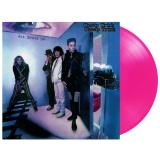
All Shook Up is the fifth studio album by the American rock band Cheap Trick, originally released in 1980 and produced by legendary producer George Martin, best known for his work with The Beatles.
The album followed the huge success of At Budokan and Dream Police and found the band working with a new producer for the first time in several years. George Martin gave the recordings his own touch, while Cheap Trick remained true to the sound and songwriting that had made them popular. The album features memorable tracks like "Stop This Game", "Just Got Back", "Baby Loves to Rock" and "World’s Greatest Lover". All Shook Up reached number 24 on the Billboard 200 and was certified Gold in the United States. It remains a strong album from an important period in Cheap Trick’s career and a great addition to their classic catalogue.
All Shook Up is available as a limited edition of 2000 individually numbered copies on magenta vinyl and includes an insert.
A space is often described by its dimensions. The height of the ceiling, the expanse between walls. Division into functional elements of varying density follows. We have ideas of how such dimensions should be balanced to work well for sound — the classical concert hall, a Northward mastering room.
It’s tempting to try and use this idea of space to understand Space the group (Lisa Ullén, Elsa Bergman, Anna Lund). To calculate their cartesian co-ordinates: dynamics that run from whisper soft to punishing, shaking force; Ullén’s piano running the full expanse of the frequency spectrum; the mix of sudden, surprising and suggested variations in density (the space) that generates their musical structures.
But (a) space is a social phenomenon where meaning is accumulated and possibilities created by and through a constantly shifting set of social relations and their histories and entanglement inside and beyond the physical structures of a room or building. Reduced to its raw dimensions, Cafe OTO shouldn’t sound good: the low ceiling, the hollow void underneath the stage-not-stage, the hard glass windows out onto the street. But OTO as a social space — for gathering close to listen; the serious pursuit of a convivial good time (its productive mythology that an OTO audience is both up for it but also expects more); and then the idea of all that has happened before and what will come; that this is also part of ‘the music’ and changes what sounds to the point that none of those cartesian co-ordinates matter.**
It’s less of shock that Space sound good. Lisa Ullén is easily the most singular pianist in Sweden right now and Elsa and Anna’s ability to reroute in realtime reaffirms just how well they function as a group. The trio might have got their shit together holding down the rhythm section for the first incarnation of Anna Högberg Attack — but much like Högberg’s ongoing pursuit of artistic renewal, the trio avoid being shackled to any ideas about what a piano trio should be and there is something that happens (happened) in that room, on that night, with those people that made for something beyond just good.
It’s a gift that the sound of every concert at OTO gets recorded. A choice handful of these transcend their decoupling from that social space and radiate the room’s attendant energies. This record is one of them.
** See Jack Halberstam in Fred Moten & Stefano Harney, The Undercommons (2013): “…we must refuse the idea that music happens only when the musician enters and picks up an instrument; music is also the anticipation of the performance and the noises of appreciation it generates and the speaking that happens through and around it, making it and loving it, being in it while listening."
Creole Culture is the triumphant return of Dawn Richard’s King Creole era. Steeped in history but with its flag planted firmly in the future, Creole Culture pulls elements from Richard’s heritage as a Black and Native American woman who has spent a lifetime making and engaging with music. Following New Breed (2019) and Second Line (2021), Creole Culture is akin to a panel of a triptych: a fully-realized sonic and narrative universe in which Richard, as King Creole, rebuilds her hometown of New Orleans in her image. She not only honors her city for what it was or what it gave her, but stakes a claim for it as a cradle of global culture now and for all time.
Creole Culture follows two acclaimed avant-garde R&B albums with composer Spencer Zahn — the later of which, 2024’s Quiet in a World Full of Noise, found Richard exorcising the specters of grief and trauma in the wake of her father Frank Richard’s health struggles and the killing of her cousin Cisco. It is a softer take on the brass-soaked swagger of Richard’s previous King Creole efforts, an evolution brought about when she realized she had left a crucial viewpoint out of her exploration of New Orleans: her own. “New Breed was the story of New Orleans through my father’s eyes,” Richard explains. “I used his samples, his music, his cultures, his work with Chocolate Milk, his side of the family. Second Line was my mom — her interludes riddled the album with her depiction of what is meant to be a Creole woman in New Orleans. The masculine and feminine sides of King Creole had expressed themselves through them, but the story felt unfinished, like my version of the story was untold.”
That story is, for lack of a better word, complex: at turns triumphant and tragic, sexy and mournful, braggadocious and contemplative. Creole Culture presents Richard’s New Orleans as a utopian soundscape — an intoxicating blend of R&B, soul, hip-hop, pop, and jazz — that’s survived and thrived despite the dystopian circumstances visited upon it. Richard presents the melange of influence and artifact on Creole Culture with the care of a botanist nurturing new hybrids in a rose garden.
What emerges from that care is at once delightful and unexpected, enlisting a crew of guest stars including Big Freedia, Anjelika “Jelly” Joseph, Tarriona “Tank” Ball, and Durand Bernarr for features that play against type. Tank’s turn at spoken word verse on “l v r” serves to add dimension to King Creole’s New Orleans, as does Joseph’s undeniable voice on “chuuuurch.” “I’m not normally a features girl,” says Richard, ”but King Creole can’t build a world from scratch without help. What’s beautiful about the features here — which is also true of my band and producers — is they come from people who understand the materials of the world they’re from, they’re people I love, and they’re people who are just extraordinary at what they do. They’re part of the atmosphere of this place. You need them for the record to breathe.”
In the end, that’s what King Creole creates: a space where Dawn Richard can breathe, can be at peace with herself, and let loose with others. From finding love in opening single “enough” to relishing in the Afrocaribbean futurism of “fiesta,” Creole Culture is a tremendous, freeing breath of fresh air. It captures the resolve of a woman and a place who’ve survived the unimaginable and sees the future not as something to be endured, but as something to be created. Dawn Richard has been making that future one album at a time over the course of her career. Creole Culture is her most stunning one yet.
Creole Culture is the triumphant return of Dawn Richard’s King Creole era. Steeped in history but with its flag planted firmly in the future, Creole Culture pulls elements from Richard’s heritage as a Black and Native American woman who has spent a lifetime making and engaging with music. Following New Breed (2019) and Second Line (2021), Creole Culture is akin to a panel of a triptych: a fully-realized sonic and narrative universe in which Richard, as King Creole, rebuilds her hometown of New Orleans in her image. She not only honors her city for what it was or what it gave her, but stakes a claim for it as a cradle of global culture now and for all time.
Creole Culture follows two acclaimed avant-garde R&B albums with composer Spencer Zahn — the later of which, 2024’s Quiet in a World Full of Noise, found Richard exorcising the specters of grief and trauma in the wake of her father Frank Richard’s health struggles and the killing of her cousin Cisco. It is a softer take on the brass-soaked swagger of Richard’s previous King Creole efforts, an evolution brought about when she realized she had left a crucial viewpoint out of her exploration of New Orleans: her own. “New Breed was the story of New Orleans through my father’s eyes,” Richard explains. “I used his samples, his music, his cultures, his work with Chocolate Milk, his side of the family. Second Line was my mom — her interludes riddled the album with her depiction of what is meant to be a Creole woman in New Orleans. The masculine and feminine sides of King Creole had expressed themselves through them, but the story felt unfinished, like my version of the story was untold.”
That story is, for lack of a better word, complex: at turns triumphant and tragic, sexy and mournful, braggadocious and contemplative. Creole Culture presents Richard’s New Orleans as a utopian soundscape — an intoxicating blend of R&B, soul, hip-hop, pop, and jazz — that’s survived and thrived despite the dystopian circumstances visited upon it. Richard presents the melange of influence and artifact on Creole Culture with the care of a botanist nurturing new hybrids in a rose garden.
What emerges from that care is at once delightful and unexpected, enlisting a crew of guest stars including Big Freedia, Anjelika “Jelly” Joseph, Tarriona “Tank” Ball, and Durand Bernarr for features that play against type. Tank’s turn at spoken word verse on “l v r” serves to add dimension to King Creole’s New Orleans, as does Joseph’s undeniable voice on “chuuuurch.” “I’m not normally a features girl,” says Richard, ”but King Creole can’t build a world from scratch without help. What’s beautiful about the features here — which is also true of my band and producers — is they come from people who understand the materials of the world they’re from, they’re people I love, and they’re people who are just extraordinary at what they do. They’re part of the atmosphere of this place. You need them for the record to breathe.”
In the end, that’s what King Creole creates: a space where Dawn Richard can breathe, can be at peace with herself, and let loose with others. From finding love in opening single “enough” to relishing in the Afrocaribbean futurism of “fiesta,” Creole Culture is a tremendous, freeing breath of fresh air. It captures the resolve of a woman and a place who’ve survived the unimaginable and sees the future not as something to be endured, but as something to be created. Dawn Richard has been making that future one album at a time over the course of her career. Creole Culture is her most stunning one yet.
SLOT is the high-energy, dance-punk project of couple Abby Detrich (vocals) and Max Detrich (bass, drum machine), based in Baltimore, Maryland, USA. Their music is a potent, genre-fusing sound described as gritty but flirty pop songs with a punk, in-your-face delivery, and pumping, heavy, danceable beats. Drawing on dance punk, noise pop, and alt-rock, their sound is rooted in Max's transition from drummer to electronic beats via a Boss DR-5 drum machine, with Abby contributing lyrics and dynamic vocals. The band's upcoming album is a bold, flirty, punchy, and raw statement, delving into themes of the intersection of performance and sexuality, self-acceptance, and personal reclamation. It was recorded with collaborator Danny Gibney in Harrisonburg, VA, capturing an experimental sound inspired by Y2K media. SLOT delivers an energetic, bratty, and in-your-face live show, having shared the stage with bands like Brainiac and played festivals like MACROCK. Beyond music, Abby is a floral artist and Max is a graphic designer, and they are both dedicated to progressive community causes in Baltimore.
SLOT is the high-energy, dance-punk project of couple Abby Detrich (vocals) and Max Detrich (bass, drum machine), based in Baltimore, Maryland, USA. Their music is a potent, genre-fusing sound described as gritty but flirty pop songs with a punk, in-your-face delivery, and pumping, heavy, danceable beats. Drawing on dance punk, noise pop, and alt-rock, their sound is rooted in Max's transition from drummer to electronic beats via a Boss DR-5 drum machine, with Abby contributing lyrics and dynamic vocals. The band's upcoming album is a bold, flirty, punchy, and raw statement, delving into themes of the intersection of performance and sexuality, self-acceptance, and personal reclamation. It was recorded with collaborator Danny Gibney in Harrisonburg, VA, capturing an experimental sound inspired by Y2K media. SLOT delivers an energetic, bratty, and in-your-face live show, having shared the stage with bands like Brainiac and played festivals like MACROCK. Beyond music, Abby is a floral artist and Max is a graphic designer, and they are both dedicated to progressive community causes in Baltimore.
»Baby Ghost« is the debut album by double bassist and vocalist Jordan Sand. Released through Hallow Ground, it blurs the lines between different genres and modes of expressions, improvisation and composition and showcases the unique playing style the composer has developed. Sand blends her voice with the bowed harmonics and subharmonics of her double bass. At once conceptually rigorous and musically open-ended, Sand’s wordless meditations on death and what comes after are both visceral and explorative.
Sand is a boundary-crossing instrumentalist, performer, and session musician who has worked in folk, free jazz, pop, classical and new as well as experimental music. In 2020, she took a hiatus. When she picked up the bass again, she began stripping down the relationship to her instrument to its core elements, searching for a way to melt the sounds of bow and voice together. This resulted in the appearance of ghost notes, tones emerging from the addition or subtraction of two frequencies, and harmonics that she adds with her falsetto.
On »Baby Ghost,« Sand utilises this acoustic sound and the spontaneous precision of her improvisational practice for pieces that deal with the subject of dying. They move from more polyphonic improvisations toward abstraction, touching upon harsh noise and minimalistic bow-chants before returning briefly to a melodic soliloquy, and finally landing on an extended subharmonic drone. This progression reflects the journey of the spirit after death; the experience of visions, memories, ecstasies and terrors before the dissolution of the self.
Sand performs this process physically, blending her voice with her instrument to explore how the senses might dissolve and merge when they enter a state between life and beyond-or-between-life. Born out of the moment and dedicated to a lost friend, »Baby Ghost« is quite literally an otherworldly achievement.
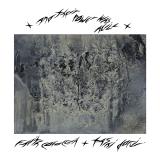
And Their Power Is Alive is a collaborative record between the Vashon Island based artist Faith Coloccia and Ashville based guitarist Tashi Dorji out September on Whited Sepulchre Records. Coloccia and Dorji’s longstanding collaborative relationship and friendship bolsters this massive conceptual weight –– the music is as stirring as it is gorgeous, as exploratory as it is surefooted. And Their Power Was Alive manifests and rises up as a profound iteration of the interrelatedness of the personal and the political, poetically. Coloccia’s plaintive voice, as always, is clear and stirring, intimate, close, and notably here recorded without reverb. She is steady and her lyrics echo dream phrases which visited her during major life shifts: a drive through the arid desert, explaining the concept of private property to the next generation, intergenerational knowledge and caregiving. All of this establishes a melancholia of reflections on land, history, scale. The first words sung on this record are: “Cosmic Horror! I am nothing, I am no-one” and even here, Coloccia is steady. Dorji’s glacial layers of distorted howling guitar create a rise and crest and fall –– symphonies of noise, roaring but distant like fire in the hills, interwoven with piano, organ, and tubular bells.
BIT30-2 THE CROWDPLEASERS "I Want You To Know 30th Anniversary E.P." The first B.I.T Productions 12" was released on single sided white label on 11th December 1995 and became a rather big track across the country with its big synths, catchy vocal hook and a massive break in the middle that lead to a dirty, well-known synth melody that created a huge hands in the air moment, as well as the "Make some f**king noise" vocal. Now 30 years later, we have the “I Want You To Know 30th Anniversary E.P.” that features new remixes by The Crowdpleasers and Pianohead, as well as including the Original 1995 Mix. Also included is the NEW TRACK “I Know” which features the Original Mix with uplifting Piano and catchy vocals and the Stu Chapman Remix with dirty synths, banging breakbeat and a top piano riff. To finish off this 6 Track E.P., the previously unreleased Original Mix from 2000 of “Celestial”, a pumping house track with atmospheric melody.
out of Stock
Last delivered 14 days ago available to reorder, subject to availability
The story of each re-release begins with the original. In the late 90s, Uwe Zahn (Arovane), along with Robert Henke (Monolake) and Stefan Betke (Pole), began releasing music on Torsten Pröfrock’s (Dynamo) newly launched DIN label. This was a very inconspicuous undertaking, but fans of the flourishing IDM, glitch, and constantly evolving abstract techno genres quickly picked up on the quality of sound coming out of Germany. After a few successful EPs, Zahn began working on his debut full-length, Atol Scrap. The release was a success, at least in the underground circles, where followers of the melodic harmonies, stuttering off-beat rhythms, and, most importantly, advanced sound design feverishly consumed the imprint’s output. There was only one thing missing – the album was never pressed on vinyl, and for decades remained in the digital domain. The fans, of course, inquired. There were multiple offers on the table, but Zahn retained control until he was assured that it was properly attained. “I thought of taking everything into my own hands and releasing the record myself,” says Zahn, “but at the end of last year, Matthias from Keplar asked me to re-release Atol Scrap on vinyl.” The label and its owner revolve in the Morr Music universe, and so it made sense for Zahn to trust the platform to treat the record right.
Listening to Atol Scrap over twenty years later it is inane not to admit how well it has held up. Where other genres clearly aged, becoming stale, bland, and dull, the music on eleven tasty tracks still keeps the neurons tickled with each note. More than an echo of the past, the bottled sound truly has matured. Many of the newly evolving techniques are recognizable on the album. “I created the digital artifacts with a digital multi-track recorder, the Fostex D80,” recalls Zahn. “The thing had a scrub wheel with which I could achieve wonderful glitch effects by winding through the audio data. I have sampled and further processed these artifacts.” And this approach is still embedded in Zahn’s sound design. “I still use my 24-track analog desk from Tascam to mix my audio. I love to use hardware synths and samplers. I’ve definitely built upon my studio experience in the 90s.” From this debut to the most recent output, Arovane’s sound has evolved to become more intricate, detailed, and pronounced. “My music has become much quieter and much slower. But that’s probably also due to the noise in the world.” And just as Atol Scrap reminds Zahn of the past, retaining charm preserved in a container traveling through time, it also jitters memories of long ago, when we were twenty years younger, less experienced, and bold. For me, among the many records of the time, this album held a special place in life, my heart, and many CD boxes moved across the world. And now I’m only happy to restock the vinyl space, where Atol Scrap belongs among the beloved records. Welcome home. - Mike Lazarev
Remastered and cut to vinyl by Kassian Troyer @ D&M. Cover art by Jim Kühnel based on a photograph by Uwe Zahn.
out of Stock
Last delivered 14 days ago available to reorder, subject to availability
For Don’t Panik 8 the duo find themselves in-between rappers and unwilling to take up the mic themselves they turn to the internet for vocal inspiration, tackling subjects from Artificial intelligence, Bassline noises and Synthesiser Science all firmly embedded into their signature Pumping Funky sound.
The practice of dub techno and its tendrils is a fundamental for me, both aesthetically and from an engineering perspective.
I start every recording session with a dub inspired jam, the first piece I ever recorded in 1996 was an effort to recreate Phylyps Trak with only a Korg X3 and an Ibanez PUE5 (borrowed from Gary Howell). It was an awesome introduction to jamming, and the footing stones of noise, delay and saturation were explored with my foot hard on the enthusiasm pedal.
These practice jams are in some sense cathartic, the first step taken again & again, which helps me move forwards each session and additionally helps to 'warm the circuits' both of myself and the machines.
After realising the genius of Basic Channel is akin to the genius of peasant food, using every ingredient with nothing left to waste, (up to and including the oft maligned working noise of the machines themselves), this was a watershed moment for my own subjective progression. No longer tied to just emulation of something inspiring, but taking these learned tools into other areas of music helped to break free from a strong current of influence and also to progress into other areas with the new toolbox.
Dub:
The importance of the dub pioneers should never be understated, in modern music and my own practice. Yet with my initial inspiration being two german dudes issuing extreme techno variants with obscured label designs, who then signposted their listeners to their own inspirations (via their Wackies re-issues or nodded to on their Rhythm & Sound/Burial Mix sub-labels), meant that I started late and travelled backwards.
Learning to notice the live mixing of Mikey Dread or Lee Perry when the faders are bleeding through even when turned down, (echoed in BC's Quadrant Dub), or the brash send effects literally thrown into the mix also taught me that 'rough' mixing can inject a recording with life, uniqueness and the most right wrongness. Looking back Basic Channels very few elements helped me realise that the rules to be understood, are also the best ones to be broken.
Push the mixer into the red.
Amp that noise up from the tape delay cos it sounds sick.
Pseudo side-chain effects cos the kicks are way too loud and the mixer can't sum it nicely.
Spam the send knob into the delay units now, now and now.
Carelessness.
Noise:
Once I wrapped my head around the intrinsic 'noise' element that set those records apart, this became a torchlight into the alt noise movements which I was tentatively exploring at the time, and also is evidently a connection or thread into them.
Whether the Industrial/Post Punk UK scene (This Heat, TG, A Tent, F.E.) or the prolific output of the US Noise scene (Wolf Eyes, Live & Shave in LA, and subsequently following the lineage all the way back to Chrome's Alien Soundtracks), I had finally discovered a connection from techno to this 'free for all' corner of music.
This input from the Noise arena of sound is, in my experience, an all important step for a sonic artist, taking it's roots and extending out from Stockhausen/Pierre Henry and utilised/warped/mangled by thousands of adventurous pioneers ever since, I now see the line separating the high brow and the low brow is actually an artery carrying information from the head to the heart.
Vault is a selection of these jams that precede each of my solo recording sessions, for 30 years I've recorded hundreds of these 'workouts'. They are never intended as serious statements, just moments of naive enjoyment, yet most importantly they are time & space captured as practice.
The objective is always a warm up exercise, but sometimes those exercises turn a different corner, with a certain focus or direction dependent on what random samples are left in my machines from the previous session, instead of conscious choices, these unconscious elements can facilitate those 'positive mistakes' that make a piece of sound retain a different feel or colour and thus become special, or at least special to the creator.
I am quite conscious that the 'record everything' aspect of my ethos has been invaluable in cataloguing and saving these jams, while the attitude of carelessness during this process (after all, it's only a warm up jam) invites more enjoyment than seriousness ever could. Even if you don't feel the piece at the time, record it, because some years later it may well fit, or become relevant in a way you never intended.
-Miles
out of Stock
Last delivered 16 days ago available to reorder, subject to availability
Violeta García & Hora Lunga return with 4ever, their second album and the follow-up to I’ll Wait For You In The Car Park. Released in 2025 on -ous, their debut received airplay on BBC and NTS and was selected for Bandcamp’s Best Experimental Music year-end list. 4ever picks up where that record left off: in ordinary moments, small scenes and the strange emotional weight of being somewhere between places. But here, these moments are stretched across a much larger, darker screen. A night flight, a terminal, a bad connection. When too many feelings are carried from one place to another, everyday situations begin to feel epic, empty, or apocalyptic.
Built from García’s cello and Hora Lunga’s synths, samples and field recordings, the album pushes further into emotion, letting fragile melodies, orchestral cello gestures, heavy low-end and compressed noise melt into something both dystopian and strangely familiar. Its warmth is not meant to be an escape from this world, but something that appears within it. Acoustically, the album lives through the closeness of the materials, the way sounds stay with each other, and in the feeling that even the most unstable moments are being carried together. The album presents itself in scenes that fade into each other: quiet melodic fragments that are interrupted and restarted, unpredictable changes of direction, held together by an inevitable melody, a bright synth harmony unfolding into an almost orchestral cello arrangement. Later, a broken organ-like sample turning in circles, cello melodies appearing as if they were trying to remember a song that never belonged to one voice alone. An endless loop that is placed under changing lights, briefly opening into emotional chords, then slipping back into emptiness.
It is this instability that Violeta García and Hora Lunga place at the center of their collaboration. They do not decorate the cello with production, or place electronics around an acoustic centre. They explain: “On 4ever, we become part of the same unstable surface. What holds the record together is not resolution, but the trust in staying together as things distort, overload, disappear and return.”
Violeta García, an Argentinian cellist known for her solo work and for her role in the punk band Blanco Teta, brings the instrument close to the body, as melody, pressure, texture, noise and sudden emotional weight. García has brought her distinct musical voice to KEXP, Rewire, Le Guess Who?, Bad Bonn Kilbi, Silent Green, TransMusicales, Roskilde and more.
Hora Lunga, a Zurich-based producer and composer working across unstable song forms, treats electronics less as a frame than as a weather system: something that can hold a scene together, distort it or make it disappear. In recent years, his compositions have ranged from experimental song forms, sound performances, ensemble compositions and film music. His ensemble WIRREN consists of up to fifteen performers.
Courant Zéro is the new moniker of Montréal multi-media installation artist and Kohlenstoff label co-founder Maxime Corbeil-Perron, signalling his return to purely recording-based electronic music production following several years focused on award-winning experimental film and audio-visual works. Solari channels his cinematic sensibility and decade-long exploration of sound art and electroacoustic counterpoint into deep cuts of maximalist ambient electronica. Drawing on his early background as a pianist and jazz drummer, Corbeil-Perron weaves a fabric of melodic and rhythmic vectors with his unique timbral palette, intersecting modern composition, IDM, ambient, glitch, and noise on a debut album brimming with sonic detail and emotive resonance. A fixture of Montréal's sound art community as both creator and curator since the early 2010s, Corbeil-Perron's work has ranged from "hypnotic A/V onslaught" (FACT Magazine) to the "richly nuanced acousmatic journey" of his 2018 EP Polychrome (Bandcamp Best Contemporary Classical Of The Month), with earlier electronic and techno-adjacent projects like Political Ritual, Dresden, and Le poisson d'argent garnering accolades from avant-music outlets A Closer Listen, Silence and Sound, and Musicworks, among others. Courant Zéro mobilizes this cumulative wealth of explorative sonic experience in the service of distinctive compositional architectures and electronic music pathways that fans of Floating Points, Jan Jelinek, Squarepusher, Tim Hecker, and Oneohtrix Point Never should find compelling. Title track "Solari" opens the album with a cavernous ambient glitch-drone soundscape that envelops ever-shifting timbres of modular arpeggiation, serving as introduction to the clarion call of "En deçà du réel", an homage to video artist Manon Labrecque, where layers of interweaving melodic counterpoint played on Buchla and other synths slowly build to widescreen immersive intensities; "I have this vision of Labreque vibrating eternally between two frames of magnetic VHS tape_ the slow pace of the piece also inspired by Tarkovsky's approach to scenography" says Corbeil-Perron. "Strange Aorta" is ectoplasmic ambient with wistful melody lines transmuting along a central filament, awash in shifting waves of low-end and ricocheting tonal glitch, the title a reference to "the thumping rhythm beating around the main melody_and the heavy remnants of grief related to my father's passing and a brutal confrontation with my own mortality a few years back." Tracks like "La peau des dents" and "Eroding Us" are more firmly rooted in electroacoustic and aleatory systems music, where colliding loops are shaped into unstable flows of deconstructed slippage and reconvergence. Those two pieces bookend the album's pivotal center: the gorgeous piano digitalia of "Horizon n'arrête" and the skittering electronica of 9-minute opus "Unyeldd", its loping broken beat and cascading melodic glitter like a cluster of wind-up music boxes in a dappled forest _ and for Corbeil- Perron also partly inspired by now fellow Constellation labelmates Do Make Say Think: "I spent a lot of time rediscovering their records after seeing them last September 2024 which definitely influenced this piece." Courant Zéro's debut is a vibrant sonic rebus at the junction of electronic, electroacoustic, noise and ambient music that resists easy categorisation. Solari strikes a compelling balance of unsettled disorientation and hospitable warmth, teeming with real feeling throughout. The album's cover art painting Cryptography I by Yen-Chao Lin represents this prevailing sensibility, its mazelike circuitry distinctly carved and crisply rendered, while filigreed with handmade detail and artisanal patina. Thanks for listening.
The Montréal psych-ambient synth-droners return with Sequence Three, their first album in five years and the final instalment in the group's opening trilogy of records that began with Sequence One in 2019. The spectral supergroup co-founded by Stephen Ramsay (Young Galaxy) and Jace Lasek (The Besnard Lakes), usually joined in some capacity by Lasek's Besnard bandmate Olga Goreas, deliver another dose of its trademark longform slowburn jams, forged from restored vintage synths and analogue electronic gear. Lasek and Ramsay don their seasoned producer hats to apply rockist sound design to minimalist tracks, saturated with tube compression, drenched in pink and brown noise, all queasy modulation, sparse beats, and languorous melodic lines. Evoking a humid dawn on a gas giant, these alien drone anthems meld the numinous transcendentalism of Spiritualized and Cluster with the eroded grit of William Basinski and GAS. Light Conductor has been tagged "heavyweight analogue synth nirvana" by Uncut Magazine and praised for its "fabulous, epic, shimmeringly radiant kosmische" by Electronic Sound, among other accolades. Sequence Three consolidates these strengths, while leaning into the darker disquietude that has always been an undercurrent of Light Conductor's aesthetic. Opener "She Glitters The Dust" fades up slow with intertwining detuned synth loops, a languorous lullaby beat dropping at the 3-minute mark, accompanied by insectoid shimmers and a tease of melody that's eventually given free reign over the song's second half. Aptly titled, it's as if a transmission captured within a cosmic dust cloud has provided the raw material for the band to jam on, tease out, and terrestrialize. An echo of that beat sets the tranced pulse for "Omenize", the centerpiece of Side One and the fulfilment of Light Conductor's one-vocal-track-per-album directive. With layered harmonies by Goreas and Lasek, this is the group at its ethereally anthemic best, the devotional floating-in-space bliss attenuated by another gently warped denouement. "Ghost City Radio" closes out Side One with the band's most overtly anxious tune to date, deceptively stolid in its simple bass guitar riff and filter-swept hi-hat: groove stripped to its minimum as the foundation for an extended spokenword sample of a doomsaying prepper/preacher, a sort of homage to that early hallmark of their Godspeed compatriots, done up through the lens of Light Conductor's inimitably destabilized celestial ambience. (Lasek mixed the most recent two GY!BE albums.) Side Two offers up "High In The Orange Air", a beatless, squelching, bubbling ostinato drone and the album's most orthodox ambient kosmische track. This provides the set and setting for 15-minute closer "Supercontinent", which starts off in similar territory but gradually yields to a submerged and reversed techno pulse pumping through coruscated chordal drone, gaining in woozy mesmeric psych intensity over its inexorable hypnagogic trajectory. Sequence Three rounds out a satisfying trio of full-lengths that Light Conductor has released on Constellation, featuring vibrantly minimal geometric cover art designed by label co-founder Ian Ilavsky that integrates the trilogy as a visual series as well. In keeping with the previous two albums in the set, the Deluxe 180gLP includes a 12"x24" art poster. Thanks for listening.
The Version of Me You Get is a record about perspective, how life changes you, and who you are on the other side of it. Written and recorded in 2020 alongside longtime collaborator Sean McConnell, the album was born out of a rare stillness - a week spent holed up in the studio, building songs piece by piece with no outside noise and no deadline. Bowen had never had that kind of time with a record before. The result was something unhurried, deeply considered and wholly their own. Then life picked back up, and the album sat. Five years later, Bowen returned to the recordings and found something he didn't expect: the songs had grown. What was captured in 2020 as honest and uncertain had become something richer — shaped by everything that followed, personally and professionally. The distance didn't diminish the record. It deepened it. Spanning love, struggle, redemption, and vulnerability, The Version of Me You Get didn't just capture a moment in time, it gained meaning because of what came after. These songs finally found their moment. And it turns out, the wait made them better.
Montréal-based sound artist Steve Bates expands his strategies and stylistic influences on An Infinite Antenna, his second solo album for Constellation, giving freer reign to melodic components and textural dynamics: leftfield synth work, deconstructed drum machine, pointillist electric guitar, and radiostatic blur are all part of the new brew swirling around his bruitist signal-bending and field-recording sensibility. Arguably a more ambient album than his acclaimed 2022 Constellation debut, An Infinite Antenna is at the same time more densely packed with ideas, dynamics, evocations and earworms. Coming out of the anarcho-punk scene of the Canadian Prairies in the 1990s, Bates founded Winnipeg’s experimental sound festival Send + Receive in 1998 before moving to Montréal to become Sound Coordinator at Hexagram (Concordia University), delving further into sonic research and theory, tape-based composition, and installation work. Alongside the curatorial arc of his own sound art label The Dim Coast, Bates released several solo and collaborative albums on ORAL_records leading up to All The Things That Happen, the 2022 Constellation debut praised by Boomkat for its “grittily iridescent ambient billow rendering maximalist panoramas” and by Backseat Mafia as “extraordinary soundscapes of unstable, destructive cacophony and tender calm, echoes of the threat of power.” Where that album was noisier and single-minded, made with the self-imposed limit of a Casio SK-1, Bates plays more widely with instrumentation and atmospheres on An Infinite Antenna, also drawing on his post-hardcore roots in seeking a sort of track-by-track concision nonetheless driven by the album’s coherence as a seamless work. “I was trying to set durations I associate with punk rather than the longer, sprawling music coming from more ambient styles (that I very much love), and while I wasn’t able to quite pare it down to Minutemen durations, I had that reduction to essential elements as a sort of whisper over my shoulder.” Incorporating source recordings made throughout 2023-2025, including at artist residencies and site-specific sound installation visits in Bosnia and Herzegovina (the album’s cover photo was taken in Sarajevo), Austria, Greece, and Saskatchewan, An Infinite Antenna combines Bates’ “idea of slowly scanning a radio dial” with a soundworld of recurring timbral and textural touchstones that forge an integrated whole.
The album’s 12 tracks work effectively as stand-alone pieces, replete with shifting undercurrents, buried melody, and stuttering kinetics, and as a sequential flow where the brief interstitial silences between them are like short pauses to flip the next page in a sketchbook of perspectival studies of a wide but singular tableau. The glistening atonal synth expressionism of opener “Pink pink pink pink…pink pink” drifts gently toward submerged ambience, darkened by the noised rumble and static interference of “Green as a ghost”, which introduces broken beats and piano chords in its denouement. Tracks like “Battles and sieges and street trees” and “Easier sad than done” work the foundations of low-end field-recording resonance, but dappled with lovely melodic droplets of treated guitar and synth. “Waste, songs of the world” and “Disaster loans” are among the album’s most explicit stylistic references to posthardcore, with distorted ambient bass and gently abrasive drum sampling. Closing track “Swamps and factories”, the album’s longest piece, is perhaps most reminiscent of Bates’ previous record with its sustained dissonant glimmer-drone, but the journey An Infinite Antenna traces to get there is Bates at his most dynamic, diverse, distinctive, and engaging. Thanks for listening.
Montréal-based sound artist Steve Bates expands his strategies and stylistic influences on An Infinite Antenna, his second solo album for Constellation, giving freer reign to melodic components and textural dynamics: leftfield synth work, deconstructed drum machine, pointillist electric guitar, and radiostatic blur are all part of the new brew swirling around his bruitist signal-bending and field-recording sensibility. Arguably a more ambient album than his acclaimed 2022 Constellation debut, An Infinite Antenna is at the same time more densely packed with ideas, dynamics, evocations and earworms. Coming out of the anarcho-punk scene of the Canadian Prairies in the 1990s, Bates founded Winnipeg's experimental sound festival Send + Receive in 1998 before moving to Montréal to become Sound Coordinator at Hexagram (Concordia University), delving further into sonic research and theory, tape-based composition, and installation work. Alongside the curatorial arc of his own sound art label The Dim Coast, Bates released several solo and collaborative albums on ORAL_records leading up to All The Things That Happen, the 2022 Constellation debut praised by Boomkat for its "grittily iridescent ambient billow rendering maximalist panoramas" and by Backseat Mafia as "extraordinary soundscapes of unstable, destructive cacophony and tender calm, echoes of the threat of power." Where that album was noisier and single-minded, made with the self-imposed limit of a Casio SK-1, Bates plays more widely with instrumentation and atmospheres on An Infinite Antenna, also drawing on his post-hardcore roots in seeking a sort of track-by-track concision nonetheless driven by the album's coherence as a seamless work. "I was trying to set durations I associate with punk rather than the longer, sprawling music coming from more ambient styles (that I very much love), and while I wasn't able to quite pare it down to Minutemen durations, I had that reduction to essential elements as a sort of whisper over my shoulder." Incorporating source recordings made throughout 2023-2025, including at artist residencies and site-specific sound installation visits in Bosnia and Herzegovina (the album's cover photo was taken in Sarajevo), Austria, Greece, and Saskatchewan, An Infinite Antenna combines Bates' "idea of slowly scanning a radio dial" with a soundworld of recurring timbral and textural touchstones that forge an integrated whole. The album's 12 tracks work effectively as stand-alone pieces, replete with shifting undercurrents, buried melody, and stuttering kinetics, and as a sequential flow where the brief interstitial silences between them are like short pauses to flip the next page in a sketchbook of perspectival studies of a wide but singular tableau. The glistening atonal synth expressionism of opener 'Pink pink pink pink_pink pink' drifts gently toward submerged ambience, darkened by the noised rumble and static interference of 'Green as a ghost', which introduces broken beats and piano chords in its denouement. Tracks like 'Battles and sieges and street trees' and 'Easier sad than done' work the foundations of low-end field-recording resonance, but dappled with lovely melodic droplets of treated guitar and synth. 'Waste, songs of the world' and 'Disaster loans' are among the album's most explicit stylistic references to posthardcore, with distorted ambient bass and gently abrasive drum sampling. Closing track 'Swamps and factories,' the album's longest piece, is perhaps most reminiscent of Bates' previous record with its sustained dissonant glimmer-drone, but the journey An Infinite Antenna traces to get there is Bates at his most dynamic, diverse, distinctive, and engaging. Thanks for listening
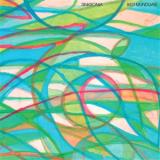
Iker is back with "Sinkronia". A gripping takes on Eastern and Western minimalist traditions influenced by the likes of Steve Reich, Suso Saiz or Midori Takada. Transcendental and esoteric rhythmic wonders that take time to unfold. A young percussionist and guitar player with electronic interests displaying a rich sonority and a great sense of structure and arrangements. This record shows the refinement of Iker's attributes, who initially worked in the noise/punk scene and now is part of the local Free Jazz/Improv landscape of San Sebastian, although he currently lives in New York where he has been playing several gigs including a rendition of Glenn Branca's Symphony No.13 at Lincoln center with 100 guitarists. For this new album he uses Xylophone, hand drums, electric guitar, synths and percussion instruments that guide us in an energetic way to territories somewhere between Italian avant-garde, Japanese New Age and American Minimalism. Iker Munduate Thusberg is a Basque multi-instrumentalist born and raised in San Sebastian and with strong ties to Mikkeli in Finland, where half of his family are from. A fine arts student at Bilbao's UPV (Basque university), his interest in sound, art and design has led him to combine all these different disciplines and convey them into his music and his work. "Iker Munduate is an artist and musician who brings a delicate sense of composition and design_ Inspired in part by new age music, Its rippling melodies and frictionless glide recall the futuristic utopias of Detroit Escalator Company and the interior reverie of Nobukazu Takemura (Derek Walmsley, The Wire Dec'24)"
"Radikaler Genre-Meilenstein auf Vinyl: Erstmals wieder als 140g Black Vinyl erhältlich – das mutige 2011er-Kultalbum, das Nu-Metal unverwechselbar mit modernem Dubstep fusionierte.
Ikonische Producer-Kollaborationen: Enthält weltweite Hits wie Get Up! und Narcissistic Cannibal, produziert von Dubstep-Pionieren wie Skrillex, Noisia, Kill The Noise und Excision.
Edles Vinyl-Packaging: Hochwertiges Gatefold-Jacket (mit verklebter erster Tasche), pflegender weißer Poly-Lined-Innenhülle, 4/4-farbigen Label-Prints und exklusivem Marketing-Sticker."
Surprise EP drop from Knocked Loose ahead of their upcoming tour. EP will be accompanied by a full 16min animated video that takes you through each song.
This year, Prohibition reissues their landmark 1996 album Towncrier on vinyl. A cult classic that once took them across Europe and onto the iconic French TV show Nulle Part Ailleurs, the record remains a defining moment in their career. To mark the occasion, the Paris-based quartet returns once again for a series of live performances at the end of 2026. "Prohibition is undoubtedly one of the most important rock bands France has ever produced." - MOWNO Formed in 1989, Prohibition emerged from the underground veins of the French post-punk scene-a time when the movement survived through a handful of fanzines, crumbling venues, and a sparse network of independent record stores. Their sound was raw, urban, and tightly wound, still reverberating with echoes of hardcore and skate culture. A jagged, abrasive form of rock, driven by atonal guitars, surgically precise bass lines, off-kilter rhythms, and biting vocals. What set Prohibition apart was its singular instrumentation: a saxophone unleashed and the hypnotic drone of a sitar cutting through the noise. Their reputation quickly spread across Europe and the United States, leading to relentless touring and shared stages with the likes of Blonde Redhead, Fugazi, David Grubbs, Condense, and Chokebore. The band came to a close in 1999, following the release of their fifth and final album, the enduring 14 Ups & Downs. In 2015, Prohibition reunited for a special tour marking the 20th anniversary of Prohibited Records, including a standout performance at the Teriaki Festival, later captured by Mowno. Celebrating 30 years in 2025, the band released a reimagined version of Cobweb-day, titled Cobweb-day (Revisited), and returned to the stage for a series of powerful, memorable shows. Now, in 2026, Prohibition reissues their landmark 1996 album Towncrier on vinyl. A cult classic that once took them across Europe and onto the iconic French TV show Nulle Part Ailleurs, the record remains a defining moment in their career. To mark the occasion, the Paris-based quartet returns once again for a series of live performances at the end of 2026. For fans of: The Ex, Fugazi, The Jesus Lizard
Texas trio Riley! channel the restless energy of Midwest emo into something raw, chaotic, and unmistakably their own on TO LIVE AND DIE IN THE AMERICAN SOUTH, their debut release for Pure Noise Records. Built on twinkly guitars, explosive hooks, and deeply personal songwriting, the EP captures the feeling of growing up isolated while searching for connection and belonging. Featuring guest appearances from Tades Sanville of Hot Mulligan, Eric Egan of Heart Attack Man, and Gabe Wood of Saturdays at Your Place, Riley! deliver a fearless and emotionally charged collection that positions them as one of emo’s most exciting new voices.
Petrozavodsk is a heavy drone trio based in Porto and Barcelona. They add dub, experimental and improvisational elements to a crushing, drone metal sound.
“Forest Fire” is the band’s vinyl debut, and is a more concentrated, expansive, and heavy offering following their debut tape “Winter War”.
Side A kicks off with “Forest I”, a collaboration with electronic artist Container AKA Ren Schofield (US/UK). The noise/rave veteran remixes the band’s guitars into a hot bubbling swampy mess that feels very alive, propulsive, punishing, yet fun – Container fans would know.
“Forest II” is all dubbed-out drone-rock, with blackened guitar, monotonous low thrusts, and a snare that is coming from an extremely far distance – everything echoing and shaking, dubwise almost-noise effects from the drum kit eroding in wide stereo.
Side B is one longform piece “Fire” with slow-motion guitar washes, and a bass that sounds like a high rise falling down. It nods to the genre’s touchstones (Boris’ “Amplifier Worship”, Sunn O)))) while carving its own path. A downtuned wall of heavy sound.
Recorded in Catalunya and Portugal, all amps turned up high. Mixed and mastered by Moa Pillar in London, with additional mixing on “Forest II” by the band’s guitarist Anton Vasin.
Guitar: Anton Vasin
Bass: Matvei Podgornov
Drums: Ivan Zoloto
They live! If this summer’s endless bout of heatwaves seems an odd setting for a new Altar Of Eden record, maybe we should consider that the fast-accelerating destruction of life on Earth is an appropriate setting for more deathrock. The eagle-eyed among you might recognise guitarist Ben Redman from recent lineups of symphonic noiseniks …And You Will Know Us By The Trail Of Dead, while vocalist Albert Efraim has been making a thrillingly unholy racket with Texan hardcore faves like the Creamers and Nosferatu - and they both played together in gothed-out sensations Altar Duata before that band’s untimely demise. Altar Of Eden have thus far produced two mighty LPs of smartly chilling post-punk for Drunken Sailor - 2020’s wondrous The Grotto Screams and 2022’s superb follow-up Chimeras - but now they return with a sequel to their debut: The Grotto Screams II.
In keeping with their previous offerings, it’s superb. Redman’s guitar is brittle and minimal, but lurches into eardrum-lacerating strafes of deafening, brutal noise without warning, while Jake Cloud brings driving, pulsating basslines to the fore, dripping with the influence of Killing Joke’s Youth as they hold it all together somehow. Efraim intones his lyrics solemnly over the top, drenched in reverb and tucked deep into the mix; as much a texture as a means of delivering hooks. He’s cited the poetry of Jean-Pierre Duprey and Rene Daumal as influences in the past, and tracks like The Erasure and Light And Shade certainly contain their own suffocating sense of surrealism and obfuscated reality. It all builds to the epic finale of closing track The Moon, which handles their signature tricks in moodily grandiose fashion - a bleakly compelling version of post-punk that sears and soars even as it chills the heart. Arguably Duprey’s most famous line goes, “I shouldn't have got stuck in this galaxy,” and as humanity brings about its own destruction, it’s worth suggesting that this applies to us all. But at least Altar Of Eden bring a hell of a soundtrack while we all burn.
Two tracks extending towards the 10 minute marker, very much in the unique style of Robert Mononom which was already being refined throughout his previous 3 EPs, now culminating in 2 excursions throughout deep hypnotic/psychedelic machine made sounds. A side is built on an aggressive triple and double beat kick drum with a very dubby "big room" presence upon which waves of other nuances in noise get overlayed slowly transforming the 165+ BPM experience throughout what sounds like an extended live mix. B side goes in more spacial/atmospheric direction where hi hats take control over the kick, capturing the witness in a whirlwind of dubbed out overlaying rhythmic patterns. A sound so raw and pure in its introspection, clearly showing Robert's capacity of developing an aesthetic of his own.
out of Stock
Last delivered 38 days ago available to reorder, subject to availability
Scotland's incomparable and influential Arab Strap are back with their ninth studio album Half-Told Tales, due for release via Rock Action Records on 4th September 2026: almost exactly 30 years since the beloved duo’s first ever single, The First Big Weekend, was released. The follow-up to 2024's acclaimed I'm totally fine with it (y) don't give a fuck anymore (y) , Half-Told Tales is rich with Aidan Moffat and Malcolm Middleton’s trademark wit and dark humour, whilst creating moments from quiet brooding to a self-described “disco-metal incantation that might make you dance” . Including the single You You You, the album was recorded with long-time collaborator Paul Savage (Mogwai, Belle and Sebastian, Franz Ferdinand) . Vinyl is released as a double LP in a gatefold sleeve.
Scotland's incomparable and influential Arab Strap are back with their ninth studio album Half-Told Tales, due for release via Rock Action Records on 4th September 2026: almost exactly 30 years since the beloved duo’s first ever single, The First Big Weekend, was released. The follow-up to 2024's acclaimed I'm totally fine with it (y) don't give a fuck anymore (y) , Half-Told Tales is rich with Aidan Moffat and Malcolm Middleton’s trademark wit and dark humour, whilst creating moments from quiet brooding to a self-described “disco-metal incantation that might make you dance” . Including the single You You You, the album was recorded with long-time collaborator Paul Savage (Mogwai, Belle and Sebastian, Franz Ferdinand) . Vinyl is released as a double LP in a gatefold sleeve.