Produced by Joe Barresi (Queens of the Stone Age, Tool), The Dissent of Man finds Bad Religion pushing the boundaries of their music as much today as they did in their formative years as a genre defining punk band. Over the course of making the album, primary songwriters Greg Graffin and Brett Gurewitz"s songwriting was informed by life changing events, with Graffin writing his forthcoming book "Anarchy Evolution" and Gurewitz embarking on parenthood again. The result is one of the band"s most forward thinking and musically varied albums ever. The Dissent of Man is not only a snapshot of the band"s personal experiences of the past years but also of their continued maturity in songwriting, capturing an array of styles ranging from blazing punk rock songs like the opener "The Day That the Earth Stalled" and "Meeting of the Minds" and classic rock-tinged cuts like "Cyanide" and "Turn Your Back on Me" to radio rock ready hits like the first single "The Devil in Stitches." The Dissent of Man is a testament to why Bad Religion has remained relevant for the better part of three decades. Already having cemented their place in history as a groundbreaking band who helped create a movement in Los Angeles with classic releases like How Could Hell Be Any Worse?, Suffer, Recipe for Hate, Stranger Than Fiction and Process of Belief, Bad Religion continue to inspire and create with a unique style that continues to cross boundaries and transcends genres."
Indonesian duo Kuntari make music that's so distinctive, they had to devise their own genre: primal-core. On Mutu Beton, multiinstrumentalist Tesla Manaf and percussionist Rio Abror dialog with both history and their tropical surroundings in Bandung, West Java's mountainous capital. Using the cornet and hulusi, a free reed instrument made from a bottle gourd and bamboo pipes, Manaf echoes the bellows of local elephants, orangutans and rhinos, grazing Abror's ancestral Indonesian rhythms with potent overdriven riffs and evocative microtonal chimes.
It's music that's profoundly atmospheric and simultaneously raw, recorded live to fully encapsulate the dynamic and deeply human interaction between the two seasoned players. There are elements of sludge metal, noise and post-hardcore, references to traditional folk music and jazz, and gestures towards sound art, 20th century minimalism and dark ambient, but what Kuntari do is completely idiosyncratic -- it's hardly surprising it needed a similarly unique categorization.
Manaf started Kuntari as a solo project, debuting in 2020 with Black Shirt Attracts More Feather and animating his nimble instrumental improvisations with bold electronic processes and booming synthetic drums. And by the time he recorded 2022's acclaimed Last Boy Picked, his approach had evolved significantly; prioritizing organic sounds, he played prepared cornet and piano, bringing in additional percussionists to help devise a ritualistic rhythm section. Abror was one of those performers, and ended up sticking around, playing on 2023's furious LARYNX/STRIDULA, the stylistic precursor for Mutu Beton. At this stage, the duo have racked up a litany of accolades and collaborated with a spectrum of like-minded artists, from noise deity Keiji Haino to fellow Indonesian free-thinker Rully Shabara, who's best known for his work with Senyawa and avant-garde supergroup Osmium. Mutu Beton plays like a lap of honor, showcasing their most kinetic and most feral recordings to date. Kuntari surpass their own high standards, folding history and geography in on itself and suggesting a trailblazing Indonesian cultural movement that's not restricted by highbrow Western conventions. It's not just automation and technology that drives progression, it's interaction and observation. And there's nothing more primal, or revolutionary, than that.
out of Stock
Last delivered 13 months ago available to reorder, subject to availability
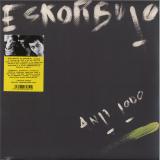
"Anti Todo" is Eskorbuto's most celebrated album, recorded in the shortest time imaginable and released in 1985. It shows what the Spanish punk band did best: hitting the studio with as much raw energy, provocation, inspiration, and natural talent as possible. A new remastering for this edition has given the album the richer, more vibrant sound it always deserved. We can once again enjoy the urgency, simplicity, and rage of this refreshed "Anti Todo", a true classic recorded at Eskorbuto's peak of their creativity and energy. It includes a large poster and insert with notes. DESCRIPTION 1985 was a landmark year for punk rock in the Basque country, and possibly for the whole of Spain. Punk merged with the Basque Radical Rock (Rock Radikal Vasco or RRV) movement, although this was not necessarily always the case. For instance, Eskorbuto invariably kept their distance from the movement and everything related to it. Hardship was part and parcel of Eskorbuto's life and musical career. All their albums were recorded in the shortest time imaginable, partly due to tight budgets (studios were expensive, labels were close-fisted), and partly because Josu and Jualma needed to spend the money on other things_ When it came to recording "Anti Todo", Eskorbuto stuck to what they did best: hitting the studio with as much raw energy, provocation, inspiration, and natural talent as possible. It was their best record and we have to ask: what would Eskorbuto have been capable of if they had more time, a bigger budget, and tighter control? The song 'Tamara' was practically composed on the spot in the studio in less than two recording days, as was much of 'Ha llegado el momento'. The experienced sound technician did an outstanding job, but a new remastering for this rerelease has given the album the richer, more vibrant sound it always deserved. We can once again enjoy the urgency, simplicity, and rage of this refreshed "Anti Todo", a true classic in our musical history, originally released in 1985 at Eskorbuto's peak of their creativity and energy. This edition of the album includes a large poster and insert with notes.
out of Stock
Last delivered 13 months ago available to reorder, subject to availability
Slowly yet firmly blooming into focus, An Unfinished Rose is the new album from Australian duo Troth.
This is their first since relocating to Hobart, Tasmania and their introduction to Night School Records. With a detailed web of past releases on labels A Colourful Storm, Mammas Mysteriska Jukebox, Knekelhuis and Bowman’s own Altered States Tapes imprint, An Unfinished Rose is the group’s most realised and composed work thus far. While still drawing on the improvisatory and DIY practices that informed Troth’s beginnings, it points to a new incarnation of the duo’s music; an intentional language emerging from the fog of obfuscation and mists of uncertainty.
Over these 9 meditations on change, acceptance, renewal and rebirth, An Unfinished Rose finds Amelia Besseny and Cooper Bowman peeling back some of the roughhewn architecture that defined their earlier releases to reveal a masterful - if auto-didactic - use of space and melody. Composition and improvisation compliment and feed each other throughout, with locked-loop earworms providing the springboard for lines of clarinet or synth melody, and the negative space between chord clusters giving ample room for Besseny’s most confident vocal performances to date. Shaving off a little of the defining dissonance and tape compression of old reveals Troth’s music in radiant daylight, humbly accepting of its place in the world while yearning for better, more sympathetic modes of living. Leaning more heavily on acoustic instrumentation and post-production processes than previously, the result is a transcendent body of work infused with an almost zen-like presence.
Troth’s music exists in the border between forming and becoming, its goal to project a kind of preternatural beauty, leaving interpretation open to the listener. Field recordings, happenstance and improvisation may provide seeds for the duo’s compositions, particularly on Side A, but there is a deft touch of songcraft on show. Loam Loom Leaf Litter opens An Unfinished Rose, directly referencing natural cycles of life, death and regeneration, before the blissed-out drum machine groove of Gold Plum continues a discussion concerning the totality of nature and one’s place in it. Besseny’s vocal, swelling like an ocean churn in duet with itself is adorned with synthesised harp and a revolving synth pattern, conjuring plumes of medieval smoke. Thistle’s rounded, bass-heavy drums, nodding to the vast echo of dub, is a relatively new terrain for Troth. It’s propulsive and thumping, pulsing with a meaning and symbolism consistent with Troth’s past work, referenced overtly in Bessey’s lyrics - “Say it too much and it loses its meaning…”. Similarly, the sprawling modern-classical suite, Tides Reflected In Her Eyes, is intentional in its lyrical themes while traversing new ground, revelling in layers of bowed cello and vocal intonations. Side B’s 4 tracks feel like Troth’s most thoroughly accessible and affecting music to date. Leaning into their own detoured version of Synth Pop, Cocoonist explores downtempoisms via a crunchy low frequency synth, and dream-like, fuzzy trip-hop modalities, not unlike Besseny and Bowman’s other group, Th Blisks. Following on, Myrtle Mystes is an open and searching DIY pop song, forged out of drum machine, bass guitar and cello. (An) Unfinished Rose’s title-track is a clear stand-out, built upon an evocative rhythm sample that appears to change emotional resonance with each undulating repetition. Its cascading waves of affect, interjected with a subtle breeze of synth, bowed instrumentation and soaring, densely-layered vocals.
An Unfinished Rose is enveloping, warm, forgiving. Difficult, yet retaining a unique beauty. Troth’s music aims to celebrate the duo;s shared experiences of being in the world, despite the complexity often surrounding us all. Theirs is a message of hope and perseverance, learning and patience.
out of Stock
Last delivered 13 months ago available to reorder, subject to availability
Aura Sonora return with a second release to follow up the fantastic first one, this time it brings together two meticulous studio craftsmen, DYL & Tammo Hesselink. Their Moire Patterns EP kicks off with 'Pattern 1', a deep and rhythmic slice of rubbery techno that rides broken beats with atmospheric pulses up top. 'Pattern 2 slows down to a predatory crawl with icy pads making fro a dystopian vibe then 'Pattern 3' brings a sense of mystic tribal ritual deep in some futuristic jungle and 'Pattern 4' closes down with more fantastically crafted, dubby, broken rhythms that are topped with organic percussion and almost impossible not to move to. Pure rhythm science brilliance.
out of Stock
Last delivered 8 months ago available to reorder, subject to availability
Tech-Nology was launched in 2003 specifically to make records with the artist Bjorn Svin. Bjorn was the first Danish artist who made underground crossover into commercial hit territory via "Mer Strom" - but still keeping respect in the "real" music world for his enthusiasm, non-compromising style, persona, and sweaty live performance skills - his musical understanding and need to explore new directions took the crowd on a personal musical journey from jazz and classical musicians to early electronic pioneers - but always in a tone of his own. Bjorn always felt a need to escape norms, to grow and not to repeat, but investigate and create. The first record on Tech-Nology was born under the alias - El Far: Couples of lonely dancers. "Bjorn is maybe the most talented electronic producer ever in Denmark" and he was celebrated as a wonder kid by the media back in the 90's. An insider with new knowledge of Bjorn told us: "Yeah I think its good music.. It's not for everyone I must add, but it's definitely quality music for those who dig this sound.. sometimes a bit too deep.. which kind of works against it, cause you really need to listen to it.. you cannot just skip through it, cause then you don't really grasp the soul of it.. so this is what makes it more difficult to sell - but if a guy like this was a bigger name he would sell much better.."
We love Bjorn and we agree - We have tried to sell Bjorn and his music for over 2 decades now - But you can't capture Bjorn, you can't own him - he is only making music for himself - and you can get on the ride if you want to, but don't expect all the rides to be fun - sometimes it hurts! Bjorn is difficult to sell, but we don't think Bjorn really would like to sell much better if he had the option to do a more commercial approach to his music - because Bjorn is about not selling out, he's a purist at heart, making music documents for the few. Bjorn is bigger than superficial success and streaming numbers. He made jingles for Nokia, toured and played Roskilde's main stage, the biggest Festival in Denmark, but he still doesn't care... and that is important if you want to make interesting music that last for the future. When Bjorn met Mester Jakobsen, label boss of Tech-Nology, he has been releasing on numerous underground labels, made the jump to a major label, and everything more or less turned out as a big disappointment, so Bjorn presented a completely experimental album to the Tech-Nology label under the moniker Prinz Ezo - The Body Offset. We loved it then - we still love it now - and a truly collectors item and a secret DJ tool.
Today, Bjorn is still breaking all habits and rules, still doing the same thing - just in new ways, but he has gained insight on another level, adding even more nuances and textures to his post-genre compositions.
Welcome to the second album by Prinz Ezo on Tech-Nology: KURIER Why Kurier? Because Bjorn left to explore the Berlin Underground, shortly after the first two releases on Tech-Nology - he left his roots to search for a bigger meaning, a bigger understanding, to compose real mature sounds and understanding his skills, at the point where you understand why you have to cross borders, still incognito, doing smuggler-sounds, always in transit - between cities, between cultures, between worlds, time and space. Not Restless nor rootless, just forever on the move, always discovering new landscapes! But now Bjorn is settling down - accordingly with the music - to find - not inner peace, but to be completely in balance with the music inside of him. Prinz Ezo is raw, narrative, minimalistic electronic storytelling that refuses to freeze. Tension builds and releases - feel the energy and the drama for the last 2 decades if you dare to take the journey?
Almost twenty years after the first Prinz Ezo album, it has now been possible to make the music for those who never arrived.
out of Stock
Last delivered 13 months ago available to reorder, subject to availability
Tech-Nology was launched in 2003 specifically to make records with the artist Bjorn Svin. Bjorn was the first Danish artist who made underground crossover into commercial hit territory via "Mer Strom" - but still keeping respect in the "real" music world for his enthusiasm, non-compromising style, persona, and sweaty live performance skills - his musical understanding and need to explore new directions took the crowd on a personal musical journey from jazz and classical musicians to early electronic pioneers - but always in a tone of his own. Bjorn always felt a need to escape norms, to grow and not to repeat, but investigate and create. The first record on Tech-Nology was born under the alias - El Far: Couples of lonely dancers. "Bjorn is maybe the most talented electronic producer ever in Denmark" and he was celebrated as a wonder kid by the media back in the 90's. An insider with new knowledge of Bjorn told us: "Yeah I think its good music.. It's not for everyone I must add, but it's definitely quality music for those who dig this sound.. sometimes a bit too deep.. which kind of works against it, cause you really need to listen to it.. you cannot just skip through it, cause then you don't really grasp the soul of it.. so this is what makes it more difficult to sell - but if a guy like this was a bigger name he would sell much better.."
We love Bjorn and we agree - We have tried to sell Bjorn and his music for over 2 decades now - But you can't capture Bjorn, you can't own him - he is only making music for himself - and you can get on the ride if you want to, but don't expect all the rides to be fun - sometimes it hurts! Bjorn is difficult to sell, but we don't think Bjorn really would like to sell much better if he had the option to do a more commercial approach to his music - because Bjorn is about not selling out, he's a purist at heart, making music documents for the few. Bjorn is bigger than superficial success and streaming numbers. He made jingles for Nokia, toured and played Roskilde's main stage, the biggest Festival in Denmark, but he still doesn't care... and that is important if you want to make interesting music that last for the future. When Bjorn met Mester Jakobsen, label boss of Tech-Nology, he has been releasing on numerous underground labels, made the jump to a major label, and everything more or less turned out as a big disappointment, so Bjorn presented a completely experimental album to the Tech-Nology label under the moniker Prinz Ezo - The Body Offset. We loved it then - we still love it now - and a truly collectors item and a secret DJ tool.
Today, Bjorn is still breaking all habits and rules, still doing the same thing - just in new ways, but he has gained insight on another level, adding even more nuances and textures to his post-genre compositions.
Welcome to the second album by Prinz Ezo on Tech-Nology: KURIER Why Kurier? Because Bjorn left to explore the Berlin Underground, shortly after the first two releases on Tech-Nology - he left his roots to search for a bigger meaning, a bigger understanding, to compose real mature sounds and understanding his skills, at the point where you understand why you have to cross borders, still incognito, doing smuggler-sounds, always in transit - between cities, between cultures, between worlds, time and space. Not Restless nor rootless, just forever on the move, always discovering new landscapes! But now Bjorn is settling down - accordingly with the music - to find - not inner peace, but to be completely in balance with the music inside of him. Prinz Ezo is raw, narrative, minimalistic electronic storytelling that refuses to freeze. Tension builds and releases - feel the energy and the drama for the last 2 decades if you dare to take the journey?
Almost twenty years after the first Prinz Ezo album, it has now been possible to make the music for those who never arrived.
out of Stock
Last delivered 13 months ago available to reorder, subject to availability
A“This album is about what it means to be human, and its creation is my offering. I attempt to tell a tale of the human experience in the reflection of my own.”
‘In the Andean mythology, condors are believed to be immortal. It is said that once they feel old, without energy, and useless, they climb to the highest peak and let themselves fall to death.’
The Allegorist is a visionary, enigmatic, transmedia, and boundary-pushing artist known for crafting deep, immersive dark sonic tales. Embracing a wide array of influences, weaving together the mysteries, art and spirituality, the art project defies categorisation, resonating with those who seek the unconventional.
From Birth Until Death is an introspective and immersive concept album that reflects on the essence of the human experience. Crafted over six years by The Allegorist (aka Anna Jordan), the album traces the arc of life—from its fragile beginnings to its inevitable end—using sound art to explore existential and philosophical terrain. Inspired by the Andean mythology of the condor – a symbol of immortality – the album blends electronic soundscapes with raw field recordings, evoking a deep sense of connection between the natural world and human existence.
The album’s progression mirrors the stages of life, starting with the birth of new beginnings and culminating in death, with each track offering a unique reflection on the moments in between. From the dynamic energy of Momentum, to the ethereal, illusionary world of Fata Morgana, the tracks guide the listener through emotions, perceptions, and experiences that shape the human condition.
A distinctive feature of From Birth Until Death is its intricate production. The album incorporates field recordings from Grunewald Forest, a distant roar of a jet, barking dogs, blending the sounds of nature – footsteps in the snow, birdsong, ocean waves – with layered synthesisers and electronic beats. The bass and ambient textures are crafted using an array of analog hardware, while all vocals, both lead and backing, are performed and recorded by Jordan. Some of the vocal takes were intentionally left raw, capturing the spontaneous energy of early recordings, while others were re-recorded to balance the album’s organic yet polished feel. Each element is meticulously crafted, revealing its deeper meaning as the album unfolds like a multidimensional, living sculpture.
At its core, From Birth Until Death is a meditation on the full spectrum of life. The album’s title track, From Birth Until Death, encapsulates this journey, reflecting on the passage of time and the unique experience of being human. The final track, Death, offers a melancholic yet beautiful exploration of endings, not as finalities, but as moments in the grand cycle of life. With its combination of evocative sound design and deeply personal themes, From Birth Until Death invites listeners to contemplate their own lives, offering a moving experience of reflection, growth, and transformation.
About From Birth Until Death
Words By Robin Rimbaud (Scanner)
From Birth Until Death is a deeply personal and reflective album and beautifully crafted. A detailed listen reveals that Jordan was in search of a profoundly human and authentic expression. In an era when so much around us seems defined by speed, Anna Jordan, aka The Allegorist, stands apart – aware that skimming the surface of life is neither sufficient nor rewarding. She reminds us of the value of deep, authentic listening.
The track Andean Condor seductively draws us into a smoky, blurred rhythmic soundscape, capturing the essence of the darkest Berlin nightclub, while Birth pulses with an almost shamanic transformation of sound, moving from the organic to the musical. It features a recording of Jordan’s footsteps in the snow in Grunewald Forest, Germany.
At times, the music feels almost sculptural in shape and tone – lifting, pushing, lilting, opening, and closing – where each piece is given room to fully develop. Many of the works blend synthetic sound with the natural, incorporating the human voice alongside environmental recordings: the wild waves of the ocean, a jet flying overhead, and barking dogs.
With From Birth Until Death, Jordan, like an alchemical architect revealing in the process of getting lost and relinquishing control, leaves us with a taut, immersive soundtrack in which to lose ourselves.
About the album ‘From Birth Until Death’
words by The Allegorist
“The album From Birth Until Death did not come easily to me. I started working on it in 2019, and it underwent many alterations over the years. I produced multiple versions of the tracks each year, but the album name, the track titles, and the album cover art stayed the same for 6 years. Not everything I did fit into the album’s final form, but I hope the heavy selection just made it better. I played this piece live in my techno live set between 2019 and 2020, and in the years after, I performed different art, ambient, and vocal versions of it, most notably the one at the church St. Marienkirche in Berlin in 2022. It just wanted to live and didn’t want to be finished. As I aged, this album aged with me. And now I’m ready to let it go.”
out of Stock
Last delivered 13 months ago available to reorder, subject to availability
In 2047, amidst the deafening yet oh-so-familiar soundscape of the Movement Festival in Detroit, we met again: I, pdqb, and Scape One, known as two of the most respected electronic music composers worldwide. The air pulsed not only with the latest beats but also with a barely perceptible energy only the two of us knew. We hadn't simply flown in; we'd arrived with our fantastic "Diskmind" time-travel machine, an incredible invention, capable of effortlessly catapulting us through the centuries.
"It's unbelievable, isn't it?" I shouted over the bass, eyebrows raised. "A machine that lets us travel through all of history, and there isn't a single song that honors it! Not one!"
Scape One nodded vigorously, his gaze sweeping over the stage lights. "That's absurd! How can such a revolutionary invention remain unsung? It's almost an insult to music history itself."
We looked at each other, a silent understanding in our gazes. The mission was clear: The "Diskmind" needed its anthems. And who, if not us, who used and loved it, should create them?
And so, we decided to become the musical chroniclers of the "Diskmind," ready to tell the story of our time machine across four different eras...
For Synaptic Cliffs, it's an extraordinary honor to present these three Scape One variations of the original song 'Diskmind' (first released on The Electrifying Dojo, 2025). Each masterpiece was recorded in different future decades of the 21st century (of ourse with the help of the Diskmind time travel machine) and reflects the corresponding trend in electronic music. A1: A timeless, pristine Electro composition from the year 2035. A2: An IDM marvel from late summer 2075, recorded in the Zero gravity of Space Station 775. B: An Experimental Electronica symphony recorded at pdqb's Studio 577 on Mars Outpost 47A. Only musical equipment that doesn't currently exist was used for this release
out of Stock
Last delivered 6 months ago available to reorder, subject to availability
Habibi Funk is more than happy to announce our 31st release which happens to be our 3rd various artists compilation. The album is dedicated to the cassette tape scene in Libya from the late 80s to early 2000s, from disco to reggae to pop. All songs previously unreleased outside of Libya and not available on any DSP platforms.
This compilation isn’t a sweeping history of Libyan music — it’s a personal journey into the sounds we fell in love with while digging through tapes, conversations, and stories across Libya and beyond. Rather than spotlighting the country’s most famous musical exports, the compilation brings forward a mix of overlooked gems and local classics of the cassette era: artists whose work thrived despite political limitations, and scarce international exposure. The music featured here blends reggae rhythms, synthy disco grooves, gritty pop, house, and funk, a vibrant collision of genres that reflects Libya’s unique sonic landscape from the 1980s to the early 2000s. Many of these recordings were recovered from the TK7 cassette factory in Sousse, Tunisia, a now-demolished site that once played a quiet but vital role in distributing and manufacturing Libyan music. Other tracks were digitised in a Cairo hotel room in 2021, where we transferred nearly 100 tapes over the course of three days, on-site using a high-grade cassette deck brought into Egypt with us. From that trove emerged artists like Ahmed Ben Ali, Cheb Bakr, and Najib Alhoush & The Free Music, who have already featured on our earlier releases. Their sounds sit alongside contributions from this release from the likes of Khaled Al Melody, Fathi Aldiyqz & Sons of Africa Band, City Lights Band, Libya Music Band, and Group Hewaya. During this era, Independent artists relied on makeshift home studios or travelled abroad to record in Tunisia and Egypt, gradually building their own infrastructures for creativity. By the 90s and early 2000s, as access to digital equipment increased, a few of the artists began setting up their own studios — a shift that gave rise to a more self-sufficient recording culture across the country. The resulting sounds are anything but homogeneous. They reflect Libya’s geographic and cultural crossroads: North African rhythms meet Arab melodies and deep African roots. Reggae, in particular, took on a local Libyan flavour — not just musically, through the slowed-down cadence of traditional shaabi beats, but socially, as a vehicle for expressing identity and pride. What ties all the artists on this comp together is a boundary- pushing approach to genre and style: recorded in small studios, exchanged by hand, and shaped by a cross-pollination of influences, from Benghazi to Tripoli and beyond. All tracks are licensed from their creators and in the case of the artists being deceased from their estates. All profits are being split 50:50 between us in the licensors and ownership remains with the creators, we only licensed the music.
out of Stock
Last delivered 9 months ago available to reorder, subject to availability
"Astral Americana hymns hovering somewhere between the dirt and the stars" Pitchfork
"Mood music for moments of solitude, best experienced without distraction" The Times
"Overwhelmingly effective and ravishingly beautiful" The Wire
American Dust is an ode to the beauty of the American Southwest, where vast desert landscapes hold stories both stark and tender. Eve Adams’ characteristic folk noir weaves a vivid tapestry of love, sacrifice and quiet revelation, conjuring images of dust storms, stray dogs and far off trains.
The high desert of California is a vast and confounding place. Equally inspiring as it is punishing, it’s a landscape that carries magic in its deep dark nights, holding stories both tender and stark in the coarse layer of dust that settles upon everything. It’s long been a source of inspiration for musicians, writers, and painters, each of them adding to the same current, carried forward over time, through hope and hardship and the passing years.
Somewhere out there in that broad and boundless landscape, Eve Adams has been living her own desert life, quietly writing the follow-up to 2021’s Metal Bird LP. Where that album sang of liminal space, the dream-like turbulence of Hollywood’s golden age, American Dust is far more rooted in traditional storytelling; a eulogy for the American Dream channeled through that sweeping part of the country that holds such power and mystery. Slipping into different and varied costumes throughout its ten songs, it finds Eve not just observing the people around her but stepping into their shoes and peeling back the layers of their quiet lives.
Adams writes from within. A few years ago she moved out there, to “the middle of nowhere”, finding a slowness that didn’t exist in the city, and she knows only too well about the mystical nature of the land and those who live within it. Weaving together themes of grit and romance, American Dust holds its focus on the bittersweet poetry of lives lived in solitude, most notably the women who sustain life at the center of it all. “There’s something very radical about domestic life,” Adams says of this thread. “So many women live their entire lives behind closed doors, completely in the shadows. Within those lives is such sacrifice, devotion, and love. I wanted to honor that: the poetry in the mundane, the longing in the repetition. The way love survives boredom and dust and time.”
Eve is joined on American Dust by Canadian musician Bryce Cloghesy, aka Military Genius of Crack Cloud, who plays throughout and also helped produce the album. Musically bold and vivid, it’s an ambitious and detailed stride forward from what’s come before, the scope of the LP’s narrative reflected in the radiant sweep of the playing. On top of gentle piano and guitar, gorgeous strings drift through the album, lending the songs a woozy sense of romanticism; a collaboration with Gamaliel Traynor (Cello) and Caroline’s Oliver Hamilton (Violin).
For all the drama that’s coiled around these songs, it’s the recurring notion of love and hope fighting against everything that holds true throughout American Dust. Musically it’s lush and vibrant, intimate and cinematic side by side, and always bursting with warmth. But it’s what it holds in its weary bones that elevates it to something truly special, something more than just a collection of songs penned in the heart of the desert. The characters it speaks of, and from, feel shadowed but wholly real, like they’re bursting to share their stories that have remained hidden for years and years and they allow Eve Adams to grow as a songwriter right in front of our eyes.
“The same swirling dust that clung to the covered wagons of my ancestors as they crossed the Great American Desert is the same dust my great-great-grandmother swept off her porch during the Dust Bowl of 1936 in Oklahoma, is the same dust that blows in through the cracks in my windows here in the desert, carrying stories from a time long gone,” Eve says, reflecting on the personal narrative that runs through her new album.
“It’s not just dust—it’s American Dust, the kind that settles into the bones of a family and never leaves. I think about that dust as a symbol of the passage of time. I hope this album will be part of that same current, carrying forward for the next generations of my family to find. I’ve been lucky enough to have journals and poetry from my ancestors that documents their lives during times of pure hope and pure hardship. I’d like to think of this album as a contribution to that family history.”
Ash Ra Tempel is the eponymous debut studio album by the Krautrock band Ash Ra Tempel. It features guitarist Manuel Göttsching with drummer Klaus Schulze and bassist Hartmut Enke.
Engineered by Conny Plank it was recorded in March 1971 and released in June 1971 on Ohr Records.
This 50Th Anniversary Album will be Released in Memoriam of all the Musical Contributors to this Release and on Manuel Göttsching´s MG.ART label. It´s the fourth and headlining edition in this series and was finalised, carefully overseen by Manuel Göttsching himself in the late Autumn of 2022.
Much has been written about the record and band.
Having finished a first musical chapter with their Steeple Chase Bluesband and still at very young age of only 17 and 18 years old Manuel Göttsching and Hartmut Enke met Klaus Schulze. Together they started to write and and compose what, to many, became one the holy grails of Psychedelic Rock and early Electronic Music -
the German variant which was later also named "Krautrock":
Ash Ra Tempel´s self-titled first album "Ash Ra Tempel".
"The trio of Klaus Schulze, Manuel Göttsching and Hartmut Enke decided to abandon conventional composition and song writing, in favour of free-form improvising and developing a new musical language. As such, they became notorious for jams that could exceed 30 minutes." Says Discogs. "Some of these recordings can be found on Manuel Göttsching´s "The Private Tapes" releases", which will be re-released on MG.ART as well, following this edition.
"Krautrocksampler" author Julian Cope mentioned it to be "… one of the greatest rock 'n' roll LPs ever made." (Julian Cope Presents Head Heritage | Unsung | Reviews | Ash Ra Tempel - Ash Ra Tempel". 15 March 2000.)
AllMusic called the album "both astonishingly prescient and just flat out good, a logical extension of the space-jam-freakout ethos into rarified realms."
Here we would like the Band to be heard, for what can easily be said as the first time in 50+ years, with the exception of some early Journalists for whom the young Manuel Göttsching wrote a statement of intent (the original text can be found inside this edition) as following:
"Our musical concept is based on a combination of blues rock and delicate collages of electronic sound. These two elements should remain inseparable. And in their complex unity, the different musical philosophies of each musician find a common sweet spot. Our music is a permanently impulsive experience left to develop as it will, starting from a common fixed point of departure. This is where the difficulty of the music begins: No standardized formulation of our music can and should be possible. Only the constant reaction within the band can determine the musical result. And this requires constant listening with full concentration on the part of the creators. The idea of a particular musician will be - if flexible enough - absorbed by the others, transposed to their own instrument, and reflected back into the music as an individual contribution. This reciprocity within the band is then transferred over to the audience. And this process means that their reaction is not only a contribution to the end result; it actually makes them jointly responsible for the creation of the final musical product.
…
On our album, the track "Amboss" represents the first layer. Conventional instruments communicate familiar music which is in part expanded through electronic means. In the second track of the album - "Traummaschine" - the actual basic sound approach is dissolved into an electronic Nirvana which no longer allows the concrete identification of actual instruments. Innocent, virgin listening, free from any and every association, can finally begin - and the music can be absorbed and processed free from the limitations of categorization. That is the purpose of our music: To convey freedom without any predetermined criteria or traditions.
Thank you for your attention."
(Taken from the original A-R-T Bio 1970)
Hartmut Enke, Manuel Göttsching and Klaus Schulze aka. Ash Ra Tempel travelled to Hamburg in March 1971 to record their debut, with assistance of another Icon, legendary engineer Conny Plank.
The rest is history.
out of Stock
Last delivered 13 months ago available to reorder, subject to availability
Ash Ra Tempel is the eponymous debut studio album by the Krautrock band Ash Ra Tempel. It features guitarist Manuel Göttsching with drummer Klaus Schulze and bassist Hartmut Enke.
Engineered by Conny Plank it was recorded in March 1971 and released in June 1971 on Ohr Records.
This 50Th Anniversary Album will be Released in Memoriam of all the Musical Contributors to this Release and on Manuel Göttsching´s MG.ART label. It´s the fourth and headlining edition in this series and was finalised, carefully overseen by Manuel Göttsching himself in the late Autumn of 2022.
Much has been written about the record and band.
Having finished a first musical chapter with their Steeple Chase Bluesband and still at very young age of only 17 and 18 years old Manuel Göttsching and Hartmut Enke met Klaus Schulze. Together they started to write and and compose what, to many, became one the holy grails of Psychedelic Rock and early Electronic Music -
the German variant which was later also named "Krautrock":
Ash Ra Tempel´s self-titled first album "Ash Ra Tempel".
"The trio of Klaus Schulze, Manuel Göttsching and Hartmut Enke decided to abandon conventional composition and song writing, in favour of free-form improvising and developing a new musical language. As such, they became notorious for jams that could exceed 30 minutes." Says Discogs. "Some of these recordings can be found on Manuel Göttsching´s "The Private Tapes" releases", which will be re-released on MG.ART as well, following this edition.
"Krautrocksampler" author Julian Cope mentioned it to be "… one of the greatest rock 'n' roll LPs ever made." (Julian Cope Presents Head Heritage | Unsung | Reviews | Ash Ra Tempel - Ash Ra Tempel". 15 March 2000.)
AllMusic called the album "both astonishingly prescient and just flat out good, a logical extension of the space-jam-freakout ethos into rarified realms."
Here we would like the Band to be heard, for what can easily be said as the first time in 50+ years, with the exception of some early Journalists for whom the young Manuel Göttsching wrote a statement of intent (the original text can be found inside this edition) as following:
"Our musical concept is based on a combination of blues rock and delicate collages of electronic sound. These two elements should remain inseparable. And in their complex unity, the different musical philosophies of each musician find a common sweet spot. Our music is a permanently impulsive experience left to develop as it will, starting from a common fixed point of departure. This is where the difficulty of the music begins: No standardized formulation of our music can and should be possible. Only the constant reaction within the band can determine the musical result. And this requires constant listening with full concentration on the part of the creators. The idea of a particular musician will be - if flexible enough - absorbed by the others, transposed to their own instrument, and reflected back into the music as an individual contribution. This reciprocity within the band is then transferred over to the audience. And this process means that their reaction is not only a contribution to the end result; it actually makes them jointly responsible for the creation of the final musical product.
…
On our album, the track "Amboss" represents the first layer. Conventional instruments communicate familiar music which is in part expanded through electronic means. In the second track of the album - "Traummaschine" - the actual basic sound approach is dissolved into an electronic Nirvana which no longer allows the concrete identification of actual instruments. Innocent, virgin listening, free from any and every association, can finally begin - and the music can be absorbed and processed free from the limitations of categorization. That is the purpose of our music: To convey freedom without any predetermined criteria or traditions.
Thank you for your attention."
(Taken from the original A-R-T Bio 1970)
Hartmut Enke, Manuel Göttsching and Klaus Schulze aka. Ash Ra Tempel travelled to Hamburg in March 1971 to record their debut, with assistance of another Icon, legendary engineer Conny Plank.
The rest is history.
out of Stock
Last delivered 13 months ago available to reorder, subject to availability
* 140gm vinyl in charcoal black reverse-board disco bag, with red/ hot pink/ blue/ off-white patterned wraparound sticker, and embossed play:musik icon on front sleeve.
* Kuttin Edge arrives on p:m with (115), a musically adventurous set that draws from a range of influences - West African funk, UK and US electronics, Autonomic moods, minimal techno, and Brutalism; while a focus on analogue feel, overdubbing, and textural detail processes tie it together. An interesting, experimental, yet firmly dancefloor friendly EP.
* Tracklist:
A1. Onyeabor: a unique track full of vintage-sound synths, bright melodic lines, Moog-style arpeggios, and rhythms built on a CR78, layered with live drums, tambourines, and bass guitar. Disco funk samples and fx add texture, alongside heavy overdubbing. Inspired by early William Onyeabor aesthetics.
A2. Dark Horse: Dark Horse: an atmospheric arrangement of phase-y pads reminiscent of the peak Autonomic era, filtered through the abstract lens of artists like Actress or King Britt. The pacing and negative space give the tune a weighty but airy feel, punctuated by heavy toms and documentary-style foley. Soulfully cosmic.
B1. Loop Me: polyrhythmic arpeggios, swirling delays, unstable harmonic structure, and chromatic movement form a tense, shifting progression. Built around a single bell sample, the track is reshaped through layering, modulation, subtle changes in texture, and filtered transitions. A techno stepper.
B2. Geiger Scale: experiments with playful but controlled randomness, minimal structure and off-grid sequencing. The idea centres on a toy synth with loose notes and laidback groove formed of irregular, rhythmic patterns. Geiger Scale perfects restraint as the arrangement bubbles along with sparse melodies. Smokey and potent.
out of Stock
Last delivered 27 days ago available to reorder, subject to availability
ULURU is a large sandstone rock formation in Australia. It's sacred to the Anangu, the local Indigenous of the area. For many years it had been deprived of its spiritual significance, due to mass tourism, capitalism, as well as greedy and selfishness of people who just want to make money out of it. However, as a result of the Anangu’s resilience, care and staunchness, huge changes took place in the national park around Uluru as well as in the broader public's consciousness, giving again to the Uluru the sacred identity that had been lost.
You might be reading and thinking now: so what's the point? Actually, there's no real point. I would rather say, there’s hope. The hope of seeing humans all around the world following the example of the Anangu. The hope of seeing humans finally stopping to treat the earth and all what’s part of it, what’s on and what’s in it, as a slave without soul. The hope of changing today, and if not today at latest by tomorrow. This system is failing. It's no longer sustainable, and there's no much time left. So everybody, don't sleep, be critical.
out of Stock
Last delivered 7 months ago available to reorder, subject to availability
Having made its mark with a strong debut outing by Jon E, Natural Element returns with a 12” single from the seasoned and versatile Amsterdam producer Kid Sublime. With previous releases on Kindred Spirits, Jazzy Sport and Co-Op, to name a few, this release serves as a little taster to an exciting full-length project to follow in the coming months. The featured track ‘You Got Me Runnin’ is a blissful piece of uptempo soul delivered straight from the heart, with a warm, infectious bounce and synths that cut deep. Georgian/American singer-songwriter Bako features on vocals with a smooth and subtle delivery that adds an extra layer of beauty, alongside Kid himself on the chorus.
The EP sees remixes from West London’s WheelUP, who has been steadily making his unique mark on the broken beat scene for the past few years, and fellow Amsterdam producer on the rise, Mo Wrights, who takes the energy up a notch delivering a raw and captivating arrangement for the dancefloor.
out of Stock
Last delivered 7 months ago available to reorder, subject to availability
Limited 180g black vinyl (500 copies worldwide)
“Marcel Wave combine sharp-eyed Northern lyricism with DIY guitar-janglers rooted in a retro C86 aesthetic. Epic finale ‘Linoleum Floor’...is a gloriously bleak rumination on the horrors of enforced late-night hedonism worthy of prime Pulp” UNCUT
Marcel Wave write eulogies for tragic actresses, ancient riverbeds and concrete obscenity. Their inaugural sonic instalment ‘Something Looming’ is part trades club symphony, part itchy serenade, and part wistful lament. As their heady concoction of ‘Meades meets Pat-E-Smith meets Kirklees Borough Council’ gets prepped to be formally baptised on a dank stage near you, Upset the Rhythm and Feel It Records have dutifully stepped in to deliver its songbook to the masses on both sides of the pond.
Formed when Lindsay Corstorphine and Christopher Murphy of Sauna Youth and brethren Oliver and Patrick Fisher of Cold Pumas were summoned by northern ink-slinger Maike Hale-Jones, Marcel Wave’s debut offering is a walk through a smoke-filled pub with yellowing wallpaper and all eyes on you. It’s a chronicle of the death of the docklands, the decline of industry, of the high street, of civic pride, of civilisations, of hopes and dreams. As Hale-Jones delivers the bad news in her low, West Yorkshire brogue, Corstorphine adds the bells and whistles via the frantic pulsations of a wheezing Hohner organ in tandem with Fisher O’s rasping guitar. MW are completed by the throbbing basslines of Murphy and Fisher P’s fervent rhythms.
The title itself sets the tone for the listener. There’s a sense of foreboding in Hale-Jones’ lyrics which sit at the quintet’s core—elegiac, sardonic and piquant in equal measure. A mixture of narrative epilogues and inward paeans, her words weave tales across a broad thematic church. Crooked tales of urban renewal and the voices left behind are probed in ‘Barrow Boys’ and ‘Stop/Continue’ and are at the fore in ‘Where There’s Muck There’s Brass’ with its refrain lamenting ‘Concrete and slate shine in the rain, cities destroyed, nothing to gain’. In these lyrics, tower blocks loom over terraced houses with the same shadows that the Hollywood sign casts over Peg Entwistle before she takes her tragic leap. ‘Peg’ and ‘Elsie’ are both meditations on two different actresses with different fates crushed by the cut-throat trappings of showbusiness: ‘The mad hopes break, fragile as glass. She traded it all, for the cutting room floor.’ A snaking, existential dread also runs through the album, stated more obliquely in the otherwise poppier interludes of the title track ‘Something Looming’ and album opener ‘Bent Out of Shape’, and present too on the comparatively ramshackle ‘Discount Centre’, where Hale-Jones reports ‘On a mini bus on the outskirts of Enfield, I’m losing all of my spark’. On the album closing weeper ‘Linoleum Floor’, it is laid barer still—a keyboard-led reflection on the deflating nights out of our early-twenties.
Marcel Wave invites the listener to dance to society’s decline, and then to later weep into its lukewarm pint.
out of Stock
Last delivered 13 months ago available to reorder, subject to availability
Its no secret that Samiyam is a certified beathead and appreciated hiphop producer - we have been in touch with him since his self released Rap beats volume 1 CD (or actually since his contribution with FlyLo as Flyamsam on the Beat Dimensions compilation), and later took in further releases on Stones Throw, Brainfeeder, Poo-Bah, All City & Hyperdub . What we did not know is Sam got heavily into Death Metal for the past 5 years and is a big horror movie fan. (check the artwork here !)
On Death Metal, Sam mentioned 'I started revisiting some old shit and realized I really love it and there's so many cool bands I didn't even know about.. I started making some shit with drums, drum programming, and ideas inspired by some of the stuff I like and realized I should just make an album out of it."
So here it is - 13 beat takes, Metal style - put together by a man whose output is sparse but never dissapoints !
Limited edition US import
out of Stock
Last delivered 13 months ago available to reorder, subject to availability
Laufeys drittes Album, »A Matter of Time«, ist ein wunderschönes Meisterwerk der Introspektion über die Ängste, die das Leben und die Liebe mit sich bringen.
Diese Version enthält eine LP, gepresst auf atemberaubendem Timeless Blue Vinyl, eine 12"-runde Textbeilage, eine Notiz von Laufey (sieben Zoll) und eine Fotohülle.
A1 FORWARD
Was inspired by the revolution of the year of 1988 also referred to as the 2nd summer of love. Revolutions great and small are happening all around us all the time, and they take place in the minds of individuals.
A2 CHARANJIT DRIVE
Describes the revolution i 've got in mind, angelic bass-string harmonic notes flying left and right, Indian-vocals, sudden sped-up dancehall baselines and breaks. Imagine a hippie a homeboy and a funky dread, hugging and dancing and telling their mates how much they love each other in a nice green field while this plays.
B1 HONDA WANDERER
A man in a blue honda civic is traveling through a misty world at a high velocity. Seeking that which is just hiding behind the next bend. I made this after a beautiful misty, raining/sunshine rainbow ride on the autobahn. I had just picked up a cheap mutron bi-phase which was sitting beside me in the passenger seat. It was amazing.
B2 MISTY VALLEY
It's time to get a little bit serious, this one feels like the place where i made all of this music, the village of Ruigoord, covered in a thick winter fog. The remnants of a possible previous reincarnation of myself as an 80s new-beat producer are haunting this music.
all music & artwork by Mozes Meijer, mastering: Wouter Brandenburg, cut: Dubplates & Mastering a&r: Arne Cinema Royale Visser.
out of Stock
Last delivered 13 months ago available to reorder, subject to availability
Itara is the debut solo album by Paul Pèrrim—guitarist, composer, and anthropologist—featuring a set of guitar-driven compositions that blend hallucinatory acid folk, abstract blues, mutant Eastern jazz, surreal ambient, and free improvi-sation into a vivid and distinctive sonic tapestry.
With a background in ethnomusicology and a degree in Music Education, Pèrrim’s work bridges popular and experi-mental music. He contrasts the acoustic guitar’s austerity with the expansive possibilities of the electric guitar, drawing from late ’60s folk traditions, contemporary fingerstyle, sound collage, drone, psychedelia, and improvisation.
A key figure in the Canary Islands’ experimental scene, he released two albums in the 2010s under The Transistor Arkestra, a Catalan collective merging free jazz and psychedelia. As Transistor Eye, his solo project, he merges ana-log electronics with guitar, using vintage synths and effects.
In 2022, Pèrrim gained wider recognition through his appearance on Manos Ocultas (Philatelia Records) and the in-ternational tribute Solstice: A Tribute to Steffen Basho-Junghans (Obsolete Recordings). That same year, he founded GUITARRACO, a contemporary guitar festival in Tarragona, where he has shared the stage with Joseba Irazoki, Buck Curran, and Raphael Roginski.
Itara will be released in July 2025 via Keroxen. Recorded and produced by Pèrrim, the album features liner notes by critic Bill Meyer, who writes:
“While it’s common to call music cinematic these days, Pèrrim goes split-screen. One might say he composes econo, jamming scenes and sounds to psychedelic effect. But economy does not equate with poverty. Pèrrim draws upon a rich bank of musical notions, all of which he makes his own through the alchemy of recombination and transmutation.”
out of Stock
Last delivered 13 months ago available to reorder, subject to availability
In an interview released to Billboard in 2017, east coast veteran AZ explains how this collaboration with legendary DITC producer Buckwild came along:
"The sound was shifting. A lot of brothers in the street were telling me "You got to save us." And I'm like, "Save y'all from what?" So I took that title to save the people, then Buckwild played a joint in the studio called "Save Them," and I was like, "This is it."
The two don't really need no introduction: with the Brooklyn lyricist gracing the mic since the mid 90's beginning with one of his first appearances alongside Nas on "Life's A Bitch" and dropping legendary classics such as "Doe Or Die", and the Bronx producer providing beats to artists that range from old school acts such as The Notorious B.I.G., Jay Z, Kool G Rap, Big Pun, modern day legends such as Vinnie Paz, Meyhem Lauren, Termanology and, last but not least, legendary DITC members Big L, Fat Joe, Diamond D and the list goes on and on.
AZ had to recruit "some brothers who I know respect the craft" and found them in Wu-Tang Clan's own Raekwon alongside the late great Prodigy of Mobb Deep. The song was released in April 2017 and brought a breath of fresh air with its classic vibe, together with a video being released just days before Prodigy's untimely passing in June 2017. The rest, you already know, is straight up hip-hop history.
out of Stock
Last delivered 13 months ago available to reorder, subject to availability
Grey October Sound has gained widespread popularity not only in Japan but also around the world through their series of cover albums, including Lo-fi Ghibli,
a collection of Ghibli film music covers; Lo-fi City Pop, featuring covers of classic and beloved City Pop songs; and Lo-fi Anime, which reimagines popular anime
theme songs in their signature style.
Amid the success of their original compilation series Timeless Lo-fi, they are now launching a brand-new series titled Late Night Lo-fi.
This new album, composed entirely of newly recorded tracks, continues to reflect Grey October Sound’s distinctive style while offering mellow and chill tunes that
evoke the atmosphere of late-night hours, just as the title suggests.
Originally conceived as a compilation of outtakes and live recordings from The Shadow Ring's 1995 stateside tour, Wax-Work Echoes takes its name from the first line of "Put the Music in Its Coffin," the title track of the group's breakthrough release. Lambkin abandons the bitsand- bobs approach, advancing the Shadow Ring concept with entirely original material that builds on the unit's self-mythologizing lyrics, celebrates the clicking of horse hooves, ponders on the sociability of rats and mice, and warns of the dangers of poultry. The first Shadow Ring album to officially include Tim Goss in the main lineup, Wax- Work Echoes reveals the group in its final and lasting form, awash in the outer bounds of atmospheric exploration, with Lambkin's familiar wry and morbid lyricism and the stripped-down angularity of amateurishly detuned guitars fully intact. While Klaus Canterbury and Tony Clark seem all but forgotten, and the shrugged off S. Fritz is listed on the liner notes as performing only "when required," Lambkin did solicit contributions from outside the inner circle. A bit of "Mambo Twist," lifted from a tape of unreleased Vitamin B12 material sent to Lambkin by Alasdair Willis, found its way into "V.E.R.M.I.N.," while an extended epistle contribution from Richard Youngs (and, technically, Brian Lavelle) would be employed in the second half of "Catching Sight/Of Passing Things." Released on CD in 1996 for Bruce Russell's newly minted Corpus Hermeticum, Wax-Work Echoes was recorded concurrently with intense rehearsal periods, in anticipation of the forthcoming "Rose Watson Tour," and was supported by a celebratory fanzine media blitz. The album seemingly absorbs the frenetic excess of the band's transatlantic travels; Wax-Work Echoes channels the trio's wilder instincts into an unresolved catharsis, not yet free of frustration or restlessness. Out of print for almost three decades and available here for the first time ever on long-playing disc, Wax-Work Echoes is a classic from the outer eddies of The Shadow Ring's sound, a must-have for any aficionado's collection: "A window slides, glass slips from frame / And canvas carcass breathes again." Throughout their legendary, decade-long run, the Shadow Ring were an enigmatic force on the international musical sub-underground. Before their disbandment in 2002, this shambolic rock outfit, formed by a group of rowdy teenagers in southeast England, left behind a mighty run of eight LPs, a handful of 7"s, and a spate of raucous live shows and cryptic zine appearances on both sides of the Atlantic, all which have bolstered their enduring word-of-mouth mystique. Beginning in 2023 with the first-ever vinyl pressing of the self-released pre-Shadow Ring tape The Cat & Bells Club (1992), Blank Forms Editions has been conducting a systematic retrospective of the storied group. Wax-Work Echoes and Hold Onto I.D. are the latest releases in a multiyear reissue effort that includes several LPs, a comprehensive CD box set, and a nearly five-hundred-page book.
Born out of the early 1980's Austin noise punk scene, Scratch Acid deliberately eschewed the loud, fast rules of hardcore as everything they didn't want to be and embraced a weirder, artier sound. Prior to the release of their 1984 debut S/T EP, someone gave Touch and Go Records owner Corey Rusk a cassette of the recording, and he was instantly a huge fan. Rusk was immediately interested in releasing the EP and contacted the band to express his admiration. At the time, Scratch Acid had already committed to working with Rabid Cat Records. The group quickly developed a riveting performance aesthetic, and, as the debut S/T EP made its way around the country via fanzines, college radio, and word-of-mouth, the band mounted short tours to the Midwest and the East Coast. While he was not able to work with Scratch Acid directly through Touch and Go, Rusk had begun booking shows with Scratch Acid in Detroit, so he could see them live and meet them. A friendship formed, and Touch and Go Records would eventually release the band's second EP, Berserker, in 1987.
For many bands, having all their gear stolen would be catastrophic. For Third Ear Band, this unfortunate 1968 incident opened a portal to beneficial change. Leader/percussionist Glen Sweeney viewed the heist as a sign to alter Third Ear Band's approach, and they switched to exclusively using acoustic instruments. With electrified psychedelia in full bloom, Sweeney, Paul Minns (oboe, recorder, whistles, flutes) and Richard Coff (violin, viola) struck out on an individualistic path, blending Indian raga with chamber music – without plugging in.
Third Ear Band's 1969 debut album, Alchemy, established them as a solemn, powerful force in the global underground. On Alchemy, Sweeney laid down a steady pulse on hand drums, while Minns and Coff wove in melismatic patterns on oboe, recorder, violin and viola. This approach carried over to Third Ear Band's self-titled sophomore album, often called Elements due to its track titles being named after the four basic components of medieval European alchemists' doctrines.
On this 1970 LP, Third Ear Band sounded at once ancient and contemporary, yet they turned on the hippies with their epic, trance-inducing jams that suggested secret knowledge of infinity. Although Third Ear Band flourished during the West's countercultural zenith, they were peculiarly estranged from it on a sonic level. Even outré contemporaries such as Comus and Jan Dukes De Grey sounded like pop groups compared to TEB. Having no traditional front person or electric instruments, Third Ear Band forged a singular path that flowered most vividly on Elements.
The long songs here stream forth from their skilled hands, evoking a communal transcendence in sound – a hypnotic swirl that doesn't swing, but rather wafts and undulates with cloistered beauty. TEB's music exists in an eternal now, a perpetual wow. It is an ouroboros of organic textures, seemingly magicked into the air spontaneously, yet possessing a rigor that suggests long hours in the lab. Without electricity, it somehow burrowed deeper into your consciousness.
Chickasha, Oklahoma is not a place known for producing a lot of original proto-punk bands. In fact, there is, to our knowledge, only one: Debris'. Formed in 1975 by bassist Chuck Ivey, guitarist Oliver "Rectomo" Powers and drummer Johnny Gregg, the trio created some of the most art-damaged outsider rock 'n' roll this side of MX-80 Sound.
When a local studio offered the package deal of ten hours for recording and mixing as well as pressing 1,000 LPs and two-color jackets, Debris' came in well-rehearsed – nailing all eleven of their songs in just one take. In April 1976, the same month as Ramones' debut album, Debris' would release their lone record onto the world.
Opener "One Way Spit" could easily be mistaken for a lost KBD single – from Chuck's bizarre count-in to the band's trashy start-stop rhythms, unfurling a Dadaist flag around Johnny's visceral vocals. On "Tricia," a reference to the then-current Patty Hearst trial, Oliver's gruesome groans are sardonically juxtaposed with an electric saw. These LSD-tinged tunes are a potent mix of Beefheart-ian controlled chaos and the genuinely weird avant-rock associated with the mid-'70s Cleveland scene.
Enhanced by analog synthesizers and electronic effects, the album sounds like Eno-era Roxy Music or Stooges' Fun House buried deep in the red Oklahoma dirt. While punk would spark a handful of bands who boldly straddled the line between the primal and the experimental, the relatively unsung Debris' were one of the first to do so.
Debris' had a standing invitation to play New York at Max's Kansas City and CBGB in 1976, although they never made it out of Oklahoma. The private-press edition of their self-titled album (also known as Static Disposal, which was actually the label name printed on the original front cover) has since become a collector's item and is even namechecked on the infamous NWW list.
"Sun" ist das erste Album der aus Tennessee stammenden Baritonsaxophonistin Zoh Amba für das in Oslo ansässige Label Smalltown Supersound - und ihr zweites Album nach "Oh Sun", das 2022 auf dem Label Tzadik erschienen ist. Auf "Sun" stellt Amba eine neu zusammengestellte Gruppe mit einer Reihe von Kompositionen vor, die die Grenze zwischen Performance und Prozess verwischen - wobei sich sowohl die Musik als auch der Akt ihrer Aufnahme in Echtzeit entfalten, teilweise geleitet von improvisatorischen Aufnahmetechniken. Als Bandleaderin bewegt sich Amba an den Rändern eines improvisatorischen Deltas, in dem spiritueller Jazz und Free Folk nicht als getrennte Genres auftreten, sondern als Nebenflüsse derselben Strömung, die beide aus einem gemeinsamen Glauben an die Musik als heilige Kraft entspringen. Die Entscheidung, "Sun" auf Smalltown Supersound zu veröffentlichen, entstand aus einer gemeinsamen Verbindung zum verstorbenen deutschen Saxophonisten Peter Brötzmann, der sowohl ein spiritueller Mentor für Amba war als auch mehrere Platten auf dem Label veröffentlicht hat. Und während das Album in amerikanischen Folk-Traditionen verwurzelt ist, ist es Brötzmanns furchtloser Geist - selbst ein immenser historischer Katalysator für den europäischen Free Jazz -, der wie ein roter Faden durch die musikalische Zusammenarbeit des Ensembles und seine experimentellen Aufnahmetechniken verläuft. Für Amba war es jedoch wichtig, dass das Ensemble - bestehend aus Caroline Morton (Bass), Lex Korton (Piano) und Miguel Marcel Russel (Percussion) - vor den Aufnahmen eine tiefere musikalische Verbindung aufbauen konnte: ,Wir haben tagelang einfach nur zusammen gespielt, und ich habe versucht, mir mental Notizen zu machen, was in dieser Band ganz natürlich vorhanden war - bevor ich Anweisungen gab oder Noten austeilte. Ich wollte sehen, wo wir alle in diesem Moment in unserem Leben standen. Von dort aus begann ich, mit ihnen den Prozess zu gestalten. So entstanden die Struktur der Band und der Ansatz für das Album."
With his honeyed falsetto, Horace Andy has long been considered one of roots reggae's most inimitable voices. His signature tune, "Skylarking," is one of a handful of songs that can be instantly recognized by even the most casual of reggae fans. Making his debut with producer and mentor Phil Pratt at the age of sixteen, Andy's expressive vocal style is immediately distinctive, bearing the soulful influence of American artists Otis Redding and Smokey Robinson as well as fellow countryman Alton Ellis.
1975's Get Wise collects a series of singles produced by Pratt including versions of hits "Money, Money" ("Root Of All Evil") and "Zion Gate" ("I Don't Want To Be Outside"). Recorded between 1972 and 1974, these sides were captured at legendary studios Channel One, Black Ark, Dynamic Sound and Randy's Studio 17 with house engineers Ernest Hoo Kim, Lee Perry, Carlton Lee and Errol Thompson at the helm.
Originally released on Pratt's Sunshot label, the album doubles as a showcase for The Soul Syndicate Band, a typically ad-hoc session group which featured Sly & Robbie, Aston "Family Man" Barrett and Earl "Chinna" Smith, among others.
Get Wise delivers ten tracks of Andy's finest material and should be in the collection of any aficionado of the classic '70s Kingston sound. Liner notes by JR Gonne.
Dass Hamburg eine gute Adresse für Streetpunk ist, beweisen nun auch BOLANOW BRAWL mit ihrer ersten Langrille ,First Shots!", die auf die bereits knapp neun Jahre zurückliegende Debüt-EP ,Total Escalation" folgt. Man lässt es halt ruhiger angehen im Norden - will's jetzt aber auch noch mal wissen. Der Bandname - eine Kombination aus der Billig-Wodka-Marke BOLANOW und dem englischen BRAWL für Rauferei oder Handgemenge - verweist auf ambivalente Erfahrungen, die die Bandmitglieder unter Alkoholeinfluss im jugendlichen Leichtsinn sammelten. Flotte Gitarrenriffs, treibende Drumbeats und ein rauer, oft rotziger Gesang bilden das musikalische Gerüst der Hanseaten - das im Kontrast zu den eingängigen Leadgitarren-Melodien steht. Singalongs verleihen dem Sound einen bierseligen Touch. Die Mischung aus englischen, amerikanischen und Buxtehuder Stilelementen gibt den zwölf Songs das gewisse Etwas, das den Stil von BOLANOW BRAWL ausmacht. Die alte Plattitüde von den ,Texten, die das Leben schrieb" trifft auch auf die Songs von BOLANOW BRAWL zu. Eigene Erlebnisse, Beobachtungen und Erfahrungen aus Arbeitswelt, Subkultur und Gesellschaft fließen in die Texte ein - ohne erhobenen Zeigefinger, dafür gern mit gehobener Bierflasche. Die Covergestaltung stammt von Alteau, einem frankobelgischen Skinhead und Comiczeichner, der schon mit 14 erste Arbeiten im Spirou-Comic-Magazin veröffentlichte. Seit Ende der Achtziger hat er etliche Plattencover für Punk- und Oi!-Bands gestaltet - darunter Klasse Kriminale, Rancid, Bérurier Noir und The Herberts, bei denen er auch selbst als Sänger aktiv war.
Dabei sein ist alles ist 100 Prozent Oxo 86 pur. Wenn es eine Band schafft auch bei Frust und schlechten Zeiten aus der Seele zu sprechen und zeitgleich ein Lächeln ins Gesicht zaubert, dann die Bernauer mit ihrem bissig-verschmitzte Humor. Das 2022er-Album nun wieder auf Vinyl in neuen Farben erhältlich. "Dabei sein ist Alles!" ist schlichtweg ein Bernauer-Meisterstück geworden....wer hätte auch ernsthaft daran gezweifelt? Auch in konzertlosen Pandemiezeiten und nach über 24 Monaten Corona-Scheisse hat sich die Band ihren spritzigen Charme und wohl einmaliges Händchen für sofort zündende Lieder bewahrt, wenngleich auch an OXO86 diese Zeiten in ihren Texten nicht spurlos vorbeigegangen sind! Aber keine Sorge: Von der ersten Note bis zum letzten Akkord gibt es 100 Prozent OXO86 pur! Und wenn es eine Band schafft Dir auch bei Frust und schlechten Zeiten aus der Seele zu sprechen und Dir zeitgleich ein Lächeln ins Gesicht zaubert, während Deine Füsse unmerklich anfangen zu wippen, dann wohl die Bernauer, oder? Natürlich kommt auch der bissig-verschmitzte Humor mit hundsgemeinen Ohrwürmern im unvergleichlichen OXO-Stil nicht zu kurz und so gibts auf "Dabei sein ist Alles" eigentlich alles in den 13 neuen Songs, was die Band schon immer ausmachte..." 2025er LP-Nachpressung des noch aktuellen OXO-Albums - limitiert auf 333 x als Ultraclear with Pink & BlacK Splatter Vinyl!
Reissue, 2LPs, black and purple colored. Limited to 500 copies. Fläsket Brinner means Burning Flesh and is a suitabel name for this group that started in 1970 playing music with influences from the time, like kind of jazzrock, psychedelia, folkmusic and long improvisations that often ended in extacy. Bo Hansson did not often play his music live, but he often joined Fläsket Brinner in concerts, sometimes he played the Hammond but also guitar or cow bell. This, their debut album, has been long awaited for different reasons but is now finally released including a lot of bonus material on a second LP. Side A and C plus "Bosses låt" on side B are recorded at The Concert Hall in Stockholm December 1st 1970 (on 2-channels) when Fläsket Brinner was warm up for Frank Zappa and Mothers of Inventiom. Bo Hansson was participating in that concert on Hammand Organ alternativ Cow Bell when Sten Bergman played the organ. B 6 is recorded at Liljevalchs Hall of Art during the 3rd Gärdetfest that was held indoors November 20th 1970 (on 8-channels) B 1, 2, 4, 5 are recorded in the newly started Studio Decibel January 17th and 18th 1971. Sides A, B and C are recorded and mixed by Anders Lind. D-side "Gulan" is recorded at Pistolteatern in Stockholm (on 2 channels) February 14th by Claes-Göran Flodén.
Der schwüle Ton von Eliana Glass ist nicht zu überhören - sie wechselt zwischen einer unkonventionellen, suchenden Qualität und ihrer ergreifenden, ehrfurchtgebietenden Bandbreite. Auch ihr Klavierspiel besitzt dieses mitreißende Hin und Her zwischen dem Jenseitigen und dem schmerzlich Menschlichen - jede Melodie ist ihr eigenes, einzigartiges, schmerzhaftes Reich. Glass' spärliche, meditative Musik fängt oft, wie sie sagt, die ,Verdichtung des Alltags" ein, ein Bild, das zu der bittersüßen, flüchtigen und abstrakten Natur ihrer Arbeit passt. Glass' Debütalbum E erscheint bei Shelter Press und ist nicht nur ein zärtliches Porträt ihrer lebenslangen Beziehung zum Klavier, sondern auch eine Destillation ganzer Lebenszeiten. Vier Jahre lang arbeitete Glass mit dem Mitbegründer und Produzenten von Public Records, Francis Harris (Frank & Tony, Adultnapper), und dem Tontechniker Bill Skibbe (Shellac, Jack White) zusammen, um das Album E in verschiedenen Studios in Nashville, Brooklyn, Memphis und Benton Harbor, Michigan, aufzunehmen. Glass' experimentelle, improvisatorische Werke erinnern an den sinnlichen Minimalismus von Annette Peacock, die freudige Rätselhaftigkeit von Carla Bley und die wehmütige Intimität von Sibylle Baier. Ihre Verehrung für die Größen des Leftfield Jazz und der freien Improvisation ist unüberhörbar, aber immer gefiltert durch ihren unverwechselbaren, naturalistischen Sound. ,Dreams" ist eine majestätische Interpretation von Peacocks gleichnamigem Stück aus dem Jahr 1971, ,Sing Me Softly the Blues` ist eine minimale, fesselnde Neuinterpretation von Baiers Jazzstandard mit einem von der norwegischen Sängerin Karin Krog adaptierten Text, und ,Emahoy` ist eine schmachtende Hommage an die äthiopische Pianistin, Komponistin und Nonne Emahoy Tsegué-Maryam Guèbrou und ihre 2006 erschienene Kompilation Éthiopiques. Glass' Musik basiert auf einem taktilen, sprunghaften Klang und ihrer stimmlichen Kraft und Vielseitigkeit. E's glatte Stöße von Kontrabass und Schlagzeug kitzeln den Gehörgang und betonen die Schlagfertigkeit ihrer unverwechselbaren tiefen Stimme, die sonore, androgyne Gelassenheit mit flatterhafter Zartheit verbindet. E hat auch eine rätselhafte elektronische Note, die die verschwommenen Emotionen von Glass' Songwriting noch verstärkt. Von Hintergrundrauschen und windigem Gesang bis hin zu kaleidoskopischen Synthesizern stammen diese subtilen, geschmackvollen Verzierungen oft von speziellem analogem Equipment: einer unterirdischen Echokammer aus den 1960er Jahren, einem Cooper Time Cube (im Grunde das Hardware-Äquivalent der Audioverarbeitung durch einen Gartenschlauch) und einem AEA-Bandmikrofon aus den 1940er Jahren. Aber das bedeutet nicht, dass E veraltet klingt - Glass' Songs sind von einem zukunftsweisenden Geist durchdrungen und fungieren letztlich als Vehikel für ihre berauschenden Emotionen und fragmentierten Erinnerungen und Träume. Glass' eigentümliche stimmliche Alchemie und ihre lebhaften Klavierausflüge sind meisterhaft und ganz und gar ihre Sache, und ihr Debütalbum ist ein Geschenk von klangvoller Schönheit und lohnender Mehrdeutigkeit. Als Musikerin und Improvisatorin ist Glass von der Suche nach Bedeutung, nach Klängen, nach Neuem, nach Verbindung begeistert und beherrscht diese. Und wie Krog 1975 in ,Sing Me Softly the Blues" sang: ,Life's so thrilling / if you search."
out of Stock
Last delivered 5 months ago available to reorder, subject to availability
Supa Jams are proud to present. For our, And their debut release, The CJP Band.
Two peak time Disco Soul Funk laced 'Supa™' jams. Ready for the floor, Whilst perfectly encapsulating the labels ethos core.
Disco by extension, Funk for guaranteed dancefloor retention. Music and lyrics for the soul will never not be the intention.
First up 'You and Me and the Music', for the dancers, and DJ's looking for them to 'Lose it' on the floor. This one has it all, Just wait for the strings and 'hat tip' refrain to a legend of the game.
On the flip 'We Can Never Go Back" brings us squarely back to 2025 lyrically. We ALL know 'The systems have changed' and indeed hope that nature will intrinsically "Remain the same".
Nolo asks the same questions clearly forgotten by Jay K in 1993 perhaps? How do we balance our 'Pleasure as an act of defiance in a world that runs on greed'?
In the meantime both tracks deliver the same time honoured essentials for dancing potential - Drum breaks for days, And the night time haze. Bass lines for the loose spined, Lyrical refined for the spiritual of mind. Hotter than the summer dance floors they'll be played on.
300 limited pressing - Hand Stamped Sleeve.
Don't Sleep!
out of Stock
Last delivered 6 months ago available to reorder, subject to availability
If you thought rising fame would dull the laser sharp wit of Getdown Services then think again. Following the release of their already beloved EP 'Your Medal's In The Post', they return with yet another. 'Primordial Slot Machine' is full to the brim with their trademark genre-bending, apocalyptic disco and more seditious one liners than you can shake a stick at. And now you can pre-order both EPs on a special limited edition brown vinyl, complete with artwork and obi strip.
out of Stock
Last delivered 13 months ago available to reorder, subject to availability
More than a decade after his last full album, Kim Hiorthøy returns with Ghost Note, released by the Belgian label Blickwinkel. Though his music has quietly existed in the background—shaping contemporary dance, film, and theatre—this album brings it into focus once more. Ghost Note is an exploration of sound on the edge of presence and absence, a fictional world that is both constructed and organic.
Using mostly digital technology, Hiorthøy created a set of instruments that are real—you can hear them, they have tone, timbre, and resonance—but also not. The percussion, for instance, sounds like cheap scrap metal drums. But are they real? Do they exist? Hiorthøy plays with perception, challenging what feels real and what feels like a memory. In doing so, Ghost Note becomes an invitation to embrace uncertainty and indefinability.
“It's a kind of foggy area between theatre and daily life. Ghost notes. I wanted to try to make music that existed in this in-between space. Electronic music that is acoustic, a kind of emotional music that also hides in abstraction (or the other way around), and to try to make tracks that were sort of falling apart as I was making them.” - Kim Hiorthøy
out of Stock
Last delivered 13 months ago available to reorder, subject to availability
When they performed a handful of concerts as a duo in the summer of 1998, Kristen Noguès and John Surman had already worked a lot on the interweaving of genres: Noguès had confronted traditional Breton music with contemporary music and Surman had changed his jazz into atmospheric numbers that would be amongst the finest recording on the ECM label. As a duo, the harpist and the saxophonist would go on to invent something different: free folk, traditional ambient, modal ‘fest- noz’ … it is difficult to label, because the duo Noguès / Surman is one of a kind.
Diriaou, means “Thursday” in Breton. It is also the title of the first piece that Kristen Noguès and John Surman played together in 1991. Noguès learned the Breton language as a child, at the same time as the Celtic harp, – taking lessons with Denise Mégevand, who would go on to teach others, notably Alan Stivell. At the beginning of the 1970s, Noguès discovered Breton singing (soniou and gwerziou) At the beginning of the 1970s, she discovered the Breton song tradition (soniou and gwerziou) and became involved in Névénoé, a cooperative of traditional expression founded by Gérard Delahaye and Patrick Ewen. She recorded a single with the two musicians in 1974, then her first album, two years later.
Everyone who has listened to Kristen Noguès debut Marc’h Gouez, is now aware of her mysterious plucked strings. Her art, leaving Brittany, would go on to take in all landscapes and folklores, in the same as that of John Surman, conceived a little further north including vernacular jazz, international fusion with Chris McGregor or Miroslav Vitouš, and exploring more personal territory. Remember the Cornish landscapes in one of the best albums on the ECM label : Road To Saint Ives.
Kristen Noguès and John Surman thus shared an ‘extra-Celtic’ inspiration infused with free improvisation. On this recording, made in 1998 by Tanguy Le Doré at the Dre Ar Wenojenn festival, the duo uses original compositions which refer back to traditional songs (Maro Pontkalek, Le Scorff). The musicians then create fantastic impressions: Baz Valan, on which Noguès and Surman have a heavenly exchange; Kernow, on which the shared theme slowing disappears into the mist; Maro Pontkalek and Diriaou which move from the storm to the calm. Elsewhere, there is singing, first with Surman (Kleier) and then moving on to Noguès (Kerzhadenn and her signature song Berceuse). On a canvas of traditional music, the two musicians weave countless memorable landscapes.
out of Stock
Last delivered 13 months ago available to reorder, subject to availability
No one can help you build something beautiful quite like those who know you best. Alan Sparhawk knows this well. In his years in Low, he built decades of stirring music with his wife and lifelong creative partner Mimi Parker. In recent years, he has performed around Minnesota with his son Cyrus in DERECHO Rhythm Section, a funk band that also frequently features his daughter Hollis on vocals. There's an irreplaceable naturalism that comes with this kind of dynamic. Those who know you understand you. They love you. They want to help you bring your greatest passions to fruition. So it made sense that Sparhawk would turn to fellow Duluth musicians Trampled by Turtles to realize his latest record. As friends and mentees of Low's, taken under Sparhawk and Parker's wing from their earliest days as a bar band, Trampled by Turtles have performed with Sparhawk countless times over the years. The Duluth ties run deep: "There's a certain vibe that has to do with underdog syndrome, coming from a small town," Sparhawk muses. "Some of it is the weird grind and slackness that being at the mercy of Mother Nature puts in you. It humbles you." The two artists hold the kind of ironclad bond. Following Parker's passing in 2022, Trampled by Turtles invited Sparhawk to join them on tour to give him a space to be surrounded by friends. Occasionally, he would join them onstage. The outpouring of love was palpable every time they played together, a surge of warmth. When playing together is that powerful, why stop there? In winter, 2024, Sparhawk and Trampled by Turtles created With Trampled by Turtles, a record exactly as its name implies: Collective. Communal. Fraternal. Empathetic. A vessel for comfort, a reminder of the harmony that can exist when surrounded by those closest to you. Where White Roses, My God, Sparhawk's last album, plunged headfirst into electronica and radical vocal modulation, With Trampled by Turtles leans into the folk and bluegrass stylings of its backing band, Sparhawk's voice now completely unvarnished. With Trampled by Turtles is far more than just Alan Sparhawk and Trampled by Turtles. It's an affirmation of all the people who have been vital in Sparhawk's life and music, and an opportunity to hold each of their gifts into the light. It's producer Nat Harvie, who has been collaborating and performing with him for years. It's Sparhawk's daughter Hollis, who duets with her father on "Not Broken." And it's Mimi Parker, too: "Too High," "Princess Road Surgery," and "Not Broken" were all tracks she and Sparhawk had been working on in the last few years. These songs finally found a setting that stirringly commemorates them, bolstered by a full ensemble to make every note sing. Their presence is a kind of eternal connection to Parker, a way her musical grace will keep flourishing.
out of Stock
Last delivered 13 months ago available to reorder, subject to availability
Soundtrack work suits Thomas Dolby, who here turns in a variety of musical settings for a
computer animation video that include everything from moody electronic instrumentals and dance tracks to a ‘30s pop pastiche complete with horn section. Five of the nine tracks have vocals, two of which are contributed by Dr. Fiorella Terenzi. Dolby himself sings, raps. The Gate to the Mind’s Eye demonstrates Dolby’s continuing inventiveness.
Not quite as quirky as the Wireless album, not as moody as Flat Earth, not as wacky as Aliens Ate My Buick, but it has Dolby written all over it.
The Gate To The Mind’s Eye is for the first time available on vinyl as a limited edition of 750 individually numbered copies on silver coloured vinyl and contains an insert.
out of Stock
Last delivered 13 months ago available to reorder, subject to availability
Death Is Not The End release a second part collecting pre-partition film music, compiled by Gary Sullivan of Bodega Pop.
As the 1940s began, South Asian cinema entered a transformative phase. Playback singing, still a new idea in the previous decade, quickly became standard practice. Actors no longer had to sing, and singers no longer had to act, opening the door to a wave of dedicated vocal talent that redefined the sound of the industry.
Voices like Noor Jehan, Shamshad Begum, and Suraiya rose to prominence, becoming household names across the subcontinent. Behind them, composers like Naushad, Anil Biswas, and Ghulam Haider were expanding the sonic palette of film music, blending ragas with Western orchestration, folk tunes with jazz-era instrumentation. Harmoniums, sarangis, violins, accordions, and clarinets filled out increasingly complex arrangements, while ghazals and qawwalis continued to influence mood and structure.
Although the post-Partition years are often considered to be Bollywood's "Golden Age," thanks to filmmakers like Raj Kapoor, Bimal Roy, and Guru Dutt, the music started its peak just before the divide. By 1947, Naushad and others were producing some of the most emotionally rich and musically intricate work in the industry's history, compositions that would prove challenging to surpass in the decades that followed.
Yet this high point came during a time of immense upheaval. The Second World War, the Bengal famine, and the crumbling of colonial rule all loomed large. Film songs often reflected the uncertainty, sometimes mournful, sometimes romantic, sometimes defiant. And when the Partition finally came, it fractured the world that had created this music. Artists became refugees, studios were split, and careers were thrown into flux. Noor Jehan, who would go on to become Pakistan's most iconic singer, recorded many of her most beloved songs in Bombay. Khursheed, another major star, faded from public life after migrating. K.L. Saigal, a towering figure of the 1930s and '40s, died in Lahore just months before the split.
This collection spans those final years before Partition, a time of creative flowering and looming catastrophe. Like Part 1, these songs were sourced from immigrant-run music shops in New York and New Jersey. They are fragments of a vanishing world, each one a snapshot of the art, longing, and resilience that defined this extraordinary era.
out of Stock
Last delivered 11 months ago available to reorder, subject to availability