On Last Night At Marienbad's latest, the imprint brings together three of the brightest souls found within the realms of Jazz, namely Mauricesax, 9ick and Milan93, with their collective talents synergising effortlessly on 'A Garden Between Us', alongside a stellar cast of remixers who add even further delight between the grooves….
As a genre, Jazz has perhaps lent itself the most to other musical universes, in that its curious heart, endlessly experimental nature, and parameter-defying spirit have wrapped itself deep within the core of countless albums, scenes, and music makers. It's a genre that welcomes reinvention, consistently defying its contents and always reaching out to find new methods of expressionism. Electronic music, in its many forms, has truly embraced Jazz perhaps like no other movement of music has, with a truly astonishing array of records surfacing in the past 40 years which have blended Jazz's unique motifs with grooves, chords, and emotive excellence. From 90s Jazz house and UR Techno, through to Future Jazz, downtempo, and Hip Hop, and around many other suns, there remains such an intrinsic and symbiotic relationship between the two musical realms that caters to those who wish to live music both within and out with themselves.
As practitioners of blending electronica and Jazz, few do it like the trio of Mauricesax, 9ick, and Milan93. All three are known for their distinctive soundscapes, yet share commonalities in terms of musical language, feel, and sense of progression. Bringing them together allows for overlaps in their sounds to emerge, and just like Jazz itself, this is where the intrinsicness of sound begins to blossom. 9ick brings his softly evolving vibe to the table, one which was so prevalent and celebrated on his 2025 album 'SMIL'; Milan93 draws from his focal point of exploring fill-laden grooves and a myriad of emotive sensibilities; and Mauricesax draws up his extensive musicality that exists at the corner of jazz, electronic, and experimental music, along with running musical workshops all over the globe.
'A Garden Between Us' represents the trio's core tenets, with this immediately obvious from the record's opener, 'Rhodora'. A gentle solo piano quickly evolves into a series of powerful rhythmic pulses, with brass lines bringing vitality and feel to proceedings. The track shifts gears with purpose, transitioning between musical vignettes of the highest order, with the synth work doing much to bind the transitions together. 'Tulip' emerges slightly differently, with glossy Rhodes tones and an unravelling rhythmic undercurrent setting an enthralling stage. The track flourishes amongst sweeping textures, coming up for air amongst a deeply hypnotic rhythmic section that holds on and never lets up. 'Honeysuckle' lands next, which sees the trio emerge with a boundless, dynamic soundscape. The drums shift within the undertones, as keys, chords, horns and hip-hop vocal samples dance around the pulse, capturing the imagination with their narrative-like placement. Wrapping up the A side comes 'Camellia'. A dazzling array of harmonic sounds converges around the transfixing rhythm section, which emerges from deep below to lavishly roll out over the midsection, with the delicateness of the instrumentation a real highlight here.
The B side features two exquisite remixes, with Pacific Coliseum's version of 'Tulip' landing first. Beginning with a signature four to the floor to get things going, his careful handling of the source material is seen in the tactful introduction of the blissful elements that made the original cut so impactful, with great focus placed on emotive fidelity. The result is a summer-bound house number that reimagines the original in all the right ways, flipping it into a euphoria-driven jazz-laden pacer that reaches for the heavens as much as it drives right into the heart. Teuteu then showcases their take on 'Honeysuckle', and at 9 minutes long, represents the longest cut on the record - and the experience is all the richer for it. Leaning heavily into dance music flavours, Teuteu shifts perspective totally into the realm of the club, with the walls beating hard to the kicks. The sax lines that drift ethereally up top keep eyes closed and souls full, as the dance shifts into the next phase.
An experience that drifts from the daydreaming, to soul-warming through to the club shaking - what else is left to experience, except for 'A Garden Between Us' and how it will brighten up life itself….
First run of limited black and white vinyl versions of this huge cold war themed classic. Includes Devil's Dancers amongst other tracks. Huge!!
Minimal Wave proudly presents a newly remastered deluxe double album of archival material by pioneering 80s minimal electronic duo Oppenheimer Analysis. Oppenheimer Analysis formed in London, England in 1982 by Andy Oppenheimer and Martin Lloyd. Their first meeting though was at the 1979 World Science Fiction Convention in Brighton. They quickly became good friends, sharing an interest in the work of David Bowie, electronic music and early synthesizer bands such as the Human League and Soft Cell. They also shared a love of old science fiction movies, 1950s graphics and comic book imagery and a fascination with post-World War II propaganda, the politics and aesthetics of the Cold War, and the social impact of the atomic bomb. Over the next few years Andy and Martin frequented the growing club scene, including Studio 21 on Oxford Street, and became involved in the developing Futurist and New Romantic style sub-cultures. During this period Martin recorded as Analysis, both alone and with David Rome of Drinking Electricity. They released their first single, 'Surface Tension/Connections' on David's Survival label in 1981. In 1982, Oppenheimer Analysis began writing and recording together at Feedback Studio in Battersea, and performed several times at The Bell, Islington, the 1983 World David Bowie Convention in Hammersmith, the Starzone Birthday Party at Camden Palace, the 1984 European Science Fiction Convention in Brighton and other live venues. Their first demo tape and twelve song 'New Mexico' cassette were sold at gigs and by mail-order, and were reviewed in Melody Maker, Sounds and Soundmaker.
For the years to follow, Oppenheimer Analysis became recognized among electro-music aficionados as a pioneering duo who influenced countless other bands during the club and home-recording era of the early 1980s and beyond. Their cassettes became massively collectible. In 2005 they re-formed with the release of a self-titled four song 12' EP of selections from the New Mexico cassette, including 'Cold War' and 'The Devil's Dancers'. This marked the first release on Minimal Wave. Now in 2015, we're happy to present the entire New Mexico collection, newly remastered and cut to vinyl for the first time ever, to celebrate our 10 year anniversary. This first edition of 1000 copies is pressed on deluxe 'nuclear' style black and white 160 gram vinyl, housed in a glossy gatefold silver and black printed sleeve, featuring all the song lyrics on the inside of the sleeve. Release date: May 16th, 2015. This quintessential reissue has been produced in loving memory of Martin Lloyd.
Year 3673. The frequencies have taken hold. What began as scattered transmissions from the underground has become an infection. Across the dead zones, abandoned receivers flicker back to life. Forbidden rhythms bleed through the static. Citizens once numb to the Global Order's neural grip are beginning to move again. But something else has awakened with them. Deep beneath the ruins, an unknown signal has begun answering SHIFT's transmissions. Its origin is untraceable. Its frequency predates the network. Those exposed report visions, lost time and an uncontrollable urge to follow the sound. The Global Order calls it contamination. SHIFT calls it evolution. A new generation has been born into the resistance; raised on distorted circuitry, machine funk and frequencies never meant for human ears. The signal is spreading. Do not adjust your receiver.
Soundkiller anthem of the highest order by Birmingham OG fast chat legend Speng Bond, born during an all night Jahtari live session at the Annex bass bunker at Open Ground, now cut onto wax for the very first time.
“Dead Dem A Go Dead” comes with a devastating Dub cut on B by disrupt and silver pantone print on the labels – this dangerous 7” beauty is ready to make other soundbwoys bite the dust in no time.
This is the second release in a new Jahtari 7” series, don’t forget to check out number one: Sammy Gold x Tapes – Ital Food.
Volume 1 - Growth
Resurrection is a long-term musical work that has accompanied Christine Benz for almost twenty years. The first track was created in 2007 (track id - Born after Code), with another piece added nearly every year thereafter.
Throughout this time, she continued to produce other music while steadily developing her artistic language.
Musically, the album moves between minimal techno, ambient and experimental electronic music. Across different phases of her life, Resurrection gradually grew into an archive of her personal and musical evolution.
The complete work unfolds as a trilogy across Volumes 1-3.
At its core lies her fascination with sound as material. Rather than thinking in terms of conventional melodies, she works with textures, vibrations, and spatial relationships. A small number of elements give rise to complex sonic spaces, where minimal changes can have a profound effect. Mistakes, chance occurrences, and unexpected responses from the systems she uses also become part of the music. Even from chaos, remarkable structures
emerge. Whenever unplanned beauty reveals itself, she preserves it as a small “miracle” in which control and chance intertwine.
The complete work unfolds across three chapters: Growth, Structure and Resonance, exploring repetition, frequency, perception, consciousness and technological development in the relationship between humans and
machines. It moves from origin through the formation of an internal order towards connection and interaction.
Volume 1: Growth, draws upon the Fibonacci sequence and the spiral as symbols of natural development, with the music growing through repetition and minimal change into increasingly complex forms. Throughout the
project, technology appears as a tool, a partner and a mirror of our perception, raising the question of whether consciousness, responsibility and empathy can evolve alongside technological progress.
During the project’s long evolution, Donato Dozzy developed an interest in Christine’s distinctive sound design.
In 2021, this led him to propose his own interpretation of Our Determination for Volume 1, subtly reworking the track through his own musical perspective.
The artwork developed by Christine also went through a creative process of its own. The original photographs were taken in a basement around 2019, with a wet curtain draped over her. In 2026, she decided to transform
this visual world into a moving-image artwork. For the production, a film crew reconstructed the entire setting.
The video shoot demanded a great deal from Christine: after several hours beneath the wet curtain, the cold was no longer merely part of the staging. This elaborate creative process gives the artwork its distinctive character
and makes it an essential part of Resurrection.
The first chapter will be released in November 2026 as a double-vinyl edition housed in a distinctive gatefold sleeve with an inside-out finish, matte varnish, and partial raised spot UV varnish. Two further double-vinyl
releases, Structure and Resonance, will complete the trilogy. All three volumes will be released on Pirat Records.Records.
The first Garbage Pail Rekkid by legendary canadian producers Rave Alarm (Gobs and Virus) sold out so fast we barely had time to stock it! So for this second one, we ordered a few more, and this is now available in limited numbers in this awesome color format! Never to be repressed, this will be gone before you know it!
Narthex means railed-off western portico or ante-nave in earty Christian churches for women, penitents and catechumens.
Narthex is also a trio featuring (at the beginning) Daniel Denis (Universe Zero, Art Zoyd), Alain Neffe (Pseudocode, Human Flesh, Bene Gesserit) and Nicolas de Villemarqué (Nuwage Music). They had a very different musical background, mostly electric-electronic rock, and decided to work in the field of acoustic music recorded live (two microphones + portable DAT) in churches of their area. After several recording sessions, Nicolas de Villemarqué decides to leave the group. ln order to complete the trio, Daniel Denis and Alain Neffe ask the participation of some of their friends. Anna Homler, Michel Berckmans and Daniel Malempré have accepted the challenge and succeed to fit into their musical universe.
The instruments Church organ, harmonium, sitar, saxophone, oboe, bassoon, zither, valiha, senzas, tarang, voice, percussions, metal clarinet, classical guitar, mew's harp, ongolok, violin, dulcimer, mouth organ, etc.
The music Often dark, sometimes repetitive or experimental, sometimes rhythmical and exotic, always based on emotion inducted by the sound. One could define it as dark age music (as opposite to new age music), a sort of minimal come back to the roots and purity of acoustic sound without the cultural background linked to the 'academic' use of some instruments (for example African senzas are transformed and tuned to sound like Indonesian instruments, sitar or harmonium are used as rhythmical instruments, vahilla is played with a bow).
The places Churches located in an area of 20 kms in the region where Daniel Denis and Alain Neffe live for years and where they feel at home (and feel the vibrations. Every church, place emotionally loaded, has its own specific resonance and sound structure. Every church gave to the musicians a particular inspiration and fill the sound of the instruments with a natural reverberation/echo. The place but also the moment is important. They had the privilege to be allowed to record in the Ecaussines church at night lightened only by candles. lt was one of their most productive recording sessions.
Precisely one year after Lézire, Crush of Souls is back with his third full-length album.
The musical endeavour of Charles Rowell – active in the indie/punk global scene since 2008 with bands like Crocodiles, Flowers of Evil, Issue – is just like its creator: always cooking up something. Relentlessly.
Now, as it was perceivable by the trajectory undertaken by after his previous LP, Captive Youth leaves goth rock and dark folk aside and head swiftly towards some old school 80’s EBM & 90’s Industrial dance vibe. After all, any album exploring themes of dystopia, politics and sexuality requires a strong rhythm. So how could this new chapter not mention seminal synth-pop and body music classics such as Technique by New Order, Belief by Nitzer Ebb, Towards Thee Infinite Beat by Psychic TV and Pressure Points by Anne Clark?
Forever a displaced soul, Charles’ album number three feels like a revision of Crush Of Souls and also a reanimation of his captive youth spent moving from town to town. The energy of the wandering worker poet. Warehouse basslines, artillery fire backbeats. Romance and melancholy wrapped in barbed wire. All this and more oozes from nine new tracks that inevitably deliver that blurry sexy urban vibe that’s become the project’s trademark.
Features collabo hit single Domination with Sade Sanchez from L.A. Witch.
Massimiliano Pagliara celebrates 20 years of music production with a special anniversary compilation on Funnuvojere. The release brings together solo productions and collaborations spanning a rich and abundant period that began when Pagliara acquired his first analogue machines, five years after moving to Berlin from Milan, where he worked as a professional dancer and choreographer.
The compilation features 20 previously unreleased tracks, deeply infused with italo grooves, wonky bass-lines, balearic pads, drama, love, sex, and dreams. These tracks evoke a wide spectrum of moments, ranging from intimate, pleasure-driven home listening to full-blown dance-floor euphoria. Throughout the compilation, one can feel Pagliara’s enthusiasm for discovery—his excitement in encountering new machines and immediately putting them to work.
Pagliara’s sonic identity is unmistakable, present in every track and in the compilation as a whole. Like the facets of a crystal, the music reflects his many nuances while maintaining a strong, coherent core. Tracks such as Waves of Desire pay homage to Dream House, reimagined through contemporary production with cosmic tones and infectious drums. Flicker Of Us reveals a dramatic tension between a rowdy bass-line and melancholic pads, while We Can Touch The Sky features Pagliara himself on vocals, blending synth-pop with elements of new wave and glam rock. Cool Breeze unfolds as a sunlit, optimistic walk through a wide Berlin avenue—funky, warm, and filled with curiosity for what lies ahead.
A notable strength of the compilation lies in its collaborations, which highlight Pagliara’s joy in working with other producers and vocalists. Each collaboration reveals a distinct character: the balearic sensibility of A Journey of Discovery with Gatto Fritto, the French house flavour of Neon Memories with Alinka, the 70s disco inflection of It’s In Your Eyes with the late Aérea Negrot, and the driving techno attitude of Whirlwind with Fabrizio Mammarella, to name just a few.
Ultimately, this compilation stands as both a gift to Massimiliano’s long-time fans and an open invitation to new listeners. It offers entry into a world shaped by beauty, order, balance, and ecstasy—guided by an enduring love for the craft.
Jess Sah Bi is well-known as half of the legendary duo Jess Sah Bi & Peter One who brought homegrown Country-Americana to the West African masses with their smash debut Our Garden Needs Its Flowers in the mid-1980s. Touring stadiums and reaching listeners worldwide, their music has racked up millions of spins on YouTube and remains imprinted in the hearts of Ivorians of a certain age. ATFA reissued their album in 2018, garnering critical acclaim from publications including Pitchfork and Rolling Stone and reaching a new generation of listeners outside Ivory Coast (Cote d'Ivoire). Sometime in the early 90s, Die Sahbi - or Jesse, as he known to friends-became gravely ill with an unknown ailment and almost died. He visited various doctors and all kinds of religious healers and nothing helped. One day he went down to an Evangelical Christian revival in his neighborhood. They prayed over him and he was delivered. He says, "Their prayers helped chase out whatever demons and unhealthy spirits were inside me. After that my illness went away. When I went to the United States a few months later on an exchange program I wanted to make music to thank God because I was saved." He recorded an album of music praising God in order to honor a promise he made to himself at the depths of his desperation in the hospital. The album Jesus-Christ Ne Deçoit Pas Jesus Christ Does Not Let Us Down came out in 1991 and sold around 3000 cassettes in Ivory Coast. The master tape was lost along the way so the recording has never been on digital platforms until now. Jesse didn't have much time to record while visiting South Carolina, hence the relatively short album, 6 songs including two reprises for filler. A local pastor connected him with a studio and some American musicians (Robert Fortner and Gary Davis) to help. They added acoustic guitar, percussion and keyboard accompaniment to Jesse's soaring French and Gouro vocals, harmonica and finger-picked acoustic. The resulting recording is deeply soothing and contemplative music that perfectly compliments the songs already embraced by millions. But he had to find the rest of the studio expenses-$600 total-which he secured drawing cartoons for UNICEF. Jesse is Ivory Coast's first political cartoonist, a vocation for which he was widely celebrated at the time. It also made him a few enemies which lead to him leaving the country permanently a few years later. Jesus-Christ Ne Deçoit Pas is Jess Sah Bi's first and only gospel album. Fortunately, fans responded with enthusiasm: widespread radio airplay and concerts followed, along with a growing solo profile in the country. The first big gospel artists in Ivory Coast were the duo Mathieu et Constance, who emerged in 1989. There was a bigger gospel music movement in English-speaking counties like Ghana and Nigeria (Christians make up roughly 40% of the population in Ivory Coast, slightly less than Muslims). Jesse didn't have any intention of working in Christian music but he realized, "You don't make music to make money-you want to send a message." In the years since Jesus-Christ's release, gospel music in Ivory Coast has grown to become a key part of music culture in the country. Spiritual music appears in community actives across the public and private spectrum from religious gatherings and parties to television broadcasts and music festivals. And, as it has evolved and indigenized locally, gospel music has picked up elements of traditional Ivorian music, reggae and soul. The album ultimately precipitated the demise of the duo, who were soon separated geographically as Peter One relocated to Nashville. He went on to become a nurse and release a successful solo album on Verve following the ATFA collaboration. Nowadays Jesse lives in the Bay Area and continues to record and perform music wherever and whenever he has the chance. He is publishing a new book of humorous cartoons in 2025 and his most recent album Never Give Up came out in 2020
The endless world of ’80s Italo music offers us yet another previously unreleased gem; Caroline Vita’s “Out Of Order” has been rediscovered in the tape archives of the Interbeat catalog, recently acquired by Cinedelic, of which Mondo Groove is a sublabel. The British-born singer performed the song at numerous festivals of the time (1983) that were broadcast on Italy’s national television network, RAI.
The separate tracks allowed DELPHI (Tiger & Woods) to remix it in the style he felt was most fitting: Italo Funk and early New Jersey Freestyle.
140g vinyl, remastered, double LP with the original LP along with a second record of 14 rare tracks
Sweet And Nice is the vital debut album from Jamaica’s undisputed first lady of song Marica Griffiths. It’s reggae at its most soulful. Slinking through a tight ten tracks of R&B and pop-sourced material, it became an instant best seller. 45 years after its initial release the LP is available again on vinyl, now as a double LP, with an extra record collecting 14 rare tracks.
Sweet And Nice has appeared over the years with a revised running order and under different titles. But the original’s opening sequence of loping soul is legendary, even beyond reggae circles. These songs are now returned to how they were presented on that first Jamaican release, and under their intended album title. Be With doesn’t mess with magic.
Marcia’s version of “Here I Am (Come and Take Me)” has long been lusted after, played by genre-hopping selectors to snapping necks for decades now. It’s followed by the sophisticated, rollicking wah-wah funk of “Everything I Own” and the slice of smooth lovers soul par excellence that is “Green Grasshopper” and her ace, lilting Neil Diamond cover “Play Me”.
The thundering, humid funk of “Children At Play” “sounds uncannily like a precursor of Massive Attack”, as FACT Mag astutely noted when they put Sweet And Nice at number 16 in their list of the 100 best albums of the 1970s. Otherworldly, moody and essential.
Side two keeps the fire burning. “Sweet, Bitter Love” should leave you swooning, and is also one of the album’s alternate titles. Curtis Mayfield’s already-eternal “Gypsy Man” is up next, recast as proto-lovers rock.
“There’s No Me Without You” is elevated to canonical status by the majestic, forlorn horns of the Federal Soul Givers and Marcia’s heartbreaking delivery. And if this doesn’t get you then surely the next track will: arguably the definitive version of Ewan MacColl’s “The First Time Ever I Saw Your Face”. Yes, seriously.
“I Just Don’t Want To Be Lonely” re-takes its rightful place at the end of the LP’s second side… but we couldn’t leave it at that. So we added an entire second record of rare material recorded around the same time as Sweet And Nice, much of it unavailable since it was originally released. Some of these songs have only ever been found on now unattainable 7" singles and no, rarity doesn’t always correspond with quality, but in this case we’re talking about some seriously jaw-dropping music.
Amongst 14 extra tracks you’ll find the exquisite late-60s singles “Melody Life” and “Mark My Word” which, along with the sumptuous reading of “Band Of Gold”, are now £100 records, if you can find them! Just sayin’. There‘s also a fantastic version of “The First Cut Is the Deepest” and an alternate take of “Play Me” with producer Lloyd Charmers adding his own vocals.
Everything’s been remastered of course, including the original LP, so Sweet And Nice now sounds even sweeter, and even nicer.
To mark 10 years since SOPHIE’s game-changing singles collection PRODUCT, Numbers are celebrating with a special edition featuring 11 songs across Deluxe Vinyl and Compact Disc.
This anniversary release includes bonus tracks, track-by-track slide posters, and a SOPHIE PRODUCT Card. Physical editions are now available for pre-order and released on 11th July 2025.
SOPHIE classics ‘BIPP’, ‘LEMONADE’ and ‘VYZEE’ are joined by two immaculate PRODUCT-era songs ‘OOH’ and ‘GET HIGHER’ recorded and produced at the time, each with colourful single artwork completing the set.
‘OOH’ is one of SOPHIE's earliest productions that has been through several revisions since 2011. It was one of three original tracks that Numbers had signed when SOPHIE uploaded the song alongside 'BIPP' and 'ELLE' to her Soundcloud, and while it had been through several iterations and speed changes, this finalised version was completed by SOPHIE in 2019.
SOPHIE once described ‘OOH’ as “hi tech club dance pop”. Musically speaking, the earworm hook is carved out by her signature portamento-infused synths and candy-coated lyrics, a firm cult classic approved by AG Cook and Charli XCX. Initially titled 'MAKE RESPECT', the track was first performed live by SOPHIE in 2011 to a handful of lucky people at a beach afterparty surrounding Sonar Festival, Barcelona and later that year at Manhattan's New Museum. The vocal was recorded as the first track in the same one-day recording session as SOPHIE's debut single 'NOTHING MORE TO SAY', released on the Huntley & Palmers label, where Sophie's songwriting was performed by the London vocalist Jaide Green.
The genesis of the ‘OOH’ and ‘NOTHING MORE TO SAY’ recording session is lore-worthy in its own right: after watching Jaide Green perform live with Olly Murs during the sixth series of The X Factor in 2009, SOPHIE reached out and invited Jaide to record in her home bedroom studio.
‘GET HIGHER’ was born during joyous sessions in 2013, when SOPHIE’s beat was introduced to the vocalists Cassie Davis and Sean Mullins. The track feels like a visionary precursor to ‘Vroom Vroom’, and doesn't sound out of place next to the sub-clang intensity of SOPHIE’s ‘HARD’ and ‘MSMSMSM’. Striking a playful balance between blissed-out hyperpop and club-ready Atlanta trap, it showcases SOPHIE’s signature, laser sharp sound design. Originally released as a bonus track on the Japanese CD edition of PRODUCT, ‘GET HIGHER’ has remained a hidden gem.
A groundbreaking producer, songwriter and performer, SOPHIE's visionary approach reshaped the landscape of pop and electronic music. Emerging in the early 2010s, SOPHIE introduced a hyper-detailed, futuristic sound defined by metallic textures, elastic basslines, and an uncanny blend of synthetic and emotional tones. Collaborating with artists including Charli XCX, Madonna, Vince Staples and Arca, SOPHIE helped pioneer a new pop movement while challenging conventions around identity, genre and production. SOPHIE's work continues to resonate deeply, leaving a lasting impact on a generation of artists and listeners alike. Discography: PRODUCT (2015), OIL OF EVERY PEARL'S UN-INSIDES (2018), SOPHIE (released posthumously, 2024).
Hyperstellar returns on Bordello A Parigi with a nocturnal and deeply magnetic EP. In For a Flash captures the fleeting beauty of a moment stolen from the night, the tension of a glance that will never return, the sensation of having loved inside a dream. The record carves out a singular aesthetic through new wave, shady atmospheres, and early electronic influences.
The eponymous track, In For a Flash, opens the record like a sudden vision: a burst of light in the dark, propulsive, yet already fading. From its fatalist urgency to the longing of The Dance We Never Had, each piece suggests a different facet of the same mirage. Surrender unfolds like a slow implosion, a toxic war between release and control, while L’Amour sur Saturne drifts endlessly in a suspended space, like a tale where the impossible is still imagined.
Influenced as much by Burial as by New Order, the solitude of classical composers or eccentric glam rock acts, Hyperstellar continues to build his artistry on numbers, and intimate constellations.
A Side: Er Mar (Submarine Mix) "Maracaibo, dance to the barracuda, yes but dance naked, zà zà! " So sang Maria Luisa Colombo, known to all of us as Lu Colombo. It was 1982, the meteoric song became and still is today a worldwide Hit that everyone has sung at least once in their life and almost never sober. Let's make a leap in time, we are in 1993 the track is taken up and remixed in several versions between Latin and Euro House, we have taken up the track Er Mar (Submarine Mix), dreamy, lustful, psychedelic, evocative, Summer in its purest form. To dance on the beach, preferably in company of Miguel and naked
B Side: FeelFly – Onda Erotica Remix A Cosmic sabba in the forest. You’ll get lost with this hypnotic sound and a minute later you’re ready for a proper trip into your hidden Erotic Dreams. With this almost ten minutes long and original version, Feel Fly delivers to all of us a signature track of the highest order. Feel Fly is an Italian electronic musician and DJ. Defined by Gerd Janson as a linchpin of the underground scene, he recently released some Balearic trance tracks on International Feel and Internasjonal by Prins Thomas, as well as transversal EPs on New Interplanetary Melodies and Hell Yeah.
The writer Max Sebald often pondered over the nature of human memory, specifically, how our thoughts and desires - and their results - overlap and mutate over time. In A Place in the Country, he writes of the significance of what see as “similarities, overlaps and coincidences”. Are they the “delusions” of the self and senses, or manifestations of “an order underlying the chaos of human relationships, ... which lies beyond our comprehension”?
Song of the Night Mists, the new album by post-classical composer Stefan Wesołowski, often feels it draws on Sebald’s premise.
On a simpler plane, the one where the market dictates the neatly ordered information we consume, Song of the Night Mists can be described thus: recorded in the main by Stefan Wesołowski in Gdańsk, both in his studio and in Saint Nicholas' Basilica, the album incorporates acoustic instruments - piano, violin, double bass - and classic synthesizers such as the Roland Jupiter-8, the Soviet Polivoks. A Roland Space Echo RE-150 tape delay was also pressed into service as an instrument. We also hear the basillica’s organ and field recordings from the Tatra Mountains. Other musicians were Maja Miro, who played the flute parts on ‘Glacial Troughs’ and brother Piotr Wesołowski, who played the organ on ‘Wilhelm Tombeau’. Sound engineer was Marcin Nenko, who was also on hand to record the basilica organ parts. The album was mixed in New York by Al Carlson (Oneohtrix Point Never, Jessica Pratt, Zola Jesus, Lady Gaga, and Liturgy) and Rafael Anton Irisarri handled the mastering.
Ostensibly, Song of the Night Mists is the last in a trilogy, following on from albums Liebestod (2013) and Rite of the End (2017). All three deal with existential matters such as love, death, decay and “an ultimate end”; apocalyptic and Promethean in spirit, and betraying very human conceits. The Sebaldian nature of the new record starts to make itself felt when Wesołowski talks of how he used sampling. One element is unexpected, that of sampling himself: “I go back to dozens of my own unused sketches and recordings, treating them as raw material to cut, slow down, reverse, and transform in every possible way.” Memory as sound, to be reemployed by the listener through their own imaginings.
Another set of samples made by Wesołowski plays another role. These are field recordings, originally created for an audio illustration of the formation of the Tatra Mountains, and used in a film by sound designer Michał Fojcik. Wesołowski: “You can hear cracking ice, streams, footsteps in the snow and the wind, and a real avalanche, recorded from the inside.” The “Tatra connection” on the album is also found in samples referencing composer Karol Szymanowski. The album’s title alludes to a poem about the mountains by Polish poet, Kazimierz Przerwa-Tetmajer.
Wesołowski’s Tatra recordings are “about a world without humans - about the fact that the world existed, was beautiful, and had meaning long before people arrived, and for the vast majority of its history, it was a place without us.” Wesołowski, using one iteration of the natural world, plays out in sound Sebald’s idea of another order, underlying the chaos of human relationships lying beyond human comprehension.
These feelings play themselves out on the five album tracks. Sonorous and rich, they illustrate tectonic shifts we have no control over. Wesołowski hints that the overall sound is a “meditation on the metaphysics of the non-human set against the spirituality that human presence has brought into it.” In that light, the opening number, ‘Core’, with its slow build, and crackling and straining sound effects, create an effect of the earth groaning into life in a creation myth. Once the piano part raps out a simple melody and modulated tonguing trumpet samples add to the overall atmosphere, the listener can certainly find a cue in the “spiritual”, or “human” side of the story. Human versus nature: from the strains and harmonic muscle stretches of the second number, ‘Glacial Troughs’, through to the powerful and filmic ‘Stalagmite’ and heart-on-sleeve romance expressed in closer, ‘Wilhelm Tombeau’, we listeners are cast as Friedrich’s wanderer, looking out over a landscape that will appear only if we engage with it.
Formations of melody appear incrementally, almost appearing by chance - like hidden footings in the rock shelves to give us something to grasp onto. Rhythms are used sparsely: the prolonged percussive taps on ‘Glacial Troughs’ are an anomaly and maybe there to give pace to the album to come; essentially to keep the listener strapped in. Elsewhere, percussion is used as an aid to mood, the two thudding, timpani-style passages on ‘Peak’ there to offset the short, beautiful, kosmische passage that splits them.
Elements of the borderline religious spirit that drove German electronic music in the late 1960s and 1970s also find a place on Song of the Night Mists. The swells and recessions of the organ find their emotional climax on ‘Wilhelm Tombeau’, a track which summons up echoes of the “mountain magic” vistas created by Popol Vuh or Tangerine Dream, especially with the slightly atonal wobble of the Mellotron that counters it.
This is a dramatic album, but it does feel a strangely short, or curtailed listen on ending, evoking the feeling one gets when waking from a dream, and, for all its incipient grandeur, a track like ‘Stalagmite’, for instance, ends on a minor note. Wesołowski admits that Song of the Night Mists is born of the all too human process of temptation, doubt and recalibration - Sebaldian overlaps and coincidences forming something that must live another life, away from its creator. In Wesołowski’s words, the album is “a newborn foal must stand up and walk right after birth.” Now it is yours to ponder.
With two critically acclaimed compilations already under his belt, DJ / collector miche returns to Mr Bongo with the third instalment of his With Love series. Testament to his ever-expanding taste, Volume 3 isn’t just a subs bench call-up from the past compilations, it’s an evolution and progression casting the net deeper and wider than before.
Keeping true to the series, but with some fresh surprises along the way, this carefully curated compilation is a celebration of soulful, independently released music from across the globe, and the amazing (often unsung) musicians and vocalists that made these sublime records.
Across the third volume, miche explores a jazzier side of his tastes. “The deeper I went, the more I found myself gravitating towards jazzier music - not leaving soul behind, but following that same feeling into new territory”, he explains. Tracks like the gliding jazz funk found on Late Nite Music Band’s ‘Sundance’, or the glorious jazz-soul number ‘In Flight’ by Spectrym are shining examples of this.
That defining soulful thread of previous volumes is still in full effect throughout this latest edition. “There’s a healthy dose of impossible-to-find soul gems that have that unmistakable, heartwarming feel. Tracks like John Simmons' 'Ain't Nothing Like The Love', which I've adored ever since Zaf Love Vinyl played it, sit perfectly alongside records like Le Cop and New Way”, states miche.
The addition of some top-tier Turkish music showcases another side to his ever-broadening taste. Nükhet Ruacan's 'Gölge' is something unique, a floaty Brazilian-inspired gem recorded in Turkey and not what you’d typically expect from Turkish records of this era.
It also wouldn’t feel right to leave out a stop in Brazil, with miche looking to the work of Carlos Bivar whose track 'Amargo Amar' carries that undeniable groove of samba-funk from Rio.
Spreading the With Love message far and wide the series has led to miche DJing across the globe, “from batucada sessions in Timisoara, to all-night sets in a club in Beijing, and even an eight-hour Root Down With Love stage takeover at We Out Here festival, joined by Danilo Plessow, Jeremy Underground, and of course, my mentor and buddy Rainer Trüby.”
Volume 3 then, carries that message even further. It’s an eclectic but intentional collection, built for the music lover who wants to discover something new. Working just as well as a soundtrack to cook dinner to, as it does keeping a packed dancefloor moving into the small hours.
Rocker’s Revenge was a studio musical project, assembled by producer Arthur Baker in 1982. The band comprised of Baker himself plus Donnie Calvin, Dwight Hawkes, Tina B and Adrienne Dupree Johnson. They are most remembered by their 1982 post-disco hit "Walking on Sunshine", which peaked at number 1 on the US Dance Chart and number 4 in the UK.
On the A side of this release, the track is reset for 2025 with a remix by post punk indie rockers Yard Act, where they have include their own guitar, synths & vocals to give their unique stamp to it. – It’s become a track they have been performing live. On the other side is an unreleased 9 minute remix by New York’s legendary Sound Factory co-founder Junior Vasquez back from 1988, to make it proto acid house bassline & driving percussion journey.
Boston-born Arthur Baker launched his music career as a Disco DJ, but soon made his way into music-making, producing classic Disco for legends Northend and TJM. Arthur is one of the most visible and widely imitated early Hip-Hop/House producers; masterminding breakthrough experimentation with tape edits, sampling and synthetic beats on such records as Afrika Bambaataa's 'Planet Rock', New Order's 'Confusion', Freeez's ‘IOU’, and his own break Dance classic ‘Breaker's Revenge'. Baker would go on to become an award-wining DJ, music and film producer, working for and with the likes Dylan, Hall & Oates, Al Green, Springsteen, The Rolling Stones, Fleetwood Mac, Diana Ross, &many more; on film music for 80s/90s classics such as Beat Street, Ferris Bueller’s Day Off, and Life Less Ordinary. Turning his hand to film documentary’s, Baker has produced Finding The Funk and 808 the Movie. Baker has also directed a documentary on Rocker’s Revenge ‘On A Mission’ along with completing their debut album.
Brooklyn Sway's 7th drop might best be described as the black market edition, but as always we leave the gumshoe work to those heads out there savvy enough to figure it out themselves. Thugfucker alum Acid Tourist and BKS stalwart DeWinter remix celebrated West Coast sideman ROC's cover of a tune that needs no intro, transforming a torch song into an acid belter while keeping its quality intact. Charles Levine, best known as Charlie from Soul Clap, steers close to his usual antics with 'Ocean Waves & Ashtrays', his ashtrays obviously full of blunt ends as he runs the voodoo down on a sultry funk number laced with fat lead keys and ideal for beach party afterhours or smoky late-night sessions. Returning for a second BKS appearance, Ohm Hourani's 'SupaDupaFly' fetches the funk again with rap vocal samples sliding just inside the industry 10% rule set amidst seesawing synths for a woozy, extended effort sure to influence sobriety decisions. On 'Hearts & Diamonds,' label honcho Jay Prouty and mainstay David Paglia join forces jailbreaking two legendary NYC freestyle anthems into a combination that rocks more like high period New Order, so when you catch Fumero's psychedelic painting winking at you off the plate after a few spins, you'll understand exactly why the sway resides in Bucktown.
Hot off his killer 2024 remix of Tiga and Hudson Mohawke’s “BUYBUYSELL,” UK-New Zealand DJ/Producer Keepsakes makes his proper Turbo debut with the Impossible (Eating the Sun) EP. From merciless techno bangers to caustic track titles that will absolutely shred your preconceived notions about the world and sneer at them as they writhe bleeding on the cold, hard ground, this release validates our label’s OCD-level commitment to living on the edge of something at all times.
The title track doubles as a massive forest rave bomb AND the No. 1 battle weapon for opening DJs looking to fuck over the headliner, while “Bongo Funeral” reimagines tribal techno as the chief export of a village ruled by emotionally unavailable gremlins. Next, “Snacks at Waco” makes skillful use of a hammering industrial beat to hammer home the importance of loyalty and community, and “Parasocially There for You” deftly soundtracks anxiety dreams about meeting your favorite podcaster. Finally, closer “Nimby Orgy” likely represents the very first sexual aftercare banger. NOTE: we’ve heard bad things about both NIMBYs and YIMBYs, and as such have adopted a militantly neutral position on the matter of who is f-ing and s-ing in our backyard.
Given that Keepsakes is a vinyl-only DJ, we’ve done him the courtesy of making this release available both on vinyl and digitally. While this would have been an incredible opportunity to completely shut him out of playing his own tracks, we decided that this would be unfair to the music itself. Because at the end of the day, Turbo takes its marching orders from Harmony, Melody, Rhythm, and Timbre, and to betray even one of our ethereal masters would be tantamount to kicking our own vision square in the nuts. IOW: ain’t never gonna happen.
The legendary New Jersey House collective Smack were responsible for a long list of hits throughout the 90's, with members of the team producing under a number of different aliases and alongside Blaze, Kerri Chandler, Tony Humphries were at the forefront of the New Jersey sound.
One such alias was Princess Di, produced by Smack Productions own Healey LeCator and featuring an unknown vocalist. Together they released a string of X-rated house tracks from 1994 until 1996 that have gone on to be cult classics, standing the test of time.
With the permission from Jeffrey Collins from Music Station, WOLF have hand-picked their favourite Princess Di tracks and combined them onto one bumper 12". Fully remastered and cut LOUD. Sometimes you have to look back in order to move forward!
Hits! Hits! Hits! Number 8 in the value-for-money series on Running Back is here, serving up a dessert spoon for almost every taste. Skatman discovers his inner crooner and shares his feelings with the world—electronic disco poetry of the highest order.
Australia’s high-velocity aristocrat, Baron von Trax, delivers a mirror ball tearjerker of the finest kind: If I Only Knew strikes the golden balance between tried-and-tested Italo tropes, classic disco elements, and their razor-sharp transformation into a zenith of happiness.
In Your Eyes by Janis Zielinski & Sowhy3 continues the journey of heartfelt thingsto-think-about with a pop dance hit from a parallel universe. To round it all off, recurring Running Back artist Morphena delivers a new wavey masterpiece, while Zoé Zoé offers an ode to tangerine-like Berlin School music— complete with a dance beat underneath.
Fancy!
Red Pig Flower brings you her sensational debut album Practice Love, available on Sound Of Vast from 10th April. Her unique sound sits upon the apex of a three-sided pyramid. With Berlin, Tokyo and Seoul as the base, Red is a third culture kid, greater than the sum of her parts. The centre is filled with her incredible appreciation and knowledge of house and electronic music from every pin drop through history.
So taken with Red Pig Flower’s sound, Honey Dijon invited Red to her Southbank Centre show to play alongside her. Moxie loves her that much, that she invited Red to record a mix and to guest on her NTS show. Alan Fitzpatrick, and Just Her are amongst Red’s growing posse of followers.
Practice Love is a culmination of all of Red Pig Flower’s life experiences, brimming with her positive energy and an outlook on life of pure love. Red has collaborated with like-minded artists at every level: the music, the cover art and video all produced with talented friends, who get Red as the wonderful person she is and understand her vision. Her label partner and good friend, Knock in particular helped make Practice Love the incredible album it is. So intuitive is their musical symbiosis, they made 20 tracks and carefully curated and ordered nine of these, making an album of tracks that stand out on their own, yet flow perfectly as an album. Practice Love will make you feel joyous when you play it. By the end, you will feel like you know Red like a friend.
Practice Love kicks off with I don’t care, it makes you feel good: a dreamy, tribal mantra of a track that does exactly what it says on the tin. Next up is I Love To Dance. Red’s beautiful soft vocal is sweet yet poignant, leaving you in no doubt of her sincerity. Thirdly comes Feel Good Music. Are you getting a feel from the track names yet that this is an album of warmth and positivity? You can imagine this one at a Café Del Mar sunset, where those who get the spirituality of Ibiza come together, in the moment to appreciate the beauty of a sunset and understand that no matter how many you see, each is magical and unique.
The three tracks so far have taken you to twilight. The titular Practice Love takes you by the hand onto the dancefloor. There is a double meaning to ‘Practice Love’- The first is to make love your practice. The second is that you need to practice love to be able to become a practitioner of love. The video, shot by her friend Jelly, features Red Pig Flower in Brick Lane, London, wearing a little piggy mask and offering free hugs. The first passersby ignore her sign, but Red isn’t disheartened, spreading the right message, dancing with joy. Her optimism is rewarded, making peoples day better on a cold English afternoon.
Fifth track Sax and Drugs takes things a little sleazier, the beat is filthy and the synths are sexy. Your body starts to move to this one before your brain even realises. The incredible Declan McDermott joins on saxophone, the funkiest synths and Red’s sultry vocal washing your soul with Laurent Garnier inspired sunlight. On Thisiz House Music, again featuring Declan, Red takes you even further back. About Frankie Knuckles O’Clock, with a portal straight to 2025.
By now, you will agree with me that Practice Love flows so, so well. I Wanna Meet Somebody follows incredibly, continuing the feeling that if you close your eyes, you’re dancing with David Mancuso at the Loft. No Money completes this EP-within-an-album. Perfect vocal samples, valve synth riff and 808 drum patterns showing that producers as good as Red Pig Flower make it sound effortless. The best albums finish memorably and No Genre is one of those perfect finishers. Think Andrew Wetherall’s production on Screamadelica. The lights are up in the club, nobody wants to go home, arms in the air wanting more.
Red Pig Flower explains: Practice Love resonates deeply with me because house music has always been a sanctuary—a place for unity, joy, and self-expression. As a nomad and outsider, club culture and house music became my shelter. The cities I’ve lived in—Seoul, Tokyo, Berlin, and London and more—nurtured me and shaped who I am today. That’s why the cover, by the incredible Carlos Sulpizio features their skylines, and the album is multilingual, representing the diverse influences in my life.
Practice Love is like a meal that has been prepared lovingly. They always taste better. And there’s plenty more to come from Red Pig Flower. How was your appetizer?
360 mcn white-white light cardboard paper / one side only hand plasticization / 2 separated parts prints / hand gluing / PVC outers / original artwork / gatefold sleeve / Bandcamp limited edition 30x60 cm insert with extended liner notes by Tony Higgins and Interview with Babs Robert and Sébastien Gorlé with exclusive pictures and self-portrait by Babs Robert himself printed on GF Smith "Takeo Tant Select" Canvas Paper tip-on left jacket panel / Exclusive never released Memorabilia from Babs Robert's vault.
Personnel:
Babs Robert - alt sax, tenor-sax, electric tenor-sax, Bin Recorder, Acme siren, Chinese-bell, sleigh-bells, maracas, tambourine,hand-rattle,claves)
John Van Rymenant - baritone-sax, fluegelhorn, Bala, tambourine, sleight-bells, cowbell, triangle, claves
Johnny Peret - vibes, bongo's, cowbell, maracas, castanets, rattle-snakes, tambourine, drums, woodclock, trinagle
Johnny Brouwers - piano, prepared-piano, triangle, cowbell, sleigh-bells, maracas, caves,hand-rattle, guiro, woodblock, tambourine
Paul Dubois - bass, triangle, cowbell, claves, rattlesnakes, hand-rattle, woodblock, tambourine
Michel Gobbe - bass,Chinese-bell, claves
Robert Pernet - drum, tambourine, seven-notes M'Bichi, guiro, alarm-siren, home-made metal xylophone, African telephone-drum, triangle, sleigh-bells, Siku
Notes:
Despite its modest role on the world stage, Belgium has produced a number of internationally renowned musicians and composers. There is the iconic gypsy jazz guitar maestro Django Reinhardt, whose position remains unassailable, and guitarist/harmonica player Toots Thielemans, who became an internationally renowned artist performing and recording with Bill Evans, Oscar Peterson, Ella Fitzgerald, Peggy Lee, Shirley Horn and Quincy Jones. The other key Belgian figure is composer/arranger Francy Boland, co-leader with US bebop drumming legend Kenny Clarke of Europe's leading big band of the 60s, the Clarke-Boland Big Band.
The Love Planet performed in the main clubs of Brussels, such as Blue Note, Pol's Jazz Place, and Smog as well as in major musical events throughout Belgium including to big festivals in 1969 - the Avant-Garde Festival in Ghent and the First International Jazz Event in Liege – where the Love Planet shared the bill with Miles Davis - and the Bilzen Jazz Festival in 1970. The contrast between the musical architecture of the themes and sonic freedom in the improvised playing perfectly illustrated the polymorphism – an order within disorder – which the Love Planet aimed for.
The initial original quartet line-up was Babs Robert (sax), Paul Dubois (bass), Johnny Brouwers (piano), and Johnny Peret / Robert Pernet (dru- ms). On the album session, the quartet was augmented with the addition of John Van Rjimenant (saxes) and Michel Gobbe (bass). As well as their main instruments, the band members also played an array of unusual instruments, principally percussion. This is the first official re-release
of the 'Babs Robert and the Love Planet'. Original copies of the album fetch many hundreds of Euros on the collecting circuit and it remains a curious and fascinating window into a moment in time that still resona- tes some fifty years later. Come with us to the Love Planet. (Tony Higgins)
The album’s title deftly gestures to the sheer vastness of astronomical dimensions, while simultaneously capturing the musical breadth within, where the eight planets are imagined as the eight notes of an octave. The work draws inspiration not only from earlier compositions —most notably Gustav Holst’s The Planets—but also from the rich astronomical and cultural contexts surrounding these celestial bodies. Here, the focus transcends direct citation of melodic motifs, instead embracing an intriguing conceptual approach on a meta level, unfolding in a series of vividly contrasting soundscapes. These contrasts shape a sweeping sonic journey, one that fully embraces the album format with both arms, inviting the listener to venture into realms both strange and wondrous, feeling the immensity of the interstellar space that lies between them. Contrast, after all, is the brushstroke that enriches our world.
Embarking on an auditory voyage, "Astral Guide" establishes the sonic framework that propels us into the boundless expanses of the cosmos. Its ethereal tones evoke the vastness of space, crafting a mood ripe for exploration within the realms of sci-fi. The subsequent tracks unfold like constellations, weaving a rich tapestry of sound that seamlessly marries cinematic soundscapes with pulsating, club-oriented rhythms. This album invites listeners to traverse its immersive landscapes, whether nestled in the comfort of home or dancing under the starlit sky, each note a guide through the transcendent experience of a nocturnal journey.
"Solar Flares" draws its inspiration from the awe-inspiring expanse of solar phenomena, capturing the majestic power of the sun as it reaches into the cosmos. This track resonates with the idea that energy, while vital, can also be a force of destruction when unleashed with overwhelming intensity. The composition beautifully mirrors the sun’s duality, where brilliance and devastation coexist, inviting listeners to reflect on the delicate balance between creation and annihilation. Through its rich textures and dynamic shifts, "Solar Flares" serves as both a homage to the celestial and a poignant reminder of nature's formidable power.
"Mercury – The Winged Messenger" embodies a meticulously crafted soundscape where artistry meets astronomy. The tempo of 173.6 BPM, derived from precise astronomical data, propels the composition into a vibrant realm that resonates with cosmic energy. Synthwave sound design intertwines seamlessly with the fluid rhythms of Drum’n’Bass, imbuing the piece with an uplifting dynamism that evokes the ethereal grace of Mercury itself. In this sonic exploration, listeners are invited to ascend on wings of sound, navigating the celestial tapestry of the universe with each invigorating beat.
"Venus, The Bringer of Peace" strikes a decidedly cozy note, presenting a poignant contrast to the more tempestuous themes often found in cosmic narratives. This composition evokes a nostalgic vision of an optimistic era, one in which humanity transcended borders and embraced the infinite possibilities of space exploration, where no destination felt too distant. The dense, languid atmosphere envelops the listener, creating a tangible sense of serenity that unfolds gradually, allowing for a meditative journey through sound. Each note serves as an invitation to linger in this tranquil embrace, reflecting on the harmonious potential of our collective aspirations and the beauty of connection in a vast universe.
The central theme of „Gaia, The Bringer of Life“ —originally not part of the planetary cycle— is the profound enabler of life on Earth. The arrangement delicately mirrors the slow, tentative unfolding of this potential, marked by an initially sparse orchestration that gradually builds in momentum. This progression crescendos, embodying the explosive dynamism of the Cambrian burst of life, ultimately culminating in a euphoric fanfare—a triumphant, celebratory flourish echoing life’s victorious emergence.
"Blue Moon" unfolds as a contemplative reverie on the tranquil clarity of a night sky, now seldom glimpsed in its natural purity, unclouded by the relentless haze of urban light. The listener is drawn into the vast embrace of the star-strewn firmament, a journey that sways between euphoric awe at nature’s sublime beauty and a profound melancholy for its fragile and imperiled state. Musically, this duality finds expression in the delicate interplay of modal mixtures, while an ever-shifting triplet groove, poised at the intersection of Outrun and melodic house, lends a pulse that is both nostalgic and forward-looking—echoing the beauty and transience of a world on the brink.
Rather than replicating the original composition of „Mars, The Bringer of War“, this interpretation seeks to evoke its profound, foreboding atmosphere. Cyberpunk emerges here as an ideal genre, channeling the dark, relentless march synonymous with Mars, the ancient god of war. The piece reverberates with intensity, as distorted vocalizations rise, embodying the anguish and visceral torment that shadow war’s violent crescendo. This auditory descent into conflict captures the relentless pulse of warfare, where sound itself becomes an embodiment of suffering and fury.
Majestically, "Jupiter, the Bringer of Jollity" emerges on the celestial stage, sweeping away the somber tones with its radiant vigor. Drawing inspiration from the triumphant strains of the original, and borrowing a melodic motif in the refrain, the piece expresses joy and buoyancy through a shift to a major key and the lilting sway of a danceable 12/8 meter. Spirited and exuberant, it leaps boldly from major to minor and back again, playfully shifting time signatures to capture a mood of unbridled festivity and jollity.
Here, a more conciliatory concept is chosen than in the original inspiration. „Saturn“ aligns with the number six, being the sixth planet from the Sun and bearing the iconic hexagonal pattern at its northern pole. What, then, could be more fitting than to render this piece in a 6/8 time signature? The arrangement unfolds with a multifaceted richness, mirroring the countless stones and ice fragments that form the foundations of Saturn’s majestic rings.
„Uranus“ adopts the theme of a light-footed, dancing instrumentation, giving the impression of perpetual motion, never quite settling. This musical choice harmonizes with the planet’s own orbit, as it spins with breathtaking velocity, teetering and swaying, seemingly unable to attain rest or stability.
The chill and vastness of the cosmos find expression in „Neptune, The Mystic“. At its core, an electronic soundscape envelops a classical arrangement, its unreachability intensified by an ethereal, otherworldly choir. Hovering at the outermost boundaries of the solar system, where warmth is but a distant memory, the composition lingers in a slow, contemplative tempo, evoking a realm where space for speculation stretches wide and silence reigns supreme.
Though Pluto may have lost its planetary status, and its companion Charon never achieved one, this shift in classification subtly aligns with the cosmic scale invoked here—one that mirrors the musical tradition of an eight-note sequence. Fittingly, the album closes with „Kuiper Belt“, a composition emblematic of the turbulence and vitality of countless smaller
celestial bodies that, though diminutive, find their rightful place within the vast architecture of the solar system.
They say nature is the greatest composer, shaping the universe with a symphony of chaos and order, beauty and danger. It is this duality that fuels the artistic vision of Edictum—a producer who, armed with a doctorate in chemistry, delves as deeply into the mysteries of molecules as he does into the depths of sound. In the tension between the vastness of the cosmos and the microscopic processes that dictate life’s rhythm, Edictum creates sonic landscapes that dissolve the boundaries between science and art.
His music is a story of contrasts—a sonic tale where the raw forces of nature clash with the intricate structures of human culture. Opposites intertwine to form a harmonious whole: the primal rhythms of the earth meet the celestial melodies of the cosmos, the rigid laws of physics blend with the boundless freedom of art. Edictum explores these polarities with meticulous devotion, each composition an expedition into uncharted soundscapes—a quest to give voice to the unfathomable.
With over 20 years immersed in the realms of electronic music, Edictum has honed a keen sense for rhythm and movement. His driving beats compel both body and mind into a hypnotic flow. Yet beyond the pulse of dance lies a complex framework of conceptual thought. Today, his creative focus revolves around holistic album projects—self-contained worlds with overarching narratives that embrace contrast and complexity. Each track stands alone as a fragment of the whole, but together, they weave a cohesive tapestry, much like the chapters of a novel that guide the listener on an emotional and sonic journey.
Edictum’s distinctive musical signature has earned him international recognition. With over 150 releases, many on prestigious platforms like the iconic *NewRetroWave* label, and collaborations with artists such as Jan Johnston, Azumi Inoue, Powernerd, and Turbo Knight, he has solidified his place in the global electronic music scene. His latest work, *A Cosmic Scale*, marks his seventh vinyl album and is released under his own label, *Echoes of Expanse*. The label’s name is no coincidence—it captures the essence of his art: echoes of infinity, the vibrations of the universe distilled into a singular sonic experience that carries the listener ever further into the boundless expanse of sound and space.
he initial seed for this project was planted in 2020 when Nicolás Jaar wrote the song “Piedras” for a concert at the Museum of Memory & Human Rights in Santiago, Chile, which commemorates the victims of human rights violations during the military dictatorship led by Augusto Pinochet between 1973 and 1990. Between 2022-2023 it took on a new form as a radio play entitled 'Archivos de Radio Piedras', which was shared on a dedicated Telegram channel. In 2024, the play was converted into a 24 channel installation at the University Museum of Mexico City (MUAC), where it was exhibited for 5 months.
Piedras 1 and 2 is a collection of the tracks featured within the play, all new music by Jaar, but partly presented within the play as the music of Salinas Hasbún (the name a composite homage to Jaar's grandmothers, Graciela Salinas and Miriam Hasbún).
The play follows two friends mourning the disappearance of Salinas Hasbún, a musician and writer who vanished in the early 2020s. Although they live in a future where technology is advanced, they
resort to DIY radio methods because the anonymous group “Las 0cho” has launched a worldwide attack on undersea internet cables, causing a global internet blackout.
The play's central theme revolves around the idea that truths, memories and identities speak from the cracks (“rasgaduras”), or the "in-between" spaces ("en el entre"). This concept is supported by the
way much of the narration unfolds - in the liminal spaces between radio frequencies. The instability and transitory nature of a constantly shifting radio dial becomes not just a metaphor but the structure of the play itself. It’s in these moments of noise, static and interference that the deeper revelations of the story emerge. This disjointed, ever-changing medium mirrors the way memory and trauma operate within the play - non-linear, slipping through the gaps, found in fragments or ordinary moments, rather than direct transmissions of “official” historical accounts.
This notion reaches its climax at the end of the narrative, when a text is discovered in which Salinas speaks of finding a new number in a small pond in a cave mentioned in the first episodes of the radio play. This pond, inside the “cochlea of the world”, is seen as a way to introduce real-life randomness to computation. Embodied in the salt lakes of northern Chile, home to the world’s oldest bacteria, this randomness disrupts the rigid order of binary code, paving the way for a transformation of digital life.
First solo release by Nicolás Jaar since 2020’s Telas and Cenizas.
Light Touches Records is devoted to shed new lights on hot rarities, unknown grooves as well as forgotten classics.
While the older numbers are much sought after on Discogs, Andrea Passenger digs deeper into the best shades of disco, afro, boogie and funk to deliver the 10th release on the highly revered Light Touches Records.
On A side, “Roots” is a relentless disco tune for incendiary peak times, while “Psych Afro Roller” keeps faith to the name going into crazier territories. On the flipside, “New Dance” adds some boogie tones and quirky synth arrangements, while “Feel The Feeling” rounds things up with its moody and deeper vibe.
All tracks have been carefully edited by Andrea Passenger without overdubs, in order to bring the spirit of classic disco manipulators to today’s dancefloors!
Limited Edition! The "LaBush - Temple of House" Volume 2 Vinyl Box Set for the 30th Anniversary of the Legendary Club!
Barely six months after the phenomenal success of the first box set, La Bush - Temple of House makes history once again, celebrating its 30th anniversary with the release of Volume 2 in a limited edition 10x12" vinyl box set. A true must-have for collectors and electronic music enthusiasts!
This exclusive box set features no less than 35 tracks, an incredible number for a vinyl collection, offering unparalleled pressing quality that guarantees an exceptional listening experience, perfectly suited for any turntable. Each track has been meticulously remastered, preserving the essence of the original versions while enhancing every sonic detail.
The deluxe packaging of this box set is a work of art in itself, designed to captivate the most discerning vinyl lovers. Moreover, with tracksfrom legendary artists like Paul Kalkbrenner, Paul van Dyk, David Guetta, Tomcraft, Oliver Lieb, Matthew Herbert, and La Bush resident Mr. Sam, this box set is an essential treasure.
For those who already own the first box set, this new volume is the perfect opportunity to complete your collection in the best possible way, adding a new centerpiece to your La Bush ensemble.
Don't miss this unique opportunity to add a masterpiece to your vinyl collection. Order now before it's too late!
This is the much sought after, and very excellent UnKut remix of Pennywise. This was an unofficial remix made a number of years ago by UnKut, which is the former artist name of Swankout. Swankout has of course become very popular in the last few years, and has remixed for many labels and is signed to Kniteforce for his forthcoming album, so some strings were pulled in order to get this much desired remix on vinyl.
Meanwhile, Dj Kos smashed his version of Pennywise, taking a different approach but lending his skills to the old skool sound in a way that both compliments and moves the original forward.
Altogether, this is a superb little 10" of original Pennywise vibes.
It's difficult to ''label'' the songs of this authoritative and necessary official reissue (after the shameful fake of 10 years ago). ''Zombi'' and ''In the Land of the Zombi'' are two electro disco-funks from 1979, therefore from three years before was born the ''Italo-Disco'' style, certainly more powerful, aggressive and more electronic than the ''Made in Italy'' disco style of the 2nd half of the 70s (Fratelli La Bionda, Pino Presti, Claudio Simonetti, Celso Valli and others.). The creation of the original 7" by Salvatore Ida, great musician and bandleader - to whom this excellent reissue is dedicated - was a sort of game for the authors of the two pieces: Federico Ida and Massimo Ida, were protagonists 4 years before of the Italian progressive rock scene with the sister Silvana Ida, Marcello Surace and Franco Vinci thanks to the immeasurable and acclaimed album ''Apoteosi''. So The Zombies were destined to pair with another easy '79 joke by the Ida brothers: ''Let's Go'' and ''Mustang'' by Sandwich, also reissued on 12inch by Best Record Italy. The Zombies comes out with the original artwork of the time, but in a full embossed picture sleeve and released in the classic black vinyl and on red vinyl with black shades (limited edition with red copies numbered manually (1/250: 2/250 and so on...) What else to add except that: the two long versions of ''Zombi'' and ''In the Land of the Zombi'' were re-edited by Massimo Berardi, always diligent and active, as well as tidy and aware of where he was putting his hands, are fundamental in order to complete this 12" fully remastered by Dom Scuteri.
Celebrating a monumental decade for music, birthing numerous timeless classics that pushed music to new heights Smash Hits The 80s takes the very best tracks from the decade across 2LPs providing the soundtrack to the era. This must-have collection contains hits from artists of all genres, featuring New Order, Duran Duran, Spandau Ballet, The Smiths & Talk Talk.
Shake The Feeling: Outtakes & Rarities 2015-2021, Iceage's second full length for Mexican Summer, is a collection of non-LP cuts (or “misfit children,” as lead singer Elias Bender Rønnenfelt describes them) from the seven years during which Iceage made Plowing Into the Field of Love (2014), Beyondless (2018), and Seek Shelter (2021). As with all of Iceage’s albums, whether it be the sensual daring-do of their dark-hardcore masterpiece debut, the Flying Nun-dappled “Oi!!!!” of You’re Nothing, the shift to cowpunk gothic romanticism on Plowing Into the Field of Love, or the space truckin’ gospel-rock of their most recent albums, Elias Bender Rønnenfelt, Johan Suurballe Wieth, Jakob Tvilling Pless and Dan Kjær Nielsen make the impossible seem effortless.
When Cicadas appear in the area they cause a huge uproar. It’s hard to escape the distinctive noise these critters make, reaching up to 120 decibels. The hypnotic, trance-inducing sound disappears with the insects. A few months after Cykada's explosive debut, the world was hit by turbulence and from Cykada there was silence - fortunately only seemingly, because the next cycle began underground, in the privacy of the studio. It was there that the cicadas matured, waiting for a metamorphosis.
The year 2019 was very successful for Cykada, with a brilliantly received debut album, concerts at numerous festivals in the UK and Europe such as Glastonbury, Wilderness, London Jazz Festival, BAM Festival, La Defense Jazz Festival or Love Supreme Festival, along with constantly composing and preparing material for the second album. As the musicians entered the studio, the coronavirus pandemic was already in full swing across the globe. It was clear then that the world would never be the same. With increasing restrictions Cykada went underground, waiting for changes to surface again. Unfortunately the expected change that was happening seemed only for the worse - Brexit and its socio-economic consequences, worldwide disinformation, accelerating climate catastrophe and Russian invasion of Ukraine. The collapse of the old world order is the perfect moment for metamorphosis and with this message Cykada steps out again into broad daylight, matured and carrying a message with their long-awaited second album “Metamorphosis”.
The meaning behind the title is multifaceted. It refers both to changes taking place in our society and changes to our world as nature defends itself from human stupidity and greed. It is also a reference to the personal and musical development of the band members in that difficult period. It all became a foundation to bravely attempt to make new beginnings.
The metamorphosis is also clear in the musical aspect of Cykada. Their debut album was already difficult to shoehorn into specific genres with their sound that balanced jazz, electronics and elements of global music styles. With the second album their eclectic style has evolved into something distinct and innovative, combining folk/jazz song form and improvisation with heavier sounds inspired by sound system culture and rock. The band grew into a septet thanks to multi-instrumentalist Rob Milne, expanding the horn section to 3 instruments and galvanising its sound. But the biggest change that happened compared to the first album is the singing of Cykada leader Jamie Benzies in singles “So Divided” and “The Crack in the Bricks”. Both songs carry an important message, showing us that the changes in the world are already happening and that only we can make it head in the right direction. This unique sonic mix along with the message unleashes a powerful energy that the musicians want to send to and infect every listener.
There's no denying Marcel Fengler's profound impact on the ever-changing techno landscape. A pioneer in his own right, Fengler's works have flooded dancefloors and set lists worldwide for decades, and that shows no sign of changing anytime soon. His latest work is an all-encompassing four-track EP titled "Unleashed", including a remix from sought-after Stuttgart duo SHDW & Obscure Shape.
Kicking off with the title track, "Unleashed" introduces the EP with high-octane rhythms, pulsating low frequency sonics and rave like harmonic layers. An unrelenting onslaught of fast paced thumping techno, built around long, sweeping notes, vocal injections and a piston-like bassline, this one was made for the height of the party. "Caution" is next to feature, presenting itself as a robust industrial number with harsh percussive drive and endless layers of cadence throughout the mix. Weighty yet groovy in a unique up-tempo way, its robotic vocal splashes make the perfect accomplice for its potent warehouse vibes.
"Cypher" pulls you into the second half of the EP with rattling rhythms and more gritty sweeping musicality. Exhibiting the depth in his production skills, Fengler loads up the mix with a kaleidoscope of percussive elements alongside thumping kicks, surging synths, and another haunting robotic vox before SHDW & Obscure Shape get their teeth into a signature remix. Taking it deeper and darker, the duo's emphasis on subtle progressions and increasing intensity throughout the mix with offbeat trickery and creative unpredictability make their remix of "Cypher" a certified peak-time bomb.
"It has been quite a journey with this EP, as I've been exceptionally discerning about the sound and the entire production process. My goal was to create a release tailored for the dance floor, with the right amount of energy for peak-time moments, while also ensuring a profound and well-structured sonic experience. After testing potential tracks in my DJ sets, I distilled what I believe captures the essence I want to share with the audience. Furthermore, I'm thrilled to have SHDW & Obscure Shape on board for a formidable remix. Their work carries echoes of the raw and forceful sonic textures from earlier times, which I hold in high regard. I'm genuinely delighted with how everything has come together, and I hope you enjoy it!" - Marcel Fengler
Order IMF012 now
As a complete artist, Luna Maria Cedron gently and melancholy brings together the influences and facets of her existence. Behind her alias, Fiesta En El Vacio, the artist summons a number of Latin musicalities that make her career: Castilian flamenco, popular ballads from Venezuela meet the new generations of urban music: reggaeton rythms and sharp electronics. The uncompromising texts leave no alternative: this record claims the emancipation of women, the fight against this order of things that no longer suits anyone. Fiesta En El Vacio is a cry from the heart for and an encouragement to hope.
Almost halfway through 2023, Voitax returns with a bass heavyweight of the highest order.
Marc alias Tymotica has been showcasing his musical ambitions not only as a founding member of the Munich-based label »Ruffhouse«, but also through his sonic ventures as a DJ and producer. Luca, on the other hand, an equally ambitious DJ and producer going by the name of DJ Ion, has his roots in hip-hop, jazz, and 90s techno. His debut on Don Williams’ a.r.t.less imprint proves that adequately. Their fusion turned out to be quite fruitful, as shown by their diverse yet well-centred record »Anthea« on Club Qu.
With »Bionic Gradient«, their promising collaboration enters another chapter, a representation of their precise curation of musical components, as well as an impressive design of their sounds. This progressive bass EP features dubstep-, grime-, trap-, and hip- hop influences, nuanced with dub and IDM. Through each track, the duo links crispy polyrhythms with well-chosen samples that perfectly complement the contemporary, high defined sound. Catchy leads, long reverb tails, metallic soundscapes, and detailed drum programming are carefully fused with the underlying warm bass body. All this comes down to an astonishingly eclectic bass EP that is built to be dropped on the dance floor, yet invites you to dive into an abstract and dreamy world on its own.
As both are continuously working on new material, we are more than excited about what is to come!
Dutch master of aethereal atmospheres Bohm is back on EYA’s sister label Lonewolf with the missing piece of his ‘Leaving Earth’ series. A1 ‘Stars and the Sun’ is a slow-break meditative number, while “Move over” is bleepy and playful.
B1 “Phasmofonia” is a spooky, haunting and nervous ready-for-dancefloor track. Closing the artist’s journey to vast galaxies is “Robot Heaven”, an emotional electro trip of the highest order.
Dieses Produkt wurde ursprünglich als Teil von „Forces Of The Northern Night“ veröffentlicht Die Band beschloss, ein Konzert mit dem Orchester von Offical Norwegian (NRK) zu spielen und aufzunehmen Es war ein großer Erfolg. Rund ein Jahr später spielte die Band mit der gleichen Running Order und dem Wacken Festival das Tschechische Nationalorchester. Dieses Vinyl ist die Aufnahme dieser Show.
Polish composer Olga Wojciechowska and veteran electronic producer Robin Rimbaud aka Scanner, combine on A Strangely Isolated Place to revisit a beloved Strie album - Olga's more electronic and experimental alias. With previous releases on Serein and Time Released Sound as Strie, Olga Wojciechowska's 'Struktura' was released in 2015 to a limited audience due to its physical-only format.
As Olga's work becomes increasingly more coveted, through her more recent releases on A Strangely Isolated Place (Unseen Traces & Infinite Distances), and with Struktura praised as one of her finest albums to date, the discussion to breathe new life into the album resulted in a unique pairing with Scanner, an electronic music producer and multimedia artist responsible for some of the most defining works of the genre since the early 1990s.
Blurring the line between harmony and dissonance, Struktura's original recordings paint an eerie, haunting and beautiful picture, conceptualized around abstract art, with intricacies and mystery abound. Here, Strie's original recordings remain untouched, albeit lovingly remastered by Rafael Anton Irisarri, and it is left to Scanner to provide further interpretations of Olga's original recordings. Scanner productions can typically traverse a myriad of styles, but here, Robin took a primarily live-hardware approach to the remixes, allowing the rawness of his recordings to add story and depth. Recorded in one take, with no overdubs, the reinterpretations strip the melodies and textures to their original essence, bringing an entirely analog element to Olga's intrinsically detailed originals. Featuring artwork by Rep Ringel and mastered by Rafael Anton Irisarri, Struktura Revisited will be available on Gatefold 2LP in a black/grey half-and-half vinyl, with 6x6" soft-touch heavy art card.
Phuture Assassins - ‘Back To The Phuture EP’ - We are going back to the Phuture with this incredible package of exclusive 'Future Sound' mixes which has something for everyone!
The very first release, before there was Suburban Base, was a Boogie Times release which didn't even carry a label name or logo... BOOGIE 001 under the artist name 'Phuture Assassins' became the record that really did start it all. So what is more appropriate than the next release in a continued order of catalogue numbers for the whole new era of Suburban Base than a Phuture Assassins release as SUBBASE 77 to continue your collection.
Leading with the unreleased Dead Dred '95 Dubplate which was considered a 'lost DAT' until it was recently unearthed amongst the archive of masters in Sub Base storage. You can imagine how excited we were to rediscover this and were able to save and remaster it for release. This was intended as part of a remix package that never ended up being released and was only available to a selected few as a Dubplate, that is, until now.
Alongside it we have included the 2 Bad Mice remix, which is now considered not only a classic but it is also the definitive mix of 'Future Sound', for those of you that were looking for a reissue. Its been expertly remastered to superb quality.
You wanted a brand new remix? Mark XTC & Exile's 'Future Sound' 2021 Remix brings the 1992 future to the 2021 present! They have given the timeless Suburban Base classic 'Future Sound' the remix treatment, producing 'raise your lighter' moments in their inimitable style, drum and bass with deep subs, whilst still keeping to the original vibes of this classic.
And completing the package is a version from the legendary Cause4Concern, their remix of Future Sound was only ever promo'd and despite receiving critical acclaim and extensive club play it never saw a full release. Now it's being fully unleashed in beautifully re-mastered form.
This release has it all, unreleased 'lost' mixes, remastered reissues, brand new remixes, beautiful special effect vinyl for the entire pressing run, all wrapped up in one of the most stunning original Nodz artwork sleeves ever created, an Assassin from the Phuture emerging from a time travel wormhole firing Sub Base Bullets!
Visions EP , an ode to the heroes, creating that certain Joie de Vivre in the new world order. Visions serve like a bouquet of treats firing on all cylinders.
Cabaret Deluxe kicks off with an uplifting celebration of hooks, horns , bells and efx. Delicately placed over a revving arpeggiated disco bass line. Star Gazer reminds us of those long cherished summer days. Those stand out numbers sounding extra lush in the sunshine.
Night Tribe takes the intensity up yet again with a Moroder type Caribbean workout. Organs and Horns heavenly intertwined.
Disco Nomad is as playful as it is sparse. Smoothly crafted vox cuts glide over a seductive bassline with drum hits sprinkled throughout.
DUAT (pronounced "do-aht") was the realm of the dead in ancient Egyptian mythology. The deity Osiris was believed to be the lord of the underworld since he personified rebirth and life after death, being the first mummy as depicted in the Osiris Myth. The underworld was also the resi-dence of various other gods along with Osiris. The DUAT was the region through which the sun god Re traveled from west to east each night, and it was where he battled Apep, who embodied the primordial chaos which the sun had to defeat in order to rise each morning and bring order back to the earth. It was also the place where people's souls went after death for judgement, though that was not the full extent of the afterlife. Burial chambers formed touching-points be-tween the mundane world and the DUAT, and the akh, the effectiveness of the dead, could use tombs to travel back and forth from the DUAT
Based on the Irvine Welsh novel of the same name, the film version of 'Trainspotting' directed by Danny Boyle became a cult sensation. Focused on the heroin subculture of Edinburgh in the 1980s, the film is occupied with surrealism, black comedy and features a great soundtrack. This album includes tracks from Iggy Pop, New Order, Blur, Underworld and many more.
To celebrate the 20th anniversary of the iconic drama, the original soundtrack is being reissued on CD and vinyl. Having been out of print for a long time, the 180g vinyl features replica original artwork that includes special silver spot finishes throughout - front, back, booklet and picture labels, as well as bright pantones. There will be a limited run on orange vinyl before moving to black once sold out.
The patterns are direct recordings of the SPS1UW, drum machine solo, without any editing or external effects. The 100 patterns recordings, from number 1 to 99 are gathering in pairs, exception made for the number 1, alone on the first record.
The Opus are following the chronological order of the recordings.
Auf ihrem sechzehnten Studioalbum "Far And Wide" wirken The Pineapple Thief mehr denn je wie eine Rockband. Nach wie vor progressiv. Nach wie vor Meister einer Gänsehaut erzeugenden Atmosphäre. Nach wie vor im Einklang mit der seltsamen, unruhigen Welt um uns herum. Und nun - ein Jahrzehnt und sieben Alben nach dem Einstieg von Gavin Harrison am Schlagzeug - fangen sie die Chemie, die zurückgelegten Kilometer und die größeren Bühnen der letzten Jahre ein. Diese Energie in Echtzeit ist in diesen Songs deutlich zu spüren. Angefangen bei den stimmungsvollen Klängen des Openers "New World Order" schlägt diese Musik hart zu - voller Biss und imposanter Schatten, ohne dabei die subtilen Wendungen und die Leichtigkeit zu opfern, die ihnen so natürlich abhandenkommen. Mit anderen Worten: Rocksongs von echter Klasse und Nuance.Bei "Far And Wide" geht es um gemeinsame Grundlagen. Eine abstrakte Sammlung von Gefühlen über den Zustand der Welt, die menschliche Erfahrungen auf eine Weise erschließt, wie es vielleicht nur Musik vermag. Erhältlich als limitiertes 2CD+Blu-ray-Artbook, inklusive 1 Bonustrack sowie einer Bonus-CD mit Instrumentalversionen und einer Blu-ray mit Dolby Atmos, 5.1-Surround- und 24-Bit-Stereo-Dateien
Ecstatic’s dreamiest cadets bliss out on a new album of acoustic and electric guitar, harmonium and synth tapestries, notably nestling a Romance cameo within a genteel toggle of atmospheric pressure.
Back on (side) road after releasing quietly acclaimed kosmische gem ‘I Had too Much to Dream Last Night’ back in 2021 and the lysergic lushness of ‘Listen to the Sky’ a couple of years later, Celestial suggest a more sublime return to earth with the shine-eyed wonders of ‘I Can Hear the Grass Grow’, an album that soothes to the supine in eight shimmering parts of pearlescent melodic motifs marbling harmonious backdrops intended to tenderly comb nerves straight.
The duo take their role as seductive sandmen with a curious melodic wit that leaves something to the imagination whilst nudging it along the album’s narrative thread. A courtly flamenco lick flickers in opener ‘The Endless Stair’, one of the most restrained recordings we've heard from the childhood friends; blessed with just a little reverb and echo, as if a mic's been lowered into some dimly lit basement while Celestial puzzle out mystifying, interlocking harmonies. It hits a mid-point between John Fahey's raga-inspired Americana and Vini Reilly's rain-soaked Northern blues - the emotion throbs from every note.
Celestial's music is never too polished, giving it the fuzzy, uninhibited flair of a long-lost mail order private press and instilling it with a level of humanity that's rare to discover in the new-new age. Even when mysterious labelmate Romance turns up to ornament 'Mermaid Boulevard' with backmasked electronics, it's their low-slung Ry Cooder-esque guitar/bass that provides the narrative anchor, while the title track and spongiform analog textures of ‘Song For The rainy Season’ dial it right down to a Harmonia-via-BoC pastoral sublime. Vini Reilly and Eno’s influence is most surely felt on the swaying elegance of ‘Sweet Sleep, Angel Mild’, with a central motif that lingers on the mind long after it’s stopped playing, whilst their closing couplet perfectly resolves the cycle with a melancholic kiss-off for the ages.
out of Stock
Last delivered 12 days ago available to reorder, subject to availability
Brought together by Antoine Rajon through their shared love of modal and free jazz, the four musicians of KOMA embraced the high-wire act of a ""Jazz on the Moment,"" a hallmark of the KOMOS label's Analog Home Session series. These friends, both on and off stage, already play together in other groups, such as AMG for Keïta Janota and Anthony Jouravsky, and OLA TUNJI for Ornella Noulet and Anthony.
For this recording, the new group set up in the living room of a Burgundy home, equipped for the occasion with the finest vintage analog equipment by Christian Hierro, engineer at the ""Back To Mono"" studio in the Drôme region.
With no preparation other than the few hours before starting the tape recorder, KOMA recorded the tracks in the order they appear on the album. Two pure improvisations sit alongside a composition (in two versions) by Keïta Janota, and a composition by vibraphonist Martin Blouet, who was experiencing his first professional recording.
The iconic piece ‘John Coltrane’, composed by bassist Bill Lee, father of Spike Lee, is the only cover on the album. The quartet offers a surprising, almost ambient version, without the rhythm section and epic solos of other recordings. The musicians' love for the music of the ‘supreme saxophonist’ is nonetheless intense.
As a birth certificate on the very day of the group's formation, this ‘no-nonsense’ album allowed this unusual lineup (two saxophonists, a vibraphonist, and a bassist) to present its lyrical and meditative music on numerous stages.
With the release of "Wildnis" in autumn 2026, Klangwart celebrate 30 years of the group"s existence. During numerous sessions in their own Inkiek studio in Unna/Germany and a residency in Montoriol/France in 2025, Klangwart have created their new work "Wildnis" ("wilderness"), inviting Sébastien Del Grande to add tenor and alto saxophone, drums, marimba and other various percussion instruments to their electronic textures. Catalan composer and performer Ivan Chin aka Ivan Telefunken also participated in the recording sessions by contributing to a Catalan version of Swiss group Grauzone"s famous new wave hit "Eisbär" under the title "Os Polar". Timo Reuber"s arrangements, production and mastering gave the album its final touch. Klangwart started their musical expedition into for them unknown territories already in 2014 when they went to Bogotá/Colombia in order to record with protagonists of the local music scene: Damián Ponce (drums), César Quevedo (bass) and Eblis Alvarez (violoncello), members of The Meridian Brothers, and singers Juanita and Valentina Añez Rothmann a.k.a. Las Añez. The result, released on Markus Detmer"s Staubgold label in 2019, was Klangwart"s trademark sound permeated by a Latin American pulse and pitch. With "Wildnis" the story continues: field recordings from Latin America are interwoven with delicate electronic structures, Del Grande"s iconoclastic approach to the saxophone meets Klangwart"s familiar organ drones, Catalan folk meets German Krautrock.
For any collaborative project to succeed, the artists involved need a creative unifier – a meeting point, if you will, of their disparate interests and experiences. In the case of Mondo Love & Betrayal, the joint project of Nottingham musical mainstays Neil ‘Nail’ Tolliday and Henry Claude Scott, there were two creative unifiers: a mutual love of classic 1980s synth-pop, as well as shared admiration for each other’s work.
Even so, such shared interests and respect for prior mutual endeavours is no guarantee of success. Yet as their eponymous debut album emphatically proves, the duo’s disparate experiences, characteristics and musical strengths have not only dovetailed beautifully, but also resulted in serious sonic gold. Put simply, Mondo Love & Betrayal is a stunning debut album rich in emotive songs, colourful melodies, atmospheric chord progressions and infectious grooves. Throw in the sun-splashed warmth and saucer-eyed, loved-up tactility of late 80s dance beats, and you have a breakthrough album whose timelessness is evident from start to finish.
The project’s roots lie in Tolliday’s desire to work with Scott, a virtuoso guitarist, talented producer and secret songwriter best-known for his work alongside Huw Costin as Torn Sail, and John ‘Ming’ Thompson as Brown Fang – both projects known for prioritising organic instrumentation and sunset-ready soundscapes over dancefloor-rooted beats.
Tolliday, of course, is one of British electronic music’s true polymaths – a long-serving house producer best-known for his long-running Bent project alongside fellow Nottingham resident Simon Mills. He initially approached Scott with the idea of providing vocals on a house track he was working on, but quickly suggested something else: an exploration of a classic synth-pop sound inspired by his love of Pet Shop Boys, New Order, Depeche Mode and the producers who worked with them – the likes of Martin Hannett, Arthur Baker, Stephen Hague and John Robie.
Scott accepted the invitation, seeing it as an opportunity to explore a different side of his musical personality. Their first recording session resulted in the ear-catching and memorable brilliance of ‘Correspondence’ – a tongue-in-cheek breakup song inspired by the death of landlines and the rise of mobile communications – and soon they were working on their debut album.
The resultant 10-track set is simply sublime, with Scott’s expressive delivery of his own lyrics on life, love, heartache and rejection working in perfect union with Tolliday’s kaleidoscopic and pleasingly authentic backing tracks – gorgeous and beautifully rendered instrumentals rich in memorable melodies, bittersweet chords, and subtle nods to ‘80s and early ‘90s dance-pop culture, from Shep Pettibone style remixes and Bernard Sumner guitar licks, to Beloved-esque piano parts and Chris Lowe chord progressions. Some listeners may also draw favourable comparisons with 21st century synth-pop practitioners, particularly Parcels, Private Agenda and the deeply emotive songs showcased by Junior Boys.
For proof, wrap your ears around such album highlights as opener ‘Boo Boo’, where Scott warns that “love and betrayal will haunt you” atop sparkling synths and Vince Clarke style grooves, the Behaviour-era PSB melancholy of recent single ‘Your Latest’, the mid-tempo dreaminess of ‘Beyond The Rainy City’, the early Depeche Mode chug of ‘Whatever Happened To Me’ and the tactile warmth of ‘Across The Plane’.
We could go on. In truth, the whole album is – in Scott’s words – “magical musical alchemy”. Wherever they choose to go next, Mondo Love & Betrayal is a seriously good sonic statement of intent.
out of Stock
Last delivered 28 days ago available to reorder, subject to availability
The compositions recorded here are a product of work with computers in synthetic speech, song and vocal sounds and were created between 1972 and 1975. The music was realized on two different computer music systems and takes advantage of, and attempts to extend and explore their features. The system employed to realize speech songs was created at the Bell Telephone Laboratories for research in synthetic speech and speech communication. Since the system was not designed for musical purposes, its limitations were severe and its musical use a great (and often rewarding) challenge. The system used for In Celebration and The Story of Our Lives was designed with the expressed purpose of creating synthetic musical voices, and was therefore much better suited to the task at hand. As with any high technology project, there was extensive collaboration in the production of the works.
The works on this disk are called computer music because the sounds were created numerically in a computer before reaching magnetic tape and loudspeakers. The computer did not compose the music. However, it was only used as a sound synthesis and analysis medium. In order to hear the sounds which are represented in the computer as successions of numbers it was necessary to attach a digital-to-analogue converter to the computer. The converter transformed the succession of numbers into a fluctuating voltage which was recorded directly on to audio tape.
The technique used to create the synthetic voices is called speech synthesis-by-analysis. For this method of speech synthesis, only those words, phrases and sentences which have been spoken into the computer previously (via an analogue-to-digital converter) may be synthesized. First the digitally-recorded speech is analyzed by programs which extract the attributes (parameters) of the speech for short time segments (.01 sec.). From these parameters the speech may be recreated in a form which resembles the original recording very closely. But for musical purposes the parameters are most often altered before synthesis. It is possible, for example, to change the natural pitch contour of the speech into a melodic line or to change the speech speed without altering the natural pitch level.
The variety of musical patterns which may be created from the analytic parameters is limited only by the composer's imagination. Most of the speech sounds on the recording were created by changing the pitch and duration attributes of the original on resynthesis, but for a few, the resonances (the formants) of the speech were altered as well. The voice of the book in The Story of Our Lives was created by replacing the program which simulates the sound of the human vocal cords with one consisting of 64 sine tones glissandoing at different rates. All the textures in which more than one voice is heard were obtained by mixing the synthetic voices together digitally.
“The first three are innocent in a way, because we didn’t have an audience when we were making them,” Oberst says. “But from Lifted on, I was definitely aware of an audience. Lifted was well-received right away, and then everything happened with Wide Awake and Digital Ash.” Those two albums came out simultaneously. And their lead singles – “Take It Easy (Love Nothing),” from the austere, remote Digital Ash, and “Lua,” from the warm, folky Wide Awake – debuted in the top two slots on the Billboard Hot 100. “First Day of My Life,” also from Wide Awake, would later be voted the Number One love song of all time by NPR Music’s reader’s poll. Bright Eyes had officially broken through. It was a heady, exciting time, but also fraught and tense, both because of the band’s careening new fame, and because of the state of the world. When Bright Eyes made their Tonight Show debut in 2006, they chose to perform none of their shiny new hits, instead delivering a searing, harrowing rendition of their caustic anti-Bush anthem, “When The President Talks To God.” These days, Oberst is still amusing himself by messing with the extremes Bright Eyes baked into this era’s releases, extremes that reflected the polar, with-us-or-against-us, fractious feel of the times. The reworked Digital Ash tracks, originally so clean and elegant, are, on the companion EP, full of “harmonica and mandolins – folky vibes,” Oberst says. While the analogue sweetness of the Wide Awake songs have been put through a detached nihilism filter.
The compositions recorded here are a product of work with computers in synthetic speech, song and vocal sounds and were created between 1972 and 1975. The music was realized on two different computer music systems and takes advantage of, and attempts to extend and explore their features. The system employed to realize speech songs was created at the Bell Telephone Laboratories for research in synthetic speech and speech communication. Since the system was not designed for musical purposes, its limitations were severe and its musical use a great (and often rewarding) challenge. The system used for In Celebration and The Story of Our Lives was designed with the expressed purpose of creating synthetic musical voices, and was therefore much better suited to the task at hand. As with any high technology project, there was extensive collaboration in the production of the works.
The works on this disk are called computer music because the sounds were created numerically in a computer before reaching magnetic tape and loudspeakers. The computer did not compose the music. However, it was only used as a sound synthesis and analysis medium. In order to hear the sounds which are represented in the computer as successions of numbers it was necessary to attach a digital-to-analogue converter to the computer. The converter transformed the succession of numbers into a fluctuating voltage which was recorded directly on to audio tape.
The technique used to create the synthetic voices is called speech synthesis-by-analysis. For this method of speech synthesis, only those words, phrases and sentences which have been spoken into the computer previously (via an analogue-to-digital converter) may be synthesized. First the digitally-recorded speech is analyzed by programs which extract the attributes (parameters) of the speech for short time segments (.01 sec.). From these parameters the speech may be recreated in a form which resembles the original recording very closely. But for musical purposes the parameters are most often altered before synthesis. It is possible, for example, to change the natural pitch contour of the speech into a melodic line or to change the speech speed without altering the natural pitch level.
The variety of musical patterns which may be created from the analytic parameters is limited only by the composer's imagination. Most of the speech sounds on the recording were created by changing the pitch and duration attributes of the original on resynthesis, but for a few, the resonances (the formants) of the speech were altered as well. The voice of the book in The Story of Our Lives was created by replacing the program which simulates the sound of the human vocal cords with one consisting of 64 sine tones glissandoing at different rates. All the textures in which more than one voice is heard were obtained by mixing the synthetic voices together digitally.
In 2023 we began our hugely successful 80s 12” series on CD – a year-by-year journey through the greatest 12” singles from the decade, and in 2024 we presented a selection of tracks from 1980-1982 as the first volume in our collectible vinyl boxset series, followed by Volume Two celebrating 1983-1984 in 2025.
This year, Now Music is proud to announce the third instalment in this essential collection, NOW Presents…12" 80s: Volume Three: 1985-1986, as a stunning 5-LP boxset. A limited edition and numbered set with each of the 5-LPs pressed on a different colour vinyl – red, yellow, blue, hot pink and lime green – to be released on July 17th, 2026, and for many of these tracks this marks the first time back on vinyl since their original 12” release!
Opening with one of the decade’s most powerful rock anthems, Queen’s ‘One Vision’ appears in its Extended Version, ahead of Eurythmics’ euphoric ‘There Must Be An Angel (Playing With My Heart)’ in the Special Dance Mix and Dead Or Alive’s irresistible ‘You Spin Me Round (Like A Record)’. Side A closes with Frankie Goes To Hollywood and the epic ‘Welcome To The Pleasuredome (An Alternative To Reality)’. Flip the LP over for more iconic 12” versions from 1985, beginning with Tears For Fears and the UK Extended Version of ‘Shout’, alongside Go West’s ‘We Close Our Eyes (The Total Overhang Mix)’, the massive soundtrack hit ‘Don’t You (Forget About Me)’ from Simple Minds and Arcadia’s sophisticated ‘Election Day (Consensus Mix)’.
LP2 opens with four defining tracks that perfectly capture the electronic and cinematic sound of the mid-80s. Paul Hardcastle’s groundbreaking hit ‘19 (The Destruction Mix)’ leads into two instrumental classics: Harold Faltermeyer’s ‘Axel F’ and Jan Hammer’s ‘Miami Vice Theme’, both featured in their Extended Versions, before Propaganda’s peerless ‘Duel (Bitter-Sweet)’ closes the side. Side B showcases some of the era’s biggest dancefloor favourites, from Mel & Kim’s ‘Showing Out (Get Fresh At The Weekend)’ and Gwen Guthrie’s enduring club anthem ‘Ain’t Nothin’ Goin’ On But The Rent’, to Aretha Franklin’s ‘Who’s Zoomin’ Who?’ in its Dance Mix and the soul-pop brilliance of Loose Ends’ ‘Hangin’ On A String (Extended Dance Mix)’.
LP3 brings together some of the decade’s most beloved pop and rock crossover hits. Side A opens with the powerhouse pairing of Philip Bailey and Phil Collins on ‘Easy Lover (Extended Dance Remix)’, followed by Bonnie Tyler’s dramatic ‘Holding Out For A Hero (Club Mix)’ and Pat Benatar’s classic ‘Love Is A Battlefield (Extended Version)’. Stephen Duffy’s infectious ‘Kiss Me (Mixe Plural)’ precedes The Human League’s U.S. #1 ‘Human (Extended Version)’. Over on Side B, Duran Duran lead with the ‘Extended Mix’ of ‘Notorious’ before a run of timeless dance-pop including Sly Fox’s ‘Let’s Go All The Way’, Jellybean’s ‘Sidewalk Talk’ and Maria Vidal’s ‘Body Rock’, culminating with Ashford & Simpson’s club classic ear-worm ‘Solid (Special Club Mix)’.
LP4 opens with huge examples of sophisticated synth-pop and dance-floor innovation from 1986. Pet Shop Boys’ era-defining ‘West End Girls (Dance Mix)’ is joined by New Order’s influential ‘Bizarre Love Triangle (Extended Dance Mix)’. Up next, Red Box’s pure-pop of ‘For America (Bazooka Mix)’ and Nick Kamen’s breakthrough hit ‘Each Time You Break My Heart (Extended Version)’. The reverse side celebrates some of the biggest floor-fillers of 1986 – all in their 12” Versions, beginning with The Communards with Sarah Jane Morris and their unforgettable #1 version of ‘Don’t Leave Me This Way’, alongside Bronski Beat’s ‘Hit That Perfect Beat’, Bananarama’s global smash ‘Venus’ and Five Star’s ‘Can’t Wait Another Minute’ in its ‘M&M New York Remix’ form.
The final LP opens with a side packed with some of the most enduring dance-pop and of the era. Whitney Houston’s ‘How Will I Know (Dance Remix)’ is followed by Steve Winwood’s uplifting ‘Remix’ of his massive hit ‘Higher Love’, the celebrated ‘Shep Pettibone Remix’ of Level 42’s ‘Lessons In Love’ and Bryan Ferry’s elegant and atmospheric ‘Slave To Love (12" Remix)’, whilst over on the final side some of the years’ most distinctive and innovative sounds are showcased: Big Audio Dynamite’s genre-blending ‘E=MC2 (12 Inch Remix)’ and Furniture’s cult classic ‘Brilliant Mind (12" Mix)’ feature alongside Talk Talk’s majestic ‘Extended Mix’ of ‘Life’s What You Make It’, and to close this superb collection, the full ‘Extended Version’ of Spandau Ballet’s powerful ‘Through The Barricades’ provides a fitting finale, bringing together 42 essential 12” versions from 1985 and 1986 across five superb LPs.
out of Stock
Last delivered 48 days ago available to reorder, subject to availability
With governments finally admitting that UFOs do in fact exist, and humanity attempting to heal from a state of recent crisis, the timing couldn’t be more appropriate for the newest addition to the HYPOCRISY catalog: WORSHIP, due to be released Fall 2021 via Nuclear Blast Records. Aptly titled, the album cover shows a mass of humans reaching up mindlessly to the sky as glowing spaceships shaped like the HYPOCRISY crosses sigil beam down to descend upon earthen civilizations and Mayan temples. Designed by artist Blake Armstrong (Kataklysm, In Flames, Carnifex, etc.), WORSHIP’s artwork speaks to the history of the relationship between humanity and extraterrestrials. “They’re coming back to collect,” explains founder and HYPOCRISY mastermind Peter Tägtgren.
A track entitled CHEMICAL WHORE breaches the subject of pharmaceutical addiction, and those who engineer it. “We are all chemical whores. We regularly consume prescriptions and drugs because we think we need it; we use one pill to heal the damage done by another medicine... it’s a vicious cycle.” Musically, it’s the only song that was written by all 3 core members of the band and translates into a recognizable, mid-tempo HYPOCRISY sound much like ERASER or FRACTURED MILLENIUM. Traveling from Sweden to Russia, the band also shot an official music video for CHEMICAL WHORE.
The DEAD WORLD music was written by Peter Tägtgren’s son, Sebastian. “We actually started to write an album together, something like 11 or 12 songs, but we never put any vocals in there and we just sort of set it aside. Then when I started writing HYPOCRISY I realized I really liked the song… it feels fresh. I think my kid got some new blood in there.” While the song comes equipped with a modern feel, the writing is still old fashioned at its core. Going into detail about the illuminati and black ops government, the lyrics examine how miserable these figureheads and theories can make us. “Call it fantasy, call it sci-fi, there are plenty of conspiracies in the world but I find these ones interesting,” explains Tägtgren.
GREEDY BASTARDS is another track outlined by simplicity and catchiness. Chugging riffs encapsulate a sound that almost verges on the realms of thrash while still keeping its feet firmly planted in the world of death metal. The lyrics touch on the greed and methods of control that we see various governments around the world today; how they manipulate people against one another and abuse the masses.
For Tägtgren, the inspiration to write new HYPOCRISY comes in waves. “I believe we were out on tour for another project and I began to get hungry again. I started spitting out some new riffs and when I had 7-8 songs done, I invited the rest of the guys to join me and contribute, and from there we started putting everything together. We had a break for a few months, continued recording, went back on tour… it never stops. There was a lot of jumping back and forth, and then COVID came and things got really weird.”
Tägtgren was one of the many musically inclined who was forced into sudden isolation upon the onset of COVID 19, only for Tägtgren, this is common practice when creating new songs. “A lot of things in the world stopped, and it was time to finish everything I hadn’t finished.” As usual, all recording and mixing took place at Tägtgren’s home studio in Sweden.
It has been 8 long years since the last record, and HYPOCRISY fans can feel the itch. WORSHIP is 11 tracks of precise, ferocious musicianship. Commonly inspired by the fusion of the modern and the ancient, HYPOCRISY has once more found a way to combine innovative ideas with classic sound in order to deliver something metalheads can enjoyably consume with awe and brutal vigor. HYPOCRISY is Peter Tägtgren (Lead Guitar & Vocals), Mikael Hedlund (Bass Guitar), and Reidar “Horgh” Horghagen (Drums).
“No-one does 140 better than the UK, the way it gets done here is different and I really wanted to explore that…”
King Kashmere is an experimental musician from North West London.
Best known as a voice of distinction among the UK rap fraternity and frontman of decorated duo Strange U, much less is known about his work as a producer.
After years of fine tuning his craft, King Kashmere reveals ’Zero Point Modulations’, his first full length release as executive producer / from behind the boards.
A feature-stacked, genre-blurring spectacular that shines a powerful light on what Kashmere sees as his true calling, the 23-track release marks the start of a long-awaited shift in King Kashmere’s output; rooted in the coding boom of the mid-eighties but encapsulated in a double disc vinyl this Summer.
“No-one does 140 better than the UK, the way it gets done here is different and I really wanted to explore that…”
King Kashmere is an experimental musician from North West London.
Best known as a voice of distinction among the UK rap fraternity and frontman of decorated duo Strange U, much less is known about his work as a producer.
After years of fine tuning his craft, King Kashmere reveals ’Zero Point Modulations’, his first full length release as executive producer / from behind the boards.
A feature-stacked, genre-blurring spectacular that shines a powerful light on what Kashmere sees as his true calling, the 23-track release marks the start of a long-awaited shift in King Kashmere’s output; rooted in the coding boom of the mid-eighties but encapsulated in a double disc vinyl this Summer.
“No-one does 140 better than the UK, the way it gets done here is different and I really wanted to explore that…”
King Kashmere is an experimental musician from North West London.
Best known as a voice of distinction among the UK rap fraternity and frontman of decorated duo Strange U, much less is known about his work as a producer.
After years of fine tuning his craft, King Kashmere reveals ’Zero Point Modulations’, his first full length release as executive producer / from behind the boards.
A feature-stacked, genre-blurring spectacular that shines a powerful light on what Kashmere sees as his true calling, the 23-track release marks the start of a long-awaited shift in King Kashmere’s output; rooted in the coding boom of the mid-eighties but encapsulated in a double disc vinyl this Summer.
K' Alexi Shelby is a prominent figure in electronic music with a career spanning decades. The cultivation of his massive music catalogue has overflowed into albums and the three labels he heads. It's also led to legendary collaborations with artists like The Pet Shop Boys, Robert Owens, Kenny Dixon, Roy Davis Jr., Joe Smooth, Steve Silke Hurley, Tyree Cooper, Ron Trent, Glenn Underground, Larry Heard, DJ Pierre, Carl Craig, Felix da Housecat, Marshall Jefferson and more. He makes a welcome return to COD3 QR with the jazzy house of opening track, "House Music de Chicago".
Voltaire has built his career through passion and a perfectionist approach to music, creating a richly emotional eclecticism, with inspiration from the pioneers of Detroit to the glorious electro decades of the 2000s and 2010s. Today he's a COD3 QR regular and released his debut album, "Echoes" on the label last year. He leans into the realms of house with a deep techy edge, for new track "Some House".
Finder is the alias of Radial (Jeroen Liebregts), originally from The Netherlands but today residing in Spain. He started mixing records around '98 and in 2002 teamed up with Bas Mooy to started the now legendary label, Audio Assault. He's also released on Token, Perc Trax, Mote-Evolver, Numb, Drumcode, Planet Rhythm, Mord, Will & Ink and MDR, alongside his label, Radial Records. As Finder he goes in a new direction with "Team Dream".
Benny Rodrigues a.k.a. ROD's other moniker, The Lost Souldancer has already seen him drop "No More Voices" and "Life and Death" for the label. In his own words, Benny says: "The Lost Souldancer is about coping with the loss of what once was. Finding comfort in the invisible rather than what can be seen. Disconnect to connect in order to be loved rather than liked." He returns with another emotional journey on "Magnolia".
Producer and manager of Slates Records, Squal G is a French artist who has been passionate about electronic music since the '90s. Initially a DJ, he soon turned to machines and computers. This enabled him to progress with his production and remixes. He never tries to stick to a single style, which, depending on his inspiration, can lead him to be more or less hard, while remaining in the spirit of techno. A popular COD3 QR regular, he's back with the intense techno of "Crackle".
French producer, DJ and live artist, Electric Rescue is world renowned. His productions have been signed on labels like Cocoon, Virgo, Arts, F Communications, COD3 QR, Soma, Sci + Tec, Boys Noize and his own Skrypto¨m. Ahead of his forthcoming artist album (to be released on COD3 QR in October) he closes the vinyl with the electro-tech and wonderfully wonky machine funk of "Internet Was an Illusion".
out of Stock
Last delivered 20 days ago available to reorder, subject to availability
Invada Records präsentiert ,Stranger Things 5 - Original Score from the Netflix Series" mit Musik der zweimal für den Grammyr nominierten und mit dem Emmyr ausgezeichneten Komponisten Kyle Dixon und Michael Stein. ,Stranger Things 5" erscheint in zwei Teilen, die den Original-Soundtrack zur 5. Staffel sowie die Originalmusik aus dem Finale enthalten. Band Zwei umfasst 48 Titel, gepresst als 2LP auf ,Metallic Silver"-Vinyl. Musik ist seit der ersten Staffel ein fester Bestandteil der Serie, in der sie einen perfekt passenden Vintage- und unheimlichen Ton angab. In jeder Staffel hat sich die Musik von Dixon und Stein mit der Serie weiterentwickelt und spiegelt eine tiefe Verbindung zum Leben der Charaktere und den immer intensiveren Handlungssträngen wider. In den Annalen von Film und Fernsehen schaffen es bestimmte musikalische Themen, über das bewegte Bild hinauszuwachsen; unvergessliche Soundtracks besitzen die unheimliche Fähigkeit, eine Epoche, eine ganze Ästhetik zusammenzufassen. Die produktiven texanischen Musiker Kyle Dixon & Michael Stein sind verantwortlich für ein Werk, das gleichbedeutend ist mit der fiktiven Stadt Hawkins, Indiana - der übernatürlichen Kleinstadt im Zentrum des Netflix-Hits ,Stranger Things". Doch während die Kleinstadt im Laufe der Erfolgsserie zum unwahrscheinlichen Schauplatz einer übernatürlichen Schlacht wird, haben sich auch die Klangwelten von Dixon und Stein im Gleichschritt erweitert. Mittlerweile komponieren Stein und Dixon Musik für Spielfilme, Dokumentarserien und groß angelegte Installationen und spielen in der Band S U R V I V E. In der Tradition von Vorgängern wie John Carpenter und Zeitgenossen wie Oneohtrix Point Never nutzen Kyle Dixon & Michael Stein ihre lebenslange Leidenschaft für Synthesizer und elektronische Musik als Vehikel für überlebensgroße Visionen.
First time double-cassette reissue of 1987's double LP opera rock by Spain's legendary punk band Eskorbuto. "Los demenciales chicos acelerados" is a political satirical work against any kind of dictatorial regime. "Los demenciales chicos acelerados" is Eskorbuto's fourth studio album, originally released by Discos Suicidas in 1987. It was their most ambitious project, a double LP rock opera in the vein of "Quadrophenia" by their beloved The Who. It tells the story of an unscrupulous young man who wishes to achieve power at all costs, stepping over everyone and everything in order to do whatever he wants politically. In the end, he falls due to his ego and is betrayed by those around him. Hence lines such as "crowds are a nuisance", "I'll come unscathed out of the attacks planned by my image consultant" or "shouting in front of the scum". In 1988 band members Iosu and Juanma narrated the album's concept and story on a Radio Euskadi show, the Basque Country's public broadcaster. This satirical political plot also explains the controversial sleeve art, Eskorbuto were equalling the unprincipled politician of their rock opera with the Nazis and Franco's dictatorship. It's a conceptual record that attacks any kind of dictatorial political regime. The original sleeve caused some trouble, to say the least, with its combination of Nazi photos and the Spanish flag on the back accompanied by the words "Of national interest". lthough "Los demenciales..." came out on Discos Suicidas, in typical Eskorbuto fashion the band stole a copy of the master and sold it to the Twins label, which also released it a few months later with new cover art.The album contains new versions of a few previous tracks such as 'Ratas rabiosas' and 'Enterrado vivo' plus the studio version of 'Más allá del cementerio'. For the recording the band enrolled keyboardist Aitor Amezaga, who would also collaborate on their next album.
Felipe Gordon is back on Shall Not Fade with his new album Tezeta and f*ck is it special.
Felipe Gordon is SNF label mainstay... (we released his triple repressed debut album "A Landscape Onomatopeya" in 2022 as well as 7 x 12" EPs on SNF over the years plus an extra 12" on Lost Palms)... so given his consistent and exceptional output on our record label you'd probably forgive some complacency with this write up, you might even afford us license to assume we're preaching to the choir and allow us to rest easy knowing that at this stage Felipe Gordon's records sell themselves.... Well none of those things are happening here because when an artist makes a record this complete, this good, you have to try to find the words. You use words like "timeless", "complete and "special". Words that can carry the weight. Because when you've listened to an album dozens of times, and not once, in any part, on any listen in any way has it fatigued you, you need to say. When a record felt so wonderfully familiar from the first listen and just kept on giving you the same feels ever since, you need to say. When a record makes you think about you how you feel about certain Air & St Germain albums (even when you know what it means to put that in a press release), you need to say. So here we are, saying these things.. Tezeta is a special record, one that exists in the rarefied air. A proper album. A record that every time you press play you will immediately remember why you own it and why you love it. A record that your subconscious will know so well that if shuffle is on you will know in an instant. An album that when it's in your collection and the first track starts you get a twinge of annoyance because you didn't listen again sooner and when the final track stops you stop too.
Given paint and a canvas we can most of us paint a picture, but only those that are gifted can paint something that makes us feel. Tezeta makes you feel. Feel familiarity when it's playing, yearning when its not, and absence when it ends. This alone would be enough to make the argument as to why this album is special and justify the gushing opening paragraph of this press release. But we're not done yet.
We don't really have a word in english for what Felipe Gordon has created with this album and how it makes you feel. "Tezeta" that word.
Tezeta is a one of four musical modes within the traditional Ethiopian modal music system known as Qiñit. Mulatu Astatke, the father of Ethio-jazz, frequently uses this mode, often translating it as "nostalgia" or "longing". Gordon says Mulatu's own tezeta recordings convey to him "feelings of melancholy and longing from a point of affection". This is exactly the feeling Gordon has captured. It is what he has woven through every recording on this album. Tezeta is the prime ingredient. It's the base note in recipe, it's sprinkled over the signature jazz-sampled house tracks. It powers the vast array of synthesizers Gordon deploys. It underpins the explorations into trip-hop. It's present in Gordon's varied vocal deliveries and it tunes his guitar. It's in the running order. It's the flow. Tezeta is tezeta in electronic music form, with 4/4, breakbeats, samples and synths.
Gordon says a big part of what differentiates this album from from his previous albums is that is was recorded in a period where he allowed himself to create music without the constraints of time or self-pressure which coincided with a moment of heavy personal growth which allowed him to reflect deeply on his work.
There is a word in Portuguese "Saudade" that Gordon says has a similar meaning to Tezeta - Saudade is defined as a deep, sometimes bittersweet, longing or nostalgia for someone or something that is absent or lost. But here at SNF we think that in Tezeta nothing has been lost. Quite the opposite. Through Felipe Gordon's artistic explorations we have all gained something very special indeed.
DJ Support: Louie Vega, Ralf Gum, Jihad Muhammad, Zepherin Saint, Mr. V, Doug Gomez DjPope, DJ Beloved & Brutha Basil to name a few.
Sean McCabe’s Good Vibrations Music label opens the vault doors for a peek inside some of its closely guarded & much-loved releases courtesy of this special limited edition 12 inch. Featuring 4 new to vinyl releases & including a raft of luminary names from across the soulful spectrum this is sure to be a be a hot fave with long standing fans of the label.
Glenn Underground’s Jazz-Funk fuelled rework of 'This Place' kicks things off and needs no introduction… heavily supported & much loved through the soulful circles & beyond with the likes of Louie Vega, Dave Lee, Jimpster, Jamie 3:26 & Fred Everything (to name a few!) all loudly banging the drum – people have been clamouring for this to be on vinyl. You spoke, we listened!
Up next is 'Modulate', a collaborative force of the highest order between Sean & long-time friend Black Sonix. Expertly fuzzying the lines across Deep, Soulful & House is somewhat of a speciality for the duo respectively and there’s bags of all 3 intertwined throughout alongside a hefty sprinkling of sun-kissed, Latino-inspired pianos.
'Still Standing Here' kicks things off on the B-side and begin in March 2022 as vocalist Madeeha recorded an accapella vocal idea in a phone voice message, quietly singing into her phone to avoid waking the neighbours. She sent the idea to drum & bass producer from Bristol, DJ Mixjah, who then approached friend Sean McCabe with the idea. Together they produced a hypnotic afro-tinged soulful backing track to fit with the voice message, with an intention to re-record it in a studio environment. Sean and Mixjah soon realised that the music they had created blended perfectly with the sincerity, intimacy & rawness of Madeeha's heartfelt performance in the original voice message and decided to stick with it. A firm fave for Atjazz, Crackazat , DJ Spen & Emmaculate.
Wrapping things up is 'You Don’t Know', a slick & energetic dancefloor bubbler from London based producer/DJ ‘David Bailey’ and Canadian soulful songstress ‘MissFly’. David Bailey is a firm favourite amongst the London house music community. He’s produced standout releases on labels such as Idris Elba's 7wallace, Makin Moves, Good Vibrations Music, Rhemi Music & Unquantize. MissFly is known for her soulful serenades and ability to write songs 'on the fly' in the studio. She has carved out an impressive discography on soulful house nuggets such as '1972,' 'Wanna Love You' and 'Thankful'
Very limited numbers, orders will need to be confirmed.
For his new album, Irreparable Parables, Andrew Wasylyk felt a strong desire to write a set of songs featuring an element hitherto rare in his work: the human voice. Equally strong was the conviction that he did not want to sing them himself.
The Scottish multi-instrumentalist and composer set about assembling a group of guest singers, sending out the songs to wherever they were in the world. The vocals were recorded remotely and then, like migrating birds, winged their way back to Scotland. The result is an album of great beauty which, perhaps preeminently in Wasylyk’s work, expresses the vulnerability and resilience of the human spirit.
Six singers appear on the record, represented by six songbirds illustrated on the sleeve by Clay Pipe Music’s Frances Castle. The cuckoo is a nod to Belle and Sebastian’s 2004 single ‘I’m A Cuckoo’, that band’s Stuart Murdoch being the first voice you hear on the new album. When the vocal for ‘Private Symphony #2’ arrived, says Wasylyk, “it was everything that I was looking for and more. But this is Stuart Murdoch. Of course he’s going to make something incredibly beautiful and thoughtful.”
The song lyrics were, for the most part, written by the singers. The music is Wasylyk’s creation. He navigates a sound world that lies somewhere beyond the borders of classical and jazz, ambient and abstract. It is difficult to describe, but easy to understand, which is to say to feel. That is the way Wasylyk’s work is experienced: as a feeling. It takes you back to childhood, perhaps, to feelings of comfort and safety, or to memories of walks at sunrise and sunset, or to the way a shadow falls on a particular field in a particular place at a particular time in your life. This is consoling music. That is why, though pretty, it is not merely pretty. These are songs to shore up the soul.
Wasylyk writes in a room, in his native Dundee, full of “half broken” instruments. He picks these up, plays a little, seeking an idea, a feeling, a door that lies ajar. The musical palette of Irreparable Parables includes brass and woodwind, a six-piece string section, guitar, bass, drums, vibraphone, Mellotron, Fender Rhodes, tape loops, synthesisers and percussion. The strings were arranged by the cellist Pete Harvey, a long-term collaborator.
Among the other guest vocalists are Gruff Rhys of the Super Furry Animals, Saya Ueno from Japan’s Tenniscoats and Peter Brewis from Field Music. Wasylyk himself takes the lead vocal on the title track, though a throat infection and touch of pitch-shifting have altered his singing in a way that even he, having fallen out of love with his own voice, finds acceptable.
The heart of the record can, arguably, be found in two tracks, ‘Love Is A Life That Lasts Forever’ and ‘Spectators In The Absence of God’, sung respectively by Molly Linen and Kathryn Joseph. The former, bright with trumpets, was inspired by the writing of Derek Jarman. “I was feeling deeply upset about the world and wanted to try and write some- thing that was obviously hopeful,” Wasylyk says.
‘Spectators …’ offers an emotional counterpoint. It is an “apocalyptic hymn” that seems to grapple with watching human suffering from afar, too distant to be at physical risk, but experiencing the psychological wounding, and feelings of helplessness, even complicity, that come with constant awareness of other people’s pain. “Kathryn’s a pal, I love her dearly, and she’s a brilliant artist who really feels what she writes,” Wasylyk says. “The cracked tenderness of her voice is spellbinding.”
The album closes with an instrumental piece, ‘Soul Enters The Ocean Sun Climbs Out Of The Sea’, all piano and strings, that offers a sense of resolution and ascension. A good moment, too, for Wasylyk to reflect upon the artistic companionship that he enjoyed while making this record – the songbirds that answered his call: “These humans are incredible at what they do. I’m deeply grateful and feel so lucky. It blows my mind.”
"Singled Out" kommt als auf 1000 Stück limitierte Doppel-LP auf farbigem Vinyl (LP1 blau / LP2 kirschrot) im Klappcover oder als glänzende CD! Dreiunddreißig Tracks! Alle 7"-Singles der Band bis jetzt! Das sind alle ihre A- und B-Seiten! Mit dabei sind zwei bald erscheinende Singles, von denen eine als kostenlose 7" der nächsten Ausgabe des SAFETY PIN MAGAZINE beiliegt. Die andere gibt's als streng limitierte Lathe-Cut-7". Um Komplettisten zu begeistern oder zu ärgern, wird gleichzeitig eine dritte (Standard-)7"-Single veröffentlicht, deren A- und B-Seite hier nicht enthalten sind. Cyanide Pills veröffentlichten 2009 ihre erste 7"-Single ,Break It Up", gefolgt von weiteren 14 fantastischen 45er-Singles, zuletzt eine Split-Single mit den Schweizer Nasty Rumours Anfang letzten Jahres. Die meisten dieser Veröffentlichungen enthielten exklusive B-Seiten, die auf keinem Album zu finden sind und die Damaged Goods für ,Singled Out" zusammengestellt haben. Schön, sie alle an einem Ort zu haben, oder? Alle Tracks wurden im Billiard Room in Leeds mit dem Produzenten Carl ,Razorblade" Rosamond aufgenommen. ,Einflüsse? Hmm, nun, wir hören nicht nur Punkrock, das taten auch die frühen Bands nicht, weil es noch keinen gab", sagte Leadsänger Phil 2023 im Gespräch mit dem Magazin ,Vive le Rock". ,Wir mögen natürlich die üblichen Verdächtigen, unsere Favoriten sind die belgische Band The Kids, X-Ray Spex und Buzzcocks. Wir mögen Satan's Rats, The Tours, Knots, The Fingers, Panic, Kleenex, Crime, The Terrorways, Victims, Wipers, The Briefs, The Spits, The Plugz, Bad Nerves, Nasty Rumours, solche Sachen, jede Menge Sachen, Syd Barrett, The Kinks, MC5, Stooges, Bowie, Ruben and the Jets, Kim Fowley, John Lee Hooker, Howlin' Wolf. Die Liste geht weiter und weiter und weiter."
XDCVR_ unveils 'I HATE THAT SHIT, I HATE ALL THAT SHIT' a blistering sonic manifesto on the 'performativity of decay'.
In a world saturated with digital perfection, the album emerges as a vital, hand-made act of electronic rebellion.
Framed as a "soundtrack for the end stretch" the record explores the notion that societal decay is not a passive process, but an active performance—a machine chugging along long after its wheels have fallen off.
This is cyborg music for a bifurcated reality: carbon-fiber toughness shielding a core of systemic rot. The sound palette is intentionally raw and imperfect, a direct challenge to the sterile, automated order of what the artist calls the "techno-fascist oligarchy."
Tracks eschew conventional temporality, mirroring the feeling of existing in two concurrent timelines—one hyper-aware of the collapse, the other numbly consuming it.
Drawing a line from the Cold War anxieties of the past to the data-farming dystopia of the present, 'I HATE THAT SHIT…' posits art as the last authentic incubator for societal change. It is, in the artist's words, "a deliberate 'fuck you' to the oppressive order of the status quo. This is not easy listening; it is a contested space, a lit fuse, and a necessary noise for our complicated times."
out of Stock
Last delivered 4 months ago available to reorder, subject to availability
On their fourth proper studio album Ruckus, Galactic wholeheartedly move not so much away from their past as a bad-ass New Orleans jazz & roll band, as they move toward another of its traditions: Voodoo funk.
Not merely content to stick to Mardi Gras or Dr. John esthetics, Galactic points firmly toward the technological present with their primordial groove machine music. Bass, bass, and more bass is the order of the day, and strange keyboard sounds come bubbling under like some lost Lee Perry session gone digital. Ruckus is a spooky ride to the other side of midnight. That moment in time when anything is possible.
This is musical rebirth of a band. Galactic was made all the better for its brave new direction. Ruckus is a album packed with ass-burning grooves and was produced by Dan The Automator.
Ruckus has not been available on vinyl more than 2 decades, and now it's finally out again as a limited edition of 750 individually numbered copies on yellow & green marble vinyl, and includes an insert.
Sem is the first album by Victor Negri under his own name, after a decade making music as Arubu Avua. Released via Stray Signals (Berlin) in partnership with Mutum (Portugal/Brazil), the album was composed between late 2023 and early 2025 during a prolonged period of compounded grief and relocation, and is built upon layers of guitar in irregular loops, alongside samples, experimental electronics, and field recordings.
Begun in Lisbon and finished in Campinas, Brazil, Sem (meaning “without”) deals with loss by juxtaposing new material with unfinished recordings from previous years. As the process unfolded, catharsis emerged as much through editing as through raw expression. The album became a symbolic attempt to glue together fragments and memories from a world that ceased to exist, in order to move forward.
Across its eight tracks, some pieces gradually unfold while others crumble or explode into distortion and feedback, while some seem almost suspended, as if unsure of the next steps. There is a loose trajectory from disorientation and collapse (“Voçoroca”) through astonished frustration (“Não”) and numb acceptance (“Obrigado”), toward a fragile optimism on the closing tracks “Os cacos” and “Boa continuação.” Negri’s first fully instrumental album, Sem contains no vocals at all. That absence emerged gradually after fruitless attempts at songwriting during the period; overwhelm and speechlessness ultimately prevailed. The result leaves room for ambiguity, wandering, and the unfamiliar.
Victor Negri is a Brazilian musician and songwriter. Previously known as Arubu Avua, he makes music framed by noise, feedback, irregular loops, and field recordings.
out of Stock
Last delivered 5 months ago available to reorder, subject to availability
“Tako” means “octopus”, “kite”, and even “bunion” in Japanese. Bald men or men with shaven heads, as well as red-faced, staggering drunks, are also referred to as “tako”. It’s a word that appears in a lot of slang and sayings. Taco is also the name of an 80s music and performance collective whose performances were like nothing before or since. The Japanese band Taco, formed at the beginning of the 80s, is a loose group/collective of varying members that belongs to the post-punk alternative music movement. The network of members were all friends and acquaintances of Harumi Yamazaki, ex-member of Gaseneta and Taco’s central member.
Taco can be described as a band of guerrillas who, over the years, continued to connect, collect, interrupt, and scatter while sending out into the world music and sounds that can best be described as transient. Taco also performed without Harumi, and so it is as though the band is an anonymous group of mercenaries. Taco’s first album was released in 1983 and had a huge impact on Japan’s underground music scene as an anomalous and collaborative album involving various participating artists (the stars of Japan’s underground music scene!) and Harumi, who provided the lyrics. Although each track represents a reverberating conglomeration of sounds created by this transient local network, common to all the tracks are Harumi’s expressive lyrics. This has the effect of transforming all the tracks into a single powerful force which, in turn, spawns an “incident” which spreads like a giant ripple. However, because of another incident in which the records were recalled due to the scandal caused by some of the lyrics, only a limited number of people actually own a copy of the album. Taco’s second album (a 12” EP), released in 1984, features a live recording of a performance that was held at the end of 1982. Taco is a band of indeterminate members which only ever played one-off performances, but this is an album that reveals a unit whose performance was unusually musically coherent. This is an album which effectively conveys the power of Taco’s astounding and legendary live performances, as well as Harumi’s inflammatory, sensational, and masochistic presence on stage. Her mutterings and screams, which practically ignore the detached beat, confront the audience like an overwhelming groundswell.
The following is a description of Taco by one of its members following one of its live performances: “Taco’s like a project where the indeterminate participants fan each other’s heightened emotions of wanting to wreak personal revenge and retribution. It’s an ecosystem of tangible and intangible mouldy slime which accumulates in order for emotions to be acted out, both indoors in the studio, or outdoors on stage. That’s why the avenger can often end up being the victim.”
The Romantic, the new album from Bruno Mars. The fourth studio album from the global superstar and 16 time GRAMMY® Award-winning artist marks Mars' first solo album release since 2017's 24k Magic and follows chart topping collaborations with Anderson .Paak as Silk Sonic, as well as smash hits with Lady Gaga and ROSÉ.
Available for pre-order on the 9th January at 5AM GMT and set for release on the 27th February 2026.
Sixteen-time GRAMMY® Award winner and thirty-three-time GRAMMY® Award nominee Bruno Mars is a celebrated singer, songwriter, producer, and musician who is one of the best-selling artists of all time and now continuously the number-one most listened-to artist on Spotify. With recent hits like “APT.” with ROSÉ and “Die With A Smile” with Lady Gaga—the latter earning him two nominations for “Song Of The Year” and “Best Pop Duo/Group Performance” at the 67th Annual GRAMMY® Awards—Mars has celebrated another extraordinary year in music. Among his robust list of accolades, some of which include “Album of the Year” for 24K Magic at the 60th Annual GRAMMY® Awards and “Record of The Year” for Silk Sonic’s “Leave The Door Open” at the 64th Annual GRAMMY® Awards, Mars has held the number one global song for more weeks than any artist in 2024 with both “APT.” and “Die With A Smile.”
out of Stock
Last delivered 5 months ago available to reorder, subject to availability
Violator wurde 2002 in der brasilianischen Hauptstadt Brasília gegründet und hat sich zum Ziel gesetzt, eines der Aushängeschilder der postmillennialen neuen Welle des Old-School-Thrash-Metal zu werden. Die vierköpfige Band entstand aus der gemeinsamen Vorliebe der Mitglieder für genreprägende Acts aus der goldenen Ära der Szene in den 1980er Jahren. Sie mischten den unerbittlichen Stil der frühen Pioniere aus ihrem Land (Sepultura, Korzus) mit der amerikanischen Tradition (insbesondere den Genre-Titanen Exodus) und einer Prise Hardcore-Crossover. High Roller Records sind stolz darauf, vier Schlüsselveröffentlichungen der Gruppe auf Vinyl neu aufzulegen, wobei „Violent Mosh“ 2004 ihr erstes professionelles Werk auf dem brasilianischen Label Kill Again Records war. Nach einem Demo und einem Vierer-Split gab die Sechs-Track-EP den Ton an für das, was zwei Jahre später auf Violators Debütalbum „Chemical Assault“ folgen sollte. Beide Titel fangen die energiegeladenen Live-Shows ein, die sie sowohl alleine als auch als Support von internationalen Größen wie Destruction spielten. Apropos, auf der „Annihilation Process“-EP von 2010 konnte Sänger/Bassist Pedro Arcanjo nicht mehr nur den deutschen Frontmann Schmier oder Kreators Mille imitieren, während die Musik reifer wurde und Songs wie das ausgefeilte „Futurephobia“ haufenweise Potenzial erkennen ließen. Mit ihrem zweiten Album „Scenarios of Brutality“ (2013) löste die Band dieses Versprechen ein, indem sie ihren mittlerweile unverkennbaren Sound voll zur Geltung brachte, der das Flair eines neuzeitlichen Genre-Klassikers verströmt. Riff-lastig, mit intensivem Tempo und glaubwürdig Zorn und Wut durch etablierte Themen ausdrückend, die von gesellschaftspolitischem Bewusstsein und Doom-Mongering bis hin zu schlichter Thrash-Selbstreferenzialität reichen und mit rohen, aber kraftvollen Produktionen aufwarten, sind diese vier Platten äußerst wichtige Ergänzungen zum Genre-Kanon - Let the Violation Begin!
Mastered for vinyl by Christoph Brandes at Iguana Studios
To commemorate the 40th Anniversary of the passing of James Darroch, singer/songwriter/guitarist for Sydney's incredible The Eastern Dark, Grown Up Wrong! is thrilled to announce a long-awaited reissue of the band's classic single "Julie Is A Junkie/Johnny and Dee Dee".
Heavily influenced by the Ramones - the band opened their first live show with 'Blitzkrieg Bop' and from then on opened with a new Ramones song every time they played, working through the band's complete catalogue in chronological order - as all manner of hyper-melodic and high energy rock. The Eastern Dark were a classic trio powered by former Celibate Rifles bassplayer James Darroch's blazing guitar and anchored by former Lime Spiders backing vocalist Bill Gibson's hard driving and melodic bass playing (and supreme backing vocals) and Geoff Milne's untouchable beat keeping. They set Sydney's Radio Birdman influenced scene alight in 1984 and quickly built an international following on the back of their classic single. Sadly, just hours after completing what would become their next release - the mini-LP "Long Live the New Flesh" - the band's life, and that of 26-year old James Darroch, was brutally ended in a road accident whilst the band was on its way to Melbourne.
On the back of the tragedy, the band's music lived on and it's global impact was reflected in the influence it bore on numerous bands, from Boston's the Lemoneads to Tokyo's Teengenenete, and obviously a succession of Australian bands from the Hard-Ons through to God and the Meanies and beyond.
After years of searching, surviving members Bill Gibson and Geoff Milne recently found the single's original multi-track tapes, and for the new release, the original recordings have been both remixed and remastered for maximum impact under their supervision.
Time Out, a pause, like an injunction to suspend the course of events in order to project oneself into a more serene future, is the title of Malted Milk's eighth album. From the haunting Afro beat of the title track to the decadent boogaloo of "I Feel Numb", via the ballad "What a Night" and the funky "It's Alright" , the band demonstrates i ts mastery of arrangements, its creative ability and its talent for revisiting the soul/funk genre. As with the previous album, 1975, Marco Cinelli is back on writing and production duties, bringing undeniable added value to the band's sound and aesthetic. The live translation of this album bears Malted Milk's trademark precision, energy, instrumental talent and group cohesion. Malted Milk once again demonstrates its musical strength and affirms the special place the band occupies on the current soul scene.
Writings on the topic that go off in all directions, mind-numbing lectures given by academics, and testimonies, most of them heavily doctored, from those who “lived through that era”: so many people today fantasize about the early days of punk in our country… This blessed moment when no one had yet thought of flaunting a ridiculous green mohawk, taking Sid Vicious as a hero, or – even worse – making the so-called alternative scene both festive and boorish. There was no such thing in 1976 or 1977, when it wasn’t easy to get hold of the first 45s by the Pistols or the Clash. Few people were aware of what was happening on the fringes of the fringes at the time. Malcolm McLaren was virtually unknown, and having short hair made you seem strange. Who knew then that rock music, which had taken a very bad turn since the early 1970s, would once again become an essential element of liberation? That, thanks to short and fast songs, it would once again rediscover that primitive, social side that was so hated by older generations? Who knew that, besides a few loners who read the music press (it was even better if they read it in English) and frequented the right record stores? Many of these formed bands, because it was impossible to do otherwise. We quickly went from listening to the Velvet Underground to trying to play the Stooges’ intros. It’s a somewhat collective story, even though there weren’t many people to start it.
The Guilty Razors were among those who took part in this initial upheaval in Paris. They were far from being the worst. They had something special and even released a single that was well above the national average. They also had enough songs to fill an album, the one you’re holding. In everyone’s opinion, they were definitely not among the punk impostors that followed in their wake. They were, at least, genuine and credible.
Guilty Razors, Parisian punk band (1975-1978). To understand something about their somewhat linear but very energetic sound, we might need to talk about the context in which it was born and, more broadly, recall the boredom (a theme that would become capital in punk songs) coupled with the desire to blow everything off, which were the basis for the formation of bands playing a rejuvenated rock music ; about the passion for a few records by the Kinks or the early Who, by the Stooges, by the Velvet mostly, which set you apart from the crowd.
And of course, we should remember this new wave, which was promoted by a few articles in the specialized press and some cutting-edge record stores, coming from New York or London, whose small but powerful influence could be felt in Paris and in a handful of isolated places in the provinces, lulled to sleep by so many appalling things, from Tangerine Dream to President Giscard d’Estaing...
In 1975-76, French music was, as almost always, in a sorry state ; it was still dominated by Johnny Hallyday and Sylvie Vartan. Local rock music was also rather bleak, apart from Bijou and Little Bob who tried to revive this small scene with poorly sound-engineered gigs played to almost no one.
In the working class suburbs at the time, it was mainly hard rock music played to 11 that helped people forget about their gruelling shifts at the factory. Here and there, on the outskirts of major cities, you still could find a few rockers with sideburns wearing black armbands since the death of Gene Vincent, but it wasn’t a proper mass movement, just a source of real danger to anyone they came across who wasn't like them. In August 1976, a festival unlike any other took place in Mont-de-Marsan – the First European Punk Festival as the poster said – with almost as many people on stage as in the audience. Yet, on that day, a quasi historical event happened, when, under the blazing afternoon sun, a band of unknowns called The Damned made an unprecedented noise in the arena, reminiscent of the chaotic Stooges in their early adolescence. They were the first genuine punk band to perform in our country: from then on, anything was possible, almost anything seemed permissible.
It makes sense that the four+1 members of Guilty Razors, who initially amplified acoustic guitars with crappy tape recorder microphones, would adopt punk music (pronounced paink in French) naturally and instinctively, since it combines liberating noise with speed of execution and – crucially – a very healthy sense of rebellion (the protesters of May 1968 proclaimed, and it was even a slogan, that they weren’t against old people, but against what had made them grow old. In the mid-1970s, it seemed normal and obvious that old people should now ALSO be targeted!!!).
At the time, the desire to fight back, and break down authority and apathy, was either red or black, often taking the form of leafleting, tumultuous general assemblies in the schoolyard, and massive or shabby demonstrations, most of the time overflowing with an exciting vitality that sometimes turned into fights with the riot police. Indeed, soon after the end of the Vietnam War and following Pinochet’s coup in Chile, all over France, Trotskyist and anarcho-libertarian fervour was firmly entrenched among parts of the educated youth population, who were equally rebellious and troublemakers whenever they had the chance. It should also be noted that when the single "Anarchy in the UK" was first heard, even though not many of us had access to it, both the title and its explosive sound immediately resonated with some of those troublemakers crying out for ANARCHY!!! Meanwhile, the left-wing majority still equated punks with reckless young neo-Nazis. Of course, the widely circulated photos in the mainstream press of Siouxsie Sioux with her swastikas didn’t necessarily help to win over the theorists of the Great Revolution. It took Joe Strummer to introduce The Clash as an anti-racist, anti-fascist and anti-ignorance band for the rejection of old-school revolutionaries to fade a little.
The Lycée Jean-Baptiste Say at Porte d’Auteuil, despite being located in the very posh and very exclusive 16th arrondissement of Paris, didn’t escape these "committed" upheavals, which doubled as the perfect outlet for the less timid members of this generation.
“Back then, politics were fun,” says Tristam Nada, who studied there and went on to become Guilty Razors’ frontman. “Jean-Baptiste was the leftist high-school in the neighbourhood. When the far right guys from the GUD came down there, the Communist League guys from elsewhere helped us fight them off.”
Anything that could challenge authority was fair game and of course, strikes for just about any reason would lead to increasingly frequent truancy (with a definitive farewell to education that would soon follow). Tristam Nada spent his 10th and 11th unfinished grades with José Perez, who had come from Spain, where his father, a janitor, had been sentenced to death by Franco. “José steered my tastes towards solid acts such as The Who. Like most teenagers, I had previously absorbed just about everything that came my way, from Yes to Led Zeppelin to Genesis. I was exploring… And then one day, he told me that he and his brother Carlos wanted to start a rock band.” The Perez brothers already played guitar. “Of course, they were Spanish!”, jokes their singer. “Then, somewhat reluctantly, José took up the bass and we were soon joined by Jano – who called himself Jano Homicid – who took up the rhythm guitar.” Several drummers would later join this core of not easily intimidated young guys who didn’t let adversity get the better of them.
The first rehearsals of the newly named Guilty Razors took place in the bedroom of a Perez aunt. There, the three rookies tried to cover a few standards, songs that often were an integral part of their lives. During a first, short gig, in front of a bewildered audience of tough old-school rockers, they launched into a clunky version of the Velvet Underground's “Heroin”. Challenge or recklessness? A bit of both, probably… And then, step by step, their limited repertoire expanded as they decided to write their own songs, sung in a not always very accurate or academic English, but who cared about proper grammar or the right vocabulary, since what truly mattered was to make the words sound as good as possible while playing very, very fast music? And spitting out those words in a language that left no doubt as to what it conveyed mattered as well.
Trying their hand a the kind of rock music disliked by most of the neighbourhood, making noise, being fiercely provocative: they still belonged to a tiny clique who, at this very moment, had chosen to impose this difference. And there were very few places in France or elsewhere, where one could witness the first stirrings of something that wasn’t a trend yet, let alone a movement.
In the provinces, in late 1976 or early 1977, there couldn’t be more than thirty record stores that were a bit more discerning than average, where you could hear this new kind of short-haired rock music called “punk”. The old clientele, who previously had no problem coming in to buy the latest McCartney or Aerosmith LP, now felt a little less comfortable there…
In Paris, these enlightened places were quite rare and often located nex to what would become the Forum des Halles, a big shopping mall. Between three aging sex workers, a couple of second-hand clothes shops, sellers of hippie paraphernalia and small fashion designers, the good word was loudly spread in two pioneering places – propagators of what was still only a new underground movement. Historically, the first one was the Open Market, a kind of poorly, but tastefully stocked cave. Speakers blasted out the sound of sixties garage bands from the Nuggets compilation (a crucial reference for José Perez) or the badly dressed English kids of Eddie and the Hot Rods. This black-painted den was opened a few years earlier by Marc Zermati, a character who wasn’t always in a sunny disposition, but always quite radical in his (good) choices and his opinions. He founded the independent label Skydog and was one of the promoters of the Mont-de-Marsan punk festivals. Not far from there was Harry Cover, another store more in tune with the new New York scene, which was amply covered in the house fanzine, Rock News (even though it was in it that the photos of the Sex Pistols were first published in France).
It was a favorite hang-out of the Perez brothers and Tristam Nada, as the latter explained. “It’s at Harry Cover’s that we first heard the Pistols and Clash’s 45s, and after that, we decided to start writing our first songs. If they could do it, so could we!”
The sonic shocks that were “Anarchy in the UK”, “White Riot” or the Buzzcocks’s EP, “Spiral Scratch” – which Guilty Razors' sound is reminiscent of – were soon to be amplified by an unparalleled visual shock. In April 1977, right after the release of their first LP, The Clash performed at the Palais des Glaces in Paris, during a punk night organised by Marc Zermati. For many who were there, it was the gig of a lifetime…
Of course, Guilty Razors and Tristam were in the audience: “That concert was fabulous… We Parisian punks were almost all dressed in black and white, with white shirts, skinny leather ties, bikers jackets or light jackets, etc. The Clash, on the other hand, wore colourful clothes. Well, the next day, at the Gibus, you’d spot everyone who had been at this concert, but they weren’t wearing anything black, they were all wearing colours.”
It makes sense to mention the Gibus club, as Guilty Razors often played there (sometimes in front of a hostile audience). It was also the only place in Paris that regularly scheduled new Parisian or Anglo-Saxon acts, such as Generation X, Siouxsie and the Banshees, the Slits, and Johnny Thunders who would become a kind of messed-up mascot for the venue. A little later, in 1978, the Rose Bonbon – formerly the Nashville – also attracted nightly owls in search of electric thrills… In 1977, the iconic but not necessarily excellent Asphalt Jungle often played at the Gibus, sometimes sharing the bill with Metal Urbain, the only band whose aura would later transcend the French borders (“I saw them as the French Sex Pistols,” said Geoff Travis, head of their British label Rough Trade). Already established in this small scene, Metal Urbain helped the young and restless Guilty Razors who had just arrived. Guitarist for Metal Urbain Hermann Schwartz remembers it: “They were younger than us, we were a bit like their mentors even if it’s too strong a word… At least they were credible. We thought they were good, and they had good songs which reminded of the Buzzcocks that I liked a lot. But at some point, they started hanging out with the Hells Angels. That’s when we stopped following them.”
The break-up was mutual, since, Guilty Razors, for their part, were shocked when they saw a fringe element of the audience at Metal Urbain concerts who repeatedly shouted “Sieg Heil” and gave Nazi salutes. These provocations, even still minor (the bulk of the skinhead crowd would later make their presence felt during concerts), weren’t really to the liking of the Perez brothers, whose anti-fascist convictions were firmly rooted. Some things are non-negotiable.
A few months earlier (in July 1978), Guilty Razors had nevertheless opened very successfully for Metal Urbain at the Bus Palladium, a more traditonally old-school rock night-club. But, as was sometimes the case back then, the night turned into a mass brawl when suburban rockers came to “beat up punks”.
Back then, Parisian nights weren’t always sweet and serene.
So, after opening as best as they could for The Jam (their sound having been ruined by the PA system), our local heroes were – once again – met outside by a horde of greasers out to get them. “Thankfully,” says Tristam, “we were with our roadies, motorless bikers who acted as a protective barrier. We were chased in the neighbouring streets and the whole thing ended in front of a bar, with the owner coming out with a rifle…”
Although Tristam and the Perez brothers narrowly escaped various, potentially bloody, incidents, they weren’t completely innocent of wrongdoing either. They still find amusing their mugging of two strangers in the street for example (“We were broke and we simply wanted to buy tickets for the Heartbreakers concert that night,” says Tristam). It so happened that their victims were two key figures in the rock business at the time: radio presenter Alain Manneval and music publisher Philippe Constantin. They filed a complaint and sought monetary compensation, but somehow the band’s manager, the skilful but very controversial Alexis, managed to get the complaint withdrawn and Guilty Razors ended up signing with Constantin with a substantial advance.
They also signed with Polydor and the label released in 1978 their only three-track 45, featuring “I Don't Wanna be A Rich”, “Hurts and Noises” and “Provocate” (songs that exuded perpetual rebellion and an unquenchable desire for “class” confrontation). It was a very good record, but due to a lack of promotion (radio stations didn’t play French artists singing in English), it didn’t sell very well. Only 800 copies were allegedly sold and the rest of the stock was pulped… Initially, the three tracks were to be included on a LP that never came to be, since they were dropped by Polydor (“Let’s say we sometimes caused a ruckus in their offices!” laughs Tristam.) In order to perfect the long-awaited LP, the band recorded demos of other tracks. There was a cover of Pink Floyd's “Lucifer Sam” from the Syd Barrett era – proof of an enduring love for the sixties’ greats –, “Wake Up” a hangover tale and “Bad Heart” about the Baader-Meinhof gang, whose actions had a profound impact on the era and on a generation seeking extreme dissent... On the album you’re now discovering, you can also hear five previously unreleased tracks recorded a bit later during an extended and freezing stay in Madrid, in a makeshift studio with the invaluable help of a drummer also acting as sound engineer. He was both an enthusiastic old hippie and a proper whizz at sound engineering. Here too, certain influences from the fifties and sixties (Link Wray, the Troggs) are more than obvious in the band’s music.
Shortly after a final stormy and rather barbaric (on the audience’s side) “Punk night” at the Olympia in June 1978, Tristam left the band ; his bandmates continued without him for a short while.
But like most pioneering punk bands of the era, Guilty Razors eventually split up for good after three years (besides once in Spain, they’d only played in Paris). The reason for ceasing business activities were more or less the same for everyone: there were no venues outside one’s small circuit to play this kind of rock music, which was still frightening, unknown, or of little interest to most people. The chances of recording an LP were virtually null, since major labels were only signing unoriginal but reassuring sub-Téléphone clones, and the smaller ones were only interested in progressive rock or French chanson for youth clubs. And what about self-production? No one in our small safety-pinned world had thought about it yet. There wasn’t enough money to embark on that sort of venture anyway.
So yes, the early days of punk in France were truly No Future!
out of Stock
Last delivered 6 months ago available to reorder, subject to availability
Light Touches Records is devoted to shed new lights on hot rarities, unknown grooves as well as forgotten classics.
While the older numbers are much sought after on Discogs, Light Touches pushes further and invites Irish underground heroes Frawl and Blackout (respectively founder and one of the resident djs of the connaisseur Backwards parties in Limerick) for the new release on the highly revered Light Touches Records.
On A side, “Fortune Teller” is a masterpiece of a lost disco tune with infectious funky bassline, while “Foxee” goes deeper into a brass driven relentless grooves with psychedelic melodies. On the flipside, “Me, Me, Me” is a 10 minutes journey, with a strong moody and deeper vibe.
All tracks have been carefully edited without overdubs, in order to bring the spirit of classic disco manipulators to today’s dancefloors!
12” limited to 300 copies (no digital).
out of Stock
Last delivered 3 months ago available to reorder, subject to availability
Diese besondere Doppel-EP auf Vinyl vereint zwei unterschiedliche, aber miteinander verbundene Kapitel aus Xavier Rudds Werdegang und zeigt einen Künstler, der sich ständig weiterentwickelt.
Seite A – Freedom Sessions (2024)
Freedom Sessions wurde ursprünglich 2024 veröffentlicht und war Xaviers erste EP seit 25 Jahren – eine Hommage an das einfache, aber mächtige Recht auf „Freiheit“. In sechs Titeln, darunter World Order, High Times, Road Trippin’, Free The People und dem strahlenden Schlussstück Moments, lädt Xavier die Zuhörer in einen intimen, reflektierenden Raum ein, der aus einer einzigartigen Zeit der Einsamkeit und des Wachstums entstanden ist.
Seite B – Where to Now (2025)
Im September 2025 erweitert Where to Now diese Selbstreflexion zu einer Suche nach neuen Horizonten. Verwurzelt in Erde und Geist, pulsiert die EP mit Themen wie Resilienz, menschlicher Verbundenheit und dem Aufruf, trotz Unsicherheit voranzuschreiten. Vielschichtige Rhythmen, gefühlvolle Vocals und reichhaltige Instrumentierung führen die Zuhörer durch Fragen nach Sinn und Zugehörigkeit und fangen den Sound eines Songwriters ein, der neues Terrain erkundet und dabei in der natürlichen Welt, die ihn inspiriert, verwurzelt bleibt.
Auf transparentem Vinyl gepresst und mit auffälligem Artwork versehen, ist diese Veröffentlichung mehr als nur ein Sammlerstück – sie ist eine nahtlose Erzählung von Reflexion und Vorwärtsbewegung. Die visuelle Präsentation kombiniert eindrucksvolle Fotografien des renommierten spanischen Fotografen Xavi Martin mit elegantem Grafikdesign von Kylie Strachan von Nomad Create (Australien) und enthält ein wunderschön gedrucktes vollständiges Textblatt, damit Fans in jedes Wort der Musik eintauchen können.
Very limited numbers, orders will need to be confirmed.
For his new album, Irreparable Parables, Andrew Wasylyk felt a strong desire to write a set of songs featuring an element hitherto rare in his work: the human voice. Equally strong was the conviction that he did not want to sing them himself.
The Scottish multi-instrumentalist and composer set about assembling a group of guest singers, sending out the songs to wherever they were in the world. The vocals were recorded remotely and then, like migrating birds, winged their way back to Scotland. The result is an album of great beauty which, perhaps preeminently in Wasylyk’s work, expresses the vulnerability and resilience of the human spirit.
Six singers appear on the record, represented by six songbirds illustrated on the sleeve by Clay Pipe Music’s Frances Castle. The cuckoo is a nod to Belle and Sebastian’s 2004 single ‘I’m A Cuckoo’, that band’s Stuart Murdoch being the first voice you hear on the new album. When the vocal for ‘Private Symphony #2’ arrived, says Wasylyk, “it was everything that I was looking for and more. But this is Stuart Murdoch. Of course he’s going to make something incredibly beautiful and thoughtful.”
The song lyrics were, for the most part, written by the singers. The music is Wasylyk’s creation. He navigates a sound world that lies somewhere beyond the borders of classical and jazz, ambient and abstract. It is difficult to describe, but easy to understand, which is to say to feel. That is the way Wasylyk’s work is experienced: as a feeling. It takes you back to childhood, perhaps, to feelings of comfort and safety, or to memories of walks at sunrise and sunset, or to the way a shadow falls on a particular field in a particular place at a particular time in your life. This is consoling music. That is why, though pretty, it is not merely pretty. These are songs to shore up the soul.
Wasylyk writes in a room, in his native Dundee, full of “half broken” instruments. He picks these up, plays a little, seeking an idea, a feeling, a door that lies ajar. The musical palette of Irreparable Parables includes brass and woodwind, a six-piece string section, guitar, bass, drums, vibraphone, Mellotron, Fender Rhodes, tape loops, synthesisers and percussion. The strings were arranged by the cellist Pete Harvey, a long-term collaborator.
Among the other guest vocalists are Gruff Rhys of the Super Furry Animals, Saya Ueno from Japan’s Tenniscoats and Peter Brewis from Field Music. Wasylyk himself takes the lead vocal on the title track, though a throat infection and touch of pitch-shifting have altered his singing in a way that even he, having fallen out of love with his own voice, finds acceptable.
The heart of the record can, arguably, be found in two tracks, ‘Love Is A Life That Lasts Forever’ and ‘Spectators In The Absence of God’, sung respectively by Molly Linen and Kathryn Joseph. The former, bright with trumpets, was inspired by the writing of Derek Jarman. “I was feeling deeply upset about the world and wanted to try and write some- thing that was obviously hopeful,” Wasylyk says.
‘Spectators …’ offers an emotional counterpoint. It is an “apocalyptic hymn” that seems to grapple with watching human suffering from afar, too distant to be at physical risk, but experiencing the psychological wounding, and feelings of helplessness, even complicity, that come with constant awareness of other people’s pain. “Kathryn’s a pal, I love her dearly, and she’s a brilliant artist who really feels what she writes,” Wasylyk says. “The cracked tenderness of her voice is spellbinding.”
The album closes with an instrumental piece, ‘Soul Enters The Ocean Sun Climbs Out Of The Sea’, all piano and strings, that offers a sense of resolution and ascension. A good moment, too, for Wasylyk to reflect upon the artistic companionship that he enjoyed while making this record – the songbirds that answered his call: “These humans are incredible at what they do. I’m deeply grateful and feel so lucky. It blows my mind.”
The Romantic, the new album from Bruno Mars. The fourth studio album from the global superstar and 16 time GRAMMY® Award-winning artist marks Mars' first solo album release since 2017's 24k Magic and follows chart topping collaborations with Anderson .Paak as Silk Sonic, as well as smash hits with Lady Gaga and ROSÉ.
Available for pre-order on the 9th January at 5AM GMT and set for release on the 27th February 2026.
Sixteen-time GRAMMY® Award winner and thirty-three-time GRAMMY® Award nominee Bruno Mars is a celebrated singer, songwriter, producer, and musician who is one of the best-selling artists of all time and now continuously the number-one most listened-to artist on Spotify. With recent hits like “APT.” with ROSÉ and “Die With A Smile” with Lady Gaga—the latter earning him two nominations for “Song Of The Year” and “Best Pop Duo/Group Performance” at the 67th Annual GRAMMY® Awards—Mars has celebrated another extraordinary year in music. Among his robust list of accolades, some of which include “Album of the Year” for 24K Magic at the 60th Annual GRAMMY® Awards and “Record of The Year” for Silk Sonic’s “Leave The Door Open” at the 64th Annual GRAMMY® Awards, Mars has held the number one global song for more weeks than any artist in 2024 with both “APT.” and “Die With A Smile.”
out of Stock
Last delivered 7 months ago available to reorder, subject to availability
The Order: 1886 is an epic game score for the 2015 third-person action-adventure Playstation video game The Order: 1886, created by the gaming studio Ready At Dawn. The game takes place in a painstakingly recreated Victorian-Era London, but features new advances in technology brought about by an accelerated Industrial Revolution and the centuries-old conflict between Human and Half-breeds.
The music was created by BAFTA Award-winning composer Jason Graves, who received the BAFTA Award for Best Original Score for his work for the 2008 video game Dead Space. Graves is renowned worldwide for his cinematic and immerse music. His musical background as a classically trained composer, jazz drummer, guitarist, and world percussionist, allows him to compose for a wide variety of genres.
The Order: 1886 is available as a limited edition of 500 individually numbered copies on smoke coloured vinyl, housed in a gatefold sleeve and includes a 4-page booklet with liner notes.
One of the last projects undertaken by the NETWORK label was the
60th Anniversary Blu-ray set for STINGRAY which was released in two versions - the Deluxe and Super Deluxe.
Each version was packed with extras but the Super Deluxe had a music item as part of the set – a 7” single of
Themes From Stingray containing cues for the original soundtrack as performed by Barry Gray.
But the 7” single was not included in the set, but to be posted separately to customers who had pre-ordered the Super Deluxe set.
When the single was manufactured, it was housed in a card envelope with a sticker placed on it with the title, catalogue number
and barcode so that all that needed adding was the address label before posting.
Although the Super Deluxe set sold out, there was some stock of the 7” single, still housed in its card envelope left
in the warehouse, NETWORK are no longer trading, and these singles have now been rescued from potential destruction!
The label ORED Recordings was founded in 2013 by Circassian friends and fellow musicians Bulat Khalilov and Timur Kodzoko, in order to start an activity which is dedicated to documenting and preserving the traditional and post-traditional music of the North Caucasus. Khalilov and Kodzoko, were just as excited about this music as it sounded like a force that transcends borders and in which time dissolves and community becomes the only compass.
Through hundreds of field recordings, which have been made at communal gatherings, local festivities or family meetings, the label has captured a wide range of individual voices and their unique acoustic manifestations. All recordings on this album capture the raw expressiveness of the mountainside villages. Music performances being played by people who dedicate their love to music and an additional willingness to share intimate emotions.
Whereas most academic ethnomusicologists travel around the world in order to study foreign cultures, Bulat Khalilov and Timur Kodzoko were fascinated by what they just heard in the familiar regions of their then home town Nalchik. In resolute contrast to Russian academic circles, they soon developed a DIY Punk ethos for their far reaching work, beginning to formulate their own language in the field of ethnomusicology and to push the traditions forward.
However, the label’s work goes far beyond mere preservation. »We started traveling around the North Caucasus and did recordings with people from many different ethnic groups. In the North Caucasus, our work had a political dimension because there used to be (and still are) a lot of conflicts between different ethnic groups. We quickly understood that our work is not just about music and art,« states Bulat Khalilov.
The work of the label aims to reflect not only the great music of the Caucasus and its various communities but also to tell the stories behind it. They are stories of struggle, of independence, of working with historical memory in the present times of the 21st century.
Since Bulat Khalilov and Timur Kodzoko are now based at the University of Göttingen, we were able to meet each other many times and to eventually exchange ideas which resulted in the release of this collection of recordings. The compilation »Music from the Caucasus« provides a first introduction to the comprehensive work of ORED Recordings. For this collaborative release on TAL the recordings are being made accessible for the first time ever on vinyl, CD and various digital formats, all coming with extensive liner notes and yet unpublished photographs.
Bulat Khalilov and Stefan Schneider, November 2025
After spending much of the last years focusing on the evolution of his own instrument, the drummophone, the release of ZERO,999… reveals a new paradigm in La Foresta's work and career.
In this album he collects fragments of live performances and site-specific installations conducted over the last decade, with and without the drummophone — reimagining and repurposing them as compositional elements that he has interwoven with recent studio recordings and collaborations to form eleven viscerally powerful pieces of overwhelming rhythmic and textural density.
La Foresta weaves together these captured moments in time, while employing combinatory strategies inspired by Italo Calvino's tarot stories in "Il castello dei destini incrociati," forging relationships and connections between recordings from the collaborators and his own. In approaching accompanying and augmenting these recordings, Riccardo, in the role of percussionist and composer explores the tension between his personal and academic focus on rhythmic structures and his fascination with repurposing the drum as a durational instrument.
Contributions from collaborators include the synthetic textures of Valerio Tricoli, Anthony Pateras, Aleksandra Słiż, and Renato Grieco, the vocalizations of Antonina Nowacka and Sara Persico, and the guitar experimentations of Ale Hop and Stefano Pilia, bringing together a distributed ensemble of musicians pulling apart the orthodoxies of their own instruments and techniques. Through the interaction of these elements, La Foresta imagines a causal network that binds, integrates and informs fragmented contexts, performers and performances, exploiting new possibilities of the drummophone.
ZERO,999… is conceived as a suite where sound and time are communicated simultaneously at different orders of scale, a single strike of a drum is a drone if slowed down one thousand times, an hour-long drone is a brief tick in the clock of geological time. A seemingly static object, such as the number 1, can both be defined by its fixedness, and as a process in which eternally approaching (0,999...) is the same as arriving.
k 11: EyeContact (Nereo`s) feat. Stefano Pilia
out of Stock
Last delivered 8 months ago available to reorder, subject to availability
»Hug of Gravity« is the second solo album by Raphael Loher and his first for Hallow Ground. The Swiss pianist and composer uses piano preparations, tape machines, and digital means to forge an aesthetic of playful reduction and rhythmic abstraction. The source material for these four sprawling pieces was culled from recordings of the artist performing the album’s predecessor, 2022’s »Keemuun.« Loher used them in a painstaking two-part working process to create an album that is both a product of and an ode to transformation, exploring themes of alternative temporalities and spatialities. »Hug of Gravity« oscillates between experimental electronic music, ambient, and minimal music and calls to mind the work of artists like William Basinski, Linda Catlin Smith, or label mate Andrius Arutiunian.
Loher laid the foundation for »Hug of Gravity« in 2020 with ten solo performances at his studio, during which he presented the pieces from his debut album. For these intimate concerts, he prepared the piano with modelling clay in order to move beyond the well-tempered tuning that dominates most of Western music. He then used a consecutive three-month residency in the Blenio Valley to refine the recordings. »I cut up and rearranged the material, then transferred the results—around 30 pieces—to a varispeed tape machine and then back to the computer. After that was done, I cut them up and rearranged them again,« he laughs. By radically reworking the material, he created an album that eschews traditional notions of time and space.
Loher points out the influence that his surroundings had on him. »The process created the music—and the place was essential to the process.« he says. He wandered through the mountains for up to nine or ten hours a day, which gave him a sense of what he calls expanded temporality. »Time just felt longer, my experiences seemed more diverse and nuanced, and it was as if I perceived my environment more clearly,« he explains. This shift in Loher’s perception of time and space—the latter also expressed in the album’s title—influenced his work with the varispeed tape machine. It allowed him to change the pitch of different recordings while layering them to let interference patterns emerge and emphasise the emotional qualities of the unconventional tunings he had used.
In this way, Loher constructed numerous interlocking narrative arcs throughout »Hug of Gravity,« an album that is ever-changing; an exercise in calm ecstasy that provides its audience with the feeling of being removed from conventional time and space. This approach is also reflected in the artwork for »Hug of Gravity,« which is based on drawings Loher made during his residency at Blenio Valley. Their fine hand-drawn lines run in parallel and let incidental patterns emerge, an effect that is only multiplied when the six different drawings that accompany each vinyl copy of the album are overlapping, forming ever-new visual constellations.
out of Stock
Last delivered 8 months ago available to reorder, subject to availability
James Brown wants to know one thing before he and his band begin Sex Machine. “Can I get into the thing, really?,” he asks. His cohorts enthusiastically respond in the affirmative. And for the next hour and change, Mr. Dynamite gets into it and more, turning in a sweat-soaked, feet-moving, hip-swiveling, emotion-purging, in-the-red, drop-everything-you’re-doing-and-dance performance for the ages. Ranked by Rolling Stone among the 500 Greatest Albums of All Time, the sweeping 1970 effort towers as a testament to Brown’s inimitable legacy as well as the peak powers of his voice, vibrancy, and bands.
Sourced from the original master tapes, pressed at Fidelity Record Pressing, and housed in a Stoughton gatefold jacket, Mobile Fidelity’s numbered-edition 180g 33RPM 2LP set presents Sex Machine in audiophile sound for the first time. It explodes with the energy the lightning-strike music demands. Dynamic, immediate, present, airy: Everything from the brassiness and fluidity of the horns to the snap and decay of the snare to the swell and carry of the organ comes across in full-range perspective.
Then there’s Brown’s superhuman singing, which here emerges with a purity, naturalism, and transparency that ensure you feel everything. Screeching, shouting, pleading, moaning, preaching, stinging, commanding, testifying, crooning, humming: The Godfather of Soul contributes one of the finest vocal performances known to man. This definitive 55th anniversary reissue of Brown’s monster funk statement further exhibits a combination of clarity, solidity, separation, and imaging that helps bring to light what he and his crack ensembles committed to tape. Both in the studio and on the stage.
Just how lifelike does this reissue sound? Senior Mobile Fidelity Sound Lab engineer Krieg Wunderlich, who handled the remaster, notes: “There were some artifacts that sounded a bit like mistracking. But they turned out to be breath blasts on the vocal microphone. That is part of history. JB was workin' hard, and breathin' hard. And there was an edit the timing of that was truly strange. Again, a part of history.”
Originally marketed as a live album, Sex Machine contains six songs recorded in the studio and later overdubbed with canned crowd noise and reverberation. Save for “Low Down Popcorn,” the tracks on the latter half stem from a phenomenal performance captured in October 1969 at Bell Auditorium in Brown’s adopted hometown of Augusta, GA. The special relationship between the singer, the audience, and the location is palpable.
As the 1960s gave way to a new decade, Brown experienced immense success and dealt with unexpected change. Soul Brother Number One soon expanded his idea for an official live album captured in Augusta when the ensemble that backed him on that date morphed into the original version of the world-famous J.B.’s just months after the show. The virtuosic abilities, sticky chemistry, and rhythm-forward nature of the J.B.’s prompted him to book a one-off session in Cincinnati, OH, on a late July night.
Anchored by brothers William “Bootsy” Collins and Phelps “Catfish” Collins, the group — as well as two different drummers — laid down a nearly 11-minute rendition of “Get Up I Feel Like Being Like a Sex Machine” and a thrilling medley of “Bewildered,” “I Got the Feeling,” and “Give It Up or Turnit a Loose.” A pair of then-recent studio singles cut in separate locations in 1969, “Brother Rapp” and “Low Down Popcorn,” each featuring his prior group, took care of the second LP worth of material that complements the originally planned live set.
Complicated? Somewhat. Unusual? Definitely. But just as he elevated the expectations for all present and future R&B artists, Brown not only makes it all work. He makes it positively electrifying.
“Get Up I Feel Like Being Like a Sex Machine” is alone deserving of a dissertation on the art of funk music, seeing it moves up and down akin to an oil derrick, witnesses Brown unleashing a trademark series of grunts, squeaks, and “good god” asides, and glides to a hypnotic groove that won’t quit. Or look to the syncopated rhythms of “Brother Rapp (Part I and Part II),” one of multiple pieces here that signify the point where Brown began viewing every instrument as a percussive tool. Brown closes the three-song medley with his new band with a skedaddling “Give It Up or Turnit a Loose,” which provides jolts on the order of sticking your finger into a socket.
Not that the actual live material falls short in any way. Setting an insistent tempo for the vitality that follows, “I Don’t Want Nobody to Give Me Nothing” positions Brown as a role model, leader, and self-sufficient entrepreneur. All simmer and boil, the short and sweet “Licking Stick” dares you to keep pace. The floating, almost comforting “Spinning Wheel” spotlights the instrumental prowess of Maceo Parker and company, and functions as a seamless segue into the tender, horn-saluted “If I Ruled the World.”
And Brown and his mates still aren’t done. Just try to resist the one-two closing punch of “I Can’t Stand Myself (When You Touch Me)” and “Mother Popcorn.” Mercy.
Ain’t it funky? Sure ‘nuff.
out of Stock
Last delivered 9 months ago available to reorder, subject to availability
Bill Withers was a modest, gentle, and yet towering musical figure responsible for some of the most important, universally known soul hits ever written.
Making Music is his fourth studio album and highlights what Bill found the most important in life: friendship and family, in no particular order.
This year we’re celebrating its 50th anniversary.
Making Music is available as a limited edition of 3000 individually numbered copies on translucent red vinyl and includes an 8-page booklet.
Jim Jarmusch und Anika haben sich zum ersten Mal 2022 bei der Feier zum 15-jährigen Jubiläum von Sacred Bones getroffen, wo sowohl Anika als auch SQÜRL aufgetreten sind. Jim war sofort von Anikas Auftritt beeindruckt, während Anika Jim als Mentor bewunderte, der seiner einzigartigen Vision während seiner ganzen Karriere treu geblieben ist. Dieser gegenseitige Respekt führte zu einer kreativen Zusammenarbeit, die in dem eindringlichen Soundtrack für Jarmuschs Film Father Mother Sister Brother gipfelte. Jim lud Anika zunächst ein, eine Coverversion von Jackson Brownes ,These Days" aufzunehmen, inspiriert von Nicos legendärer Version. Dieser von Anika arrangierte Track wurde in Berlin mit dem Streichquartett Kaleidoskop aufgenommen und erscheint als Bonustrack auf dem Album unter dem Titel ,These Days (Berlin Version)". Später mischte Jim eine minimalistischere Version des Songs und fügte mehrere E-Gitarren-Tracks hinzu. Während seines Aufenthalts in Berlin verriet Jim Anika, dass der einzige bereits existierende Track im Film ,Spooky" von Dusty Springfield sein würde. Anika, die eine Live-Version davon gespielt hatte, schlug vor, dass sie ihn covern sollten. Die reduzierte Version, die sie nur mit Gesang, Kontrabass, Fingerschnipsen und einem verzerrten Orgelriff kreierten, wurde als Song für den Abspann des Films ausgewählt. Abgesehen von diesen Coverversionen entstand ein Großteil der Filmmusik aus Improvisationen. Jim und Anika verbrachten Stunden damit, gemeinsam zu improvisieren, was zu einer zweiten Aufnahmerunde in Berlin führte, wo Anika Wurlitzer und E-Gitarre spielte und Jim mit verzerrten E-Gitarren beitrug. Nach ihrer Rückkehr nach New York formte Jim diese Aufnahmen zu kurzen, stimmungsvollen Instrumentalstücken, die zur Filmmusik wurden. Die letzten Feinheiten wurden während eines gemeinsamen Aufenthalts von Jim und Anika in Paris im Centre Pompidou fertiggestellt. Die Musik für ,Father Mother Sister Brother" ist eine experimentelle, kollaborative Klanglandschaft, die nicht darauf ausgelegt ist, sich um eine einzelne Figur zu drehen oder diese zu definieren. Stattdessen ist sie atmosphärisch, wie die Luft, die die Figuren unsichtbar umgibt.
Jim Jarmusch und Anika haben sich zum ersten Mal 2022 bei der Feier zum 15-jährigen Jubiläum von Sacred Bones getroffen, wo sowohl Anika als auch SQÜRL aufgetreten sind. Jim war sofort von Anikas Auftritt beeindruckt, während Anika Jim als Mentor bewunderte, der seiner einzigartigen Vision während seiner ganzen Karriere treu geblieben ist. Dieser gegenseitige Respekt führte zu einer kreativen Zusammenarbeit, die in dem eindringlichen Soundtrack für Jarmuschs Film Father Mother Sister Brother gipfelte. Jim lud Anika zunächst ein, eine Coverversion von Jackson Brownes ,These Days" aufzunehmen, inspiriert von Nicos legendärer Version. Dieser von Anika arrangierte Track wurde in Berlin mit dem Streichquartett Kaleidoskop aufgenommen und erscheint als Bonustrack auf dem Album unter dem Titel ,These Days (Berlin Version)". Später mischte Jim eine minimalistischere Version des Songs und fügte mehrere E-Gitarren-Tracks hinzu. Während seines Aufenthalts in Berlin verriet Jim Anika, dass der einzige bereits existierende Track im Film ,Spooky" von Dusty Springfield sein würde. Anika, die eine Live-Version davon gespielt hatte, schlug vor, dass sie ihn covern sollten. Die reduzierte Version, die sie nur mit Gesang, Kontrabass, Fingerschnipsen und einem verzerrten Orgelriff kreierten, wurde als Song für den Abspann des Films ausgewählt. Abgesehen von diesen Coverversionen entstand ein Großteil der Filmmusik aus Improvisationen. Jim und Anika verbrachten Stunden damit, gemeinsam zu improvisieren, was zu einer zweiten Aufnahmerunde in Berlin führte, wo Anika Wurlitzer und E-Gitarre spielte und Jim mit verzerrten E-Gitarren beitrug. Nach ihrer Rückkehr nach New York formte Jim diese Aufnahmen zu kurzen, stimmungsvollen Instrumentalstücken, die zur Filmmusik wurden. Die letzten Feinheiten wurden während eines gemeinsamen Aufenthalts von Jim und Anika in Paris im Centre Pompidou fertiggestellt. Die Musik für ,Father Mother Sister Brother" ist eine experimentelle, kollaborative Klanglandschaft, die nicht darauf ausgelegt ist, sich um eine einzelne Figur zu drehen oder diese zu definieren. Stattdessen ist sie atmosphärisch, wie die Luft, die die Figuren unsichtbar umgibt.
“sitting in the terminal at Barcelona airport, health safety warnings echo through empty architecture. feeling slow, and fast, out of sync with rituals and routines. structure and rhythm disintegrate into micro gestures appearing in random order, a daily psychedelia... amid all of the chaos and distraction in the last few years, it’s only through letting go that I've found solid ground to stand on.”
These are some of the experiences and reflections that gave shape to Slipstream, a hallucinatory mini-album by the artist PVAS and the fourth release on Objekt's label, Kapsela. Slipstream is an aural document of PVAS's interior life, conceived not as a grab-bag of DJ-friendly tracks (although it’s clearly inspired by the club) but as a single, delicately crafted artistic statement. The entire record is shrouded in a flickering haze, worn through by smudged breakbeats and wiry drum machines. “Wetland”, with its swampy percussion and crystalline arps, echoes T++ and Kraftwerk. The radiant incandescence of “Gathering Drift” recalls GAS or Monolake's “Hong Kong.” Sampled breakbeats dip and swerve asymmetrically through “Boba” and “Terminal”. Across the record, textures and voices are reshaped by PVAS's homemade algo-software, UMT, which, in PVAS’ own words, “reconstructs one audio file by sampling another, resulting in output that merges their aesthetic qualities, creating rhythm with non-rhythmic sound files and abusing the stereo field.” But the most striking union of technology and poetic self-exploration comes at the end of the record, in the title track, from words murmured through a classic vocoder:
“when i stop framing myself as a boundaried stone
immovable, and powerful, and heavy
when i stop figuring my deepest space as my own
something which i am solely responsible
i surrender, i surrender”
PVAS is Jordan Juras, a Berlin-based artist who grew up outside of Windsor, Ontario. He has released solo EPs on Isla and xpq?, and is half the duo NUG (3XL, West Mineral Ltd.). In addition to developing music software professionally, he has used his UMT software on records by Lyra Pramuk and Dylan Kerr. Slipstream was recorded from 2022 to 2025.
Written and produced by PVAS
Mixed by TJ Hertz
Mastered by Anne Taegert at D&M
Artwork and design by Brodie Kaman
out of Stock
Last delivered 8 months ago available to reorder, subject to availability
"“The strongest Cult songs in years.” ★★★★ --The Guardian
Remastered for vinyl by Justin Shturtz at Sterling Sound, and cut by John Webber at Air Studios. Cut at 45 RPM for a superior sound. Pressed on black audiophile vinyl at Optimal, Europe’s premium pressing plant. This CV 45 Edition comes with an individually numbered obi strip.
Hidden City is The Cult’s tenth studio album - produced by Bob Rock and written by Ian Astbury and Billy Duffy. It’s the final part of a trilogy that witnessed the rebirth of the band, beginning with ‘Born Into This’ (2007), which evolved into ‘Choice of Weapon’ (2012), and arrived fully formed, kicking and screaming with the seductive ‘Hidden City’
The sonic assault of ‘Dark Energy’ is the perfect intro to this album. Peel away the layers of this 12 track master class in space and time, and you will discover a band in their absolute prime. Which comes as no surprise, as the Cult have existed in the shadows and wild spaces since their inception."
Hard Rock mit Haltung - SURRENDER THE CROWN melden sich mit Album Nr. 5 zurück!Mit TRAVAILS veröffentlicht die saarländische Hard-Rock-Formation SURRENDER THE CROWN am 19.09.2025 ihr fünftes Studioalbum. Die Band hat sich mit kraftvollem Modern Rock, emotionaler Tiefe und starker Bühnenpräsenz einen festen Platz in der deutschen Rocklandschaft erspielt. Nun präsentieren sie 12 neue Songs - druckvoll produziert, musikalisch gereift und thematisch tiefgründig.________________________________________Albumkonzept - Zwischen Dunkelheit und HoffnungDer Titel Travails (frz./engl. für Mühen, Plagen) ist Programm: Das Album thematisiert die dunklen Phasen im Leben - Ängste, Zweifel, Verluste - und wie wir ihnen begegnen. Der Titelsong umreißt die Botschaft des Albums klar: Wir entscheiden, ob uns das Leben bricht - oder ob wir daran wachsen. Travails ist ein Album, das nichts beschönigt, aber umso mehr ermutigt.________________________________________Singles & Pre-Order:• 18.07.2025 - Erste digitale Single "Toe The Line" veröffentlicht (Spotify, Apple Music, etc.)• 08.08.2025 - Zweite digitale Single + offizieller Pre-Order-Start für alle Formate________________________________________Highlight für Sammler: Colored Doppel-LPTravails erscheint in einer hochwertigen Gatefold-Colored-Doppel-LP. Exklusiv für den Fachhandel und echte Fans - ein Must-have für Sammler und Vinyl-Liebhaber.________________________________________Begleitend zum Release setzen wir auf umfassende Promo-Aktivitäten:- Print & Online-Pressearbeit (Fach- & Musikmedien)- Gezielte Social-Media-Kampagnen mit Fokus auf Rock- & Metal-Zielgruppen- Content-Promotion über Instagram, Facebook & YouTube________________________________________Für Fans von: Shinedown, Alter Bridge, Breaking Benjamin, Staind, Nickelback (früh)
Den Grundstein für ihre musikalische Karriere legten SPRINTS zweifelsohne mit ihrem Debütalbum 'Letter To Self' im Jahr 2024. Allein in diesem Jahr tourte die Band um Frontfrau Karla Chubb zwei mal durch Europa, UK und die USA. Das neue Album 'All That Is Over' ist ein bemerkenswertes zweites Werk, das die Dynamik der Band noch weiter vorantreibt, noch nuancierter klingt, aber nichts an Rohheit einbüßt.
Während viele Bands nach einer solch hektischen Anfangszeit ausgebrannt wären und eine Pause bräuchten, wurde Karla umso produktiver und kreativer. 'There was just so much happening and so much to process,' erklärt sie. 'I was going through a big break up with my partner who I’d been with for eight years; Colm had left the band; we’d really progressed into being professional musicians, and I was at the start of a new relationship. But then you’d look outside and it’s like the world has never been uglier. I was writing every day because there was so much going on.' In diesem Spannungsfeld aus Wut, Ambitionen und tausend weiteren Gefühlen dazwischen legt 'All That Is Over' die Karten auf den Tisch. Das Album wurde in Tourbussen, bei Soundchecks und in Echtzeit geschrieben. Vor dem Hintergrund einer Litanei von Grausamkeiten - dem Krieg in Nahost, den Waldbränden in Los Angeles, Trumps Executive Order, die die Rechte von Trans-Personen schneidet - versuchen SPRINTS, einer verrückt gewordenen Gesellschaft einen Sinn zu geben.
Das neue Album 'All That Is Over' der irischen Band SPRINTS erscheint am 26. September 2025 via CITY SLANG (in den USA über Sub Pop Records). Im Sommer ist die Band mit Fontaines D.C. bei einigen Konzerten in Deutschland live zu sehen.
Den Grundstein für ihre musikalische Karriere legten SPRINTS zweifelsohne mit ihrem Debütalbum 'Letter To Self' im Jahr 2024. Allein in diesem Jahr tourte die Band um Frontfrau Karla Chubb zwei mal durch Europa, UK und die USA. Das neue Album 'All That Is Over' ist ein bemerkenswertes zweites Werk, das die Dynamik der Band noch weiter vorantreibt, noch nuancierter klingt, aber nichts an Rohheit einbüßt.
Während viele Bands nach einer solch hektischen Anfangszeit ausgebrannt wären und eine Pause bräuchten, wurde Karla umso produktiver und kreativer. 'There was just so much happening and so much to process,' erklärt sie. 'I was going through a big break up with my partner who I’d been with for eight years; Colm had left the band; we’d really progressed into being professional musicians, and I was at the start of a new relationship. But then you’d look outside and it’s like the world has never been uglier. I was writing every day because there was so much going on.' In diesem Spannungsfeld aus Wut, Ambitionen und tausend weiteren Gefühlen dazwischen legt 'All That Is Over' die Karten auf den Tisch. Das Album wurde in Tourbussen, bei Soundchecks und in Echtzeit geschrieben. Vor dem Hintergrund einer Litanei von Grausamkeiten - dem Krieg in Nahost, den Waldbränden in Los Angeles, Trumps Executive Order, die die Rechte von Trans-Personen schneidet - versuchen SPRINTS, einer verrückt gewordenen Gesellschaft einen Sinn zu geben.
Das neue Album 'All That Is Over' der irischen Band SPRINTS erscheint am 26. September 2025 via CITY SLANG (in den USA über Sub Pop Records). Im Sommer ist die Band mit Fontaines D.C. bei einigen Konzerten in Deutschland live zu sehen.
Teresa Rotschopf, a musician and composer from Vienna, presents her second solo album, »Currents and Orders« – a radical, delicate, yet grandiose sonic journey between experimental pop, new music, and improvised composition. The album will be presented live on August 27 as part of the »Pop-Kultur« festival (silent green, Berlin) and at the »ORF RadioKulturhaus« (Vienna) on 12 September.
»Currents and Orders« was recorded in an unusual location: a stalactite cave in Styria, Austria. Together with a small group of musicians (Maria Gstättner: bassoon, contraforte; Alex Kranabetter: tuba, trumpet, French horn; Patrick Dunst: saxophone, duduk; Florian Klinger: marimba, vibraphone, glockenspiel, cymbals, gong, stalactite; Patrick Pulsinger: gong, stalactite; Ulrich Schleicher: gong) and in co-production with Patrick Pulsinger, Rotschopf recorded the album in June 2023 – deep underground, far from daylight, but all the closer to archaic sounds and resonances.
The cave becomes not only an acoustic stage, but also a symbolic space of memory, retreat, and transformation. The album comprises four pieces – including two large-scale tracks:
- the opening, mantra-like title track »Currents and Orders« (over 10 minutes)
- the final, free-jazz, expressive »I Open My Gates (for You)« (over 20 minutes)
With a minimalist structure, choral voices, vibraphone, percussion, and wind instruments, fragile yet powerful soundscapes emerge, whose spatial depth is also palpable through the cave reverberation.
Rotschopf first developed the desire to record in a cave in the summer of 2022. What began as a visual and sonic image became a concrete project – supported by the Austrian Cave Association. In June 2023, Rotschopf and her musicians spent three days in a cave in the Styrian forest. Almost a kilometer of cable was laid, and equipment and instruments were carried deep underground. Rotschopf describes the recording situation as a kind of return to herself: »I descended into this cave, as if I could descend into myself, into my own womb ... What we did in the cave could just as easily be called ›recording music,‹ but it could also be called ›remembering‹ – remembering the earth, the cave, and humanity.«
»Currents and Orders« is an album like a ritual: haunting, atmospheric, bold in its form, and deeply rooted in both physical and emotional space. Music that takes its time, uses space, and pushes boundaries.
The pre-release single »O Please My Soul (Rest On My Back)« (release: July 17, 2025) is accompanied by a striking music video shot by Antoinette Zwirchmayr on 16mm film: Teresa Rotschopf holds a real owl in her hand – an image that is as magical as it is enigmatic.
Label owner Martin Hossbach read a review of Rotschopf's first solo album, »Messiah,« in 2018 and contacted the artist. Joint releases followed, including a drone album on the sub-label Martin Hossbach Score and a Pet Shop Boys cover version on Martin Hossbach Cover.
Teresa Rotschopf, Musikerin und Komponistin aus Wien, präsentiert mit »Currents and Orders« ihr zweites Soloalbum – eine radikale, zarte und zugleich groß angelegte Klangreise zwischen experimentellem Pop, Neuer Musik und improvisierter Komposition. Das Album wird am 27.8. im Rahmen des Festivals »Pop-Kultur« (silent green, Berlin) und am 12.9. im »ORF RadioKulturhaus« (Wien) live vorgestellt.
»Currents and Orders« entstand an einem ungewöhnlichen Ort: in einer Tropfsteinhöhle in der Steiermark, Österreich. Gemeinsam mit einer kleinen Gruppe von Musiker:innen (Maria Gstättner: Fagott, Kontraforte; Alex Kranabetter: Tuba, Trompete, Waldhorn; Patrick Dunst: Saxophon, Duduk; Florian Klinger: Marimbaphon, Vibraphon, Glockenspiel, Becken, Gong, Stalakmit; Patrick Pulsinger: Gong, Stalakmit; Ulrich Schleicher: Gong) und in Ko-Produktion mit Patrick Pulsinger nahm Rotschopf das Album im Juni 2023 auf – tief unter der Erde, fern von Tageslicht, dafür umso näher an archaischen Klängen und Resonanzen.
Die Höhle wird nicht nur zur akustischen Bühne, sondern auch zum symbolischen Raum der Erinnerung, des Rückzugs, der Transformation. So umfasst das Album vier Stücke – darunter zwei großformatige Tracks: - das eröffnende mantraartige Titelstück »Currents and Orders« (über 10 Minuten) - das finale, free-jazzig-expressive »I Open My Gates (For You)« (über 20 Minuten)
Mit minimalistischer Struktur, Chorstimmen, Vibraphon, Schlag- und Blasinstrumenten entstehen fragile und zugleich mächtige Klangwelten, deren räumliche Tiefe auch durch den Höhlenhall spürbar wird.
Der Wunsch, in einer Höhle aufzunehmen, kam Rotschopf im Sommer 2022. Was als visuelles und klangliches Bild begann, wurde zu einem konkreten Vorhaben – unterstützt vom Österreichischen Höhlenverein. Im Juni 2023 begab sich Rotschopf mit ihren Musiker:innen drei Tage lang in eine Höhle im steirischen Wald. Fast ein Kilometer Kabel wurde verlegt, Equipment und Instrumente tief unter die Erde getragen. Rotschopf beschreibt die Aufnahmesituation als eine Art Rückkehr in sich selbst: »Ich stieg in diese Höhle hinab, so als ob ich in mich selbst hinabsteigen könnte, in meinen eigenen Schoß [...] Was wir in der Höhle taten, könnte man ›Musik aufnehmen‹ nennen, genauso gut aber auch ›Erinnern‹ – Erinnern von Erde, Höhle und Menschsein.«
Currents and Orders ist ein Album wie ein Ritual: eindringlich, atmosphärisch, mutig in der Form und tief verwurzelt im physischen wie emotionalen Raum. Musik, die sich Zeit nimmt, Raum nutzt und Grenzen sprengt.
Die Vorab-Single »O Please My Soul (Rest On My Back)« (VÖ: 17.7.205) wird begleitet von einem eindrücklichen Musikvideo, das Antoinette Zwirchmayr auf 16mm-Film drehte: Teresa Rotschopf hält darin eine echte Eule auf ihrer Hand – ein Bild, das genauso magisch wie rätselhaft wirkt.
Labelbetreiber Martin Hossbach las im Jahr 2018 eine Rezension des ersten Rotschopf-Soloalbums »Messiah« und nahm Kontakt zu der Künstlerin auf. Es folgten gemeinsame Veröffentlichungen – etwa ein Drone-Album auf dem Sub-Label Martin Hossbach Score und eine Pet-Shop-Boys-Coverversion auf Martin Hossbach Cover.
Sticking a dirty thumb in the eye of fate, our third collaboration sees this marrow deep family malarky turn official as Pace Yourself teams up with YS’s own imprint ERF REC for a split release. As if our status as minor celebrities and footnotes of the underground could level off no further: the unification no one asked for is here. Sticking it to the man, handing your arse to ya on plate; cauterising infected suburban minds world over.
Burn is the second YS album and written as a direct follow-up album to Brutal Flowers. If their first album was an exercise in the incremental, a construction of poise and patience, Burn, should be taken way the fuck at it’s word: it quite literally finds catharsis in twisted reverse. Birthed out the malignant kick found in deconstruction and chaos. Evil twin, psychotic younger sibling, call it what the hell you like. It might take you a moment to get the lay of the land in this darkly mutated world. Like a bug eye’d native first confronted with a zippo, the hit is radical and instant: a new way for the world to go up in smoke.
Splice the Seattle slacker scene with the spliffhead soundsystem culture of the 90s Bristol trip-hop scene, then cross-breed that with the DIY optimism and glee in creation found in the cut-and-paste worlds of skate, graffiti and hiphop, now run that through the skitzo basement mind of John.T. Gast and you’re close to the kind of scorched earth and spiked suburbia that birthed Burn.
Dunno quite what YS have been ingesting of late but this massively twisted LP touches on a host of gloriously fucked totemic underground sources while not sounding much like any of them. It has the ballsy swagger and hard flipping of the script as Massive Attack’s seminal Blue Lines. Indeed, the eponymous album tracks sound similar - the opener ‘Burn’ is like a hard nosed jammed out redux of ‘Blue Lines’. Getting into a kind of slow-spinning overdubbed maximal euphoria ending with mumbled downer vocals, struggling to conceal their tongues in their cheeks there’s an air of paranoia and proto-conspiracy theory. It’ll leave you scratching your head, feeling like you’ve stepped into a New World Order governed by a cacophony of drop outs, dope fiends and apocalyptic stoners. A cracked out world somewhere between Richard Linklater’s movie Slacker (1990) and Marc Singer’s Dark Days (2001).
The rest of the album parts like a tongue on a wine glass: Smith and Mighty, Bandulu, ambient Luke Slater records, Wah Wah Wino, Nurse with Wound, Land of the Loops, Placid Angels, Adrian Sherwood, Urban Tribe and DJ Shadow can all be heard in momentary splatters - but Burn like other works by YS, is its own ritual beast. ‘Moth’, a track which has been knocking about the underground deejai circuit for many moons, is a real raw chopped and screwed slice of stoner erotica that reeks of obsession and unrequited desire. Elsewhere, on tracks like ‘Switch’, ‘Trying’ and ‘Drift’ the throughline from Brutal Flowers can be heard. Underneath the driving heavy gravity the trademark emotional intimacies of YS linger: eternal recurrence, ghosts of static and shortwave, worn memories of the playful and painful sort. The brief moments where flashes of orchestral ambience get out from underneath the swagger are so pure, personal and unguarded that for a moment they leave you completely lonesome. In the album’s closer ‘End’, you can hear the fleeting promise and DIY possibilities of an analogue world and embers of ash that flutter in its wake: where it seemed, for a brief moment, that collective of DJs, engineers, rappers, graffiti artists and skate crews were emerging from the streets, giving the middle fingers to the system, before just as quickly disappearing back to the doldrums of obscurity. ‘End’ is a bittersweet ode to early soundsystem culture, MCs and pirate radio - an out of step time where for a moment the underdogs and weirdos seemed to be kicking on the door of something bigger.
A veritable teenage doof suite dosed with desire, claustrophobia and deviance. Burn is a good old howl at the moon: lonely, raw, and out for blood; basement style exegesis at its best. A thump to the gut, a stud through your blood. A dubbed-to-death classic straight out of the annals of nowhere. A perfect post card from oblivion. A bleak, bold and personally ferocious vision of tomorrow and tomorrow and tomorrow.
This is everything that record collectors skip dates for. Fuck the scene and keep that shit underground. That’s what it is all about. Know what I mean, if you do? You’re in…
out of Stock
Last delivered 12 months ago available to reorder, subject to availability
With two critically acclaimed compilations already under his belt, DJ / collector miche returns to Mr Bongo with the third instalment of his With Love series. Testament to his ever-expanding taste, Volume 3 isn’t just a subs bench call-up from the past compilations, it’s an evolution and progression casting the net deeper and wider than before.
Keeping true to the series, but with some fresh surprises along the way, this carefully curated compilation is a celebration of soulful, independently released music from across the globe, and the amazing (often unsung) musicians and vocalists that made these sublime records.
Across the third volume, miche explores a jazzier side of his tastes. “The deeper I went, the more I found myself gravitating towards jazzier music - not leaving soul behind, but following that same feeling into new territory”, he explains. Tracks like the gliding jazz funk found on Late Nite Music Band’s ‘Sundance’, or the glorious jazz-soul number ‘In Flight’ by Spectrym are shining examples of this.
That defining soulful thread of previous volumes is still in full effect throughout this latest edition. “There’s a healthy dose of impossible-to-find soul gems that have that unmistakable, heartwarming feel. Tracks like John Simmons' 'Ain't Nothing Like The Love', which I've adored ever since Zaf Love Vinyl played it, sit perfectly alongside records like Le Cop and New Way”, states miche.
The addition of some top-tier Turkish music showcases another side to his ever-broadening taste. Nükhet Ruacan's 'Gölge' is something unique, a floaty Brazilian-inspired gem recorded in Turkey and not what you’d typically expect from Turkish records of this era.
It also wouldn’t feel right to leave out a stop in Brazil, with miche looking to the work of Carlos Bivar whose track 'Amargo Amar' carries that undeniable groove of samba-funk from Rio.
Spreading the With Love message far and wide the series has led to miche DJing across the globe, “from batucada sessions in Timisoara, to all-night sets in a club in Beijing, and even an eight-hour Root Down With Love stage takeover at We Out Here festival, joined by Danilo Plessow, Jeremy Underground, and of course, my mentor and buddy Rainer Trüby.”
Volume 3 then, carries that message even further. It’s an eclectic but intentional collection, built for the music lover who wants to discover something new. Working just as well as a soundtrack to cook dinner to, as it does keeping a packed dancefloor moving into the small hours.
out of Stock
Last delivered 7 months ago available to reorder, subject to availability
Trelik returns with a repackaged edition of one of the catalogue's most treasured releases. "Overcome" and "Lady Science (NYC Sunrise)" need little introduction, and now come sporting the new TR11:11 matrix number. Written and produced by Thomas Melchior and Baby Ford aka Soul Capsule. These tracks came from one of the many sessions recorded at the West London Ifach Studio in 1999. On the A Side "Overcome" is stripped back and energetic, driven by rolling and shuffling garage style beats, tight bubbling bass and atmospheric synth pads. The intermittent vocal samples and the release's signature organ set you up for the flip, "Lady Science (NYC Sunrise)". Possibly one of house music's most emotive pieces, the track builds slowly with the introduction of each part building a story of soulful optimism based around a sparse palette of deep synths, uplifting keys and warm analogue bass. The understated beauty of the main vocal riff never seems to grow old or tired with the track lending itself perfectly to either main room, peak-time play or after-hours sessions alike. Remastered by Rashad at D & M.
out of Stock
Last delivered 77 days ago available to reorder, subject to availability
Neuauflage zum 15. Jubiläum nach längerer Nichtverfügbarkeit!
Black Light ist das sechste Studioalbum des englischen Elektronik-Duos Groove Armada. Es verbindet den
eher Mainstream-orientierten Sound seines Vorgängers Soundboy Rock mit dem Rock-Spirit von Lovebox,
und die Band setzt erstmals 80er-Jahre-Synthesizer ein. Das Album ist von David Bowie, Fleetwood Mac,
Gary Numan, New Order und Roxy Music beeinflusst. Zu den Gesangseinlagen auf dem Album zählen
Bryan Ferry, Fenech-Soler, Jess Larrabee, Nick Littlemore, Saint Saviour und Will Young.
Domenique Dumont’s fourth album, Deux Paradis, arrives like the three that came before it – with an air of mystery and wonder. This is dance music for inner worlds – rituals, revelations and reveries.
Deux Paradis is a ten-track song cycle that leads the listener through the rhythm of a day, the bloom and fade of a relationship, or even the stages of a life.
It begins with a song about waking up – the candy-striped dub of “Enchantia” – and traces the sun’s arc with the pixelated reggae of “La Vie Va” and the sensuous rush of “Amants Ennemis”. As night falls, the songs take on a twilight quality in the
shimmering pop of “The Order of Invisible Things” and the seductive pulse of “Visages Visages” (a subtle nod to the Desireless classic). There’s also the baroque swoon of “Deux Paradis” and the soft exotica of “Visiteur de la Nuit”. Bolder and richer than before, it’s vintage Domenique Dumont – timeless and romantic, yet laced with an unplaceable sense of longing, like in an Éric Rohmer film. After the instrumental film score People On Sunday (Leaf, 2020) – composed solo by Arturs Liepins – singer Anete Stuce returns to Domenique Dumont, bringing her inimitable joie de vivre. Deux Paradis completes a trilogy of releases alongside Comme Ça (2015) and Miniatures De Auto Rhythm (2018) on the Antinote label.
Deux Paradis was composed, arranged and between 2022 and the end of 2024 in studios in Riga and Paris, and on the Estonian island of Hiiumaa.
out of Stock
Last delivered 11 months ago available to reorder, subject to availability
Way back when, Upgrade & Afterlife was the umpteenth release from the individual and collective forces of David Grubbs (known then for Bastro, The Red Krayola, Codeine, Squirrel Bait) and Jim O"Rourke (known for O"Rourke), whose further history has since numbered at least another umpteen or so essential listens. What is it though, wrapped up in delectable sonic amber here, that defines this Upgrade? To be sure, we hear these young men dashing through the joys of youth-their actual young youth-as well as a version captured in memory and relived with a performative touch. Time remembered as tones, with gravity gained via perceptions. The stuff of memory and sentiment as selective and potentially deceptive in their nature. Who needed "em? As part of its time-traveling function, Upgrade & Afterlife is a return to roots, but not always necessarily Gastr"s. They were more than happy to stand on branches up above other folks in order to see any next thing worth leaping for. In addition to the elder-statesman Conrad, Gastr del Sol drew upon a memorable spectrum of players for the sounds of Upgrade & Afterlife, including Anthony Burr, Steve Braack, Gene Coleman, Mats Gustafsson, Terri Kapsalis, John McEntire, Günter Müller, Jerry Ruthrauff, Ralf Wehowsky and Sue Wolf. When issued, this combination of players, parts and play - packaged in an impressively broad tip-on Stoughton gatefold sleeve emblazoned with Roman Signer"s instantly iconic "Wasserstiefel" image - became the fastest-moving Gastr del Sol record to date. A delightful result, to our way of thinking, of the band"s ability to push at the far boundaries of their music while consolidating upon pleasure points within sounds and songs. Gastr used these polarities to compulsively draw the listener intimately close with sudden injections of g-force and an uncanny interpolation of space.
out of Stock
Last delivered 15 months ago available to reorder, subject to availability
Allen Toussaint’s debut as a solo artist, “The Wild Sound Of New Orleans” was released in 1958 under the name of Tousan. In the 60s, he established himself as a songwriter, producer and arranger for a number of labels and generated hits like ‘Working In The Coal Mine’ for Lee Dorsey that got to #8 in the Billboard Hot 100 in 1966. Other classic tracks that Toussaint either wrote, produced or arranged included ‘Fortune Teller’, Lipstick Traces’ and ‘Ooh Poo Pah Do’
It was only in 1970 that he found time to record another solo album, aptly entitled “Toussaint”. As well as serving up his own version Of ‘Working In The Coal Mine’, Toussaint recorded other originals like ‘From A Whisper To A Scream’ and ‘Everything I Do Is Gonna Be Funky’. There were also four instrumental tracks – ‘Pickles’, ‘Louie’, ‘Either’ and a sublime version of ‘Cast Your Fate To The Wind’ listed as ‘Allen Toussaint at the piano’.
The original version of Toussaint was released in 1970 on Scepter records and is now hailed as a soulful classic. Ace were delighted to first reissue it in 1985 as “From A Whisper To A Scream” with the addition of a bonus track and with a slightly different running order.
On “Toussaint” we present the original album as Allen Toussaint intended it to be heard. Remastered to perfection this is an essential purchase
California mail-order mystic Master Wilburn Burchette was first known from his ads, hidden in the back pages of Fate Magazine, Beyond Reality, and Gnostica News. On his 1972 sophomore album, Burchette channels dreamy early music, druid folk, electric fingerstyle, psychedelic balladry, and new age ontology to create a visionary guitar technique all his own. This faithful reproduction includes the original 12-page full color instruction book for the secret method of piercing the psychic heart.
out of Stock
Last delivered 15 months ago available to reorder, subject to availability
Senselessness 1/2 is the very first solo issue of the Swiss electronic composer Robin Félix, on his own label De l’Aube (Of Dawn), the occasion for him to prove that field recordings can be (or should be?) an integral part of the global matter, when so often they are just something hovering in the background because it’s “nice” or reminds the artist of a place he loves.
Throughout the length of these four tracks, they are litterally central; moreover, they are electronically transformed, manipulated, skewed and twisted in order to form some sort of framework, a backbone on to which sounds and genres intertwine. On Cluster, violins and cellos (recorded in the gardens of the Venice Biennale) are soon transmuted into the abrasions of the electroacoustic realm, until the pulse of a relentless bass introduces a pure and pristine electronic music that knows and uses the roots of dub, drum’n’bass and the meticulousness of Jan Jelinek’s Glitch aesthetics. A tad “housy”, Chi comes as a second pulse where a modified didgeridoo and African percussions (recorded in a Swiss forest) lead the listener to a sort of tribal mode, as suited to dancers than to those who prefer inner journeys; here, the spatial dub of King Tubby moves from background to foreground.
The more abstract Boiler verges on the IDM and the heady, elegant and spartan Detroit techno – headphones reveal its numerous minute and delicate details. Based on the recording of insects, of which one can hear the actual rubbing of elytras, the closing Swarm ends the record with and intricate blend of ambient, which in some way winks to the Aphex Twin and The Future Sound Of London. Overall Senselessness 1/2 is a mesmerising and concise update of the famous Deutsche elektronische musik of old, that gathered on its way the other genres that made Robin Félix tick. Since field recordings have hardly been that meaningful, one wonders where Senselessness 2/2 will lead us to
out of Stock
Last delivered 15 months ago available to reorder, subject to availability
Nach einer 14-jährigen Karriere, in der Calum Hood als Teil der international erfolgreichen Band 5 Second of Summer weltweit Konzerte gab, veröffentlicht er nun sein erstes Soloalbum. Die 10-Track-Sammlun thematisiert den Prozess des Innehaltens und der persönlichen Weiterentwicklung.
Neugierig und introspektiv betrachtet Calum Hood das Wunder in allem: Liebe, Sehnsucht, Trauer, Trauma ein Sonnenuntergang, die komplexe und unvorhersehbare Maschinerie des Lebens. Dieser Ansatz manifestiert sich im Debütalbum ORDER CHAOS ORDER, das einen charakteristischen Stilmix aus beina rauschendem, ursprünglichem Indierock mit einem Hauch Intensität und Emotionalität präsentiert.
Opaque Red Standard LP. Aufgrund des Effekts ist jede Vinyl ein Unikat und kann sich leicht von der Abbildung unterscheiden.
Repress of 2018’s classic compilation from Brownswood.
A primer on London’s bright-burning young jazz scene, this new compilation brings together a collection of some of its sharpest talents. A set of nine newly-recorded tracks, We Out Here captures a moment where genre markers matter less than raw, focused energy. Looking at the album’s running order, it could easily serve as a name-checking exercise for some of London’s most-tipped and hardworking bands of the past couple of years. Recorded across three long, fruitful days in a North West London studio, the crossover between each of the groups speaks to the close-knit circles which make up the scene.
Surveying the way that London’s jazz-influenced music had spread outside of its usual spaces in recent years, this album bottles up some of the vital ideas emanating from that burgeoning movement. Giving a platform to a scene where mutual cooperation and a DIY spirit are second-nature, it’s a window into the wide-eyed future of London’s musical underground.
Ubiquitous, much-lauded saxophonist Shabaka Hutchings is the project’s musical director. His own recent projects span from South Africa-connected, spiritually-minded jazz players Shabaka and the Ancestors to Sons of Kemet, who match diasporically-connected compositions with viscerally-direct live shows. His entry on the album, ‘Black Skin, Black Masks’, is typically difficult-to-define: with an off-kilter, shifting rhythmic backbone, repeated phrases – mirrored between clarinet and bass clarinet – shape the track with an alluring hue. His input ties together a deft, genre-agnostic sensibility that’s shared through all the players on the record.
Theon Cross – who’s also part of Sons of Kemet with Hutchings – starts his track, ‘Brockley’, with the solo, distinctive low rumble of his tuba. Winding and mesmeric, it sees tuba and sax lines winding together in rhythmic and melodic parallels. Ezra Collective – whose drummer and bandleader Femi Koleoso has toured with Pharaohe Monch – run a tight, Afrobeat-tipped rhythm on ‘Pure Shade’, with the final third changing gear into a melodic, momentous closing stretch.
Joe Armon-Jones, whose ludicrous chops on the piano have seen him touring with the likes of Ata Kak, showcases earworm-like, insistent motifs on ‘Go See’, balanced with a playful, improvisatory approach with room for ad-libbing and solos a-plenty. Taking a softer tact than many of the other entries, Kokoroko – whose guitarist Oscar Jerome has been making waves with his solo material – spin a lyrical, steady-paced meditation on ‘Abusey Junction’, matching chanted vocals with gently-played guitar.
Nodding to spiritual jazz influences, Maisha’s ‘Inside The Acorn’ is a wandering, explorative rumination, balancing delicate washes of piano and percussion with sharp interplay between flute and bass clarinet. In contrast, Nubya Garcia’s ‘Once’ is taut and carefully-poised, her tenor sax guiding a carefully-built energy to an explosive conclusion. And finally, Triforce’s ‘Walls’ is a performance in two parts: starting with Mansur Brown’s languorous, lyrical guitar, the second half switches up to a low-slung, g-funk-tipped groove.
out of Stock
Last delivered 8 months ago available to reorder, subject to availability
Corrosiv, the sophomore album from Orchestroll, reveals the duo at their most mature and vulnerable. Originally conceived as a reflection on hybridity and bastardization, the album deploys New Age and ambient compositional tropes as a launchpad, exposing their trite sanctity to the realities of corrosion. Having come of age in the 1970s and 1980s, the New Age movement perdures today as a domain of contradictions; its promise of transcendence riddled with the very commercialized dogma from which its adherents claim to flee. Healing modalities such as reiki, crystal therapy, and sound baths are simultaneously pathways to solace and sites of exploitation; their sonic counterparts—ethereal synth pads, shimmering textures, celestial drones—claim to facilitate meditation and enlightenment while devolving into empty signifiers of vitality. With Corrosiv, Orchestroll displays neither reverence nor disdain toward New Age: they exhume it instead, revealing the saccharine effervescence and commodified murk undergirding its aesthetics. The result is intoxicating—disquieting.
Born from a two-week residency at EMS Studios and expanded through a performance at MUTEK Montreal’s 25th anniversary, Corrosiv has since outgrown its original conceptual nucleus, taking on a broader scope. Its inquiry into New Age ideology’s voided rhetoric and aesthetic mysticism now informs a broader interrogation of cultural mediocrity, anti-authoritarianism, gatekeeping, music industry toxicity, and the crumbling edifice of late capitalism and techno-feudalism—all the mechanisms by which meaning is stripped from ceremony, and once-potent forms of knowledge are subsumed into the machinery of economic extraction, severed from their original essence, and transformed into hollow simulacra. Corrosiv distills these themes through a loose narrative: a soul, fixated on wellness as dictated by cosmetic economism, becomes ensnared in an endless afterlife, unable to transcend and shed its dilapidated consciousness.
Framed as an act of audio dissolution, the album thus engages in an alchemical process, whereby complex waveshaping, morphing synthesis, and distortion enact a ritual of fragmentation. There is also friction: between the rigid, mechanical imposition of systematized order and the untamed, chaotic force of organic metamorphosis. Here corrosion and confinement are not solely conceptual motifs; they are enacted in real time, sculpting the album’s terrain. Scraping, tarnishing, degradation—the languid wear of form and substance—become instruments in their own right: buffing as abrasion, entrapment as transformation, corrosion as a means of reconfiguration. The ‘protagonist,’ if there must be one, is the listener, caught within the throes of structural determinism and the potential for emancipation, unable to pass into something greater as the specters of collapsed futures accumulate in the margins.
Corrosiv extends its reach through collaborations with familiar voices: Heith (PAN), VISIO (Haunter), Femminielli (Drowned by Locals), Habib Bardi (Interzone), and Jiyoung Wi (Enmossed, Psychic Liberation, Doyenne) each leave their imprint on its sprawling landscape. At 1h16m, it is a procession, dense with earworms that burrow into the listener’s unconscious.
Misshapen, broken-down metals leach copper into blood, acid reflux burning through the core. Psyche disaggregates into cosmic turmoil, drifting between planes—tongue on rustline, gullet laced with solvent hymns, molars unlatching, bitcrushed to marrowspill. A spasm of brine, ferrous scripture, venomtext blooming in leaden rivulets, cartilage smoldering in phosphor decomposition, synapses drowning in a quicksilver choir. Crest of bile, churning ore, breath clotting into arsenic mist, vein-thread cinched, a corrosive gospel, limb by limb, oxidized to silence.
Ultimately, as the music exhales its final breath, its residue refuses to dissipate—and stillness alone remains. There are no conclusions here—no resolution, no collapse—only the slow drift outward of a vessel unmoored, lost in the sea of symbolic souring. Corrosiv sings the song of a world barren of prophecy, littered with aesthetic detritus. Whether this magic has been transfigured or simply worn away is unclear: the last breath dissipates, but the oxidation does not stop. The silence, too, will decay.
Conceptualized, composed, performed, recorded, mixed, engineered and produced by Jesse Osborne-Lanthier, and Asaël Richard-Robitaille in 2023 and 2024 at Elektron Musik Studion (EMS) - Stockholm, Sweden and Landsc8pe Studio - Montréal, QC, Canada.
Artwork by Jesse Osborne-Lanthier.
Mastered by Stephan Mathieu @ Schwebung Mastering.
Fit for Consequences: Original Recordings, 1984–1987 is the first ever archival release from Repetition Repetition, the “two-man electric minimalist band” consisting of Ruben Garcia and Steve Caton hailing from Los Angeles in the mid 1980’s. Repetition Repetition’s unique blend of cosmic art-rock minimalism / maximalism was self-released across a series of cassettes produced in micro editions, and while garnering the attention and participation of luminaries such as Harold Budd, remained under the radar during the band’s existence. Fit for Consequences: Original Recordings, 1984–1987 collects select material from across the duo’s catalog.
It was over a plate of Mexican breakfast food when Ruben Garcia and Steve Caton first told Harold Budd of Repetition Repetition and the worlds they intended to explore by respective way of synthesizers and guitars --- a rendezvous instigated by the former’s fan mail to the legendary composer. If the upstarts entered this restaurant from a one-way street of admiration, they would leave with not only Budd’s interest but, sometime later, a blessing in the wake of many hours shared by the three in Garcia’s Los Angeles home recording studio: “This is going to be difficult, but God help them, I think they’re great,” noted Budd in a USC lecture in 1985. Now several degrees removed from prior rock music aspirations, the real game was afoot.
Between 1984 and 1988, Repetition Repetition operated within something akin to the underground of the experimental underground, although even that designation perhaps overstates the case. The duo’s sparse output consisted of three cassettes self-released on Garcia’s Third Stone Music label: Repetition Repetition (1985), Lakeland (1987), and The Machinist (1987). Their songs would also be included during this period on Trance Port Tapes’ vital scene-scanning compilations assembled by A Produce. Live performances occurred with similar infrequency, but Garcia and Caton counted converts in quality over quantity, numbering among them the aforementioned Budd, a Chambers Brother, and, judging by a memorably drop-jawed reaction following a rare Repetition Repetition gig, Jackson Browne.
Likewise, critical support materialized in the form of KCRW deejays Brent Wilcox and Dean Suzuki, whose steady airplay positioned Repetition Repetition’s music amidst fearless company like Jon Hassell, Hiroshi Yoshimura, and Richard Horowitz. Yet, to hear fellow Trance Port featured players like Tom Recchion and Bruce Licher of Savage Republic tell it, Garcia and Caton moved as ghosts --- a notion more vexingly endorsed by the silence of record companies that failed to come knocking --- and therein lies an overarching truth to the work itself.
Journey to the heart of Repetition Repetition and one discovers a collective ear impossibly attuned to the hypnotic possibilities of stylistic convergence, the resulting music possessed of seamless multimodalities which beckon to a glimmering plane of the disembodied. Where Caton sought his artistic fixes at an intersection of popular genres, Garcia zoned in on the sonically spare, drawing from the same wellspring as the Enos and Rileys of his personal avant-garde pantheon, and in their coming together the two tapped into a deeper cosmic source. Synthetic walls of keyboard sound in forever states of reprise met waves of shimmering --- and at times even punishing --- guitar in reply, their soundscapes hovering convincingly between, as suggested in fittingly dualistic fashion in a press kit assembled by Garcia, such disparate sensations as bird flight in one song and oil drilling in the next.
But don’t call it a push-pull dynamic, as this was a creative partnership founded upon fluidity and organicism by way of, naturally, repetition. In contrast to, say, the Bressonian ideal of repetitive motion as a great stripping away, the concept in the hands of Garcia and Caton equated to ascendancy via continuous unfolding, a maximal route to minimalism. To be sure, their recording philosophy morphed over the course of the act’s short history, and what started as a process defined by consistent in-person interplay developed into a more isolated method formulated by Garcia, who eventually took to his own one-man bedroom-studio sessions in order to fully chart any and all potential ostinato-loaded paths which he could travel down, the Tascam-captured resonances subsequently provided to Caton as blueprints from which to take flight himself, adding layer upon layer of steel to the proceedings.
If the practice and execution changed, however, the evidence certainly didn’t rest in the results: The seamlessness remained, and, despite the brevity of their time together, so has Repetition Repetition. With this finely calibrated collection of songs in Fit for Consequences: Original Recordings, 1984–1987, Freedom To Spend sees to it that the private worlds of Garcia and Caton can now be visited by all rather than just the count-‘em-on-both-hands lucky few whose musical endeavors or collector vocations carried them into this once-distant dimension.
Repetition Repetition’s Fit for Consequences: Original Recordings, 1984–1987 will be released on Freedom To Spend in vinyl and digital editions on May 30, 2025. The collection includes extensive liner notes from Bill Perrine, and wil be offered alongside Over & Over, a supplemental collection of music available exclusively as a mail order cassette from Freedom To Spend and RVNG Intl.
Monaco (originally released in 2000) is the self-titled second and final studio album
by Monaco, following their debut album Music for Pleasure (1997).
Now 25 years after its original release, the album is finally available, for the first time ever, on vinyl.
Monaco was a side project (1995–2000) of Joy Division and New Order bass player Peter Hook, alongside David Potts,
the sole remaining member of Revenge. The album reflects Hook and Potts’ shared passion for blending rock with electronic and dance music. The album features the single I’ve Got A Feeling.
For vinyl enthusiasts, this 25th-anniversary expanded edition comes as a deluxe gatefold 2LP set, pressed on Crystal Clear vinyl
This version includes a 4-page booklet and five bonus tracks and is limited to 500 individually numbered copies.
Monaco (originally released in 2000) is the self-titled second and final studio album
by Monaco, following their debut album Music for Pleasure (1997).
Now 25 years after its original release, the album is finally available, for the first time ever, on vinyl.
Monaco was a side project (1995–2000) of Joy Division and New Order bass player Peter Hook, alongside David Potts,
the sole remaining member of Revenge. The album reflects Hook and Potts’ shared passion for blending rock with electronic and dance music. The album features the single I’ve Got A Feeling.
For vinyl enthusiasts, this 25th-anniversary expanded edition comes as a deluxe gatefold 2LP set, pressed on Crystal Clear vinyl
This version includes a 4-page booklet and five bonus tracks and is limited to 500 individually numbered copies.
wetdogg was born in a grotto in Detroit, Michigan with a mission to information to the masses. Through sonic awakening, wetdoggs mission is to enlighten the subconscious and shine light on the deepest crevices of the human psyche. Allowing pathways back into animalistic intuition and away from the technocracy, dig a hole, plant a seed, run in circles and free your mind.
Coming out of Detroit based label Hold Me Records started by Detroit Techno aficionado MGUN and Underground don of all dons Ryan Spencer, wetdogg releases her first Album pssssssp…
From the artist:
"When a dog runs into a river and comes out and shakes itself dry, there is no data collected, technology does not aim to control those that it cannot. Numbers are definite and infinite, a linear path to doomsday. With every move we make, we are tracked and traced and categorized in order to sell ourselves into data hell. Intimacy used to have meaning, the present moment, truth and love but so much of it has been taken captive by technology that seeks to psychologically manipulate and control. A dog runs into the water because that is what dogs do, but it seems these days we are starved from our natural instincts, instead relying on someone else's answer that we of course seek online. "
Using the primitive technology of the password journal (often marketed to little girls to keep their secrets) wetdogg uses the idea of the password journal to imagine a utopia free of the surveillance state in her upcoming album pssssssp…
Founded in 2022, Hold Me Recordings is an independent record label based in southwest Detroit, MI. It is run by Manuel Gonzales (MGUN) & Ryan Spencer, who with a deep-rooted connection to the city's musical history, showcase innovative sounds that challenge the status quo and push the boundaries of contemporary electronic music. Focused on promoting both emerging and established artists, Hold Me is releasing genre-defying tracks that blend unconventional productions with the sincerity of Detroit's legacy. From experimental techno, to downtempo and ambient, Hold Me is committed to offering music that sounds fresh, exciting, and unlike anything you've heard before.
out of Stock
Last delivered 16 months ago available to reorder, subject to availability
‘Zeitgeist’, the debut LP from celebrated Italian electronic music producer Dukwa, begins with a timeless dancefloor equation; swung drums, a clattering cobwell and flickering hi-hats lurch forward into a serious bassline. Within seconds, dancers are flung into the house anthem ‘You Don’t Want It’ that’s equally raw and charismatic, sensual and powerful. For the next forty-five minutes of rhythm, melody and studio trickery, ‘Zeitgeist’ continues to bend time, eras and bodies.
Having released EPs on respected labels including Numbers, Gudu and Diynamic Records, invariably with the support of Jackmaster, Peggy Gou and Solomun, Dukwa folds into the Slacker85 philosophy with ease, laying down a statement of intent that’s squarely for the dancers. Indebted to a youth digging in Florence’s record stores, embracing the peerless Italian rave scene, as well as his recent appearances at Circoloco and Kappa Future, ‘Zeitgeist’ subverts it’s knowing title to dance between styles with an urgency you can feel in your heels.
Before long, Dukwa is smoothly oscillating between acid overdrive and weightless house on ‘Catch All’, while the balance between softness and severity is refined even further on ‘Show Me’, showcasing the record’s first euphoric breakdown, a heads down, hands up moment that sacrifices none of his organic flow. Ably mastering many corners of his record box, ‘Avec Moi’ makes a confident left turn into tunneling trance, interspersed with a sensual french vocal.
‘All You Need’ provides the record’s beating heart, Dukwa’s overarching philosophy front and center around layers of synthesised groove, build and release: “The world is full of fighting, ignorance and greed, but right here on the dancefloor - the rhythm’s all you need”. Meanwhile, ‘My Turn’ channels more cinematic instincts, zoning in on an elegant piano riff in order to unravel a quietly epic deep house trip.
As ‘Zeitgeist’ heads toward its conclusion, Dukwa effortlessly squeezes the most emotive juice from his well-oiled studio. ‘Sad Eyes’ possesses the emotional punch of many vintage end-of-night anthems, still driving yet touched with a wistful ecstasy. Finally, for closing passage ‘Stck1’, Dukwa truly lets the machines sing, capturing a brief symphony of harmonising modulations that dip into weirdo electronica, without ever skipping his signature beats.
out of Stock
Last delivered 12 months ago available to reorder, subject to availability
GEP are very excited to announce the release of ‘Dominion’, the longawaited new album from IQ.
Peter Nicholls: “Hot on the heels of ‘Resistance’ six years ago! Yes, it’s been
a long time coming (we couldn’t be accused of rushing these things!) but
we‘re confident this album is really strong and has been worth the wait. To
be releasing a new IQ album in our 44th year feels genuinely exciting”.
Mike Holmes: “We did actually write a lot more material for Dominion, but
this choice of songs (and the running order) feels like a cohesive album to
me. Even in this age of streaming individual songs I still approach a new
album with a ‘side one’ and ‘side two’ thing in my head and the selection and
placement of songs for Dominion just feels like a classic album should (I
know, I’m using ‘old people’ speak!).
The original intention was to have a second disc of other material but that
would have taken a lot longer to put together and we figured six years was
quite enough. It does mean that there’s already quite a bit of stuff ready for
the next one”.
With a 44-year history, IQ are widely regarded as one of the world’s most
highly respected progressive rock bands. 2025 sees the release of
‘Dominion’, IQ’s 13th studio album and one of which the band are justifiably
proud. The year will see them promoting the album by playing an
unprecedented number of live shows around the world, including UK,
Europe, Canada and the prestigious Cruise To The Edge in the USA.
Jess Sah Bi is well-known as half of the legendary duo Jess Sah Bi & Peter One who brought homegrown Country-Americana to the West African masses with their smash debut Our Garden Needs Its Flowers in the mid-1980s. Touring stadiums and reaching listeners worldwide, their music has racked up millions of spins on YouTube and remains imprinted in the hearts of Ivorians of a certain age. ATFA reissued their album in 2018, garnering critical acclaim from publications including Pitchfork and Rolling Stone and reaching a new generation of listeners outside Ivory Coast (Cote d'Ivoire). Sometime in the early 90s, Die Sahbi - or Jesse, as he known to friends-became gravely ill with an unknown ailment and almost died. He visited various doctors and all kinds of religious healers and nothing helped. One day he went down to an Evangelical Christian revival in his neighborhood. They prayed over him and he was delivered. He says, "Their prayers helped chase out whatever demons and unhealthy spirits were inside me. After that my illness went away. When I went to the United States a few months later on an exchange program I wanted to make music to thank God because I was saved." He recorded an album of music praising God in order to honor a promise he made to himself at the depths of his desperation in the hospital. The album Jesus-Christ Ne Deçoit Pas Jesus Christ Does Not Let Us Down came out in 1991 and sold around 3000 cassettes in Ivory Coast. The master tape was lost along the way so the recording has never been on digital platforms until now. Jesse didn't have much time to record while visiting South Carolina, hence the relatively short album, 6 songs including two reprises for filler. A local pastor connected him with a studio and some American musicians (Robert Fortner and Gary Davis) to help. They added acoustic guitar, percussion and keyboard accompaniment to Jesse's soaring French and Gouro vocals, harmonica and finger-picked acoustic. The resulting recording is deeply soothing and contemplative music that perfectly compliments the songs already embraced by millions. But he had to find the rest of the studio expenses-$600 total-which he secured drawing cartoons for UNICEF. Jesse is Ivory Coast's first political cartoonist, a vocation for which he was widely celebrated at the time. It also made him a few enemies which lead to him leaving the country permanently a few years later. Jesus-Christ Ne Deçoit Pas is Jess Sah Bi's first and only gospel album. Fortunately, fans responded with enthusiasm: widespread radio airplay and concerts followed, along with a growing solo profile in the country. The first big gospel artists in Ivory Coast were the duo Mathieu et Constance, who emerged in 1989. There was a bigger gospel music movement in English-speaking counties like Ghana and Nigeria (Christians make up roughly 40% of the population in Ivory Coast, slightly less than Muslims). Jesse didn't have any intention of working in Christian music but he realized, "You don't make music to make money-you want to send a message." In the years since Jesus-Christ's release, gospel music in Ivory Coast has grown to become a key part of music culture in the country. Spiritual music appears in community actives across the public and private spectrum from religious gatherings and parties to television broadcasts and music festivals. And, as it has evolved and indigenized locally, gospel music has picked up elements of traditional Ivorian music, reggae and soul. The album ultimately precipitated the demise of the duo, who were soon separated geographically as Peter One relocated to Nashville. He went on to become a nurse and release a successful solo album on Verve following the ATFA collaboration. Nowadays Jesse lives in the Bay Area and continues to record and perform music wherever and whenever he has the chance. He is publishing a new book of humorous cartoons in 2025 and his most recent album Never Give Up came out in 2020
out of Stock
Last delivered 17 months ago available to reorder, subject to availability
“My introduction to “noise” came from a record shop in Lake Worth, Florida ran by a musician named Kenny 5. Kenny had left Detroit sometime in the mid nineties and had begun selling used records and CD’s from the downtown strip of this tiny southern Florida city in a humble shop sandwiched between a deli and a dog grooming business. Kenny previously was on labels like Amphetamine Reptile and timeSTEREO, and the records and videotapes that would be on repeat at his shop were a vast sonic expanse that spoke to the eclecticism of his experience as a touring musician participating and adjacent to American noise culture through the early to late 90’s. In 1998, I was eleven years old and I would order a pizza with him and watch VHS tapes of Japanese noise and deathmatch bootlegs, as well as any other sonic and subcultural rarities that far outstripped my age to comprehend (notably the RRR “Journey Into Pain” compilation and various Vanilla Tapes videos). This widecast net of information formed an introduction to a reality that did not fall deaf on me, but it took many years later for me to reorient the specific freedoms of what this dense and cathartic sound culture had imparted on my life and would continue onward to.
What does this have to do with this selection of choice recordings from the Secret Boyfriend catalog for the enmossed label? For the uninitiated, Secret Boyfriend is the long running moniker of Ryan Martin, North Carolina musician and label proprietor of the Hot Releases imprint. For over a decade from this writing I have watched Secret Boyfriend, and Hot Releases by extension as a curatorial and archival effort, embodying the multiplanal capacity that noise loosely functions from as an umbrella ideology and formalist avenue for sound creation. For anecdotal purposes, from (before) 2006 until roughly 2023 the East Coast of the United States showcased a vibrant network of eclectic regional festivals that saw wide swaths of artists addressing and negotiating the notion of what qualified “noise” from a conceptual and ideological perspective. Some festivals honed in on particularities in aesthetics and tropes, and others had a kind of “catch-all” implementation that allowed for a salvation of the sort of alienated and singular artistry that was amassing throughout these territories. While clear guidelines had been set from regional predecessors as to how noise with a capital “N” should maneuver, Secret Boyfriend is emblematic in the spirit of fluidity that was either implicitly coupled to the notion of the genre, or grew to evolve towards or devolve from.
Within Secret Boyfriend performances, I have seen and admired a mirroring from a ravenous appreciator of this culture at large back towards itself. Typical of a Secret Boyfriend set is an interchangeable narrative arc wherein blistering feedback laden scrap metal improvisations are forayed into naive ambient or “pop” songs, or skipping CDs, or mixer feedback play, or delayed Roland 707 drum workouts all at once and in a unique hegemony. Secret Boyfriend's stylistic mastery of each endeavor is at once an homage to a history of loving listening and enacting, while a brave step into the realm of actualizing the unique fluidity of his own practice. In performance and the action of network engagement, Secret Boyfriend operates a survey of that which he sought to hear and that which he cultivates around his work. His operations are mirrors, and the project (alongside his other peers) is a reflection on the ethos of his time.
Conversely his recording practice narrows in on these moments and allows for a different kind of intimacy or alienation for the non live listener. This record of selected “pop songs” (let's call them that) is particularly poignant at a time when the culture Martin mirrors is at a strange crossroads with itself. The aforementioned festival networks necessarily change and shift. The onlookers become the artists, the artists find new horizons, and the spaces for these cycles fade into locales of a distant memory. It seems, from my perspective, that audiences currently yearn for a more bottlenecked experience, searching for some ontologically vetted manifestation of an idea, of a sound and less for an experience that functions in opposition to our collective banalities. This makes sense in the face of general global catastrophism that plagues us. We need certainty of what something is somewhere, don’t we? Noise as an idea has expanded and contracted to so many iterations of itself it is hard to tell what it even is, and it is particularly difficult to identify in the absence of solid network activations a moment to reflect on its own complexities and nuances. In the face of so much change, I argue that the language of noise culture at large has on one hand become increasingly didactic and predictable, and laughably inclusive and non linear on the other. Probably has always been this way, but now we are in the midst of a moment of extreme access and indexicality, which somehow cauterizes expansion and naivety and chance.
This record highlights the Secret Boyfriend that obscures didacticism by highlighting output that opens up for more challenging catharsis and emotive signal processing. It provides an entry to the materialism of a cultural field full of ecstatic complexity and beautiful inconsistency. In these muted moments Secret Boyfriend has given us over his career we have an argument for evolving languages that further challenge our notions of what is supposed to happen and how it is supposed to be presented. In his more song oriented expansiveness, we can punctuate the ability to think in new modalities. Listening to these recordings reminds me of the polarity of sitting in the record store as a kid and understanding that His Name Is Alive is on 4AD and (gasp!) timeSTEREO. This trite early impression that nothing is really as different as our imaginations might want them to be, and that we can do whatever we want mostly within the creative realms we work through is an important filter to look through Secret Boyfriend as a project and a vessel. If we can achieve abandon and vulnerability through our artistic endeavors, then we have a sound model for, maybe, new potentialities. If that’s too much projection, or just complete liberal bullshit, I am fine with that. Secret Boyfriend's oeuvre at best offers us moments of reprieve to ponder these complexities, or at least a moment to zone out on a drive through North Carolina Highway 54.
You have one pocket of life that you must do whatever you want to inside of. Secret Boyfriend does it affectionately, in a variety of forms, and always with deep sentimentality. These recordings are a wonderful set of songs to begin further investigation from. Thank you Ryan for allowing as many avenues as possible to continue a broad cultural exchange and conversation that intersect and refract while being the kind of artist that is brave enough to not phone in the effort.”
Compilation of 80s Turkish-Swiss band Café Türk, featuring selected works from their discography as well as previously unreleased recordings!
Café Türk's unrestrained sonic palette explores new wave, psych, disco and reggae with influences from Anatolia and Azerbaijan.2xLP includes a 4-page booklet with extensive liner notes and photos.
Café Türk are an inimitable Turkish-Swiss band formed in the 1980s, whose genre-bending sonic palette draws from Anatolia, the Caucasus and Western Europe. The group’s frantic trajectory connects Switzerland and the Turkish city of Kars with a background story as rich and unexpected as their sound. After three decades since they disbanded, Zel Zele Records have collaborated with Turkish crate-digger Grup Ses to give the music of Café Türk a new lease of life. This eponym compilation features original album tracks, singles and previously unreleased takes that trace the outline of the group’s history. From the rolling disco of the group’s debut recording “Haydi Yallah”; to the previously unreleased kosmiche of “Yıldızlar”, “Ali Baba From Istanbul”s Azeri grooves and German language vocals, to the psyched-out interpretation of Causaccian folk tune “Şamil”, Café Türk showcases the endless stream of ideas the band had during their time together between 1983 and 1989. Tracks come with an unrestrained spirit, weaving in the crackling energy of new wave, rock, disco and reggae with influences from Turkey and Azerbaijan.
This fascination in pulling different worlds together goes right back to the formative days of Metin Demiral, founder of Café Türk. Metin grew up in Kars, a provincial town in the Northeastern part of Turkey. Kars was once known for its multicultural communities; where you could hear locals speaking a range of languages, from Turkish to Azeri, Russian and Kurdish. In 1983 Café Türk won a contest set for Turkish groups based in Europe, organised by the label Türküola, home to Turkish stars like Cem Karaca, Selda Bağcan and Barış Manço. The resultant recording sessions gave birth to his new band and debut LP, Pizza Funghi. But Metin turned down Türküola’s offer to put the record out and instead self-pressed 1000 copies on his own Sound Concept label - driving as far as Berlin to sell them face-to-face to record shops. The record was picked up by a member of the German city of Nuremburg’s Cultural Department and soon Café Türk were invited to play for the local workers’ unions, many of whom represented immigrants from Turkey. These events only grew in popularity, the group ultimately spending five years touring similar shows in Europe, alongside more conventional tours and festivals. Metin had hoped to bring his new record to audiences in Turkey again, however, he found it impossible to get any of his songs played on state-sponsored radio, something he attributed to the infamously strict supervisory board of TRT, Turkey’s state-funded broadcaster. TRT tended to not accept songs that blended both western and traditional Turkish music in order to avoid “degenerating” Turkish folk music. Cafe Türk tried to fight this conservative mindset, but progressively resigned themselves to the political restrictions of the time
out of Stock
Last delivered 5 years ago available to reorder, subject to availability
The Linkin Park & Jay Z collaborative EP “Collision Course” is now back in stock at Atton. This will be available in next Friday, September 27th. There is no pre-order for this release, so feel free to place orders.
out of Stock
Last delivered 18 months ago available to reorder, subject to availability
INTEGRAL RECORDS—SEVENTEEN YEARS OF FORWARD THINKING D&B
London, August 2024 ––Integral Records, a leading independent record label synonymous with forward
thinking Drum & Bass music is announcing ‘Seventeen’ ––a new Various Artists LP in celebration of 17 years.
Fast approaching their second decade in the business of DNB, Integral Records has left an indelible mark on the underground scene, consistently delivering quality releases that continually push the boundaries of drum and bass music.
Since its inception in 2007, the label has been at the forefront of innovation within the underground scene globally, and is renowned for continually discovering, nurturing and developing exceptional talent; breaking a number of new artists through its 17-year journey.
Consistently delivering high-quality music with crossover radio appeal and with a consistent release schedule maintaining quality over quantity and dedicated to keeping the vinyl community alive.
Founded by the visionary Artificial Intelligence back in 2007 and with Emma G at the helm over the past decade, the label has remained dedicated to its core values of musical integrity, cutting edge sound
With a back catalogue of who’s who in the soulful world of the spectrum; the archive includes the likes of
Calibre, DRS, Alix Perez and Lenzman; more recently, Dawn Wall, Mohican Sun, Satl and currently the new
wave of D&B’s rising stars––Thread, TZ and Tatora to name a few.
Seventeen – the LP will showcase 8 tracks carefully curated from the label's impressive camp
of talent, capturing the essence of the Integral Records sound––featuring legendary artists and rising stars alike. Track features will include (in alphabetical order) Artificial Intelligence, Lenzman, Phil Tangent, Redeyes, Satl, Steo, Tatora, Thread, and Zero T and more.
From soulful liquid future classics to heavier-hitting tech rollers and everything in between, this compilation encapsulates the diverse and ever-evolving nature of Drum & Bass that will always remain dear and will certainly never die.
out of Stock
Last delivered 21 months ago available to reorder, subject to availability
Iconic UK punk band X-Ray Spex co-founder Lora Logic was unexpectedly ousted before the recording of their debut album 'Germ Free Adolescents' in 1977. Undeterred, Lora went on to form and front the post-punk band Essential Logic. With trademark angular sax lines and her unmistakable vocal stylings, she went on to create some of the most liberating and exciting music of the early post-punk era, not only as Essential Logic, but also as a solo artist. 'Beat Rhythm News (Waddle Ya Play?)' is the band's debut studio album. Originally released in December 1979 on the Rough Trade Records label, whose founder Geoff Travis provided enthusiastic encouragement. The album reached number 11 in the UK Indie chart. Lora's solo album 'Pedigree Charm' followed in 1982. Lora and Poly Styrene would later reform X-Ray Spex for the band's sophomore and final studio album 'Conscious Consumer' in 1995. Essential Logic returned from an extended hiatus in 2022 with the 5 x LP boxset 'Logically Yours', including the new studio album 'Land of Kali', co-produced by Lora and Youth (Killing Joke), followed by 2024's remix album thereof - 'Rekalibrated', which enlisted the talents of an ambitious and diverse set, including Grammy Award winner - Dave Audé, Rave-pop legend - Adamski and Scottish Kandy-poppers - bis, amongst others on remixer duties. This 45th Anniversary 'Deluxe' edition compiles the original studio album together with a bonus album containing the complete Essential Logic studio recordings from 1978 - 1983, including the iconic Cells Records debut single 'Aerosol Burns' (1978), the 'Wake Up' EP (1979), included here for the first time on any physical release since its original pressing, together with the non-album b-side 'Flora Force' and 3 post album Rough Trade Records single releases: 'Eugene' (1980), 1981's 'Music Is A Better Noise' and 'Fanfare In The Garden', and their respective b-sides. Repackaged in a high gloss accented, spot varnished sleeve, on 2 x black and white splatter vinyl, foiler stickered, with inner-sleeves including full lyrics and new sleeve notes by Lora. This release also marks the long overdue and highly championed CD debut of the original album and bonus tracks. Following their recent UK tour with fellow punk legends Penetration, featuring Pauline Murray, in November 2024, Essential Logic show no signs of stopping or slowing down as they plan extensive live celebrations of the album throughout 2025 as well as the recording and release of their next studio album. Press Quotes : "Lora's voice is always doing the right, thrilling things...she frets and somersaults in such an intoxicating way" - NME // "A stunning record that remains a benchmark of the punk era" - AllMusic // "Beat Rhythm News suggests an impromptu brainstorming session between Kate Bush, Talking Heads and Captain Beefheart" - Louder Sound // "An intelligent and fluid benchmark for any band willing to dabble in both punk and dance music at the same time" - PopMatters
"It's a game of hopscotch while drunk on sleep deprivation. It's a dance based on inaudible, but irrepressible rhythms. It's interaction dressed up like a call & response game wrapped up in a sparring match full of agitation and confusion. It's a manic pursuit over wobbly scaffolding, broken roof tiles or a creaking suspension bridge. It's an irregular movement that snaps, roars, drips, defies, tumbles, slithers, cajoles, interrupts, sizzles, triples, dodges, throws curveballs, causes panic, restores order, well kinda, and stutters and mutters. It's like Jaap Blonk's invented Onderlands: a language that sounds familiar, but that ultimately defies comprehension. It's part application and part imagination, it's a mystery and a trap. It's a system, perhaps, and an attempt at something, probably, but it's not, definitely not, a holiday. The idea!" - Guy Peters Ken Vandermark (US) and Terrie `Ex' Hessels (NL) have been playing together for years. For example, the Chicago reed player has been a guest with The Ex almost 100 times and the two are also part of Lean Left, an explosive improvising quartet with Andy Moor and Paal Nilssen-Love. It took them until 2014 before they went on stage for the first time as a duo. A dozen concerts followed on various international stages and resulted in their first LP `Scaffolding' recorded upstairs in the Witte Villa, Wormer. Released in 2019. This new release is the result of an blasting tour in Poland, 2021. Recorded live in the SARP Social Club in Poznan. `This is not a holiday!' Eight improvisations; eight musical adventures!
It is the year 1995 and it’s summer, the second extremely hot summer after 1994, and the asphalt on Gladbacher Straße in Cologne is glowing. Ravers in much too wide and much too colorful clothes doze off in the glaring midday heat. These are the last days of the legendary Delirium record store, a socio-cultural biotope that would later become KOMPAKT. In June 1995, the store moved deeper into the Belgian Quarter, to Brabanter Straße 42 near Friesenplatz.
Wolfgang Voigt liked to wear too-big sunglasses even back then, just as he already had the master plan for the next few years, the new store, the renaming to KOMPAKT, and the upcoming takeover of the musical world order by minimal techno in his head. On less sunny days, the musician Wolfgang Voigt was tinkering with his very own label Profan, a new sound, new pseudonyms and masquerades. His alter ego Mike Ink had grown tired, another self, one of many, was now pushing forward to become the next torch in the storm.
By early 1995, the first Grungerman EP, "Hout," had been released on Profan. A nucleus of ambient loops that already announced the sonic aesthetics of GAS, stoic rhythmic structures that would shape the coming decade of minimal house and techno, and an all-encompassing gloom and heaviness that didn't want to fit at all with the gaudy reality of the nineties between Loveparade, Mayday and VIVA House TV. This probably most hedonistic decade of the 20th century had celebrated, besides techno, above all a rough guitar music called Grunge, coined and immortalized by a depressive, hyperactive and narcoleptic young man with matted blond hair who had taken his own life a year before. In no other track has Wolfgang Voigt packed these inner and outer contradictions of his art as well as of the mid-nineties more ingeniously than in "In Tyrannis". From wall to wall there are four steps.
"Klang" by Wolfgang Voigt originally comes from the first and only GAS EP on Profan, "Modern", from the spring of 1995 and is one of the most beautiful exhibits of Voigt's sound of those years, which relentlessly runs its course somewhere between glistening sunrises on Ecstasy and bad drugs in the dark Liquid Sky Cologne. With "Hocker DJ 1" and "Hocker DJ 2" there are two more musical references to this myth-enshrouded place in Kyffhäuserstraße, where for a few years the entire, so-called Sound Of Cologne had literally settled down.
Wir schreiben das Jahr 1995. Es ist Sommer, der zweite extrem heiße Sommer nach 1994, und der Asphalt auf der Gladbacher Straße in Köln glüht. Raver in viel zu weiten und viel zu bunten Klamotten dösen ihren Rausch aus in der grellen Mittagshitze. Es sind die letzten Tage des legendären Delirium Plattenladens, eines soziokulturellen Biotops, aus dem später die Firma Kompakt hervorgehen sollte. Im Juni 1995 erfolgte der Umzug tiefer hinein ins Belgische Viertel, in die Brabanter Straße 42 in der Nähe des Friesenplatz.
Wolfgang Voigt trug schon damals gerne zu große Sonnenbrillen, so wie er bereits den Masterplan für die nächsten Jahre, den neuen Laden, die Umbenennung in KOMPAKT sowie die anstehende Übernahme der musikalischen Weltordnung durch Minimal Techno im Kopf hatte. An weniger sonnigen Tagen tüftelte der Musiker Wolfgang Voigt an seinem ureigenen Label Profan, an einem neuen Sound, neuen Pseudonymen und Maskeraden. Sein Alter Ego Mike Ink war müde geworden, ein anderes Ich, eines von vielen, drängte nun nach vorne, um die nächste Fackel im Sturm zu werden.
Anfang 1995 war die erste Grungerman EP “Hout” auf Profan erschienen. Ein Nukleus aus ambienten Loops, die bereits die klangliche Ästhetik von GAS ankündigten, stoischen rhythmischen Strukturen, die das kommende Jahrzehnt Minimal House und Techno prägen sollten, sowie einer allumfassenden Düsternis und Schwere, die so gar nicht zur knallbunten Realität der Neunziger Jahre zwischen Loveparade, Mayday und VIVA House TV passen wollte. Dieses wohl hedonistischste Jahrzehnt des 20. Jahrhunderts hatte neben Techno vor allem eine raue Gitarrenmusik namens Grunge gefeiert, geprägt und unsterblich gemacht von einem depressiven, hyperaktiven und an Narkolepsie leidenden jungen Mann mit verfilzten blonden Haaren, der sich ein Jahr zuvor das Leben genommen hatte. In keinem anderen Track hat Wolfgang Voigt diese inneren und äußeren Widersprüche seiner Kunst wie auch dieser Zeit Mitte der Neunziger genialistischer verpackt als in “In Tyrannis”. Von Wand zu Wand sind es vier Schritte.
“Klang” von Wolfgang Voigt stammt ursprünglich von der ersten und einzigen GAS EP auf Profan, “Modern”, aus dem Frühling 1995 und ist eines der schönsten Exponate des Voigtschen Sounds dieser Jahre; ein Track, der irgendwo zwischen gleisenden Sonnenaufgängen auf Ecstasy und schlechten Drogen im dunklen Liquid Sky Cologne unerbittlich seine Bahnen zieht. Mit “Hocker DJ 1” und “Hocker DJ 2” finden sich zwei weitere musikalische Referenzen an diesen mythenumrankten Ort in der Kyffhäuserstraße, an dem sich für einige Jahre der gesamte sogenannte Sound Of Cologne im wahrsten Sinne des Wortes niedergelassen hatte.
out of Stock
Last delivered 15 months ago available to reorder, subject to availability
Limited Edition Pressing of 200 Copies on Neon Yellow Vinyl. 2022's "Land of Kali" album was the first under the Essential Logic moniker for over 40 years and was released alongside a career-spanning boxset "Logically Yours".
Now Essential Logic head honcho and former X-Ray Spex member Lora Logic has compiled an eclectic and ambitious remixed version of "Land of Kali" entitled "Rekalibrated" featuring reinterpretations from noted artists across a multitude of genres and styles including Grammy award winners, living legends and UK Singles Chart toppers. Lora's work with Essential Logic and X-Ray Spex while Punk in DNA and spirit has always pushed at boundaries. Rule-breaking from the start by bringing the sax into Punk while the jerky, irresistible post-Punk Funk of Essential Logic's "Beat Rhythm News" and Lora's solo album "Pedigree Charm" sit comfortably alongside more contemporary records with one ear on the cerebral and the other on the dancefloor. "Rekalibrated" highlights the many strands that intertwine to make Essential Logic and how they may be unfurled. The lead single will be "Alien Boys" remixed by Dave Audé. Dave is a Grammy Award winning remixer and producer, famed for having more number ones than any other producer on the Billboard Dance Club Songs chart. He is responsible for a staggering 132 No.1 remixes on this chart and has worked with artists as varied as U2, Beyonce, Yoko Ono, Faith No More and Madonna among many others. He won his Grammy for his remix of "Uptown Funk" by Mark Ronson and Bruno Mars. Youth, legendary bassist of Killing Joke and producer of The Verve, Pink Floyd and The Orb lends his vastly experienced ears to "Mother Earth" while there are further interpretations from Rave-pop legend Adamski, Scottish Kandy-poppers bis and New Order/Duran Duran collaborators Daybreakers who put their own stamp on the Poly Styrene-penned "Prayer For Peace". Lora has recently been in the spotlight thanks to the recent re-release of X-Ray Spex's lost second album "Conscious Consumer" which features her trademark saxophone lines alongside typically acerbic lyricism from the dear departed Poly Styrene.
The first pressing reaches the Official Record Store Chart No.1 position over Christmas 2023 and quickly sold out. Favourable reviews in Uncut, Mojo and Record Collector alongside a Vive le Rock cover feature helped raise public awareness as well as radio features on Woman's Hour and Craig Charles' 6 Music show. Fans who missed out on the first pressing patiently wait the arrival of a repress.
When dub and dope beats entered into an open relationship in the mid-nineties and created a casual hybrid with trip hop, Jean-Yves Prieur aka Kid Loco was one of the first French people to be there. With singles like "She"s My Lover" and "Love Me Sweet" and the album A Grand Love Story, the producer proved himself to be a loverman indeed, with a knack for bedroom moods, charming little melodies and a comforting balance between minimalism and lush arrangements . As a keyboard all-rounder, Guillaume Méténier aka Soul Sugar has been featured on numerous Kid Loco productions for more than twenty years. From the synthesizer to the clavinet, from the Fender Rhodes to the Leslie organ, the "Funky Frenchman" is no stranger to any keyboard instrument. The Hamburg label Echo Beach, which has already issued dub commissions for a number of pop and new wave classics, thought it was time to change that. Dub masters such as Rob Smith, Noiseshaper, Dubmatix, Paolo Baldini and many others remixed for the label. Songs by Martha & The Muffins, The Police, David Bowie, Grace Jones and Robert Palmer, among others. In order to honor the music of Florian Schneider, Ralf Hütter and their respective fellow Kraftwerkers with a dub set, they turned to Kid Loco, who has now established himself as a musical all-rounder, and who immediately invited his long-time accomplice Soul Sugar brought on board. The calculation really worked out.
out of Stock
Last delivered 20 months ago available to reorder, subject to availability
Note Orders will be randomly supplied on each variant. MF DOOM's 1999 classic Operation: Doomsday presented for RSD Black Friday in two unique variants across three formats! The double gatefold LP housed in the original cover art comes in a silver pressing with purple accents on record one, green accents on record two. The double gatefold vinyl featuring variant cover art by Jason Jagel are in a gold nugget with red splatter pressing. The CD editions are packaged in a collectable full color long box featuring the original and variant cover art. The cassette editions feature full color shells in silver (orignal art) or a gold (variant cover). These eye popping editions of one of Hip Hop's most seminal recordings are available only for RSD Black Friday.
BRUJERIA is an extreme Mexican-American metal band founded in 1989 in Los Angeles. Under cover of pseudonyms, its original members were the guitarist Dino Cazares ( FEAR FACTORY ), Jello Biafra ( DEAD KENNEDYS ), the drummer Pat Hoed, bassist Billy Gould ( FAITH NO MORE ) and singer Juan Bruno. BRUJERIA first appears as a terrorist group having kidnapped the bosses of Roadrunner Records in order to be able to release a record. This joke having been denied, the group appears as a parallel project that is characterized by the themes of satanism, terrorism, sex, rebellion, and politics. The group forges a reputation of psychopaths by playing on stage , with hooded or masked with scarves, titles called "Marijuana" or "Brujerizmo ( the word "Brujeria" which means "witchcraft" ). BRUJERIA is Mexican hence the name and lyrics in Spanish. Dino Cazares ( exFEAR FACTORY ) was the guitarist. The musicians of BRUJERIA keep their identities secret but it is known that ex-FEAR FACTORY's Dino Cazares, FEAR FACTORY's Asesino and Raymond Herrera, as well as Billy Gould, ex-FAITH NO MORE, have worked on guitar, drums and bass, Nicolas Barker ( ex-CRADLE OF FILTH etc ) takes also part of the butchery, just to name a few...
"Long sought-after by those in know, this essential Irish jazz album finally gets a vinyl reissue on Outernational Sounds! Fully licensed from producer John D’Ardis, remastered at Abbey Road from the original tapes, and with lacquers cut at Dubplates and Mastering, the Noel Kelehan Quintet’s stunning 1979 Ozone is presented with unseen photographs of the band and commentary from original band members.
Featuring moody, modal jazz of the first order, subtle and original composing and world- class playing, Ozone was the creation of Ireland’s most respected jazz composer and musician, pianist Noel Kelehan (1935-2012). The only small-group album under his name, and arguably the first ever Irish jazz LP, Ozone was a landmark recording, but it was far from Kelehan’s only achievement. Born in Dublin, Kelehan had studied music from an early age. From the mid-1950s he worked at state-broadcaster Radio Éireann (RÉ, later RTÉ – Radio Telefis Éireann), and from the early 1960s he fronted Dublin’s first be-bop unit, the Jazz Heralds. A busy professional career saw him compose for numerous Irish pop stars, arrange and conduct many of Ireland’s Eurovision entries, and even contribute string arrangements to U2’s Unforgettable Fire LP.
But jazz was Kelehan’s first passion, and he never stopped playing in both small modernist units and composing for his own big band. The late 1970s saw him fronting the Noel Kelehan Quintet, alongside drummer John Wadham, saxophonist Keith Donald, bassist Frank Hess and trumpeter Mick Nolan. Playing weekly in Dublin for several years, they opened for visiting stars including Dollar Brand and the Ronnie Scott Orchestra, and eventually played a two-week residency at Ronnie Scotts in London. Though Kelehan had recorded a big-band LP of traditional Irish songs arranged as easy jazz in 1970, Ozone was his first album of modern jazz. Released on John D’Ardis’s independent Cargo imprint and press on blue vinyl, it featured original compositions such as the deep collectors cut ‘Spon Song’, subtle Latin flavours on ‘Spacer’s Delight’ and a beautiful modal arrangement of the traditional Irish air ‘Castle of Dromore’. A legendary recording in Ireland, Ozone reflected Kelehan’s keen appreciation of classic quintet-era Miles, with touches of the cerebral fusion of Ian Carr and the arranging genius of Neil Ardley. Not just a landmark Irish jazz set, Ozone is a lost classic of European jazz more widely."
out of Stock
Last delivered 22 months ago available to reorder, subject to availability
"In Game of Thrones Season 5, nine noble families fight for control of the mythical land of Westeros. Political and sexual intrigue is pervasive. Robert Baratheon, King of Westeros, asks his old friend Eddard, Lord Stark, to serve as Hand of the King, or highest official. Secretly warned that the previous Hand was assassinated, Eddard accepts in order to investigate further. Meanwhile the Queen's family, the Lannisters, may be hatching a plot to take power. Across the sea, the last members of the previous and deposed ruling family, the Targaryens, are also scheming to regain the throne. The friction between the houses Stark, Lannister, Baratheon and Targaryen and with the remaining great houses Greyjoy, Tully, Arryn,Tyrell and Martell leads to a full-scale war. All while a very ancient evil awakens in the farthest north. Amidst the war and political confusion, a neglected military order of misfits, the Night's Watch, is all that stands between the realms of men and icy horrors beyond. Game of Thrones has always featured excellent music. The opening theme is practically iconic at this point, having been played and covered so many times. Composer Ramin Djawadi’s heavy, atmospheric tunes have always helped set the mood, no matter what tone the show is going for at any given time. Game of Thrones Season 5 (Music From The HBO® Series) is available as a limited edition of 750 numbered copies on translucent red coloured vinyl and includes an insert."
In Game of Thrones Season 5, nine noble families fight for control of the mythical land of Westeros. Political and sexual intrigue is pervasive. Robert Baratheon, King of Westeros, asks his old friend Eddard, Lord Stark, to serve as Hand of the King, or highest official. Secretly warned that the previous Hand was assassinated, Eddard accepts in order to investigate further.
Meanwhile the Queen’s family, the Lannisters, may be hatching a plot to take power. Across the sea, the last members of the previous and deposed ruling family, the Targaryens, are also scheming to regain the throne. The friction between the houses Stark, Lannister, Baratheon and Targaryen and with the remaining great houses Greyjoy, Tully, Arryn,Tyrell and Martell leads to a full-scale war.
All while a very ancient evil awakens in the farthest north. Amidst the war and political confusion, a neglected military order of misfits, the Night’s Watch, is all that stands between the realms of men and icy horrors beyond.
Game of Thrones has always featured excellent music. The opening theme is practically iconic at this point, having been played and covered so many times. Composer Ramin Djawadi’s heavy,
atmospheric tunes have always helped set the mood, no matter what tone the show is going for at any given time.
Game of Thrones Season 5 (Music From The HBO® Series) is available as a limited edition of 750 numbered copies on translucent red coloured vinyl and includes an insert.
Multi-talented artist Poppy Ajudha will be announcing her sophomore album, titled ‘Poppy’, which will be released 22nd November 2024. This follows Poppy’s triumphant return to releasing music this year with the release of 'My Future', following a two year hiatus. ‘Poppy’ was created alongside Mike Malchicoff (Kanye West/King Princess) with contributions from the likes of producers Maestro (Rihanna), Fred Ball (Alicia Keys/Raye/Mariah Carey), Grades, (Kali Uchis, Dua Lipa, Britney Spears), and Travis Sayles (Ariana Grande).
Poppy says: “I can’t believe I’m writing this, but my sophomore album is finally coming out! After numerous trips back and forth from London to LA, millions of revisions to perfect each song and a lot of moving the track listing around, I’ve made an album I’m so in love with, with people who I felt truly seen by, who I respected and found a natural synergy with. I really put everything into this album, it is a reflection of my growth over the last 2 years, an outward pouring of my raw vulnerability, the inner workings of my chaotic brain and the deep desire I have to challenge myself with everything I do. I’m really proud of what we made, and I hope that when you hear it, it means something to you too.
Thank so much to all the special people who contributed to the making of this project, the producers, engineers, musicians, visual creatives, the friends who listened to me while I processed my life in order to write it down, I wouldn’t have been able to manifest this dream without you.”
Alongside the announcement of her upcoming album, Poppy has also released new single ‘Lean On Me’, a bold pop banger about the importance of community and showing support for each other even during challenging moments. ‘Lean On Me’ was written by Poppy with production from Wesley Singerman (Kendrick Lamar/Anderson Paak).
On ‘Lean On Me’, Poppy says: “We realise true friendship in the moments we are most vulnerable with each other. When I wrote ‘Lean On Me’ I was going through a breakup and struggling to make sense of my world. My friend who was experiencing their own kind of grieving found the time to give me the advice I needed, and the next day I wrote this song about the power of friendship, community, unconditional love and showing up for each other through our hardest times.”
Gavin Vanaelst runs the space Aboli Bibelot in Antwerp where exhibitions and musical performances can happen side to side with dealings in centuries-old furniture and unique pieces of folk art or volkskunst. Gavin makes music under the aliases DJ Charme, Kassett and So Sorry. This is the first album under his birth name. Takeaway Loops cycles back to the days when Gavin was working as a courier for .
is a food delivery company. Their couriers - ehm, brand ambassadors, as the company prefers to call them - dressed in bright orange, they race their bikes around the city. They deliver meals and groceries for all sorts. Thanks to them, the privileged can stay tucked in their private spaces. Interaction between the two groups - the privileged and the brand ambassadors - is mostly kept to the bare minimum. And sparse communications are often driven by annoyances - “my Coke is warm because you kept it too close to the French Fries.” And on the streets the general public dis-approaches the brand ambassadors with pity. We tell our peers: “That’s not a good job,” and “stay away from the Sharing Economy.” Because, you know, in our capitalistic dollhouse we all stand our grounds and play our parts wholeheartedly.
During his shifts for , Gavin recorded location sounds on his phone at fast food restaurants while waiting on the orders he had to pick up and deliver. Later in his home studio Gavin added piano and electronics to this source material. The result: a gloomy soundtrack for a shadow world. Seven songs in evening blue with a bright orange glare.
A few years ago, our favorite Belgian publishing house Het Balanseer released Seizoenarbeid by Heike Geissler (available in English trough Semiotext(e)). Geissler writes about her job at Amazon in Leipzig. Because her writing and freelance work did not pay the bills any longer, she was forced towards this underprivileged shadow-world of unwanted jobs. Seizoenarbeid shed a light on freedom in an unfree world. A monument of ‘we are all in this, but not together’. Takeaway Loops gives us a similar peak in a world that is at the same time so visible, but then also very veiled for many. A world that we prefer to use, yet that most of us prefer not to see - a world that we don’t like to enter.
Last year at Harbourland subway station in Kobe i was mesmerized by its sound design, created by Hiroshi Yoshimura. For each part of the subway station he composed a short phrase. While walking trough the station, a full composition grows in your head. The looping melodies guide you trough a microworld. Trough a blue world of commuters, of the homeless, of the lonely, of the fast paced, of the tourist. Gavin creates a similar effect with Takeaway Loops. The tonality somehow corresponds to Yoshimura’s work. Yet instead of being guided trough a building, we are now taken to the after dark. You feel the concrete evening heat of the city. You hear the rain. Stiff fingers during cold winters’ nights. You are alone on the bike, cruising. Your maps app telling you where to go. You just left the fake leather bench of the well-lit pastiche interior of a fast food restaurant.
Next order, number ECN44! Please wait outside, sir?
DÄMMERLAND ist ein episches Audio-Abenteuer auf der Schnittstelle zwischen Fantasy und Musik.
Konzipiert von den #1-Hitmakern Malte Hoyer (Versengold) und Hannes Braun (Kissin‘ Dynamite), ist
DÄMMERLAND ein vielschichtiges Fantasy-Highlight für die ganze Familie: Buch-Debüt, inspirierendes
Hörbuch-Highlight mit musikalischer Starbesetzung – und obendrein ein komplettes Musikalbum mit epischen Songs, aufgenommen mit etlichen weiteren #1-Hitmachern auf der Schnittstelle zwischen Folk und
Pop, Mittelalter-Rock und Metal.
Gemeinsam mit rund 30 musikalischen Gästen aus 15 Bands vertonen die Köpfe von Versengold und Kissin’
Dynamite eine tiefgründige Fantasy-Geschichte, flankiert von 16 brandneuen Originalsongs. Ein Muss für
Fans von „Alice im Wunderland“, „Narnia“ oder „Die unendliche Geschichte“, thematisiert die inspirierende
Abenteuer-Story auch aktuelle Fragen und Probleme. Als erste Single erscheint zeitgleich zum Pre-OrderStart der Song „Verlorene Träume“, den sie zusammen mit der #1-Band Saltatio Mortis aufgenommen
haben. Weitere Albumgäste werden in der Zeit bis zum Release (22. November) bekannt gegeben.
Das Hörspiel, auf dem die vielen Gäste auch Sprechrollen übernehmen, wird von physischen Editionen
flankiert, denn DÄMMERLAND wird sowohl als CD und Vinyl erhältlich sein. Obendrein gibt es nicht nur
die Deluxe Edition, die CD + Hörspiel vereint, sondern auch die massiv erweiterte Super Deluxe Edition,
bestehend aus Buch + CD + Hörspiel sowie einem sign. Lesezeichen
‘BRAT’, Charli XCX’s sixth studio album, will be released on Friday 7th June and is available for pre-order now on Vinyl and CD with the full tracklist available.
‘BRAT’ is the eagerly awaited follow up to 2022’s ‘CRASH’, which reached number 1 on the UK’s official album chart, and promises to be an exhilarating club record built around high art references and social commentary.
Avant-pop and electronic superstar Charli XCX has become an iconic figure in the arts, having
helped expand the landscape of popular music over the last decade by seamlessly traversing the underground and mainstream with her artistic output. Over the course of a trailblazing career, the multi-hyphenate creative has earned critical acclaim for her innovative style and
entrepreneurial spirit and seen her forward-thinking approach reshape pop culture in the process.
Her lasting impact was cemented last year when Charli was honoured with the Visionary Award at the annual Ivor Novellos in London, while she also received the Powerhouse Award at Billboard’s Women In Music ceremony in Los Angeles in March.
out of Stock
Last delivered 19 months ago available to reorder, subject to availability
Violator wurde 2002 in der brasilianischen Hauptstadt Brasília gegründet und hat sich zum Ziel gesetzt, eines der Aushängeschilder der postmillennialen neuen Welle des Old-School-Thrash-Metal zu werden. Die vierköpfige Band entstand aus der gemeinsamen Vorliebe der Mitglieder für genreprägende Acts aus der goldenen Ära der Szene in den 1980er Jahren. Sie mischten den unerbittlichen Stil der frühen Pioniere aus ihrem Land (Sepultura, Korzus) mit der amerikanischen Tradition (insbesondere den Genre-Titanen Exodus) und einer Prise Hardcore-Crossover. High Roller Records sind stolz darauf, vier Schlüsselveröffentlichungen der Gruppe auf Vinyl neu aufzulegen, wobei „Violent Mosh“ 2004 ihr erstes professionelles Werk auf dem brasilianischen Label Kill Again Records war. Nach einem Demo und einem Vierer-Split gab die Sechs-Track-EP den Ton an für das, was zwei Jahre später auf Violators Debütalbum „Chemical Assault“ folgen sollte. Beide Titel fangen die energiegeladenen Live-Shows ein, die sie sowohl alleine als auch als Support von internationalen Größen wie Destruction spielten. Apropos, auf der „Annihilation Process“-EP von 2010 konnte Sänger/Bassist Pedro Arcanjo nicht mehr nur den deutschen Frontmann Schmier oder Kreators Mille imitieren, während die Musik reifer wurde und Songs wie das ausgefeilte „Futurephobia“ haufenweise Potenzial erkennen ließen. Mit ihrem zweiten Album „Scenarios of Brutality“ (2013) löste die Band dieses Versprechen ein, indem sie ihren mittlerweile unverkennbaren Sound voll zur Geltung brachte, der das Flair eines neuzeitlichen Genre-Klassikers verströmt. Riff-lastig, mit intensivem Tempo und glaubwürdig Zorn und Wut durch etablierte Themen ausdrückend, die von gesellschaftspolitischem Bewusstsein und Doom-Mongering bis hin zu schlichter Thrash-Selbstreferenzialität reichen und mit rohen, aber kraftvollen Produktionen aufwarten, sind diese vier Platten äußerst wichtige Ergänzungen zum Genre-Kanon - Let the Violation Begin!
Mastered for vinyl by Christoph Brandes at Iguana Studios
Astral travel with Cybotron into the meta-narrative of the Parallel Shift, a new sonic fiction that raises many questions about military science of the near-future and the possibility of other worlds.
Descending backward through the rhythms of time, the Skynet module retracts from the hyper-structural society of 2100, edging toward the mid-century modern age teetering on the brink of what was then the frontier of “the future”. The system boots the Infiniti process, morphing into a cosmotechnic vessel coursing the superhighway of burgeoning general intelligence, seeking data from just before “the overshoot and collapse.”
R&D methods, rhythmanalytically applied, dissect the aftermath of an industrial society that burst through the ecological capacity of Spaceship Earth. Fractal visions of war and innovation spike and recede from and into the surfaces of reality being bent and guiding the eyes, ears, touch towards a laboratory in the year 1961. A nuclear expert, Don Lewis, receives orders to decrypt the mysterious black dodecagonal disc known as Fortec and the extraterrestrial biology unearthed in Roswell. He joins a team disassembling Fortec and studying the recurrent dodecahedral patterns linked to the human nervous system.
Through dismantling and probing, the team cycles through a saecular search devoid of finite conclusions, limited by Earth’s intellectual and technological prowess. One 1960s night, Lewis, while meddling with Fortec’s cyborganic innards, accidentally electrifies himself. His cyclotron and missile experience guides him to circuit-bend Fortec, stirring the entity from a mechanical slumber. Lewis and Fortec communicate in resonances, until it drifts back into a tranquil stasis.
The US Defense and contractors, unbeknownst to them, observe this breakthrough. They later permit Lewis to exit military service as the Air Force forms the Foreign Technology Division. Concurrently, MJ12 evolves into CY12, delving into second-order cybernetics. Lewis clandestinely keeps working on Fortec fragments, transitioning from military engineer to musician, pioneering the LEO module, a fusion of Fortec’s essence and audio engineering.
He shares his insights with Roland founder Ikutaro Kakehashi, aiding the creation of the iconic TR-808. Meanwhile, Fortec branches out, coining “Cyberspace” – a collective illusion of liberty unshackled by physical, political, or spiritual bounds, anchored in the equitable distribution of The Golden Ratio across realities. Yet “Cyberspace” morphs into a chaotic truth reservoir, spilling over into deception.
The Parallel Shift manifests in the perpetual “Now,” a collapsed event horizon where past and future are ensnared in a relentless present, unfurling along a dissolving timeline, overseen by a monolithic simulation under ceaseless watch…
— The Rhythmanalyst aka DeForrest Brown, Jr.
out of Stock
Last delivered 28 days ago available to reorder, subject to availability
“Sleep Deprivation” began in 2006, during a time when our sleep patterns were drastically altered by constant travel and late-night gigs. This relentless cycle of broken sleep became a persistent part of our lives, and over time, we noticed something remarkable: our music became more emotional, raw, and vulnerable. Sleep, or the lack of it, affects every aspect of life, and its influence on our creative process was undeniable. For this album, we chose to embrace that emotional intensity, allowing it to take centre stage over traditional arrangements. Sleep deprivation blurs the lines of logic, and the part of the brain that usually handles structure and order begins to falter. In that haze, deeper feelings rise to the surface, unfiltered and honest. With this album, we surrendered to that experience, letting the emotional chaos shape the music, and the result is an exploration of what happens when you’re pushed to your limits, both physically and creatively.
out of Stock
Last delivered 9 months ago available to reorder, subject to availability
Queen’s self-titled debut album will be remixed and released this October. This is the first time that a Queen album has been remixed. Retitled Queen I for this release, the front cover’s Queen logo, originally designed by Freddie Mercury, will be updated with the addition of the Roman numeral “I”. The original album was recorded in 1972 and was released in July 1973 on EMI Records in the UK and Elektra in the USA.
Featuring the singles “Keep Yourself Alive” and “Liar”, the album achieved Gold sales in the UK and USA, and has been a fan favourite ever since.
This Collector’s Edition sees the album presented in a whole new light, having been newly mixed from the original multi-track masters, and with the song “Mad The Swine” now reinstated into the album running order in its originally intended place.
The bonus discs that complete the 6CD+1LP set include: De Lane Lea Demos (also newly mixed from the original multi-track masters for the very first time); a CD comprised entirely of previously unreleased Queen I session out-take music and dialogue; a CD of instrumental and backing track versions of the album; a live CD featuring some of the best and most interesting live performances of songs from this album (some of which are previously unreleased); and finally, a disc comprised of Queen I tracks that were recorded for BBC Radio One (including DJ announcements).
Queen I – including “Mad The Swine” – is also presented on 180g black vinyl.
The Collector’s Edition is complemented by the addition of a 108-page 12” hardback book, which features a treasure trove of rare and previously unseen photography, hand-written lyrics, Freddie Mercury’s sketches, and more.
Presented in a rigid two-piece box with fold-out poster and four photo prints
Queen’s self-titled debut album will be remixed and released this October. This is the first time that a Queen album has been remixed. Retitled Queen I for this release, the front cover’s Queen logo, originally designed by Freddie Mercury, will be updated with the addition of the Roman numeral “I”. The original album was recorded in 1972 and was released in July 1973 on EMI Records in the UK and Elektra in the USA.
Featuring the singles “Keep Yourself Alive” and “Liar”, the album achieved Gold sales in the UK and USA, and has been a fan favourite ever since.
This Collector’s Edition sees the album presented in a whole new light, having been newly mixed from the original multi-track masters, and with the song “Mad The Swine” now reinstated into the album running order in its originally intended place.
The bonus discs that complete the 6CD+1LP set include: De Lane Lea Demos (also newly mixed from the original multi-track masters for the very first time); a CD comprised entirely of previously unreleased Queen I session out-take music and dialogue; a CD of instrumental and backing track versions of the album; a live CD featuring some of the best and most interesting live performances of songs from this album (some of which are previously unreleased); and finally, a disc comprised of Queen I tracks that were recorded for BBC Radio One (including DJ announcements).
Queen I – including “Mad The Swine” – is also presented on 180g black vinyl.
The Collector’s Edition is complemented by the addition of a 108-page 12” hardback book, which features a treasure trove of rare and previously unseen photography, hand-written lyrics, Freddie Mercury’s sketches, and more.
Presented in a rigid two-piece box with fold-out poster and four photo prints
Aus den Tiefen von Post Punk, Cold Wave und Dancefloor meldet sich Levin Goes Lightly mit neuem Album zurück: Numb ist der Titel des mittlerweile fünften Longplayerst. In den für ihn so charakteristischen schrägen Bildern erzählt Levin Goes Lightly von toxischen Beziehungen, dunklen Lebensabschnitten und der großen Liebe. Der melodische Gesang wechselt zwischen Deutsch und Englisch, das musikalische Grundgerüst sind treibende, elektronische Beats, kühle Synthesizer, und gleichzeitig warme Orgeltöne und wavige Gitarrenparts. Im Song "Headbanging" fragt er "Is it beautiful when it"s sad? / Ist es so schön, weil es so traurig ist?" - und liefert doch selbst den Beweis, dass bittersüße Traurigkeit schön und trotzdem sehr tanzbar sein kann. Die Songs handeln von tief im Meer lebenden Liebenden (oder Seeungeheuern?), die gemeinsam nur zum Licht streben oder die so lange in die Sonne blicken, bis sich ihnen ein gemeinsamer Fleck ins Auge einbrennt - "damit man sich an diesem Fleck für immer erkennt". Darüber, dass man einsehen muss, dass man selbst das Chaos ist, auch wenn man noch so sehr dagegen ankämpft und über Hände, die nur dann nicht taub sind, wenn sie den andern berühren. Engel, die doch nur schrecklich sind und sich auflösen im Rausch. Levin Goes Lightlys Musik ist sophisticated und treibend, seine Auftritte immer schweißtriefend und glamourös. Bei einigen Songs denkt man an die frühen New Order, Boy Harsher oder Grauzone und an die Wärme von Beach House. Das Songwriting ist wie bei den vorherigen Alben geprägt von musikalischer Vielseitigkeit und tiefgründigen, aber auch merkwürdigen Texten. Mit seinen melancholischen Melodien, oft begleitet von kraftvollen Beats, gelingt es ihm tiefe Emotionen einzuweben. Über fünf Alben hat er seinen Sound weiterentwickelt: Vom Lo-Fi zu Postpunk, von Englisch zu Deutsch und wieder zurück. "Numb" ergänzt seinen musikalischen Kosmos um Stücke, die sich nun wieder eher beim düsteren Dance- und Electronic-Sound eines John Maus ansiedeln. Die von ihm entworfenen Klangwelten sind dabei immer treibend und hypnotisch - eine Art Cold Wave, bei dem einem warm ums Herz wird.
It's been nearly a decade since Montreal's PYPY (pronounced like 'π π'...with a long 'i' rather than long 'e', thank you very much) landed with their debut Pagan Day (Slovenly), but the same lunatics behind CPC Gangbangs, Red Mass and Duchess Says are back with Sacred Times on Goner Records. One might recall the thunderous pop of their banger "She's Gone" carving out a place for itself in the high-end fashion world, becoming the soundtrack to Yves Saint Laurent's 2016 show. If that album bounced, punched and clawed like Delta 5 covered in dirt and trying to get somewhere in a booted vehicle while dodging lightning rod guitar licks the whole way, Sacred Times takes things to somewhere far beyond the proverbial "next level."
Co-vocalist/founder/multi-instrumentalist Annie-Claude Deschênes' (Duchess Says) signature howl and vocal acrobatics are present but so is a tendency towards beautiful melodies. Bassist Philippe Clement's (Duchess Says) brings a nastier bottom end that locks onto Simon Besré's drumming with a death grip for the entire affair. And guitarist/co-vocalist Roy Vucino (Red Mass, CPC Gangbangs, Black Leather Rose, Les Sexareenos, a gazillion others) goes bonkers with wildass blown-out guitar that's like hornets caught in yr hair.
"Lonely Striped Sock" grooves along like "Earthbeat"-era Slits/ESG until the chorus transforms PYPY into something else entirely. Something huge. Something with monster riffs and wah wah that pins you to the back wall. So there is clearly a brilliance with dynamics here, and it proves to be a not-so-secret-weapon that repays the "ear-vestment" in dividends throughout. "Ear-vestment"? Yikes. Then it's time for "She's Back," a sort of part 2/continuation (maybe a trilogy is in the works?) of Pagan Day's best-known gem (the aforementioned "She's Gone"). This one packs a hook that'll make your brain take out a restraining order. Looking for lost keys? Jury duty? Underwater welding? Negotiating a hostage situation? It doesn't matter...nothing will stop it from invading your thoughts. They say the only way to get a song unstuck from the noodle is to listen to it from start to finish, but you'll be doing that anyway. A lot. "Erase" is a (synth) noise-punk nugget; revealing a need for Brainiac-meets-Blondie we didn't know we had...deceptively kicking off with a no-fi drum machine that is immediately lost in the massive pop din that seemingly includes everything within reach. "Poodle Escape" is two minutes of perfect (and perfectly distorted) synth-punk and "I Am A Simulation" – with lead vox from Vucino – is yet another hit that deviates from the noise a bit and pays homage to both Devo and classic late-70's (big) power-pop (ex: the first Cars LP), but with a manic nature that is 150% circa right now. "15 Sec" (actually 3:38 in duration, thankfully) serves up a stanky-brown bass line, Deschênes' gorgeous vocals, wonderfully combative white hot, pin-the-meters Oh Sees/early Comets on Fire guitar rips, and a stunning coda that seems to utilize everything great about this band over its final minute. The album's title track is a love letter to Hawkwind in the musical language already established here. "Vanishing Blinds" is like being chased through the rain-soaked streets in an unknown dystopian nightmare from 40+ years ago. The album closes with the brooding if not playful menace of "Poodle Escape,” which, like its predecessors, is completely unlike every track before it.
Punk collective TOKKY HORROR have released their brand new EP 'KAPPACORE', today via Venn Records. Order the EP - HERE. To celebrate the release the band have released new single 'MAXINE'. Speaking about the new single the band said, “Maxine is a perfect example of collaboration breathing new life into an idea. We’d been sat on the instrumental version for over a year, and wasn’t until we got into the studio with Blazer that it really came into its own. We wanted to capture the atmosphere of rave culture but play it as a band. It’s got all the breaks, bass lines, stabs that a rave track would carry. It’s just done live” Speaking about the EP the band said, “This is the last thing we’ll put out before disappearing to record our album. It’s road tested, high energy material from the first era of Tokky Horror. We’ve wanted to meld breakbeats with visceral guitars as we usually do, but expanded our range of sampling further and pushed our weirdness at times, there’s less out-and-out riffs and more times where our love of Orbital and Aphex Twin shines through. It’s still a record for the punks, just not purists.” KAPPACORE Tracklisting: MAXINE (feat Blazer Boccle) HAMMER 2 THE FACE JAZZ MUSIC TOILET TRANMERE RAVER (feat. MC NULTi) Tokky Horror who recently supported Enter Shikari on their sold out tour, have announced a headline tour for this October..
out of Stock
Last delivered 2 years ago available to reorder, subject to availability
Nigerian electronic musician and violist Ibukun Sunday debuts on Phantom Limb with Harmony / Balance, a brooding, introspective take on Afro-ambient music that follows two acclaimed digital-only albums for Phantom Limb imprint Spirituals.
Based in Lagos, Ibukun Sunday has expertly positioned himself between the rarely-married cultures of ambient and West African musics. He entwines his compositions with field recordings from his native Nigeria and deeply considered philosophies of existence, humanity, and society. The themes of Harmony / Balance derive from Swami and Hare Krishna founder A. C. Bhaktivedanta and his work Bhagavad-Gita Eng: “As It Is”, a script on the duality of human nature. In Bhaktivedanta’s text, two cousins - warriors from the sacred Hindu text the Mahābhārata - and their armies are pitted against each other. The humility, self control, and devotion of one cousin against the arrogance, envy, and pursuit of power of the other. Bhaktivedanta writes that from this battle we see the necessity to cultivate and nurture our love and faith, but to simultaneously understand our selfishness and hubris. Appropriately, in Ibukun Sunday’s music, a heavy, apocalyptic dread contrasts fascinatingly with passages of light. The static-spiked, corrosive sound design of Harmony / Balance conjures darkness, but its skipping rhythmic patterns and melodic contours are made of beautifully vibrant colours.
Though Sunday excels in the kind of drawn-out elegance also found in the work of Kali Malone, William Basinski or Fennesz, and also in a magisterial repetition akin to Terry Riley or Manuel Göttsching, his unique practice, classical training, and core culture shine through in a pure and singular way. Scattered throughout Harmony / Balance are unexpected melodic antiphonies closely aligned with African music, interspersed between huge, spacious drones and field recordings.
Lead track “Arrayed On The Battlefield” evokes mythical and deific wars with hissing, buzzing synthesis that could be dystopian if not for a levitational, sunlit harmonic structure. It rolls and shimmers, transcendent frequencies alive with rhythm. Later, “Enemy Of My Enemy” employs shimmering, meditative chord pads and blissful negative space, while towards the end of the record, “To Fight With” could have been taken from a Denis Villeneuve sci-fi - the fizzing, fiery distortion at its peak gradually, carefully yields a rumbling, distant thunder as it closes. Throughout the record, Sunday’s education as a classical viola player is also evident. A honed musicality and developed ear for harmonic resonances lend the work a measured eloquence, even amidst deep, spiritual intuitiveness. This intensely personal and powerfully expressive creativity is key to the grace with which he crosses divides.
Ibukun Sunday is a solo electronic musician and violist based in Lagos, Nigeria. He has released two albums with Phantom Limb’s digital-only imprint Spirituals, which enjoyed rightful acclaim as unique and powerful works of experimental ambient music. He also performed at Phantom Limb’s 5th anniversary celebrations in 2023, playing alongside Richard Skelton at St. John’s on Bethnal Green in London, UK.
Available for the first time on Double 180g Black Vinyl.
Fully remastered at Abbey Road.
Includes 7 rarities chosen by Johnny.
Brand new art direction.
Released in 2003, Boomslang was Johnny Marr’s first solo studio album. After his departure from The Smith in 1987, Marr spent a number of years with the likes of The Pretenders before recruiting Zak Starkey (drums), Alonza Bevan (Bass) and more to form The Healers in 2000. Recorded at Clear Studios in Manchester, with James Spencer (New Order, The Charlatans), Boomslang comprised of eleven tracks that combined his signature guitar playing with heavy psychedelic rhythms."
When the Amsterdam singer-songwriter Jana Mila (pronounced Yah-nuh
MEE-lah) began writing a song called "Chameleon," she thought she was
writing about someone else--a friend who seemed to be changing her
colors to please other people "But the more I lived with the song, the
more I felt like I was writing about myself," she admits "Doesn't everybody
try to reflect other people? Don't I change my own colors in order to be
accepted? Especially when you're young, you can lose yourself in other
people if you don't know who you are"
That is the central idea behind her debut album, also titled Chameleon, which
introduces Mila as an artist deeply committed to self- reckoning and selfpossession. Our innate desire to belong and to be loved can lead to a kind of selfannihilation, making us strangers to ourselves. Writing songs is her means of
finding and sustaining her identity."The album is a conversation with myself, a
way of getting to know myself better. There are little fears woven into every lyric,
but there's also advice to myself. I'm writing to find a part of myself that has
some wisdom."
Musically, Mila is the best kind of chameleon. The album draws from a wild array
of sources, entertaining new ideas on every song: dusty Laurel Canyon folk on
"It's True," catchy Nashville country on "Let Me In," driving '70s rock on "I Wasn't
Gonna." She puts her stamp on every note, turning those fears into an album of
remarkable confidence, eloquence, and power. Chameleon is a self- portrait
rendered in vibrant detail.
Søren Skov Orbit's debut album, "Adrift," is at once subtle and profound. The saxophonist and his collaborators have created something quite special and consistently deep. This record may not easily be classifiable, but the most interesting music creeps between the lines
Danish tenor and soprano saxophonist Søren Skov (Debre Damo Dining Orchestra) and keyboardist Peder Vind co-founded the trippy quintet Søren Skov Orbit in 2016 to explore “more jazzy ideas,” as the saxophonist puts it. Joined by a rhythm section steeped in contemporary improvisation and psychedelia, bassist Casper Nyvang Rask, drummer Rune Lohse and percussionist Ayi Solomon of the legendary 80's Ghanaian roots/highlife band Classique Vibes, the Orbit belts out a richly focused helping of broadly African-inspired modern jazz with a hazy sheen.
On the opening “Notifications of Nothingness,” Skov digs in his heels, a steely but languid unspooling of burnished tenor lines atop condensed, quavering piano and the thick footfalls of bass and percussion. As a tenor player, Skov has done his homework and has a kinship with Albert Ayler, Archie Shepp, J.R. Monterose, and the Dutchman Hans Dulfer, but he clearly has got his own robust phraseology and expressiveness. He also cites multi-reedists John Gilmore, Yusef Lateef, and Bilal Abdurahman as, “some of the players I’ve been listening to the most for the last 10-15 years.”
A healthy dose of reverb is present throughout the album, echoing Alton Abraham’s studio wizardry with the Sun Ra Arkestra or the trance-inducing and compressed fidelity of certain Ethio-jazz and Mystic Revelations of Rastafari sessions. Skov notes that, “everything is recorded live at the same time in the same room. I wanted to do it that way in order to catch the dynamics and authenticity of the music.” There is, in fact, a complex teeter- totter between crisp and hazy execution, achieved by a delicately balanced mix that keeps the group’s sound simultaneously advancing and receding. Vind’s phrasing is terse and introspective, a vibrating echo that nudges and reflects on Skov’s brusque tenor in a dance of sonic displacement.
“Orbiting” pits a chunky backbeat and the teetering, taut hand-rhythms of Solomon against an infectious, almost microtonal piano riff, while Skov’s arpeggios are clean and florid as he patiently rises up from under a carpet of funky loops. Following the freer “Reflections of Rif,” “Naration” lilts with a wink at “Footprints” and tugs between up-tempo polyrhythmic drive, clanging keyboard accents, and the innately steadfast keenness of the bandleader. The coupling of Solomon and Lohse is a big part of the group’s detailed energy; as the leader puts it, “Ayi knows everything about regional differences in drum patterns. He is always listening and super responsive, and his and Rune’s dynamics are amazing.” The music both presents a “vibe” and keeps the door open for engaging well under the surface as repeated listens will be extremely rewarding.
It's difficult to ''label'' the songs of this authoritative and necessary official reissue (after the shameful fake of 10 years ago). ''Zombi'' and ''In the Land of the Zombi'' are two electro disco-funks from 1979, therefore from three years before was born the ''Italo-Disco'' style, certainly more powerful, aggressive and more electronic than the ''Made in Italy'' disco style of the 2nd half of the 70s (Fratelli La Bionda, Pino Presti, Claudio Simonetti, Celso Valli and others.). The creation of the original 7" by Salvatore Ida, great musician and bandleader - to whom this excellent reissue is dedicated - was a sort of game for the authors of the two pieces: Federico Ida and Massimo Ida, were protagonists 4 years before of the Italian progressive rock scene with the sister Silvana Ida, Marcello Surace and Franco Vinci thanks to the immeasurable and acclaimed album ''Apoteosi''. So The Zombies were destined to pair with another easy '79 joke by the Ida brothers: ''Let's Go'' and ''Mustang'' by Sandwich, also reissued on 12inch by Best Record Italy. The Zombies comes out with the original artwork of the time, but in a full embossed picture sleeve and released in the classic black vinyl and on red vinyl with black shades (limited edition with red copies numbered manually (1/250: 2/250 and so on...) What else to add except that: the two long versions of ''Zombi'' and ''In the Land of the Zombi'' were re-edited by Massimo Berardi, always diligent and active, as well as tidy and aware of where he was putting his hands, are fundamental in order to complete this 12" fully remastered by Dom Scuteri.
out of Stock
Last delivered 78 days ago available to reorder, subject to availability
Nightfall from the ZAN album (is currently sitting at number 18 in the UK soul chart, so were releasing a 12” with a new track Everlasting with 2 extended mixes of Follow my Heart one is an extended mix of the original and one from Chris bangs, we have moved on this super fast I did the order for pressing on Friday and we are expecting vinyl on Friday hopefully, we thought we’d move fast to capitalise on the success of the album. there are only 250 of these with no repress, its going well on bandcamp and were doing a massive Dj bailout today.
out of Stock
Last delivered 2 years ago available to reorder, subject to availability
“With their debut record, the merry order of musically miscreants from Los Angeles bring you their eccentric, eclectic, electric Polywave experience” The core members are: Neight Trion (The Black Angels, The Shine Brothers), Rocky (Death Valley Girls), Jay Eraser (Grooms, Roya), Oh-Ra (?) and Malware (Dead Meadow). Recorded and mixed by Jason Simon at Tekeli-li Sound. Mastered by Howie Weinberg "World Destroyers’ Pleasure Club is a musickal order formed during the great plague of the 20’s in Los Angeles in thanks to a constellation of fortuitous alignments. In the midst of the isolation that connected all people across the globe, in that unsettling quiet, a vision was obtained of community, ecstasy and revelry. The vision took on a life of its own as the band found each other and continues to propel the unit forward in their journey toward its realization. When asked to describe their strange, mutant music some fans and even members have found it difficult to do so. For this reason they have chosen the term Polywave as their designated genre which they envision as including other forms of expression besides music, a tendency to be hyper-eclectic and bearing the distinguishing mark of a commitment to continual, intentional self-transformation. WDPC has performed at venues such as Permanent Records Roadhouse, Zebulon, Lodge Room and more, both headlining and supporting artists such as The Intelligence, The Black Lips and The Nude Party. Nicknamed The Mysterious Party Band, they’ve been told they sound like a “Gospel Devo” by DJ Al Lover (Fuzz Club Records), and drawn comparisons to Talking Heads, The Fall, Butthole Surfers and Peter Gabriel. As influences they cite artists as varied as Hailu Mergia, Psychic TV, Scott Walker, Fela Kuti and Red Crayola but these influences don’t necessarily reveal themselves sonically as much as resembling the spirit in which they were conceived. Artist Neight Trion, the principal songwriter, spends as much time on the lyrics as composing the music, aiming for both to be strong enough to stand on their own. Membership includes a revolving and evolving collection of instrumentalists and collaborative mimetic entities but the core members are Neight Trion, singer/keyboards (The Black Angels, The Shine Brothers), Rocky, bass guitar (Death Valley Girls), Jay Eraser, guitar (Grooms, Roya), Oh-Ra, drums (?) and Malware, synth (Dead Meadow). Hailing from all across the US and Europe their operations are based in the Los Angeles area. Armed with their eponymous debut released by Blow Your Mind Records based in Santiago, Chile, they’ll be coming to a town near you and preparing the way for the coming Polywave. This is only the beginning, the first stages of metamorphosis. They invite you to join them in their pursuit of the communal ecstatic experience
Marco Beltrami and Buck Sanders' score to the zom-rom-com Warm Bodies faced a tall order: their music had to balance genuinely scary moments, romantic moments, bits of comic relief, and convey the quiet despair of a post-apocalyptic world. The duo delivers on all counts: highlights include the quirky, wittily named "Music for Airports," the strangely poignant "Zombie Bros," tense cues such as "Run for It," and hopeful tracks like "I Wanna Hold Your Hand." Elsewhere, "Admission to Dream" and "Looking for Julie/Balcony Serenade" add more depth and atmosphere to the proceedings . Marco Beltrami and Buck Sanders have collaborated in creating numerous soundtracks, including that of The Hurt Locker, for which they received an Oscar nomination for the best soundtrack in 2010.
Sunk in quicksand, doused in prosecco and soundwaves of glitches and Croatian choons, Bolka
is stuck in the raw state of desire. This love came into being under the sad ceilings, bearing traces
of fantastically naive melodies shredded by claws of intruding noises of the artist's debut EP.
And yet, radical sensitivity and optimism on the new EP do not remain just on the beach.
Žiadzasamy (loosely translated as Yearningforus) include love songs about love read in cards,
about overcoming insecurity, about scratching up the slippery walls of reality towards the dream
source of warmth that only SHE possesses.
Syrupy pop tunes in "nech sa ti páčim" ("i hope you like me") are led by a nursery rhyme about
the complex embrace of infatuation, from the head down to the shoulders, knees and toes of the
desired person. The sound wizard of peculiarities goes by the motto "let anything I wish for
come true", whether it's his white buttocks shining in the dark sea or him sweeping past barefoot
in search of seafood delicacies, and the same is heard in his music where euphoric and childish
moods sink arbitrarily to the depths of corroded and distorted rhythms of anxiety. "A smutek
utek" ("and the sadness is gone"), though, sets a new direction for the Bolka's musical piece;
after a slow mo deflation of the balloon of hopes, after wallowing in oozy and sticky blend of
delirious melodies, Bolka gets to spin the wheel of the real Balkan soap opera.
"More, mám ťa veľmi rád" ("sea/man, i like you very much") is the pinnacle of absolute
infiltration and absorption with infatuation and suddenly, the amusing nods to stereotypical
Croatian hits make it clear that all the joy and high spirits do not stem from holiday idleness. In
žiadzasamy, Bolka indulges in the ideal notion of love that is closer to reality with each passing
kilometer, impatiently speeding up the Latin tempo in the hyper-pop escalation in order to
venture into the most radical decision – that all will end well.
Žiadzasamy is hedonism injected right into one's vein, an ashtray always aglow with a lit
cigarette and a musical burst of new-born love that sets the Bolka's sound world on a single
course: from siesta to fiesta, and so on and on.
[d] 04: Žiadzasamy (Remix) [feat. Viktor Jenčuš]
Seven fretboard fantasias from California's mysterious mail order mystic. 1973's Guitar Grimoire is a collection of reverberant and original charms establishing Burchette as the white wizard of tremolo theurgy. Warning: Psychic energy shift probable!
Seven fretboard fantasias from California's mysterious mail order mystic. 1973's Guitar Grimoire is a collection of reverberant and original charms establishing Burchette as the white wizard of tremolo theurgy. Warning: Psychic energy shift probable!
Supernatural meditation, with a drum machine, from California's mysterious mail order mystic. 1975's Music Of The Godhead is the ambient alchemy that established Burchette as the white wizard of tremolo theurgy. Warning: Inner peace lik ely!
Supernatural meditation, with a drum machine, from California's mysterious mail order mystic. 1975's Music Of The Godhead is the ambient alchemy that established Burchette as the white wizard of tremolo theurgy. Warning: Inner peace lik ely!
Opaque Red Vinyl. California mail-order mystic Master Wilburn Burchette was first known from his ads, hidden in the back pages of Fate Magazine, Beyond Reality, and Gnostica News. On his 1972 sophomore album, Burchette channels dreamy early music, druid folk, electric fingerstyle, psychedelic balladry, and new age ontology to create a visionary guitar technique all his own. This faithful reproduction includes the original 12-page full color instruction book for the secret method of piercing the psychic heart.
Self-examination via the synthesizer from California's mysterious mail order mystic. 1976's Transcendental Music For Meditation is Burchette's deepest exploration with the karmic keyboard. As Burchette warned: Please do not listen to this album until you have prepared yourself!
Self-examination via the synthesizer from California's mysterious mail order mystic. 1976's Transcendental Music For Meditation is Burchette's deepest exploration with the karmic keyboard. As Burchette warned: Please do not listen to this album until you have prepared yourself!
Once upon a time, DJ’s were like soaring eagles, they would spread their musical wings and fly high to wherever they wanted to go musically. It wasn’t uncommon to hear hip house and go go played alongside disco and funk, or techno being dropped on either side of something a lil’ mo’ soulful. Then the DJ’s wings were clipped and clubs became musical cages for the more adventurous DJ’s, clubs evolved into one-dimensional musical prisons and beats bubbles. Unconventionally, Marcus McGowan hails from South Carolina, and it would be fair to argue that South Carolina is a bit of a house music wasteland? Perhaps it’s this simple geographical blip that has nurtured McGowan into creating a sound that can’t be affiliated to any particular city, cities such as Detroit that is generally associated with techno, Washington is the undisputed town of go go, or Chicago, which is renowned for acid house, hip house, and jackin’ house, and of course, New Jersey is the spiritual home of soulful house. What McGowan has created is a fresh, new vibe that appears to be crossing many musical boundaries and the test pressing mailout appears to have united music lovers from numerous genres of house music AND techno alike, with its deep, techy, jazzy, soulful, sweet and melliferous flavoured vibe. Luke Una boasted that “it’s the record of the year so far”, MFSB’s Yogi Haughton called it a “classic in the making”, but all said and done, the test pressing feedback from the handful that were passed out to music lovers around the U.K. is unanimous, it’s jus’ a frikin’ solid double hitter that can’t be pigeon-holed. This is a record for majestic, soaring DJ’s and music lovers, not scabby, common or garden Columbidae garbage foragers. It’s a slice of intellectual music that will perch McGowan very high up in the producer pecking order!
out of Stock
Last delivered 2 years ago available to reorder, subject to availability
Straight in the wake of their eponymous debut LP released on the label back in 2016, Weval return to Kompakt this year with their sophomore album, 'The Weight', breaking their pop-mellow, nostalgia-friendly facet further out in the open as they arrive "at this place again were everything felt spontaneous, new and exciting, like we had in the beginning". Orbiting around that ever luminous yet wistful melodic halo that surrounds their music, this second full-length effort sweeps an extra-wide and languidly woven palette of emotions and moods, making for a uniquely ambitious and generously coloured mosaic of sound. If the recording sessions "often started grumpy and emotionless" by Harm and Merijn's own admission, the pair was "surprised by the joy it gave us, which can be compared to the emotions we felt back in the first days of making music together"; subsequently reconnecting with that fresh, naïve feeling of "absolute creative freedom" they were after. The album is also the fruit of a whole new working process for them - more playful and unpredictable - which saw them switch from "guitars lying around to piano, onto our own synths and the most cheap quirky toys synths you can imagine", and involved "recording all of our own samples, voice and almost every instrument out of the box - which for us was a totally new way of working". "We've always wanted a narrative for the album, and finding the right order perhaps took the most effort" they explain; "we felt anxious, felt insanely positive, felt heartbroken again, felt in love again, and there was death, and even suicide around us. It was quite chaotic. As a whole, 'The Weight' breathes with that transformative richness, free of limits and rules, except perhaps to "do quick and not think too much". Amidst this collection of songs and instrumentals that live by Weval's singularly positive take on music - one that can "lift you up, and make you feel hopeful without being necessarily straight out 'happy'" as they define it, the title-track and lead single stays true to the duo's dynamic approach, putting on a fine balance of floor and dream inducing adaptability that sound engineer David Wrench (Frank Ocean, The XX, FKA Twigs, Caribou… etc.) subtly made palpable. There's heavy showers of funk drops pouring from endless bars of thunderstorm clouds and laid-back riffs beating a restrained poolside-party kind of pulse, but also sensual vocals rising from beneath the sheets and rueful polaroid-filtered ambiences to soundtrack all possible moments in life - from the most euphoric to those when music seems the only viable healing potion. More on the post-KLF, BoC-inflected electronica side of things, 'Are You Even Real' takes its listener for a round-trip across the star-studded dome and beyond, before songs like 'Someday' and 'Same Little Thing' head back down to a state of pulsating, earthly organicity, tense and mercurial as get. An arpeggiated slice of piano-strewn kosmische, 'Heaven' is another invitation to an epic-scale odyssey from the inner-spheres into the distant fringes of the outer-world. Weightless and airy, yet texturally dense and widely magnetic overall, Weval second LP is a synthesis of the duo's multi-angle take on electronics: blissed-out, heartening and infinitely free.
Nur zweieinhalb Jahre nach der Veröffentlichung ihres selbstbetitelten Debutalbums finden sich WEVAL zurück "an jenem Ort, an dem sich alles spontan, neu und aufregend anfühlt - so wie als wir anfingen zusammen Musik zu schreiben". An diesem Ort entstand "The Weight", ihr zweiter Longplayer, auf dem Weval sich ganz den Pop-verliebten, Nostalgie-freundlichen Facetten ihres Sounds öffnen. Stetig um den sehnsuchtsvollen Strahlenkranz ihrer Melodien tanzend, legt diese Platte noch vielschichtigere, mit feinster Präzision gewobene Gefühlswelten frei.
Obwohl die Aufnahmesessions nach eigenem Bekunden oftmals "miesepetrig und emotionsarm" begannen, so war das Duo überrascht darüber, wie schnell sich bei der Arbeit jene Freude einstellte, die sie aus ihren künstlerischen Anfangstagen kannten, eine Woge des frischen, naiven Gefühls der "absoluten kreativen Freiheit". Dieses Album ist die Frucht eines verspielteren und unvorhersehbareren Arbeitsprozesses innerhalb der Band, in welchem alles zum Einsatz kam, was ihnen in die Finger kam - von der ollen Gitarre, die in der Studioecke stand, über ein Piano und den bandeigenen Sythesizern und den sonderbarsten Spielzeuginstrumenten, die man sich vorstellen kann. All dies sowie zahlreiche Vocalaufnahmen dienten als alleinige Samplequelle - "was für uns eine völlig neue Arbeitsweise war". "Es war uns wichtig für das Album den perfekten Erzählbogen zu spannen. Die richtige Reihenfolge zu finden war ein extrem aufwendiger Vorgang", erklären Harm und Merjin. "Uns war bange, wir fühlten uns total selbstsicher, uns zerbrach das Herz und wir verliebten uns erneut. Wir waren sogar von Tod und Selbstmord umgeben. Alles war Chaos. Insgesamt atmet "The Weight" die Reichhaltigkeit dieser sich ständig verändernden Gefühlslagen, frei von Einschränkungen und Regeln - außer vielleicht "mach es schnell und zerdenke die Dinge nicht." Inmitten dieser Ansammlung von Songs und Instrumentals, die aus Wevals einzigartiger, von Zuversicht geprägter Herangehensweise entstanden sind - "Musik, die dich hochzieht und Hoffnung spendet, ohne dich notwendigerweise happy zu machen. Der Titeltrack "The Weight" steht exemplarisch für Wevals ambivalenten Ansatz, die feine Balance zwischen Dancefloor und Traumzuständen, perfekt in Szene gesetzt von Soundengineer David Wrench (Frank Ocean, The XX, FKA Twigs, Caribou… etc.).
Der schwer aus gewaltigen Gewitterwolken tropfende Funk, die eine verhaltene Poolparty suggerierenden Riffs, die sinnlichen, geisterhaften Vocals und ein verwaschenes Ambiente, das wie ein Album alter Polaroidaufnahmen alle erdenklichen Momente des Lebens festhält - von den euphorischsten bis hin zu jenen, in denen Musik der einzige Trank ist, der Linderung verheißt. Das post-KLF und Boards of Canada evozierende "Are You Even Real" führt den Hörer auf einen imaginären Flug ins Sternenzelt, während organisch-klingende Songs wie "Someday" oder "Same Little Thing" wie Quecksilber am Boden haften. "Heaven" ist eines jener "kosmische" Stücke mit wilden Arpeggios und Pianosprengseln, die Weval in den vergangenen zwei Jahren zu einer Live-Sensation werden liessen. Wevals Musik ist schwerelos und luftig, aber gleichermassen von dichter Struktur und von einer magnetischen Anziehungskraft. Ihr zweites Album "The Weight" ist eine Synthese aus dem multi-perspektivischem, kaleidoskopischen Verständnis von elektronischer Musik: Herzerwärmend, alles umschmeichelnd und unendlich frei.
out of Stock
Last delivered 6 months ago available to reorder, subject to availability
WARM4 is Ecler's newest rotary analogue mixer, inspired by New York's Paradise Garage, described by François
Kevorkian as the "temple of music" and whose influence has significantly shaped some of today's best clubs.
Designed and manufactured in our Barcelona facilities, WARM4 is a mixer that keeps in mind the classic Ecler mixers structure, with completely redesigned circuitry and mechanics. This goes from the new PCB board that further improves noise level and dynamic range, to the front-plate screw potentiometers, carefully handassembled by our production team.
Keeping alive its innovative spirit since the first A4 mixer in 1971, Ecler introduces a dj tool never included in a mixer before: an analogue subharmonic synthesizer. Inspired by the original device installed in the Paradise Garage booth, we have created our own circuit that allows the subharmonic generator to be tuned to different frequencies so that the dj can adapt it according to the recorded song and the features of the sound system.
In WARM4 you will also find the 4th order Isolator filter already included in WARM2, as well as 4 mixing channels, 3-band full EQ cut per channel and Alps metal shaft high quality potentiometers. Using your favourite external effects module has never been easier.
WARM4 offers you the opportunity to send the PRE/POST fader signal, as well as regulate and pre-listening to the amount of effects return.
WARM4 is specially designed for sound systems capable of reproducing this type of subsonic frequencies, clubs, festivals and events where subwoofers are of vital importance. Bring to your audience an unprecedented experience on the dancefloor and a different way of feeling the music.
Der WARM4 ist Eclers neuester analoger Rotationsmixer, inspiriert von der New Yorker Paradise Garage, die von François Kevorkian als "Tempel der Musik" bezeichnete und dessen Einfluss einige der besten Clubs von heute maßgeblich geprägt hat.
Der WARM4 wurde von ECLER Werk in Barcelona entwickelt und hergestellt und ist ein Mixer, der die klassische Struktur der Ecler-Mixer beibehält.
Ecler-Mixer erinnert, mit völlig neu gestalteten Schaltkreisen und Mechanik. Angefangen bei der neuen Platine, die den die den Rauschpegel und den Dynamikbereich weiter verbessert, bis hin zu den Schraubpotentiometern an der Frontplatte, die von unserem Produktionsteam sorgfältig von Hand montiert werden.
Produktionsteam.
Unter Beibehaltung des Innovationsgeistes, den Ecler seit dem ersten A4-Mischpult im Jahr 1971 an den Tag legt, stellt das Unternehmen ein DJ-Tool vor, das noch nie in einem Mischpult enthalten war.
Eingebaut ist: ein analoger subharmonischer Synthesizer. Inspiriert von dem Originalgerät, das in der Paradise Garage Kabine installiert war, hat ECLER eine eigene Schaltung entwickelt, welche es erlaubt, den Subharmonischen Generator auf verschiedene Frequenzen einzustellen, so dass der DJ ihn je nach dem aufgenommenen Song und den Eigenschaften des Soundsystems anpassen kann.
Im WARM4 finden Sie auch das Isolator-Filter 4. Ordnung, das bereits in WARM2 enthalten ist, sowie 4 Mischkanäle, 3-Band-Full-EQ-Cut pro Kanal und hochwertige Alps-Potentiometer mit Metallschafft. Die Verwendung Ihres bevorzugten externen Effektmodul war noch nie so einfach.
Der WARM4 bietet Ihnen die Möglichkeit, dass PRE/POST-Fadersignal zu senden, sowie sowie die Menge des Effekt-Returns zu regulieren und vor hören zu können.
Der WARM4 wurde speziell für Beschallungsanlagen entwickelt, welche in der Lage sind, diese Art von Unterschallfrequenzen wiederzugeben, für Clubs, Festivals und Veranstaltungen, bei denen Subwoofer von entscheidender Bedeutung sind. Bringen
Sie Ihrem Publikum ein noch nie dagewesenes Erlebnis
auf dem Dancefloor und eine andere Art, die Musik zu spüren.
PRODUCT OVERVIEW
WARM4 is a professional four channel analogue rotary DJ mixer, designed and manufactured by ECLER in Barcelona.
Featuring 4 phono/line channels, 2 MIC inputs, classic sharp filters and a 4th order Isolator. WARM4 includes an unique feature, an Analogue Subharmonic Synthesizer selectable per channel, specially designed to generate and reinforce ultra-low frequencies.
KEY FEATURES
• 4 Mixing channels.
• 4 PHONO inputs.
• 4 LINE inputs.
• 2 MICRO inputs.
• Master Output on XLR and RCA connectors.
• Booth Output on XLR and RCA connectors.
• Headphone Monitor Output on 6.3mm J ack and 3.5mm
mini-jack.
• 3 band isolator full cut EQ.
• 3 band isolator (300Hz and 4KHz, -∞ /+12dB, 4th order
24dB/oct ).
• Analogue Subharmonic Synthesizer for sub-bass
frequency reinforcement selectable per channel.
• Maximum Output without distortion: 21dBV (23dBu).
• FX Send control and Pre/Post fader selector per channel.
• FX Return control and PFL.
• Alps metal shaft high quality potentiometers.
• Mechanized from a solid block of aluminum knob, without
visible screw. Ecler Unique design.
• Wooden side panels included.
APPLICATIONS
• Night Clubs
• DJ s studios
• Itinerant DJ performances
WARM4
AUDIO PERFORMANCES
Inputs
Number of Inputs LINE 4 Stereo Unbalanced Inputs
PHONO 4 Stereo Unbalanced Inputs
MICRO 2 Mono Balanced Inputs
FX RETURN 1 Stereo Unbalanced Input
Connectors type LINE 1-2-3-4 RCA STEREO
PHONO 1-2-3-4 RCA STEREO
MICRO 3 XLR3-F
MICRO 4 Combo XLR3F-6.3mm TRS BAL
FX RETURN RCA STEREO
Inputs Sensitivity nom/Impedance LINE 0dBV/50kΩ
PHONO -40dBV/50kΩ
MICRO -50dBV/>1kΩ
FX RETURN 0dBV/>6kΩ
Performances
Frequency Response LINE 10Hz÷30kHz -1dB
MICRO 10Hz÷25kHz -1dB
PHONO RIAA ±0.5dB
FX RETURN 10Hz÷50kHz -1dB
THD+N LINE 75dB @ 1kHz
Signal Noise Ratio LINE >105dB
MICRO >90dB
PHONO >100dB
FX RETURN >110dB
Trim control INPUTS 1-2-3-4 ± 15dB
Tone control Inputs 1-2-3-4 BASS +10/-30dB
MID +10/-25dB
TREBLE +10/-30dB
Tone control Isolator BASS +12/-70dB
MID +12/-40dB
TREBLE +12/-70dB
Tone Filter cut frequency at -6dB
(slope 12dB/oct)
BASS
MID
200Hz
200Hz÷6.8kHz
TREBLE 6.8kHz
Isolator cut frequency at -6dB
(slope 24dB/oct)
BASS
MID
300Hz÷4kHz
TREBLE 4kHz
Analogue Subharmonic Synthesizer Input selective filter 50÷120Hz
Harmonics
synthesis
25÷60Hz
Max Output level +12dBV
Number of Outputs HOUSE 1 Stereo Balanced Outputs
1 Stereo Unbalanced Outputs
BOOTH 1 Stereo Balanced Outputs
1 Stereo Unbalanced Outputs
HEADPHONE 2 Stereo Unbalanced Outputs
FX SEND 1 Stereo Unbalanced
REC 1 Stereo Unbalanced
Connectors Type HOUSE XLR3-M STEREO
RCA STEREO
BOOTH XLR3-M STEREO
RCA STEREO
HEADPHONE J ack Stereo 6.3mm
J ack Stereo 3.5mm
FX SEND RCA STEREO
REC RCA STEREO
Outputs Level/Minimum Load HOUSE (BAL) 0dBV/600Ω 1V *(+12dB 4V)
HOUSE (UNBAL) 0dBV/2.2kΩ 1V *(+12dB 4V)
BOOTH (BAL) 0dBV/2.2kΩ 1V *(+12dB 4V)
BOOTH (UNBAL) 0dBV/2.2kΩ 1V *(+12dB 4V)
REC 0dBV/10kΩ
HEADPHONES 200mΩ/200Ω THD 1%
FX SEND 0dBV/2.2kΩ
Max Undistorted Output Level HOUSE (Electr.BAL) 21dBV (23dBu)
BOOTH (Electr.BAL) 21dBV (23dBu)
HOUSE (UNBAL) 21dBV (23dBu)
BOOTH (UNBAL) 21dBV (23dBu)
MISCELLANEOUS
Control Mode Rotary with Alps Blue Velvet Potentiometers and Alps RK09L
potentiometers
Phantom Voltage 18VDC/5mA Max (Default ON)
Input VU-Meter LED 12 segments (-38dBV ÷ +10dBV)
House-Mix-Booth VU-Meter LED 12 segments (-30dBV ÷ +20dBV)
Subharmonic Output VU-Meter LED 3 Segments (-20dBV / 0dBV / +4dBV)
ELECTRICAL
Power Supply Internal
AC Mains Voltage 90-264VAC 47-63Hz
AC Main Connector 15A IEC inlet connector
Rated power consumption 39 VA
PHYSICAL
Operating Temperature -5˚C ÷ 45˚C / 23˚F ÷ 113˚F
Operating Humidity 20 - 90% RH (no condensation)
Storage Temperature -10°C ÷ 50˚C / 14°F ÷ 122˚F
Storage Humidity 1kΩ
FX RETURN: 0 dBV / >6kΩ
LEISTUNG:
—
Frequenzgang:
LINE: 10Hz÷30kHz -1dB
MIKRO: 10Hz÷25kHz -1dB
PHONO: RIAA ±0.5dB
FX RETURN: 10Hz÷50kHz -1dB
THD+N:
LINE: 75dB bei 1kHz
Signal-Rausch-Verhältnis:
LINE: >105dB
MIKRO: >90dB
PHONO: >100dB
FX RETURN: >110dB
Trim-Steuerung / Klangregelung für Eingänge 1-2-3-4:
EINGÄNGE 1-2-3-4: ±15dB
BASS: +10/-30dB
MITTE: +10/-25dB
HÖHEN: +10/-30dB
Trim-Steuerung / Klangregelung für den Isolator:
BASS: +12/-70dB
MITTE: +12/-40dB
HÖHEN: +12/-70dB
Klangfilter Cut-Frequenz bei -6dB (Flankensteilheit 12dB/Okt):
BASS: 200Hz
MITTE: 200Hz÷6.8kHz
HÖHEN: 6.8kHz
Isolator Cut-Frequenz bei -6dB (Flankensteilheit 24dB/Okt):
BASS: 300Hz÷4kHz
MITTE:
HÖHEN: 4kHz
Analoger Subharmonics-Synthesizer:
Selektiver Filter für den Eingang: 50÷120Hz
Harmonics-Synthese: 25÷60Hz
Maximaler Ausgangspegel: +12dBV
AUSGÄNGE:
—
Anzahl der Ausgänge:
HOUSE: 1 Stereo symmetrische Ausgänge / 1 Stereo unsymmetrische Ausgänge
BOOTH: 1 Stereo symmetrische Ausgänge / 1 Stereo unsymmetrische Ausgänge
KOPFHÖRER: 2 Stereo unsymmetrische Ausgänge
FX SEND: 1 Stereo unsymmetrischer Ausgang
REC: 1 Stereo unsymmetrischer Ausgang
Anschlusstypen:
HOUSE: XLR3-M STEREO / RCS STEREO
BOOTH: XLR3-M STEREO / RCS STEREO
KOPFHÖRER: Klinke Stereo 6.3mm / Klinke Stereo 3.5mm
FX SEND: RCS STEREO
REC: RCS STEREO
Ausgangspegel / Minimale Last:
HOUSE (symmetrisch): 0dBV/600Ω 1V *(+12dB 4V)
HOUSE (unsymmetrisch): 0dBV/2.2kΩ 1V *(+12dB 4V)
BOOTH (symmetrisch): 0dBV/2.2kΩ 1V *(+12dB 4V)
BOOTH (unsymmetrisch): 0dBV/2.2kΩ 1V *(+12dB 4V)
REC: 0dBV/10kΩ
KOPFHÖRER: 200mΩ/200Ω THD 1%
FX SEND: 0dBV/2.2kΩ
Maximaler unverzerrter Ausgangspegel:
HOUSE (elektrisch symmetrisch): 21dBV (23dBu)
BOOTH (elektrisch symmetrisch): 21dBV (23dBu)
HOUSE (unsymmetrisch): 21dBV (23dBu)
BOOTH (unsymmetrisch): 21dBV (23dBu)
ELEKTRISCH
Stromversorgung: Intern
AC-Netzspannung: 90-264VAC 47-63Hz
AC-Netzstecker: 15A IEC-Einlassstecker
Nennleistungsaufnahme: 39 VA
SONSTIGES
Steuerungsmodus: Rotary mit Alps Blue Velvet Potentiometern und Alps RK09L
Potentiometern
Phantomspeisung: 18VDC/5mA max (Standardmäßig EIN)
Eingang-VU-Meter: LED 12 Segmente (-38dBV ÷ +10dBV)
House-Mix-Booth VU-Meter: LED 12 Segmente (-30dBV ÷ +20dBV)
Subharmonics Ausgangs-VU-Meter: LED 3 Segmente (-20dBV / 0dBV / +4dBV)
PHYSIKALISCH
Betriebstemperatur: -5˚C ÷ 45˚C
Betriebsfeuchtigkeit: 20 - 90% RH (keine Kondensation)
Lagertemperatur: -10°C ÷ 50˚C
Lagerfeuchtigkeit: <90% RH (keine Kondensation)
Installationsmöglichkeiten: Tisch- oder Rackmontage mit optionalen Zubehörteilen
Im Lieferumfang enthaltenes Zubehör: IEC-Kabel EU
Abmessungen (BxHxT): 34,0 x 8,1 x 37,2 cm
Gewicht: 5,32 kg
Versandabmessungen (BxHxT): 49,5 x 17,5 x 43,5 cm
Versandgewicht: 6,74 kg
The RIOT DJ-Stashpack XL Plus is a versatile and lightweight gig bag that and was designed to be flexible in order to accommodate a variety of equipment. It features a practical, height-adjustable Rolltop opening to easily stash a battle-mixer, records, production gear or a DJ-controller. With its durable material, solid processing and a unique design, the new RIOT DJ-Stashpack XL Plus is perhaps the most versatile gear bag in the market.
+ FITS
Laptop up to 17"
Akai MPK-25
Akai MPC Renaissance
Denon MC-4000
NI Kontrol S4 MK3
NI Kontrol S2 MK3
NI Kontrol S5
NI Kontrol S4
NI Kontrol S2
NI Kontrol Z2
Numark NS6II
Numark NV2
Numark Mixtrack Pro 2
Numark Mixtrack Pro 3
Rane Seventy-Two
Rane Sixty-Two
Rane Sixty-Eigth
Reloop Elite
Reloop Terminal Mix 4
Roland DJ-202
Pioneer DDJ-REV1
Pioneer DDJ-SR2
Pioneer DDJ-RR
Pioneer DDJ-SB2
Pioneer DDJ-RB
Pioneer DJM-S11
Pioneer DJM-S9
Pioneer DJM-S7
Pioneer DJM-900 SRT/NXT
Vestax VCI-400
Vestax VCI-380
12“ Vinyl
Accessories
+ BASICS
Crafted from hardwearing and 100% waterproof PVC Tarpaulin
Soft-fleece lining
PVC-coated (waterproof zippers)
Lockable zippers on main and laptop compartment
Flexible height adjustment through variable Rolltop Closure
Main compartment includes removable bottom foam and padded side walls
The included (removable) Protection Panel protects jog wheels and faders and the folding top part works like an additional lid when e.g. battle-mixers are stowed.
Separate side entry compartment provides quick access to your laptop (up to 17’’)
Large front pocket with internal zip-pouches and organizers
1 side quick-access side pocket for small accessories and personal belongings
1 side bottle holder
Padded back panel with airflow system, ergonomic backpack straps and chest straps
Detachable trolley sling
Hand-luggage compatible (up to 56 cm height)


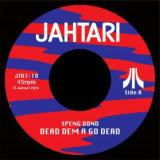























![Various - [QR]V.205.DTON.26](https://www.deejay.de/images/l/7/1/1248271.jpg)
![KYLE DIXON & MICHAEL STEIN - STRANGER THINGS 5 [ORIGINAL SCORE - VOLUME 2] LP 2x12"](https://www.deejay.de/images/l/8/8/1243588.jpg)