The Mental Groove Classic series returns with a treasure trove of rare and hard to find tracks plucked from the personal collection of label founder Olivier Ducret, a pivotal figure in Switzerland's acid house and rave-era party scene.
On Volumes Two and Three of the series - the first installment hit stores in 2017 - the Mental Groove and Musique Pour La Danse label founder takes us back to the turn of the '90s, a time he spent promoting parties in fields, squats, forests, warehouses and former factories in and around Geneva and behind the counter of a record shop of the same name. While others in Switzerland's emerging dance music scene gravitated towards US house and garage, Olivier and his crew opted for a bass, breaks and techno-focused sound inspired by regular trips to clubs, raves and record shops in the UK.
Drawing directly from his own record box and a memory bank full of snapshots of euphoric dancefloor moments, Mental Groove Classics volumes Two and Three sees Olivier reaching for cuts of near-mythical rarity, genuinely overlooked gems, and undeniably brilliant tracks that have left a long-lasting impression on the local raving landscape. It's an autobiographical audio document, historical archive and personal musical statement all rolled into one, inspired by a moment in time where musical boundaries were being redrawn in a wave of carefree optimism and freedom inspired new rave scenes across Europe and far beyond.
Matt Anniss
Original artwork by Soho's Brain Club co-owner and artist of early British club culture Mark Wigan.
File under house, breakbeat, techno and warehouse rave music
Cerca:o k jazz
The Issues label keeps up its fine early momentum with a new EP from Pau Roca with a remix from Crue. It is another tasteful 12" that comes on the heels of a deep outing from Dubbyman and an inaugural release featuring fresh versions of Joan Bibiloni by Kiko Navarro & Willie Graff.
Opener 'Daradada' is a spiritual deep house cut with swirling pads and classic vocals drifting next to the jazzy keys. It's expansive and cosmic in design and one that touches the heart on many levels.
'Here Comes The Moon' is another cut that shows off Roca's mastery of astral melodies. His gorgeous chords and delicate keys rise up to the stars as warm, dynamic drums bring the weight down low and spoken words unfurl in a seductive fashion. The Crue remix of 'Daradada' then brings more drive with harder but still organic house drums and hits.
The chords take on a melancholic quality and an elastic bassline pumps the party with a playful sense of energy. Last of all is 'Get Down' which once again sinks you into a beautifully warm and heady world of soft focus chords and late-night synth work.
- A1: Delitto Al Ristorante Cinese (Seq 1 - Titoli) 2 10
- A2: Delitto Al Ristorante Cinese (Seq 2) 3 34
- A3: Delitto Al Ristorante Cinese (Seq 3) 1 52
- A4: Delitto Al Ristorante Cinese (Seq 4) 5 07
- A5: Delitto Al Ristorante Cinese (Seq 5) 3 19
- B1: Delitto Al Ristorante Cinese (Seq 6) 5 10
- B2: Delitto Al Ristorante Cinese (Seq 7) 3 21
- B3: Delitto Al Ristorante Cinese (Seq 8) 3 48
- B4: Delitto Al Ristorante Cinese (Seq 9) 2 14
Musica Per Immagini is glad to present the first vinyl release of Detto Mariano's “Delitto Al Ristorante Cinese”, the second original Soundtrack in the so-called 'delitti' series. It's another classic iteration of the crime-comedy films that came out of the partnership between director Bruno Corbucci and actor Tomas Milian, a special connection that had started with the great success of “Squadra Antiscippo” and was followed by eleven more pictures, all centered on the character of Nico Giraldi, a former criminal who, while having become a cop, was unwilling to give up his in your face attitude and the Roman slang of the city's thieves. The score by the Italian composer is a mix of sounds characterized by a unique investigation of musical timbre. Nine tracks that cross the entire sound spectrum: electronic pulses,
funk rhythms, jazz and Mediterranean sounds and some oriental atmospheres. A brief summary of the artist's creativity passed away a few months ago.
Repress!
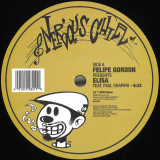
One of the keys to Nervous’ longevity has been our willingness to take chances on new producers and new sounds. As long as a track contains the essence of House, we encourage producers to experiment with combining House with other musical genres. And if the results are creative and fruitful enough we are always ready, willing and able to create a new sub label and logo to go along with a fresh sound.
In the 90’s we felt a movement toward House being juiced with Jazz elements and we created the Nervous Chill Sub-label. Now all these years later we are once again seeing a new appreciation for the sounds, flow and energy of Jazz on the part of some of the world’s premier House Music Producers, and so we are embarking on a re-launch of the Nervous Chill imprint.
Onboard for the re-launch is the very talented and dynamic producer Felipe Gordon with the two tracks “Elisa” and “Resonant.” Both songs feature the legendary musician Paul Shapiro, who has played a key musical role in many of House Music’s most celebrated tunes including “The Whistle Song” for which he supplied the eponymous “whistle.” “Elisa” features an uplifting and bouncy rhythmic vibe that’s topped and energized with Paul’s jazzy flute, while “Resonant” has a deeper and slightly more aggressive tone that’s propelled with Paul hypnotic and free wheeling sax instrumentation.
The discography of the phantom Gruppo Sound exceeds over thirty titles published in an undefined time frame between the Eighties and the Nineties. However, there is very little information about this curious pseudonym. it is possible to find a library music album by Gruppo Sound inside the Canopo, Deneb, Flower, Monosound Records and Teams catalogues, all managed by Flipper Music publishing group, but both the creators and the musicians have never been the same. Gruppo Sound is only a collective name, maybe to identify a certain number of 'new' productions characterized by an electronic background And, not by chance, the author of “New York City” is a single artist, the multi-instrumentalist Gabriele Ducros. Son of the prolific composer Remigio Ducros, he first followed his footsteps in the field of music libraries and soundtracks and then become the author of many tracks for television commercials of a certain relevance, winning some international awards.
“Some of these tracks may have been associated with a pornographic film. Others were, however, made as brief comments for a theatrical show, perhaps never made”, remembers Gabriele Ducros. What unites the thirteen pieces is the same musical language, which derives from a widespread funk and jazz matrix. Both genres are thus declined through a different approach and taste, in line with the fusion trends of the time, when the early synthesizers were used by few artists. A handful of electric guitar notes for a 'urban' mood, the acoustic ones from a dreamy morning awakening. Electronic keyboards to arouse a sense of nostalgia in the listener, while flute and saxophone always punctuate different atmospheres. A computer melody, a theme for children and a sophisticated ode to the fusion sound of the Big Apple, perhaps true source of ispiration of the work. “New York City” is not a concept album, but one of the best cross-sections of Gabriele Ducros' great creativity.
"Deep Dancefloor Jams of African Disco, Funk, Boogie, Reggae & Proto Electro Music 1977-1986reggWhen a passionate DJ and crate digger intuitively selects music for a DJ compilation, without artistic compromise and without the burden of trends, AfroMagic vol.1 emerges from the depths of his soul. Herewith we present the new favorite phonomancer’s tool for all the DJs who experience the dance floor as a sanctuary and a source of freedom and love.
The most fundamental thing that defines African music is that it was created for dancing. In African dance, there is often no clear distinction between ritual celebration and social recreational entertainment – one can seemlessly merge with the other. Because dance and rhythm have more power than gesture and more richness than words, and because they express the deepest experiences of human beings, dance is in itself a complete and self-sufficient language. It is truly an expression of life with all of its emotions – joy, love, sadness and hope – without which there is no African music and dance. For the African people, dance and music are integral parts of the body and soul, thus depicting the expression of life, current emotional states, visions or dreams. Through hypnotic repetitive music and dance, people communicate with each other and with the souls of the dead, the animals, the plants, the stars, the Gods… They free the body and the spirit through ecstatic states, reaching a healing sense of freedom, happiness, and satisfaction.
Throughout history, this transcendental perception of rhythm and dance originating from Africa, influenced popular music worldwide, thus creating new living and breathing forms of musical genres – freeing them from their industrial mold. Funk, disco, soul, boogie, reggae, dancefloor jazz etc., developed in parallel all over the world. It is foolish to perpetually discuss where they originated from and who were the creators of all these fiery dance floor genres – being obvious that they directly or indirectly originate from the African continent and its people who were as well, over the centuries, influenced by disturbing socio-cultural factors of colonialism. However, no one can enslave the soul. The seeds of free and uninhibited dance and rhythm, true to their original form, initially first sprouted onto the USA’s fertile fields of clubbing and popular music while later evolving in other parts of the world.
The disco funk club culture manifested itself as a phenomenal explosion of artists and grooves in the second half of the 70s in the USA. Shortly it spread around the world continually reigning over charts in its various forms – to this day. Clubs emerged where the DJ is an almighty shaman and the dancers are a tribe united under one roof. This urban ritual had and still has a single goal: togetherness, freedom, and love. Clubs have evolved into temples where we free ourselves from the burden of a consumerist lifestyle and suppressed emotions – a place where we receive love and give love – to be who we really are.
Disco funk clubbing was such an influential global phenomenon that its influence can be observed in various other genres from the disco funk era i.e. progressive rock, which mutated by layering complex rock arrangements with a disco funk groove resulting in hybrids, highly sought by today’s diggers, producers and collectors. The profit-hungry music industry of the 80s very quickly commercialized the original disco funk sound by amputating of its original Afro groove to be able to easily ‘sell’ it globally. So, the original disco funk groove became underground again, and it has remained so until this day. Today, for a DJ to unearth that ravishing groove that will lead the dancers to the stars, he must dig passionately like a true musical archaeologist in search of that groove that picks you up after just a few initial beats. That groove which forces the atoms in your body to vibrate, that groove which unites the body and releases the burden.
The AfroMagic compilation series is created as a tool for real DJs who stick to the aesthetics and essence of clubbing.
This continuation of the Afromagic compilation by DJ Borovich was created in a private jam session which served as an escape route from intense and complex love problems.
Unconsciously driven by intuition and emotion and following a live mix tape framework where many tunes are arranged instantaneously, Borovich narrates his story with a strong rhythm that cuts loose even the most blocked off energy nodes and restores happiness to the spirit and the body.
The musical experience of the groove is completed by the lyrics of the songs, which symbolically give DJ Borovich universal answers to his questions arising from questioning the boundaries, nuances and other forms of love.
When considering that Borovich’s selection was created to facilitate an escape from the burdens of reality through rhythm and dance, we can be sure that Afromagic Vol. 2 will have a 100% uplifting, energized and spaced-out effect on the listeners.
The intro to A1, “Feeling Happy” by the Apostles, introduces us to an experienced and slow, cool and irregularly tight groove containing a confidently sung chorus that instantly gives a sense of freedom and hints at the remainder of Afromagic Vol. 2: “I’m gonna feel happy, ´cause I know I’m gonna be myself.” After the anthemic song mantra of the Apostles, Aigbe Lebarty uncompromisingly continues with a dirty disco rhythm. Acidified by accented synths that elevate it to shamanic levels and held together by a female tribal choir, we embark on an uncompromising ritual disco journey. Without a moment to take a breather the prog funk band Mighty Flames and their Road Man launch a highly vicious and raw, thick funk groove spiced with acid synths and dirty RnR breaks, raising the bar for the A side. Jimi Hendrix himself would surely praise it given the ultimate freedom and virtuosity in the solo sections. With the last tune on A side DJ Borovich decides to burn the floor with Geraldo Pino’s psychedelic, acid furious groove and lyrics which describe this HEAVY part of love problems: “The way she walk, the way she talk, the way she does a funky dances, she is really really heavy – that woman”.
While the A side represents a compact intoxicating afro groove machine that separates us from reality and lifts us up to the stars in over 23 minutes, the B side is a treasure trove of proto sub-genres gems. This selection represents the mission of the Afromagic: to find singular events in African recorded discography of popular music from the 70s and 80s that give evidence to the birth of new modern genres on the Dark Continent even before they emerged in the U.S.A. or Europe. The beginnings of electronic music influenced genres are represented back to back with 80s synth jazzy pop, all painted in African colours.
The B side opens big with Jake Sollo and a huge reggae blues number singing about the humiliation of a man – goosebumps guaranteed! “You think I’m nobody that’s why, you don’t know the way for me, I’m somebody I know, I found myself at last”. Adolf Ahanotu then enters the scene with a hard sliding tackle at B2 and an exotic rare disco funk dancefloor napalm. A ‘Sensation’ that would ignite even the coldest of introverts. While we approach the end of the compilation the narrative revolves again and takes a different turn. No less and no more than to the proto-electro that Baad John Cross serves us in “Give Me Some Lovin´”. The fat and repetitive broken electro synth groove, championing many early 90s electro tracks, is presented here without hesitation and with constant tension accompanied by a mantric chorus “Gimme some, gimme some, gimme some looooovin’, EVERBODY!!!”. Finally, we’re guided to the end of Afromagic Vol. 2 by Eji Oyevole’s 80s synth pop style presented in an authentic afro manner, giving us a glimpse at yet another released Afromagic edition, as well as giving an answer to DJ Borovich’s love problems. A smoothly broken electronic rhythm resembling electrified highlife sounds, carried on the wings of a virtuoso dreamy saxophone on top of which Eji presents the most intimate parts of himself. Finalizing the track with a symbolic chorus, on the surface referring to the dancefloor and simply having fun, but in actuality referring to the skill and happiness of living: “I´m a dancer, I can dance”. So, get up and dance among the stars with DJ Borovich and Afromagic.
Introducing Small Great Beats, an exclusive series following the principal release series, Small Great Things (SGT). This limited edition collection will showcase 1 or 2 releases annually, featuring a blend of anthems, melodic tracks, and dance floor-oriented tunes.
Limited to just 200 copies per release, Small Great Beats offers collectors a rare opportunity to own something truly exceptional. Additionally, the series will be digitally available on all major platforms and Bandcamp.
Kicking off the series is Luca Olivotto's mesmerizing 5-track EP, "Kind Of Lovin´", pressed on captivating light blue vinyl.
Opening the release is title-cut ‘Kind Of Lovin’’, an anthemic slice of classic house fuelled by a swinging 909 drums groove and bouncy bass line in combination with intertwined piano keys, strings and vocal hooks before ‘Blue’ follows and lays down a 90’s rave-tinged piano melody, cinematic string flutters and crisp saturated drums across five minutes. ‘Hear My Call’ comes next and infused a more funk leaning aesthetic with organic percussion, jazzy keys and a walking bass line, intertwined with wandering strings and choppy vocal chants.
Opening the B-side is ‘Sun After Dark’, as the name would suggest a more peak time groove with glimpses of brightness via a circling bass line, raw, heavily shuffled drums and gritty stab sequences. ‘My Soul’ then rounds out the EP, again aptly titled as the composition fuses soulful cinematic strings, bright keys and an amalgamation of soulful vocal stylings all dynamically evolving and unfolding throughout.
(comes with a poster) The Klein blue horizon, gliding seagulls, a ferry purring between two languid islands, dotted with ultra-white villages and ancient ruins... These idyllic visions run through Glika, the ultimate musical project of Les Cyclades. An exciting electronic odyssey from West to East, from Belgian effervescence to Greek mysticism.
In 2020, confined to the neighborhoods of Yser and Mystère in Brussels, Alex and Ludo dream of Greek islands, of scorching sun on their skin, of salty baths, chilled ouzo and braised octopus. But everywhere, time stands still. Must one necessarily move to travel? To levitate? In the absence of Elsewhere, the Franco-Canadian duo will compose the imaginary soundtrack to their escape.
Glika (which means "sweet" in Greek) perfectly synthesizes the musical influences of Les Cyclades: a cosmic saxophone inherited from Alex’s dub and free jazz past, an architect-pastry chef-botanist from Normandy, and Ludo’s "Balearic" tracks, a musician-performer-wine lover who frequented his first raves in 1995 in Houston, Texas.
From a hedonistic encounter on a friendly terrace in the 19th arrondissement of Paris to their chosen exile in Brussels, these hypersensitive jacks-of-all-trades first danced and mixed records. Before creating their own phantasmagorical sonic territories, where cinema and poetry meet more or less human voices, brass instruments, synthesizers and analogue drum machines.
A searing fragment of Greek filmmaker Theo Angelopoulos's "Eternity and a Day" preludes Glika. Then, on Yser Mystère - the names of the two stations on tram 51 that physically linked Alex and Ludo's psyches during the lockdown - Alex's astral sax balances out the industrial mechanics of a locomotive, against a backdrop of urban soundscapes.
And then a rising bpm dominates Alocasia, with its deep and sensual light foot. So sunny. From one track to another, there are interludes influenced by Xenakis, Vangelis and Jean-Michel Jarre. Seminal heroes of the Cyclades... But soon, the duo unleash hostilities at the helm of Epigone, their meta-techno anthem. "I know", "You know", echoes Alex.
Laughs of friends, "mouth noises," and "bizarre rhythms" still dominate Parc Fou, while DRAM eyes the minimalist techno of Detroit. So dear to Ludo's heart... And what about PAME, that post-modern Greek epic.Or Glossa, a timeless track that finishes with a fascinating - because diffracted - elegance, this multi-sensory journey through Les Cyclades. Let's close our eyes. Silencio! Hay Banda!
By Eléonore Colin, journalist (and friend!!)
Main Title (The Taking Of The Pelham One Two Three) (Edit) by David Shire b/w One Way Glass (Edit) by Manfred Mann Chapter Three | Galaxy Sound Company, Solo 500 — SOLO500-502 | I am excited to share a sneak peek test pressing of the third & latest entry in @galaxy_sound_company’s Solo 500 series, which digs deep in the jazz-funk crates for killer breaks ya need in yo bag.
Side A is an edit of the jazz-funk intro track “Main Title” from the original soundtrack of 1974 gritty subway hijack film The Taking Of The Pelham One Two Three. The soundtrack with its funk, jazzy score has been a well that hip-hop artists have repeatedly drawn from. Most notably, “Krazy Kings Too” by Company Flow, “Suprize Packidge” by Mix Master Mike, & “I’m Set” by Goodie Mob.
Side B is a subtle edit of “One Way Glass” by Manfred Mann Chapter Three, which is taken from their self-titled 1969 LP. Manfred Mann Chapter Three were a British experimental jazz rock band, 1969 to 1970, founded by South African keyboard player Manfred Mann & long-time partner Mike Hugg, both former members of the group Manfred Mann. The track was sampled by many, most notably by The Prodigy for their 2009 track “Stand Up” & on “Headbanger” by Krafty Kuts in 2011.
- A1: Blood In The Water 6 54
- A2: Enigma Of Reason 10 06
- A3: The Wanderer 5 03
- B1: The Big Quit 8 35
- B2: Devil's Encyclopedia 5 47
- B3: A Memory Of My Future 6 26
- C1: I Am Because You Are 4 32
- C2: My Share Of Your Life 7 48
- C3: Age Of Thought 4 38
- D1: Matchbox Racing 6 56
- D2: We Stay Loud 5 25
- D3: Melting Pot 5 51
Über drei Jahrzehnte nach ihrer Gründung durch Leslie Mandoki, setzen Mandoki Soulmates mit ihrem Album "A Memory Of Our Future" nicht nur musikalisch neue Maßstäbe, sondern präsentieren ein produktionstechnisches Meisterwerk: Das gesamte Album wurde analog aufgenommen und produziert - vom ersten Ton bis zum fertigen Vinyl. Die Produktion des rund 80-minütigen Konzeptalbums ist ein seltenes Unterfangen in der heutigen Musiklandschaft. Mit durchgehend analoger Signalverarbeitung vom Mikrofon bis zur Vinylpressung ist die Produktion von "A Memory Of Our Future" ein Manifest von Präzision und Leidenschaft, die in jedem Ton des Albums zu spüren ist. Das Mastering des analogen Magnetbandes durch Greg Calbi im renommierten Sterling Sound Studio in New York und der Vinylschnitt in den Emil Berliner Studios sind ein Symbol für die audiophile Exzellenz des Albums. Mit einem Setup, das in der gegenwärtigen Musikproduktion kaum noch zu finden ist, und mit der die Band eine Wärme und Lebendigkeit in ihrer Musik eingefangen hat, die in digitalen Aufnahmen oft verloren geht, haben die Soulmates ein Werk musikalischer Vielfalt geschaffen, das von Prog bis Jazz Rock reicht, und kompositorische Reife, spielerische Leichtigkeit und kunstvolle Solos mit großen Spannungsbögen und tiefgründigen Texten zu gesellschaftspolitischen Themen verbindet. Die generationsübergreifende Supergroup von Rock- und Fusion-Großmeistern mit Ian Anderson (Jethro Tull), Mike Stern, Al di Meola, Randy Brecker, Till Brönner, Bill Evans, John Helliwell (Supertramp), Cory Henry, Richard Bona, Steve Bailey, Simon Phillips (Toto), Leslie Mandoki, Tony Carey (Rainbow), Nick van Eede (Cutting Crew), Jesse Siebenberg und Mark Hart (beide Supertramp) ruft mit dem Album zum Handeln gegen Spaltung und für Menschlichkeit auf. Mit "A Memory Of Our Future" gelingt den Soulmates eine einzigartige Verschmelzung audiophiler Exzellenz und gesellschaftspolitisch relevanter Musik. Dieses Album ist nicht nur für Fans von Prog und Jazz Rock, sondern für alle, die echte Musik zu schätzen wissen.
Since releasing on Reinforced at the age of 16, Dominic Stanton has always remained one of most influential producers in the west London broken beat scene. Those early adventures via numerous successful aliases laid the foundations for Dom's sound, eventually leading to the launch of 'Sonar's Ghost' in 2013.
Welcoming Sonar's Ghost to Metalheadz is now long overdue, so it's a pleasure to be showcasing 'The Fall and Rise Of...' as part of the Metalheadz Platinum series this July. Consisting of 5 collabs, 4 of them making the vinyl cut, the release draws inspiration from the rich heritage of jungle and breakbeat, effortlessly weaveing together intricate rhythms and immersive textures. Outrage & Scale feature on 2 tracks each, whilst Acid_Lab also gets in on the virtual collaboration bringing together a complimentary selection of styles.
The story of Ultrasonic Grand Prix is one of two vintage 60s guitars and their owners. I love my 1967 Vox Grand Prix guitar,” declares multi-instrumentalist/producer Shawn Lee - creator, among other feats, of the soundtrack for Rockstar video game classic Bully, and one half of Ultrasonic Grand Prix. “It is a serious beast and an important part of my arsenal. Every tone you need…’For guitar maestro Barrie Cadogan - of Nottingham Freakbeaters Little Barrie, best known for the main title theme of ‘Better Call Saul’, The The, Liam Gallagher and playing on the soundtrack for Baz Luhrmann’s ‘Elvis’ - it was the Vox Ultrasonic, also from the same period, that caught his eye. “I first became interested in Vox guitars because of people who used them like Spacemen 3 and the James Brown band of the late 60’s”, he explains, “but it was when I was part of a recording session at Anton Newcombe’s studio in Berlin that I had chance to get to know the Vox gear better. I was borrowing an Ultrasonic from a friend for a while and Shawn already had his Grand Prix. I thought it would be a good name for our project whenever we got it going.’ It was with this shared passion for these weapons of vintage, psychedelic gold that the suave, velvety, and off-kilter cool of INSTAFUZZ was born. While a project born of recent times, the flames of INSTAFUZZ were first ignited all the way back in 2010, where the two met during mixing sessions for Little Barrie’s 2011 LP King of the Waves. Snap forward a decade and we find Cadogan ripping guitar licks on Instagram, the workaholic Lee using these as inspiration to lay down rhythm tracks on analogue drum machines. And not long after that, cut to the two trading files back and forth furiously online, birthing music together in ever more completed forms. And the music that did emerge was weird, startling, and insatiably groovy. With one foot dipped in the organ-warbling garage of 60s psych, and the other vibrating in the mind-expanding fractals of the British Acid House boom, INSTAFUZZ plies the earthly quintessence’s of blues, rock, soul and jazz, against the preternatural discomforts of programmed drums and unhinged synthesisers to produce something distinctly and nostalgically futuristic
As warmer times approach Caruan and his Deset label have crafted a package which will undoubtedly be welcomed with open arms, adding to the brighter months ahead with this innovative release from tastemaking live performer and artist, Mathew Jonson. It is to no surprise that his “SOS” EP addresses an array of beautiful textures as he moves gracefully between refined jazz textures, ethereal ambience, and minimalistic moods. Jonson’s acute attention to detail has seen him remain an influential figure amongst the world of pioneering electronic music.
Dave Lee has tackled the legendary Brazilian disco cut 'Que Tal America' by Two Man Sound, originally released back '78.. Dave subtly adds new breakdowns, live percussion and even some additional vocals to give his version extra pizzazz, whilst making the most of the insistent flowing groove that made this a sure fire floor filler. On the flip things get more more echo heavy, whilst the sharp jazzy musicianship shines through.
There was never an instrumental version on the original 12". Add an acapella and bonus beats then you have an essential disco package for every Disco DJ's record box.
In spring,
Again.
But it's true this time.
In Spring is the second record by Tara Clerkin Trio, a Bristol-based group who appeared to emerge from below the radar of near-all in early 2020 and in the presence of one of the most captivating records of that year. This latest 23 minute, four song collection, recorded in various stages and locations over the last twelve months, does nothing to detract from those first impressions, refining the woozy and shimmering oddness of their debut into an avant-pop sensibility that is increasingly their own.
If the group did arrive fully formed, what that form was did feel supple and hard to grasp. They were, in a sense, essentially new sounding, or at least ghosts between the established lines, and with this new record have doubled-down on their inherently Delphian instinct. At its heart, In Spring is a record of subtle contrasts, experimental yet familiar in its intimacy, obviously modern though tied to certain lineages, and driven by a pop logic which is also free-form and seemingly improvised. Their approach to sound is perhaps the guiding principle here, less concerned with genre as it is texture and feeling, drawing from jazz, folk, modern composition, trip hop and downtempo electronica, yet evading all of those categorisations. Tara Clerkin Trio are too generous of heart to be ripping up any rulebook, they simply seem oblivious to its need.
Their geography does provide some context. Bristol's progressive sonic heritage inescapably bleeds into these four tracks, the enclave of open-minded artists around Planet Records in the mid 90s perhaps the closest point of comparison. There's that same magpie spirit which is both futuregazing and aware of its past, though is mostly set on finding its own path. This is in essence what defines Tara Clerkin Trio, feeling their way through freedom of instinct and curiosity, forging their own desire lines. Not so much taking the road less trodden, just walked at their own winding pace.
"Done before,
And I'll do it again"
Ringing in my head
While I try
To feel
DRIVETRAIN/The Moonlight
A steamy and impassioned orchestration lead by a captivating vocal mantra, tribal percussions and the soundtrack a late night chronicle.
DRIVETRAIN/Moonlight & You
Driven by drums and bass, the jazzy ambience of voice and melodic chord progression sets the stage for a big crescendo.
G-PROD/Moonlight
A wall of mesmerizing pads float fluently atop the velvety, abduction of the dominating groove provided by the rhythm section.
G-PROD/Moonlight (David Duriez Floating Light Mix)
Adding a different spice to the mesmerization, the remix is an intoxicating acid adventure through the frequency spectrum.
- A1: Bakeren (Feat Faye Houston)
- A2: O Mar E A Lua (Feat Olav Wöllo)
- A3: Bergen Sunrays (Feat Selim Mutic)
- A4: Belle Époque
- A5: Den Franske Gitaren (Feat Aich)
- B1: Don`t Fall Asleep (Feat Faye Houston)
- B2: Rory`s Sunrays
- B3: Nada Pode Me Calar (Feat Olav Wöllo)
- B4: La Psychosomnie
- B5: Den Franske Gitaren (Feat Martin Halla)
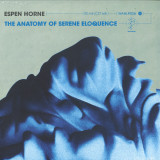
2023 sees the return of multi-talented Norwegian producer Espen Horne to Wah Wah 45s, after a 24 year hiatus. The man behind the label's very first release, the now seminal Magnetica, never lost his connection with the imprint and has remained very much part of the Wah Wah family, making a comeback this year with his first solo material under his own name since that club classic from 1999.
Back in the spring, the first single from the project, the gorgeous soul-jazz beauty Bakeren, featuring the stunning vocals of Resonators' Faye Houston, quickly found a home on Gilles Peterson's internationally renowned BBC Radio 6 show as well as that of Jazz FM legend Robbie Vincent, Bandcamp Weekly and the Fresh Finds Jazz Spotify playlist.
Following that, Bergen Sunrays, became a weekly fixture on the Craig Charles Funk & Soul Show on BBC 6 Music, with the limited 7-inch of both singles selling out within hours of release.
Next up was the wistful Den Franske Gitaren, a lugubrious soul-jazz piece with drum & bass leanings featuring Bergen based MC and vocalist Aich, which found favour with legends Laurent Garnier and Jazzanova as well as hot Japanese production outfit Dazzle Drums.
This was closely followed by the final single to be taken from the album, the stunning and outspoken vocal jazz waltzer Nada Pode Me Calar (which roughly translates to Nothing Can Shut Me Up!) featuring the sublime talent of Olav Wöllo on vocals and Juno - anotherr big one with Gilles Peterson on Worldwide FM and Deb Grant on BBC 6 Music.
And now the full album, entitled The Anatomy Of Serene Eloquence is available for your aural delectation. Recorded largely during lockdown, the LP is a sophisticated and composed piece of work that sees the Norwegian producer make connections with musicians from across Europe, and some closer to home, to collaborate on this sedate and peaceful collection of songs.
The aforementioned Faye Houston also appears on the soulful, dub flavoured Don't Fall Asleep, a piece of music that explores the feeling of being isolated whilst sharing a mutual love and drive to explore new sonic possibilities.
Elsewhere, Olav Wöllo pops up again too, this time on O Mar E A Lua and once again singing in Portuguese to give this track a certain Tropicalia feel, as Espen explains:
"Olav Wöllo is a close friend, an excellent musician and vocalist, and a capoeira professor here in Bergen. He has spent much of his life living in Brazil and speaks Portuguese fluently. He wrote the lyrics for this tune years ago and had just been waiting for the right collaboration to come along.
We went to his lovely studio out on this remote island, made a massive gyoza meal, had some serious good wine and stayed the whole night to record his vocal harmonies and outspoken lyrics."
The single Bergen Sunrays also appears on the album in instrumental form with featured keys courtesy of London based player Rory More - here entitled Rory's Sunrays. His Lowrey organ adds a more melancholic feel to the track, as it does on the stunning Belle Époque, alongside the ivory work of Eirik Blåsternes - an emotional, contemplative and atmospheric track that was tested and shaped in the eclipse of Covid.
As with Belle Époque, La Psychosomnie is a playful yet explorative cut that examines insomnia, paralysis and hypnosis courtesy of some enigmatic French spoken word spinning around a framework of drums, bass and swirling keys.
And finally, the album offers up an alternative version of the single Den Franske Gitaren, this time featuring Martin Halla, a vocalist out of the Bergen Grieg Jazz Academy and winner of the Norwegian version of The Voice back in 2012! The perfect flip to Aich's more mournful interpretation of this bass and drum future classic.
2024 repress
Melody As Truth founder Jonny Nash returns to action with his first solo album in four years.
Over the course of eleven mesmerising tracks, Nash points the compass gently inwards, casting aside any conceptual frameworks in favour of exploring an imaginative and idealised “personal folk music” that combines elements of traditional acoustic music with the producer’s richly immersive interpretation of ambient, a sound he has been developing for well over a decade.
From the smudged acid-folk bliss of ‘Theories’ and ‘Eternal Life’, to the layered acoustic guitars of ‘All I Ever Needed’ and the delay-soaked, Durutti Column-esque ‘Light From Three Sides’, a wide variety of musical textures weave their way throughout the album.
Point of Entry is much more than a mere ‘guitar album’ – it draws on a rich and diverse palette to achieve its purpose. The delicate saxophone work of ambient-jazz contemporary Joseph Shabason swells on ‘Ditto’ and ‘Light From Three Sides’. Cascading piano lines ripple through the crystal clear sonic waters of ‘Face of Another’, whilst echoes of Nash’s work with Gigi Masin and Young Marco as Gaussian Curve appear in the dancing synth sequences of ‘Ditto’ and ‘Golden Hour’. Nash’s reverb-laden voice also appears for the first time since 2016’s critically acclaimed Exit Strategies, used delicately throughout the album to conjure up a world of dusk and golden light.
Combining the delicate human touch and naivety of earlier Melody As Truth releases with widened scope and vision, Point Of Entry is arguably Nash’s most complete work to date – an album that’s as much a statement of his “personal folk” vision as a future ambient classic.
For those seeking a musical experience reminiscent of the iconic LARRY HEARD, RON TRENT & KERRI CHANDLER, delving into the enchanting sounds of A VISION OF PANORAMA is a journey well worth taking. A VISION OF PANORAMA, much like MR. FINGERS, has mastered the art of crafting immersive and soulful electronic compositions. This latest release invites you into a sonic realm where lush melodies, dreamy textures, and intricate rhythms coalesce to create an atmosphere of pure musical bliss. In a landscape where electronic music continually evolves, A VISION OF PANORAMA stands out as an artist who skillfully pays homage to the timeless vibes of classic deep house while adding a contemporary touches of forward thinking smooth and Balearic jazz. The fusion of classic house elements with a futuristic flair makes A Vision Of Panorama the closest thing available to the legends that precede.