A whole host of red-hot The Reflex flips have landed recently and this time it's TMB who drop a pair of disco delights. The opener is a smooth and low-slung cruiser with neatly knotted bass riffs and sparkling melodies that lead to a slow but sensual takeoff. On the flip, 'Lady' reworks a classic into a steamy late-night sundown sound with jazzy chords and the original vocals turning up the heat. Both are masterfully tweaked and touched up by a true titan of the dit game.
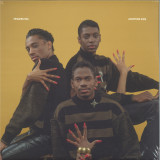
Mit "Tourist History" veröffentlicht die britisch-irische Indieband Two Door Cinema Club eines der einflussreichsten Debütalben der 2010er Jahre in einer besonderen 15th Anniversary Edition. Das Album, das 2010 erschien, gewann den Choice Music Prize als Irish Album of the Year und markierte den Start einer Weltkarriere, die von Festival-Headliner-Shows bis zu über 1 Milliarde Streams von "What You Know" führte.
Zur Feier des Jubiläums erscheint Tourist History in drei liebevoll gestalteten Formaten - inklusive bisher unveröffentlichter Remixe und Raritäten.
Seit dem Garageprojekt in Bangor haben Alex Trimble, Sam Halliday und Kevin Baird eine beeindruckende Karriere hingelegt - mit Top-10-Alben wie Beacon, Gameshow, False Alarm und Keep On Smiling und ausverkauften Touren weltweit. Diese Jubiläumsausgabe ist ein Muss für Indie-Fans und Sammler - ein Meilenstein moderner Gitarrenmusik.
Nippon Psychedelic Soul 1970-1979 is Time Capsule’s continuation of the deep dive into Japan’s rich history of folk and psychedelic soul music.
Vinyl LP with 4 page insert, original artwork and photos
The kaleidoscopic psychedelia of 1970s Japan captured a fragile and fertile moment as the country sought its future in funk grooves, heavy reverb and lyrical hallucinations.
The follow-up compilation to Time Capsule’s Nippon Acid Folk, Nippon Psychedelic Soul takes myriad pathways into the tripped-out undergrowth of 1970s Japan. Finding their feet at home and looking for inspiration abroad, the musicians featured here were engaged in the communal soul-searching that followed the breakdown of the 1960s protest movements. Some made it big, others drifted into oblivion. The music they left behind shimmers with intensity.
At the core was Happy End, the first project of YMO’s Haroumi Hosono, whose distortion-heavy guitar and crisp back-beat laid the foundations for Japanese lyrics that flipped the paradigm of Japanese rock music on its head. With it came a new found sonic ambition, such as in the bold Philly-soul style arrangements of producer Yuji Ohno, whose work with occult wandered Yoshiko Sai shares some of the bittersweet grandeur of Rotary Connection or David Axelrod.
Then there was Jun Fukamachi, a pioneer of Japanese synthesis, whose debut album was a carnival of orchestral funk, euphoric horn lines and rich production, complete with soaring guitar solos, psychedelic organ and a truly cinematic finale. The first and only time Fukamachi would sing on record, ‘Omae’ rips like the ultimate end-of-nighter.
Influenced by giants of the US soul scene, maverick composer Hiroshi “Monsieur” Kamayatsu (otherwise known as ‘the Brian Wilson of Japan’) went one step further, enlisting Tower of Power to play on ‘Have You Smoked Gauloises?’ The B-side to Monsieur’s biggest-selling single, it coasts with sophisticated cool - a liquid bassline and suave keys comping under a roaring trademark ToP sax solo. No surprise it found favour once more on the Acid Jazz dance floors of ‘90s London.
Such was the spirit of experimentation that big studio productions and private press releases sat side-by-side, with the likes of Momotaro Pink and Kazushi Inamura, taking their hopes of success into their own hands with the resources available to them. More reflective but no less robust, theirs was a heavy, fat-backed drum sound, soaked in dramatic, soulful psychedelia.
If some were dreamers and others space cadets, none were further out than sci-fi writer, musician, activist and self-made scientist Tadashi Goino, who transformed his own fantasy novel Messenger from the Seventh Dimension into an operatic prog odyssey with few discernible musical reference points – a majestic and completely bonkers outlier even among company as strange and brilliant as that which is collected here.
Less a compilation of a scene, as a compilation of a sentiment, Nippon Psychedelic Soul is a wild ride from start to finish, shattering the narratives of the Japanese folk and rock tradition into a million tiny pieces.
A portage is the stretch you carry across – the overland pass between two waters, where you shoulder the boat and the paddles and keep moving even after the current runs out. It isn't a break in the journey; it's part of it. TAMIZDAT's fifth release takes that as its shape: four artists carrying a single, measured groove from one shore to the next. Rooted in deep house, techno and minimal, Portage isn't built for the peak – it's an unhurried, warm, buoyant passage that stays light on its feet.
Genning is no stranger to this water — a MixCult regular since his 2018 debut, and his Sunlight EP was TAMIZDAT's second release. He returns from the heart of the family that shaped the label's dub-leaning sound.
Dot (Dotan Bibi) crosses over from Tel Aviv — an Israeli producer with roots in Detroit house. His Intergalactic Ride EP already landed on MixCult in 2024, and he returns here working out of his analogue home studio.
Overt has been a prominent MixCult voice since 2021, known for an ethereal, galactic juno sound that drifts easily into dub chords — records like his Simple Astral 12" mark him as one of the label's steadiest hands.
zekeN, the Romanian producer and one half of zekeniaN, brings more than fifteen years in electronic music: deep, energetic grooves, dreamy pads and percussive basslines that lean minimal rather than strictly rominimal. His zekeniaN project has surfaced on MixCult before; here he steps out on his own.
Luca “DJ Rocca” Roccatagliati isn’t just a producer, he’s a shapeshifter of sound. Emerging from the late ’90s under the Maffia Soundsystem alias, he’s spent decades bending genres, dissolving boundaries, and reconfiguring the DNA of club music.
From cosmic disco to leftfield house, Rocca’s catalogue reads like a map of underground excellence. He’s collaborated with a roll call of innovators—Howie B, Dimitri From Paris, Daniele Baldelli, François K, Jazzanova, Zed Bias and many more. Crafting releases for some of the most respected imprints in the game: like Rekids, Toy Tonics, International Feel, Defected, Rush Hour, Hell Yeah, Rotters Golf Club among others.
His output is prolific, restless, constantly evolving.
Partnership is central to Rocca’s universe. With Dimitri From Paris, he co-created Erodiscotique, a sleek electro-disco project that fuses vintage sensuality with future-facing production. Alongside Daniele Baldelli, he’s explored deeper, more psychedelic terrain, delivering albums like Podalirius and Quagga—records that blur the line between Balearic mysticism and dancefloor propulsion.
His aliases Ajello, Supersonic Lovers, Crimea X are parallel auditory dimensions. Each one pushes a different facet of his sound, from Italo-tinged grooves to raw, analog-driven club cuts. As a remixer, Rocca has reworked everyone from Andrew Weatherall to Soul Clap, always imprinting his unmistakable signature.
To say we are excited about this new EP is kind of a massive understatement……
Having been huge fans for over two decades, when he reached out to us it was a bit of an eye rubbing and arm pinching moment.
We have been graced with a 3 track EP titled “Tonight is the Night”
A1. Sun Deck – A link-up with Athens mainstay Lex, drifting somewhere between yacht funk and late-night boogie. Sun-washed grooves, crisp synth leads, and just enough 80s energy to keep it moving without trying too hard.
B1. Italo Boogie Stomp – Does exactly what it says. Rolling Linn drums, sharp synth lines, and a nostalgic flute motif that nods to NYC’s street soul era without getting stuck in it.
B2. Ferroso – Picks up the pace slightly. Deep house drums meet a driving electro bassline, with arpeggiated synths and warm pads rounding it out—focused, functional, and built for the floor.
Dub techno runs on ghosts and twins. The ghost is the echo that outlives the hit – the reverb tail, the delay feeding back into empty space. The twin is the dub itself: every sound shadowed by its own double, the original and its darker reflection locked into the same groove. Ghosts & Twins gathers four cuts that work that space.
This is BLACKINSTOCK's Black Gold Dub Techno with both feet on the floor – measured but muscular, weighted, no filler and no drift. The groove stays locked, the low end does the talking, and every echo earns its keep. Music for a dark room and a loud system, not a candle and a beanbag.
Curated by Kirill Matveev, who called in friends and long-time collaborators from across the MixCult circle, the record plays as four takes on one idea. Spectral Model opens with "Distancial" – a new name here, making a first outing on the MixCult family, and a fitting one to raise the ghosts. Djalo follows with "Model Dub," dubbing minimal and techno the way he has across MixCult, Souplex and Apnea: economical, hypnotic, built for the low end. On the flip, Schime – Hungarian producer Sanyi Egyed, working dub techno, deep and minimal since 2013 across Phonoda, Welter and the MixCult ranks – turns in "Phased." Closing the record, The Don Of Dubhouse is the new alias of TM Shuffle, Finnish producer and head of Vuo Records, no stranger to MixCult.
The fourth release on Samurai Music sublabel SAIBAI comes from Spanish techno mainstay Reeko. True to his long-standing reputation for hypnotic sonics and rhythmic precision, Juan Rico builds on a recent run of activity on Samurai to offer up a densely packed, evocative pair of 160/170 BPM soundscapes. In keeping with the spirit of previous SAIBAI releases, Rico emphasises exploration on both sides of this new record as he draws out continually morphing textures that land between melodic expression and percussive impact. It's instantly clear there's a free tekno undercurrent buried beneath 'Gathering 1' that defines the energy of this latest transmission. The difference is how Rico wields that energy, artfully submerging the kick drum propulsion and letting three-dimensional sonic sculpture beat a path towards the dance. Layers of arrhythmic delay ripples loosen the valve, but there's a constant pressure pushing at the edges of the production from start to finish. There's a more immediate urgency to the mixing of the rhythmic elements on 'Gathering 2' as Rico teases a gabba-like intensity tempered by misty clouds and textural sweeps that soften the attack without sacrificing the thumping energy of the track. Measured and meticulous, bristling with micro-details on top of the imposing presence, both 'Gathering's reaffirm Reeko's current hot streak working outside his usual field of focus.
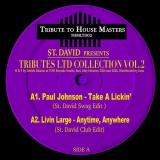
St David's ongoing remix project - Tributes To House Masters - takes a second swipe at the reworks form, probing deep below the surface layer of house music history for another worthy four-track V/A. Paul Johnson's production style is unmistakable before we've even read the name, and shines through even after a remix from St David Swag; 'Take A Lickin'' features several of his sonic blazons, from sticky MIDI brass to ticklish vocal chops. Johnson also famously remixed a Bohannon record, so the latter's inclusion here on the B2 makes this one feel just that bit more knowledgeable. DJ Pierre's MLK-sampling hooter 'Meet Hate With Love' is the favourite big, flabby soulful house chooer in between.
This isn’t Halloween however the spooky meters are showing abnormal levels of spookiness thanks to the French duo of producers Gogo Gadgeto and Lazer Man. These monsieurs of electronic groove have gathered together to craft “Vampire World” the disc which is categorically against the light, garlic or the silver bullets and in huge favor with the sir count Dracula himself. Audio trips which are telling the ritual story of nighttime and the creatures who are lurking deep in the shadows when the sun is tucked away and cozy sleeping. The 4 tracker is guaranteed to transport you to Transylvania, the original birthplace of vampires and to establish contact with them. At the end of the day, we are living in the vampire world where evil spirits must be respected as the undead are always watching.
Due to high demand, MEU has revisited two of Mr. K’s classics, previously only available as 12-inch extended mixes, and asked the master editor to pare them down to 7-inch size.
A true top-five peak record at the Garage, Thelma Houston’s “I’m Here Again” was “a highlight whenever Larry played it,” Danny Krivit recalls, “and he played it a lot!” Danny’s edit is a homage to Larry and Frankie Knuckles – in particular a similar private edit that Frankie did back in the day and shared with Krivit. “It was on reel to reel and I didn’t copy it correctly and lost it,” Danny remembers. “Reels were problematic! When I tried to get it again from him, unfortunately he had lost it too.” The song (likely an attempt by Motown to capitalize on the previous year’s monster hit “Don’t Leave Me This Way”) is, in its original form, a virtual retake of Thelma Houston’s breakout single, from the subdued, schmaltzy intro to the “oooh BABY!” leading to the chorus. What sets “I’m Here Again” apart though, is the incredible second half of the song. Naturally, it is here that Mr. K’s edit focuses. Over a vicious groove reminiscent of the Originals’ “Down To Love Town” breakdown (Michael Sutton wrote and produced both “Love Town” and “I’m Here Again”) Houston delivers soul-stirring ad libs as the band crackles with electricity behind her, the piano chasing a descending string riff so eagerly. Pure dancefloor peak energy! And the very first time having all these parts on a 7"!
For our flip, Danny has reached deep into the earliest foundations of his voluminous collection, and come out with a psychedelic pop classic rearranged for today’s sound systems and setlists. Recorded in the Beatles’ Abbey Road studio at the height of the Summer Of Love, the Zombies’ “Time Of The Season” is firmly linked in pop culture to the late ‘60s and the Vietnam era, breaking big in the summer of 1969. Krivit’s edit highlights the parade of lush sonic textures that ornament the hip composition, from the iconic, exquisitely echoed bass-clap-exhale riff that opens the song to the cascading Hammond organ solos of Rod Argent. “It’s a song from my childhood that really struck a chord,” Danny says. “Over the years I often played a rough edit which always seemed to go over great. The song seemed to get better and better, and age like fine wine.” We agree!
These two songs have both appeared on previous (separate) MEU 12-inches, but are presented here in custom new edits for the 7-inch format.
Welcome back, hope you've had a good trip so far. While we're digging global tunes, let's not forget what's cooking in our own yards. No less then a new dub don has risen from the wastelands of bratwursts, nutcrackers and garden gnomes: Toni Wobble is looking back on over 20 years of roots in punk, free parties and political movements. From anti-nuclear activism to the Gaggeldub performances, Toni's dug deep into the Dub universe: from Dubstation to Rootsbase to Subardo. By 2012, Toni became a respected operator of Leipzig's Plug Dub Soundsystem. Soon after, he didn't hesitate to create the very own solarpowered Sunplugged sound. Toni's live dub sets hit with all depth and energy of low bass sound culture, shaking the foundations with refreshing freakuency adventures. After a guest spot on our 18th release, helping RUZ dubbing out a deep b-side, it's time to unleash the full Wobble fury on 45Seven!
Out In Da Streetz was born in a lockdown, when urban life got stall, opening space for experiments. Inspired by Juke and Footwork at nights such as Bassmæssage, Toni ventured into Jungle production - the genre him love from way back. The result is an opus of subs, breaks, skanks and dubs. Expect 30 Hertz bass, wobbly midranges, halftime snares and Jungle edits sharp like razor. Don't miss the Ini cameo and hand-made skank work straight from the lab. The result ain't just a track, it's a state of inner and outer emergency, a deep dive into groove, texture and creative chaos.
Irie Cruise rolls up like a cloud of green smoke riding through the streets with a sick ride in a surreal vibe. Rootsy rhythms meet subtle Jungle twists inbetween the twinkles of Dub and the flickers of breakbeats. When the hook drops, the impulse fires up, the lowrider bounces through the turns of skanks, throwing dub delays and gliding deep into the night. By the final tone, you didn't just take a ride, you're actually a bit closer to the sun.
Toni Wobble is giving the full hundred. Dub ain't just a genre, it's a portal to infinite spaces of sound. It's a culture, a process and an attitude, all about echo, bass and space. But it's also about experimentation, consciousness and transformation. Each delay loop is reshaping reality, tearing it down and rebuilding it from the ground up. D.U.B. equals to deep universal beats, the universal frequency... Deep, wide and open. Tune in and dub out!
discotech is back with our second Various Artists colour series! Returning with another essential collection, we've unearthed a selection of rare underground cuts from the late '90s and early 2000s. Carefully remastered from the original recordings, this release shines a light on timeless productions from Big Hair, DJ Quiz, Rob Pearson and Crowdpleaser.
The response so far has been incredible, with support coming from some of the scene's most respected selectors, including Archie Hamilton, Francesco Del Garda, Chris Stussy, Josh Baker, Skream, Arapu, Ivan Schmagge, Dungeon Meat, Alexndria, Toman, Mella Dee, Marco Carola, Alexander Skancke, Chris Carrier, TIJN, David Gtronic and many more.
Limited 300 press. Coloured vinyl x
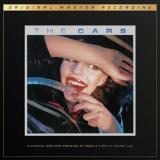
Move in Stereo: The Cars’ Eponymous Debut Album Functions as a Greatest-Hits Set with Classics Such as "You're All I've Got Tonight," "Good Times Roll," and "Just What I Needed"
Experience the Six-Times-Platinum Record in Definitive Sound on
Mobile Fidelity’s UltraDisc One-Step 180g 45RPM 2LP Box Set:
Strictly Limited to 4,000 Numbered Copies,
It Plays with Reference Definition and Presence
1/4” / 15 IPS analogue master to DSD 256 to analogue console to lathe.
Among the most critically and commercially successful debuts in history, the Cars' eponymous album doubles as a greatest-hits collection. Not one song on it is widely unrecognized or unknown. Consider the list: "You're All I've Got Tonight." "Good Times Roll." "Just What I Needed." "Moving in Stereo." "My Best Friend's Girl." "Don't Cha Stop." “Bye Bye Love.” Just call The Cars the best new-wave rock album ever made. And a natural candidate for preservation on a Mobile Fidelity UltraDisc One-Step pressing.
Sourced from the original analog tapes, pressed at Fidelity Record Pressing in California, mastered by engineer Krieg Wunderlich, and strictly limited to 4,000 numbered copies, MoFi’s UD1S 180g 45RPM 2LP box set presents the six-time platinum record in the most vivid, wide-spanning, three-dimensional sound it has enjoyed on vinyl. Compared to the label’s outstanding and out-of-print 180g 33RPM version, this collectible edition features richer textures, broader openness, greater presence, and bigger dynamics.
Benefitting from the extra groove space on 45RPM by playing with enhanced definition, deep-black backgrounds, and ultra-quiet surfaces, this reissue portrays the band’s oscillating rhythms, futuristic keyboard passages, and panned images with stunning realism. Songs take on an absolutely surreal quality. The Cars and producer Roy Thomas Baker manipulate arrangements at will to mesmerize listeners' senses. The concept of "moving in stereo” has likely never been truer.
The industry-leading packaging of the UD1S set gives fans another reason to gravitate towards the 1978 album. A deluxe slipcase, two foil-stamped jackets, faithful-to-the-original graphics, and MoFi inner sleeves make for a premium tactile experience. It invites you to immerse yourself in everything about the record, including the now-familiar cover art depicting Nataliya Medvedeva behind the wheel. Enhanced by her glistening ruby-red lips, her face flashes an expression caught between surprise, ecstasy, and disbelief — an apropos way of responding to The Cars whether you’re hearing it for the first or 1,115th time.
Introduced in 2024 into the National Recording Registry for its significance, and ranked the 353rd Greatest Album of All Time by Rolling Stone, The Cars explodes with emotion, energy, and hooks. Its songs unite then-disparate styles: bubblegum melodies, art-rock angularity, progressive structuralism, terse minimalism, and power-pop sheen. The stylish arrangements also benefit from a laidback cool and understated irony that remain uncommon in the world of contemporary mainstream music.
Equally rare is the deep chemistry the members shared before they entered London’s AIR Studios and knocked out the record in less than a month. Benjamin Orr and Ric Ocasek began their first band together in the early ‘70s. A subsequent group with future Cars keyboardist Greg Hawke preceded Orr and Ocasek bonding further by temporarily performing as a duo. One final pre-Cars ensemble, Cap’n Swing, brought guitarist Elliot Easton into the fold. A decision by Ocasek to take the band in a rock direction, a crucial lineup shuffle, and a name change begat the Cars so many listeners know and love.
Already a going concern in Boston, the quintet cut its teeth and woodshopped songs for nearly a year and a half before signing with Elektra and partnering with Baker. The Cars enjoyed success right out of the gate, hitting No. 18 on the Billboard Top 200 chart and netting a pair of Top 40 singles in the form of “Just What I Needed” and deceptively happy “My Best Friend’s Girl.” The sarcastic “Good Times Roll” climbed to No. 41, but soon enough, almost every track on The Cars became a radio staple — an honor far more meaningful than chart positions.
Obsessed with incorporating the latest technologies and sounds into its palette, the band spiced tunes with delightful and quirky accents — country-tinged guitar fills, echoing Syndrums, reggae splashes, hard-rock tones, robotic pulses. Orr's low, nuanced deliveries and Ocasek's cool, detached vocals lend shades of doubt and double meaning to the lyrics, which are further counterbalanced by synthesizer flourishes and electronic beats.
Accessible and eccentric, edgy and catchy: The results comprise a landmark whose characters come to vivid life with nuclear boots, dry-drip gloves, ribbon-festooned coiffures, suede-blue eyes, and rock ‘n’ roll hair. It's practically impossible to avoid humming along to every song, all enhanced by Baker's stellar production. Best known for his work with Queen, he ensured the record packed a punchy midrange, opened up with instrumental and vocal separation, and breathed with airy harmonies.
Indeed, from the timeless music to the sleek production and sonic restoration, The Cars on UD1S is just what you needed.
Under the right conditions, half-remembered dreams can meld seamlessly into hazy present moments. Time spent alone can be an emotional blank canvas, and an opportunity to deconstruct sense and feeling; a patchwork of snippets both rooted in memory and abstracted from reality. The title of ‘quilted lament’ perfectly captures the way Gretchen Korsmo and claire rousay’s overlapping missions come together to do just this. Worn polaroid melodies and snatched everyday noises seem overheard through windows onto the street. They feel emotionally twinned, claire and Gretchen, it’s not always possible to tell where one ends and the other begins. Their musical thoughts and DNA are sewn together into a mini symphony of warmly embracing movements.
Built remotely between pre-existing friends in the underground music scene, the duo layered ideas onto audio files, and sent them back (and forth). And these luscious instrumentals truly do feel assembled by intuition, casually crafted with little need for guidance. “claire and I are both emo,” explains Korsmo. “We are both former texas-dwellers too and relate over both the woes and beauties of being in the American DIY experimental music scene.” Buoyant piano keys and hushed layer vocals tracks sit alongside a humming field-recorded scrapbook; a neighbour caught in a moment of private inspiration while street noise elevates; a private hymnal in the bathroom while the washing machine ends its cycle. Both artists take field sounds from a wealth of Zoom and Tascam recordings made in the last half-decade in Santa Fe, San Antonio, Los Angeles, Kamakura, Japan and elsewhere – from a baseball game announcer in Santa Fe, to the sound of a friend eating a juicy peach. At times, the bedroom walls seem to grow thin amid atmospheric creaks and disembodied whispers. Despite its very emo core, this is a recording engulfed in an intense sense of bliss, more at peace than we’ve heard either artist before.
The Mighty Diamonds are one of the most famous vocal groups to come out of the Jamaican Reggae scene.
Their perfect harmonies ride over the wholesome and Garveyite influenced lyrics to such great effect that they will always evoke memories of that time and place, but also like all great music never seems to date.
The Mighty Diamonds consist of Donald ‘Tappy’ Shaw (lead vocals) Fitzroy ‘Bunny’ Simpson and Lloyd ‘Judge’ Ferguson providing those fantastic harmonies.
They began their recording career working with producers Stranger Cole and Rupie Edwards but found their breakthrough success with producer Joseph ‘Joe Joe’ Hookim at the legendary Channel One Studios recording ‘Hey Girl’ and covering two foreign tunes namely ‘Country Living’ (The Stylistics) and ‘Stoned Out of Mind’ (The Chi-lites) which suited their vocal styles perfectly.
The vocal group also cut tracks with other famous producers of the time Joe Gibbs ,Gussie Clarke and Mr.Tappa Zukie of which we focus this release on.On listening, these tunes work perfectly with harmonies weaving together and lifting the songs to another level.
The group also leave some room for a history lesson in the shape of ‘Morgan the Pirate’ and the thought provoking ‘Do You Want to Spend Your Time Wasting Time’.
Well waste no more and enjoy this set by one of Jamaica’s finest vocal groups….
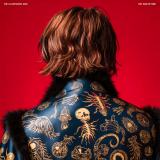
The highly anticipated collaborative album, GOLDFISH, sees two of contemporary hip-hop's most revered and distinct production minds, Hit-Boy and The Alchemist, finally join forces for a full-length statement. Far from a simple beat-swap, this project is a masterclass in sonic cohesion, blurring the lines between their signature sounds to forge a new, golden-hued identity. Beyond production, the duo step from behind the boards to behind the mic to trade verses throughout the project, adding a personal layer to their creative vision.
GOLDFISH is a deeply immersive listen, perfectly balancing the West Coast muscle and polished, anthemic quality of Hit-Boy's work with the dusty, abstract texture and cinematic suspense that defines The Alchemist's aesthetic.
The result is a sound that feels both street-tested and museum-worthy. A collaborative manifesto, showcasing the infinite possibilities when two generational talents decide to link up, creating an instant classic in the canon of producer/MC albums.
Following the launch of the label late last year, Tripsitter Records returns with its second release, Social Memory Complex EP, a four-track Various Artists compilation that explores the evolving intersection of speed garage, warped low-end pressure, and contemporary tech house. Featuring contributions from Baumb, Marcos Coya, New Balaance, and Voosen, the EP captures a shared fascination with the resurgence of UK garage aesthetics while pushing the sound into new territory through modern club production and forward-thinking songwriting.
Across the release, listeners are met with rolling grooves, swung percussion, and a heavy emphasis on elastic warp basslines that nod to the roots of speed garage while embracing the power and functionality of modern tech house. Built equally for dark club rooms and open-air festival systems, each track offers a distinct perspective on the genre's current evolution. Baumb delivers a driving, high-energy cut that balances hypnotic rhythm with low-end intensity, while Marcos Coya leans into deeper club textures and precision-engineered groove work. Voosen rounds out the collection with a track that further reinforces the EP's dancefloor focus, combining punchy drums with unmistakable garage-inspired movement. Perhaps the most unexpected contribution comes from New Balaance, whose track ventures into synth-pop territory without abandoning the EP's core identity.
Melodic hooks, emotive synth work, and song-oriented structures are woven together with speed garage rhythms and bass design, creating a standout moment that broadens the compilation's sonic palette while remaining firmly connected to the release's underground roots. With Social Memory Complex EP, Trip Sitter Records continues to establish itself as a platform for artists exploring the spaces between genres—where UK garage heritage, tech house functionality, and contemporary electronic songwriting converge. As speed garage continues its resurgence across clubs and festival stages worldwide, Social Memory Complex EP arrives as a snapshot of a scene in motion: nostalgic without being retrospective, and innovative without losing sight of the dancefloor.
Curió Curió came to flight by chance. Two artists, Rio-born, Austria-based singer and actress Luiza Monteiro and German producer Dustin Braun, had separately reached a fork in their journeys. An opportune encounter soon blossomed into an uplifting, heartfelt Brazilian MPB-groove project shaped by psychedelic disco and studio experimentation. In their own words Curió Curió’s sonic vision “is not straight disco, not straight samba, not strictly old-school but inspired by all of them, creating something contemporary but still nostalgic”.
A modern fusion influenced as much by Gal Costa and Jorge Ben Jor as Say She She and Bala Desejo, their sound deftly plots a course all of its own. A celebration of freedom, movement, love and life, intertwined with introspective moments of reflection. Treating tradition as something alive, migratory and unresolved, the album is not simply bound by a shared love of Brazilian music, but by a deeper question that runs through every track; where does one belong when home becomes plural? As a Brazilian living in Europe, Luiza's lyrics explore themes of identity, culture, and existence. The tracks move between cities and emotional registers without settling, tracing a sense of identity that shifts rather than resolves. Songs like ‘Amor Doente’ and ‘Mar sem Dar Pé’ circle around relationships that resist clarity, while ‘Menina Passarinho’ captures the fear and necessity of committing to music as a path. For Luiza, deepening her commitment to music alongside years in theatre was both inevitable and difficult. Braun’s production follows a similar logic. Initial ideas were often built without obvious reference points, only later incorporating rhythmic and vocal elements that hint at Brazil without reproducing it. Analogue techniques, tape, ribbon microphones and live ensemble recording bring a tactile quality that reflects the duo’s interest in process as much as outcome. Highlights include ‘Bem Querer’, built on an authentic samba street vibe with a super-catchy sing-along chorus, and ‘Vem pra Casa’ with its cosmic-tinged Brazilian boogie flavour. The album closes with ‘A Cor do Meu Sonho’, a quiet act of insistence. A refusal to shrink in unfamiliar environments, and a belief in the strength of difference. It is less a conclusion than a continuation, leaving the central question open. “I started to understand that I can belong to many places at once”, Luiza reflects. “And that can be something to embrace”. Lyrics from the song ‘Raiz’ translate in English to “I value a burning sun and the cold in the air. Constant change is my companion”. With Curió Curió, that idea is lived through sound, story and collaboration. A debut that feels both searching and assured, grounded in heritage yet shaped by distance.
Do You Want Me Baby sees Cloud 9 deliver a timeless garage house cut from New York legend Victor Simonelli, returning on fresh 12” vinyl.
Built around uplifting piano lines, soulful vocal hooks and groove-driven rhythms, the track captures the feel-good energy of classic US garage house and remains a staple for DJs across house and garage sets.
Featuring a full suite of mixes including Club Mix, Deep Dub, Bonus Beats and Instrumental, the release offers strong versatility for DJs looking for both peak-time energy and stripped-back club tools.
With a sound rooted firmly in the New York house tradition, this release sits comfortably alongside artists such as Masters At Work, Todd Terry and Kenny Dope, making it a natural fit for stores supporting classic US house and garage.
Back on fresh 12" vinyl, this iconic track continues to resonate with both long-time collectors and a new generation of DJs.
A reliable and highly playable catalogue piece for stores supporting classic house and garage.
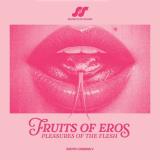
Secrets Of Sound slip into electronic erotica with this new and steamy compilation of after-hours disco and sexually charged sounds. Both originals and tasteful reinterpretations of classic tunes from Kylie Minogue, Amanda Lear, La Tour and Enigma feature on this most intimate collection. There is blissed out depth from Ed Temple, Italo melodic flair from Lipelis and sultry vocal allure on System Olympia's 'Signal Your Love.' Elsewhere, Jorja Chalmers casts you adrift on a new age Balearic life raft and Gareth Anton Averill & Sobrenadar closes with the shimmering 80s nostalgia of 'Paris.' Steamy indeed.
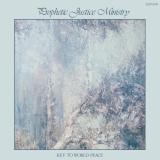
Key To World Peace is the third release by Prophetic Justice Ministry - aka Australian musician Sam Perry. An atmospheric, cinematic album that belies a striking pop songwriting nous at its core, its conductor Prophetic Justice Ministry is at the centre of a new wave of creative, rule-bending Melbourne artists. Romantic, smudged and hazy, Perry emerges from behind a wall of
half-light with a clutch of earworms and affecting emotions.
Recorded in home studios in Belgrade (Serbia), Christchurch (New Zealand) and Melbourne (Australia) over the course of three years, Key To World Peace offers a dichotomy in approach. Shifting on a dime between ambient, filmic washes of sound and more traditional song structures, the approach feels natural, casually acid-tipped and emotionally revealing. While Perry’s
distinctive keys and production melding with melody is evidenced in Melbourne group Who Cares?, as Prophetic Justice Ministry there’s a heightened sense of mystery and space being used.
Swirling in a psychedelic fog with dry iced chords falling down like melting stars, the album pulses with an ominous, distorted intro that sculpts air into blocks of sound before Psyop offers a glimpse through the gloom at the artist navigating through crushed, shoe-gazing chords, singing a consolation into an abandoned building. Side A’s more abstract tone veers from industrial tracks (T-A) to pastoral, impressionistic pieces (Trance) before album highlight Life’s A Party showcases the effortless, classic songwriting lurking in Prophetic Justice Ministry. Built on the tension between the upbeat lyrics and suppressed, rich delivery, the song lopes on an alluring loop with acoustic guitars and Perry’s voice walking a tightrope between irony and sincerity. The song blooms into a bright burst of light, almost inducing synesthesia in the listener and reminding a little of The Beta Band’s most outre and catchy moments.
Opening Side B, Naked Shine’s scintillating guitar is punctuated by a sub bass swell that offsets the yearning vocal performance. With palpable sensitivity the song is shepherded into short, atmospheric passages before Love Drum’s direct delivery: Perry’s vocal and guitar, dancing over a hint of distortion feels like Syd Barrett at his most casually brilliant. Carrying on the tradition of a single cover on every Prophetic Justice Ministry release, here Lana Del Rey’s Mariner’s Apartment Complex is given a stripped back but faithful treatment. With a sound that feels like a hushed, Chris Isaak classic it’s testament to Perry’s own compositions that the cover doesn’t outshine the rest of the album. Album closer and single Spirit House Party combines a classic chord progression with Perry’s double-tracked vocal into a murky but brilliantly catchy chorus. While nowhere near as lush in its production, there’s something in the atmosphere of Prophetic Justice Ministry’s vocal sitting in the mix just so that reminds us of The Electric Prunes’ Holy Are You-era work with David Axelrod.
Key To World Peace flits between displaying a spectrum of blurred emotional resonance in its instrumental passages and vulnerability in the shape of raw, melodic songwriting. With his first release outside of Australia and vinyl debut, Sam Perry’s Prophetic Justice Ministry is a beguiling dance in and out shadows.
"Some of my earliest musical memories were listening to my local pirate stations in the early 90's. The signal was quite weak in my area, and the sound was doused in FM static, creating this interesting amalgam of rhythm and noise. I found a strange sort of comfort in this, often falling asleep while listening to the radio, in bed, with my headphones on. The stations were run by young people, no older than kids really, relayed from non-descript flats, scattered around Bradford, Leeds, and the surrounding towns of West Yorkshire. The setups were primitive, and the production quality (and often the mixing) were dubious at best. But there was an endless supply of passion, and listeners tuned in because they were thirsty for something the legal stations could never supply. These voices on the other side of the transmission were, for many of us, a bridge into the future. One, which sadly, never really came to be. Hardcore, Static: Pirate Transmissions From The North of England 1990-1994 is a celebration of this unique period in UK history. The North of England feels overlooked during this time, with history's focus firmly gazed on London. But the signal was everywhere. These pirate stations were crucial for many young people, who were trying to find their place and identity in the UK. Many of these transmissions, even the ones which were recorded onto tape, have since become lost media, effectively erased from history. Radio, at least in the analogue domain, isn't something most young people have any experience with. Pirate radio was this unique flashpoint in time, and for me at least, it was important enough for me to want pay my respects to it" Dennis/36
Back to the golden nights of zouk clubs, where hip-hop, kompa, zouk and Caribbean grooves ruled the dance- floor. This selection documents a pivotal moment : a time when zouk was still not a fixed genre, but more a place, an atmosphere, somewhere people went to dance. It captures the spirit of an era: its creative effervescence, musical freedom, and the diversity of artists who shaped it. The very concept of “Kaz A Zouk” perfectly encapsulates this idea: a space where all styles could meet.
Silky Beats are back for their third various artist release.
This sixth edition on the series brings together life long friends alongside friends of the label, Silky Beats Tuition students and demo submissions; for a varied and club ready five-tracker.
Boss Priester, Dingo, Lewis, Pete Melba and Ben Diggins deliver some highly contagious dancefloor grooves with garage, tech house and minimal influences at the forefront.
Knowsum is set to release his new album, Cherry Stone Pillow on his label Sugar Brain.
A record that keeps swinging - blurred at the edges, and gently surreal. Psychedelic rock pulses at it's core, softened by the sweet touch of soul, the sway of bossanova, and the sun-faded glow of 60s easy-listening. Each track feels like an afternoon stretched into midnight – This is music for children of the moon, where drums riot like subway prophets and guitars drip human gasoline
TALCO melden sich mit ihrem bisher wohl ambitioniertesten Werk zurück. "Freek" erscheint am zweiten Freitag des Jahres 2027! Eine kühne und unverblümte Reise durch mentale Käfige, ruhelose Gedanken und schwebende Träume. Das Album präsentiert TALCOs unverkennbare Punk-Ska-Energie mit einer schärferen, introspektiveren Note. Geschrieben von Tomaso De Mattia (Dema), Sänger und Frontmann von TALCO, setzt sich das Album mit den unsichtbaren Strukturen auseinander, die uns in einer von Image und Performance besessenen Welt prägen. Im Zentrum steht die Frage: "Lohnt es sich, den Traum vom offenen Meer aufzugeben, nur um ein von anderen entworfenes Rennen zu gewinnen?" Es ist ein Konzeptalbum, das mit surrealem Storytelling eine statische, dekadente Gesellschaft reflektiert, die unfähig scheint, kulturelle oder politische Risiken einzugehen. Die italienischen Alternative-Ska-Punk-Rocker aus Marghera/Venedig haben sich mit ihrer Kombination aus schnellem Punkrock, Ska-Einflüssen, Blasinstrumenten und italienischer Volksmusik sowie ihren sozialkritischen, oft politischen Texten in ganz Europa einen Namen gemacht. Freek markiert eine Rückkehr zu den Wurzeln des Albums "Gran Galà", angetrieben von der kalifornischen Punk-Energie von "Videogame". Und dies ist erst der Anfang einer Reise, die weit über die Musik hinausgeht. Viele Überraschungen erwarten uns. Ein volles Dutzend Tracks im beliebten Punkchanka-Stil zum Genießen (plus vier weitere (die B-Seiten)), darunter das bereits digital veröffentlichte "Dalla Mia Parte Ella Strada" und die kommende Single "Disco Inferno". Das "Freek"-Konzept wird von einer Geschichte begleitet, die in den offiziellen Videos, den zusätzlich digital veröffentlichten B-Seiten (auch als Bonustracks auf CD erhältlich) und einem Graphic Novel/Comic aufgegriffen und erweitert wird. Das Comicbook ist Bestandteil der limitierten Freek Deluxe Pizzaboxen der beiden Formate. Als LP schwarz, LP farbig, CD mit Bonustracks und limitierte Deluxe Pizzaboxen mit Extras erhältlich.
TALCO melden sich mit ihrem bisher wohl ambitioniertesten Werk zurück. "Freek" erscheint am zweiten Freitag des Jahres 2027! Eine kühne und unverblümte Reise durch mentale Käfige, ruhelose Gedanken und schwebende Träume. Das Album präsentiert TALCOs unverkennbare Punk-Ska-Energie mit einer schärferen, introspektiveren Note. Geschrieben von Tomaso De Mattia (Dema), Sänger und Frontmann von TALCO, setzt sich das Album mit den unsichtbaren Strukturen auseinander, die uns in einer von Image und Performance besessenen Welt prägen. Im Zentrum steht die Frage: "Lohnt es sich, den Traum vom offenen Meer aufzugeben, nur um ein von anderen entworfenes Rennen zu gewinnen?" Es ist ein Konzeptalbum, das mit surrealem Storytelling eine statische, dekadente Gesellschaft reflektiert, die unfähig scheint, kulturelle oder politische Risiken einzugehen. Die italienischen Alternative-Ska-Punk-Rocker aus Marghera/Venedig haben sich mit ihrer Kombination aus schnellem Punkrock, Ska-Einflüssen, Blasinstrumenten und italienischer Volksmusik sowie ihren sozialkritischen, oft politischen Texten in ganz Europa einen Namen gemacht. Freek markiert eine Rückkehr zu den Wurzeln des Albums "Gran Galà", angetrieben von der kalifornischen Punk-Energie von "Videogame". Und dies ist erst der Anfang einer Reise, die weit über die Musik hinausgeht. Viele Überraschungen erwarten uns. Ein volles Dutzend Tracks im beliebten Punkchanka-Stil zum Genießen (plus vier weitere (die B-Seiten)), darunter das bereits digital veröffentlichte "Dalla Mia Parte Ella Strada" und die kommende Single "Disco Inferno". Das "Freek"-Konzept wird von einer Geschichte begleitet, die in den offiziellen Videos, den zusätzlich digital veröffentlichten B-Seiten (auch als Bonustracks auf CD erhältlich) und einem Graphic Novel/Comic aufgegriffen und erweitert wird. Das Comicbook ist Bestandteil der limitierten Freek Deluxe Pizzaboxen der beiden Formate. Als LP schwarz, LP farbig, CD mit Bonustracks und limitierte Deluxe Pizzaboxen mit Extras erhältlich.
TALCO melden sich mit ihrem bisher wohl ambitioniertesten Werk zurück. "Freek" erscheint am zweiten Freitag des Jahres 2027! Eine kühne und unverblümte Reise durch mentale Käfige, ruhelose Gedanken und schwebende Träume. Das Album präsentiert TALCOs unverkennbare Punk-Ska-Energie mit einer schärferen, introspektiveren Note. Geschrieben von Tomaso De Mattia (Dema), Sänger und Frontmann von TALCO, setzt sich das Album mit den unsichtbaren Strukturen auseinander, die uns in einer von Image und Performance besessenen Welt prägen. Im Zentrum steht die Frage: "Lohnt es sich, den Traum vom offenen Meer aufzugeben, nur um ein von anderen entworfenes Rennen zu gewinnen?" Es ist ein Konzeptalbum, das mit surrealem Storytelling eine statische, dekadente Gesellschaft reflektiert, die unfähig scheint, kulturelle oder politische Risiken einzugehen. Die italienischen Alternative-Ska-Punk-Rocker aus Marghera/Venedig haben sich mit ihrer Kombination aus schnellem Punkrock, Ska-Einflüssen, Blasinstrumenten und italienischer Volksmusik sowie ihren sozialkritischen, oft politischen Texten in ganz Europa einen Namen gemacht. Freek markiert eine Rückkehr zu den Wurzeln des Albums "Gran Galà", angetrieben von der kalifornischen Punk-Energie von "Videogame". Und dies ist erst der Anfang einer Reise, die weit über die Musik hinausgeht. Viele Überraschungen erwarten uns. Ein volles Dutzend Tracks im beliebten Punkchanka-Stil zum Genießen (plus vier weitere (die B-Seiten)), darunter das bereits digital veröffentlichte "Dalla Mia Parte Ella Strada" und die kommende Single "Disco Inferno". Das "Freek"-Konzept wird von einer Geschichte begleitet, die in den offiziellen Videos, den zusätzlich digital veröffentlichten B-Seiten (auch als Bonustracks auf CD erhältlich) und einem Graphic Novel/Comic aufgegriffen und erweitert wird. Das Comicbook ist Bestandteil der limitierten Freek Deluxe Pizzaboxen der beiden Formate. Als LP schwarz, LP farbig, CD mit Bonustracks und limitierte Deluxe Pizzaboxen mit Extras erhältlich.
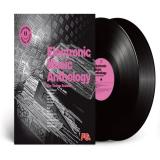
Mit The Techno Session setzt die renommierte Electronic Music Anthology-Reihe aus dem Hause Wagram ihre Reise durch die wichtigsten Strömungen elektronischer Musik fort. Nach House- und Deep-House-Ausgaben widmet sich diese neue Edition nun konsequent dem Techno - in all seinen hypnotischen, treibenden und zeitlosen Facetten. Die Auswahl stammt von FG Radio, einer der angesehensten Institutionen für elektronische Musik in Frankreich und seit Jahrzehnten eng mit der internationalen Club-Kultur verbunden. Die Compilation versammelt prägende Künstler und Produzenten, die Techno von seinen frühen, funktionalen Wurzeln bis zu modernen, melodischen und atmosphärischen Ausprägungen definieren. Pulsierende Grooves, repetitive Strukturen, reduzierte Eleganz und eine klare Fokussierung auf den Dancefloor stehen im Mittelpunkt dieser sorgfältig kuratierten Zusammenstellung. The Techno Session richtet sich gleichermaßen an DJs, Sammler und Liebhaber elektronischer Musik, die Techno nicht als kurzlebigen Trend, sondern als eigenständige, langlebige Musiksprache verstehen. Eine hochwertige Anthologie, die die Essenz des Genres einfängt - kompromisslos, fokussiert und cluberprobt.
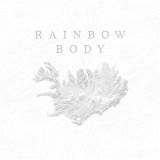
,Rainbow Body" ist das Debütalbum einer außergewöhnlichen musikalischen Zusammenarbeit mit Taylor Goldsmith und Griff Goldsmith (Dawes), Rick Mitarotonda (Goose), Eric Krasno (Lettuce, Soulive), Ross James (Phil Lesh & The Terrapin Family Band) und Adam MacDougall (Chris Robinson Brotherhood, Circles Around the Sun), mit Gastauftritten von Oteil Burbridge (Dead & Company, The Allman Brothers Band) und Nicki Bluhm. Das in Island aufgenommene, selbstbetitelte Album verschmilzt nahtlos Psychedelic Rock, Americana, Soul, Folk und Improvisation zu einem Sound, der sich zugleich zeitlos und abenteuerlich anfühlt. Getragen von Taylor Goldsmiths ausdrucksstarkem Songwriting und bereichert durch die Chemie der versierten Musiker ist ,Rainbow Body" ein facettenreiches Debüt, das den Raum zwischen Americana und Alternative Rock ausfüllt.
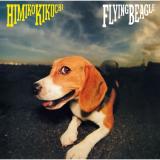
One of Japan’s most world-renowned female keyboardists, Himiko Kikuchi released "Flying Beagle" in 1987, and this classic album now returns on vinyl. Having collaborated with artists such as Takuro Yoshida and Junko Ohashi, and performed as a member of prestigious bands like Nobuo Hara’s Sharps & Flats and Minoya Central Station, Kikuchi — along with guitarist Masatsugu Matsumoto — became a key figure in Japan’s live fusion scene. From the 1980s onward, she consistently released solo albums, including several recorded overseas, establishing herself as a legend in the crossover and fusion genres.
Featuring Kikuchi (piano, keyboards, synthesizer, organ), Matsumoto (guitar), Akira Okazawa (bass), Naoki Watanabe (bass), Katsuo Okamoto (drums), Yasushi Ichihara (drums), Yuichi Tokashiki (drums), Keiichi Ishibashi (bass), Yoshikazu Kishi (trumpet), Kenji Yoshida (trumpet, flugelhorn), Michio Kaguwada (trombone), Jake H. Concepcion (alto saxophone, flute), Hirofumi Kinjo (tenor saxophone, flute), Masamichi Takano (baritone saxophone), and Yoshinori Nomimi (percussion), the album assembles top-tier musicians — including members from Spectrum, AB’S, Yuji Ohno’s You & The Explosion Band, and Toshiyuki Miyama’s Inner Galaxy Orchestra.
A masterpiece of Japanese fusion, reissued as a 180g heavyweight, limited-edition analog pressing. Originally released on October 21, 1987.
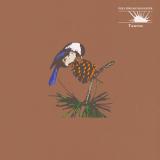
One year on from the release of acclaimed album Rose Main Reading Room, Peel Dream Magazine return with new mini album Taurus.
Spanning eight previously unavailable tracks that were originally recorded for their lush and inviting 2024 full length, Taurus offers a wider glimpse into songwriter Joseph Stevens’ process and creative output from those sessions.
The band, whose name nods to the BBC Radio 1 legend John Peel — arbiter of all things underground, quality, and (it must be said) "cool" — has since its inception been a genre-hopping experiment, jumping from motorik krautrock to shoegaze and space age pop.
On Taurus, Peel Dream Magazine remain explorative, drifting effortlessly across a gamut of styles that range from the twee indie pop of lead single “Venus In Nadir,” the title track’s cozy vibraphones, and the bubbly space-synths of “Seek and Destroy.”
Although unbound by genre, Peel Dream Magazine still inhabit the sonic milieu of warm woodland tones and droning repetition. In the entrancing standout “Believer,” they evoke Rose Main Reading Room’s atmosphere through vocalist Olivia Babuka Black’s mantric melodies and Philip Glass-like woodwinds and mallets, bringing Taurus into focus as a welcoming companion piece to its predecessor.
As Selofan's fifth studio album, Vitrioli, from 2018, is a testament to the tragedy of life. The Greek duo, Joanna Pavlidou and Dimitris Pavlidis, who recorded the album in the Fabrika Records home studio, continue on in their poetic, but heartbreaking, music set to a dance beat. Between languages (Greek, English, German, and Spanish), Selofan feels on the brink of mania with Vitroli. However, the madness is controlled, the songs are restrained hysterics that culminate into the alchemic perfection of the band's specific moody sound.
From synthpop to synthpunk elements, the twelve-track LP leads listeners through dark corridors and into haunted, empty beds. There is a resignation to a doomed destiny with Vitroli—a trait that connects all Selofan releases—as a bitter pain and loneliness that cannot, or will not, subside.
The album begins with "Give Me a Reason" whose lyrics feel universal in this day and age: Give me a reason, to get out of bed / I could just watch the ceiling instead. Its heartbreak is profound as bells and voice pads echo under Joanna's voice. The adjacent music video for the song was directed by Dimitris Chaz Lee, and the band describes the video as "depicting the fragile nature, conflicts, emotional demands, and vulnerability of each person in a relationship."
"Billie Was a Vampire" is a story about an undead creature who works at a nightclub followed by the urgency of "Black Box." Brass sounds moan against the fast beat and suggest a frenzied need to escape.
"I'm Addicted" became the second single for the LP. I am addicted, you are mine, Joanna demands of the lover. The music video, also directed by Dimitris Chaz Lee, depicts a clean, white photoshoot primed for the most beautiful creatures of the Athenian wave scene. Alex Macharias, from the legendary Greek band In Trance 95, acts as the photographer for the session, as the models pose and flail under the bright bulbs. The director states: "Addiction is a mental state, something inside all of us. It altered our perception and created a parallel world of avant-garde beings and flashy lights making us part of this everlasting bond."
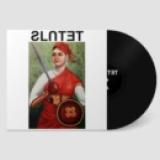
Crypt of the Wizard is proud to make available two legendary underground albums by Slutet on vinyl and digital formats.
Slutet originated in Uppsala well over a decade ago, first emerging as a loose idea around 2010. The original cluster of strangely like minded individuals - Dingir, Ryttersson, J.P., Sviatopolk, were equally set on starting a cult as they were a band, the former emerging as a loose collective known as The End Commune, while the latter eventually began rehearsing together as Slutet on September 1, 2013.
From this constellation three notorious demo tapes sprung which were self-released in very limited numbers, and only available by trading bodily fluids, blood, and/or hair for the cassettes. “A very loose guess but we made probably around 20-30 hand-drawn/custom demo tapes of the first three releases. We got blood and hair from many places, actually the very first offering was from INDONESIA. Slovakia, Germany, USA, Argentina, Norway, Canada, Finland followed.... if my memory serves..... hazy years indeed”
J.P. left early 2015. Later that year, after trying the band as a bass-drum-vocals outfit for a while, Fjalar joined on guitar. This is the classic constellation. Dingir, Ryttersson, Fjalar, Sviatopolk. The same troupe playing to this very day.
Following on from the compilation Slutet began work on their next offering entitled Jihad. While the departure of J.P. left them temporarily without a guitarist, a chance meeting with Fjalar at a rave ushered in a new era for the band. “I met the drummer and the bass player at a psytrance rave in the forest. I didn’t have any band and I wanted to play music and I saw this fucking weirdo with long dreads and a Hellhammer shirt and I just went up to talk to him”.
After Fjalar joined the rather chaotic fray, songwriting duties were spread out more broadly and Jihad was rehearsed and recorded in a haze. First released as a cassette by Manifest Of Hate Creations, and later on vinyl in an edition of 100 by Goatowarex the release quickly sold out and became as legendary, and as incredibly difficult to obtain as the previous releases. “It has got some psychedelic improvs, some very unorthodox and quite genius vocal work, some electronic undertones, some noisy ambience, a message of existentialism; all this wrapped up in some sloppy but very authentic and intense black metal-ish music.”
“After the vinyl compilation was out (early 2015) we felt probably a bit directionless, and, having parted ways with a befriended and talented guitar player, we felt maybe a bit morally weakened to continue. First, for a year almost, we toiled on without the 6-strings and rehearsed quite lengthy material for a proposed upcoming LP. However, that material never surfaced. Then we got a new guitar player (Fjalar) and created and recorded this mess”.
It is with great pride that we make these albums available to a general audience and in a wider pressing without need for bloodshed.
Futuristica is 20!
This independent imprint has been producing and releasing music for friends and family for 20 years, so what better way to celebrate than by releasing a 2xLP limited edition 20 track compilation of rare and never before released on vinyl recordings exclusively selected by label manager Simon Skolfield.
This is a beautifully varied selection of deep soul, jazz and hip-hop music from a group of like-minded independent artists creating their own brand of soulful gems. From the early electro soul of Electric Conversation, the multi layered jazz samples of Kira Neris to the lush vocal harmonies of Deborah Jordan, production and remix class from Marc Rapson and the contemporary spiritual soundtracks of The Peter Franks Group.
Over the years there has been generous support from Gilles Peterson, Tony Minvielle, Marc Mac, Patrick Forge, Kev Beadle and so many more worldwide. Artists like As Valet, Emanative, LaNote and Georgie Sweet have gone on to produce fine work with several different independent labels with our artists garnering fine remixes and production work from the likes of DJ Spinna, Nostalgia 77, Kev Bown, Mr Beatnick, Nicolay, Kaidi Tatham, Atjazz, Simbad, K15, Domu, Mecca:83 and so many others. And all of this organically grown since the release of Low Budget Soul, the label’s debut project back in 2006.
Alpha’s Trip continues its vinyl journey with the Day Tripper EP from French producer - Framboisier. The title track sets the tone with rolling rhythms, E-MU basslines, and subtle UK garage inflections, while ‘Body Double’ leans into deeper territory through understated grooves. ‘Kessel Drive’ pushes forward with late-night energy, blending progressive and tech house influences into a stripped-back but effective club tool.
Throughout the EP, nostalgic vocal fragments and warm pads meet punchy low-end pressure, creating a sound that feels both timeless and contemporary. Designed for intimate dancefloors and peak-time moments alike, Day Tripper showcases Framboisier’s ability to fuse character and functionality. Closing the release, Alpha’s Trip founder A for Alpha delivers an exclusive remix, reshaping the original around a driving, seductive bassline and her signature atmospheric pads, while maintaining the groove-focused energy that runs throughout the EP. A versatile package that moves effortlessly between warm-up sets, intimate dancefloors, and late night moments, Day Tripper is a record built for selectors who value depth, movement, and timeless house music.