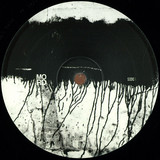
Phosphor returns with its fifth release and a new chapter for the label’s founders, Blue Vision. As their second EP on the imprint, Machines Will Transform Us (PHP005) confirms the project’s direction: a precise balance between club-driven tech house and more immersive, hypnotic electro textures.
Across the EP, Blue Vision asks a simple question: after spending our days connected to algorithms and modern machines, can repetitive rhythms and mechanical grooves on the dancefloor turn us into machines once again, or instead help us reconnect with ourselves?
Machines Will Transform Us (A1) opens the EP with a driving Italo bassline and tight, tech-driven drums. Melodic 80s synths contrast with sharper electro elements, gradually building tension before a final drop designed for peak-time impact. The track sets the tone for the release: machines transform us as much as we transform them.
Then comes Just a Game (A2), blending spacious 90s progressive and synthwave influences over a rock-solid club bassline and crisp drums. Playing with atmosphere and emotion, the track explores the feeling that we are never too far from a simulation, that maybe everything is just a game. Perfectly suited for introspective yet intense moments, it acts as an ideal bridge between harder tracks in a set.
On the flip side, I Love Acid (B1) is direct, hypnotic, and designed to lock the dancefloor into a steady flow. Stripped back to punchy drums and a raw acid line, it takes a minimal approach that works equally well in early hours or late-night sets. Behind the title lies the idea of acid as both machine energy and mental escape, where repetitive sequences blur the boundary between human emotion and mechanical movement.
As a final touch, Scan Your Brain (B2) shifts into deeper, more immersive territory. Analog pad textures create a drifting atmosphere over a hypnotic bassline and electro drums. With this closing track, Blue Vision answers their initial question by imagining the dancefloor as a space to disconnect from rigid thinking. The vocal serves as a reminder that the brain is constantly overloaded, and that dancing becomes a way to let go, reset, and reconnect.
Barranquilla born multi-instrumentalist Pernett is undoubtedly a true pioneer in fusing Colombian folklore with electronic elements. Back in 2003, when he released his first album “Música Para Pick Up”, Humberto was immediately seen as genius by some, crazy and outrageous by others. How dare he incorporate synthesizers into traditional music? What would be called this avant-garde genre where gaitas, traditional drums and keyboards come together? To this date, Pernett has released 6 albums, worked with an impressive number of prestigious artists such as Phil Manzanera, Calle 13, Novalima, or Quantic, and is still influencing whole generations of forward-thinking musicians.
Originally released from is latest album, “Vamos A Hacer” and El Pajarito have been edited for the occasion, by talented recording engineer Benjamin Calais AKA Ben Matik,
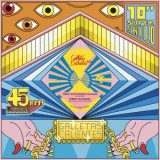
A-side “Vamos A Hacer - Ben Matik Instrumental Edit” is a joint collaboration between Pernett and renown British producer Will Holland aka Quantic. A heavy blend of funky breaks and cumbia. A 7-minutes version, exclusive to this 10″, has been especially taken out from the masters vault, and edited by Ben Matik: the original short version takes a unexpected turn to a completely freaked-out “Puya” rhythm, where gaitas and synths perfectly merge together.
B-side “El Pajarito - Ben Matik Instrumental Edit” is a deep downtempo anthem, a perfect fusion of powerful electronic beats, 808 bass, analog synths and gaitas. special attention should be paid to the enchanting voice of Diana Pereira on this one.
DDE Signature Tracks is a record label based in Bogotá, Colombia, curated by the team behind Discos del Espacio Record Shop.
For our fourth release, we proudly present The Boss EP by Gallegos — a four-track record that blends punchy rhythms, rolling basslines, and subtle melodic touches. Gallegos delivers a versatile selection of tracks designed for different moments of the night, from warm-up to peak-time transitions.
From the nostalgic tones of Fueled By Nostalgia to the driving energy of Turn Up Or Turn Back, the EP moves between moods while maintaining a cohesive sonic identity. The title track, The Boss, stands at the center with a confident, stripped-back groove built for the floor.
Closing the release, Colombian duo Rush City deliver an old-school leaning house remix of The Boss.
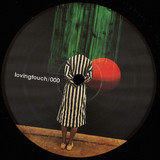
An inaugural LovingTouch label release curated by the members of Flammable Sundays (Brian Lyons & Michito Iwata), a 24 year long Sunday night weekly party from Seattle, WA. Featuring: Lush & dubbed out techno track by a LA native veteran producer Kenneth Graham, a stripped down deep house edit of DJ Sulli by Summit Dub and a groove heavy deep house heater by Seattle native Lorin Gabriel (Cyan wave).
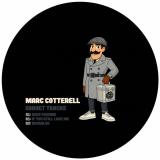
Marc Cotterell shows his A&R class here with another brilliantly assembled various artists EP on his Plastik People label, which is essential for fans of timeless house and garage fusions. The record kicks off with Deep South Soul's 'Harmonica Man' as remixed by Mellow Man and it has a touch of the bluesy Saint Germain to its lithe deep house and spoken words. Mellow Man then drops the 90s-coded 'So Deep', with warm organ chords and bubbly drums that have a New York swagger to them. Manhattan Project turns up the heat with a raw, hardcore garage-house swinger in the form of 'Turn That Up' and Reign Of Rhythm layers up neat stabs and leggy kick drums on the sleazy 'Cum Inside'. Essential and effective house.
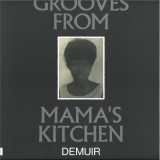
Label boss Demuir steps up for the 8th 12" from Purveyor Underground Limited and uses the opportunity to dedicate the music to his mother. This Grooves From Mama's Kitchen EP has already picked up some notable plays from the likes of Jimpster, Masters At Work and Kerri Chandler and is a swinging house offering with great depth and musicality. 'Beat 6 (Luv Is Complicated)' is majestic and soulful house with diva vocals and brilliant melodies, while the dub is more paired back. 'In Awe Of You' brings the jazz with its bright lead synths and soulful grooves, while closer 'In Awe Of You Ma' (Gabriel's Strings) is more loose-limbed and playful with some fine horns. .
By the time Jackie Mittoo released this outstanding album (his 4th), he had already gained a big reputation in the early days of Reggae, Ska and Rocksteady for his contributions to the Studio One catalog and his work with the Skatalites. With his beloved Hammond organ, endless talent and a bag on influences that included Jamaican sounds, Soul and Funk, Mittoo created a cool, moving, warm and groovy sound that would explode in his amazing dance songs and has gained cult status among followers of Jamaican Music, Soul and Funk lovers. A great collection of reggae-soul instrumentals by one of the most talented figures of the genre.
Carly Simon’s quietly intense sophomore album comes across like an assertive notice nailed to a telephone pole for all to see. Bold, personal, and autobiographical, Anticipation announces the arrival of an artist who won’t back down. While Simon stands her ground on her eponymous debut, she elevates her passion and persona to heightened levels throughout this gold-certified record, dealing in private matters related to love, relationships, and desire. At times, Simon is nothing short of primal. She reflects on the difficulties of retaining your own identity while also giving yourself to a partner. Simon’s connection to her folk roots would never be stronger.
Sourced from the original master tapes, strictly limited to 3,000 numbered copies, pressed at Fidelity Record Pressing in California, and housed in a Stoughton gatefold jacket, Mobile Fidelity’s 180g 45RPM 2LP set of Anticipation lays bare the rich tapestries afforded by the spare blend of soft guitars, mellow orchestration, and dreamy melodies. Audiophiles and record collectors, take note: This is the first time Anticipation has been available on 45RPM. The wider grooves and dead-quiet surfaces prove extremely rewarding.
The rhythmic framework anchored by session pro Andy Newmark’s drumming sounds dynamic and balanced, with songs benefiting from a focused midrange and taut low-end. Simon’s attachment to and investment in each lyric is made evident by way of the intimate, hushed atmospherics and expansive responsiveness. And just as Simon’s vocals feel more transparent and direct, so, too, do the supporting choral arrangements.
Released before the singer-songwriter movement reached full bloom, Anticipation remains remarkable for the high-quality songwriting and Simon’s gutsy stance. The album cover — depicting the vocalist holding the gates at Queen Mary’s Garden in Regent’s Park and seemingly defying anyone to take her on — serves as a metaphor for the content within.
Known for having relationships with high-profile partners, Simon was heavily involved with Cat Stevens leading up to the recording of Anticipation. She draws from her experiences to craft tunes that resonate because of their honesty, realism, and strength. Few of those moments are better known than the Top 20 title track, which Simon composed in just 15 minutes as she waited for Stevens to pick her up for a date. Imbued with the nervousness, tension, and excitement that accompany the moments when a romance could go either way, the Grammy-nominated song presages the feminist-minded vulnerability and burning longing that informs a majority of the record.
On the soulful “Legend in Your Own Time,” also inspired by Stevens, Simon harnesses yearning as a conduit to feel-good paradise. Deemed by Rolling Stone an “absolute clincher, an awesome description of the psychic ravages of gone-nuts, know-nothing love,” her cover of Kris Kristofferson’s “I’ve Got to Have You” moans with no-holds-barred desire and breathtaking sensuality.
For all the wanting Simon pursues on Anticipation, her way of staying in control — vocally and personally — make the record a courageous statement of contemporary femininity. For further evidence, look to the bossa nova of “Summer’s Coming Around Again,” somber “Share the End,” soothing “Three Days,” and sincere “Julie Through the Glass,” a tribute to her young niece.
Simon would achieve international fame with her next album, No Secrets. Yet as this definitive reissue shows, Anticipation suggests the rest of the world was just a little late catching up to her.
Legendary is a bold title for an EP, but is fully justified in the case of this new 12" from Silver Walker, which gathers some of house music's best and most proven talents. Jon Dixon opens with the light, fluttering house stylings of 'Five 15', which have sax motifs adding a touch of classy hi-tech jazz. Dallas man JT Donaldson follows by folding jazz phrasing into a swinging, deep house framework with understated finesse. On the flip, Abacus delivers 'A Gathering Of Griots' a warm, melodic cut bathed in sunlight and label head DFRA closes with a tribute to the great Mike Huckaby that is driving but soft, reverential and with a bittersweet energy.
Gabu Records returns with its fourth vinyl release, a four-track EP drawn from the label's catalogue.
Side A opens with Foehn & Jerome's "Emser." The Berlin-based Austrian duo have been active in the city's underground since 2011 and host the Perfumed Freedom nights at Club der Visionäre. "Emser" layers 80s funk-inflected grooves with shimmering piano, melodic drums and floating vocals. Baloo & Carlosthings follow with "Vera," a Berlin production built on warmth and understated funk.
Side B turns inward. Omar Fayyad, the Egyptian producer based in Dubai and known for a spacious, dubby take on minimal house, contributes the title track of his EP Rhythm & Chord. It is patient, harmonic music with room to breathe. Zone+ closes with "Madvillain," a deep, hypnotic piece from a producer whose sets have taken him from Cercle in Bali to Sunwaves.
Together the four tracks make a record for the long stretch of the night, from the first warm-up groove to the last quiet hour.
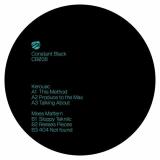
Constant Black is one of the many, many labels that Burnski heads up. It's where he focuses on stripped-back minimal and tech house with a moody undercurrent. Kerouac is a mainstay in his orbit and here takes one side of a new 12" that opens with 'This Method,' a rigid thumper with an eerie edge. 'Produce To The Max' has a dark bassline and ghoulish vocal sounds, while 'Talking About' is a more light and bumpy percussive number. Mees Mattern takes care of the flip with the dusty, garage-y loops of 'Sloppy Tekniic,' rubbery bass minimalism of 'Reeses Pieces' and grittier '404 Not Found. Six fresh tools for rewiring a dancefloor.
A year or two back, original Nottingham deep house don Gavin Belton (famed for being part of Smokescreen and Drop Music-adjacent duo The Littlemen) returned to the UK after living in New Zealand. One thing led to another and soon he was back in the studio alongside former creative partner Steve Lee for the first time in 15 years. Featuring heady spoken word vocals from Hector Moralez, the result is 'House For Change', a lightly electrofunk-fired slab of classic East Midlands deep house. Raising funds for homeless charity Help The Framework, this surprise EP also includes 2004 classic 'Tell Me' (a free party deep house classic) and two fresh reworks: a TB-303-bass-driven revision of 'House For Change' by their old pals Inland Knights, and a squelchy, spacey take on 'Tell Me' by Lee under his solo alias, Positive Divide.
Introducing Accented Measures Series (AMS), compiled and arranged by Accented Meausres. A mini-series unleashing unreleased and new materials with honorable associates in the game. Starting off with the mighty Space Drift EP, four new dancefloor tracks, a combination of 90s underground energy with modern grooves.
The Temptations Get High on Psychedelic Soul: Cloud Nine Soars with Ambitious Arrangements and Production, Features Standout Vocal Performances and Instrumentation by the Funk Brothers
The Temptations’ Cloud Nine announced that Motown — and “The Sound of Young America” — would never be the same. Influenced by the emergence of cutting-edge rock and pop currents, as well as increasing sociopolitical turmoil, the album broke down barriers between rock, psychedelia, and soul while heralding the arrival of visionary arrangements and production techniques. Bookended by traditional R&B numbers, the 1969 record sent the Temptations in bold new directions and signaled the advent of psychedelic soul.
Sourced from the original master tapes, strictly limited to 3,000 numbered copies, pressed at Fidelity Record Pressing, and housed in a Stoughton gatefold jacket, Mobile Fidelity’s 180g 45PM 2LP set presents Cloud Nine in audiophile sound for the first time on a domestic pressing. This collectible reissue bestows Norman Whitfield’s extraordinary production with the grand-scale dynamics, natural tonality, expansive openness, and low-end weight it deserves. The timbre of each of the five members’ voices is readily identifiable — even within the group harmonies — bestowing a realism never experienced outside the recording studio.
Making its debut on 45RPM, the album further benefits from the wide groove space by playing with greater separation and more realistic presence than prior editions. Everything from the brassiness of the horns to the dry snap of the snare comes across with reference-grade clarity and positioning. And since Motown’s renowned Funk Brothers backing band plays on many of the cuts, you’ll want to savor every note. The imaging, soundstaging, and organic bloom-and-decay of the notes make that possible.
Amid Cloud Nine, the instrumentation and architecture stand out as much as any element. Never before had a Motown album contained such ambitious patterns and complex passages. Seemingly conscientious of the departure from their past methods, the Temptations and Whitfield bunched together the tracks that mark a deep dive into psychedelic territory and counterbalance them with seven sterling soul cuts that dovetail with Motown tradition drenched with heartfelt vocals, swelling strings, and finger-snapping beats.
On the original 33RPM release, traditional Motown soul — laden with heartfelt vocals, swelling strings, and finger-snapping beats — occupies Side Two. These songs reveal an ensemble still very much on top of delivering pristine pop-soul material graced with romantic sweetness, persuasive insistent, and soaring highs. Re-energized after the departure of lead singer David Ruffin, who was fired for a variety of reasons in June 1968, the Temptations seamlessly meld with his replacement, Dennis Edwards, on one melodic gem after another.
The collective tackles five songs co-written by the legendary Motown team of Barrett Strong and Whitfield. Not the least of which are the smooth, shuffling “Why Did She Have to Leave Me (Why Did She Have to Go)” and deceptively simple, horn-spiked “Gonna Keep on Tryin’ till I Win Your Love.” On these tracks, as well as on a lush rendition of the ballad “Love Is a Hurtin’ Thing” and pleading, tender send-up of the Gerry Goffin-Carole King classic “Hey Girl,” Edwards and Paul Williams take turns on the lead with the estimable Eddie Kendricks, Melvin Franklin, and Otis Williams providing backing support.
All five vocalists trade-off leads on the simmering title track, a groundbreaking composition shot through with wah-wah-pedal effects, liquid funk, deep bass lines, Cuban percussion, saturated reverb, and gang choruses. Whitfield mines each member’s natural vocal range with spectacular results, keeps time with cymbals, and channels both the heated temperatures and escapist desires of a society embroiled in war, conflict, and experimental drugs.
Amazingly, the Temptations top themselves on the similarly revealing “Run Away Child, Running Wild.” Nearly 10 minutes in length, the song explodes R&B parameters and harbors a cinematic scope. Urgent pianos, distorted guitars, stripped-down percussion, steamy Hammond organs, minimal bass motifs, five distinct voices narrating the tale of a boy who fled home and now finds himself amid the scary, unforgiving external world: They combine to give the urgent tune a walls-closing-in atmosphere where fear and desperation reign. Bolstered by an extended instrumental section that precedes a climactic return of the singers’ voices, “Run Away Child, Running Wild” equaled the success of the record’s title track, with both reaching No. 6 on the pop charts.
Looking back on her career in the early 90s, Stevie Nicks described the first track of Rock a Little as “the most exciting song that I had ever heard.” This coming from a superstar who was already closely affiliated with several bajillion-selling Fleetwood Mac albums — to say nothing of her own benchmark solo debut. Her remarks attest to the enthusiasm and effort she invested in her third record, a 1985 work that quickly furthered Nicks’ profile and cemented itself as a piece of 80s pop lore.
Mastered at MoFi’s California studio, pressed at Fidelity Record Pressing in California, strictly limited to 4,000 numbered copies, and housed in a Stoughton gatefold jacket, Mobile Fidelity’s 180g 45RPM 2LP set presents Rock a Little in audiophile sound for its 40th anniversary. Helmed by a cadre of producers and engineers, and recorded for a reported one million dollars, the platinum-certified album teems with a head-spinning array of colors, tones, dreamscapes, and accents. This reference-grade reissue marks the first time they are all brought to light and conveyed with proper balance, dimensionality, and positioning.
Though Rock a Little doubtlessly has period characteristics of a mid-80s LP, Nicks and company spare no expense when it comes to distinguishing the music with expansive sonics distinguished with lush melodies, high-tech percussion, echoing vocals, sampled keyboards, and layers of sophisticated accents. The degrees of spaciousness, headroom, and dynamics are nothing less than inspiring, while the newly enhanced detail, texture, and clarity make the songs sing like never before. As for Nicks’ voice? Wait ’til you experience the transparency and depth.
Those advantages extend, of course, to the aforementioned “I Can’t Wait,” a statement-making opener shot through with modulating synthesizers, splashy drums, metallic guitars, and serious drama. Holed up in a massive studio, Nicks required just one take to nail her part, which she called “magic and simply not able to beat.” The singer-songwriter also distilled the reverberating emotional essence of the Top 20 tune, stating “when I hear it on the radio, this incredible feeling comes over me, like something really incredible is about to happen.”
The same can be said for nearly all of Rock a Little. Crafted by the likes of Songwriters Hall of Fame multi-instrumentalist/producer Rick Nowels, Heartbreakers organist Benmont Tench, bassist Bob Glaub, jack-of-all-trades Greg Phillinganes, and session-pro guitarists Waddy Watchel, Les Dudek, and Danny Kortchmar — along with another two dozen or so participants — the record spills with diverse ideas, shapes, and moods. Everything is in the right place, as evidenced by the swirling glide and sensual undertow of the slightly funky title track to the snapping rhythmic pace and big hooks of “Imperial Hotel,” one of Nicks’ standout moments.
“What was it she wanted?” Nicks queries on “No Spoken Word,” continuing a theme of contemplation that runs through the narratives. Nicks never lands on a definite answer, but hearing her explore loneliness, love, and the secrets we keep to ourselves proves continuously rewarding. Take her passionate performance on a cover of Chas Sanford’s “Talk to Me,” a Top 5 smash furthered by tasteful saxophone lines and understated folk elements. Immersive yourself in the grand sonic corridors of “If I Were You,” laden with Nicks’ signature mysticism.
Moreover, surrender to the gravitas of the closing “Has Anyone Ever Written Anything for You,” a piano ballad composed about the death of Joe Walsh’s three-year-old daughter. As Nicks asserts earlier on the album, she sings for things money can’t buy.
So, rock a little, yes, but dare to feel even more.
Creativity has no borders and our artist have no boundaries, no genres attached just freedom.
Deep in Dis intl. proudly presents "SHAHRZAD" (DIDWAX001) by Parisian dj/producer Noiro. We are extremely gassed to showcase Noiro's eclectic and unique approach to club music with this 5 trax EP.
We start the journey with the highly experimental 'Kata Pulse', an intergalactic and powerful trip-hop influenced tune with a strong vocal game.
A2. 'Rude' follows the cosmic vibe perfectly with a bit more aggressive breakbeat but keeping a warm feeling at the same time. Where the b-boys at??
To wrap up the A-side, 'Aube Session' brings those mysterious and high cloud walker feelings. The dance floor is starting to get warm... crashy bells, dj scratches and twisted synth/bass lines turns on the auto pilot for what's to come flipping the record to the other side where Noiro depicts the rest of the story.
B1. '1F' is a club banger, structured around frenzy and hypnotic synths, solid drum patterns and an unflagging muffled bassline.
Closing the EP B2. 'Show Me' confirms it wasn't just fluke ladies and gentlemen, Noiro's distinctive and unique sound is here.
35th Anniversary Edition of Peacefrog - 2LP Smokey Vinyl
Born and raised in the birthplace of House Music, Paul Johnson was known for his raw, soulful, and infectious sound, that helped shape Chicago's house scene and inspired generations of DJs worldwide in particular he was a massive inspiration to Daft Punk and the 'French Touch' scene. Releasing a vast amount of music throughout the 1990s for some of the most consistently underground dance labels including legendary Chicago imprints Cajual, Relief and Dance Mania he finally gained global fame with his 1999 hit “Get Get Down,” a dancefloor anthem that topped charts across Europe. Despite facing physical challenges, including losing both legs in accidents, he remained an unstoppable force in music—touring, producing, and uplifting others with his resilient spirit and signature groove.
Originally released in 1996 Feel The Music was Paul's second album for Peacefrog Records. Containing some of the classiest house music to hail from the Windy City. Classics such A Little Suntin Suntin , Summer Heat and I Wonder Why will have you smiling while you’re jackin’ and the irresistible and infectious Hear The Music was fthe opening track for Daft Punks legendary Radio 1 Essential Mix.
Curió Curió came to flight by chance. Two artists, Rio-born, Austria-based singer and actress Luiza Monteiro and German producer Dustin Braun, had separately reached a fork in their journeys. An opportune encounter soon blossomed into an uplifting, heartfelt Brazilian MPB-groove project shaped by psychedelic disco and studio experimentation. In their own words Curió Curió’s sonic vision “is not straight disco, not straight samba, not strictly old-school but inspired by all of them, creating something contemporary but still nostalgic”.
A modern fusion influenced as much by Gal Costa and Jorge Ben Jor as Say She She and Bala Desejo, their sound deftly plots a course all of its own. A celebration of freedom, movement, love and life, intertwined with introspective moments of reflection. Treating tradition as something alive, migratory and unresolved, the album is not simply bound by a shared love of Brazilian music, but by a deeper question that runs through every track; where does one belong when home becomes plural? As a Brazilian living in Europe, Luiza's lyrics explore themes of identity, culture, and existence. The tracks move between cities and emotional registers without settling, tracing a sense of identity that shifts rather than resolves. Songs like ‘Amor Doente’ and ‘Mar sem Dar Pé’ circle around relationships that resist clarity, while ‘Menina Passarinho’ captures the fear and necessity of committing to music as a path. For Luiza, deepening her commitment to music alongside years in theatre was both inevitable and difficult. Braun’s production follows a similar logic. Initial ideas were often built without obvious reference points, only later incorporating rhythmic and vocal elements that hint at Brazil without reproducing it. Analogue techniques, tape, ribbon microphones and live ensemble recording bring a tactile quality that reflects the duo’s interest in process as much as outcome. Highlights include ‘Bem Querer’, built on an authentic samba street vibe with a super-catchy sing-along chorus, and ‘Vem pra Casa’ with its cosmic-tinged Brazilian boogie flavour. The album closes with ‘A Cor do Meu Sonho’, a quiet act of insistence. A refusal to shrink in unfamiliar environments, and a belief in the strength of difference. It is less a conclusion than a continuation, leaving the central question open. “I started to understand that I can belong to many places at once”, Luiza reflects. “And that can be something to embrace”. Lyrics from the song ‘Raiz’ translate in English to “I value a burning sun and the cold in the air. Constant change is my companion”. With Curió Curió, that idea is lived through sound, story and collaboration. A debut that feels both searching and assured, grounded in heritage yet shaped by distance.
Genie In A Bottle is back with strong EP from my Italian Hermano - Shkedul.
“Secret Society” is the last track of the record, but definitely far from least. One of the best examples of Shkedul’s dark and confident production. This time also with perfect marching kicks, acidic arpeggios, and kinda familiar story that is being narrated through the track. The name here goes straight from the story, by the way.
“Meditative State” at the B1 also tells us the story, this time with a bit calmer voice. The track is calmer too, the kicks are still marching, don’t assume. “Confidence” lays very hard on the acid part, easily the most acidic track here. Finally, the opener, “Change Is Coming”. With the story again (damn, I like those conversations over the track so much) and the most interesting bassline of all.
Powerfull Support from : Quest , Anthea , Gabbs , Jane Fitz…
Plastik People deals in house & garage done right. This latest drop is a split EP between Marc Cotterell and Dominic Balchin and opens with 'The Trumpet Track', which is exactly that. 'Baby Do You Feel Me' is unabashed vocal joy, while 'Oh Lord' sinks into deeper house with shapeshifting chords that keep you moving. 'Rhythm Of The Vibe' is a New York homage with shades of Kerri Chandler and we can't get enough of it.
Marc Cotterell has been going about his business with great style in recent years. The Plastik People boss leans into the old school soulful house and garage house scenes for his inspiration and updates those foundational samples with plenty of musicality as well as club-ready rhythms. This solo outing kicks off with the impossibly infectious 'Keep Pushing' with its angelic vocal tones and rich piano chords all overflowing with catchy, feel-good vibes. 'If You Still Love Me' has the same irresistibly joyous results, but this time darts about with a touch of US garage swing and some vibrant horns. 'Boogalou' closes with a more knotted, funky bassline. Brilliantly accessible but sophisticated stuff.
Marc Cotterell makes no bones about the fact that he really loves the classic garage and jacking house sound. And don't we all, frankly. His Plastik People label is doing a fine job in keeping those vibes alive, but with updated designs that mean they aren't pure revivalist throwaways. This fifth various artists outing is another irresistible one that opens with the deep bumps of Chris Fry's 'Come To Me' and takes in the retro piano flair of Harvey Lowe's 'Swingin' Keys', Kid Mark's deep, New York style house cool and Claudio's more shuffling and sensuous 'Boomer'. All are well executed and therefore pretty irresistible tunes.
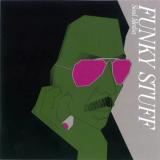
What Soul Media, led by Jiro Inagaki, ultimately arrived at was a tight, cool, and ultimate groove.
As Inagaki himself has stated that he “played black funk” on this album, the explosive jazz-rock foundation he had cultivated up to that point is fused with the stickiness, elasticity, and physicality of black music—elevating his musical vision to an entirely new dimension. Combined with the masterful arrangements of Hiromasa Suzuki, the groove is polished to a high sheen, growing richer, more fluid, and subtly seductive.
Every track stands out: the vibrant, driving energy of “Painted Paradise”; the coexistence of funkiness and mellowness on “Breeze”; and the low-slung, razor-sharp cover of Kool & The Gang’s “Funky Stuff”.
Now regarded as a definitive classic, this album remains in constant demand from listeners around the world.
Inner City Sound Archives reaches its third transmission.
Six extended cuts built around the language of late-night New York disco — loose percussion, rolling basslines, open arrangements, raw repetition and the kind of long-form movement made for a room rather than a radio.
Volume Three moves deeper into the series.
Midnight Passage opens the doors slowly: nocturnal, hypnotic and suspended in motion. Afterglow stretches the groove into warmer territory, while Mercury Rising pushes toward a rougher, more physical pulse.
On the reverse, West Side Motion locks into an extended downtown groove, Golden Hours drifts between soul and after-hours disco, and Crosby Street closes the record with the stripped-back intimacy of a late-night loft cut.
Six cuts. Two sides. No filler.
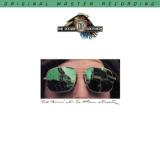
The Doobie Brothers faced a serious predicament as they prepared to record Takin’ It to the Streets. That the group navigated a potentially serious personnel problem that would’ve tanked lesser bands and scored its fourth straight Top 10 album — while again expanding its range — speaks to the collective’s chemistry, broad-mindedness, and songwriting abilities. Known as the effort on which vocalist-keyboardist Michael McDonald makes his debut, the 1976 set stands as an all-encompassing representation of the various styles the Doobie Brothers explored during their heyday.
Sourced from the original analog master tapes, mastered by engineer Krieg Wunderlich, pressed at Fidelity Record Pressing in California, and housed in a Stoughton gatefold jacket, Mobile Fidelity’s numbered-edition 180g 45RPM 2LP presents Takin’ It to the Streets in definitive sound. Given the luxurious room of a 45RPM version for the first time and benefiting from the wider grooves, the music unfolds amid large soundstages replete with ultra-quiet backgrounds, big dynamics, and accurate imaging. By then a key component of the Doobie Brothers' success, Ted Templeman’s production is brought to light with stellar clarity and definition.
As is the case on Mobile Fidelity's four other acclaimed Doobie Brothers 45RPM reissues, myriad facets that help make Takin’ It to the Streets timeless, natural, and organic — minimal overdubs, voices that realistically rise and fall, notes that properly carry and decay, warm tones, bass lines that pop with color, well-placed percussive accents, defined separation between the players — emerge with incredible presence, openness, and fullness. Nothing is overdone or out of place. No small feat given Templeman and company didn't know how everything would unfold when they first met up in Southern California.
Confronted with a change in plans by co-founder Tom Johnston, whose contributions to the band up to that point in its career identified him as an indispensable member, the Doobie Brothers were thrown for a loop when he curtailed pre-planning work and retreated home to deal with ongoing health problems. Thankfully, Jeff "Skunk" Baxter, the group's newest full-time recruit, had a possible solution in his former fellow Steely Dan colleague McDonald. The singer-keyboardist had already sat in with the Doobie Brothers on their recent tour. So, why not give it a shot?
McDonald's prodigious talents notwithstanding, he couldn't technically replace Johnston. For starters: McDonald's soulful timbre bore little resemblance to Johnston's grittier voice. And McDonald played keyboards, not guitar. No wonder Templeman initially expressed reservations. He also knew the Doobie Brothers needed additional material before they could consider wrapping the record. Yet the skepticism began to dissipate on the first day of the sessions. Still waiting for second drummer Keith Knudsen, the band gathered in the studio with former roadie Bobby LaKind on congas and Little Feat drummer Richie Hayward for a live run through "Wheels of Fortune." The instrumental parts of that take landed on the record. Johnston would even return to share the lead vocal duties with Patrick Simmons.
Those magical results, and the experience of hearing McDonald woodshed the title track at the piano, turned Templeman into a believer and cheerleader. Spurred by their veteran producer's encouragement and McDonald's ideas for songs, the Doobie Brothers embraced new directions just as they did after their debut LP and on subsequent efforts with orchestral and horn treatments. The latter return on Takin’ It to the Streets courtesy of the five-piece Memphis Horns. Yet outside of viola accompaniment on "Losin' End," string elements step aside in favor of McDonald's pianos, synthesizers, and clavinet. And, on five cuts, lead singing.
As the new face of the band, McDonald ended up crafting all or portions of four tunes. His fingerprints are all over two of the singles, including the jazzy, blue-eyed-soul delight “It Keeps You Runnin’” and irresistibly melodic title track, which cracked the Top 15 and became one of the Doobie Brothers’ signature numbers. He and Baxter’s penchant for smoothness, and a precursor to the band’s coming transition into rhythmically oriented yacht rock, informs the brassy sway of “Carry Me Away.”
Further enriched by Tiran Porter’s gorgeous, time-signature-shifting ballad “For Someone Special,” Simmons’ peppy, spring-loaded “8th Avenue Shuffle,” and Johnston’s “Turn It Loose” — the move-your-feet boogie serving as kind of apt farewell to the band’s prior rock ‘n’ roll sound — Takin’ It to the Streets spun uncertainty into gold. Altered yet unbowed, the Doobie Brothers once again offered countless listeners “the best kind of remedy” with feel-good music that holds up amid any era.
Devo Marries Gritty Guitars with Expansive Keyboard Canvasses on Duty Now for the Future:
Transitional Album Furthers the Band’s Satirical Stance, Includes Cover of “Secret Agent Man”
Hear the 1979 Record in Audiophile-Grade Sound and at 45RPM for the First Time:
Mobile Fidelity’s Numbered-Edition 180g 45RPM 2LP Set
Benefits from Enhanced Definition and Presence
1/4” / 15 IPS Dolby A analogue master to DSD 256 to analogue console to lathe
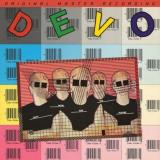
“Pop music needs a big enema.” Devo created Duty Now for the Future with that mission statement, relayed to the press by co-founding bassist/vocalist Gerald Casale, in mind. Though unfairly pegged by some as an example of the common sophomore slump, the record spurred the group’s interest in electronic instrumentation, extended its penchant for biting social satire, and contained another transformative cover song in the form of “Secret Agent Man.” Above all, the 1979 work proved the Ohio pranksters were anything but a joke even if they would have to wait one more year until for their mainstream breakthrough.
Sourced from the original master tapes, mastered by engineer Krieg Wunderlich, pressed at Fidelity Record Pressing in California, and housed in a Stoughton gatefold jacket, Mobile Fidelity's numbered-edition 180g 45RPM 2LP set presents Duty Now for the Future in audiophile-grade sound. Benefitting from the extra groove space on this first-ever 45RPM version, it plays with enhanced definition, deep-black backgrounds, and ultra-quiet surfaces.
Though certain band members later expressed regret with some of his decisions, the merits of Ken Scott’s production emerge like never before. A lurking edginess serves as a signpost in Devo’s progression before it fully embraced keyboards as a primary tool. Guitars possess punch and grit and, along with the crisp arrangements, are sharpened with an ear toward accuracy and vibrancy. It all helps give Duty Now for the Future a direct immediacy that answers the complaints of listeners who felt the affair too processed or sterilized.
Notably, a majority of the material here stems from the same grab bag of songs Devo banked before Warner Bros. signed it to a deal. The album marks a capstone to Phase One of a career that for all intents and purposes began in 1973. And just like many of the group’s performances of that era, Duty Now for the Future remains just as famous for the critical disdain it inspired as the music itself. A vicious review in Rolling Stone — the very publication that a few decades later would trumpet the band as one of the most important of its age — ended with the writer offering to send readers shards of the LP he planned on smashing to bits.
Perhaps he just needed to experience this new-wave effort with the restored sound that makes everything now feel so explosive and urgent. Whatever the case, the songs hold up and, amid a contemporary period which gives increasing license to artificial intelligence and behemoth conglomerates, seem more apt than ever before.
Consider “Blockhead,” which skewers the predictable appearances and numb-to-the-world actions of a rule follower. Or the similarly themed “Clockout,” an uptempo ditty whose thumbing-its-nose bravado and sardonic lyrics send up corporate culture with an irresistible smirk. As for the wiry, hard-hitting urgency of “Wiggly World” and Mark Mothersbaugh’s loud declaration that “They say the fittest shall survive/Yet the unfit may live”: Evidence these art-school rabble-rousers still had some punk fury to flush out of their system. And the sincere allure of the charged power pop and wishful circumstances of “The Day My Baby Gave Me a Surprize” cannot be denied.
To point to an interesting bit of history that makes Duty Now for the Future all the more intriguing, particularly for the most committed Spuds, more than half its tracks were selected for Greatest Misses — a 1990 anthology that celebrates lesser-known cuts and functions as a rejoinder to a hits compilation from the same year. (The only track from the 1979 album to make the “hits” disc: “Smart Patrol/Mr. DNA.”)
Indeed, tunes like the riff-driven albeit controversial “Pink Pussycat,” atmospherically twitching “S.I.B. (Swelling Itching Brain),” and ceremonial instrumental “Devo Corporate Anthem” may lack the catchy appeal and all-together coherence of what follows on the group’s third and most commercially successful effort, Freedom of Choice. Yet in order to get there, to de-evolve if you will, the band needed the smorgasbord that is Duty Now for the Future.
Coming correct with a heavily garnished follow-up to his first drop of neo-junglist delicacies, Skins is back with a second volume of Sauce Direct. The name tells you all you need to know about the school of breakbeat science he's coming from, but the learned craft of drum edits is offset by a mischievous thirst for disruption, presenting the matter on this platter as a stand-out serving on the plentiful menu of modern-day jungle.
'Strictly Hardcore' brings together the heavy weather of quintessential dub techno with deft, stepped breaks for a brooding heads down tear-out while 'Lost In The Sauce' revels in vintage synth melancholia as a unique backdrop to Skins' own brand of rabid Amen chops.
'Reaper's Kiss' switches stance with some heavy sub wobble and the teased flicker of Apaches in a patient half-time roll out of serious soundsystem reverence. There's space for some snappier breaks in the second half, but this cut is testament to Sauce Direct being a space for wider ideas beyond textbook jungle.
'Double Dose' keeps the stylistic dexterity on lock with a swerve towards trance-speckled lead lines, deployed with a necessary restraint to play nice on top of the nimble breaks. It's an approach which could be so easily overcooked - in Skins' hands the balance of flavours is on point, capping off another essential round in this must-check series of white label delicacies for heads with real taste.
Repressed at GZ media with the original galvano.
Remastered version, and recut version.
Double pack picture disc with Zeotrope animations.
Packed in a gatefold printed sleeve.
A live set from 2002, of pure Tribe, speedy and banging. Was pressed on CD a few years ago and finally cuted on vinyl.
The Beatles played two shows at the Montréal Forum on September 8th 1964, a matinee at 4pm and an evening performance at 8pm and at 6pm they held a press conference for Canadian Broadcasting Corporation from the Forum’s stage. A local newspaper had reported that somebody was going to kill Ringo, so instead of staying the night in Montréal, they flew out straight after the evening show and arrived at Key West at 3.30am where hundreds of fans were awaiting them. After a day off in Miami, the group performed at the Gator Bowl in Jacksonville, Florida the following night.
We have done the best we possibly could with these admittedly lo-fi yet important historical recordings. The source is AM radio and there is considerable distortion on the vocals. The broadcast was faded out halfway through A Hard Day's Night so the last two songs of the show, I Want To Hold Your Hand and Long Tall Sally were not transmitted.
Carly Simon’s No. 1 smash “You’re So Vain” lingers as one of the most clever and famous songs ever recorded. The subject of mass speculation ever since its release, soon after which it occupied the top spot on multiple Billboard charts for weeks, the anthem kept a captive public guessing at the identity of its smug subject for decades. The question surrounding the protagonist’s identity remained perhaps the only mystery on the otherwise sexually open and autobiographically daring No Secrets, Simon’s commercial breakthrough and ‘70s singer-songwriter staple.
Sourced from the original master tapes, pressed at Fidelity Record Pressing in California, strictly limited to 3,000 numbered copies, and housed in a Stoughton gatefold jacket, Mobile Fidelity’s 180g 45RPM 2LP set affords the platinum-certified 1972 effort the finest sonic treatment it’s received on vinyl. Helmed by Richard Perry and recorded at London’s Trident Studios — where Beatles, David Bowie, and Elton John captured landmark LPs — No Secrets touts exceptional production qualities highlighted by this restorative reissue.
Audiophiles and record collectors, take note: This is the first time No Secrets has been available on 45RPM. The wider grooves and dead-quiet surfaces pay instant dividends. Simple, elegant, and disarming, songs seemingly float amid wide, deep soundstages. Simon’s voice takes on a confident, assertive tenor that emerges with accurate imaging, balanced tonality, and palpable presence. String arrangements and backing vocals come through with similar realism.
Enhanced by an all-star cast — Simon’s then-husband James Taylor, Paul and Linda McCartney, Mick Jagger, Lowell George, Klaus Voorman, Bobby Keys, Jim Keltner, Nicky Hopkins, and Bonnie Bramlett are among the renowned musicians who lend a hand — No Secrets advances Simon’s themes of personal introspectiveness, no-holds-barred reflectiveness, and feminist-inspired boldness. She makes every moment of No Secrets worth savoring. Simon invests her all in the songs, handling beautiful ballads, sassy folk-rock numbers, and bluesy fare with calm, composure, and candor.
While acknowledging her own regrets (“You’re So Vain”) and loss (“The Carter Family”), Simon champions the highs (“The Right Thing to Do”) and pains (“His Friends Are More Than Fond of Robin”) of love in a sincere manner indicative of her maturity as both an artist and singer. The New York native distinguishes “When You Close Your Eyes” with deep-rooted spirituality, recalls childhood joys via charming sentimentality on “It Was So Easy,” and and takes ownership of her persona on a cover of Taylor’s “Night Owl.”
“We have no secrets
/We tell each other everything,” Simon sings at the record’s midpoint, encapsulating both the themes and bravura of an effort that was nominated for four Grammy Awards and saw her write or co-write every song but one. Combined with Perry’s savvy instrumental arrangements, her self-assured performances and forthright lyrics grant No Secrets an edginess and relevance immune to the ravages of time.
In the late 1980s, Klaus Wiese (Popol Vuh) deepened his connection with Tibetan culture. The result is a series of works solely dedicated to the universal purity of the Singing Bowls. Uranus, perhaps the most rigorous of these, is an intense meditation on the trans-personal sphere of the VI chackra. The music becomes like a single harmonic chant, the reflection of a constant flow of divine light, which transforms the psyche and dilates the secret passages of the heart. In the galaxy of pure sound, the accumulated overtones offer the intrepid listener the access to a prismatic, fluoriscence-rich consciousness. The ego thus becomes the sonorous composer of itself, of the vital circle flooded with beneficial acoustic vibrations. In this sense, Uranus, originally published on tape (Aquamarin Verlag/1988), also marks a parallel with the same research by Henry Wolff & Nancy Hennings or Nada Himalaya's Deuter.
(Side A, Track 1) DJ Shadow - In/Flux - (Side B, Track 1) DJ Shadow - Hindsight
#2 - Lost And Found (S.F.L.)
(Side A, Track 1) DJ Shadow - Lost And Found (S.F.L.) - (Side B, Track 1) DJ Shadow - Hardcore (Instrumental) Hip-Hop - (Side B, Track 2) DJ Shadow - Last Stop
#3 - What Does Your Soul Look Like
(Side A, Track 1) DJ Shadow - What Does Your Soul Look Like - (Part 2 - Original Standalone Version) - (Side A, Track 2) DJ Shadow - What Does Your Soul Look Like - (Part 3 - Original Standalone Version) - (Side B, Track 1) DJ Shadow - What Does Your Soul Look Like (Part 4 - Original Standalone Version) - (Side B, Track 2) DJ Shadow - What Does Your Soul Look Like - (Part 1 - Original Standalone Version)
#4 - Midnight In A Perfect World (U.K. Version)
(Side A, Track 1) DJ Shadow - Midnight In A Perfect World (Radio Vision) - (Side A, Track 2) DJ Shadow - Midnight In A Perfect World (Gab Mix) - (Side B, Track 1) DJ Shadow - Midnight In A Perfect World (Extended Vision) - (Side B, Track 2) DJ Shadow - Mutual Slump (Album Version)
#5 - Stem
(Side A, Track 1) DJ Shadow - Stem (Cops 'N' Robbers) - (Side A, Track 2) DJ Shadow - Red Bus Needs To Leave! - (Side B, Track 1) DJ Shadow - Stem/Long Stem (Earlier Version) - (Side B, Track 2) DJ Shadow - Soup
#6 - High Noon
(Side A, Track 1) DJ Shadow - Hypnotist Intro - (Side A, Track 2) DJ Shadow - High Noon (Alternative Mix) - (Side B, Track 1) DJ Shadow - Devil's Advocate (Alternative Version) - (Side B, Track 2) DJ Shadow - Organ Donor
(Extended Overhaul - Original Version)
#7 - Camel Bobsled Race
(Side A) DJ Shadow - Camel Bobsled Race (Original Unedited Version) (Part 1) - (Side B) DJ Shadow - Camel Bobsled Race (Original Unedited Version) (Part 2)
#8 - Bonus Disc for this Box Set
(Side A, Track 1) DJ Shadow - In/Flux (First Ever MPC Version) - (Side A, Track 2) DJ Shadow - Lost And Found (S.F.L.) (First Ever MPC Version) - (Side B, Track 1) DJ Shadow - What Does Your Soul Look Like (Part 2 - First Ever MPC Version) - (Side B, Track 2) DJ Shadow - What Does Your Soul Look Like (Part 4 - First Ever MPC Version)
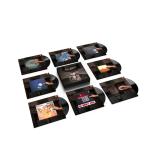
Zum ersten Mal seit Jahrzehnten erscheinen DJ Shadows legendäre Mo’Wax-Singles wieder offiziell – in einem umfassenden 8-teiligen Vinyl-Set, das mehrere Stunden bahnbrechender Musik enthält.
Die Aufnahmen wurden in den Abbey Road Studios von Miles Showell halbspeed-remastered und klingen so klar und kraftvoll wie nie zuvor. Die Box enthält zahlreiche bisher unveröffentlichte Mixe und Edits sowie eine exklusive Bonus-LP mit den ursprünglichen Demos von vier Tracks – ein einzigartiger Einblick in die Entstehungsgeschichte des Shadow-Sounds.
Abgerundet wird das Set durch neue Fotografien von Brian Cross (B+), DJ Shadows langjährigem visuellen Wegbegleiter.
Ein essenzielles Sammlerstück für Fans, Vinyl-Liebhaber und alle, die die Wurzeln moderner Beat-Kultur feiern wollen.
"This box wasn’t made for the casual listener,it was made with the hardcore fan in mind. I’ve always felt, if something is worth doing, it’s worth doing right, and every step of the process was
made with this philosophy firmly in mind. I had fun locating and resurrecting these songs, some of which still feel close to my consciousness as though they were made yesterday.”
-DJ Shadow
The moment the instantly recognizable intertwined guitar passage on the title track to the Eagles' Hotel California begins, the record's genius becomes obvious all over again. Ranked the 118th Greatest Album of All Time by Rolling Stone, certified by RIAA as the third best-selling LP in history, and considered the foundation on which the Golden State's mid-‘70s music scene was built, the 1976 landmark is a music staple immune to shifts in trends, eras, and styles. Fearlessly addressing the chaos and consequences of American life, its songs remain strikingly prescient and gain creedence with each passing day.
Mastered from the original analogue master tapes, pressed on MoFi SuperVinyl, and limited to 17,500 numbered copies, Mobile Fidelity's UltraDisc One-Step 180g 45RPM 2LP vinyl box set ensures you will want to permanently check into and never leave this particular Hotel California. Up to the herculean task of standing head and shoulders above all prior reissues, this collectible edition plays with extreme clarity, organic richness, tube-like warmth, massive dynamics, and microscopic levels of detail. You'll be able to practically smell the colitas and feel the breeze in your hair. Songs come across with an epic sweep and feature immersive, front-to-back soundstages that allow the music unprecedented air, roominess, and separation. As for the noise floor? It's basically as invisible as the spirits that waft in the corridors of the unforgettable title song.
Aesthetically, the premium packaging and presentation of the UD1S Hotel California pressing befit its esteemed status. Housed in a deluxe box, it features gorgeous foil-stamped jackets and faithful-to-the-original graphics that illuminate the splendour of the recording. From every angle, this UD1S reissue exists as a curatorial artefact meant to be preserved, touched, and examined. It is made for discerning listeners that prize sound quality and production, and who desire to fully immerse themselves in the art – and everything involved with the album, from the renowned cover art to the meticulous finishes.
Indeed, the opportunity to zero in on all the particulars of the 26-million-selling Eagles record dubbed "a legitimate rock masterpiece" by vaunted Los Angeles Times scribe Robert Hilburn has never been better. A global phenomenon that marked the band debut of guitarist-singer Joe Walsh, Hotel California continues to resonate and connect with listeners of all generations taken by its narrative depth, stark directness, picturesque melodies, daring majesty, and ardent emotionalism. Adorned with a breathtaking exterior photograph of the Beverly Hills Hotel that serves as the simultaneously haunting and alluring cover art, and rounded out by a rear-cover shot of the Lido Hotel lobby that reinforces a notion that teeters between permanence and transience, Hotel California is brilliantly tied to a specific place that functions as a universally understood metaphor for the American Dream.
Confronting the darker undercurrents and oft-ignored constructs attached to that romantic notion, the record's songs revolve around a host of shared themes: excess, mobility, stability, illusion, fame, destruction, and idealism included. Notably, Hotel California appeared at a crucial junction in American history: During the country's bicentennial and amid escalating controversies related to the Vietnam War, energy crisis, and governmental corruption. That the Eagles manage to channel such cultural, social, and economical matters into a cohesive, stately, big-picture statement is alone a stupendous feat. That the album's reach, boldness, vitality, accessibility, and understated intensity have never waned make it a marvel.
Reflecting on Hotel California 40 years after its original release, and indirectly explaining its enduring appeal and increasing relevance, singer-songwriter Don Henley confirmed the record pertains to the "loss of innocence, the cost of naiveté...the difficulties of balancing loving relationships and work, trying to square the conflicting relationship between business and art; the corruption in politics, the fading away of the Sixties dream of ‘peace, love and understanding.'"
It can be argued that Henley and company squarely hit on and drove home those ideas in the surreal title track, chart-topping "Life in the Fast Lane," and grand "The Last Resort" alone. But that would miss the forest for the trees. Experienced as an unbroken whole, complete with the pristinely shot imagery and physical grooves, Hotel California unfolds like a geography-conscious saga by James Michener and plays like colour-saturated movie shot on 70mm film by Martin Scorsese. It's about our collective and individual decisions – and the shape of our past, present, and future. And, just like that conjured by our imaginations, Hotel California continues to take on a life of its own.
More About Mobile Fidelity UltraDisc One-Step and Why It Is Superior
Mobile Fidelity Sound Lab's UltraDisc One-Step (UD1S) technique bypasses generational losses inherent to the traditional three-step plating process by removing two steps: the production of father and mother plates, which are created to yield numerous stampers from each lacquer that is cut. For UD1S plating, stampers (also called "converts") are made directly from the lacquers. Since each lacquer yields only one stamper, multiple lacquers need to be cut. Mobile Fidelity's UD1S process produces a final LP with the lowest-possible noise floor. The removal of two steps of the plating process also reveals musical details and dynamics that would otherwise be lost due to the standard multi-step process. With UD1S, every aspect of vinyl production is optimized to produce the best-sounding vinyl album available today.
MoFi SuperVinyl
Developed by NEOTECH and RTI, MoFi SuperVinyl is the most exacting-to-specification vinyl compound ever devised. Analogue lovers have never seen (or heard) anything like it. Extraordinarily expensive and extremely painstaking to produce, the special proprietary compound addresses two specific areas of improvement: noise floor reduction and enhanced groove definition. The vinyl composition features a new carbonless dye (hold the disc up to the light and see) and produces the world's quietest surfaces. This high-definition formula also allows for the creation of cleaner grooves that are indistinguishable from the original lacquer. MoFi SuperVinyl provides the closest approximation of what the label's engineers hear in the mastering lab.
The latest and greatest producer in a proud British tradition that good music need not take itself seriously. Outlandish samples, meet dissonant vibraphones in a combination that has been described as “lovely stuff”
Not long after the well-received 'Bottlemess Brunch' and 'Billa' dropped, the FLDIN2 label is back with another killer drop. This one, we're told, draws on Fold producer Rob's early immersion in pirate radio and record-collecting years in suburban London during the early 2000s. Lovers of Ben UFO, Joy Orbison and Floating Points will all be into the lo-fi designs, not to mention the irresistible garage, tech and dub swagger he packs into these jams. 'Lotion' is a crispy, tightly coiled and skeletal UKG sound underpinned with wobbly low ends and sprinkled with chopped vocal fragments that make for a ghostly groove. 'Soft Launch' is fuller, with a more boring emotional impact from the yearning vocal stabs that are teased and buried throughout the mix.
Prozak has been kicking out the garage-house jams for a while now, and always on the best labels, from Time Is Now to Instinct, which is run by Burnski, who also heads up this one. And it's another case of pure fire from the off as 'Freak Ya Right' layers up silky, melodic bass with charged up synth stabs and a bubbly groove. 'No Use For Love' has a darker 90s undercurrent with organ basslines and more coarse percussive textures. 'Classics' cuts loose with an off-balance bassline that's cartoonish and oversized, while 'Ravers Inside' shuts down with plenty of pent-up funk and playful samples that will destroy the floor and nothing less.
***
He strode towards a long drink.
Running in the gutter,
scanning patterns.
Skin staring, stirring unbelief.
Scarred metal faces
on the iron streets,
spitting blood.
***
Early support by: Luke Slater, Tommy Four Seven, Dave Clarke, Marcel Dettmann, Chris Liebing, Ben Klock, Oscar Mulero, Speedy J, Len Faki, Shifted, Psyk, Pfirter, Objekt, James Ruskin, Sigha, Myler, Stanislav Tolkachev, Rebekah, Par Grindvik, Max M, Gary Beck, Dave Tarrida, Kike Pravda, Samuli Kemppi, Happa, DVS1, Joseph Capriati, Juho Kusti, Cassegrain, Kwartz, Clouds, Pacou, Octave, Stranger, Ansome, Black Asteroid, Hector Oaks, DJ Hyperactive, Christian Wunsch, Endlec, Kriz, Paula Temple, Exium, AnD, Joe Farr, Martyn Hare, Eomac, Dimi Angelis, Norman Nodge, Xhin, Dax J, Wire, Drvg Cvltvre, Sawf, Jamie Bissmire, Paul Mac, Inigo Kennedy, D. Carbone, J. Tijn, CTRLS, The Noisemaker, Jeroen Search, Dustin Zahn, Svreca, Unbalance, Truncate, Jeff Derringer, Jonas Kopp, Developer, 3.14..