Michiko Ogawa's Pancake Moon drifts between darkness and light, weaving sho, piano, and synthesizers into a soundworld where memory, loss, and rebirth dissolve into one another.
Buscar:ogawa
Released in 2019 in a limited edition of 50 cassettes, 'Planetary Exploration' by Ogawa & Tokoro is a handcrafted synthesizer dream sequence. Looking through an ancient oriental telescope, let us seek the future of music and Zen in this new era. When the time comes to abandon our planet, we still will be the ancestors of all humankind. Pressed to vinyl for the first time, remastered by Kuniyuki Takahashi!
Tokyo Hell is a techno label founded in 2018 by Tokyo-based DJ and producer Tsuyoshi Ogawa. The concept of the label is his mission of bringing back the Japanese spiritual values after the tragic American bombing during the Second World War in Tokyo. War is over but Tokyo is still hell. This 2nd EP included three dark techno tracks is a must item to survive of Tokyo Hell.
Tokyo-based Dj And Producer Tsuyoshi Ogawa Launches His New Record Label tokyo Hell' With tokyo Yakuza Society Ep'. tokyo Hell' Is Tsuyoshi's Mission Of Bringing Back The Japanese Positive Life Values After The Tragic American Bombing During The Second World War In Tokyo. A1 tokyo Yakuza Society' Reflects Human Deeply Connection Giri-ninjo And Taking Care Of Each Other, With Compassion And Empathy. B1 dance Yakuza' Is Tsuyoshi's Personal Version Of The Influence Of Chicago Label dance Mania' In The Tokyo Club Scene Over The 90s. B2 ghost Story In Yotsuya' Pays Tribute To A Strong Japanese Tradition: one Hundred Ghost Stories - The Lantern Ghost, Oiwa' By Hokusai, Extremely Respected Artist In Tokyo.
Tokyo based DJ/Producer Tsuyoshi Ogawa presents "Seven Samurai". This vinyl-only label has been founded in 2018 and it is operating in Tokyo, Japan. It pays tribute to the Japanese legendary movie director 'Akira Kurosawa'. This 2nd EP inspired by the movie "The Hidden Forest'. 1st track Himatsuri by Tsuyoshi Ogawa that recorded using the voice sample of Yuki's song from the movie and this song based old Japanese poem book 'Kangin Collection' in 1518, The impressive phrase 'Think it over - How dark this world is - The floating world is no less than a dream - Just go crazy ' will be brought to us as a universal theme to this day. 2nd track Hitomi's Temple by Paris Samurai viDa, He recorded using sound of Japanese Koto, Samurai Sword and Samurai Voice to respect Japanese traditional manner. it's a Japanese satellite like a spiritual space temple, because the track bring you from Paris to Japan to space. This EP is dedicated to Akira Kurosawa as a new spiritual soundtrack for The Hidden Forest.
Tokyo based DJ/Producer Tsuyoshi Ogawa presents "Seven Samurai". This vinyl-only label has been founded in 2018 and it is operating in Tokyo, Japan. It pays tribute to the Japanese legendary movie director 'Akira Kurosawa'. Therefore, the name of the label comes from his film 'Seven Samurai' and the tracks on the vinyl have been recorded using sound effects from the original movie's scenes. 'Seven Samurai 001' is the memorable first EP produced by Tsuyoshi Ogawa. The 1st track, 'Seven Samurai', was recorded using the voice sample from the movie "Seven Samurai' by Akira Kurosawa: 'Everything's riding on this battle!', which brings us a sign of the start of the samurai battle. Here, the 2nd track 'Shadow Enemy', expresses the fear and tension of invisible enemies, whereas the 3rd track 'Kannon Soleil' leads to the end of the battle by Buddha who comes from the sky. This EP is dedicated to Kurosawa as a new spiritual soundtrack for Seven Samurai.
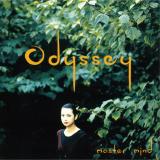
Odyssey was originally a CD-only release by Japanese duo Master Mind (Hiroshi Ogawa & Hisaki Kurosawa) and was their 3rd full-length album. 30+ years later it is now available as a double LP on the California-based Forest Jams label. Its one of many albums of this particular genre that came out in the decade but one that is wholly unique with the depth in its sculpted sounds and the transportation it provides to an audio realm of equally fantastical and soothing proportions. For fans of ambient, lush gardens, auditory massages, RPG OST/BGM, and Kankyō Ongaku. Licensed by NHK Publishing and limited to 300 copies.
- A1: It Could Happen To You
- A2: I Want To Talk About You
- A3: Early Summer
- B1: Willow Weep For Me
- B2: Autumn Leaves
- B3: Scenery
His fresh, delicate playing has captivated countless listeners, and his debut album Scenery has come to be highly acclaimed around the world. Fukui, who began playing the piano at the age of 22, recorded this album when he was just 28. The earnest passion of his youth resonates throughout the music, gently stirring the emotions of those who listen. The spacious, confident swing of “It Could Happen To You”, the refreshing joy radiating from “Early Summer”, the late autumn coolness imbued in the title track “Scenery” each embodies the uniquely expansive yet nuanced “Hokkaido sensibility” that flowed naturally from Fukui’s artistry.
Within this album, the beautiful landscapes that Ryo Fukui crafted his Scenery continue to breathe eternally.
text by Yusuke Ogawa (UNIVERSOUNDS / DEEP JAZZ REALITY)
"I want to hear more of Ryo Fukui's performances." The dream of listeners around the world has now become a reality. A spectacular live performance full of the charm of the mature Fukui who has been with .This is what an unexpected joy is all about. The appearance of Ryo Fukui's "new work". Recorded on June 26, 2004. This is a live recording of a live performance commemorating the 9th anniversary of , the jazz live house that Fukui presided over and used as the base of his activities.
The members of the trio were Fukui, Kosuke Sakai (bass), and Yoshito Eto (drums). Fukui was 56 years old at the time. His performance was powerful and large-scale, yet delicate and sharp. In terms of the balance of energy, stamina, and technique, he was just approaching his prime. He spins heavy yet elegant renditions of his beloved Phineas Newborn Jr. and Tommy Flanagan, and thrillingly plays Wayne Shorter, who he was a huge fan of in his youth. It is a spectacular performance that reflects the fulfillment of Fukui's time. , which opened in June 1995, is celebrating its 30th anniversary this year.
Text by Yusuke Ogawa (UNIVERSOUNDS / DEEP JAZZ REALITY)
- A1: Tadaaki Misago & Tokyo Cuban Boys – Sakura Sakura 7 32
- A2: Minoru Muraoka – Muraiki 3 55
- A3: Count Buffalo & The Jazz Rock Band – Mago-Uta 3 43
- A4: Kiyoshi Sugimoto Quartet – D-51 6 05
- B1: Toshiyuki Miyama & The New Herd– Adult's Day 9 25
- B2: Soul Media – Breeze 4 33
- B3: ジョージ・大塚カルテット– Sea View 5 03
- C1: Hozan Yamamoto, Masahiko Togashi, Yosuke Yamashita – Breath Prologue 5 08
- C2: Jiro Inagaki & Soul Media – Do It! 7 25
- C3: Hiroshi Suzuki – Romance 5 56
- C4: Masahiko Sato – Tochi Mo Kurumi Mo Fukiotose 3 01
- D1: Masahiko Togashi – Fourth Expression 6 45
- D2: Takeshi Inomata & Sound Limited – Mustache (Live) 8 50
- D3: Takeo Moriyama – Watarase 6 40
repressed !
● Essential 14 track collection of "WaJazz" music selected and compiled by renowned Japanese jazz expert Yusuke Ogawa, owner of the Universounds record store in Tokyo.
● Gatefold 180g heavy double vinyl LP. Comes with extensive track-by-track liner notes by Yusuke Ogawa.
● All tracks licensed by Nippon Columbia, Tokyo, Japan.
● Mastering and lacquer cut by Jukka Sarapää at Timmion Cutting Lab, Helsinki, Finland.
---
Universounds, HMV Record Shop and 180g team up for an exceptional release: from blazing hard bop to free jazz, to introspective saxophone solos and massive big band sounds, renowned Japanese jazz expert Yusuke Ogawa presents an essential 14 track collection of "WaJazz" music taken from the Nippon Columbia vaults. Featuring Jiro Inagaki, Minoru Muraoka, Hiroshi Suzuki, Hozan Yamamoto, Count Buffalo, Takeshi Inomata, and much more!
"Japanese jazz has been recognized and celebrated by music lovers worldwide for decades. The origins of this trend may be traced back to the rare groove movement that flourished in the 1990s, but its current deep and wide popularity seems to be connected to the fact that Japanese people have been reevaluating their own jazz since the mid-2000s, locally referred to as WaJazz ("Wa" meaning Japan but also theShōwa emperor period, from 1926 to 1989). Since the beginning of the 2000s, there has been a growing trend to move away from the DJ-focused perspective and to appreciate jazz with a deeper understanding. Nowadays, there is more and more interest in the background and roots in which jazz has developed in Japan, with Japanese jazz as a whole now considered as its own distinctive genre.
Of course, even if we speak about "WaJazz" as one genre, there is a truly wide variety of styles within it. However, when Japanese musicians play, there is something uniquely Japanese flowing through that creates a kind of synergy. It may be the melody, the rhythm, or even something deeper, like an inexpressible flicker. I would be happy if some of its charms and secrets emerge from the fourteen tracks included in this collection." (Yusuke Ogawa)
Yusuke Ogawa has been running the Universounds store in Tokyo since 2001, specializing in jazz and second-hand, rare, and collector records. He is also a reissue supervisor, label manager, DJ, and music writer. Known for his vast musical knowledge, eye for detail, and archival skills, Ogawa has worked on more than 250 reissues and compilations – including the highly praised Deep Jazz Reality and Project Re:Vinyl series. He is the co-author of the Wa-Jazz Disc Guide and the Independent Black Jazz of America books.
- A1: Mirai (Léviathan)
- A2: Adieu (Rue De La Victoire)
- A3: Sillons (Abyssinie)
- A4: Turquoise (La Fête Noire)
- A5: L’averse (Vendredi)
- B1: Tête En Bas (88888888)
- B2: Bol Chaud, Bol Froid
- B3: Filmer Du Feu (Inline Twist)
- B4: Water Signs (Saint-Donatien)
- B5: Le Malchin (Bleu Sous-Marin)
- B6: Loin De Vous (Gravité)
- B7: Mi Rey (Léviathan)
Here, Flavien departs from his usual creative process to embrace collaboration—because plouf! (Léviathan) is also the story of a dive, his first collective adventure with musicians he had always dreamed of working with: Michelle Blades (guitar), Kiala Ogawa (keys), Akemi Fujimori (bass), Cédric Laban (drums), and Thibaud Merle (winds).
Reworking these songs is a way of revisiting forgotten musical landscapes, shedding new light on them with a different perspective. It’s about transforming a solitary electronic record into a collective piece by exploring new textures and instrumental approaches.
With this album, Flavien Berger uses his early tracks as raw material—as if the 2015 Léviathan were now a kind of demo from which to extract the essence and create something entirely new. The project, like the music that drives it, is rooted in the idea of reinvention.
The result is a fresh sonic exploration where Léviathan’s tracks take on new forms—some staying true to their original versions, others completely reimagined, blending past and present.
- A1: Day 1
- A2: My Wiener Schnitzel
- B1: Moules Mariniere
- B2: Bone Spirals
- B3: Infinity
- C1: Deviation
- C2: Fun & Games
- D1: Ordinary Days
- D2: Gotta Be Happy
YES! We are a "BIG BAND"!!
A 20th anniversary original album featuring new members has been released on a two-disc vinyl set.
Formed in 2005 at the invitation of pianist Makoto Ozone, whose work transcends genres and continues to thrive on a global scale, the 15-member big band
"No Name Horses" has grown into a one-of-a-kind big band, thanks to its sophisticated ensemble built on longstanding relationships of trust, the diverse
original compositions of Ozone and the other members, and its boundless creativity and playfulness. The band has performed both in Japan and overseas.
In 2024, the band changed its name from "Makoto Ozone featuring No Name Horse" to "Makoto Ozone No Name Horse," and began activities under a new
lineup with the addition of three new members: Hidetaro Matsui, Yu Riku, and Shinpei Ogawa. This is the first album since the new lineup was released in
November 2024.
Returning to the classic big band sound, this album was created with each member contributing a new song, based on the concept of a superb swing and resonance.
Makoto Ozone "No Name Horses"
Makoto Ozone (p, org) Eric Miyashiro (tp, flh, picc trp) Akira Okumura (tp, flh) Shutaro Matsui (tp, flh) Yoshiaki Okazaki (tp, flh) Eijiro Nakagawa (tb)
Marshall Gilkes (tb) Junko Yamashiro (b-tb) Masanori Okazaki (as, ss, cl) Atsushi Ikeda (as) Toshio Miki (ts) Yu Riku (ts, fl) Yoshihiro Iwamochi (bs, cl)
Shinpei Ogawa (b) Shinnosuke Takahashi (ds)
It has been said of Hiroshi Suzuki, one of Japan's leading trombonists, "If you want to sound good, you need to have him as a member of your group”. Suzuki moved to the U.S. in 1971 when he was invited to play with the Buddy Rich Orchestra, and had been living in Las Vegas ever since. The album Cat was recorded when he returned to Japan for the first time in about four years, and released on Nippon Columbia in 1976. The musicians are the same as in Freedom Unity, the group Suzuki had been a member of until his 1971 departure – consisting of pianist Hiromasa Suzuki, drummer Akira Ishikawa, bassist Kunimitsu Inaba, and saxophonist Takeru Muraoka.
Cat is a kind of second chance for that group, which once had a promising future but came to a premature demise. Based on the synergy that they had cultivated together in the past, the players brought their individual technical and musical growth to the album and collectively refined their efforts even further. Each of them had been active on the front lines of the jazz scene, and the quality of their compositions, arrangements, and performances here are extremely high. Cat is one of the most revered albums in the extraordinary Japanese Jazz discography and an essential piece of any music collection.
(Text by Yusuke Ogawa - Universounds)
Yamauchi Tetsu (Bass, Guitar, Vocal) / Eleanor Barooshian (Vocal) / Narita Masaru (Vocal) / Pipi Shibata (Guitar) / Ohno Katsuo (Keyboards) / Harada Hiroomi (Drums, Percussions) / Tsunoda Hiro
(Drums, Percussions) / Charlie (Percussions)
Strong groove and sharp guitar sound
Yamauchi Tetsu's first solo album recorded in Japan while still in Free
Yamauchi Tetsu, who became the bassist for the British band Free after playing for Mickey Curtis & Samurai, recorded his first solo album during a temporary return to Japan in 1972.
This is a full album with plenty to listen to, including the edgy guitars on "Wiki Wiki," the groovy funk rock on "First Time," "How To Cook," and "Orange Dog," and Eleanor's languid vocals
on "Alexander Stone," "Why," and "Baby Blue." Reissued with remastering by Makoto Kubota.
Commentary: Shinichi Ogawa
Remastering: Makoto Kubota
- A1: This Is How I Feel
- A2: A Fun Sunday
- A3: Why Were We Born?
- A4: That Can't Be Good
- A5: A Long Night
- A6: Blistering Chatter
- A7: The White Room Where You Were <Bonus Track>
- B1: Pierrot
- B2: Bloom!! Old Man
- B3: Time Flows - Goodbye Baby
- B4: A Worn-Out Goldfish
Segawa Hiroshi (vocals, guitar) / Ishima Hideki (guitar) / Harada Hiroomi (drums) / Nomura Mitsuro (drums) / Kozuki Jun (drums) / Yamauchi Tetsu (bass) / Ohno Katsuo (keyboards)
Segawa Hiroshi's solo album, pursuing country rock and southern rock in Japanese
A treasure of Japanese rock, bringing together members of Flower Travellin' Band, Samurai, and PYG
After the GS boom subsided and New Rock was in full swing, Segawa Hiroshi was one of the few bands pursuing country rock and southern rock in Japanese, while most bands were aiming for British rock.
The album "Pierrot," one of the culminations of this endeavor, was produced with the help of a lineup of representative Japanese new rock artists, including Ishihama Hideki and Kozuki Jun from
Flower Travellin' Band, Yamauchi Tetsu and Harada Yushin from Samurai, and Ohno Katsuo from PYG.
The album has been reissued with the additional recording of the single "The White Room Where You Were," released the year after "Pierrot," and remastered by Kubota Makoto.
Commentary: Ogawa Shinichi
Remastering: Kubota Makoto
Since its formation in 1969, Soul Media had been advocating a fusion of jazz and rock. The next step along that line was this album, “In the Groove,” recorded in 1973.
The sharpness of jazz is brought to the forefront, with rock melting in to give it an edge, and funk injected to imbue it with power and resilience. The result was a strong, sophisticated, and simply “cool music” that could not be categorized within existing genres such as jazz rock, jazz funk, or fusion.
This work is also described as a response to The Crusaders, a group that Jiro Inagaki was paying attention to at the time. His aim was right on target. With this album, Soul Media acquired a “sophisticated black feeling” and headed for their final destination, “Funky Stuff.”
Words by Yusuke Ogawa (Universounds).
- A1: Dore / Yosuke Yamashita Trio
- A2: Mokurin - Gugan / Yosuke Yamashita Trio
- B1: Kuukane No Hisho / Itaru Oki Trio
- B2: Mizutono Taiwa / Itaru Oki Trio
- C1: Kareha / Yuji Ohno Trio
- C2: Sasageru Wa Ainomi / Kimiko Kasai To Yuji Ohno Trio
- C3: Get Out Of Town / Kimiko Kasai To Yuji Ohno Trio
- C4: Kenny’s Mood / Yuji Ohno Trio
- D1: Black Shadow Woman / Itaru Oki Trio,Yuji Ohno Trio,Kimiko Kasai
- D2: Theme Of Unknown People / Itaru Oki Trio,Yuji Ohno Trio,Kimiko Kasai
Yosuke Yamashita, Itaru Oki, Yuji Ohno, and Kimiko Kasai. An astonishing jazz workshop with a never-before-seen encounter. Japanese jazz was so sharp and original.
Yosuke Yamashita Trio, Itaru Oki Trio, Yuji Ohno Trio, and Kimiko Kasai. Three trios and one vocalist, Trio by Trio Plus One. This is a live recording of a jazz workshop held in 1970, and the original was released as part of Victor's "Japanese Jazz" series. Just looking at the lineup of musicians gives off an extraordinary atmosphere, making this a special work.
Yamashita was a leading figure in the scene as the darling of the times. Oki came to Tokyo from Osaka in the mid-1960s and attracted attention. Ohno was a man of supple musicality who played everything from modern jazz to new jazz. And Kasai is just about to blossom. Needless to say, each performance is powerful and fascinating, but this album also features a performance by a unique seven-person group consisting of the Oki Trio, Ohno Trio, and Kasai. This is a two-disc set of super-class that reminds us once again just how original Japanese jazz was.
Text by Yusuke Ogawa (UNIVERSOUNDS / DEEP JAZZ REALITY
"Kiso", "Asama", "Hakuba" and "Hida". He recalls the landscapes of his past and carefully weaves his feelings and emotions into the music. This work is one of the pinnacles that Akira Miyazawa has reached.
This work was released in 1970 as one of Victor's "Japanese Jazz" series. "We are Japanese, so I think we have to create something that only Japanese people can do." These are the words of Akira Miyazawa from this period. When Miyazawa tried to create a work that only Japanese people could do, it was inevitable that he would choose his own origins, the hometown where he was born and raised, as a motif. For Miyazawa, who was born in Matsumoto City, Nagano Prefecture and loved fishing, "Kiso", "Asama", "Hakuba" and "Hida" are truly landscapes of his past. Takeo Moriyama's raging drums, Yasuo Arakawa's rich bass, Masahiko Sato's overflowing piano, and Miyazawa's saxophone, which is like a mass of emotion. Nostalgia and admiration for the land where he was born and raised, as well as admiration and reverence for Mother Nature. Miyazawa looks to his roots and weaves his thoughts and images into his music with sincerity and care. This album, "Kiso" is the pinnacle that Miyazawa has reached.
Text by Yusuke Ogawa (UNIVERSOUNDS / DEEP JAZZ REALITY)
- A1: The Key
- A2: Funk With Me
- A3: Touch
- A4: We Need The Funk
- B1: Eternally
- B2: No!
- B3: All Right
- B4: One Love Song
Q.A.S.B.'s Debut Album Finally Released on LP!
Before the release of “The Mexican” (produced by RYUHEI THE MAN), Q.A.S.B.'s self-titled debut album "Q.A.S.B" was originally released in 2009 on CD only, during the late Deep Funk movement. Now, in 2025, as the band celebrates its 20th anniversary, the album is finally available on vinyl for the first time!
Recorded in a single take with no edits using analog tape to recreate the sound of the 1970s, the raw and vivid energy of the album remains intact even after 16 years.
This album captures the essence of Q.A.S.B., featuring passionate performances by the original members, including the first vocalist amy-A (at the time). Most of the tracks were composed by Rob.T, who is now known as the sound producer for Hannah Warm. The 7-inch single “The Key” received high praise both domestically and internationally. Its explosive power on the dance floor was undeniable. I was really looking forward to the full album release from Q.A.S.B., and honestly, it blew me away. This is not imitation or homage—this is authentic, homegrown Japanese soul and funk music.
— Yusuke Ogawa (universounds / Deep Jazz Reality)
Japan’s proud funk band Q.A.S.B. finally releases their long-awaited debut album! About six months after their sensational debut single “The Key” took the world by storm, this much-anticipated album is here! With uptempo danceable tracks, heavy mid-tempo grooves, and soulful tunes that evoke the golden era, the album showcases both musical depth and confidence. Vocalist amy-A’s passionate singing and the band’s rock-solid performance come together in a stunning fusion of future funk. This is the crystallization of music sung and played from the heart!
— Ryuhei The Man (universounds)
It’s finally coming out! I’ve been waiting!
Sometimes gentle, sometimes powerful—amy’s voice breathes life into each track. Singing really is a wonderful thing.
By the way, does Q.A.S.B. stand for something? Whisper it in my ear next time.
— Naoichi “Bobsan” Kobayashi (MOUNTAIN MOCHA KILIMANJARO)
As Inagaki himself said, "I did black funk" by fusing the explosiveness of jazz rock that he had cultivated up until then with the tenacity and elasticity of black music, his musicality has leapt to another dimension. Combined with the ingenious arrangements of master Hiromasa Suzuki, the groove is polished, glossy, and shining mysteriously. All the songs are worth listening to, such as the dynamism and speed of "Painted Paradise" the coexistence of funkiness and mellowness of "Breeze" and the low-centered and sharp cover of Cool & the Gang's "Funky Stuff". It is now a definitive masterpiece that is in demand all over the world.
text by Yusuke Ogawa (UNIVERSOUNDS/DEEP JAZZ REALITY)
- A1: Sakura Sakura
- A2: Kariboshikiri Uta
- A3: Shika No Tone
- A4: Yagibushi
- B1: Genroku Hanami Odori
- B2: Esashi Oiwake
- B3: Rokudan
- B4: Awa Odori
An unrelenting storm of Minyo, Latin, and Jazz—fierce, thrilling, and utterly original. A groundbreaking work of classical artistry, created by two
masters: Naotero Misuna and Norio Maeda.
Naotero Misuna, known as “Maestro Misuna,” led the Tokyo Cuban Boys, a legendary big band formed in 1949—before Latin music had even taken
root in Japan. With over 300 recordings to their name, they are one of Japan’s most iconic ensembles. Throughout their long career, the band remained
rooted in Latin music while boldly incorporating other genres and contemporary styles. Among their most internationally acclaimed works are those that
focus on traditional Japanese music, such as folk songs and ancient melodies.
This album, Japanese Classical Arts, arranged by the great Norio Maeda, is a masterpiece that transforms Minyo + Latin + Jazz into a thrilling sonic
experience. Leading the charge is a powerful rendition of “Sakura Sakura,” which moves seamlessly between Afro-Cuban jazz and jazz-rock, captivating l
isteners around the world. The album also features meticulously crafted arrangements of “Kariboshikiri Uta,” “Yagibushi,” “Genroku Hanami Odori,” and
“Awa Odori.” The inclusion of Kohachiro Miyata on shakuhachi and Tadao Sawai on koto is nothing short of brilliant.
This is exhilarating Wa-Jazz at its finest—music that makes you want to shout, “This is it!
Text by Yusuke Ogawa (UNIVERSOUNDS / DEEP JAZZ REALITY)
- A1: Highway No Kage ~ Daiichi No Giwaku
- A2: Matteita Onna ~ Daiichi No Wana
- A3: Highway No Kage ~ Main Theme
- A4: Nazo No Onna ~ Wana!?
- A5: Matteita Onna ~ Main Theme
- A6: Highway No Kage ~ Wana E No Chosen
- B1: Sachiusu No Onna ~ Namiko No Tsuioku
- B2: Nazo No Onna ~ Main Theme
- B3: Highway No Kage ~ Teki Wo Motomete
- B4: Sachiusu No Onna ~ Main Theme
- B5: Matteita Onna ~ Variations
- B6: Highway No Kage ~ Kanashii Ketsumatsu
Composed, Arranged, and Conducted by: Norio Maeda
Has there ever been a soundtrack so thrilling and beautiful? This is the pinnacle of cine-jazz, crafted by the master Norio Maeda.
Released in 1971, Shadow Of The Highway is a suspense-action film produced and starring Jiro Tamiya, and directed by Jun Fukuda.
True to its tagline—“A sports car tearing vertically through Japan, from Kagoshima to Hokkaido”—the film features a Mitsubishi Galant GTO racing
across the country. Often compared to the American New Cinema classic Vanishing Point, it stands as a Japanese road movie gem.
The music was composed by the legendary Norio Maeda. His piano corners with elegance, the vibraphone dashes forward with flair, the bass charges
ahead with power, and the drums shift gears with precision. Motion and stillness, obsession and desire, joy and sorrow—thrilling performances and
beautiful melodies elevate the film to new heights.
As a soundtrack, it is exceptional. But even more, it represents an extraordinary level of quality for Japanese jazz in 1971. The performances are so
remarkable that it’s unfortunate the exact personnel remain unidentified. However, it has long been rumored that the musicians may have been associated
with Takeshi Inomata’s Sound Limited—or possibly The Third.
Text by Yusuke Ogawa (UNIVERSOUNDS / DEEP JAZZ REALITY)
Soul Media, led by Jiro Inagaki, played a part in the development of jazz rock in Japan. This work, "Memory Lane" recorded in 1980, was the final work under the same name. Inagaki said about this work, "We tried to create this work while predicting the fate of fusion music" and it is true that the sound is completely different from ordinary fusion. The mellow and emotional "Memory Lane" the stormy and refreshing "I Will Give You Samba" and the groovy and edgy "Take My Hand". The sound that was created with his ally Norio Maeda, which looks , is of an extraordinary level of perfection in the songs, arrangements, and performances. It is a masterpiece that is still vivid and fresh when listened to today.
text by Yusuke Ogawa (UNIVERSOUNDS/DEEP JAZZ REALITY)
- A1: Yousui Inoue - Umi He Kinasai 5 29
- A2: Keiko Nosaka / George Murasaki - Oritatamu Umi 5 17
- A3: Higurashi - Natsuno Kowareru Koro 3 56
- B1: Blue - Mangrove 6 45
- B2: Rehabilual - Yaponesia Sakura 5 07
- B3: Sachiko Kanenobu - Asano Hitoshizuku 4 36
- C1: E S.island - Yumefurin 3 47
- C2: Akiko Kanazawa - Esashi Oiwake(Maeuta) (Virtual Reality Mix) 5 53
- C3: Voice From Asia - Sweet Ong Choh 4 43
- D1: Nami Hotatsu - Asa Hikari Ame Yume 1 53
- D2: Nav Katza - Heaven Electric 5 26
- D3: Naomi Akimoto - Tennessee Waltz 3 01
compiled by tsunaki kadowaki
artwork by yoshirotten
mastering by kuniyuki takahashi
Tsunaki Kadowaki, a staff member at Kyoto’s record store Meditations, the supervisor of "New Age Music Disc Guide", and the founder of Sad Disco, curates the fourth installment of "Midnight in Tokyo" themed around Ambient Kayō.
The Midnight in Tokyo series by Studio Mule focuses on Japanese music, serving as a soundtrack for Tokyo nights—whether for home listening, club play, or as a driving BGM, transcending location and space. After a six-year hiatus, the fourth volume takes "Ambient Kayō" as its new perspective, compiling genre-defying tracks released between 1977 and 1999 to explore the intersection of Japanese ambient and pop music.
For this long-awaited fourth installment, selections were made regardless of record label status (major or independent), era, format (vinyl or CD), original release price, or prior reissues. Instead, the focus was on music that deeply moves the listener, is open-minded and evocative, brims with inspiration and spiritual insight, and embodies the "utagokoro" (singing heart) of Japanese artists.
Opening the compilation is "Umi e Kinasai" by Yōsui Inoue, a legendary Japanese singer-songwriter whose works have recently gained renewed interest as hidden gems of Walearic and ambient pop
Composed and arranged by Katsu Hoshi—who is also known for his arrangements on Inoue’s masterpiece Ice World—the track features renowned players such as Masayoshi Takanaka, Hiroki Inui, and Shigeru Inoue. The song embodies a yearning for Balearic horizons, tinged with youthful vibrancy and sentimentality.
Next, "Oritatamu Umi", compiled from Keiko Nosaka, a 20-string koto player, and George Murasaki, a pioneer of Okinawan rock, is an instrumental track from their album "Niraikanai Requiem 1945". As the title suggests, it carries themes of requiem and remembrance, conveying poetic lyricism even without words. Blending Ryukyuan/Okinawan harmonies and indigenous elements, it unfolds as an intimate and nostalgic piece of progressive rock.
Also featured is "Natsu no Kowareru Koro" by Higurashi, a folk-rock band led by Seiichi Takeda, formerly a guitarist of The Remainders of The Clover, the predecessor of RC Succession. Like the opening track "Umi e Kinasai", this song was also produced by Katsu Hoshi. It stands as a folk/new music piece that takes a step into an "otherworldly" realm, recommended for fans of Twin Cosmos and Masumi Hara.
From the enigmatic Blue, the only work left by the mysterious composer S.R. Kinoshita, comes "Mangrove", a hidden treasure of Japan's ambient/new age scene from the CD era. With an oriental and enigmatic atmosphere, the track evokes a mystical world of deep, uncharted jungles, unfolding as an otherworldly New Age Kayō.
"Yaponesia Sakura", selected from Rehabilual’s sole album New Child, is a masterpiece of Japanese new age music. Produced by Swami Dhyan Akamo, a disciple of Indian meditation teacher Osho and a renowned balafon player, the track features Michio Ogawa (Chakra) and Atsuo Fujimoto (Colored Music). Their collective artistry creates an exquisite spiritual ambient pop sound.
"Asa no Hitoshizuku", the opening folk song from Sachiko Kanenobu’s album Sachiko, is also included. Known for her legendary folk album Misora, produced by Haruomi Hosono, Kanenobu’s fourth album after resuming her career was inspired by her experiences living in San Francisco and revolves around the theme of "love." This track carries the same intimate poetic world as Misora, imbued with a pure, crystalline innocence.
From the synth-pop band E.S. Island, known for the Haruomi Hosono-produced *Teku Teku Mami", comes "Yume Fūrin ", selected from their long-lost new age classic Nanpū from Hachijo. Created while the band’s core duo was living in Hachijō Island, the album aimed to sonically capture "the high and happy vibrations of everyday island life." This track offers a dynamic, tribal-infused New Age Kayō experience.
Dubbed "the world's first Min’yō House Mix" "Esashi Oiwake (Maeuta) " comes from Kanazawa Akiko HOUSE MIX Ⅰ, a collaboration between Japanese house music pioneer Soichi Terada and Akiko Kanazawa, a renowned min’yō singer. Through the prism of club music, Hokkaido's Esashi Oiwake, one of Japan’s most iconic folk songs, is transformed into a futuristic ambient pop piece with intricate sound design.
The compilation also includes "Sweet Ong Choh", a track from Voice From Asia, a group active between 1989 and 1992 featuring vocal artist Shizuru Ohtaka. Taken from their imaginative minimal work Voice From Asia, released under Aoyama Spiral’s music label Newsic, the song presents a tranquil, tribal-minimal soundscape enriched by ethnic instruments.
Hailed by Haruomi Hosono as having “a shaman residing in her voice,” singer-songwriter Nami Hōdatsu also appears in the selection. Known for her collaborations with Henry Kawahara, her debut album featured "Asa-Hikari-Ame-Yume", a track that now stands as a precursor to modern vocaloid/synthesized vocal music—a hidden gem of post-choir aesthetics that deserves rediscovery.
Likewise, "Tennessee Waltz", from Naomi Akimoto’s album One Night Stand, supported by members of Mariah, serves as another early prototype of vocaloid/synthesized vocal music. The track weaves fragmented vocal samples, pastoral yet sweetly minimal synth sounds, and mechanical beats into a strikingly unconventional piece in the history of Japanese music.
Closing the compilation is "Heaven Electric", a track from Nav Katze’s album Gentle & Elegance, which featured remixes by Autechre, Seefeel, and Sun Electric. Merging elements of IDM, ambient techno, and chillout, the song embodies an optimism reminiscent of space music while seamlessly blending a mystical Japanese aesthetic—an ambient pop masterpiece.
---
The album presents 12 exquisite pop tracks infused with an ambient feeling, resonating deeply with the evolving landscape of the mid-2020s—a time of post-hyperpop and Y2K revival.
Tsunaki Kadowaki (Compiler)
Born in 1993 in Yonago, Tottori, Tsunaki Kadowaki is a staff member and buyer at Kyoto’s Meditations record store. He is the editor of New Age Music Disc Guide (DU BOOKS) and a contributor to Music Magazine, Record Collectors' Magazine, ele-king, and more. Kadowaki has written liner notes for multiple Japanese releases (Brian Eno, Masahiro Sugaya etc.) and runs the Sad Disco music label under Disk Union. He also curates Spotify’s official New Age Music playlist and performed as a DJ at YCAM’s Audio Base Camp #3 in 2024.
- A1: Jiro Inagaki & His Soul Media - Head Rock
- A2: Jiro Inagaki & Big Soul Media With Masahiko Sato - Sniper's Snooze
- A3: Jiro Inagaki & His Soul Media With Yasushi Sawada - Inanome
- A4: Soul Media - Breeze
- B1: Jiro Inagaki & Soul Big Media - Freedom Jazz Dance
- B2: Jiro Inagaki & Big Soul Media With Hiromasa Suzuki - By The Red Stream
- B3: Jiro Inagaki & His Soul Media - Back Off Boogaloo
- B4: Jiro Inagaki & Soul Media - Theme
- C1: Jiro Inagaki & His Soul Media - Twenty One
- C2: Jiro Inagaki & Soul Media Featuring Sammy - Wandering Birds
- C3: Jiro Inagaki & Soul Media - That's How I Feel
- C4: Soul Media - Memory Lane
- D1: Jiro Inagaki & The All-Stars With Norio Maeda - Barock
- D2: Jiro Inagaki & Big Soul Media With Masahiko Sato - Guru
- D3: Soul Media - Painted Paradise
- D4: Jiro Inagaki & His Friends - Express (No Se Version)
Black Vinyl[43,49 €]
Ein weiterer außergewöhnlicher Release in der hochgelobten WaJazz-Reihe ist dem Leben und der Musik eines der berühmtesten japanischen Jazzmusiker der letzten 60+ Jahre gewidmet, dem legendären Saxophonisten Jiro Inagaki mit seiner Soul Media-Band und ihrer goldenen Ära 1968-1980. Diese ultimative Kollektion erscheint auf goldfarbigem 180g Doppelvinyl im Gatefold mit detaillierten Linernotes von Yusuke Ogawa (Universounds), Kommentaren von Jiro und exklusiven Fotos. 16 mal pures Gold aus Jazz, Jazz-Funk und Jazz-Rock, darunter eine unveröffentlichte Version des Tracks 'Express' – erstmals auf Vinyl!
Fresh rhythms. Gorgeous melodies. A powerful yet full touch that pleasantly stirs the emotions of the listener. The origins of the great pianist Masaru Imada are here.
Masaru Imada has been active as a professional since the 1950s and now has a career spanning 70 years. He has been at the forefront of music from hard bop to fusion, and has released over 30 titles as a leader. He is one of Japan's leading pianists in both name and reality. His powerful yet full touch creates a sound that pleasantly stirs the emotions of the listener. His first album, "Maki," can be said to be the origin of this. The performances by the trio or one horn quartet are so fresh and beautiful. The carefully woven "Autumn Leaves," the dynamic "On Green Dolphin Street," the ambitious "Gad," the ballad "Maki" dedicated to his beloved daughter, and the hot and cool "Sea Horse."
From standards to originals, his talent is fully displayed throughout the album. Released as part of the Victor "Japanese Jazz" series, this is an undoubted masterpiece. - Yusuke Ogawa (UNIVERSOUNDS / DEEP JAZZ REALITY)
This is the third album by Sound Limited, also known as "Hidden Treasure". This gloss. This depth. Takeshi Inomata's jazz rock has entered a new dimension.
Sound Limited, which was formed at the end of 1969, recorded three albums in quick succession in 1970, as if to reflect Takeshi Inomata's enthusiasm. The third of these albums is New Rock In Europe. This album is composed mainly of songs by European musicians such as The Beatles, Donovan, and Nino Rota. There are many highlights to listen to, such as "Something," which fascinates with Kimio Mizutani's shimmering guitar, and "Barabajagal," which has an exciting tight groove, but I am happy to see a revival of Inomata's original "Mustache," which is part of the group's repertoire. ?Sounds Of Sound L.T.D.? This is the third recording after "Sensational Jazz Vol. 1/2", and this version is glossy and psychedelic as if it concentrates the atmosphere of the entire album. It is a monumental work that makes it known that Jazz Rock by Inomata has entered a new dimension.
text by Yusuke Ogawa (UNIVERSOUNDS / DEEP JAZZ REALITY)
- A1: Toshiyuki Miyama & The New Herd With Terumasa Hino – Twilight In Nemu
- A2: Itaru Oki Trio – Mood
- B1: Terumasa Hino Quintet With George Ohtsuka – Toko
- B2: Mototeru Takagi Trio – Four Units
- C1: Akira Ishikawa & Count Buffaloes – Blue Soul
- C2: Hiroshi Suzuki Sextet – Mira
- D1: Jiro Inagaki & Soul Media – Score
- D2: Takeshi Inomata & Sound Limited – Mustache
The agony of hard bop, the rise of jazz-rock, and the emergence of free jazz. The definitive live recording that captures the chaos and climax of jazz in Japan.
Japan's jazz scene around 1970 is very interesting. The agony of hard bop, the rise of jazz-rock, and the emergence of free jazz. New music and values were born one after another, and chaos was reached, and up-and-coming musicians ran at a speed that shook off the meter. This album "Sensational Jazz '70 Vol. 1/2" is famous as a live sound source that contains this appearance and enthusiasm. Shibuya Public Hall on April 30, 1970. The Three Musketeers of Jazz Rock such as Jiro Inagaki, Takeshi Inomata, and Akira Ishikawa have all stepped on the stage, free jazz musicians such as Mototeru Takagi and Itaru Oki have finally taken the stage, and musicians who support the mainstream such as Toshiyuki Miyama and Terumasa Hino have stepped "beyond". Led by the sound limited "Mustache", which is said to be the deadliest jazz rock live recording, there are hot performances that make smoke rise.
text by Yusuke Ogawa (UNIVERSOUNDS / DEEP JAZZ REALITY)
BBE Music is thrilled to present J Jazz: Free and Modern Jazz From Japan 1954-1988, a
remarkable large-format book covering some of the deepest, rarest, and most innovative
jazz music released anywhere in the post-war era. Compiled by Tony Higgins and Mike
Peden, co-curators of BBE Music's acclaimed J Jazz Masterclass Series, the book also
features a foreword by Japanese jazz icon, Terumasa Hino.
This is the first time a book of this type has been published outside of Japan and the first
anywhere of this size and scale. It is a unique collection of over 500 albums of free and
modern jazz released in Japan during a period of radical transformation and constant
reinvention. An era that saw Japan return from the ravages of World War Two to become a
global economic power and emerge as both a technological leader and an international
cultural force.
Through a unique gallery of albums, J Jazz charts the development of jazz in Japan from the
first stirrings of the modern jazz scene in the mid to late 1950s and on through the hard bop
and modal jazz of the 1960s. It steers the reader into the radical directions of the 1970s when
free jazz, fusion, post-bop, and jazz-funk opened up a growing number of Japanese jazz
artists to a new global audience before consolidating in the mid to late 1980s with a musical
scene that laid the path for the contemporary jazz generation to follow.
Over 500 full-colour sleeves from many of the leading names in Japanese jazz sit alongside
rare and private pressings that tell a story of constant change and musical exploration. J
Jazz includes profiles of several leading record labels such as East Wind, Frasco, King
Records, and Nippon Columbia as well as critical independents such as Three Blind Mice,
ALM, and Aketa’s Disk.
J Jazz includes interviews with celebrated jazz photographer Tadayuki Naito, and pianist
Tohru Aizawa, bandleader on the totemic spiritual jazz album, Tachibana Vol 1, as well as
free-jazz record collector and jazz musician Mats Gustafsson.
The book also features a chapter on albums by non-Japanese artists that only received a
Japanese release, with collectible, rare, and obscure releases by figures such as Herbie
Hancock, Miles Davis, Mal Waldron, Steve Lacy, and Art Blakey. J Jazz includes Japanese
jazz charts from some of the world's leading jazz DJs including Gilles Peterson, Toshio
Matsuura, Paul Murphy, and Shuya and Yoshihiro Okino. Among the specialist content is a
feature on obi strips by record dealer and Japanese jazz expert, Yusuke Ogawa, plus a
special article on Japanese Blue Note albums.
Across its 300-plus pages, J Jazz includes a detailed introduction contextualising the music,
tracing the story of Japan's fascination with jazz back before the war. It also features
biographical information on many of the key artists involved in shaping the post-war
Japanese jazz scene including Sadao Watanabe, Toshiko Akiyoshi, Masabumi Kikuchi,
Masahiko Togashi, Terumasa Hino, Yosuke Yamashita, Fumio Itabashi, Masayuki
Takayanagi, Takeo Moriyama, Isao Suzuki, and many more
Japanese jazz, rare groove masterpiece re-released on clear lime yellow color vinyl!
The pleasure of feeling numb all over your body with a single drum beat. Akira Ishikawa, the super funky drummer born in Japan, runs through a wonderland of grooves!
Akira Ishikawa is a super funky drummer born in Japan. His ability to freely explore and fuse jazz, rock, and African music to create a unique musicality has been highly praised in many fields. His career includes masterpieces from jazz rock to rare groove, but this work is especially beloved for its outstanding song selection and exciting musicality. "Let's Start" is a tight cover of Fela Kuti's Afro-funk, "Bongo Rock" is a dynamic song with drum breaks, and "Pick Up The Pieces" is a jazz-funk version of the Average White Band's classic song. It is full of amazing monster tunes that are hard to believe were recorded in 1975. Support from masters such as Kiyoshi Sugimoto, Hiromasa Suzuki, and Takeru Muraoka also shines.
text by Yusuke Ogawa (universounds/Deep Jazz Reality)
Japanese jazz and big band masterpieces re-released on clear green color vinyl!
Nio dances and pigeons dance. A mysterious melody that flows in a strong groove. Pursuing the possibilities of big band sound, this is the true essence of new hard and its climax.
New Hard, led by Toshiyuki Miyama, is one of Japan's leading big bands. Since the release of ``Perspective'' in 1969, they have opened up new horizons in big band jazz with their cutting-edge sound. This work "Niou to Hato" is one of the representative works of new hard released in 1972. Kozaburo Yamaki was in charge of the entire composition and arrangement, and deeply pursued one of his long-standing themes: "Japan." Japanese features, traditions, and scenes expressed through elaborate, multi-layered arrangements and performances. A profound and dynamic melody with a Japanese atmosphere that can be described as mysterious. Starting with "Seijinshiki," which is led by a strong groove, the album is lined up with songs full of deep flavor and great excitement. This is the true essence of new hard work and its climax.
text by Yusuke Ogawa (universounds/Deep Jazz Reality)
- A1: The Cougar
- A2: I'm Gonna Make You Love Me
- A3: Michelle
- A4: Green Sleeves
- A5: The Sandpiper
- B1: No More Than A Drop
- B2: Hey Jude
- B3: Deep River
- B4: Mago-Uta
Introducing Count Buffalo! An ambitious work that explores the sound of the next generation with innovative arrangements and outstanding performances. A new era opens here.
Akira Ishikawa, a drummer who led groups such as Midnight Sons, Genchers, and Count Buffaloes and has released countless works to the world. This work, the earliest recording under the name of Count Buffalo, features Ken Muraoka, Hiromasa Suzuki, Kiyoshi Sugimoto, Masahiko Sato, and others. Hip jazz-rock “Cougar” led by disquieting strings, “Greensleeves” with a hint of avant-garde, his own interpretation of “Hey Jude”, and a dry jazz-rock version of a folk song such as “Makouta”. , so dense that you don’t even have time to breathe. It is one of the most important works in the history of Japanese jazz-rock, not only in content, but also considering the era of 1969.
text by Yusuke Ogawa (UNIVERSOUND/DEEP JAZZ REALITY)
The sound that swallows jazz rock, mode jazz, and free jazz is serious and profound.
A magnificent concept album that will remain in the history of Japanese jazz with the theme of global anti-war and peace
Hiromasa Suzuki, a rare pianist/composer/arranger who showed his skills in the groups of Terumasa Hino and Akira Ishikawa. Collaborating with Big Soul Media, led by Jiro Inagaki, one of the best jazz rock groups of our time, this work is unusual for a Japanese jazz work, and the concept is based on the theme of “global anti-war and peace.”
The sound that swallows jazz rock, mode jazz, and free jazz is serious and solid, but at the same time, it is full of overwhelming dynamism.
Suzuki’s ability to manage a big band and create a masterpiece sound is also splendid, and Big Soul Media, which listened to Suzuki’s intentions and responded to his request, is also splendid.
Both Suzuki and Inagaki’s activities in the jazz-rock era are at their peak, and this work is also important in that it captures the overlap.
text by Yusuke Ogawa (universounds/Deep Jazz Reality)
Composition/Arrangement/Conductor: Hiromasa Suzuki
Performed by Jiro Inagaki and Big Soul Media
Jiro Inagaki (S.Sax, T.Sax)
Shigeo Suzuki (A.Sax)
Tadayuki Harada (B.Sax)
Takehisa Suzuki (Trumpet)
Tetsuo Fushimi (Trumpet)
Takeshi Nomura (Trumpet)
Shigemichi Domoto (Trombone)
Tadataka Nakazawa (Trombone)
Kazuo Usui (Trombone)
Tsunehide Matsuki (Guitar)
Masaru Imada (Piano, Organ)
Hiromasa Suzuki (Piano, Organ)
Yasuo Arakawa (Bass) / Gen Ishimatsu (Drums)
Having performed in- demand Christmas shows at Jazz at Lincoln Center and around the world, Sands offers such classics as "Let It Snow, Let it Snow, Let It Snow," "Do You Hear What I Hear," "Sleigh Ride," Have Yourself a Merry Little Christmas," "Silent Night," "Jingle Bells," and "God Rest Ye Merry Gentlemen" as well as a few surprises.
Joining the NAACP Image Award nominee is vibraphonist Stefon Harris, saxophonist Jimmy Greene, guitarists Max Light and Marvin Sewell, bassist Yasushi Nakamura, percussionist Keita Ogawa and drummer Ryan Sands.
- 01: Jiro Inagaki & His Soul Media - Head Rock
- 02: Jiro Inagaki & Big Soul Media With Masahiko Sato - Sniper's Snooze
- 03: Jiro Inagaki & His Soul Media With Yasushi Sawada - Inanome
- 04: Soul Media - Breeze
- 05: Jiro Inagaki & Soul Big Media - Freedom Jazz Dance
- 06: Jiro Inagaki & Big Soul Media With Hiromasa Suzuki - By The Red Stream
- 07: Jiro Inagaki & His Soul Media - Back Off Boogaloo
- 08: Jiro Inagaki & Soul Media - Theme
- 09: Jiro Inagaki & His Soul Media - Twenty One
- 10: Jiro Inagaki & Soul Media Featuring Sammy - Wandering Birds
- 11: Jiro Inagaki & Soul Media - That's How I Feel
- 12: Soul Media - Memory Lane
- 13: Jiro Inagaki & The All-Stars With Norio Maeda - Barock
- 14: Jiro Inagaki & Big Soul Media With Masahiko Sato - Guru
- 15: Soul Media - Painted Paradise
- 16: Jiro Inagaki & His Friends - Express (No Se Version)
Gold Vinyl[43,49 €]
Ein weiterer außergewöhnlicher Release in der hochgelobten WaJazz-Reihe ist dem Leben und der Musik eines der berühmtesten japanischen Jazzmusiker der letzten 60+ Jahre gewidmet, dem legendären Saxophonisten Jiro Inagaki mit seiner Soul Media-Band und ihrer goldenen Ära 1968-1980. Diese ultimative Kollektion erscheint auf goldfarbigem 180g Doppelvinyl im Gatefold mit detaillierten Linernotes von Yusuke Ogawa (Universounds), Kommentaren von Jiro und exklusiven Fotos. 16 mal pures Gold aus Jazz, Jazz-Funk und Jazz-Rock, darunter eine unveröffentlichte Version des Tracks 'Express' – erstmals auf Vinyl!
International super group Bokanté, led by Grammy-winning Snarky Puppy founder Michael League, are set to release a brand-new studio album, History, via Real World Records consisting of nine tracks celebrating black history, global unity and the futility of war. The first single “Adjoni” is out today and you can watch the song’s official video below.
Consisting of members from five countries and four continents, different genders, races and generations working in harmony and celebrating individuality, Bokanté are united in the belief that music should be a voice for the voiceless. Recalling rhythms from West Africa as well as those of Guadeloupe’s drum-centric Gwo ka, lead single “Adjoni” is a story of a life on the spectrum and of brilliance in the margins; the lyrics of “Iliminé” speak to the protective properties of love, offer a mantra to keep us joyful regardless.
History finds them exploring further, dressing folkloric instruments including the Arabic oud, West African ngoni and North African guembri, the bass lute favored by Morocco’s Gnawa maalems, in western clothes. Interweaving layers of percussion with all the nuanced skill expected of four percussion maestros: André Ferrari of Swedish folk renegades Väsen. Ex-Berklee music professor Jamey Haddad (Sting, Paul Simon). Nagasaki-raised, New York-based Keita Ogawa (Cecile McLorin Salvant). Ghanaian-New Orleanian drum king Weedie Braimah (Christian Scott), a special guest on What Heat, a vital band member now.
- A1: Noriko Miyamoto - Arrows & Eyes
- A2: Mishio Ogawa - Hikari No Ito Kin No Ito
- A3: Yoshio Ojima - Days Man
- B1: Mkwaju Ensemble - Tira-Rin
- B2: Rna Organism - Weimar 22
- B3: Naoki Asai - Yakan Hikou
- B4: Takami Hasegawa - Koneko To Watashi
- C1: Mammy - Mizu No Naka No Himitsu
- C2: Dip In The Pool - Hasu No Enishi
- C3: Wha Ha Ha - Akatere
- D1: D Day - Sweet Sultan
- D2: Perfect Mother - Dark Disco-Da Da Da Da Run
- D3: Neo Museum - Area
- D4: Sonoko - Wedding With God (A Nijinski) (A Nijinski)
LTD. COLORED VINYL
Somewhere Between: Mutant Pop, Electronic Minimalism & Shadow Sounds of Japan 1980–1988 hovers vibe–wise between two distinct poles within Light In The Attic’s acclaimed Japan Archival Series—Kankyō Ongaku: Japanese Ambient, Environmental & New Age Music 1980–1990 and Pacific Breeze: Japanese City Pop, AOR & Boogie 1976–1986. All three albums showcase recordings produced during Japan’s soaring bubble economy of the 1980s, an era in which aesthetic visions and consumerism merged. Music echoed the nation’s prosperity and with financial abundance came the luxury to dream.
Sonically, Somewhere Between mines the midpoint between Kankyō Ongaku’s sparkling atmospherics and Pacific Breeze’s metropolitan boogie. The compilation encompasses ambient pop, underground electronics, liminal minimalism and shadow sounds—all descriptors emphasizing the hazy nature of the nebula. Out–of–focus rhythms wear ethereal accoutrements, ballads are shrouded in static, and angular drums snake skyward on transcendent tones. From the Avant–minimalism of Mkwaju Ensemble and Yoshio Ojima, to the leftfield techno-pop of Mishio Ogawa and Noriko Miyamoto (featuring members of YMO), and highlights from the groundbreaking Osaka underground label Vanity Records, these are blurry constellations defying collective categorization.
These tracks also exist in a space of transition when the major label grip on the Japanese recording market began to give way to the escalation of independents. Thanks to the idyllic economic climate and innovations in domestically–manufactured music gear, creators on the edges were empowered to focus on satisfying their artistic visions in the open headspace of home studios. While labels like Warner Music and Nippon Columbia explored new sounds through traditional channels, it was possible for Vanity, Balcony and other indie labels, not to mention self–released artists like Ojima and Naoki Asai, to publish their work via affordable media such as cassettes, 7" vinyl, and flexi–discs.
Expertly curated by Yosuke Kitazawa and Mark “Frosty” McNeill (dublab), Somewhere Between is a collection of music, much of it released for the first time outside Japan, that is bound more by energetic vibration than shared history, genre or scene. They are the sounds of transition and searching—a celebration of the freedom found in floating.
Note: The track “Days Man” by Yoshio Ojima is only available on the LP and Cassette versions.
Multidimensional duo Divide and Dissolve release their third full length studio album ‘Gas Lit’ on Invada Records, produced by Ruban Neilson of Unknown Mortal Orchestra.
Divide and Dissolve members Takiaya Reed (saxophone, guitar, live effects) and Sylvie Nehill (drums, live effects) create instrumental music that is both heavy and beautiful, classically influenced yet thrillingly contemporary and powerfully expressive and communicative. Their music has the ability to speak without words and utilises frequencies to interact with the naturally occurring resonance.
The CD is presented as a digipack.
The vinyl is pressed on 180g Transparent Red vinyl and comes housed in a heavyweight spined sleeve with printed insert and digital download card.
‘We Are Really Worried About You’ presents a formidable saxophone sound giving way to a surge of crushing percussion and heavy guitar riffs. ‘Denial’ is a potent blend of Takiaya’s ominous and unsettling sax that blows wide open into riff city for almost eight glorious minutes. Both tracks encapsulate the message behind the music: to undermine and destroy the white supremacist colonial frameworks and to fight for indigenous sovereignty, black and indigenous liberation, water, earth and indigenous land given back.
For fans of James Baldwin, Osa Atoe, Adrienne Davies, the ocean and freshwater, breath/breathing, Toni Morrison, Octavia Butler, Afro futurism, indigenous futurism, indigenous sovereignty, slavery abolition, resistance, the forest, bodies of water, being submerged, the railroad and Ai Ogawa.
- A1: Noriko Miyamoto - Arrows & Eyes
- A2: Mishio Ogawa - Hikari No Ito Kin No Ito
- A3: Yoshio Ojima - Days Man
- B1: Mkwaju Ensemble - Tira-Rin
- B2: Rna-Organism - Weimar 22
- B3: Naoki Asai - Yakan Hikou
- B4: Takami Hasegawa - Koneko To Watashi
- C1: Mammy - Mizu No Naka No Himitsu
- C2: Dip In The Pool - Hasu No Enishi
- C3: Wha Ha Ha - Akatere
- D1: D-Day - Sweet Sultan
- D2: Perfect Mother - Dark Disco-Da Da Da Da Run
- D3: Neo Museum - Area
- D4: Sonoko - Wedding With God (A Nijinski) (A Nijinski)
Somewhere Between: Mutant Pop, Electronic Minimalism & Shadow Sounds of Japan 1980–1988 hovers vibe–wise between two distinct poles within Light In The Attic’s acclaimed Japan Archival Series—Kankyō Ongaku: Japanese Ambient, Environmental & New Age Music 1980–1990 and Pacific Breeze: Japanese City Pop, AOR & Boogie 1976–1986. All three albums showcase recordings produced during Japan’s soaring bubble economy of the 1980s, an era in which aesthetic visions and consumerism merged. Music echoed the nation’s prosperity and with financial abundance came the luxury to dream.
Sonically, Somewhere Between mines the midpoint between Kankyō Ongaku’s sparkling atmospherics and Pacific Breeze’s metropolitan boogie. The compilation encompasses ambient pop, underground electronics, liminal minimalism and shadow sounds—all descriptors emphasizing the hazy nature of the nebula. Out–of–focus rhythms wear ethereal accoutrements, ballads are shrouded in static, and angular drums snake skyward on transcendent tones. From the Avant–minimalism of Mkwaju Ensemble and Yoshio Ojima, to the leftfield techno-pop of Mishio Ogawa and Noriko Miyamoto (featuring members of YMO), and highlights from the groundbreaking Osaka underground label Vanity Records, these are blurry constellations defying collective categorization.
These tracks also exist in a space of transition when the major label grip on the Japanese recording market began to give way to the escalation of independents. Thanks to the idyllic economic climate and innovations in domestically–manufactured music gear, creators on the edges were empowered to focus on satisfying their artistic visions in the open headspace of home studios. While labels like Warner Music and Nippon Columbia explored new sounds through traditional channels, it was possible for Vanity, Balcony and other indie labels, not to mention self–released artists like Ojima and Naoki Asai, to publish their work via affordable media such as cassettes, 7" vinyl, and flexi–discs.
Expertly curated by Yosuke Kitazawa and Mark “Frosty” McNeill (dublab), Somewhere Between is a collection of music, much of it released for the first time outside Japan, that is bound more by energetic vibration than shared history, genre or scene. They are the sounds of transition and searching—a celebration of the freedom found in floating.
Note: The track “Days Man” by Yoshio Ojima is only available on the LP and Cassette versions.
- A1: A Strong Move For Truth (Feat Nadine Charles)
- A2: Good Morning (Feat Samii)
- A3: Remini Dream (Feat Ivana Santilli)
- A4: I Don't Wanna Know (Feat Obenewa)
- B1: Unknown Faults
- B2: Life Can Be Unreal (Feat Sarina Leah)
- B3: Too Much (Feat Sharlene Hector)
- B4: You Are Virgo
- C1: Come Of Age
- C2: Just Leave It (Feat Lady Alma)
- C3: Ogawa Okasan Said Just Play
- D1: A Where Pringle Deh
- D2: My Standards Are (Not) Too High
After a steady stream of releases from the 2000 Black label which serve as a first course, Dego returns with his third album ; A full length LP of his contemporary adventures in modern sound. This album combines Dego's consistent forward looking musical explorations with a host of instrumental and vocal collaborators introducing us to new talents and reminding us of those we may have heard before. Dego continues to find new perspectives within the musical landscape.
Collaborating with singers and songwriters all expressing a distinct sense of where, collectively, we are now. There can be no doubt that this is a time of questions in every way, changes in the world and industry that will affect us all. How and what role music plays in this journey is explored as with any artist in a personal and pensive way from a tear to a smile. There is no preaching here, only statements and explorations. Individuality and sonic diversity combine and reflect the many inspirations and evolutions of style. Cooking up a strong and distinct genre-defying mix of soul, two step, funk, jazz, boogie and R&B, all dance music's that focus on heritage and natural rhythms.
Listening to the music is a relief and delight for lovers of groove and song-craft. It's a 21st century statement accessible and raw, whilst highly advanced in sound design and production. Holistic in breadth and deep in vision, it provides a way into this music for many, and challenges the cultural conversation about jazz without compromising or pandering. Music that utilizes a raw and sincere true openness narrative.