‘Diré’, Idrissa Soumaoro new album, comes as a surprise to Malian and international audiences. Composer, singer, guitarist and master of the kamalen n’goni Idrissa Soumaoro presents here a beautiful collection of songs on his third album, Diré, named in honor of the town where he met his wife and where his first daughter, who is no longer with us, was born.
In 1971, after his studies at the INA in Bamako, Idrissa was transferred to Diré to teach music at the lPEG (Pedagogical Institute of General Education). He was 22 years old when he arrived in Diré. Idrissa has always been nostalgic for this beautiful place in the 333 Saints of Timbuktu region. As Idrissa sings in ‘Diré taga’ (Going to Diré), the track that opens the album, the city evokes deep emotions for the artist, as if it were a long-lost friend or lover. Celebrating the memory of the city of Diré leads the artist to retrace stories and lived situations that marked and animated him in years gone by: ‘I really miss the people, the colleagues, the friends and that period. Despite the time that has flown by, I would ardently wish to see Diré again’. Today, at the difficult time Mali is experiencing, remembering the city of Diré in the 1970s also means for the artist not giving up hope for peace: ‘The memory of Diré, a beautiful town in northern Mali, strengthens my hope for peace, union and real independence for the happiness of my people’; as he sings in ‘Sababou’, ‘Without hope, there is no life. Together we will succeed’.
The ten highly original compositions of the album are strongly based upon traditional music of Mali, but Idrissa’s life experiences, travels, education, collaborations and personal musical career have led him to compose and perform music with other influences. As Idrissa quotes: ‘My inspiration generally comes from the donso n'goni, a Bambara instrument played by and for hunters throughout Mali. This is a pentatonic instrument, similar to the blues exported to the USA by black African slaves. I've also spent so much time playing a variety of music that my music also reflects rumba, salsa (as well as Bamanan blues and a few derivatives: jazz, country, soul, rhythm and blues) etc. I have looked for and hope to have found my own form of expression from these influences’.
Throughout the album, his strong, clear voice sings in French, Bambara and English. It rides seamlessly upon a complex rhythmic sea of distinctly West African stringed instrumentation and percussion with accents of flute and balafon. There are keyboards in a few songs, but these, happily, do not dominate the music as we hear so often in today’s music. This album presents the music of a mature artist who has ‘been there, done that’ and returned to celebrate his country, his roots and his dreams in a flawlessly produced collection of songs of love, reassurance, fatherly advice and hope.
The album already has a long history: it was initiated in 2012 by Marc-Antoine ‘Marko’ Moreau, former producer and manager of Amadou and Mariam. Moreau had plans to produce the album and invited Idrissa Soumaoro to start recording in Manjul's studio in Bamako. When Moreau suddenly passed away, work on the album was still missing. The pandemic still added time for the production to continue. With the help of Climax Orchestra, arrangements and orchestrations were finalized in France. At the artist's behest, 'Diré' will finally be presented to the public by Mieruba, the independent label based in Ségou, the home of the blues in Mali. 'Let's stand together so that Mali can flourish': from conception to production and distribution, this is the message that 'Diré' carries.
quête:op
2025 Repress
Macedonia's own Stojche is Fuse's next guest for the club's freshly made imprint. The long standing DJ and producer has been known to keep Detroit's playfully hybrid style as the focus of his work and 'Metaphor' is the case in point. His four tracks bounce through a nostalgic balance of techno, house, and more with a modern crisp. A refreshing take on club music, Stojche keeps techno's sometimes nonchalant attitude at arms length with a charismatic record that hits its mark with every measure.
The record's first track 'Counterpunch' features heavily lined percussion but still brews up a storm far and wide with resonant dub stabs and open hi hats. The drum machine boasts a full spectrum, rolling through a light show of melodic flashes, perfect for a room compressing soundsystem. The maximalist, vintage detail that Stojche brings to his compositions blurs the lines between classic genres in a time of hasty hybridization, which gives it a sort of authenticity that can't be taken for granted. 'Chordal Tribe', on the other hand, raises the general euphoria of the EP. Luring in the listener with bright pads and full-on drums, Stochje's work is reliable main slot material that adds color to any mix while providing a persuasive low end. Shimmering hi hats give it an ethereal quality making it an appropriate interlude for almost any context. Moving on to the B side, the producer sharpens up his rhythm and emphasizes the hardgroove influence in 'Signal Drive'. Softening the pace of his drums with free use of melodic chord stabs, Stojche opens up his dance floor for a crowd bonding record once again, complete with filter transitions and pummeling toms. As the final contribution, his title track 'Metaphor' begins with a more obscure opening to conclude his EP for Fuse. Leaning more to a techno cut, the record remains flamboyant as ever with open hats and rides shuffling through his arrangement. A muted main synth becomes apparent to focus the energy of the track while allowing for liveset-like drum flickering to take shape beneath, claiming the immortality of old club records with the technical precision of a seasoned modern producer.
Exchangeable reinforced finger lift for Concorde MkII series
• Tapered shape, robustness where needed
• Metal ring is “unbroken”
• Colour options: Red, Black, Yellow and Orange
• Wider grip area
• Grip texture
• Graphics area
The new finger lift is one of the major improvements: it’s now stand alone replaceable part.
Available in Black, Red, Orange and Yellow colors which is perfect to personalize the cartridge the way you want it.
A veteran of the great Malian orchestra, the Super Biton de Ségou, Mama Sissoko is an accomplished musician. His music traverses Mandingo, Bambara, Sarakolé, Songhai, Bobo, Peul, Malinke and Bozo traditions, all while flirting with jazz. On stage, Mama Sissoko is a purist who engages with the audience bringing his energy, urgent vocals and truly inspired guitar solos throughout the concert. ‘Live' brings together recordings from a concert given in Paris at La Villette in 1998 and takes us back to a high point in Mama Sissoko's career.
In ‘Live’, we find tracks from Mama Sissoko's second solo album 'Soleil de Minuit', which was released in 1999 by Buda Music. As on the album, the different guitars overlap without compromising the unity of the music, rendering an earthy atmosphere despite being very complex. The recording of this concert was superb. We can hear every note, every nuance, every instrument and voice in the many-layered compositions.
As on the album ‘Soleil de Minuit’, this live recording opens the session with ‘Diarabi’, followed by ‘Safiatou’. Both are up-tempo love songs in which Mama Sissoko's powerful voice sings with all of the passion that such love songs deserve over a clean rhythm driven by the percussion of several guitars. The heavy bassline of ‘Safiatou’ adds to the urgency of the song. After these two beautiful renditions, the energy continues with the guitar-driven ’Fisiriwale’ and then a surprisingly original version of Super Biton’s famous song, ‘Iri’. We are then treated to a lively version of his ‘Soleil de Minuit’, called out by the artist as a ‘salsa Africana’ with a shout out given to Cuban salsa mid-way through when he calls the song ‘El Sol de Medianoche’ in perfect Spanish.
Throughout this concert, Mama Sissoko’s deep and melodic voice seems to emanate effortlessly from his body and soul. Multiple guitars back up his signature solos adding depth to the music that harkens back to the traditional music of Mali. Perfect examples of this are given in the songs ‘Douga’, ‘Manssane’ and ‘Hommage a K’. The last song, before a rousing second version of ‘Soleil de Minuit’, is ‘Boma Ma’, a truly modern rendition of a traditional Malian hunters’ song with multiple guitars, shakers, lively djembe and an outstanding vocal duet with Toussaint Sainé, Mama Sissoko’s long time musical collaborator.
Accompanied by incredible musicians, including Toussaint Sainé, his partner in the Super Biton orchestra, "Live" plays in the timeless way of Malian music. What's more, it gives us the gift of its most direct and powerful dimension, that of live music, as if 20 years hadn't passed.
Robert Chini is a Southern California native music producer, multi-instrumentalist and singer-songwriter who began his musical journey as a drummer at the age of five. Although starting out as a drummer, he soon found a passion for the guitar, keyboard, and bass. Robert's talents led him to become a Motown songwriter during the 70s, and to tour/perform with many international recording artists.
He is currently performing as a solo artist as well as with many popular musicians and singers. Robert also operates his family owned business and recording studio (Sound Jar Studio) in North County, San Diego.
Yes, *that* Al Hirt record. Featuring the godlike "Harlem Hendoo", looped unforgettably by De La Soul for the legendary Buhloone Mind State cut, "Ego Trippin' (Part Two)"!
Al Hirt's infamous Soul In The Horn is inextricably tangled up in crate-digger lore. Originally released in 1967, the album has been in heavy, heavy demand for over 30 years, entirely down to the majestic soul-jazz fire of "Harlem Hendoo". And it's a song so good, so vital, so timeless, that it will always tower above everything else in its proximity. This one track alone is worth the price of admission - even if the cost of entry were $100 or even $1000.
However, it would be an error to dismiss this record as merely a one tracker, loaded as it is with dope samples for adventurous beat makers. Certainly the funkiest Al Hirt record, it definitely lives up to the "soul" in the title. Thanks to composer Paul Griffin and arranger Teacho Wiltshire, Hirt got uncharacteristically free and groovy throughout. It comes on more like an obscure KPM library funk record than the easy listening Al was notorious for.
A Louisiana trumpeter and band leader who made Allen Toussaint’s “Java” famous, Al Hirt was also known for TV themes, Dixieland, Swing and being a minority owner of the New Orleans Saints. Unlike every other Al Hirt record - and despite most "diggers" claiming otherwise - this here gem is genuinely hard to come across "in the wild". Normally, you can't give Al Hirt records away, except this particular one, which raises pulses in the crate digging community to life-threatening levels. For every owner claiming to have found their copy for a dollar, there's scores more claiming to have *never* unearthed one in the field. So, paradoxically, you can consider this the most tricky-to-pull "thrift store record", ever. This is why we're finally making it available for everyone, not just those with endless hours to spend scouring the global goodwills!
Soul In The Horn represented an expressive detour into authentic soul-jazz for Al Hirt. Throughout, we're struck by a fierce, fiery energy that's otherwise absent from his typically easy listening work. Without question, the slinky, magical "Harlem Hendoo" is the standout, here. It's also the reason why the record is so scarce and commands awe among crate diggers, sounding like something from an obscure and deeply revered spiritual jazz record. As is often the case, the true genius of the song is tricky to do justice to; it's like a minor miracle of songwriting and performance that simply swooned down from the heavens on the back of horns, bells and harpsichord. It's one of the sweetest musical compositions ever recorded inside a studio - it's only failing is that it's just too short. Sampled brilliantly by De La Soul, it has also been used by The Roots for "Stay Cool" and Nightmares On Wax for "Damn".
The rest of the record makes for a mighty fine listen. From the opening cover of Booker T. & The MG's "Honey Pot", to the propulsive, ultra-funky "Mess Around", it's nothing but a good time. Given its title, the elegant stepper "Calypsoul" sounds exactly as you'd hope whilst the melancholic, wistful "Long Gone" hurts so good. Truly, this is just dying to be looped up, Al's muted playing capturing a soulful longing only horns can often achieve. The bluesy, slo-mo swing of "Sweetlips" oscillates between cool disaffection and swelling pride whilst the graceful, low-key funky "Girl" closes out the A-Side in the fine style. Ushering in the B-Side, the brief but brilliant strut of "Love Ya' Baby" shines brightly before the skipping funky-jazz of true highlight "Sunday-Goin' To Meetin' Time" demands both your attention and your dancing shoes. The mellifluous piano-funk of bass and horn-drenched "Snap Back" serves as the sumptuous prelude to "Harlem Hendoo"'s main character energy before the irrepressible, upbeat R&B of "Ludwig" closes out this quite remarkable album. An album deserving of a place in every serious record collection.
The audio for Soul In The Horn has been carefully remastered by Be With regular Simon Francis, ensuring it sounds better than ever. Cicely Balston's expert skills have made sure nothing is lost in the cut whilst the records have been pressed to the highest possible standard at Record Industry in Holland. The original sleeve has been restored here at Be With HQ as the finishing touch to this long overdue re-issue. This is after-hours music. Let it speak for itself. Listen. Listen to the soul in Al Hirt's horn.
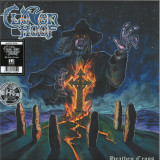
High Roller Records, black vinyl, ltd 300, insert, download code, 425gsm heavy cardboard cover, Cloven Hoof aus den Midlands gehören wohl zu den legendärsten Bands der gesamten New Wave Of British Heavy Metal Bewegung. Die Ursprünge der Gruppe gehen auf das Jahr 1979 zurück, als sie sich zunächst unter dem Namen Nightstalker formierte. Im Jahr 1981 wechselte die Band jedoch zu ihrem neuen Namen: Cloven Hoof. Der ursprüngliche Sänger David Potter, der Gitarrist Steve Rounds, der Schlagzeuger Kevin Poutney und der Hauptdarsteller Lee Payne am Bass nahmen die Bühnencharaktere 'Earth', 'Fire', 'Water' und 'Air' an. Nachdem sie Demo-Versionen von Songs wie "Return Of The Passover" und "Nightstalker" aufgenommen hatten, veröffentlichten Cloven Hoof 1982 ihre erste 12"-Vinyl-EP "The Opening Ritual" auf Elemental Music. 1984 wurde das selbstbetitelte Cloven Hoof-Album veröffentlicht, gefolgt von "Fighting Back" (1986), "Dominator" (1988) und "A Sultan's Ransom" (1989). Nach der Trennung in den 1990er Jahren kehrten Cloven Hoof 2006 in neuer Besetzung und mit einem neuen Album namens "Eye Of The Sun" zurück. Im Jahr 2014 wurde "Resist Or Serve" aufgenommen, gefolgt von "Who Mourns For The Morning Star?" (2017), beide auf High Roller Records. Das Album war eine Art Wendepunkt für die Band, da sie damit zum ersten Mal in ihrer Karriere in Nordamerika auf Tour gehen konnte. Seitdem haben Cloven Hoof zwei weitere Studioalben veröffentlicht, "Age Of Steel" auf Pure Steel Records im Jahr 2020 und "Time Assassins" auf FM Revolver zwei Jahre später.
Mit Songs wie "Do What Thou Wilt", "Sabbat Stones" und "The Summoning" markiert ihr brandneues Album "Heathen Cross" die Rückkehr zu High Roller Records. "Wir sind jetzt wieder da, wo wir hingehören", schmunzelt Lee Payne. "Heathen Cross" ist Cloven Hoofs bisher düsterstes und schwerstes Album! Es hat die satanischen Untertöne unseres Debütalbums, aber mit dem besten Sänger, den die Gruppe je hatte. Für mich persönlich ist es mit Abstand mein liebstes Cloven Hoof-Album. Wir wollten den Geist und die übernatürliche Majestät des Debütalbums wieder einfangen. Wir haben mit den Fans gesprochen und ihnen das gegeben, was sie am meisten wollten: eine Rückkehr zu den Wurzeln der NWOBHM. Sie werden es lieben!" Der Bassist ist in der Tat voll des Lobes für den neuen Sänger der Band, der ausgerechnet einen gewissen Harry "The Tyrant" Conklin verpflichtet hat: "Harry Conklin ist ein Weltklasse-Sänger. Er ist super engagiert und hochprofessionell und wir wussten, dass er nahtlos in die Band passen würde. Seine stimmliche Leistung auf dem neuen Album hebt die Band in neue Höhen, und ich kann es kaum erwarten, dass die Fans ihn hören. Harry ist ein erstaunlicher Sänger, er ist so vielseitig. Er kann hoch, tief und immer mit Kraft und Leidenschaft singen. Er weiß, wie man einen Song lebt und verkauft. Harry ist wie ein Schauspieler, der eine Geschichte erzählt, niemand interpretiert meine Texte so wie Mr. Conklin. Ich kann ihn nicht genug loben. Wir hätten schon vor Jahren zusammenarbeiten sollen."
Lee Payne - Bass Guitar, Harry (The Tyrant) Conklin - Lead Vocals, Luke Hatton - Lead Guitar, Chris Coss - Lead Guitar, Ash Baker Drums / Backing Vocals, Chris Dando - Keyboards / Backing Vocals
High Roller Records, black vinyl, ltd 300, insert, download code, 425gsm heavy cardboard cover, Cloven Hoof aus den Midlands gehören wohl zu den legendärsten Bands der gesamten New Wave Of British Heavy Metal Bewegung. Die Ursprünge der Gruppe gehen auf das Jahr 1979 zurück, als sie sich zunächst unter dem Namen Nightstalker formierte. Im Jahr 1981 wechselte die Band jedoch zu ihrem neuen Namen: Cloven Hoof. Der ursprüngliche Sänger David Potter, der Gitarrist Steve Rounds, der Schlagzeuger Kevin Poutney und der Hauptdarsteller Lee Payne am Bass nahmen die Bühnencharaktere 'Earth', 'Fire', 'Water' und 'Air' an. Nachdem sie Demo-Versionen von Songs wie "Return Of The Passover" und "Nightstalker" aufgenommen hatten, veröffentlichten Cloven Hoof 1982 ihre erste 12"-Vinyl-EP "The Opening Ritual" auf Elemental Music. 1984 wurde das selbstbetitelte Cloven Hoof-Album veröffentlicht, gefolgt von "Fighting Back" (1986), "Dominator" (1988) und "A Sultan's Ransom" (1989). Nach der Trennung in den 1990er Jahren kehrten Cloven Hoof 2006 in neuer Besetzung und mit einem neuen Album namens "Eye Of The Sun" zurück. Im Jahr 2014 wurde "Resist Or Serve" aufgenommen, gefolgt von "Who Mourns For The Morning Star?" (2017), beide auf High Roller Records. Das Album war eine Art Wendepunkt für die Band, da sie damit zum ersten Mal in ihrer Karriere in Nordamerika auf Tour gehen konnte. Seitdem haben Cloven Hoof zwei weitere Studioalben veröffentlicht, "Age Of Steel" auf Pure Steel Records im Jahr 2020 und "Time Assassins" auf FM Revolver zwei Jahre später.
Mit Songs wie "Do What Thou Wilt", "Sabbat Stones" und "The Summoning" markiert ihr brandneues Album "Heathen Cross" die Rückkehr zu High Roller Records. "Wir sind jetzt wieder da, wo wir hingehören", schmunzelt Lee Payne. "Heathen Cross" ist Cloven Hoofs bisher düsterstes und schwerstes Album! Es hat die satanischen Untertöne unseres Debütalbums, aber mit dem besten Sänger, den die Gruppe je hatte. Für mich persönlich ist es mit Abstand mein liebstes Cloven Hoof-Album. Wir wollten den Geist und die übernatürliche Majestät des Debütalbums wieder einfangen. Wir haben mit den Fans gesprochen und ihnen das gegeben, was sie am meisten wollten: eine Rückkehr zu den Wurzeln der NWOBHM. Sie werden es lieben!" Der Bassist ist in der Tat voll des Lobes für den neuen Sänger der Band, der ausgerechnet einen gewissen Harry "The Tyrant" Conklin verpflichtet hat: "Harry Conklin ist ein Weltklasse-Sänger. Er ist super engagiert und hochprofessionell und wir wussten, dass er nahtlos in die Band passen würde. Seine stimmliche Leistung auf dem neuen Album hebt die Band in neue Höhen, und ich kann es kaum erwarten, dass die Fans ihn hören. Harry ist ein erstaunlicher Sänger, er ist so vielseitig. Er kann hoch, tief und immer mit Kraft und Leidenschaft singen. Er weiß, wie man einen Song lebt und verkauft. Harry ist wie ein Schauspieler, der eine Geschichte erzählt, niemand interpretiert meine Texte so wie Mr. Conklin. Ich kann ihn nicht genug loben. Wir hätten schon vor Jahren zusammenarbeiten sollen."
Lee Payne - Bass Guitar, Harry (The Tyrant) Conklin - Lead Vocals, Luke Hatton - Lead Guitar, Chris Coss - Lead Guitar, Ash Baker Drums / Backing Vocals, Chris Dando - Keyboards / Backing Vocals
This album consists of unreleased Dubs recorded between 1986-90 at the early Blakamix Studios.
Blakamix have re-opened the tape vaults and let Mixman loose to revamp and revitalise and give the Dub Doctor treatment to these early Dub tapes.
2024 Repress
Alberto Pascual, also known as Ribe is a well seasoned veteran in the Spanish scene. An expert synthesist and modular weirdo, his sound palette is amazing. If you have been so fortunate to enjoy his live PA before these turbulent times, you've got the precision and hypnosis he always provides.
This release has a physical side and a digital one, with four and seven tracks respectively, including two Oscar Mulero remixes.
"Palette" opens the release, a lone kick drum squashed in reverb sets the pace on the first bars while abstract details appear randomly and a continuous sequence grows from below. The tension is kept all over the arrangement, not additional percussive elements, just the few principal elements going back and forth.
"Shapes" has a Basic Channel approach soundwise, texturized techno as its best, exploring the dark corners of sound design, and again all relaying on a linear and mental arrangement.
"Ad Infinitum" is remixed by Oscar Mulero in his first remake, transforming the formerly broken and abstract Ad Infinitum is a danceable intelligent weapon.
Original version of "Ad Infinitum" follows, providing the experimental slice of the EP. Broken rhythms, shuffled components and low rated tempos.
repressed !
Known for his hardware-harnessing live shows and acidic jams, the Bristol-based Miles Otto’s ‘Skitter’ EP is alive with propulsive electro rhythms and dreamy synth melodies. ‘CV Swizzly’ grabs your attention with its wistful analogue tones and percussive crunch, before a burbling bassline burrows through the arrangement, while the 303-laced ‘Vectron’ takes cues from Detroit electro with its menacing riffs and eerie synth drifts. ‘Skitter’ itself subtly reveals its details layer by layer, with crisp drum machine hits and low tones opening out into mystic harmonies, and Plant43 recasts ‘CV Swizzly’ in his distinct image, adding metallic synth bass and urgent keys to finish the EP in fine style.
Repress!
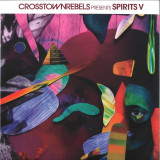
The release of Crosstown Rebels’ SPIRITS compilation is always a bastion moment for the label. The first edition came to prominence in 2017 and we’ve been graced with an annual compilation ever since, showcasing a consistent habit to champion established artists and breakthrough ones alike. Now, Crosstown Rebels’ lauded SPIRITS series will see the light of day once more in June, with the release of SPIRITS V.
NYC-native Layla Benitez leads proceedings with Fides, a progressive-leaning, introspective number that retains an inherent danceability throughout. It kicks off the compilation with a driving energy, one that’s perfectly matched by Trabajar - the Crosstown Rebels debut of recent Hot Creations inductee Mr.Diamond.
A techy-inspired cut, punchy four-four drum patterns create a distinctive late-night feel, as UK-talent Denney soon arrives with Kill The Soundboy. Showcasing the groove-laced house sound with which he’s become best known, the near seven-minute piece is sure to light up many a club setting this year, paving the way for Talk To Me. It’s a collaborative venture between Munich-based artist ASK:ME and El Muerto, with Soulfoot featuring on vocals. Retaining a vintage Detroit style, the fast-paced tempo creates a natural excitement before Romanian-born mainstay GruuvElement’s gifts us the minimal-toned Boom Room.
Building with tribal-like percussion and salsa-inspired instrumentals, it’s a playful excursion into dance music’s outer realms, paving the way for young Peruvian producer Chinonegro with My Moment. Whether it be the pluck of a guitar string or a jazzy trumpet solo, there’s an inherent authenticity to the six-minute piece, as a mid-track breakdown gives way to whispering hats and a rhythmic underlying backbone.
The penultimate offering comes from French-born, London-based regular Maglia, who serves up the enchanting Rayiys. The chirping of birds resides atop an ever-changing bassline, leaving us open and ready for the VA’s closing saga: Thanks Moon, by Spain’s I AM JAS. A heady combination of beautiful lyrical contributions combines with softly moving electronic elements, to leave us in a state of calm, inward reflection. Rounding off proceedings on a note of quietude, it reminds us of the final moments in clubland, transporting our psyche to sunrise, fond memories and everything in between.
Over a period of nineteen years, Damian Lazarus’ Crosstown Rebels has evolved into a world-renowned institution, garnering global audiences thanks to a consistent schedule of quality releases. In years since it’s earliest beginnings, the likes of Maceo Plex, Art Department, Seth Troxler, Ali Love, Mathew Jonson, Pier Bucci, Acid Pauli, Dennis Kurtel, Francesca Lombardo, Glimpse, Aphrohead, Fur Coat and a plethora of other figureheads have all found their home on the label.
The roster is international, showcasing how Crosstown has shaped a truly global scene. Releases are born in different continents by artists who hail from different countries, resulting in a sound that resonates worldwide. Perhaps most pivotal to the label’s success is its musical output: no part is governed by boundary or genre. It’s underpinned by a truly eclectic sound, one that reflects the diversity of Damian’s love for music itself. An album from drum and bass icon DJ Krust here, a maiden LP from Audiojack there… traversing genres has been Damian’s forte for decades - and Crosstown epitomises that as a result.
It’s approximately been a year since Antoine lost what would have been his debut album, ironically dubbed ‘Humour. Positivity & Affection’. In its wake, stemmed the idea for the producer to reform his conceptually based project (Mise En Place) into a vinyl only label.
The Land Down Dunder EP being the first, of hopefully, many releases throughout this new imprint. The label head feels there is no better way to start this campaign, than with a body of work, entirely inspired by the modern, timeless TV Sitcom - The Office (US).
The opener ‘Australian Reds’ looks to bridge the gap between Progressive House and Antoine interpretation of Minimal. Matched with Ghanian inherited grooves of course.
‘Colombian Whites’ as suggested by its title, widens the eyes and warms the soul with its textbook, 90’s House inspired Kicks, Hi’s and Baseline. Synthy melodies run throughout the mid(s) of the track to marry the ensemble together. Fitting for all terrains, but would be highly favoured in the Summer.
The B-Side flips the script in tone, tempo and texture - pulling on Antoine’s repertoire for groove laden Techno - ‘Cafe Disco (AK’s Rare Groove Dub)’ brings you to the after hours of any setting with it’s full bodied percussive rhythms, beautifully automated soundscapes and highly persuasive swing. Lastly, the EP is capped off by ‘Threat Level Midnight’. A nod to Antoine’s versatility within the realms of House and Techno. An incredibly versatile track, structurally inspired by the producers love of Hip-Hop. A cacophony of ethereal chord progressions run throughout the track alongside one moody baseline, as well as solemn drum patterns which progress in both body-feel and stature.
Glasgow based Seated Records return with more 1980s Scottish Post-Punk / New Wave material. In this 8-track mini compilation the label introduces the work of Stirling band 22 Beaches, offering a deep dive into music recorded between 1980-1984 - the majority of which has never seen the light of day!
22 Beaches formed in Stirling in the late 1970s as an evolution of the short lived group ‘Alone at Last’ - drummer Fred Parson’s and guitarist Stephen Hunter being the two who spanned the divide. Out of the six members of 22 Beaches, many were school friends, and the rest naturally fell together. The band toured extensively and played at a truly diverse set of venues across the UK: from a local swimming pool boiler room, to small nightclubs and university parties, to several fundraisers for the miners strike. Maybe most notably of all, drummer Fred Parsons described playing at what he calls “the Grangemouth International”, organised by local promoter Brian Guthrie and which featured an all-star lineup of 22 Beaches, The Exploited and the first incarnation of The Cocteau Twins. A coach was hired to ship the audience to Grangemouth from Stirling, the cost of which was included in the ticket. The gig then paused halfway through for a 'help yourself' buffet. Young promoters take heed. This is how it's done!
Over the course of the 80s the band released music on three different, and now sought after, various artists compilation cassettes. “What Day Is It?” and “Sadie When She Died” were released on a compilation of local Stirling artists 'The A.N.K.L.E File'. The track from which the current record takes its namesake - “Dust” - was initially released on a compilation-tape for the fanzine 'Another Spark'. And ‘‘Zoo” (also featured on this record) was first released on Glasgow label Pleasantly Surprised via compilation, 'An Hour Of Eloquent Sounds', where 22 Beaches rubbed shoulders with early music from Scottish names Primal Scream, Cocteau Twins, The Wake and Sunset Gun. Unfortunately, 22 Beaches never met the same level of commercial success as these others and decided to retire the project in 1984 - leaving their recordings and demos to gather dust (hehe)…until now!
This compilation, “Dust: recordings 1980-1984” follows the band's journey and the changes in their sound over the years. It moves from the raw, punk energy of early DIY recordings through to the A Certain Ratio style Balearica of their later pieces. The record's opener and title track “Dust” is perhaps the most shining example of the latter. Characterised by the plenitude of sonic space in the mix, “Dust” has an almost dub sensibility that is communicated through centrality of Parsons’ drums, McChord’s percussion, and Fildes’ Bass while the harmonising vocals of Sharkey and McGregor chant over the top to give the track its distinctive psychedelic edge. This is an atmosphere only exacerbated by the lofi quality of the recording which sits the vocals in the same aural realm as much 1960s psych-folk. On “Cartoon Boy”, the band strips things down further. A droning bass line persists through the tape fuzz and is accompanied by the sounds of a sole looping guitar chord sequence and McGregor and Sharkey’s vocals - respectively and carefully dancing around one another before harmonising in the most beautiful way. The result is a haunting and abstract Marine Girls style heartbreaker. ‘That Girl’ again delivers a dub adjacent rhythm section similar to that of “Dust”. However, on this instance crisp guitar chords, a distant, phased organ and blue-eyed soul vocal delivery, produce a track that could easily have been a lost Orange Juice recording from their sessions with Dennis Bovel. On “Somebody Got It Wrong” and “One Of Us” the band employ a more macro approach where a jangling guitar with an almost highlife-influenced tone, vocal ad-libs and syncopated percussion give the music a Talking Heads-esque swagger.
Taken together these tracks illustrate a clear trajectory in the band's sound, moving from from the high energy no-wave quality of early recordings towards a more dub influenced, and stripped-back sound - a sonic trajectory followed by so many bands of the time, not least those emerging from the diaspora of Manchester’s Factory Records.
On “Breathing’’ we hear the beginning of this transition, with the strong influence of the oddball NYC disco styles of Was (Not Was) and ZE records. All of this is meshed together with the residual punk rock energy of 1980s UK. This combination is employed to excellent effect with the addition of the distinctly Scottish (and what the band confirmed to me to be spontaneous) vocal delivery of: “Do you love me? Do you want me?” “Aye!” “Do you love me? Do you need me?” “Naw!”.
On the record’s closing tracks, “Zoo” and “Talent Show”, we hear early examples of the band’s work, playing with their rawest all-in-one-take live energy where Hunter’s spiralling guitar riffs and McGregor's distorted vocal exclamations lead the charge. The band recalls that these initial-forays did not always translate so well into multitrack recording and overdubbing: “the deconstruction took away some of the band's natural feel”. On “Talent Show” the record ends with Sharkey delivering an almost unintelligible spoken word section over the top of the track, making for one final, disorientating, almost manic slice of post-punk.
These tracks from 1980-1984 chart the progress of a unique contribution to the world of Scottish Post-Punk and New Wave, encapsulating not only the musical trajectory of 22 Beaches but also echoing the broader sonic landscape of 1980s UK, a testament to the adaptability and creativity of the UK’s underground music of the time.
Following his debut EP ‘En clair-obscur’ and a series of singles earlier this year cementing his place as a rising name in the world of cinematic soul & funk, Hamburg’s finest cinematic soul artist ‘The Offline’ announces his debut album 'La couleur de la mer'.
Reminiscent of film scores from the 60s and 70s, The Offline worked with co-producer Tim Liztenberger to channel the influence of film composers such as Francois de Roubaix and Brian Bennet, creating his own soundtrack on ‘La couleur de la mer’. Inducing images of manorial, fog-swept villas at the sea's edge, silhouetted sailing boats and cigar-chomping villains attempting to thwart the mission of an imaginary hero, the record is a masterfully composed sonic journey. Experimenting with themes and atypical song structures, the music moves from dramatic cues to fragile romanticism. It incorporates psychedelic spaciness, retro soul and hip-hop sensibilities informed by The Offline’s extensive record collection and crate-digger status.
“Ever since I was a child, I was fascinated by the soundtracks from the 60s and 70s, and I always wanted to make an album in the film score direction. I wrote about 30 demos, kicked half of it and stuck to the ones that felt right in the dramaturgical structure of the ‘movie'. Interestingly the main theme was set early on while writing the album, which made the writing process much easier.”
Aptly named, ‘Thème de la couleur de la mer’ opens proceedings, establishing the core motifs of the record. Haunting flutes and xylophones lead the way into Khruangbin-esque guitar lines, which sit against a hip-hop canvas that returns on boom-bap head boppers like ‘Quelque chose reste’. Retro soul revival takes precedence on deep cuts like ‘Un bout de chemin’, with wah-gated guitars interacting with emotive cello lines and symphonic string & horn sections.
The Offline came to life when composer and photographer Felix Müller travelled the Atlantic coastline in the south of France with his analogue camera, capturing beach life on film. After coming back to Hamburg, he started writing songs as the sonic counterpart to the analogue visuals. His Debut EP ‘En Clair-Obscur’ includes five tracks that capture the essence of his journey and the feeling of a cool summer soundtrack.
3V1L GL0B4L1SM is a sound journey to consciousness, which invites us to dedicate ourselves to a sensitive reflection on the progress and dehumanization of this capitalized society.
Four cuts full of rage and freshness, capable of immersing us in the perfection of the chaos through industrial breaks and delicate melodies guided by the brutality of their synthesized sounds.
7053M4R14 is the architect of this project published by the Black Quasar Records label, with which also shares his previous work. The multidisciplinary artist who converges between numerous genres and akas, such as C-System or Spectrums Data Forces, opts for this album for a fusion of styles ranging from IDM, Break Beat and Electro.
The pristine mastering by Koschitzky is what finishes signing this piece.
The Mental Groove Classic series returns with a treasure trove of rare and hard to find tracks plucked from the personal collection of label founder Olivier Ducret, a pivotal figure in Switzerland's acid house and rave-era party scene.
On Volumes Two and Three of the series - the first installment hit stores in 2017 - the Mental Groove and Musique Pour La Danse label founder takes us back to the turn of the '90s, a time he spent promoting parties in fields, squats, forests, warehouses and former factories in and around Geneva and behind the counter of a record shopof the same name. While others in Switzerland's emerging dance music scene gravitated towards US house and garage, Olivier and his crew opted for a bass, breaks and techno-focused sound inspired by regular trips to clubs, raves and record shops in the UK.
Drawing directly from his own record box and a memory bank full of snapshots of euphoric dancefloor moments, Mental Groove Classics volumes Two and Three sees Olivier reaching for cuts of near-mythical rarity, genuinely overlooked gems, and undeniably brilliant tracks that have left a long-lasting impression on the local raving landscape. It's an autobiographical audio document, historical archive and personal musical statement all rolled into one, inspired by a moment in time where musical boundaries were being redrawn in a wave of carefree optimism and freedom inspired new rave scenes across Europe and far beyond.
Matt Anniss
Original artwork by Soho's Brain Club co-owner and artist of early British club culture Mark Wigan.
File under house, breakbeat, techno and warehouse rave music
The Issues label keeps up its fine early momentum with a new EP from Pau Roca with a remix from Crue. It is another tasteful 12" that comes on the heels of a deep outing from Dubbyman and an inaugural release featuring fresh versions of Joan Bibiloni by Kiko Navarro & Willie Graff.
Opener 'Daradada' is a spiritual deep house cut with swirling pads and classic vocals drifting next to the jazzy keys. It's expansive and cosmic in design and one that touches the heart on many levels.
'Here Comes The Moon' is another cut that shows off Roca's mastery of astral melodies. His gorgeous chords and delicate keys rise up to the stars as warm, dynamic drums bring the weight down low and spoken words unfurl in a seductive fashion. The Crue remix of 'Daradada' then brings more drive with harder but still organic house drums and hits.
The chords take on a melancholic quality and an elastic bassline pumps the party with a playful sense of energy. Last of all is 'Get Down' which once again sinks you into a beautifully warm and heady world of soft focus chords and late-night synth work.