The second album from the transatlantic duo Wilma Vritra is richly orchestrated, replete with references to faith, mythology, and the cosmos, its 11 tracks grapple with themes of self-preservation and refuge from the world, even as they edge their way to a sort of redemption. Grotto is the work of two musicians separated by an ocean but undoubtedly operating on a shared wavelength. One is Will Archer, a Newcastle-born but London-based multi-instrumentalist and composer who today records as Wilma Archer, but who you might also know for his writing and production for artists like Celeste, Nilufer Yanya and Jessie Ware. Wilma Archer’s debut solo album A Western Circular, featured guest spots from the late MF DOOM, Future Islands’ Samuel T Herring, Sudan Archives and Laura Grove. The other is Hal Donell Williams Jr, aka VRITRA - a Los Angeles-based rapper whose tales of graft and grind are often couched in spiritual or cosmic terms. VRITRA has previously collaborated with Matt Martians via The Jet Age of Tomorrow, Pink Siifu and YUNGMORPHEUS. Grotto’s striking cover image is by Swampy, an enigmatic Californian street artist whose itinerant lifestyle – tales of squatting and train-hopping across North America – have made him a demi-mythical figure. A playful image, but it communicates the album’s themes – of a voyage through darkness, and the promise of light at the end of the tunnel.
Buscar:op
Limited 300 180g white vinyl LPs with printed inner Discobag and digital download.
500 CDs in gatefold digifile sleeve.
Each drum controls a virtual musical instrument (synthesizers, samplers, arpeggiators, etc.) within Ableton Live music software that, in combination with a custom step sequencer developed with MaxforLive app, allows Davide to perform real melodies/electronic orchestration without the use of any backing track. 100% live. In addition to that, he also uses a microphone set up in the middle of the drumkit to capture the dynamics of the acoustic drums and translate them through an 'envelope follower' into electronic parts in several ways. About ‘Perceive Reality’: Opener Belief bursts the record into life, as skittering arpeggios spin across a vast open plain of pad synths, before the ground splits beneath it with thrashing drums. On Conceived, Davide creates a simultaneously dark and euphoric wall of crystallised sound, a cacophony of pounding drum hits and icy electronic stabs, with an intensity that continues into Collide. With its shuddering, cut-out reverbed synth pads split in two by crashing cymbals and snares, the song spins itself into a transformative cycling trance, before slowly fading and washing away into silence, only to be broken by Conjectures’ sudden cymbal slams and transfixed toms that roll like thunder into a frenzy, before their final lightning strike. On Subjective, arpeggios twist around beating kick drums and toms, quickly scaling to a furious yet tightly wound sequence that envelops the listener, before Relief, where the album finally takes the shape of a huge wave of calm, glimmering hope and reflection. About the concept behind this latest album, Davide says, “Perceive Reality is a vivid exhortation to deepen the relationship with reality, avoiding simple and often illusory visions. In a historical context that fosters the proliferation of dual information and visions, individuals are increasingly exposed to the danger of perceiving less the complexity of events, thus losing the training to express complex and articulated opinions, the result of a reflection, whether individual or collective. Without having the presumption of resolving epochal issues, the project alerts to the fact that univocal answers do not exist and that only by developing a path of knowledge and giving ourselves the opportunity to examine things in depth, can we enter into the relationship with the existing.” Press highlights so far: Video premiere on Rumore.IT (Italy).
Futuropaco’s long sold out debut is finally repressed! it’s a wet, enigmatic cocktail of part 1970’s Italian library music, part krautalicious beat-galore and part riff-driven heavy psych. Justin Pinkerton, from Oakland, California, is the one-man army behind the opaque merge of seemingly different forces: from mad fuzz guitar breakdowns à la Morricone at his most intense, to the syncopated drum learnings of Can’s Jaki Liebezeit, Justin weaves a blanket of sound that’s simply loaded with deep vibes
- 1: Intruh (Feat. Nui Moon)
- 2: 7Th Day (Feat. Kevin Mark Trail)
- 3: Loan-Sum (Feat. Mike Thesis And Thamson.p)
- 4: Beaut-I-Full World (Feat. Zima And Kalala)
- 5: Existential Lessons (Feat. Tiana Khasi)
- 6: Stars (Feat. Whosane And Pataphysics)
- 7: Full Moon (Feat. Ruru 432)
- 8: Sazon (Feat. Izy)
- 9: S.f Holiday (Feat. Izy)
- 10: Black Bond
- 11: Mercy
- 12: Us (Feat. Krown, Pookie, Nelson Dialect, 1/6, Mike Thesis, Tumi The Be, Clandestino, Jaal And Rara Zulu)
- 13: Hold On (To The Fallen Ones)
- 14: Fresh Gold Bloom-Age
- 15: This 2 (4 Moses)
- 16: Curtis On The Hiss
- 17: The Price Of Forgiveness (Feat. Dj Spell And Pataphysics)
Australian hip-hop/neo soul duo SO.Crates are a boom-bap prayer sent live and direct from the heart of two of the culture’s most committed students. The group features Melbourne based beatmaker and DJ Skomes alongside California-via-Adelaide MC & poet Cazeaux O.S.L.O, not to mention the MUSE, a forever changing third party who completes the creative trinity of the Crates. With a legacy built on releasing a steady flow of cold-crush records and delivering uplifting live performances to the party people, SO.Crates prove that hip-hop’s golden era is not a lost date in time, but a foundational state of mind. Functioning as a considered preview of what to expect from the album to follow, the hypnotic first release 'Stars' is an auditory exploration of what happens when two opposing charges collide; the joyful and the melancholy. Here, layers of instrumentation, samples and vocals sit atop a foundation of grounding beats — the track's roots from which piano samples, live trumpet and vocal embellishments spring. "When Skomes gets in his stride, it's always a bit of a happy/sad feeling. It can go either way, like a mood ring", says Cazeaux O.S.L.O. "I guess you could say we make mood ring beats, and 'Stars' is no exception".
RIYL: Guided by Voices, Pavement, The Clean, XTC, Flying Nun. The title of The Stroppies' newest LP, Levity, serves as a creative statement of intent and an acknowledgment of the dichotomy between the music they have made and the conditions in which they were produced. Levity, The Stroppies strongest creative statement to date, is the result of this new approach to creative process. Playful yet focused, but broader in scope and experimentation than previous efforts, the ten songs that comprise Levity continue the band's exploration of the pop song as both foil for experimentation and conduit for personal reflection. Whereas the group's debut LP Whoosh! demonstrated their ability to craft clean, concise jangle pop, Levity takes a different route by utilizing a darker pallet of sounds to create its impressionistic whole. Fuzz and distortion are employed to add weight to songs built on tape loops and Motorik drum patterns. Warbling synthesisers and modulated keys add new moods and dimensions to The Stroppies unique brand of pop classicism. Thematically, the band continues their exploration of the personal refracted through the lens of the absurd, though this time around the music feels a few shades darker, a somewhat inevitable consequence of the collective trauma of the past 24 months. While the narrative around the 'lockdown record' is increasingly commonplace, there are unavoidable realities involved in making creative decisions under such circumstances that can't be overlooked, especially for a band that thrives on collaboration. "The restrictions around COVID really informed the way we made the record', says Angus Lord, the band's co-founder and guitarist. "It meant that there was a lot less opportunity to meet and build ideas collaboratively, which is how we've worked in the past. Instead, ideas were developed in isolation, then shared digitally, developing slowly over correspondence and only bearing fruit when we were able to be in a room together. I think this had a big effect on the songwriting and execution." This process even extended to the studio, where The Stroppies found a kindred spirit in John Lee of Phaedra Studios, who mixed the record in isolation, somehow managing to synthesise the band's pop sensibilities with their penchant for studio experimentation. Furthermore, the addition of new member Zoe Monk, known for playing in a diverse array of Melbourne acts (Eggy, Thibault, The Opals) contributed both synthesiser experimentation and rock solid rhythm guitar, a huge addition to the band's developing sound, an infectious combination of the off-kilter 90s US underground, British artpunk ala Wire and a more than generous love of classic Pop songwriting. The Stroppies have managed to craft a record of weight and substance. Through Levity the Stroppies have, at least temporarily, found their feet amongst the chaos.
Stunning debut release from RAFRAM aka Irdial legend Ramjac Corporation and the Toronto legend (& honorary Glaswegian) Raf Reza.
300 copies only, full printed sleeves plus riso insert.
Orphic Apparition is a new label born out of a transatlantic meeting of minds. Facilitated by a long, hedonistic party in one of present-day London’s ‘meanwhile use’ venues Grow Tottenham, Canadian producer Raf Reza and British acid house luminary Paul Chivers spent a precious day in the studio to record a 3 hour straight to DAT session before Reza's return to Canada. The result of this spontaneous yet intuitive collaboration blurs the lines between Chiver’s long-standing Ramjac Corporation alias and Reza’s genre-spanning approach to dub, breaks and house styles. Part of the early 90s rave scene and an important member of the blueprint-setting Irdial label, Ramjac locks heads with the self-professed ‘lazy music guy from Toronto’ to adapt their studio session into five separate mixdowns.
‘In The Grow’ begins with a bouncy, cut-up sounding Errorsmith-esque rhythm, the recurring fright night melody that distinguishes the record coming in all quick and powerful. The A2 ‘Rotten Mix’ offers a more traditional house approach in its composition, with dub FX and a nice DJ friendly outro. On the final uptempo choice the pair opt for a head-scrambling electro take. Choose your fighter! The ‘Swampy Dub’ on the flip really dismantles everything we’ve heard prior, slo-mo drums allowing a much different DJ experience and altering the freaky synthetic propulsion into an almost modern classical sound. A little like Paul Dresher’s eternal ‘Channels Passing’ (tip). Combined with the other edits this version almost becomes a totally different track. The final ‘Rootless Dub’ gives its clues in the title, removing all the tough drum sounds and allowing for an ambient decompression.
Orphic Apparition will return soon.
Sean Dixon, known from previous releases on Clone and Rawax, is back on his own label Final Chapter.
On this colorful four track record called Generations EP, he’s joined by Sheffield´s John Shima.
Opening the EP is Generations I, a raw piece, with chord stabs that are dancing around the percussion sounds and organ bass, with a vocal on top. Followed up on the A-side is Generations ll, a Chicago and Detroit inspired track with wonderful lush strings one top of the drums and vocal,. Generations lll opens up the B-side, with wicked melodies and a funky bassline.
The B2 track Generations IV comes from John Shima, who is doing a rework on Sean´s original sounds, putting his characteristic feeling and touch to it.
REPRESS! “All Of Them Naturals” is a fully realized, inclusive world of faux-corporation sponsored surrealist new wave punk music rife with satire and discordance. Robotically tight. Delightfully warped. Ideas as vast as Nebraska’s GMO cornfields and as lethal as the pesticides they spray on them. Did the Sunbelt Chemicals Corporation invent DDT? Maybe. Did they invent man? They think so. Did they invent the wheel? No, that was URANIUM CLUB. Truly, our generation’s DEVO. An important group." - Jensen Ward
New limited pressing on Zombie Green Vinyl. Suck My Shirt is the fourth studio album by the Atlanta-based all-female punk rock band The Coathangers. It was released in 2014. Mark Deming of AllMusic writes, 'their approach to songcraft has matured and tightened up quite a bit, and the departure of keyboard player Candice Jones has turned this group into a leaner and meaner three piece. "It's a balance between overthinking and just going for it," guitarist Crook Kid (Julia Kugel) says of their songwriting strategy. It's a duality immediately apparent with the album opener "Follow Me." It's a classic Coathangers tune with Stephanie Luke's raspy vocals belted out over their signature ragged garage-rock. . But the chorus opens into one of the most accessible hooks in the band's canon, just before segueing into the next verse with a squall of violent dissonant guitar.
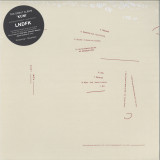
LNDFK (aka Linda Feki) presents her ground-breaking debut album, "Kuni" on Brooklyn-based Bastard Jazz Recordings. Undeniably on the rise after her 2019 breakout performance at Primavera Sound, LNDFK has already caught the attention of Pitchfork, Rolling Stone, Clash Magazine, Noisey, and Brooklyn Vegan (among many others) while being championed by the likes of Gilles Peterson, Tom Ravenscroft, and Jamz Supernova & landing spots on tastemaker playlists like Spotify's "Pollen" and "Fresh Finds."
"Kuni" is a spellbinding exploration of dichotomies: Love & Death (Eros & Thanatos), Flower & Fire, Delicacy & Violence, Poetry & Realism, Purification & Destruction. These opposites are reified in the 10-track LPs multifarious and multifaceted sounds, elegantly meandering through a variety of styles and genres, spearheaded by Linda and features the production wizardry of Darrio Bassolino who co-wrote the album.
"Kuni" opens with "Hana-bi," an ambient instrumental piece that sets the tone for the album. Inspired by the Takeshi Kitano 1997 film of the same name – particularly Joe Hisaishi's stunning soundtrack, as well as Kitano's paintings which appear in the film. "Hana-bi" expresses the dialoguing opposites of flowers and fire, the first of many dichotomous representations throughout the album. "Takeshi" acts as an extension and to "Hana-bi," albeit one of opposing sound, with its driving, highly syncopated drums (which reappear throughout "Kuni") – à la Karriem Riggins, Questlove, or Yussef Dayes – frenetic bass line, and jazz chords. Linda's sultry voice is interspersed, initially jumping around in scat fashion, being triggered as if a sample, before her lyrics come in; her vocals are used like an additional instrument, adding to the song's rich texture. "Kuni" truly hits its stride with the next song, "Smoke – a moon or a button" (its title lifted from the 1959 book by Ruth Krauss and Remy Charlip), which is structured like a jazz standard yet flows into neo-soul territory sonically with those prodigious drums a highlight once again.
LNDFK touches on experimental hip hop in two songs on the record (both of which were released as singles in 2021): "Don't Know I'm Dead or Not (feat. Chester Watson)" – track #4 – and "How Do We Know We're Alive (feat. Pink Siifu)" – track #9. Although they embrace a more hip hop-leaning sound, these songs by no means shy away from the exploratory theme, and feature two of the alt-rap scenes rising stars with Chester Watson and Pink Siifu who offer provocatively impressing verses, combining dense word play with unconventional flows. While these tracks may first appear to be outliers on the album, they are undeniably in tune with "Kuni's" message and sonic palette, acting as testaments to LNDFK's willingness to explore and experiment.
Meanwhile, "Ku" – the third and last single before the album release – furthers the pre-established future soul sound while meandering through nu jazz and left-field electronic. Inspired by the graphic novel and film, "Sin City," and its female assassin protagonist Miho, "Ku" is a musical interpretation of Miho's story, incorporating both her beauty – the first half of the song – and murderous tendencies – the second half – to create a stunning juxtaposition, culminating in an ambient finale that suggests the character's vulnerability and inner peace. The song gracefully bridges the gap between Hiatus Kaiyote-esque songwriting, Dilla's rhythmic syncopation, and Thundercat's instrumental prowess (LNDFK has shared a stage Brainfeeder labelmate Kamasi Washington).
Mixed in throughout "Kuni" are a series of instrumental pieces that function as something akin to an interlude. The aforementioned intro, "Hana-bi," and the album closer "se mi stacco da te, mi strappo tutto:" act as bookends, while "Om" indicates the half-way mark, and "Ktm" sees Jason Lindner add his sound the album. These tracks are the ambient foundation of "Kuni," representing the thematic duality of the work. Clocking in at only 24 minutes, "Kuni" packs an astonishingly diverse array of sounds, styles, and themes, all while showcasing virtuosic musicianship and instrumental prowess.
Appearing on "Hana-bi" and "Ktm," renowned international artists Asa-Chang and Jason Lindner add an additional perspective to "Kuni": Asa-Chang on "Hana-bi," and Jason Lindner on "Ktm." Asa-Chang - famously of the Japanese avant-garde group Asa-Chang & Junray - provides vocals and percussion to an alternate version of the instrumental opener, while the acclaimed keyboardist Jason Lindner offers his synth expertise on "Ktm." These features highlight the spirit of collaboration found in LNDFK's music, always willing to try out new ways of working.
LNDFK is a singer and songwriter, born of two cultures – an Italian mother and Arab father. She grew up in Naples, away from her father, the Sahara, her homeland and traditions, which has helped nourish the desire to rediscover – through art – an engagement to her roots. Her music melts with jazz, neo-soul and hip-hop influences, filtered through her experiences and sensibility.
Her first EP, "Lust Blue," was composed with the artistic production of Dario Bass and released by Feelin' Music; after that she released several singles that saw international radio support (BBC, NTS, Wordwide FM) and gained a massive audience on digital platforms. Together with her band, she toured around Europe, performing alongside such notable artists as Kamasi Washington and Mndsgn, among others. Most recently she toured Italy, and performed at Primavera Sound Festival 2019 in Barcelona.
"Kuni," is due out on NYC label Bastard Jazz Recordings in February, 2022, while the vinyl LP will follow shortly after.
Brazilian talent Classmatic is next up on Hot Creations with the two-track Toma Dale. Having already set dancefloors alight at the hands of label heads Jamie Jones and Lee Foss, the eagerly anticipated release drops this April.
Toma Dale achieves exactly what Classmatic set out to do. The track opens proceedings with enticing congas that instantly transport you to Latin America. Punchy drum pads pounce in and combine with the percussion to create a highly energetic base, as finely cut Spanish vocals are embedded to fuse everything together. Bape pays homage to the Hot Creations sound. Warm, soft, bouncy kick drums lead the track, joined by subtle acid sounds that tantalise the ears. The breakdown is perfectly placed with the addition of mesmerising vocals that fade in and out before the punchy, bass-heavy drums are hauled back in.
Classmatic has built up a lot of traction over recent years, catching the eyes and ears of major heavyweights in the field, releasing under such labels as Solid Grooves and Hottrax and in 2021 he remixed Cloonees’ major hit, When The Sun Goes Down. Receiving support from artists such as Seth Troxler, Michael Bibi, Pete Tong and Loco Dice to name a few, it comes as no surprise when we say there is a bright future ahead for the talented artist.
Comprising Marco Simioni, Mattero Mazreku, and Francesco Pio Nitti, Qualia are a group of Italian producers who have never met in person. Due to the covid pandemic, they had to colaborate in the cloud, yet the results are impressively coherent.
Having previously released records on Detroit Underground and fellow Utrecht label 030303 between them, they arrive on U-Trax in April 2022 with their eponymous EP of four deep tracks taking influence from a range of genres, including acid-techno, ambient, noise, and beyond.
Leading the release, 'Perception' brings beautiful strings, funky 808 drums and acid tones for a deep and moving opener. The track clearly reveals the inspiration Qualia got for this release from the early Gescom releases. Stretched across the A2 is the ambient bliss of 'VV Cephei A', which brings Boards of Canada-esque drones and tones.
On the flip, the title track 'Qualia' brings a headsy dose of braindance to the mix, recalling the early experiments of Aphex Twin with merciless 303 squelches and distant reverberations. Closing track 'Until I Break Apart' leads with dark, moody strings before a pounding kick introduces a stark tempo shift before deep ambient atmospheres engulf the final minutes.
“Nice EP. Need a proper listen in a dark room with only the speakers and me ;)”
Minus Magnus — Mhost Likely
“Beautiful Ambient soundscapes!”
IDA — Ectotherm, Boiler Room Glasgow
“Excellent release from U-Trax. Perception and Until I break apart are my fav's.”
Drox — Nightimedrama, Crobot Muzik, Analog Cabin, Southern Outpost
“Interview & Premiere”
— Parkett Channel
“The best part is “VV Cephei A”, where a floral intro leads to colliding drone pulses.”
— Terminal 313
Piezo returns to Facta and K-LONE’s Wisdom Teeth imprint with a 5 track EP of experimental, warping, majestic club music. Since his last outing on the label, the Milanese producer has refined and consolidated his aesthetic considerably: through a spree of crucial releases on his own label, Ansia, and then with the release of his essential debut LP, Perdu (released in 2020 on experimental powerhouse Hundebiss). LSD Superhero sees him bring together the goofy, club-ready aspects of his output on Ansia with the meticulously crafted cybernetic sonics of his debut LP, but with the addition of something new: melody. The title track opens the record with house lights up: glitching percs build around gasseous pads and trembling subs in a drawn out climax that finally collapses into a rolling technoiddembow beat at its midpoint. Next, ‘Unto’ squeezes the producer’s wonky, sub-heavy sonics into a 4x4 template - one of those special 5 am tracks that will appeal equally to dubsteppers and minimal heads. (Remember that time Shackleton appeared on Perlon?). ‘TB2’ - a collaboration with label head K-LONE - balances nectar sweet melodies with bust-up drums and glitching FX hits, while ‘Dijitz’ sees him flex his full melodic knack for an eyes down, half-stepping synth workout. To close, ambient wobbler ‘Xxx^_^x’ refracts bass music sonics into something sprawling and shadowy - like an old Benga track exploded and
Vordergrundmusik’s Rittik Wystup returns with a slightly-so avant-garde collage of Piano and Beats. Little melodies awake spuriously, welcoming Spring; they interplay with sizzling cymbals and flamboyant drums. The usage of wind is the carrier throughout the record, just as coastlines bring a strong breeze of cool or warm air.
The overture "Rhythm of the Wind" opens a space of gusts and drafts which circle the EP’s leitmotif. Shifting keys only slightly, it’s a calm prelude to the following track.
"Drums in the Deep" tells the story of a drifting wanderer, voiced by Stepan Terteryan, at the shore of Armenia’s Lake Sevan. His poem can be heard throughout the track, mumbling away as he feels the ground beneath him shaken by roaming bears.
"Three Droplets in Space" presents falling water drops, lifted by a steady, sharp beat. As they approach a large pool, they increase in size and weight, becoming more round and abundant. A gnarly FM bass and frozen hi-hats make way for the passage through the thickening air, blitzing the little leitmotif here and there.
Staying in key, "I Exhale" whispers an ascending piano phrase into the air, which upon reaching for the sky reforms into an unwavering, repeated, slightly melancholic expression. A homage to a valley of bells and chimes, it bursts and blasts into tiny fractions before it evaporates.
Traditional drums and plucked strings progress through "Might y Mist". Before they lose themselves in a faraway landscape, feet stomp and heads bob. As they meld into a fog, carrying debris of the wanderer’s voice and his melody, they spread like a mist: over the water’s surface.
Finally, Timo Maas drops a hefty and punchy remix of "Drums in the Deep". He picks up on the poem and its inclinations but keeps the dancefloor in mind when shattering glassy bits over distorted fragments of the melody. A splendid pumpy finisher to a fairly eccentric EP.
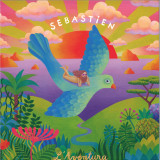
L'Aventura arose from the Brazilian heat and the French romanticism. This is the history of Sebastien Tellier's fantasy childhood in Brazil, arranged by the local cult figure Arthur Verocai. A wild mixture of love, dreams, sun and landscapes.
"For this album I wanted to rewrite my childhood. I chose to place this adventure in Brazil, land of splendour and joy, with an eternal childish soul." Sebastien Tellier
The recording produced by the artist took place between Paris and Rio de Janeiro during the year 2013. These adventures brought him into Jean-Michel Jarre's, Bernard Estardy's, and Philippe Zdar's (Cassius/Phoenix) studios. Zdar who knows so well how to make the French music sound internationally sublimates the ten tracks of this album, in halfway between the elegancy and the required level of a maestro and the immediacy of a popular song.
This sixth opus was composed and writed by Sebastien Tellier. For the first time of his career, all the lyrics are written in French. Gainsbourg is not far, like a tutelary figure, Christophe as a springboard, who lets him more space to express himself, and Lucio Battisti, the Italian made him understand that singing in his native language was possible.
L'Aventura is a record of shores stretching in an everlasting restart. Naive art carried by an openheart and childish vision of the creation, close to his classic Sexuality (2008).
- A1: 日が昇る / Higa Noboru / The Sun Rises (2022 Remaster) 04 39
- A2: ひこうき / Hikoki / Airplane (2022 Remaster) 08 12
- A3: 空気の底 / Kuki No Soko / The Bottom Of The Air (2022 Remaster) 04 29
- A4: パパイヤ / Papaya (2022 Remaster) 04 42
- A5: さっぽろんどん / Sappolondon (2022 Remaster) 03 57
- A6: ニュー・シーズンズ・デッド / New Seasons Dead (2022 Remaster) 05 15
- B1: ポー・フローデン / På Floden / On The River (2022 Remaster) 03 27
- B2: 砂漠 / Sabaku / Desert (2022 Remaster) 06 00
- B3: 誕生日の予感 / Tanjobi No Yokan / Expectation Of Birth (2022 Remaster) 04 10
- B4: 濁る空気わるくない / Nigor / Cloudy Air Is Not So Bad (2022 Remaster) 02 11
- B5: Come Maddalena (2022 Remaster) 05 17
- B6: ルーティー・ルーティー / Lutie Lutie (2022 Remaster) 04 17
Just over a decade ago, Japanese indie-pop duo Tenniscoats recorded »Papa's Ear« (2012) and »Tan-Tan Therapy« (2007), two albums made with musical and production help from Swedish post-rock/folk trio Tape. Originally released on Häpna, they are beautiful documents of the exploratory music made by a close-knit collective of musicians, fully at ease with each other, playing songs written by Tenniscoats and arranging them in gentle and generous ways. Released during a particularly productive time for Tenniscoats – during the late ‘00s and early ‘10s, they would also collaborate with Jad Fair, The Pastels, Secai and Pastacas – they have, however, never been available on vinyl. In collaboration with Alien Transistor, Morr Music is now reissuing these albums both digitally and on double vinyl, with extra tracks.
This reissue mini-series starts with »Papa’s Ear«. The second album from this expanded line-up of Tenniscoats, you can hear the musicians are immediately comfortable in each other’s presence, and they’ve almost intuitively understood what they can offer to one another. Saya and Ueno of Tenniscoats bring their magical, gentle folk-pop sensibility, and their winning way with straightforward, yet lush melodies. Johan Berthling, along with fellow Tape member Tomas Hallonsten, plus guests Fredrik Ljungkvist, Lars Skoglund, Andreas Söderstrom and Andreas Werlin, all generous and creative presences in the Swedish jazz underground, shades in the songs with endlessly inventive arrangements, highlighting the warmth and curiosity at the core of the Tenniscoats’ aesthetic – sometimes taking the songs in unexpected directions, other times pillowing the melodies with the softest of brushstrokes and the kindest of tones.
»Papa’s Ear« includes some of Tenniscoats’ most memorable songs. »Papaya« is a lustrous dreamland of a song, with the Swedish musicians singing ‘pa-pa-ya’ as an enchanted tattoo, while Saya’s piano and melodica clank and huff out, further expanding the song’s horizon. It’s followed by the spindly and mysterious »Sappolondon«, where drums and double-bass shuffle and pulse under weeping accordion and bittersweet clarinet. Saya’s voice sighs into the frame while the musicians breathe lungfuls of sweet drones and flick glittering countermelodies across the song’s surface. It reminds a little of the wild kindness of Movietone, or the regal charm of Carla Bley’s compositions.
Elsewhere, you can hear Tape and their friends embracing the freedom offered by the songs of Tenniscoats: see, for example, the glistening electronics in »På floden«, like a keyboard conducting a music box on a distant planet; or the descending phrase for winds on »Sabaku«, dovetailing beautifully into a creek of moon-lit texturology. The double-LP ends with two extra tracks, drawn from the 2008 Tenniscoats/Tape split single, also released by Häpna., »Lutie Lutie« is a sweet delight, driven by a clacking drum machine, the Tenniscoats duo joined by Hallonsten on glockenspiel and synthesizer, and special guest, Japanese indie-pop legend Kazumi Nikaido, as choir. »Come Maddalena« rounds off the set, a brooding cover of an Ennio Morricone tune, the music by Tape, the vocals by Tenniscoats and Nikaido. Open-hearted and full of puckish spirit, »Papa’s Ear« is an album of great tenderness and warm friendship.
High Roller Records, yellow/ black mixed vinyl, ltd 300, 3 bonus tracks, 425gsm heavy cardboard cover, 4 page insert, double sided poster, 2 x A5 photo card, Original transfer by Marcus Mossmann (R.I.P.) at PHONOGRAPHIC ARTIFACTS in March 2021. Audio cleaning, restoration and mastering by Patrick W. Engel at TEMPLE OF DISHARMONY in April 2021. Cutting by SST Germany on Neumann machines for optimal quality on all levels... The ultimate audiophile edition of this eternal NWOBHM classic!
No time to waste: nine months after Tim Vanhamel released 'Dubs Pour Oh La La', his debut album under the moniker Comité Hypnotisé, the Millionaire frontman presents already the second album 'Hiking The Trails Of Mount Muzak'.
Hardly leaving any traces of the dubbed out vibe which marked the first record, Tim expands his Comité Hypnotisé universe to a surprising next level on this second album: exploring a place where James Last, Wu-Tang Clan and Dj Shadow are cooking up a Thai meal in a Peruvian restaurant overlooking the breathtaking peaks of Mount Muzak.
Ney flutes tumbling backwards over the edge of easy listening in opener 'Rise Of The Equinoxians', lurking for feel good vibes in 'Red Wolf Riddim' and breezing in to new dimensions in 'Zing Zoing' on the A-side while the Comité enters the chambers of the 70's 'Disco Skank' and rides an untamed dragon towards the scorching sun in search of a flame-bringing beat in 'The Dragon Rider' on the flipside.
Proprietary rhythm: Vector Rituals sees techno polymath Stefan Goldmann constructing polymetric rites of percussion. Synthesized from the ground up, timbral characteristics, metric properties, dynamic expression and microrhythmic phrasing are shaped by the interactions of layered control voltage functions. The result is an assembly of abstract dances ranging from the intricate to the powerful.
Near-humanoid behaviour emerges from liquid patterns, laid out and brought to life by the freewheeling encounter of modular waveforms and snappy envelopes. Sounds evoke metallic textures
– ringing, scraping – and group into virtual shapes from tiny spikes to vast surfaces.
Some of the parametric relationships employed are as loose as to imply chance drifts. Others lock in with strict regularity as found in the 13 vs. 17 polymeter pattern of opening track 'Nayba'. By contrast,
in the strictly repetitive yet highly asymmetrical sequence of 'Yukagir' each metric step has its own uniquely irregular duration. The center piece of this collection is 'Ayon' with multiple autonomous and
highly agile timelines. Its constituent layers break away in radial fashion and fall back together at widely spaced points of congregation.
All compositions herein present powerful proof of the unlimited capacity of electronic music to yield new principles of organisation and to solidify their expression into clear-cut gestalt.
The Diva Faïrouz.
Her real name Nouhad Haddad, she was born in the Zokak el Blat district of Beirut. The eldest of a modest Maronite family, she developed a passion for singing very early on. Her parents are too poor to afford the luxury of a radio, so she spends most of her time listening, her ear glued to the wall, to the neighbors. Nouhad quickly memorizes the songs she hears and gives a few samples at parties organized by her school. It was there that she seduced her comrades with her vocal abilities and that she was noticed in 1947 by the composer Mohammed Fleyfel.
The echo of his velvety voice reaches Halim el Roumi, talent scout, renowned singer-songwriter and director of Lebanese Radio, who asks to audition him immediately. Literally fascinated, el Roumi introduced him to the choir of Radio Beirut, baptized it with the name of Faïrouz and became its appointed composer. Then, he introduces her to Assi el Rahbani, a young avant-garde composer who, in the company of his brother Mansour, wishes to renew a Lebanese song under profound Egyptian influence.
The teenager Faïrouz succumbed to the personal charm of Assi, whom she married in 1954, and to that of his compositions (the model couple of Arab song would be separated by the death of their husband in 1986). The heavenly trio causes, from the publication of its first titles, a real musical revolution. Traditionalists howl at sacrilege and distortion while sympathizers of the rejuvenation and modernization of Lebanese folklore, weary of insipid refrains and pale copies, show their enthusiasm.
In 1957, Faïrouz opened the International Festival of Baalbek (a locality mentioned in one of his flagship titles) and sang in the middle of the six columns of the Roman temple. This initial encounter with his audience, who warmly welcomed him, earned him the nickname "seventh column". Faced with this fabulous galloping success, the Rahbanis are stepping up their offensive and courageously playing the card of constant innovation. They wrote for Faïrouz musical sketches, operettas and, from 1962 to 1976, about fifteen sung plays in which she plays the role of a woman in love with Love, the true, the pure, the innocent. , and that of hope. She also appears in a few films but she quickly interrupts her cinematic odyssey.
It is still and always one of the major references of Arabic song and many of its titles, such as "Bint el Chalabia", are hummed as much by the new generation as by the old.
The Mutual Torture pay homage to many of their music heroes from the early 80es. Consequently, their modus operandi is deeply rooted in Post Punk paranoia, alien soundtracks, improvisation, and simulation. Their outcome is coolness that's glowing cold under the red sun, structure and order, and 12 transcendental messages. In the end, there are no more heroes left but just The Mutual Torture.
This band of non-standard humans appears with a conceptual approach to transforming the energy and the boldness of a genre which is known for its pioneering spirit, overwhelming playfulness and a strong desire to experiment. The Mutual Torture are soulmates of those who formed this genre: a German-Chilean band with an attitude and a plan to tour their album live. In particular: Tobias Freund (drum computers and electronics), André Schöne (bass), and Javiera González (vibrantly morphing vocals).
All tracks have been written and produced by Tobias Freund at Non Standard Studios ©2021.
After the successful start with the release of “Follow The Master” by Substantial, Origu teams up with Misfit Music for a 7” by the trio of Kayohes, V3RB and Rusher, two MCs from the US and a producer
and filmmaker from Germany. “Some Way, Some How” gives you powerful raps from V3RB over a deep rhodes-filled instrumental, as “March On” enters your ears with a mellow horn-sample and a stomping drumbreak. Both MCs shine with lyrical skills and clever wordplay, and DJ S.R. delivers some on point cuts.
File alongside your Lord Finesse and Black Moon records.
V3RB, Kayohes & Rusher:
In the late 2000s German producer and filmmaker Rusher and MC and producer Kayohes from Albuquerque, USA, met over Myspace and shortly thereafter united with V3RB to start working on musical projects. Ironically, V3RB, originally from California, and Kayohes met in Germany, while V3RB was on Army duties and Kayohes lived there for a few years. They have maintained their skill trades eversince. With Rusher in the mix, and travelling back and forth between his homecountry and the States for his film projects, it was easy for the three to keep up their artistic operations, recording tracks and making videos.
JOYFULTALK returns with its third album for Constellation; another vibrantly divergent stylistic take on the analog materiality and sensibility of electronic composer-producer Jay Crocker, whose previous two records forged trance-inducing polyrhythmic intricacy, each from a distinct angle and sound palette, each enlisting a single instrumental collaborator. Familiar Science rallies contributions from a larger cast of musicians into a looser, cosmic recombinant combo_still shot through with JOYFULTALK's singular mixing desk kinetics, but this time deep-diving into gnarled and twisted, spliced and diced out-jazz. Crocker draws inspiration from 1980s M-Base music and Ornette Coleman's harmolodic funk period, while his own prior history as an improv guitarist also resurfaces for the first time in many years_an element in this polyvalent artist's chemistry set that hasn't appeared prominently in his own music for over a decade. Familiar Science finds Crocker folding time (as lockdown will do), immersed in his present-day kaleidoscope of solitary art and music practices in rural Nova Scotia, while channeling his former life as a bustling jazz collaborator in Calgary, Alberta. Building outwards from roiling resampled acoustic drums, Crocker extracted additional sonic and rhythmic textures, then formed the head of each song using dusted-off archival recordings and his own bass, keys and midi sequencing. Albertan percussionists Eric Hamelin (Ghostkeeper, Chad Vangaalen) and Chris Dadge (Lab Coast, Alvvays) provided improvised drum tracks to be chopped and harvested; Nova Scotia-based Nicola Miller (Ryan Driver, Doug Tielli) laid down resplendent excursions on saxophone and flute; Crocker's own dexterous guitar appears on several cuts. Familiar Science also poignantly features samples from live recordings by the late Calgary saxophonisticonoclast Dan Meichel, catalysing some of the album's heaviest contortions. Crocker weaves all these raw materials into exuberant compositions that blur the line between sizzling corporeal combo and sampledelic futurist jamz, variously conjuring (leftfield) Flying Lotus, (later) Tortoise, BADBADNOTGOOD and Squarepusher's Music Is Rotted One Note. The rubbery hyper-compression of boom-bap opener "Body Stone" initiates the séance, and the album offers a panoply of skittering grooves and soaring melodic pathways thereafter, through quags of heady jazz alternately streaked with dayglo delirium and other more vaporous states of revelry. Crocker's own wordless stacked vocals are the giddy secret sauce on several cuts, and his lead guitar work (in kinship with the lean progressions of Mary Halvorson or Jeff Parker) features on "Take It To The Grave", "Stop Freaking Out!" and the album's title track. More honeyed passages on songs like "Blissed For A Minute" and "Ballad In 9" center around Miller's bouyant alto sax and flute. Familiar Science is a rousing feast of noise-tinged polychrome electronic avant-jazz: richly harmolodic compositions teeming with intersecting textures and turbulences; exploratory, exhilarated and indeed joyful.
Breitwandkino für die Ohren!
2012 kam noch mehr Pomp, noch mehr Pathos, noch eingängigere Melodien, noch mehr traditionelle Zitate, noch mehr Chöre und noch mehr Hits dazu als auf allen SABATON-Alben zuvor. Und all das verpackt in einem Konzeptalbum, das nach der zuvor ausgeschöpften Weltkriegsthematik, die Geschichte der Heimat aufwühlt. »Carolus Rex« handelt vom schwedischen Königreich des 17. Jahrhunderts und hat sich im speziellen König Karl VII vorgenommen. Optisch wie selbstredend akustisch hätte man es nicht besser anlegen können, denn trotz des für SABATON typischen modernen Backgrounds, der trotz allem auf althergebrachtem Heavy Metal fußt, kann man die Schlachten und Geschichten jener Zeit bildlich vor dem geistigen Auge miterleben. Ob beim preschenden Opener 'Lion From The North', bei dem erstmals die großartigen Chöre (in Latein noch viel eindrucksvoller) zum Tragen kommen oder dem folgenden, zum Mitgröhlen prädestinierten 'Gott mit uns', bei dem der Hauptverantwortliche für den so bombastischen, transparenten und maximal drückenden Sound, Peter Tägtgren (PAIN, HYPOCRISY), einen kurzen Gastauftritt hinter dem Mikro absolviert – man spürt sowohl das blaue Blut hinter den Kulissen als auch das rote auf den Austragungsorten des Krieges.
Leyla McCalla finds inspiration from her past and present. Whether it is her Haitian heritage or her adopted home of New Orleans, she - a bilingual multi-instrumentalist and alumna of Grammy award-winning African-American string band, the Carolina Chocolate Drops - has risen to produce a distinctive sound that reflects the union of her roots and experience.McCalla has produced a multi-disciplinary music, dance and theatre work, Breaking the Thermometer to Hide the Fever, which follows her personal journey as she uncovers the history of Radio Haiti, the first radio station in Haiti to report news in Haitian Kreyol - the voice of the people. Through this juxtaposition of voices - the personal and political, the anecdotal and the journalistic - McCalla gives expression to the enduring spirit of Haiti's marginalized poor in the face of several centuries of political oppression. Performances of the theatre work are currently scheduled in New Orleans and Philadelphia with more to be announced in soon.The process of creating Breaking the Thermometer to Hide the Fever included listening to countless archival recordings of interviews by Radio Haiti's journalists, and McCalla specifically wrote "Fort Dimanche" after listening to a testimonial interview that Michele Montas - the prominent former journalist and station director at Radio Haiti - had conducted with a survivor of Duvalier's political prison. In the interview, the man outlined his living conditions, the daily terror and torture that these political prisoners were subjected to and the events that led to his arrest.This album is a soundtrack of sorts to the theatre piece, featuring the songs that Leyla McCalla wrote and performs in this work.
The follow up to My Generation, A Quick One was released in 1966, it contains the experimental music Suite (a nod to Rock Operas that were to follow) A Quick One While He’s Away, famous for being performed at the Rolling Stones Rock N Roll Circus. The album contains songs such as Boris the Spider, are Don’t Look Away and has been mastered by long time Who engineer Jon Astley from the original tapes and is packaged in original sleeve with obi and certificate of authenticity. This black vinyl version is engineered by Miles Showell at Abbey Road Studios using a half-speed mastering technique which produces a superior vinyl cut.
"This area of the throat," says Chelsea Jade, resting three fingers roughly where her neck meets her chest. "It's particularly soft, and it's connected ... it's halfway between the heart and the mouth. And that's an interesting place of vulnerability." Soft Spot, the Los Angeles-based New Zealand artist's second album, dwells somewhere between feeling and expression, certainty and doubt. It ventures beyond the exploration of delusions of grandeur that formed the focus of the critically acclaimed Personal Best (2018), and simultaneously promotes and undermines romance, specifically, in a more solemn way. "Less glib," offers Jade, who has opened for Lorde and Cat Power among others. Still deliciously glib in places: "Give your worst my best," she sings on the wryly antagonizing, bass-heavy "Tantrum in Duet." Soft Spot's big pop tracks go hard on the interpersonal, physical and amorous, inviting the listener to entertain flirtation, lust, sex, even the experience, rare during its recording in 2020, of being in a room with more than three other people.
Black Vinyl[19,96 €]
150 copies
Wow, I thank you all from the bottom of my heart for the support with Dynamite Cuts since 2017 when I opened a Pandora’s box of 7” gems. When I thought about starting DC, I had a list of around 100 album tracks I wished I had as a 7” 45. Now 5 years (2022) later my list of 7” delights have become true. In the late 80s, I picked up the Frank Strazzeri “After the Rain” LP, which totally blew me away. Now, all these years later, these three magical choons have the honour of being my 100th release.
These titles are first time on 7” vinyl and all cut @ 45 rpm. An unmissable, perfect Jazz funk release
- A1: Curs In The Weeds
- A2: Rude To Rile
- A3: Working Poor
- A4: Albina
- A5: A Burden
- B1: Helen
- B2: Father
- B3: Heathen's Kiss
- B4: Different Gray
- B5: This Is What
- B6: Father (Reprise)
- C1: Curs In The Weeds (Reprise)
- D1: Working Poor (Live Sessie Voor Het Programma "Duyster")
- D2: Father (Live Sessie Voor Het Programma "Duyster")
Deluxe Reissue of "House With No Home" - Pressed on Clear Blue with
Gray Streaks Colour Vinyl with bonus 7" included
The cover of House with No Home, the second full- length album from Horse
Feathers, a dusty west coast folk duo comprised of Justin Ringle and Peter
Broderick, depicts a wintry farm dusted with snow It's an image that's easily
conjured throughout each of the 11 songs that make up Home, a subtle, nuanced,
and quietly noble collection of Americana-kissed alternative folk that echoes the
work of Bonnie "Prince" Billy, James Yorkston, Iron & Wine, and Bon Iver. Ringle,
who blends Richard Buckner's soft, serpentine delivery with Andrew Bird's "I can't
open my mouth all the way" mumble populates his songs with the kind of
woodsy, heart and soul-broken characters that one would expect to find lurking
between the pines on a frosty Oregon morning in February, but it's Broderick who
provides the chill. His string arrangements are grandiose in their simplicity and
busy without ever interfering with Ringle's poignant, icy prose. From the heady
opener "Curs in the Weeds" to the surging, banjo-led "Working Poor," the two carve
up each track like master craftsman, finding the perfect middle ground between
the sparse, reverb- laden landscapes of the Great Lake Swimmers and the
orchestral, aching beauty of Hem. This deluxe reissue includes a bonus 7" with a
2021 reworking of 'Curs In The Weeds' with a full band as well as 2 songs from a
radio session recorded during the European tour for the original album release.
Re-pressed: standard wallet, seafoam green vinyl, printed inner-sleeve
Residing now in Brighton, Bess grew up in the English countryside in a creative
family of songwriters and artists. Whilst her crystalline vocals draw favourable
comparisons to the likes of Marika Hackman and Julia Jacklin, her lyrics evoke
an imagery that often spins from the pastoral to the abstract. Handpicked by Lucy
Rose for signing to her own label Real Kind Records, tracks from the album are
already on high rotation at BBC 6 music.
Selected quotes:
'It's a stunner' - Chris Hawkins, 6Music
'Brilliant… does sound great' - Huw Stephens, 6Music
'One lovely thing this is… she has such a deft touch' - Steve Lamacq, 6Music
"Spectacular… One of the most unassuming yet remarkable young artists in the
UK, she has made a record so intimate that by the closing song she seems like an
old friend" - The Independent
"Brighton's Bess Atwell is a rare talent, a singer-songwriter whose languorous
voice sits midway between Lana del Rey's hazy delivery and Emmy the Great at
her most broken-hearted. ...she's that rare thing in the post-Ed Sheeran age, a
singer-songwriter worth keeping an eye on." - The Arts Desk
"What a cool, assured and lovely thing the second album from the Brighton
singer-songwrier is. What marks her out is her ear for a phrase and music that
can pierce the heart." - Metro
"Her vocals resemble Lana Del Rey with a greater twist of passion, marking her as
one of the most exciting young talents in English indie folk." - Clash
Re-pressed: standard wallet, seafoam green vinyl, printed inner-sleeve
Residing now in Brighton, Bess grew up in the English countryside in a creative
family of songwriters and artists. Whilst her crystalline vocals draw favourable
comparisons to the likes of Marika Hackman and Julia Jacklin, her lyrics evoke
an imagery that often spins from the pastoral to the abstract. Handpicked by Lucy
Rose for signing to her own label Real Kind Records, tracks from the album are
already on high rotation at BBC 6 music.
Selected quotes:
'It's a stunner' - Chris Hawkins, 6Music
'Brilliant… does sound great' - Huw Stephens, 6Music
'One lovely thing this is… she has such a deft touch' - Steve Lamacq, 6Music
"Spectacular… One of the most unassuming yet remarkable young artists in the
UK, she has made a record so intimate that by the closing song she seems like an
old friend" - The Independent
"Brighton's Bess Atwell is a rare talent, a singer-songwriter whose languorous
voice sits midway between Lana del Rey's hazy delivery and Emmy the Great at
her most broken-hearted. ...she's that rare thing in the post-Ed Sheeran age, a
singer-songwriter worth keeping an eye on." - The Arts Desk
"What a cool, assured and lovely thing the second album from the Brighton
singer-songwrier is. What marks her out is her ear for a phrase and music that
can pierce the heart." - Metro
"Her vocals resemble Lana Del Rey with a greater twist of passion, marking her as
one of the most exciting young talents in English indie folk." - Clash
THE DEBUT STUDIO ALBUM OF EERIE DEATH/DOOM METAL DEPRAVITY
FROM GREG WILKINSON & CHRIS REIFERT OF US GORELORDS,
AUTOPSY
Static Abyss is the new mouthpiece for a rotten age consisting of the duo of Greg
Wilkinson (Guitars/ bass) & Chris Reifert (drums/ vocals), both members of
legendary American masters of sickness Autopsy, with Greg (also of cult act
Deathgrave) recently welcomed as new bass player for the long-running US act's
next studio opus & beyond.
Static Abyss' debut studio album, 'Labyrinth of Veins', presents an unnerving,
multi-layered eerie concoction of dirty doom & death, including themes exploring
the echoes of insanity manifested through human existence. The result, a sinister
onslaught of at times slow & bludgeoning brutal metal whilst at others whipped
into a storm of chaotic vile hysterics. The spirit of Autopsy is at times present in
the truly titanic riffs swathed in chilling atmospheric guitar leads, whilst Chris'
seemingly bottomless pit of morbid inspiration from the dark & twisted corners of
life permeate the release with his highly distinguishable delivery to further the
descent into madness.
'Labyrinth of Veins' was recorded at Earhammer Studios in Oakland, CA, & Great
American Music Hall, with engineering, mixing & mastering overseen by Greg
himself. Cover art appears courtesy of All Things Rotten.
- A1: The Buzzard Song
- A2: Bess, You Is My Woman Now
- A3: Gone
- A4: Gone, Gone, Gone
- A5: Summertime
- A6: Bess, Oh Where's My Bess
- B1: Prayer (Oh Doctor Jesus) (Oh Doctor Jesus)
- B2: Fishermen, Strawberry & Devil Crab
- B3: My Man's Gone Now
- B4: It Ain't Necessarily So
- B5: Here Come De Honey Man
- B6: I Loves You, Porgy
- B7: There's A Boat That's Leaving Soon For New York
Limited edition 180g premium vinyl for super fidelity, presented in a
deluxe gatefold sleeve
'Porgy & Bess' was the third and final album collaboration between Ella Fitzgerald,
Louis Armstrong and producer Norman Granz. Featuring songs from the George
& Ira Gershwins opera, which was inspired by the DuBose Heyward play 'Porgy', it
received both critical acclaim and commercial success internationally.
"As the tracks progress, you think she is cutting Armstrong - only to turn around
and believe that Armstrong is cutting her. The truth, of course, is that they are
outdoing themselves. This is a Porgy performance you would be ill- advised to
miss." - Gene Lees, DownBeat
Back in 1998, RZA had already cemented his status as Wu-Tang Clan's man behind the boards, producing the entirety of the group's respective solo albums - When it came to his own breakout moment, the producer opted to introduce the world to Bobby Digital, a cartoonish, hedonistic mad-rapping alter ego and grew so fond of the character that he released another album under the moniker before finally delivering 2003's Birth of a Prince as the RZA.
Now it seems Bobby Digital is back in the picture and potentially set to square up with his host New album RZA vs. Bobby Digital features the hard- hitting single, Saturday Afternoon Kung Fu Theater. According to a press release, DJ Scratch handles production on the album. "Giving Scratch the reins as a producer and me taking the reins as an MC, that's what frees me up creatively and lets me play more with lyrical gags and lyrical flows because I don't have to be focused on everything", RZA explained in a statement.
The impressive new LP from Cypress Hill, Back In Black, is the group's
10th studio album - They are arguably one of the most successful hiphop groups of all time, celebrating 30 years of non-stop touring
They are the biggest-selling Latin hip-hop group in the world and the first hip-hop
group to have sold multi- platinum albums, having sold over 30 million albums
worldwide.Cypress Hill are considered to be among the main progenitors of West
Coast and 1990s hip-hop, and the group has received critical acclaimed for their
first five albums. As well as this, all of the group members advocate for and are
very vocal about the medicinal and recreational use of cannabis in the United
States. In 2019, Cypress Hill became the first hip-hop group to have a star on the
Hollywood Walk of Fame.
Cypress Hill will join heavy metal giants Slipknot on the 2022 Knotfest Roadshow
(April 2022 tour).
Two hip-hop legends that are both part of historic groups themselves, are
forming a new group - Havoc, from the Queensbridge bred Mobb Deep
(rest in power Prodigy) and Styles P of The Lox, straight out of Yonkers,
are forming Wreckage Manner
Both Havoc and Styles P have collaborated with a number of artists in recent
years. Havoc released joint albums with Alchemist, Flee Lord and Dark Lo. His
last solo album was in 2014, the same year as the last Mobb Deep album. Styles
has teamed up to release projects with Talib Kweli, Berner and Dave East in
recent years. In addition to new music from The Lox, Styles P has released at
least one new album every year since 2018.
On the album, Styles P raps over Havoc's gritty, piano- laced production. Havoc
also gets busy on the mic and lets his opponents know that for all his success,
he's still the same kid from 41st Side.
Continuing with the theme of finding and releasing quality 21st century CD-only tracks on to 7” vinyl, Jai Alai now are proud to present their fourth release which showcases the stand-out tracks from the only two albums released under the name Sir Wick.
Chad ’Sir Wick’ Hughes is probably best described as a musician (trombone, piano, percussion), composer, teacher, adjudicator and clinician, but somehow that doesn’t seem quite enough to describe such a unique musical talent. Born in Detroit, and graduating from the same High School as Diana Ross, Paul Thompson, & Ron Carter, he went on to study composition and arranging, and holds regular clinics around the north and mid-west US states sharing his expertise.
The topside on this limited edition release is the lead track from his debut album “An Interpretation Of A Universal Language” (2007 Sir Wick Entertainment LLC) which features the sublime vocals of Sedalia Marie, a beautiful mid-pacer, whilst the other side “I Love You” features the mellow vocals of Anthony Saunders on a track from Chad’s opus work “A Tale Of Two Fools”, which he began in 1996 but only finally orchestrated and released as his second album in 2017 - a soundtrack featuring a full orchestra comprising eight woodwind parts, full strings, big band brass, and seven-piece rhythm section.
Originally intended as an operetta, it was evolving into something bigger; an opera, musical or stage play maybe, but he finally referred to it as a ‘novical’ (a musical novel), which best describes this story of a young musician falling in love for the first time. A biopic, maybe?
One could easily take these two fabulous tracks at face value as simply just another great double-sider, but isn’t it nicer to know the full story?
Steve Hobbs (Solar Radio, Totally Wired Radio)
Famed free jazz concert registration of an early New Direction for the Art performance. Recorded in 1971. Old-style Gatefold LP, with rare photographs & extensive liner notes by Alan Cummings.
The performance by Takayanagi Masayuki New Direction for the Art at the Gen’yasai festival on August 14, 1971 was an intense, bruising collision between the radical, anti-establishment politics of the period in Japan and the febrile avant-garde music that had begun to emerge a few years before. The ferocious performance that you can hear here was received with outright hostility by the audience, who responded first with catcalls and later with showers of debris that were hurled at the performers. Takayanagi though described the group’s performance to jazz magazine Swing Journal as a success, “an authentic and realistic depiction of the situation”.
In 1962, Takayanagi, bassist Kanai Hideto and painter Kageyama Isamu went on to form an AACM-style musicians’ collective called the New Century Music Research Institute. Every Friday, members gathered at Gin-Paris, a chanson bar in the fashionable Ginza district of Tokyo, to push the outer limits of jazz creativity.
But the pivotal moment for his music was the creation a new trio version of his New Directions group in August 1969, with the free bassist Yoshizawa Motoharu and a young drummer Toyozumi (Sabu) Yoshisaburō. Experiments eventually led to the creation of two basic frameworks for improvisation that Takayagi referred to as Mass Projection and Gradually Projection.
“La Grima” (tears), the piece that was played at the Gen’yasai festival, is a mass projection and listening to it, you can get a clear sense of what Takayanagi was aiming at. Mass projection involves a dense, speedy and chaotic colouring in of space that destroys the listener’s perception of time, and thus of musical development.
The ferocity of the performance of “La Grima” at the Gen’yasai Festival in Sanrizuka on August 14, 1971 was consciously grounded by Takayanagi in a particular historical moment, ripe with conflict and violence. A month after the festival, on September 16, three policemen would die during struggles at the site. This was the context that the three-day Gen’yasai Festival existed within. The line-up reflected the radical politics of the movement, with leading free jazz musicians like Takayanagi, Abe Kaoru, and Takagi Mototeru appearing alongside radical ur-punkers Zuno Keisatsu, heavy electric blues bands like Blues Creation, and Haino Keiji’s scream-jazz unit Lost Aaraaff.
New Direction for the Arts trio topped the bill on the opening day, playing an aggressive, uncompromising “mass projection” set of polyphonic improvisation. Alongside drummer Hiroshi Yamazaki and saxophonist Kenji Mori, Takayanagi soloed hard and continuously for forty minutes. This was performance as precisely calibrated metaphor: three musicians responding to the demands of the moment with instinctive force and fury, untethered by rules, leaderless yet not rudderless (the direction part of the group’s name was no accident). The piece was entitled La Grima – tears - and the fusion between the palpable anger of the performance and hopeless sadness of its title were also perfectly apt for the situation. This was a fight that the state was always going to win. Yet, by all accounts, the band’s set went down like a fart at a funeral. The band were showered with catcalls and debris throughout, and by chants of “go home” when the music finally came to an end.
However, looking back at the event in the year-end issue of Japan’s leading jazz magazine, Swing Journal, Takayanagi was surprisingly upbeat: New Directions brought a solid political consciousness to our performance and succeeded in an authentic and realistic depiction of the situation. But journalism revealed its superficiality in its inability to penetrate the core of the music. I don’t know much about anyone else, but we at least left behind a competent record.
It’s a fascinating statement in many ways. Perhaps on one-hand it can be read as stubborn, solipsistic and self-justifying, yet in conjunction with his statement in 1971 there are points that guide us towards an understanding of just what Takayanagi intended with his performance at the festival. As Kitazato Yoshiyuki has argued, it becomes an almost religious act, directed at the earth deities of the land. A union of anger, sorrow and malevolence that can be placed nowhere effective, all it can do is find expression and channeling. The forcible land seizures at Narita, the eviction of farmers from land that had been in families for generations, the destruction of communities: none of this can be prevented, not least by an artistic action. All that can be done is an attempt to mark the land itself, to soak it with the combined force of emotions and the volume of the performances, to bury something there that cannot be drowned out, even by the coming roar of jet engines.
Ferocious JP / US free jazz bomb. A rare meeting between the NYC free jazz scene and the Japanese free music scene. Old-style Gatefold LP, with rare photographs & liner notes by Alan Cummings.
Following hot on the heels of the first, mid-sixties generation of Japanese free jazz players like Kaoru Abe, Masayuki Takayanagi, Yōsuke Yamashita, Motoharu Yoshizawa, etc., an exciting second wave of younger players began to emerge in the seventies. Two of its leading members were the saxophonist Kazutoki Umezu and multi-instrumentalist Yoriyuki Harada. Both were post-war babies and immigrants to the city, Umezu from Sendai in the north and Harada from Shimane in the west. They first met as students in the clarinet department at the Kunitachi College of Music, a well-known conservatory in western Tokyo. Harada was already securing sideman gigs on bass with professional jazz groups and was active in student politics, making good use of his connections to set up jazz concerts on campus. It was around this time that the two began to play together in an improvised duo, with Umezu on clarinet and bass clarinet and Harada on piano. They also experimented with graphic scores and prepared piano.
These experiments eventually led to the creation of a trio, with a high-school student called Tetsuya Morimura on drums, that they decided to name Seikatsu Kōjyō Iinkai (Lifestyle Improvement Committee) in joking reference to the Marxist discourse of the student radicals of the time. Around 1973, Umezu and Harada decided to call it a day and go their separate ways. Umezu began playing with the Toshinori Kondo Unit and Harada with the Tadashi Yoshida Quintet. In 1974 Harada formed his own trio and began to play at jazz coffeehouses across Japan.
Then, in September 1974 Umezu travelled alone to New York, where he set about building connections with the loft jazz scene in the city. It was a fortuitous moment to arrive in New York. Rents were cheap in the Lower East Side, possibilities for squatting existed, so many musicians and artists had moved to the area. Umezu soon became known on the scene as Kappo and he started to make connections with some of the young musicians like David Murray, Arthur Blythe, and Oliver Lake. He recalls making the rounds of the lofts every evening, checking out the performances, and getting the chance to sit in with many groups including Juma Sultan’s Aboriginal Music Society and trumpeter Ted Daniel’s orchestra.
Things were going so well that Umezu wrote to Harada and invited him to come to New York. He accepted and arrived in the city in July 1975. Harada and Umezu took the opportunity to resume their artistic collaboration. Their first concert together in over two years took place on July 20th at another loft, Sunrise Studios at 122 2nd Avenue. Umezu remembers Sunrise as an unusually sunny loft with the rarest of things, a grand piano. He invited along Ahmed Abdullah, a trumpeter he had got to know while playing with Ted Daniel. Abdullah led his own group and was a long-term Sun Ra sideman. William Parker, one of the key figures in the loft jazz scene of the period, was on bass. Abdullah also brought along Rashid Sinan on drums. Sinan drummed in Abdullah’s units throughout the seventies, but he had also played on Frank Lowe’s immortal Black Beings album and collaborated with Arthur Doyle, playing on Doyle’s Alabama Feeling album. By all accounts the evening was a huge success, with speed and dynamism of Harada’s piano playing gaining him lots of support.
Since they had managed to save some money from their day jobs, Umezu and Harada decided to set up a recording session with the same line-up on August 11 at Studio We, where there was a well-equipped studio on the third floor. Umezu recalls the session as follows, Of course, we recorded our performances in one take, with zero retakes as far as I remember. On all the tracks we recorded, we moved as one unit, sharp and fast. That was the nature of Lifestyle Improvement Committee, New York Branch.
Umezu and Harada would later become known for the elements of parody and entertainment that they brought to their music, a freewheeling blend of pastiche, humour and on-stage performativity that paralleled the approaches of the Art Ensemble, Sun Ra, and Holland’s ICP. But here, on their first recordings, the humour element is not yet present. Instead, there is a febrile sense of joy in creation and connection. On the Umezu-penned “Kim”, for example, Harada opens the piece with a speedy exploration of the full-range of the keyboard, hitting hard on the bass keys to create a rhythmic bed out of which patterns begin to emerge. Umezu enters at a much slower pace, longer held notes that at first float weightlessly over the urgency of the piano before they begin in splinter and accelerate. When Parker and Sinan kick in, it’s a rollicking tempo with Parker plucking deep and hard and the left-handed Sinan skittering hard across the topside of his kit. Abdullah kicks in a glorious solo twelve minutes in, bright and breathy at once. The piece slows and grows more spacious towards the end, giving Parker a chance to showcase some arco work that shades beautifully into the air against Abdullah’s trumpet.
Tony Rolando's debut »Breakin' Is A Memory« could be your soundtrack. This worldbuilding album of electronic music leaves room for the listener to make big personal connections through subtly complex music resembling a sonic mobile which, as it spins, reveals new forms and colors. This is a collection of very human music with a deceptive simplicity and relaxed intensity. RIYL early OPN, Alessandro Cortini, Caterina Barbieri, Tangerine Dream.
These is cleverly assembled music that you want to flip over and play again, like Rolando's recent cassette on Imprec's Cassauna label. As with all Imprec vinyl releases, great care has been taken to ensure that this is a high quality pressing with low noise floor and loads of sonic detail.
On "Breakin' is a Memory" Tony Rolando invites the listener on tiny adventures questing insignificant treasures. Minimal percussion only suggests rhythm, allowing your mind to wander the crystalline lattices Tony weaves from handfuls of simple arpeggios. Soft analog bass frequencies make your travels more comfortable and the Strega instrument, a recurring recognizable character, is there to lead when you are too lost. The pace of "Breakin' is a Memory" oscillates from restless roadway motion to meditative exploration. The record closes with a celebratory decimation of the graphic memories of these tiny adventures. Play it again to rekindle them.
For more than a decade, Tony Rolando has composed electricity into musical instruments at Make Noise. When he collaborated with Alessandro Cortini in 2019 to create the Strega instrument, the experience rekindled Tony's love of composing and recording music. In 2021 he released "Old Cool Echoes" with IMPORTANT Records/ Cassauna. A third release of music composed entirely for the Shared System instrument he designed will follow later this year.
Storming into 2022 with a flurry of high-octane remixed from a stellar array of artists, Anfisa Letyago continues to solidify her position as one of techno's most talked about names. An intrepid selector with a positive attitude regarding all things art and dancefloor related, she's been making seismic waves within the industry for a few years. Letyago launched her own imprint - N:S:DA last year, originally a celebration of her own dark-brooding style of techno, the label has entered a metamorphosis of sorts, welcoming in a host of established producers to remix the labels first two remix EP's.
Kompakt head-honcho and German techno extraordinaire Michael Mayer opens up the floodgates of this remix project with an alluring interpretation of "Nisida". Decades of industry experience have finely tuned Mayer's taste making to an impeccable standard, his extensive knowledge of dancefloors and deep cuts serves as an excellent explanation for his undeniable ability in the studio. Ethereal vocal snapshots from the original mix are weaved intricately amongst the machine-orchestra of arpeggiated synths and stalwart drum loops. "My aim for this remix was to crystallize this yearning sentiment in Anfisa's whispers by adding more warmth and drama to the track" adds Michael.
The Italian-born, multi-faceted DJ Tennis steps into the arena with his unique take on the original mix of "Nisida". Elegant pads flourish through the mix, carrying listeners weightlessly into warping basslines and razor-sharp drum work. The droning synths seem to induce hypnosis, circling and swaying around the driving kick and scattered hi-hats. A production powerhouse since the early nineties, DJ Tennis continues to juggle event promotion, running a label and booking agency. A hugely talented all-rounder.
1979 draws the EP to a close with a swirling techno edit of "Orizzonte", tastefully minimal and precisely crafted with compelling sound design from the analog synth wizard. Classically trained with a deep penchant for attending illegal raves in his youth, 1979 has been making waves with a flurry of breakout hits in recent years. The arrangement climbs through cycles of high-pitched tones and rolling mid-range bass, taking listeners on a sonic journey steeped in warmth with classic drum machine hits. "'Orizzonte' caught me in many ways, and I decided to use the beautiful space-arpeggios and the shoegaze pads made by Anfisa to create my own version of the track" he adds. The perfect track for highway driving and rocking dancefloors.
Closing out another breakthrough year, Anfisa Letyago has established herself as one of techno's most talked about names. An intrepid selector with a positive attitude regarding all things art and dancefloor related, the Russian born starlet has been making seismic waves within the industry for a number of years. Past releases have been featured on revered labels such as Carl Cox's Intec, Nervous Records, Hotflush and Rekids. Letyago returns now with a brand new project primed and ready for her own imprint - N:S:DA. Originally a celebration of her own dark-brooding style of techno, the label has entered a metamorphosis of sorts, welcoming in a host of established producers to remix the labels first releases.
The unapologetically raw house sound of DJ Seinfeld opens up the third and final remix EP, putting his own spin on Letyago's deep cut 'Insidia'. Cavernous synthlines occupy the track's main body, reminiscent of late seventies golden-era Chicago house. The remix is laced with hard hitting percussion and bubbling sound fx, a supercharged production primed for widespread club usage. Seinfeld welcomes us into the project with his trademark, rough and gloriously danceable sound palette.
Letyago follows suit by revisiting 'Nisida', reshaping the track into an electro-acid workout adorned with sharply tuned drums and heavily-treated shimmering vocals. The euphoria-inducing breakdown at the center point of the arrangement unfolds weightlessly, building into an energetic barrage of low-end frequencies. Letyago's ability to raise and release tensions within a track is truly exceptional, a technique she has perfected over several years of DJing, witnessing at first hand the importance of building up to moments of high intensity on the dancefloor for maximum impact.
Drum and bass royalty, Calibre offers his dark and brooding interpretation of 'Don't Hide'. The original track has been wickedly morphed into an after-dark roller fit for extensive basement usage. Commanding and minimal, Calibre's remix has been executed with devastating precision, perfectly balanced space-age pads glide seamlessly across the disjointed rattle of breakbeats and white-noise imbued hi-hats. A painter, fine artist, multi-instrumentalist, writer and producer, this multifaceted Belfast producer never ceases to disappoint.
Closet Yi concludes the compilation with a slow burning techno metamorphosis of Letyago's 'Listen'. Subterranean and primal, the track unfurls from its ambient beginnings into a low-end focused four-to-the-floor rhythm steeped in misty reverb and distant chords. Based in Seoul, South Korea, Yi has played at some of the most respected underground clubs in the capital, including Cakeshop, Faust, Pistil, Contra and more. A welcome addition to the remix project and a seductive end to this shadowy collection of tracks.
New York-based duo Bottler, Pat Butler and Phil Shore, are the vanguard of their own distinctly eclectic sound. Raw, emotive, bold and highly creative, the duo has successfully carved out their own path with a series of EPs that represent the broad scope of their production prowess. Over the last five years Bottler have been working on their debut album, ‘Journey Work’, a milestone achievement that marks a pivotal moment in their music career. The LP is a distillation of the duo’s multifaceted upbringing, blending a variety of styles together bound together by an overarching attitude and approach that embraces creative freedom and self-acceptance.
Pat and Phil are childhood friends whose bond is akin to that of blood relatives. Their parents are best friends and they grew up side by side, developing their deep love for music together; sharing discoveries and inspirations, learning to play and perform, and nurturing their creativity together. Now formally ordained as Bottler, they channel their eclectic tastes into a sound that encapsulates the love and trust that forms the foundation of the friendship. The duo blends a myriad of styles to create songs that emanate warmth, joy, sorrow, pain and the full spectrum of human emotion.
The album title, like their music, is open to interpretation. The duo reveals themes related to chronicling life’s many ups and downs, the deep preparation that must be taken ahead of a spiritual ceremony or psychedelic experience, and, simply, the journey taken during the conception and creation of an album. A quote from Walt Whitman also partly inspired the title; “every leaf of grass is no less than the journey work of the stars”. However, the intention behind the title is to allow for ambiguity, giving the listener an opportunity to write their own narrative.
Across 11 cuts Bottler illustrate their distinct take on electronic music, weaving in elements of indie, pop, rock, house and techno with confidence and panache. ‘Journey Work’ starts at ‘Home’, a song that is fizzing with positive energy, Pat’s vocals welcoming the listener to the start of this meandering audio adventure.
‘Chrysalis’ opens with delicate piano keys that guide us into a bombastic bassline and energising drum beats. As it progresses, scintillating layers of synth and strings are added, creating a highly affecting, uplifting atmosphere.
‘Melatonin’ follows up next, merging heartfelt vocal delivery with a sombre instrumental, and a stirring guitar riff. A glorious demonstration of Bottler’s songwriting capabilities, which are also evident on ‘Vinyl’, an uptempo dance number with an unbelievably catchy chorus. Here we see the duo channel their experience of playing in multi-member bands, as the breaks and arrangement feel perfectly suited to a festival-sized crowd.
On ‘Tacoma’, Pat and Phil channel their appreciation of house and techno into a haunting cut that utilises reverse strings and extended vocal refrains to chilling effect. A heady club track for the twilight hours. ‘Meds’ incorporates muted singing, mystical pad work and a mesmerising riff to produce a captivating slice of uncomplicated dance music.
This is followed by ‘Hot Water’, which feels like a trip to a Californian beach, circa 1965. The vocals drift over a bouncing bassline with a complementary guitar riff. ‘Mako’ features Samurai Velvet singing about fireflies and afterlife in a wonderfully heartrending manner, Bottler’s instrumental keeping things simple, yet highly effective.
We head back underground with ‘Weed’, a dense, gloomy cut with inspired use of chopped up vocal clips, stuttered throughout, alongside a mean bassline. ‘You’re Old’ is the soundtrack to an explosion of festival euphoria, dancing shoulder to shoulder with your best friends, forgetting all your troubles and living in the moment. An anthemic song that transposes Bottler’s idiosyncratic style onto the pop blueprint. Finally, ‘Cicada Rhythm’ closes the LP with a pensive, yet joyful feeling. A chunky bassline is juxtaposed with Pat’s angelic vocals cascading over the top. A hint of tribalism comes through, as we approach the end of the Journey Work…
Five years in the making, fuelled by the desire to express their deep love for music of all varieties, Journey Work is symbolic of the long road it takes to accept oneself and be comfortable expressing one’s truth. Diverse, dynamic and daring with a rawness and honesty that is rare to find, the album marks a triumphant debut for Bottler and one that crystalises their unique identity.
HIGHLIGHTS Classic Brazilian soul funk from 1976 in the same vein as Tim Maia, Jorge Ben or Carlos Dafé's recordings from that period. All four tracks are stunning and feature dramatic vocals, fat drum beats and sophisticated arrangements, following the tradition of the best funk music coming from the States in the '70s. First time reissue. DESCRIPTION Tony Bizarro was a Brazilian songwriter, producer and singer who worked with most of the greatest soul and funk artists in Brazil. Boogie and disco music were making headway and soon became popular in the Brazilian market. His own discography comprises just one solo album, released at the peak of his career, a bunch of compactos and some later LPs that did not get any bigger than his best-known hit 'Estou Livre'. This 1976 EP has been a long-time dancefloor weapon for DJs in the same vein as Tim Maia, Jorge Ben or Carlos Dafé's recordings from the same period. All four tracks are stunning! The opening song 'Que Se Faz Da Vida' is a downtempo funk joint with some dramatic vocals by Tony Bizarro, fat drum beats and Isaac-Hayesque wah-wah sounds that could have easily been included in the soundtrack of a blaxploitation movie_ The strings and sophisticated arrangements featured on the flipside elevate this record to the top of the best Brazilian funk ever recorded in the '70s. Very hard to find, especially in good condition, this record now gets a proper reissue for the first time.
First time reissue of the holy grail of Colombian garage music, originally released in 1967. Includes two wonderful covers of the Californian band Count Five: 'Psychotic Reaction' and 'They're Gonna Get You', as well as the stellar original 'Cosmos 901'. DESCRIPTION In the mid-sixties, when the temperature of modern youth music was at its highest, Colombian label Codiscos placed its bet on some of the emerging figures of Colombian pop and two exciting wild bands: Los Flippers and Los Streaks. After the fleeting brilliance of the so-called "new wave", the 4-song EPs released by the label -mainly for promotional use- lay forgotten on the shelves of radio stations or stored in the musty trunks of the fans who managed to buy the few copies that were distributed by the record label. Today it's incredibly difficult to find any of these EPs released by Codiscos between 1965 and 1967 in mint condition, with the original sleeve. Los Streaks didn't just come out of nowhere, it was the brainchild of the radio DJ, manager and promoter Édgar Restrepo Caro. Towards the end of 1966, while working as the manager of Los Flippers, Caro became fascinated with the idea of creating a group made up of some of the most talented musicians on the Bogota rock circuit. On January 20, 1967, Los Streaks made their debut at the discotheque El Diábolo as a warm-up act. The following weeks were crazy: they appeared on national television, starred at matinee sessions at two major venues in Bogota, and headlined at the concert organized by the music magazine Juventud a Go 67. During this short period, they established a powerful stage presence, combining exquisite musicianship and a sharp sense of humor. Their repertoire was also bold, encompassing Giuseppe Verdi, The Beatles, Pérez Prado, The Ventures or Mitch Ryder and The Detroit Wheels. The band's solid sound was perfectly aligned to Codiscos' interests. After some enthusiastic promotion by their manager, Humberto Moreno met them, and they signed a contract to release two LPs. In mid-1967 they traveled to Medellín and recorded eleven tracks that would shape the first of these albums. One of these songs was kept back for "El disco de oro a Go-Go" (LDZ-20331), while the rest were included in "OPERAción A Go-Go" (LDZ-20343), released on August 12 of the same year. It included four songs that the label had released on an EP, which decades later has become the holy grail of Colombian garage music. The stunning "Reacción sicótica" EP includes the stellar 'Cosmos 901' composed by Manuel Jiménez, the sparkling 'Escápate mi amor' (a cover of the classic 'Get Away' by Georgie Fame that they most probably heard in the version recorded by the Spanish band Los Angeles) and two wonderful covers of the Californian garage band Count Five: 'Psychotic Reaction' and 'They're Gonna Get You': 'Reacción sicótica' and 'Soy así_ y qué?'. Four hits that shook things up memorably.
Involve Records celebrates its 10th anniversary with a new series of VA's combining young upcoming artists and iconic legends of the 2000's Techno scene - the long awaited VA's are finally back after In Love With Involve came out five years ago to celebrate the 5th anniversary with artists such as FJAAK, Bambounou and Cosmin TRG.
Opening up the VA is Dave Black, with a fast, vibrant and groovy stomper whose trippy vocal pulls everyone to the dancefloor, inviting you, him and her to rave. Bipolar Disorder honcho Chlär follows with the same groovy energy and a hallucinatory melody, reaching a state of contagious ecstasy. Darker vibes come with Soma regular Roll Dann, an evil Techno cut with a pitched elephant sound creeping its way into the listeners' brains and melting them. Closing the VA is legend Maxx Rossi with a straight-forward techno belter on which male and female vocals alternate - the message is clear: clubbing 24/7 is a duty.
Martin Matiske's superb new six-track EP Circle Of Enlightenment on LDI Records is based around the concept of one-mindedness and togetherness. This German artist was fascinated with mixing records as early as his 10th birthday and had his first release on the legendary International Deejay Gigolo Records aged just 15. In the 20 years since he has released a selection of records on labels like Moustache Records and Bordello A Parigi. His timeless sound comes with a vintage touch and always fuses electro, italo and techno in fresh new ways. This new EP aims to describe the direct connection between human beings and the universe. Martin says: "Human beings are aliens always looking for answers to questions like why are we here and what life is about? We know the answer but won't accept it. We are made up of the elements of space and are directly connected to the universe. Each person contains the energy of the universe and is connected with everything that surrounds it. We are one! We are here because we are here! Our mission is to be!" The EP opens with 'Memory', and Martin explains that "Remembering is the ability to do things right but most of the time it causes pain." The track is a slick and icy electro workout with gorgeous retro-future pads bringing a cosmic sense of soul while the corrugated bass keeps busy below. 'Breakout' describes breaking out of normal thought and reaching a state of "no-mind." It is a playful and dynamic electro cut with characterful bass and synth stabs like shooting stars as shimmering arps ride up and down the scale. 'Lost In Space' deals with the idea that human beings on earth are just as lost in space as aliens. It's an interplanetary electro trip with glistening synths shining bright next to more twisted, tortured bass. 'Microbot' is about miniature robots that make our lives easier and ride on a punchy bassline, with neck-snapping snares and pads that circle around like spacecraft during battle. It is another lush electro workout that leads into 'Stars' and pays homage to the importance of these twinkling rays of light. It's a widescreen track with withering leads, cyborg vocals, and a real sense of hope as the snappy drums march into an unknown future. Last of all, 'Solaris' pays tribute to the life-giving force of the sun with another super crisp electro groove, slithering arps and conversational pads that make both a physical and emotional impact. Circle Of Enlightenment is a brilliantly adventurous and storytelling new EP from the ever-excellent Martin Matiske.
The latest storming 45 from Mukatsuku is a vocal version fronted by Tyra Hammond & is classic textbook explosive femme funk with brass stabs galore and twangy southern styled guitar.On the flipside an exclusive never heard before instrumental unleashes b boy drums and enough melody to carry on its own merit compacted into a loud cut funky dinked 45.
Light Green Vinyl[25,34 €]
New album from South London producer, multi-instrumentalist and vocalist Wu-Lu.
Leader of the punk-rap awakening, Wu-Lu pulls inspiration from personal hardship and the underrepresented on his latest for Warp entitled 'LOGGERHEAD'. Miles Romans-Hopcraft based his artistic moniker on the Amharic word for water, “wu-ha”. True to his fluid sound and nature, he decided to change it to something that felt more liquid. He ended up with Wu-Lu, a name he has been using since 2015. His first record GINGA opened the floodgates to a career that would take him to various places, people, and genres. From breaking bones at skateparks as a teenager, to DJing as one of the original members of Touching Bass, and eventually getting signed to Warp in 2021.
As an artist, Wu-Lu seems concerned with feeling and communicating the full spectrum of human emotion. Throughout his varied discography, he touches on disparate themes and sounds, straddling a divide between blissed-out beats and grungy guitar dirges, and often mixing both into one amorphous, unclassifiable sound of his own.
On ‘'LOGGERHEAD'’, Wu-Lu hones his unique sound. On ‘Take Stage’, a despondent spoken word intro opens with sombre strings and underlying bows dragged delicately across them. Then the lights flicker to life on ‘Night Pill’, and the mosh pit with them - the bassline approaches like a hungry shark and the guitars snarl with a homemade 90s grunge energy. This grunge drawl and punk spirit is peppered with dry old-school drum sounds of classic hip-hop, with laid-back beat-oriented tracks are spread amongst those with intermittent growls, scratches, and shrieks. Sonic elements are constantly rearranged and juxtaposed throughout the album, like on ‘South’ where the fluctuating pitch of squealing guitars and screaming vocals is contrasted with the steady flow of Lex Amor.
Listening through the album you are constantly greeted with about-turns, and through the element of surprise and deft use of contrast 'LOGGERHEAD' sits at an exciting point in Wu-Lu’s genre-defying artistry.
Spun Out Agency is honoured to present ‘More of that Frightful Oompty Boompty Music’, a compilation dedicated to the Guv’nor himself Mr Andrew Weatherall who should need no introduction on these pages. Released on vinyl in two beautiful parts, the first drops on April 15th with the second following two weeks after.
‘More of that Frightful Oompty Boompty Music’ (yes we are going to write that out every time we talk about it in this communique) showcases a selection of the shining greatness from the agency’s roster. Paranoid London, Fantastic Twins, Mehmet Aslan, Autarkic, Ruf Dug, Sean Johnston, and Manfredas gift exclusive tracks which highlight the sublime acid, techno and house sound that Weatherall would have described as “oopmty-boompty” music.
Spun Out is a London-based artist booking agency which has been run by Caroline Hayes for over 20 splendid years, that looked after the life and times of Andrew Weatherall alongside his partnership with Sean Johnston under their A Love From Outer Space moniker, and the likes of Optimo (Espacio), Ivan Smagghe, Josh Caffe, Man Power, Body Hammer, Kiara Scuro and many more artists, doing it differently.
Kicking off the A-side of the first record is Hardway Bros’ (aka Sean Johnston) previously unreleased remix of We Are The Axis by The Asphodells, the duo consisting of the Andrew Weatherall and former Battant member and Spun Out talent Timothy J. Fairplay. An energetic techno stomper with percussive rhythms, this exclusive remix offers the ideal tantalising dose to tease any dancefloor. The vocals and synth layers give it a punk rock approach, referencing the multi-genre essence of Weatherall’s taste in music.
Tel-Aviv-based Autarkic’s Sleepover closes the A-side with a chuggy lullaby, one that is certainly unsuitable for putting a baby to bed, given its intricate acid lines of total hypnosis. Following on the B-side is Manctalo Banger, a house bop by the Manchester-via-Ibiza computer game nerd and vinyl digger Ruf Dug, and Shizowaves, Turkish-born Basel-based Mehmet Aslan’s soulful touch to the compilation, bringing Middle-Eastern percussive melodies and catchy basslines.
The second record is introduced by Paranoid London, with a Spun Out dedicated acid techno banger appropriately titled Spinning Out and Fantastic Twins’ EBM track Kali’s Tongue Was A Weapon. On the B-side is Lithuanian chug legend Manfredas’ Hfuhruhurr, and Naum Gabo, who closes the compilation with the chaotic analogue-synth frenzy, Cold Sold. The name Naum Gabo may evoke the pioneer of Russian constructivism, who rose to fame thanks to his crazy kinetic sculptures. However, here it manifests as one half of Spun Out’s Optimo duo Jonnie Wilkes (JG Wikes) and James Savage. The duo’s impeccable manipulation of electronic hardware couldn’t give a better homage to him.
Some highlights for Spun Out artists this summer include 9 acts from the roster playing at Houghton Festival, Paranoid London’s show at Sonar Festival, Love International Festival and Ransom Note’s festival with Optimo Watching Trees.
A 12” filled to the brim with talent, Schrödinger’s Box have collected three juggernauts of wave tainted electronics for the latest. Dmitry Distant teams up with Norwell for a partnership of serious intent. The pair deliver a trio of blackened tracks, opening with the ghoulish caverns of “Transient State” before the long shadows, acid stains and painful echoes of “Visionary.” The duo venture into brighter territory with the computer funk of “On A Verge of Veil”, crisp beats and bubbling melodies changing the tone. Following Beyond the War, Cute Heels returns to occupy the flip. The Colombian is immediately on it with the swirling mirrors of “Kuriyaki Horizons,” a kick drum offering solid footing in this entrancing piece. An aloof, yet alluring, disco hook takes hold for “Litua”, a low thump keeping time. The finale arrives with the clipped industrial gait of “Determinated In Order.” Marching to a military beat, this work is industrial inspired with Cute Heels keeping a close ear to the pressure release gauge.
Finnish acid label ProForm Series is back! New release by Finnish duo HYV contains four new absolute killer tracks to set every dancefloor on fire and leave it burning.
As a starter, title track "Kävele Ohi" serves serious acid workout with nice (Finnish) lyrics on top. Haunting, melodic, melancholic, pulsating and more, all at once!
"Halfway Acid" on A2 combines acid action to shakuhachi samples, a combination you haven't heard for a while, or never. Instant classic!
B-side opens up with track "Ketä Siellä?", making a good relationship between acid and house, but keeping that TB-303 alive and kicking.
Finally, "H-Town Pressure" shows you how to make danceble acid with interesting rhythm arrangements and other than 16 step length acid patterns.
Highly limited and numbered edition of 200pcs, no digital downloads now or never, so buy it in real world 12" vinyl format!
Following the well-acclaimed first LP, Today Negative, and and worldwide tour of +200 gigs in 3 years, MNNQNS is finally back with The Second Principle. Recorded in their hometown (Rouen, FR), mixed by Jolyon Thomas (Slaves, U2), this new record is a deeper trip in the band adventures through pop music at its finest : from historical songwriting memories, underground fields from krautrock and indus, and post-punk fastness. A one of a kind band made in France but made for the open rock world.
Limited to 750 copies.
Pressed on Red Vinyl.
Includes postcard and poster.
Article 58, named after the Soviet classification for counter-revolutionaries, were formed in Scotland by Gerri McLaughlin (vocals), Douglas MacIntyre (guitars) and Ewan MacLennan (bass), with Stephen Lironi (drums) on these recordings. The group existed for a short period of time, burning brightly before burning out.
A single, ‘Event To Come’, was produced by Postcard Records’ Alan Horne and Malcolm Ross and released on Josef K manager Allan Campbell’s Rational label.
Article 58 were the opening group on many bills in Scotland, including support slots circa 1981 with A Certain Ratio, Scars, Josef K, Delmontes, Bauhaus, Restricted Code, among others.
Josef K invited Article 58 to support them on some dates in England to promote their only album, ’The Only Fun In Town’, after which Article 58 recorded tracks for an as-yet unreleased album. One track, ‘Reflection’, did surface on a cassette/ zine product (‘Irrational’) released by Rational Records. However the teenage tension and strain of all that accompanies being in a group proved too much and Article 58 split up at the end of 1981.
‘Event To Come’ was to be the only single released by Article 58. The B side, ‘Icon’, is a previously unreleased recording. Both tracks are presented in a brand new sleeve designed by The Creeping Bent Organisation for release on the Optic Nerve label.
OHM Series is the premier series in discovering and sharing some of the world’s strongest dub techno sounds.
Side A begins the release with a breezy opening track by highly regarded and Berlin based artist, Soela.
’Fledgling’, is a perfect blend of tech and melodic chord highlights that every DJ appreciates in their hands to open a set. Next, we have Dawn Razor, who hails from Russia. ’Calm Storm’ is the perfect
name for this uptempo foray into peak-time techno where unusual and exciting sounds balance a minimalistic banger that somehow rides a gentle wave of restfulness.
Side B features Greek producer Stelios Vassiloudis on the first track titled ’Live in Fear’. The un-nerving mechanical feel of this track is sure to turn some heads. It’s pronounced beat and constant dub-chord interference aggressiveness is turned up to level 10 in this epic piece creating a dancefloor monster.
Lastly, ’Elusive’ is the contribution from Russian duo Semitone Cycles. Anton Lanski and Simon P offer the strongest builder on the EP. Well-placed sounds accentuate the catchiness of the track that just gets better and better with each play.
Veteran Icelandic but Copenhagen-based techno figurehead Bjarnar Jonsson, is the brains behind the Ohm Series.
Australia-born Los Angeles-based artist Luke C. presents ‘T.O.M.B.’, his debut solo release on his newly minted label Velvet Bikini.
The seven-track album is a gauzy, starry-eyed style of ambient electronics, embedded with melancholia and a touch of otherworldly psychedelia. A soundtrack to a generation lost, endlessly searching the streets of a sun-drenched, neon-lit city. ‘T.O.M.B.’ will be pressed on limited-edition vinyl.
The bulk of T.O.M.B. was recorded at Luke C.’s home studio in LA over the last 12 months and put together with various sources—MicroKorg, voice, sampled records, treated field recordings, resampled synths—to create the noir-ish atmosphere present across the LP, one that takes the listener through the depths of the psyche and the neon-lit corners of the city in which it was recorded.
Iranian-American artist Kamran Sadeghi mastered the entirety of the LP, known for his recent album on Richard Chartier’s LINE imprint and his work as a key member of Soundwalk Collective.
»Tides« marked a radical change in direction for Arovane. After Uwe Zahn had made a name for himself with cutting-edge IDM rhythms and slick ambient textures on a slew of releases, his sophomore album saw the prolific producer opt for a sample-based approach that resulted in a more organic sound and laid-back downbeat grooves. Having reissued Arovane’s seminal »Atol-Scrap« as a double LP in 2021, the Berlin-based Keplar label now makes »Tides« available on vinyl for the first time since its original release in 2000 through the legendary City Centre Offices. The new version has been remastered by Kassian Troyer at Dubplates & Mastering and comes with a brand new cover artwork. It shines a new light on a release for which Zahn quite literally ventured into previously unknown territory — »Tides« is an album that emits a timeless, quiet calm and nonetheless stays constantly in motion.
»The idea for the album came to me after a vacation in France«, says Zahn. Inspired by the landscape, especially the coastline and the sea, he made field recordings throughout his trip that were also used on the record, giving it its sensual feel. The foundation of the album however, the loose yet gripping grooves at the heart of every track, result from Zahn working extensively with samples. »I wanted to make use of drum sounds and small excerpts from old jazz vinyl records«, he explains. He maintained the unique sound signatures and rhythmic flutter of the source material while building intricate beats with them. Most of the material was culled from the record collection of Christian Kleine, whose spontaneous guitar improvisations over the first musical sketches were recorded and edited by Zahn and can be heard on four tracks. Also employing the occasional cembalo or spinet sound, he worked with a hardware sequencer and a delay to integrate the different, discrete elements into nine tracks that feel both dense and light at once.
What’s astonishing still 22 years later is how spacious »Tides« sounds. This is due to the fact that Zahn not only paid close attention to the sonic idiosyncrasies of his source material, but also to what happened in between those sounds. »Mark Hollis’s solo album was a huge inspiration at that time«, says Zahn. »What I find fascinating about it until this day is how silence and the subtle hiss of the mixing boards were being used on that record.« Silence was also an important stylistic element on »Tides« and adds greatly to the overall atmosphere of an album that with the appropriately named »Theme« immediately sets the mood with intricate spinet melodies: Zahn opens a door for his listeners and invites them to follow him to see a specific part of the world through his very own lens.
As a whole, the album mirrors Zahn’s trip that took him along the steep cliffs on a foggy day (»Seaside«), to an abandoned house in which he found old maps (»A Secret«), along the coastline during a long car ride (»Deauville«), to a sleepy village and the slowly moving sea (»Tides«) and finally back home to his native Germany where he started reflecting upon his experiences, ultimately deciding to translate them into music (»Epilogue«). »Whenever I listen to this album now, the images and memories it evokes are incredibly vivid and vibrant«, he says. It’s not hard to see — or rather hear — why. »Tides« may have been a deeply personal project, but it effortlessly evokes universal feelings by (re-)building an entire world in the course of only a few pieces of music.
It’s been more than a year since our last release on Suction Records, and we’re excited to be back with the introduction of a new artist to the label’s roster. In fact, this split 12” serves as an introduction to both Useless Idea, and Seven Nights Alone, two aliases from the same Italian artist and producer, Cesare Bignotti. The split also serves as a taster for two forthcoming Suction Records full-length LPs, coming soon from both aliases.
Useless Idea, with previous under-the-radar cassette album releases on WéMè Records (2018’s “Acid Hologram”) and EVES Music (2020’s “Xa Peh”), has been quietly recording his own brand of inventive, playful, and melodic IDM/braindance for more than 20 years. We’ve been slowly compiling Useless Idea’s debut vinyl full-length for several years now, and the resulting “Glitch In The Colors” will be released later this year on 2LP vinyl, covering the span of his 20+ years of recording. From “Glitch…” we’ve included standout cut “Mello Tron” alongside two tracks that are exclusive to this split 12”.
Seven Nights Alone is a more recent alias, and outside of 1 track released on a compilation, this marks the new alias’ debut release. There is an undeniable Boards Of Canada influence here, but this is a unique and sophisticated take on BOC’s woozy and melancholy electronica. Both “Soft Where” (a menacing, futuristic instrumental hip hop killer) and “Walkman” (like a BoC “Campfire Headphase” outtake but on an optimistic tip) are taken from Seven Nights Alone’s debut 2LP vinyl full-length “Another Place”, to be released on Suction Records in 2023, alongside a 3rd track that’s exclusive to this split 12”.
Vinyl is limited to 200 copies, and comes with a Bandcamp download card.
After a series of self-released vinyl singles, PM Warson emerged in 2021 with the album "True Story", combing elements of vintage R'n'B and Soul with an authenticity and energy that appealed fans and critics alike. Breakout single "(Don't) Hold Me Down" had surfaced initially among soul collectors, before finding a wider audience, first on a Fred Perry editorial, and then on mainstream European radio. Having tipped the album on his Funk & Soul Show, the BBC's Craig Charles also included the single on his popular "Trunk of Funk" compilation series. Not one to wait around, despite the various challenges of the pandemic, Warson returns, just over a year on, with his second offering: "Dig Deep Repeat".
While his debut record waited in line at the pressing plant, he began trying out ideas at a makeshift studio in an industrial storage space in Stoke Newington. As lockdown was lifted enough to bring in his rhythm section, a new set of tunes started to emerge. Despite a growing thirst following his first release, there was little opportunity to play live, with social and travel restrictions remaining in place on-and-off throughout the year. It became clear that his best way through was to make another LP. He expanded the operation, bringing in players, working to an 8-track recorder to forge a new record. Subsequent sessions at Gizzard Recording also produced a direct-to-tape session for Blues Kitchen.
On "Dig Deep Repeat" he further explores his vocabulary, with elements of 60s rock and soul, shades of New Wave, and some cosmic colors beneath the moody blues. It's a direct and focused LP, presenting an artist on the move, two albums deep, with time to make up for.
Benoit B aka Terra Utopia breaks out into another auspicious alias for Step Ball Chain, Blu:sh - metamorphosed; coming in hot and heavy, sexy and sophisticated. Bass down, *ss up! The ambitious 6 tracker “Lovebite” fuses forms of dance; reworking elements from niche corners of the Step stratosphere that can result in freaky combustion. Breathing life and lust into every phrase, we are fortunate to be offered an intimate glimpse into a complex world of sound, filled with bold and brash inspired statements, rhythmically rolling the dice with snap lock precision. The cherry on top is served via a vocal collusion from fellow associate noff, the web expanding as the label delves deeper into futuristic tech territory, the prolific producer pushing their own boundaries and desires for new meticulous audio spectrum and ethereal realms.
The trio of flirtatious tracks laid bare on the A side read as a love letter to 4/4 naughty nocturnal testimonies. Opening auspiciously; Tighten Up dips into nasty grit, a sub centered excursion into the technological domain, sleazy and stripped back with modest tenacity. Candy Land sugarcoats the status quo of pumped up prog, playfully in the driver's seat and revving 100 miles per hour toward Hush highway; narrated by Greek cyber enigma noff.. An atmospheric deep trance kissed club chant. Opposites attract and find points of connection on the flip of Lovebite, the B side boasting a mutually slick sharpness permeating the record; blending sparse bass focused broken beat expeditions with liquid dnb; genially abstract mood boards of sampling mayhem; cut and spliced in addictive fashion. Flushes of gorgeous esoteric harmonic soundscapes fill out the rhythmical chaos, grounding and expanding the mind through a lush & plush tint woven in Recess and Heaven Spot alike.
A perfect prophecy destined for Step Ball Chain, Blu:sh’s first, yet expertly curated EP sets the bar high as hell. Divine dance music that can’t help but push boundaries; confronting and challenging our archival references and perceptions of genres and classifications, arguably the best kind of auditory statement.
A new album by legendary Estonian pianist Tõnu Naissoo, accompanied by his new group Tõnu Naissoo Electric Trio !
Accompanied by his synthesizers and two of the best Estonian jazz musicians, bassist Mihkel Mälgand and drummer Ahto Abner, Tõnu Naissoo began recording his album “Different Directions” in the autumn of 2019 at the legendary Linnahall studio that he had booked for that purpose several years in advance. The new tracks he composed for the album flow from jazz-rock to smooth jazz, lingering briefly on the frequency of free jazz.
The popular Estonian jazz pianist Tõnu Naissoo was born in Tallinn, Estonia in 1951. His father Uno Naissoo was a renowned composer and an organizer of jazz festivals, who encouraged Tõnu to take an interest in jazz and improvisation. By the age of 15 he had already begun participating in local jazz orchestra. He performed first time with his trio and presented his jazz music compositions at the international Tallinn Jazz Festival of 1967 in Tallinn. The next year he was given an opportunity to record his own album. Since then he has dedicated himself to jazz music and recorded around 30 albums that have been released in Estonia, Japan and Russia. Most of his earliest recordings have been reissued in recent years.
“Different Directions” feels like Tõnu Naissoo’s ’missing piece’ album from the 1980s. It will be a worthy addition to Tõnu Naissoo’s and Frotee’s discography.
At times music gets lost for years in virtuality… And like an archeologist of modern times he wandered into his own archives, rifling through old hard drives and files exchanged with fellow musicians throughout the years to uncover music from the likes of Arnaud Rebotini, Acid Washed, Rambal Cochet, Danton Eeprom, Mount Kismet, Commando Variété & Seb El Zin.
What other than « Black Ink », as a name, could portray the impression brought on by this collection of tracks? A compilation that writes an original scenario between space opera and romantic Sci-fi story. As the music unfolds, the listener discovers treasures spanning genres such as Indie Dance, Leftfield, Detroit Techno, Electro, EBM…
- A1: Three King Fishers
- A2: Love Is Blue
- A3: Theme From Valley Of The Dolls
- A4: Bacchanal
- A5: Sunshine Superman
- B1: Some Velvet Morning
- B2: The Look Of Love
- B3: Divided City
- B4: Theme From Valley Of The Dolls (Single Version)
- B5: Sunshine Superman (Single Version)
- B6: The Look Of Love (Single Version)
- B7: Bacchanal (Single Version)
The long-awaited reissue of this rare Eastern and psychedelic Jazz LP by the famous Hungarian guitarist, originally
released in 1968. For the first time and as extended Edition with four bonus tracks: radio version from 1968/69 7”
singles 7”. Deluxe 6-sided Digipak CD with 20 page booklet and Gatefold Vinyl comes with long, exclusively written
inner notes by the famous researcher and biographer Douglas Payne.
“The performances on this LP have a restrained, introspective quality. Szabo’s work is lyrical, rather economical, and
somewhat angular, and his tone is warm and glowing.” – Harvey Pekar, DownBeat
“Gabor Szabo is at the musical zenith of his career. This album could rank as his best to date.” - Billboard
“But for sheer lyrical beauty, few players are in Szabo’s class. His startling use of dissonance is a delight, too, and
time and again he will alter a final phrase just slightly, totally reorienting a familiar tune.” – Alan Heineman, DownBeat
“This is definitely one of my ‘go to’ Gabor albums.” Mike Stax, Ugly Things
"Gabor Szabo’s Bacchanal documents one of the earliest and finest examples of what was then known as “jazz rock.”
Years before this new jazz style evolved – or devolved, according to some – into “fusion,” jazz rock was mostly
fashioned by younger jazz players whose ears were open to the emerging sounds coming out of rock and roll,
especially those of the Beatles and, later, Jimi Hendrix. " - Douglas Payne
After recording four albums for Impulse in 1967, the distinctive guitarist Gabor Szabo cut three strongest records for
the Skye label in 1968-1969: "1969", "Dreams" and "Bacchanal" all of them became a legendary classic. This time
EBALUNGA!!! are rediscovers "Bacchanal". Szabo's regular group of the era is heard on record for the last time:
guitarist Jimmy Stewart, bassist Louis Kabok, drummer Jim Keltner and percussionist Hal Gordon. With the exception
of two Szabo originals, the material is comprised of current pop tunes including two songs by Donovan, "Love Is Blue,"
"The Look of Love" and "Theme from the Valley of the Dolls."
Gabor Szabo was one of the most original guitarists to emerge in the 1960s, mixing his Hungarian folk music heritage
with a deep love of jazz and creating a distinctive, largely self-taught sound.
Born in Budapest, on March 8, 1936, Szabo was inspired by a Roy Rogers cowboy movie to begin playing guitar when
he was 14 and often played in dinner clubs and covert jam sessions while still living in his hometown. He escaped
from his country at age 20 on the eve of the Communist uprising and eventually made his way to America, settling
with his family in California.
He attended Berklee College (1958-1960) and in 1961 joined Chico Hamilton's innovative quintet featuring Charles
Lloyd. Urged by Hamilton, Szabo crafted a most distinctive sound; as agile on intricate, nearly-free runs as he was
able to sound inspired during melodic passages. Szabo left the Hamilton group in 1965 to leave his mark on the popjazz of the Gary McFarland quintet and the energy music of Charles Lloyd's fiery and underrated quartet featuring Ron
Carter and Tony Williams.Szabo initiated a solo career in 1966, recording the exceptional album, Spellbinder, which yielded many inspired
moments and "Gypsy Queen," the song Santana turned into a huge hit in 1970. Szabo formed an innovative quintet
(1967-1969) featuring the brilliant, classically trained guitarist Jimmy Stewart and recorded many notable albums
during the late '60s. The emergence of rock music (especially George Harrison, Eric Clapton, and Jimi Hendrix) found
Szabo experimenting with feedback and more commercially oriented forms of jazz.
During the '70s, Szabo regularly performed along the West Coast, hypnotizing audiences with his enchanting,
spellbinding style. From 1970, he locked into a commercial groove, even though records like Mizrab occasionally
revealed his seamless jazz, pop, Gypsy, Indian, and Asian fusions. Szabo had revisited his homeland several times
during the '70s, finding opportunities to perform brilliantly with native talents. He was hospitalized during his final visit
and died in 1982, just short of his 46th birthday.
Like many of his favorite songwriters (John Hartford, Lucinda Williams, Jeff Tweedy), Izaak Opatz is an ungulate in life’s winter pasture, chewing on and metabolizing disappointment, heartbreak, and the other tough stuff into enjoyable musical carbohydrates. A compulsive metaphorager (and inveterate wordplayboy), Opatz breaks it all down with enzymes of wry humor, thoughtful simile and close observation - a therapeutic process of narrativizing his own life that, almost as a byproduct, turns out savory nuggets of literate, confessional pop. Where 2018’s 'Mariachi Static' drew from Opatz’s fragmented love life as a seasonal Park Service employee and resonated especially with the sensitive dirtbag set, 'Extra Medium', his latest release, splits time between romantic Hindenburgs across his native Montana, up the East Coast, and in faraway Los Angeles. Montana and LA especially decorate the album, supplying wells of metaphor and scene-making, and as characters in their own right - LA’s alternately charming (“In the Light of a Love Affair”) and discomfiting (“East of Barstow”), and, in “Big Sandy”, Montana evolves from setting to subject as the girl’s feelings he traverses it to see prove less than his own feelings for the state. In LA, Opatz learned from and worked alongside Jonny Fritz at Dad Country Leather, and met bandmates and 'Extra Medium' collaborators Malachi DeLorenzo (drums, producer, engineer) and Dylan Rodrigue (multi-instrumentalist, producer). He now lives in Missoula, Montana, where he runs his own custom leather shop, is writing the next album, and getting ready to pursue a Journalism degree at the U of M.
Spun Out Agency is honoured to present ‘More of that Frightful Oompty Boompty Music’, a compilation dedicated to the Guv’nor himself Mr Andrew Weatherall who should need no introduction on these pages. Released on vinyl in two beautiful parts, the first drops on April 15th with the second following two weeks after.
‘More of that Frightful Oompty Boompty Music’ (yes we are going to write that out every time we talk about it in this communique) showcases a selection of the shining greatness from the agency’s roster. Paranoid London, Fantastic Twins, Mehmet Aslan, Autarkic, Ruf Dug, Sean Johnston, and Manfredas gift exclusive tracks which highlight the sublime acid, techno and house sound that Weatherall would have described as “oopmty-boompty” music.
Spun Out is a London-based artist booking agency which has been run by Caroline Hayes for over 20 splendid years, that looked after the life and times of Andrew Weatherall alongside his partnership with Sean Johnston under their A Love From Outer Space moniker, and the likes of Optimo (Espacio), Ivan Smagghe, Josh Caffe, Man Power, Body Hammer, Kiara Scuro and many more artists, doing it differently.
Kicking off the A-side of the first record is Hardway Bros’ (aka Sean Johnston) previously unreleased remix of We Are The Axis by The Asphodells, the duo consisting of the Andrew Weatherall and former Battant member and Spun Out talent Timothy J. Fairplay. An energetic techno stomper with percussive rhythms, this exclusive remix offers the ideal tantalising dose to tease any dancefloor. The vocals and synth layers give it a punk rock approach, referencing the multi-genre essence of Weatherall’s taste in music.
Tel-Aviv-based Autarkic’s Sleepover closes the A-side with a chuggy lullaby, one that is certainly unsuitable for putting a baby to bed, given its intricate acid lines of total hypnosis. Following on the B-side is Manctalo Banger, a house bop by the Manchester-via-Ibiza computer game nerd and vinyl digger Ruf Dug, and Shizowaves, Turkish-born Basel-based Mehmet Aslan’s soulful touch to the compilation, bringing Middle-Eastern percussive melodies and catchy basslines.
The second record is introduced by Paranoid London, with a Spun Out dedicated acid techno banger appropriately titled Spinning Out and Fantastic Twins’ EBM track Kali’s Tongue Was A Weapon. On the B-side is Lithuanian chug legend Manfredas’ Hfuhruhurr, and Naum Gabo, who closes the compilation with the chaotic analogue-synth frenzy, Cold Sold. The name Naum Gabo may evoke the pioneer of Russian constructivism, who rose to fame thanks to his crazy kinetic sculptures. However, here it manifests as one half of Spun Out’s Optimo duo Jonnie Wilkes (JG Wikes) and James Savage. The duo’s impeccable manipulation of electronic hardware couldn’t give a better homage to him.
Some highlights for Spun Out artists this summer include 9 acts from the roster playing at Houghton Festival, Paranoid London’s show at Sonar Festival, Love International Festival and Ransom Note’s festival with Optimo Watching Trees.
Rare 1966 Brazilian album with a jazz/bossa nova take on songs by the Beatles, all served up with plenty of great keyboard work from the legendary Manfredo Fest who would later become member of the Sergio Mendes band. The songs are all played with imaginative scents that really take them from their roots as pop songs and open them up as groovers filled with keyboard improvisations. First time vinyl reissue. DESCRIPTION Rare 1966 Brazilian LP with a jazz/bossa nova take on songs by the Beatles performed by the very talented Manfredo Fest and his trio. It was originally released right after their classic 1965 RGE album and has a very similar jazz-based sound. Manfredo Fest was part of the gathering of Brazilian musicians of the late-'50s who were developing the bossa nova movement, and he made a number of trio recordings in that vein from 1961 to 1966. After emigrating to Minneapolis in 1967, Fest moved to Los Angeles where he served as keyboardist and arranger for Bossa Rio and toured with Sergio Mendes. This recording is all instrumental, strongly jazz-based, with piano as the main solo instrument, soaring over the top of some tight, crackling rhythms! The songs are all played with imaginative scents that really take them from their roots as pop songs and open them up as groovers filled with keyboard improvisations. A nice slice of how the bossa nova sound was evolving in its homeland as well as the international impact the Beatles were having on countries outside of the U.S., England, Japan, and Germany. First time vinyl reissue.
By the power of darkness and the might of black-hearted will no two Mayhem albums have been or will be the same. Over the course of Mayhem’s storied and groundbreaking 35-year career—from De Mysteriis Dom Sathanas (1994) through Esoteric Warfare (2014)—the Norwegians have continuously challenged the orthodoxy of the genre they helped create. Originally informed by greats Hellhammer, Venom, Bathory, and Sodom, the Norwegians eventually imbued their damnable attack with influences from all over the music extreme spectrum, indicated first on the harsh and angular Wolf’s Lair Abyss (1997) EP and foremost on the enterprisingly brutal and revolutionary Grand Declaration of War (2000). In 2019, Mayhem yet again reinvent on new album, Daemon. “Mayhem will always be Mayhem,” says guitarist/songwriter Teloch (aka Morten Bergeton Iversen) says. “If we put the genre game aside a bit, no one else sounds like Mayhem. Even when De Mysteriis came out, it was not at first considered to be a black metal album, if my memory serves me right. Tricky to label this band, metal would be the most fitting; it’s not pure black metal in my opinion. Not sure it has ever been actually, despite what the general opinion is. People can call it whatever they want. If it’s black metal to them, then fine. We don’t really care. But to me it’s important to keep some sort of black metal vibe at least
On their third album »Constant Connection«, West Australian-based Erasers create hypnotic compositions of synth, guitar and voice, evoking the vast expanse of their native landscape and the shrouded emotions behind the senses. Comprising of vocalist, synth player Rebecca Orchard and Rupert Thomas on guitar and synths, Erasers have developed their earthly kosmische music into an open language based on drone, variation in repetition and minimal song structures. Based in Perth, regarded one of the most isolated cities in the world, Orchard and Thomas’s music has brewed in the city’s vibrant DIY/Outsider community and evolved into a meditation on landscape, power, the shadow-world of human emotions and stream of consciousness. »Constant Connection«, with its waves of sound and chant-like vocals evokes a trance that suggests an infinity just beyond the senses.
At the heart of each Erasers composition is the interplay between the instrumentation, played with stoic restraint and recorded directly with minimal effects and the transcendental states induced in the listener. It’s a magic that is performed in plain sight and all the more powerful for it. The recognisable vibrato of Fender Rhodes keyboards and simple drum machine loops, the subtle strands of analog synth melodies that snake in and out of the ear, above all the towering encantations of Rebecca Orchard’s undeniably Australian-accented hymns; all of this is presented with minimal ostentation and yet it instantly engenders a dream state, hints at an infinity beyond the material.
Shades of John Cale’s 70s work with Nico, early 70s German synthesists Kluster and even fellow Australians Fabulous Diamonds can be seen as stylistic touchstones for Constant Connection. Where Nico hinted at the macabre and gothic, Rebecca Orchard’s similarly gliding vocal is more zoned in to a kind of oceanic openness, with words becoming chants and spells that suggested themselves to the singer during recording sessions. It’s this hidden hand of improvisatory, automatic writing that lends a sense of expanse to the music. On opener I Understand, while the lyrics might hint at discontent the emotional spectrum it opens up is far more rich and complex, as layered as the waves of droning chords that are the bedrock of each Erasers track. The title track talks of flow, continuum and balance, the protagonist in the song seemingly weightless, gently pulled through a walking reality that borders on dream. In Erasers’ world, it seems, the borders between reality and dream, consciousness and sub-consciousness are blurred and eroded.
On Constant Connection, Erasers’ music might be deeply evocative of landscape but it’s never clear which one. The vast, open terrain that surrounds Perth is dusty, burned by the sun into desert and Constant Connection feels like the product of the heat and relative isolation, the altered states these elements can create. But it’s these altered states of mind that appear to be the real landscape described by Erasers. It’s a landscape that’s hazy, in-and-out of focus, with emotional undertows pushing and pulling you into a weightlessness. On album closer Easy To See the band dispense with percussion all together, field recordings of the water at the edge of their native city ushering in two duetting synths. Orchard’s vocal undulates with the flow, viewing both the geographical and psychological landscape from the perspective of a consciousness not bound by bodies and from a timescale measured in millennia. The album ends as it begins, with field recordings of the real world that the music seeps out from, temporarily, before regressing back into the other realm it feels like it belongs to.
Between these two recorded hints of reality, Erasers manifest a deeply sensual dreamscape that constantly feels like it’s dissolving at its seams. A desert psychedelia emanating from a real world that might not be that real in the first place.
A cold wind blows while a disembodied drum marches in distance, diving slowly into an orchestra warm-up that ends with a bang: Marmo Music welcomes back Massimo Pegoraro, aka Modus, this time with a special tape release that carries genuinely shaped musical fantasies by the enigmatic electronic music composer and DJ from Genova. Each tune brings a new shade of his polychrome musical universe. He wrote a library music leaning ode to Moondog, recalls forgotten WW1 battles with longing choirs’ chanting along a minimal droning dream house Cello tone, and drops a melancholic fairytale that pits footage of kids laughing at a street market against Fellini-Score spinet melodies. Three of 14 mesmerizing, profoundly written pieces of music, that tell multi-layered contes with Synth reverberations, jazz ambiances, experimental Brit pop sonics, and a sundry range of field recordings. Together they build an enthralling story arc, that displays the open-minded spheres of the broad musical cosmos of Modus. To open the doors to his universe extensive, he additionally wrote some author’s notes for each single composition, that evoke vibrant images on his inspirations and their sounding outcome. Check the spell below while listening to intensely produced explorer music, that brings you obscure ideas from afar who express all the many subtle spirits of Modus.
We've always done things our own way and without any outside pressure,” says Paul Isherwood of The Soundcarriers. “Making music like this keeps things fresh, you always lose something and gain something as you go along but I think of it as just another chapter.”
There have been many chapters in the life of the band to date and each one is defined by the singular approach and style of the group. Since forming in 2007 the band - comprised of Isherwood, Adam Cann, Dorian Conway and Leonore Wheatley - have released three albums that position them as a distinct and unique force in British music. Eschewing fads and trends that come and go, they have instead focused on honing their own sonic world that glides between woozy psychedelia, immersive grooves, subtle pop and rich, enveloping soundscapes. They’ve consistently moved at their own pace and on their own terms and on their fourth album, Wilds, they return after seven years since their last. “The sessions started in a cottage in the wilds so there's a literal meaning,” Isherwood says of the title. “But figuratively we've pretty much been in the wild for the last few years as far as a lot of people are concerned.”
The recording was staggered over a few different locations, from cottages to primary schools, before finishing in an art gallery. “The beauty of recording in non-studio studios is you have the time for the unexpected to happen,” says Isherwood. “Which is really what keeps you coming back for more.” As a result of the timeframe of the album, it’s one that has changed and grown a lot over the years. “The record has been through a lot of stages,” says Isherwood. “It's almost been circular. We started off wanting to do an album of more shorter, concise tracks and then sort of sidestepped into some more spacey ambient ideas so in a way the album is kind of a synthesis of the two phases, overall carrying on with many of the themes and influences of the first three but with a more focused approach.”
The opening ‘Waves’ leaps out the gate with an infectious hook kissed by a touch of French pop before leaping into a devilishly catchy chorus and into a mini prog-like flute breakdown. It sets the tone for an album that is rich in adventure and unpredictability that manages to balance experimentation with accessibility. ‘At The Time’ is almost unrelenting in its grinding charge, managing to create a groove that cracks and pulses at the same time, ‘Wilds’ is a gorgeously floating piece of music that skips along with strutting bass as Wheatley’s vocals merge melody with texture magically. The closing ‘Happens Too Soon gently stirs to life with an almost pastoral folk air to it, as it slowly builds into swirling psych pop rich in texture before reaching a rousing crescendo. “I feel this album sums up a lot of our influences,” says Isherwood. “There’s a strong folk influence in the sense of the actual songwriting but musically we wanted to create songs that were like those rare oddities you find on a bizarre charity shop record. A collection of "one offs" capturing a moment rather than trying to make a hit song.”
This sense of it being an album of unique songs is clearly apparent throughout but it also maintains a natural flow and cohesion. This is something that stems from the band’s approach to songwriting for the record. “A lot of the tracks started with a feel or groove,” says Isherwood. “Then building it into a more concise arranged piece. We were conscious that we didn't want the recording to sound too over-polished so although a lot of the tracks were quite painstaking in how they evolved we wanted the actual recording to be quite raw and not be reliant on cutting things up or overly editing things. We wanted it to sound natural rather than perfect.”
Without the West German-born Väth, techno would look, sound and feel very different. Since falling in love with electronic music and DJing in 1981, his dedication to the art has never faltered. He plays every party as if it were his last. His broad smile has connected with millions of people around the world. His colourful and curious character has imbued techno with a personality it was often lacking. His selections remain hugely unpredictable, despite the fact that he has been playing around the world for more than 40 years. To remain not only relevant but innovative after so long is a testament to Sven's ability to connect through music on a deeper level.
Technically, of course, he is a DJ who can play for thirty hours and not miss a beat. His track selections seem almost divine, and his aura is certainly otherworldly. But more than that, he is a ringleader who is able to mix the artful side of techno with the playful side of partying. Most famously he has done this for more than 20 years at his iconic Cocoon parties in Ibiza. They single-handedly introduced techno to the White Isle and have been its beating heart ever since. Under his charge, strict style guidelines and exaggerated pigeonholing no longer apply. Instead, he has perfected the art of playing far and wide while always remaining true to his own musical identity.
In the studio, Sven has always been just as unique. He has worked under several aliases but always brought a fresh perspective. Whether securing chart hits as part of OFF in the eighties, serving up brutalist techno and trance-tinged sounds in the nineties or crafting major label albums in the 2000s, his music has remained utterly forward-looking. That legacy continues with Catharsis as Sven teams up with highly respected producer Gregor Tresher for his latest long-form offering. Tresher has long been part of the Cocoon family and is a revered artist in his own right, when the two got together in the studio it was clear they had an instant connection and there would only be one person fit to co-author this LP.
It is a record inspired by Sven's interest in the physical and spiritual processes that take place when we dance. "They are realms into which we immerse ourselves to experience our own mysticism and ecstasy," he muses. "Dancing is a conversation between body and soul and it spiritually connects us with each other." Because of the pandemic, that is of course a feeling that we all missed out on for so long. "No dancing, no paradise!" says Sven. "My imagination for this record was fueled by the many cultural experiences and encounters I have had in my life. They gave me the strength to find a way, the way to myself." And that way to himself is through music, through purifying dancing rituals and the exchange of spiritual energies that are generated in the club.
The thirteen-track album explores all facets of Sven's sound. It opens with the stomping drums but sleek synths of 'What I Used To Play' and unfolds through deep and dirty rhythms like 'The Worm', subtly euphoric highs on 'The Inner Voice' and the bubbly tribalism of the title track. There is the impassioned call-to-arms that is 'Feiern', peak-time melodic workout 'Mystic Voices' and soothing electronic lullabies like 'Being In Love'. The second half of the album takes in many more twists and turns such as the exotic strings and driving drums of 'Butoh', the paranoid techno minimalism of 'NYX' and expansive synthscapes of ambient gem 'The Cranes Of Gangtey Valley' before things play out though rugged beats and emotive chords on 'We Are', which is named after the idea that we are what we think. "With our thoughts, we make the world.? says Sven.
Then comes the moody reflection of 'Silvi's Dream', which was written in French for Sven's girlfriend. Last but not least we have the immersive dream that is 'Panta Rhei', which completes a trio of electronica tunes on the album. Ambient music has been an integral part on almost every album Sven has written because it can bring a certain emotional deepness, a quality that Sven always has been looking for.
'Catharsis' is an adventurous album that captures the good times, the sad times and, most importantly, the times of hope.
I’m gonna love you from the soft spot
Where the fruit begins to rot
“This area of the throat,” says Chelsea Jade, resting three fingers roughly where her neck meets her chest. “It’s particularly soft, and it's connected ... it's halfway between the heart and the mouth. And that's an interesting place of vulnerability.”
Soft Spot, the Los Angeles-based New Zealand artist’s second album, dwells somewhere between feeling and expression, certainty and doubt. It ventures beyond the exploration of delusions of grandeur that formed the focus of the critically acclaimed Personal Best (2018), and simultaneously promotes and undermines romance, specifically, in a more solemn way.
“Less glib,” offers Jade, who has opened for Lorde and Cat Power among others. Still deliciously glib in places: “Give your worst my best,” she sings on the wryly antagonizing, bass-heavy “Tantrum in Duet.” Soft Spot’s big pop tracks go hard on the interpersonal, physical and amorous, inviting the listener to entertain flirtation, lust, sex, even the experience, rare during its recording in 2020, of being in a room with more than three other people.
With the reinforcement of composition and arrangement by Leroy James Clampitt (Justin Bieber) and production by Brad Hale (Now, Now), Jade conjures up atmospheres conducive to feelings of place and potential. Created during a once-in-a-century pandemic, the album is an evocative assembly of found parts: recordings of sentences and asides delivered by friends, the sound of rain in LA, or the distant voice of bureaucracy against a backdrop of hold music. Seeming choruses were produced to give that impression, layered submission by individual vocal submission. On “Best Behavior,” the record’s danciest track, this illusory energy reaches its euphoric height.
The record transports the listener from speaker-side at a club, to wandering a party, to sitting at an open window with a pianist nearby. It shifts effortlessly from expansive sold-out-show sound to ethereal, twinkling detail. The writing on Soft Spot outwits even its clever, resourceful production, the lyrics a testament to the multi award-winning songwriter’s belief in the pop format as a venue for prose.
Der legendäre amerikanische Filmkomponist John Williams dirigiert wenige Monate vor seinem 90. Geburtstag erstmals die Berliner Philharmoniker! Es war „einer dieser tollen Abende“ titelte der Tagesspiegel. Egal ob Star Wars, Harry Potter oder Indiana Jones – die symphonischen Hollywood-Klänge auf der Bühne der Berliner Philharmoniker begeisterten das Publikum vom ersten Ton an. Das Album John Williams – The Berlin Concert feiert den „wohl größten Soundtrack-Komponisten aller Zeiten“ (Rolling Stone) und
fängt die beeindruckende Energie dieses einmaligen Konzerts – gespielt von einem der besten Orchester der Welt – ein.
Unter der Leitung von Williams verleihen die Musiker der spannenden Auswahl seiner Partituren eine meisterhafte Klangschönheit und außergewöhnliche Intensität. „John Williams braucht die Filme nicht, die Filme brauchen ihn“, schrieb der Rolling Stone nach dem Konzert. Auf dem Album ist unter anderem Musik aus Harry Potter, Jurassic Park, Superman und natürlich Star Wars zu hören. Das Album ist nicht nur als limitierte 2 CD Edition in einem hochwertigen Digipack mit edler Goldfolien-Optik auf dem Cover erhältlich, sondern zudem auch als limitiertes LP-Set mit zwei 180g Vinylen sowie als
limitierte Deluxe Edition, Download und Stream.
Die Deluxe Edition enthält das einmalige Konzerterlebnis auf 2 CDs und als einziges Produkt auch das Konzertvideo auf 2 BluRays als Stereo, Surround 5.1 sowie Dolby Atmos-Surround-Sound in einem hochwertigen Digipack im DVD Format.
‘Emotional Eternal’, out on Domino, is a glorious consolidation
of the lessons learned along the way, seen through the eyes of
someone who has taken a step back, and who can see clearly
as a result.
As with her previous acclaimed 2018 album ‘Bon Voyage’, this
album was initially recorded in the outskirts of Stockholm, with
Reine Fiske, the multi-instrumentalist member of Swedish rockband Dungen, who has worked with the likes of Travis Scott and
Anna Järvinen, and Fredrik Swahn, the musician, producer and
engineer best known for his work with Swedish indie-rock band
The Amazing.
A deeply human collection of songs full of prolonged moments
of sonic transcendency, ‘Emotional Eternal’ is a record rooted in
adulthood, but one that still regards the world with a childlike
wonder. It includes ‘Alma_The Voyage’, a beautiful paean to
motherhood concluding with resounding violins and EBow;
‘Personal Message’ featuring a giddily assured vocal
performance from Melody, vertiginous and breathy and the
ornate and catchy, ‘Where The Water Clears the Illusion’.
Listening to the album feels like coming across an abundant
treasure chest; strap in and get ready to be transported to
another heavenly, mediative and groove-filled world.
CD in printed inner wallet with 18-page poster booklet.
LP with 2-page insert plus 12” circular ‘optical effect’ card platter
disc with digital download code.
Press - Reviews in Uncut, MOJO, Loud and Quiet, Record Collector,
Reader’s Digest, Shindig, Electronic Sound, The Skinny, NARC,
Aesthetica, Spin, All Music. Features in Clash, Shindig Magazine,
Pitchfork, The Eagle, The Line of Best Fit, Far Out Magazine.
Radio - 6 Music Lauren Laverne, Craig Charles, Amy Lame, Radcliffe
& Maconie, BBC Radio 1 Jack Saunders, Radio X John Kennedy.
Raw Poetic produzierte sein neues Album 'Laminated Skies' mit seinem Buddy und häufigen Kollaborateur Damu The Fudgemunk und Gastmusikern wie Pat 'P' Fritz (git) und Luke Stewart (bass). Musikalisch schöpft das mehrdimensionale Werk aus den Genres, die Hip-Hop ausmachen, und Einflüssen aus allen Facetten des Spiritual Jazz. 'Laminated Skies' ist Raw Poetics sechstes Soloalbum und das erste offizielle auf einem Label. Qualität ist ein stetiges Synonym des Künstlers, der auf einen reichhaltigen Lebenslauf mit den Eltern in der Black Panther-Bewegung, mit seinem Onkel Jazzlegende Archie Shepp, als Lead-MC des Duos Panacea (Rawkus) und mit Kollabos mit K-Def, Blu und Kev Brown zurückschauen kann. Das gemeinsam mit Damu produzierte 'Ocean Bridges' (2020) mit dem Saxophonisten Archie Shepp wird als eines der besten Alben des Jahres gefeiert.
FOR FANS OF:
Airto Moreira, Gilberto Gil, Chick Corea, George Duke, Jorge Ben, Sabrina Malheiros, Hermeto Pascoal, Chico Buarque, Stanley Clarke, Jaco Pastorius, Carlos Santana, Jose Neto, Dizzy Gillespie, Stan Getz, Milton Nascimento
First new studio album in over 15 years by the “Queen Of Brazilian Jazz” Musician line-up includes Airto Moreira, Jose Neto, Diana Purim and Celso Alberti.
One of the all-time greats of Brazilian jazz fusion, Flora Purim, returns with her first studio album in over 15 years, ‘If You Will’, released on Strut on 29th April.
Conceived as a celebration of her music and collaborations, the album explores new compositions alongside fresh versions of Flora’s favourite personal songs and positive lyrics from across her varied career. Title track ‘If You Will’ reprises a song from her inspired collaborations with George Duke: “You will find... good love, real joy, so much peace of mind, if you will…”; the resilient ‘This Is Me’ updates an Airto jam band tune ‘I Don’t Wanna Be Myself Again’; ‘500 Miles High’ marks the heyday of the late Chick Corea’s Return To Forever band and ‘Zahuroo’ interprets a song by Claudia Villela about “a shapeshifting animal creature, a messenger who acts as a bridge between our thoughts and the universe.” A family affair recorded primarily in Curitiba and Sao Paulo, ‘If You Will’ brings together many of Flora’s closest circle of musicians including Airto Moreira, guitarist José Neto, her daughter Diana Purim on vocals and percussionist Celso Alberti.
The album is the latest chapter in Flora’s long, illustrious and varied career. As well as her celebrated partnership with Airto and her early days with Quarteto Novo, Flora has worked with Stan Getz, Gil Evans, Miriam Makeba, George Duke, Chick Corea (as an original member of Return To Forever), Dizzy Gillespie’s United Nation Orchestra, Uruguayan band Opa and many more. Her solo albums on Milestone remain true jazz fusion classics.
‘If You Will’ is released on CD, LP and digital, supported by a full international PR and marketing campaign worldwide. The album was co-produced by Flora Purim and Roberta Cutolo with package photos by Mel Gabardo in Brazil and cover illustration by Gabriela Barbalho.
FOR FANS OF:
Airto Moreira, Gilberto Gil, Chick Corea, George Duke, Jorge Ben, Sabrina Malheiros, Hermeto Pascoal, Chico Buarque, Stanley Clarke, Jaco Pastorius, Carlos Santana, Jose Neto, Dizzy Gillespie, Stan Getz, Milton Nascimento
First new studio album in over 15 years by the “Queen Of Brazilian Jazz” Musician line-up includes Airto Moreira, Jose Neto, Diana Purim and Celso Alberti.
One of the all-time greats of Brazilian jazz fusion, Flora Purim, returns with her first studio album in over 15 years, ‘If You Will’, released on Strut on 29th April.
Conceived as a celebration of her music and collaborations, the album explores new compositions alongside fresh versions of Flora’s favourite personal songs and positive lyrics from across her varied career. Title track ‘If You Will’ reprises a song from her inspired collaborations with George Duke: “You will find... good love, real joy, so much peace of mind, if you will…”; the resilient ‘This Is Me’ updates an Airto jam band tune ‘I Don’t Wanna Be Myself Again’; ‘500 Miles High’ marks the heyday of the late Chick Corea’s Return To Forever band and ‘Zahuroo’ interprets a song by Claudia Villela about “a shapeshifting animal creature, a messenger who acts as a bridge between our thoughts and the universe.” A family affair recorded primarily in Curitiba and Sao Paulo, ‘If You Will’ brings together many of Flora’s closest circle of musicians including Airto Moreira, guitarist José Neto, her daughter Diana Purim on vocals and percussionist Celso Alberti.
The album is the latest chapter in Flora’s long, illustrious and varied career. As well as her celebrated partnership with Airto and her early days with Quarteto Novo, Flora has worked with Stan Getz, Gil Evans, Miriam Makeba, George Duke, Chick Corea (as an original member of Return To Forever), Dizzy Gillespie’s United Nation Orchestra, Uruguayan band Opa and many more. Her solo albums on Milestone remain true jazz fusion classics.
‘If You Will’ is released on CD, LP and digital, supported by a full international PR and marketing campaign worldwide. The album was co-produced by Flora Purim and Roberta Cutolo with package photos by Mel Gabardo in Brazil and cover illustration by Gabriela Barbalho.
Elders is the debut release from Ensemble Nist-Nah, a nine-piece percussion group led by Nantes-based Australian drummer and percussionist Will Guthrie. The diverse group of French musicians that make up Ensemble Nist-Nah – whose collective experience encompasses traditional Gamelan performance, contemporary composition, noise, jazz, and everything in between – perform on drum kits, traditional and junk percussion, and a complete set of Javanese Gamelan instruments. Though building on the foundations of Guthrie’s solo work with Gamelan instruments (Nist-Nah, BT057) and primarily performing his compositions, Ensemble Nist-Nah is a collective endeavour, propelled by a breathtaking enthusiasm that has seen the ensemble manage to rehearse, perform, and even tour Europe during the Covid-19 pandemic.
From the first seconds of opening track ‘Geni / Tirta’, it becomes immediately obvious that this is no dry academic exercise or exotic indulgence. Rapid arpeggiated figures are propelled by manically busy kit drumming while slow-motion melodic lines float above. After a series of abrupt tempo changes and fragmented unison passages that crossbreed the rhythmic intensity of the Balinese Kecak with the joyride of an Ornette Coleman head, the music slows to a monumental groove, equal parts Javanese court music and Dark Magus. Another sequence of thrilling divagations leads us to the unexpected guest appearance of acclaimed vocalist Jessica Kenney, who elaborates a haunting Javanese Bedhaya across a spacious backdrop of massive gong hits, shimmering cymbals, rustling bells, and gritty textures.
The remaining pieces that make up Elders explore a dizzying variety of approaches, from the shifting rapid-fire muted textures of ‘Overtime’ to the ghostly bowed tones and ominous swells of the title piece (developed from a track on Guthrie’s solo Nist-Nah release), which gradually builds into waves of shuddering low resonance and asynchronous percussive clicks like a haunted clock mechanism. On the aptly titled ‘Rollin’, virtuosic twin drum kits criss-cross errant metallophone patterns in propulsive polyrhythms, while ‘Planeker’ manages to achieve a bizarrely effective fusion of Harry Partch and Autechre. Arriving bedecked in beautiful monochrome images of gongs drawn by ensemble member Charles Dubois, Elders is a feast for the ears: music that burrows deep into timbral and rhythmic possibility while possessing an intoxicating physicality and revelling in the joy of collective performance.
For their ninth iteration, Hamburg's The Press Group punches back in with the sizzling hot debut to a VA series bound to scout and shed a broader light on exciting artists from various territories and backgrounds.
Pulsating to the bone, "Future Prospects vol.1" showcases a quartet of heaters courtesy of Germany-based Robert Dietz and Aii PS on the A-side and Kyiv-based Vlad Stuparenko & Ghetto Sunrise plus Sasha Zlykh on the flip. Either sides of the
disc inbound for optimal and non-pareil impact on the dance floor. Dietz's "Salbung" paves the way old-school style, grinding everything from lethal breaks to rowdy drums, via lysergic synth flights straight out a wild sci-fi scenario.
Aii PS' bouncy and oneiric contribution "Donteven" is more of a low-slung affair with its mischievous fusion of filtered synths and acid-informed bass spurts painting the sky all shades of radioactive green.
Flip it over and Stuparenko/Ghetto Sunrise's stealth, aqueous weapon "Pine Water" ushers us in a corridor of groove-enslaved echolocation, delayed stabs and propulsive bleepin' n bloopin' from the depths. A further dusty, shuffling affair
blazing with clanky hats on a Chicagoan tip and futuristic electroid inflections, Zlykh's "Pidozepam" tops it all off in implacable fashion, casting a spell of exquisitely thrilling menace upon the ravers.
High Roller Records, reissue 2022, black vinyl, ltd 250, lyric sheet, A5 photo card
High Roller Records, 2nd pressing, black vinyl, ltd 500, insert, 425gsm heavy cardboard cover, mastered for vinyl by Patrick W. Engel at Temple of Disharmony
High Roller Records, 2nd pressing, doublemint green/ redish mixed vinyl, ltd 250, insert, 425gsm heavy cardboard cover, mastered for vinyl by Patrick W. Engel at Temple of Disharmony
MONLIGHT LOVE AFFAIR is a love relationship in which there are no boundaries. The moon colors the world in a different light and makes us see and feel things with different eyes. So in a perfect digital world it is inevitable to let the organic flow in, to look at the other side and to unite. This is exactly what Parov Stelar does to perfection with this album. He takes the digital and organic worlds, combines them into one massive masterpiece and is not willing to compromise, because in compromise both sides always lose.
Parov Stelar completes another phase of his artistic development with the album Moonlight Love Affair. Radical honesty, openness to himself and his environment pave this path. I CAN SEE MUSIC, I CAN HEAR ART...the album artwork designed and painted by Parov Stelar himself closes the circle and completes the total work of art of all senses.
The album MOONLIGHT LOVE AFFAIR will be released on 29.04.2022 and shows all facets of the artist. Raw and unvarnished, thereby vulnerable, powerful and beautiful.
Part 2[10,71 €]
A year from his latest release on Figure, Arthur Robert clocks back in with two full EPs.
The first one is a jam-packed 5-tracker, sporting full-on peak time thrill rides such as electrifying elated opener Mastermind or its more brawny brother, the bellowing beast that is stab-driven roller Relentless. But x31 features also Robert’s more introspective side, be it the glowing experimental excursion of What We Do With Our Time or the dreamy half-time stepper Cosmic Traveler. Fans of his more hypnotic techno productions will find joy in the modular magic of Rising, hinting at what’s to come on x32…
The latest entry in An’archives’ ‘Free Wind Mood’ series, Ki is a trio that pits long-time collaborators Tamio Shiraishi (saxophone, voice) and Takahashi Michiko aka Mico (drums, voice, vocoder, melodica, piano, percussion) against drummer, percussionist and vocalist Fritz Welch. They each bring a wealth of experience, from Shiraishi’s early moves in the Japanese underground of the late ‘70s and early ‘80s – he was a founding member of Fushitsusha, and played with Taco and Machinegun Tango – to his legendary, late-night solo New York subway performances; he and Mico also spent some time playing with No Neck Blues Band, while Welch, currently based in Glasgow, has a long history taking in stints with Peeesseye, Lambs Gamble and FvRTvR.
Tearful Face Of My Cute Love (Is Begging To Me), named after a yakuza song, is Ki’s first LP, after CD-Rs on Chocolate Monk (Ki No Sei, 2009) and Unverified (Stops Dropping, 2010). Documenting two live performances from 2008, it’s a startling, wild freedom chase, each piece stretching languorously across one side of the vinyl, giving the trio maximum space to thunder their way through space and time. Their West Nile 2008 show, on side one, opens with a battery of drums, fierce and livid, before Shiraishi’s unmistakable and remarkable whinnying, high-zone tone slithers into earshot. The stage is set, the battle moves forward, yet there’s remarkable simpatico between the three players, with Mico and Welch volleying guttural vocal exhortations at each other. When it does offer respite – see the sudden swoop into near- silence at around 12:30– everything’s still tense; who knows what’s around the corner?
For all its fury, though, Tearful Face Of My Cute Love... is full of oddly lyrical moments, too – see the sweet melody that winds out, with gentle melancholy, near the very end of the West Nile performance. This lyricism also haunts the second side of the album, a performance from Glassland, Brooklyn, which seems more focused on the intersection of incidents, from clattering cymbals to ghostly swarms of sax scream, to dive-bombing spirals of vocoder. There’s an appealing sense of audio verité here, as though you’re in the room with the performers, shaken and stirred by every movement, lost in the interlocking maze they’re weaving in real time. It’s a bracing, thrilling document of very immediate, human music – of three bodies moving through the world, sounding their environment.
[a] a1 Tearful face of my cute love [is begging to me] (Side A)
[b] b1 Tearful face of my cute love [is begging to me] (Side B)
DELUXE REMASTERED EDITION
Lil’ Beethoven is the 19th studio album by Sparks and was originally released in October 2002 in the UK and is now, for the first time ever, being released on vinyl!
The band themselves describe Lil’ Beethoven as a ‘career-defining opus’ with more classical-influences and was also critically applauded, leading to a renewed interest in the band. The album has been newly remastered and will be released on heavyweight vinyl.
This album will be launched alongside a comprehensive Marketing campaign, including brand new assets, as well as archival material from the time of the original launch. We have access to the Sparks socials, which we will utilise for boosted posts, ads and organic posts. The release will also be launched alongside a PR campaign, which should secure coverage across digital and print media.
- 1: Little Wing (Lp: Hawks & Doves)
- 2: The Old Homestead
- 3: Lost In Space
- 4: Captain Kennedy
- 5: Stayin' Power
- 6: Coastline
- 7: Union Man
- 8: Comin' Apart At Every Nail
- 9: Hawks & Doves
- 10: Opera Star (Lp2: Re Ac Tor)
- 11: Surfer Joe & Moe The Sleaze
- 12: T-Bone
- 13: Get Back On It
- 14: Southern Pacific
- 15: Motor City
- 16: Rapid Transit
- 17: Shots
- 18: Ten Men Workin' (Lp3: This Note's For You)
- 19: This Note's For You
- 20: Coupe De Ville
- 21: Life In The City
- 22: Twilight
- 23: Married Man
- 24: Sunny Inside
- 25: Can't Believe Your Lyin
- 26: Hey Hey
- 27: One Thing
- 28: Cocaine Eyes (Lp4: Eldorado)
- 29: Don't Cry
- 30: Heavy Love
- 31: On Broadway
- 32: Eldorado
Neil Young announces the release of the fourth installment in his Official Release Series (ORS): a box set that includes his classic ‘80s records Hawks & Doves, Re•ac•tor, and This Note’s for You, as well as his Eldorado EP, previously released only in Japan and Australia. Both vinyl and CD box sets will be available for pre-order today and out on April 29th.
The ORS Vol 4 collects an eclectic set of decade-spanning sounds. Hawks & Doves (1980) revisits his folk roots and explores some of his most country-leaning offerings; the blistering Re•ac•tor (1981) showcases a stomping set of heavy, overdriven rock with Crazy Horse; and This Note’s for You (1988) casts Young as a big band leader, belting out intricately arranged blues. The Eldorado EP (1989) is full of feral distortion and earthy crunch featuring Young backed by The Restless (Chad Cromwell and Rick Rosas). It includes two thundering tracks — “Cocaine Eyes” and “Heavy Love”— not available on any other album.
ORS Vol 4 collects a large swath of his diverse and compelling ‘80s work, testifying to the legendary songwriter’s gift for sonic shape-shifting.
Welcoming Joe Koshin to the Time Is Now family with a release of two halves. Time Is Now White Vol.15 takes us on a whiplash journey through the contemporary iterations of breakbeat hardcore before slowing down the pace and stationing in UKG's shadier corners.
With previous releases on Planetaria Music and Gimme A Break Records, Joe Koshin has been making some serious waves with his no-prisoner approach to breaks and jungle. Time Is Now White Vol.15sees the London producer continue in this vein with two raucous breakbeat hardcore tracks, and two dark garage tracks which boast the style's potential to be at once introspective and club-ready.
"Chunk" slams things into action. And if you thought the clattering drum breaks and growling low-ends couldn't do more to rip open a dancefloor, just wait for the switch-up. Stutters that Sully would be proud of. The title track grounds itself firmly in the genre's antecedents: breakbeat which is at once gloriously old-skool and fiercely forward-facing.
Flip to the B side and it is configurations of dark garage that take to the fore: first adorned with a hypnotic melody that floats above pitched-up vocals ("T4LK 2 M3"), and later energised by a buoyant swing which implores you to move ("Spectra Don").
Time Is Now White Vol.15 drops 29th April via Time Is Now.
While Bobby Oroza puts the finishing touches on his next album, he treats us to this killer two-sider to end out 2021 and hold us over until the new record is finished. Bobby's debut album "This Love" made big waves around the world and amassed him a cult following from the US to Japan and everywhere in between. He found big love in the sweet soul scene early, but has since made fans in a myriad of circles and subcultures globally. It has by now become clear that his music is not just one thing, analog soul textured for sure, but also with an array of influences that span far beyond the soul ballad world. It is that inability to really nail down his sound that has become the biggest charm, an esoteric and profound passion permeate the lyrics and vibe of everything about Mr. Oroza. This new 7" shows off two sides of Bobby's song writing, an upbeat number on the "plug" side and a heavy duty ballad on the flip. The A side "The Otherside" is an optimistic tune that Bobby humbly shares his story about the troubles we can create for ourselves and the possibility of having a change of mind that frees us from them. The track is equally encouraging with its sunny energy that carries an important message from Bobby to anyone who is struggling and can't see a way out. The B side "Make Me Believe" is another instant classic for the slowie enthusiasts. A moody, soul bearing, cry for help that comes off with a sweet- ness.
Randomly packed vinyl in various colours.
Oxbow is a band that is legendary and notorious, and their rich musicianship and history precedes them. Originally started as a recording project in 1988 from the ashes of Bay-Area punk rock band Whipping Boy, their 30-plus year history has unlike any other in contemporary music, bar none.
A cast of characters that have no problem “making you a part of the show” if you cross them, their shows have been known to push the limits of comfort, crossing over into sometimes downright dangerous. Never gratuitous though, Oxbow has always done it with class.
In 1995, the band released their Steve Albini-recorded opus, “Let Me Be A Woman” on European indie label Brinkman Records. With cover art by the amazing Jim Blanchard, and a few rounds of reissues on CD and vinyl overseas, the album has not once seen the light of day as a US Release, ever.
Until now.
Having just joined forces with Mike Patton’s Ipecac Records for the release of their upcoming new album ‘Love’s Holiday” coming in 2022, we here at Blackhouse Ltd. are proud to present also what will be the first North American release EVER of “Let Me Be A Woman” on a limited vinyl run.
Completely remastered by none other than mastering legend John Golden, the album will see multiple colored vinyl variants and completely restored artwork.
Honeyglaze are the South London-based, Haiku-loving trio comprised of vocalist and guitarist Anouska Sokolow, bassist Tim Curtis and Yuri Shibuichi on drums.
Born out of lead songwriter Sokolow’s un-desire to be a solo act, the group met officially at their first ever rehearsal - just three days ahead of what was to become a near-residency, at their favoured Windmill in Brixton. Forming a mere eighteen-months ahead of a subsequent eighteen-months of mandatory solitude, a parallel that’s both aligned and universally un-timely, Honeyglaze, at first appearance, are a group who play with chance, time, and synergetic fate, in mannerisms few others are able to do.
Pricking the ears of seminal producer Dan Carey and his team of merry tastemakers, the Speedy Wunderground / Honeyglaze partnership would manifest into a dynamic that, despite not having met prior, quite simply just worked.
Much like the eponymously debuted statements of contemporary folk-singer Bedouine’s ‘Bedouine’, ‘Crosby, Stills and Nash’, or, dare we suggest Madonna’s ‘Madonna’, ‘Honeyglaze’ the album presents to the world an audibly picturesque documentation of soul-searching, in all its figment’s of reality; a proclamation of cultivated intent which in turn creates a subliminal safe-space between relatability and self-projection, and creative-comradery paired with introspective artistry.
A self-described “opposite to a concept album” that sonically encapsulates the who, what, where and how of their individual circumstances coming together as one, Honeyglaze is a meticulously transformative feat of which, in their own eyes, is a “quite accurate” sonic encapsulation of who the trio believe to be.
This is storytelling at its most soulful, and ‘Honeyglaze’ presents human instinct in a manner that accepts all of the insecurities that come from their present adolescence, whilst acknowledging the formative maturity that’s earned when we allow ourselves to embrace the unknown, of our futures ahead.
“If someone is going to find you special - then you want to show what’s most special about yourself,” notes Curtis. “Then you can do what you want from there.”
Mixing the personal with romanticised ideals in ways that are simultaneously heart-wrenching, and humorous to a dead pan effect, there is no one trajectory for Honeyglaze, whose greatest ability is finding ways to present what’s written in-between the lines, in moments of beautifully well-versed clarity.
In their own words: “Hi we are Honeyglaze, and there’s no time to explain.”
Toro y Moi’s seventh studio album, ‘MAHAL’, is the boldest and most fascinating journey yet
from musical mastermind Chaz Bear. The record spans genre and sound - encompassing the
shaggy psychedelic rock of the 1960s and ‘70s, and the airy sounds of 1990s mod-post-rock -
taking listeners on an auditory expedition, as if they’re riding in the back of Bear’s Filipino
jeepney that adorns the album’s cover. But ‘MAHAL’ is also an unmistakably Toro y Moi
experience, calling back to previous works while charting a new path forward in a way that only
Bear can do.
‘MAHAL’ is the latest in an accomplished career for Bear, who’s undoubtedly one of the
decade’s most influential musicians. Since the release of the electronic pop landmark ‘Causers
of This’ in 2009, subsequent records as Toro y Moi have repeatedly shifted the idea of what his
sound can be. But there’s little in Bear’s catalogue that will prepare you for the deep-groove
excursions on ‘MAHAL’, his most eclectic record to date.
The second the album begins we’re immediately transported into the passenger seat, jeep
sounds and all, ready for the ride Chaz and company have concocted for us. Seeds of some of
‘MAHAL’s 13 songs date back to the more explicitly rock-oriented ‘What For?’ from 2015.
‘MAHAL’ was mostly completed last year in Bear’s Oakland studio with the involvement of a
host of collaborators, Sofie Royer and Unknown Mortal Orchestra’s Ruban Neilson to Neon
Indian’s Alan Palomo and the Mattson 2.
“I wanted to make a record that featured more musicians on it than any other record of mine,”
he explains. “To have them live on that record feels grounded, bringing a communal
perspective to the table.” As a result, ‘MAHAL’ is lush and surprising at every turn, from the
cool-handed ‘The Loop’, which recalls Sly and the Family Stone, to the elastic psych rock of
‘Foreplay’ and the dizzying Mulatu Astatke-recalling of ‘Last Year’.
Lyrically, the album zooms in on generational concerns, picking up where the ‘Outer Peace’
standout ‘Freelance’ effectively left off. Bear seems to be surveying the ways in which we
connect with technology, media, each other, and what disappears as a result. Cuts like the
squishy ‘Postman’ and ‘Magazine’ take a deep dive into our relationship with media in a
changing digital world. “It’s interesting to see how we adapt to this new age. We’re so
connected, but we’re still missing out on things,” Bear ruminates while discussing the album’s
themes.
It’s not all introspection. Bear cools things down near the album’s end with the Mattson 2-
featuring ‘Millennium’, a laid-back jam with tricky guitar licks about ringing in new times even
when everything else seems upside down. “It’s about enjoying the new year, even when it’s
been shitty,” Bear explains. “There’s nothing else to do.”
Finding a sense of joy in the face of adversity is embedded in ‘MAHAL’s DNA, right down to the
jeepney that literally and figuratively brings the music out into the community. “We know that
touring is messed up for now, and large gatherings are a fluke,” he explains. “It’s about the
notion of us going out to the people and bringing the record to them.” And with the wide-open
atmosphere of ‘MAHAL’, Toro y Moi stands to connect with more listeners than ever before.
Weymouth punk band Weatherstate are back with a bang in 2021. Since releasing their debut album ‘Born A Cynic’ via Failure By Design Records in 2019, the band have been busy playing gigs (both IRL when that was allowed and on the internet when it was necessary) and continually working on new music. Their hooky, melodic riffs, 90s throwback feel with a modern twist and hard-working DIY ethic caught the attention of awesome independent label Rude Records, who are set to release the band’s second album in 2021. Led by vocalist and guitarist Harry Hoskins, Weatherstate’s line-up is completed by guitarist Callan Milward, Joe Hogan on bass and drummer Toby Wrobel. They’ve risen to the challenges that COVID has posed and, whilst the pandemic threw a bit of a spanner in the works, the band have been working with Four Year Strong’s Alan Day to produce new songs with them, albeit remotely. “I feel Alan really taught us a lot about how to approach a song and see the potential in having an open mind on songwriting,” enthuses Callan about the process and connection. “We really wanted to level up and evolve as a band. I feel the first single we’re releasing - ‘Hangar’ - is evidence of that. He's a super talented dude and has great vision in the potential of new music.” “It goes without saying but doing everything remotely has been a massive challenge and an interesting obstacle to overcome,” continues Callan. “Especially for us, as we have been pretty traditionalist when it comes to writing. I feel we handled it in the best way we could, considering the international side of things too. With pre-production, we had to have some late nights because of the time-zone differences. Neil Kennedy at The Ranch really nailed the engineering and Alan smashed the mix over in the States. All I can say is that you can work miracles over Zoom these days.”
Debut album by Ways Away on Other People Records. Featuring members of Samiam, Knapsack, Boysetsfire, Stick To Your Guns.
Mall Girl: «Superstar» Jansen Records 2022 «Superstar», the debut record from Norwegian art-pop outfit Mall Girl, represents an exciting new chapter for the buzzed-about band. The release follows a string of successful singles, including their 2018 track “Slay Queen,” which introduced them as an act to watch in the alt-pop arena. The chaotic year of 2020 brought a string of infectious, vibey singles, including “My Sweet Mall Girl” and the fierce “Bad Girl." Members Iver Armand Tandsether, Hannah Veslemøy Narvesen, Eskild Myrvoll and Bethany Forseth-Reichberg were forced to get creative when the pandemic hit, sidelining best-laid plans to flesh out some songs before heading into the studio together. "Because of COVID regulations and the four of us living in two different cities, we changed the way we worked with the songs quite radically in the months leading up to the studio recording,” Narvesen says. "We’ve always been very oriented towards the live performance of the songs, including when we compose them together in our rehearsal space. That way of working has led to some challenges when recording, as you end up listening to the songs in a different manner and might figure out you should have done everything differently." While others put their creative endeavors on hold, Mall Girl opted to try something different. Many of the songs on «Superstar» were tracks that the band regularly performed, but they wanted to seize the opportunity to evolve their sound even more. “We actually ended up ‘remote composing’ big parts of the album, with everyone working from their own home studio and bouncing ideas back and forth,” Narvesen explains. "This was a very welcome change of workflow for us, and it lead to us making some songs which probably wouldn’t have turned out that way had we been together in the same room." This experimental shift in their creative process led to the creation of songs bursting with infectious hooks, hypnotizing grooves and punchy lyrics.
DJINN - the Swedish collective featuring members of Hills and GOAT in their ranks - have proven themselves a potent and mysterious force. Their first release for Rocket Recordings was a portrait of open-minded explorers foraying into the realms of free and cosmic jazz, but never overly reverential or in thrall to their own influences. ltd to 400 copies on black vinyl comes with a download code that also contains as a bonus their 2020 'Avant De Servir EP' that was originally released on cassette via Swedish label Zeon Light.
- A1: The Feeling Begins
- A2: Gethsemane
- A3: Of These, Hope
- A4: Lazarus Raised
- A5: Of These, Hope - Reprise
- A6: In Doubt
- A7: A Different Drum
- B1: Zaar
- B2: Troubled
- B3: Open
- B4: Before Night Falls
- B5: With This Love
- C1: Sandstorm
- C2: Stigmata
- C3: Passion
- C4: With This Love – Choir
- D1: Wall Of Breath
- D2: The Promise Of Shadows
- D3: Disturbed
- D4: It Is Accomplished
- D5: Bread And Wine
"The album has been Half-Speed Remastered and cut to lacquers at 33RPM, across 2x heavyweight black vinyl LPs, to deliver maximum dynamic range in the sound.
Vinyl cut by Matt Colton at Alchemy Mastering, mastered by Tony Cousins at Metropolis. The album is true to the original LP design with a wide-spine jacket and printed inner sleeves, but now utilises colour photographs from The Last Temptation of Christ film. All images are newly re-scanned."
While most ensembles are driven by personalities, the Necks are powered by an idea. A very large and simple idea - which now seems completely obvious…. but only because the Necks thought of it and made it work. Now their pleasure (and ours) is sequentially to re-imagine and explore that idea – the prime directive of which seems to be to be that each unfolding step and every passing detail of any performance be allowed to evolve organically out of the musical conditions established at its moment of departure. In other words, we are in the territory of chaos and catastrophe theory; of hurricanes and butterfly wings… And, since one can never step twice into the same river, each beginning has led to wildly unpredictable and variant outcomes; and imperceptibly: you never hear the changes until somehow they have already happened. “We end up, Lloyd Swanton writes, ‘in a very different place from whatever our initial notion … had been.” In the case of Vertigo, we are dropped straight into an almost Feldmanesque musical universe, in which sounds - seemingly disconnected - are already there; creating space rather than inhabiting it. Then, without trying, they mutate. Not mechanically and not according to any pre-determined process - because it’s always clear that what we hear is being played by human beings; that it’s music. A special kind of music that is not pushy or demanding or demonstrative, but rather co-operative, spatial, ambiguous. A music that leaves room for its listeners.
You probably heard it before, several times. The opening number ‘Hungry, So Angry’ is to be considered one of the most infectious white funk anthem of the era. The Glitterhouse was released in 1981 on british imprint Cherry Red and soon was hailed as an instant classic for the post-punk generation close to dancefloor. In the same league of A Certain Ratio and newyorkers Bush Tetras the band originally from Nottingham moved behind obscure numbers and twisted grooves showing a revolutionary take on the up and coming new wave scenario. Here’s an unmissable collection with tracks from their three singles, sole studio album, live recordings but also unreleased tracks from an October 1982 demo tape.
Swiss musician Delia Meshlir didn’t realize what her voice could do when she started out playing music. Through such groups as the drudge-rock Cheyenne and experimental Primitive Trails, Meshlir let the music lead her singing along. It wasn’t until she began writing the songs for Calling The Unknown that she started allowing her vocals to preside. Unbounded by structure, Delia Meshlir’s first full-length under her name brings layers of beauty, intensity and strength, all coming to a head with her striking vocal delivery.
Having acquired a stocking job at Irascible, a label based in Lausanne, Switzerland, dedicated to promoting local talent, Meshlir had the ideal launching point for her music. Now, in coordination with Irascible, Ba Da Bing will be releasing Calling The Unknown in North America.
Meshlir lost her grandmother while preparing the album, and many of the tracks reflect seeking a path through grief with love. On “A River”, she explores where feelings can exist when they are for someone who has passed. She sings: “I’m calling the unknown / but no one remains.” As the first song on the album, it serves as a perfect introduction, with refined drumming, reverb-wrapped guitars and tasteful saxophone lines. At command of a full band, Meshlir never abuses the opportunity, often having members hold back in restraint and add mere touches of color to her songs. However, when more urgency is required, she adapts beautifully, as on the raw and driven track “Dirty Colors”. Ultimately, the album is an invitation to peace after suffering.
Delia Meshlir is a trained visual artist who is creating her own videos and doing her own artwork for Calling The Unknown. It is a singular artistic work with stunning breadth.
Caroline No’s 3rd album was built around a set of songs I was writing in the summer of 2019. I built the songs around real events, but looped these narratives into stories from song histories. The result is like an intersection of Brill building characters such as Carole King and Neil Sedaka with the bedroom fanaticism of historical music projects like Virgin Insanity.
After a year of playing the songs live in various formations, we aimed to record in the Australian summer. We knew Jim was going to be in Melbourne, and soon after he arrived in Australia, we met at Mick’s studio. Nick and Mick engineered, with Ian on bass, Jim on drums, Mick, Dee and me on guitars, and Dee and me singing. The sense of intuitive knowledge and performance was exhilarating as we played. We spent two days in the studio, and when we listened back later, it seemed a compelling representation of what had happened, captured live.
The band on this album are artists I grew up with. We were friends first, and engaging with the material, there was no formal structure to follow. Our interpretive approach meant the songs grew from simple structural frames and narrative poetics into full sonic landscapes, engaging across pop, folk, psychedelia and improvisation. Caroline No became - for this iteration - a shifting sonic space tied to intimacy, musical conversation and relationship, expressed in an open improvisatory way. The sound of the record is the result of trust, responsiveness and mutual knowledge.
The name Caroline No was an imaginary character through much of the work, arising from the Beach Boys’ melancholic paen to encountering a past lover who has cut her hair off. My idea was for Caroline No to become the locus for an ongoing composition project where I would write back into songs' history the perspective of patriarchal song’s subjects.
This is a recuperative project of easeful making; attempting reclamations of lost narratives, exploring love, loss and the psychedelic of the everyday.
Caroline Kennedy, January 2022, London
The Line Is A Curve is about letting go. The core of the record is that the pressures we face do not always have to be heavy burdens, but can be reframed; the more pressure a person is under, the greater the possibility for release.
The album plays like a chronicle of pressures - the mind-numbing pursuit of a comfortable life, the eternal striving for more, the pressures of the city, the country, the times. The pressures of maintaining relationships, of battling illness, addiction, poor mental health, the vacuous life of our online selves. As we move through these chronicles though, the mood brightens. The musicality becomes more expansive as the lyrical horizon broadens and we glimpse coastlines, high streets, scrap yards, train stations in the rain; the entire album begins to let go. We encounter the contributions of artists who I love and admire, guest vocalists and instrumentalists, and so we defeat the sense of isolation felt in the opening track with a sense of deeply connected community. More Pressure, the penultimate song, is the essence of the whole album and the epiphany that leads to Grace, which is a prayer, a surrendering; ‘Please move me, please move through me, please unscrew me, please loosen me up.’ But once we get to the end of Grace, and the album, we loop back to the start – to ‘Kiss off the day with a mute mouth. Pass the commute like I can die faster than you.’ Because no matter how much a person grapples with, realises, deeply understands, about life and their place in it, we still wake up in the morning back to square one. Life isn’t solved the minute you figure something out about it. It’s a daily operation to increase your resilience, cultivate a deeper acceptance, let go of what’s chasing you and lean in to the pressures. It’s cyclical, as I believe all things are. And instead of trying to fight the cycles, this album asks us to surrender to them. To let go.
These general themes, of acceptance, resilience, surrender are also about where I’m at in my personal life, in my journey towards a greater acceptance of myself as an artist and as a human being. Being more honest with the world and my community about who I am and letting go of some heavy heavy shame, which is a glorious thing.
This album has a beautiful heart, there is so much love running through it and I can’t wait for people to experience it.
‘Oh, Inverted World’, the earth-shattering, indie rock-redefining 2001 debut album by The Shins, is presented here in its finest form, dressed up all nice for its 20th birthday. The classic tunes get new life by way of a full remastering job under band leader James Mercer’s watchful eye, the art is given a little extra zest via a die-cut jacket and a classy inner sleeve and the package is rounded off with a big old booklet with vintage photos, handwritten lyrics and more.
The music, of course, is obviously essential. Aside from a friendly reminder that this is the album with the smash hit ‘New Slang’, as heard in the hit movie ‘Garden State’, the remastering job truly makes this the album James Mercer always wanted it to be. Never quite satisfied with the sonics of the original, Mercer took the 20th Anniversary of the album as his opportunity to finally set the (literal) record straight. And the results sound stellar: great for new fans and well worth the attention of those already on board.
For old times’ sake, here’s what the label had to say about this record back when it came out: “Hailing from Albuquerque, NM, The Shins sprung from the ashes of Flake/Flake Music in 1997 (though those previous incarnations date back nearly a decade) - same members, different instruments, different approach. Counterpoint guitars have given way to a single guitar pitted against calculated keyboard passages; swarming indie rock machinations led to pop-based melodic endeavours (who knew?).”
Includes the hit single ‘New Slang’ which, along with ‘Caring is Creepy’, was featured on the Grammy-winning, platinum-selling ‘Garden State’ soundtrack.
Remastered by Bob Ludwig with personal supervision from band-leader James Mercer.
“A definitive indie rock album of the 2000s” - AllMusic
- First vinyl reissue, available on LP for the first time in 20 years - Completely remastered audio and restored artwork - Side D lunar vinyl etching art // After leaving London in 1999 for the sleepy seaside retiree town of Weston-super-Mare, Coil co-founders John Balance and Peter "Sleazy" Christopherson set up shop in a palatial eight-bedroom estate to pursue the outer reaches of the group's heightening cabalistic chemistry. Among the staggering string of late-era masterpieces they produced is lunar opus Musick To Play In The Dark, widely hailed as an artistic zenith upon its release. The sessions that birthed it were in fact so fruitful that a second LP took shape during the creation of the first one. Aided by the recent addition of Welsh multi-instrumentalist engineer Thighpaulsandra, Coil mined further into the recesses of surrealist eldritch electronica Balance termed "moon music" - post-industrial spellcasting at the axis of narcotic and nocturnal energies. Musick To Play In The Dark² spans a full witching hour of bad acid sound design, synthesizer voyaging, opiated balladry, Luciferian glitch, and subliminal hymnals, alternately ominous, oracular, and absurd. Scottish gothic icon Rose McDowall guests on vocals for two tracks but otherwise the album is a hermetic affair, tapping into the group's limitless insular synergy. Opener "Something" is stark and incantational, a spoken word experiment for windswept voids. "Tiny Golden Books" unspools an aerial whirlpool of cosmic synth, both whispery and widescreen. "Ether" is an exercise in funeral procession piano and intoxicated wordplay ("It's either ether or the other"), while "Where Are You?" and "Batwings - A Liminal Hymn" lurk like liturgical murmurings heard on one's death bed, framed in granular FX and flickering candlelight. As a whole the collection skews more muted and remote than its predecessor, as if having grown accustomed to the nether regions of these darkening seances. But music box hallucination "Paranoid Inlay" captures the group's oblique comedic side, always glimmering beneath: over a warped, wobbly beat Balance intones an opaque narrative of serenity, Saint Peter, and suicidal vegetables, accompanied by spiraling harpsichord and stuttering squelches of electronics. "It seems concussion suits you," he repeats twice, like a macabre pickup line, before dictating a dear diary entry about risks and failures, finally concluding with as close to a self-portrait as Coil ever came: "On a clear day I can see forever / that the underworld is my oyster."
Linda Fredriksson (they/them) shares their debut solo album "Juniper" on We Jazz Records, 29 Oct 2021. Linda (of Mopo and Superposition) has been working on the compositions heard on the album for several years, composing them mostly on guitar, keys and by singing. Only later have they been arranged for the band heard on the album, including Fredriksson on saxes and various instruments, Tuomo Prättälä (of ilmiliekki Quartet) on rhodes, moog and piano, Minna Koivisto on modular synth, moog and OP, Olavi Louhivuori (of Superposition) on drums, and Mikael Saastamoinen (of OK:KO and Superposition) on bass, plus featuring the Swedish artist Matti Bye on piano.
At heart, "Juniper" is a "singer-songwriter album", performed by an instrumental jazz band. The end result is unique, personal, and as Linda themself puts it "quiet and introspective". The first single from the album is "Neon Light and the sky was trans", "a song from the shining streets – the beginning of something new", featuring field recordings of rain falling down behind the window of Linda's Helsinki working space.
It's a fitting introduction to an album full on wonders and carefully crafted secrets ready to be discovered. "Juniper" is a world unto itself, and Fredriksson describes the process as one of isolation and of learning slowly to do new things. After the demo stage, the songs were taken to the full band, but what's on the record often stays true to the minimal nature of the early demos. Linda credits their co-producer Minna Koivisto as a key ally in the process of maintaining the demo sessions' fragile beauty on the actual finished record.
With regards to instrumentation, those who have heard Linda Fredriksson in Mopo and Superposition are likely to be surprised by their credit listing including not only alto and baritone saxophones, plus bass clarinet, but also guitar, Rhythmic8 synths, ambience recordings and drum programming. Linda describes the way of finding new sounds through their beloved old guitar as follows: "It's an old acoustic guitar that has been hit by a car and is literally full of holes, but that makes the sound just perfect for this album and you can hear the instrument on 'Pinetree song' and 'Lempilauluni' (Finnish for 'My Loved Song')."
In fact, Linda began their music-making with guitar and vocals, and the debut of the hole-filled vintage acoustic guitar makes perfect sense here, while also describing the album's immediate sound perhaps better than any other individual instrument used. The influence list for the album name checks the likes of Feist, Neil Young, Susanne Sundfør, Alice Coltrane, Pharoah Sanders, Eric Dolphy and Fever Ray, yet the number one inspiration for Fredriksson prior to making the album was "Carrie and Lowell", the 2017 album by Sufjan Stevens. Different as the albums are in terms of instrumentation and general scope, it's fascinating to draw parallels between them by listening to the quietness and immediacy of the music. "Nana – Tepalle" also relates to the world of "Carrie and Lowell" in being a dedication to a lost family member, Linda's grandmother (she is featured in the digital single artwork).
Throughout the album, Linda plays their saxophones in a way that is serving music first and foremost. The musician's ego, so often at the forefront in jazz, takes a backseat, and the songs themselves remain. Linda thinks as a composer, utilising their instrument where and how necessary, not presenting "chops". "It's sometimes hard to play simple," they say, "but I tried to follow my instinct about what the songs need. The mood rules here, any solos or improvisations happen around that at all times."
"Juniper" can still be heard as a jazz album, but perhaps one reminding that the word doesn't need to mean any one thing in particular. At its best, jazz music is highly personal and "of the moment", both true on "Juniper". The album has been made in two different studios, three homes, two summer cottages and four working spaces. It was recorded with professional studio equipment but also with an iPhone and on a basic built-in laptop speaker. With that, "Juniper" stands as a remarkable musical diary of a creative musician and composer during the early 2020's.
- First vinyl reissue, available on LP for the first time in 20 years - Completely remastered audio and restored artwork - Side D lunar vinyl etching art // After leaving London in 1999 for the sleepy seaside retiree town of Weston-super-Mare, Coil co-founders John Balance and Peter "Sleazy" Christopherson set up shop in a palatial eight-bedroom estate to pursue the outer reaches of the group's heightening cabalistic chemistry. Among the staggering string of late-era masterpieces they produced is lunar opus Musick To Play In The Dark, widely hailed as an artistic zenith upon its release. The sessions that birthed it were in fact so fruitful that a second LP took shape during the creation of the first one. Aided by the recent addition of Welsh multi-instrumentalist engineer Thighpaulsandra, Coil mined further into the recesses of surrealist eldritch electronica Balance termed "moon music" - post-industrial spellcasting at the axis of narcotic and nocturnal energies. Musick To Play In The Dark² spans a full witching hour of bad acid sound design, synthesizer voyaging, opiated balladry, Luciferian glitch, and subliminal hymnals, alternately ominous, oracular, and absurd. Scottish gothic icon Rose McDowall guests on vocals for two tracks but otherwise the album is a hermetic affair, tapping into the group's limitless insular synergy. Opener "Something" is stark and incantational, a spoken word experiment for windswept voids. "Tiny Golden Books" unspools an aerial whirlpool of cosmic synth, both whispery and widescreen. "Ether" is an exercise in funeral procession piano and intoxicated wordplay ("It's either ether or the other"), while "Where Are You?" and "Batwings - A Liminal Hymn" lurk like liturgical murmurings heard on one's death bed, framed in granular FX and flickering candlelight. As a whole the collection skews more muted and remote than its predecessor, as if having grown accustomed to the nether regions of these darkening seances. But music box hallucination "Paranoid Inlay" captures the group's oblique comedic side, always glimmering beneath: over a warped, wobbly beat Balance intones an opaque narrative of serenity, Saint Peter, and suicidal vegetables, accompanied by spiraling harpsichord and stuttering squelches of electronics. "It seems concussion suits you," he repeats twice, like a macabre pickup line, before dictating a dear diary entry about risks and failures, finally concluding with as close to a self-portrait as Coil ever came: "On a clear day I can see forever / that the underworld is my oyster."
After the impact of Exist in Ramallah festival back in 2019, and how relationships between the artists got established and the attendees contribution that helped to shape the identity and the vision of the project itself. Exist decided to take the next step and expand the project with a label that is runned between Amman based and festival founder Odai Masri and Amsterdam based and label co-founder Chafik Chennouf with the same ethics that the festival is standing for. Some of the main principles Exist upholds include resistance to homophobia, and the ongoing colonization of various parts of the world by state actors or multi-national oligarchs. In turn, we think that this colonization leaves no one free, and that it especially targets communities (human and non-human) that are most marginalized by capital and historical racial and ethnic structures. The first release 'Marks of Existence' is a collection of mind-melds with some of the scene's most continuously exciting and refreshing artists: Drew McDowall, Muqata'a, CASKO, Adel Poursamadi & Tegh. The Scottish, NYC-based experimental musician, Drew McDowall, has been subverting the formula for many years now, having clocked up storied work with Coil and Psychic TV back in the day. His track 'Conceal the Wound' is a stunning, exquisitely chiselled piece of synth music. It's like waking from a dream, only to return to its febrile clutches. Ramallah's Muqata'a came through flawless with his cut 'Administrative Detention', a blast of chaotic chopped breaks and lurching neo-beat tape MPC programming. The breakcore influence in combination with referencing crimes against humanity makes the tune an intense headmelter. The ideal soundtrack for unorganized resistance from a firsthand perspective. ‘The Price You Pay To Be Unattached Flesh’ sees CASKO push the hi-tech dirt of his Opal Tapes, Leyla Records and Voidance releases down darker ginnels to claustrophobic, anxiety-raising effect in a collection of brilliantly neon explosions of colour and exuberance floating on a sleazy and slow beat with bags of North-African swagger. Experimental electronic musicians from Iran have marked their prints on the face of the universal experimental music scene for some time now, though the manner in which their status went from "non-existent" to "present" and from "silent" to "noisy" might somehow seem "unpredictable" to the naked eye. Tegh, known for his work on Opal Tapes joined forces with Adel Poursamadi to come up with a beautifully bittersweet synthetic orchestration in a staggering fashion to close this EP with.
LDI Records serves up a celebration of The Hague's famous electro sound with native Cliff Dalton aka Sander Evers behind four originals and fellow West Coast legends Legowelt and Rude66 both remixing. Cliff Dalton is a relatively new project from a long-time Dutch music great. Sander Evers is the drummer in psychedelic stoner rock band Monomyth and has played with other notable groups including 35007 and Gomer Pyle. Next to those projects, he has always had his ear tuned into the region's enduring techno and electro scene and now offers up his own fresh take on it. The EP's title refers to the fact that all these artists are bound by geography, but is also a nod to the fact that The Hague is the largest Dutch city by the sea. The opener 'We Are The Little Ones' is about an evil robot factory in a futuristic dystopian city. It is a coruscated electro-funk workout with crisp analogue drums and nimble bass overlaid with withering sci-fi melodies. 'We Don't Need A Real World' is a superbly cinematic eight-minute excursion with widescreen synth work taking you to the stars as you ride an elastic bassline. The majestic 'City Under The Sea' then layers up neck-snapping snares with cosmic arps and plunging bass and 'Cleopatra's Matrix' soundtracks an ancient Egyptian city with its mystic leads and eerie pads luring you into a late-night electro trance. West Coast pin-up and hugely prolific electronic innovator Legowelt remixes 'We Are the Little Ones'. His version has plenty of his textbook intrigue, lo-fi texture and magical synth charm, and finally key Bunker Records associate Rude 66 flips 'City Under The Sea' into a snaking dub rhythm with hypnotic acid lines and seductive vocal whispers woven in deep. The Blue City EP is a timeless package of West Coast electro direct from the source.
Vinyl[16,77 €]
Tape
You can’t keep a good thing down: 99 marks the triumphant and long overdue return of Matthew Edwards’ Rekid project. More than just Radio Slave records slowed down, his alter ego preferably ploughs the field between ambient excursions, downtempo hypnotism, sample sculptures and the general space in between raves.
Since its first appearance with the Lost Star EP for Classic in 2004 and the still breathtaking follow up Made In Menorca opus on Soul Jazz Records, Edwards firmly established himself as a producer of many, if not all trades. Thought of, produced and conceived during the first lockdown of 2020, 99 is conceptual (with the tempo firmly set at that tempo), concise (34 minutes and 34 seconds long) and content with exploring the possibilities of limitation (one track a day, live takes, no editing).
Without departing the original Rekid ethos of glacial music, it presents a modernized and contemporary version of IDM tropes, chill out topics and a capturing sound of mesmerizing materiality.
After a while, it all made sense to Edwards as one piece, was presented to Running Back, where the A& R department thought the same and is now available as a continuous cassette mix and a separated vinyl single album as well as for streaming and downloads.
Jeep music for ballet dancers.
There is a tendency within modern electronica to pigeonhole and categorise, to package music into easily digestible formulae. In direct revolt comes Dutch artist Satori and his new album Dreamin’ Colours, released globally April 22nd, 2022, on renowned imprint Crosstown Rebels. Recorded at the esteemed Sonic Vista Studios in Ibiza, the nine-track LP has been greatly anticipated off the back of its proceeding’s singles: Yellow Blue Bus ft. Laska, Lalai ft. Ariana Vafadari and most recently Gin Song.
An ethereal, swirling body of work, Dreamin’ Colours is rich in texture, colour and imagination. Satori stretches himself out through languorous, mystical explorations of both the digital and the analogue elements of music, the result a beautifully conspired collection of world music, steeped in electronic and Balkan roots, and straddling a multitude of genres from blues and indie electronic to opera, folk and beyond.
Colourful Dream begins proceedings, taking the form of a gently-building opener. From the pluck of a guitar string to hypnotic flute-like elements, we soon arrive at the enchanting world of Lalai ft. Ariana Vafadari. Recorded in a four-hundred-year-old water well, it showcases the transcendent sound with which Satori has become best known, meandering through rustling hats and tribal-like drum patterns whilst the dulcet tones of Ariana shimmer softly throughout.
Tuti ft. Kalima takes on a harder edge, with gritty drum patterns opening into melancholic chords early on. Kalima’s vocals add an emotive touch to the piece, paving the way for Moj Dilbere: a euphoric cut that feels tribal and reflective in one.
We land at a similarly ethereal soundscape on The Gin Song ft. Mybaby, as star-like synths pulse alongside punchy percussion before Yellow Blue Bus ft. Laska takes its place. It begins with real-life ambience, made up of sounds recorded live in Ibiza as a bus passes and birds chirp merrily in the background. This swiftly gives way to a guitar-flecked bassline, opening neatly into the vocal offerings of both Satori and Laska.
Troublemaker ft. El Mundo retains an inherent melodic quality, progressing through poignant strings and whispering kick-hat combos. Powerful and poignant, the mesmeric sounds of Ora Dea and Moshe meander subtly into Lonely Boy (Redux) ft. Hugo Oak. The closing saga brings things to a wonderfully subdued finish, rounding off the album on a wholeheartedly calming note.
Although raised in the Netherlands, where commercial electronic music is of course king, on Dreamin’ Colours it is undeniably Satori’s Balkan heritage that layers his production with dreamy, ethereal, Eastern European influences. The album’s overriding voice lies in his exultant celebration of Eastern European music, weaving vibrant threads of its earthy, melodic, rhythmic sounds into his thick musical tapestry. Written during the pandemic and driven by the ache of separated love, the album is, Satori says, his most personal yet.
From holding down an eighteen-month residency at Heart, Ibiza to having nearly four-hundred-thousand listeners on Spotify each month, Satori is a truly worldwide artist in today’s electronic music scene. Having been championed by Damian Lazarus early on in his career, he has emerged as a must-see live act for fans from all corners of the globe. November 2021 marked the start of his USA tour, where his Maktub concept adorned some of the country’s most iconic clubbing institutions, whilst his discography speaks for itself, with a plethora of acclaimed releases on labels including Crosstown Rebels, Sol Selectas and DGTL Records to name a few. As Dreamin’ Colours introduces him to an ever-growing audience, Satori remains one of the most exhilarating, untamed and truly authentic forces in music.
Ode to the Mode is the new EP from Naarm/Melbourne DJ & producer Kayroy. His first for the Velodrome Recordings imprint, this record sees the producer blend his love for synth-laden italo-style house and rave-ready techno, resulting in a record that is equally suited for cloud gazing and peak club moments.
The record opens with ‘Behind the Clouds’, a dense and sprawling track that pairs vibrant synth leads with crystal clear percussive work - a modern flip on a warm italo-house sound. With the EP’s title track, Kayroy takes a more club-focused approach, delivering a high-energy groove packed with buzzing 303s and an ear-worm percussive hook.
The flipside sees the producer journey into hard-hitting electro territory on ‘Ping Pong Funk’, before closing out the record with the slow-burning breakbeat bomb ‘Better Late’.
Now reduced to half price. The Moles is a fitting incognito pseudonym synonym nom de guerre pen name make believe disguise cloak for most of the musical ideas I get. The album has accumulated over many years. I recorded in Boston, New York, and Western Massachusetts when ideas and opportunities came along. It is almost like a journal covering 15 years,” explains legendary tunesmith Richard Davies (Cardinal, solo). Recorded with like-minded cohorts such as Boston veterans Bob Fay (Sebadoh) and Malcolm Travis (Sugar), as well as New York City fresh faces Dion Nania (Free Time) and Jarvis Taveniere (Woods), the collected songs continue his streak of dazzling and unique psych pop. The record follows on the heels of the 2014 comprehensive reissue of their past discography; “Flashbacks and Dream Sequences: The Story Of The Moles” as well as a triumphant show at Glastonbury. Quotes - “The greatest differentiator between the work of the Moles and that of their contemporaries, though, is Davies himself. As a presence, there is something deeply and beguilingly inscrutable about him, a purposeful blankness that betrays an enormous amount of weight and depth behind it, and oozes both vulnerability and vitriol when it breaks and cracks.” – PITCHFORK // “Classic sparkling Oceania indie-pop.” – STEREOGUM.
- A1: Intro / Pathos, Pathos
- A2: Manchester
- A3: Bright Whites
- A4: It All Began With A Burst
- A5: Wonder Woman, Wonder Me
- A6: Chester's Burst Over The Hamptons
- A7: Atticus, In The Desert
- A8: I Am The Antichrist To You
- A9: Beat The Bright Out Of Me
- B1: Intro / Pathos, Pathos (Demo-Arigato Version)
- B2: Manchester (Demo-Arigato Version)
- B3: Bright Whites (Demo-Arigato Version)
- B4: It All Began With A Burst (Demo-Arigato Version)
- B5: Wonder Woman, Wonder Me (Demo-Arigato Version)
- B6: Unicorns Die When You Leave (Demo-Arigato Version)
- B7: Chester’s Burst Over The Hamptons (Demo-Arigato Version)
- B8: Atticus, In The Desert (Demo-Arigato Version)
- B9: I Am The Antichrist To You (Demo-Arigato Version)
- B10: Beat The Bright Out Of Me (Demo-Arigato Version)
- B11: Winter From Shiki (Demo-Arigato Version)
Note vinyl rel date is later. 10 Year Anniversary Reissue. 2LP / 2CD featuring the album proper & demos of each song + rarities. Colored clear vinyl, includes digital download. Recommended If You Like: The original ‘151a’ release, of Montreal, Regina Spektor, Andrew Bird. They say that you spend your entire life writing your first album, piecing every formative moment, scribbled turn of phrase, and thematic epiphany into a fantastical collage. Multi-instrumentalist K. Ishibashi (aka Kishi Bashi) disproves that old adage. The title of Kishi Bashi’s 2011 debut album,‑151a, is a riff on the Japanese phrase‑“ichi-go ichi-e,” roughly translating to “one time, one place.” That’s exactly what this debut is: A singular time, an inimitable place, a launchpad for bigger and better things to come. “It’s a play on words that translates as a performance aesthetic of having a unique performance in time, with imperfections, and enjoying it while you can,” Ishibashi‑told NPR at the time of the album’s release. “The saying reminds me to embrace my mistakes and move forward.” From the deconstructed Beach Boys-esque doo-wop of “Wonder Woman” to the menacing marriage of Eastern Hues and Western operatics of “Beat the Bright out of Me,”‑151a‑is a mediation between opposing drives, offering possible reconciliation but never promising it. The album’s emotional wellspring, “I Am The Antichrist To You” was reimagined in 2021 when it was featured on the animated sci-fi sitcom‑Rick and Morty, introducing Kishi Bashi to a new generation of awestruck fans. Kishi Bashi uses‑151a‑as a vehicle to explore his cultural background. Using Japanese refrains as a compositional and textural device (the polyrhythmic grandeur of “Bright Whites”; the gleeful surrealism of “It All Began With a Burst”), Kishi Bashi celebrates his heritage with earnestness. Japanese phrases and couplets are sung as the response to Kishi Bashi’s resplendent calls, offering listeners a conversation that dovetails with the album’s themes of love, sentimentality, and self-discovery. Today, the “one time” and “one place” that151a‑inhabited seems further than ever, almost broaching celestial realms of time and space. But, rest assured, with each listen, the world that Kishi Bashi built springs back to life. The world of‑151a‑never left—it was just waiting to be rediscovered.
One record which has lately come to prominence is the brilliant "After Hours" by Charlie Mitchell aka Vic Marcel on an absolutely gorgeous slice of mellow Rare-Groove which recalls the Leon Ware vibe perfectly. Produced and arranged by seasoned veterans Tony Silvester and Bert DeCoteaux this incredibly hypnotic song was also written by top writers J.R. Bailey and Ken Williams. "After Hours" has grown in popularity particularly over the last few years with original copies now reaching the £200-£250 valuation.
The flip-side is another slice of beautiful mid-tempo soul from the same production stable. Only one copy currently available the last time we checked, such has been the demand over the last two years especially. Quite why this record has been underground for so long is open to debate. Vic Marcel was under contract to RCA at the time hence the Charlie Mitchell pseudonym. Janus were also suffering distribution problems at the time which explains why the original is so rare. We're proud to finally make this available again on the original Janus imprint. Another double-sided beauty.
Das brandneue Album des Songwriters, Produzenten, Multi-Instrumentalisten und langjährigem Bon Iver-Mitglieds ist sowohl persönlicher als auch kollaborativer, als er es je hätte vorhersagen können. In den vier Jahren seit seinem letzten Album "Hundred Acres" hat Sean Carey diese 10 Songs in der herausforderndsten und von Veränderungen geprägten Zeit seines Lebens geschrieben. Von der Aufnahme und Reflexion zu Hause in Eau Claire, über die Zusammenarbeit mit den Co-Produzenten Chris Messina und Zach Hanson in einem Studio-Außenposten in Gualala bis hin zu einer unvergesslichen Erleuchtung während eines ruhigen Moments beim Fliegenfischen in Montana - "Break Me Open" zeigt, wie Carey den Schmerz über das Auseinanderbrechen seiner Ehe, das Ableben seines Vaters und das Aufwachsen seiner Kinder verarbeitet, nur um mit einem überwältigenden Gefühl der Dankbarkeit und Großzügigkeit daraus hervorzugehen. Vor dem Hintergrund einer Pandemie erschütterten diese Erfahrungen von Trauer und Verlust S. Carey bis ins Mark und ließen ihn sich fragen, wer er war und wohin er gehen wollte. Doch mit dem Versprechen, präsent und verletzlich zu bleiben, ging er weiter nach vorne, fand heraus, wo die Angst schwelte, und kanalisierte diese Gefühle in die Musik. In den letzten zehn Jahren ist S. CAREY zu einem unverzichtbaren Kollaborateur innerhalb der Bon Iver-Gemeinschaft und darüber hinaus geworden. Er hat an Sufjan Stevens "Carrie & Lowell" mitgewirkt, mit Low und anderen Songs geschrieben und produziert, während er sein eigenes Werk durch Themen wie Natur und Nachhaltigkeit, Jazz-Anklänge und herzliche Lyrik vorantreibt. Auf "Break Me Open" öffnet er nicht nur sich selbst und die intime Inspirationsquelle für die meisten gemeinsam geschriebenen Songs, die er je auf einem Album hatte, sondern er heißt auch mehr Stimmen in seiner Welt willkommen als je zuvor. Bläser-Arrangements von CJ Camerieri (CARM), die Streicher kommen von dem meisterhaften Rob Moose, mit zusätzlicher Unterstützung von Ben Lester, Jeremy Boettcher, Nick Hall, John Raymond, Chris Thomson, Eli Teplin und Talyor Deupree.
Repress
Mancunian genre-bender Interplanetary Criminal comes back for more on Shall Not Fade sublabel Time Is Now; In My Arms EP makes his third full release on the imprint. This time round, he shares four carefree rave-influenced garage pieces topped off with a rolling drum and bass remix from breakbeat master Coco Bryce.
Much like his previous releases - spanning Time Is Now, Sneaker Social Club, Banoffee Pies and more - these tracks feel mildly tongue-in-cheek. The upbeat title track is skippy, summery garage that adds a twist of organ to add some playful flavour. "Momofuku" utilises cartoon-villain vocal samples for a similar effect, multilayered and crackling with ear candy but with a deep bass that builds through the rest of the record.
Into the B-side, "Opulence" focuses on this darker edge, echoing and growling with a sub bass that begs to be blasted through a towering sound system. "Let Loose" caps off the record in style, a rattling snare giving way to large house stabs that glimmer over swells of bass - a hands-in-the-air rave track.
Coco Bryce's reimagining of the title track sees it transformed into a deep and gritty drum and bass roller with a drop as powerful as a gunshot.
Limited to 750 copies.
Pressed on Blue Vinyl.
Includes postcard and poster.
Formed in post-Postcard Glasgow as Popgun, Kevin McDermott (vocals/ guitar), Davie McCormick (drums), and Ross Drummond (bass/vocals) were joined by Roddy Johnson (guitar/vocals). In 1983, they changed their name to The Suede Crocodiles and released ‘Stop the Rain’ on the NoStrings label.
Single of the Week in both NME and Melody Maker, this jagged-edged, spiky pop-punk single caught the ear of many. The Suede Crocodiles went on to tour the UK with Nick Heyward.
The band split before releasing their second single, ‘Paint Yourself A Rainbow’ with songwriter and lead vocalist Kevin McDermott going on to form the Kevin McDermott Orchestra and having a successful solo career.
“They were so solid. They meant what they said, they did what they did… here’s two guys, a guitar player and a harmonica player, and they could make it sound like a whole orchestra.” – Taj Mahal
“It was perfect. What else can you say?” – Ry Cooder
Nearly sixty years after they first played together, Ry Cooder and Taj Mahal, longtime friends and collaborators, reunite with an album of music from two Piedmont blues masters who have inspired them all their lives: GET ON BOARD: THE SONGS OF SONNY TERRY & BROWNIE MCGHEE, on Nonesuch Records.
With Taj Mahal on vocals, harmonica, guitar, and piano and Cooder on vocals, guitar, mandolin, and banjo – joined by Joachim Cooder on drums and bass – the duo recorded eleven songs drawn from recordings and live performances by Terry and McGhee, who they both first heard as teenagers in California.
Explaining where Terry and McGhee took him musically, Cooder says, “Down the road, away from Santa Monica. Where everything was good. ‘I have got to get out of here,’ was all I could think. What do you do, fourteen, eighteen years old? I was trapped. But that first record, Get on Board, the 10” on Folkways, was so wonderful, I could understand the guitar playing.”
Taj Mahal adds, “I started hearing them when I was about nineteen, and I wanted to go to these coffee houses, ‘cause I heard that these old guys were playing. I knew that there was a river out there somewhere that I could get into, and once I got in it, I’d be all right. They brought the whole package for me.”
Taj Mahal and Ry Cooder originally joined forces in 1965, forming The Rising Sons when Cooder was just seventeen. The band was signed to Columbia Records but an album was not released and the group disbanded a year later. The 1960s recording sessions, widely bootlegged, were finally issued officially in 1992. GET ON BOARD is Taj Mahal and Ry Cooder’s first recording together since then.
Harmonica player Sonny Terry and guitarist Brownie McGhee, both originally from the southeastern United States, had active solo careers as well as collaborating with some of the most celebrated musicians of their time. But they were best known for their forty-five-year partnership, which began in 1939 and included mesmerising live performances around the world and numerous acclaimed recordings.
Their Piedmont blues style became popular during the folk music revival of the 1940s and ’50s, centered in New York City’s flourishing club scene for jazz, boogie-woogie, blues and folk music. Terry and McGhee traveled in the same circles as Woody Guthrie, Pete Seeger, Leadbelly, and Josh White, among others in a rich mix of writers, actors and musicians. As a new generation emerging in the 1960’s drew inspiration from folk and blues, Terry and McGhee toured the world as the foremost exponents of the acoustic music of the Piedmont. They were named National Heritage Fellows in 1982 in recognition of their distinctive musical contributions and accomplishments.
“You got the south on steroids, when you got the music of the south, the culture of the south, the beauty of the south, through Brownie and Sonny,” Taj Mahal says. He describes McGhee as a “solid rhythm player. To really play behind the harp like that. He would set stuff up. He wasn’t making many notes. Sonny had all the notes, running around. But Brownie, he laid it down.” Cooder adds: “This thing of squeezing the thumb and first finger and a little bit of the second finger, which I still do. I’d forgotten where it came from. That’s what Brownie did. I saw him do that and said, ‘I think I can do that.’”
Taj Mahal calls Terry “a wizard harmonica player”. Cooder says, “Sonny had incredible rhythm for one thing. Making sounds with his voice and the harmonica so you couldn’t tell quite which was which. He was good at that.”
“We’ve been doing this a while,” Cooder says. “Perhaps we’ve earned the right to bring it back. Taj Mahal concludes. “We’re now the guys that we aspired toward when we were starting out. Here we are now… old timers. What a great opportunity, to really come full circle.”
Clear Vinyl
Written and conceived by Stephan Crasneanscki, ‘LOVOTIC’ is a concept album by Soundwalk Collective, composed in collaboration with lauded actress and singer/songwriter Charlotte Gainsbourg. Featuring veteran techno stalwart AtomTM, rising singer/composer/performance artist Lyra Pramuk, celebrated actor Willem Dafoe, and writer/philosopher Paul B. Preciado, the album is released by the new Berlin-based Analogue Foundation.
Inspired by a relatively new field of research that seeks to explore and develop the possibilities of sexual and emotional relationships – and even love – between humans and robots, ‘LOVOTIC’ interrogates the impulses, ideas, and needs underlying this phenomenon. The project ventures into a future where sex, intimacy and desire are reformulated through the connection of humans, robotics, and artificial intelligence.
In an age of such hybrid entanglement with the machine, human identity requires the construction of new forms of intimacy, gender, and sexuality. At present, however, such technologies are primarily used to produce programs of limited sexual iterations that do not question the preformatted categories of gender and sexual orientation. In contrast, on ‘LOVOTIC’, Soundwalk Collective ask whether the future of sex and sexuality could instead be an exponentially expanding kaleidoscope. Where does the impulse of preference come from? What sets of words from our vocabulary can be communicated to the AI mind to generate a new identity for desire? Could the machine be another technology that brings us closer together?
Sonically ‘LOVOTIC’ is unidentifiable, artificial, and genuinely futuristic, occupying an amorphous androgynous netherworld at the borderlands between biotic and android. Traditional musical signposts are virtually non-existent, instead offering a mercurial, formless sound which mirrors the flourishing of gender fluidity it suggests could be on the horizon.
The production tangibly evokes the odd, rubbery textures of faux flesh, the slick virtual glide or glitchy mishaps of software, and the sleek shine of hardware. Gleaming sound design creates shard-like surfaces redolent of Alva Noto and Ryuichi Sakamoto’s ‘Glass’, the slippery stretched sonics Gabor Lazar, and the unsettling dark ambience of TOWERS and Hallmark ‘87.
At turns intimate and inviting, with whispering-in-your-ears ASMR vocals evoking blissful, heightened sexual states, within ‘LOVOTIC’ there’s optimism, but also unease; As well as the positive, it implies the negative ramifications of technology. At points a synthetic siren’s call appears to lure the listener to a darker place, with audio malfunctions suggesting dystopian science. Voices morph from gentle to distorted – a glitch in the system causing the mask to slip, like virtual lizards – ‘They Live’ or ‘V’ (?), for the metaverse age.
Here, Charlotte Gainsbourg invokes a being of unknown identity – an artificial eve, the oracle and the portal – speaking from an unspecified time in the future. The voices of AtomTM, Lyra Pramuk and Willem Dafoe weave in and out of Charlotte’s, often overlapping, merging into one another, expressing the entity of a being that’s ephemeral and in constant flux, oscillating between the natural and artificial. The record’s other bonafide singer, Lyra Pramuk’s delivery alternates between spoken word, operatics and partially- unintelligible language.
A multi-media project, ‘LOVOTIC’ also features the work of writer, philosopher and curator Paul B. Preciado – a leading thinker in the study of gender and body politics. Paul contributes a post-apocalyptic, quasi scientific and fictional text, which adds further fantasy, artistic and intellectual depth, augmenting the listener’s experience. Like all the best Sci Fi, his words seem prescient, describing what could become a likely reality in the future. Paul performs his written texts on the opening and closing tracks of the album; ‘The Age Of Mutation’ (in Spanish) and ‘Primate Love’ (in English).
Soundwalk Collective is an experimental sound collective helmed by Stephan Crasneanscki in collaboration with Simone Merli, which operates in a continuously rotating constellation of sound artists and musicians. The Collective’s approach to composition combines anthropology, ethnography, non-linear narrative, psycho- geography, the observation of nature, and explorations in recording and synthesis.
Turbo Recordings presents its grandest achievement yet, a reimagining of Plastikman's 1998 magnum opus "Consumed", Transformed as a new collaborative composition between original artist Richie Hawtin and musical genius Chilly Gonzales. This is an album three decades in the making, brought into the world by Executive Producer Tiga. A masterpiece of restraint, depth, and music as architectural vision, "Consumed" was profoundly influential, defining the soon-to-emerge minimal movement. Shortly after its 20th anniversary, Chilly Gonzales was inspired to compose accompanying piano pieces (counterparts) for each of the tracks and shared them with Tiga, who became the conduit between both artists and led the project to fruition on his label. Hawtin mixed the new combined work, allowing each artist their own space within the project,more of a sonic conversation between them than a conventional collaboration. Consumed in Key will be available as a deluxe triple vinyl LP. The artwork is a reinterpretation of the original album's, flipped to black and white and with the cutout size transposed to the dimensions of a piano key, the die-cut in the white outersleeve revealing a shiny black foil stamp on the black innersleeves.
You might know Bert Dockx from the inimitable alternative jazz-rock-trio Dans Dans; or from his moody, psychedelic rock formation Flying Horseman; or from his more intimate but equally special solo records. In 2019, the ever productive guitarist released an album with Ottla, a jazzy sextet blending different genres, textures and moods in wholly original ways, resulting in long, evocative pieces, brooding with tension and atmosphere. Recently, the band has transformed into a quartet, a tighter unit with a sparser and slightly more electric sound. This new Ottla is playing a mixture of reimagined tracks from the aforementioned album, and several brand new pieces. Ottla's music - like all music for which Dockx is responsible - is imaginative, intense and deeply felt.
In the spring of 2021, actor and writer Josse De Pauw contacted Bert with a question. He wanted to perform work of the Uruguayan writer Eduardo Galeano on stage, texts about the madness of colonialism and slavery, and about the beauty and mystery of the jungle, and asked Dockx to come up with a live soundtrack. Dockx invited two friends from his jazz band Ottla (Thomas Jillings and Louis Evrard) and a fourth musician (bass player Axel Gilain). He composed new material, adapted some existing Ottla pieces and could count on the improvisational talent of his fellow musicians for the rest of the soundtrack. In a handful of rehearsals, an impressive concert was put together that captivated the audience during a short run in August. This live EP contains two pieces recorded on one of these blistering evenings. Side A opens with the authoritarian voice of De Pauw, who recites the Song of the Fire, before making way for a scorching, almost apocalyptic version of 'Stofwolk'. On side B we hear Thomas Jillings perform an impressionist clarinet improvisation while De Pauw conjures up images of the unlimited sea and the winds, ships and slaves, heaven and hell.
You can’t keep a good thing down: 99 marks the triumphant and long overdue return of Matthew Edwards’ Rekid project. More than just Radio Slave records slowed down, his alter ego preferably ploughs the field between ambient excursions, downtempo hypnotism, sample sculptures and the general space in between raves.
Since its first appearance with the Lost Star EP for Classic in 2004 and the still breathtaking follow up Made In Menorca opus on Soul Jazz Records, Edwards firmly established himself as a producer of many, if not all trades. Thought of, produced and conceived during the first lockdown of 2020, 99 is conceptual (with the tempo firmly set at that tempo), concise (34 minutes and 34 seconds long) and content with exploring the possibilities of limitation (one track a day, live takes, no editing).
Without departing the original Rekid ethos of glacial music, it presents a modernized and contemporary version of IDM tropes, chill out topics and a capturing sound of mesmerizing materiality.
After a while, it all made sense to Edwards as one piece, was presented to Running Back, where the A& R department thought the same and is now available as a continuous cassette mix and a separated vinyl single album as well as for streaming and downloads.
Jeep music for ballet dancers.
- 01: Mister Don Cherry Comprit Que Leur Esprit Etait Abattu Et Repeta Dune Voix Musicale Quelques Blagues Reservees Pour Les Temps De Detresse
- 02: Sunny, Archie, Clifford, Meme Combat
- 03: Que 100 Fleurs Sepanouissent
- 04: La Revolution Est Une Transfusion Sanguine Voila La Mer, Voila La Vie
- 05: La Bourgeoisie Perira Noyee Dans Les Eaux Glacees Du Calcul Egoiste
- 06: Liberez Michel Le Bris_
- 07: Vie Et Mort De Lalexandrin
To avoid the “Quésaco?” on the sleeve of Piano Dazibao, François Tusques explains everything: A wall mural on which the Red Guard expressed their opinions during the Chinese proletarian cultural revolution. So much for the “Dazibao”, very good; but the piano in all that?
The piano, François Tusques was self-taught and his work was influenced by Jelly Roll Morton and Earl Hines before discovering Thelonious Monk, Bud Powell and then... free jazz. In Paris in 1965, Tusques mixed with Michel Portal, François Jeanneau, Jean-François Jenny-Clark, Aldo Romano or Jacques Thollot. He also met Don Cherry and above all recorded, with other like-minded Frenchmen (Portal and Jeanneau alongside Bernard Vitet, Beb Guérin and Charles Saudrais), the first album of free jazz in France, named... Free Jazz.
In 1967, Tusques again served up Le Nouveau Jazz, this time in the company of Barney Wilen (and Guérin, Jenny-Clark, Romano). Three years later his thirst for freedom led him to isolation; between May and September 1970, the pianist recorded, at his home, the first of two albums that he would release on Futura Records: Piano Dazibao and Dazibao N°2.
Under the influence of Mao and Lewis Carroll, the free spirit roamed and composed seven tracks which are not so much free as libertarian. As an homage to some friends (Don Cherry, Sunny Murray, Archie Shepp, Clifford Thornton but also Colette Magny, Michel Le Bris or the Théâtre du Chêne Noir), the pianist played cascading bouquets of notes, free-form wanderings, blues-ambushed dances, growls, discords, a fatal requiem... A cherished freedom, songs of hope and demands, François Tusques offers the most unrelenting of independent records.
Between May and September 1970, pianist François Tusques recorded »Piano Dazibao«, an album on which he multiplied joyful escapades as a critical iconoclast. The following year Tusques recorded »Dazibao N°2«, which shows him as an incisive commentator of his times. Following in the footsteps of Don Cherry, who he had met a few years earlier in Paris, Tusques made a plea for “friendship between all the peoples of the world” to the sound of Universalist hymns which transported us from Africa to Asia. But it is really a song to America, evoking the assassination of the activist George Jackson and the mutiny in Attica prison, before covering “Seize the Time” by Elaine Brown – three years after the release of Dazibao N°2, she became the first (and only) woman to lead the Black Panther Party.
The turmoil of Piano Dazibao, was opposed, on Dazibao N°2, by long, labyrinthine tracks with alternating discords and repetitions. Often using prepared piano, Tusques was more percussive (even heady) than ever, exposing a melody with solid hammer strikes or painting an image which radiated peace in spite of the storms. Piano Dazibao and Dazibao N°2 thus form the two sides of one coin, which displays the effigy of François Tusques, an international national monument.
Picture/ Shape vinyl, Sammlerstück in limitierter Auflage dieses Thrash Metal Klassikers von DESTRUCTION!
High Roller Records, lyric sheet, ltd 500. Picture Shape Schallplatten sind besondere Accessoires, welche einzigartig aussehen, aber sicherlich nicht die Klangqualität einer herkömmlichen Pressung darbieten werden. Vor allem sind sie als Sammlerstücke mit optischem Faktor zu betrachten.Leichte Verkrümmungen durch den Herstellungsprozess, die jedoch die Bespielbarkeit nicht beeinträchtigen, können auftreten.
HRR 848PS, ltd 500, lyric sheet
Picture Shape Schallplatten sind besondere Accessoires, welche einzigartig aussehen, aber sicherlich nicht die Klangqualität einer herkömmlichen Pressung darbieten werden. Vor allem sind sie als Sammlerstücke mit optischem Faktor zu betrachten.Leichte Verkrümmungen durch den Herstellungsprozess, die jedoch die Bespielbarkeit nicht beeinträchtigen, können auftreten.
Picture/ Shape vinyl, Sammlerstück in limitierter Auflage! Picture Shape Schallplatten sind besondere Accessoires, welche einzigartig aussehen, aber sicherlich nicht die Klangqualität einer herkömmlichen Pressung darbieten werden. Vor allem sind sie als Sammlerstücke mit optischem Faktor zu betrachten.Leichte Verkrümmungen durch den Herstellungsprozess, die jedoch die Bespielbarkeit nicht beeinträchtigen, können auftreten.
Picture/ Shape vinyl, Sammlerstück in limitierter Auflage dieses Thrash Metal Klassikers von DESTRUCTION!
High Roller Records, lyric sheet, ltd 460, Picture Shape Schallplatten sind besondere Accessoires, welche einzigartig aussehen, aber sicherlich nicht die Klangqualität einer herkömmlichen Pressung darbieten werden. Vor allem sind sie als Sammlerstücke mit optischem Faktor zu betrachten.Leichte Verkrümmungen durch den Herstellungsprozess, die jedoch die Bespielbarkeit nicht beeinträchtigen, können auftreten.
Picture/ Shape vinyl, Sammlerstück in limitierter Auflage dieses Thrash Metal Klassikers von DESTRUCTION!
High Roller Records, ltd 500. Picture Shape Schallplatten sind besondere Accessoires, welche einzigartig aussehen, aber sicherlich nicht die Klangqualität einer herkömmlichen Pressung darbieten werden. Vor allem sind sie als Sammlerstücke mit optischem Faktor zu betrachten. Leichte Verkrümmungen durch den Herstellungsprozess, die jedoch die Bespielbarkeit nicht beeinträchtigen, können auftreten.
Orange Vinyl
With his second contribution to the Lost Palms catalogue, Swansea-based producer Tom Vernon takes us by the hand and leads us with him on a contemplative journey through Japan's rural landscapes and their urban surroundings.
Following the success of his debut EP released on Shall Not Fade's sub-label Lost Palms, Tom Vernon returns with a blissed-out 5-tracker. Taking its name from the ancient temple district at the foot of the Japanese mountain, Minobu EP sees the emerging producer fuse field recordings with the stylistic tropes of house and broken beat, creating intricately woven tapestries imbued with memory and place.
The wistfully amorphous opening track "Onjuku" captures the stasis of a declining-population seaside town, taking its cue from the futile whine of the tsunami warning system that echoes daily through its empty streets. On "Minobu In The Train", the EP discovers its pulse, translated into the shuffle of maracas, reverberating cymbals and a hypnotic piano melody that New Zealand brothers Chaos in the CBD would be proud of. With instrumental-sounding percussion, a modest, throbbing bassline and the ambient backdrop of Tokyo station, "Unexpected Departure" takes jazz-infused broken beat as its reference point, and sees the EP at its most transportive. Bringing things to a close are the complex drum workouts and acid-tinged melody of "Route E52" and the more upbeat deep house track "Could This Be" with low pass filtered funk-infused melody that oozes sex appeal.
Minobu EP drops 22nd April via Shall Not Fade.
Belgian techno don Marco Bailey lands on Watergate with a debut that’s guaranteed to intrigue as he leans into electro territory, grabbing rerubs from Extrawelt & Biesmans while he’s at it. DJ, producer and label chief, his is a storied career that spans three decades, and it’s long been evident that Marco’s enthusiasm and passion remains resolute. He closed 2021 with the release of his sixth studio album Surreal Stage, an ambitious, introspective body of work that dropped via his booming imprint Materia. His own label aside, his discography is stacked with cuts across eminent labels Second State,
ARTS, Bedrock Records, as well as being one of the first artists to debut on Carl Cox’s seminal INTEC.
While it’s techno that he’s become firmly associated with, his adeptness in the studio isn’t limited to the nuances of one genre and this is a rare opportunity to showcase a different side to his musicality.
‘The Spirit’ floods in first, almost immediately engaging listeners as it ebbs and flows with complete abandon. If the promise of electro grabbed your attention, it’s ‘From My Mind’ that delivers and sticks in your mind - from the heavy synth bassline to the soaring ascendant melody, and distorted, robotic vocals.
‘Pulse’ slaps and packs plenty of punch power as it snakes its way through with dominating, ascendant chords.
German duo Extrawelt and Belgian export Biesmans step in with rerubs of ‘From My Mind’, and firmly grip some of the elements which make this electro excursion so memorable.
Kate Bollinger's songs tend to linger well beyond their run times, filling the negative space of ordinary days with charming melodies and smart phrasings. She writes them at home in Richmond, Virginia, letting her subconscious lead, an open-ended process she likens to dreaming. From a chord progression appears a line, maybe a syllable will start to stick, enough to pursue, but she says sometimes the words don't feel likeher own, more like shapes that form in the mind's sky. Bollinger's musical universe is relaxed, tender, and unassuming; within lives a timeless sensibility, a songwriter's knack for noticing the little things and their counterpoints. Darkness and light, pain and pleasure, reality and escape. Her new EP, Look at it in the Light, her first project on Ghostly International, is collaborative; she shoots music videos with her friends and colors each of her folk-pop songs with musicians in her community. The title Look at it in the Light is a reference to the aspects of Bollinger's life that she knows need examining. For one, there's her persistent resistance to change _ she chooses to ignore it on the title track ("I try not to notice / I deny my fate"), as wiry strums sync with crisp drums. She surrenders to comfort on "Who Am I But Someone," a light and softly psychedelic number. "Yards / Gardens" finds Bollinger in full swing, skipping verses of uncertainty above a bright and nimble bassline and kick. Guitar riffs unravel across the bridge, trailing her lines like ellipses. The string-backed "Lady in the Darkest Hour" is the set's most luxuriant statement, recorded during a session at Matthew E. White's Spacebomb Studios with in-house arranger Trey Pollard (Natalie Prass, Helado Negro). Here her lines ring bittersweet yet reassuring, uplifted by swells of golden-hued instrumentation. From the hushed abstractions of "I Found Out" to the biting suspicions of closer "Connecting Dots," Kate Bollinger uses every inch of this dazzling EP to find her footing amidst the ever-present sways of life.
‘for you who are the wronged’ is the much
anticipated follow-up to 2018’s ‘from when i wake
the want is’ and her 2014 debut, ‘bones you have
thrown me and blood i’ve spilled’, which won
2015’s Scottish Album Of The Year award.
If ‘from when i wake the want is’ was written for
love to return, this is where she fights tooth and
claw to protect it.
Written and co-produced by Kathryn Joseph, it was
recorded at The Lengths Studio in Fort William,
with producer Lomond Campbell (recording artist
for One Little Independent and has previously
produced King Creosote).
Flesh pink coloured vinyl LP (initial pressing)
includes lyric booklet and digital download code.
Formed in Oxford where they lived, hung out and rehearsed
together on campus, eclectic group Mandrake Handshake
were christened after a song by The Brian Jonestown
Massacre, incorporating their influences of Krautrock, funk,
Japanese animation and Latin pastoral poetry to create a
unique brand of ‘Flowerkraut’ that vividly defines their sound.
Having initially teamed up with the cult indie label for their
‘Nice Swan Introduces…’ series (in partnership with RIP
Records) late last year, the creative outfit have since found
labelmates in the likes of Courting, SPRINTS and Anorak
Patch, and fast established themselves as one of the most
enticing new acts in the UK psychedelic scene.
With widespread acclaim arriving via multiple key indie press
titans (NME, NPR, DIY, The Line of Best Fit, Dork, So Young,
Clash, Loud & Quiet, Gigwise), the newcomers certainly
seem to be attracting the right kind of attention following the
release of mesmeric debut effort ‘Mandragora’ and
exhilarating follow-up ‘Gonkulator’, with their first few plays
on BBC Radio 1 (Jack Saunders) already opening them up
to a vast new audience.
Detailing their EP, the band explained: “‘Shake the Hand
That Feeds You’ represents the culmination of many strands
of thought over the process of several months. It is designed
to announce the coming of the Mandrake in all her forms and
the ascent into her realm; as it soundtracks the listener
coming to know what will be expected of them for all future
sonic explorations.
“No expense has been spared to bring the listener to the
zenith of psychedelic high-fidelity and have them fully
understand what they otherwise might only hint at knowing.
This is ‘Flowerkraut’. This is the beginning. This is the
Mandrake.”
Recorded at Press Play Studios in Bermondsey with one of
their heroes - Stereolab’s Andy Ramsay.
The story of Tonic revolves around the longstanding, close brotherhood shared among members Emerson Hart, Jeff Russo, Dan Rothchild and Kevin Shepard. Russo is best known for his work as a soundtrack composer, notably Star Trek: Discovery, Star Trek: Picard and Fargo. For this latter Russo won the Primetime Emmy Award for Outstanding Music Composition for a Limited Series, Movie, or Special in 2017.
This Grammy Award-nominated Multi-Platinum trio released their debut album Lemon Parade in 1996. The album was produced by Jack Joseph Puig, who also worked among The Black Crowes, Green Day and No Doubt. The album included the hit single “If You Could Only See”, which became a #1 hit on the Billboard Mainstream Rock Track Charts and reached #11 on the Billboard Airplay Hot 100, where it remained for 63 weeks.
Debut full length album on the Valley of Search label by Mexican born, New York-based vibraphonist, marimbist, improviser and composer Patricia Brennan. The twelve original instrumentals that make up the album were composed and performed solo by Brennan on vibraphone and marimba. Employing unusual performance techniques and occasional electronics, many of the compositions were borne from improvisations created live in the studio at the time of recording. At times exploring silence and space, stillness and patience the album investigates new sonic territories with an endless sense of curiosity. "This album is a personal statement not only as a vibraphonist but also as an improviser and composer," says Brennan. "From bowing and bending pitch, to the use of extended effects via guitar pedals, this album reflects my vision for the vibraphone and the potential of all the possible ways it can be played. I wanted to not only incorporate all those techniques in the compositions but also wanted them to become part of my general improvisatory language." Patricia has performed with many renown musicians including singer and composer Meredith Monk and Theo Bleckmann, saxophonists Jon Irabagon and Scott Robinson, trumpeter Ambrose Akinmusire, drummer Marcus Gilmore, guitarist Mary Halvorson and many others. She has performed in venues such as Newport Jazz Festival, SF JAZZ, and Carnegie Hall, as well as international venues such as Wiener Konzerthaus in Vienna, Austria, Alte Oper in Frankfurt, Germany, Palacio de Bellas Artes in Mexico City and Teatro Colón in Buenos Aires, Argentina.
In 2022, Soom T is back with her new studio album "Good" entirely self-produced through her own label Renegade Masters.
In this new reggae-dub album, the result of ten years of writing, composition and production, the Scottish MC blends the studio recordings of her musicians, The Stone Monks, with digital productions from various composers. From this multitude of musicians and producers, an original sound is born at the crossroads of reggae, dub and jazz, even sometimes pop.
The tracks "Big Bad World", "Yes My People", "Born Free", "My Struggle", "Your Time" and "My Shelter" composed by the French producer Kiko, bring a distinctive digital sound to an important part of the album. While "Don't Stand for Dis" and "Steps" are signed by London dub legend Gaudi and pay homage to the early hours of dub music with great echoes and reverberations in the purest tradition of the style . "One Real Friend" composed by Alex Dupuis of Flash Hit Records brings a welcome swing and jazz touch.
“World We Live In”, “Our Day”, “I Wanna Live”, “Get the Fruit” and “One More Tune” were composed and recorded in Paris over several years with The Stone Monks, under the supervision of Xavier Waks. He also mixed the entire album in his 31DB studio before passing it on to Simon Capony for mastering at Basalte Studio.
As usual, Soom T continues to denounce nowadays political and social issues, all with a spiritual approach, an inimitable style and an incisive flow of her own. If she deplores the dark sides of our time in songs like "Big Bad World", she also tries to find a ray of hope with tracks carrying positive messages, sometimes very melodic, such as "Don't Stand for Dis ”, or catchy, like“ Yes My People ”. "I Wanna Live" and its heady guitar riff, "Our Day" with its bright major chords or even "Amazing Graces" pour a flood of optimism amidst much heavier themes.
On the cover of "Good" we find a portrait of Soom T, a microphone in her hand, designed by the French street artist specialized in 3D, Nikita.
Get ready for a unique musical journey in search of all that is good in this world with "Good", the long awaited new album from Soom T aka the “The Raggamuffin Queen”!
With its saturated sounds, clipped beats and spacey pads, Walk Again opens a portal to a place full of mystery and promise.
Across 11 tracks, John Lord Fonda confirms that he is not only capable of writing techno bombs like We Can’t Breathe and Race For Nothing, but also breakbeat-tinged gems like Little Jazz.
The soaring melodies of Antarctica and Creme bring a dreamlike intensity to the project, while new-wave wannabee Together Again (featuring vocals by Gabriel Afathi of The George Kaplan Conspiracy) enlarges the musical horizon, planting its flag as an evolved piece of techno not afraid to mix genres.
Calmer moments such as Walk Again and A Descent Melody continue our journey into the richest of techno landscapes, where intriguing, fascinating tracks like They Will Fight For You.
Dazzling and cold, brutal and soft, the album marries a fluid, coherent mix of cerebral techno and poetic melodies, both calm and calming.
Walk Again, dance again, live again.
Limited to 1000 copies.
Pressed on Blue Vinyl.
Includes postcard and poster.
The Bluebells have dug deep into their archive to give us the earliest recordings of these tracks, which have never been released before and are exclusive to this 7”
‘Everybody’s Somebody’s Fool’ is longer and more vibrant containing an extra verse and guitar solo which are not on previous versions. This is the closest recording to the one that was originally intended to be released on Postcard in 1981. The sleeve, designed by Bobby Bluebell features 2 of the earliest photos of the band.
THE BLUEBELLS were formed by songwriter / guitarist Robert Hodgens aka Bobby Bluebell in 1980. When deciding to form a group to start performing his songs, Hodgens remembered two punk musicians from Bothwell (brothers Ken and David McCluskey) he had interviewed for his fanzine, 10 Commandments. David (drums/ backing vocals) and Ken (vocals / harmonica) joined Robert and The Bluebells started performing live in and around Glasgow.
The Bluebells were soon involved in the burgeoning scene coalescing around Postcard Records in Glasgow (Orange Juice, Josef K, Go Betweens, Aztec Camera, Jazzateers), and it wasn’t long before The Bluebells were sharing stages throughout the UK with some of the Postcard groups. A single (Everybody’s Somebody’s Fool) was scheduled for release on Postcard, however after appearing on the
front page on Melody Maker and in NME / Sounds etc, major record companies started making serious offers to sign the group. The Bluebells appeared on BBC music program The Old Grey Whistle Test, the first unsigned group to do so, and it wasn’t long after this television appearance that the group signed a major record contract with London Records.
The Bluebells were soon in the studio working on songs for their debut album, with Elvis Costello producing. They were invited to open on UK tours for Haircut 100 and Elvis Costello & The Attractions, and started releasing singles to critical acclaim (Forevermore, Cath, Sugar Bridge). However it was their fourth single I’m Falling (co-written by Robert and Ken) that finally resulted in commercial success, chart success, and appearances on Top of the Pops.
The Bluebells released their debut album, Sisters, in 1984 to further commercial chart success, which was continued when their next single, Young At Heart, gave the group their second big hit single. However, when Young At Heart was reissued
in 1993, it reached number 1 in the chart for a month, making The Bluebells regular fixtures on Top Of The Pops
Limited to 1000 copies Pressed on Yellow Vinyl Includes postcard and poster
For two brief years at the dawn of the 1980s Josef K provided iconic Scots indie label Postcard Records with its sharpest cutting edge.
Although outlived - and outsold - by labelmates Orange Juice and Aztec Camera, Josef K perfected a prescient blend of skinny funk and leftfield pop, an artful combination of style and substance that continues to exert an influence out of all proportion to the brevity of their career
When Les Disque Du Crépuscule issued Sorry For Laughing on single in April 1981 it was widely hailed as the group’s best offering to date, and established the definitive Jokay style of looping rhythms paired with incisive, angular guitar.
Like Postcard itself, the best band in Edinburgh might have had the lifespan of a mayfly, yet they remain a revered icon of an indie golden age.
3x12"
Extraordinary musical talent returns with a deeply textured third outing on Blu Mar Ten Music.
Having made serious waves with the release of his debut album "Coeur Calme" in 2014 and the incredible 2016 follow up album "Zawadi", Kimyan Law steers his sound in a darker, more introspective direction with the twelve heavily themed set-pieces of his new album, "Yonda".
The album title, "Yonda", homophonically flits between a location in Kimyan Law's native Congo and definitions of something situated at a distance but still visible, foreshadowing the artist's move away from his typical uplifting palette into less playful territory.
While previous work seemed to be a personal exploration of joy-tinged melancholy, "Yonda", feels much more sober and pensive, infected with external events. In conversation with Kimyan Law the artist described one piece ("Krieg") as his "portrait of war", with the music moving through phases of violence, silence, panic, redemption and peace. Ever the allegorist, Kimyan Law relates themes of conflict and war not just to obvious geopolitics but also to his own physical struggles, and even an obsessive battle with the music itself, ("Yonda" has been more than three years in the making). In 2017 the artist wrote, "I've reached a point where I couldn't sleep because it bothered me so much... I have found myself unable to make any music except for Krieg".
An accomplished drummer in his own right, Kimyan Law's intricate rhythmic sensibility is the lifeblood that runs throughout the album, incorporating ever more outlandish sources of percussion recorded from his natural surroundings and filtered through technology.
"Yonda's opener, "Jaardin", is deceptively gentle, with off-kilter rhythms and pianos providing fertile ground for Elyn's delicate singing before the whole piece careens off into what can only be described as orchestral proto-jungle territory. It soon becomes apparent that this placid introduction is misleading, with subsequent tracks fluctuating between pounding tribal beats ("Arboreal Epitone" / "Kin"), chilling orchestration ("Byo" / "Krieg") and rehabilitated jungle forms ("Seven Ant Foley"). A constant mix of light and dark, futuristic yet primitive atmosphere hangs over the album, with waves of luscious synths and deeply musical string arrangements lovingly cloaked over the razor-sharp drum work.
Unusual conceptual themes litter "Yonda"; "Dor Rhythm" is about a Dung Beetle's journey, "Lampion" is about paper lanterns, "Nova" is about plant growth while "Kilele" is a song about peace, featuring Kimyan Law's own vocals in a new language he created himself, conjuring memories of Cocteau Twin's Liz Fraser.
While "Yonda" contains moments of incontestable beauty it can often be a difficult listen, an illustration of an anxious mind yearning for peace. An obsessive and intricate musician, Kimyan Law's use of African percussion, finely honed polyrhythmic patterns and celestial sprinklings of keys melded with slabs of sub-bass power and sheer energy makes for an intoxicating listen. As ever, Kimyan Law has delivered a profoundly serious piece of work that expands the vocabulary of his genre. Despite the darkness saturating the work, a soft light still breaks through the window. It is the east, and Kimyan Law is the sun.
- A1: Change
- A2: Time Escaping
- A3: Spud Infinity
- A4: Certainty
- A5: Dragon New Warm Mountain I Believe In You
- B1: Sparrow
- B2: Little Things
- B3: Heavy Bend
- B4: Flower Of Blood
- B5: Blurred View
- C1: Red Moon
- C2: Dried Roses
- C3: No Reason
- C4: Wake Me Up To Drive
- C5: Promise Is A Pendulum
- D1: 12,000 Lines
- D2: Simulation Swarm
- D3: Love Love Love
- D4: The Only Place
- D5: Blue Lightning
‘Dragon New Warm Mountain I Believe In You’ is a sprawling album exploring the deepest elements and possibilities of Big Thief. To truly dig into all that the music of Adrianne Lenker, Max Oleartchik, Buck Meek and James Krivchenia desired in 2020, the band decided to write and record a rambling account of growth as individuals, musicians and chosen family over four distinct recording sessions.
In Upstate New York, Topanga Canyon, The Rocky Mountains, and Tucson, Arizona, Big Thief spent five months in creation and came out with 45 completed songs. The most resonant of this material was edited down into the 20 tracks that make up ‘Dragon New Warm Mountain I Believe In You’, a fluid and adventurous listen.
The album was produced by drummer James Krivchenia, who initially pitched the recording concept for ‘Dragon New Warm Mountain I Believe In You’ back in late 2019 with the goal of encapsulating the many different aspects of Adrianne’s songwriting and the band onto a single record.
The attempt to capture something deeper, wider and full of mystery points to the inherent spirit of Big Thief. Traces of this open-hearted, non-dogmatic faith can be felt through previous albums but here on ‘Dragon New Warm Mountain I Believe In You’ lives the strongest testament to its existence.
Burnski's Instinct label serves up some fresh platters from a new name, Papa Nugs. These are of course naughty as you like garage tinged late night gems for cosy dance floors. Opener 'Gemini' is a high speed affair with exotic strings and neck-snapping hits. 'Kilo of Filo' is a super heavy wobbler with a fat as fuck bottom end oscillation. 'De Nata' closes out on more super crisp breakbeats that recall the genres hey day when artists like Ali B were knocking out killer mixes for Fabric. All killer no filler, as ever with this label.
Constructed in the initial chaos of the pandemic, Baby Blue’s dystopian debut LP “End Of Sleep” finds solace in the unearthly home of Planet Euphorique. 7 offerings from the Canadian artiste dive deep into a heightened reflective state; an amalgamation of memories stitched together via looped dissonance and destruction. A contrast of lightness and dark constantly working against each other and at times in harmony; a familiar connection that can be found in complex electronic music and mental states alike. Strap in and be guided through a wormhole of cyber analog journeys, thematic explorations and catastrophic calls to celestial beings.
Ethereal echoes of LSG break in the opening of the record, fleeting cries nodding to ancestry; yet A Rainy Trip To Netherworld Sequence embraces the storm. Knee jerk kick distortions disrupt the angelic hypnosis; reality rolling through the clouds. The sequential energy continues through A2 and A3, driving and rolling viciously with heavy contorted noise infiltrating the low end whilst flickers of melodious song sail unbothered, thriving amongst the destruction. The Spring Is Coming feels like a seasonal change, a melting and defrosting; thawed harmony shining through; textural and flowing with movement, a perfect bridge.
An arguably more delicate chaos emerges on the B side, elongated pads stream endlessly whilst drums cultivate and expand into sudden frisson. Fragile voices begin to gate and sweep in Equal Parts Damaged, lingering and ringing through ear drums whilst glued in rhythmic unison to induce a state of floating, a game of elevated push and pull. Syncopated howls of distortion leads the closing track, Violet summarizing the brilliantly confronting conversations pulsating through the record.
PE016 urges you to join the otherworldly personal journey and sufferings of Baby Blue, a moment to connect with her meditative dreams and struggles; sonic synergy expanding to anyone with the invitation to surrender.
The debut LP from duo Sunflower Aquarium offers a full spectrum bloom into the electronic ecosystem. Dylan Batelic (Paper-Cuts) and Thomas Martin (Furious Frank) fuse together for a 7 track collection of low-slung immersive deepness, embodying a cycle of life via the ebbs and flows of sonic seasonal evolution. A collaboration of cyber synthesis; written simultaneously Melbourne through Adelaide during late 2021, the result a refined yet spontaneous take on dubbed downtempo through to driving dance deviance.
Beginning with a birth, the stand alone Intro’s saturated glow cultivates a vivid timbre and sun kissed sub-stratosphere. Sprouting melodic constructions continue to blossom throughout the record and growing pains are welcomed with open arms, a mature moodiness brooding delicately through assured drums and fleeting Janet vocal fragments. Broken beat patterns group together and tessellate, the woven sunken bass leaves space for flickering hi hat fissure in SA-124, this groove based atmospheric momentum evolving cohesively track after track. Bright, refined concepts that linger and dissolve in your subconscious for weeks. The B Side preserves the introspective tip but dives deeper, faster; Birds Of Paradise melting organic field recordings into blissful synth voices and ricochet breaks. Bubble (Contagious Mix) feels like a midnight highway dub drive, shooting and gliding fluently; coloured lights iridescently blurred as if it was all a dream... then the closing track, which induces a sharp sense of hypnosis. Traditional techno expressions flirt with your ears, layers of repetition locked and loaded, dwindling into the abyss; conclusion of the cycle.
- A1: Sampuesana - Los Dinners
- A2: La Borrachita - Junior Y Su Equipo
- A3: Paga La Cuenta Sinverguenza - Manzanita
- A4: Infinito - Hugo Blanco Y Su Arpa Viajera
- B1: El Jardinero - Manzanita Y Su Conjunto
- B2: Feito Parrandero - Los Feos
- B3: Bien Bailadido - Junior Y Su Equipo
- B4: Saturno 2000 - Los Santos
- C1: La Danza Del Mono - Lucho Gavilanes
- C2: Capricho Egipcio - Conjunto Tiupico Contreras
- C3: El Chacarero - Los Gatos Blancos
- C4: Pa Oriente Me Voy - Los Atomos De Paramonga
- D1: Alegrate - Junior Y Su Equipo
- D2: Todo Lo Tengo De Ti Menos Tu Amor - Grupo Celeste
- D3: La Fuga Del Bandido - Los Ecos
Analog Africa delves deep into the scene of the Mexican's sonideros (sound-system operators) to present the "Rebajada" movement they've created using locally made pitch controls, speakers and sound effects.
"In 2010, I had asked Eamon Ore-Giron - aka DJ Lengua - if he would be interested in compiling a Latin project for Analog Africa, and if so, if he had a theme in mind. He replied, “Have you ever heard of rebajada?“ The question mark above my head, together with the wall of China, must have been the only other object visible from out of space because Eamon, probably noticing I got paralysed, continued, “Rebajada in Spanish means “to reduce, to lower”. It’s basically Mexican sonideros (soundsystem operators) slowing down the beat of a Cumbia to create a much more tangible music to dance to. I’ll send you a mix I made last year and let me know what you think.“ And so he did.
That mix was called Rebajada Mota Mix and I began listening to it on a loop. Although I was not immediately hooked it was intriguing from the get-go, and so I kept listening until magic began unfolding. Slowed down music allows you enough time to hear right through it, revealing itself in ways I had rarely experienced before. Everything became more transparent and I was noticing sounds normally only perceptible by bats. A near psychedelic experience. That mysterious mix included a few Ecuadorian songs by Junior y su Equipo - aka Polibio Mayorga (a cult figure in the sonidero scene), a couple of Mexican tunes, one Colombian, and various Peruvian songs, undoubtedly the driving force behind this project.
The sonidero who brought Peruvian and Ecuadorian music to Mexico was the legendary Pablo Perea from Sonido Arco-Iris, and although his fingerprints are all over the compilation Saturno 2000, this selection of songs in rebajada is exclusive to DJ Lengua. With the exception of a few classics from Polibio Mayorga and La Sampuesana – the queen of all rebajadas – most of these songs were probably never performed as such before, let alone released.
So how did rebajada come to be? In a nutshell; Rebajada started with two families of brothers – the Pereas and the Ortegas – who travelled all over Latin America and returned to Mexico with heavy loads of records which they would sell to the various sonideros always on the lookout for new tunes. Colombian beats especially seemed to fit almost perfectly with the Mexican dance steps – but they were just a bit too fast. As a result some sonideros began experimenting with equipment, and Marco Antonio Cedillo of Sonido Imperial created a revolutionary pitching system that could slow records down to an extent other players could only dream about. And so rebajada was born . . . or so we thought.
At the same time in north of the country, in Monterrey, sonidero Gabriel Dueñez almost got electrocuted by a short circuit that nearly set his record player on fire. As a result the platter started spinning in slow motion for the rest of the party, turning Cumbia into a different affair altogether. The youngsters went crazy for it and started harassing the sonidero with requests to record cassettes for them. Reluctant at first, Dueñez finally began recording a series of pirated cassettes called “Rebajada” which included mainly Colombian cumbia and porro in slow-mo exclusively. Those tapes took the city by storm and turned rebajada into a celebrated and defiant movement of the youth.
Of course it would not be a Mexican urban legend if it didn’t include dramaturgical elements, and so for nearly 30 years, until this day and probably for ever, both cities have been arguing and claiming ownership the creation of rebajada for themselves. But sonidera Joyce Musicolor, who never has time for such trivial arguments, got straight to the point: “Rebajada, and the equipment to perform it, is from here Mexico City but it was Monterrey that popularised it.“
The classic second Big Thief LP originally released in 2017, limited repress at a decent price! Gatefold LP & download code, don’t miss out.
The trails that Brooklyn's Big Thief -- Adrianne Lenker (guitar, vocals), Buck Meek (guitar), Max Oleartchik (bass), and James Krivchenia (drums) -- take us down on Capacity, the band's highly anticipated second record out 6/9 on Saddle Creek, are overgrown with the wilderness of pumping souls. After last year's stunning Masterpiece, Capacity was recorded in a snowy winter nest in upstate New York at Outlier Studio with producer Andrew Sarlo. The album jumps right into lives marked up and nipped in surprisingly swift fashion. They are peopled and unpeopled, spooked and soothed, regenerating back into a state where they can once again be vulnerable. Lenker's songs introduce us to a gallery of multifacted women and deal with the complicated matters of identity — at once dangerous and curious, though never unbelievable. Lenker shows us the gentle side of being ripped open. Tricked into love, done in and then witnessing the second act of pulling oneself back together to prepare for it to all happen again, but this time to a sturdier soul, one who is going to take the punches better than ever before and deal some jabs and roundhouses of their own. The album is thick with raw, un-doctored beauty: most of the songs on Capacity were played for the first time in the studio and were recorded the same day. There is a darker darkness and a lighter light on this album,' Lenker explains. The songs search for a deeper level of self-acceptance, to embrace the world within and without. I think Masterpiece began that process, as a reaction from inside the pain, whereas I feel Capacity examines the pain from the outside.'
- A1: Beauty, Mind And Body _1
- A2: Open The Sense
- A3: Gaze On Your Palm
- A4: Breathing Wave (With Foodman)
- A5: Have A Noble Meal (With Jim Orourke)
- A6: Moisture Of View (With Mc.sirafu)
- B1: Beauty, Mind And Body _2
- B2: Isometrics
- B3: Can You Hear A New World
- B4: Treadmill (With Lisa Nakagawa)
- B5: Aroma Oxygen
- B6: Beauty, Mind And Body _3
The 4th full-length by Tokyo Metropolis electronica entity UNKNOWN ME, Bishintai, is a sublime synthetic suite of cosmic wellness transmissions exploring “the unknown beauty of your mind and body,” appropriately named for a kanji compound meaning “beauty, mind, body.” Crafted with software, synthesizer, steel drum, rhythm boxes, and robotic voice by the core quartet of Yakenohara, P-RUFF, H. Takahashi, and Osawa Yudai, the album unfolds like a holographic guided meditation, soothing but cybernetic, framed by subways and sky malls. Latticework electronics flicker with texture, glitch, wobble, and mirage, themed around sensory perception and body parts.
A diverse cast of collaborators assist in actualizing the collection's uniquely urban expression of new age ambient, from psychedelic footwork riddler foodman to multi-instrumentalist institution Jim O'Rourke to Japanese underground shape-shifters MC.Sirafu and Lisa Nakagawa. Although the group cites a therapeutic muse (“made for the maintenance of the minds of city dwellers”), Bishintai shimmers with an alien strangeness, too, like decentralized relaxation systems obeying sentient circuits. This is music of utopia and nowhere, channeling worlds within worlds, birthed from a sonic ethos as simple as it is sacred: “in pursuit of beautiful tones.”
Tape
Next up on VEYL is a new face on the label but no stranger to the music world. NEVER is the project of Stefano Santi, a multi-instrumentalist and electronic music producer who has been active since the early 2000’s. After several years of working as an audio engineer and touring the globe with bands, he has
always had a parallel life as a producer with a club affinity. NEVER began in his own SPVN studio during the pandemic amidst the isolation of lockdown. His inspiration reborn after abandoning all boundaries and giving little care to traditional songwriting structures.
The result is 'JXDY', the new album which showcases the project’s diverse voice and technical prowess. Not confined to a particular genre, the release masterfully touches on everything from post-punk and shoe gaze to hints of death rock and electronica. From the opening strings of 'RXBT', we’re taken to a
relentless world of shadows and bleeding emotion, which conjures nostalgia of days long gone while maintaining an ominous sense of future. From the euphoric, pulse pounding action of 'HVRXLD' to the utter heartbreak of 'CXLE', NEVER weaves in and out of agitation, rage and regret, fueling a fire that that
continues to burn from beginning to end.
Navigating to the crushing 'HXRNE' through the menacing tones of 'BLVCKBXRN'until finishing things up with the heartbreaking, cinematic feel of the title track, 'JXDY' is nine offerings of uncompromising passion and pain, leaving a lasting imprint on both the mind and body.
"Half a Klip" is a Vinyl Reissue of Kool G Rap's first solo release It was originally released in 2007: As is to be expected, G Rap fills out the lyrics sheet here with banana clips and stacks of body bags -- certainly not a disappointment (he played a big part in inventing this agenda after all), though the MC's steady, workmanlike approach and topical sameness leaves a lot of responsibility on the shoulders of his producers. t's open to debate as to whether there has ever been a rapper more influential, yet somehow less celebrated, than Kool G Rap. From his seminal work on Marley Marl's Juice Crew productions and Cold Chillin' Records, to the major contributions he gave to the blueprint of gangster storytelling in rap, the Kool Genius has remained relevant and consistent despite heaps of record label drama and the ever-diminishing attention span of the listening public. It's unlikely that the new Chinga Chang Records EP Half A Klip will do much to elevate G Rap's legacy, but there are still shining moments to remind us why the legendary MC is more than deserving of the little reverence he receives.IThus, the EP's best moments come when he is united with a strong hand behind the boards. Marley Marl's sinister keys and kettle drum composition for "With A Bullet" (inexplicably buried at track eight on this 11-track offering) is probably the best canvas for Rap's gangster mentality. DJ Premier contributes a strong track (merely serviceable by Premier standards, but a standout here) and the lesser-known Domingo also seems to be able to give G Rap room to run. Unfortunately, the rest is just middling with one true mistake, Critical Child's dismal "Turn It Out", which sounds like a cast-off from a Jim Jones studio session. In any event, this collection of new and unreleased material is not the next Road to the Riches. On the bright side, the MC behind Road to the Riches is still here (in every sense) and still doing it 20 years later.


![Useless Idea / Seven Nights Alone - [split]](https://www.deejay.de/images/l/1/2/993912.jpg)