The legends of the golden era of Italian soundtracks and library music go by many names, but the backbone of that era’s definitive sonic identity is most often identified as I Marc 4 (also known as Marc 4 or I Marc Quattro). While the moniker might be less familiar to the uninitiated, it is a simple acronym derived from its founding members: Maurizio Majorana (bass), Antonello Vannucchi (organ), Roberto Podio (drums and percussion), and Carlo Pes (guitar). The number "4" serves to highlight the core synergy of these four master musicians. Their journey began in Rome’s vibrant jazz scene of the 1950s and early 1960s, where they honed their craft as members of the RAI national orchestra and collaborated with the most prominent jazz and pop icons of the day. However, it was their pivotal role in defining the Italian cinematic sound of the 1960s and 1970s that secured their legacy. Their unmistakable style was an eclectic fusion of beat, jazz, classical, and Latin influences—textured with early synthesizers, experimental sound effects, and a blend of electronic and baroque instrumentation. Consequently, their initials are etched into the credits of countless landmark recordings by legendary composers such as Nino Rota, Armando Trovajoli, Gianni Ferrio, Alessandro Alessandroni, Piero Umiliani, and Ennio Morricone.
Beyond their work as session luminaries, they produced a vast body of library music under their own name at the legendary Telecinesound Studios in Rome. These recordings were released through prestigious library labels like Sermi, Ricordi, and Fonit Cetra, as well as through their own imprints: Nelson Records, Silver Men, and Silver Music, spanning a definitive series of sixteen albums. Ten of these volumes were issued on Nelson Records during the 1970s, featuring the now-iconic military stencil design. Each release was color-coded: red (G.L.P. 1001), dark blue (G.L.P. 1002), gold (G.L.P. 1003), light green (G.L.P. 1004), brown (G.L.P. 1005), black (G.L.P.1006), light blue (G.L.P. 1007), yellow (G.L.P. 1008), orange (G.L.P.1009), and cool green (G.L.P. 1010). The series was completed by two elusive companion releases: S.M. 2001 on Silver Music and S.M. 2002 on Silver Men, both presented in the same distinctive brown sleeve. Rediscovered in the 1990s and 2000s, these Nelson releases have since achieved cult status among collectors, producers, and DJs worldwide. The final two installments, S.M. 2001 and S.M. 2002, remain the rarest and most enigmatic of the set.
Often overlooked, they contain some of the most profound "hidden gems" in the group’s catalog. The tracklist traverses a wide stylistic spectrum: from the rare groove and proto-hip hop energy of "Trama Nella Metropoli", "Beat Morbido", and "Candy", to the lush cinematic atmospheres featuring the ethereal vocals of Edda Dell'Orso on "Summer In Love", "On The Rain", and "Arcobaleno". The collection is rounded out by sophisticated jazz pieces like "Flauti Ensemble", "Passeggiata", and "Atmosfere Dolci”. Sonor Music Editions has meticulously curated the finest moments from these two rare albums for this first-ever dedicated reissue. Bringing together the best of Silver Music (S.M. 2001) and Silver Men (S.M. 2002), this release retains the iconic stencil artwork but introduces a striking silver finish. This design choice honors the original ten-album sequence while shedding new light on these outstanding recordings—works that remain, in every sense, golden.
out of Stock
Last delivered 68 days ago available to reorder, subject to availability
"Motorway City" is a superb, driving-based collection of library music. The tracks on this album were all written between the mid-60s and the early 80s to hymn car travel, back when the petrol-operated motor car was seen as the transport mode of the future, when motorways were new and thrilling. It was car travel’s golden age.
The tracks are highly collectable rarities from the libraries of De Wolfe, Chappell and Hudson. It has been compiled by Bob Stanley of Saint Etienne who has also written the informative sleevenotes. It stretches from mod movers to proto-ambient, something for every car journey.
Library music soundtracked the many short films that extolled the virtues of TopTray restaurant at Watford Gap or the comfortable leather seats in an Alpine Sunbeam. These tunes illuminated the joys of motor travel, and were given titles such as ‘Fast Lane’, ‘Super City’ and ‘Clearway’.
Many of these tracks seem time specific. The sun peeks over the horizon for Basil Kirchin’s ‘Through New Territory’; Reg Tilsley’s ‘Hold The Road’ is so bright at midday that you’ll need to wear shades to stop the sun getting in your eyes; John Fiddy’s ‘City Skyline’ has to be seen (and heard) at dusk.
Ex-Soft Machine Karl Jenkins provides the tense ‘Wheeling’, and Peter Reno’s thunderous ‘Convoy’ shifts the mood up a gear. Maybe you should risk nudging the speed up, 80-plus, to the soundtrack of Alan Hawkshaw’s ‘Fuel Injection’ or Simon Park’s mellow-but-dynamic ‘Big Road’.
Beautifully packaged in a gatefold sleeve, "Motorway City" could be the soundtrack to your summer holiday.
Mit The Drum "n" Bass Session erweitert Wagram die renommierte Electronic Music Anthology um ein weiteres zentrales Kapitel der elektronischen Musikgeschichte. Auch diese Ausgabe wurde von FG Radio, einer der wichtigsten Plattformen für elektronische Musik in Frankreich, kuratiert und widmet sich ganz den energiegeladenen, bassgetriebenen Facetten von Drum "n" Bass. Die Compilation vereint wegweisende Künstler wie Goldie, Roni Size, Calibre, Nookie, DC Breaks, Souljah und DJ Gilb"R - Namen, die das Genre von seinen frühen Jungle-Wurzeln über soulful, deepen Drum "n" Bass bis hin zu modernen, clubtauglichen Produktionen entscheidend geprägt haben. Rasende Breakbeats treffen auf massive Basslines, atmosphärische Flächen und eine unverwechselbare Mischung aus Präzision und Energie. The Drum "n" Bass Session richtet sich gleichermaßen an DJs, Sammler und Liebhaber elektronischer Subkultur. Eine sorgfältig kuratierte Anthologie, die den Stil nicht historisiert, sondern seine zeitlose Dynamik und Relevanz eindrucksvoll hervorhebt - kompromisslos, direkt und absolut dancefloor-erprobt.
Gold & Black Yolk Vinyl. 11 bit studios and Black Screen Records are teaming up for the soundtrack release of the iconic game success Frostpunk 2 on vinyl. For the first time the award-winning score by Piotr Musial can be enjoyed in its entirety on LP and for the occasion a luxurious set was created with the music on gold and black "yolk" vinyl, packed in a gold embossed gatefold sleeve. Develop, expand, and advance your city in a society survival game set 30 years after an apocalyptic blizzard ravaged Earth. In Frostpunk 2, you face not only the perils of never-ending winter, but also the powerful factions that watch your every step inside the Council Hall. "Frostpunk 2 isn't all about the change. It's about respecting the legacy so you may expect the return of your favourite motifs." - Piotr Musia? The atmosphere of the Frostpunk series (11 million players worldwide) would not be the same without the epic music by Piotr Musia? in which desperation mixes with poignant melancholy. Without question the same composer had to return to create the OST for the sequel. The music of Frostpunk 2 still evokes the same feelings of hopelessness and despair, yet has much more space to it. As the city in the frozen wastes grows so does the music that surrounds it matures in an exceptional way. Dive once more into the post-apocalypse with this orchestral masterpiece and_keep warm.
Ever since the late 1950s bossa-nova revolution, Brazil’s influence on French music has been undeniable. Pierre Barouh, Georges Moustaki and a vast array of lesser known artists, all made the Musica Popular Brasileira (MPB) an axis of promotion at the service of a cool and metaphysical, modern and mixed Brazilian lifestyle. Some were seduced by the poetic languors of the bossa, some were looking for fun, and others just loved the American hybridization of jazz-bossa, jazz-samba.
What is bossa nova? One of its creators, Joao Gilberto said: "Its style, cadence, everything is samba. At the very start, we didn't call it bossa nova, we sang a little samba made up of a single note - Samba de uma nota so .... The discussion around the origins of bossa nova is therefore useless”. It is nevertheless useful to remember that these magnificent Brazilian songs, which the guitarist describes as samba, were shifted and balanced around improbable chords. "I like things that lean, the in-betweens that limp with grace," said Pierre Barrouh, quoting Jean Cocteau.
With emotion, arrangements for violin and supple guitar licks, bossa nova rapidly changed. A transformation that can be heard in the Tchic, tchic, French Bossa Nova 1963-1974 compilation, the result of a cultural reappropriation, which traveled through the United States and supplemented itself in France.
A musical revolution that has remained significant, bossa nova was born in Rio. From 1956 to 1961, Brazil lived through its golden years. In five years, the country had invented its modernist style. Elected president in 1956, Juscelino Kubitschek de Oliveira, an elegant man with a broad forehead, brandished a promising slogan: "Fifty years of progress in five years". He quickly got to work. Not worried about increasing debt, he launched the project for a new federal capital, Brasilia, designed by the communist architect Oscar Niemeyer. Volkswagen opened state-of-the-art factories and created the “fusquinha”, the Beetle. In Rio, the Vespa made its first appearance. The Arpoador Surf Club crew run into the “girl” from Ipanema, Helô Pinheiro - the tanned garota ("chick"), between a flower and mermaid, who at 17 walked by the Veloso bar, where the fiery author and composer, Tom Jobim and Vinicius de Moraes, were getting drunk on whiskey. From then on, bossa symbolized cool.
In 1958, Joao Gilberto recorded Chega de Saudade, which the directors of Philips denied, calling it "music for fagots". The marketing director, who believed in it, secretly pressed 3000 78-inch vinyls and distributed them at schools around Rio, creating a tidal wave.
American jazzmen then took over. In particular, trumpeter Dizzy Gillespie and guitarist Charlie Byrd. In November 1962, the Brazilian Ministry of Foreign Affairs funded a "Bossa-Nova" concert at Carnegie Hall in New York, inviting the genre’s pioneers. Unprepared, the show soon turned to disaster. But the troupe was invited to the White House by Jackie Kennedy. The first lady loved "the new beat" and in particular Maria Ninguem, a song by Carlos Lyra, later covered by Brigitte Bardot.
In Brazil, the 1964 military coup quickly ended this euphoria. The destructive atmosphere that ensued pushed many Brazilian musicians to leave, if not to exile. Thus, Tom Jobim, Sergio Mendes and Joao Gilberto arrived to the United States. In New York, Joao Gilberto met saxophonist Stan Getz. At the time, he was married to the Bahianese Astrud Weinert Gilberto, who had a German father. She had never sung before, but she knew how to speak English. Getz therefore asked her to replace her husband on The Girl From Ipanema. The Getz/Gilberto record with Tom Jobim on piano, was released in March 1964. Phil Ramone, the "pope of pop" was in charge of sound.
Bossa nova arrived in Paris through the classic “guitar-voice” channel (Pierre Barouh, Baden Powell, Moustaki…) But France loved jazz and Paris had already welcomed its American contributors. All these good people were to pass through Saint-Germain-des-Prés. The cabaret l'Escale became the Mecca of Latin American sound where one could find Pierre Barrouh and his friends, such as the Camara Trio, samba-jazz aces, whose only record was published by the Saravah label. With a band strangely called Les Masques (a band that included Nicole Croisille and Pierre Vassiliu, among others), the Camara Trio recorded an interesting Brazilian Sound, including the track Il faut tenir which is present on this tasty compilation of rarities.
Other enlightened musicians can also be found on the compilation, such as Jean-Pierre Sabar (songwriter for Hardy, Auffray, Leforestier ...) and the French pop rock organist Balthazar. In 1975, Sabar recorded Aurinkoinen Musiikkimatka on a Finnish label, which featured the crazy Vai, Vai, included on this record. We are now following the footsteps of Brazilian electronic musicians such as Sergio Mendes, Eumir Deodato or Marcos Valle who created funk and disco sounds on their keyboards and synthesizers. A style that influenced Véronique Sanson when she wrote Jusqu’à la Tombée de la nuit in 1969 for Isabelle de Funès, the niece of Louis and a great friend of Michel Berger - Sanson did end up singing this track on her 1992 Sans Regret record.
The pinnacle of exoticism and travel, Sylvia Fels’ Corto Maltese includes bongos, sea mist and ocean sounds. The title was taken from Jacky Chalard’s concept album written in 1974, Je suis vivant, mais j’ai peur (I am alive, but I am scared), based on Gilbert Deflez’s science fiction novel.
However, bossa nova extended the scope of popularity. "In the 1970s, I was a fan of Sergio Mendes, Getz / Gilberto. I fell in love with this music that I knew because I had been an orchestral singer, " explained Isabelle Aubret, who in 1971 delivered a composite record of covers by the very funky Jorge Ben, Orfeu Negro, Tom Jobim, Vinicius de Morais and Jean Ferrat. "I recorded this album for Meys Records in Paris, far from Brazil, with wonderful musicians, François Raubert, Roland Vincent, Alain Goraguer...". The latter wrote the arrangements for Casa Forte, a very percussive title borrowed from Edu Lobo, one of the initiators of the bossa who spent time in California. "Jazz and bossa came together and produced very rhythmic music. I love singing, it allows me to dream, to have fun, to feel a high on stage, and these songs brought me joy, made me swing, my singing felt like a dance.”
The world tours of French singers and their desire for the tropics, often brought them to Rio with its hills, forests, caipirinhas and tanned bodies. There are surprises though, like this Iemenja (Iemenja is the goddess of the sea in the Afro-Brazilian candomblé religion). Not unlike the composer and musician Jean-Pierre Lang, based in Sao Paulo, Claire Chevalier taught Brazil to Brazil. In 1970, the singer and painter published a 45-inch vinyl, Mon mari et mes amants (My husband and my lovers), under the improbable pseudonym of Clarinha (little Claire). She was then living in Rio, with her husband, Joël Leibovitz, who founded a band called Azimuth, and who owned a record label specialized in "sambas enredos" songs for samba school parades.
For its B side, she asked Pierre Perret to come up with lyrics for a song composed by Carlos Imperial: "Oh goddess of the sea, o goddess Iemenja, I bring a white rose to adorn your long hair ..." . "Perret came to see us, and we had fun, remembers Joël Leibovitz. We wrote Lemenja for fun, we recorded it at the Havaí studio, behind the Central do Brasil the central station. Erlon Chaves, the arranger who worked with Elis Regina, joined us" adding his share of Afro-Brazilian percussions and funky brass to the mix.
There is a common misunderstanding in Franco-Brazilian history: that bossa, admittedly hedonistic, is perceived as funny, even though the poets who wrote the texts are often philosophizing on the human condition. Its French interpreters pull it towards a carnival inspired universe, far removed from its fundamental essence. Thus, Jean Constantin covered the famous Samba da minha terra, an ode to the art of samba written by the classic Bahian composer Dorival Caymmi, renaming it with the enticing title of Pas tant de tchi tchi pompon: "On your pier there is no tchi tchi / when you arch your back, you know everything is alright ”(lyrics by Gérard Calvi). This expedited bossa aims for the absurd, but retains a certain elegance.
Indeed, Jean Constantin was not an idiot, the rather large man had a huge mustache and liked fantasy, (Les pantoufles à papa, Le pacha, inspired by cha-cha-cha-cha, salsa and jazz) but he was also the lyricist of Mon manège à moi interpreted by Edith Piaf, the composer of Mon Truc en plume by Zizi Jeanmaire and the soundtrack of François Truffaut’s 400 Blows. Le Poulpe, published in 1970, from which this bossa is extract, was arranged by Jean-Claude Vannier, an accomplice of Serge Gainsbourg’s Melody Nelson. In short: "There is enough of samba / By looking at the parasol / Because my poor cabeza / Is going to die in the sun".
Even the American actress Marpessa Down, who was at the heart of the bossa nova revolution with her role as Euridyce in Marcel Camus’ film Orfeu Negro, winner of the 1959 Cannes Palme d'or, fed the clichée with Je voudrais parler au petit cuica - "Tell me how you manage to always make people want to dance / It's true, I must admit that I cannot resist your magic" - in consequence, once can hear the cuica, a little drum inherited from the Bantu.
But bossa nova had many angles. Societal, of course, pushing actresses who were symbols of women's liberation like Brigitte Bardot, Jeanne Moreau, or Sophia Loren to engage in the exercise of accelerated bossa. In February of 1963, Sophia Loren made a record in French in Rome, Je ne t'aime plus, featuring the song De jour en jour, a bossa written by two Italians, Armando Trovajoli and Tino Fornai, which was released a little later by Barclay. Bossa accompanied the 1960s, a decade of moral liberation. Ann Sorel, who interpreted La Poupée des favellas, caused a sensation with L’amour à plusieurs, a provocative song written by Frédéric Bottom and Jean-Claude Vannier. As for the actress Andrea Parisy, she displayed her bourgeois cheekiness in Marcel Carné's Les Tricheurs before interpreting Les mains qui font du bien. And Magalie Noël, the friend of Boris Vian, who sung Johnny fais-moi mal, was hired to sing Une énorme Samba, composed by Alain Goraguer (arranger to Gainsbourg, Bobby Lapointe and Jean Ferrat) with lyrics by Frédéric Botton.
But in the end, of what wood is bossa nova made of? The answer is given by Christianne Legrand, daughter of Raymond the conductor, and sister to Michel the composer: "With me, with jà" - jà means "immediately" in Portuguese. In 1972, the singer, an expert in vocal jazz and a member of the Double Six, published Le Brésil de Christianne Legrand. Two songs included on the Tchic Tchic compilation that demonstrate how bossa, jazz, funk, rock, etc. work like a swiss army knife: the music is used to denounce broken systems, or miracles, HLM et ciné roman, Cent mille poissons dans ton filet, two songs from the O Cafona soundtrack, a successful telenovela broadcast, at the time in black and white, on TV Globo. The first was adapted in French by the fighter and friend of the Legrand tribe, Agnès Varda. The second is content with a play on words, jostling them into a summer fun.
Véronique Mortaigne
out of Stock
Last delivered 3 months ago available to reorder, subject to availability
Capturing the full scope of the Straw Hat Crew’s journey into the Grand Line, this collection brings together the massive, high energy score by award winning composers Sonya Belousova and Giona Ostinelli. From the shores of Loguetown to the snowy peaks of Drum Island, every moment of the voyage is brought to life through soaring orchestral arrangements and unforgettable pirate anthems.
2LP Audiophile Black Vinyl: Two 12 inch records pressed on high quality black vinyl for a classic look and superior sound fidelity, delivering every orchestral swell with crystal clear precision.
Double CD Set: Two discs featuring the complete original score and songs, presented in a premium compact format.
Premium Packaging: A double gatefold jacket for the vinyl edition and a three fold digipack for the CD, both showcasing vibrant cinematic artwork of Luffy and the Straw Hat Crew.
Complete Soundtrack: Over 40 tracks spanning the entire second season, including character themes, emotional moments and epic battle motifs.
Whether at home or on your own journey, this release is the perfect way to keep the spirit of adventure alive, immersing you fully in the world of One Piece.
Netflix’s epic high seas pirate adventure, ONE PIECE, returns for Season 2, unleashing fiercer adversaries and the most perilous quests yet. Luffy and the Straw Hats set sail for the extraordinary Grand Line, a legendary stretch of sea where danger and wonder await at every turn. As they journey through this unpredictable realm in search of the world’s greatest treasure, they will encounter bizarre islands and a host of formidable new enemies
Released via Sony Classical - Follow Atsu’s path into the north with the Ghost of Yōtei (Original Video Game Soundtrack) – now on LP Vinyl. Composed by Toma Otowa, the score blends traditional Japanese textures into sweeping orchestral themes as the Ghost’s legend and the Yōtei Six take shape. Main Features: • All the songs from the original soundtrack by Toma Otowa • Limited x2-LP set pressed on Gold Shimmer vinyl • Deluxe gatefold jacket with an exclusive illustration of the Yōtei Six • 12” insert with special artwork, liner notes, and credits. A premium LP Vinyl edition for fans ready to bring the sound of Ghost of Yōtei beyond the console onto your turntables. Specialist promo & marketing activity.
Fenomenon are a trio hailing from Stavanger, on the west coast of Norway. Throughout their career they have released four full-length records, effortlessly moving between future jazz, downtempo, soul, and broken beat.
Their lush debut 12" Pacific Memories on Nuphonic made considerate waves and made the ears of many DJs perk up. As a result, the tracks "Pacific Memories" and "Solara" were featured on many big-name compilations and mix CDs such as Tom Middleton's The Sound Of The Cosmos, Hed Kandi, and MTV Summer Lounge. The latter was also featured in Michael Bay's sci-fi thriller The Island, featuring Scarlett Johansson. The follow-up single visjon.nord was only released as a white label promo due to the unfortunate demise of Nuphonic in 2002.
Pacific Memories: The Early Tapes collects tunes from both these EPs complemented by songs recorded around the same time. Originally released on CD only in 2006 by the Norwegian label Beatservice, it's now available on vinyl for the first time for its 20th anniversary. If you're a fan of Jazzanova, The Cinematic Orchestra, Kinobe, and Blue States, you can't miss this.
Pacific Memories: The Early Tapes is available as a 20th anniversary edition of 250 copies on turquoise and yellow vinyl.
Fenomenon are a trio hailing from Stavanger, on the west coast of Norway. Throughout their career they have released four full-length records, effortlessly moving between future jazz, downtempo, soul, and broken beat.
Their lush debut 12" Pacific Memories on Nuphonic made considerate waves and made the ears of many DJs perk up. As a result, the tracks "Pacific Memories" and "Solara" were featured on many big-name compilations and mix CDs such as Tom Middleton's The Sound Of The Cosmos, Hed Kandi, and MTV Summer Lounge. The latter was also featured in Michael Bay's sci-fi thriller The Island, featuring Scarlett Johansson. The follow-up single visjon.nord was only released as a white label promo due to the unfortunate demise of Nuphonic in 2002.
Pacific Memories: The Early Tapes collects tunes from both these EPs complemented by songs recorded around the same time. Originally released on CD only in 2006 by the Norwegian label Beatservice, it's now available on vinyl for the first time for its 20th anniversary. If you're a fan of Jazzanova, The Cinematic Orchestra, Kinobe, and Blue States, you can't miss this.
Pacific Memories: The Early Tapes is available as a 20th anniversary edition on black vinyl.
Lifeforce is the 1985 sci-fi horror cult film directed by Tobe Hooper, responsible for the 1974 horror classic The Texas Chain Saw Massacre. Based on Colin Wilson's 1976 novel The Space Vampires, the film is about the remnants of a race of intergalactic vampires who are brought to London, where they soon begin to infect its population.
Legendary composer Henry Mancini has soundtracked this apocalyptic descent into chaos. He is widely regarded as one of the greatest composers in film history exemplified by his impressive trophy wall: he won four Oscars, a Golden Globe, and twenty Grammy Awards, plus a posthumous Grammy Lifetime Achievement Award. He is most famous for "Moon River" performed by Audrey Hepburn in Breakfast at Tiffany's and of course The Pink Panther.
James Horner was first asked to compose the score, but Mancini was brought in instead and crafted a piece of music both bombastic and ambient (and sometimes even atonal), employing the London Symphony Orchestra. Sit back and feel the fear...
The soundtrack of Lifeforce is available as a limited edition of 500 individually numbered copies on purple marble vinyl, and includes a 4-page booklet containing an alternate cover, film stills, and a fold-out movie poster replica.
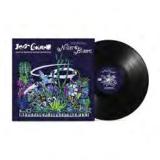
“Still Blooming“ hieß das im April 2025 erschienene dritte Album von Hollywood-Multitalent Jeff Goldblum. Darauf überzeugte er nicht nur als Pianist, Bandleader und Sänger, sondern konnte auch seine
Schauspiel-Kolleginnen aus den gemeinsamen beiden “Wicked“-Filmen, Ariana Grande und Cynthia Erivo
für eine Mitwirkung als Sängerinnen gewinnen, neben der nicht weniger bekannten Scarlett Johansson.
Aufgrund des großen Erfolges erhält “Still Blooming“ jetzt ein fabelhaftes Nachfolgealbum mit dem Titel
“Night Blooms“. Darauf greift Goldblum nicht nur vier Tracks des Vorgängeralbums in neuen, stimmungsvollen “Late Night Session“-Versionen wieder auf, sondern hat auch sechs brandneue Tracks im
Gepäck, auf denen die Gaststars Melody Gardot, Charlie Puth, Cynthia Erivo und dodie glänzen. Das Album runden zwei bislang nur digital erschienene Pop-Hits ab, die Goldblum zusammen mit Sängerin Haley
Reinhart in loungige Bossa-Tracks verwandelt hat: “Lover“ von Taylor Swift und “Tattoo“ von Loreen.
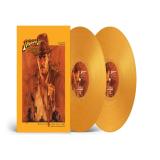
Indiana Jones and the Raiders of the Lost Ark (45th Anniversary Gold Vinyl)
Celebrate the 45th Anniversary of Indiana Jones and the Raiders of the Lost Ark. Now available on gold color vinyl, the original motion picture soundtrack from the film composed by John Williams & performed by the London Symphony Orchestra
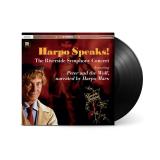
On March 20, 1964, legendary American comedian and harpist Harpo Marx joined the Riverside Symphony on stage at a benefit for the Southern California organization. By then, the comic had been in semi-retirement, and after a series of heart attacks in 1961, he was told to stop working altogether. But to a lifelong performer, nothing compared to the feeling of being on stage. Benefit shows, he slyly argued, were not technically work, since he wasn’t getting paid. For the next few years, Marx’s wife and doctors grudgingly went along with the pitch. Harpo Speaks! The Riverside Symphony Concert, out June 5 from Ramseur Records, captures a considerably remarkable, one-of-a-kind performance: The silent Marx Brother, the one whose trademark persona led many audiences to believe he was actually mute, spoke. As Harpo Marx’s first, and last—recorded just six months before his death—live album, Harpo Speaks! places listeners in the room, immersed in the swell of the Riverside Orchestra as Marx performs alongside the symphony and leads them in a narration of Peter and the Wolf. In another unusual move for Marx, he allowed the recording of the show for posterity, though the tapes seemingly disappeared after his death. Harpo Speaks! is the result of heroic archival work. Recently discovered by longtime Marx Brother archivist John Tefteller, he and Marx biographer and expert Robert Bader set out to restore the long lost recording. “The fact that we have a recording is a miracle,” says Bader. “It was not the most professionally recorded thing.
It was very haphazard. The work that was done to rehabilitate it is stunning. It’s as if you’ve found something covered with layers of mold and dirt, got it all cleaned off, and now are able to see something brand new underneath it.” Across the recording’s near-43 minute runtime, Marx, alongside the Riverside Symphony, takes the cheering audience through the delightfully lighthearted “Toy Symphony” and carries them into the softly romantic “Moon Medley,” (a medley of “Fly Me to the Moon” and “How High the Moon,” arranged by his son Bill, alongside his own composition, “Moon Tune”) and a rare instrumental performance of his composition “Guardian Angels.” And then the concert’s true highlight: the near 22-minute long riveting narration of Peter and the Wolf. For the first time, Harpo reveals his voice: deep, yet soft-spoken, refined, yet still retaining the slightest hint of his New York City origin. And, in speaking, he entertained, getting laughs not just for his physical gags, but for the storytelling itself: the dramatic inflections in moments of suspense, the arch mischievousness, and tongue-in-cheek references to Goldwater, Rockefeller, and Nixon.
The 1970s were Marion Brown’s most searching decade, a period during which he sought to move beyond the free jazz of the previous era and find more personal approaches to structuring improvisation and composition. After leaving New York for Europe in 1967, Brown began reshaping his music into what he described as “a more deliberate kind of music that had more structure to it,” pacing it so that moods and modes could develop over time. Albums such as In Sommerhausen, Afternoon of a Georgia Faun, Geechee Recollections, and Sweet Earth Flying trace this evolution: rhythmic structures moved to the foreground, harmony receded, and composition became a matter of orchestrating interlocking rhythmic parts as one would polyphonic lines.
Released in 1976, Awofofora is an overlooked but crucial entry in that sequence. At the time, its use of funk and reggae beats, electric guitars, and grooves drawn from contemporary Black popular music led some to misread it as a jazz-rock detour. In retrospect, it is entirely consistent with Brown’s methodology. As he admired in the Art Ensemble of Chicago, the stimulus comes from within the community. Here Brown filters Afro-Caribbean rhythms and funk through his own sensibility, abstracting their structural qualities rather than adopting surface style.
“La Placita,” making its first recorded appearance, layers distinct rhythmic phrases in a manner reminiscent of African drum ensembles, over which Brown and trumpeter Ambrose Jackson spin extended improvisations. The standard “Flamingo” is reshaped through diasporic rhythm and lyrical soloing, while “Pepi’s Tempo” and “Mangoes” harness crisp funk and reggae grooves to generate what Brown called a “manifestation of community” through collective improvisation. Even the overdubbed solo feature “And Then They Danced” reflects his structural thinking, ingeniously re-voicing a duet composition for two alto saxophones performed by one player.
This was the only recording by a short-lived band that briefly polarized audiences during festival appearances in 1976. Yet Brown consistently sought unity across change: different sounds, same principles — rhythm as structure, melody as architecture, collective improvisation, and above all, the primacy of tone. Awofofora stands not as a departure, but as a vivid synthesis of the elements he had been refining since the late 1960s, its grooves and golden alto lines conveying a sound drawn, in his words, “from life and from the world of experience.”
out of Stock
Last delivered 4 months ago available to reorder, subject to availability
Moving Images is a collaborative album by composers Frank Maston and Greg Foat, and marks the inaugural release on Magic Hollow, the new imprint founded by Daniel O'Sullivan. Rooted firmly in the tradition of classic library music, the album draws from the deep, elegant end of the form: vintage keyboards, analogue synthesis, drum machines, and melodic economy, realised with clarity, warmth, and restraint. Recorded in February 2025 at Ritmo Studios in Leysin, Switzerland, high in the Alps, Moving Images unfolds as a suite of finely balanced cues, defined by restraint, texture, and a discerning sense of tone.Swiss bassist Elie Ghersinu features prominently throughout the album, his rich and fluid bass tone providing a continuous anchor. The record draws inspiration from the golden age of European library music, channeling the spirit of De Wolfe and Bruton releases such as Alan Hawkshaw's Frontiers Of Science, the Push Button albums by Karl Jenkins and Mike Ratledge, Edmondo Giuliani's refined orchestrations, and Alessandro Alessandroni's Romance and Drama for Coloursound. Rather than pastiche, Moving Images internalises the discipline and elegance of these recordings, translating their grammar into a contemporary context. Maston Frank Maston's work occupies a space where pop sophistication, orchestral writing, and library traditions intersect. His seminal album Tulips established a distinctive voice defined by melodic confidence and meticulous arrangement, while Panorama, composed for the KPM library, placed him firmly within the lineage of modern composers revitalising the classic library form.Maston's music is characterized by melodic generosity and meticulous arrangement, resulting in work that is elegant, florid, and richly detailed. Greg Foat Greg Foat is a central figure in the contemporary resurgence of library-influenced music, known for his prolific output and deep engagement with the form. A virtuoso pianist, his work bridges jazz, soundtrack composition, and classic library aesthetics, often favouring analogue warmth, strong melodic identities, and ensemble interplay. Foat approaches library music as both a craft and a living language, practical, expressive, and open ended. Moving Images Together, Maston and Foat treat Moving Images as a shared vocabulary rather than a showcase. The album prioritises mood, utility, and suggestion, music designed to serve images and narratives while remaining richly satisfying in isolation. Magic Hollow Magic Hollow is a London based record label founded by composer Daniel O'Sullivan. The imprint is dedicated to contemporary works that engage with library music as a creative practice rather than a fixed genre.Magic Hollow represents a parallel compositional practice in which the sonic self-portrait gives way to openness, economy, and concision.
It’s rare that a certain sound is entirely an artist’s own. Although undeniably a stew of impeccable influences – from blues to folk to Latin to dusty funk, soul and hip-hop – one cannot hear a Tommy Guerrero song without immediately recognising it as his - and his only.
The cult skater from San Francisco is globally renowned as one of the original members of the legendary “Bones Brigade” team. And as an accomplished multi-instrumentalist, his laid-back soul is beloved by all who’ve basked in its blissful glow.
There’s something elemental about this music that really stirs the soul. Strikingly beautiful and instantly addictive, it’s a kind of funk-fuelled, melody-driven, groove-based magic. There’s a serenity and heart in the playing that radiates warmth and splendour, as if crafted for endless sunsets. His albums that surfaced on Mo Wax at the turn of the century have been treasured since their release and it’s two of his most vital LPs that we’re honoured to reintroduce.
The originals were quietly pressed on to a single piece of vinyl so we’ve worked closely with Tommy this year to bring you these fresh, limited editions. They have been lovingly remastered, cut nice and loud on to heavyweight double vinyl and presented in deluxe gatefold jackets.
Soul Food Taqueria continued Guerrero’s guitar soul but represented a step forward with its polished production and greater complexity of instrumentation. Denied the promotion it deserved upon release, it flew under the radar. It is now the most wanted record of his wondrous back catalogue.
Guerrero’s atmospheric touch and subtle guitar provide lush, glimmering pieces of musical texture. Within his spacious compositions, uniquely arranged instruments flourish alongside each other to create a languid soundtrack for halcyon days.
As ever, the diversity on display is beguiling. From bossa nova, samba and cumbia rhythms to understated folk, funk and soul grooves, this is another exotic set of mellow gold; perfectly represented by ESPO’s memorable artwork. Furthermore, the title’s hybridity reflects the intoxicating sweep of stylistic flavours served up, reminding us that, however tricky it is to categorise Guerrero’s special blend, it’s always a pleasure to indulge in something so creative and adventurous.
Dubby, bass-heavy instrumentals give way to moody folk-soul – witness “It Gets Heavy”, featuring melancholic vocals from Gresham Taylor – whilst “Thank You MK” is a gentle ode to the tropics, featuring ethereal instrumentation, bright bass and warm, jazzy guitars. The second half in particular contains a number of stunning ambient tracks – check “Lost Unfound”, “Another Brother Gone” and “Broken Blood” - built around minimalist, laid-back grooves and detailed guitar orchestrations which wouldn’t be out of place on the latest Jonny Nash release.
Guerrero closes this flawless set with a moment of true beauty. Restrained and graceful, “Falling Awake” is a pared back piece containing meditative guitar melodies set against melancholic piano arrangements. It brings proceedings to the most peaceful close. Seductively good, it reminds you just how great simplicity can sound.
out of Stock
Last delivered 4 months ago available to reorder, subject to availability
the producer, multi-instrumentalist, DJ and record collector Gabriel Cyr AKA Teleseen releases 5th album 'The Emotional Life of Savages' via French imprint Goldmin Music.
African rhythms, Latin heat and otherworldly electronics collide like neurons, processed through a New York state of mind. The pancontinental sounds are mirrored in his own life, which has oscillated back and forth between various countries.
A jazz background combined with a love for house and techno are ingrained in the grooves. Also key is the samba, baile funk and MPB that inspired him while living in Rio de Janeiro, plus the sounds he reabsorbed on returning to NYC's club scene.
This wide range of influences spanning the global underground coalesces into a rich, vital and coherent whole. Warm and soulful, but also evoking an intoxicating, heady atmosphere, the hypnotic and ultra-rhythmic tracks subtly shift and build to fever pitch, due primarily to deft polyrhythmic drums and percussion - both played and sequenced.
"Working on this record I finally found myself able to manifest a certain sound I'd been hearing in my head for years, combining the rhythmic intensity of afro-house and afro-Brazilian music with the more cosmic sounds of Detroit and deep house", explains Cyr on his musical vision.
The gentle sundowner glow of 'Myrtle Avenue' with its textured synth waves and wandering Parrish-esque keys acts as a precursor to the potent nocturnal adventure to follow: 'Espelhos' captures a similar essence to Black Science Orchestra's classic 'Save Us (The Jam)', before the heat goes up and heads go down for the eastern-tinged, autotune-laden fire of 'Khalil'.
The album then intensifies further still on the percussion-heavy, big bottomed cosmic throb of 'Jaguar', whilst Brazilian flavour meets tech house rush on 'Fundos', before the party reaches its feverish close on the wiggling batucada- meets-tribal-house of 'Temporada De Seca'.
Born in the north eastern United States, as an adult Cyr has always been nomadic. He has sought to live and immerse himself in other cultures and absorb their sounds, but eventually always succumbs to the Big Apple's magnetic pull. Back home, a key inspirational catalyst for the album was the Brooklyn-based party Africainoir, where he's a resident DJ.
Alongside cutting his teeth producing illbient/hip hop and working as an engineer, he ran his own studio for period, before starting his own label Percepts, on which to release his dub techno style debut. He has since released on 100% Silk, Boomarm Nation and Feel Up Records, and now 'The Emotional Life Of Savages' marks Teleseen's first album for Goldmin.
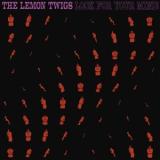
Die beiden vorherigen Captured-Tracks-Alben von The Lemon Twigs, "A Dream Is All We Know" (2024) und "Everything Harmony" (2023), deuteten bereits auf eine Art Neubeginn in ihrer damals fünf Alben umfassenden Karriere hin. "Es war der Beginn davon, Platten zu machen, die wir selbst anhören würden", sagt Michael D'Addario, der jüngere der Twig-Brüder, heute 26 Jahre alt. Spätestens mit "A Dream Is All We Know" und dem zukünftigen Michael-Klassiker "My Golden Years" hatte die neue Ära der Lemon Twigs wirklich begonnen. Und nun erscheint das dritte Lemon-Twigs-Album für Captured Tracks, "Look For Your Mind!", das unter seiner poppigen Oberfläche einen unterschwelligen Strom aus Paranoia und Misstrauen trägt. Der Opener, der titelgebende Track "Look For Your Mind", ein beschwingtes Stück von Michael, führt die Hörer*innen in den gitarrengetriebenen Harmonie-Sound ein, der das zentrale Thema des Albums bildet. Vieles, was auf "A Dream Is All We Know" erreicht wurde, ist auch hier präsent - nur noch fokussierter. Es sind klassische Twigs, geprägt vom goldenen Zeitalter des Gitarrenpops, aber in keiner Weise sklavisch nachempfunden. Neu auf diesem Album ist die Einbindung der Live-Mitglieder Reza Matin (Schlagzeug) und Danny Ayala (Bass) sowie Eva Chambers von Tchotchke in die Rhythmusgruppe. Während die Brüder zuvor im Studio alles selbst eingespielt hatten, zeigt dies ein neues Gefühl von Freiheit. "Gather Round" ist eine der größeren Produktionen auf "Look For Your Mind!" - ein Brian-Song mit freudigen Orchestrierungen, der wie ein Wahlkampflied aus der Jahrhundertwende wirkt. Der Songwriter sucht nach einer unverdorbenen Führungsperson, kommt aber zu dem Schluss, dass kollektives Handeln der einzige Weg nach vorn ist. Musikalisch ist er opulent und herrlich 1967, doch Stimmung und Aussage sind unverkennbar 2026. "Jedes Mal, wenn wir versuchen, etwas völlig Geradliniges zu schreiben, können wir nicht anders, als ein Element hinzuzufügen, das völlig aus dem Rahmen fällt", erklärt Brian. Brians "Fire And Gold" beginnt mit einem klingenden Power-Pop-Riff, bevor alles auf den Kopf gestellt wird. Es ist auch der erste Song des Albums, auf dem der energiegeladene Drummer Reza Matin zu hören ist, den die Brüder mit Größen wie Jody Stephens von Big Star, Jim Bonfanti von The Raspberries und Bev Bevan von The Move vergleichen. Den Abschluss der ersten Seite der Vinyl-Ausgabe bildet Michaels wunderschöne Ballade "Mean To Me", mit Gesangsparts, die The Beach Boys vor 60 Jahren gerne aufs Band gebracht hätten - eingesungen von Michael, Brian und Danny. Der Abschluss der zweiten Seite, "Your True Enemy", wirft schließlich alles über den Haufen. "Wir haben den Song zunächst als einfache Rocknummer angelegt, aber das passte nicht zur düsteren Stimmung des Textes", sagt Brian. "Also haben wir begonnen, experimenteller zu werden." Das sechste Studioalbum der Lemon Twigs mag auf den ersten Blick wie eine direkte Fortsetzung der beiden Vorgänger wirken, ist aber zugleich viel mehr: mit Verweisen auf frühere Werke, einem neu entdeckten kollektiven Geist und vor allem großartigem Songwriting.
Market East teilt endlich seine wichtigste Botschaft mit der Welt in Form seines Debütalbums ,French Street". Die Band, bestehend aus Kurt Cain (Gesang), Vincent John (Gesang, Bass, Gitarre und Keyboard) und Maxwell Perla (Gesang, Schlagzeug und Percussion), liefert ihre charakteristischen himmlischen dreistimmigen Harmonien über Arrangements, die noch nie so reichhaltig und fesselnd geklungen haben. ,French Street" ist extrem gefühlvoll und die Vocals sind üppig, als hätten die Zombies in Muscle Shoals aufgenommen. Die Texte sind poetisch und nostalgisch, da die Band Songs über ihre vergangenen ,goldenen" Jahre geschrieben hat. Damals hatten die Jungs nicht viel außer einander und ihrer gemeinsamen Liebe zur Musik. Sänger Kurt Cain lebte in einem kleinen Reihenhaus in North Philadelphia in einer fast verlassenen Gasse namens French Street. Hier trafen sich Cain, John und Perla jede Woche, um der Realität zu entfliehen und sich gemeinsam an der Musik zu berauschen. Sie entwickelten eine tiefe Wertschätzung für alles aus den 60er- und 70er-Jahren, von Simon & Garfunkel bis The Moments und allem, was dazwischen liegt. All diese Jahre später hat Market East ein eigenes klassisches Album geschaffen. Vom Barock-Pop des Titelsongs und dem mitreißenden Soul von ,Roses" bis hin zu den lateinamerikanischen Klängen von ,Echoes of My Heart" und den orchestralen Klängen von ,Everyday, Springtime" zeigt Market East ihre beeindruckende Bandbreite. Die Platte wurde in Philadelphia auf Analogband aufgenommen und von Market East und Eraserhood Sound produziert. Hol dir noch heute dein Exemplar dieses zeitlosen Klassikers.
Market East teilt endlich seine wichtigste Botschaft mit der Welt in Form seines Debütalbums ,French Street". Die Band, bestehend aus Kurt Cain (Gesang), Vincent John (Gesang, Bass, Gitarre und Keyboard) und Maxwell Perla (Gesang, Schlagzeug und Percussion), liefert ihre charakteristischen himmlischen dreistimmigen Harmonien über Arrangements, die noch nie so reichhaltig und fesselnd geklungen haben. ,French Street" ist extrem gefühlvoll und die Vocals sind üppig, als hätten die Zombies in Muscle Shoals aufgenommen. Die Texte sind poetisch und nostalgisch, da die Band Songs über ihre vergangenen ,goldenen" Jahre geschrieben hat. Damals hatten die Jungs nicht viel außer einander und ihrer gemeinsamen Liebe zur Musik. Sänger Kurt Cain lebte in einem kleinen Reihenhaus in North Philadelphia in einer fast verlassenen Gasse namens French Street. Hier trafen sich Cain, John und Perla jede Woche, um der Realität zu entfliehen und sich gemeinsam an der Musik zu berauschen. Sie entwickelten eine tiefe Wertschätzung für alles aus den 60er- und 70er-Jahren, von Simon & Garfunkel bis The Moments und allem, was dazwischen liegt. All diese Jahre später hat Market East ein eigenes klassisches Album geschaffen. Vom Barock-Pop des Titelsongs und dem mitreißenden Soul von ,Roses" bis hin zu den lateinamerikanischen Klängen von ,Echoes of My Heart" und den orchestralen Klängen von ,Everyday, Springtime" zeigt Market East ihre beeindruckende Bandbreite. Die Platte wurde in Philadelphia auf Analogband aufgenommen und von Market East und Eraserhood Sound produziert. Hol dir noch heute dein Exemplar dieses zeitlosen Klassikers.