Mykal Roze, BDF
Downpressor / Far East Organ
Basque Dub Foundation riddim and a General Levy new tune for Heartical ! Massive !
pre-order now15 Oct
expected to be published on 15 Oct
6,09 €
Basque Dub Foundation riddim and a General Levy new tune for Heartical ! Massive !
expected to be published on 15 Oct
expected to be published on 15 Oct
,Reona" ist das Debütalbum von REONA bei Kou Records - Stepptänzerin, Metal- Percussionistin, Improvisatorin und eine der originellsten Klangkünstlerinnen der heutigen Zeit, weltweit. Das Album wurde im Januar 2026 an zwei Tagen im Studio Dede aufgenommen und von Randall Dunn produziert. Es fängt REONAs ganzkörperliche Performance in Echtzeit ein: Stepptanzschuhe und ein Holzbrett als rhythmische Grundlage, überlagert von Metallblechen, Ketten, Edelstahlschalen, Plastiktüten, Lautsprechern und einem ganzen Arsenal an gefundenen und handgefertigten Objekten, die im Laufe jahrelanger Auftritte gesammelt wurden. Die Instrumente tragen ihre eigene Geschichte in sich - ein Schild aus Okinawa, auf dem die Warnung vor nicht detonierten Bomben steht, ein Schild einer Transportfirma aus dem Jingisukan-Topf-Museum in Iwamizawa, eine Festglocke, die zu Beginn der COVID-Ära erworben wurde, südindische Essgeschirr, ein Ölkännchen aus Taiwan. Stampfen, kratzen, berühren, schlagen, blasen, stöhnen - REONA nutzt alles voll aus, von ihren Beinen bis zu ihrem Mund, und lässt dabei die Grenze zwischen Tanz und Percussion, Körper und Instrument verschwinden. Ihre Praxis befindet sich an einer selten besetzten Schnittstelle: die japanische Noise-Tradition von Merzbow und Otomo Yoshihide auf der einen Seite, die perkussive Körperlichkeit von Milford Graves und Han Bennink auf der anderen - ohne Präzedenzfall dafür, was passiert, wenn diese beiden Welten in einem einzigen Körper aufeinandertreffen. Track 7, M108, enthält einen Gastauftritt von Atsuo - dem Schlagzeuger der legendären japanischen Rockband Boris - in einer Kollision zweier unterschiedlicher, aber verwandter Ansätze zu Rhythmus und Noise.? Aufgenommen, gemischt und produziert von Randall Dunn. Gemastert von Ben Greenberg. Dolby-Atmos-Mischungen von Ben Greenberg. Lackschnitt von Paul Gold bei Salt Mastering. Cover-Artwork ,Legend of the Snow Spirit" von Kazuki Tomokawa; Porträt auf der Rückseite von Allison Brant.
expected to be published on 23 Oct
Glass Clear Vinyl[33,57 €]
expected to be published on 30 Oct

Some recordings herald the future in ways that are impossible to see in real time. Teodros Makonnen With His Organ (ቴዎድሮስ መኮንን ከኦርጋኑ ጋር), by the artist Teodros Makonnen, also known as Teddy Mak, is one of those. Today, electronic sounds, synthesizers, and digital production are taken for granted in Ethiopian music, but in the early 1980s, they were novelties that polarized opinion. Even to this day, the story of Teodros Makonnen’s legacy has never been properly told. He played a decisive role in defining the sound of the digital era of Ethiopian music that emerged in the 1980s and beyond, both as a keyboard player and as a producer, songwriter, performer, and sound designer.
Ethiopian music was at a crossroads in the early 1980s. Much like music in the rest of the world, technology and automation heralded either a quantum leap in musical development or the annihilation of musicianship, depending on who you’d ask. The changes were incremental nonetheless, but with the benefit of hindsight one can clearly see that the changes meant different things in different contexts. Drum machines and electric organs came to replace many hotel bands because, all of a sudden, one musician could control drums, melody, and accompaniment. Teodros was one of the first musicians in Ethiopia to explore the possibilities this opened up.
Teodros’ father, Captain Makonnen Beri, was a chief pilot at Ethiopian Airlines and a music enthusiast at that. This would prove important to his development, as Makonnen brought back a piano from Germany, which would lead to the first steps in Teodros’ long musical career. Captain Makonnen’s work as Head of Flight Operations and as a pilot exposed him to the wider world that was far from commonplace for most Ethiopians. In a house where music captivated the whole family, the piano gave Teodros’ talent an outlet. Not only was a piano at home rare in Ethiopian households, his father also brought an Indian teacher to their home to teach Teodros and his brother, Captain Samuel Makonnen, music theory (solfeggio or ear training) and piano. Teodros and his youngest brother, the late great Dereje, a member of both the legendary Ibex Band and the Ethiopian reggae group Dallol, took up music from that point onward, with Teodros beginning to develop his proficiency at the age of eight. His father encouraged him to practice tirelessly at home, and Teodros later received musical schooling at the German School in Addis Ababa.
His obvious talent led to studies and formal education at the Yared School of Music, followed by continued studies in American jazz at Northern Virginia Community College in Virginia. Teodros cut his teeth professionally in his mid-teens, not only as a keyboardist, but also as an arranger for the Wabi Shebelle and Dahlak bands in the 1970s. He mastered electronic sequencing early, rising to prominence through the midnight recording sessions held during the military curfew. The pressures imposed by the curfew required precise and disciplined recordings, and Teodros delivered just that. This, in turn, led to collaborations with iconic artists such as Mulatu Astatke, Aster Aweke, Menelik Wossenachew, Tilahun Gessesse, Mahmoud Ahmed, and Alemayehu Eshete.
In those days, he sat in as a keyboardist with the Dahlak Band when Dawit Yifru took a hiatus to study in Russia, and also with the Ethiostar Band. He secured a residency at the Wabi Shebelle Hotel with the Shebele Band, together with Zelalem Tadese (drums), later succeeded by Elias Bekele, Mulugeta Hailu (bass), Teferi ‘Bibisha’ Mengesha (guitar), Kumelachew G/Selassie (trumpet), and Teshome Deneke (saxophone). A friendly competition developed between the bands associated with the Ras Hotel (the Ibex Band), Ghion Hotel (the Dahlak Band), and Wabi Shebelle Hotel (the Shebele Band). The music scene at Wabi Shebelle saw teenagers commanding the spotlight in an industry otherwise dominated by musicians of an older generation.
At the Wabi Shebelle Hotel, Teodros met a diplomat from Saudi Arabia and later visited him at his home in Addis Ababa, a meeting that had unexpected musical consequences. The man owned a Yamaha double-deck keyboard. That evening, they recorded Teodros Makonnen With His Organ (ቴዎድሮስ መኮንን ከኦርጋኑ ጋር) in one take. This recording, a cornerstone in the early digital sound of Ethiopian music, came about almost by chance, simply because Teodros got the opportunity. Traditional Ethiopian songs were cast in a wholly electronic style.
Once freed from backing duties, Teodros’ keyboards could explore dreamlike soundscapes that took Ethiopian music in new directions. Even though the cassette contained well-known Ethiopian songs, they were given highly original arrangements, performed on an electric organ with drum machine backing and rhythm patterns that left the listener with suggestive, lingering sounds. “Libesh Kabashen” (also known as “Anchi Bale Game”) and “Odu Gol Golesa” wrap you in the very stuff that dreams are made of.
Originally released on cassette only, this recording exudes a mystique that surpasses even some of the most obscure Ethiopian recordings of the day. It remained more or less unknown outside of Ethiopia until now. Some of the tracks, like “Addis Fikir,” are permeated with an almost naive buoyancy, free-floating sounds that lost contact with the ground the moment they were conceived. Others, like “Meche New Hageren Yemayew” and “Lelitu Alnega Alegn,” carry a moodier, quirkier timbre, with pulsating rhythms in the background. Yet even the darker pieces contain an unmistakable wave, something essentially Ethiopian. If most recordings of Teodros’s contemporaries at the time were teeming with atmosphere, his songs seem instead at home in the stratosphere, almost ethereal. Some of the music here could be filed under “lullabies,” were it not for the recurring, almost brooding feeling that engulfs the listener on the aforementioned tracks. You could easily be forgiven for drifting into a blissful haze as the music washes over you.
Up to the advent of electronic music production, Ethiopia was totally dominated by big bands on the one hand, and small groups on the other. The former were tied to large institutions such as the military, the latter emerged from the entertainment industry, in hotel bars and nightclubs. These groups were commercially driven, and bands ultimately had to foster a mercenary approach to employment, albeit not to the passion for music. In the light of this, Teodros’ musical legacy can be seen in two ways. On the one hand, he is a key player in Ethiopian music from the 1970s onwards, leaving an indelible mark through hundreds of compositions and arrangements, including soundtracks for numerous documentary films and advertisements for different companies. On the other hand, the way he and others employed electronics brought Ethiopian music onto a fork in the road.
The replacement of traditional instruments with electronic equipment was seen as impending doom by some. Others, like Teodros, saw new avenues for performance, production, and creativity. Just as later producers like Abegasu Shiota of Admas, Teodros was a trailblazer who opened paths that it took Ethiopian music as a whole more than a decade to rush into. The hotel scene had already been pushed toward electronic music by financial necessity and cost-cutting. Today’s revived global interest in Ethiopian music from the seventies and eighties, alongside a broader resurgence, has changed the reasons for using digital means of music production. They have become tools for musical dreaming. This is where the dreaming began.
Ready to ship
I SPLIT MY ORGAN IN TWOS - a sonic world where animals could speak and parents would never grow old. Music is playing beneath the trees. Creeks are flowing towards the treehouse. Bears are singing and Owls are sailing through the wind like miniature spaceships. Solitude is a chosen path of clarity. And when this world collapses, all memories will vanish. Left behind is the Sting that keeps us separated from the insane.
The debut album I SPLIT MY ORGAN IN TWOS by Munich indie project plainhead is a freak folk inspired rockrecord fusing key aspects of 00s experimental indie with 90s indie rock.
The organic soundscapes remind of yetto-be-refined the Microphones from the album It Was Hot, We Stayed in the Water (2000). Acoustic Guitars fuse with the sound of fuzz and distortion. Clarinets and pianos can be found somewhere buried beneath the noise,
while the vocals remain dry and tired in the front. The 18-track double LP features easy-listenable songs such as the single Ghost / Smoke, short playful instrumentals named after animals and long ever-evolving operas such as River and Sunsick. The album was released on Munich local DIY recording label new basement.
expected to be published on 04 Dec
øjeRum is the moniker of Danish artist Paw Grabowski. Since 2007, his mostly tape-based works have unfolded like private diaries—intimate, textural, often centered around an vintage pump organ Paw found left abandoned in a dilapidated Danish home, and to which he would return, sometimes in the dead of winter, to play and record on. The works featured on this release are centered around this pivotal engagement and collect some of his earliest releases from around 2014 to 2017. These were then carefully selected and released via Vaagner's sister label in 2018 via a double cassette release, which has since become a coveted collectors item.
Throughout the album, the organ breathes, sighs—the moments of brief silence that follow are almost palpable, then like a sonorous echo, the sound rushes back into the foreground with gentle restraint, submerging the listener into an undulating current of emotional upheaval. In this ebb and flow, øjeRum shapes a space where memory seems to waver and dissolve, and where a fragile, lingering melancholy unfolds with a kind of hushed inevitability.
With the newly minted Vaagner.Archive, this album is now reissued on vinyl for the first time—carefully remastered and housed in a 2xLP gatefold sleeve printed on special cardboard, its tactile presence echoing the material sensitivity that has always defined Paw Grabowski's practice. A love letter to repetition and restraint.
Ready to ship

Ideologic Organ freut sich, die brandneuen Aufnahmen von The Necks zu präsentieren, dem legendären australischen Trio, das sich durch die Umgehung musikalischer Klischees auszeichnet und gleichzeitig die Praktiken der Improvisation, des Jazz, des Post-Rock, des Ambient, des Minimal und der texturierten, ,klangbasierten" Musik erforscht und erweitert. Das neueste Werk dieses langjährigen Ensembles, Unfold, präsentiert sich als Doppel-LP mit vier seitenlangen Tracks. Das bewusste Fehlen von nummerierten Seiten gibt dem Hörer viel Raum, sich einzubringen, und lässt ihn seinen eigenen Weg durch die Klanglandschaft finden. Die kürzere Länge des Vinylformats ist für die Mitglieder des Ensembles kein Hindernis, sondern bietet ihnen einen kompakteren Horizont zum Nachdenken, in dem die zurückgelegte Strecke auf unmittelbarere und dynamischere texturale Aspekte neu ausgerichtet wird. Die Unmittelbarkeit von ,Rise" bestätigt diesen neuen Weg, während die traurigen Töne von Lloyd Swantons Bass um Chris Abrahams' kristallklares Klaviermotiv wirbeln und Tony Bucks Percussion den Prozess in erleuchtende Free-Jazz-Gefilde lenkt. ,Blue Mountain" bahnt sich einen Weg durch das klangliche Unterholz, wobei Soul-Orgel, rasselnde Percussion, Pfeifen und hüpfende Schallwellen um den Vordergrund wetteifern. ,Overheard" behält eine erhabene melancholische Aura, während Percussion und Keyboards sich gleichzeitig umarmen und auseinanderfallen, während ,Timepiece" als sanfte Geste weiterer Möglichkeiten dahinspringt. Wie genau The Necks ihre besondere Magie entfalten - so einfach es auch scheinen mag -, während sie sich immer weiterentwickeln, kann nur vermutet werden, aber ,Unfold" beweist einmal mehr, dass Regeln und Schulen gebrochen und zu Mustern und Rahmenwerken umgestaltet werden müssen, die sich von denen unterscheiden, die wir kennen.
Ready to ship

Swiss sound artist Zimoun continues and transforms the material from his solo project 'One & Two' with Taylor Deupree on 'Wind Dynamic Organ, Deviations.' Both albums were created entirely from recordings of the Wind Dynamic Organ (Prototype III), an extraordinary instrument housed in Bern Minster and developed by Daniel Glaus and his team at the Bern Academy of the Arts. Unlike a traditional organ, this prototype allows the wind pressure and air volume of each pipe to be shaped in real time and produces tones that breathe and blur at their edges. On Deviations, the pair push these organic tones into new territory by layering, bending and re-contextualising them into evolving ambient structures. A quietly radical exploration.
Ready to ship

The Hammond organ was first manufactured in 1935. In 1954, the now famous Hammond B3 model was introduced with additional harmonic percussion feature. When the company went out of business in 1985, around two million of various models of the Hammond organ have been produced.
The Hammond B3 was originally marketed to churches as a lower-cost alternative to the wind-driven pipe organ. It quickly became popular with professional jazz musicians in organ trios. Jimmy Smith's use of the Hammond B3 inspired a generation of organ players, and its use became more widespread in the 1960s and 1970s in rhythm and blues, rock, reggae, and progressive rock.
This collection is centered on the exciting and dynamic sounds of the Hammond B3 organ!
Ready to ship

Last delivered 4 days ago
available to reorder, subject to availability
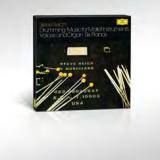
Anlässlich des 90. Geburtstags des Komponisten Steve Reich am 3. Oktober 2026 veröffentlicht die
DG eine luxuriöse, handnummerierte und limitierte „Original Source“-Ausgabe seiner bahnbrechenden Aufnahme von „Drumming“ aus dem Jahr 1974 sowie zwei weiterer früherer Werke. Das Set erscheint im
originalen LP-Format mit authentischer Verpackung und enthält Reichs ursprüngliche Liner Notes mit
zahlreichen Fotos aus den Aufnahmesessions sowie einen ausführlichen Artikel mit Reichs ursprünglichem
Briefwechsel mit seinem DG-Produzenten.
Um die bestmögliche Klangqualität zu gewährleisten, wurden die Aufnahmen erstmals von den originalen
4-Spur-Bändern neu gemastert und geschnitten.
Diese limitierte und nummerierte Veröffentlichung erscheint auf 180-g-Vinyl in einer luxuriösen 3-LPBox-Edition mit dem Original-Cover und enthält zusätzliche Fotos sowie Faksimiles der ursprünglichen
Aufnahmeprotokolle und Bandkartons.
Die Vinyl-Serie The Original Source präsentiert herausragende Aufnahmen der 1960er und 1970er Jahre in
ganz neuer Klangqualität. Dafür haben die renommierten Emil Berliner Studios die originalen Mehrspurbänder mit eigens für die Produktion der Serie entwickelten Technologien in 100% analoger Qualität (AAA)
neu gemastert und geschnitten. Die klanglichen Unterschiede zu den Originalveröffentlichungen sind beträchtlich: Größere Klarheit, mehr Feinheiten und Verbesserungen im Frequenzgang, zugleich weniger
Nebengeräusche, Verzerrungen und Komprimierungen ermöglichen ein audiophiles Hörerlebnis wie nie zuvor.
expected to be published on 02 Oct

SMOKY ORANGE VINYL[22,27 €]
Im Laufe der Zeit haben zahlreiche Musiker - von schnurrbärtigen Partyboot-Troubadouren bis hin zur Jazz-Elite wie Jimmy Smith/McGriff und Shirley Scott - die Kraft der elektrischen Orgel genutzt, um ihre Zuhörer zu hypnotisieren. Nun, indem er alle möglichen Anleihen bei diesen musikalischen Schwergewichten nimmt und die musikalische Schallmauer durchbricht, um deinen Geist zu ,organisieren", tritt Mr. Sophisticated Fingers auf den Plan. Zusammen mit den stets treuen Cold Diamond & Mink interpretiert dieser mystische Tastenkünstler zehn der größten Hits aus Emilia Siscos Debütalbum ,Introducing" in einem einzigartigen lyrischen Stil neu. Auf dem Album ,Slow Dance & Soul" von Organ-ized erreichen diese Songs neue Höhen. Vielleicht hast du sie schon einmal gehört, aber hör sie dir jetzt noch einmal an, denn jetzt wurden sie vom musikalischen Maestro Mr. Sophisticated Fingers neu interpretiert, Baby!
expected to be published on 28 Aug
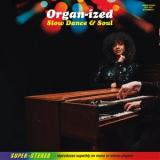
Im Laufe der Zeit haben zahlreiche Musiker - von schnurrbärtigen Partyboot-Troubadouren bis hin zur Jazz-Elite wie Jimmy Smith/McGriff und Shirley Scott - die Kraft der elektrischen Orgel genutzt, um ihre Zuhörer zu hypnotisieren. Nun, indem er alle möglichen Anleihen bei diesen musikalischen Schwergewichten nimmt und die musikalische Schallmauer durchbricht, um deinen Geist zu ,organisieren", tritt Mr. Sophisticated Fingers auf den Plan. Zusammen mit den stets treuen Cold Diamond & Mink interpretiert dieser mystische Tastenkünstler zehn der größten Hits aus Emilia Siscos Debütalbum ,Introducing" in einem einzigartigen lyrischen Stil neu. Auf dem Album ,Slow Dance & Soul" von Organ-ized erreichen diese Songs neue Höhen. Vielleicht hast du sie schon einmal gehört, aber hör sie dir jetzt noch einmal an, denn jetzt wurden sie vom musikalischen Maestro Mr. Sophisticated Fingers neu interpretiert, Baby!
expected to be published on 28 Aug

Colemine freut sich, die ersten neuen Songs vom Delvon Lamarr Organ Trio seit über vier Jahren vorzustellen. Die Songs sind von den ,I Told You So"-Sessions und von einer bald erscheinenden LP. Auf der A-Seite gibt's den superfunkigen ,Chicken Leg" und auf der B-Seite den langsamen ,If I Could". Mit dabei sind Lamarr an der Orgel, der unschlagbare Jimmy James (Parlor Greens, True Loves) an der Gitarre und der tiefe Pocket von Grant Schroff (Polyrhythmics, Champagne Bubblebath) am Schlagzeug. Mit dabei sind Lamarr an der Orgel, der unvergleichliche Jimmy James (Parlor Greens, True Loves) an der Gitarre und der tiefgründige Grant Schroff (Polyrhythmics, Champagne Bubblebath) am Schlagzeug.
expected to be published on 29 May
,now i imagine a place not the same" ist eine Doppel-LP und ein neues Solo-Statement des Gitarristen und Komponisten David Torn, veröffentlicht bei Kou Records. Es kehrt zur rohen Energie seiner frühen Klangsprache zurück und treibt diese gleichzeitig mit der Klarheit jahrzehntelanger Erkundungen voran. Das Album ist gleichermaßen viszeral und schwerelos und konzentriert sich auf Torns langjährigen Dialog zwischen alternativen Stimmungen, Loop-Architekturen und berührungsempfindlicher Elektronik - eine Klangwelt, in der Melodie, Noise und Atmosphäre sich ständig ineinander verschmelzen. Als Pionier der E-Gitarren-Bearbeitung ist Torn weithin bekannt für seine Arbeit in Musik und Film, darunter langjährige Kooperationen mit dem Komponisten Howard Shore, Beiträge zu Filmen von David Cronenberg und einflussreiche Veröffentlichungen bei ECM Records, die dazu beitrugen, eine atmosphärische, filmische Sprache für die E-Gitarre zu definieren. Torn nähert sich jedem Stück als einer Form kompositionsorientierter Improvisation und behandelt alles in seiner Reichweite als musikalisches Material: Saiten, Tonabnehmer, Verstärker, externe Elektronik, Stimme, resonante Oberflächen und den physischen Raum selbst. Aufgenommen, gemischt und produziert von Randall Dunn und mit einem Schwerpunkt auf Unmittelbarkeit und physischer Präsenz eingefangen, wird die Gitarre Teil eines größeren Systems - Schaltkreise atmen, Delays wiederholen unvollkommene Erinnerungen, Töne regenerieren sich durch Berührung. Klänge entstehen durch Zufall, Geste und Intuition und werden dann durch aufmerksames Zuhören geformt, während sie sich entwickeln. Anstatt auf festgelegte Ergebnisse hin zu komponieren, lässt Torn die Form durch Feedback und Wiederholung entstehen und nimmt jeden Klang - ob beabsichtigt oder nicht - in einen sich ständig weiterentwickelnden musikalischen Körper auf. Indem er grundlegende Werkzeuge aus seinen prägenden Verarbeitungsjahren wieder aufgreift - alternative Stimmungen, Looping-Logik, Röhrensättigung - lehnt Torn Nostalgie ab und gewinnt stattdessen ihre Unmittelbarkeit als lebendiges Material zurück. Gleichzeitig intim und gewaltig fängt ,now i imagine a place not the same" einen Künstler ein, der seine einzigartige Sprache voll und ganz beherrscht: zutiefst melodisch, rigoros experimentell und verwurzelt in Vertrauen, Berührung und Elektrizität. Nicht als rückblickende Geste, sondern als gegenwärtige Erklärung bietet das Album eine kraftvolle Meditation über Vergänglichkeit, Erneuerung und das fortwährende Leben des Klangs.
expected to be published on 29 May
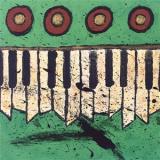
From the maniacal opening notes and carnival barker howl that launch the album, The Ugly Organ wasted no time searing itself into a listener's ears and quickly established Cursive as a musical force with which to be reckoned. A self aware examination of artistic constraints (or lack thereof), relationships, sex, and the intersection of all three, The Ugly Organ wowed critics and audiences alike with its cerebral, cathartic blend of songs. Fiercely intelligent and cohesive - the liner notes laid the songs out like a play, complete with stage directions - across its diverse sonic landscape, the album landed Cursive on the Sunday Arts & Leisure section cover of The New York Times (which also called it "a marvelous collection of riddles and left turns, conceived as a single piece of musical theater") and earned accolades from Rolling Stone ("a brilliant leap forward"), Entertainment Weekly, Billboard, Alternative Press, MAGNET ("The best punk record you'll hear all year"), Esquire, and SPIN, among many others, as well as a place on numerous year-end best lists.The Ugly Organ feels as vibrant and vital today as it did upon release more than 20 years ago. A landmark album, it not only catapulted Cursive from the simmering indie underground to the forefront of a genre, but also served to inspire a host of young bands in its wake.
expected to be published on 24 Apr

LTD. BLOOD RED Vinyl[24,79 €]
,Music for Intersecting Planes" ist die erste gemeinsame Veröffentlichung der Cellistin Leila Bordreuil und der Organistin Kali Malone. Minimalistisch in den Mitteln, aber groß in der Wirkung, entfaltet sich die Musik wie Perlen auf einer Schnur, unterbrochen von Stille und tiefen Atemzügen. Aus der manuell gepumpten Orgel kommen wechselnde Luftströmungen, die durch die fein gezeichneten Obertöne des Cellos bereichert werden und eine mikroskopische und körnige Perspektive des Klangs ergeben. Interferenzmuster versetzen die Klangmasse in Bewegung, während Malone und Bordreuil gegen die Stille der Sinuswellen spielen. In der Ferne läuten Kirchenglocken. Wellenförmiges Feedback lässt eindringliche Rufe der Orgel erklingen, bevor es einem tragischen Cello-Motiv weicht. Das Album endet dann mit dem kurzen und jubelnden Pizzicato-Ausruf ,Endless Dance of Eternal Joy". Aufgenommen bei Kerzenschein im Temple de Saint-Théoduoe in La Tour-de-Peilz in der Schweiz, schafft die Musik ein Gleichgewicht zwischen Geduld und Intensität, Komposition und Zufall, Strenge und Zärtlichkeit. In dieser Zusammenarbeit kommen neue Facetten beider Künstler zum Vorschein: Bordreuils Spiel mit erhöhter klanglicher und formaler Klarheit und Malones Orgelspiel in seiner rohesten und strukturiertesten Form. ,Music for Intersecting Planes" ist ein Zusammentreffen von Geistern, das die zeitlose Faszination akustischer Phänomene würdigt.
expected to be published on 20 Mar

Black Vinyl[24,79 €]
,Music for Intersecting Planes" ist die erste gemeinsame Veröffentlichung der Cellistin Leila Bordreuil und der Organistin Kali Malone. Minimalistisch in den Mitteln, aber groß in der Wirkung, entfaltet sich die Musik wie Perlen auf einer Schnur, unterbrochen von Stille und tiefen Atemzügen. Aus der manuell gepumpten Orgel kommen wechselnde Luftströmungen, die durch die fein gezeichneten Obertöne des Cellos bereichert werden und eine mikroskopische und körnige Perspektive des Klangs ergeben. Interferenzmuster versetzen die Klangmasse in Bewegung, während Malone und Bordreuil gegen die Stille der Sinuswellen spielen. In der Ferne läuten Kirchenglocken. Wellenförmiges Feedback lässt eindringliche Rufe der Orgel erklingen, bevor es einem tragischen Cello-Motiv weicht. Das Album endet dann mit dem kurzen und jubelnden Pizzicato-Ausruf ,Endless Dance of Eternal Joy". Aufgenommen bei Kerzenschein im Temple de Saint-Théoduoe in La Tour-de-Peilz in der Schweiz, schafft die Musik ein Gleichgewicht zwischen Geduld und Intensität, Komposition und Zufall, Strenge und Zärtlichkeit. In dieser Zusammenarbeit kommen neue Facetten beider Künstler zum Vorschein: Bordreuils Spiel mit erhöhter klanglicher und formaler Klarheit und Malones Orgelspiel in seiner rohesten und strukturiertesten Form. ,Music for Intersecting Planes" ist ein Zusammentreffen von Geistern, das die zeitlose Faszination akustischer Phänomene würdigt.
expected to be published on 20 Mar

expected to be published on 28 Feb

Swiss sound artist Zimoun returns two long-form works sculpted entirely from the Wind Dynamic Organ (Prototype III) in Bern. Built by Daniel Glaus and his team at the Bern Academy of the Arts, this one-of-a-kind instrument transforms air into something palpable and tactile - wind pressure, airflow and tone are all fluid while shaping sound that shimmers between breath and vibration. Zimoun spent years recording and experimenting with it, coaxing warm, resonant tones, and what results is immersive and uncanny. His vast reverberations and slow-moving harmonics seem to breathe and explore a new frontier in acoustic minimalism.
Last delivered 8 months ago
available to reorder, subject to availability
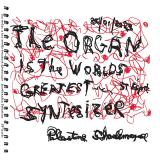
For over six decades, Charlemagne Palestine (b. 1947, New York) has been a pioneering composer, performer, and multimedia artist, celebrated for his ecstatic sonic explorations and ritualistic, metaphysical performances. Emerging from the cross-disciplinary New York art scene of the 1960s and ’70s, he helped shape a heretical edge of minimalism alongside figures like Conrad, Riley, Niblock, and Glass. Trained as a Jewish cantor and later as the carillonneur at St. Thomas Church, Palestine cultivated a deep fascination with resonance and overtone—an obsession that evolved through his use of percussion, early synthesizers, and monumental piano works, influencing artists from John Cale to Nick Cave.
Animated by a spirit of ecstatic play and what he calls his »meschugge« (Yiddish for »crazy«) sensibility, Palestine’s universe blends the sacred and the absurd, filled with soft toys, ritual gestures, and immersive sound environments. Rejecting the »minimalist« label in favor of a maximalist, »spontanimalist« approach, he creates long-form, resonant performances that transform spaces into vibrating, living organisms—opening portals into the nature of time, sound, and devotion.
In the same vein, the aptly titled live record »The Organ is the World’s Greatest Synthesizer« – performed during the Sonic Acts Festival at Amsterdam’s Oude Kerk in 2025, and taking its title and cover art from a drawing realized by Palestine himself during the concert – adds to his opaque yet vibrant personal mythology and intimate transcendence, marking a return to the Staalplaat catalog after »Fffroggssichorddd« (2020) and »Music for Big Ears« (2001).
Beginning with a resonating bell and his falsetto overtone singing, then surrendering to the endless, wild soundscapes of tone-feeling and beat frequencies generated by the church’s organ, across 40+ minutes, single sound sources evolve into clusters, entangle fully with one another, and establish their own spatial existence and aural architectures. We witness the traces of something that can be described as a perpetual performance, a test for the ever-changing interaction between artist, instrument, space and, ultimately, us.
Since Palestine has always defined his execution as a form of anti-composition - of simply »being in the music« as if inhabiting a space - the true power of »The Organ is the World’s Greatest Synthesizer« lies in encapsulating a moment of Palestine’s practice in its most authentic, live dimension. Sound becomes at once subtle substance and strange telluric force, animating physical forms from some unknown channel beyond and within, accessible only through our sensorium. The point in this liminal temple of tone, timbre and frequency is not to learn anything but to simply enter. Palestine earns once again his self-given title of contemporary shaman by keeping this sonic portal open, allowing us to witness and make it last.
»I have always felt and heard and mixed the sounds in my world as liquids not as solids. Sonic liquids are material that is endlessly transformable. But I’m not crazy about people who go around defining stuff.«
expected to be published on 23 Jan

Bei seinen ersten sieben Studioalben für Verve hatte der Hammond-Organist Jimmy Smith stets mit TopArrangeuren wie Oliver Nelson, Claus Ogerman und Lalo Schifrin zusammengearbeitet. Erst auf dem
1965 erschienenen Album “Organ Grinder Swing” kehrte er zur Trio-Besetzung mit Gitarre und Schlagzeug
zurück, mit der er zu Beginn seiner Karriere seine Aufnahmen für Blue Note eingespielt hatte. Mit dem
Album landete Smith die zweithöchste Chart-Platzierung seiner Karriere.
expected to be published on 23 Jan

Working with elite keys player Ross Stanley (steadily making ripples on the world stage through his work with legends like Maceo Parker, and more recently with Robben Ford), guitarist Nigel Price says: "I've never heard Ross play a bad note, and he absolutely played out of his skin on this record." Joel Barford is one of the most exciting and vibrant young drummers on the scene today. He relishes the space and freedom of the organ trio format, which is totally evident on this new recording.
Six of the nine pieces are original Price compositions, confirming his strength as a writer, especially for this tight, powerful unit. A relaxed recording session brought out the best in these three master musicians, and the result is an exciting collection of captivating music. Nigel Price is acknowledged as one of the foremost UK exponents of jazz guitar. He has played on more than 60 albums including eight as a leader, spent 10 years with acid jazz outfit The Filthy Six, was a member of James Taylor's band, JTQ, for three years (with whom he recorded five albums) and performed with the legendary David Axelrod. Price has worked tirelessly to organise his own tours, with epic tours he's organised for the Nigel Price Organ Trio becoming the stuff of legend.
expected to be published on 12 Dec 2025

,Forever, I've Been Born" ist das erste neue Album von Jesse Sykes & The Sweet Hereafter seit ,Marble Son" aus dem Jahr 2011 und das fünfte Album der Band seit 2002. Es umfasst eine Reihe meisterhafter Folk-Rock-Songs, emotionale Lieder, die von offenem Herzen stammen und in ihrer Helligkeit dennoch tief ätherisch und melancholisch sind. Das Album, das zehn Jahre lang entstanden ist, dreht sich um die Kraft von Jesses unglaublicher Stimme, die noch nie so schön, bewegend und eindringlich intim war. Der E-Gitarrist Phil Wandscher umrahmt diese Songs meisterhaft mit klassischen und gebrochenen Tönen, einem Duett aus Verletzlichkeit und Stärke, das häufig am Rande des Abgrunds steht.
expected to be published on 28 Nov 2025

From the maniacal opening notes and carnival barker howl that launch the album, The Ugly Organ wasted no time searing itself into a listener's ears and quickly established Cursive as a musical force with which to be reckoned. A selfaware examination of artistic constraints (or lack thereof), relationships, sex, and the intersection of all three, The Ugly Organ wowed critics and audiences alike with its cerebral, cathartic blend of songs. Fiercely intelligent and cohesive - the liner notes laid the songs out like a play, complete with stage directions - across its diverse sonic landscape, the album landed Cursive on the Sunday Arts & Leisure section cover of The New York Times (which also called it "a marvelous collection of riddles and left turns, conceived as a single piece of musical theater") and earned accolades from Rolling Stone ("a brilliant leap forward"), Entertainment Weekly, Billboard, Alternative Press, MAGNET ("The best punk record you'll hear all year"), Esquire, and SPIN, among many others, as well as a place on numerous year-end best lists. The Ugly Organ feels as vibrant and vital today as it did upon release more than 20 years ago. A landmark album, it not only catapulted Cursive from the simmering indie underground to the forefront of a genre, but also served to inspire a host of young bands in its wake.
expected to be published on 14 Nov 2025

Da ich schon seit Jahren von Andrew Chalks Arbeit mit MIRROR (und auch von seinen Solo-Projekten als FERIAL CONFINE sowie seinen vielen Kollaborationen mit David Jackman, The New Blockaders, Daisuke Suzuki usw.) und Timo van Luijk (als Af Ursin, In Camera, La Poupée Vivante und Kollaborationen mit Kris Vanderstraeten und anderen) fasziniert, war ich natürlich neugierig, von ihrem Duo-Projekt ELODIE zu hören. Das Projekt wurde 2010 gegründet und hat bis heute schon elf wunderschöne Alben rausgebracht. ,Vieux Silence" für Ideologic Organ ist ihre erste Veröffentlichung außerhalb ihres eigenen Plattenlabels Faraway Press & La Scie Dorée. Das ist aber nicht das erste Mal, dass Ideologic Organ und ELODIE zusammenarbeiten. Sie traten im Februar 2012 bei einem von mir kuratierten Abend in London zusammen mit Jessika Kenney und Eyvind Kang auf. Elodies Auftritt war einer der feinfühligsten und gekonntesten, die ich je gesehen habe ... so still, während draußen vor den Fenstern des Cafe Oto in London der Schnee fiel, versank das Publikum spürbar in hochkonzentriertem Zuhören. Die Erinnerung daran ist echt beeindruckend, wenn man bedenkt, wie sparsam die einzelnen Elemente an diesem Abend eingesetzt wurden. ,Vieux Silence" und ELODIE im Allgemeinen regen sofort die visuelle Vorstellungskraft an, vielleicht gefiltert durch alte Aquarelle, Bandkorn, antike Linsen, vergessene Ebenen des Zuhörens und beobachtende Geduld. Auf diesem wunderschönen Album arbeiten Chalk & van Luijk auch mit Klavier, Pedal Steel und Klarinette zusammen (gespielt von Tom James Scott, Daniel Morris und Jean-Noel Rebilly). Jedes Detail wurde sorgfältig durchdacht und Schritt für Schritt koloriert, wie ein impressionistisches Aquarell. - Stephen O'Malley, Les Lilas 2017
expected to be published on 14 Nov 2025

Magnetism markiert das Zusammentreffen zweier einzigartiger Künstler der experimentellen Musik. Es vereint Drew McDowalls Wurzeln in der industriellen Avantgarde von Coil und Psychic TV mit Kali Malones Fundament in zeitgenössischer Orgelkomposition, reiner Intonation und elektroakustischer Musik und verbindet zwei Generationen in einer sich tief ergänzenden Partnerschaft. Auf Magnetism manifestieren sich Malones ergreifende Melodien in McDowalls charakteristischer Klangfarben-Synthese und bilden eine einheitliche Stimme, die mit Klarheit und Vitalität mitschwingt. Obwohl das Projekt innerhalb weniger Tage aufgenommen wurde, entstand es aus einer jahrzehntelangen Freundschaft, geprägt von fortwährenden Gesprächen über Musik und das Leben und von Jahren, in denen sie sich gegenseitig in ihrer künstlerischen Praxis und persönlichen Entwicklung begleitet und unterstützt haben. "Wir vertrauen einander, unseren jeweiligen Fachgebieten und unseren einzigartigen Stärken", sagen sie über den Aufnahmeprozess. Es war eine Erfahrung voller Intuition und Zuversicht, die sie ihrer Freundschaft zuschreiben. Das Album entstand spontan in McDowalls Studio in Brooklyn, wo die Grundlage der Musik fast augenblicklich entstand. Die beiden beschlossen, ihren Improvisationen gewisse Grenzen zu setzen: Sie programmierten maßgeschneiderte Stimmungen auf einem monophonen modularen Synth-Patch und nahmen die Performance-Takes ohne Overdubs auf. "Diese Musik zu spielen fühlte sich an wie Singen, da ich meiner inneren Stimme frei folgte", sagt Kali. Das Erreichen dieser Melodien war wiederum etwas, das sich instinktiv anfühlte, wie das Aufdecken einer längst vergessenen Erinnerung. Sie fährt fort: "Ich hatte viele dieser Melodien so lange in mir behalten." McDowalls Syntheseansatz verwendet Karplus-Strong-Synthese, Delay und Verzerrung, die er mit einem intuitiven Touch formt und Malones Motive elegant verwandelt. "Die Musik ist überraschend zugänglich, obwohl einige der Klangfarben extrem sind", sagt Drew, "sie ist nicht bedrohlich oder gar undurchsichtig. Wir spielen vielleicht sogar mit Pop-Elementen." Nachdem sie die Aufnahmen ein Jahr lang unberührt gelassen hatten, kehrten sie zurück und fanden die Musik verwandelt vor: "Es fühlte sich an, als hätte sie eine unheimliche, mystische Qualität angenommen." Angetrieben von der Anziehungskraft der Wiederholung, Resonanz und Sättigung pulsiert Magnetism als lebendige Musik, die die Sinne fesselt und noch lange nach dem Verhallten der letzten Töne im Gedächtnis nachhallt.
Last delivered 11 months ago
available to reorder, subject to availability

PopAlternativeBeatsExperimental
20th Anniversary Edition of «The Creep» by Slomo, this ambient doom masterwork is available on vinyl for the first time via Ideologic Organ. This is a storied album of verbal history, and emerged from a figurative long barrow deep within a virtual space of great depth and contemplation, an inverted framing of acoustic space with heavy floors ranging from the wake of COIL to the heaviest Japanese fire of psychedelia to the monuments of drone coagulating in the early ‘aughts. A first CDR edition in 2005 garnered focus of heavyweights like SUNN O))), Julian Cope, the esoteric legendary record store Aquarius, and the Wire.
Ideologic Organ are honoured to have been tasked to bring this to a limited LP for the very first time, and collaborated with mastering genius Rashad Becker to create a 61 minute single LP in a perfect cut.
Highly Ritualised Somnambulant Glumbient Downer band from Yorkshire, UK.
‘Slomo is a 2-piece made up of myself, Holy McGrail, and Howard «Iron Man» Marsden. Our debut album THE CREEP was released in a run of 100 copies on FUCK OFF & DI in 2005, after attracting a great buzz in its earlier promo form. THE CREEP is a single 1-hour-long track recorded live with minimal overdubs & zero eye-contact. Malnourished musical structures flourish, flounder and flag in virtual stasis.
expected to be published on 05 Sep 2025
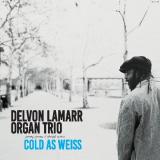
For Fans Of: New Mastersounds, Soulive, Jimmy Smith, Khruangbin. Over the course of the last five years, the Delvon Lamarr Organ Trio have established themselves as the world's premier funky organ trio. The organ trio, along with founder and manager Amy Novo, continues to devise the perfect blend of raw, passionate music and engaging industry practices. Through a firm partnership with label Colemine Records, the trio has garnered Billboard charting albums, sold out shows, tens of thousands of albums sold, and millions of streams. Lofty accomplishments for an instrumental organ trio. Now, with permanent drummer Dan Weiss behind to kit, DLO3 is proud to present Cold As Weiss, their third studio album to date that finds them tighter than ever, and continuing to push funky instrumental music to a new generation of fans. Third full-length LP. Their KEXP video has over 8 million views and no other KEXP upload in the last three years has more views 60k followers on Spotify. Previous studio album entered at #1 on Billboard Jazz charts. “An obvious mastery of their craft….” MOJO // “keyboard cool recalling bygone times…” UNCUT // “…purveyors of the snappiest grooves…” SHINDIG
expected to be published on 15 Aug 2025

Hampus Lindwall’s Brace for Impact might just be the first album of post-internet pipe organ music. It’s an album of five new contemporary classical compositions, all performed by the composer himself on the 78-stop grand organ at St. Antonius church in Düsseldorf, Germany. Featuring the electric guitar of SUNN O)’s Stephen O’Malley on the title track. A highly visceral forty-five minutes of music with undeniable elemental power.
As 2024 came to a close, in New York and Paris chords rang out from thirty-two-foot pipes for the first time in half a decade. Following twin fires in 2019, the grand organs at the cathedrals of St John the Divine and Notre-Dame, amongst the largest instruments in their respective countries, had finally been restored. The news was justly celebrated in the international press, but the incidents were far from isolated. In England, the city of Norwich hailed the return of its cathedral’s five manual organ in 2023 and just two years earlier York Minster heralded a “once-in-a-century” refurbishment of its own 5,000-plus pipe instrument. Meanwhile, further organ restoration projects are ongoing at churches in Liverpool, Bradford, Bristol, Winchester, and Washington DC. Significant as they are to their respective communities, they’re also emblematic of a wider rebirth for one of humanity’s oldest musical instruments.
The organ is having a moment. Over the last few years, albums by the likes of Kali Malone, Ellen Arkbro, Anna von Hausswolff, FUJI|||||||||||TA, and Áine O’Dwyer, as well as projects in the visual arts by Sollmann Sprenger, Cory Arcangel, Massimo Bartolini and many other talented artists, have given a new prominence to the old ecclesiastical stalwart. The pipe organ bears historical traces which stretch back to the third century BC. But that doesn’t mean it can’t speak to a contemporary moment haunted by algorithms and networked culture. Hampus Lindwall’s Brace for Impact is an album of organ music for today.
expected to be published on 20 Jun 2025

The first release to document the solo cello work of musician and composer Lucy Railton, the 40-minute composition Blue Veil recorded at Église du Saint-Esprit in Paris invites listeners into the realm of precision-tuned states of resonance: states made manifest through Railton's careful traversal of her cello's most subtle acoustic characteristics as they harmonically interlock with mind's embodied modalities of attention and imagination. Blue Veil arises out of, is sustained in and finally dissolves back into Railton's momentary presence with her intimate connection to the cello, a way of hearing that allows for a deeper engagement with harmonic resonance, one that opens a space for immediate encounters of mind and sound. Railton's exploratory practice of harmonic perception emerges from a focus on the physical qualities of intervallic and chordal sounds, their textural qualities, degrees of friction, and inner pulsations. Composing in the moment guided by resonances within the cello's body, her own, and their shared vibrational space, Railton moves through Blue Veil by giving sounds what they ask for: sounds of pure texture manifesting as a move through temporal transparency, sounds of rough texture marking regions of dimensionally dense space. Railton's creative and highly refined use of just intonation harmony deforms sound's inner movements in ways that suggest a mode of listening that actively supplies imagery of sounds implied or completely absent rather than merely savouring those fully present. This active mode of "listening-with", playfully and semi-metaphorically referred to by Railton as "sing-along music", allows listening to reflexively participate in the music's movement as it gradually passes through richly saturated domains of harmonic imagination. And just as the precision-tuned tones of Blue Veil lose their individuality when fusing multifaceted uniformity, listening's structures of reference and recognition dissolve into nameless waves of intensity, continuously unfolding themselves upon and merging with the listener. Blue Veil is the result of a deep exploration of the inner worlds of tuning, an undertaking in turn informed by and emerging out of Railton's realisations of the music of Catherine Lamb and Ellen Arkbro, her collaborative work with Kali Malone and Stephen O'Malley as well as her interpretive practice in performing the work of Maryanne Amacher, Morton Feldman and others.
Last delivered 11 months ago
available to reorder, subject to availability

Following nearly 20 years of working together as a trio, and numerous cross-collaborations in different configuration between them, Ideologic Organ presents Placelessness, the debut full-length by Chris Abrahams, Oren Ambarchi, and Robbie Avenaim, comprising two long-form works at juncture of ambient music, minimalism, rigorous experimentalism and improvisation, and machine music. Having carved distinct pathways across a diverse number of musical idioms for decades, Chris Abrahams, Oren Ambarchi, and Robbie Avenaim are each, respectively, among the most noteworthy and groundbreaking figures to have emerged from Australia's thriving experimental music scene. Ambarchi and Avenaim first encountered Abrahams when seeing the Necks - the project that has served as the primary vehicle for his singular approach to the piano since its founding in 1987 - together during the late 1980s, not long after having met in Sydney's underground music community. The pair's collaborations date back more than 35 years, criss-crossing Ambarchi's pioneering solo and ensemble work for guitar and Avenaim's visionary efforts for SARPS (Semi Automated Robotic Percussion System), robotic and kinetic extensions to his drum kit. In 2004, fate brought the three together in a trio performance at the What Is Music? Festival, the annual touring showcase of experimental music founded and run by Ambarchi and Avenaim between 1994-2012. For the nearly two decades since, Abrahams, Ambarchi, and Avenaim have intermittently reformed in exclusively live contexts, in Australia and abroad, cultivating and refining the fertile ground first tilled in that early meeting. Placelessness is the first album to present this remarkable trio's efforts in recorded form. Placelessness is the joining of three highly individualised streams, working in perfect harmony; the point at which friendship, mutual respect, and decades of creative exploration produce a singular spectrum of sound. Featuring Abrahams on piano, Ambarchi on guitar, and Avenaim on drums, the album's two sides draw on each artist's enduring dedication to long-form composition. Its two pieces, Placelessness I and Placelessness II, initially began as a single, 40 minute work, before being divided and reworked into distinct, complimentary gestures for the corresponding sides of the LP. Beginning with restrained clusters of reverberant piano tones, Placelessness I progresses at an almost glacial pace, with Abrahams' interventions increasing met by sparse responses, darting within vast ambiences, on guitar and percussion by Ambarchi and Avenaim. Remarkably conversational within its convergences of tonal, rhythmic, and textural abstraction, over the work's duration a progressive sense of tension unfurls and contracts, refusing release, as each of the ensemble's members contribute to an increasingly tangled sense of density at its resolve.While an entirely autonomous work, Placelessness II rapidly realises a distillation of the energy hinted at across the length of its predecessor. Following a luring passage of harmonious calm, Abrahams' launches into shimmering lines of repeating arpeggios, complimented at each escalation of tempo by Avenaim's machine gun fire percussion work and Ambarchi's masterful delivery of tonality and texture, as the trio collectively generate dense sheets of pointillistic ambience within which individual identity is almost lost, before slowly unspooling into unexpected abstractions and dissonances that deftly intervene with the work's inner logic and calm. What could easily be termed a maximalist take on Minimalism, Placelessness is a masterstroke of contemporary, real time composition, that blurs the boundaries between ambient music, experimentalism, free improvisation, and machine music. Drawing on Chris Abrahams, Oren Ambarchi, and Robbie Avenaim's decades of respective solo and collaborative practice, and the culmination of nearly twenty years of working together as a trio, it's two durational pieces - Placelessness I and Placelessness II - take form with a startling sense of effortlessness and grace, neither shying away from explicit beauty or rigorously tension within their forms
expected to be published on 25 Apr 2025

Kali Malone's The Sacrificial Code is the 2019 breakthrough album of the acclaimed composer's pipe organ pieces. Her temporally informed studies of harmonics and intonation breathed life into a suite of compositions which leaves the heart moved and mind still. This 2025 edition was mastered by Rashad Becker and features a new track Sacrificial Code III. Pitchfork praised the album for its "time-stretching properties" and "clean minimalism." Resident Advisor described the album as an "exercise in concentration, restraint, and focus." Tiny Mix Tapes emphasized the "intensity and intimacy" of the album, pointing out how Malone's close miking technique brings out every textural detail of the organ, creating a highly focused and immersive listening experience.
Last delivered 11 months ago
available to reorder, subject to availability

2025 cassette edition, originally released in 2023 on 2CD/digital.
Recordings + booklet of the unveiling of »Katharina AW«, a relational artwork by Joris Martens. The unveiling event took place at St. Catharine’s Church in Hoogstraten - a city in the northeast of Belgium - on two Saturdays in May 2021.
While beholding the artwork, a woven tapestry, you listen to organ music by Miaux. Outside the church, you hear the carillon gurgle with music by Lieven Martens and town carillonneur Luc Dockx, prolonging the event into the public space.
Joris Martens created »Katharina AW« for the city hall of Hoogstraten. The tapestry now serves as an informal conversation starter in the conference room. Joris Martens is a multi-disciplinary artist and works in the field where applied arts and fine arts meet.
Miaux played her own compositions on the church organ. The songs appeared on the albums Black Space White Cloud, Hideaway, Dive and Gigi - released by Ultra Eczema, Lal Lal Lal, and Alien Passengers - and were originally written for electronic keyboard. Mia demonstrates that the church organ, which is normally used as an underscore for sadness or compelling thoughts, is a fitting instrument of connection. Through its resonance, we communicate our sounds.
Lieven Martens invented sketches for the carillon—by loading bird sounds into the computer program Melodyne, varying them and converting them to musical notes. As a nod to the religion crazy Olivier Messiaen, who considered the birds to be God’s chosen singers and songstresses. The trifles were translated on the carillon by town carillonneur Luc Dockx. The playing comes into and out of focus. In this way, Lieven creates a dreamscape and breaks with the dreary carillon as an instrument of power.
Luc Dockx studied church music at the Lemmens Institute in Leuven and the carillon at the Royal Carillon School in Mechelen. He is the city carillonneur of Hoogstraten since 2002. Dockx is an active practitioner of the art of improvisation on the carillon.
expected to be published on 28 Mar 2025

Last delivered 18 months ago
available to reorder, subject to availability

,Siamo tutti in pericolo" ist das dritte Album von Golem Mecanique, dem Pseudonym der französischen Multiinstrumentalistin und Komponistin Karen Jebane, das auf Ideologic Organ veröffentlicht wird. Jebane arbeitet am Rande des zeitgenössischen Folk (aka La Novea Community), des mikrotonalen Sounds und der frühen Moderne, berührt aber auch die Asche und die Fasern des Back Metal und die DNA der Gothic-Musik, der Literatur, der Zauberei und vor allem der Poesie. Jebanes Arbeit mit der Drone Box (einer mechanisierten Drehleier) und der Zither als glatte und wellige Oberfläche für ihren Gesang ist auf fast zeremonielle Weise sofort ersichtlich und lädt in einen Raum von klarer, dunkler Kreativität und Schönheit ein. Auf ,Siamo tutti in pericolo" arbeitet Jebane mit ihren Kompositionsformen auf neue Art und Weise, poetisch und sparsam in der Ausführung ihrer Techniken, durch ihre Hommage/Hymnen/Meditationen über die höchst unregelmäßigen Umstände und Fragen/Mysterien des Vergehens der Seele von Meisterkünstler Pier Paolo Pasolini. In perfekter Kombination mit dem Coverbild des Collagekünstlers Julien Langendorff präsentiert ,Siamo tutti in pericolo" Jebanes ,Golem Mecanique" in Reinkultur. -Stephen O'Malley, Brion, Frankreich, 1. September 2024
expected to be published on 14 Mar 2025

Limited Translucent Orange Vinyl is for Indies only. For Fans Of… Booker T & The MGs, The Meters, Soulive, John Patton, Jimmy Smith… Originally released for RSD in 2018 and immediately sold out. The Delvon Lamarr Organ Trio may have this KEXP session to thank for much of the notoriety they have received since it first premiered. Since then, they've secured a record deal, a world renowned booking agent, a publishing deal, international sponsorships, and will be embarking on a national tour this spring. This session was released on vinyl for the first time for Record Store Day 2018, marking the first full KEXP session ever to be pressed on vinyl. Now it’s available once again on black vinyl, CD, and cassette. Tracks: Move On Up, Memphis, South Leo St. Stomp, Concussion, I Don't Want To Play That, Tacoma Black party, Top Going Down, Bottom Going Up.
Available to reorder, subject to availability

LP limited to 500 LP copies. Nina Garcia ’s first solo record widely available via international distribution. Nina has collaborated with artists like Stephen O’Malley, Sophie Agnel, Fred Frith, Antoine Chessex, Louis Schild, Leila Bordreuil, and supported for bands like Sonic Youth, SUNN O))). After a decade of performing concerts under the Mariachi guise, Nina Garcia has finally unveiled her unique approach in Bye Bye Bird, her first album under her name. Bye Bye Bird is her second solo album. With no pretence or demonstration, the album is a captivating blend of chiaroscuro, melodies, and raw emotion. Nina Garcia’s album takes on an almost documentary-like quality by adopting a simple approach to gesture and sound recording. It offers a candid portrayal of a moment, a lack, a state, and a breathtaking energy. With ostinato as her only credo, Nina Garcia’s music is an experiment in freedom, where the peaks answer the abysses, and the power of movement and the emotion of sound serves as her compass. From very short (01:28) to never very long (07:34), the eight tracks that make up this set explore a moment, a space, a mechanism, an intention or a way of doing things. As a common feature of almost all these pieces (all but one, the last), Nina Garcia explores a new technique. She adds to her instrumentation, reduced to the essentials (a guitar, a pedal and an amp), an electromagnetic microphone which, when held in hand, makes it possible to listen in on the exact zones where the vibration of the string creates a sound amid vast spaces of silence. The guitar is unplugged, and the body/instrument relationship changes in dimension. In this series of variations, you can get caught up in masses of noise seen from very, very close up, evocations of melodies in the making, feedback on ridgelines, pulsations that hold their own, modulations weakened by exhaustion and harmonic bursts that hint at better days to come. Neither hopelessly chthonic nor beatifically ethereal, Bye Bye Bird is a sum of musical pieces that make a whole and give voice to echoes of what has been, the presence of what is and the hope of what will be, a record movement in the form of flight and salvation. Since 2015, Nina Garcia has been researching and creating around the electric guitar, halfway between improvised music and noise. On numerous stages in Europe and North America, she has played occasionally with Stephen O’Malley, Sophie Agnel, Fred Frith, Antoine Chessex, Louis Schild or with Luke Stewart and Leila Bordreuil’s Feedback Ensemble, in addition to more regular formations in which she participates, such as the ensemble Le Un, mamiedaragon, Autoreverse (with Arnaud Rivière), duets with trombonist Maria Bertel and percussionist Camille Émaille, and the installation piece De Haut En Bas, De Bas En Haut Et Latéralement (with Christophe Cardoen, Jennifer Caubet, Etienne Foyer, Anna Gaïotti and Romain Simon). “Nina Garcia has been actively moving the art of noise guitar into surprising and intriguing new spaces. She has been at it for some time now, a bit of a secret weapon all the while hiding in plain sight. As I listen to her music and ruminate upon seeing her perform it brings me to a realization which I have with very few musicians: the ego inherent in making art can be transcended through a purity of direct action. At least that’s the feeling I have when experiencing Nina’s music which comes across as serious and radical and wholly engaged in the moment of its creative impulse.
expected to be published on 21 Jan 2025

Delvon Lamarr Organ Trio—or as it is sometimes referred to, DLO3—specialize in the lost art of “feel good music.” The ingredients of this intoxicating cocktail include a big helping of the 1960s organ jazz stylings of Jimmy Smith and Baby Face Willette; a pinch of the snappy soul strut of Booker T. The M.G.’s and The Meters; and sprinkles Motown, Stax Records, blues, and cosmic Jimi Hendrix-style guitar. It’s a soul-jazz concoction that goes straight to your heart and head makes your body break out in a sweat.
The band features organist Delvon Lamarr, a self-taught virtuosic musician, with perfect pitch who taught himself jazz and has effortlessly been able to play a multitude of instruments. On guitar is the dynamo Jimmy James who eases through Steve Cropper-style chanking guitar, volcanic acid-rock freak-out lead playing, and slinky Grant Green style jazz. From Reno, Nevada is drummer Dan Weiss (also of the powerhouse soul and funk collective The Sextones). Dan’s smoldering pocket-groove drumming locks in the trio’s explosive chemistry.
Founded by Lamarr’s wife and manager Amy Novo, the trio started from humble beginnings in 2015, but since then has released two Billboard charting albums and toured the world to sold out venues. The trio returns now with their second studio album, I Told You So, with even heavier grooves and more confidence. It may have been several years since their most recent studio effort, but they haven’t missed a beat.
expected to be published on 09 Sep 2024

Hip-HopAvantgardeBeatsExperimental
Onimikìg Algonquin: (n. an.)- thunder Timothy Archambault's unaccompanied flute pieces for this album have been inspired by Indigenous brontomancy (divination by thunder). Each piece highlights a different extended flute technique metaphorically related to types of thunder sounds: claps, peals, rolls, rumbles, inversions, and CG (cloud-to-ground). An important document of new music meets contemporary musicological research via Stephen O'Malley of SUNN O)))'s Ideologic Organ. The Indigenous flute used in this recording is made of cedar respective to the traditional woods used by the Kichesipirini and other tribes who live along the Ottawa & Saint Lawrence Rivers. To the Algonquin the flute (Pibigwan) is the wind maker or essence of the wind. Unlike other tribal nations whom the majority used the flute as a courting instrument, the Algonquin generally utilized the flute for more contemplative singular usage to mimic the sounds of nature or as a signaling device during times of conflict. When love songs were required, they were usually more plaintive in character expressing sadness, loneliness, or concerning the departure of a lover. The album intro begins with the shaking of a necklace of otter penis bone, fish spine, bear claw, elk teeth and deer hide, gifted from Algonquin Elder Ajawajawesi. It is meant to focus the listener's attention before the flute pieces begin. The warble or multi-phonic oscillation prevalent in all the pieces traditionally represented the "throat rattling" vocalization of the tonic note, sometimes known as the horizon of which the melody floats from. Due to the repetition of multi-phonic oscillation the performer will breathe erratically creating an altered state correlating with similar traditional ceremonial practices.
expected to be published on 06 Sep 2024

Hip-HopAvantgardeBeatsExperimental
Lukas de Clerck brings us the ancient greek instrument, the aulos, of which his new interpretation of long form expression is coaxed forth on this tremendous recording. Lukas de Clerck explores a niche of archaeological research in music; the aulos is a historical Greek instrument that Lukas analyzed and reinterpreted by a luthier in modern times_navigating this impression as an artwork or living sculptural object, as there is an absence of historical partitions or written information about how to recreate technique on the instrument. Lukas de Clerck has interpreted information from the rare archaeological resources and visual art of the classical Greek period to recreate both playing technique and possible sound timbres with the instrument. With his contemporary approach to drone, post-minimalist music, and contemporary folk, we find a deeply satisfying and compelling, even playful set of songs, timbral exercises and compositions. An important document of new music meets contemporary archaemusicological research via Stephen O'Malley of SUNN O)))'s label Ideologic Organ. _ The telescopic aulos is speculative: might it have existed? It takes on features from the historical aulos, a double-reed instrument of which we know how it looked but little about what music was played on it or how it would have really sounded. It's an instrument without the limitations of canon or manual, providing creative freedom and awakening curiosity. The new instrument featured on this album is ancient and futuristic at once. The aulos has no tone holes; instead, each of the two tubes consists of three parts that can slide into each other. In this sense, the metal pipes bear a certain resemblance to the principle of a trombone. However, since both hands are already in use to hold both tubes, the sliding has to be done by way of gravity and the help of a «phorbeia», a leather mask which helps keep the reeds in place. The aulos's material is metal (instead of wood), which gives it a certain electronic allure and intensity, as well as a variety of sonic possibilities and textures. It produces overtones efficiently and allows them to play with their microtonality. The aulos Lukas plays on this recording was developed at Brasserie Atlas, a temporary occupation of a former brewery in the heart of Brussels where Lukas lives. It is quite a poetic coincidence that the birthplace of the instrument is named after the Greek titan condemned to carry the sky, while this instrument needs to be turned skywards to lower its pitch with the help of gravity. At Brasserie Atlas, Lukas has found collaborators who have shared in the process of building this new instrument: the collective Noir Métal has constructed the tubes, in this way becoming instrument builders; the phorbeia has been manufactured by Jot Fau; a former water reservoir in the vast cellar of the building carried the instruments' resonance for its first sounds. The place has left an imprint on this new instrument. With all of the telescopic aulos' layers, its sonic, musical and extra-musical components are still unfolding their potential as a medium for discovery and research, next to being an instrument of great musical potential. The music on The Telescopic Aulos of Atlas reflects this spirit. In several miniature pieces, it presents an encyclopaedia of musical possibilities that the instrument offers while keeping an intense and corporeal sonic specificity. The short pieces are studies that reflect on the sonic possibilities of this instrument that are yet to be explored. It meanders, searches and interacts with itself and the space. It needs to answer common expectations of old instruments being harmonious or pleasing. It transports a kind of experimental archaeology that, by formulating hypotheses in the present, allows us to reflect on what might have been in the past and simultaneously questions concepts of beauty, harmony or virtuosity. However, in the end, this instrument might have never existed before. -Julia Eckhardt
expected to be published on 06 Sep 2024

expected to be published on 26 Jul 2024

She loves jazz, art and fashion and last summer she wrote her very first song. If you are an undeniable fan of Jaqueline Taeib, Cleo, Suzanne Gabriello, Gillian Hills, Catherine Spaak, Sylvie Vartan, Francoise Hardy, Sheila, "Rodin" will most certainly take you right back in time. Camille sings about love, life and loneliness, an original composition about the love affair between Auguste Rodin and his student Camille Claudel and also includes a fantastic cover song from an artiste we all adore, NINO FERRER's "Alexandre"
expected to be published on 15 Jun 2024

The Hammond organ was first manufactured in 1935. In 1954, the now famous Hammond B3 model was introduced with additional harmonic percussion feature. When the company went out of business in 1985, around two million of various models of the Hammond organ have been produced.
The Hammond B3 was originally marketed to churches as a lower-cost alternative to the wind-driven pipe organ. It quickly became popular with professional jazz musicians in organ trios. Jimmy Smith's use of the Hammond B3 inspired a generation of organ players, and its use became more widespread in the 1960s and 1970s in rhythm and blues, rock, reggae, and progressive rock.
This collection is centered on the exciting and dynamic sounds of the Hammond B3 organ!
Last delivered 2 years ago
available to reorder, subject to availability

About 20 years ago, Carlos Giffoni quickly made a name for himself both as a noise guitarist and a laptop noisician upon arriving in New York (via Florida and Venezuela). His expertly curated annual No Fun Festival, as well as his No Fun label, further solidified him as a key figure in the international noise scene. The festival's success proved the formula for experimental and improvised music fests could work with the noise underground as well, but it also capitalized on the faster rate of connections being made between geographically disparate artists as a result of the (still relatively nascent) internet. Back then Carlos would play his laptop like a pinball machine, in contrast to the static stage presence of most laptop performers, and his solo music, like many others' at that time, expressed a less dark and dour vision of the implications of harsh noise. By the close of the 2000s, he had stopped doing the festival, switched gears musically to playing the lighter No Fun Acid sets, and moved to LA. Now he has re-emerged in a big way with Dream Walker, his first full-length since 2018's Vain (and only his second since 2010). Inspired by the masterful performances and diffusions he heard at the February 2023 GRM electronic music festival in Paris, particularly sets by old friends Lasse Marhaug, Jim O'Rourke, and Eiko Ishibashi, he began conceptualizing new music of his own in response, turning to synthesizers and other hardware to produce a work more firmly in the tradition of European electronic music than anything else he's done. Intended as a late night listen that evokes the edge of consciousness, with Carlos getting as close as possible to a trance state during the actual recording and mixing, each of the eleven tracks transition into one another rather than being standalone discrete pieces, forming two side-long suites that proceed like stages of a dream. Unabashedly tonal and repetitive, the glistening opener "Now Dream," the droning "Sleep Walker," and the closing triptych of "Lost in Descanso," "Sunrise," and "The Hidden Path" occupy a power electronics-ambient nexus that feels spiritually close to the Mego label. Elsewhere, "Ticking Clock" is reminiscent of Stereolab's non-easy listening vintage electronic side, while the two-part arpeggiated "Euphoria" recalls early Oneohtrix Point Never (which Carlos released on No Fun). The contrast between "One Breath"'s crackling opening and its remarkably fluid and soaring sustained synthesized chords is a distillation of the album's lingering tension between electronics' ability to project mechanical rupture as well as the organic and the infinite _or "walking between dreams," as Carlos himself puts it. Produced by Lasse Marhaug (who also mastered Carlos' first solo album, Welcome Home, back in 2005), released by Stephen O'Malley (who I remember DJing at the No Fun fest), with cover art and photos by personal friends, Carlos considers the album a family affair. But Dream Walker most of all heralds a maturation of the artist, and stands as a record that exists out of pure desire, rather than obligation or force of habit; a statement of reconnecting with music not by merely revisiting it, but by building on what's come before, both in his own work and in the music he loves. -Alan Licht, New York, December 2023
expected to be published on 26 Apr 2024

2024 Limited edition LP & CD reissues of this cult minimalist pop album by japanese singer songwriter Ai Aso, originally released in 2014 on Ideologic Organ. Tokyo's Ai Aso (???, Aso Ai) is a Japanese psychedelic pop singer-songwriter whose work has a whisper-thin acid folk quality to it. She started performing as a solo singer around 2000. Her solo work, infrequent collaborations with White Heaven members You Ishihara and Michio Kurihara, Yurayura Teikoku, and Boris bring a level of fragility and hypnotism to the stage recalling lost memories, small flavors of COIL and serial playing on the verge of evaporation. As for her recent activities, she has performed on bills together with Sunn O))), Boris, Masaki Batoh (Ghost), Touri Kudoh, Kim Doo Soo, Mark Fry, Simon Finn etc.
expected to be published on 19 Apr 2024

Organ of Corti, the trio of Joachim Nordwall (IDEAL Records, The Gagmen), Mattias Gustafsson (Altar of Flies) and Dan Johansson (Sewer Election, Enhet för Fri Musik) returns with another exercise in the slow-motion decay of analog sound. Usher, a minimal hypnotic track on side A reveals its subtle details after multiple listens while the claustrophobic Trauma on the flipside will grab your immediate attention. Machines that hum, sputter, and crackle while slowly moving forward. Vaguely familiar tape loops, spacious synths and crumbling electronics. A journey into the unknown.
The Swedish underground scene continues to deliver some of the best experimental acts and Organ of Corti firmly establish themselves as part of the foundation with a recent self-released cassette, another cd on New Forces and this new single. While their sound has clearly evolved, these alchemists are staying true to their original intention of forging fragments of surreal nightmares.
expected to be published on 01 Apr 2024

Aignish On The Machair
Neither Here Nor There
Blood Time
Future Musings
Keeping My Head Down
The Chalk
Cyren
You Put Me To Shame
Kibbo Kift
The Wind Picked Up
Having Been There
expected to be published on 01 Apr 2024

Kali Malone's anticipated new album "All Life Long" is a collection of music for pipe organ, choir, and brass quintet composed by Kali Malone, 2020 - 2023. Choral music performed by Macadam Ensemble and conducted by Etienne Ferschaud at Chapelle Notre-Dame-de-L'Immaculée-Conception in Nantes. Brass quintet music performed by Anima Brass at The Bunker Studio in New York City. Organ music performed by Kali Malone and Stephen O'Malley on the historical meantone tempered pipe organs at Église Saint-François in Lausanne, Orgelpark in Amsterdam, and Malmö Konstmuseum in Sweden. Kali Malone composes with a rare clarity of vision. Her music is patient and focused, built on a foundation of evolving harmonic cycles that draw out latent emotional resonances. Time is a crucial factor: letting go of expectations of duration and breadth offers a chance to find a space of reflection and contemplation. In her hands, experimental reinterpretations of centuries-old polyphonic compositional methods become portals to new ways of perceiving sound, structure, and introspection. Though awe-inspiring in scope, the most remarkable thing about Malone's music is the intimacy stirred by the close listening it encourages. Malone's new album All Life Long, created between 2020 - 2023, presents her first compositions for organ since 2019's breakthrough album The Sacrificial Code alongside interrelated pieces for voice and brass performed by Macadam Ensemble and Anima Brass. Over the course of twelve pieces, harmonic themes and patterns recur, presented in altered forms and for varied instrumentation. They emerge and reemerge like echoes of their former selves, making the familiar uncanny. Propelled by lungs and breath rather than bellows and oscillators, Malone's compositions for choir and brass take on expressive qualities that complicate the austerity that has defined her work, introducing lyricism and the beauty of human fallibility into music that has been driven by mechanical processes. At the same time, the works for organ, performed by Malone with additional accompaniment by Stephen O'Malley on four different organs dating from the 15th to 17th centuries, underscore the mighty, spectral power that those rigorous operations can achieve. All Life Long simmers in an ever-shifting tension between repetition and variation. The pieces for brass, organ, and voice are alternated asymmetrically, providing nearly continuous timbral fluctuation across its 78-minute runtime even as thematic material reiterates. Each composition's internal framework of fractal pattern permutations has the paradoxical effect of creating anticipated keystone moments of dramatic reverie and lulling the listener into believing in an illusory endlessness. On an even more granular level, the historical meantone tuning systems of each organ used, and the variable intonation of brass and voice, provide further points of emotional excavation within the harmony. The titular composition "All Life Long" appears twice on the album, first as an extended canon for organ and again in the final quarter, compactly arranged for voice In the latter, Malone pairs the music with "The Crying Water" by Arthur Symons, a poem steeped in language of mourning and eternity. For organ, "All Life Long" moves with a patient stateliness, the drama concentrated in moments when shifting tonalities generate and release dissonance and ecstasy. For voice, each word is saturated with feeling, the singers swooping gracefully downward to capture the melancholy of the narrator's relationship to the timeless tears of the sea. "Passage Through The Spheres," the album's opening piece, contains lyrics in Italian pulled from Giorgio Agamban's essay In Praise of Profanation. In it, Agamban defines profanation as, in part, the act of bringing back to communal, secular use that which has been segregated to the realm of the sacred, a process Malone enacts each time she performs on church organs. This is not music of praise, or of spiritual revelation, but it is an artistic enactment of translating the indescribable. It carries the gravity of liturgical chant, and its fixation on the infinite, but draws its weight from the earthly realm of human experience. A music that draws the listener into the present moment where they can discover themselves within the interwoven musical patterns that can come to resemble the passage of days, weeks, years, a lifetime.
Last delivered 11 months ago
available to reorder, subject to availability

Black Truffle is pleased to announce the first LP documenting master khene player Sombat Simla, the label’s first collaboration with Japanese sound artist, field recordist, and researcher Yasuhiro Morinaga. Simla is known in Thailand as one of the greatest living players of the khene, the ancient bamboo mouth organ particularly associated with Laos but found throughout East and Southeast Asia. His virtuosic and endlessly inventive renditions of traditional and popular songs have earned him the title ‘the god of khene’, and he is known for his innovative techniques and ability to mimic other instruments and non-musical sound, including, as a writer for the Bangkok Post describes, ‘the sound of a train journey, complete with traffic crossings and the call of barbecue chicken vendors’. Aided by a group of Thai friends, in 2018 Morinaga travelled to the Maha Sarakham province in the Isan region, arranging to meet Simla in a remote spot surrounded by rice fields. Then and there, Morinaga recorded the solo performances heard on the LP’s first side. At Morinaga’s request, Simla began with a rendition of the train song ‘Lot Fay Tay Lang’. Beginning with long tones that seem to mimic a train horn, the performance soon moves into a rapid chugging rhythm, interrupted at points by vocal exclamations and the remarkable timbre Simla produces by singing through the khene. To listeners unfamiliar with Thai music, the pentatonic scales and rhythmic chug of many of the pieces can have surprising echoes of the rawest American blues. The range of Simla’s performance is astonishing, moving from compulsive rhythmic workouts on single chords and rapid-fire runs of single notes to gentle sing-song melodies, and using a fascinating array of techniques, including a rapid tremolo that sometimes sounds almost electronic. Later the same day, Morinaga followed Simla to a cattle shed where he met percussionist Mali Moodsansee to play some molam (folk songs found in Isan and neighbouring Laos), with Pattardon Ekchatree joining in on cymbal. At times, these molam songs have a wistful, romantic character quite different from the solo pieces. Backed up by the propulsive hand drums, Simla again dazzles with his melodic fluidity, rhythmic drive, and wild displays of unorthodox technique. As Morinaga writes, ‘It felt like they had been playing together so long that their breathing was perfectly in sync, and it was like listening to the precision of James Brown’s funk’. Accompanied by extensive liner notes by Morinaga detailing the day of recording, this is a stunning document of a master musician, seamlessly integrating tradition and innovation.
Last delivered 2 years ago
available to reorder, subject to availability

Seit ihrem Auftauchen Mitte der 1990er Jahre haben beide eine starke Präsenz im Kontext der amerikanischen experimentellen Musik und beide jeweils seitdem einige der fesselndsten Originalwerke produziert. Kenney ist eine experimentelle Vokalistin, Komponistin und Lehrerin, die sich auf die transformativen Kräfte der Stimme und die Beziehung des Klangs zu mystischen Erfahrungen konzentriert. Neben ihrer Zusammenarbeit mit Oren Ambarchi, Tashi Wada, Avey Tare, Alvin Lucier, Sarah Davachi, dem Ensemble Nist-Nah, Sunn O))) und zahlreichen anderen ist sie bekannt für ihre Aufführung indonesischer Vokalmusik (Sindhenan) und persischer Vokalmusik (Radifs) sowie für ihre eigenen Kompositionen, die Elemente beider Musikrichtungen aufgreifen. Kang, ein Komponist und Multi-Instrumentalist, der für seine einzigartige Herangehensweise an die Bratsche hoch angesehen ist, hat auf zahlreichen Gebieten gearbeitet und auf Alben von Bill Frisell, Joe McPhee, Sun City Girls, Wayne Horvitz, Ikue Mori, Laurie Anderson, Aki Onda, John Zorn, Blonde Redhead, William Hooker, Animal Collective, Lou Reed, Oren Ambarchi und zahlreichen anderen mitgewirkt sowie eine Reihe von Solowerken geschaffen, die Elemente seiner isländischen, dänischen und koreanischen Herkunft enthalten. Azure ist eine hypnotische Rückkehr zu Kenneys und Kangs einzigartigem Ausdruck von "Unisono-Musik" und gehört zu den am stärksten reduzierten und minimalistischen Arbeiten des Duos seit mehr als einem Jahrzehnt. Die fünf Kompositionen werden durch Anspielungen auf die natürliche Welt unterstrichen.
expected to be published on 27 Oct 2023

14 track Studio from Jacky Giordano released by Le Tres Groove Club
expected to be published on 20 Oct 2023

An aura of mystery hangs over Jacky Giordano, a studio musician who has mostly worked for library music.He is the one behind the amazing label Freesound (Schifter, Philopsis, Challenger), but as well on Montparnasse 2000 with Pop in Devil's Train (reissued on Le Tres Groove Club), on Timing (Timing N?1 and Timing N?5, under the nickname Jacky Nodaro), on Musax with Boucles Rythmiques (under the nickname Joachim Sherylee, reissued as well on Le Tres Groove Club) or Black Devil Disco Club whose paternity for this record is still disputed between him and Bernard Fevre. Jacky Giordano wasn't an altar boy, far from it, and will have sadly been more known for his troubles with justice than for his music.This is his work for the label l'Illustration Musicale (IM) which can now be rediscovered thanks to this new reissue on Le Tres Groove Club.Organ Plus (IM26) is the sequel to Organ (IM 24), also reissued by Le Tres Groove Club. The title is misleading here, an organ not being preponderant part of the record which honours the Fender Rhodes, string machine, bass synth and clavinet. 'Be Careful', 'Riffologic', 'Twillight' : Jacky Giordano offers slow tempo jazz-funk, without losing his melancholy and low-fi groove that make his tracks immediately recognisable regardless the record label or nickname.
expected to be published on 08 Sep 2023
This is the first ever solo album from the legendary cult singer Attila Csihar, known for his work in Mayhem, SUNN O))), Plasma Pool and Tormentor. For this album Attila traveled to the Monolith of Baalbek archeological site in Lebanon and conducted two sessions. The first was an all night session situated directly across from the massive trillion stones of the Temple of Jupiter. For the second session he recorded directly on one of the 900 tons trillions a few km from the temple site. A work in progress for ten years, I am deeply honoured to have the chance to present Attila's work on Ideologic Organ. He has continued to be an inspiration of what is possible to surprise and develop within the extreme sides of music, in a radical and intelligent way. To say he has been a fundamental inspiration of art music creation is an understatement.
expected to be published on 08 Sep 2023

BeatsAmbientExperimentalPopKlassic
Following nearly 20 years of working together as a trio, and numerous cross-collaborations in different configuration between them, Ideologic Organ presents Placelessness, the debut full-length by Chris Abrahams, Oren Ambarchi, and Robbie Avenaim, comprising two long-form works at juncture of ambient music, minimalism, rigorous experimentalism and improvisation, and machine music. Having carved distinct pathways across a diverse number of musical idioms for decades, Chris Abrahams, Oren Ambarchi, and Robbie Avenaim are each, respectively, among the most noteworthy and groundbreaking figures to have emerged from Australia's thriving experimental music scene. Ambarchi and Avenaim first encountered Abrahams when seeing the Necks - the project that has served as the primary vehicle for his singular approach to the piano since its founding in 1987 - together during the late 1980s, not long after having met in Sydney's underground music community. The pair's collaborations date back more than 35 years, criss-crossing Ambarchi's pioneering solo and ensemble work for guitar and Avenaim's visionary efforts for SARPS (Semi Automated Robotic Percussion System), robotic and kinetic extensions to his drum kit. In 2004, fate brought the three together in a trio performance at the What Is Music? Festival, the annual touring showcase of experimental music founded and run by Ambarchi and Avenaim between 1994-2012. For the nearly two decades since, Abrahams, Ambarchi, and Avenaim have intermittently reformed in exclusively live contexts, in Australia and abroad, cultivating and refining the fertile ground first tilled in that early meeting. Placelessness is the first album to present this remarkable trio's efforts in recorded form. Placelessness is the joining of three highly individualised streams, working in perfect harmony; the point at which friendship, mutual respect, and decades of creative exploration produce a singular spectrum of sound. Featuring Abrahams on piano, Ambarchi on guitar, and Avenaim on drums, the album's two sides draw on each artist's enduring dedication to long-form composition. Its two pieces, Placelessness I and Placelessness II, initially began as a single, 40 minute work, before being divided and reworked into distinct, complimentary gestures for the corresponding sides of the LP. Beginning with restrained clusters of reverberant piano tones, Placelessness I progresses at an almost glacial pace, with Abrahams' interventions increasing met by sparse responses, darting within vast ambiences, on guitar and percussion by Ambarchi and Avenaim. Remarkably conversational within its convergences of tonal, rhythmic, and textural abstraction, over the work's duration a progressive sense of tension unfurls and contracts, refusing release, as each of the ensemble's members contribute to an increasingly tangled sense of density at its resolve. While an entirely autonomous work, Placelessness II rapidly realises a distillation of the energy hinted at across the length of its predecessor. Following a luring passage of harmonious calm, Abrahams' launches into shimmering lines of repeating arpeggios, complimented at each escalation of tempo by Avenaim's machine gun fire percussion work and Ambarchi's masterful delivery of tonality and texture, as the trio collectively generate dense sheets of pointillistic ambience within which individual identity is almost lost, before slowly unspooling into unexpected abstractions and dissonances that deftly intervene with the work's inner logic and calm. What could easily be termed a maximalist take on Minimalism, Placelessness is a masterstroke of contemporary, real time composition, that blurs the boundaries between ambient music, experimentalism, free improvisation, and machine music. Drawing on Chris Abrahams, Oren Ambarchi, and Robbie Avenaim's decades of respective solo and collaborative practice, and the culmination of nearly twenty years of working together as a trio, it's two durational pieces - Placelessness I and Placelessness II - take form with a startling sense of effortlessness and grace, neither shying away from explicit beauty or rigorously tension within their forms.
Last delivered 3 years ago
available to reorder, subject to availability

expected to be published on 11 Aug 2023

Billy Preston’s mastery of the organ was such that he was commissioned for collaboration by The Beatles, The Stones and countless others, his classic Hammond work a defining element of ‘Get Back.’ Released in 1964 when Preston was still 19, The Most Exciting Organ Ever mixes swinging originals such as ‘Low Down,’ ‘Soul Meetin,’ ‘The Octopus’ and ‘Billy’s Bag’ with expressively soulful covers of standards such as ‘If I Had A Hammer’ and ‘Don’t Let The Sun Catch You Crying,’ ably showcasing Preston’s awesome dexterity and unmatched ability on his chosen instrument. With every track a winner, the title rings true!
expected to be published on 02 Jun 2023

The Beat Bronco Organ Trio are back with 10 heavy-weight instrumental tracks of the finest quality. "Another Shape of Essential Sounds" sees the Madrid trio stick to their winning formula: sublime Hammond organ grooves, nifty guitar work and dynamic drums combine to produce a rich, uplifting, and vintage sound. Straight to the point, no fillers, and no messing around with the longest cut just over 4 mins, these are irresistible, foot-tapping tunes which sound as good on the dance floor as at a dinner party.
expected to be published on 07 Apr 2023

The Beat Bronco Organ Trio are back with 10 heavy-weight instrumental tracks of the finest quality. "Another Shape of Essential Sounds" sees the Madrid trio stick to their winning formula: sublime Hammond organ grooves, nifty guitar work and dynamic drums combine to produce a rich, uplifting, and vintage sound. Straight to the point, no fillers, and no messing around with the longest cut just over 4 mins, these are irresistible, foot-tapping tunes which sound as good on the dance floor as at a dinner party.
expected to be published on 07 Apr 2023
Does Spring Hide Its Joy is an immersive piece by composer Kali Malone featuring Stephen O’Malley on electric guitar, Lucy Railton on cello, and Malone herself on tuned sine wave oscillators. The music is a study in harmonics and non-linear composition with a heightened focus on just intonation and beating interference patterns. Malone’s experience with pipe organ tuning, harmonic theory, and long durational composition provide prominent points of departure for this work. Her nuanced minimalism unfolds an astonishing depth of focus and opens up contemplative spaces in the listener’s attention. Does Spring Hide Its Joy follows Malone’s critically acclaimed records The Sacrificial Code Ideal Recordings, 2019 & Living Torch [Portraits GRM, 2022]. Her collaborative approach expands from her previous work to closely include the musicians Stephen O’Malley & Lucy Railton in the creation and development of the piece. While the music is distinctly Malone’s sonic palette, she composed specifically for the unique styles and techniques of O’Malley & Railton, presenting a framework for subjective interpretation and non-hierarchical movement throughout the music. Does Spring Hide Its Joy is a durational experience of variable length that follows slowly evolving harmony and timbre between cello, sine waves, and electric guitar. As a listener, the transition between these junctures can be difficult to pinpoint. There’s obscurity and unity in the instrumentation and identities of the players; the electric guitar’s saturation timbre blends with the cello’s rich periodicity, while shifting overtone feedback develops interference patterns against the precise sine waves. The gradual yet ever-occurring changes in harmony challenge the listener’s perception of stasis and movement. The moment you grasp the music, a slight shift in perspective guides your attention forward into a new and unfolding harmonic experience. Does Spring Hide Its Joy was created between March and May of 2020. During this unsettling period of the pandemic, Malone found herself in Berlin with a great deal of time and conceptual space to consider new compositional methods. With a few interns left on-site, Malone was invited to the Berlin Funkhaus & MONOM to develop and record new music within the empty concert halls. She took this opportunity to form a small ensemble with her close friends and collaborators Lucy Railton & Stephen O’Malley to explore these new structural ideas within those various acoustic spaces. Hence, the foundation was laid for Does Spring Hide Its Joy. In Kali’s own words: “Like most of the world, my perception of time went through a significant transformation during the pandemic confinements of spring 2020. Unmarked by the familiar milestones of life, the days and months dripped by, instinctively blending with no end in sight. Time stood still until subtle shifts in the environment suggested there had been a passing. Memories blurred non-sequentially, the fabric of reality deteriorated, unforeseen kinships formed and disappeared, and all the while, the seasons changed and moved on without the ones we lost. Playing this music for hours on end was a profound way to digest the countless life transitions and hold time together.” Ideologic Organ is pleased to present Kali Malone’s Does Spring Hide Its Joy as a triple LP set of around two-hours duration. Mastered by Stephen Mathieu and cut at Schnittstelle Mastering, the record is pressed in perfect sound quality by Optimal in Germany. The album is packaged in a heavyweight laminated jacket with full-color printed inner sleeves, and also available as a three-hour triple CD. Kali Malone’s album “The Sacrificial Code” (2019) has sold over 6000 copies in vinyl and CD format. Kali Malone’s album “Living Torch” (June 2022) has sold over 4000 copies in vinyl and CD format.
expected to be published on 20 Jan 2023

Does Spring Hide Its Joy is an immersive piece by composer Kali Malone featuring Stephen O'Malley on electric guitar, Lucy Railton on cello, and Malone herself on tuned sine wave oscillators. The music is a study in harmonics and non-linear composition with a heightened focus on just intonation and beating interference patterns. Malone's experience with pipe organ tuning, harmonic theory, and long durational composition provide prominent points of departure for this work. Her nuanced minimalism unfolds an astonishing depth of focus and opens up contemplative spaces in the listener's attention.
Last delivered 11 months ago
available to reorder, subject to availability

Over the course of the last five years, the Delvon Lamarr Organ Trio have established themselves as the world's premier funky organ trio. The organ trio, along with founder and manager Amy Novo, continues to devise the perfect blend of raw, passionate music and engaging industry practices. Through a firm partnership with label Colemine Records, the trio has garnered Billboard charting albums, sold out shows, tens of thousands of albums sold, and millions of streams. Lofty accomplishments for an instrumental organ trio. Now, with permanent drummer Dan Weiss behind to kit, DLO3 is proud to present Cold As Weiss, their third studio album to date that finds them tighter than ever, and continuing to push funky instrumental music to a new generation of fans.
expected to be published on 19 Aug 2022

Runhild Gammelsæter and Lasse Marhaug are two Norwegian musicians/sound artists. Both started in the early 1990s music underground and have worked in many constellations with a wide range of collaborators.
Despite knowing each other for a long time, Gammelsæter and Marhaug’s first collaborative work was the “Quantum Entanglement” LP in 2014. The album ignited a collective spark that both wanted to pursue further. Still, other commitments got in the way, and the project lay dormant until Stephen O’Malley, and Greg Anderson invited them to open for Sunn O))) for a special gig in the St. James Church of Culture in Oslo in the autumn of 2019. The two gathered for a long series of rehearsals, and after the successful performance, it was clear that it was time to start working on new compositions and recordings. That process initiated in late 2019 and continued to early 2021, encompassing before and after the world went through the lockdown. The result of this long development to be heard accumulated upon their new album “Higgs Boson” on Ideologic Organ Music.
Throughout the profound process of creating “Higgs Boson”, Gammelsæter and Marhaug drew inspiration from various subjects and artists. For Marhaug, it was concepts informed by the structuralist experimental cinema of Japanese directors Takashi Ito and Toshio Matsumoto, futurist worlds of French comic book artists Philippe Druillet and Jean Moebius Giraud, landscape photography of Fay Godwin, Kåre Kivijärvi, and Tamiko Nishimura, amongst others.
It became a metaphysical juxtaposition involving Gammelsaeter’s research and lyrical ideas based on several seemingly unrelated principles. A process of association inspired by “the Glass Bead Game” by Herman Hesse. The discovery of the Higgs Boson as a confirmation of the physical universe. The work of Ernst Schrödinger on the uncertainty principle. The four forces of physics. The Force. Helplessness under armed forces - as the war sailors in World War II. The influence of magic as expressed in tarot.
Gammelsæter experiments with a boundary involving the thresholds amongst various states of focus and legibility by forensic experimentation with techniques such as exclusive expression of consonants, syllabic repetition, retrograde text vocalisations and multi-lingual layering. Her vocal inspirational sources include Sidsel Endresen, Diamanda Galas, Natacha Atlas, the choral works of Rachmaninov, and the bands Carcass and Grave.
Two worlds coming together, making the music special. Mixing hard facts with science fiction helps create a kaleidoscopic cross point between the complex realities of the past and a possible future.
“Quantum Entanglement” featured two long-form pieces centred around a prepared piano and layered voice, while “Higgs Boson” developed a much more elaborate and ambitious compositional work. Across eight parts, the two artists brought a broad palette of instrumentation and sound. Electronic and acoustic, objects and field recordings, and pipe organ define the structures of which the centre is Gammelsæter’s magnificent voice. She has become known for her legendary voice, with her vast and unique range of inflective techniques and affective colour through her 30 years creating music. In the mix, Lasse approached the instrumental elements like landscapes, then Runhild’s vocals as characters that inhabit those worlds. Often, Gammelsæter multiple characters fused with the landscape. Make them occupy space, sometimes blend into it, sometimes dominate it. Constructing and setting visual guidelines helps set focus and open possibilities.
As an album, “Higgs Boson” is direct and focused, drawing on song structures. Within these tracks are vast strata of sound, an immersive multi-dimensional depth of music. Creating a feeling of depth while working with a flat two-channel stereo format - and how dimensions of texture and distortion can help develop the illusion of a space. The album structure is a story-like arc, a malleable subjective path, set as the album traverses oblique and suggestive areas, opening the concepts for the listener to unpack as they like.
– exclusive consultation with Gammelsæter & Marhaug, edited by Stephen O’Malley, June 2022
expected to be published on 19 Aug 2022

Hip-HopBeatsTrip-HopPopElectro
The fourth album by the singular Bastien Keb. Written, performed, recorded, engineered, produced and mixed by Keb in various bedrooms between London, Somerset and his hometown of Leamington Spa during a lonely period working a warehouse night shift job. The album’s outside contributions come from Alex Judd (violin), Claudia Kane (vocals) and Tomos Xerri (harp).
Last delivered 4 years ago
available to reorder, subject to availability

Jackie Mittoo, organ and piano maestro, was not only a founding member of the legendary Jamaican Ska group The Skatalites, but through the course of Jamaican music’s long history has produced a body of work under his own name and of that with his various group incarnations, The Soul Brothers, Soul Vendors and the Sound Dimension. His distinctive organ and piano sound and musical arrangements have all played a major part in Jamaica's musical history.
Jackie Mittoo (born 1948, Kingston, Jamaica) began playing musical instruments at a very early age. Taught piano by his grandmother he was performing live by the age of 10 and recording by the age of 15. Two Kingston bands that he played with the Rivals and the Sheiks brought him to the attention of Studio 1's founder Coxsone Dodd. Who at the time was putting a group of musicians together to be his studio band. Impressed by his skills on both the organ and the piano, Jackie was asked to join in what would become Jamaica's foremost band The Skatalites. The fellow band members were Lloyd Brevett (bass), Lloyd Knibbs (drums), Don Drummond (trombone), Tommy McCook, Roland Alphonso and Lester Sterling (Sax), Johnny Moore (trumpet), Jah Jerry(guitar) and Mr Mittoo (piano). This line up ruled the Jamaican scene between 1964 - 1965 as well as inventing the Ska sound, they also performed the backing duties for the other top labels of the time including Duke Reid's Treasure Isle and Justin Yap's Top Deck label.
1965 saw The Skatalites disband, and Jackie Mittoo move on to his next musical project The Soul Brothers. Formed with fellow Skatalite Roland Alphonso,this band would back all the hits coming out of Studio 1 for the next three years with Jackie Mittoo working as band leader and musical arranger. Around this time Jackie also had his own single released, a Ska underground classic called 'Got My Bugaloo'. Rare, as it also features Jackie in the unusual role for him, as lead singer!!!!. 1966 saw the Ska sound evolve into Rocksteady, again with Jackie's band at the helm, and his first hit single the Rocksteady cut 'Ram Jam'. The success of which would lead to a solo career and album releases under his own name such as 'Now', 'Macka Fat', 'Evening Time', 'In London' and 'Keep on Dancing', to name but a few. In 1967 the hits at Studio 1 were still flowing when The Soul Brothers morphed into The Soul Venders and began backing such luminaries as Ken Boothe, Alton Ellis, Delroy Wilson, The Heptones, The Cables, The Wailers and many other of the label’s solo artists.
By 1968 Jamaican music was ready for another change and Rocksteady rolled into a slower groove soon to be called Reggae. Jackie Mittoo would be at the forefront with his latest band The Sound Dimension. A line-up that included Leroy Sibbles (bass),Roland Alphonso and Cedric Brooks (saxophone),Eric Frater and Ernest Ranglin (guitar) and Bunny Williams (drums). Being the house band at Studio 1 they backed all the leading names of the time, John Holt, Horace Andy and Alton Ellis, all of Studio 1's output carried his sound. Jackie Mittoo emigrated in the late 60's to Canada but travelled to Jamaica and London to record with many of the big new names, who were trying to redress Studio 1's supremacy and needed his magic touch. Such producers as Bunny Lee used Jackie Mittoo on many of his sessions,Sugar Minott among others were always glad of his services.
For this release we have put together a selection of some of his finest recordings done with legendary reggae producer Bunny Lee. 1970’s cuts that feature Jackie’s numerous talents, showing his ability to embellish tracks with a feel few could better. Musical arranger, band leader and all around studio ace.
We hope you enjoy this great set with Jackie Mittoo in fine style and his organ super powered indeed…
Last delivered 4 years ago
available to reorder, subject to availability

"Long hailed as the audiophile's label, Mercury Living Presence represents an important milestone in the history of classical recording. Since they were first released, Mercury Living Presence LP records have been collected and coveted and 70 years after the label’s first release — Mussorgsky’s Pictures at an Exhibition, with Rafael Kubelík conducting the Chicago Symphony Orchestra — Mercury continues to be admired for the quality of its artistry and recordings: all celebrated for their sheer vividness of sound. This audiophile series sources the original first-generation master tapes. New HD transfers were made at Abbey Road Studios. Master files, including new 3-to-2 mixes for stereo titles, were produced by Thomas Fine, son of the original producer and recording engineer for the majority of Mercury Living Presence titles.
Long considered a benchmark performance and recording, the Mercury Living Presence technique perfectly suits the rich, complex musical textures of Saint-Saens' masterwork. Recorded in Ford Auditorium, Detroit, October 12, 1957, with a Schoeps M201 microphone in the center and Neumann KM-56's on the left and right sides."
expected to be published on 15 Apr 2022
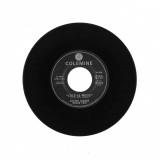
The first studio recording with the group's new and permanent drummer Dan Weiss! Recorded at Colemine Records HQ with Leroi Conroy! For Fans Of.. New Mastersounds, Soulive, Jimmy Smith, Khruangbin. Previous albums have sold over 25k LPs. Their KEXP video has over 8 million views and no other KEXP upload in the last three years has more views. Previous studio album entered at #1 on Billboard Jazz charts
Last delivered 4 years ago
available to reorder, subject to availability

Over the course of the last five years, the Delvon Lamarr Organ Trio have established themselves as the world's premier funky organ trio. The organ trio, along with founder and manager Amy Novo, continues to devise the perfect blend of raw, passionate music and engaging industry practices. Through a firm partnership with label Colemine Records, the trio has garnered Billboard charting albums, sold out shows, tens of thousands of albums sold, and millions of streams. Lofty accomplishments for an instrumental organ trio. Now, with permanent drummer Dan Weiss behind to kit, DLO3 is proud to present Cold As Weiss, their third studio album to date that finds them tighter than ever, and continuing to push funky instrumental music to a new generation of fans. For Fans of New Mastersounds, Soulive, Jimmy Smith, Khruangbin.
expected to be published on 11 Feb 2022

For Fans Of: New Mastersounds, Soulive, Jimmy Smith, Khruangbin. Over the course of the last five years, the Delvon Lamarr Organ Trio have established themselves as the world's premier funky organ trio. The organ trio, along with founder and manager Amy Novo, continues to devise the perfect blend of raw, passionate music and engaging industry practices. Through a firm partnership with label Colemine Records, the trio has garnered Billboard charting albums, sold out shows, tens of thousands of albums sold, and millions of streams. Lofty accomplishments for an instrumental organ trio. Now, with permanent drummer Dan Weiss behind to kit, DLO3 is proud to present Cold As Weiss, their third studio album to date that finds them tighter than ever, and continuing to push funky instrumental music to a new generation of fans. Third full-length LP. Their KEXP video has over 8 million views and no other KEXP upload in the last three years has more views 60k followers on Spotify. Previous studio album entered at #1 on Billboard Jazz charts. “An obvious mastery of their craft….” MOJO // “keyboard cool recalling bygone times…” UNCUT // “…purveyors of the snappiest grooves…” SHINDIG
expected to be published on 11 Feb 2022

Over the course of the last five years, the Delvon Lamarr Organ Trio have established themselves as the world's premier funky organ trio. The organ trio, along with founder and manager Amy Novo, continues to devise the perfect blend of raw, passionate music and engaging industry practices. Through a firm partnership with label Colemine Records, the trio has garnered Billboard charting albums, sold out shows, tens of thousands of albums sold, and millions of streams. Lofty accomplishments for an instrumental organ trio. Now, with permanent drummer Dan Weiss behind to kit, DLO3 is proud to present Cold As Weiss, their third studio album to date that finds them tighter than ever, and continuing to push funky instrumental music to a new generation of fans. For Fans of New Mastersounds, Soulive, Jimmy Smith, Khruangbin.
Last delivered 4 years ago
available to reorder, subject to availability

Chìsake Algonquin: to chant; to conjure; to cast a spell; this generally involves a shake-house, or shaking tent, in which the conjurer goes into a trance; the conjurer then has an out-of-body experience, going into the future to predict coming events, or into the past; as well as going into any locality in the universe to seek out someone or something generally practiced for ancestral divination.
The unaccompanied flute pieces within this album are adaptations of Anishinaabeg shaking tent chants. The Anishinaabeg also known as Anishinaabe are a group of culturally related Indigenous peoples that reside in areas now called Canada and the United States. They include the Odawa, Saulteaux, Ojibwe (including Mississaugas), Potawatomi, Oji-Cree and Algonquin peoples. The word Anishinaabeg translates to "people from whence lowered". The Anishinaabeg origin myths describe their people originating by divine breath.
The shaking tent or conjuring lodge was the setting for a divinatory rite performed by specially trained shamans otherwise known as Chìsakewininì. During the shaking tent ceremony the Chìsakewininì would construct a special cylindrical framework typically of birch or spruce uprights planted in the ground with respective wood hoops to bind it together. This created a tensile structure of which birch bark, deer skin, or cloth was used as a covering. Rattles of caribou and deer hooves, or cups of lead shot, were tied to the frame. The floor was usually softened with freshly cut spruce boughs. The vertical axis of the shaking tent represents the realm of mediating beings, while the horizontal axis the earth or world of humans. The Chìsakewininì would enter the shaking tent at night and once inside would not be visible from onlookers. The singing of chants and drumming would summon the Chìsakewininì's spirit helpers, whose arrival was signified by animal cries and erratic tent shaking. During this transcendent state, the Chìsakewininì could dispatch these spirit helpers or Manidò to distant regions to answer questions from the onlookers about the most auspicious places to hunt, the well-being of a distant relative, and what would happen in the future.
The chants were usually sung using vocables before, during, and after the Chìsakewininì entered the shaking tent. Like many other similar divination ceremonies, singular or collective, the opening chants begin lyrically. They gradually turn to more reductive abstract structures midway and then end in lyrical chants. This symbolizes the performer and listener leaving the external literal world, entering a more abstract state of mind, and then returning. Traditionally all songs were carved on birch bark for record-keeping with mnemonic pictographs or other marks for future use. Tally mark clustering, sometimes used for song-keeping throughout the Anishinaabeg, is used for this album's track titles and numerical sequence.
The album intro begins with the shaking of a necklace of otter penis bone, fish spine, bear teeth, elk teeth and deer hide, gifted from Algonquin Elder Ajawajawesi. It is meant to focus the listener's attention before the flute pieces begin. The warble or multi-phonic oscillation prevalent in the middle tracks traditionally represented the "throat rattling" vocalization of the tonic note or sometimes known as the horizon of which the melody floats off of. Due to the repetition of multi-phonic oscillation the performer will breathe erratically creating an altered state correlating with the Chìsakewininì ceremonial actions. All songs are repeated seven times to signify the seven sacred directions: east, south, west, north, above/sky, below/earth, and center.
expected to be published on 07 Jan 2022

Last delivered 3 years ago
available to reorder, subject to availability

With a career spanning more than 25 years, the award-winning jazz guitarist has become widely acknowledged as one of the hardest working musicians in the business. Musically, Nigel’s blend of flowing bebop lines, deep blues sensibility and his mastery of chording continue to delight audiences and fellow musicians alike. His career highlights include a support show for Gladys Knight at The Royal Albert Hall and an appearance on Van Morrison’s recent album, Keep Me Singing. Starting his professional career in his early 20s, Nigel toured Europe with various reggae and funk bands before settling on a solo guitar career and turning his attention to jazz. Citing early influences as Wes Montgomery, Joe Pass, John McLaughlin and the Mahavishnu Orchestra, Nigel honed his craft by attending gigs and sitting in with the players of the time. He has played on more than 50 albums including seven as a leader, spent 10 years with acid jazz outfit The Filthy Six, was a member of James Taylor’s band, JTQ, for three years (with whom he recorded five albums) and performed with the legendary David Axelrod
expected to be published on 01 Oct 2021

Last delivered 4 years ago
available to reorder, subject to availability

Repressed !
Luca Cazal & Josh Baker kickstart Richy Ahmed’s new vinyl focused imprint, Back 2 Black, with a brace of intergalactic tracks. The new label’s first release also features a remix from British electronic stalwart, Radioactive Man.
Cazal remains a central figure within the house & techno community; his DJ residency at Circoloco is longstanding and releases for labels like Crosstown Rebels, Classic Music Company, his own See Double label, and Richy Ahmed’s Four Thirty Two imprint have marked out his production prowess and ear for a good groove. Josh Baker has been rising up the ranks over the last few years, with releases for Ben Rau’s META label, Locus and his own You&Me label.
On ‘Organ Nuke’, Cazal & Baker dip into the kind of spacey techno house that was forged by Detroit pioneers Underground Resistance, as funky percussion and organ stabs are coupled with dreamy pads and cosmic tones. ‘Rocket Ship’ continues these themes, with heavy 909 drums anchoring a cheeky acid bassline and flashes of cosmogonic sound.
British DJ & producer, Radioactive Man, has long since been at the coalface of electronic music’s leftfield. As one half of Two Lone Swordsman (with the late, great Andrew Weatherall), and multiple aliases for his industrious flow of releases, the revered producer injects a heavy dose of classy electro and Drexciyan vibes into ‘Rocket Ship’. Rolling breaks unfurl in the electro beats as head scrambling keys and rasping bass stimulate the senses for a funkin’ body poppin’ workout.
Last delivered 3 years ago
available to reorder, subject to availability

PopJazzWorld MusicBeatsAmbient
Legendary pedal steel player Susan Alcorn presents her music as curated and arranged by cellist and composer Janel Leppin. This recording is from a live performance from her residency at Issue Project Room in July 2012. Leppin’s arrangements and curation emotes the brilliance, transparency and resonance of the pedal steel guitar. Through this ensemble, the mastery of Susan Alcorn's compositions shine.
Susan Alcorn has taken the pedal steel guitar far beyond its traditional role in country music. Having first paid her dues in Texas country & western bands, she began to expand the vocabulary of her instrument through her study of 20th century classical music, visionary jazz, and world musics. Struck by the music of Messiaen she began transcribing classical music from recordings and scores on her instrument. Soon, she began to combine the techniques of country-western pedal steel with her own extended techniques to form a personal style influenced by free jazz, avant-garde classical music, Indian ragas, Indigenous traditions, and various folk musics of the world. By the early 1990s her music began to show an influence of the holistic and feminist “deep listening” philosophies of Pauline Oliveros. As her records gained a cult following she moved to Baltimore, MD. She performs internationally and is a key figure in the free improv scene in the US.
Janel Leppin is a core member of the Washington, D.C. experimental, jazz, punk and improvisational scenes and is a celebrated visual artist as a weaver. DownBeat Magazine describes her as “An absolute virtuoso”, NPR Music says “instrumental intimacy swept up in arrangements that cluster around her voice, as delicate and as imposing as a sheet of falling ice.”. Janel leads and writes for her free jazz sextet, Ensemble Volcanic Ash “a rarity..ahhh-vant garde at it’s finest." -Capital Bop. Leppin and Alcorn also recorded the composition “Thick Tarragon” by Eyvind Kang from the album Visible Breath on Ideologic Organ. Leppin appears as a string arranger on many recordings on labels from Dischord Records to Sacred Bones.
expected to be published on 05 Mar 2021

On his new EP ‘Music from Organ’, producer and live musician Giulio Aldinucci offers up four tracks of layered and meticulously-crafted ambience.
In his own words: “The EP explores the interaction between the pipe organ and the sound environment, in terms of architectural space and soundscape. Every single sound of this work is created from pipe organ recordings using different techniques related to sound reflection, from granular processing to filters that “carve” the sound emulating the phonemes articulation inside the human vocal tract.”
Farron joins the EP bringing a dreamy remix. Unlike Giulio’s approach, Farron portrays a left-field dance-floor feel throughout the track with beautiful ambient pads, pulsating along a warm electronic space journey.
Last delivered 5 years ago
available to reorder, subject to availability

Last delivered 4 years ago
available to reorder, subject to availability