Drumcode’s beloved A-Sides compilation makes a welcome return after a two-year absence, with a mammoth 25-track feast covering every shade of the techno spectrum split across seven, 12 inch parts. The project was devised in 2012 as a way of showcasing the wealth of strong material Adam Beyer receives each year, which due to Drumcode’s busy release schedule, might not otherwise find a home on the label. Since then, it’s grown to become an essential fixture on the techno release schedule and a marker for where the genre stands in any given year.
For part two, Veerus steps up first with ‘Lights On Me’ a magnetic vocal driven techno warper. Flip it to the B to find Ramiro Lopez unleashing ‘Yo Mas’ a hypnotising, acid-laced weapon with deft vocal samples.
Anna Reusch closes out proceedings with ‘Deeper’, a heads-down, synth stacked heavy hitter.
Buscar:other
From 1985, the beginning of their collaboration in Amsterdam, Peter Bosch and Simone Simons have been involved in performances, concerts and theatre productions. Since 1990, however, they have focused in particular on the development of autonomous music machines.
All these machines are dynamic: Sound and movement are constantly evolving. »Krachtgever« is their best-known piece for its Golden Nica, received at Prix Ars Electronica, Linz, 1998. The other projects on the LP are »Cantan un Huevo«, commissioned by the Ives Ensemble in 2000 and awarded in 2002 at the 29th edition of the International Competition of Electroacoustic Music and Sonic Art, Bourges, France, and one of their first installations, »Was der Wind zum Klingen bringt«, from 1989/90, shown in the Stedelijk Museum, Amsterdam, 1990, as part of the exhibition »Energieën«, and in 1991 at the Multimediale 2, Z.K.M., Karlsruhe. The LP demonstrates that sound produced by the Bosch & Simons music machines can also be listened to as autonomous »music«.
When Leon Michels and El Michels Affair released their first record, Sounding Out The City, in 2005, it was hard to guess what was next for Michels and his then-introduced, now-patented “cinematic soul” sound. Now, four EMA studio albums and scores of tribute and remix projects later all while producing for some of the biggest names in the industry Michels has trademarked his sound, with each project taking audiences somewhere new and pushing the boundaries of what he is known for. The man is a river, not a lake and this time he takes his golden touch into the realm of hip-hop laying down a musical bed for one of the greatest to ever rhyme into a microphone: Black Thought of The Roots crew.
Releasing on Big Crown Records, the LP is called Glorious Game and it is a remarkable debut partnership in more ways than one. Michels provides his bottom-heavy, soul-tinged production for Black Thought who gives us some of the more personal and transparent verses we've ever heard from him. Michels and Black Thought have been in each other's orbit for a while now. The two first met in the 2000s when Thought was first getting familiar with the contemporary soul scene. "Out of that whole world, Menahan Street Band was probably my favorite," recalling the funk and soul group Michels was a founding member of back in 2007. Fast forward a few years and musicians from that collective Dave Guy on trumpet and Ian Hendrickson-Smith on sax are now full time players with The Roots. This connection eventually led Leon and Thought to doing a few fundraising events around NYC and Philly together. "Before long, Black Thought was coming around the studio and would jam with us from time to time," Michels explains. "Then, fast forward to 2020 and COVID lockdowns, he just hit me up out of the blue, wanting me to send him stuff to write to. We both were looking to stay busy."
Being that Black Thought is the co-founder and emcee for, hands down, the best live-band group in hip-hop. Michels took a decidedly different approach to this project and instead of sending recorded tracks of live compositions, he pulled out the sampler and sampled himself and some records from his collection. "I'm a big fan of soul music," as if Michels has to remind us. "And part of hip-hop's appeal to me has always been the sample-based production".
For Glorious Game, Michels would make wholly composed and recorded soul songs in his studio, sample himself, then chop and/or loop up his sounds and create instrumentals for Black Thought. On some tracks he took a more traditional hip-hop approach, starting from samples of other people’s music but then adding live instrumentation on top. But for the most part, it's him reinterpreting his own compositions into something new.
The result is an organic feel of loop-based tracks that breathe and fluctuate enough for Black Thought to ‑ex on. "What I write about is determined by the equation of the producer's energy and my energy," Black Thought says. "It's about where we meet." So armed with Michels sampled and re-sampled soul cinematics, Black Thought rhymes through personal memories and distinctive.
The sounds across these four tracks were made by SIM and NAP from 2021 to 2023 with lots of love and bass... the sessions started from the first time they met at NAP's studio, point always to kick it, jam and see what happens. After a couple months of that of course a sound develops, a process shines and a friendship grows. After a year or so trust built and a language made present. Transcending the spoken word and feeling unique to both...things start to really go off and the jams turn to songs. Two years pass and it’s time to celebrate with the marker and archive of all those deep sessions, now in edited form to be shared with all. And yeah, you can have all in common with someone when it comes to digging wubs, riddims and drum machines but add vulnerable earnest meetings with meals in between and good conversation about things other than music (or maybe how other things relate to it) and then you get something really special, something like SINNAZ. SIM and NAP journeying into collaboration with a debut EP of rhythmic noise, driving bog beats, swampy dembows, radioactive Dancehall and unhinged experimentalia.
- A1: Petit A Petit (Feat Agnès Hélène) 4 20
- A2: Man Bo Diak (Feat Amatah Keo) 5 06
- A3: Femme Qui Danse (Feat Pat Kalla) 4 11
- A4: Bas Les Masques (Feat Charly Sanga) 4 14
- A5: Oh Ma Cherie (Petit À Petit Part 2) (Feat Agnès Hélène & Charly Sanga) 3 39
- B1: Love Is Jokin (Feat Pat Kalla) 4 35
- B2: Metissage (Feat Sana Bob) 4 24
- B3: Kinkeliba (Feat Jy Cooly) 3 33
- B4: Electro Highlife (Instrumental) 5 10
- B5: T’es Haut (Instrumental) 4 18
After Joao Selva, Dowdelin, The Bongo Hop, Underdog Records continue their exploration of the Black Atlantic with IREKE.Ecstatic brass, 70’s keyboards, elastic guitars, round bass and world percussion: from this sonic heritage, Ireke makes a unique fusion, enhanced by the audacious contribution of his dub science, and a few electronic touches
IREKE
Ireke? Sugar cane in Yoruba. Like her, the duo loves tropical climates and intoxicating rhythms, quick to liberate the bodies gathered on a dancefloor. Afrobeat urgency, funk suppleness, dub alchemy, highlife jubilation: with Tropikadelic, Ireke summons the heritage of the masters and the audacity of machines to give life to new sonic territories. At the crossroads. For the love of groove.
From the West, with their ears to the Black Atlantic, Julien Gervaix and Damien Tes- son are both children of the collective and of improvisation, playgrounds for these complete multi-instrumentalists.
The first one puts his talents of arranger-saxophonist at the service of the Nantes collective Soulshine and of numerous formations - in turn funk or rhythm’n blues - where swinging is the rule.This is notably the case of the afrobeat group Walko, in which Julien Gervaix had the honour of sharing the stage and the studio for several years with Kiala Nzavotunga, guitarist extraordinaire for Fela Kuti and Egypt 80. Meanwhile, Damien Tesson was being trained as a dubmaster-guitarist-arranger at the reggae roots school with the digital option of the Vendée collective Shi Fu Mi Temple.This initiation led Damien Tesson to join, among others, the Nantes-based group BIBA (Bingy Band) and then to collaborate with Jideh High Elements, a key figure on the international dub scene, Roberto Sanchez and the team of his Lone Ark Studio, as well as Sana Bob, a famous reggae singer from Burkina Faso.And then, life being well done, the paths of Julien Gervaix and Damien Tesson ended up crossing within the jazz-funk combo Playtime, before meeting again in the Vendée a few years later.
With an obvious tropism for Afro-Latin grooves, tropical colours, electronic tricks and furious swaying, the two musicians create Ireke like a glass of well arranged rum. Here’s to us, here’s to you! As if guided by the spirit of the plant, Ireke toasts the immense richness of these danceable rhythms, true generators of life, connection and energy.
Like Legba, the Yoruba orisha of intersections and crossroads, Ireke thrives in the between worlds.Aware of the lineage of goldsmiths who preceded them, Ireke
knows his classics and humbly draws inspiration for Tropikadelic from the musical genius of Pat Thomas, Poly-rythmo Orchestra, King Tubby,Tony Allen, Fela Kuti, Maître Gazonga, Ernesto Djédjé or the Vikings of Guadeloupe. Ecstatic brass, 70’s keyboards, elastic guitars, round bass and world percussion: from this sonic heritage, Ireke makes a unique fusion, enhanced by the audacious contribution of his dub science, and a few electronic touches patiently flushed out in the studio - which the duo considers as an instrument in its own right.
Finally, to give voice to his compositions, on Tropikadelic, Ireke calls upon an army of serious enthusiasts, each member of which has come up with his or her own lyrics. Thus, alongside Ireke, we find the groove griot Pat Kalla (“Femme qui Danse”,“Love Is Jokin”), the Franco-Laotian reggaeman Amatah Keo (“Man Bo Diak”), the Vendée- based Agnès Hélène (“Petit à Petit”,“Oh Ma Chérie”) and Charly Sanga (“Bas Les Masques”,“Oh Ma Chérie”), the Burkinabè lion Sana Bob (“Métissage”) as well as the Nantes soulman Jy Cooly (“Kinkeliba”).
For the duo, music is above all a collective practice, an active liberation, a rhythmic approach to letting go, a source of communicative joy... In short, groove is the weap- on! And Ireke knows how to use it.
For its second release, Providenciales Records was able to unearth a previously unreleased album from the Buster Brown Band, featuring Kelly McNulty (from the Tagg/McNulty Band), Roger Burton (from the Bee's Knees), Jim Casey, Gregg Bissonnette (Ringo Starr's drummer), among others ...
Inspired by some of the best Soul, AOR and Funk artists, the band recorded these demos in studio in 1982 thanks to their local success in Dallas, TX, at the popular Popsicle Toes venue (the album title).
“Baby Don’t Lie” starts the album with a beautiful and mellow Soul / AOR introduction, while the following tracks, “Day Or Night”, “Endless Possibilities”, “Shock Proof” and “Say It” complete the LP with their Soul / Funk touch. There is even the first version of "Baby Don't Lie" as closing track, which was recorded 5 years before, in 1977.
Band members have collaborated with artists such as Lee Ritenour, Ringo Starr, Harvey Mason, The Isley Brothers, Smokey Robinson, Kenny Pore, Eric Tagg, and much more…
Liner notes (including exclusive pictures) and full story of the band by the one and only Grammy awarded David Ritz (co-author of "Sexual Healing" with Marvin Gaye)!
Limited edition of 500 copies, fully remastered!
Toronto-based retro-soul artist Claire Davis shares her journey of self-worth and love on her debut album "Get it Right", out April 21st 2023, via LRK Records. This lively 10-track analog soul LP was recorded to an 8-track tape machine by engineer Braden Sauder in a converted garage- studio in Toronto, owned by the renowned instrumental jazz/hip-hop group, BADBADNOTGOOD. Featuring some of the city's top-flight musicians in the R&B/Soul scene, the album was laid down live-off-the-floor in one week during the winter of 2022. Davis shares, "My heart really lies in live performance so I wanted to recreate that experience as much as possible for this record by having the musicians all record together to tape. I feel like I personally thrive under the limitations that tape gives you; it offers the opportunity to
capture a vibe of a performance more so than chasing perfection. Knowing that my favourite soul records were recorded this way gives me an even deeper appreciation for the skill and talent involved in this process." "Get it Right" is a record born out of the faith that there's better things on the other side of fear.
Whether that's breaking toxic cycles or being truly honest about what is and isn't working in life. The first song written for the record was the title-track of the album which began as a jam between Davis on guitar, producer Scott McCannell on bass, and drummer Chino deVilla. "The lyrics were inspired by my relationship with my partner and the intention that we both have to work on healing ourselves in order to make our partnership work. I'd like to think that it's a love
song with a strong sense of maturity and understanding to it. And the whole record was really shaped around that idea of my relationships and experiences stemming from my own sense ofself-love add my desire to live and create from an authentic place."
The songs on the album feature co-writes from Scott McCannell, Kyla Charter, and Toronto production house Safe Spaceship Music, in addition to horn and background vocal arrangements by composer La-Nai Gabriel. Musicians include Heather Crawford on guitar,
Scott McCannell on bass, Adrian Hogan on keys, Chino de Villa on drums, Juan Carlos Medrano on percussion, Aphrose, Tegan Michelle Gordon and Chynna Lewis on background vocals, and horn section The Northern Soul Horns.
"Get it Right" follows up Davis' most recent 7" vinyl release of "Long Gone"/ "Times Have Changed" and most recent single release "Intuition" on LRK Records Huey Morgan played "Times Have Changed" on " The Huey Show " on BBC Radio Six
Tune of the week on David Bishops Street Sounds radio.
Karen Gabay played "Intuition" taken from the album on "The People" BBC Manchester
The one arm keyboard luminary is well known in the entertainment circle of Western Jamaica. Born on the 2nd of March 1954, the accomplished singer and musician hails from Hayes, Clarendon. In 1969 he went to live in Kingston until 1973. Ancel's first effort in a recording studio was inside the popular Randy's in downtown Kingston. He did a single called 'Riding On' on the Musical Barber label out of Mandeville.
In 1977 he joined a group called Solid Foundation and stayed with them for two years. After that he moved to Montego Bay to sing with Stamma and the Sounds of Mobay, with who he appeared on Reggae Sunsplash festival in 1980.
Johnny made the move for the United States in 1982, and formed his first own band 'Uprisers' in Pittsburgh city.
One of the things he likes to talk about is how he once reunited the famed Clarendonians with Peter Austin and Ernest Wilson. Both pioneer icons were at irreconcilable odds with each other for quite some time. When he came back to Jamaica in 1985, he invited Ernest Wilson to do back-up vocals for him. For the same studio session, he also invited Peter Austin for the same back-up duties, and that was how the reunion came about. Inside famous Aquarius studio, there was Burning Spear's personal Band called Burning. The songs recorded there were 'Moving Out' and 'True Love' with top musicians : Tony Green on the saxophone, Bobby Ellis on the trumpet, Dwight Pinkney on the guitar, Calvin on percussion, Nelson Miller on the drums and Maurice Gordon on bass. This was not the first time Ancel was working with Peter Austin. When the split came in the ranks of the Clarendonians, Ancel was asked to fill the breach. He thus teamed up with Peter Austin and their first single together was entitled 'Out Of Sight'. They later entered the annual Jamaica Festival Song competition in 1975. Their entry was entitled 'Paradise On Earth' which Ancel said was quite popular. However, it was not popular enough to prevent the late Roman Stewart from copping the award with 'Hooray Festival'.
After the release of 'Moving Out', Johnny moved to Miami and continued his career as a solo artist, singing with different local bands. He did a number of singles, notably were 'Faith, Patience and Love' and 'Stand Back' for a producer called Jolly in Miami. In 1988 Powell formed his second band Benja, a band which gained increasing popularity in the time in South Florida. They have performed on several festivals, played in most major clubs and were a big success in Andros Island in the Bahamas for an audience who not necessarily consider Reggae their prime choice of music.
The saddest part of his life was when he lost his left hand to what doctors termed as a cancerous situation in 1977. This did not, however, stop him from learning how to play keyboards. Initially he was taught by the late Bobby Vaugh in Montego Bay and also got further teaching from jamaican saxophinist Reuben Alexander.
Now approaching 70 years old, Ancel is still very active in his music. In previous years he performed at the Marcus Garvey Celebration and is currently working with the “Synergy Band” at Royalton Hotel in Negril under the stage name “Ancel P.” Let the one arm keyboard luminary life and music live eternally !
Produced by Ancel "Johnny" Powell & Patricia Wallace
Engineer: Melvin Williams
Recorded at Aquarius Studio (Kingston, JA) in 1985
Bass: Maurice Gordon
Drums: Nelson Miller
Guitar: Dwight Pinkney
Saxophone: Tony Green
Trumpet: Bobby Ellis
Percussion: Calvin
Keyboards: Winston Wright
Backing vocals: Ernest Wilson & Peter Austin from the Clarendonians
Easily one of the greatest roots reggae albums of all time, Soul Rebels resulted from the intensive partnership brokered by the group and maverick producer, Lee 'Scratch' Perry. It was the first Wailers 'concept' album, conceived as a long-player based on a rebellious theme, rather than a collection of isolated singles, and the presence of the Barrett brothers in the rhythm section pointed the way for greater glories to come. The Wailers first formed as an unruly five-piece in 1963, with Junior Braithwaite as lead singer and Beverley Kelso an early member, sometimes replaced by Cherry Green. During their long tenure at Studio One, Bob Marley gradually shifted to the lead vocal role and the robust core of Marley, Peter Tosh, and Neville Livingston, aka Bunny Wailer, soon emerged as the mainstays of the group. Perry was involved with the Wailers at Studio One, using their talents for backing vocals on some of his solo work, but the partnership that yielded Soul Rebels was in an entirely different league. The title track, Tosh's anguished "400 Years and "Corner Stone" are legendary for their intense power; "It's Alright" set the template for the later "Night Shift," "My Cup" was an individual barebones reading of James Brown's "I Guess I'll Have To Cry Cry Cry," while the playful "Try Me" and "No Water" are suggestive odes. Tosh's dejected "No Sympathy" and the spirited "Soul Almighty" are other winners and the "Cloud 9" revamp "Rebel's Hop" is another joy. All killer, no filler!
Eliott Litrowski and Voiski’s could have done so 15 years ago, after a first meeting in Paris on the Island of Swans, during a ‘Free Party’ event shut down by the police. But it didn’t. Each one followed his own way, and if their paths crossed many times, they only began collaborating in 2021.
Cracki Records’s 10th anniversary Compilation was the trigger: the two artists locked themselves in the studio to create what has become since their signature sound: The Friendship Spacecake, a perfect alliance, driven by their common love for analogic synthesizers, between Eliott Litrowski’s hybrid electro and Voiski’s post-trance.
Neither of them wanted to stop at this stage. One is living in Copenhagen, the other in Paris, yetcreating an album together quickly became the next obvious step.
This common desire led to the beginning of the suitably called Superski duo: a great name that encapsulates both artists’ committed live performances, their unusual musical language, between electro, trance and Italo, and their vision of an uncompromising, colorful and positive club culture.
Oberheim 6, Jupiter 8, TR808, Roland JX8P, Microwave XT and FutureRetro XS, all synthesizers are limitlessly pushed to their last breath, creating an almost retro-futuristic decor for the artiststo evolve in.
Their debut album “Mondo Moderno” will be out March 31st
French techno titan Madben unveils his much anticipated ‘Troisième Sens’ LP on Maceo Plex’s Ellum Audio.
Madben started absorbing the techno of Jeff Mills, Dave Clarke and Speedy J in the 90s, growing up in Lille in northern France. He retains a passion for DIY culture and warehouse parties thanks to youthful raving at Brussels' Fuse, Gent's Kozzmozz or in abandoned factories in Courtrai. All this has shone through in his music, including a debut album on Astropolis in 2018 that featured a collaboration with Laurent Garnier and a recent EP for Garnier and Scan X’s label.
Over the last decade, he has become a European club and festival favourite playing places like Berghain and Awakenings. His studio boasts a fine array of machines utilised to full effect on this latest opus. ‘Troisième Sens’ perfectly reflects what the artist has always loved, listened to and played, keeping one eye on the dance floor but never at the expense of musical narrative. It’s a genuinely progressive, multi-genre body of work that allows listeners to fully immerse themselves in the seemingly limitless depths of the Frenchman’s sonic capabilities.
He says, “Over the years, I learned to have more fun with the gear in my studio, and this has been the result. The album took three years to finish; I started in an underground basement studio in Paris before moving to Nantes. Therefore, it may surprise listeners with such a diverse selection of moods. It's dark in places but happy in others.”
'Departure' kicks off with uplifting synth work and broken techno beats that have a celebratory feel. 'Addicted' is a lithe cut with steamy vocals and a more fulsome combo of drums and bass, while 'Circuit Breaker' cuts loose in the cosmos. Acid wobbles, smeared synths and metallic percussion all make for a bouncy cut before 'Fade In Fade Out' continues the cosmic trip with vastly oversized synth patterns that will light up a dark space with overwhelming euphoria.
The brilliant 'It's 1 am In A Rave' is a dark, heads-down banger with 'Lost Memories' then layering up melancholic synths and Plastikman-style drum loops into something full of deep thought. There is no let up with the superb acid techno gymnastics of 'No fear', and 'The March' is a turbulent mix of sheet metal synths that whip about over steel-plated drums. 'You Dance Like A Robot' is end-of-the-world electro with a menacing robot vocal, and the electro tip continues with expert drum programming and menacing leads on 'Deep In The Jungle'. 'Meta' is a flailing rhythmic workout that sounds like the machines are in meltdown, and 'I Made A Dream During This Nightmare' is a serene techno soundscape for ruminating about the future of the human race.
Intelligent yet immediate, impactful but emotional, ‘Troisième Sens’ is another standout techno record from Madben.
Alternative Hip Hop Artist Rebel ACA Channels his Pain in "Migraine" ft. Spragga Benz, Rodney P
LONDON - The word "migraine" can make you twinge, especially if you experience the pounding head, vertigo, and tinnitus associated with migraines. Imagine if you put all those feelings into music - that is what Rebel ACA did with his latest single, "Migraine."
Rebel ACA's new single flows through his twenty-year journey of advising on international tax by day and rapping and producing by night. Perhaps, the ACA stands for his accounting qualification.
Dropping in April, there will be two versions, an original version and a DJ Phantasy Remix of "Migraine" on streaming platforms. Depending on the version, "Migraine" is a musical representation of a severe headache. The drum and bass mix features a funky, constant drone throughout the track, while the original version is a funk-latent hip-hop song.
"I suffer very badly from migraines every week," said Rebel ACA. "To me, it was logical to write a song about migraines. The lyrics talk about what it feels like by using synthesizers to bring out the feeling of a migraine."
Joining Rebel ACA on the single is Spragga Benz and Rodney P. The duo shares their thoughts on using marijuana to cure a migraine. While Rebel ACA acknowledges he is not a medical doctor, studies have shown that smoking weed can reduce migraine pain.
"We talk about smoking weed to fight the migraine," he said. "The lyrics revolve around what it feels like to have one in your head. Doctors have told me that migraines are caused by triggers like alcohol and getting f*cked up. Then you get a migraine and now you get more f*cked up on pills or weed to feel better." This revolving cycle spirals throughout the single.
Born and raised in the UK, Rebel ACA experienced London's musical melting pot from birth. Hailing from northwest London, he was exposed to the rich Caribbean influence and massive underground music scene.
From squat parties to illegal raves, London's music was all mashed up, and Rebel ACA soaked up every genre and cultural influence. As a result, he is a successful singer/songwriter/producer who fuses hip hop, reggae, and indie sounds to create his unique style.
"Where I come from, the UK hip hop is like the 90s hip hop in America," he stated. "There is a hip hop scene that talks about poetry. I'm trying to keep it real with my lyrics and talk about things that are important other than guns, money, and bitches."
Rebel ACA's music is versatile but uniquely his own by utilizing numerous live instruments and coming in hard with a big boom-bap sound. The Rebel ACA sound is born by adding a funk influence on his tracks aligned with funky bass. On "Migraine," he uses some vintage 70s French influence vibes to give the single a flavor of its own. There is nothing out there like "Migraine."
Rebel ACA records under Buttercuts Records, a company he owns and operates. The London-based production company has been "bashing out buttery beats" since 2000. Buttercuts Records is the go-to place for releasing hip hop, reggae, breaks, funk, soul, and folk records with a tongue-in-cheek attitude and marketing that surpasses witty wordplay.
As "Migraine" gains international attention, it is easy to understand how Rebel ACA combines old and new hip hop with effortless flows and brilliant lyrics. Maybe the world is ready for an international tax advisor who drops bars and vibes out to some wicked rhymes.
Make sure to stay connected to Rebel ACA on all platforms for new music, videos, and social posts.
a A1. DJ PHANTASY VOCAL MIXfeat. Rebel ACA
b A2. DJ PHANTASY DUB MIXfeat. Rebel ACA
[c] A3. DJ PHANTASY INSTRUMENTAL MIX [feat. Rebel ACA]
[d] B1. OLD KOOL F U NKY MIX [feat. Rebel ACA]
[e] B2. OLD KOOL F U NKY INSTRUMENTAL [feat. Rebel ACA]
[feat. Rebel ACA]
Tape
"And we"re coming out of dreams / And we"re coming back to dreams" is the first thing you hear Bill say as you remake your acquaintance on YTILAER. Right out the gate, he"s standing in two places at once: meeting up with old friends behind the scenes and encountering them on the record, finding himself coming round the bend and then again as someone else on down the line. Like the character actor he played on Gold Record, writing stories about other people, telling jokes about everyone, and in singing them, becoming the songs. "You do what you"ve got to do / To see the picture" Bill"s got a full band sound going on this one, with him and Matt Kinsey on guitars, Emmett Kelly on bass and backing vocals, Sarah Ann Phillips on B3, piano and backing vocals and Jim White on drums. Jim and Matt sing on one song, too, and some other singers come in, too. Bill plays some synth here and there, and Carl Smith drifts in and out of the picture with his contra alto clarinet, as do Mike St. Clair and Derek Phelps on brass. Somehow in between them all, you might think you hear the distant sound of a steel guitar. And you might - but you might not, too. In this company, Bill continues his journey, tunneling underneath the weathered exterior of what seems to be and into the more nuanced life everything takes on in the dark. With Bill"s voice making the extraordinary leaps and bounds that measure the lives of the songs, the band follow him through passages that seem to invent themselves; other times playing with deeply soulful grooves and/or desperate intensity, as these moments come and go. There"s nothing they can"t do. "I wrote this song in five and forever / I"m writing it right now" Bill sings on "Natural Information" - an admission of the everyday alchemy he"s forever trafficking in. Time passes, triangulating the encounters that went into any one record with two out of any three others, all of it made flesh, new constitution, in our stereo speakers. If every album is its own life, it stands to reason that they"re invariably passing in the night. Cascading images flowing from the stream of consciousness. Turning like pages from the journal, unspeakably personal, then suddenly become tall tales, like a book pulled off the shelf, completely unbound. Headlines flow through. Mirror images, mirthful ones. Bill"s lyrics strain at the lines on the page, not content to separate the printing of the fact from the myth or be confined to ink on paper. They want to fly free. And they do. "I realize now that dreams are real" On YTILAER"s inner sleeve, alongside his lyrics, Bill celebrates the "exhilaration and dread" of cover artist Paul Ryan"s paintings. Paul"s another one met up with again down the road, his indelible cover imagery on Apocalypse and Dream River now an axis of meaning in the Callahanian world - and in the bright colors found in these new images, a parallel to Bill"s recognitions here. "A breath of exquisite air as we come up from drowning", sounds like the desired hope for those hearing the songs of YTILAER.
When Leon Michels and El Michels Affair released their rst record, Sounding Out The City, in 2005, it was hard to guess what was next for Michels and his then-introduced, now-patented "cinematic soul" sound. Now, four EMA studio albums and scores of tribute and remix projects later - all while producing for some of the biggest names in the industry - Michels has trademarked his sound, with each project taking audiences somewhere new and pushing the boundaries of what he is known for. The man is a river, not a lake and this time he takes his golden touch into the realm of hip-hop laying down a musical bed for one of the greatest to ever rhyme into a microphone: Black Thought of The Roots crew. Releasing on Big Crown Records, the LP is called Glorious Game and it is a remarkable debut partnership in more ways than one. Michels provides his bottom-heavy, soul-tinged production for Black Thought who gives us some of the more personal and transparent verses we've ever heard from him. Michels and Black Thought have been in each other's orbit for a while now. The two first met in the 2000s when Thought was first getting familiar with the contemporary soul scene. "Out of that whole world, Menahan Street Band was probably my favorite," recalling the funk and soul group Michels was a founding member of back in 2007. Fast forward a few years and musicians from that collective - Dave Guy on trumpet and Ian Hendrickson-Smith on sax - are now full time players with The Roots. This connection eventually led Leon and Thought to doing a few fundraising events around NYC and Philly together. "Before long, Black Thought was coming around the studio and would jam with us from time to time," Michels explains. "Then, fast forward to 2020 and COVID lockdowns, he just hit me up out of the blue, wanting me to send him stuff to write to. We both were looking to stay busy" Being that Black Thought is the co-founder and emcee for, hands down, the best live-band group in hip-hop. Michels took a decidedly different approach to this project and instead of sending recorded tracks of live compositions, he pulled out the sampler and sampled himself and some records from his collection. "I'm a big fan of soul music," as if Michels has to remind us. "And part of hip-hop's appeal to me has always been the sample-based production" For Glorious Game, Michels would make wholly composed and recorded soul songs in his studio, sample himself, then chop and/or loop up his sounds and create instrumentals for Black Thought. On some tracks he took a more traditional hip-hop approach, starting from samples of other people's music but then adding live instrumentation on top. But for the most part, it's him reinterpreting his own compositions into something new. The result is an organic feel of loop-based tracks that breathe and uctuate enough for Black Thought to ex on. "What I write about is determined by the equation of the producer's energy and my energy," Black Thought says. "It's about where we meet." So armed with Michels sampled and re-sampled soul cinematics, Black Thought rhymes through personal memories.
SKY HIGH BLUE COLOURED VINYL
When Leon Michels and El Michels Affair released their rst record, Sounding Out The City, in 2005, it was hard to guess what was next for Michels and his then-introduced, now-patented "cinematic soul" sound. Now, four EMA studio albums and scores of tribute and remix projects later - all while producing for some of the biggest names in the industry - Michels has trademarked his sound, with each project taking audiences somewhere new and pushing the boundaries of what he is known for. The man is a river, not a lake and this time he takes his golden touch into the realm of hip-hop laying down a musical bed for one of the greatest to ever rhyme into a microphone: Black Thought of The Roots crew. Releasing on Big Crown Records, the LP is called Glorious Game and it is a remarkable debut partnership in more ways than one. Michels provides his bottom-heavy, soul-tinged production for Black Thought who gives us some of the more personal and transparent verses we've ever heard from him. Michels and Black Thought have been in each other's orbit for a while now. The two first met in the 2000s when Thought was first getting familiar with the contemporary soul scene. "Out of that whole world, Menahan Street Band was probably my favorite," recalling the funk and soul group Michels was a founding member of back in 2007. Fast forward a few years and musicians from that collective - Dave Guy on trumpet and Ian Hendrickson-Smith on sax - are now full time players with The Roots. This connection eventually led Leon and Thought to doing a few fundraising events around NYC and Philly together. "Before long, Black Thought was coming around the studio and would jam with us from time to time," Michels explains. "Then, fast forward to 2020 and COVID lockdowns, he just hit me up out of the blue, wanting me to send him stuff to write to. We both were looking to stay busy" Being that Black Thought is the co-founder and emcee for, hands down, the best live-band group in hip-hop. Michels took a decidedly different approach to this project and instead of sending recorded tracks of live compositions, he pulled out the sampler and sampled himself and some records from his collection. "I'm a big fan of soul music," as if Michels has to remind us. "And part of hip-hop's appeal to me has always been the sample-based production" For Glorious Game, Michels would make wholly composed and recorded soul songs in his studio, sample himself, then chop and/or loop up his sounds and create instrumentals for Black Thought. On some tracks he took a more traditional hip-hop approach, starting from samples of other people's music but then adding live instrumentation on top. But for the most part, it's him reinterpreting his own compositions into something new. The result is an organic feel of loop-based tracks that breathe and uctuate enough for Black Thought to ex on. "What I write about is determined by the equation of the producer's energy and my energy," Black Thought says. "It's about where we meet." So armed with Michels sampled and re-sampled soul cinematics, Black Thought rhymes through personal memories.
Tape
When Leon Michels and El Michels Affair released their rst record, Sounding Out The City, in 2005, it was hard to guess what was next for Michels and his then-introduced, now-patented "cinematic soul" sound. Now, four EMA studio albums and scores of tribute and remix projects later - all while producing for some of the biggest names in the industry - Michels has trademarked his sound, with each project taking audiences somewhere new and pushing the boundaries of what he is known for. The man is a river, not a lake and this time he takes his golden touch into the realm of hip-hop laying down a musical bed for one of the greatest to ever rhyme into a microphone: Black Thought of The Roots crew. Releasing on Big Crown Records, the LP is called Glorious Game and it is a remarkable debut partnership in more ways than one. Michels provides his bottom-heavy, soul-tinged production for Black Thought who gives us some of the more personal and transparent verses we've ever heard from him. Michels and Black Thought have been in each other's orbit for a while now. The two first met in the 2000s when Thought was first getting familiar with the contemporary soul scene. "Out of that whole world, Menahan Street Band was probably my favorite," recalling the funk and soul group Michels was a founding member of back in 2007. Fast forward a few years and musicians from that collective - Dave Guy on trumpet and Ian Hendrickson-Smith on sax - are now full time players with The Roots. This connection eventually led Leon and Thought to doing a few fundraising events around NYC and Philly together. "Before long, Black Thought was coming around the studio and would jam with us from time to time," Michels explains. "Then, fast forward to 2020 and COVID lockdowns, he just hit me up out of the blue, wanting me to send him stuff to write to. We both were looking to stay busy" Being that Black Thought is the co-founder and emcee for, hands down, the best live-band group in hip-hop. Michels took a decidedly different approach to this project and instead of sending recorded tracks of live compositions, he pulled out the sampler and sampled himself and some records from his collection. "I'm a big fan of soul music," as if Michels has to remind us. "And part of hip-hop's appeal to me has always been the sample-based production" For Glorious Game, Michels would make wholly composed and recorded soul songs in his studio, sample himself, then chop and/or loop up his sounds and create instrumentals for Black Thought. On some tracks he took a more traditional hip-hop approach, starting from samples of other people's music but then adding live instrumentation on top. But for the most part, it's him reinterpreting his own compositions into something new. The result is an organic feel of loop-based tracks that breathe and uctuate enough for Black Thought to ex on. "What I write about is determined by the equation of the producer's energy and my energy," Black Thought says. "It's about where we meet." So armed with Michels sampled and re-sampled soul cinematics, Black Thought rhymes through personal memories.
More in tune now with the rhythm of the sun and moon, Xylouris White (Dirty Jim White and George Xylouris) speak to each other across great distances with the intuition and fellowship that can only be found over years in each other"s company. With fewer distractions, appreciative of the freedom to play with new sounds and spaces, they carve The Forest In Me from unbelievably thin air. Once you set the needle down on the record and hear for yourself, the intimacies and impressionism, abstraction and unfiltered emotion found in The Forest In Me, you may wonder what was the mood of the room in which this music came to be. George, Jim and long-time producer (and secret third member) Guy Picciotto share their thoughts: Guy Picciotto: "In late 2019, we had begun taking steps to working on new material. In a haphazard fashion, Jim and I started tracking drums in my basement, cutting them up into shapes with no set landing in mind. Some of it we sent to Giorgos in Crete - he responded with his lyra and his lute. Without intention we had initiated a process that would soon become more ruthlessly mandated by the world events that separated and isolated us to three corners of the globe in the following year." Giorgos Xylouris: "While we were recording, I noticed that the music had a certain solitude about it, both from the title and from inside. That led us to find more music from within that we had not yet discovered." Jim White: "The idea emerged, naturally nourished and nourishing a record with none of our usual angles and themes, no verbal language, no angst nor sudden dynamics, a more subtle structure. And we found The Forest In Me." The first revelation from The Forest In Me is "Latin White", in which Jim"s jaunty pattern sets the stage for George"s Cretan lyra and lute figurations, giving this short dance piece the feel of a welcome hoedown around the campfire, warding off the encroaching darkness of an emptied world. The repetitions, gathered to induce joy, have a glassy-eyed mechanical drive to them; their dervish-istic seeking betrays any suggestion of balm.
Deluxe Eco Vinyl LP with 16 page lyric booklet! London slowcore band deathcrash have announced their new album Less, due March 31st via untitled (recs). Recorded at the UK's most remote studio in the Outer Hebrides, Less follows their critically acclaimed 2022 album, Return with a statement in reduction that turns out to be as powerful and potent as it is tender and introspective. "The mission statement was to be super minimal," says deathcrash singer Tiernan Banks. "Just simple and beautiful guitar parts and to be really bare. To be...less." Swiftly following Return, the band initially had no plans to make a full length. "The last thing we felt like doing was making another album," says bassist Patrick Fitzgerald. "It was like, 'let's do this little EP that's aesthetically quite different and pared down'." Less was always planned to be a statement in reduction but it soon became apparent that the songs the band were writing were significant, personal and, despite the intentions to strip things back, bigger. "As time went on, we started putting much more emotional weight into it and it became more important to us," says Banks. The result is a record that is as powerful and potent as it is tender and introspective, with arrangements that manage to feel refined yet detailed and with a deep emotional resonance at the core of the record. Banks' voice shifts from hushed whispers to guttural screams, one minute tapping into the kind of fragile beauty that artists like Elliott Smith managed so well, on tracks such as 'Duffy's' before unleashing a doom metal growl in thundering unison with the band on 'Empty Heavy'. The record has confirmed early press support from a number of UK publications, including a 4-page print feature in Loud & Quiet, a feature in Line of Best Fit, and early indications of support from Stereogum and a number of other U.S. publications too. A radio campaign will also be run for the second single 'Duffy's' and we expect support from BBC 6 Music, Apple Music and other tastemaker stations
On Giver Taker, the gorgeous debut album by Anjimile, death and life are always entwined, wrapping around each other in a dance of reverence, reciprocity, and, ultimately, rebirth. Giver Taker is confident, intentional and introspective. Anjimile Chithambo (they/them, he/him) wrote much of the album while in treatment for drug and alcohol abuse, as well as while in the process of living more fully as a nonbinary trans person. Loss hovers over the album, whose songs grieve for lost friends ("Giver Taker") and family members ("1978") along with lost selves ("Maker," "Baby No More," "In Your Eyes.") But here, grief yields an opening: a chance for new growth. Each song on the album is its own micro-journey, adding up to a transformative epic cycle created in collaboration with bandmate Justine Bowe of Photocomfort and New-York based artist/producer Gabe Goodman. "1978" and "Maker" both begin as Sufjan Stevens-esque pastoral ballads with Chithambo's mesmerizing voice foregrounded against minimal instrumentation and swell into the realm of the majestic through the addition of warm, steady instrumentation (informed by the mix of 80's pop and African music Chithambo's Malawi-born parents played around the house) and harmonies by Bowe. "In Your Eyes" starts out hushed and builds to a crescendo via a mighty chorus inspired by none other than the Lion King. The allusion is fitting: each song encapsulates a heroic voyage, walked alone until accompanied by kindred souls. The choirs present throughout are equally deliberate. Chithambo grew up as a choir boy himself, and several songs (notably "Maker") grasp not only towards reconciliation between his trans identity and his parents' strong religious beliefs, but towards reclaiming his trans identity as an essential part of his own spirituality.
PURPLE VINYL
A Wednesday song is a quilt. A short story collection, a half-memory, a patchwork of portraits of the American south, disparate moments that somehow make sense as a whole. Karly Hartzman, the songwriter/ vocalist/guitarist at the helm of the project, is a story collector as much as she is a storyteller: a scholar of people and one-liners. Rat Saw God, the Asheville quintet's new and best record, is ekphrastic but autobiographical and above all, deeply empathetic. Across the album's ten tracks Hartzman, guitarist MJ Lenderman, bassist Margo Shultz, drummer Alan Miller, and lap/pedal steel player Xandy Chelmis build a shrine to minutiae. Half-funny, half-tragic dispatches from North Carolina unfurling somewhere between the wailing skuzz of Nineties shoegaze and classic country twang, that distorted lap steel and Hartzman's voice slicing through the din. Rat Saw God is an album about riding a bike down a suburban stretch in Greensboro while listening to My Bloody Valentine for the first time on an iPod Nano, past a creek that runs through the neighborhood riddled with broken glass bottles and condoms, a front yard filled with broken and rusted car parts, a lonely and dilapidated house reclaimed by kudzu. Four Lokos and rodeo clowns and a kid who burns down a corn field. Roadside monuments, church marquees, poppers and vodka in a plastic water bottle, the shit you get away with at Jewish summer camp, strange sentimental family heirlooms at the thrift stores. The way the South hums alive all night in the summers and into fall, the sound of high school football games, the halo effect from the lights polluting the darkness. It's not really bright enough to see in front of you, but in that stretch of inky void - somehow - you see everything. The songs on Rat Saw God don't recount epics, just the everyday. They're true, they're real life, blurry and chaotic and strange - which is in-line with Hartzman's own ethos: "Everyone's story is worthy," she says, plainly. "Literally every life story is worth writing down, because people are so fascinating." But the thing about Rat Saw God - and about any Wednesday song, really - is you don't necessarily even need all the references to get it, the weirdly specific elation of a song that really hits. Yeah, it's all in the details - how fucked up you got or get, how you break a heart, how you fall in love, how you make yourself and others feel seen - but it's mostly the way those tiny moments add up into a song or album or a person.
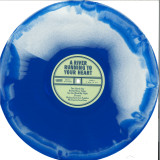
Eric D. Johnson rarely lingers at one location too long. As a kid growing up in the Midwest, Johnson's family moved around a lot, but it wasn't until he became a touring musician years later that motion became a central part of his identity. That transient lifestyle stoked an enduring reverence for the world he watched pass by through a van window. A sense of place is a unifying theme he's revisited with Fruit Bats throughout its many lives. From the project's origins in the late '90s as a vehicle for Johnson's lo-fi tinkering to the more sonically ambitious work of recent years, Fruit Bats has often showcased love songs where people and locations meld into one. It's a loose song structure that navigates what he calls "the geography of the heart." "The songs exist in a world that you can sort of travel from one to another," says Johnson. "There are roads and rivers between these songs." Those pathways extend straight through the newest Fruit Bats album, aptly titled A River Running to Your Heart . Self-produced by Johnson_a first for Fruit Bats_with Jeremy Harris at Panoramic House just north of San Francisco, it's Fruit Bats' tenth full-length release and one that finds the project in the middle of a creative resurgence. After two decades of making music, hard-earned emotional maturity has seeped into Johnson's songs, resulting in a more complex sound that's connected with audiences like no other previous version of Fruit Bats. A River Running to Your Heart represents the fullest realization of that creative vision to date. It's a sonically diverse effort that largely explores the importance of what it means to be home, both physically and spiritually. And while that might seem like a peculiar focus for an artist who's constantly in motion, for Fruit Bats, home can take many forms_from the obvious to the obscure. Lead single "Rushin' River Valley" is a self-propelled love song written about Johnson's wife that clings to the borrowed imagery of the place where she grew up in northern California. Then, there's the gentle and unfussy acoustic ballad "We Used to Live Here," which looks back to a time of youthful promise and cheap rent. But the wistful "It All Comes Back" is perhaps the most stunning and surprising track on the album, Johnson's production skills on full display. Built upon intricate layers of synths, keyboards, and guitars, it's a pitch-perfect blend of tone and lyricism that taps into our shared apprehensions and hopes for a post-pandemic life. "We lost some time / But we can make it back / Let's take it easy on ourselves, okay?" sings a world-weary but ultimately reassuring Johnson in the song's opening lines. It's the kind of performance that makes you hope Fruit Bats stays in this one place, at least for a little while longer.
BLUE & BONE VINYL
Eric D. Johnson rarely lingers at one location too long. As a kid growing up in the Midwest, Johnson's family moved around a lot, but it wasn't until he became a touring musician years later that motion became a central part of his identity. That transient lifestyle stoked an enduring reverence for the world he watched pass by through a van window. A sense of place is a unifying theme he's revisited with Fruit Bats throughout its many lives. From the project's origins in the late '90s as a vehicle for Johnson's lo-fi tinkering to the more sonically ambitious work of recent years, Fruit Bats has often showcased love songs where people and locations meld into one. It's a loose song structure that navigates what he calls "the geography of the heart." "The songs exist in a world that you can sort of travel from one to another," says Johnson. "There are roads and rivers between these songs." Those pathways extend straight through the newest Fruit Bats album, aptly titled A River Running to Your Heart . Self-produced by Johnson_a first for Fruit Bats_with Jeremy Harris at Panoramic House just north of San Francisco, it's Fruit Bats' tenth full-length release and one that finds the project in the middle of a creative resurgence. After two decades of making music, hard-earned emotional maturity has seeped into Johnson's songs, resulting in a more complex sound that's connected with audiences like no other previous version of Fruit Bats. A River Running to Your Heart represents the fullest realization of that creative vision to date. It's a sonically diverse effort that largely explores the importance of what it means to be home, both physically and spiritually. And while that might seem like a peculiar focus for an artist who's constantly in motion, for Fruit Bats, home can take many forms_from the obvious to the obscure. Lead single "Rushin' River Valley" is a self-propelled love song written about Johnson's wife that clings to the borrowed imagery of the place where she grew up in northern California. Then, there's the gentle and unfussy acoustic ballad "We Used to Live Here," which looks back to a time of youthful promise and cheap rent. But the wistful "It All Comes Back" is perhaps the most stunning and surprising track on the album, Johnson's production skills on full display. Built upon intricate layers of synths, keyboards, and guitars, it's a pitch-perfect blend of tone and lyricism that taps into our shared apprehensions and hopes for a post-pandemic life. "We lost some time / But we can make it back / Let's take it easy on ourselves, okay?" sings a world-weary but ultimately reassuring Johnson in the song's opening lines. It's the kind of performance that makes you hope Fruit Bats stays in this one place, at least for a little while longer.
“Shambly Television Personalities/Swell Maps style earworm indie rock.” Brooklyn Vegan
“RIPPER! Melbourne’s TERRY return to complete a hat trick of three albums in three years (TERRYilogy?) that leaves the piss streak that is the rest of indie pop in 2018 dribbling down its own leg in the dust.” 8/10 CLASH
Call me Terry! It’s been a hot minute since we last heard from Terry, what’s he been up to? Five years on from their last album, ‘I’m Terry’, the Australian post-punk quartet proudly present their new record, ‘Call Me Terry’, for release on April 14th 2023.
Terry is made up of pairs Amy Hill & Al Montfort, and Xanthe Waite & Zephyr Pavey who started playing together for the fun of it in 2016. Seven years, four albums and three EP’s later, Terry is ready to pick up the phone again. Over the past few years Terry have kept themselves busy - but not only with Terry things. On top of numerous releases with alternating side projects (Constant Mongrel, The UV Race, Primo!, Sleeper & Snake, Chateau, Rocky, the list goes on… ) members of Terry have moved interstate, undertaken studies, had children and started new fields of work.
Terry began sharing the demos for ‘Call Me Terry’ online with each other in 2020 - as we all did - before getting together in 2021 at their trusty rehearsal space to record the beds. Overdubs were completed at Terry’s homes over the following year. Lyrically, in true Terry fashion, the record wastes no time in scrutinising Australia’s corrupt, colonial history. They sing it loud and sprawl it across the jacket of this record, highlighting the greed, privilege and entitlement of white, wealthy “Australia” which they won’t stand a second for.
Musically, ‘Call Me Terry’ still has the classic Terry sound; the four vocals singing as one gang, sharp guitars and quirky, burbling synths, the rolling bass and drums, all amidst their clever, dancey pop songs. Since day dot it’s been hard to reference a band that really sounds like Terry, which is always amazing. Truly a sound of their own!
But the sugar on top here may just be some of their finest horn, string and piano performances to date - all of which never feel crowded, cluttered or over-involved. More just excellent, necessary melodies. Rest assured Al still gives his famed Fuzz Factory a workout - and throws his tremolo into the pedal chain. It goes off. Tremolo is the order of the day for Amy and Xanthe too who also embrace the wobble, whilst Zephyr keeps the pulse of their politico-pop anchored.
Terry isn’t afraid to call the shots and Terry isn’t afraid to point the finger. Listen to what Terry has to say.
Red Vinyl
“Shambly Television Personalities/Swell Maps style earworm indie rock.” Brooklyn Vegan
“RIPPER! Melbourne’s TERRY return to complete a hat trick of three albums in three years (TERRYilogy?) that leaves the piss streak that is the rest of indie pop in 2018 dribbling down its own leg in the dust.” 8/10 CLASH
Call me Terry! It’s been a hot minute since we last heard from Terry, what’s he been up to? Five years on from their last album, ‘I’m Terry’, the Australian post-punk quartet proudly present their new record, ‘Call Me Terry’, for release on April 14th 2023.
Terry is made up of pairs Amy Hill & Al Montfort, and Xanthe Waite & Zephyr Pavey who started playing together for the fun of it in 2016. Seven years, four albums and three EP’s later, Terry is ready to pick up the phone again. Over the past few years Terry have kept themselves busy - but not only with Terry things. On top of numerous releases with alternating side projects (Constant Mongrel, The UV Race, Primo!, Sleeper & Snake, Chateau, Rocky, the list goes on… ) members of Terry have moved interstate, undertaken studies, had children and started new fields of work.
Terry began sharing the demos for ‘Call Me Terry’ online with each other in 2020 - as we all did - before getting together in 2021 at their trusty rehearsal space to record the beds. Overdubs were completed at Terry’s homes over the following year. Lyrically, in true Terry fashion, the record wastes no time in scrutinising Australia’s corrupt, colonial history. They sing it loud and sprawl it across the jacket of this record, highlighting the greed, privilege and entitlement of white, wealthy “Australia” which they won’t stand a second for.
Musically, ‘Call Me Terry’ still has the classic Terry sound; the four vocals singing as one gang, sharp guitars and quirky, burbling synths, the rolling bass and drums, all amidst their clever, dancey pop songs. Since day dot it’s been hard to reference a band that really sounds like Terry, which is always amazing. Truly a sound of their own!
But the sugar on top here may just be some of their finest horn, string and piano performances to date - all of which never feel crowded, cluttered or over-involved. More just excellent, necessary melodies. Rest assured Al still gives his famed Fuzz Factory a workout - and throws his tremolo into the pedal chain. It goes off. Tremolo is the order of the day for Amy and Xanthe too who also embrace the wobble, whilst Zephyr keeps the pulse of their politico-pop anchored.
Terry isn’t afraid to call the shots and Terry isn’t afraid to point the finger. Listen to what Terry has to say.
Kristian Matsson has never remained in one place for very long. Having spent much of the last decade touring around the world as The Tallest Man on Earth, Matsson has captivated audiences using, as The New York Times describes, “every inch of his long guitar cord to
roam the stage: darting around, crouching, stretching, hip-twitching, perching briefly and jittering away…Mr. Matsson is a guitar-slinger rooted in folk, and his songs are troubadour ballads at heart.”
Now, Matsson returns as The Tallest Man on Earth with Henry St., his sixth studio album following 2012’s There’s No Leaving Now, full of “vivid imagery, clever turns-of-phrase, and devastating, world-weary observations” (Under The Radar) and 2015’s Dark Bird Is A
Home, his “most personal record… surreal and dreamlike” (Pitchfork). Henry St. notably marks the first time he recorded an album in a band setting. “My entire career I’ve been a DIY person––mostly fueled by the feeling that I didn’t know what I was doing, so I’d just do everything myself.”
But now, longing for the energy that’s only released when creating
together with others, Matsson invited his friends to come and play.
Nick Sanborn (of Sylvan Esso) produced Henry St., which includes contributions from Ryan Gustafson (of The Dead Tongues) on guitar, lap steel and ukulele, TJ Maiani on drums, CJ Camerieri (of Bon Iver) on trumpet and French horn, Phil Cook on piano and organ, Rob
Moose (of Bon Iver, yMusic) on strings and Adam Schatz on saxophone.
Light in the Attic Records is proud to present the next installment of the Nancy Sinatra Archival Series with the first ever reissue of the classic 1972 album Nancy & Lee Again. Recorded during a 1972 reunion between Nancy and the enigmatic Hazlewood, the album contains some of the pair's most enduring and ambitious duets including the epic "Arkansas Coal (Suite)," the sensual "Paris Summer" and the incredibly powerful Dolly Parton-penned "Down From Dover." Equal parts daring, psychedelic, cinematic, and sweet, Nancy & Lee Again reveals with each track a timeless, natural chemistry between two artists who would remain influential for generations to come. Nancy & Lee Again is available in a variety of formats, including vinyl and CD. The vinyl LP is presented in an expanded gatefold jacket and is accompanied by a 20-page booklet, featuring an array of photos from the legendary singer, actress, and activist's personal collection, as well as in-depth Q&A with Nancy Sinatra, conducted by the reissue's GRAMMYr-nominated co-producer, Hunter Lea (also available in the CD package). All formats have been beautifully designed by Darryl Norsen of D. Norsen Design, and include two bonus tracks, "Machine Gun Kelly" (first time on vinyl) and the previously unreleased "Think I'm Coming Down." Nancy, the eldest daughter of Frank Sinatra, had been working with the Oklahoma-born songwriter since 1965, when she topped the pop charts with "These Boots Are Made For Walkin'." Over the next five years, the two artists forged a prolific relationship in the studio, with Hazlewood writing and producing many of Nancy's solo hits. Soon, the duo found success with a series of duets, including "Sand," "Summer Wine," and "Some Velvet Morning" - all of which appeared on their highly-influential 1968 debut. Not long after the critical acclaim and chart success of Nancy & Lee died down, however, Hazlewood unexpectedly relocated to Sweden, leaving his musical partner in the proverbial dust. America, meanwhile, was in the midst of a cultural shift, as the Vietnam War waged on. By the turn of the decade, the musical landscape had changed significantly. "Trivial music and not profound music became unimportant," recalls Nancy, speaking to Hunter Lea. "It was a tough time." And yet, despite the circumstances, the stars somehow aligned for the duo to record some of their most magnificent music together. Returning to Los Angeles for the project, Hazlewood - who reprised his role as producer - chose to take a new direction with the duo's sophomore album. Nancy recalls, "It was more dramatic; it was more fun to do, more challenging to do_. It was more grandiose." Nancy & Lee Again remains a creative high point in the careers of Sinatra and Hazlewood and, upon its release, garnered rave reviews from Billboard, Record World, and Cash Box, among others. Yet, Nancy & Lee Again never received the spotlight it so utterly deserved. "We didn't have label support at all in those days," recalls Nancy. "Without the strength of a label, records die. We were old. We were old-fashioned. We were just not what was happening. It's a very ageist kind of business." Nevertheless, she adds, "I think it's a very good album. I think it's timeless." Now, after years of being a sought-after rarity, this gem in the Sinatra-Hazlewood canon can finally get its due.
Some of the best musical moments from the anime series (one of the most famous adaptations to one of the best selling manga of all time/much beloved anime franchise). Featuring the main theme 'Number One', the soundtrack also contains other musical highlights from the series by Japanese superstar composer Shiro Sagisu, who has also scored 'Attack On Titan', 'Shin Godzilla' and the full 'Evangelion' series to name a few. This is a double 140gm translucent blue vinyl set in a double sided gatefold sleeve with gloss varnish. Full colour expanded inlay with images from the show and notes from composer Shiro Sagisu. Marketing activity. Stock is limited/allocated.
In his South London flat, James Howard gestures apologetically at the mess of books, lined A4 paper and stationary at his desk. “I butcher poetry for a living,” he explains, “It isn’t a pretty job, but someone has to do it.” This being 2022, every emerging musician needs a side-hustle to keep the house warm. In the daytime, our host writes study guides to help teachers teach poetry to pupils who would rather be elsewhere. “I make sure the poems are clinically dead by the time they reach the schools.”
An explanation punctuated by a mildly contrite shrug makes you want to lean forward and remind Howard about some of the stuff other people are doing for a living. And, more to the point, aren’t doing. Which brings us to the real matter at hand. For Howard, foregrounding his own songs hasn’t always come naturally. An enthusiastic collaborator, he made two well-received albums with his previous band Blue House and played with the likes of Rozi Plain, Alabaster dePlume and his wife Dana Gavanski, as well as running his own music night with Sam Tyler in London, Incredible Society. It’s important to mention these creative hook-ups because Howard feels that, in one way or another, they all helped to give form and shape to the lilting lunar lullabies that would ultimately comprise his ravishing solo debut Peek-A-Boo.
Multi-Award winning, hugely influential musician Feist returns with Multitudes, her sixth solo album and first since 2017’s Pleasure.
Multitudes was produced by Feist with longtime collaborators Robbie Lackritz (The Weather Station, Bahamas, Robbie Robertson) and Mocky (Jamie Lidell, Vulfpeck, Kelela). Blake Mills (Bob Dylan, Fiona Apple, Perfume Genius) and Joseph Lorge came in to mix, with Mills as a co-producer in the final stages.
Multitudes took shape soon after the birth of her daughter and sudden death of her father, a back-to-back convergence of life-altering events that left the Canadian singer/songwriter with “Nothing performative in me anymore.” As she cleansed her songwriting of any tendency to obscure unwanted truths, Feist slowly made her way toward a batch of songs rooted in a raw and potent realism which is touched with otherworldly beauty.
Largely written and workshopped during an intensely communal experimental show of the same name through 2021 and 2022, the songs on Multitudes developed in parallel with and were deeply influenced by the mutuality of the unconventional experience. The production, developed by Feist with legendary designer Rob Sinclair (David Byrne’s American Utopia, Peter Gabriel, Tame Impala) was formulated to bring people together as they re-emerged from lockdown while providing an outlet for connection between artist, art, and community.
She’s out of this world…
Maltese musician & producer Joon’s galactic debut arrives on our shores fully formed a decade after she first set sail. 12 cuts of uniquely addictive Synthesized Pop twist & turn on the rocky waters of life.
Her story begins after a life-changing car crash on the streets of Malta many moons ago. She was lucky to walk away in one piece. “That car crash was a wake-up call,” she says. “It made me realize how precious life is & I started living the life I felt was worth living.” Inspired to finally pursue her love of music full time, she began collecting instruments. Starting with a Stylophone& a vintage rhythm box, she started documenting ideas. Returning home to Malta after a few years in London, she only met one other woman making electronic music on the island. Driven by the desire to make music possible & accessible for the next generation, Joon co-founded the Malta Sound Women’s Network.
Ten years later, she sends us messages in a bottle from across the Mediterranean Sea. Armed with a Moog & her ethereal voice, she transmits hope & joy from a bedroom somewhere between Sicily & North Africa. Her music is right at home alongside outsider pioneers like Fever Ray, Grimes, Laurie Anderson & Molly Nilsson. Dream Again glides across heavy rhythms & eclectic electro. Telling stories of alienation with a throbbing heartbeat & space-age melodies, she lets us into her ultra-vivid world where anything is possible. Produced by Johnny Jewel, the album shines bright like comet orbiting the label’s dark sky, a much-needed vision of light on the horizon.
“Even if I’m sad or heartbroken, I remain optimistic. I want to grow old with no regrets.”
It’s time to Dream Again…
- A1: Mister Sandman
- A2: Teensville
- A3: Steel Guitar Rag
- A4: Whispering
- A5: Yankee Doodle Dixie
- A6: You’re Just In Love
- A7: Swedish Rhapsody
- A8: Theme From “A Summer Place”
- B1: Oh Lonesome Me
- B2: Trambone
- B3: Corrine, Corrina
- B4: Heartaches
- B5: Boo Boo Stick Beat
- B6: One Mint Julep
- B7: Sleep Walk
- B8: Indian Love Call
Known as ‘Mr. Guitar’, Chet was one of the greatest and most influential musicians in Country
Music. He was an RCA Nashville Producer from the late '50s through to the mid-70's,
masterminding sessions for Dolly Parton, Charley Pride, Waylon Jennings and Jim Reeves. Chet
moved to Nashville and became a session man, playing on records by the Everly Brothers, Elvis
Presley and others, while also performing as a solo artist on the Grand Ole Opry. An in-demand
figure at this point, Chet commenced his own recording career with an instrumental version of
Indian Love Call. Followed by Yankee Doodle Dixie, a showcase arrangement on which Chet
played the Bass strings and Treble strings simultaneously! An architect of the Nashville Sound, he
recorded an instrumental version of the Chordettes' hit Mr. Sandman, which provided him with his
first Country Music chart entry. His records began to cross over into Pop and he enjoyed Hot 100
success with the percussive Boo Boo Stick Beat, Teensville, One Mint Julep, Sleep Walk and Oh
Lonesome Me
Blue Hawaii was Elvis’ 8th film, and on its release in 1961 became one of that year’s most
successful titles at the box office. It remained one of the singer’s all-time favourite movies,
and began a love affair with the island, which had become America’s 50th state in 1959.
Blue Hawaii was the usual Elvis mix of exotic locations, beautiful girls and lots of songs. The
soundtrack of Blue Hawaii did not disappoint – the sleeve boasting “14 Great Songs”. The
title track was a perfect introduction, while the Hawaiian setting meant that space was found
for the atmospheric Hawaiian Sunset and Island Of Love (Kauai). Room was also found for
two other island-related songs - Aloha Oe and Hawaiian Wedding Song, both of which had
been hits for Bing Crosby back in the 1930s. But where Blue Hawaii really scored for fans
was the inclusion of the boisterous Rock-A-Hula Baby and a song which would go on to
become one of the singer’s best-loved ballads – Can’t Help Falling In Love. Based in part on
an 18th Century French melody, for many years this became Elvis’ in-concert finale.
Second Editions is pleased to present two new complementing works by René Margraff and Malte Cornelius Jantzen, as a double a-side split album.
Margraff utilizes various beautiful ramblings from the one and only AL and weaves them together two floating pieces that are both a reflection and caricature on what punk (what about ambient?) actually is in the age of ever-bloodsucking tabloid consumerism and commercial image branding, and how to keep your head up as a protagonist/heroine.
Jantzen's side pays homage to a time when a kickflip down a flight of stairs mostly ended in bruised hands and knees. In what can barely be considered field recording, the sound of skateboard decks and wheels on cement and railing, the occasional shouts and murmurs form a "real-time listening piece" (aka a moment), most aptly titled after AL's acclaimed debut album.
Second Editions is coming full circle and is calling it a day. Limited to 100 copies. Half on "not punk pink" and other half on "complicated green" cassette shells. For good luck and good vibes!
The album The Skatalite was originally released in 1969 and contains some of the best tracks from the Skatalites cut for producer Duke Reid. It was recorded with the classic line-up, featuring Don Drummond on trombone, Jackie Mittoo on piano, and Jonny “Dizzy” Moore on the trumpet. This 12-track set includes “Eastern Standard Time”, “Dan-De-Lion” and “Yard Broom” amongst others.
The Skatalite is available as a limited edition of 750 individually numbered copies on turquoise coloured vinyl.
Malice was one of the more noteworthy bands of the ‘80s Los Angeles metal scene. License to Kill was their second album and was originally released in 1987. Max Norman produced, engineered, and mixed the album, he’s best known for producing several Ozzy albums during the ‘80s, as well as Megadeth’s Countdown to Extinction, and albums of various other metal bands like Y&T, Armored Saint, Savatage, and Lynch Mob a.o.
Old-school Megadeth fans will be tickled to discover that Mustaine and Dave Ellefson are credited with background vocals on two songs. Another guest appearance was made on this album by Tommy Thayer of Kiss. Founder Jay Reynolds later joined Dave Mustaine’s band Megadeth for a brief spell, and after that became a member of Metal Church.
License To Kill is available as a limited edition of 1000 individually numbered copies on translucent blue coloured vinyl
Marcos Díaz has been part of Buenos Aires underground for many years, being in projects like Bosques and making solo music under the pseudonym Entidad Animada (animated entity). Under this project, Marcos has explored sounds that involve a mix of feedback/distortion through synthesizers, guitars and drum machines that hint at the influence of Stereolab, Spacemen 3, and mid-nineties shoegaze. However, there are also ambient soundscapes with a slight rubbed of the ritualistic psychedelia of the Popol Vuh. The display of colours in his music comes together in the midst of a playful, relaxed and optimistic environment that is simultaneously melancholic. Because of the nature of those pieces, but also because in Entidad Animada there is also space for collage sounds that blend randomly with textures of a primitive analog sound, which inevitably causes a paradox between what is alive and what is inert. And it is because Entidad Animada is precisely that, a spectrum or a vision, a ghost. And these sounds are proof of his existence.
Pruebas de existencia (proofs of existence) is a collection of recordings that Marcos has made in recent years and that we have selected for this album, his first work on Umor Rex. A couple of these pieces were only released digitally, while the others have been on ltd cassette editions through Fuego Amigo Discos in Argentina. Pruebas de existencia is an Umor Rex compilation and remastered edition.
Guitar, sampler, synthesizer, organ, bass, drums & electronic beats, vocals, recording and mixing by Entidad Animada in Buenos Aires. Mastered by Rafael Anton Irisarri at Black Knoll Studio, NY. Cover photography Natch Tablescape (1979) by Langdon Clay. Layout by Daniel Castrejón, Mexico City.
The triumvirate of Roky Erickson, Tommy Hall and Stacy Sutherland had to feature. Transcendent slower songs (often) don’t feature full band performances – so, no Splash One. The song had to be a band original. So, no Baby Blue. 13 unlucky for some. This compilation launches a new phase in the 13th Floor Elevators catalogue and previews the forthcoming series THE QUEST FOR PURE SANITY: the release in optimal quality of all surviving source material for all of the band’s recordings. ‘13 OF THE BEST’ has been mastered separately to vinyl, CD, digital and streaming for the best possible sound quality for each format. Each original source has been referenced to the earliest vinyl pressing and meticulously transferred at 96khz 24- bit resolution. Multitrack tapes of the original recording sessions have been newly mixed in strict accordance with the records as first released. ‘You’re Gonna Miss Me’, the band’s seminal single, is presented here for the first time in true stereo. Taken from the original multitrack session tape, the song has been mixed to stereo in accordance with the iconic mono 45 as recorded and engineered by Walt Andrus. ‘Slip Inside This House’ viewed by fans and critics alike as the Elevators’ masterpiece and one of the key psychedelic recordings of the era, is included on the LP as the edited mono single mix so the loudest possible cut can be achieved. The eight-minute stereo version is included on all other formats. ‘Never Another’, ‘Dr Doom’ and ‘Livin’ On’ from the band’s final sessions have been newly mixed but without the overdubs added almost a year after recording. While the session tapes survive, the overdubs do not. ‘Livin’ On’ features Roky Erickson’s original superior vocal performance instead of the overdub used on the ‘BULL OF THE WOODS’ LP. What is uniquely presented here is 100% Elevators as mixed and intended for the LP. No embellishments! ‘13 OF THE BEST’ is produced by 13th Floor Elevators official archivist and historian Paul Drummond who has also written sleeve notes with full track-by-track information.
Light in the Attic Records is proud to present the next installment of the Nancy Sinatra Archival Series with the first ever reissue of the classic 1972 album Nancy & Lee Again. Recorded during a 1972 reunion between Nancy and the enigmatic Hazlewood, the album contains some of the pair's most enduring and ambitious duets including the epic "Arkansas Coal (Suite)," the sensual "Paris Summer" and the incredibly powerful Dolly Parton-penned "Down From Dover." Equal parts daring, psychedelic, cinematic, and sweet, Nancy & Lee Again reveals with each track a timeless, natural chemistry between two artists who would remain influential for generations to come. Nancy & Lee Again is available in a variety of formats, including vinyl and CD. The vinyl LP is presented in an expanded gatefold jacket and is accompanied by a 20-page booklet, featuring an array of photos from the legendary singer, actress, and activist's personal collection, as well as in-depth Q&A with Nancy Sinatra, conducted by the reissue's GRAMMYr-nominated co-producer, Hunter Lea (also available in the CD package). All formats have been beautifully designed by Darryl Norsen of D. Norsen Design, and include two bonus tracks, "Machine Gun Kelly" (first time on vinyl) and the previously unreleased "Think I'm Coming Down." Nancy, the eldest daughter of Frank Sinatra, had been working with the Oklahoma-born songwriter since 1965, when she topped the pop charts with "These Boots Are Made For Walkin'." Over the next five years, the two artists forged a prolific relationship in the studio, with Hazlewood writing and producing many of Nancy's solo hits. Soon, the duo found success with a series of duets, including "Sand," "Summer Wine," and "Some Velvet Morning" - all of which appeared on their highly-influential 1968 debut. Not long after the critical acclaim and chart success of Nancy & Lee died down, however, Hazlewood unexpectedly relocated to Sweden, leaving his musical partner in the proverbial dust. America, meanwhile, was in the midst of a cultural shift, as the Vietnam War waged on. By the turn of the decade, the musical landscape had changed significantly. "Trivial music and not profound music became unimportant," recalls Nancy, speaking to Hunter Lea. "It was a tough time." And yet, despite the circumstances, the stars somehow aligned for the duo to record some of their most magnificent music together. Returning to Los Angeles for the project, Hazlewood - who reprised his role as producer - chose to take a new direction with the duo's sophomore album. Nancy recalls, "It was more dramatic; it was more fun to do, more challenging to do_. It was more grandiose." Nancy & Lee Again remains a creative high point in the careers of Sinatra and Hazlewood and, upon its release, garnered rave reviews from Billboard, Record World, and Cash Box, among others. Yet, Nancy & Lee Again never received the spotlight it so utterly deserved. "We didn't have label support at all in those days," recalls Nancy. "Without the strength of a label, records die. We were old. We were old-fashioned. We were just not what was happening. It's a very ageist kind of business." Nevertheless, she adds, "I think it's a very good album. I think it's timeless." Now, after years of being a sought-after rarity, this gem in the Sinatra-Hazlewood canon can finally get its due.
Introducing Marc Codsi's new Arabic infused synth oriented album, 'Songs from the Aftermath'.
Lebanese musician and composer Marc Codsi has released numerous albums with various projects
such as Scrambled Eggs, Lumi, Zalfa and many others whilst maintaining a very active career as asolo artist and film composer. 'Songs from the Aftermath' is his 5th album and presented as a natural
continuation to his 2019 opus work, ‘A New World’ (Annihaya Records).
Codsi continues his personal exploration of Arabic music codes, mainly investigating quarter tones
scales in an fully electronic environment in order to create new harmonies and textures that still
convey a feeling of familiarity whilst keeping a certain aura of strangeness and mystery.
The album was recorded between during 2021 and 2022 and the music eventually comes as a very
personal quest for transcendence. A sort of speculative answer to the world’s ongoing absurdity and
what seems to be an incessant array of conflicts, disasters and tragedies.
From these dark alleys may we still arise to proclaim a sense of beauty, poetry and elevation!
- 01: Eisenhower To The West Side
- 02: Do You Feel Fine?
- 03: Guillotine
- 04: Same
- 05: Money's Ran Off
- 06: Pray To Christ In Heaven
- 07: No Man For No Home
- 08: Last July
- 09: Sister Say
- 10: Dirt
- 11: I Tried
- 12: Summer City
- 13: Jess
- 01: Stay In Line
- 02: Get Your Fix
- 03: On Fear
- 04: Momma's Way
- 05: Herculean House Of Cards
- 06: The Leaving
- 07: In Between - Live
- 08: Ain't Nobody's Fault - Live
- 09: Fool's Gold - Live
- 10: Even Jesus Christ Had Died - Live
- 11: Eisenhower To The West Side (Ballad Reprise) - Live
- 12: Hammer Out The Edges
Gold Vinyl[35,84 €]
Trey Gruber's posthumous debut double LP Herculean House of Cards. A compilation of early demos, studio demos, and live recordings. A tortured songwriter and struggling addict who jolted the tired Chicago DIY scene with his own brand of primal despair, Trey Gruber and his band Parent were on track to join the ranks of Twin Peaks, Mild High Club, and Whitney. His death in 2017 at the age of 26 brought it all to a halt. In his final years Trey wrote and recorded hundreds of previously unheard demos, dandelions in the cracked concrete of 21st century disconnect, an alphabet's worth of which have been compiled by his family and friends for his only album: Herculean House Of Cards. The 26-song 2xLP covers years of material, from home tape recordings, sessions at Mathew Roberts (Mild High Club) & Paul Cherry's home studio, to a studio session with Charles Glanders (Whitney) at Chicago's Foxhall Studios, along with audio taken at The Hideout during his last live performance, among others. Though Gruber was an unrelenting perfectionist who was constantly self-deprecating about his best demos, Herculean House of Cards is a wholly comprehensive and accurate reflection of his infectious charisma and raw songwriting. He had a charmingly distinct way with words but also could be disarmingly vulnerable. Like he was in life, Gruber never shied away from being open with his struggles with alcoholism and addiction. On the vivid opener "Eisenhower to the West Side," he sings in painstaking detail of, "A jail-skin cell, a junkies fight/Corner-boys full of grace/And Jesus Christ full of spite." He told then-future bandmate flautist Rebecca Ridge, "It's not some Lou Reed glorification of drugs _ `makes me feel like a man'_ I talk about the disconnect and the ugliness. They're sad pop songs." But even with the pain and the darkness in his lyrics, Gruber's songs had an unmistakable sense of hope and catharsis.
Brazilian experimental multi-instrumentalist Carla Boregas follows plates for Bokeh Versions and Hive Mind with a ghostly set of deep listening electronics that plays like a symphony for an imagined woodwind orchestra.
Carla Boregas is best known from her tenure in São Paulo's genre-bending experimental post-punk scene, playing in long-running outfit Rakta as well as other related offshoots. Her solo material has been knottier to unpick, here developing ideas from a collection of unfinished fragments and notebook scribbles exploring the possibility of finding a wind instrument that could be played collectively by several musicians. Coinciding with the pandemic, however, she soon realised the inherent risks involved with sharing breath and so the concept took a different direction, with added resonance.
Boregas developed a synthetic alternative, layering vocals and environmental recordings to suggest wind instrumentation without attempting to mimic it. The sounds here are airy, but rarely diegetic - on the title track, Boregas uses analog arpeggios and plucked, sustained tones to approximate the kosmische world of Ash Ra Tempel or more recently Emeralds, as if trapped in a wind tunnel, moved forward by an unseen force.
There's a whisper of the ancient past that harmonises with Wojciech Rusin's speculative medieval gasps, and Bloedneus & de Snuitkever's severely underheard ‘Milli Mille’, an examination of the ancient Greek aulos. On ’Grafia Do Invisível' the sound is completely different again, but the concept remains, using precise analog drones and minuscule timbral shifts to imitate the character of a wind instrument and simultaneously harmonise with the deep listening meditations of Éliane Radigue and Kali Malone.
A voice enters the frame on 'Sopro’, chopped into deviated gulps and syllables, creating a language that's unfamiliar and percussive. The use of breath is subtle, and vocalisations criss-cross between synths and faint whistles, forming an expression that's different from its predecessors but intrinsically interlinked. This is where ‘Pena Ao Mar’ excels, by viewing breath and its application in electronic music from multiple angles simultaneously. Fans of Lucy Duncombe, Lucrecia Dalt, or Sarah Davachi - don't miss this one.
- A1: Eisenhower To The West Side
- A2: Do You Feel Fine?
- A3: Guillotine
- A4: Same
- A5: Money's Ran Off
- A6: Pray To Christ In Heaven
- A7: No Man For No Home
- A8: Last July
- B1: Sister Say
- B2: Dirt
- B3: I Tried
- B4: Summer City
- B5: Jess
- C1: Stay In Line
- C2: Get Your Fix
- C3: On Fear
- C4: Momma's Way
- C5: Herculean House Of Cards
- C6: The Leaving
- D1: In Between - Live
- D2: Ain't Nobody's Fault - Live
- D3: Fool's Gold - Live
- D4: Even Jesus Christ Had Died - Live
- D5: Eisenhower To The West Side (Ballad Reprise) - Live
- D6: Hammer Out The Edges (Bonus Track)
Black Vinyl[35,84 €]
Trey Gruber's posthumous debut double LP Herculean House of Cards. A compilation of early demos, studio demos, and live recordings. A tortured songwriter and struggling addict who jolted the tired Chicago DIY scene with his own brand of primal despair, Trey Gruber and his band Parent were on track to join the ranks of Twin Peaks, Mild High Club, and Whitney. His death in 2017 at the age of 26 brought it all to a halt. In his final years Trey wrote and recorded hundreds of previously unheard demos, dandelions in the cracked concrete of 21st century disconnect, an alphabet's worth of which have been compiled by his family and friends for his only album: Herculean House Of Cards. The 26-song 2xLP covers years of material, from home tape recordings, sessions at Mathew Roberts (Mild High Club) & Paul Cherry's home studio, to a studio session with Charles Glanders (Whitney) at Chicago's Foxhall Studios, along with audio taken at The Hideout during his last live performance, among others. Though Gruber was an unrelenting perfectionist who was constantly self-deprecating about his best demos, Herculean House of Cards is a wholly comprehensive and accurate reflection of his infectious charisma and raw songwriting. He had a charmingly distinct way with words but also could be disarmingly vulnerable. Like he was in life, Gruber never shied away from being open with his struggles with alcoholism and addiction. On the vivid opener "Eisenhower to the West Side," he sings in painstaking detail of, "A jail-skin cell, a junkies fight/Corner-boys full of grace/And Jesus Christ full of spite." He told then-future bandmate flautist Rebecca Ridge, "It's not some Lou Reed glorification of drugs _ `makes me feel like a man'_ I talk about the disconnect and the ugliness. They're sad pop songs." But even with the pain and the darkness in his lyrics, Gruber's songs had an unmistakable sense of hope and catharsis.
- A1: Undenying
- A2: Phasor Md
- A3: Galleon In The Clouds
- A4: Green Mirror
- A5: Technautic
- B1: Winding Up
- B2: Ripe Ready
- B3: Illuminated Knights
- B4: Tunnel Vision
- C1: Holding Pattern
- C2: Polygono
- C3: Every Day There's Something New To Say
- C4: Westward Glint
- C5: Play Music Now
- C6: Stillitude
- D1: Piece
- D2: Light On The Sand
- D3: Golden Fluoride
- D4: Thawing Stage
- D5: The Land Of Modor
- D6: The Song Of The Sea
It seems like a long time since we last heard anything from the talented Secret Circuit aka Eddie Ruscha!
Truth is he's been more prolific than ever...just not with his Secret Circuit alias.
For those of you unfamiliar with his work Secret Circuit is audiovisual artist and L.A. native Edward Ruscha V (yes indeed, son of THEE Ed Ruscha, legendary pop artist) who’s been on the music scene since time immemorial. He has been a member of innumerable bands and projects over the years including Medicine, Maids Of Gravity, Radar Bros and punk-dub outfit Future Pigeon to name a few as well as managing to squeeze in time for his equally multifarious and highly productive solo ventures. In just the last few years he's released a string of records under his own E Ruscha V moniker for labels such as Beats In Space, Good Morning Tapes and Fourth Sounds as well as finding time for several collaborations including Doctor Fluorescent (Crammed Discs), The Parels (Lal Lal Lal) and XLNT (DFA). You could say he's prolific!
So it's definitely a long overdue and most welcome return for Secret Circuit. The "Green Mirror" album is a double LP comprised of 21 new pieces (80+ minutes of music) recorded between 2020 and 2022. It captures that spacey otherworldly quality Secret Circuit is known for, but the music also veers towards the warmer, ambient textural territories that his recent E Ruscha V and Only Thingz projects explored...an altogether softer sensibility.
Yet nevertheless this album is very much "Secret Circuit". Invisible Inc wanted to explore a side of Ruscha's that hadn't been captured so clearly before, focussing on his more emotive yet at the same time experimental side (is that a paradox?). Very rarely do we hear musicians using modular synths to create something so human sounding, and when juxtaposed alongside slide guitars, live bass and vocodered vocals, we have something very special indeed.
Then there's the artwork...all lovingly drawn by the bubbling mind and deft fingers of Eddie himself. The package is made complete with a double-sided colour insert with liner notes (which happen to be written in reverse, naturally, so you'll need a mirror to read them) and another of Eddie's mind-warping doodles.
This is not like anything else you will hear...it's true art and you'll definitely need a very open mind to reap the rewards of this beautiful piece of work. A future weirdo classic in the making
Another classic release on Makin' Madd Records in the rebound! This time it's The Shadow aka Lou Robinson of SCAN7) "The Lurking Shadow EP" which came out 1995 will be soon available again on solid black vinyl. Re-mastered edition - don't sleep! Special thanks to Mr. Terrence Parker!
Mammal Hands announce spell-binding new album 'Gift from the Trees', their fifth studio album, pointing to subtle shifts and exciting new departures for the unique trio
"We're at a point now where playing and writing together can sometimes feel almost telepathic, that as individuals we can tune in to a collective resonance..."
Mammal Hands fifth album 'Gift from the Trees' offers a fresh perspective on the unique trio's singular music. The first to be recorded in a residential studio, the band enjoyed the opportunity to go late into the night searching for a deeper, more organic experience, closer to both their writing process but also their trance-like live performances. While some of the music was pre-composed and had even been performed live, the band also enjoyed the opportunity to improvise ideas in the studio. Drummer Jesse Barrett explains:
We wanted to have a more immersive experience that felt closer to our writing process. One thing that was really important to us was feeling free to jam out ideas as they came to us. We're at a point now where playing and writing together can sometimes feel almost telepathic, that as individuals we can tune in to a collective resonance and just follow that thread where it wants to go. Sometimes it's something as simple as a rhythmic, textural flow, like in Sleeping Bear.
There was also a conscious decision to move away from the sound and ambiance of the recording studio, with the band opting to engineer the record with their go-to live engineer Benjamin Capp before mixing the sessions with Greg Freeman in Berlin. The idea was to try and capture more of the energy of the band's captivating shows, saxophonist Jordan Smart explains:
Considering the group of tracks we had, it made sense to try and capture this process as organically and honestly as possible, and so a change in studio environment felt like the right move to us. Some of the tracks have a raw joy and energy that came with being able to play together again after a long period of time of having been apart, and capture that feeling of just being happy to be in a room with our instruments altogether again.
Whereas for pianist Nick Smart there was also the chance to really go deep into the band's music:
The new studio environment really opened us up to different ways of working and thinking because we could record at any hour of the day or night. I think this allowed us much more freedom to try unusual ideas and push elements of the music to extremes because we had the time to really focus in on the detail and work on things without time pressure. With some tracks, we were trying to find the boundaries of our playing ability and push beyond that point. With others, it was just getting into the right mindset and putting as much energy and emotion into the take as possible.'
The Welsh environment outside the studio doors seeped into the music presented on Gift from the Trees, with two recording sessions (one in winter and one in the spring) bringing different moods: one bleak and wintery, the other more hopeful and bright – an energy that permeates through tracks such as Kernel and Dimu.
Gift from the Trees opens with wonderfully elevating The Spinner which grew from one of Nick's piano parts and was developed and arranged into a complete tune without losing the feeling of constant flow and motion. It is almost like a dance, with the interaction of different melody parts and the doubling of certain parts melding together and fitting into the overall energetic flow, while Jesse's drums are both floating and deeply melodic. Riser aims to capture the band's raw energy and intriguingly is influenced by both breaks and modern drum production but also minimalist classical composition. Nightingale features the band at their most delicate and lyrical – a band favourite it draws heavily on modern folk with a beautifully realised melody that came unforced to pianist Nick Smart before being jammed out together. It was recorded early one morning, bringing an extra light and brightness to this beautiful performance.
Another album highlight is Dimu which utilises one of drummer Jesse Barret's favourite rhythmic devices from the Tabla repertoire and draws inspiration from Indian, Greek and Arabic music as well as modern folk arrangements. Dimu starts with saxophone over a bed of drones and percussion and moves through many different sections that frame and present the melodies in unique ways. The beguiling, intimate Deep within Mountains aims to place you in the room with the band as they play; it was recorded late at night to capture a dreamlike, liminal ambiance. The piano solo really reflects this mood and energy while the tenor is some of the softest and closest on the recording. Elsewhere, the remarkable Labyrinth started with what Nick describes as "some weird recording on my phone from a soundcheck, where Jordan was playing some crazy sounding bass clarinet part and I quickly recorded him", giving birth to a captivating, complex slice of propulsive 'almost' contemporary classical that like so much of the music on Gift from the Trees really couldn't be any other band than Mammal Hands.
Finally, the album draws to a close with the glorious Sleeping Bear, a tune that was wholly improvised in the studio. Nick and Jesse entered a simple but 'weird' locked groove and Jordan improvises melodies over the top. The track came about without any planning or thought; it was one of those special things that came by surprise and the band felt offered the perfect ending to their latest gift to us all: a deeply enthralling album that captures so much of what makes Mammal Hands a special band while mapping out new routes and paths for their beautiful, beguiling music.
All the best music has a community underneath it. The extended family around London’s Total Refreshment Centre (TRC) connects continents and generations, creating the rich relationships in full effect on Transmissions From Total Refreshment Centre. It’s an eclectic and electric collection that draws from new school jazz, hip hop, dub, soul, funk, and drill: sounds you’ll hear trailing out of cars as they spin up the Kingsland Road or spiraling out of doorways like so much smoke. Turn it up loud to hear the widescreen young cousins of Guru’s landmark Jazzmatazz in full effect: top players from London, Chicago, and Melbourne seeking out new collaborations, new ways of working, or just new tunes, always coming back to that central truth – that we all need each other.
Serious Beats Classics releases Robbie Tronco's legendary house track "Fright Train" on vinyl, now featuring a brand new remix by none other than DJ Ghost.
"Fright Train" was originally released in 1998 and has since become a true classic in the house scene. With its signature beat and rousing synths, the song revolutionized the clubs at the time and is still played by DJs around the globe to date.
With DJ Ghost's new remix, "Fright Train" gets a modern update while keeping the essence of the original, ready to rumble festival stages. Known for his catchy and energetic productions, the Belgian DJ and producer has once again proven why he belongs to the top.
The release of this new version of "Fright Train" is sure to send a wave of nostalgia among the older generation of house lovers, while also appealing to a new generation unfamiliar with the original.
Hell Yeah heads to Brazil and the cultured sounds of Pedro Bertho for a hot new 12" that features Mariana Gehring and remixes from Romain FX and My Friend Dario. The digital version includes two bonus cuts while the vinyl is the first to have all-new artwork by FJD.
Now based in France, inclusive party promoter Pedro Bertho’s music is a melting pot of sound that draws on his own personal heritage and a life spent digging for records. That means that afro rhythms, Italo melodies, rolling reggae, deep house, and plenty more all get mixed up into something new.
They have come on the likes of Cracki Records and always search out innovative ways to bring euphoria to the dance floor.
For the first tune, he works with Mariana Gehring, a Sao Paulo-based singer and composer influenced by new MPB and other signature Brazilian sounds like Forro, Maracatu and Samba.
Their excellent 'Tornei' is a mix of full-fat bass and sensuous vocals. Fizzing synths, percussion and FX bring the energy while Gehring arrives in the breakdowns to bring the spine-tingling soul. Romain FX is a scene mainstay, label head at fauve, boiler room veteran and has released on the likes of Kalahari oyster cult and many more.
His version is a retro workout with lush cosmic melodies and slinky grown-up grooves sure to get the floor full.
Next is 'Elephants au 5eme', a busy mix of analogue drums and hits, wild elephant trumpets and fleshy synths that bring unusual tropical heat to any party. The same track is remixed by label regular and new school Balearic boss my Friend Dario.
He plays with the vocals, layers in shimmering chords, and keeps things dubby to make for another of his signature grooves.
Kristian Matsson has never remained in one place for very long. Having spent much of the last decade touring around the world as The Tallest Man on Earth, Matsson has captivated audiences using, as The New York Times describes, “every inch of his long guitar cord to
roam the stage: darting around, crouching, stretching, hip-twitching, perching briefly and jittering away…Mr. Matsson is a guitar-slinger rooted in folk, and his songs are troubadour ballads at heart.”
Now, Matsson returns as The Tallest Man on Earth with Henry St., his sixth studio album following 2012’s There’s No Leaving Now, full of “vivid imagery, clever turns-of-phrase, and devastating, world-weary observations” (Under The Radar) and 2015’s Dark Bird Is A
Home, his “most personal record… surreal and dreamlike” (Pitchfork). Henry St. notably marks the first time he recorded an album in a band setting. “My entire career I’ve been a DIY person––mostly fueled by the feeling that I didn’t know what I was doing, so I’d just do everything myself.”
But now, longing for the energy that’s only released when creating
together with others, Matsson invited his friends to come and play.
Nick Sanborn (of Sylvan Esso) produced Henry St., which includes contributions from Ryan Gustafson (of The Dead Tongues) on guitar, lap steel and ukulele, TJ Maiani on drums, CJ Camerieri (of Bon Iver) on trumpet and French horn, Phil Cook on piano and organ, Rob
Moose (of Bon Iver, yMusic) on strings and Adam Schatz on saxophone.
Belgian junk jazz trio schroothoop (which translates as 'junk yard') bring together multi-instrumentalists Rik Staelens (wind & string instruments), Timo Vantyghem (bass & thumb piano) and Margo Maex (percussion). Their new album called 'MACADAM' will be out April 7 via Sdban Records, home of many strongholds in the lively contemporary Belgian jazz and groove scene.
In 2020, schroothoop first emerged with their much-acclaimed and infectious debut album Klein Gevaarlijk Afval (Small Hazardous Waste). "Music on homemade instruments with a surprisingly good result" (De Standaard). "Schroothoop show that material limitation can be liberating and that sometimes the source of new sounds is just old junk."(Written in music). "We assure you that this "scrap heap" is worth gold!" (Le Grigri).
On their second album, to be released on April 7, schroothoop explore the vast sounds of discarded objects found on the macadam streets of Brussels. Wooden crates turn into guitars and lyres. Scrap metal becomes a thumb piano, a cimbalom, or percussion bells. Their compelling collection of semi-improvised songs is born out of several fruitful residencies and live performances during which Margo Maex, Rik Staelens and Timo Vantyghem dive deeper into the possibilities and unique timbres of their DIY instruments.
The junk jazz trio find inspiration in traditional Afro-Cuban and North-African rhythms, New Orleans second line grooves, and Arabic Hijaz scales. On Macadam, the band also explore the realms of electronic music, not shunning hints of drum and bass, dub riddims and ambient soundscapes, using pitch shifting delays or gauzy reverbs. The album delivers a mesmerizing trip through the most diverse capital of Europe, mixed and post-produced by none other than sound wizard Dijf Sanders.
The trio originally met in the Brussels street orchestra scene. One night they found themselves jamming on trash cans, buckets and other illegally dumped materials. Soon after, they started building their own DIY instruments from street trash. Imagine flutes made out of pvc pipes, a scrap metal drum kit, thumb pianos made out of old kitchen knives, a tin can violin, worn-out cutting discs as gongs, and a washtub bass. Delivering their own brand of "junk jazz", Schroothoop literally gives junk a second life by immortalizing a whole range of lost and found objects through music. The Brussels-based group effortlessly incorporates jazz, Northern African music, and Afro-Cuban rhythms, resulting in a danceable and hypnotic trip through the city's melting pot.
Belgian junk jazz trio schroothoop (which translates as 'junk yard') bring together multi-instrumentalists Rik Staelens (wind & string instruments), Timo Vantyghem (bass & thumb piano) and Margo Maex (percussion). Their new album called 'MACADAM' will be out April 7 via Sdban Records, home of many strongholds in the lively contemporary Belgian jazz and groove scene.
In 2020, schroothoop first emerged with their much-acclaimed and infectious debut album Klein Gevaarlijk Afval (Small Hazardous Waste). "Music on homemade instruments with a surprisingly good result" (De Standaard). "Schroothoop show that material limitation can be liberating and that sometimes the source of new sounds is just old junk."(Written in music). "We assure you that this "scrap heap" is worth gold!" (Le Grigri).
On their second album, to be released on April 7, schroothoop explore the vast sounds of discarded objects found on the macadam streets of Brussels. Wooden crates turn into guitars and lyres. Scrap metal becomes a thumb piano, a cimbalom, or percussion bells. Their compelling collection of semi-improvised songs is born out of several fruitful residencies and live performances during which Margo Maex, Rik Staelens and Timo Vantyghem dive deeper into the possibilities and unique timbres of their DIY instruments.
The junk jazz trio find inspiration in traditional Afro-Cuban and North-African rhythms, New Orleans second line grooves, and Arabic Hijaz scales. On Macadam, the band also explore the realms of electronic music, not shunning hints of drum and bass, dub riddims and ambient soundscapes, using pitch shifting delays or gauzy reverbs. The album delivers a mesmerizing trip through the most diverse capital of Europe, mixed and post-produced by none other than sound wizard Dijf Sanders.
The trio originally met in the Brussels street orchestra scene. One night they found themselves jamming on trash cans, buckets and other illegally dumped materials. Soon after, they started building their own DIY instruments from street trash. Imagine flutes made out of pvc pipes, a scrap metal drum kit, thumb pianos made out of old kitchen knives, a tin can violin, worn-out cutting discs as gongs, and a washtub bass. Delivering their own brand of "junk jazz", Schroothoop literally gives junk a second life by immortalizing a whole range of lost and found objects through music. The Brussels-based group effortlessly incorporates jazz, Northern African music, and Afro-Cuban rhythms, resulting in a danceable and hypnotic trip through the city's melting pot.
Pressing Info: 180g translucent pink vinyl, limited to 250 copies, download card included. Five years on from their 2018 debut album 'Great Vowel Shift', Lviv, Ukraine-based krautrock outfit Sherpa The Tiger are now returning with their second album, 'Ithkuil, via Fuzz Club Records - with 100% of the profits from the release going to the band to help support them during the war. Where their previous work was centred around vintage synths, minimal ambient and neon-lit kraut-disco grooves, 'Ithkuil' sees Sherpa The Tiger explore more expansive and layered structures and compositions - incorporating intricate guitars, flute, arpeggiators and jazzy piano references, alongside an array of other elements that originate from a broad spectrum of past and present music genres. "This album bears the name of 'Ithkuil' for a reason", the band state: "Like the language we borrowed the title from, the sound of the record has a lot of levels, layers, and orchestral nuances. We consider this album and its pieces a single journey. Every track of the LP works as a mandatory stop for contemplation and reflection that happens on the route of the listener." Sherpa The Tiger began working on the new material in 2019 during their EU live shows in support of 'Great Vowel Shift' and chalk the more textured and cinematic results down to a more collaborative approach. "We wanted to rethink the Krautrock heritage explored on our last album and made a clear stylistic shift that was determined by a totally different approach to our music-making. The tunes on 'Great Vowel Shift' were cooked in a sort of live-looping mode with two musicians jamming. This time, with 'Ithkuil', the process of creation was shared among 4 musicians, and that approach had a great impact on the final result." Several years in the making and now released against a backdrop of war and invasion in their home country, 'Sherpa The Tiger' say that 'Ithkuil' acts as a snapshot of pre-war times: "Since the war caught us in the middle of planning the release as opposed to creating the music itself, the album can be perceived as a wistful reminder of the pre-war life that doesn't seem to be coming back. The life we actually experienced but lost any recollection of and which we are desperately trying to bring back through the music created by the other us now dwelling in an absolutely different reality."
Released in the UK in January 1967 by Decca Records and February by London Records in the US – Between The Buttons was the Stones’ fifth British and seventh US studio album. Released as the follow-up to Aftermath, this album marked a high point in the band’s career, continuing their ventures into psychedelia and baroque pop balladry, it is among the band’s most musically eclectic works. Brian Jones sidelined his guitar on much of the album, instead playing a wide variety of other instruments including organ, marimba, vibraphone, and kazoo. Piano contributions came from two session players: former Rolling Stones member Ian Stewart and frequent contributor and studio legend Jack Nitzsche. It was the last album produced by Andrew Loog Oldham, the band’s manager and producer of all of their albums to this point.
The album has one of the most striking sleeves of the period, featuring a classic Gered Mankowitz image on the cover. The photo shoot took place at 5:30 in the morning following an all-night recording session at Olympic Studios. Using a home-made camera filter constructed of black card, glass and Vaseline, Mankowitz created the effect of the Stones dissolving into their surroundings – according to Mankowitz… ""to capture the ethereal, druggy feel of the time; that feeling at the end of the night when dawn was breaking and they’d been up all night making music, stoned.”
The songs continued Aftermath’s lyrics of acute social observation and savage insight, their earlier raw, rootsy power enhanced by other influences of the period – notably The Beatles, The Kinks, and again Dylan. It is one of their strongest, most varied LPs, with many great songs that remain unknown to all but Stones devotees.
The inventive arrangements and innovative instrumentation on brooding near-classics like All Sold Out, My Obsession and Yesterday’s Papers brought a new dimension to the music. She Smiled Sweetly shows their hidden romantic side at its best, Connection is one of the record’s few pieces of more conventional driving rock and album closer Something Happened To Me Yesterday includes Keith’s first solo vocal.
The US version includes contemporaneous hits – the two songs that gave the group a double-sided number one in early 1967: the shameless and controversial Let’s Spend The Night Together and the beautiful, melancholy Ruby Tuesday.
Released in the UK in January 1967 by Decca Records and February by London Records in the US – Between The Buttons was the Stones’ fifth British and seventh US studio album. Released as the follow-up to Aftermath, this album marked a high point in the band’s career, continuing their ventures into psychedelia and baroque pop balladry, it is among the band’s most musically eclectic works. Brian Jones sidelined his guitar on much of the album, instead playing a wide variety of other instruments including organ, marimba, vibraphone, and kazoo. Piano contributions came from two session players: former Rolling Stones member Ian Stewart and frequent contributor and studio legend Jack Nitzsche. It was the last album produced by Andrew Loog Oldham, the band’s manager and producer of all of their albums to this point.
The album has one of the most striking sleeves of the period, featuring a classic Gered Mankowitz image on the cover. The photo shoot took place at 5:30 in the morning following an all-night recording session at Olympic Studios. Using a home-made camera filter constructed of black card, glass and Vaseline, Mankowitz created the effect of the Stones dissolving into their surroundings – according to Mankowitz… ""to capture the ethereal, druggy feel of the time; that feeling at the end of the night when dawn was breaking and they’d been up all night making music, stoned.”
The songs continued Aftermath’s lyrics of acute social observation and savage insight, their earlier raw, rootsy power enhanced by other influences of the period – notably The Beatles, The Kinks, and again Dylan. It is one of their strongest, most varied LPs, with many great songs that remain unknown to all but Stones devotees.
The inventive arrangements and innovative instrumentation on brooding near-classics like All Sold Out, My Obsession and Yesterday’s Papers brought a new dimension to the music. She Smiled Sweetly shows their hidden romantic side at its best, Connection is one of the record’s few pieces of more conventional driving rock and album closer Something Happened To Me Yesterday includes Keith’s first solo vocal.
The US version includes contemporaneous hits – the two songs that gave the group a double-sided number one in early 1967: the shameless and controversial Let’s Spend The Night Together and the beautiful, melancholy Ruby Tuesday.
Tape
A Wednesday song is a quilt. A short story collection, a half-memory, a patchwork of portraits of the American south, disparate moments that somehow make sense as a whole. Karly Hartzman, the songwriter/ vocalist/guitarist at the helm of the project, is a story collector as much as she is a storyteller: a scholar of people and one-liners. Rat Saw God, the Asheville quintet's new and best record, is ekphrastic but autobiographical and above all, deeply empathetic. Across the album's ten tracks Hartzman, guitarist MJ Lenderman, bassist Margo Shultz, drummer Alan Miller, and lap/pedal steel player Xandy Chelmis build a shrine to minutiae. Half-funny, half-tragic dispatches from North Carolina unfurling somewhere between the wailing skuzz of Nineties shoegaze and classic country twang, that distorted lap steel and Hartzman's voice slicing through the din. Rat Saw God is an album about riding a bike down a suburban stretch in Greensboro while listening to My Bloody Valentine for the first time on an iPod Nano, past a creek that runs through the neighborhood riddled with broken glass bottles and condoms, a front yard filled with broken and rusted car parts, a lonely and dilapidated house reclaimed by kudzu. Four Lokos and rodeo clowns and a kid who burns down a corn field. Roadside monuments, church marquees, poppers and vodka in a plastic water bottle, the shit you get away with at Jewish summer camp, strange sentimental family heirlooms at the thrift stores. The way the South hums alive all night in the summers and into fall, the sound of high school football games, the halo effect from the lights polluting the darkness. It's not really bright enough to see in front of you, but in that stretch of inky void - somehow - you see everything. The songs on Rat Saw God don't recount epics, just the everyday. They're true, they're real life, blurry and chaotic and strange - which is in-line with Hartzman's own ethos: "Everyone's story is worthy," she says, plainly. "Literally every life story is worth writing down, because people are so fascinating." But the thing about Rat Saw God - and about any Wednesday song, really - is you don't necessarily even need all the references to get it, the weirdly specific elation of a song that really hits. Yeah, it's all in the details - how fucked up you got or get, how you break a heart, how you fall in love, how you make yourself and others feel seen - but it's mostly the way those tiny moments add up into a song or album or a person.
Everything eventually turns to dust. Everyone knows this, but few want to acknowledge that our time on this mortal coil is fleeting, preferring to remain in stasis, in hopes that "the end" will pass them by. Chicago trio FACS (guitarist Brian Case, bassist Alianna Kalaba & drummer Noah Leger) have been perfecting their brand of intense, cathartic post-punk over the course of four ever-evolving albums, beginning with 2017's "Negative Houses" thru 2021's landmark "Present Tense', which saw the trio dig deep into the gaping maw of a black hole & pulling back whatever debris they could grasp onto. Their newest "Still Life In Decay" comes as an addendum to the last album - a "post-event review" if you will. "Still Life In Decay" starts with a squall of white noise before collapsing into the band already locked into "Constellation"s lumbering groove, with Case's guitar a ghostly presence, appearing & disappearing in washes of gauzy feedback throughout the track. FACS have never been more locked in as a unit, and "Still Life In Decay" is a decidedly more focused effort. The apocalyptic chaos that defined their previous album "Present Tense" is waved away in favor of an examination of events with cumbrous clarity. FACS are a heavy band, but they don't necessarily FEEL like one (see side two's "Still Life", where Case's fluttering, melodic guitar lines are buoyed by the insistent, underlying pulse of the bass & drums). As a rhythm section, Kalaba & Leger dance & twist around each other like a double helix, forming the DNA of what makes FACS special. Collectively they approach rhythm from outside the groove as opposed to inside it, creating a lattice where Case weaves guitar lines like creeping vines, which makes the moments on "Still Life In Decay" where the band DOES lock in even more powerful. When the guitar punctures the lock-step swing of "When You Say", it hits like a hammer. Case utilizes his lyrics like a person suffering from anterograde amnesia; repeating phrases & holding onto old memories in a desperate attempt to avoid the slide into oblivion. Freeform poetic missives touching on themes of resignation, cynicism, class warfare, and a search for identity & meaning in a crumbling society; A primal desire to hold onto anything in a post-pandemic barrage of sensory overload. The album is a decidedly local affair; recorded once again at Chicago's famed Electrical Audio by renowned engineer Sanford Parker & mixed at his Hypercube Studio in Chicago's Ravenswood neighborhood & mastered by Matthew Barnhart at Chicago Mastering Service.
For the lowriders, the souleros, and for any armchair drag racer who still has a record player within reach, Mid-Atlantic Story pays tribute to the aftermarket sounds of soul music, inspired by the record industry's metric trunkload of cruising compilations, legitimate and otherwise, that soundtracked an entire subculture. This getaway ride mixtape strips aesthetics from the timeless East Side Story series, and poaches music from the greater Chesapeake Bay region. Roll with a jacked-up masterpiece.
The New York-based heavy metal band Riot released their third studio album Fire Down Under in 1981, which instantly became their most popular effort and is considered by many to be an early ‘80’s classic. It was the last album to feature the vocalist Guy Speranza.
The album features Riot’s most recognizable and popular tune “Swords
& Tequila” as opening track. Other standouts include the fast-paced title
track “Fire Down Under”, “Outlaw,” and “Don’t Bring Me Down.”
Fire Down Under is available as a limited edition of 750 individually
numbered copies on translucent red coloured vinyl.
Hawthorne is the powerful new album and short film from Queens-by-way-of-Detroit emcee Motown Priest, a gifted lyricist with a penchant for writing gripping narratives. More than just a gifted storyteller, he also has a phenomenal ear for production that helps to take this project to another level. It’s a cohesive, poignant, and incredible piece of art that serves as a searing look at the world we all live in today. “This album and film weren’t about cheap moralism or heady preaching, it's a very simple idea of confronting who we are, and who we are affects the world around us,” Motown Priest explains. “This is where Hawthorne, in both music and film, connects.” He’s true to his word, too, because the album’s 12 tracks bang just as hard as they make you think. They’re the type of songs you can sit with and unpack, or you can blast them at full volume to make your system rattle - or both. Tracks like “For Sale” and “The Calogero Effect” boast soulful, nostalgic production that fits their more meditative narratives of succumbing to vices and childhood innocence. On the other hand, “Pandora’s Box” straight-up slaps thanks to its distorted guitars and live drums, while “New Religion” is an aggressive, teeth-gritting banger. It’s all part of Motown Priest’s plan to fully engage with his audience while delivering one of the year’s best releases, regardless of genre and medium. In addition to the album, Hawthorne exists as a short film that further explores many of the same themes (ceaseless desire, identity, and capitalism) through the visual format.Within its 35-minute runtime, the film follows the same protagonist as the album, a young man who seeks change and fulfillment but doesn’t consider the pain and damage he causes along the way. It makes for a damning look at so many cultural ills, and it couldn’t have arrived at a more fitting time.
ElCamino, hailing from Buffalo, New York, had a huge 2022 with the release of his Bethlehem EP with Chase Fetti as well as two solo albums, Let There Be Light and ElCamino 3. ElCamino officially signed to Benny The Butcher’s Black Soprano Family imprint in 2022 and was featured on several acclaimed #BSF releases including “80 Bills,” “We Here” and “Saint Maurice” and the B$F album Long Live DJ Shay. Other collaborations with the likes of 38 Spesh, A$AP Ant, Curren$y, Harry Fraud, Jay Worthy and Keisha Plum have proven ElCamino to be one of the hardest-working artists in the game. His notable performance alongside Wiz Khalifa on “Back to Shore” off of the 38 Spesh and Harry Fraud Beyond Belief album was an easy fan-favorite. Here You Go is another high quality release featuring 9 new tracks with ElCamino standing alone and showcasing his supreme lyrical talent. Pressed On Splatter Colored Vinyl! Limited To 500 Copies Worldwide!
Der vierfach Grammy-nominierte Multiinstrumentalist, Produzent und Gründungsmitglied von Porcupine Tree veröffentlichte im März 2009 sein gefeiertes Debütalbum.
Das düstere, cineastische und reichhaltig strukturierte Album besteht aus 10 Tracks, die von Balladen und Hymnen bis hin zu industriellen Lärmattacken reichen. Es ist das Ergebnis von zwei Jahren kreativen Schaffens und zahlreichen Aufnahmesessions weltweit in Studios von Mexiko City bis Japan und Israel.
Reissue als Digipak CD oder schwarzes Doppelvinyl im Gatefold Sleeve
Wilsons Solodebütalbum erschien ursprünglich 2009 auf Kscope
mit Tony Levin, Gavin Harrison, Jordan Rudess, Michiyo Yagi, Sand Snowman und Theo Travis
"This is a melancholy, broody, moody and fun project to get lost in” – CLASH
★★★★★ “Few bands are brave enough to try something this ambitious, even fewer have the talent to pull it off” - UPSET
Accompanied by an awe-inspiring film that immerses viewers in 180 degrees of virtual reality, the brand new album finds the band reinvigorated once again, delivering a serene salvo of songs that defy the heavy weight of adulthood, faith and self-redemption through sounds unlike anything they have made before. Following their previous 2021 LP, The Million Masks of God - an acclaimed collection that cried for help as it explored a man’s encounter with the angel of death - The Valley of Vision puts forth a collective, cathartic expression of gratitude that is brought to life in both the songwriting of frontman Andy Hull, and the cinematic story directed by Isaac Deitz.
Writing for the record began with a chance occurrence in the summer of 2021. Hull was looking through his suitcase for his lyric notebook, but instead found a 1975 book of Puritan prayers called The Valley of Vision, which his mom had gifted to him the previous Christmas. The title became a mantra that helped inspire the idyllic yet otherworldly energy that permeates throughout the album and film. An evolution from its predominantly guitar-driven past, the band almost completely abandons the instruments it is used to, and instead plays with primitive yet powerful piano leads and shimmering atmospheres, backed by sub-synth frequencies of bassist Andy Prince and shapeshifting sounds of drummer Tim Very.
"
"Released in April 1966 by Decca Records, Aftermath was the Rolling Stones’ fourth British studio album. It was issued by London Records in the US in June 1966. Recorded at the RCA Studios in California, it was their first album released in true stereo.
It is also one of the first ‘popular’ albums to eclipse the 50-minute mark, and contains one of the earliest rock songs to exceed 10 minutes (the blues jam Goin’ Home). The album’s release was briefly delayed by controversy over the original packaging idea and title – Could You Walk on the Water? – due to London Reocord’s fear of offending Christians in the US.
The album was considered an artistic breakthrough for the band, being the first to consist entirely of Jagger–Richards compositions, (after their maverick young manager, Andrew Loog Oldham, had shut them in the kitchen of their flat until they had written some more original songs!).
It also featured strongly the immaculate guitar work of Brian Jones and the remarkably wry, observant song-writing of Jagger–Richards
Jones played a variety of instruments not usually associated with their music, including sitar, dulcimer, marimbas and Japanese koto, as well as guitar, harmonica and keyboards, though much of the music is still rooted in Chicago electric blues. The burgeoning influences of psychedelia, Bob Dylan and the tensions around the world, are evident in classics like Paint It Black, an eerily insistent number one hit, available on the US version of the LP.
Other classics included the jazzy Under My Thumb, where Jones added exotic accents with vibes, and the delicate Elizabethan ballad Lady Jane, with distinctive dulcimer, the wry observational Mother’s Little Helper with its unashamed lyrical drug references, and the overlooked gem – the brooding, meditative I Am Waiting.
The American edition was issued with a shorter track listing, substituting the single Paint It Black in place of four of the British version’s songs, in keeping with the industry preference for shorter LPs in the US market at the time."
"Released in April 1966 by Decca Records, Aftermath was the Rolling Stones’ fourth British studio album. It was issued by London Records in the US in June 1966. Recorded at the RCA Studios in California, it was their first album released in true stereo.
It is also one of the first ‘popular’ albums to eclipse the 50-minute mark, and contains one of the earliest rock songs to exceed 10 minutes (the blues jam Goin’ Home). The album’s release was briefly delayed by controversy over the original packaging idea and title – Could You Walk on the Water? – due to London Reocord’s fear of offending Christians in the US.
The album was considered an artistic breakthrough for the band, being the first to consist entirely of Jagger–Richards compositions, (after their maverick young manager, Andrew Loog Oldham, had shut them in the kitchen of their flat until they had written some more original songs!).
It also featured strongly the immaculate guitar work of Brian Jones and the remarkably wry, observant song-writing of Jagger–Richards
Jones played a variety of instruments not usually associated with their music, including sitar, dulcimer, marimbas and Japanese koto, as well as guitar, harmonica and keyboards, though much of the music is still rooted in Chicago electric blues. The burgeoning influences of psychedelia, Bob Dylan and the tensions around the world, are evident in classics like Paint It Black, an eerily insistent number one hit, available on the US version of the LP.
Other classics included the jazzy Under My Thumb, where Jones added exotic accents with vibes, and the delicate Elizabethan ballad Lady Jane, with distinctive dulcimer, the wry observational Mother’s Little Helper with its unashamed lyrical drug references, and the overlooked gem – the brooding, meditative I Am Waiting.
The American edition was issued with a shorter track listing, substituting the single Paint It Black in place of four of the British version’s songs, in keeping with the industry preference for shorter LPs in the US market at the time."
Toy Tonics presents a new producer team: Sound Support consists of two enthusiastic synth and house aficionados that everybody knows (in the scene): Lars Dales from Dam Swindle and Lorenz Rhode (keyboard wizard and producer genius).
Together they are doing extremely groovy, jazz infected dance music that connects the good things of 1990ies house with the indie disco of the 2000s.
Lars Dales & Lorenz Rhode connected through their mutual love for all things musically unusual. After years of having worked together on several projects, such as the Dam Swindle live show, they finally got around to making music together. The result has been nothing less than an avalanche of tracks, mostly made in 4 day coffee fueled studio sessions in Lorenz’ studio in Cologne. All reminding the big funk house tracks of the early 2000s. Yes a lot of Daft Punk is here, A lot of NYC disco influences. Larry Levan and Laurent Garnier, DJ Harvey and Masters at Work.. all influences on this record.
After their first two Sound Support EP’s on Prins Thomas’ label, Internasjonal, they’ve ventured out to House of Disco and other labels with a wide array of immensely enjoyable synth heavy tracks. 2023 sees these two venture more into house territory with releases on AUS music and Toy Tonics, two labels that have cemented themselves deeply into the underground scene. In any case, it’s clear that Sound Support have found its signature sound and there is much more of that to look forward to. Toy Tonics is the key label for the wildstyle house scene and Sound Support fit perfectly. Welcome!
Following in the footsteps of "Mind Palace" and "Lost Spirits", respectively issued in 2018 and 2021, Hidden Empire return to Stil vor Talent with their eagerly anticipated third studio full-length, "Momentum". Going the same route that came to define their sound throughout the years, Branko Novakovic and Niklas Schäfers cook a savvy mix of deep electroid flavours and prog techno magnitude which flourishes in the long-playing format. Orbiting the frontier between proper no-nonsense, floor-focussed effectiveness and a trademark exploratory take on electronics, Hidden Empire here delivers one of their most accomplished slices to date, which not only spans the largest span of their many-faceted influences, from tribal anchorage to hypermodern escapology, but breathes a truly epic wind into it.
Draped in luscious, silken envelopes and easternmost ambiences, "Dawn" gets the ball rolling on a mystique-imbued note, halfway meditation-friendly material and square-shouldered club busting wares. Moving into Afro-infused house grounds, "Modesty" finds Branko and Niklas heading for the deeper end of the spectrum, as they pull out a clinically precise blender of rattling percussions, opaque incantations, lush synth swashes and verbed-out machine talk, tailored for nightly boogie rituals in the forest. "Avalanche" opts for a more brooding, deadlier approach. Cutting its path away from prying eyes, this one finds Hidden Empire pulling the stealth weaponry to absolute hypnotic effect - perfect for serious in-between peak time business with its thick, thriller-like tension, mist-shrouded atmosphere and surgical focus. Featuring Felix Raphael on vocals, "Who We Are", is a pop-influenced chugger that perhaps best defines Hidden Empire's ambivalent style, both hi-NRG and innervated with a melancholy that infuses down to the bass and most functional elements. Geared up for big-room traction with its seesawing synths and clinical drumwork, Raphael's moving timbre does more than offer a sensible counterpoint to the track's overall sturdy backbone, it takes it to a whole other dimension completely.
"Repeat The Good" ft. Wolfson balances out a fast-ticking groove with those subtle melodic lines Hidden Empire champion to astounding vibrancy, offering a particularly satisfying glimpse into their vortical imaginarium, whereas "Last Call" has us journeying to straight out Moroder-esque territories, flush with the aptly configured palette of fuzzy space disco bass, fast-paced Italo churn and vocodized talk for good measure. All in breaks and chopped-up euphoria, "Vivid" runs the hoodoo down in muscular fashion and with impressive levels of energy throughout, all set at cranking up the heat one notch further, while "Rebel" provides us with the kind of rough-around-the-edges EBM horsepower and neon-clad synth engineering that'll get the basement in a state of alert. Encompassing all of the pair's idiosyncratic merger of styles - from pop-laced Italo to spaced-out techno wares, through jagged motorik and heavily mecched-out jacking house, "Alright" shows off Hidden Empire's wide arsenal of pyrotechnics under the most compelling of lights. A more openly jagged and quirky weapon that hatches into a full-fledged solar number around the half, "Momentum" roars up the club's highway at full throttle, proving a formidable asset when it comes to plunging dancers into a state of weird, left-of-centre euphoria.
A stroboscopic eclipse is predicted as "Dark Sun" enters the room, deploying its obscure wingspan over the ravers, not quite a bad omen as it lets more light in with every bar, its brittle piano lines and heart-wrenching vocals cutting a path into the crowd's pulsating hearts. Graceful as Hidden Empire's music can be, a moment of utter exhilarating beauty. "Savasana" wraps up the voyage with a pure slab of cyphered 4x4 seduction, as an ASMR-like voice guides us across the soul-questioning haze that blankets our pathway onto a luminous finale. A piece of elusive nature, clearly designed for the club and yet telling a tale of off-piste initiation through twelve fascinating movements, "Momentum" will undoubtedly etch on the listeners' mind as one of the German pair's most strikingly powerful emanations.
Download:
1. Hidden Empire - Dawn Interlude
2. Hidden Empire - Modesty
3. Hidden Empire - Avalanche
4. Hidden Empire & Felix Raphael - Who We Are
5. Hidden Empire & Wolfson - Repeat the Good
6. Hidden Empire - Last Call
7. Hidden Empire - Vivid
8. Hidden Empire - Rebel
9. Hidden Empire - Alright
10. Hidden Empire - Momentum
11. Hidden Empire - Dark Sun
12. Hidden Empire - Savasana
13. Hidden Empire & Felix Raphael - Who We Are (Instrumental)
A Wednesday song is a quilt. A short story collection, a half-memory, a patchwork of portraits of the American south, disparate moments that somehow make sense as a whole. Karly Hartzman, the songwriter/ vocalist/guitarist at the helm of the project, is a story collector as much as she is a storyteller: a scholar of people and one-liners. Rat Saw God, the Asheville quintet's new and best record, is ekphrastic but autobiographical and above all, deeply empathetic. Across the album's ten tracks Hartzman, guitarist MJ Lenderman, bassist Margo Shultz, drummer Alan Miller, and lap/pedal steel player Xandy Chelmis build a shrine to minutiae. Half-funny, half-tragic dispatches from North Carolina unfurling somewhere between the wailing skuzz of Nineties shoegaze and classic country twang, that distorted lap steel and Hartzman's voice slicing through the din. Rat Saw God is an album about riding a bike down a suburban stretch in Greensboro while listening to My Bloody Valentine for the first time on an iPod Nano, past a creek that runs through the neighborhood riddled with broken glass bottles and condoms, a front yard filled with broken and rusted car parts, a lonely and dilapidated house reclaimed by kudzu. Four Lokos and rodeo clowns and a kid who burns down a corn field. Roadside monuments, church marquees, poppers and vodka in a plastic water bottle, the shit you get away with at Jewish summer camp, strange sentimental family heirlooms at the thrift stores. The way the South hums alive all night in the summers and into fall, the sound of high school football games, the halo effect from the lights polluting the darkness. It's not really bright enough to see in front of you, but in that stretch of inky void - somehow - you see everything. The songs on Rat Saw God don't recount epics, just the everyday. They're true, they're real life, blurry and chaotic and strange - which is in-line with Hartzman's own ethos: "Everyone's story is worthy," she says, plainly. "Literally every life story is worth writing down, because people are so fascinating." But the thing about Rat Saw God - and about any Wednesday song, really - is you don't necessarily even need all the references to get it, the weirdly specific elation of a song that really hits. Yeah, it's all in the details - how fucked up you got or get, how you break a heart, how you fall in love, how you make yourself and others feel seen - but it's mostly the way those tiny moments add up into a song or album or a person.
Drumcode’s beloved A-Sides compilation makes a welcome return after a two-year absence, with a mammoth 25-track feast covering every shade of the techno spectrum split across seven, 12 inch parts. The project was devised in 2012 as a way of showcasing the wealth of strong material Adam Beyer receives each year, which due to Drumcode’s busy release schedule, might not otherwise find a home on the label. Since then, it’s grown to become an essential fixture on the techno release schedule and a marker for where the genre stands in any given year.
For part 1, Layton Giordani & HI-LO take you down the ‘Rabbit Hole’ on the A side, an epic synth storming techno workout that twists and turns as it pulls you in deeper. On the B, Charles D hits with ‘Traction’ a full-frontal powerhouse that expertly builds the tension before unleashing a gigantic drop ready made to do damage on the biggest systems out there.
UK Garage legends Groove Chronicles (Noodles & Dubchild) are back with the 'Soul 'N Mind' 12" featuring their highly sought after Brokenstep edits.
These have been on heavy rotation by the likes of Gilles Peterson, Charlie Dark, Bradley Zero, IG Culture and more. Limited hand-stamped and stickered copies, be quick!
Groove Chronicles have releases dating back to 1997 and are legendary in the world of UKG. Founded by Noodles, who is now working with longtime associate, Dubchild. Noodles has been working in the music game for three decades, from spinning at raves in Paris when he was 17, to serving it up behind the record shop counter, to running his own label, DPR. Responsible for bonafide classics like 'Stone Cold', 'Myron' & 'Poor Man's Break', his work serves as a blueprint for many sounds across the UK bass spectrum.
Leicester legend, Dubchild, stems from a musical background of reggae, hip hop, house, garage & jungle. He's released an array of dubstep & instrumental grime records through various labels since the early noughties, including Caspa's Storming Productions & Heavy Artillery, amongst others.
The duo also combine under the moniker Nu-Agenda with their own hybrid house style, and have had collective support over the years from stations such as 1Xtra, NTS, Kiss, Reprezent & Rinse, DJs such as Annie Mac, Zane Lowe, Mary Anne Hobbs & Ras Kwame, IG culture, Charlie Dark, Gilles Peterson, Bradley Zero, Marcia Carr, Afronaught and publications like iD, Fact, DJ Mag & Crack Magazine, to name a few.
The undisputed kings of garage rock are back! It’s been 22 years since the last Headcoats album, but now Billy, Bruce, and Johnny return with a brand-new studio album!
Recorded last year at Ranscombe Studios in Rochester. Billy, Bruce, and Johnny kindly answered some pertinent questions…You got back together recently as Thee Headcoats Sect to make the ‘Tribute to Don Craine’ EP. What was it like working with each other again after all this time? BILLY: It was 'fab' and 'gear.' BRUCE: The weirdest thing for me was how weird it wasn't.
It was like time compressed, but to the 'good old days', early on. I was wary that it 'wouldn't be like Thee Headcoats', but it was. JOHNNY: I'm with Bruce and Billy on that one. I think we were all surprised how it all just worked. If I remember correctly, we kicked off role playing like we detested each other. Then we got started and well, you can hear the result.
What were the first songs you ran through when you got in the studio? BILLY: That’s a very good question. No idea. BRUCE: I can't remember. They all sound the same to me. JOHNNY: Bill had stuff on his phone that went “KSSHHCCCKSSHHHH”! So, we did that first. You’ve also paid tribute to Don with a track on the Irregularis album – ‘Oh Leader We Do Dig Thee’.
He was, along with the other members of Downliners Sect, a big inspiration to Thee Headcoats. When did you first become aware of his music and what was he like to work with? BRUCE: We were given (or possibly lent) a reissue of the Sect's first LP around 1977, marketed as 'Punk From The Vaults', which certainly floated our boats and definitely popped our corks, due to the somewhat aggressive yet carefree nature of the tunes and sound in general. Ollie, our old bassist, found an ad in a trade magazine for them with a contact number for a Michael O'Donnell, which I excitedly called almost immediately.
T'was none other than Don his'self and we managed to convince him into venturing down to Rochester to record some tunes with us which became the first Headcoat Sect EP. We were fairly starstruck and presented him with a brand new 'dearstalker' (or 'Headcoat', as they were now known). He was very accommodating and a great laugh and spent the evening with us, regaling us with tales of yore. I recorded a lot of it on cassette, which I may still have somewhere. Gawd bless Don
London Brew is a reimagining of Miles Davis’ legendary album Bitches Brew. Produced by Martin Terefe and Downtown Music UK Limited, the record reflects an emotional journey of the times, having been recorded during the pandemic after many months of isolation and the inability to collaborate in person. Recorded in December 2020 at Church Studios in London, the recording session brings together UK jazz artists, Nubya Garcia, Shabaka Hutchings, Theon Cross, Dave Okumu, Benji B, Tom Skinner and more. Producer Martin Terefe describes, “Sometimes the music is uncomfortable, other times it's familiar and joyous and other times it's like deep meditation.” This album will be a 2-LP set.
Dave Okumu: Guitar
Martin Terefe: Guitar, Electronics
Nubya Garcia: Tenor Sax, Flute
Benji B: Decks, sonic feed and re-cycling
Dan See: Drums, Percussion
Nick Ramm: Piano, Synthesizers
Nikolaj Torp Larsen: Synthesizers, Melodica
Raven Bush: Violin, Electronics
Shabaka Hutchings: Tenor Sax, Clarinet, Flute, Kalimba
Theon Cross: Tuba
Tom Herbert: Electric bass, Double Bass
Tom Skinner: Drums, Percussion
Under the moniker She Drew The Gun, songwriter Louisa Roach began by playing solo gigs around Liverpool, she quickly caught the attention of The Coral’s James Skelly who she began working with at Skeleton Key Records, recruiting band members along the way. At first glance Roach’s fuzzy psych-pop may suggest that the Wirral born songwriter is another ‘Cosmic Scouser’ but then you’re drawn into the spirit of rebellion, songs that rally against injustice and food banks and celebrate outsiderdom. Roach was late to music, releasing her first LP ‘Memories of the future’ after a decade of motherhood and studying at college.
The second LP ‘ Revolution of Mind’, released October 2018, again produced by James Skelly, continued the fine work laid out on her 2016 debut. Announced in the top 10 albums of 2018 by BBCRadio6 Music, the record was one of the runaway indie successes of the year. In 2019 the band completed a sold out UK tour and played a string of UK festivals including main stage performances at Glastonbury and Blue Dot among others. In 2020 the band played virtual gigs to help raise money for Greenpeace and the Music Venue Trust among others and look forward to a proper return to live music.
Steve Gunn and David Moore’s Let the Moon be a Planet is a volume of improvisatory exchanges between classical guitar and piano, and a meeting place where two artists become acquainted through instrumental dialogue without a single expectation distracting them from the joy and open field possibility of collaboration.
A project enveloped by an aura of reciprocity, Let the Moon Be a Planet unfolded from an invitation to connect between two New York-based musicians who admired each other’s work but had never intersected: guitarist and songwriter Steve Gunn, whose solo, duo, and ensemble recordings represent milestones of contemporary guitar- guided material, and pianist and composer David Moore, acclaimed for his minimalist ensemble music as the leader of Bing & Ruth.
The exchange began remotely as Gunn and Moore responded to one another’s solo improvisations, embarking on a synergistic progression of deep listening and connection through musical conversation. “We were both fans of each other’s music and this was a chance to try a different process which was much more open,” says Moore. “It felt like something I needed personally as an artist, to not be so controlling over the final output, and to truly collaborate with somebody else.”
Similarly for Gunn, who was exploring new pastures and passages in classical guitar when the dialogue began, the project was an invitation for pure conversation and exchange, creating space for him to revisit foundational forms with his playing: “I was trying to break out of what I was doing, to have something that just pulled away all the elements of usual structured things.”
Let the Moon Be a Planet intertwines the trajectories of two musicians acclaimed for pushing the boundaries of their instruments, unified by a shift away from what they recall as more “detail- oriented” approaches to composition. Fueled by the magnetism of their call and response exercise, Gunn and Moore set out on a nomadic songwriting venture without an intended destination.
“We didn’t know it was going to be an album,” Gunn explains. “There was never pressure on us to complete or make something. It was interesting to start realizing that this could be an album and to take a step back... to arrive at a project after the fact.”
Red Vinyl
ASSASSINS did what many bands do: they grabbed a moment out of the air and slammed it onto tape machines and hard drives with relentlessness, cunning, and an attitude.
It was in Chicago, mid 2000’s, and though there was energy in the music scene, it wasn’t coalescing into anything you could use as a heading in the musical encyclopedia. Drag City, Thrill Jockey, Bloodshot, Tortoise, Andrew Bird, 90 Day Men – amazing labels and bands, but discrete and siloed and separated by boundaries that weren’t very real.
In the midst of that complicated morass, ASSASSINS generated a collection of songs that became the album YOU WILL CHANGED US. And it did.
There was confidence built into the fabric of the project: 5 members, 2 singers, massive synced video walls and samples streaming from laptops swirling in three dimensions around the stage. They could go from subtle atmospheric moments to a gargantuan wall of sound instantly. It was hard to do- months in cold practice rooms troubleshooting sections of songs or reworking synthesizer patches put the band through a self-imposed boot camp. And it brought them together as a sort of hive-mind focused on one thing: that these songs could connect. They could cut through the noise and share a state of mind with other human beings.
And it worked. Those early shows were mind bending. It was fun, loud, drunken, and rewarding- that time together, before the record deal, before the tragic let down of being traded and gobbled up by the major label system. The years after that got more difficult, more complicated, more human.
Leading us here: the musical journey of the Assassins has ended. With the up-coming release of their second and final album THE YEAR THAT NEVER CAME, we finally get to hear, and feel, the final statements of their inspiring chemistry.
In July of 2021, founding member, songwriter and singer Joe Cassidy unexpectedly passed away. THE YEAR THAT NEVER CAME is the culmination and end point of a collaboration that started in the early 2000’s with a chance meeting and excited conversation with Aaron Miller at a gig in Chicago. Quickly joined by David Golitko on keyboards, Merritt Lear on vocals and guitar, and Alex Kemp on bass.
It was Miller who saw Joe Cassidy’s song writing in a new context. Cassidy had been known for his beautiful, post- pop inflected BUTTERFLY CHILD, a thoughtful, regal project where Joe’s emotions could soar. Miller saw a different context for that voice- not dreamy, but immediate, not just hopeful, but demanding. He took Joe’s open hand and suggested that it could be a fist, raised in the air, with a crowd of other people doing the same.
At the time of his death legendary composer and songwriter Jimmy Webb (who wrote such hits as ‘Wichita Lineman and MacArthur Park) said Joe ‘was a creative and generous producer but, more importantly, he was a creative and generous friend.’
With the release of THE YEAR THAT NEVER CAME, this band, this relentless creative force, has to finally relent. No one in the band could see a future ASSASSINS that doesn’t include Cassidy. So in one last act of will, for the love of their friend, they did the rigorous work of finishing the songs that they had started together for the second album.
Assassin’s obsession with the notion of time, from YOU WILL CHANGED US to THE YEAR THAT NEVER CAME, flows from the most natural question we all have to ask ourselves: what do I do now? Because: how we react today to life’s unpredictability - that is the tomorrow we build for ourselves.
London Brew is a reimagining of Miles Davis’ legendary album Bitches Brew. Produced by Martin Terefe and Downtown Music UK Limited, the record reflects an emotional journey of the times, having been recorded during the pandemic after many months of isolation and the inability to collaborate in person. Recorded in December 2020 at Church Studios in London, the recording session brings together UK jazz artists, Nubya Garcia, Shabaka Hutchings, Theon Cross, Dave Okumu, Benji B, Tom Skinner and more. Producer Martin Terefe describes, “Sometimes the music is uncomfortable, other times it's familiar and joyous and other times it's like deep meditation.” This album will be a 2-LP set.
Dave Okumu: Guitar
Martin Terefe: Guitar, Electronics
Nubya Garcia: Tenor Sax, Flute
Benji B: Decks, sonic feed and re-cycling
Dan See: Drums, Percussion
Nick Ramm: Piano, Synthesizers
Nikolaj Torp Larsen: Synthesizers, Melodica
Raven Bush: Violin, Electronics
Shabaka Hutchings: Tenor Sax, Clarinet, Flute, Kalimba
Theon Cross: Tuba
Tom Herbert: Electric bass, Double Bass
Tom Skinner: Drums, Percussion
Introducing a brand new artist on Skep Wax Records, MARLODY releases debut album I’m Not Sure At All. Limited edition white vinyl LP plus digital DL and signed postcard. Marlody’s first album I’m Not Sure At All takes anxiety, weakness, fear - and turns them into strength: powerful melodies, the sweetest harmonies you ever heard, and lyrics that insist on the possibility of hope, without losing sight of the possibility of despair.
Dominated by her extraordinary keyboard playing, Marlody’s songs are illuminated - and sometimes made sinister by occasional bursts of programmed percussion, submarine bass and distant, chiming digital bells. These are deep, darkly beautiful pop songs. When she was a girl, Marlody was one of the higher-achieving classical pianists of her generation, winning competitions and destined for greatness.
She hated it, and threw it all away. In the intervening years, putting more and more distance between herself and her classical origins, she listened to Yo La Tengo and Shellac and a hundred other things that took music to new, untutored extremes. I’m Not Sure At All is the outcome. Marlody’s painful personal journey is not glossed over in the lyrics: Words is about the debilitating effect of psychiatric medication; Malevolence is about the horrible urge to commit inexcusable violence;
Friends in Low Places is a remarkable hymn of solidarity with all those people who’ve contemplated taking their own lives. But the songs are strangely uplifting: they offer up their truths so calmly and are so generously wrapped in harmonies that they feel like gifts. There are great stories here too: Summer takes a child’s point of view, describing the beginnings of new life after the loss of a parent.
Wrong relates the history of an adulterous affair, with a piercing sympathy for the emotional state of the adulterer. There are musical echoes: the infectiousness and daring of some of the vocal melodies might remind you of Kate Bush, the intimacy might remind you of Cate Le Bon, the stabs of anger and pain might remind you of Liz Phair. The keyboard is sometimes as smooth as Fleetwood Mac; other times it’s as raucous and distorted as Quasi. The harmonies are from another place again – you could imagine hearing them in an Unthanks recording. I’m Not Sure At All will be released by Skep Wax on limited edition white vinyl and all digital services.
Darling West decamped for a tiny island on Norway’s west coast to begin writing what was to become Cosmos, their fifth studio album. For the first time, the band’s core – married couple Mari and Tor Egil Kreken – have included band members Thomas Gallatin and Christer Slaaen in the songwriting and production process. As a larger united, Darling West has really evolved. Cosmos is indeed the sound of expansion. West coast, cosmic folk, americana… Call it what you will – there are even hints of afro blues on here – but where the band once fit firmly in the folk/americana category, you might as well just call it pop these days. Cosmos was recorded and produced in its entirety by Darling West. Vocal guests on the album include Matthew Logan Vasquez (Delta Spirit) and Jarle Bernhoft, while David Wallumrød, Lars Horntveth and Torjus Vierli all excel on keys. Finally, the one and only Rob Moose (Paul Simon, Bon Iver, Sufjan Stevens, Phoebe Bridgers) provides strings on “Till Night Turns to Day” and “Old Man”. The listener is also awarded plenty of what we’ve come to love from Darling West: Mari Kreken’s gorgeous voice and Tor Egil Kreken’s incredibly versatile playing (guitar, bass, banjo, etc.) playing. The sum of these parts makes up a magical record, with songs and melodies that will stay on your mind for the unforeseeable future. While many struggled to keep their heads up during the pandemic, the band did their best to contribute positively, and came out on the other side with a growing, dedicated fanbase, due to their incredibly popular “Family Sessions” on Youtube. A recurring concept where they featured a host of friends and other artists, thus creating a community – or family – which is still going strong. The music on Cosmos searches outward, while the lyrics look inward. The resulting record includes elements of pop, while it pushes the envelope for what Norwegian americana can sound like. Cosmos is also about loving yourself, and there are of course a handful of love songs about shaky relationships – as we’ve come to expect from Darling West. The band continues to develop their unique musicianship and Cosmos is indeed another masterstroke from the band.
- 1: Over The Dune
- 2: Painterly
- 3: Scattering
- 4: Basin
- 5: Morning Mare
- 6: Libration
- 7: Paper Limb
- 8: Rhododendron
Steve Gunn and David Moore's Let the Moon be a Planet is a volume of improvisatory exchanges between classical guitar and piano, and a meeting place where two artists become acquainted through instrumental dialogue without a single expectation distracting them from the joy and open field possibility of collaboration. A project enveloped by an aura of reciprocity, Let the Moon Be a Planet unfolded from an invitation to connect between two New York-based musicians who admired each other's work but had never intersected: guitarist and songwriter Steve Gunn, whose solo, duo, and ensemble recordings represent milestones of contemporary guitar-guided material, and pianist and composer David Moore, acclaimed for his minimalist ensemble music as the leader of Bing & Ruth. The exchange began remotely as Gunn and Moore responded to one another's solo improvisations, embarking on a synergistic progression of deep listening and connection through musical conversation. "We were both fans of each other's music and this was a chance to try a different process which was much more open," says Moore. "It felt like something I needed personally as an artist, to not be so controlling over the final output, and to truly collaborate with somebody else." Similarly for Gunn, who was exploring new pastures and passages in classical guitar when the dialogue began, the project was an invitation for pure conversation and exchange, creating space for him to revisit foundational forms with his playing: "I was trying to break out of what I was doing, to have something that just pulled away all the elements of usual structured things." Let the Moon Be a Planet intertwines the trajectories of two musicians acclaimed for pushing the boundaries of their instruments, unified by a shift away from what they recall as more "detail-oriented" approaches to composition. Fueled by the magnetism of their call and response exercise, Gunn and Moore set out on a nomadic songwriting venture without an intended destination. "We didn't know it was going to be an album," Gunn explains. "There was never pressure on us to complete or make something. It was interesting to start realizing that this could be an album and to take a step back_ to arrive at a project after the fact." Calibrating their focus to connect with a spectrum of inner and external emotional realities, the duo found their way into a world where the most subtle of gestures can eternally flow. Let the Moon be a Planet is an ode to experimentation over outcome; it holds a candle light to the corners of introspection and captures the patterns that flicker within. Cast across the compositions of the album is a gritty, filmic grain _ a quality that emerged partially from recording "without the greatest microphones" or their usual studio environments. For both artists, this lo-fi sensitivity felt integral to the record and its production, and they worked closely with engineer Nick Principe to preserve its otherworldly haze in the final mixes. Across the record's eight compositions, the rippling impulses of Gunn and Moore's inner worlds converge in the spirit of two strangers wandering the same path, engaged in a daydream state of natural back and forth. Melodic tableaux arise, drift and disperse across serene open spaces, painted in earthy hues of nylon string and balmy, undulating keys _ side by side, the duo converse in tessellating motifs and gestures of lucid introspection, cultivated by a shared desire for intuitive play. "This project was such a simple idea," says Gunn. "It got down to the very core of where I am or where I was, and where I'm trying to be as a musician. Making this record became a very beneficial ritual for me, almost a meditative process." As Moore recalls, "Our only motivation for making these tracks was that it felt good to make them and there was nothing else behind it_ I don't know that I've ever made a record that came about so naturally." While Let the Moon Be a Planet was envisioned through a deeply collaborative process, it uncovered a path for Gunn and Moore to respectively return home as musicians. Imbued with the forces of interconnection and balance, the record is an exploration of creative synergy while following the currents of inner experience _ of looking outwards to arrive at one's natural self. Steve Gunn and David Moore's Let the Moon Be a Planet will be released March 31, 2023 in LP, CD, and digital editions. The album represents the first volume of Reflections, a new series of contemporary collaborations orchestrated by RVNG Intl. A portion of the proceeds from this release will benefit St. John's Bread and Life, whose mission is to respect the dignity and rights of all persons by ensuring access to healthy, nutritious food and comprehensive human services resulting in self-sufficiency and stability.
- A1: The Time We Faced Doom (Skit)
- A2: Doomsday
- A3: Rhymes Like Dimes (Feat. Dj Cucumber Slice)
- A4: The Finest (Feat. Tommy Gunn)
- A5: Back In The Days (Skit)
- B1: Go With The Flow
- B2: Tick, Tick... (Feat. Mf Grimm)
- B3: Red & Gold (Feat. King Geedorah)
- B4: The Hands Of Doom (Produced By Dj Subroc)
- C1: Who You Think I Am? (Feat. M.i.c.)
- C2: Doom, Are You Awake? (Skit)
- C3: Hey!
- C4: Greenbacks (Feat. Megalon & King Geedorah)
- C5: The M.i.c. C6. The Mystery Of Doom (Skit)
- D1: Dead Bent
- D2: Gas Drawls
- D3: ? (Feat. Kurious Jorge)
- D4: Hero Vs. Villain (Epilogue)
Repress!
Silver Sleeve 2012 Version
This special edition 2LP package comes housed in an a silver jacket featuring DOOM’s infamous metal mask icon embossed on it.
Each record is pressed on black vinyl. An absolute must have for the DOOM completist. The long awaited reissue of DOOM's first solo gem, Operation: Doomsday. Remastered from the original Fondle 'Em 1999 issue. Side A is listed as "Side Zero". Side B is "Side One". And so forth. Underneath his mysterious metal mask, MF DOOM hides the cachet underground legends are made of. After KMD (his first group)’s 1994 sophomore album Bl_ck B_st_rds was shelved by Elektra in 1994 and his blood brother Subroc (one half of the sibling rap duo) passed away, surviving frontman Zev Love X mutated into the MC Avenger known as MF DOOM and the Rap world is better for it. This 19-cut deep album is ridiculously dope, in a bizarro Ol’ Dirty Bastard kind of way. Doom sounds either high or drunk on most of the tracks, his self-produced beats are gritty, and his rhyme styles are almost indecipherable. On arguably the best track, “Rhymes Like Dimes,” Doom weaves some pointed lyrics through his abstract wordplay, spitting ‘only in America could you find a way to earn a healthy buck / And still keep your attitude on self-destruct.’ Who You Think I Am? features DOOM‘s crew M.onster I.sland C.zars, while on “?” he trades hot verses with former Columbia artist Kurious Jorge. Doom’s avant-garde ghetto-rhyme philosophies take even more intentionally weird twists on “Tick, Tick...” where he and guest MC MF Grimm’s flows warble over a rhythm track whose tempo speeds up and slows down continually. The comic-book themed skits, will help take you deep into the mind of an MC who is as otherworldly as they come. And in today’s bland commercial Rap universe, Operation Doomsday’s left-of-center beats and rhymes are the perfect remedy.
Lyburnum Wits End Liberation Fly was the one and only full-length album by experimental post-punk innovators, Moss Icon . Recorded in 1988, Lyburnum would not be released until 1993 - several years after Moss Icon 's demise. Originally released on Vermiforn - the esoteric noise label founded by Sam McPheeters of Born Against - the vision that Moss Icon 's Tonie Joy had for Lyburnum failed to manifest in its finished product. Of the process of preparing Lyburnum for its eventual release, Joy recalls, "My creative mind was well into its next chapter, onto an apocalyptic order referring to Joy's post- Moss Icon band, Universal Order of Armageddon . Getting Lyburnum to look like what I envisioned in my mind became an uphill battle that involved misplaced photos, misunderstood instructions by the printer, increasing apathy, and lack of advanced printing knowledge (on my part), amongst many other technical and creative issues. With a deadline near it ended up being an it-is-what-it-is situation. Some corrections were attempted for the second pressing the following year, but a further lack of coordination between various parties saw it losing even more of the original vision." Despite these challenges and shortcomings, Lyburnum Wits End Liberation was instantly cherished as a feral masterpiece - a singular entity that would become a defining influence on post-hardcore and emo in the 1990s and beyond. Nothing before sounded like this, and nothing since has quite captured the same mysterious fury. Now, finally, Moss Icon 's seminal Lyburnum Wits End Liberation Fly LP will be released exactly as it was always intended to look, sound, and feel. The artwork has been fully restored, and includes previously unpublished photos that were inadvertently missing from the original release. Brilliantly remastered by Alan Douches at West West Side Music, the vinyl has been newly cut by Bob Weston at Chicago Mastering Service, and pressed onto audiophile-grade vinyl at Record Technology Inc.
CRYSTAL CLEAR VINYL
Lyburnum Wits End Liberation Fly was the one and only full-length album by experimental post-punk innovators, Moss Icon . Recorded in 1988, Lyburnum would not be released until 1993 - several years after Moss Icon 's demise. Originally released on Vermiforn - the esoteric noise label founded by Sam McPheeters of Born Against - the vision that Moss Icon 's Tonie Joy had for Lyburnum failed to manifest in its finished product. Of the process of preparing Lyburnum for its eventual release, Joy recalls, "My creative mind was well into its next chapter, onto an apocalyptic order referring to Joy's post- Moss Icon band, Universal Order of Armageddon . Getting Lyburnum to look like what I envisioned in my mind became an uphill battle that involved misplaced photos, misunderstood instructions by the printer, increasing apathy, and lack of advanced printing knowledge (on my part), amongst many other technical and creative issues. With a deadline near it ended up being an it-is-what-it-is situation. Some corrections were attempted for the second pressing the following year, but a further lack of coordination between various parties saw it losing even more of the original vision." Despite these challenges and shortcomings, Lyburnum Wits End Liberation was instantly cherished as a feral masterpiece - a singular entity that would become a defining influence on post-hardcore and emo in the 1990s and beyond. Nothing before sounded like this, and nothing since has quite captured the same mysterious fury. Now, finally, Moss Icon 's seminal Lyburnum Wits End Liberation Fly LP will be released exactly as it was always intended to look, sound, and feel. The artwork has been fully restored, and includes previously unpublished photos that were inadvertently missing from the original release. Brilliantly remastered by Alan Douches at West West Side Music, the vinyl has been newly cut by Bob Weston at Chicago Mastering Service, and pressed onto audiophile-grade vinyl at Record Technology Inc.
Bastard Jargon, a pounding, physical, hot-blooded third album by South African artist Nakhane, which sounds like grit sprayed over shiny pop. Written over 18 months in Lisbon, Ghent, Oxfordshire, London and Hastings, “It’s an existential sex album,” says the artist. “Almost every song on it has some kind of wink towards sex. It’s not necessarily a seductive, come to me, bedroom eyes kind of sex - it’s much more inquisitive, psychological sex. When I wrote ‘You Will Not Die’ it was at the end of my relationship with Christianity, and then when I wrote ‘Bastard Jargon’ I’d moved to London and I threw myself into just wanting to feel good.”
To realise this lustful vision, Nakhane recruited Nile Rodgers as executive producer, having first met the Chic legend at the BBC doing Later With Jools Holland. Rodgers plays on the second track ‘Tell Me Your Politik’, and co-produced 5 others.
- A1: The Revolution Will Not Be Televised – Gil Scott-Heron
- A2: Just In Time To See The Sun - Leon Thomas
- A3: Head Start - Bob Thiele Emergency
- A4: See Saw Affair - Cesar
- A5: Peaceful Man - Esther Marrow
- B1: Expansions – Lonnie Liston Smith & The Cosmic Echoes
- B2: Bolivia - Gato Barbieri
- B3: Friends And Neighbors - Ornette Coleman
- C1: 125Th St & 7Th Ave - Oliver Nelson
- C2: Mama Soul - Harold Alexander
- C3: Heavy Soul Slinger - Pretty Purdie
- C4: Soulful Strut – Steve Allen
- D1: Whitey On The Moon - Gil Scott-Heron
- D2: Lament For John Coltrane (Take 1) – Bob Thiele Emergency
- D3: Peaceful Ones – Lonnie Liston Smith & The Cosmic Echoes
- D4: Echoes - Leon Thomas
• Bob Thiele is one of the great producers. For his work with John Coltrane alone, where he gave free reign to the saxophone great's wildest musical visions including “A Love Supreme”, ignoring the usual cost consciousness of a major label, he deserves to be lauded. In addition to this, his eight years at Impulse! saw him recording seminal works by scores of musicians including late-blooming masterpieces by Duke Ellington and Johnny Hodges, and a whole wave of 'new thing' jazzers such as Archie Shepp and Pharoah Sanders. He didn't stop there and when he launched his own label, Flying Dutchman in 1969, he continued to innovate and record music that reflected its times, but that also resonates down through the ages. It is to Flying Dutchman that we are paying tribute on this compilation.
• Gil Scott-Heron's recordings for the label ran to three records, which sold well but not spectacularly at the time. They have since taken on a resonance that makes the album "Pieces Of A Man" in particular one of the most important recordings of the last century, and its opening track 'The Revolution Will Not Be Televised' an anthem. Pianist Lonnie Liston Smith had been on Thiele's final important Impulse! Recording, Pharoah Sanders’ "Karma", and continued to appear on Flying Dutchman, first as a sideman and then as a leader. His 1975 album "Expansions" was the perfect encapsulation of his 'cosmic jazz' and the title track is a moment of near perfection which has become one of the foundation pieces of modern dance music.
• Flying Dutchman's other great discoveries are here. Vocalist Leon Thomas found a new route for jazz vocals in the early 70s, which made him a star and earned him a place in Santana. Gato Barbieri became one of the major saxophone stars of the era, after Thiele enabled him to meld his free jazz leanings to the rhythms of South America. The label also made important recordings with Tom Scott (featured on Thiele's own 'Head Start'), Ornette Coleman and Oliver Nelson, whilst interesting records appeared by Esther Marrow, Harold Alexander and many more.
• This is Flying Dutchman is a considered tribute to the label, and features in depth and fully illustrated sleeve notes. In the year when Bob Thiele's son is gearing up to release the first new music on the label since 1976, it is an apt and timely reminder of the power of the music.
AZMLP01COR[19,29 €]
Part 31[19,71 €]
Part 6[14,92 €]
Part 4[14,92 €]
Part 15[14,92 €]
Part 43[14,92 €]
Part 17[14,92 €]
Part 26[14,92 €]
Part 27[14,92 €]
Part 12[14,92 €]
Part 9[19,71 €]
Part 3[19,71 €]
Part 2[19,71 €]
Part 7[19,71 €]
Part 41[19,71 €]
Part 40[19,71 €]
Part 37[19,71 €]
Part 39[19,71 €]
Part 44[19,71 €]
Part 38[19,71 €]
Part 29[19,71 €]
Part 20[19,71 €]
Part 19[19,71 €]
Part 33[19,71 €]
Part 42[19,71 €]
Part 45[22,06 €]
Part 21 Standard[22,06 €]
Part 22[22,06 €]
Part 5[29,79 €]
Part 8[29,79 €]
Part 18[29,79 €]
Part 35[29,79 €]
Part 16[29,79 €]
White/Purple Vinyl[26,01 €]
Part 21 Edition Or[26,01 €]
Concerto Pour Détraqués" was ranked 52nd best French rock album by Rolling Stones magazine in 2010.
Eleven tracks like so many vitriolic pictures of a sick society: rape, extreme right-wing, psychiatric confinement, security paranoia, alcoholism and all the other crap that the future seems to hold. Loran and François express more than ever their rage and their refusal of the adult world in a recital with three chords: more aggressive guitars, more incisive lyrics and voices while an armada of chorus members and a saxophone come to heckle or underline this darkness.
"Concerto Pour Détraqués" is the band's reference album, with a string of hymns to insubordination and freedom: Petit Agité, Vivre Libre ou Mourir, Les Rebelles, Porcherie, Hélène et le Sang...
The band's name alone evokes the epic of alternative rock: rebellious and committed.
Born by mistake on a February evening in 1983, Bérurier Noir soon found itself the driving force behind a vast "Youth Movement", determined to take control of its life in the face of a society that was ultra conservative at the time. Times have hardly changed.
From the first self-produced records distributed by hand to the creation of self-managed labels, from concerts in squats and wild appearances in demonstrations, on the street or in the metro to endless tours, from interviews given to fanzines and free radio stations to unclassifiable appearances in the mainstream media, Bérurier Noir has waged the most exciting war of independence in the history of French rock, with only a microphone, a guitar, a drum machine, a few red noses and patched-up theatre masks.
The last finger of honour of this turbulent and irrecoverable raia, François, Loran and their "Troupeau d'Rock" commit hara-kiri, at the peak of their glory, during three last concerts in the heart of Paris in November 1989.
Forty years after its birth, Bérurier Noir's work still resonates, whether in demonstrations or free parties, nourishing the hopes of those who wish to overthrow this world to build a truly libertarian, united and fraternal society.
The label Archives de la Zone Mondiale reminds those who missed this unprecedented adventure, 8 discographic parts of the group Bérurier Noir in the form of reissues on particularly original colour vinyls (crown finish), in a limited series and distributed throughout the year.
Als "Mr. Isaacs" 1977 erstmals als LP-Vinyl erschien, war der Grundstein für die internationale Karriere zum Superstar des Reggae gelegt. Unter der Federführung von Produzent Ossie Hibbert und seinen Musikerkollegen von den Revolutionaries wurde der Interpret Gregory Isaacs zum Markenzeichen im Albumformat! - Mit einigen seiner größten Songs wie "Set The Captives Free", "Slave Master" (im Kultfilm "Rockers" prominent vertreten), "Storm" (der Riddim kommt in über 75 Versionen zum Einsatz), "Smile", "Get Ready" (Reggae-Cover des Rare Earth Hits), kommt der Longplayer dieser Tage als Kevin Metcalfe Remaster als 9-Track Originalalbum in einer Fan-Edition mit Sleeve Notes und bedruckter Innenhülle inklusive großformatiger Fotos.
Among the most important full-length album works from one of reggae’s greatest singers, "Mr. Isaacs" shows the great Gregory Isaacs in the prime of his career in 1976/1977. Better known for his love songs, Isaacs was equally adept at cultural themes. The tracks "Set The Captives Free" and "Slave Master" are among the most popular in his catalogue, the latter immortalized on film in the movie 'Rockers'. The track "Storm" became an early favourite in the dancehall, its rhythm track (aka the Storm riddim) is re-imagined no fewer than 75 times over the last 40 years. Gregory Isaacs love of Rocksteady shines in his cover of the Silvertones’ "Smile", and his soulful side comes through on a cover of The Temptations’ "Get Ready". The breadth of material on "Mr. Isaacs" is the hallmark of a reggae classic!
Further facts and collector's info:
- The album was one of the first titles ever distributed by VP Records, "Mr. Isaacs" reissue coincides with the label’s 40th anniversary celebrations.
- This pressing features the earliest known cover art and producer Ossie Hibbert’s original Earthquake labels, as found on the pre-release edition.
- "Mr. Isaacs (Remastered)" comes with a printed inner sleeve featuring extended liner notes by Harry Hawke plus a great artist photo on the other side
- A1: Cosmic Neman & Prins Emanuel - La Plainte Du Pouce
- A2: Jaakko Eino Kalevi & Nabihah Iqbal - Nab
- A3: Jaakko Eino Kalevi & Maria Spivak - Messy
- A4: Maria Spivak & Prins Emanuel - Kiriaki
- A5: Prins Emanuel & Cosmic Neman - Le Chant De Teodosia
- A6: Maria Spivak & Cosmic Neman - Ne Oxi
- B1: Jaakko Eino Kalevi & Maria Spivak - Sadcrying
- B2: Jaakko Eino Kalevi & Prins Emanuel - No One Knows
- B3: Maria Spivak & Prins Emanuel - Allazo
- B4: Jaakko Eino Kalevi & Cosmic Neman - Adieu Spatial
- B5: Nabihah Iqbal & Prins Emanuel - Eels In The Auditorium
- B6: Nabihah Iqbal & Maria Spivak - Ritual
Extra Muros is an annual itinerant artistic residency initiated in 2017. The third edition was co-organised during the winter 2021-2022 by the FLEE art collective in collaboration with the Music Department of the Museum of Ethnography, Geneva (MEG). Five artists participated in this residency including: Prins Emanuel, Nabihah Iqbal, Jaakko Eino Kalevi, Cosmic Neman, and Maria Spivak.The residency was held at the MEG in two phases. The first part of the residency and encounter represented an opportunity for the artists to explore the museum’s archives, collections, and exhibition spaces. The second phase was dedicated to the composition and production of original musical content in an ephemeral studio set up in the auditorium of the Genevan institution.
In this context, the pieces presented in this album were all conceived during this residency. Having never worked together, the five artists and musicians, each with their own distinct musical path, discovered a variety of sound resources at the Museum. These included eleven traditional instruments from the African continent, Asia and Oceania from the MEG collections, as well as synthetisers, audio effects units, amplifiers and several other vintage emblematic analog electronic devices from the collection of the Swiss Museum and Center for Electronic Music Instruments (SMEM) in Fribourg. In addition, recordings of traditional music from the five continents belonging to the museum’s International Archive of Folk Music (IAFM) were also made available to the artists.
In pairs, the residency’s participants were able to combine their respective creative worlds with the museum’s historical instruments as well as sound archives. This compilation is the result of this rich dialogue.
marbled vinyl in 3 different colours
Four years on from the release of Astral Projection, ASC's last LP for Horo, a re-listen reveals a body of work that still sounds prescient and current, mapping out a simmering landscape that stood proudly on it's own in the crowded world of electronica.
Hiding in Plain Sight takes the musical baton left by Astral Projection and expands the environment. The two opening tracks (No Mask, A Whisper In Your Ghost) are sumptuous palette cleansers that paint the walls with bliss. As we continue on, mesmerising waves of melancholy wash over Grey Area themed constructions, sometimes jagged (No Mask, Dying Star, Centrifuge, Galaxies), other times propulsive (Dreadnought, Surface Encounters). Pensive, frozen constructions that come off as soundtracks to movies only James has seen pepper the LP (Overscan, Dying Star, Mirrored Sequence) while the centrepiece of the LP soars unbound over stuttered, sculpted breaks (Orbiting Neptune).
ASC's great gift is his ability to create worlds of music that are densely layered and complex and yet project a sense of perfect effortlessness while they assimilate into your psyche.
Hiding In Plain Sight is not so much a journey, as a destination. A rich, full bodied alien planet intricately designed to envelop your senses.
Ambassade’s 2019 ‘Duistre Kamers’ album was a huge favourite here at Optimo Music towers so we jumped at the chance to release the follow up; ‘The Fool’.
Following hot in the heels of the acclaimed ‘Young Birds / Palette’ 12” on Optimo Music, ‘The Fool’ is destined to be another Cold Wave, Synth, New Industrial, Experimental …whatever you want to call it …classic. We asked Ambassade to tell us a bit about the album – Born from several years of research and contemplation on the human mind ‘The Fool’ can be understood as a reflection to the dark energies – natural, political, human and otherwise – that are released when it comes to religion, greed and power.
Historically, some rulers have used religion to legitimise their power. We were also inspired by wanting to examine what negative impact religion can have from the fact that it’s always dominated by men.
This was pursued by exploring a wide range of diverse and unusual types of instruments that took on a new approach of tonal expression, with the use of detuned choral and voice samples, droned tape loops and DIY metal and found percussion. It’s from these diverse sources that the process of creativity keeps persistently mutating. This process was focused through the enigmatic electronic and percussion composition from the band which alternates between foreground and background for the haunting vocal performances.
Melanie Martinez is set to release her new album ‘Portals on March 31st, with the first track off the album, ‘DEATH’ set to release alongside the official music video on March 17th.
Melanie Martinez's creative drive and talents have always distinguished her from other musicians. Her compelling music and visual art have created a rabid global fanbase with over 8.4 million followers on Instagram, 11.4 million subscribers on YouTube, 6.3 billion global streams, and 2.4 billion official YouTube views. After releasing her platinum-certified 2015 debut album, Cry Baby—which reached No. 1 on Billboard's alternative albums chart and has amassed over 3.5 billion streams worldwide —she conceived and directed a video for each song on the album. These mini-movies traced the traumas and insecurities experienced by the album's character, Cry Baby. As of 2020, every song on Cry Baby is RIAA certified Gold or higher, including the 2X Platinum “Dollhouse” and the Platinum “Pity Party,” “Carousel,” “Mad Hatter,” and “Soap.”
Melanie’s sophomore album and film, K-12, is another ambitious triumph with debuts at #3 on the Billboard 200 Chart, #1 on the Billboard Alternative Album Chart, #1 on the Billboard Soundtrack Chart, and a nomination for “Top Soundtrack” at the 2020 Billboard Music Awards. K-12's music is a vibrant and singular melting pot of low-key hip-hop, soulful pop and indie-leaning electro. K-12's universe is an expansion of the one introduced in Cry Baby. Using lyrics rich with metaphor, songs address the struggle to find a place to belong—including within friendships, the physical world and romantically—even when fitting into society feels like an uphill battle. Since releasing her K-12 album last September, Melanie has released 13 new music videos from the project which have now garnered over 100 million views collectively.
Standard Black Vinyl LP w/ Foil stamped jacket, printed inner sleeves + DL card. Legendary Tacoma, Washington mathcore/hardcore/metal band Botch's debut full-length American Nervoso was originally recorded in 1998, eventually becoming one of the most ground-breaking records during a pivotal shift in heavy music. Now, the band's debut album is set to be re-issued on Sargent House 25 years after its original release. The album features white-hot guitar action, scathing vocals, sweet bass moves, and torrential drums, smashing existing precepts of hardcore and redefining both the word and the music for a generation of kids and grizzled vets alike. Bassist Brian Cook, guitarist David Knudson, drummer Tim Latona, and vocalist Dave Verellen formed Botch in 1993, eventually becoming one of the most significant bands of their time. Their final show was June 15, 2002, the same day as the release of their final EP, An Anthology of Dead Ends. The members would go on to play in These Arms Are Snakes, Minus the Bear, and Russian Circles, among others, with acclaim for the band coming mostly post-breakup. Over 20 years since they played their final show, Botch are reuniting for select dates in the Pacific Northwest in February 2023. 25th anniversary re-issue of Botch's critically lauded debut album. Botch have their first live performances in over 20 years for early 2023. Botch have been included on "Most Influential lists" by outlets like Decibel, Rock Sound, Alternative Press, A.V. club + more
On the heels of his already critically acclaimed (yes, already!) retrospective, World Spirituality Classics 3: The Muslim Highlife of Alhaji Waziri Oshomah, Alhaji Waziri Oshomah — the Oyoyo King, the Godfather of Afemai Music, the Etsako Super Star, Mr. Please Please Please, Mr. Dynamite — returns with Vol. 2.
Along with the other four volumes of the series, Vol. 2 is now available—for the very first time!—as part of a complete set (in a box): Vol 1 - 5 (1978 - 1985) (November 4, 2022).
Waziri hails from a small part of Edo State in southern Nigeria called Afemailand, known for being a harmonious region where Muslims and Christians live—and dance—together. And there, as a devout Muslim and an exemplar of religious piety in his community, Waziri’s music fuses Etsako/Afemai folk styles with pan-Nigerian highlife and pop to create a sublime vehicle for his Islamic philosophy that gets everyone—Muslims, Christians, whoever—on the dancefloor.
Vol. 2 focuses on Waziri’s illustrious mid-career output—the music he created during the years leading up to and after he performed his first hajj. Every song here (one of which you might recognize from The Muslim Highlife) strikes his signature balance of traditional music, highlife, and funk, as he entreats you to stay on the straight and narrow, though there’s nothing straight about his beat.
On and off the record…
This is the second of the five-part Volume Series, which was recently compiled for the first time in the limited-edition box set, Vol. 1 - 5 (1978 - 1984) (November 4, 2022).
This release follows World Spirituality Classics 3: The Muslim Highlife of Alhaji Waziri Oshomah (September 23, 2022).
The Muslim Highlife of Alhaji Waziri Oshomah, received an 8/10 from Uncut, ★★★★ from MOJO, and has been called “therapy, worship, ecstasy” by Pitchfork (7.2).
Release supported by archival and new video content.
Alhaji Waziri Oshomah will play select shows—along with his wife and musical collaborator Madam Hassanah Waziri—in the U.S. and Europe throughout 2023. l He can perform sets as long as 3-4 hours! (Depending on the financial strength of the village).
Sings in English and local languages and is regarded as #1 Singer in all of Edo State.
We are very pleased here at RE:WARM Records to announce our first release of 2023 and our first full artist album from none other than David Kitt as he brings us his first album since July 2021. The Genre-bending Irish musician and producer has announced his ninth studio album ‘Idiot Check’ to be released on 31 March 2023 via RE:WARM. A unique and sincere songwriter with an expert ability to meld inspirations, eras and sounds, Kitt’s music glimmers with a sense of timelessness well-earned after over twenty years immersed in music.
Produced and recorded by Kitt himself using his “Breaking Bad mobile studio set-up”, the album was written between 2016 and 2022 in Dublin, Paris and eventually the remote town of Ballinskelligs in south-west Kerry, where the artist moved during the pandemic and has stayed ever since. Blending acoustic and electronic elements with expert precision, the record showcases both the diverse circumstances of its inception and Kitt’s personal breadth as a songwriter and producer. From the fuzzy, lo-fi “Wishing Well” fluttering with a gentle sense of magnetism, to the infectious and upbeat “Not So Soon”, and jovial, traditional folk cut “Balances”, “Idiot Check” is an evergreen album as experimental as it is ageless.
Star Funeral is the full-band solo project of Nikki Es- posito. Stepping into the spot light from behind the bass in Secret Tapes, Esposito adds guitar and lead vocals to her list of duties while drums are handled by Ethan Kreidemaker. Sonically, Star Funeral walks a fine line between pleasant and somber tones- dreamy guitars splash through plodding bass and drums with Esposi- to’s vocals driving them forward through a flurry of aching longing and regret. This is indie rock at its finest and Star Funeral feel set to be a standard bearer for a long time. “In the Dark” came together in 2020 after urging from close friends and producer Billy Mannino (Bigger Better Sun, Oso Oso). Singer/multi-instrumentalist Nikki Es- posito built this solo project from the ground up, per- forming all instruments alongside Ethan Kreidemaker’s studio percussion. It’s a lightning bolt of intensity and harrowing growth set to honor and expand upon her primary influences, a flash of self-understanding while re-entering a lightless era. Star Funeral’s debut is a potent discovery of new ways to shoulder old wounds, such as the murmurs of body dysmorphia trailing be- hind double-jaw surgery (“Mouth Bleeder”), the lack of closure in lost friendships (“Outgrow”), and the anxiety of letting others in after these hurdles (“Breather”).
The axolotl is a species of salamander native to Mexico, living in a state of larva and having the capacity to regenerate damaged organs. This brief introduction doesn’t tell us if the axolotl sings. But, for the one that concerns us here: yes indeed.
In Paris, at the end of the 1970s, Etienne Brunet and Marc Dufourd would improvise regularly, inspired by some other saxophone-guitar duos: Claude Bernard-Raymond Boni firstly, then Evan Parker-Derek Bailey. When Jacques Oger (a saxophonist whom Brunet had met at a workshop given by Steve Lacy at the Châteauvallon festival in 1977) joined the duo Brunet-Dufourd, Axolotl was born.
Iconoclastic, the trio was bound to please Jac Berrocal, and he proposed to record their first album on the label ‘D’avantage’. In spring 1981 three days were just enough for Oger (tenor and barytone saxophones), Brunet (alto saxophone, bass clarinet and ‘things’) and Dufourd (electric guitar) to complete Axolotl, the first album by a group which would record ... two.
If there was a collective of iconoclasts, the trio would be there with some relatives: Alterations, Fred Frith, John Zorn, the ROVA Saxophone Quartet... and then because we mention a collective, Axolotl steps (considerably) beyond the domain of free improvisation to lean towards jazz (“Illusion”, “Paris, froissé”), No Wave (“Ombre pilée”, “Trottoirs défunts”), contemporary (“Oreiller”, “D’autres seuls”), and even what we could call ... acid fun (“Dehors”).
Above all, Axolotl wanted to really get to grips with sound via an expression as direct as it was liberating, as can be heard on “Ozone, flocon, torsion”, producing a noise that, even today pierces the brain. All we can hope is that now, thanks to this wonderful reissue, listeners will be able, like the axolotl, of regeneration.
The rock supergroup Beck, Bogert & Appice was formed in
1972 by Jeff Beck, evolving from the Jeff Beck Group. In addition to Beck, the trio consisted of bassist Tim Bogert and drummer Carmine Appice, who had previously played together in Vanilla Fudge and Cactus. They only released one studio album, Beck, Bogert & Appice, which came out in 1973 and features a mix of (hard) rock, blues and funk. The album contains Beck’s version of “Superstition”, written by Stevie Wonder. It was produced by Don Nix, who is one of the more obscure figures in Southern soul and rock and has worked with Freddie King and Furry Lewis amongst others.
To celebrate its 50th anniversary, Beck, Bogert & Appice is available as a limited edition of 1500 individually numbered copies on translucent red coloured vinyl.
Three-time Grammy Award nominee, songwriter, actor and model Natalie Imbruglia released Male back in 2015 as her fifth studio album. The album is a collection of famous songs by male artists, including Cat Stevens, Damien Rice, Tom Petty, Pete Townsend, and Zac Brown amongst others. The album is produced by Billy Mann, who has also worked with Pink, John Legend, Celine Dion, Martina McBride, and Sting.
The album features the single "Instant Crush", which was her first single in six years and was originally recorded by Daft Punk and Julian Casablancas (The Strokes).
Male is available as a limited edition of 1500 individually numbered copies on translucent magenta coloured vinyl and includes a 4-page booklet.
- A1: Say Laa Vee - Ténéré
- A2: Disco Féroce - Chien Méchant
- A3: Kerbal Filter (Homeworked) - Grand Soleil
- A4: L'autre Dimension (Ft Oogo) - La Fine Equipe
- A5: Thirstday - Vect
- A6: Sicily - Fulgeance
- B1: Brad Bass - Confusion Club
- B2: Deep Tongue - Oogo & Blanka
- B3: Right On Time - Phantom Traffic
- B4: Fisheye - Hyas
- B5: Real Og - Le Bag
- B6: Every Day - Jeff The Fool
Nowadays Records has never lost its taste for compilations. And after having released dozens of them to date, the label is planning to release new ones for the occasion, directly from the Club Nowadays' aerial nights, where artists from different scenes, lesser-known heads and label figures are mixed together, always with this key word: openness.
More than just a name for a party or a compilation, Club Nowadays is also becoming a real artists' collective.
On the 1st compilation "Club Nowadays, Vol. 1" released in June 2022, we found house and techno sounds in the Nowadays style by the artists Chien Méchant, Grand Soleil, La Fine Equipe, Fulgeance, Trifouille1er, Ténéré and Vect (who also signed the whole visual DA of the project).
Nowadays is back with "Club Nowadays, Vol. 2", with other artists such as Phantom Traffic, Le Bag, Jeff The Fool,... In a word, Nowadays gives us its definition of club music. It may not be universal, but it is unique and inseparable from the label's image.
Red Vinyl
Super smooth and funky 2 track EP, limited red 10 Inch. UK Duo Flying Mojito Bros have their unique sound, mixing several US styles together to make their own brand: Disco, Westcoast and Swamp/Stoner Rock become: Swamp Disco! (side b of our release is an edit for none other than the Grateful Dead!) They have a huge following and just released their debut album. The duo has their boots firmly planted in dusty 70s sunsets, their pan-USA productions take cosmic country funk and rock to modern dancefloors via NYC latin disco and baggy acid house - on a bed of hefty contemporary rhythms. Their music has turned party people loose in clubs, parties and late-night festival tents at Glastonbury, Bestival, Pikes Ibiza, Austin City Limits and beyond. In addition to residencies at The Social, Spiritland and Nobu, they've been invited to work their hoodoo on remixes of Flamingods, Raf Rundell (The 2 Bears), Black Peaches, Jouis, 77:78, Scott Hirsch, James Matthew VII, Katy J Pearson, Jeffrey Silverstein, Rudy Norman and more - releasing on prestigious independent labels such as Heavenly, Paper Recordings and Ubiquity. The Flying Mojito Bros have seen over a million streams worldwide and a mushrooming US fanbase.
Vol.2[32,73 €]
On the heels of his already critically acclaimed (yes, already!) retrospective, World Spirituality Classics 3: The Muslim Highlife of Alhaji Waziri Oshomah, Alhaji Waziri Oshomah — the Oyoyo King, the Godfather of Afemai Music, the Etsako Super Star, Mr. Please Please Please, Mr. Dynamite — returns with Vol. 3.
Along with the other four volumes of the series, Vol. 3 is now available—for the very first time!—as part of a complete set (in a box): Vol 1 - 5 (1978 - 1985) (November 4, 2022).
Waziri hails from a small part of Edo State in southern Nigeria called Afemailand, known for being a harmonious region where Muslims and Christians live—and dance—together. And there, as a devout Muslim and an exemplar of religious piety in his community, Waziri’s music fuses Etsako/ Afemai folk styles with pan-Nigerian highlife and pop to create a sublime vehicle for his Islamic philosophy that gets everyone—Muslims, Christians, whoever—on the dancefloor.
Every song on Vol. 3 (one of which you might recognize from The Muslim Highlife) strikes his signature balance of traditional music, highlife, and funk, as he entreats you to stay on the straight and narrow, though there’s nothing straight about his beat.
- 1: Come And Find Me
- 2: Drone Club
- 3: The Forgotten One
- 4: Japan On My Mind
- 5: Run Man Run
- 6: Calling Me Home
- 7: Dead On
- 8: Not Enough
- 9: Keep On Dreamin
Pressing Info: 180g clear blue vinyl, printed inner-sleeve. Based between Brussels and Berlin, Golden Hours is comprised of past and present members of Gang Of Four, The Brian Jonestown Massacre, Tricky, The Fuzztones and The Third Sound, to name just a few. A band with mileage and stories, they trade in rock'n'roll missives that are at times dark, tense and hypnotic, at others sweaty, relentless and danceable. Made up of Hákon Adalsteinsson (Guitar/Vocals), Rodrigo Fuentealba Palavacino (Guitar), Tobias Humble (Drums/Vocals) and Wim Janssens (Bass/Keys/Vocals), Golden Hours' self-titled debut album is due for release March 31st 2023 on Fuzz Club Records. Wim says of the project and its incoming debut: "The musical backgrounds of each member are pretty broad but somehow when we come together there's a pretty clear definition of what our music should sound like. There's a beautiful friction between the noise we produce and the love for melody that seems to overtake at just the right moment. There never seems to be a lack of ideas when we come together. In silent agreement, every idea gets tried and will be further developed into a song or skipped in a heartbeat. No time is wasted. It all happens pretty automatically."
"Juliette’s new album. This disc displays an ability to mix the anecdotal and the tragic, objects and people. Laughter and tears. Sun and shadows. In this disc everyday life is transformed, there is life in all its paradoxes, dogs, squeakers, bells, a cello, hearts beating and refusing to give up, forgotten cars, the Devil and many other things. Each song is a new act of a play, a new curtain that opens. A universe that takes shape. Faithful, this album was produced with his accomplice Renaud Letang.
Reviews: R2, London Macadam, le Petit Journal Ads: R2, London Macadam"
All of us carry a piece of where we’re from with us, but these parcels of fallow land often in a uniquely mysterious way become the prey that nourishes our aspirations. Agnès Gayraud a refined thinker by day that transforms into la Féline at night left Tarbes many years ago in search of greener pastures. After making a name for herself with Adieu l’Enfance (2014), Triomphe (2017), and Vie Future (2019), the author and musician has evolved once again. Her latest release Tarbes reinvents the circle of life and challenges our preconceived notions. She welcomes us to her hometown with sweet and clear melodies over the backdrop of an electronic hum, reminiscent of Mark Twain classic Tom Sawyer. Tarbes is no more than a listen away. Physically prevented from returning to her hometown by the viral threat we all know all too well, Agnès found her way back with a small Electone home organ. The constraints of off-peak hours that called for some DIY savvy, slowly but surely, roused her spirit. With a drum machine, a bass and a guitar, she succeeded in making the young girl inside her smile again. With 13 songs and just as many adventures Tarbes is a concept album that tells the story of a young woman’s formative years, as spent in her hometown. The returning hymn doesn’t only imprint nostalgia, it paints the full emotional portrait of a town. Because for Agnès, Tarbes is not just her theater, but her whole world, showing how fiercely protective she is of her hometown in the song Solazur. Under a magnifying glass of emotion, and with the sentimental testimony that is La Panthère des Pyrénées, the artiste shows us the skeletons in our own closets. Tarbes, more than a brief stopover in a rail journey to the coast, broaches issues that touch on abandonment, desertification, aging and redevelopment that many French towns and cities face today. Alexandre Guirkinger’s photographs serve as album art that illustrates this strangely unique singularity. While fine-tuning this collection of stories, in an oh-so-intimate album where solitude rips away the mask of confidence, Agnès found solace in uniting with other spirits. For 3 songs Tarbes, Jeanne d’Albret and Fum, inspired by an Occitan poem of Louisa Paulin (1888-1944), she invited the young voices of Conservatoire Henri Duparc a building she knows intimately, despite never feeling allowed to enter as a child to breathe the energy of their adolescence into this record. She also collaborated with Lyon’s own François Virot to imbue his delicate rhythms into her work, as well as Belgian guitarist Mocke Depret. Lastly, La Féline entrusted the last production stages to her eternal partner in music, Xavier Thiry, with Stéphane “Alf” Briat on the mixing board. The final piece has a complex tranquility, surrounded by non-verbality, with Jeanne d’Albret, Louisa Paulin and the Pyrénées safeguarding Agnes’ secrets. With the calm reassurance of her metamorphoses, La Féline delivers a slice of silence to her town, serving as both her cradle and theater. Tarbes’ Théâtre des Nouveautés is where Agnès Gayraud, La Féline, has decided to present Tarbes to its residents on October 14, 2022. While “nouveautés” evokes newness, this theater is reminiscent of a future which is already outdated, where modernity is only vague and fictional, carrying reminders of French haute-kitsch accordionist Yvette Horner, whose parents were the caretakers of what was then called the Cani Eldorado a bastion of virtue through the 30s, with its lineup of Catholic films. However, by the 60s, it would have become a temple of pornographic cinema. Tarbes, “Les Nouveautés”, end card. In the mid 90s, then 16 years old, Agnès discovered the volatile dust and the ghosts of the past that were hidden in this apostate theater. This phantom bequeathed song the teenager with the gift of her undeniable talent at her first appearance on stage a high school performance of a guitar-laden ballad sung in Spanish, a language her Andalusian mother has infused her with. On October 14, 2022, Agnès returns to the stage, bass in hand and joined by François Virot (drums), Mocke Depret (guitar), Léa Moreau (keyboard) and the Conservatoire de Tarbes singers to perform the album in its entirety
Featuring “Christine F,” “Nostalgia” and “All Is Lost.” First Time Available on Vinyl since 2017. Surf Curse has over 8 million monthly listeners on Spofity. Expanding on the signature surf/garage rock sounds from their debut album Buds, Surf Curse emerge on Nothing Yet retaining the same infectious formula, but with more wisdom and finesse. Trading the angst for self-reflection, and sprinkling in flourishes of synthesizer and other slick production choices, the sophomore album sees the band truly finding their voice as songwriters and instrumentalists. Upbeat tracks like The Strange and the Kind will deliver the same wistful heart pounding choruses Surf Curse fans love, while album closer Falling Apart is new territory for the band. Forgoing drums for a sparse guitar ballad with backing harmonies and haunting synth pads, it’s a hint of the versatility the group would come to display on future projects.
Porto-based trio 10 000 Russos will release their new ‘Live In Berlin’ double LP on March 24th 2023 via Rubber Duck, a new live album imprint by Fuzz Club Records. The record captures the band storming through their subterranean motorik psych-drone live at Berlin’s Astra Kulturhaus on October 16th 2021. Recorded whilst out on a European tour, ‘Live In Berlin’ finds 10 000 Russos performing their 2021 ‘Superinertia’ LP in full the album’s five songs expanded and taken to even more transfixing and hedonistic heights in a live setting. These shows were 10 000 Russos’ first with the new, more-electronic line-up and sound, with newly-recruited synth player Nils Meisel making his debut on the ‘Superinertia’ LP and completing the line-up alongside founding members João Pimenta (drums/vocals) and Pedro Pestana (guitar). Across the hour-long set, Pimenta’s deadpan sprechgesang vocal and machine-like percussion, Pestana cascading psych guitar-loops and Meisel’s repetitive synth basslines all combine on a performance that will pull you into a trance at times and get you on your feet at others.
Based between Brussels and Berlin, Golden Hours is comprised of past and present members of Gang Of Four, The Brian Jonestown Massacre, Tricky, The Fuzztones and The Third Sound, to name just a few. A band with mileage and stories, they trade in rock’n’roll missives that are at times dark, tense and hypnotic, at others sweaty, relentless and danceable. Made up of Hákon Adalsteinsson (Guitar/Vocals), Rodrigo Fuentealba Palavacino (Guitar), Tobias Humble (Drums/Vocals) and Wim Janssens (Bass/Keys/Vocals), Golden Hours’ self-titled debut album is due for release March 31st 2023 on Fuzz Club Records. Wim says of the project and its incoming debut: “The musical backgrounds of each member are pretty broad but somehow when we come together there’s a pretty clear definition of what our music should sound like. There’s a beautiful friction between the noise we produce and the love for melody that seems to overtake at just the right moment. There never seems to be a lack of ideas when we come together. In silent agreement, every idea gets tried and will be further developed into a song or skipped in a heartbeat. No time is wasted. It all happens pretty automatically
- A1: Mirror (2:17)
- A2: I'm Back Sleeping Or Fucking Or Something (3:10)
- A3: The Life (2:45)
- A4: Divinity Cove (4:57)
- A5: Locket (4:34)
- B1: Kick The Can (2:49)
- B2: Lyburnum Wits End Liberation Fly (11:24)
- B3: Cricketty Rise (Haverton Road - Browns And Greens) (1:41)
- B4: As Afterwards The Words Still Ring (3:53)
- B5: Happy (Unbounded Glory) (5:20)
Crystal Clear Vinyl[31,30 €]
Lyburnum Wits End Liberation Fly was the one and only full-length album by experimental post-punk innovators, Moss Icon. Recorded in 1988, Lyburnum would not be released until 1993 several years after Moss Icon’s demise.
Originally released on Vermiforn – the esoteric noise label founded by Sam McPheeters of Born Against – the vision that Moss Icon’s Tonie Joy had for Lyburnum failed to manifest in its finished product. Of the process of preparing Lyburnum for its eventual release, Joy recalls, “My creative mind was well into its next chapter, onto an apocalyptic order referring to Joy’s post-Moss Icon band, Universal Order of Armageddon.
Getting Lyburnum to look like what I envisioned in my mind became an uphill battle that involved misplaced photos, misunderstood instructions by the printer, increasing apathy, and lack of advanced printing knowledge (on my part), amongst many other technical and creative issues.
With a deadline near it ended up being an it-is-what-it-is situation. Some corrections were attempted for the second pressing the following year, but a further lack of coordination between various parties saw it losing even more of the original vision.”
Despite these challenges and shortcomings, Lyburnum Wits End Liberation was instantly cherished as a feral masterpiece a singular entity that would become a defining influence on post-hardcore and emo in the 1990s and beyond.
Nothing before sounded like this, and nothing since has quite captured the same mysterious fury. Now, finally, Moss Icon’s seminal Lyburnum Wits End Liberation Fly LP will be released exactly as it was always intended to look, sound, and feel. The artwork has been fully restored and includes previously unpublished photos that were inadvertently missing from the original release.
Brilliantly remastered by Alan Douches at West West Side Music, the vinyl has been newly cut by Bob Weston at Chicago Mastering Service, and pressed onto audiophile-grade vinyl at Record Technology Inc.
- A1: Mirror (2:17)
- A2: I'm Back Sleeping Or Fucking Or Something (3:10)
- A3: The Life (2:45)
- A4: Divinity Cove (4:57)
- A5: Locket (4:34)
- B1: Kick The Can (2:49)
- B2: Lyburnum Wits End Liberation Fly (11:24)
- B3: Cricketty Rise (Haverton Road - Browns And Greens) (1:41)
- B4: As Afterwards The Words Still Ring (3:53)
- B5: Happy (Unbounded Glory) (5:20)
Black Vinyl[27,69 €]
Lyburnum Wits End Liberation Fly was the one and only full-length album by experimental post-punk innovators, Moss Icon. Recorded in 1988, Lyburnum would not be released until 1993 several years after Moss Icon’s demise.
Originally released on Vermiforn – the esoteric noise label founded by Sam McPheeters of Born Against – the vision that Moss Icon’s Tonie Joy had for Lyburnum failed to manifest in its finished product. Of the process of preparing Lyburnum for its eventual release, Joy recalls, “My creative mind was well into its next chapter, onto an apocalyptic order referring to Joy’s post-Moss Icon band, Universal Order of Armageddon.
Getting Lyburnum to look like what I envisioned in my mind became an uphill battle that involved misplaced photos, misunderstood instructions by the printer, increasing apathy, and lack of advanced printing knowledge (on my part), amongst many other technical and creative issues.
With a deadline near it ended up being an it-is-what-it-is situation. Some corrections were attempted for the second pressing the following year, but a further lack of coordination between various parties saw it losing even more of the original vision.”
Despite these challenges and shortcomings, Lyburnum Wits End Liberation was instantly cherished as a feral masterpiece a singular entity that would become a defining influence on post-hardcore and emo in the 1990s and beyond.
Nothing before sounded like this, and nothing since has quite captured the same mysterious fury. Now, finally, Moss Icon’s seminal Lyburnum Wits End Liberation Fly LP will be released exactly as it was always intended to look, sound, and feel. The artwork has been fully restored and includes previously unpublished photos that were inadvertently missing from the original release.
Brilliantly remastered by Alan Douches at West West Side Music, the vinyl has been newly cut by Bob Weston at Chicago Mastering Service, and pressed onto audiophile-grade vinyl at Record Technology Inc.
Circassian-Turkish Producer Sine Buyuka debuts new solo project Sinemis with lush, graceful album ‘Dua’, gently combining the ancestral Sufi music of her homeland with sophisticated techno-inflected ambient. Dua’s life began with a life-threatening illness. “I started feeling unwell last year and no one could figure out the reason,” Sine writes. “It was a scary time, not knowing and trying to manage symptoms while they slowly worsened. In late 2021, while I was visiting my family in Turkey during the Christmas break, I was taken into A&E. After more tests, I had a diagnosis and had surgery in January.” Following this, within the healing process - highly emotional as well as physical - Sine was drawn to the traditional Sufi music of Turkey and the Middle East. Ritualistic music to accompany ancient sema ceremonies, in which whirling dervishes enter a transcendental consciousness through ecstatic movement and repetition. With this influence at heart, Sine began work on ‘Dua’, with a newly-formed artist name to signify new, unfamiliar music from a celebrated electronic producer. For her, the album marks a significant step in her recovery. But it is also a potent marriage of contemporary and ancestral trancestates, interweaving sci-fi synthesis and floor shaking bass tones with mystic imagery, textures and timbres. A meditative, spiritual balm that melds field recordings, found sounds, ambient soundscapes, electronics and acoustic instrumentation to celebrate life and survival in challenging circumstances. The breathy, cinematic tones of album opener ‘Dua’ hover and shiver in preparatory stasis as broken-machine punctuation begins to dot rhythmically through the space. A yearning, repeated vocal sample - a living, beating heart inside the machine - characterises a crucial theme for the album: the marriage of digital instrumentation with the analogue, the human and the organic. Later, ‘Elegy’ reflects its title with heartbreaking chordal shifts and glitching birdsong, conjuring a sound world somewhere between KMRU and Max Richter. Key track ‘Gazel’ moves in glacial slo-mo, like whirling dervishes frozen in time at the peak of their trance. Euphoric ceremony made haunting and poignant without losing a mote of power…Across the album, the timbres of Sufi ritual are often captured by the otherworldly presence of the historic ney flute, said to be as old as the Holy Books. “Sufi music can be created using several different instruments but the ney flute is at the heart of it. The sounds emanating from this fascinating instrument kept capturing my imagination,” Sine tells us. Working both with samples and with Turkish musician Omar Faruk Tekbilek, Sine achieves a rare balance of reverence and recontextualisation for such a time-honoured instrument, here performed by a lifelong student of its intricacies and mysteries. In Sinemis’ hands, the processing and sonic treatment of the ney even sometimes renders it indistinguishable from Dua’s synthesis and sound-design
LORI finds Iron & Wine’s Sam Beam drawing from the songbook of noted singer-songwriter and multiple Grammy winner Lori McKenna. Recorded at the famed Sam Phillips Studios (Memphis, TN) with producer Matt Ross-Spang, Beam takes on four of his favorite McKenna tracks with help from Sima Cunningham and Macie Stewart, known collectively for their work in the indie-art-pop band Finom (formerly known as Ohmme.) Beam came to McKenna’s music a few years ago on the suggestion of a friend. As the lock down dragged on, Beam found himself, like so many, turning to music for comfort. McKenna’s catalog of work was never far from reach. Taken by her heart-on-your-sleeve confessional style storytelling, Beam admits it’s a trait that draws him to McKenna and something not often found in his own songwriting. As a well-known interpreter of other artists’ songs, when the time came for him to shake off the pandemic cobwebs and record, McKenna’s songs were as fresh and familiar to Beam as his own. Traveling to Memphis in March of 2021, Beam invited Cunningham and Stewart to join him in the studio. During the three days of recording, Ross-Spang was a logical choice to take the helm as he had handled Iron & Wine’s 2019 collaboration with Calexico, the twice Grammy nominated Years to Burn, and had also worked on two of McKenna’s own records. Having enjoyed successful solo careers outside of Finom, Cunningham and Stewart bring their own touches to LORI and helped Beam find even further depths to McKenna’s songwriting. Together the trio sonically re-interpreted her plaintive odes into a tapestry of sounds effortlessly blending their signature singing styles and breathing fresh life into the lyrics
For over 30 years Richard Adams has been quietly documenting his own particular corner of the English countryside both with Hood, the post-rock band he formed with his brother in 1991, and since 2007 with The Declining Winter. Recorded over a five year period and inspired by rustic English alternatives such as Talk Talk and Robert Wyatt, The Declining Winter’s latest work ‘Really Early, Really Late’ is a collection of beautiful songs, immersed in a richer sonic spectrum incorporating strings, horns and lush electronic textures, alongside Adams’ own unique guitar tones and characteristic dubby bass. Though it retains the homespun scratchiness of previous The Declining Winter records, ‘Really Early, Really Late’ is also their most ornate. A remotely collaborative effort, the record is scattered with decorative embellishments from violinist Sarah Kemp (Brave Timbers), cellist Peter Hollo (Tangents), and guitarist Ben Holton (epic45), among many others. Adams’ distorted whisper of a voice has never been more exposed leading to a brutally emotive and intensely personal song-suite, both raw and beautiful in equal measure. The storybook curiosity of Mark Hollis’ work is a particular influence. Like Hollis, this music is imbued with magical realism: beholden to nature, it hints at the mysteries lurking in mundane local landscapes and the more remote Yorkshire moors and valleys. A record to hold close to your heart, ‘Really Early, Really Late’ sees Adams and his collaborators emerge from the shadows with their most complete work to date. Home Assembly are proud to present the album on lush crystal clear, double vinyl, bundled with a CD housed in an oversized vinyl-style sleeve.
Australian vocalist-guitarist Daevid Allen was a part of the highly experimental Canterbury scene, alongside the likes of drummers Robert Wyatt and Pip Pyle, before he relocated to Paris in the late ‘60s, formed Gong and made music that had a rare blend of on the fly creativity and off the wall humour. However, Banana Moon was a solo effort by Allen that saw him reunite with the aforementioned British kindred spirits as well as bassist Archie Legget and vocalist Maggie Bell, among others. The nine songs on the record run from interludes of just under a minute to epic suites that exceed ten, making it clear that Allen, as his work with Gong suggested, gave full vent to his imagination whether he was writing songs with a quasi-Beatles pop appeal or engaging in unrestrained sonic flights of fancy. With lyrical curveballs being thrown on every track, none more so than ‘Fred The Fish And The Chip On His Shoulder’, the music has a wry charm to match the performance skills of the band. This re-mastered version of Banana Moon brings Allen’s uncommon musical vision back in to view and serves as a reminder of the feverish and fearless energy that spurred on an artist whose work has lost none of its seductive shock value.
Shabaka Hutchings debut release under his own name, Afrikan Culture, was released on Impulse! Records in May 2022. Known for his globally-acclaimed, groundbreaking groups (Sons of Kemet, The Comet Is Coming, Shabaka and The Ancestors), this release finds Shabaka at a quieter, more meditative space than the pulsing, driving material found in his other groups. The 7-track release is primarily made up of Shabaka on various wind instruments with other complimentary instrumentation sprinkled throughout
Animalia's exploration of the lesser known artists of Melbourne continues with the launch of new sublabel, Cirrus, focusing on non-club, downtempo, ambient and otherworldly sounds from local Australian artists. The first release comprises of dreamy, non-linear modular improvised soundscapes from Melbourne/Naarm local The Soulscaper, a sideproject of Eugene Pascal, member of Animalia's electronic trio Menage. The Inside Voices LP offers a sentimental, familiar musical journey, evocative of the distinctive charms of life in Australia's south-eastern hub. All produced in the northern suburbs of Melbourne/ Naarm, the tracks provide an open window into the studios of the city's deeper side. The LP is a poignant follow on from the musical outputs of Animalia, staying true to the label's deep, cinematic and melodic style.
- A1: Garbage Day #3
- A2: Get-U-Now
- A3: What A N*Gga Know?
- B1: Sweet Premium Wine
- B2: Plumskinzz (Loose Hoe, God & Cupid)
- B3: Smokin’ That S*#%
- C1: Contact Blitt
- C2: Gimme
- C3: Black Bastards!
- D1: It Sounded Like A Roc
- D2: Plumskinzz (Oh No I Don’t Believe It!)
- D3: Constipated Monkey
- D4: F*#@ Wit’ Ya Head
- D5: Suspended Animation
Red Coloured Vinyl[41,60 €]
Before MF DOOM donned his mask and became one of the most prolific MC-producers of modern Hip-Hop, he was a member of KMD, an early ‘90s rap group whose work still goes criminally under-appreciated to this day.
Following their 1991 debut album, Mr. Hood, the former trio shed one member leaving only two remaining – Subroc and his brother, Zev Love X (better known today as MF DOOM). Originally scheduled for release in 1994, their sophomore album Black Bastards showed clear progression from their debut. It was a truly amazing record, both sonically and lyrically, full of youthful creativity and tinged with the stresses of growing up as Black men in urban America. Songs like the lead single “What A N*gga Know”, the slippery, bass-driven “Get U Now”, and the album’s title track explore Black consciousness viewed through young-but-experienced eyes. Musically alternating between bouncy and raw – many times both, concurrently – the tracks gave the MC’s the springboard they needed to express themselves clearly.
Sadly, Subroc would face a sudden and untimely death in 1993, just as the duo were finishing the album. Grief-stricken, his brother Zev Love X – now the sole remaining member of the group – was determined to carry the legacy of KMD onward, but Elektra Records unceremoniously shelved the project in the eleventh hour, due to controversy surrounding the album’s provocative cover art. Following the fallout with Elektra, Zev tried for years to release the album on other labels, but he was continually met with dead ends. Struggling through the pain of losing his brother, coupled with the inability to release their final project together, a discouraged Zev Love X quietly withdrew from the scene and began quietly plotting his revenge on an industry that had broken him spiritually. Thus, in order to understand the true origin story of the super-villain, MF DOOM, one must recognize and appreciate the evolution of his former group, KMD, and the backstory of their pivotal album, Black Bastards.
- A1: The Leaders - Wait A Minute
- A2: Archie Shepp - Song For Mozambique
- A3: Oliver Lake Quartet - Tap Dancer
- A4: Karl Berger And Friends - Guitar Vibes
- B1: Sun Ra Arkestra - Mayan Temples
- B2: Muhal Richard Abrams Octet – Laja
- B3: Andrew Cyrille & Maono - Metamusicians’ Stomp
- C1: The John Carter Octet - Ode To The Flower Maiden
- C2: Diedre Murray, Fred Hopkins - Zebra Walk
- C3: Joseph Jarman, Don Moye Feat Johnny Dyani - Mama Marimba
- D1: Sun Ra Arkestra - Love On A Far Away Planet
- D2: The Don Pullen Quartet - The Sixth Sense
- D3: World Saxophone Quartet
Woke rhythms and high-spirited grooves from the vaults of two seminal Italian jazz labels, between the 70s and 80s. Intensely curated by Khalab.
Hyperituals is a philological investigation that deeply delves into the possibilities of sound, rhythm, remix, and endless sampling. Inspiring listening, interpretation, and reinterpretation.
This volume is dedicated to the catalogue of the Italian Black Saint. Thanks to a constant, cutting-edge, and meticulous commitment, Black Saint & Soul Note established themself as two of the most important imprints for international jazz. They always placed the artists, their visions, and their music at the centre, giving them total freedom of creative expression. By combining jazz tradition with the political vanguard sentiment of the time, the two labels were able to press and produce more than five hundred records, many of which are by some of the brightest names in creative jazz or the ‘avant-garde’ of the era.
Curated by Khalab, the selection - focused on rhythms, grooves, and Afrocentric traditions - blends moments in which the rhythmic aspect is powerfully explicit, with others in which the kinetic aspect dialogues on different levels with African American cultural contexts.
A strong, strong showing from Duca Bianco after a period of relative dormancy, teaming up with Manchester's Talking Drums for a musical culture clash with maximum impact. The four tracks see a wide palate of influences being mixed up, from the cheeky Afrobeat shuffle of 'Monkey Key' to the 80s electropop of 'Voice Of Omicron' and the Nico-esque vocal delivery on Balearic groover 'Dolce Julia'. This is an EP with lots of surprises, tons of originality and musical confidence brimming over its edges.
As a solo artist and as a member of the duo Perrey and Kingsley, Jean-Jacques Perrey was one of the leading innovators of earlyelectronic music, and a trailblazer of the Moog synthesizer. Alongside composers like Wendy Carlos, Bruce Haack, and frequent collaborator Gershon Kingsley, Perrey was among the first to introduce the world to the synthesizer as a compositional instrument,via notable tracks such as "Musique de L'infini", "Gossipo Perpetuo", and "Baroque Hoedown", famously used as the theme music to Disneyland's Main Street Electrical Parade. Along with many of his contemporaries it was inevitable that such an influential instrumental composer would eventually be sampled into hip-hop tracks. His 1970 Moog composition "E.V.A." was especially popular among producers, making its way into tracks by Gang Starr, Dr. Octagon, Lord Finesse, Pete Rock, and innumerable others. To pay tribute to this prominent composition, Kay-Dee Records is proud to present this loving tribute to "E.V.A." on a 7" single, courtesy of French producer DJ Paikan, who also played sitar, guitar, kobol synth, and monopoly synth on the track & Mixed by Kenny Dope !
Aussie composer Cat Tyson Hughes is an experimental artist whose new album Crossing Water on Past Inside The Present marks her debut long player. It comes after she's been involved with several other projects and offers a fragile and delicate mix of subtle instrumentation and rich voice textures imbued with an array of lovely field recordings. These are superbly patient and slow-burn tracks that really have a cathartic effect as nature and natural sounds permeate each composition. The melodies take your mind away as the freely structured, minimal arrangements really make you take note.
Drumcode’s beloved A-Sides compilation makes a welcome return after a two-year absence, with a mammoth 25-track feast covering every shade of the techno spectrum split across seven, 12 inch parts. The project was devised in 2012 as a way of showcasing the wealth of strong material Adam Beyer receives each year, which due to Drumcode’s busy release schedule, might not otherwise find a home on the label. Since then, it’s grown to become an essential fixture on the techno release schedule and a marker for where the genre stands in any given year.
For part four, Nicolas Taboada cranks the dial on ‘Circles’ melding breakbeats with modulated vocal samples and underlying techno power, as BEC hits with ‘Vibration’ a ferocious, siren signalling rocket.
On the flip, Avision’s ‘Find Myself’ leads listeners into a state of hypnosis with warped vocal refrains, storming kicks and rising synths. Closing out the EP Cosmic Boys unleash a robot wielding, trance flavoured whirlwind.
- A1: Electroplasm 10:12
- A2: No Turn Un-Stoned 8:02
- B1: Shpongolese Spoken Here 6:38
- B2: Ineffable Mysteries From Shpongleland 10:26
- C1: Nothing Is Something Worth Doing 6:24
- C2: I Am You 11:36
- D1: Invisible Man In A Fluorescent Suit 8:54
- D2: Walking Backwards Through The Cosmic Mirror 8:13
- E1: Ineffable Mysteries From Shpongleland (Live At Red Rocks 2014) 9:54
- E2: Nothing Is Something Worth Doing (Live At Red Rocks 2014) 6:42
- F1: I Am You (Live In London 2013) 11:29
2023 Repress
* After three groundbreaking albums over the course of a decade, the internationally acclaimed electronica project Shpongle have returned from what fans feared was the end of the project when 'Nothing Lasts but Nothing is Lost', their third album, was released. Not prepared to leave us hanging, electronic music pioneers Simon Posford and Raja Ram have continued to push the envelope and break boundaries to create yet another sonic masterpiece: the much-awaited fourth Shpongle album, 'Ineffable Mysteries from Shpongleland'.
* There are languages here that Shpongle fans will know and love as much as their previous work, and yet there are some massive leaps forward in terms of production techniques, sonic trickery, structure, and direction compared to all of the previous outings to date. With influences drawn from anywhere from Steve Reich and Mike Oldfield to the Batman movies and beyond, this really is another 'over the top' record in terms of production skills, tonal textures, and original ideas from Shpongle. It is rich in detail and emotion, in worldly and otherworldly samples and inspiration, and in
harmonic and melodic construction.
* Shpongle continues to evolve and inspire and with two sell-out back to back shows at the Roundhouse in London (30th and 31st October) to celebrate the launch, Shpongle prove to be as popular as ever and this album is already in huge demand.
White Vinyl
300 copies, red cardboard folder, foil embossed, incl. 6 prints & 17-minute digital bonus track
arbitrary presents »Delirious Cartographies« by composer, improviser and synthesist Richard Scott. Part of the Danish imprint’s Framework editions, this release includes three pieces on 12” vinyl and 6 printed drawings – as well as a text by Scott – published as a limited edition portfolio folder.
"These compositions capture aspects of my personal sonic experience of specific times and places. Extending beyond my usual work with analogue synthesizer, these pieces open the doors and windows to the outside world, incorporating field and live recordings made in various locations and situations. Rather than intending any clear sense of narrative, these are molecular dialogues between elements and geographies which do not necessarily share organic points of connection, other than my own incomplete experience and memory of them."
The final piece »6 Graphic Etudes« (included as digital prints) is intended as a set of visual / sonic sketches, each of which describes a discrete kind of movement or texture. These may have a variety of uses; as musical exercises, as scores, combined as parts of scores, or simply as stand-alone visual propositions / artworks.
The pieces were composed between 2017 and 2021 at Sound Anatomy, Berlin, Spektrum Berlin, EMS Stockholm, NOVARS, University of Manchester University, Boliqueime, Portugal and the Electronic Music Studios University of Huddersfield.
As well as various microphones, hydrophones and recorders, the instruments used on this recording are mostly analogue and modular synthesisers: Hordijk Modular, Serge Modular, EMS Synthi A, various Eurorack modules, Buchla Thunder midi controller, Oberheim Xpander, Clavia Nord Micro Modular, CataRT and maxMSP, Rob Hordijk Blippoo box. On “Thunder, actually bicycles...” Axel Dörner plays a Holton Firebird trumpet with additional live-sampling via maxMSP and a controller interface developed by Sukandar Kartadinata.
Written & produced by Richard Scott. Drawings by Richard Scott. Graphic design by Mads Emil Nielsen. Mastered & cut by Kassian Troyer at D&M, Berlin.
Thanks to Axel Dörner, Rob Hordijk, Beatriz Ferreyra, Ricardo Climent, David Berezan, Joseph Hyde, Richard Whalley, Pierre Alexandre Tremblay, Tim Scott, Andy Adkins, Electric Spring Festival, Sines & Squares Festival, Basic Electricity and Sound Anatomy.
The first ever complete overview of Goth culture will be released in 2023.
Finally, after a decade of work, countless interviews and immersing himself into the culture, John Robb's definitive book is a journey far into The Art Of Darkness. The first in-depth book on Goth is a deep dive into the enduring culture and the social, historical and political backdrop that created the space for The Art Of Darkness to thrive.
680 pages with interviews with the likes of Andrew Eldritch, Killing Joke, Bauhaus, The Cult, The Banshees, The Damned, Einsturzende Neubauten, Danielle Dax, Johnny Marr, Trent Reznor, Adam Ant, Laibach, The Cure, Nick Cave and many others, this is a deep
dive and walk on the dark side and into the very heartland of Goth.
Every generation has got to deal with the blues - embrace the melancholy. Find a beauty in the darkness, a poetry in sex and death...Whether it’s the Roman love of ghost stories, European macabre folk tales of the Middle Ages, Romantic poets, or the original Gothic tribes sacking the Eternal City, a walk on the dark side has always had its attractions. In the post-punk period, Generation Xerox saw music, clothes and culture come together to create one of the most enduring pop cultures of them all that still resonates to this day..
Goth.
It may have been a retrospective term for a scene that was already thriving, but its back story goes back millennia. The book starts with the fall of Rome and ends with Instagram and Tik Tok influencers, taking diversions through Lord Byron, European folk tales, Indian sadhus, Gothic architecture, Romantic poets, philosophers and idealists before coalescing through the dark end of the Sixties’ youthquake, and then blooming like Baudelaire’s Les Fleurs Du Mal in the post-punk period.
Defying the broken heartland of the post-industrial cities, the semi-forgotten satellite towns and the grim real politic of the Thatcher years, this was a post-punk culture full of dark dance and a death disco. The music soundtracked the style and a Stygian obsidian soundtrack fused the many fragments of culture that had been flirted with in the post-war pop narrative; a darker culture that began to coalesce around the holy trinity of the Doors, the Velvets and the Stooges in the late Sixties before flirting with glam rock, being amplified by punk, exploding as Goth, and then splintering into electronic dance music, industrial, psychobilly and new Goth, before finally filtering through dystopian Hollywood blockbusters, modern literature and throughout the modern world.
In the late Seventies, Goth culture emerged around a clutch of bands who found a new form of beauty in the apocalyptic foreboding, as a new youth tribe took glam rock from the catwalk to the cobbles and onto their own dance floors, creating their own art of darkness.
The Space Lady began her odyssey on the streets of San Francisco in the late 70s, playing versions of contemporary pop music an accordion and dressed flamboyantly, transmitting messages of peace and harmony. Following the theft of her accordion, The Space Lady invested in a then-new Casio keyboard, birthing an otherworldly new dimension to popular song that has captured the imaginations of the underground and its lead exponents ever since, with the likes of John Maus, Erol Alkan and Kutmah being devotees.
Of her early street sets, only one recording was made, self-released originally on cassette and then transferred to a home-made CD. "The Space Lady’s Greatest Hits"(LSSN021) features the best of these recordings - mostly covers but with some originals - pressed on vinyl for the first time and features archival photographs and liner notes from The Space Lady herself. “Greatest Hits” contains The Space Lady’s personal favourites; her haunting take on The Electric Prunes’ “I Had Too Much To Dream (Last Night),” a frantic “Ballroom Blitz” amidst other reconstructed pop music. Included are also 4 originals that easily match for the Pop canon. Following the release of this archive, The Space Lady will be issuing new material and travelling the world to present her message outside the United States for the first time.
Wil Bolton is a London-based artist whose work uses synthesizers, guitars, acoustic instruments and effects to create warm and emotive melodies, fragmented and submerged among beds of droning ambient textures and environmental sounds.
Wil has released albums on labels including Home Normal, Hidden Vibes, Krysalisound, Audiobulb, Hibernate, Eilean Rec., Dronarivm and Sound In Silence. He has also shown his sound and video works in exhibitions at ICA, Incheon Art Platform, Liverpool Biennial and others, and has performed at venues including Cafe Oto, Tate Liverpool and Iklectik.
‘Like Floating Leaves’ was recorded January - July 2022 in East London, using modular synthesizers, Mellotron, Yamaha PSR-6, Waldorf Micro Q, Modal Argon8, OP-1, iPhone, glockenspiel, chimes, effects and field recordings from Venice, Stockholm, New York and Tokyo.
Steve Gunn has always had one foot in indie rock and the other in an expansive improvisational scene. His songwriter albums alternate with freewheeling jams, most notably in his Gunn-Truscinski Duo, but are not confined to that. So when Gunn decided to revisit Other You, it made sense that he brought in some guests from the far side of the commercial/experimental spectrum to reimagine his songs. Nakama presents five tracks from that last album, reshaped by artists that Gunn admires. The process loosens the songs up considerably.
To start, he calls in Mdou Moctar’s backing band (the American bassist Mikey Coltun and the other guitarist Ahmoudou Madassane) for “Protection.” The song already had a bit of blues-y swagger to it, with sharper-edged guitar rhythms also heard on the ultra-smooth Other You, but here the heat has an otherworldly desert sheen. Its caravan-traveling rhythm sways from side to side, digging in to to the upbeats in a way that is both kinetic and also hypnotically still. There’s some crowd noise in the background, the knot of people that regularly forms when Mdou and his compatriots plug in from Agadez, and a few mournful afro-blues licks arcing off the vamp. But mostly it’s a cut that reminds you how much African guitar music Gunn has absorbed (listen to “Tommy’s Congo” from Way Out Weather for proof), and how well it fits with what he does.
Gunn also brings in Circuit Des Yeux’s Haley Fohr to reconfigure “Ever Feel That Way,” and she sets the song’s drifting melancholy amid pensive minor-key piano chords. She strips back the ambient whoosh that surrounds the original, slows down the pace and presents the song in startling, unadorned clarity. Her version removes some of the sticky, over-prettiness that I found so distracting in Other You. The melody is better, purer and more focused without the frills. There is also an electronic remake of “Reflection” from David Moore’s ambient ensemble Bing and Ruth, which traps Gunn’s fragile vocals in a shivering palace of synthetic tones. It’s enjoyable in its way, but the two sensibilities never quite meld together.
The best part comes when Gunn joins forces with Joshua Abrams’ Natural Information Society in remakes of “Good Wind” and “On the Way.” The former is a matter of subtle differences: the gentle pitch and roll under Gunn’s voice, the intermittent liquid runs of bass between widely spaced phrases. Abrams and his crew open up the jazz-leaning, reiterative possibilities under Gunn’s song, but they don’t change it fundamentally. “On the Way” is even stronger, a glowing drone and a pattern of hand drums enveloping the melody. It makes the music seem more spiritual, more resonant, more deep and full of mysteries. It was striking enough that I had to go back to Other You to hear again an album that had left me cold. This new version of “On the Way” didn’t change that chill, but it gave me an idea of how strong the songs might have sounded in another setting. (by Jennifer Kelly)
Never released before recordings from Logos Foundation live sessions at Logos Foundation, January 3, 1981.
The music is free-improvisation - that is we make our music co-operatively while playing : by listening, reacting, throwing in new ideas, not by following preplanned schemes. At its simplest the group's intention can be said to be to play together as well as possible and to enjoy ourselves while doing so. We are very interested in the result and intend that the audience is as well. As well as the musicians reacting to each other the music itself is pretty reactive to context. In other words room acoustics, background noise, audience response have a strong effect on what happens. This is particularly true of the audience. We have done performances where conversation has broken out with some audience members. There is much to see as well as hear - this is partly to do with the instruments. Together Terry, Steve and David have hundreds, all sizes, all sorts, most colours. They completely cover the floor. Many of these are non-western. The wide range of instruments means that an extremely broad sound spectrum is covered, from sudden bangs to very quiet low notes, from squeaks to normal guitar sounds. This is what fixes the overal group sound.
David Toop: Flute, home-made reeds, percussion Peter Cusack: Guitar Steve Beresford: Piano, Small Instruments Terry Day: Percussion, home-made reeds
Logos Foundation, located in Ghent, is a unique professional organisation for the promotion of new music and audio-related arts by means of new music production, concerts, performances, composition, technological research and other activities related to contemporary music. This organisation has been founded in 1968 by Godfried-Willem Raes.
This sensational post-Disco, Boogie classic from 1981 gets pulled from deep within the legendary Sam Records company vault, and sees a vinyl-only re-release on 4-time Grammy Award Nominee Kenny Dope's Kay-Dee Records, with his own special re-rubs. What makes the re-issue of this dance floor gem most authentic is Kenny's process that stays true to old school form, both technically and sonically. That is, the song painstakingly taken from the original 24-track multi-track master and mixed down to 1/2" master tape, and then mastered from tape to vinyl. Kenny proves this process needs to be done the way it was back in the day in order to produce a true analog record; not a record that sounds like a cd on vinyl nor mastered from digital files for vinyl. This is unlike what everyone is doing these days and what separates Kay-Dee Records from the rest. Kenny's O'Gutta Dubba, the other remix on the flipside of the vinyl, brings even more of that boogie sound back with all original new live drums, rubber bass and other classic instrumentation. You may very well have heard this single being played by Larry Levan at the Paradise Garage, David Mancuso at The Loft or Tee Scott Better Days. Today, you might hear these remixes at parties like Body & SOUL, 718 Sessions, Bump & Hustle, or many of the specialty radio shows like Kenny Dope's Anything Goes on Rinse FM UK. Originally produced by Gary R. Turnier of Gary's Gang and produced/written by Andre Booth who has also collaborated with Big Daddy Kane, Lords of the Underground and others, a whole new generation of dancefloor devotees will discover this throwback first hand.
Elias Devoldere is the drummer in bands such as Nordmann, Hypochristmutreefuzz, Suwi, Robbing Millions, and John Ghost. Following an ep, Kaiku, released last summer, Bloomed > Exploded is his debut full length as a solo artist. Besides writing and singing, he composed, played, recorded, and produced the bulk of the ten songs himself. 'Everything blooms', he explains the title of his first album. 'Until it explodes, and something else is able to grow from it'. In this case, what came full cycle is an intimate coming-of-age album of intangible atmospherics, crisp melodies, and understated rhythmical patterns.
BLOOMED >
'As a kid, I just wanted to play football, you know?', says Elias. 'But when I was eight years old, my parents made me choose between drawing school and music school'. And thus began a dedication to rhythm for Elias. At 18, he enrolled at the Royal Academy of Fine Arts in his hometown of Ghent, opting for a jazz education. 'Not because I aspired to become a master 'jazz drummer', but to learn music, to become a good musician'. It was at the academy that, after an impromptu jam session, Nordmann first came together. The exhilarating instrumental quartet went on to win second place at the prestigious Humo's Rock Rally in 2014, and released three albums to critical acclaim, with a new one in the works.
Devoldere, in the meantime, had completed his degree with a craving - ironically - for music. 'I was in over my head with jazz for such a long time, and went on an epic discovering spree. Moses Sumney, James Blake, Kendrick Lamar, Connan Mockasin... Lots of stuff I had missed over the years. In a way, I reconnected with the kind of music I was into before jazz dominated my life. Pink Floyd was my first love, for instance, and later Radiohead proved to be a game changer. Diving back into those kind of sounds, I was feeling the urge to follow my old dreams, of being a solo artist - or something more than 'just' a drummer, anyway. So I bought a guitar, an interface for my laptop, and started writing'.
EXPLODED
When he released his 5 track ep Kaiku in the summer of 2021, it summarised a lot of firsts for Elias. First time writing lyrics, first time as a lead vocalist, first time recording his own songs all by himself. The songs had been around for a while, but taking those leaps took a long time. 'Making the ep helped me to find my voice, in every way possible'. Still, in the aftermath of the pandemic, the songs on Bloomed > Exploded sprouted in a time of upheaval. 'Musically the album is quite serene, gentle even. But the themes speak of internal unrest and uncertainty. There are a lot of questions on the album, as it turned out. Duality, as the title suggests, coming from the struggle between a wish to turn everything upside down and a search for peace. Honestly: the prospect of my 30th birthday was messing with my head too'.
Recording during a period of solitude in France, Elias initially relied heavily on synthesizers and drum machines. 'Explode / Boalis was one of the first songs I wrote for this album, and pivotal for its atmosphere, based mostly on electronic elements. Later, I did use 'real' drums on most of the other songs, though, and contributions from other musicians, but the overall mood is very cohesive'. 'Pure', that's how Bruno Ellingham, the UK engineer who mixed the album, described it. Much to the delight of Elias, who reached out to Ellingham because of his previous work with bands such as Massive Attack and Portishead. 'Hearing the end result, I thought he really captured the essence of the original demo's. For me, that adds to this album being a sincere reflection of my true self. 'Take a dive/ Into the place where it's more quiet', as I sing in the last song, that kind of sums it up for me'.
Balearic believers rejoice! Japanese tropical-fusioneers Coastlines are back with the worldwide vinyl release of Coastlines 2. The follow-up to their classic debut, this is the sound of Coastlines's global influences. If the dedication to intricate sonic details is particularly Japanese, the overarching feel captures the sprawling grandeur of the international balearic community. As they put it, Coastlines 2 presents "a more precise and beautifully polished magic hour." If that isn't Balearic, we don't know what is.
Takumi Kaneko and Masanori Ikeda don’t radically alter their sumptuous template with this second LP; and we wouldn't want them to. Yet with a more focused flow from first track to last, both Coastlines and Be With feel this is an even stronger album than their first. One thing that hasn't changed is the use of instrumentals instead of words to express their themes; namely, "the emotional expression of being soaked."
Opener "Tenderly" is appropriately titled, a gentle Latin shuffle easing you back into the Coastlines sound. An organ-heavy synthy exotica that's in step with Lovelock's contemporaneous "Washington Park". Their über-horizontal take on Hawkshaw & Bennett's "Mile High Swinger" (from Synthesiser And Percussion, reissued by Be With!) evokes cocktails-by-the-pool as the sun slowly sets. The blunted deep jazz-funk swing of "Alicia" is a rearranged reimagining of the Gabor Szabo song from his classic Jazz Raga LP. This here sounds like an outtake from The Chronic.
As the sun goes down, "Combustione Lenta" soundtracks the relaxing slow burn of an idyllic bonfire on an isolated beach. Displaying a beautiful new side of Coastlines, we're treated to Moments In Love vibes and melancholic guitar arcs. The piano-laden early morning wonder of "Night Cruise" started life as a completely different song, but the duo found a particularly good loop from the initial sketch and reconstructed it into this sophisticated 80s instrumental soul groove. "Waves And Rays" is all undulating acid waves and lighthouse light. A chopped and screwed steel drum G-Funk with soaring synths and nods toward the squelchy machine soul of Mtume and Jam & Lewis. Yes, *that* good.
The bouncy futureboogie cosmic chug of "Sky Island" represents the beginning of the sunrise, casting images of 80s Japanese fusion and definitely one to play out early doors to get the crowd stepping. "Area Code 868" is the strutting staccato sound of Joe Sample waking up in the Caribbean to craft his piano funk drenched in sunshine. Accordingly, the tentative, naive melodies of "Sand Steps" represent that vivid feeling first thing in the morning, as you step on to the sandy beach in the sunshine and take a deep breath. The world is yours.
The emotional, organ-piano-steel drum-driven "Song For My Mother" is a slo-mo show of sincere gratitude to all the great mothers. "Yasmin's Theme" is Coastlines's Brazilian homage, recalling for them that early summer feeling. It's propelled laconically by the carnival beat of batucada`s big bass surdo drum and complimented by sweeps of warm keys and radiant vocal harmonies. Blissful beatless closer "Asafuji" conjures a scene from a wonderful morning spent with the people of Shizuoka, the symbolic mountain of Japan, Mt Fuji and its inhabitants. It sounds like Dâm-FunK jamming with Sabres Of Paradise.
Coastlines 2 was painstakingly crafted, across the pandemic, at Masanori's rented place in Tokyo and then brought back to his home studio and worked on slowly and repeatedly. With limited time to see each other, the duo became more united in their "consciousness with natural progress."
Mastered by Simon Francis and cut by Cicely Balston at Air Studios, this magnificent double LP has been pressed by the good people at Record Industry.
Gaïsha is the collaboration between the Belgian-Moroccan singer Aïcha Haskal and some exquisite musicians, bringing you oriental & psychedelic grooves. Aicha Haskal’s voice is smooth and warm, and switches seamlessly between Arabic chants, parlando and even rap. The diverse background of the musicians (Absynthe Minded, Sylvie Kreusch, Va Fan Fahre, Echoes of Zoo, De Beren Gieren) results in a brilliant melting pot of styles, ranging from cabaret to spaghetti westerns and eastern elements.
Their first album will be released on the 24th of March 2023. In November they dropped the single ‘Ana Aïcha’. An ode to the singer’s name, spreading a clear message: gender equality. The melody translates this protest into a great psychedelic oriental trip.
The previous track ‘Ghalat’ got some promising reviews:
•“Who is a fan of the music of Altin Gün, has a nice discovery with this new single from the Ghent based Gaïsha.” - Indie Style
•“The rhythm, synths and groove seem western, but otherwise everything about this track exudes an eastern melancholy. And when Haskal switches to French, you imagine yourself somewhere in a shisha bar in cosmopolitan Paris.” - Damusic
•“Sounds like: an Arab-psychedelic cracker with a pinch of funk and Serge Gainsbourg” - Cutting Edge
- 1: Life Ain't Worth Livin'(If I Can't Have You)
- 2: That Man Of Mine
- 3: Woman Do Something Nice
- 4: Mississippi Moonshine
- 5: Don't Make Me Cry
- 6: Tied Down
- 7: Music Soft And The Lights Down Low
- 8: California You're Slippin
- 9: The Good Book Says It's Wrong
- 10: Back Streets Of Your City
- 11: Love In My Heart
- 12: When You Belong To Me
- 13: California You're Slippin
- 14: Lost Highway
Mississippi Moonshine Vinyl[24,75 €]
A '70s homemaker stuck between the studio and a getting dinner on the table, Joyce Street eked out an arresting countrypolitan discography in the margins of an otherwise traditional American life. With lyrics drawn from the pages of her diary, Street's stirring Mississippi warble led her into the fly-by- night world of custom studios, cutting tracks for upstart country concerns like Reena, Sonobeat, Revelation, and Arc. Channeling the honky tonk angel energy of Bobbie Gentry, Lorretta Lynn, and Jeannie C. Riley, Tied Down compiles a decade's worth of melodies disguised as lottery tickets.
- 1: Life Ain't Worth Livin'(If I Can't Have You)
- 2: That Man Of Mine
- 3: Woman Do Something Nice
- 4: Mississippi Moonshine
- 5: Don't Make Me Cry
- 6: Tied Down
- 7: Music Soft And The Lights Down Low
- 8: California You're Slippin
- 9: The Good Book Says It's Wrong
- 10: Back Streets Of Your City
- 11: Love In My Heart
- 12: When You Belong To Me
- 13: California You're Slippin
- 14: Lost Highway
Black Vinyl[23,49 €]
A '70s homemaker stuck between the studio and a getting dinner on the table, Joyce Street eked out an arresting countrypolitan discography in the margins of an otherwise traditional American life. With lyrics drawn from the pages of her diary, Street's stirring Mississippi warble led her into the fly-by- night world of custom studios, cutting tracks for upstart country concerns like Reena, Sonobeat, Revelation, and Arc. Channeling the honky tonk angel energy of Bobbie Gentry, Lorretta Lynn, and Jeannie C. Riley, Tied Down compiles a decade's worth of melodies disguised as lottery tickets.
[m] 13 CALIFORNIA YOU'RE SLIPPIN' [DEMO]
- A1: Arkansas Coal (Suite)
- A2: Big Red Balloon
- A3: Friendship Train
- A4: Paris Summer
- A5: Congratulations
- A6: Down From Dover
- B1: Did You Ever?
- B2: Tippy Toes
- B3: Back On The Road
- B4: Got It Together
- B5: Machine Gun Kelly (Bonus Track, First Time On Vinyl)
- B6: Think I'm Coming Down (Bonus Track, Previously Unreleased)
Big Red Balloon Swirl Edition! Light in the Attic Records is proud to present the next installment of the Nancy Sinatra Archival Series with the first ever reissue of the classic 1972 album Nancy & Lee Again. Recorded during a 1972 reunion between Nancy and the enigmatic Hazlewood, the album contains some of the pair's most enduring and ambitious duets including the epic "Arkansas Coal (Suite)," the sensual "Paris Summer" and the incredibly powerful Dolly Parton-penned "Down From Dover." Equal parts daring, psychedelic, cinematic, and sweet, Nancy & Lee Again reveals with each track a timeless, natural chemistry between two artists who would remain influential for generations to come. Nancy & Lee Again is available in a variety of formats, including vinyl and CD. The vinyl LP is presented in an expanded gatefold jacket and is accompanied by a 20-page booklet, featuring an array of photos from the legendary singer, actress, and activist's personal collection, as well as in-depth Q&A with Nancy Sinatra, conducted by the reissue's GRAMMYr-nominated co-producer, Hunter Lea (also available in the CD package). All formats have been beautifully designed by Darryl Norsen of D. Norsen Design, and include two bonus tracks, "Machine Gun Kelly" (first time on vinyl) and the previously unreleased "Think I'm Coming Down." Nancy, the eldest daughter of Frank Sinatra, had been working with the Oklahoma-born songwriter since 1965, when she topped the pop charts with "These Boots Are Made For Walkin'." Over the next five years, the two artists forged a prolific relationship in the studio, with Hazlewood writing and producing many of Nancy's solo hits. Soon, the duo found success with a series of duets, including "Sand," "Summer Wine," and "Some Velvet Morning" - all of which appeared on their highly-influential 1968 debut. Not long after the critical acclaim and chart success of Nancy & Lee died down, however, Hazlewood unexpectedly relocated to Sweden, leaving his musical partner in the proverbial dust. America, meanwhile, was in the midst of a cultural shift, as the Vietnam War waged on. By the turn of the decade, the musical landscape had changed significantly. "Trivial music and not profound music became unimportant," recalls Nancy, speaking to Hunter Lea. "It was a tough time." And yet, despite the circumstances, the stars somehow aligned for the duo to record some of their most magnificent music together. Returning to Los Angeles for the project, Hazlewood - who reprised his role as producer - chose to take a new direction with the duo's sophomore album. Nancy recalls, "It was more dramatic; it was more fun to do, more challenging to do_. It was more grandiose." Nancy & Lee Again remains a creative high point in the careers of Sinatra and Hazlewood and, upon its release, garnered rave reviews from Billboard, Record World, and Cash Box, among others. Yet, Nancy & Lee Again never received the spotlight it so utterly deserved. "We didn't have label support at all in those days," recalls Nancy. "Without the strength of a label, records die. We were old. We were old-fashioned. We were just not what was happening. It's a very ageist kind of business." Nevertheless, she adds, "I think it's a very good album. I think it's timeless." Now, after years of being a sought-after rarity, this gem in the Sinatra-Hazlewood canon can finally get its due.
- A1: Island Theory 02 04 Min
- A2: These Were The Times 03 01 Min
- A3: April 5Th 03 53 Min
- A4: In The Forest 03 01 Min
- A5: Insecure 03 32 Min
- A6: When Everything Dissolves 03 44 Min
- B1: When Trees Cry 03 35 Min
- B2: Always Humming 03 12 Min
- B3: Monte Clerigo 04 44 Min
- B4: When We Imitate Our Friends 03 39 Min
- B5: Curfews 03 33 Min
- B6: Last 02 56 Min
On his debut LP 'Impromptu', Julian Klaas presents a stunning work of sonic ambivalence inspired by the beauty and potential of the Wurlitzer piano. "I didn't attempt to pursue grand feelings like ultimate happiness or deep sadness, I'm much more fascinated in the in-between: the moments you might not otherwise write down, and that you might have forgotten if you hadn't recorded them." With 'Impromptu' Klaas has found a way to honour these moments, revealing the depth and richness that underpins the present.
- 180 GRAM AUDIOPHILE VINYL
- INCLUDES INSERT
- 30TH ANNIVERSARY OF THE LEGENDARY ALBUM
- REMASTERED AUDIO
Fishbone was one of the most distinctive and eclectic alternative rock bands of the late '80s. With their hyperactive, self-conscious diversity, goofy sense of humor, and sharp social commentary, the group gained a sizable cult following during the late '80s.
Truth and Soul is their second album, originally released in 1988. The album features a wide array of genres including punk, ska, reggae, soul, funk, elements of hard rock and blues. Truth and Soul contains a cover version of Curtis Mayfield's Freddie's Dead', originally from the soundtrack of the film Super Fly and it is the first single of the album.
Three other tracks were released as singles Ma and Pa', with a video directed by Mike Lipscombe, Change' and One Day'.
The album was awarded four-out-of-five stars in 2004's The New Rolling Stone Album Guide. Music critic Tom Moon called the album one of his 1000 Recordings to Hear Before You Die' and Robert Dimery listed it as one of his 1001 Albums You Must Hear Before You Die'.
This year we are celebrating the 30th birthday of Truth and Soul. The album is finally available again on vinyl and includes the original insert with lyrics and liner notes.
Realm was an American heavy metal/ technical thrash band from Milwaukee, Wisconsin. The band was formed in 1985 by guitarists Paul Laganowski and Takis Kinis. Genealogical lines from Mercyful Fate, the NWOBHM over Metal Church to Agent Steel and even Slayer will pop to mind, while listening to this album. Also a close kinship with metal bands as Toxik, Watchtower and Annihilator can be heard. Discussing Realm primarily in terms of overlap with these other acts, would do injustice to the distinct musical identity the band has carved out for itself.
Endless War breathes intensity from start to finish, even a thrash rendition of the Beatles’ Eleanor Rigby can be found on this album. Realm found the perfect blend for an unforgettable dynamic delivery of their own thrash to the max.
• 180 GRAM AUDIOPHILE VINYL
• INCLUDES INSERT
• FEATURES THE CD-ONLY TRACK
“THESEUS AND THE MINOTAUR” AS BONUS TRACK
• LIMITED EDITION OF 1000
INDIVIDUALLY NUMBERED COPIES ON SILVER COLOURED VINYL
The incongruous, yet glorious, creative partnership between Nancy Sinatra and Lee Hazlewood was well underway when the two singular artists reunited to record 1972’s Nancy & Lee Again, a follow-up to their bestselling duet debut, Nancy & Lee. Nancy, the eldest daughter of Frank Sinatra, had been working with the Oklahoma-born songwriter since 1965, when she topped the pop charts with “These Boots Are Made For Walkin’.” Over the next five years, the two artists forged a prolific relationship in the studio, with Hazlewood writing and producing many of Nancy’s solo hits. Soon, the duo found success with a series of duets, including “Sand,” “Summer Wine,” and “Some Velvet Morning” – all of which appeared on their highly-influential 1968 debut.
Not long after the critical acclaim and chart success of Nancy & Lee died down, however, Hazlewood unexpectedly relocated to Sweden, leaving his musical partner in the proverbial dust. America, meanwhile, was in the midst of a cultural shift, as the Vietnam War waged on. By the turn of the decade, the musical landscape had changed significantly. “Trivial music and not profound music became unimportant,” recalls Nancy, speaking to Hunter Lea. “It was a tough time.” And yet, despite the circumstances, the stars somehow aligned for the duo to record some of their most magnificent music together.
Returning to Los Angeles for the project, Hazlewood – who reprised his role as producer – chose to take a new direction with the duo’s sophomore album. Nancy recalls, “It was more dramatic; it was more fun to do, more challenging to do…. It was more grandiose.” For the lush, orchestral arrangements, they collaborated with Larry Muhoberac (an original member of Elvis Presley’s TCB band, whose early ‘70s credits also included Barbra Streisand, Neil Diamond, and Lalo Schifrin) and Clark Gassman, who had worked on Hazlewood’s 1970 LP, Cowboy in Sweden. Backing vocals from brothers John and Tom Bahler, who remain two of the most recorded singers in history, added additional texture to several songs.
The big sound that Nancy describes above is exemplified in the album’s cinematic opener, “Arkansas Coal (Suite).” Clocking in at nearly six minutes long, the dynamic overture tells the tale of an ill-fated coal miner (sung by Hazlewood), while Nancy adjusts her vocals to sing as both the miner’s daughter and his wife. Hazlewood’s knack for vivid, nuanced storytelling shines throughout Nancy & Lee Again, particularly in “Paris Summer,” which details the conflict that a married woman faces, as she engages in a passionate affair. Another highlight is the country-inspired hit, “Did You Ever,” which was released as the album’s lead single. After it landed at No.2 on the U.K. pop charts, the song served as an alternate title track in several countries, including LP pressings in the U.K., Germany, and Canada.
One of the most emotionally-charged moments on Nancy & Lee Again is a cover of Dolly Parton’s “Down From Dover.” The heartbreaking tune tells the tale of a pregnant teenager, who has been abandoned by her lover and her family and ultimately gives birth to a stillborn baby. While Parton’s 1970 version was sung from the teenager’s point of view, Hazlewood and Sinatra transformed the country song into a duet. Hazlewood, who offers the man’s side of the story, sings in a notably deeper octave than his signature baritone.
Another poignant selection is “Congratulations,” which describes a soldier coming home from Vietnam. “His face has grown old and his eyes have grown cold/And they tell you of where he has been/Congratulations, you sure made a man out of him,” Hazlewood sings, pointedly. Nancy, who performs as the vet’s wife, argues that the song had a deeper meaning for her duet partner. “Lee started out a hawk, he was an army guy, so he was all for the war in the beginning. We didn’t talk about it, but at some point, he changed radically. ‘Congratulations’ was almost like an apology from him. I don’t want to put words in his mouth, but it was as though he was saying ‘I’m really sorry.’”
The song “Friendship Train” could also be interpreted as an apology of sorts – this time to Nancy. “You’ve been hurt and I’ve been hurt/Now we’re living pain,” the tune opens. When Hazlewood moved to Sweden without telling his longtime musical partner, Sinatra was understandably upset. “I felt pretty betrayed. I mean, who does that? Who just up and disappears like that? I’ll never understand it,” she reveals. But the uplifting duet – a slice of ‘70s pop perfection – offers reaffirming words of love between friends. “Lee felt things very deeply and tended to express his feelings in song instead of in real life,” explains Nancy.
The 10-track album closes with the stripped-down “Got It Together.” Backed by an acoustic guitar, the song is equal parts playful and candid, as the duo has an impromptu, spoken-word conversation about their lives. “I wish that we’d quit getting so old,” laments Nancy, who later shares her wish to have children (she would do so in the next few years). Hazlewood, meanwhile, attempts to remedy his past wrongdoings – this time asking his partner, “Can I go back to Sweden?” With that, Nancy gives her blessing.
This definitive reissue of Nancy & Lee Again also includes two bonus tracks. Both are stylistic departures for the duo – but fit right in with the psychedelic pop of the era. The first one, “Think I’m Coming Down,” is a harmony-filled reflection on a toxic relationship. “I think that was one of [Lee’s] drug things. I don’t mean that he used drugs; I mean that he was trying to be part of that culture. Trying to be hip,” explains Nancy, who delivers an emotive vocal performance on the solo track. Also included is “Machine Gun Kelly,” penned by a staple of the 70s singer-songwriter movement, Danny Kortchmar (James Taylor, Carole King, Linda Ronstadt). Recorded several months after the release of the album, the song found Nancy reuniting with Billy Strange, who arranged many of her solo albums, as well as Nancy & Lee. Sinatra and Hazlewood first performed “Machine Gun Kelly” during their residency at Las Vegas’ Riviera Hotel in February 1972 (later released as a concert documentary on Swedish television). While the recording has long remained a career favorite of Nancy’s, it would be decades before it was officially released.
Nancy & Lee Again remains a creative high point in the careers of Sinatra and Hazlewood and, upon its release, garnered rave reviews from Billboard, Record World, and Cash Box, among others. Yet, Nancy & Lee Again never received the spotlight it so utterly deserved. “We didn’t have label support at all in those days,” recalls Nancy. “Without the strength of a label, records die. We were old. We were old-fashioned. We were just not what was happening. It’s a very ageist kind of business.” Nevertheless, she adds, “I think it’s a very good album. I think it’s timeless.” Now, after years of being a sought-after rarity, this gem in the Sinatra-Hazlewood canon can finally get its due.
Five decades later, Nancy’s legacy only continues to grow, as new generations discover her impressive catalog (which boasts nearly 20 studio albums – her duets with Hazlewood among them – and dozens of charting singles, including the theme song to the 1967 James Bond film, You Only Live Twice). In 2020, Sinatra was recognized by her peers when “These Boots Are Made For Walkin’” was inducted into the GRAMMY® Hall of Fame. That same year, Sinatra partnered with Light in the Attic for Nancy Sinatra: Start Walkin’ 1965-1976, a definitive survey of her most prolific period. LITA has also reissued Sinatra’s classic debut, Boots, and her iconic, 1968 album with Lee Hazlewood, Nancy & Lee. The label looks forward to celebrating Nancy over the coming years with a variety of special releases, exclusive merchandise, and more.
The incongruous, yet glorious, creative partnership between Nancy Sinatra and Lee Hazlewood was well underway when the two singular artists reunited to record 1972’s Nancy & Lee Again, a follow-up to their bestselling duet debut, Nancy & Lee. Nancy, the eldest daughter of Frank Sinatra, had been working with the Oklahoma-born songwriter since 1965, when she topped the pop charts with “These Boots Are Made For Walkin’.” Over the next five years, the two artists forged a prolific relationship in the studio, with Hazlewood writing and producing many of Nancy’s solo hits. Soon, the duo found success with a series of duets, including “Sand,” “Summer Wine,” and “Some Velvet Morning” – all of which appeared on their highly-influential 1968 debut.
Not long after the critical acclaim and chart success of Nancy & Lee died down, however, Hazlewood unexpectedly relocated to Sweden, leaving his musical partner in the proverbial dust. America, meanwhile, was in the midst of a cultural shift, as the Vietnam War waged on. By the turn of the decade, the musical landscape had changed significantly. “Trivial music and not profound music became unimportant,” recalls Nancy, speaking to Hunter Lea. “It was a tough time.” And yet, despite the circumstances, the stars somehow aligned for the duo to record some of their most magnificent music together.
Returning to Los Angeles for the project, Hazlewood – who reprised his role as producer – chose to take a new direction with the duo’s sophomore album. Nancy recalls, “It was more dramatic; it was more fun to do, more challenging to do…. It was more grandiose.” For the lush, orchestral arrangements, they collaborated with Larry Muhoberac (an original member of Elvis Presley’s TCB band, whose early ‘70s credits also included Barbra Streisand, Neil Diamond, and Lalo Schifrin) and Clark Gassman, who had worked on Hazlewood’s 1970 LP, Cowboy in Sweden. Backing vocals from brothers John and Tom Bahler, who remain two of the most recorded singers in history, added additional texture to several songs.
The big sound that Nancy describes above is exemplified in the album’s cinematic opener, “Arkansas Coal (Suite).” Clocking in at nearly six minutes long, the dynamic overture tells the tale of an ill-fated coal miner (sung by Hazlewood), while Nancy adjusts her vocals to sing as both the miner’s daughter and his wife. Hazlewood’s knack for vivid, nuanced storytelling shines throughout Nancy & Lee Again, particularly in “Paris Summer,” which details the conflict that a married woman faces, as she engages in a passionate affair. Another highlight is the country-inspired hit, “Did You Ever,” which was released as the album’s lead single. After it landed at No.2 on the U.K. pop charts, the song served as an alternate title track in several countries, including LP pressings in the U.K., Germany, and Canada.
One of the most emotionally-charged moments on Nancy & Lee Again is a cover of Dolly Parton’s “Down From Dover.” The heartbreaking tune tells the tale of a pregnant teenager, who has been abandoned by her lover and her family and ultimately gives birth to a stillborn baby. While Parton’s 1970 version was sung from the teenager’s point of view, Hazlewood and Sinatra transformed the country song into a duet. Hazlewood, who offers the man’s side of the story, sings in a notably deeper octave than his signature baritone.
Another poignant selection is “Congratulations,” which describes a soldier coming home from Vietnam. “His face has grown old and his eyes have grown cold/And they tell you of where he has been/Congratulations, you sure made a man out of him,” Hazlewood sings, pointedly. Nancy, who performs as the vet’s wife, argues that the song had a deeper meaning for her duet partner. “Lee started out a hawk, he was an army guy, so he was all for the war in the beginning. We didn’t talk about it, but at some point, he changed radically. ‘Congratulations’ was almost like an apology from him. I don’t want to put words in his mouth, but it was as though he was saying ‘I’m really sorry.’”
The song “Friendship Train” could also be interpreted as an apology of sorts – this time to Nancy. “You’ve been hurt and I’ve been hurt/Now we’re living pain,” the tune opens. When Hazlewood moved to Sweden without telling his longtime musical partner, Sinatra was understandably upset. “I felt pretty betrayed. I mean, who does that? Who just up and disappears like that? I’ll never understand it,” she reveals. But the uplifting duet – a slice of ‘70s pop perfection – offers reaffirming words of love between friends. “Lee felt things very deeply and tended to express his feelings in song instead of in real life,” explains Nancy.
The 10-track album closes with the stripped-down “Got It Together.” Backed by an acoustic guitar, the song is equal parts playful and candid, as the duo has an impromptu, spoken-word conversation about their lives. “I wish that we’d quit getting so old,” laments Nancy, who later shares her wish to have children (she would do so in the next few years). Hazlewood, meanwhile, attempts to remedy his past wrongdoings – this time asking his partner, “Can I go back to Sweden?” With that, Nancy gives her blessing.
This definitive reissue of Nancy & Lee Again also includes two bonus tracks. Both are stylistic departures for the duo – but fit right in with the psychedelic pop of the era. The first one, “Think I’m Coming Down,” is a harmony-filled reflection on a toxic relationship. “I think that was one of Lee’s drug things. I don’t mean that he used drugs; I mean that he was trying to be part of that culture. Trying to be hip,” explains Nancy, who delivers an emotive vocal performance on the solo track. Also included is “Machine Gun Kelly,” penned by a staple of the 70s singer-songwriter movement, Danny Kortchmar (James Taylor, Carole King, Linda Ronstadt). Recorded several months after the release of the album, the song found Nancy reuniting with Billy Strange, who arranged many of her solo albums, as well as Nancy & Lee. Sinatra and Hazlewood first performed “Machine Gun Kelly” during their residency at Las Vegas’ Riviera Hotel in February 1972 (later released as a concert documentary on Swedish television). While the recording has long remained a career favorite of Nancy’s, it would be decades before it was officially released.
Nancy & Lee Again remains a creative high point in the careers of Sinatra and Hazlewood and, upon its release, garnered rave reviews from Billboard, Record World, and Cash Box, among others. Yet, Nancy & Lee Again never received the spotlight it so utterly deserved. “We didn’t have label support at all in those days,” recalls Nancy. “Without the strength of a label, records die. We were old. We were old-fashioned. We were just not what was happening. It’s a very ageist kind of business.” Nevertheless, she adds, “I think it’s a very good album. I think it’s timeless.” Now, after years of being a sought-after rarity, this gem in the Sinatra-Hazlewood canon can finally get its due.
Five decades later, Nancy’s legacy only continues to grow, as new generations discover her impressive catalog (which boasts nearly 20 studio albums – her duets with Hazlewood among them – and dozens of charting singles, including the theme song to the 1967 James Bond film, You Only Live Twice). In 2020, Sinatra was recognized by her peers when “These Boots Are Made For Walkin’” was inducted into the GRAMMY® Hall of Fame. That same year, Sinatra partnered with Light in the Attic for Nancy Sinatra: Start Walkin’ 1965-1976, a definitive survey of her most prolific period. LITA has also reissued Sinatra’s classic debut, Boots, and her iconic, 1968 album with Lee Hazlewood, Nancy & Lee. The label looks forward to celebrating Nancy over the coming years with a variety of special releases, exclusive merchandise, and more.
Memoirs of a Geisha (2005) is the award-winning drama film adaptation of the novel of the same name, produced by Steven Spielberg's Amblin Entertainment. The original score and songs were composed and conducted by John Williams (the Star Wars & Indiana Jones trilogies, Jaws, Close Encounters of the Third Kind, and many more). The album won the Golden Globe Award for Best Original Score, BAFTA Award for Best Film Music and the Grammy Award for Best Score Soundtrack for Visual Media. It was also nominated for the Academy Award for Best Original Score.
Directed by Rob Marshall, the film stars Zhang Ziyi and Ken Watanabe amongst others. The story revolves around a young girl who is sold by her family to an okiya, a geisha house. Her new family then sends her off to school to become a geisha. The story focuses on her struggle as a geisha to find love, while in the process making a lot of enemies. The film was nominated for and won numerous awards, including nominations for six Academy Awards, eventually winning three: Best Cinematography, Best Art Direction and Best Costume Design.
Memoirs Of A Geisha is available as a limited edition of 1000 individually numbered copies on translucent blue coloured vinyl. The package includes an insert and side D contains an etch.
Indies only release on 180g baby pink vinyl, printed inner-sleeve, download card included. Marrying psychedelic pop with folk and a touch of country, 'Earthling On The Road To Self Love' is the sublime debut album by Brisbane, Australia-based artist Baby Cool - the latest side project by Nice Biscuit co-front woman Grace Cuell. Cuell says of the record, which follows her debut single 'Magic' and tours with Babe Rainbow and The Lazy Eyes: "The songs on this album are deeply sentimental. I have a lot I need to sing about to help me make sense of this earthly pod I have been gifted. If in singing these words out loud, I can help others find solace in knowing that we're all out here flailing about in the cosmos, then it feels good to me." Recorded with Sam Joseph (Family Jordan), the songs on 'Earthling' were brought to life with the help of Jess Ferronato (Nice Biscuit), Nick Cavendish (Nice Biscuit) and Drew Heyden (The Flamingo Jones): "I had such a beautiful community of friends that helped bring this whole thing to life. There was magic and love in every part of the process of creating this album."
YoshimiOizumikiYoshiduO"s debut album To The Forest To Live A Truer Life combines the thrill and precision of masterful improvised music practitioners unearthing new sonic possibilities. Yoshimi P-We, now known as YoshimiO, is best known for her work as one of the founders and drummer in the Japanese rock band Boredoms alongside IzumikiYoshi (synthesizer, sampler, and programmed midi instruments on Vision Creation Newsun and Super æ), and multi-instrumental work in the all female group OOIOO. She has worked as a session player and vocalist on Yoshimi Battles the Pink Robots by The Flaming Lips. A balance of YoshimiO"s live improvisations and IzumikiYoshi"s correlated processed sounds give the pieces a sense of grounding and weightlessness in tandem. Being described by Wayne Coyne (The Flaming Lips) as "one of those strange genius musicians", YoshimiO uses the piano as her primary instrument in addition to her singular voice- every move is bent, stretched, and mutated by IzumikiYoshi"s modular synthesizer into cascades of brightly colored waves and dotted constellations of sound. Rather than taming YoshimiO"s spirited performances, IzumikiYoshi adorns every unique flutter with complementary otherworldly textures. Recorded primarily in a cafe nestled in a forest in Japan, To The Forest To Live A Truer Life is a celebration of pure potential, of music born of the moment expanding in every direction. YoshimiO has collaborated with and worked on numerous projects, most notably a raga band called SAICOBAB, an ambient project called Yoshimi and Yuka, the tribal drum OLAibi, and indie supergroup Free Kitten.
A Late Lunch’ is the soundtrack to Akiko Iimura’s eponymous movie realized in 1978. It is based on acoustic instruments and field recordings, brilliantly reconfigured and mixed by Bekaert to create a surreal, immersive soundscape. The technique used includes superposition and speed change of recordings, radical sound effects and juxtapositions of sounds. The players were prominent musicians of the 1970’s, including Maggi Payne, George Lewis, David Rosenboom and Blue Gene Tyranny.
‘A Summer Day at Stony Point’ was composed in 1969, with participation of David Behrman, Shigeko Kubota and Charlotte Warren. The piece was commissioned by English composer Hugh Davies who presented it at the Harrogate festival the same year. Stony Point is a small village in New York State where John Cage co-owned a small pseudo-commune art resort where like-minded artists gathered. ‘A Summer Day at Stony Point’ is nothing more than a page of a journal, a fragment of a notebook that utilizes a series of sound sources recorded at Stony Point on one beautiful day in the summer of 1968. Other electronic sound sources were recorded at the Brandeis University where Alvin Lucier was professor. The final realization of the piece was done at Henri Pousseur’s APELAC Studio in Brussels, 1969.
The soundtrack for Akiko Iimura’s ‘Mon Petit Album’ was composed on the basis of a simple description of the technique of the film and its time span. It includes David Behrman on alto, from an outdoor recording at Stony Point, plus excerpts from a Transition concert in London, the band Bekaert formed in 1971 with Michel Herr, Takehisa Kosugi and Ryo Koike, both members of the Taj Mahal Travelers. The atmosphere is quiet and pastoral throughout with a very dreamlike flavour.
Jacques Bekaert (1940-2020) was a man of many gifts: author, journalist, composer, photographer, visual artist, wine connoisseur, radio talk show host, diplomat and expert in Southeast Asian affairs. His whole life Bekaert has been actively involved in music but not much of his work got recorded or published. In the early 60’s Bekaert studied with Pousseur and through his frequent visits to the US he became friends with artists like John Cage, David Tudor, Charlotte Moorman and most of all David Behrman with whom he had a close friendship ever since. Bekaert helped organize the first European tour of The Sonic Arts Union (David Behrman, Robert Ashley, Gordon Mumma, Alvin Lucier) and in the early 70’s he formed the group Transition (with Belgian jazz pianist Michel Herr, Takehisa Kosugi and Ryo Koike, both members of the Taj Mahal Travelers). His meeting with Japanese experimental film-maker Akiko Iimura resulted in two film soundtracks featured on this one of a kind discreet avant garde album.
When asked in a 1979 interview about his double life as a musician and a journalist, Bekaert replied, “I suppose they’re both unsafe, unstable, questioning jobs—composing and reporting. Journalism takes me to places, shows me the world as it is. My music is my wish for the kind of world I’d want to live in. The little peaceful state I dream for everyone, where you can be yourself, and happy, and as collective as possible without giving up total privacy.”
Originally released in 1981 on the Belgian Igloo label this reissue comes with the same sleeve as originally designed by Alain Géronnez.
- A1: Life Ain't Worth Livin' (If I Can't Have You)
- A2: That Man Of Mine
- A3: Woman Do Something Nice
- A4: Mississippi Moonshine
- A5: Don't Make Me Cry
- A6: Tied Down
- A7: Music Soft And The Lights Down Low
- B1: California You're Slippin
- B2: The Good Book Says It's Wrong
- B3: Back Streets Of Your City
- B4: Love In My Heart
- B5: When You Belong To Me
- B6: California You're Slippin
- B7: Lost Highway
A ’70s homemaker stuck between the studio and a getting dinner on the table, Joyce Street eked out an arresting countrypolitan discography in the margins of an otherwise traditional American life. With lyrics drawn from the pages of her diary, Street’s stirring Mississippi warble led her into the fly-by-night world of custom studios, cutting tracks for upstart country concerns like Reena, Sonobeat, Revelation, and Arc. Channeling the honky tonk angel energy of Bobbie Gentry, Lorretta Lynn, and Jeannie C. Riley, Tied Down compiles a decade’s worth of melodies disguised as lottery tickets.
[m] B6. California You're Slippin' [Demo]
Sometimes, a change of view can transform a person’s world. On ‘Don’t Come Down’, the artist formerly known as Matt Pond PA can be found with his “shoulder on the concrete” of a pavement, scoping out the world anew. This granular realignment of perspective serves as an open door to the debut album from The Natural Lines. At once clearly Pond’s work yet a huge leap forward in its measured songcraft, melodic immediacy, collaborative detail and wryly questioning lyrics, the result is a gorgeous album of intimate reflections from a relocated, renamed, revivified talent.
Recorded with close collaborators and friends over a period that saw Pond make vital adjustments to his life, its stealth emergence reflects his desire to set a fresh pace for himself and come from somewhere new, somewhere more open.
Now based in Kingston, New York, with his partner and wild dog Willa, Matt explains the album’s gestation thus. “It was something different from the start. I wanted to write as purely as I could. Instead of getting stuck in the ‘tour, write an album, release an album, tour’ cycle, which is not a natural way of writing or living, I wanted to write an album and when it was done I wanted to make sure it was done. I didn’t want this feeling of, ‘Oh, we didn’t have time’, or, ‘I don’t know whether I believe in the songs but it’s coming out anyway.’ I used to be always racing to the finish line, but I’m not anymore.”
For Matt, the call to ring the changes came with the recognition of “a certain nihilism or narcissism” involved in making music. “In some ways, you have to get in your own head and I think I went too far with that, with drinking and shutting people out. In something that I believe is collaborative, it’s not helpful.”
“I quit lying,” he adds. “I checked my harsher tones. I cut my drinking down. I went to therapy and figured out how to stop shouting at cars.”
Car troubles inspire ‘No More Tragedies’, the album’s standout second track, where he wryly details his desire to dampen his twinned impulses to take pictures of license plates blocking his parking space or take bricks to said car windshields. Warming melodies and harmonies soothe his rage, a balance maintained elsewhere on the album.
A need for connection underpins the lilting ‘Alex Bell’, where Matt’s lyrics playfully reference the inventor of the telephone over a plaintive cello and bubbling keyboards – evidence of the album’s carefully nurtured arrangements. With nimble sequencing, ‘My Answer’ follows with a question: do artists really need to get messed-up to create? Matt may not have the answer, he admits, but he articulates the question beautifully, channelling the influence of Blue Öyster Cult’s ‘Don’t Fear The Reaper’ into a song of fleet, melodic electric-folk drive.
Featuring 17-year-old MJ Murphy on misty backing vocals, the softly insistent ‘Don’t Come Down’ is an album centrepiece, detailing a need to see things anew. Like The Flaming Lips writing a classicist piano ballad, the twinkling ‘Artificial Moonlight’ finds Matt writing late at night, illuminated by the lights from streetlamps. Finally, ‘Mahwah’ closes the album on a note of arrival. While Matt Pond PA’s albums emerged from the disconnection of touring and living in vans, Pond is now happily – cruel winters aside – ensconced in Kingston. “I have found a place I love. Mercury Rev lives near here. It is a cool place to be, an artistic, mountainous, wild place to live. So – maybe this is it.”
In the case of The Natural Lines, a sense of arrival suggests itself. For Matt, the album follows two decades’ worth of Matt Pond PA records and soundtrack works. In a career he once described as “a series of benign mistakes,” Matt travelled far, moving from his band’s starting point in Philadelphia to Florida, Oakland and beyond while releasing 14 well-received albums. In 2017, he declared his intent to retire the Matt Pond PA name, though it lived on briefly in the reissue of The State Of Gold and EPs such as Free Fall, a tribute to Philadelphia.
Now, the name change honours his collaborators. Among a revolving cast, one constant presence in his work has been Chris Hansen, who plays guitar, bass, keys, saxophone and vocals on The Natural Lines’ debut. Matt’s partner, Anya Marina, contributes vocals. Other band members number Hilary James (cello/vocals), Kyle Kelly-Yahner (drums), Louie Lino (keys), Sarah Hansen (horns), Sean Hansen (drums/bass), Kat Murphy (vocals) and, also on vocals, MJ Murphy, for whom Matt brims with praise: “She can do anything she wants to musically.”
A heartening rebirth for Pond and his friends, the result also pays warming, witty, reflective and infectious testimony to the value of reconfiguring one’s outlook. “Once I took control of my mind, I could see what I wanted to say more clearly,” says Matt. “Instead of random floods of mania and panic, I felt like I was composed and composing. It has become as simple as reading the words of a sentence in the right order. As small as the pause before I hit ‘send’.” A development, you might say, conducted along the most natural of lines.
US-based Mystery Circles is the next stop for Hiroshi EBINA following a previous outing here last year. This new cassette is another beautifully organic ambient soundscape with delicate pads and a sense of quiet hope and atomism. The beauty of the album cover really portrays the majesty of the music within as gentle chords linger in the air above warm and fuzzy drones. Some pieces are more empty that others which only lends the appearance of a wispy pad all the more weight while some grow in stubby intensity as sounds are layered up and draw you in ever deeper.
Soundway releases a storming compilation of Cameroonian-born, Nigerian-based super producer Nkono Teles’ solo work.
The pioneer of West African electronic music was known for being tapped by over 100 other musicians to produce or arrange their music, from King Sunny Adé, Guy Lobe, even Steve Monite’s
album “Only You” and more. Having already appeared on Soundway’s best-selling compilation “Doing It In Lagos”, here more of Nkono’s
limited solo work is carefully remastered and reissued on
vinyl for the first time. One of a small handful of pioneers of the Nigerian electronic music scene in the 1980s (alongside the likes
of Jake Sollo & William Onyeabor), Teles was known for being tapped by over 100 musicians to feature on, produce or arrange their music. The list of ‘80s Nigerian records that his sound and style embellished
is seemingly endless: Steve Monite (he arranged and produced the music on the Only You album recently re-issued by Soundway), Dizzy K, Peter Abdul, Odion Iruoje, Steve Black, Rick Asikpo, Feladey, Charly Boy, Majek Fashek & Sonny Okosuns, to name just a few,
all engaged his enigmatic production and keyboard services throughout the 1980s. He became known as the first person in Nigeria to push the use of the drum machine into popular music and created a unique and original boogie-funk sound combining these new
beats with guitars and an array of new and affordable synthesiser sounds that started appearing in the early 1980s.
Das fünfte Album von Laughing Stock ist eine Reflexion über die Magie der Musik und die Art und Weise, wie Musik den Lauf des Lebens in einem frühen Lebensabschnitt verändern kann. Laughing Stock möchte die Musik annehmen die den Musikern Anfang der 1980er eine neue Welt eröffnete - die Songs, die zu Songs für ihre Zukunft wurden. Dafür haben sie eine Vielzahl von Gästen rekrutiert, die in den Achtzigern populär waren. Vocals von Billy Sherwood (Yes), Colin Bass von Camel und sogar Colin Molding (XTC) sind an Bord. Saxofon von Steinar Børve und ein Horn-Trio unter der Leitung von Tobias Gustum Lindstad veredeln das Album zusätzlich. Es wurde von Jan M Sørensen und der Band produziert und gemischt sowie von Jacob Holm-Lupo gemastert. CD und stark limitierte, weiße LP.
Reviews / Features in Eclipsed, Classic Rock, Rolling Stone, Rocks, Deaf Forever, Metal Hammer, Rock Hard, Die Welt, Audio, Piranha, Break Out, Guitar, Legacy, Slam, Rock City News, Rock It, Gitarre & Bass u. v. a.
- 1: Sea Breeze
- 2: Hercules
- 3: Heat Haze
- 4: Bicycle Ballet
- 5: The Downs
- 6: Ramblers' Dance
- 7: Greyfriars
- 8: Blackfriars
- 9: St Nicholas
- 10: St Katherine
- 11: St Leonard
Oliver Cherer is back with a new Gilroy Mere record which follows on from his other much lauded Clay Pipe releases (The Green Line, Adlestrop and last year’s D Rothon collaboration, Estuary English).
Over the last two decades Ollie has released numerous collections of music in an ever shifting array of modes, from folktronic, singer-songwriter styles through psychogeographic electronica to jazz-tinged, confessional ghost-pop and most recently, the “guitar tainted machine rock disco” of Aircooled.
Gilden Gate is an album of two halves. Side 1 ‘Rising’ celebrates the sun-drenched beaches, pastures and heaths of rural Suffolk, whereas Side 2 ‘Falling’ explores the underwater world of the lost city of Dunwich and its five church spires.
Oliver says:-
“A few years ago I discovered the lost city of Dunwich. I’d made a trip to Suffolk to shoot a short film about Sizewell Nuclear Power Stations and stayed in the old Coastguard’s Cottage on Dunwich Beach within sight of Minsmere Nature Reserve and the power plants. It’s a wild, sleepy place of pines and heath and North Sea winds and a strangely mysterious air – Sutton Hoo is nearby and Eno’s reference to the very beach that I was staying on made perfect sense. In the small museum at Dunwich I learned that this tiny hamlet had once been a major medieval city of international trade. It seemed unlikely and even now, knowing Dunwich as a small village, I find putting what I know about the place into perspective as a city a certain kind of impossible.
It seems that over a period under the influence of the weather, natural erosion and market rivalry the thriving harbour port was inundated by the North Sea and eventually slipped into and under it. The city of churches was lost and all the spires engulfed and toppled. What remains are the few houses, and the ruin of Greyfriars crumbling inexorably down the cliff and exposing the bones of buried monks as the graveyard follows the building’s stones into the sea.
There are local legends surrounding the site including stories of fishermen hearing the bells of lost churches and seeing the ghostly, lighted city beneath their boats as they return to the shore.
Gilden Gate is named for one of the entrances to the old city and is a musical meditation on Dunwich past and present. Frances Castle’s beautiful sleeve art depicts the surface and the sub-marine, the warm and the cold, the past and the present. The glass rises and the glass falls and in the background there are sirens, fog horns, church bells and Eno, and on the sea bed there are the scattered remains of a once great city.”
First time vinyl reissue of this awesome 1978 Latin jazz-funk gem by Venezuelan guitarist Alex Rodríguez, featuring top musicians like Jorge Dalto, Nené Quintero and George Benson’s band members Dennis Davis and Stanley Banks, among many others. Originally self-released and distributed in tiny quantities, “Búsqueda” has reached grail status among collectors worldwide. The album contains quite a few heaters for the dance floor, like ‘El Mercado’, and tight, keys and guitar punctuated fusion jams! (just check the groovy opener ‘Cumana’.) Rodríguez is a classical and jazz trained guitarist who in the early days of his career joined some of the best orchestras in Venezuela, including Aldemaro Romero’s Onda Nueva. He put together a brief project, La Retreta Mayor, in 1976 which only released one album and would later move to New York where he had the opportunity to record his own songs with renowned musicians of the city at
that time, like Víctor Paz, Charlie Camalliari, Sam Burtis, Mario Bauza, Guillermo Edgil, Bernard Purdie, Jorge Dalto, among others. It took him a little more than a year writing the songs and preparing the material for “Busqueda” but in 1978 Alex Rodríguez would return to New York City. Jorge Dalto had spoken with Dennis Davis (drums), Stanley Banks (bass) who played together with George Benson, and Víctor Paz contacted Alex with Ronnie Cuber (saxes), an excellent saxophonist, who later recorded ‘Cumana’ on his own album “The Eleventh Day Of Aquarius”. Before going to the recording studio they did a rehearsal to review the music, and the next day Dalto, Banks, Davis, Cuber and Alex Rodríguez were recording in the CBS studio on 52nd street in Manhattan. The production and mixing of the album were finished in Caracas, at Sono 2000 studios, with the participation of excellent Venezuelan musicians such as Nené Quintero, Lucio Caminiti, Edgar Saume, Carlos Acosta, Alberto Naranjo, Rolando Briceño, Leo and Frank Quintero, among others. The resulting album contains quite a few heaters for the dance floor, like ‘El Mercado’, and tight, keys and guitar punctuated fusion jams!“Búsqueda” was then self-released and distributed in tiny quantities, becoming over the years a very sought-after collectors item, probably one of the most obscure albums from Venezuela. It now gets reissued on vinyl for the first time, including notes by Alex Rodríguez. 180g vinyl.
Dass Jeff Goldblum nicht nur als Schauspieler Hollywood-Blockbuster veredeln, sondern auch als Jazzpianist glänzen kann, haben seine beiden erfolgreichen Decca-Alben aus den Jahren 2018 und 2019 bewiesen.
Seine ins Ohr gehende Mischung aus Cool Jazz, Swing und Entertainment macht Laune und versetzt den Hörer in eine virtuelle Cocktail-Lounge der Sixties.
Goldblums Erfolgsrezept sind auch immer seine musikalischen Gäste. Auf seiner neuen 6-Track-EP (Vinyl + digital) ist er nicht nur wieder mit seinem coolen Mildred Snitzer Orchestra zu hören, sondern hat sich
erneut interessante Gastsänger/innen eingeladen. Auf „Moon River“ ist Mattiel Brown vom Indie-RockDuo Mattiel zu hören, auf „Don’t Fence Me In“ die amerikanische Grammy-Gewinnerin Kelly Clarkson,
den entspannten Song „I Wanna Be Around“ versüßt der brasilianische Singer-Songwriter Rodrigo Amarante und den sinnlichen Track „Lazy Afternoon“ pfeffert Soul/Jazz-Legende Freda Payne.
Auf den beiden Instrumentals der EP kann sich Goldblum dafür umso mehr als swingender Pianist austoben.
On October 21, 2022, Merge Records will release Pigments, the debut collaboration between New Orleans electro-revival dynamo Dawn Richard and multi-instrumentalist, producer, and composer Spencer Zahn. Pigments is a project about the power of self-expression through living art, through motion. It's also a love letter to New Orleans, Louisiana. Not strictly classical, jazz or ambient electronica but rather a body of "movements," Pigments is an expressive soundscape that is an immersive passage through the city as seen through the eyes of a young Black girl with dreams to paint her future with the pigments given to her. Richard explains: "Spencer wanted to create one long piece of music that would ebb and flow around my lyrics and emotions, which tell a story of growing to love my own skin. I wanted my voice to be moss surrounding the roots of Spencer's compo - sitions, never forcing the moment to fill every space but rather reveling in the openness of thought and breath." Zahn agrees, saying, "I wanted to work with all these different textures, tones, and colors to have a new sound to frame Dawn's voice and lyrics. To hear a lone clarinet as the breath fades and a cello continues its melody to cue Dawn's vocal entrance is unlike any other record she has made. These are things that excite me as a composer but more as a listener. I hope that other listeners feel the same." Coming on the heels of Dawn Richard's critically acclaimed Merge debut Line, Pigments will introduce listeners to a different facet of Richard's outrageous talent and bring Zahn's thoughtful creativity to a new audience.
'Unconscious Collective' is the first album by PS5 - the new ensemble led by Pietro Santangelo (Nu Guinea, Slivovitz, Fitness Forever) - and it will be out for Hyperjazz Records on 21th May 2021.
It's a musical experiment where layered memories and hidden feelings resonate as if they arise directly from the most recondite part of the unconscious and produce a suspension of the stream of consciousness. With the aim to create a state of trance and override the human reason, this is an imaginary round trip across the Mediterranean Sea and the Atlantic Ocean, ideally connecting Naples with North Africa and Latin America.
The arrangements wrote by Santangelo are based on great freedom of improvisation: while the melodic textures of the two saxophones didn't give any clear references, the other musicians followed the rhythmic pulse and its unpredictable ways. The music moves naturally along an imaginary line highlighting the ancestral connection between Jamaica and Ethiopia or between Nigeria and Cuba. In the background, Naples is a synthesis of all the sonic ingredients, mixed and cooked in its own mystical and spicy belly.
Besides Santangelo himself on the tenor and soprano saxophones, the collective is made up of: Paolo Bianconcini, a brilliant Neapolitan percussionist with a very deep Afro-Cuban background; Giuseppe Giroffi, young and talented alto and baritone saxophonist; the bassist Vincenzo Lamagna and the drummer Salvatore Rainone, both loyal members of the former Santangelo's trio.
Recorded live at the Auditorium Novecento in Naples, the legendary studio of Phonotype Records, 'Unconscious Collective' is mixed in analog format by Fabrizio Piccolo, and mastered by Davide Barbarulo at his 20Hz20KHz Studio.
Pietro Santangelo
Pietro was born, lives and plays in Naples. As a saxophonist and composer, he has released five albums with Slivovitz and one with his PS3 trio (Clinamen, Emme records 2017). Graduated in Digital Sound Processing at the Faculty of Physics of Federico II University, he is involved and engaged in the Italian scene of radical improvisation (Franco Ferguson, Elio Martusciello and Officina Arti Soniche, Collettivo NISE).
Multi-instrumentalist since forever, he has collaborated with Nu Guinea, Enzo Avitabile, Fitness Forever, Marzouk Mejri, Dennis Bovell and many others.
He's also author of soundtracks and electronic musician. He appreciates analog photography, loves walking outdoors. He hates biographical notes.
Le Motel and Bruce Wijn met at school, during a school art trip to Munich. They went separate ways for a long time.
Hailing from Brussels, Le Motel's world is a vortex of sight and sound that takes in the many and varied corners of the planet. As a music producer and film composer his versatility has taken him to festivals and clubs in every direction as naturally as he has ventured out to the less accessible areas of the globe as a field recordist. It's somewhere in between these spaces that Le Motel operates, gathering unique experiences and sounds to channel through his studio.
Bruce Wijn is a Brussels-based guitarist who played in several postrock kind projects such as Sound Film, 52 Commercial Road, or more shoegaze Lazy Sin. These collaborations gave him the opportunity to perform in various locations in Belgium, France, England, and the USA. As a musician, his focus has always been attracted by progressively built rhythmic melodies, which would eventually turn into long reverberated or distorted swells, or the otherway round.
All these experiences brought them both to the idea of scoring movies with different yet similar approaches.
That's how their first collaboration happened as Le Motel was working on the soundtrack of the movie Binti, and invited Bruce Wijn for the track Exode, in 2018. Since then, they've been working on other scoring projects, such as the feature film 'Aller Retour' more recently.
Alongside the movie scoring activities another audiovisual live project was born, in collaboration with Antoine de Schuyter and his mesmerizing images.
This one is more focusing on tape textures, field recordings and glitchy effects in order to build atmospheric tracks that they decided to bring together in a first E.P. 'MAAR'.
'MAAR' is elaborated as a soundtrack for an imaginary journey between cold seas and volcanoes explorations.
From the first echoing sounds of playing kids on the shoreside in the opening track 'La Perche' Le Motel & Bruce Wijn let you slide in a technicolor dreamworld, reverbing slowly innocent childhood memories into a chilled, out of range, future.
'MAAR' dives deep into a kaleidoscopic microcosmos watching Nautilus playing hide and seek with 'Captain Ahab' floating on sonic breaking waves, while seagulls gently spread their wings flying through the breezy and misty clouds of Blankenberge.

Lava vulcanica slowly melts in the sad euphorica of the cold North Sea, crystallizing sounds only Le Motel and Bruce Wijn can deliver.
"Dans cent ans" is not a record: it’s a talisman.
Flavien Berger doesn’t make music, he makes time machines.
In 2015, he released his first album, Leviathan, which he’d imagined like a moment suspended into the bowels of present time.
In 2018, Contre-Temps, his critically acclaimed second album, was narrated like a flashback.
Dans Cent Ans (“In 100 Years”) ends this trilogy and launches into the future with the grace of a poisonous serpent.
Flavien had just finished producing Pomme’s last album and was simultaneously scoring Céline Devaux’s feature film Tout le monde aime Jeanne, when he recorded this album, during six months of isolation.
In the garret of a Belgian house in construction, these 12 tracks were born, close to the sky, both direct and mysterious.
Because Flavien Berger knows how to make machines sound sensual (a key example is the pop song “D’ici là”) and dares to interweave electronics, chanson and art music, organic instruments and synthetic choirs, without ever falling into parodic territory.
Because his voice, more precise, unreverbed, and close-mic’d than ever, sings to our ears – using multisyllabic rhymes (“Trop ivres pour te plaire / Tropiques du cancer”) and surrealist imagery (“la neige restera rose” – “the snow will remain pink”) – stories that feel unknown yet obvious.
And like both previous albums ended with a long eponymous track like a breath of air, “Leviathan” and “Contre-temps”, so does “Dans Cent Ans”, a 15-minute long saga where vocals, wind instruments and machines converse, as if Debussy, Etienne Daho and a Sufi Dervish met in a dream.
After listening to this album, the vertigo of love and the collision of times are one and the same.
In one hundred years, music will survive us all, and its dangerous beauty will awaken other lives. In the meantime, Flavien Berger keeps stunning ours.
On behalf of re:discovery records, it is with great excitement that we announce the 1st of a 3EP set highlighting the music on 1990's Norwegian electronic act Neural Network. In 1993-1995 they released 2 full albums or Origo Sound that featured label mates Biosphere. In 1993 they opened up for Prodigy and shared the bill with other seminal acts like AFX, Autechre, Orbital and H.I.A among other heavyweights. However, their 2 full albums 'Brain-State-In-A-Box' & 'Modernité' did not get picked up by any other label or distributer and their popularity stayed regional. In fact a 3rd album was never released (Until part 3 comes from this series!) and sadly they went their separate ways to form other electronic acts in 1997. We hope to shine a bright light on their early music. Side A features the wonderful aquatic adventure in 'Aqueous' followed by a shift into the sci-fi realm with the mysterious 'Mechanical Heart'. Two great examples that show off the group's deep post rave sound for the future. A real melding of styles. All 3 EP's have inserts where the band shares their memories of the early days.
All these tracks in the series are placed on vinyl for the first time with fantastic artwork by UK's Grid Pattern. Dare to Dream! Its not only our credo at re:discovery records but it's also our goal in hearing music that was made for the stars.
Drumcode’s beloved A-Sides compilation makes a welcome return after a two-year absence, with a mammoth 25-track feast covering every shade of the techno spectrum split across seven, 12 inch parts. The project was devised in 2012 as a way of showcasing the wealth of strong material Adam Beyer receives each year, which due to Drumcode’s busy release schedule, might not otherwise find a home on the label. Since then, it’s grown to become an essential fixture on the techno release schedule and a marker for where the genre stands in any given year.
No holds barred for part 7's opener from A.D.H.S. – Razor, acid arps and monster synthwork a plenty, before an oscillating peaktime stormer courtesy of Julian Jeweil – Pulsation. Flip it for Marco Faraone’s ever intensifying head spinner ‘Dream’ before Gary Beck closes it out with a swirling warning call ‘Ship Went Down’.